The English country garden is, in many ways, a beautiful fiction. The romantic image we hold in our heads – a riot of hollyhocks leaning over a flagstone path, bees drunk on lavender, a weathered bench positioned just so – owes rather more to Gertrude Jekyll and Vita Sackville-West than to any genuine agricultural tradition. It was, fundamentally, a reaction against Victorian formality; an embrace of abundance, layering and the kind of happy accident that makes a garden feel loved rather than landscaped.
And yet, fiction or not, it remains one of the most enduring and desirable garden styles in the world. According to the RHS, the cottage garden tradition that underpins it rewards generosity of planting over precision, and a certain tolerance for things getting slightly out of hand.
If you’re looking to capture something of that spirit in your own plot, whether rolling acres in the Cotswolds or a modest rectangle in a Bristol terrace, here are the five design features worth considering.
Hedging & Structural Green Bones
Before anything else, before the roses and the paths and the borders, comes structure. The great English gardens are almost without exception built on a framework of hedging; yew for formality and permanence, beech for those wonderful copper-brown winter tones, hornbeam where the soil is damp, box for lower edging and parterres, holly for something wilder. These are the architecture of a garden, the walls and corridors that hold everything else in place.
It’s a lesson worth learning early, because a garden without structure is a garden that looks brilliant for six weeks of the year and faintly apologetic for the other forty-six. Evergreen hedging gives you winter interest, shelter from wind, habitat for nesting birds and, perhaps most importantly, a backdrop of deep green against which every flower colour reads more intensely. The National Trust has long championed Hidcote as the defining example, its yew hedges creating the bones of what is otherwise a riot of planting.
On a domestic scale, even a short run of box or a modest beech hedge can transform a garden. You don’t need the budget of a country estate. What matters is that something, somewhere, stays green when everything else has gone to sleep.
Choosing Quintessential English Flowers
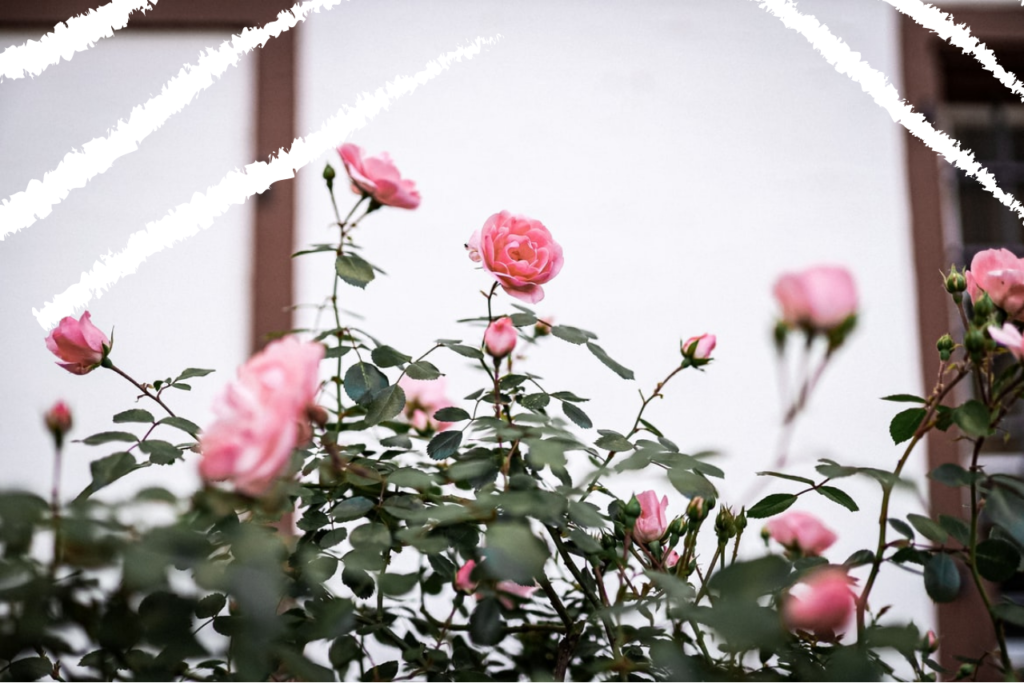
The palette is everything. A traditional English country garden is built on a foundation of cottage-garden stalwarts, and the best of them peak in high season with a reliable cast of classic summer flowers: hollyhocks reaching for the eaves, delphiniums in that impossible blue, foxgloves colonising the shadier corners, lupins, astrantias, sweet williams, geraniums, nigella self-seeding wherever it pleases. And roses, of course, always roses.
The trick is to plant in drifts rather than dots. One lonely delphinium looks like a mistake; seven or nine of them clustered together look like intention. Layer by height, with taller spires at the back of a border and softer, mounding things at the front, but allow the occasional tall plant to stray forward; the slight breaking of the rules is what stops a border looking municipal.
Colour-wise, resist the urge to coordinate too carefully. English country gardens traditionally run through the full spectrum from bruised purples and deep magentas to butter yellows and chalky whites. If it all feels a bit much, white flowers and silver foliage, think artemisia or stachys, act as natural peacemakers between clashing tones. Sackville-West’s famous white garden at Sissinghurst remains the masterclass here.

Creating Vertical Features Such As Arches & Trellises
Height is what separates a garden from a flower bed. Even the most modest plot benefits from something reaching upward, whether that’s a rose-smothered arch marking the transition from lawn to vegetable patch, or a simple obelisk rising from a border to give sweet peas somewhere to go.
Rambling and climbing roses are the obvious choice, and there’s a reason for that; few sights are more satisfying than a well-established ‘Rambling Rector’ or ‘Albertine’ in full flight. But don’t limit yourself. Clematis threaded through roses extends the season considerably, and honeysuckle brings scent to the evening hours when you’re most likely to be sitting out.
For smaller gardens, wall-mounted trellis can achieve the same effect without stealing square footage. A south or west-facing wall clothed in climbing hydrangea, wisteria or a trained fig feels instantly established, even if the house behind it is brand new.
Walkways & Labyrinths
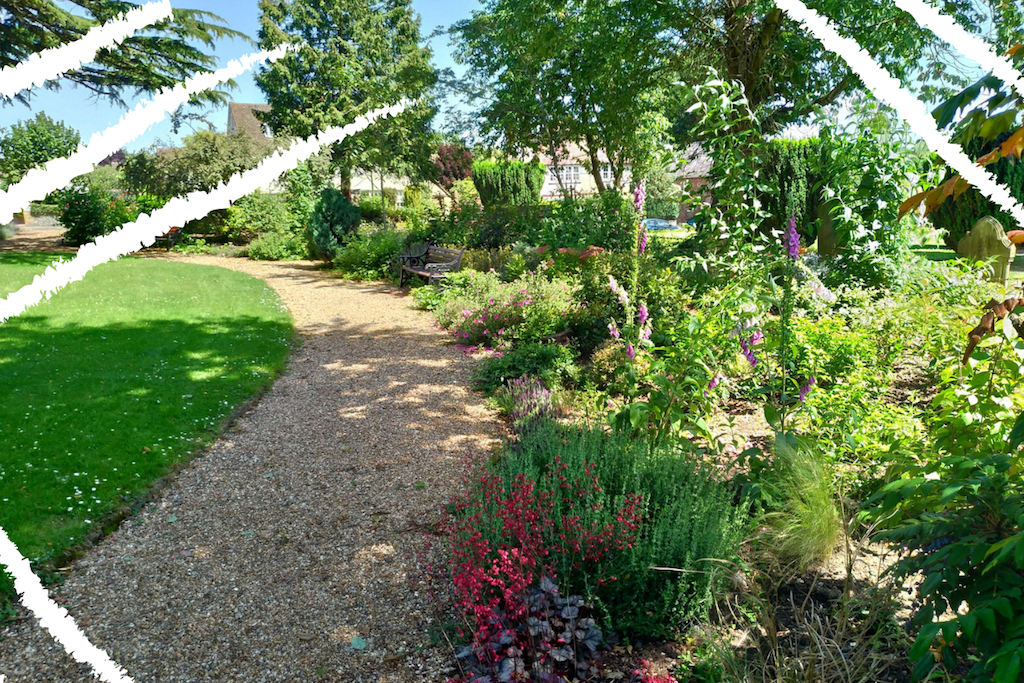
The great English gardens almost never reveal themselves all at once. Sissinghurst, Great Dixter and Hidcote are all built around the principle of the garden room; a series of enclosed spaces linked by paths and openings, each with its own character, each withholding just enough to make you want to see what’s around the corner.
You don’t need ten acres to borrow the idea. Even a small garden can be divided by a hedge, a pergola, or a simple change in paving material to create the sense of discovery. A path of reclaimed brick laid in a herringbone pattern, or water-worn cobbles set in sand, does more for atmosphere than any amount of clever planting.
If the space allows, a very modest labyrinth, really just a meandering path through mixed planting, introduces a gentle element of play. It needn’t be geometric or formal. The original medieval turf mazes of England, a handful of which survive, were often irregular and eccentric shapes cut into grass, and they’re all the better for it.
Zones
Even a small or medium-sized plot can be made to feel expansive through thoughtful zoning; dividing the space into distinct areas with different moods and purposes. A sunny terrace for morning coffee, a shadier corner for a bench and a cup of tea at four o’clock, a productive patch for herbs and cut flowers, a wilder area left largely to its own devices.
Vertical zoning is particularly useful in compact gardens. Raised beds, sunken seating areas, a small deck set a step or two above the lawn; these changes in level are what give grand country gardens their sense of choreography, and they translate surprisingly well to smaller scales.
The key is to avoid visibility from every point at once. If you can stand at the back door and see the whole garden in a single glance, you’ve lost the plot, both literally and figuratively. A well-placed tree, a run of trellis, a stand of tall grasses, anything that obscures the view by a few degrees, will make the space feel considerably larger than it is. In small-garden design, the illusion of depth is often worth more than actual square footage.
The Bottom Line
The traditional English country garden isn’t really a style so much as an attitude; a willingness to let plants behave a little badly, to prize romance over symmetry, to build in corners and surprises.
Start with strong structural bones, add generous and varied planting, introduce height through arches and climbers, break the space into distinct zones, and let time do the rest. The best of these gardens take years, sometimes decades, to settle into themselves, which is part of their charm. Few things worth having happen quickly.