Spring in the UK has a way of promising more than it delivers. You get one warm Saturday, buy a bag of charcoal, then spend the next three weekends staring at drizzle through the kitchen window, Googling whether charcoal goes mouldy.
The alternative is a short flight south, and the good news is that some of Europe’s most reliably sunny corners sit within a couple of hours of London. With Middle East airspace disruptions making long-haul travel slower, pricier and less predictable, short-haul has never looked more appealing. No complicated routing, no twelve-hour flights, and no need to plan months ahead. Most of these destinations are served by budget carriers running multiple flights a week, which means you can book on Tuesday and be eating lunch in the sun by Thursday.
Here are 7 places where spring sunshine is close to guaranteed, all reachable on a direct flight in around three hours or less.
The Algarve, Portugal
With over 3,000 hours of sunshine a year, the Algarve is statistically one of the sunniest places in Europe, and in April it delivers on that promise: daytime highs around 19-22°C, nine hours of sun a day, and very little rain. More importantly, the crowds that pack out the beaches in July and August simply aren’t there yet.
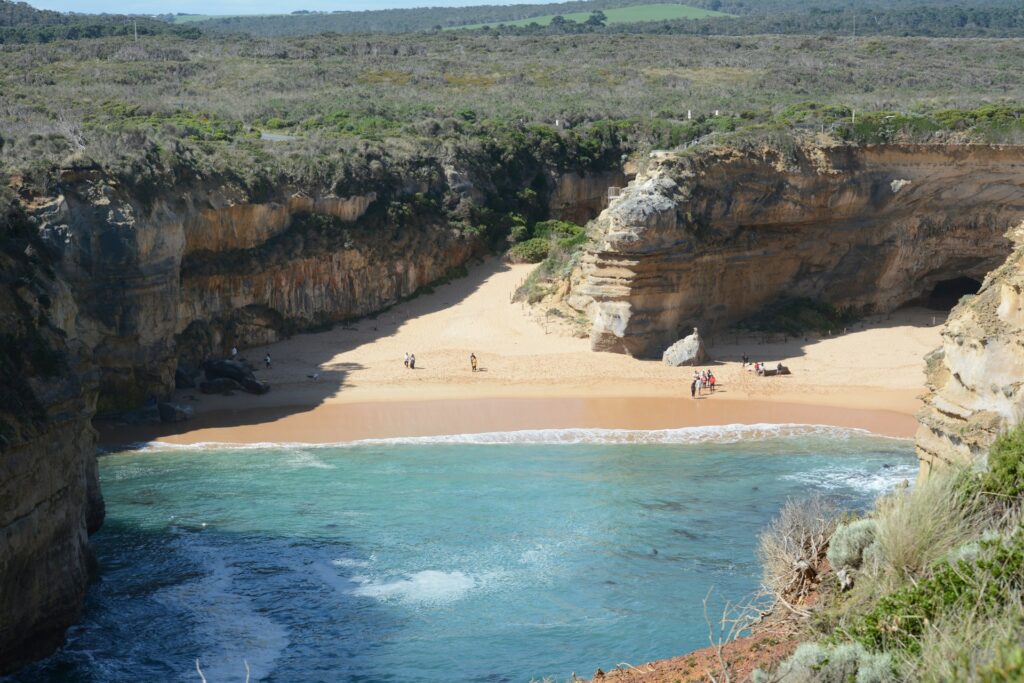
The stretch of coastline between Lagos and Tavira is where the Algarve earns its reputation. Sandstone cliffs drop into hidden coves, the water is a startling blue-green even in early spring, and the clifftop walking trails between Carvoeiro and Praia da Marinha are threaded with wildflowers from March onwards. The Seven Hanging Valleys coastal path is one of the finest short hikes in southern Europe, and in April you can walk it without passing more than a handful of people. The sea is still cold (around 17°C), so this is a sunbathing-and-walking trip rather than a swimming one, but that’s a fair trade for having the coastline largely to yourself.
Eating in the Algarve goes well beyond the grilled sardines that the region is famous for, though those are still excellent and absurdly cheap by UK standards. Look for cataplana, a copper-pot seafood stew native to the region, and percebes (goose barnacles, pulled from the rocks along the wild west coast and unlike anything else you’ll eat in Europe).
Faro’s waterfront and Lagos’s old town both have restaurants worth eating at in their own right, not just as fuel stops between beaches. Expect fresh fish cooked over charcoal, rice dishes loaded with clams and prawns, and local wines from the Algarve’s small but growing number of producers.
Flights from London take under three hours, with easyJet, BA, Ryanair, Jet2 and Wizz Air all running regular direct services.
Mallorca, Spain
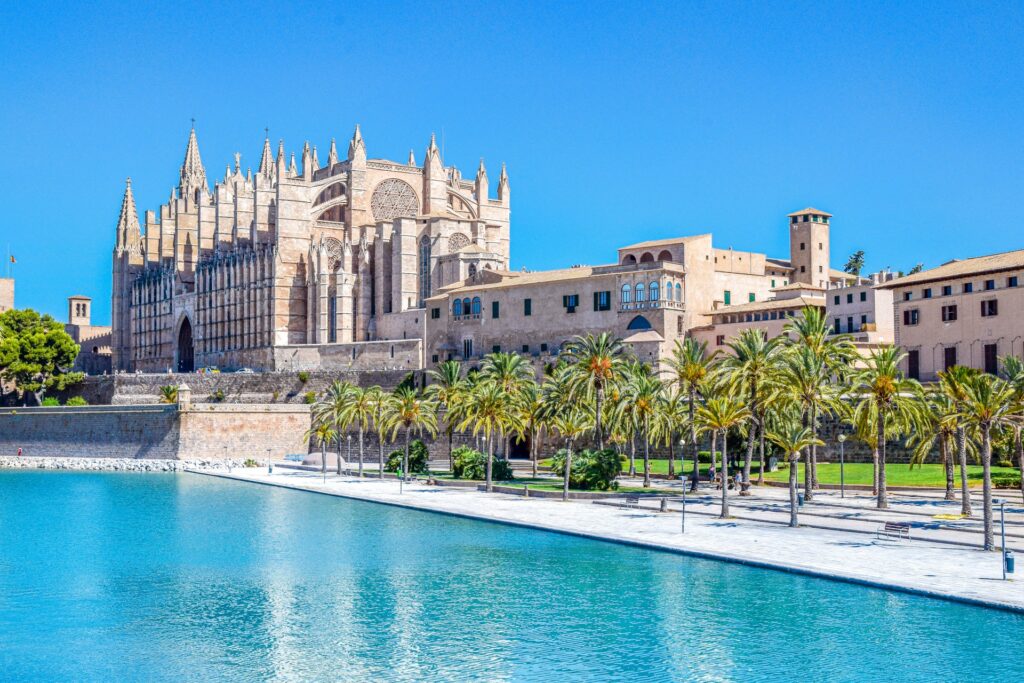
Mallorca in spring bears almost no resemblance to its summer self. The package-holiday resorts along the south coast are still winding up for the season, but the interior of the island is at its best: the Serra de Tramuntana mountains green and laced with wildflowers, the roads busy with road cyclists who know this is the optimum window before the heat arrives.
The GR 221, the long-distance trail that runs through the Tramuntana from Pollença to Andratx, is spectacular in April. The section from Valldemossa to Deià winds through centuries-old olive groves and past dry-stone terraces with views down to the coast, and it ranks among the best day-walks anywhere in the Mediterranean. You don’t need to be a serious hiker to enjoy it, either. The villages along the way (Deià, Sóller, Fornalutx) are small and beautiful, with enough good restaurants and cafés to turn a walk into a full day out.
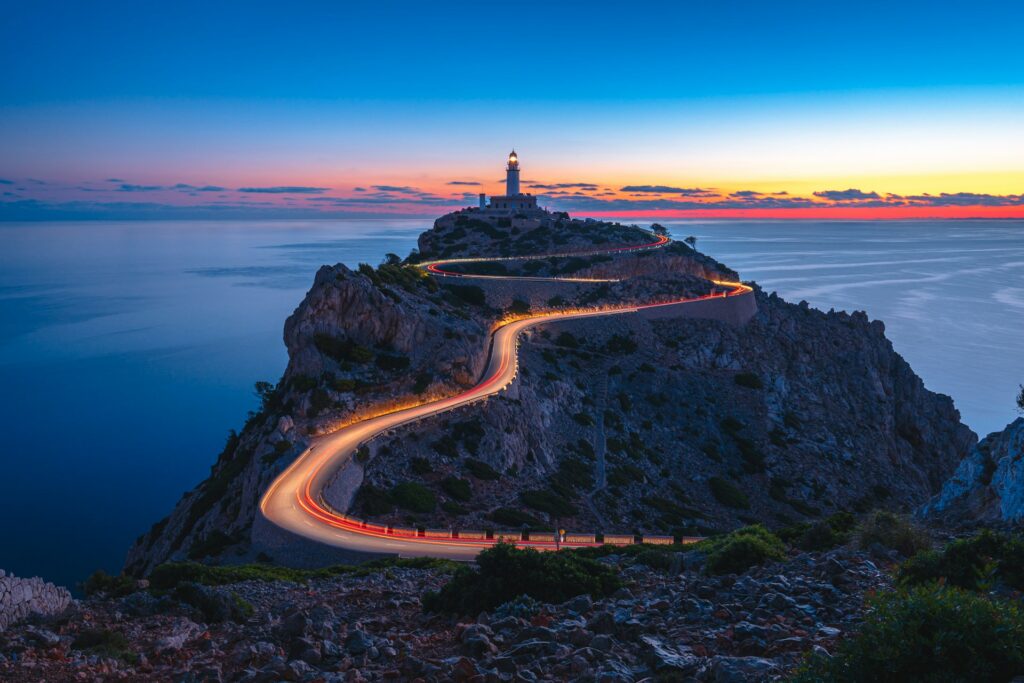
For something more dramatic, the drive out to Cap de Formentor at the island’s northeastern tip is one of the great European coastal roads, with sheer drops to the sea on both sides and views that stretch to Menorca on a clear day. The road ends at the Far de Formentor lighthouse, built in 1863 and perched 210 metres above the water. From mid-May the road is closed to private cars during the day, but in April you can drive the whole thing without restrictions.
Palma deserves more than a transit stop. The Santa Catalina neighbourhood has an exciting food and bar scene that’s developed rapidly over the past decade, the old town around the cathedral is handsome without being overly polished, and the Mercat de l’Olivar is the kind of covered market where you can eat your way through the morning on cured meats, local cheese, and fresh oysters. Accommodation is significantly cheaper than in summer, and you can fly from London in about two and a half hours with easyJet, BA, Jet2 and Ryanair.
Read: Where to eat traditional Majorcan food in Palma
Málaga & The Costa Del Sol, Spain
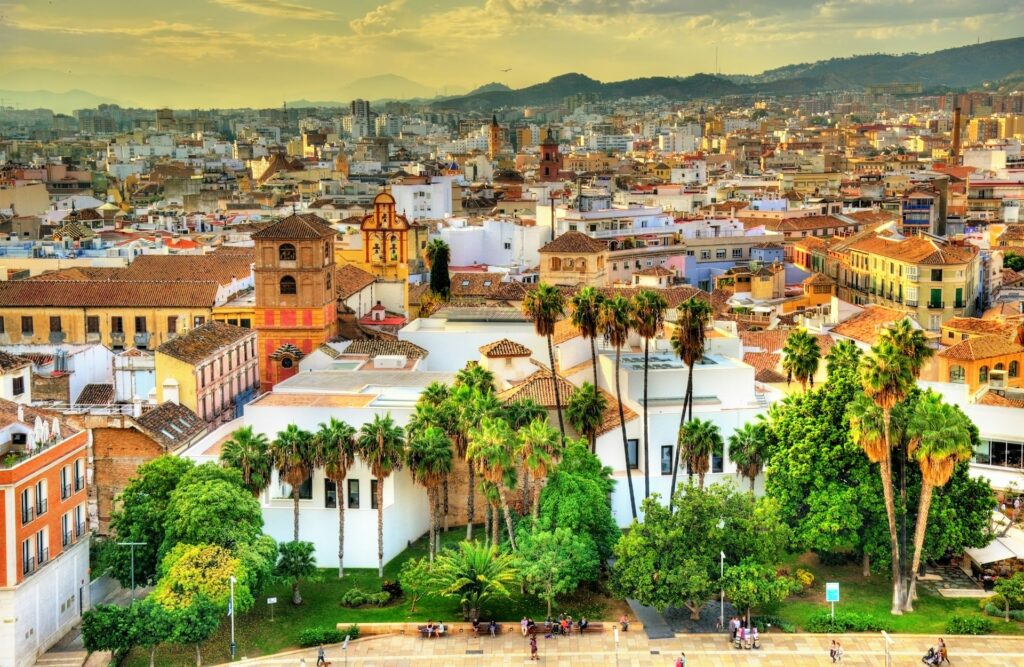
For a city that most British visitors associate with the gateway to Marbella and the package-holiday strip, Málaga has built one of the strongest cultural offerings in southern Europe over the past fifteen years.
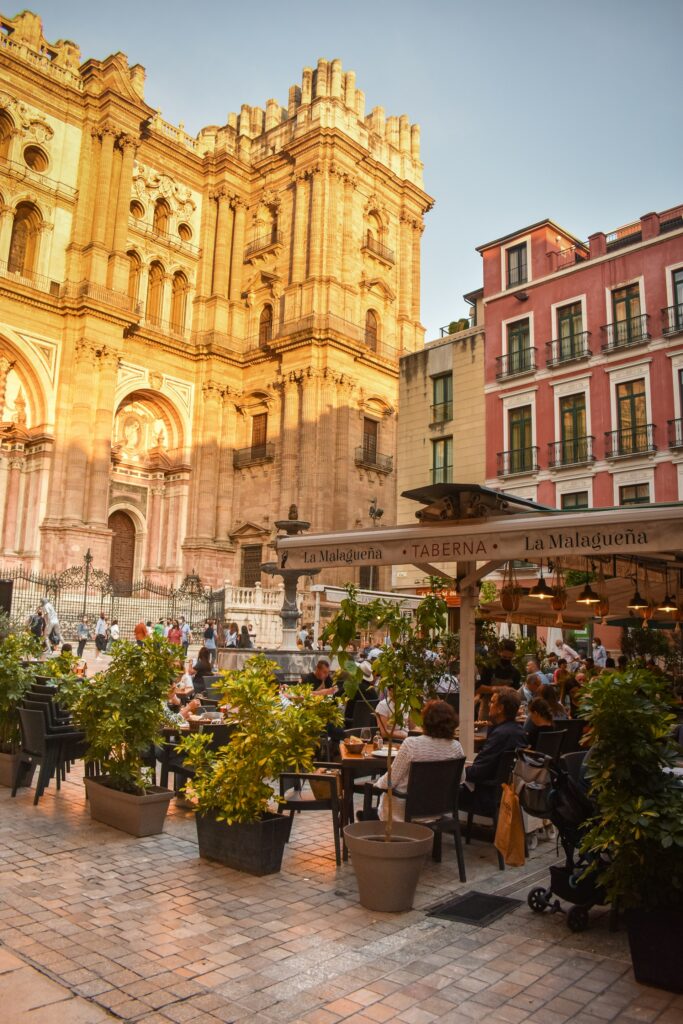
The Museo Picasso Málaga (housed in a 16th-century palace in the old town), a Centre Pompidou outpost (the first outside France), the Carmen Thyssen Museum, the CAC contemporary art centre, and dozens of smaller galleries have turned the city centre into something approaching an open-air museum district. The old town is compact enough to walk in an afternoon, the Alcazaba and Gibralfaro castle give you views across the port, and the restaurant scene has long since caught up with the cultural one, with 19 entries in the Michelin Guide including five one-starred restaurants.
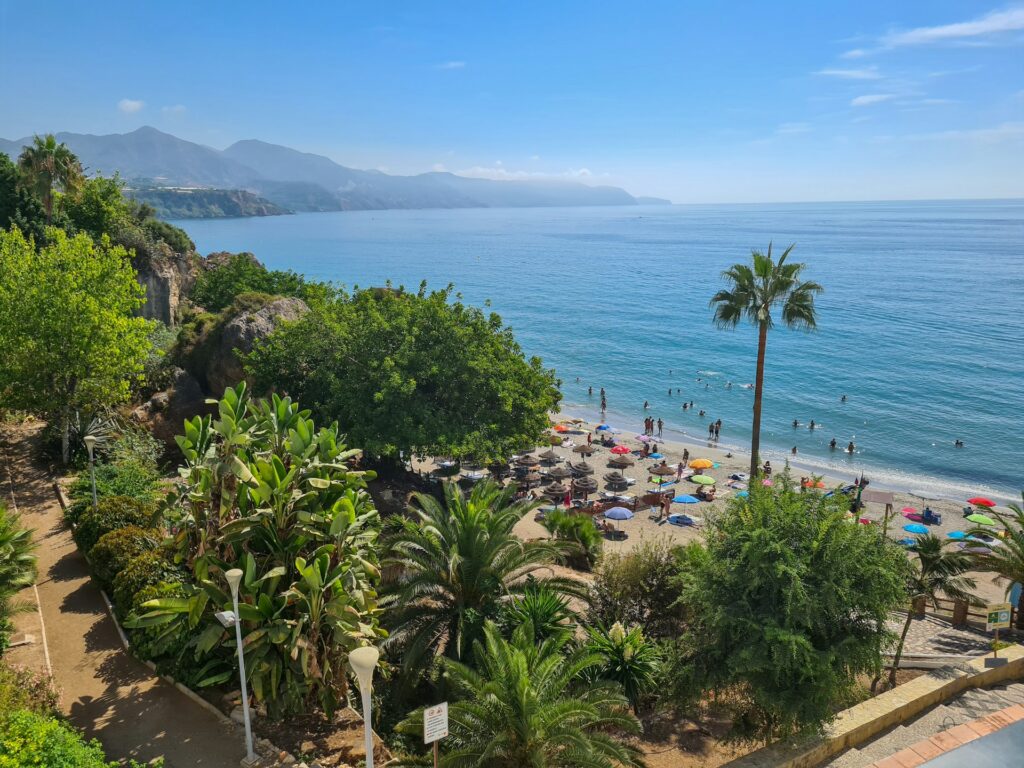
April brings daytime temperatures around 20-22°C with eight or nine hours of sunshine, and the city has a street-level energy that the beach resorts further along the coast can lack. If you do want a beach, head east towards Nerja rather than west towards Marbella. The coastline is less developed, the water is cleaner, and Nerja itself, perched on a clifftop with views along the coast, is worth a day trip or an overnight stay.
Málaga also works as a base for exploring inland Andalusia. Ronda is about an hour and a half by car, Granada two hours, and both are at their best in spring before the summer heat makes sightseeing uncomfortable. Head the other direction along the coast and you hit Fuengirola, which has shed its package-holiday reputation and now has a strong food scene, particularly for seafood along the Paseo Marítimo. If you’re the type to rent a car and move around, Málaga gives you a range that a resort town can’t.
Direct flights from London take around two hours 45 minutes, with BA, easyJet, Ryanair and Jet2 all operating the route.
Marrakech, Morocco
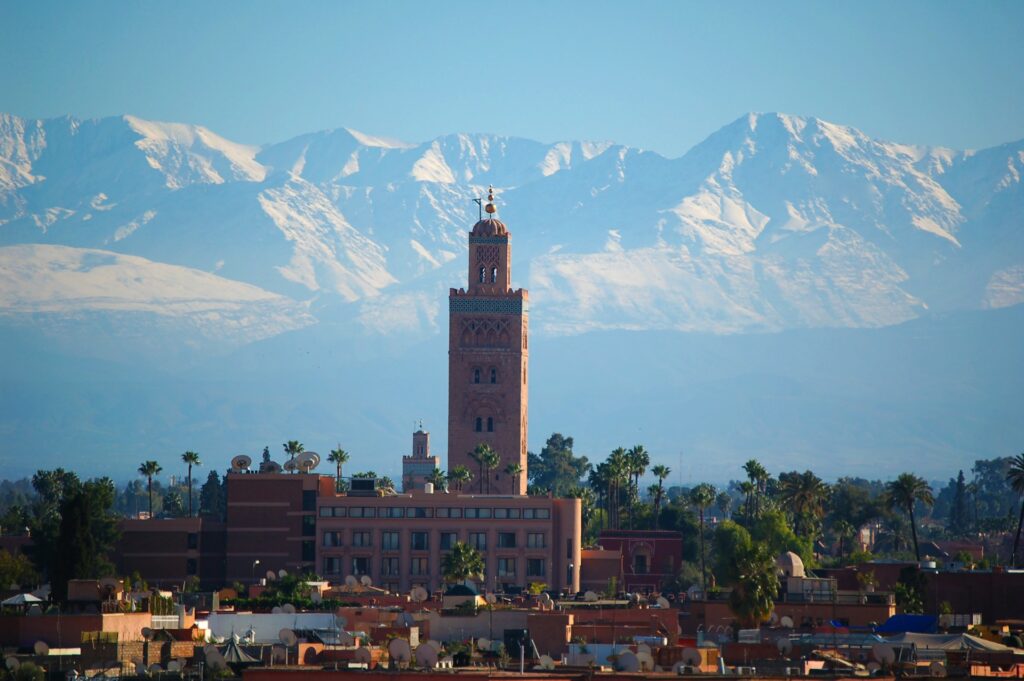
In summer, Marrakech regularly pushes past 40°C, which turns the medina into something closer to an endurance event than a holiday. April is the window when the city is at its most liveable: daytime highs around 25-26°C, warm enough for long afternoons on riad rooftops, cool enough that you can actually enjoy walking through the souks without needing to retreat to the shade every twenty minutes.
The Jardin Majorelle is the headline attraction and worth the entrance fee, but the real pleasure of Marrakech is less structured than that: the orange trees and jasmine in riad courtyards, the bread being pulled from wood-fired ovens in the medina backstreets, the evening atmosphere around Jemaa el-Fna when the food stalls set up. The souk shopping is better when you’re not melting, too.
Spring is also the best window for getting out of the city. The Atlas Mountains are close enough to reach in under two hours by car, and the Ourika Valley is the most accessible route, with the drive up through terraced Berber villages and snow-capped peaks above offering a complete change of scenery. For something more ambitious, the drive over the Tizi n’Test pass, one of the most spectacular mountain roads in the world, takes you through the High Atlas and down towards the Souss Valley.
Riads are extraordinary value compared to equivalent boutique accommodation in Europe. A place with tiled courtyards, a plunge pool, and proper home cooking will cost a fraction of what a comparable hotel would run you in southern Spain or Italy. Before you book any last-minute holidays, it’s worth comparing riad prices across a few booking platforms, as rates can vary significantly for the same property. Direct flights from London take around three and a half hours with easyJet, BA and Ryanair.
Malta
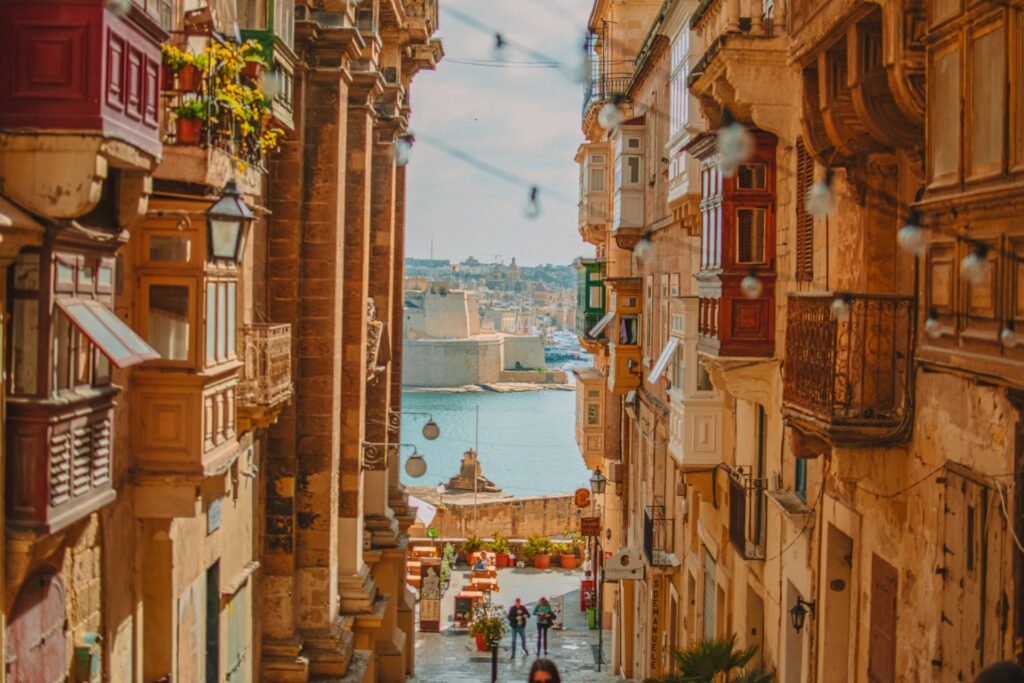
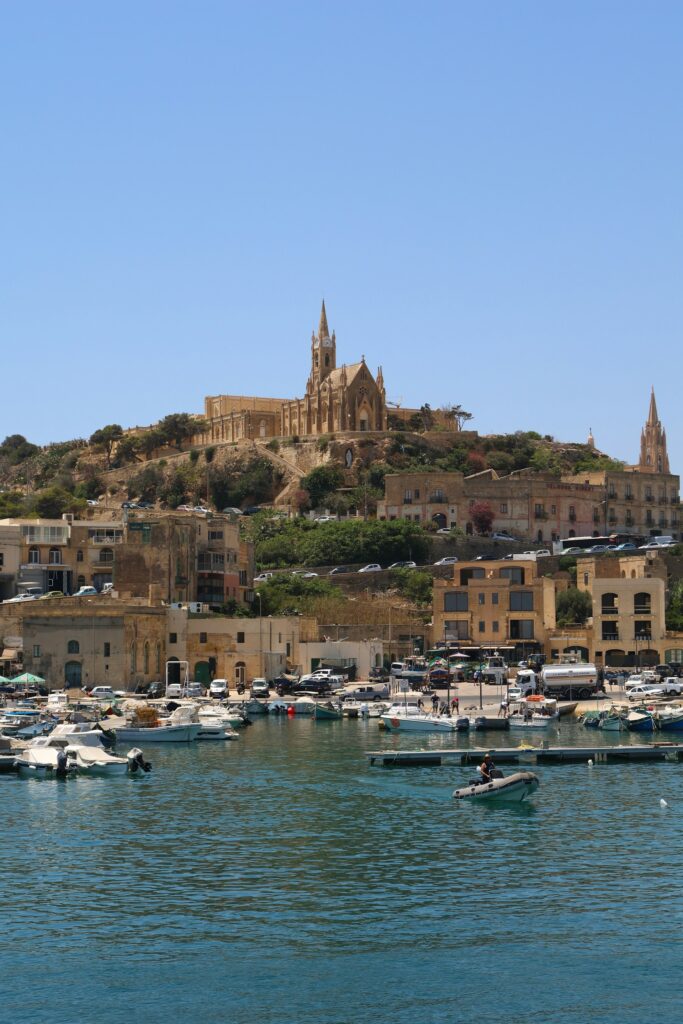
Valletta is barely a kilometre across, but it contains more listed buildings per square metre than almost any other city in Europe. Baroque churches, Knights of St John fortifications, a grand harbour that turns gold in the late afternoon light: the Maltese capital punches absurdly above its weight for a place you can walk end to end in fifteen minutes. It won European Capital of Culture in 2018, and the investment that came with it, particularly in the restaurant and bar scene, has changed the character of the city in lasting ways.
In April, temperatures reach around 20°C with eleven hours of sunshine, and you can walk Valletta’s narrow streets without the shoulder-to-shoulder crowds of summer. The restaurant scene has expanded fast, with several places doing serious work with Maltese ingredients: rabbit braised in wine, lampuki (dolphinfish), fresh ricotta, capers from Gozo. The wine is worth exploring too, particularly bottles made from indigenous grapes like Girgentina and Gellewza, which you won’t find anywhere else.
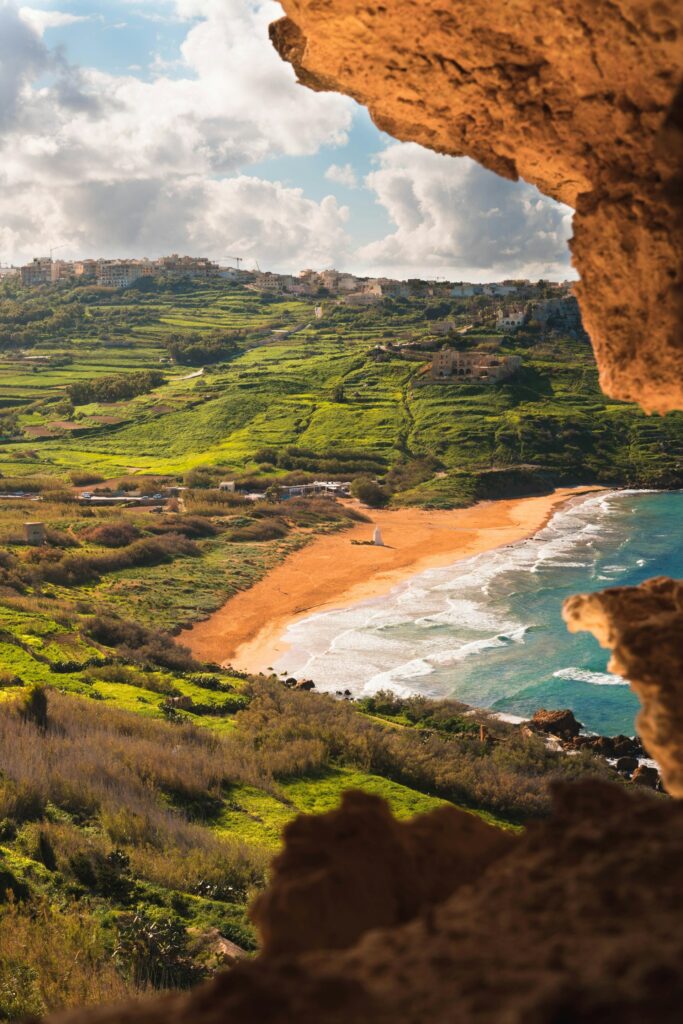
Beyond Valletta, the island is small enough to cover in a few days. The megalithic temples at Ħaġar Qim and Mnajdra predate the Egyptian pyramids by several centuries. Mdina, the old fortified capital in the centre of the island, is eerily atmospheric, all silent streets and heavy stone walls. And the ferry to Gozo takes half an hour and lands you on a much less developed island with good swimming, walking, and a pace of life that feels properly removed from the mainland.
Direct flights from London take just over three hours, with BA, easyJet, KM Malta Airlines and Jet2 all running services from Gatwick, Heathrow and Stansted.
The Côte d’Azur, France
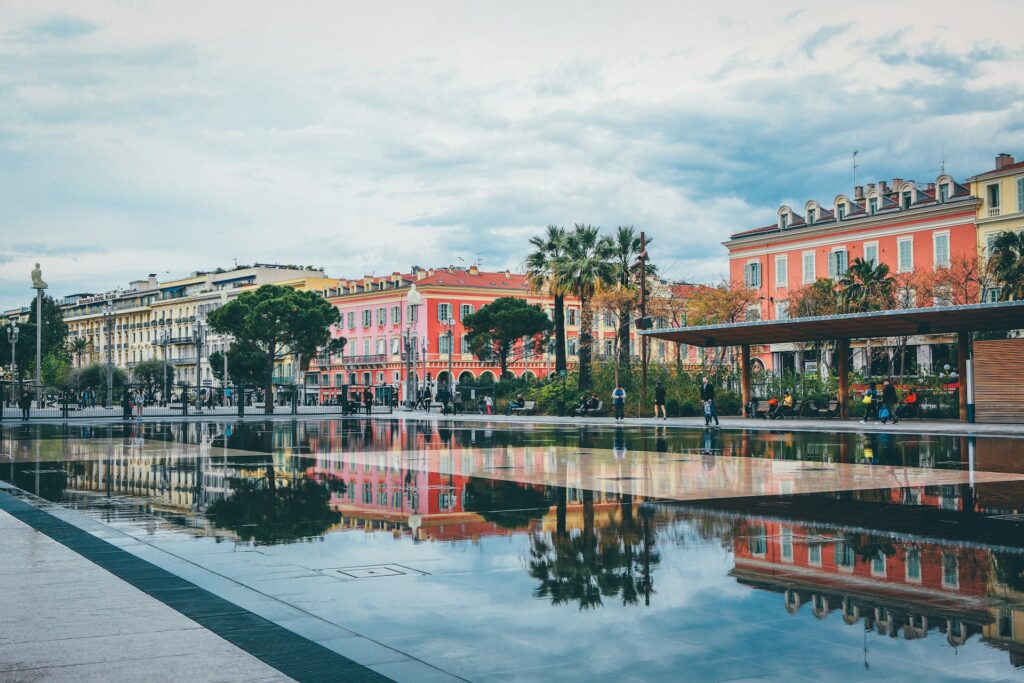
The French Riviera in spring, before the yachts arrive and the hotel prices triple, is one of the best-value cultural trips in Europe. The temperatures are milder than further south (around 17-19°C in April, rising into the low twenties by May), but the coast has a clarity and calm that the summer season tends to crowd out. The light is extraordinary, which is why Matisse and Bonnard painted here, and why the hilltop towns of the arrière-pays (Èze, Saint-Paul-de-Vence, Mougins) look their best before the heat haze sets in.
Nice is the anchor. The old town is excellent for eating: socca from Chez Pipo, pissaladière from a market stall, seafood on the Cours Saleya. The art museums (MAMAC, the Matisse Museum, the Chagall Museum) are first-rate and rarely crowded in spring. Antibes has the Picasso Museum in the Château Grimaldi and a covered market that’s one of the best in Provence. And if you want to go walking, the Cap d’Antibes coastal path runs along the headland between rocky coves and Belle Époque villas, with views across to the Esterel mountains.
It’s not a beach holiday in April, the sea is still around 15-16°C, but for food, art, and coastal walking with the Mediterranean below you, it’s hard to argue with. Nice is under two hours from London with BA, easyJet and Ryanair.
Menorca, Spain
For a different kind of spring sun-seeking sojourn, Menorca’s UNESCO Biosphere Reserve status has kept the coastline largely free of the high-rise hotels and mega-resorts that line long stretches of the other Balearic islands. The result is an island where the beaches are backed by pine forest rather than apartment blocks, and where the development pressure that has reshaped much of the Spanish Mediterranean hasn’t taken hold in the same way.
In spring, before the summer visitors arrive, the island feels noticeably unhurried. April temperatures sit around 18-20°C, which is warm enough for comfortable days outdoors but not beach-swimming weather. What it is perfect for is walking sections of the Camí de Cavalls, the 185km coastal path that circles the entire island. You don’t need to do the whole thing. Individual stretches between the calas (coves) on the south coast are some of the most beautiful short walks in the Balearics, and in April you’ll often have the beaches entirely to yourself.
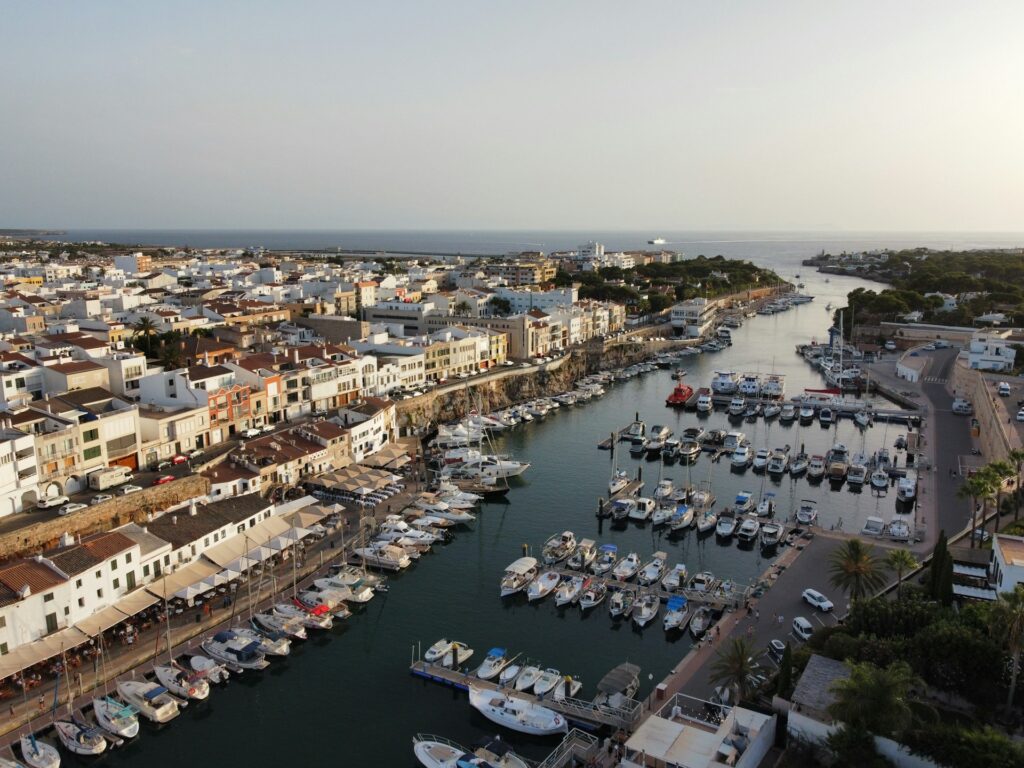
Ciutadella, on the western tip, is the prettier of the island’s two main towns: honey-coloured sandstone buildings, a harbour lined with excellent restaurants, and in spring a calm that tourist towns rarely hold onto once the season starts. Mahón, on the eastern end, has one of the largest natural harbours in the Mediterranean and a gin distillery (Xoriguer) that’s been operating since the British occupation in the 18th century.
Menorca produces its own semi-soft, slightly tangy cheese (Mahón-Menorca), and Fornells on the north coast is the place to eat caldereta de langosta, a rich lobster stew that’s been the local speciality for generations. A growing number of small producers across the island are working with native ingredients in ways that reward anyone willing to eat beyond the harbour-front tourist menus.
Flights from London take around two and a half hours. EasyJet runs year-round services from Gatwick and Ryanair flies from Stansted, though Jet2 and BA add routes from May onwards, so availability in early spring is more limited than in summer.
The Bottom Line
The case for short-haul spring sun has never been stronger. Flight times are short, shoulder-season pricing keeps costs manageable, and the destinations on this list offer far more than just a sunlounger and a pool bar. You can be on a clifftop in the Algarve or eating grilled fish in a Maltese harbour three hours after leaving Gatwick. These are places that reward the kind of trip you can put together in a week’s notice, and spring is the window to see them at their best, before the summer crowds and the summer prices arrive.