No person is an island. But in an ideal world, we’d all have one. A kitchen island, that is…
Hmm. Perhaps that introduction didn’t quite function as we’d hoped, but if you’re looking to add functionality to your kitchen, then why not add a kitchen isla….you know where this is going, right?
Let’s start again. Kitchen islands bring improved efficiency, style and aesthetic intrigue to a kitchen, but choosing one to suit your unique needs and the specific measurements of the room can be a challenge. There are several things you need to consider, from size to style and, most importantly, function.
Here are 7 steps to choosing the IDEAL kitchen island for your home.
What Is The Island’s Function?
One of the first things you need to consider is function. Pose searching, existential questions…
What is the island’s purpose? Will it be strictly for dining, strictly for cooking, or a mix of both? Will it serve as an alternative to the dining room table? Which part of life’s story do you hope to write here?
If you plan to use your kitchen island primarily for cooking and prepping, plan for a bigger island. Appliances take up quite a bit of space – whether resting on the island or tucked beneath it – so factor in that extra room to fit everything in comfortably. If you’re installing a sink in the island, consider also installing a dishwasher right next to it for easy loading and unloading.
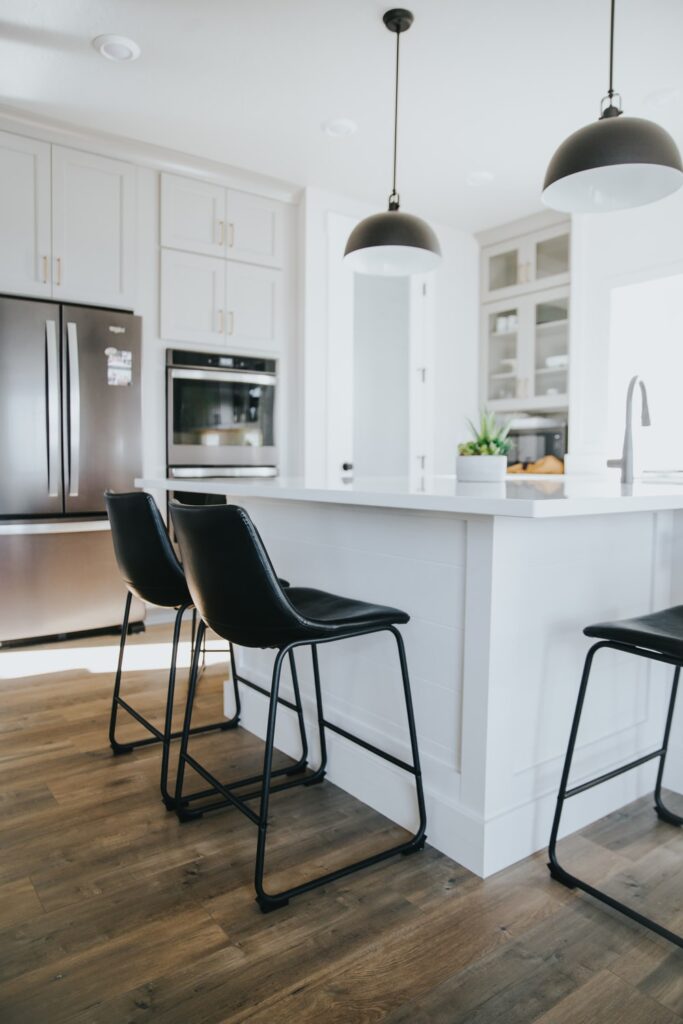
If the vibe is more aesthetic, for entertaining and casual use, the focus should fall more on seating and conviviality than size. The island should therefore be at a comfortable height for chairs, and should have a decent-sized overhang for knee space. Experts recommend that a minimum 30 centimetres of overhang is appropriate.

Considering Form & Size
The island’s function is one of the most important things to consider because it will dictate what type of island you choose. Once you have a better understanding of the purpose of your island, then you can drill down into other considerations. Form follows function, as they say…
As we mentioned, this is certainly a case where size does matter. If you plan to install appliances, you will need a bigger island; it’s as simple as that. If you’re only using it for entertaining or other casual purposes, a small kitchen island will work perfectly well in your kitchen.
Generally speaking, a kitchen island which is too big for the room as a whole makes the room an uncomfortable place to spend time, disrupting kitchen workflow and causing many a burnt dinner in the process. Err on the side of caution here.
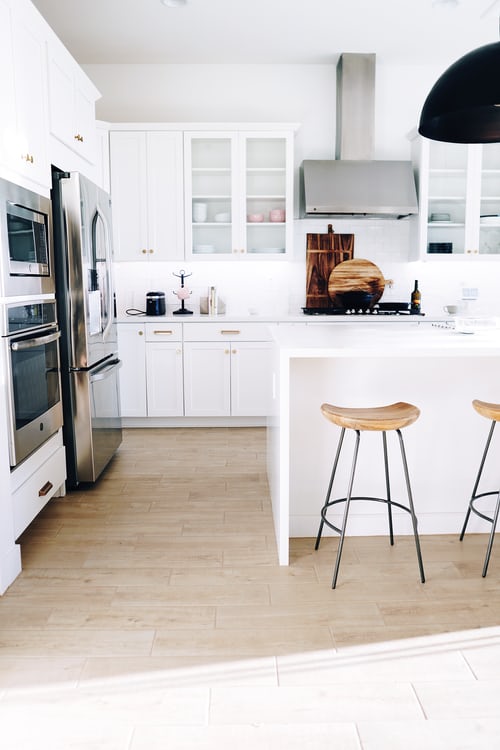
Kitchen Island Styles
There are several styles to choose from when choosing or designing a kitchen island:
- If you have a larger kitchen, an L-shaped island will give you enough space for both cooking/prep and dining or entertaining, wrapping around a corner to create distinct zones. Conversely, if your kitchen is L-shaped, then you’ll need to consider a pretty dainty island or the dynamics of the room will feel lopsided.
- A U-shaped kitchen island takes that concept further, enclosing three sides to create something close to a dedicated cooking station. This style is well-suited to the budding chef in the family, as the efficiency of cooking is greatly increased, and it also lets a host who loves the limelight hold court as guests gather around.
- A galley style island can be a little awkward to make work, but can end up making good use of space if proportioned correctly. This type of island is common in the modern and German kitchen style, in particular.
- Furniture style islands are commonly found in eclectic, quirky kitchen design. They are usually the focal point and can be repurposed from old furniture.
Double-tiered kitchen islands are an excellent choice for multi-functional kitchens, when the cooking, eating and socialising all occurs in the same room. For parents trying to juggle dinner-prep and keeping an eye on the kids while they do their homework, a double-tier is the perfect design.
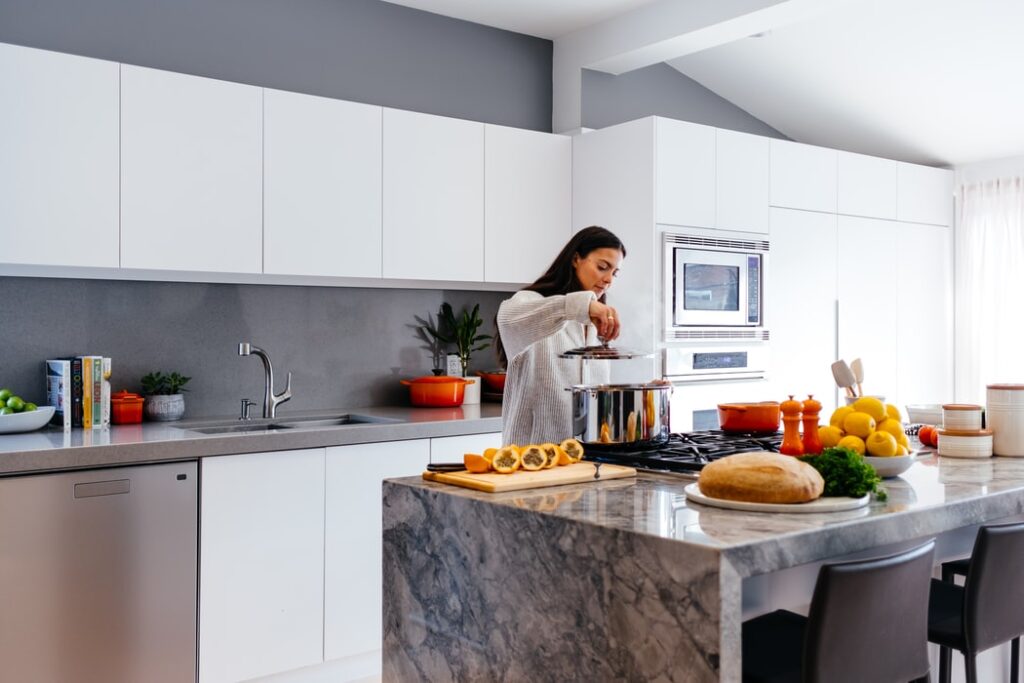
Extras & Add Ons
Will you be using your island only for cooking and entertaining, or will it also serve as a place for the kids to do homework and for you to work, too?
For cooking and prepping, kitchen island cabinets are a must. Island cabinets provide storage for your cookware and supplies, making the workflow of cooking in the space much more efficient.
If you have a large kitchen and your refrigerator is across the room, it may be worth installing an undercounter refrigerator for easy access to ingredients or drinks when entertaining. They certainly look the part, too, don’t you think?
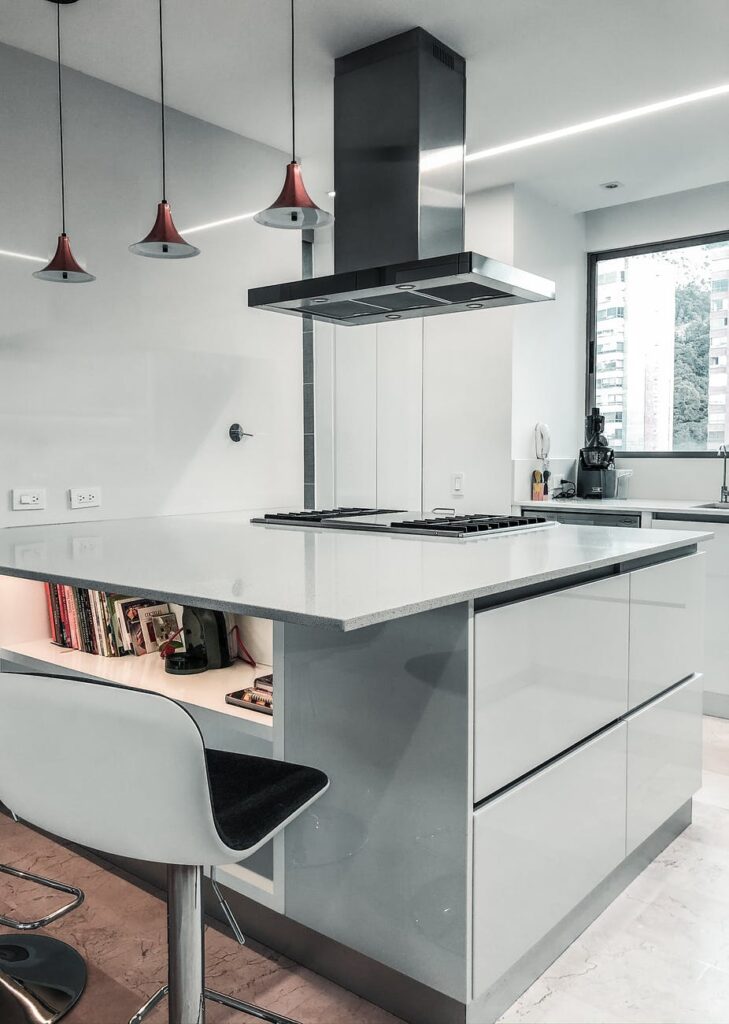
Cooktops are also a great option if you’re using your island primarily for cooking and prepping. Just make sure that you have enough space to install an exhaust hood or vent, or things are going to get ssssssmokey.
Customise further, and consider adding a wine rack, open bookshelves, a hanging utensil rack or simply extra storage space. A kitchen island opens up the room to a wealth of new opportunities, and here, the world is your oyster. Now, where did I put that shuck?
Triangulate Your Layout
Many interior designers discuss kitchen layout in terms of triangulation, and this is worth considering with regard to your kitchen island. The three key ever-presents of the kitchen are the sink, refrigerator and stove. Without them, things simply wouldn’t function.With one of these three essential elements located on a kitchen island, the kitchen working triangle layout is created; the optimal layout favoured by kitchen designers. Doing so makes your kitchen both a dynamic space and naturally pleasing to the eye.
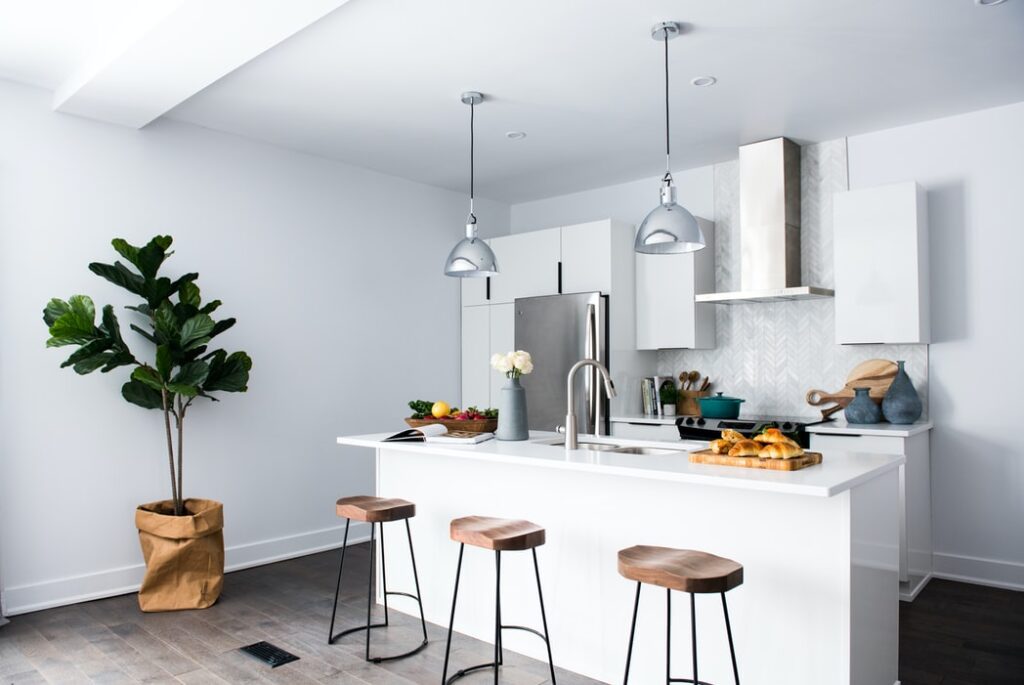
Illumination Stations
It’s important, too, to consider how you’re going to light your kitchen island.
Designer pendant lighting is the most popular choice, illuminating the workspace and drawing the eye to your kitchen island as a focal point aesthetically. Ideally, three matching lights, positioned in a row, would hang around three or four feet above the island, providing the best illumination and aesthetic appeal.
If you’re keen to change things up and do things differently, recessed lighting is a great option, since its source is concealed and you don’t have anything hanging directly over the work surface. For taller members of the family prone to banging their head on low hanging objects, recessed lighting would be a welcome alternative.
It’s also worth thinking about task lighting for the island’s underside; LED strip lights fitted beneath an overhang can provide a warm ambient glow for evening entertaining, while also making it easier to spot that rogue Lego brick on the kitchen floor. Whichever option you go for, think about how the lighting ties back to function; a prep-heavy island needs bright, focused illumination, while a social hub benefits from something a little softer and more atmospheric.
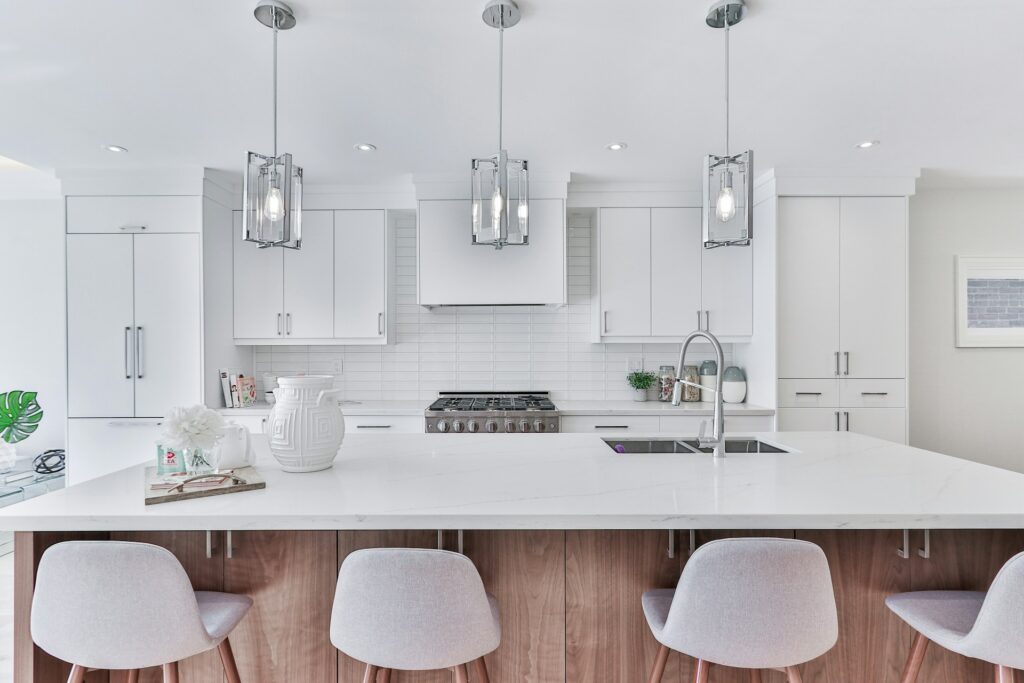
Choosing The Right Worktop Material
With the shape, size and extras nailed down, it’s time to think about what your island is actually made of. The worktop material you choose will have a big impact on how it looks, feels and holds up over time, so it pays to weigh up your options.
Natural stone like granite and marble brings a sense of weight and permanence; granite is tough, heat-resistant and relatively low-maintenance, while marble, for all its beauty, is softer and more prone to staining. Quartz offers a good middle ground, combining the look of natural stone with better stain resistance and no need for regular sealing.
For a warmer, more rustic feel, solid wood or butcher block works brilliantly, particularly if your kitchen leans towards a country or farmhouse style. Wood does require a bit more upkeep (regular oiling to keep it in good nick) but it develops a character over the years that stone simply can’t replicate. At the other end of the spectrum, stainless steel is the choice of professional kitchens for a reason: it’s hygienic, heat-proof and practically indestructible, though it will pick up fingerprints with use.
The key is to match the material to how you’ll actually use the island. If it’s going to take a daily battering from hot pans and sharp knives, durability should win out over looks.
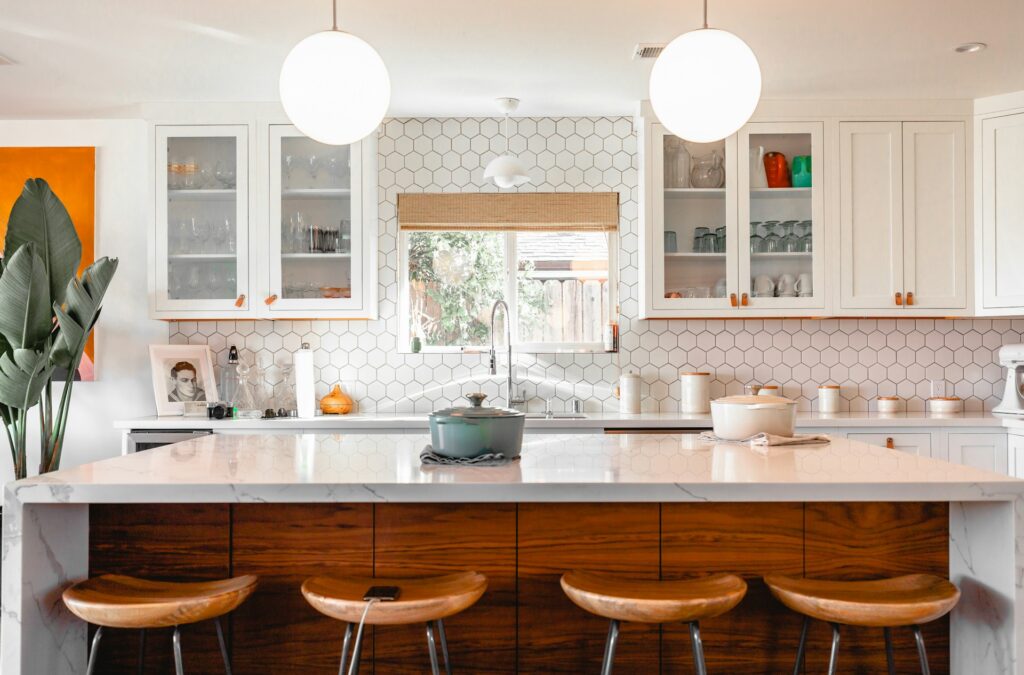
Setting A Budget & Planning Installation
It’s easy to get carried away when planning a kitchen island. All those add-ons, materials and design flourishes can stack up faster than you’d expect, so setting a realistic budget early on will save you from some painful compromises further down the line.
Costs vary hugely depending on what you’re after. A simple freestanding or prefabricated unit can come in at a few hundred pounds, while a fully plumbed, custom-built island with integrated appliances and stone worktops can run well into the thousands. Be honest with yourself about what you need versus what you want, and get quotes early so the numbers don’t come as a nasty surprise.
Factor in installation costs, too, which are often underestimated. If your island requires plumbing for a sink, electrical work for a cooktop or ventilation for an extraction hood, those trades need to be costed and coordinated. Getting a professional to assess the space before you commit can save a good deal of time, money and frustration on installation day.
The Bottom Line
A kitchen island is one of those additions that, when done well, can genuinely change the way you use and enjoy your kitchen. The trick is to start with function and let everything else follow from there. Measure twice, budget honestly, and don’t be afraid to keep things simple; a well-chosen island doesn’t need to be the most expensive or elaborate option in the showroom, it just needs to work for your kitchen and your life.
And while we’re on the subject, check out our tips on how to show your kitchen in its best light. We can’t wait to come round for dinner soon!