Once upon a time, choosing the best bath towel was as simple as rubbing the damn thing between thumb and forefinger in the department store to check if it felt soft. These days, a certain amount of intuition and science needs to be applied to the purchase to ensure you’ve got a towel with longevity, durability and that intangible ability to give you a warm, nourishing embrace each and every time you emerge from the shower.
Though it might sound absurd, as with picking out your clothes, cosmetics or shoes, you need to put in similar research efforts to find the right towels. If the durability, fluffiness and drying capacity of your towels matter to you (and if not, we’re certainly not staying over), then it’s worth considering a few key features before you buy.
Whether you need towels for the beach, swimming, exercise, camping or bathing, here are seven ways to ensure you’re buying quality bath towels.
Living In A Material World
Towels are generally made of cotton, bamboo, microfibre or polyester. Though cotton is the preferred fabric for towels that are soft and absorbent, it can be heavier than other materials. If you’re buying a cotton towel, prioritise those made from 100% Supima or Pima cotton, both of which use longer fibres that resist shedding and pilling.
Bamboo towels tend to be lighter, and are incredibly soft. In fact, they’re said to get softer the more you use them, a welcome change from the rough effect your cotton towels might develop after a few washes, don’t you think? Though bamboo is absorbent, it takes a really long time to dry comprehensively. What’s more, it has no natural antibacterial properties, despite what the marketing might tell you.
Microfibre, meanwhile, makes for a high-performance material. It’s soft, ultra-absorbent and lightweight, with excellent moisture-wicking that helps it dry fast, plus antimicrobial properties that suit allergy sufferers. The catch is environmental rather than practical: being synthetic, microfibre towels shed microscopic plastic fibres into the water system with every wash, which is worth weighing up if sustainability matters to you. They also feel rougher than cotton or bamboo, making them better suited as a guest or gym towel than for everyday luxury.
Weight
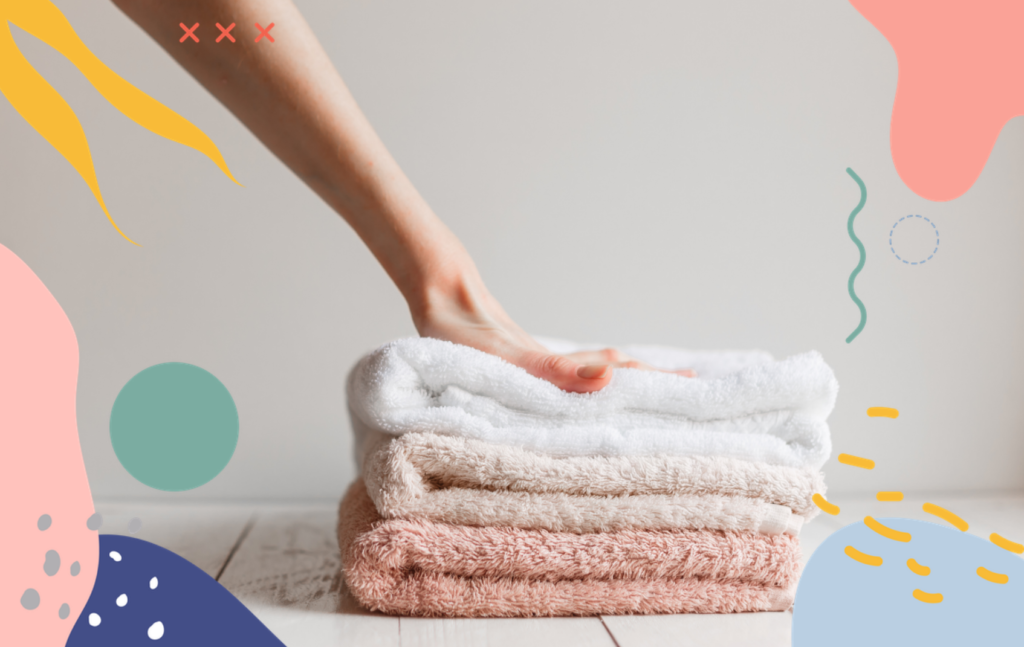
The weight of your towel is usually measured in GSM (grams per square metre), and generally speaking, the higher the GSM, the more absorbent and plush the towel. It’s the single biggest factor in whether a towel delivers that wraparound hug that makes a bathroom feel like a wellbeing sanctuary rather than a wet-room afterthought.
A good quality, everyday bath towel should have at least 450 GSM, and preferably more. Anything lighter, between 300 and 400, points to a thinner towel that’s easy to carry for trips to the pool, gym or beach, but won’t give you that hug at home.
The weight also signals density and absorbency, so it’s best to strike a balance between plushness and quick drying. For bath towels, aim for the 500s and up. Anything below 300 GSM and, let’s be honest, it’s probably better suited as toilet paper.
Construction & Stitching
Here’s the bit most buyers skip. Two towels can claim the same GSM and feel like completely different products once they’ve been through the wash a few dozen times, and that comes down to how they’re made.
Look for combed or ring-spun cotton, where the short, stray fibres are stripped out before spinning. The result is a smoother yarn that lints less, pills less and holds up far longer. Low-twist or zero-twist loops feel gorgeously soft and drink up water, though they can shed a little early on, so don’t panic at the first wash.
Then check the edges, because this is where cheap towels betray themselves. Double-turned, double-stitched hems stop the towel fraying and curling at the ends, which is usually the first sign of a towel on its way to the rag pile. Give the border a tug in the shop. If it feels flimsy, the rest of it probably is too.
Size
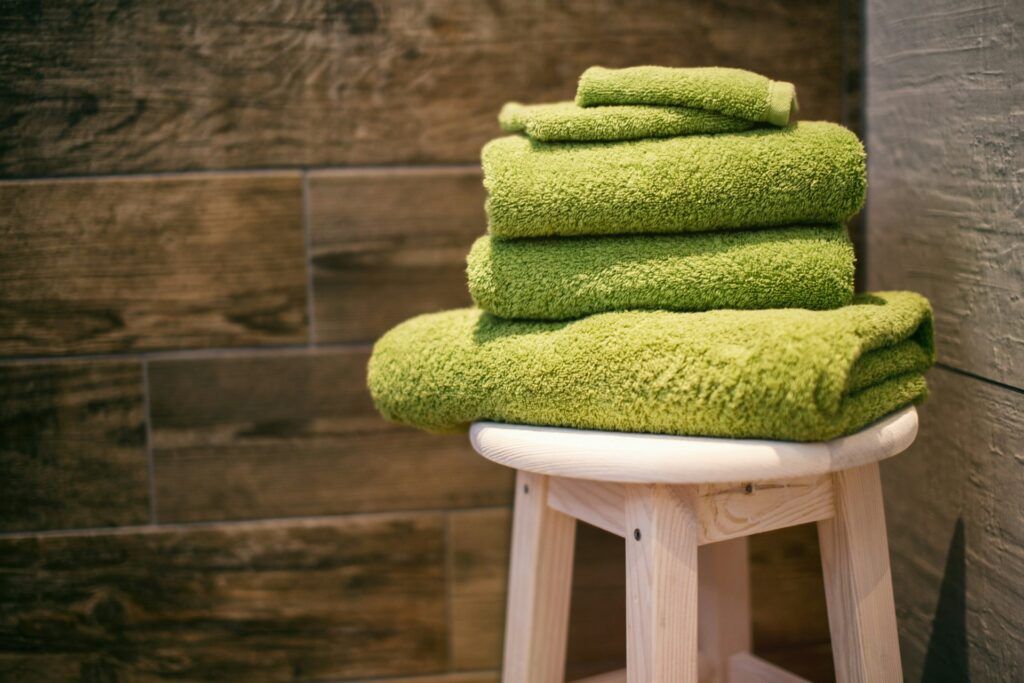
When you buy towels online or in the shop, you need to make sure they’re the right size for the job. Pay attention to the dimensions for that comfortable, comprehensive wraparound effect with a cosy and luxurious feel.
Standard bath towels measure around 140cm x 70cm. If you prefer extra-large or jumbo sizes (known as bath sheets), these come in at roughly 160cm x 90cm, though they cost considerably more. For kids, 120cm x 60cm is standard, and hooded bath towels for the little ones are a great option, looking super cute to boot. And if you’re after a hand towel, around 90cm x 50cm is the going rate.
Is It Prone To Shrinking?
Though it’s understandably not widely advertised, the truth is that all towel materials are prone to a little shrinking, particularly when machine washed. Cotton is most liable to shrink, though some of that loss is mitigated if the GSM of your towel is especially high. Bamboo tends to shrink over time too, particularly when washed on a high heat. If you’re keen to avoid shrinkage, it’s best to hand wash your towels, though this is less hygienic than a hot machine wash.
That trade-off is hygiene. Towels are warm, damp and full of shed skin, which makes them prime real estate for bacteria and dust mites. Hand washing or a cool cycle simply won’t deal with the latter: only a wash at 60°C or above actually kills dust mites, according to Allergy UK, which is exactly why a higher-GSM cotton towel built to survive a hot wash is the more sensible long-term buy.
Microfibre, on the other hand, tends to be less prone to shrinking. Since these materials are made up of synthetic components, they don’t wrinkle or shrink under high heat in the same way as cotton or bamboo.
The Case For Organic Cotton
If you’re investing in cotton anyway, it’s worth knowing what’s actually in the fabric you press against your face every morning. Conventional cotton is one of the most pesticide-intensive crops in the world, as the Soil Association has long pointed out, and some of those finishing chemicals linger in the end product. A GOTS (Global Organic Textile Standard) or OEKO-TEX certification is the reliable shorthand that a towel has been made without the worst of them.
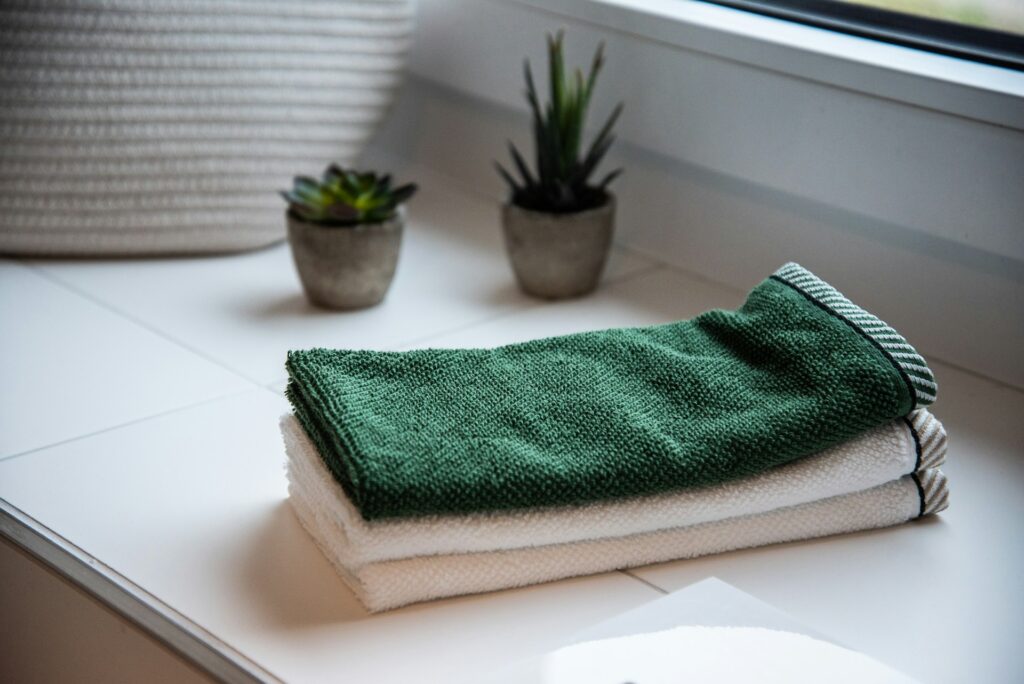
This matters most for the items you handle every single day. The hand towel by the basin sees more action than any bath sheet you own, so it’s the smartest place to upgrade first. These organic cotton hand towels from ARID are a good example of the breed, made from 100% organic cotton at a dense 600 GSM, with a geometric jacquard finish that looks the part rather than disappearing into the towel rail. A small thing to get right, but you’ll notice it daily.
Design
It’s an element of bathroom styling that’s so often overlooked. But your towel, if you hang it on a radiator or dedicated towel rack, is always on display, and therefore its appearance does matter.
For that reason, the towels you choose should look elegant around the home. Solid colours, or a considered pattern, tend to work best, ideally chosen to complement your room’s palette rather than fight it. It’s a principle that sits right at the heart of the biophilic, minimalist bathroom trend, where soft, natural-toned towels are treated as part of the décor rather than an afterthought. Get it wrong and you’ll create a jarring, clumsy effect every time you walk in.
The Bottom Line
To wrap up (pun intended), choosing the right towel is largely a matter of personal preference. But consider your requirements and make the ideal choice. If you want dense towels with plush loops of yarn, high-GSM cotton may be the right call. If you’d rather have something robust, soft, ultra-absorbent and quick-drying, microfibre could be your match. And whatever the material, decent construction and the right size for the job will always outlast a bargain that frays by Christmas.