We’re deep in the grip of January, and if you’re anything like most of us, your conservatory has been firmly off-limits since autumn. Too cold to linger in, too draughty to enjoy, it’s likely become a repository for Christmas decorations waiting to go back in the loft or a halfway house for muddy wellies. But with the days slowly lengthening and spring gatherings on the horizon, now is the perfect time to start preparing this space for its triumphant return as the social hub of your home.
Getting ahead of the season means you’ll be ready to host the moment the weather turns. Here’s how to transform your conservatory from winter wasteland to the room everyone wants to be in.
Start With A Thorough Assessment
Before reaching for the cleaning supplies, take a proper look at what you’re working with. Walk around the conservatory on a cold day and feel for draughts around windows and doors. Check the seals and rubber gaskets that keep the elements at bay, as these perish over time and can be the difference between a usable space and an expensive cold box.
Look up at the roof and examine each panel for cracks, discolouration or failed seals. Older polycarbonate roofs in particular are prone to degradation after 15 to 20 years, becoming brittle and yellowed. Ageing conservatories with these roofs tend to lose too much heat in winter and retain too much in summer, making them uncomfortable year-round without intervention.
If your roof is showing its age, addressing it now rather than in spring means you’ll be ready when the warmer weather arrives. As K&S Bespoke Builds, who offer conservatory roof replacement in Reading, recommend, upgrading to a solid, insulated roof can transform how usable your conservatory is throughout the year, keeping it warm enough to use even on cooler spring evenings.

Deep Clean While It’s Still Cold
January isn’t the most appealing time for cleaning, but tackling the job now means you won’t be wasting precious spring days with a mop and bucket. All that glass accumulates months of grime, condensation marks and dust.
Start with the roof panels and work down, using a telescopic mop or squeegee for interior glass. For UPVC frames, a specialist cleaner will remove the grey film that builds up over winter. Check for any mould around seals and window corners, a common problem in conservatories where condensation has been left to linger.
Get Temperature Control Sorted
The defining challenge of any conservatory is temperature regulation. Too cold for much of winter, potentially too hot come summer, finding that comfortable middle ground requires some thought.
The World Health Organisation recommends maintaining indoor temperatures of at least 18°C for health and comfort, though for spaces where you’ll be sitting and socialising rather than moving around, you may want it slightly warmer. For conservatories, achieving this consistently is the challenge.
Consider your heating options now while you have time to research and install. Electric underfloor heating works well in conservatories and won’t take up valuable floor space. Oil-filled radiators or ceramic tower heaters offer portable warmth that can be tucked away when not needed.
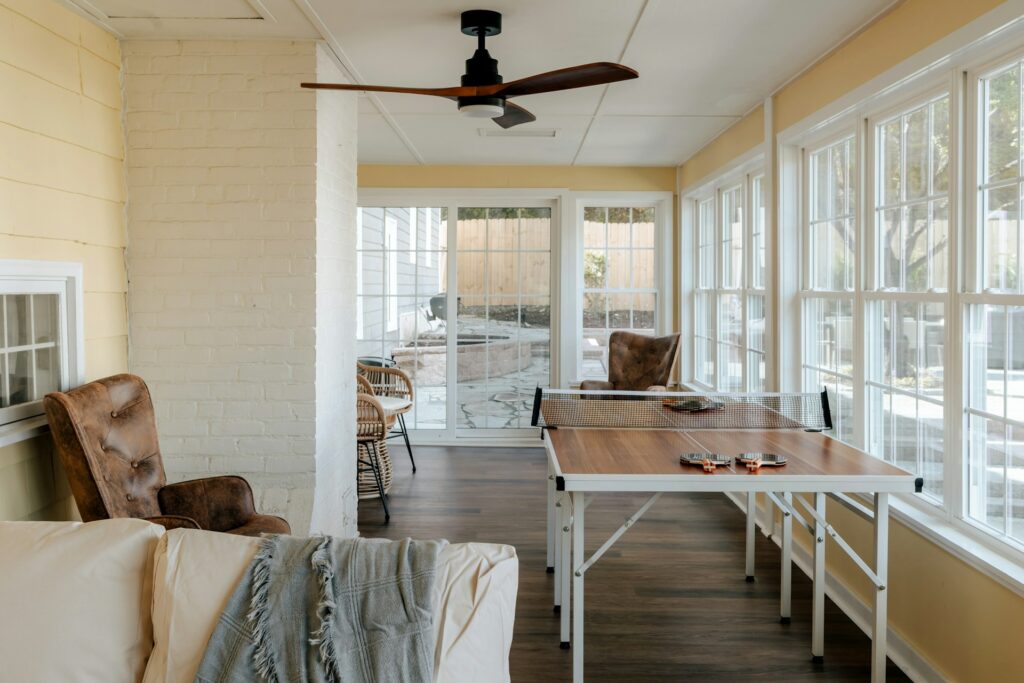
For the warmer days ahead, ensure all your vents and windows are operational. After months of being shut, mechanisms can seize up. Ceiling fans are remarkably effective at circulating air and creating a pleasant breeze, and they’re often overlooked in conservatory design. Thermal blinds or external shades will help regulate temperature as the sun strengthens.
Rethink The Layout For Entertaining
Winter often sees conservatory furniture pushed aside or covered over. Now’s the time to reconsider the arrangement with social gatherings in mind.
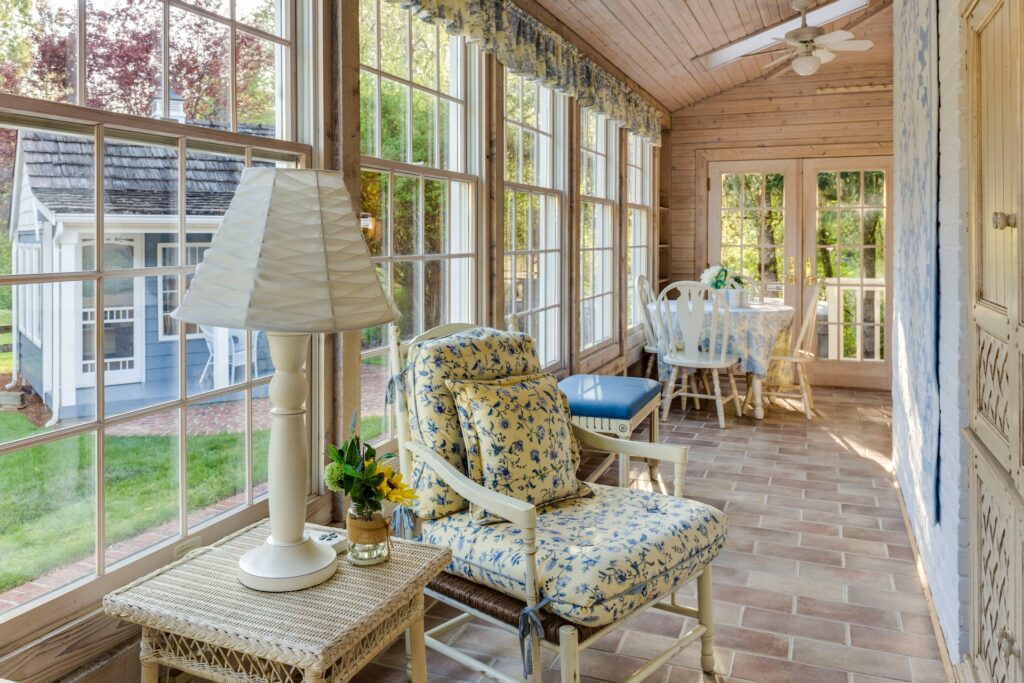
Think about conversation flow. A rigid sofa arrangement can feel formal and restrict movement; a mix of seating options tends to work better for casual entertaining. Two comfortable armchairs alongside some lighter rattan or wicker pieces allows guests to move around and form smaller conversation groups naturally.
Consider how many people you realistically want to host. A couple of small side tables distributed around the space prove more versatile than one large coffee table, giving everyone somewhere to set down a drink without having to reach awkwardly across their neighbour.
If your conservatory opens onto the garden, position seating to take advantage of that connection. When spring arrives properly, you’ll want the transition between indoor and outdoor space to feel seamless.
Layer Your Lighting
Natural light floods a conservatory by day, but as spring evenings stretch out, you’ll need artificial lighting that creates atmosphere rather than the harsh glare of a single overhead fitting.
String lights remain a conservatory staple, threading easily along the roofline or draping around the perimeter at picture rail height. Modern LED fairy lights are safer than older mains-powered versions, generating far less heat and using up to 90% less energy. The Scottish Fire and Rescue Service advises checking that any lights conform to British Standard EN 60598 and are in good working order before use.
Supplement string lights with table lamps and floor lamps at different heights to create pools of warm light that draw the eye around the space. Battery-operated LED candles grouped on surfaces add ambience without the fire risk of real flames near soft furnishings. Solar-powered lanterns can charge during the day and provide gentle illumination as dusk falls.
Introduce Plants & Greenery
A conservatory is essentially a domestic greenhouse, so lean into that heritage. The right plants will soften hard edges, improve air quality and create the sense of a space that bridges indoors and out.
BBC Gardeners’ World Magazine suggests that some of the best plants for conservatories are those native to hot, humid climates, which these spaces can replicate well. Bougainvillea, hoyas and mandevillas thrive in such conditions.
For something lower maintenance, the Royal Horticultural Society recommends tender palms as elegant specimen plants that give an exotic, tropical feeling and cope well with variable conditions.
If your conservatory isn’t heated through winter, succulents and cacti are forgiving choices that tolerate temperature fluctuations. Larger statement plants like fiddle leaf figs or bird of paradise create structural interest, while trailing plants like pothos soften shelf edges and window sills.

Add Softness & Texture
Conservatories can feel stark with all their hard surfaces and glass. Introducing soft furnishings transforms both the visual warmth and the acoustics of the space.
Outdoor-grade rugs work perfectly here because they’re designed to handle moisture and temperature changes. Layer one large rug under your main seating area and consider a smaller one to define a secondary zone. Cushions and throws in weather-resistant fabrics add colour and comfort while being practical enough for a space that sits somewhere between indoors and out.
Think too about curtains or drapes for the evenings when you want to feel more enclosed. These help with temperature retention and create a cosier atmosphere for evening entertaining.
Don’t Overlook The Practical Details
Good hosting comes down to practical preparation as much as aesthetics. Ensure you have enough surfaces for guests to set down drinks; nothing is more awkward than balancing a wine glass while trying to gesture during conversation. A bar cart or drinks trolley keeps everything to hand and adds a touch of occasion.
Consider the acoustics. Conservatories tend to amplify sound, which is wonderful for intimate conversation but can make larger groups feel chaotic. Background music played at a low level helps mask the echo and creates a more relaxed atmosphere.
Think about what time of day you’ll most often be entertaining. Morning coffee with friends? You’ll want adequate shade for when the sun is at its strongest. Evening drinks? Check your heating and lighting solutions are ready to go as temperatures drop after sunset.
The Bottom Line
Starting now, while we’re still firmly in winter, means you won’t be scrambling to prepare when the first genuinely pleasant spring day arrives. A conservatory that’s ready and waiting becomes the most desirable room in the house, offering something no other space can: the feeling of being immersed in light and surrounded by your garden while enjoying all the comforts of indoors.
With temperature control sorted, thoughtful furnishing in place and the right lighting ready to go, you’ll have created a space that guests will be reluctant to leave.