Ideal for bringing five-star flair to your most private room…
There’s a moment, somewhere around night two of a holiday, when you stop noticing the sea view and start coveting the bathroom. That floor-to-ceiling stone. The rainfall shower you didn’t want to leave. The way everything felt considered, from the lighting down to the weight of the towels.
If you’ve ever checked into a luxury hotel in Thailand, Bali or even Vietnam and found yourself more excited by the bathroom than the beach, you’re not alone, and you’re certainly not beyond help. Because here’s the thing: most of what makes those hotel bathrooms feel so special isn’t prohibitively expensive or architecturally impossible. It’s a matter of understanding the principles at play and applying them with discipline. The good news? Your bathroom in Bristol, Bath or Balham can borrow heavily from the best suites in Bangkok.
Zone Your Space & Separate Your Functions
The single biggest difference between a hotel bathroom that feels like a retreat and a domestic one that doesn’t? Zoning. In most hotel suites the bathroom is not treated as a single, multipurpose room. It’s a series of distinct spaces, each with its own function and, crucially, its own sense of purpose.
The Japanese model is the most instructive here. A traditional Japanese home separates the bathroom into three areas: the toire (toilet room), the senmenjo (washing and vanity area) and the ofuro (the bathing room itself, built around a deep soaking tub). The toilet is entirely enclosed in its own small room. The vanity sits in a dry zone. The bathing area, shower and tub included, is a fully waterproofed wet room where every surface can handle water with no fuss.
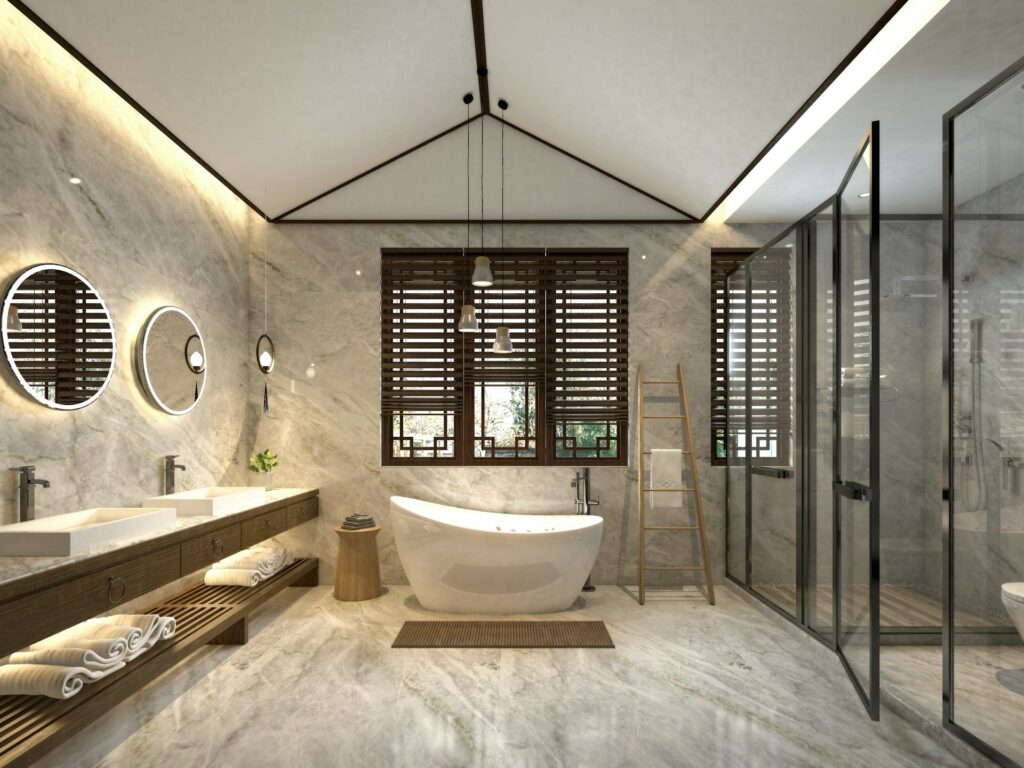
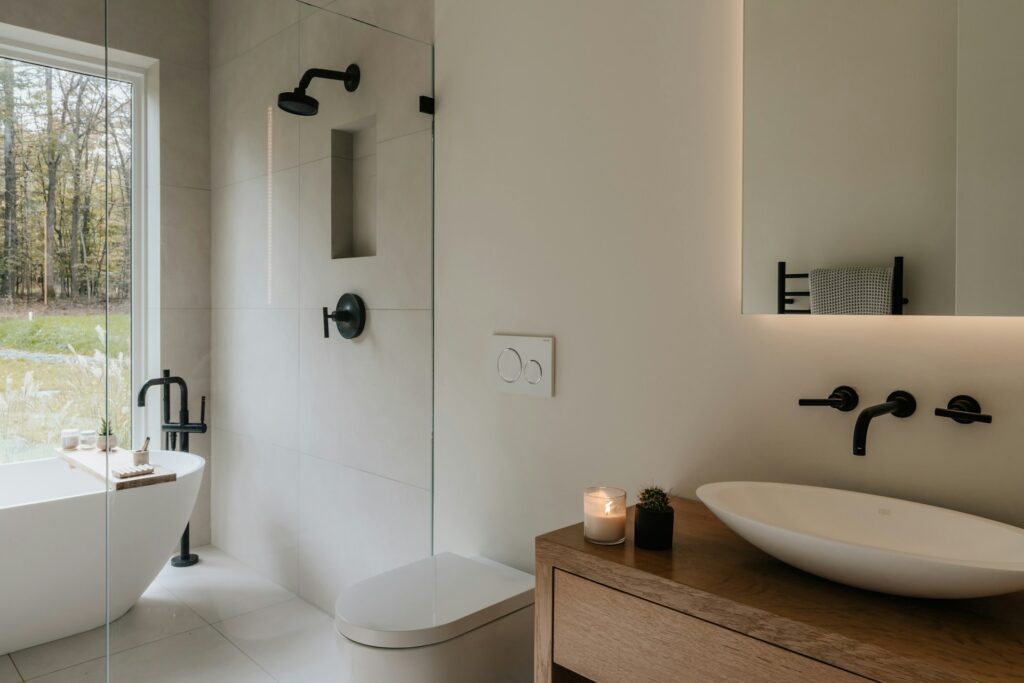
This three-zone approach is the blueprint behind some of the most impressive hotel bathrooms in the world, from the minimalist suites of Aman Tokyo to the open-plan wet rooms of a luxury Krabi villa. And while most British homes don’t have the square footage to replicate it exactly, the principle scales down beautifully. Even a modest partition wall, a glass screen or a cleverly positioned vanity unit can introduce the idea of separation between wet and dry functions. If a full partition isn’t feasible, a half-height wall or a simple change in flooring material, say from timber-effect tile to natural stone, can do the psychological work of dividing the room without losing a sense of openness.
For smaller spaces where full zoning isn’t possible, consider smart glass or frosted glass screens to maintain a bright, open feel while still providing that sense of visual separation. Switchable privacy glass, which shifts from transparent to opaque at the press of a button, is increasingly available from UK manufacturers and brings that high-end hotel trick of a glass-walled bathroom into the domestic realm without sacrificing modesty.
Rethink Where Your Bath Lives
If there’s one design move that luxury hotels have normalised and British homes have been slow to adopt, it’s liberating the bathtub from the bathroom entirely. In some tropical 5 star resorts, you’ll find a bathtub outside.
The UK, of course, doesn’t have the weather for this. So consider instead, a freestanding tub positioned in the bedroom. You’ll often find this arrangement too, in high-end suites across Southeast Asia and the Mediterranean. The bath becomes a sculptural centrepiece rather than something wedged between the toilet and the towel rail, and the bathroom itself gains back valuable square footage – enough to consider those dry and wet zones previously mentioned.
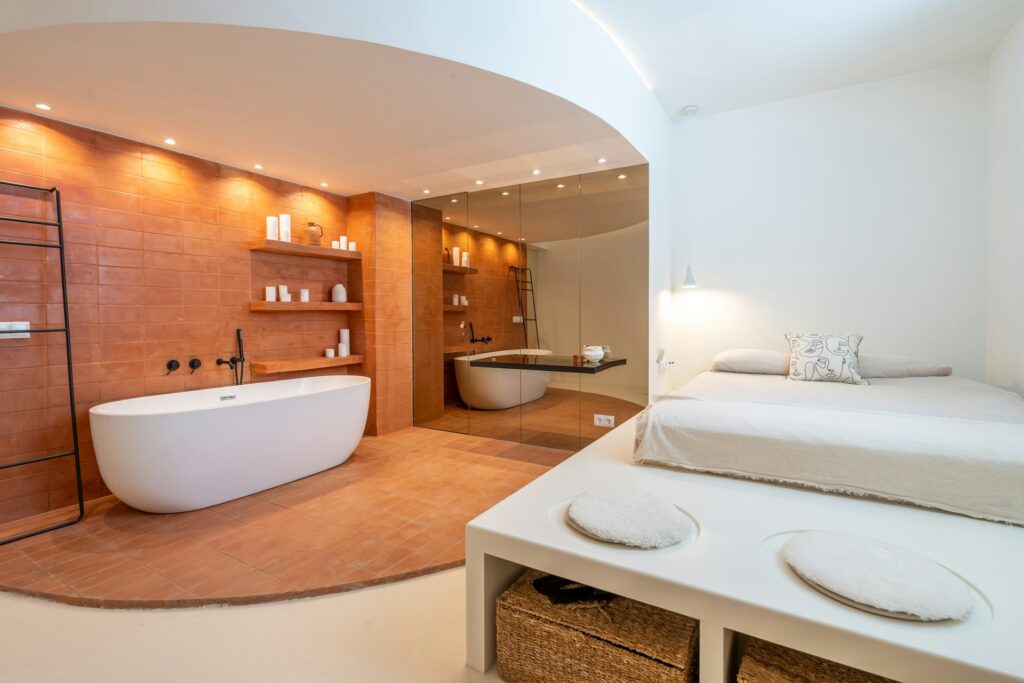
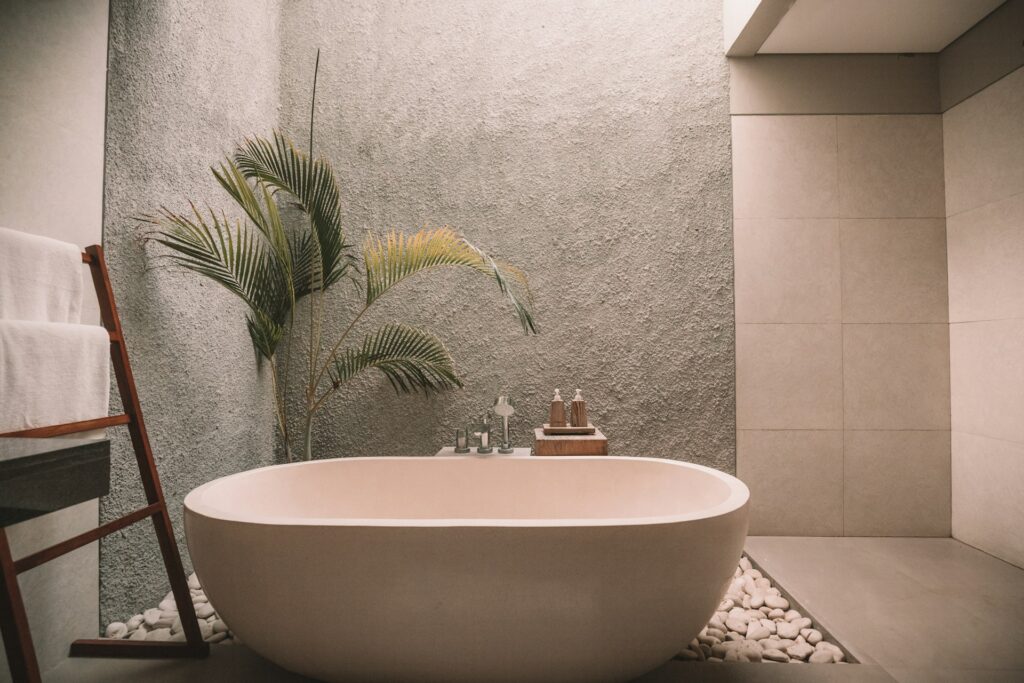
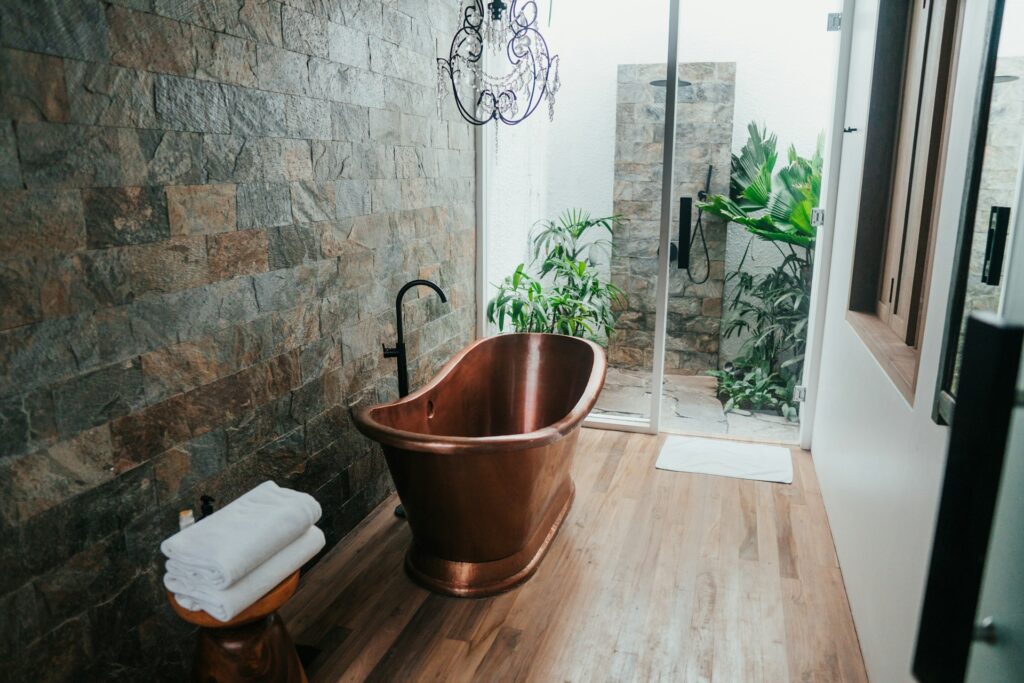
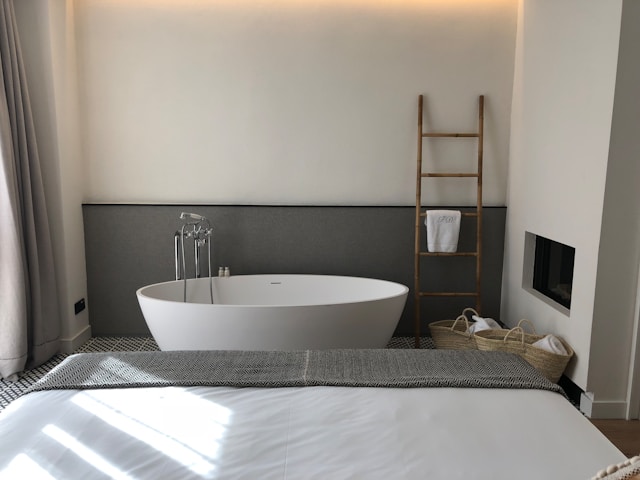
Even if a full bedroom bath isn’t for you, the underlying principle is worth applying: don’t assume the bath has to live where the previous owner put it. Moving a freestanding tub to a different position within the bathroom, perhaps beneath a window, against a feature wall or into a central position where it can be approached from all sides, can completely transform the room’s layout. That repositioning alone is often the difference between a bathroom that feels cramped and one that feels like somewhere you’d actually want to spend time.
Ideal Tip: While there’s no UK law explicitly prohibiting a bath in a bedroom, installing plumbing in a room that didn’t previously have it is considered a change of use under the Building Regulations, and you’ll need Building Control approval.
Choose A Material & Commit To It
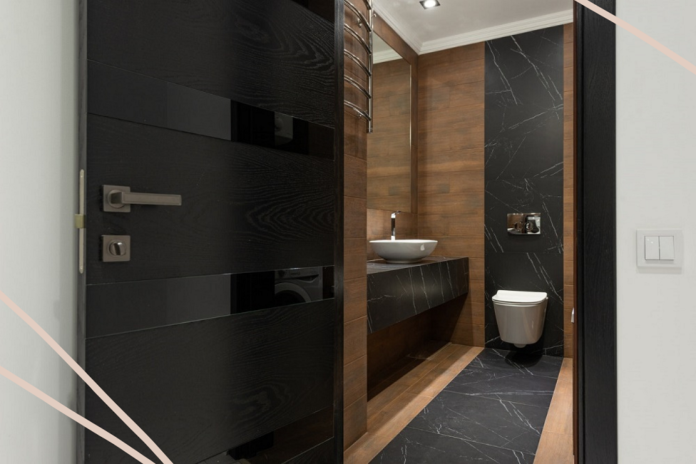
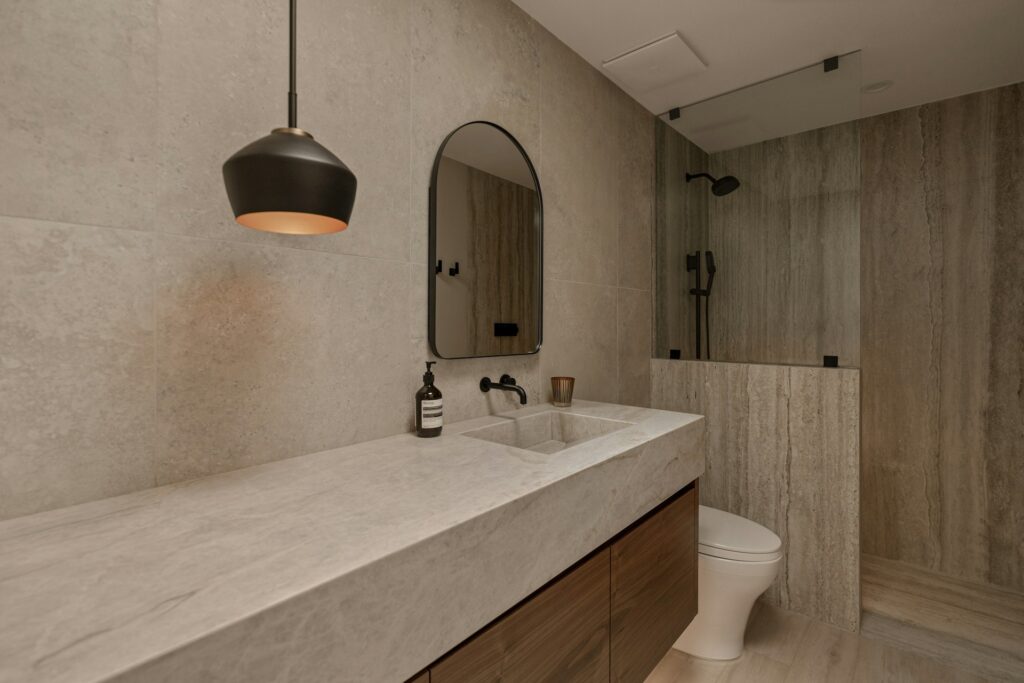
Walk into a beautifully designed hotel bathroom and you’ll notice that, more often than not, the material palette is tight. Two or three surfaces at most, repeated with conviction. One type of stone running from the floor up the shower wall. A single timber tone across the vanity and shelving. Metalwork in one finish throughout. The restraint is what gives the room its sense of calm.
The luxury hotel approach is simpler than it sounds: pick a hero material and let it do the heavy lifting. Natural stone, whether marble, travertine, limestone or slate, is the most immediate route to that five-star feel. Marble brings veined drama, travertine offers warmth, slate grounds a room in something darker and more textural. If a full stone bathroom is beyond budget, even a single feature wall in the shower or behind the bath can anchor the whole room.
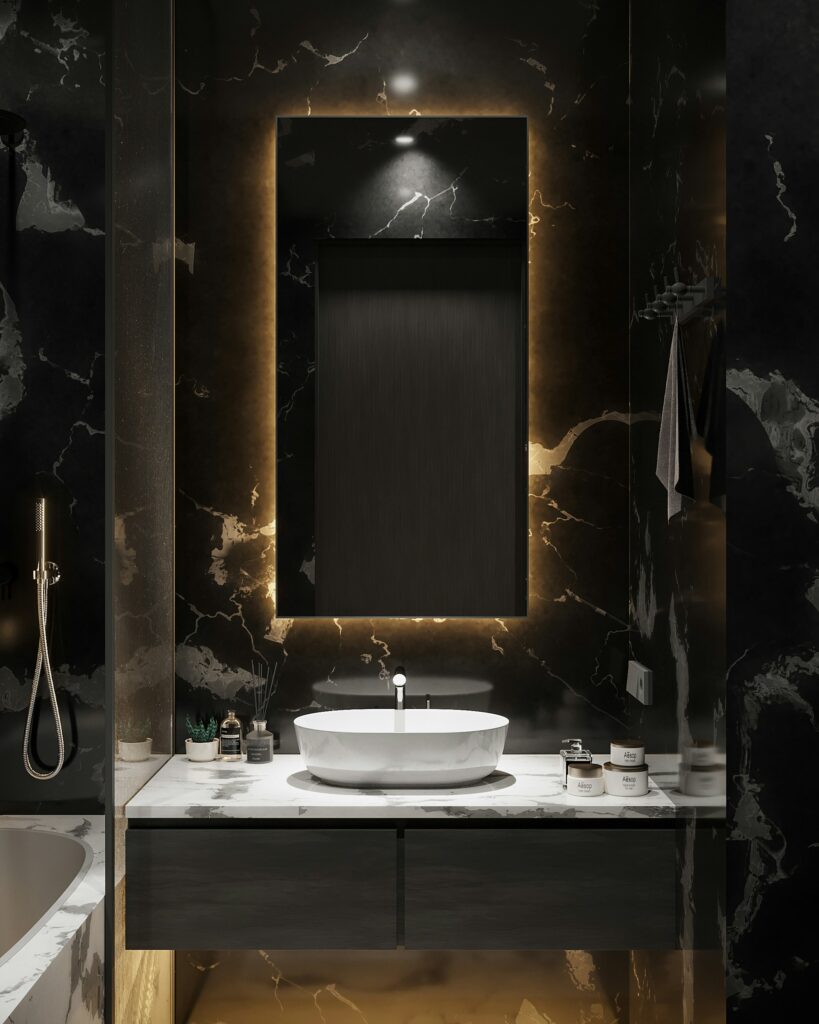
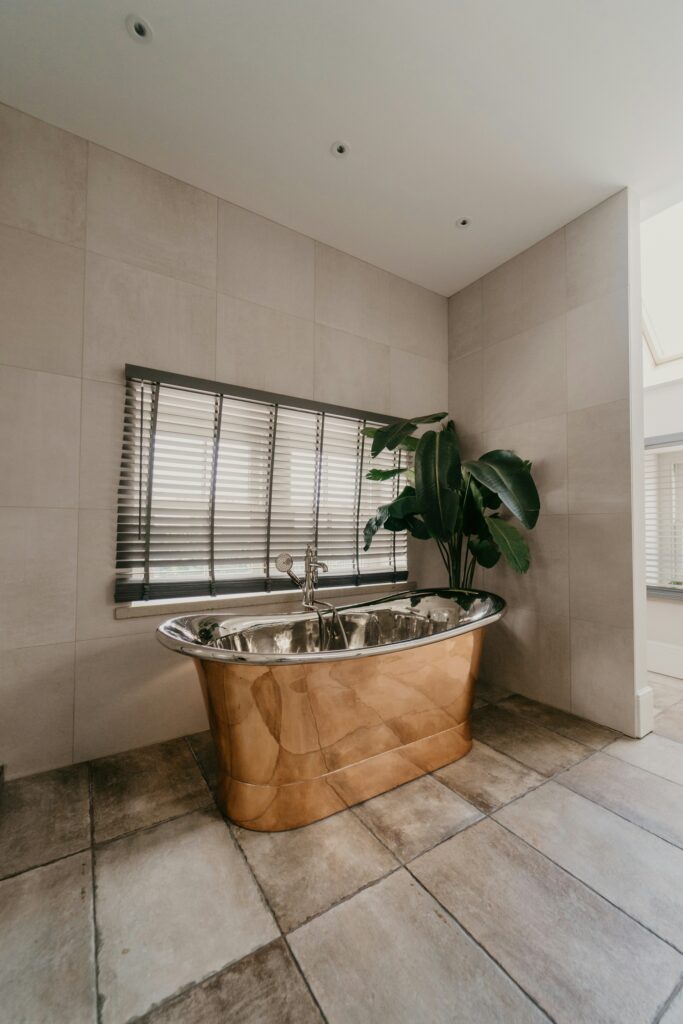
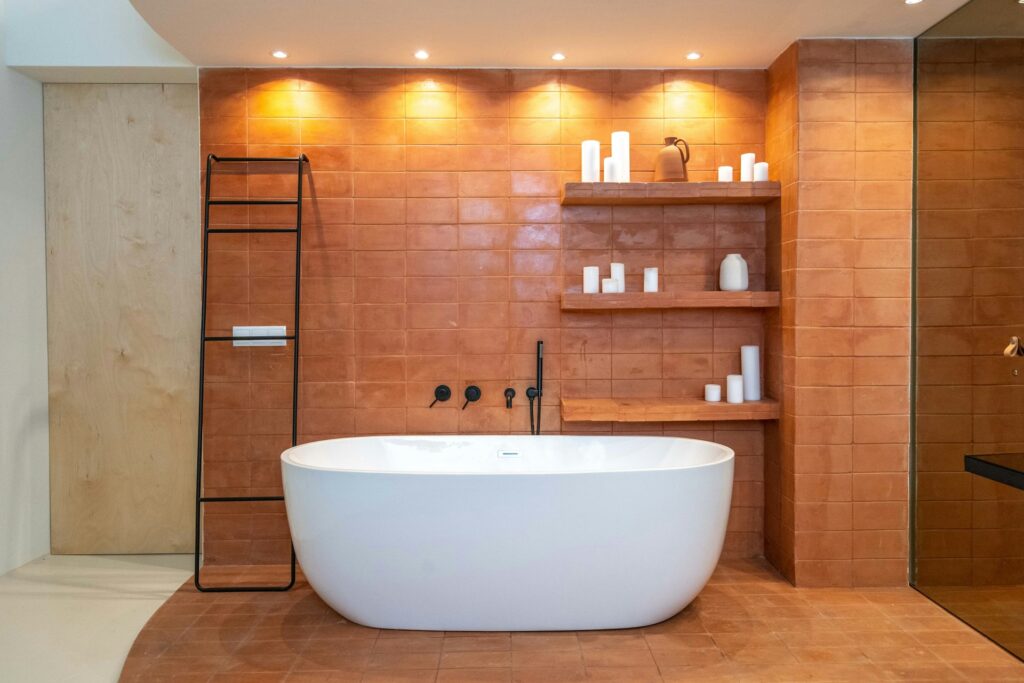
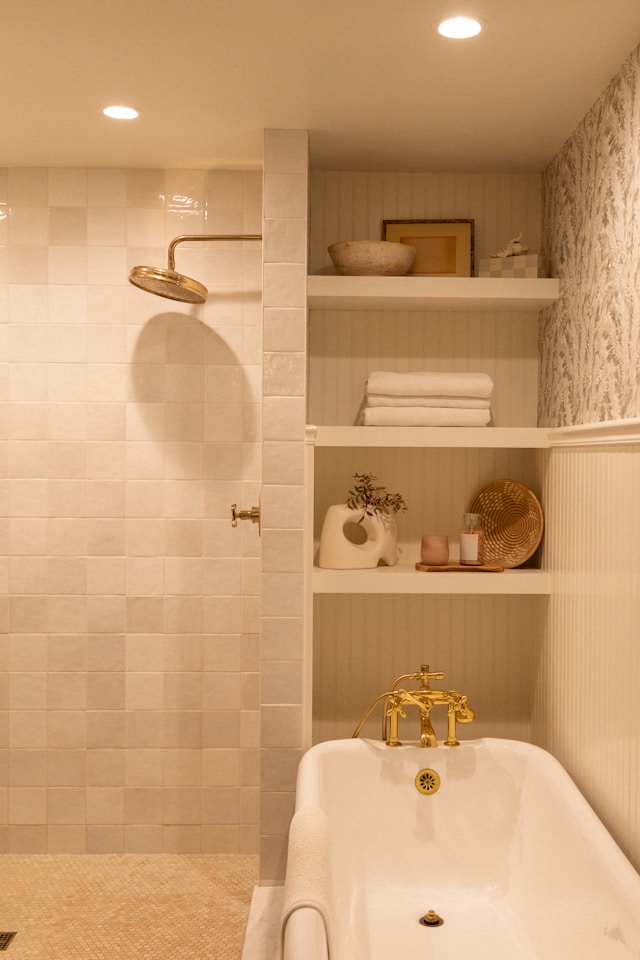
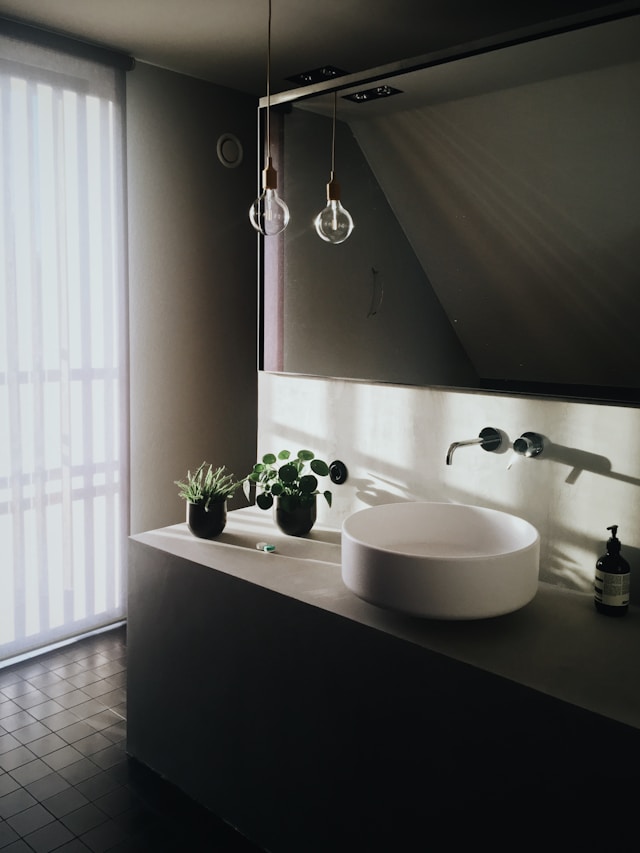
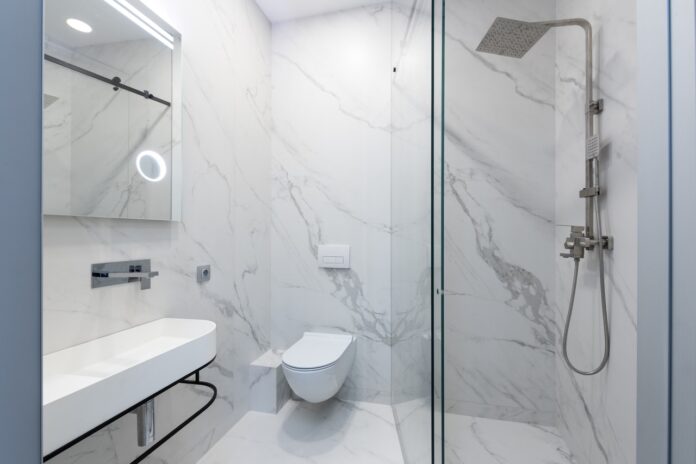
Large-format tiles are another hotel trick worth borrowing. Fewer grout lines mean cleaner sight lines, and larger tiles create an illusion of space that’s particularly welcome in British bathrooms, which are, let’s be honest, not generally built for lingering. Lay them floor to ceiling for maximum impact.
Stone shower panels are worth a particular mention here, because they eliminate grout lines altogether. Rather than tiling a shower enclosure and dealing with the inevitable maintenance of grout (which, in a wet environment, is a battle you will eventually lose), a solid stone panel offers a single, seamless surface that’s both easier to clean and visually striking. Natural stone panels in marble, granite or travertine bring genuine weight and texture to the space, though they require sealing and come at a premium.
Engineered stone and composite alternatives offer much of the same visual impact at a lower price point, with better resistance to staining and less upkeep. Either way, the effect is the same: your shower stops looking like a tiled cubicle and starts looking like something you’d find in a villa in Koh Samui.
Whatever you choose, the key is coherence. Limit yourself to three finishes: one for surfaces, one for woodwork or cabinetry, and one for metalwork. That discipline is what separates a bathroom that feels like a suite at a luxury Thai resort from one that feels like a mood board that got out of hand.
Read: Dreaming of a luxurious hotel experience at home? Here are some affordable ways to make that happen.
Invest In Statement Fixtures
In a hotel bathroom, the fixtures are the furniture. A freestanding bath, a wall-mounted basin, a floor-standing tap; these are the pieces that define the character of the room, much as a sofa or dining table defines a living space. And yet in most home bathrooms, fixtures are treated as afterthoughts, chosen for price rather than presence.
A rainfall showerhead is one of the simplest and most effective upgrades you can make. Ceiling-mounted versions create a drenching, immersive experience that feels categorically different from a handheld shower. Waterfall taps are another fixture that luxury hotels deploy to great effect, and they translate beautifully to a domestic bathroom and create a visual and auditory experience that feels closer to a natural waterfall than a piece of plumbing.
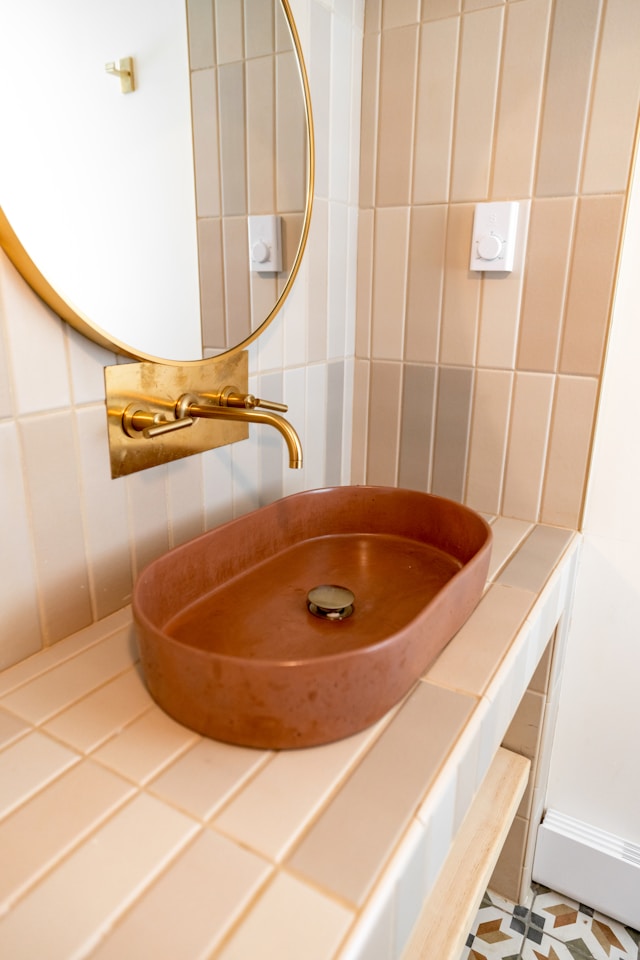
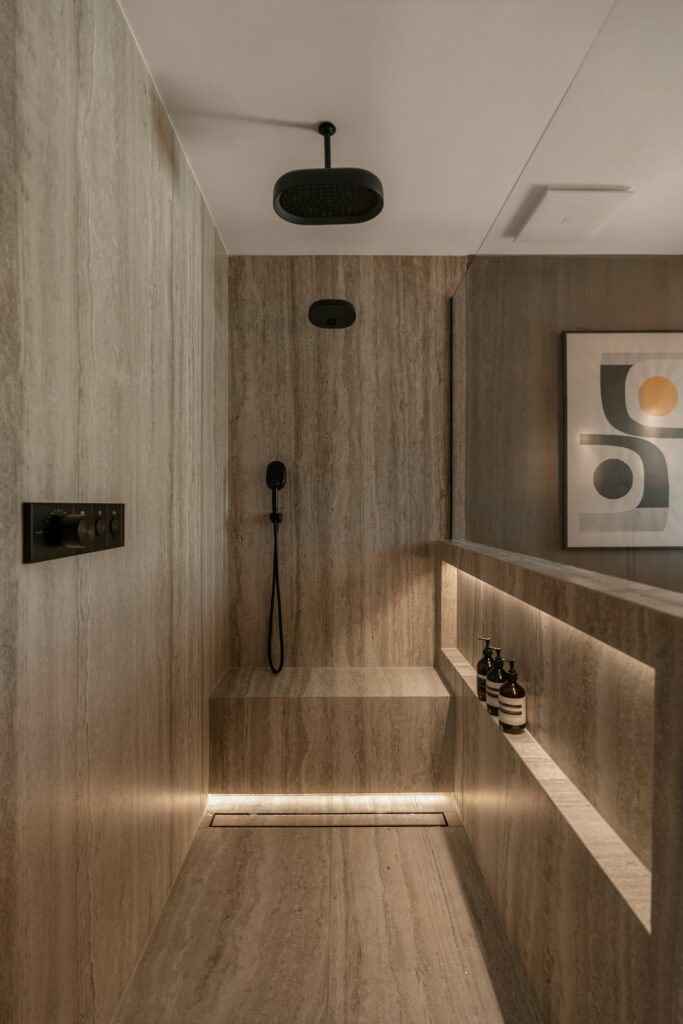
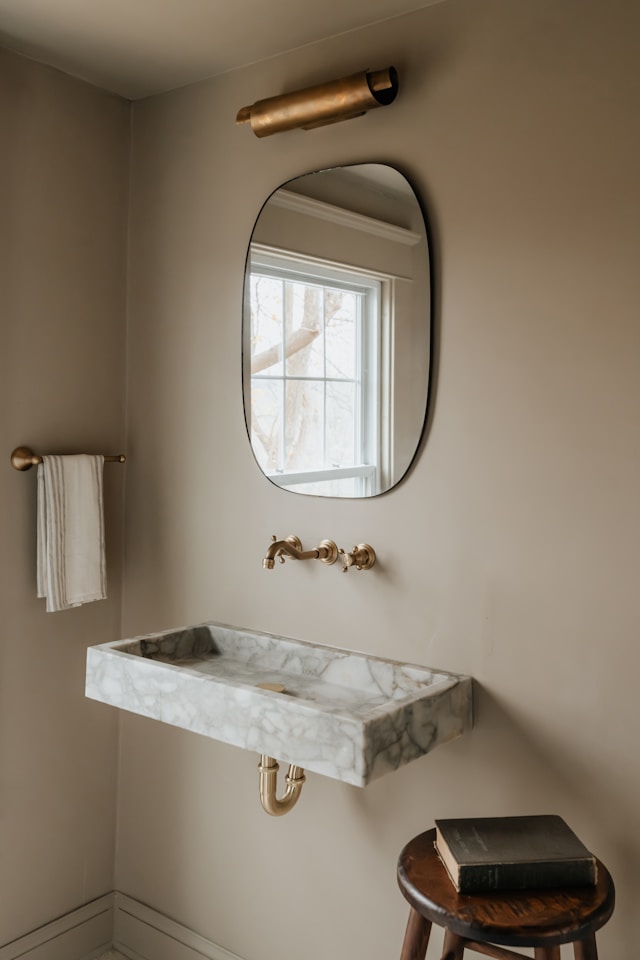
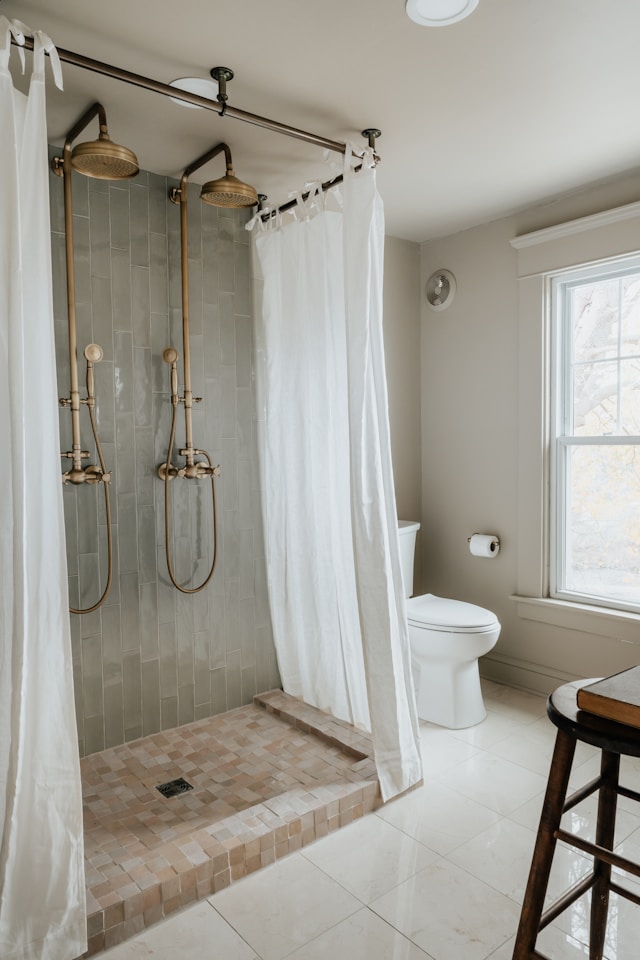
Wall-mounted taps and basins are another easy win. By lifting the basin off the floor and running the pipework into the wall, you create that floating, minimal look that luxury bathrooms trade in, while also making the floor easier to clean. If a full wall-mounted set-up isn’t practical, a countertop basin on a timber or stone vanity achieves a similar effect with less disruption to existing plumbing.
The finish of your hardware matters enormously, too. Brushed brass, matte black and brushed nickel all read as more considered than standard polished chrome, which can look clinical in certain settings. The trick is to commit to one finish across all your fixtures and accessories, from shower controls to towel rails to toilet flush plates. That uniformity is one of the quieter details that makes a hotel bathroom feel so composed.
Layer Your Lighting
If there’s one area where domestic bathrooms consistently fall short of their hotel counterparts, it’s lighting. Most rely on a single ceiling fitting, which produces flat, unflattering light and does nothing for the atmosphere of the room. Hotels, by contrast, use layered lighting to create a space that can shift in mood depending on the time of day and the task at hand.
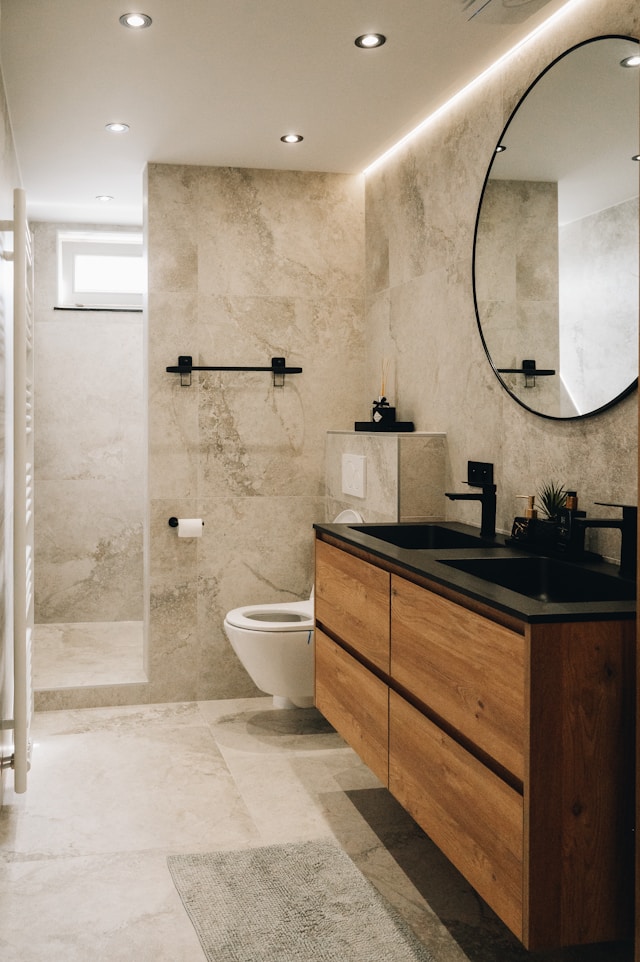
The three layers to consider are ambient, task and accent. Ambient lighting provides the room’s overall brightness; recessed ceiling downlights or a central fitting serve this purpose. Task lighting is focused and functional, designed for grooming; wall-mounted sconces or LED strips on either side of a mirror are far more flattering than a single light above it, as they eliminate harsh shadows on the face.
Accent lighting is where the atmosphere lives: LED strips beneath a floating vanity, a backlit mirror, niche lighting inside a shower recess or a warm glow behind a freestanding bath. Each layer should, ideally, be dimmable, giving you the ability to move from bright and functional in the morning to warm and low in the evening.
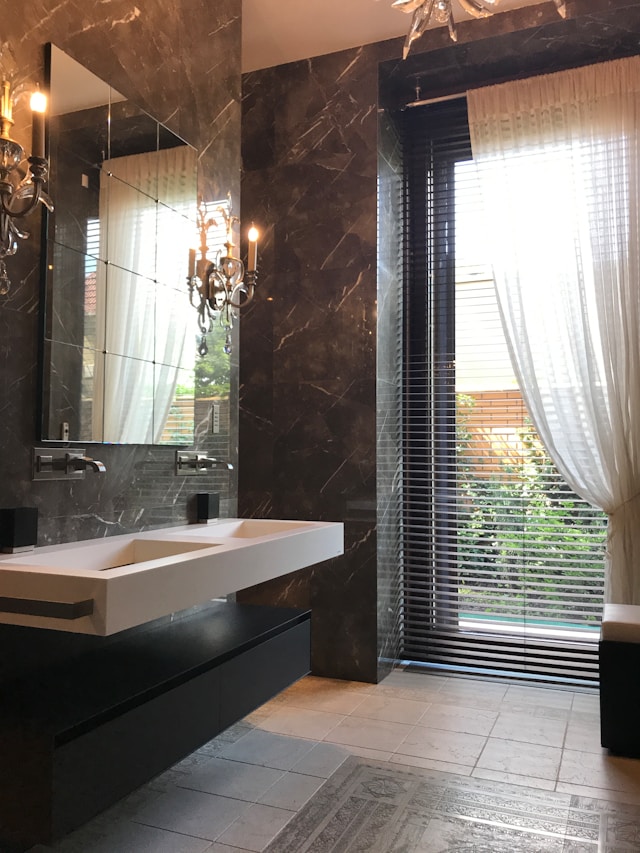
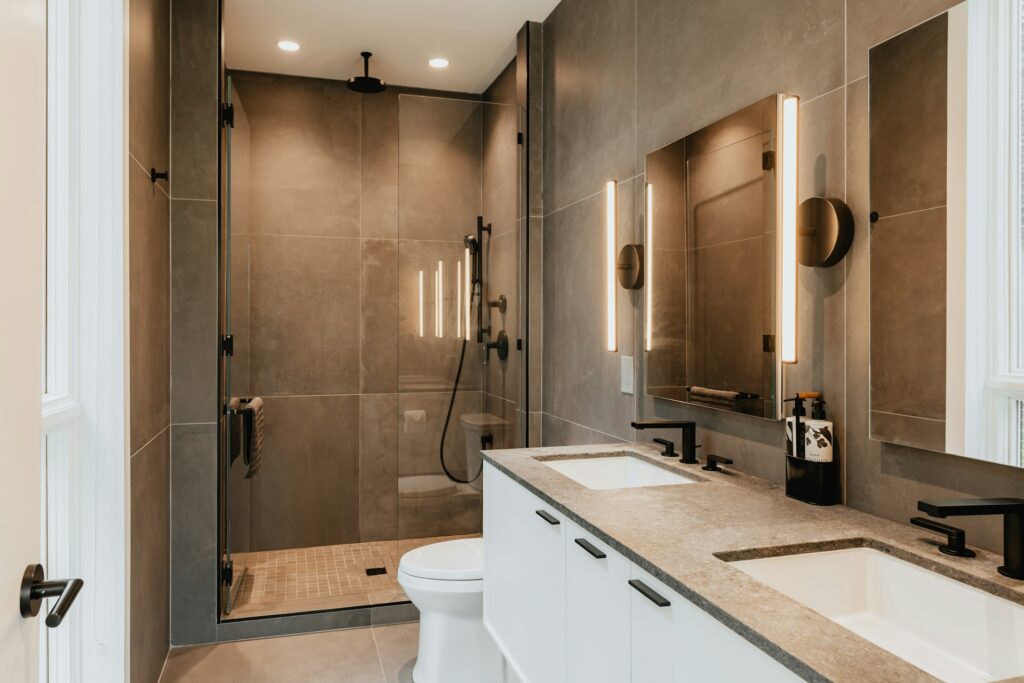
Ideal Tip: A word on colour temperature: aim for warm white bulbs, somewhere around 2700K to 3000K. This is the range that flatters skin tones and creates that inviting warmth you associate with a good hotel. Anything cooler starts to feel surgical.
Upgrade Your Towels & Robes
It sounds almost too simple, but the tactile experience of a luxury hotel bathroom owes as much to its textiles as its tiles. Those impossibly thick towels, the kind that make you want to stand in them for longer than is strictly reasonable, are not a mystery ingredient. They’re simply good towels, properly cared for.
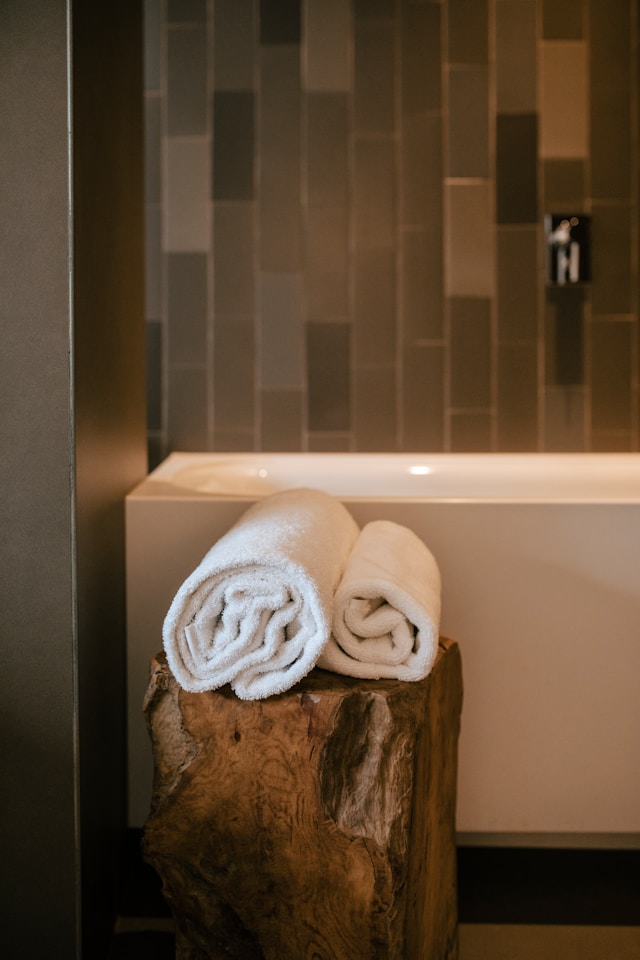
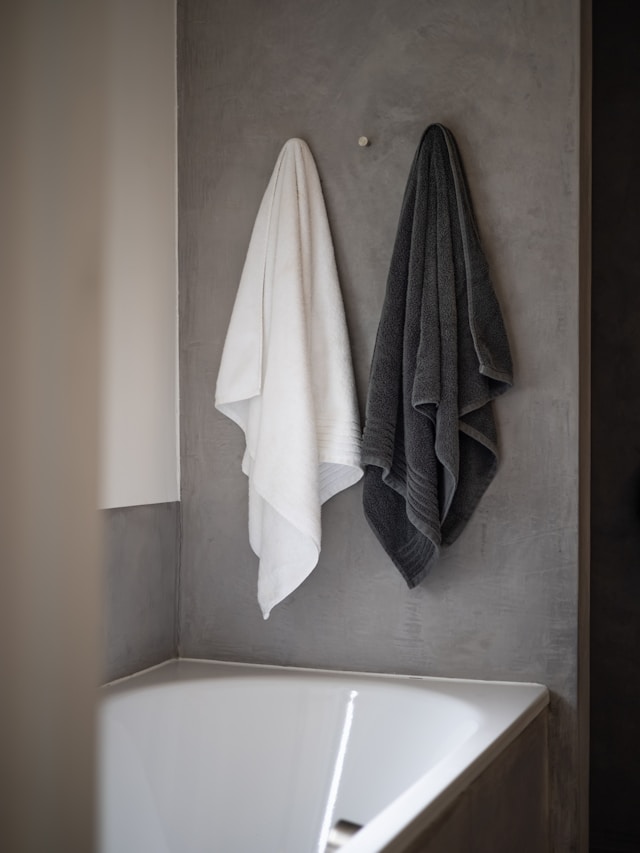
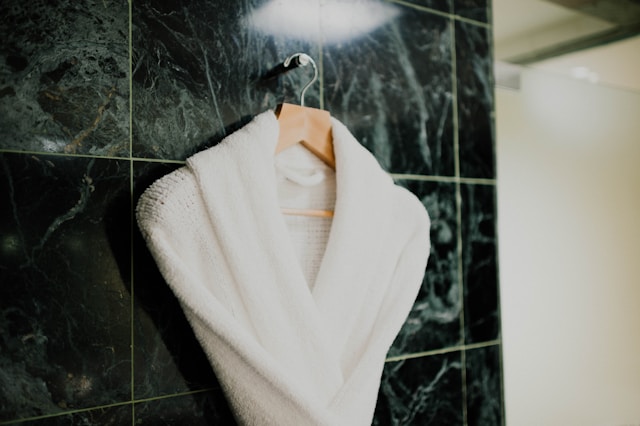
A bathrobe is a small luxury that disproportionately shifts the feel of a room. Waffle-weave cotton is the classic hotel choice, lighter and more breathable than heavy terry cloth, and it looks better draped on a hook. Heated towel rails deserve reconsideration here, too. A well-chosen rail in a finish that matches your other fixtures, a slim, ladder-style design in matte black or brushed brass, for instance, doubles as both a warming device and a sculptural presence on the wall.
Invest In Scent
No hotel bathroom worth its Egyptian cotton hand towels neglects scent. It’s one of the most powerful and least expensive ways to shift the atmosphere of a room, and it works on a level that’s almost subconscious. The right fragrance, encountered as you walk in, can do more for the mood of the space than a new tile job.
The approach should be layered, much like the lighting. A reed diffuser provides a constant, low-level background fragrance. Scented hand soap and body wash tie the experience together. The key is consistency; choose a single scent family, whether that’s something woody and resinous, green and herbaceous, or clean and citrus, and let it run through everything. Hotels do this deliberately, creating an olfactory signature that guests associate with the experience of being there. There’s no reason your bathroom can’t do the same.
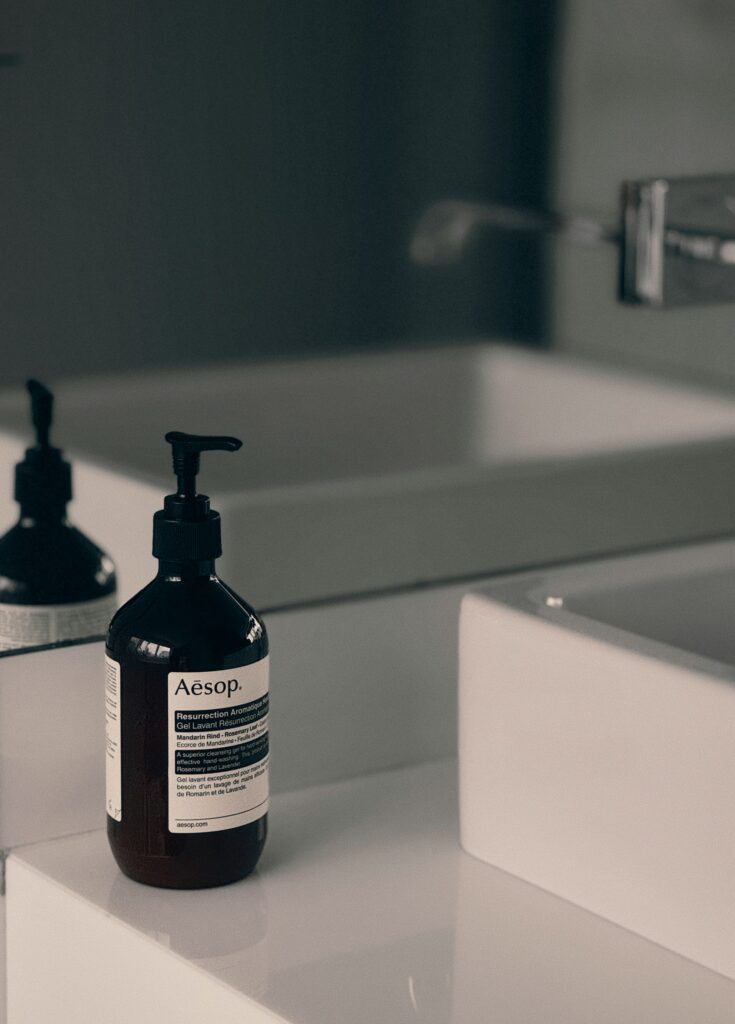
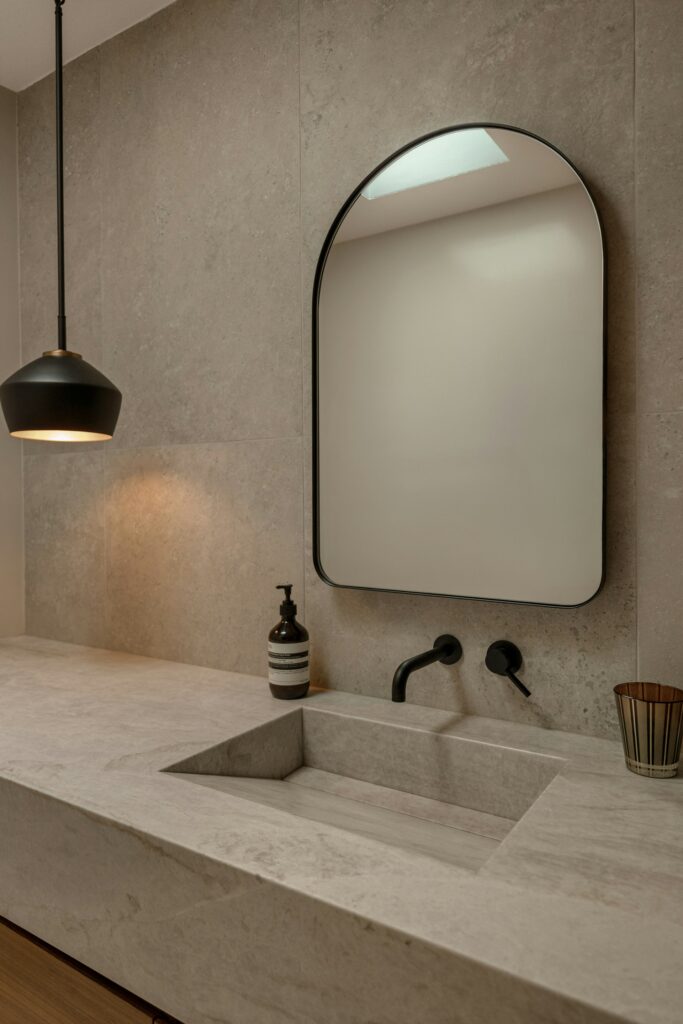
Aesop is the gold standard here, and for good reason. Their hand washes and body products look the part without trying, the amber bottles are handsome enough to display without decanting, and the formulations genuinely smell like something a grown-up would choose.
If you’ve blown your renovation budget on stone panels and brushed brass fixtures, the M&S Apothecary range is a very creditable mid-price alternative. The packaging is sleek, the essential oil-based fragrances (Calm, Restore, Meditate) are well-judged for a bathroom setting, and the whole range is designed to sit together as a coherent collection.
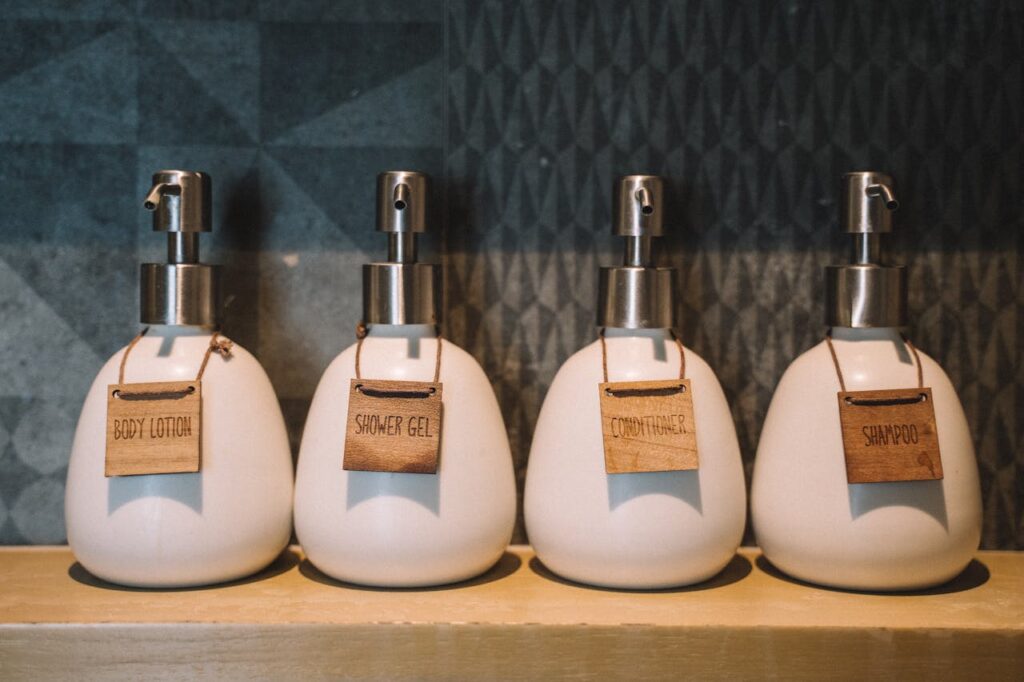
For those on a tighter budget still, Lidl’s Deluxe hand wash range is quietly one of the best dupes on the high street. The bottles look smart, the scents are more than passable, and at a fraction of the price you can afford to keep your bathroom stocked without wincing. Of course, any brand can be decanted into pretty matching bottles – something most hotels do now.
Declutter With Discipline
The final lesson from the hotel bathroom is perhaps the most important and the hardest to maintain: keep your surfaces clear. Every luxury bathroom you’ve ever admired in a resort had one thing in common: you couldn’t see anyone’s shampoo collection.
This means storage, and quite a lot of it. Recessed niches in the shower wall eliminate the need for caddy baskets and free-standing bottles. Closed cabinetry beneath the vanity hides everything from toilet rolls to cleaning products. Internal drawer organisers keep cosmetics and toiletries in order without stacking them on the counter. The goal is to have a home for every single item in the room, so that the default state of the bathroom, the version of it that exists when nobody is actively using it, is one of total calm.
Decanting your everyday shampoo, conditioner and body wash into matching bottles is a small act of theatre, but an effective one. Amber glass or matte ceramic dispensers bring cohesion to the shower area and eliminate the visual noise of branded packaging.
The Bottom Line
If you’re looking for more ways to bring a touch of luxury to this most intimate of rooms, have a read of our 8 luxury alternatives to your traditional bathroom fixtures. Your bathtub will thank you, even if your bank account is a little less enthusiastic.