In Japan, the onsen is more than a bath. It is a ritual of stillness, built around mineral-rich thermal water, natural materials, and the deliberate removal of everything unnecessary. Whether found carved into a mountainside in Kyushu or tucked behind a wooden screen in a Kyoto ryokan, the onsen tradition centres on one idea: that bathing, done well, is a form of healing. Soaking in heated water improves blood circulation, eases muscle tension, and lowers cortisol levels. The effects on sleep and mental clarity are well documented.
A recent survey found that 67 percent of tourists visiting Japan are interested in experiencing an onsen, which speaks to how powerfully the concept resonates even for those encountering it for the first time.
The good news is that you do not need to book a flight to access those benefits. With thoughtful design choices and the right materials, it is entirely possible to bring the essence of an onsen into your home, whether you have a garden, a spare room, or simply a bathroom due an upgrade.
Start With The Principles, Not The Products
The temptation with any bathroom renovation is to lead with fixtures and fittings. But the onsen tradition works the other way around. It begins with philosophy.
The Japanese concept of ma refers to negative space, the emptiness between objects that gives a room its sense of calm. In an onsen-style bathroom, every element earns its place. There are no decorative towel racks, no cluttered shelves of half-used products, no visual noise. The room breathes.
Before choosing a single tile, think about what you want to feel when you enter the space. Warmth. Enclosure. Quiet. These sensations should guide every decision that follows, from layout to lighting to the temperature of the water itself.
Choose Your Space
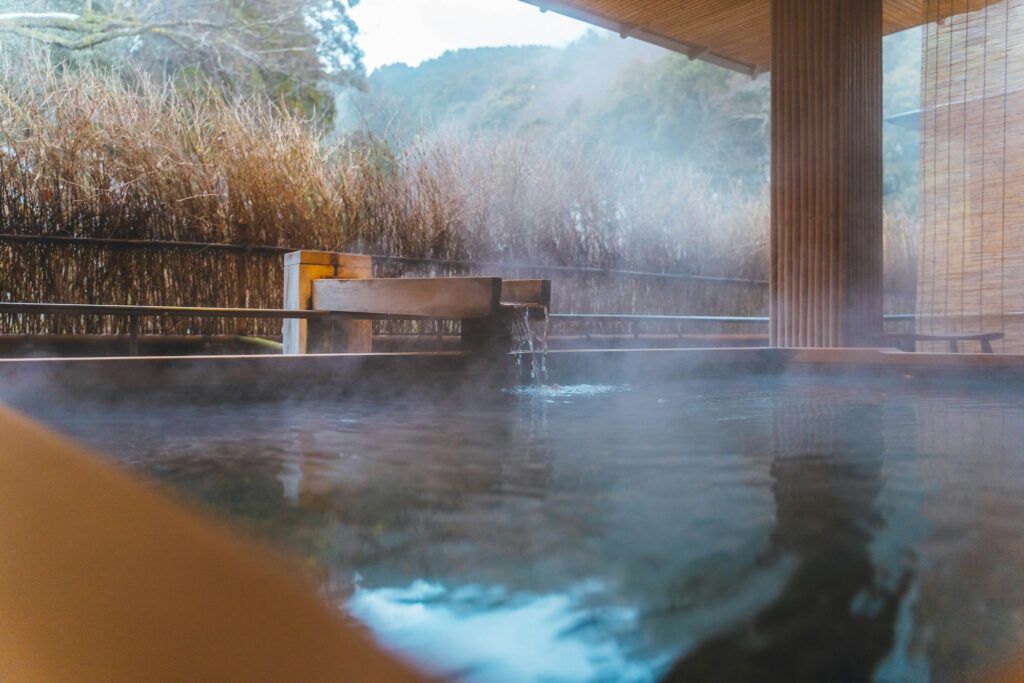
An onsen-style bathing area works in more settings than you might expect. If you have a garden, a sheltered corner with good drainage and access to plumbing is ideal, particularly if it can be naturally screened from neighbours with bamboo fencing or a living wall of evergreen planting. For those in a flat or terraced house, converting an existing bathroom is the most practical route, and even a modest-sized room can feel genuinely transformative with the right approach.
Whichever route you take, consult a professional to optimise your heating systems early in the process. An onsen-style tub uses significantly more water than a standard bath, and you will need a boiler and pipework capable of delivering a steady supply of hot water at the right temperature.
Getting this infrastructure right from the outset saves time and money further down the line, and it is the kind of detail that separates a genuinely restorative bathing space from one that simply looks the part.
The Tub Is Everything
In a traditional onsen, bathers sit with water up to their shoulders. This deep immersion is central to the experience, and it is the single most important element to get right at home. Standard Western bathtubs are too shallow and too long for the purpose. What you want is a deep soaking tub, ideally one that allows you to sit upright with the water reaching your collarbone.
The gold standard is Hinoki wood, the Japanese cypress prized for its gentle, forest-like fragrance and natural resistance to moisture. Hinoki tubs are expensive and require careful maintenance, but the sensory experience they deliver is extraordinary. If budget or practicality is a concern, stone composite tubs and high-quality acrylic soaking tubs can achieve a similar depth and silhouette at a lower price point. A freestanding oval or circular shape works best, both for comfort and for the visual simplicity that defines the onsen aesthetic.
Natural Materials & Muted Tones
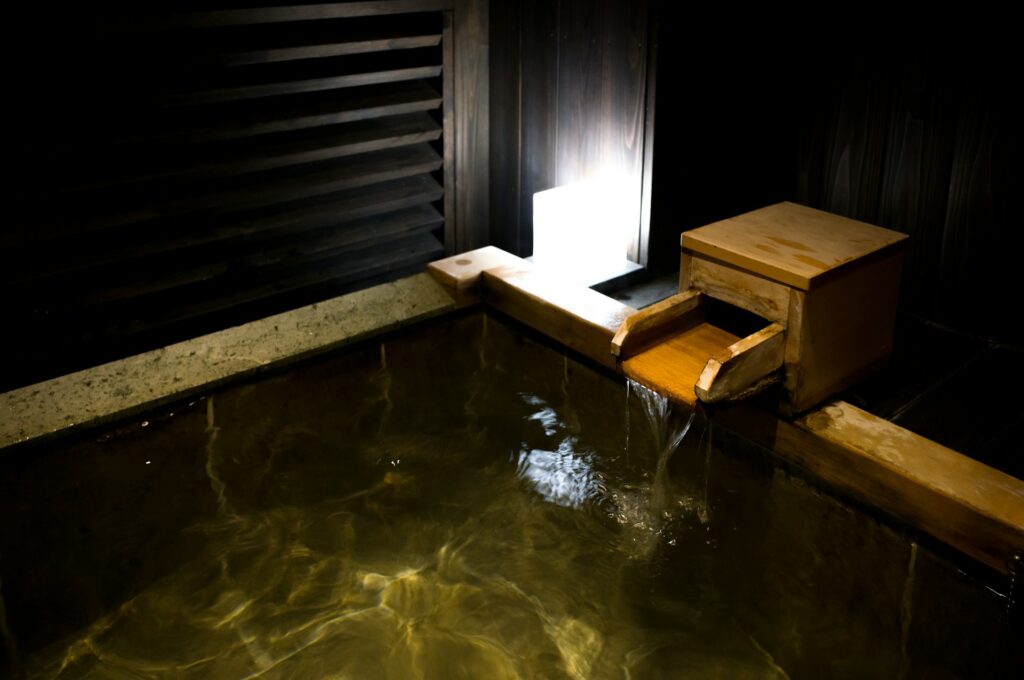
An onsen draws its beauty from the landscape around it. Indoors, you can echo this by choosing materials that feel connected to the natural world. Stone tiles in slate grey or warm sand tones create a grounding base. Pebble-style shower trays or accent strips of river stone add texture underfoot without cluttering the visual field. Wood, whether used for a bath surround, a low stool, or simple shelving, brings warmth and a faintly medicinal scent when it meets steam.
Avoid anything glossy, bright, or synthetic. The palette should be drawn from earth and water: grey, cream, moss green, charcoal, and the soft amber of untreated timber. If you are tiling walls, consider large-format tiles with minimal grouting to keep lines clean and surfaces calm.
Lighting & Atmosphere
Harsh overhead lighting will undo all your good work. In an onsen, light tends to be low, warm, and indirect. Recessed downlights on a dimmer switch are the simplest solution. Wall-mounted fixtures that cast light upward or downward, rather than into the eyes, help create a sense of enclosure and softness. If you have the budget, consider LED strips concealed beneath a floating vanity or behind a bath surround for a gentle glow that pools at floor level.
Candlelight is an obvious addition, and a good one. A few unscented candles on a stone tray beside the tub bring a flicker of movement to an otherwise still room. For outdoor onsens, low-level garden lighting and string lanterns can create a similar warmth without competing with the night sky.
The Washing Ritual
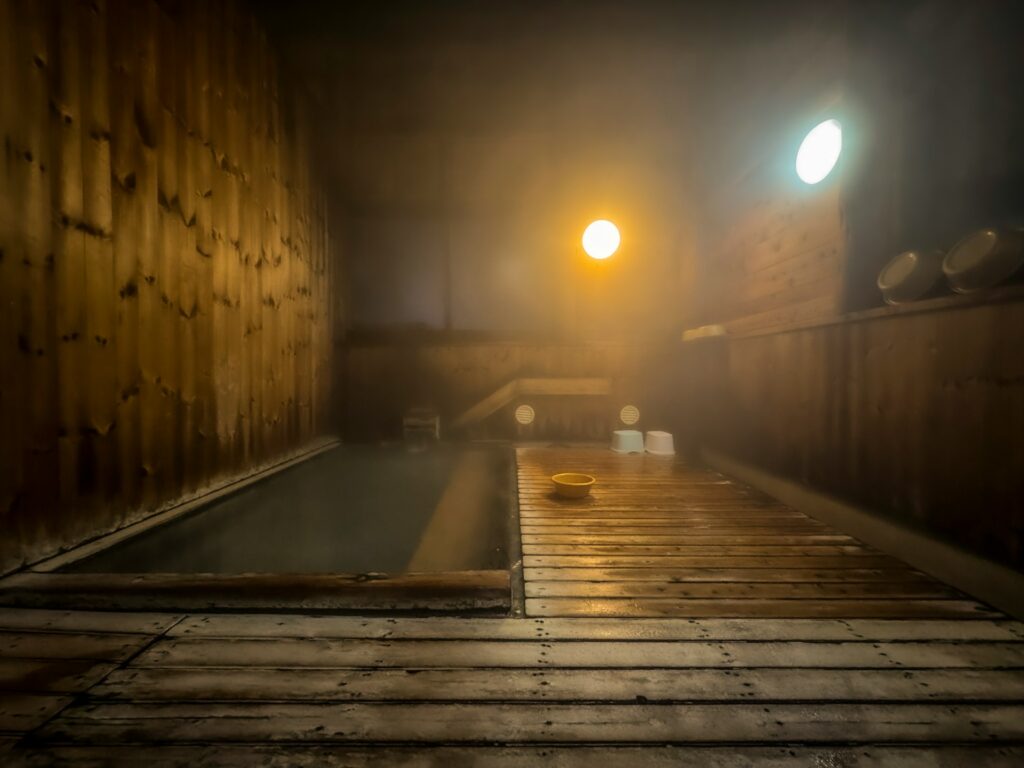
One detail that often gets overlooked in Western interpretations of the onsen is the washing station. In Japan, bathers wash thoroughly before entering the tub, as the bath itself is for soaking, not for cleaning. Recreating this at home means installing a hand-held shower head at a low height, ideally with a wooden stool and a small drainage area beside the tub.
This separation of washing and soaking is not just tradition for its own sake. It keeps your bathwater cleaner for longer, allows you to use the same water for a deeper, more meditative soak, and reinforces the idea that entering the tub is a distinct, intentional act.
Sensory Details That Matter
The difference between a nice bathroom and a space that genuinely changes how you feel often comes down to a handful of small, considered touches. A single living plant, such as a fern or a small bamboo, introduces organic life without demanding attention. A recirculating water feature, even a modest tabletop version, fills the room with the sound of flowing water, which has a measurable calming effect on the nervous system.
Scent matters too; Hinoki essential oil, yuzu, or cedarwood can be diffused gently or added to bathwater. Keep products to a minimum and store them out of sight. The visual absence of clutter is itself a form of relaxation.
Building An Outdoor Onsen
If you have the space and the budget, an outdoor onsen is the ultimate version of this project. Start by choosing a sheltered, private area with good drainage. Lay a timber deck or natural stone platform as the base, and position your soaking tub as the focal point. Surround it with planting that evokes a Japanese garden: ornamental grasses, ferns, moss-covered stones, and a Japanese maple if your climate allows it. Gravel or raked white sand between planted areas reinforces the Zen aesthetic.
Privacy is essential. Bamboo screens, slatted timber fencing, or a combination of both will shield the space from neighbouring views while allowing air and dappled light through. The goal is to feel enclosed by nature, not by walls.
The Bottom Line
Creating a Japanese onsen-style bath at home is less about expensive products and more about a shift in thinking. Strip the space back. Choose natural materials. Prioritise depth, warmth, and quiet.
Secure stillness. When you sit in a tub of hot water in a room with nothing to distract you, the effect on body and mind is immediate and cumulative. The onsen teaches us that the most restorative spaces are often the simplest, and that healing begins with the decision to slow down.