Few cities let you start the day at the summit of a mountain and end it in a samba club at 3am. Rio de Janeiro doesn’t make you choose. You can have the beach and the rainforest, the colonial architecture and the brutalist concrete, the early morning hike and the late night caipirinha. Most cities ask you to pick a lane but Rio lets you have all of it, sometimes in the same afternoon.
Three days is enough to do the city justice without it feeling like a sprint. March to June is ideal: warm enough for the beach, cool enough for hiking, and free of both the Carnival crush and the worst of the summer humidity. Base yourself in Zona Sul (Copacabana or Ipanema) and you are never more than 20-30 minutes from anywhere in the city by Uber. Once installed, here’s how to make the most of a long weekend in Rio de Janeiro.




Day One: Historic Centre & Getting Your Bearings
Morning: Start in Centro, Rio’s historic heart, where the city’s colonial past is concentrated into a few walkable blocks around the Uruguaiana and Carioca metro stations.
This is a neighbourhood best explored with context. A private tour with a company like Rio Cultural Secrets is a smart way to orient yourself on day one. Their Carioca-born guides run customisable itineraries covering everything from the landmark highlights to deeper cultural walks through Little Africa, the port zone district around the UNESCO-listed Valongo Wharf and Pedra do Sal where Afro-Brazilian heritage runs deep. They also cover Santa Teresa, Tijuca Forest and nightlife tours, so it is worth looking at their full range before deciding which day to book them for.
Whether you go with a guide or explore independently, the Real Gabinete Português de Leitura on Rua Luís de Camões is worth seeking out. Founded in 1837 by Portuguese immigrants, this 19th-century library houses 350,000 volumes in dark wood bookcases that rise four storeys beneath a stained-glass skylight and iron chandelier. Time magazine named it one of the most beautiful libraries in the world, and it gets a fraction of the foot traffic of Rio’s more famous landmarks. Entry is free. It is a five-minute walk from Uruguaiana station.

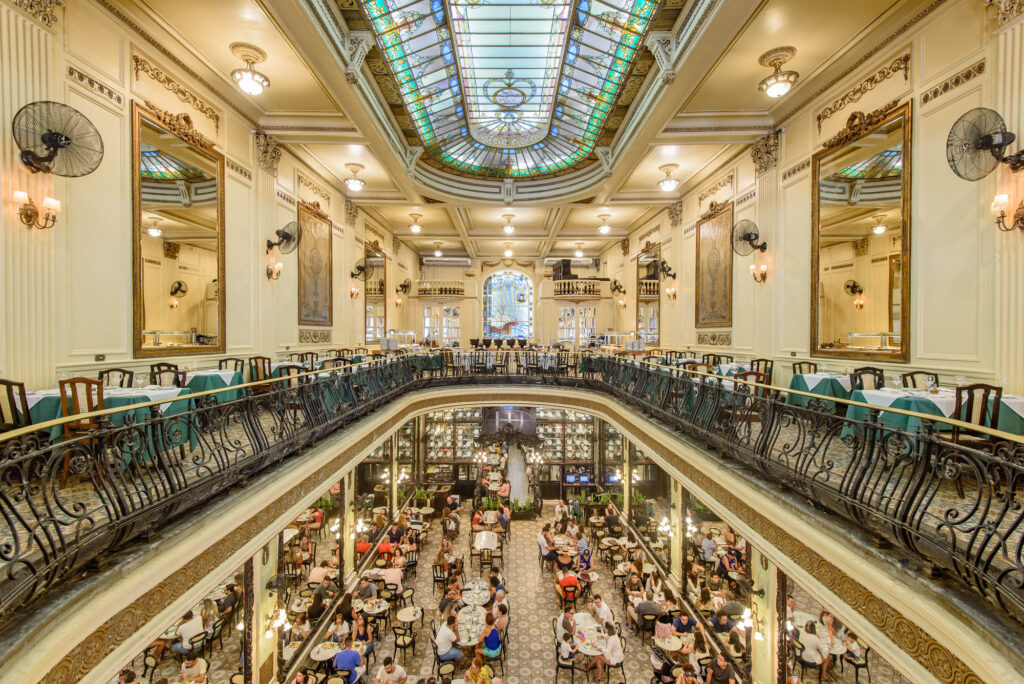
Lunch: Break for lunch or afternoon tea at Confeitaria Colombo on Rua Gonçalves Dias, two minutes from Carioca metro. This grand belle époque cafe has been operating since 1894, its interior decorated with Belgian crystal mirrors framed in rosewood, Art Nouveau stained glass and marble-topped tables. It was once a regular meeting place for politicians, poets and musicians, and the building itself is classified as cultural and artistic heritage of Rio de Janeiro. The pastries and coffee are the main draw, though the upstairs restaurant serves a weekday lunch buffet and a Saturday feijoada. Open Monday to Saturday 11am-6pm.


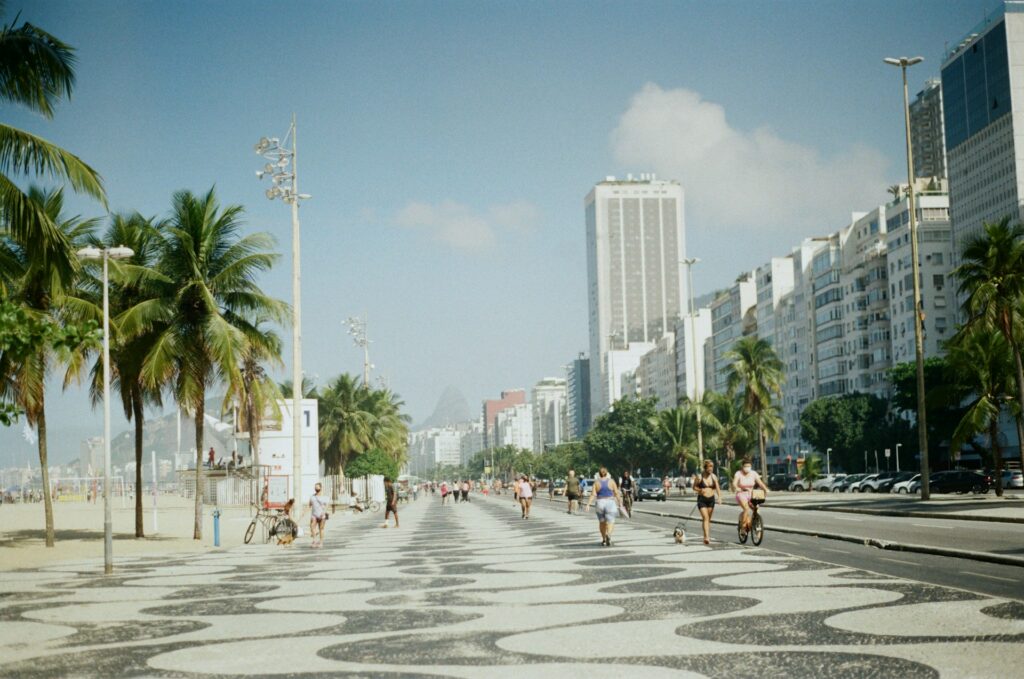
Afternoon & Early Evening: From Centro, take the metro Line 1 south to Ipanema/General Osório (around 20 minutes, R$7) and settle into Zona Sul for the rest of the afternoon. Ipanema and Copacabana are both famous, but the stretch of rock at Arpoador between them is where Cariocas gather for sunset. Crowds form on the rocks facing west, someone brings a guitar, and when the sun drops below the horizon on a clear evening, the whole crowd applauds. It sounds contrived on paper. It is not.
Dinner: For dinner, Galeto Sat’s in Copacabana has been serving spring chicken and picanha since the 1960s. It was one of Anthony Bourdain’s favourites in the city, and you can see why: no frills, no fuss, just good food done well.


Day Two: Landmarks, Santa Teresa & Lapa After Dark
Morning: Get to Christ the Redeemer early. The cog train departs from Cosme Velho station (Rua Cosme Velho 513, a 10-minute Uber from Copacabana or metro to Largo do Machado and a short taxi from there). The first train leaves at 7:20am, and you should arrive at least 30 minutes before your timed slot. Book tickets online well in advance; morning slots sell out days ahead during peak season, and walk-up queues can run to several hours. The 20-minute train ride winds through Tijuca Forest to the summit of Corcovado, 710 metres above the city. The views over Guanabara Bay, Sugarloaf, Ipanema and the sprawl of the Zona Norte beyond are extraordinary, but only if you arrive before the tour buses. Allow about two hours for the full visit.
The cog train takes you back down to Cosme Velho the same way. From there, it is a 15-minute Uber east to Praia Vermelha at the base of Sugarloaf Mountain for the cable car. It runs in two stages: first to Morro da Urca (220 metres), then to the Sugarloaf summit (396 metres). A fast-pass ticket is a worthwhile investment. The regular queue during high season can stretch to two hours, and you will want that time for the views rather than the line. There is a cafe and small exhibition space at Morro da Urca if you want to linger between stages.
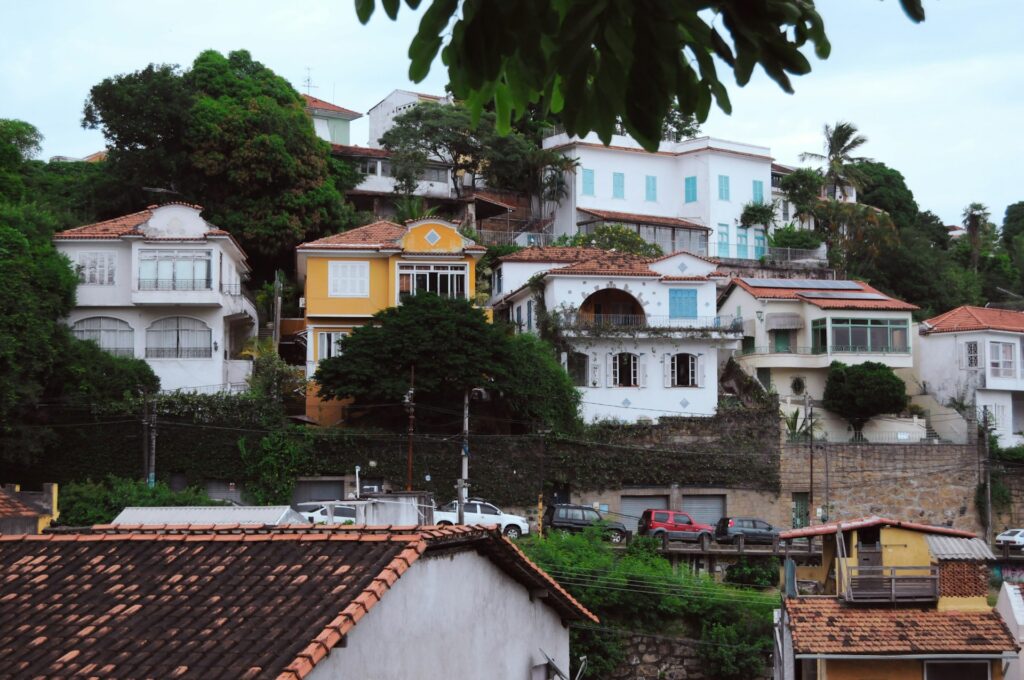
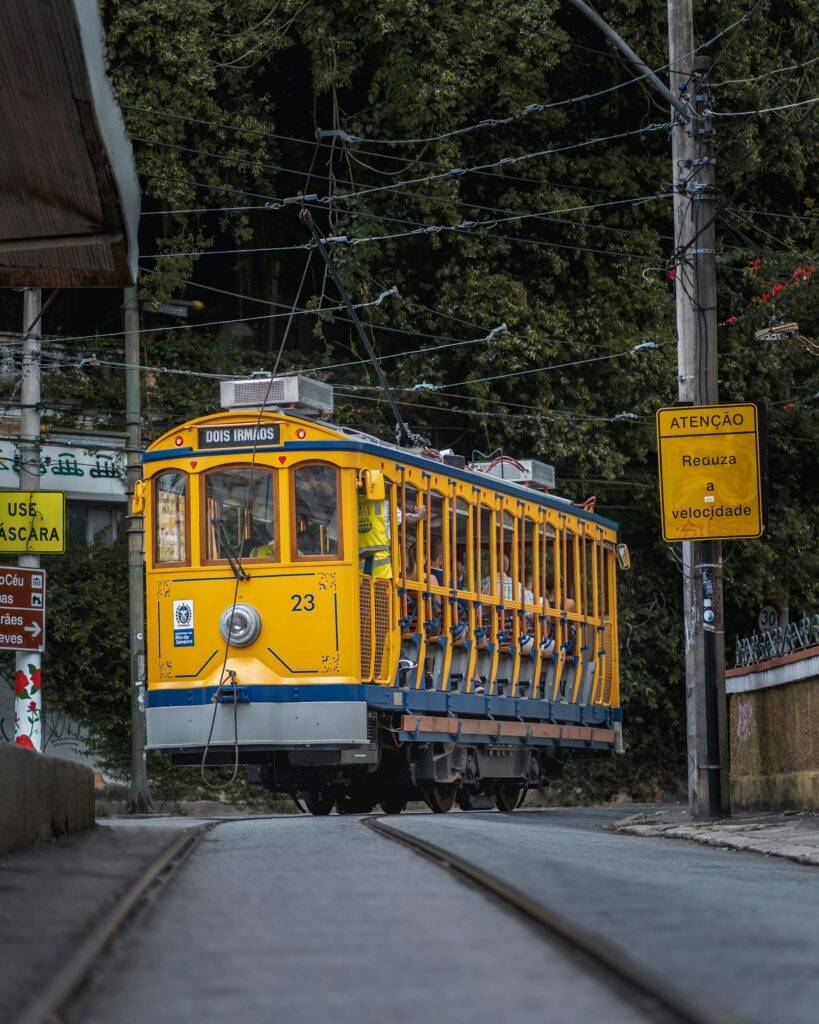
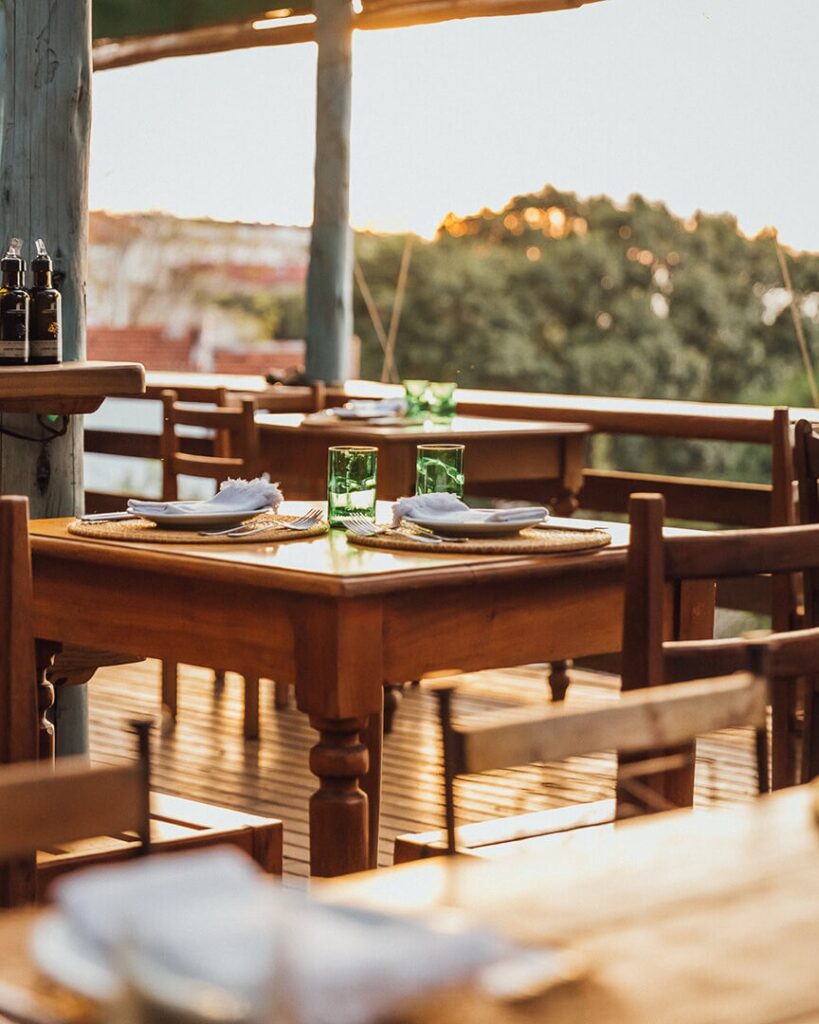
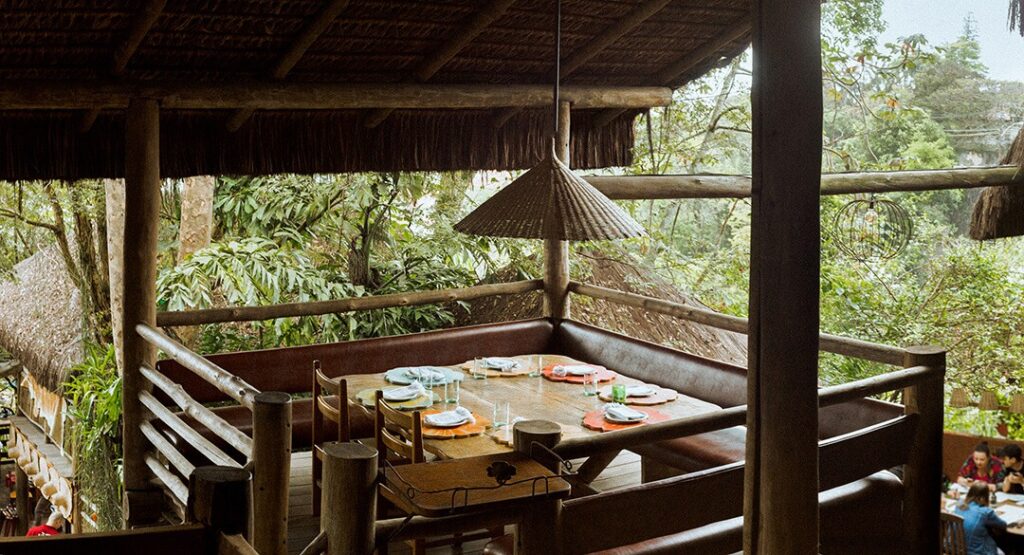
Late Lunch: From Sugarloaf, it is a 15-20 minute drive uphill to Santa Teresa for a late lunch at Aprazível. This Michelin-listed restaurant sits among the trees on the hillside, with terraces that look out over Centro, Lapa, Guanabara Bay and the bridge to Niterói. Chef Ana Castilho’s menu is rooted in regional Brazilian ingredients: free-range chicken with Minas Gerais sausage and pepper jelly, ceviche in tucupi sauce with plantain chips, and tropical fish that changes with the season. The restaurant brews its own beer and stocks a long list of natural wines. Open daily (except Mondays) from midday. Book ahead.

Afternoon: After eating, walk downhill from Santa Teresa (around 15 minutes on foot, mostly steps and cobblestones) towards the Selarón Steps. Chilean artist Jorge Selarón began covering these 215 steps with colourful tiles in 1990, initially using scraps from construction sites and funding the work by selling his own paintings. Over more than two decades, visitors from across the world donated tiles, and the staircase grew into a mosaic of over 2,000 pieces from more than 60 countries. Selarón worked on it until his death in 2013, and the steps are now maintained by volunteers. They connect Santa Teresa at the top to Lapa at the bottom, which makes them both a landmark and a practical route into Rio’s best night out.
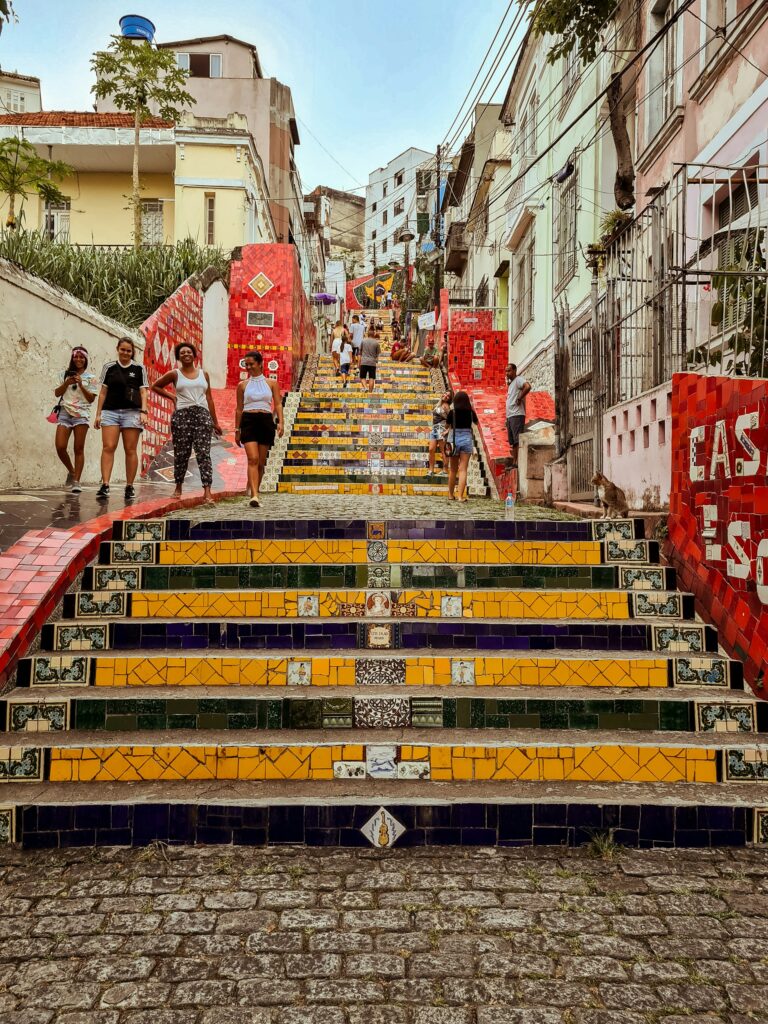
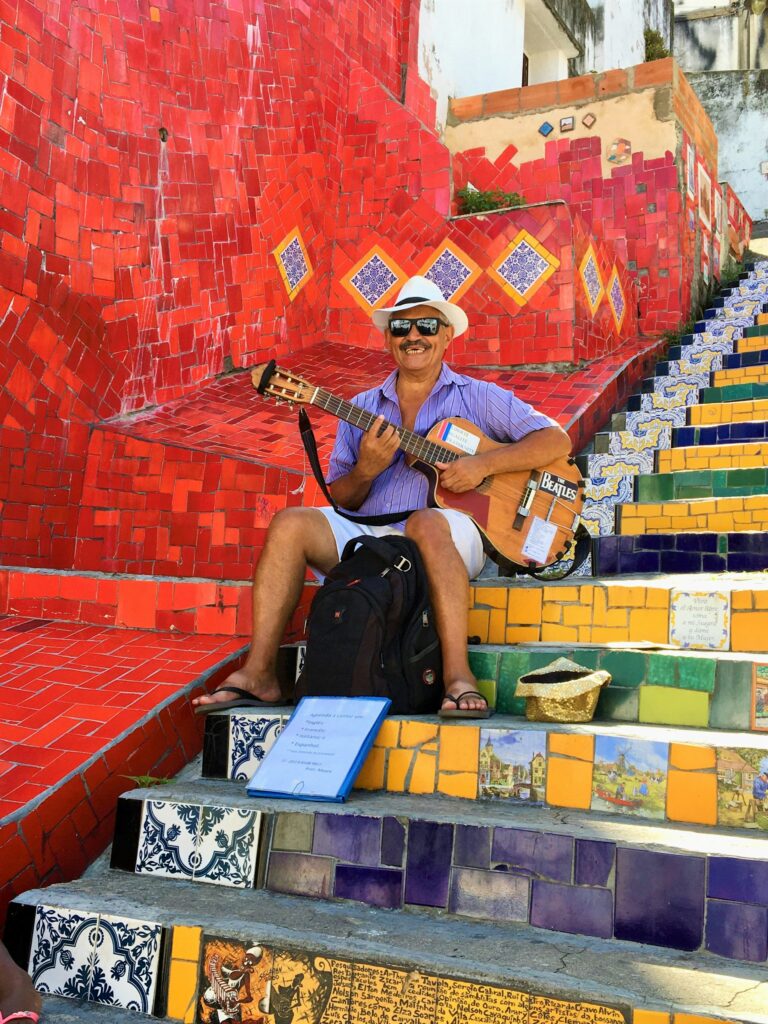
Evening: Lapa is Rio’s nightlife epicentre. The streets around the Arcos da Lapa (the 18th-century aqueduct that dominates the neighbourhood) fill with people, live music and street food from Wednesday onwards. Rio Scenarium on Rua do Lavradio is the best-known venue: a three-storey former antique warehouse stuffed with vintage gramophones, chandeliers and old cinema seats, with live samba and forró bands playing across the floors. Doors open from 7pm Wednesday to Friday, 8pm on Saturdays; arrive before 10pm to avoid the queue and secure a decent spot near the stage.
For something less polished, Carioca da Gema on Avenida Mem de Sá runs traditional samba in a smaller room where the music does all the work. The two venues are a five-minute walk apart along a strip that includes plenty of smaller bars and street-side botecos where you can fill the gaps with caipirinhas and pastéis from the vendors on Rua Joaquim Silva.
Lapa is well-trafficked along the main streets, but avoid wandering into unlit side roads late at night, and Uber back to Zona Sul when you are done. The metro stops running around midnight.



Day Three: Nature & Winding Down
Morning: Tijuca Forest is one of the largest urban rainforests in the world, and it sits right inside the city. From Copacabana, it is around 25-30 minutes by Uber to the main park entrances depending on traffic. Public transport is limited once you are inside the forest, so a car or ride app is the most practical way to get between viewpoints.
The Vista Chinesa lookout offers panoramic views across Rio from a Chinese-style pagoda at 380 metres, and the Mesa do Imperador (Emperor’s Table) is a calmer vantage point where the Brazilian royal family once picnicked. Both are accessible by road. For hikers, the trail to Cascatinha Taunay, the tallest waterfall within the city at around 30 metres, takes about an hour each way through thick tropical canopy. Toucans, capuchin monkeys and blue morpho butterflies are all common sightings if you go early and keep the noise down.

If you want a different perspective entirely, tandem paragliding flights launch from Pedra Bonita, a ramp at 520 metres inside Tijuca National Park, and land on the sand at São Conrado beach. No experience is needed, flights last 10-20 minutes depending on conditions, and the aerial views over the coastline, Pedra da Gávea and the forest canopy are hard to beat. Several operators run daily from sunrise to sunset; book a day ahead.
Afternoon: In the afternoon, head to the Jardim Botânico. From the forest it is a 15-minute Uber south, or you can take the metro to Jardim de Alah and walk about 10 minutes. Founded in 1808 by the Prince Regent Dom João, the gardens house over 8,000 plant species across 140 hectares. The avenue of imperial palms near the entrance, planted over 200 years ago, has become one of Rio’s most recognisable images. The orchid collection alone runs to over 600 species. It is the kind of place where an hour disappears without effort.
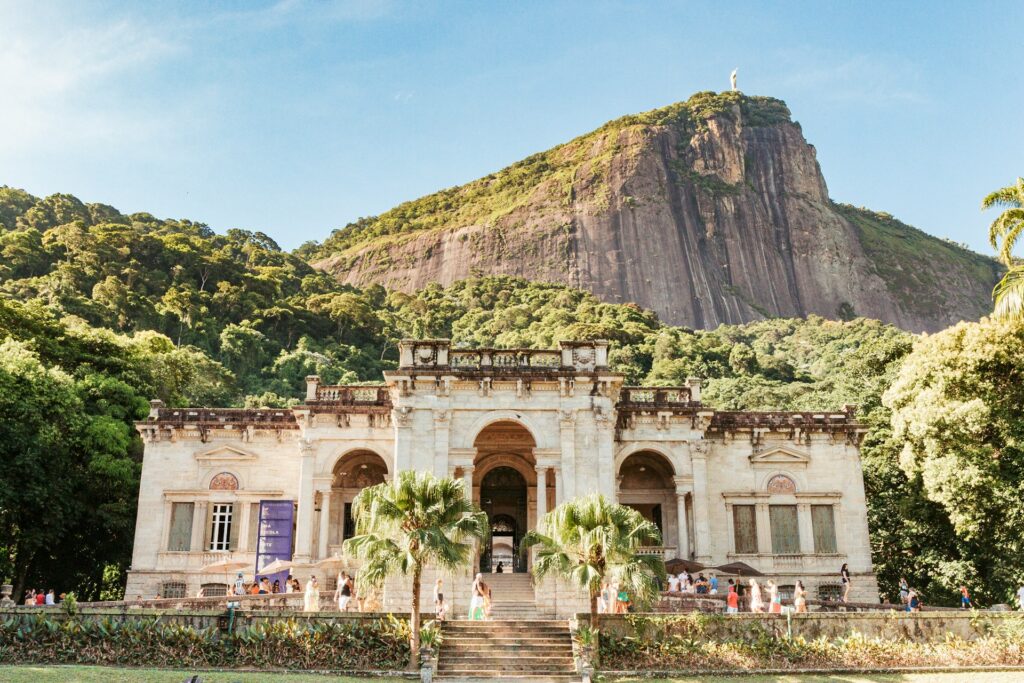
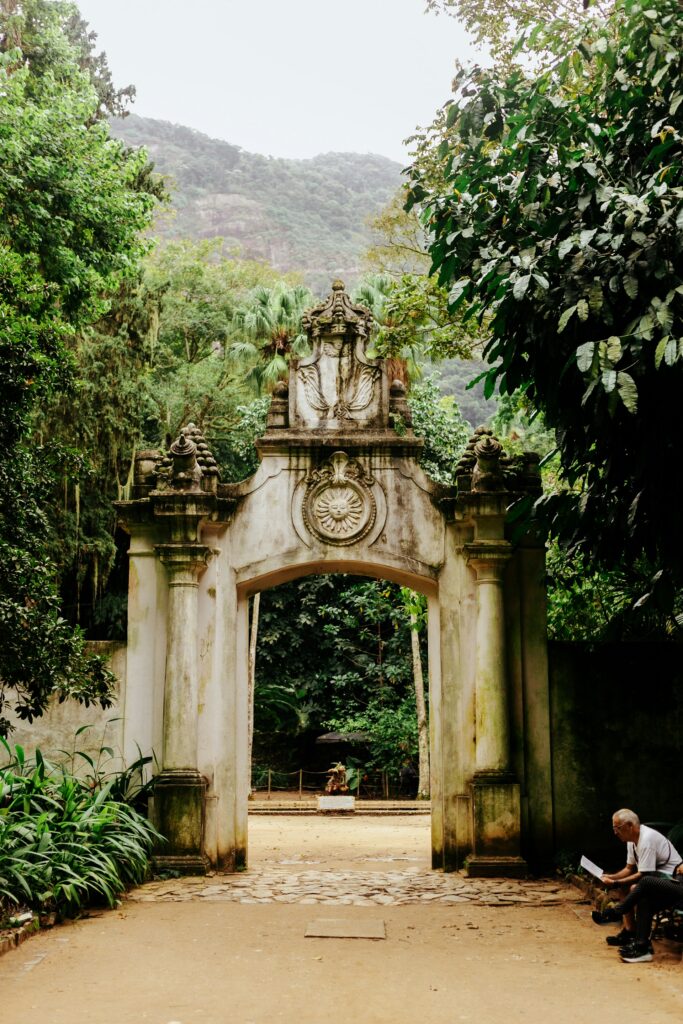
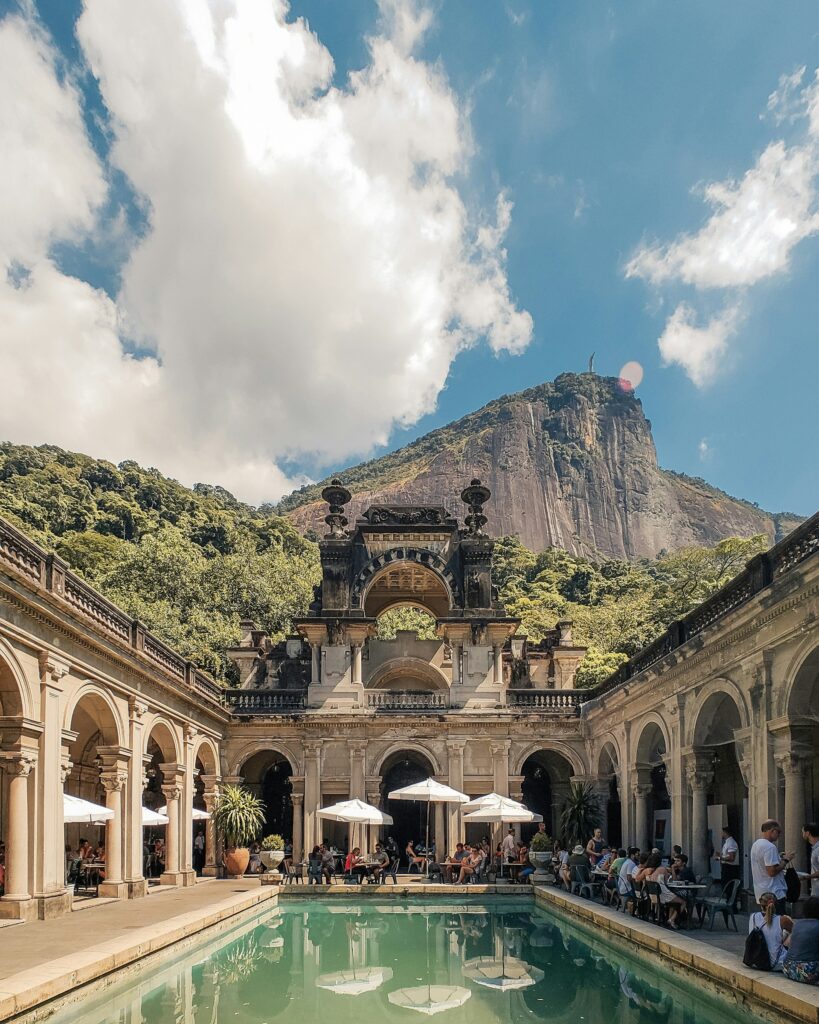
Alternatively (or additionally, if you have the legs for it), Parque Lage is right next door at the foot of Corcovado and free to enter. Its centrepiece is a 1920s mansion with a cafe courtyard pool surrounded by forest, and it functions as a visual arts school.
Early Dinner: Round out the weekend with feijoada at Bar do Mineiro in Santa Teresa (a 10-minute Uber uphill from the gardens). This long-standing boteco is known across the city for its version of the slow-cooked black bean and pork stew that functions as something close to a national dish. Pair it with a cold chopp on the terrace and let the weekend wind down from there.
Where To Stay
Zona Sul is the obvious base. Copacabana Palace has been the grande dame of Rio hotels since 1923 and sits right on the beachfront, though the price tag matches the reputation.
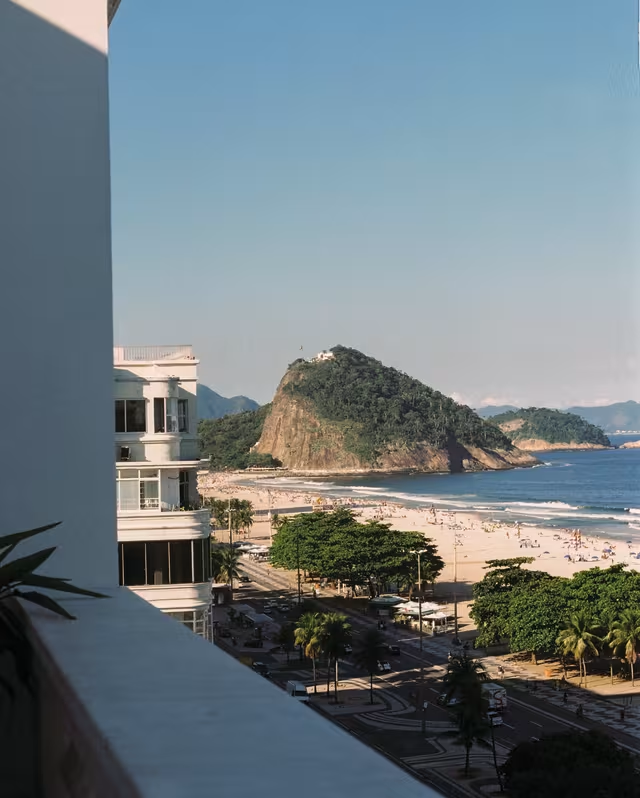
For something more contemporary, Hotel Fasano on Ipanema Beach has a Philippe Starck-designed interior and a rooftop pool with views across to the Arpoador rocks.
At the more accessible end, Hotel Arpoador sits right between Copacabana and Ipanema and puts you within walking distance of both beaches and the sunset crowds. Whichever you pick, staying in Zona Sul keeps you on the metro line and close to everything in this itinerary.


The Bottom Line
Three days gives Rio the space it needs. You are not sprinting between landmarks but moving through distinct neighbourhoods, each with its own rhythm. Book Christ the Redeemer tickets online well in advance, buy the fast-pass for Sugarloaf, and use Uber over public transport after dark. The metro is cheap and runs efficiently between Centro and Zona Sul during the day, but ride apps are the better option for hillside neighbourhoods like Santa Teresa and anywhere inside Tijuca.
Rio is a city that rewards both early mornings and late nights. The trick is knowing which day calls for which.
Onwards, upwards and, erm, northwards; we’re heading to Manaus next for 48 hours in its balmy embrace. Care the join us?