The ideal base for exploring Chinatown’s temples, famous streets and world-renowned street stalls.
Bangkok’s Chinatown is at its briskest first thing. Wander into Talat Mai market not long after the stalls have opened and you’ll pick your way past piles of plucked chickens laid out on the ground, baskets of greens and tanks of fish, the floor already slick underfoot and the lane barely wide enough for the trolleys being shoved through it.
Cleavers come down on wet blocks, a radio plays somewhere over the racket, and the smell shifts every few steps, raw poultry to cut herbs to the sweet rot of durian to garlic frying in a wok. Traders and workers take breakfast where they can, hunched over bowls of rice porridge or noodles. Someone dunks youtiao into warm soy milk at the next stool along, a glass of thick iced coffee sweating beside an elbow while the work carries on.
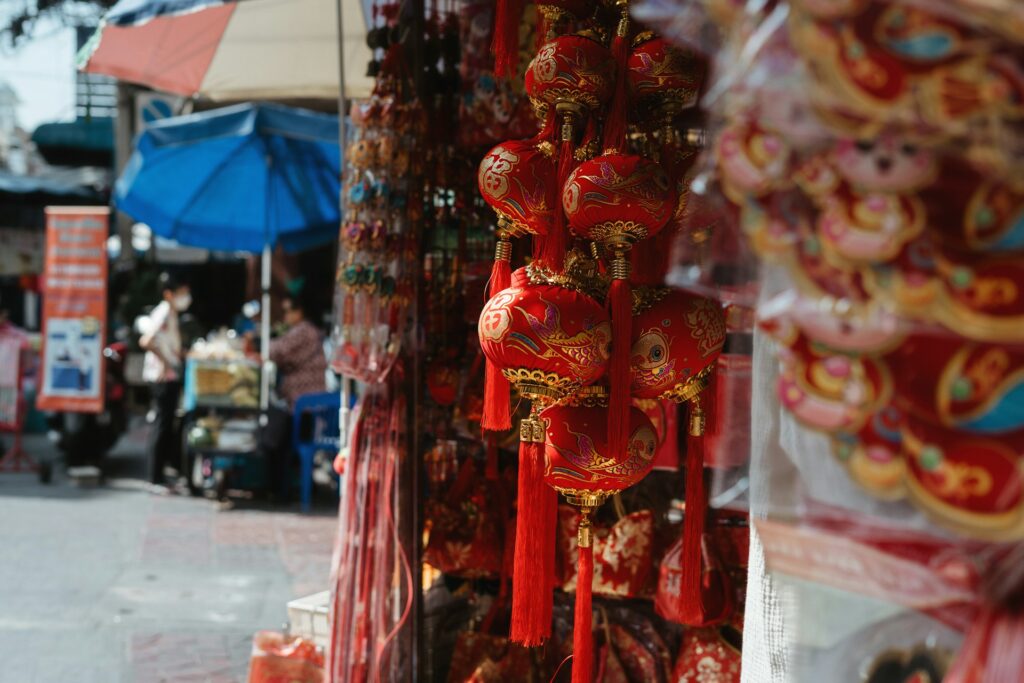
Carry on out of the market and turn down Charoen Chai, a century-old community in a narrow alley off Charoen Krung, and the trade changes character entirely: stacks of joss paper and paper effigies, everything from incense to model phones and watches, the air hazed and faintly sweet with smoke, all of it bought to be burned as offerings to ancestors.
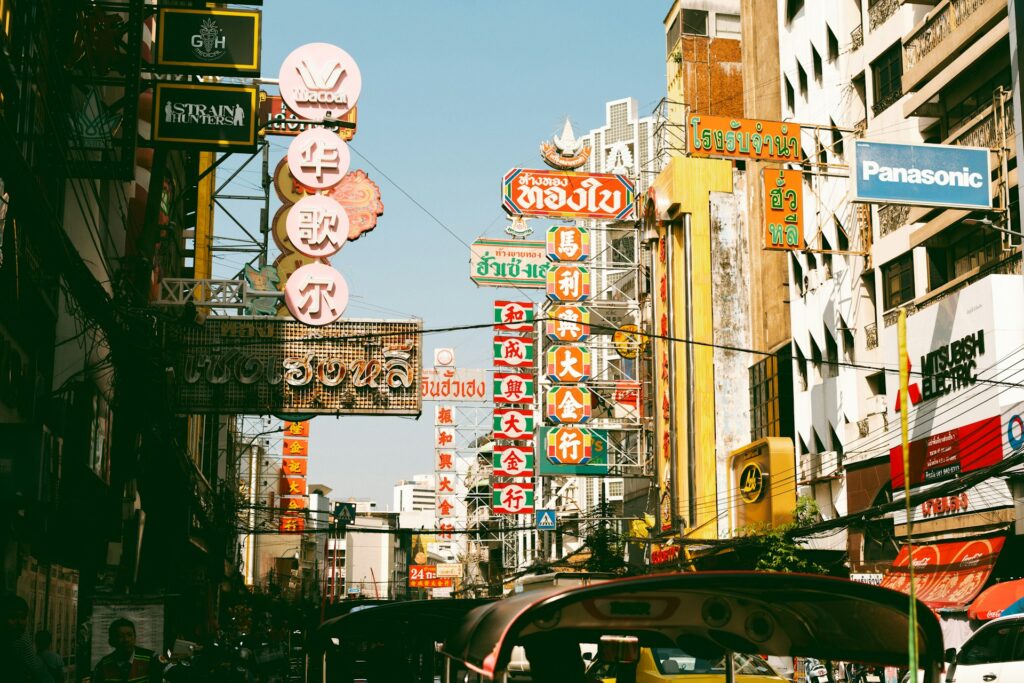
Out on Yaowarat itself, the stretch they call the Golden Road, the gold shops trade by daylight behind red-and-gold fronts, the same street that will be heaving with woks and crowds by nightfall. By early afternoon the heat sits heavy enough that the markets thin out and even the locals retreat into the shade.
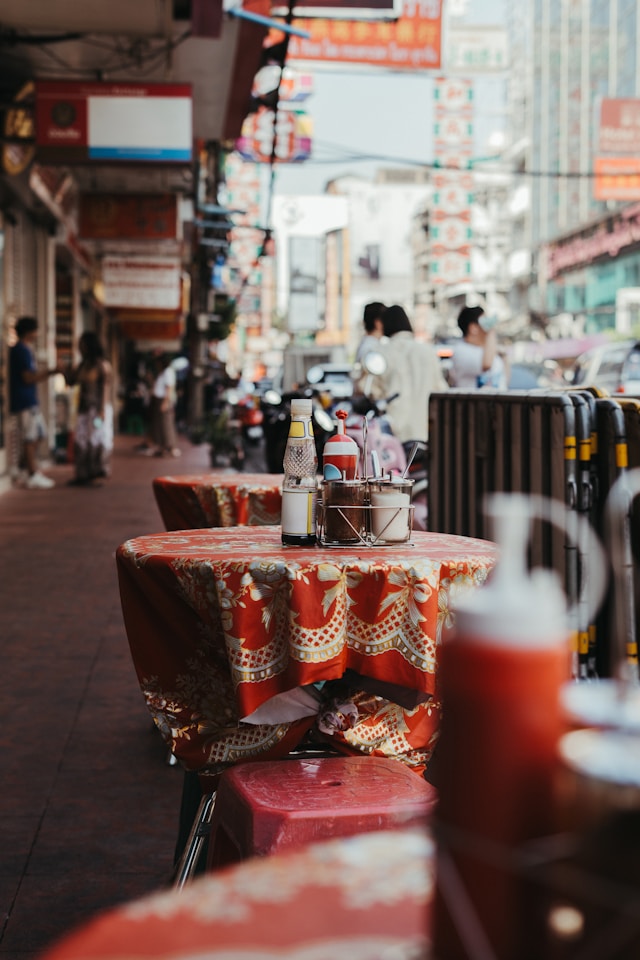
By the time the sun drops behind the rooftops of Yaowarat, the humidity has loosened its grip and Chinatown begins its second shift. The street food stalls fire up, the neon stutters and fizzes into life, and the pavements fill with people moving between bowls of noodles and plates of grilled seafood.
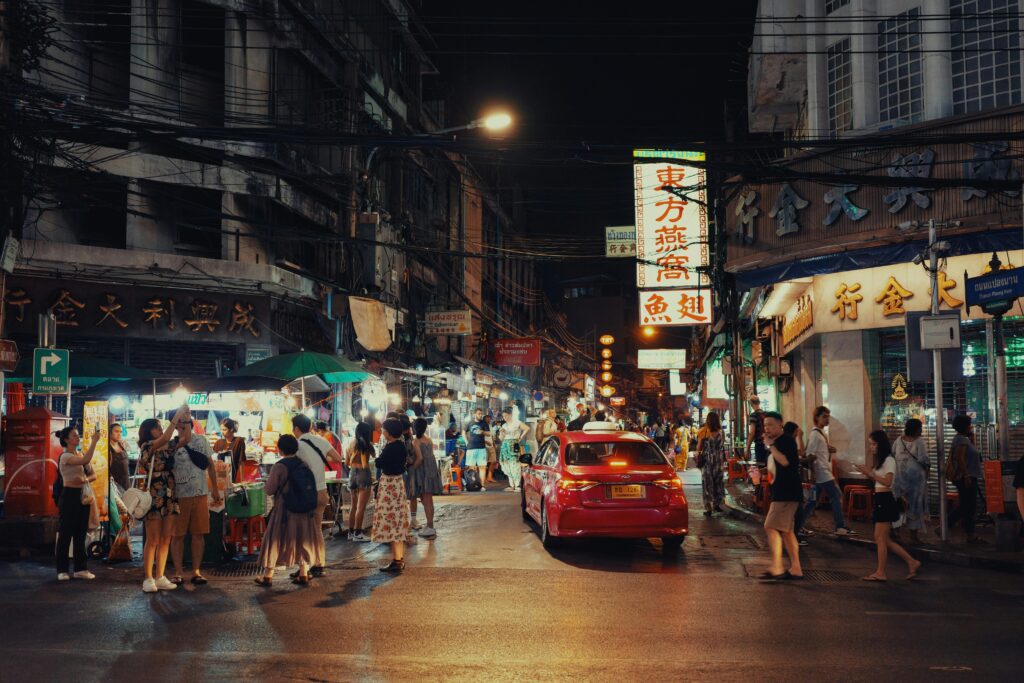
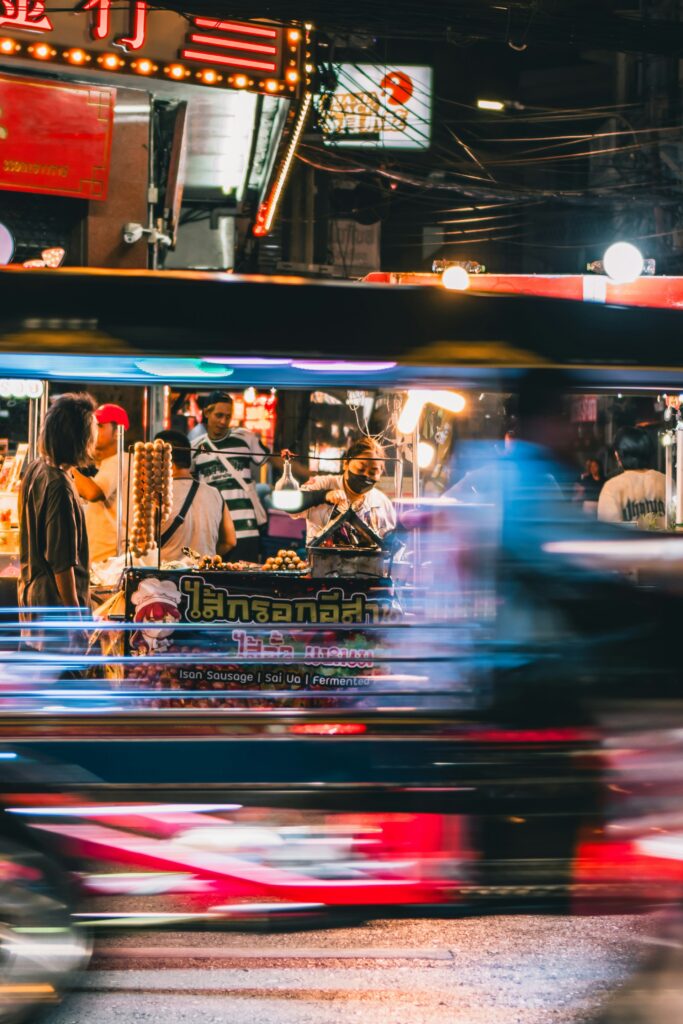
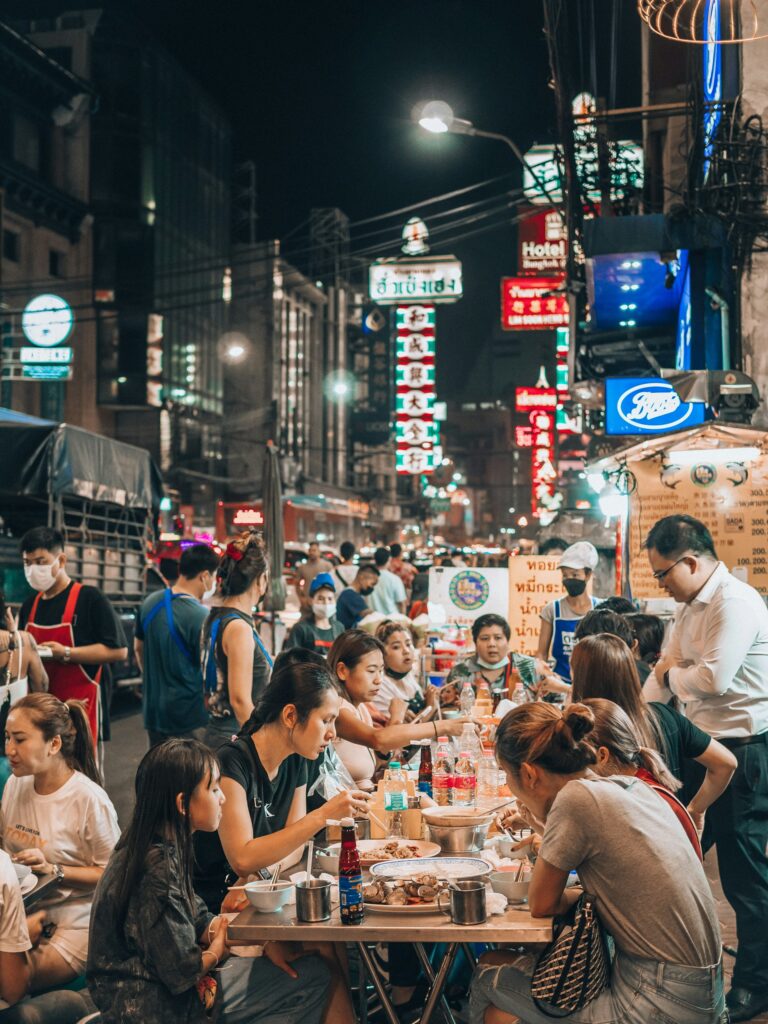
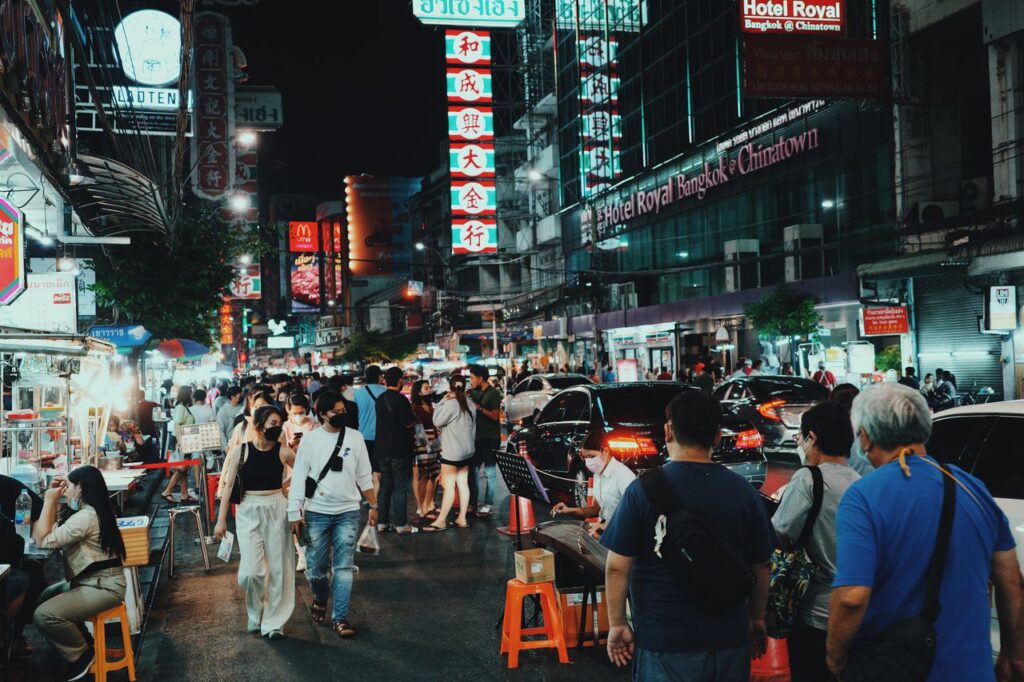
What you miss on a flying visit to Chinatown is that it isn’t one neighbourhood but several, each surfacing at a different hour. The day-tripper tends to turn up in the evening, photograph a temple, eat a bowl of noodles on Yaowarat and leave convinced they’ve seen the place and ‘done’ Chinatown. You don’t do a neighbourhood like this one; it does you, if you tackle it too quickly.
Bangkok’s Chinatown is best enjoyed slowly, lived alongside for a few days rather than ticked off in an evening. The ASAI puts you right in the thick of it, the different pockets of the neighbourhood all within a short walk of the front door, so you can catch each at its own hour.
Location
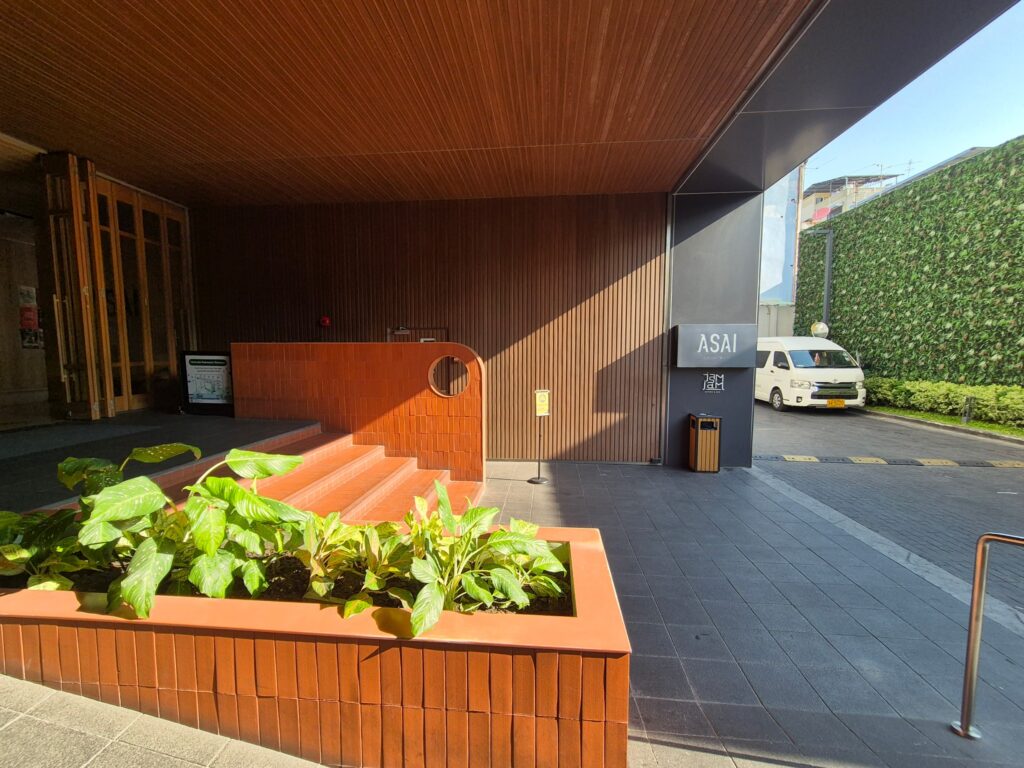
The ASAI sits on Charoen Krung Road, only 100 metres from Wat Mangkon Station, which makes it not only a superb base for exploring Chinatown, but a fine jumping-off point for the rest of Bangkok, too.
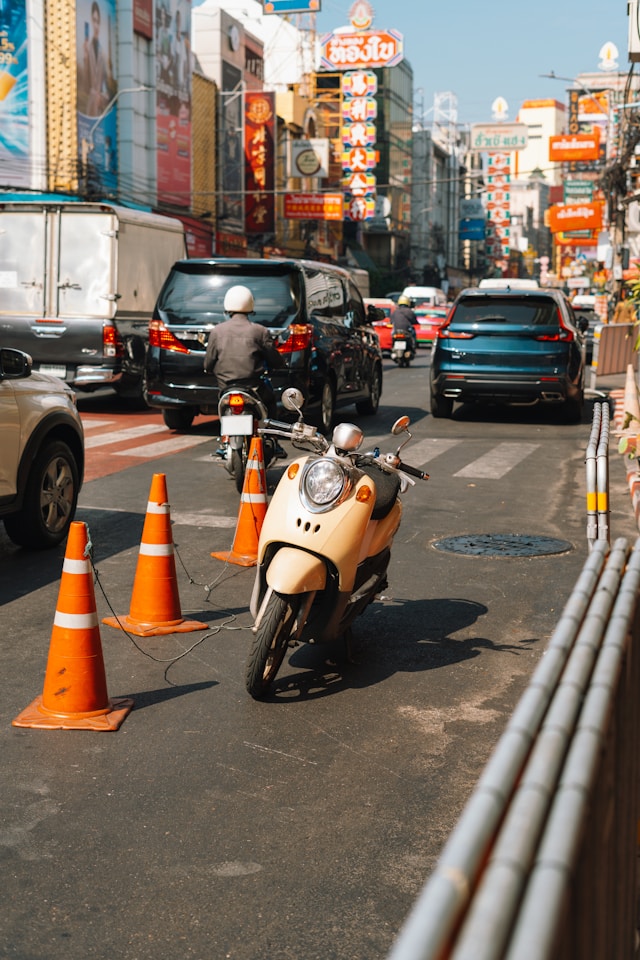
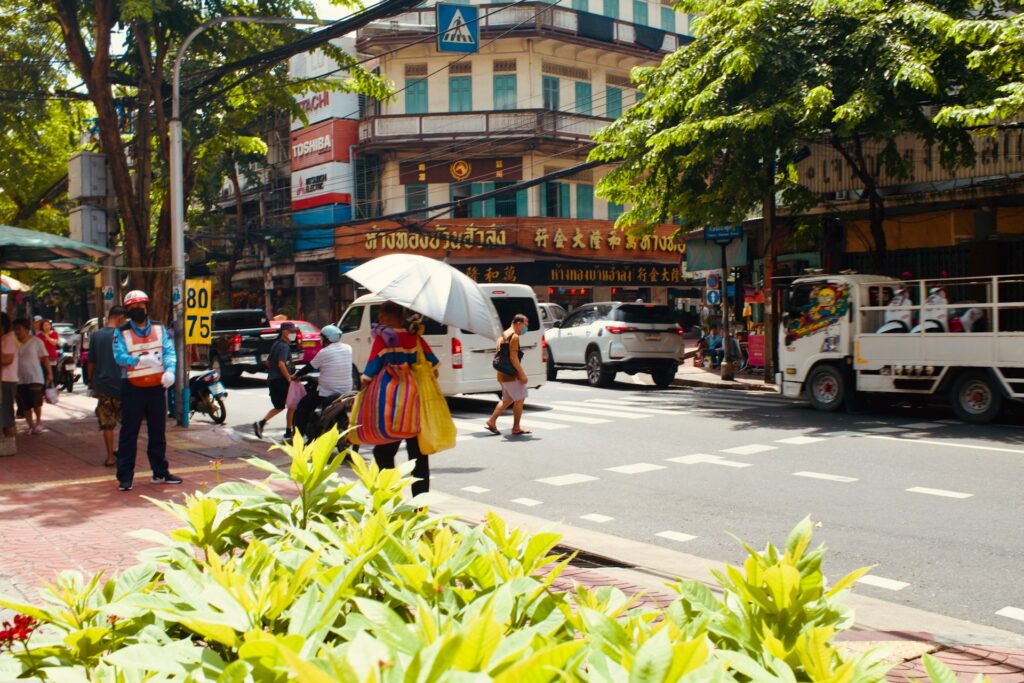
Charoen Krung Road itself runs parallel to Yaowarat Road, Chinatown’s main artery and busiest thoroughfare, and one of the finest thoroughfares for street food anywhere in the city. The ASAI sits about as close to it as you can get without sleeping on the street. Or, indeed, hearing it.
For a good night’s sleep, we much prefer Charoen Krung to the chaos of Yaowarat a block over. Known historically as New Road, it was Bangkok’s first paved road, and it has a slightly calmer energy that makes a welcome contrast to the full-throttle chaos five minutes away. It’s also where much of Bangkok’s street art lives, the legacy of the Bukruk festival that drew Thai and international artists to these walls in 2013 and 2016. The best of it clusters further south, around Soi 28, 30 and 32, though you’ll catch pieces dotted along the way.
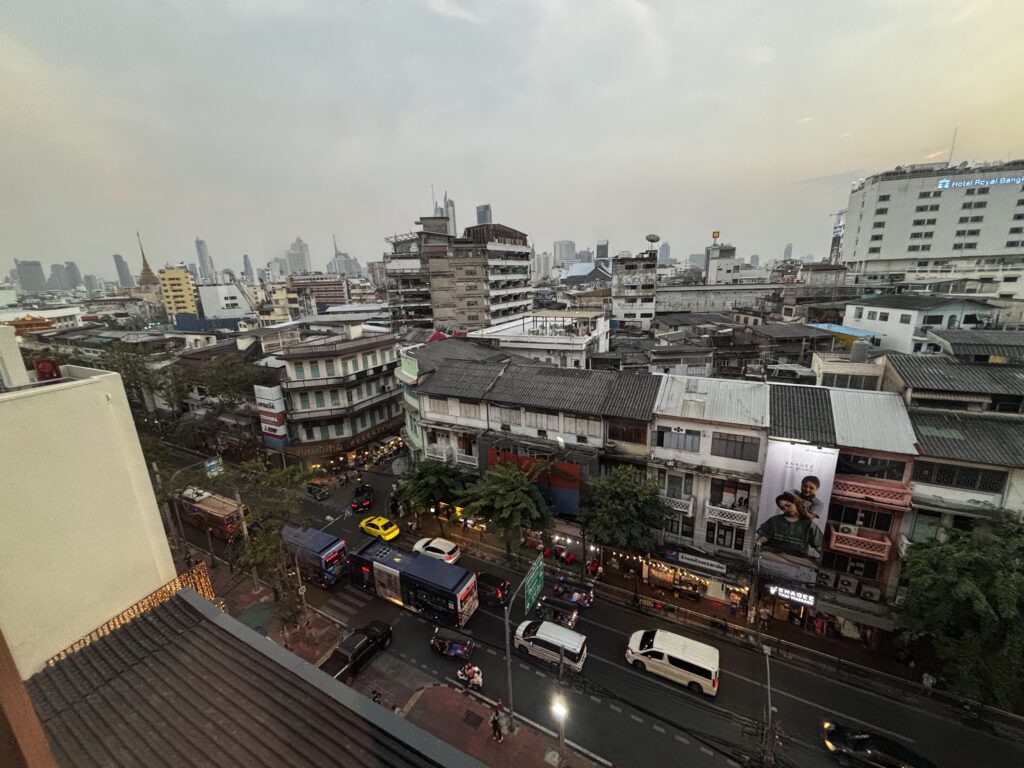
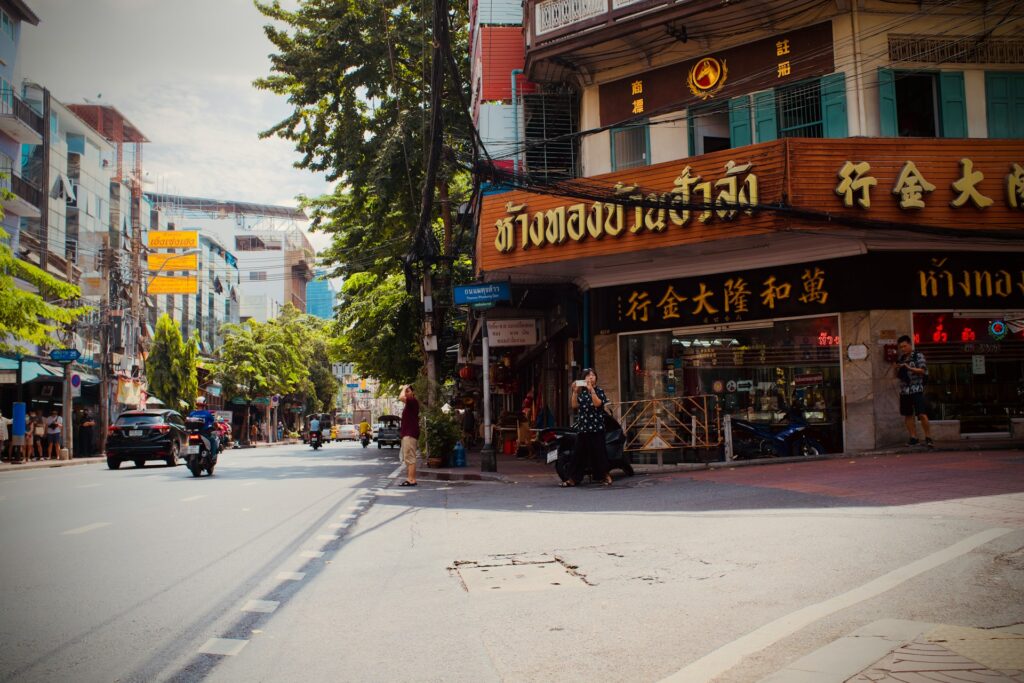
Whilst Yaowarat is the main draw for street food, there’s a fair amount on Charoen Krung itself. The hotel sits five minutes from Jek Pui, the curry-rice stall that sets out two rows of red plastic stools at the Mangkon corner. Duck into Soi Charoen Krung 23, by the little temple, and there’s a vendor well into his seventies still folding pork-and-prawn shumai by hand for a few baht each, the way he has for decades.
Appetite satisfied, and it’s time to explore. The ASAI really is brilliant for experiencing the different sides of Chinatown. A must-visit 5 minutes away is Wat Traimit, home to the world’s largest solid gold Buddha statue. It’s right next to the iconic red Chinese gate at Odeon Circle. From here, head just around the corner to the artsy alleyways of Talat Noi, a riverside tangle of car-parts workshops and scrap yards threaded with street art and old Hokkien mansions, some of the area’s best little cafes set up among the engine grease.
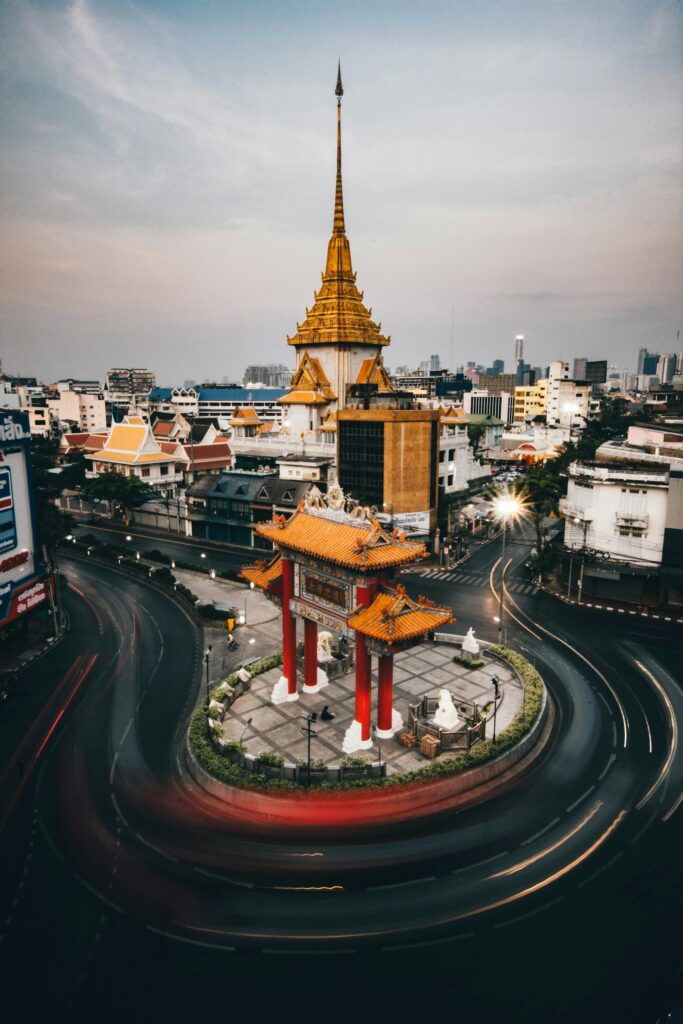
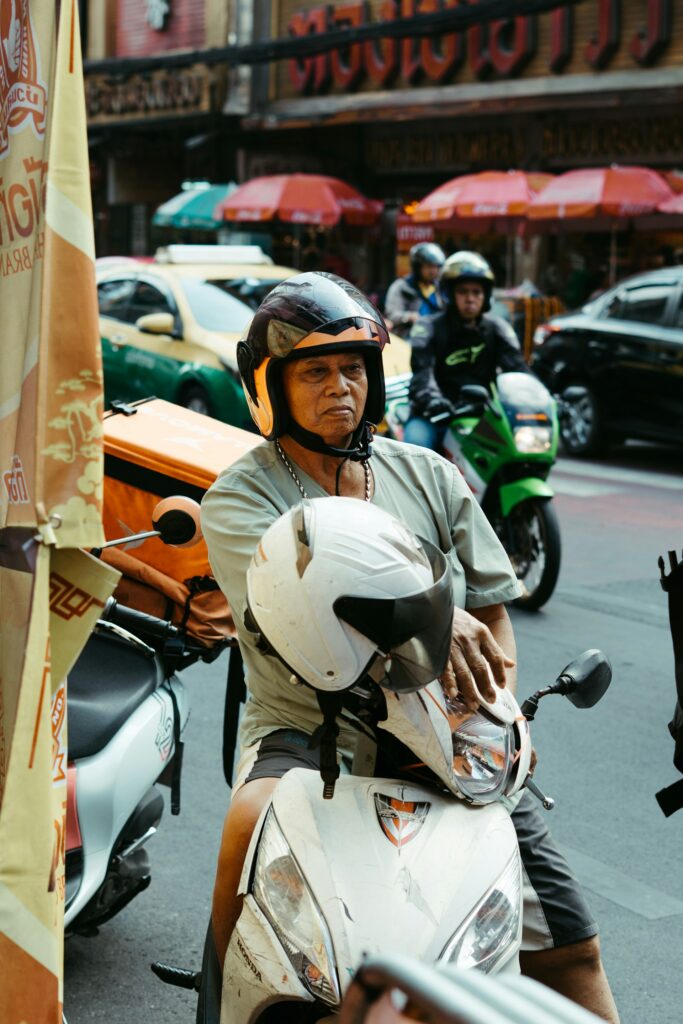
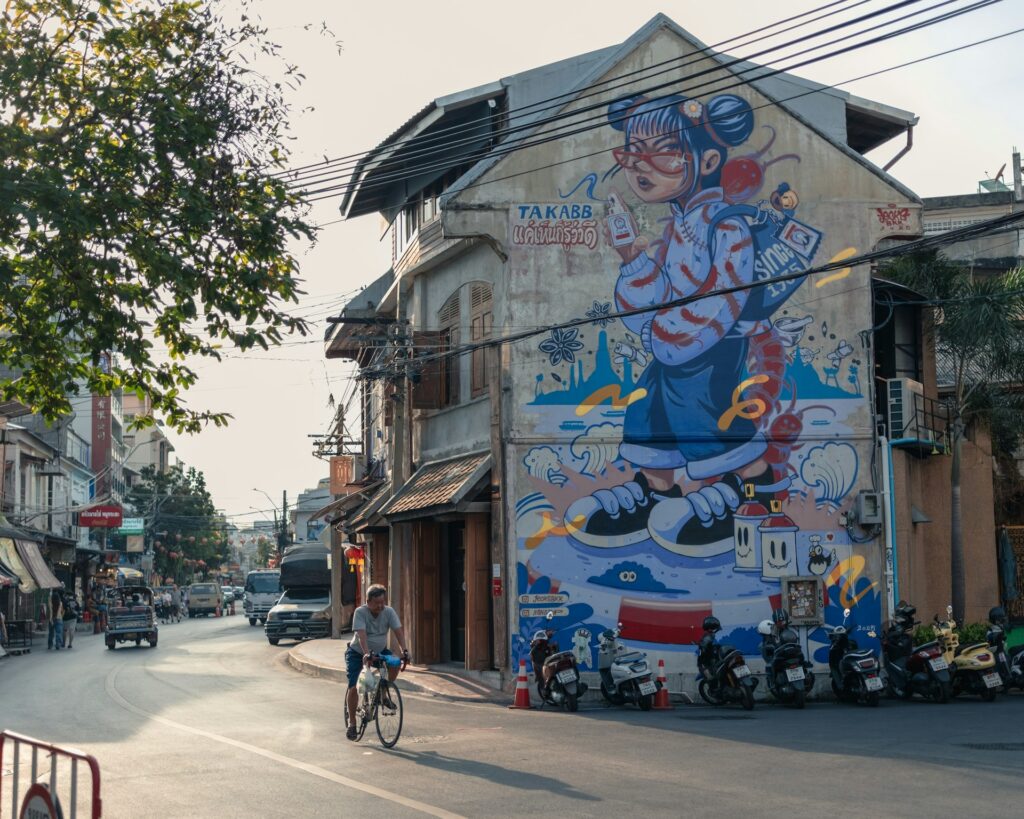
Following the same riverside is Song Wat, the old trading road now turned into the most talked-about strip in the city, where century-old spice shops and noodle counters share their frontage with coffee roasters, galleries and bars like Mischa Cheap, the side lanes vanishing under murals. After dark, Yaowarat Road lights up, and Soi Nana (the Chinatown one, not to be confused with the Sukhumvit strip) fills its shophouses with bars and cocktail rooms like Teens of Thailand and Tep Bar, barely five minutes from your room.
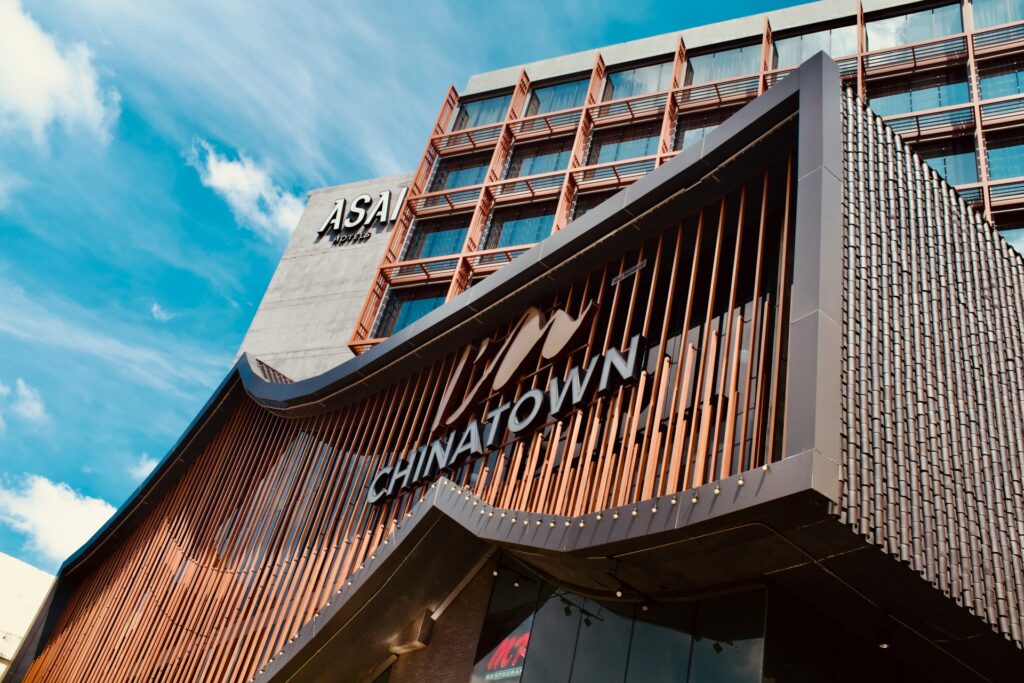
A little less glamorous, but the hotel sits directly above I’m Chinatown mall. It may not be the most romantic of settings, but for convenience it’s hard to beat: there’s a 7-Eleven and a Watsons with a pharmacy downstairs. It’s also close to Hua Lamphong Station, and there’s a 24-hour Lock Box storage facility in the mall on the ground floor. Since the mall is right by the station, we left our luggage in one of these lock boxes for a couple of nights during a short trip to Ayutthaya; a useful trick worth knowing about.
And for those moving on from Bangkok to another part of Thailand, Don Mueang International Airport is 26km away, making onward connections straightforward.
Character & Vibe
Yaowarat after dark is overwhelming, the heat, the crowds, the sensory overload, and there might not be a hotel in Bangkok better placed to escape it. Everything is within walking distance, but the real luxury is knowing your room and its cold shower and cooler air are close enough to duck back to between bouts. The place runs on that tempo: people come and go at all hours, pushing in out of the glare and traffic noise after a morning in the markets, back for a cold shower and a lie-down, resting up between a temple visit and the evening, or just popping out for lunch and back again.
ASAI Bangkok Chinatown was the first hotel to open under the ASAI label, a younger offshoot of the Dusit group, conceived as a design-minded base for travellers who would rather settle into a neighbourhood than a lobby. Each ASAI property is built to reflect the character of the streets around it, and the brand has courted a particular kind of guest: one who values a sense of place over polish. It was pitched, initially, at millennials. In practice, its appeal has proved far broader. On a recent stay, the lobby held room for a group of backpackers barely out of their teens, a Thai family down for the weekend, and a retired couple who looked like they’d wandered in from a cruise, all checking in at once.
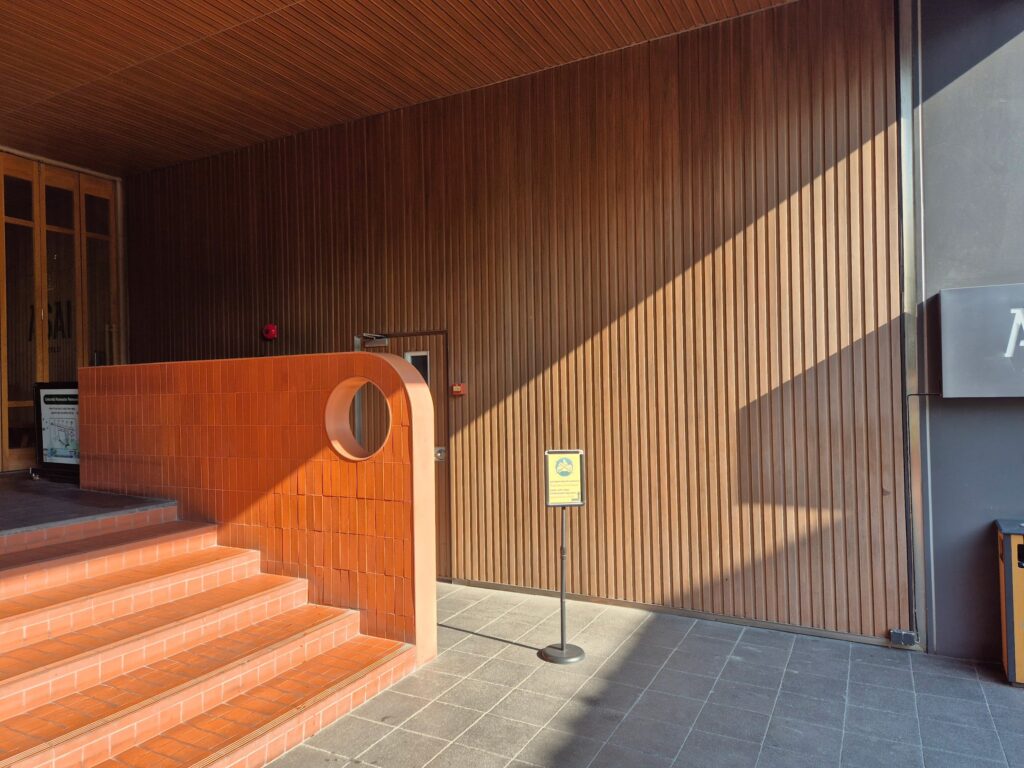
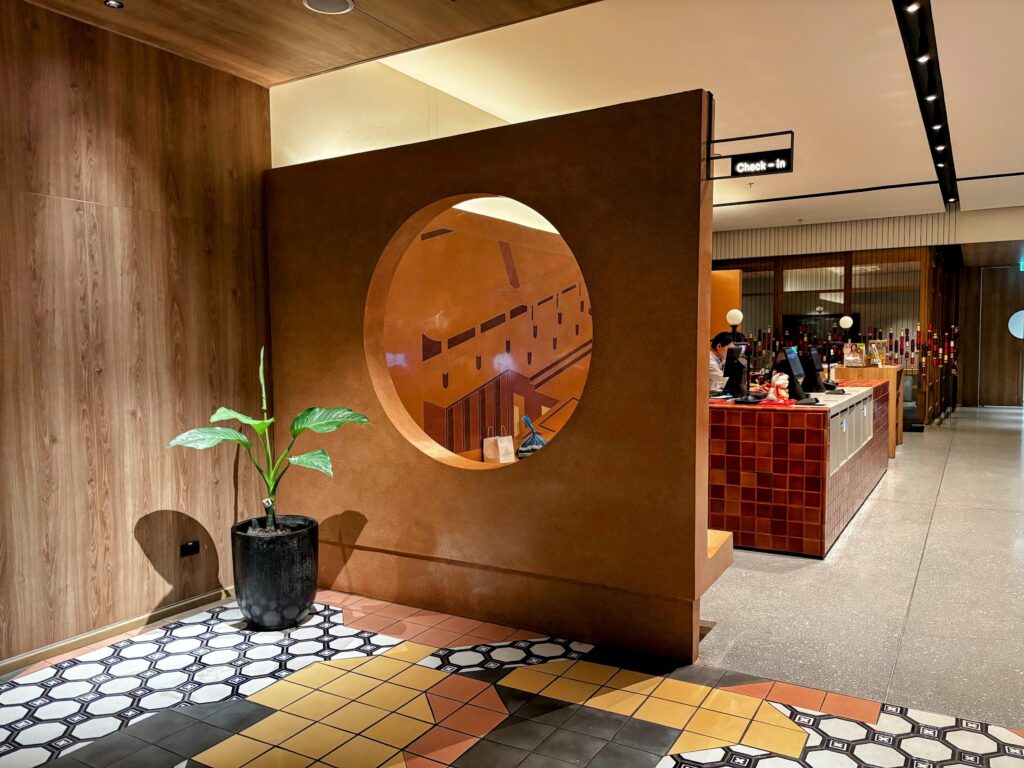
There’s a relaxed, easy feel to the place too, closer in spirit to a hostel than a hotel but without any of the compromises that usually implies. The courtyard and communal spaces are where guests gravitate, somewhere to relax over a coffee or get a bit of work done, and they’re generous enough that you can happily keep yourself to yourself if you’d rather. Even so, you’ll see guests of every age looking to connect, and that’s a big part of what makes the atmosphere so warm. It’s good fun to catch the conversations drifting across the space: young travellers swapping stories about the night before, older ones comparing the creaks in their knees, all of them equally in love with travelling. And with Thailand, for that matter.
The brand rests on four stated pillars: Thoughtful Essentials, Common Ground, Authentic Connections, and a Sustainable Ecosystem. That brief could have produced something glib. Instead it has produced an operation that feels rooted in its neighbourhood, and the surprise is how completely it delivers on the promise. Plenty of lifestyle hotels talk about a sense of place; this one actually has one.
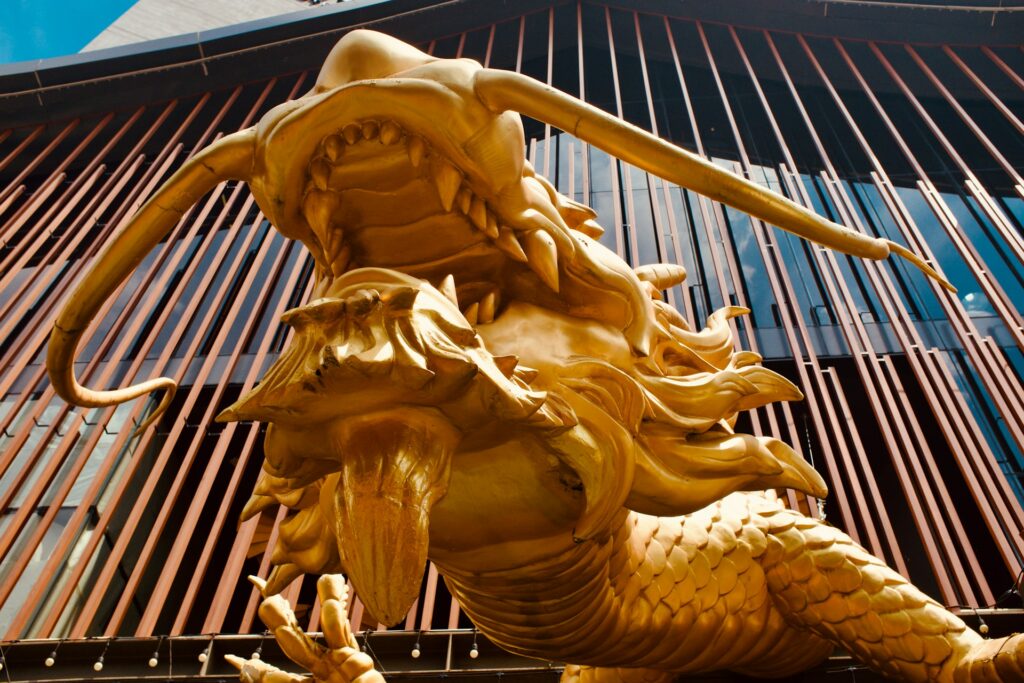
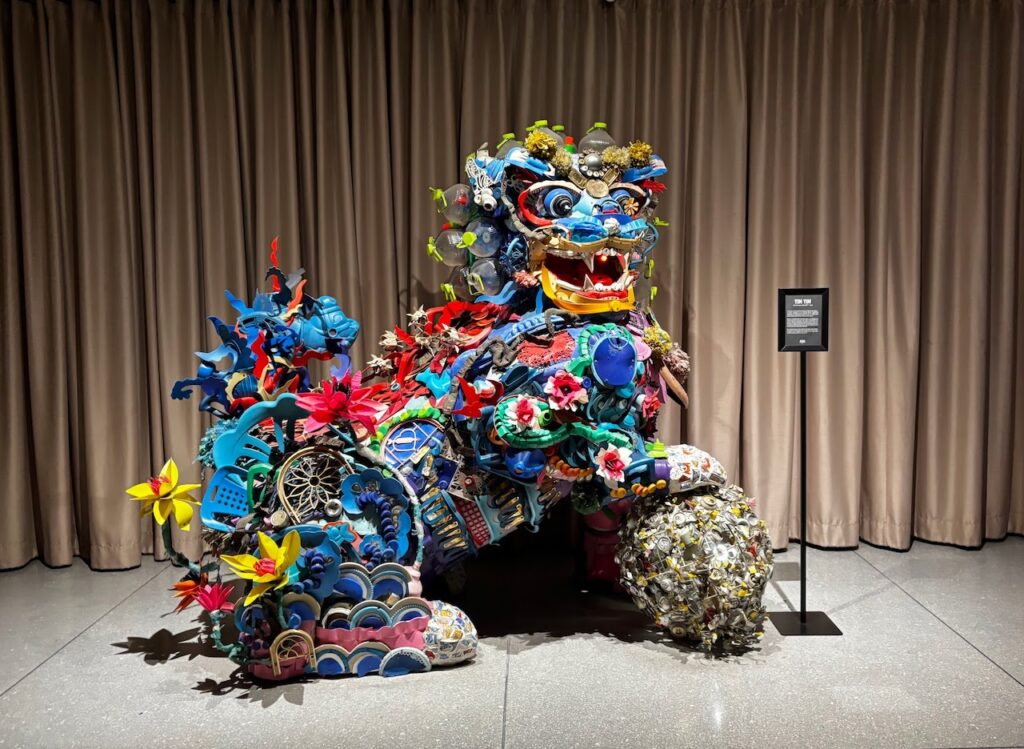
A striking Shīzi lion called Yim Yim stands sentinel at the entrance. It’s sculpted entirely from recycled waste materials sourced from Chinatown and factories across the city. The work of local artist Eric Tobua, the piece draws on two figures from Chinese mythology, the lion and the dragon, merging them into a single, arresting form.
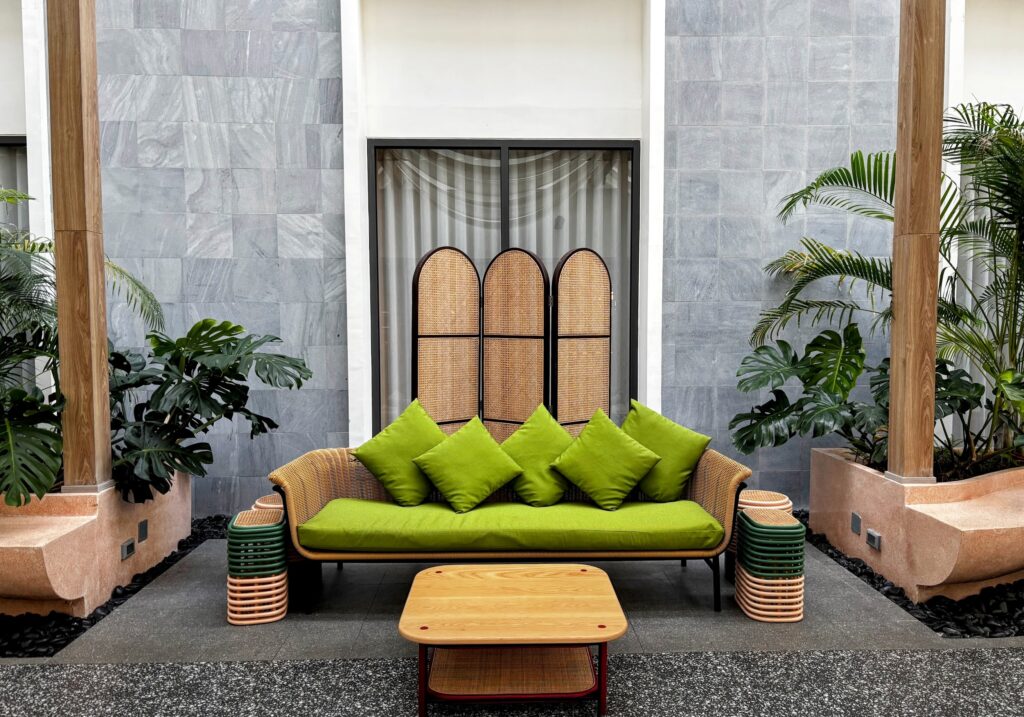
In the lobby, the Live Local Board acts as a living wall of hidden gems, late-night bites and little-known corners of Yaowarat that most visitors would walk straight past. Staff are trained to know the neighbourhood inside out, and it shows. Ask for a Chinatown restaurant recommendation or a walking route and you’ll get something far more considered than the usual concierge script. It’s a small touch, but one that speaks to ASAI’s broader commitment to embedding itself in the fabric of Chinatown rather than simply occupying a building within it.
The Courtyard
The courtyard is our favourite part of the hotel, so much so that we’ve created a whole section for it. It acts as a decompression zone between the buzz of Yaowarat and the calm of your room, and given that the rooms are on the snug, no-frills side (more on that in a moment), it’s a space you’ll actually want to use. It’s a covered atrium, though you’d barely know it; the billowing white canopy sails and the natural light flooding in give it an open-air feel. Tall timber columns frame the space, with clusters of silk lanterns hanging overhead that nod to the Chinatown setting without overdoing it.
The design draws heavily on the neighbourhood itself: the patchwork of terrazzo and terracotta floor tiles references the palazzo-style flooring found in Yaowarat’s 1960s row houses, while the folding doors connecting the courtyard to the bar and restaurant are lifted straight from the colonial shophouses that line the surrounding streets.
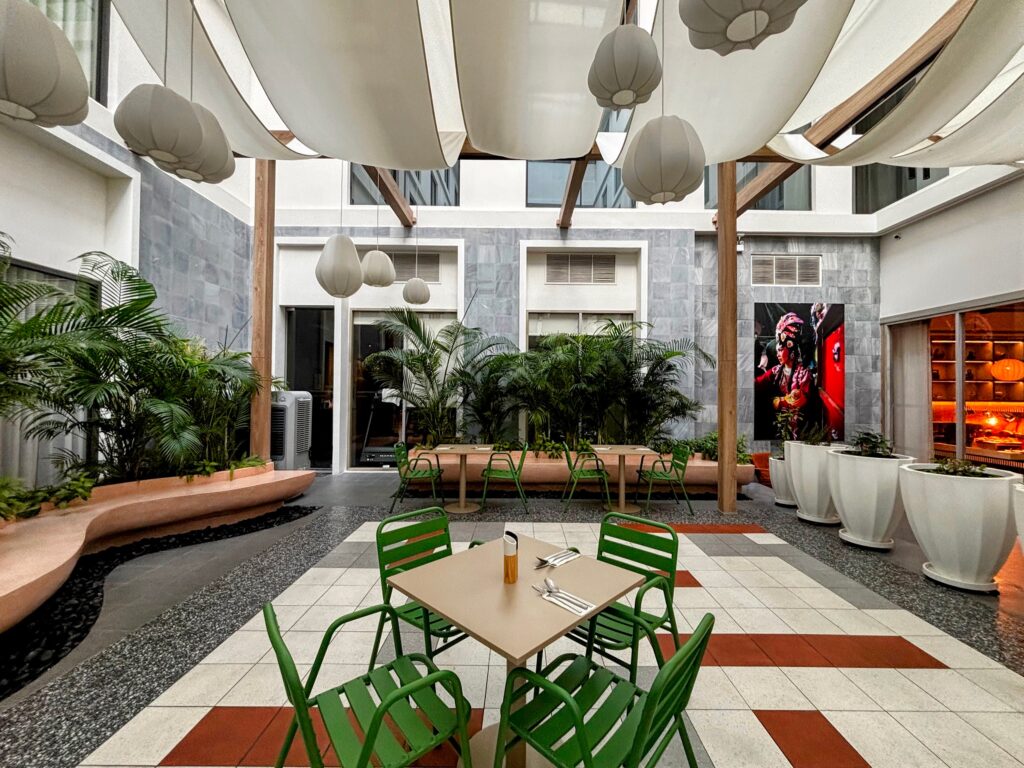
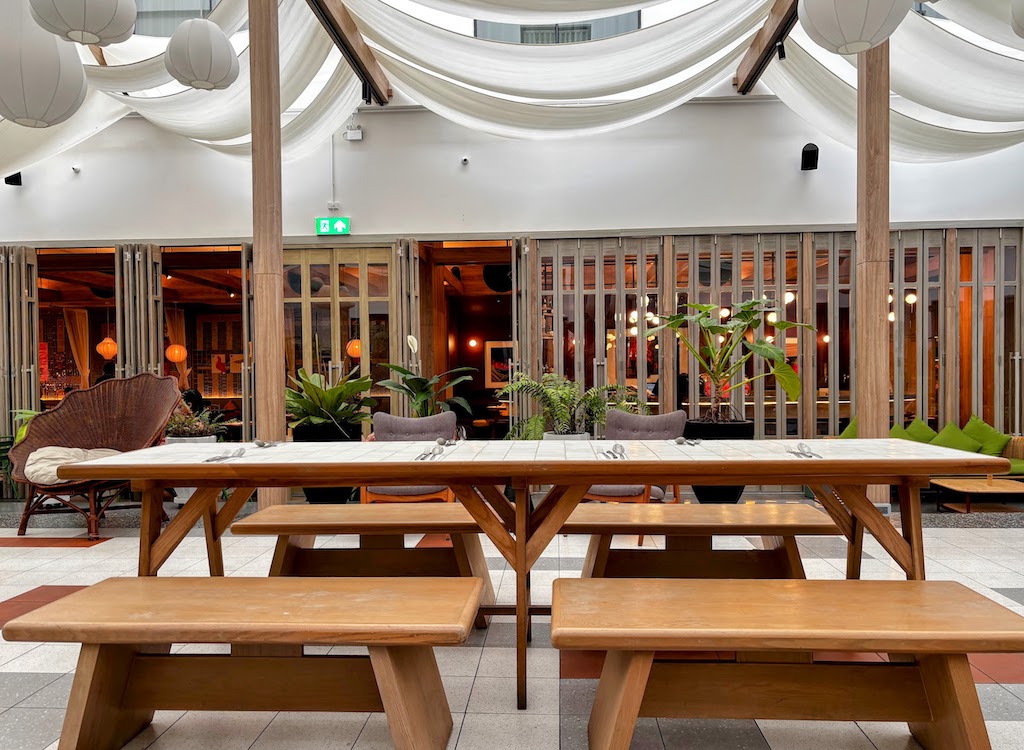
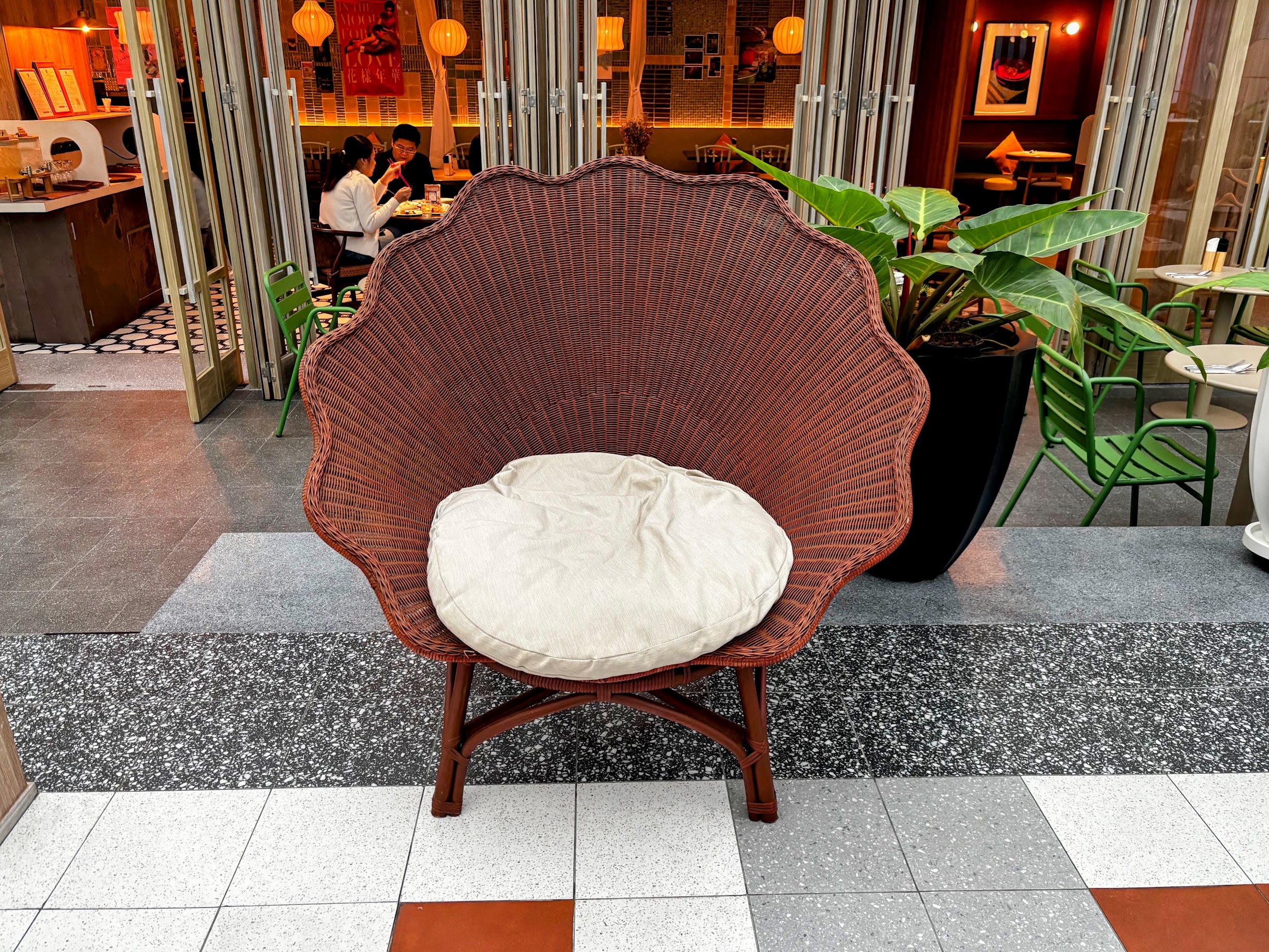
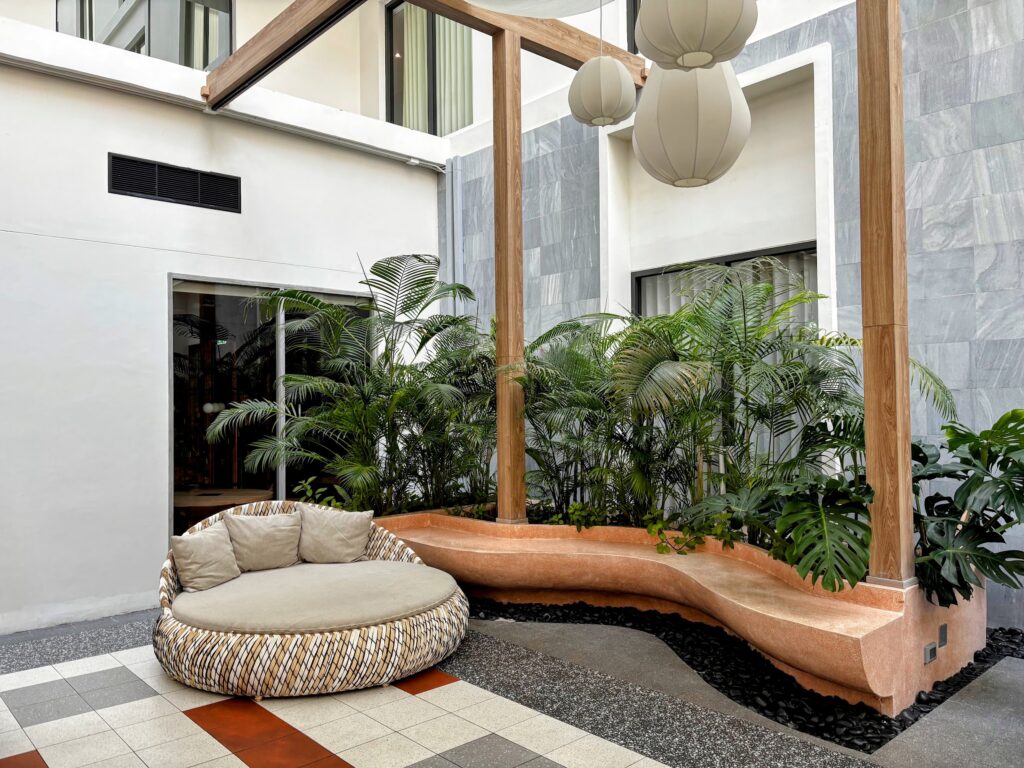
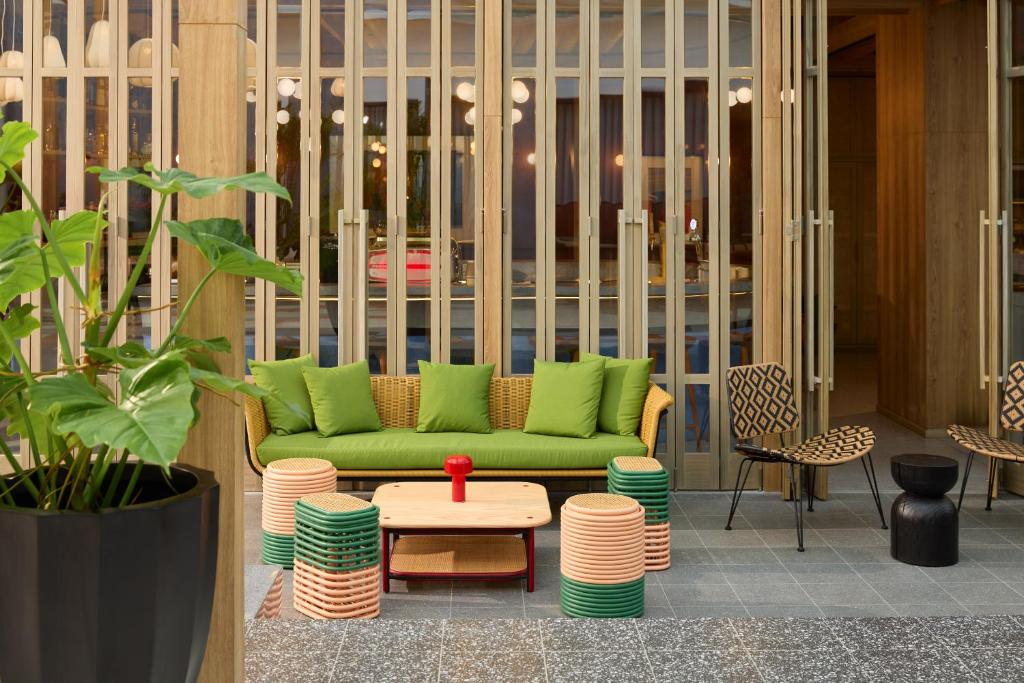
Palms and monstera spill out of pink stone planters that sweep into a long, sinuous curved bench, one of the courtyard’s best details, its flowing shape softening the harder lines of the stone and timber around it. Elsewhere there’s a round woven daybed set into a corner for when you’ve got nowhere to be, olive-green bistro chairs for breakfast, and a shell-shaped rattan chair that’s more fun than it has any right to be.
A long communal table with benches runs through the middle of the space, the sort that encourages conversation. On our visit, a group of older travellers from different countries who’d become friends at the hotel were all sharing breakfast here, which says plenty about the atmosphere the place creates. You end up lingering over coffee here far longer than planned, letting the noise of Chinatown drop away.
Rooms
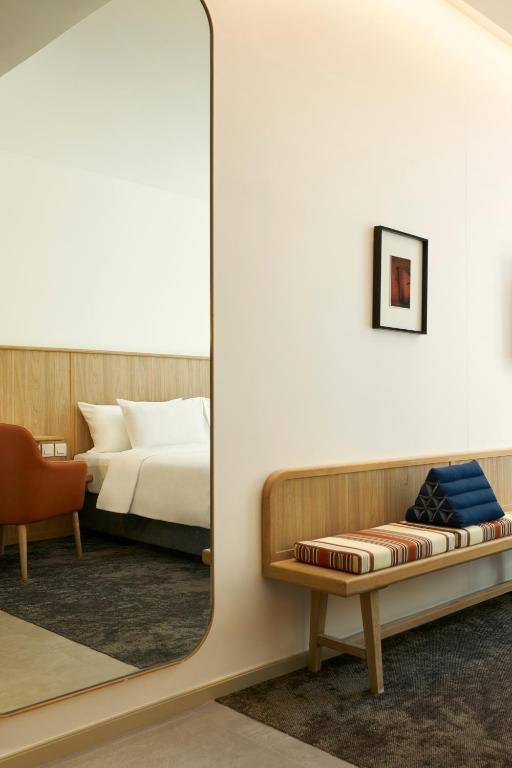
The hotel has 224 rooms. They’re not big, but they are thoughtfully compact and spotless: everything you need is there, nothing you don’t. The contemporary, Thai-Chinese-inspired design caters well to couples, friends and families travelling together.
The options span King rooms with a double bed and Twin rooms with two singles, through to the Roomy Triplex (a single bed with a bunk, sleeping three) and the Roomy King or Queen, which pairs a double bed with a bunk to accommodate four.
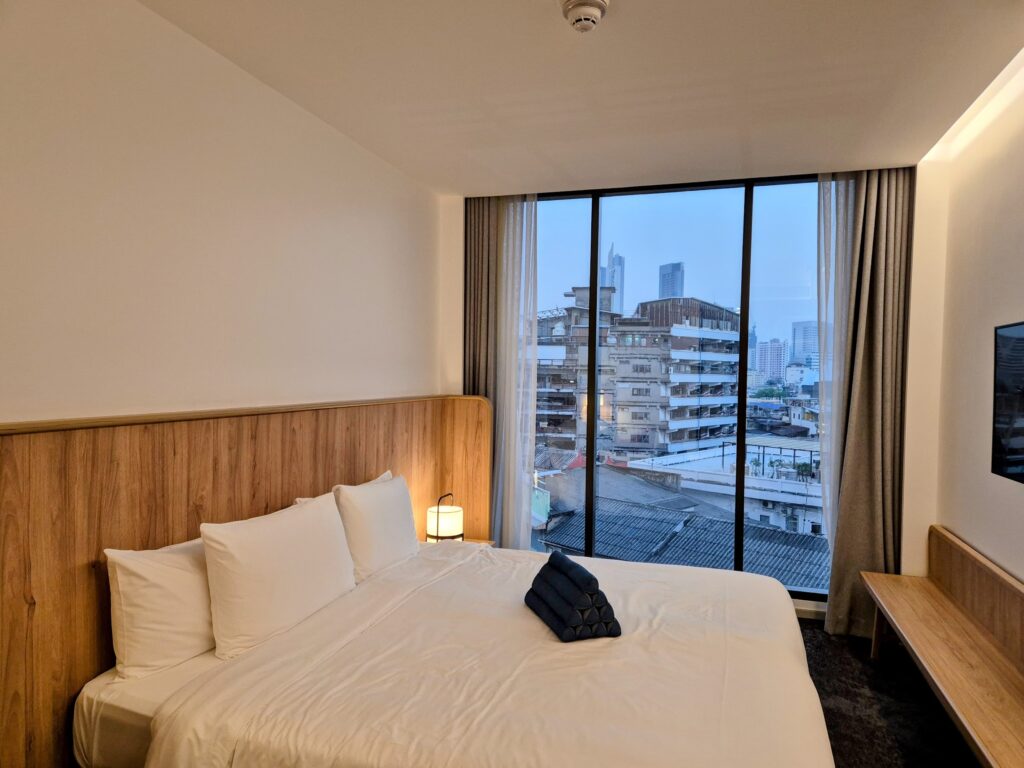
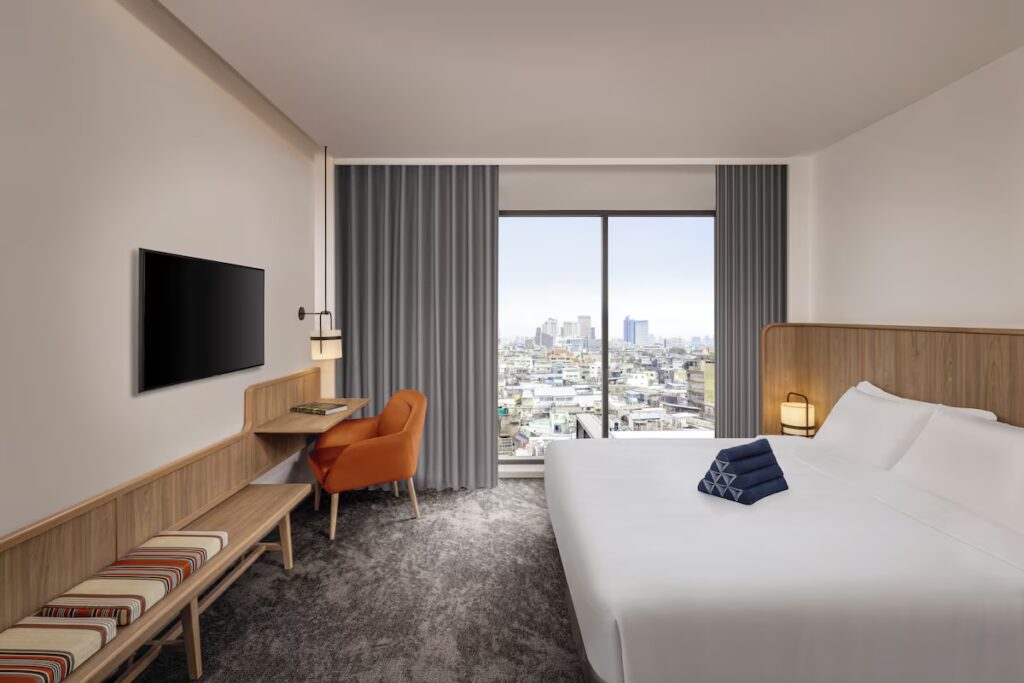
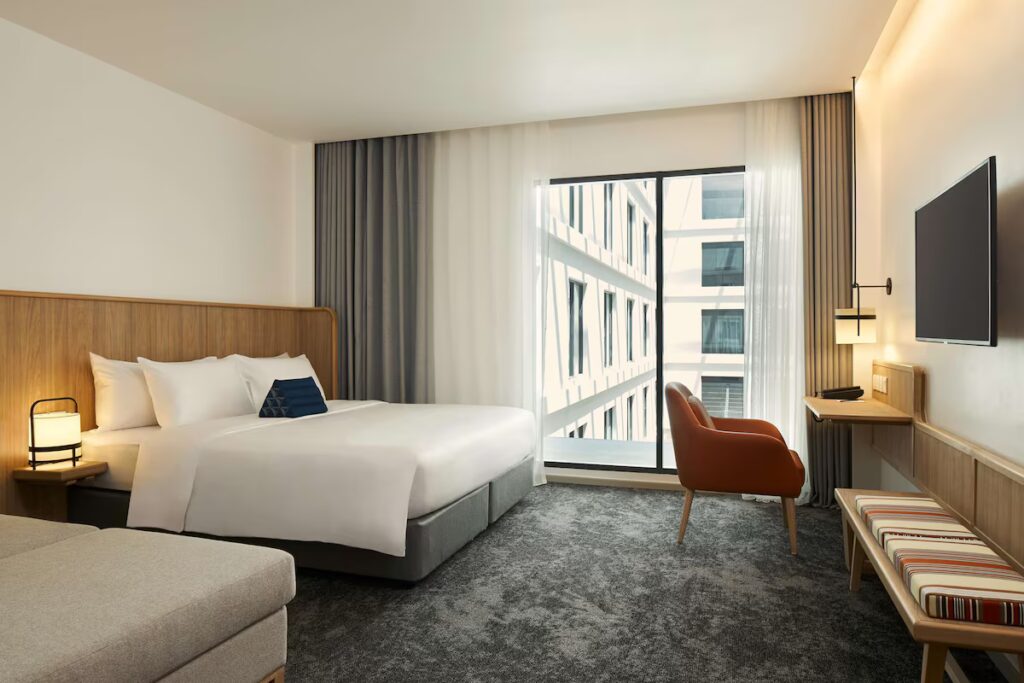
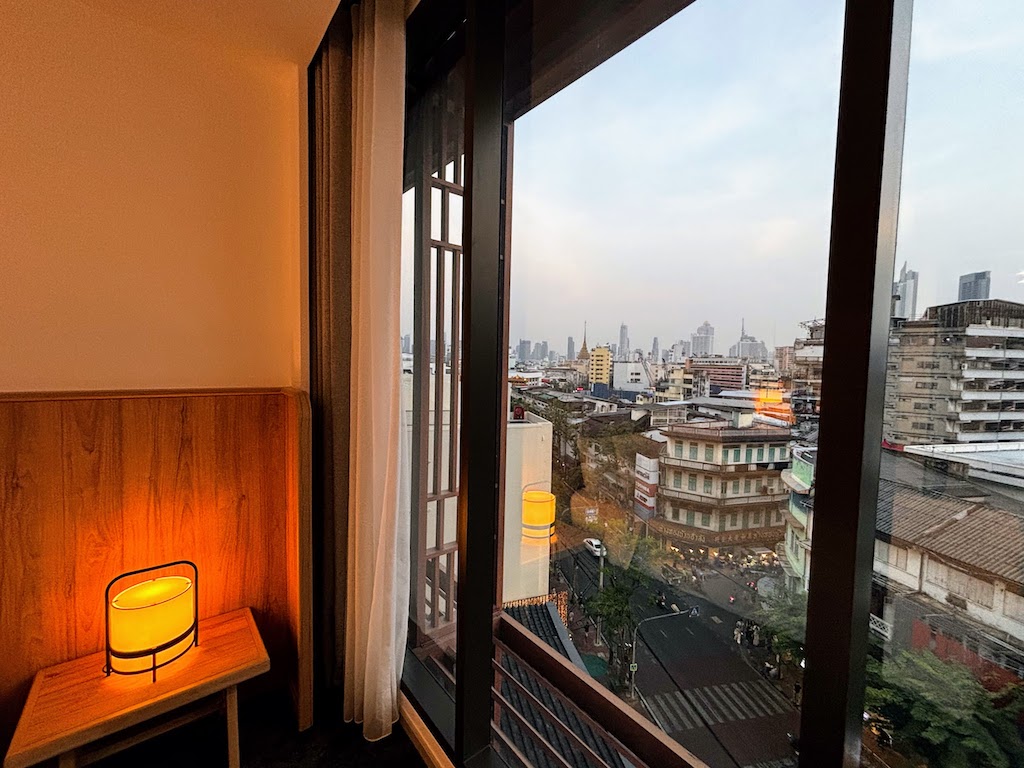
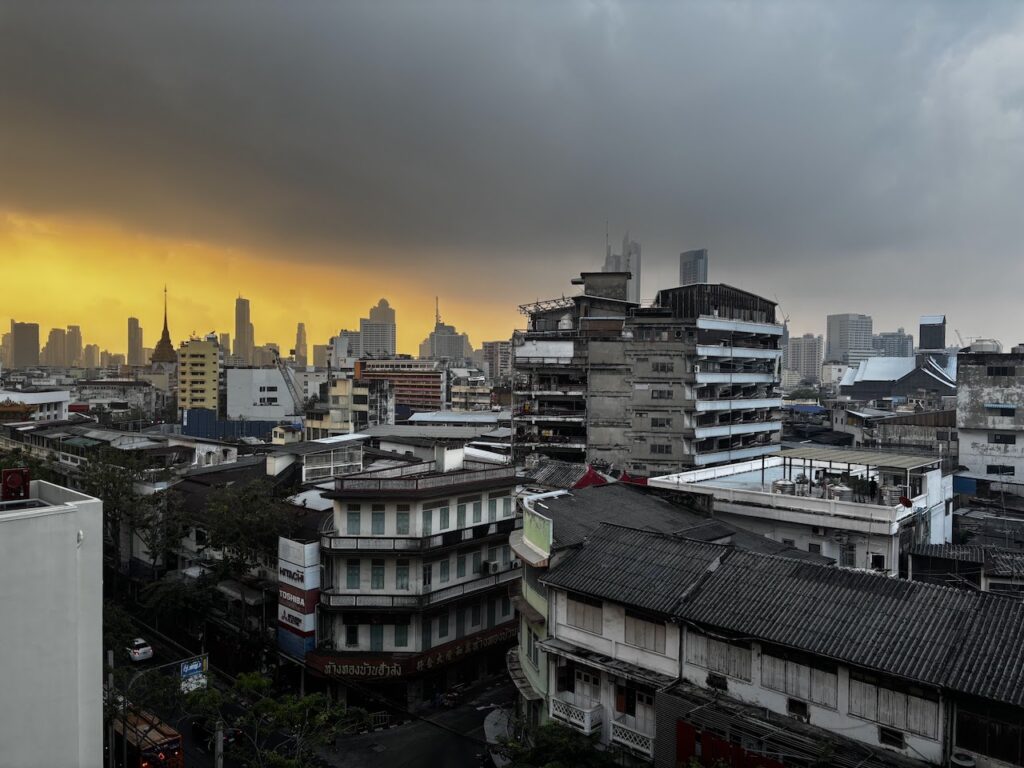
Warm wood panelling and floor-to-ceiling windows are standard throughout, and it’s worth paying a little more for a room on one of the upper floors. The view justifies the upgrade. The Lebua tower rises in the distance, the gold dome of a nearby temple marks the direction of the river, and the rooftops of Chinatown spread out below in a patchwork of corrugated iron and crumbling concrete.
Stand at the window long enough and the whole neighbourhood comes into focus: squirrels darting across rooftops, cats basking in the sun, tuk tuks and taxis threading through the streets below, tourists lugging suitcases towards the MRT and grandmothers heading home with the shopping.
There’s a decent desk and chair, too. The design takes its cues directly from the surrounding streets: closet alcoves are lined with handmade tiles from Lampang, arranged in geometric patterns drawn from the bases of local pagodas, while the bathroom pairs blue mosaic tiling with a clean, modern vanity and rain shower. A traditional Thai triangle pillow rests on the bed. Framed on the walls are architectural photographs of the area’s temples and rooflines by local collective DogDuckPugPed.
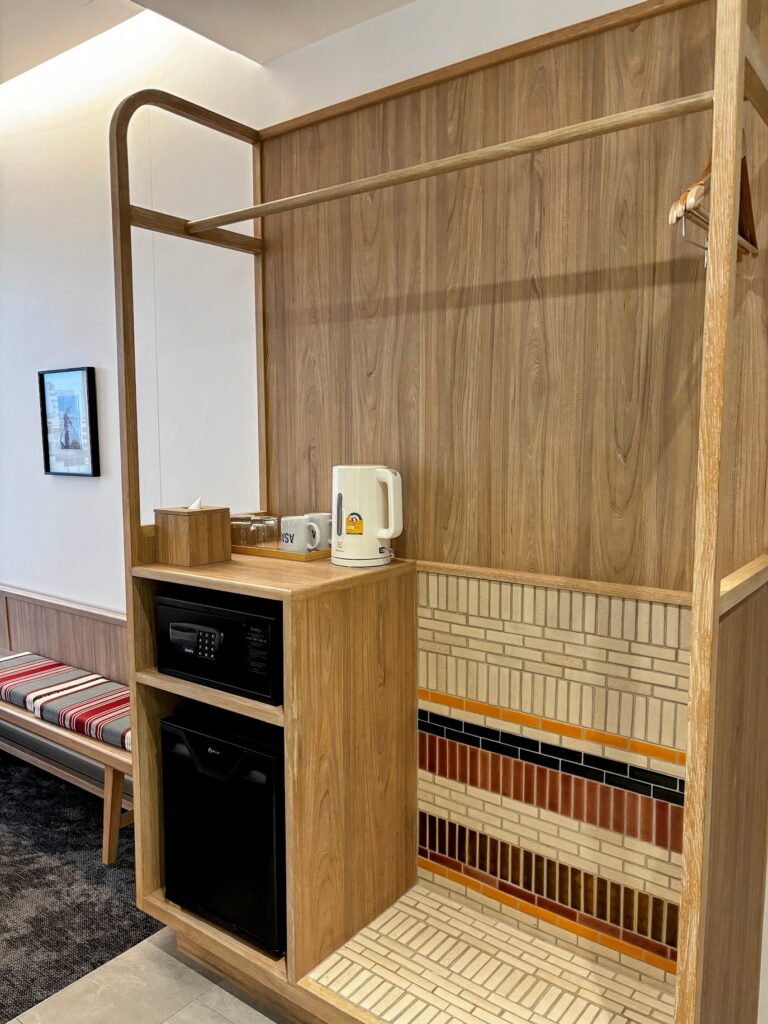
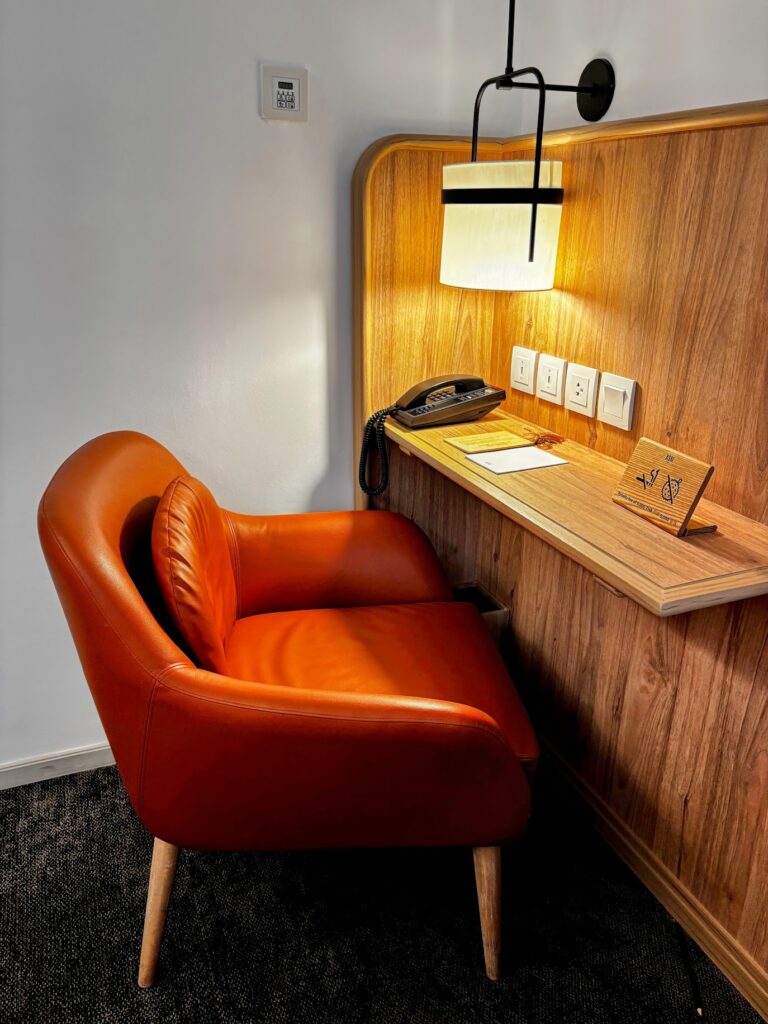
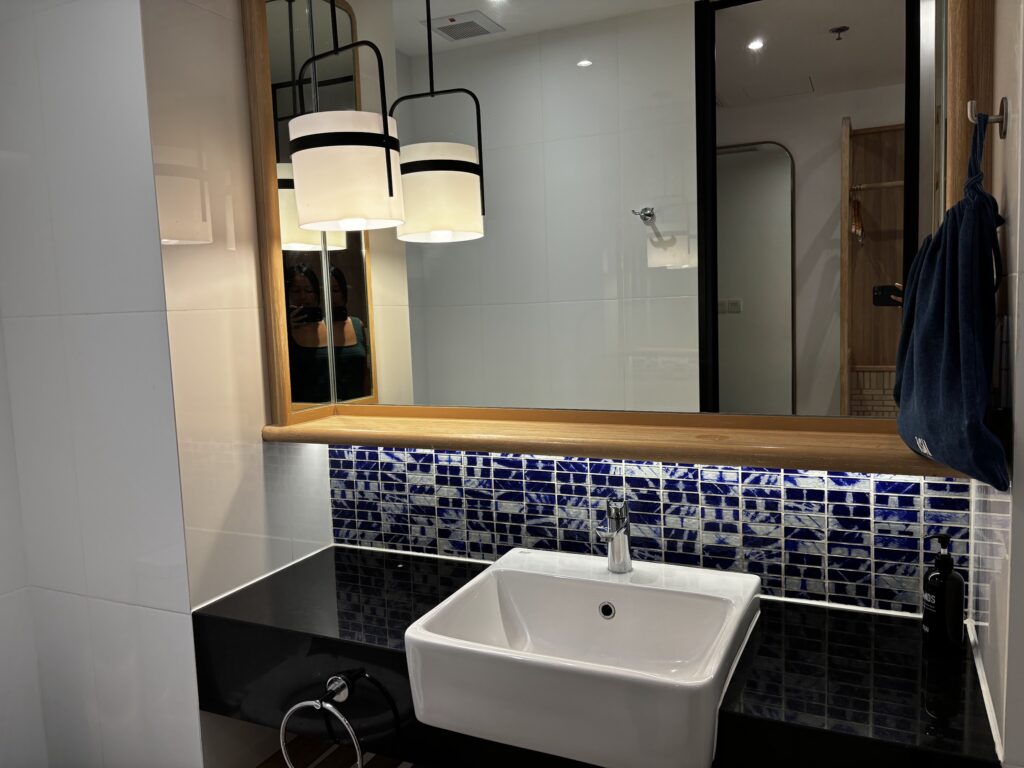
In keeping with the Live Local philosophy, there’s no coffee provided in the room, though mugs and a kettle are there if you want them. Not to worry: the hotel sits within the I’m Chinatown mall, and a 7-Eleven is right downstairs for anyone who needs a morning fix before venturing out (if you’ve bought some in advance, that is). There’s also a fridge, ideal if you went a bit overboard on the street food front. You did, didn’t you?
Facilities
There’s a 24-hour gym on-site, compact but well equipped, with natural light coming in from the organic garden that runs alongside it. Co-working spaces with free Wi-Fi provide a decent spot for catching up on emails or planning the next leg of a trip, and there’s a retail corner selling products from local brands and craftspeople. A 24-hour front desk handles check-in and check-out, and the hotel offers luggage storage for guests arriving early or leaving late.
There are no welcome drinks or refreshing towels on arrival, but you can help yourself to some pandan juice. Paid parking is available in the I’m Chinatown mall below, with hotel guests receiving a 50% discount.
Food & Drink
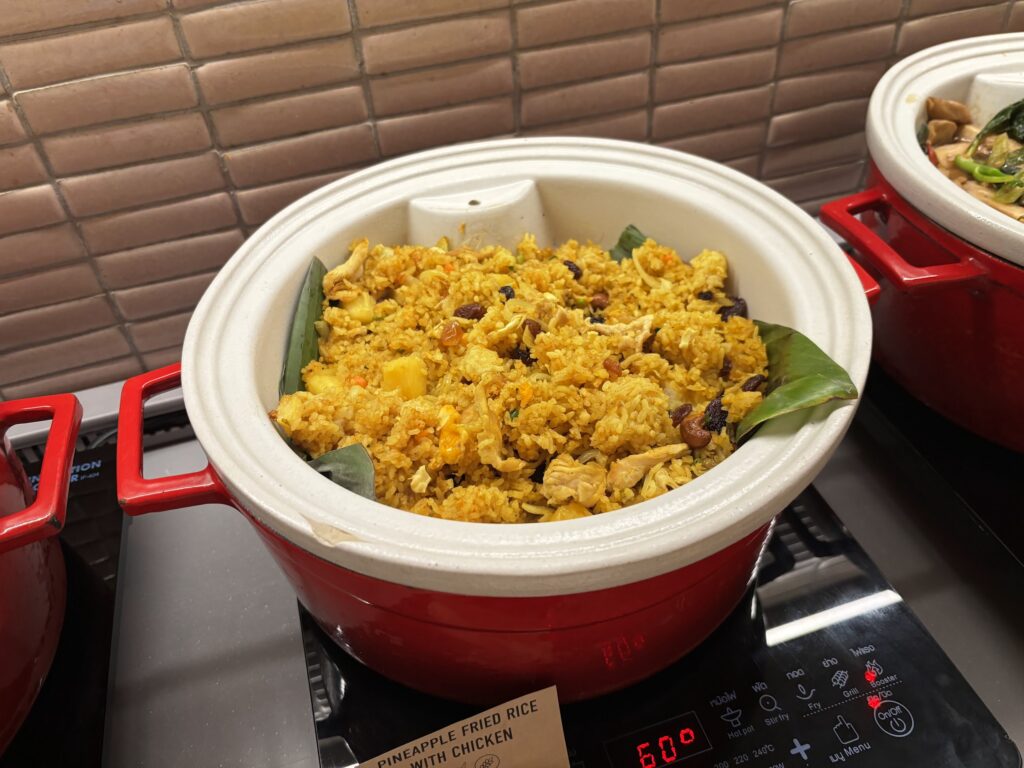
You’re in Chinatown, surrounded by some of the best street food in Asia, so any hotel breakfast has its work cut out. The ASAI rises to it. The Chinese-Thai breakfast culture runs deep, and is thoroughly represented at the ASAI: jok (rice porridge) stalls, congee, breakfast noodle soups, dim sum and steamed buns, soy milk and youtiao, strong iced coffee.
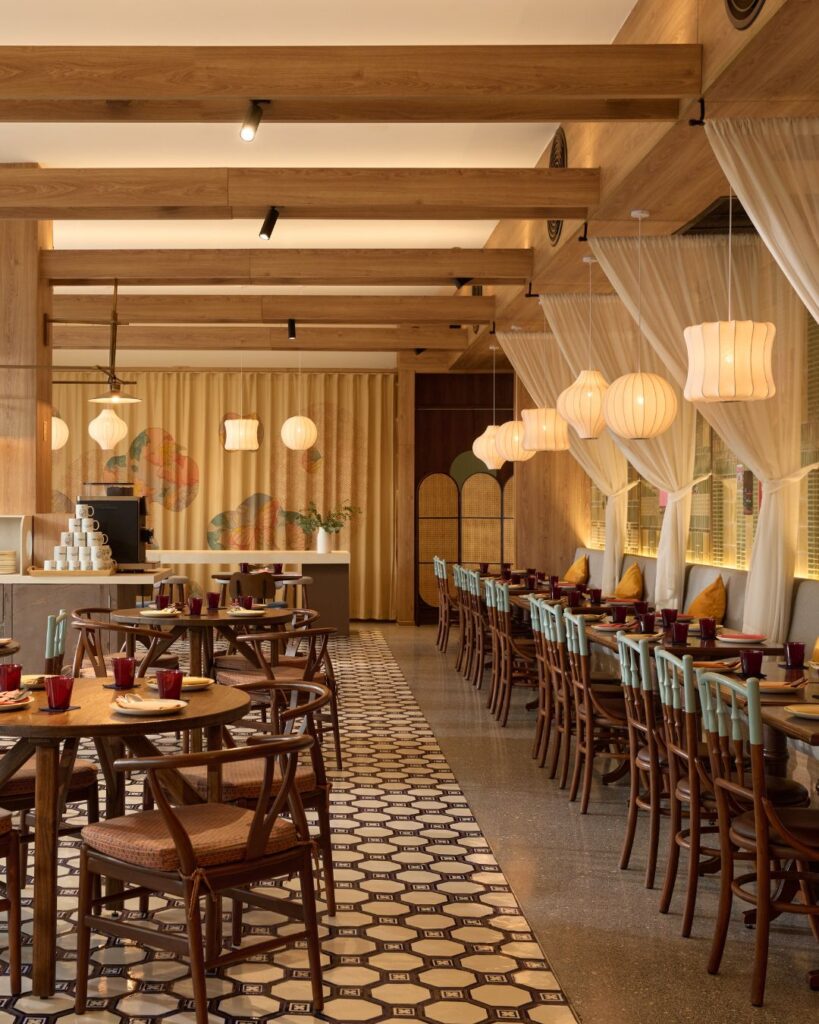
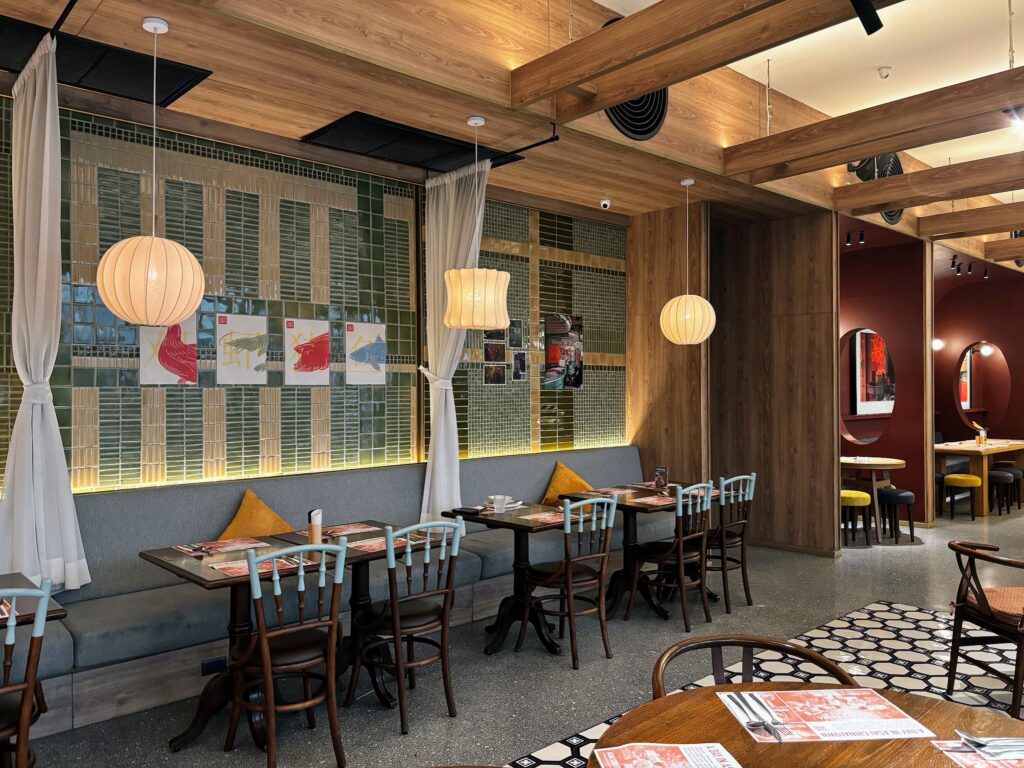
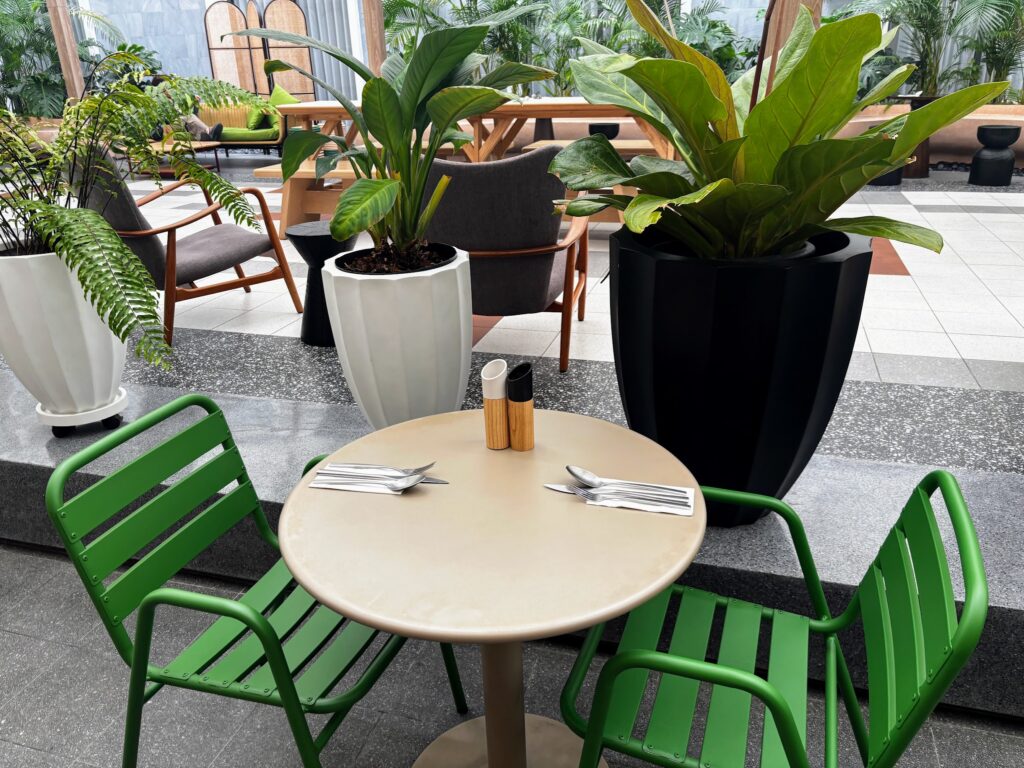
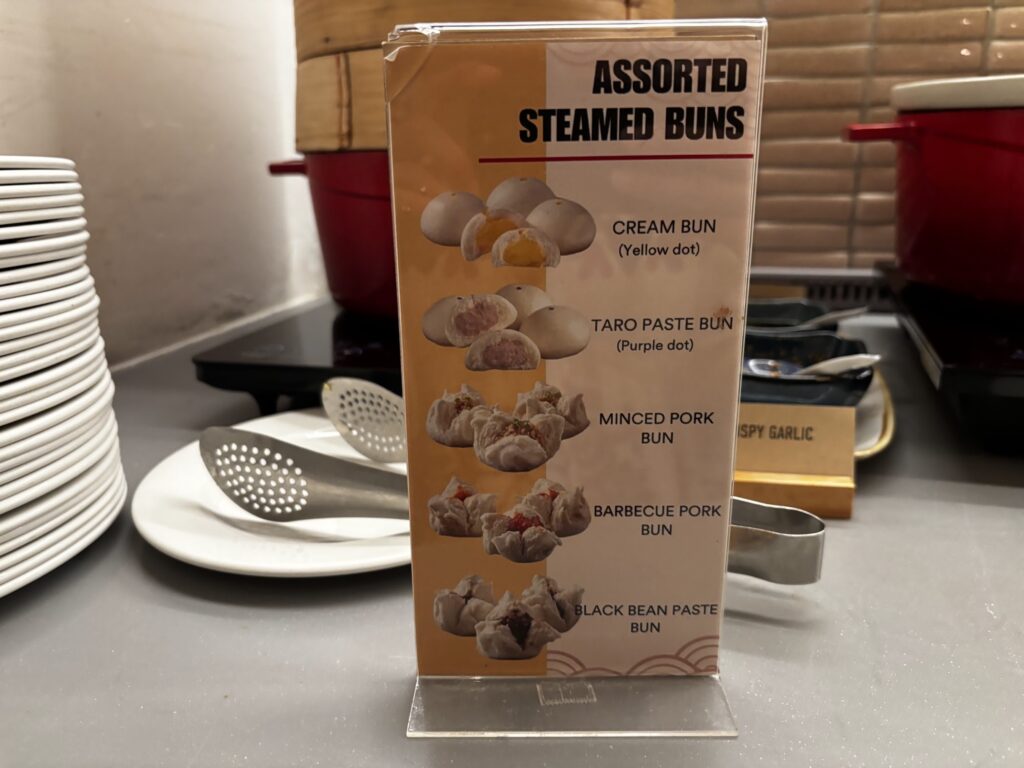
The buffet is small but focused, and the quality is a cut above what you’d expect at this price point. The steamed buns and dumplings are the standout: shu mai, barbecue pork buns and black bean paste buns, all landing with the confidence you’d expect from a kitchen cooking in the heart of Yaowarat. Sweet options include custard and taro, and are an unavoidably indulgent end, as you draw out your breakfast into brunch with a fifteenth coffee.
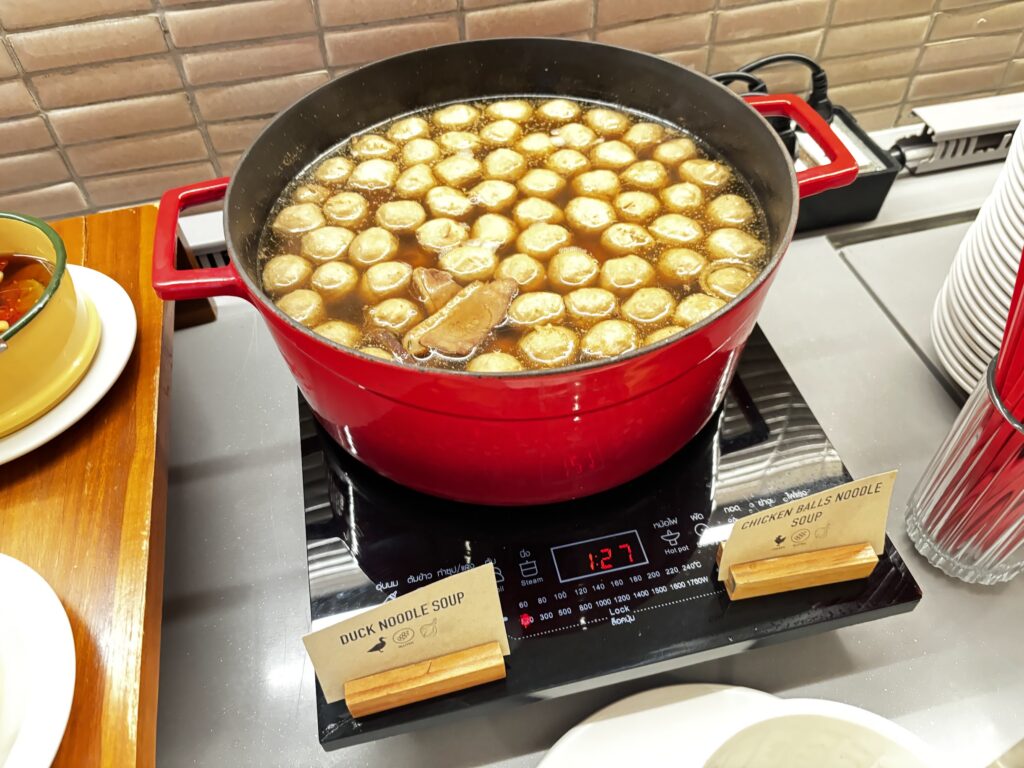
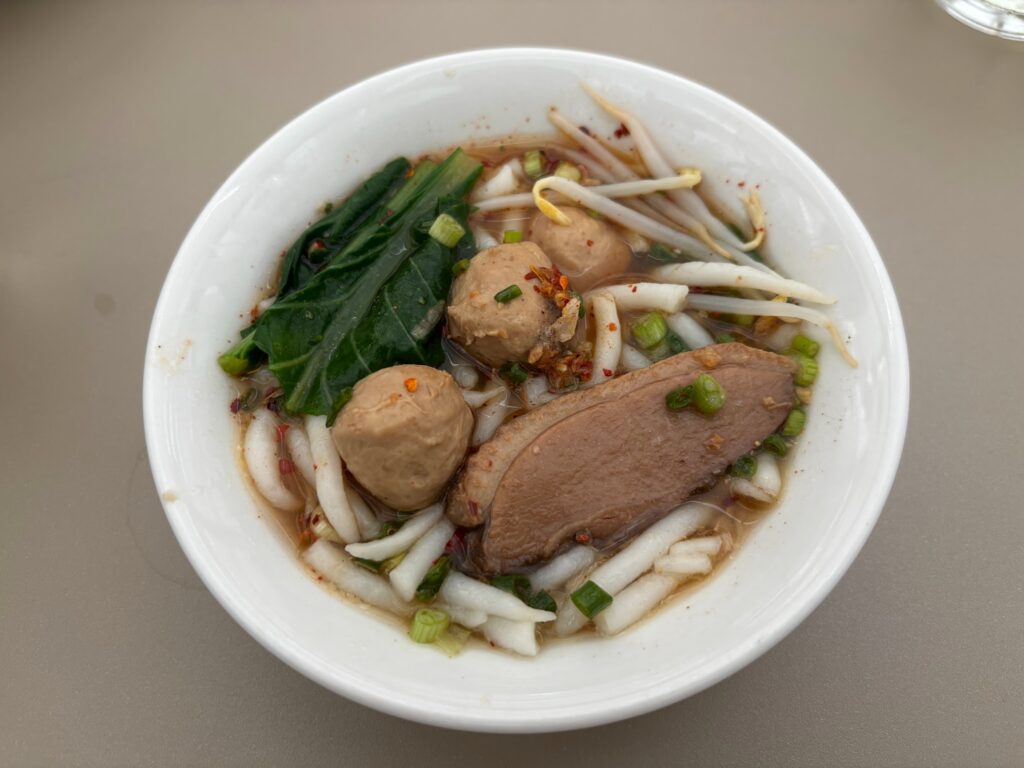
Each day brings something different. On our visit the seafood congee was excellent, rich and well seasoned. There was also a yum goon chiang, a Thai sausage salad that was excellent. Another day saw a DIY duck soup, where you build your own bowl from a selection of accompaniments and a deeply flavoured broth; it was far better than the mediocre versions you get at most hotel noodle stations.
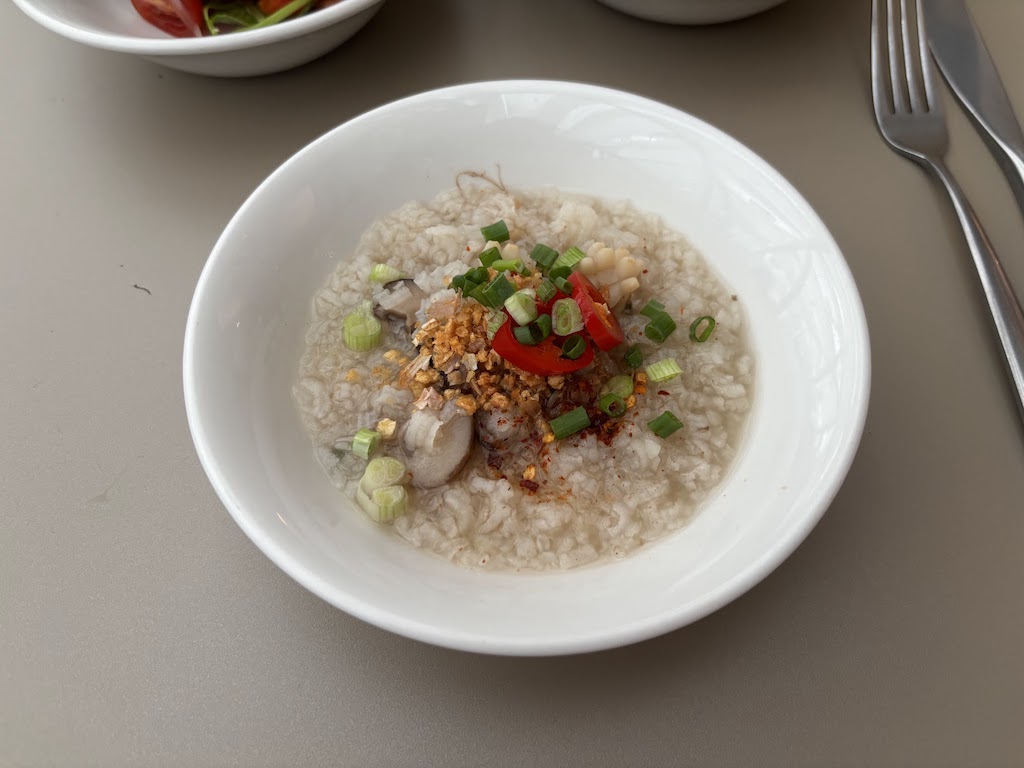
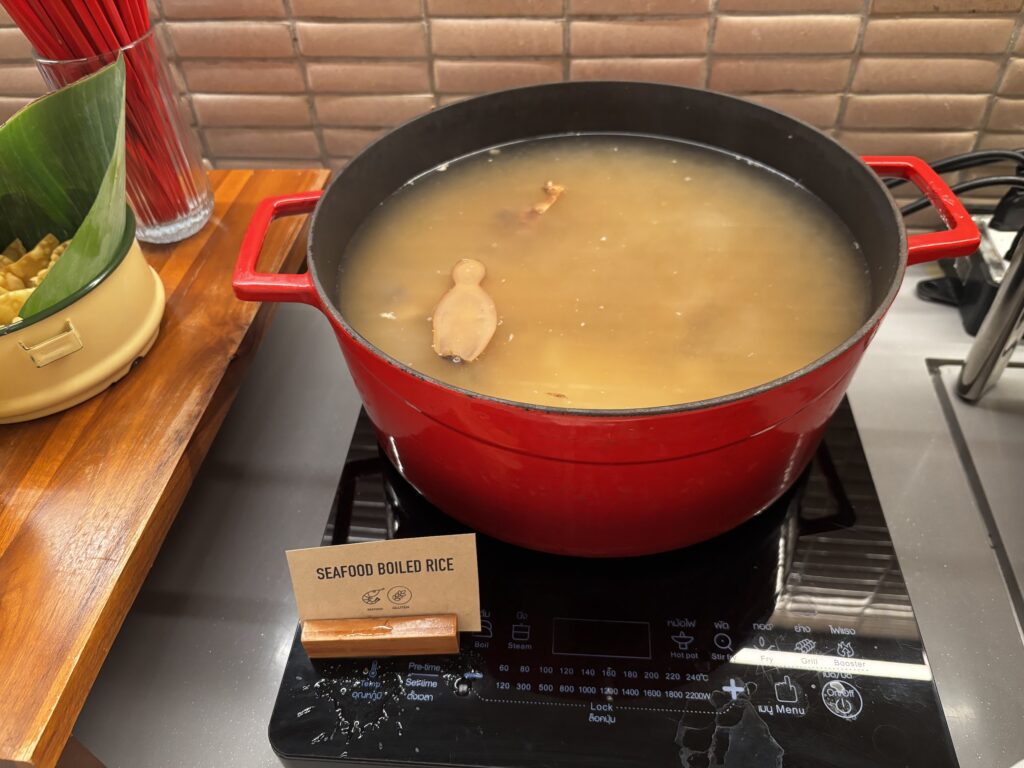
The coffee setup is refreshingly simple: an Americano or espresso from the machine, with hot milk kept in a thermos pot. No waiting around, and it tastes better than the milky cappuccinos that come sputtering out normally. The beans are from Akha Ama, a socially conscious enterprise growing 100% Arabica in northern Thailand, and the difference shows. Even the mugs are a nice touch, large and emblazoned with the Live Local slogan.
Seasonal Thai fruit is served with nam jim polamai, a spicy dipping sauce made with prik gluea (chilli salt) and a sweet fish sauce (nam pla waan). It’s one of those small details that separates a breakfast that’s been thought about from one that’s just been assembled.
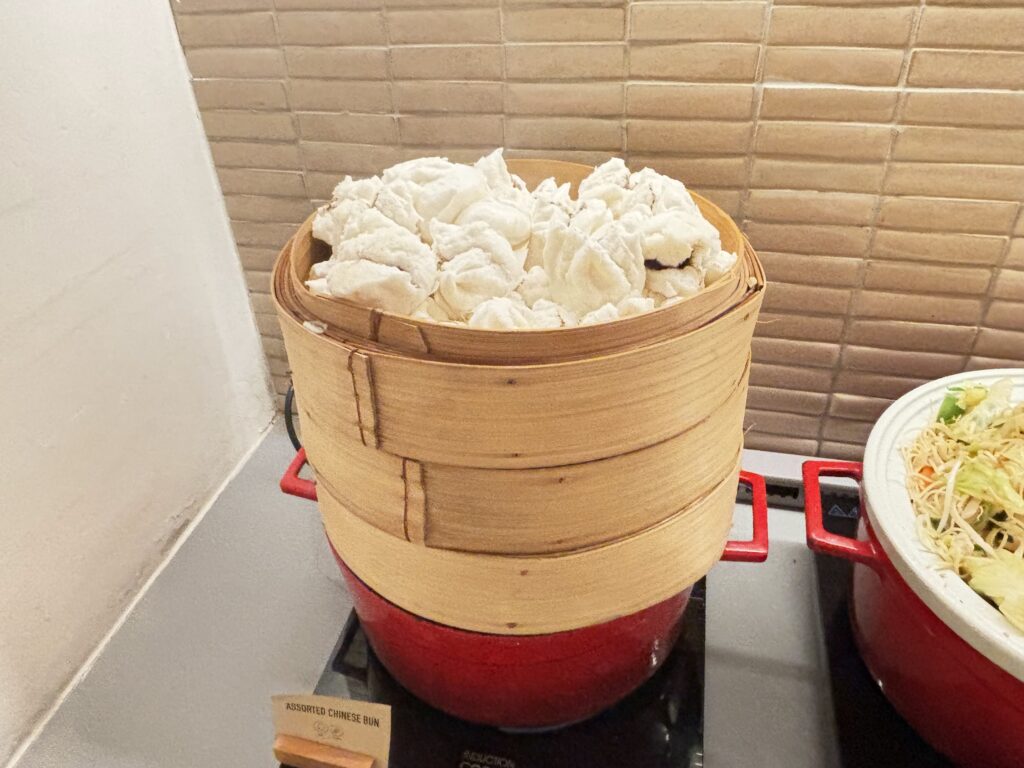
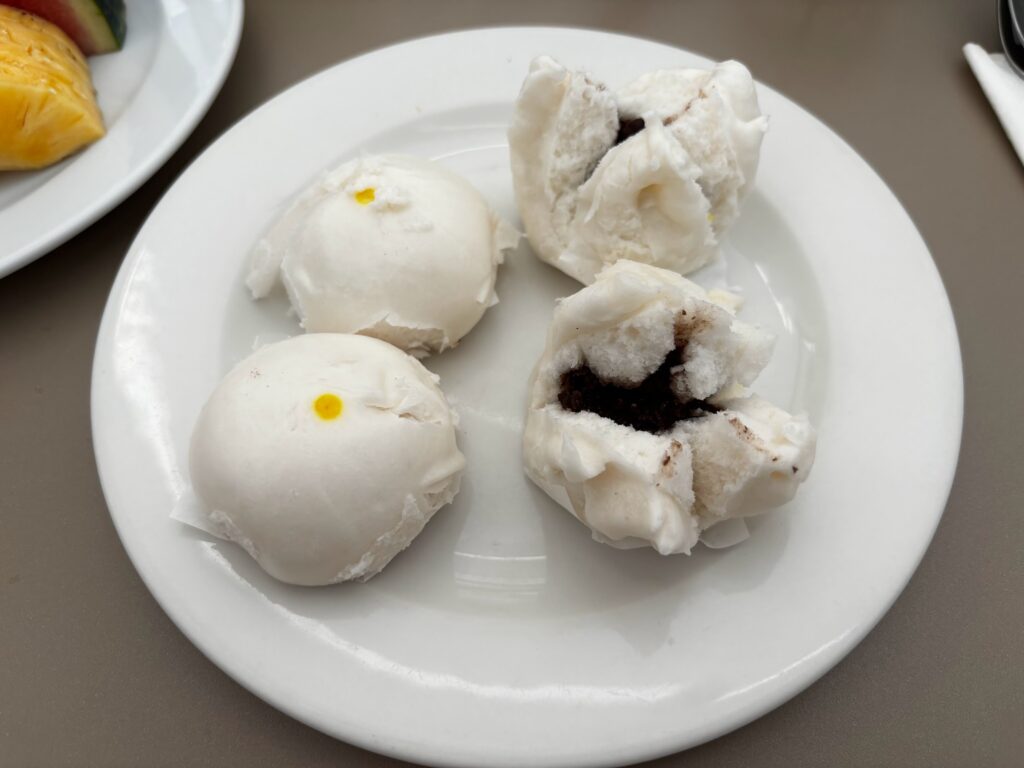
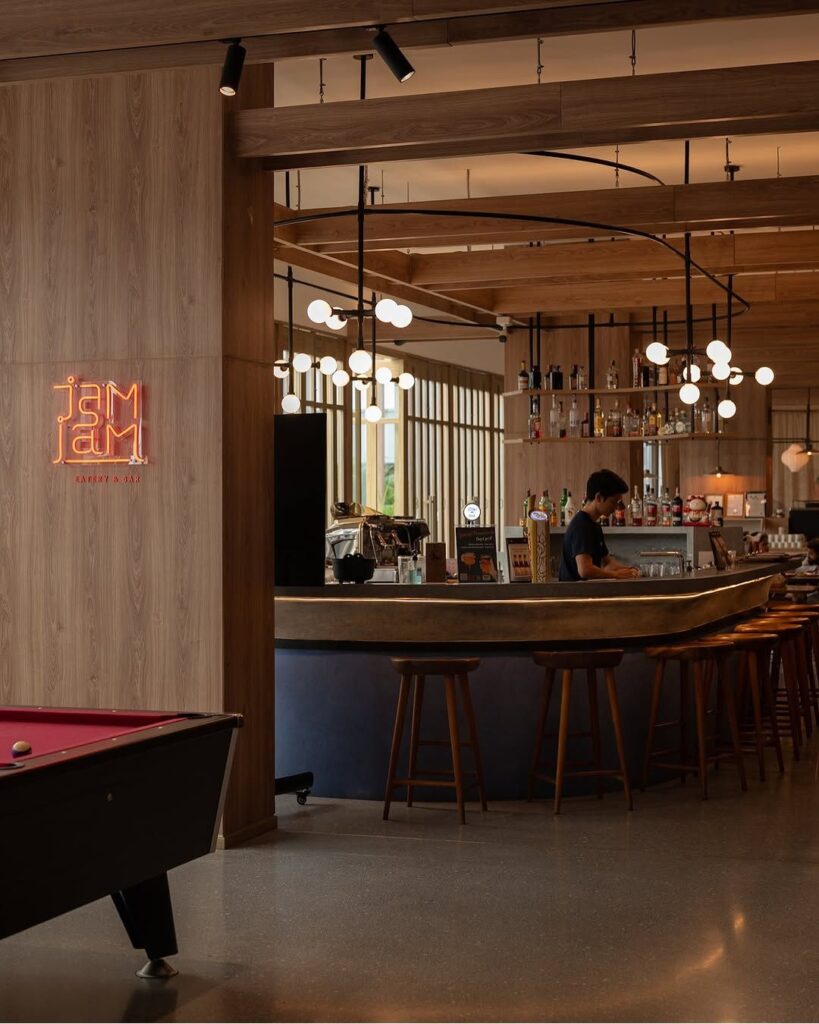
It’s all served at JAM JAM Eatery & Bar, the hotel’s only restaurant, originally conceived in collaboration with Paolo Vitaletti and Jarrett Wrisley, the duo behind Appia, Peppina and Soul Food Mahanakorn (RIP). The Roads to Rome cookbook in the lobby suddenly makes sense.
That partnership laid the groundwork, though the kitchen has since evolved under Chef Wissanu ‘Nu’ Tiewtagoon, who has steered the menu towards neo Thai-Chinese sharing plates: crispy pork belly with five-spice red curry, chicken and chive summer rolls, and beef larb skewers among them. Ingredients are sourced locally where possible, and the hotel maintains an on-site organic garden for herbs and vegetables. The garden is a serious operation: some 2,100 plants grow here, five kinds of basil among them (wild, white, red, sweet and hairy), alongside mint, chilli, Vietnamese coriander and morning glory, all feeding the kitchen.
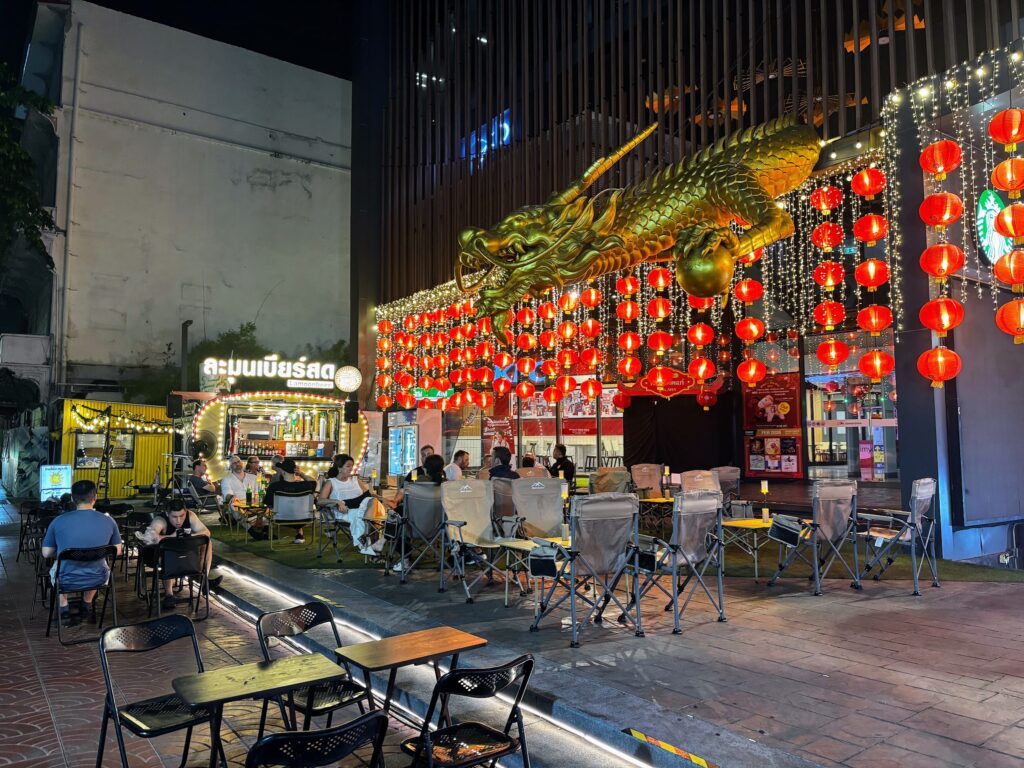
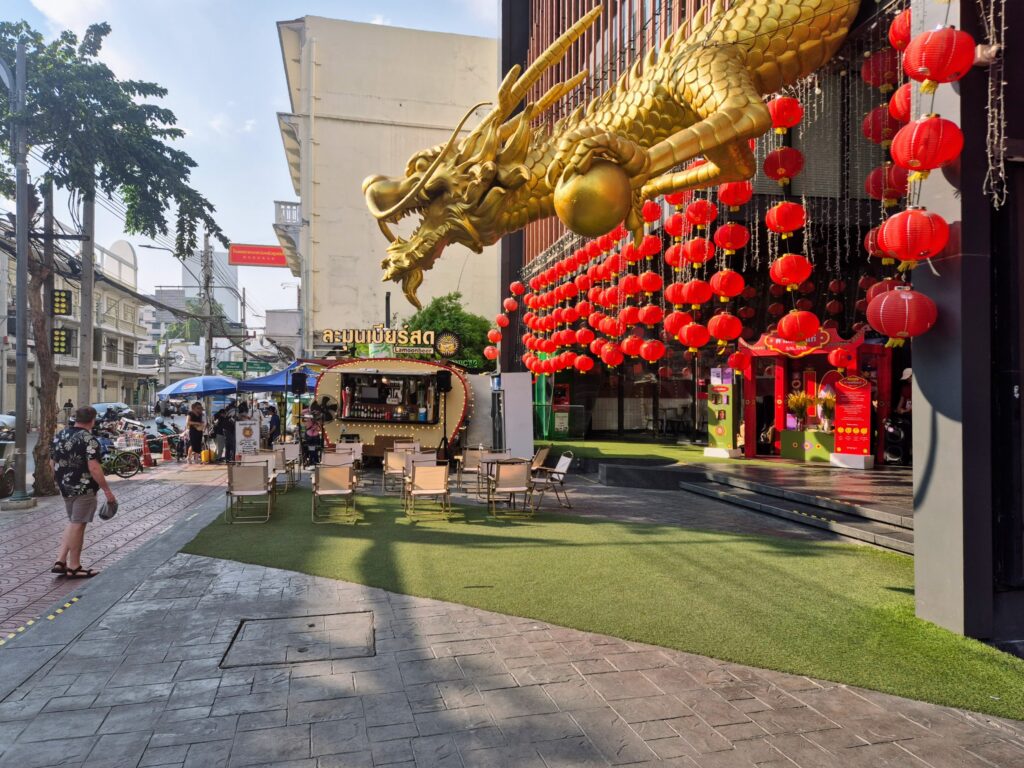
They also do a decent cocktail inside, but if you want to feel the heat of Chinatown, there’s a little pop-up bar selling beers just outside the entrance, in front of the mall.
Ideal For…
Foodies. With Yaowarat’s stalls on the doorstep, JAM JAM’s neo Thai-Chinese sharing plates in-house and a breakfast that takes its setting seriously, eating is front and centre here. The Akha Ama coffee, the daily Thai juices and the dim sum at breakfast all punch above the price point, and you’re a few minutes’ walk from some of the best street food on the planet.
Exploring Chinatown. One hundred metres from Wat Mangkon Station, with staff who actually know the area and a courtyard to retreat to when the heat and crowds get much, the ASAI is as well placed as they come. Stay a few days and you catch each pocket of the neighbourhood, Talat Mai, Charoen Chai, Talat Noi, Song Wat, at its own hour rather than cramming them into one evening.
Couples and solo travellers on a budget. The rooms are compact but spotless, the communal spaces are generous, and the whole thing runs closer in spirit to a hostel than a hotel without the compromises that usually implies. It’s sociable if you want it and easy to keep to yourself if you don’t.
It’s perhaps less suited to anyone after a resort-style stay with a pool and a spa, or travellers who want a spacious room to spread out in. Light sleepers should also know that this is one of the busiest corners of Bangkok, and a few guests have noted the walls between rooms are on the thin side, though the Charoen Krung side is calmer than Yaowarat a block over.
Why Stay?
Because the ASAI does what so many lifestyle hotels promise and few deliver: it connects you to its neighbourhood. The rooms are small, but with a courtyard this inviting, a breakfast this good and the MRT a hundred metres from the door, that trade-off is an easy one to make. For couples, solo travellers and friends seeing Bangkok on a budget that doesn’t mean roughing it, it’s a smart choice, and the location alone would carry a lesser hotel. Stay here and Chinatown stops being a thing you visit and becomes, for a few days at least, a thing you live inside.
Rooms from around £45 per night in low season, rising to around £70 in high season. Dusit Gold members save an extra 20% when booking direct.
Address: 531 Charoen Krung Road, Pom Prap Sattru Phai, Bangkok 10100
Website: dusit.com/asai-bangkok-chinatown