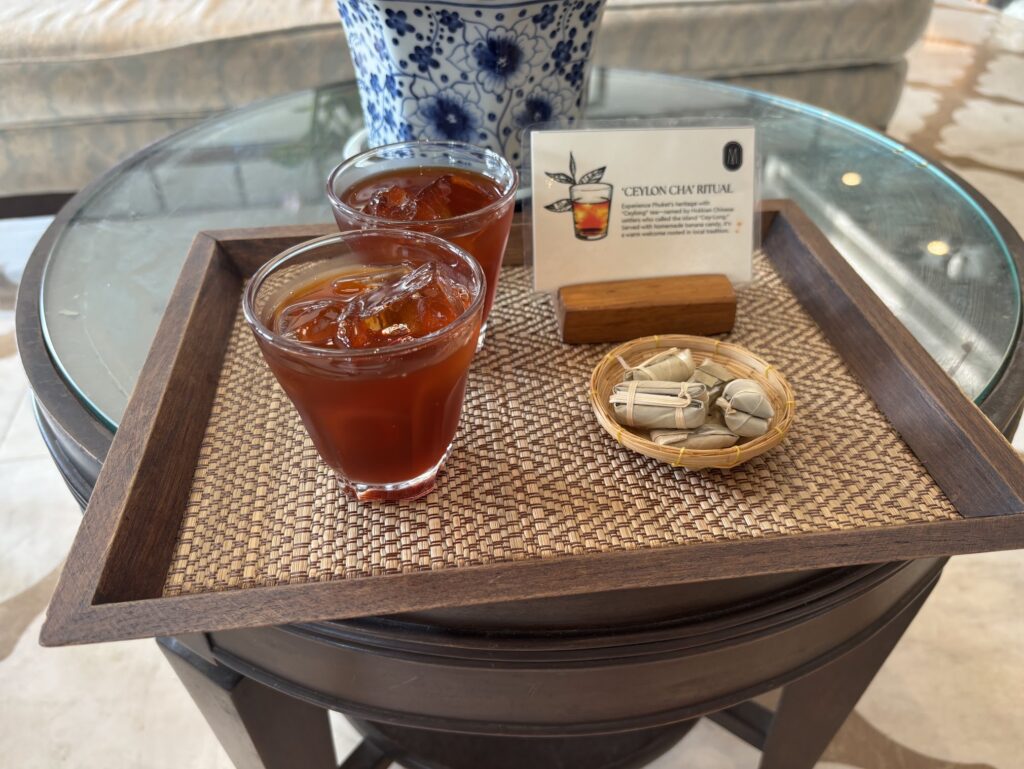
On arrival at the Avista Grande, you’re handed a cup of Ceylon tea with some homemade banana candy. Not just because it’s a nice touch – though it is – but because the Hokkien Chinese settlers who shaped this island brought their tea-drinking and greeting culture with them.
Their presence is woven through everything. MGallery properties are built around storytelling, each shaped by local history and culture. The Avista Grande goes further than simply referencing Phuket’s past in its décor. It builds the island’s architectural DNA into its very bones, then opens the whole thing up to let the Andaman in. The result is striking, and grants a sense of place that so many hotels here fail to deliver on. In Phuket’s increasingly ubiquitous, identikit resort scene, that is hugely appealing.
The 159-room resort draws on Sino-Portuguese design – the visual language that defined Phuket’s 19th-century tin mining boom – and filters it through a distinctly contemporary lens. It won Best Design Hotel at the Thailand Tourism Awards in 2021, and has since taken Thailand’s Leading Boutique Hotel at the World Travel Awards three years running (2022, 2023, 2024). Just looking at the hotel, it’s easy to see why.
The Location
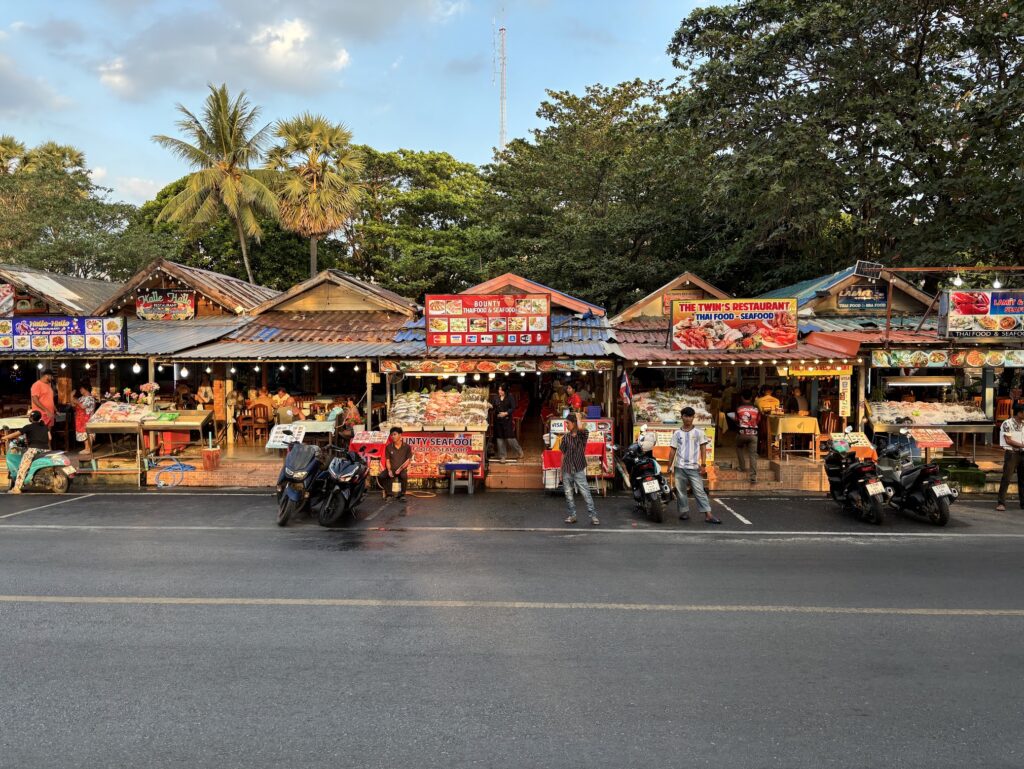
On a verdant mountainside above Karon road and its sprawling beach, this really is a hideaway (oh wait, that’s a different hotel by the same group in Patong). Walk five minutes down the hill and you’ll come to a dusty strip of fruit stalls, smoothie shacks and noodle joints. Then you’ll hit Karon road, lined with roadside shacks selling seafood. Cross over and you’re on the beach.
Beyond that, Karon town is a fairly typical slice of Thai tourist infrastructure – beer bars, souvenir shops, tailors and massage parlours. The town and night market are busy and functional rather than charming. Gone are the bohemian hipsters of the past; today this part of Phuket draws a largely Eastern European market. But whichever demographic is currently in vogue here, the hotel feels a world away from the throngs of the town.
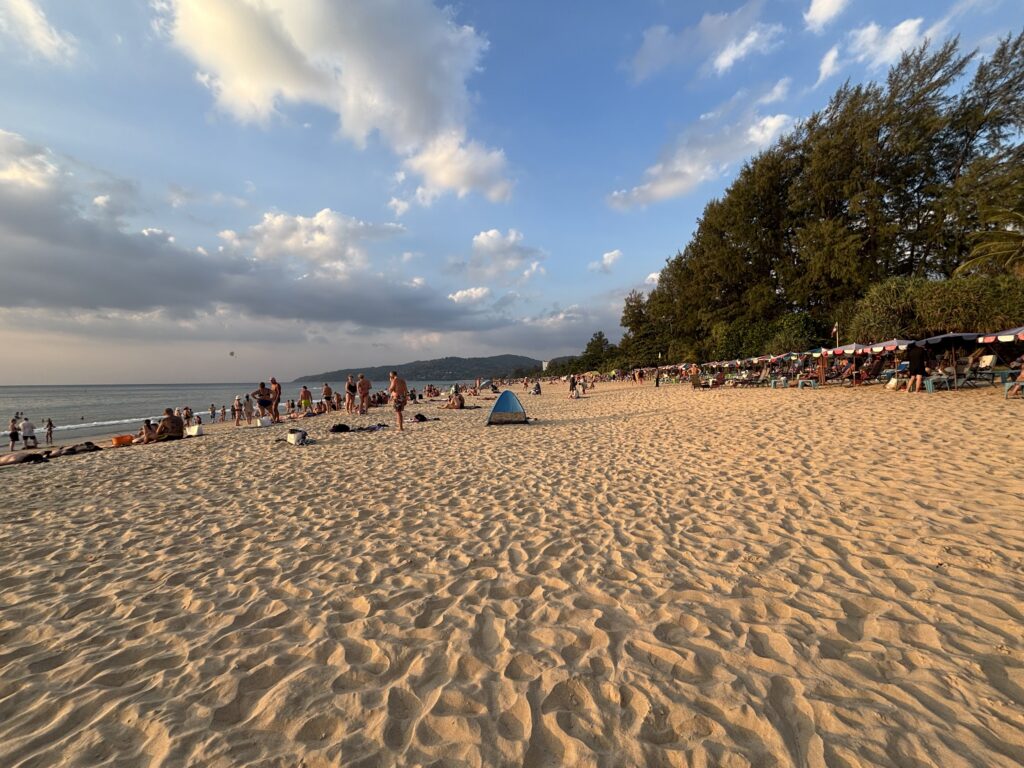
At nearly 4km long, Karon Beach is the real draw beyond the hotel grounds. It’s wide, spacious and scenic, and one of the cleanest stretches of sand in Phuket. So much so, in fact, that sea turtles have been returning to nest here again. Marine officials note that for a turtle to choose this stretch of sand – busy with tourists, lined with hotels – is itself a sign of improving coastal health. Rejoice! If you do spot turtle tracks on the sand at night, let the hotel know so they can contact the relevant authorities.
It’s also one of a rare handful of beaches worldwide where the sand squeaks underfoot, a result of its unusually pure white quartz composition; the grains are so uniformly rounded and clean that they vibrate as they slide against each other. Some say it’s like walking on fresh snow, but we found it a bit too scorching hot to agree with them. Fling off your flip-flops and have a go.
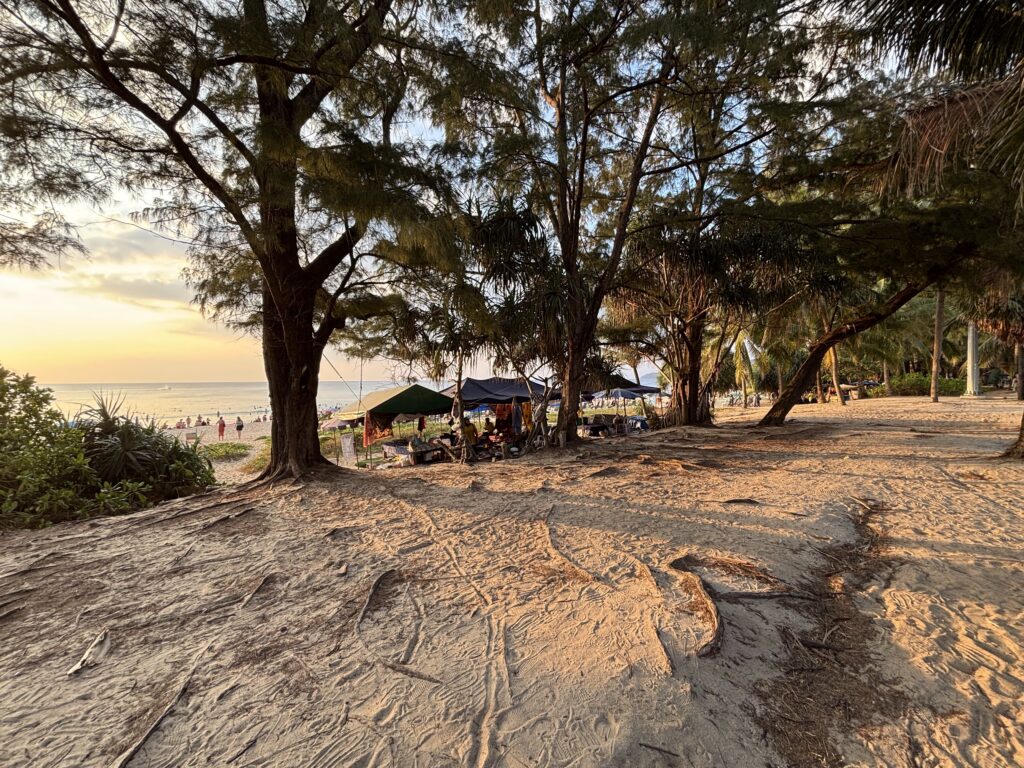
Come evening, the beach crowds swell as folk come to soak up the sunset. Speedboats pull up along the beach offering parasailing – the locals who crew them make it look effortless, though it’s back-breaking work. Despite this, because of the breadth of the beach, you can still find your own little spot to watch mercury descend.
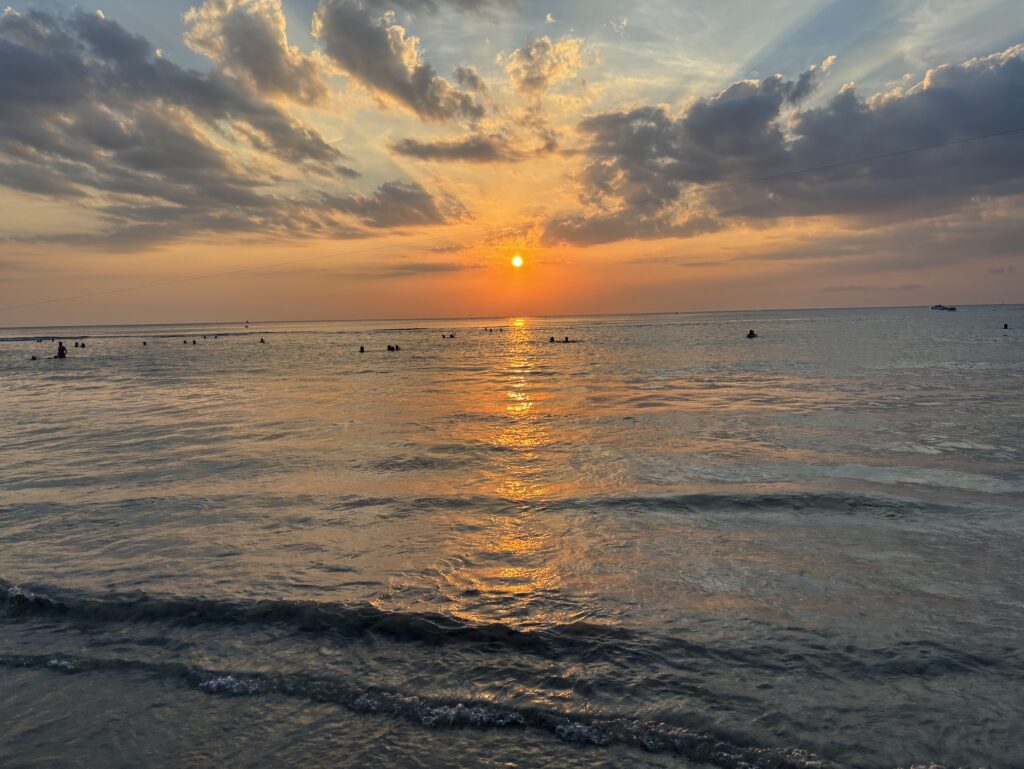
Back off the beach, and Karon Viewpoint, locally known as Three Beaches Hill, is around fifteen minutes by scooter. It offers a spectacular panorama of three crescent-shaped bays – Karon, Kata, and Kata Noi – that’s particularly good at sunset. If the buzz of Karon Beach gets too much, Freedom Beach is worth the taxi ride.
A six-minute stroll along the beach brings you to Tann Beach Club, a nicer spot by day than night, depending on what you’re after. A short walk in the other direction leads to The Pad Thai Shop, where locals and tourists rub shoulders over generous bowls of noodles. It’s worth seeking out.
It’s easy to stay within the hotel’s orbit, moving between pool and beach, with Karon town’s sometimes slapdash energy barely registering.
Read: The best restaurants near Karon Beach
Character & Style
You’re constantly reminded you’re in Thailand at the Avista Grande, which is just as it should be, starting with the warm welcome rooted in local tradition through to the elephant keyrings gifted on departure.
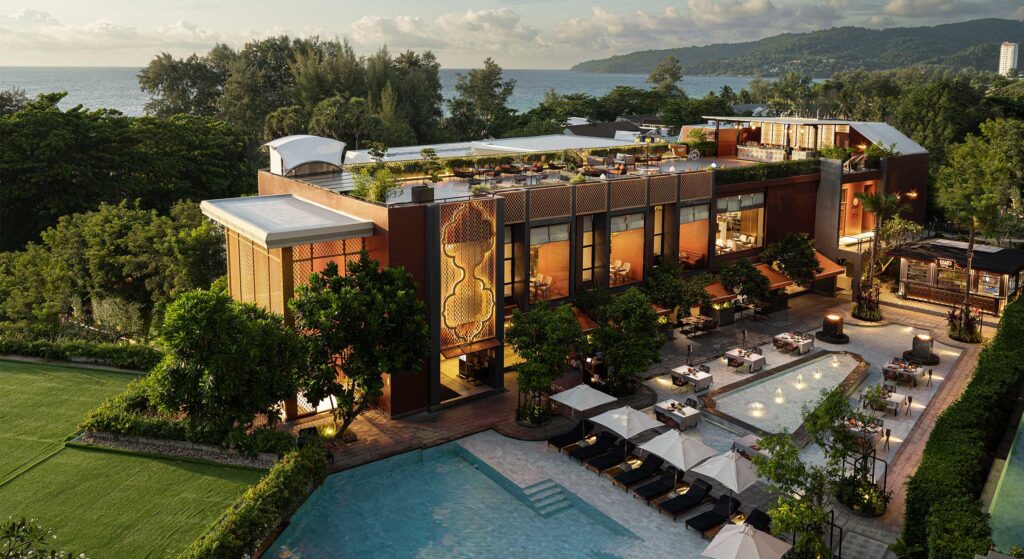
The architecture mines the island’s history throughout. Warm, industrial elements are everywhere. While almost all the tin is long gone after decades of trade, it’s evident in the design of the building, which is arrestingly beautiful.
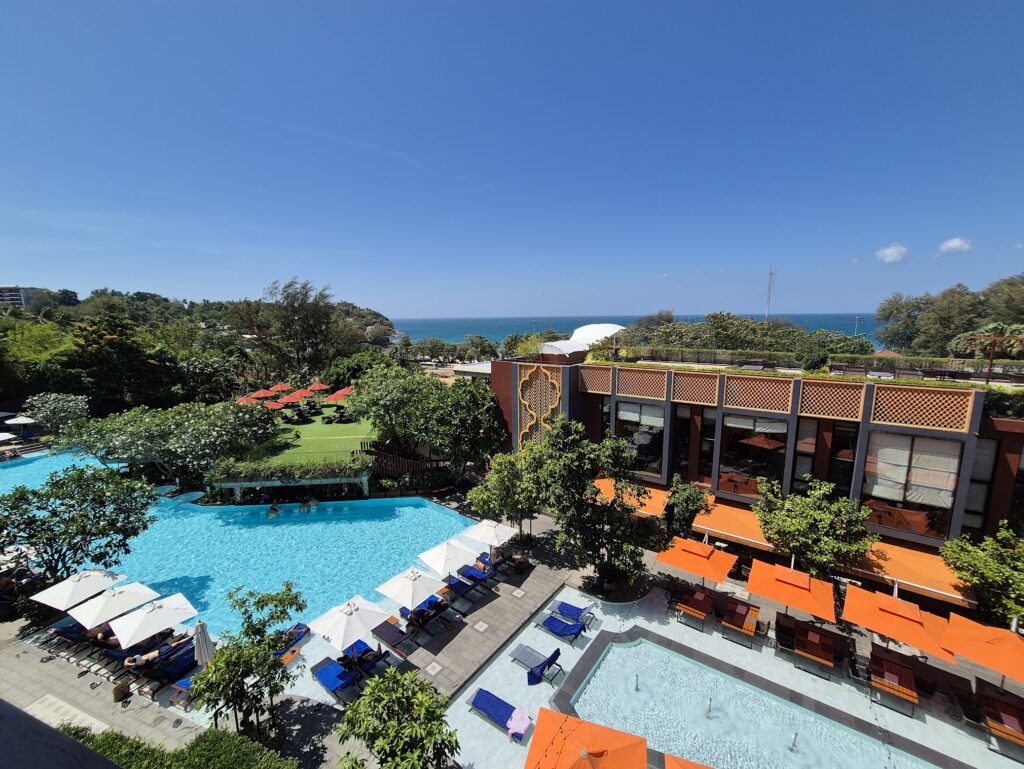
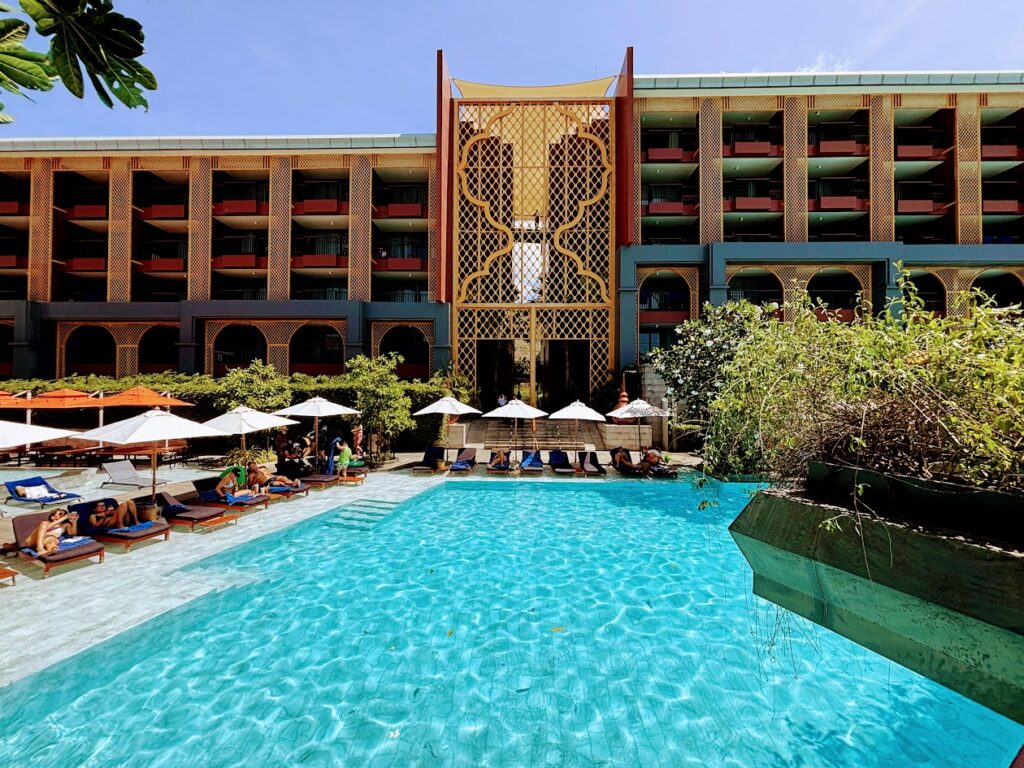
It stops you in your tracks. Five storeys of terracotta-red arched balconies run its full width, each arch framing a private balcony; the repetition gives the facade the same rhythm as the colonnaded shophouses of Phuket Old Town, scaled up to resort proportions. At its centre, a soaring golden jali screen, the latticed metalwork borrowed from Mughal and Indo-Portuguese tradition, its intricate geometric fretwork catching the light as it shifts through the day. Come late afternoon, the sun hits the terracotta and copper tones and the whole building seems to glow from within.
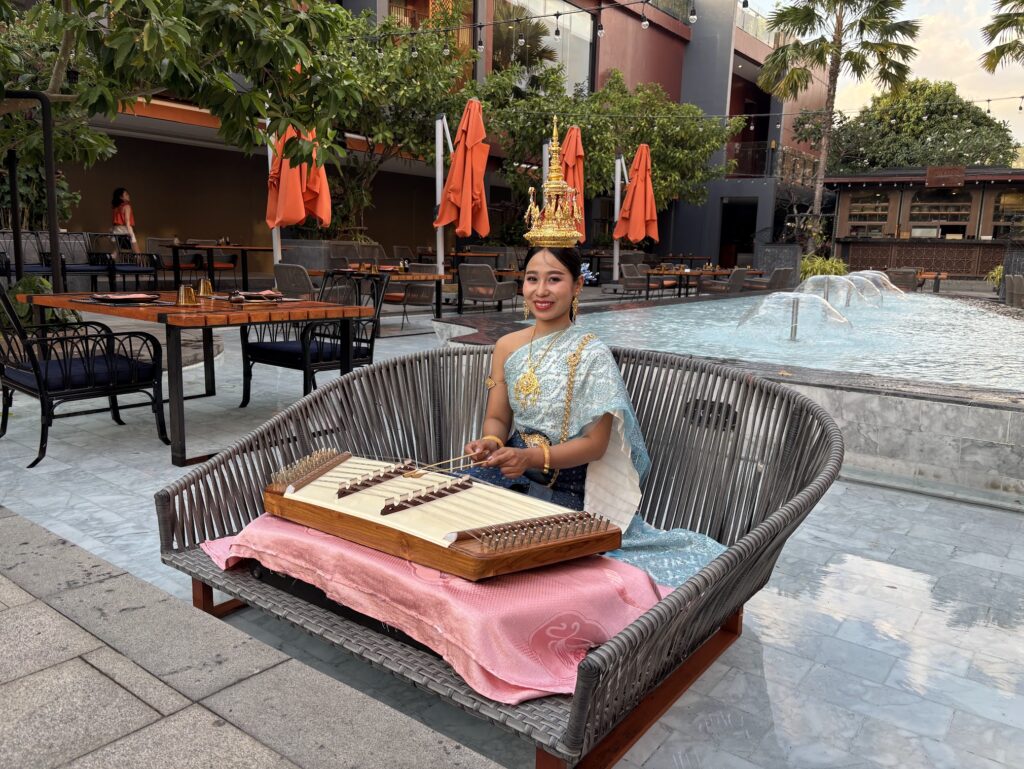
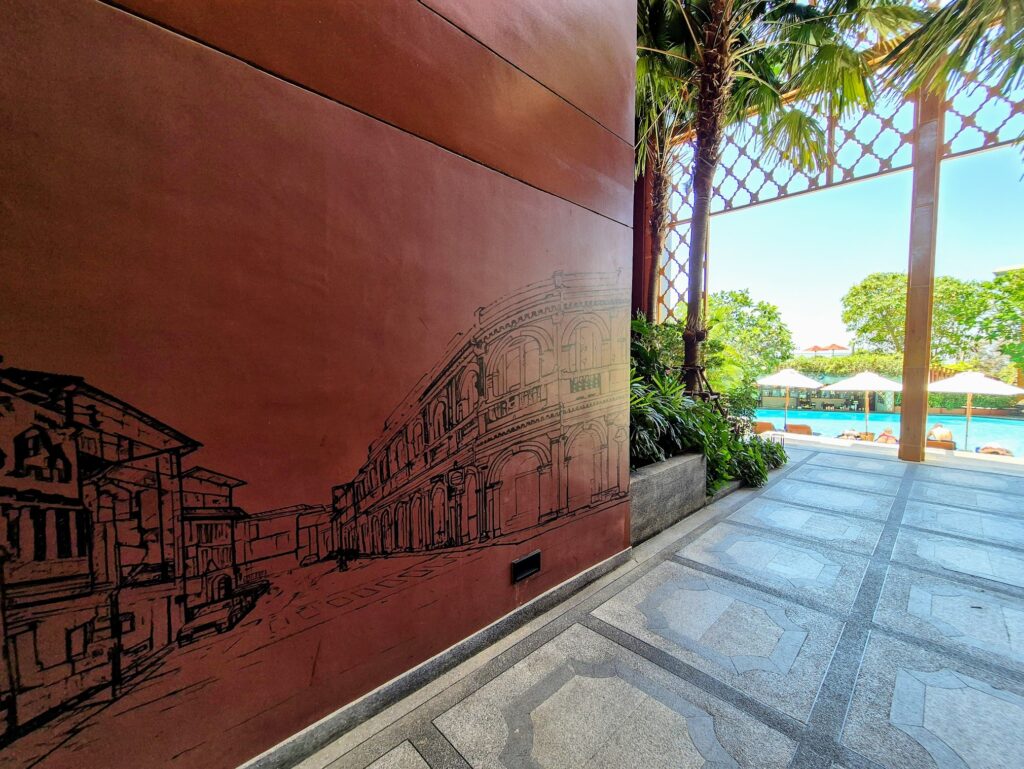
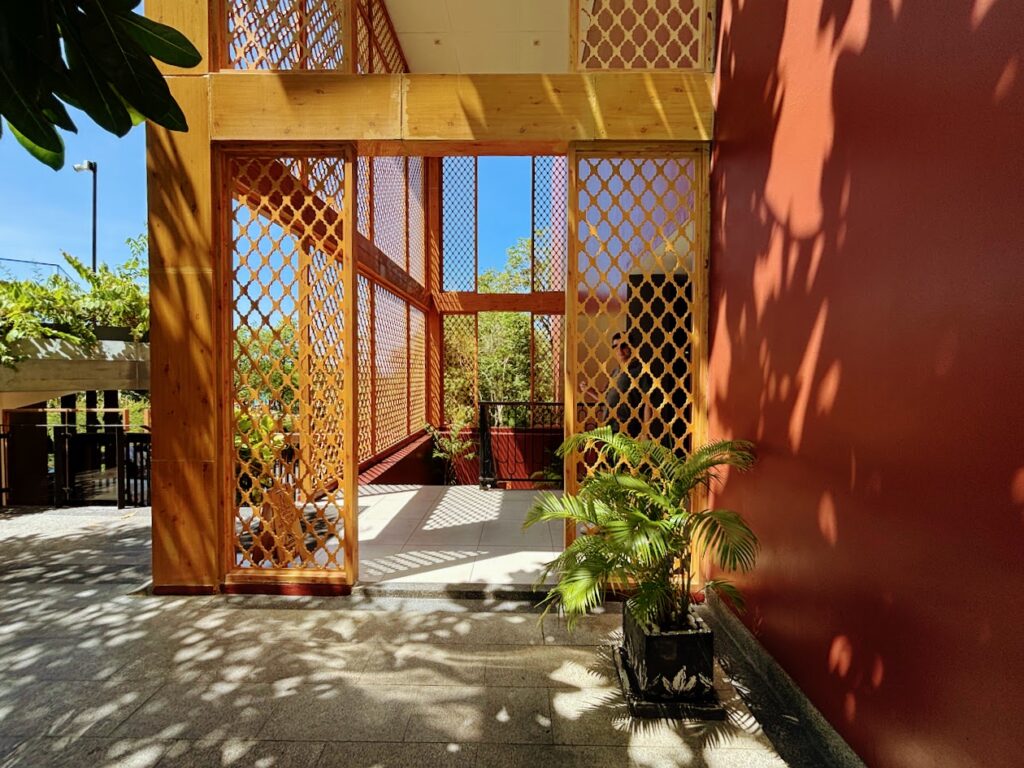
A spirit of cohesion extends into the common areas. Large murals etched into the hotel’s terracotta walls depict Phuket Old Town’s Sino-Portuguese shophouses in sweeping line-drawn detail – the clock tower, the arched colonnades, the street receding into the distance – a pointed insistence that you’re somewhere with a history. A soul. Underfoot in the corridors, encaustic cement tiles in monochrome geometric patterns echo the same heritage: the kind you find worn smooth in Phuket Old Town’s shophouses and Penang’s colonial terraces. Metal sculptures in copper and rust tones, shaped like stylised stupas, abound, in keeping with the hotel’s layered references to Southeast Asian design sensibility.
The Avista Grande’s most striking quality is its visual permeability. Stand by the lifts and you can see the forested hills behind the hotel; turn your head and you’ll see the Andaman Sea stretched out in front of it. Look down the corridor and the view carries on seemingly without end. The architecture is structured so that sightlines run uninterrupted through corridors, lobbies and communal spaces, pulling the landscape into the frame at almost every turn. This transparency borrows from a principle deeply embedded in tropical Southeast Asian architecture, where buildings are designed to work with the climate rather than against it. The Avista Grande takes that underlying logic and applies it at resort scale.
Rooms
Rooms feature the same artistic nods to Phuket’s history and heritage, worked into a modern design language of clean lines and generous proportions. Every room starts at 53 sqm – the hotel claims this makes them the largest in Karon Beach, and there’s no obvious reason to dispute it.
There’s a choice of mountain, garden, pool or sea views. Rooms on the lower floors have pool access and, while they sacrifice the views, gain the option of a floating breakfast.
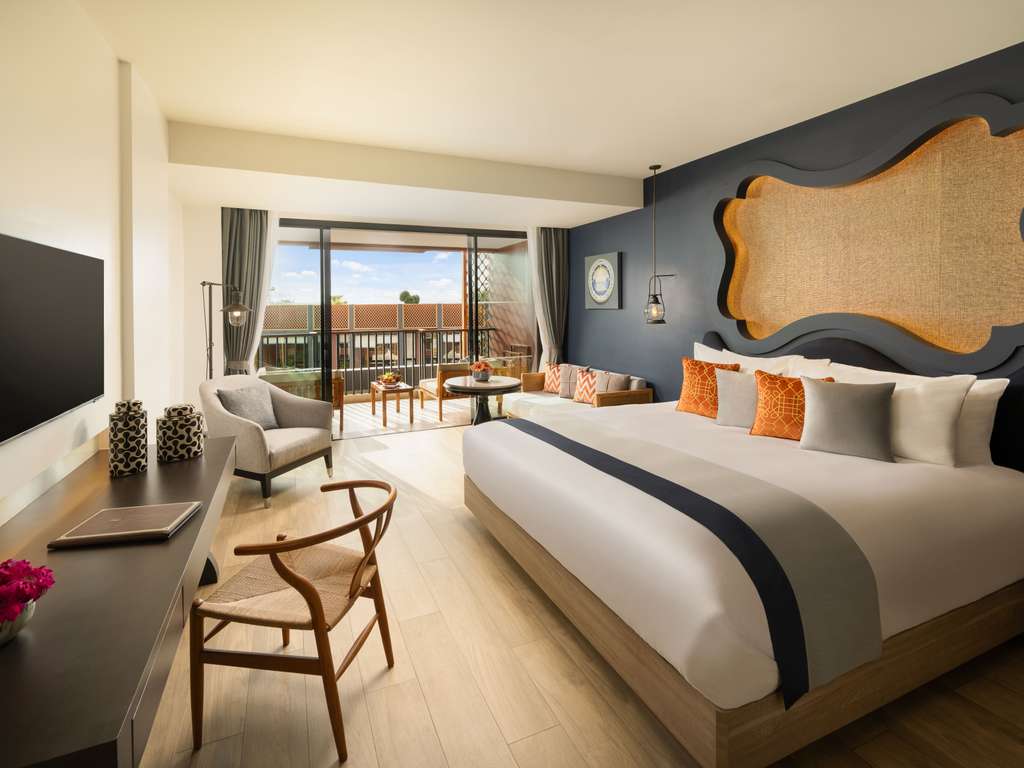
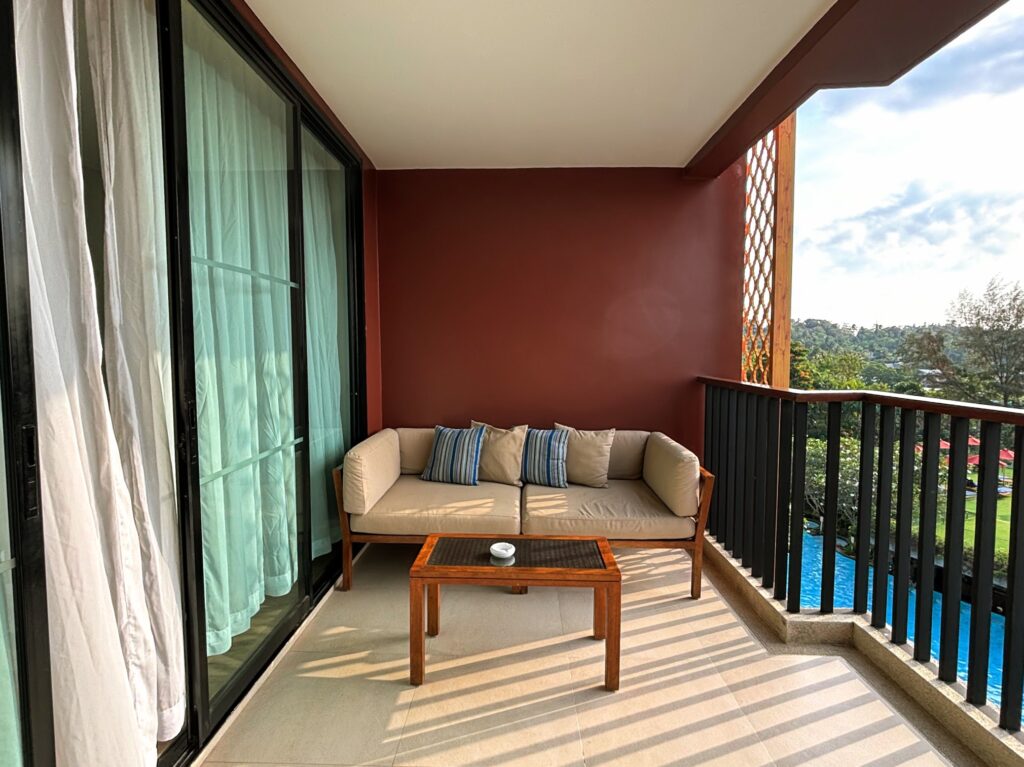
We stayed in the Premier Seaview Room, with the shimmering Andaman Sea defining the long distance and the occasional bird of prey drifting past on the thermals. The balcony is generous and the view from the room is phenomenal, especially during late afternoon. The hotel’s perch on the hill means sunsets are wildly vast and supremely beautiful, casting a glow over the copper building that is something else.
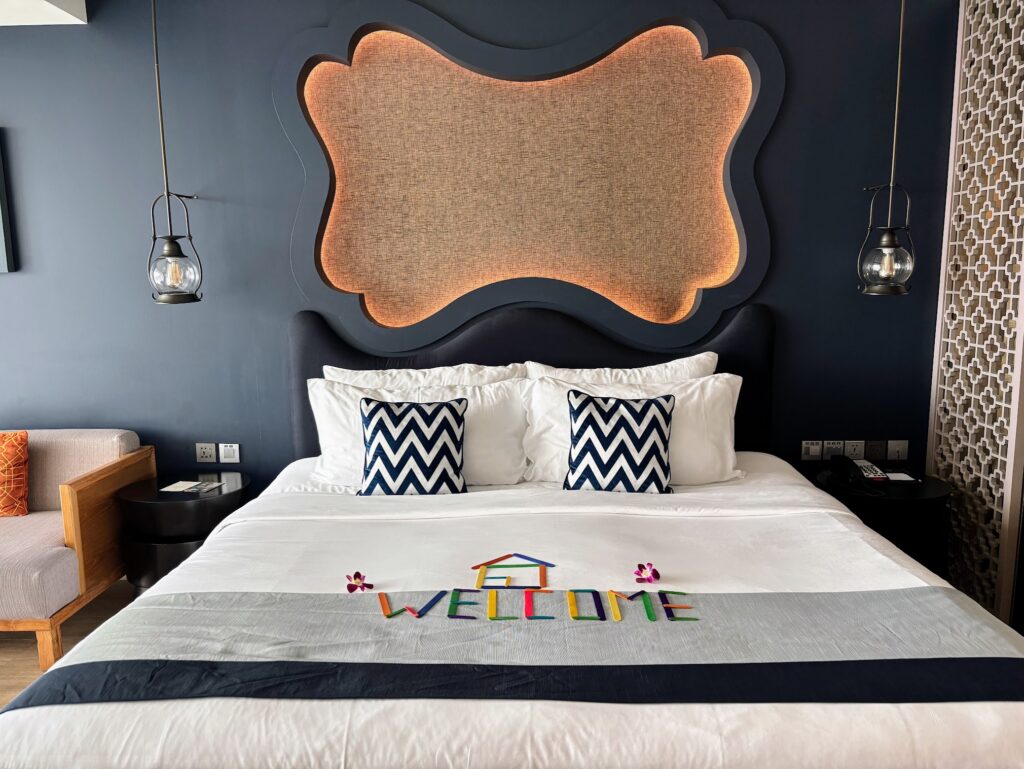
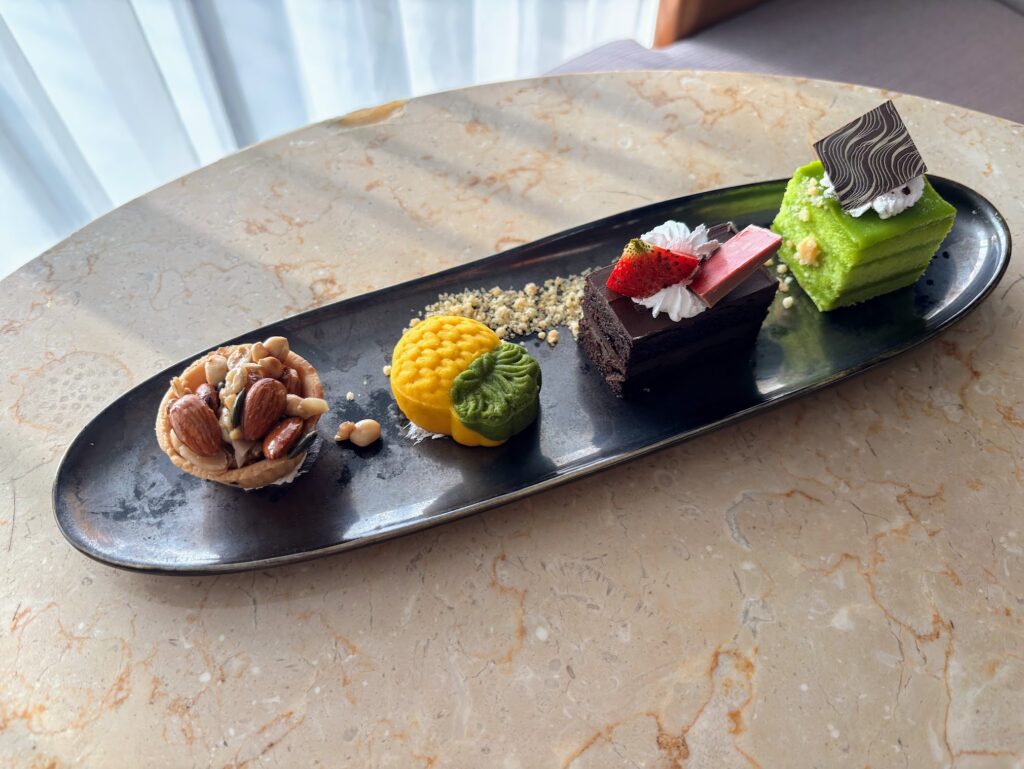
We arrived to a platter of cakes – the Phuket pineapple cake our favourite, closely followed by the pandan – alongside a welcome message drawn on the bed with coloured lollipop sticks. Small touches, but they land.
The minibar leans into local provenance. Branded Avista Grande snacks include dried Thai longans and mahachanok mangoes, both hand-harvested and locally grown, alongside small-batch cashew nuts in tom yum or Thai aromatics flavour — lemongrass, makrut lime and dried chilli all feature prominently, and christ they’re moreish. The bar stocks the usual suspects alongside Chalong Bay Rum, distilled from pure Thai sugarcane in a French copper still. The distillery is a twenty-minute taxi ride away and makes for a rather lovely afternoon – there’s a tour and cocktail class on offer, should you need a reason to leave the pool.
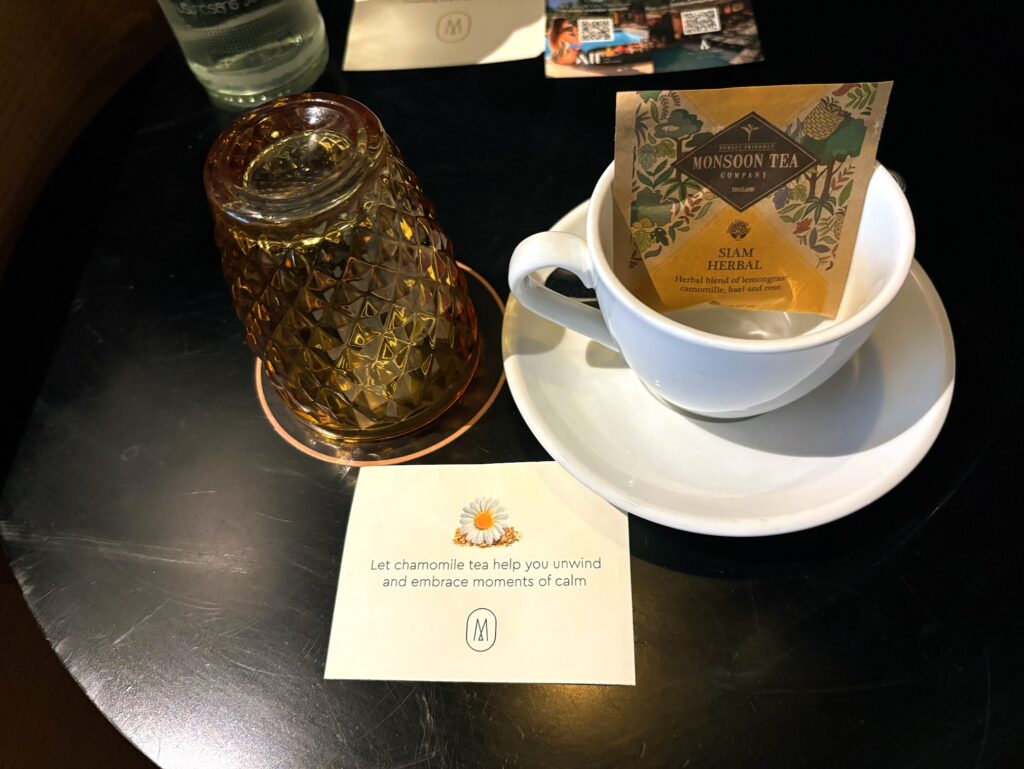
The coffee pods are no standard hotel fare, either. Made from premium Northern Thai beans, the options run from ristretto (a bold blend of robusta and arabica) to cremoso (medium-roasted Doi Tun beans with fruit and caramel notes) and a decaf medium-roast arabica. At turndown, the hotel leaves a bedtime folktale and Siam herbal tea from the Thai Monsoon Tea Company – a blend of lemongrass, chamomile, bael and rose. Bael is a traditional herb widely drunk in Buddhist monasteries. You’ll sleep very well after one of these, though, honestly, you’ll sleep very well anyway.
Facilities & Spa
There is nothing more disheartening than going down for breakfast and finding all the sunloungers staked out with towels and a strategically placed book, the occupant long gone, the good vibes taken with them. Mercifully, the Avista Grande has a policy against exactly this sort of malarkey: a sign warns that personal items left unattended for more than thirty minutes will be removed. We liked the hotel a great deal before this. We liked it more after we saw this.
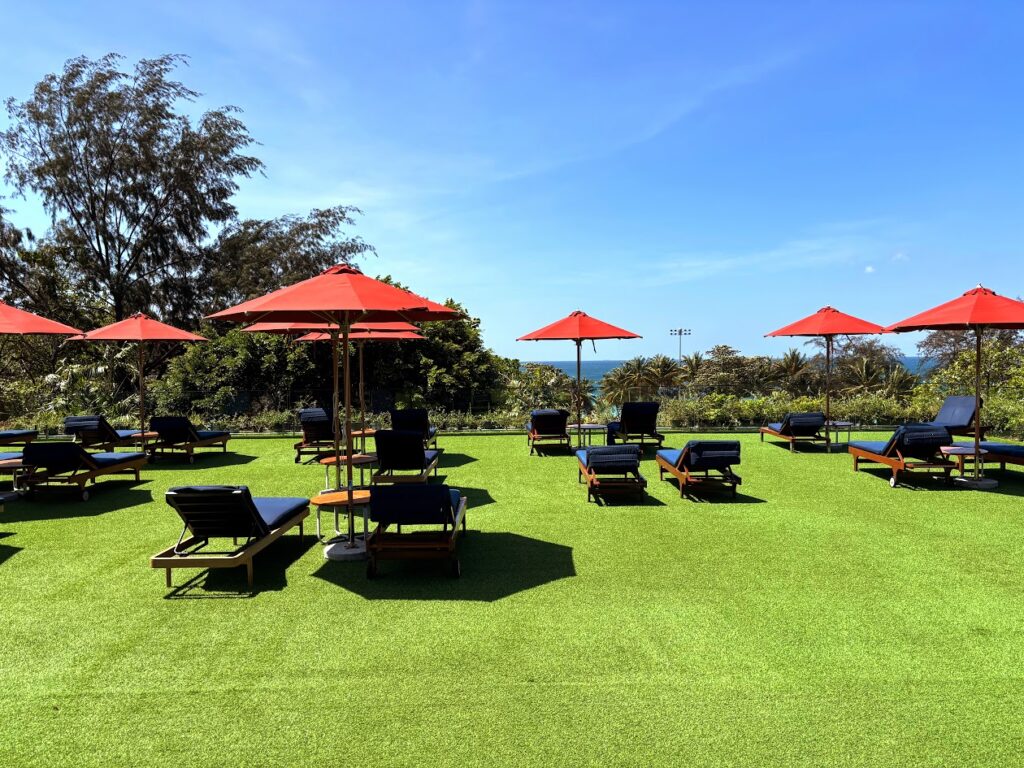
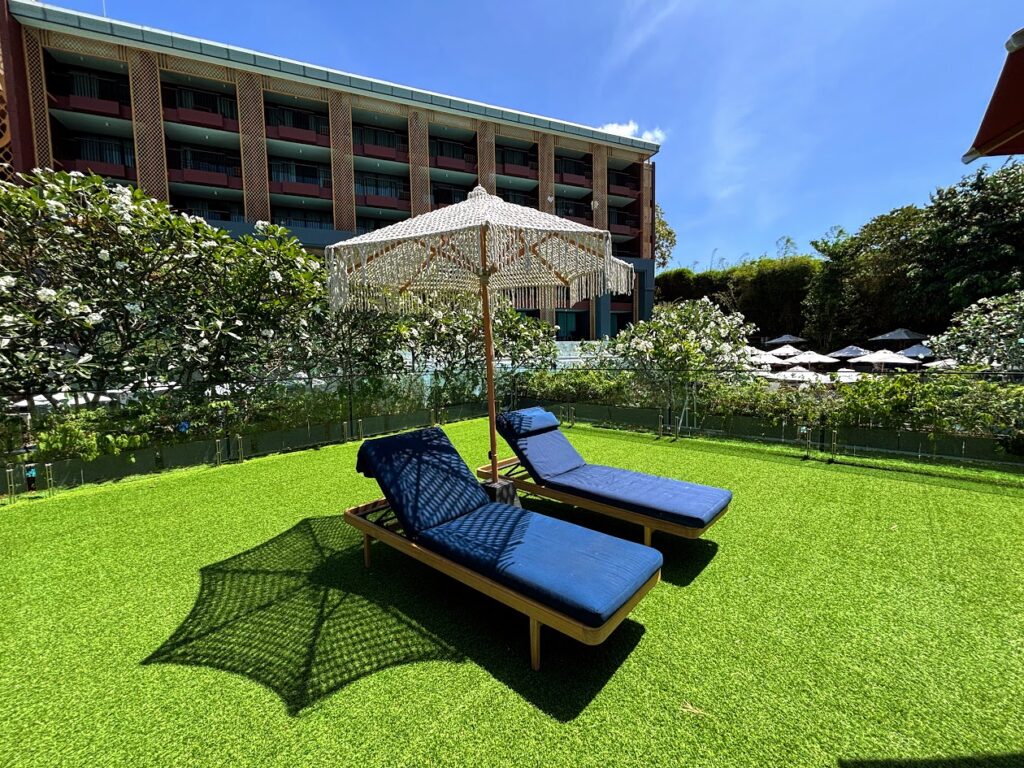
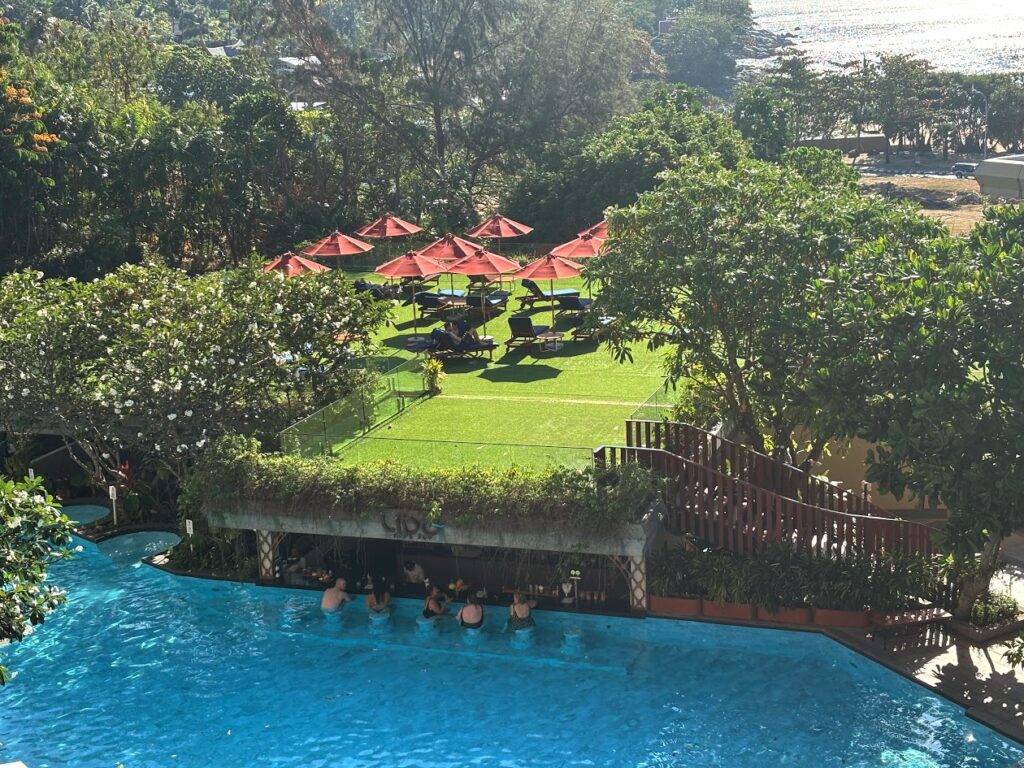
For those who prefer not to play the chair-claiming game, there’s an expansive lawn overlooking the sea that takes the pressure off the poolside. The pool itself is easy to settle into – if the loungers are taken, there are high, sloping ledges, nooks and crannies within the pool where you can cool off and recline. A swim-up bar provides refreshments and the music – Boogie Wonderland, ‘Ibiza chill’, that sorta thing – is upbeat and only occasionally intrusive.
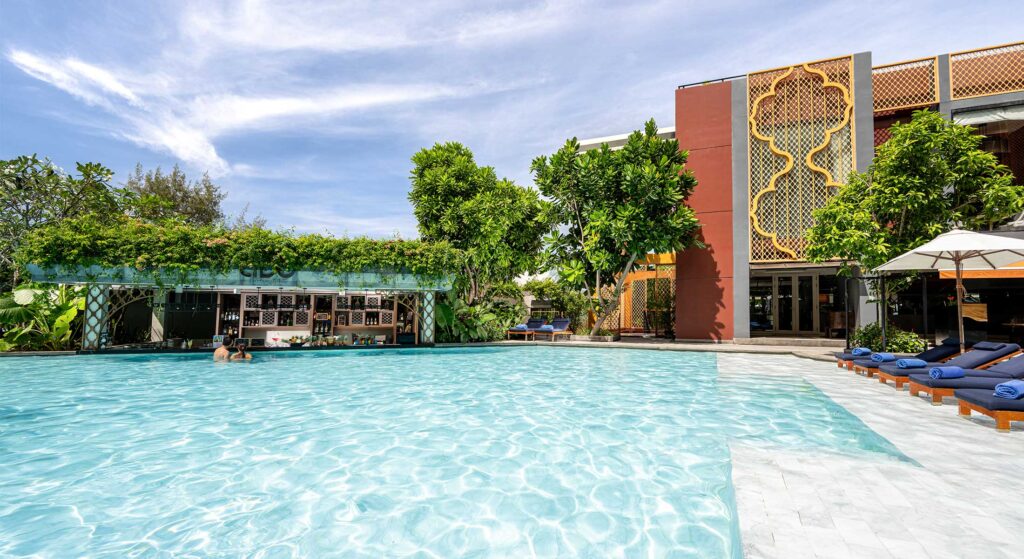
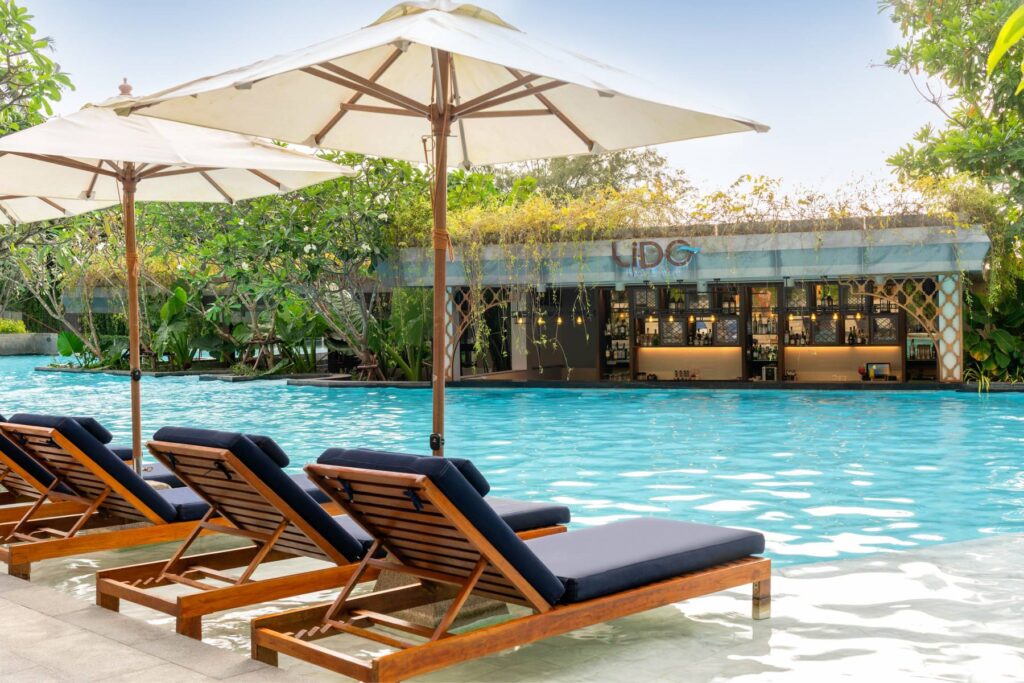
The Pearl Spa deserves more than a passing mention. The 2025 REVE Luxury Awards named it Best Luxury Boutique Spa in the region, Best Luxury Resort Spa in the region, and Best Luxury Beauty Spa globally – a clean sweep that puts it among the best hotel spas in Asia. Treatments draw on locally sourced, sustainable ingredients, and the spa’s name nods to Phuket’s long history as the Pearl of the Andaman Sea.
There’s also Madame Perle’s Salon de Beauté, inspired by Phuket Town’s first beauty salon in the late 19th century, offering everything from nails and waxing to lash extensions. Techniques have come on a fair bit since the days when butterfly pea flowers were used to darken eyelashes, that’s all we’re saying.
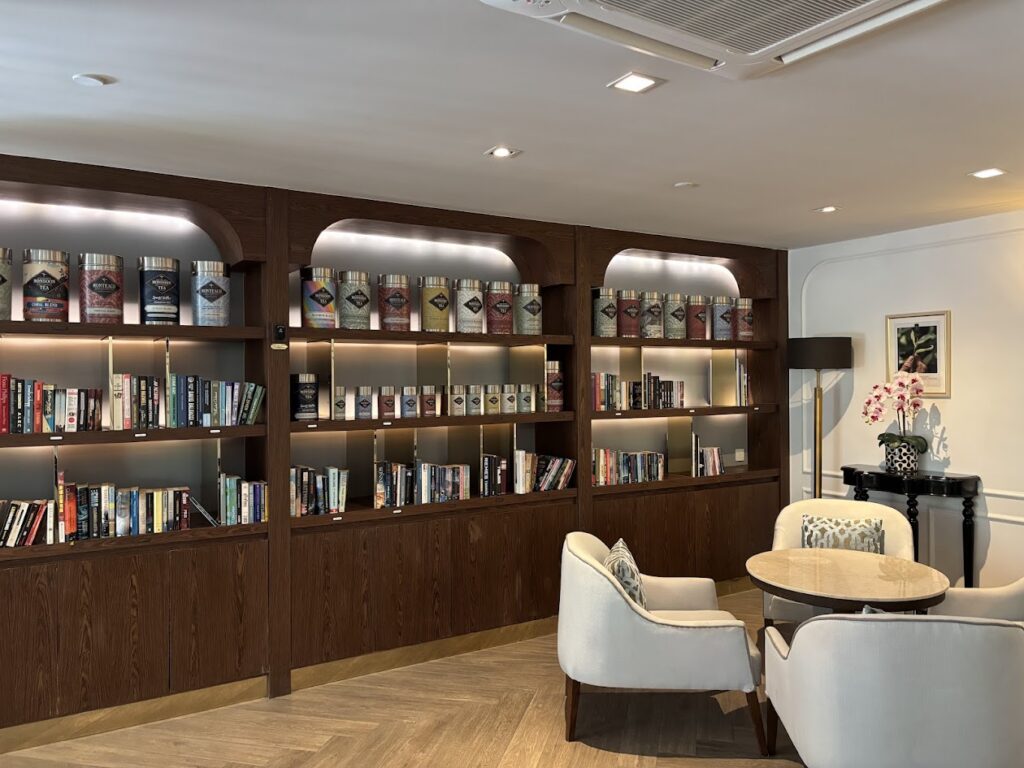
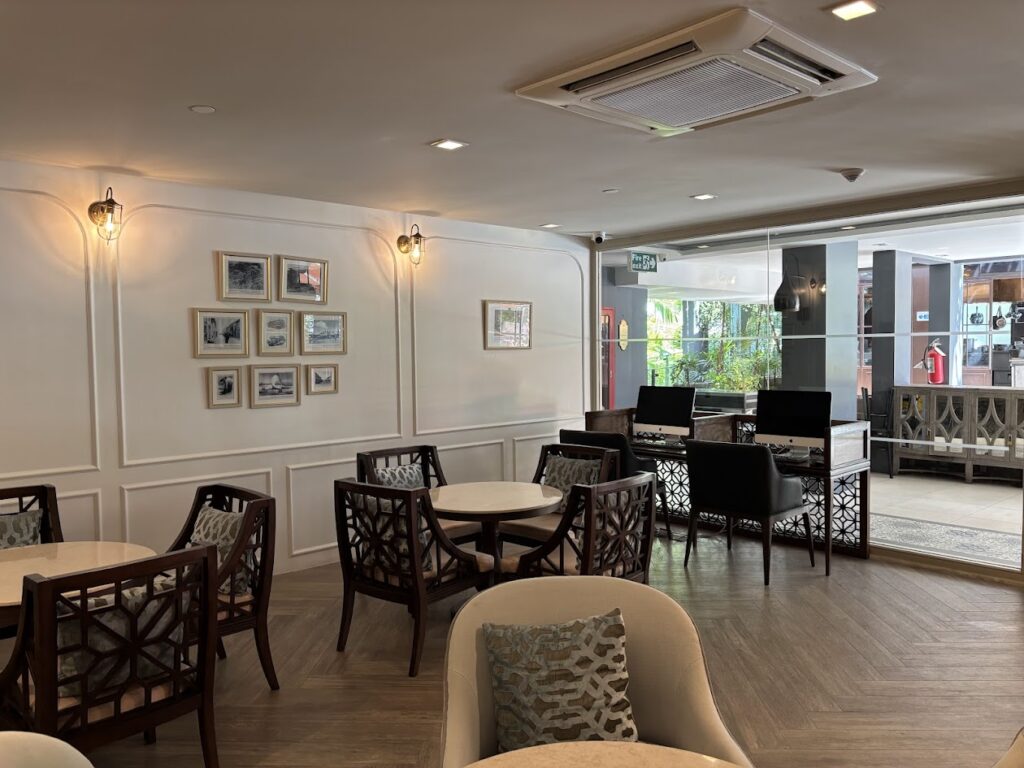
Then there’s the Tearapy Lounge, a peaceful tea room serving green jasmine tea and Thai breakfast tea from the Monsoon Thai Tea Company, whose forest-friendly teas support sustainable income for local tea-farming communities. The room is adorned with photos telling the story of the local farmers. There are varieties whose specificity borders on camp, including Lychee Green, Rose White, Herbal Diuretic and one intriguingly titled Sweet Memory Black. Sitting here with a cup is therapeutic in the truest sense. It earns the terrible pun. A well-equipped gym rounds out the facilities, open 24 hours. We never did see someone in there at 4:30am.
The hotel holds Green Globe certification, with active programmes covering energy and water efficiency, waste reduction and community engagement. The commitments run through the guest experience in small but deliberate ways – locally sourced spa products, ethical tea partnerships, minibar snacks from local growers. For travellers who find these things matter, it’s good to know the hotel takes them seriously rather than treating them as a marketing footnote.
Food & Drink
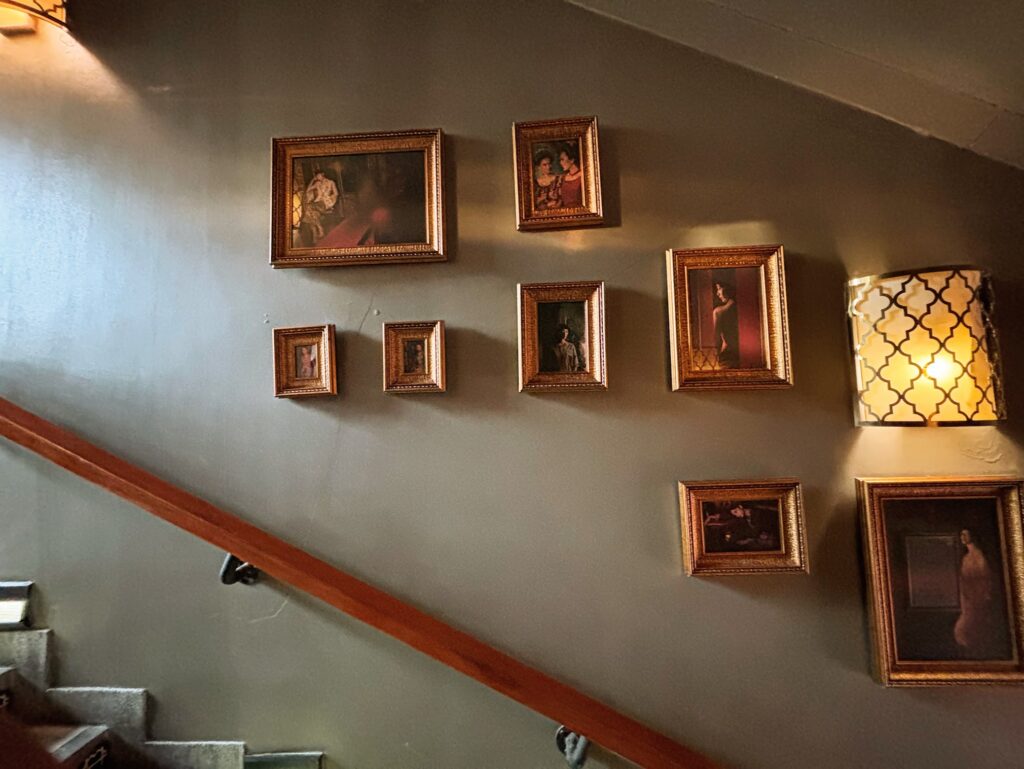
Avista Grande’s flagship is Portosino. Arriving is atmospheric; the staircase up is lined with gilt-framed photographs of Peranakan women arranged in gallery-wall style – images that feel less like decoration and more like a family archive. Inside, it serves Southern Thai, Royal Thai, Indian and international fare, and has previously held the TripAdvisor number one restaurant spot in Karon Beach – a ranking that, based on breakfast alone, is easy to believe.
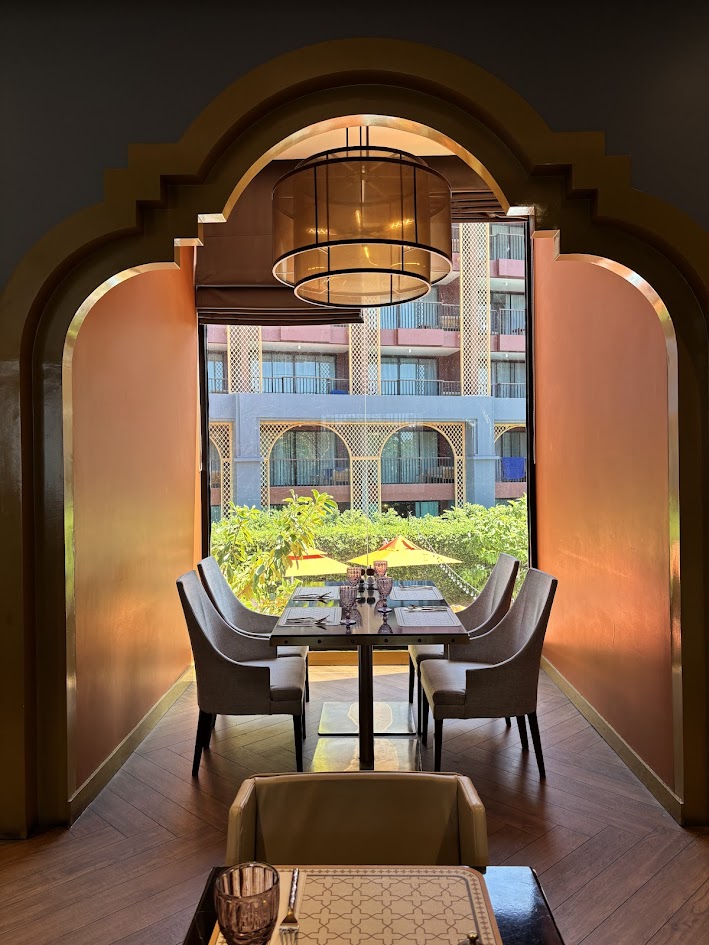
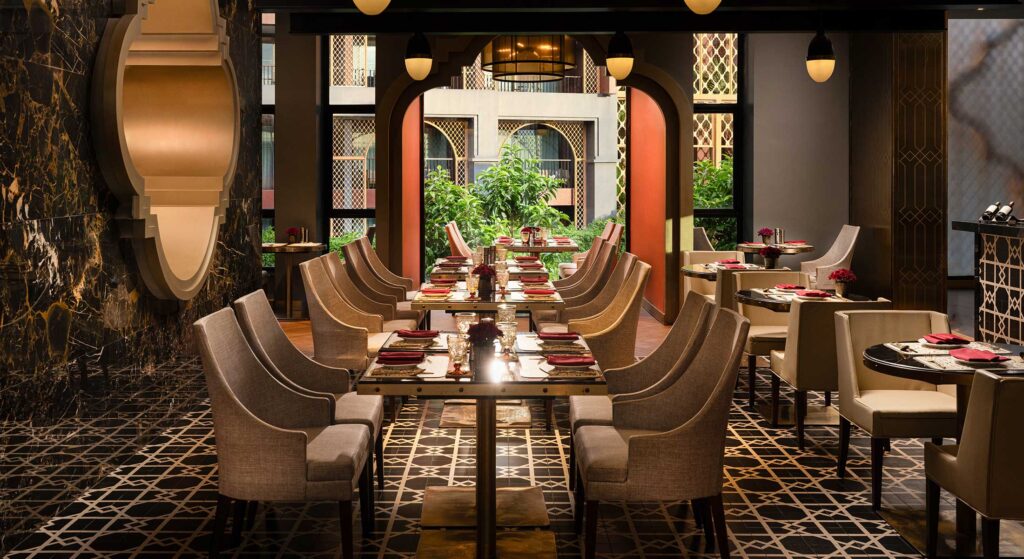
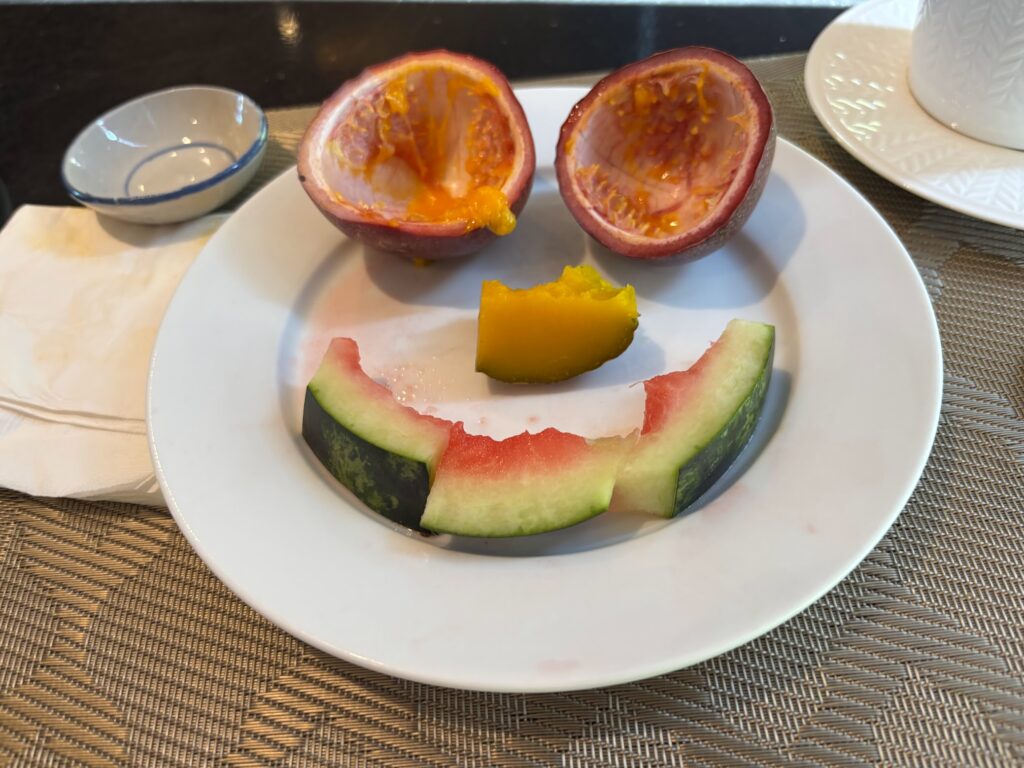
Portosino was one of the best breakfast spreads we encountered after spending several months eating our way through hotel buffets across Thailand, and we ate through a lot of hotel buffets. As soon as you walk in, it feels like a celebration – the chef captains the room every morning, thorough but reassuring, taking evident pride in his team. If prompted, he’ll talk you through each dish in detail. He will not need much prompting.
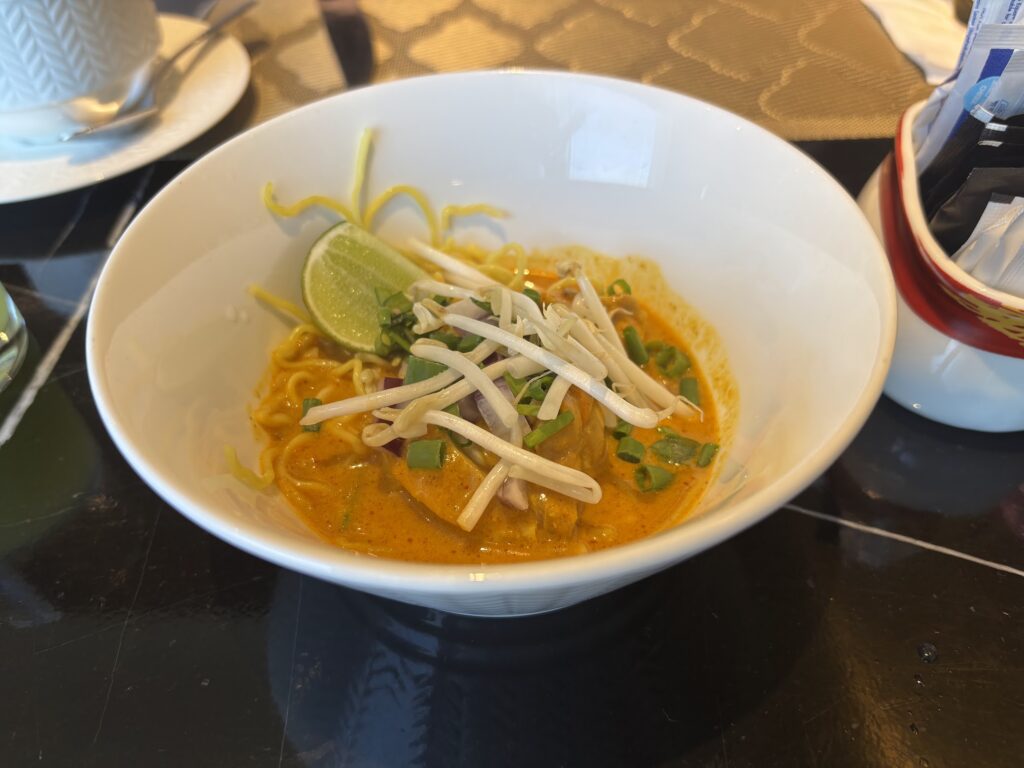
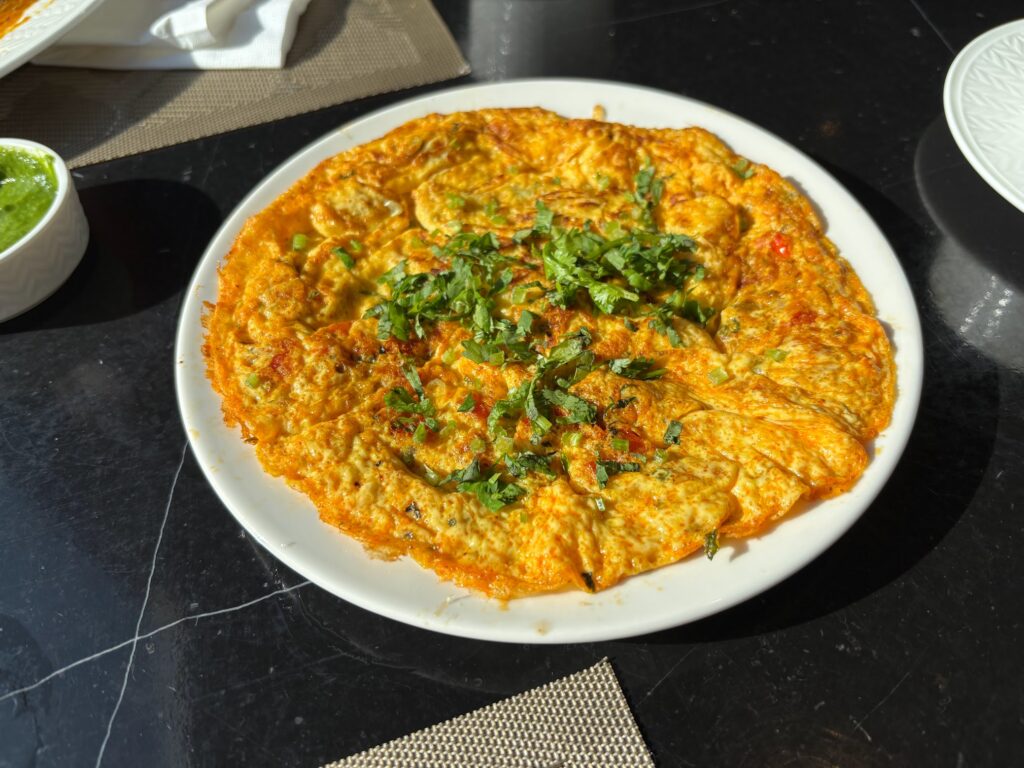
In one corner, an expansive hot section offers Indian and Thai breakfast dishes on a rotating cast: fried rice, pad see ew, and a daily-changing Thai speciality. On one of the days we stayed it was khao soi – so good we wondered aloud whether the chef was from Chiang Mai. He’s not.
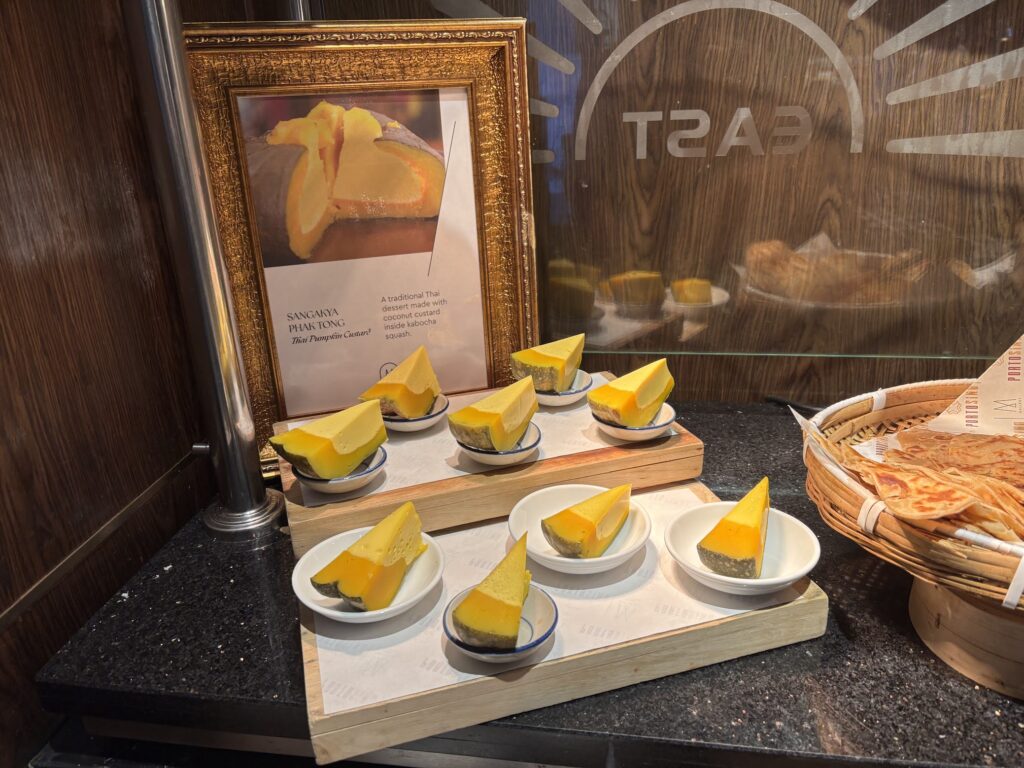
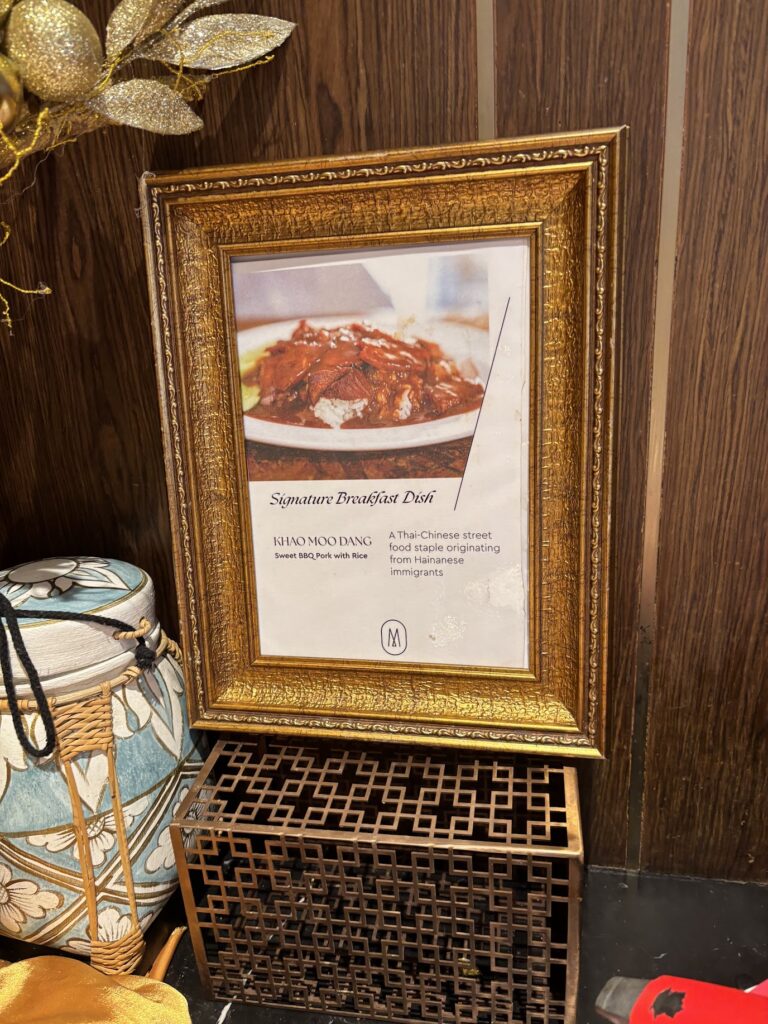
The next day came khao moo daeng, a Chinese-Thai street food staple originating with Hainanese immigrants. Each dish is accompanied by notes on its history and heritage, true to the holistic narrative that the hotel has cultivated. Keep an eye out for daily-changing Thai sweets, too – sangkhaya fak thong, a traditional Thai pumpkin custard, or sago with sweetcorn and coconut cream. These are the things you remember.
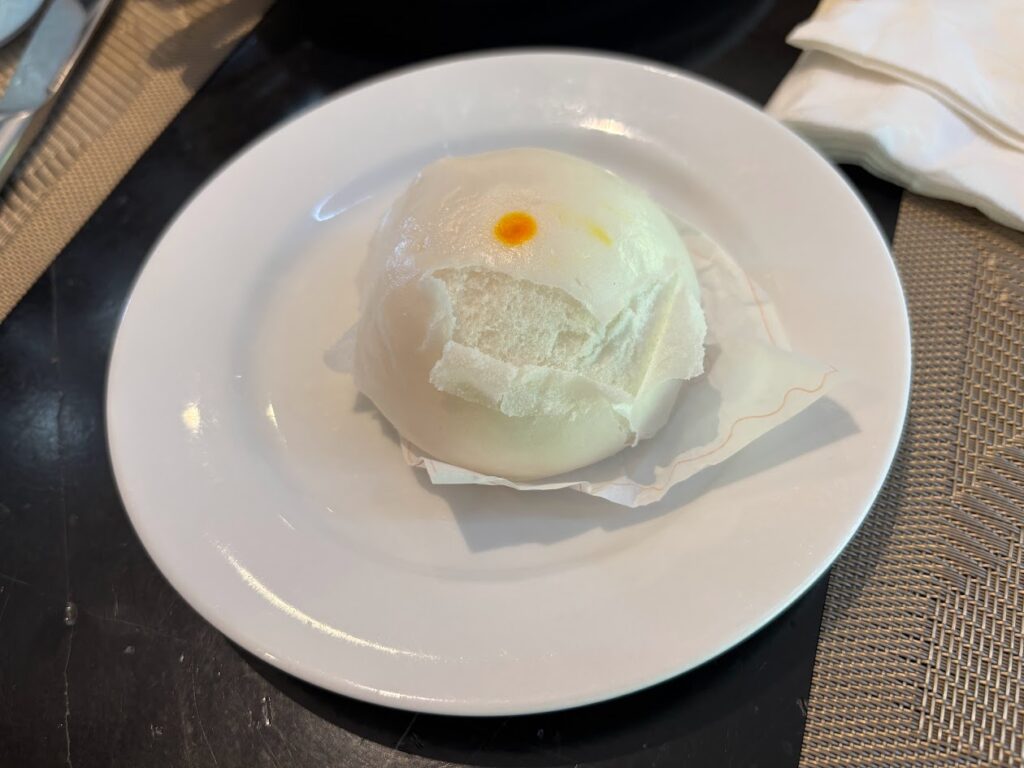
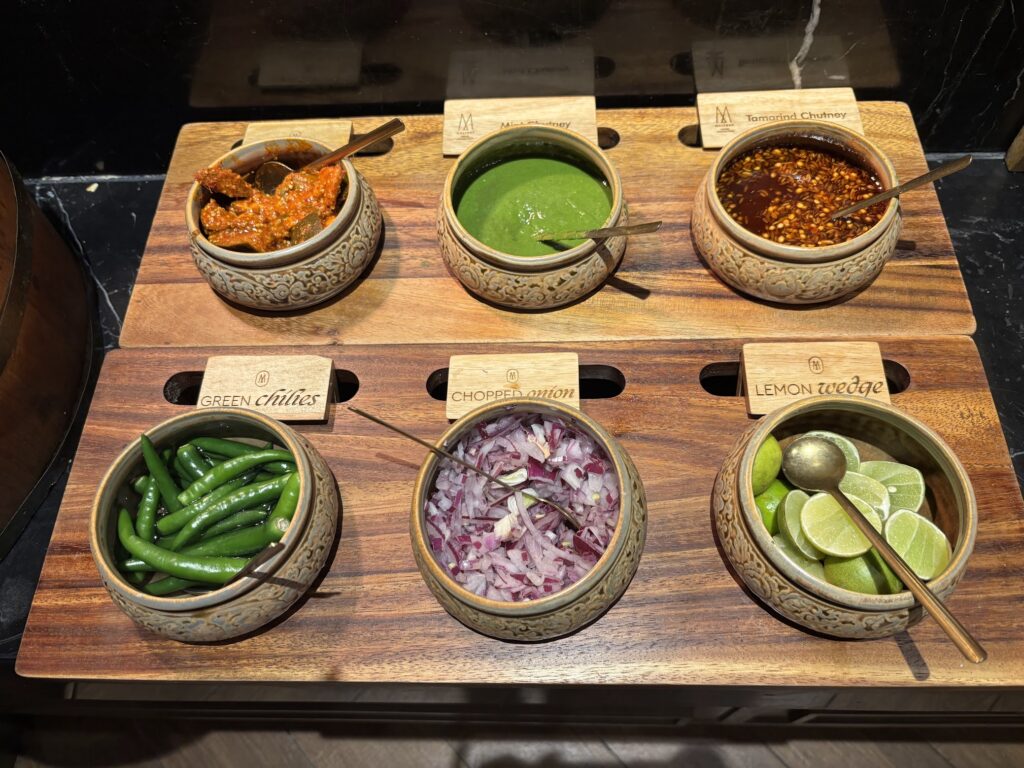
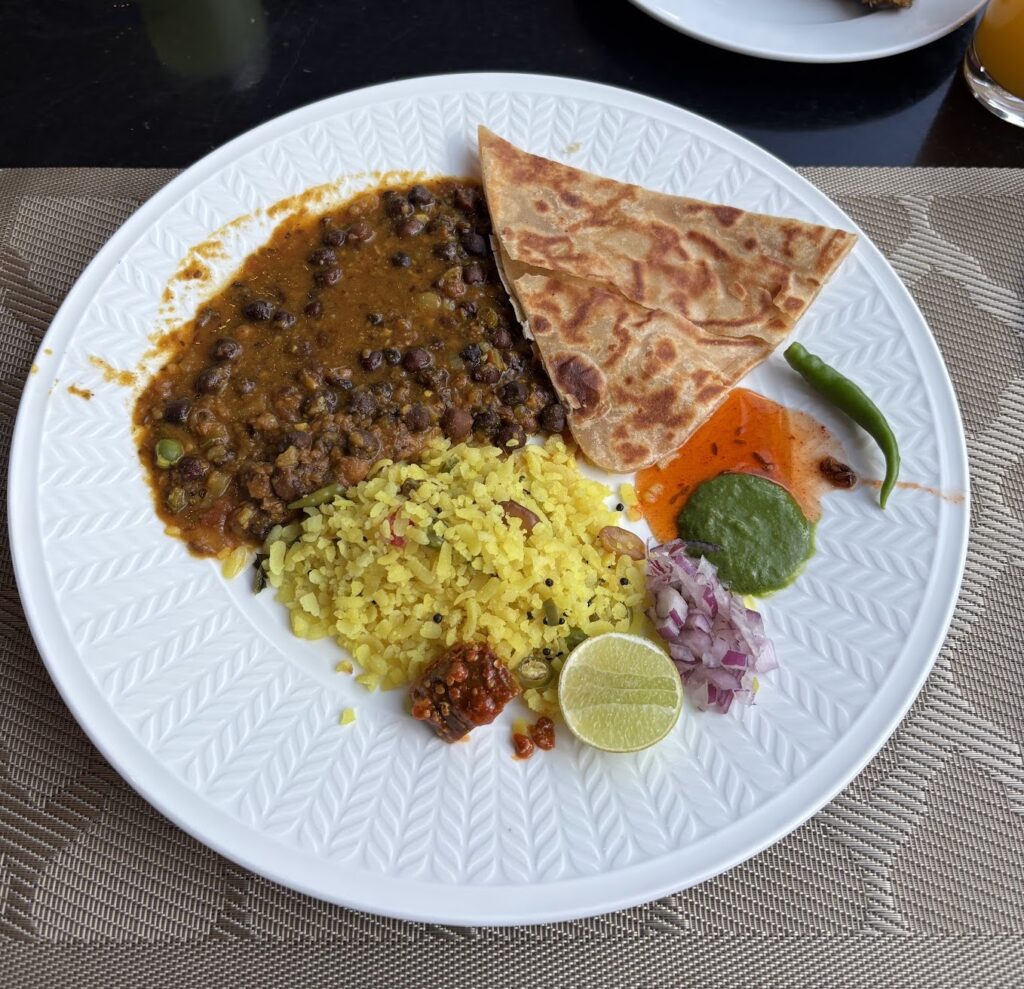
On the Indian side, there’s vada pav with all the trimmings, including a gorgeous tamarind chutney, and on the following day a dal makhani with roti. Elsewhere: dim sum, including red bean paste and custard varieties, generously filled.
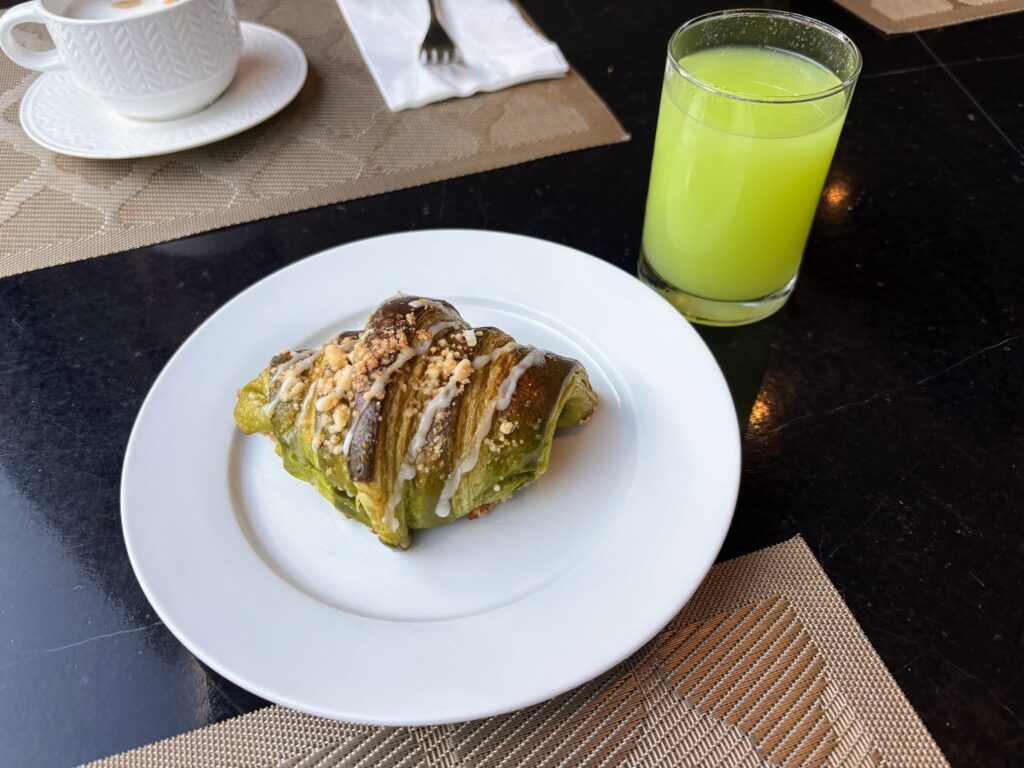
A daily-changing pastry special meant a purple sweet potato croissant one morning, followed by a matcha and tarte tatin-adjacent one involving caramel and apple. Both were wonderful; burnished and freshly baked, a rarity in hotel buffet breakfasts in the Kingdom.
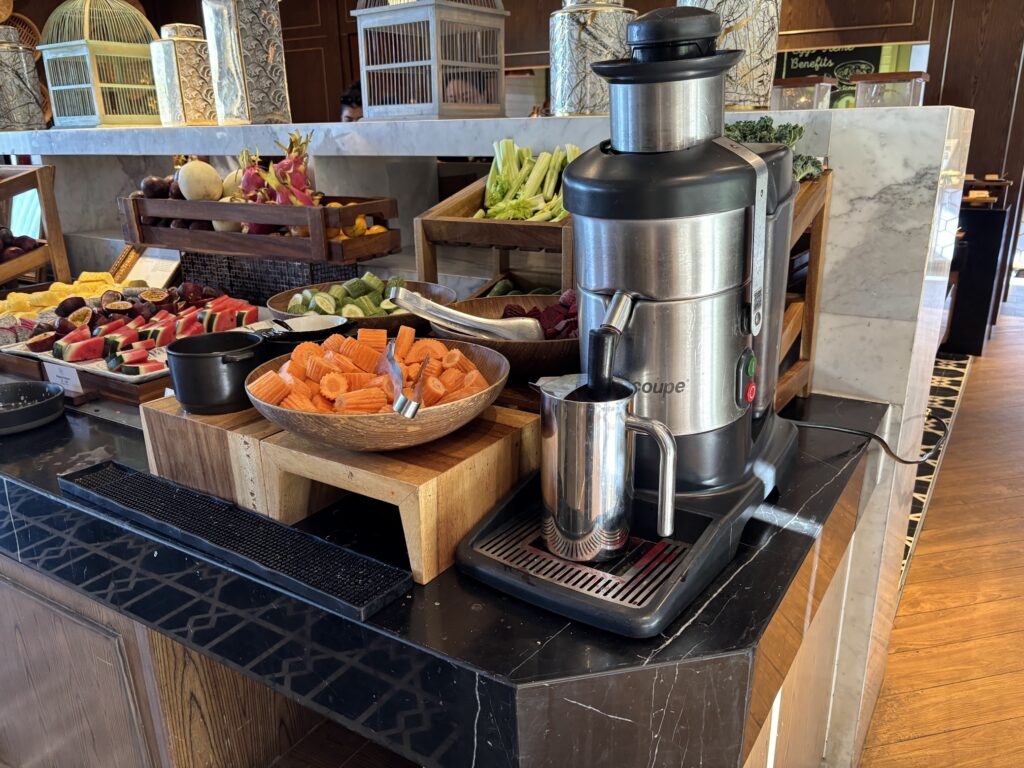
There’s also a make-your-own juice station. Choose your ingredients carefully. We passed one guest whose combination had turned a rather suspicious brown, while a more seasoned juicer nearby had produced a vivid, confident green. It’ll break your day, having to neck a sludgy turd through sheer pride and a keen no-waste mantra.
Upstairs, the Dim Sun Rooftop Bar is a gorgeous spot for sundowners (confusingly, it’s a play on words rather than serving dim sum) with views across to the sea. It’s the best rooftop bar in Karon, and it’s not even close. When the beach gets a little crowded in the evening as people descend on it to watch the sunset, this is the perfect spot for an even better view.
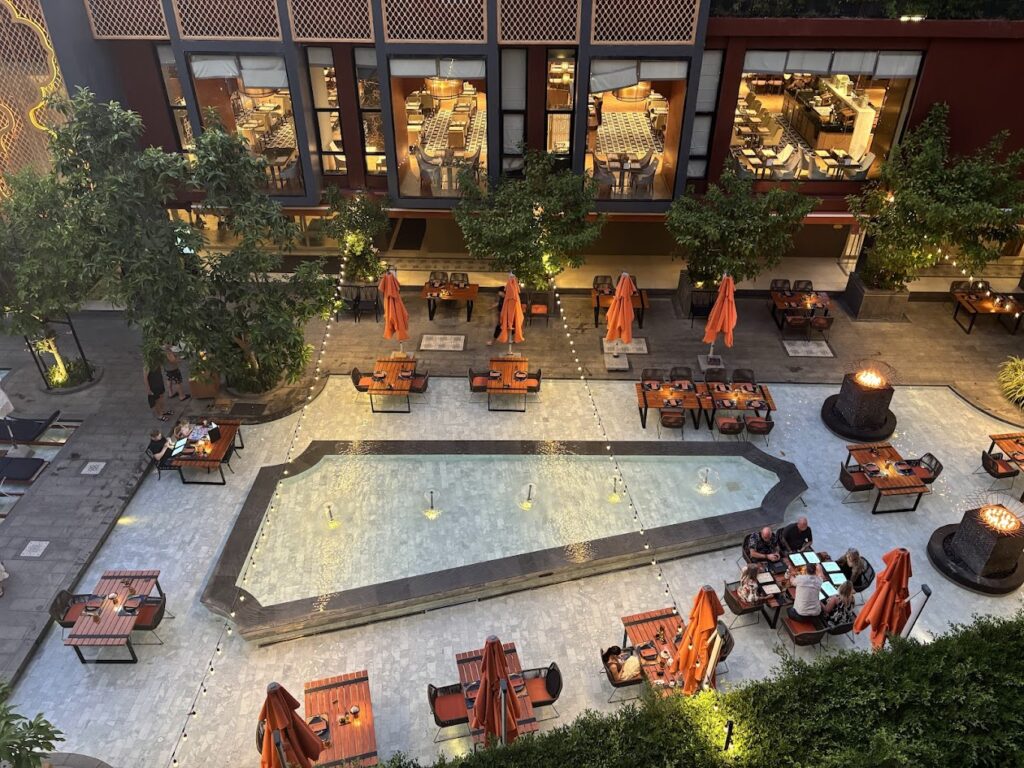
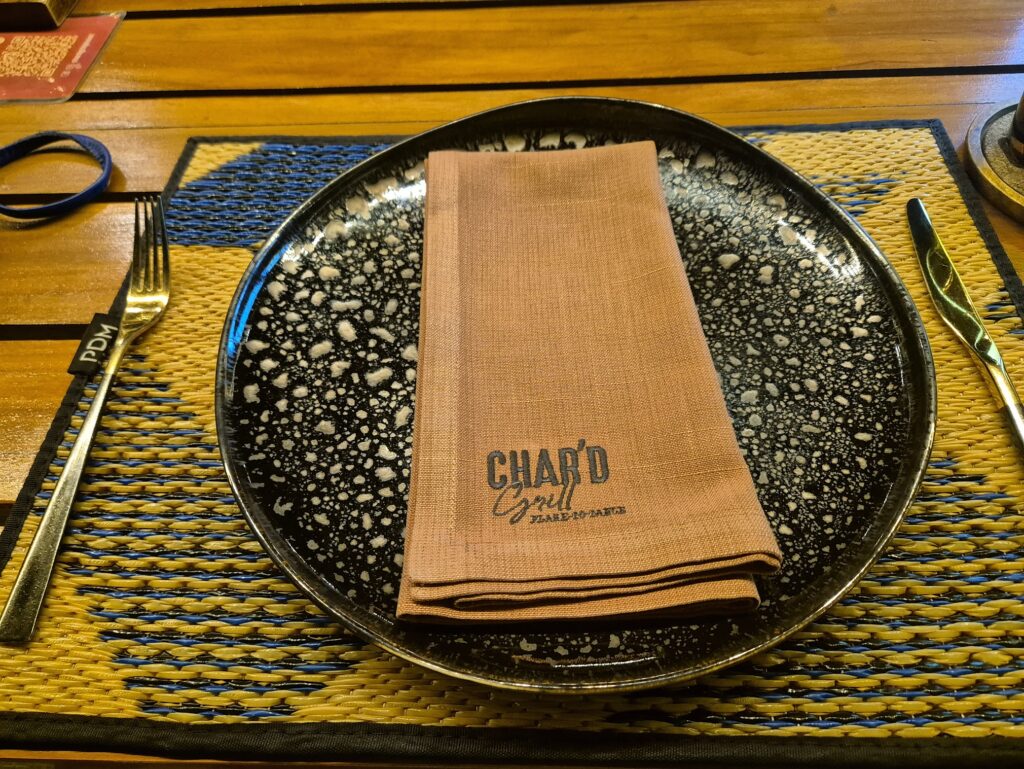
Our favourite restaurant, though, was CHAR’D Grill, where you dine on charcoal grilled premium ingredients (some imported, some local) with your feet in the water. The first dine-on-water concept in Thailand, it’s a gimmick, but an immensely pleasurable one. We’ve featured CHAR’D in our roundup of the best steaks in Phuket; do check it out sometime.
Ideal For…
Couples looking to decompress rather than explore. The Avista Grande is built around slow days – pool, spa, sundowners on the rooftop, dinner with your feet in the water at CHAR’D – and it delivers that rhythm extremely well. The attention to detail extends to the personal: room decoration for anniversaries, floating breakfasts, thoughtful welcome touches throughout.
Design-led travellers who want their hotel to have something to say. The Sino-Portuguese architecture is genuinely thought-provoking, and the storytelling spun through every corner rewards the kind of guest who prefers to ponder the small details.
Food-focused visitors, even as a base. With Portosino and CHAR’D both West Coast heavyweights, you could eat every meal on-site without feeling short-changed.
It’s perhaps less suited to anyone seeking Patong’s energy or travelling on a tight budget. Families with children are catered for – there’s a kids’ club – but the atmosphere is geared towards adults.
Why Stay?
For those who want to do nothing more than decompress, the Avista Grande makes it easy. You can spend entire days moving between the pool and the beach without once venturing into Karon town – and with the on-site restaurants ranking among the best dining options in the area, there’s little reason to. Thanks to the thoughtful design of the hotel, rooted in the island’s history, your story here will be a chapter that stays with you.
Rooms start from around 3,500 baht per night (£80).
Address: 38, Luang Phor Chuan Rd, Tambon Karon, Amphur Muang, Phuket
Website: mgallery.accor.com/en/hotels/A224