There is an old story about Bono pausing a concert to clap his hands slowly. Every time I clap, he tells the crowd, someone dies. A heckler shouts back: stop bloody clapping, then.
The same logic might be offered to those grumbling that Omar Shah has opened one restaurant too many in Kentish Town. Every few steps along Kentish Town Road, another of his appears. The solution is simple. Stop walking down Kentish Town Road.
Shah has, with poetic licence firmly primed, been feeding this stretch of north London since he was six. His parents, Shaduk and Rebecca Shah, opened the Thai-Indonesian restaurant Bintang on Kentish Town Road in 1987, and he grew up working in it, in the kitchen by eight and front of house by ten. He eventually took the place over from his father and steered it towards the Filipino side of his heritage. His father is a Bangladeshi Muslim, his mother a Filipino Catholic, which is why every restaurant he runs cooks halal, and why the cooking, for all the places it travels, is so often carried down the maternal line.
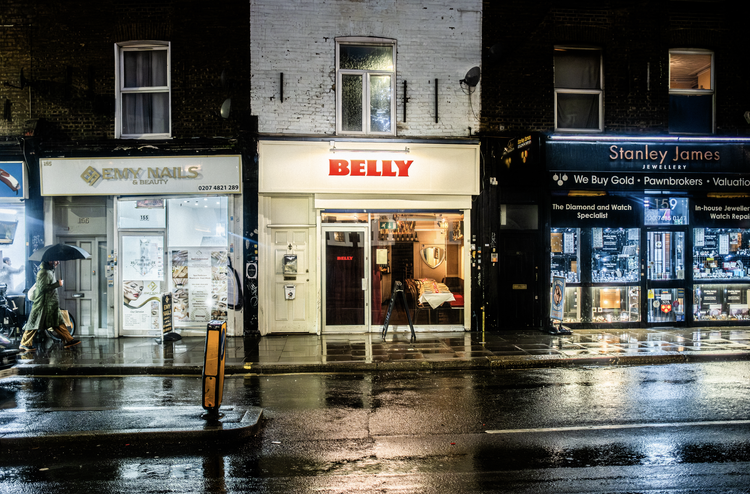
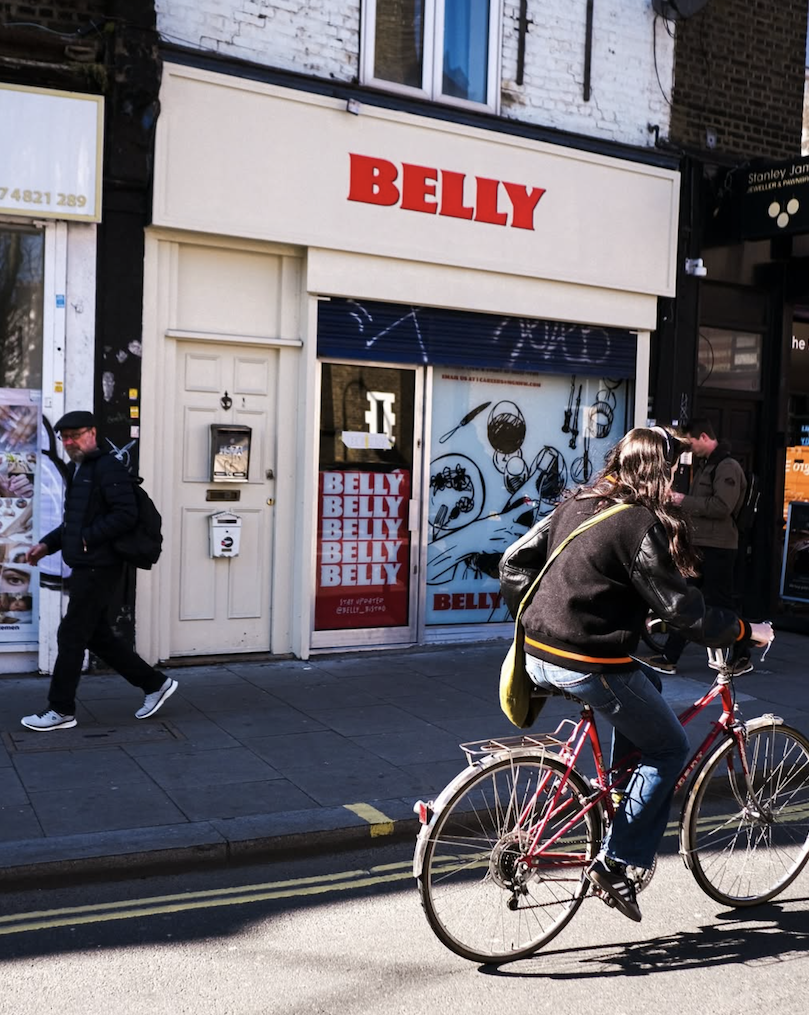
His restaurant group Maginhawa works by clustering: a new site near the last one, doing something different so the two don’t compete, but close enough that ingredients, techniques and sometimes even ovens can be shared. You can see it at the bottom of Kentish Town Road, where four of his addresses fall within ten doors of each other: the Caribbean takeaway Hoodwood at 81, the Filipino-Japanese bakery Cafe Mama & Sons at 83, the Latin-Caribbean Guanabana at 85 and the Mamasons Dirty Ice Cream parlour at 91. Belly inverts the move. Rather than open beside a neighbour, Shah has taken over a unit he already held at 157, the former home of his own Ramo Ramen, so for once he is replacing not a neighbour but himself.
Belly is his most ambitious opening yet, and the tidy label would be French-Filipino: a French bistro by way of the Philippines, or the other way round, depending on which dish you’re currently devouring. But the hyphen flatters the French half. Filipino food has been called the original Asian fusion food, and not idly: a Malay and Austronesian base, then centuries of Chinese wok hei and soy sauce, Spanish stews and tomatoes, American Spam and refined sugar, all folded in long before anyone was moved to add a Gallic shrug on top. Belly’s French finish is just the newest coat on a cuisine that has been layering itself for centuries. Belly treats French technique the way the cuisine has long treated a new arrival, then: with appetite and absolutely no deference.
The food press has spent the best part of a decade predicting Filipino food as the next big thing. Shah is who they often ring for the quote, which is a little odd, because more than anyone he is the reason it already is one. He had London queuing for ube at Mamasons, his dirty ice cream parlour, years before Pret, Costa and Starbucks all put it in a cup.
Belly’s own opening run was a curious mix of implausible hype and a couple of reactionary, lukewarm national reviews. Time Out planted itself at the hype end, naming it the best new London restaurant of 2025. Michelin Guide recognition followed in January 2026. A year in from all that commotion, as we strolled down Omar Shah Street towards Belly, we expected to find the temperature cooling. It was not. Walk-ins were snaking out into the road. Hype is temporary. Quality, on this evidence, is the thing that keeps a room full twelve months on.
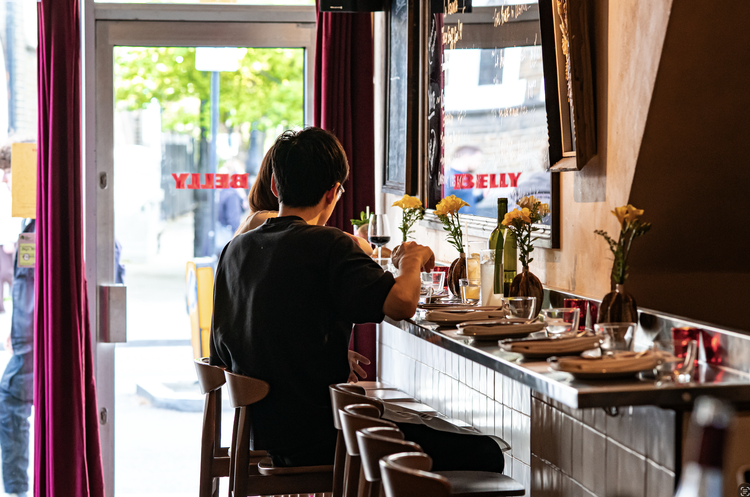
It was a balmy Sunday evening with Kentish Town dressed in red and white and noisy as hell, Arsenal having finally done the job, their fans cheersing just about anything. Belly’s signage is red and white too, and a group of exuberant gooners saluted the restaurant with a song as they careered past. Lovely scenes.
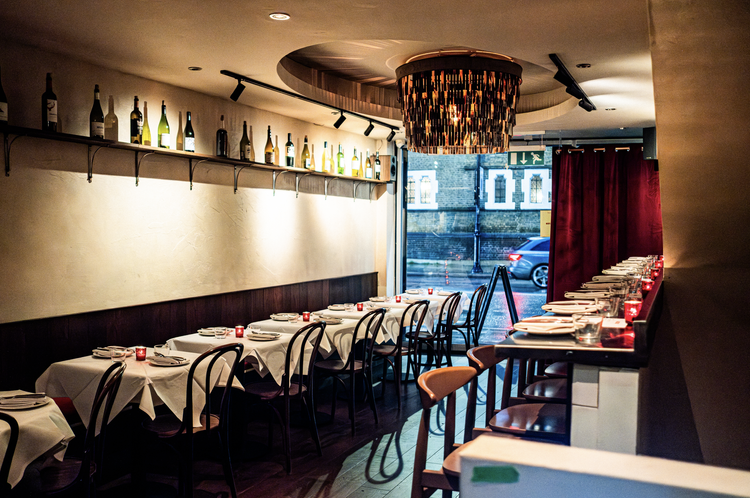
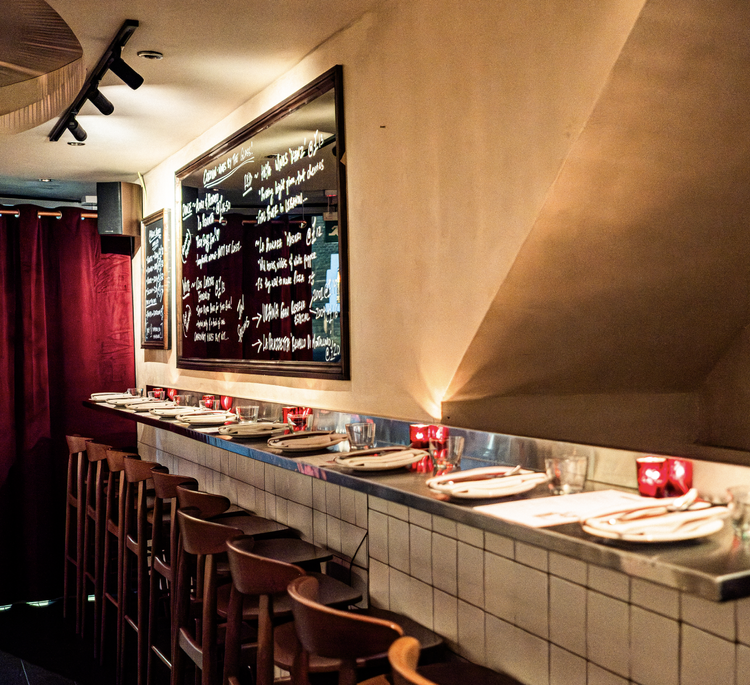
Inside, a convincing simulacrum of a French bistro: a dusty portière across the door, metro tiling along the bar, a banquette and bentwood chairs down one wall. Steaks are chalked up by weight on a blackboard, guest wines scrawled across a mirror in pen, and the whole thing is candlelit, never mind that it’s still light out and above 30°C at 8pm.
It is small, 35 covers small, and so narrow you have to sashay to reach the toilet. Across the road, framed in Belly’s enormous front window, sits Saint Andrew’s Greek Orthodox Cathedral, a handsome thing to gaze at between courses. After dark that same window turns the room into a beacon, bright enough to draw in stragglers looking for an escape from the 134 as it grinds past. Good luck to them getting a table, though.
The volume climbs until you know exactly what the couple six inches away has ordered and who they fancy at work (‘Microwave Coffee’ John, she’s in love with you!), and we counted ten “is this the best new restaurant in London?” narrations being recorded before we’d even settled in. Drinks get knocked over and sauces spill. Fortunately, the white linen is actually paper, whipped off and binned as tables turn, and if you make a mess, a fresh dignity square gets draped over the evidence. Ours was patched and re-patched so often it had taken on the look of papier-mâché by the end.
Whatever the bistro dressing implies, the room does not smell of Guerlain. It’s perfumed with woodsmoke, the kind that gets into your coat and your hair, and rides home with you, expecting to be invited in for a nightcap.
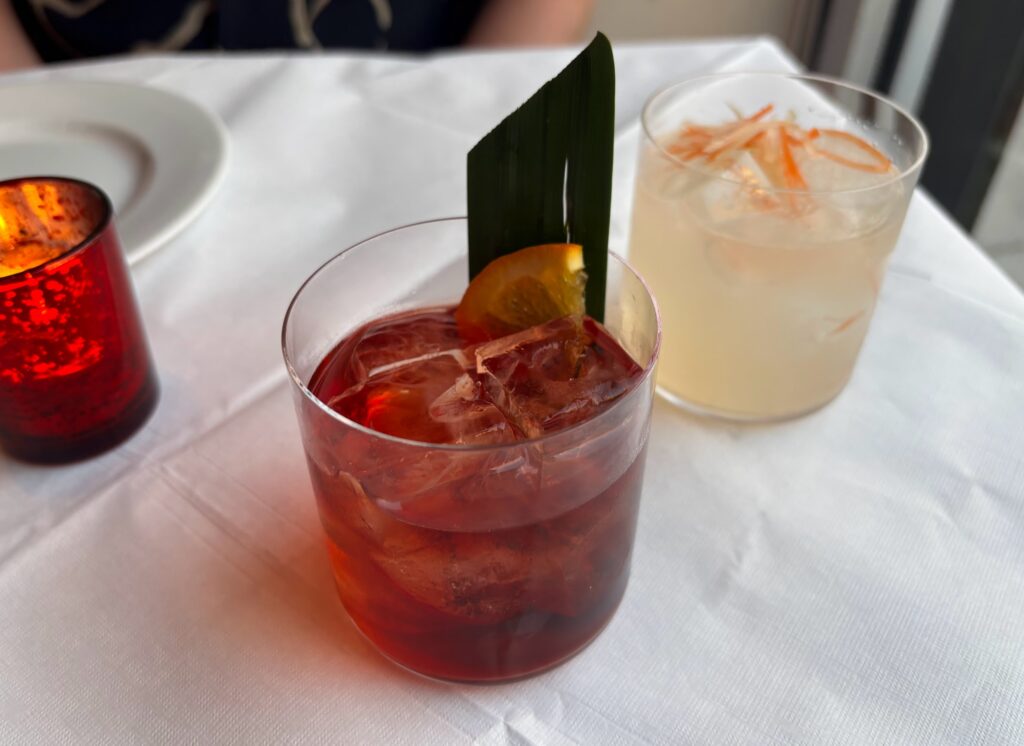
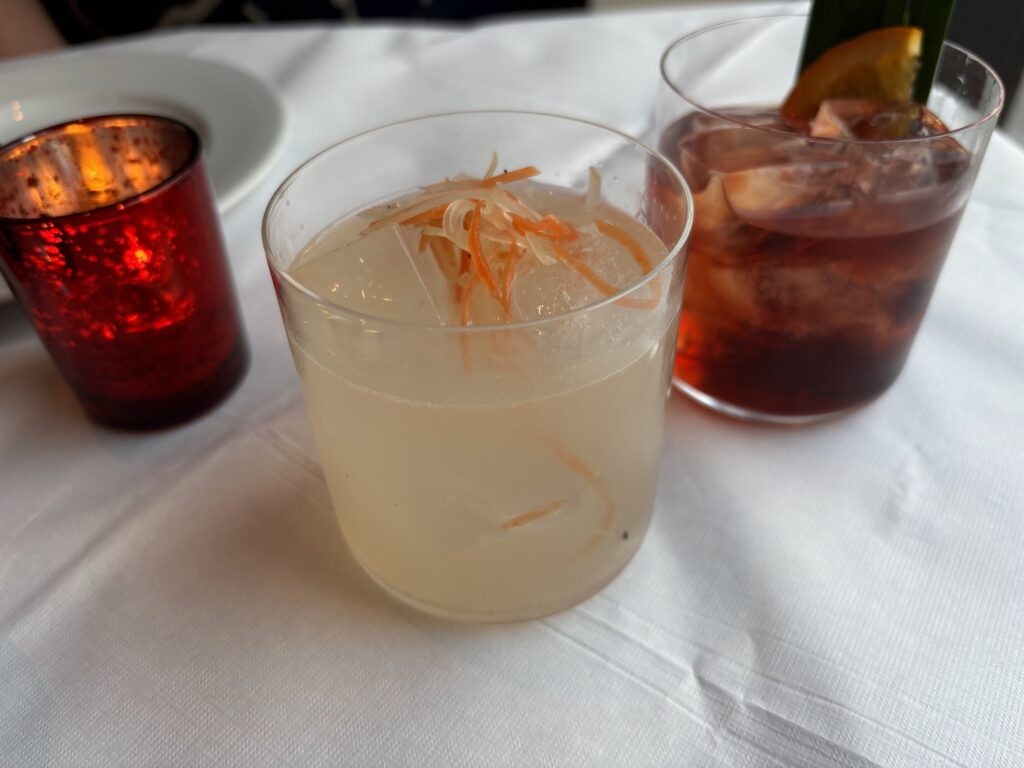
We started with a pandan negroni and Tita’s Spiked Atchara, a mezcal number whose raw papaya and carrot pickle juice carried a real bird’s-eye-chilli kick (atchara being the pickle traditionally served with lechon). Do not, as we did, mistake the tumbler holding a tea light for a third cocktail.
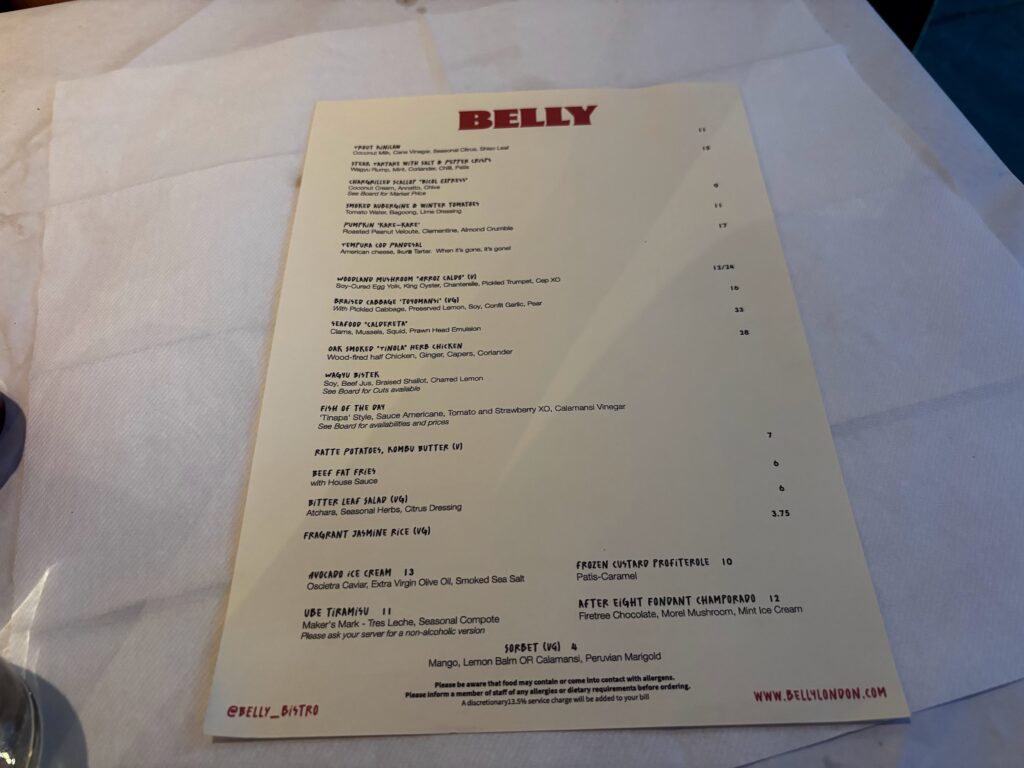
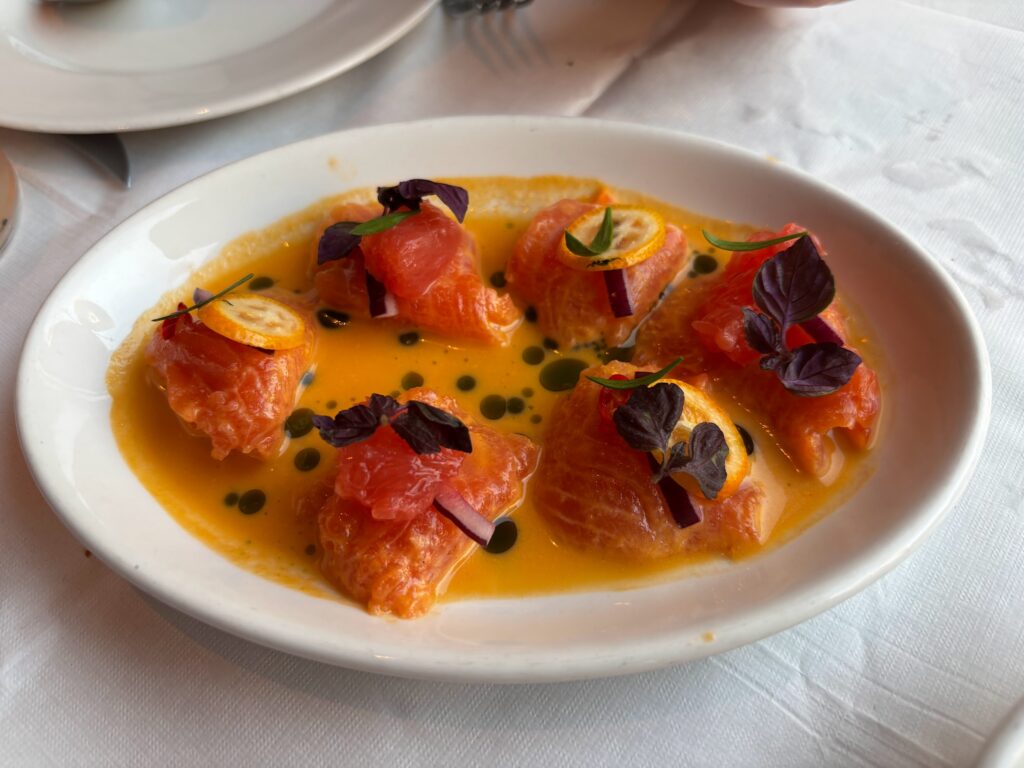
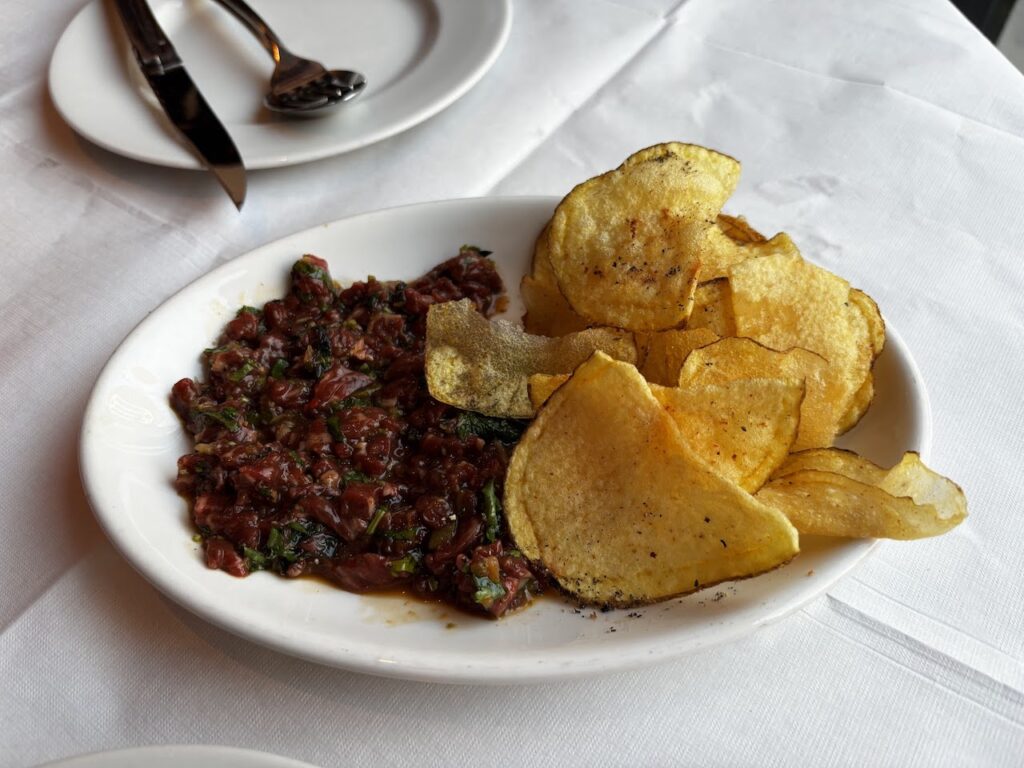
Both (all three?) were a fine match for an opening salvo of small plates. A steak tartare of wagyu rump, rough-cut and silky, came seasoned with mint, coriander (stalks included, which gave it real fragrance), chilli and patis, the Filipino fish sauce standing in for the Worcestershire of the French classic, one borrowed sauce for another. There were no capers or gherkins, none of the acidic jolt you expect, which is exactly why the trout kinilaw alongside it was so useful: the rare in-law you actually want at the table. Cured in coconut milk, cane vinegar, citrus and shiso, it brought all the brightness the tartare lacked.
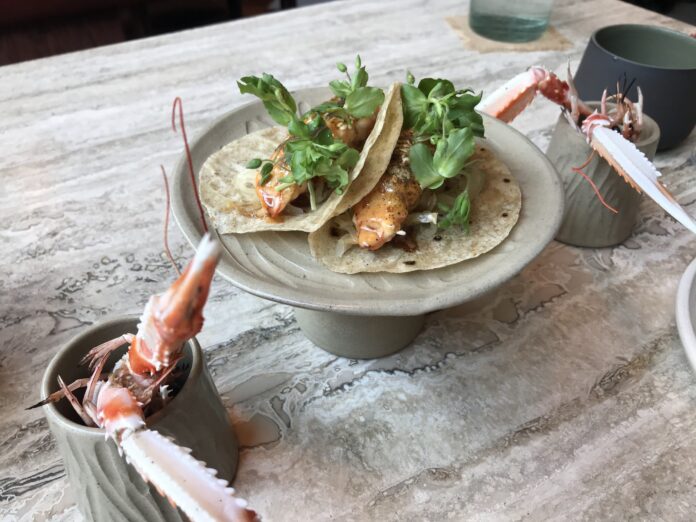
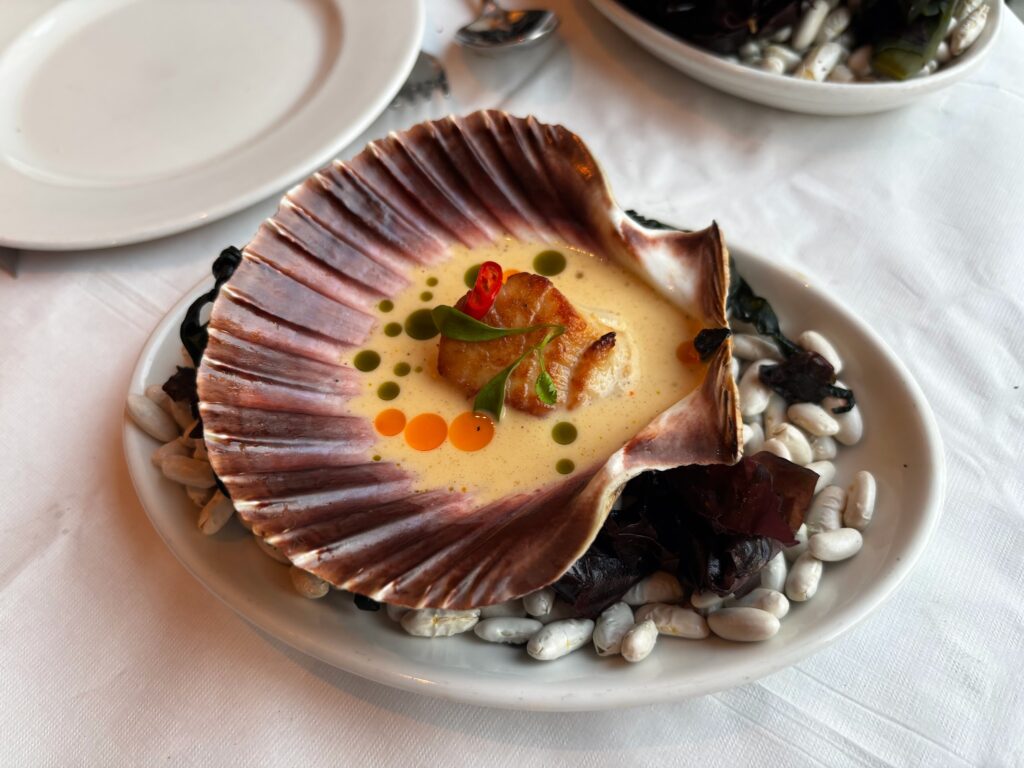
A grilled scallop each next, burnished in the shell over a Bicol Express-style sauce of reduced coconut cream, chilli and shrimp paste, dappled with annatto and chive oils. The shell became a useful vessel for drinking the sauce, and once again, the tablecloth was ruined.
The one that got away was the tempura cod pandesal, the dish that seems to inspire a thousand reels: battered cod and American cheese in a pandesal bun with ikura tartar cascading out in a highly stylised vomit, a posh filet-o-fish that Time Out’s Ella Doyle filed as the best thing she ate in 2025, “absolutely no notes” (wish she’d made some notes so we could pretend we tried it). It carries a ‘when it’s gone, it’s gone’ warning, and on a packed Sunday, it was indeed gone. Reason enough to return, along with a seafood calderata/bouillabaisse mash-up that we simply couldn’t imagine fitting on the dinky table.
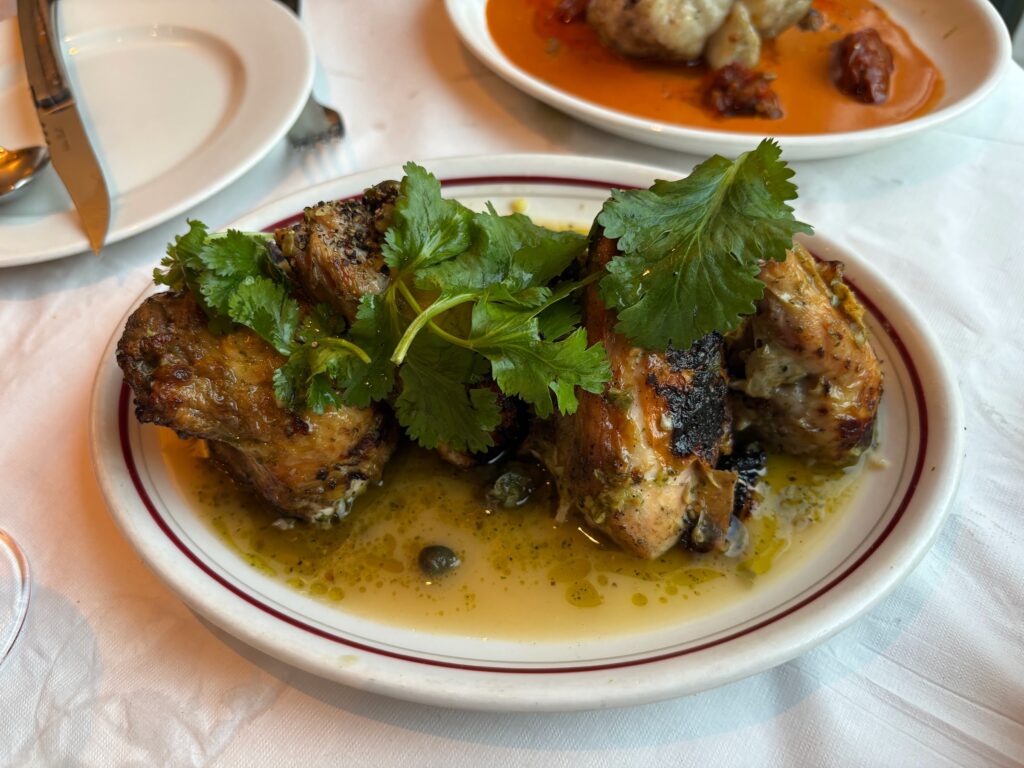
A rare thing in a modern London restaurant, where so often the wit goes into the small plates and the mains are left to coast: at Belly the cooking seems to find a whole new gear on the larger plates, the burden of virality a disappearing speck in the rear-view, the kitchen finally free to cook big and bold and show off a bit of muscle. An oak-smoked half chicken, done tinola-style over a hybrid of the gingery Filipino broth and a beurre blanc, arrived as four enormous chunks of bird, on the bone and tender throughout, the skin blackened in places where the flame had clearly done its own unpredictable, elemental work. The capers missing from the tartare turned up here, punctuating the sauce.
Better still was the fish of the day, a thick tranche of dry-aged monkfish smoked tinapa-style. It came in a vivid red sauce américaine, bisque-like and glossy, spiked with tomato, strawberry XO and calamansi vinegar. On top, a little herb garden of fennel flower and soft balm-type leaves over a dark, spiced crust.
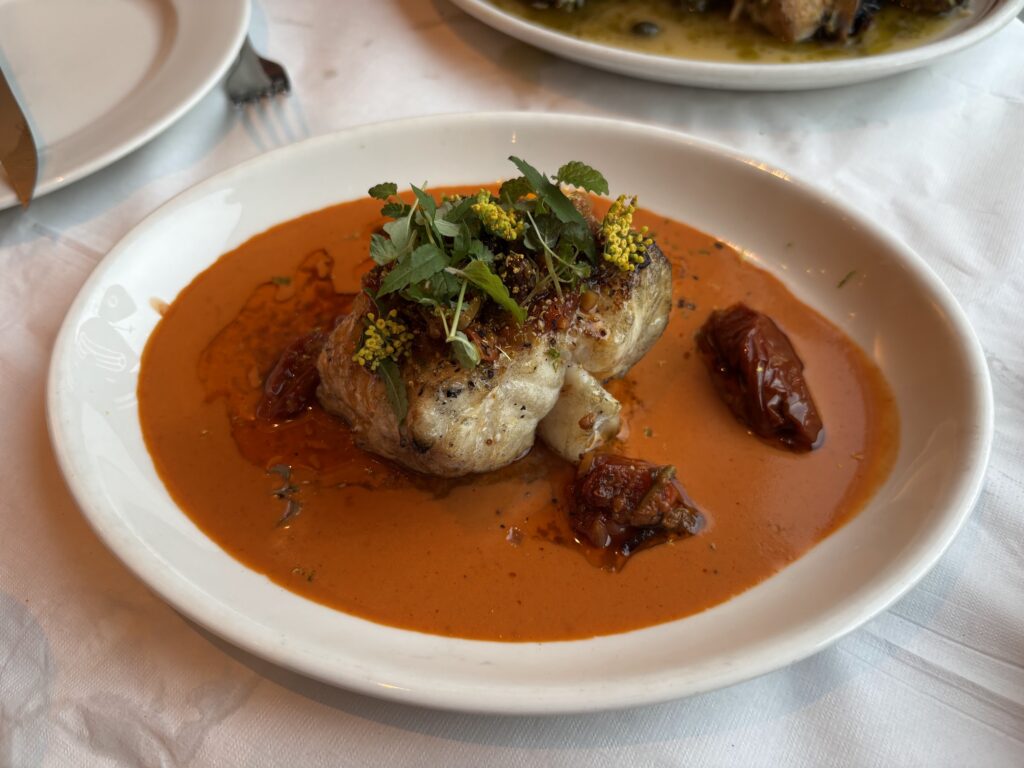
Let me bathe in this sauce for a while, it was that good. Sauce américaine is the classic French shellfish reduction built for lobster, homard à l’américaine, crustacean shells sweated down, flambéed with cognac, deglazed and bolstered with tomato, then strained and mounted with butter. Here it has been raided for parts and rebuilt with calamansi vinegar and strawberry XO, the whole project in one plate: not French meeting Filipino food, but a Filipino kitchen treating French technique as one more tradition to absorb and, ahem, improve.
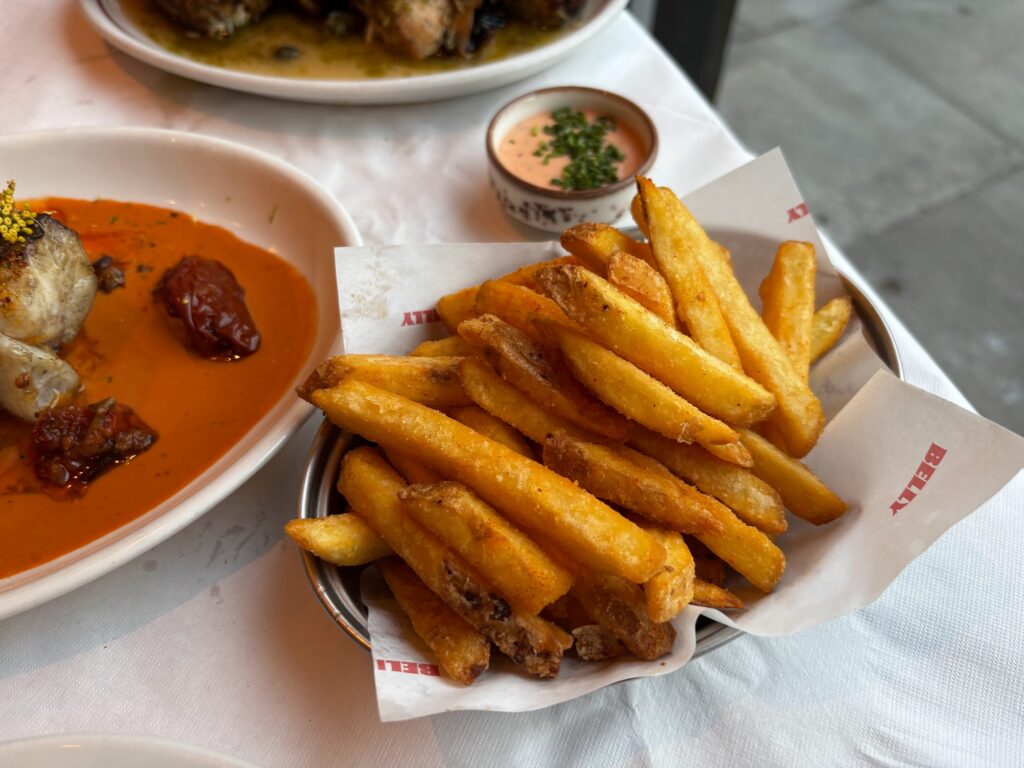
Those sauces deserved respect, but we were steered away from rice and towards the beef-fat fries, deeply golden and served with a house sauce close to a marie rose. We relented without much of a fight, already keenly aware of how good they would be crushed into the américaine.
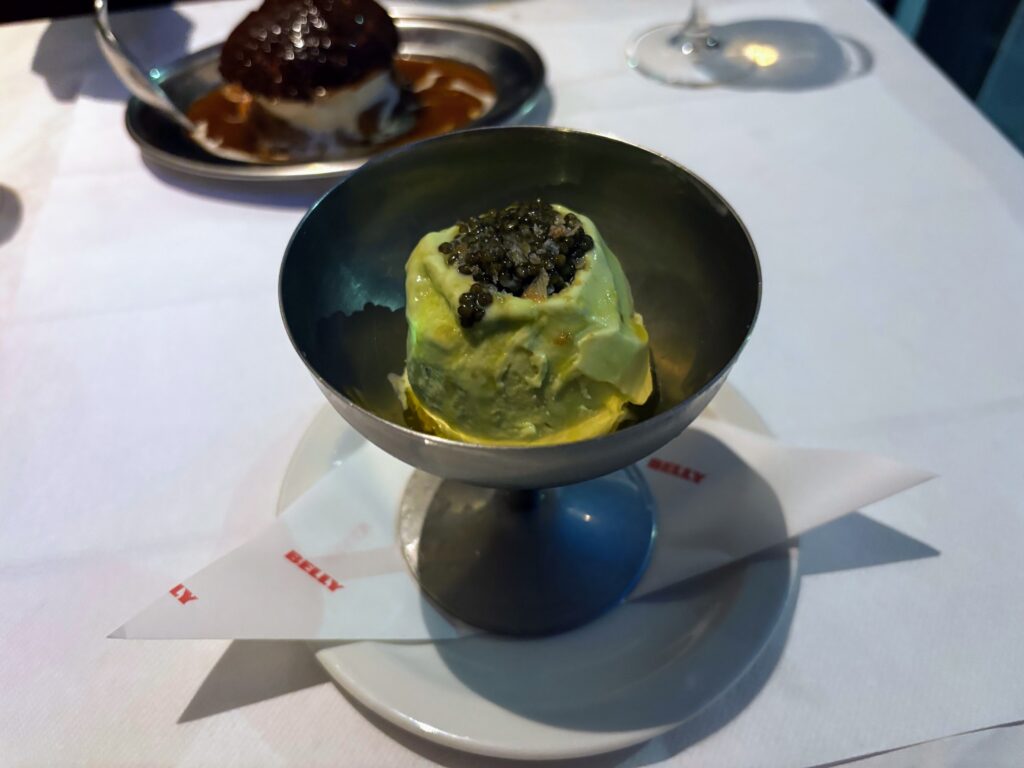
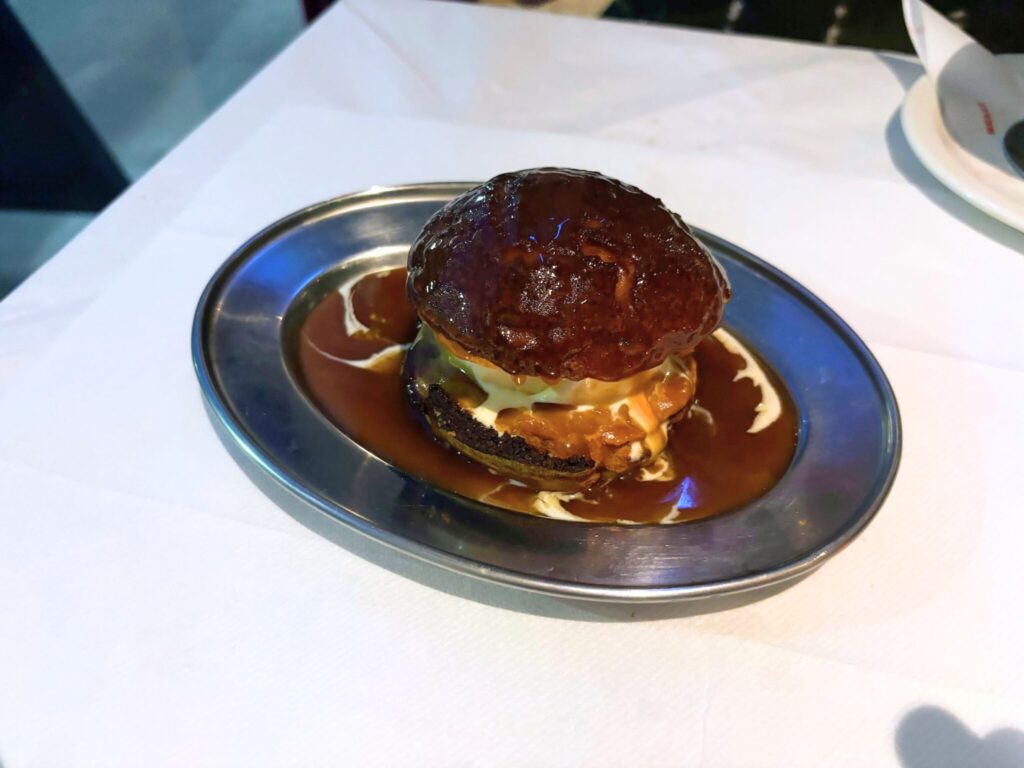
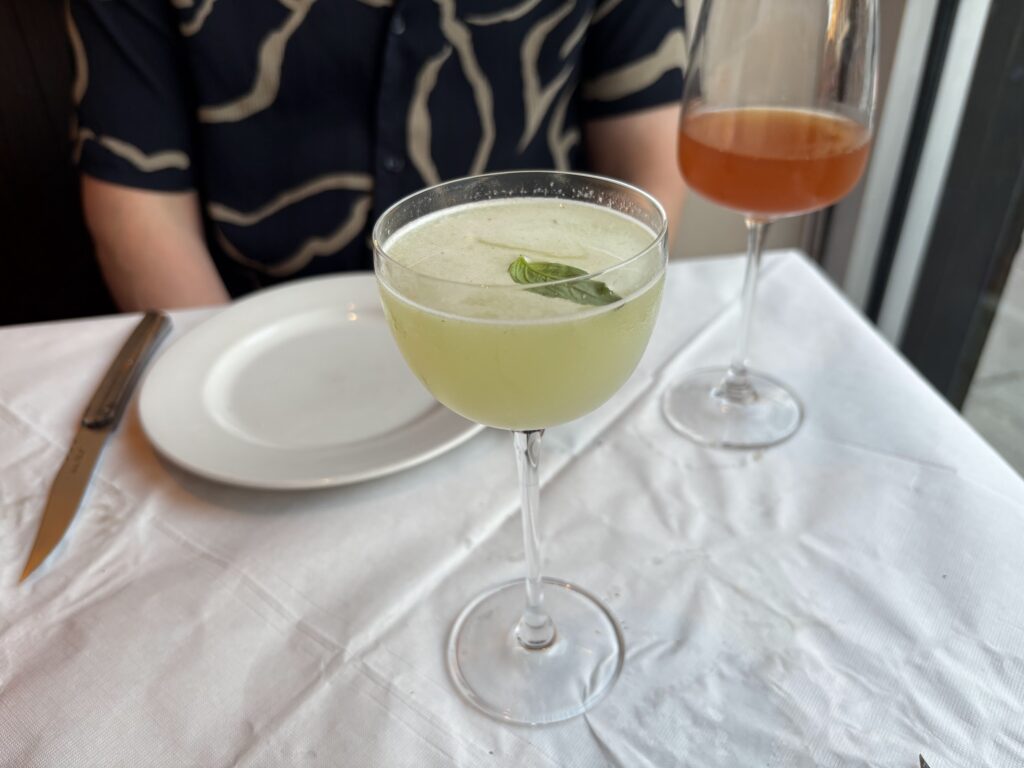
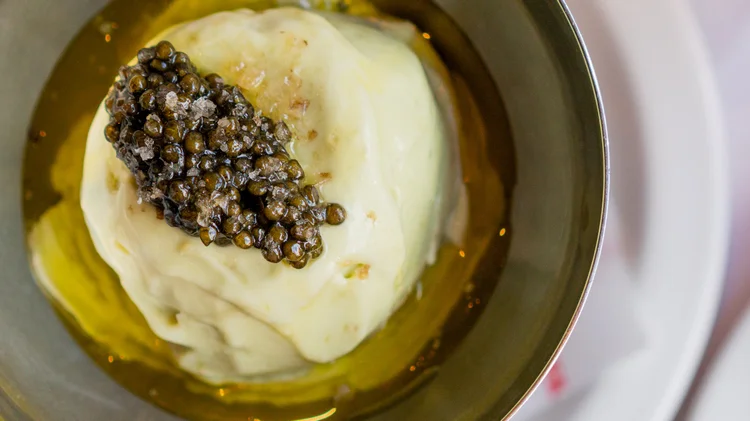
The desserts at Belly are outrageous in every direction: too savoury, too sweet, too salty and somehow perfect. An avocado ice cream gilded with oscietra caviar, olive oil and smoked salt was heady and exhilarating and a little unhinged; a Thai basil and lemongrass gimlet laced with patis kept pace with it. The frozen custard profiterole, its choux baked up the road at Cafe Mama & Sons and its fish sauce caramel poured at the table with a bit of French theatre, is the one the Michelin inspectors rightly singled out, and the fifth dish I’d lifted to my face and lapped from. Get it while you can, it is coming off the menu shortly.
It would be easy to read all this as for content first, but Filipino kitchens sit on one of the deepest dessert traditions going. Spanish baking brought wheat, egg-rich custards and a calendar of sweets tied to the church year; the American era added refined sugar and flour; under both sits an older tradition of rice and tuber puddings, ube among them. Shah has built a business on it at Mamasons and Cafe Mama & Sons. The maximalist puddings at Belly belong to that lineage.
The wine of the night came off the mirror: Alonso & Pedrajo’s La Pequeñita, a skin-macerated Maturana Blanca, that rare white Rioja grape, deep orange in the glass and all honeysuckle and brown butter. The staff had flagged it as a house favourite. Just like the move with the fries, they were right about this too.
We left at ten with walk-ins being turned away, not through a lack of ambition but because the restaurant was still heaving. A full house on a Sunday night in London is rare. One still with a queue of hopefuls at closing is rarer still. Whatever you make of the clamour that trailed Belly through its first year, the room has voted. And we’re right there with them, already plotting a return for the dishes we missed and the tablecloths we haven’t yet ruined.
Belly, erm, still not full, we’re off in search of the other great places to eat in Kentish Town next. Care to join us?