Nicknamed ‘Iceland in Miniature’, the Snæfellsnes Peninsula packs glaciers, volcanoes, black sand beaches, lava fields and fishing villages into a single 90-kilometre stretch of West Iceland coastline. Here’s what not to miss.
The Snæfellsnes Peninsula sits about two hours northwest of Reykjavík, jutting out into the Atlantic like a crooked arm beckoning you further from the capital. Most visitors to Iceland stick to the Golden Circle or the Ring Road, both of which deserve the attention they get. But Snæfellsnes offers something different: a concentrated, wonderfully varied landscape that manages to compress the full breadth of Icelandic scenery into a single loop drive.
You could see the highlights in a long day trip from Reykjavík, but spending at least one night on the peninsula gives you breathing room, better light for photos and a chance to experience the place when the tour buses have gone. The loop itself follows Route 54, a well-maintained road that’s accessible year-round, though winter driving requires more care and a 4×4 is always the safer bet when conditions turn.
Whichever way you play it, the jist remains the same; these are the best things to see and do on Iceland’s Snæfellsnes Peninsula.
Kirkjufell & Kirkjufellsfoss
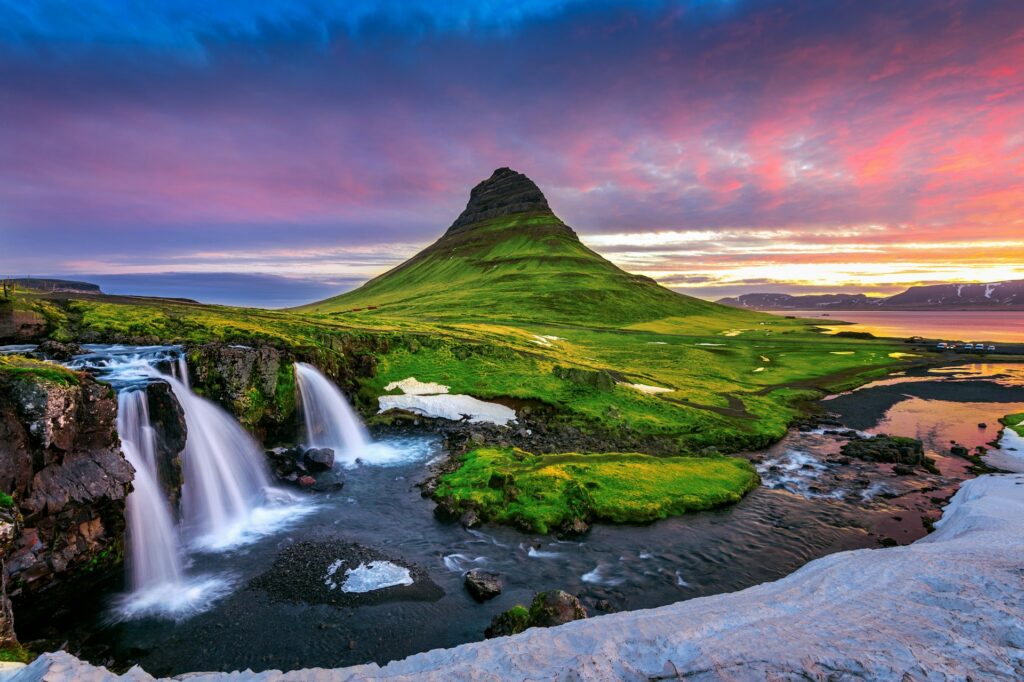
You’ve almost certainly seen this mountain before, even if you didn’t know it. Kirkjufell, meaning Church Mountain, rises 463 metres from the shore near Grundarfjörður on the peninsula’s north coast. Its distinctive steeple-like form featured as the Arrowhead Mountain in Game of Thrones, and it has since become one of the most photographed peaks in Iceland.
The neighbouring Kirkjufellsfoss waterfall provides the foreground for that much-reproduced shot, but the mountain shifts shape dramatically as you move around it, rewarding those who explore beyond the main viewpoint. There’s a paid car park at the waterfall. For a less crowded experience, visit early in the morning or late in the evening, when the light tends to be better anyway.
Climbing the mountain itself is possible in summer but demanding and dangerous in wet conditions, so most visitors are better off appreciating it from below.
Read: 10 must-see destinations in Iceland’s Golden Circle
The Arnarstapi to Hellnar Coastal Walk
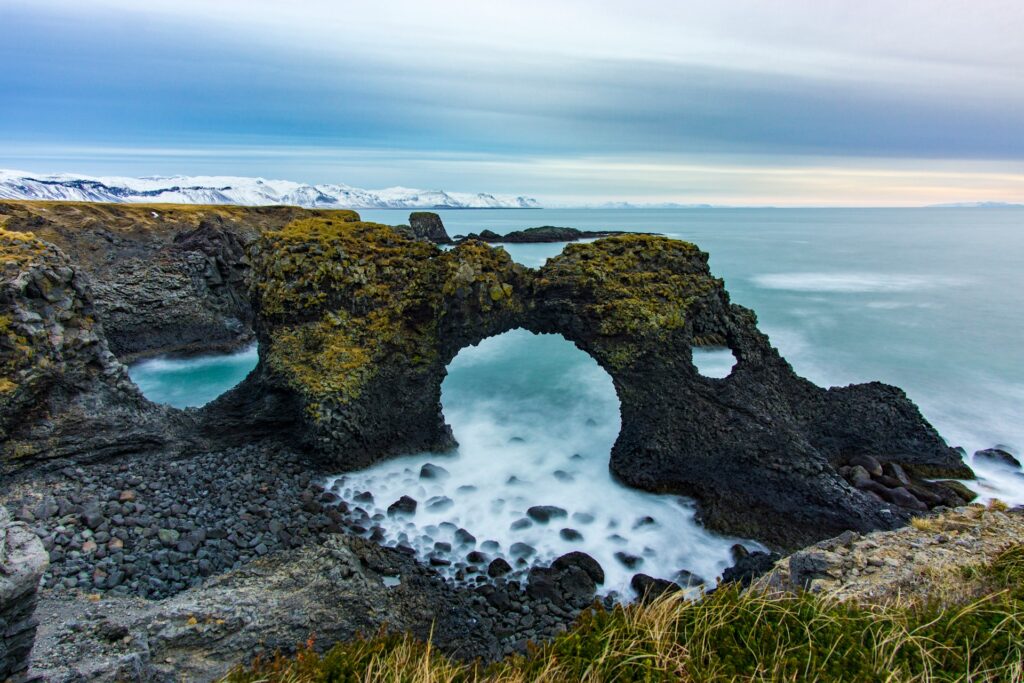
This 3-kilometre trail along the southern coast of the peninsula is one of Iceland’s finest short hikes. Starting from Arnarstapi’s harbour, the path traces a clifftop nature reserve (protected since 1979) past dramatic basalt columns, sea arches and lava formations, with fulmars, kittiwakes and Arctic terns wheeling overhead throughout the breeding season.
The stand-out feature is Gatklettur, a natural stone arch sculpted by centuries of Atlantic erosion. The terrain transitions from grassy clifftop to a moss-covered lava field as you approach Hellnar, where the tiny café Fjöruhúsið serves homemade fish soup and cake on a wooden terrace overlooking the shore.
Most people walk back the same way they came, making this a roughly two-hour round trip. Start at either end; neither direction has a clear advantage.
Djúpalónssandur Beach
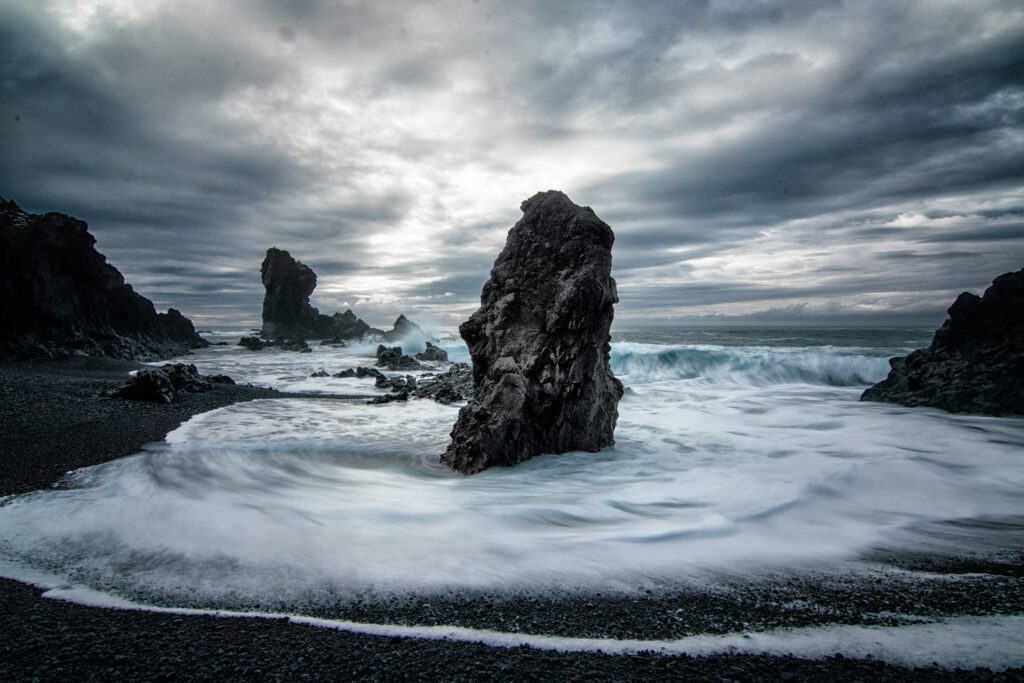
On the peninsula’s southwestern tip, within Snæfellsjökull National Park, Djúpalónssandur is a crescent of black volcanic pebbles backed by twisted lava formations. What separates it from other Icelandic black sand beaches is its layered history.
Four lifting stones sit near the shore, ranging from 23 to 154 kilograms, once used to test the strength of fishermen seeking work on local boats. Anyone who couldn’t manage at least the 54-kilogram stone was considered unfit for the sea. Visitors are welcome to try their luck.
Scattered across the sand are rusted remnants of the British trawler Epine GY7, which was wrecked here in 1948 with the loss of 14 lives, now preserved as a memorial. A one-kilometre walk west takes you to Dritvík cove, once one of Iceland’s busiest seasonal fishing stations. Be warned: the waves here are powerful and unpredictable. This is a beach for walking and looking, not wading.
Read: 2026’s best cruise destination, Iceland
Snæfellsjökull National Park
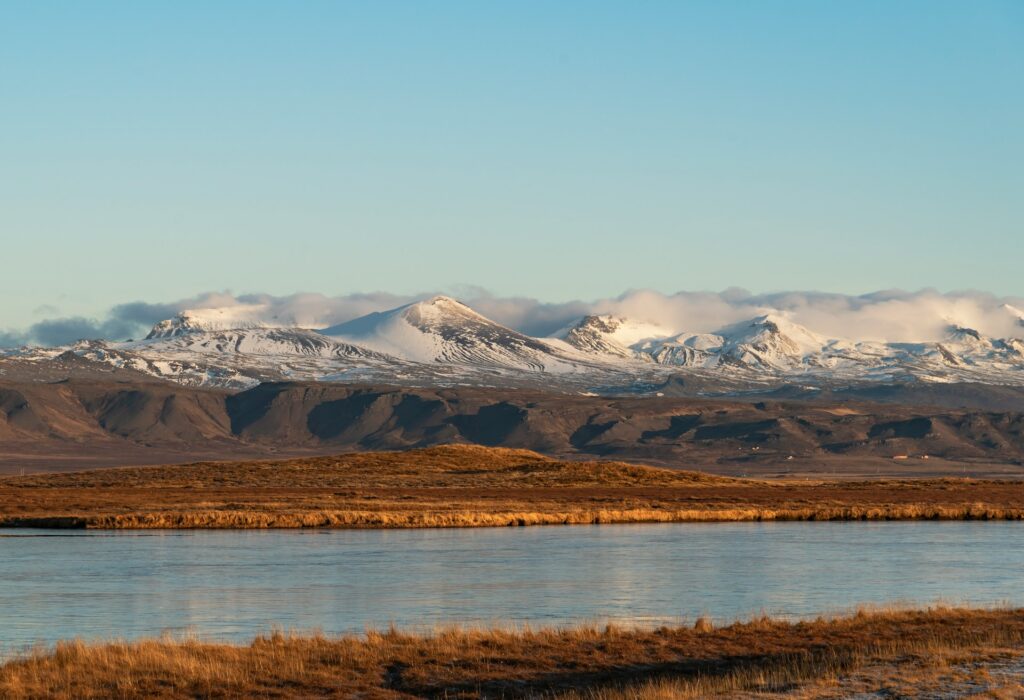
The glacier-topped volcano Snæfellsjökull dominates the western tip of the peninsula and, on a clear day, is visible from Reykjavík across Faxaflói Bay. Jules Verne chose it as the entry point in A Journey to the Centre of the Earth, and even without the literary associations, it holds a certain magnetic quality.
The national park surrounding it is Iceland’s smallest but covers a striking range of terrain, from lava fields and coastal cliffs to the ice cap itself. In summer, guided glacier hikes are available for those with the fitness and nerve for it. At other times, the park’s marked trails and viewpoints offer plenty of reward without the crampons.
Vatnshellir Lava Cave
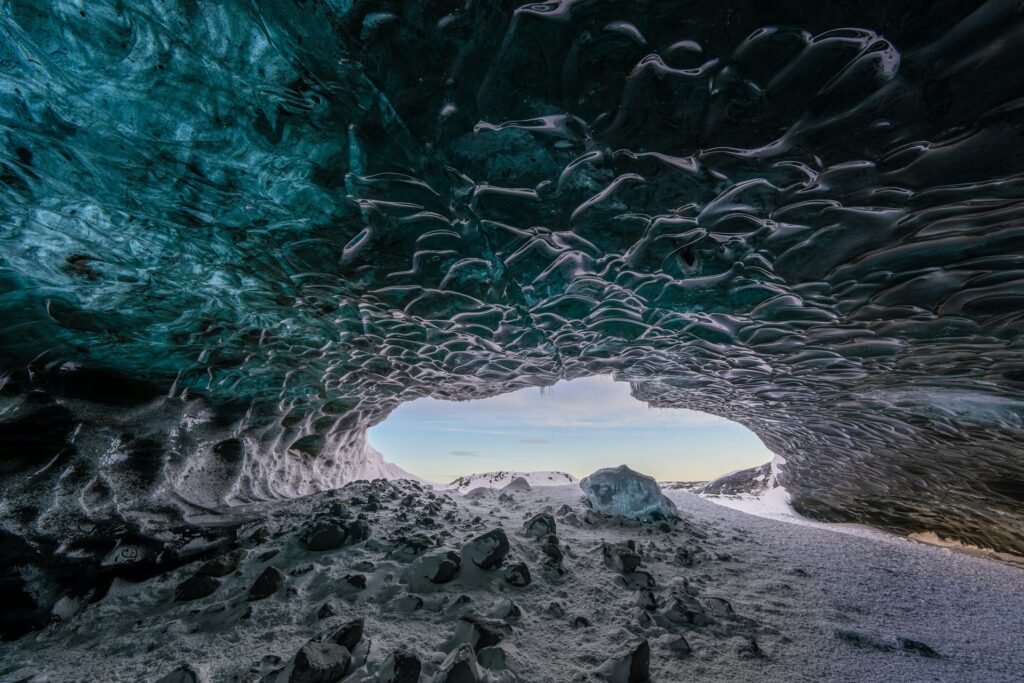
Formed by an eruption roughly 8,000 years ago, Vatnshellir is a 200-metre lava tube that descends about 35 metres beneath the surface of Snæfellsjökull National Park. Guided tours run year-round (more frequently in summer) and last about 45 minutes, taking you through three chambers of vividly coloured volcanic rock: reds from iron, yellows from sulphur, greens from copper.
At the deepest point, your guide will ask you to switch off your torches for a spell of total darkness. It’s a brief, slightly unnerving moment that most people remember long after the rest of the tour has faded.
The cave is located about ten minutes’ drive from the village of Hellnar. Tours are operated by Summit Adventure Guides, the sole licensed operator.
Búðakirkja
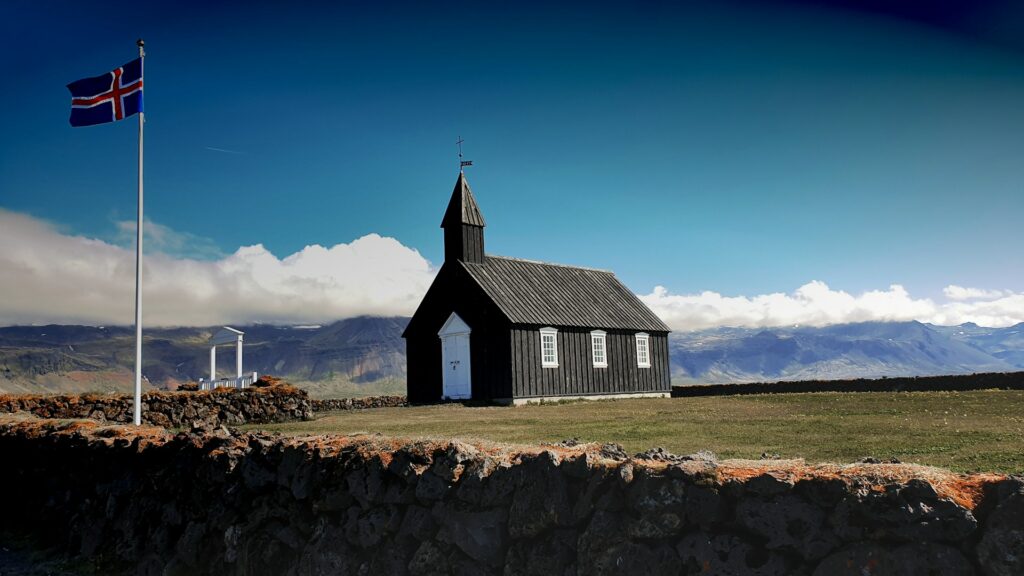
Sitting alone in a vast lava field on the southern coast, the small black church at Búðir is one of the most photographed buildings in Iceland. A church has stood on this site since 1703; the current structure dates to 1848 and was renovated in 1987. Its stark dark timber against the moss-covered rock and open sky makes for a scene that looks vaguely unreal in person.
It draws tour buses, so afternoon visits tend to be busier. The surrounding Búðahraun lava field is worth exploring too, a labyrinth of ancient basalt softened by thick green moss that extends in every direction.
Stykkishólmur
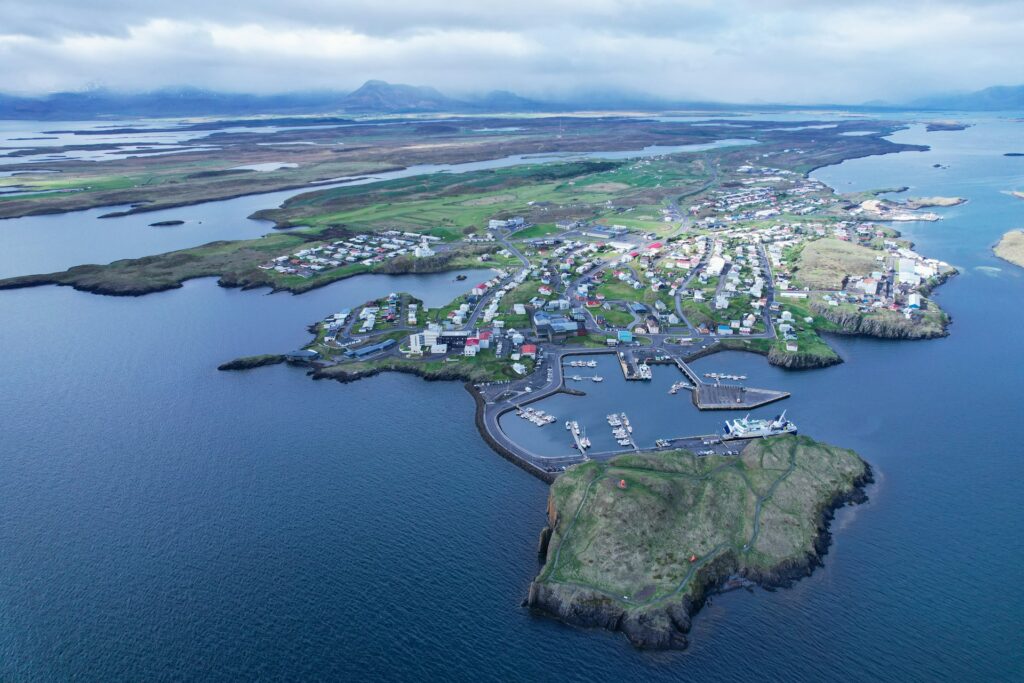
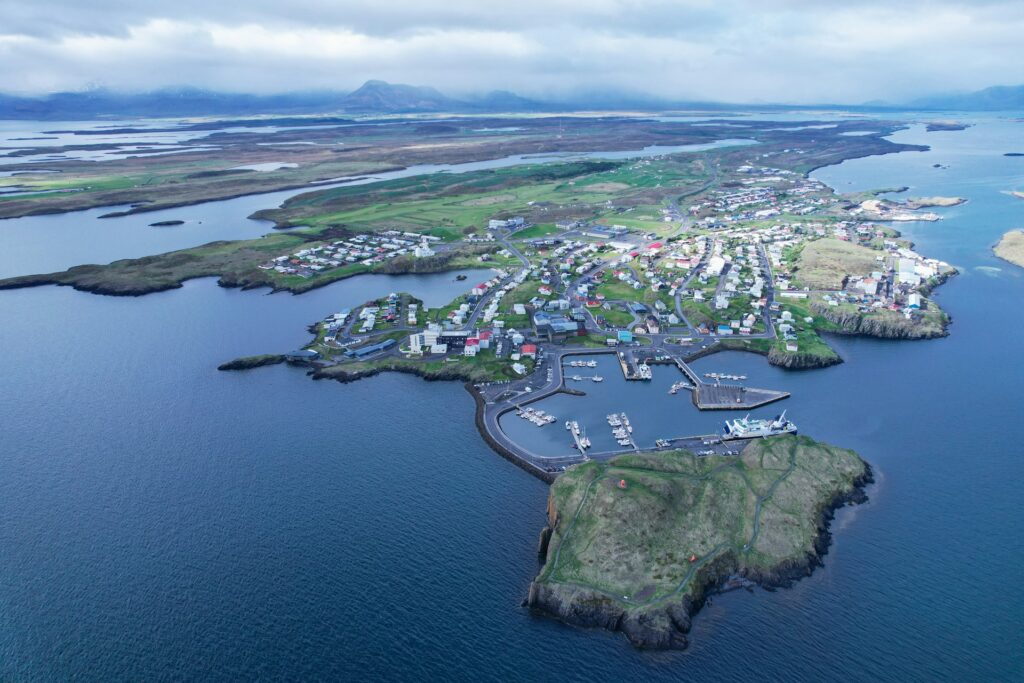
The largest town on the peninsula (population around 1,100), Stykkishólmur is worth more than a fuel stop. Its colourful harbour is lined with restored wooden houses dating back to the early 19th century, including the Norwegian House, built in 1832 and now a regional museum.
The Baldur ferry departs from here for the Westfjords, stopping at the tiny island of Flatey en route. Roni Horn’s Library of Water, an art installation featuring columns of glacier water collected from across Iceland, occupies a former library on the hill above town. Climb Súgandisey island, now connected to the harbour by a walkway, for panoramic views across Breiðafjörður Bay and its estimated 2,700 islands.
For dinner, Sjávarpakkhúsið by the harbour is widely considered the best restaurant on the peninsula.
Ytri Tunga Beach
Most visitors come here for one reason: seals. Ytri Tunga, on the peninsula’s south coast, is one of the best places in Iceland to spot harbour seals and grey seals lounging on the small rocky islands just offshore. The best time is May to July, though you may get lucky outside that window.
The beach itself is unusually golden for Iceland, a pleasing contrast from all the black volcanic sand elsewhere. It’s a short detour off Route 54 and easy to miss if you’re not looking for it; watch for a road marker with a small red-roofed house.
Gerðuberg Cliffs
Your first encounter with Snæfellsnes if you’re driving clockwise from Reykjavík, the Gerðuberg basalt columns line up like a geological organ pipe, hexagonal pillars formed by ancient lava flows that cooled with unusual symmetry. They recall the Giant’s Causeway in Northern Ireland, if somewhat less famous.
The cliffs sit right alongside Route 54, making them an easy stop that requires no hiking. They’re particularly striking in low winter light or dusted with snow.
Lóndrangar Basalt Cliffs
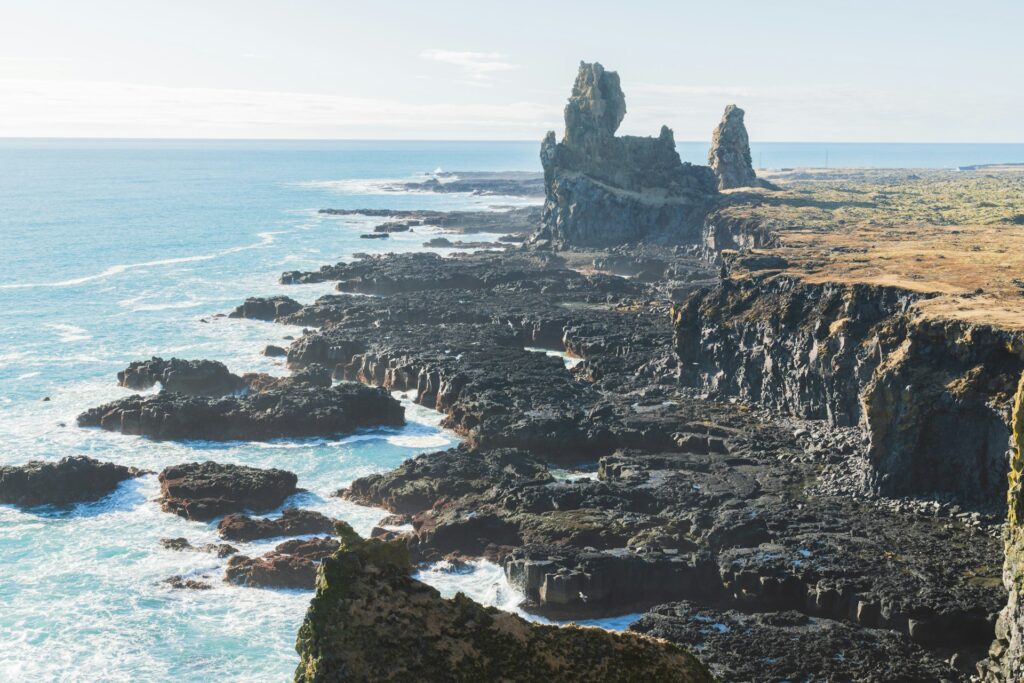
On the southern coast near Malarrif, two jagged volcanic plugs jut from the coastline like the ruins of some improbable cathedral. These are the eroded remnants of an ancient volcanic crater, and they’re among the most dramatic coastal formations on the peninsula.
The area is rich in birdlife, including puffins during the breeding season, and short walking paths from the car park lead to several viewpoints. Lóndrangar tends to be less visited than the headlining attractions, which is part of the appeal.
Before You Go
There are a few practical questions worth answering before you set off for Snæfellsnes:
- Do you need to rent a car in Iceland? For the peninsula, almost certainly yes — there’s no bus route around it, and day tours from Reykjavík leave little time for lingering.
- How many days do you have? You can loop the peninsula in a long day, but two nights gives you breathing room and better light for photos.
- Are you visiting in summer or winter? A standard car handles summer roads comfortably, but a 4×4 with studded tyres is the safer call between October and April.
- Do you need to book anything in advance? The Vatnshellir cave tour and any glacier hikes should be reserved ahead, particularly in peak season. Everything else is turn up and go.
The Bottom Line
Snæfellsnes doesn’t demand the week-long commitment of the Ring Road or the months of planning that Iceland’s interior requires. It’s a complete, self-contained circuit of some of the country’s most varied landscapes, all reachable on a well-maintained road within easy reach of the capital. With a car, a full day and even a modest sense of curiosity, you’ll come away wondering why it took you this long to look beyond the Golden Circle.