Whether you’re dreaming of longer locks, more volume, or a splash of colour without the commitment, hair extensions could be exactly what you’re looking for. They’ve never been more popular and it’s easy to see why. They’re an accessible, versatile option for anyone looking to switch up their look. From a big event on the horizon to simply fancying a change, there’s a type of extension to suit every occasion, budget, and hair type.
With a variety of options available, it can be overwhelming to choose the right type for your needs. Clip-ins, tape-ins, keratin bonds, weft extensions – the terminology alone is enough to make your head spin. Overwhelming, that is, until you read this: our guide to the different types of hair extensions out there, breaking down everything you need to know so you can find the perfect fit for your hair, your lifestyle, and your look.
Clip-In Hair Extensions
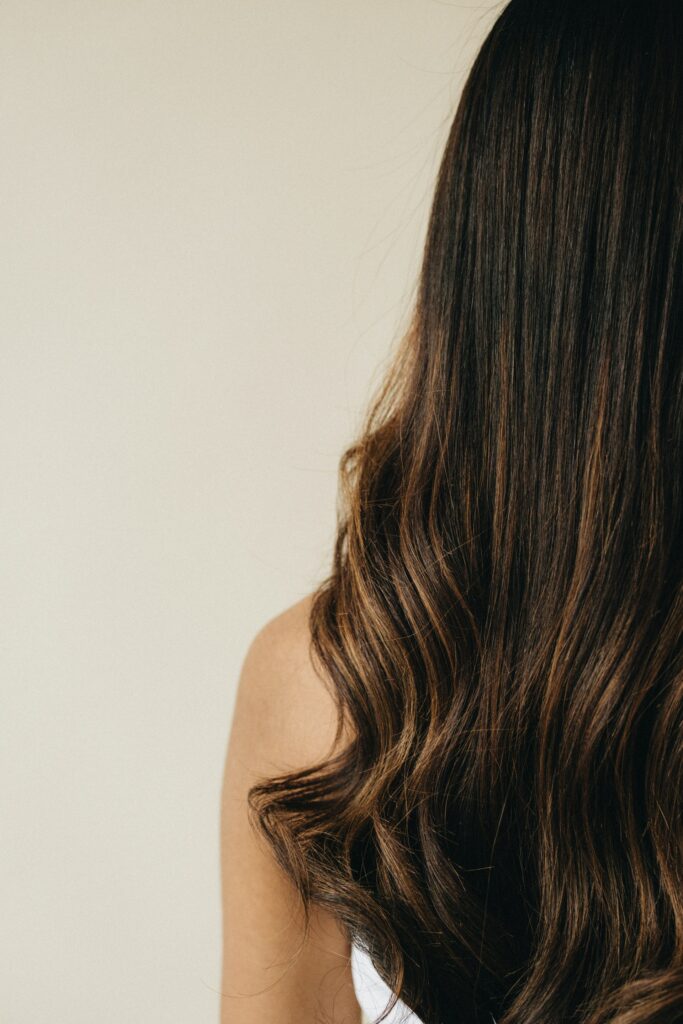
Clip-in hair extensions are wefts of hair that come with small, pressure-sensitive clips. These clips are sewn onto the hair wefts and are designed to be easily attached and removed by yourself.
This type of extension comes in various lengths, colours, and textures, allowing you to customise your look. They are ideal for those who want to experiment with different hairstyles without making a long-term commitment. The clips are typically made of metal and are covered with a silicone coating to prevent slipping and to protect your natural hair.
Beauty Works has built a following around this format. Their Double Hair Set was named a top pick in Expert Reviews’ roundup of the best clip-in extensions.
Pros
- Easy to apply and remove at home without professional help, with instant results in minutes and total flexibility to swap lengths, colours, or styles whenever you like.
- Non-damaging (no glue, heat, or chemicals) and generally affordable upfront with no salon fitting fees; with proper care, good-quality clip-ins can last months or even years.
- Versatile enough for special occasions or everyday wear, and compact enough to travel with.
Cons
- Temporary by nature and need removing and reapplying daily, which becomes time consuming; clips can also cause discomfort or headaches on finer hair with prolonged wear.
- Not ideal for active lifestyles. Clips can shift or dislodge during exercise, swimming, or in wind.
- Those with very fine or thinning hair may struggle to conceal them or support the weight.
- Colour matching can be tricky, particularly for highlighted or multi-tonal hair, and clips can occasionally be visible if not applied correctly.
Maintenance
- Brush gently with a soft-bristle or loop brush, starting from the ends and working upward, and always detangle thoroughly before washing to prevent knots tightening in water.
- Wash sparingly using a sulphate-free shampoo, apply conditioner from mid-length to ends only (avoiding the weft and clips), then air dry flat on a surface rather than blow-drying where possible.
- Limit heat styling and always apply a heat protectant first; wipe clips occasionally to remove product build-up and check they are still gripping securely.
- Store in a cool, dry place (ideally a storage case) and always remove before bed to prevent tangling and unnecessary stress on both the extensions and your natural hair; treat to a conditioning mask every few weeks to restore softness and shine.
Ponytail Hair Extensions
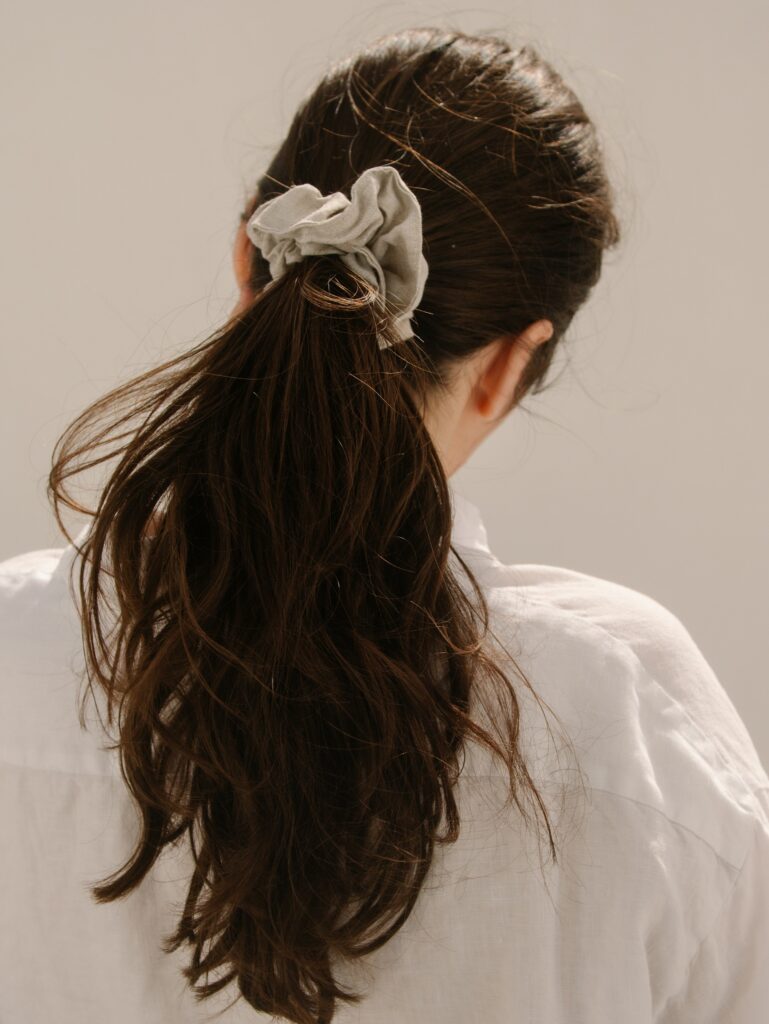
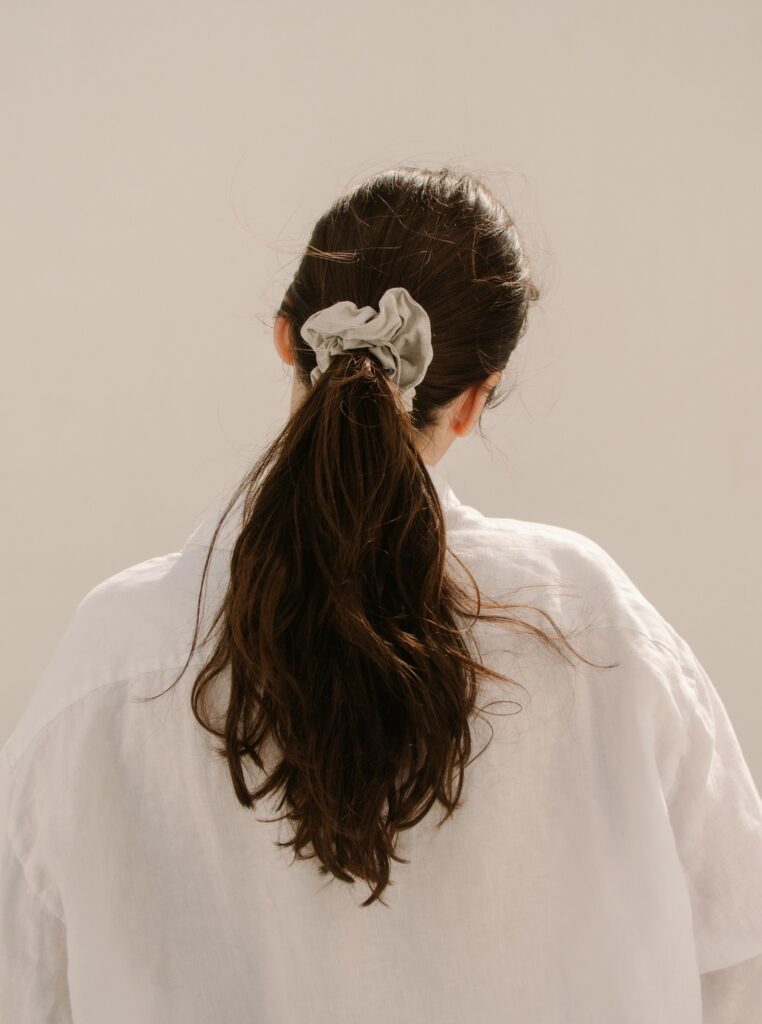
Ponytail hair extensions are designed to add length and volume to your natural ponytail. They come in various styles, including wrap-around, clip-in, and drawstring options. These extensions are typically made from synthetic or human hair and are available in different lengths, colours, and textures. Ponytail extensions are ideal for creating a fuller, longer ponytail for special occasions or everyday wear. They are easy to apply and can instantly transform your look.
Pros
- Simple to apply at home in under a minute with no glue, heat, or chemicals, making them a cost-effective, no-commitment way to add instant length and volume.
- Available in a wide range of styles, lengths, and colours; reusable with proper care and easy to wear for specific occasions without any long-term obligation.
Cons
- Restricted to ponytail styles, making them less versatile than other extension types, and can feel heavy or loosen during exercise or windy conditions.
- Those with finer hair may struggle to convincingly conceal the attachment point, and colour matching for highlighted or multi-tonal hair can be challenging.
Maintenance
- Detangle gently before washing, then wash with a mild sulphate-free shampoo, applying conditioner from mid-length to ends while avoiding the base and any fastenings; air dry flat afterwards rather than blow-drying.
- Limit heat styling and always use a heat protectant.
- Inspect the clip, drawstring, or wrap mechanism periodically to ensure it is still gripping securely.
- Remove before bed to prevent tangling, and treat to a conditioning mask every few weeks to restore softness and shine with regular use.
Tape-In Hair Extensions
Tape-in extensions are pre-taped wefts of hair that are sandwiched between sections of your natural hair. The wefts are thin and lightweight, making them comfortable to wear. The adhesive used is medical-grade, ensuring a secure hold without damaging your natural hair.
These extensions are available in various lengths, colours, and textures, allowing for a seamless blend with your natural hair. They are a popular choice for those looking for a semi-permanent solution that provides a natural look and feel.
Cliphair’s black tape-in extensions are the perfect example of this; their ultra-thin wefts and medical-grade adhesive deliver a flush, virtually undetectable finish that blends seamlessly with darker hair tones.

Pros
- Thin, flat wefts sit flush against the scalp, distributing weight evenly and making them one of the more comfortable semi-permanent options. They are particularly well suited to those with finer hair.
- Versatile enough to be straightened, curled, and worn in most styles without attachment points showing; with regular re-taping appointments, they can last six months or more.
Cons
- The adhesive can cause sensitivity reactions on some scalps, and both excessive heat and oily styling products can weaken the bonds, limiting your product and styling choices.
- Between professional application, removal, and re-taping visits, ongoing costs can add up considerably; grow-out also necessitates regular salon trips to maintain a natural finish.
Maintenance
- Use a sulphate-free shampoo and wash in a downward motion. Avoid scrubbing or piling hair on top of the head; keep conditioners, oils, and serums away from the tape area entirely, applying only from mid-length to ends.
- Always dry the bond areas thoroughly after washing, as prolonged moisture can compromise the adhesive; sleep with hair in a loose plait or ponytail and use a silk or satin pillowcase to reduce overnight friction.
- Keep straighteners and curling tongs away from the tape itself, always applying heat protectant before styling; avoid salt water and chlorine where possible, and attend re-taping appointments promptly. Do not leave tape-ins in beyond the recommended six to eight weeks.
Micro-Ring (Micro-Bead) Hair Extensions
Next up, micro-ring extensions use small metal rings or beads to attach the extensions to small sections of your natural hair. The rings are clamped down to hold the extensions in place without the need for glue or heat. This method is gentle on your natural hair and allows for easy adjustment and removal. Micro-ring extensions are available in various lengths, colours, and textures, making them a versatile option for those looking for a semi-permanent solution.

Pros
- Long-lasting with regular maintenance, and adjustable – rings can be repositioned as your natural hair grows, extending their life without full removal.
- Because extensions are attached individually with no adhesive, they move freely and naturally, leave no sticky residue upon removal, and allow for precise colour placement across highlighted or multi-tonal hair.
Cons
- Professional fitting and removal are essential, and the rings can catch on surrounding hair, loosen over time, or occasionally click together – placing too much tension on finer or more fragile hair.
- Regular maintenance appointments make ongoing costs considerable, and improper clamping or loosening over time can cause slippage.
Maintenance
- Brush through at least once or twice daily using a loop brush, starting from the ends upward; wash with a sulphate-free shampoo in a downward motion, keeping conditioner well away from the attachment points and ensuring the rings and surrounding hair are fully dry afterwards.
- Avoid applying oil-based products near the roots, sleep with hair loosely tied to minimise tangling around the rings overnight, and use a silk or satin pillowcase to reduce friction.
- Inspect the rings periodically between appointments to check none have loosened, avoid salt water and chlorine, and attend maintenance appointments on schedule. Do not leave micro-rings in beyond the recommended six to eight weeks.
Fusion (Pre-Bonded) Hair Extensions
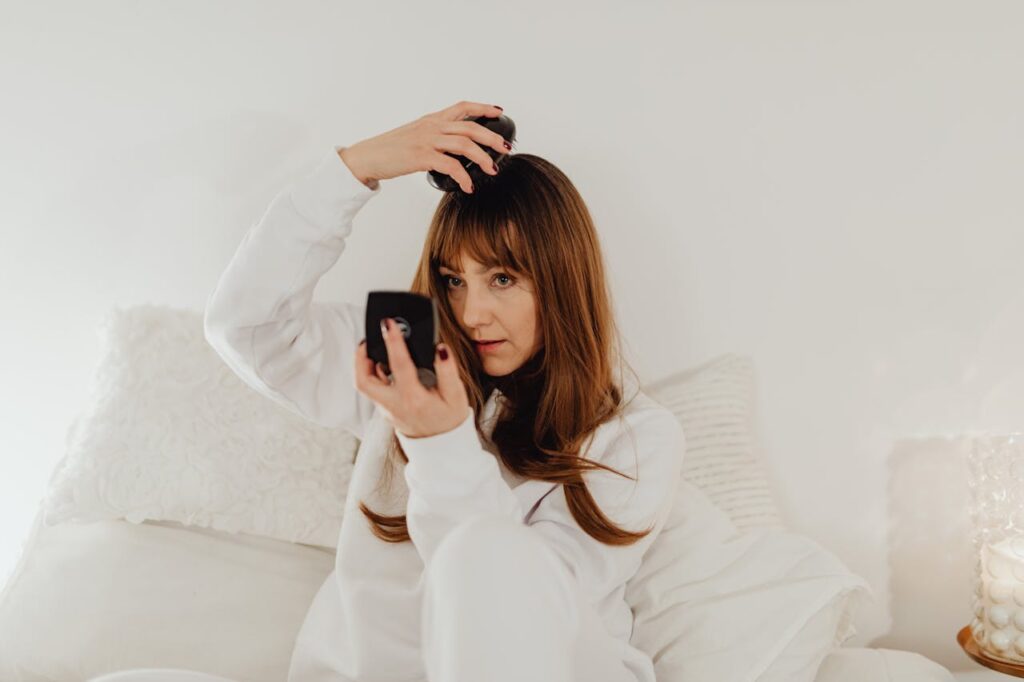
Fusion extensions involve bonding individual strands of hair to your natural hair using a keratin-based adhesive. The adhesive is melted using a special tool and then rolled to secure the extension to your natural hair. This method provides a very natural look and allows for a lot of styling versatility. Fusion extensions are available in various lengths, colours, and textures, making them a popular choice for those looking for a long-term solution.
Pros
- Strand-by-strand application produces one of the most natural, undetectable finishes available, with fully customisable placement for targeted volume or length and no visible attachments to conceal.
- Once bonded, extensions are highly secure and suitable for everyday active wear, with full styling versatility including updos and ponytails.
Cons
- Professional application and removal are both required and expensive, and the heat tool used to melt the keratin adhesive carries risk for those with fine or already-damaged hair.
- Bonds loosen as natural hair grows, requiring regular salon visits; if a bond breaks, it cannot be reattached at home without professional tools.
Maintenance
- Brush from the ends upward using a loop brush, holding the hair just below the bond; wash with a sulphate-free shampoo in a downward motion and keep conditioner, oils, and serums well away from the bond area to avoid softening the adhesive.
- Always dry the bonds thoroughly after washing; when heat styling, keep tools away from the bond area itself and always apply a heat protectant first.
- Sleep with hair loosely tied and use a silk or satin pillowcase to reduce overnight friction; avoid salt water and chlorine, and attend regular maintenance appointments every six to eight weeks to have bonds checked, repositioned, or replaced.
Halo Hair Extensions
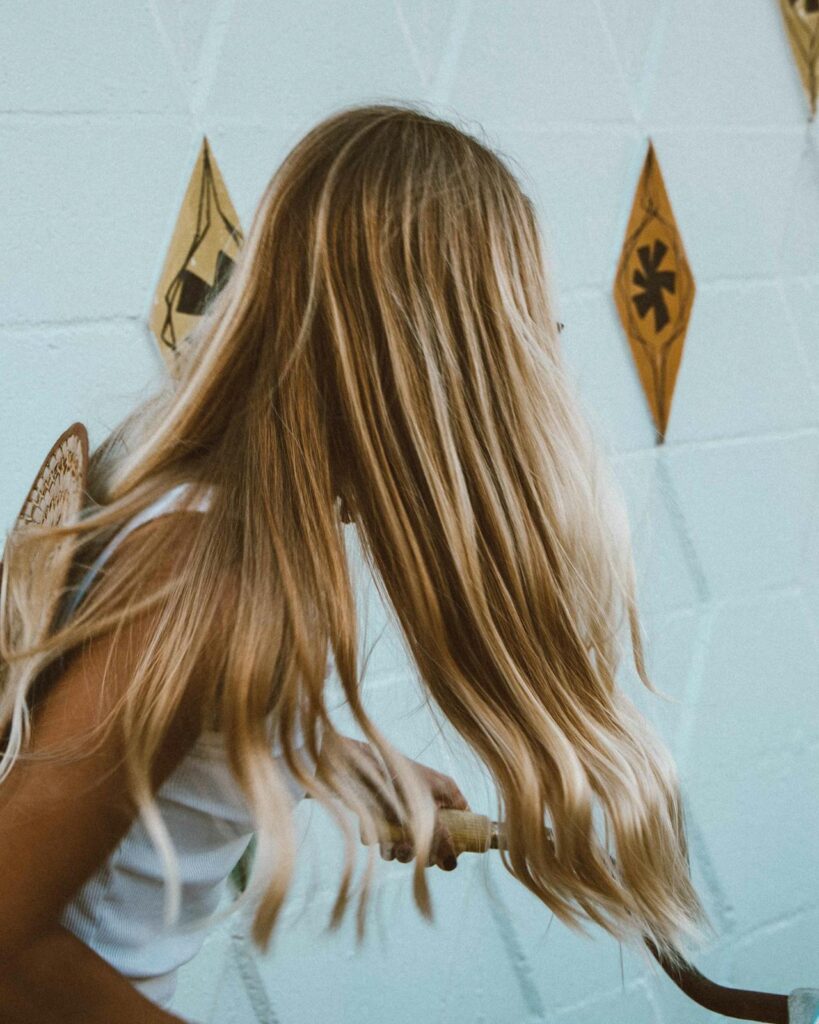
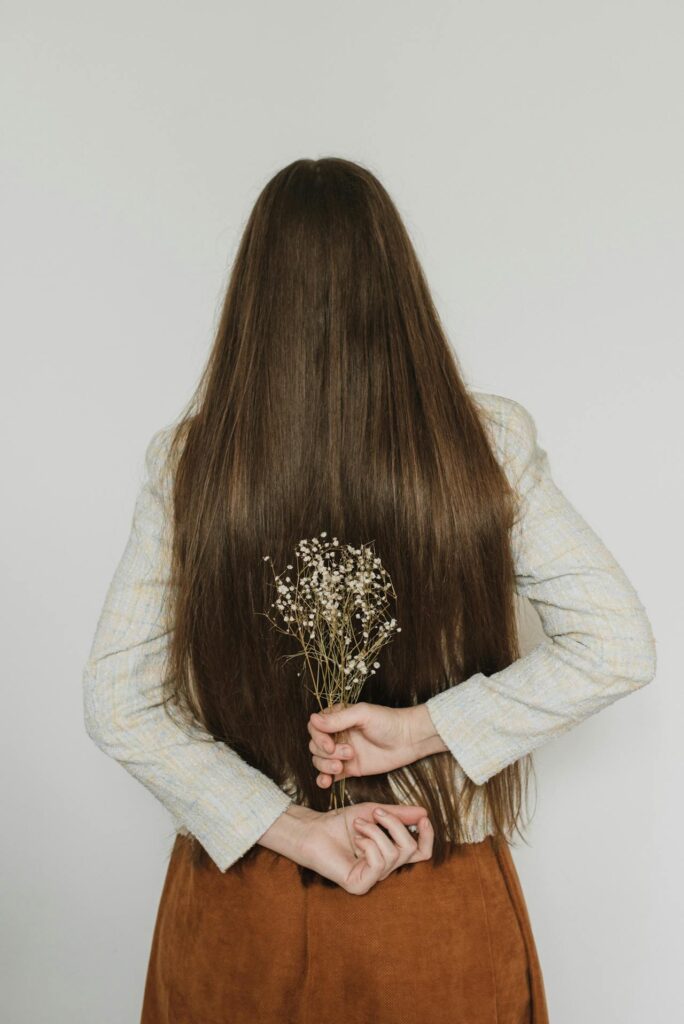
Halo extensions are a single weft of hair attached to a thin, invisible wire that sits on top of your head like a halo. The weft is placed around the crown of your head, and your natural hair is pulled over the top to conceal the wire. This method is quick and easy to apply and remove, making it a great option for those who want a temporary solution. Halo extensions are available in various lengths, colours, and textures, allowing you to customise your look.
Luxy Hair has built a strong reputation in this space, with reviews of their Halo extensions praising how naturally they blended, with the clear wire becoming completely invisible after brushing
Pros
- The most beginner-friendly method available – no clips, braids, or adhesives, just place and go – and comfortable enough for all-day wear with no pulling or pinching
- Because nothing is attached directly to your natural hair, there is virtually no risk of breakage or damage; typically affordable, and a good-quality halo can last a year or more with proper care.
Cons
- The wire must be fully concealed by your natural hair, making updos, high ponytails, and buns difficult to pull off convincingly – and those with very fine hair may struggle to provide enough coverage.
- Without clips or fastenings the wire can shift during vigorous movement, and the single-weft format makes it harder to build volume in specific areas or customise placement.
Maintenance
- Brush gently from the ends upward and always detangle before washing; use a sulphate-free shampoo, apply conditioner from mid-length to ends only, then air dry flat on a surface to maintain the weft’s shape.
- Limit heat styling and always apply a heat protectant first; check the wire periodically for kinking or warping and reshape gently if needed to ensure it continues to sit flush.
- Remove before bed to protect both the wire’s shape and the hair’s condition, and treat to a hydrating conditioning mask every few weeks to restore softness and shine with regular use.
Sew-In (Weave) Hair Extensions
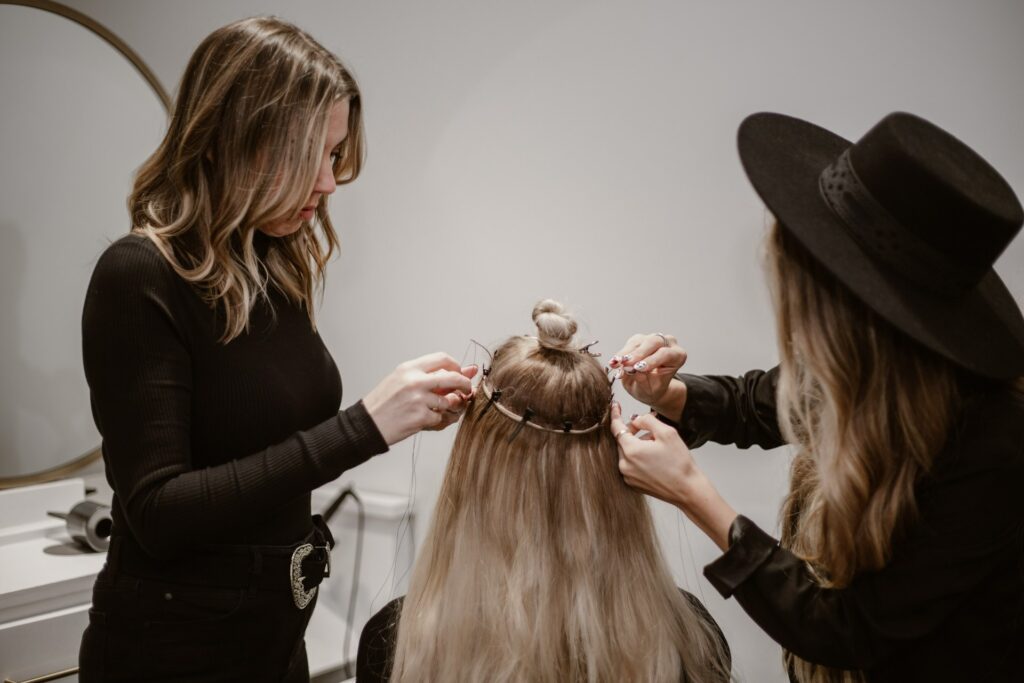
Sew-in extensions involve braiding your natural hair into cornrows and then sewing the wefts of hair onto the braids using a needle and thread. This method is commonly used for those with thicker hair, as the braids provide a strong base for the extensions. Sew-in extensions can be made from human or synthetic hair and are available in various lengths, colours, and textures. This type of extension is ideal for those looking for a long-lasting and secure option.
Pros
- Highly secure and long-lasting – typically up to eight weeks – adding significant volume and blending naturally when applied correctly; can also function as a protective style, shielding natural hair from daily manipulation and environmental damage
- No glue or chemicals are applied directly to the hair, reducing the risk of product-related damage.
Cons
- The braiding and sewing process is time-consuming and requires professional application and removal, making it one of the more expensive options; repeated tight braiding can lead to traction alopecia over time.
- The cornrow base limits scalp access, increasing the risk of build-up and irritation, and the method is not suitable for those with finer or thinner hair who may lack the density to support the wefts securely.

Maintenance
- Use a nozzle applicator bottle to direct diluted sulphate-free shampoo directly to the scalp between the braids rather than scrubbing the wefts; always dry both the scalp and wefts thoroughly afterwards to prevent mildew, odour, or irritation.
- Apply a lightweight oil such as jojoba or tea tree between the braids regularly to keep the scalp nourished; avoid heavy creams and styling products that can cause build-up around the braids.
- Wrap hair in a silk or satin scarf at night to reduce friction and protect both the extensions and your natural hair; remove and reinstall after the recommended six to eight weeks, and always visit your stylist for removal — never attempt to cut or pull out the thread yourself.
The Bottom Line
Choosing the right type of hair extensions depends on your lifestyle, budget, and the look you want to achieve. Whether you opt for the convenience of clip-ins or the long-lasting nature of fusion extensions, proper maintenance is key to keeping your extensions looking their best. Always consult with a professional stylist to ensure the best results and minimise the risk of damage to your natural hair.