There’s a particular cruelty to the fact that our homes, ostensibly our sanctuaries, can operate as low-level stress generators without us even noticing. We blame work, relationships, the news. Rarely do we suspect the ceiling, the wall colour, or that pile of magazines we’ve been meaning to sort through. Yet these seemingly innocuous elements affect our bodies in ways we don’t consciously register: raising cortisol, disrupting sleep, keeping us in a state of low-grade alertness even when we’re trying to relax.
The good news? Identifying these hidden culprits doesn’t require hiring a specialist, and fixing them rarely demands a gut renovation. Some of the most effective interventions are remarkably simple and refreshingly unexpected.
Look Up
You probably haven’t given much thought to your ceiling lately, but your brain certainly has. Research from the University of Minnesota found that ceiling height genuinely affects how we think, with higher ceilings prompting more abstract, expansive cognition. The phenomenon, known as the Cathedral Effect, explains why entering a grand building can produce that sudden sense of possibility.
The sweet spot appears to be around three metres for creative thinking, though lower ceilings actually benefit focused, detail-oriented work. That cramped home office might be inadvertently helping you concentrate on spreadsheets, even if it’s less conducive to big-picture thinking. The lesson isn’t to raise your ceilings, but to match activities to spaces: brainstorm in the living room, do your taxes in the box room.

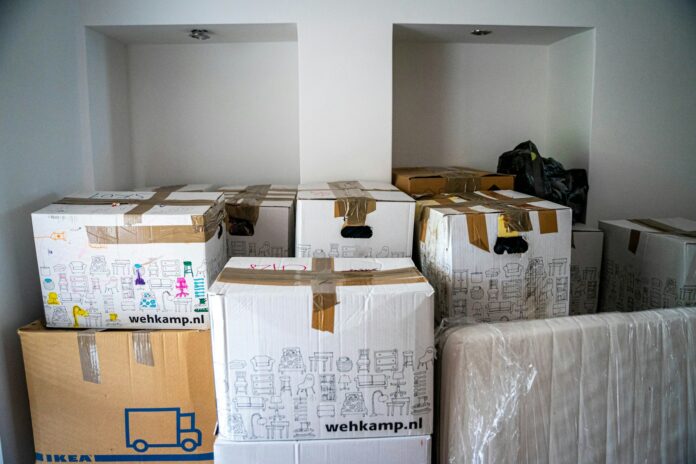
The Clutter Problem
Perhaps no interior factor has been more thoroughly linked to stress than the stuff we accumulate. A UCLA study of dual-income couples found that those who described their homes as cluttered or full of unfinished projects had disrupted cortisol patterns throughout the day, the kind of hormonal profile associated with chronic stress and poorer health outcomes.
The mechanism is insidious. Every unread book, unsorted pile, and abandoned project demands a slice of cognitive bandwidth. The brain registers visual chaos as unfinished business, triggering a persistent low-grade alarm. It’s not about tidiness for its own sake; it’s about cognitive load. Your brain literally cannot relax when surrounded by reminders of things left undone.
The fix needn’t be dramatic. Start with surfaces: clear your bedside table of everything except what you actually use before sleep. Contain visual noise in closed storage where possible. And resist the urge to create ‘doom piles’ of items awaiting decisions; your cortisol doesn’t care that you’ve tidied them into a neat stack.
Read: How decluttering can improve your life
The Nature Deficit
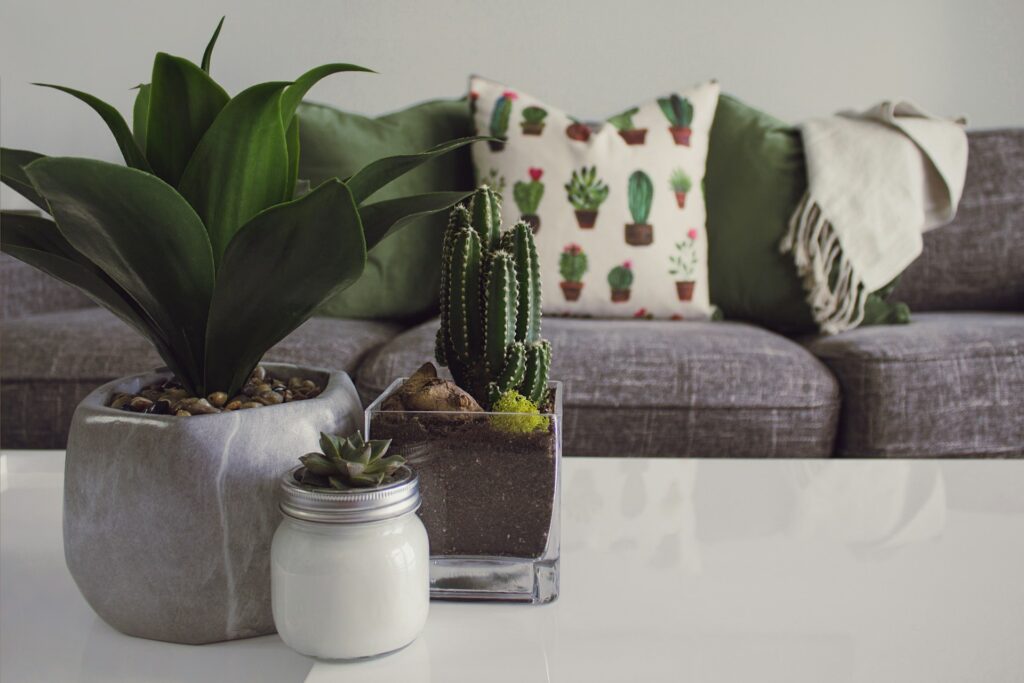
The evidence for biophilic design has moved well beyond intuition. Studies using virtual reality have found that people recover from stress significantly faster in rooms containing plants, nature views, or even green-toned décor. The effects aren’t subtle; physiological changes begin within the first few minutes of exposure.
This builds on the famous 1984 study by Roger Ulrich comparing surgical patients: those with views of trees required less pain medication and left hospital sooner than those facing a brick wall. A recent Texas A&M study confirmed that indoor plants had the highest utility among room attributes for promoting both physical relaxation and mental clarity, followed by visible greenery through windows.
For homes without garden views, the applications are straightforward. A few well-placed houseplants, green textiles, or nature photography can provide measurable benefit. Even a single potted fern on your desk counts. If you’re historically terrible with plants, start with something forgiving like a pothos or snake plant; the stress-reduction benefits aren’t contingent on horticultural excellence.

What You Can’t See (But Can Hear)
Noise is the invisible pollutant of modern homes. Research published in the Journal of Exposure Science & Environmental Epidemiology links chronic noise exposure to elevated stress hormones, neuroinflammation, and impaired sleep. But volume alone isn’t the issue. What matters equally is predictability.
Our nervous systems are remarkably adaptable to consistent background sound, which is why people can sleep peacefully beside busy roads or ticking clocks. It’s the unexpected sounds that spike our cortisol: a door slamming, a car alarm, a notification ping at odd hours.
Indeed, research on emergency responders found that night-time alarms caused significantly greater stress responses than identical daytime sounds, precisely because our sleeping brains are especially vulnerable to the unpredictable.
This principle extends throughout the home. The refrigerator’s hum becomes invisible; the intermittent rattle of a loose component does not. A dripping tap, an inconsistently creaking floorboard, the irregular ping of a poorly sealed window: these create a background of low-level vigilance that accumulates over time. Addressing sources of sonic unpredictability, whether through repairs, maintenance, or upgrades, removes friction you may not have consciously registered but your nervous system certainly has.
Interestingly, this is one area where safety and serenity align perfectly. Well-maintained home fire alarm systems contribute to both: providing the deep psychological reassurance that comes from knowing your household is protected, while operating silently in the background until genuinely needed. That peace of mind, the knowledge that something is quietly taking care of you, is itself a form of stress reduction.
On the positive side, a 2025 scoping review found that self-selected music and nature sounds reduce cortisol, lower blood pressure, and improve heart rate variability. A carefully curated playlist isn’t indulgence; it’s preventive medicine.
Read: Innovative soundproofing solutions for your city centre home
A Palette Working Against You
Blue and green tones are genuinely linked to lower cortisol levels, improved concentration, and reduced anxiety. This isn’t purely cultural association; there appear to be real physiological responses to different wavelengths of light.
Studies have found significant stress reduction in people exposed to blue environments, while green spaces, even indoor ones, speed recovery and boost mood. And the nuance is that colour effects are context-dependent. Red and orange aren’t inherently stressful; they simply serve different cognitive functions, promoting alertness and energy. Reserve them for spaces where you want to feel activated (a home gym, perhaps) and save cooler tones for bedrooms and relaxation areas.
If a full repaint feels excessive, soft furnishings offer an easier entry point: a teal throw, sage cushions, or blue bedding can shift the chromatic balance of a room without commitment.
What’s Missing From The Air
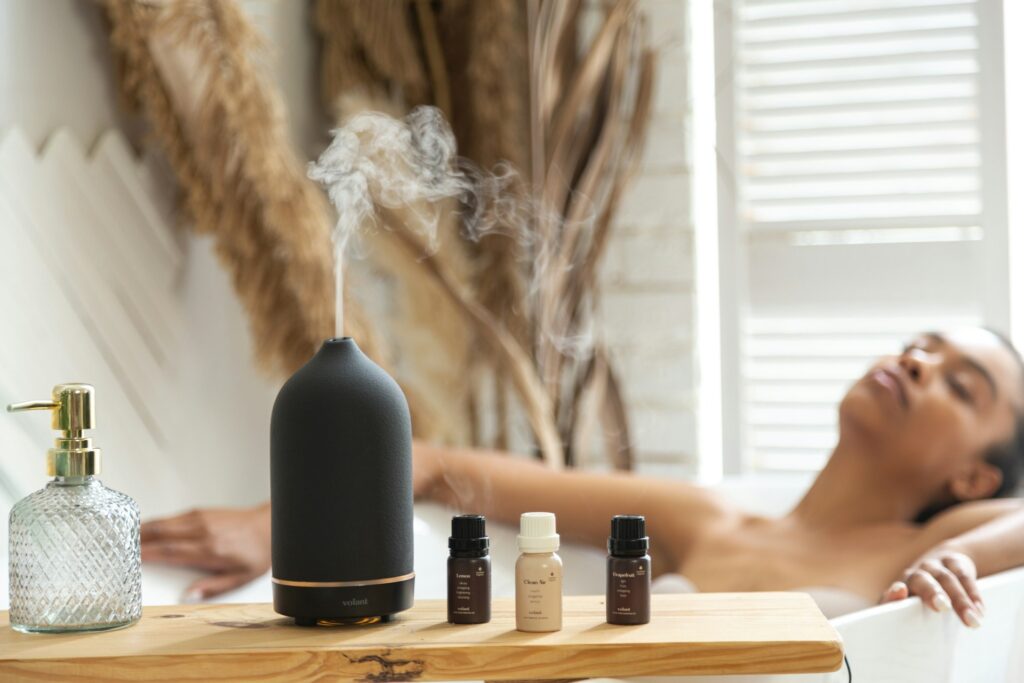
Aromatherapy has suffered from its association with wellness trends and dubious health claims, but the neuroscience behind certain scents is increasingly solid. Lavender, in particular, has been shown in multiple studies to reduce anxiety through specific effects on brain chemistry, inhibiting certain calcium channels and increasing parasympathetic nervous system activity.
You needn’t invest in expensive diffusers. Research suggests even a few minutes of inhalation is effective, meaning dried lavender in a bowl by your bed, a few drops of essential oil on your pillow, or fresh stems in a bedside vase can deliver genuine benefits. If lavender isn’t to your taste, chamomile and bergamot show similar promise in early research.
Read: The quintessential guide to relaxing aromas for every room in your home
Who’s In Charge Here?
Perhaps the most profound hidden stressor concerns something less tangible than paint colours or pot plants: agency. Feeling in control of your environment has been shown to buffer against stress, while perceived helplessness amplifies it. One major study found that autonomy predicted wellbeing more strongly than wealth across 63 different societies.
This has surprising implications for design. Spaces that feel oppressive or impossible to modify erode our sense of control. Conversely, being able to adjust your environment, whether that’s dimming lights, opening windows, rearranging furniture, or simply having designated spots for your belongings, reinforces the agency that protects against anxiety. A perfectly designed space you can’t personalise may ultimately prove less calming than a modest one you’ve shaped yourself.
The practical application is to build adjustability into your home. Layered lighting you can dim or brighten. Furniture that can be rearranged. Storage systems that flex with your needs. The goal isn’t a static ‘finished’ interior but a responsive environment that bends to your life rather than demanding you bend to it.
The Bottom Line
Once you start noticing these hidden stressors, you can’t unsee them. But that’s precisely the point. A home that addresses natural light, greenery, clutter, colour, scent, sound, and personal agency doesn’t just look better; it actively supports your nervous system, lowering baseline cortisol and providing the restorative environment our increasingly frantic lives demand.
Most of these fixes require neither significant expense nor professional help. They simply require taking seriously something we’ve long intuited: our surroundings shape our inner lives in ways both subtle and profound. The research has finally caught up with what poets and decorators have always known; that our homes are not merely containers for our lives but active participants in our wellbeing.