You already know that coffee, red wine and curry powder can leave their mark on your enamel. We’ve covered the usual suspects before, and the advice remains sound: rinse, brush and watch your tannin intake. But what about the things that fly under the radar? The products and habits you assume are helping your teeth – or at least doing no harm – that are, in fact, gradually dulling your smile.
From the mouthwash beside your sink to the swimming pool you use every week, there’s a whole category of staining culprits that rarely get the attention they deserve. With the help of Londonderry dentist Claire Hughes, here are the genuinely surprising things discolouring your teeth – and an honest look at what the science says about fixing the damage.
Mouthwash
This is the big one. The product you’re using specifically to improve your oral health could be the very thing turning your teeth brown.
Prescription mouthwashes containing chlorhexidine gluconate – commonly given after dental procedures or to treat gum disease – are well-documented stainers. The leading theory is that chlorhexidine binds to dietary chromogens (colour compounds found in tea, coffee and wine), leaving brownish deposits along the gumline. A Cochrane review of 51 randomised controlled trials involving over 5,000 participants confirmed that use beyond four weeks leads to significant staining and tartar build-up. In the UK, chlorhexidine mouthwash is licensed for a maximum of 30 days for this reason.
Over-the-counter mouthwashes containing cetylpyridinium chloride (CPC) can produce a similar effect. The CPC kills bacteria, which then decompose and reattach to the tooth surface as brown residue – around 3% of regular users are thought to be affected. And if your mouthwash contains a coloured dye, those pigments can leave their own mark on enamel too.
White Wine
Red wine’s reputation as a stainer is well established, but its paler sibling tends to escape blame entirely. That’s a mistake.
White wine is actually more acidic than red, and that acidity etches the enamel surface, creating tiny pockets where colour compounds from other foods and drinks can settle. A study from NYU College of Dentistry, reported in the British Dental Journal, found that teeth soaked in white wine and then exposed to black tea developed significantly darker stains than teeth soaked in water first. If your evening involves a glass of sauvignon blanc followed by a cuppa, that combination could be doing more damage than you’d think.
Balsamic Vinegar
Your lunchtime salad might be working against your beautiful, bright, white smile. Balsamic vinegar combines dark pigmentation with a sticky, acidic consistency that clings to enamel long after you’ve finished eating. The acid weakens the surface while the pigments settle into the roughened texture it leaves behind. Crunchy lettuce or raw vegetables can help scrub away residue as you eat, and rinsing with water afterwards is a sensible precaution.
Swimming Pools
Regular swimmers may have noticed a brownish tinge developing on their teeth and assumed it was down to diet. Far more likely, it’s the pool.
Chlorinated water that’s either too alkaline or too acidic can cause what dentists call swimmer’s calculus – a yellowing or browning brought about by chemical deposits and the accelerated breakdown of salivary proteins. A Spanish study of 404 subjects found that 60.2% of competitive swimmers showed dental staining, compared with just 12.9% of non-swimming sportspeople, even though all pools met standard sanitisation guidelines. If you swim frequently, brushing before you get in and rinsing with fresh water afterwards are both habits worth building in.
Vaping
E-cigarettes are often positioned as a cleaner alternative to smoking, and for tar-related staining, that’s broadly true. But vaping creates its own problems. Nicotine turns yellow when exposed to oxygen, producing gradual discolouration over months. Propylene glycol – a common carrier in vape liquids – dries out the mouth, reducing the saliva that naturally rinses staining compounds away. And coloured vape liquids can deposit pigment on teeth in the same way a brightly coloured sweet would.
Iron Supplements & Certain Medications
If you take a daily iron supplement – particularly in liquid form – you may be staining your teeth a dark brown or even greenish-black. Iron adheres to the pits and fissures in enamel, and dentists consider these stains particularly stubborn. Using a straw for liquid supplements, swallowing tablets whole and rinsing your mouth immediately afterwards can all help.
Tetracycline-class antibiotics (including minocycline and doxycycline) can bind to calcium during tooth development, creating permanent discolouration – primarily a risk for children under eight and during pregnancy, though long-term minocycline use in adults affects 3–6% of patients. Antihistamines and some blood pressure medications contribute indirectly by drying out the mouth.
Too Much Fluoride
Excessive fluoride exposure during childhood – from swallowing toothpaste, overuse of supplements or high-fluoride drinking water – can cause dental fluorosis, which shows up as white spots, brown patches or pitting on the enamel. This is a form of intrinsic staining, sitting beneath the tooth surface where standard whitening toothpaste can’t reach it. Worth bearing in mind if you have young children who tend to eat their toothpaste rather than spit it out.
What Does & Doesn’t Work To Fix It
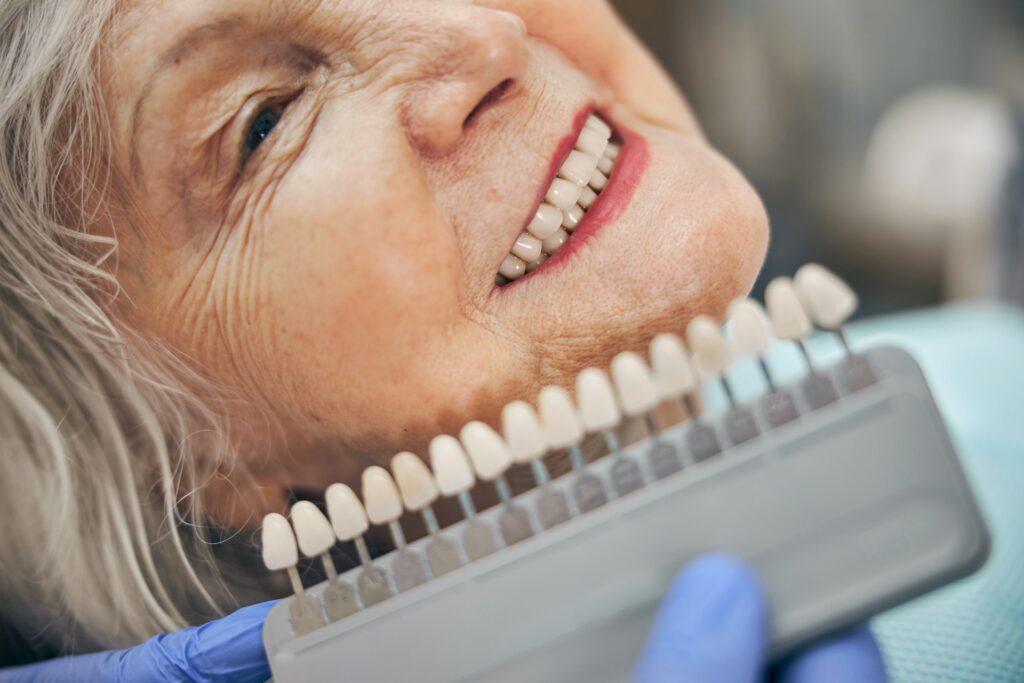
In the UK, teeth whitening is cosmetic and isn’t available on the NHS, so you’ll need to go private. Professional in-office whitening using high-concentration hydrogen peroxide remains the most effective option, typically lightening teeth by several shades in a single session and lasting up to three years. Costs generally range from £200 to £600.
Dentist-prescribed at-home kits using custom trays are a more affordable middle ground, with clinical evidence suggesting comparable long-term results. OTC whitening strips can lighten teeth by a shade or two, though a systematic review noted that the overall evidence for their effectiveness remains limited.
As for trending alternatives, the American Dental Association states there is insufficient evidence to support activated charcoal toothpaste for whitening – and research shows it can increase enamel roughness, potentially making teeth more vulnerable to staining. Purple toothpaste creates a temporary optical illusion using blue pigment but produces no actual colour change. Oil pulling has no documented whitening effect whatsoever. When it comes to brightening your smile, there’s no shortcut around peroxide-based chemistry.
The Bottom Line
The pattern across all these surprising stainers is the same: acid weakens enamel, and weakened enamel absorbs colour. Whether that acid comes from white wine, balsamic vinegar, pool chemicals or the propylene glycol in your vape, the result is enamel that’s more porous and more susceptible to discolouration. Drinking water between acidic exposures, waiting at least 30 minutes before brushing and keeping up with regular dental check-ups are the simplest defences you have.
As for getting the brightness back, skip the charcoal and the social media fads – a conversation with your dentist remains the most reliable route to results that actually last.