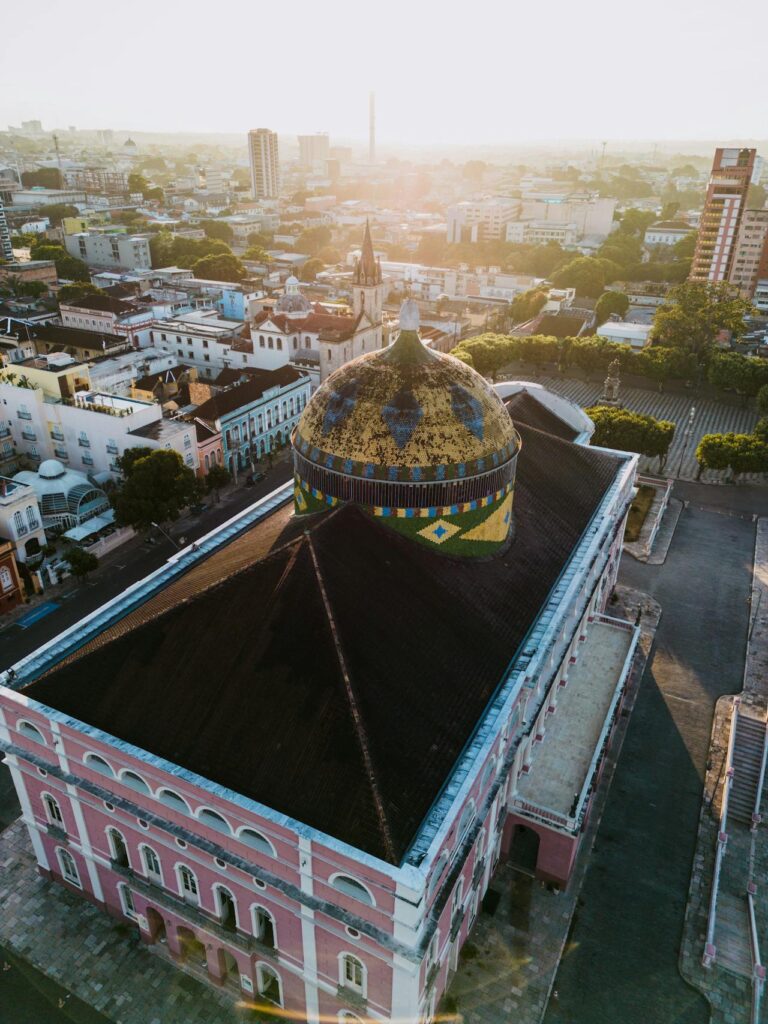
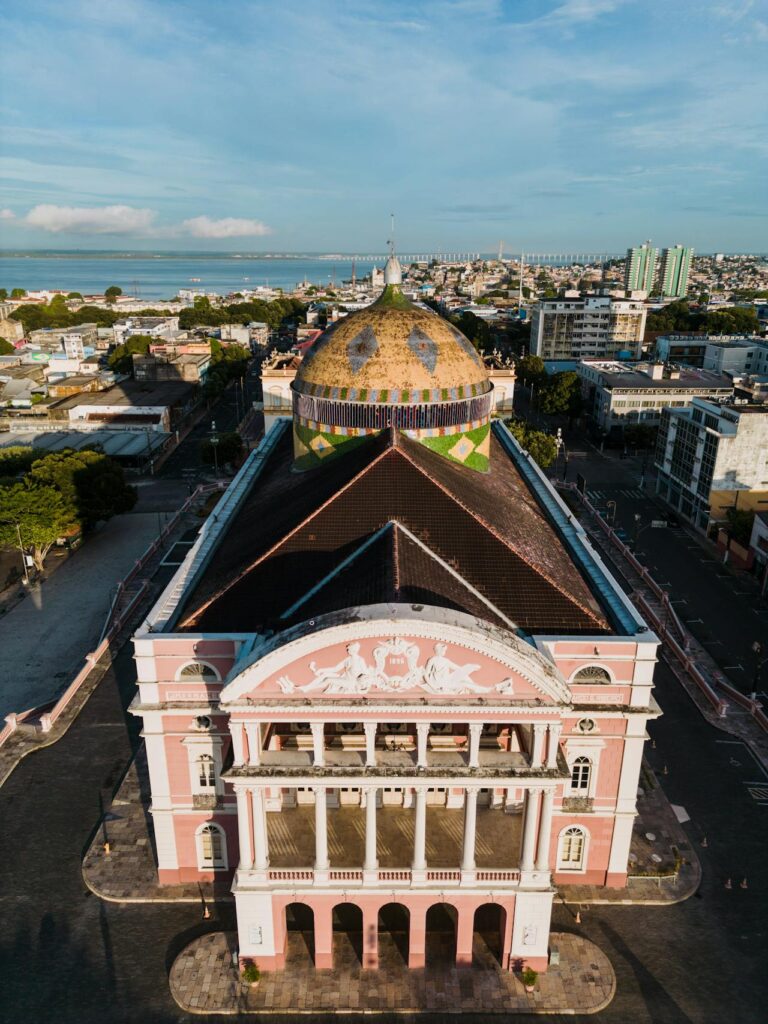
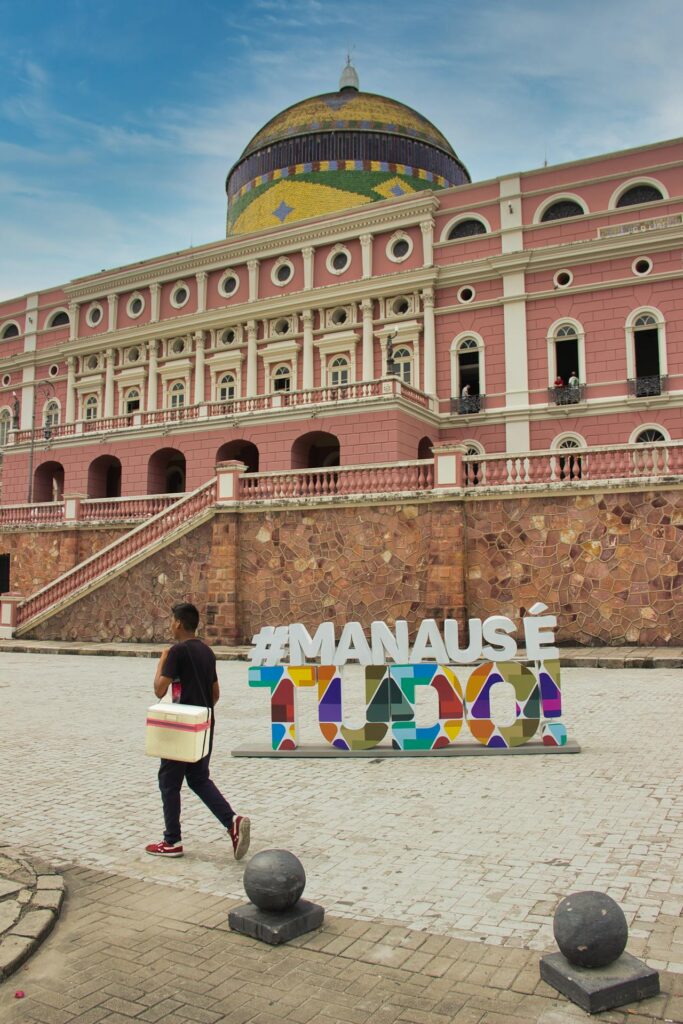
A thousand miles from the coast, in the heart of the world’s largest rainforest, stands an opera house topped with a dome of 36,000 ceramic tiles in the colours of the Brazilian flag. Built in 1896 at the height of the rubber boom, when Manaus briefly rivalled Paris for extravagance, the Teatro Amazonas remains the most improbable cultural monument in South America.
British football fans may wince at the name: this was where England’s 2014 World Cup campaign began to unravel, with Gerrard and Sterling cramping up in the tropical heat as Balotelli’s header sealed a 2-1 defeat. Roy Hodgson had called it ‘the place to avoid’ before the draw, prompting the mayor to declare England unwelcome. As somewhere to play ninety minutes of international football, he may have had a point. As somewhere to spend forty-eight hours exploring, the jungle city makes a compelling case for itself.
The city sprawls across a peninsula where the Rio Negro meets the coffee-coloured Rio Solimões to form the Amazon proper. This confluence, known as the Meeting of the Waters, is the natural phenomenon that draws most visitors, but Manaus rewards those who stay longer than the standard boat trip.
Rewards them with a fine meal, in part. A serious food scene has emerged in recent years, led by chefs like Débora Shornik and Felipe Schaedler, who are doing inventive things with pirarucu, tucupi, and the vast Amazonian larder. Much of their produce comes from the Mercado Adolpho Lisboa, a nineteenth-century iron-framed market where counters overflow with river fish the size of small children and fruits that don’t have English names. Combined with the sheer improbability of a two-million-strong metropolis surrounded by nothing but jungle, Manaus offers something genuinely unlike anywhere else.
Two days allows time for both the city’s rubber-era architecture and a taste of the river. On day one we’ll explore the historic centre, from the opera house to those market halls modelled on Les Halles. Day two sees us head out onto the water for the Meeting of the Waters, returning via Ponta Negra’s riverside promenade. Note that the Teatro Amazonas and several top restaurants close on Mondays, so plan accordingly.
Day 1: Rubber Barons & River Fish
Morning: The Opera House & Largo De São Sebastião
Start at the Teatro Amazonas before the heat becomes serious. Guided tours run from 9am Tuesday to Saturday, with shorter hours on Sundays (9am-1pm). The theatre is closed on Mondays. Entry costs R$20, with half-price for students, teachers, and over-60s.
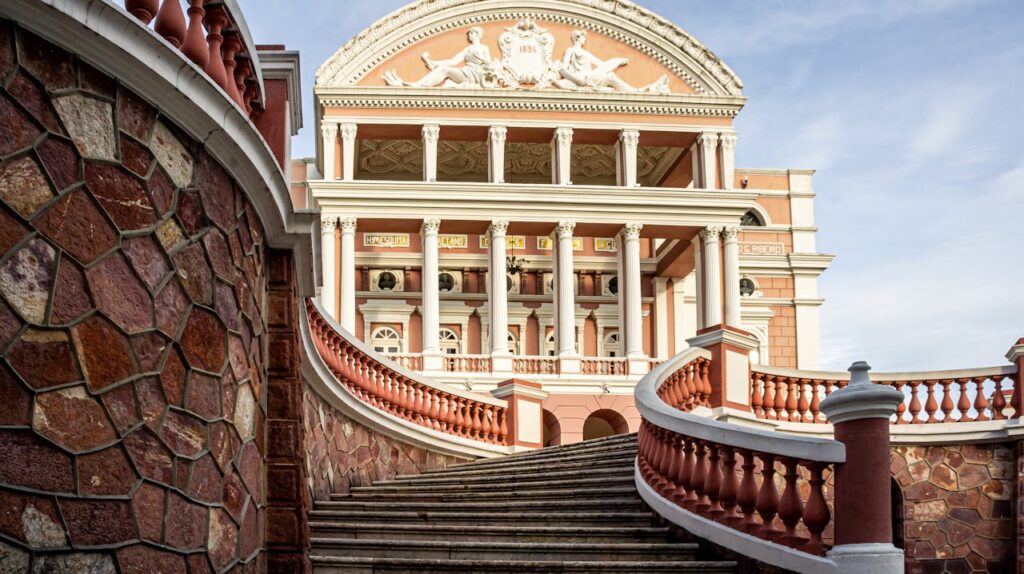
The interior rewards the visit: Carrara marble shipped from Italy, Murano chandeliers from Venice, wrought-iron staircases from Glasgow. The painted dome recreates the view from beneath the Eiffel Tower. That such a thing exists a thousand miles up the Amazon says everything about what rubber money could buy in the 1890s.
The surrounding Largo de São Sebastião is the city’s most handsome square, paved in a wave pattern of black and white Portuguese stones said to represent the meeting of the two rivers. The church of São Sebastião anchors one end, with cafés and restored colonial buildings lining the rest. Allow an hour for the theatre tour and another to wander the square and surrounding streets.
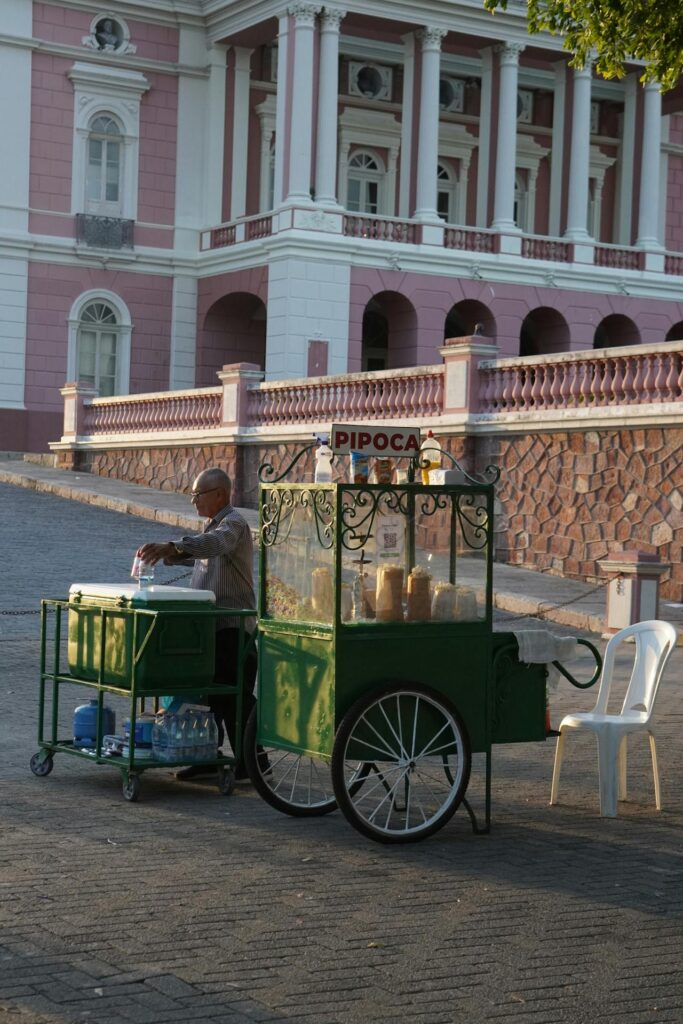
Lunch: Caxiri
Book ahead for Caxiri, which occupies the top floor of a building overlooking the Teatro Amazonas. Chef Débora Shornik moved from São Paulo in 2012, fell in love with the Amazonian larder, and opened this restaurant in 2016.
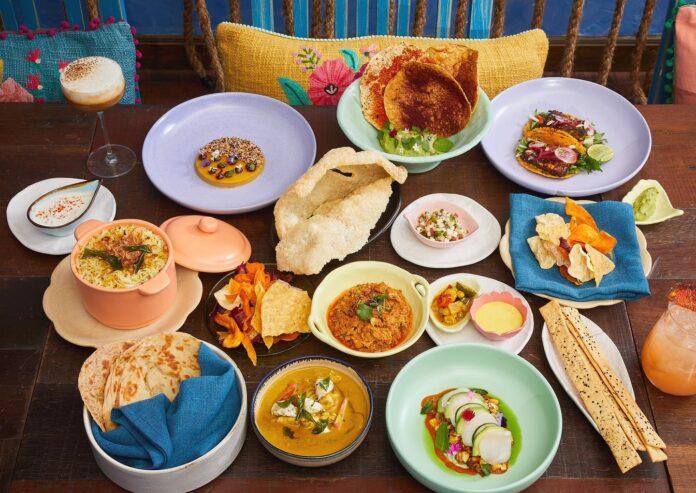
The menu changes with the seasons but always centres on river fish, indigenous cooking techniques, and ingredients like tucupi, a fermented cassava sauce with flavours somewhere between citrus, chilli, and umami. The fried river sardines are a signature, and the grilled tambaqui with uarini flour is the sort of dish you find yourself thinking about weeks later. The restaurant takes its name from a traditional fermented drink made by indigenous communities, and that sense of rootedness runs through everything here.
Open for lunch Tuesday to Sunday, dinner Tuesday to Saturday; closed Mondays.
Afternoon: The Market & The Port
Walk downhill from the historic centre towards the river to reach the Mercado Adolpho Lisboa, the market mentioned earlier. Inaugurated in 1882 and modelled on Paris’ Les Halles, the building was constructed with iron shipped from Europe.
The architecture alone warrants a visit, but the real draw is the fish market in the side building. Arrive any time before mid-afternoon for counters piled with species you’ve perhaps never seen in the flesh: tambaqui, tucunaré (peacock bass), the vast pirarucu that can reach two metres in length. The main hall has been somewhat taken over by souvenir stalls, but you’ll still find vendors selling tucupi, farinha (toasted cassava flour), Brazil nuts, and regional spices. Pick up a fresh açaí from one of the small eateries inside before heading out.
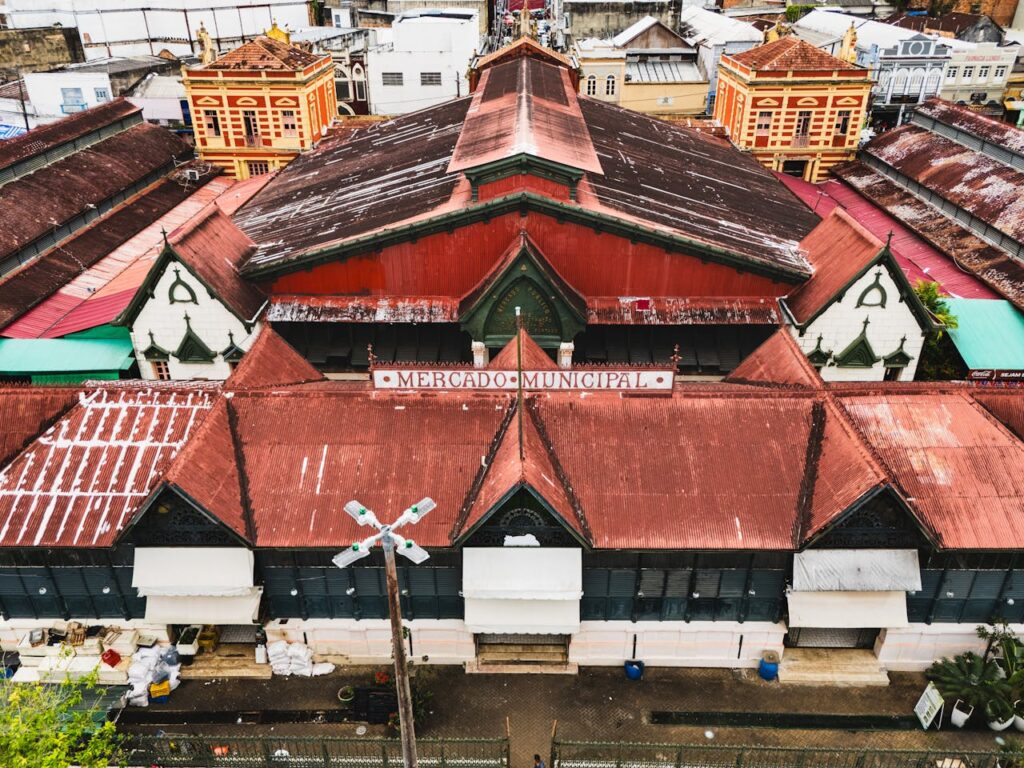
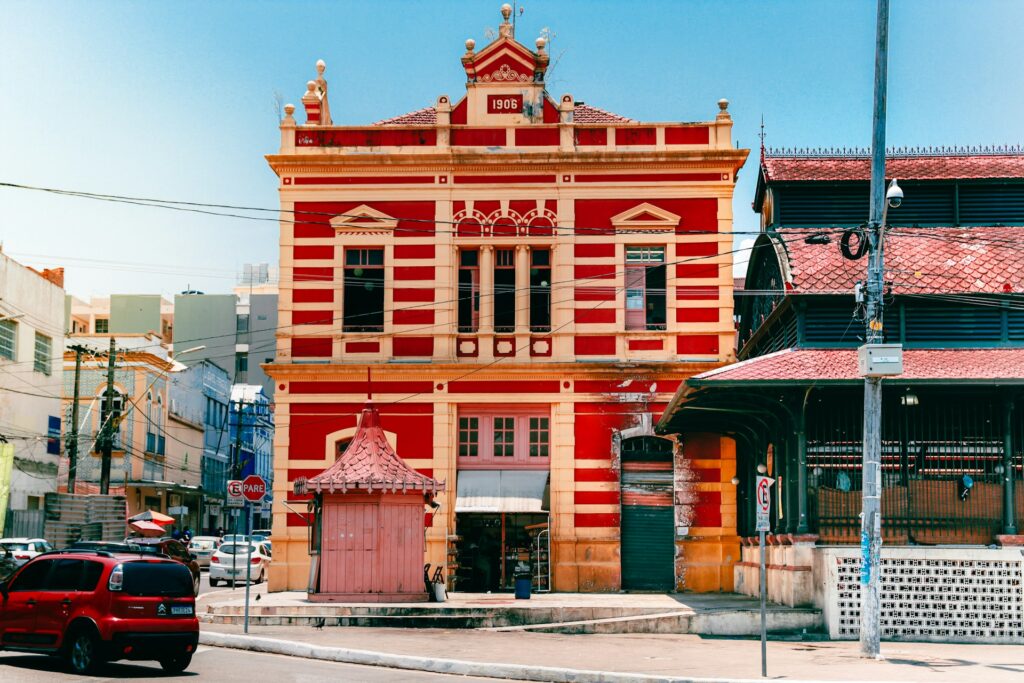
From the market, it’s a short walk to the floating port, an engineering marvel built in 1902 to accommodate the river’s dramatic seasonal rise and fall of up to fifteen metres. The port area gives a sense of how Manaus functions as the Amazon’s commercial hub, with cargo boats loading provisions for communities days upriver.
Evening: Banzeiro
Dinner at Banzeiro, in the Nossa Senhora das Graças neighbourhood about fifteen minutes by taxi from the historic centre. If Caxiri represents the contemporary end of Amazonian cooking, Banzeiro is where chef Felipe Schaedler has spent years codifying the region’s culinary traditions.
He uses ancestral techniques, cooking over fire and embers, to transform local ingredients into something both rooted and refined. The crunchy tambaqui ribs are a house speciality, and the smoked pirarucu is extraordinary. The room has the feel of a proper occasion, with vibrant photography on the walls and a canoe suspended from the ceiling. Book ahead, particularly at weekends.
The cocktail programme uses Amazonian fruits and makes a strong case for starting (and, indeed, ending) with a drink. Saúde!
Day 2: On The Water
Morning: The Meeting Of The Waters
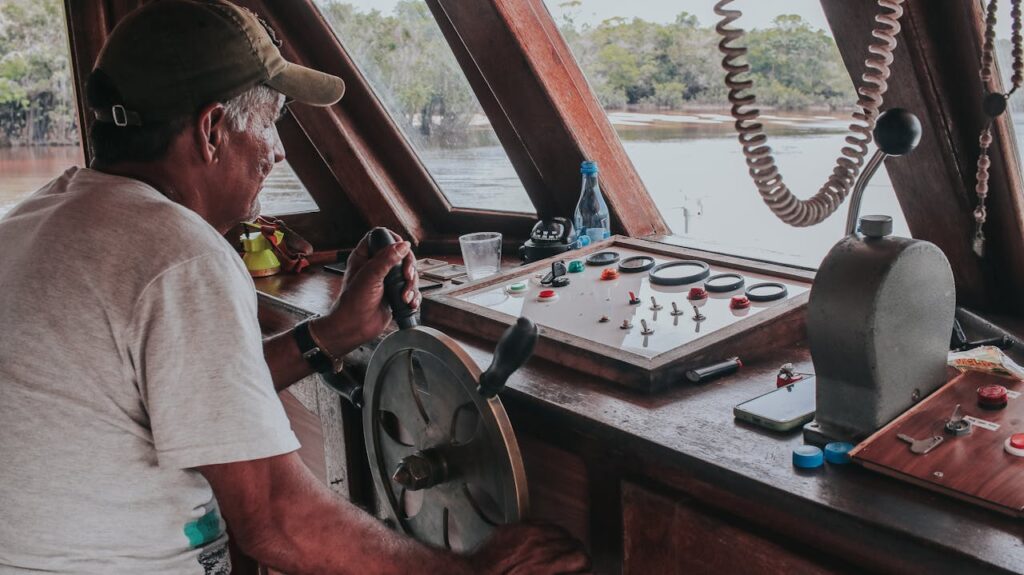
Most tours depart between 8am and 9am from the port area. The meeting itself lies about twenty kilometres downstream from the city, where the black, acidic waters of the Rio Negro collide with the sandy, sediment-heavy Solimões. The rivers run side by side for several kilometres without mixing, creating a visible line between the two colours that has to be seen to be believed. The difference in temperature is tangible if you put your hand over the side of the boat.
Book through your hotel or one of the agencies around the Teatro Amazonas. Full-day tours are the better option, typically returning around 2pm or 3pm. A Brazil travel eSIM is useful for coordinating pickup times and checking Google Maps when you’re back on land, as mobile signal on the river itself is patchy at best.
Lunch: On The River
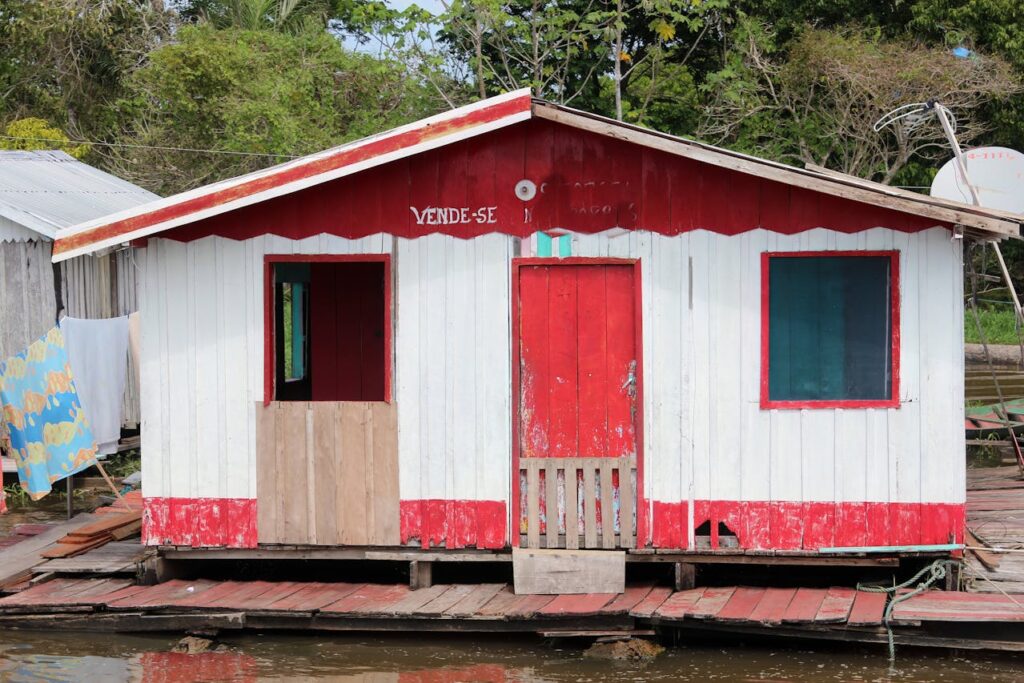
Full-day tours include lunch at a floating restaurant or riverside spot, which is part of the experience. Expect simply prepared fish, rice, beans, and farofa, eaten while bobbing gently on the water. Most tours also include a stop at floating houses where you can see pirarucu up close, and a visit to an indigenous community.
Afternoon: Ponta Negra Beach
Return to Manaus in time for a late afternoon at Ponta Negra, the city’s urban beach on the Rio Negro. The sand is fine, the water warm and inky-black from tannins leached from the forest upstream.
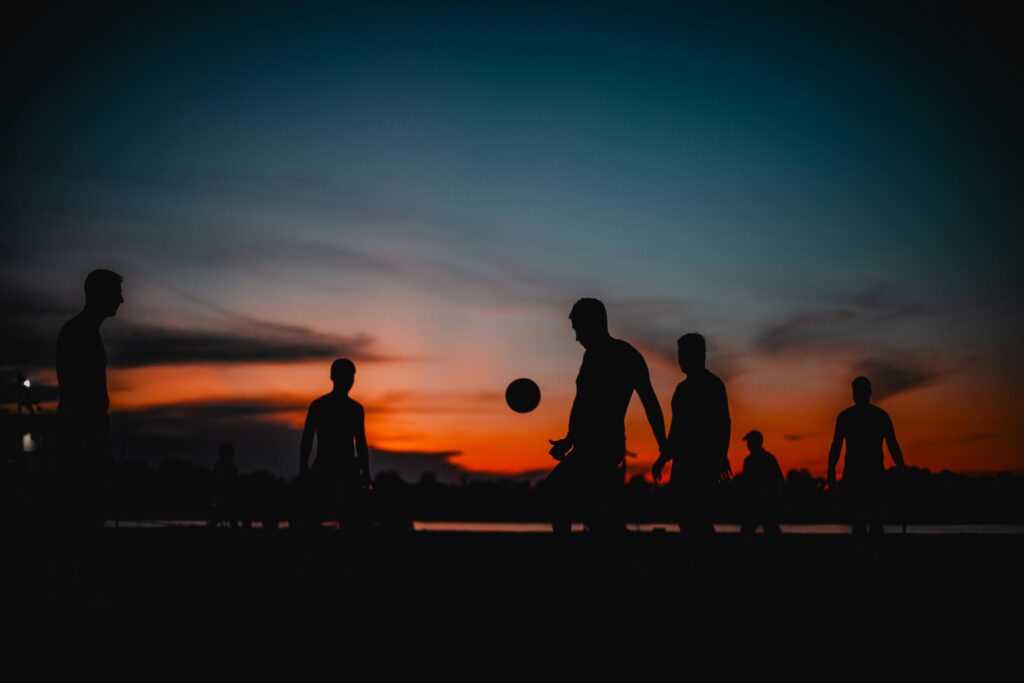
This is where Manaus comes to unwind: there’s a long promenade with kiosks selling açaí and grilled fish, sports courts, an amphitheatre for concerts, and views across the river that turn spectacular at sunset. The beach sits in the city’s most upscale neighbourhood, about thirty minutes by taxi from the centre.
Evening: Tambaqui De Banda
After the fine dining of day one, a more casual final evening feels right. Head back to the historic centre for dinner at Tambaqui de Banda, on Rua José Clemente just off the Largo de São Sebastião. This is where locals come for no-frills grilled river fish, served with farofa, vinagrete, and rice.
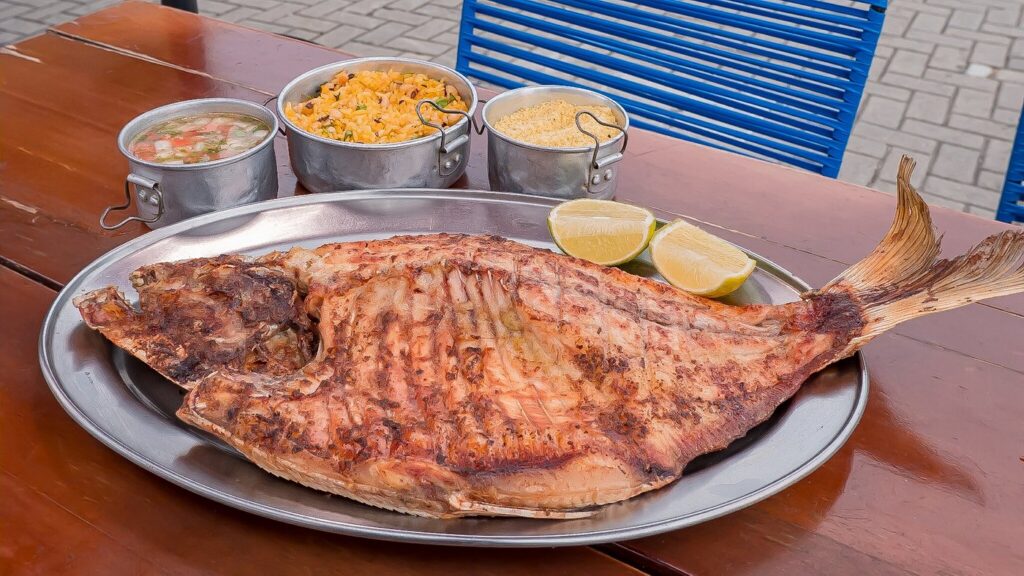
The namesake dish is tambaqui de banda: half a fish, deboned and grilled over coals until the skin crisps. It’s simple, generous, and exactly what you want after a day on the water. Grab a table on the terrace with views of the opera house lit up for the evening.
Where To Stay
Hotel Villa Amazônia is the city’s best boutique option, a restored colonial building seventy metres from the Teatro Amazonas with a pool, garden, and the kind of quiet luxury that feels earned after a day in the heat.
Juma Ópera Boutique Hotel & Spa opened in 2020 and occupies historic buildings directly opposite the opera house. The rooftop pool has views of the theatre’s dome and makes for a memorable sundowner spot.
For something simpler, Casa dos Frades sits directly opposite the opera house and offers comfortable rooms at a lower price point.
How To Get There
There are no direct flights from the UK. The most straightforward routing is via Lisbon with TAP Portugal, which operates flights to Manaus from the Portuguese capital. Alternatively, fly to São Paulo or Rio de Janeiro and connect domestically with LATAM, Gol, or Azul. The journey from London takes between fourteen and twenty hours depending on connections.
Eduardo Gomes International Airport lies about fifteen kilometres north of the city centre. Taxis take around twenty minutes to reach the historic centre; confirm the price before departing. Uber operates in Manaus and is often cheaper.
The best time to visit is during the dry season from May to October, when rainfall is less frequent and the rivers are lower, exposing more of the beaches. Temperatures hover between 25°C and 30°C year-round, with humidity that takes some acclimatising.
The Bottom Line
Manaus asks a little more of its visitors than most city breaks. The heat is real, the distances can be substantial, and the jungle setting means things don’t always run to schedule.
But spend forty-eight hours here and you’ll find an opera house that defies logic, a fish market that defies description, and a meeting of rivers that defies physics. It’s one-of-a-kind, and well worth your time.