
How we long for the old days of TV shopping. The paradox of choice didn’t grip us. There was a single choice between colour and monochrome. And the tiny yet weirdly cumbersome box would fit perfectly in the corner of your living room. Cue squinting, having to stand up to change the channel, and fuzzy, interrupted resolution.
Actually, we don’t miss it. TV shopping is one hell of a thrill now, full of exciting jargon like refresh rate and megahertz and choices you never knew you had to make between OLED and LCD. To illuminate and provide greater clarity, here are our 5 tips for choosing the IDEAL TV for you.
DISCOUNTS & DEALS
Let’s start with the most important thing first – budget. How much cash you’re willing to spend will have a big impact on the quality of your TV, make no mistake, but that doesn’t mean you can’t snag a bargain. In fact, major outlets – both online and in store – seem to be in a constant state of discounts and offers, and that competitiveness benefits the consumer hugely.
Therefore, once you’ve settled on a model, it’s prudent to shop around and price compare scrupulously. If that feels like too much effort, then Amazon Prime memberships (of which you can enjoy a free 30 day trial) have price alert features including Lightning Deals, which can represent a significant discount.

CHOOSE YOUR TV SIZE
Some think bigger is better when it comes to TV’s, and that size should be the primary driving force behind your purchase – we don’t. That said, size does matter. And while it depends on personal preference, the wrong size can affect your viewing experience. Go too big and you risk it dominating your living room and actually rendering your tele difficult to watch. Too small and your eyes will be permanently squinting. Striking the right balance is key here.
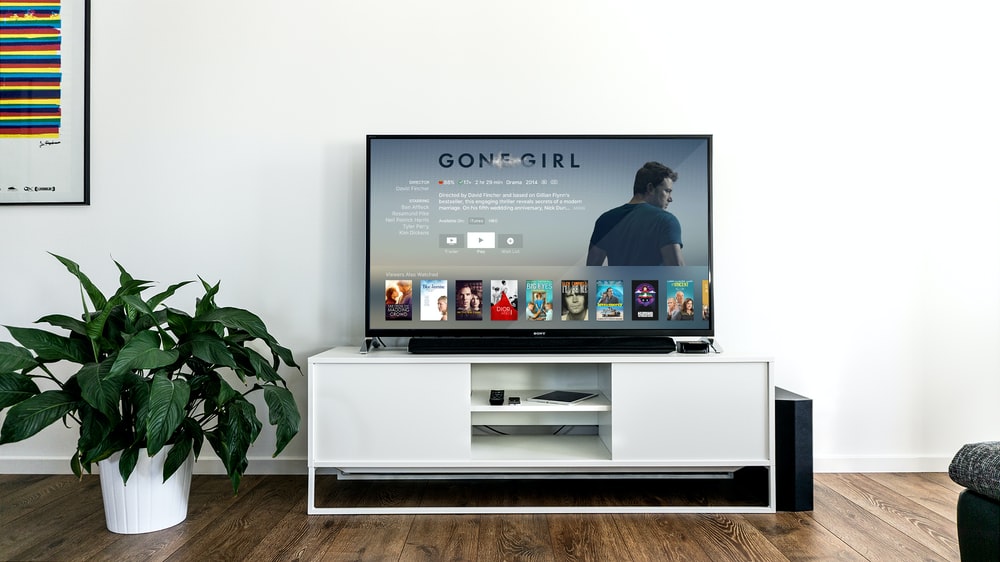
Before you start shopping, you need to take into account the size of your room and choose where you want your TV to live. Measure the height, width and depth of your space, and then measure again.
Don’t leave things up to chance here; ask those searching questions. Are you going to mount the TV, or will it sit on a console? Wherever you place the TV, you need to ensure it’s wide enough to accommodate the stand too. How close are you going to sit to the TV? Will it suffer from reflection issues? Lucikly there are some handy equations you can use to calculate how big your TV should be like this formula.
BE BOLD & RESOLUTE
Just when you’re done considering the size of your TV, the matter of screen resolution is going to present you with another string of numbers and terminology.
As a general rule of thumb, if you really value your viewing experience, don’t go with a screen resolution that’s lower than 4K, and avoid 1080P – while it’s’ sufficient for casual watching, 4k is significantly better in term of picture quality. Indeed, 4k Ultra HD TVs are considered a safe investment and a good compromise in terms of cost versus quality, delivering better clarity than HD, but not being as prohibitively expensive as TVs offering 8K screen resolution.
DON’T FORGET THE REFRESH RATE
Yep, we did warn you that there’s a fair amount of jargon here. The refresh rate refers to the frames of images shown per second. Or, in other words, it’s the number of times per second it refreshes its images. Most movies are filmed 24 frames per second (24Hz), while live TV shows are at 30 or 60.
When it comes to refresh rates, the higher the better – the more the rate, the smoother the picture and the reduced chance of motion blur. When shopping around, look for 60Hz or 120 Hz refresh rate. You’ll also want to watch out for the ‘effective refresh rate’, which means the actual refresh rate (sometimes referred to as the ‘native’ rate) is half of what is described – if it is written to have a 120Hz effective refresh rate, it is equivalent to 60Hz, which is broadcast standard. Yep, it’s confusing but in layperson’s terms, the higher refresh rate, the better.
DISPLAY TYPE
Display type (also known as TV lighting) refers to those confusing OLED, QLED and LED letters you see in your TV’s description, and is another consideration when it comes to choosing the ideal TV for you.
They allow or block the path of light in specific areas on your screen, with that contrast giving you a richer viewing experience. According to the experts at Help To Choose OLED gives you the greatest contrast, more vibrant colours and the greatest viewing angles, so prioritise this when you can.