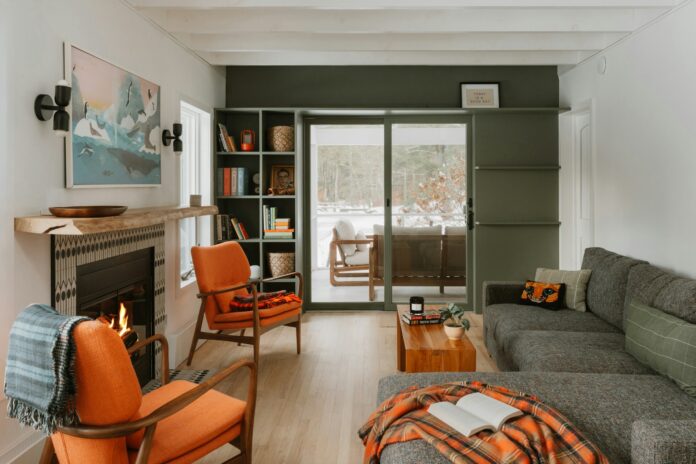
There was a time when a ‘smart home’ meant a house full of visible gadgets. Tablets stuck to walls, speakers on every shelf, a birds’ nest of cables behind the television, and a different app for every device. The technology worked, more or less, but it came at the cost of how your home actually looked. For anyone who’d spent time and money getting their interiors right, the trade-off was hard to justify.
That’s changed considerably. The smart home industry has spent the last few years catching up with what interior designers and architects have been saying for a while: if the technology draws attention to itself, it’s failed. The best systems in 2026 are the ones you can’t see, can’t hear, and rarely need to think about. They sit behind walls, inside ceilings, and within joinery, doing their work in the background.
At ISE 2026 in Barcelona, one of the world’s largest smart home exhibitions, the shift was obvious. The companies making speakers, keypads, and screens are now working directly with architects and interior designers rather than marketing to tech enthusiasts. Speakers are being crafted from marble. Keypads are being milled from brass. Screens are disappearing behind mirrors.
For anyone planning a renovation, a new build, or simply upgrading what they already have, here are seven categories of smart home technology that deliver real functionality without compromising how your home looks or feels.
Invisible Speakers
The biggest visual offender in most smart homes is audio. Freestanding speakers eat up surface space and rarely match anything else in the room, but all this is changing.
Sonance’s Invisible Series takes a different approach entirely. These speakers mount inside walls or ceilings and get finished over with the same material as the surrounding surface: plaster, paint, wallpaper, even venetian plaster or wood veneer. Once installed, there’s no grille and no visible sign of a speaker at all. Sound fills the room from what appears to be a bare wall. It’s the system used by Louis Vuitton, Tom Ford, Prada, and Dior in their stores worldwide, environments where a visible speaker simply isn’t an option.
For something less involved, Sonos’ architectural range produces in-ceiling and in-wall speakers (developed with Sonance) with bezel-less grilles that can be painted to match the ceiling. Paired with a Sonos Amp and Trueplay tuning software, they calibrate themselves to the acoustics of each room. A good middle ground between full invisibility and a standard speaker setup, and considerably easier to install and budget for.
Concealed Televisions
A large black rectangle on the wall is not a design feature. The industry has developed several ways to deal with it.
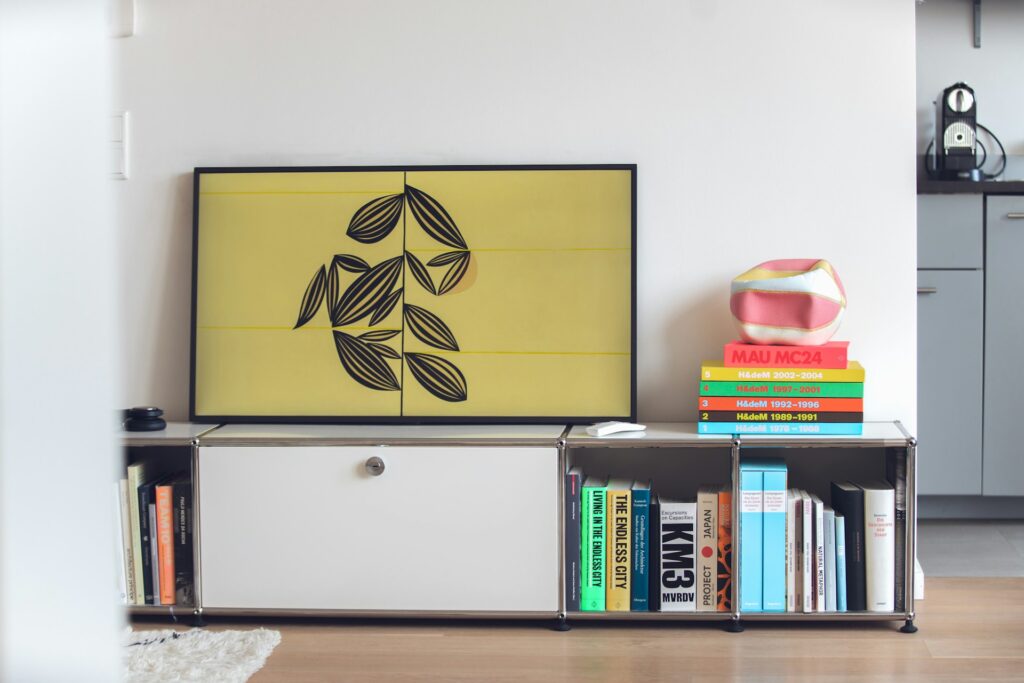
Samsung’s Frame TV, expanded at CES 2026 to sizes from 43 to 98 inches and now available in a Pro version with Mini LED backlighting, displays art when not in use and sits flush to the wall in a customisable bezel. It’s the most accessible starting point. For something more considered, companies like Reflectel build bespoke mirror TV enclosures: when the screen is off, it functions as a framed mirror with no indication there’s a television behind the glass. Frames come in wood, metal, leather, and gilded finishes.
Then there’s full concealment. Motorised lifts can drop screens from ceilings or raise them from cabinets. Laser projectors embedded into ceiling joists project onto motorised surfaces that retract when not in use. Expensive, but the wall stays clear.
This is where working with a specialist in smart home installation pays off. Getting a motorised lift or recessed screen right depends on planning it into the build from the start, not trying to retrofit it into a finished room.
Circadian Rhythm Lighting
This is where smart home technology makes the most noticeable difference to how a home actually feels to live in, and where the hardware is easiest to hide.
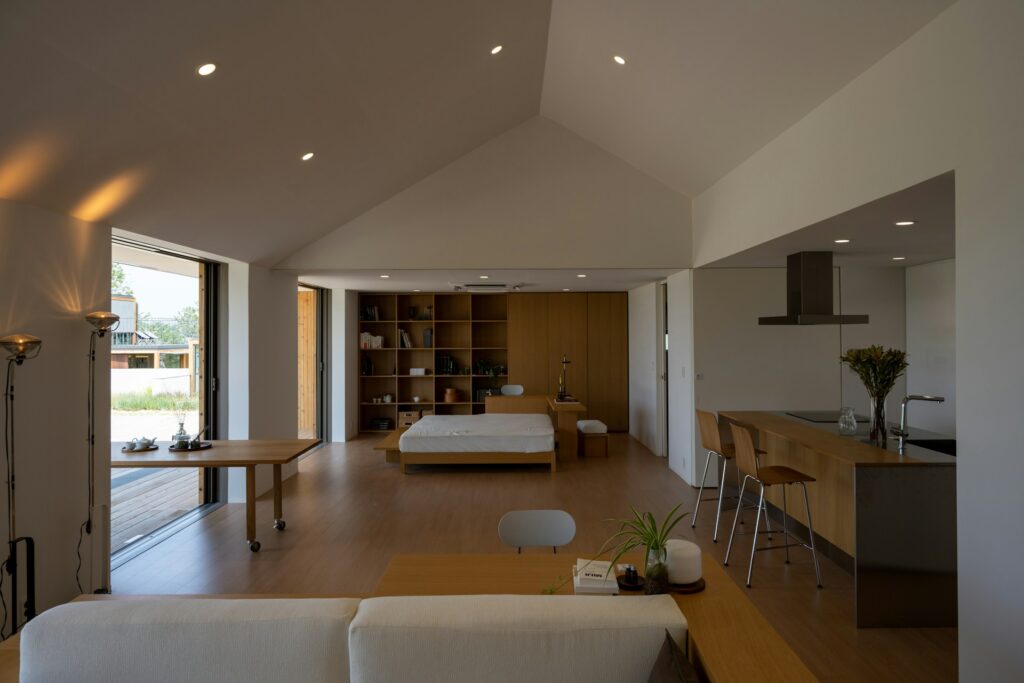
Ketra, developed by Lutron, produces tunable LED light that shifts gradually in colour temperature throughout the day, following the natural progression of daylight. Cool, energising tones in the morning give way to neutral midday light, then warm amber in the evening to support melatonin production and sleep. The transitions happen so slowly they’re imperceptible. Each light source covers a range from 1,400K to 10,000K across 16.7 million colours, and the recessed downlights have apertures as small as two inches, so they disappear into a ceiling.
This is particularly worth considering in UK homes, where daylight hours vary dramatically across seasons and north-facing rooms can feel flat and grey for months at a time. Pairing tunable lighting with automated blinds that respond to external light levels keeps a room feeling naturally lit from dawn to late evening, without anyone touching a switch.
Flush Controls & Keypads
Every light switch, thermostat, and intercom panel is a visual interruption. The fewer you need, the cleaner the space.
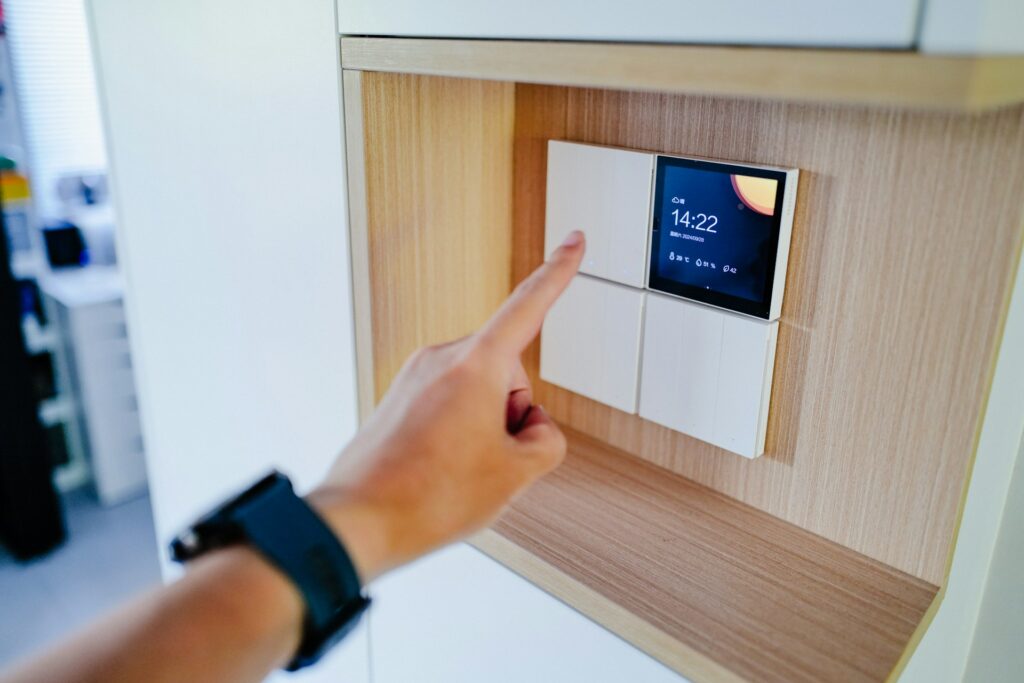
Lutron’s Palladiom keypads sit completely flush to the wall in a single-material surface, with buttons and faceplate finished in matching metal, glass, or polymer. Dynamic backlighting adjusts to ambient light levels automatically, and each button can be custom-engraved with text or icons. Available in finishes like satin brass, polished graphite, and satin nickel, they look more like high-end joinery hardware than a light switch. A single keypad triggers a ‘scene’ that adjusts lighting, blinds, and temperature simultaneously, which means fewer panels on fewer walls.
At the higher end, some systems now use presence-sensing radar and haptic surfaces embedded into countertops or furniture. A hand gesture over a specific spot on a marble worktop dims the lights or changes the music. It’s expensive and still uncommon in residential settings, but the technology exists and is being fitted in high-end new builds.
Hidden Climate Control
Heating and cooling systems have traditionally been among the most visually intrusive elements in a home: bulky thermostats, radiator panels, visible ductwork, air conditioning units bolted to walls. Smart climate technology is changing that on two fronts.
First, intelligent HVAC systems from brands like Control4 learn your routines and adjust heating and cooling proactively, using occupancy sensors and weather data rather than manual input. That means fewer visible thermostats and control panels. Some systems begin dehumidifying before a weather front arrives or adjust ventilation based on thermal sensors rather than visible motion detectors.
Second, automated blinds and shades from manufacturers like Somfy play a significant role in managing indoor temperature. Programmed to respond to sunlight patterns throughout the day, they reduce solar heat gain in summer and retain warmth in winter, cutting HVAC load by anywhere from 10 to 25 percent depending on climate and orientation. Custom-built ceiling pockets allow motorised blinds to disappear entirely into the ceiling header when retracted, leaving no visible hardware.
Concealed Security
Visible cameras, keypad locks, and perimeter alarm components tend to make a home feel institutional rather than secure. The best smart security systems in 2026 are the ones guests don’t notice.
Cameras can now be recessed into eave details or concealed within landscape elements rather than bolted to a façade. Smart locks have moved well beyond clunky keypads: the latest models from brands like Yale and Ultraloq use palm vein recognition or facial recognition that unlocks in under a second, all housed within hardware that looks like a conventional door fitting. At CES 2026, several manufacturers showed locks combining biometric access, video monitoring, and smart home integration into a single unit no larger than a traditional deadbolt.
These systems also tie into wider home automation. Locking the front door from outside can trigger a departure routine that switches off lights, lowers the thermostat, and arms internal sensors. Unlocking it reverses the process. The security works alongside everything else rather than sitting as a separate system with its own interface.
Read: How to upgrade your home’s security in 2026
Retrofit Solutions For Period Homes
Much of the smart home conversation assumes new builds or gut renovations, but many of the most interesting properties in the UK are Victorian terraces, Georgian townhouses, and converted industrial buildings, homes where chasing cables through lath-and-plaster walls is either impractical or prohibited.
Two developments have made retrofit far more feasible. Thread is a mesh network protocol for low-power devices (sensors, locks, climate controls) that doesn’t rely on Wi-Fi and keeps working even if one device fails. And Matter, the open connectivity standard from the Connectivity Standards Alliance, now gives devices from Apple, Amazon, Google, and Samsung a shared language, meaning fewer hubs, fewer apps, and less hardware to accommodate.
For listed or period properties, the trick is choosing hardware that respects the architecture. Smart switches designed to mimic traditional toggle or push-button styles can replace period fittings without looking out of place. Speakers can be concealed within existing bookcases behind acoustically transparent fabric. And working with a specialist in the planning stage, even for a retrofit, avoids the compromises that come from adding technology as an afterthought.
The Bottom Line
The smart home industry spent 15 years building ever more powerful gadgets and forgetting that most people don’t want their house to look like a control room. The technology that matters today is the kind you never see: wired into the walls, hidden behind surfaces, controlled with as few visible touchpoints as possible. The homes getting this right feel calm, well-lit, and comfortable, and nobody walking into them would guess how much technology is running behind the plaster.