Iceland wasn’t built for cruise tourism, and that’s precisely what makes it so thrilling to visit by sea. This is a country where the landscape itself feels alive, where geysers erupt on schedule and glaciers calve into lagoons, where volcanoes simmer beneath ice caps and the earth steams and bubbles in ways that seem frankly improbable.
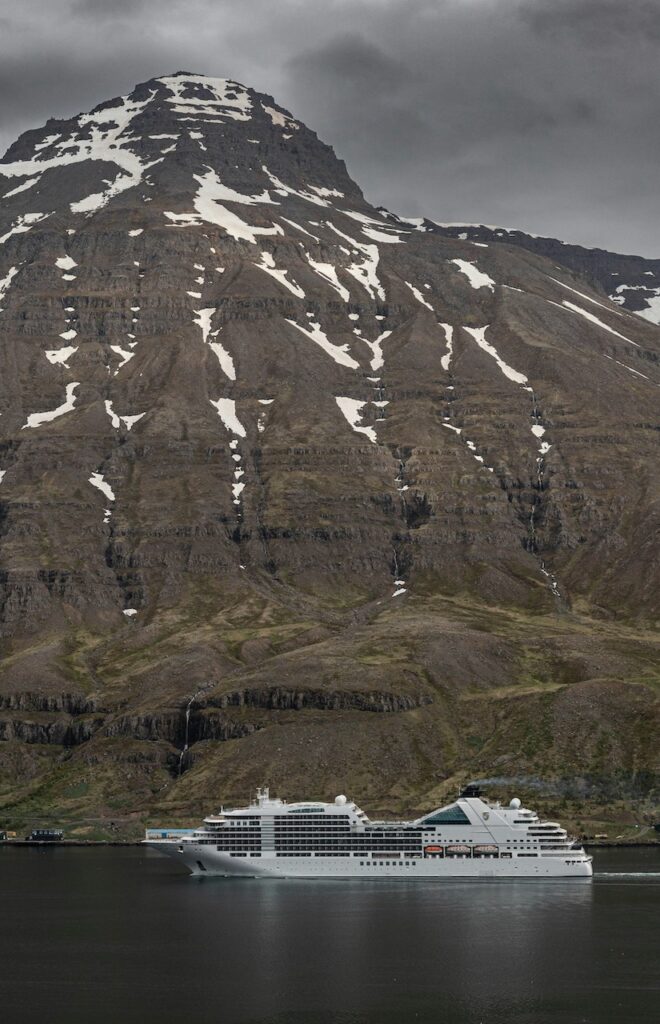
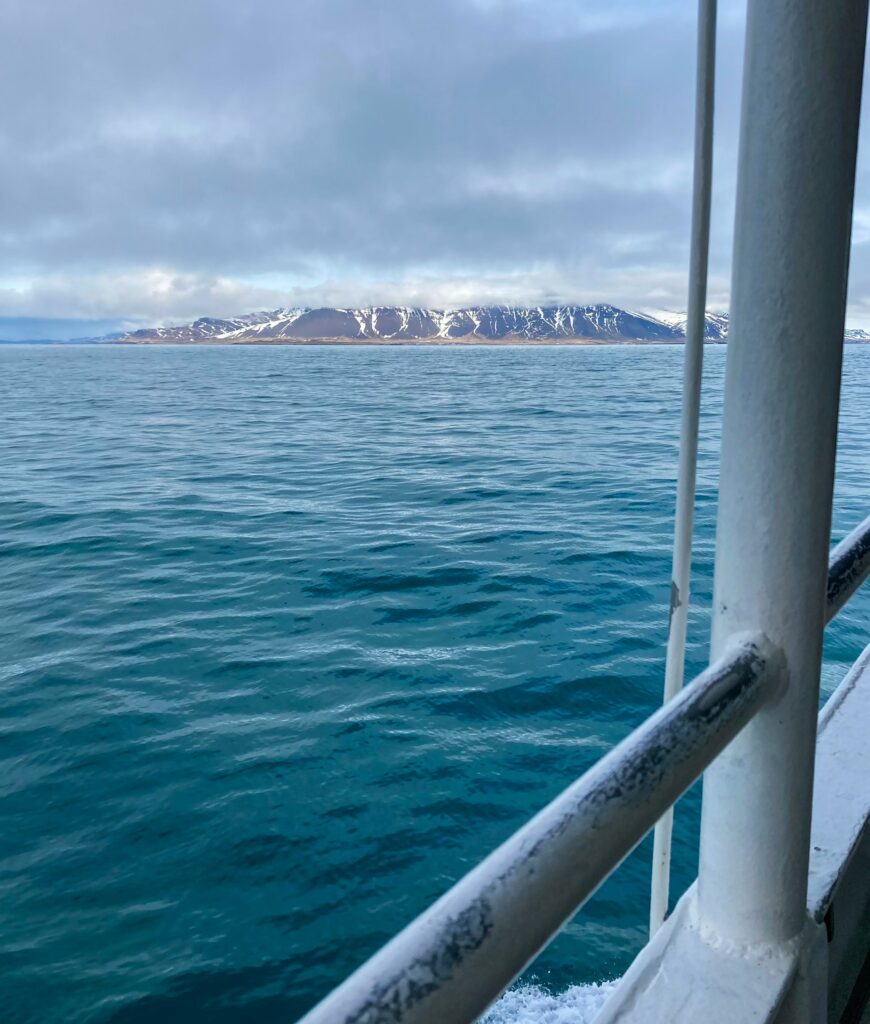
Arriving by ship means watching this otherworldly coastline reveal itself gradually, fjord by dramatic fjord, and stepping ashore into towns that feel genuinely remote rather than purpose-built for visitors.
With 4,970km of coastline punctuated by fishing villages, geothermal bays, and some of the most spectacular waterfalls on the planet, Iceland rewards the cruise passenger who wants their journey to feel like an expedition rather than a floating hotel transfer.
Iceland: The Number One Cruise Destination For 2026
Forward bookings for Northern Europe cruises are surging, with Holland America Line reporting that 2026 sales are up more than a third compared to this time last year, and Northern Europe voyages specifically seeing a nearly 50% year-on-year increase.
As the cruise industry embraces immersive, slow-travel experiences, demand for Arctic itineraries is rising faster than any other region, with travellers seeking cooler summers, dramatic scenery, and overnight stays that allow for proper exploration rather than rushed port calls.
Iceland sits at the heart of this demand, and with extended shore time becoming the norm in marquee ports, you can explore beyond the obvious and discover a country where fire meets ice at every turn. Here’s why we’re naming Iceland the IDEAL cruise destination for 2026.
Reykjavik
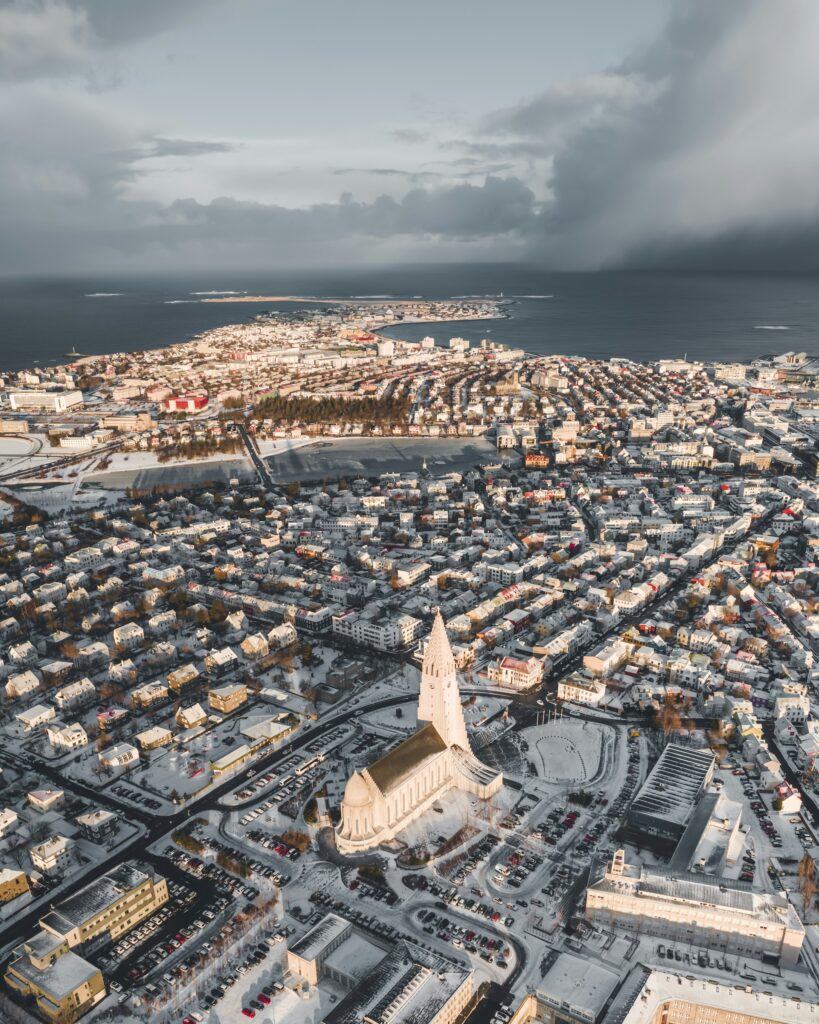
Reykjavik, the world’s northernmost capital is compact, creative, and surprisingly cosmopolitan, with cruise ships docking at the Old Harbour just a fifteen-minute walk from the city centre. The striking Hallgrímskirkja church dominates the skyline with its concrete columns designed to echo basalt lava formations, and from its tower you can survey the colourful corrugated iron houses below and the mountains beyond.
The city’s food scene has transformed in recent years, with Dill Restaurant now holding both a Michelin star and a Green Star for its commitment to local ingredients. For something more casual, head to the Old Harbour for Sægreifinn (The Sea Baron) and its famous lobster soup, or try Café Loki near the church for traditional plokkfiskur, a hearty fish stew accompanied by dark rye bread baked underground using geothermal heat.
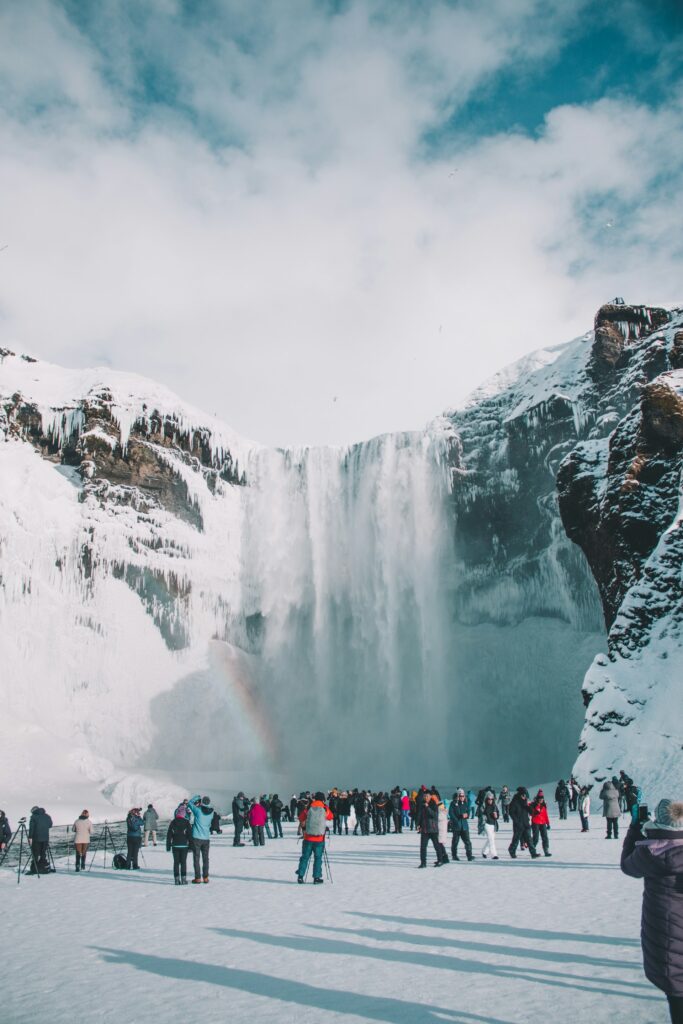
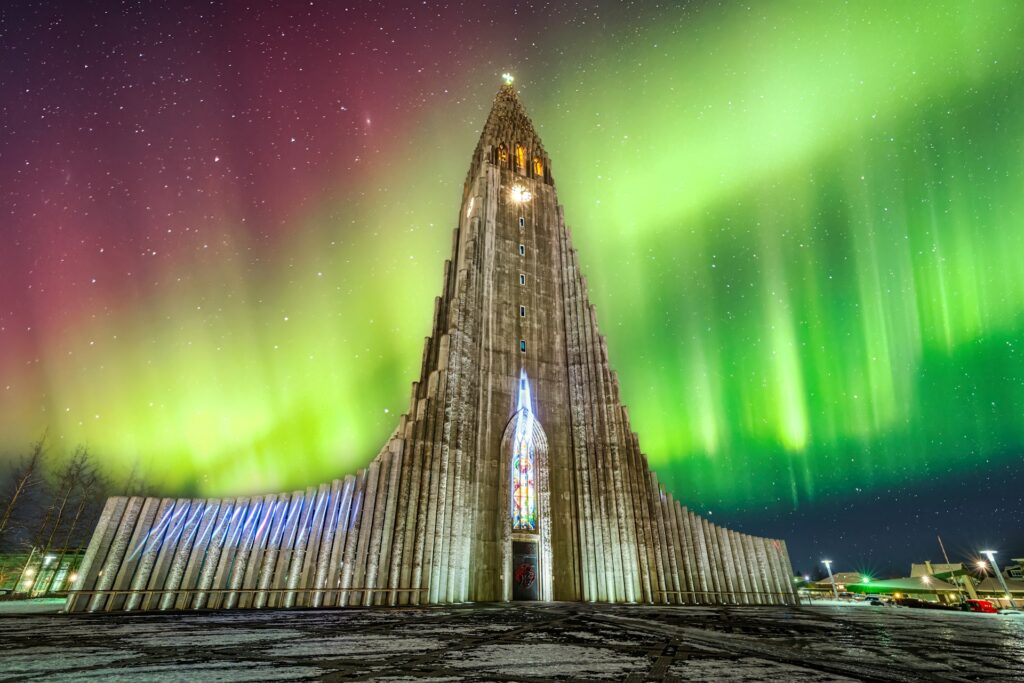
Most visitors use Reykjavik as a gateway to the Golden Circle, Iceland’s most famous day trip. Thingvellir National Park is a UNESCO World Heritage Site where the Icelandic parliament was founded in 930 AD and where you can walk between two tectonic plates, while the Geysir geothermal area features Strokkur, which erupts every few minutes in a spectacular plume of boiling water. Nearby Gullfoss waterfall thunders into a dramatic canyon with such force you’ll feel the spray on your face from the viewing platform.
Many cruises from Southampton offer overnight stays in Reykjavik specifically so passengers can experience the Golden Circle properly, returning in time to catch the Blue Lagoon at sunset when the crowds have thinned and the milky blue waters take on an almost ethereal quality.
Read: 10 must see destinations in Iceland’s Golden Circle
Akureyri
Known as the ‘Capital of the North’, Akureyri sits at the head of Eyjafjörður, Iceland’s longest fjord at 70 kilometres. Your ship crosses the Arctic Circle on approach, often accompanied by a ‘Polar Bear’ ceremony on deck, and the cruise terminal is a five-minute walk from the pedestrian centre, where heart-shaped traffic lights and independent boutiques line the main street.
The town’s modernist church, designed by the same architect responsible for Hallgrímskirkja, offers panoramic views from its tower, while the botanical garden, the northernmost in the world, showcases plants that thrive despite the latitude thanks to the surprisingly mild microclimate.
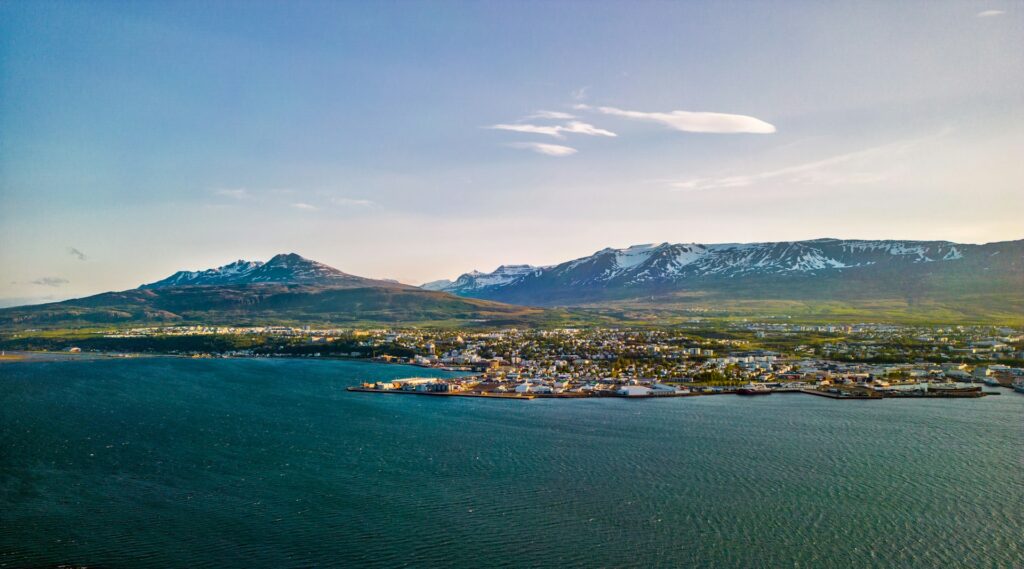
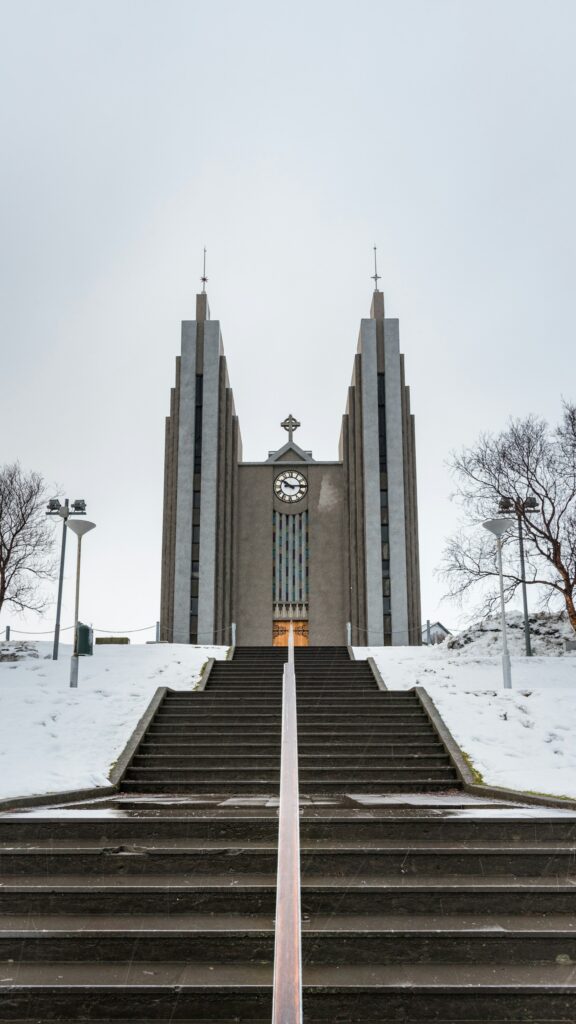
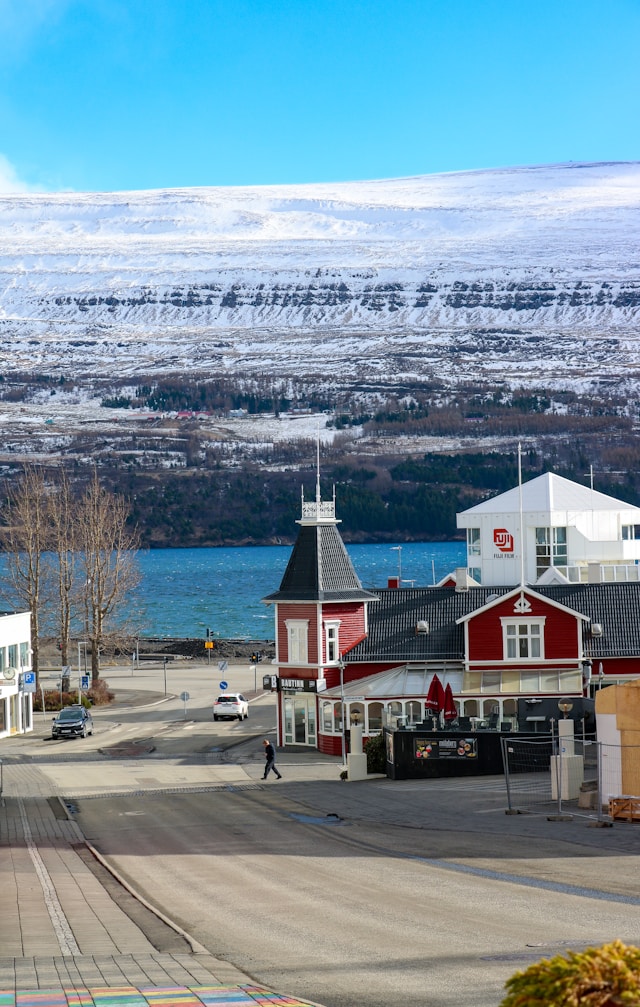
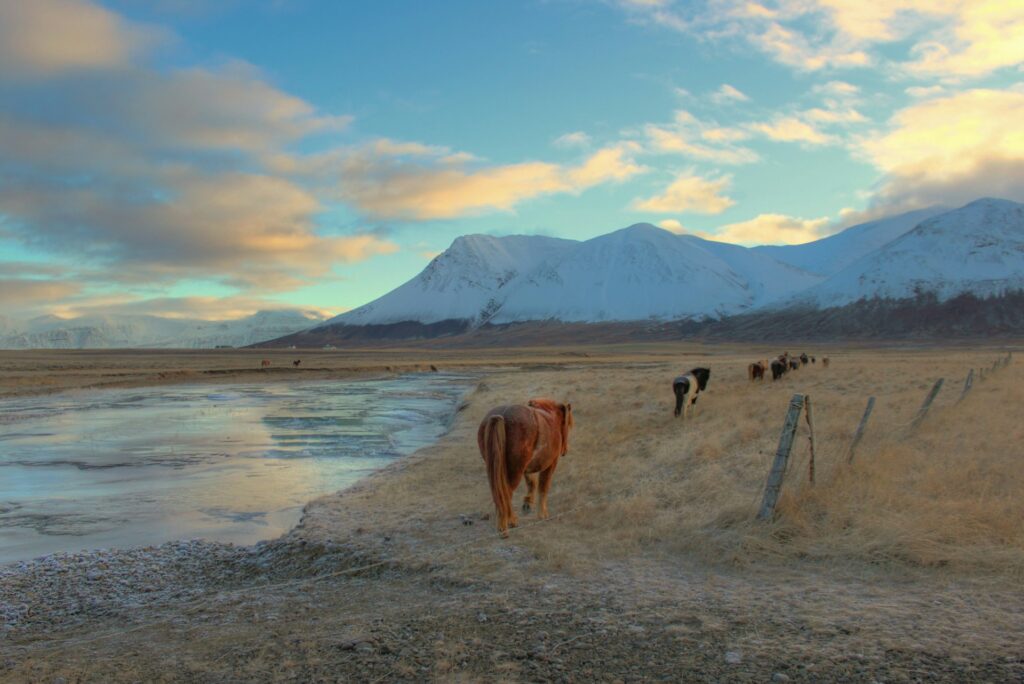
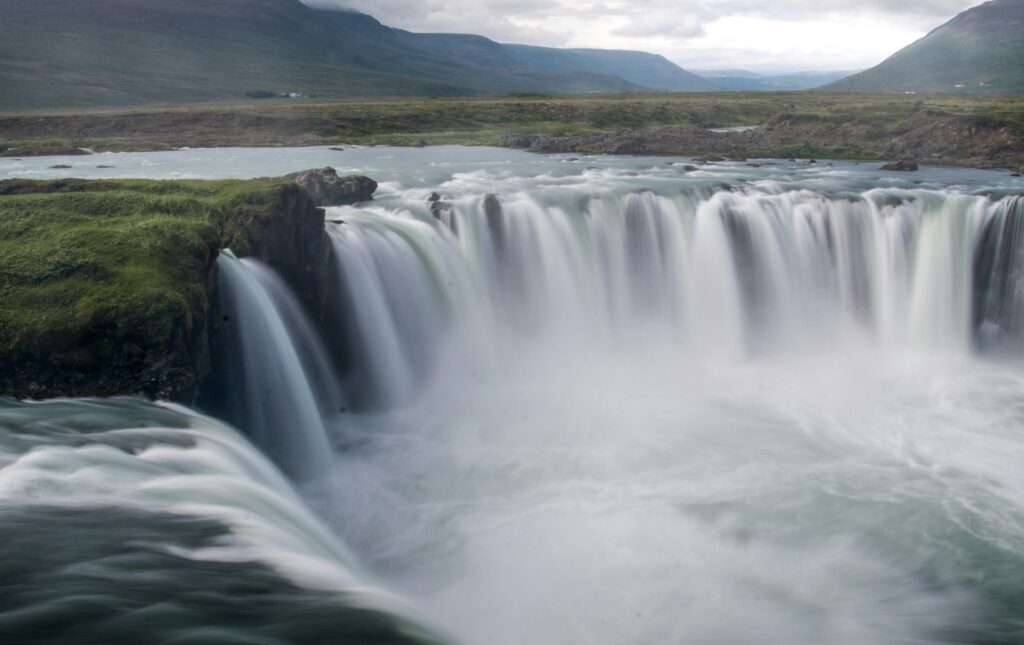
Shore excursions from here showcase a different Iceland entirely. The journey to Goðafoss, the ‘Waterfall of the Gods’, takes you through moss-covered lava fields to falls that span thirty metres across a horseshoe-shaped cliff, their power matched by their historical significance as the site where a chieftain supposedly threw his pagan idols after Iceland’s conversion to Christianity in 1000 AD.
Lake Mývatn, an hour’s drive away, is a geothermal wonderland of volcanic craters and bubbling mud pools, with the Mývatn Nature Baths offering the same mineral-rich waters as the Blue Lagoon but without the crowds. The newly opened Forest Lagoon provides fjord views from its geothermal pools, a perfect afternoon stop before returning to your ship.
Ísafjörður
Iceland’s third busiest cruise port lies deep in the Westfjords, where mountains rise almost vertically from the water to create a dramatic natural harbour. The town feels genuinely remote, with the Westfjords Heritage Museum occupying one of the oldest buildings in Iceland and wooden houses dating back to the eighteenth century lining the narrow streets.
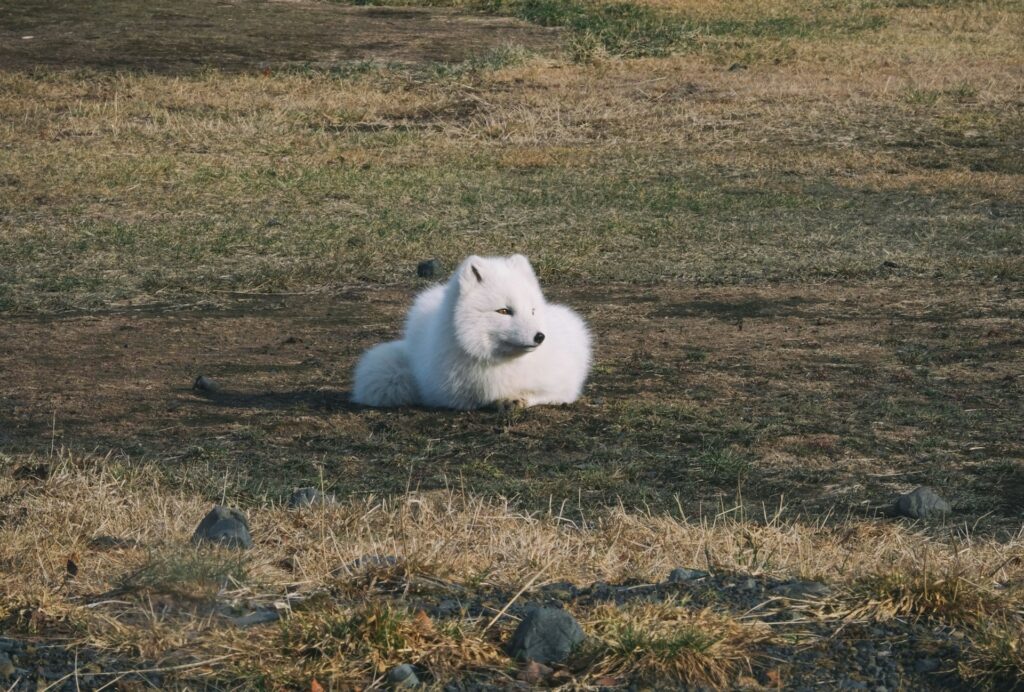
The Arctic Fox Centre in nearby Súðavík provides insight into Iceland’s only native land mammal, a creature that walked here across the frozen sea during the last Ice Age, while at Sætt & Salt chocolate shop you can make your own treats using local ingredients like sea salt harvested from the fjord.
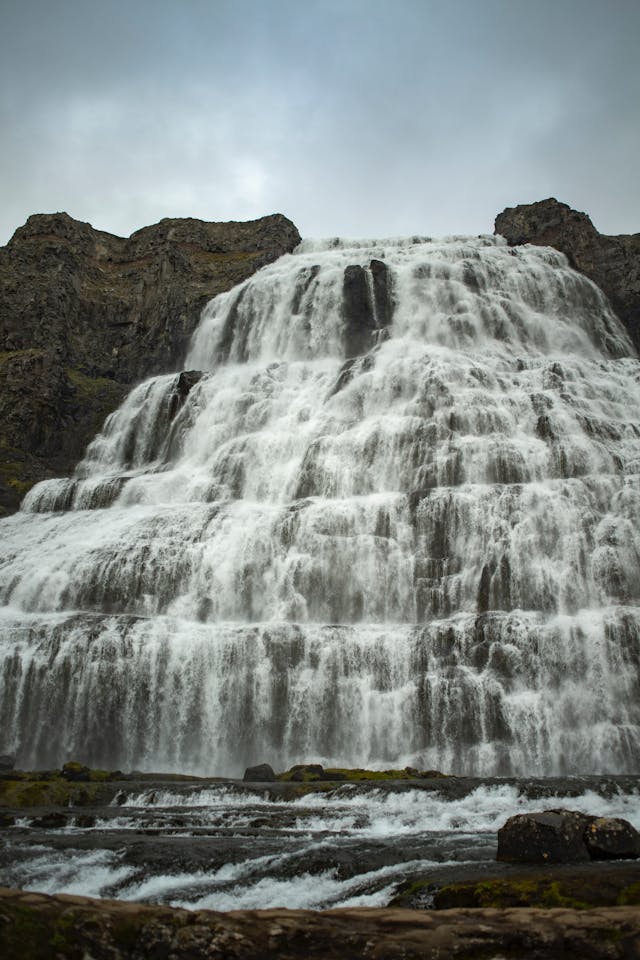
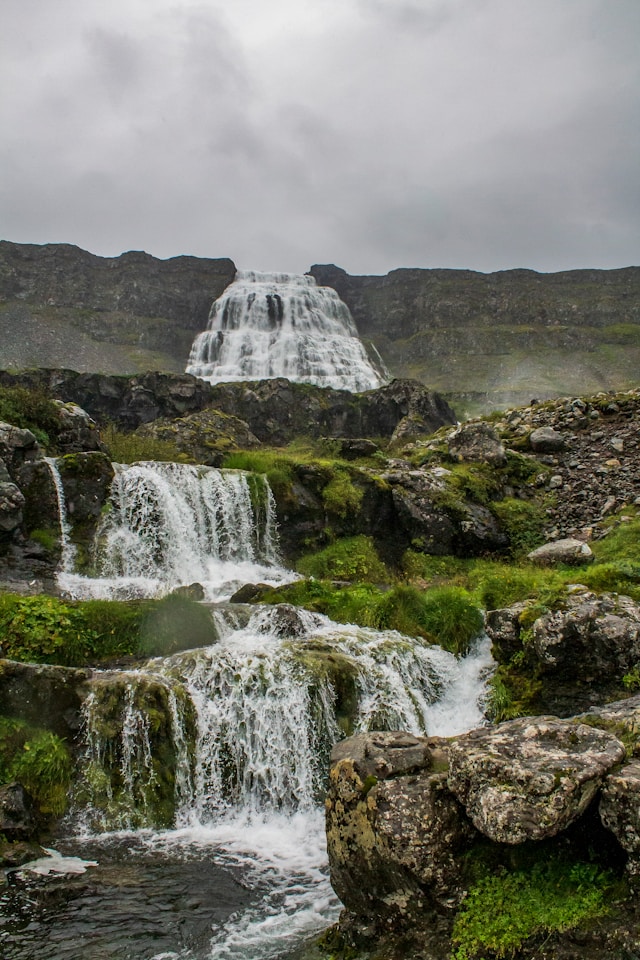
The Dynjandi waterfall, accessible by shore excursion along roads that wind dramatically through the mountains, is among Iceland’s most spectacular natural features. Water cascades over 100 metres in seven tiers that widen as they descend, earning the falls their nickname ‘the bridal veil’, and the surrounding landscape feels untouched even in high season.
Whale watching yields sightings of minke and humpback whales in the nutrient-rich waters where the fjord meets the open ocean, while puffin colonies nest on nearby cliffs from May through August. Kayaking the glassy fjord waters offers a perspective on the landscape that stays with you long after you’ve returned to the ship.
Húsavík
Often called the whale-watching capital of Iceland, Húsavík sits on Skjálfandi Bay where nutrient-rich currents attract humpback whales, minke whales, and occasionally blue whales throughout summer. Success rates for sightings exceed ninety percent between June and August, with traditional oak boats departing from the harbour several times daily.
The town charms with its distinctive wooden church overlooking the harbour and the Exploration Museum celebrating the area’s connections to NASA’s moon landing training, when astronauts prepared for lunar conditions on the volcanic landscapes nearby.
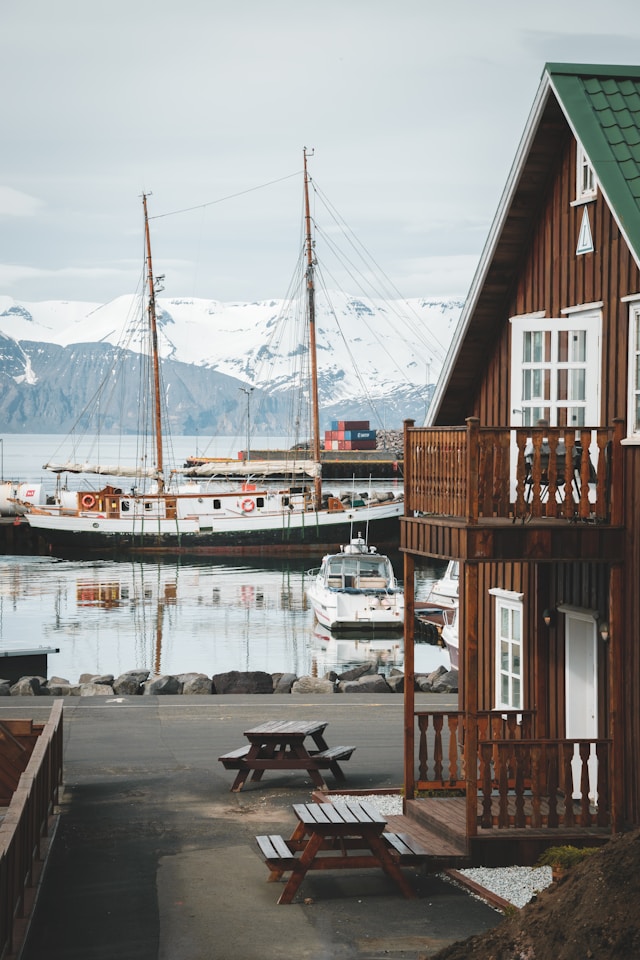
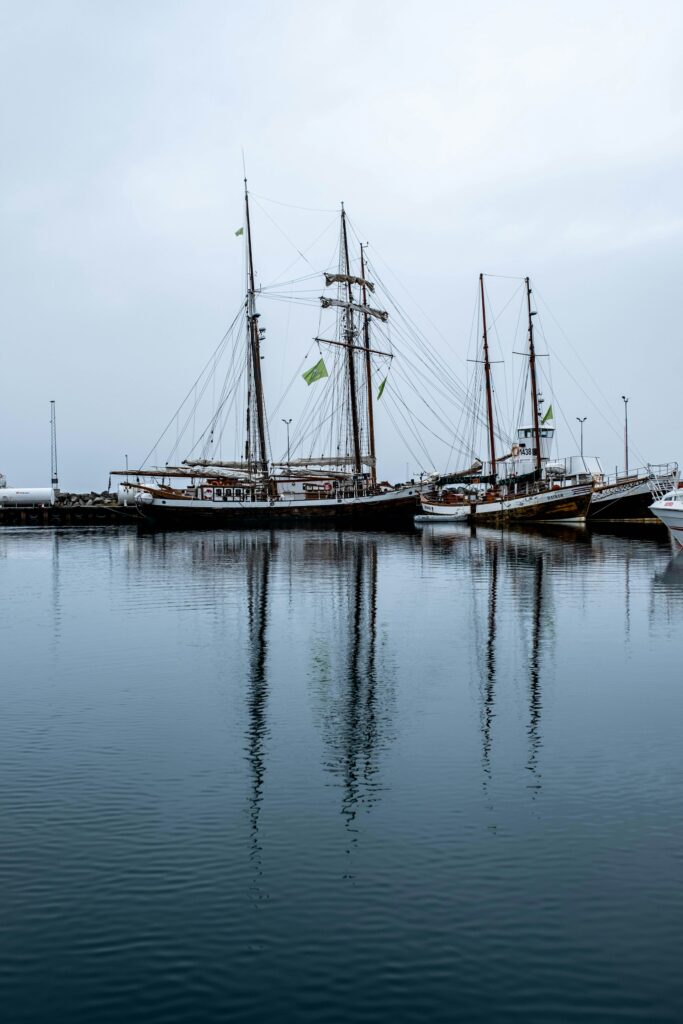
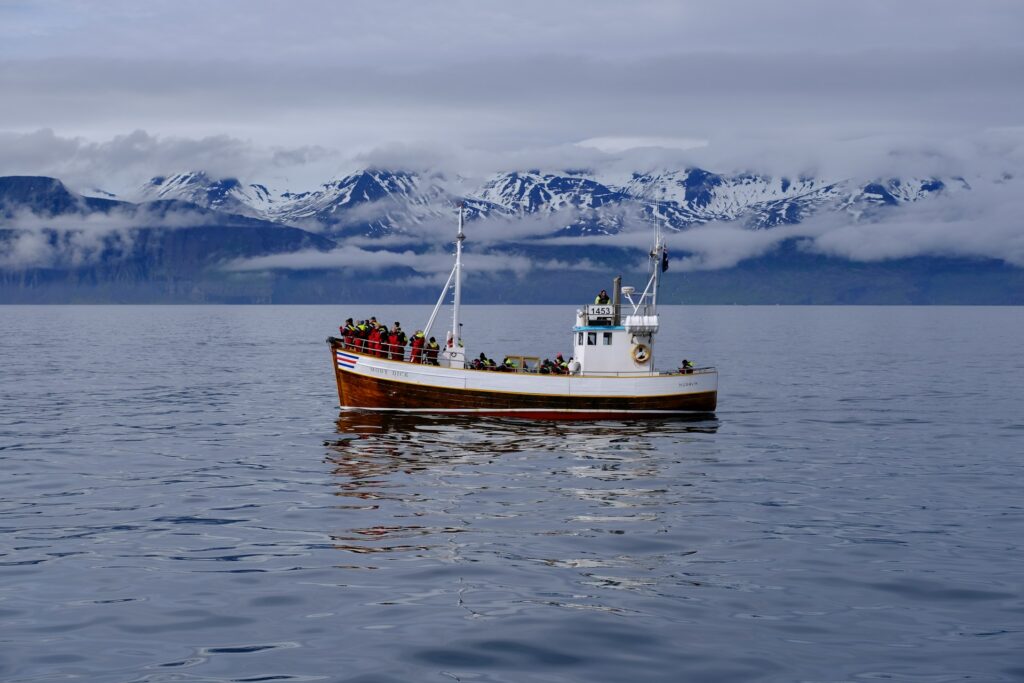
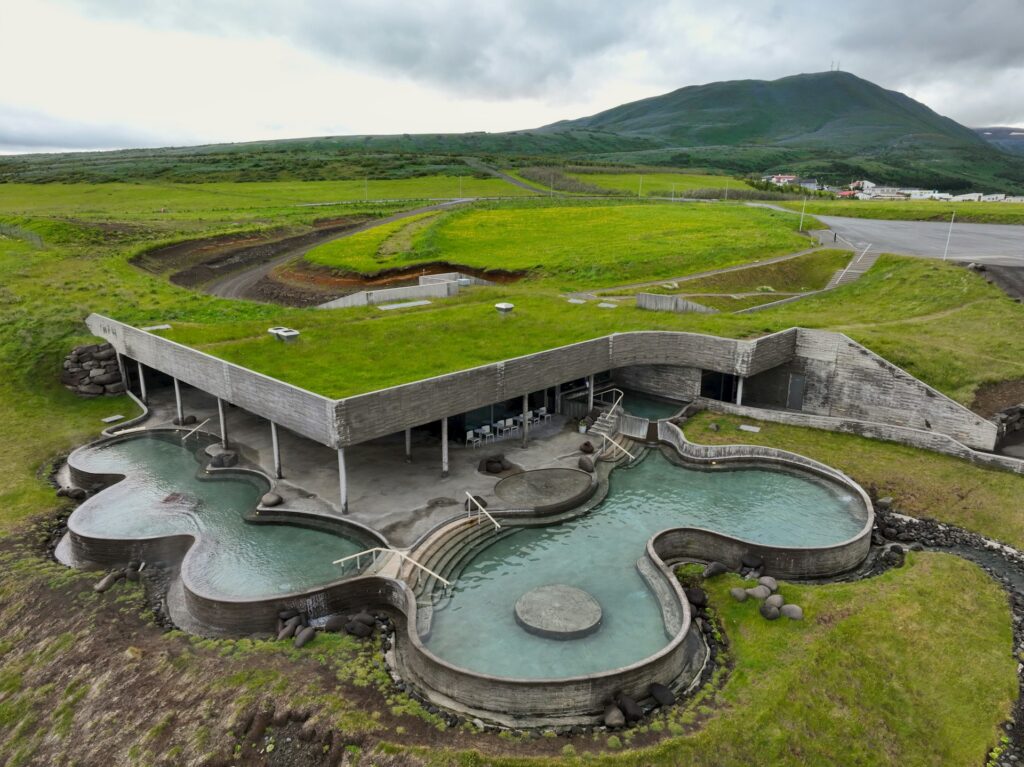
The GeoSea geothermal sea baths, built into the cliffs north of town, offer infinity pools that seem to merge with the ocean, their waters heated by the same volcanic forces that power the dramatic landscape around Lake Mývatn. Shore excursions can reach Dettifoss, Europe’s most powerful waterfall by volume, where 500 cubic metres of glacial meltwater thunder into a canyon every second with a force that shakes the ground beneath your feet.
The Food
Iceland’s culinary scene has evolved dramatically, driven by chefs who have returned from training abroad determined to showcase their country’s unique ingredients. The volcanic soil, geothermal greenhouses that produce tomatoes year-round, and abundant seafood from some of the cleanest waters on Earth create a cuisine unlike anywhere else.
Traditional dishes like hangikjöt (smoked lamb hung over birchwood fires) and harðfiskur (wind-dried fish eaten with butter) reflect centuries of survival in harsh conditions, while modern restaurants like Grillmarkaðurinn serve these heritage ingredients alongside reindeer and Arctic char with contemporary techniques.
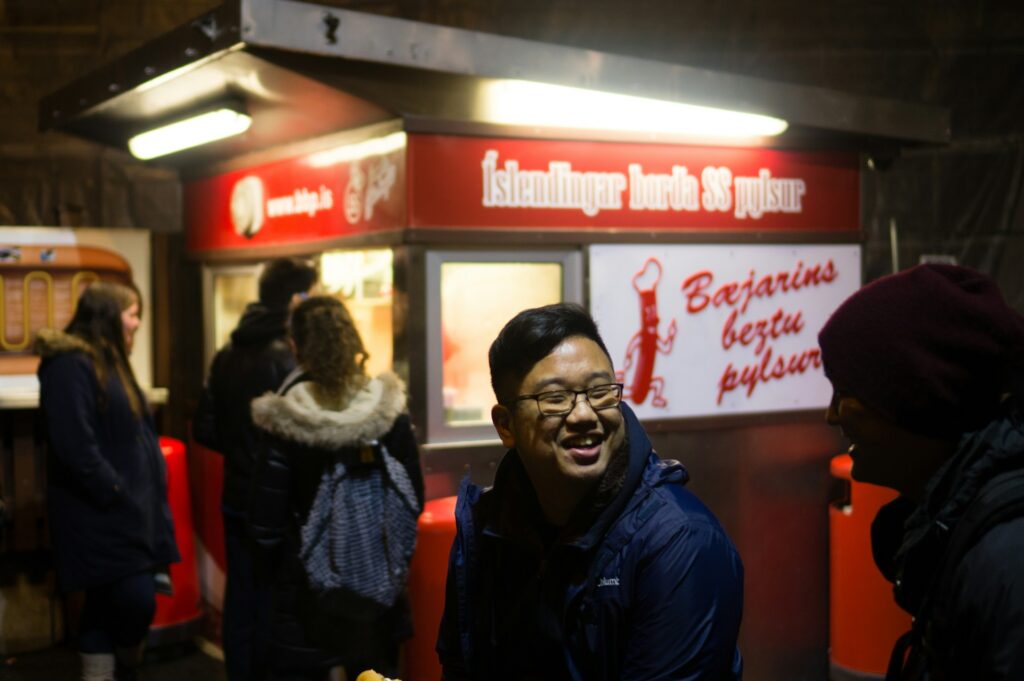
The Icelandic hot dog deserves its devoted following, made with a blend of lamb, pork, and beef and topped with raw and crispy fried onions, ketchup, sweet mustard, and remoulade. Bæjarins Beztu in Reykjavik has been serving them since 1937, and the queue is part of the experience.
Seafood dominates menus everywhere, from langoustine pulled from the waters off Höfn to cod prepared in every imaginable way, and at restaurants like Messinn, generous sharing pans of perfectly cooked fish with butter and capers arrive sizzling at your table.
The Northern Lights & Midnight Sun
Timing matters in Iceland more than almost any other cruise destination. Summer sailings between June and August offer the midnight sun, where daylight extends nearly around the clock, meaning longer exploration time, vibrant wildlife activity, and landscapes in full bloom after the long winter.
Winter sailings from late September through early April bring the chance to witness the Northern Lights, with several cruise lines now offering dedicated aurora-hunting itineraries that include overnight port calls north of the Arctic Circle specifically timed for optimal viewing conditions.
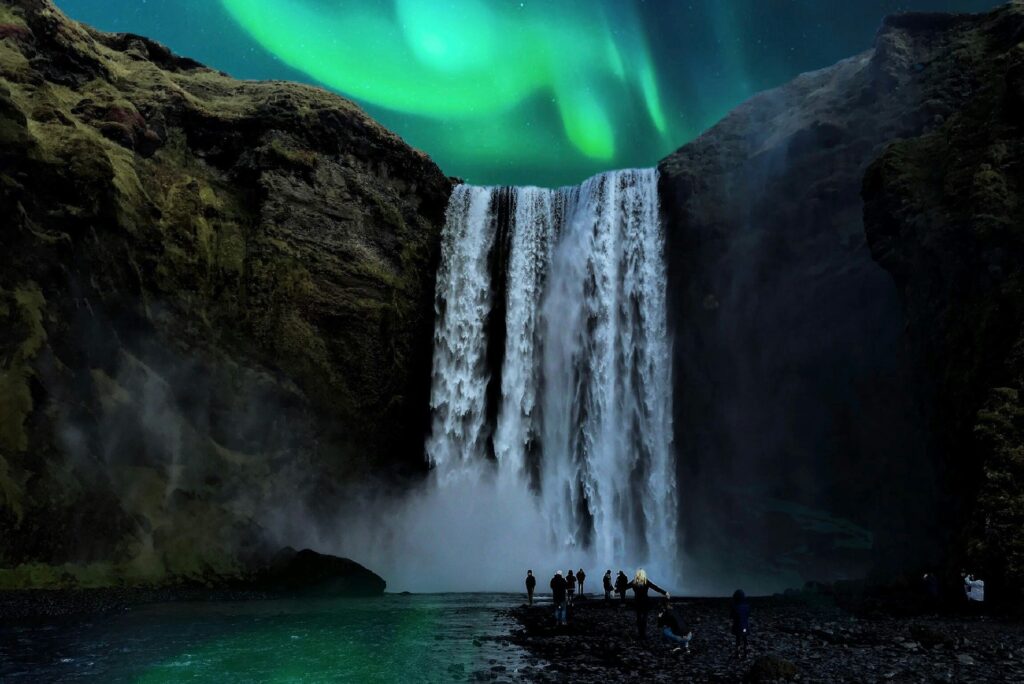
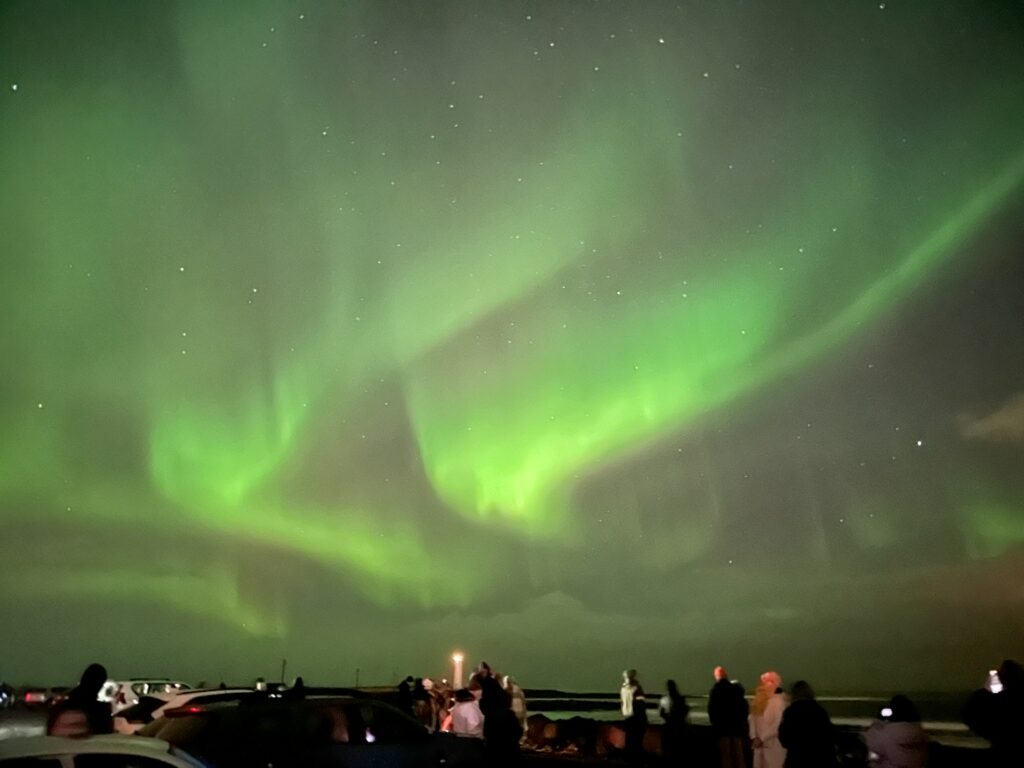
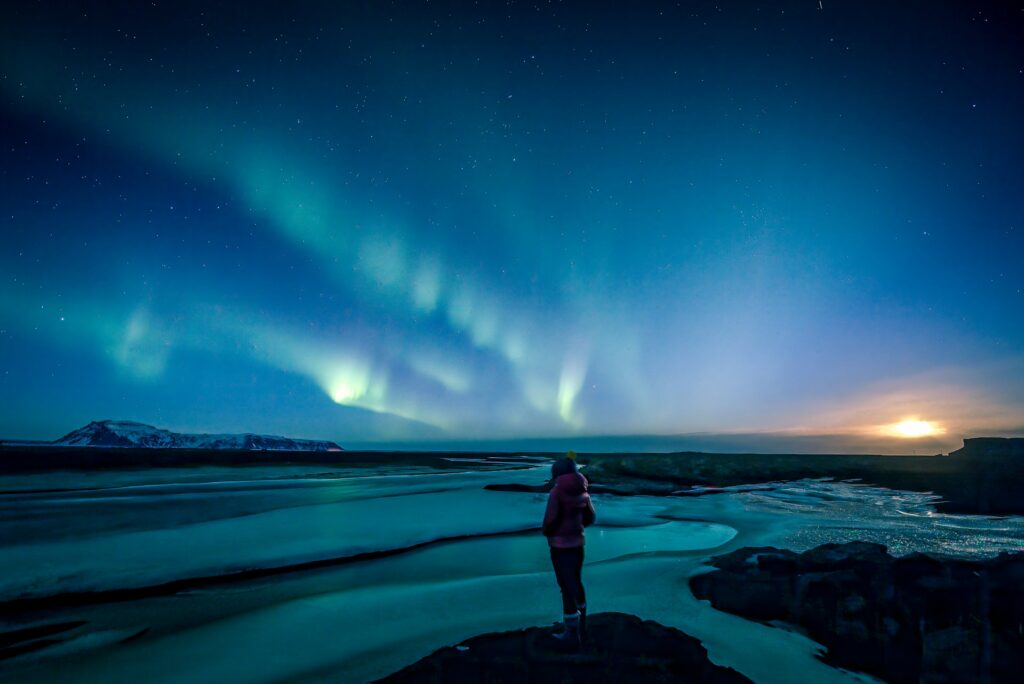
The 2026 solar eclipse in August has prompted cruise lines to position ships off Iceland’s west coast, directly in the path of totality where passengers can witness the moon block the sun far from the crowds that plague land-based viewing sites. These sailings sold out quickly, demonstrating both the growing appeal of celestial events and Iceland’s unique position as a destination where the extraordinary becomes almost routine.
The Bottom Line
Iceland’s allure as a cruise destination lies in its ability to surprise at every port, with each stop bringing a different landscape, a different atmosphere, and a different set of wonders. From the creative energy of Reykjavik and its thriving food scene to the geothermal marvels accessible from Akureyri, from the remote beauty of the Westfjords to the whale-rich waters off Húsavík, a circumnavigation of Iceland delivers variety that few other destinations can match.
In 2026, Iceland stands as a testament to the evolution of cruising, where the journey itself matters as much as the destinations and where shore time is designed for immersion rather than quick photo stops. The Land of Fire and Ice lives up to its name.