Growing your own food in the UK is one of the most rewarding things you can do with a patch of outdoor space, however small. But knowing what to plant and when to plant it is half the battle. Get your timing wrong and you’ll be staring at empty raised beds while your neighbour’s courgettes are practically taking over the street.
This month-by-month guide covers the best fruit, veg and herbs to sow and plant throughout the year. Whether you’re starting from seed or buying young plants ready to go in the ground, there’s something to be getting on with in every season.
January
The garden might look dormant, but January is when the year’s growing really begins. Indoors, you can sow chilli peppers and aubergines on a warm, bright windowsill. Both need a long growing season, so starting now gives them the head start they require. Onion seeds can go in too, sown into modules and kept somewhere frost-free. If you have a heated propagator, early tomato varieties are worth a punt, though most growers hold off until February.
Outdoors, there’s less to do, but you can plant bare-root fruit trees and bushes while they’re still dormant. Apple, pear, plum, gooseberry and currant bushes all establish well when planted between now and March, according to the Royal Horticultural Society. If the ground isn’t frozen, you can also force rhubarb by covering crowns with a bucket or forcing pot.
February
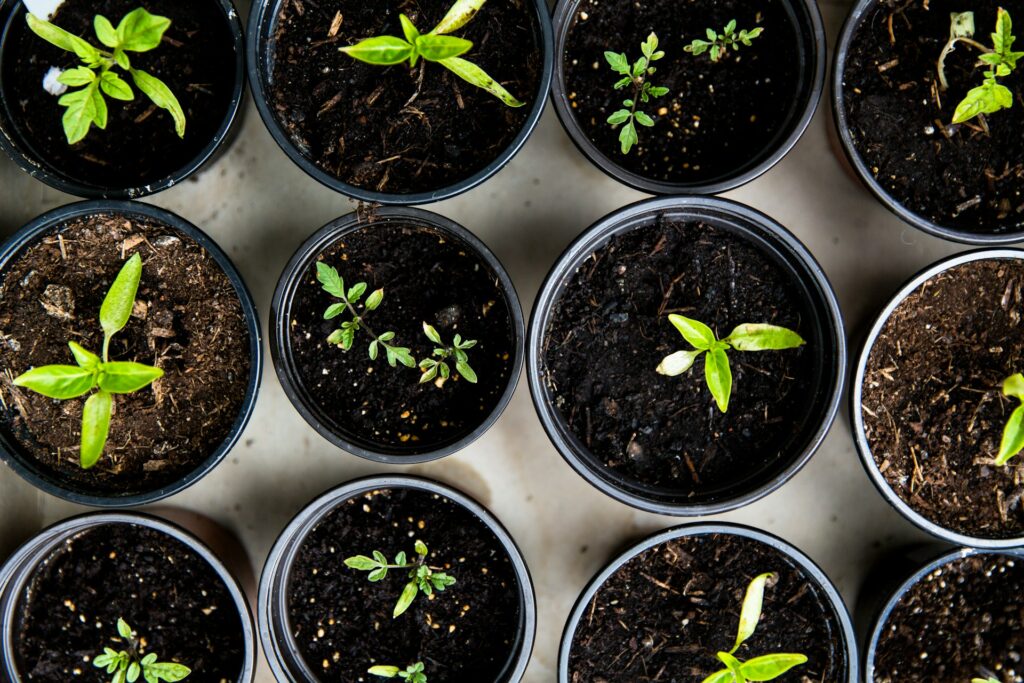
Things start to pick up. Indoors, sow tomatoes, peppers, celery and celeriac into seed trays. Broad beans can be started in pots indoors too, or sown directly outside under cloches if your soil isn’t waterlogged. Hardy herbs like parsley and chives do well started on a windowsill this month.
Outside, Jerusalem artichokes can go in the ground from late February or March. They’re wonderfully low-maintenance and will grow in most soils. Shallot and onion sets can be planted if the weather is mild, and it’s a good time to prepare beds by working in compost or well-rotted manure before the busy spring months ahead.
March
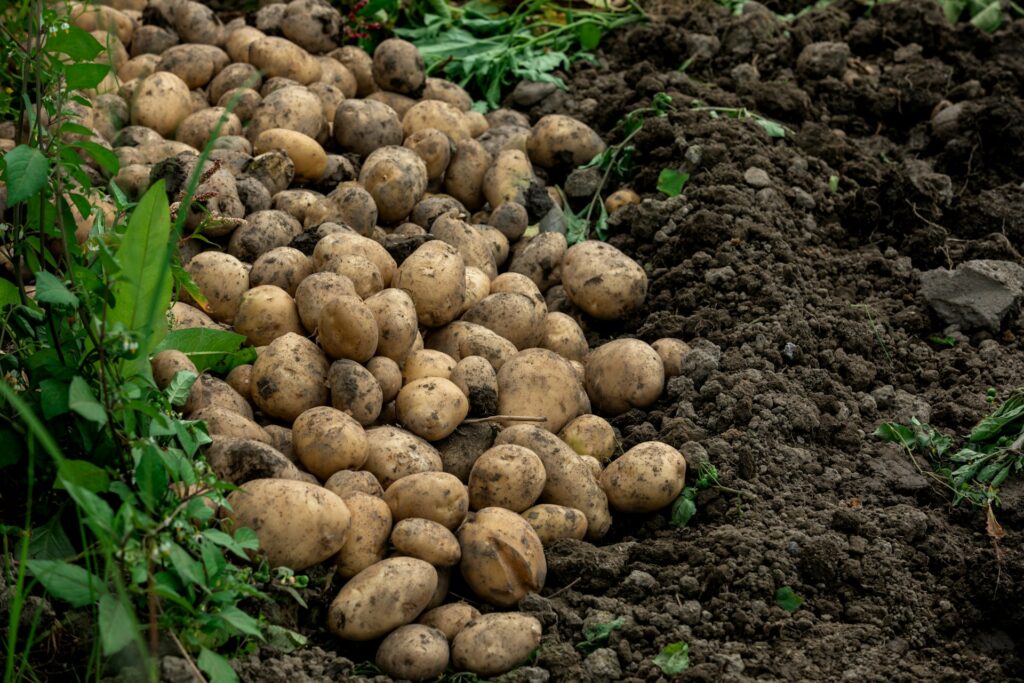
March is when the allotment starts to feel alive again. Direct sow carrots, parsnips, beetroot, radishes, spinach, lettuce and peas outside. Potatoes can go in towards the end of the month, particularly first earlies like ‘Swift’ or ‘Rocket’. The RHS potato growing guide recommends planting first earlies from mid-March, with maincrop varieties following in April.
For second earlies, plant a few weeks later in April. International Kidney – the variety sold as Jersey Royals – is hard to beat for flavour, though the thin-skinned results you get from Jersey’s côtils are difficult to replicate on a Midlands allotment.
Indoors, keep sowing tomatoes, courgettes, squash and cucumbers if you haven’t already. Basil is best started indoors this month too, as it hates cold nights. Herb-wise, coriander, dill and chervil can be sown directly outside if you’re in a sheltered spot. March is also the last good window for planting bare-root fruit trees before they break dormancy.
April
April is peak sowing season, without a doubt. Outside, continue with successional sowings of salad leaves, radishes and beetroot to keep a steady supply coming through summer. Runner beans and French beans can be sown indoors in pots, ready for planting out in May once the frost risk has passed. Sweetcorn does best started in deep pots indoors this month.
Herb gardens come into their own now. Sow or plant out rosemary, thyme, sage, oregano and mint (mint ideally in a pot unless you want it colonising everything). Strawberry plants can go in the ground, and if you started potatoes in March, get them earthed up as the shoots appear.
Read: 5 IDEAL spring vegetables and how to cook them
May
After the last frost, usually mid to late May in much of the UK, tender crops can finally go outside. Transplant tomatoes, courgettes, squash, cucumbers, peppers, aubergines and sweetcorn into their final positions. Runner beans and French beans can be direct sown outdoors now too.
Keep sowing salad crops, spring onions and radishes every couple of weeks. This is also a good month to plant out basil and other tender herbs. Fruit-wise, you can still plant container-grown strawberries, blueberries and raspberry canes. May is busy, but it’s the month that sets the tone for the rest of your growing year.
June
June is about maintenance as much as planting, but there’s still plenty to sow. French beans and runner beans can go in for a later crop, and you should be making successional sowings of lettuce, chard, beetroot and carrots. Florence fennel does well sown in June, as shorter days later in the season reduce the risk of bolting.
If you didn’t start from seed earlier in the year, June is a sensible time to buy vegetable plants that are already a decent size and ready to go straight into the ground. Tomatoes, courgettes and peppers bought as young plants at this stage will still produce a full harvest. Herbs like basil, coriander and dill can still be sown for fresh summer supplies too. On the fruit side, keep strawberry beds weeded and straw-mulched, and start summer-pruning gooseberries if they’re getting congested.
Read: 7 of the best fruit and vegetables in season in June
July
Midsummer and the focus shifts towards autumn and winter harvests. Sow spring cabbage, calabrese, kale, turnips and swede for crops that will carry you through the colder months. Carrots and beetroot sown now will produce a late autumn harvest. French beans are still worth sowing early in July.
This is the last realistic month for outdoor basil sowings. Keep planting quick-growing herbs like coriander and dill in succession. If you’ve got gaps where early and second early potatoes or peas have been cleared, fill them with fast salad crops or a green manure to keep the soil covered.
August
August is the start of the late-season dash. Sow spring cabbage for next year, along with winter lettuce varieties, pak choi and oriental greens like mizuna and mibuna. Onion sets for overwintering (‘Radar’ or ‘Shakespeare’) can go in from September onwards.
This is a great month for establishing perennial herbs. Plant or divide existing clumps of rosemary, thyme, oregano and sage while the soil is warm and they have time to settle in before winter. Autumn-fruiting raspberries will be producing now, so keep picking to encourage more fruit.
September
September is the big planting month for garlic, which needs a cold spell to develop properly. Most UK growers plant between now and November, following RHS guidance on garlic. Overwintering broad beans (like ‘Aquadulce Claudia’) can be sown now for an early harvest the following year.
Keep sowing winter salads under cover: lamb’s lettuce, winter purslane and rocket will all do well in an unheated greenhouse or cold frame. Bare-root strawberry runners become available this month, and it’s a good time to plant new fruit bushes and rhubarb crowns.
October
Continue planting garlic and autumn onion sets if you haven’t already. This is an excellent month for putting in bare-root fruit trees and bushes as they enter dormancy. Gooseberry, blackcurrant, redcurrant and jostaberry bushes all transplant well now, and you’ll find the best selection from specialist nurseries at this time of year.
Under cover, sow winter lettuce and hardy oriental greens for salads through the colder months. Outdoors, green manures like field beans or grazing rye can be sown on empty beds to protect the soil and add fertility over winter.
Read: 5 delicious things to do with your leftover onions and shallots
November
November is quieter, but far from idle. Bare-root fruit trees, cane fruit and bushes should be planted as soon as possible while conditions are good. Rhubarb crowns can go in now too. Garlic planting continues.
Indoors, if you have a heated space, you can sow a few microgreens or sprouting seeds for fresh greens through winter. Hardy herbs like bay, rosemary and sage won’t need much attention, but this is a good time to bring any potted tender herbs (like lemongrass) indoors if you haven’t already.
December
The garden year comes full circle. There’s little to sow, but December is still a fine time to plant bare-root fruit trees if the ground isn’t frozen or sodden. Winter is also when seed catalogues arrive, which is the real start of the next growing season for most of us.
If you want something productive to do, force chicory in a dark cupboard for winter salads, or check over stored crops like onions, garlic and squash, removing anything that’s starting to soften. It’s a month for planning, ordering seeds and thinking about what worked and what didn’t over the past twelve months.
The Bottom Line
The UK growing season is far longer than most people think. There’s something to sow, plant or harvest in every single month of the year, from forcing rhubarb under a bucket in January to planting fruit trees in December. The key is working with the seasons rather than against them, starting tender crops indoors early and filling gaps with fast-growing salads and green manures. Even a sunny windowsill is enough to get going, and once you’ve eaten your first home-grown tomato still warm from the plant, you won’t look at a supermarket one the same way again.