There are essentially three versions of Phuket, for visitors at least. There’s the ‘Ibiza of the East’ Phuket, of sludgy sands, pounding basslines, and beach clubs so far from glamorous that they could humble a holiday rep. There’s the Phuket of pristine travel reels too, where every infinity pool spills into the next, and nobody sweats. And then there is the Old Town.
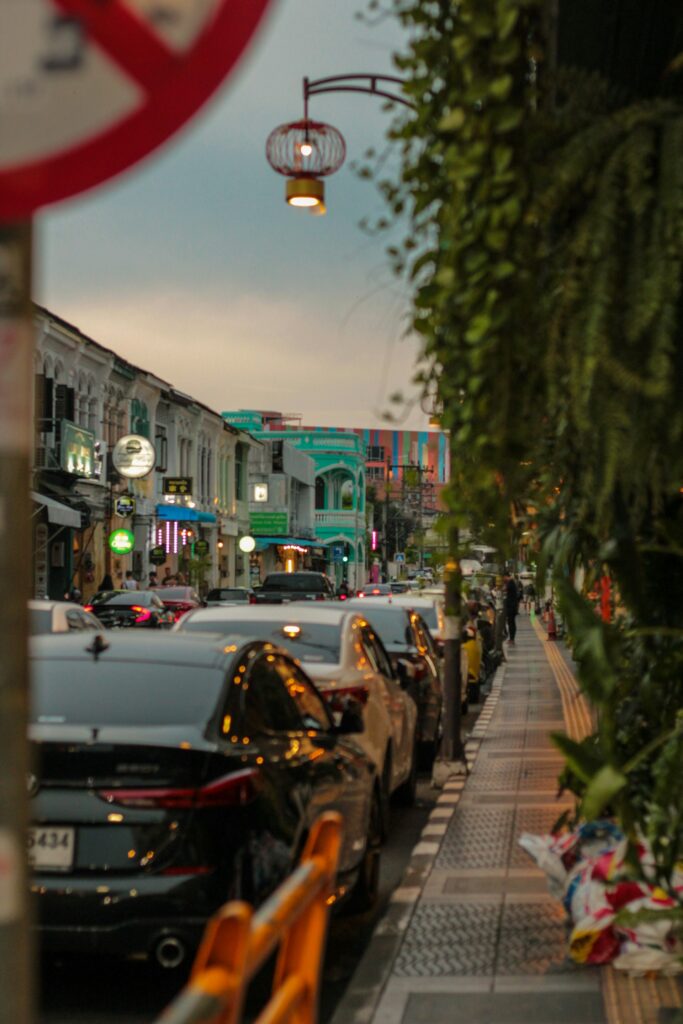
Phuket Old Town is one hell of a looker – a compact grid of Sino-Portuguese shophouses in every shade of pastel, whose faded facades tell the story of Hokkien Chinese merchants who arrived during the tin mining boom of the late 19th century, blueprints from Penang in hand. UNESCO recognised it as a Creative City of Gastronomy in 2015, the first in South East Asia, and a World Heritage bid is in the works. It’s only a matter of time; UNESCO fucking loves this aesthetic.
But the best thing is that it doesn’t feel like a toy town. Families still live and work in these shophouses. Walk two minutes beyond the postcard streets and you hit hardware stores, oily forecourts, Taoist shrines, and a different side of Phuket that some visitors miss entirely. And not a monolithic, freezing cold shopping mall in sight.
And on Dibuk Road, the residential street where wealthy Chinese mining families once lived (Dibuk is ‘tin’ in Thai), a deep crimson Straits Settlement-style building houses what is now, without much argument, Phuket’s most exciting Thai restaurant.
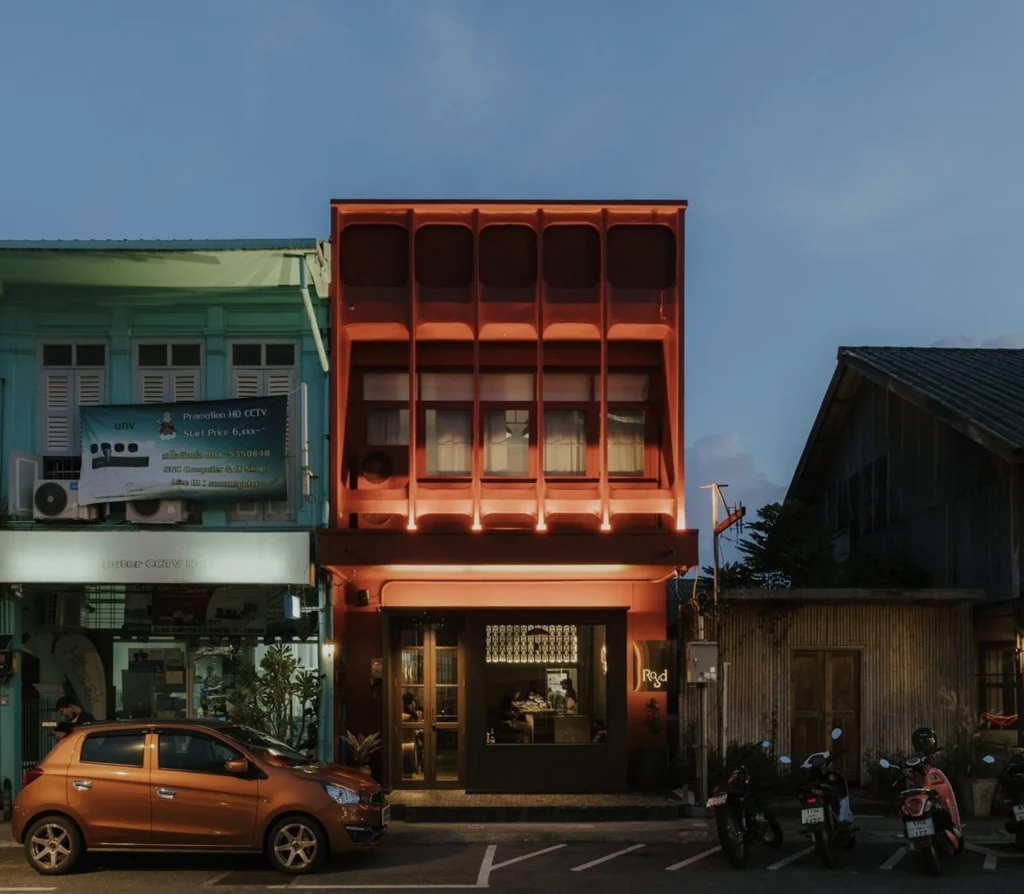
Royd – ‘so delicious’ – is the work of Suwijak ‘Mond’ Kunghae, a 32-year-old Phuket native who grew up pounding curry paste at his family’s restaurant in Patong. He went to school at Plukpanya, a short walk from the shophouse he’d eventually turn into Royd, passing these very facades every day. His culinary education took him first to Penang, then to Bangkok, where he trained in French cuisine at Le Cordon Bleu and the Mandarin Oriental before stints at heavy hitters Le Normandie and Mezzaluna, both now two Michelin-starred.
Later, travels with preservation specialist Phanuphon ‘Black’ Bulsuwan of Blackitch Artisan Kitchen in Chiang Mai pulled him back towards the ancestral wisdom of Thai cooking. Royd is the synthesis of it all: French rigour absorbed so deeply it’s now instinctual, a fermentation programme that undulates across the whole menu, and a mission to show the world, in his words, “how Southern people eat.”
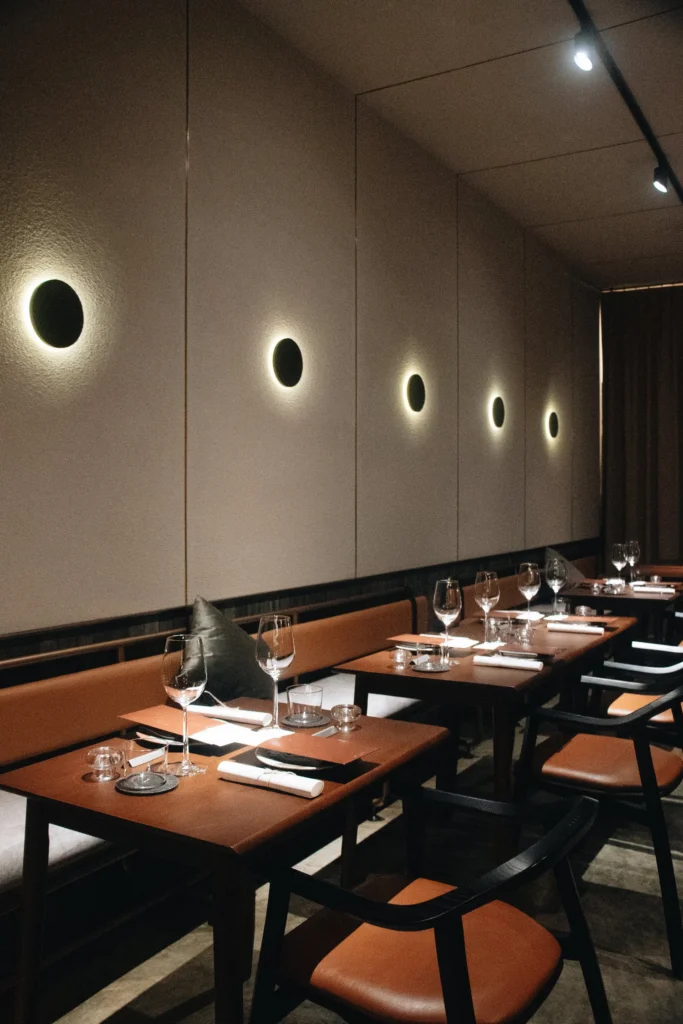
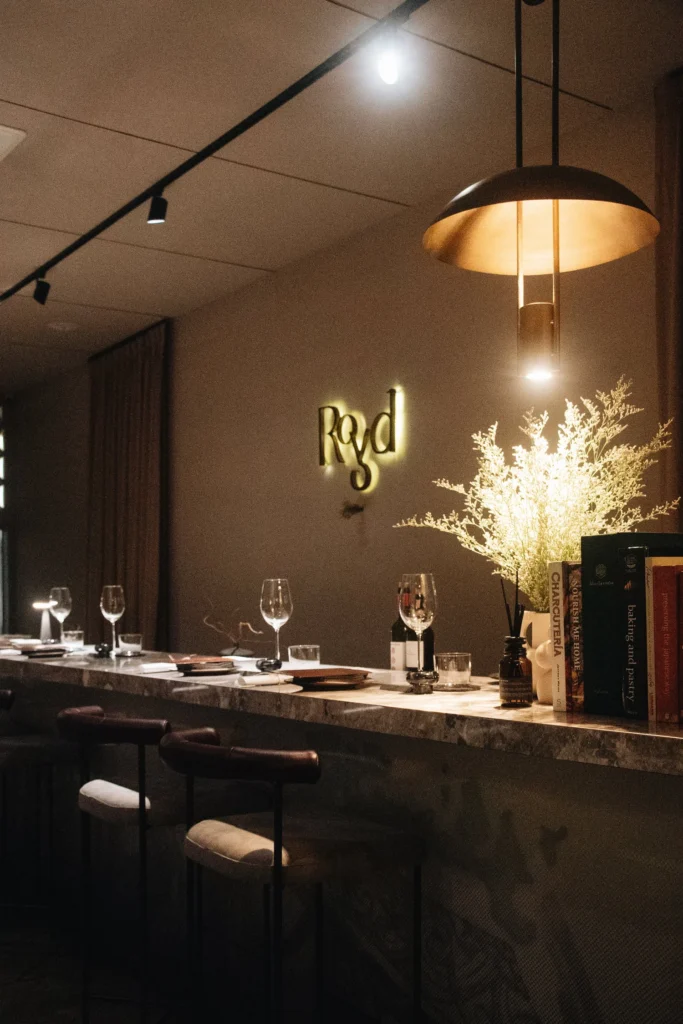
Inside, there’s the glow and chatter that you want to walk into when dining like this. Because there are few things worse than entering into a tasting menu-sized commitment in a room full of whispers. The room seats just 20, but it’s effervescing nicely. To the right there’s a marble counter where couples perch. It’s the move, changing the whole nature of the meal. All the garnishes, blowtorching, tweezering and general final fussing happens here, and listening to the explanation of dishes feels more natural at the counter, more fluid, rather than someone hovering over your table to deliver a speech. It also means the servers can top up your wine during the pairing effortlessly (they’re generous with the extras if your glass is running dry) and show you bits they’ve been brewing.
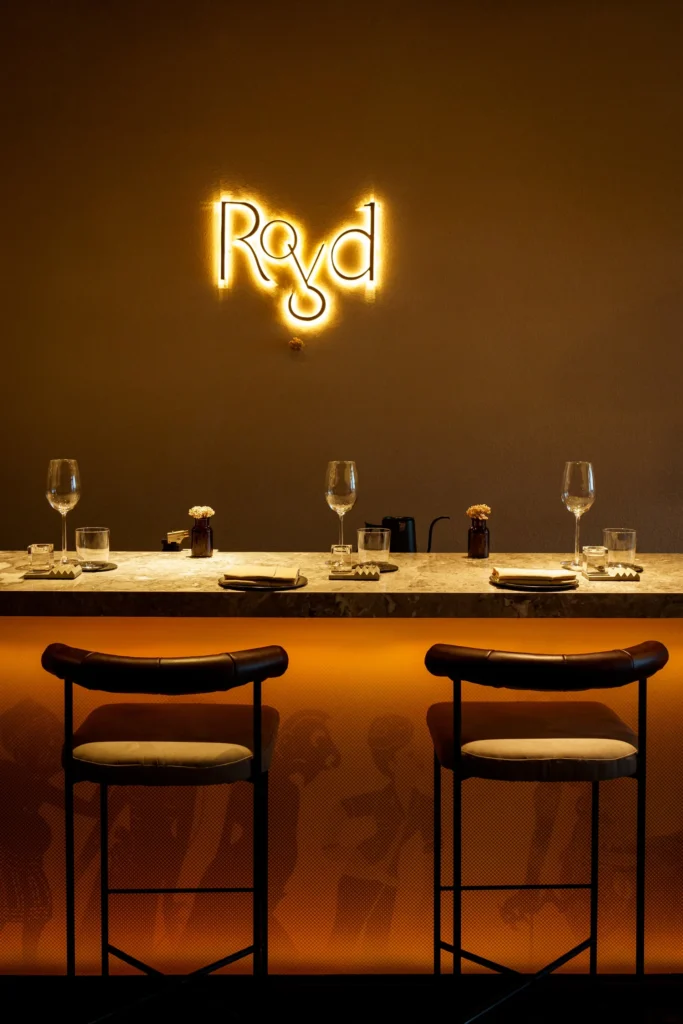
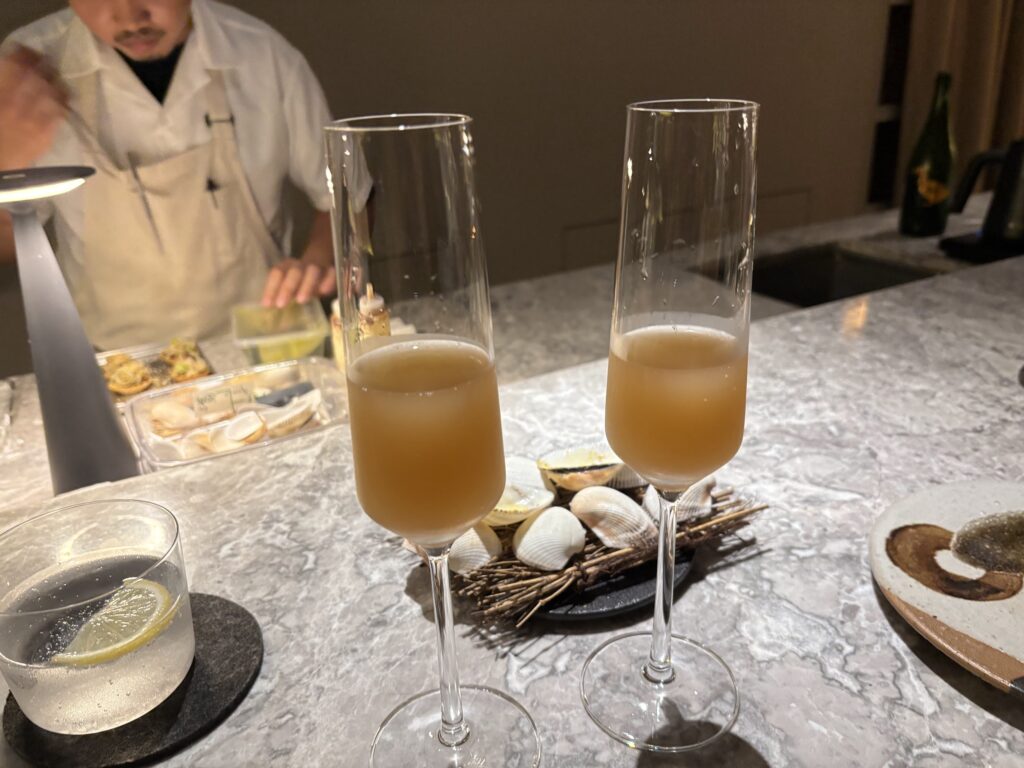
The welcome is kind and gentle. Not amateurish at all, but not overly slick either. It’s something more familial, speaking to the famously laid back khon pak tai way of doing things. You’re handed a torch ginger kombucha in a single window seat overlooking Dibuk Road before taking up position at the bar. The separation feels a little superfluous when your stool is only three steps away, but it’s cute nonetheless.
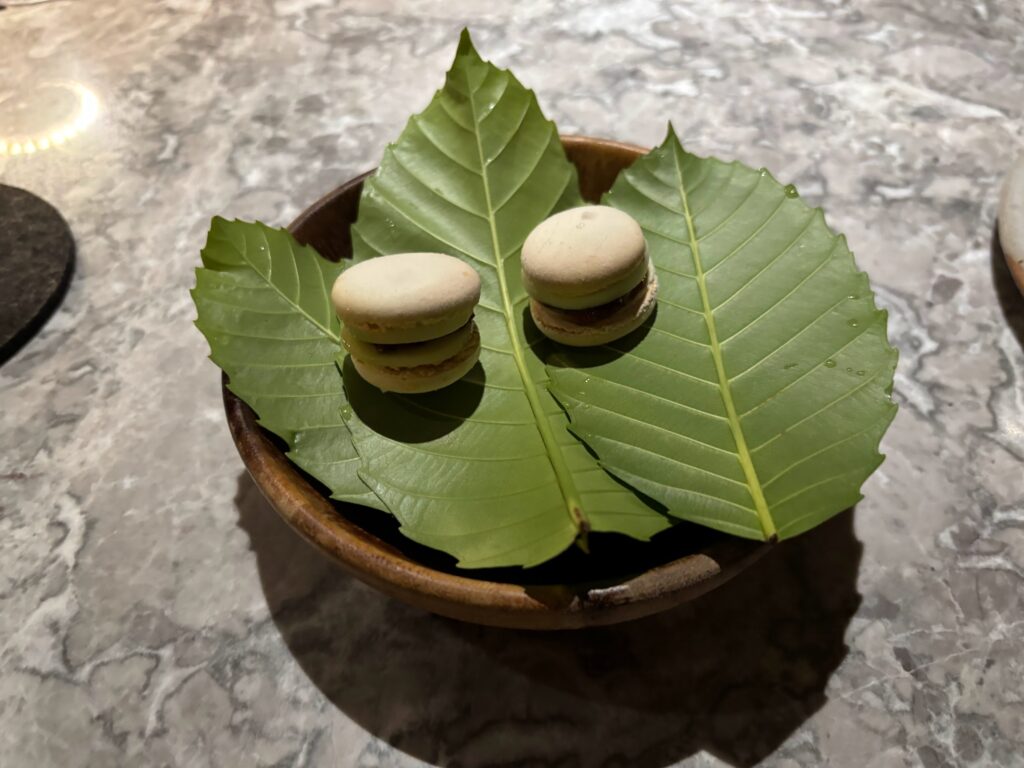
The menu unfolds as a geographical sweep of the southern provinces, changing with the seasons and the skill and fortune of the south’s farmers and fishermen. The opening snack stack was a run of four bites, all superlative. The first, a sour mango and sweet fish sauce macaron. A classic sour-salty-sweet combination (that oft reductive shorthand of the thrillingly complex Thai palette), but the meringue shell dissolved slowly, giving a controlled release of mango puree and viscous fish sauce that lasted well into the next snack.
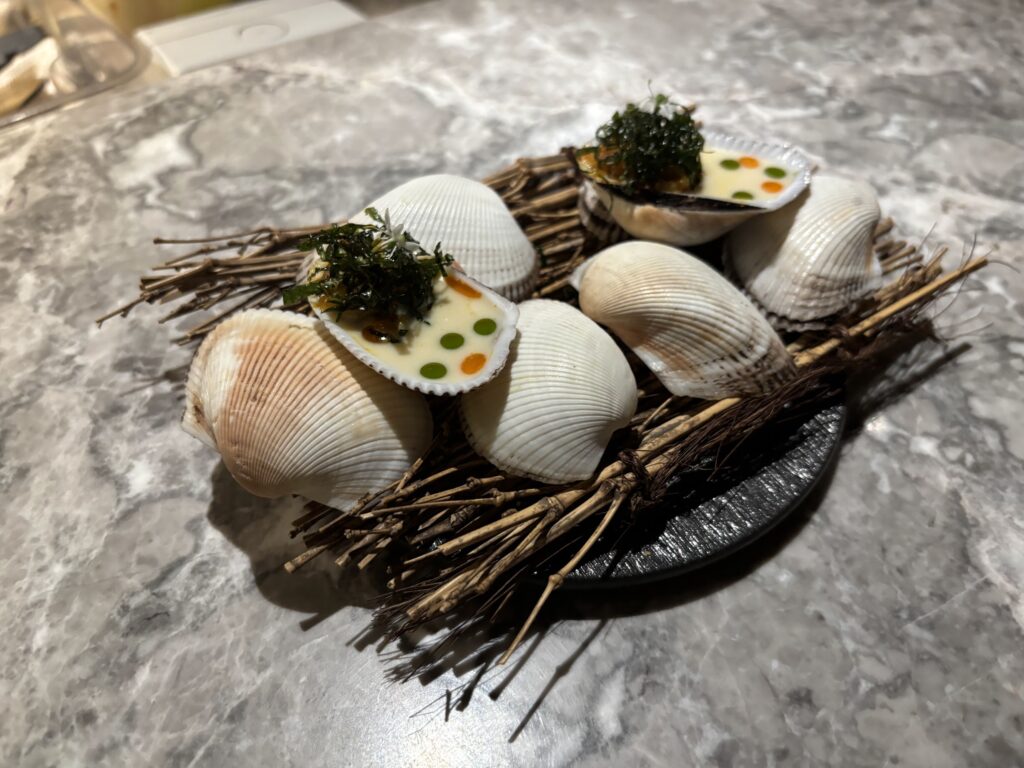
Then, a huge clam shell presented on a bed of twigs arranged, I assume, to resemble a bamboo raft, with a briny clam and a little chilli jam beneath a coconut vinaigrette. Drink it like a shot. Punchy, super spicy, fabulous.
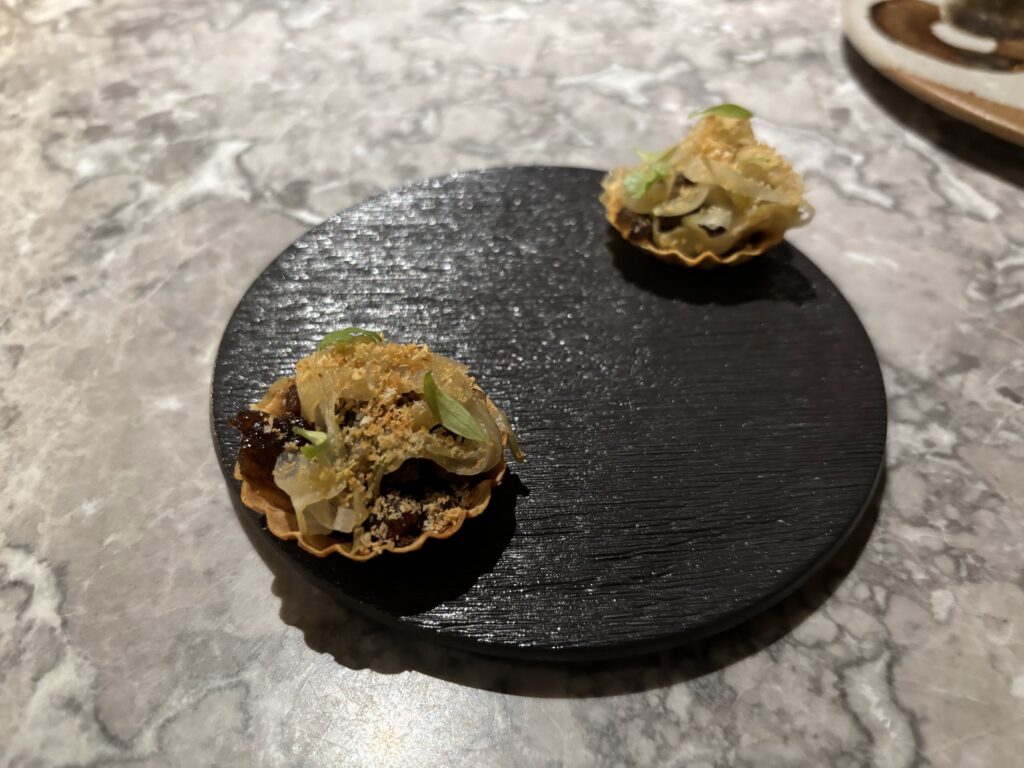
A tofu skin tart came next, shaped in a frilly-edged patisserie mould. Inside, pig’s head, braised, smoked and pressed, fromage de tête vibes, with dots of rich tamarind chutney. Technically flawless, but packing depth too. There’s the obvious French connection emerging, but it’s also a riff on lor bak, the Hokkien-Chinese snack that has been part of Phuket’s food culture for generations, dating back to the tin mining era. That layering runs through everything at Royd, and, indeed, Phuket.
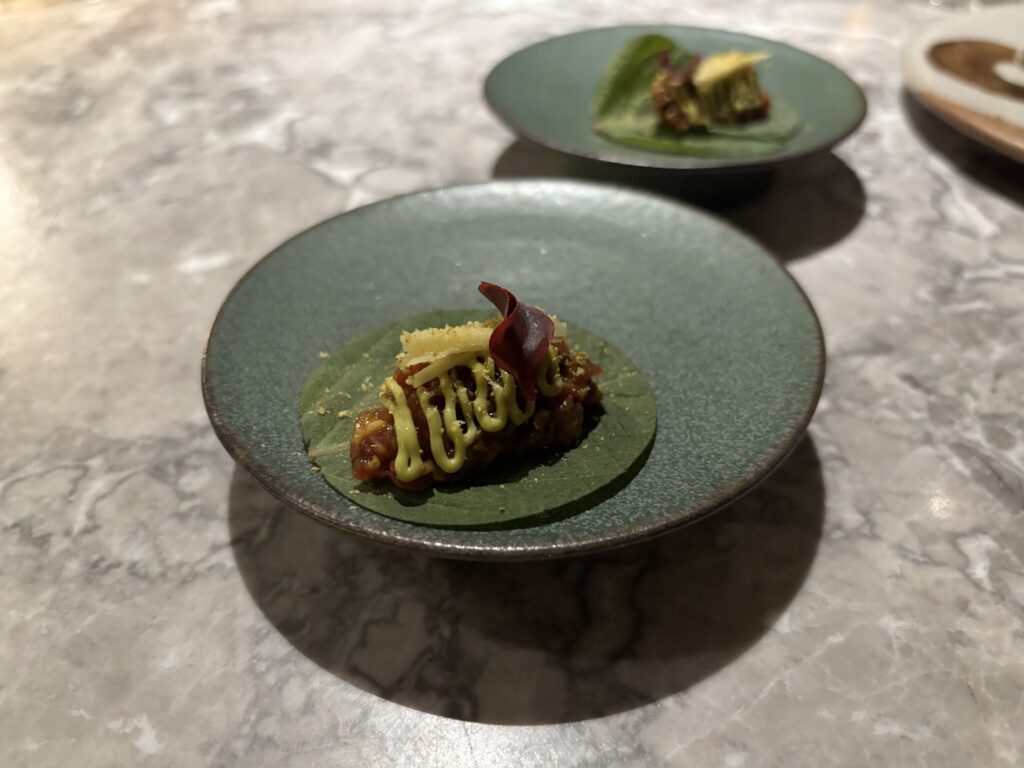
The opening salvo concluded with a beef tartare, sat on a circle of betel leaf, miang-style. Here the raw beef was seasoned in the style of southern Thailand’s famous dry curry spice paste: loads of dried chilli, turmeric, white and black pepper. Its zigzag of bilimbi (a southern Thai souring agent) puree across the top did the same job that cornichons or capers do in a French tartare. All that rasping heat somehow didn’t overwhelm the meat.
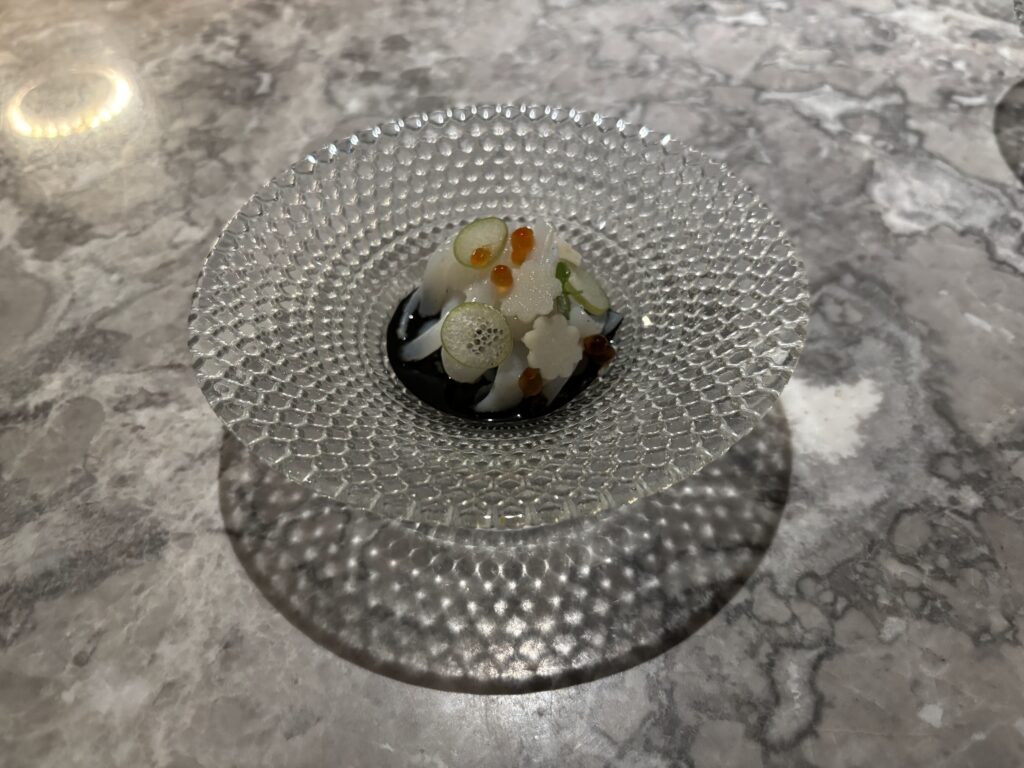
Then, the ‘Route to the South’ began, starting with ‘our version’ of gaeng som, my favourite dish in the world. As a self-proclaimed purist, ‘our version’ gets me flustered, but it was so far from the original visually that I dropped the tedious dogma. Served in a textured glass bowl, honeycomb pattern throwing mad shadows across the counter, it was gorgeous before you’d even picked up a spoon.
Inside, a dark pool of squid ink carried the gaeng som profile, the sour note coming from dried garcinia. Strands of Andaman squid, sliced thin like noodles and lightly charcoal-smoked – definitely in a sieve, Etxebarri-style. Little pearls of catfish roe and a Phuket pineapple gel sat amongst the squid, and you’re encouraged to muddle it all around so the ink coats everything. When you did, there it was; gaeng som, unmistakably.
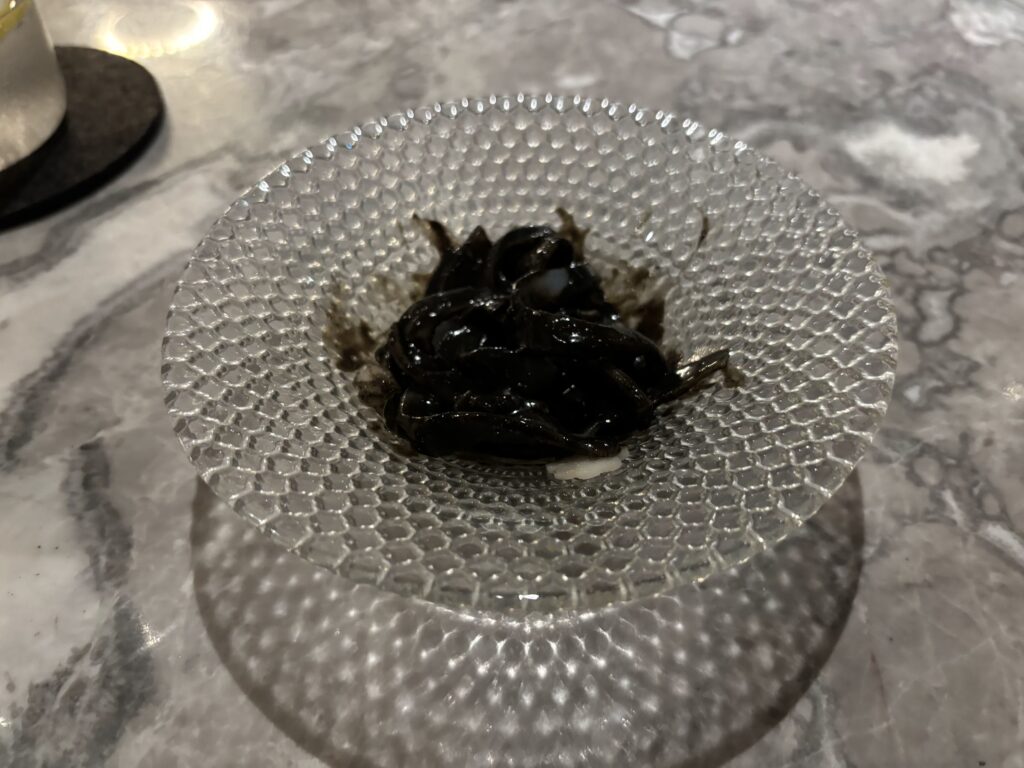
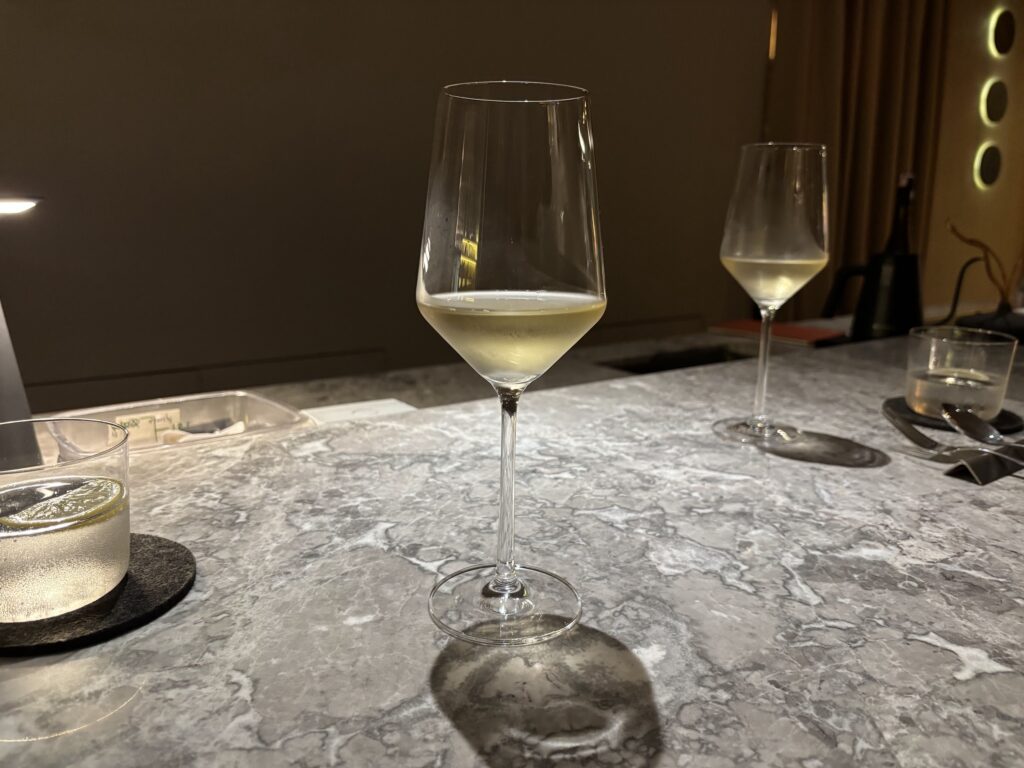
The couple next to us had requested all dishes to be toned down, chilli-wise, and theirs arrived with a clear broth, which tells you the real energy of this dish lives in the squid ink. A Wieninger Gemischter Satz 2023, a Viennese field blend, was poured alongside. Not Riesling, not Grüner Veltliner, not any of the predictable pairings for spicy food. Acid on acid, the wine running in parallel rather than trying to counterbalance it, cleaning the palate between bites. This was Royd’s fourth version of gaeng som, a signature they keep evolving each season. It felt unimpeachable.
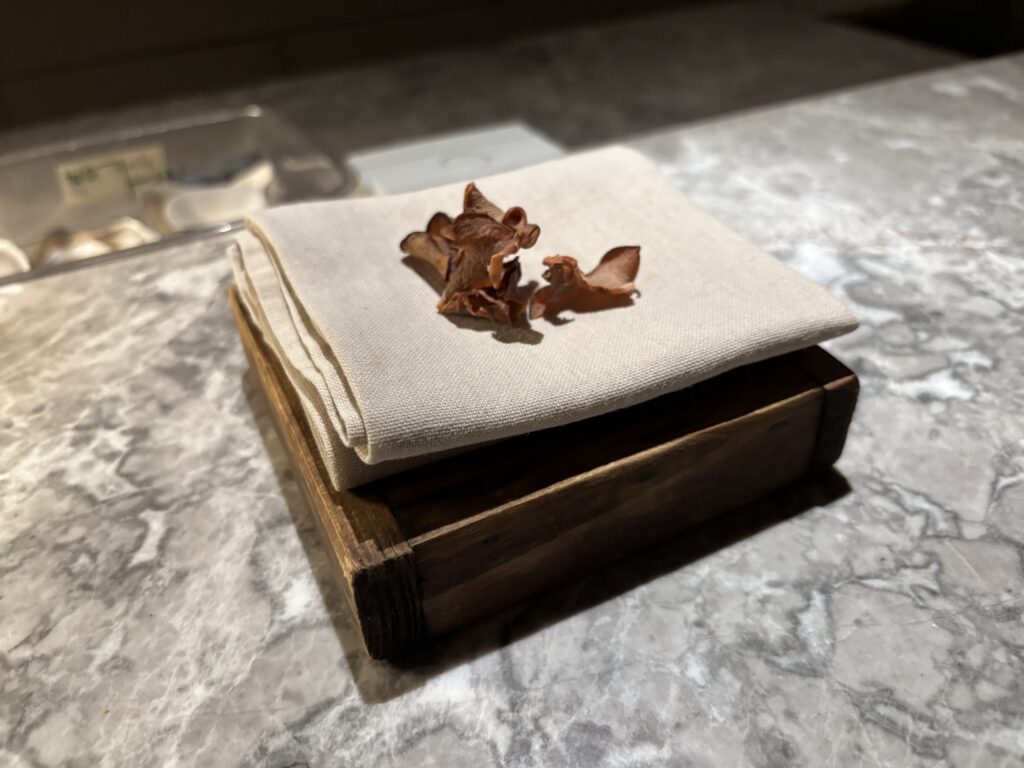
Afterwards, the dried garcinia was brought out at the counter on a folded linen tea towel, like something precious. It came after the dish, not before – not the choreographed show-and-tell you get at most Michelin-level Thai restaurants, but something more reactive. Appreciated that.
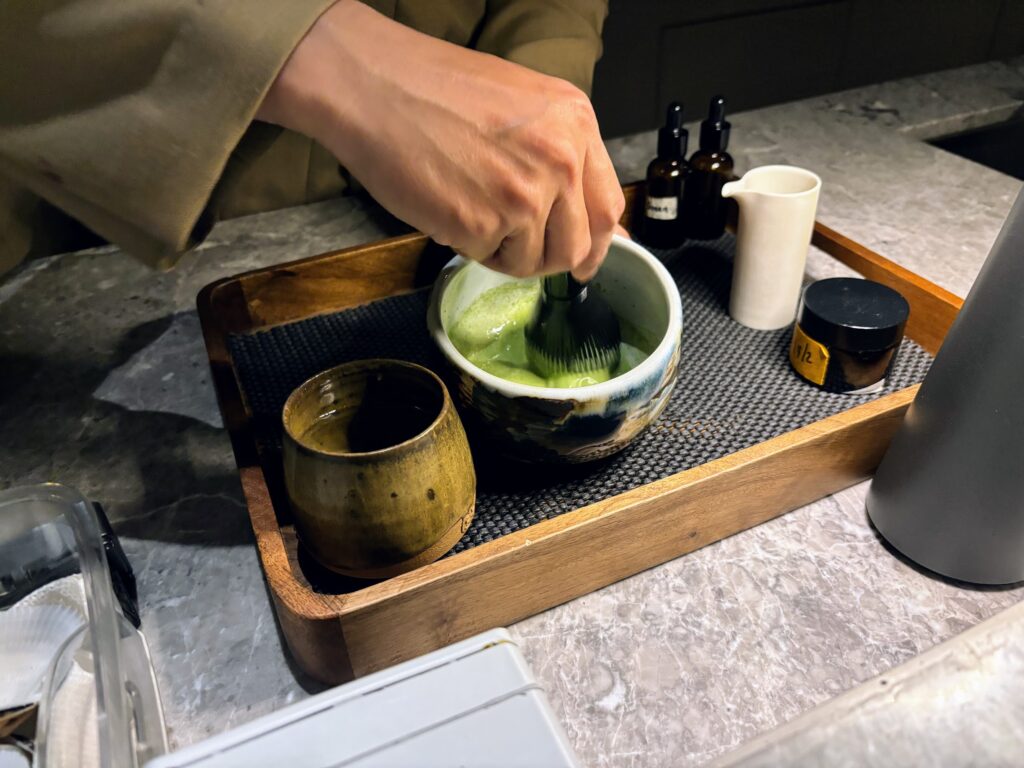
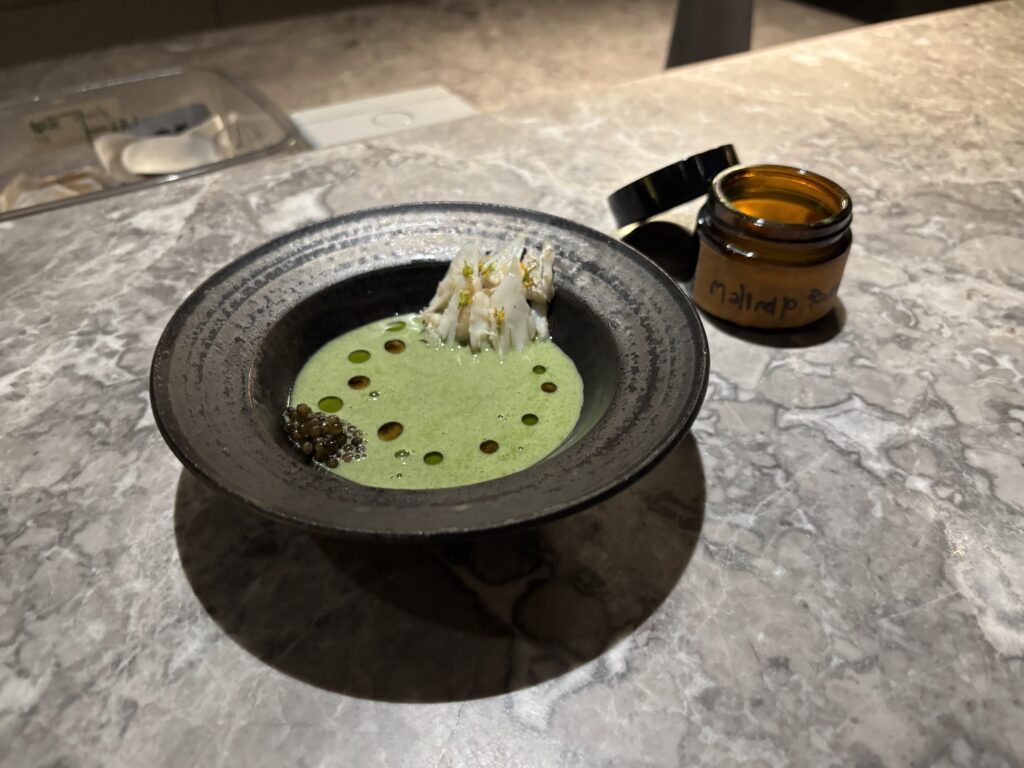
Next, bai liang pad kai – southern Thailand’s staple of malindjo leaves with egg – by way of Japan. The malindjo had been dried and ground, and was whisked at the counter like matcha with a bamboo chasen; the egg here a krill chawanmushi. It almost didn’t need the Andaman blue crab and smoked Hua Hin caviar, but we weren’t complaining.
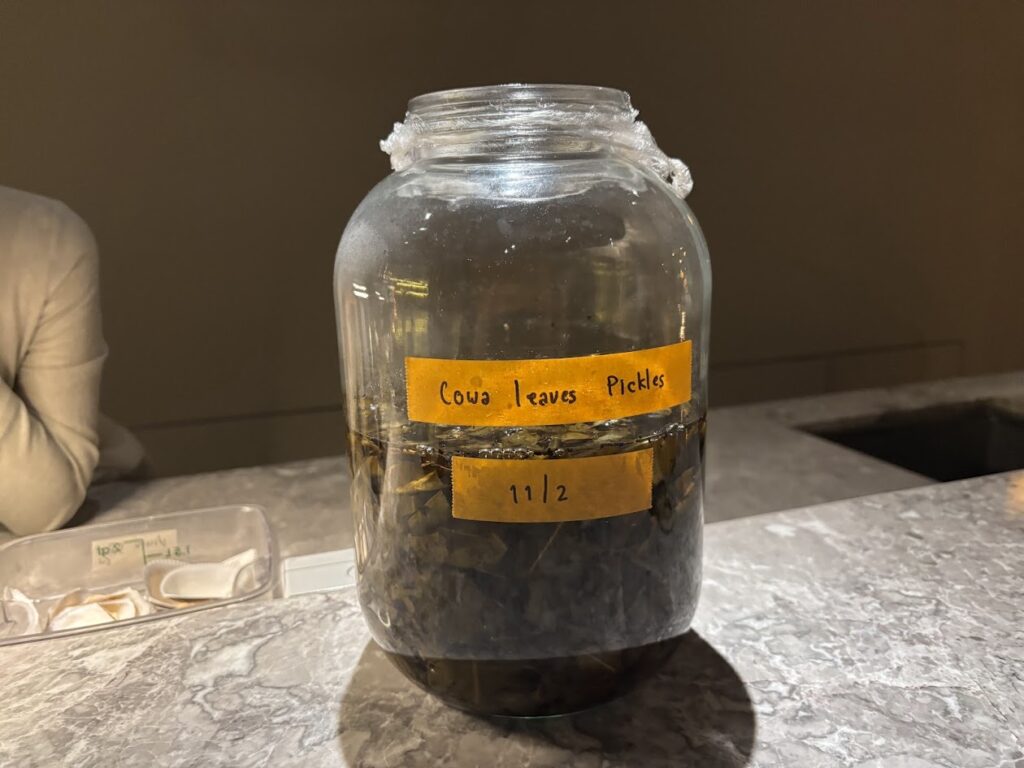
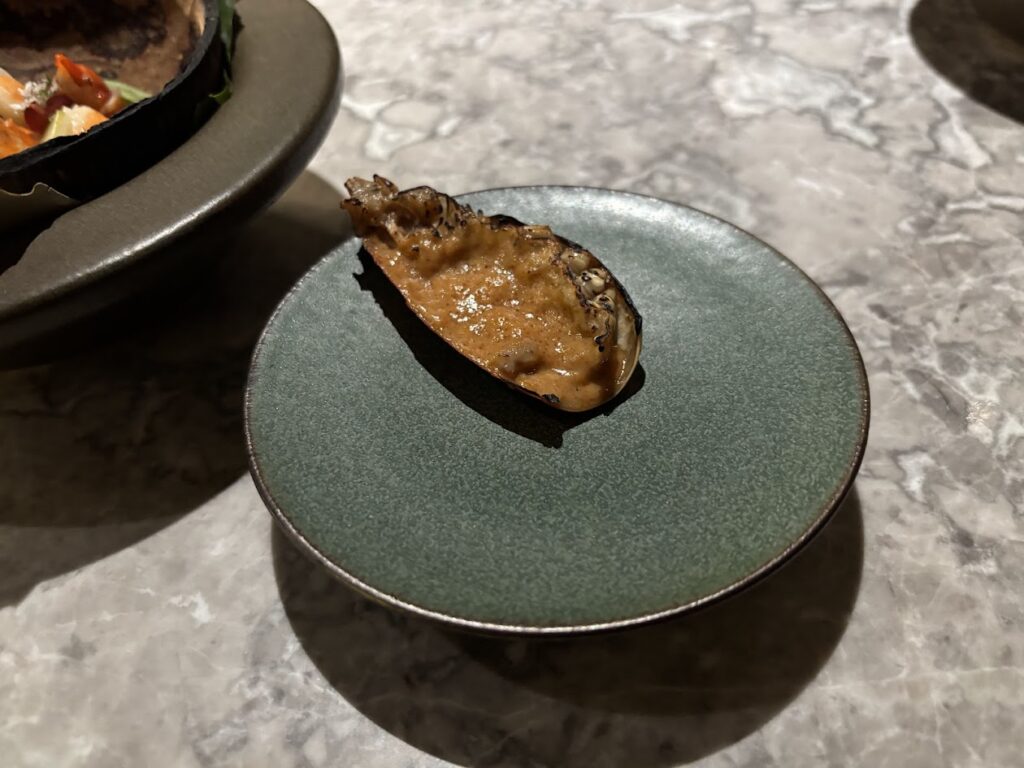
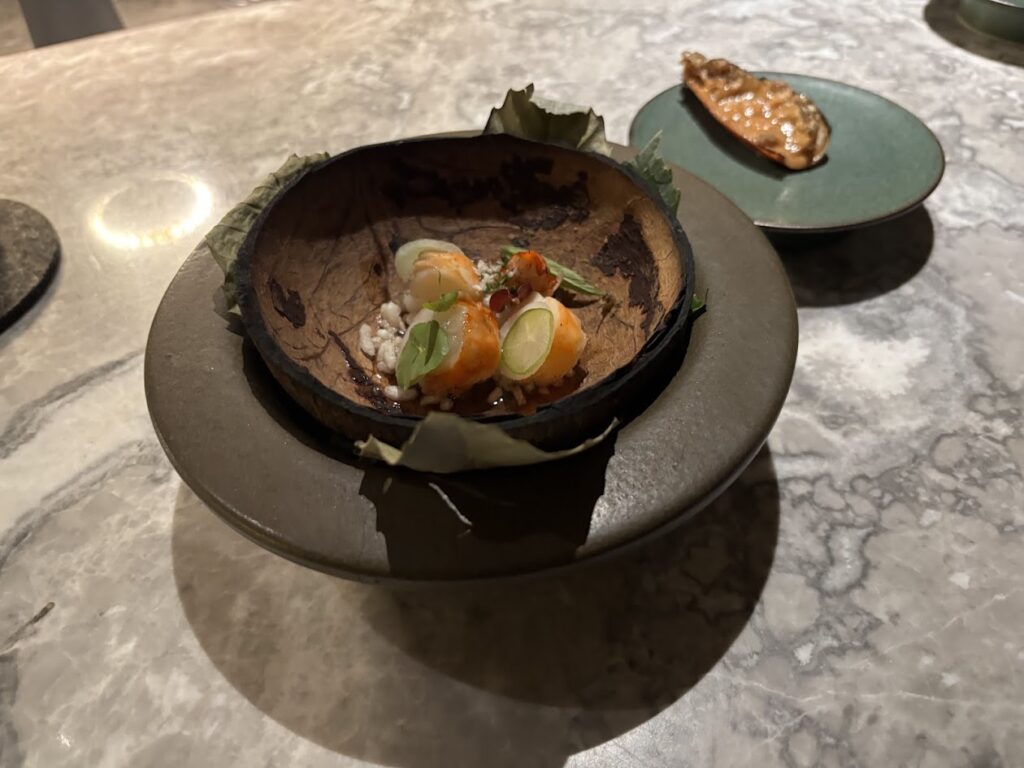
Next, a dish of prized Phatthalung river prawn, which wasn’t on our menu but we tagged in on as it looked intriguing being delivered to our neighbouring diners. A Dei Martiena 2022, a Tuscan white from Montepulciano, was poured alongside. The standout wasn’t the main bowl of prawns in a broth perfumed with dark cowa leaves (as good as it was) but the prawn head. Halved then grilled until black, the shell was served with the smoked, now custardy head juice pooled inside. The absolute essence of prawn flavour, you’re encouraged to either drizzle it over the main bowl or simply suck it out like a ravenous beast. The choice is yours, the latter is obviously correct.
These two dishes are succinct examples of the service here. The malindjo was delivered with a joke about how the chef tricked some of his best friends into thinking it was ceremonial grade matcha. The other the fluidity of service. While dishes are of course delivered with the usual spiel you’d expect with a tasting menu, the pomp is replaced with light heartedness and the good nature of a restaurant that knows it’s on song.
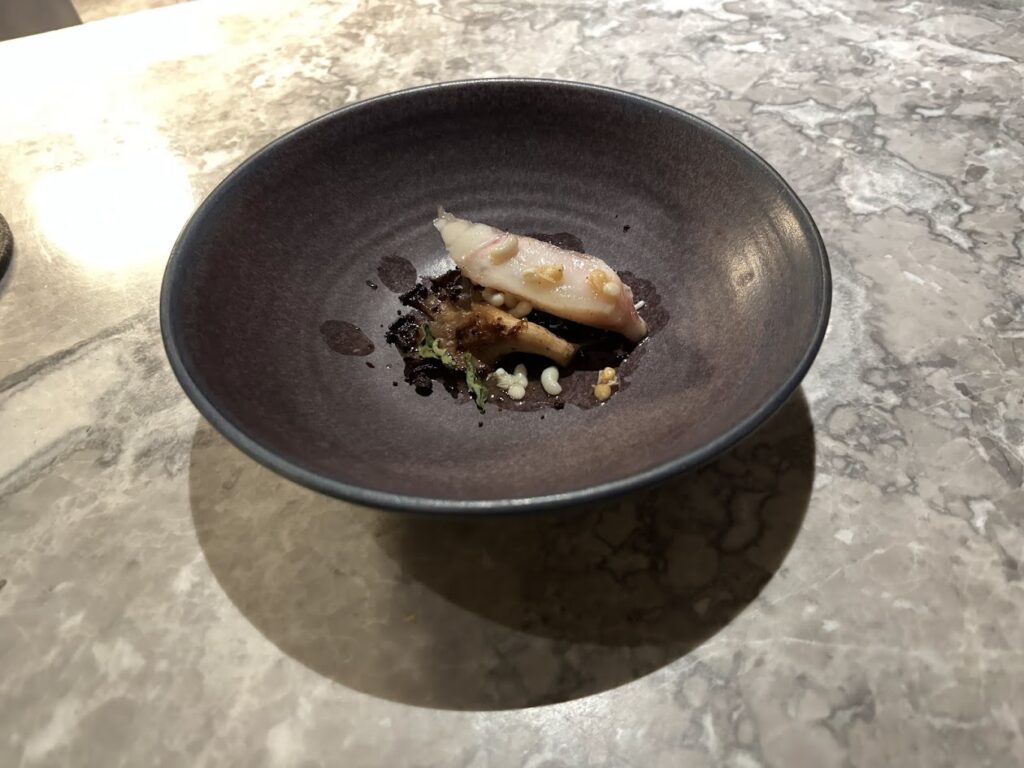
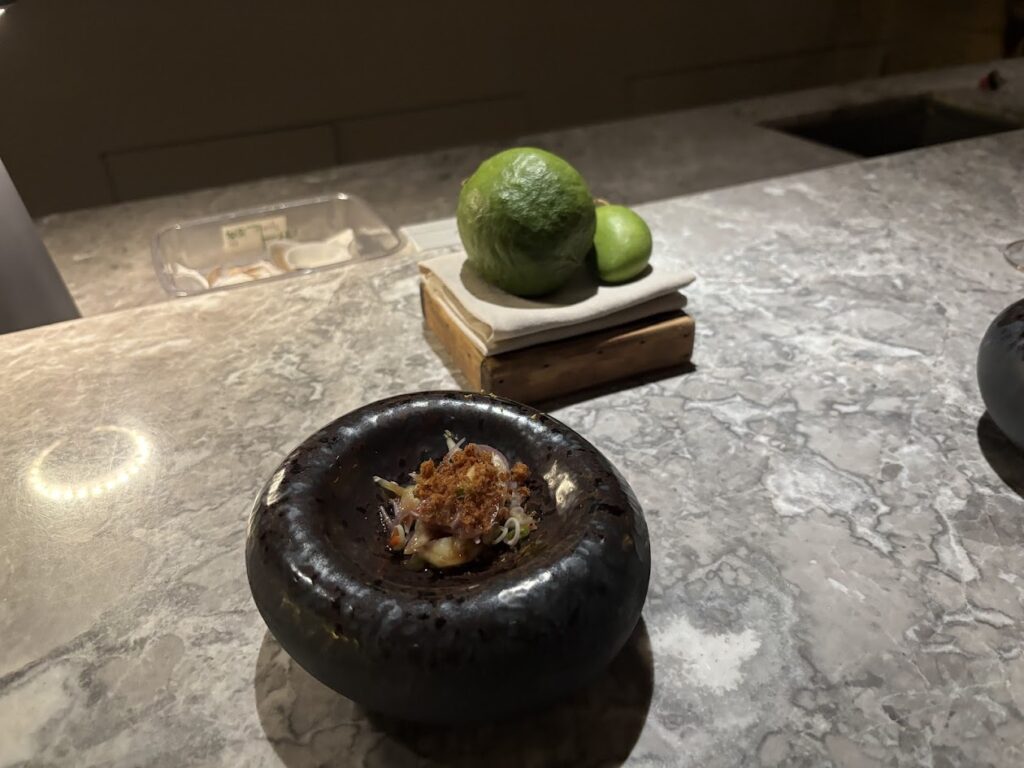
Next, a steamed catch of the day in peppery kaeng liang soup served as a change of pace. Earthy and mild, muted even, the exception that proved the rule. A palate cleanser of southern sour fruits cleansed the palate.
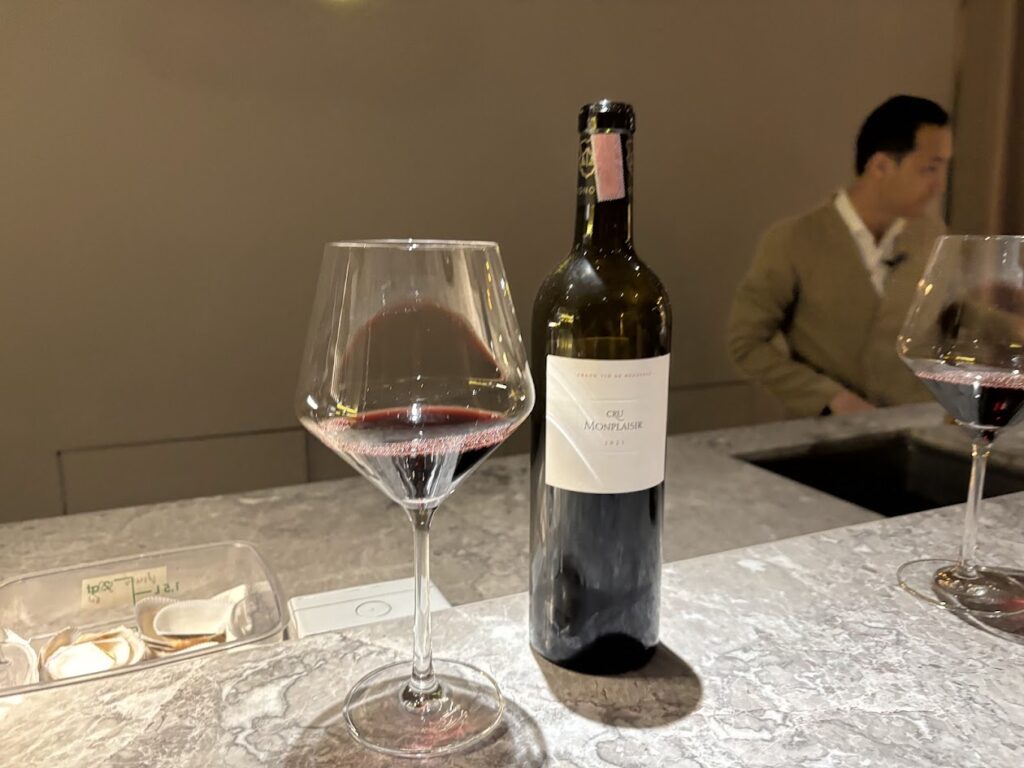
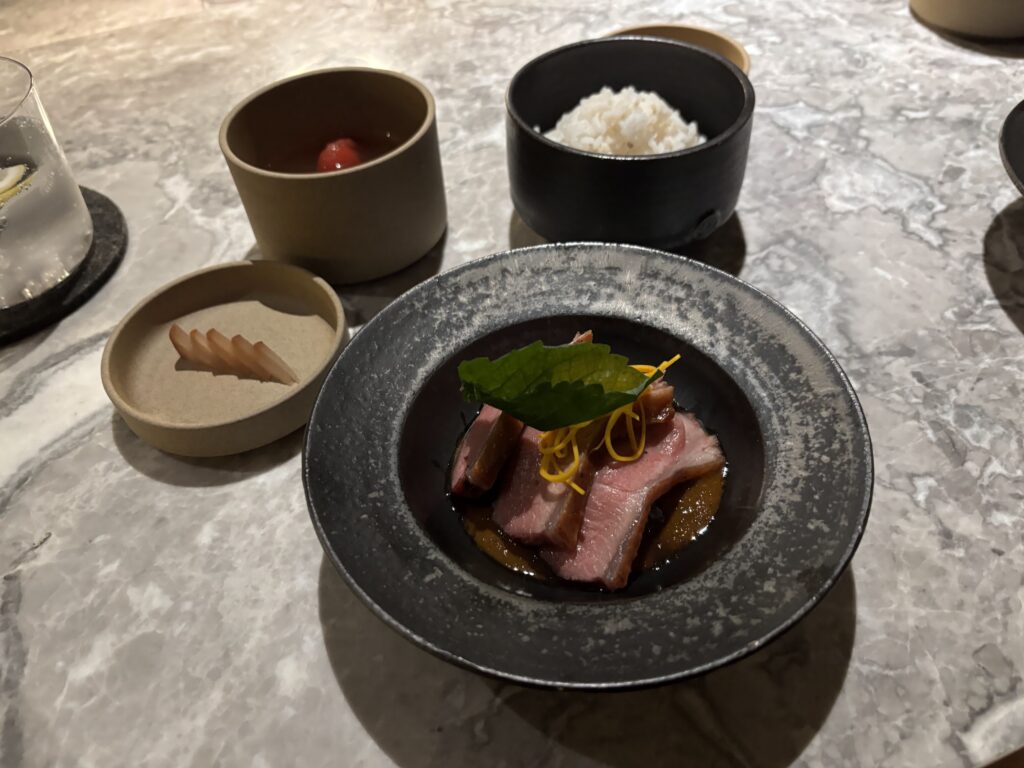
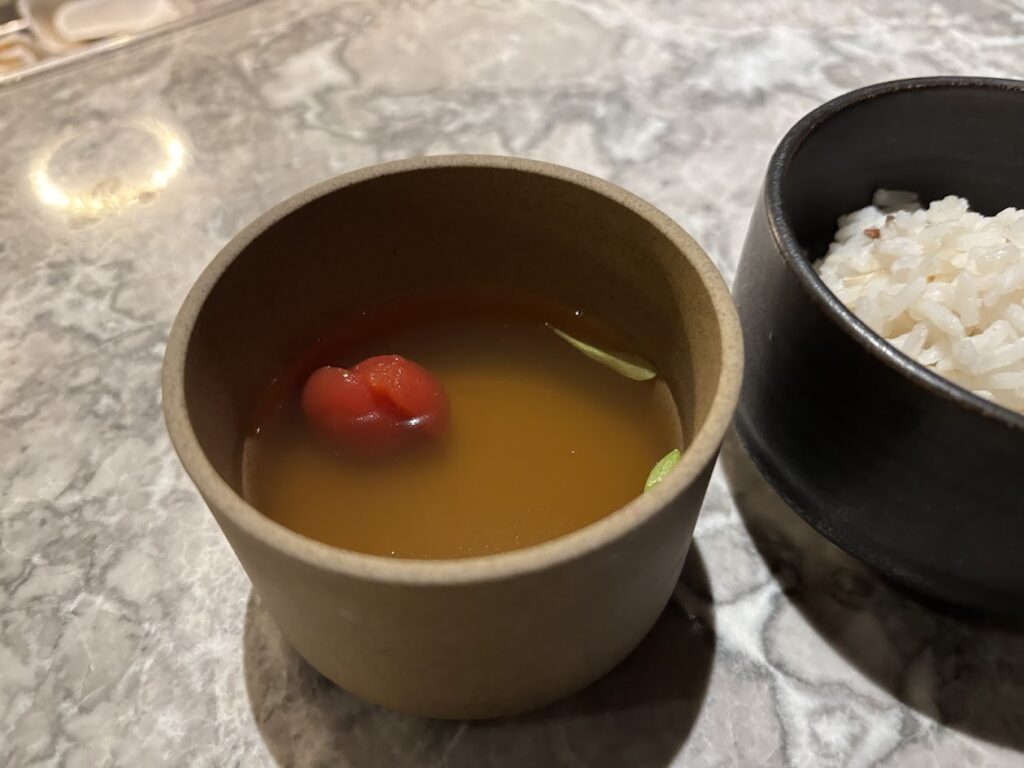
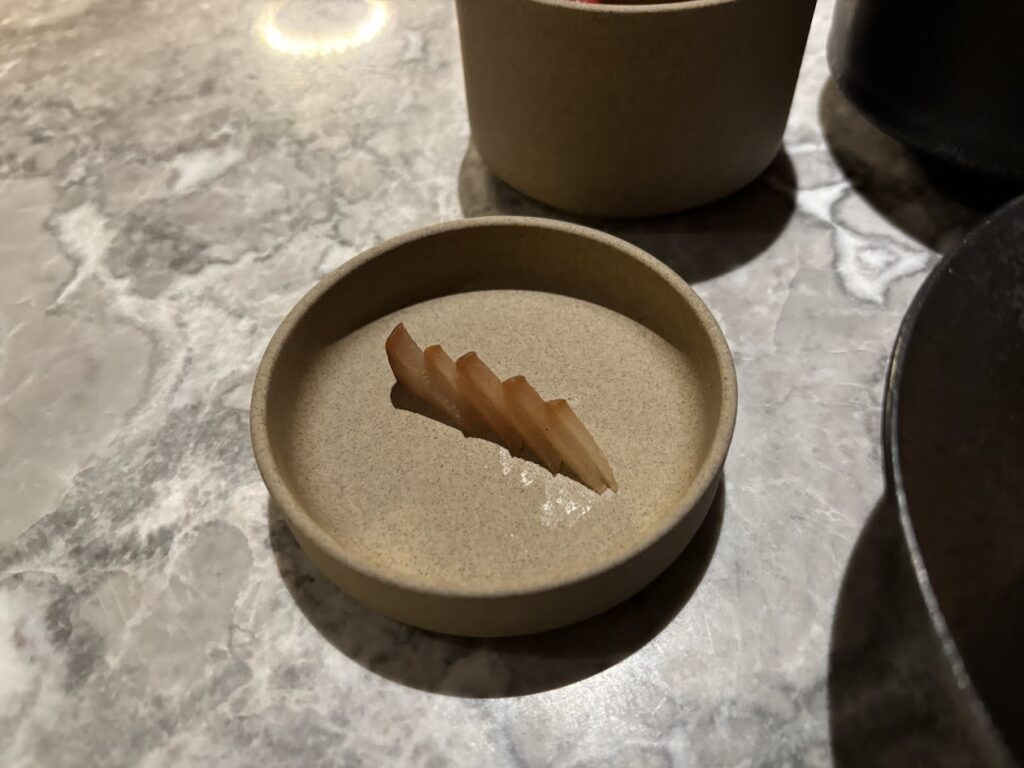
A Cru Monplaisir 2021, a Merlot-dominant Bordeaux, had been poured in anticipation of the ‘main’. Lamb, a triumph, a main course in the European sense (medium rare protein as the focus that everything orbits around) and sufficiently samrub in style to be southern Thai. Three or four blushing pieces of lamb loin, charcoal grilled, the cuisson absolutely perfect, served over an assertive water-based cumin leaf curry that was peppery and bold and bracingly spicy. Phatthalung Tubtim organic rice alongside, lightly pickled nashi pear, and an incredible clear soup, refreshing and packed with depth and verve. You could request top-ups of the fire extinguisher.
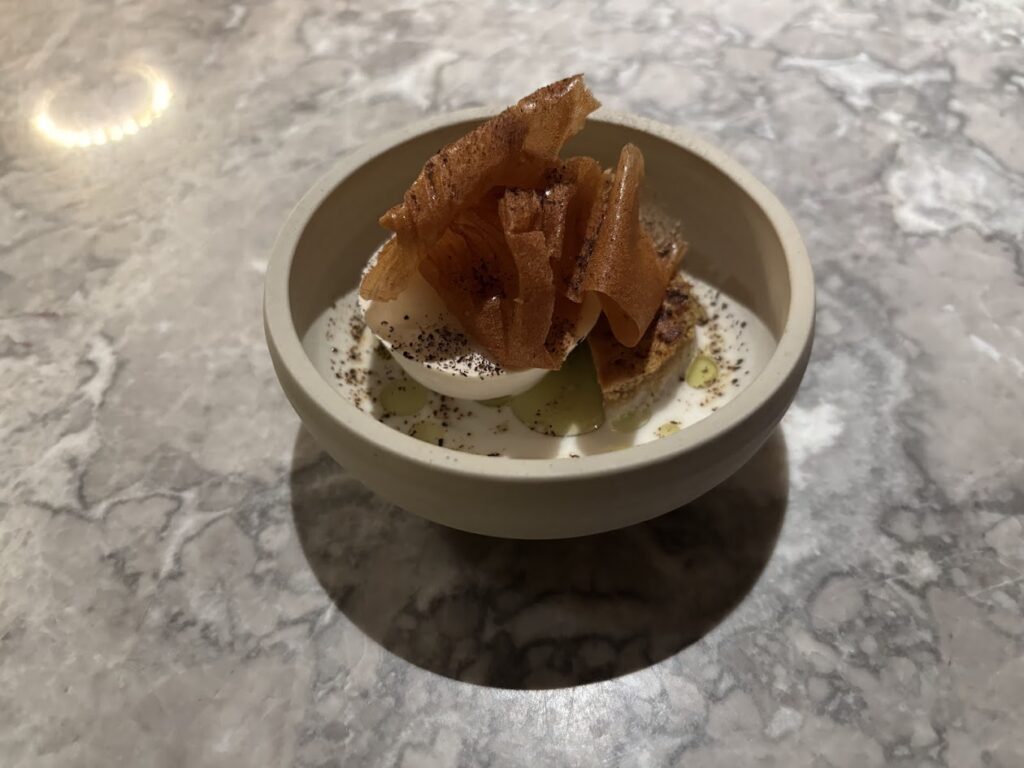
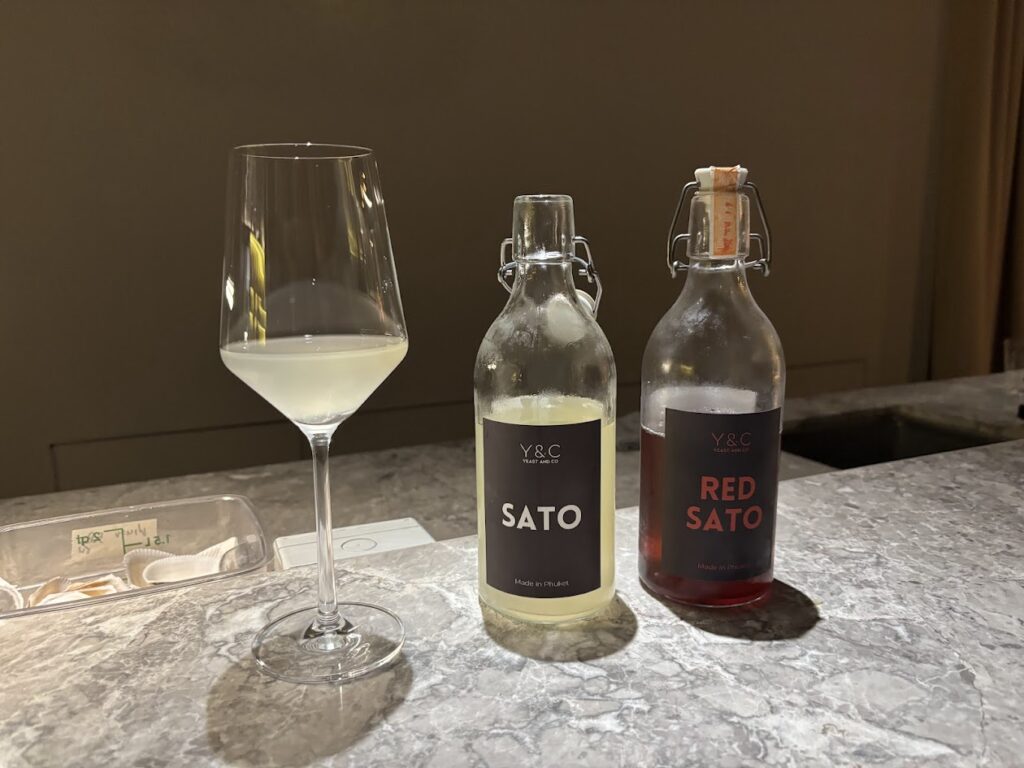
The sweet stuff, then. Banana nananana. Silly name, glad we didn’t have to say it out loud to order it, but absolutely brilliant. A play on kluai buat chi, the classic Thai banana in coconut cream, with four or five different banana components in a salty-sweet coconut cream sauce, even the flamboyantly towering tuile made from banana. The wine pairing had given way by this point to sato, a traditional Thai fermented rice wine made by Y&C (Yeast and Co) in Phuket. They poured the white sato first, and after some spirited discussion they gave us a glass of the red too to compare. Classy.
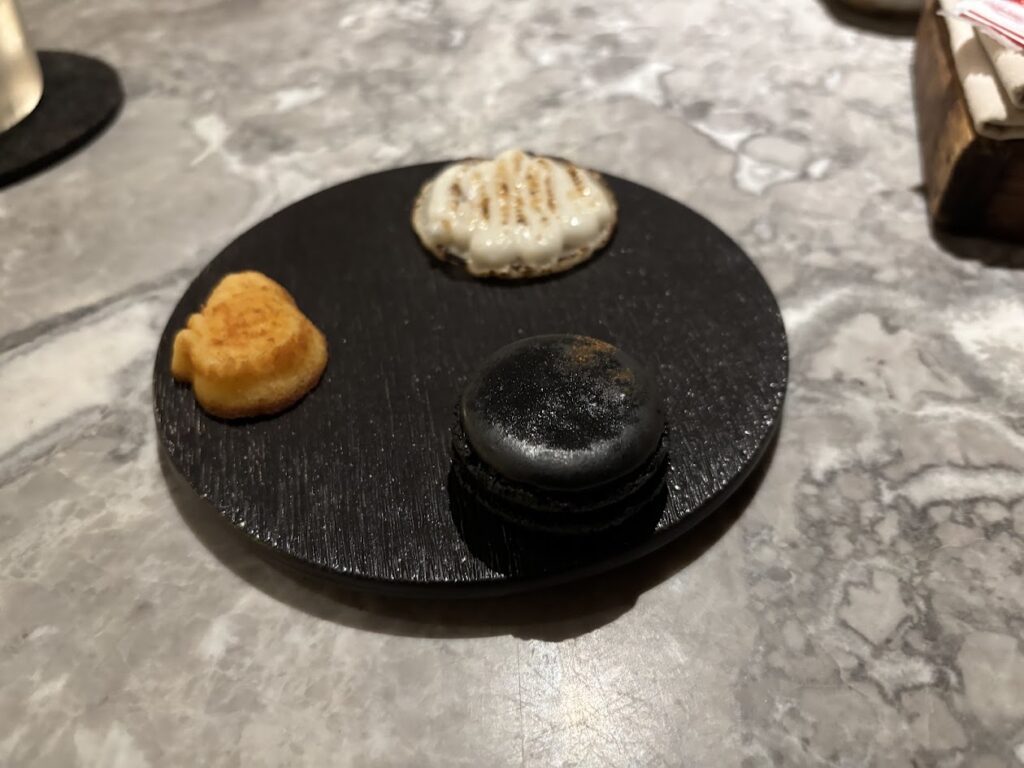
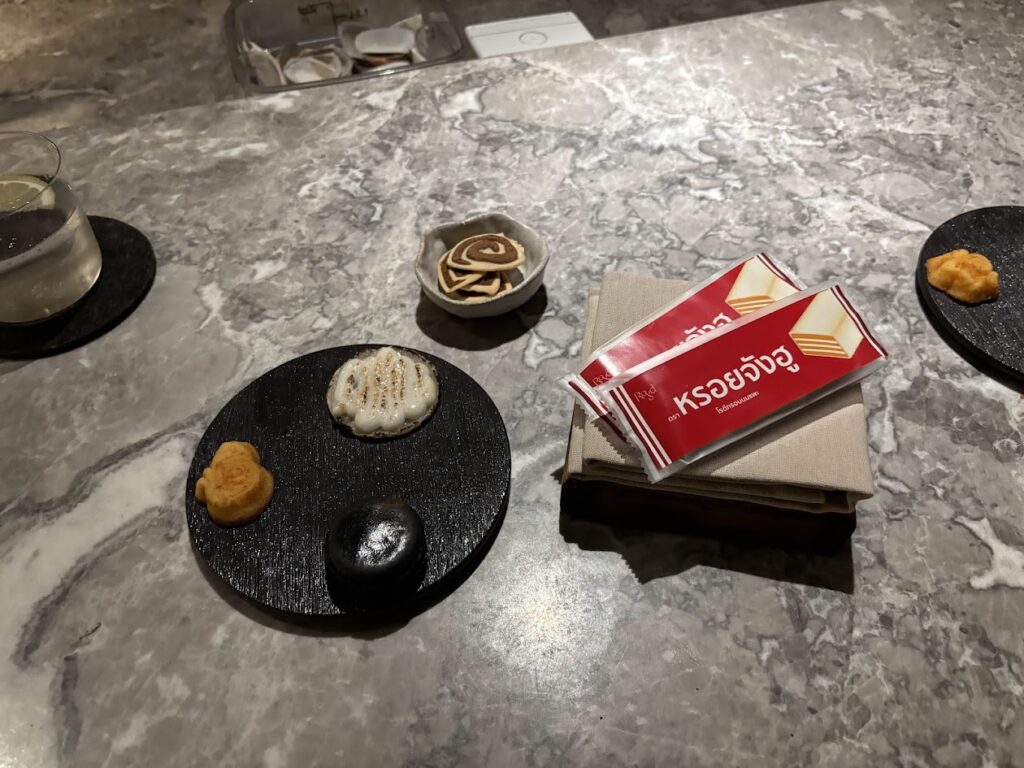
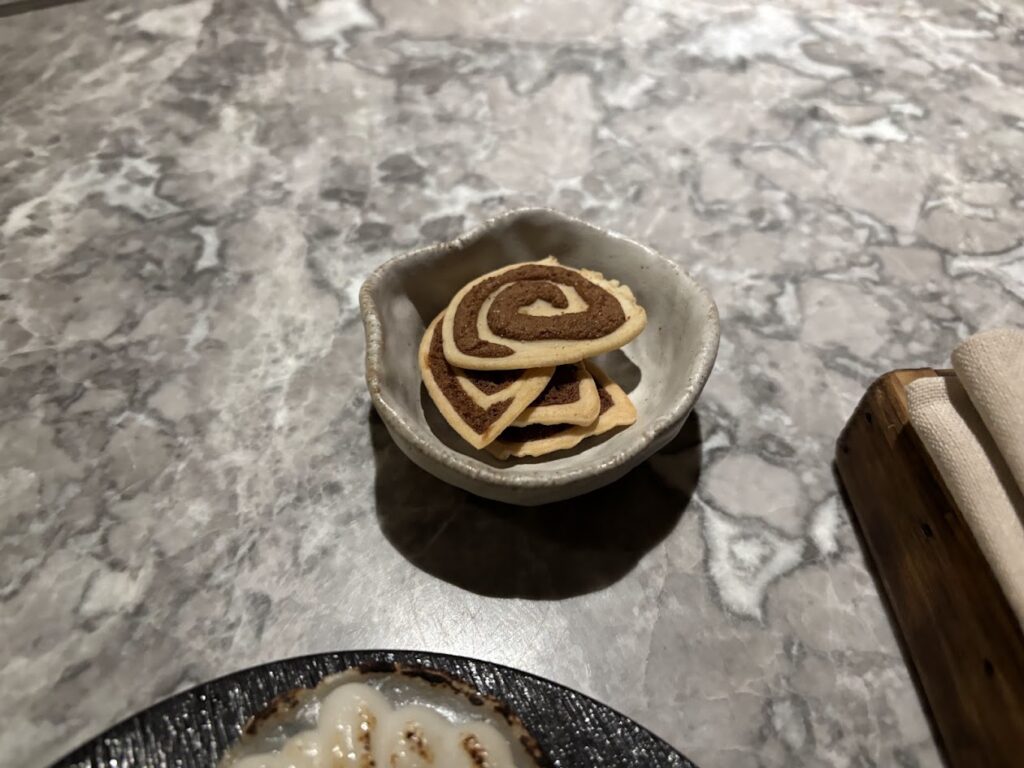
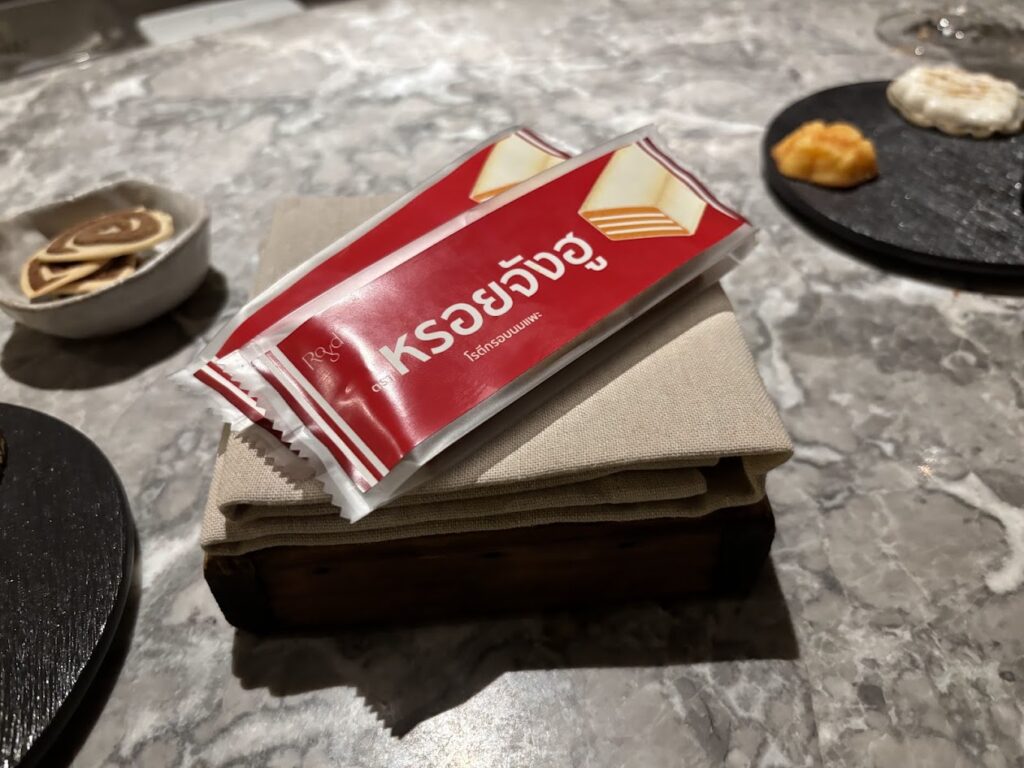
Petit fours largely passed without incident, though a riff on kanom krok stays with me for being very salty but in a weirdly satisfying way. To close, the pepper biscuit: a beloved Phuket sweet from the Hokkien-Chinese tradition, usually served with tea, presented both in its original form (in bespoke Royd packaging that reads หรอยจังฮู, the phrase that gives the restaurant its name) and as a millefeuille layered with condensed milk crème pat and black pepper. Here’s the original, here’s how we celebrate it.
It’s a gesture that invites comparison with Sorn, Bangkok’s three Michelin-starred southern Thai institution, where a dessert trolley laden with traditional sweets serves as a final statement of provenance. Royd doesn’t suffer from that comparison, which is a pretty massive compliment.
Chef Mond, who just won the MICHELIN Young Chef award at the same 2026 ceremony where his former mentors at Mezzaluna, the Sühring twins, were promoted to three stars, is cooking at a level that genuinely stands up to Bangkok’s best southern Thai fine dining, but for around half the price. The full eight-course dinner with wine pairing comes to roughly 7,500 THB (around £170) with service and tax.
There’s a format that’s become well worn in Bangkok over the past few years: the modern Thai tasting menu, course by course with explanations and demonstrations, the chef reinterpreting regional dishes through fine dining technique. It can feel passé, a bit studied, the kind of meal where you admire the craft but forget about it the moment you’ve left, wondering if the street might have done the same dishes better.
The common critique of Thai fine dining is familiar: “Why pay that much when I can eat something just as delicious for 50 baht?” It’s a fair point. Many similar restaurants lean on familiar recipes, modernising them through imported ingredients and haute presentation rather than reinvention. And yes – you absolutely can have the meal of your life at a raan aharn around the corner.
But Royd is different. It’s food you won’t eat elsewhere, completely fresh, but southern Thai to its soul; spicy, funky, brave and bold. There’s no cynical signposting. The French and fine dining flourishes have an instinctual feel, accrued through lived experience, and the fact that chef Mond is doing it in his home town, on the street he walked to school, in a shophouse built by the same Hokkien-Chinese community whose snacks he’s riffing on, gives it a context and a sincerity that an esteemed Bangkok dining room sometimes struggles to replicate. Soigné, indeed.