By 7am, the queue outside Heng Heng is already doing what Phuket queues do; swallow both pavement and morning whole. A few streets over, the pot at O Cha Rot has been simmering beef balls longer than most people waiting for them have been alive. And somewhere on Thalang Road, Roti Thaew Nam is frying its first roti of the day over charcoal, but is just two hours from selling out until tomorrow. Welcome to Phuket Old Town, the world’s best place to eat breakfast.
The young, effervescent owner of Hotel Verdigris, Pichakorn ‘Peach’ Phanichwong, shares this hyperbole. She’s obsessive about local food, and keeps a personal Phuket guide, which she calls her Peachilin Guide; a list of her favourite spots to eat in the city. She knows which aunty at Mae Ting makes the most aromatic curry sauce, what morning the best cook at Boonrat always takes off, and the crucial preference for a nam dok mai over an okrong when making mango sticky rice. It is, I suspect, a more useful document than that there Michelin, and the first thing she’ll want to discuss when you check in is not your room but your appetite.
Which turns out to be the organising principle of the whole place. The reason to book. At check-in you pick a breakfast set menu from a bespoke selection of the Old Town’s shophouses and kitchens (many Michelin-listed, all Peach-accredited), and instead of the unseemly business of finding the right alley at 7am and queuing in the rising Southern heat, the hotel places the orders, the food arrives hot at the Sunroom, and you sit under the morning light eating a table’s worth of Phuket Old Town’s proudest generational cooking. It is the finest hotel breakfast I have ever eaten, full stop.
The Location
Sandy beaches and a fair amount of unearned bling are the hallmarks of a Phuket holiday, but those in the know will tell you that staying in the Old Town is the more rewarding move. The quarter is legendary for its food scene, with one of the highest concentrations of Michelin pin-drops anywhere on the planet. Hotel Verdigris puts you directly in the thick of it, within walking distance of them all.
You’re on Yaowarat Road, which threads through the Old Town’s most storied streets: Thalang, Phang Nga and Dibuk. Just make sure you tell your taxi driver Phuket Yaowarat, not Bangkok Yaowarat, or you’ll be in for a very long, very expensive ride. Anyway the Verdigris is around 45 minutes’ drive from Phuket International Airport and can arrange a transfer if you’d rather not negotiate the notorious taxi rank.
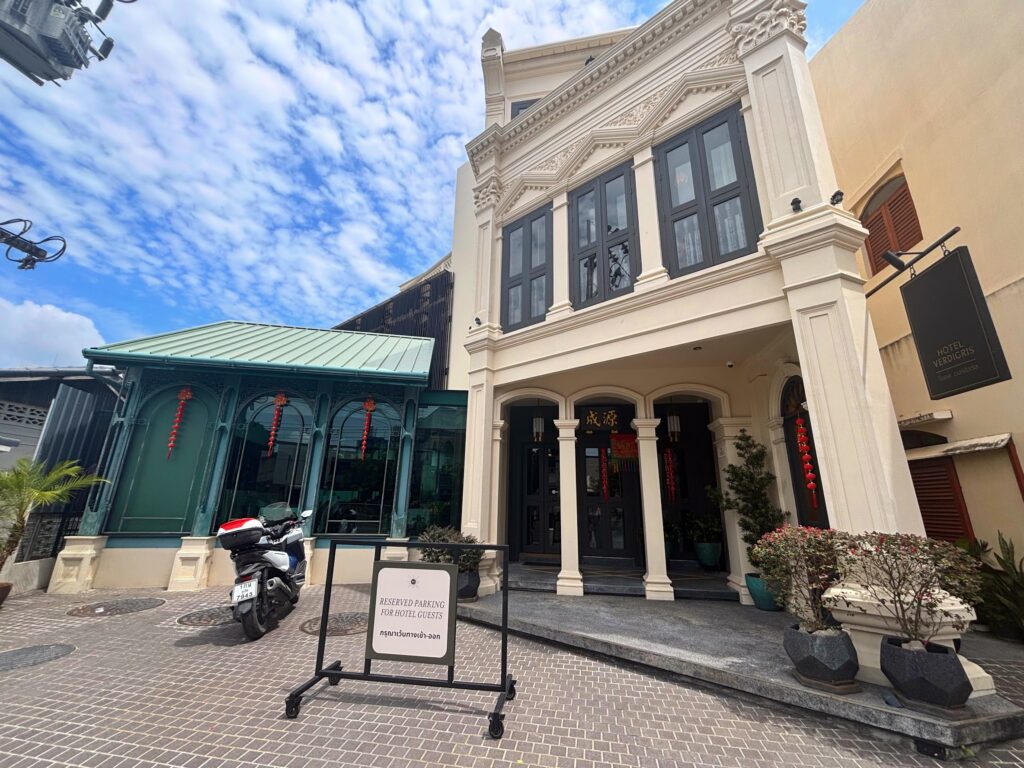
Yaowarat itself rewards a slow wander. A Pong Mae Sunee, a tiny street stall awarded a Michelin Bib Gourmand for several years on the bounce, sits on this very road, turning out charcoal-cooked coconut crepes. Walk the other way and you’ll hit Lock Tien at the Dibuk junction, an indoor food court locals swear by for oh-aew, a shaved-ice dessert with banana and red bean, and Hokkien mee, the stir-fried yellow noodle dish that’s a Phuket signature..
The hotel is also a five-minute stroll from Dibuk Road, the Old Town’s most photogenic street and arguably its best for eating. The municipality has done it the great favour of burying the overhead cables that blight so much of Thailand, leaving the Sino-Portuguese shophouses to do what they do best: glow in the late afternoon light. Raya, at number 48, is an Old Town institution, set inside a beautifully preserved shophouse and known for its moo hong (slow braised pork belly) and yellow crab curry. The Charm Dining Gallery at 93 leans into the same vintage Phuket aesthetic with a menu of island favourites, whilst Royd at 95 offers a more contemporary take on Southern Thai cuisine.
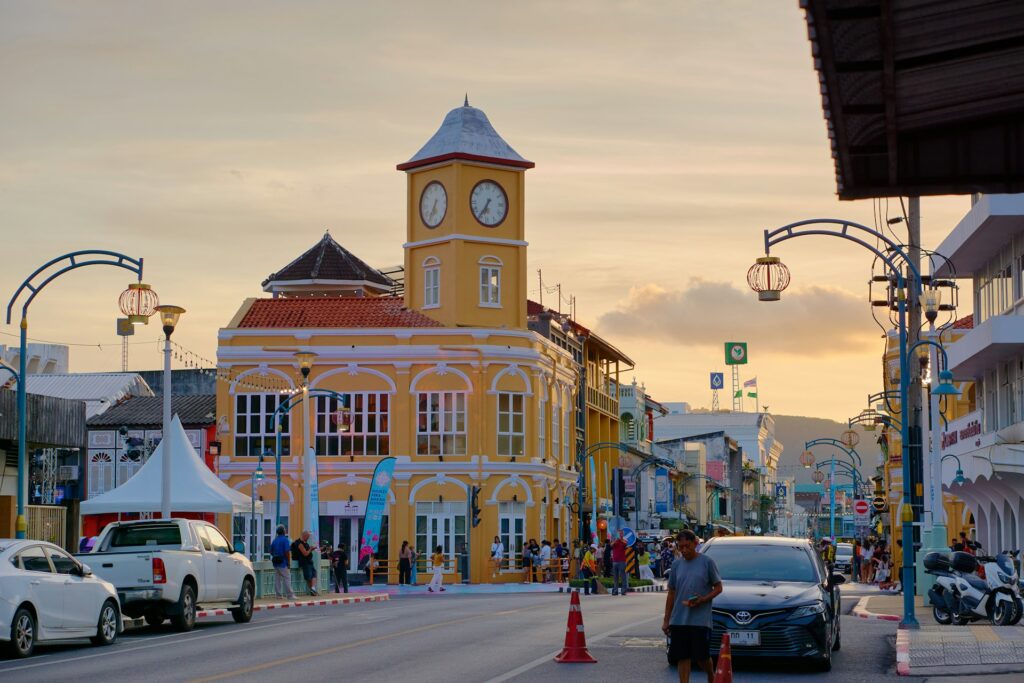
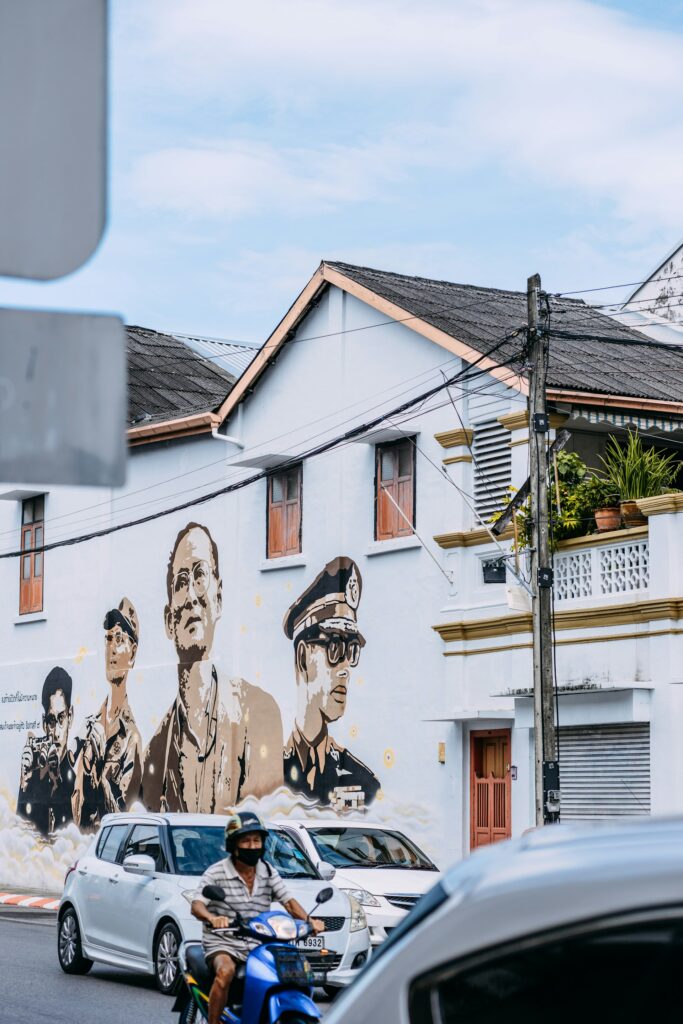
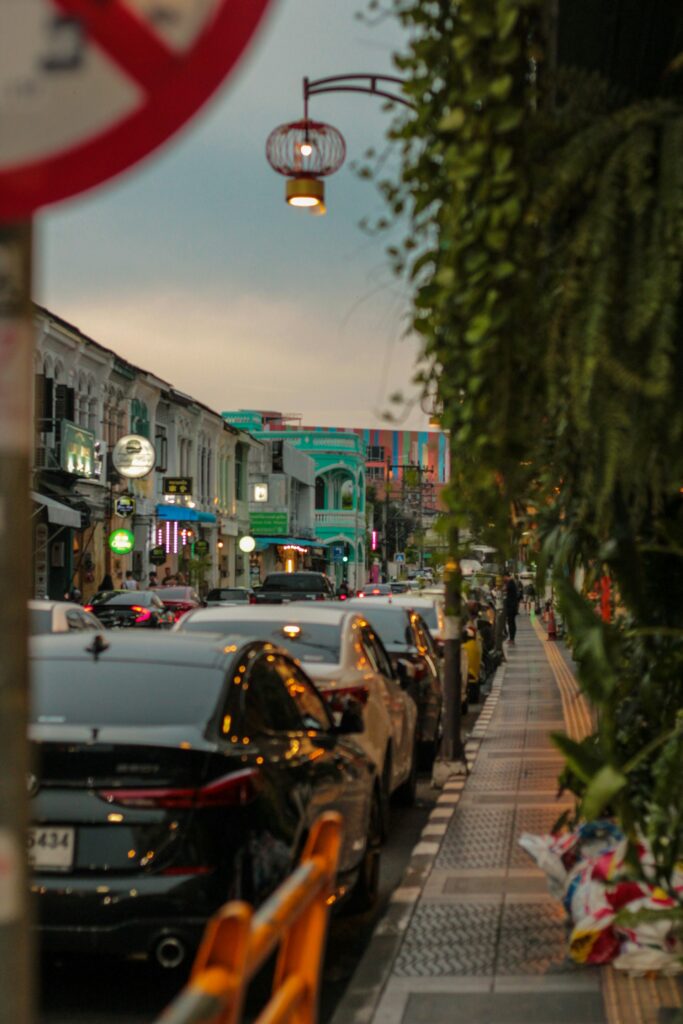
We’re not totally myopic here at IDEAL, and food isn’t the only reason to wander. Soi Rommanee, a few minutes from the hotel, is the Old Town’s most photographed lane, its pastel shophouses now home to galleries and independent boutiques. The Sunday Walking Street Market runs along Thalang Road weekly, and the quarter’s street art, shrines and ceramic shops give you plenty of reason to keep your camera out between meals.
Hotel Verdigris is also a ten-minute walk from a trio of Old Town museums. Phuket Thai Hua on Krabi Road covers the Hokkien Chinese immigration story inside a beautifully restored Sino-Portuguese building. A few minutes on, the free-entry Museum Phuket occupies the former Chartered Bank and the old police station facing each other across the Phang Nga and Phuket Road intersection, with interactive displays on Phuket Baba culture. And further along Krabi Road, Baan Chinpracha is a privately owned mansion still occupied by the family, and a chance to step into a working Peranakan household.
Speaking of which…
Style & Character
Hotel Verdigris isn’t simply a place to stay but rather a setting for cultural immersion in Phuket’s Peranakan heritage, and the whole place has been built around that idea. The Old Town owes its look to the Hokkien Chinese tin merchants who made fortunes here in the 19th century, building the shophouses you’ll be photographing on Dibuk Road in a hybrid Sino-Portuguese vernacular you’ll find in only a handful of Southeast Asian port cities. Verdigris places itself squarely in that lineage.
The hotel’s specific inspiration is Martina Rozells, the Thai-Portuguese woman born in Phuket who became the wife of Colonel Francis Light, the British East India Company officer who governed Penang from 1786. The pair ran a trading post in Junk Ceylon, as Phuket was then known, and Martina’s story threads through every floor of the building.
Opened in 2022, it’s a family-run affair and the debut leadership project of Peach herself, who is of Peranakan Hokkien descent. On the day we visited it was Chinese New Year, and she had stopped by the hotel after coming from her grandmother’s house, still buzzing from the feast she’d just finished. For Peach, Martina Rozells’ background represents the true spirit of being Peranakan on Phuket Island: not just Chinese in Thailand, but something carrying influences from all over the world, including the West.
The design mixes contemporary luxury with old Phuket character, and the verdigris pigment that gives the hotel its name (the bluish-green patina that forms on weathered copper, brass and bronze) is, in the owner’s words, unpredictable yet intriguing. Both descriptions hold up. Inside, time loosens its grip. There’s nothing to tell you which decade you’re in, or which century for that matter.
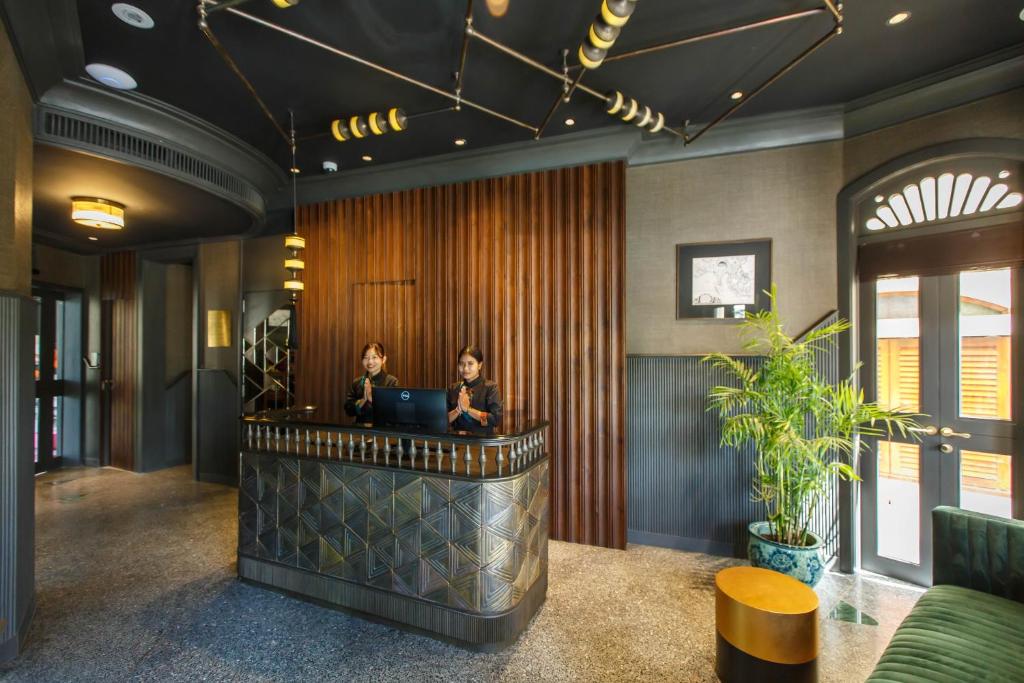
The lobby sets the tone. The reception desk, fabricated by Phuket’s legendary Underwood workshop, is a faceted piece in oxidising metal that catches the low light, finished with a custom pendant light suspended from the dark ceiling that looks, intentionally or not, rather like a brass abacus stretched across the room. The staff greet you with a wai before you’ve quite worked out which part to admire first.
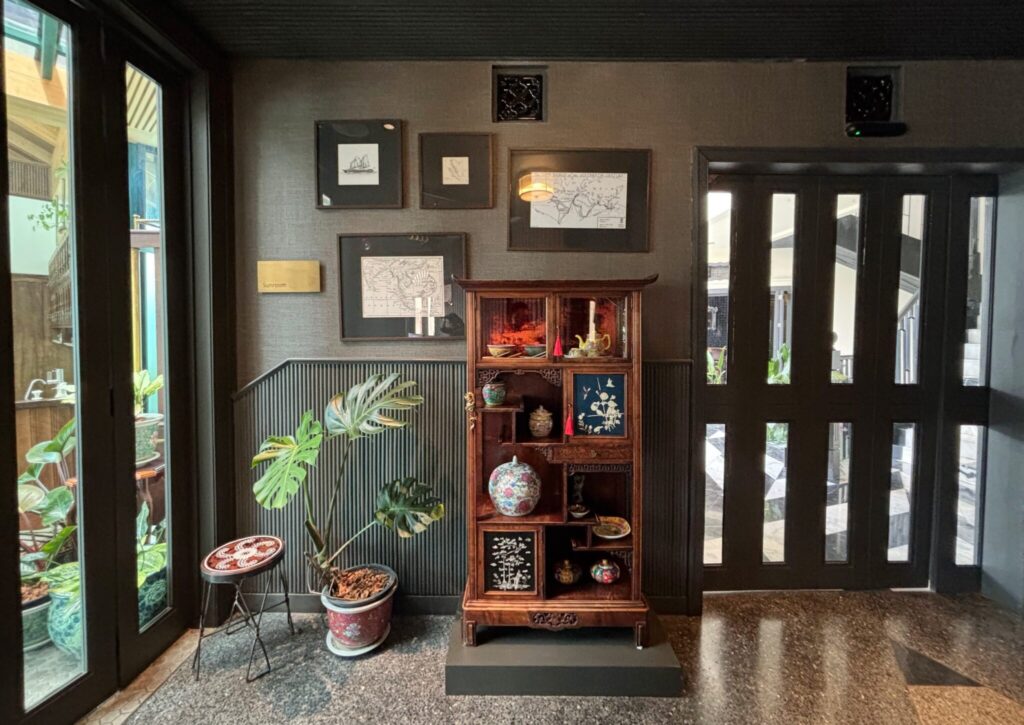
By the entrance to the Sunroom, a vintage Chinese curio cabinet holds the kind of famille rose porcelain Baba households across the Straits have been collecting for two centuries, with a wall of framed antique maps and trade-route charts above nodding to Rozells’ story playing out a few hundred miles south of here.
The hallways are a study in Peranakan opulence: velvet, marble, and a colour palette pulled from the oxidising metals the hotel is named for. Strains of jazz drift around the high ceilings. It is the stairs and corridors that impress most though; take a photo from any angle and it will look like something out of a design magazine, and you the professional who took it.
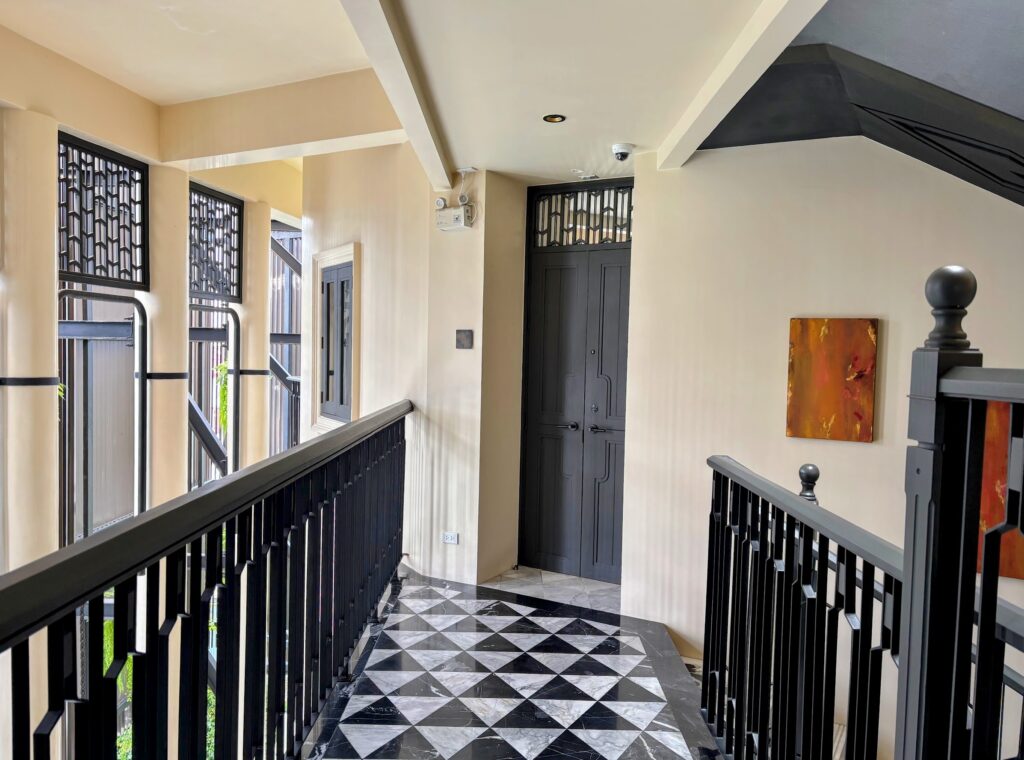
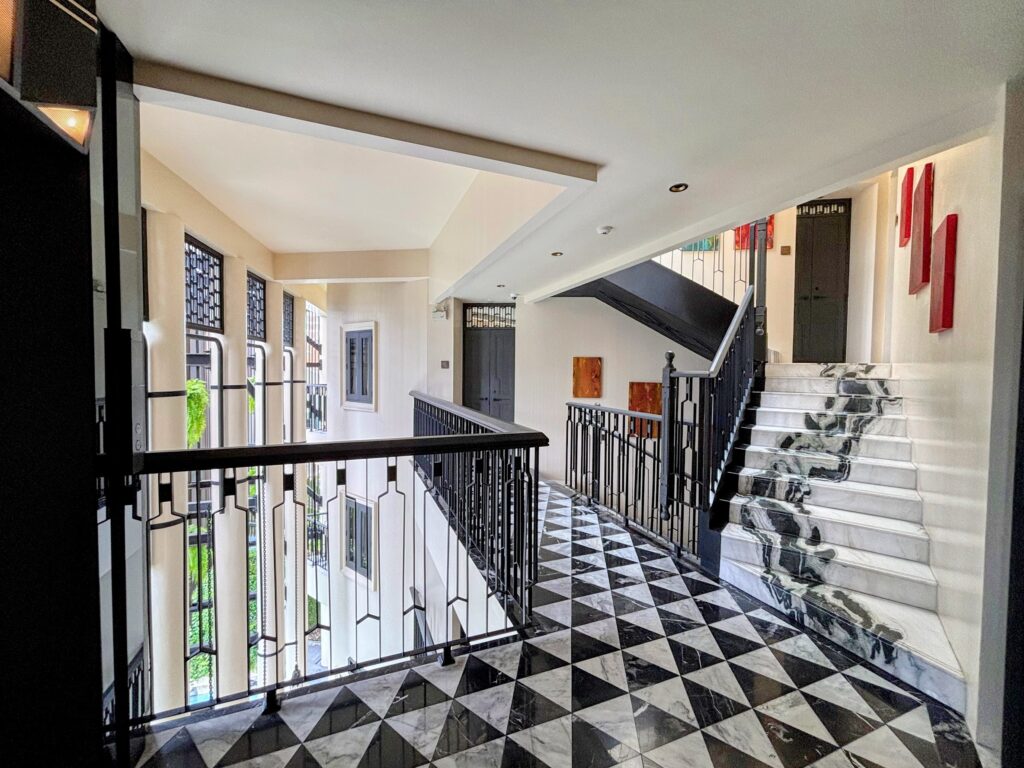
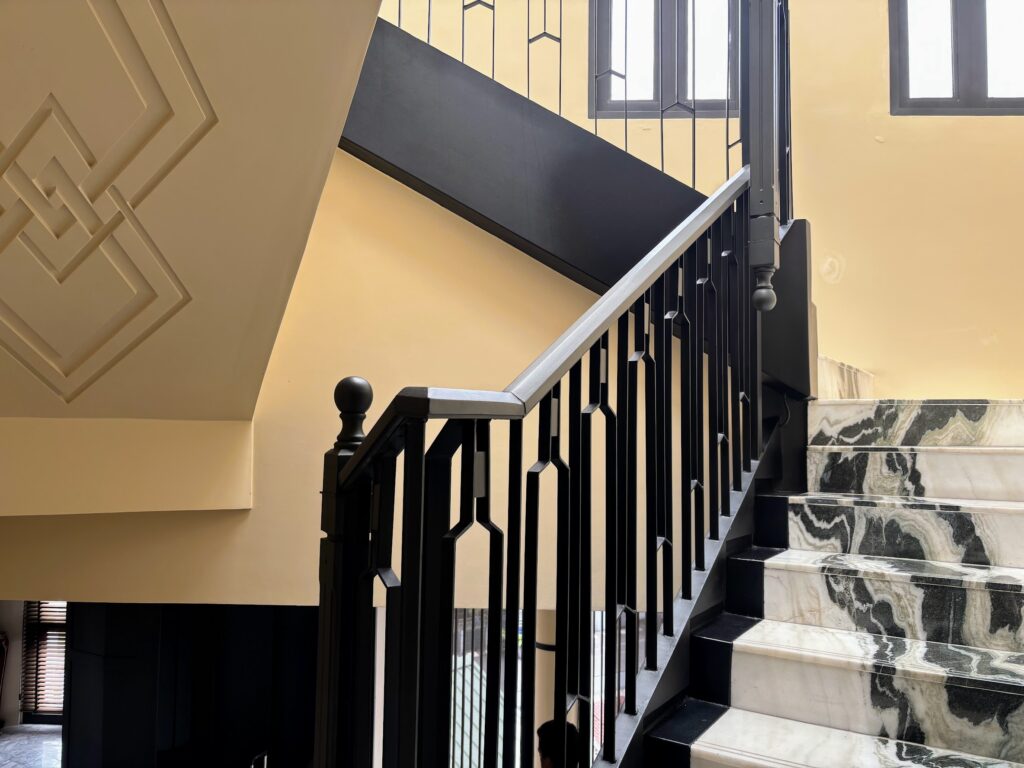
Most hotels are designed for tourists rather than locals. Peach has built one she would want to stay in herself. It’s adults-only, and there’s no sense of having to share the space with the kind of buffet-driven coach traffic that defines most island accommodation. What Verdigris offers, more than anything, is a sense of place: guests feel they’re staying in something rooted in Phuket rather than a backdrop to it.
The hotel celebrates traditions across the year. At the Mid-Autumn Festival, Hokkien mooncakes and tea are served on the house all day in the Sunroom until 10pm, for in-house guests. When we visited on Chinese New Year, we were gifted a mandarin at check-in. Each season brings its own version of the same thoughtful gesture.
There’s also a serious sustainability ethos running through the operation. Single-use plastics are avoided, energy-saving measures are in place, and reuse and recycling are encouraged throughout. None of it is trumpeted.
Rooms
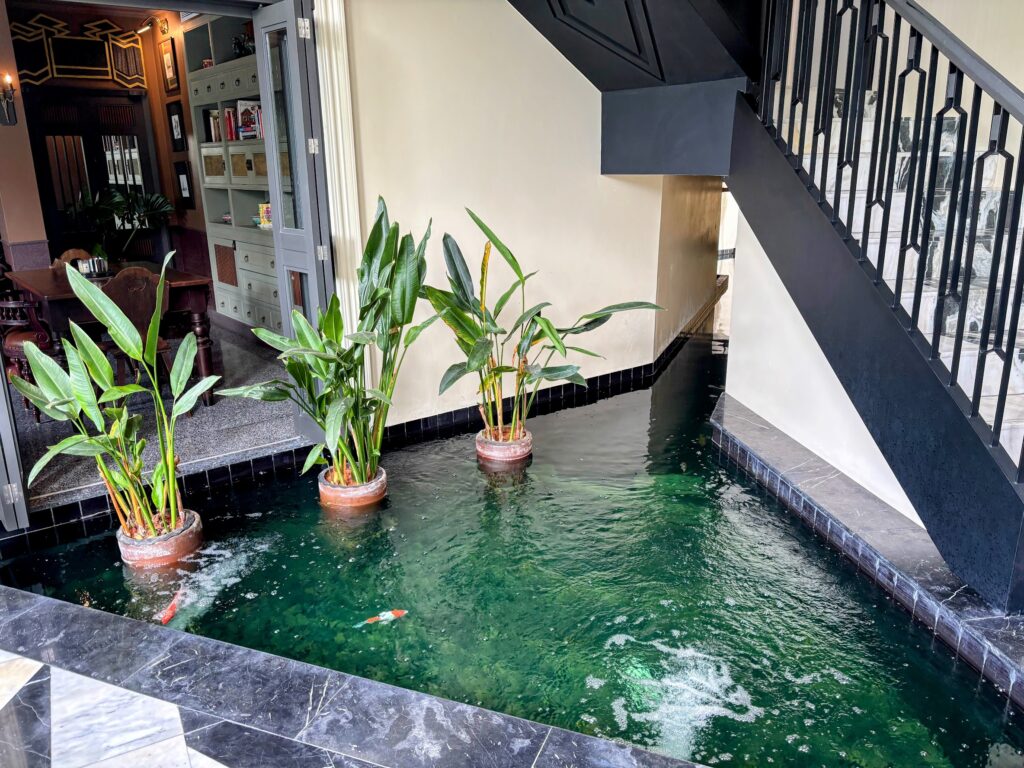
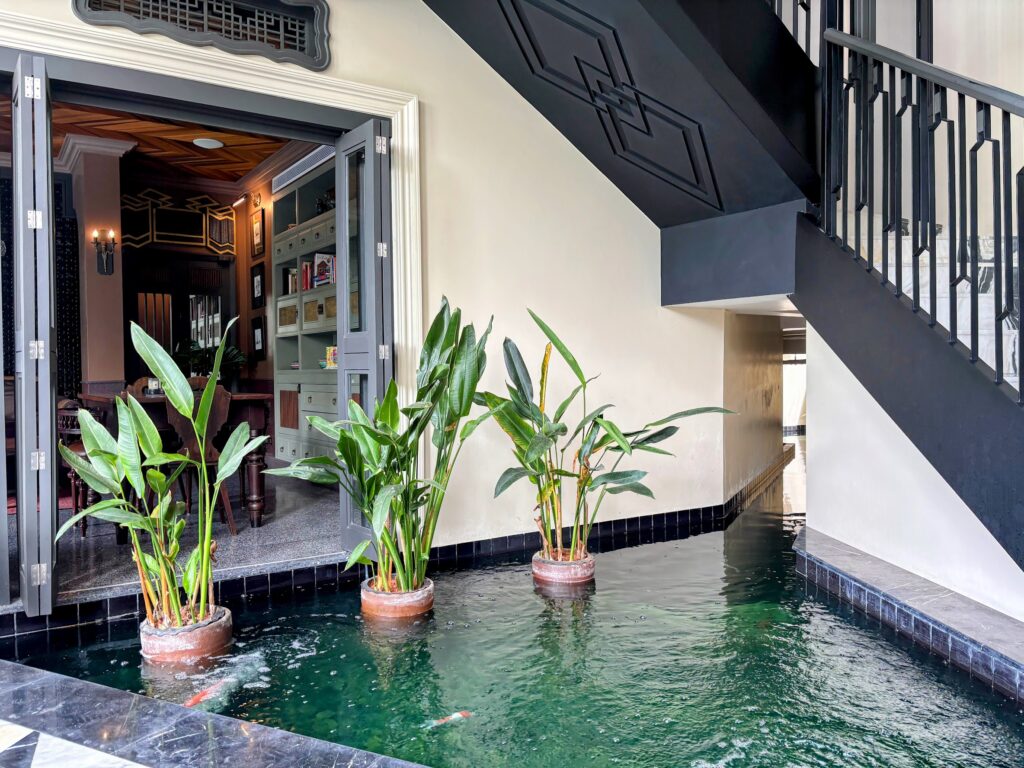
Fourteen rooms are spread across four floors, connected by a triangular staircase that zigzags past a koi pond before arriving at each landing. The design language holds throughout: herringbone parquet floors, brass-framed beds, metallic accents, and Peranakan flourishes everywhere you look. The rooms have a sultry, low-lit feel to them, more dusk than dawn in temperament.
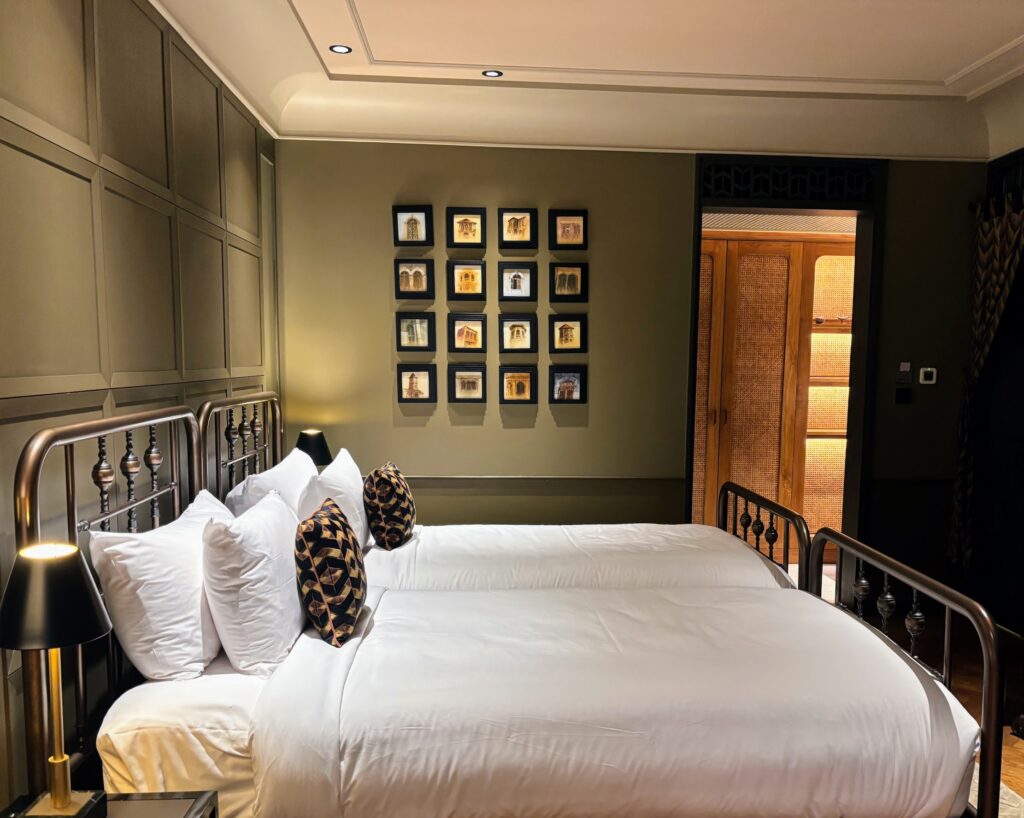
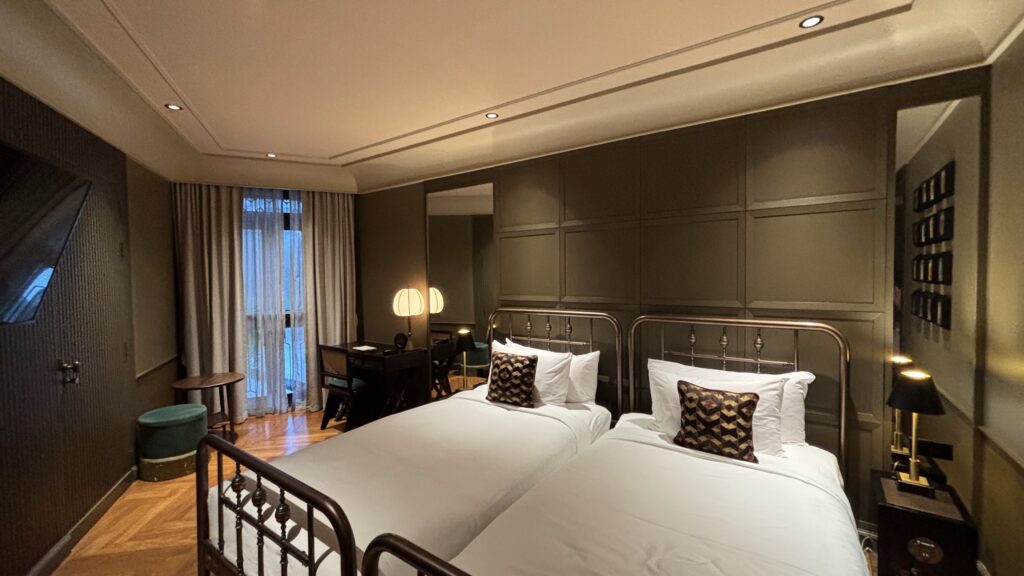
We stayed in a Brass room, the entry tier and a comfortable size for couples. One caveat: if you’re a light sleeper, the walls between adjoining rooms are thin enough that we became better acquainted with our neighbours’ television preferences than we’d have liked. That said, those adjoining rooms are a genuine asset if you’re travelling as a small group or a family of grown-ups, connecting cleanly without compromising either side’s privacy.

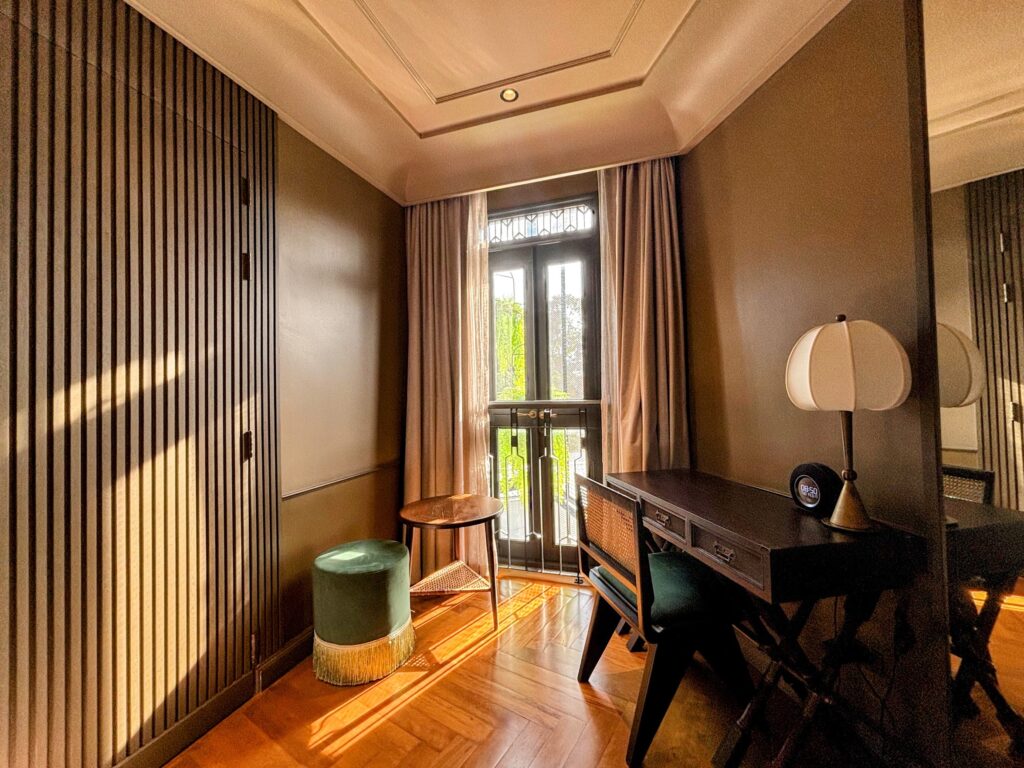
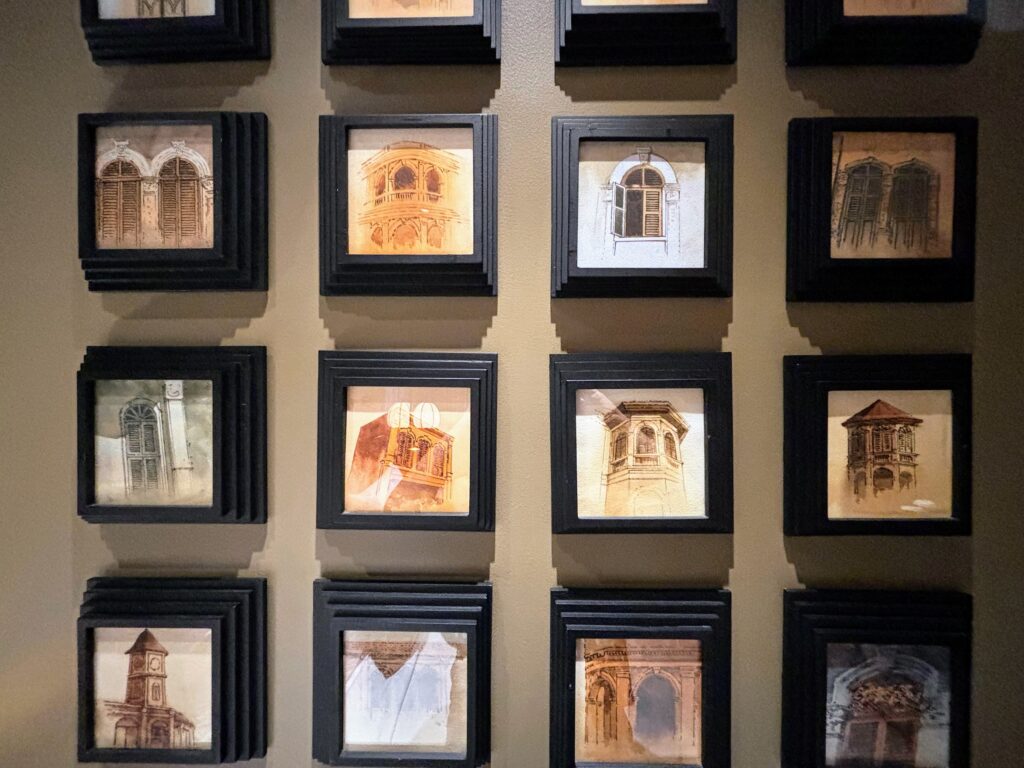
Bronze rooms step things up, with terrazzo bathtubs and, in some, a small balcony overlooking the internal courtyard. The suites push further into the Peranakan-inflected aesthetic, with hand-painted nightstands in the Baba style, and wood carvings by local artist Kriangrat Thephabutra running across doorframes and furniture. Paintings by Thavorn Merurat, arguably Phuket Old Town’s most respected painter, hang throughout the guestrooms, rendering the Peranakan architectural heritage with a reverie that avoids the merely decorative.
The pick of the lot is the Junior Suite with private pool, which opens onto a top-floor terrace running the full length of the room. A long, narrow plunge pool tiled in dark green looks over the Old Town rooftops, and the whole space is shot through with a hush you don’t expect to find in the middle of a city. It’s the room to book if you’re celebrating something, or if you just want a private outdoor space that isn’t shared with the other guests.
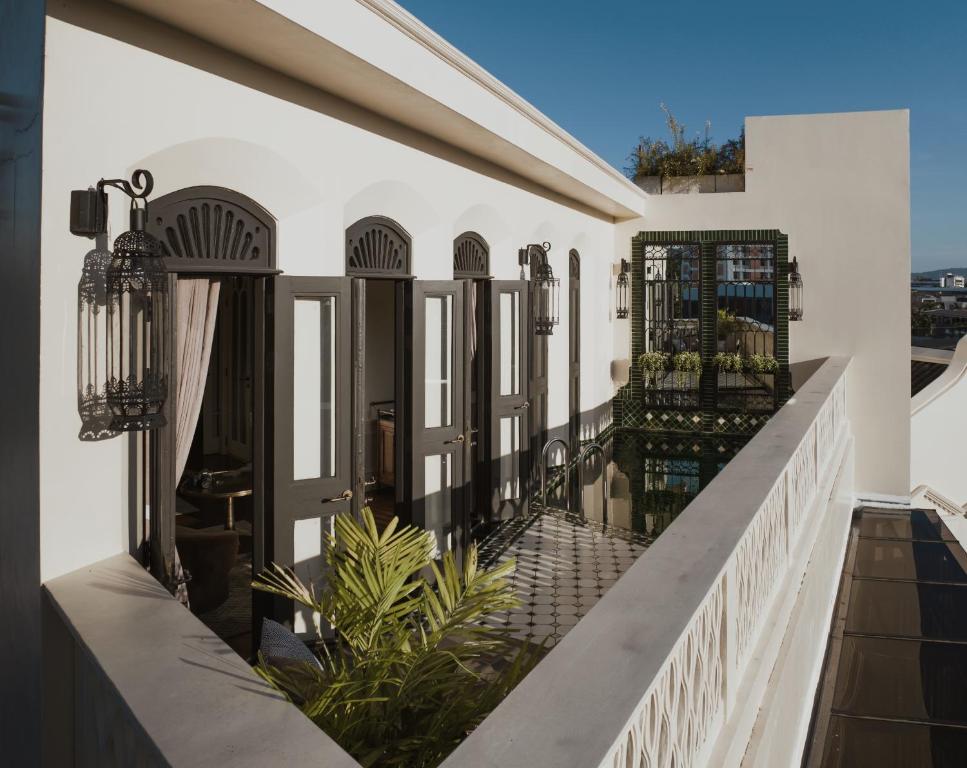
Solo travellers are well looked after, too, with a purpose-designed Solo Traveller Room rather than the usual single-supplemented double. It’s a thoughtful touch in a category most hotels treat as an afterthought.
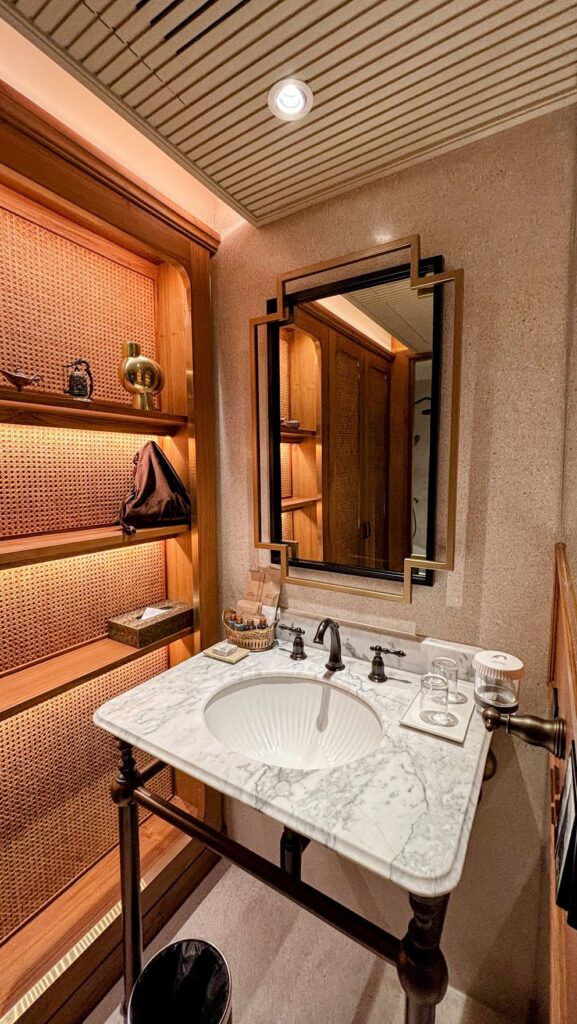
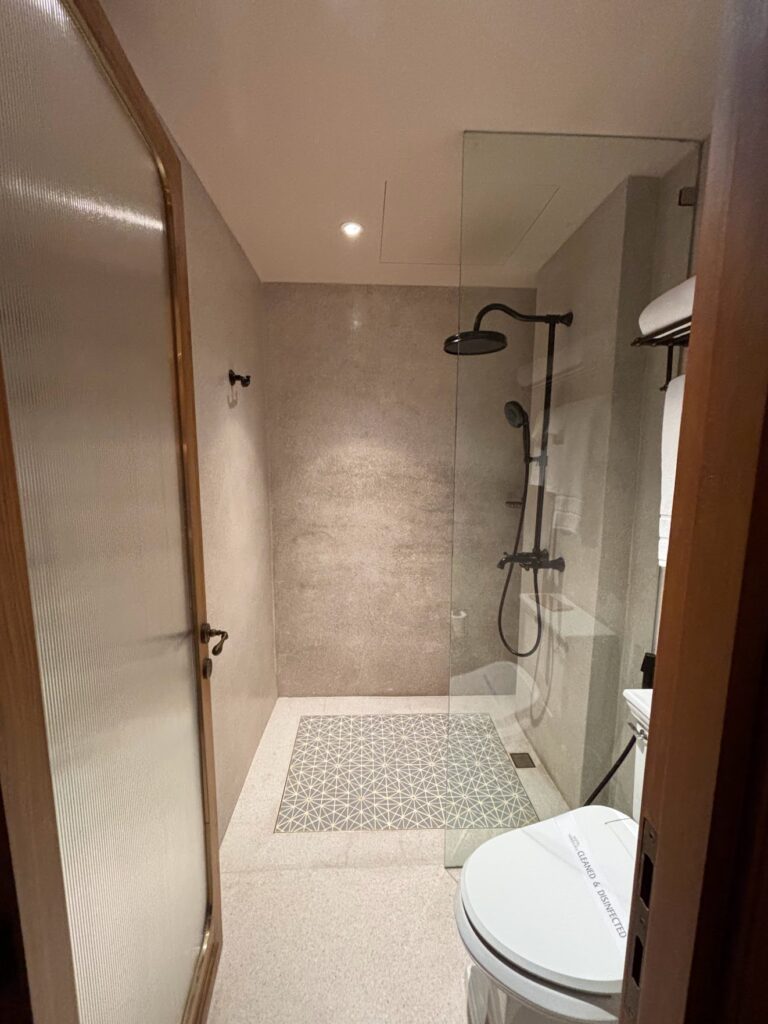
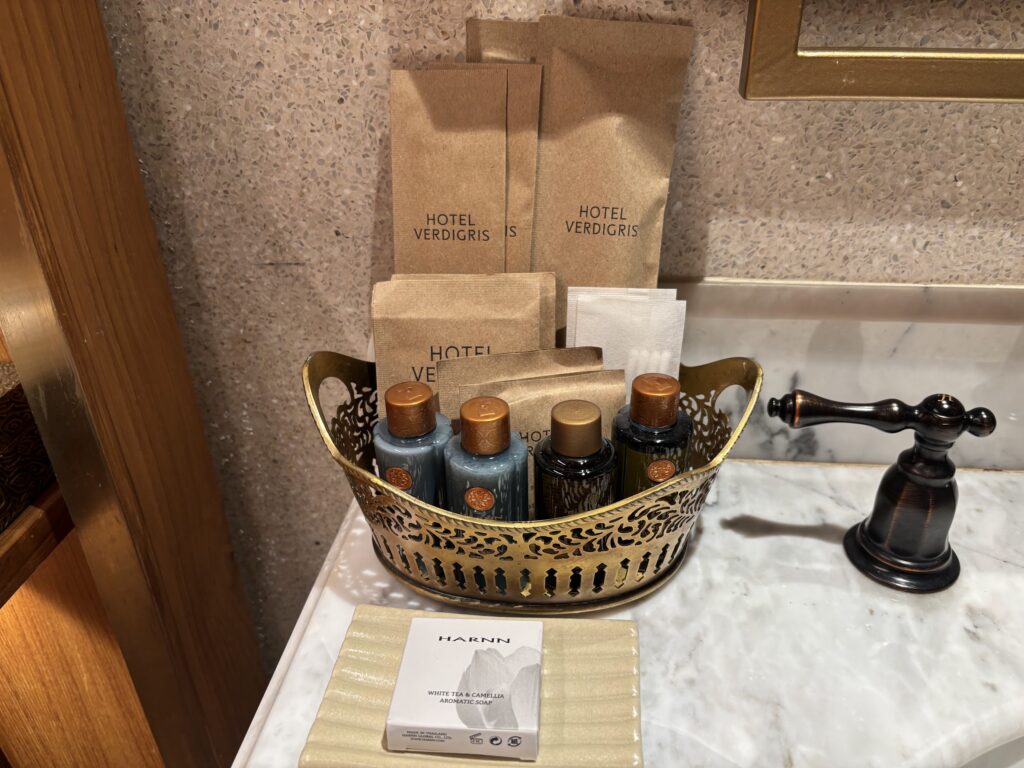
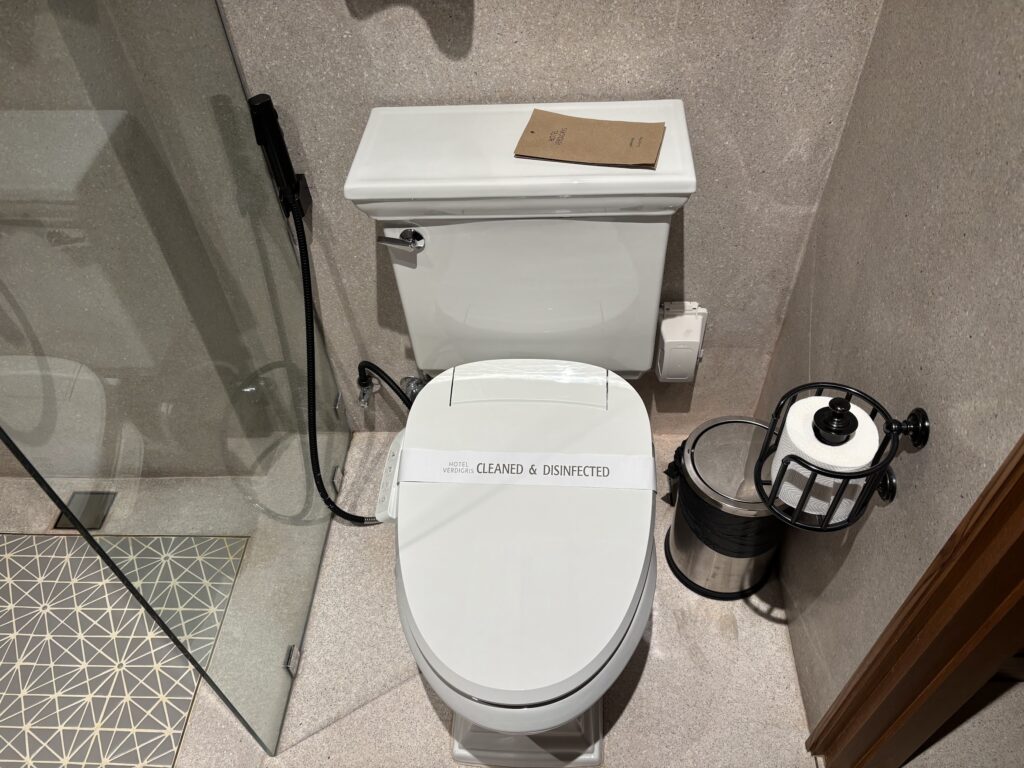
Bathrooms are beautifully done and stocked with high-end products from HARNN, the Thai natural apothecary brand. This is an old building with old plumbing, so resist the urge to flush toilet paper; a bin is provided. The loo itself is Japanese-style, which is a small pleasure in a tropical climate.
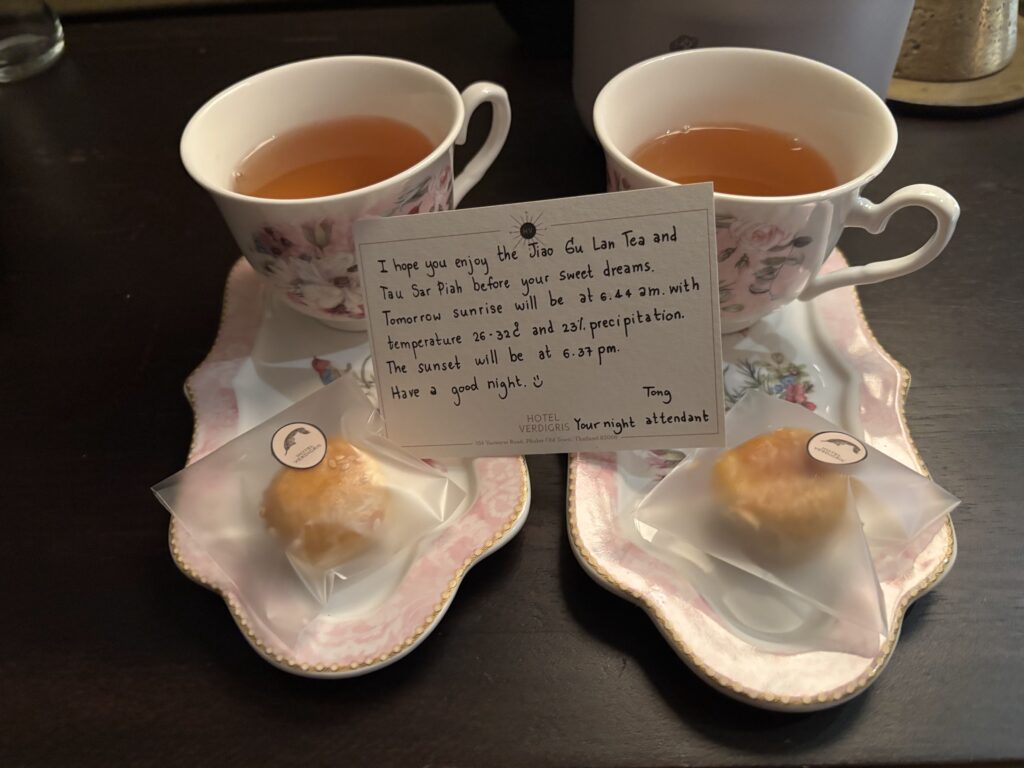
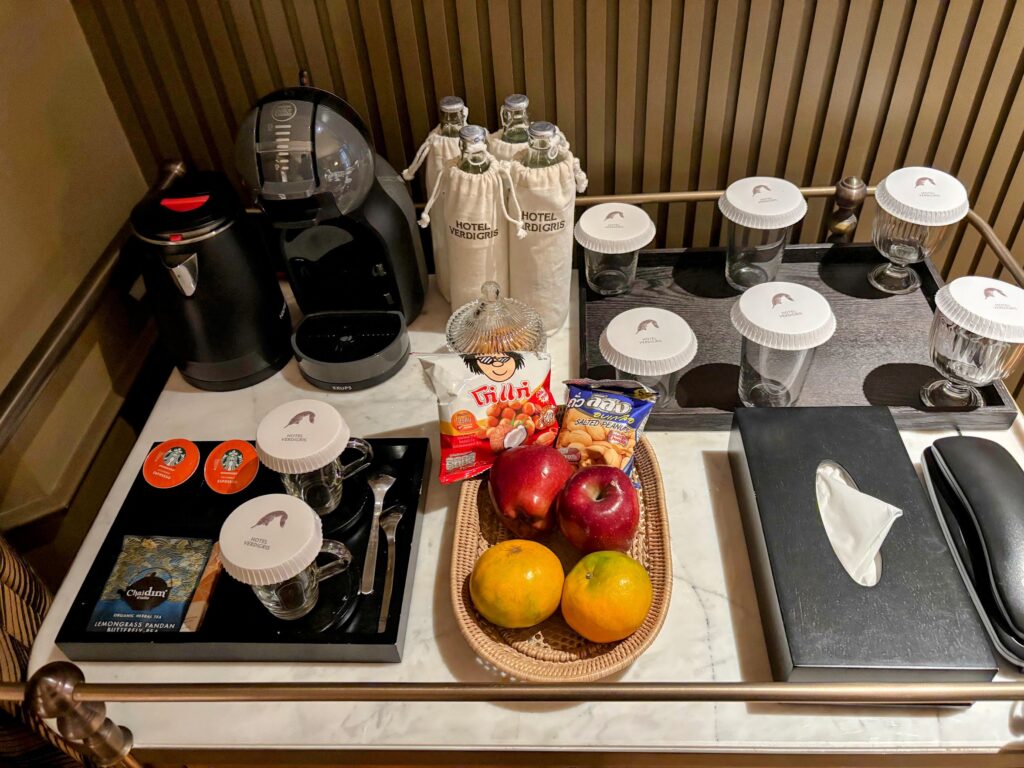
The minibar is complimentary, with Starbucks pods, and lemon, pandan and butterfly pea tea. There’s Netflix on the tele. Turndown is the kind of small touch that tells you the owner cares: a flask of jiao gu lan tea appears in the evening alongside Tao Sor, a Hokkien-style pastry filled with salted egg, salty and sweet at once. If you fall for them during your stay, head to Keng Tin on Poonpun Road, who’ve been making them to a century-old recipe.
Beside the tea, the night attendant leaves a handwritten note. On our stay it was from Tong, giving the next day’s sunrise time, the forecast temperature, and when the sun would set. Waking up the following morning was the best part of the whole room; light flooded in, the city was already at work outside, and the day felt entirely ours to use. Might have to revise that idea of dusk and dawn, you know…
One practical note: bring your own mosquito repellent. The hotel provides spray, but the Old Town is humid and the mozzies are persistent.
Facilities
This is a boutique, not a resort, and the facilities are sized accordingly, but what’s there is carefully chosen and well executed.
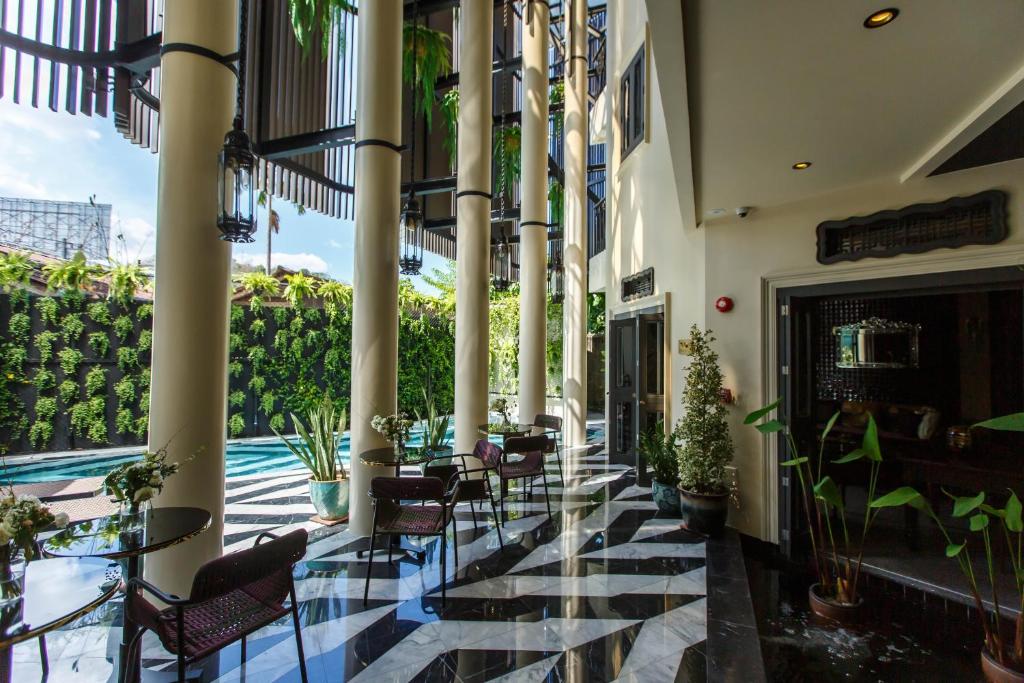
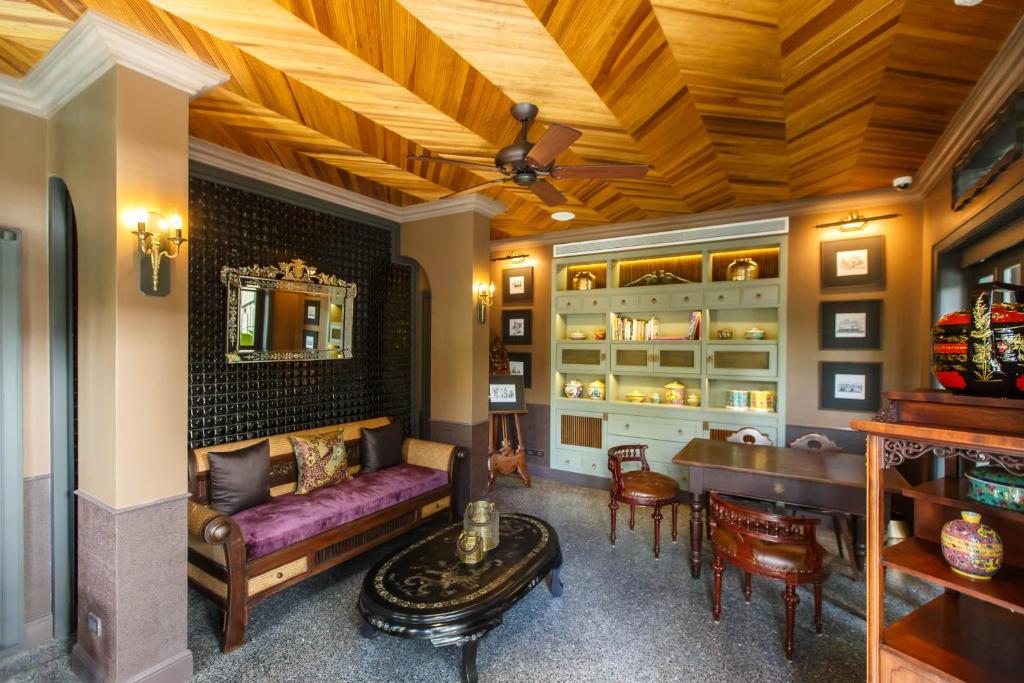
The marble-lined swimming pool sits at the heart of the building, overlooked by a reading room dotted with antiques, and is a rare hotel pool that’s actually calm enough to read beside. It isn’t a lap pool, but on a sticky Phuket afternoon it does exactly what you need it to. Staff appear with chilled water and towels the moment you sit down, and for much of our stay we had it entirely to ourselves.
The reading room doubles, after dark, as the hotel’s evening hangout. There’s no formal bar at Verdigris, which initially feels like an omission until you work out what’s actually going on: tables set with individual bottles of house single malt, reading glasses and a newspaper, guests writing down their own drams on an honesty system. A record player is on hand, and the deeper whisky list, including Japanese bottlings and limited editions, appears at the press of a button. It’s a far better answer than a hotel bar, and a far more interesting room to spend an evening in.
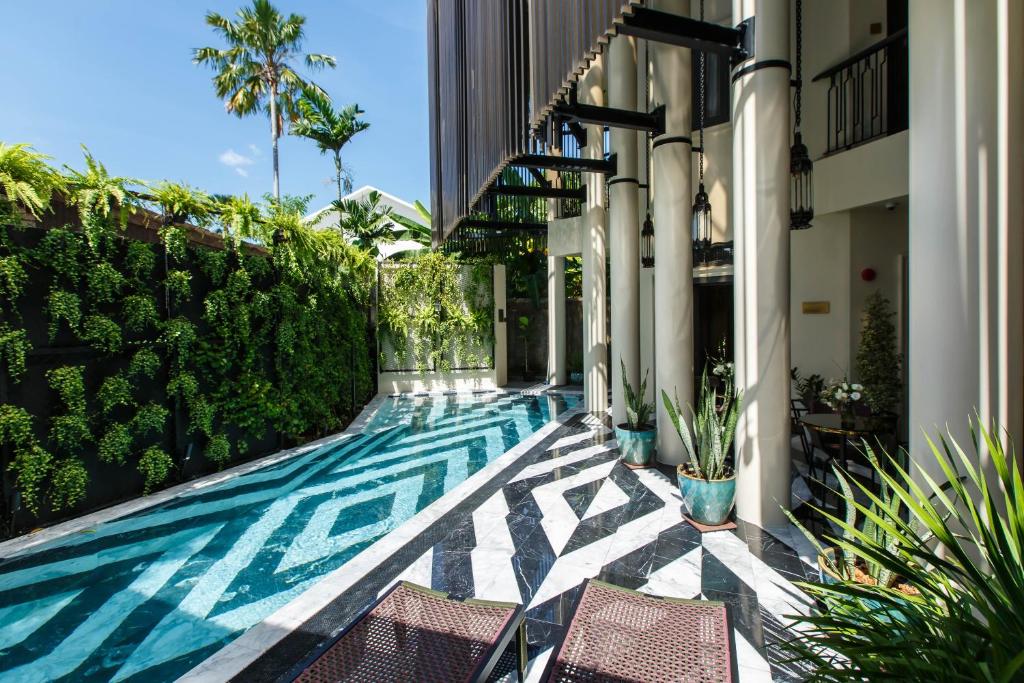
There’s no spa on site, which is deliberate; the hotel would rather send business to local practitioners than keep it in-house. A massage can be arranged in your room or out by the pool, which is rather more civilised than being driven somewhere across town anyway.
Beside the pool sits a reading pavilion overlooking the koi pond, framed by planting and shaded enough to be useable in the heat of the afternoon. Somewhere to take a book and a coffee that isn’t your room and isn’t the lobby, with the fish for company.
For getting around, the hotel runs a free shuttle that will drop you anywhere in the Old Town, useful in the midday heat even though you can walk to most of the good spots in under ten minutes. Complimentary bikes are on offer for anyone who prefers to explore under their own steam, and the 24-hour front desk is staffed by people who genuinely know the city. Concierge requests we made during our stay, from restaurant bookings to advice on day trips up the coast to a same-day laundry turnaround, were all handled with the same calm competence that defines the rest of the operation.
Food & Drink
Every city has a rhythm, and breakfast is where Phuket sets its tempo. It’s a city thrumming with great breakfasts, and its appetite for the most important meal of the day is second to none. It would feel a tragedy to waste it on a croissant that’s grown stale under yesterday’s heat lamp, then.
The mechanics are worth understanding, because they’re what makes the whole thing work. Rather than partner with a single restaurant or attempt to recreate shophouse cooking in its own kitchen (a fool’s errand given the generational recipes involved), the hotel has built relationships with a rotating cast of the Old Town’s best. You pick your set at check-in, the orders go out the next morning, and the food arrives at the Sunroom hot, in the vessels it was cooked in, from kitchens that have been refining these dishes for decades. Breakfast runs from 8am to midday.
You can also have breakfast in your room – you’ll find a little door hanger in your room where you just write your preferred breakfast time. Hang it outside of your door before 5am and breakfast will be delivered to your room instead.
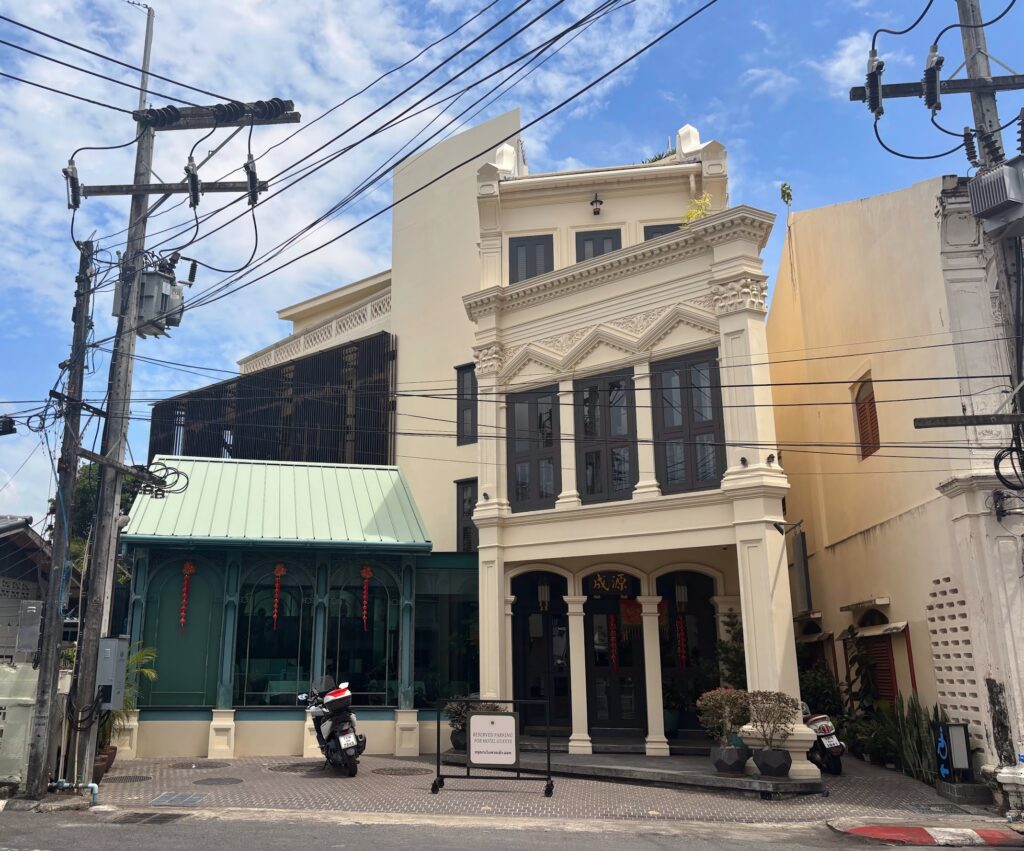
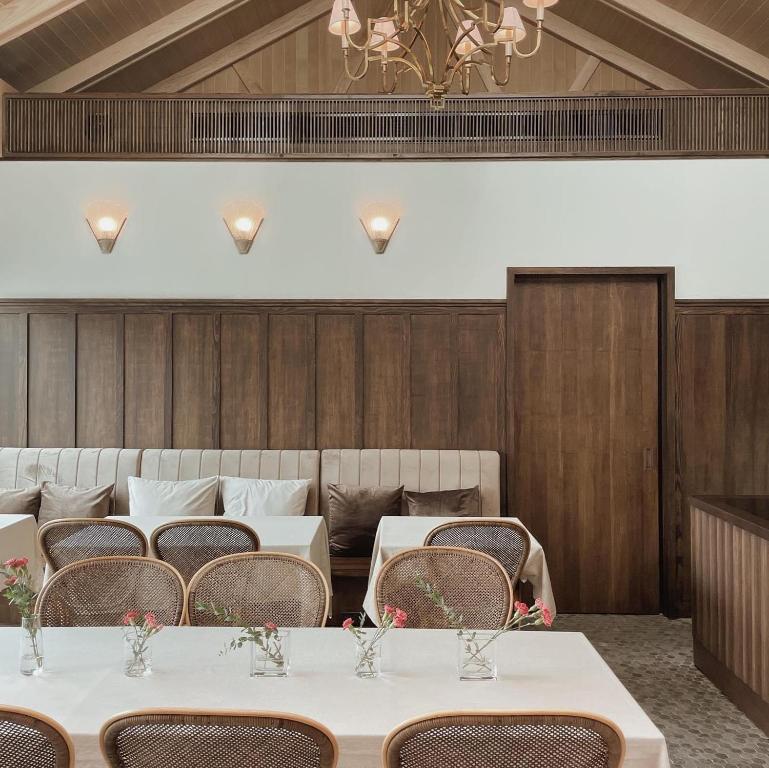
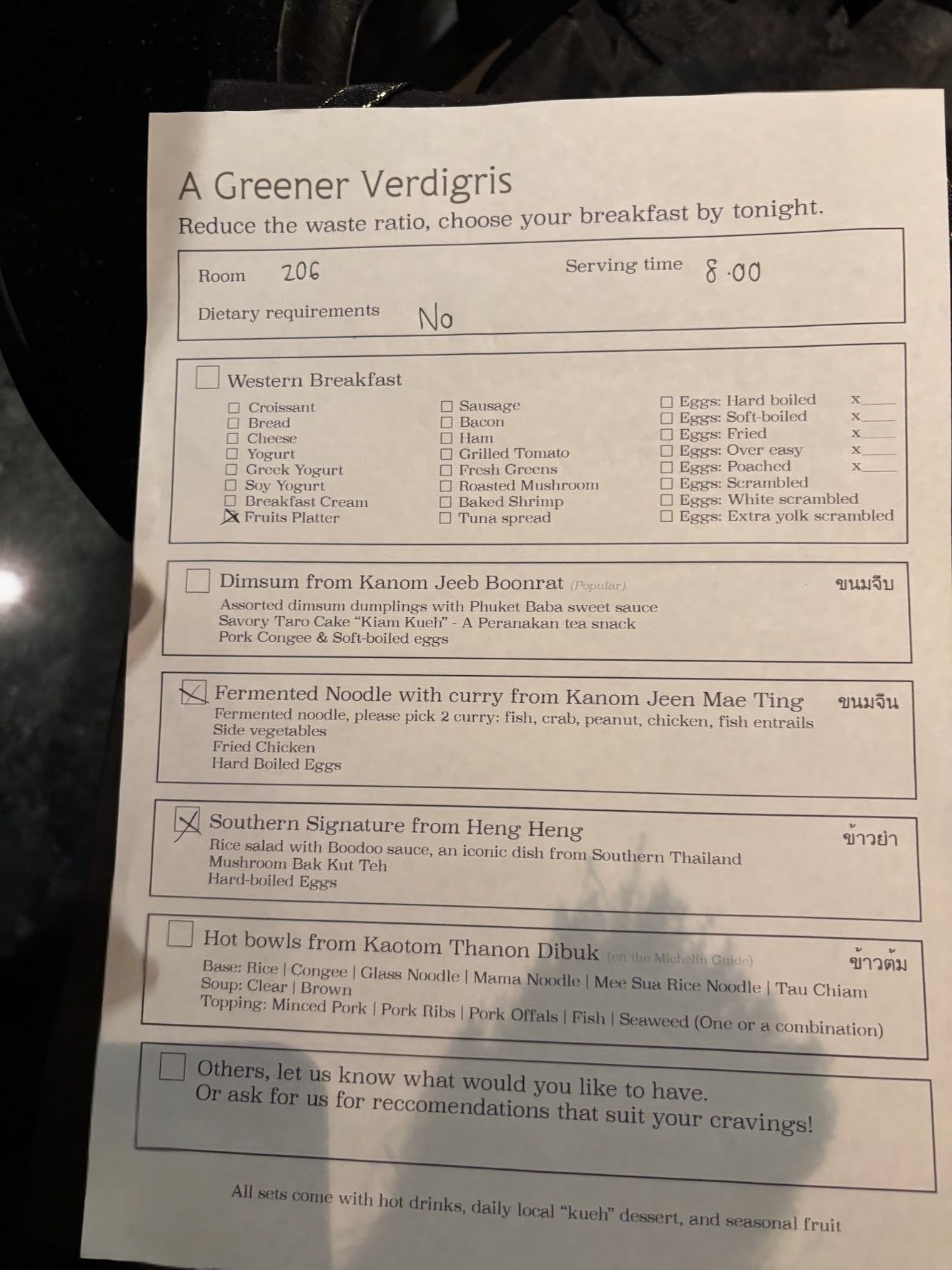
You eat in the Sunroom, a gorgeous green-fronted glasshouse where morning light pours through floor-to-ceiling windows, catches the white linen tablecloths, and makes the whole space feel suspended outside of time. Which is fitting, because the food arriving at your table has been cooked to recipes handed down for generations, in kitchens that were here long before the hotel was, and will be here long after. It’s the right room for that kind of meal.
It’s also the kind of room that makes you slow down and order a second coffee, which is precisely what you should do, because breakfast runs until noon and the rest of the day can wait. Local coffee, of course, strong and properly made.
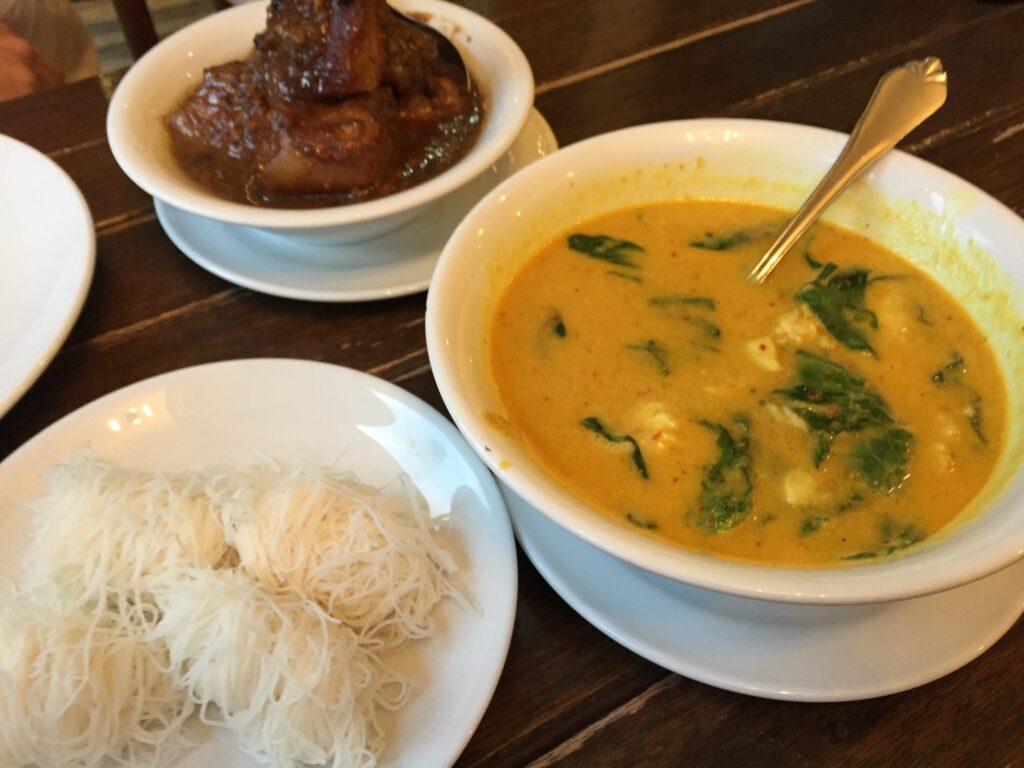
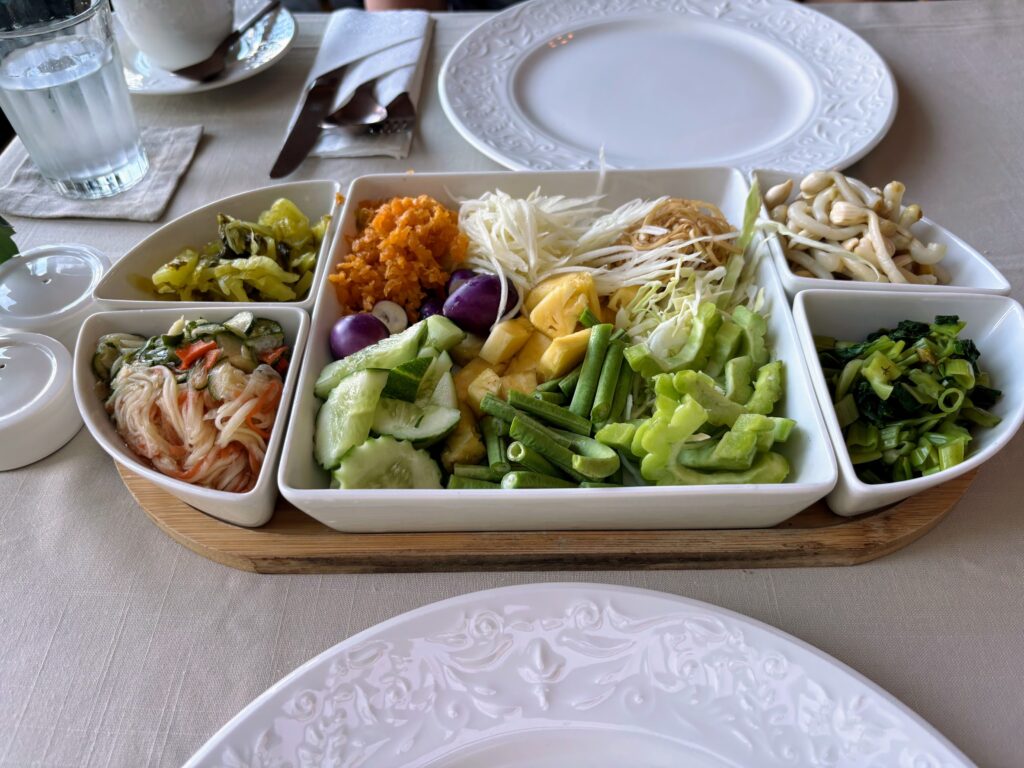
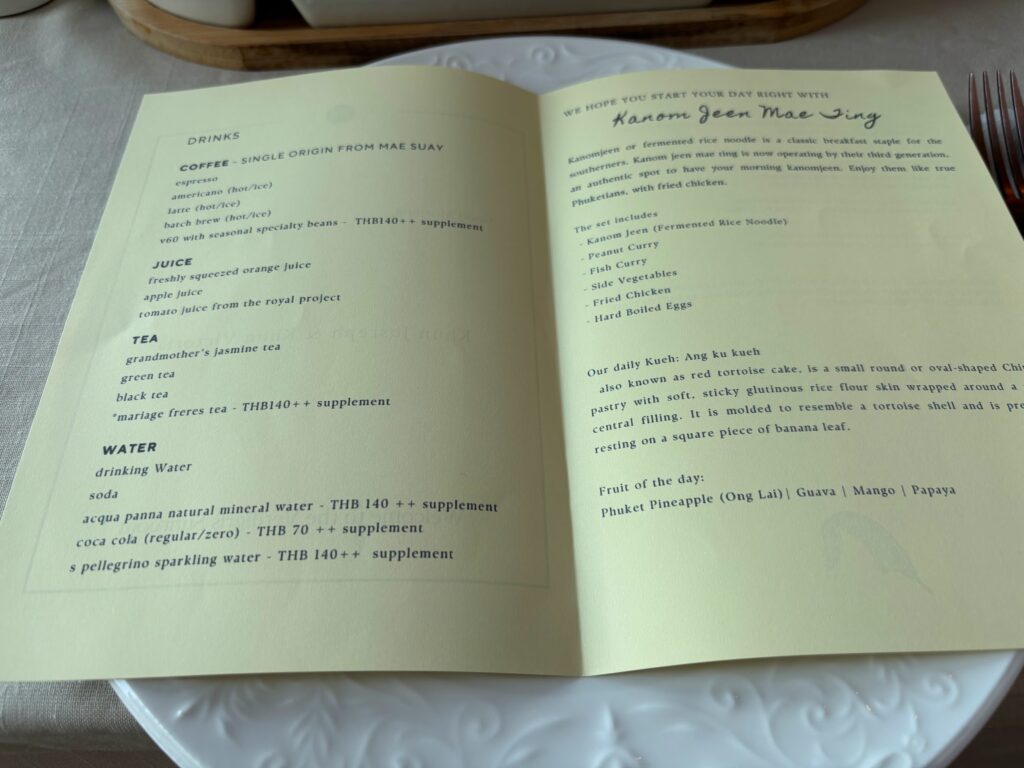
The set we ate ran like a greatest-hits compilation of Old Town breakfast cookery. Kanom Jeen Mae Jing arrived first: fermented rice noodles with Southern Thai curry sauces, the kind of breakfast that wakes you up properly. You get to choose two curries from fish, crab, peanut, chicken or fish entrails. We went with crab and peanut following the advice of Peach.
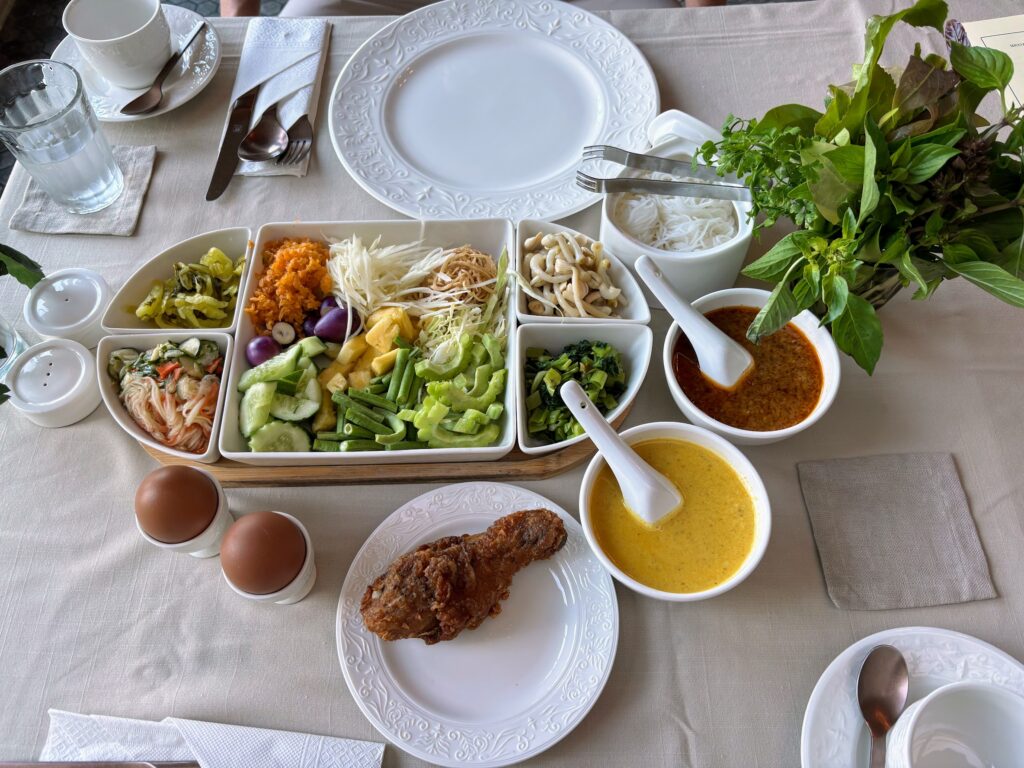
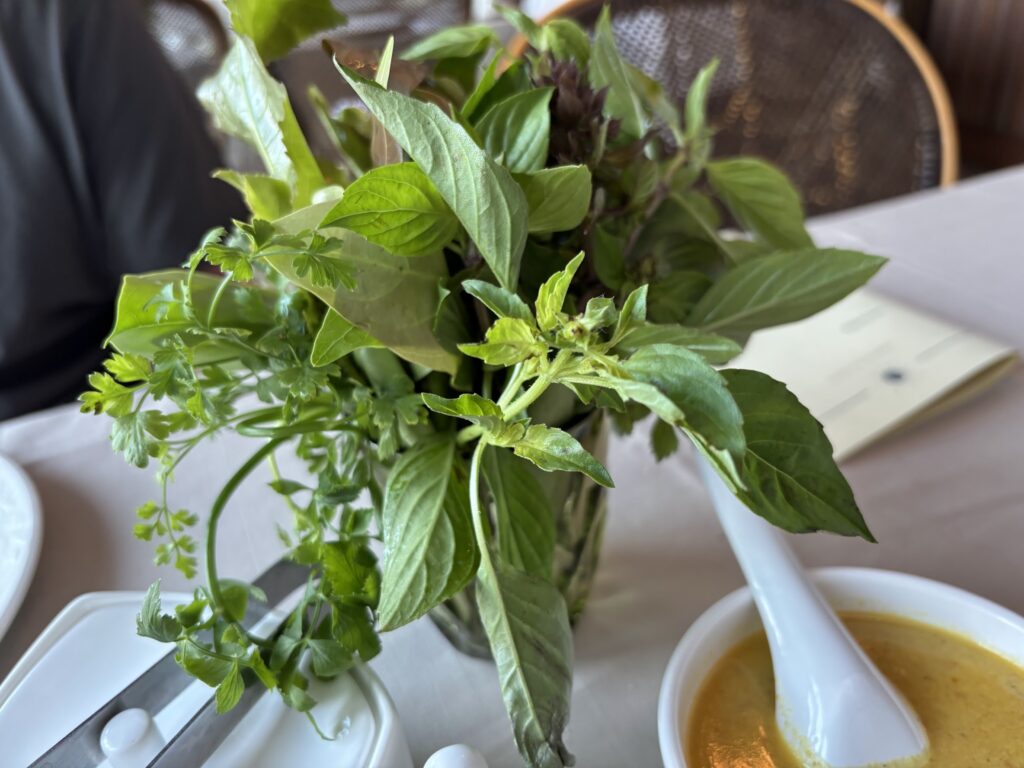
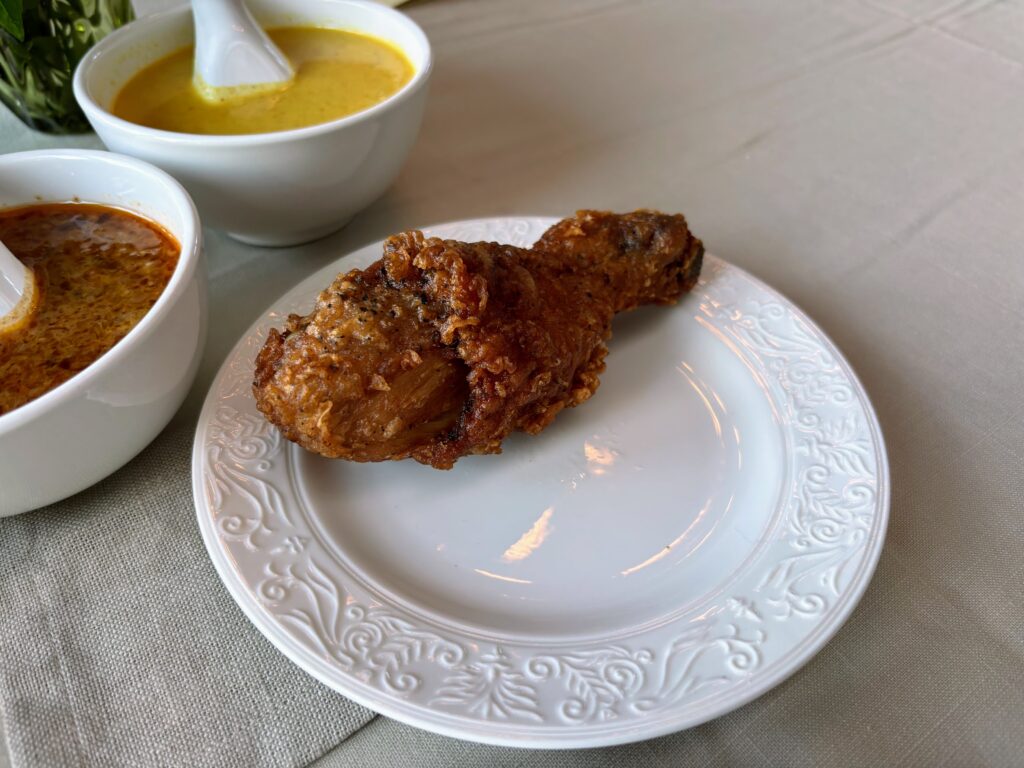
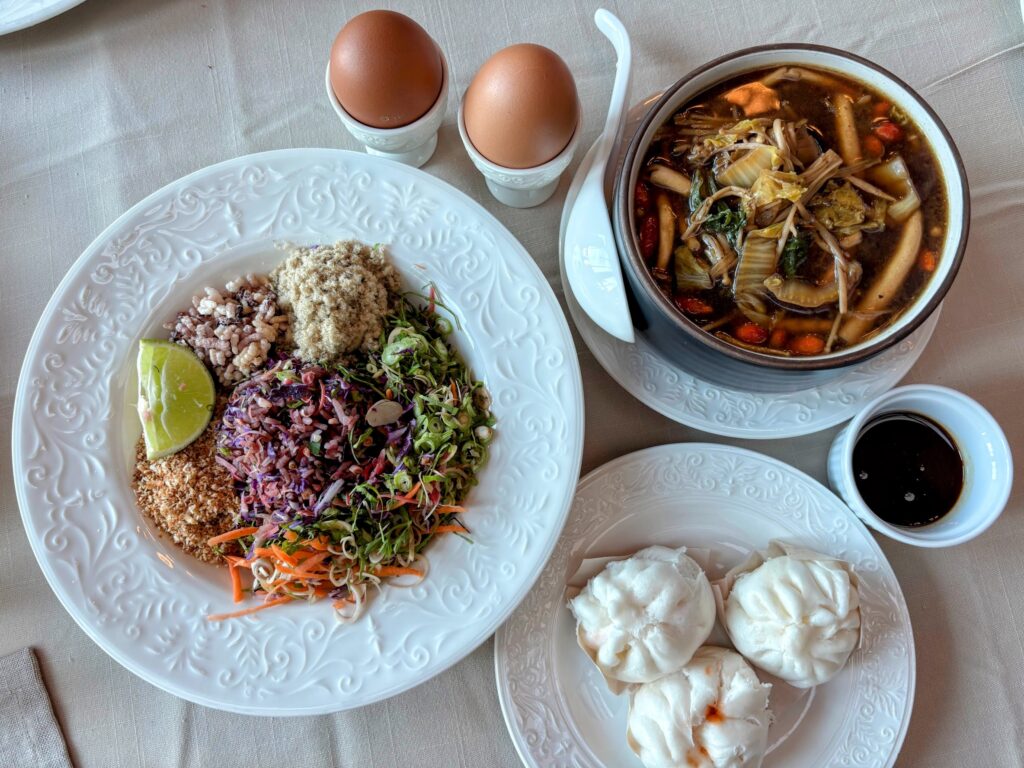
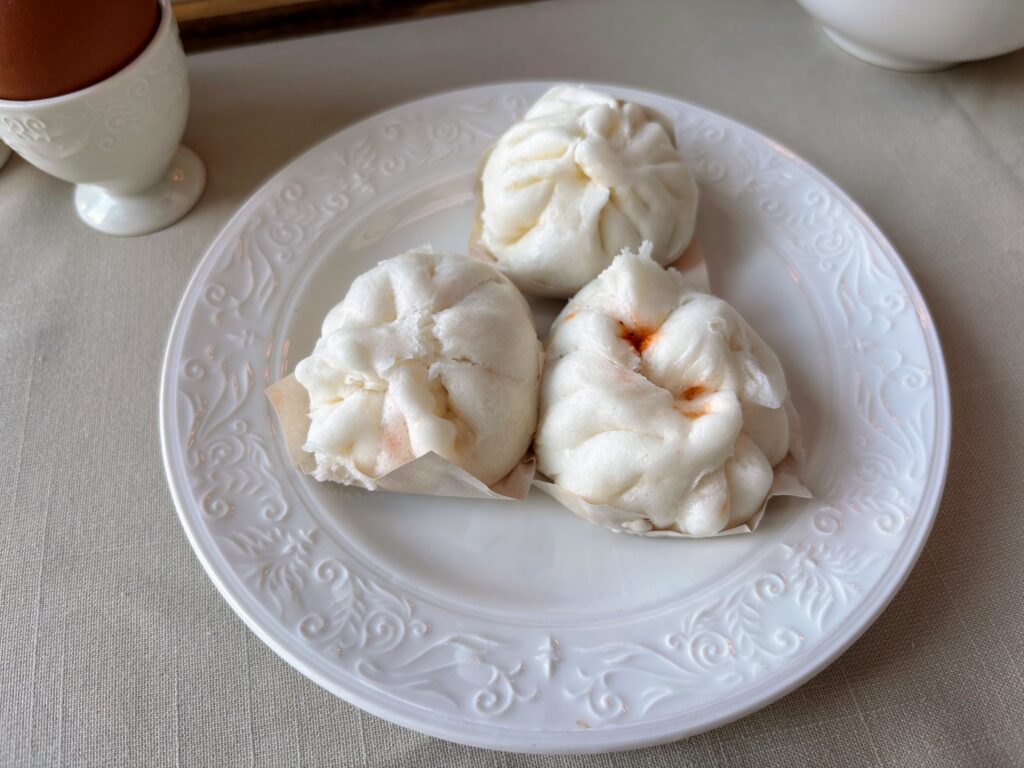
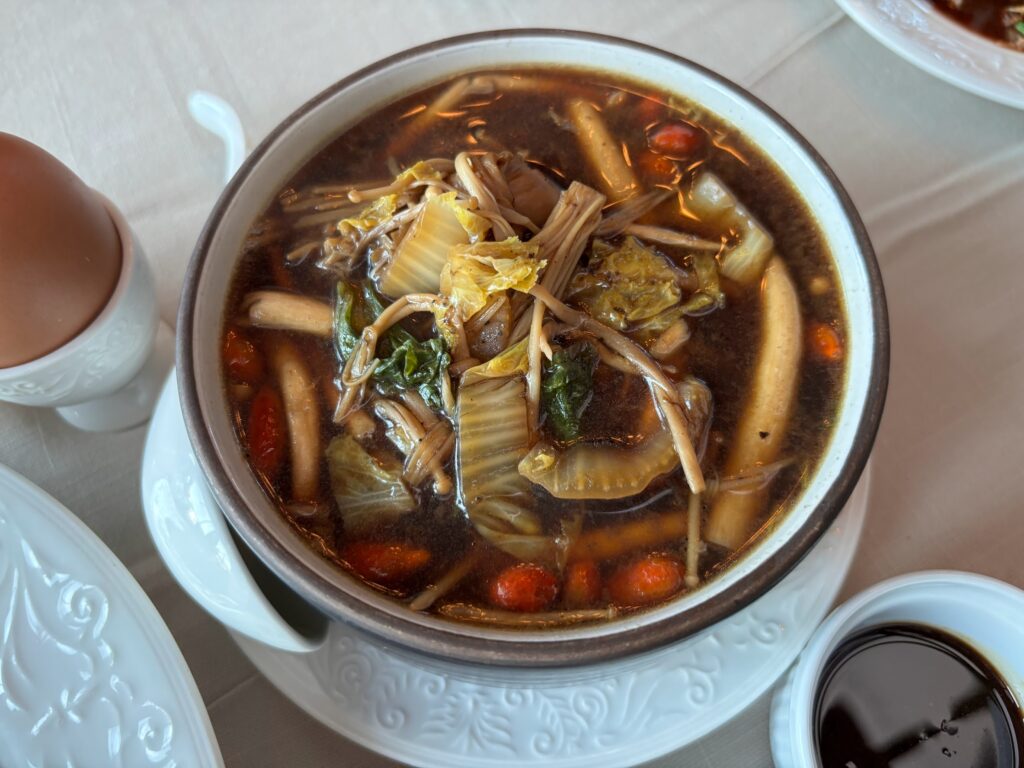
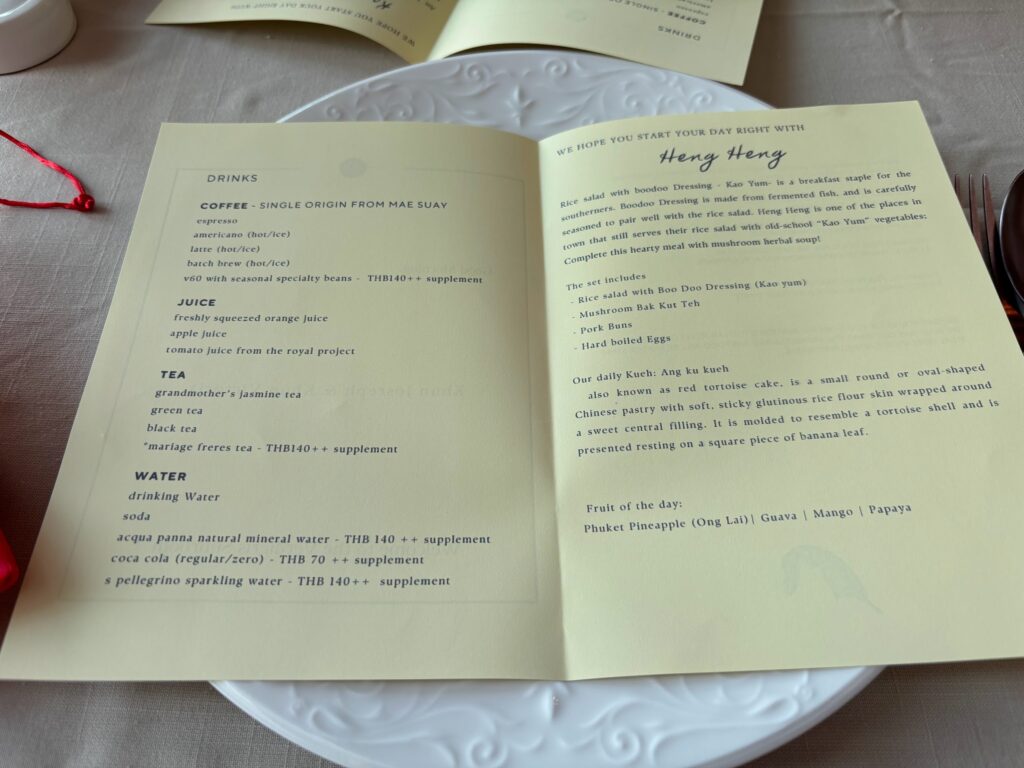
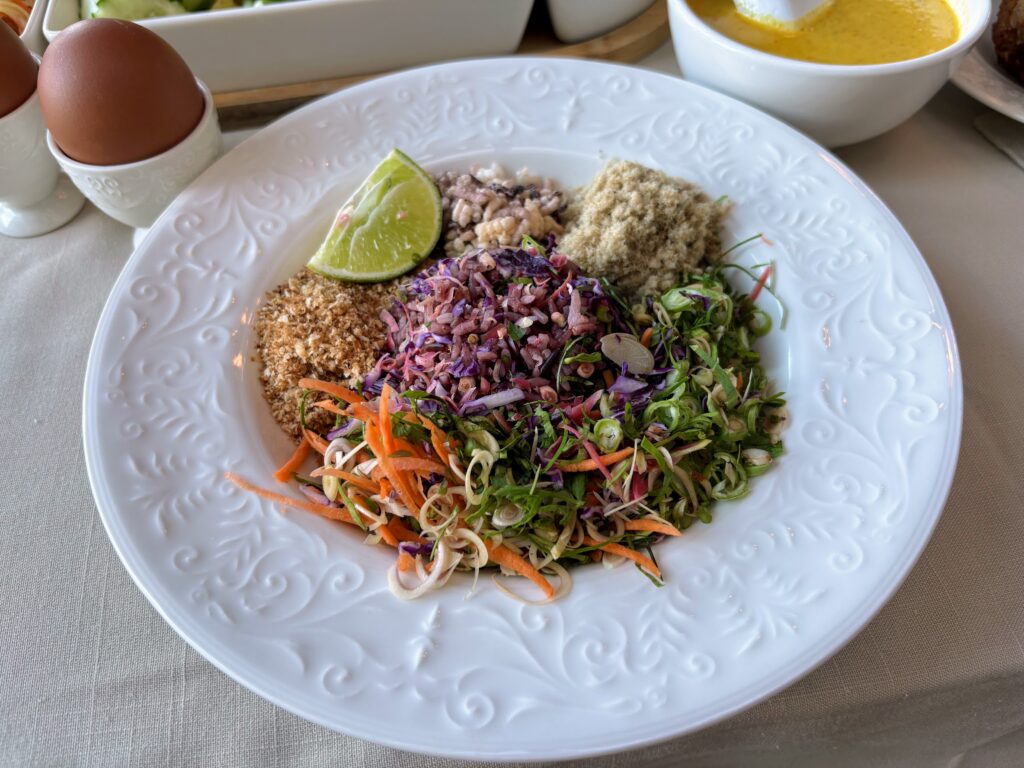
Then the Heng Heng southern signature set. Rice salad with boodoo sauce – about as iconic as it gets down south – alongside an earthy, brooding mushroom soup that could cure last night’s deepest, most entrenched woes, pillowy pork buns, and two boiled eggs for good measure.
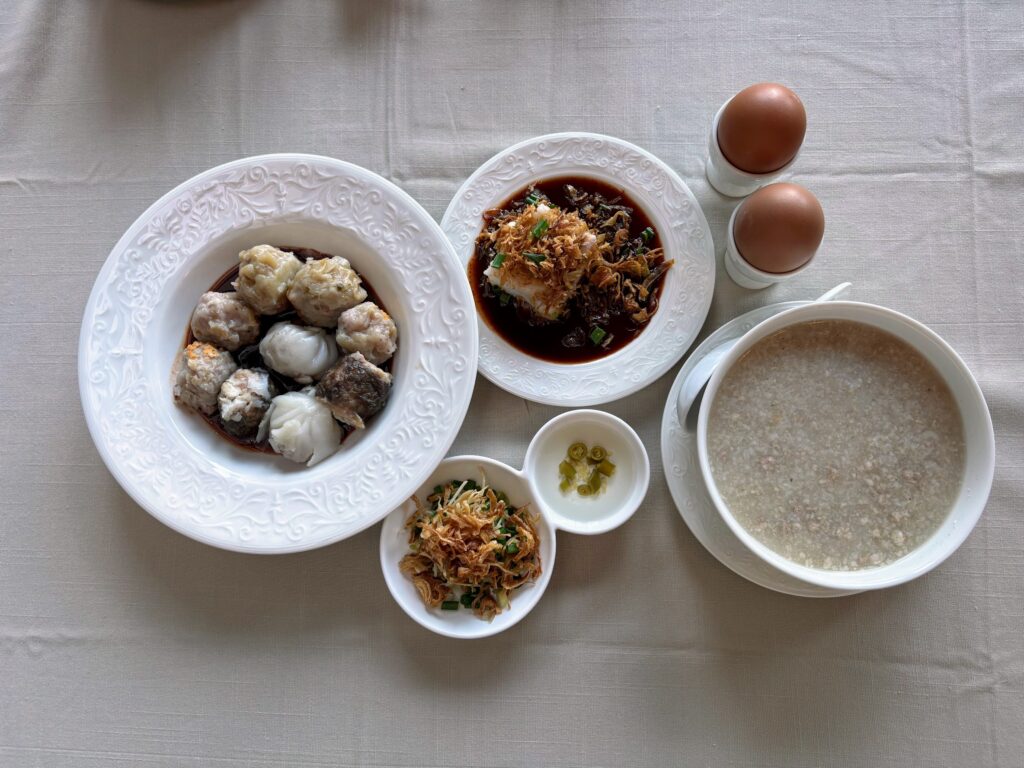
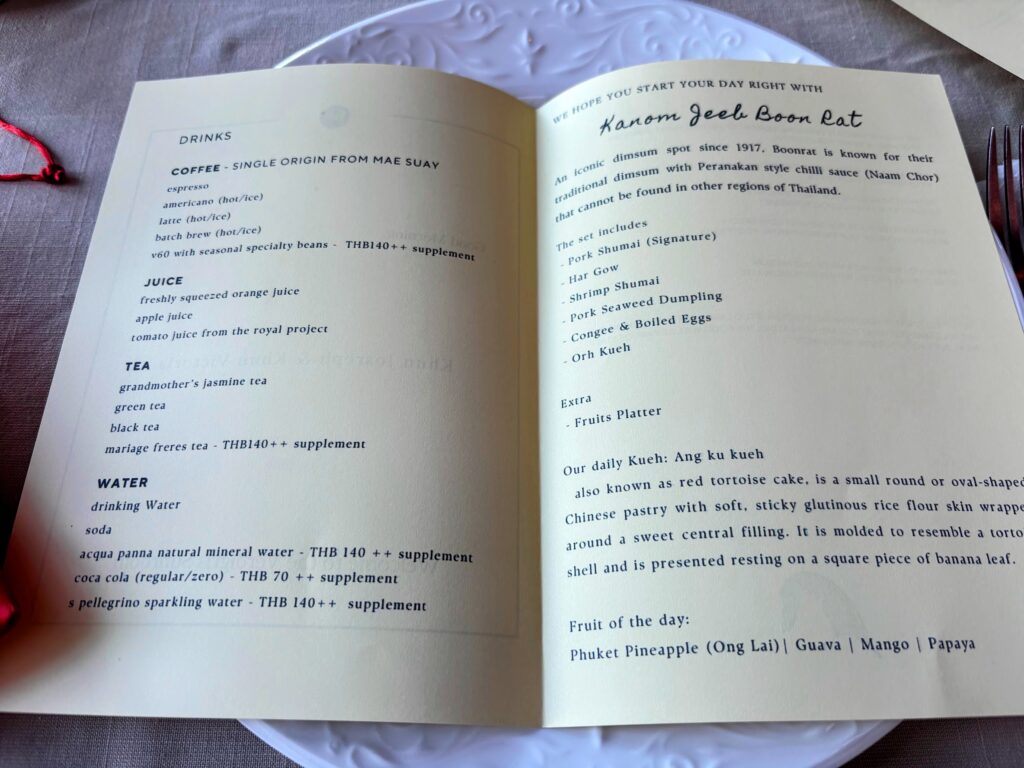
And Kanom Jeeb Boon Rat, another Phuket stalwart, this time a dim sum specialist. You get four handmade dumplings; both pork and shrimp shumai, har gow, and pork and seaweed. There’s also a peppery, restorative congee and steamed taro cake. Just an incredible spread, whichever way you play it.
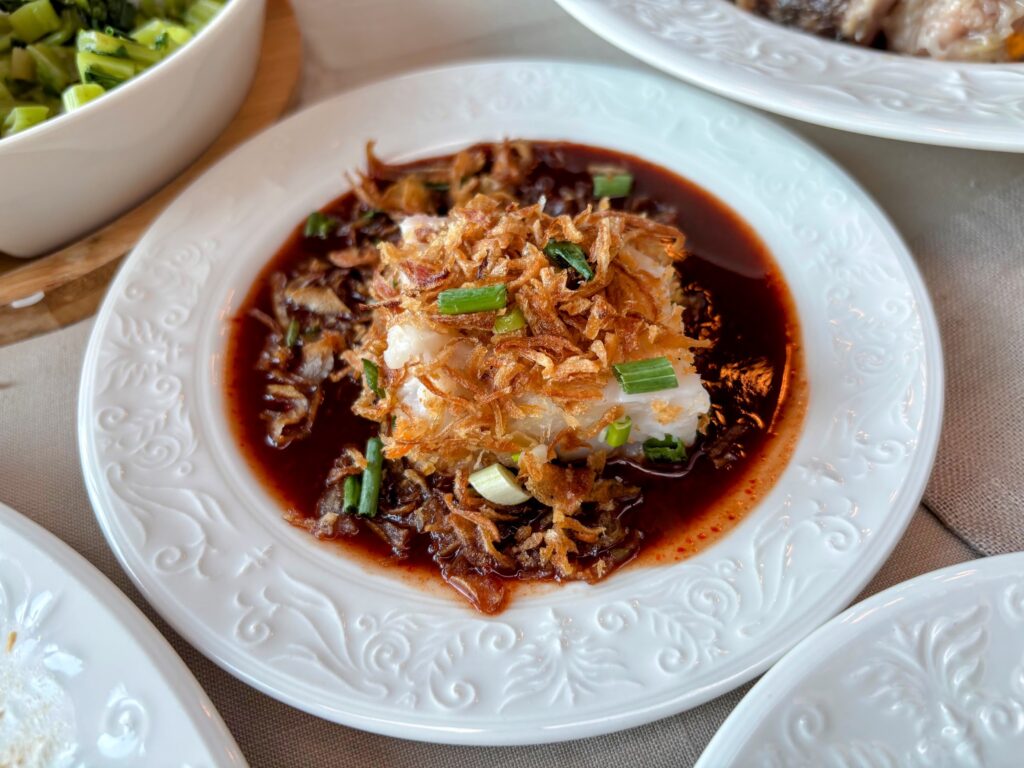
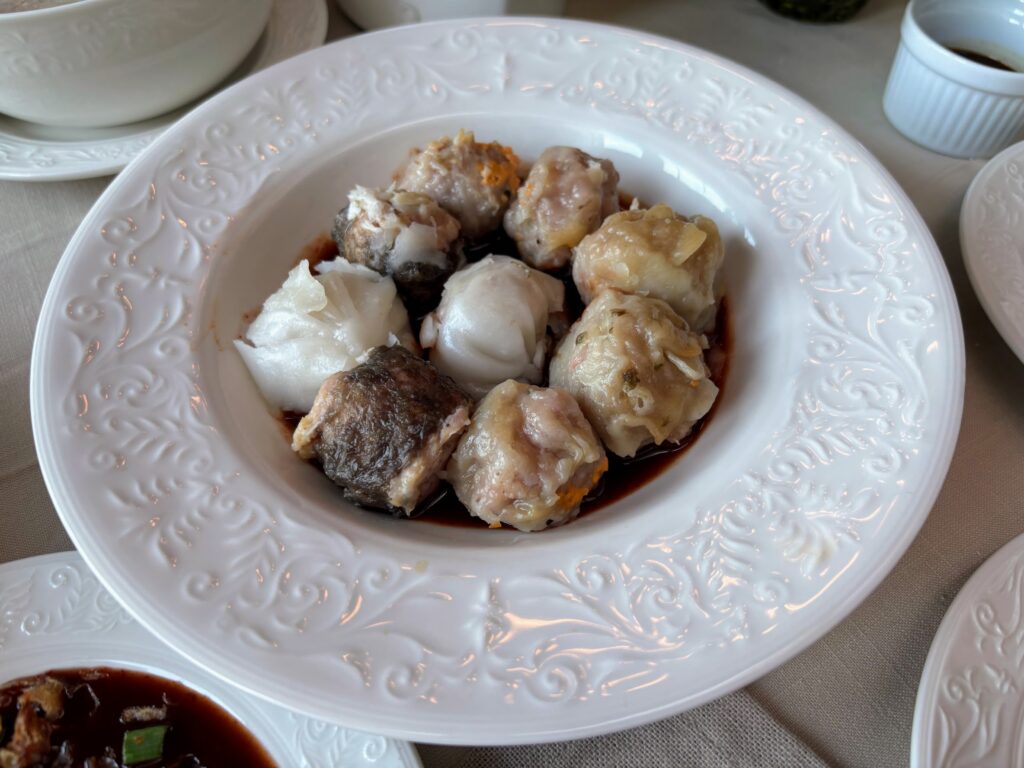
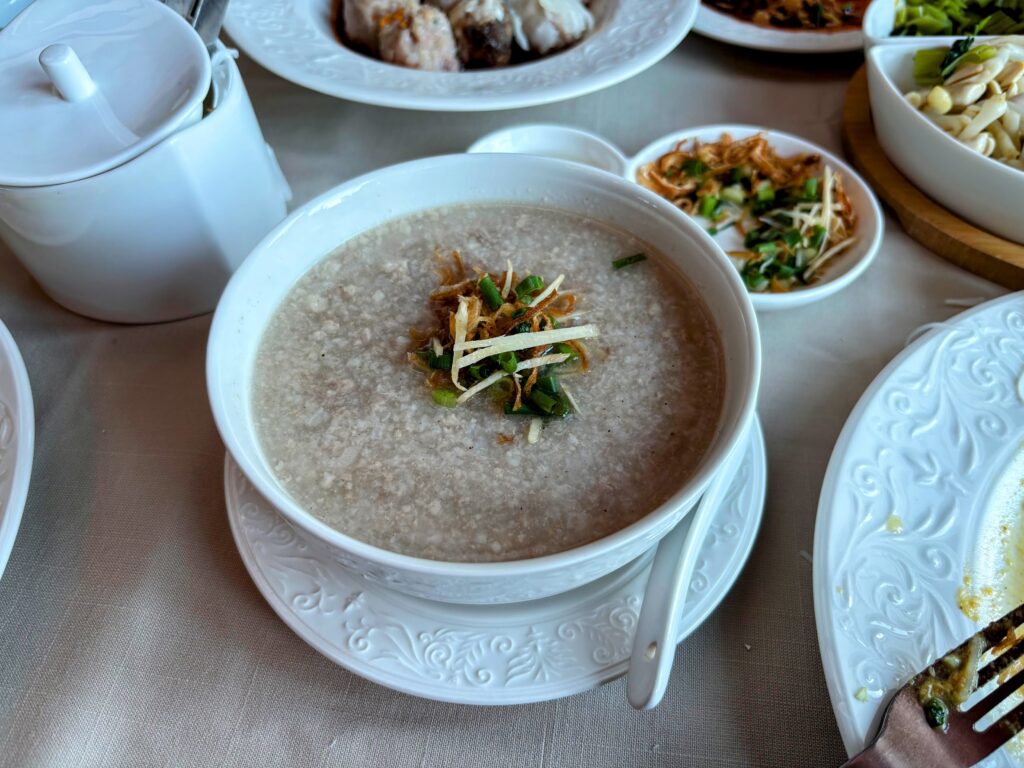
For guests who’d rather ease into Phuket gently, the Sunroom also turns out a Western breakfast made in-house – eggs cooked any way you like, toast, the usual cast – but you’re rather missing the point if you order it. The whole reason to be here is to eat the city.
The sets rotate with the seasons. During Kin Jay, the nine-day Taoist-rooted Vegetarian Festival held each October when many Thai-Chinese households go strictly vegan, Jay Fried Hokkien Noodle becomes the breakfast move, and the Eew Geng parade passes right in front of the hotel.
Whatever the time of year, every set arrives with an Ang Ku Kueh, the red turtle-shaped dessert of glutinous rice flour and sweet mung bean paste that sits on Baba praying tables during the Hungry Ghost Festival. Turtles, as Peach explains, are believed to travel between earth and heaven, carrying messages between the two realms, and embodying strength and longevity for the living as well as the departed. It’s a lot of meaning to pack into one sticky red sweet, and it’s delicious besides.
It’s the kind of breakfast that makes you understand why the owner started the hotel in the first place: she wanted guests to eat what she eats, and she’s removed every barrier to making that happen. Including, it would seem, price. This monumental breakfast offering comes at no extra cost, whichever tier of room you’re staying in.
Ideal For…
Small, design-led and rooted in Phuket’s Peranakan heritage, Hotel Verdigris fills a specific gap in the island’s hotel market: it’s for travellers who’d rather stay in a living city than at a beach resort.
Anyone who travels to eat. No other hotel in Phuket treats breakfast this seriously, and the Old Town location puts you within walking distance of more Michelin-listed cooking than most cities serve in a lifetime. If you keep a spreadsheet of Bib Gourmands, this is the hotel built for you.
Repeat Phuket visitors who’ve done the beach. If you’ve worked through Surin, Kamala and Patong on previous trips and want something different, the Old Town is the version of the island most first-timers miss. Verdigris is the best base for it.
Travellers who like to understand a place before they walk it. Martina Rozells’ story runs through the whole building, and the hotel works as a proper introduction to Phuket’s Sino-Portuguese heritage rather than treating it as backdrop. You leave knowing what you were looking at.
Solo travellers who’d rather not be treated like an afterthought. The purpose-designed Solo Traveller Room, the evening whisky setup, and staff who curate rather than hover make this a warmer place to stay alone than most.
It’s less suited to anyone after a beachfront resort. The Old Town is inland, and if you want sun loungers and a swim-up bar, Phuket has plenty that does that well. Families will also want to look elsewhere: this is an adults-only property.
Why Stay?
What Hotel Verdigris understands is that the best version of hospitality is sometimes knowing when to outsource. The rooms are beautiful, the design has genuine soul, and the Old Town location can’t be beaten.
But it’s the breakfast, sourced from the best shophouses within a ten-minute walk, that elevates this from a charming boutique to a destination in its own right. Come for the Peranakan interiors and Martina Rozells’ story, stay for the kanom jeen, and pack your appetite. You’ll need it.
Rates at Hotel Verdigris start with the Brass Room – a 22-25 sqm entry tier with twin or king configurations – from around 6,000 baht (£140) per night, with significant seasonal variation. All rates include the hotel’s celebrated breakfast.
Address: 154 Yaowarad Rd, Tambon Talat Yai, Mueang Phuket District, Phuket
Website: hotelverdigris.com