
Ideal for carving out somewhere to work when there’s no spare room to surrender to it…
The dedicated home study is, for most of us, a fiction. A pleasant idea that belongs to people with more bedrooms than they quite know what to do with. The rest of us work from a room that was already busy being something else: the corner of a bedroom, one end of the dining table, a sliver of the living room that used to hold a reading chair before a laptop moved in and refused to leave.
According to the Office for National Statistics, more than a quarter of working adults in Great Britain now split their week between home and the workplace, which means the home office is rarely a room at all. It is a function, and functions can share space in a way that whole rooms cannot. The job, then, is not to build an office. It is to fit one into a room that already has a full-time occupation, whether that be kitchen, living room or bedroom, without that room ending up feeling annexed by work. Here’s how to do just that; how to fit a home office into a room that’s already spoken for.
Start With What The Room Already Does
Before you choose a single piece of furniture, be honest about what the room is for when you are not working in it. A bedroom’s main job is rest, and anything that turns it into a visible reminder of your inbox at eleven at night is working against you. A living room’s job is to be sociable and comfortable. The workspace has to be the guest here, not the host, which means putting it where it intrudes least: against a short wall, in an alcove beside a chimney breast, along the wall you don’t sit facing once the day is done.
The aim is a setup you can switch off as completely as you switch off your screen. If the desk dominates the room whether you are working or not, you have built an office that happens to contain a bed, rather than a bedroom that happens to contain a desk. The order of those words matters.
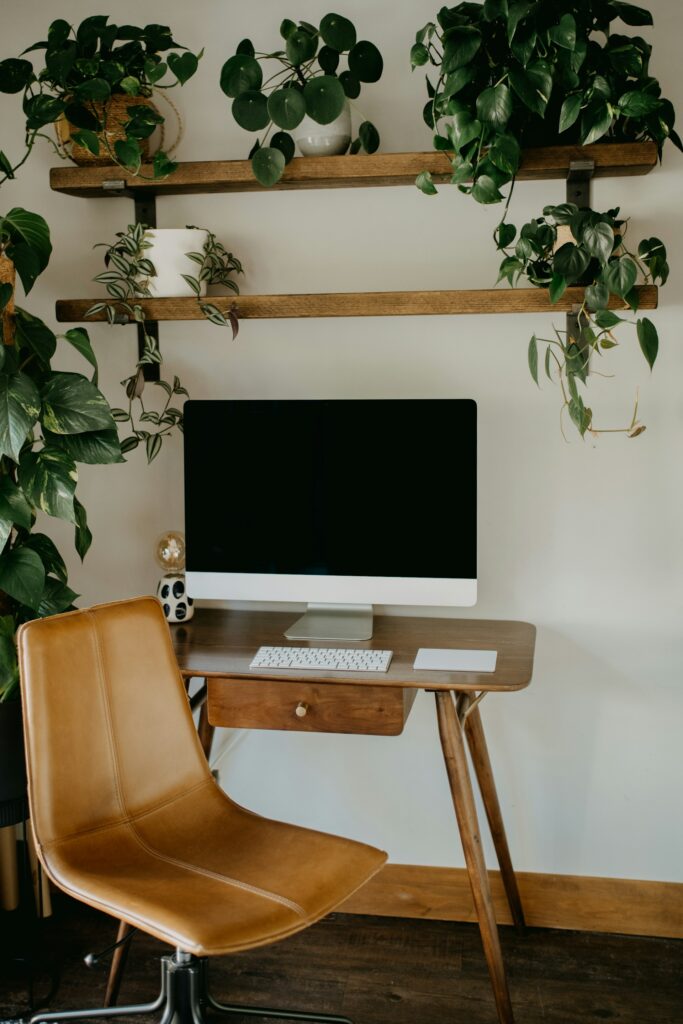
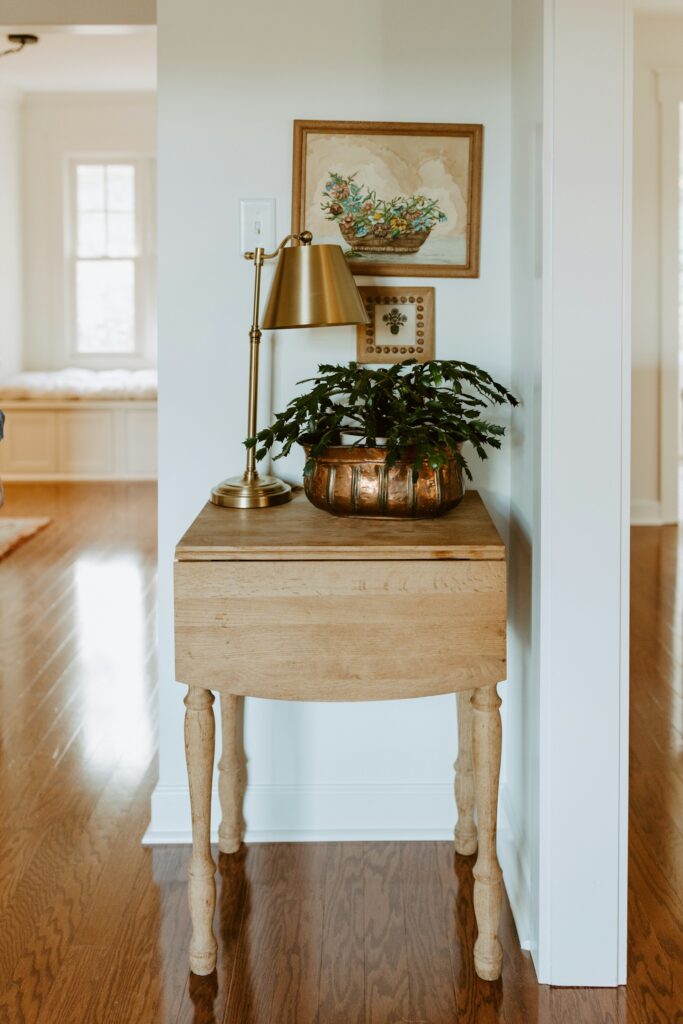
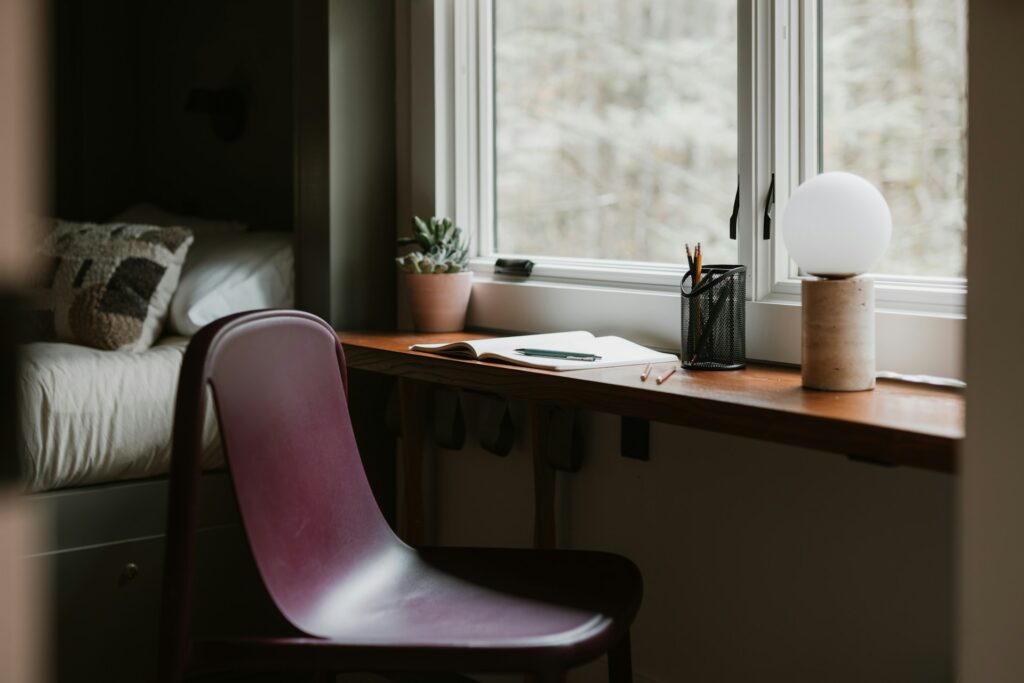
Stylish Desks That Knows When To Stand Down
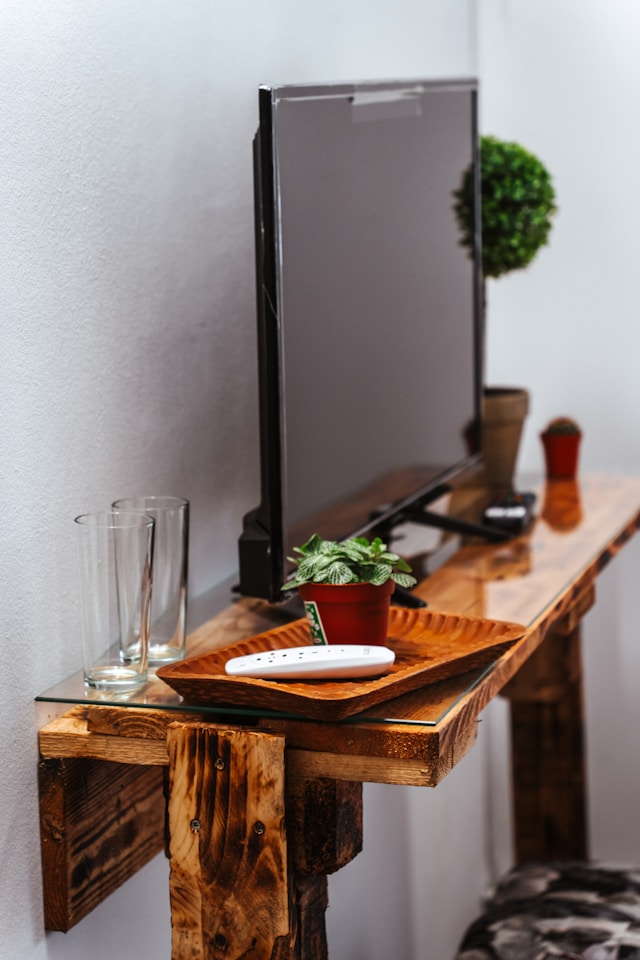
A desk that has to live in a bedroom or living room carries a brief an office desk never does. As well as working, it has to look like furniture, something that belongs in the room rather than a slab of office kit that wandered in and stayed, because get that wrong and the desk becomes the thing your eye snags on, the corner that refuses to switch off at the end of the day. So the desk needs to be something you like to look at.
We think, the single most useful piece in a shared room is a desk that changes shape with your day, and this is where electric height-adjustable models come into their own at home rather than in the office. Raised, they give you a standing workstation at the correct height for your frame. Lowered, they drop to console or side-table height and sit against the wall as a piece of furniture, the working day folded away with the press of a button.
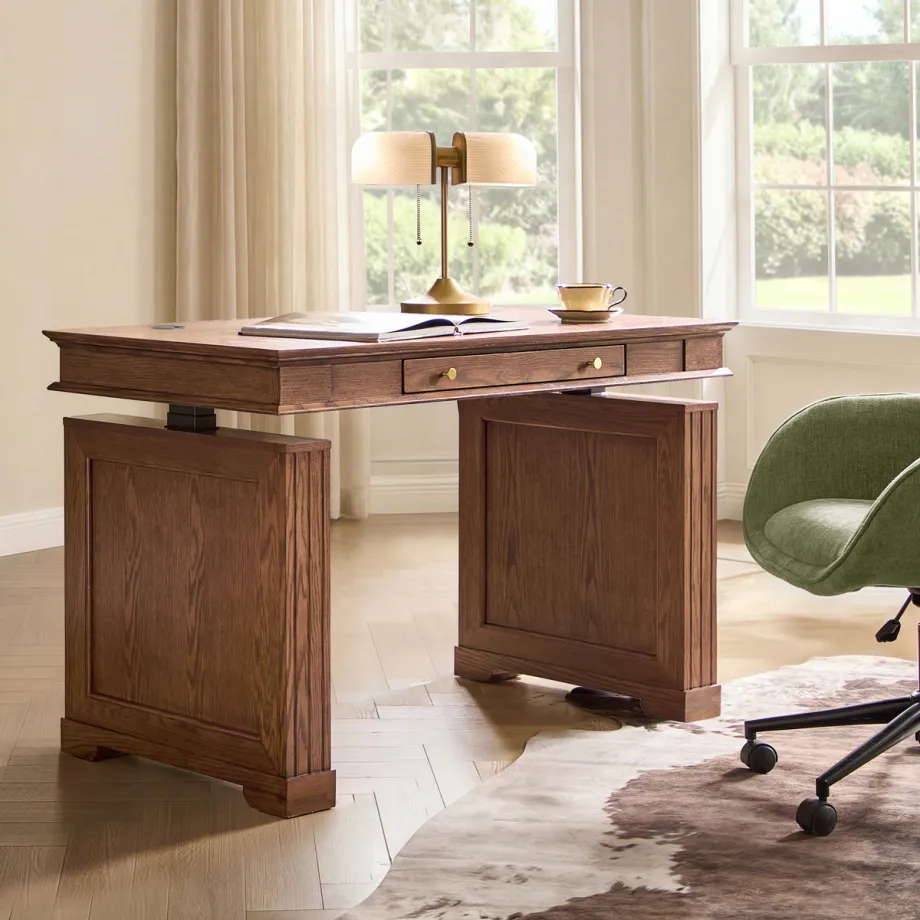
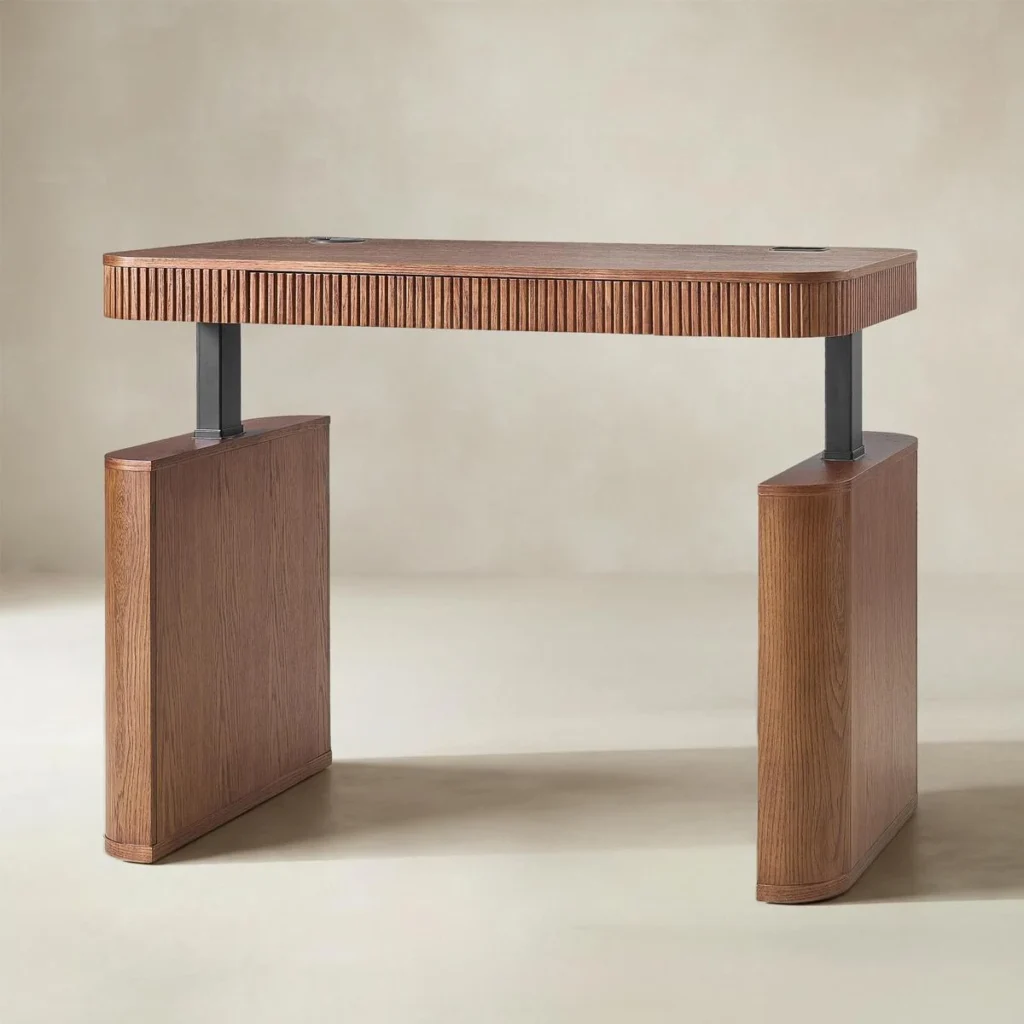
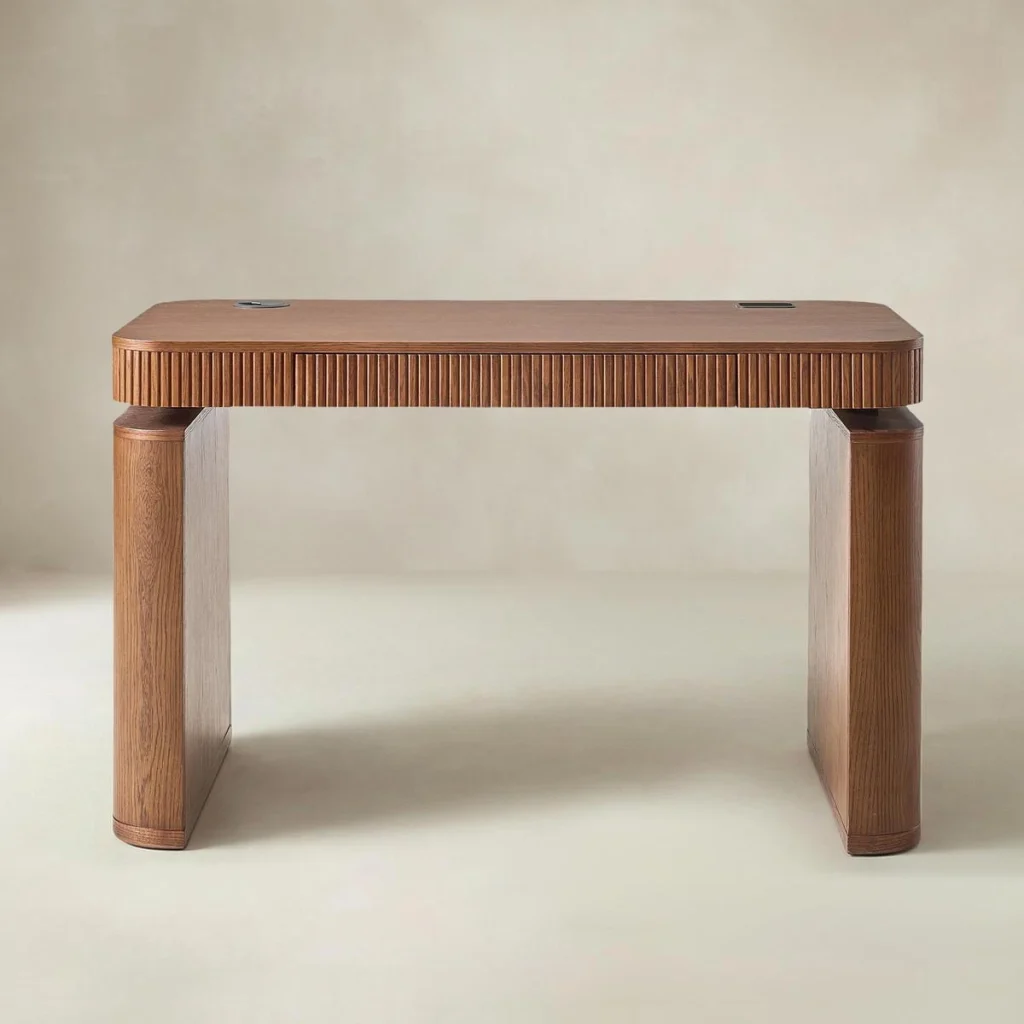
Hulala Home makes two worth knowing about. The Julia farmhouse electric height-adjustable desk is built for precisely this situation. Its warm, wood-toned top and softer farmhouse styling mean that when it is lowered at the end of the day, it reads as a sideboard or hall table rather than a workstation, which is what you want in a bedroom or living room that has to look like itself again by evening.
For a cleaner, more pared-back look, the Baggio electric height-adjustable desk does the same work with a more minimal profile, suiting a contemporary scheme where you want the desk to recede into the wall rather than make a feature of itself.
If a powered desk is more than you need, the same furniture-first thinking applies to a fixed model. The John Lewis ANYDAY Spindle desk does the job in a compact footprint, two drawers and a painted finish that suits a corner of a bedroom or living room far better than anything from an office-supply catalogue.
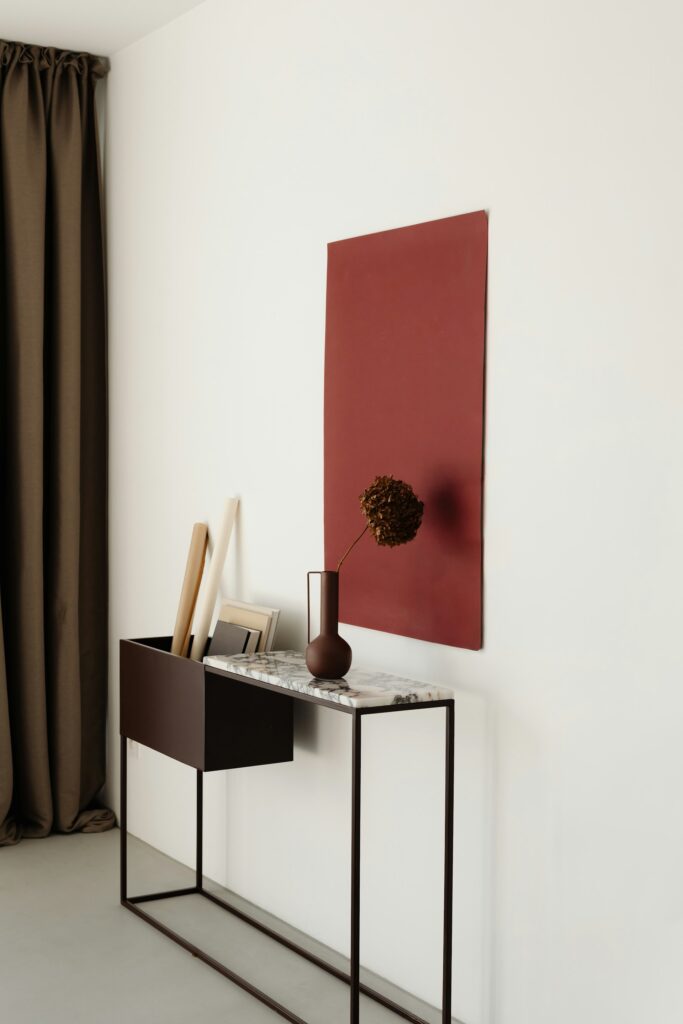
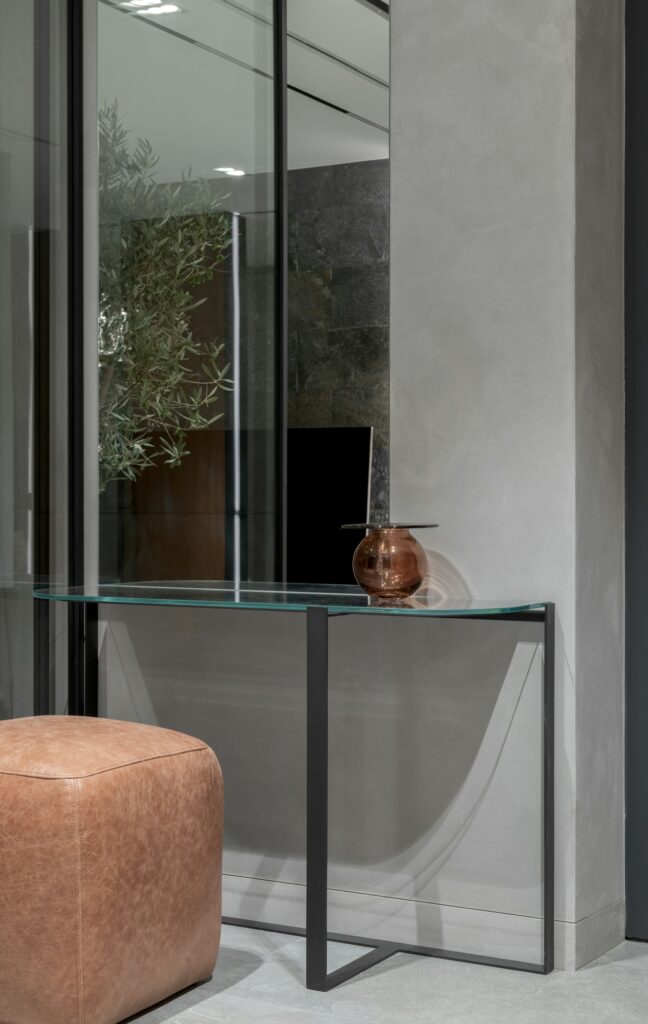
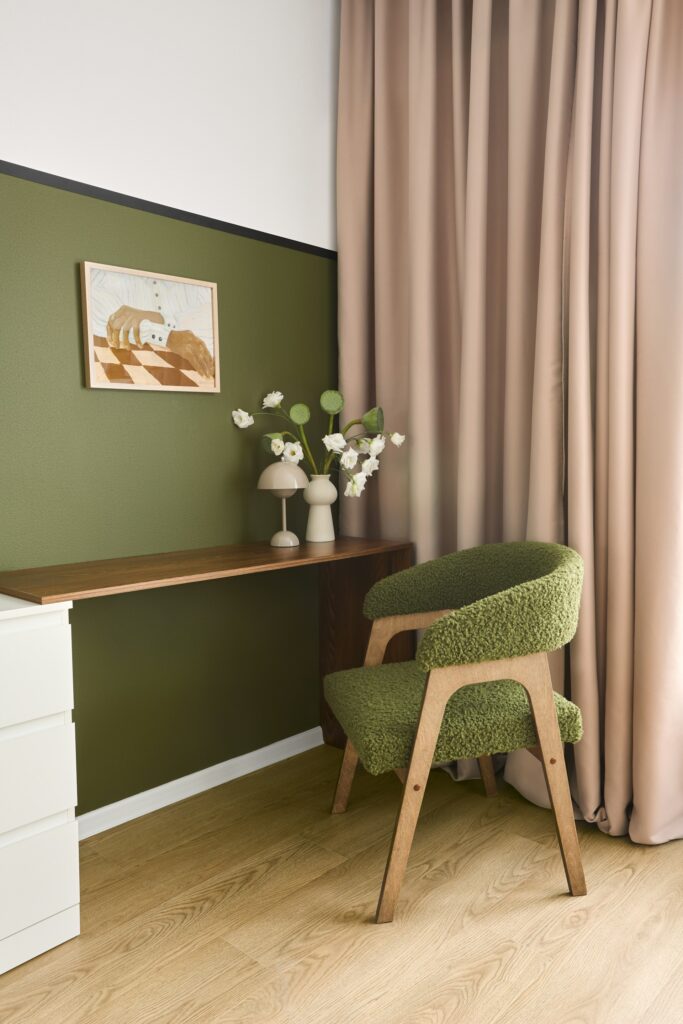
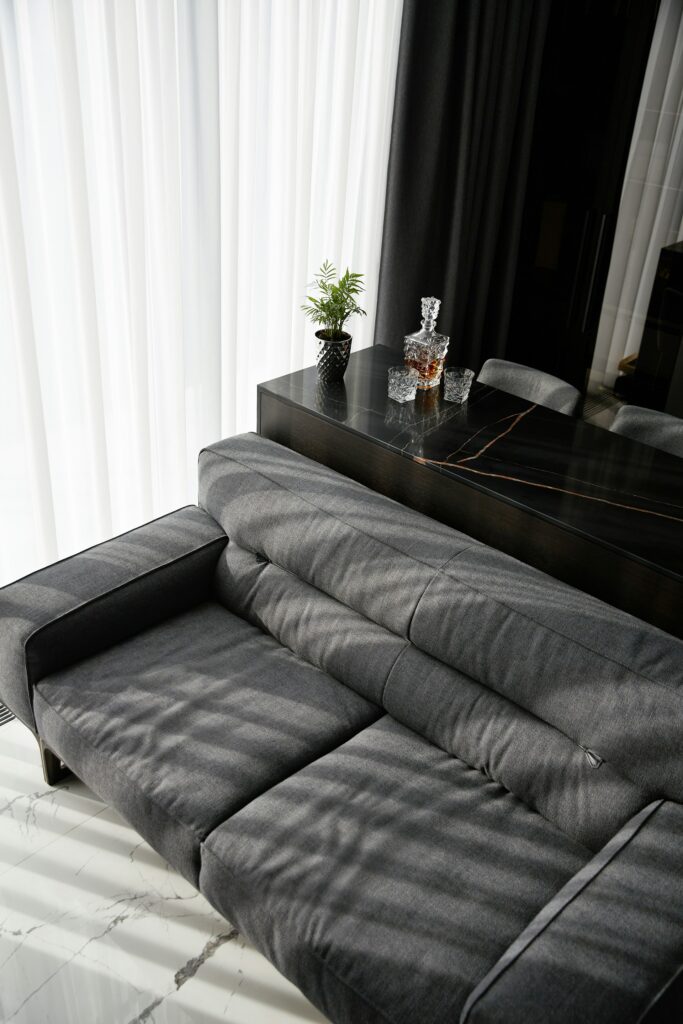
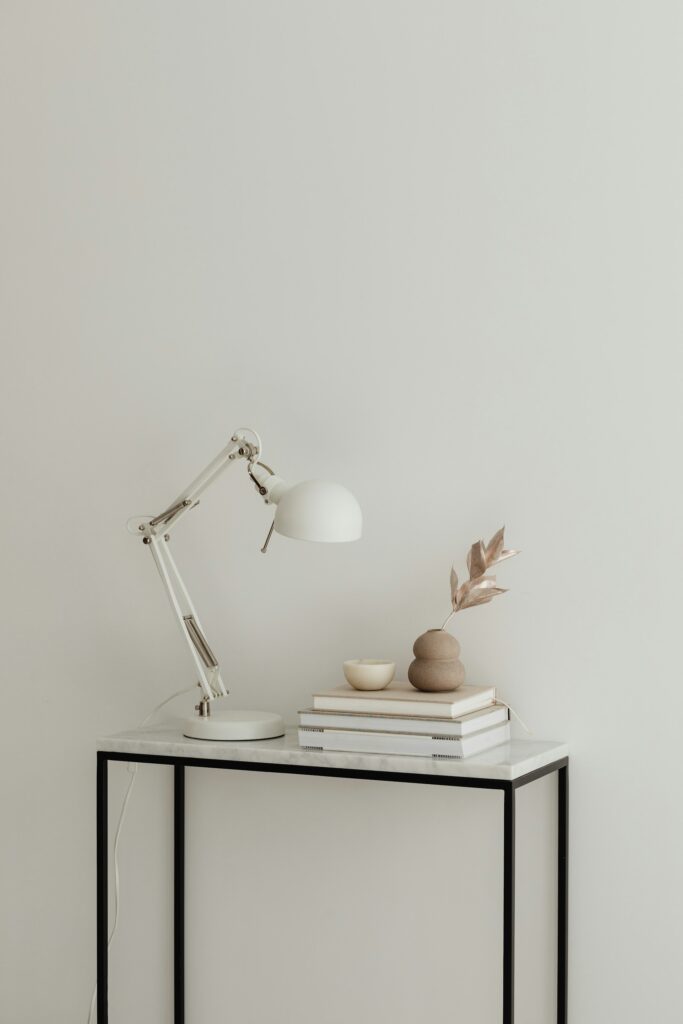
Narrower still is a slim console desk, the sort with a fine metal frame and a stone or wood top, deep enough for a laptop and little else, which sits flat against the wall and passes for a hall table the moment the laptop is shut. A console of this kind also works well behind the sofa. Set against the back of a settee that floats off the wall, it reads as a sofa table from the room side, holding a lamp and a few books, while the other side faces away as a workspace you sit down to. It is a considered way to find a desk in an open-plan living room without giving over any wall to it. The point holds either way: a desk that works as furniture first.
The Desk That Disappears Entirely
At the most dismissible end of the scale sit the desks that disappear altogether. A trestle table can be set up for the working day and folded flat into a cupboard or slid under the bed the moment you are done, which makes it a sound option when the room has no surface to spare permanently. A wall-mounted folding desk goes one better, dropping down from a bracket fixed to the wall when you need it and closing back up to a shallow panel the rest of the time, taking up no floor at all.
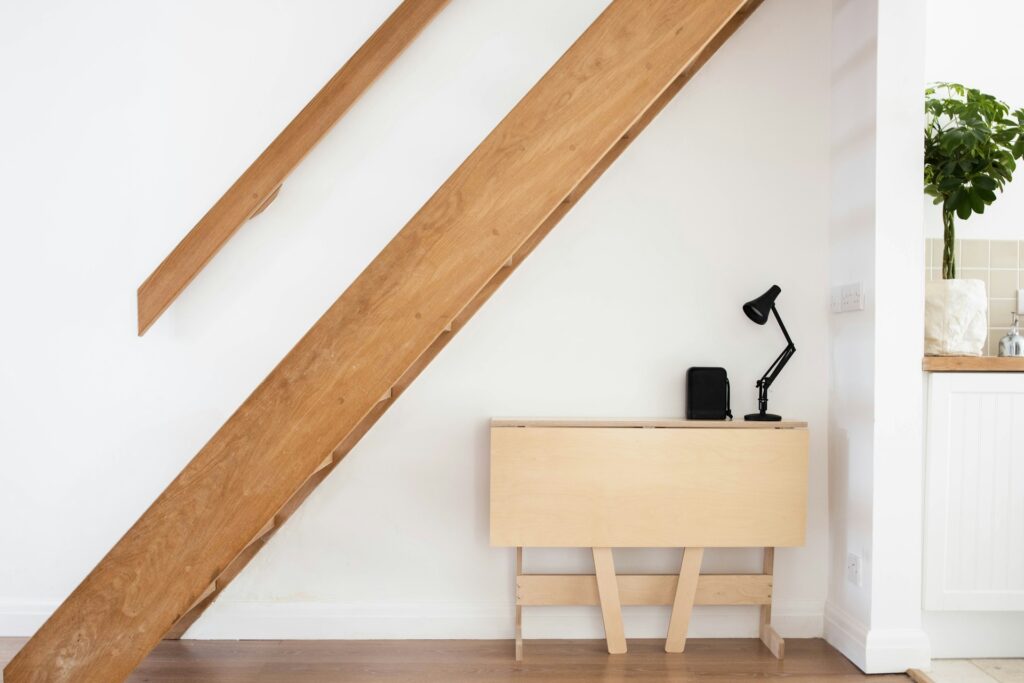
A drop-leaf or gateleg table splits the difference between the two. Open, it gives you a full working surface; folded, the leaves drop and it stands against the wall as a slim console barely deeper than a shelf, holding a lamp and a vase rather than a laptop. It stays in the room as a piece of furniture but takes up a fraction of the space the second work is over. None of these pretends to be a fixture, which in a small space is exactly the appeal.
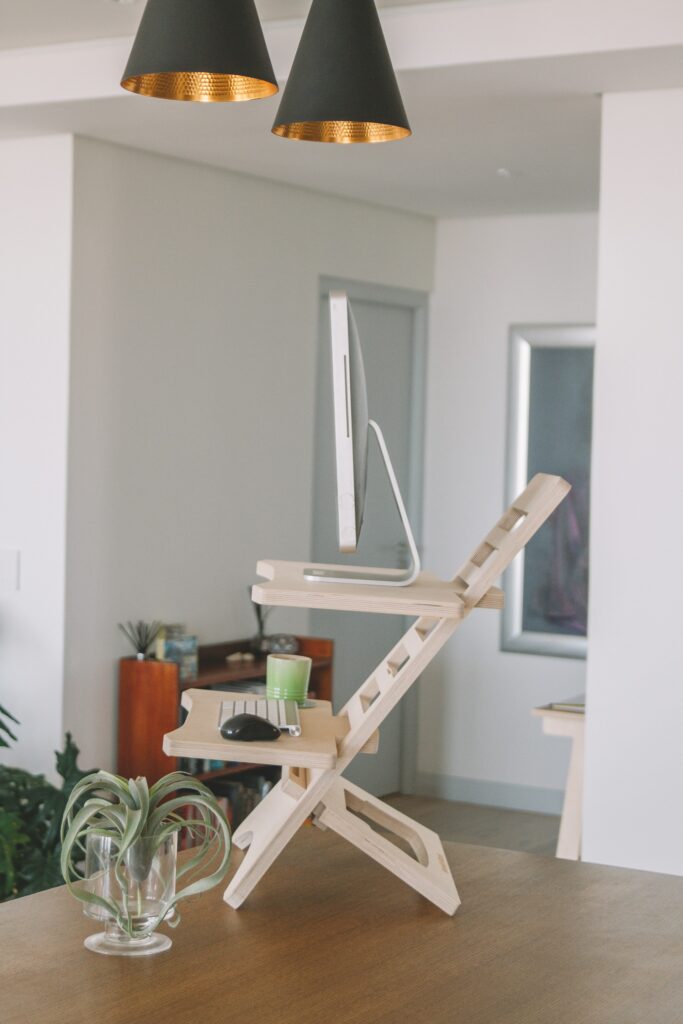

Simplest of all is a desktop riser. It does the same sit-and-stand switch on a surface you already own, lifting your laptop or monitor to standing height when you want it and dropping back down when you don’t. It asks nothing of the room beyond the table that was already there, and stows on top of a wardrobe when work is over.
There is a health argument here too, not only an aesthetic one. Long uninterrupted stretches of sitting are undoubtedly bad for us, and being able to raise the desk for part of the day is a low-effort way to break that up without buying a second piece of equipment or clearing more floor.
Choose Furniture, Not Office Equipment
We’ve already touched on this notion briefly. Almost nobody sets out to design a home office space. It accumulates, and usually with clutter. A dining chair gets dragged over for what is meant to be a few days, a desk is bought in a hurry during a busy week, a lamp is carried in from another roon and never carried back. What you are left with is less a room than a pile of stopgaps, each one chosen to solve the problem in front of you that afternoon rather than to sit happily beside everything around it. That is why so many of these spaces still feel makeshift years in: they were never decided on, only arrived at.
Buying your way out of the muddle is the obvious move, except that what is on offer rarely helps. So much of the kit sold for working from home was really designed for an office: black mesh, grey steel, the visual language of a building you were glad to leave at six. It is why the home office has long felt like an unwelcome lodger, and why the chair you order to fix the jumble so often ends up adding to it.
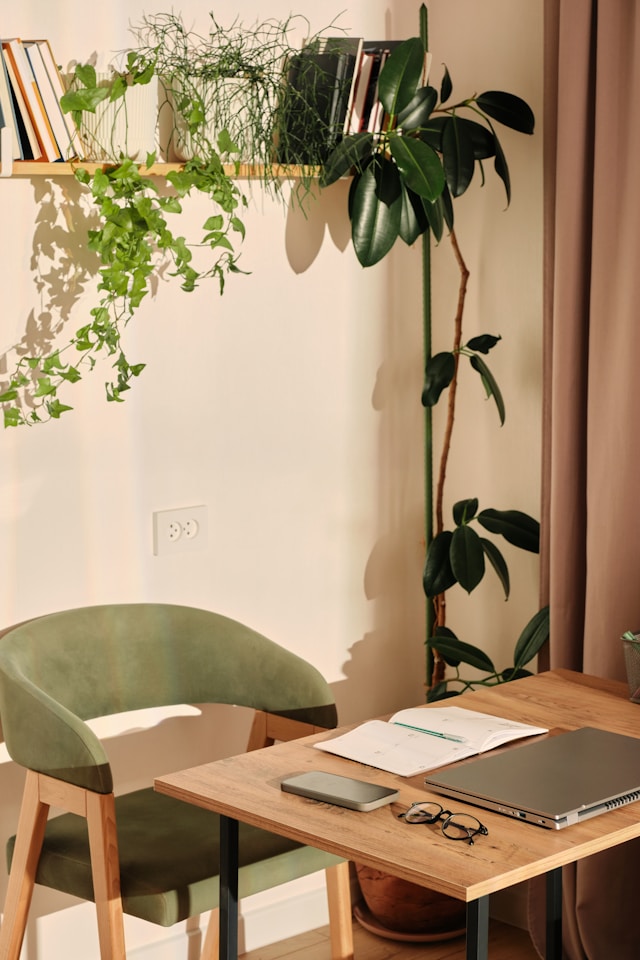
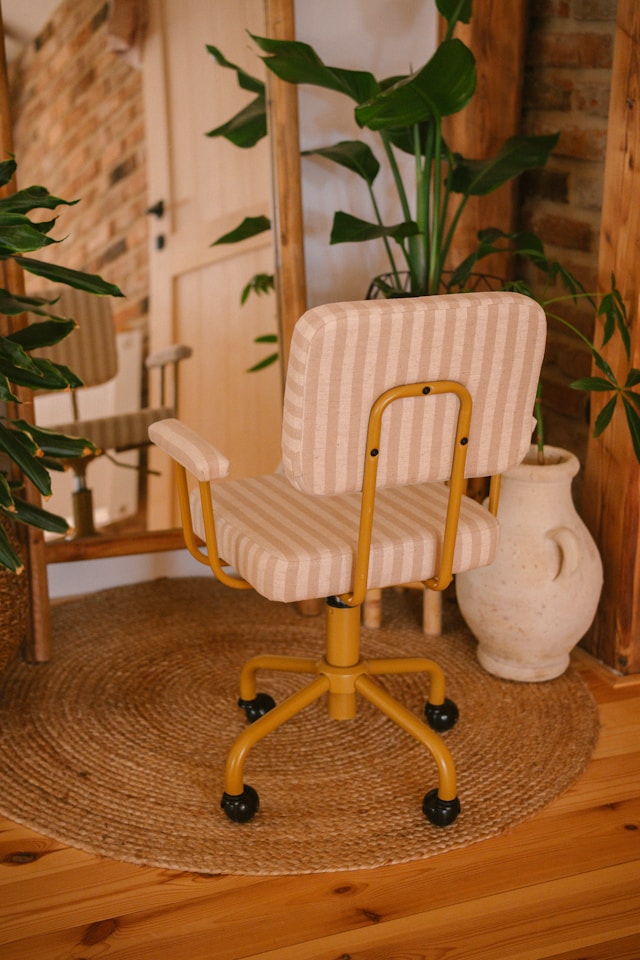
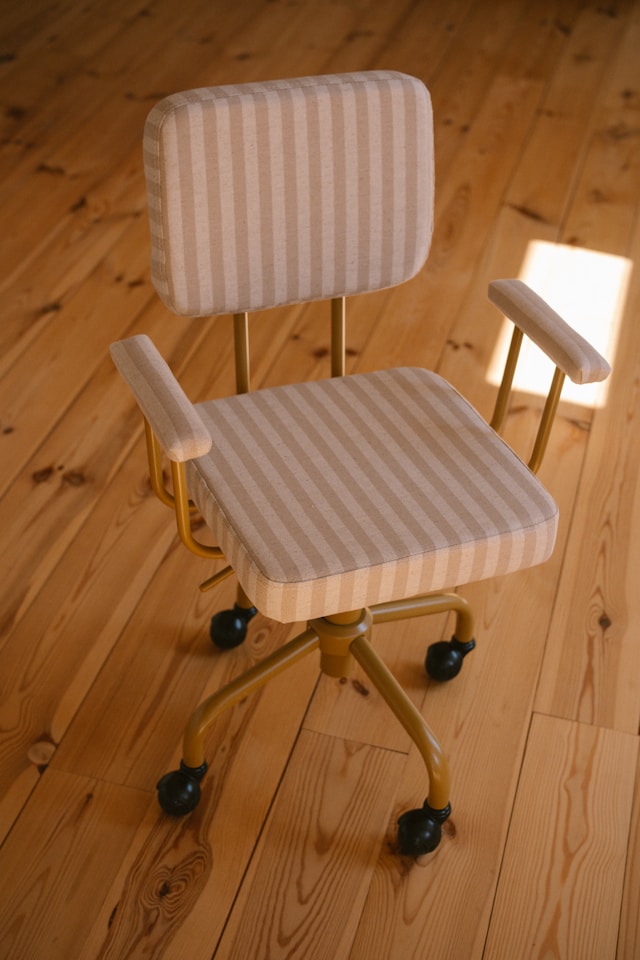
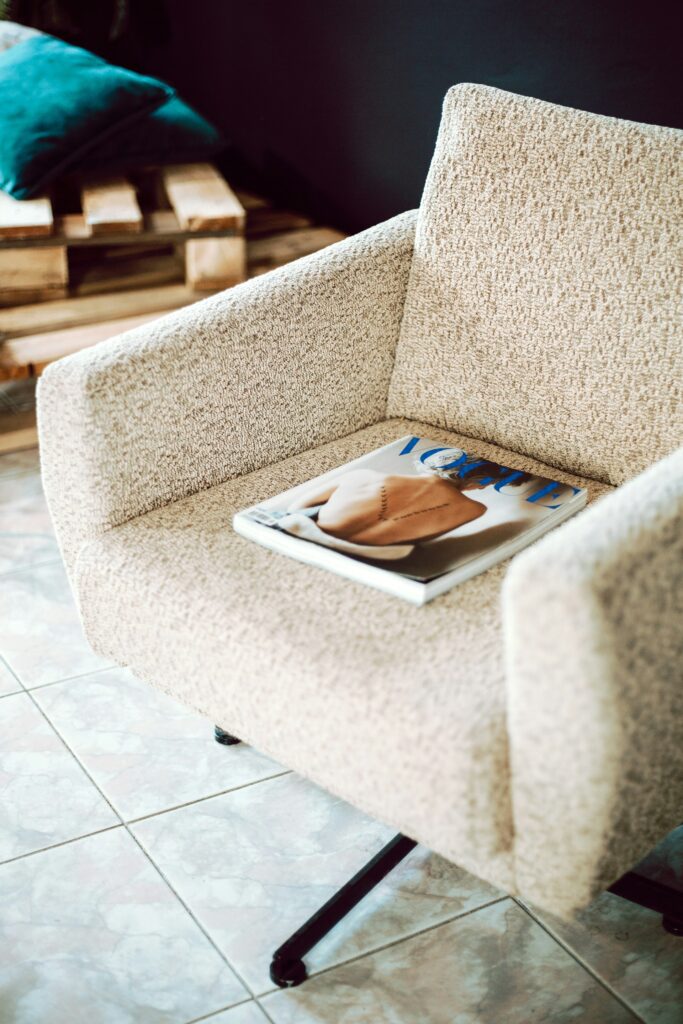
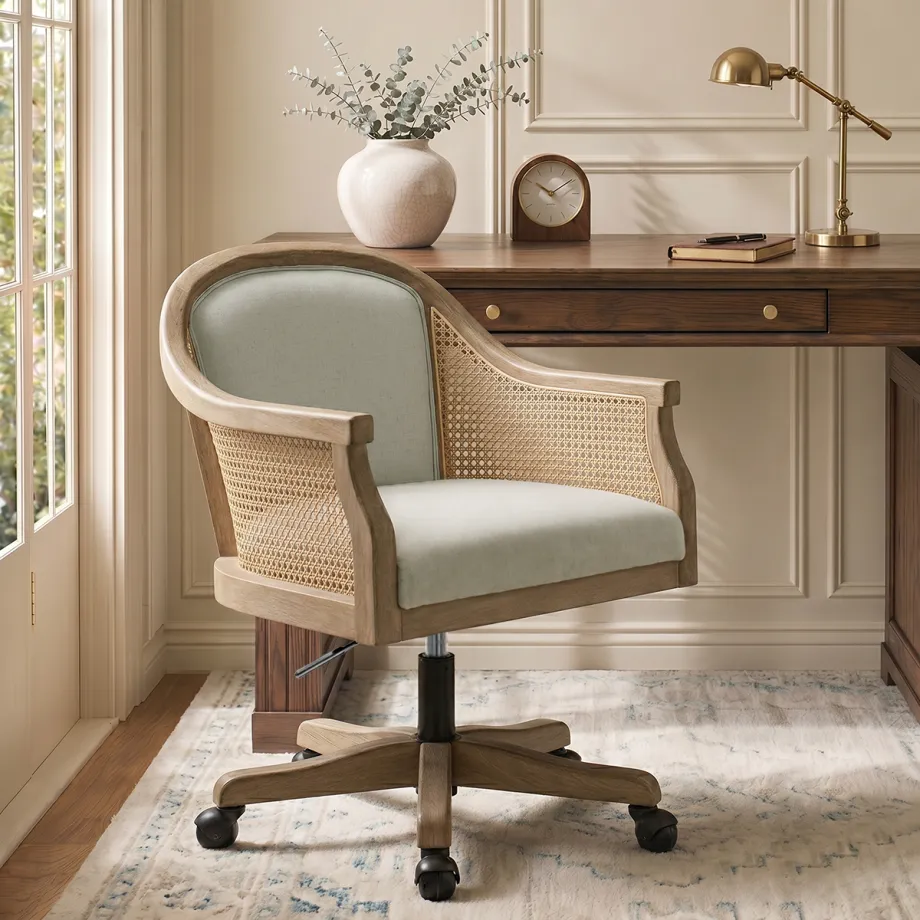
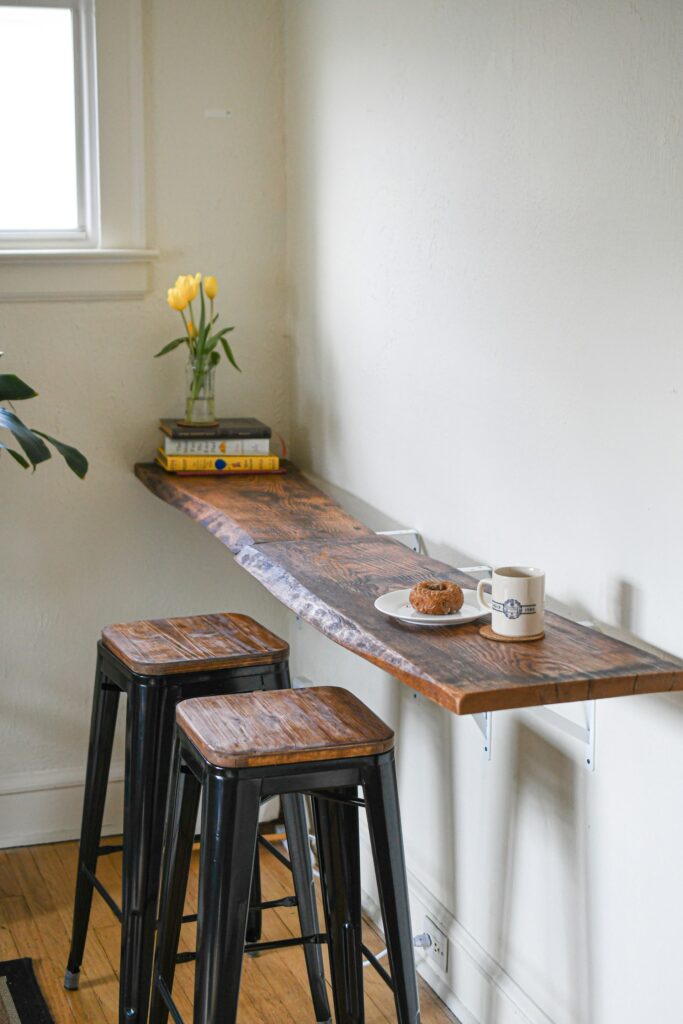
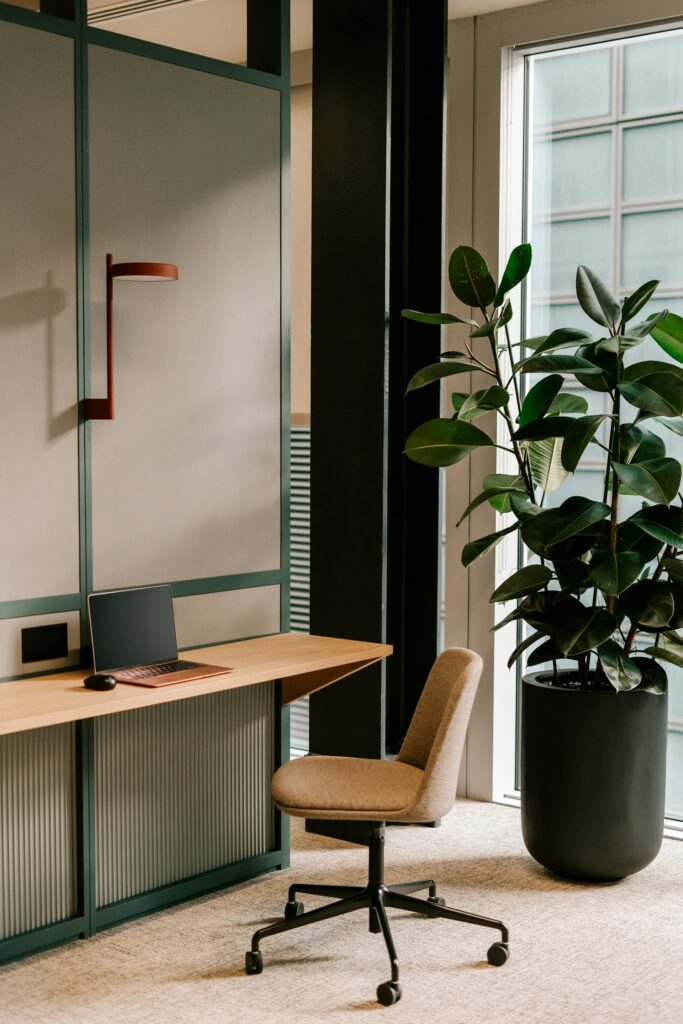
A workspace that shares a room should feel softer, which in practice means choosing pieces in the same material register as the rest of your furniture. Pick a chair you would happily pull up to the dining table, or one with enough presence to make a statement without looking too office-like. A good-looking stool works just as well. Better still, a breakfast bar that doubles as a desk gives you a defined spot to work that folds neatly back into the room the moment you shut the laptop.
Choose storage in a finish that talks to the wardrobe, not the stationery cupboard. Buy furniture that happens to be for work, in other words, rather than office equipment you are then trying to disguise. Speaking of which…
Give The Clutter Somewhere To Hide
Work generates mess: cables, chargers, a drift of paper, the second monitor you swore you needed. In a single-purpose office you can let it sprawl. In a shared room you cannot, because the sprawl is the thing that stops the room ever feeling off-duty.
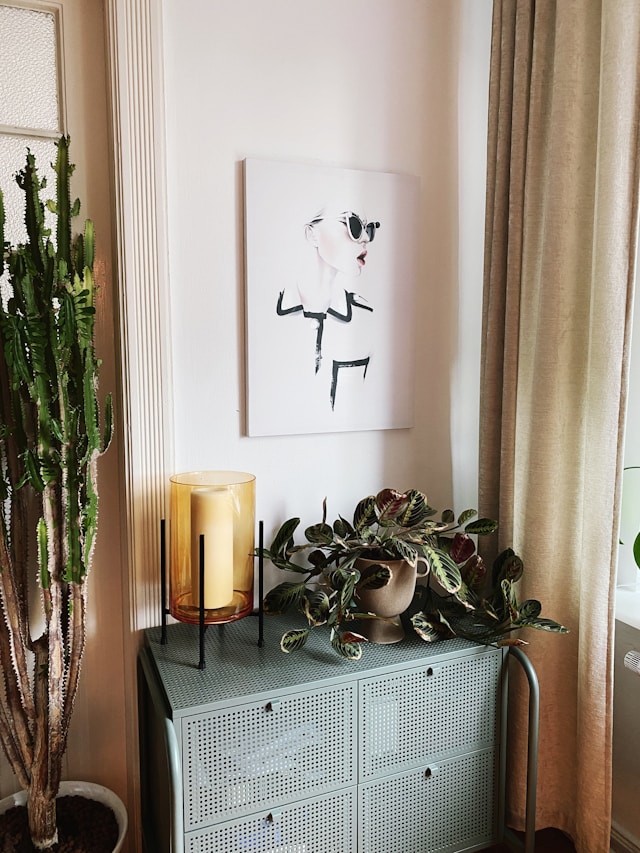
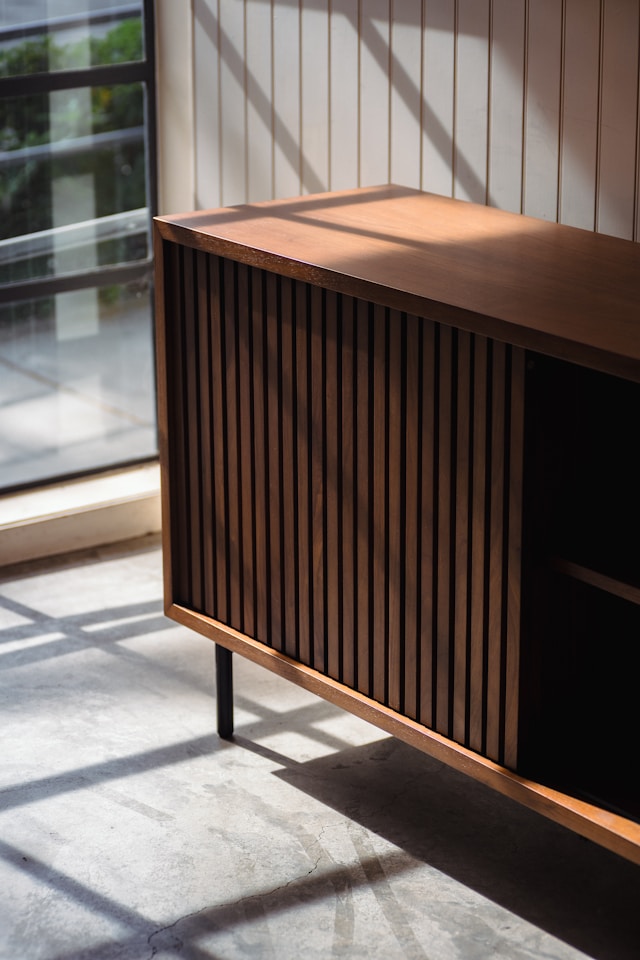
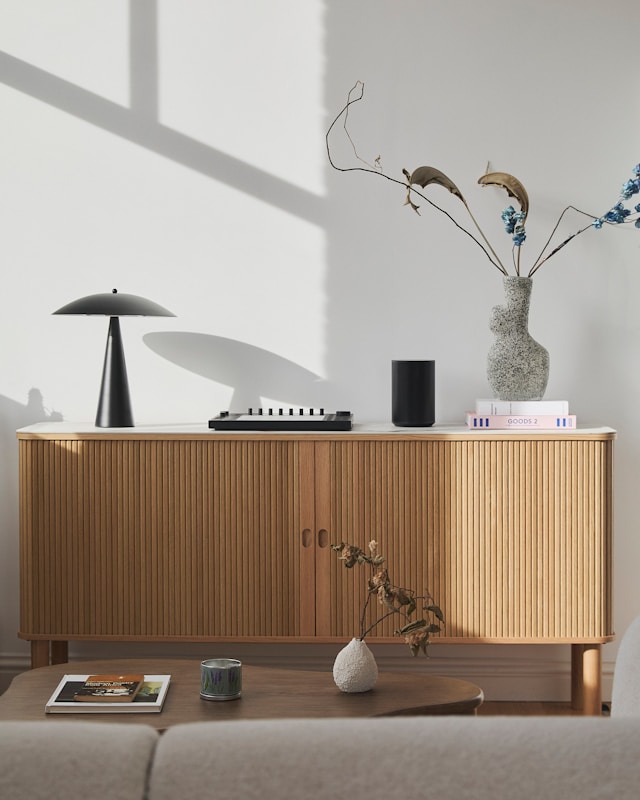
The fix is closed storage rather than open shelving, so the day’s debris can go behind a door at five o’clock and take the sense of work with it. A piece like the Chiltern Oak Chester sideboard does this well, a two-door painted oak unit with the look of a living-room sideboard rather than a filing cabinet, deep enough to swallow a printer, a stack of paper and the cables nobody wants on display. The goal is to be able to make the evidence disappear in under a minute, because a room you cannot reset is a room that never rests.
Light It For Both Of Its Lives
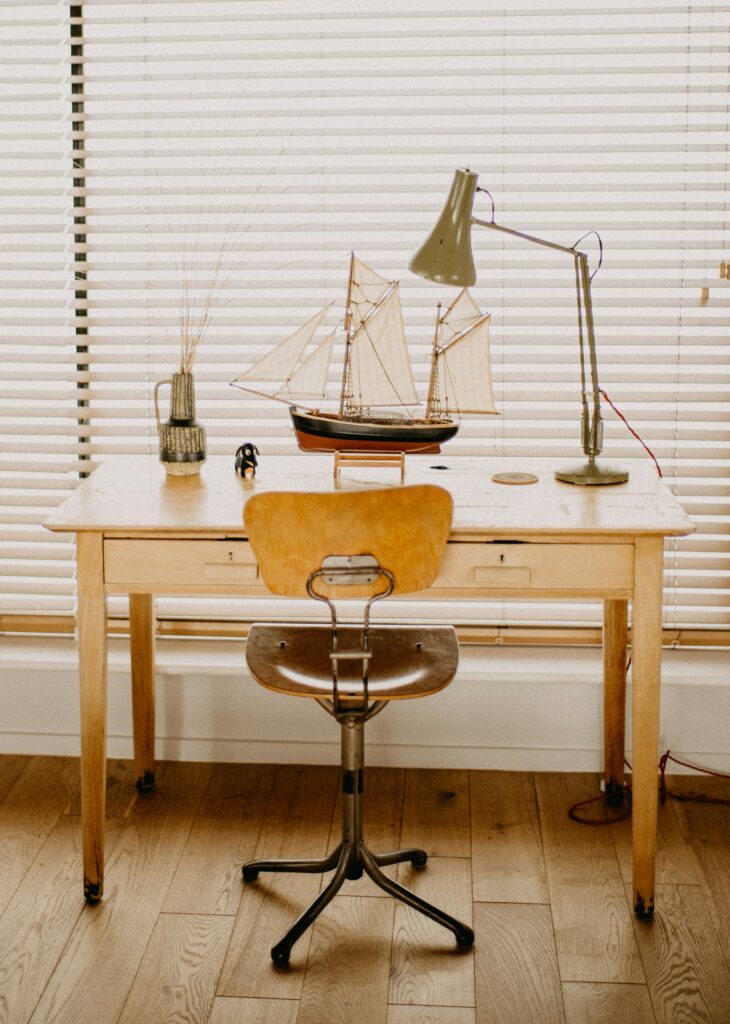
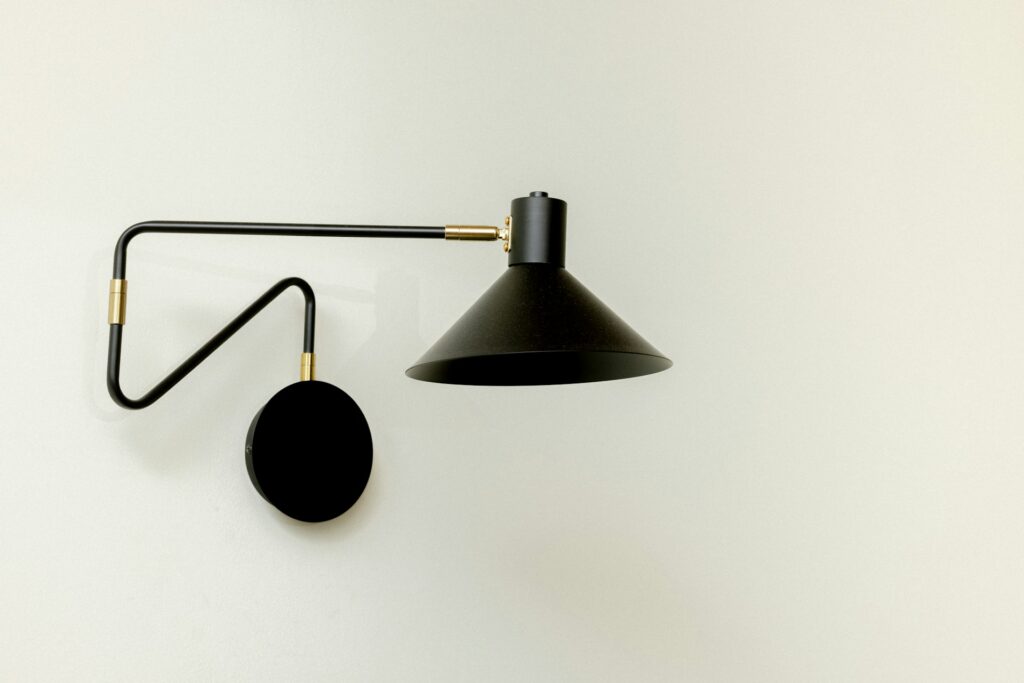
A workspace needs bright, focused task light. A bedroom or living room needs the opposite once the laptop is shut. Trying to serve both with one ceiling fitting is how you end up working in gloom or relaxing under interrogation lighting. The answer is a dedicated task lamp, something like the Anglepoise Type 75, ideally on the same plug you switch off at the end of the day, so that finishing work and softening the room become a single gesture. Let the room’s main lighting stay set for living, and let work bring its own.

Keep A Line Between Working & Living
The hardest part of sharing a room with your job is psychological rather than spatial. When the desk is always in view, the working day never quite ends. The Health and Safety Executive publishes sensible guidance on setting up a workstation, worth following for your back and eyes, but the deeper point is about boundaries.
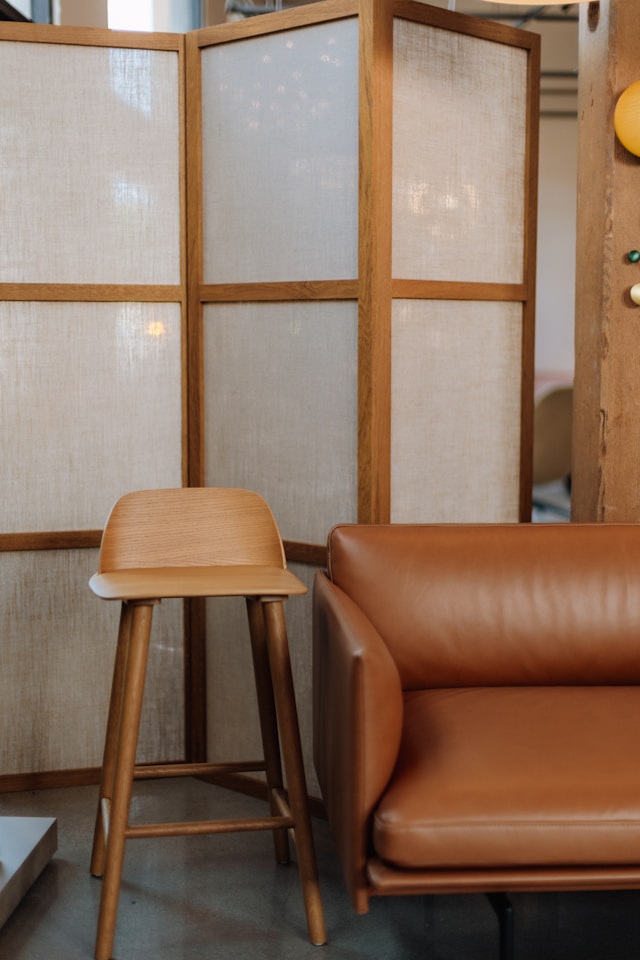
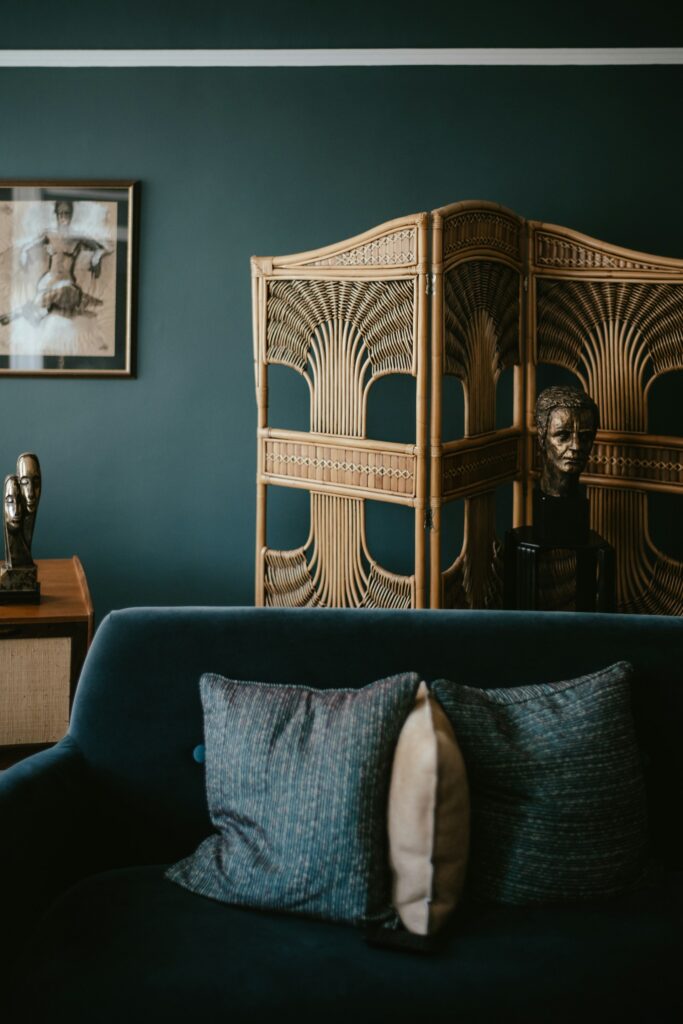
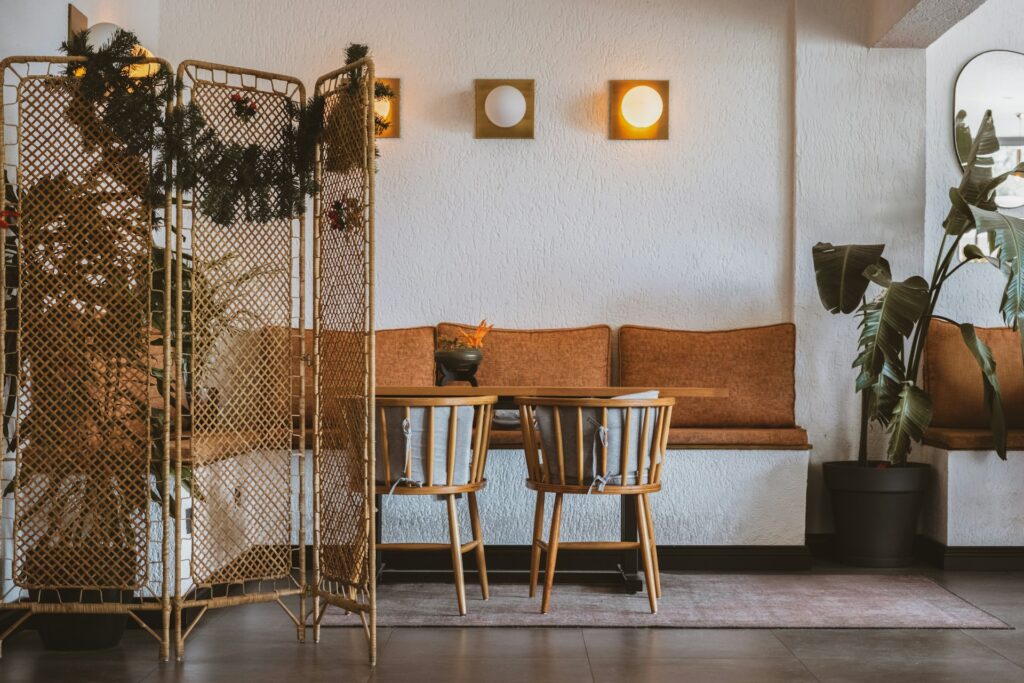
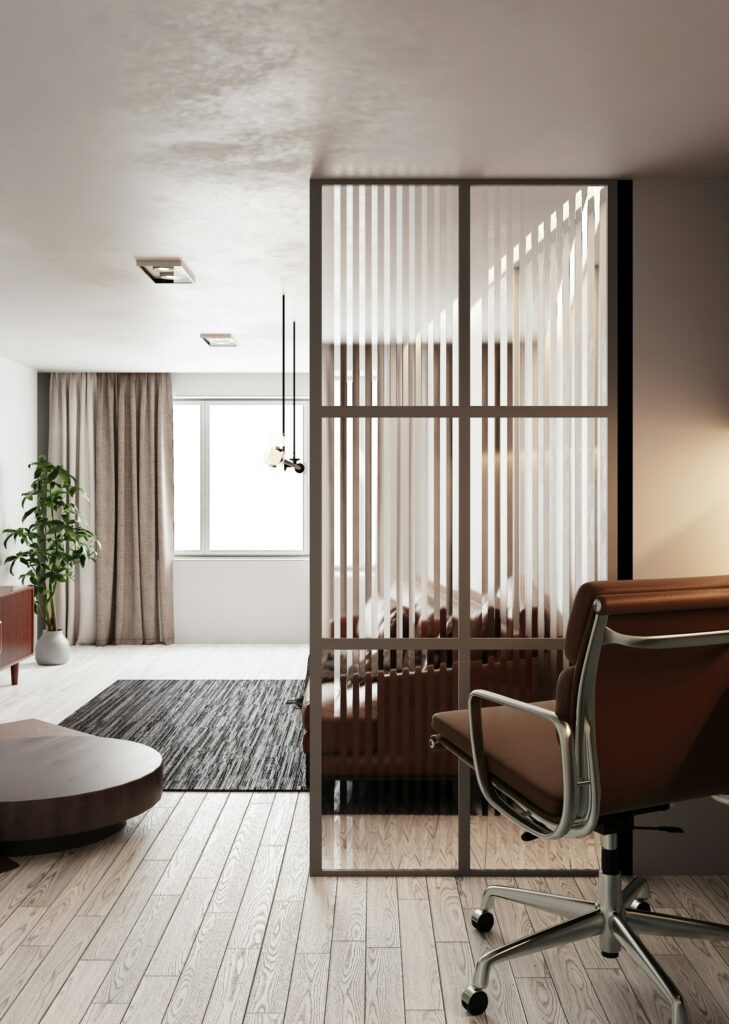
A folding screen does the most literal version of the job, a piece like the Cox & Cox Rattan Webbing Screen pulled across at the end of the day to put the desk out of sight in a room with no alcove to hide the work in. Everything else, the desk that lowers, the closed storage, the lamp on its own switch, exists to draw the same line. Cross it in the morning, cross back at night, and the room is allowed to be a bedroom again.
The Bottom Line
You do not need a spare room to work productively from home. You need a room that can hold two ideas at once, and furniture that knows which idea it is meant to be serving at any given hour. Get the desk, the storage and the lighting working with the room rather than against it, and the office stops being a permanent guest who has overstayed. It becomes something you can summon when you need it and dismiss it when you don’t, which, in a house where every room is already spoken for, is the closest thing to a spare room you are going to get.