
Mine’s a double, barkeep! We had you for a minute there, didn’t we? But nope, we’re not ordering a ruinous tequila, but rather, a shot of delicious espresso. Could there be any better pick-me-up? We certainly haven’t tried it. Deliciously thick, smooth and strong when done right, it’s one drink that just always seems to taste better when made by your favourite barista. But it’s time to change all that. Amazing coffee can be created from the comfort of your home or commercial space, by your own fair hand and with just a few pointers. These are those; our 5 IDEAL tips for perfect espresso shot.
GOOD QUALITY WATER
Since water is only one of two key ingredients in your coffee, it’s imperative you choose good quality stuff if you’re serious about flavour. Water test kits can be easily bought online to check the water quality you use, and action taken accordingly to arrest an excess of acid or alkaline that you might have revealed. Never use distilled water because the majority of espresso machines get damaged by it.
A carbon filter is a good idea to remove contaminants and impurities. However, if the water is of poor quality, then you may need to use purifying tablets or simply boil it prior to use. Then, allow it to cool as the water has to be at room temperature, since an espresso machine deals with the heating.
Read: 6 of the best summer coffees, IDEAL for a caffeine hit when the weather’s hot
IT’S ALL ABOUT THE COFFEE
Good espresso starts with good beans, naturally. Indeed, finding the right coffee bean for you and your specific taste is essential to preparing the perfect beverage every time. However, it’s all personal preference, so get familiar with your preferred brand ahead of time. For us, a medium espresso roast is best. However, according to connoisseurs, to get the very best shot of espresso at home you must grind your own beans.
Making espresso needs finely grounded beans, akin to the texture of table salt, and sadly, store bought espresso rarely comes at this optimum grind. If you want maximum flavour (and you do, that’s why you’re here) then the beans have to be freshly ground. That almost gold crema which collects at the top of a fine restaurant or coffee shop espresso? That’s indicative of a freshly ground bean.

THE EQUIPMENT
Speaking of grinders, if you’re going to do it yourself (and you should) then get a decent one that’s been recommended specifically for espresso making. In doing so, you’ll maximise flavour and freshness. There are two main types of grinder; blade, which are cheap and cut beans inconsistently, and burr, which, while more expensive, are worth the investment if you want the perfect espresso shot.
Choose a specialized espresso machine with quality structure and components along with an exclusive pressurized system, but if you’re looking to make more than just espresso go buy a cappuccino maker or a latte machine which also has an espresso function. This will allow specialised drinks at just a single press of button.
Above all, keep your equipment and machine clean. You wouldn’t reuse an unwashed coffee cup, and coffee oils and grounds which built up over time will taint the taste of your coffee.
CONSISTENCY MATTERS
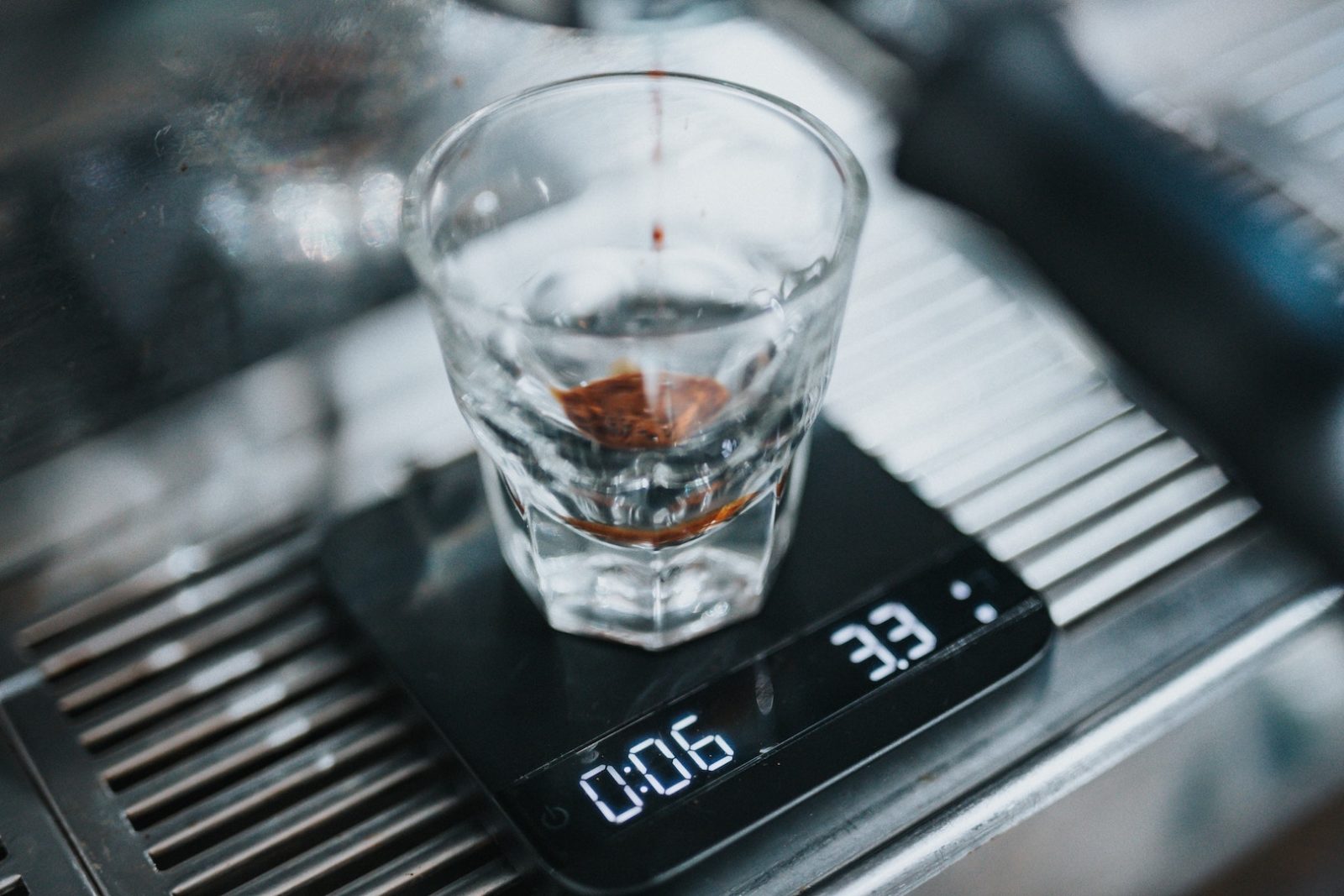
Nevertheless, to pull perfect espresso shot, you need to consider several things. The first one is consistency. The recipe, technique, and equipment used don’t matter if things are inconsistent. Indeed, a focus on uniformity is essential. Do things exactly, in the same manner every time, except when you experiment with variables. A gram weighing scale ensures every ingredient is correctly measured, and only when you change one variable at a time will you be able to truly perfect your shot.
GET THE PROCESS RIGHT
Making espresso is instant, but the machine needs to have been given sufficient time to get heated; keep this in mind. It takes 10 minutes (small espresso machines) to 1 hour (large commercial machines) for a machine to be ready to produce the perfect shot. Each machine works differently, so check the manual to get an idea of the time needed to heat it initially. As above, always measure your coffee and compress the coffee evenly with the tamper, as this releases the coffee flavours and taste properly.
Interestingly, the taste will ultimately reveal if the amount of coffee and grind size were correct or not. If the size is coarse, the taste may be sour, due to the short brew time required for a larger grind. On the flip side, if the size of your grind is very fine, the flavor may be bitter, due to the longer brewing time. Acknowledge these incrementals each and every time.