
The herb garden has always been part pharmacy, part kitchen. Long before supermarket tea aisles and supplement shelves, people grew what they needed and brewed it themselves. That tradition hasn’t disappeared – it’s just been forgotten by most of us.
Growing herbs for tea isn’t complicated, and the results are genuinely useful. A few pots on a windowsill or a small patch of garden can supply you with year-round remedies for everything from sleeplessness to stomach trouble. Here’s what to grow, how to brew it, and what it’s actually good for.
Lemon Balm
This vigorous member of the mint family has been cultivated as a medicinal herb since at least the Middle Ages, when it was grown in monastery gardens across Europe. Lemon balm leaves release a bright, citrusy scent when crushed – hence the name.
Growing: Lemon balm thrives in partial shade and moist, well-drained soil. It spreads enthusiastically, so give it a dedicated pot or be prepared for it to colonise your borders. Harvest leaves in the morning for the strongest scent, and cut regularly to prevent early flowering.
Brewing: Steep a small handful of fresh leaves (or a tablespoon of dried) in just-boiled water for five to ten minutes. The flavour is mild and citrusy – pleasant enough to drink without sweetening.
What it’s good for: Lemon balm has been used for centuries to ease tension and encourage sleep, and modern research suggests there’s something to it – it may help with both anxiety and low mood. One trial on patients recovering from heart surgery found improvements in sleep quality after just one week.
Do be aware that it can interact with thyroid medications and sedatives. Indeed, lemon balm side effects are rare, but they’re certainly worth knowing about.
Chamomile
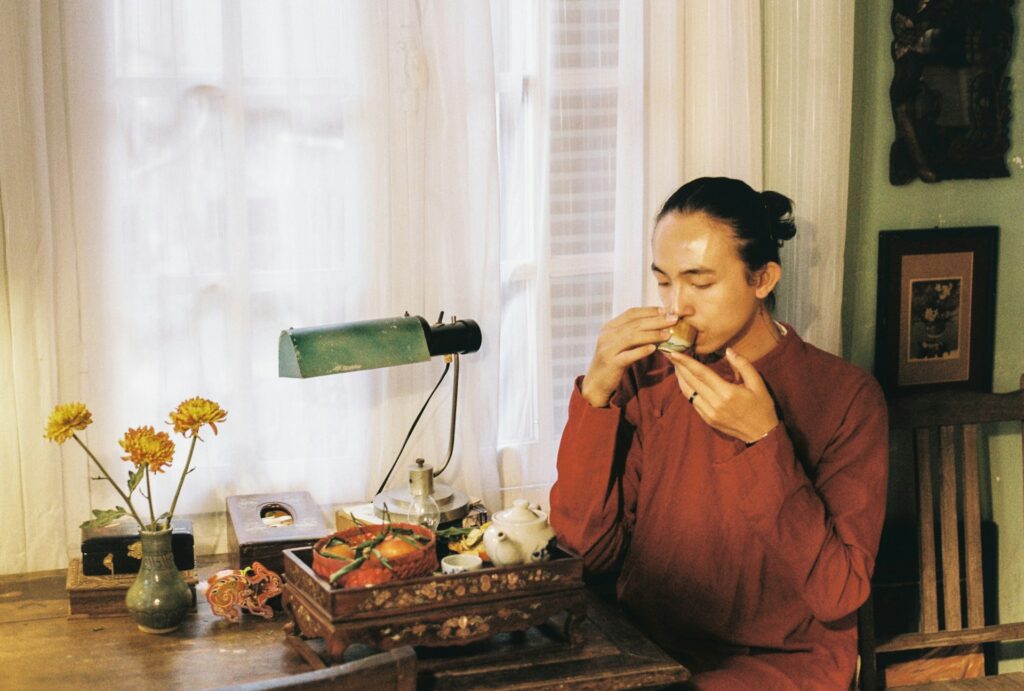
The ancient Egyptians dedicated chamomile to their sun god and used it to treat fevers. The name comes from the Greek for ‘earth apple’ – a nod to its gentle, fruit-like fragrance. It remains one of the most popular herbal teas in the world, and one of the best studied.
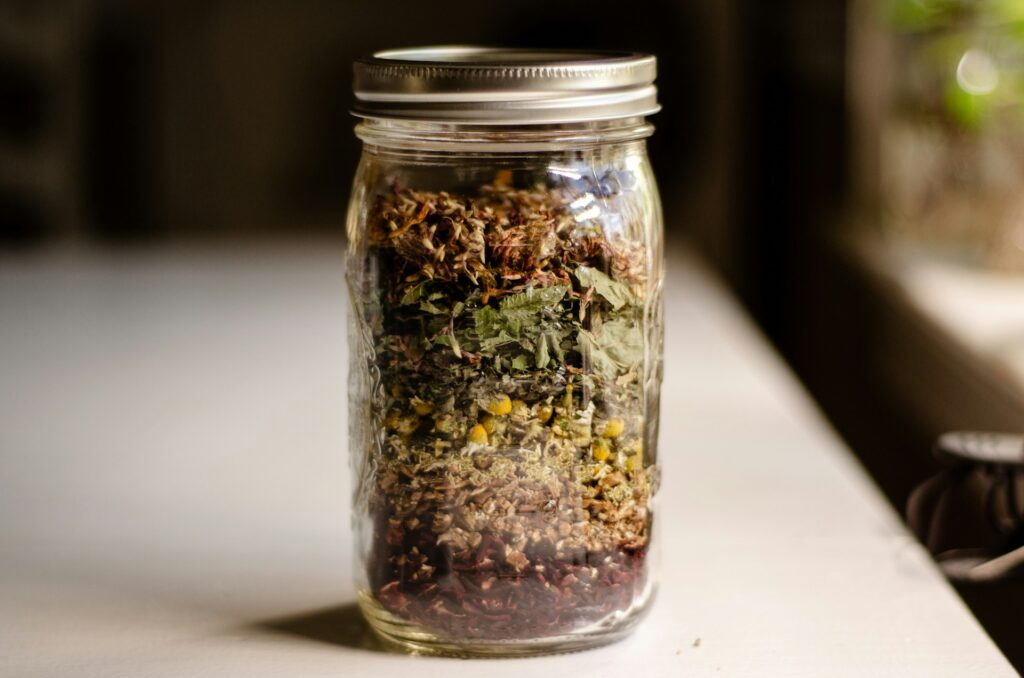
Growing: German chamomile is an annual that loves full sun and light, sandy soil – ideal for windowsills and raised beds. Pick the flower heads when fully open and dry them gently, spread on a tray somewhere warm and airy rather than using heat, which destroys the calming compounds.
Brewing: Use two teaspoons of dried flowers per cup, steeped for five minutes. The tea has a gentle, apple-like sweetness.
What it’s good for: Chamomile’s reputation as a calming tea may be well earned. Studies suggest it can help with generalised anxiety, with benefits potentially lasting months rather than wearing off quickly. The flowers contain apigenin, a compound that binds to the same brain receptors as some anti-anxiety medications – which might explain why a cup before bed seems to work for so many people. If you’re allergic to ragweed or daisies, approach with caution.
Peppermint
A natural hybrid of watermint and spearmint, peppermint has been used medicinally for thousands of years. The ancient Greeks and Romans crowned themselves with it at feasts, believing it would prevent intoxication. It didn’t, but they were onto something about its digestive benefits.
Growing: Peppermint grows aggressively and will take over any bed you plant it in, so a large pot is the safest approach. It prefers bright light and consistent moisture. Harvest continuously throughout the growing season to encourage bushy growth.
Brewing: A generous handful of fresh leaves or a tablespoon of dried, steeped for five to seven minutes. The flavour is strong and cooling.
What it’s good for: If you’re only going to grow one herb for digestive issues, peppermint is a good bet. Research suggests it may help with IBS, bloating, and general stomach discomfort – the menthol relaxes the muscles in your gut. It’s also sometimes used for tension headaches, though applying diluted oil to your temples seems to work better than drinking the tea for that. One caveat: if you suffer from acid reflux, peppermint can make it worse.
Lavender
Lavender’s name derives from the Latin ‘lavare’ – to wash – reflecting its long history in bathing rituals. The Romans scented their baths with it; Victorian ladies used it to ward off fainting spells. Today it’s one of the most widely used aromatherapy oils, but the dried flowers also make a surprisingly drinkable tea.
Growing: Lavender demands excellent drainage and full sun. It hates wet feet and heavy clay, so raised beds or pots with gritty compost work best. In colder climates, containers you can move under cover in winter are wise. Harvest flower stems just before they fully open for the most potent aroma.
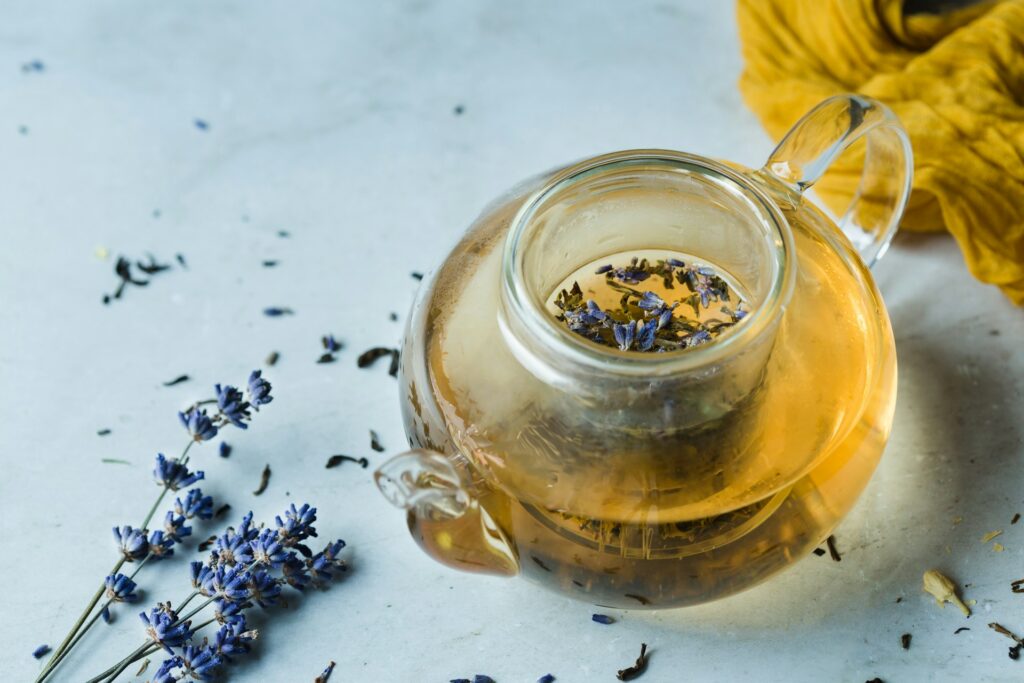
Brewing: Use one to two teaspoons of dried flowers per cup, steeped for five minutes. The flavour is floral and slightly perfumed – divisive, but those who like it tend to love it.
What it’s good for: Lavender isn’t just for pillow sprays. Taken orally, some studies suggest it may be as effective as certain prescription anxiety medications – without the sedation or addiction risk. A lavender oil preparation is actually licensed as an anxiety treatment in several European countries. The tea is milder, but may still help with winding down. Keep intake moderate if you’re pregnant or giving it to children.
Read: The hidden stressors in your home (& how to fix them)
Lemon Verbena
Native to South America, lemon verbena was brought to Europe by Spanish explorers in the 17th century and quickly became a favourite for perfumes and tisanes. The French call it ‘verveine’ and drink it after dinner the way the British drink builder’s tea – constantly and without ceremony.
Growing: This tender perennial needs warmth, full sun, and protection from frost. In the UK, it’s best grown in containers that can overwinter indoors or in a sheltered spot. It responds well to regular trimming, which keeps it bushy and productive. Leaves can be harvested throughout the growing season and dried for winter use.
Brewing: Use a small handful of fresh leaves or two teaspoons dried, steeped for five to ten minutes. The flavour is intensely lemony – brighter and sharper than lemon balm.
What it’s good for: Less studied than some of the herbs here, but early research is promising – it may help with anxiety and sleep, and could aid muscle recovery after exercise. It’s gentle enough to drink daily and combines beautifully with chamomile for an evening blend.
Rosemary
The herb of remembrance has a history stretching back to ancient Greece, where students wore rosemary garlands while studying for exams. Shakespeare referenced its connection to memory in Hamlet – “There’s rosemary, that’s for remembrance” – and it turns out the old associations weren’t just folklore.
Growing: Rosemary is a Mediterranean native that thrives on neglect. It wants full sun, sharp drainage, and not much else – overwatering and rich soil will kill it faster than drought. Established plants are surprisingly hardy, though severe winters can damage them. Harvest sprigs year-round; the flavour is strongest just before flowering.
Brewing: Use a small sprig of fresh rosemary or a teaspoon of dried leaves, steeped for five to ten minutes. The flavour is resinous and piney – an acquired taste on its own, but it blends well with lemon or honey.
What it’s good for: Rosemary does seem to have some effect on memory and focus – though interestingly, more isn’t better; low doses appear to work while high doses may have the opposite effect. It’s also been linked to reduced anxiety and improved sleep with regular use. Worth trying as a morning cup when you need to concentrate, or blended with other herbs in the evening. Pregnant women and those with high blood pressure should use it sparingly.
Fennel
Fennel has been cultivated for so long that its wild origins are unclear – it may have come from the Mediterranean, or possibly Asia. The ancient Greeks called it ‘marathon’, after the famous battlefield, which was named for the fennel that grew there. They believed it conveyed courage and longevity.
Growing: Fennel is a hardy perennial that grows tall – up to two metres in good conditions. It prefers full sun and well-drained soil, and will self-seed prolifically if you let it flower. For tea, you want the seeds: allow some plants to flower and harvest when the seed heads turn brown.
Brewing: Lightly crush a teaspoon of seeds to release the oils, then steep in boiling water for ten minutes. The flavour is sweet and anise-like.
What it’s good for: Fennel is the after-dinner tea – it’s been used for digestive complaints for thousands of years, and research suggests it may help with bloating, gas, and gut discomfort. If you’ve overdone it at dinner, this is the one to reach for. It’s also traditionally used to support breastfeeding, though evidence there is limited. Because it contains oestrogen-like compounds, those with hormone-sensitive conditions should be cautious.
The Bottom Line
Growing herbs for tea connects you to a tradition that predates modern medicine by millennia. These plants won’t replace proper medical care for serious conditions, but they may offer support for everyday complaints: stress, poor sleep, digestive discomfort, mental fog.
Start with what appeals to you. A pot of peppermint on the kitchen windowsill. A few chamomile plants in a sunny corner. The investment is minimal, the maintenance straightforward, and the reward is a supply of potential remedies you grew yourself.