
While much of our body regenerates throughout our lives, some of our body parts stay with us from childhood to retirement. This is most prominently felt in our bones and teeth, so taking particular care of them is a must. Modern life can sometimes get in the way of our oral healthcare, be that through failing to attend regular check-ups, missing out flossing or not hitting that minimum two minutes. It shouldn’t have to be this way, at any stage in your life. Here’s our IDEAL guide to a life’s worth of good oral health.
0-3 Years Old
Even though we start our lives with a set of milk teeth that will naturally fall out around the age of 6 or 7, looking after your baby’s teeth is as important as looking after adult teeth. Not only will this establish good oral hygiene for the rest of their life, but looking after their milk teeth could also have an effect on the adult teeth that are yet to grow. To give your baby’s teeth the best care possible, you should brush them gently from the moment that they break the surface, using a small smudge of speciality children’s toothpaste to do this.
To clean their teeth thoroughly, you should brush in small circles and encourage them to spit the toothpaste out, as swallowing toothpaste can be potentially harmful. Choosing a toothbrush with soft nylon bristles and a small head will allow you to reach every part of your baby’s mouth. This will stop you harming or aggravating the teeth or gums, which are often more sensitive than adult teeth.
You should also look into registering them for a dentist immediately after they are born. This ensures that they are familiar with the dentist’s waiting room and alleviates potential fear and anxiety as they get older. Although it may be hard to encourage your baby to enjoy having their teeth brushed, discomfort can be eased by sitting them on your lap with their head resting on your chest, making the process more comfortable for them and easier for you.

3-6 Years Old
When your child reaches toddlerhood, the focus should be on trying to establish a routine that will set them up with good oral hygiene for life. Routines are vitally important at this age, and incorporating two minutes of brushing into your morning and evening care is important to maintain good brushing technique.
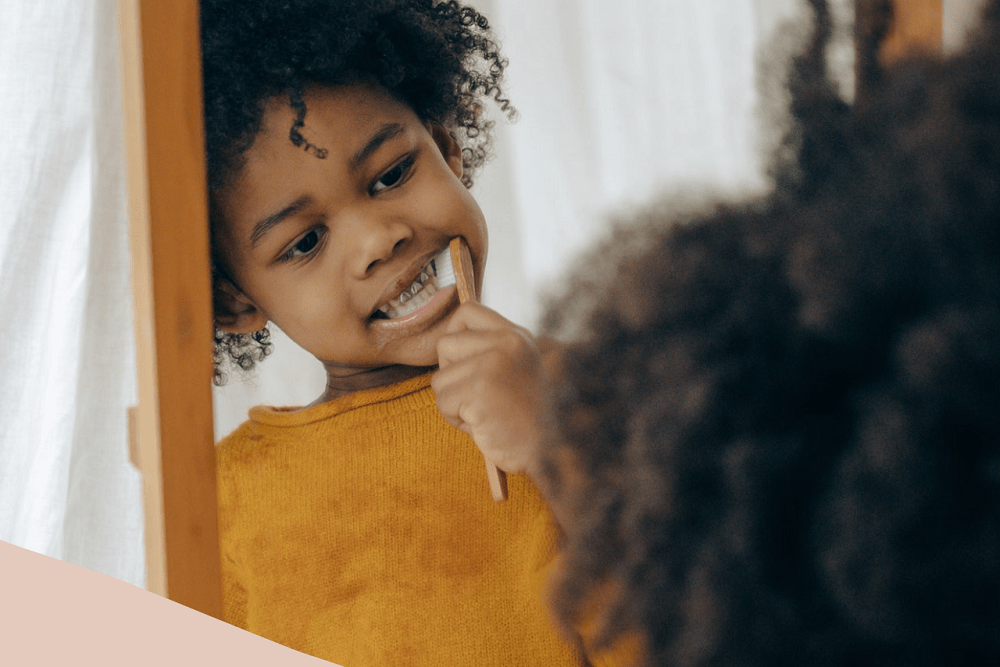
Children between 3 and 6 years old should use a pea-sized amount of toothpaste and should still be supervised until the age of seven and even older if you have concerns about their dental hygiene. If you do have concerns, you can educate them about the best way to brush their teeth by brushing your teeth with them, guiding their hand to show them the correct movements, or by using a mirror to show them how to brush correctly.
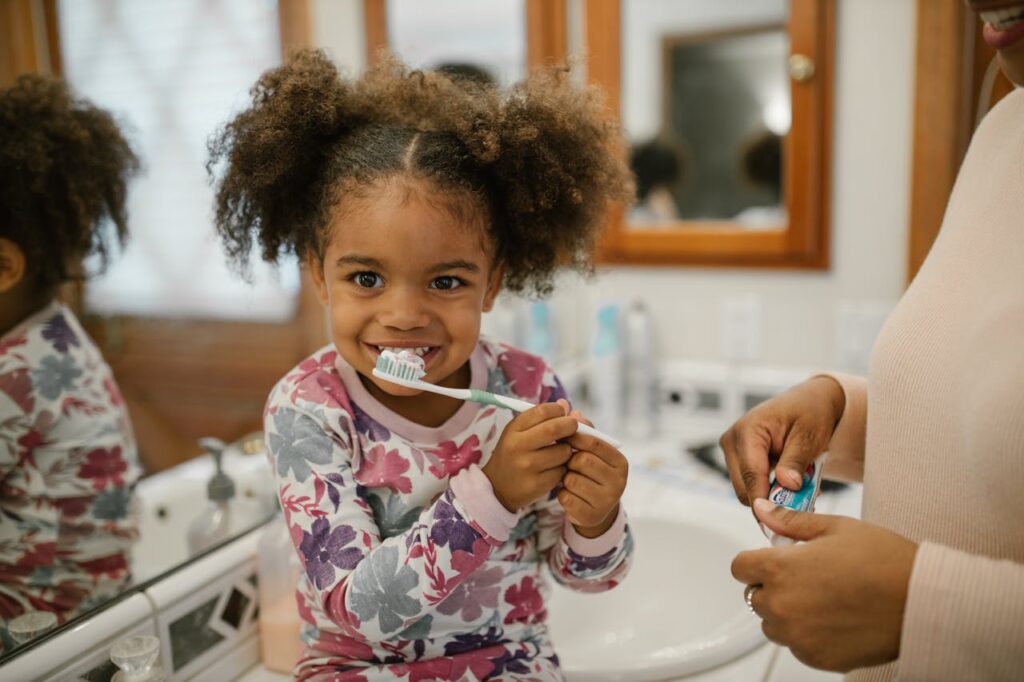
At this age, all children should be encouraged to spit after brushing. However, you should ensure that they avoid rinsing, which can stop the fluoride from being as effective. In terms of toothpaste, children should be using toothpaste with no more than 1,000 ppm of fluoride. This could be potentially damaging to their softer and more malleable teeth.
To encourage children to brush if they are reluctant, you can make brushing into a fun part of their routine by introducing games and incentives to help them. For example, you could use an egg timer to time how long they spend brushing or start a star chart reward system.
6-12 Years Old
This is the age when adult teeth start arriving in earnest, and the habits your child builds now will largely determine how those teeth fare for the rest of their life. With milk teeth falling out and permanent ones pushing through, the mouth is in a state of constant change, which makes consistent brushing and regular dental check-ups even more important than before.
It’s also around this age that children start taking more responsibility for their own oral care. Supervision is still worthwhile, but the emphasis should shift from doing it for them to making sure they’re doing it well. Brushing twice a day for two minutes remains the baseline, and this is a good time to introduce flossing, particularly as the gaps between teeth narrow with the arrival of adult molars.

Diet plays an increasingly significant role too. As children gain more independence over what they eat and drink, sugary snacks and fizzy drinks can become harder to monitor. Encouraging water over juice and limiting sugar to mealtimes rather than throughout the day can make a real difference to long-term dental health.
If orthodontic treatment such as braces is needed, it will usually be flagged at routine check-ups during this period. Options have come a long way from the metal-heavy look of decades past, with invisible braces and clear retainers now widely available. And for children getting into contact sports, a mouthguard is a worthwhile investment to protect teeth that, unlike their predecessors, aren’t going to grow back.
Adults
As you get older, there are more risks and potential damage to your teeth that you need to consider. As an adult, you should still uphold the regimes that were instilled as a child, including brushing thoroughly twice a day and following a proper brushing method.
As the dentistry team at Edinburgh Gums & Teeth explain, brushing lightly and slowly is still the best way to brush. Brushing too hard can remove enamel and erode your gums which can lead to issues such as gum disease and bacterial infection, as this will give bacteria spaces between your teeth to enter.
Electric toothbrushes are also worth considering; they can prevent plaque by reaching more of the mouth than a manual toothbrush and covering these areas more thoroughly. This reduces the need for fillings and other treatments. Additionally, you should replace your toothbrush or toothbrush heads once they are worn out or once every three months. This will help you to brush consistently and lessen the chance of bacteria remaining on your teeth.
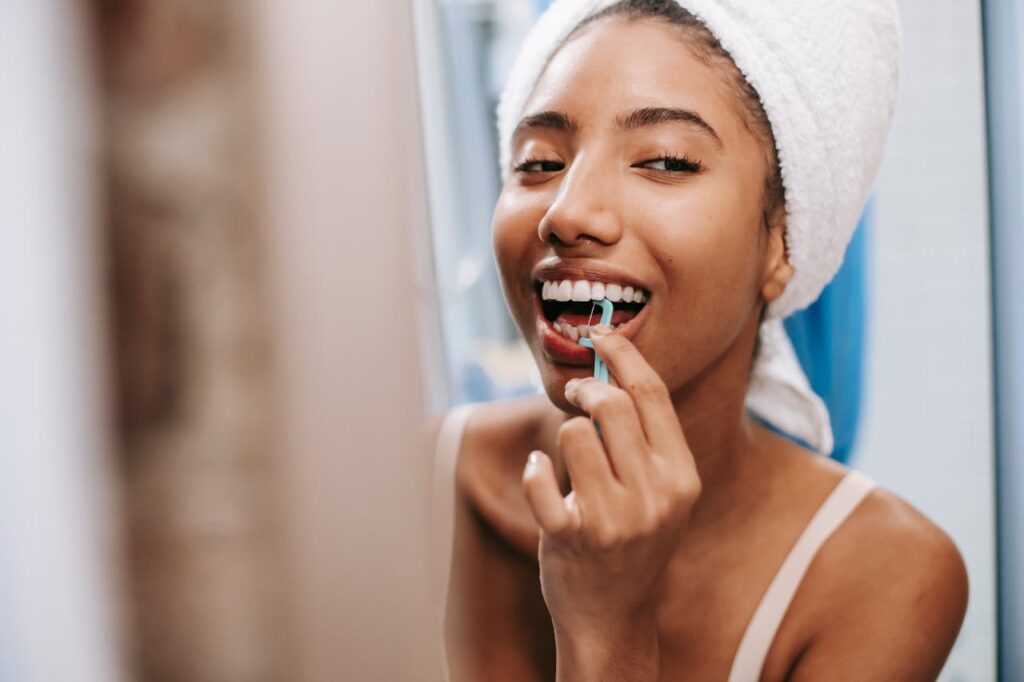
Additionally, the importance of flossing increases over time. Flossing as an adult can remove bacteria between the teeth and in places that are hard to reach with a toothbrush. This will eliminate any potential plaque build-ups and ensure that every part of your tooth remains clean and healthy. To floss properly, you should floss between each tooth using circular movements.
Going to the dentists once a year is also of utmost importance, and often it is vital that you visit the dentist routinely if you are with the NHS. However, as an adult, your dentist may recommend that you visit the hygienist. Hygienists can teach you the best oral care process for you and help you to upkeep both medical and cosmetic care.
65+
Whether you are caring for an elderly person or are an older adult yourself, it is important to know how to look after your teeth as you age.
As your dexterity lessens, it may be helpful to use an electric toothbrush which can help to reach the places that you may not be able to, and it will move of its own accord, decreasing the amount of movement you have to perform. Flexi-grip handles may also be helpful for an elderly person who has difficulties gripping the toothbrush’s handle. If this is not possible, sliding a foam tube onto the handle can take pressure away, making it even easier to grip the handle and, therefore, brush more thoroughly.
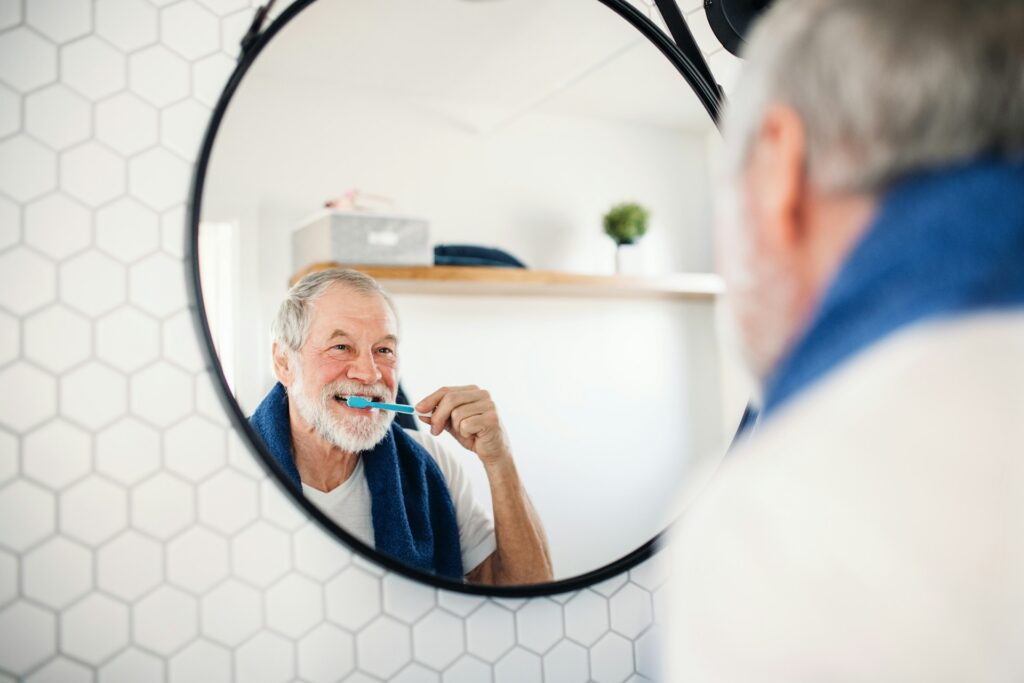
If you have dentures, you must keep these clean to the level that you would your own teeth to prevent swollen gums and bad breath. Depending on the type of denture you have, you should brush them with a non-abrasive denture care product and place them in a cleaning solution overnight or for four hours each day. This will help keep them as clean as possible and will ensure good oral hygiene while they are in use.
Oh, you thought we were done here? We’re never done here, there or anywhere; check out our guide on the surprising things standing your teeth next.