This feature is a sponsored collaboration with Suns Lifestyle, a premium, family-run British brand dedicated to luxury outdoor living.
There’s a certain optimism required to invest in an outdoor kitchen when you live in Britain. December winds are howling, the patio furniture has been sheeted up since October, and the barbecue sits under its cover like a monument to warmer times.
Yet the appeal of cooking and eating outdoors doesn’t simply evaporate when the temperature drops. With thoughtful planning and the right infrastructure, an outdoor kitchen can become something genuinely usable throughout the year rather than a fair-weather folly.
The key lies in treating your outdoor kitchen not as an exposed cooking station but as a proper extension of your home. That means shelter, warmth and surfaces that won’t deteriorate the moment autumn arrives.
Start With Shelter
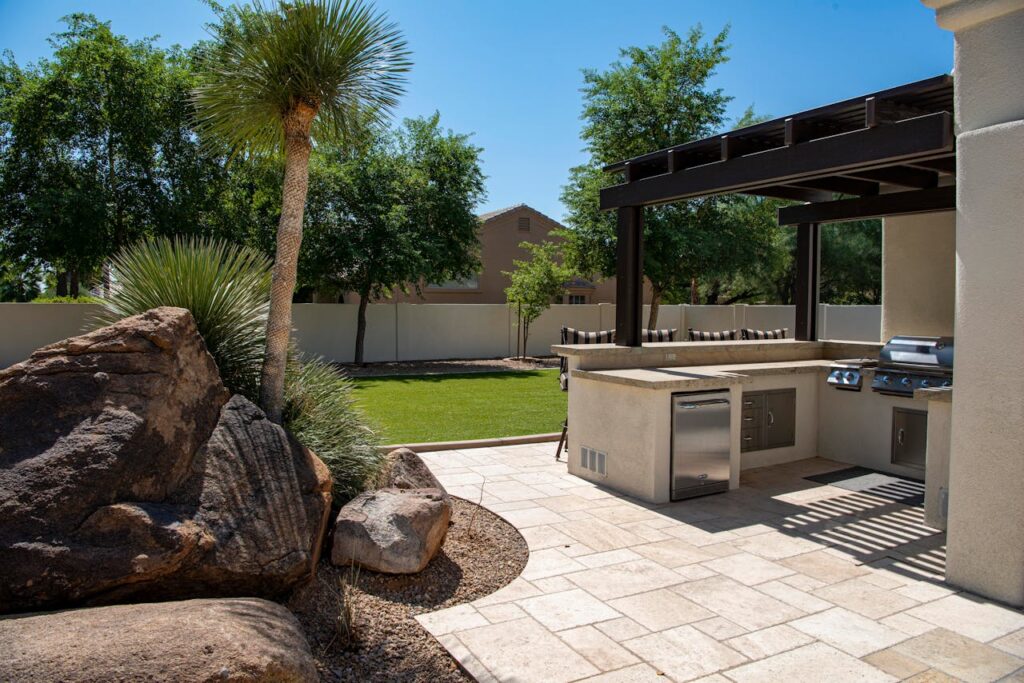
Any year-round outdoor kitchen worth its salt needs protection from above. Rain, obviously, is the primary concern in the UK, but overhead cover also provides shade during those occasional scorching summer days and helps retain heat from outdoor heaters when temperatures plummet.
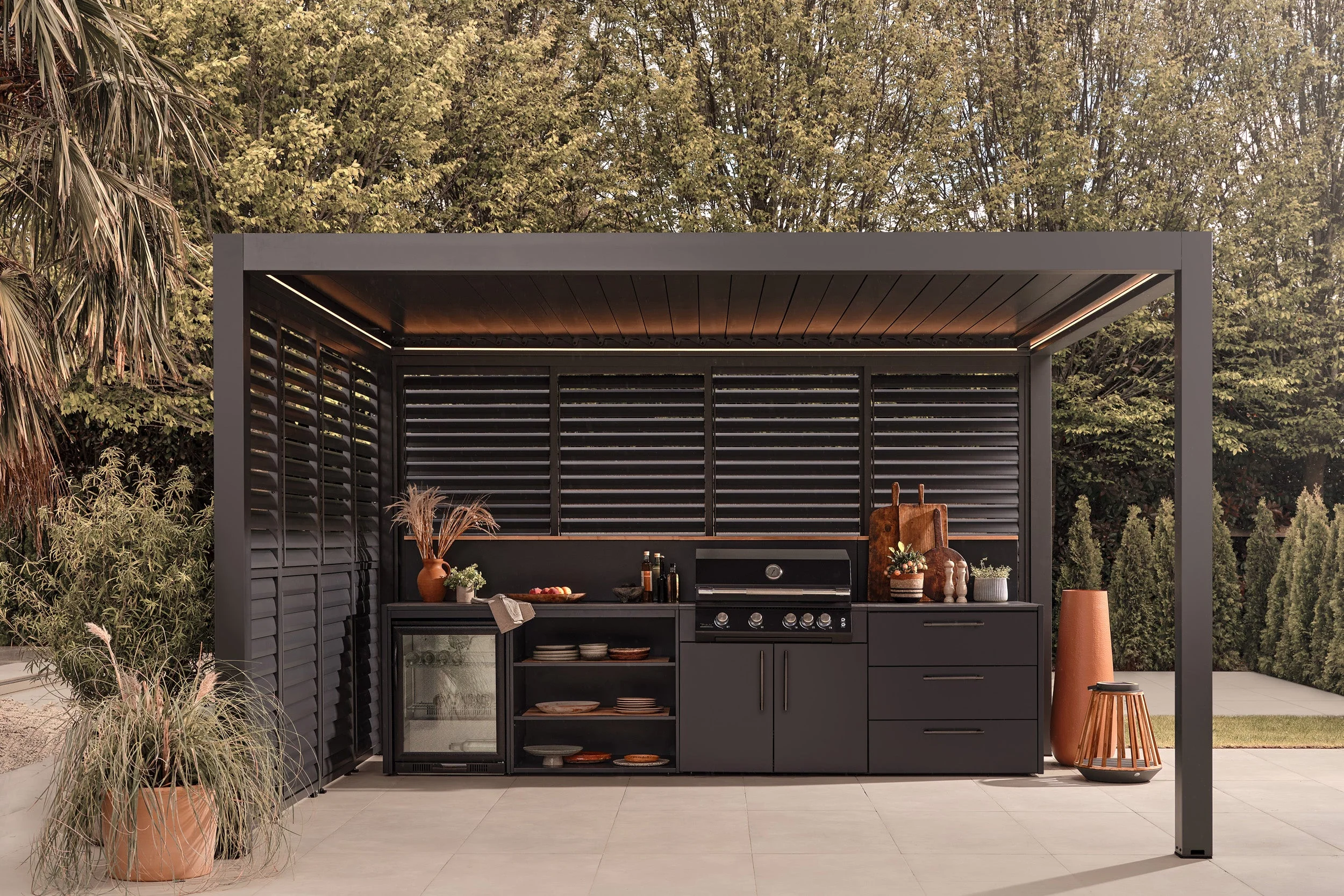
A louvered pergola represents the most versatile option here. Unlike fixed roof structures, louvered designs let you adjust the roof angle to control sunlight and airflow, then close completely when the weather turns. Many modern systems include integrated drainage channels so rainwater runs off efficiently rather than pooling or cascading onto your carefully prepared mise en place.
For genuine year-round use, look for models that offer additional side screens, which transform an open pergola into something approaching an enclosed room, blocking wind and driving rain while maintaining that outdoor atmosphere.
Suns Lifestyle, the Essex-based outdoor living specialists, have become particularly well regarded for their aluminium pergolas with exactly this kind of adaptability. Their Rota and Maranza ranges feature manual louvered roofs and optional deluxe screens rated for use throughout the winter months, not just gentle summer breezes. The five-year warranty on frames and roofs speaks to the durability expected from products designed specifically for the British climate.
Think About Layout & Flow
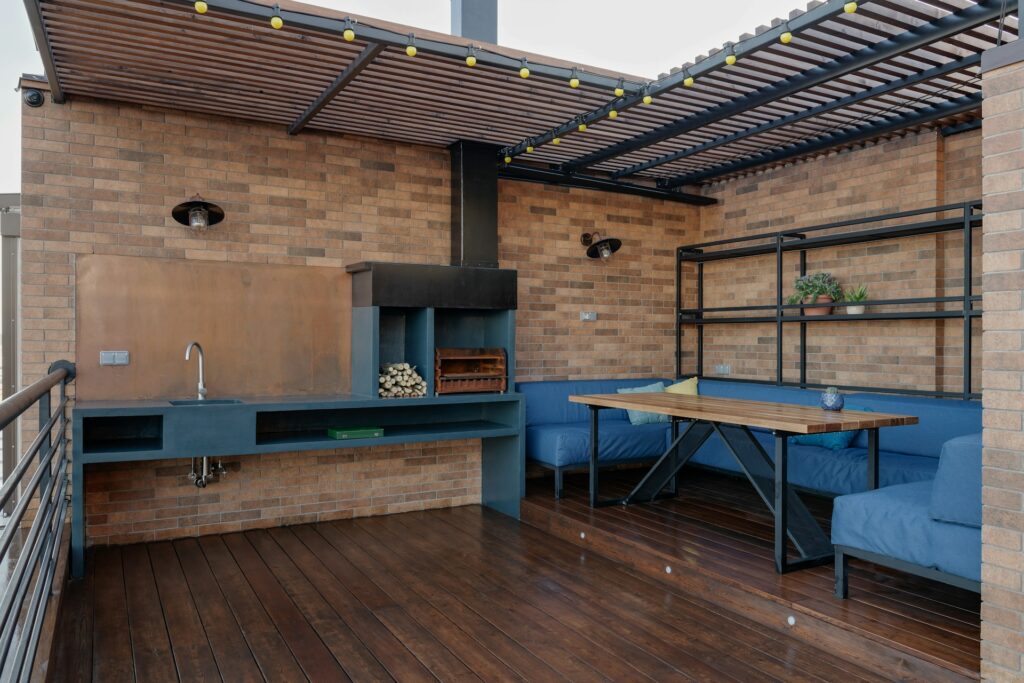
Position matters enormously. An outdoor kitchen tucked into the far corner of your garden might offer privacy, but it also means endless trips back inside for forgotten ingredients, clean plates and that bottle of wine you left on the counter. Where possible, site your outdoor cooking space close to the house, ideally with a clear line to your indoor kitchen. Some homeowners opt for pergola structures attached directly to the house wall, creating a seamless transition between inside and out.
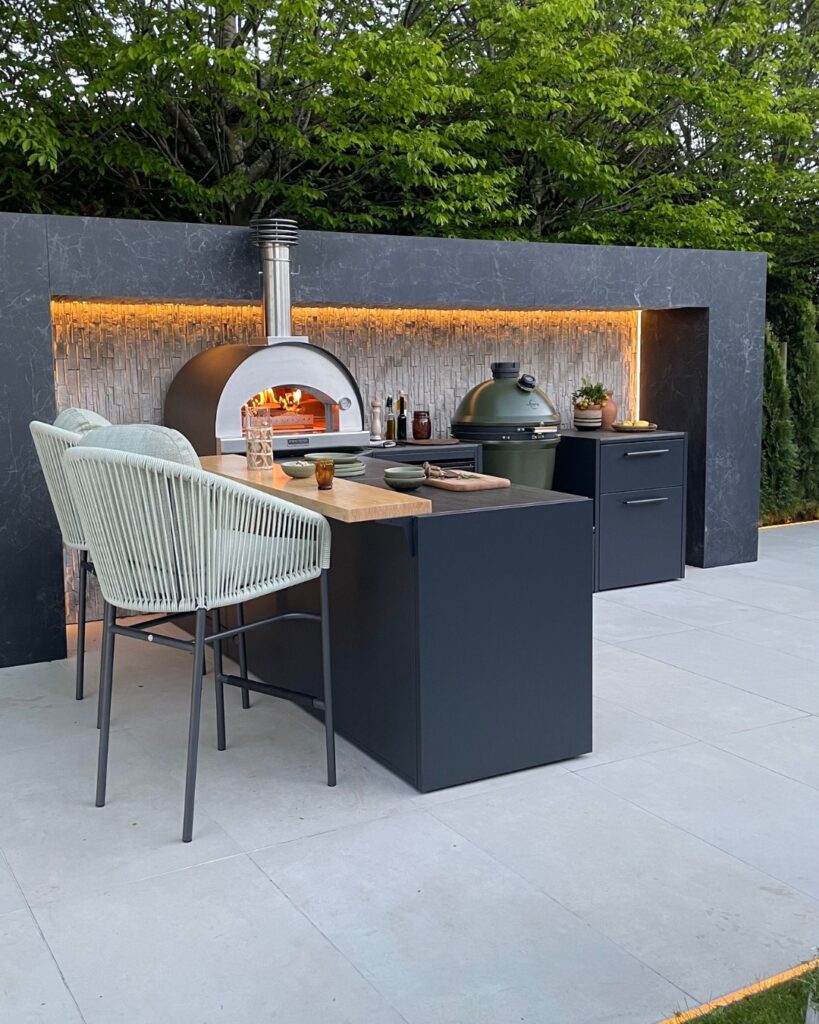
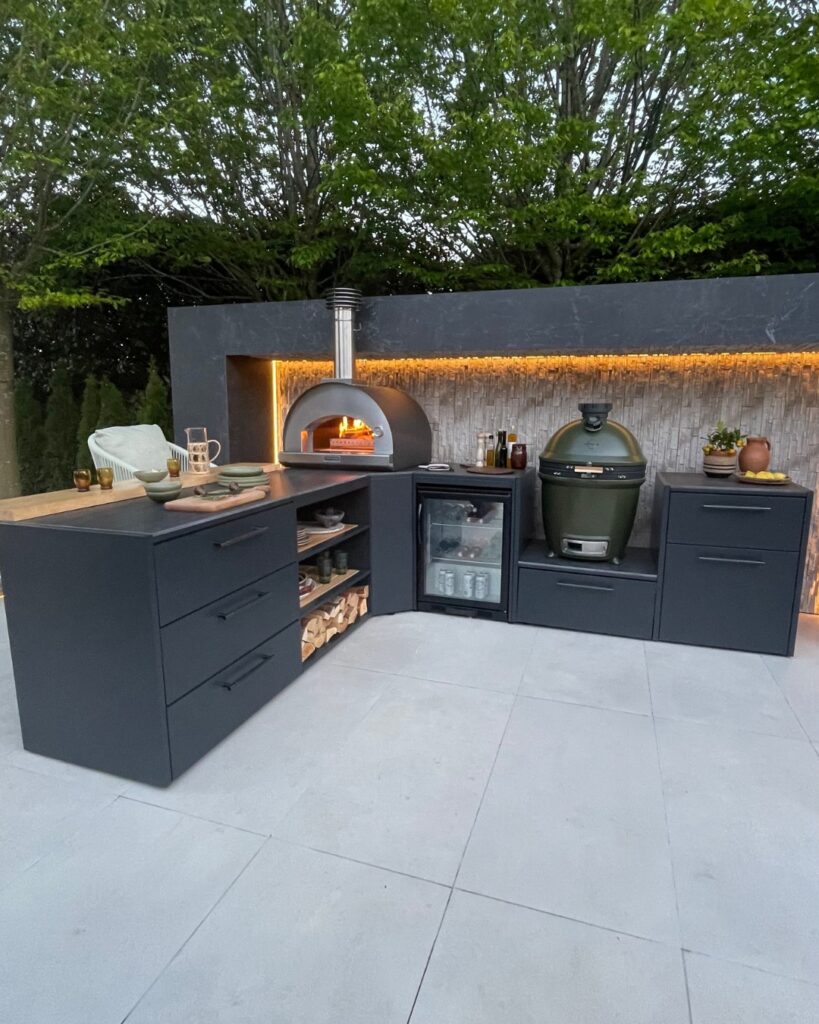
Consider the classic kitchen work triangle adapted for outdoor use: your grill or cooking surface, prep area and storage should form an efficient layout that minimises movement. An L-shaped or U-shaped configuration tends to work well, keeping everything within reach while providing distinct zones for different tasks.
Choose Weatherproof Materials
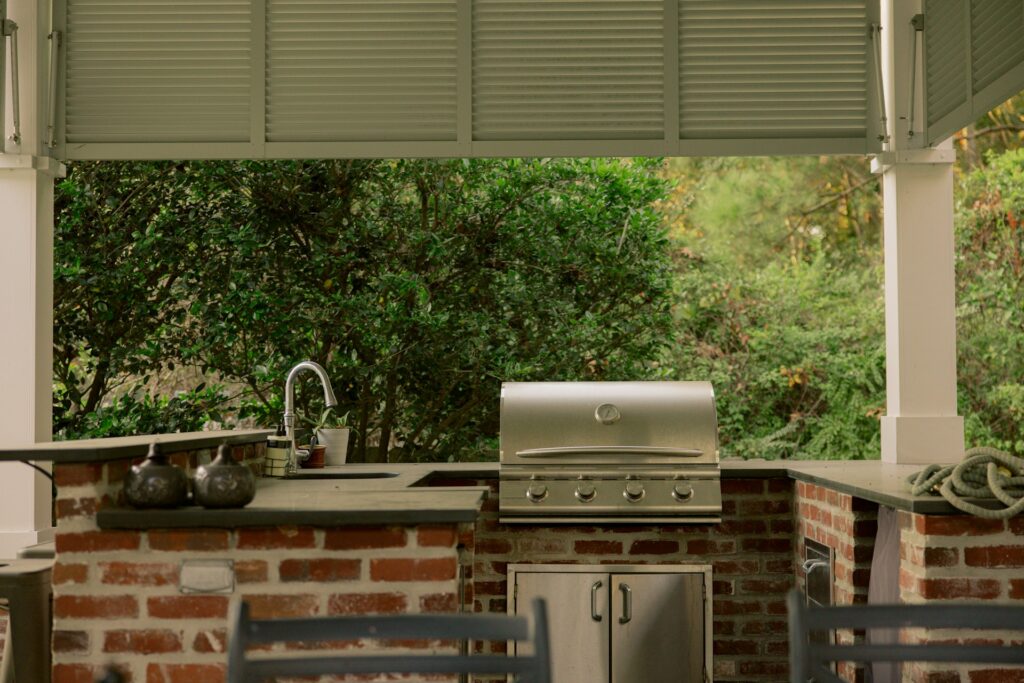
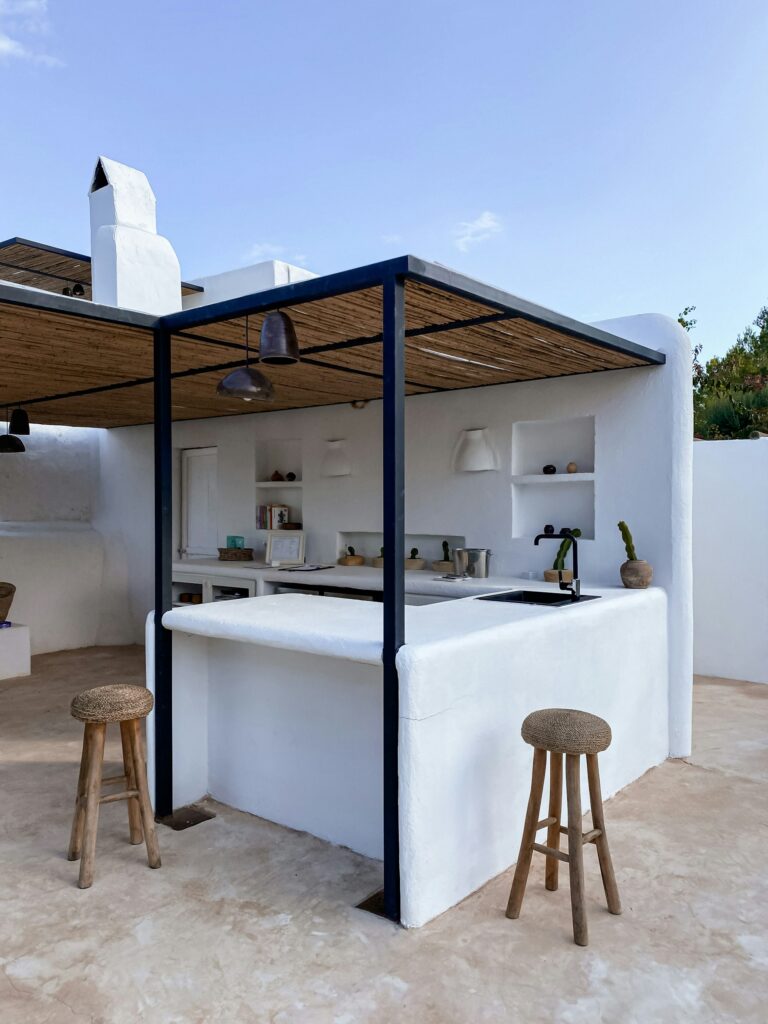
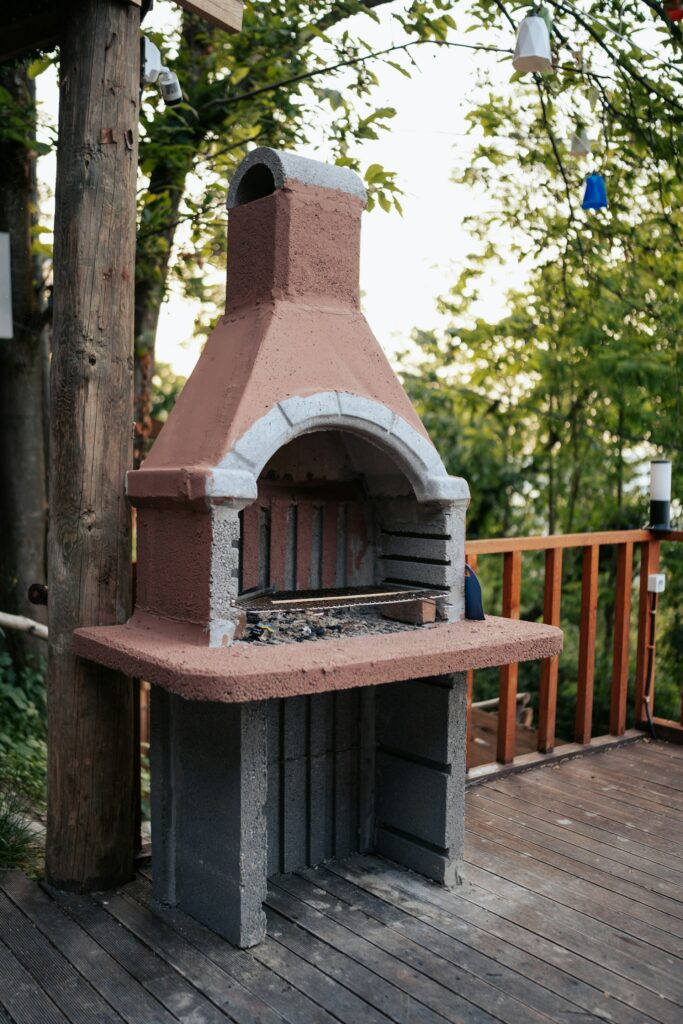
This is where many outdoor kitchen projects come unstuck. Materials that look magnificent in a showroom brochure may prove disastrously unsuitable for British winters. Timber worktops swell and crack; untreated steel rusts; porous stone stains.
Marine-grade stainless steel remains the gold standard for outdoor appliances and sinks. For countertops, granite, slate or engineered stone like Dekton offer impressive durability against temperature fluctuations, moisture and UV exposure. Porcelain tiles have also gained popularity for outdoor kitchen surfaces, combining good looks with excellent weather resistance.
Cabinetry presents particular challenges. Standard kitchen units will deteriorate rapidly outdoors, even under cover. Purpose-built outdoor kitchen cabinets use materials like powder-coated aluminium, marine-grade polymer or weatherproof stainless steel. Yes, they cost more than standard units. They also last rather than requiring replacement every few years.
Heating & Lighting
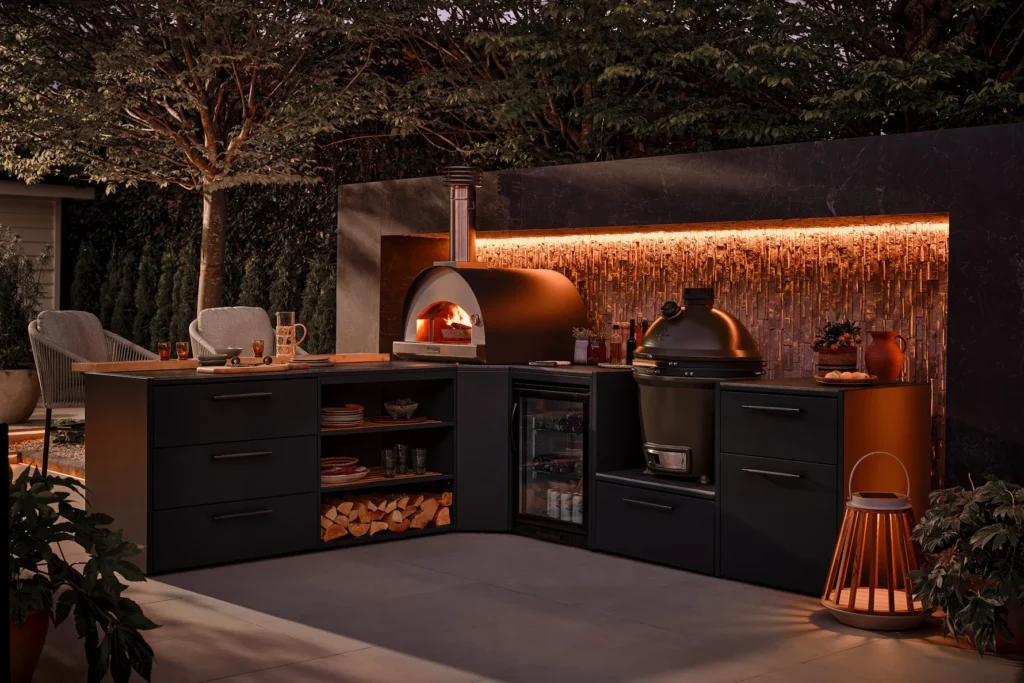
If you’re serious about winter use, supplementary heating becomes essential. Ceiling-mounted infrared heaters work efficiently under a pergola roof, directing warmth downward onto the cooking and dining areas. The electric models are generally more practical than gas alternatives, requiring only a standard plug socket rather than bottle storage and replacement.
Lighting deserves equal consideration. Winter evenings arrive early, and nobody wants to cook in darkness. Integrated LED systems offer the most elegant solution, particularly when built into pergola structures. Failing that, a combination of task lighting over work surfaces and ambient lighting for atmosphere creates a space that remains genuinely inviting after sunset.
Essential Equipment
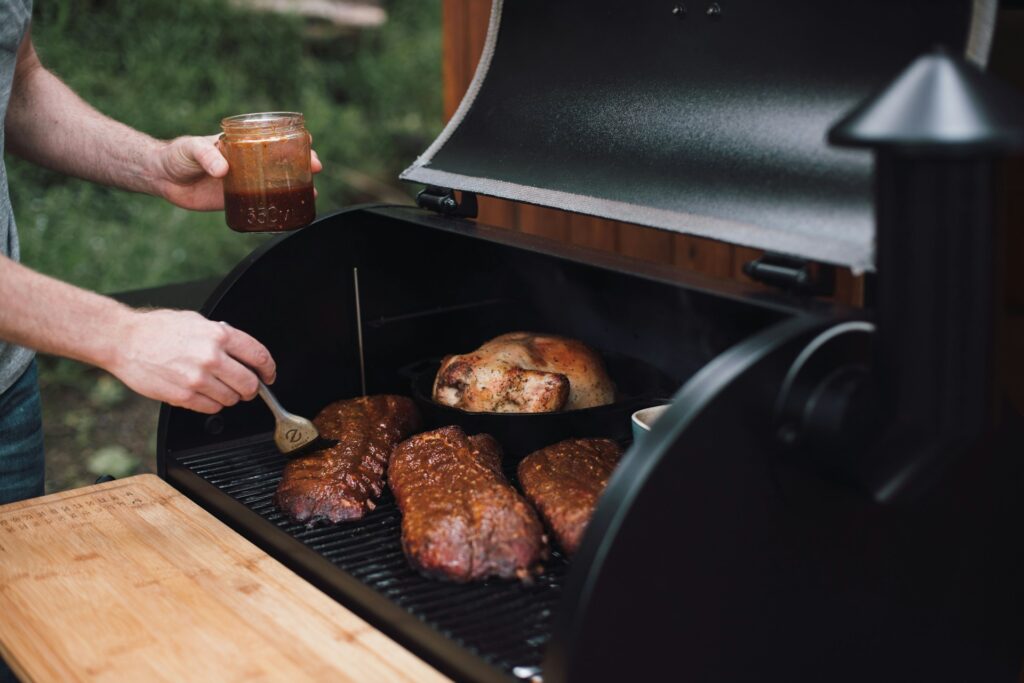
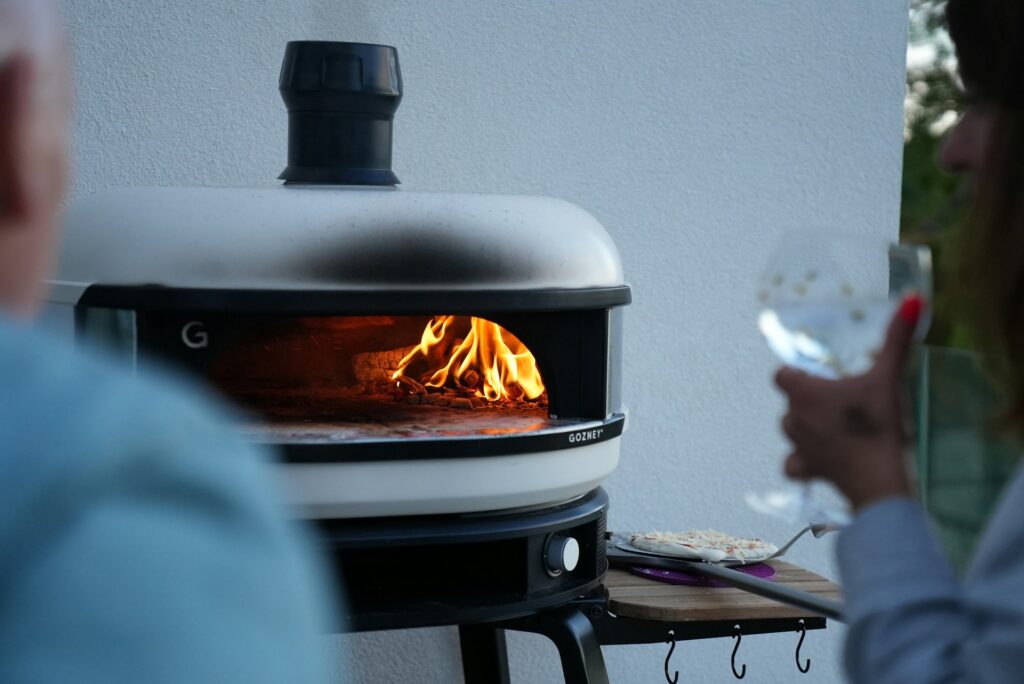
At minimum, you’ll need a quality grill. Gas barbecues offer convenience and control; charcoal or wood-fired options provide that primal satisfaction and smoky flavour. Kamado-style ceramic grills have surged in popularity for year-round outdoor cooking, their thick walls retaining heat efficiently even in cold conditions while offering versatility from low-and-slow smoking to pizza-oven temperatures.
Beyond the grill, consider what you’ll actually use. A side burner extends your repertoire beyond direct grilling. A sink with running water saves countless trips indoors. Built-in storage keeps tools, charcoal and accessories protected and accessible. Refrigeration is perhaps the ultimate luxury, keeping ingredients and drinks at hand without constant kitchen raids.
The temptation to install everything at once runs strong, but phased development often proves wiser. Start with the core cooking equipment and solid infrastructure, then add elements as you discover how you actually use the space.
The Bottom Line
The British outdoor kitchen requires a particular mindset: accept that perfection means adaptation rather than fixed solutions. A space that works in July must also function in November if it’s to justify the investment. That means robust materials, flexible shelter that responds to changing conditions and practical heating and lighting for darker months.
Winter shouldn’t mean surrendering your outdoor space entirely. With proper planning, you might find that cooking outside on a crisp December evening, protected from the elements, becomes one of the unexpected pleasures of the season. And suddenly, you’re not longing for spring quite so deeply.