The plan was never to stay in Bangkok. Garima Arora had just spent three formative years at Noma in Copenhagen and was heading home to India when, by chance, she made a pit stop in the city. One trip north to Udon Thani with a chef friend, one market visit, and the deep connection between Indian and Thai food cultures opened her eyes to something she couldn’t ignore. “I really thought we could do something interesting here,” she has said. In April 2017, she opened Gaa. “Now, Bangkok is my second home in so many ways.”
Bangkok already had famous Indian restaurants, places known for their showboating: emoji menus, umami bombs, dishes you licked off the plate. Gaa was something more considered, regal where its predecessors were raucous, its cooking rooted in Indian culinary grammar applied to Thai lexicon, and a curiosity about what those traditions share.
Her first Michelin star arrived just a year after opening, making her the first Indian woman to receive one; the second came in 2023, and she remains the only female Indian chef with two.
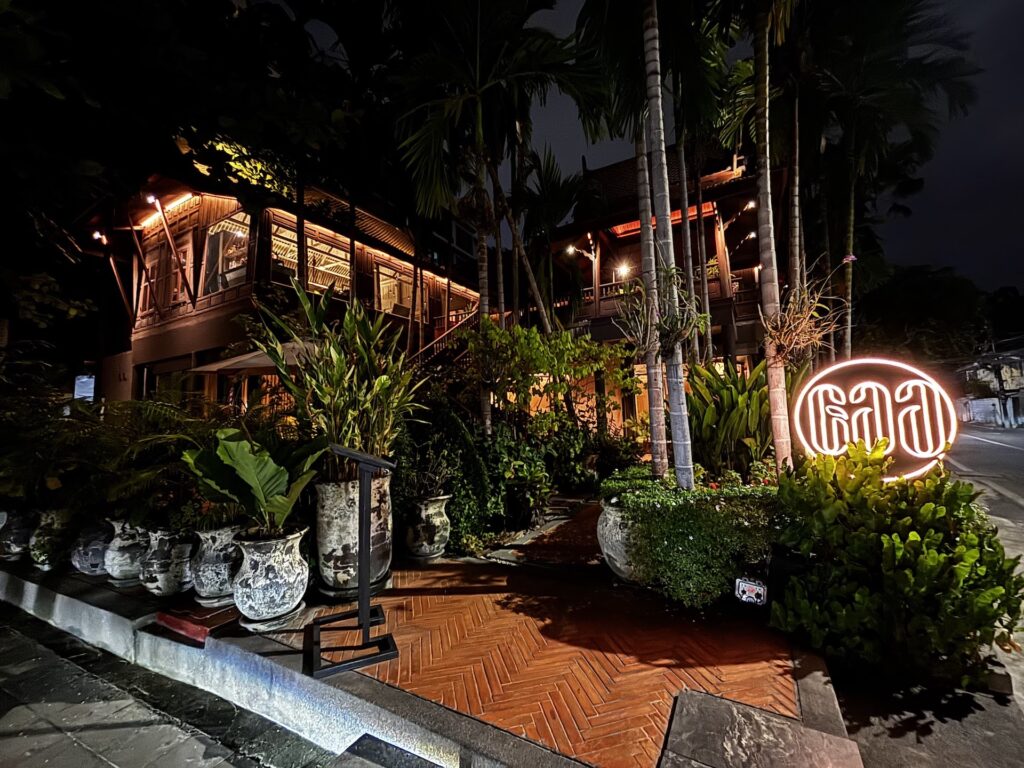
Gaa now occupies a baan ruen thai, a traditional Thai wooden house, this one originally built in Ayutthaya, transported piece by piece to Bangkok and reassembled using joinery that requires no nails. The setting lends the evening a stillness that could verge on the stifling if it weren’t for a neat design trick in the dining room.
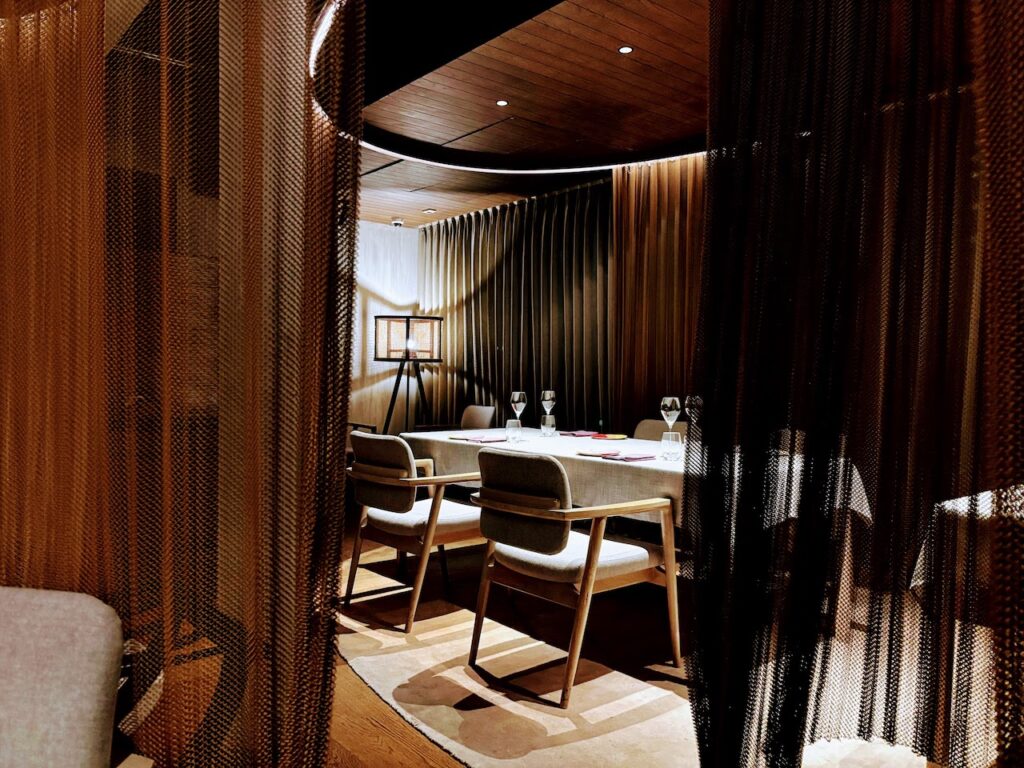
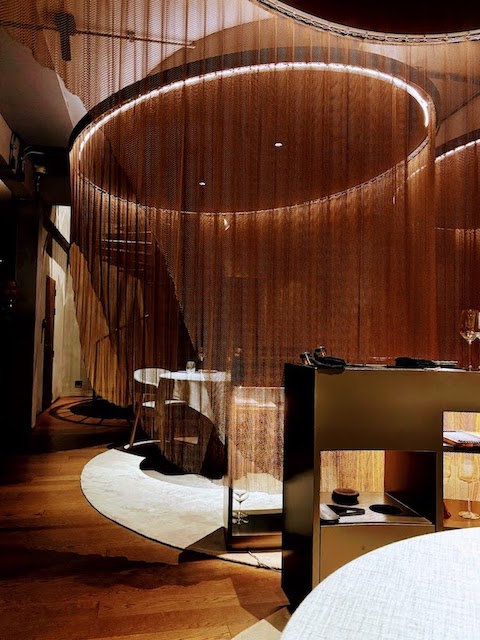
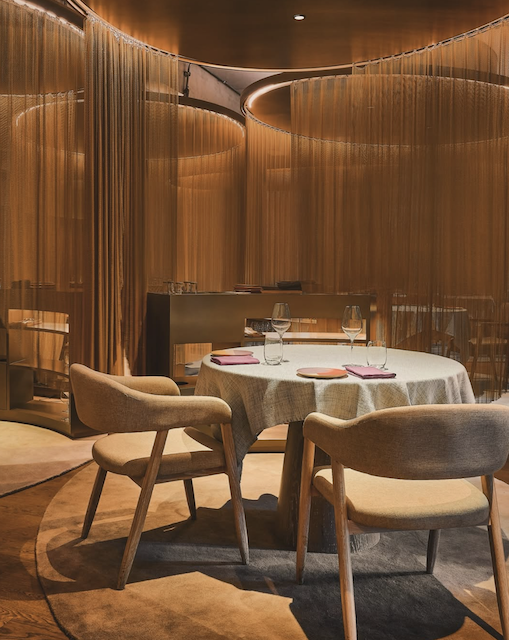
The ground floor Garden Room has recently been reimagined by Bangkok firm Architectkidd, with sweeping gold chain-mail curtains that hang from ceiling tracks in curved formations creating semi-private dining pods. From your vast round table you can hear the murmur of the other cocoons, catch the shadows of silhouettes, sense proximity and motion. It’s almost voyeuristic, how a medieval sex party might have looked; all that shared intimacy without direct eye contact, silhouettes moving behind veils, the awareness of other people’s pleasure happening just out of reach. Each pod, seen from a distance with a circular spotlight beaming down from above, also manages to look like how UFOs landing on earth look in the the movies. Both comparisons will sound absurd until you see the room.
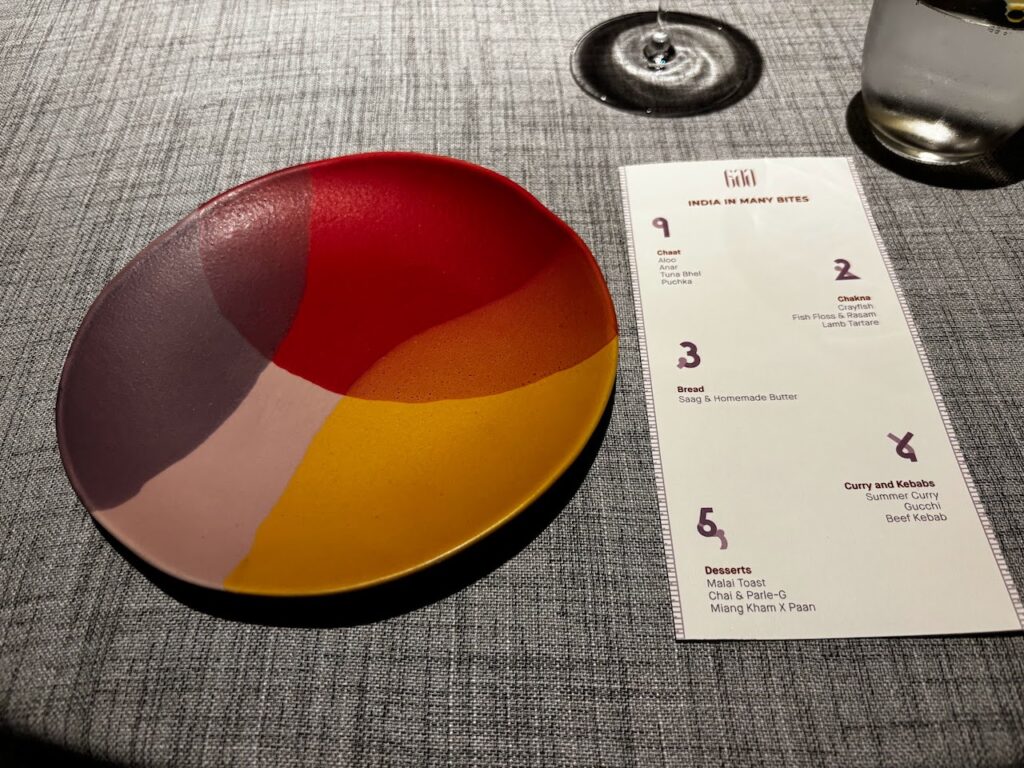
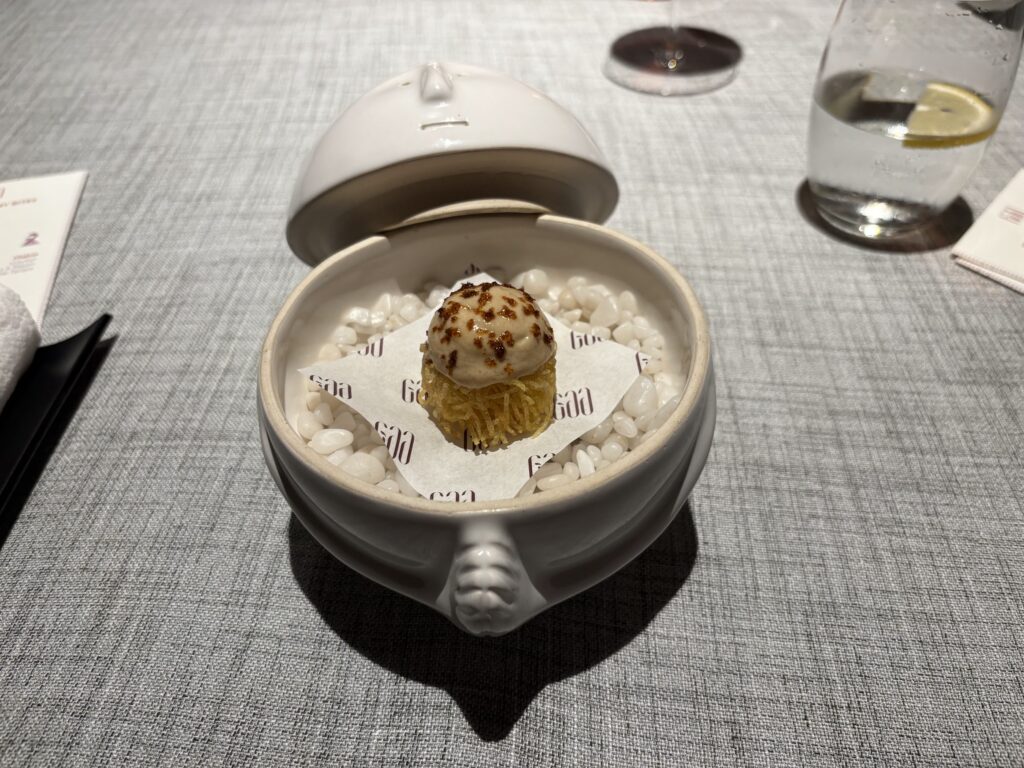
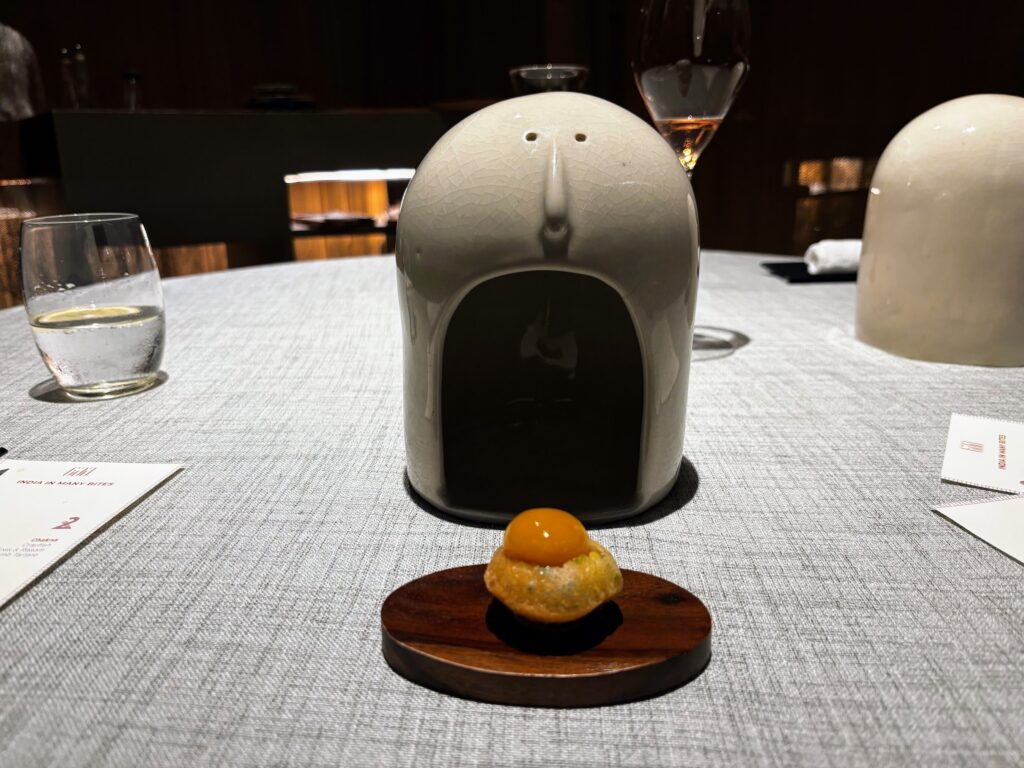
Now then, where’s my goblet of mead? Instead, an opening salvo of chaat to centre you back in your cocoon. The first arrived in a ceramic pot by Aman Khanna of Claymen, a striking piece with a big round dome and a pursed little mouth, like a sleeping Yoshitomo Nara figure. It’s a playful touch presented with no explanation, but a little background reading reveals each pot has a different face, inspired, according to Arora, by the faces you see on the streets of India, because this course is all about Indian street food.
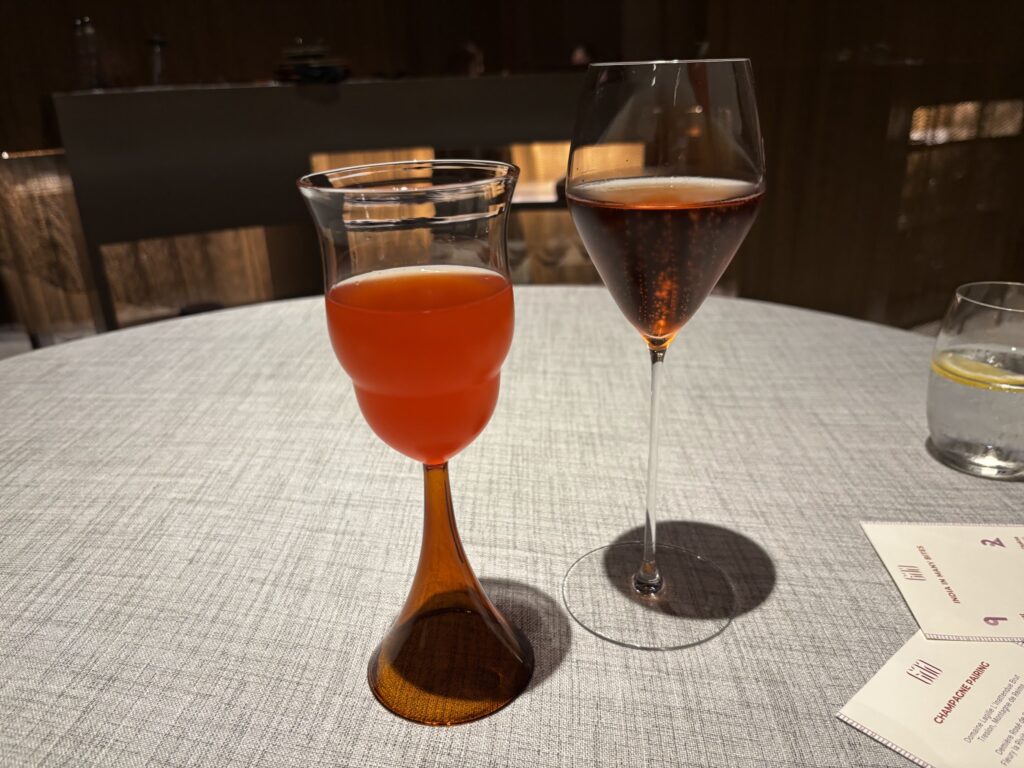
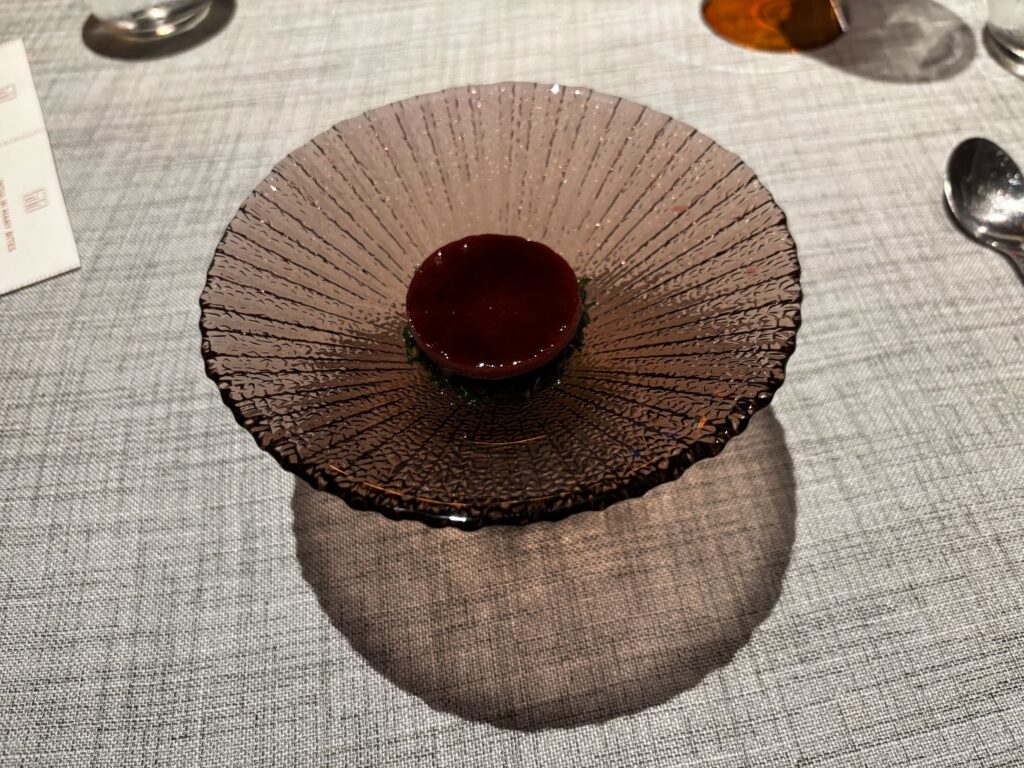
You lift the lid to find a riff on Delhi’s beloved aloo chaat, a crispy nest of potato and a potato foam that together resembled a baby jellyfish, but was warming and familiar. A strong start. The anar bhel that followed, a frozen pomegranate disc over yoghurt and greens, passed without incident beyond the jolt of ice. Alongside, a rosé champagne and Chiang Mai strawberry kombucha, arriving in the same blush pink, both pert and full of promise.
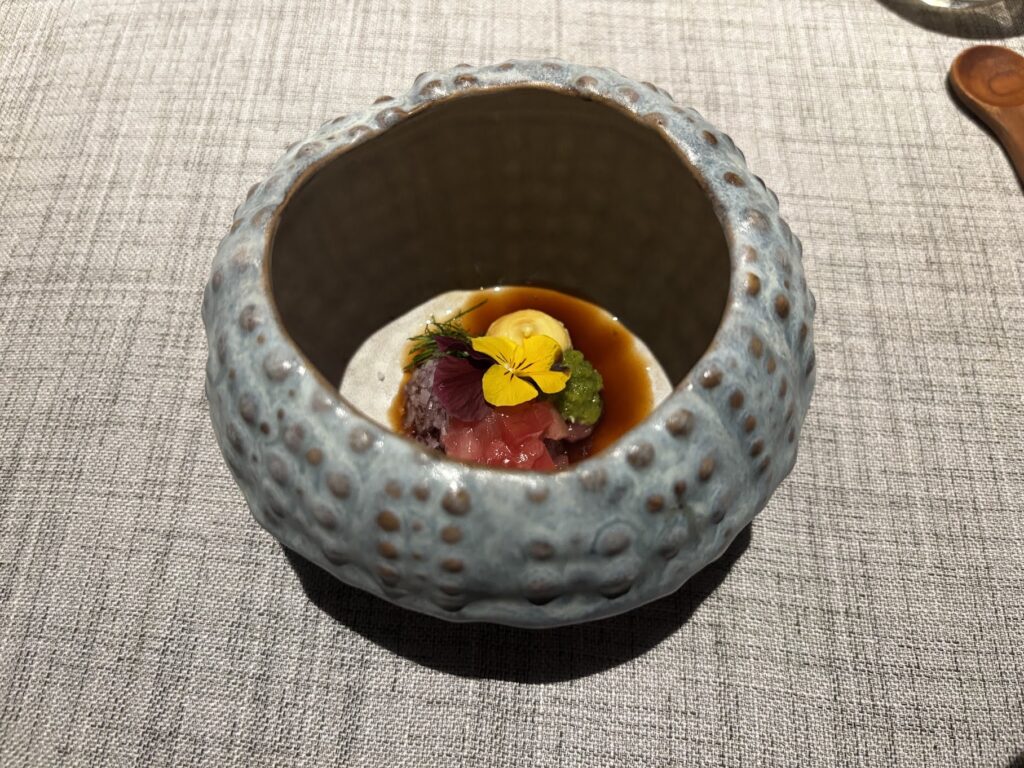
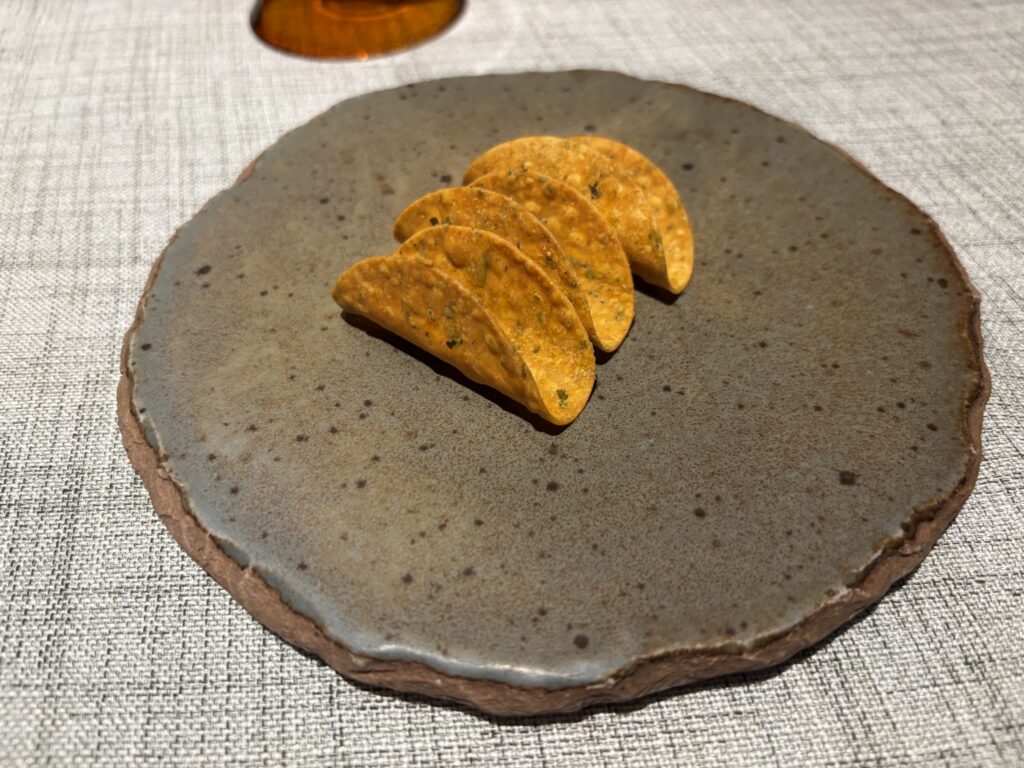
Things picked up with the tuna bhel. Folded khakra, the Gujarati thin cracker, arrived with a bowl of raw tuna in a chilli-spiked soy dressing. You spoon the tuna into the khakra yourself, a satisfying, hands-on gesture that also keeps that cracker crisp. The khakra looks like a hard-shell taco, which is worth noting only because it categorically is not one; it is a Gujarati staple, and the visual similarity is a neat little trap for assumptions. Fresh and lively, it’s the best of the opening run.
Then puchka, the Bengali version of pani puri. The Claymen pot returned, but this time the mouth was open and the bite was lodged inside it like an offering on the tongue, daring you to reach in and risk having your hand bitten off in the process. Admire it momentarily; the mango chutney on top was glossy and vivid. It woke up the whole room, its inners salty and spicy and vivacious enough to recalibrate your attention for everything that followed.
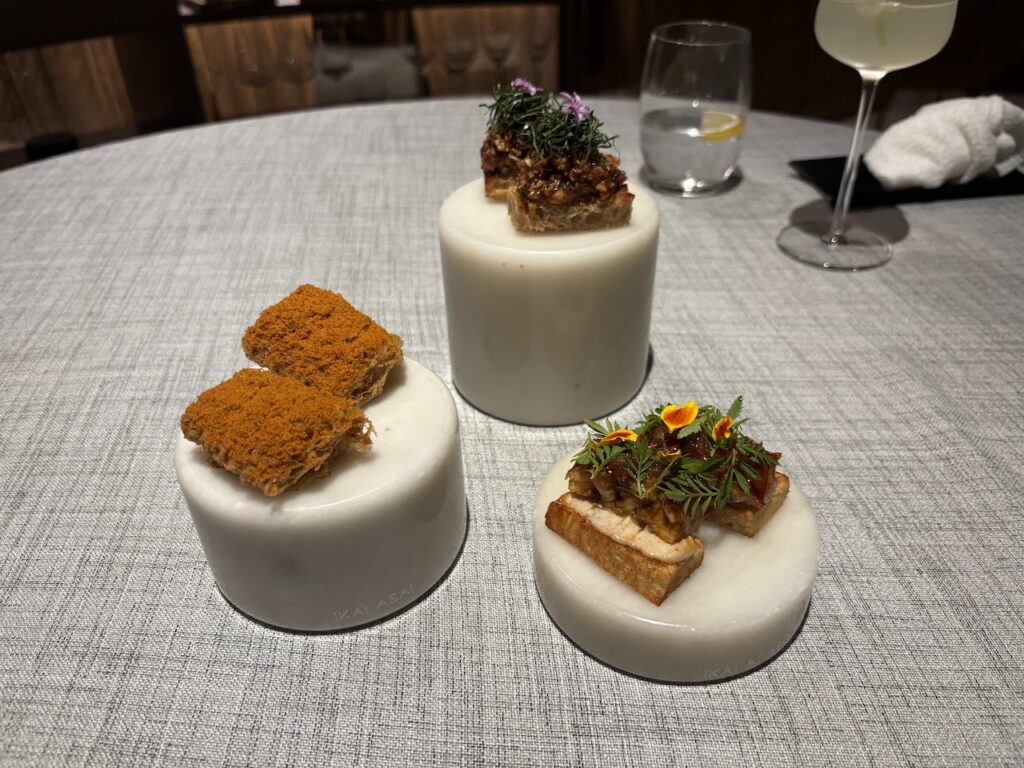
A chakna course next, India’s answer to bar snacks. Here, three toasts on upturned ceramic columns, to be eaten shortest to tallest. Crayfish first, super savoury with an undulating sesame flavour, delicate and precise. Then fish floss and rasam, the rasam turned into a spicy dust that tasted like the seasoning on Monster Munch, or the flavour packet from instant ramen. This is not a criticism.
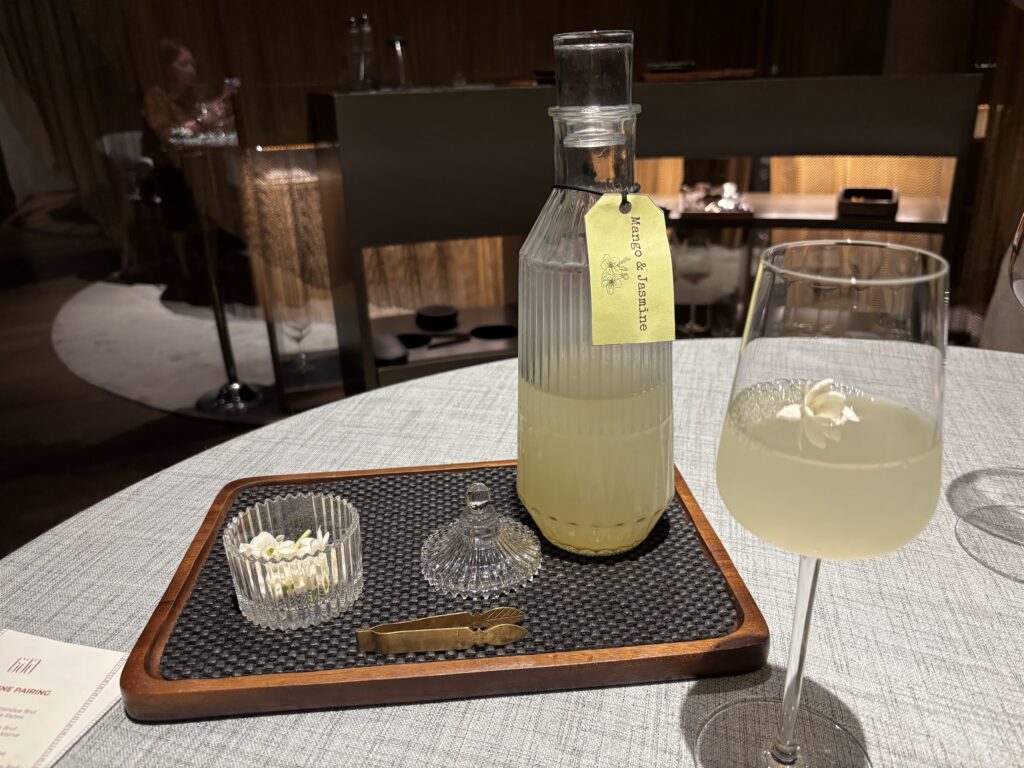
The lamb tartare was the standout, raw but smoked, with julienned seaweed that shared the lamb’s minerality. The smoke lingered long into the next course, the kind of sequencing that showed a kitchen thinking several moves ahead. The mango and jasmine pairing with the chakna was heady, a real winner.
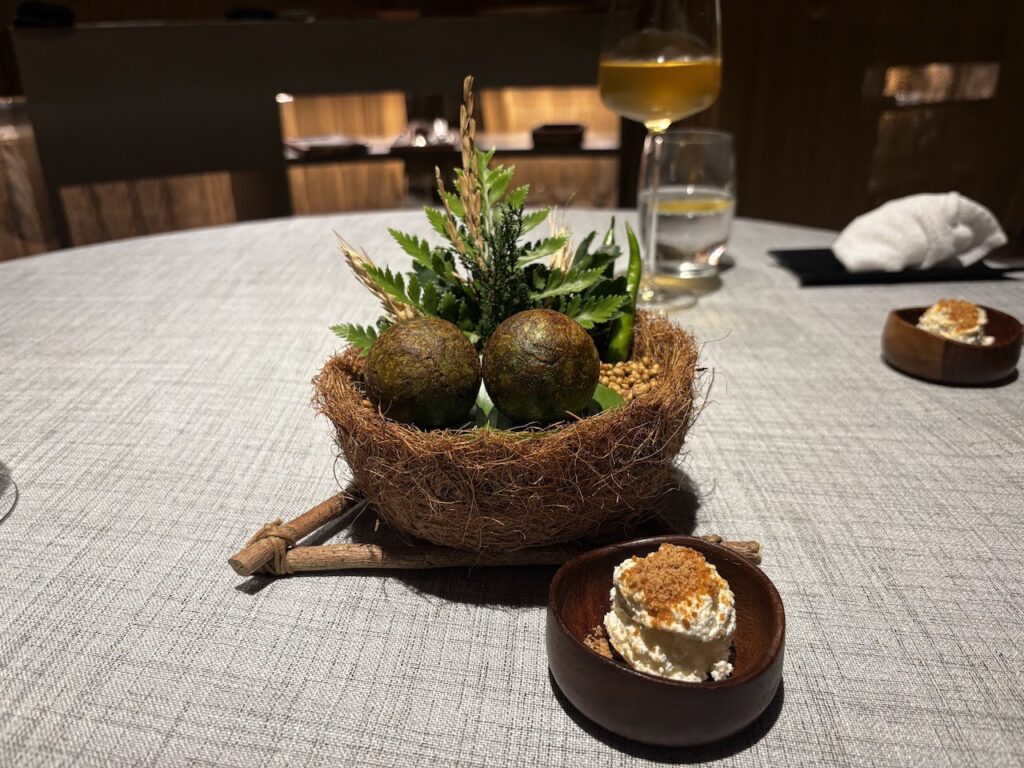
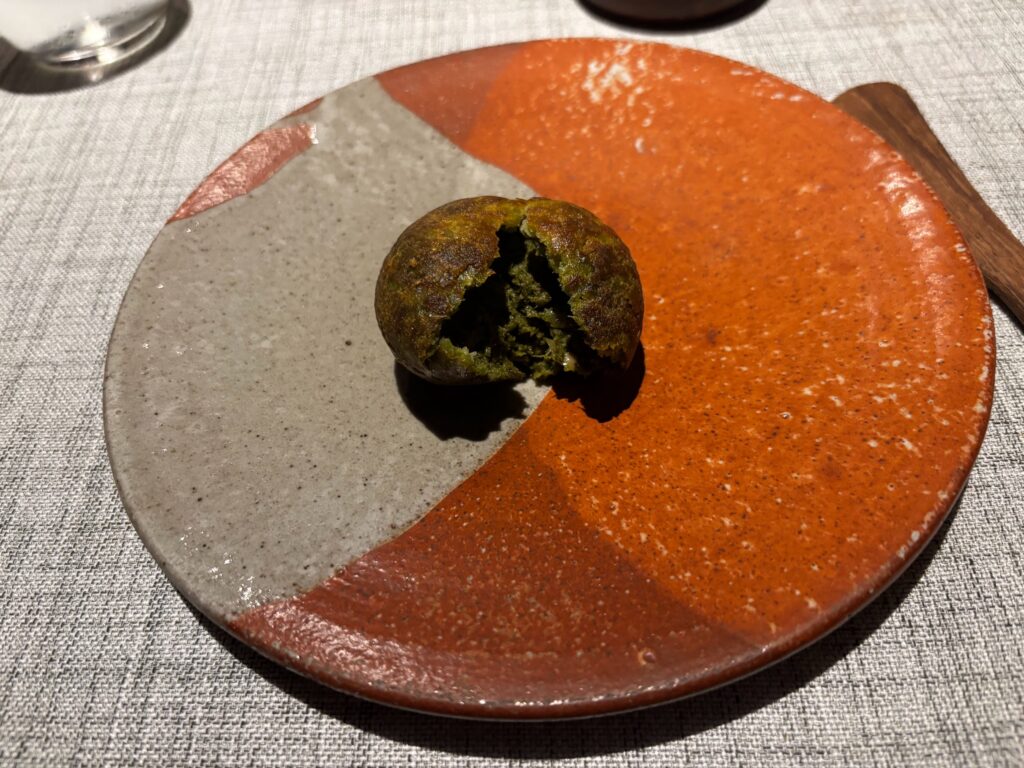
The saag and homemade butter course was superlative. It arrived in a coconut fibre nest: two dark green spheres of spinach paratha – fondant like in texture – and a small wooden bowl of butter. The butter was house-whipped to the point of tasting really, almost aggressively, cheesy, then topped with jaggery, commonly consumed in India as an Ayurvedic remedy for the negative stomach effects of pollution (Bangkok’s AQI was in triple figures that day – what foresight!). A cloudy, undiluted nama genshu from Saga brought its own brain fog, in the best possible way.
The combination of heavily cultured butter and the brooding, round sweetness of jaggery is a classic North Indian pairing, but tasting it here, this perfectly formed, it felt like something entirely new. It’s also a dish with roots. Arora’s paternal grandmother used to keep a cupboard with a lattice door where she would watch cream fermenting into butter; Arora has said she didn’t understand what her grandmother was doing until she became a cook herself.
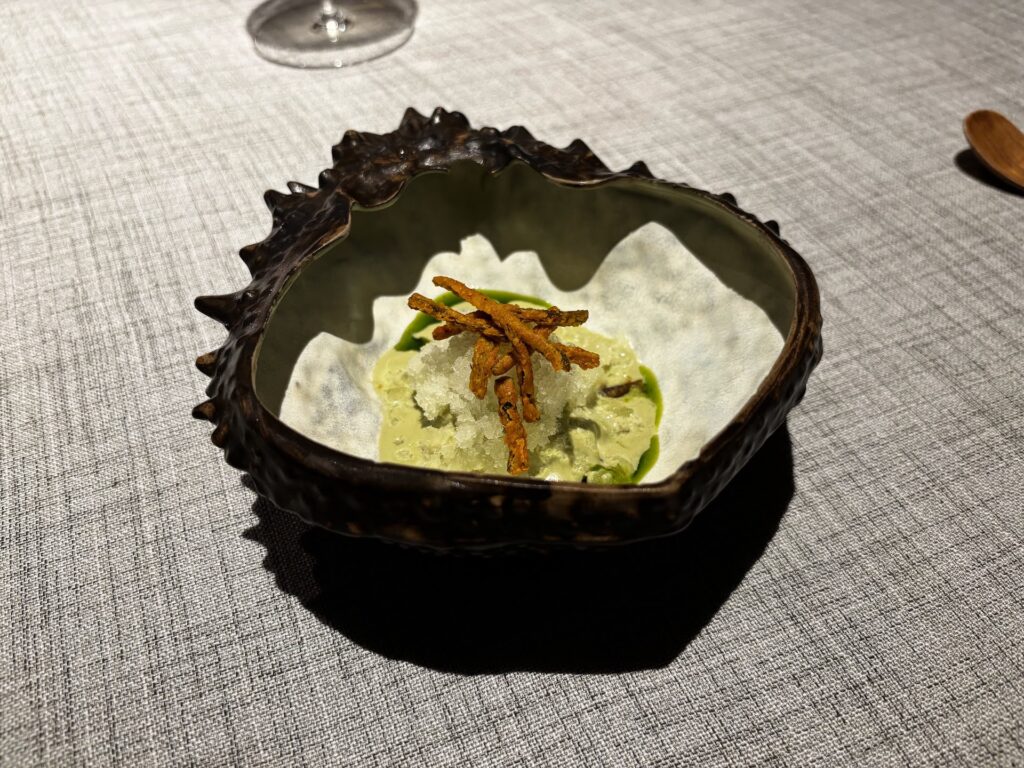
The summer curry is another signature, one that has evolved over the years but always centres on misdirection. You expect hot; you get cold. Today, it arrives in a spider crab shell that had long been in a state of torpor in the freezer. Inside was green apple granita, sticky black rice, coconut cream and the clean, sweet, thrumming flavour of crab. Delicious, strangely cathartic, and a dish that makes you reassess a few things. Curry does not have to mean balmy or bold, and Indian food does not have to meet you where you expect it to.
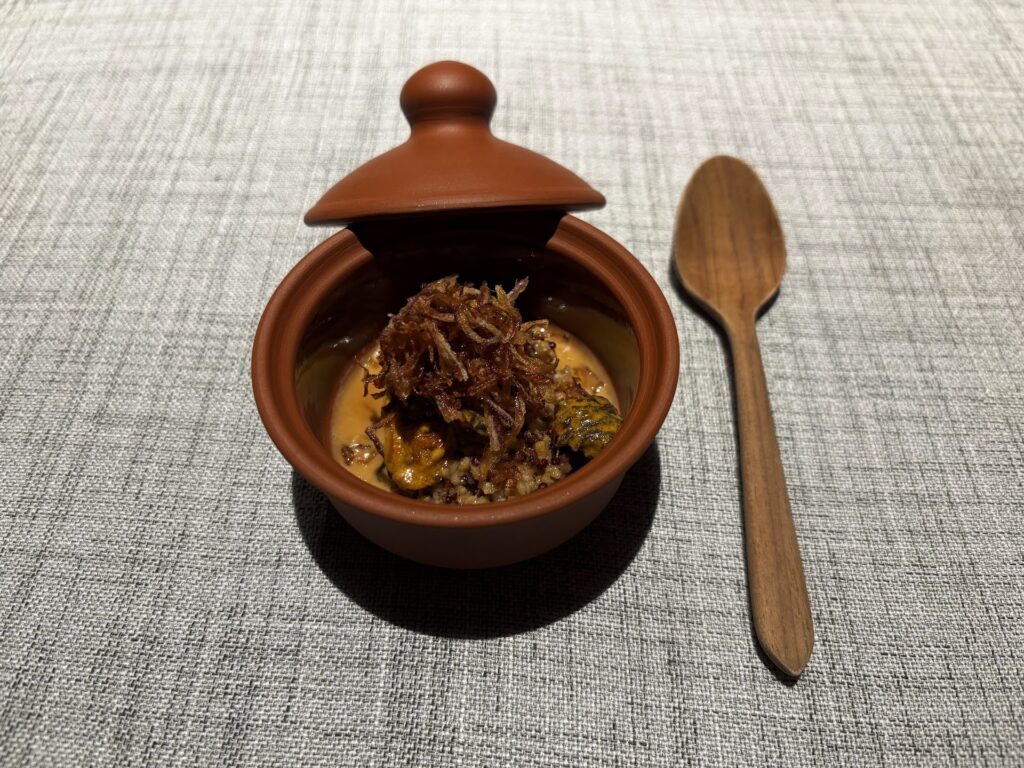
Then gucchi, wild Himalayan morel mushrooms in a golden curry with six types of millet, served in a terracotta pot that made an already earthy dish feel even more so. Gucchi are India’s (according to some, the world’s) most expensive mushroom, foraged by hand from the forests of Kashmir and Himachal Pradesh above 2,000 metres. They cannot be cultivated and their flavour is irreplicable. The curry was topped with candied onions, more chewy than crispy, and the whole thing was toasty and savoury but surprisingly light. A luxury ingredient layered over something ancient and everyday, our sommelier said it reminded her of childhood in Russia, that every country has a grain.
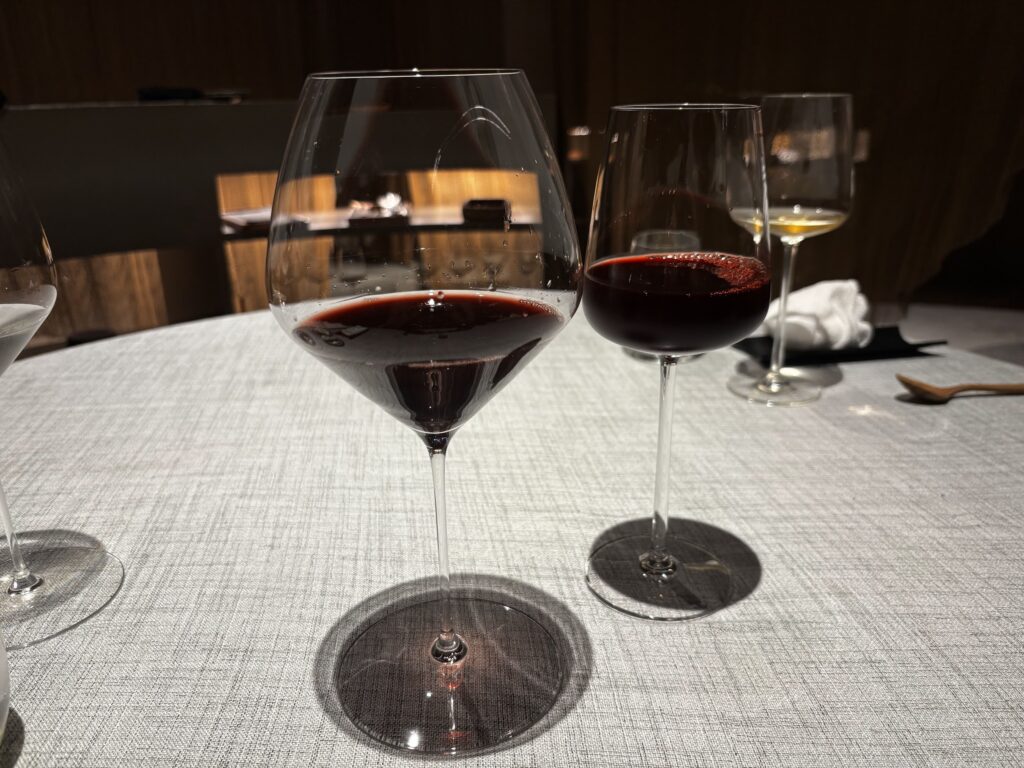
A mulberry and spice soft arrived alongside a Spanish Mencía, both the same deep, inky red. Every non-alcoholic pairing had been colour-matched to its corresponding wine, and placed side by side they were near impossible to tell apart. A nice touch that carried some gravitas, removing any sense of hierarchy between drinkers and non-drinkers at the table.
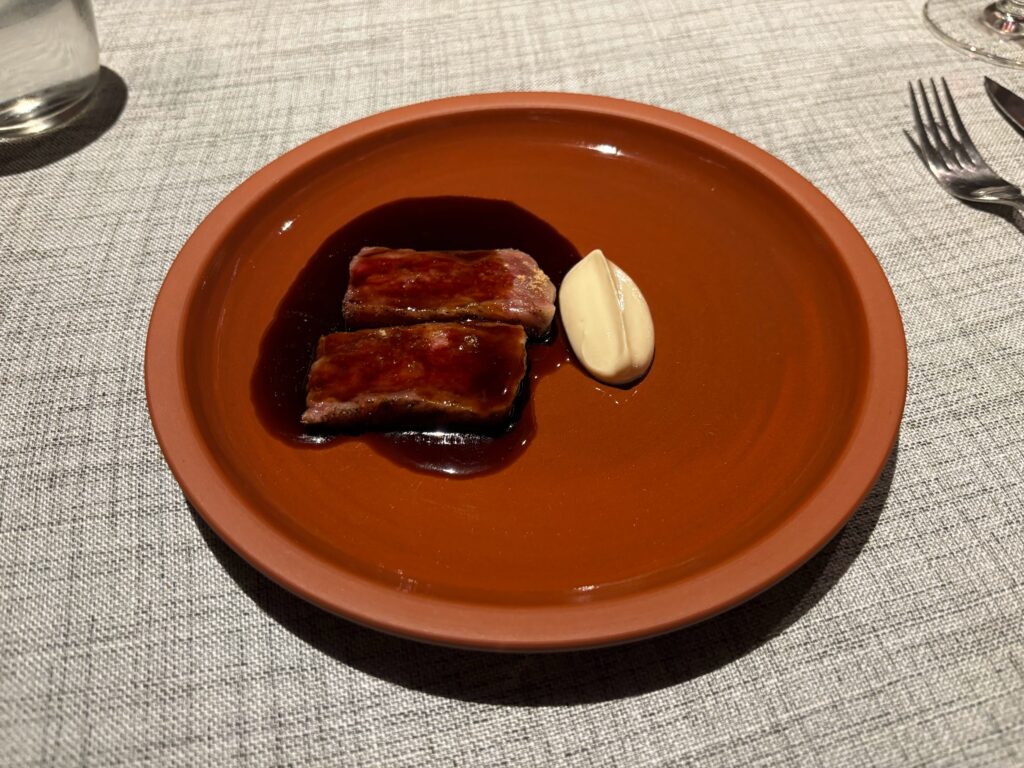
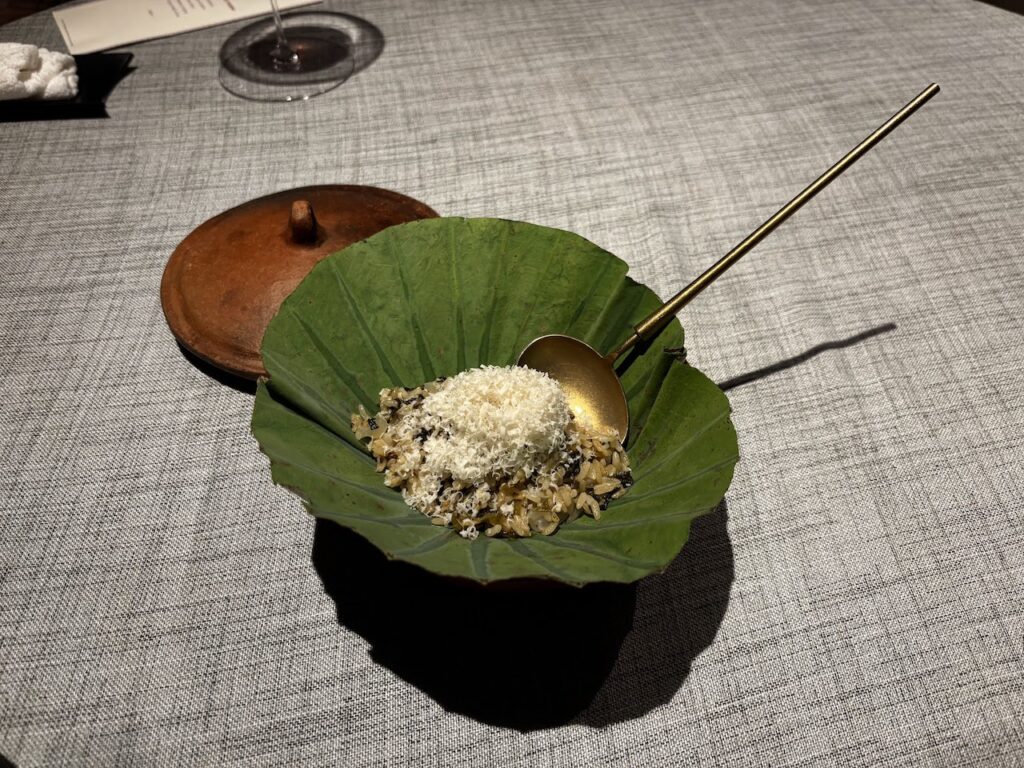
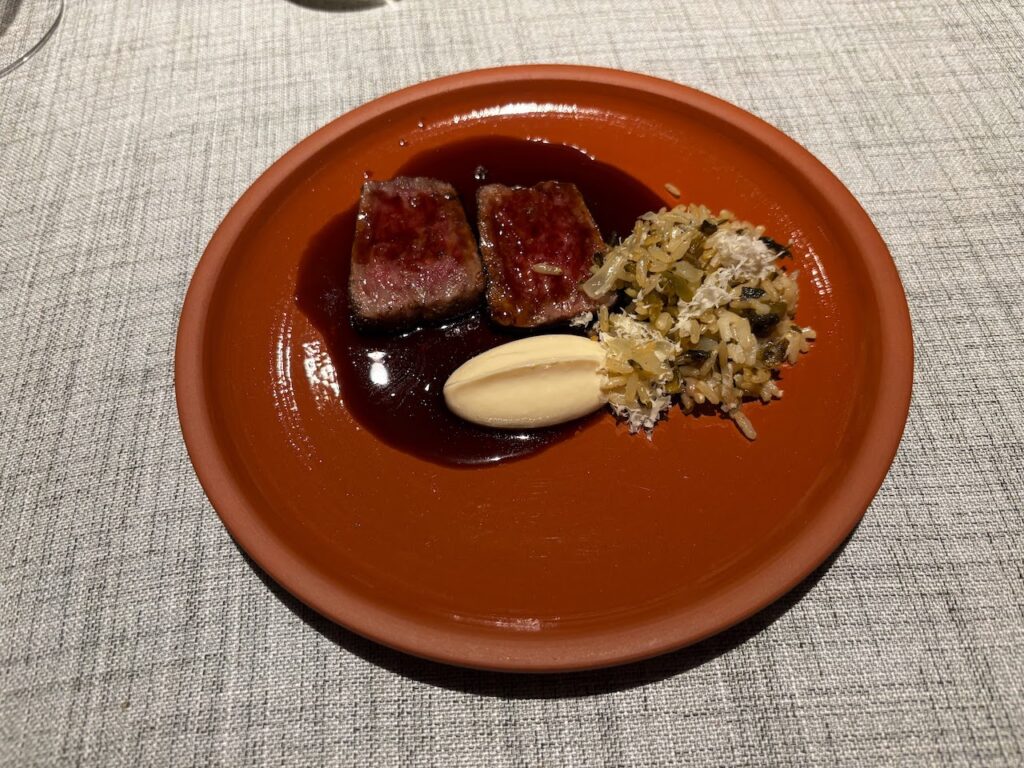
The beef ‘kebab’, two blushing slabs of jasmine wagyu from Khon Kaen in actuality, came with a glossy sauce that Arora calls Thai garam masala; her own invention, the Indian spice blend remade with Thai spices. It recalled a French peppercorn sauce but the provenance was entirely different. Surin jasmine rice cooked in ghee on a lotus leaf sat beside it, jewelled with pomelo and diced mustard green. A final flourish of luk pra grated over the top, a fermented Southern Thai seed with an umami richness closer to parmesan than the Mughlai nut I’d mistaken it for. Substantial and grounding after the precision of the earlier courses, it felt like a payoff.
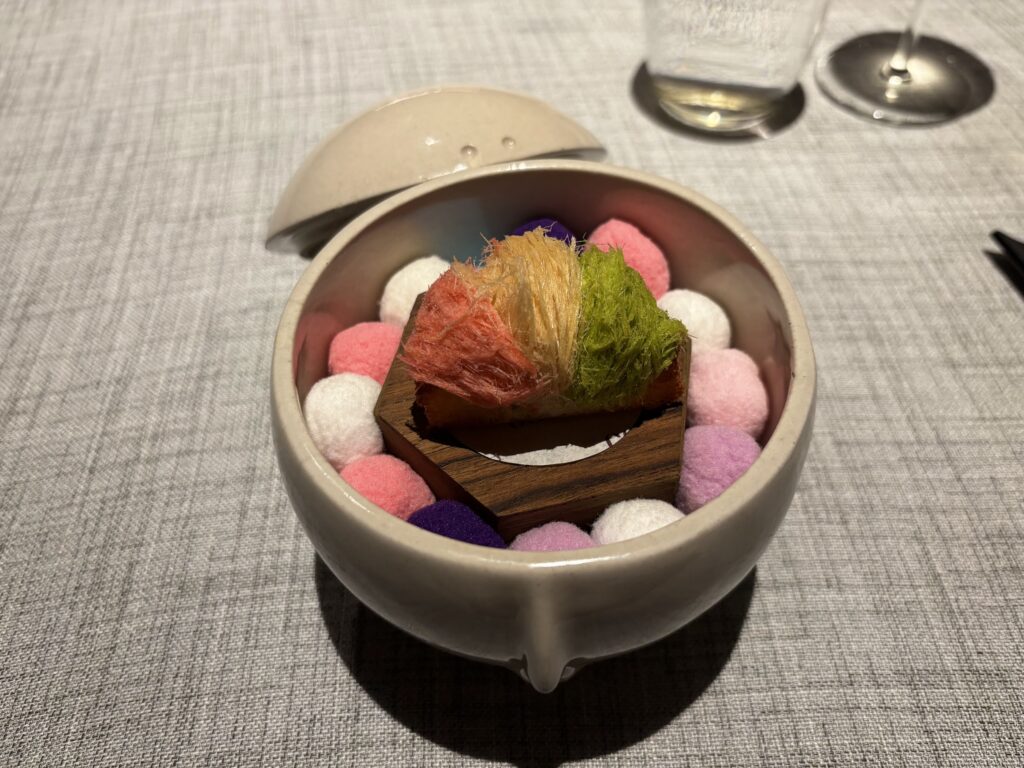
By dessert, the meal’s recurring theme had crystallised; shared food memories across cultures. It had been there all along, in the khakra and the millets and the Thai garam masala, but the final three courses made it impossible to miss. Malai toast wrapped in spun sugar threads that recalled roti sai mai, the Ayuthayya street dessert. India and Thailand, threaded together in spun sugar.
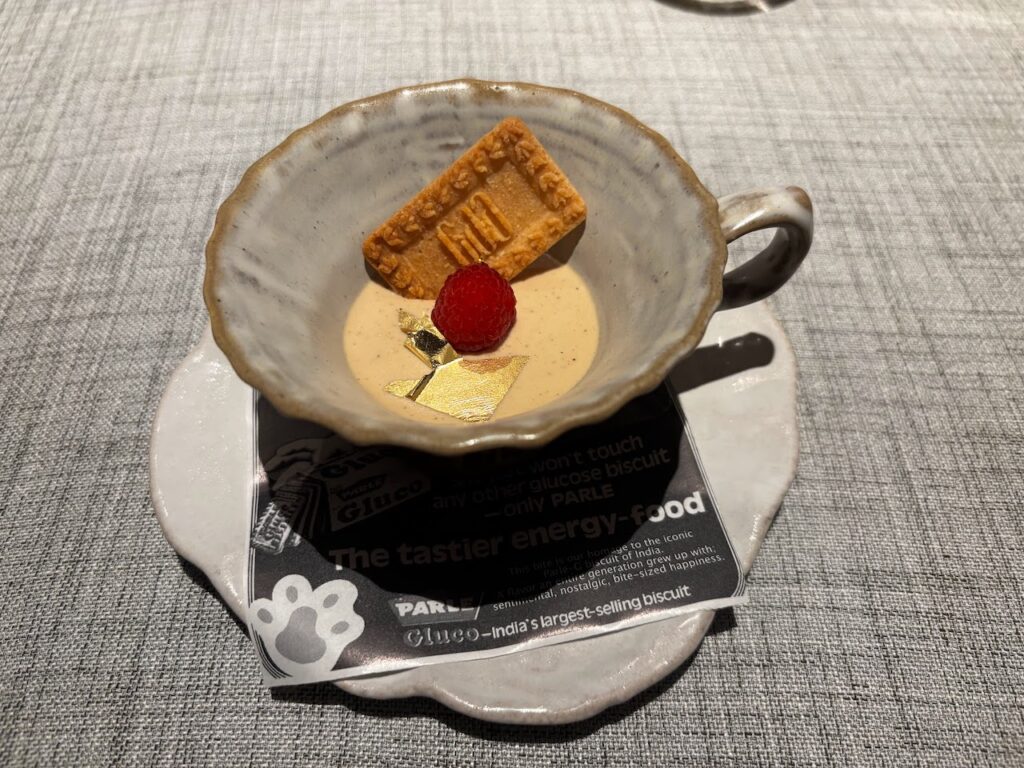
Then chai and Parle-G. A cup of chai-perfumed custard with raspberry coulis at the bottom and a miniature Parle-G biscuit on top, finished with gold leaf because why not? The saucer came with an actual Parle-G advert, the world’s best-selling biscuit, and what you’re looking at is essentially a cup of tea and a biscuit, the slowing down ritual of kitchens the world over.
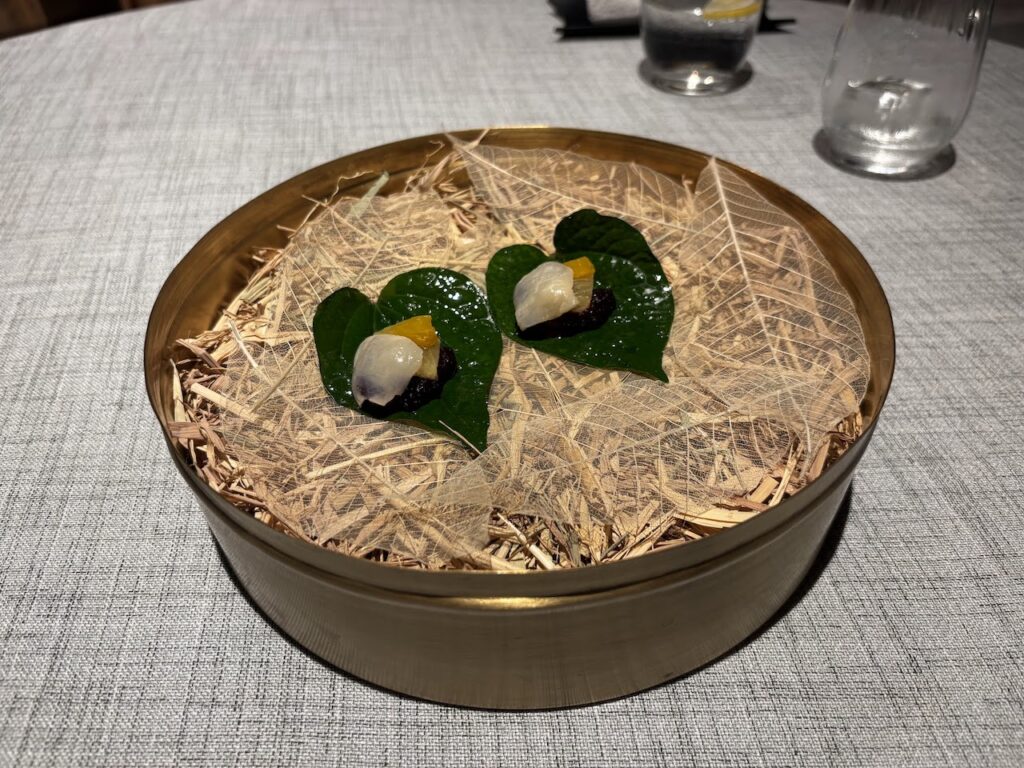
To close, miang kham x paan: a mash-up of betel leaf snacks, here topped with chocolate ganache and a fruity compote. Miang kham is Thai, paan is Indian, but they share almost everything, the betel leaf, the single-bite format, the fact that both exist as street food and ceremony simultaneously, the drawn out, developing flavour that rewards a bit of purposeful chewing.
The final pairing was clarified coconut milk and tonka bean, and it may have been the best drink of the evening, clean and precise and extraordinarily pronounced, a cocktail in all but name. Arora’s commitment to the non-alcoholic programme reportedly grew during her first pregnancy, and it shows.
The tasting menu is priced at just north of THB 6000 per person (around £140), which, in the context of Bangkok’s increasingly opulent dining scene, represents fair value for what is a long, carefully paced, genuinely surprising meal. The cooking throughout was precise, delicate, finely spiced, and a different showing to whatever assumptions you might bring to the table about the weight of Indian food, if such a catch-all term does the cuisine any kind of justice. Service was polished and present, the kitchen team bringing several dishes out themselves with visible pride.
What stays with me is not any single dish but the thread running through all of them. The insistence that food memories are shared across borders. Arora has said that Gaa is an extremely personal space for her, an extension of who she is, that it is not the same without her there. On the evidence of this meal, that feels about right.