Bangkok’s emergence as a destination for high-end Indian dining may feel like a recent phenomenon, a product of the Michelin Guide’s arrival in Thailand in 2018 and the constellation of starred restaurants that followed. But the city has been among the world’s best for Indian food for decades. Indian merchants settled here as far back as the Sukhothai and Ayutthaya periods, and Pahurat, Bangkok’s Little India, has had a thriving food scene of its own ever since. The Indian community in Thailand today numbers well over 200,000, and the culinary crossover between the two traditions is obvious.
What changed was ambition. When Gaggan Anand opened his first restaurant in 2010 and began serving progressive Indian food to a city that already understood its flavour grammar, something shifted. By 2015 he was topping Asia’s 50 Best Restaurants, a position he held for four consecutive years. The original Gaggan closed in 2019, but the ground it broke attracted a generation of Indian chefs who saw Bangkok not as a compromise but as an opportunity: proximity to source ingredients, a dining public with a built-in literacy for the spice palette, and a fine-dining infrastructure that rewards risk.
Gaa, INDDEE, and Haoma each now hold Michelin stars. Gaggan’s own revived flagship (also starred) returned to number one on Asia’s 50 Best in 2025, though whether it can be classified as ‘Indian’ cuisine is another discussion. Regardless, the result is a city where a starred tasting menu and a seven-table Punjabi canteen open since 1963 sit within a few kilometres of each other, and both are worth crossing town for. With all that in mind, here are the best places for Indian food in Bangkok.
Gaa
Ideal for playful Indian fine dining that’s delicate, light and precise….
Gaa opened in 2017 directly opposite Gaggan, then the top-ranked restaurant in Asia, on Langsuan Road. Chef Garima Arora had served there as sous, and had spent three years at Noma in Copenhagen before that. A Michelin star followed within a year, making her the first Indian woman to receive one. The restaurant has since moved to a 60-year-old Thai wooden house on Sukhumvit Soi 53, where it picked up a second in the 2024 Guide. The place you walk into now bears little resemblance to the one that earned the initial recognition.
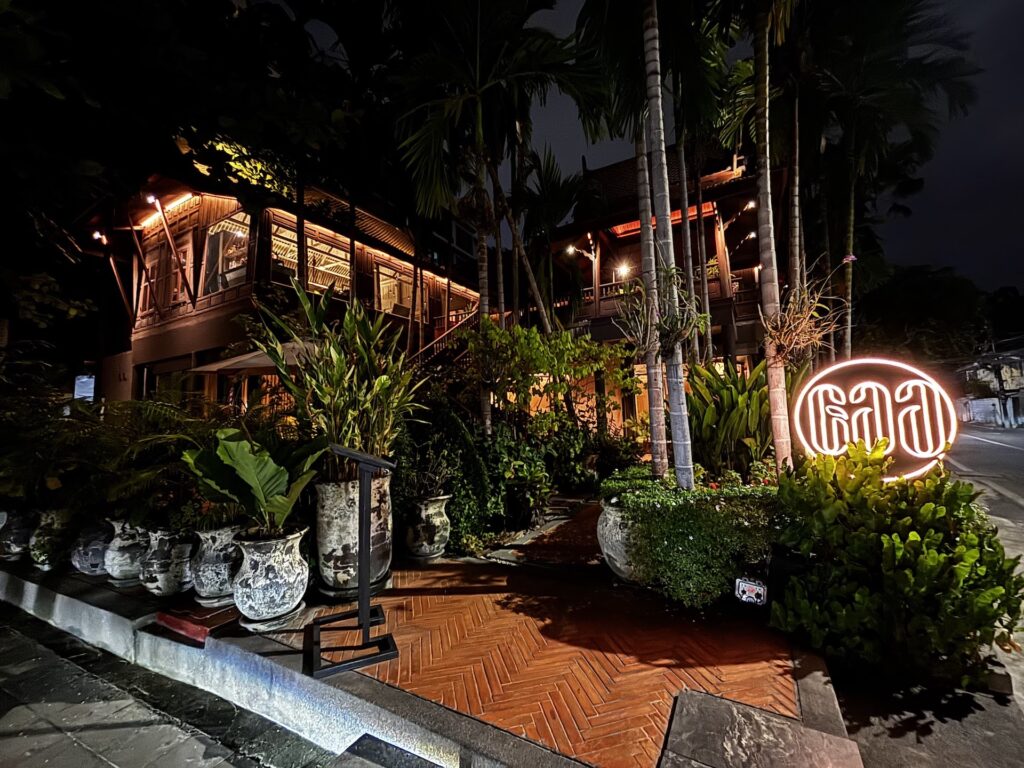
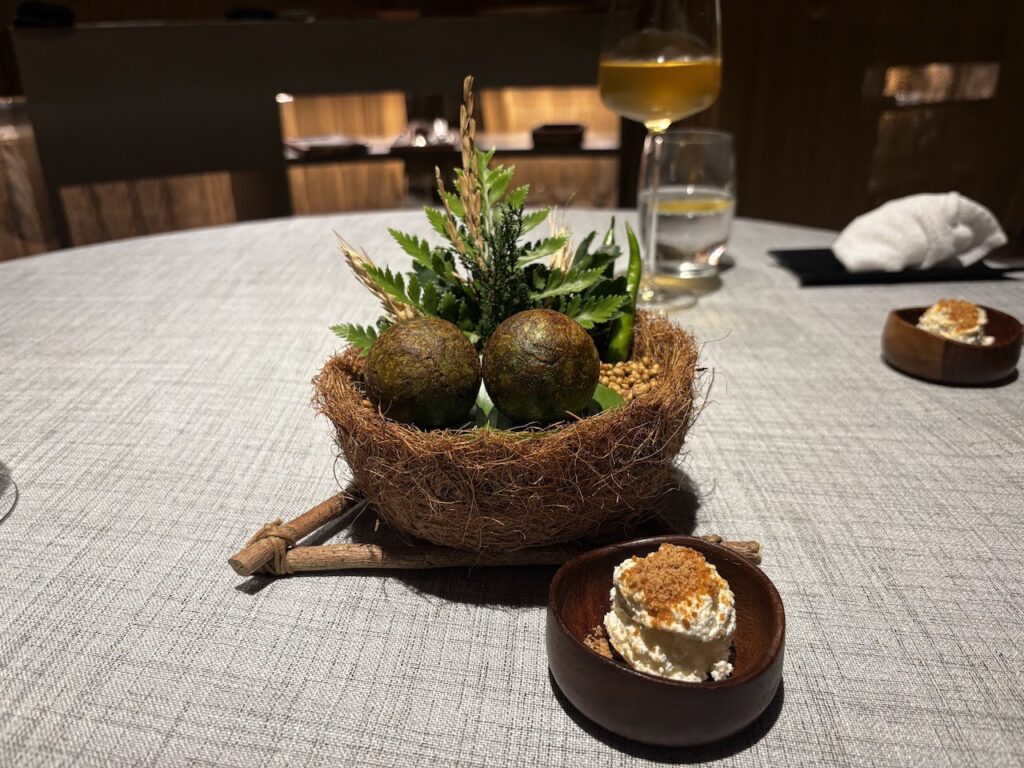
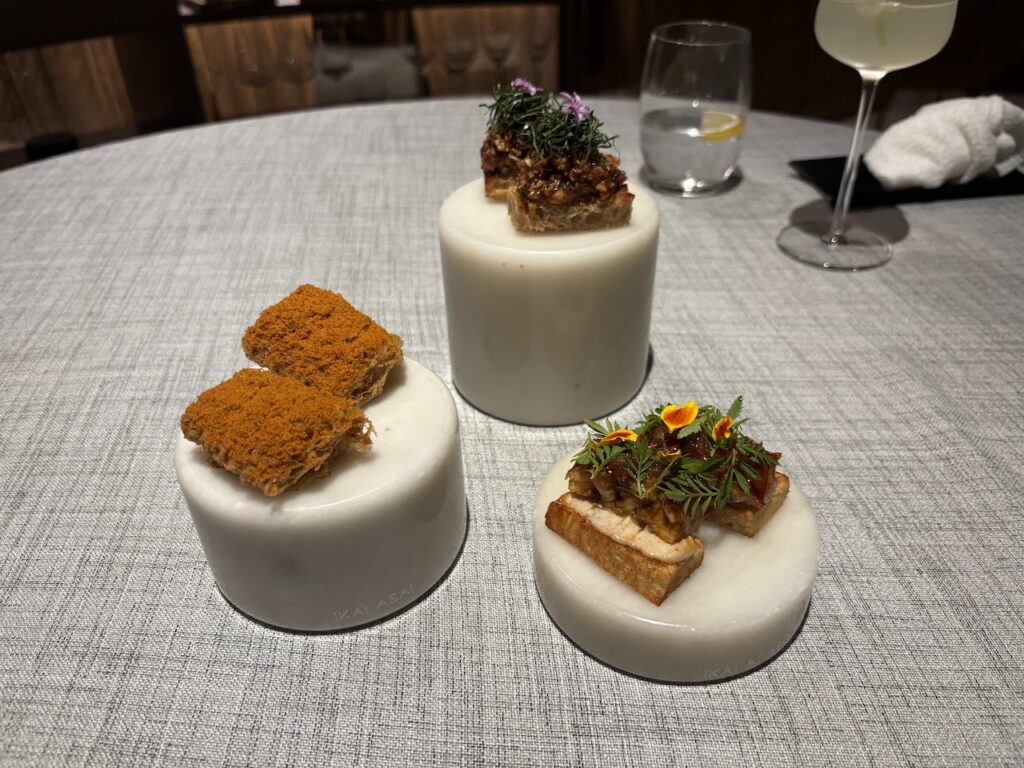
You now dine in the Garden Room on the ground floor, where gold chain-mail curtains enclose each table in a private cocoon lit in warm amber. From outside the veil you can see the diners within; from inside, the rest of the room disappears. It is a strange, beautiful piece of design, somewhere between a spaceship and a temple, and it sets the tone for a meal that trades in controlled surprise.
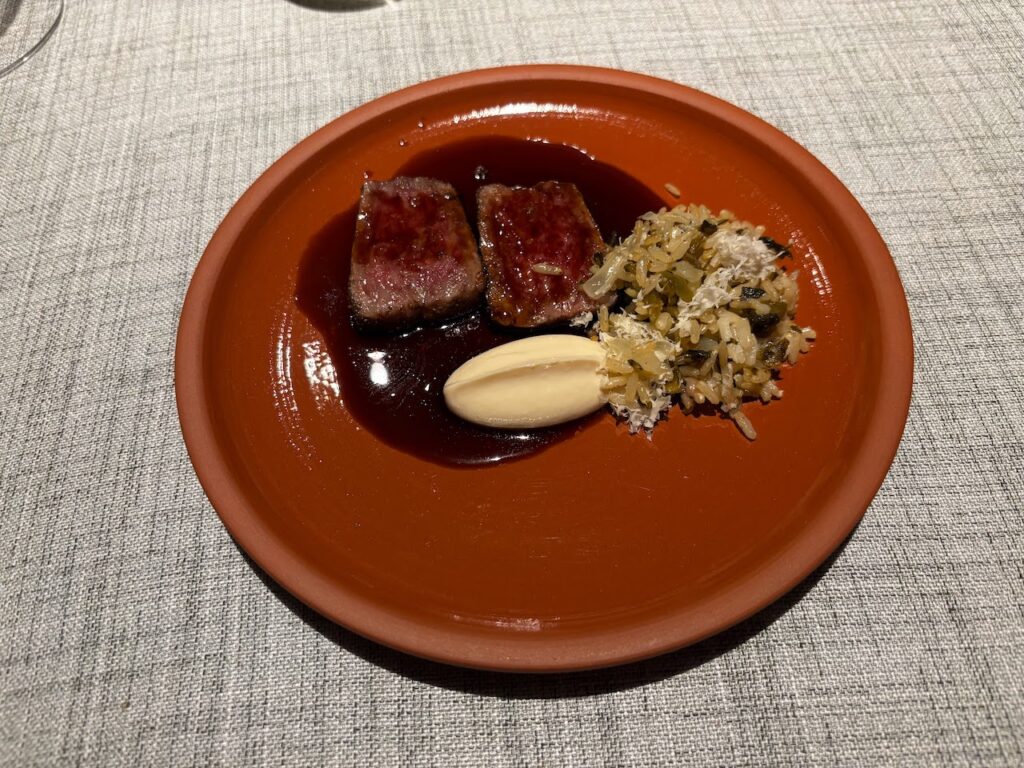
Around ten courses of ‘India in many bites’ map the country’s culinary tradition through seasonal Thai produce, and the cooking is defined above all by clarity. Temperatures shift with real intent: warming aloo chaat heavy with dried spice giving way to a frozen pomegranate anar bhel, and the summer curry, one of the kitchen’s longest-running signatures, arrives ice-cold in a spider crab shell with green apple granita and sticky black rice. The finale, a beef kebab that sits alongside Surin rice, is given heat via Arora’s bespoke ‘Thai garam masala’ in jus form, that’s actually more reminiscent of a peppercorn sauce than anything recognisably ‘Indian’.
There is a deliberateness to all of it that reframes some assumptions about Indian fine dining: this is food built on delicacy and precision, not heat and fat. The wine cellar holds over 2,000 bottles from more than 300 labels, and the non-alcoholic pairing is colour-matched to the wine flight glass by glass, so that nobody at the table feels like an afterthought. At just north of THB 6000 a head (around £140), the tasting menu sits at the affordable end of the city’s two-star bracket, and you leave light but fulfilled – just the ticket on a balmy Bangkok evening, we think.
You can read our full review of Gaa here.
Website: gaabkk.com
Address: 46, 1 Sukhumvit 53 Alley, Khlong Tan Nuea, Watthana, Krung Thep Maha Nakhon 10110, Thailand
Jhol
Ideal for coastal Indian you won’t find anywhere else in Bangkok…
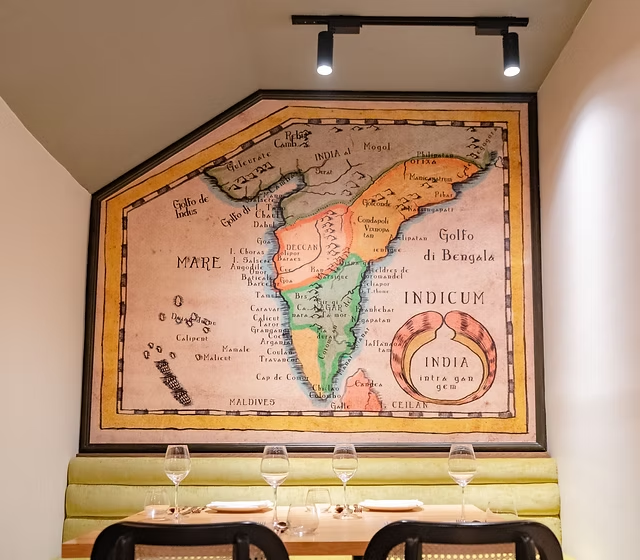
Most Indian restaurants in Bangkok gravitate north, towards the tandoors and slow-cooked curries of the Mughal tradition. Jhol comes from a different direction entirely. Chef Hari Nayak was born in Udupi, a small coastal town in Karnataka, and his menu maps the regions around Konkan and Malabar on the west coast and Chettinad, Pondicherry, and the Bay of Bengal on the east. When Jhol opened in early 2020, it launched without any of the dishes that have come to define Indian restaurants globally: no dal makhani, no tikka masala. Naans and kulchas were replaced with coastal breads like appams, kallappams, and neer dosa. There is no butter chicken by design.
It is a deliberate bet that diners in Bangkok are keen for Indian food beyond the greatest hits, and it has paid off; Jhol buzzes every night, in a room that’s pitched somewhere between a smart neighbourhood bistro and a restaurant with ambition, all warm bungalow interiors, sepia Indian portraits and the gentle glow of a semi-open kitchen.
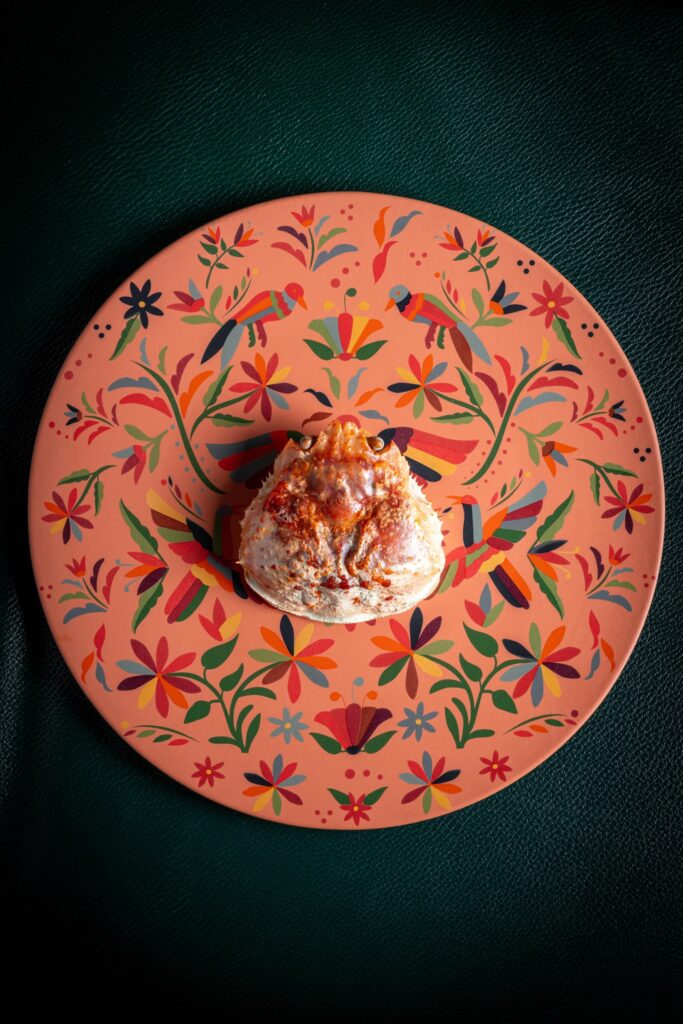
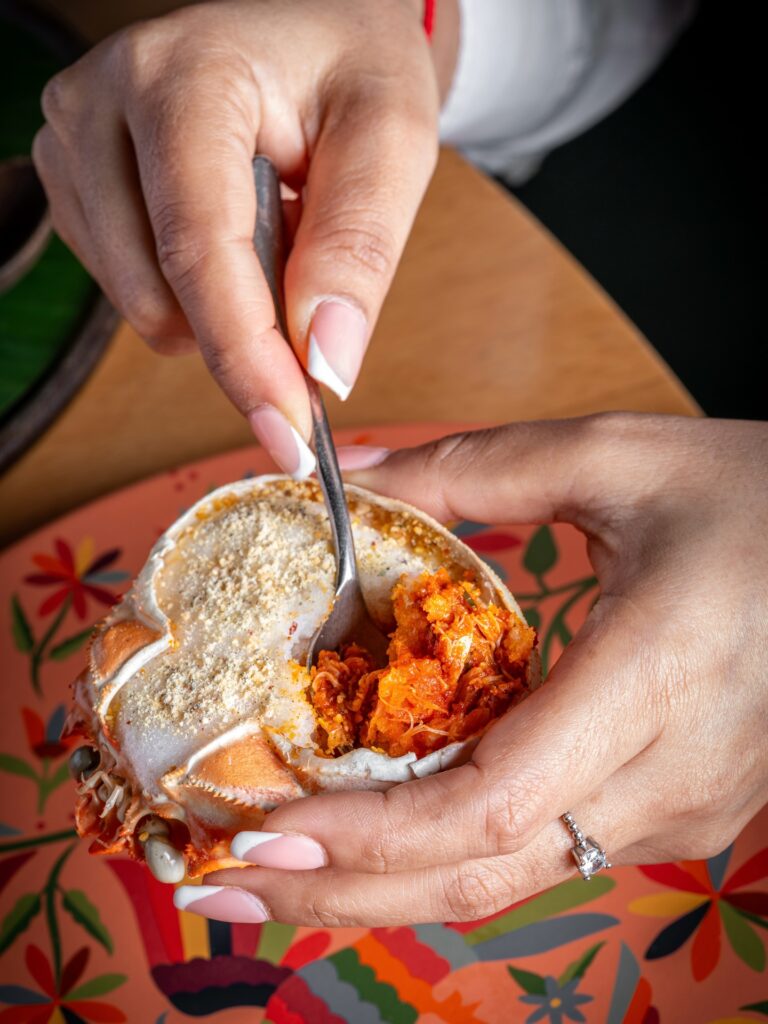
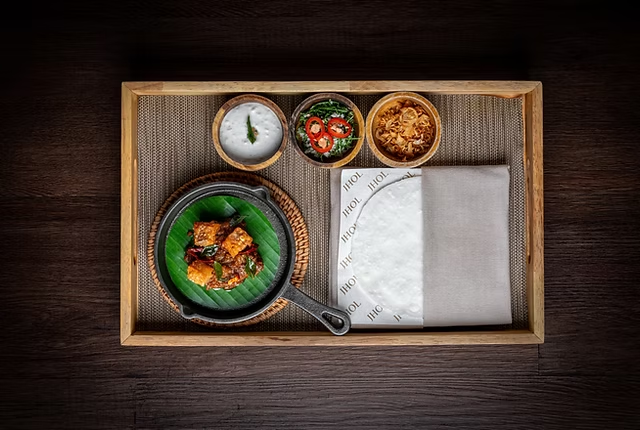
The Kundapura ghee roast, cooked with masala from the Konkan coast, has become a signature, available with chicken on the a la carte and with crab on the tasting menu – the latter stuffed into a crab shell, topped with idli batter and steamed, a clever inversion of the more familiar neer dosa pairing. A Coorgi pandhi curry brings slow-cooked pork belly with kanchampuli vinegar and soft pathri rice breads, served with a gotukola salad made from leaves known in Thailand as bai bua bok, a small crossover that feels entirely at home here.
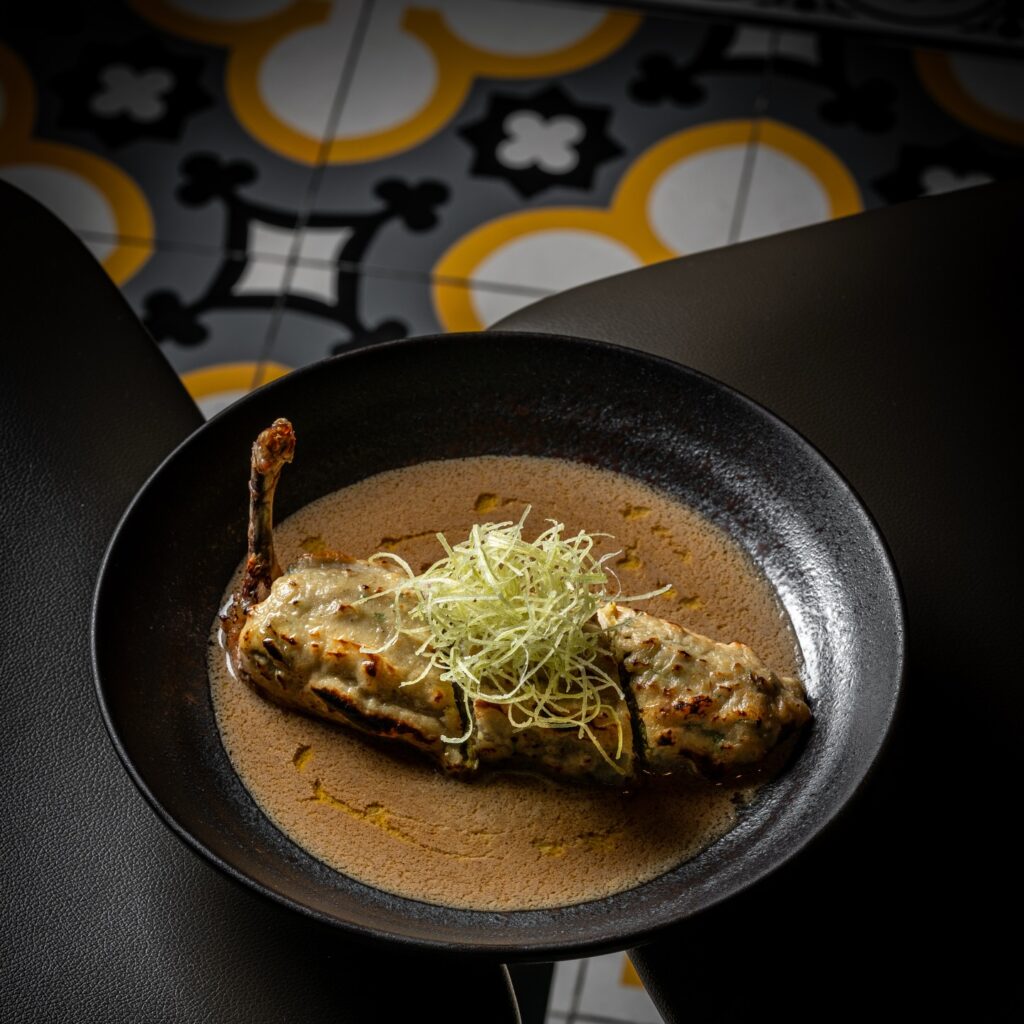
The chicken Pandhra Rassa, a Kolhapuri classic built on coconut milk, ground cashew and poppy seeds, here is done sous vide, the breast stuffed with minced chicken and topped with crispy fried leeks. That range across India’s coastline and interior, west to east, north to south, is the point; three dishes from three traditions hundreds of kilometres apart, all on the same menu, none compromised. Most a la carte dishes sit comfortably around the 500-baht mark, making Jhol one of the more accessible places on this list.
The cocktails lean heavily on Indian and Thai spirits. The monsoon negroni, made with Hapusa gin and kokum-infused Campari, is worth ordering for the kokum alone: a tart, fruity sourness from India’s Western Ghats that cuts through Campari’s bitterness in a way that we suddenly realise orange just can’t muster.
Website: jholrestaurant.com
Address: 7 2 Sukhumvit Soi 18, Khwaeng Khlong Toei, Khlong Toei, Bangkok 10110, Thailand
Ms. Maria & Mr. Singh
Ideal for keema quesadillas, natural wine and a boisterous atmosphere…
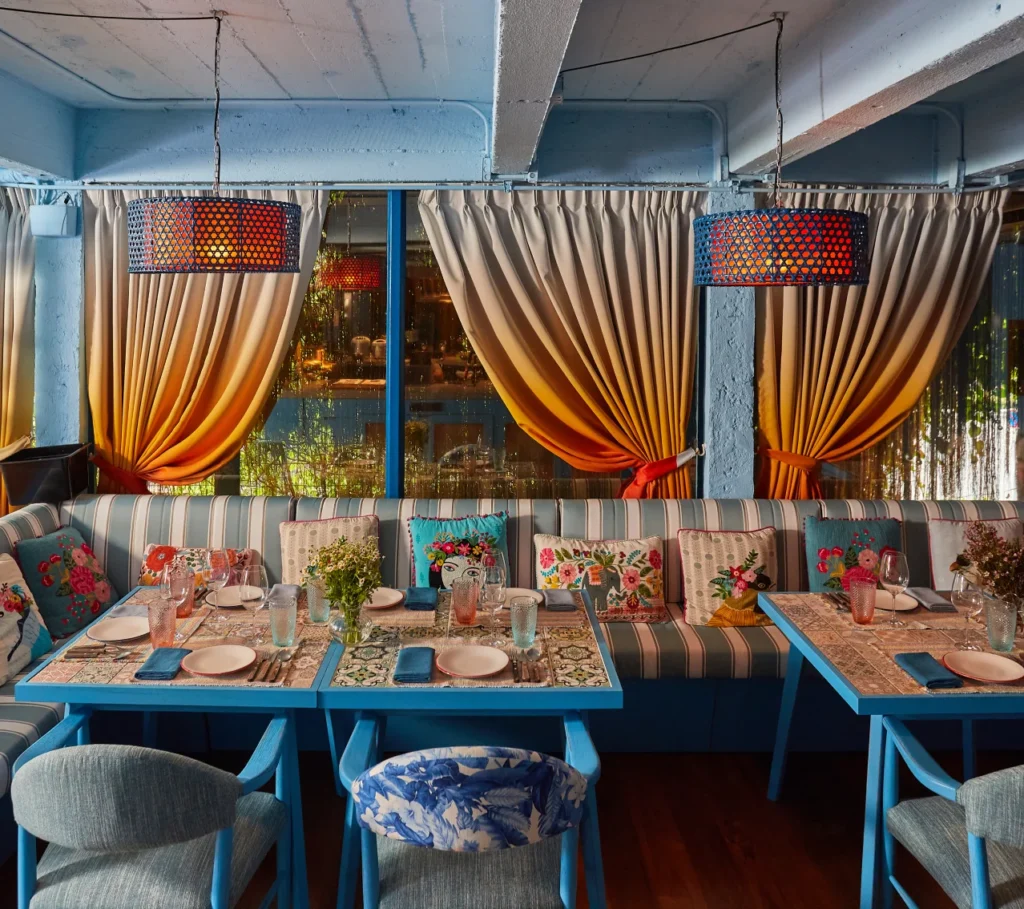
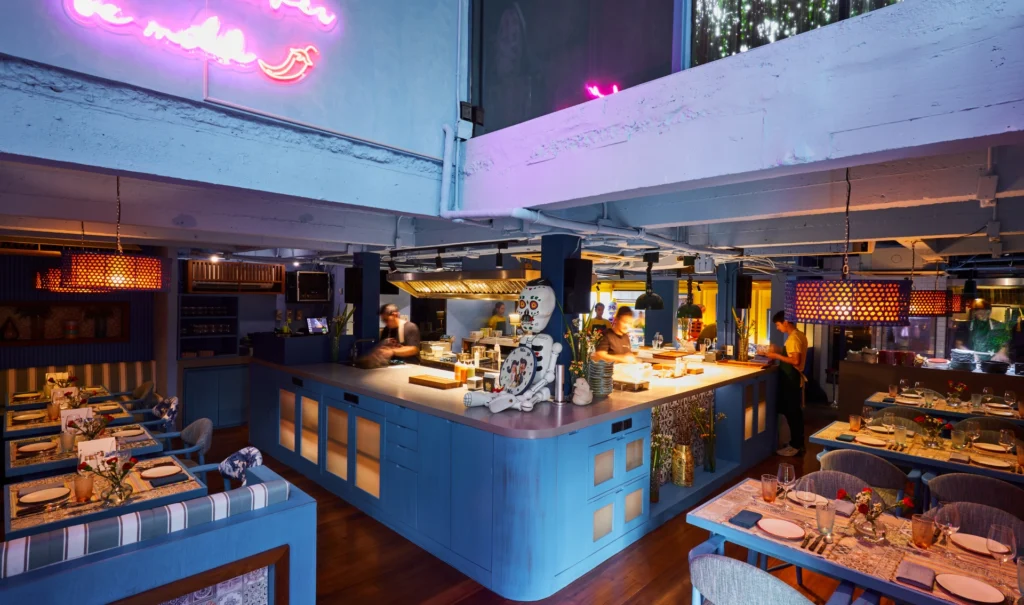
Gaggan Anand’s casual restaurant sits on the second floor directly above his main venue on Soi 31, built around a fictional love story between an Indian man and a Mexican woman. The room is painted in vivid oranges and blues, the music is loud, and the whole thing feels more like a lively supper club than a sit-down meal. You can eat at the central horseshoe bar overlooking the open kitchen if you want to watch the two head chefs, Hernán Crispín Villalva and Roshan Kumar, work the line.
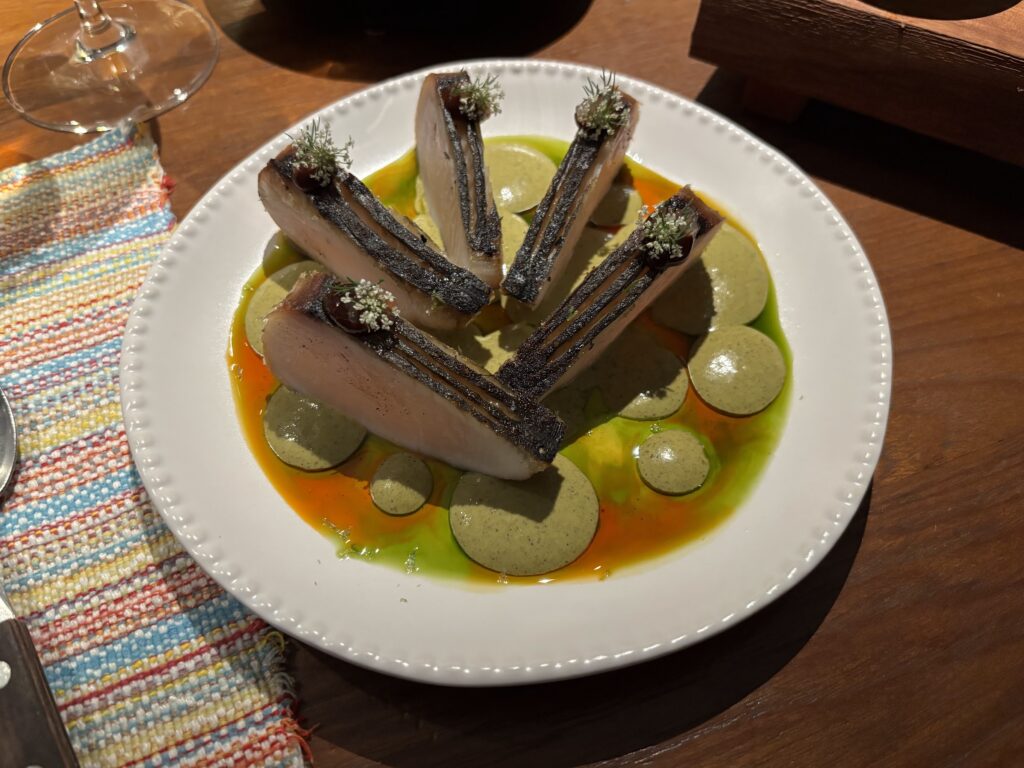
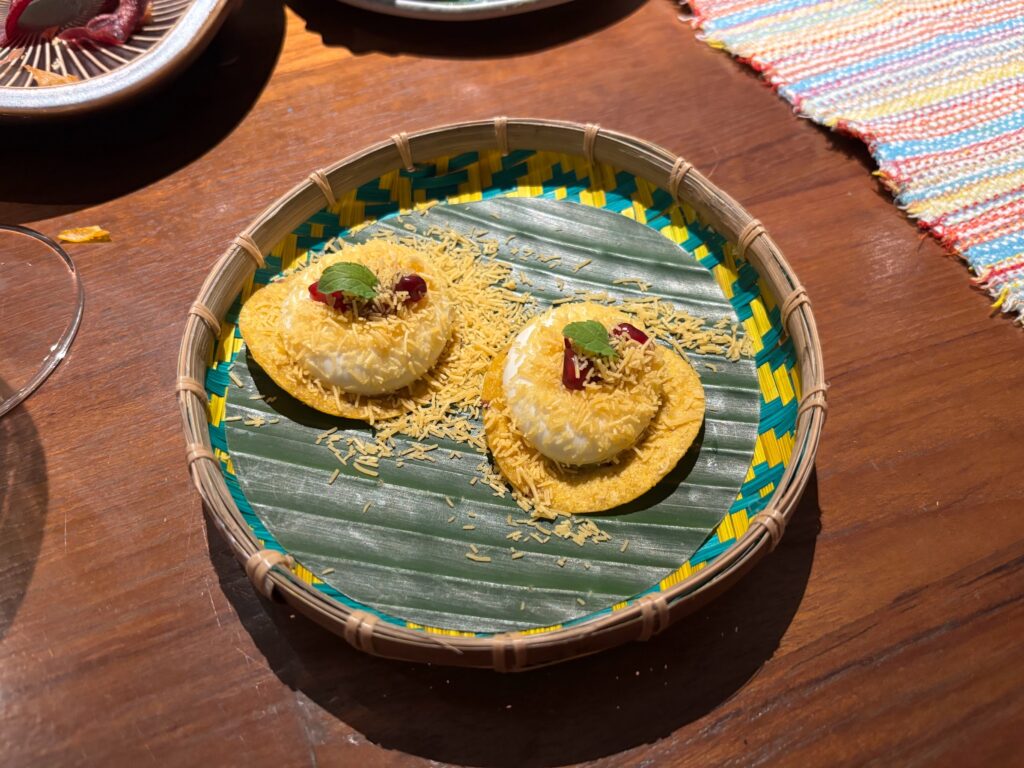
The pairing of Indian and Mexican cooking makes more sense than it sounds on paper. Both lean heavily on dried chillies, layered spice, and slow-cooked meat, and the kitchen exploits that overlap with obvious enjoyment: pork vindaloo tacos with pulled pork, melted mozzarella, charred pineapple, and fresh chillies; papdi chaat with Gaggan’s signature spherified yoghurt (a trick he leaves like fingerprints across every restaurant he touches); keema quesadilla with spiced lamb curry and melted cheese (brilliant, the best dish on the menu).
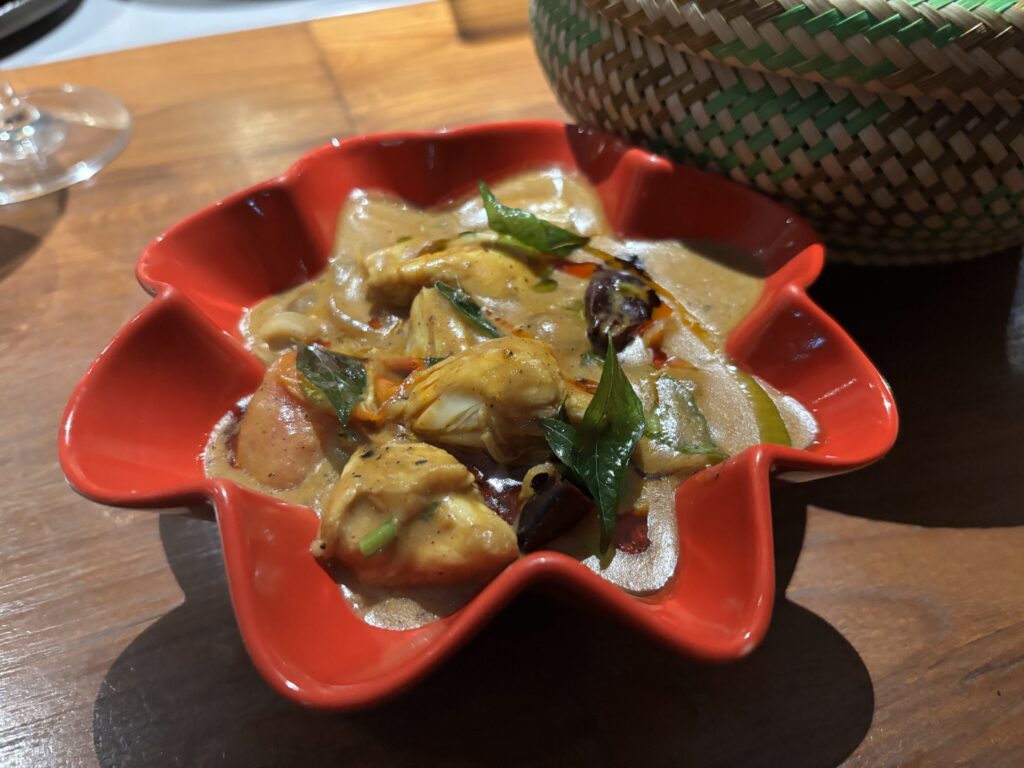
The crab curry, swimming in coconut milk rich enough to justify the 820 baht price tag, is the dish most tables seem to order and the one you should too. A tasting menu for two at 6,000 baht is the way to go if you want the full story, from ceviches and tostadas through to churros with toasted sticky rice ice cream.
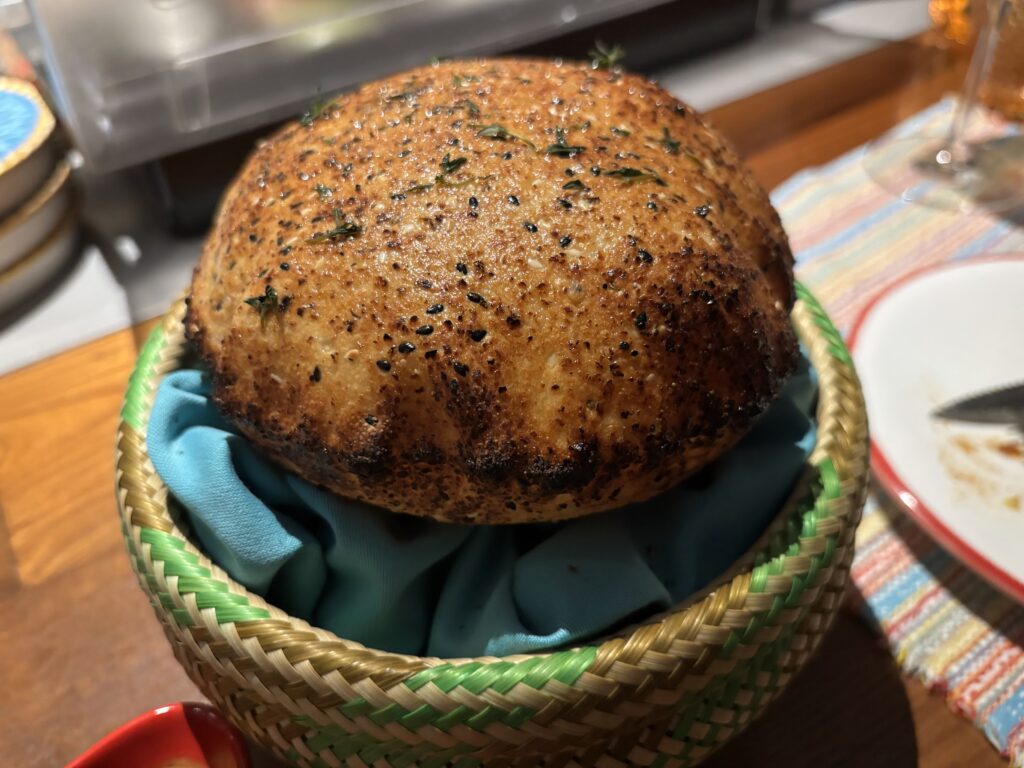
The wine list is enormous for a restaurant of this size and leans almost entirely towards low-intervention and natural producers from Italy, France, Austria, Georgia and beyond, with a dedicated skin-contact section and sake by the glass. At a place this fun, that level of thought on the drinks is a welcome surprise. A word of warning: this is one noisy restaurant. You’ll want to wear your hearing aid. Or, perhaps not actually…
Website: mariaandsinghbkk.com
Address: 68/2 สุขุมวิท 31 Khlong Tan Nuea, Watthana, Bangkok 10110, Thailand
INDDEE
Ideal for a ten-course journey through India’s regions, paired by Bangkok’s most awarded sommelier…
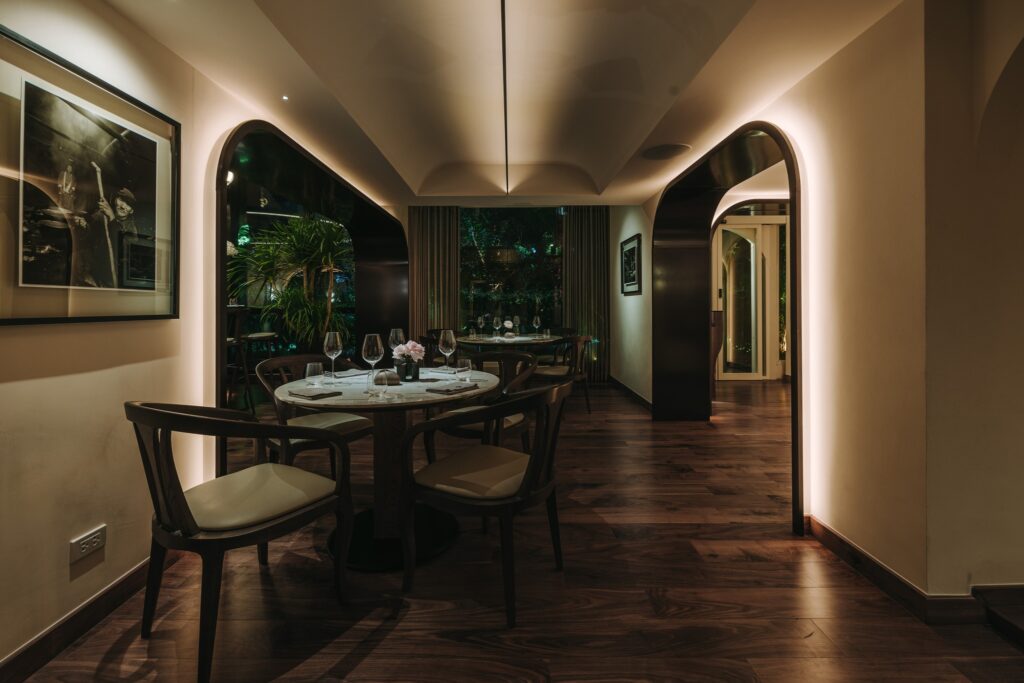
INDDEE occupies the building that once housed the original Gaggan, a fact that adds weight to arriving here. The century-old house off Langsuan Road has been reworked across two floors in eggshell tones with marble, antique copper and Indian walnut wood. Two open kitchens at ground level divide into hot and cold sections, opening onto glasshouse dining rooms where the brigade works in full view.
Chef Sachin Poojary, formerly chef de cuisine at Wasabi by Morimoto at the prestigious Taj Mahal Palace in Mumbai, leads the team, having opened the restaurant in 2023 and earned a Michelin star within six months. It now has two.
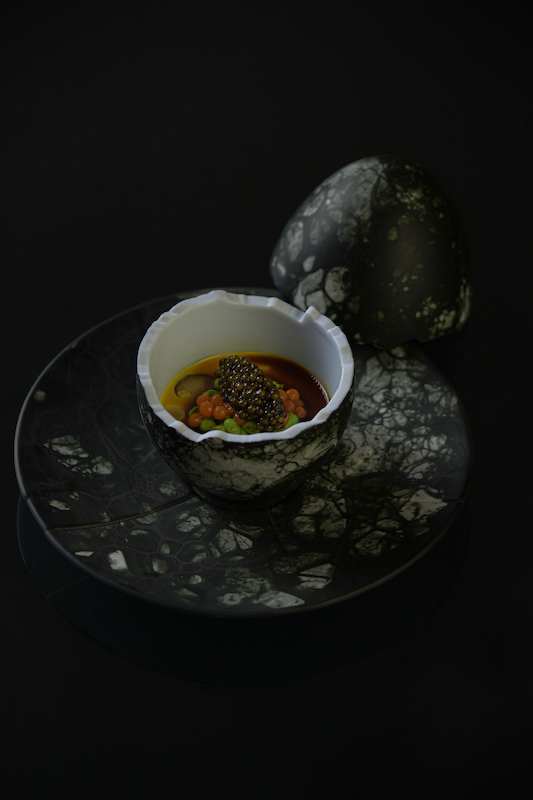
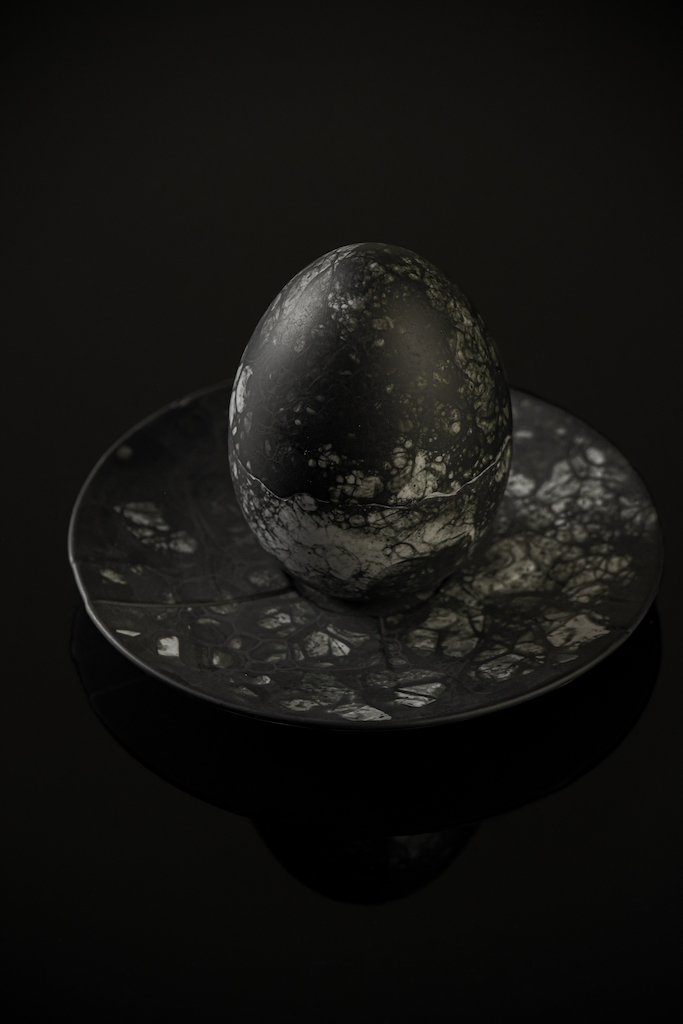
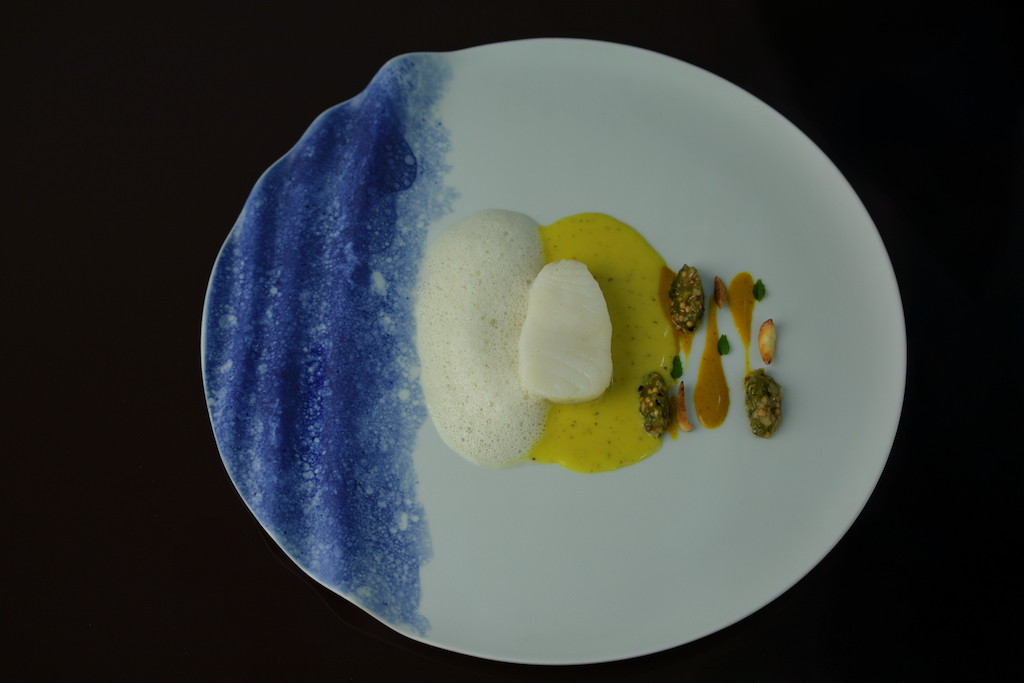
The tasting menu runs to around ten courses, each built around a specific region or moment in Indian culinary history. The opening course, Parsi Love Affair, draws on akuri, the traditional Parsi scrambled egg dish from Gujarat, reimagined here as a silky egg chawanmushi crowned with Oscietra caviar and served in a ceramic egg. It sets the tone immediately: playful, technically precise, and rooted in a culinary tradition that may surprise those who haven’t read Pushpesh Pant’s India: The Cookbook front to back.
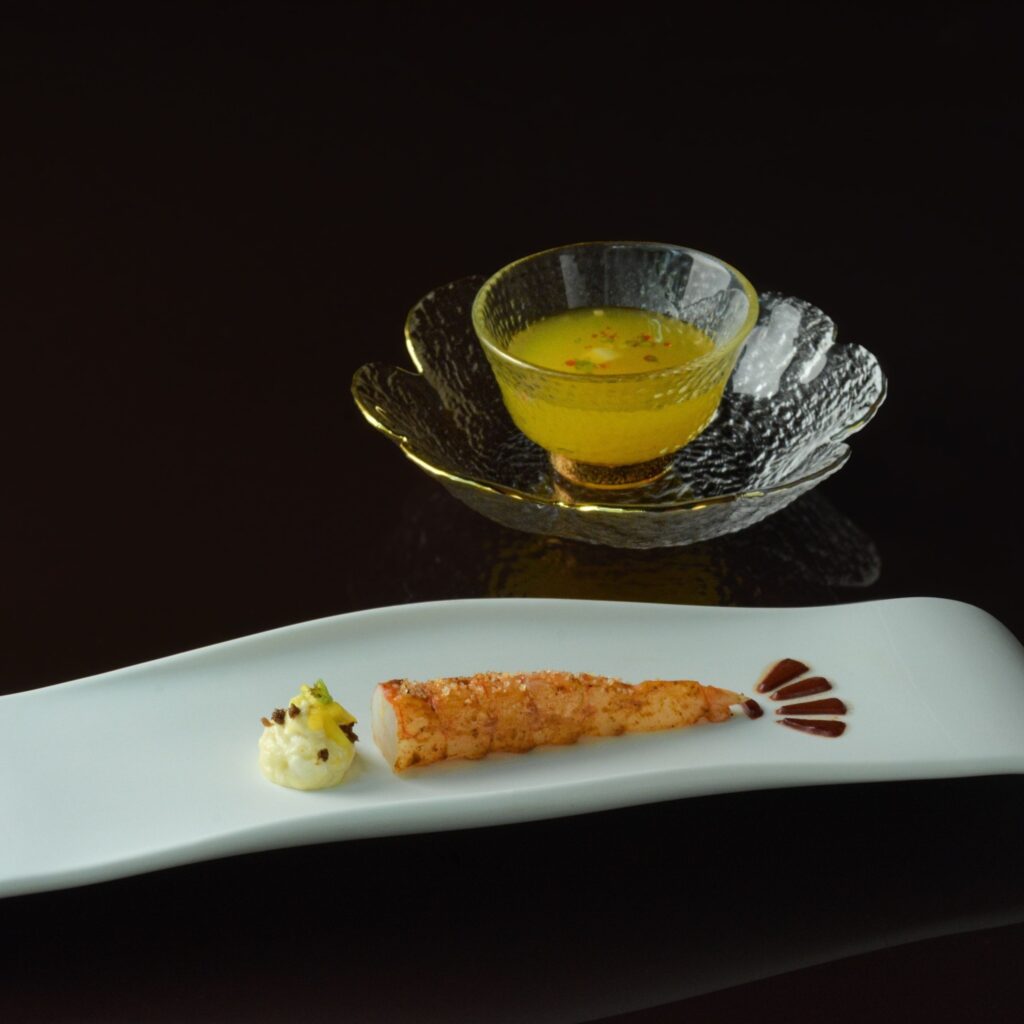
Later, a carabinero finished tableside represents Goa: a Recheado glaze built on chilli, aromatic spices and vinegar meets a coconut gribiche lifted with tamarind and jackfruit, two recipes from the same coast defined by different souring agents. The prawn is smoked over charcoal and finished in the marinade, and an ambotik – a sour, spicy Goan curry – arrives in a glass to frame the sequence. You move between the three elements in a prescribed order, and the interplay between fruit acidity and vinegar shifts with each pass. We’re loath to call it educational; that would do a disservice to how fun it is to dine here, but we certainly left having felt we’d learnt something.
The 10-destination tasting menu is THB 5,500, with a vegetarian version at THB 4,900 (making INDDEE the most expensive restaurant on our list, and worth it, too). Sommelier Jay Bottorff, the first Thai recipient of the Michelin Sommelier Award, oversees a wine list that has won multiple Star Wine List awards including the Grand Prix for Asia in 2025. With dishes this intricate and bold, his by-the-glass selection is worth leaning on.
Website: inddeebkk.com
Address: 185 Ratchadamri Rd, Lumphini, Pathum Wan, Bangkok 10330, Thailand
Haoma
Ideal for a sustainable, starred Indian fine dining, and a wine list that beat every big name on earth…
Haoma holds both a Michelin star and a Michelin Green Star for sustainable gastronomy, the only Indian restaurant in the world with that combination. Chef Deepanker Khosla, who goes by DK, runs an urban farm on site and a separate plot of land south of Bangkok, and the kitchen’s relationship with what grows there defines the menu rather than decorating its edges. The distance each ingredient has travelled is printed beside every dish: 58km for the lamb, 790km for the tear drop peas, and everything in between, highlighting a real due diligence on food miles, even if a whopping 790km isn’t necessarily something to boast about.
Only rogan joshing – it’s an admirable commitment to traceability, and it doesn’t stop there. Rainwater is harvested for the building’s water needs and the drinks list is built in part from the kitchen’s surplus fruits and vegetables.
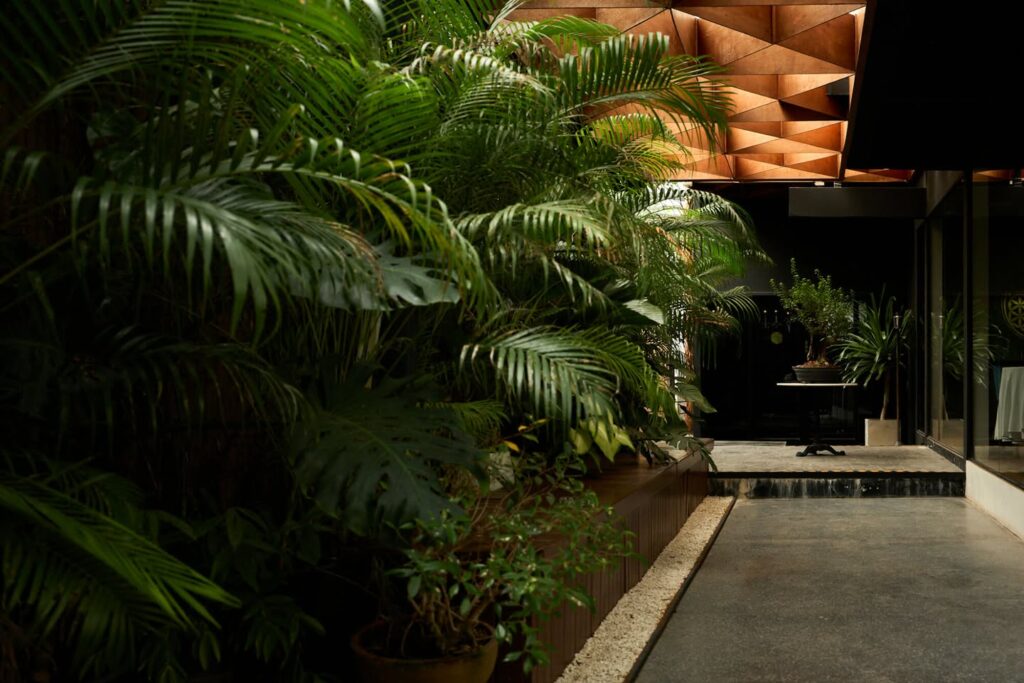
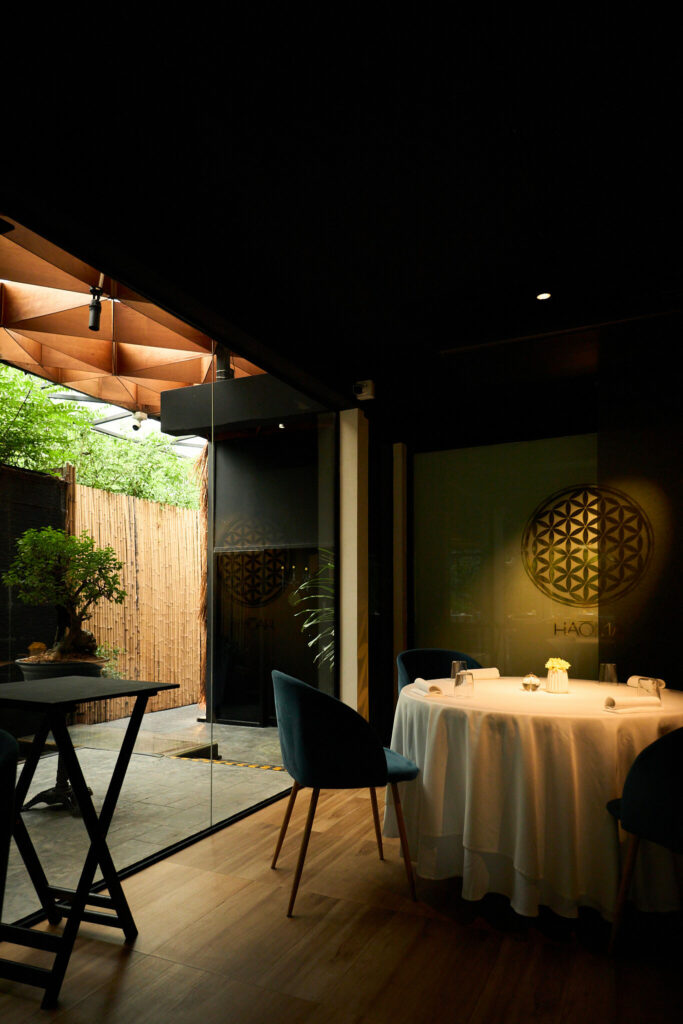
Back in the room, and the restaurant occupies DK’s former home on Sukhumvit Soi 31, a wooden house wrapped in a greenhouse, its interior dim and lush, with strings of lights between seedlings and floor-to-ceiling windows. The food is what DK describes as neo-Indian: historic and pre-colonial recipes reimagined through modern technique, plated with a near-Nordic minimalism that belies how grounded the flavours are in the subcontinent. Of course, all of this is a little tiresome if the food doesn’t deliver. It does.
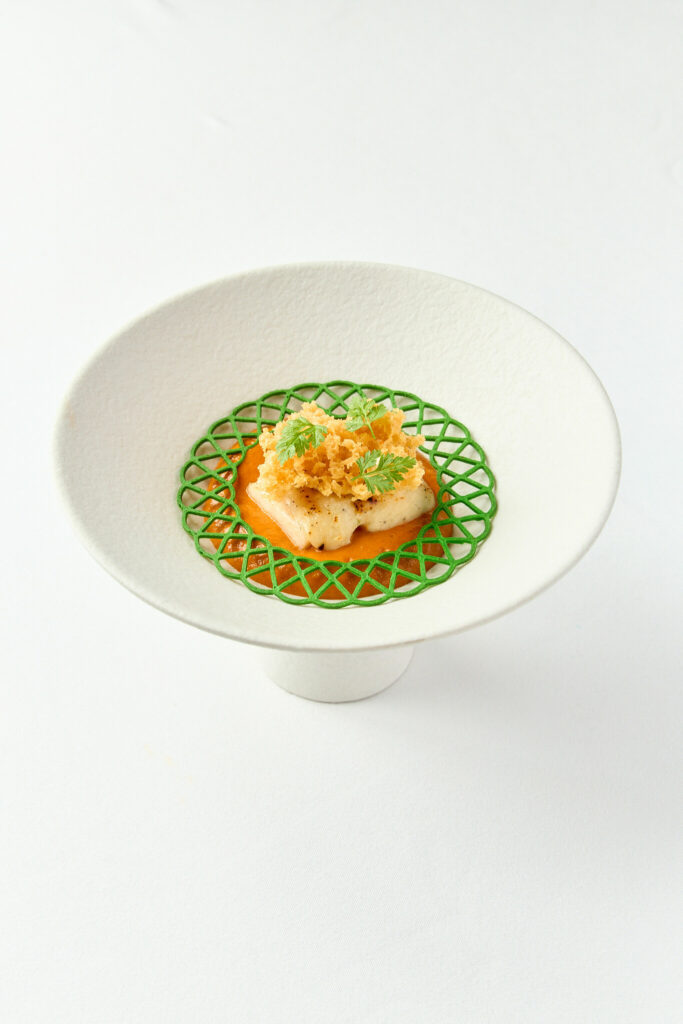
The tasting menus start at THB 4,500 for seven courses and THB 5,500 for ten, with meat, seafood and vegetarian options. Though it would feel natural to go veggie with all the green credentials on show, we’ve always chosen the seafood option here, which is Haoma’s strongest suit in our view. A wild caught fish arrives in a laughably aromatic Alleppey curry with peanut thecha; the lobster course comes with pulissery (a tangy Keralan yoghurt and coconut curry), and is made opulent with caviar and ghee roast bao. The honey rasmalai with saffron and pistachio ice cream is a lovely, heady way to finish.
The wine list, overseen by Vishvas Sidana, won the Star Wine List Grand Prix for best in the world in 2024, beating lists ten times its size with fewer than 200 labels. For a neo-Indian restaurant on a residential soi in Bangkok, that is some going. Sidana favours small, biodynamic producers and has a knack for matching them to food this spiced and complex.
Read: The best 28 restaurants in Bangkok
Website: haoma.dk
Address: 231, 3 Sukhumvit 31, Khlong Toei Nuea, Watthana, Bangkok 10110, Thailand
Charcoal Tandoor Grill & Mixology
Ideal for a build-your-own negroni trolley and a whole tandoor lamb leg that’ll linger for weeks…
There is a certain type of restaurant that loves to tell you where its tandoor was imported from, how many degrees it reaches, and how long it took to install. Charcoal skips the origin story and lets the oven do the talking. The concept puts fun ahead of fine dining, applying Mughlai and Old Delhi cooking to the fifth floor of Fraser Suites on Sukhumvit Soi 11.
The lighting is low enough that you may wish you’d brought a torch, but that fits: copper-clad clay ovens glow behind glass in the open kitchen, a spice library lines one wall, artwork nods to Mumbai’s tiffin dubbawallahs, and colonial punkah ceiling fans turn overhead. The smell of coals and charring meat fills the room. It is more theatre than most Indian restaurants in Bangkok attempt, but here it works.
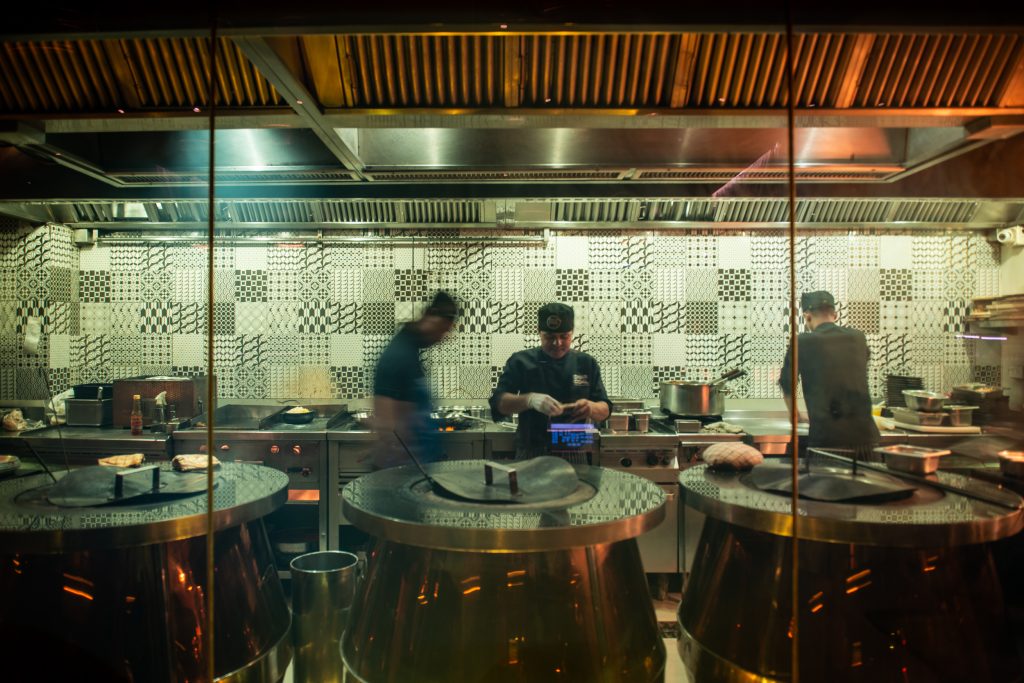
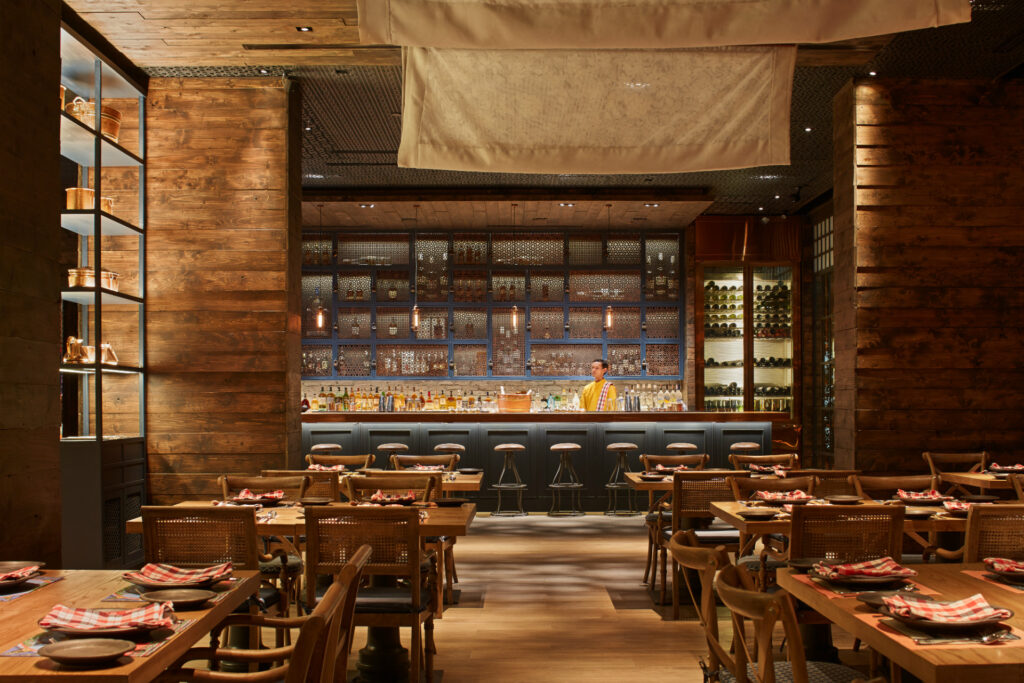
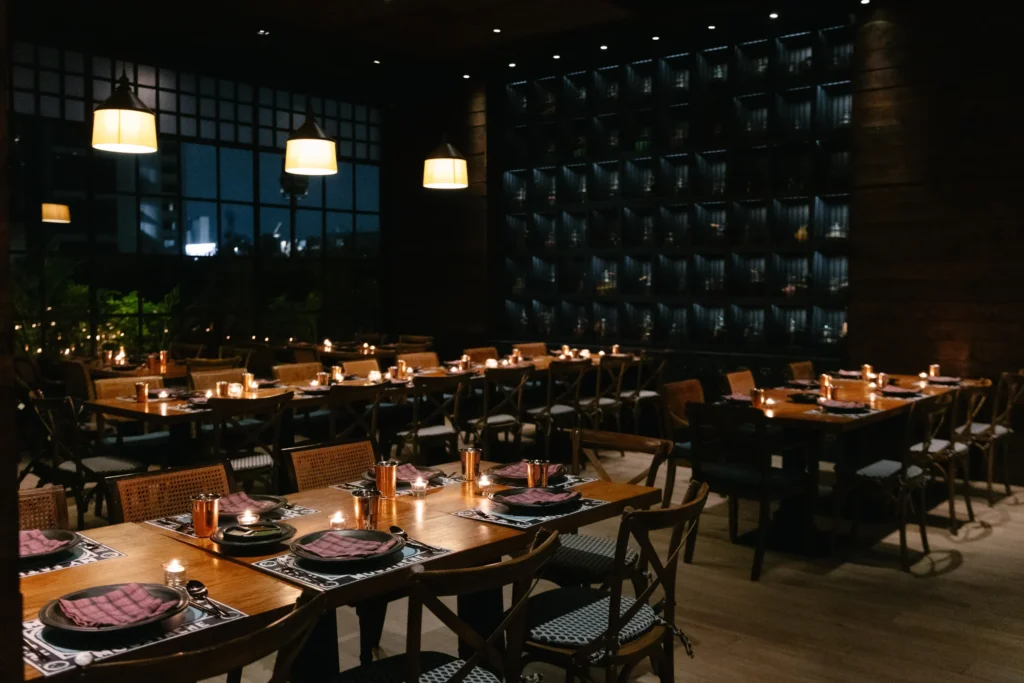
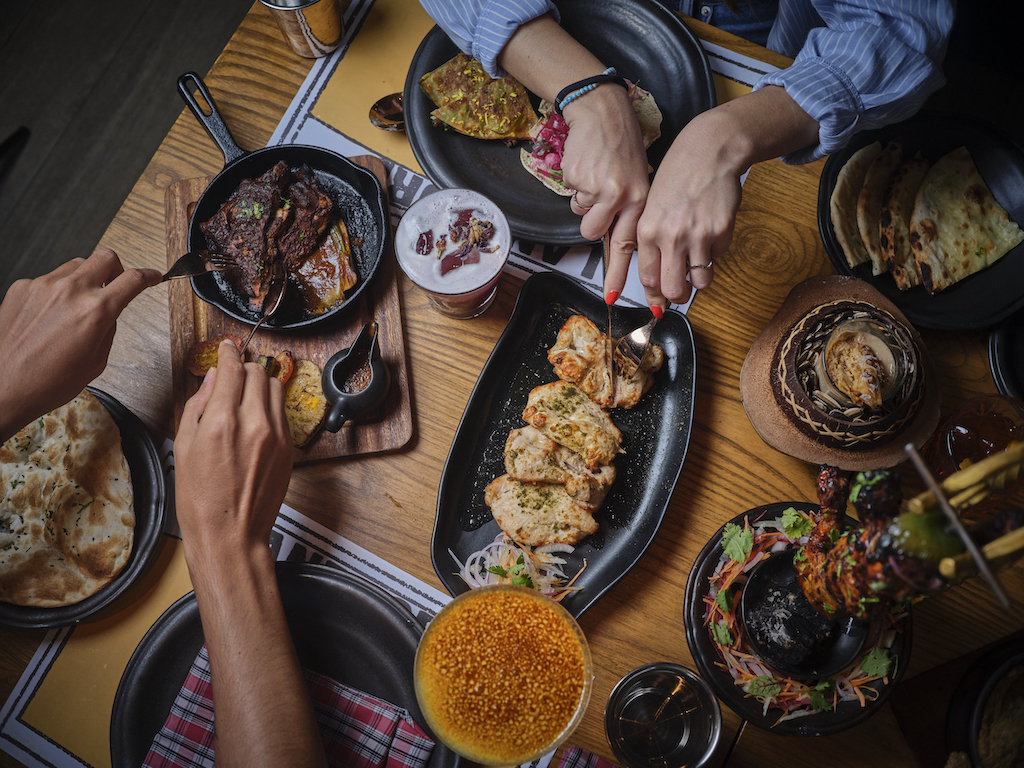
The kebab section is where the kitchen does its best work. Lamb seekh, chicken malai, and various tikkas arrive with the kind of char and smoke that a conventional oven cannot replicate, and a whole slow-braised leg of lamb finished in the tandoor is the sort of dish you order for the table and remember for weeks (mainly because the smell of smoke will linger on your clothes for just as long).
But the non-tandoor cooking holds up too: the dal charcoal, urad lentils slow-cooked overnight to a deep, buttery richness, has earned a following of its own, and the vegetables get as much care as the meat, with a malai broccoli and a gobhi musallam that would satisfy anyone not eating from the grill.
The cocktail list deserves more than a passing mention. A build-your-own negroni trolley lets you choose your base spirit, vermouth and bitter from a list that includes paan and cardamom gin, curry sweet vermouth, and charcoal spiced Campari. Every signature drink draws on Indian ingredients, from kokum to fenugreek to mace, and at 370 baht they are a steal in a town whose baseline cocktail price is rising faster than its skyline.
That same attention to the full experience carries through to the Sunday brunch, all-you-can-eat from the tandoor with free-flow Prosecco at 2,290 baht, which has made Charcoal a Sukhumvit fixture for weekend entertaining, and to the paan stall at the exit, a nod to Mumbai’s street corners, where fresh betel leaf wraps are rolled to close the meal: aromatic, then sweet, then almost menthol, like a lovely little After Eight. If you haven’t tried one before, this is the place.
Website: charcoalbkk.com
Sri Ganesha
Ideal for crispy dosas, soft idli and a Madras filter coffee on Sukhumvit Soi 13…
Every restaurant on this list so far has filtered Indian food through a chef’s lens, whether fine dining or casual. Sri Ganesha is the corrective: a family-run, purely vegetarian South Indian restaurant tucked inside the Sukhumvit Suites building on Soi 13, run by Mr Senthil and his wife with chefs from Tamil Nadu. The room is fluorescent-lit, the plates are stainless steel, and a television in the corner keeps the staff company between orders.
The dosas are the draw. Rava masala arrives flamboyantly large and shatteringly crisp, spread with a thin layer of chutney and stuffed with spiced potato, accompanied by fiery sambar and a coconut chutney. A ghee paper roast, glossy and lace-thin, is the kind of thing you’d eat twice in one sitting if your pride would allow it. The idli are steamed to a cloud-like softness and the dal vada – deep-fried lentil fritters – hit the table golden and crisp with a soft, spiced centre.
We realise we’re just breathlessly listing stuff now, but Sri Ganesha has that effect on us. Indeed, if Jhol introduced us to coastal Indian cooking through a fine-dining lens, Sri Ganesha is the no-frills OG: the food that generations of South Indians grew up eating, served with zero pretension and total conviction.
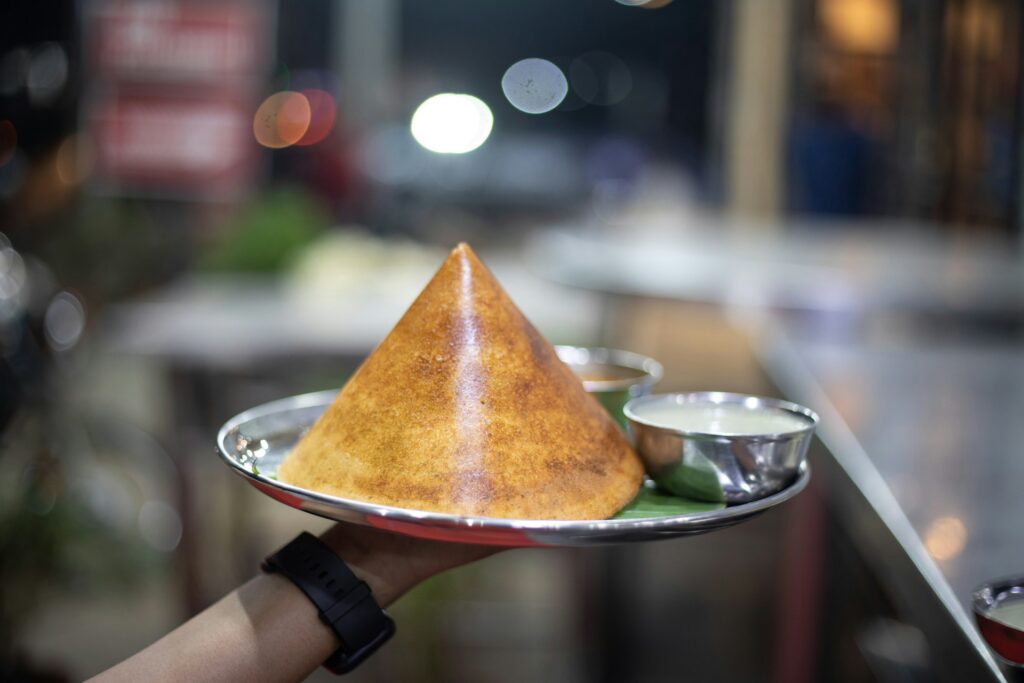
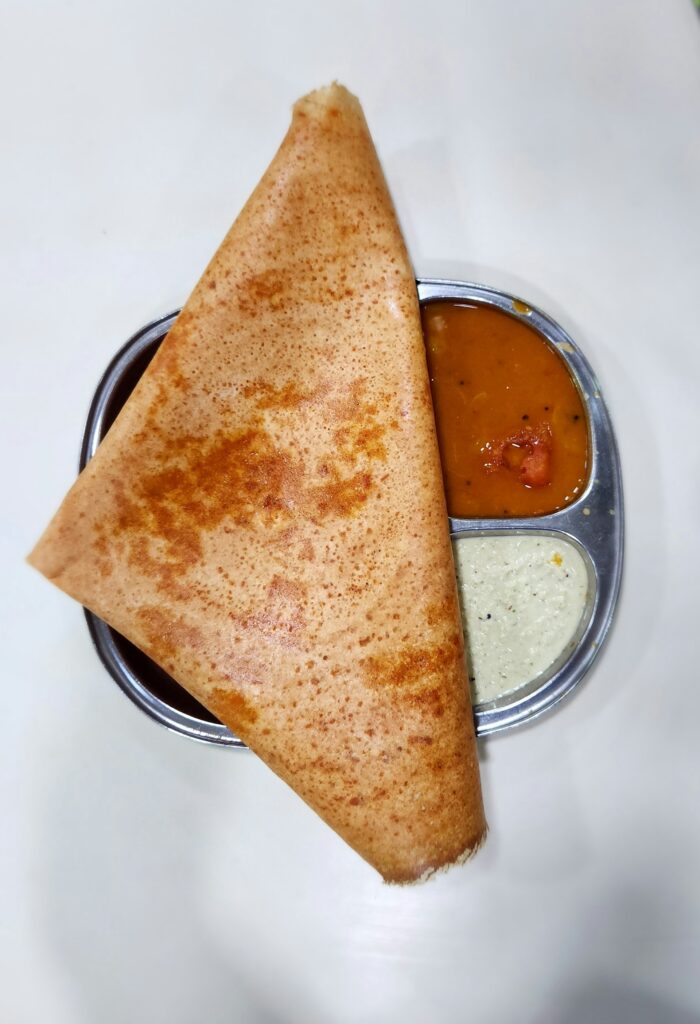
Finish with a Madras filter coffee, served in a steel tumbler with a small metal bowl so you can pour the frothy liquid back and forth to cool it – a ritual in itself, and one of the more satisfying ways to end a meal in this city. Individual dishes run from around 60 to 100 baht, and a thali with assorted subji, soup, bread, rice and dessert comes in at under 200.
The place has been running for over two decades, it opens daily from 9am to 9pm, and the lunchtime crowd of Indian expats and Sukhumvit locals speaks of the quality of the place with some conviction. A short walk from BTS Asok or Nana.
Facebook: @SriGaneshaRestaurantBangkok
Address: 19, 13-14 Soi Sukhumvit 13, Khlong Toei Nuea, Watthana, Bangkok 10110, Thailand
Royal India Phahurat
Ideal for seven tables, no menu, and chicken makhani made by the same family since 1963…
Bangkok’s oldest Indian restaurant opened in Pahurat in 1963, started by Om Prakash, who had left Sialkot near Lahore during Partition and eventually settled in Bangkok’s Indian quarter. His son Somkid still runs the place today, and his mother has reportedly continued supervising the kitchen well into her later years, checking ingredient freshness with the attention of someone who built the restaurant’s reputation from scratch. We bet Somkid loves that…
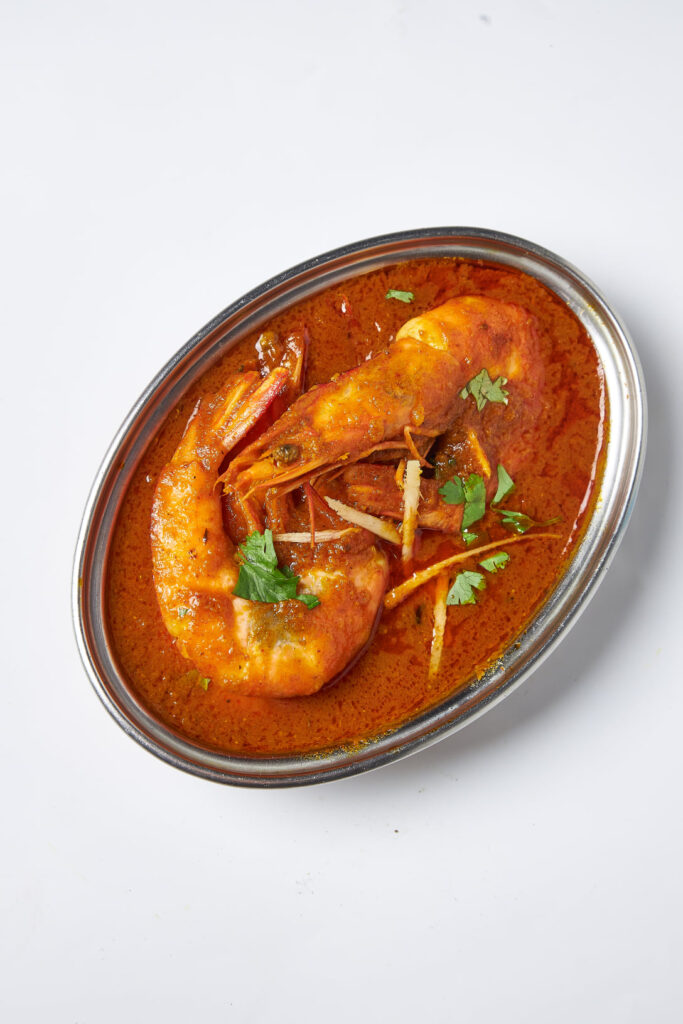
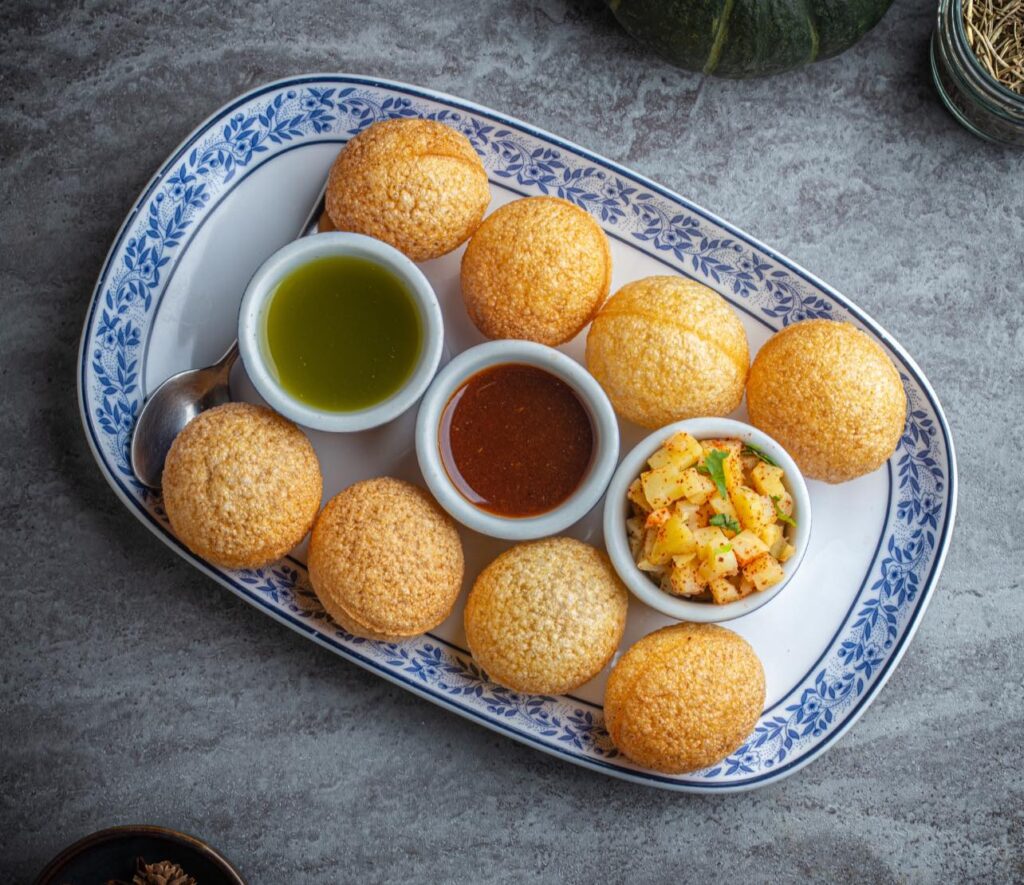
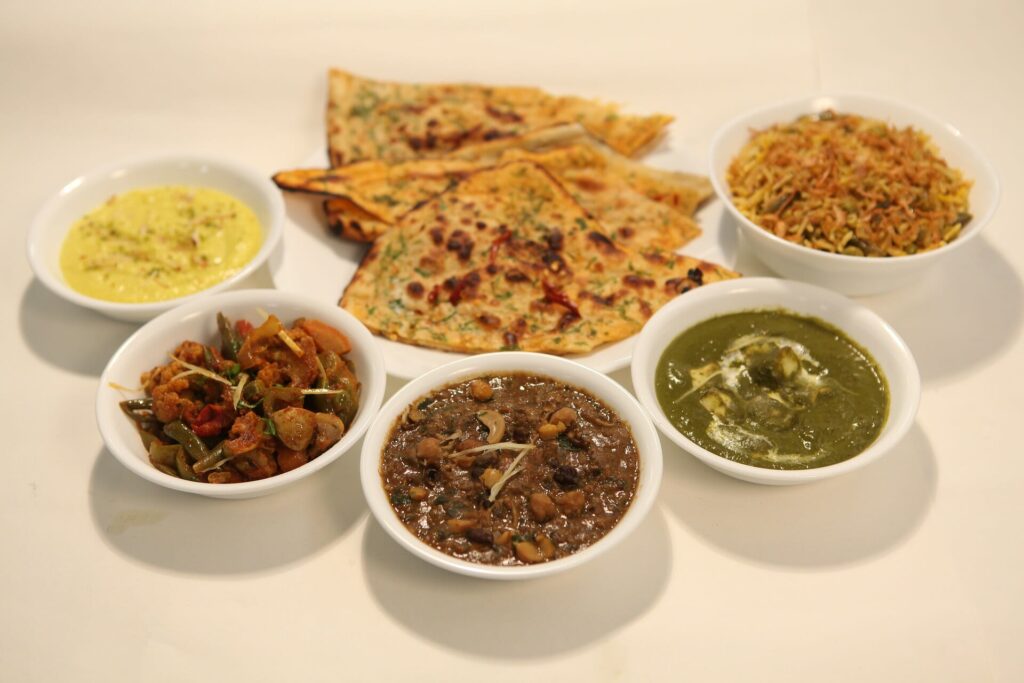
The room holds seven tables, the lighting is harsh, a television in the corner plays Indian dramas, and the place takes some finding, down an alley off Chakphet Road. But Pahurat regulars, Indian expats, and clued-in visitors have kept it full for decades. This is grandmother-style Punjabi cooking: plenty of ghee, real spice depth and the intricacy of an old hand that some of Bangkok’s shinier Indian restaurants can only dream of, and chicken makhani with garlic naan cooked with the kind of care that reminds you why north Indian food became beloved the world over. Dishes are keenly priced from around 180 to 250 baht. Cash only. Halal-certified.
The Pahurat original is the one to visit, though the brand has since expanded to Siam Paragon, Emporium, and EmQuartier, which tells you something about how good the cooking is.
Website: royalindiathailand.com
Address: 392/1 Chakkraphet Rd, Wang Burapha Phirom, Phra Nakhon, Bangkok 10200, Thailand
Tony’s, Pahurat
Ideal for a 20-baht roti and palak paneer eaten on a plastic stool beside a canal…
A hundred metres or so from Royal India, down a different unmarked soi off the same road, Tony’s is harder to find and more worth the effort. A handful of white plastic tables straddle the pavement beside a canal. The kitchen operates from one side of the soi and the seating from the other. A ceiling fan, fairy lights, and a television tuned to Indian soap operas provide the atmosphere. The occasional passing motorbike adds to it.
The highlight is the roti: hand-rolled on the spot, flash-scorched over a high flame, arriving piping hot and faintly dusted with flour. Paired with a chicken masala cooked to falling-apart tenderness in a tomato sauce fragrant with jeera and coriander, and finished with a cup of masala chai, this is street-food Indian with nothing between you and the cooking. It’s fucking glorious.
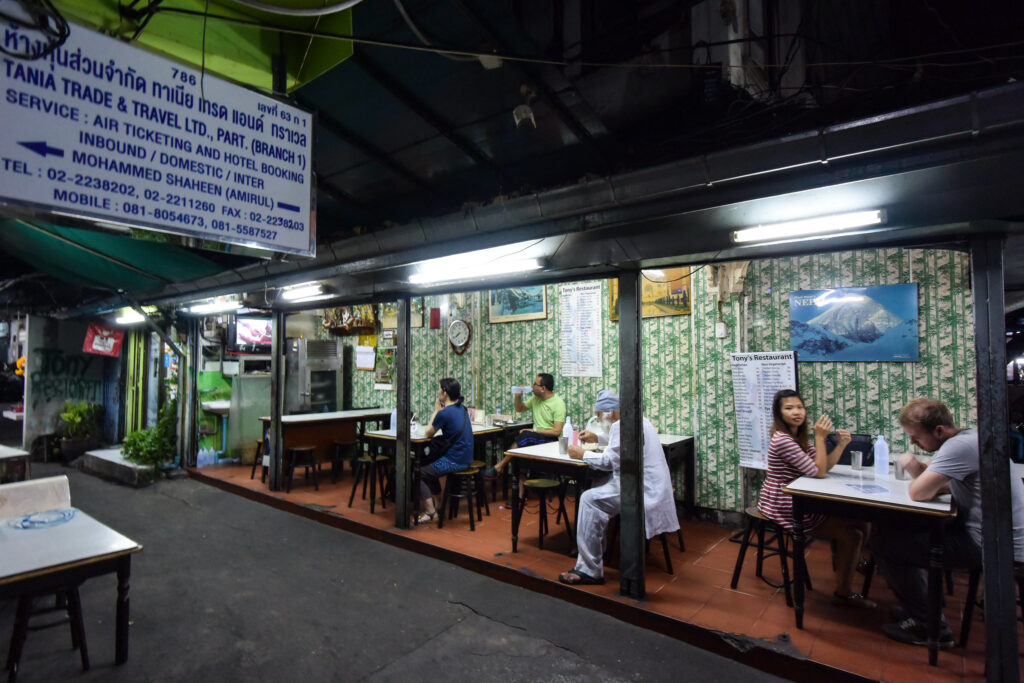
Vegetarians are well served here too, just as it should be. The palak paneer draws particular praise from regulars. It’s us, we are those regulars; the palak paneer is sensational. A plain roti is 20 baht, a chicken masala 120. For two people eating well with chai, you’ll struggle to spend more than 500 baht. Recent improvements to the canal walkway alongside the restaurant have made the setting better than it has been in years.
Address: 424 ซอย ริม ถ. คนเดินคลองโอ่งอ่าง Wang Burapha Phirom, Phra Nakhon, Bangkok 10200, Thailand
The Bottom Line
Bangkok’s Indian restaurants now span a range wider than almost any other city outside the subcontinent itself. Gaa and INDDEE each hold two Michelin stars, placing them among the finest Indian restaurants anywhere in the world.
At the other end, Royal India has been feeding Pahurat for over sixty years on seven tables and a cash-only policy. The tasting menus are worth the investment. But so is the chicken masala at Tony’s, eaten on a plastic stool beside a Bangkok canal, with only a fan and Yeh Rishta Kya Kehlata Hai for company.
We’re not far from Bangkok’s Chinatown, so let’s head there next, in search of dinner. Care to join us?