There’s a version of St. Barts that dominates every travel piece written about it: December to late March, superyachts, five-figure villas, restaurant tables that need booking a month out.
And that version of St. Barts exists. But it’s not the only one. The island still operates as a free port, a legacy of nearly a century under Swedish rule, with no income tax, no VAT, and no import duties, which goes some way to explaining why everything costs what it does. Visit in the shoulder months, though, mid-April through June or again in November, and you’ll find the same 21 square kilometres of coastline, the same restaurants, the same trade-wind weather, at a fraction of the price and without the crowds. The island doesn’t change between seasons nearly as much as the cost of being there does.
What High Season Looks Like
December to late March is when St. Barts operates at full pitch. The Bucket Regatta brings superyachts to Gustavia harbour every March (confirmed for 18–21 March 2027). The St. Barts Music Festival fills churches with classical performances in January. Carnival runs through February. Restaurants are at capacity, beach clubs along St. Jean are packed by mid-morning, and the roads, narrow and hilly at the best of times, feel it.
The cost reflects the demand. Villas for festive season get booked out nine to twelve months ahead, often with ten-to-fourteen-night minimums. Flights through St. Maarten, the main gateway, fill up, and tables at the better restaurants need weeks of notice.
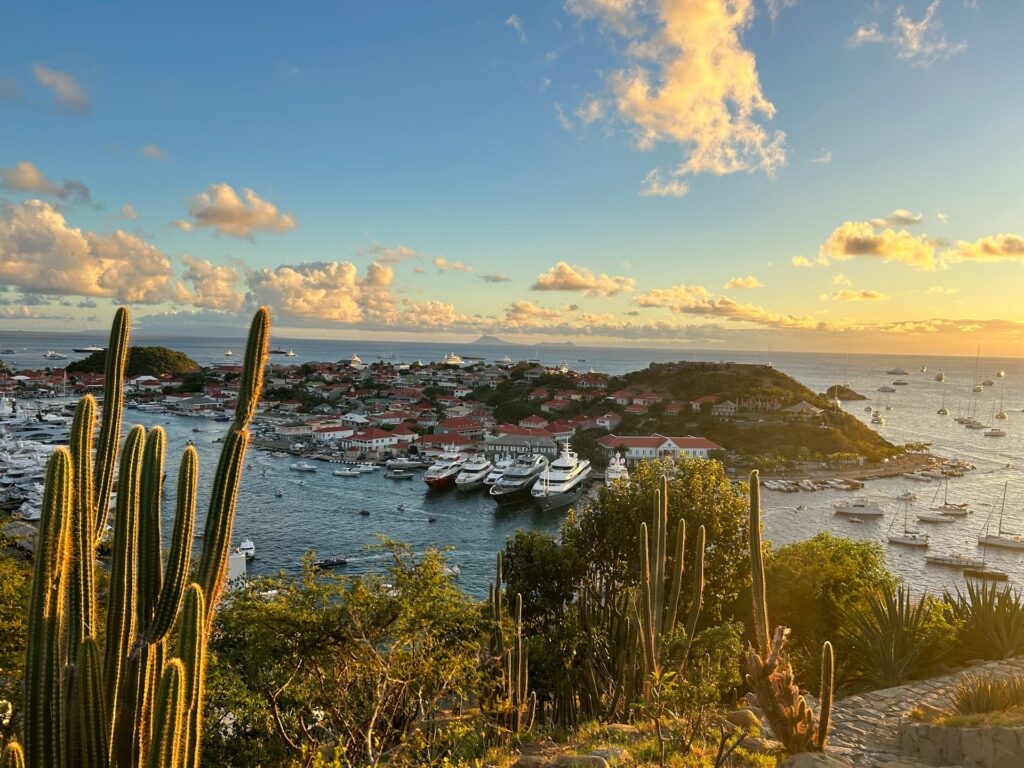
If what you want is the spectacle of the harbour at sunset with forty-metre sailing yachts along the quay, this is when you get it. But you’ll share the island with everyone else who had the same idea.

Why Shoulder Season Changes the Equation
The shoulder months, mid-April through June and again in November, offer essentially the same island at significantly lower cost, with fewer people on it. And unlike most destinations where ‘cheaper’ means ‘worse weather’, St. Barts varies by roughly 3°C across the entire year. February averages around 27°C; May sits at 29–30°C. The trade winds blow year-round, the sea is swimmable in every month, and the practical difference amounts to the odd afternoon shower that clears in twenty minutes.
That near-identical weather means the price drop is genuine savings rather than a compromise. Villa rates in the shoulder months typically run 20–30% below peak season. A St. Barts villa that’s out of reach over Christmas or New Year becomes a realistic proposition in May or early June, and minimum stays tend to shorten too, so you’re not locked into a full fortnight.

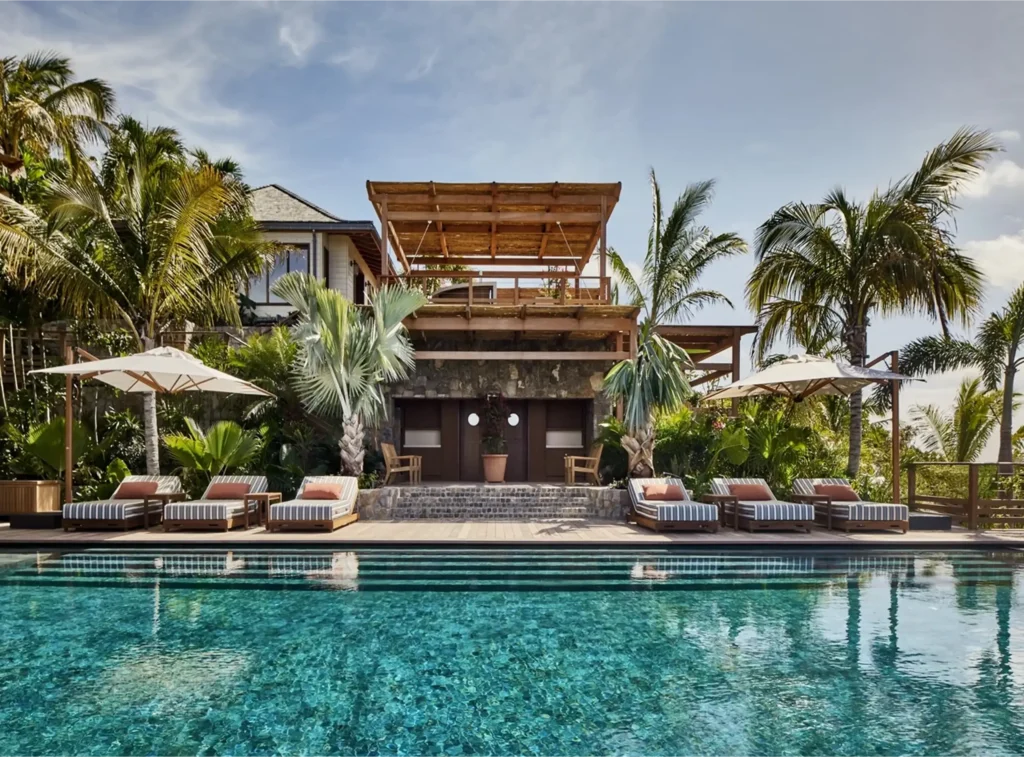
You’re not sacrificing the dining scene for that saving, either. Bonito and its French-South American cooking overlooking Gustavia harbour, Le Tamarin’s garden tables under the old tamarind tree near Saline, L’Isoletta doing pizza by the metre in Gustavia: all running through June. Places don’t start closing until late August. The difference is that in May you can get a table at Bonito without planning your week around it.
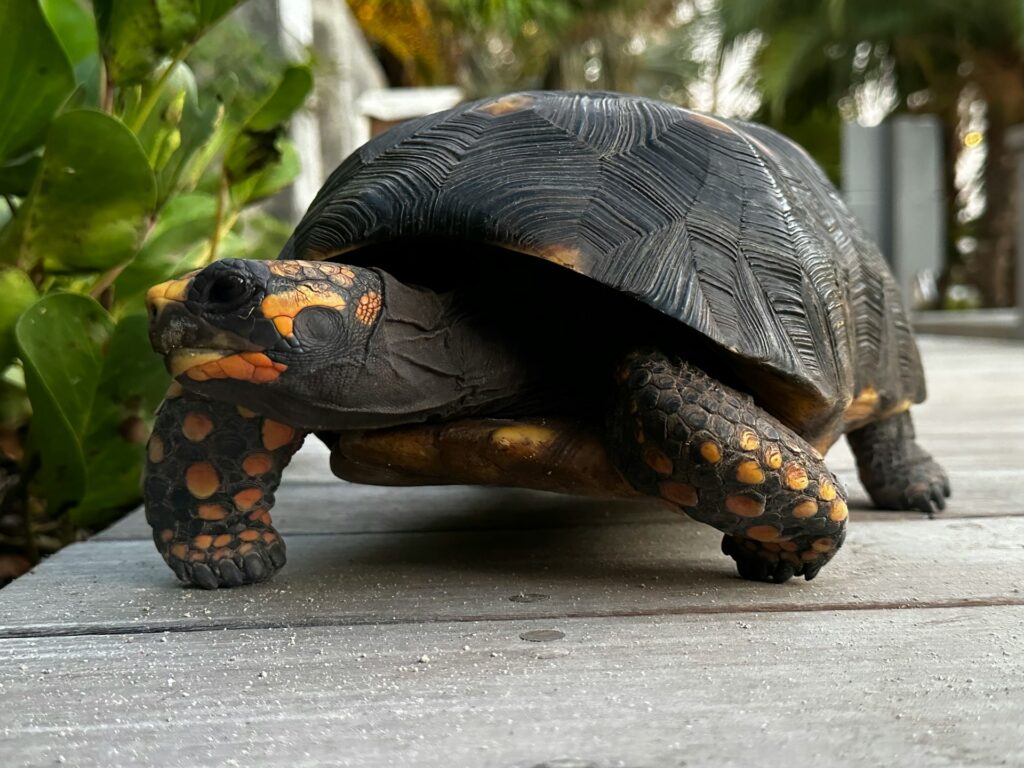
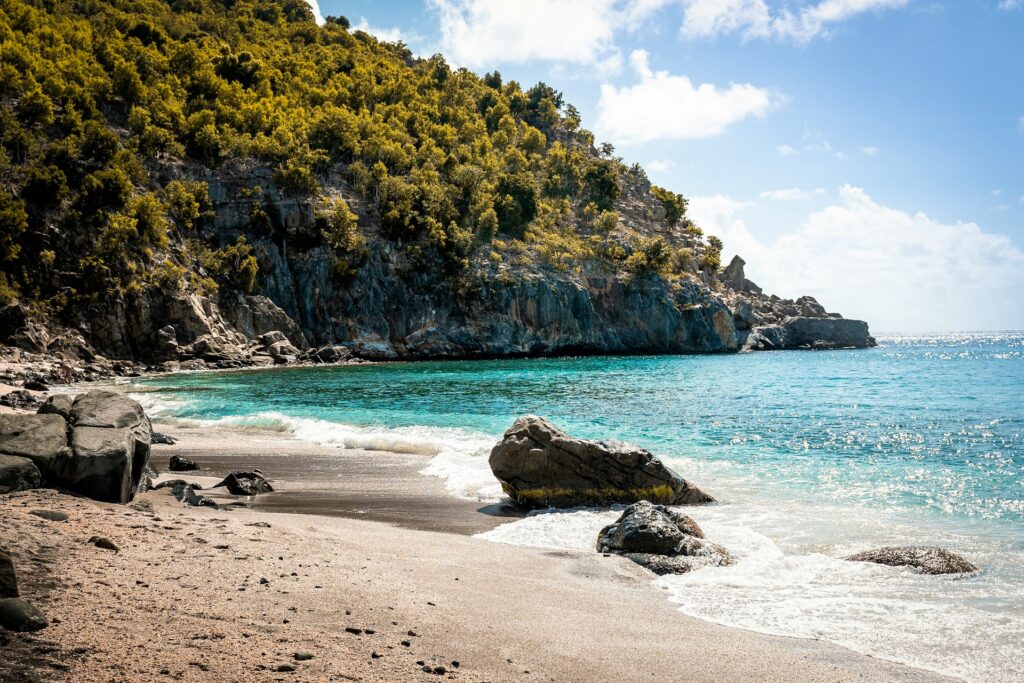
What does change is how much of the island you have to yourself. The sea at Grand Cul-de-Sac is warm and shallow enough to snorkel straight off the beach, where green sea turtles graze in the seagrass, and in May you’re unlikely to be sharing the water with anyone. Colombier Beach, only reachable on foot or by boat, is the same story: turtles, rays, and nobody to compete with for space.

If your timing lines up with mid-April, Les Voiles de St. Barth Richard Mille is a proper racing regatta with a festival atmosphere, and the St. Barth Film Festival follows at the end of the month. But the case for shoulder season doesn’t depend on the events calendar. It depends on the fact that the island is fully operational and the price of being there has dropped by a third.
November is the other shoulder window. The wet season is tapering off, restaurants that closed in September are reopening, and the St. Barth Gourmet Festival brings chefs from mainland France for collaborative menus across the island’s restaurants and hotels. It’s one of the better food events in the Caribbean, and it falls in a month when you can still get a table without planning your diary around it.
The Months To Think Carefully About
July and August are hotter and more humid, but the island still functions. Prices drop further, beaches empty out, and the pace slows to something closer to the Caribbean norm. The real question mark is September and October. The Atlantic hurricane season runs from June to November, but the concentrated risk sits between late August and mid-October, and September is when St. Barts effectively takes its annual break. Hotels close for renovation. Many of the better-known restaurants shut for the month.
You won’t starve. Le Repaire in Gustavia and Eddy’s Ghetto stay open through the summer, along with a handful of local places, and the supermarkets are well stocked if you’re in a villa with a kitchen. But if you’re coming to St. Barts expecting a full dining scene in September, you’ll be disappointed. If you’re coming for empty Gouverneur Beach and a week of reading by the pool with no agenda, it can be exceptional.
Getting There From the UK
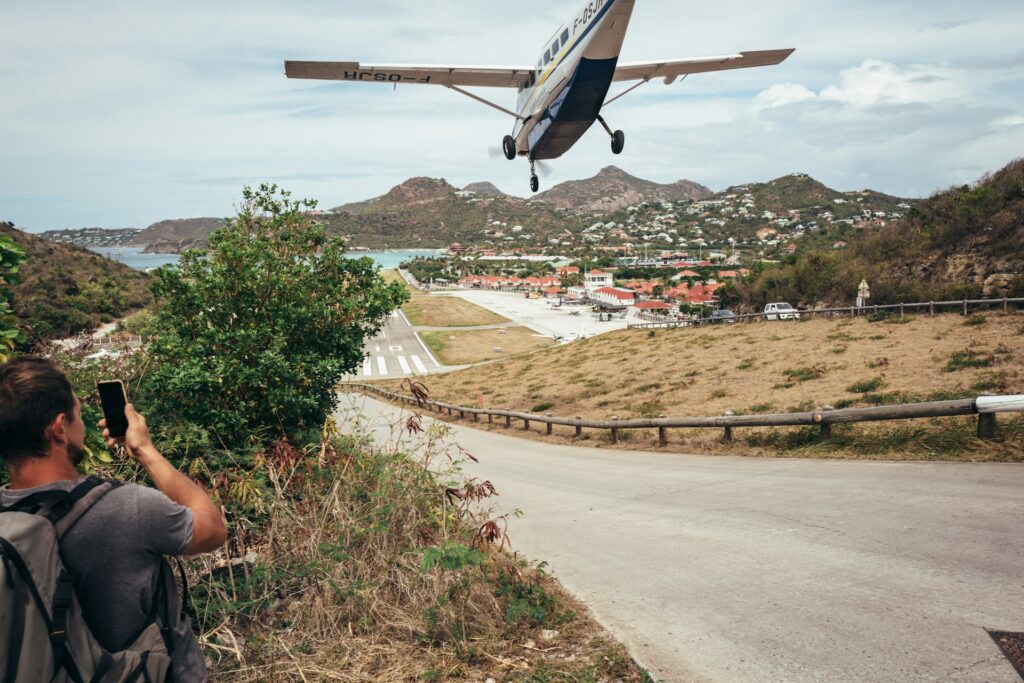
There are no direct long-haul flights to St. Barts. The island’s runway, at around 650 metres one of the shortest commercial strips in the world, limits landings to small turboprops, and it closes at dusk because there are no runway lights. The standard route is to fly into Princess Juliana International Airport on St. Maarten, then take a shuttle flight with Winair or St. Barth Commuter to Rémy de Haenen Airport. The approach over the hilltop is as dramatic as the videos suggest.
From the UK, the cleanest routing is London to Antigua with British Airways, then a connecting flight on St. Barth Commuter, which operates that route seasonally, typically December to the start of April. Outside those months, London to Paris to St. Maarten with Air France is the most straightforward alternative. Late arrivals into St. Maarten who miss the last flight will need to overnight or take the 45-minute ferry crossing.
One thing that isn’t optional: hire a car. The island is hilly, taxis are scarce and expensive, and the freedom to drive between beaches, restaurants, and your villa on your own schedule is what makes the whole thing work.
The Bottom Line
January to March is when St. Barts is at its most glamorous and its most expensive. For travellers who want the full social calendar, it’s the only window that delivers.
But for everyone else, the shoulder months make a stronger case. Mid-April through June gives you the same weather, the same beaches, and the same restaurants at significantly lower prices, with better villa availability and none of the peak-season squeeze. November offers a second window with the Gourmet Festival and an island waking back up after its summer rest. May, if pushed for a single recommendation, is the sweet spot: the season has ended, the sun hasn’t, and St. Barts feels less like a luxury destination and more like somewhere you’ve been let in on.