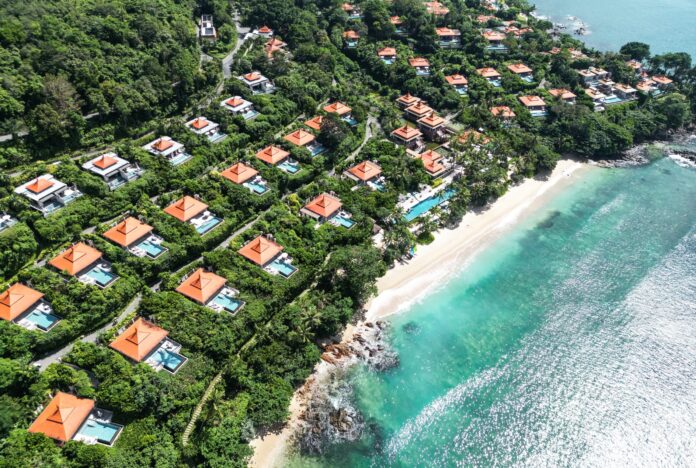
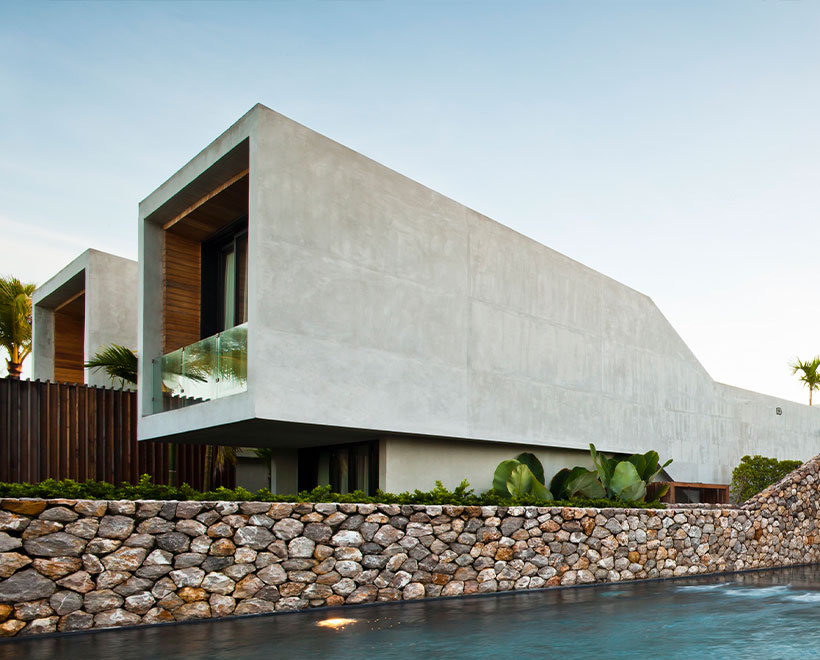
On a coast lined with teak and tropical timber, someone decided to build in concrete. Thirty-four grey cube villas, poured and angular, facing the Andaman Sea from a sleepy stretch of Bang Niang beach in Khao Lak. It should feel wrong. It doesn’t.
Casa De La Flora arrived in this corner of Khao Lak in 2011 with a proposition that remains unusual in Southeast Asian hospitality: that a great resort hotel needn’t look anything like the place it’s in. That philosophy runs counter to everything I thought I knew (and liked) about resort hotels, but you know what they say about the exception that proves the rule?
The grounds are spare, the sightlines deliberate, the atmosphere closer to a Mediterranean art residency than a tropical resort. More Le Corbusier than Cherngtalay, arguably. And yet, perhaps because of all this, perhaps despite it, it is one of the most calming places in Phang Nga, an already damn calm place, it should be said.
In a coastline – a country – of lookalike resorts, Casa De La Flora is the original.
Location
Khao Lak sits roughly an hour and a half north of Phuket airport, in Phang Nga province, a pleasingly uncrowded part of Thailand untroubled by Phuket proper’s brimming crowds. It’s far enough from the famous island not to act as spillover either, leaving this strip refreshingly calm and its seafood shacks and beer corners refreshingly priced. Aaahhh…
Go on, breathe out. Exhale. Slacken your pace and horizontalise your gait. Thais who live in Phuket come here to escape Phuket, which says plenty about its pace, its prices and its priorities. Visitors to this coast of Southern Thailand looking to follow (swim)suit will find that unhurried posture hugely appealing.
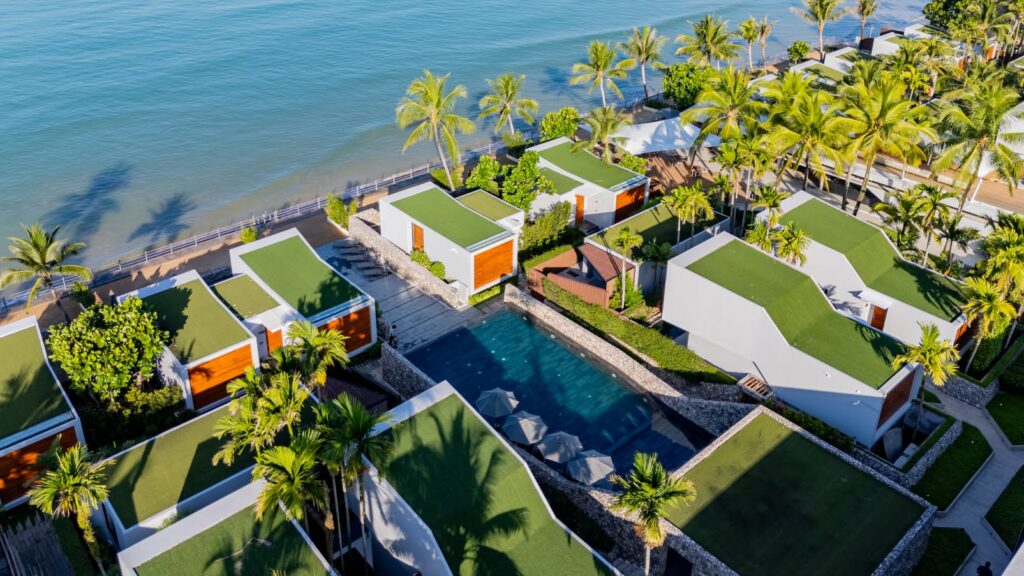
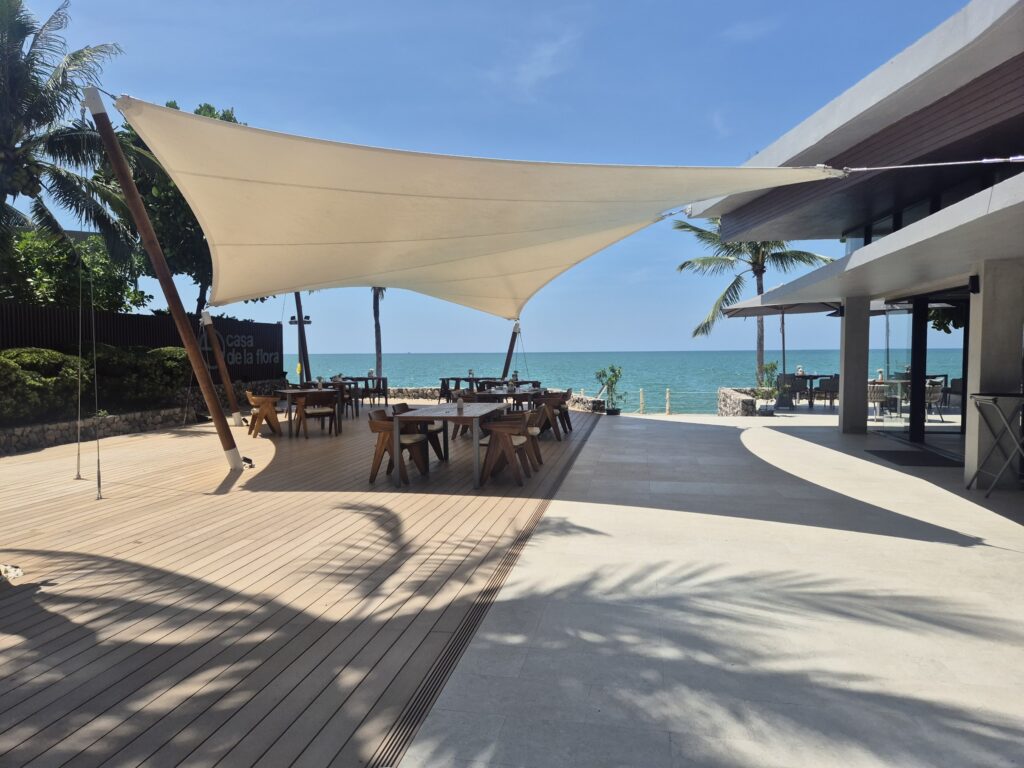
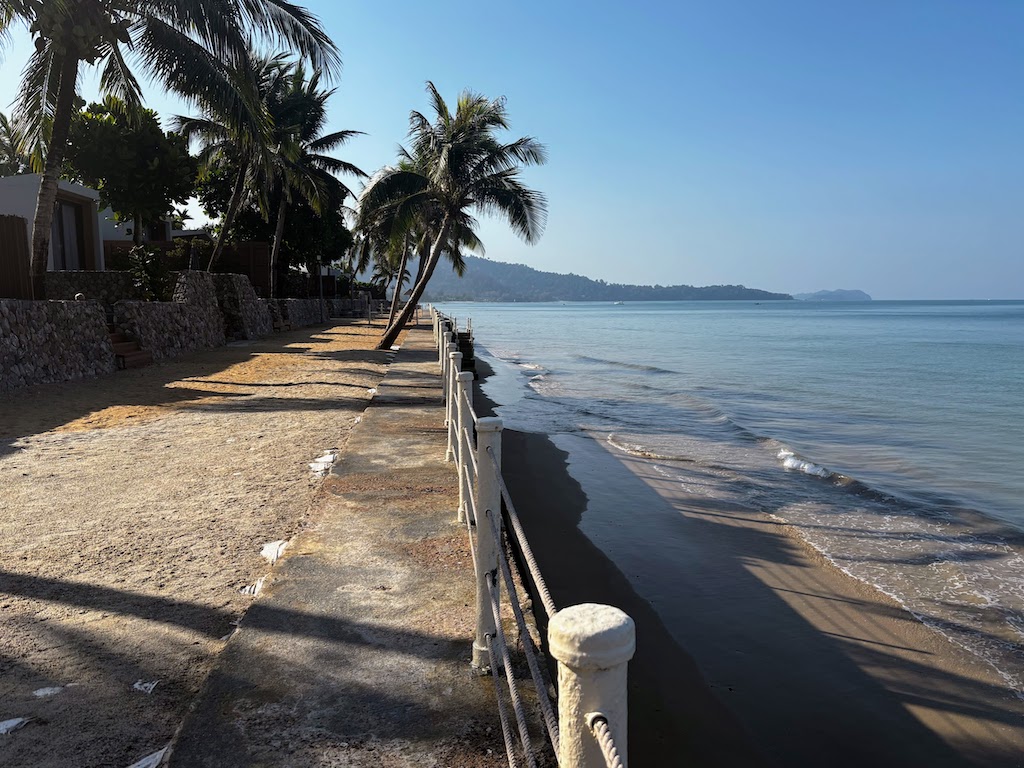
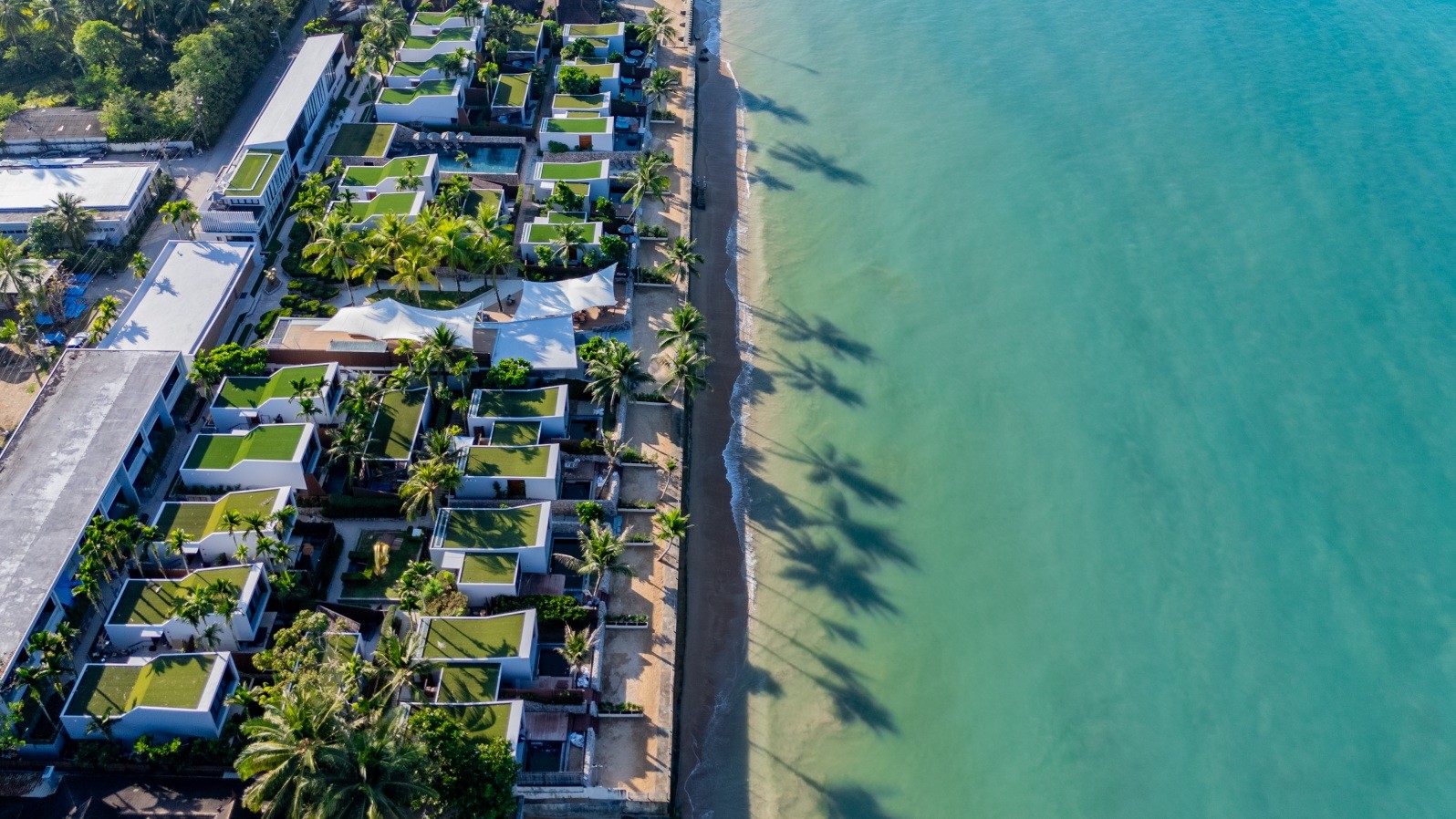
Although it feels secluded, Casa De La Flora sits right in the centre of Khao Lak, just along a quiet stretch of Bang Niang beach where building height restrictions keep the skyline low and the pace even slower than the main strip. The area has a drowsy charm about it. A smattering of resorts and beach restaurants share the road, but it never feels crowded. Clientele range from young backpackers with frangipani flowers tucked behind their ears to German retirees settling in for the season. There’s a soundtrack of contented groaning, of people finally settling into the rhythm of their holiday and politely asking their partner what day it is for the fifth time that Monday. Or, was it Wednesday?
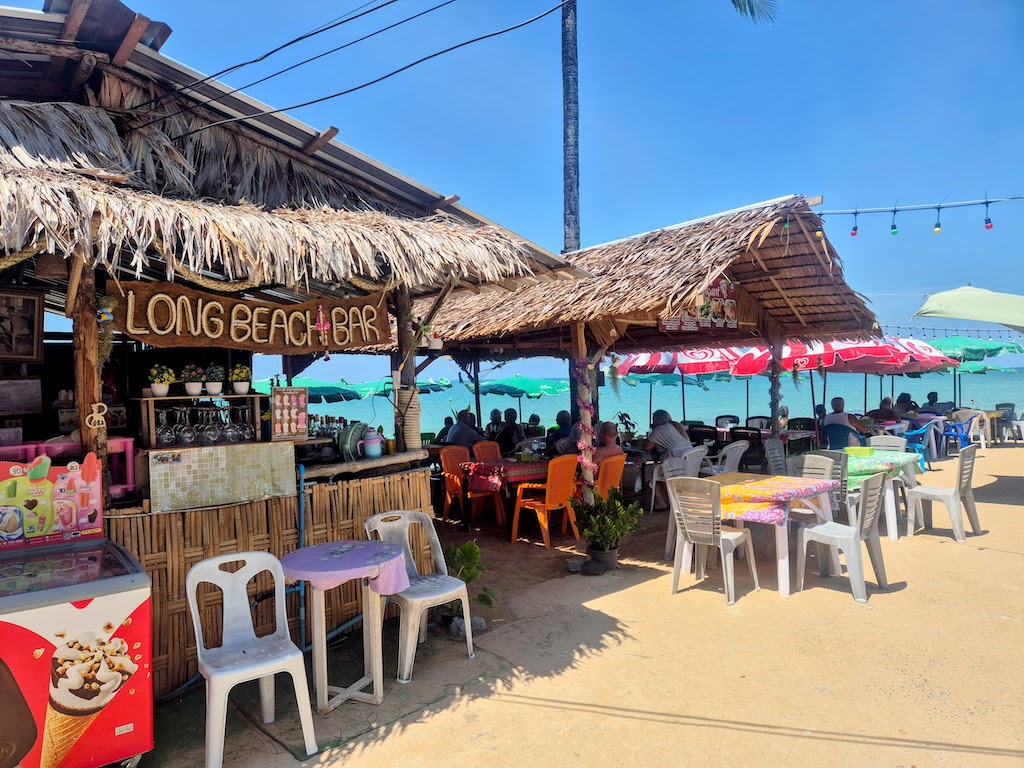
The road outside has the texture of a beach town that hasn’t tried too hard to appeal to anyone in particular: a massage place or two, a few open-sided restaurants, the odd bar (pool table in use, of course) sending the strains of Do-Ther-Tum (Doo Doo Doo), Thailand’s unofficial reggae anthem, across the tarmac. Where the road drops off into the sea, Long Beach Bar and Restaurant offers plenty of shade and a low-key beach atmosphere: bamboo bar, plastic chairs. It’s a fine perch above the water to soak up the bohemian vibes and rub shoulders with some beer-swigging tourists. And, indeed, swig your own.
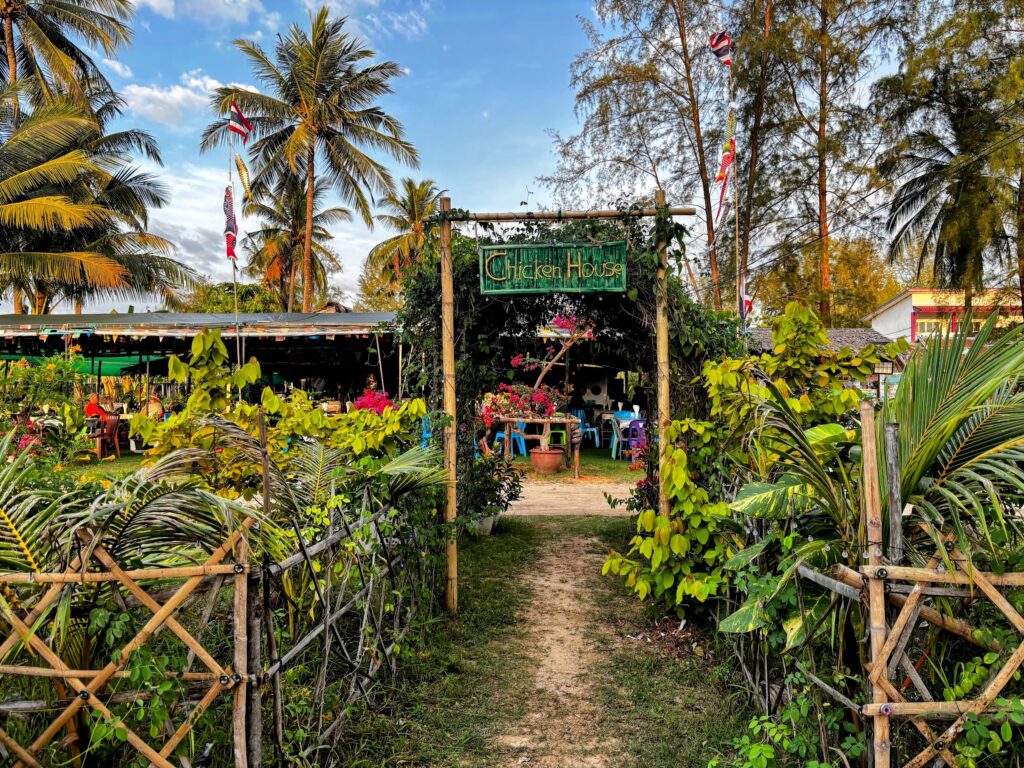
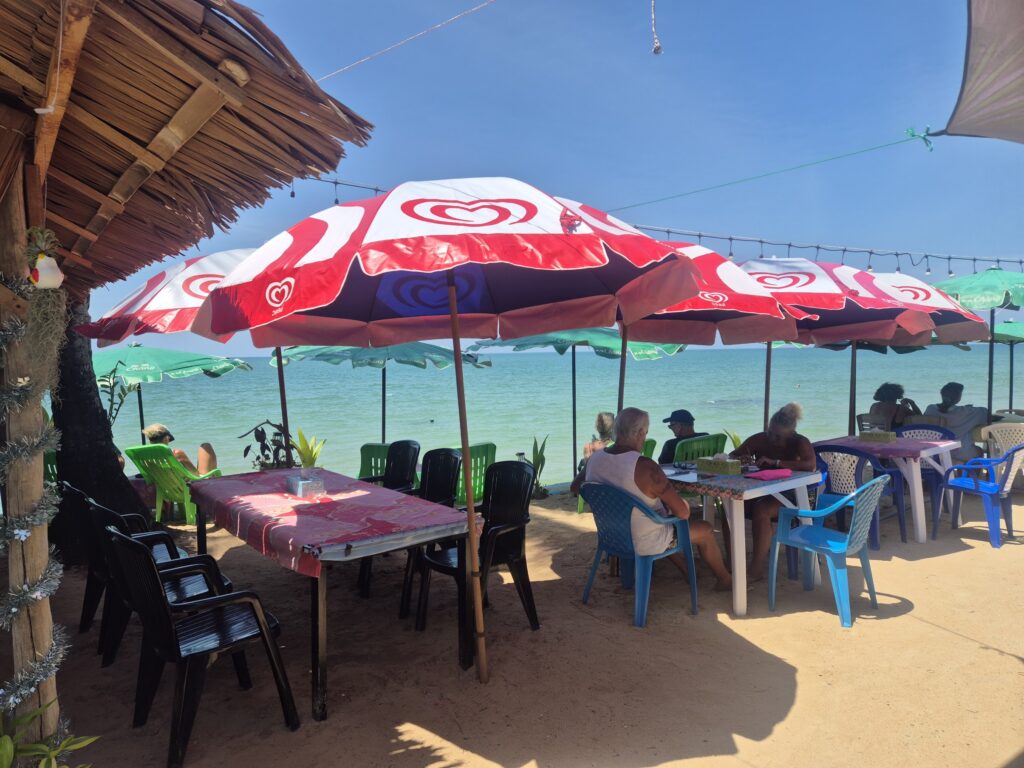
Nearby, Chicken House has a scrappy allure: mismatched chairs sprawled across a lawn that is curiously half astroturf and half real grass, a rudimentary effort at some bunting; just the sort of spot, basically, to kick back with a Singha over ice and a plate of perfectly adequate pad grapao. Stick to the Thai side of the menu here to avoid any surprises (a meal of nuggets and strangely sweet garlic bread feels almost perverse at this juncture).
A few places along the road offer bargain price laundry services for as little as 80 baht per kilo (Thuptong Guest House does the job perfectly). In the other direction, where Bang Niang Beach Road meets the main Khao Lak strip, Roilay serves some of the best Southern Thai food in the area.
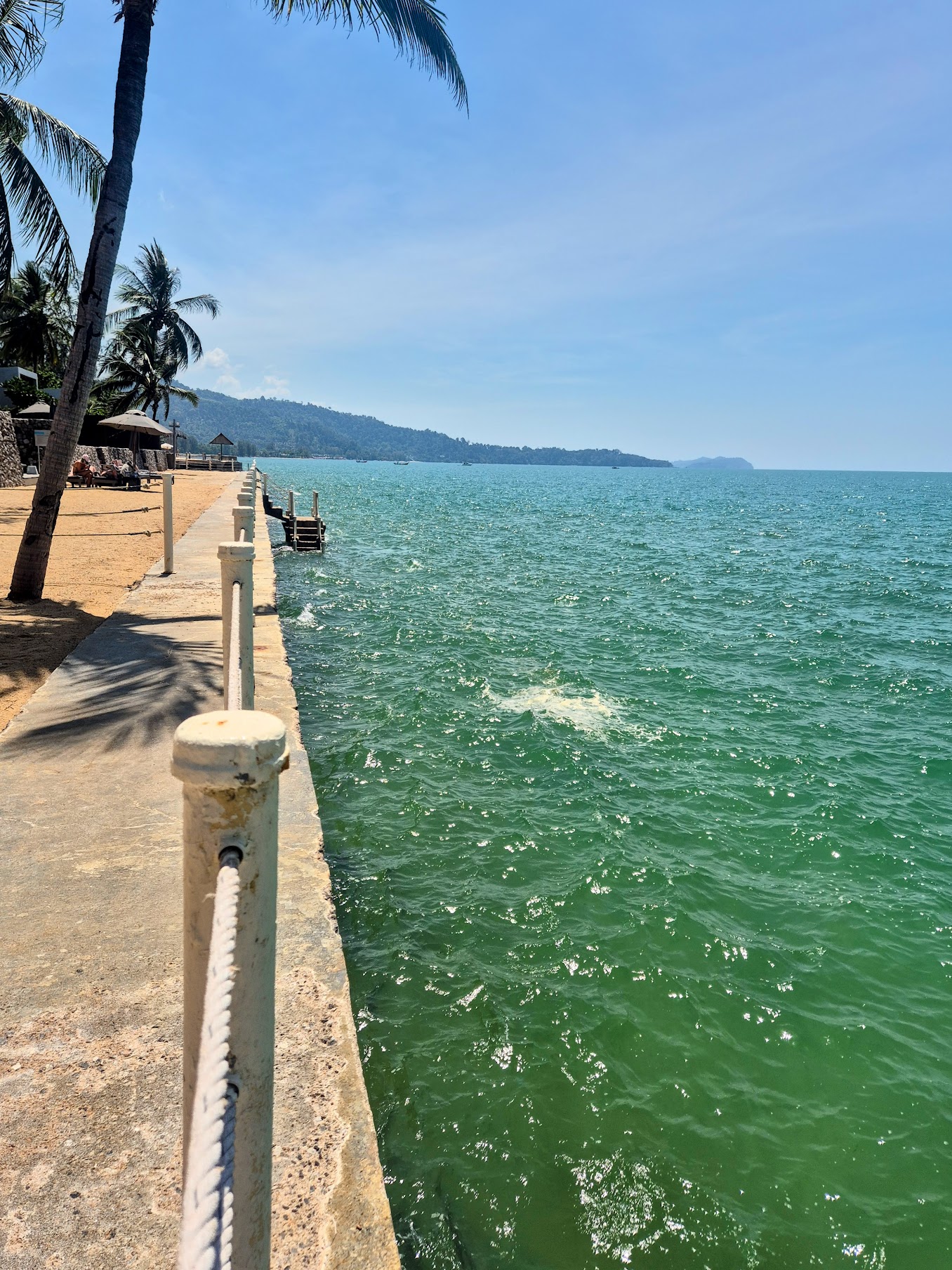
There is blissfully little to distract you here, and the part of Bang Niang beach the hotel overlooks is very quiet indeed. If you love to swim, this is one of the best hotels on this part of coast for actually getting into the water and splashing about. A set of steps from the hotel leads directly into the ocean, and from the resort ledge you can watch shiny fish flitting beneath the waves below, tempting you to join them. At high tide the water comes right up to the sea wall, waves crashing against it with some force and the beach disappearing entirely beneath the surface. Do check the flags before you go in; things can get rough.
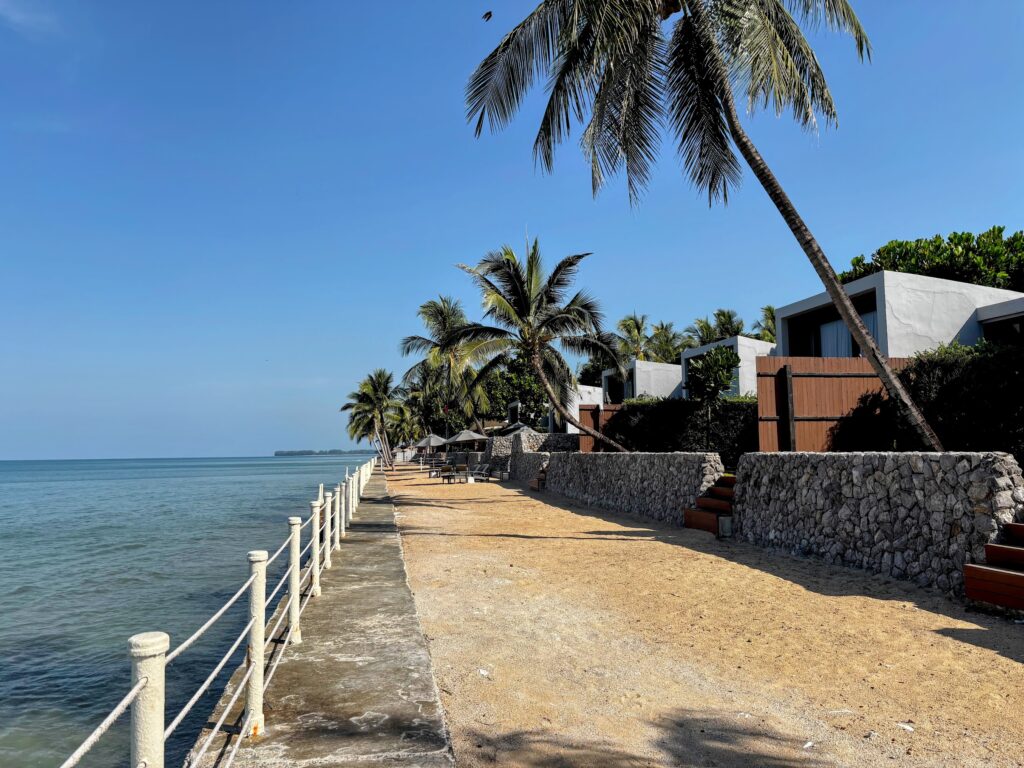
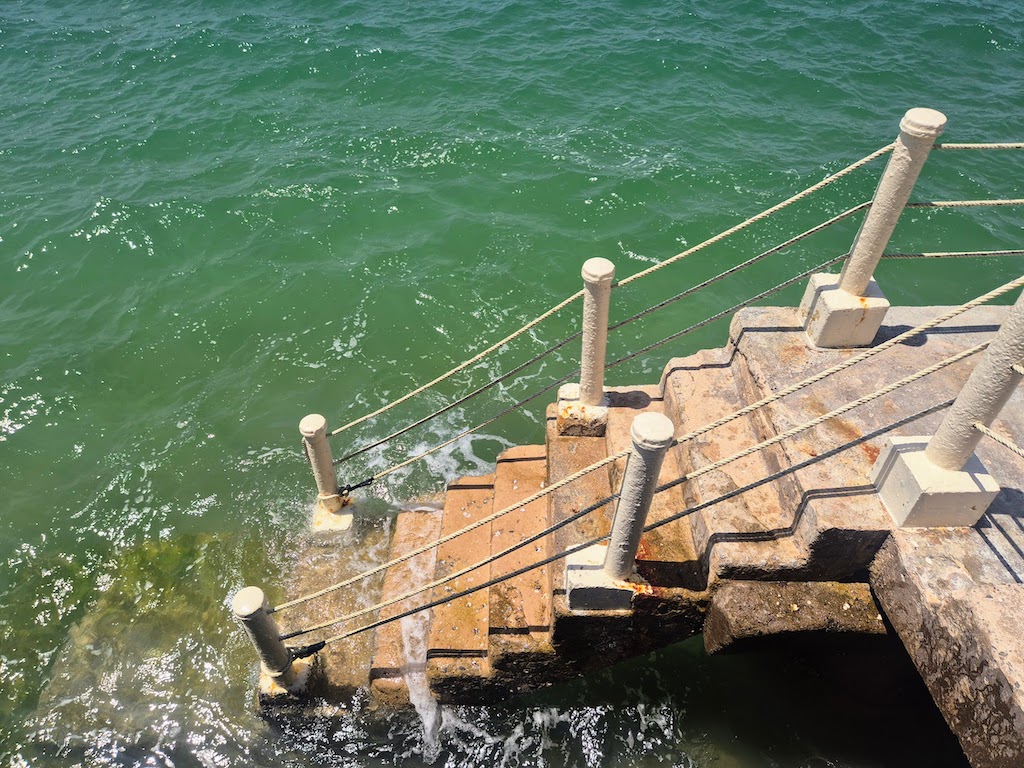
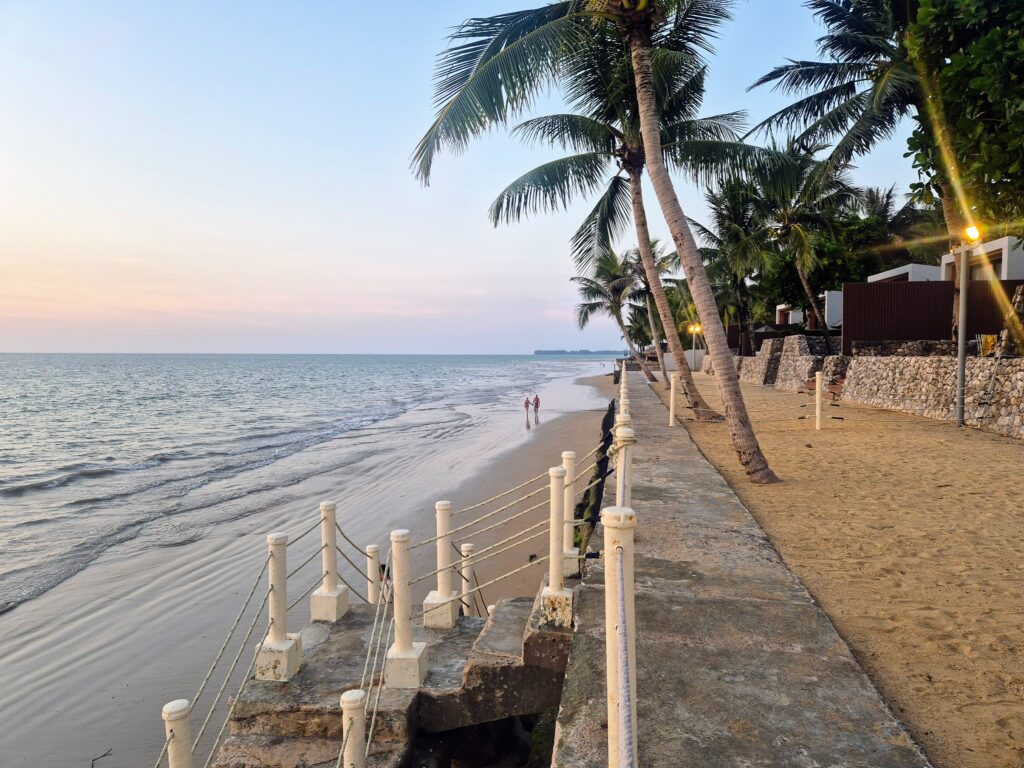
At low tide, which typically occurs in the morning and again in the evening, a more fully-formed beach appears, easily accessible for long walks and largely yours thanks to the low tourist numbers on this particular corner of Khao Lak. There is no manicured shoreline in front of the property as such. When the beach does emerge, it isn’t really a sunbathing spot; it’s a place to swim, walk, and savour a rare sense of seclusion. On a clear afternoon, with the Andaman reaching west towards nothing, that feels like more than enough.
If you do find yourself beach-hungry, options are close by. Just up the road past Long Beach Bar, the edge of Bang Niang beach is lined with sunbeds and umbrellas: it’s lively but crowded. For something calmer, a 15-minute taxi ride brings you to Coconut Beach, with its fine pale sand, large palms, and crystal-clear water that turns a gorgeous turquoise in good weather.
A little further afield, White Sand Beach does exactly what it says on the tin. You can also book a trip with the hotel to Similan Islands and visit Donald Duck Bay, named the world’s 10th best beach earlier this year (do we really need a 50 Best for everything?!). You must prebook your tour as they need to register your visit with the National Park in advance. The islands are open from October 15th to May 15th.
Somehow, the concrete-heavy design of Casa De La Flora doesn’t feel in conflict with its more rough-and-ready surrounds. The contrast, in fact, is part of the appeal.
Character & Style
The first question on arrival is which scent you’d like in your room. Lemongrass, then. Do you have a preference for pillows? A two-stack, bottom layer firm, top layer cloud, if you’re asking. It is, in its small way, a declaration of intent.
Casa De La Flora is low-key and intimate – contemplative, even – trading on a hospitality that doesn’t try to compete with your attention. The lobby is all clean lines and a gently curated feel: concrete and teak wood with interesting, sculpture-garden angles, framed by a long window showing the Khao Lak countryside in the distance.
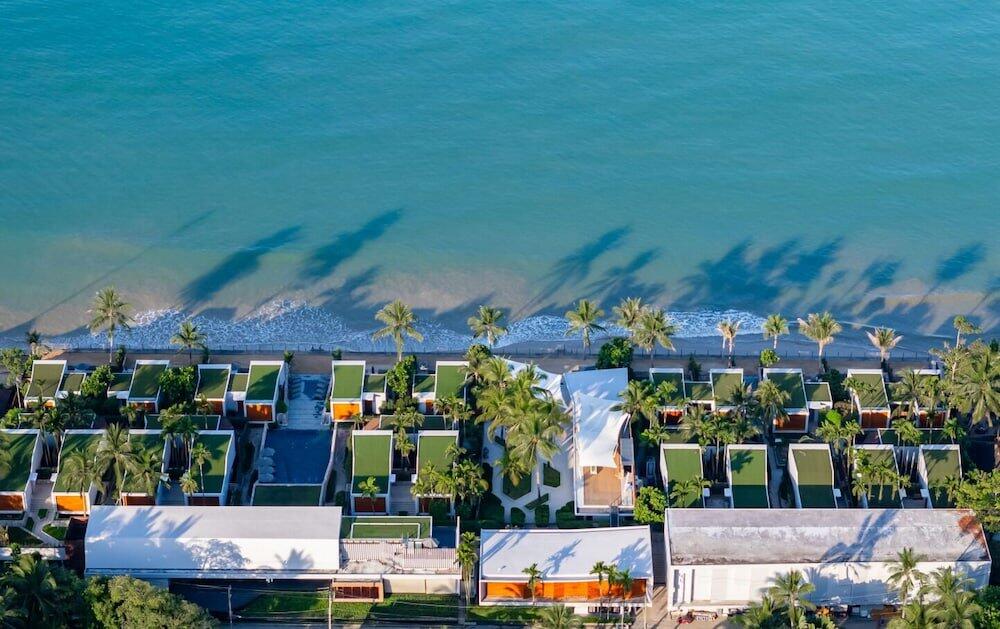
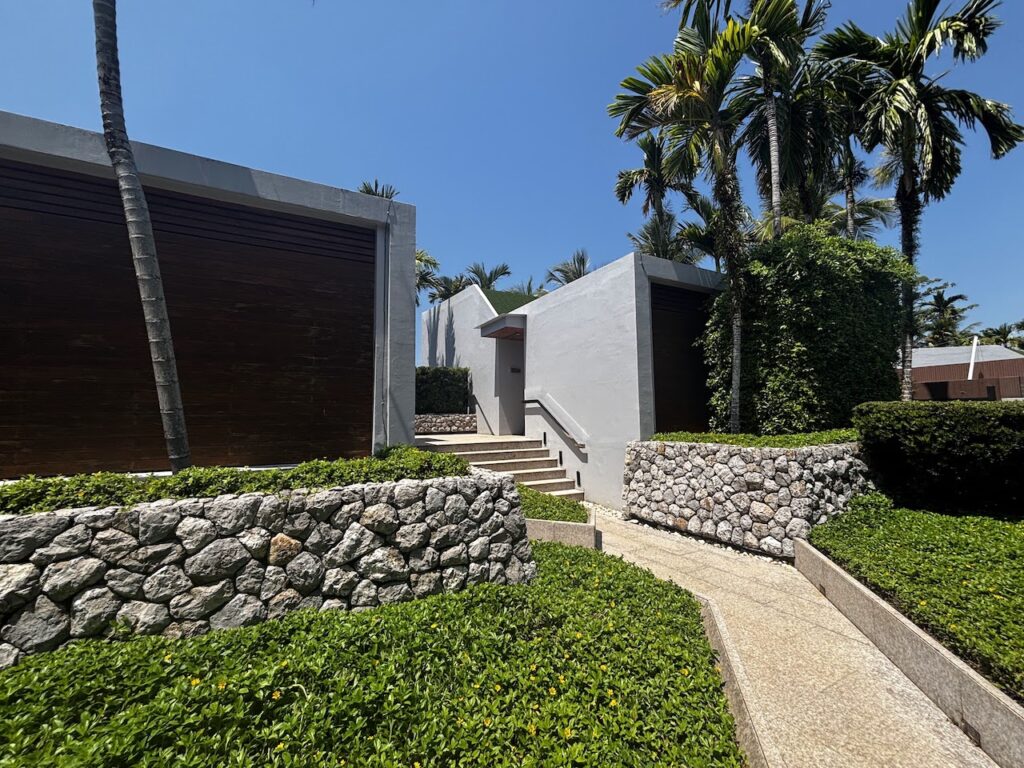
The villas are slate-grey concrete cubes that might, at a lazy glance, be mistaken for bunkers. It would be an understandable comparison – the reflexive insult that most small, square concrete buildings have had to endure at some point in their lives – but an unfair one. These are feats of design and poise, not a futile hedge against nuclear armageddon.
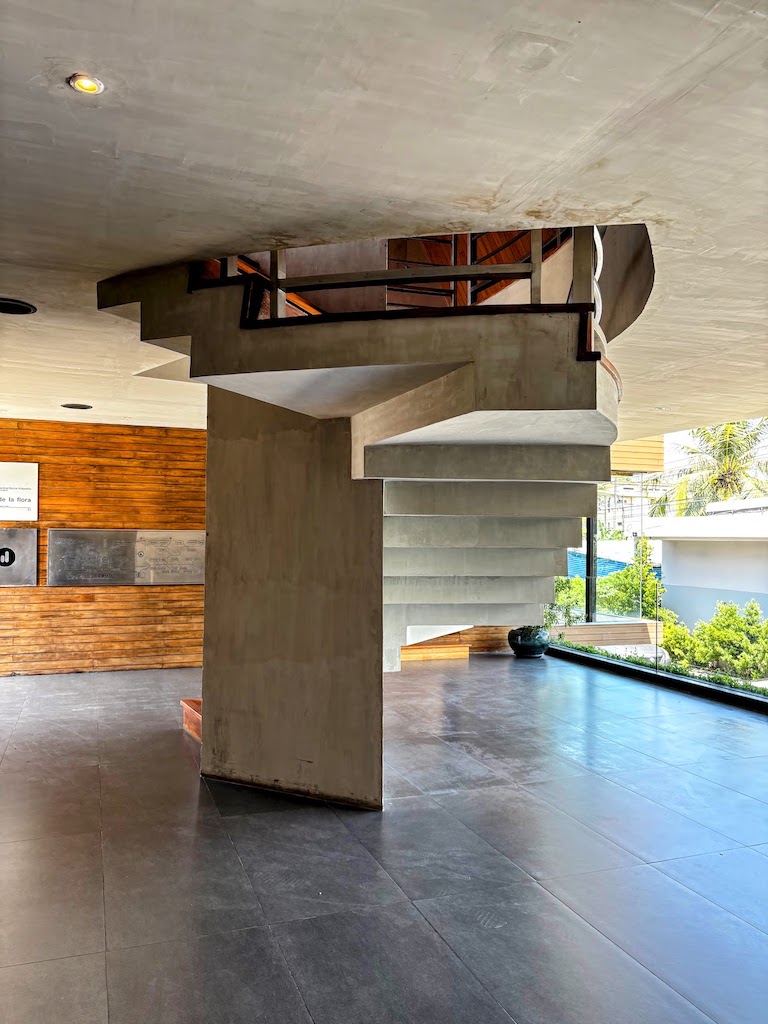
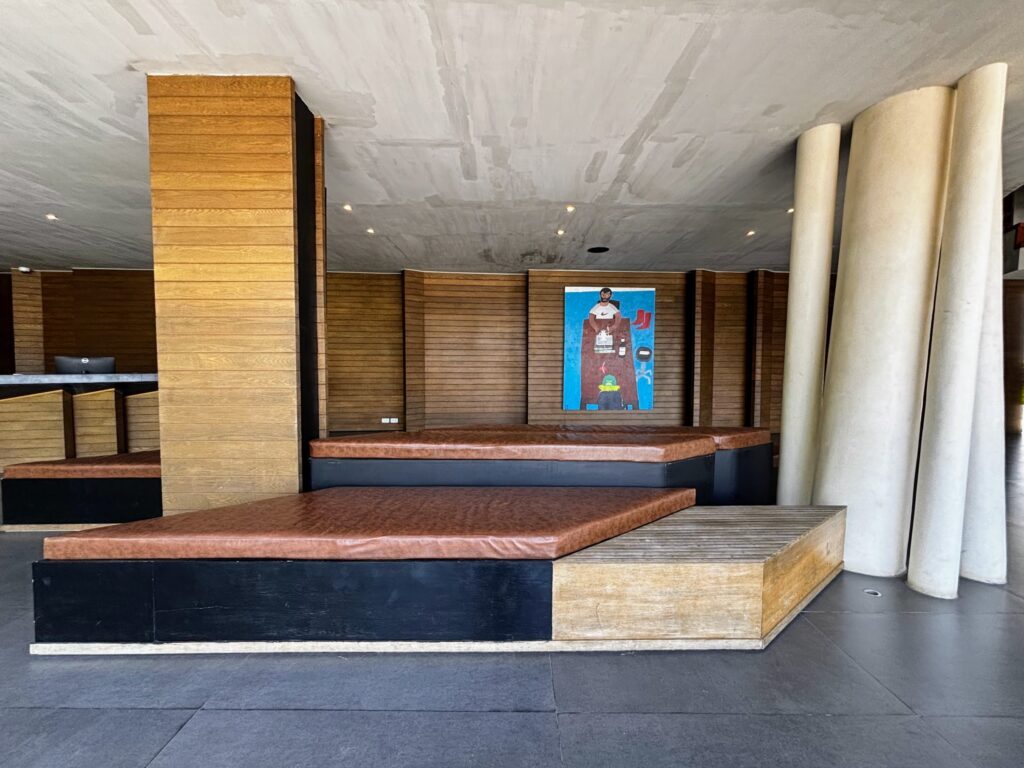
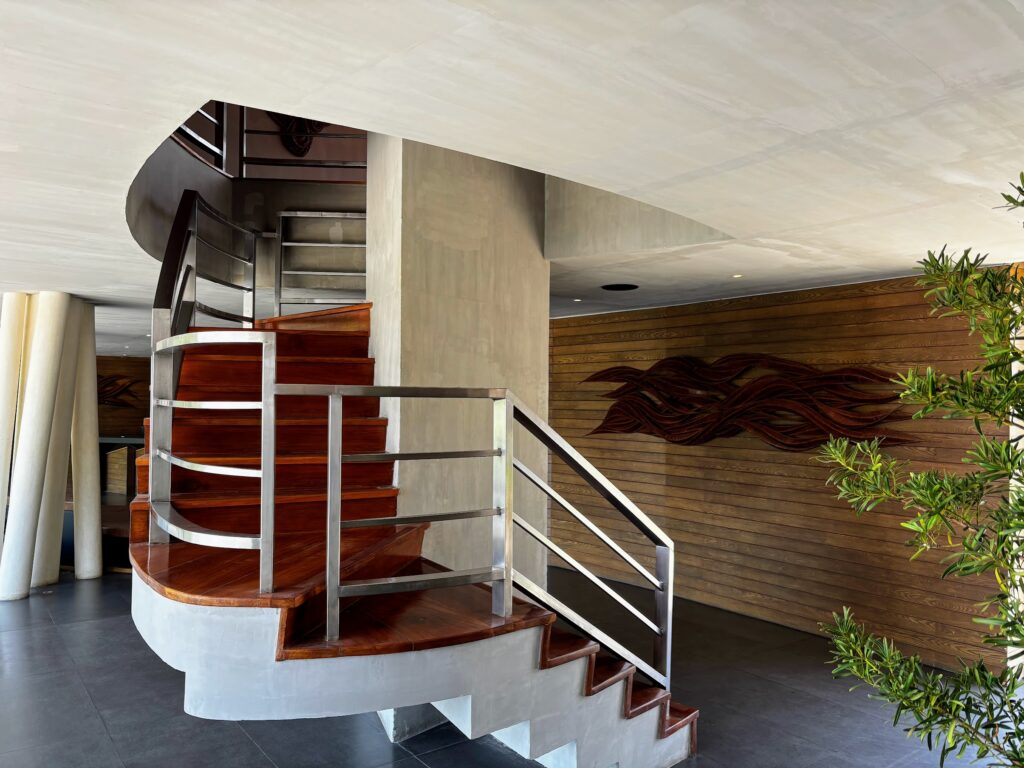
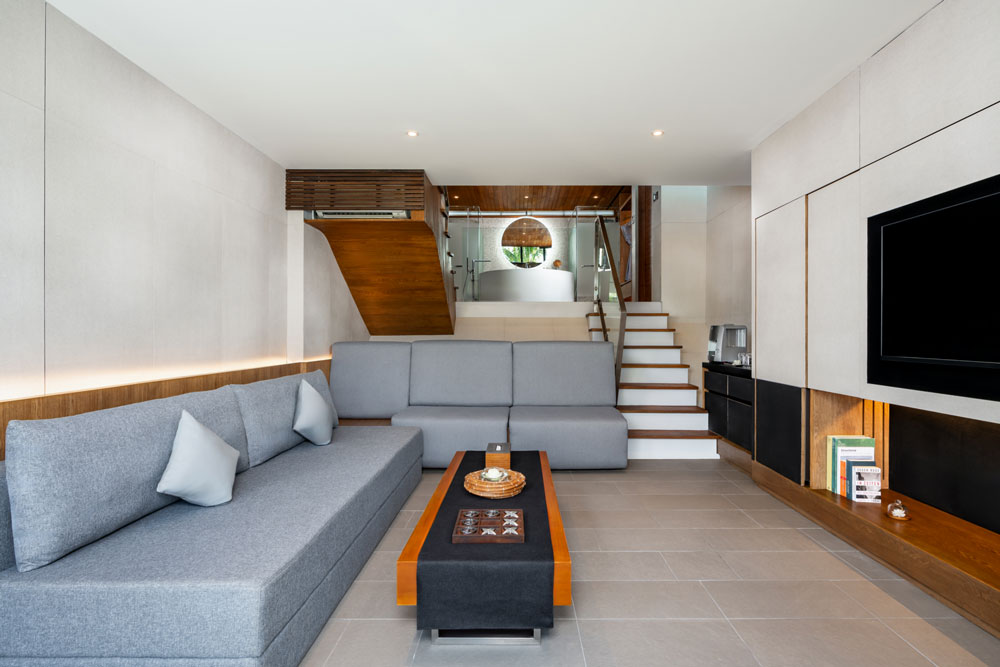
There are also duplex suites reached by a beautiful spiral staircase from the lobby level, their elevation offering a purer vantage point of sea and sand. The bedroom sits on the upper floor, the living space and private pool below, and from the king-size bed the sunset is yours without having to stand up for it.
Since Casa De La Flora opened, stark concrete has crept back into vogue in high-end hospitality, with acclaimed properties like Pompey in Portland, Jamaica, Hotel Terrestre in Mexico’s Puerto Escondido, and Sou Fujimoto’s Shiroiya Hotel in Maebashi, Japan, all reimagining brutalism in their own way. The word, for what it’s worth, takes its name from the French béton brut, meaning raw concrete, and has nothing to do with being brutal, though it’s been fighting that battle since the 1950s.
Casa De La Flora has been likened to a Le Corbusier edifice, and there’s something to that. His Cité Radieuse in Marseille, now a UNESCO World Heritage Site and a symbol of sun-drenched Mediterranean modernism, proved that concrete and sunshine could work in harmony rather than clumsy contradiction. Something of that spirit is present here: clean lines, cast concrete, an austere elegance offset by foliage, graceful in its contrast to the Andaman Sea.
The hotel has operated around the concept of ‘Arising Flora’ since it opened, a design philosophy that shapes the layout of the property. The idea, conceived by Bangkok architects VaSLab, is straightforward: each villa is designed to mimic a plant emerging from the ground, its walls angled and roof tilted as if reaching toward the light, and those same angles were deliberately calculated to maximise sea views from every room. Nothing is serendipitous here.
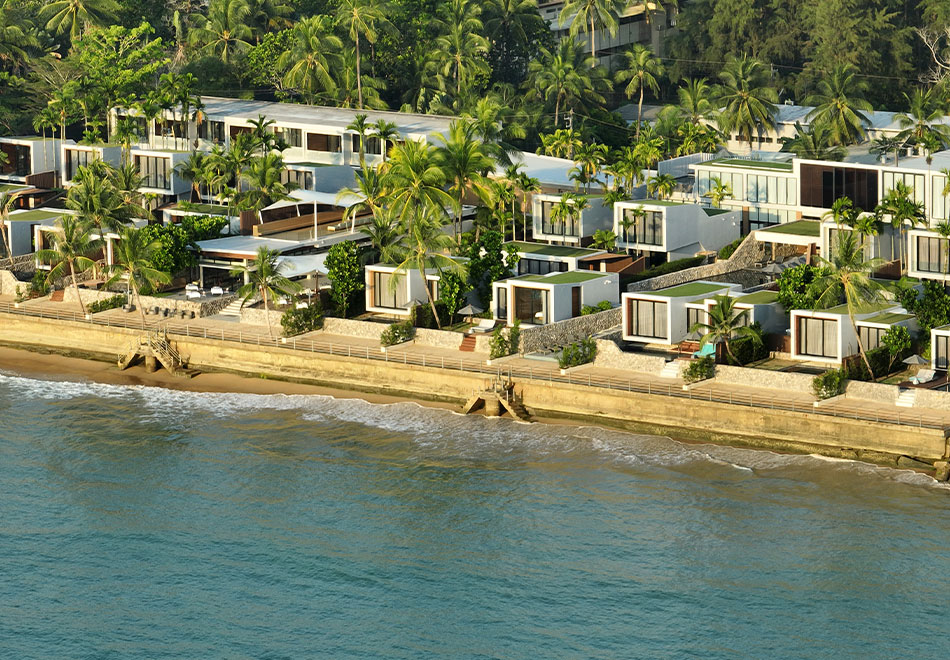
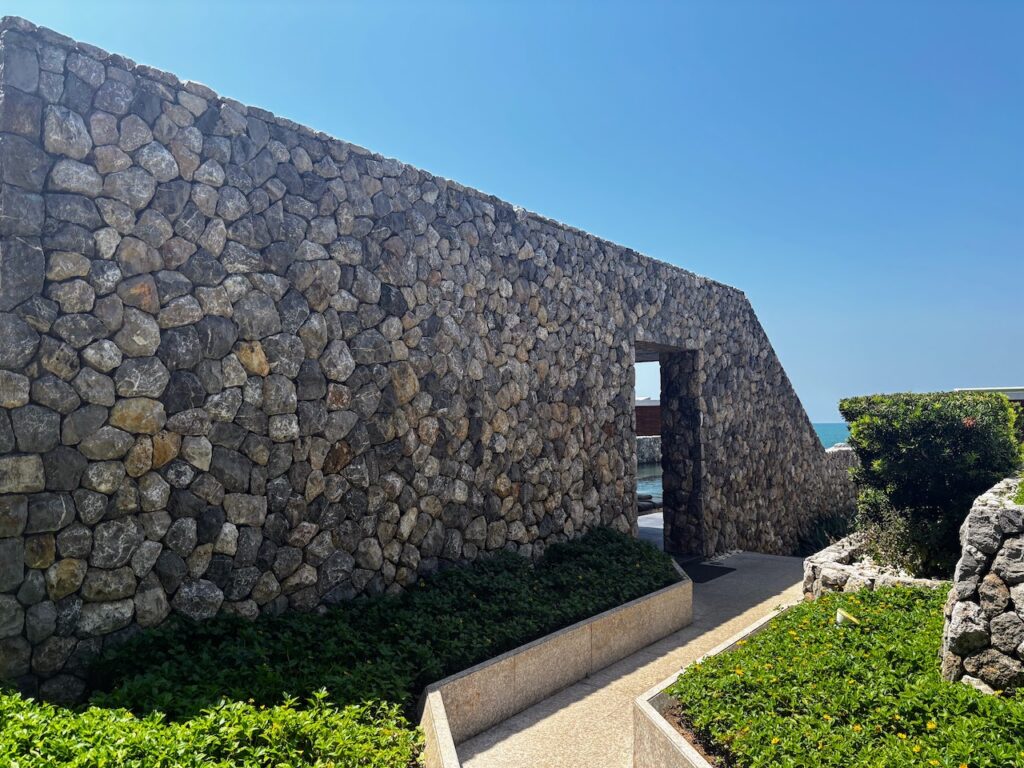
The paths and landscaping carry that logic further still, designed by Bangkok firm TROP to read as the roots, stems and branches to the villas’ blooms. The boulder-stone walls are thick, irregular, geological, reading less like construction than excavation.
Lanes and paths frame sightlines towards the water so that light and air move freely around each villa. The ocean view is still the hero, of course, particularly from the restaurant and the beachfront villas, and the strictly uninterrupted sightline, no developments, no superyachts on the horizon, is no accident.
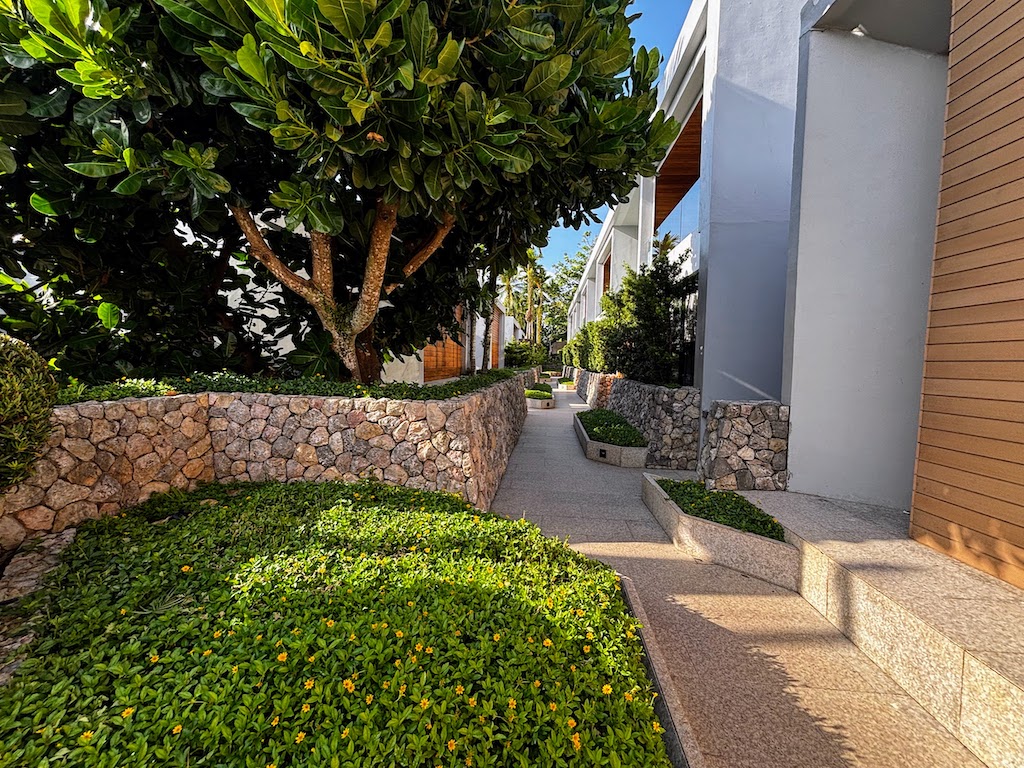
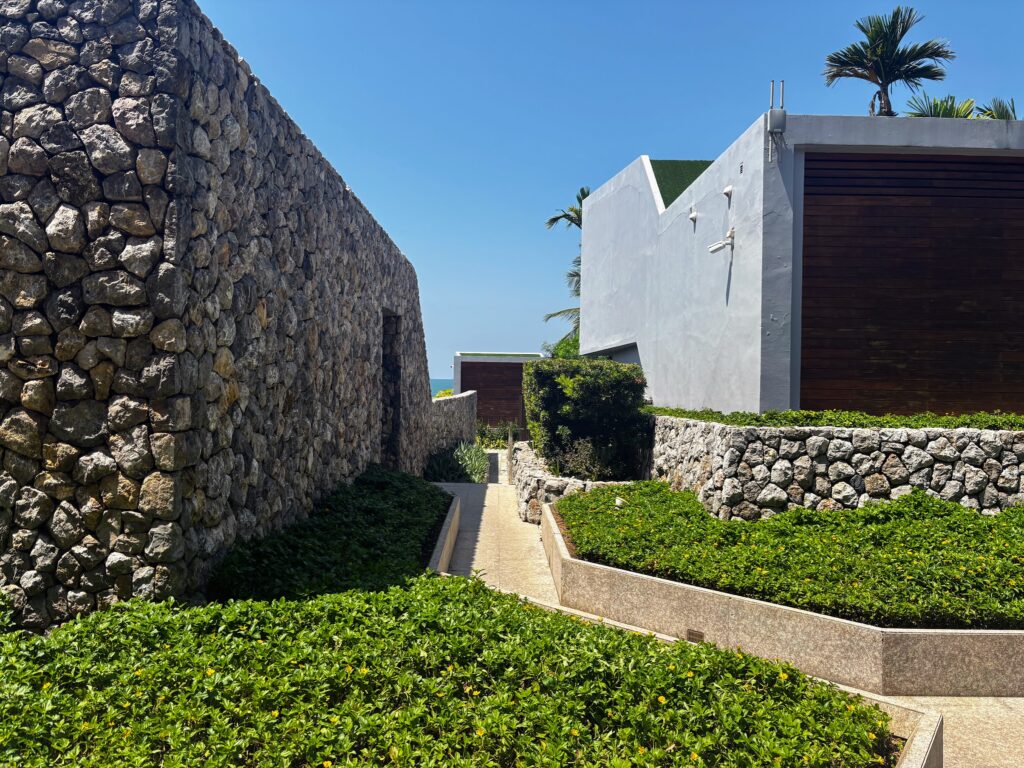
Yes, that does sound like design spiel. But Casa De La Flora is a Design Hotel, capitalised, accredited, the real thing, and unlike many properties that slap the word ‘design’ on their website and leave it at that, the concept here is legible from the moment you arrive.
Although the name might suggest otherwise, there isn’t a riot of colour here. The planting is deliberate rather than exuberant, but there’s plenty of it: low angular flower beds of Wedelia, a small, bright yellow daisy-like flower, and topiary softening the clean modernist lines. Mature plumeria cast occasional dappled shade along the pathways, while tall palms provide privacy and shade from a climate that demands both. Orchids planted in coconut shells are fixed to the coconut palms here and there, a small, charming detail that’s easy to miss.
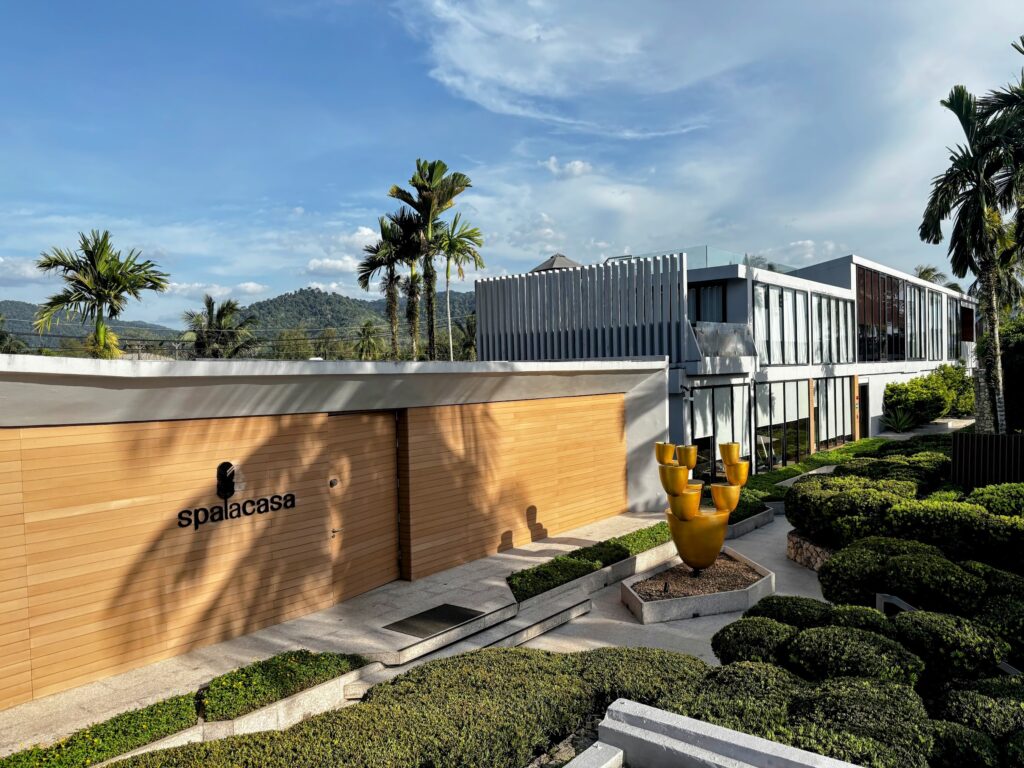
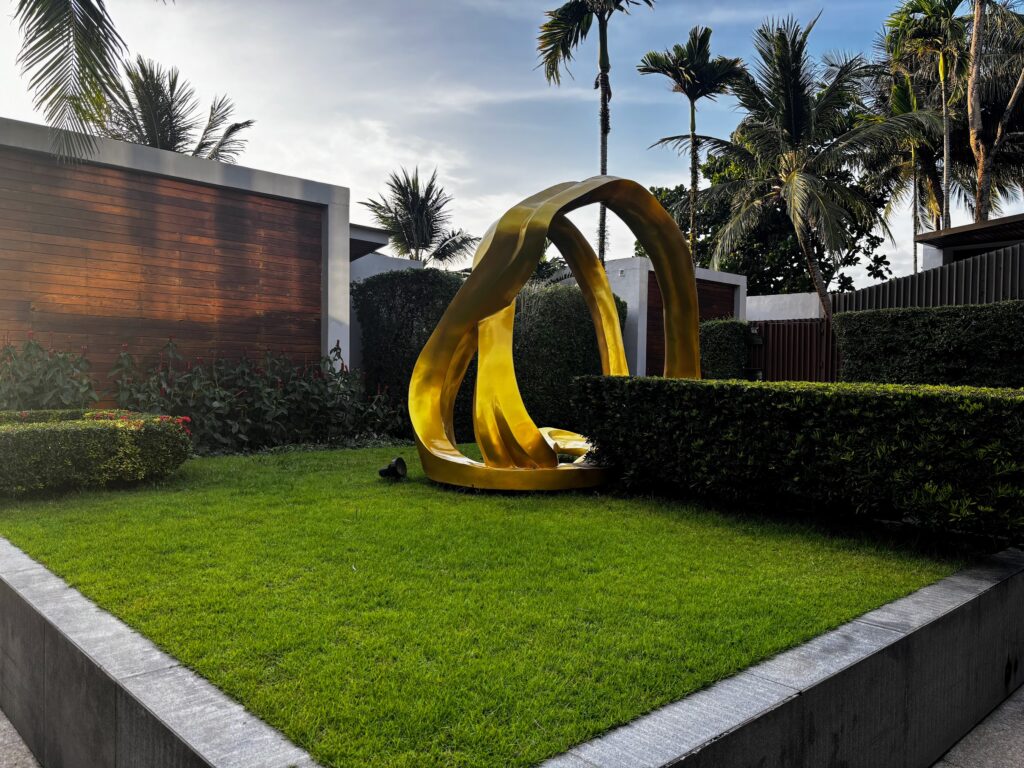
Gold sculptures by Bangkok designer Anon Pairot – their sweeping curves drawn from the forms of stems, petals and pollen – are dotted around the property. Commissioned specifically for Casa De La Flora, they were designed to soften the angular lines of the architecture, tying the resort back to the floral concept that gives it its name. Pairot’s studio was responsible for much of the custom furniture too, and the sculptures feel like a natural extension of that vision: bold enough to catch the eye, but never at odds with the surrounding landscape.
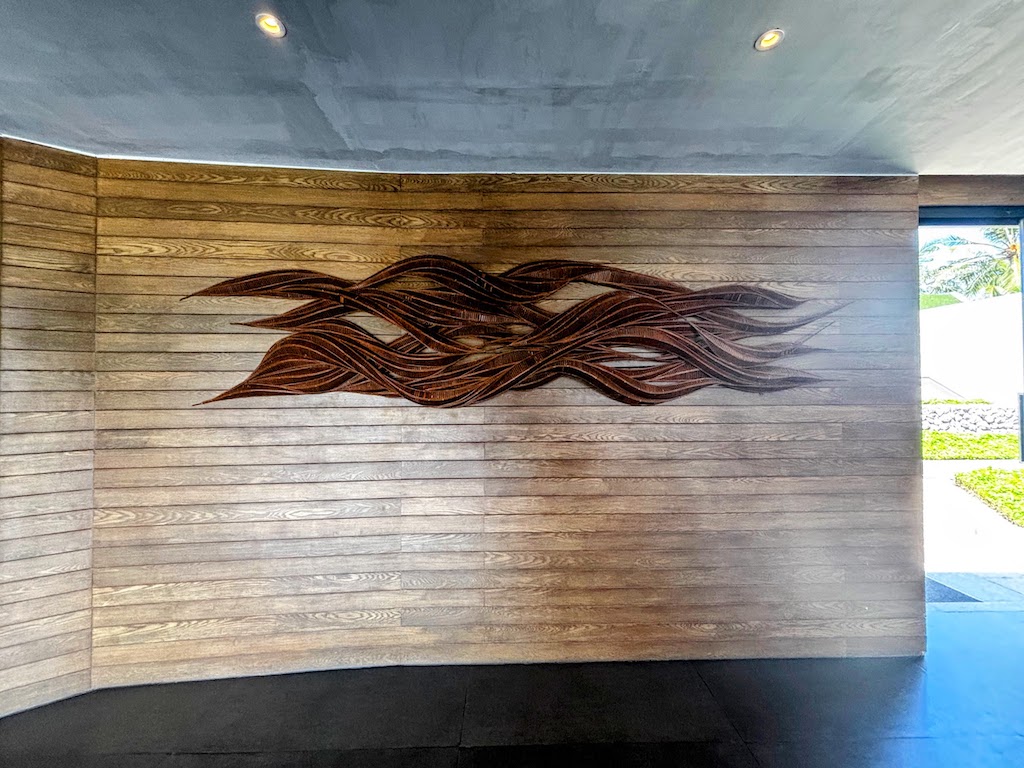
Elsewhere, works by the Thai artist Korakot Aromdee, who also contributed to Iniala Beach House up the coast, appear throughout the grounds. His intricate bamboo sculptures are natural and soft, their whimsical forms a little light relief from the geometric architecture around them. The swirling shapes, somewhere between crashing waves and airborne clouds, are inspired by the natural environment of his coastal hometown in Phetchaburi, and made using a traditional kite-making binding technique he learned from his grandfather.
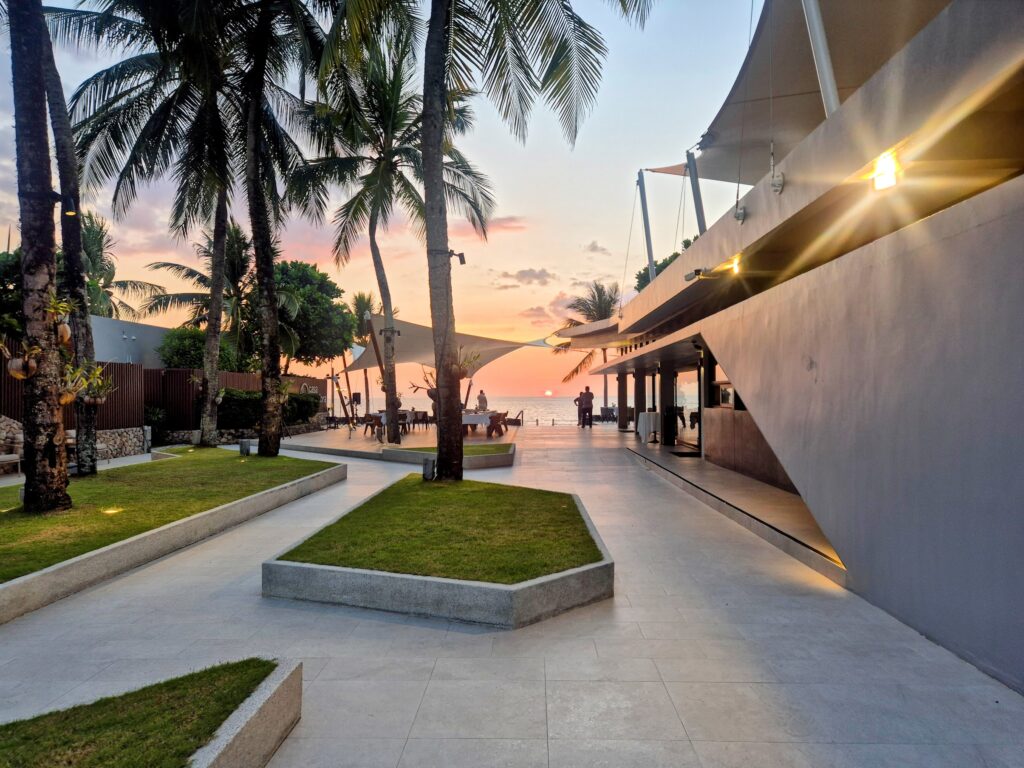
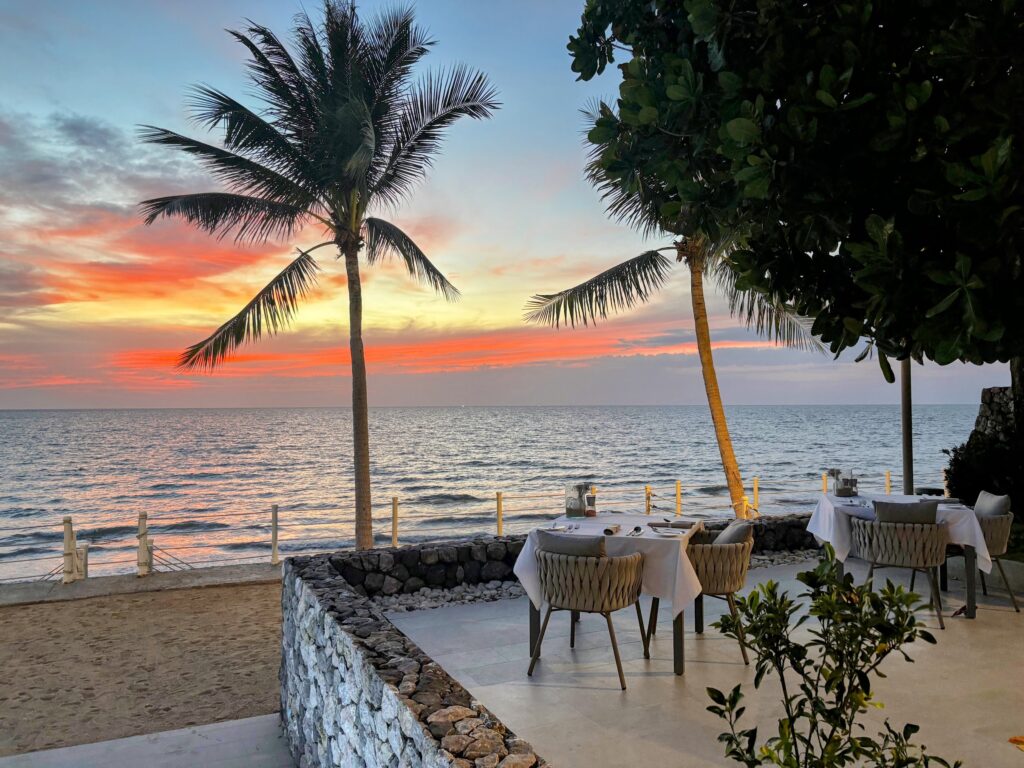
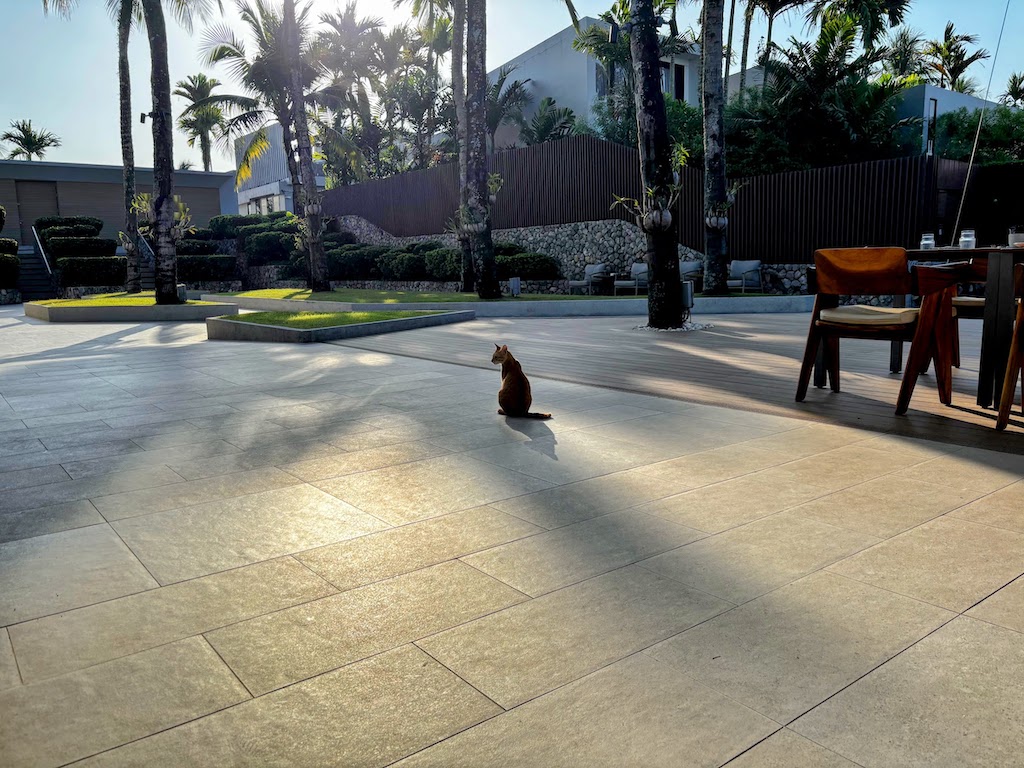
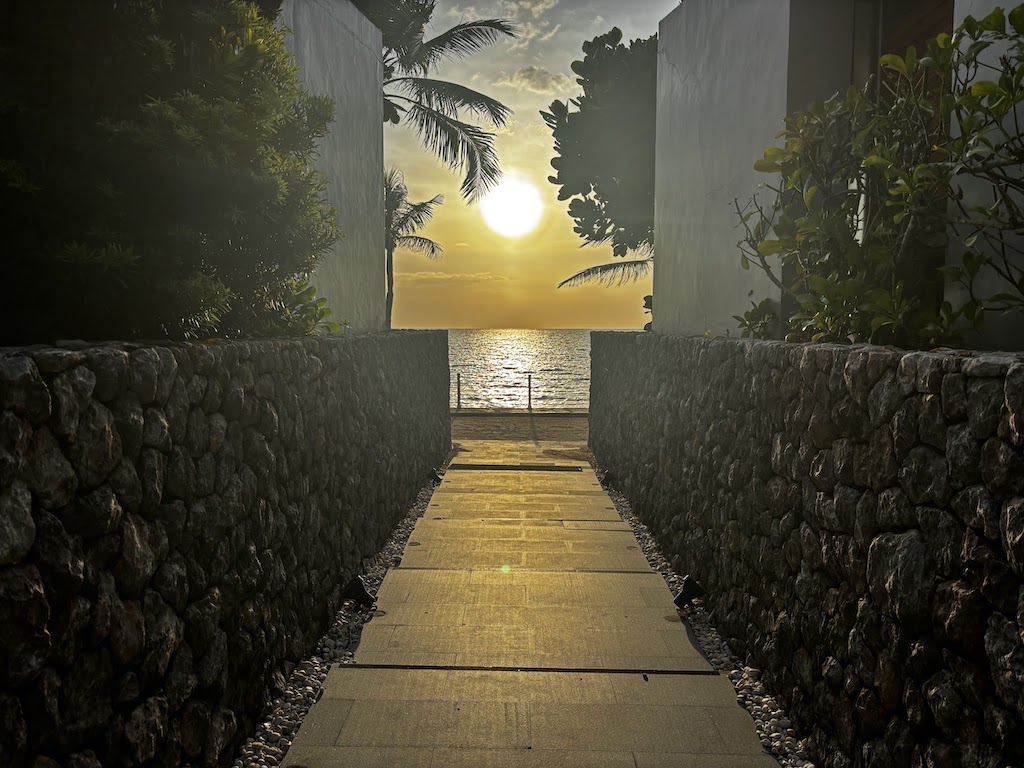
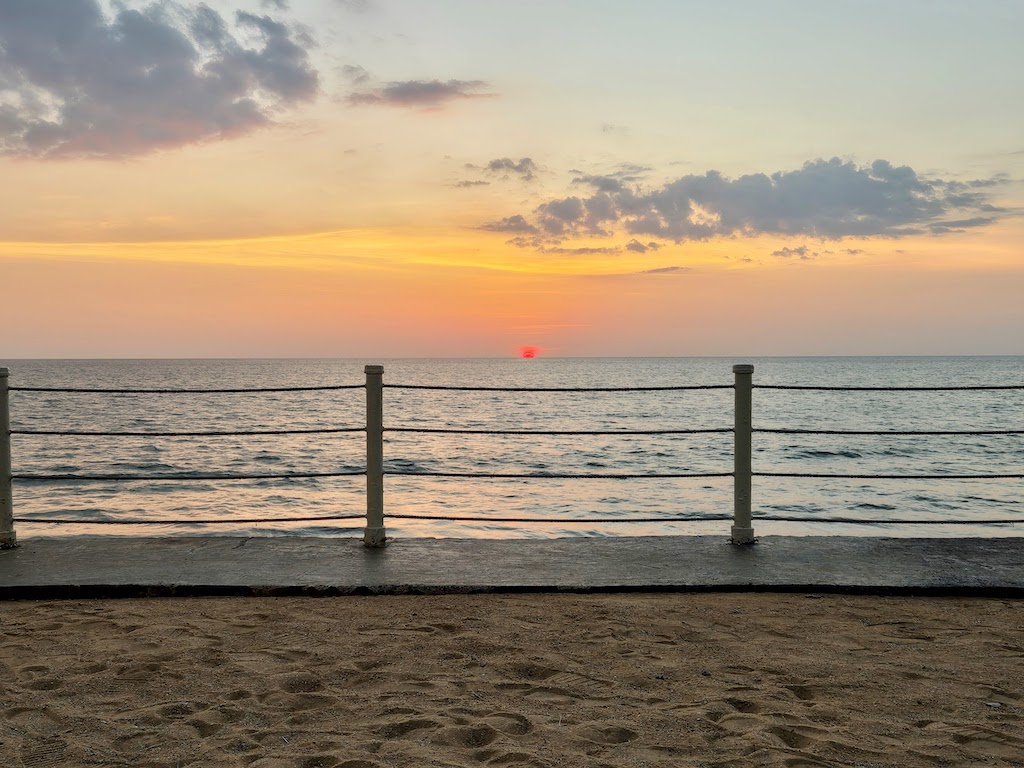
This strip of Khao Lak is all about the sunsets. They’re an event and give the hotel its rhythm. From the front of the resort and from the restaurant, you get an unobstructed view, and guests gather each evening to watch the horizon turn spectacular shades of pink and lilac as the light drops behind the Andaman. A small colony of cats and kittens roams the grounds, adding unexpectedly to the Mediterranean feel of the place. They stop to admire the sunsets, too.
Rooms
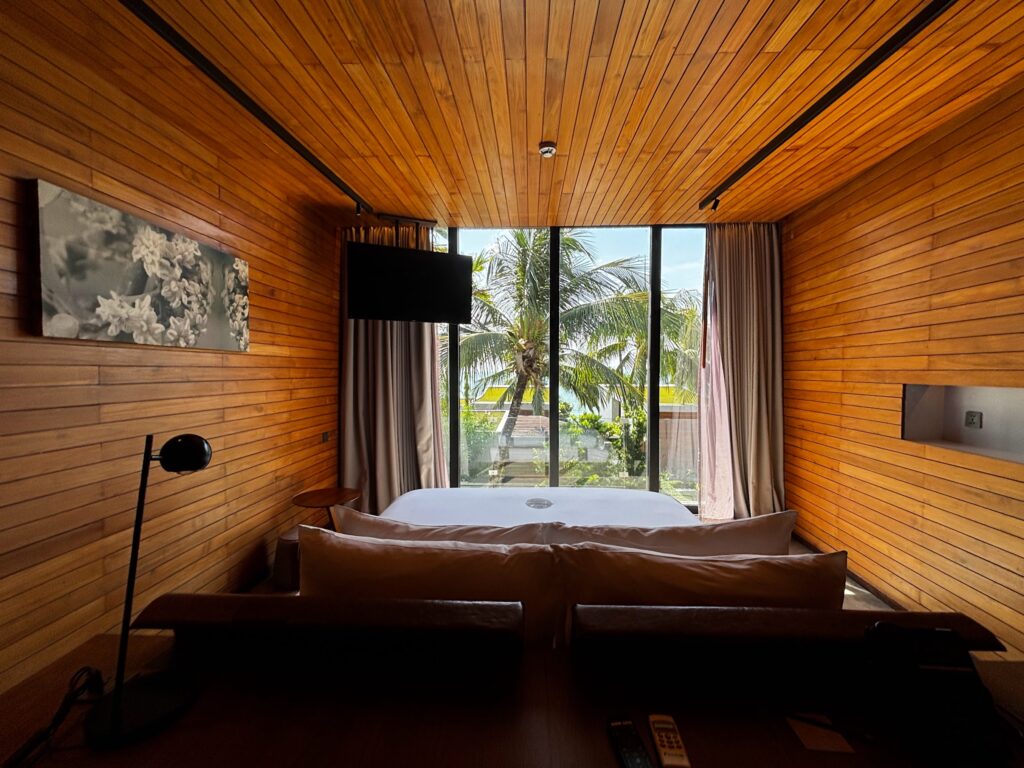
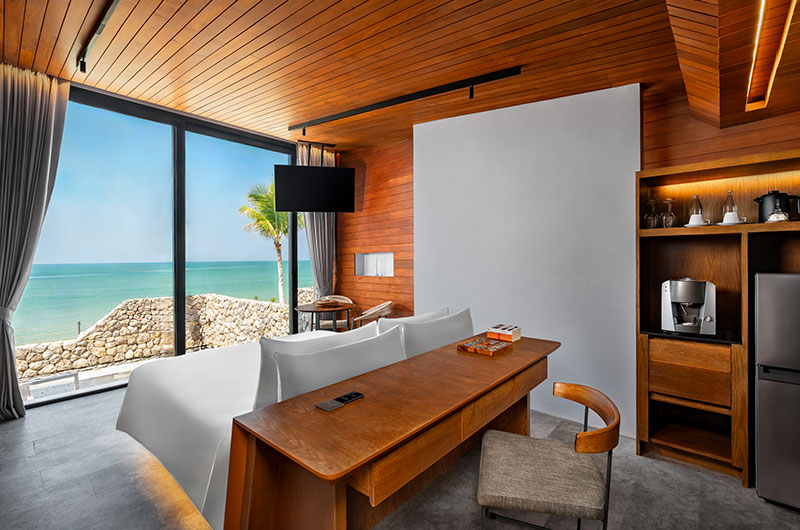
The 34 pool villas and suites span six categories, with beachfront villas sitting closest to the water’s edge. Each one is vast, with floor-to-ceiling windows that frame the sea so completely you’ll find yourself lingering at them, taking in the view long after you’d intended to move on, and pondering the good fortune in your life that got you to this point.
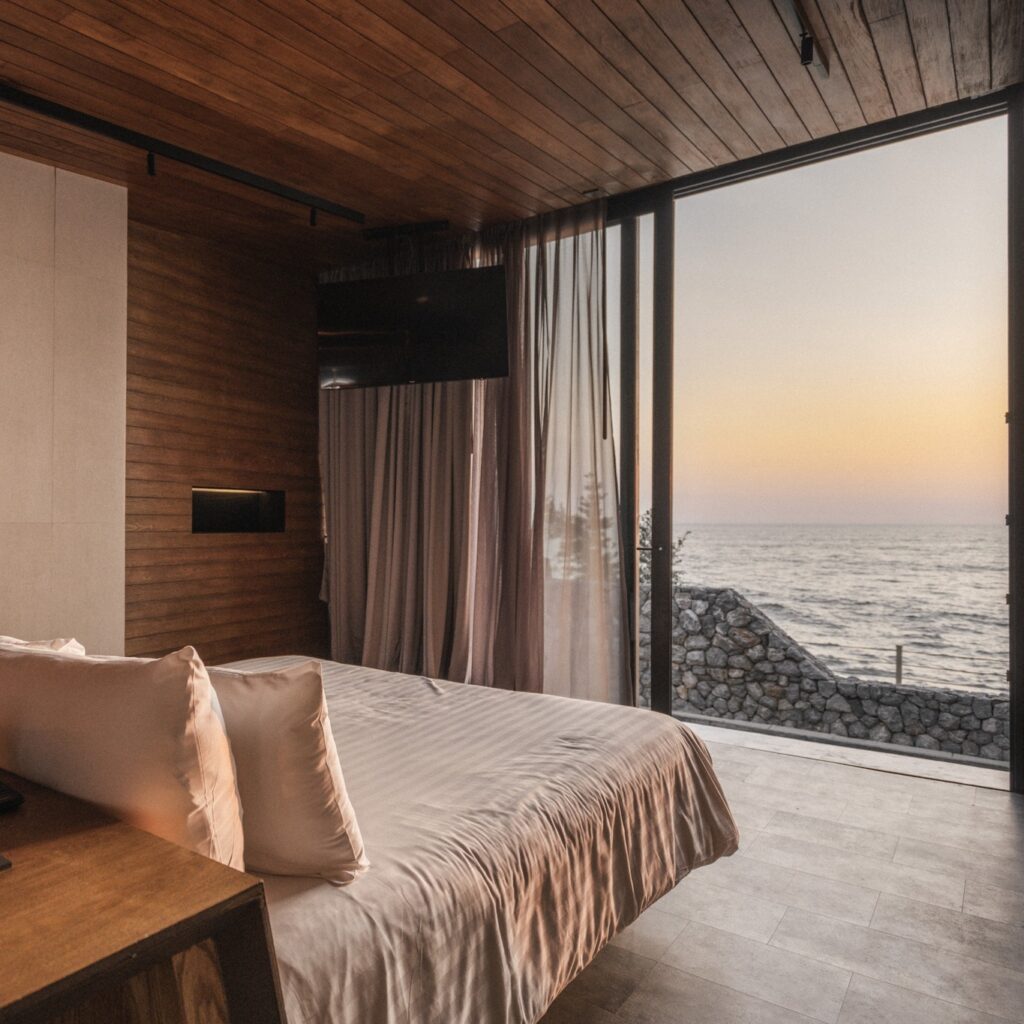
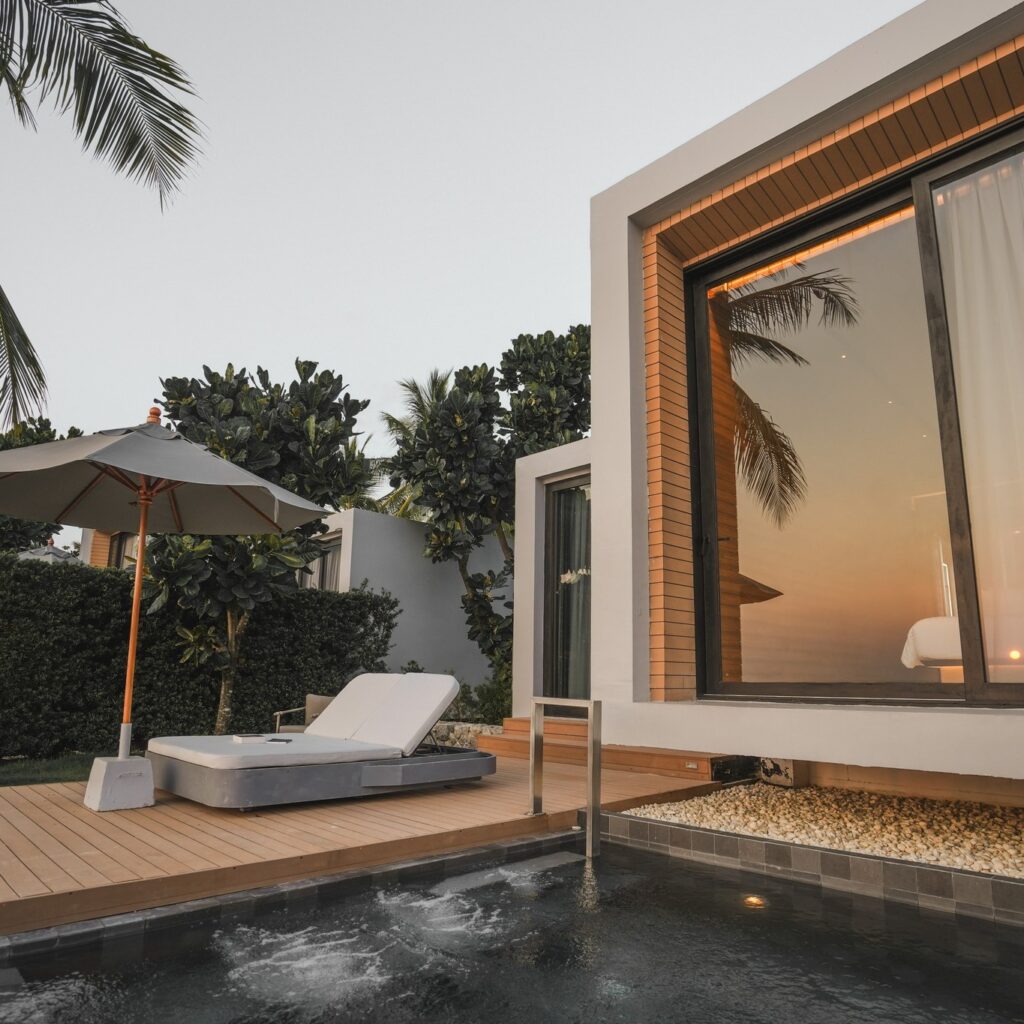
Some hotel rooms are just for sleeping in, rolling out of bed and bidding it adieu until nighttime. This one is for spending time in. We stayed in a Duplex Grand Pool Villa, set further back from the shoreline and split over three floors. Our chosen fragrance of lemongrass scented the air on arrival; the other option was lavender, but when in Thailand and all that. Hey, if Casa De La Flora opens up in Provence, we’ll know what to do.
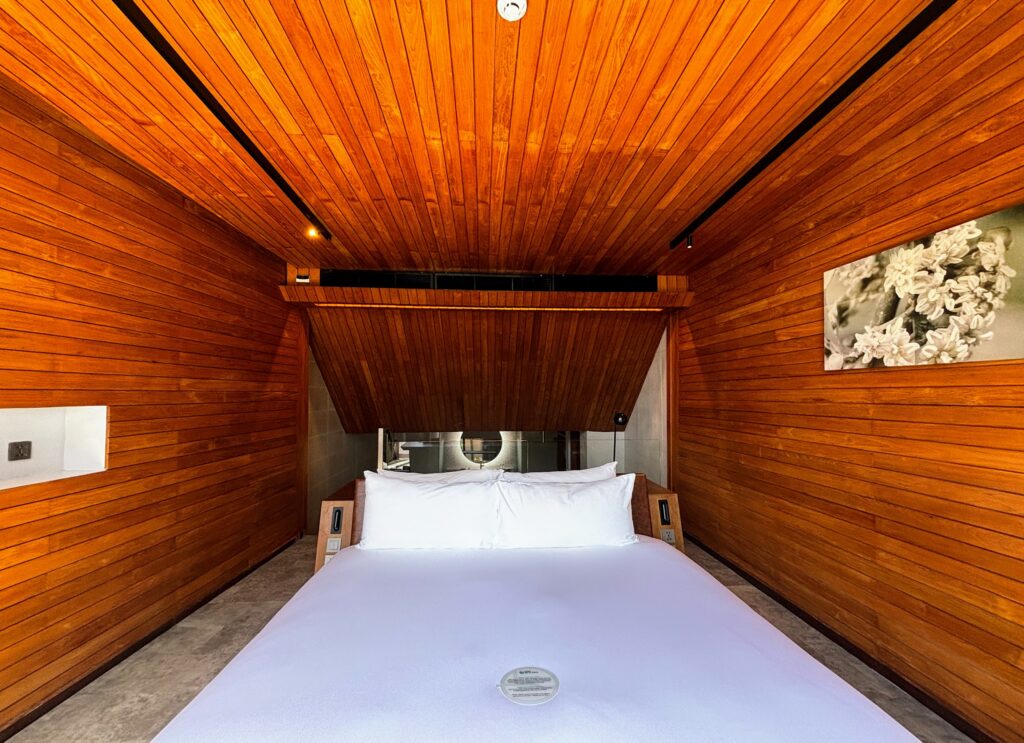
Inside, it’s larger than most folks’ apartments. Teak wood abounds and there is a natural cohesion between indoor and out. Despite the soaring windows, the interiors remain pleasingly dark if you let them, making the villas an ideal retreat from the midday heat.
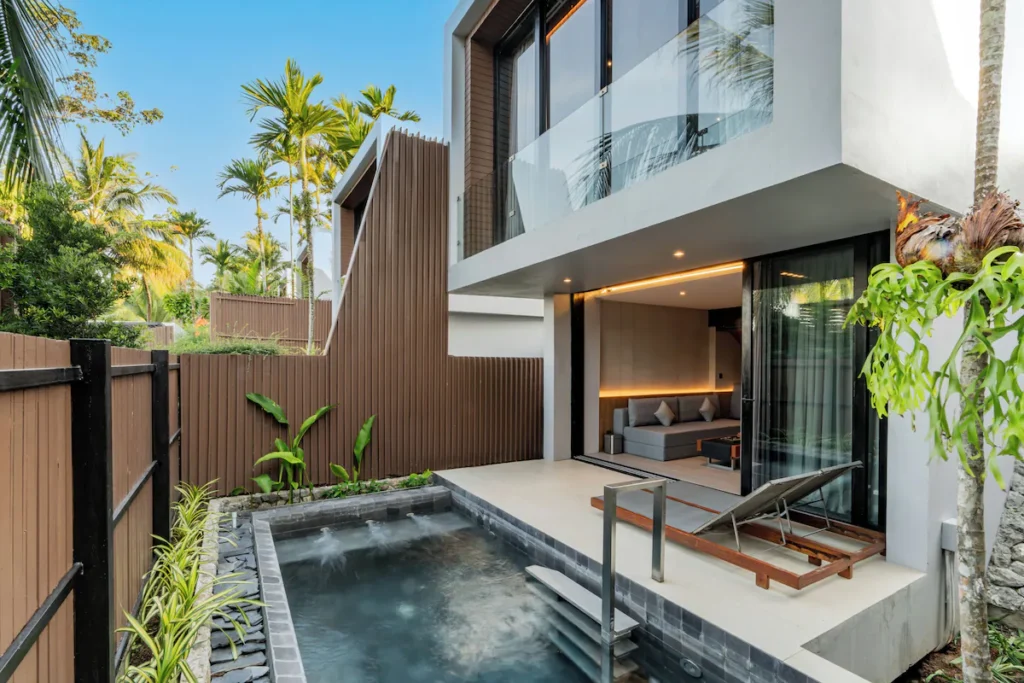
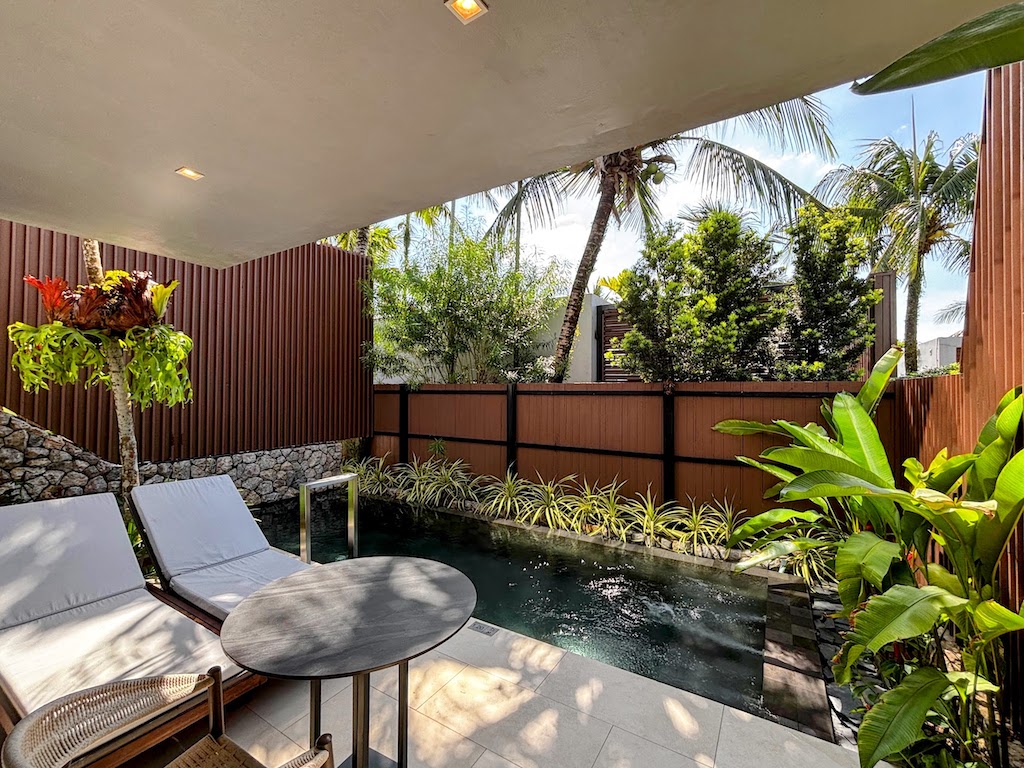
All accommodation comes with a private terrace, plunge pool and surrounding planting, lending each villa a sense of calm. Those plunge pools earn their keep when the afternoon sun is at its fiercest, but they come into their own after dark, too. There’s a real indulgence to a solitary splash before bed, nightcap in hand, the resort having gone still around you and only the sound of the sea for company. That, and 33 other villas splashing about, too.
Beds are enormous, and you’ll have chosen your pillow type at check-in, a touch designed not only to grant you the most perfect, personalised sleep, but also to give you the impression of a place going above and beyond. Even if all the pillow types ended up secretly being the same, it sets a tone. We also learnt that anti-snore pillows exist, the sort of revelation that does more for a marriage than most couples’ getaways.
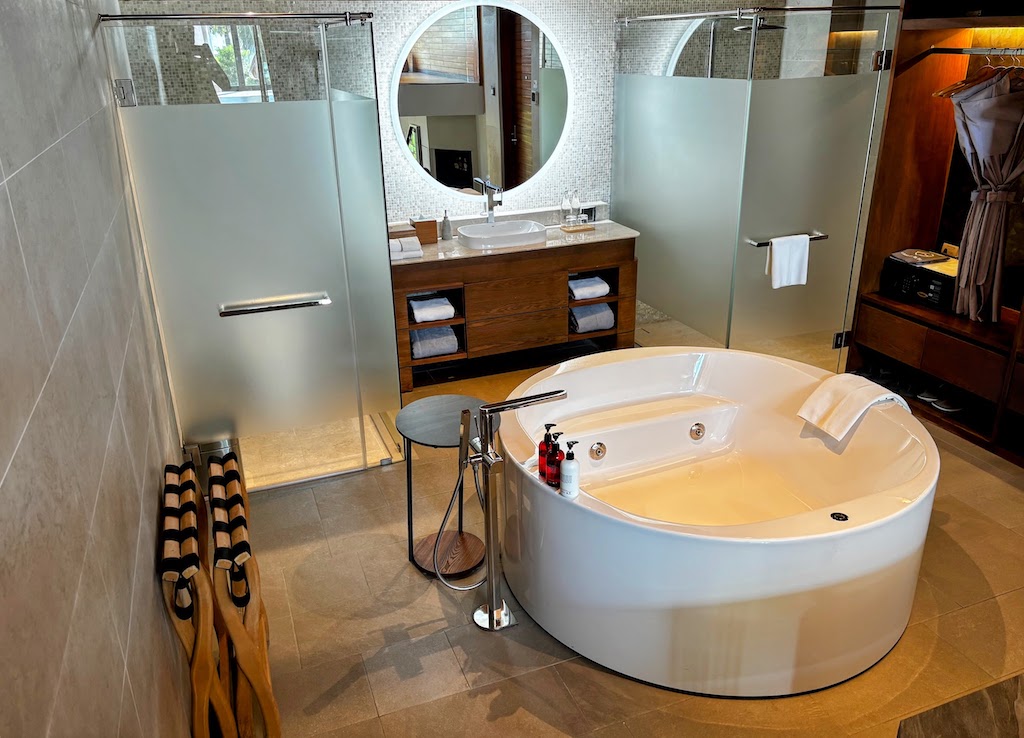
Taking a bath in a hot climate can feel faintly absurd, but the deep soaking tub here makes a compelling case for the ritual. With a jacuzzi function built in, there’s every reason to make full use of it. Run it deep, run it long, and let the salt and sun rinse away. Bathrooms are stocked with THANN amenities, the homegrown Thai apothecary brand whose botanical scents bring a touch of Thailand to the experience. A welcome reminder, mid-soak, of exactly where in the world you’ve washed up.
The minibar is complimentary in every villa – beer included – and replenished daily. Few holiday pleasures rival the simple joy of padding to the fridge and grabbing a cold one, entirely guilt-free. And then, in our case, returning wrinkly to a now tepid bath to drink it. Not the bathwater, the beer…
These rooms are too lovely not to take advantage of room service, and there is an art to ordering it. The wise know you can’t go wrong with the club sandwich or the caesar salad; both travel particularly well, and they’ve held their place on room service menus across the world for generations for a reason. We tested both as the hallmarks of any hotel catering to an international clientele, and the kitchen passed with ease. That said, Thai food often improves at room temperature, most curries especially, so a good portion of the Thai menu travels just as well. The kitchen has a notably delicate touch, with everything balanced carefully between sweetness and tartness, and nothing phoned in except the order itself.
The hotel also runs rainwater harvesting and has an app through which you can order free water to your room, make maintenance requests, and generally avoid having to put shoes on for anything.
Facilities
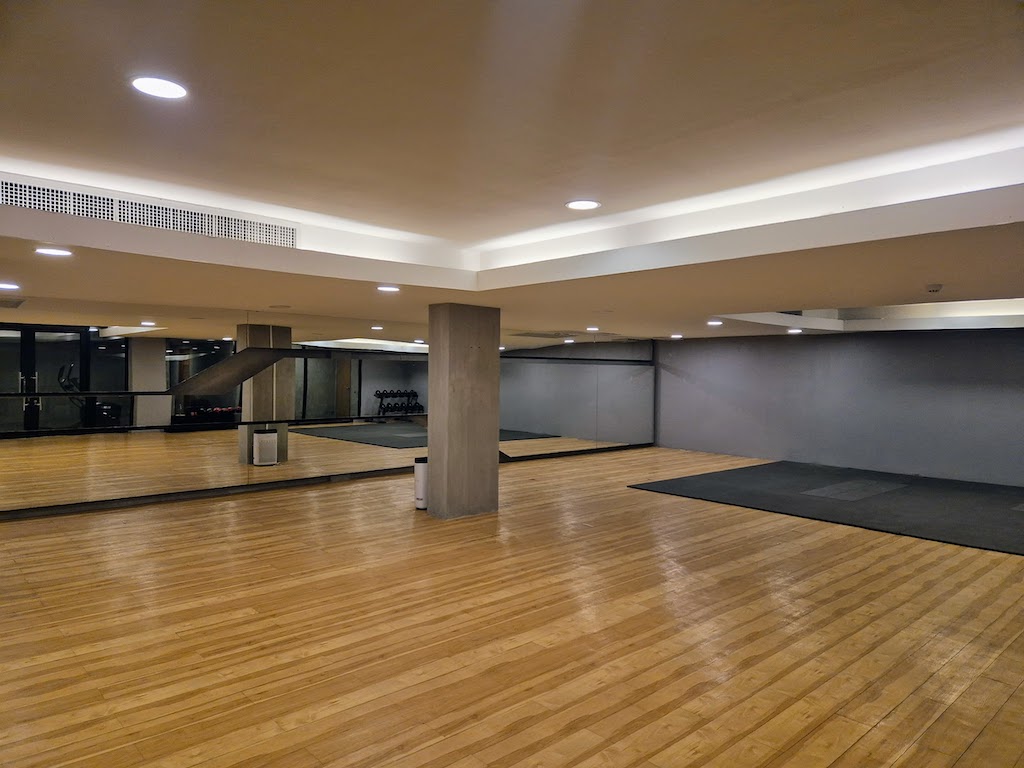
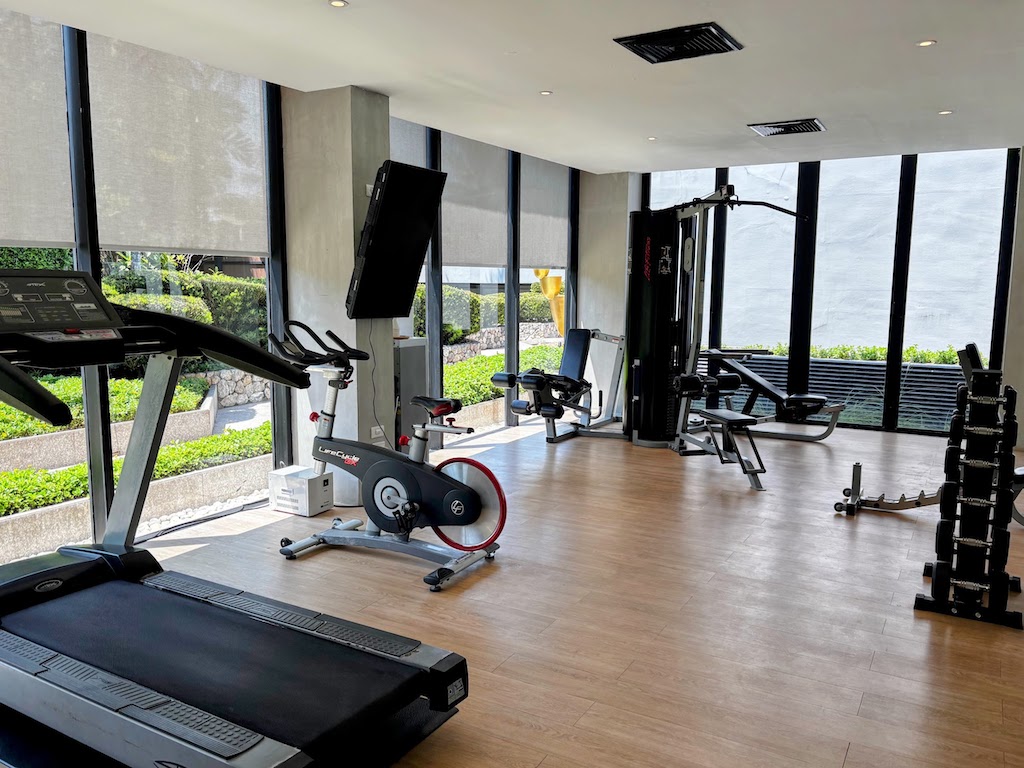
There’s a small, serviceable gym. A cooler, larger activity room downstairs houses weights and yoga mats – useful if the upper gym is busy, or if you simply need space to stretch. The front of the resort, however, is a gorgeous spot for early morning sun salutations before the rest of the hotel has woken up, with the tropical greenery and early light making it a considerably more appealing place to move your body than any air-conditioned box.
The hotel also offers an activity programme, with occasional aqua yoga sessions in the main pool a highlight, and there’s a dedicated wellness centre, La Vita Sana, a short drive away for those wanting something more structured. Changing rooms are downstairs and there are oil burners scented with pandan and towels provided throughout. A bench in there would be useful for getting changed, though; the ol’ hopping dance to avoid wet socks feels a bit silly in a five-star, but first world problems and all that.
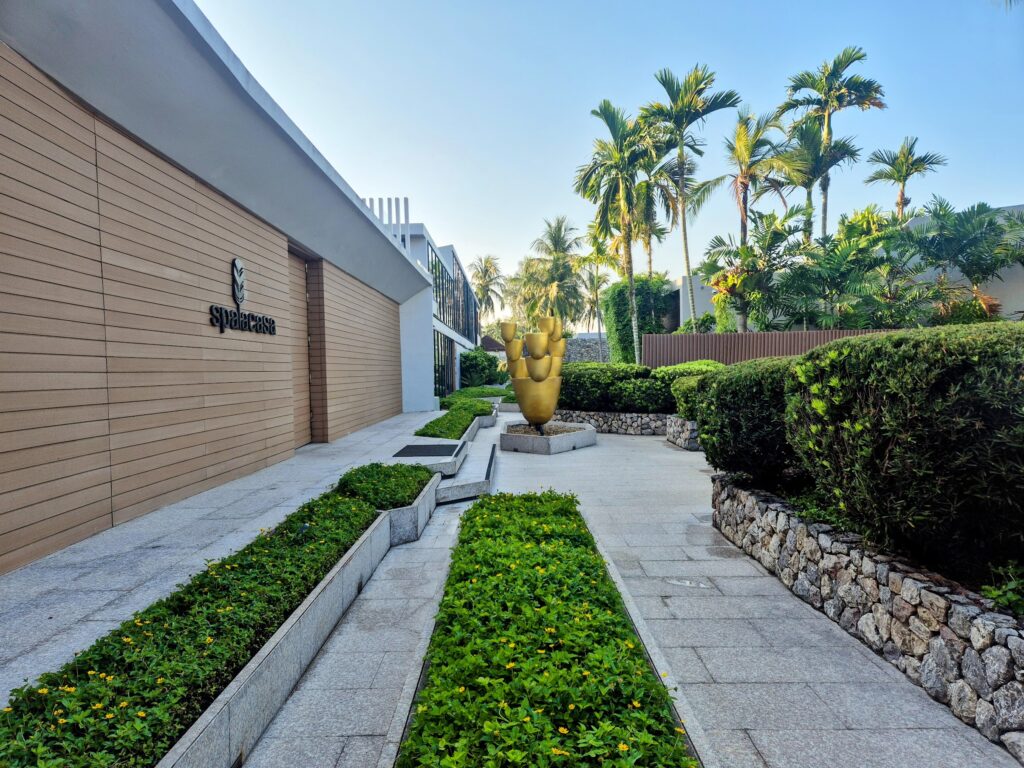
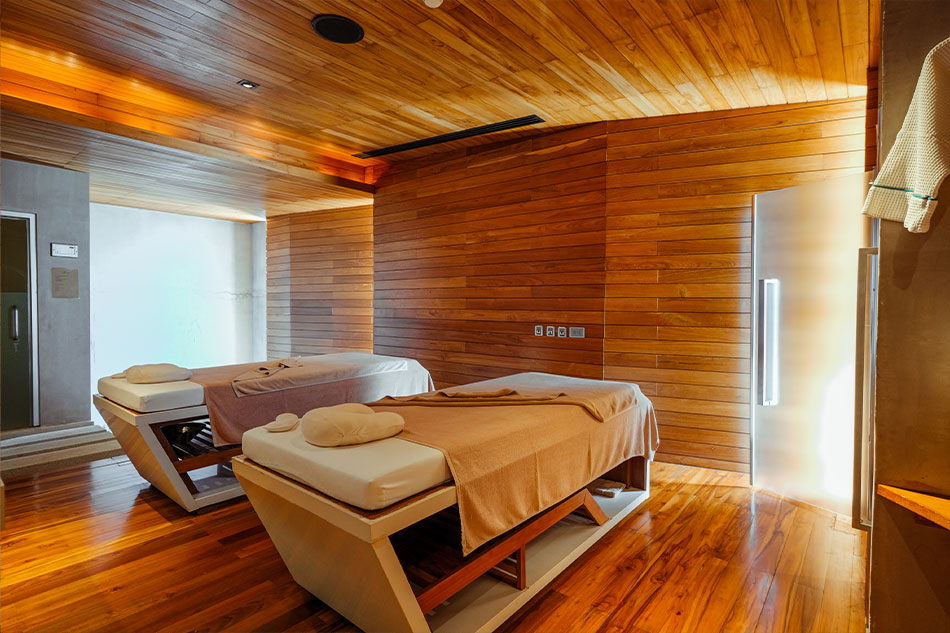
Spa La Casa is rooted in local ingredients and time-honoured Thai traditions. The standout is the Casa Touch, a signature massage that brings together classic Thai technique, aromatic oils and a warm compress made from tin mining stone, which retains heat well and is naturally mineral-rich. It gets deep into tired muscles, using a mix of acupressure, elbow pressure and gentle stretching to leave you feeling thoroughly unknotted, your worst pretzel tendencies straightened out until the next stressful incident. Let’s just say it won’t be here.
Beyond that, the menu covers plenty of ground: aromatherapy, deep tissue, a coconut oil massage and a Thai fusion treatment that draws on both eastern and western methods. Body scrubs use ingredients like coconut, coffee and local herbal powders, and there is a white clay wrap blended with turmeric, honey and lemon.
The main pool is beautiful enough to tempt guests away from their own private plunge pools. From the water, the horizon unfolds in an extraordinary sweep of sea and sky, and the pool’s chemical-free, ozone-purified water mirrors the colour of the sea so closely that it feels like a continuation of the ocean. Without the sting of harsh chemicals, there is a softness to it that feels natural, like swimming in a calm, sheltered cove.
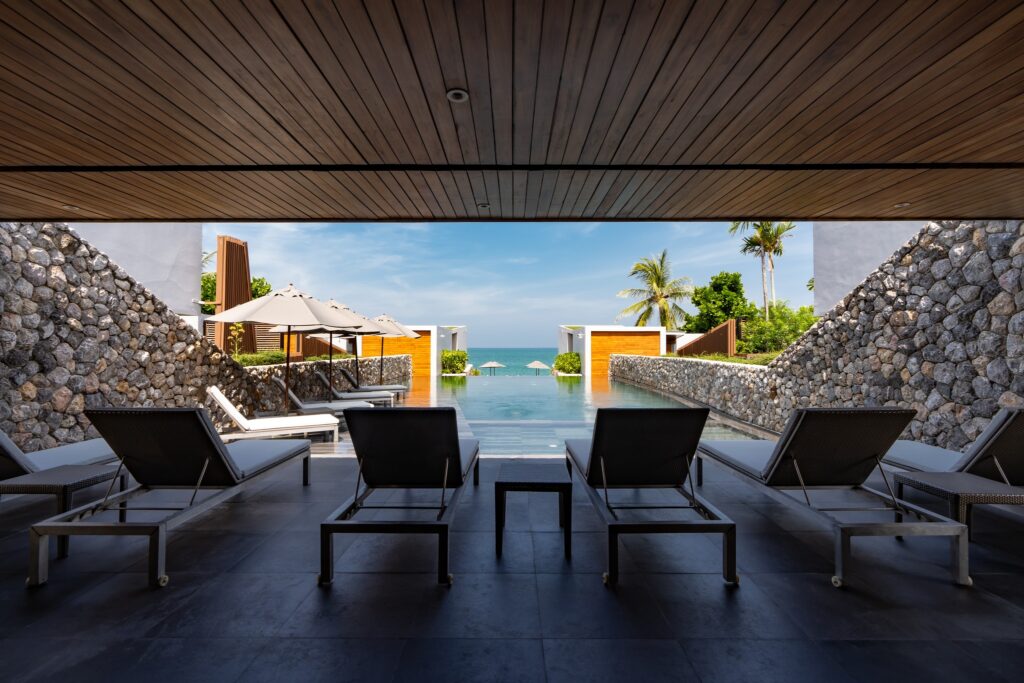
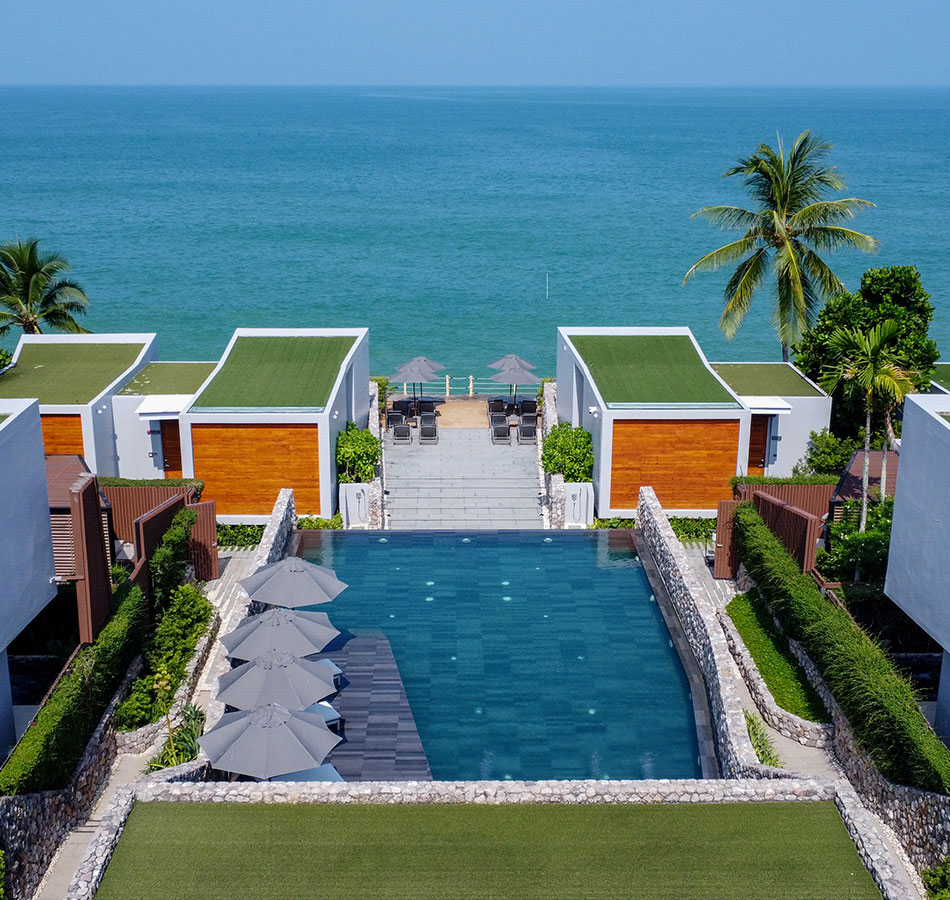
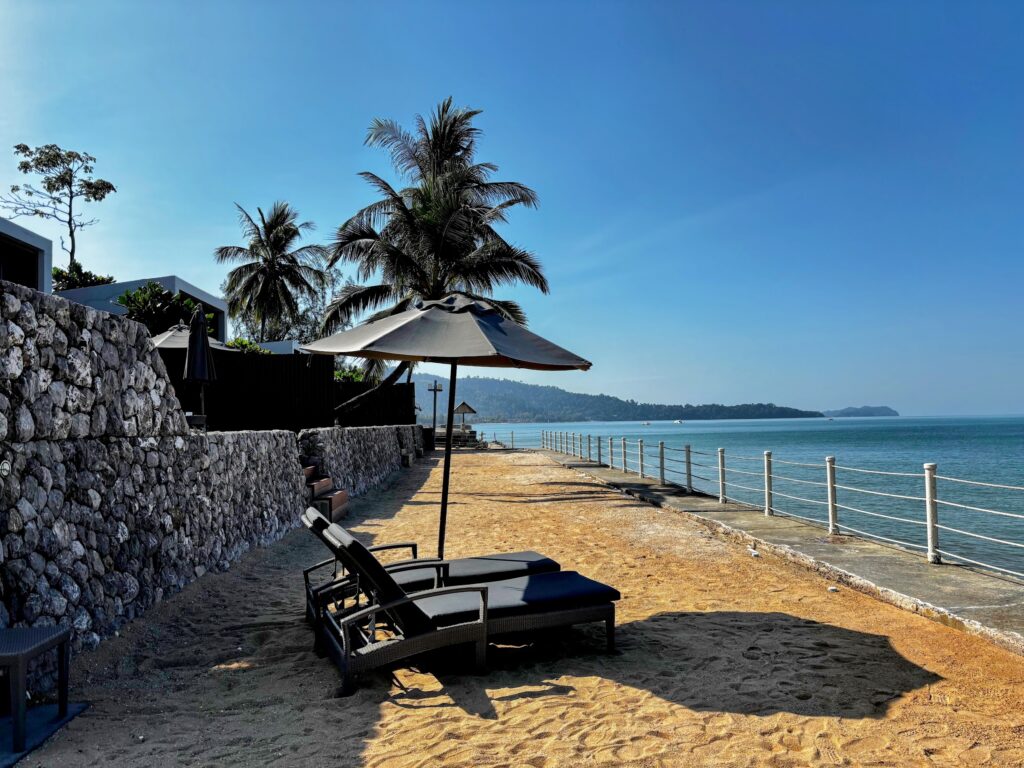
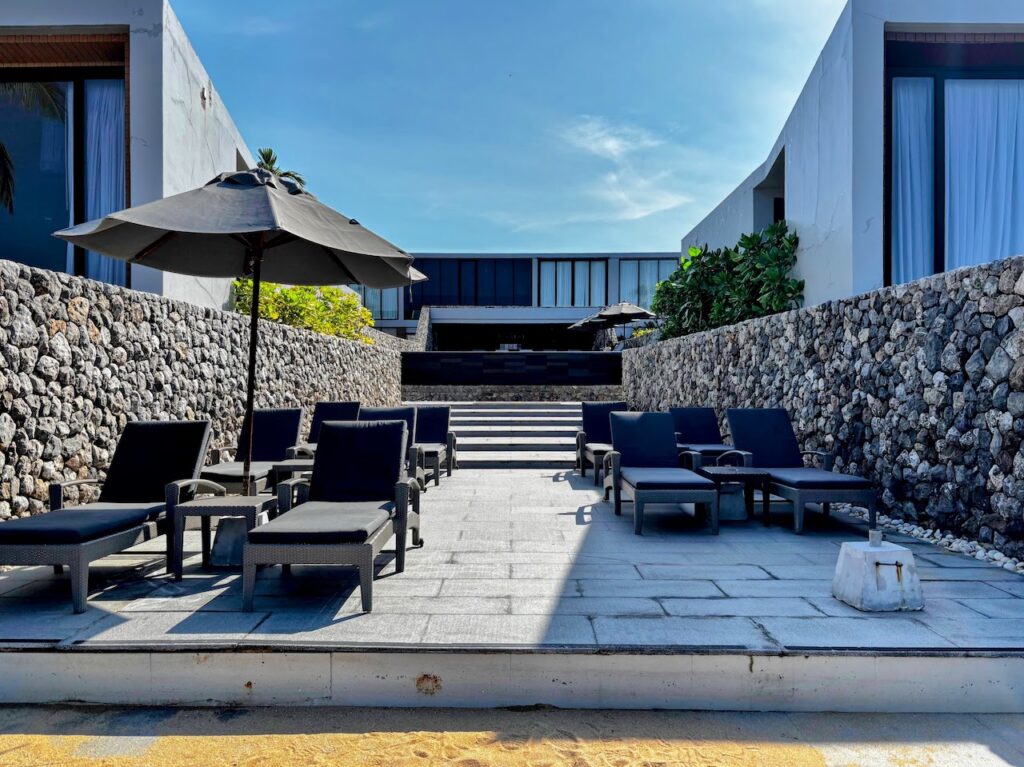
Sleek sun loungers flank either side, and for those without a beachfront villa, there is no need to feel short-changed: plenty of loungers sit just beyond the pool, right up against the sea, offering the same unhurried, open-air vibe. Both the pool and the restaurant make the most of the view: spend your days lounging by the former and your evenings at the latter, and feel quite smug about doing so.
Food & Drink
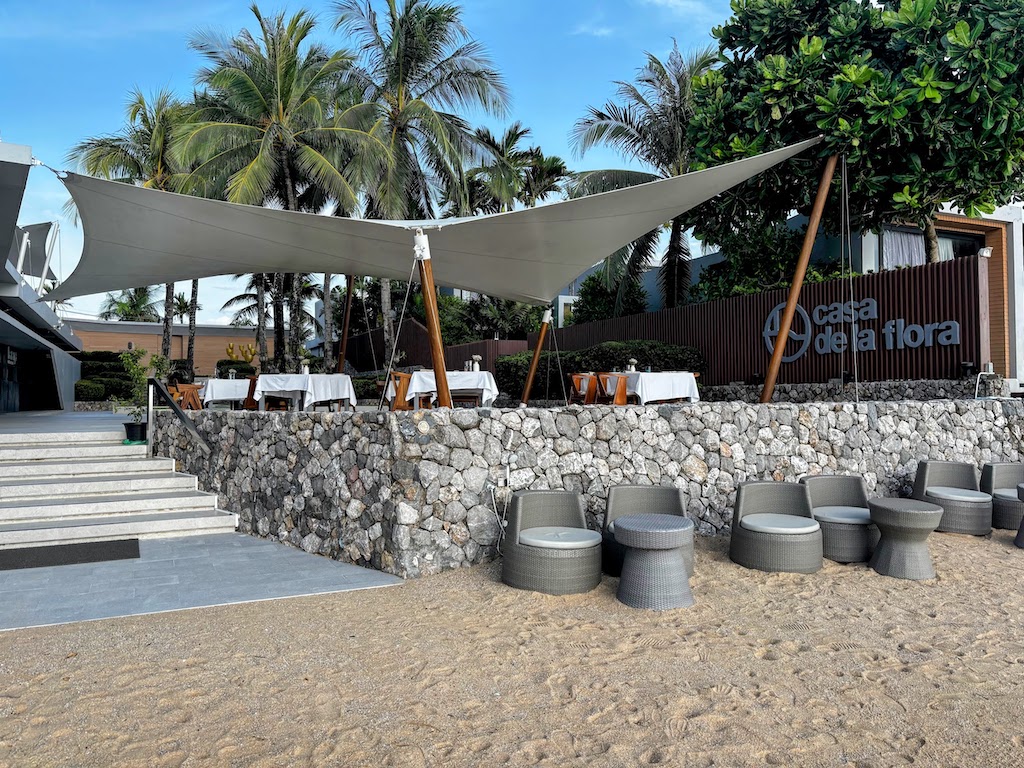
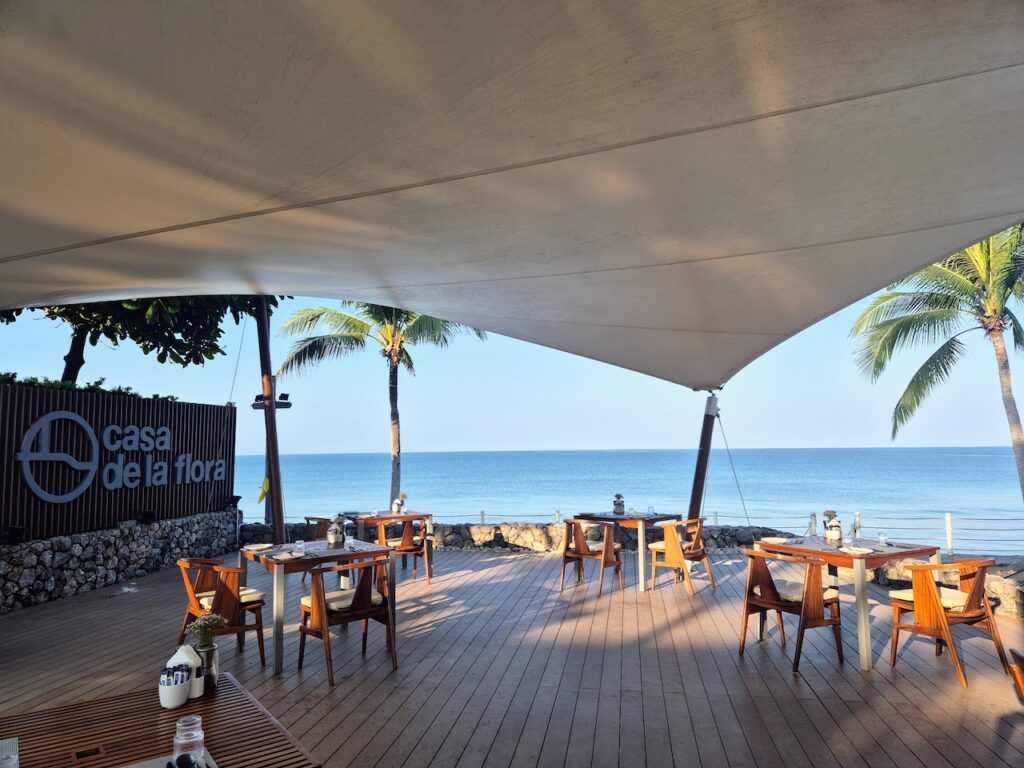
La Aranya sits right at the water’s edge, open to the breeze and the last light of the day, serving Thai food alongside international dishes. Hotel restaurants rarely justify the markup; La Aranya justifies the stay. It’s top notch.
There aren’t many better things than a long, leisurely hotel breakfast. Breakfast here is served à la carte until 2pm – a radical policy that we think more hotels should adopt.
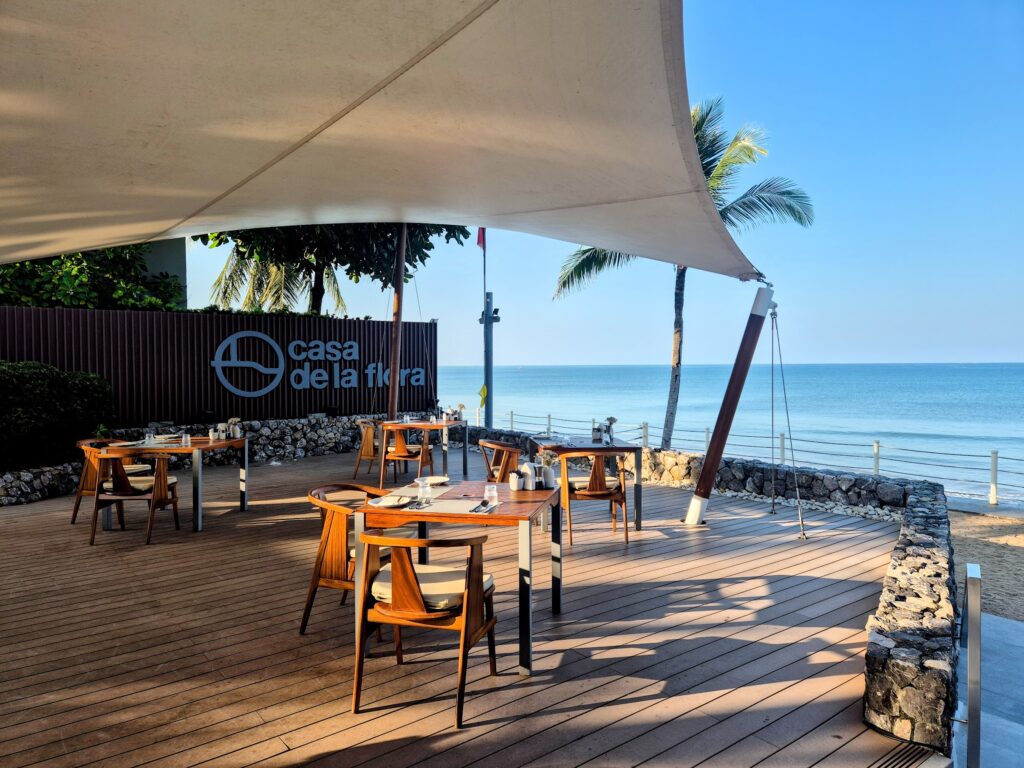
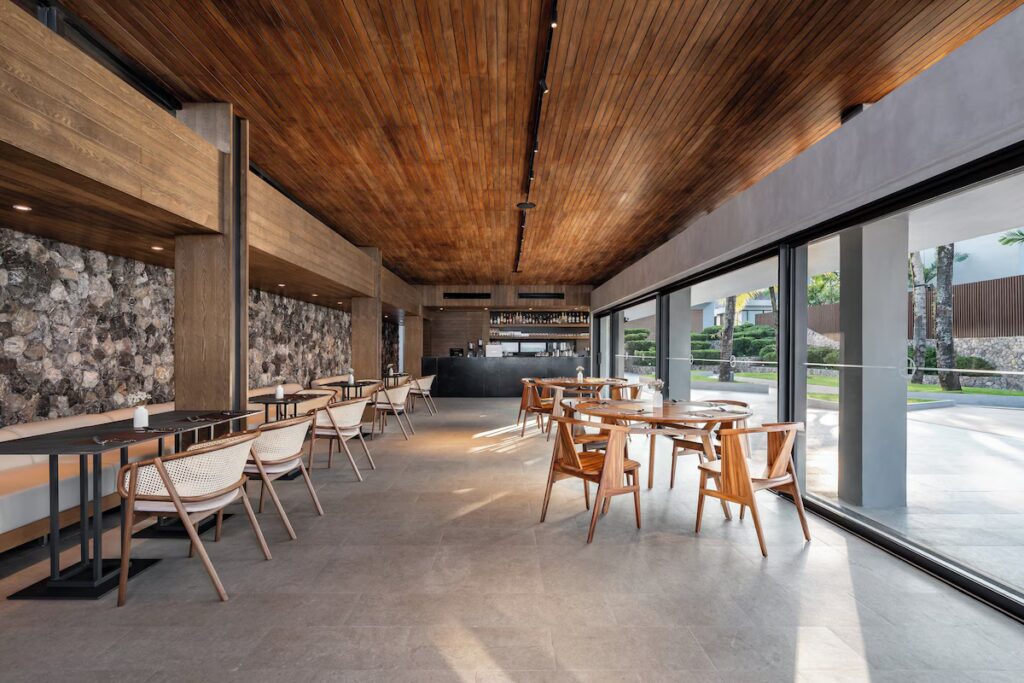
No buffet, no chaotic steam trays: everything arrives cooked to order, and with lunch starting at midday, the kitchen turns ingredients over constantly. It shows in the freshness of the food.
A waiter does the rounds with a basket of bread and pastries; there’s a good cheese and charcuterie selection alongside eggs and flamboyantly fluffy pancakes, but the Thai options are the real draw. The BBQ pork with sticky rice is not to be missed, nor is the kanom jeen – rice noodles in a southern Thai fish curry sauce that’s as typical a Phuket breakfast as it gets, and a good place to start for anyone unfamiliar with the cuisine. The unagi bowl, roasted eel over Japanese rice with shrimp roe and miso soup, is another highlight. Dishes are small so you can try more than one, just like at a buffet, but without any of the buffet’s logistical horrors.
The daily specials are worth your attention: on our visit, the khao mun gai tod was delicious, and the crispy pork belly with Chinese dipping sauce was another option that looked good going by. A pan-seared foie gras with a blueberry reduction was less appealing at 9am, though some mad bastard next to us ordered two plates of it. Before you’re done, ask about the steamed sesame, chocolate and custard buns, which are sourced from a well-regarded tea shop in nearby Takua Pa.
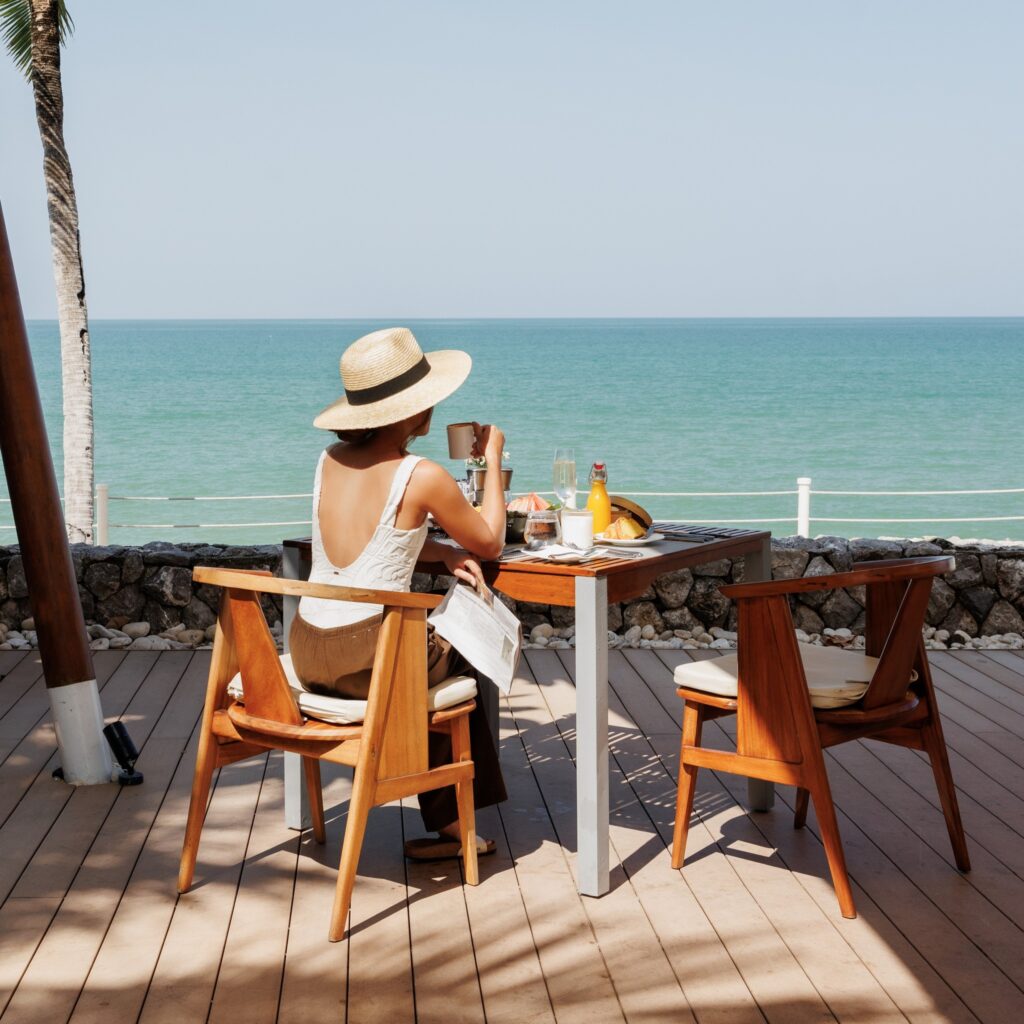
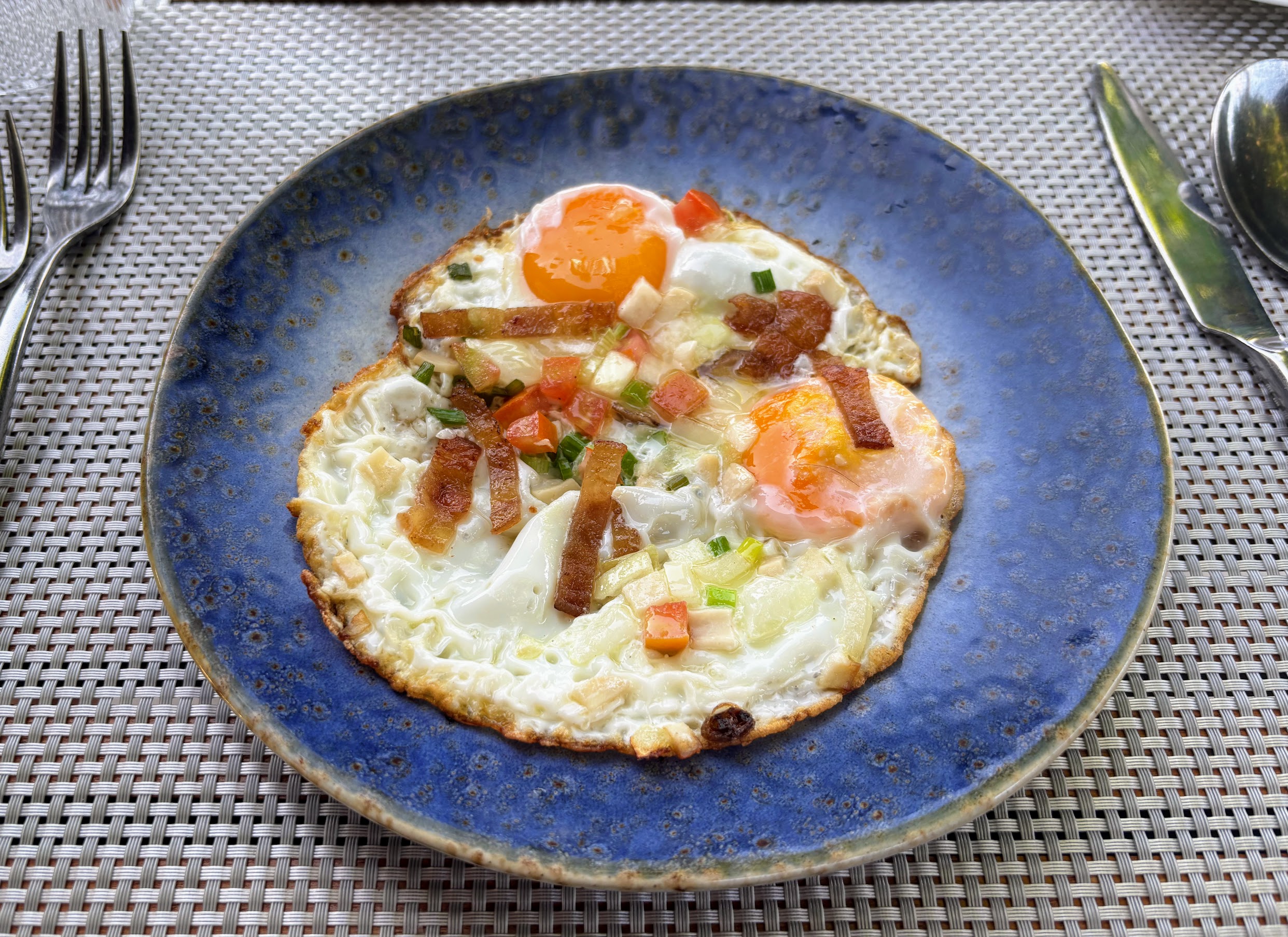
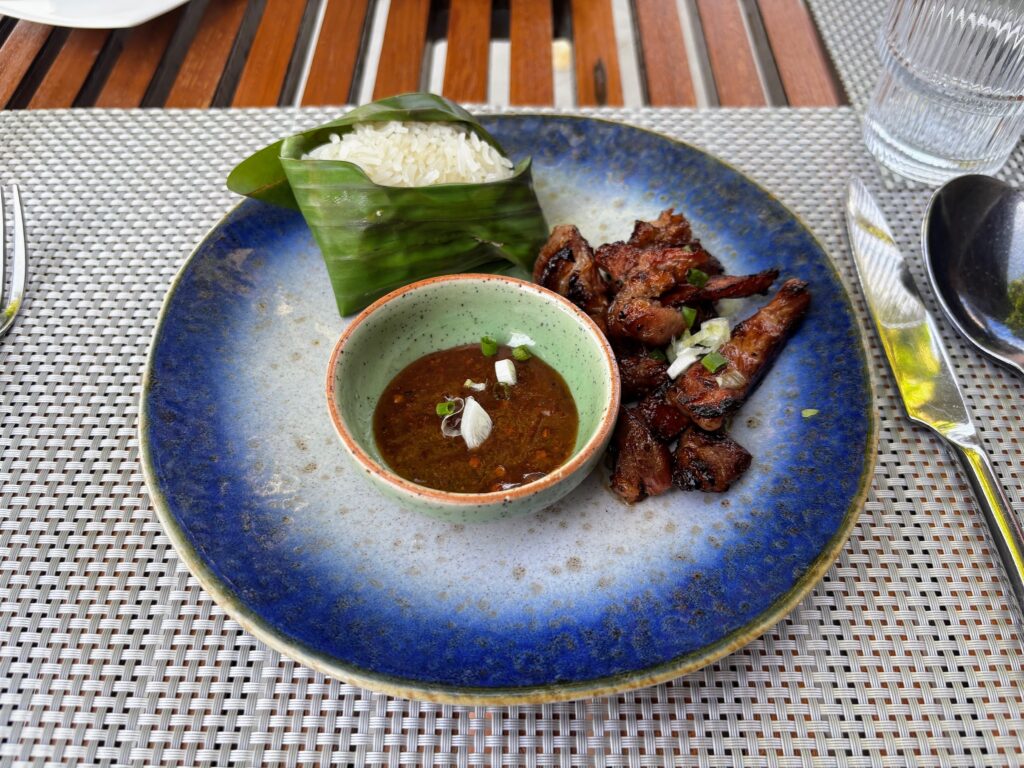
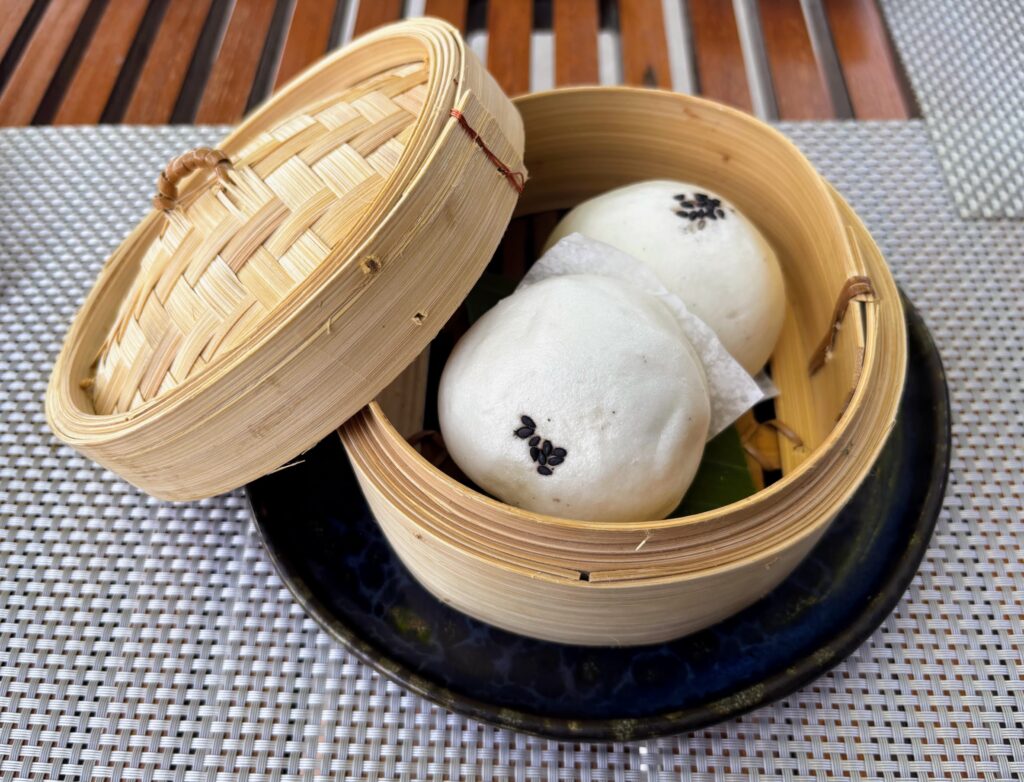
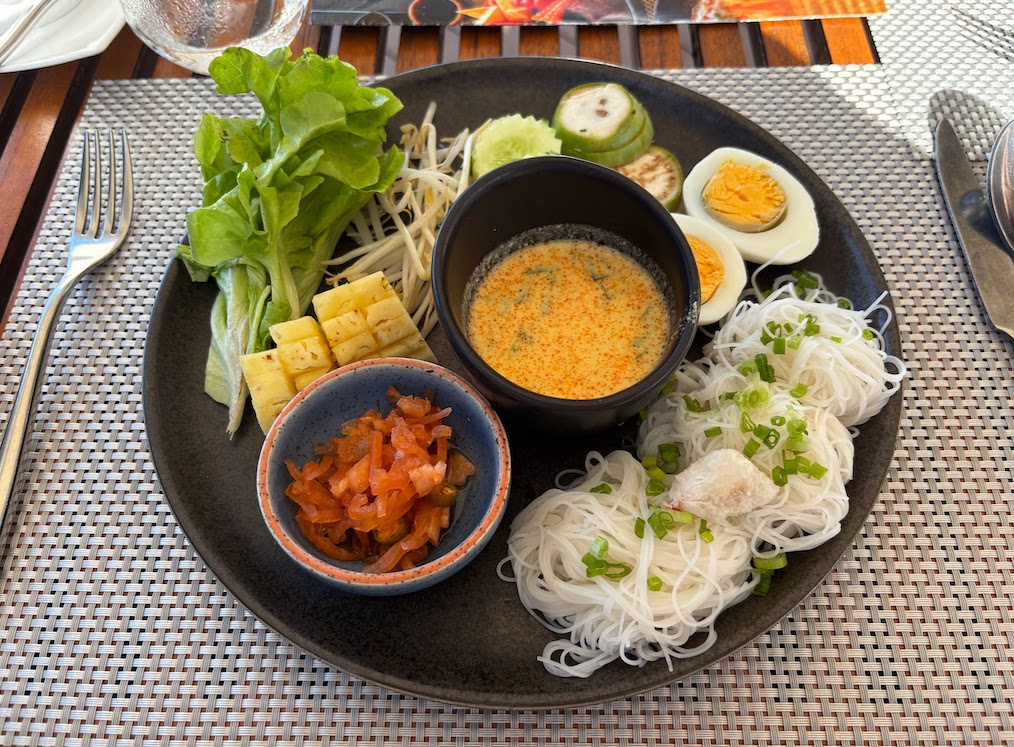
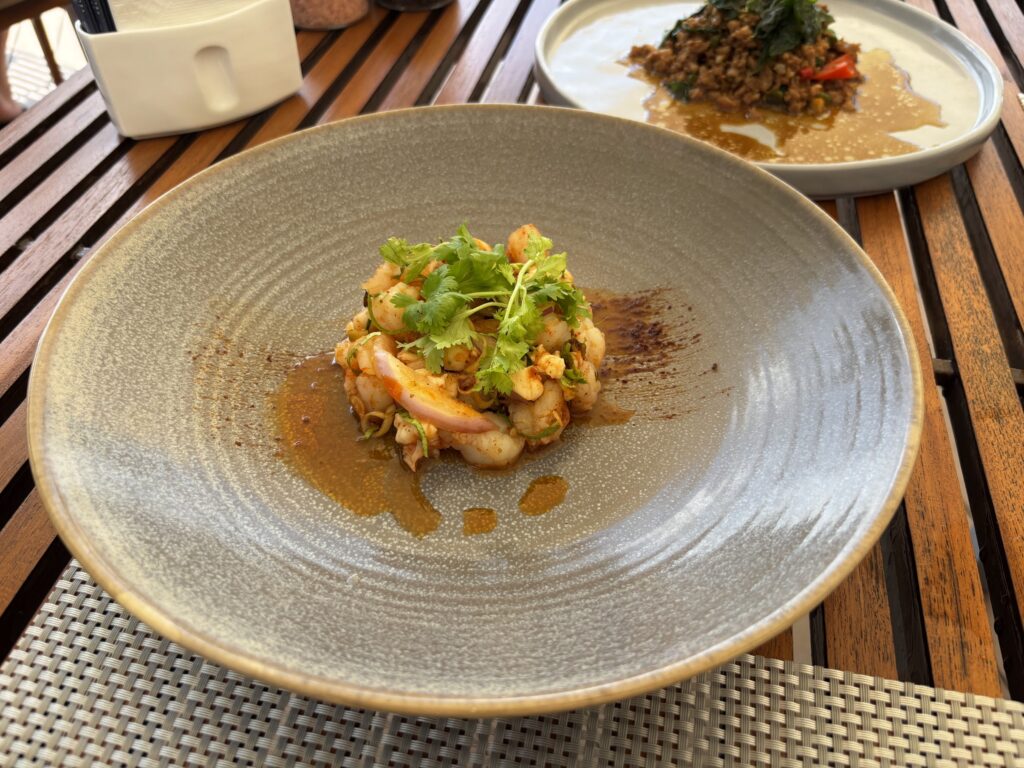
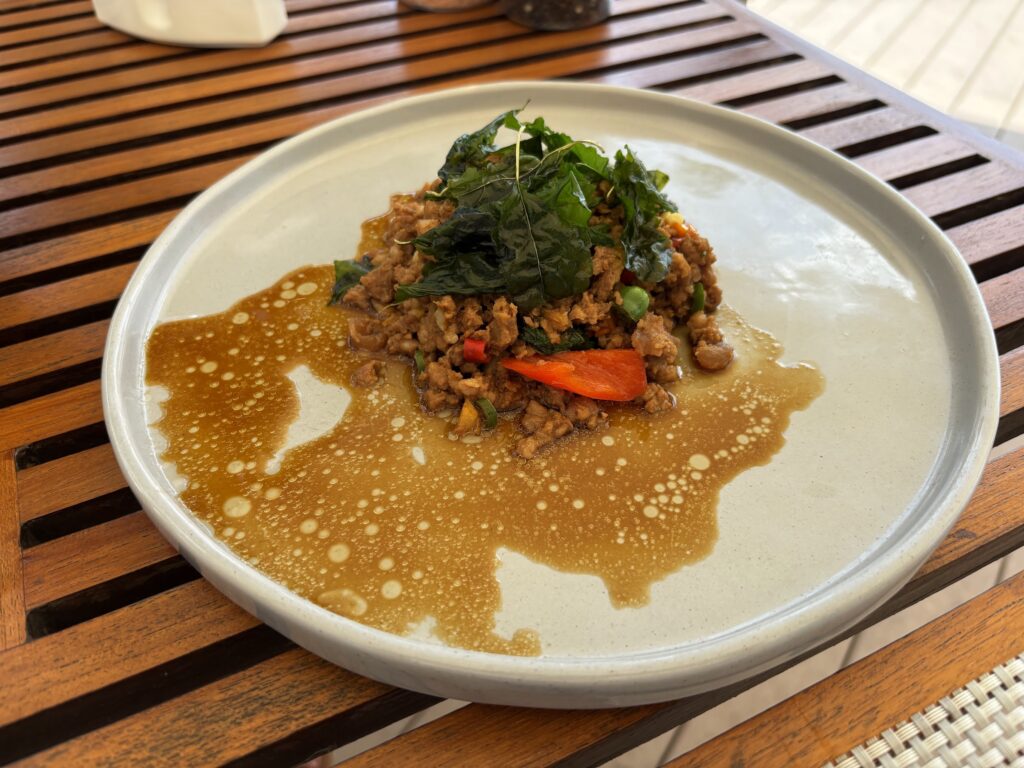
Lunch runs from midday, with a focus on fresh, organic ingredients that carries through into the evening. We had a mango salad and a pad krapow. Both beautifully presented and seasoned vigorously.
The register shifts to something more romantic in the evening. White tablecloths appear and the place settles into an intimate pace, bathed in amber light, the sunset doing its thing beyond the tables.
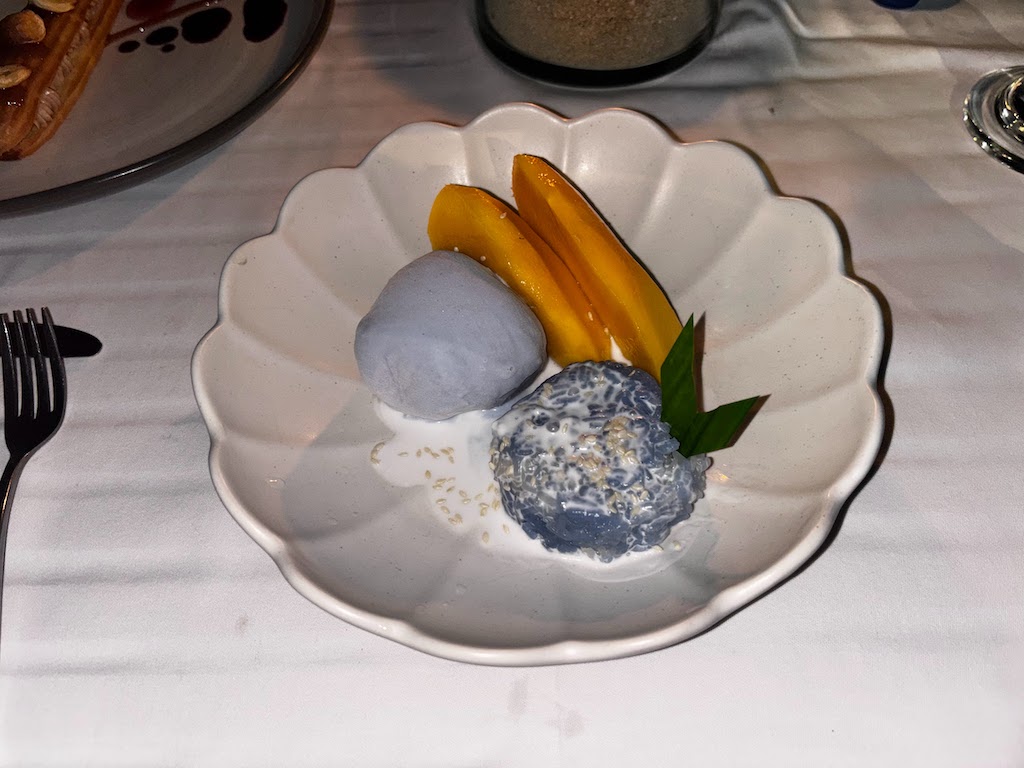
We noted earlier that the design of the hotel could be anywhere in the world. The dinner menu says otherwise. The Southern Thai set menus arrive in tiffin boxes, an approachable way to explore the local cuisine and understand what goes with what. Southern Thai food demands balance, and ordering à la carte risks a table that’s all sour or all sweet. The tiffin format does the balancing for you, and it works. We had nam prik goong sieb, a gloriously assertive relish, alongside crispy pla sai tod kanim, moo hong, the local favourite of slow-braised pork belly, and goong phad kapi. Conclude with a mango sticky rice, as is customary.
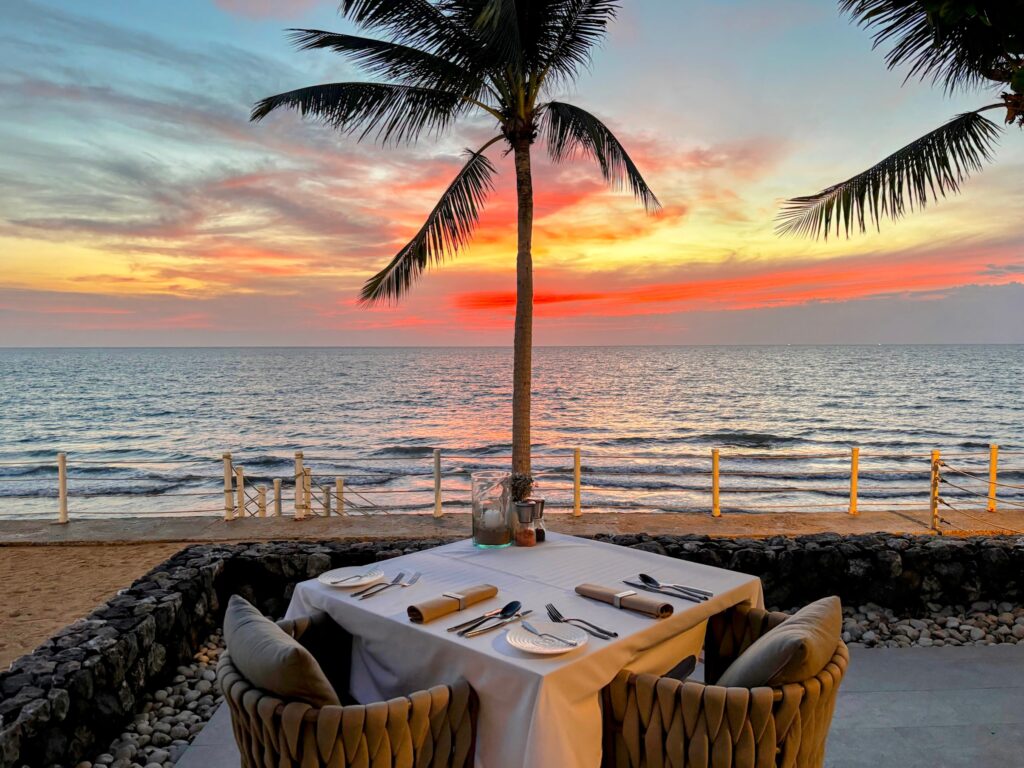
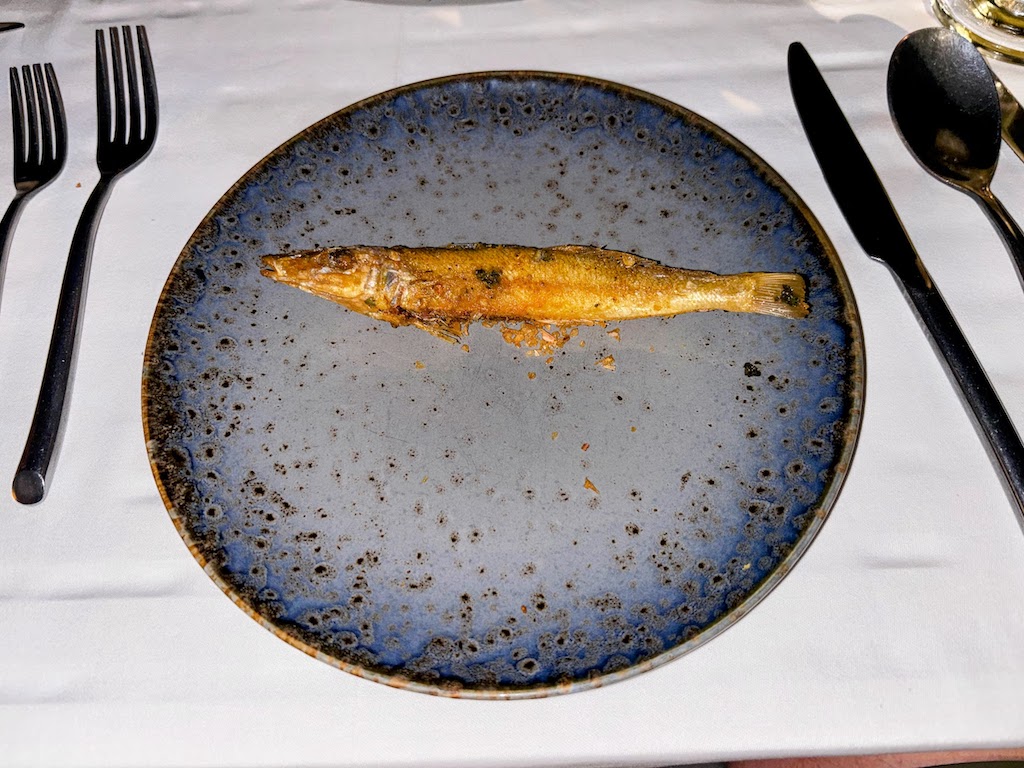
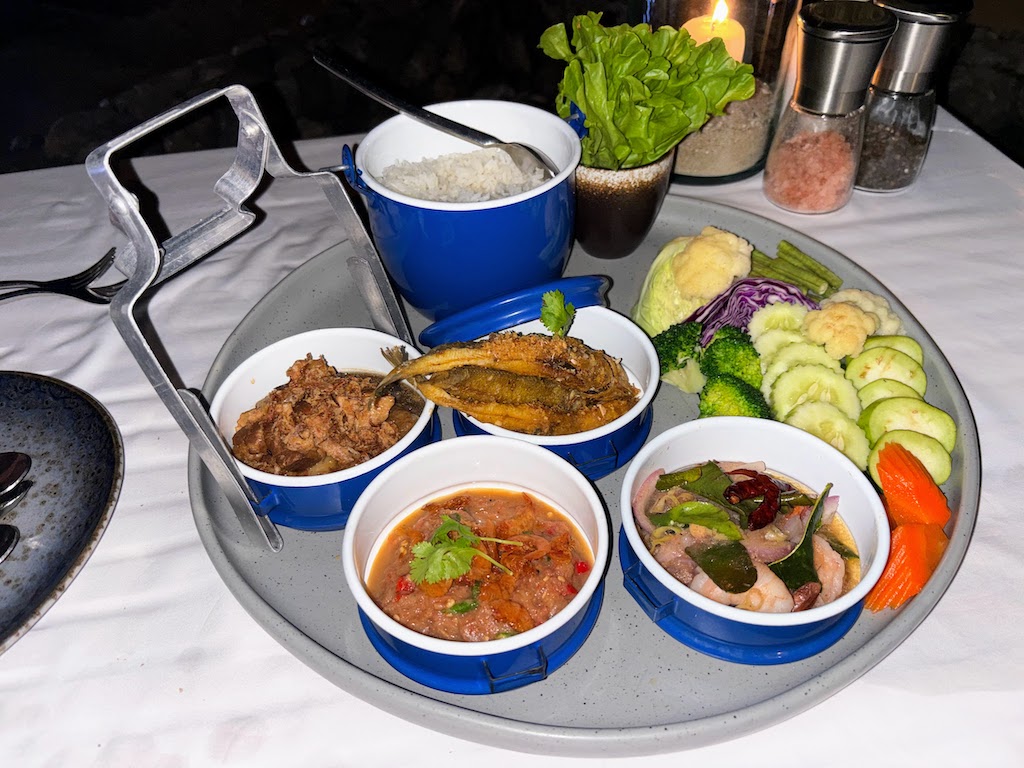
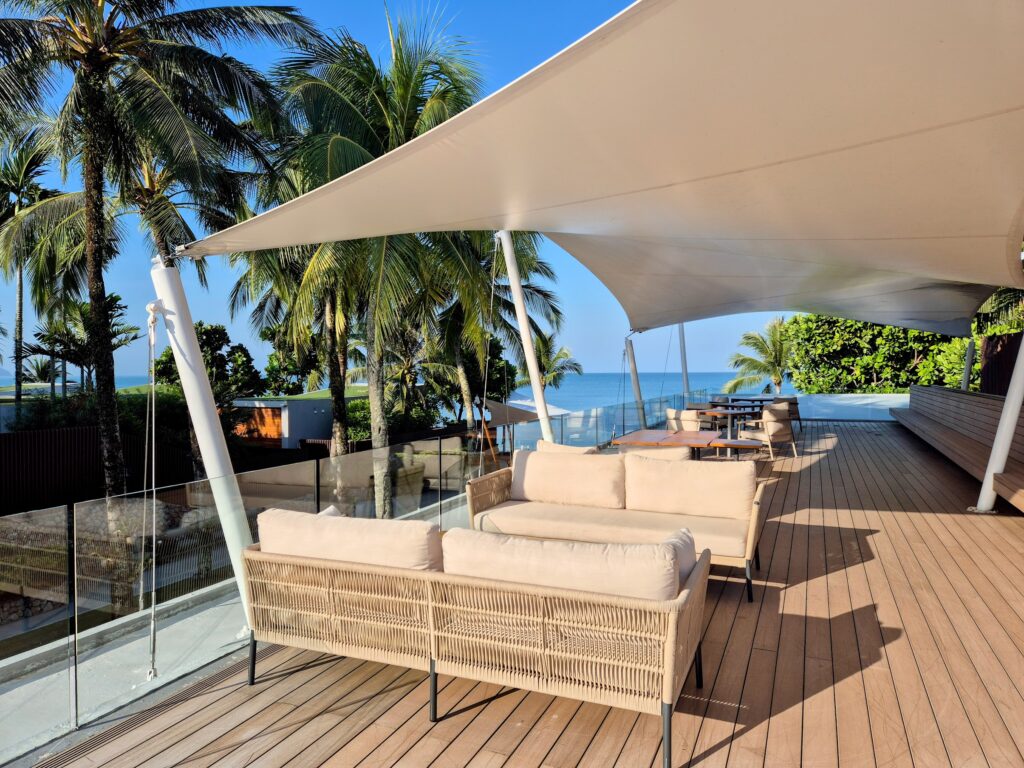
There are plenty of tub chairs in front of the restaurant where you can have an evening drink. Above, a rooftop lounge offers panoramic views of the ocean. The hotel calls it the check-in lounge, and if you arrive early while waiting for your room, there are few better places to be.
Ideal For…
Casa De La Flora is concrete, contemplative, and obsessive about the finer details. It suits those who notice them.
Couples after design-led seclusion. Private plunge pools, a complimentary minibar, and candlelit dinners at La Aranya make this one of the most romantic stays on the Andaman coast. It’s a grown-up resort without ever announcing itself as one.
Those who notice the details. The VaSLab architecture, TROP landscaping, Anon Pairot’s gold sculptures and Korakot Aromdee’s bamboo installations reward repeat looking. This is a place where the angles are deliberate and the sightlines are earned.
Keen diners who don’t want to leave the grounds. La Aranya’s à la carte breakfast runs until 2pm, the Southern Thai tiffin-box set menus at dinner are a masterclass in balance, and the steamed buns from Takua Pa are worth the trip alone.
A base for Phang Nga province. The Similan Islands departure pier is nearby, Takua Pa Old Town and its Sunday Walking Street a short drive north, and Khao Lak-Lam Ru National Park borders the resort area. The hotel offers special rates for Thailand residents, which makes return trips easier to justify.
It’s perhaps less suited to families with young children, despite the hotel welcoming them. The atmosphere is slow-paced and peaceful, the pools aren’t built for splashing, and the beach requires a degree of tidal awareness that toddlers are unlikely to respect.
Why Stay?
At Casa De La Flora you could easily spend an entire week drifting between your villa, the pool and the restaurant, and many guests do, returning year after year. It is easy to cement a connection to the hotel (pun intended).
If you lived in Thailand, this is the kind of place you would make a point of returning to for a couple of nights as part of a glorious weekend away, at least once a year. The design is confident enough to hold your attention across multiple stays, the restaurant good enough to anchor each day around mealtimes, and the setting quiet enough that the Andaman, rather than any programme of activities, sets the pace. Heaven, then.
Villas at Casa De La Flora start from around 8,000 THB (approximately £185) per night in low season, rising to around 16,000 THB (£370) in high. Rates include breakfast.
Address: Khuk Khak, 67 213, Takua Pa District, Phang Nga 82220, Thailand
Website: casadelaflora.com