Modern life is rubbish, hey? Always on and always exhausting, it’s no wonder that relaxation has become both a luxury and a necessity in 2026. While many turn to conventional methods like meditation or yoga, there are those who seek solace in more practices both ancient and innovative. These unique experiences often combine truly old school wisdom with modern ideas, offering a distinctive escape from the stresses of daily life. Here are some of the world’s most intriguing and esoteric ways to unwind.
Forest Bathing (Shinrin-Yoku)
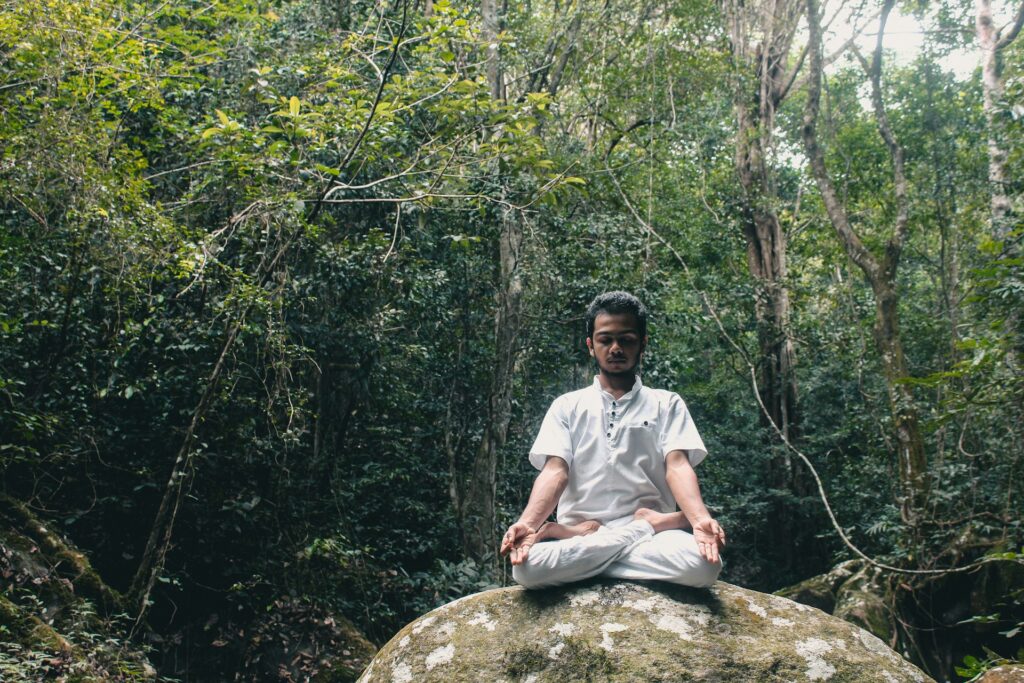
Originating in Japan, Shinrin-yoku, or forest bathing, is the practice of taking in the forest atmosphere. It’s a form of eco-therapy that involves all of the senses. As you walk slowly through the forest, you breathe in the volatile substances, known as phytoncides, which trees emit to protect themselves from germs and insects.
These substances are believed to have health benefits for humans, such as reduced stress hormone production, improved feelings of happiness, and increased natural killer cell activity, which helps fight off infections and may even have anti-cancer effects.
Of course, flying to Japan to lie down in a forest isn’t exactly accessible for most of us. Fortunately, a number of yoga wellness retreats now incorporate forest bathing into broader programmes of yoga, meditation and breathwork – offering a more holistic way to step away from the noise, reconnect with yourself, and reap the benefits closer to home.
Flotation Tanks (Sensory Deprivation Tanks)
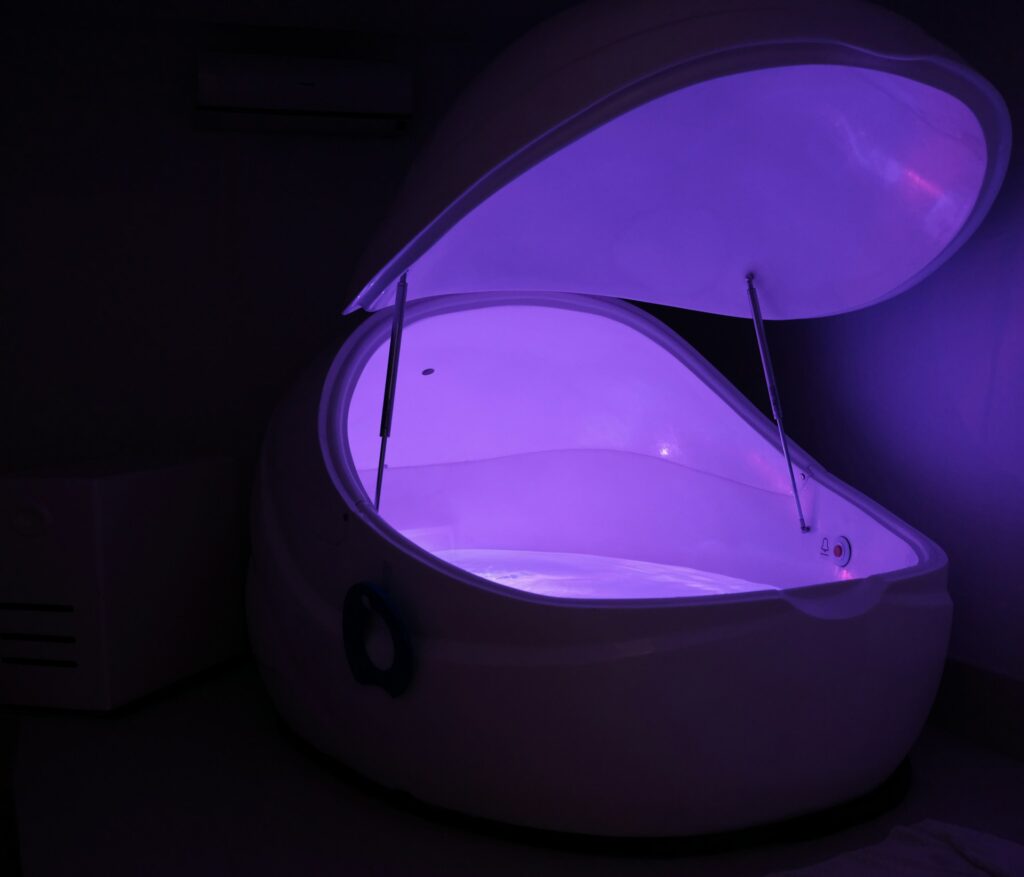
Floatation tanks, also known as sensory deprivation tanks, are designed to create a condition of sensory deprivation. In these tanks, you float in salt-saturated water at skin temperature, and because the tank is soundproof and pitch black, your visual, auditory, and tactile senses are muted.
This environment can lead to deep relaxation and a meditative state, as the lack of sensory input allows the brain to drift into theta brainwave patterns, which are often associated with deep relaxation and visualisation.
Biodynamic Massage
Biodynamic massage is an advanced form of therapeutic massage that is part of biodynamic psychotherapy. It involves listening to the body’s subtle rhythms and responding to its messages. The technique is designed to help the body in its natural process of self-regulation and healing, and it can involve the use of stethoscopes to hear the body’s ‘psycho-peristalsis’, a term for the sounds the body makes during the digestive process, which can indicate the client’s emotional state.
Yoga Nidra
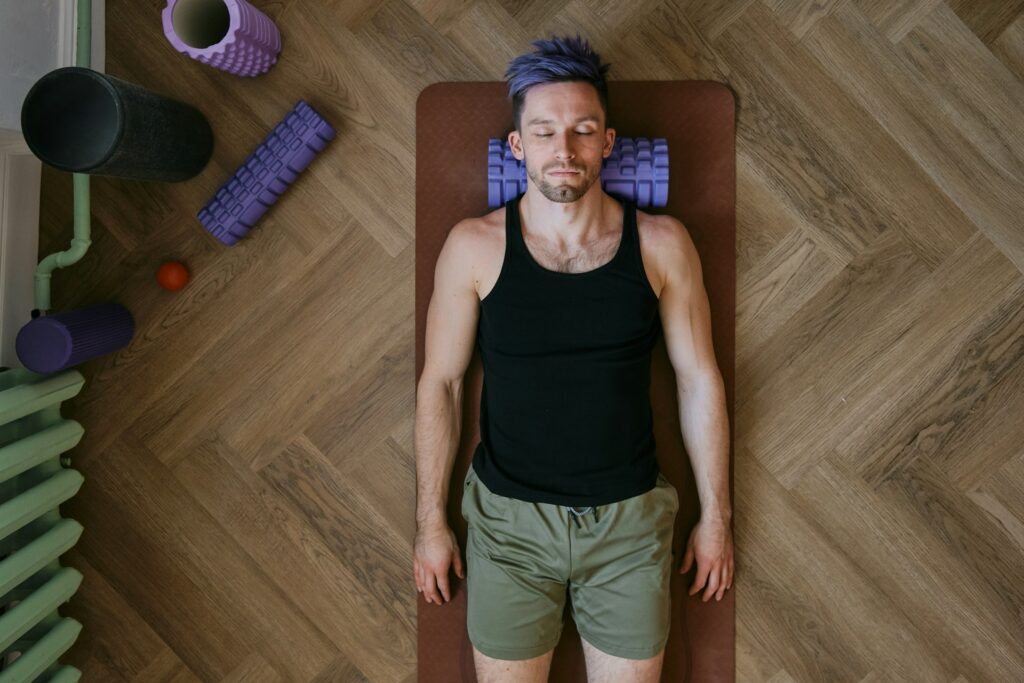
Yoga Nidra, or ‘yogic sleep’, is a state of consciousness between waking and sleeping, like the ‘going-to-sleep’ stage. It is a state in which the body is completely relaxed, and the practitioner becomes systematically and increasingly aware of the inner world by following a set of verbal instructions. This state of deep relaxation can help release stress and tension and has been used to aid PTSD, anxiety, and sleep disorders.
Aromachology
Aromachology is the study of the influence of odours on human behaviour and the psychological effects of smells. It differs from aromatherapy in its focus on the psychological, rather than therapeutic, effects of aromas.
Personalised scents are crafted to evoke positive sensory responses, such as relaxation or invigoration. This can involve a detailed personal scent profile and the creation of a unique fragrance designed to soothe and relax the individual.
Gong Bath
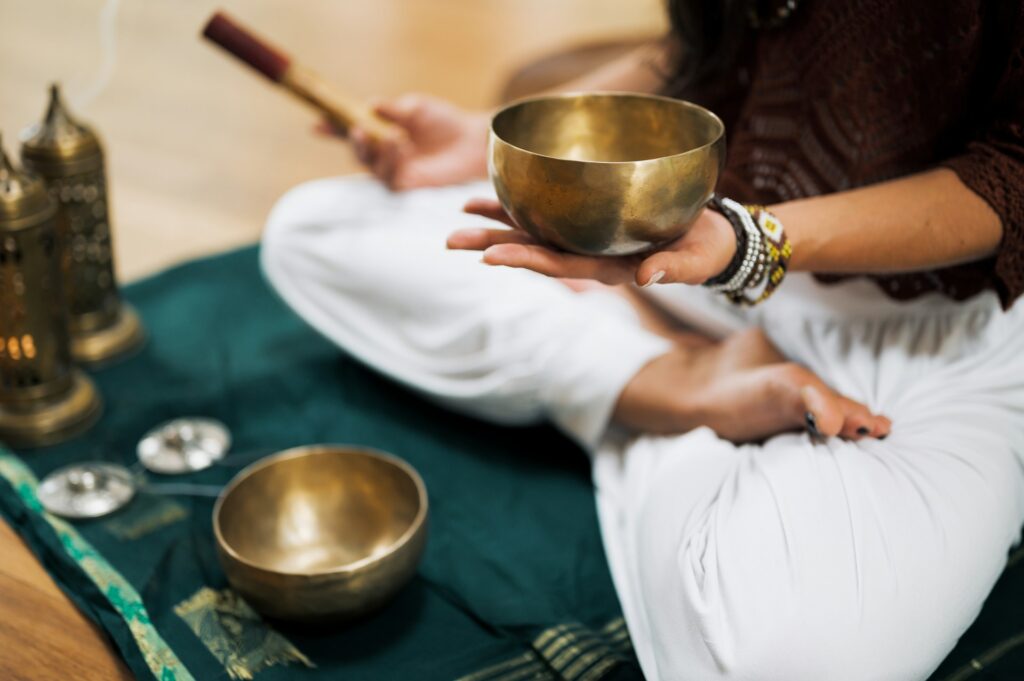
A gong bath is a form of sound therapy where the gong is played in a therapeutic way to bring about healing. Participants typically lie down on meditation mats, close their eyes, and allow the sound waves to wash over them. The gong produces a wide range of harmonics that are said to restore vibrational balance and harmony to the body. The experience can be deeply relaxing and is said to affect the body and its meridians, or energy lines, by releasing blockages, reducing tension, and stimulating circulation.
Labyrinth Walking
Labyrinth walking is an ancient practice used by many different faiths for spiritual centering, contemplation, and prayer. Entering the serpentine path of a labyrinth, you walk slowly while quieting your mind and focusing on a spiritual question or prayer.
Unlike mazes, labyrinths have a single path to the centre and back and are not designed to be difficult to navigate. This walking meditation can be very calming and insightful, providing a simple, yet profound, way to relax and find inner peace.
Beehive Therapy
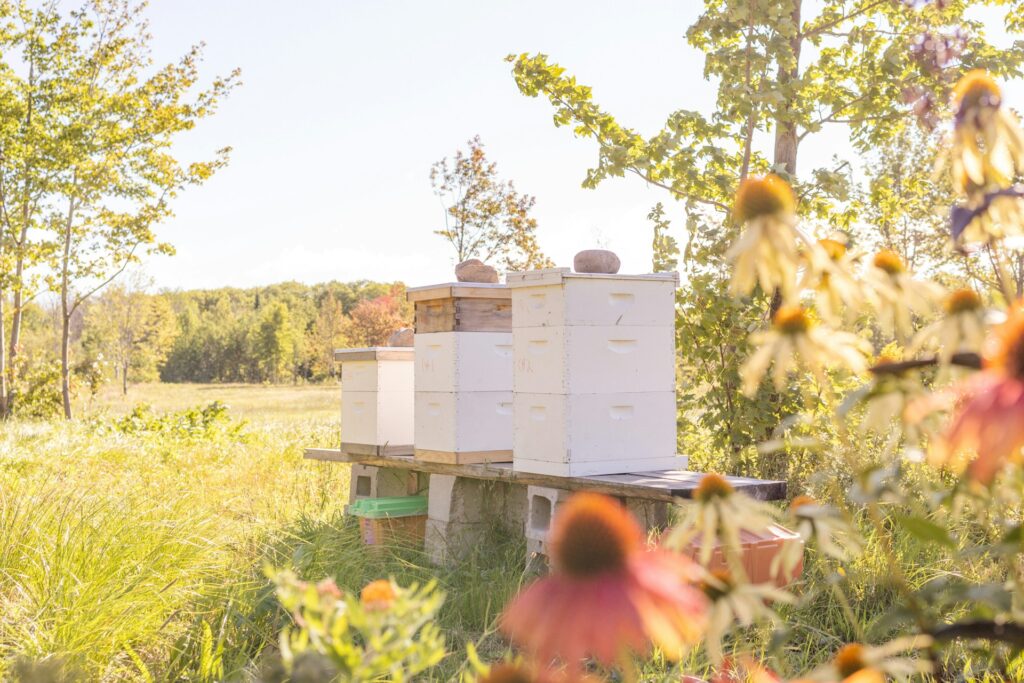
Beehive therapy, also known as apitherapy, is a unique relaxation technique that involves the therapeutic use of bee products, including honey, pollen, propolis, royal jelly, and bee venom. However, one of the most esoteric forms of apitherapy is the practice of lying near or on top of a beehive. The subtle vibrations and the humming sound of the bees are said to promote relaxation and well-being.
The idea is that the low-frequency vibrations that emanate from the hives can have a calming effect on the human body, similar to a deep meditation or the resonant sounds of a gong bath. This practice is also thought to harness the healing properties of bee venom, which is administered in tiny, controlled amounts through the skin. It’s a practice that not only requires the guidance of an experienced apitherapist but also a love and appreciation for these vital pollinators.
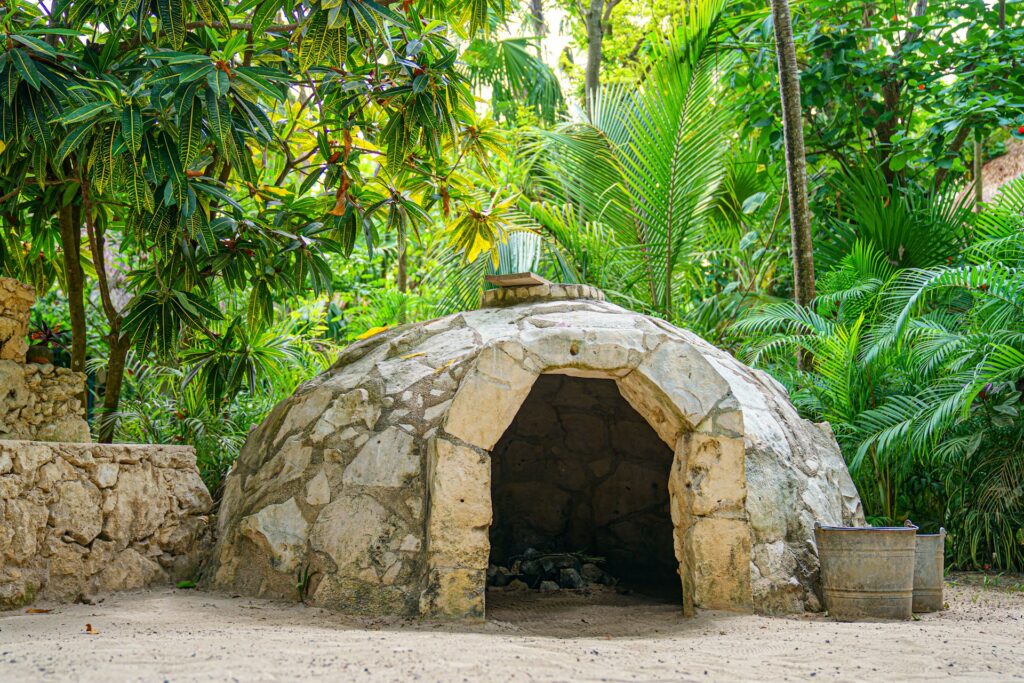
Temazcal
The temazcal is a Mesoamerican sweat lodge tradition dating back over a thousand years. The word comes from the Nahuatl temāzcalli, meaning ‘house of heat’, and the practice was used by the Aztecs as a purification ritual before and after battle. Today, it remains widely practised across Mexico and Central America.
Participants enter a low, dome-shaped structure built from volcanic stone, wood or adobe. Heated volcanic rocks are placed at the centre, and water is poured over them to produce dense herbal steam, typically infused with sage or copal. A shaman or temazcalero guides the group through a ceremony that can last up to two hours, incorporating chanting, breathwork and periods of deep contemplation in near-total darkness.
The science is more robust than you might expect. A 2005 study published in Psychosomatic Medicine found that repeated thermal therapy reduced appetite loss and subjective complaints in patients with mild depression. Broader research into heat exposure has linked it to improved blood circulation, lowered chronic pain and enhanced immune function.
The communal element is central too. Unlike many relaxation practices, the temazcal is explicitly collective. As practitioners put it, the community itself is part of the medicine. The combination of extreme heat, sensory deprivation, guided ritual and group vulnerability creates an experience that sits somewhere between a sauna, a meditation session and a form of group therapy, though devotees would argue it’s something else entirely.
The Bottom Line
These esoteric, often fascinating relaxation methods offer a diverse array of options for those looking to find new ways to unwind and achieve a deeper sense of calm. Whether through the embrace of nature, the silence of sensory deprivation, or the resonance of sound therapy, these practices provide innovative paths to tranquillity and well-being.