There’s a particular quality to the Danube between March and June that the rest of the year can’t replicate. The light changes first, pale and watery in the mornings, stretching into long golden afternoons that play across the surface of the river like something borrowed from a Klimt painting. Then the banks follow: cherry blossoms appearing along the Budapest embankments, wildflower meadows filling in outside Bratislava, the Vienna Woods cycling through every available shade of green.
For anyone who has only experienced this stretch of the Danube in high summer, surrounded by tour groups and flattened by heat, the spring version feels like a different river entirely. Fed by Alpine snowmelt, the water runs higher and faster. The cities along its course are unhurried. Restaurant terraces reopen cautiously. And the cultural calendars, dormant since autumn, come back to life.
Budapest’s Slow Thaw
Budapest wears spring better than almost any European capital. The thermal baths take on a different character when the outside air still carries a bite but the water steams regardless. Széchenyi, the big one in City Park, is spectacular in the early morning when steam rises off the yellow neo-baroque pools and the place is still half empty. Rudas, the Ottoman-era bath at the foot of Gellért Hill, is smaller and darker, with a domed central pool that dates back to the sixteenth century and a rooftop terrace overlooking the Danube. Both are worth visiting, but in spring they feel less like tourist attractions and more like the neighbourhood amenity they were always intended to be.
The long green strip in the middle of the Danube, Margaret Island, fills with runners and picnickers weeks before the tourist season gets going. The ruin bars of the Jewish Quarter push further onto the pavements with each passing week, and the Great Market Hall begins stacking crates of new-season Hungarian strawberries, small and deeply fragrant, nothing like the pale imports that fill British supermarket shelves in January. The langós stalls on the upper floor do a roaring trade too, turning out fried dough loaded with sour cream and cheese that costs almost nothing and tastes unreasonably good.
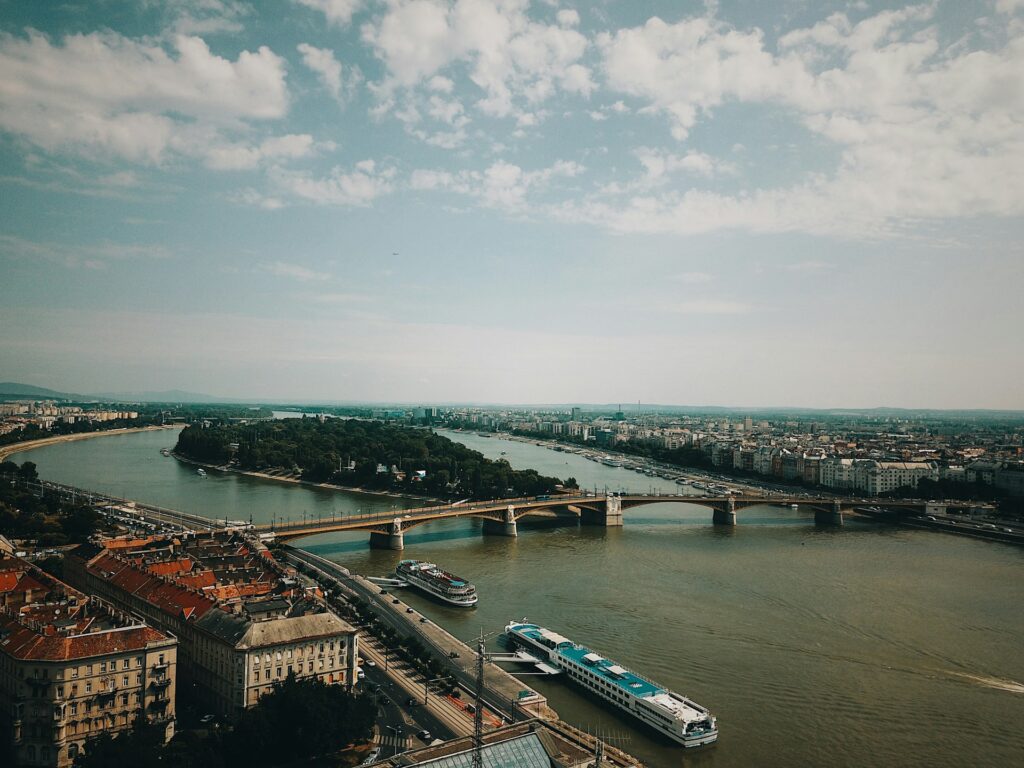
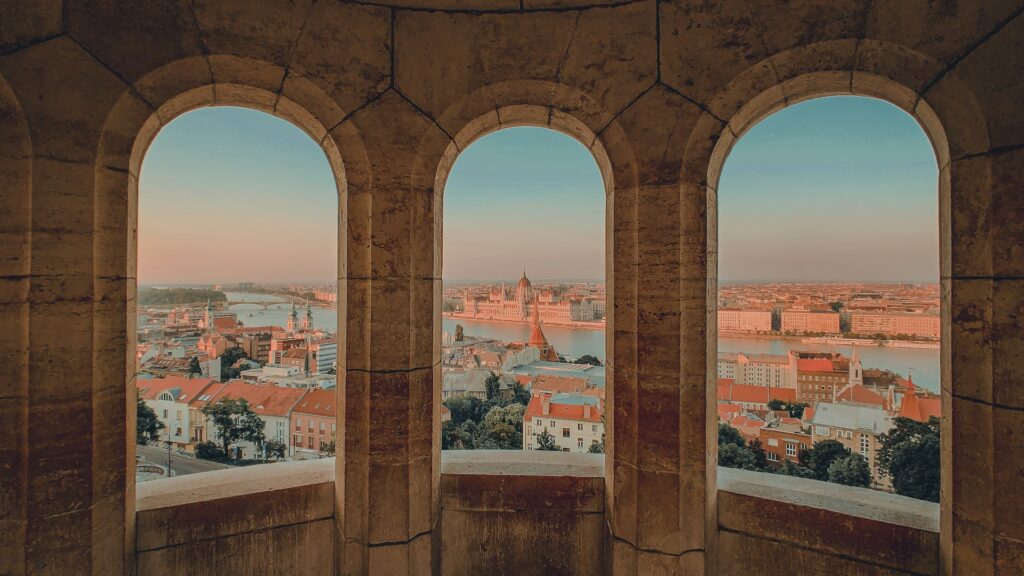
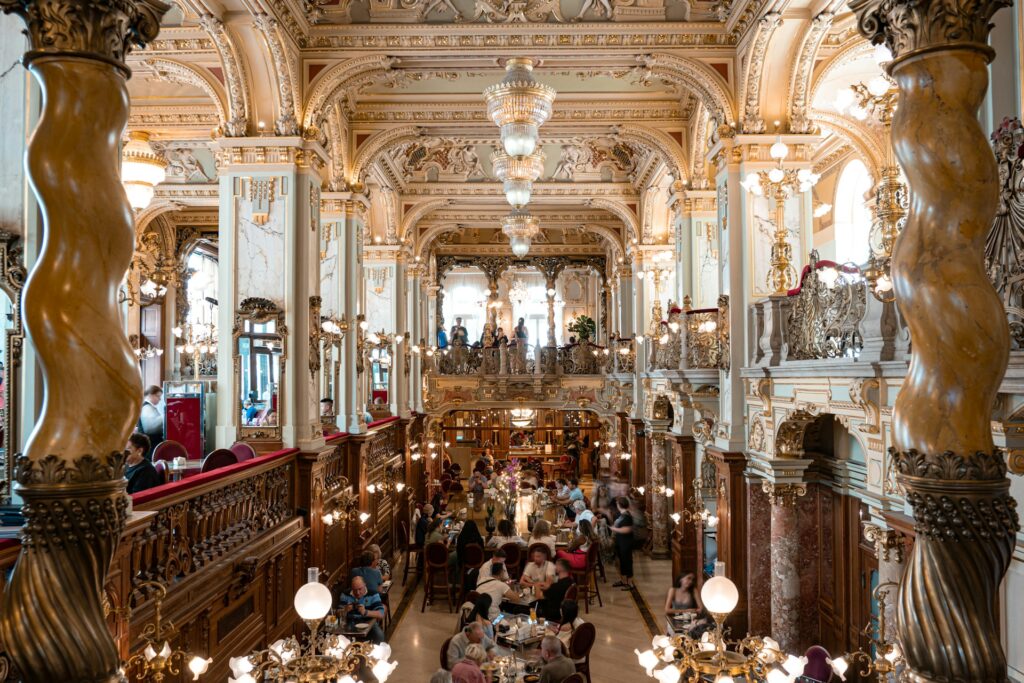
What makes the city particularly rewarding at this time of year is the space it gives you. There are no queues for the Fisherman’s Bastion at sunrise. You can walk into Café Gerbeaud or New York Café without forward planning. The whole place operates at a pace that encourages lingering, which suits the season.
The Budapest Spring Festival, held every April across roughly three weeks, is Hungary’s biggest cultural event – classical concerts, opera, jazz and contemporary dance spread across 40-odd venues, from the grand halls of Müpa and the Liszt Academy to open-air squares and ruin pub courtyards. It has been running since 1981, and a good portion of the programme is free.
Read: 48 hours in Budapest, where empire meets bohemia on the Danube
Bratislava: The Danube’s Most Underrated Stop
Bratislava still catches people off guard, and that remains one of its strongest cards. The compact Old Town is gorgeous, all pastel baroque facades and cobbled lanes that open without warning onto the river, and in spring it looks its best. The castle grounds sit high above the Danube and become a favourite local walking spot once the weather turns, with views stretching to the Austrian border on clear days. Below the castle, the recently restored riverside promenade runs along the southern bank, lined with cafés that begin setting out chairs at the first sign of sustained warmth.
The food scene has sharpened considerably in recent years too. Slovak cooking has always had substance, hearty and Central European, built for cold weather, but a younger generation of chefs is doing interesting things with local ingredients. Spring is when the best of those ingredients arrive: wild garlic from the Small Carpathians, fresh trout, new potatoes. All of it pairs well with the crisp whites from the nearby Little Carpathian wine region, one of Central Europe’s most underappreciated. A handful of wine bars in the Old Town now pour flights from small local producers, and an afternoon spent working through them is an afternoon well spent.
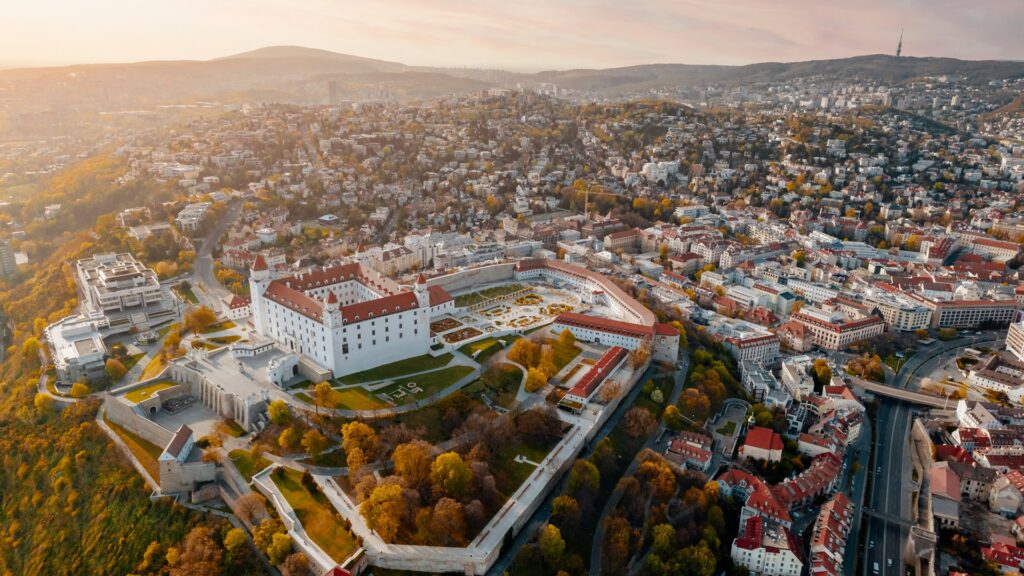
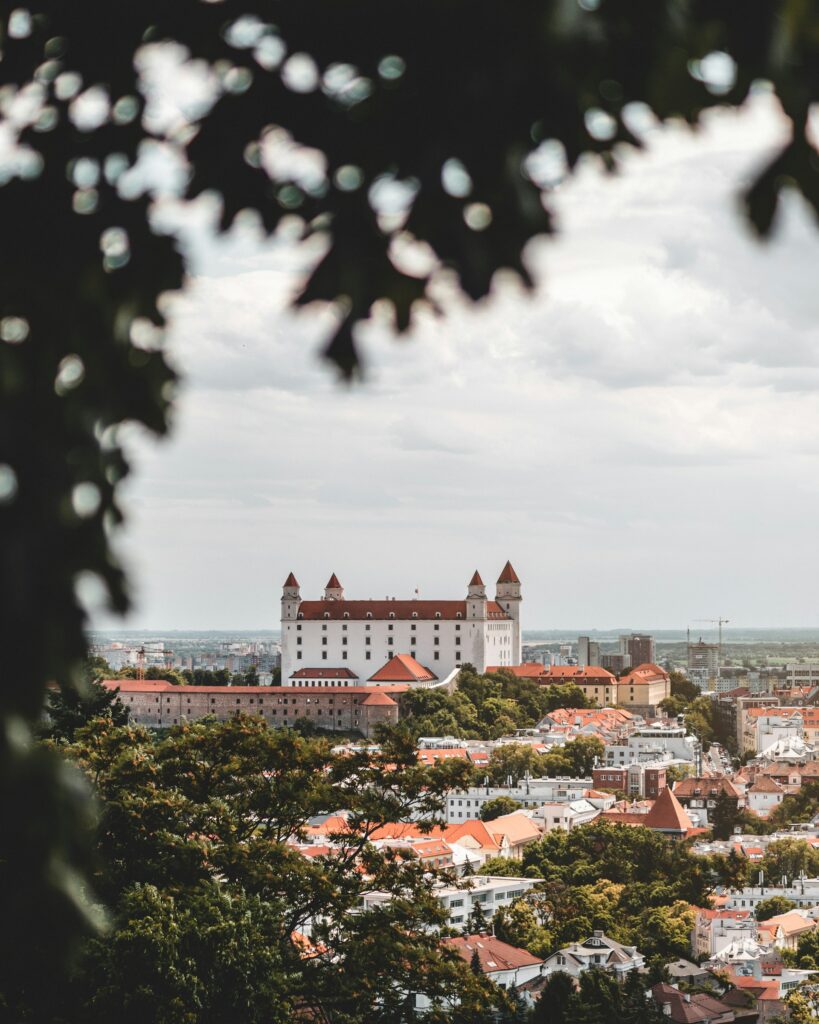
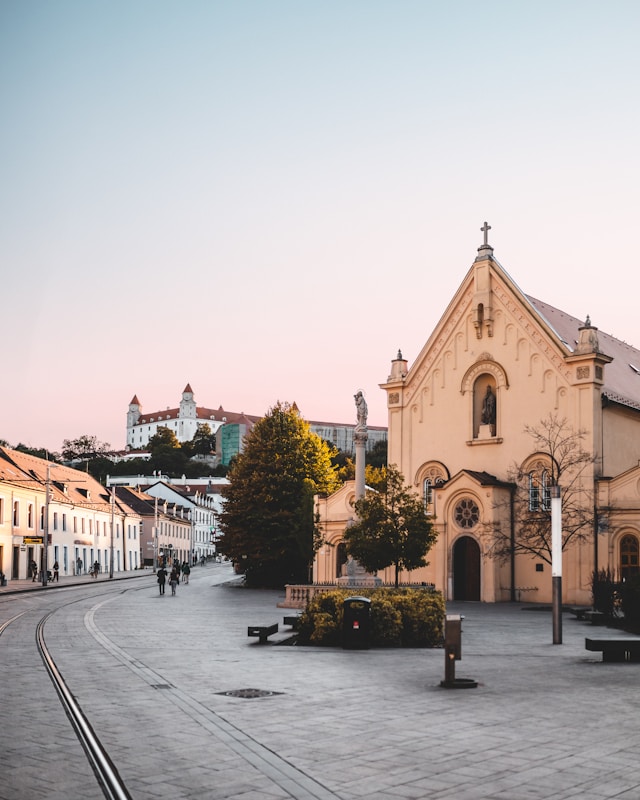
In May, the Slovak Food Festival takes over the castle grounds – widely billed as the country’s biggest outdoor picnic, with producers and chefs from across Slovakia setting up among the ramparts. The views over the Danube make it worth the climb even if you arrive just for a glass of Veltlínske Zelené.
From Bratislava, the most natural next move is to cruise to Vienna, a journey of roughly ninety minutes downstream through some of the Danube’s prettiest stretches. The two capitals sit just sixty kilometres apart, closer than any other pair of national capitals in Europe, and seeing the landscape shift between them from the water adds something that trains and motorways simply can’t.
Vienna In Full Bloom
Vienna commits fully to spring. The Ringstrasse’s chestnut trees blossom in April, the Naschmarkt overflows with asparagus and wild garlic, and the parks, from the Prater to Schönbrunn’s gardens, are responsible for the kind of horticultural excess that makes the Habsburgs’ obsession with gardening feel entirely reasonable.
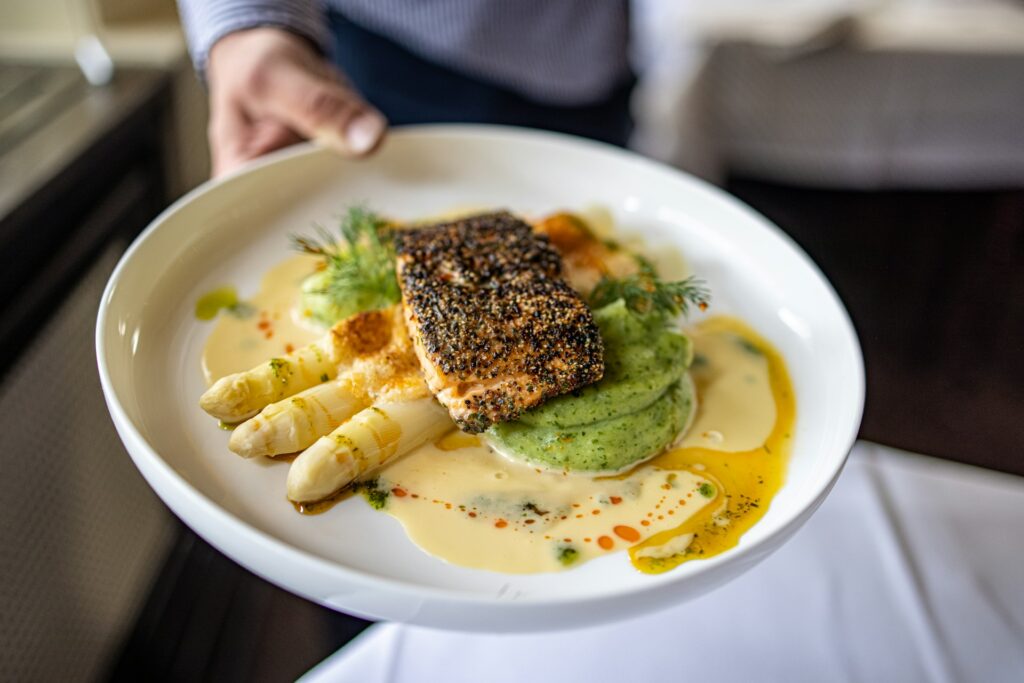
The asparagus in question is white asparagus – Spargel – grown in the Marchfeld plains east of the city, and its arrival between mid-April and mid-June is treated as a proper seasonal event. Restaurants put up dedicated menus; some hang banners in their windows. The classic preparation is deliberately simple: boiled and served with hollandaise and new potatoes. It is worth seeking out.
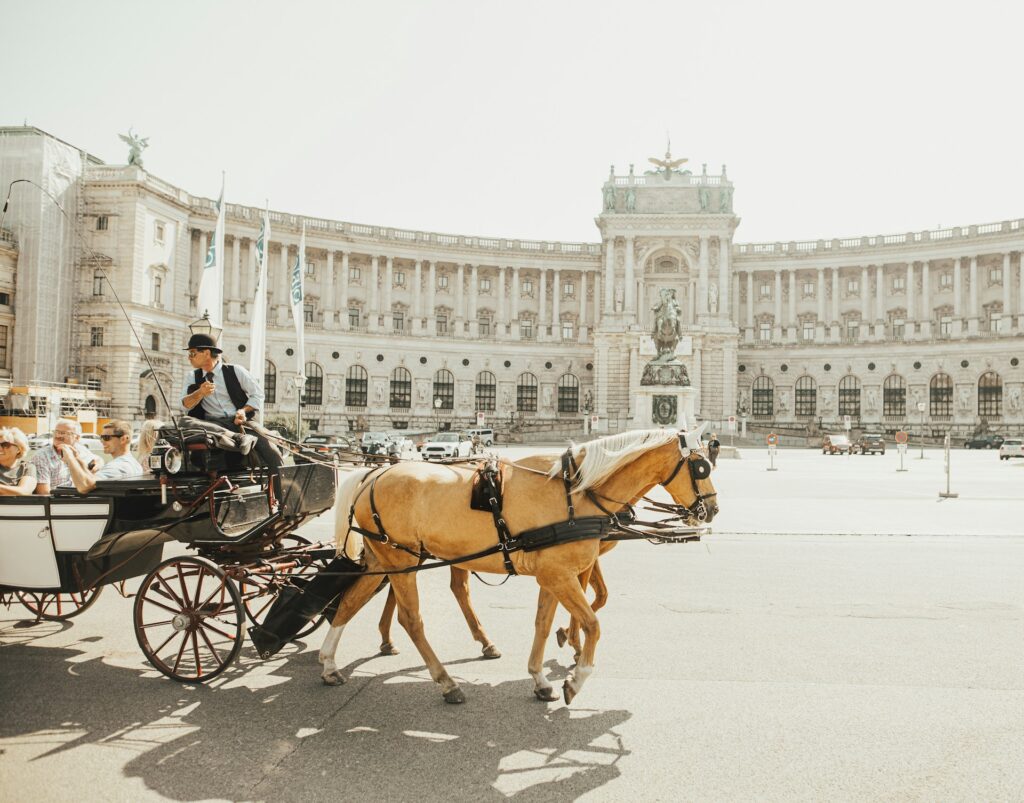
From mid-May, the Wiener Festwochen – the Vienna Festival – runs for five or six weeks, filling venues across the city with theatre, opera and dance from international companies. It has been going since 1951 and opens each year with a free outdoor concert at Rathausplatz, the square in front of the Rathaus.
Indeed, musically, this is when the programme gets especially dense. The Musikverein and Konzerthaus run packed schedules too, and open-air performances begin appearing in courtyards across the city. There’s an energy to Vienna in April and May that sits at odds with its reputation for stuffiness: people stay longer in the coffeehouses, the Heurigen wine taverns in the outer districts throw open their gardens, and evenings increasingly migrate outdoors.
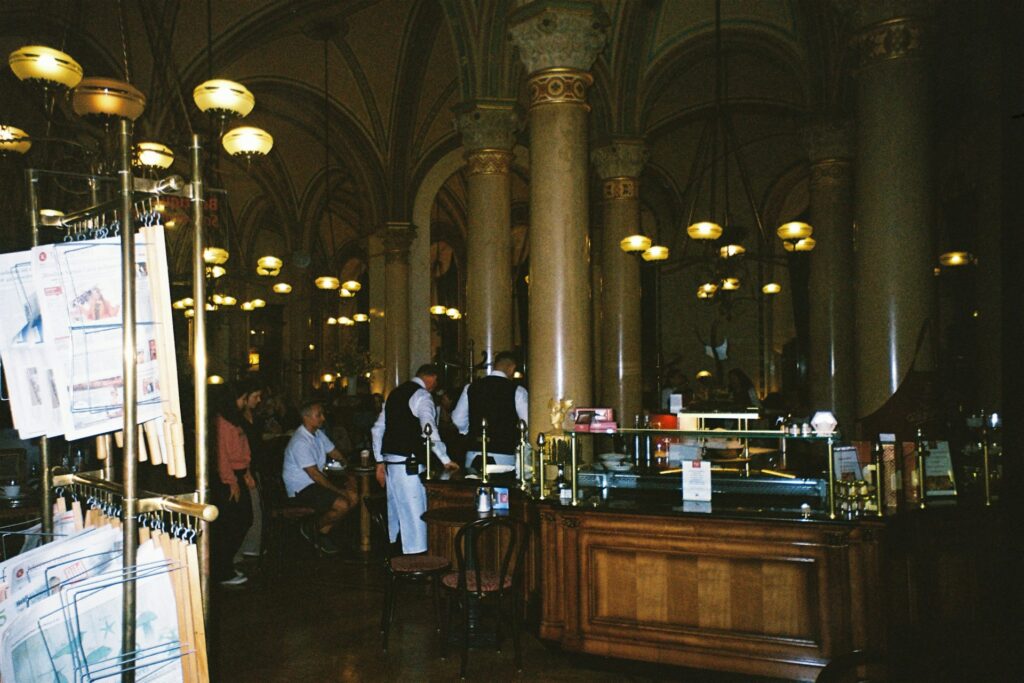
The coffeehouse culture is worth a particular mention in spring, not because it changes exactly, but because the contrast sharpens. You can spend a morning at Café Central or Café Sperl, reading the papers over a Melange and a piece of Topfenstrudel, then walk out into warm sunshine and blossom. That shift from the dark, wood-panelled interiors into the bright street is a small thing, but it captures something essential about Vienna at this time of year: a city that holds onto its traditions while the season pushes everything gently forward.
Read: 48 hours in Vienna, beyond schnitzel and sachertorte
When To Go & How To Get There
Spring on the Danube runs broadly from late March through early June, with April and May the sweet spot. Temperatures tend to sit between 12°C and 22°C, warm enough for long days outside, cool enough to want a jacket for evening river walks. Flights into Budapest and Vienna are frequent and affordable from most UK airports. Wizz Air and Ryanair both serve Budapest from several regional airports, while Vienna has strong connections through BA, easyJet and Austrian Airlines. Bratislava is easily reached from either city by train, bus or boat, and its own airport receives a limited number of budget flights from the UK.
In terms of itinerary, a week gives you comfortable time to cover all three cities with breathing room. A long weekend works well if you pick one city and use the river to visit another as a day trip. Budapest and Vienna both function brilliantly as standalone spring breaks, but adding Bratislava between them, even for a single night, changes the texture of the trip considerably. It’s smaller, less polished and less predictable, and that is a large part of what makes it worth the stop.
The real case for spring is atmospheric rather than practical. The river feels different when the blossom is out and the snowmelt is still coming through. The cities feel different when the terraces have just reopened and the locals outnumber the visitors. There is a window, roughly six or eight weeks long, when this corridor of Central Europe is at its most rewarding, and it closes reliably every year around the middle of June.
The Bottom Line
The Danube between Budapest, Bratislava and Vienna is one of Europe’s great spring trips: culturally rich, logistically simple, and at a point in the calendar when the region looks and feels its best. Whether you spend a full week working downstream or grab a long weekend in one city with a day on the river, this is the time of year to do it.
All that said, autumn along the Danube comes pretty close. You know what they say about shoulder seasons, and all that…