If you’ve been to Phuket more than once, chances are Cherngtalay (also spelled Choeng Thale) is where you ended up the second time around. The Patong stags-on-steroids, the Karon package tours, the Old Town’s charming but compact boutique hotels; all have their place in the island’s story, but Cherngtalay is the part that most returning visitors graduate to. The luxury hotels landed here first, back when much of the rest of the coast was still figuring out what kind of tourist it wanted to attract, and the area has kept that head start ever since.
This is the island’s wealthy northwest corner, a stretch of headlands and palm groves north of the airport road that has been collecting some of Asia’s best hotels since the late eighties. The coast here unfurls in a sequence of crescent bays (Pansea, Surin, Bang Tao, Layan) separated by rocky headlands and backed by jungle. The beaches face west, so sunsets are part of the daily ritual. Bang Tao is one of Phuket’s longest beaches, second only to Mai Khao further north. And the vibe is residential rather than tourist-strip, with a growing constellation of beach clubs, boutiques and increasingly serious restaurants threaded between the resorts.
The area’s pedigree as a luxury hospitality destination is older than most of its visitors realise. Amanpuri opened on Pansea Beach on New Year’s Day 1988 as the first ever Aman property. The Pansea (now The Surin Phuket) had been operating since 1982, predating it. Within a couple of decades, those two anchors had been joined by Trisara, Twinpalms, the Banyan Tree complex at Laguna Phuket, and a steady drip of newer arrivals.
We’ve stayed in all seven of the properties below across multiple visits, alongside others that didn’t make the cut, whether because the rooms felt like they were coasting on a postcode, the food programme amounted to a pool bar and a prayer, or the whole operation had that slightly hollow feel of a resort running on reputation rather than standards. What links the hotels in this guide is a particular Cherngtalay register: low-rise architecture, generous space between buildings, mature tropical landscaping and a sense of calm that feels increasingly rare on the rest of the island.
A few practical notes before we get to the hotels. Cherngtalay is well covered by car-share apps and private drivers, but distances between properties can feel further than they look on a map thanks to the headlands; allow proper time for cross-area dining. The dry, high season runs roughly November to April, with December and January peaking on rates. May to October is the green season, wetter, cheaper, and increasingly considered the local secret, particularly for villa stays. And if you’re flying in or out, Phuket International Airport is genuinely close (around 20 to 30 minutes depending on traffic), which counts for more than you might think after a long-haul.
Anyway, with all that in mind, here are the best luxury hotels in Cherngtalay, Phuket.
Amanpuri
Ideal for architecture nerds, multigenerational villa takeovers, and guests who’d rather pay for pedigree than novelty…
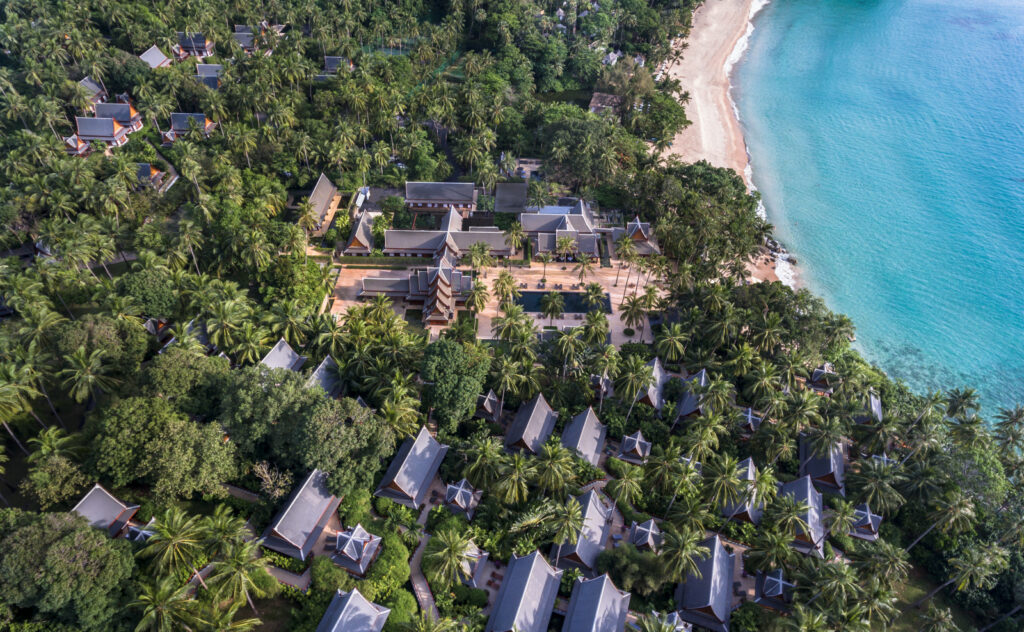
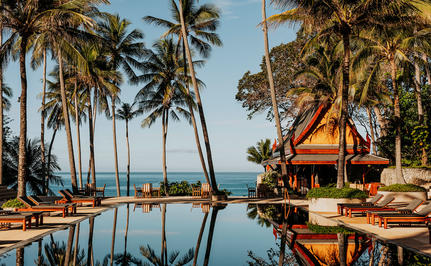
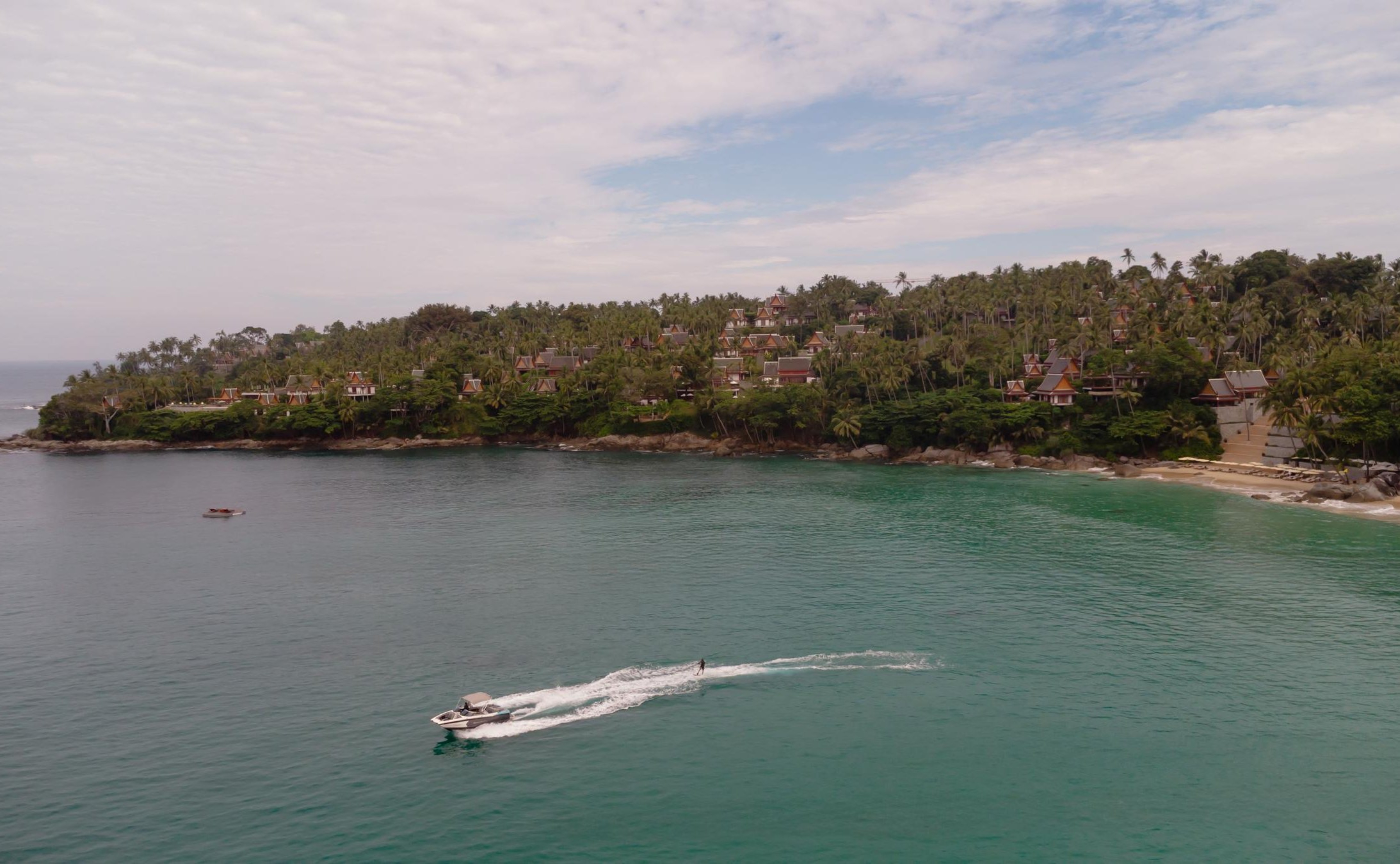
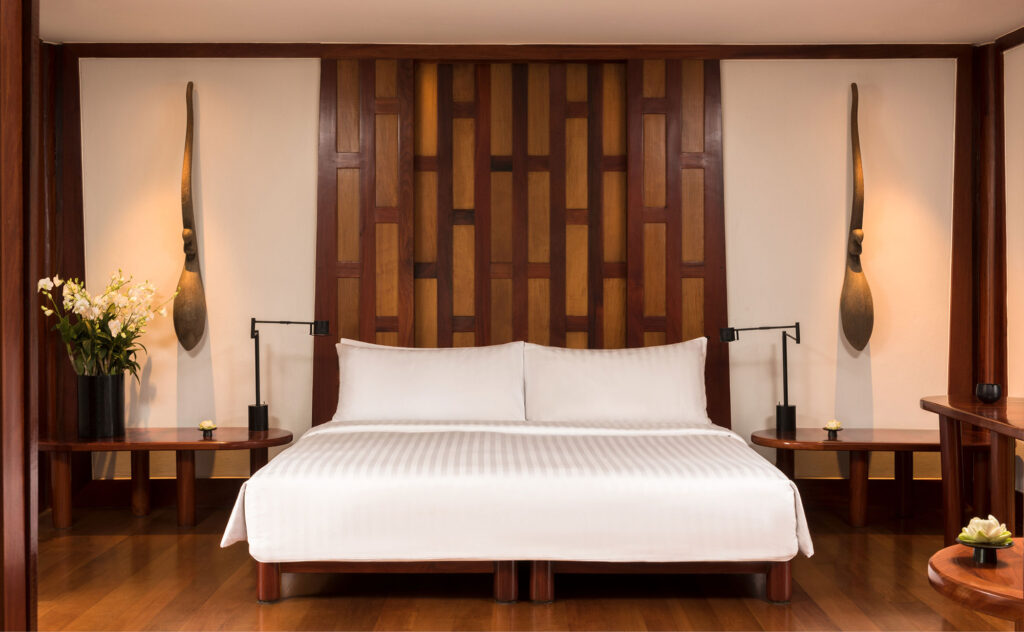
If there’s a foundation stone for modern luxury hospitality in Asia, it’s this one. Amanpuri opened on Pansea Beach on 1st January 1988 as the brainchild of Aman founder Adrian Zecha working with American architect Ed Tuttle, and if you’ve ever stayed in a tropical luxury resort anywhere in Southeast Asia (the low pitched roofs, the raised walkways through coconut groves, the deliberate dissolution of the line between interior and landscape) you’ve stayed in something downstream of what Tuttle drew here. The obituaries for Tuttle following his death in June 2020 all returned to Amanpuri as the work that changed everything. They were right to.
The origin story is worth knowing. Zecha never set out to build a hotel. He was looking for a site for a private holiday home, found a coconut plantation on this peninsula, and the plan grew from there. No bank would finance it; they wanted a 500-room resort, not a handful of pavilions on a headland. So convinced by the vision here, Zecha and his partners put up the US$4 million themselves. Seems like a gamble that paid off pretty handsomely, we think.
The resort today comprises forty pavilions and forty villas spread across a private peninsula on the west coast. The pavilions look out over sea, gardens and, in many cases, private pools. The villas occupy the more secluded reaches, with their own swimming pools, dedicated villa hosts and personal Thai chefs, the kind of setup that makes a multigenerational family trip work without anyone having to compromise on privacy or routine.
At the resort’s heart sits the 27-metre pool, dark-tiled and flanked by coconut palms, and around it, a clutch of restaurants that have grown more ambitious over the years. Buabok handles Thai cuisine; Arva is the group’s Italian concept; Nama, designed in collaboration with Japanese architect Kengo Kuma, serves washoku and a refined omakase under chef Matoba; Nura is a more recent Mediterranean addition. The Sunset Terrace and The Beach Terrace round out the choices. It’s a lot of dining for one property, and the quality holds across the board, though Nama is the one worth building an evening around.
Beyond the pool, the Holistic Wellness Centre was the first Aman property to integrate a certified medical team alongside spa therapists, and the resort hosts the Mobility & Recovery Programme by Novak Djokovic. Pansea Beach itself is a sheltered cove of pale sand shared with The Surin next door, accessed via Tuttle’s signature granite stairway. The resort traditionally closes for maintenance in June each year, which is part of the reason it still looks immaculate decades on.
This isn’t a hotel that needs to win you over with novelty. It is, fundamentally, the work that defined the genre, still being maintained at the level the genre demands. The prices (starting at around £1,400 for a minimum two night stay) reflect that, and whether they’re justified depends entirely on how much weight you give to staying inside a piece of hospitality history rather than a very good imitation of one. The property is the only one in the Phuket area to hold the maximum 3 Michelin keys.
Pavilions at Amanpuri start from around 60,000 baht (£1,400) per night with a minimum two-night stay. Villas begin at roughly 150,000 baht (£3,500) and climb from there.
Address: Pansea Beach, Cherngtalay, Thalang District, Phuket
Website: aman.com
Twinpalms Surin Beach
Ideal for design-led sun chasers, beach club regulars & couples after a polished base for exploring the west coast…
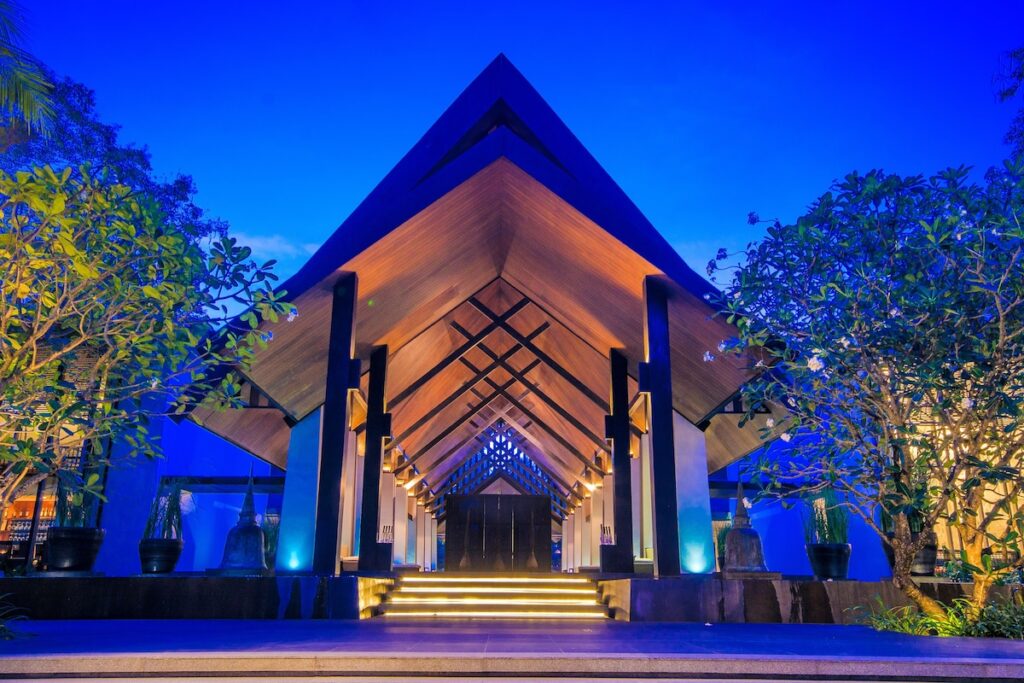
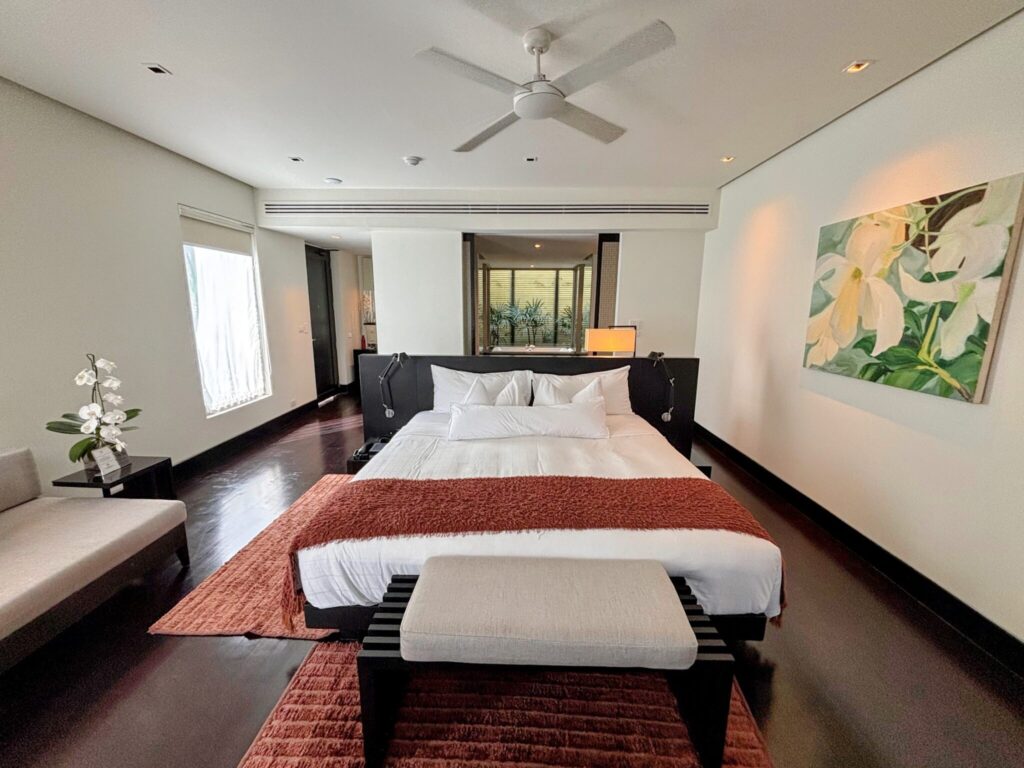
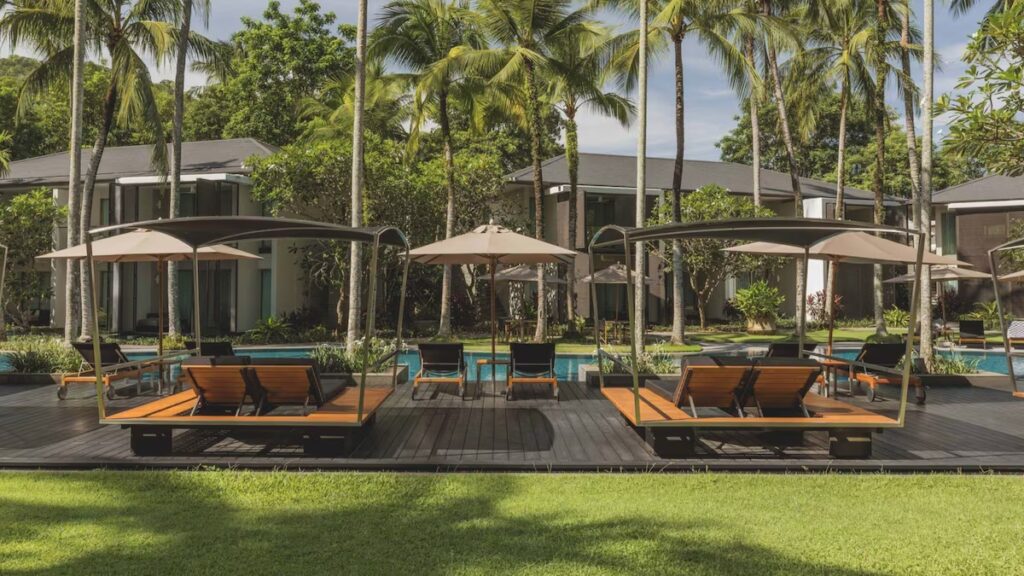
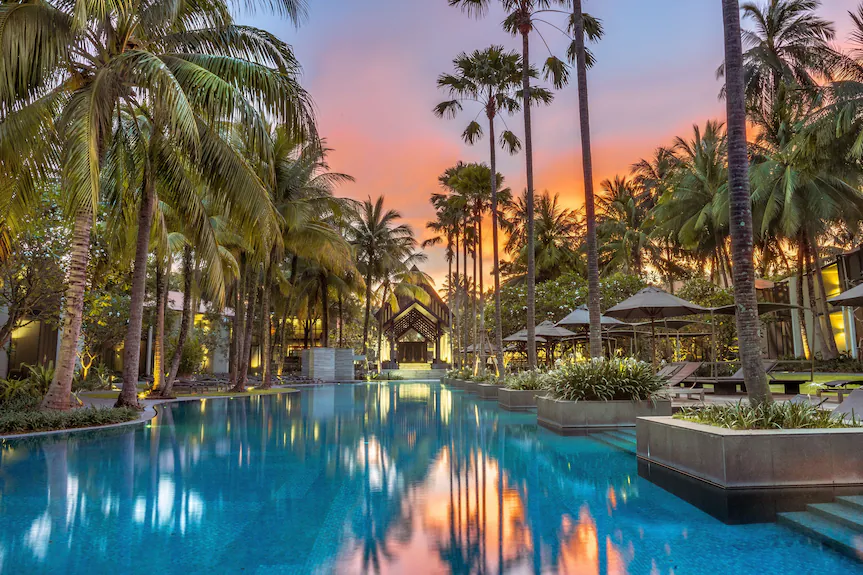
Two decades is a long time for any hotel in this part of the world, and most don’t age well. Twinpalms, which opened on Surin Beach in 2004, has aged the way a good mid-century chair ages: the lines were right from the start, clean and confident enough that nothing built since has made them look dated, and the upkeep has been relentless to keep it that way. Swedish entrepreneur Carl Langenskiöld founded it; Argentinian architect Martin Palleros of Bangkok-based Tierra Design laid down the signature reflective pools, oversized loungers and that distinctive double-palm motif. We’d argue it remains one of the best-run, most consistently stylish hotels on the island, and it’s one we’re always keen to revisit when the Phuket paradox of choice grips us and we just want somewhere to be.
There are 97 rooms, suites, lofts and penthouses spread across multiple categories around a central lagoon pool, ranging from the entry-level Palm Deluxe rooms through the Lagoon Suites with direct pool access to the Duplex and Penthouse Lofts at the top end. The whole thing is a member of the always reliable Small Luxury Hotels of the World, and feels more like a private residence than a resort, which is a line that gets thrown around a lot, but here it’s actually earned. The lobby pavilion borrows from traditional open-sided Thai architecture but pushes it into something more dramatic; the lagoon pool is large enough to actually swim in; the on-site library has computer stations and is capable of hosting serious work, if you’ve brought that with you. There’s just something reassuring about the whole operation, quite frankly.
What gives Twinpalms an edge beyond its own walls is the network. The group runs Catch Beach Club and the more laid-back Lazy Coconut on Bang Tao beach, Shimmer at Twinpalms MontAzure on Kamala Beach, and the in-house Wagyu Steakhouse and Oriental Spoon at the resort itself, with a complimentary shuttle ferrying guests between all of them. The Wagyu Steakhouse holds a Michelin Guide listing and is widely regarded as one of the better steakhouses in Phuket, if not all of Thailand; BAKE, the in-house bakery, has built up enough of a following to survive on its own merits. Their products are an absolute treat at breakfast. The Palm Spa keeps the wellness side ticking over without overcomplicating things, and the gym is one of the best appointed in Cherngtalay.
Surin Beach is a five-minute walk via a small public road; Bang Tao is a short drive; Pansea cove is just up the coast. If you want a base for proper west-coast exploration with a strong food and drink programme attached, and a hotel that still looks as good on morning two as it did in the brochure, this is it.
You can read our full review of Twinpalms Surin Beach here.
Rooms at Twinpalms Surin start with the Palm Deluxe – a 55 sqm room with pool and garden views – from as little as 4,900 baht (£110) per night in low season, rising to over 13,600 baht (£305) in high season.
Address: 106, 46 Moo3 Surin Beach Road, Choeng Thale, Thalang District, Chang Wat Phuket
Website: twinpalmshotelsresorts.com
Twinpalms Tented Camp
Ideal for grown-ups who like the idea of glamping but not the reality of it, romantics, and Bang Tao beach club converts…
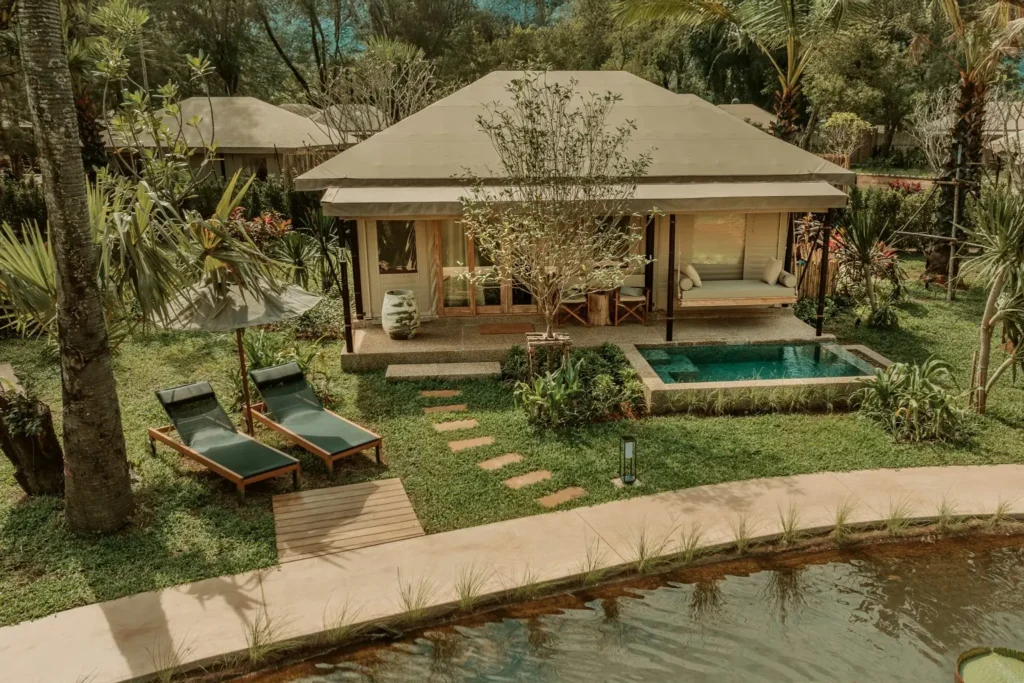
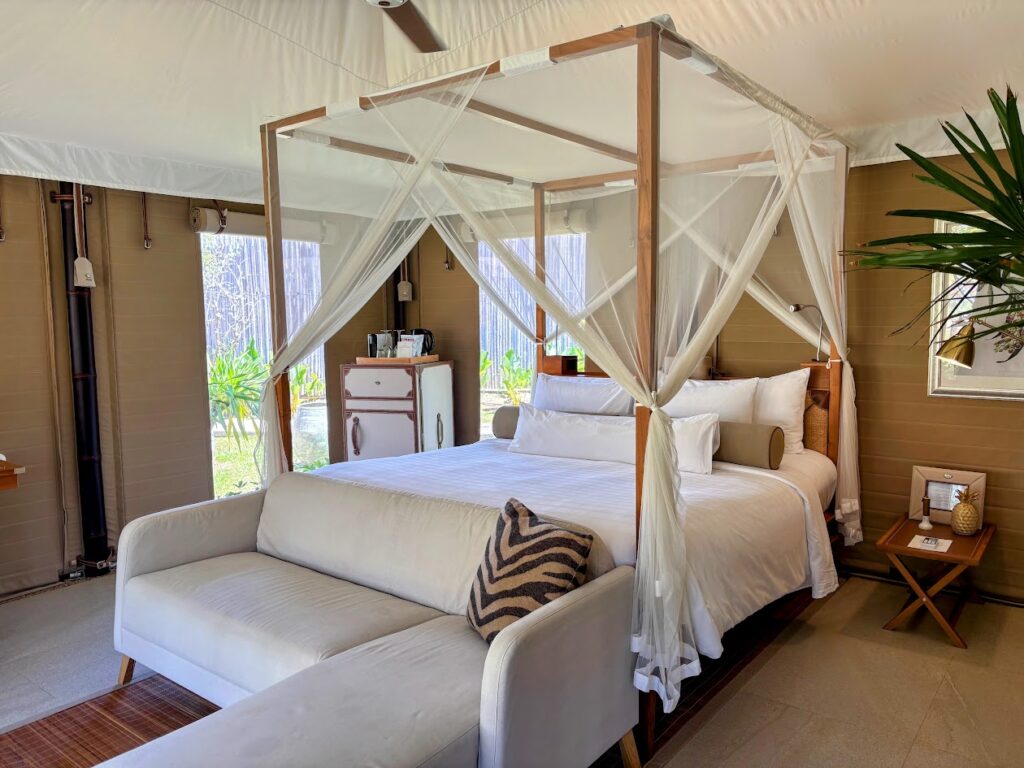
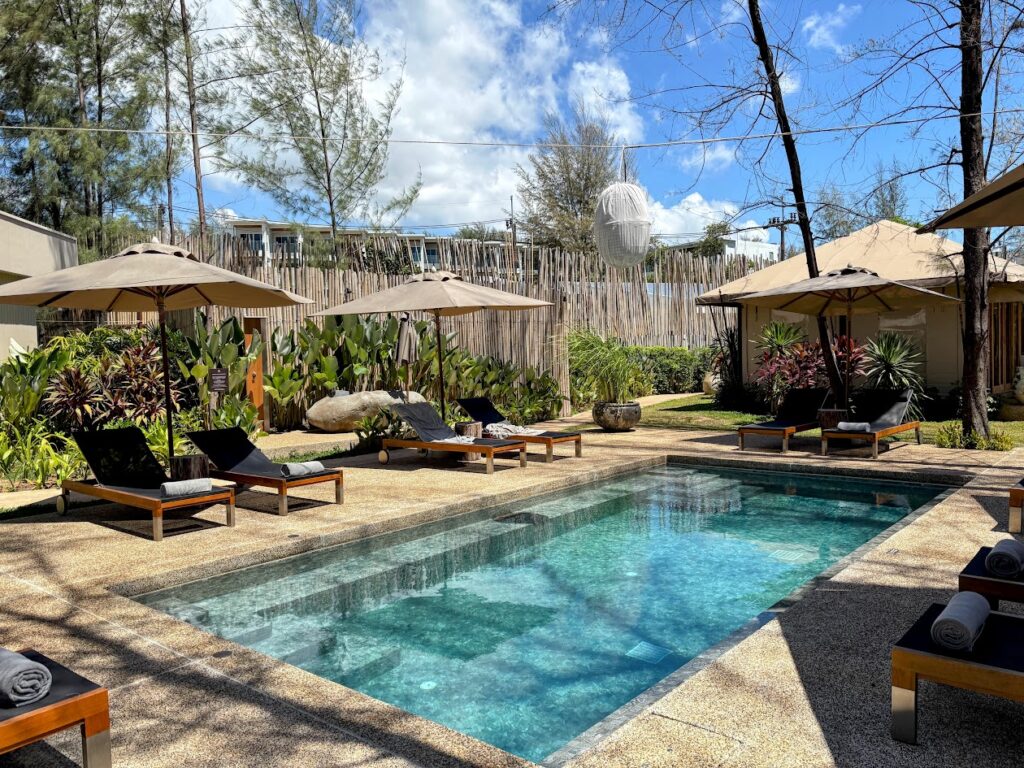
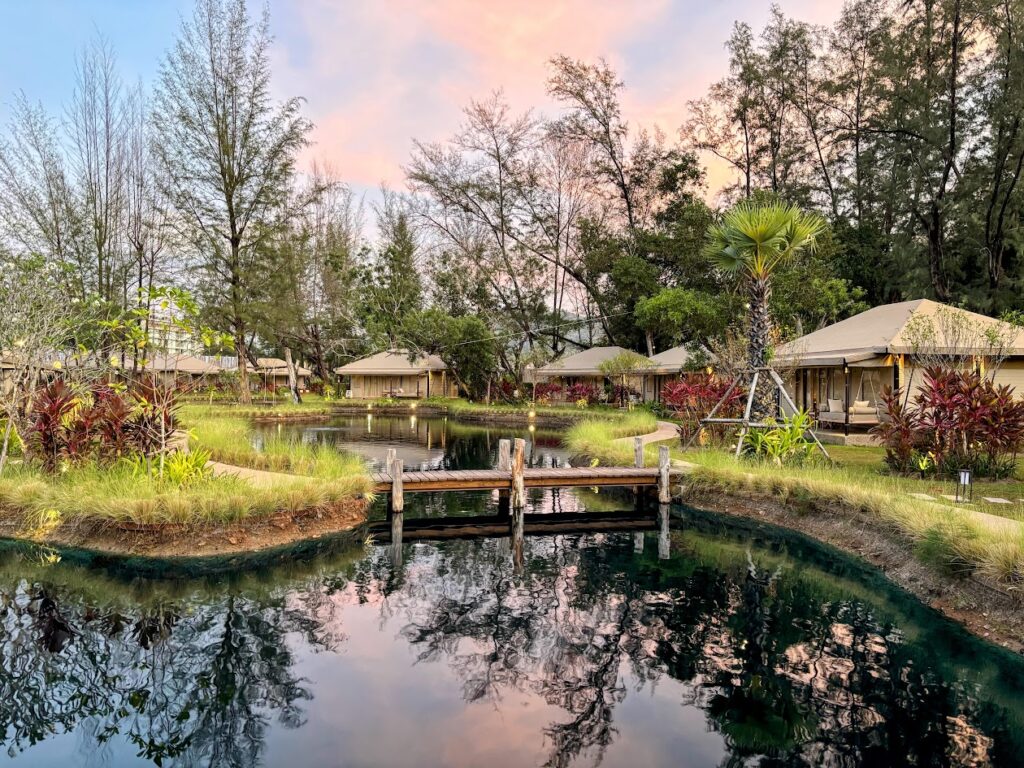
Oh, that network we were talking about? The backstory on this one is worth knowing, because it explains why the Twinpalms Tented Camp feels more considered than most glamping operations. Twinpalms group founder Carl Langenskiöld and his long-time GM Olivier Gibaud spent the better part of a decade circling the idea of a tented camp. Gibaud first put one up in his back garden during Covid, ordered from Dutch design studio Escape Nomad, then five, which he handed to his son to run as Aladdin Luxury Camp near Royal Phuket Marina. Still operational, by the way, and great, too. The Twinpalms version, rather more polished, opened on Bang Tao Beach in December 2023.
The whole property is adults-only. There are twenty-nine canvas tents in total now, twenty-four arranged around a purpose-built lagoon and five along the beach itself, all designed by Anneke van Waesberghe of Escape Nomad with Martin Palleros handling the landscape. The latter is a dab hand at this, it must be said. Each comes with its own deck, plunge pool and the kind of considered styling that elevates the format well beyond anything the term ‘glamping’ prepares you for. The canvas itself comes from the same Dutch supplier that makes sails for racing yachts, and the whole structure is designed to be demountable, so it sits lightly on the land rather than being bolted into it.
Again, the Twinpalms’ broader infrastructure pays dividends at the Tented Camp. There’s a small lobby and pool restaurant on site, but for the bulk of dining you’re on the shuttle to Wagyu Steakhouse at Surin, Shimmer at MontAzure, or the group’s two beach clubs on Bang Tao. The location, just back from Bang Tao Beach with Catch and Lazy Coconut a short walk along the sand, gives you the privacy of a small camp with the social options of a much bigger resort whenever you fancy them.
The trade-off: the lagoon-side tents are noticeably calmer than the beachfront ones, where Catch’s mid-morning-to-late soundtrack carries on the breeze. If you’re a light sleeper, book accordingly.
You can read our full review of Twinpalms Tented Camp here.
Tents at Twinpalms Tented Camp start from 12,000 THB (around £275) per night in low season (April to October), rising to 20,000 THB (around £460) in high season (November to March).
Address: 202 88, Choeng Thale, Thalang District, Phuket
Website: twinpalmshotelsresorts.com
The Pavilions Phuket
Ideal for honeymooners, slow travellers, and anyone whose ideal holiday involves not getting dressed until 3pm…
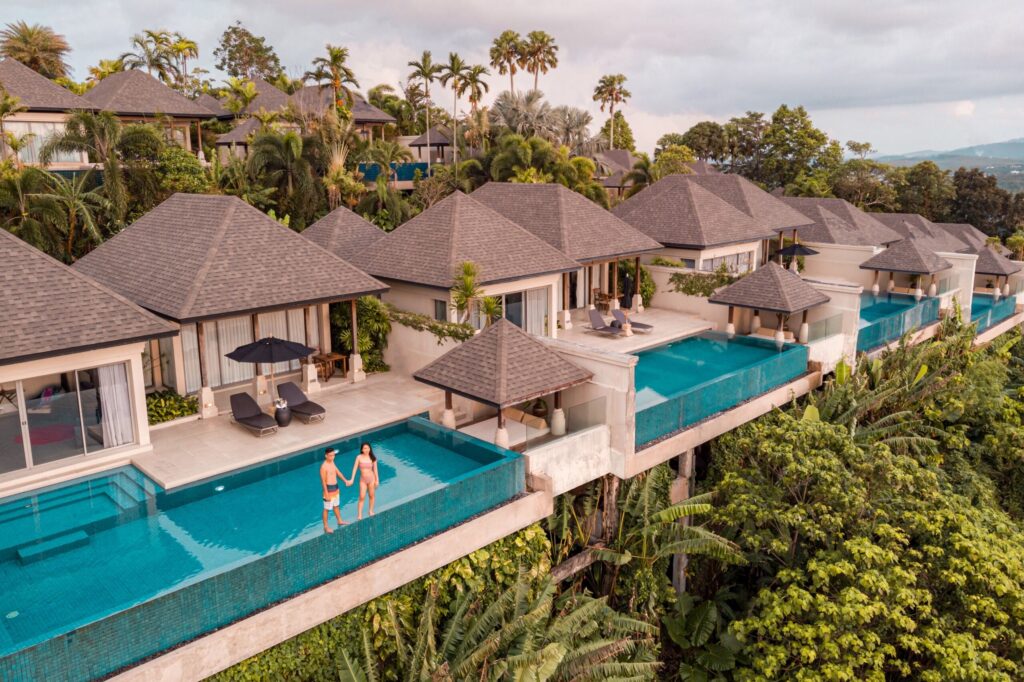
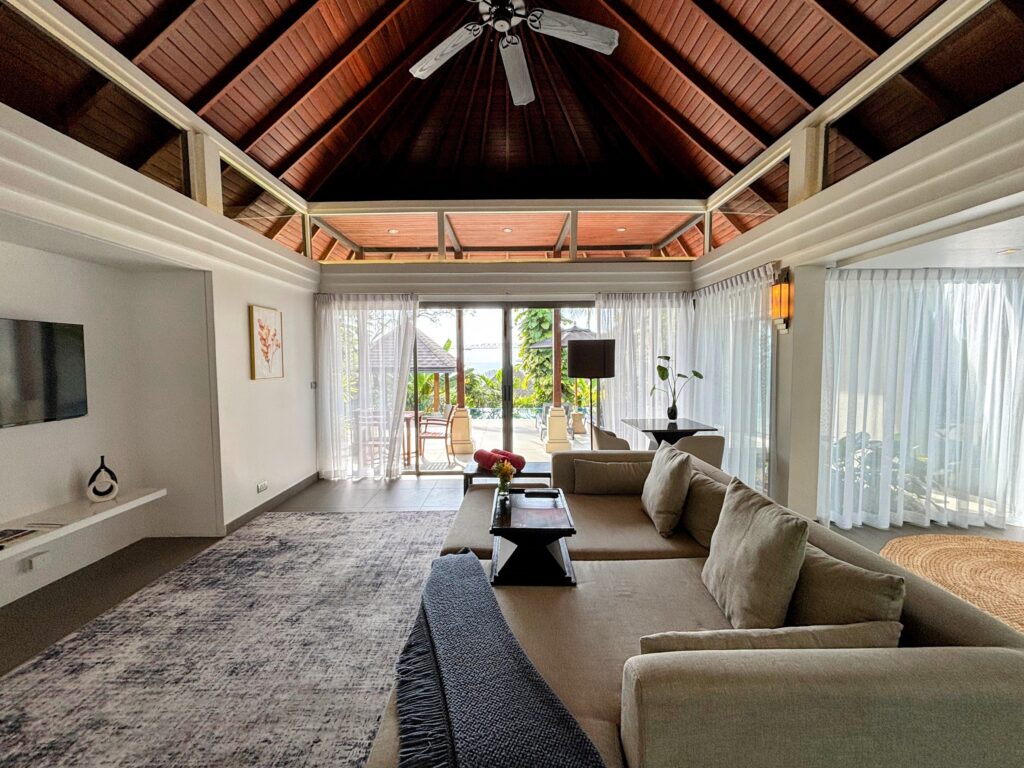
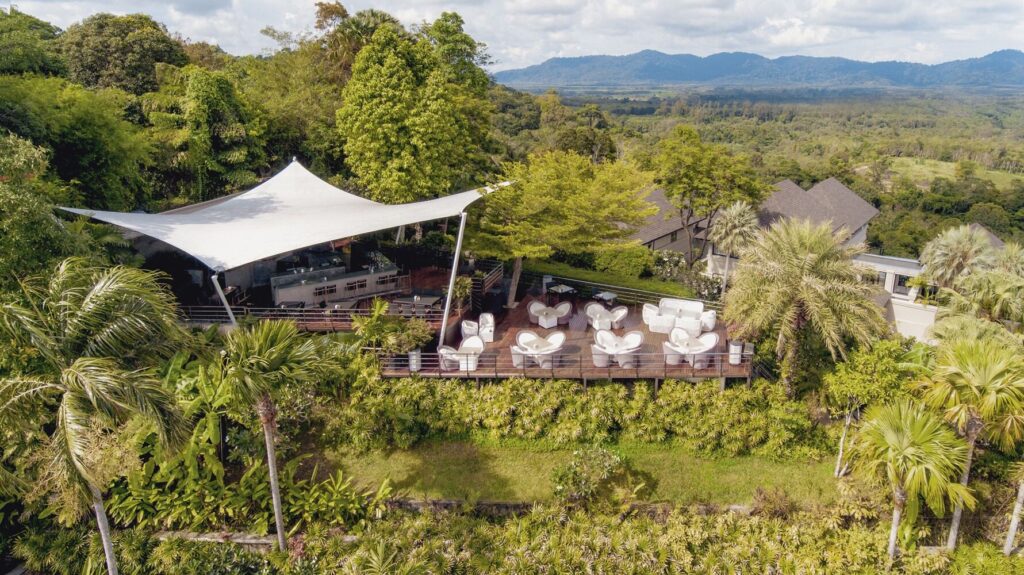
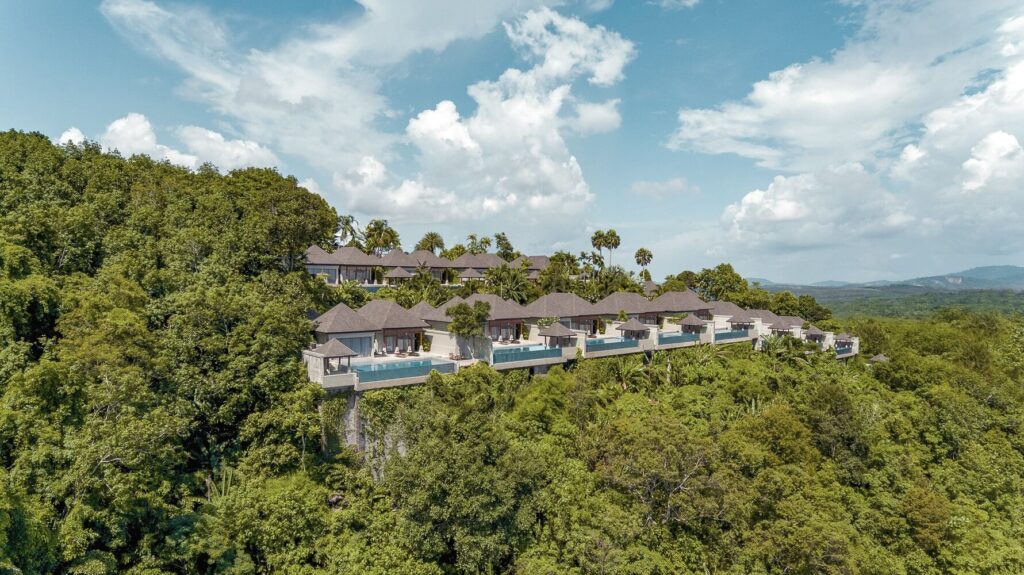
Most of the hotels on this list sit at or near beach level. The Pavilions Phuket is the exception, spread across a hillside above Layan so vast that golf buggies are the only sensible way to get around, with views stretching across to the curve of Bang Tao on a clear day. It’s not a beach hotel, and it doesn’t pretend to be. The villas are scattered far enough apart that you can go most of a day without crossing paths with another guest, which is very much the point. Somehow, it’s both intimate and absolutely fucking massive.
The hotel is the Phuket outpost of a group of thirteen properties spanning Asia and Europe, founded by British lawyer Gordon Oldham, who opened the original Pavilions in Bali in 2000 and brought the model to Phuket a couple of years later. Before hotels, Oldham ran his own publishing house, launched MTV Asia and founded the adventure travel company Action Asia Events; the Pavilions started essentially as a hobby. The Phuket property was built at a time when private plunge pools in every villa were still virtually unheard of in Southeast Asian resorts, which gives you some sense of how far ahead of the curve it was.
The group has grown steadily since, but the Phuket original retains a sense of remove that the brand’s expansion hasn’t diluted. Roughly half the villa categories are 12-and-over, adults-only, which sets the mood from the start. Accommodation runs from entry-level Tropical View Suites through Ocean View Suites and into Pool Villas and the larger Pool Residences; the villas all come with their own private pools, while suite guests share the communal ones, including a 60-metre freeform number at Firefly and a 25-metre lap pool by the gym. The staff-to-guest ratio is the kind that means people remember your coffee order by day two. Or, indeed, order two, to be honest.
Alto, the resort’s Italian flagship, is the twin of Alto in Rome and serves what is by some distance the most ambitious Italian cooking in Cherngtalay. The Firefly Pool & Restaurant handles the more relaxed end, its Thai Corner covering regional Phuket specialities in a way that’s faithful to the originals, which is the biggest compliment we can pay. The 360° Bar lives up to the name at sundown, and then some. Villa guests also get a daily complimentary afternoon tea followed by free-flow drinks and tapas each evening, which does a lot to structure the day in a pleasingly indulgent way.
Layan Beach is a ten-minute shuttle ride away, and there’s a complimentary one running three times a day. Most guests, we suspect, don’t bother. The lovely isolation is the exact reason you’re here.
You can read our full review of The Pavilions Phuket here.
Suites from around 4,080 THB (approximately £95) per night, villas from around 12,750 THB (approximately £300), rising significantly in peak season.
Address: 31 1, Choeng Thale, Thalang District, Phuket
Website: pavilionshotels.com
Read: The best Italian restaurants in Phuket
Trisara
Ideal for food-first travellers, total seclusion, and multigenerational groups with the budget to match…
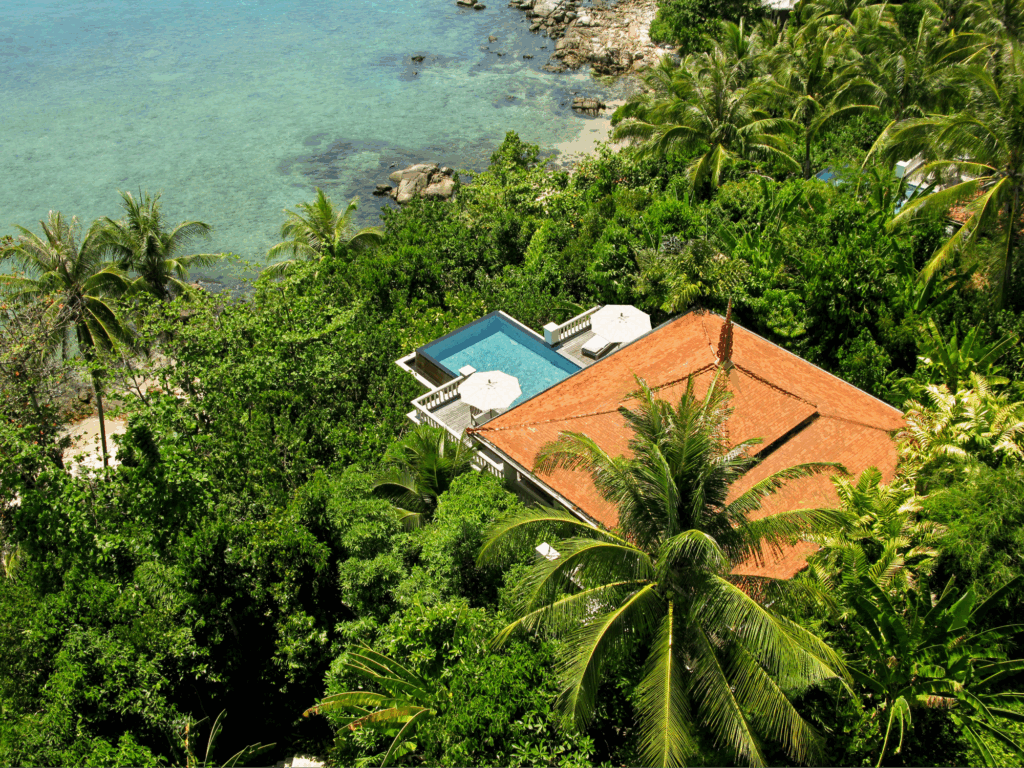
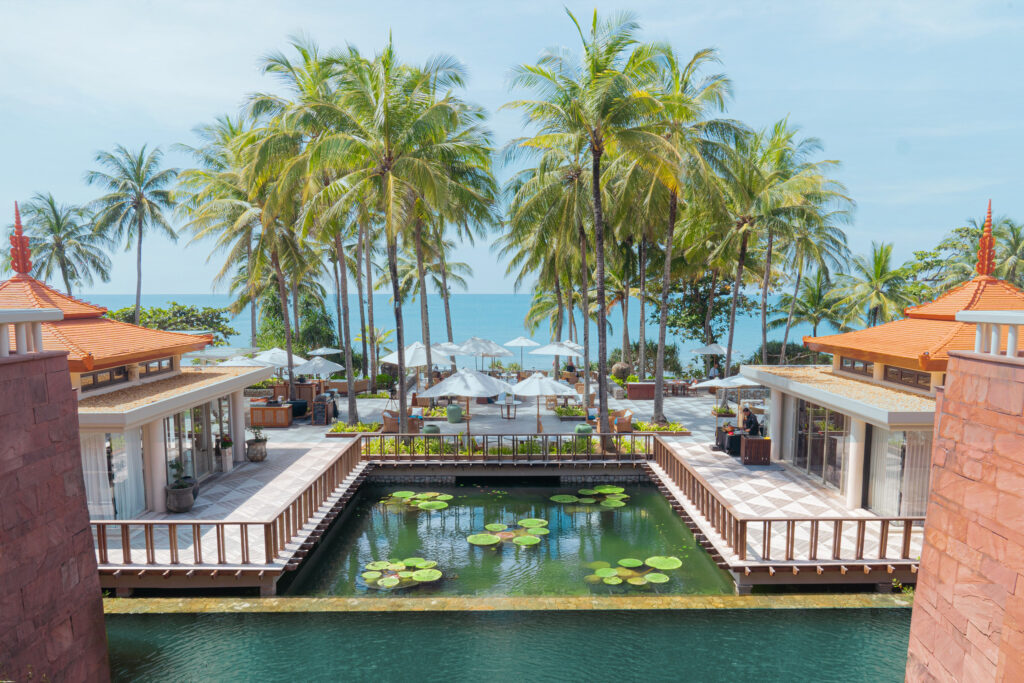
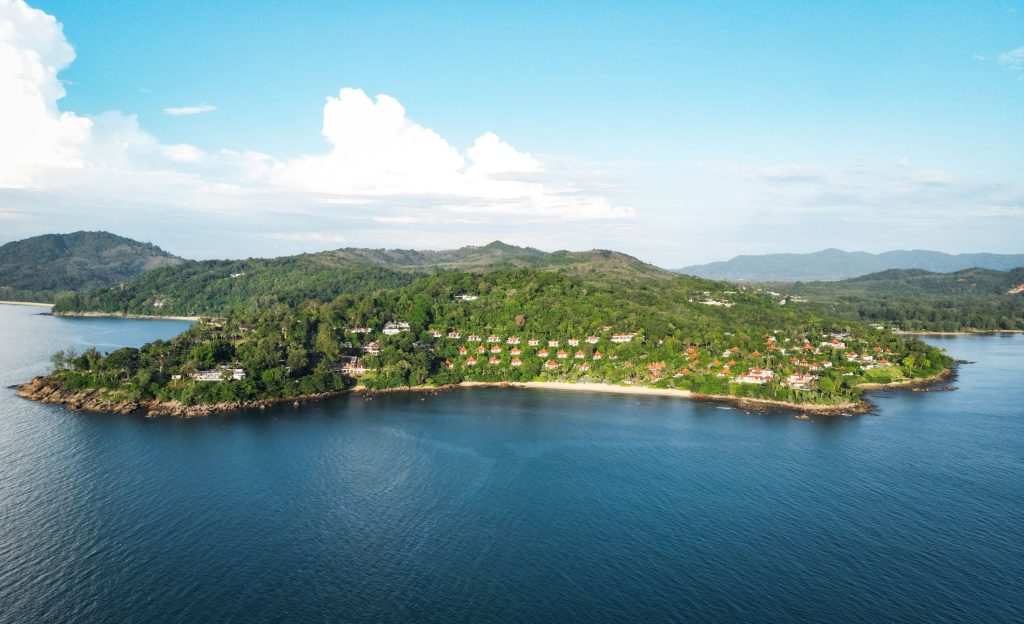
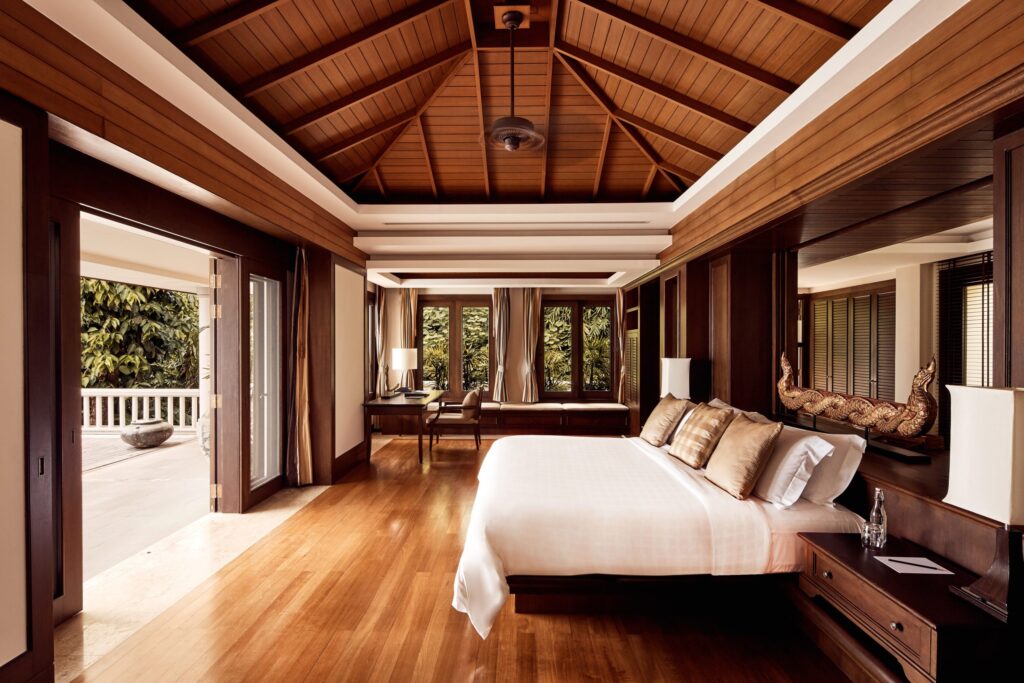
The food story at Trisara is, at this point, arguably the most compelling on the island. PRU, the resort’s flagship restaurant under Dutch chef Jimmy Ophorst, was the first restaurant in the Phuket area to receive a Michelin Star, awarded in 2019, with a Green Star following in 2021. It recently relocated to a new home at the resort entrance, rebranded as PRU 2.0, with an expanded open kitchen and an evolved tasting menu. Sister restaurant JAMPA, also part of the Montara group but located up the road at the Tri Vananda wellness community in Thalang, has held a Michelin Green Star since opening in 2022, most recently retained in the 2025 guide.
The Pru Jampa farm, sixteen thousand square metres of organic plots in the hills above Thalang, supplies both kitchens and feeds into La Crique (the French centrepiece), Cielo & Spice (Mediterranean and Thai-Indian), the Thai Library (another Michelin-recognised joint) and 7.8°N, the beach club. If you’re the kind of traveller who picks the restaurant first and the hotel second, Trisara makes that decision for you.
The name comes from the Sanskrit for ‘garden in the third heaven’, which feels about right by the time you’ve dropped down through the canopy to your villa. Owned and operated by Bangkok-based Montara Hospitality Group, the resort opened in 2004 on a private bay roughly twenty minutes from the airport. Resort villas and suites run across five categories, ranging from Ocean View Pool Junior Suites through to two-bedroom oceanfront pool villas, plus a collection of twenty-two privately-owned residences (ranging from two to ten bedrooms) that their owners rent out through the resort when not in residence. Every unit has a private pool. Every unit has an ocean view. The whole property was awarded a Michelin Key in the most recent selection.
Wellness happens at JARA Wellness, set under the canopy of an old ficus grove, and the setting alone, a private bay with almost no visible neighbours, does half the spa’s work for it. A note on that bay: all beaches in Thailand are public by law, but Trisara’s is effectively private because the only way to reach it on foot is through the resort grounds. You can arrive by boat, but you can’t use the facilities. It’s the closest thing to a private beach that exists on the island, and it shows; on most mornings you’ll have the sand to yourself.
The whole resort is a deeply impressive operation, and one that has done as much as anywhere to shift the conversation about what serious hospitality in Phuket can look like. The only real caveat is that the seclusion works both ways; you’re not walking anywhere from here, and the private-bay setting that makes it special also means you’re committing to the resort for the duration of most evenings. For the quality of what’s on offer inside, that’s rarely felt like a sacrifice.
Ocean View Pool Junior Suites at Trisara start from around 40,000 baht (£920) per night in low season, rising sharply in high season. The private residences operate on a different scale entirely.
Address: 60 Cherngtalay 1 Srisoonthorn Road Tambon Choeng Thale, Thalang District, Phuket
Website: trisara.com
The Surin Phuket
Ideal for tree-house romantics, repeat visitors who know Pansea is the best cove on the island, and travellers who want their luxury low-key rather than loud…
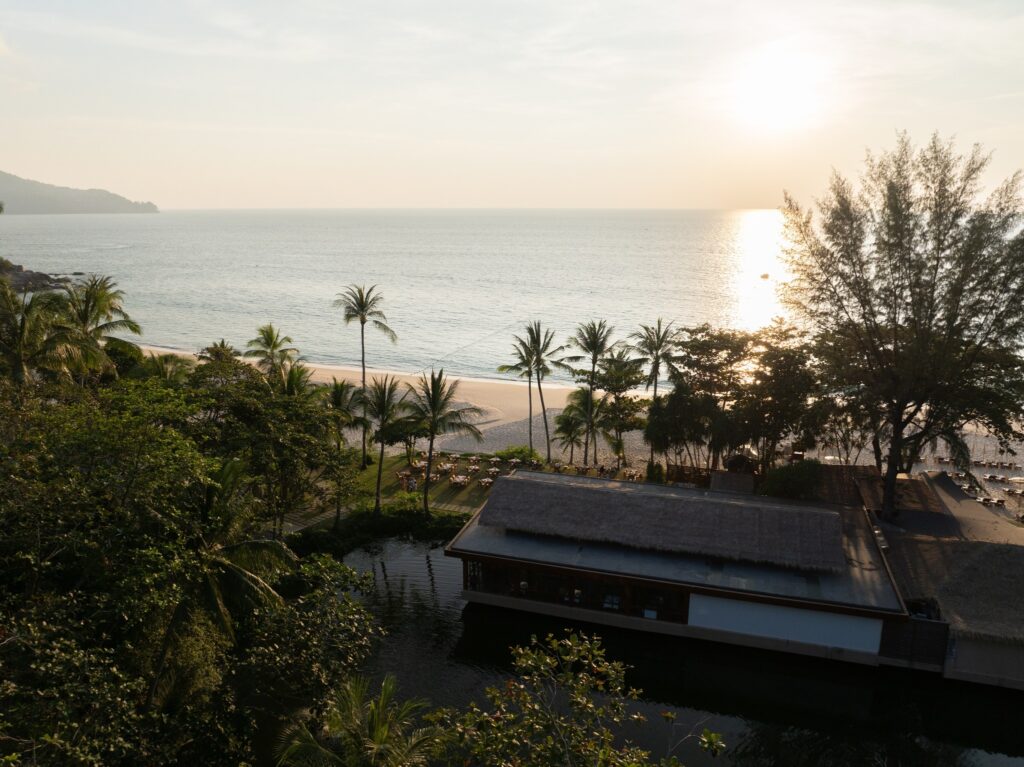
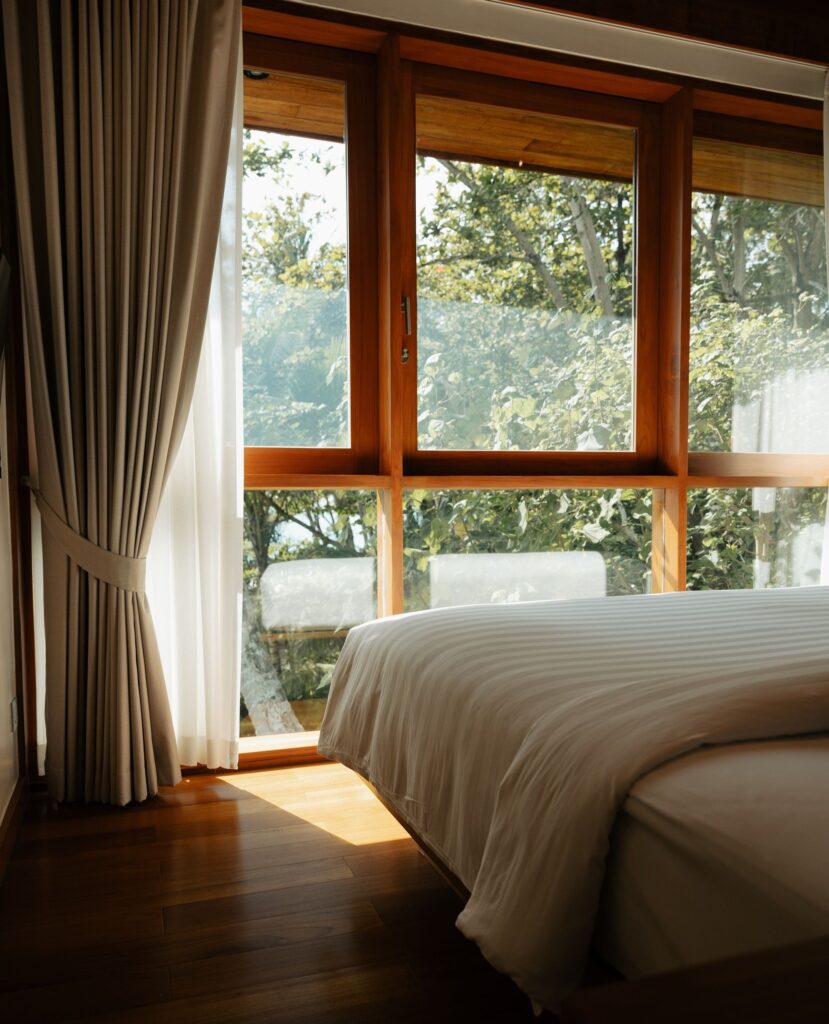
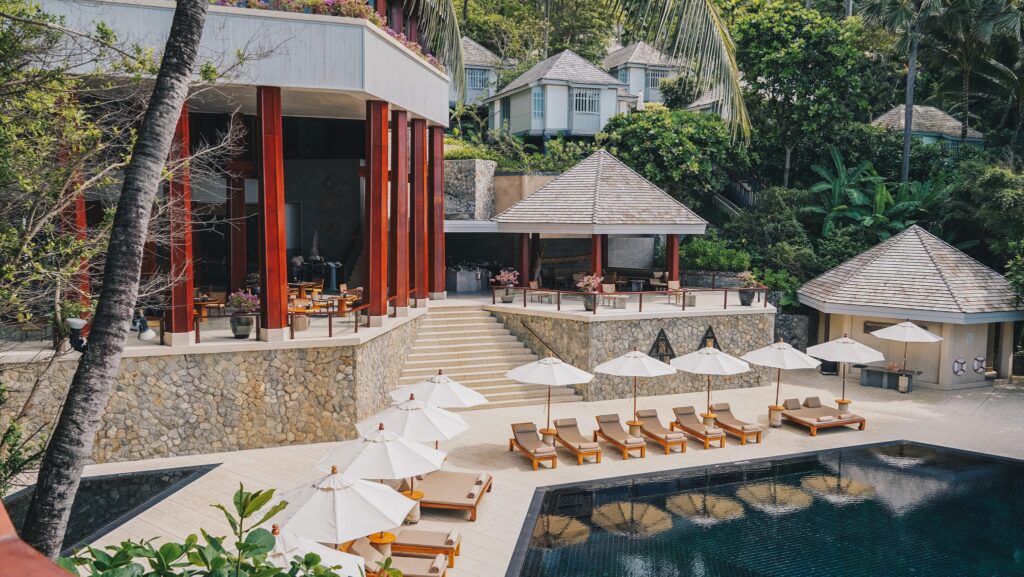
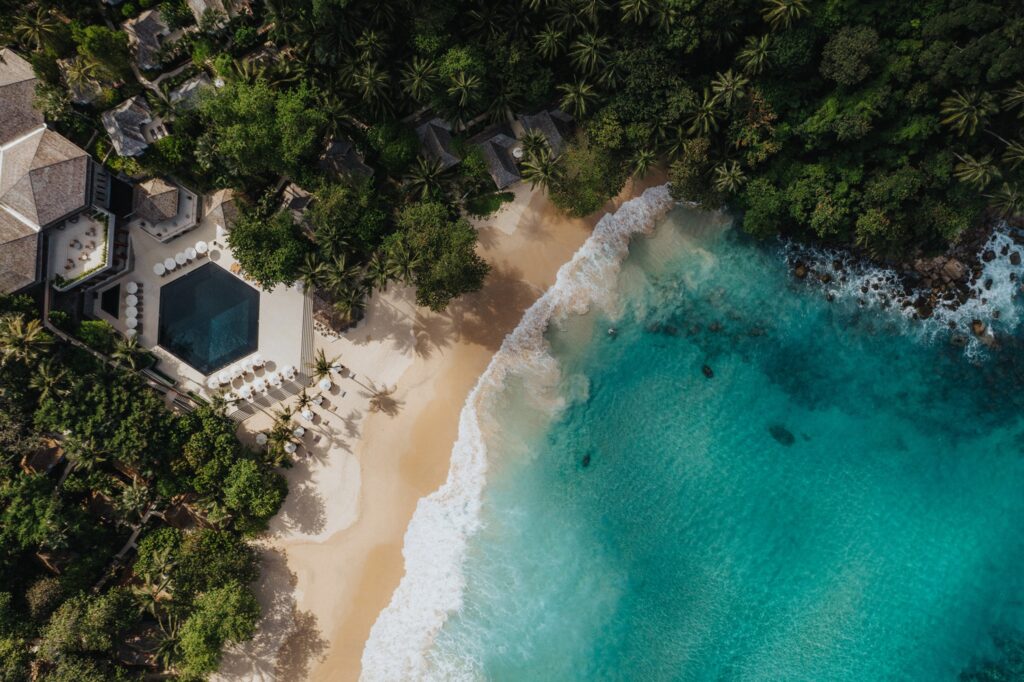
The Surin shares Pansea Beach’s small private cove with Amanpuri next door. Same sand, same water, same granite headlands framing the bay. That alone makes it one of the more interesting bookings on this list, and one of the better value propositions in Cherngtalay. There used to be a path down the hillside from the public road to Pansea Beach, but it’s now locked. The only way onto the sand is through The Surin or Amanpuri, which makes the cove one of the most protected stretches of coastline on the island.
The property has been operating on this site since 1982, originally as The Pansea, then taken over by the Chedi group in the mid-nineties (Ed Tuttle was commissioned for that 1995 refresh too, returning to the same cove he’d worked on next door at Amanpuri), then reopened in its current incarnation as The Surin Phuket after a 2012 renovation.
There are 109 cottages, suites and pool villas spread up the hillside above the beach, connected by a series of stairs and walkways. No lifts, and the climb is real. On a hot afternoon after lunch it can feel properly aerobic, but the reward is that the cottages, with their pitched roofs nestled in the trees (the signature room type), feel genuinely hidden rather than stacked.
Dining is split across the Beach Restaurant on the sand, the Sunset Restaurant by the pool, the Lomtalay breakfast space with its Andaman views, the Beach Bar and a private Romantic Beach Dinner option. None of it is trying to compete with Trisara’s culinary ambitions down the coast, and that’s fine. The draw here is the cove, the trees and the considered, low-key design of a hotel that has been getting this part of Phuket right for over four decades. What you save compared to Amanpuri next door is substantial. What you share with Amanpuri next door, Pansea Beach, is the thing that actually matters.
One-Bedroom Hillside Cottages at The Surin start from around 8,500 baht (£194) per night in low season, rising to roughly 15,000 baht (£345) in high season.
Address: 118 Soi Hat Surin 8, Choeng Thale, Thalang District, Phuket
Website: thesurinphuket.com
Anantara Layan Phuket Resort
Ideal for families who want the full resort stack, wellness travellers after more than a massage, and travellers who’d rather have too much to do than too little…
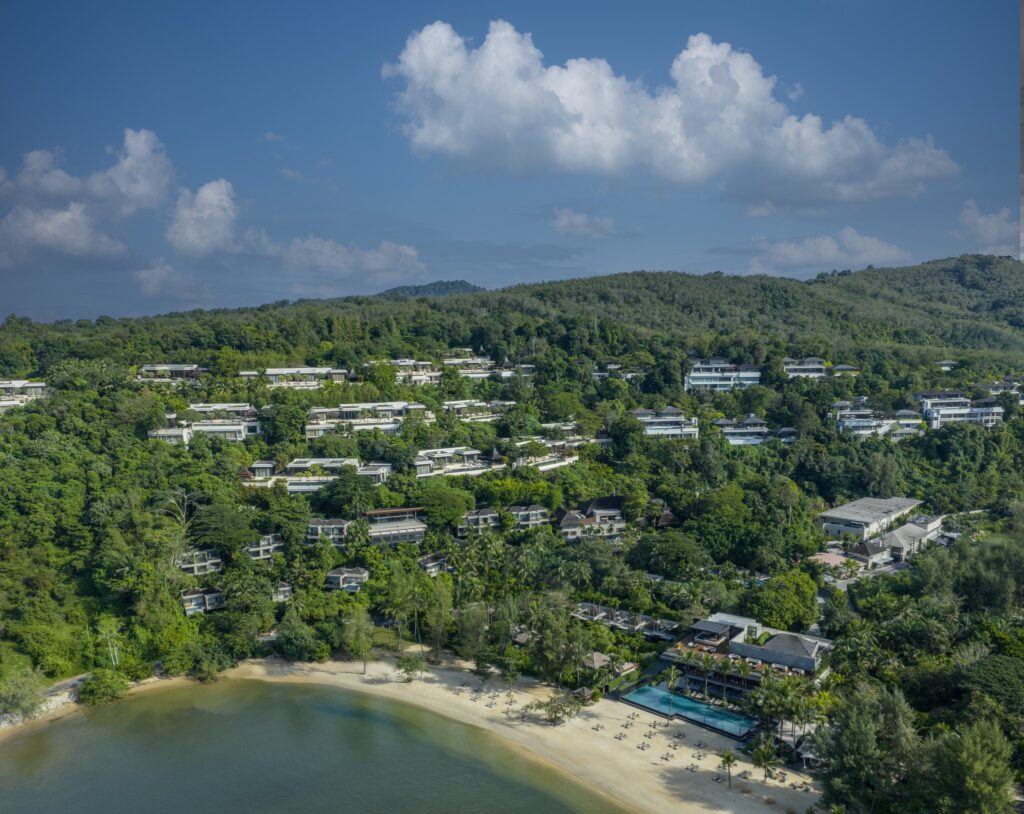
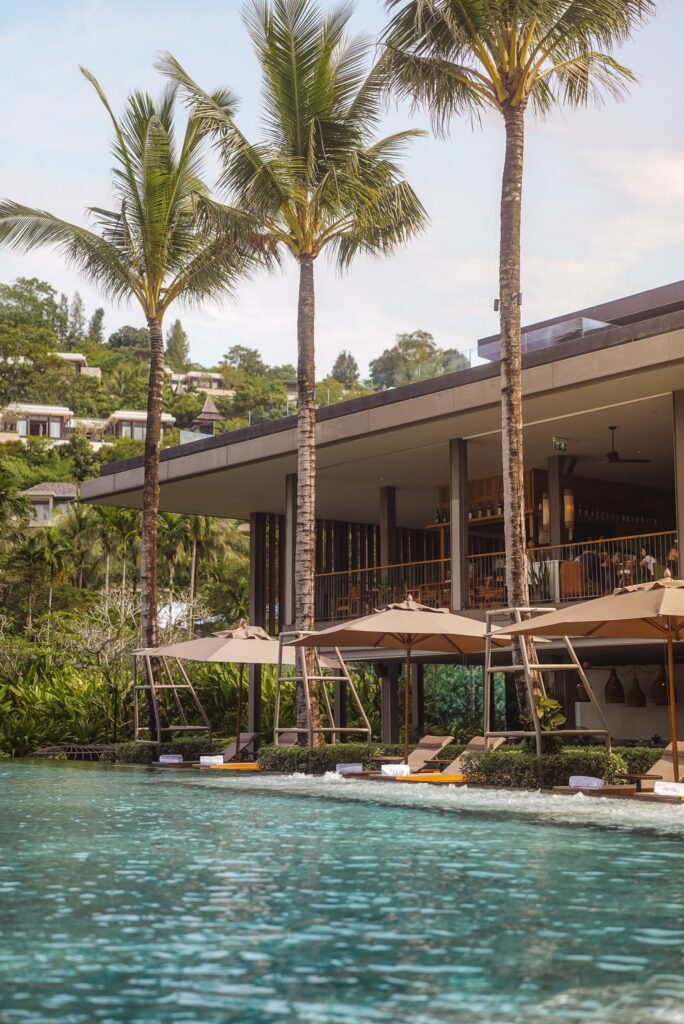
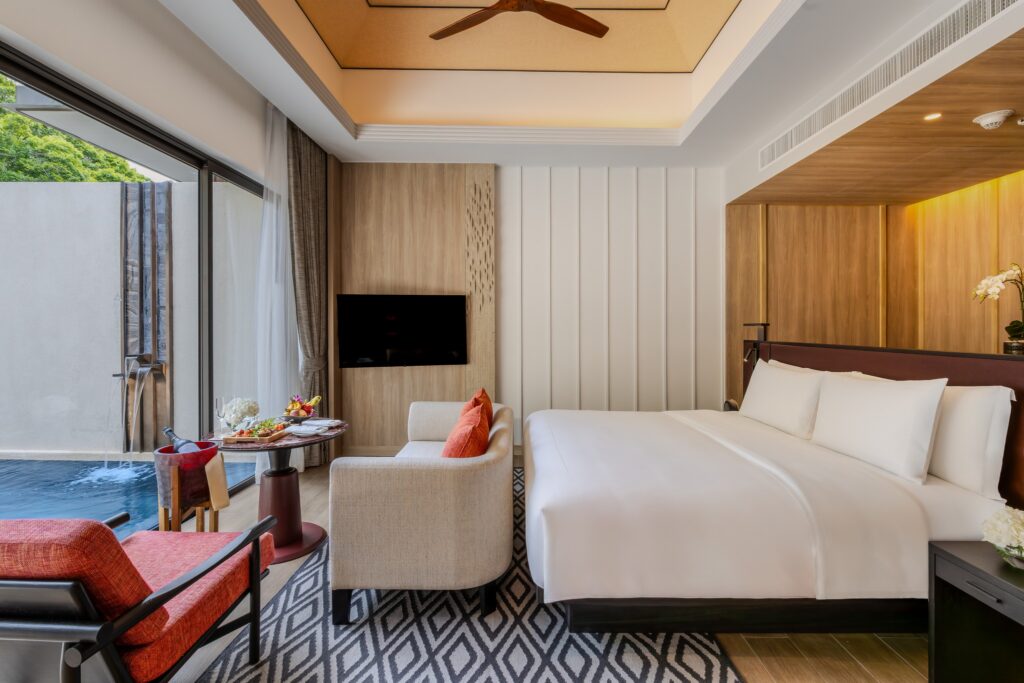
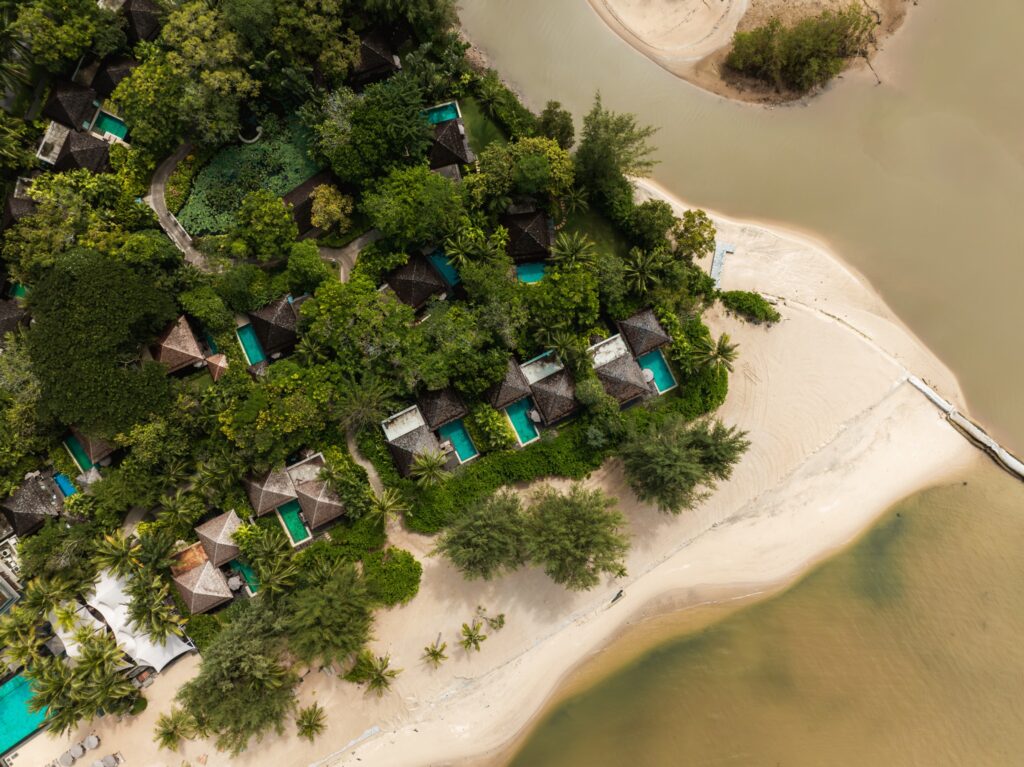
If your trip is going to involve more than a beach and a book, Anantara Layan is the one to prioritise. Of all the properties in this guide, it’s the most full-service, the one with the longest list of things to do, the widest spread of dining, and the kind of facilities programme that means a family of four with wildly different ideas of a good time can all get what they want without negotiating.
The resort sits on a 24-hectare site adjacent to Sirinat National Park, on the headland above Layan Beach. Seventy-seven rooms, suites and villas across ten categories on the resort property itself, with a separate cluster of fifteen multi-bedroom Layan Residences set higher on the hillside above. The standout features include a 400-metre cliffside zipline running fifteen metres above the resort’s Active Zone, a chapel for weddings, three swimming pools and a family programme (the Chang Club, for ages 4 to 12) that goes well beyond the usual colouring-in-and-cartoons setup, with Muay Thai classes, batik painting, a Junior Hotelier Programme for older kids, a teen zone with arcade games, and a 10.5-metre climbing wall. Phew.
The dining lineup is where the scale starts to show. Zuma Phuket runs as a residency at the Beach House Layan, and is a draw in its own right. Breeze, Cocoon, Rooftop and Age fill out the rest of the resort venues. Dara Cuisine Phuket is a separate Thai concept, and above it sits the Sky Observatory, Thailand’s only resort-based observatory, purpose-built rather than retrofitted, with Phuket’s most powerful telescope under a custom-built Ash dome. The telescope is strong enough to pick out Saturn’s rings and Jupiter’s moons. It’s the sort of thing that sounds gimmicky until you’re actually sitting there after dinner, eye to the lens, at which point it becomes one of the more memorable things you’ve done on the island.
The newest addition is Layan Life, a 1,767 sqm two-storey wellness centre opened in October 2024, built around four pillars: Longevity Medicine, Traditional Thai Medicine, Complementary Medicine and Lifestyle Medicine. Treatments range from cryotherapy and hyperbaric oxygen to IV therapy, hydro-colonics and 3D body scanning, with a Technogym-equipped fitness centre, dedicated yoga and Pilates studios and a hydrothermal area attached. Programmes run from three to ten nights, and the whole thing is pitched at a level of seriousness that makes most hotel spas look like they’re playing dress-up.
It should be noted that ‘full-service’ can sometimes tip into just, well, busy, particularly during peak season when the resort is running at capacity and the pool loungers start filling up before breakfast is over. But the site is big enough to absorb it, and there’s always Layan Beach at the bottom of the hill if you want space and sand to yourself.
Rooms at Anantara Layan start from around 11,500 baht (£261) per night in low season for a Sala Sea View Suite, rising to roughly 25,000 baht (£570) in high season.
Address: 168 Moo 6, Layan Beach Soi 4 Cherngtalay, Phuket
Website: anantara.com