Home Blog Page 17

The Best Restaurants In Walthamstow 

Last updated March 2026

Some Londoners are guilty of thinking of Walthamstow purely as that place at the end of the Victoria Line, the one with the marauding market or where you go to see bands at The Bell. They’re missing the point. Around the historic village green near St Mary’s Church, an impressive dining scene has been bubbling under these last few years, one that locals guard jealously and food writers are only just beginning to cover with the requisite diligence.

The Victorian terraces that web out from the ancient village green hide award-winning restaurants that have made national food guides, family-run establishments serving some of London’s most regional cuisines, and newer arrivals bringing serious cooking to an area that still remembers when its only dining option was the local pub. It’s this mix of old and new, community spirit and culinary ambition, that makes Walthamstow Village worth the journey to Zone 3 for your tea.

We’ve spent the last few months eating our way around the area (someone had to) to bring you this selection of the best restaurants within walking distance of Walthamstow Central and Wood Street stations. Here are the places that make Walthamstow Village a culinary destination.

Hiba Taboun, Wood Street

Ideal for freshly baked Palestinian flatbreads and mezze worth crossing zones for…

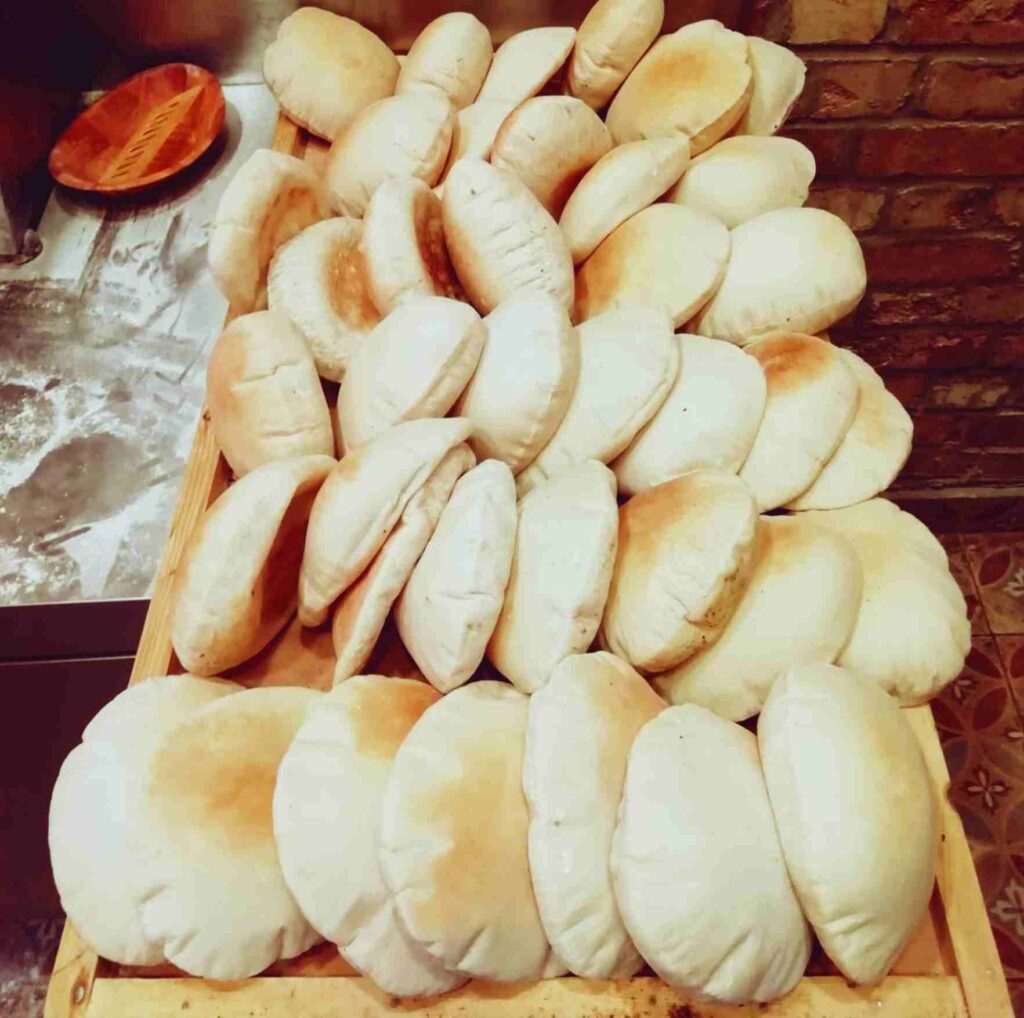
This compact Palestinian café on Wood Street has built its reputation on gorgeous kamaj (soft, airy Palestinian pitas) that emerges from the ovens throughout the day, still warm enough to steam when torn open. Part of a small family restaurant group that includes Hiba Express in Holborn, the Walthamstow branch focuses on turning those daily-baked bread into sandwiches and flatbreads that have locals returning multiple times a week, as well as regulars drawn from further afield by the come-hither wafts of the bread oven.

The manakeesh comes topped with za’atar and olive oil or spiced lamb mince (£7.75), the base given a sourdough treatment that adds complexity to the traditional flatbread. Their falafel sandwich layers the freshly fried chickpea fritters with roasted cauliflower, aubergine, and a sharp salad of cucumber and tomato bound with tahini and lemon. It’s superb; so invigorating and, giving you change from a ten spot, an absolute steal. For bigger groups or, indeed, appetites, the day’s platter brings together four different mezze alongside falafel and grilled meats – enough variety to work through slowly over conversation.
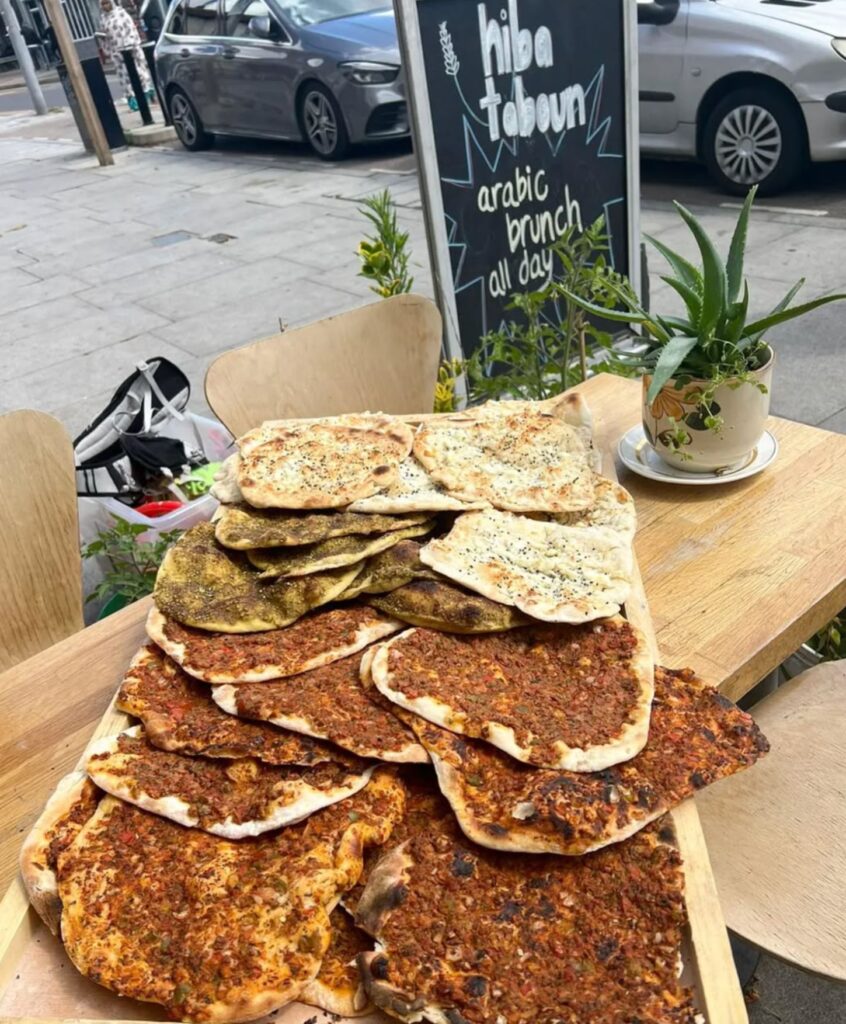
Palestinian coffee arrives with gentle warnings from staff about its intensity – the small cup carries cardamom, cinnamon and other spices, served without sugar in the traditional style. Not everyone’s cup of tea (or coffee), perhaps, but it’s excellent. Alternatively, the milky, fragrant mouhallabieh pudding provides a gentler finish to the meal.

The space is divided between Hiba Taboun and Mini Hiba, both simple rooms where the focus stays firmly on the food. Staff show obvious, merited pride in what they’re serving – the kind of place where servers check in through the window to ensure you’re enjoying your meal, which inevitably you are. 

At £35 for the full Palestinian brunch of a dozen plates and breads to match, or under £8 for a substantial sandwich, it’s priced for regular visits rather than special occasions. For both the quality of the food and the value, we’ve become one of those regulars. Takeaway is also available.

Instagram: @hiba_taboun

Address: 2, Golden Parade, London E17 3HU


Gökyüzü, Selborne Road

Ideal for generous Turkish grills and all-day dining from breakfast through late dinner…

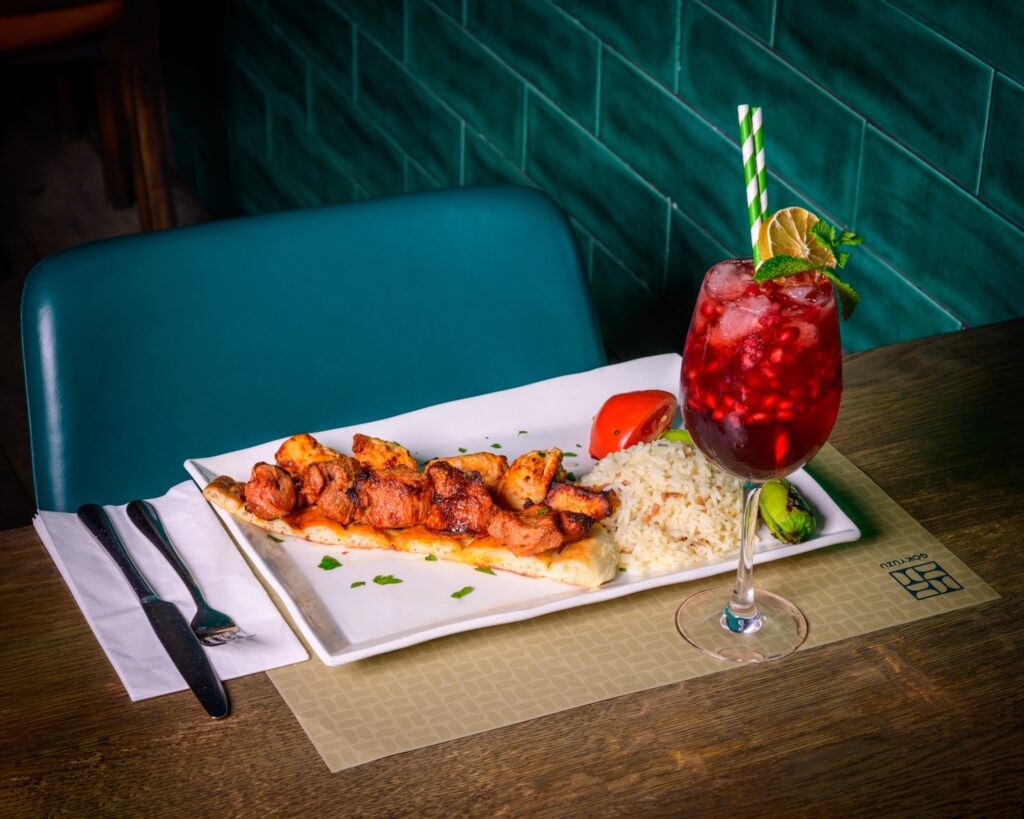
Inside 17&Central shopping centre on Selborne Road, Gökyüzü occupies a two-level space that buzzes with families tucking into platters of grilled meat from morning until midnight (9am to 11pm actually, but who’s counting?). Part of a burgeoning London chain with roots in Kahramanmaras, the Walthamstow branch has become something of a local institution since opening in the early 2000s, winning the best Middle Eastern restaurant at the Deliveroo Awards last year.

The wood-fired oven near the entrance sets expectations immediately, producing a warm glow and warm bread that arrives at your table unbidden, alongside garlic yoghurt and ajvar. The Turkish breakfast spreads across the table in small plates – free-range eggs, feta, Turkish beef sausage, muska böreği, halloumi, fresh vegetables, simit, honey and jam – substantial enough to carry you through to dinner.

Come evening, the charcoal grills take centre stage. The Adana kebab showcases their skill with seasoning, the lamb mince enthusiastically but deftly salted. The mixed grill platters hit the table bearing enough lamb shish, chicken shish, ribs and chops to feed a small gathering. For something a little more personal, the Icli Kofte – stuffed bulgur with spiced minced lamb blended with spices – is a real winner.
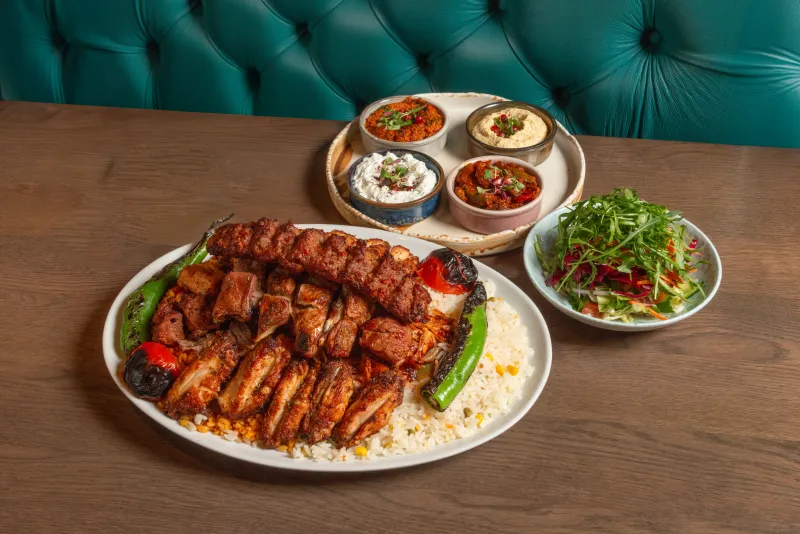
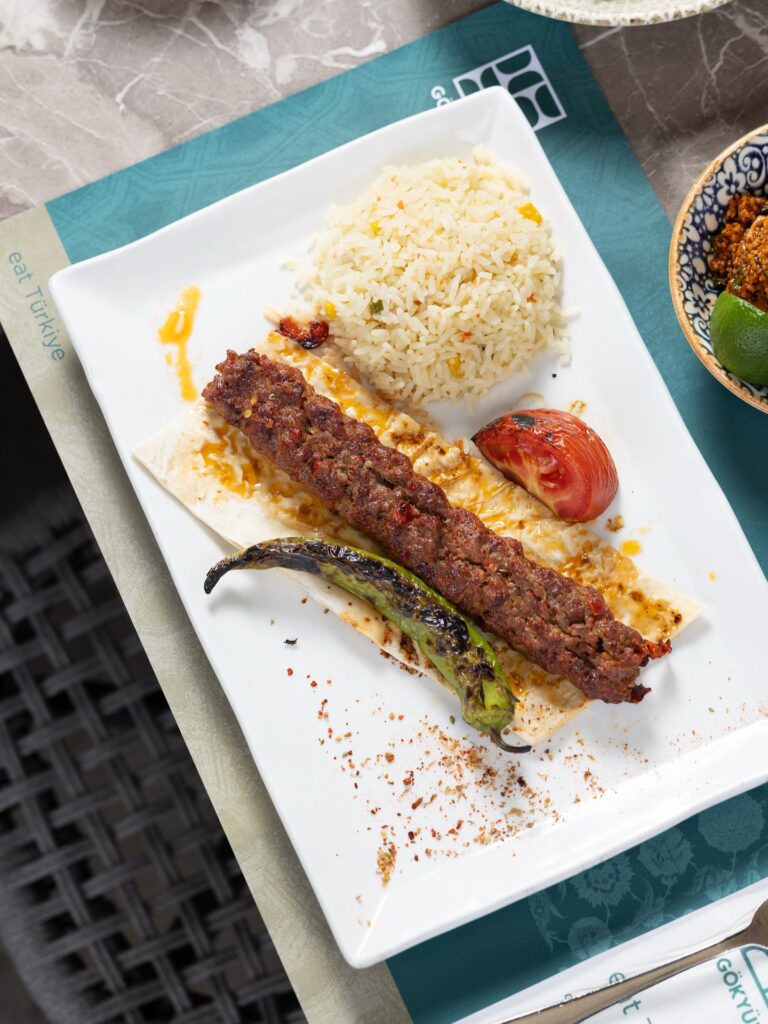
Vegetarians gravitate towards the Sarma Beyti, which regulars describe in reverent tones. To finish, the künefe is a properly indulgent conclusion – honey-drenched wheat and cheese that arrives hot from the kitchen. 

The atmosphere lands somewhere between casual and special occasion, with latticed screens and teal accents throughout creating pockets of intimacy. After 9pm the lights dim slightly, the crowd gets livelier, but families with children remain welcome. At lower mid-range prices – expect around £30 per person for a feast – it delivers value too.

Website: gokyuzurestaurant.co.uk

Address: 42D Selborne Road, The Mall, Walthamstow, London E17 7JR

Read: The best restaurants in Camden


Slowburn, Blackhorse Lane

Ideal for award-winning vegetable-forward dining in London’s most unlikely location…

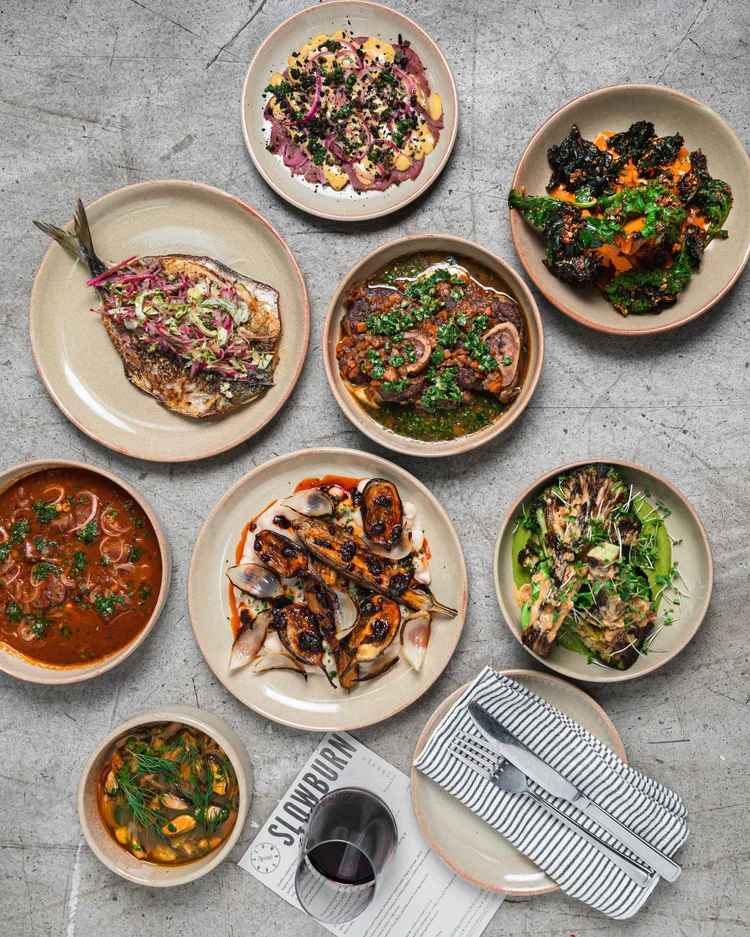
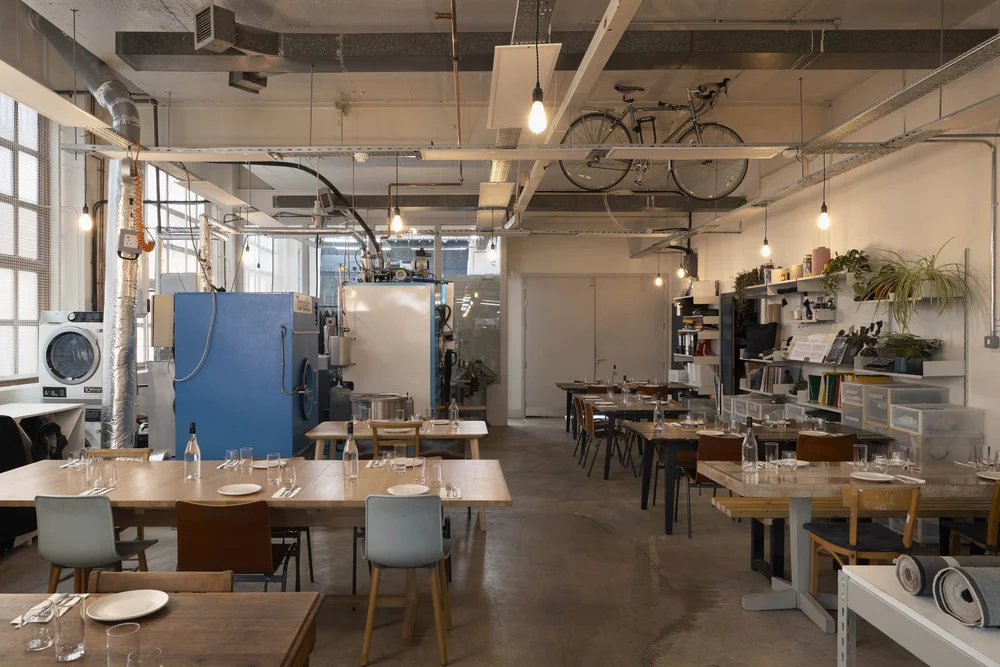
Slowburn has become one of London’s most talked-about restaurants despite (or, indeed, because of) its position inside a working denim factory on Blackhorse Lane. The 2025 Good Food Guide named it among the UK’s Top 100 Best Local restaurants, a recognition that seems almost surreal given you need to walk through an active jeans workshop to reach your table.

The dining room occupies one corner of the factory floor, separated from the industrial sewing machines by nothing more than some strategically placed plants and the confidence of chef-owners who understand that great food speaks louder than grand interiors. The menu changes with obsessive seasonality, focusing on vegetables grown within a few miles of East London, treated with techniques that turn humble ingredients into something truly memorable.
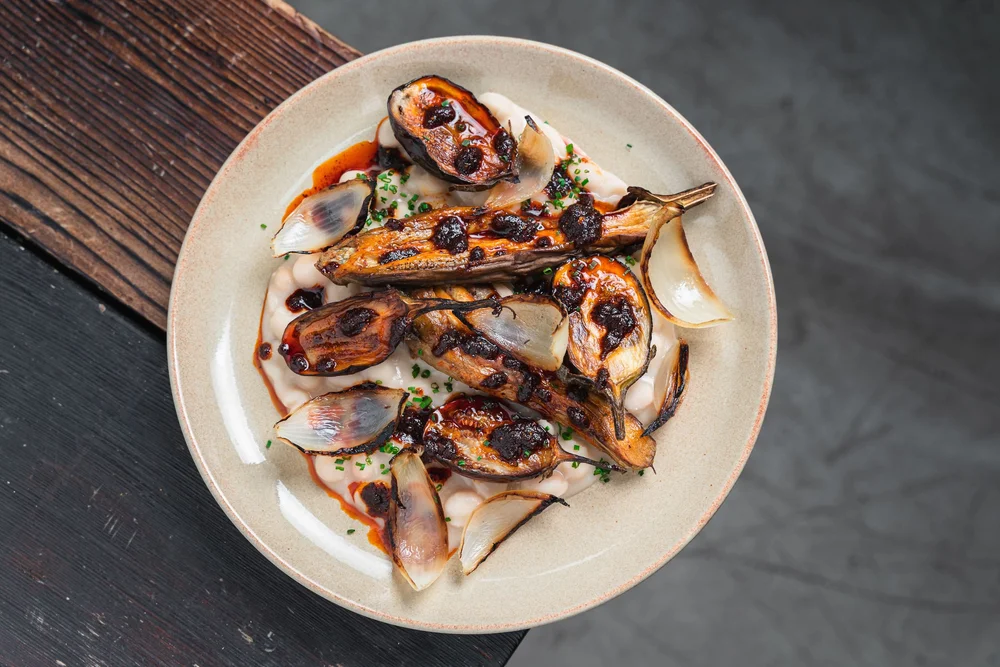
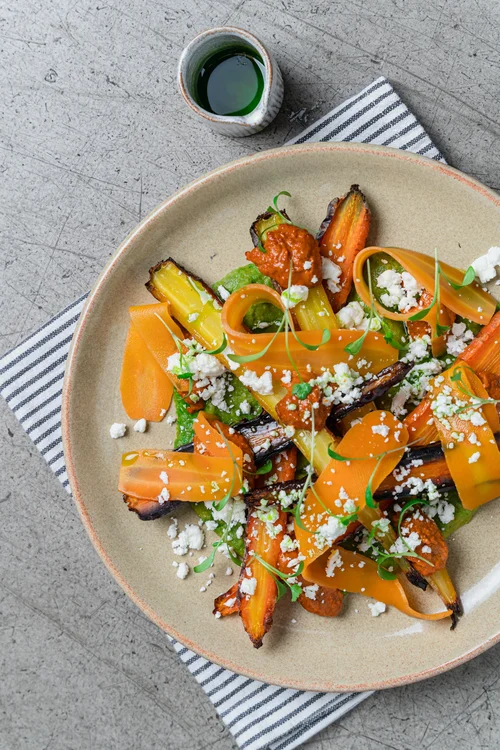
Recent highlights have included heritage carrots with brown butter and hazelnuts, fermented turnip with aged goat’s cheese, and a beetroot tart that converts even the most committed carnivores. When meat does appear, it’s used sparingly – perhaps cured duck breast with pickled plums, or slow-cooked lamb shoulder for sharing with a whole host of seasonal sides and sauces that are, in truth, the main event.

The natural wine list reflects the same commitment to small producers and sustainable practices, while service maintains the kind of knowledgeable enthusiasm that comes from a team who genuinely believe in what they’re doing. Booking essential, particularly since the Good Food Guide recognition has brought food pilgrims from across London.

Website: slowburn.london

Address: 114b Blackhorse Lane, Walthamstow, London E17 6AA


Güneş, Hoe Street

Ideal for Anatolian platters and charcoal-grilled kebabs in marble-clad surroundings…

The bar at Güneş, backlit in blue with what appears to be a vast slab of mineral-veined stone, sets the tone immediately – this is a restaurant that’s committed to creating a scene. Neon strip lighting, marble everywhere, velvet seating, a conservatory done up with faux-jungle styling…

But look past the decor and you’ll find a restaurant doing genuinely excellent things with meat over charcoal, the kind of place where locals return for ebullient hospitality and cooking that doesn’t cut corners.

The Anatolian and Mediterranean menu centres on what emerges from the charcoal grill. Adana kebab skewers arrive sizzling, the minced lamb seasoned with pepper and thyme. Lamb and chicken döner gets carved from the rotisserie throughout service, chicken shish is grilled until nicely charred. The Family Platter for 3-4 people brings together lamb and chicken döner, both shish varieties, chicken beyti, Adana kebab, chicken wings, and lamb ribs at £72.90, all served with rice, bulgur, salad, and bread for mopping.

The Iskender kebab – sliced döner layered over torn bread with tomato sauce and yoghurt, then finished with butter and herbs – is the sort of dish that keeps people coming back. Choose lamb or chicken for £21.90. Portions defeat most appetites, which seems to be the standard here. Hot and cold mezze run from hummus and cacık through to sigara böreği (feta and halloumi in Turkish pastry) and grilled halloumi, providing routes in for those pacing themselves.

Service operates with typical Turkish generosity – complimentary rice pudding arrives at the end of your meal, the kind of gesture that turns first-time visitors into regulars. The drinks list accommodates both the after-work Efes crowd and birthday parties ordering strawberry daiquiris and Sex on the Beach cocktails by the round. Chef Drew Snaith of SESTA in Hackney singled out Güneş when sharing his Walthamstow favourites, specifically recommending the Iskender kebab.

The restaurant handles everything from solo diners to large groups celebrating special occasions, remaining welcoming throughout. At mid-range prices, it delivers consistent cooking and portions that ensure nobody leaves hungry.

Website: gunesrestaurant.uk

Address: 328 Hoe Street, London E17 9PX


The Good Egg at Eat17, Orford Road

Ideal for Middle Eastern-inspired dishes in a unique grocery-restaurant hybrid…

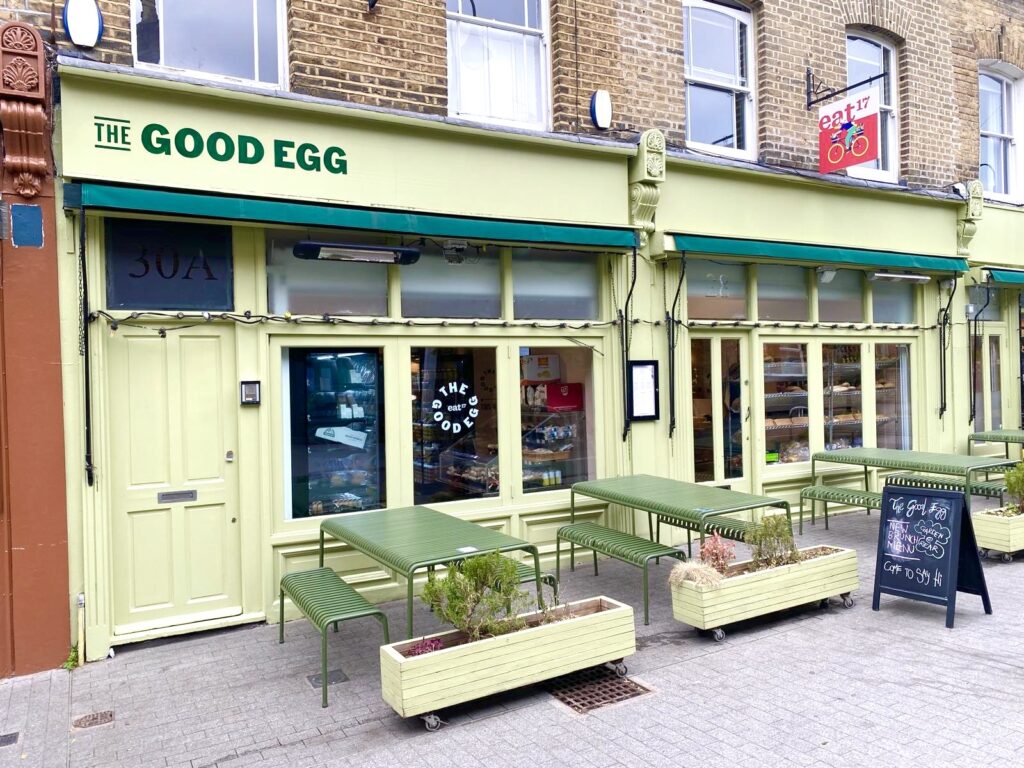
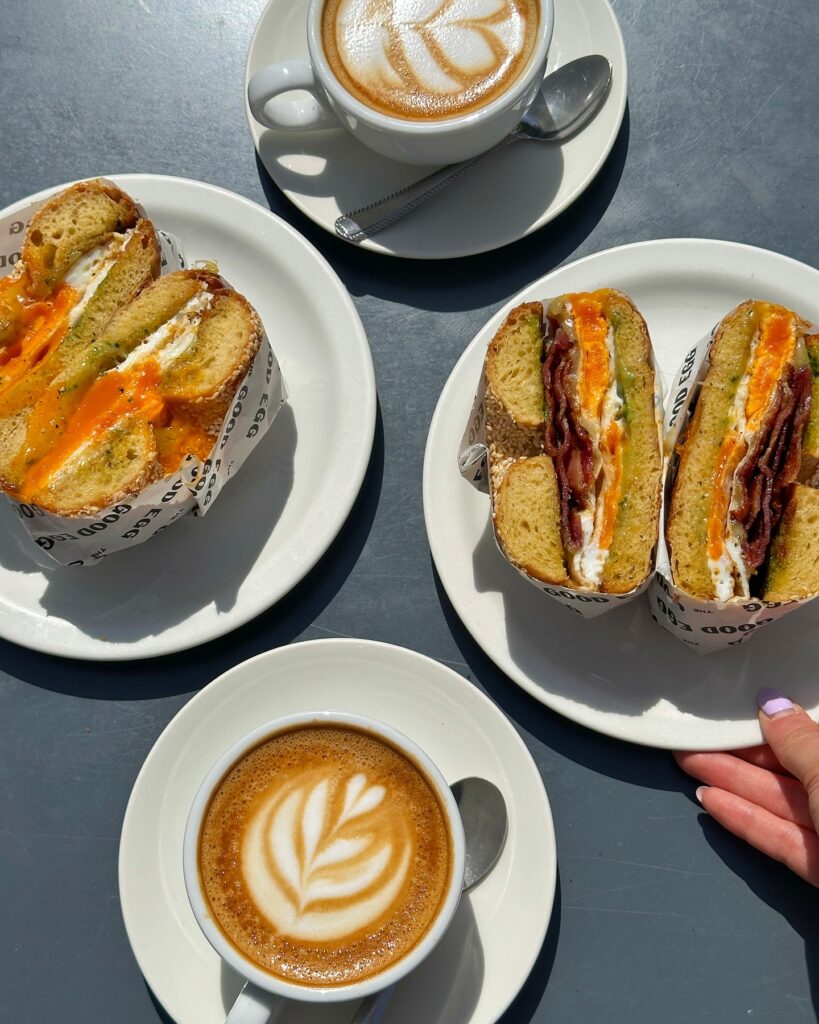
Within Eat17’s expanded premium grocery store, The Good Egg operates as an independent restaurant serving Middle Eastern-inspired breakfast, brunch, lunch, and dinner. This unusual setup – dining alongside shoppers browsing award-winning local products and artisan goods – creates an atmosphere unlike anywhere else in London.

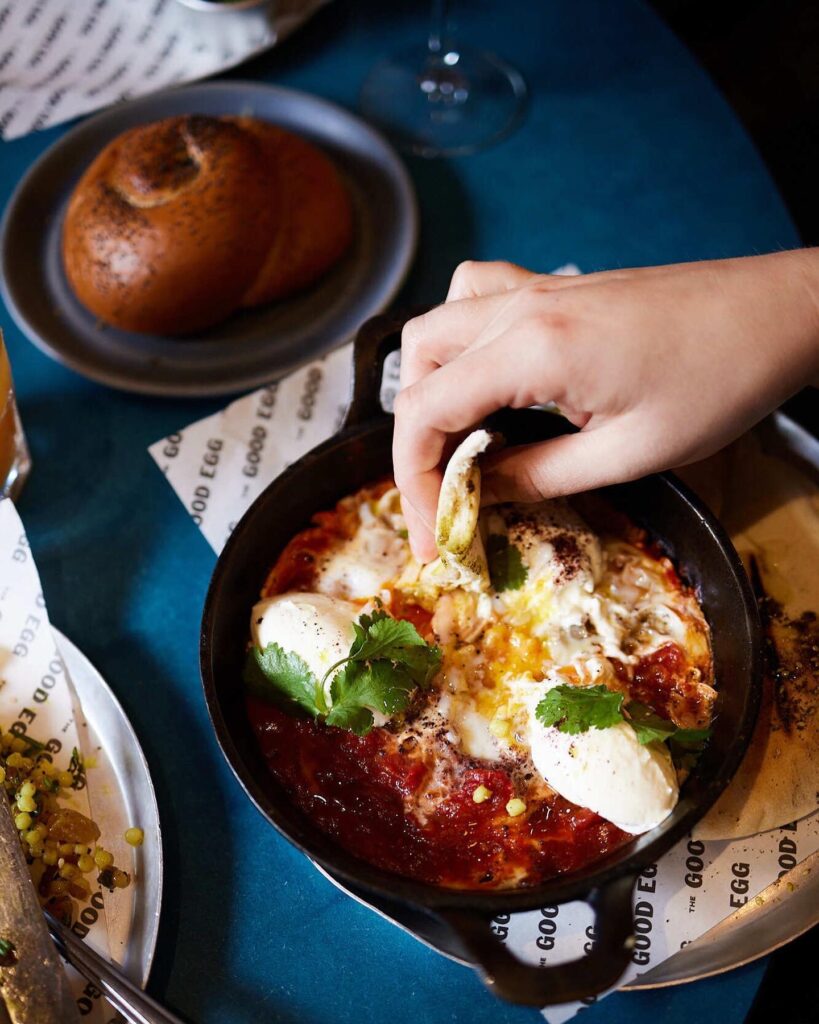
The Good Egg’s menu focuses on vibrant, spice-forward dishes that wake up your palate. The shakshuka comes with perfectly runny eggs nestled in rich tomato sauce scattered with fresh herbs, while the babka French toast offers an indulgent take on weekend brunch. The za’atar fried chicken has quickly developed as something of a signature, and the rotating specials often feature lesser-known Middle Eastern dishes that showcase the kitchen’s ambition.

Operating from 8am-4pm for breakfast and lunch, then 5pm-9pm for dinner, The Good Egg accepts walk-ins for small groups or email reservations for parties of six or more. The casual approach suits the relaxed vibe – you might find yourself sharing a table with someone who just popped in to buy Eat17’s famous bacon jam and decided to stay for lunch.

The combination works surprisingly well. You can stock up on premium groceries, local produce, and specialty items while enjoying a proper meal, making this a true neighborhood destination rather than just another restaurant.

Website: thegoodegg.co

Address: 28-30 Orford Rd, London E17 9NJ


Etles, Hoe Street

Ideal for discovering Uyghur cuisine at one of London’s pioneering regional restaurants…

One of London’s first Uyghur restaurants, Etles has been serving the distinctive cuisine of Xinjiang province since before we (most of us) could locate the region on a map (we’re still not sure we can). The family-run restaurant occupies a modest corner site on Hoe Street, its dining room decorated with traditional textiles and the sounds of Mandarin and Uyghur floating from the open kitchen.

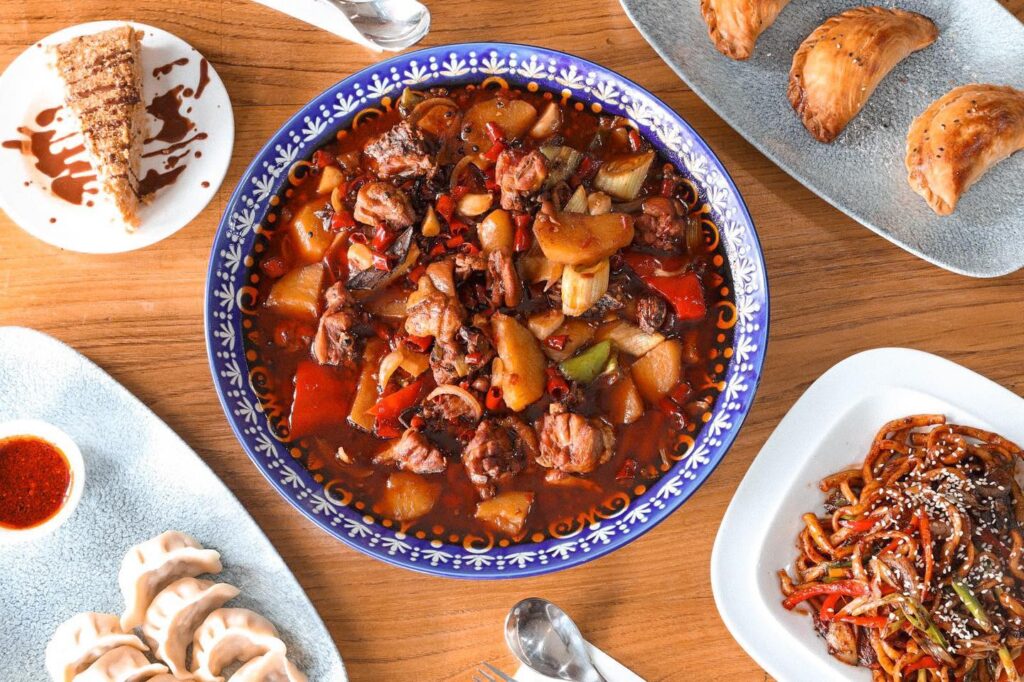
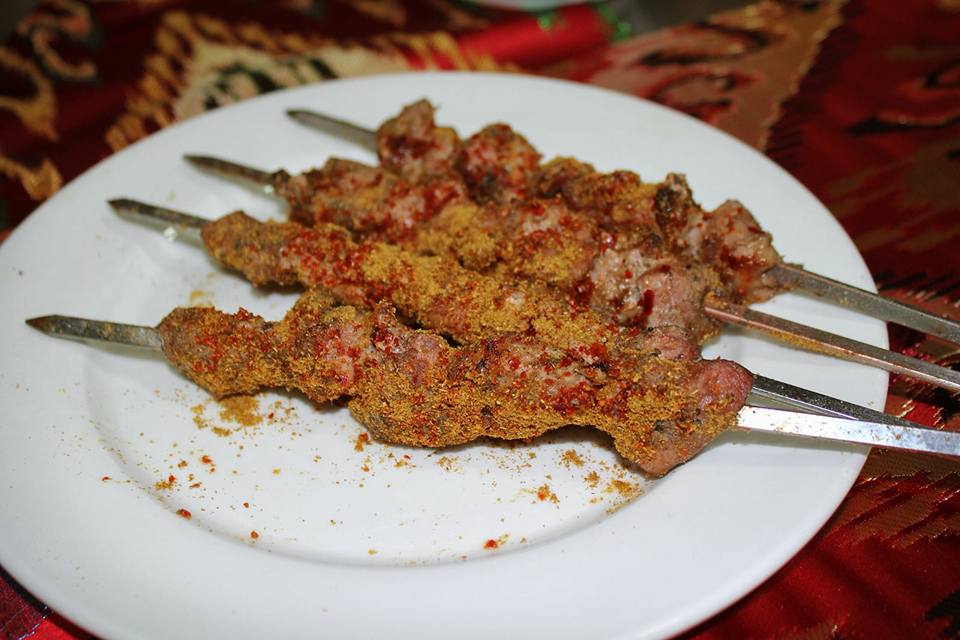
Uyghur food sits somewhere between Chinese and Central Asian, a gorgeous blend of influences, with dried spices featuring prominently and noodles – hand-pulled until slack – taking centre stage. Those noodles get made to order, each strand stretched with practiced confidence to achieve the perfect texture – chewy but tender, robust enough to hold up to rich, aromatic broths. The Large Plate Chicken (Da Pan Ji) lives up to its name, a generous serving of chicken, potatoes, and peppers in a sauce that builds heat gradually through layers of cumin, coriander, and chilli.

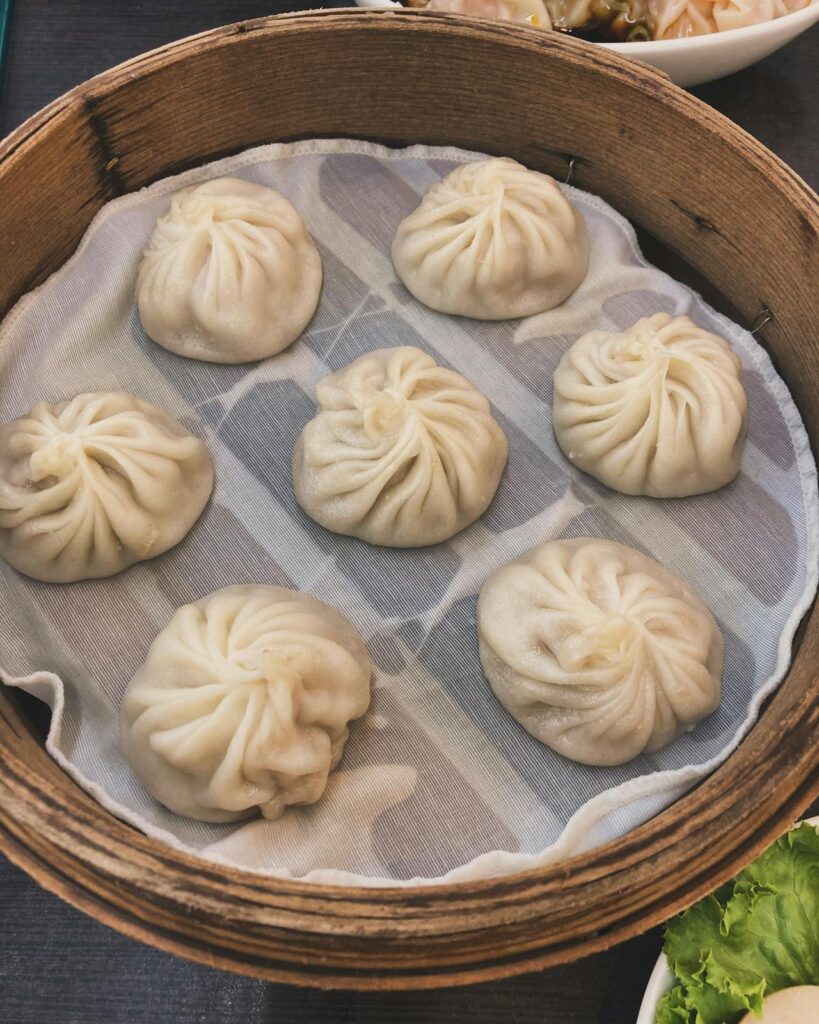
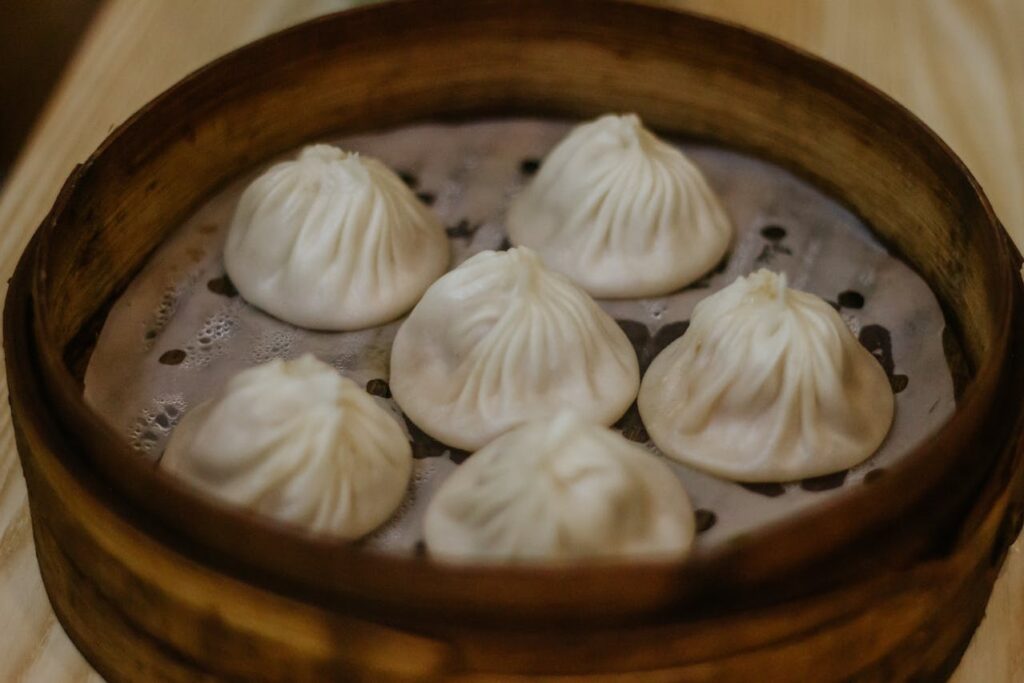
The lamb dumplings flaunt the kitchen’s skill with dough and seasoning – each dumpling perfectly pleated and filled with spiced lamb that’s been cooked until it falls apart at the suggestion of a lurking utensil. It’s heady, brilliant stuff, and has earned a glowing national review from Jay Rayner at a time when he felt particularly threatened by Eater and Vittles for not venturing out of Central, it should be said.

Cash only, BYOB with no corkage, and expect to share tables during busy periods when local Uyghur families arrive for weekend meals that stretch across multiple courses and several hours.

Website: etleswalthamstow.com 

Address: 235 Hoe Street, Walthamstow, London E17 9PP


Sodo Pizza, Hatherley Mews

Ideal for sourdough pizza and natural wines in an intimate neighborhood setting…

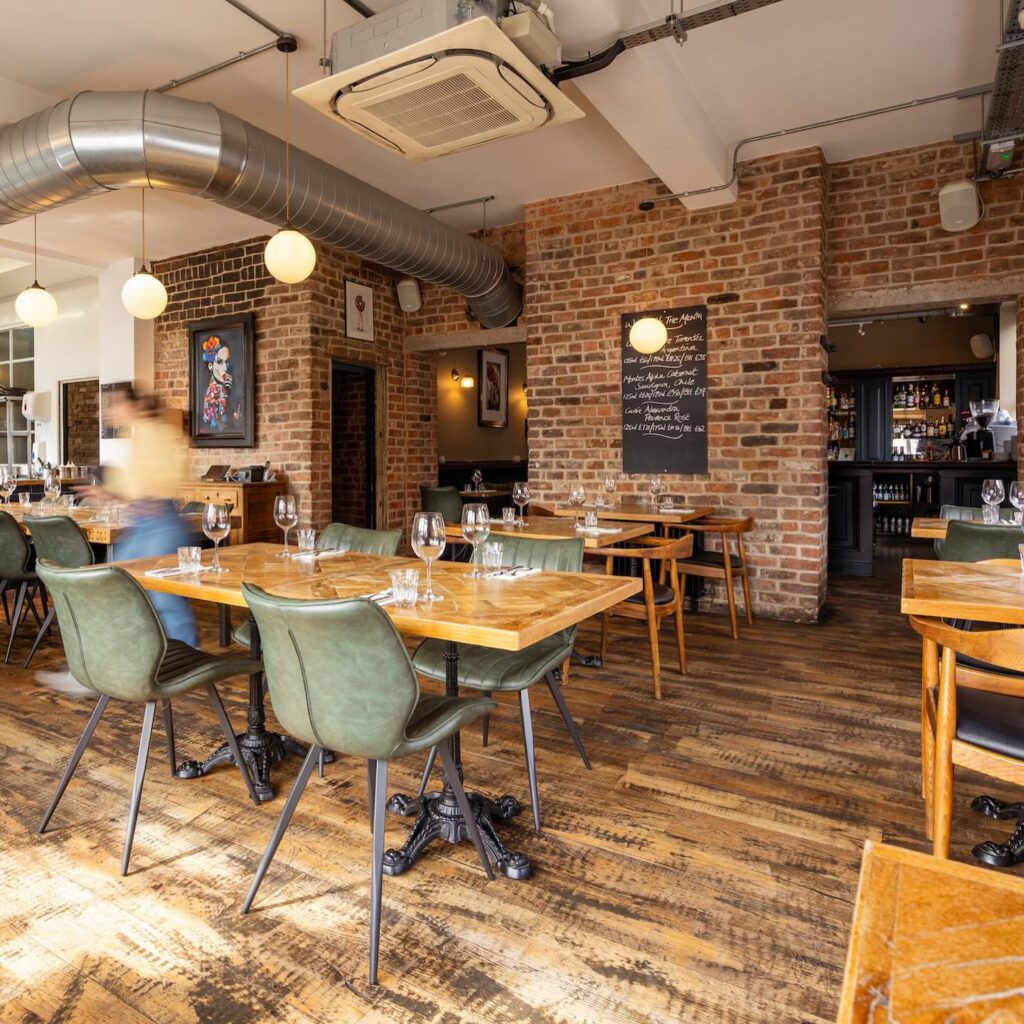
Sodo Pizza occupies a converted industrial unit on a quiet mews off Hoe Street that’s been transformed into one of Walthamstow’s most charming dining rooms. The exposed brick walls, wooden tables, and open kitchen create something intimate, worlds apart from the business of this corner of North London, while the flickering wood-fired oven (imported from Italy, naturally) brings a gentle touch of theatre.

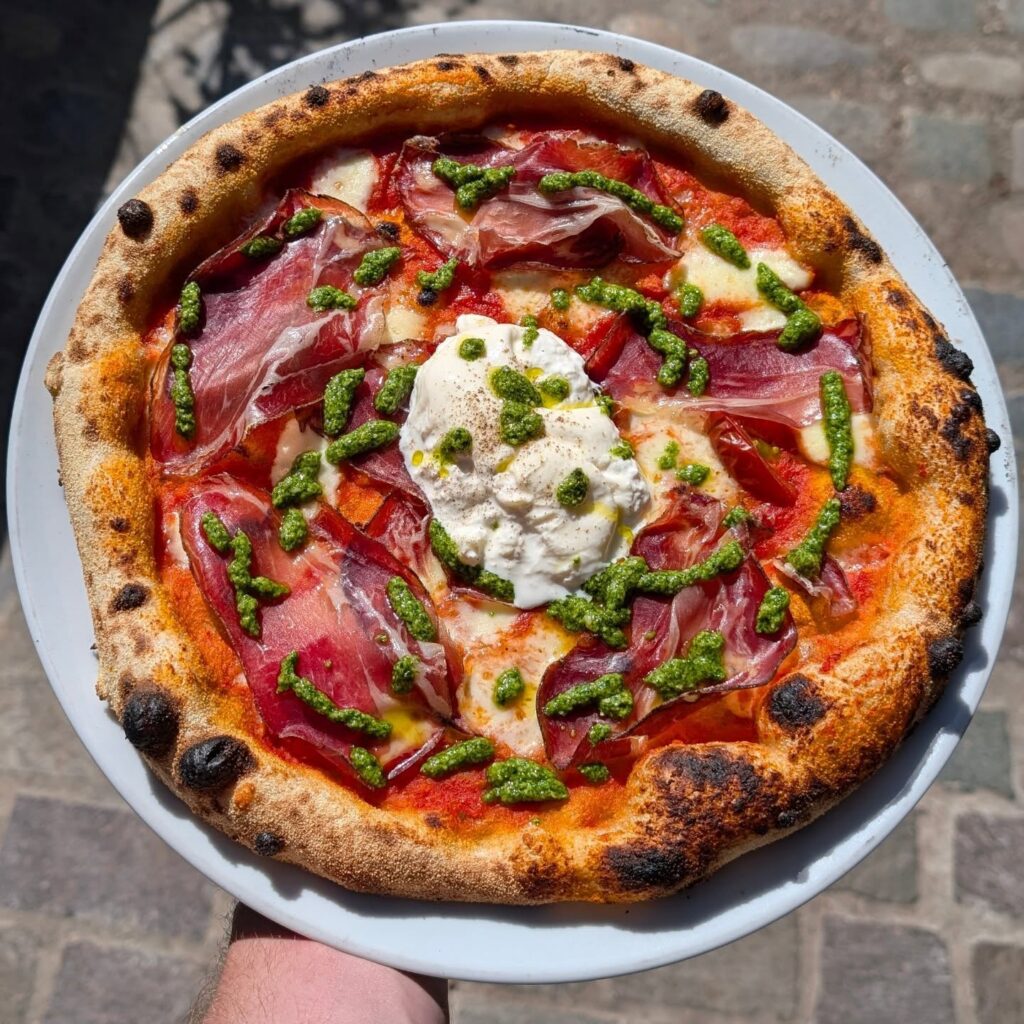
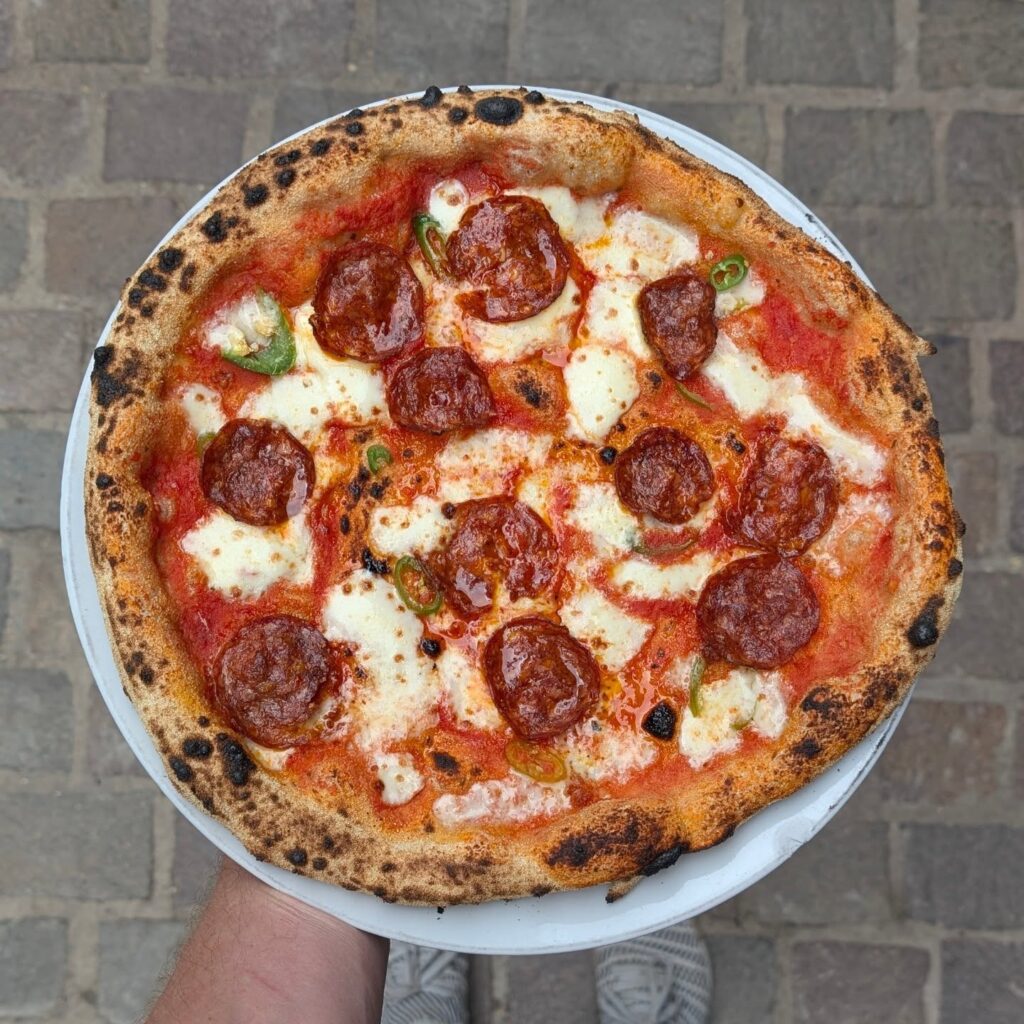
The sourdough pizza bases represent years of obsessive experimentation – slow-fermented for 48 hours to develop complex flavors and a texture that’s simultaneously crispy and chewy. Toppings focus on quality produce first and foremost, with San Marzano tomatoes, buffalo mozzarella, and carefully sourced charcuterie. The nduja pizza with chilli honey and rocket is bang on trend to the point of ubiquity, but still works and is our go-to order. We love the anchovy, capers and olives number too, but simply can’t bring ourselves to order it, the Jon Bon Chovy moniker too cringe to say out loud.

The natural wine list leans into interesting bottles – Joan Meyer’s Liquid Skin, an orange Chenin Blanc from South Africa with cardamom and honey notes clocks in at a keen £36. There’s Heinrich’s Austrian pet-nat with mandarin and quince for £43, too. It’s a lot for a drop with your pizza, but it’s great wine nonetheless.

Claw back some of that money on their particularly sharp lunch deal, which runs Tuesday to Friday: £10 gets you either a 7-inch pizza with salad or a full-size pizza, plus a soft. Cheers to that.

The intimate size means booking is essential, particularly at weekends when the 30-cover dining room fills with locals who’ve discovered this hidden gem.

Website: sodopizza.co.uk

Address: 21-23 Hatherley Mews, Walthamstow, London E17 4QP


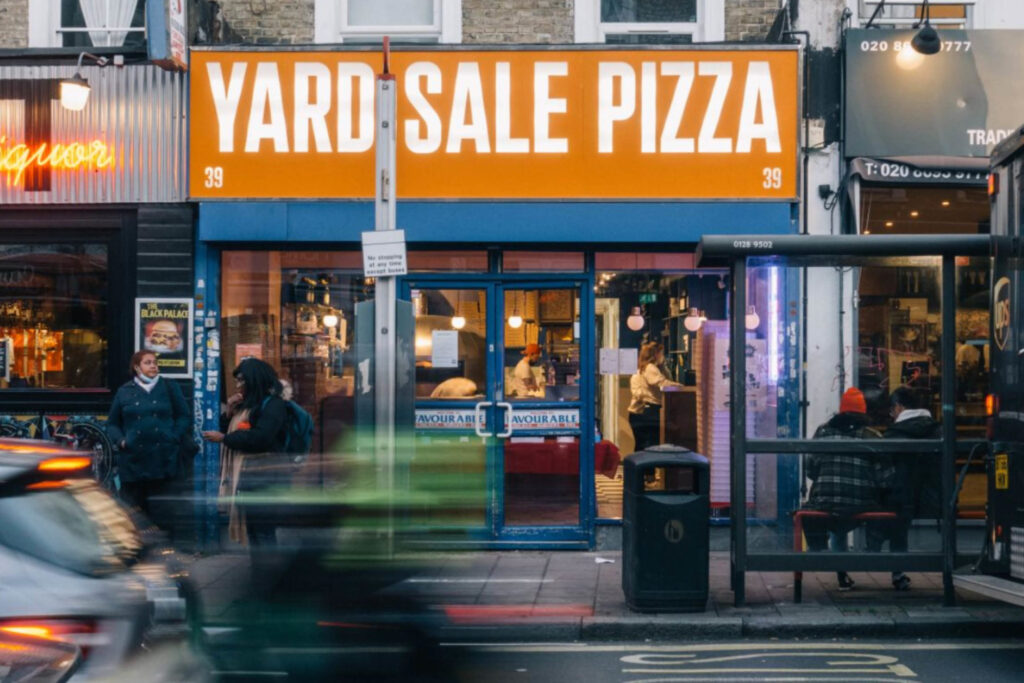
Yard Sale Pizza, Hoe Street

Ideal for award-winning pizza in a converted glass factory…

Time Out consistently declares this as one of London’s best pizzas (as do we) and the Walthamstow location emphasises how we both might be right. 

Rather than the promised yard, there’s a roof and stuff, with the converted glass factory providing an industrial backdrop to your pie, all high ceilings, exposed beams, and an outdoor terrace – call it a ‘yard’ if you want – that comes into its own during warmer months.

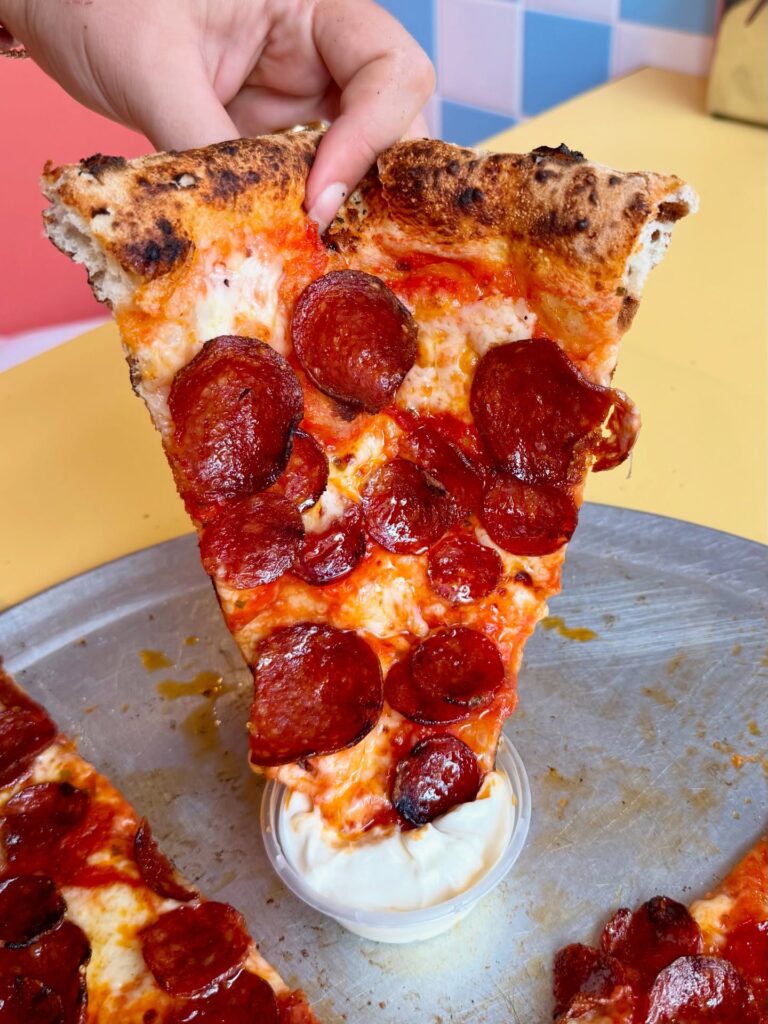
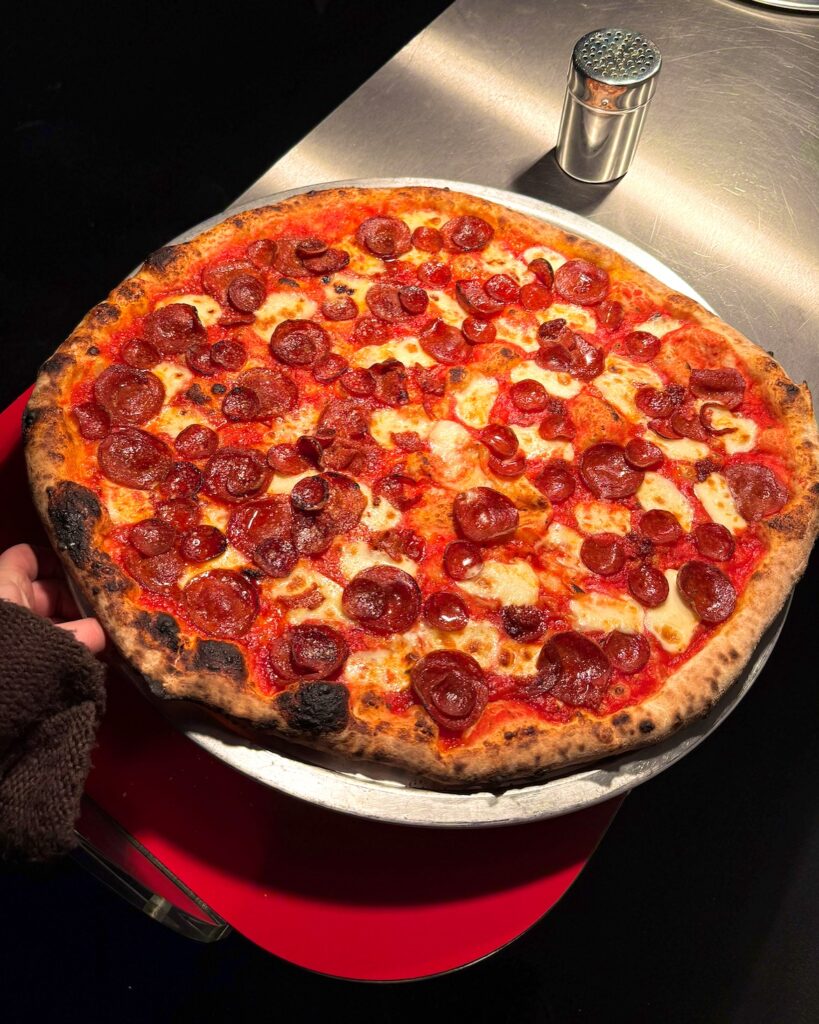
The sourdough bases use a mother culture refined over years, resulting in pizza that’s substantial and, in turn, digestible. The Holy Pepperoni holds cult status among London pizza obsessives, with pepperoni that cups and chars at the edges. The Full House combines pepperoni, Italian sausage, ground beef, mushrooms, olive and peppers, but somehow doesn’t end up feeling like a Pizza Hut. That’s some sleight of hand, that.

Local beers are what you want to wash it down, with several options from Gipsy Hill Brewery on the menu. That means the beer travels just twenty miles from grain to glass. Our favourite is Yard Sale’s house lager, the Pyramid Scheme. The name baffles us, but there’s plenty of clarity in the can.

Website: yardsalepizza.com 

Address: 15 Hoe St, London E17 4SD

With pizza on the brain, we’re off in search of the perfect New York slice next. Care to join us?

The Best Restaurants On Anglesey

Last updated March 2026

Once dubbed the ‘Mother of Wales’ for its fertile fields that fed the mainland, Anglesey has evolved into one of Wales’ most exciting culinary destinations.

Cross the Menai Bridge today, and you’ll find yourself on an island where centuries-old farming traditions meet increasingly innovative cooking, where pristine seafood is celebrated using both time-honoured techniques and more contemporary flourishes, and where the next great meal is never far away.

From Michelin-recognised heavyhitters to relaxed beachside bistros, here’s our pick of the best restaurants on Anglesey.

Sosban & The Old Butchers

Ideal for an extraordinary, intimate dining experience where innovation meets Welsh ingredients…

Just moments after crossing the Menai Bridge, you’ll discover one of Wales’ most acclaimed dining destinations, tucked away within a historic butcher’s shop, no less. This is no ordinary restaurant – Chef Stephen Stevens (great name) has created something truly unique here, holding a Michelin star for the past decade, as well as an impressive four AA rosettes, for his bold, creative cooking.

The dining room sets a certain scene: covered windows add an air of exclusivity, while inside, Welsh slate walls, sheepskin-covered chairs and hand-painted animal tiles pay homage to the building’s butcher shop heritage. The space is an understated one – just a handful of wooden circular tables with dining chairs positioned at intimate 45-degree angles to one another, and a kitchen work bench where Stevens can be seen working solo, orchestrating each dish with precision.

There are no menus here. Instead, guests embark on a nine-course tasting experience (£175 per person) that showcases the wealth of North Wales ingredients in surprising and delightful ways. Stevens’ cooking demonstrates an innate understanding of technique and flavour – expect dishes like cod with fermented onion fudge and liquorice, or confit lamb’s tail with mustard custard (next up: goat float? brisket biscuit?) and coffee, each one demonstrating his ability to combine unexpected elements into something truly memorable.
Sosban & The Old Butchers is only open for dinner, Thursday through Saturday, with the evening kicking off at 7pm for the 8 diners lucky enough to secure a booking.

Indeed, do book months in advance – with limited seating and growing recognition, securing a table at this distinguished little place requires foresight and patience.

Website: sosbanandtheoldbutchers.com

Address: Trinity House, 1 High St, Menai Bridge LL59 5EE


Dylan’s, Menai Bridge

Ideal for waterfront dining that casually celebrates North Wales’ finest produce…

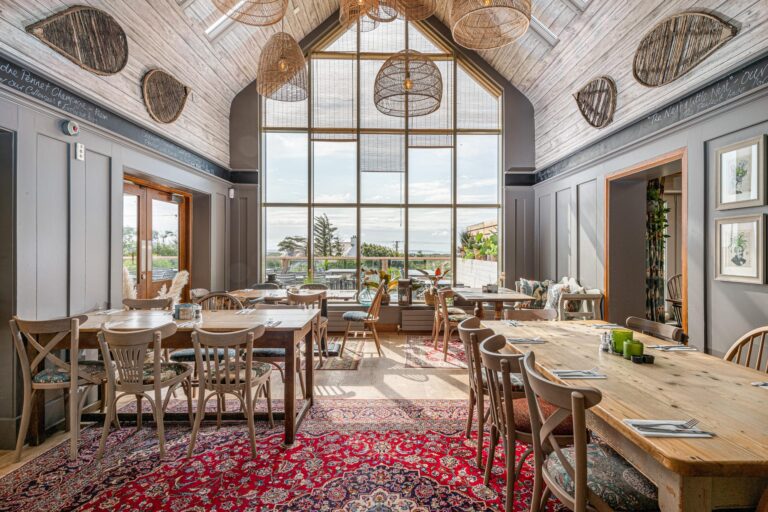
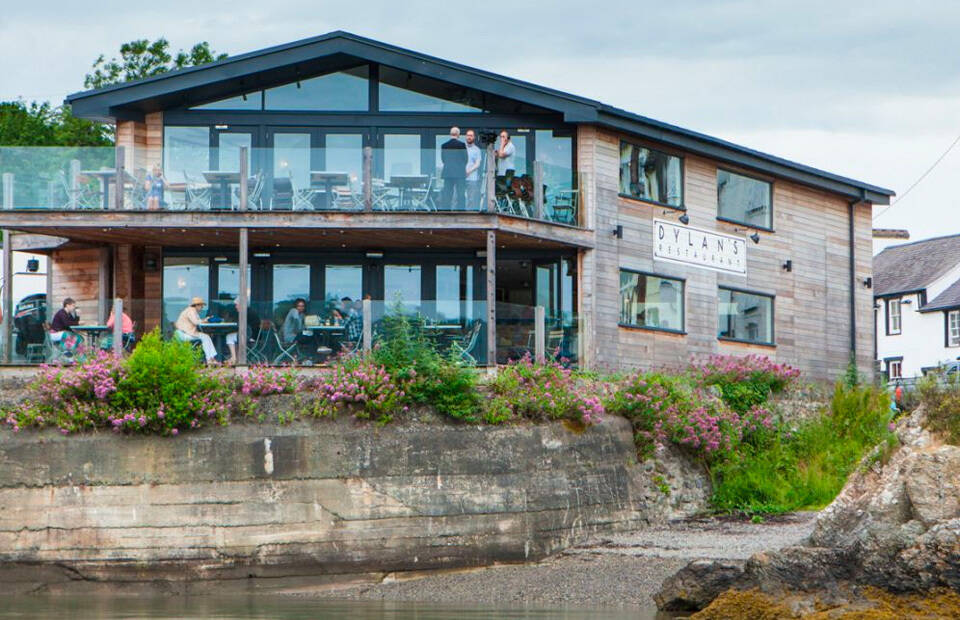
Since opening their doors in 2012, Dylan’s has grown from a single waterfront restaurant into one of North Wales’ most beloved dining institutions, with a total of five now operating across the region. Their flagship restaurant in Menai Bridge, housed in a striking modern building, offers a dining room where floor-to-ceiling windows frame spectacular views across the Menai Strait to Snowdonia beyond.

Crowned ‘Welsh Food & Drink Champion’ in 2023, Dylan’s has made it their mission to celebrate “the local produce, character and natural beauty of North Wales.” This isn’t just marketing speak – their kitchen maintains strong relationships with local suppliers, from award-winning butcher Edwards of Conwy to the region’s fish merchants.

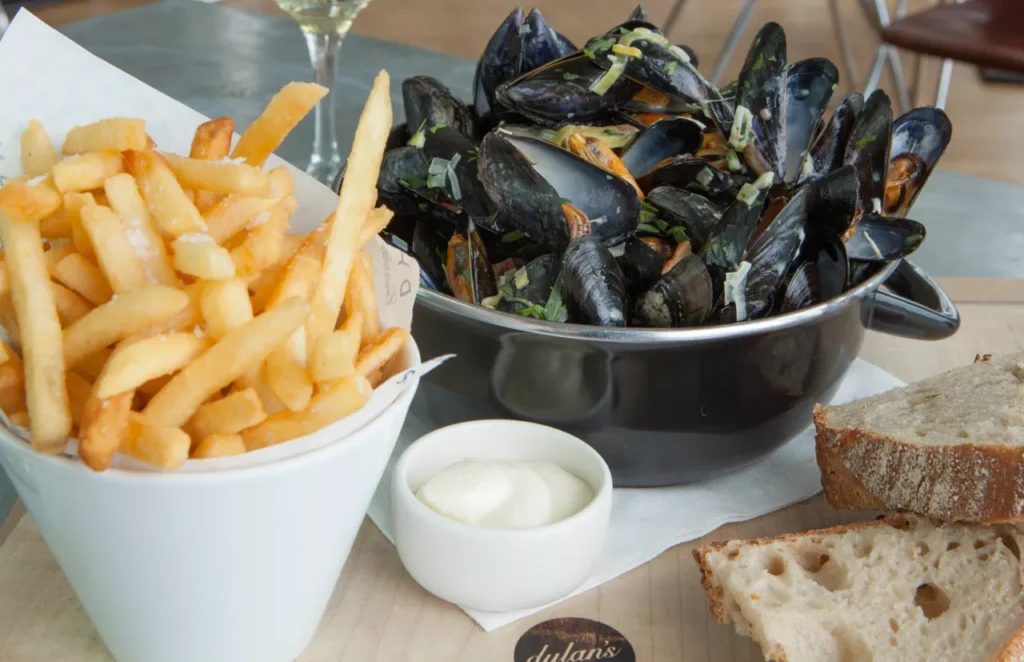
And what a pantry they have to work with. The menu spans from properly crisp mac ‘n’ cheese bites made with Snowdonia Cheddar to their signature moules marinière, until recently sourced from Scottish waters while local Menai stocks recovered (a commitment to sustainability that speaks volumes about their approach), but now back using those grown on the Menai Strait seabed.

The restaurant undulates in energy across its expansive opening hours (11am to 10pm), with different crowds bringing a different vibe to the room as the day progresses from coffee to wine to digestif. The drinks menu gives prominence to local ales and Welsh spirits, a commitment that extends to their desserts; the Wild Horse Brewery ale sticky toffee pudding is one of Anglesey’s best desserts.

With additional branches now in Criccieth, Llandudno and Conwy, plus their own general stores, Dylan’s has become a standard-bearer for Welsh hospitality while remaining true to their original vision of championing local produce. We love it.

Website: dylansrestaurant.co.uk

Address: St George’s Rd, Menai Bridge LL59 5EY


The Freckled Angel, Menai Bridge

Ideal for creative British small plates with global influences…

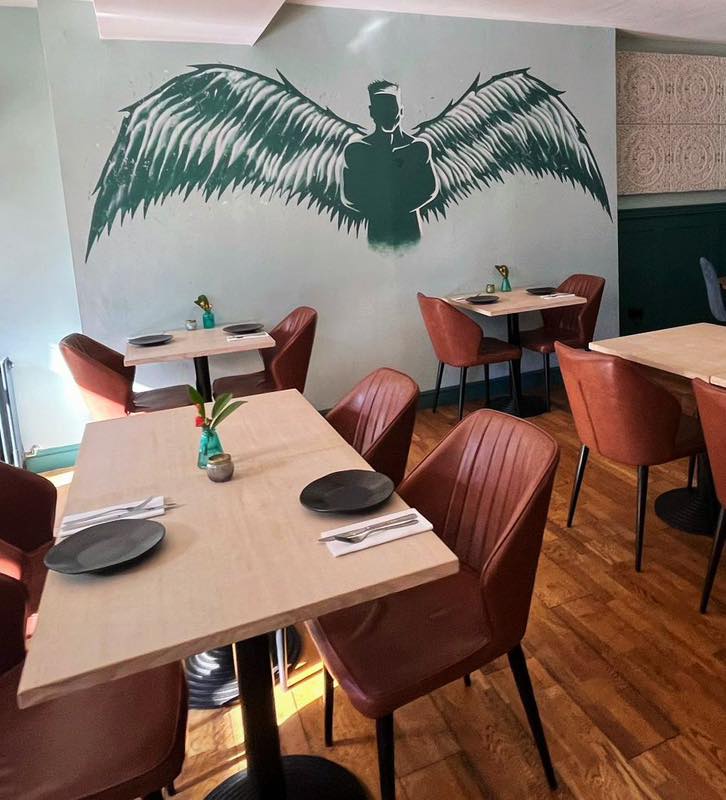
Named after Ren Gill’s song and album Freckled Angels, this globetrotting restaurant has been charming diners in Menai Bridge for nearly a decade. Recently relocated to Dale Street, the dining room is a bright, breezy affair that manages to feel both Scandinavian and chapel-like, with wooden floors, angelic motifs and large windows flooding the space with marine light from the Straits. Sure, those windows may look out on a car park, but what a car park it is!

Anyway, at the helm is Bangor-born chef Mike Jones, who worked his way up to head chef at Hotel Portmeirion by age 23 before opening Freckled Angel. His menu magpie-picks inspiration from across the globe while maintaining proud Welsh roots and is heavily influenced by a certain style of small plates that’s sometimes referred to as modern global. We’re not bothered with labels if it hits the spot…

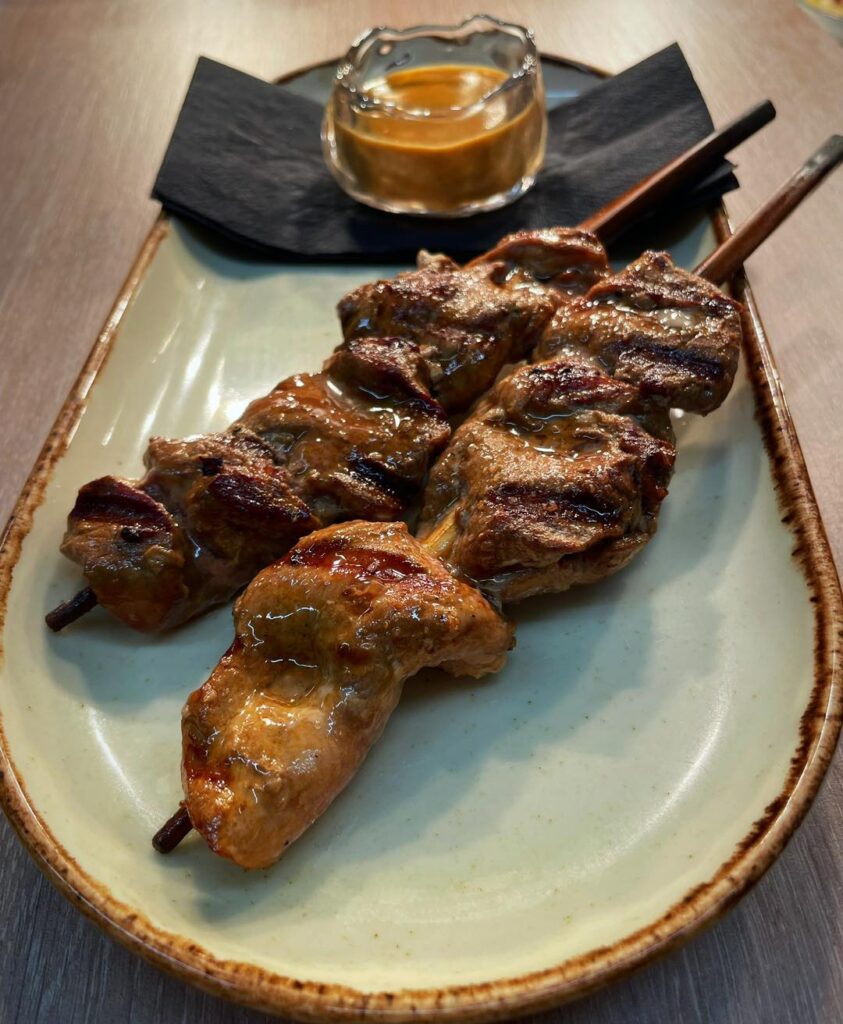
When it comes to those small plates, the twice-baked Perl Las soufflé with balsamic grapes has become the restaurant’s signature dish, no doubt, but there’s plenty of joy to found in the spicier numbers, too, whether that’s in the honey and soy cured salmon with wasabi and apple, or the Korean fried chicken with cucumber salad.

A standout during our recent visit was the restaurant’s take on ‘dippy eggs’, which saw salt beef and unami-rich parmesan toast, served with with a crispy duck egg – a masterpiece of texture and taste. The egg is expertly prepared to achieve that coveted contrast: a golden, crispy exterior giving way to a luxuriously runny yolk. It’s a real mouth-coater, make no mistake.

The small plates are priced keenly at around £8 to £11, making the Angel a great value meal for the quality. And it is quality; the restaurant has recently been featured in the Good Food Guide and named the winner of the North Wales Young Business Award for food and hospitality. There are even bottles of wine starting below £30.

Reservations are recommended, particularly for weekend dinner service, when regulars and visitors gather in this intimate 30-cover restaurant to sample Jones’ creative cooking. Open Wednesday through Sunday, 12pm to 10pm.

Website: freckledangel.com

Address: Freckled angel, Dale St, Menai Bridge LL59 5AH


The White Eagle, Rhoscolyn

Ideal for elevated pub dining with stunning coastal views…

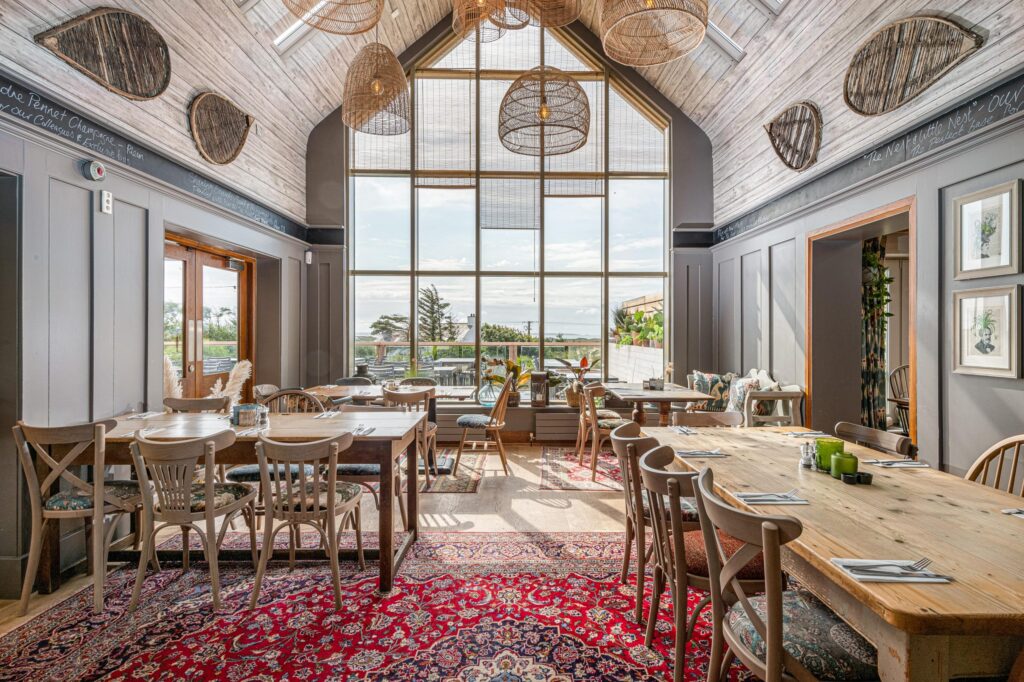
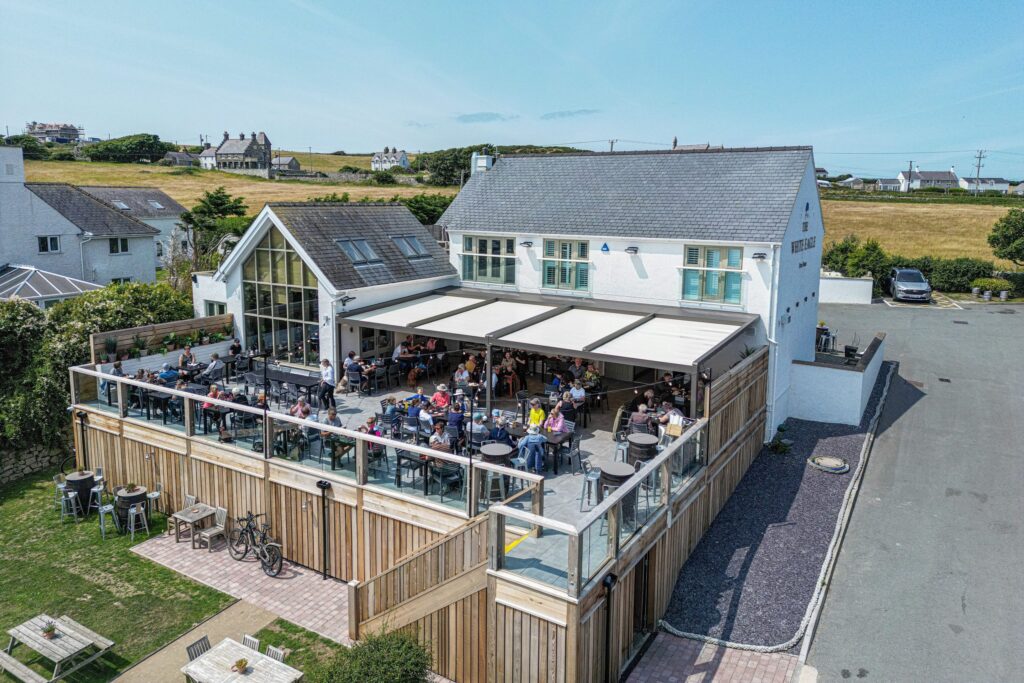
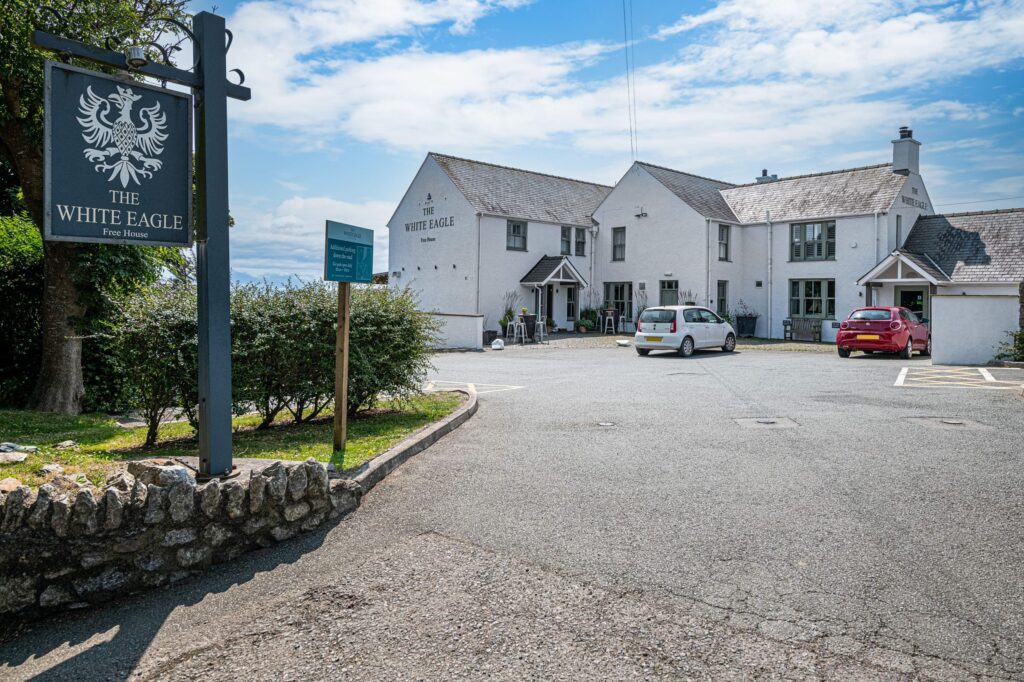
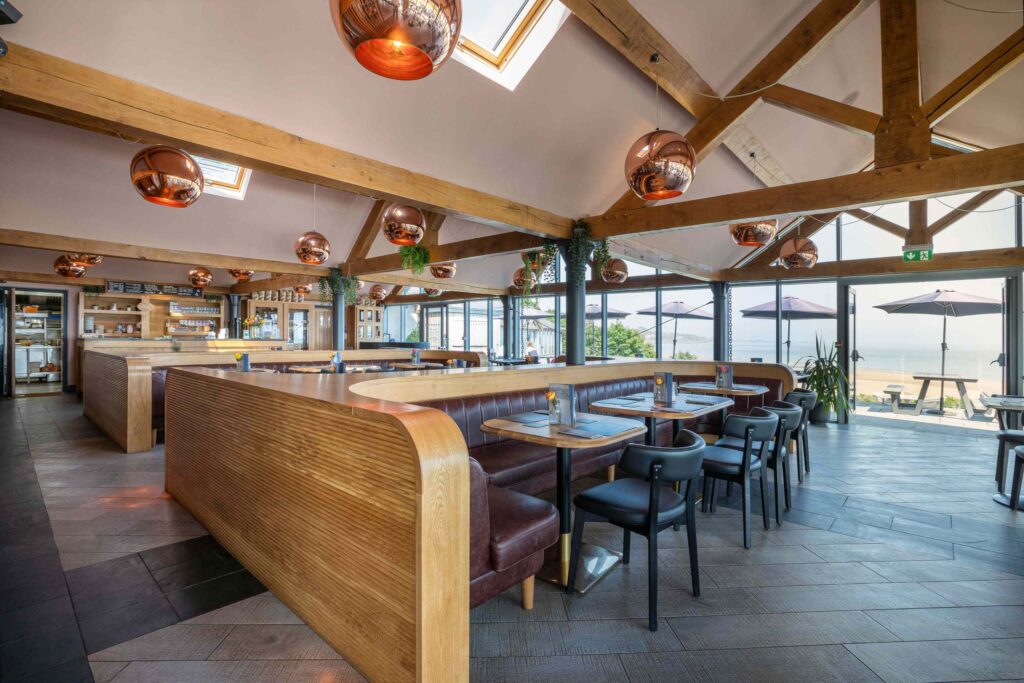
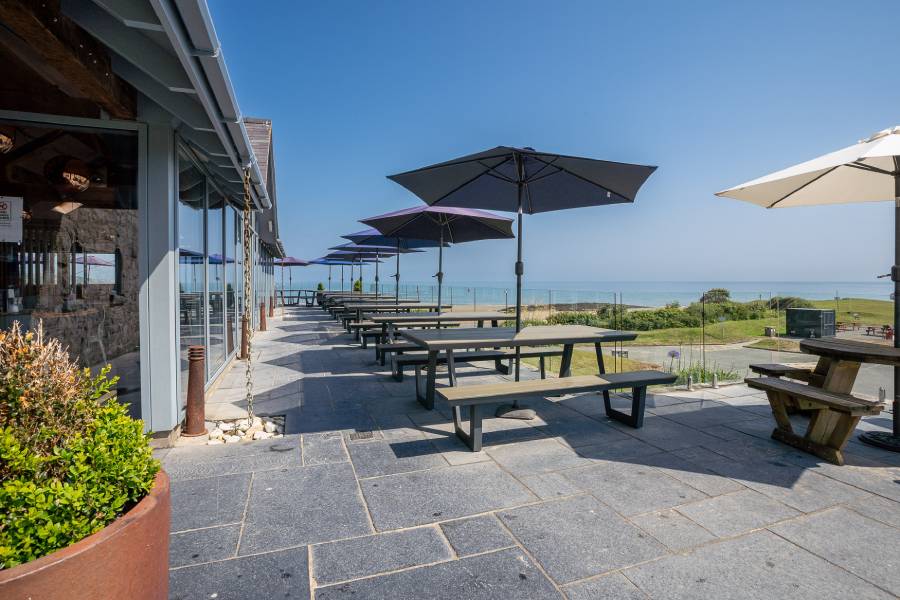
Saved from closure in 2007 by the Timpson family (of key cutting and prison reform fame), The White Eagle has been transformed into one of Anglesey’s most cherished dining destinations. This white-rendered building, with its floor-to-ceiling windows and extensive elevated terrace, makes the most of its enviable position overlooking Borth Wen Beach and the sweeping views across to Bardsey Island.

Now part of the Flock Inns group (operated by Roisin Timpson), the pub’s seasonal menu reflects the richness of Welsh produce. The kitchen excels at refined pub classics – think locally-sourced steaks with triple-cooked chips, fresh fish pie topped with potato and garden pea mash, or their signature sweetcorn chowder loaded with mussels and smoked haddock. The drinks selection is equally thoughtful, with local cask ales from Conwy Brewery alongside a tight, keenly priced wine list

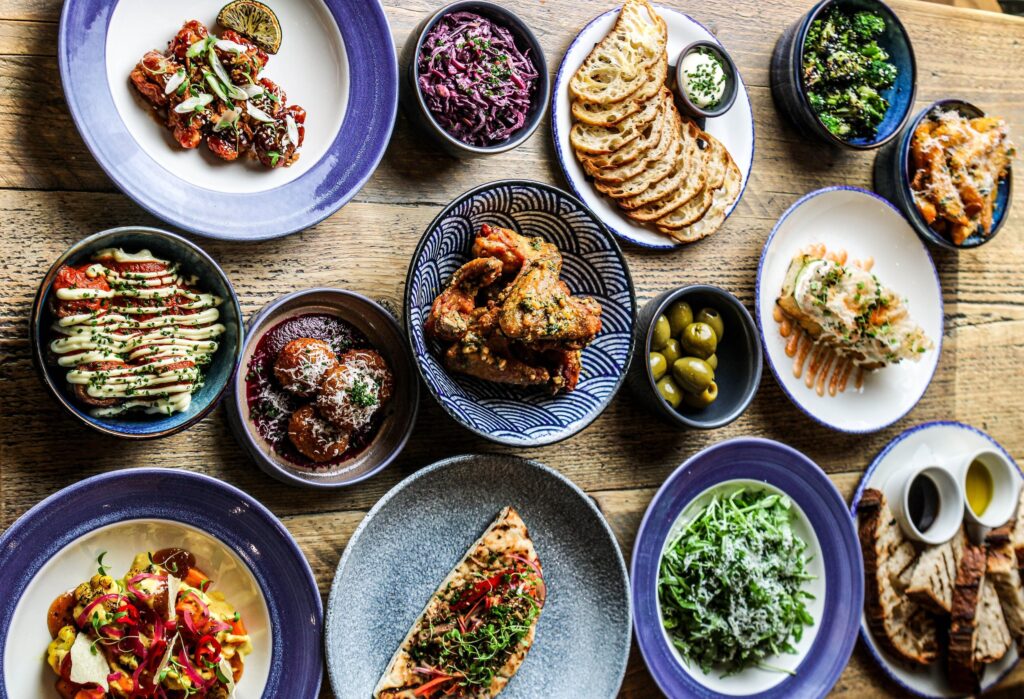
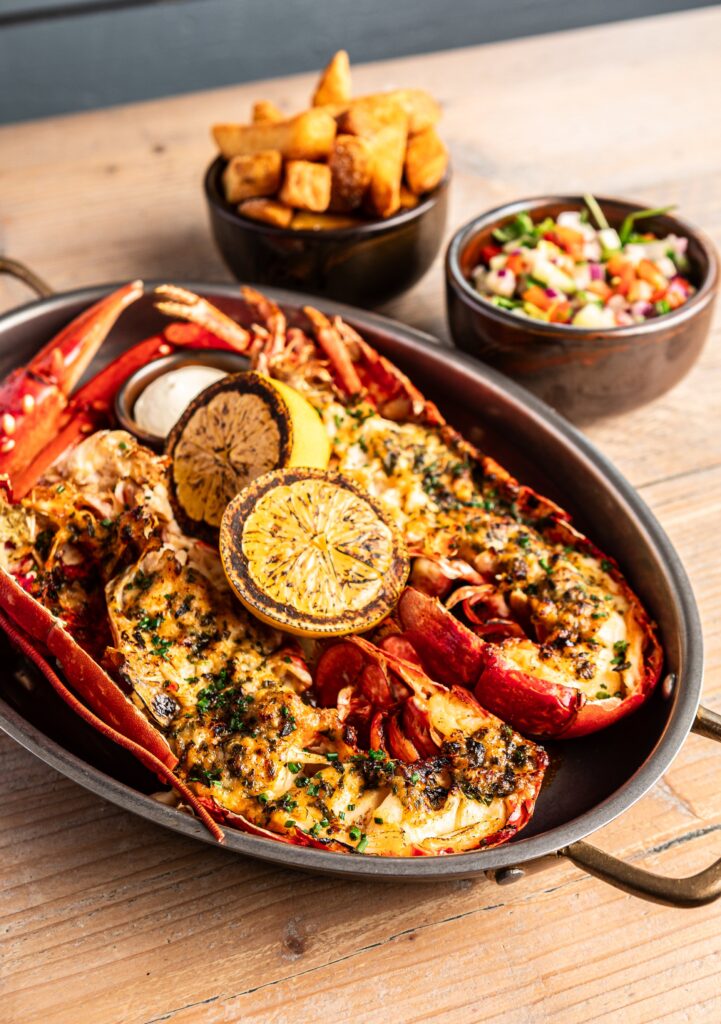
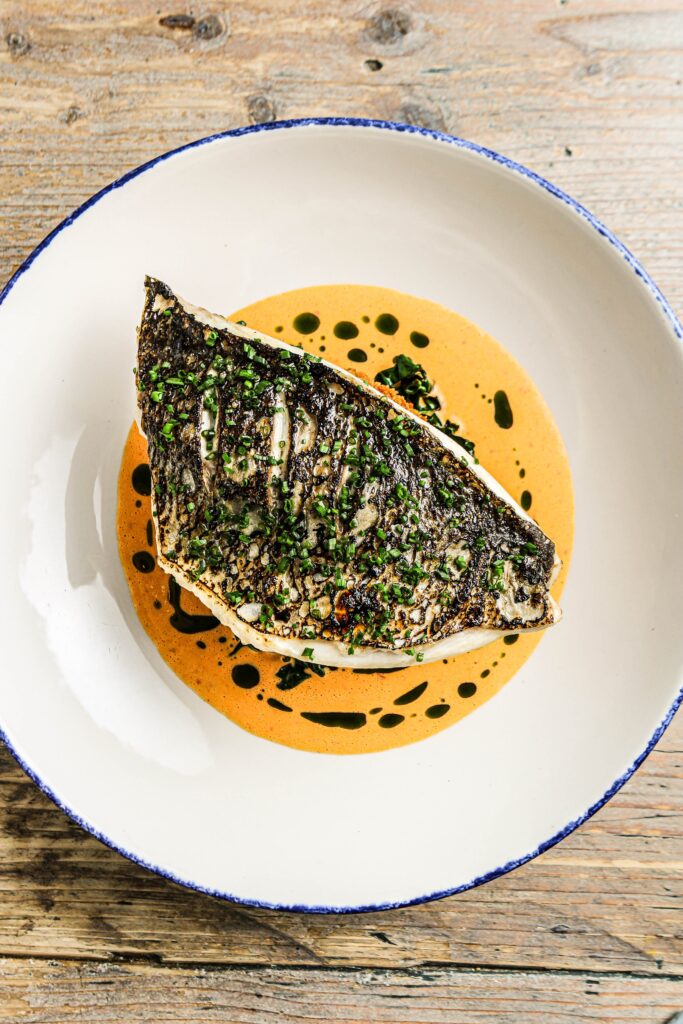
Images via @whiteeagleflockinns

The spacious beer garden is a particular draw in summer months, while dogs are welcomed with open arms (and treats) both outside and in designated indoor areas. For those wanting to extend their stay (or, you know, roll into bed after one too many pints), there’s even a luxury four-bedroom apartment above the pub called The Nest, offering those same spectacular views.

Closed on Mondays and Tuesdays.

Website: white-eagle.co.uk

Address: Rhoscolyn, Holyhead LL65 2NJ


The Tavern on the Bay, Red Wharf Bay

Ideal for modern gastropub dining with mesmerising coastal views…

Originally built as a marine cottage in 1924, The Tavern on the Bay has been transformed into one of Anglesey’s most visually arresting venues. The restaurant offers a mesmerising 270° panoramic view that sweeps across the Anglesey coastline to the Great Orme, best enjoyed from their wooden-beamed dining room with its striking copper pendant lights and floor-to-ceiling windows.

Once again, elevated pub classics are the name of the game here – fresh market haddock in cask ale batter, Welsh lamb barmarked from the grill… You get the picture. Whilst it’s not the most groundbreaking food on the planet (or, indeed, on the island) there aren’t many better views to frame your dinner with than here. The regular ‘Piano on the Bay’ evenings further convey it’s a special kind of place.

Open daily, 11:30am until 9:30pm Sunday through Thursday, and until 10:30pm Fridays and Saturdays. 

Website: thetavernonthebay.co.uk

Address: Red Wharf Bay, Anglesey LL75 8RJ


Catch 22 Brasserie, Valley

Ideal for contemporary British cooking with global influences…

Named after Joseph Heller’s novel (a reference to the owners’ bold leap from secure jobs into restaurant ownership), Catch 22 has become one of Anglesey’s most respected dining destinations since opening in 2017. Named among the Good Food Guide’s 100 Best Local Restaurants for 2024, this modern brasserie is the creation of chef-owner Neil Harley-Davies, who runs the restaurant with his wife Melissa and sister-in-law Ellie.

After training as an accountant, Neil switched careers to follow his culinary passion, working his way through Cardiff’s kitchens and a Michelin-starred run in Berkshire before returning home as the first head chef at the aforementioned Dylan’s in Menai Bridge. Now at his own venture, he combines high-quality local produce with culinary expertise to create contemporary British dishes with global influences.

The menu showcases produce from an impressive roster of Welsh suppliers – from Halen Môn sea salt (more of them in a moment) to Menai Oysters, Llefrith Cybi dairy to Anglesey Fine Foods. Their Singapore-style chicken curry has become a signature dish, while the legendary Snickers Trifle (a sybaritic concoction of malt panna cotta, peanut caramel and chocolate ganache) has been dubbed “the best pudding in the world” by the adjacent dining table and, in so many words, the Good Food Guide.

The modern two-story building, with its striking wooden façade, houses a dining room that can seat up to 120 guests. The team have now also added a first-floor cocktail bar and lounge, The Nook Bar, adding another dimension to this vibrant establishment. Despite what the name might suggest, seafood is just one part of their broad, appealing menu that caters to all tastes.

Open Wednesday through Sunday from 10:30am. Booking recommended for weekend service.

Website: catch22brasserie.co.uk

Address:London Road Valley, Holyhead LL65 3DP


Tide/Llanw at Halen Môn, Brynsiencyn

Ideal for coffee and homemade treats with spectacular strait-side views…

What began in 1997 as a pan of seawater boiling on an Aga has evolved into one of Wales’ greatest food success stories. Halen Môn’s sea salt, now protected by PDO status and served everywhere from royal weddings to the White House, provides the backdrop for this charming café on the edge of the Menai Strait.

Opened by Hugh Fearnley-Whittingstall and visited by the then Duke and Duchess of Cambridge, Tide/Llanw makes the most of its exceptional setting with panoramic views across to Snowdonia. The outdoor seating area, protected by a sturdy Welsh ‘pabell’ (canopy), offers the perfect spot to sample their carefully curated menu while soaking in the vista.

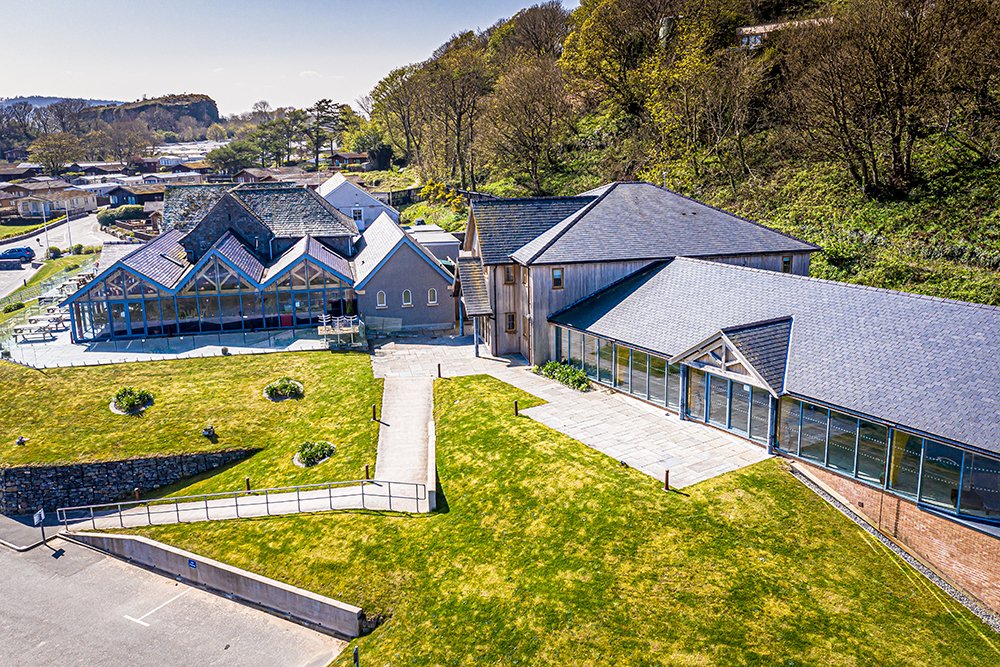
Images via @halenmon

The café champions quality local produce – expect Coaltown speciality coffee alongside homemade cakes that often feature their famous sea salt. Their toasted sesame and sea salt flapjack has become something of a signature, best enjoyed with a flat white or, for those feeling festive, an ice-cold Jin Môr (their own gin).

Open daily, 10:30am until 4pm. No booking required. Dogs welcome with treats provided. The café forms part of the larger visitor centre, where you can tour the salt-making facilities, browse their design-led gift shop, or even try their innovative wild seaweed bathing experience.

Website: halenmon.com

Address: Halen Môn, Brynsiencyn, Isle of Anglesey, LL616TQ

The Best Restaurants In Streatham & West Norwood, London

Last updated March 2026

Scratch the surface of Streatham’s history just a little, and there’s a fascinating set of superlatives to be found. The site of the UK’s first supermarket (an Express Dairies Premier Supermarket, if you’re asking) and the inaugural Waitrose, both in the ‘50s, it’s not only convenience based retail that gives Streatham its heritage.

The suburb also boasts the longest high street in Europe, Streatham High Road, which was bizarrely voted ‘The Worst Street In Britain’ in September of 2002 by the non-too discerning listeners of BBC’s Today Programme. 

What do they know, hey?

In neighbouring West Norwood, the fascinating factoids and horrible histories just keep coming. Did you know that it’s here that you’ll find one of London’s ‘Magnificent Seven’ private cemeteries, built in the early 19th century and filled with highly ornate, elaborate tombs, memorials and gravestones?

West Norwood’s is particularly noteworthy, as it’s the world’s first Gothic-style cemetery. Notable folk buried here include Baron Julias de Reuter, the founder of the Reuters news agency, the sugar merchant Sir Henry Tate (no relation to Andrew), and watercress magnate Eliza James.

Speaking of famous faces, both Streatham and West Norwood have some seriously iconic sons and daughters, whether it’s supermodel Naomi Campbell, who grew up in Streatham, UK rapper and national treasure Dave, who, erm, grew up in Streatham, or Adele, who went to school in West Norwood from the age of 11 to 18. Also from the area is the late, great Maxi Jazz of Faithless and former Rolling Stone Bill Wyman. There must be something musical in the water, hey?

Yep, there’s certainly much to celebrate about this corner of South East London, but what doesn’t perhaps get the recognition it deserves here is the food scene. But embrace the area’s restaurants with open arms and a massive appetite, and you’ll find much to love here. With that in mind, here are the best restaurants in Streatham and West Norwood, London.

Bravi Ragazzi 

Bravi Ragazzi, Streatham’s revered Neapolitan pizzeria, prides itself on tradition and authenticity, and in our humble opinion, this right here is the best Neapolitan pizza in South London.

Several boxes have to be ticked for a pizza to qualify as a traditional Neapolitan in the eyes of the connoisseurs. 00 flour, water and salt form the dough, and it must be hand kneaded and given ample time to rise before being shaped by hand rather than rolling pin. After that, it’s topped with San Marzano or Pomodorino del Piennolo del Vesuvio tomatoes and Mozzarella di Bufala Campana, and cooked quickly at incredibly high heat in a wood fired pizza oven. The result should be pillowy, soft and elastic, with toppings light rather than overwhelming.

Anyway, the good guys at Bravi Ragazzi know all that, and their respect for tradition has made their pizzas the toast of Streatham and beyond. This is, quite simply, one of London’s best pizzas (must add it to that list, actually). They also do a superb tiramisu, for those with a sweet tooth.

Though the dining room is compact, unassuming, and walk-ins only, locals will be pleased to hear that Bravi Ragazzi is on Deliveroo… As if they didn’t know already!

Before we go, it would be remiss of us not to give a shout-out to another local favourite famous for slinging fantastic wood fired pizzas in the Neapolitan style, who have now sadly closed. Addome, how we miss you! 

Address: 2A Sunnyhill Rd, London SW16 2UH, United Kingdom

Website: bravi-ragazzi.business.site


Cafe Barcelona

It might sound like a tall ask to bring the heart and soul of Spain’s second city to Streatham, and Cafe Barcelona makes no attempt to, it should be said. 

That said, along the much-maligned (BBC Today, we’re not getting over it) and lengthy High Road, just seconds from Streatham train station, you’ll find a very capable breakfast, even if the cafe’s name might have had you craving fideua, la Bomba, and crema la Catalana.

Instead, enjoy a Full Barcelona breakfast (essentially a Full English with the sausage replaced with chorizo) or a ham and cheese toastie with aioli, particularly enjoyable when seated on the large terrace, looking out over the hustle and bustle of the high street.

Finish with a couple of the cafe’s custard tarts, and whilst it may not be Barcelona, it’s certainly a very pleasant place to spend a morning.

Do try and catch one of Cafe Barcelona’s tapas and music nights, if you can. The place is run by two musicians, and they’re a reliably raucous affair full of flamenco music and Spanish small plates. Olé! 

Address: 344 Streatham High Rd, London SW16 6HH, United Kingdom

Website: cafebarcelonalondon.co.uk

Read: 5 of the very best tapas bars in Barcelona’s Old City


The Rookery Cafe

The sloping, soothing Streatham Common is a major focal point for the area, with the eastern side designated a Local Nature Reserve and the Streatham Common Community Garden – open on Sundays – found in the Rookery, a small, formal garden defined by old cedar trees.

If you’re keen to admire the garden in a leisurely, laid back way, then The Rookery Cafe sells paired-back toasties (at just £4 a pop!), brunch baps and a single, seasonal soup daily from 9am to 5pm. We’re particularly enamoured with the salt beef sarnie here, served in a malted bloomer and given pep by a properly piquant sauerkraut, made in-house. It’s a genuinely lovely place to take your time over brunch…

Address: 37 Streatham Common S, London SW16 3BZ, United Kingdom

Website: therookerycafe.co.uk

Tam Vietnamese Restaurant

A no-frills, family-run restaurant, passionate about bringing the authentic flavours of Vietnam to the people of Streatham, we just love Tam’s regional Vietnamese cooking.

Once again housed on Europe’s longest high street (hey, they had to fill the space somehow!), there’s a real homely, neighbourhood feel about the place, with a warm family welcome as soon as you walk into the dining room, and plenty of generosity on the plate, too.

This is food built for sharing, so bring a friend or two and get stuck into the restaurant’s excellent banh xeo, a kind of turmeric and coconut-milk based pancake (one of our top ten pancakes from across the globe, by the way), alongside the signature deep-fried sea bream served under a tumble of julienned green mango and a fish sauce-forward syrupy dressing.

Or, if you’re not much of a sharer, then steaming, aromatic bowls of pho hit the spot, too. For the lunchtime crowd, the roasted pork banh mi is a bargain at just £8.95. 

Address: 133 Streatham High Rd, London SW16 1HJ, United Kingdom

Website: www.tam-kitchen.com

Read: 5 tips for making the best Hanoi style phở bò 


SW16 Bar & Kitchen

Just a short stroll from Streatham Hill Station (which is, incidentally, nearly 200 years old), you’ll find SW16 Bar & Kitchen, a place with a little more swagger than the chilled out brunch spots we’ve been plugging. 

A sprawling joint with a deli, bottle shop, restaurant, bar and co-working area (plenty of plugs and properly fast WiFi pull in the WFH crowds), SW16 is open from 10am until midnight daily, catering to both the early birds and the night owls, and everything in between quite frankly. 

Though you could drop in for some scrambled eggs on toast and coffee early doors before whiling away the hours here, the Italian-inspired dinner menu boasts some seriously capable cooking. On our last visit, a monkfish ravioli with a tomato concasse and butter emulsion was particularly well made. A weekly changing roast dinner menu for under £20 means it gets particularly busy on Sundays.

The considered cocktail list – mine’s a Rum Rookery, extra strawberries – makes this a very grown-up place to spend some time once the sun goes down. Or, whilst the sun’s still up; Aperitivo Hour actually spans two, from 5pm to 7pm, with select cocktails running two for one.

Address5 Streatham High Rd, London SW16 1EF, United Kingdom

Website: sw16barandkitchen.com

Read: 7 of the best places for a roast in South London

Image via SW16

Pintadera

We’re heading east out of Streatham now, to neighbouring West Norwood, to check out the food options this side of Knight’s Hill. One of the best places to graze here is Pintadera, open from 7:30am to 4pm daily, and a local’s favourite according to Stapleton Long, a West Norwood estate agents in the know.

A simple Italian cafe and deli, your usual lunchtime fare, whether that’s salads, paninis or ciabatta rolls, is handled here with real care and attention, whether that’s in the rolled bresaola stuffed with cream cheese and toasted walnuts served over rocket leaves, or the nourishing Tonno e Fagioli salad, composed of quality canned tuna, beans, a soft boiled egg and crispy onions.

The sandwiches here are great, too, and fantastic value at £7.70 a pop. Our lunchtime staple is the porchetta, artichokes and green sauce panini; what are you having?

Address: 50 Knights Hill, Norwood, London SE27 0JD, United Kingdom

Website: pintaderacafe.co.uk


Heritage Dulwich

Finally, we couldn’t visit this corner of London on an eating exploration without visiting Heritage in nearby Dulwich. So, that’s exactly what we’ll do…

Just a few hundred metres north of West Norwood, housed in unassuming surrounds on the trim shopping parade of Rosendale Road, Heritage is helmed by chef Dayashankar Sharma and his son Anmol, who previously won a Michelin star at Tamarind in Mayfair. Here the proposition is similar, if a little more modest; to present refined, intricately balanced dishes from the Indian subcontinent using local produce. The signature Heritage lamb chops, using Welsh lamb and marinated in green papaya and smokey black cardamom fulfil this brief to a tee. 

Booking ahead is highly recommended. Regardless of its suburban surrounds, Heritage is full most nights of the week. It has been listed in the Michelin Guide for 2026.

Address: 101 Rosendale Rd, Norwood, London SE21 8EZ, United Kingdom

Website: heritagedulwich.co.uk

New Zealand’s 7 Greatest Road Trips

Few countries reward the open road like New Zealand. Beyond the cities, public transport thins out fast, and much of what makes these islands extraordinary, glacier-carved valleys, volcanic plateaux, coastlines shredded by Tasman swells, lies between destinations rather than at them. A road trip here is not just the best way to travel; for large stretches of the country, it is the only way.

What follows are seven of the finest routes across both the North Island (Te Ika-a-Maui) and the South Island (Te Waipounamu), covering everything from two-hour adrenaline shots to multi-day epics through genuinely remote terrain. Between them, they take in fjords, vineyards, volcanoes, whale-watching coastline and at least one self-declared republic.

With that in mind, here are New Zealand’s 7 greatest road trips.

Queenstown To Wanaka Via The Crown Range

Distance: 70km | Time: 1 hour

Let’s ease you in gently…

New Zealand’s highest sealed road climbs to 1,121 metres between two of the South Island’s most popular resort towns, and while it is short enough to drive before lunch, the views from the summit, out across Lake Wakatipu and the Wanaka basin to the snow-capped Harris Mountains, demand repeated stops.

The ascent from the Queenstown side passes beneath the tussock-covered slopes of Coronet Peak before the road rears upward through a series of tight switchbacks, the kind of driving that rewards patience and a pulled handbrake at every viewpoint.

Photo by Yoann Laheurte on Unsplash
Lake wakatipu/ Photo by Titus Blair on Unsplash

The descent through the Cardrona Valley passes the historic Cardrona Hotel, a gold-rush-era pub that remains in operation, and some of Central Otago’s best vineyard country. In winter, chains are mandatory, and the road regularly closes in heavy snow. In summer, the tussock-covered tops glow gold in late afternoon light, and the whole drive takes on an almost cinematic quality, unsurprisingly, given how much of the Lord of the Rings trilogy was filmed in this corridor.

Read: The world’s best heli-skiing destinations

Te Anau To Milford Sound (The Milford Road)

Distance: 119km | Time: 2 hours driving, 4+ hours with stops

Widely considered the single greatest drive in the country, State Highway 94 from Te Anau to Milford Sound climbs through Fiordland National Park and the Te Wahipounamu World Heritage Area, passing through landscapes that shift from gentle farmland to dense beech forest to the vast, glacier-flattened floor of the Eglinton Valley within the first hour.

Stop at Mirror Lakes for reflections of the surrounding peaks on a still morning, then push on toward the Homer Tunnel, a 1,270-metre passage hewn from solid granite over nearly 20 years of construction. Emerging on the far side into the Cleddau Valley feels like entering another climate zone entirely, with waterfalls streaming down every cliff face. The Chasm, a 20-minute forest walk just before Milford, is the final exclamation mark before the road ends at the fjord itself, where Mitre Peak rises 1,692 metres from the water.

Milford Sound/Photo by Patrick McGregor on Unsplash

There are no shops, no petrol stations and often no phone signal between Te Anau and Milford. Fill up before you leave, carry chains in winter and allow far longer than the distance suggests. This is a road that punishes anyone in a hurry.

Christchurch To Greymouth Via Arthur’s Pass (The Great Alpine Highway)

Distance: 241km | Time: 3 to 4 hours

The Great Alpine Highway crosses the spine of the Southern Alps, climbing over 900 metres through Arthur’s Pass National Park before dropping to the wild, rainforest-fringed West Coast. The landscape changes with extraordinary speed: Canterbury’s braided rivers and flat farmland give way to alpine scrub, sheer gorges and the Devil’s Punchbowl Falls, a 131-metre cascade accessible via a short track from Arthur’s Pass Village, one of the highest settlements in the country. Keep an eye out for kea, the world’s only alpine parrot, which patrol the car parks here with considerable self-assurance.

The descent to Greymouth passes through some of the densest native bush on the South Island, and Hokitika, a short detour south, is worth the diversion for its pounamu (greenstone) workshops and wild, driftwood-strewn beach. For travellers picking up a campervan from Travellers Autobarn’s Christchurch branch, this route makes for a spectacular first day on the road, with the depot sitting close to the State Highway for an easy launch westward.

Read: 7 tips for New Zealand first timers

Kaikoura To Blenheim (The Coastal & Wine Route)

Distance: 130km | Time: 2 hours

Heading north from Kaikoura along State Highway 1, the road hugs the coast beneath the seaward Kaikoura Ranges, passing rocky platforms where New Zealand fur seals haul out in colonies. Kaikoura itself is one of the few places in the world where sperm whales feed close enough to shore for year-round watching, and it is also the country’s foremost crayfish town. You will see roadside caravans selling fresh tails south of town.

The road swings inland after Seddon and drops into the broad, sun-drenched Wairau Valley, heart of the Marlborough wine region. This is where New Zealand’s global reputation for sauvignon blanc was built, and there are more than 150 producers within a short radius of Blenheim. Cellar door visits and vineyard lunches are straightforward to arrange without booking, though the better-known estates get busy in summer.

The Catlins (Invercargill To Dunedin Via The Southern Scenic Route)

Distance: 270km | Time: Allow 2 to 3 days

The Catlins coast, running between Invercargill and Dunedin along New Zealand’s rugged southern edge, is one of the least-visited stretches of the South Island and among the most rewarding. The road winds through podocarp forest and windswept farmland to reach a succession of wild, often deserted beaches, waterfalls and geological oddities.

Nugget Point Lighthouse, perched on a craggy headland above a chain of rocky islets, is one of the most photographed spots in the deep south. Cathedral Caves, accessible only at low tide, have twin 200-metre passages that rival the North Island’s Cathedral Cove for drama. McLean Falls crashes 22 metres through native bush, and at Curio Bay you can walk across a 180-million-year-old petrified forest at low tide, then return at dusk to watch yellow-eyed penguins waddle ashore. At Slope Point, the southernmost tip of the South Island, the wind-warped trees tell you everything about the latitude.

This is campervan territory. Freedom camping spots are plentiful (self-contained vehicles only), and the pace of the Catlins resists rushing.

The Forgotten World Highway (Stratford To Taumarunui)

Distance: 150km | Time: 3 hours driving, full day with stops

Switching to the North Island, State Highway 43 is New Zealand’s oldest heritage trail and one of its most atmospheric drives. Nicknamed the Forgotten World Highway, it crosses four saddles, threads through the single-lane Moki Tunnel (nicknamed the Hobbit’s Hole) and follows the Tangarakau Gorge, where cliffs rise to 500 metres on either side of what was, until its final section was sealed in February 2025, the last unsealed stretch of state highway in the country.

The centrepiece is Whangamomona, a village that declared independence from New Zealand in 1989 after being redistricted, elected a succession of presidents (including a goat) and still stamps novelty passports at the pub. Republic Day celebrations, held every two years, involve gumboot-throwing, possum-skinning and a Wild West shootout. The most recent addition to the highway is a series of three-metre-high sculptures installed in 2025 by Maori artists from Ngati Maru, Ngati Haua and Ngati Ruanui, telling the story of the explorer Tamatea-Pokai-Whenua.

There are no petrol stations between Stratford and Taumarunui, so fill up before you set off. A detour along Moki Road leads to Mount Damper Falls, the North Island’s second-highest waterfall.

Christchurch To Aoraki/Mount Cook

Distance: 330km | Time: 4 hours

Heading southwest from Christchurch through the Canterbury Plains, this route builds slowly. Flat farmland gives way to the foothills before Lake Tekapo appears, its water an otherworldly shade of turquoise caused by glacial rock flour suspended in the melt.

The Church of the Good Shepherd, a tiny stone chapel on the lakeshore, is one of the most recognisable landmarks on the South Island. At night, Tekapo’s status as part of the Aoraki Mackenzie International Dark Sky Reserve makes it one of the finest stargazing locations in the Southern Hemisphere.

From Tekapo, the road follows the western shore of Lake Pukaki, equally turquoise and equally improbable, toward Aoraki/Mount Cook National Park. New Zealand’s highest peak at 3,724 metres dominates the skyline for the final 30 kilometres of the drive. The Hooker Valley Track, the park’s most popular walk, is currently undergoing repairs following a bridge washout and is expected to fully reopen in autumn 2026; in the meantime, the Tasman Glacier View Track offers a shorter but still impressive alternative.

Planning Your Road Trip

New Zealand drives on the left. Roads are well-maintained but often narrow and winding, particularly on the South Island’s mountain passes and West Coast, so journey times can be significantly longer than the distance suggests. The speed limit on the open road is 100km/h, though on many of these routes, maintaining that consistently would be both impossible and inadvisable.

Campervans remain the most popular way to road trip the country, combining transport and accommodation in a single package and opening up access to New Zealand’s extensive network of Department of Conservation campsites and freedom camping spots (a self-contained vehicle is essential for freedom camping). International flights arrive primarily into Auckland on the North Island and Christchurch on the South Island, with Christchurch often the cheaper and more convenient starting point for South Island itineraries.

The summer months (December to February) bring the best weather and the busiest roads. March and April offer a sweet spot of settled autumn conditions, fewer crowds and golden light across the Southern Alps. Winter driving (June to August) requires chains on many mountain routes and brings road closures, but also dramatic snow-capped scenery and far greater solitude.

The Bottom Line

New Zealand’s landscape demands to be driven through rather than flown over, and the variety packed into these two relatively small islands is extraordinary. Whether you are crossing the Southern Alps in a morning or spending a week tracking the empty Catlins coast, the best moments tend to come between planned stops: a river valley you had not expected, a seal colony on a roadside rock, a mountain pass that opens up views in every direction. Plan loosely, leave early and take the longer route.

Mastering The Art Of Barbecued Steak: Techniques, Tips & Top Cuts

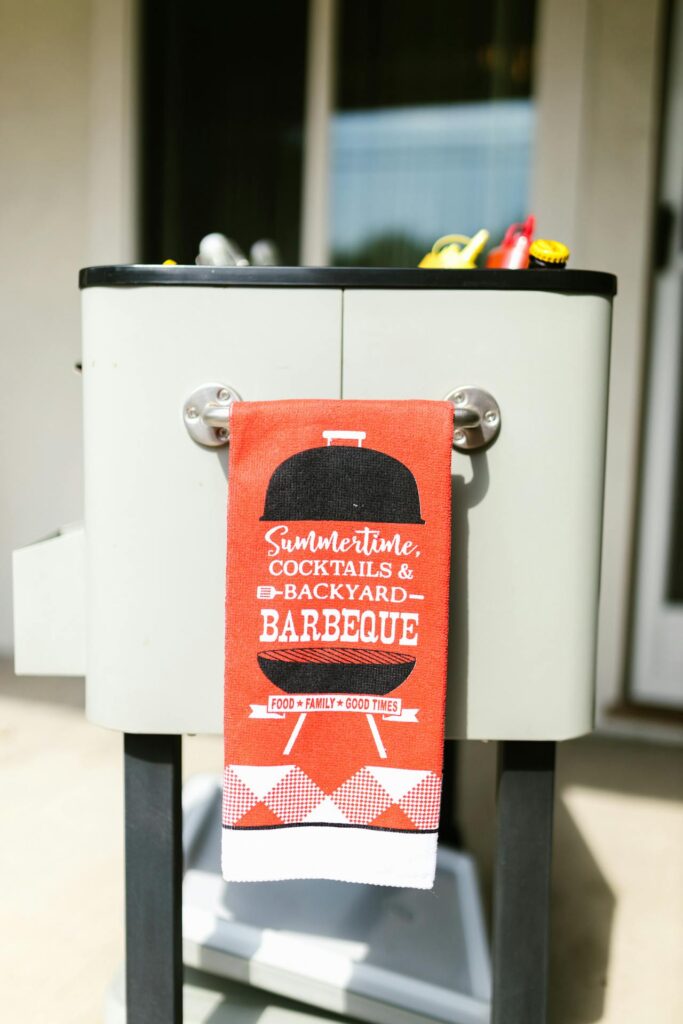
Though it’s only spring, those brief few days of warmer weather have got us lighting the barbie with a kind of desperate hopefulness.

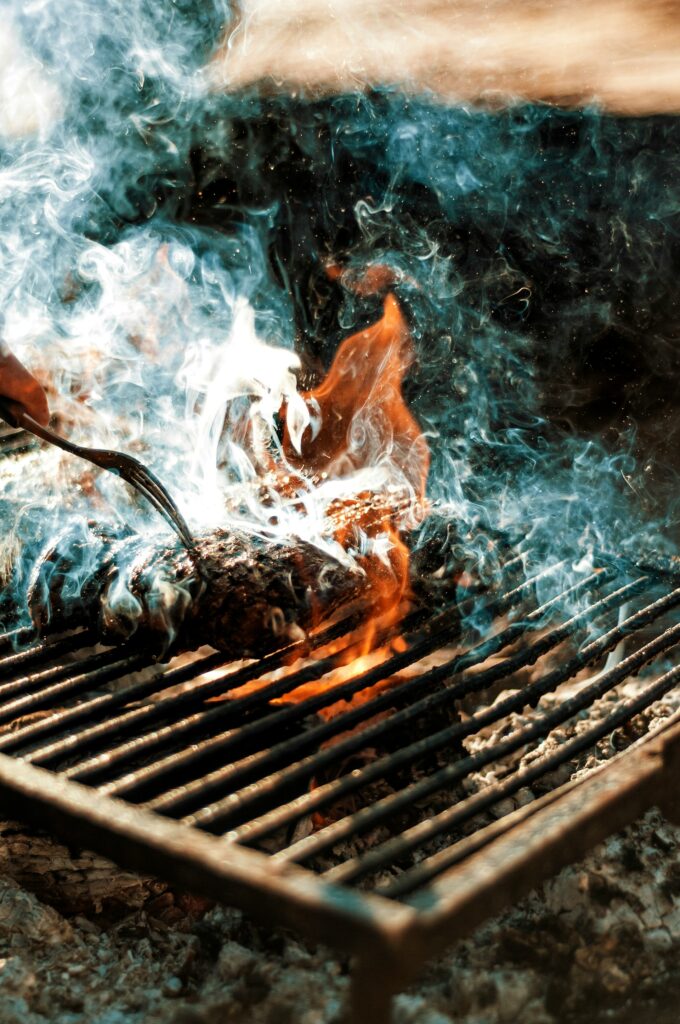
Because when the sun is shining and the garden beckons, there’s nothing quite like a perfectly cooked steak on the BBQ. The sizzle of meat on hot grates, the anticipation of that first succulent bite, and of course that first smell of the barbie heralding the start of the season; these are the makings of a quintessential British summer’s day. 

According to a recent survey by Great British BBQ, who wanted to find out about the BBQ habits of us Brits, 32% of participants said that steak is their favourite meat to cook on the barbie. 

However, as much as we love a steak, us Brits are often guilty of getting a little overexcited at the smell of charcoal, throwing our steaks on the barbecue and hoping for the best. But with the price of a steak rising and barbeques getting more expensive, it’s increasingly important to grill with the proper care and attention that your carefully sourced meat deserves. 

But how does one achieve the nirvana of a flawlessly barbecued steak? Before the flames fizzle out and the coals lose their glow, let’s get this thing covered…

Selecting Your Steak

First thing first, the journey of cooking steak well on the BBQ begins at the butcher’s counter. Buy independently, from a local butcher if you can, so your meat’s provenance is easier to trace. These guys care deeply about their products and can offer advice on how to cook a steak. On our last trip to the butchers, they mentioned that seared steaks would need a high heat of around 230-260°C to achieve that bark we’re all after. 

What makes a great steak is, of course, a matter of personal preference. Do you value a melt-in-the-mouth tenderness, the texture of butter and a minimal effort in chewing? Or, is a chewier, more flavourful cut your thing? Here are some of the top cuts for barbecuing:

  • Ribeye: Rich in marbling, which promises a tender and flavourful experience.
  • Sirloin: A balanced cut that offers both tenderness and a beefy taste.
  • Fillet: The most tender cut, albeit with less fat and therefore, less inherent flavour.
  • T-bone: A steak lover’s dream, offering both sirloin and fillet separated by a T-shaped bone, which also imparts flavour and protects tenderness.
  • Rump: A firmer texture but packed with deep, robust flavour.

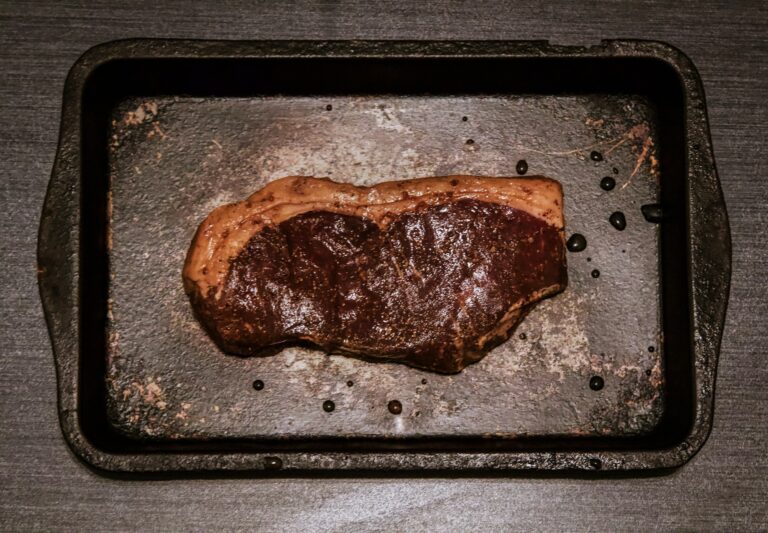
When choosing your steak, look for even marbling and a good, rich colour. The thickness of the steak is also crucial – aim for at least 2.5cm to ensure a juicy interior.

Marinating Your Steak 

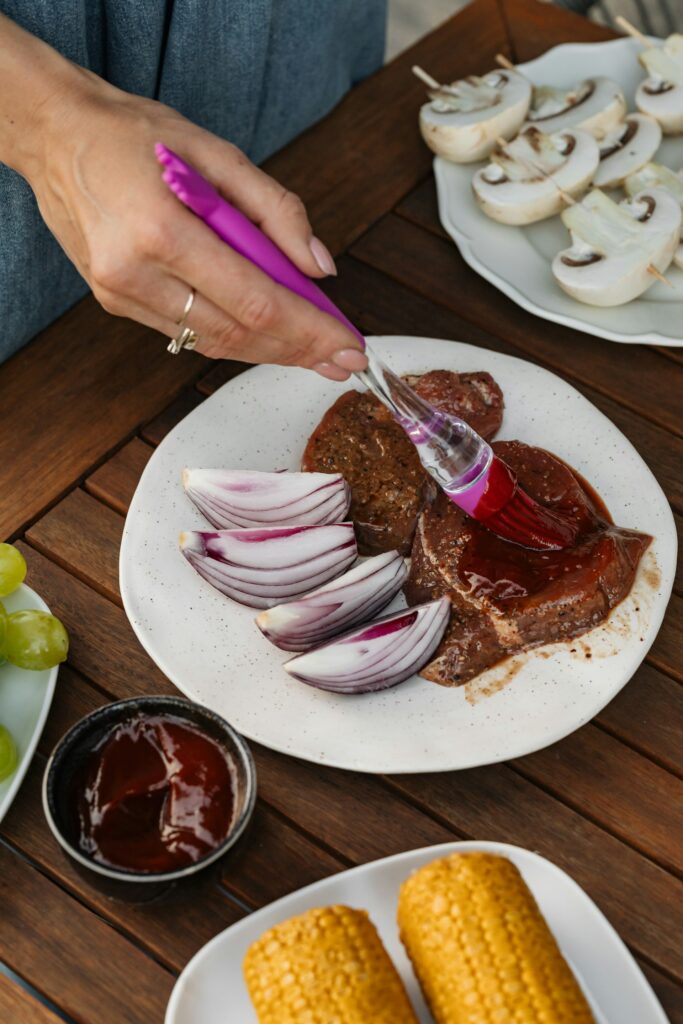
Of course, you can go further and marinate your steak. It’s a splendid way to infuse the meat with additional flavour and tenderness before it graces the grill. 

Generally speaking, a well-crafted marinade combines acid, oil, and herbs or spices, which work together to enhance the meat’s natural qualities.  

Whether you opt for a bold, robust flavour profile or something more subtle and aromatic, all marinades need an acidic component; this can be vinegar, lemon juice, or wine, the acid in each helping to tenderise the meat by breaking down its tougher proteins. 

You also need oil in our marinade. Oil helps keep the steak moist during cooking and carries the flavours of your marinade across the surface of the meat. Olive oil is a classic choice, but feel free to experiment with others like avocado or sesame oil. 

A good marinade also needs herbs and spices: This is where you can get creative. Garlic powder (fresh will burn), rosemary, thyme, and oregano are all excellent with beef. Try coriander, cumin, or smoked paprika, too.

Here are some more tips for cooking your marinated steak on the BBQ…

  • Timing: Depending on the cut and size, marinate your steak for at least 1 hour and up to 24 hours. Thicker cuts can benefit from longer marination times, but be cautious with very acidic marinades, which can start to “cook” the meat.
  • Refrigeration: Always marinate in the refrigerator to keep the steak at a safe temperature.
  • Coverage: Ensure your steak is fully submerged in the marinade. Using a zip-lock bag can be an efficient way to get full coverage with less marinade.
  • Turning: If you’re using a dish to marinate, turn the steak halfway through the marinating time to ensure even flavour.
  • Remove Excess Marinade: Before placing your steak on the BBQ, pat it dry with paper towels. This helps achieve a better sear and prevents flare-ups caused by dripping oil.
  • Reserve Some Marinade: If you wish to use the marinade as a sauce, set some aside before adding the raw steak. Never use marinade that has been in contact with raw meat unless it’s boiled for several minutes to kill any bacteria.
  • Salt: If your marinade contains salt, it will work as a brine, helping to keep the steak juicy. Be mindful of additional salting before cooking.
  • Sugar: Ingredients like honey or brown sugar can add a delightful caramelized crust but watch carefully as these can cause the steak to burn more easily.

Preparing For The Grill

Before the steak hits the heat, a few preparatory steps are in order. Firstly, take it out of the fridge well in advance of grilling. You’ll want your steak to reach room temperature, so it should be out of the fridge at least half an hour before grilling.

If you’re not marinating, a simple seasoning of sea salt and freshly ground black pepper can still give delicious results. Be sure to lightly oil the steak to prevent sticking.

Read: 8 IDEAL steps to the perfect steak

Barbecue Techniques

Direct Heat Method

For those who’re seeking a charred exterior and a blushing centre, direct heat is your ally.

  1. Preheat your BBQ: Aim for a high temperature; you should only be able to hold your hand above the grill for a second or two.
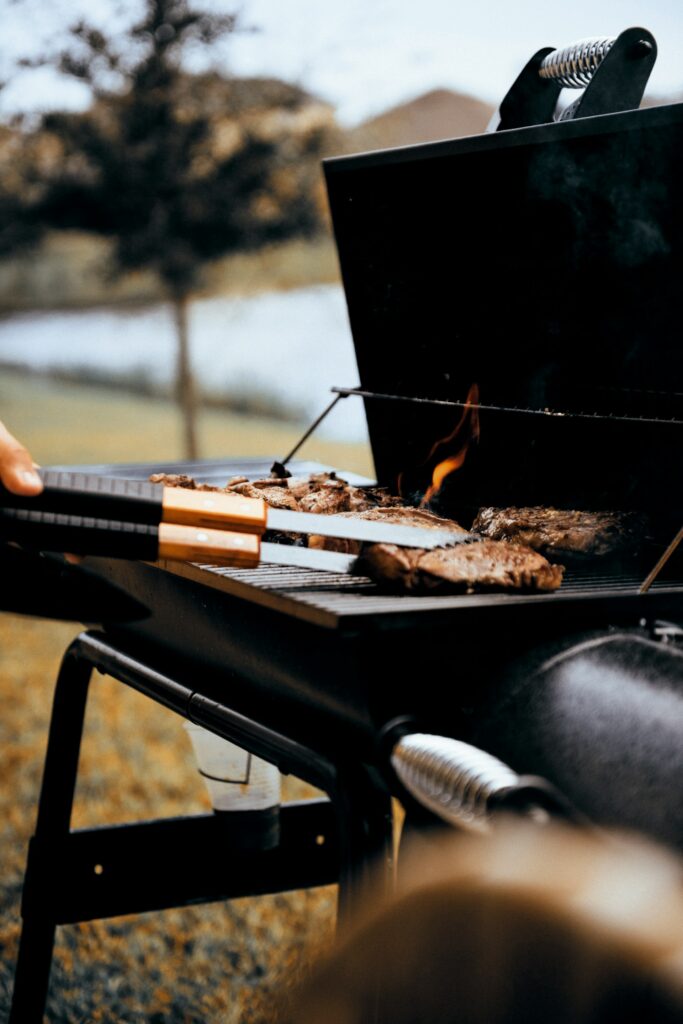
  2. Searing: Place your steak on the grill and let it sear undisturbed for a few minutes. This creates the coveted grill marks and crust.
  3. Flipping: Turn your steak only once. Use tongs to avoid piercing the meat and losing precious juices.
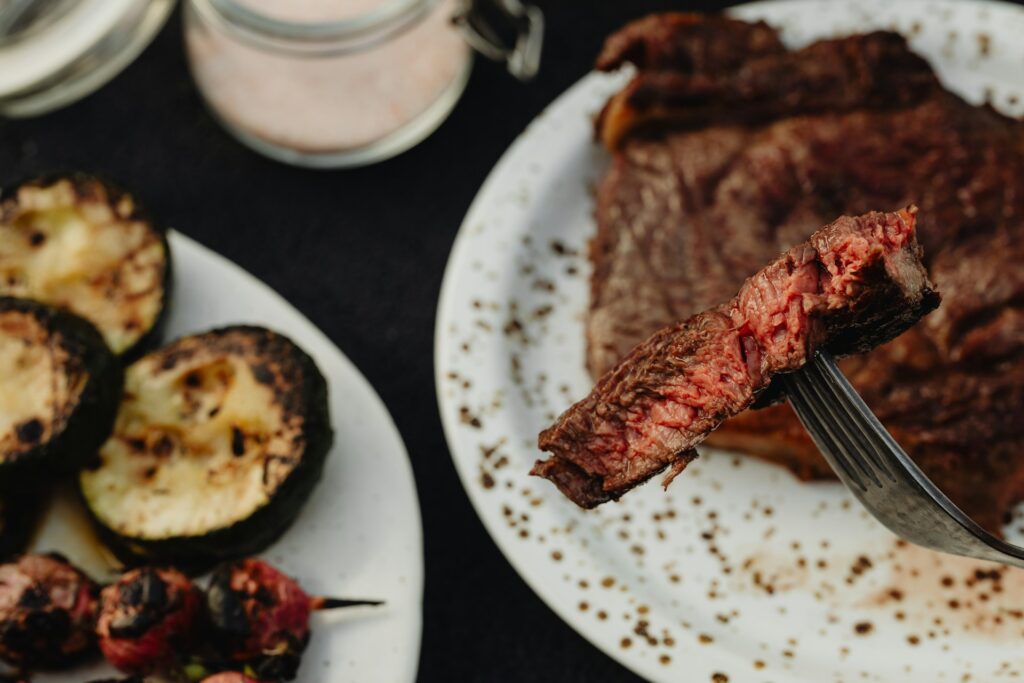
  4. Testing for doneness: Use a wireless meat thermometer or the finger test. For medium-rare, aim for an internal temperature of about 52-55°C.

Indirect Heat Method

For thicker cuts, the indirect heat method allows for a gentler cook.

  1. Two-zone setup: Heat one side of your BBQ to high and leave the other side unlit.
  2. Sear: First, sear your steak over direct heat to develop flavour.
  3. Move and cook: Transfer the steak to the cooler side, cover with a lid, and cook to the desired doneness.

Reverse Searing

Ideal for cuts thicker than 3.5cm, reverse searing ensures even cooking.

  1. Start low: Begin by cooking your steak on a cooler part of the grill until it nearly reaches your preferred doneness.
  2. Finish with a sear: Move the steak to the hottest part of the grill for the final sear.

Resting Your Steak

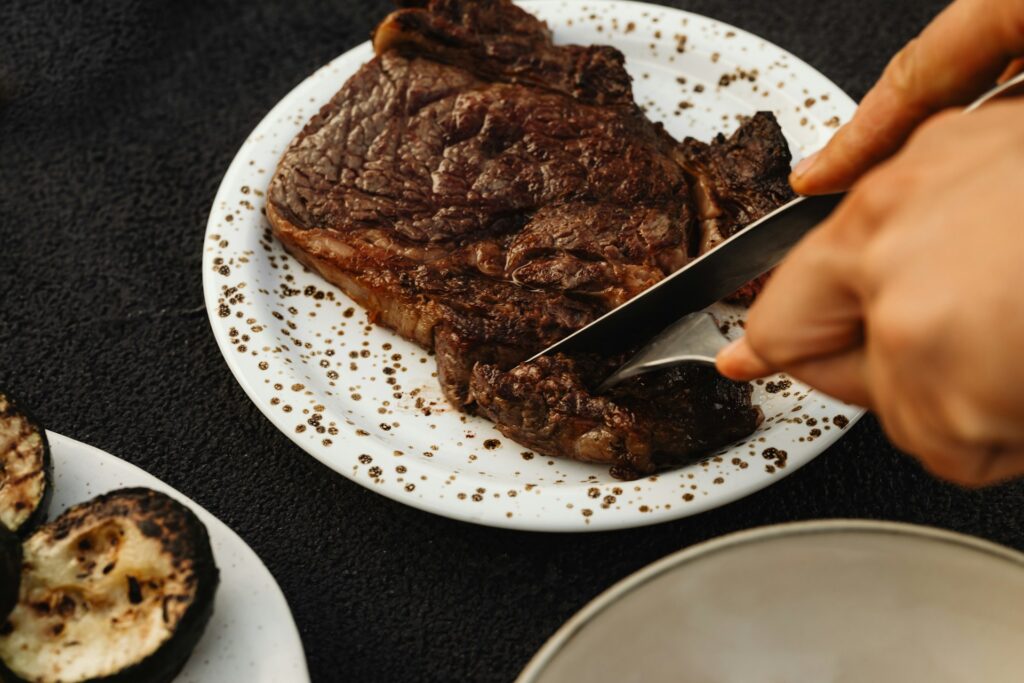
Resting is non-negotiable. Once off the grill, let your steak rest on a warm plate for about half of its cooking time. This allows the juices to redistribute, ensuring a moist and tender bite.

Always Slice Against The Grain

Slice against the grain for maximum tenderness. Serve with classic sides like a crisp salad, grilled vegetables, or a dollop of herb butter melting over the top.

A Few Final Pointers

Clean your grill: A clean grill prevents sticking and ensures better flavour.

Don’t overcrowd: Give each steak its space on the grill.

Stay vigilant: Keep an eye on flare-ups and move steaks aside if necessary.

With these techniques and tips in hand, you’re now equipped to take on the noble task of barbecuing steak. Whether it’s a casual family gathering or a sophisticated garden soirée, your BBQ steak is sure to be the centrepiece of a memorable meal. Fire up the grill and let the magic begin!

Has the sun gone in and your BBQ plans have been scuppered? Worry not; you could of course treat yourself to some steak out instead, at one of these places we think serve some of the best steak in London. Mine’s a ribeye, medium rare. Thanks again.

5 Of The Best Family Spa Hotels In Germany’s Forests & National Parks

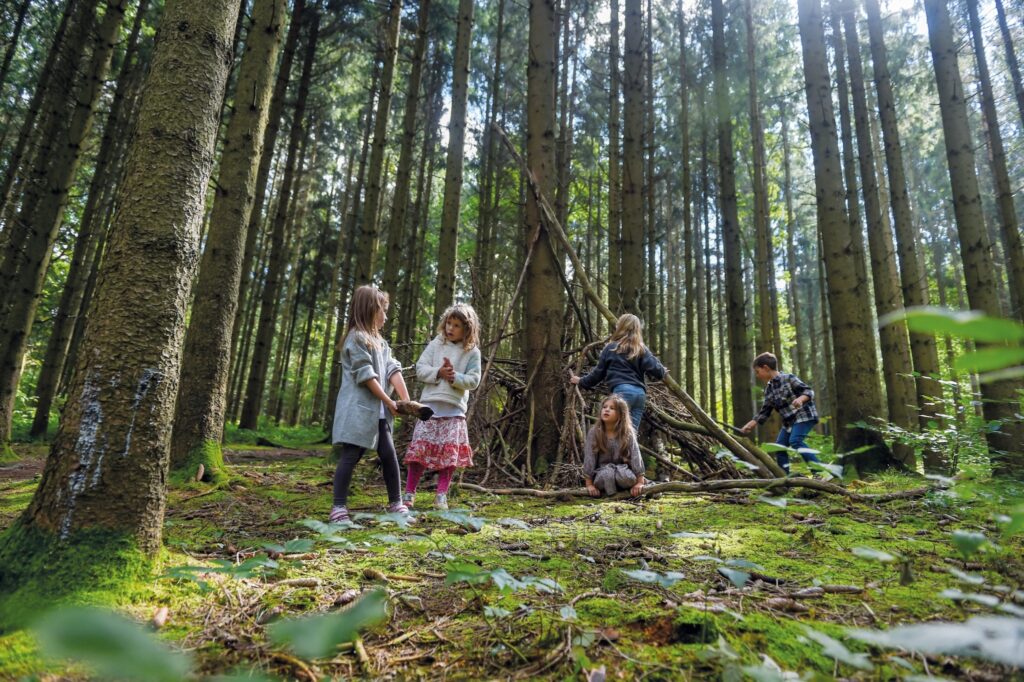
Germany takes its forests seriously. The country has over 11 million hectares of woodland, much of it protected as national parks, nature parks or UNESCO biosphere reserves, and the tradition of combining forest landscapes with spa culture runs deep here. The word ‘Waldhotel’ – literally, forest hotel – carries a specific promise: somewhere set among trees, with clean air, walking trails from the door and a wellness programme designed to make the most of the natural surroundings.

For families, this combination is particularly appealing. The best forest spa hotels in Germany have worked out how to give parents a genuine spa experience without sidelining the children, typically through separate wellness zones, dedicated kids’ programmes and outdoor spaces large enough that everyone can find their own pace. These properties, spread across five different German forests, each do it in their own way. With that in mind, here are 5 of the best family spa hotels in Germany’s forests and national parks.

Pfalzblick Wald Spa Resort, Palatinate Forest

Ideal for a chemical-free swim in a forest that straddles two countries…

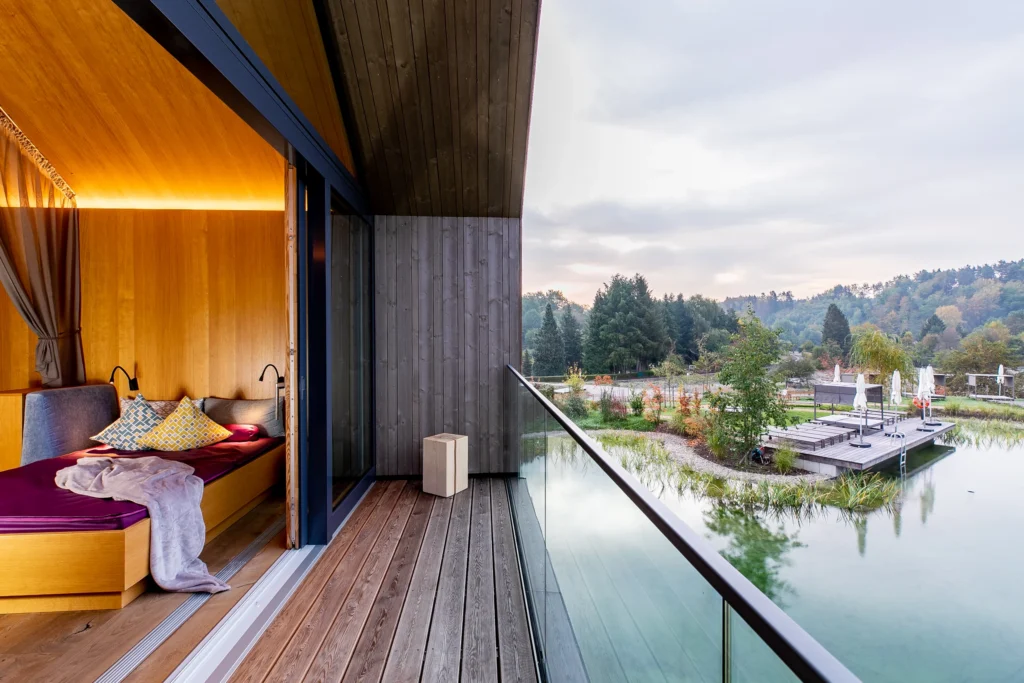
The Palatinate Forest, or Pfälzerwald, is Germany’s largest contiguous area of woodland and a UNESCO Biosphere Reserve that shares a cross-border designation with France’s Vosges du Nord. It’s not a region most British travellers would think of first, which is part of its appeal. The red sandstone rock formations around Dahn, where the Pfalzblick sits, give the landscape an almost American Southwest quality, except that the rocks are wrapped in beech and pine rather than desert scrub.

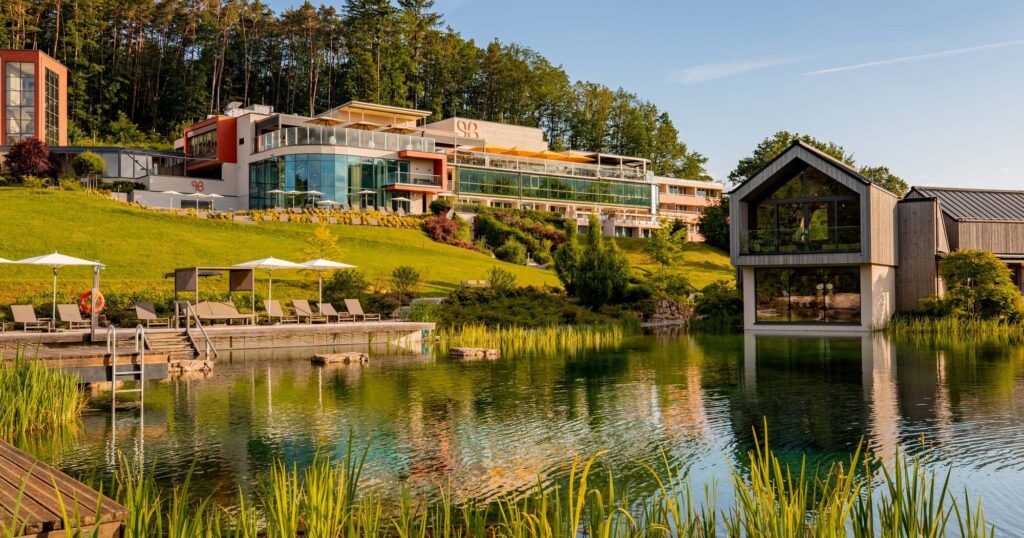
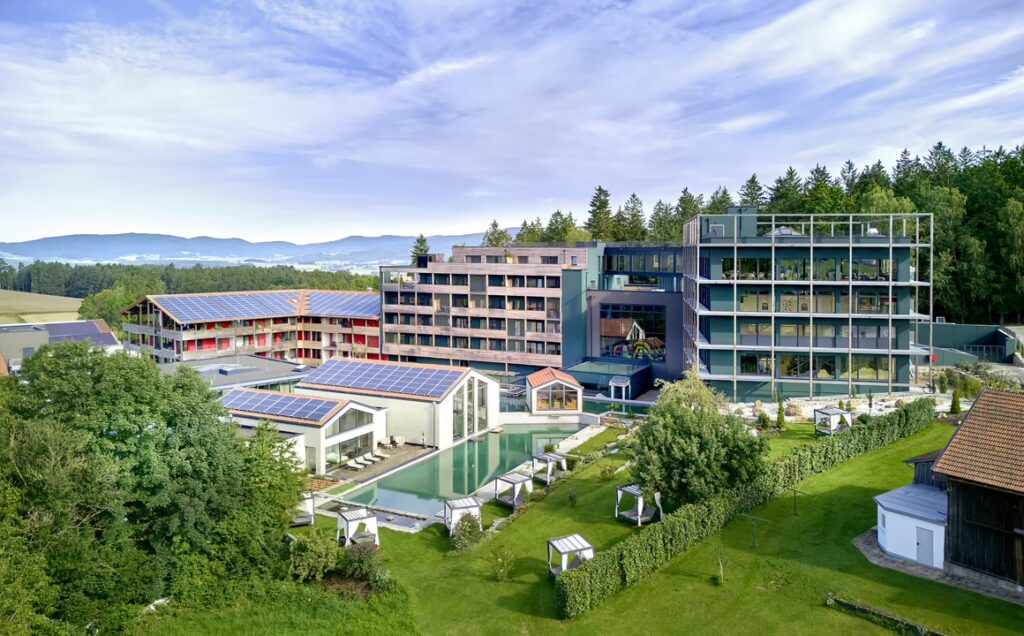
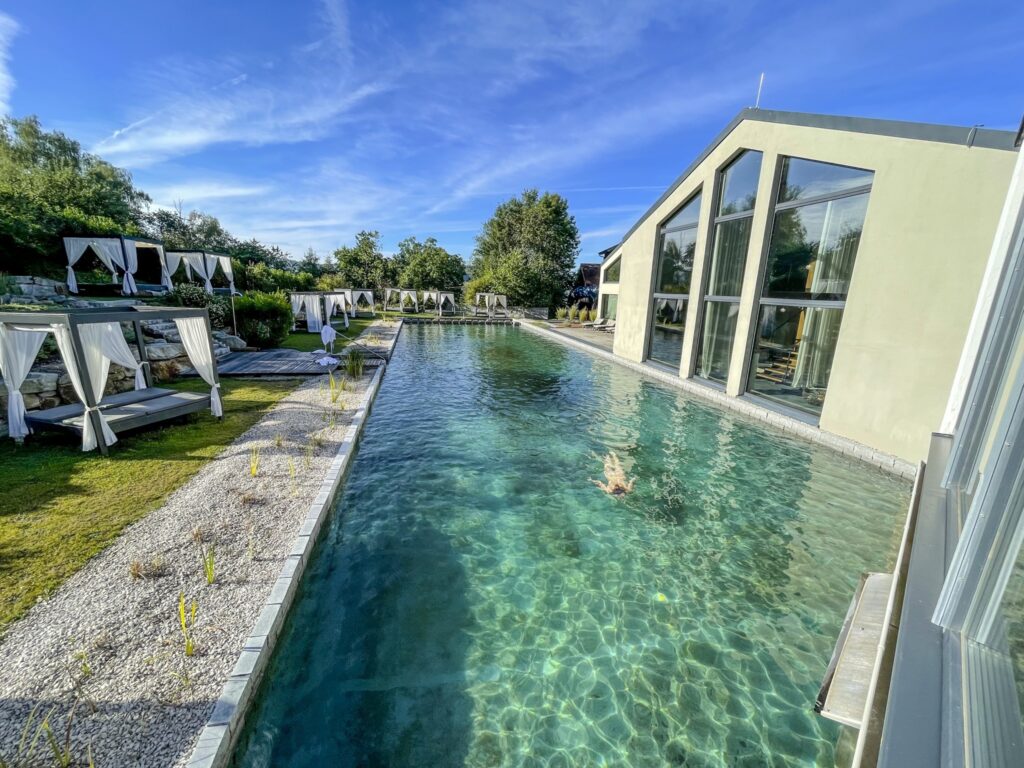
The Pfalzblick Wald Spa Resort itself has been family-run since 1987 and has grown steadily into a four-star superior property spread across 61,000m² of grounds. The standout feature is the natural swimming pond: 38 metres long and 1,500m² in total surface area, maintained entirely without chemicals. It’s an unusual thing to find at a hotel of this standard, and it sets the tone for an approach to wellness that leans towards nature rather than technology.

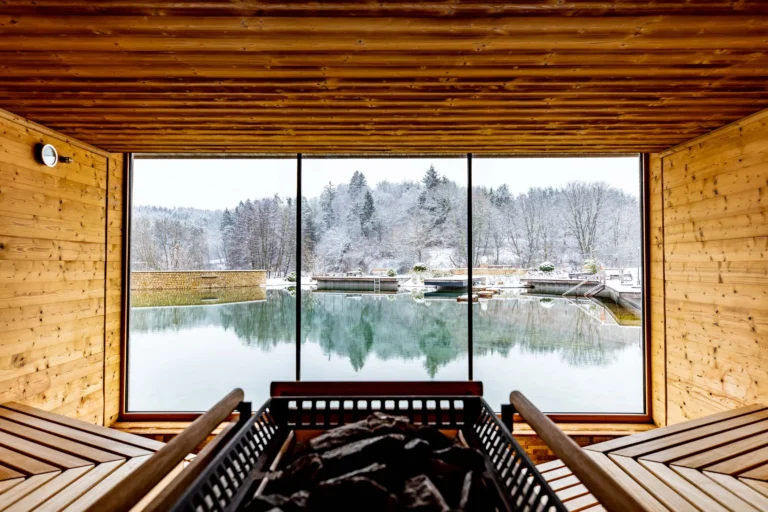
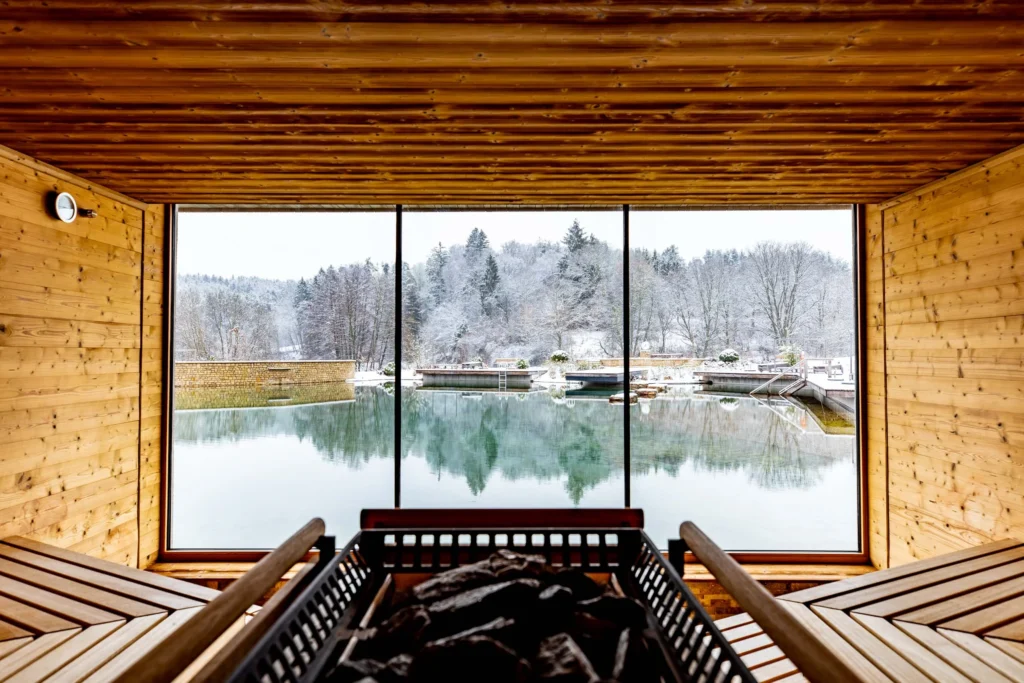
The spa offering extends to an adults-only sauna island, an infinity pool, a panoramic whirlpool overlooking the Dahn valley and a two-storey Panorama House with forest views. Families aren’t shut out – the separation is spatial rather than philosophical, so parents can move between the quiet zones and the family areas without it feeling like two different holidays. The restaurant serves Palatinate and Alsatian cooking, a reflection of the region’s position right on the French border, and hiking and cycling trails begin directly from the grounds.

Ulrichshof, Bavarian Forest

Ideal for children who never want to leave and parents who finally get to stop…

The Ulrichshof is probably the most ambitious family spa resort in Germany. Set on 64,000m² in the Bavarian Forest, near the Czech border, it feels personal despite its enormous scope. The spa alone covers 5,500m², split between a family zone (rock pool with an 81-metre water slide, pirate ship, baby pool, family sauna) and a separate parents’ spa with a 36-metre natural pool, Finnish panoramic sauna and adults-only relaxation areas. Daily childcare runs from 9am to 8pm, which tells you everything about the target audience.

Beyond the water, the resort has its own riding stable, a forest playground with climbing tower and cable car, a bumper car track, an indoor play centre and an archery range. Suites run from 28m² up to a 150m² penthouse with a private nine-metre infinity pool and rooftop sauna overlooking the Bavarian Forest. The panorama restaurant OHM serves Bavarian cooking with a modern edge, using regional and traceable ingredients.

It’s a lot. But the Ulrichshof avoids feeling like a theme park because the Bavarian Forest, home to Germany’s oldest national park, stretches across the surrounding hills, and the dense woodland and rolling landscape around the property give it a groundedness that the facilities alone wouldn’t provide.

Hotel Ludinmühle, Black Forest

Ideal for a 2,000m² spa hidden in a valley most people drive straight past…

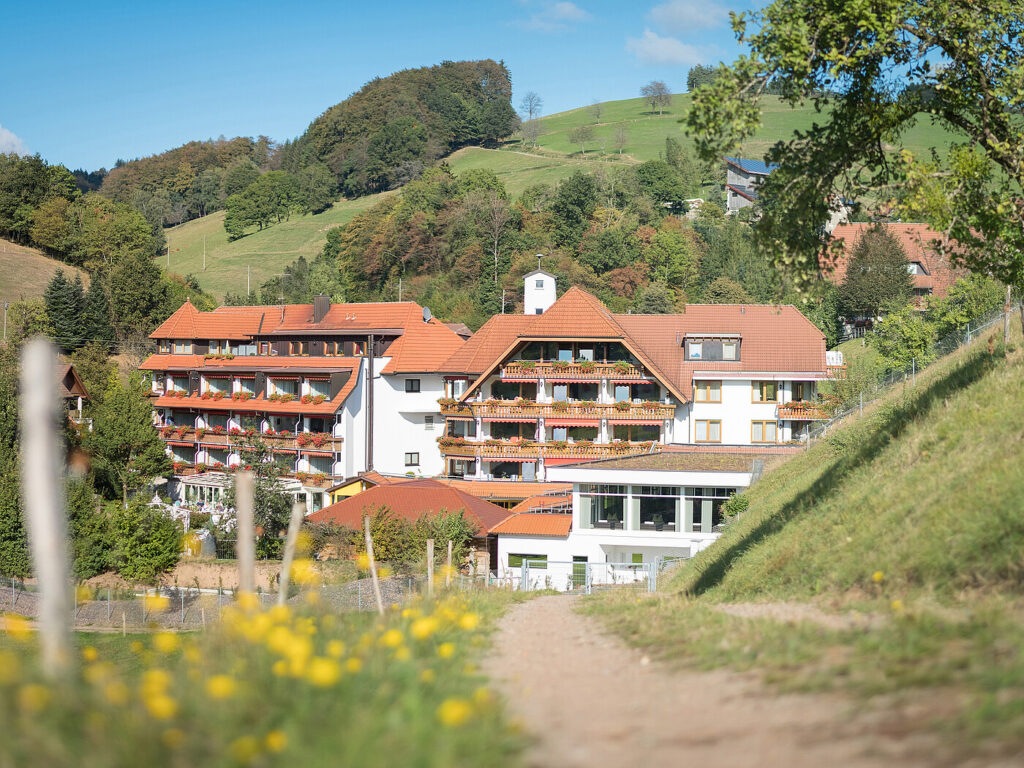
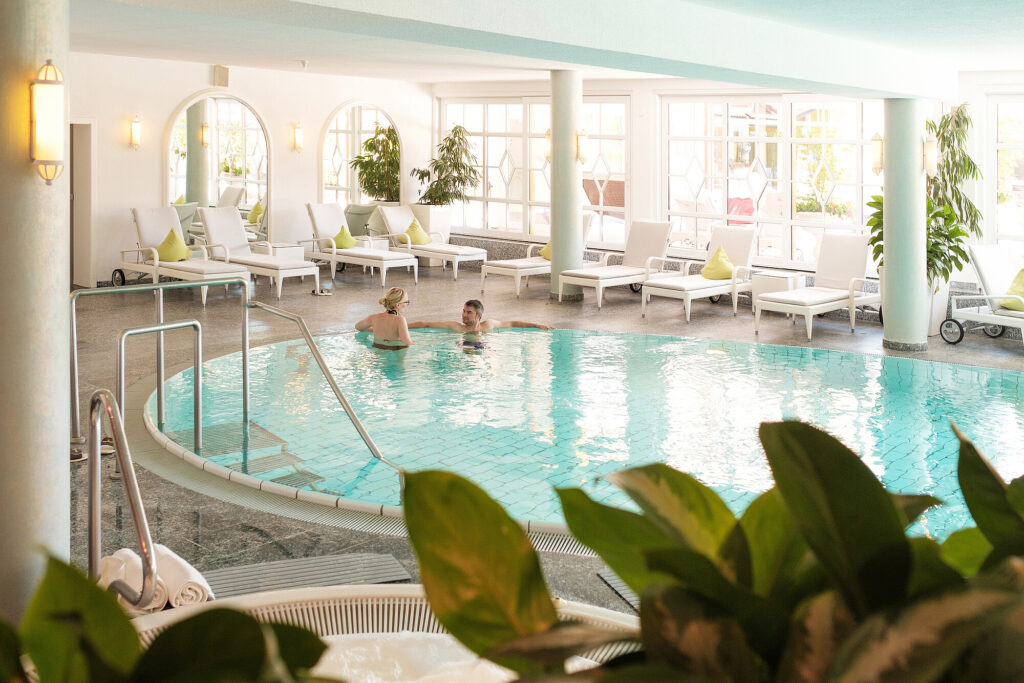
Not every family spa hotel needs to operate on a grand scale. The Ludinmühle, a four-star superior property tucked into the Brettental valley near Freiburg, takes a more intimate approach. The spa covers 2,000m² and has been awarded five Wellness Stars, but the reason families come back is the family-specific design: a dedicated swimsuit sauna area (the Ludintherme) where parents and children of all ages can use the saunas together, something most German spa hotels restrict to textile-free adults-only zones.

The pool set-up includes indoor and outdoor options plus a whirlpool, and there’s a children’s activity programme during school holidays with childcare available on request. Spa treatments are offered for children and teenagers as well as adults, which is a rarer feature than it should be. Rooms are comfortable rather than showy, and the fold-out bunk beds in certain room categories are popular with younger guests.

The Black Forest location earns its keep. The Brettental is a side valley off the main Elz valley, and the surrounding landscape of dark spruce, meadows and vineyards is laced with walking and cycling trails. Freiburg, one of Germany’s most liveable cities, is a short drive for a day out, and the family-run feel of the hotel extends to the restaurant, where regional cooking is served as part of a ¾ board arrangement.

Read: 9 essential experiences in Baden-Baden

Naturresort & Spa Schindelbruch, Harz Mountains

Ideal for a sauna village with a fire bowl in the forest where Goethe sent his witches…

The Harz is the highest mountain range in northern Germany and one of the country’s most rewarding hiking regions, with the Brocken – famously the setting for the witches’ gathering in Goethe’s Faust – as its centrepiece. The Schindelbruch sits in the forested Lower Harz near the half-timbered town of Stolberg, surrounded by the kind of dense, still woodland that makes you instinctively slow down.

The 2,500m² spa is built around the concept of separate worlds for adults and families. The main wellness area, including the rustic sauna village (Finnish sauna, fragrance sauna, sanarium, steam bath and an outdoor fire bowl), is reserved for guests aged 14 and over. Families have their own ‘Wildwasser’ pool and a dedicated ‘Mondlichtung’ (Moonlit Clearing) relaxation room, plus a family sauna where children aged four and above can join their parents at gentler temperatures. It’s a thoughtful division that respects both groups without making either feel like an afterthought.

The restaurant takes its cue from the landscape, serving country-style cooking that draws on the Harz’s own larder. Rooms are modern and spacious, many with forest views, and the hiking trails that radiate out from the property connect into the wider Harz network, including routes through the woodland towards Stolberg and its half-timbered old town.

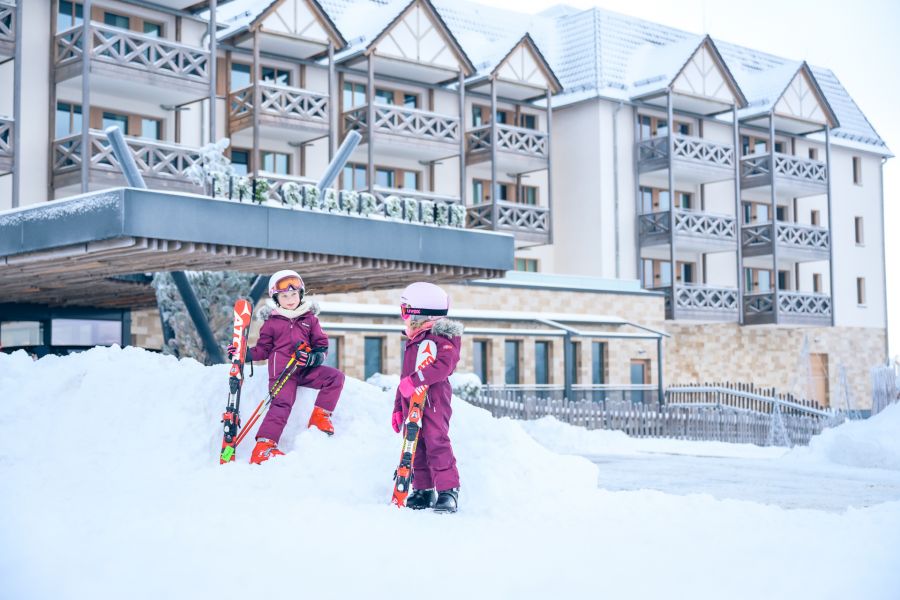
The Grand Green, Thuringian Forest

Ideal for cross-country skiing in July while someone qualified looks after your baby…

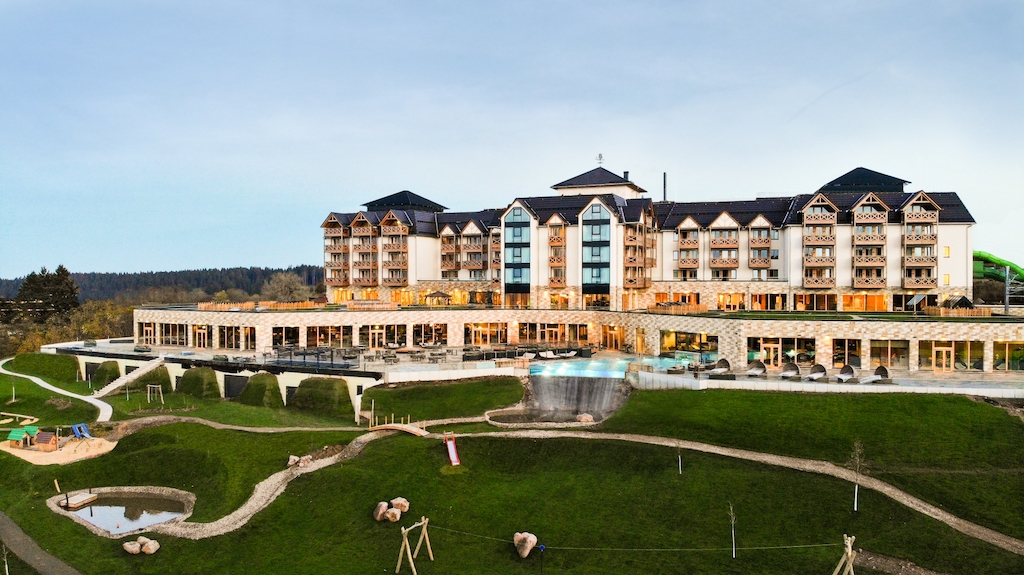
The newest property on this list, The Grand Green opened in Oberhof in 2022 as a purpose-built, €50 million family resort on the crest of the Thuringian Forest. It belongs to the Familux Resorts group, run by the Mayer hotelier family from Lermoos in Austria, and everything about it has been designed from scratch with families in mind. Childcare runs 13 hours a day, seven days a week, with more than 25 trained kids’ coaches covering ages from seven days old to 16 years. That’s not a typo: newborns from their first week are welcome.

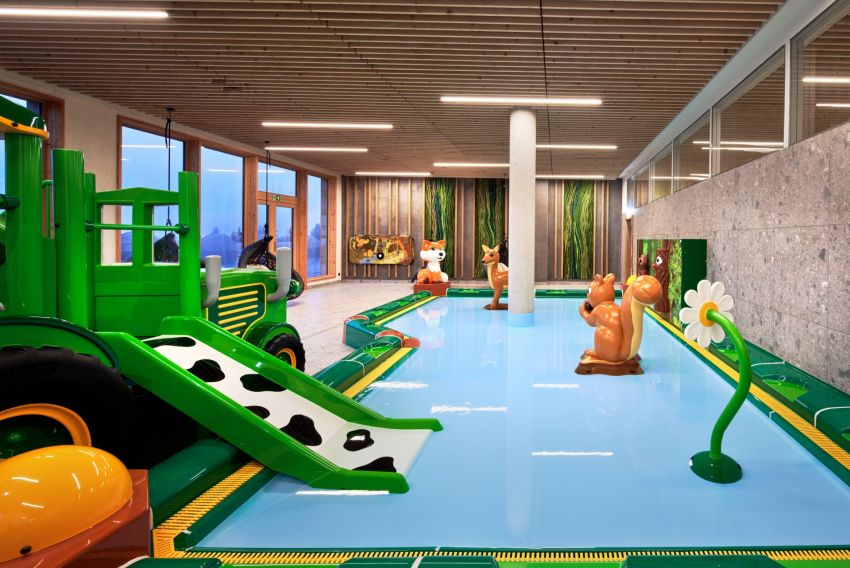
What that €50 million bought is considerable. A 100-metre tube water slide, a children’s adventure pool, an outdoor infinity pool heated to 30 degrees year-round, and a separate indoor children’s pool at 35 degrees sit alongside a spa and sauna complex with adults-only zones. The over 2,000m² indoor play area includes a two-storey soft play zone, an indoor go-kart track, a cinema and a virtual reality room. Outside, there’s a forest adventure trail, a petting zoo and a bouncy castle in summer.

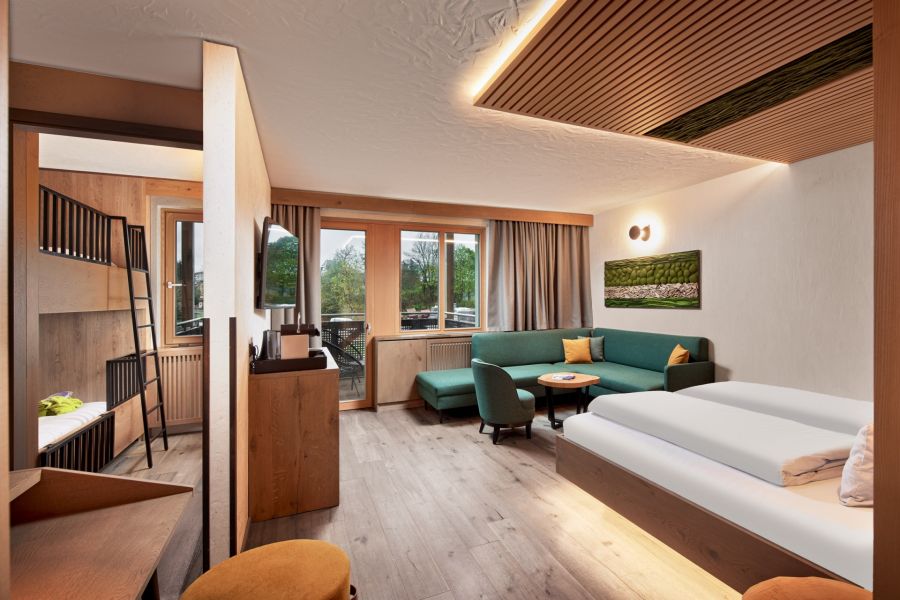
The 110 suites and 15 chalets are designed with separate children’s sleeping areas, and the all-inclusive board covers meals, drinks, snacks and ice cream throughout the day, with a dedicated children’s buffet area. 

For parents with energy to spare, the Thuringian Forest’s 168km Rennsteig hiking trail runs through Oberhof, and the LOTTO Thüringen Indoor Skiing Centre in Oberhof offers cross-country skiing at minus four degrees all year round. It’s a resort that operates on a scale most family hotels in Germany don’t attempt, and the thought behind it is as impressive as the size.

The Bottom Line

Germany’s forest spa hotels occupy a niche that few other countries replicate as well: serious wellness facilities set within protected landscapes, designed to accommodate families without diluting the experience for parents. From the UNESCO-listed Palatinate Forest to the ancient woodland of the Bavarian Forest National Park, each of these five properties uses its setting as more than a backdrop. The trees, the trails and the clean air do as much work as the saunas or spas. What’s not to love?

5 Of The Best Rural Getaways In The North Of England

The north of England holds a particular kind of beauty. It’s a landscape that rewards those willing to leave the motorway behind, to follow single-track roads through valleys where the mobile signal drops and the horizon opens up. From the limestone pavements of the Yorkshire Dales to the dark, clear skies of Northumberland, the best rural getaways in the north offer something more than scenery. They offer a feeling of genuine remoteness, even within a few hours’ drive of most major cities.

Whether you’re after a lakeside spa break, a shepherd’s hut beneath the Milky Way, or a country house hotel with a Chatsworth Estate postcode, these five rural getaways represent the best of what the north has to offer. Each one is different in character, catering to a different kind of escape, but they all share one thing: a deep connection to the landscape around them.

Low Wood Bay Resort & Spa, Lake District

Ideal for a spa session followed by wakesurfing on Windermere before lunch…

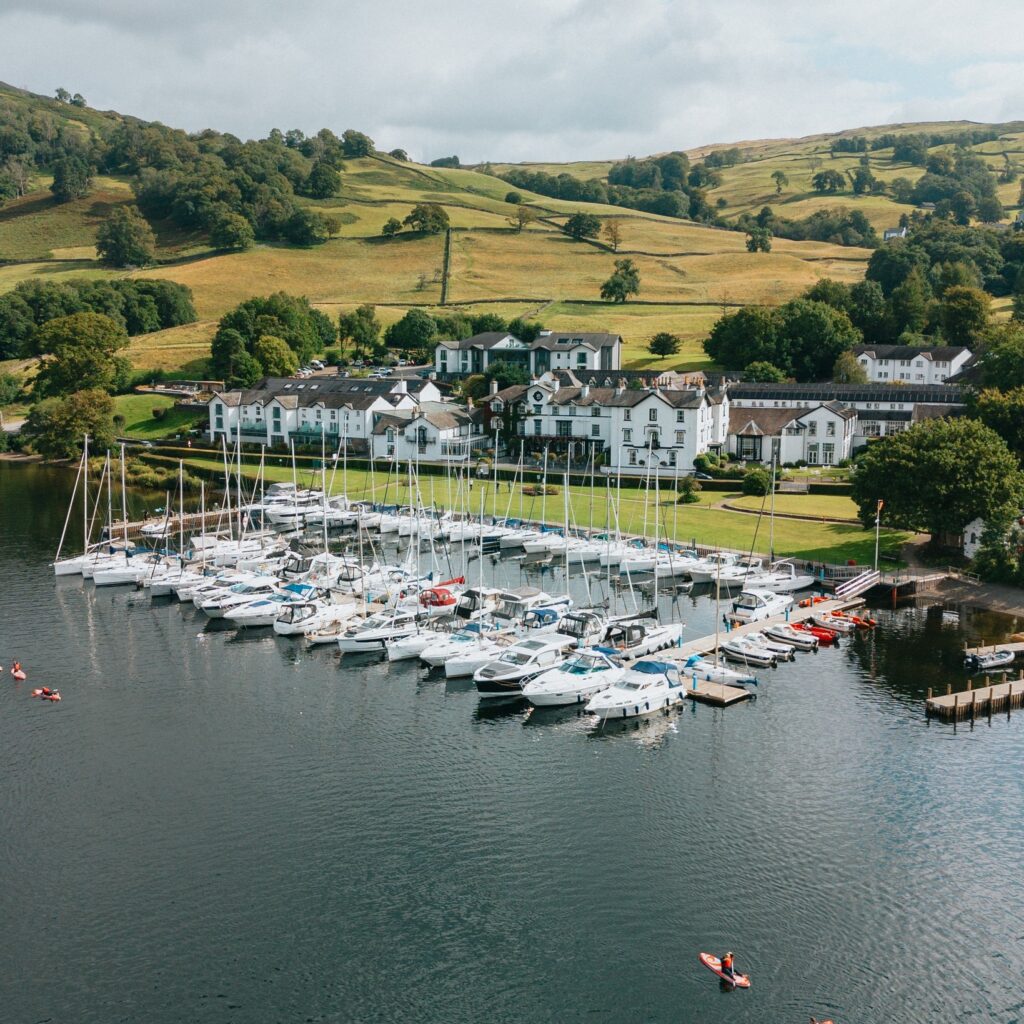
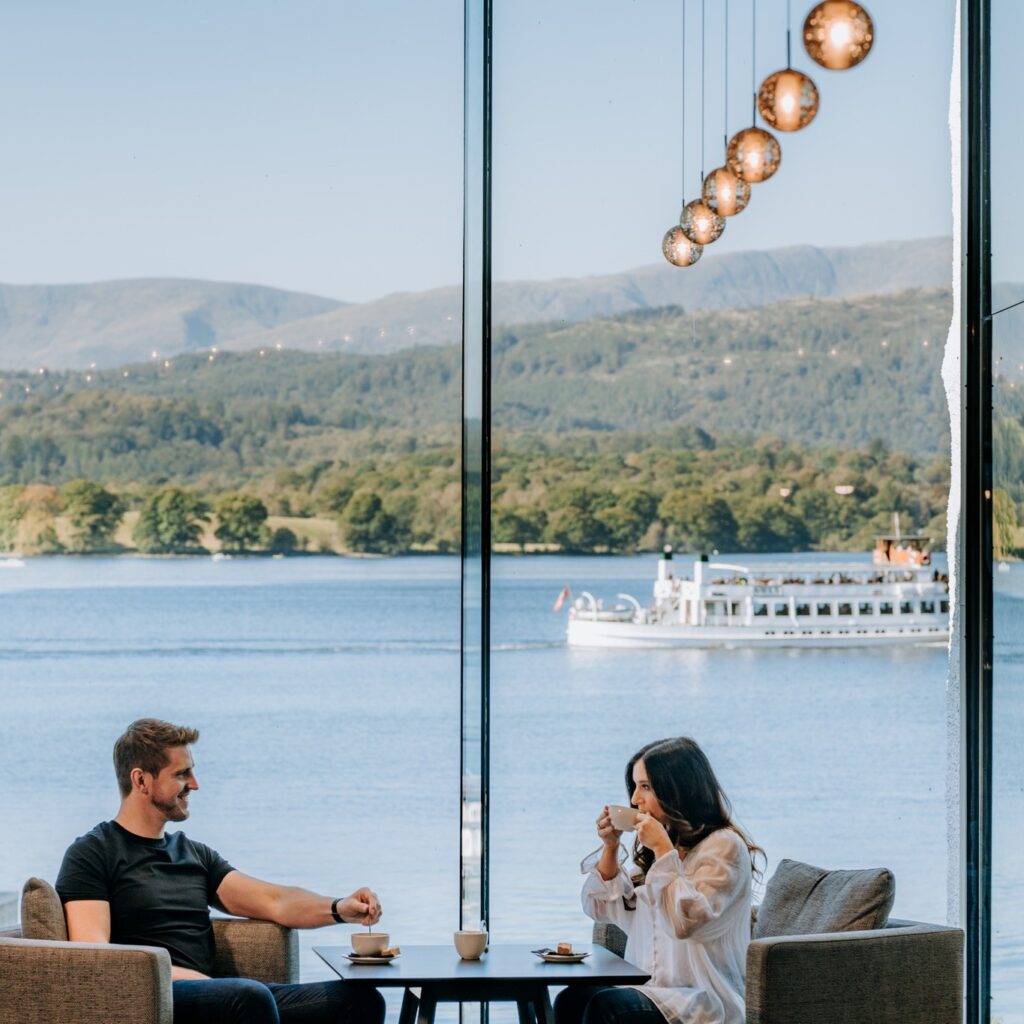
For a peaceful countryside retreat at a Lake District spa hotel, Low Wood Bay is hard to beat. Sitting right on the shore of Lake Windermere between Ambleside and Windermere, it commands the kind of views that make you forget what day of the week it is.

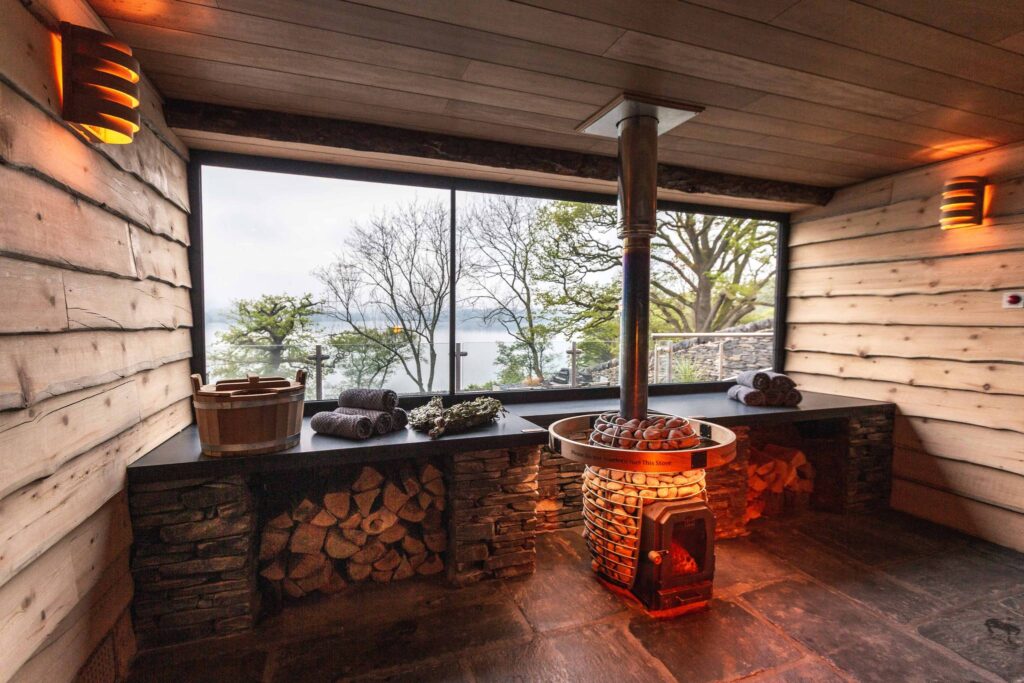
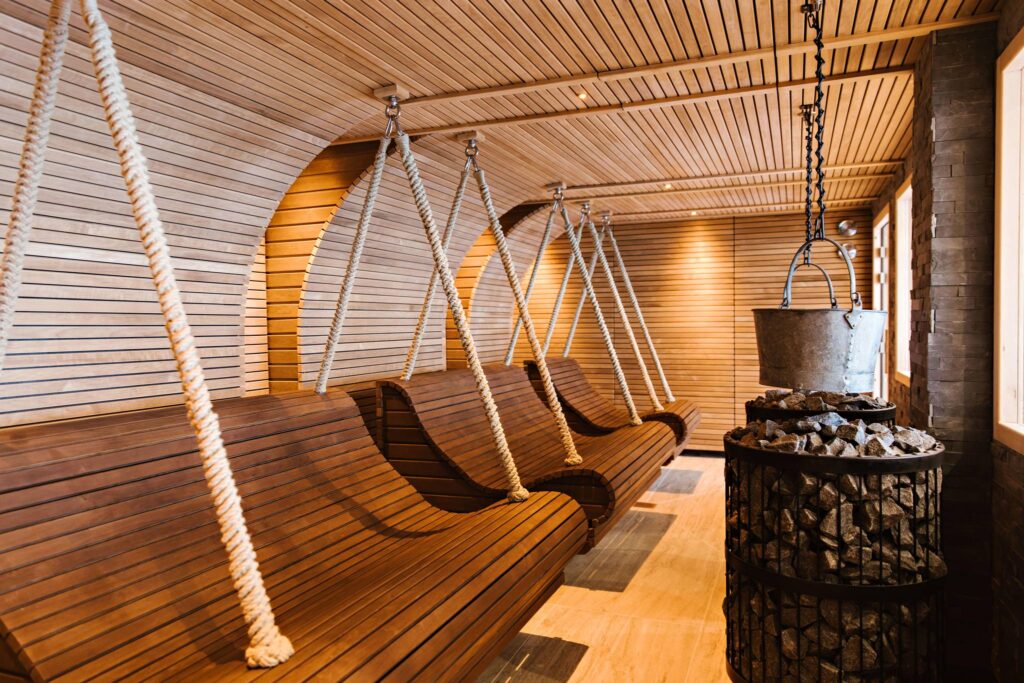
The spa is the main draw here, and with good reason. Last year awarded Best Spa in the North West by the Good Spa Guide, it features both indoor and outdoor thermal experiences, with treatment rooms overlooking the lake. The outdoor thermal pool is particularly special: there are few better ways to spend a winter afternoon than soaking in warm water while watching mist roll across Windermere.

But Low Wood Bay isn’t a one-note operation. The resort’s own watersports centre offers kayaking, paddleboarding, wakesurfing and sailing directly from its marina, making it as much a place for activity as relaxation. The dining options span multiple restaurants, from the seasonal British menu at The W to the more informal, locally focused plates at Blue Smoke. Their wood-fired afternoon tea, meanwhile, puts a distinctive spin on the classic format, swapping finger sandwiches for piri-piri wings and coconut king prawns.

Rooms range from resort-standard doubles to the Winander Club, which operates as a hotel-within-a-hotel, complete with its own dedicated lounge, roof terrace and extended checkout. It’s a level of polish that feels earned rather than excessive, set against a backdrop that does most of the heavy lifting.

Read: 10 of the most isolated spots in the Lake District for wild camping

Hesleyside Huts, Northumberland

Ideal for toasting marshmallows on a 4,000-acre estate while the Milky Way does its thing overhead…

If Low Wood Bay represents the refined end of the Northern escape, Hesleyside Huts is its gloriously untamed counterpart. Tucked into a 4,000-acre private estate in the heart of Northumberland National Park, this is luxury glamping done with real imagination and craft.

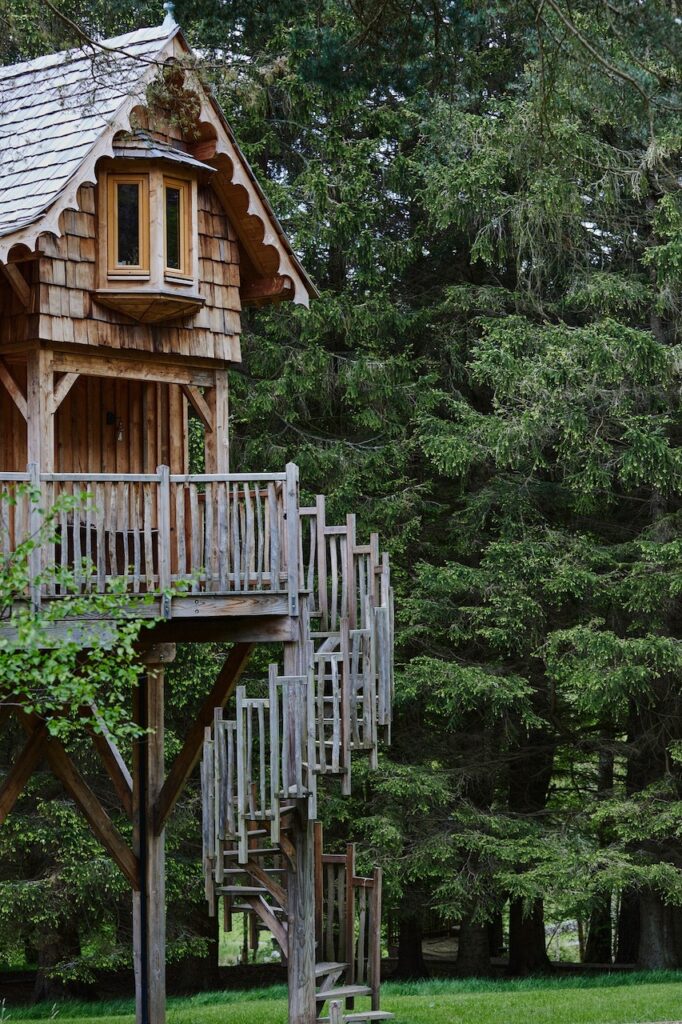
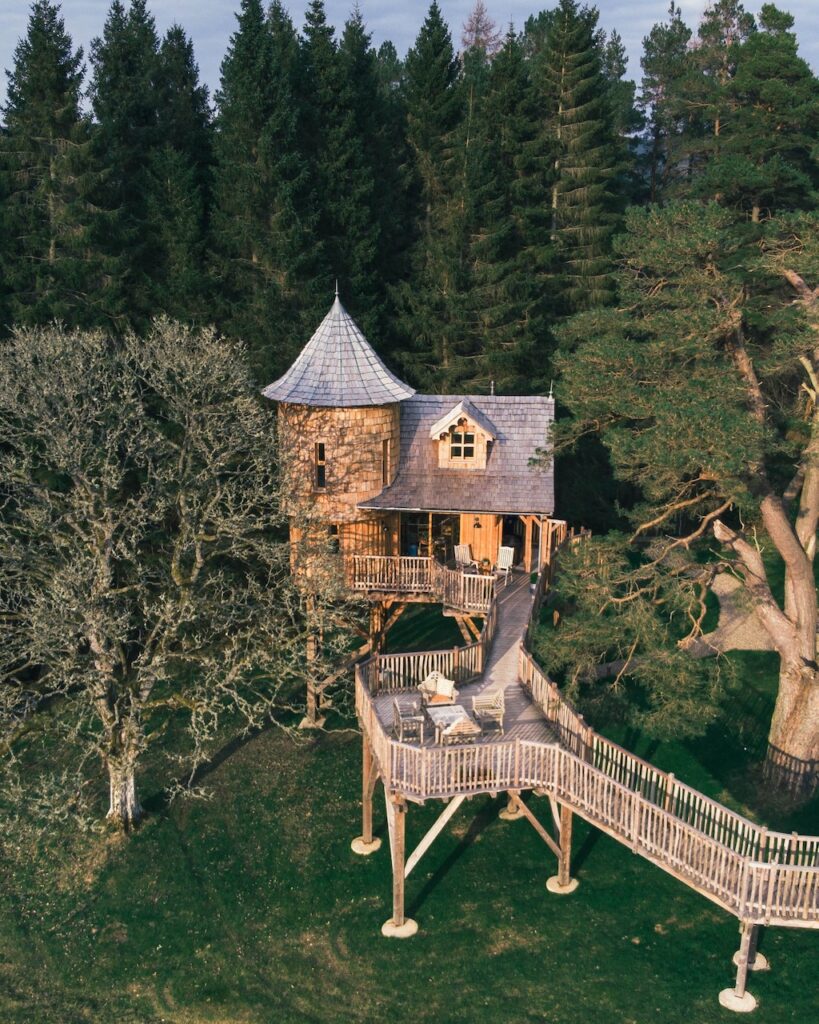
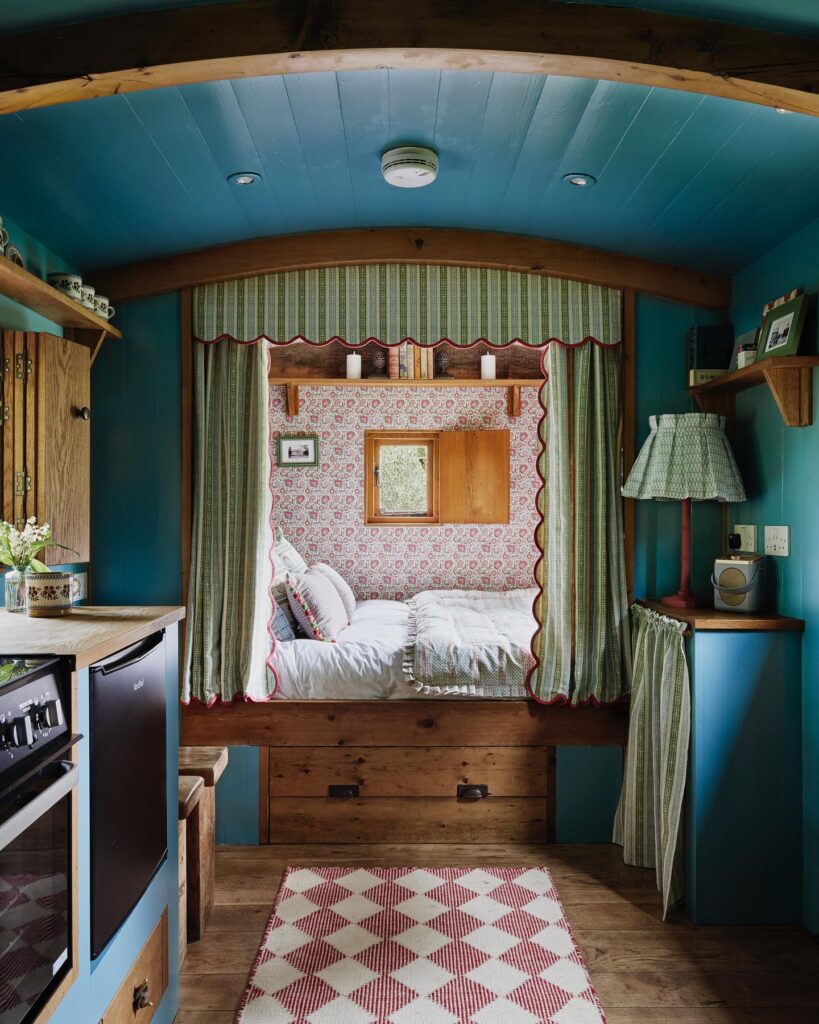
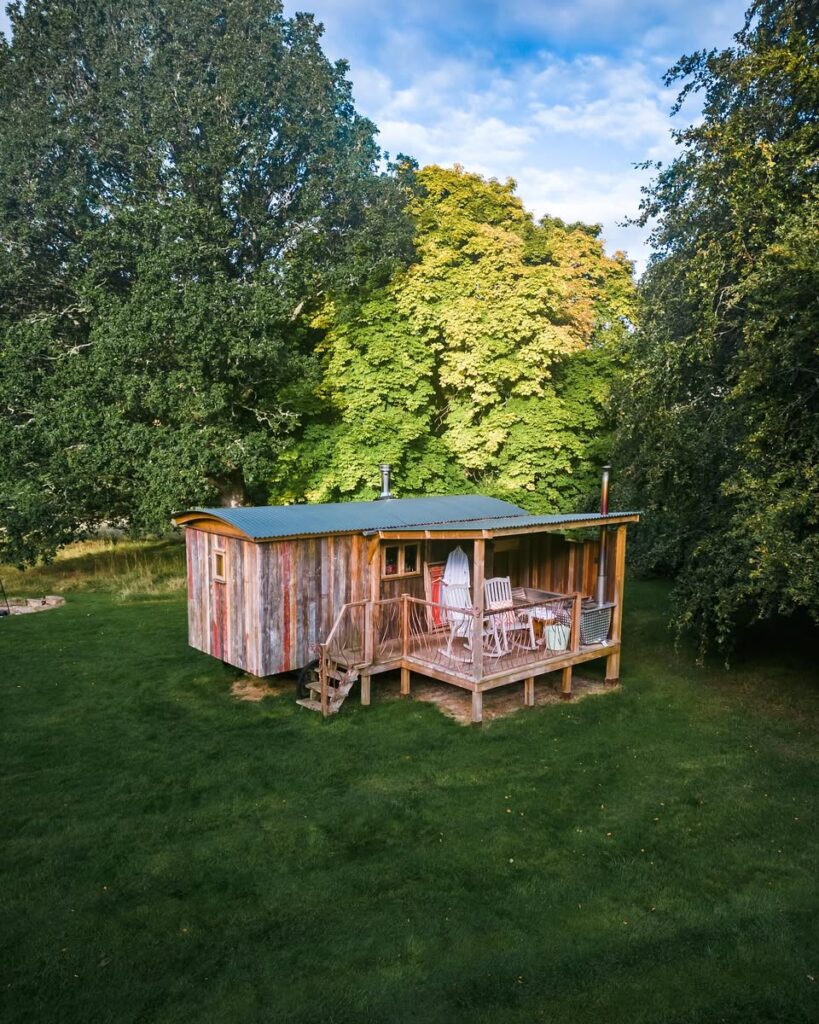
The estate belongs to the Charlton family, who have lived at Hesleyside Hall for over 750 years. The gardens were designed by Capability Brown, and the huts and cabins sit within this parkland, each one handcrafted from reclaimed oak and styled with a distinct personality. Heather, a shepherd’s hut featured on George Clarke’s Amazing Spaces, has an outdoor bath and wood-burning stove. Holly is a chapel-on-wheels with a freestanding copper roll-top bath and a wood-burning stove. Skylark is a full-blown treehouse with its own turret and treetop walkways. Raven is a castle-inspired watchtower where you can soak in a huge handcrafted wooden tub while watching deer through the birch and pine.

Each hut comes with an en-suite shower, a fully equipped kitchen area and a fire pit for toasting marshmallows. But the real luxury here is the setting. Hesleyside sits beneath the Northumberland International Dark Sky Park, meaning on a clear night, you can see the Milky Way with the naked eye. They provide stargazing kits and binoculars, and the absence of light pollution is remarkable. Nearby Bellingham has pubs, supplies and the Hareshaw Linn waterfall walk, while Hadrian’s Wall and Kielder Observatory are both within easy reach.

The Cavendish Hotel, Peak District

Ideal for walking to Chatsworth House before a three-Rosette dinner with Frink on the walls…

The Cavendish at Baslow has existed in one form or another since the 1700s, first as a public house, then a coaching inn, and now as one of the best country house hotels in England. Its location on the Chatsworth Estate, with doorstep access to the house, gardens and farm shop, gives it a sense of place that most hotels spend years trying to manufacture.

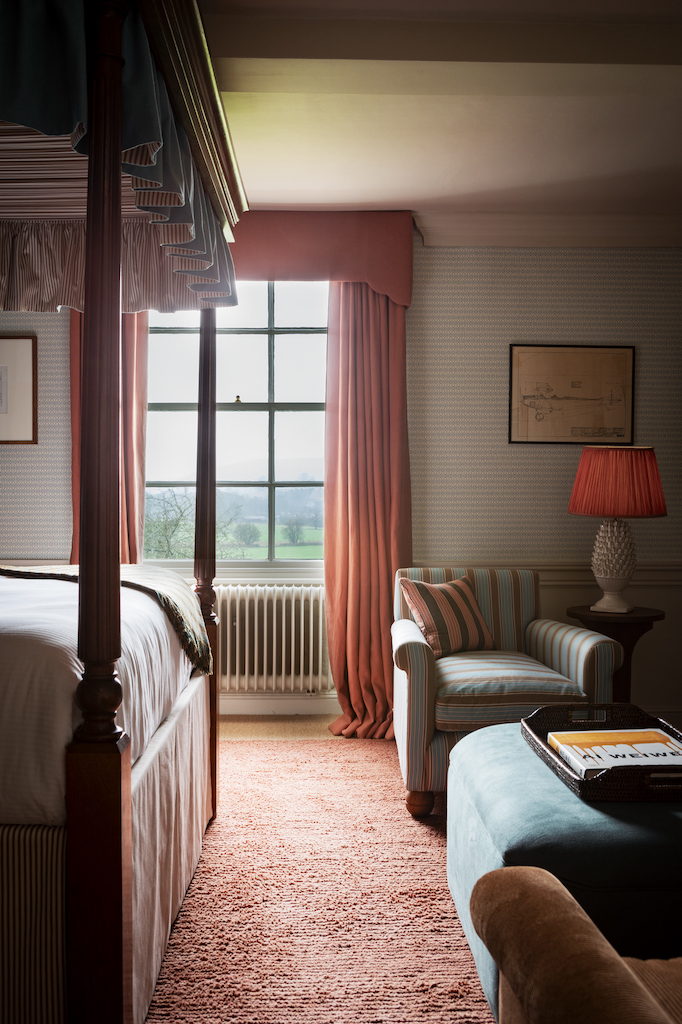
A complete refurbishment in 2024 by interior designer Nicola Harding, working alongside Lady Laura Burlington, has brought new energy without sacrificing the building’s character. The Times named it Hotel of the Year for 2025, and the AA followed suit with their own top award. It’s recognition that feels deserved. The 28 bedrooms feature antique furniture, stone fireplaces and fabrics woven by local Derbyshire and Yorkshire makers, while artwork from the Devonshire family’s private collection hangs throughout, with pieces by Elisabeth Frink and Phyllida Barlow among them.

Dining is handled across two restaurants. The Gallery holds three AA Rosettes and a mention in the Michelin Guide and works closely with the Chatsworth Estate’s gardeners and farmers, resulting in a menu where the provenance of each ingredient is genuinely traceable. The Garden Room offers something more relaxed, with estate views and a brasserie-style approach. There is no spa, and it doesn’t need one. The Peak District is the draw here: Chatsworth House is a 20-minute walk from the front door, Bakewell and its legendary pudding shops are a short drive, and the Monsal Trail provides 8.5 miles of traffic-free walking and cycling through the White Peak.

The Fell, Yorkshire Dales

Ideal for muddy boots, the dog and a Wharfedale view that the Calendar Girls would approve of…

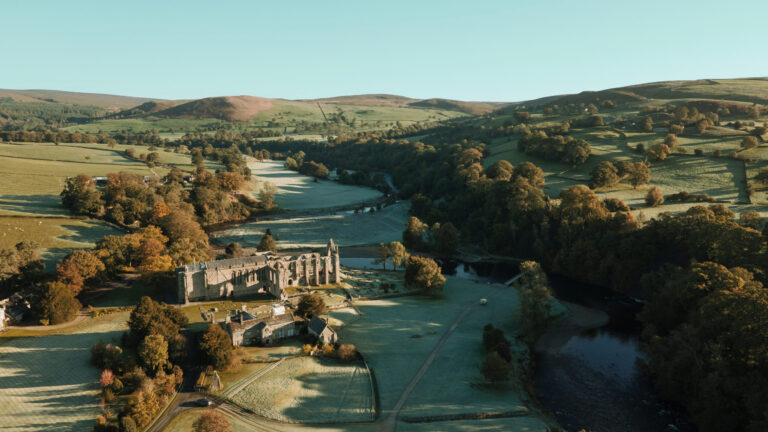
Formerly known as the Devonshire Fell, this 16-room hotel perches above the village of Burnsall in Wharfedale, looking out across one of the Yorkshire Dales’ most photographed landscapes. Burnsall itself is the kind of village that period drama location scouts dream about: a stone bridge over the River Wharfe, a village green, and the Dales rising steeply on all sides. The Calendar Girls producers clearly agreed; they filmed here.

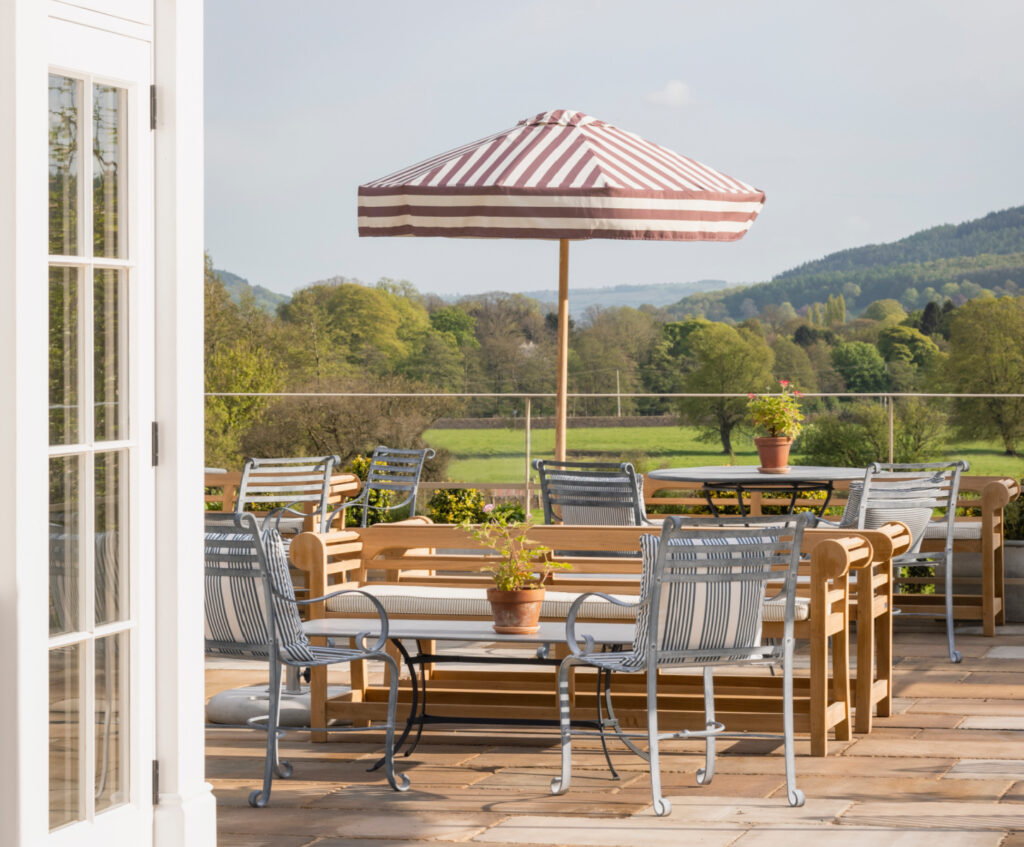
The Fell is part of the Bolton Abbey Estate, and its size is part of its appeal. With just 16 individually furnished rooms, it feels more like a well-run private house than a chain hotel. The Duchess of Devonshire had a hand in the interiors, and the result is a mix of bold colour, contemporary furniture and estate art that feels confident without being overwrought. Rooms look out across the valley, and several have seating areas where you could happily spend a rainy afternoon doing nothing at all.

The restaurant holds two AA Rosettes and sources heavily from the estate and surrounding farms. It’s serious cooking presented without fuss, in a conservatory dining room with those same sweeping Dales views. But the real selling point is the walking. Routes of every length and difficulty leave from the hotel’s front door, including the path down to Bolton Abbey’s ruined priory and its famous stepping stones across the Wharfe. Dogs are welcome in all rooms, which tells you something about the kind of stay this is. It’s a hotel that assumes you’ll arrive in boots.

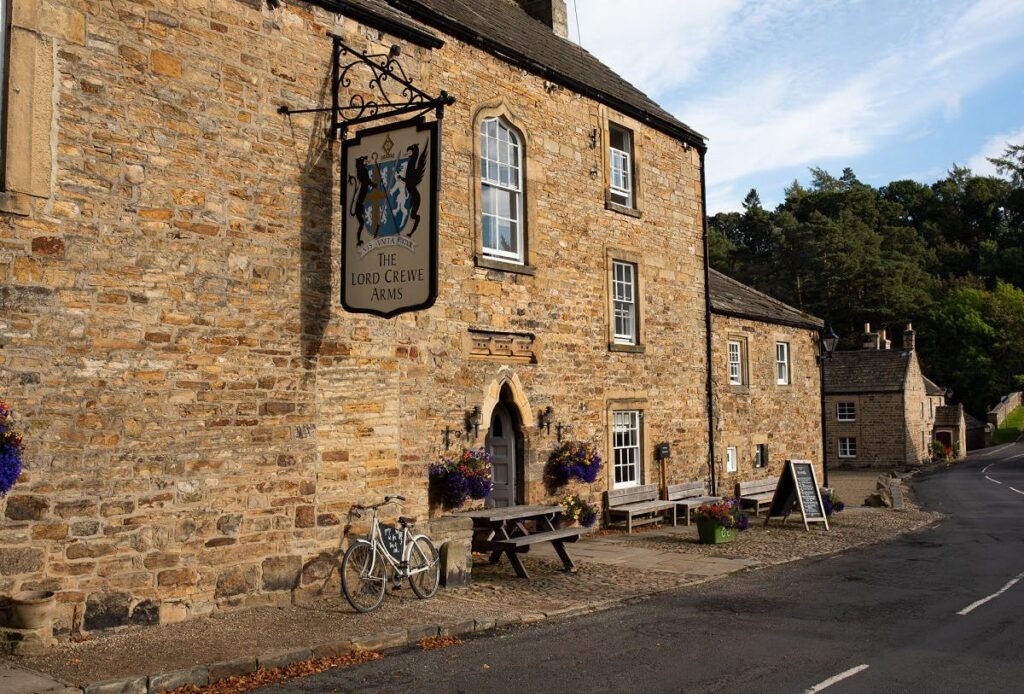
Lord Crewe Arms, Blanchland

Ideal for a pint in a vaulted crypt where Auden once drank, then a moorland walk to nowhere in particular…

Blanchland is one of those villages that barely feels real. A tiny, honey-stone settlement built from the remains of a 12th-century Premonstratensian abbey, it sits in a wooded valley on the North Pennine moors, surrounded by heather and pine forest, with the Derwent Reservoir nearby. The Lord Crewe Arms occupies what was once the abbey’s guest house, and the sense of deep history is everywhere: hidden staircases, stone-flagged floors, a vaulted crypt bar where the ceilings seem to press down with centuries of stories.

The hotel was sympathetically restored in 2014 by the Calcot Collection and now holds 26 bedrooms, ranging from cosy doubles in the main building to suites in a row of former miners’ cottages with their own front doors, log fires and roll-top baths. The interiors are warm and tartan-tinged without tipping into cliche, and the whole place radiates the kind of comfort that makes you instinctively lower your voice and order another drink.

Food is seasonal and local, prepared by a kitchen that draws from its own garden and smokehouse. The Bishop’s Dining Room handles the more formal end, while The Crypt, set in a vaulted chamber with a roaring fire, pours Northumbrian ales and serves a bar menu of unfussy, well-executed plates. W.H. Auden stayed here in 1930 and later said no place held sweeter memories. Philip Larkin used to dine here too. It is that kind of place: literary, understated and deeply atmospheric, with moorland walks of every distance starting from the front door.

The Bottom Line

The best rural getaways in the north of England span a wider range of styles and landscapes than they’re often given credit for. From the lakeside spa comforts of Ambleside to the wild remoteness of the Northumberland moors, each of these five properties offers a distinct version of the northern escape. What unites them is a commitment to their setting, whether that means sourcing food from the estate next door, building huts from reclaimed oak, or simply positioning a roll-top bath where it can overlook a valley that hasn’t changed in centuries.

The best advice? Don’t try to see them all in one trip. Pick the one that matches your mood, and give it the time it deserves.

Where To Eat In Liverpool: The Best Restaurants

Last updated March 2026

Forget the Beatles, football rivalries and Ferry Cross the Mersey – Liverpool’s food scene is the city’s most exciting cultural export right now. While the rest of the UK was busy looking elsewhere, Scouse chefs have been quietly building a gastronomic powerhouse that punches well above its weight.

Liverpool’s dining renaissance is happening everywhere from transformed dockside warehouses to tucked-away supper clubs on residential streets – and it’s still flying under the radar just enough that you can actually get a table. Not for long, mind.

When the 2026 Michelin Guide was unveiled in Dublin this February, Liverpool was once again passed over for a star – in fact, the city has never held one. It’s a snub that says more about Michelin’s blind spots than Liverpool’s kitchens, because six of the restaurants on this list (8 By Andy Sheridan, Belzan, Manifest, NORD, Vetch and The Art School) all feature in the 2026 Guide. Stars or no stars, the cooking here speaks for itself.

These are the spots worth clearing your calendar for – places serving everything from theatrical tasting menus to plates you’ll be tempted to lick clean (no judgment here). With all that in mind, and with several extra notches added to our belt, here are the best restaurants in Liverpool.

8 By Andy Sheridan, Cook Street

Ideal for theatrical dining that places you at the heart of culinary creation…

Here at IDEAL, we firmly believe there’s a place for the pretentious, in art, in music, and in food. In the best possible way, 8 by Andy Sheridan proves this to be true. It’s high falutin, sure, but it’s also highly enjoyable…

The taut venue elevates dining to a kind of performance art, featuring just 16 seats divided between two counters where chefs craft and narrate each course directly before guests. Sheridan, who came back to his Liverpool roots after making waves in Birmingham, has created something rather special in this Victorian building on Cook Street (a pleasing kind of nominative determinism…kinda).

Images via @about8ight

Your evening begins in a dimly lit lounge with aperitifs and crisp, energetic nibbles pulled straight from the opening round of GBM (tuna tostada, crab croustades…you get the picture) before you’re escorted downstairs to claim your spot at one of the 8-seat counters. The tasting menu pulls influences from across the globe while delivering bold, distinctive flavours – all built around top-notch ingredients that help justify the £120 price tag. 

Yes, there’s a lot of stuff presented on stones and moss. And sure, there will be a tuile leaf or two. But fortunately, the clarity of flavour here is convincing and the delivery strangely compelling. The set-up naturally encourages a bit of chat with the chefs, but they’re tactful, knowing when to step back and let you actually engage with your dining companion or, you know, swoon over your last bite. This is Liverpool dining at its most personal and also its most dramatic.

Website: restaurant8.co.uk

Address: 16 Cook Street, Liverpool, L2 9RF


Wreck Bistro, Seel Street

Ideal for honest bistro cooking in a beautifully restored industrial space…

Wreckfish metamorphosed a once-abandoned building into one of Liverpool’s most cherished restaurants. Brought to life by chef Gary Usher  following a triumphant crowdfunding campaign, this bistro focuses on straightforward yet flawlessly executed dishes, with the emphasis always on flavour first and foremost, but also on excellent value – something of a signature of any Usher restaurant, and a very commendable one at that.

Step inside and you’ll immediately notice how the space balances its rough-hewn past with genuine comfort. Originally named Wreckfish after the Atlantic wreckfish – a species known for dwelling near shipwrecks – the restaurant has since been renamed Wreck Bistro as too many people mistakenly assumed it was a seafood restaurant.

The converted space retains character in its raw brick walls and lofty ceilings, while a sprawling open kitchen takes centre stage, allowing diners to witness the choreography of a confident brigade at work. There’s an appealing lack of pretension here – like dining in the home of a friend who happens to be an excellent cook.

The menu shifts with the seasons but might include starters like chicken liver parfait with farmhouse chutney, hearty mains such as braised featherblade of beef with beetroot ketchup and red wine sauce, or a shawarma-spiced chicken schnitzel. Their truffle and Parmesan chips have amassed an enthusiastic following of their own across all of the Elite Bistro’s restaurants, and they make an appearance on both bistro and special menus at Wreck for good reason; they’re as good as they sound, and there’s no much higher compliment than that.

On weekends, the breakfasts deserve your attention – from the Full Wreck-fast (complete with all the traditional fixings) to our go-to order, the smoked ‘Nduja beans on toast with a fried egg and sour cream. Whichever way you play it, have a Port of Liverpool (Irish whiskey, cherry liqueur, lemon and Ruby Port) or two, and luxuriate in a place where that implicit sense of hospitality is apparent in every gesture.

Despite the quality of both produce and cooking, prices remain accessible – their ‘bistro’ menu is laughably good value at just £23 for three courses. This reflects Usher’s philosophy that excellent food shouldn’t be exclusive, making Wreckfish a place you can return to regularly rather than saving for special occasions only.

Website: wreck-bistro.co.uk

Address: 60 Seel Street, Liverpool, L1 4BE


Belzan, Smithdown Road

Ideal for neighbourhood conviviality and culinary innovation away from the city centre…

Slightly off the typical tourist route in one of Liverpool’s student-dominated suburbs, Belzan merits seeking out for its inventive small plates and impressive natural wine collection. This neighbourhood bistro balances casual chic with culinary aspiration – all polished concrete and white brick, with seasonal dishes presented on elegant ceramics.

Opened in 2017 by friends Chris Edwards, Owain Williams, and Sam Grainger (the latter now executive chef ), this once-hidden gem has accumulated serious accolades, featuring in the Michelin Guide and named among the UK’s 100 best local restaurants by The Good Food Guide.

The constantly evolving menu showcases hyperlocal ingredients – Grainger ambitiously sources from within 30 miles wherever possible, even incorporating pumpkins from customers’ allotments and wild garlic foraged from nearby Sefton Park. Current standouts include a beautifully balanced smoked beetroot with goat’s curd and blood orange, mushroom and chestnut dashi with butterbeans and cavolo nero, and the exquisite, positively pastoral-tasting barbecued lamb Barnsley chop with artichoke purée and pinenuts.

Don’t overlook (it’s impossible to miss, to be fair, as it’s being ordered by pretty much every table) their renowned Guinness rarebit potato – a humble-sounding creation elevated to something extraordinary through the marriage of Anna potatoes, Guinness-infused cheese, and a Bois Boudran-style sauce. The dish has become so iconic that it’s now a permanent fixture on their otherwise seasonal menu, with good reason. End with the comforting parkin cake with custard and crème fraîche ice cream – proof that northern classics can shine when given a contemporary twist.

Service is self-assured and straightforward, with staff well-versed in both the cuisine and the eclectic wine selection. The restaurant has developed such a reputation that it’s become an unlikely celebrity hotspot – Will Ferrell dined here during Eurovision 2023, while the entire fellowship from The Lord of the Rings (minus Gandalf, presumably) nearly “ate the whole menu” during a 2024 Comic Con visit.

For natural wine enthusiasts, Belzan offers one of the most exciting collections in the city. The prix fixe represents great value; three courses and a glass of wine is £45.

Website: belzan.co.uk

Address: 371 Smithdown Road, Liverpool, L15 3JJ


Madre, Albert Dock *temporarily closed – news coming soon*

Ideal for faithful Mexican flavours against Liverpool’s historic waterfront…

Born in 2019 from a collaboration between the culinary minds behind (just mentioned) Belzan and London’s Breddos Tacos, this waterfront gem delivers an immersive taste of Mexican hospitality. Transplanting the soul of Mexico City, Guadalajara, and Oaxaca to Liverpool’s historic Albert Dock, Madre (Spanish for ‘mother’) serves up Mexican dishes in a spirited, colourful space with an extensive outdoor seating area that springs to life in summer with DJ sets and flowing margaritas (the latter dependent on the sunnier season, it should be said). 

The menu centres on traditional – rather than ‘elevated’ or ‘refined’ – taco recipes, with standouts including the Tijuana-style carne asada with skirt steak, smoked mozzarella and grilled onions, the Baja fish tacos with tempura-battered Atlantic pollock, and the crab tostada featuring picked picked white crab with brown crab mayonnaise. God it’s good.

Beyond tacos, there’s plenty of antojitos (Mexican snacks) to pick over with a drink, while the restaurant’s wood-fired parrilla (grill) turns out impressive larger plates – the barbecued pistachio-crusted lamb breast with avocado salsa makes a compelling case for casting covetous glances beyond the taco section.

What truly brings Madre to life is its formidable bar program. Their margaritas are the stuff of slurred, eulogising legend, especially the ‘green wasp’ variation with Tapatio tequila, cucumber, coriander, habanero and agave that packs a memorable (well, perhaps less so after the third one) punch. 

The restaurant’s Madre’s Table option (£30 per person) offers a keenly priced introduction to the fine cuisine here – a curated selection of their favourite dishes that ensures you experience the menu’s highlights. Located just a five-minute stroll from the city’s central museums and cultural attractions, Madre offers the city’s most perfect refuel and refresh after a day of cultural exploration. 

*Update, March 2026: Madre’s Albert Dock location is currently temporarily closed, with news on its future expected soon. In the meantime, the team have launched Salón Madre on Hanover Street – a tequila-fuelled pool hall and taqueria serving al pastor tacos, gringas and frozen margaritas in a 4,400 sq ft space that’s more late-night rowdiness than waterfront refinement. It’s a different beast entirely, but if you’re after a taste of the Madre spirit while the mothership sorts itself out, it’ll scratch the itch.*

Website: thisismadre.co.uk

Address: Atlantic Pavilion, Albert Dock, Liverpool, L3 4AE


Manifest, Baltic Triangle

Ideal for seasonal British cuisine in Liverpool’s most creative quarter…

Housed in a repurposed warehouse in the rejuvenated Baltic Triangle, Manifest has swiftly established itself among Liverpool’s best restaurants since its 2022 opening. 

The restaurant’s curved archway entrance, set within the original warehouse brickwork, makes for an impressive first impression – maintaining the raw, industrial character of the Baltic Triangle while adding just enough polish to signal that something special awaits inside.

Proprietors Paul and Charlotte Durand have fashioned a space that strikes a delicate balance between casual and sophisticated, allowing the cuisine to command attention via a central open kitchen with counter seating for those eager to observe the culinary craft up close. The dishes shift with the seasons, featuring meticulously composed small and larger plates that honour exceptional British produce, much sourced from the neighbouring countryside.

If it’s on, order the sweet onion tart which incorporates several members of the allium family plus a very cleansing whipped ricotta, or the masterfully executed cod with sea buckthorn and smoked mussels – both dishes that highlight technique without unnecessary embellishment, the latter an impressive balancing act between bracingly sour and pleasingly salty. 

The thoughtfully assembled wine selection includes numerous options by the glass, featuring several intriguing natural varieties. There’s also a 3-glass wine flight, pitched at £45 per person – the size and pricing a welcome relief from those jarring, lengthy wine pairings that leave you too pissed by the ninth glass.

Admittedly, a little like 8 above, Manifest is a restaurant that suffers a little from enthusiastically low lighting in the evenings. Better to book in for lunch, when the light streams through the large industrial windows that dominate the brick façade just right. 

Website: manifestrestaurant.com

Address: 4a Watkinson Street, Liverpool, L1 0AG


NORD, Old Hall Street

Ideal for Northern hospitality delivered with Scandinavian precision…

NORD celebrates Northern soul (no, not Do I Love You?, but rather, the energy of this part of England) through a distinctly Nordic lens, carving out its own category in Liverpool’s buzzing food scene. 

It’s the baby of local lad Daniel Heffy, who cut his teeth in Stockholm’s starred kitchens before bringing his skills back home in 2023. In fact, this sense of recent homecoming is something of a theme in the city, with several of the restaurants on our list following this narrative arc. 

Heffy describes his approach as “Travelled British,” a nod to his local roots filtered through time spent in Scandinavia. The sprawling, space-age interior feels like dining in tomorrow – all sleek surfaces and egg-shaped booths that cocoon you while you eat. It’s the perfect backdrop for Heffy’s boundary-pushing cooking, which draws heavily on an impressive network of hyper-local suppliers. The menu reads like a love letter to the North West, with everything from Ward’s Fish (a fourth-generation family business in Birkenhead that’s supplied Heffy since the beginning of his career) to award-winning Edge & Sons Butchers in Wirral (just 6 miles away) who work with rare and native breeds.

Dishes roam from the simple to the utterly sublime. Start with oysters au natural or the quail scotch egg with roasted garlic aioli before moving on to standouts like scallop with potato cream, chive and black truffle, or the jaw-dropping chawanmushi with king crab, smoked eel and dashi. 

The lamb rack with squash hot sauce and crispy sprouts is probably the most ‘talked about’ dish here, however, and it’s easy to see why; the lamb is cooked to a perfect pink, and the hot sauce is complex, and acidic enough to cut through the fattiness of the meat. Crispy sprouts need no explaining. For something a little more humble, the charcuterie selection here comes from North by Sud-Ouest (run by Andrew Rogers, who trained in the foothills of the Pyrenees) and shows just how seriously they take their sourcing.

And because it’s not all about the wine, all the time, we can’t speak highly enough of the non-alcoholic options here. Billed as ‘Temperates’, the burnt citrus and winter spiced Chinotto is such a satisfying drop, and one recommended to us by the charming front-of-house team, who add real warmth to the atmosphere, quickly making this newcomer one of the city’s most talked-about dining spots.

Website: nordrestaurant.co.uk

Address: 100 Old Hall Street, Liverpool, L3 9QJ


The Art School, Sugnall Street

Ideal for culinary artistry within elegant Victorian architecture…

Housed in what was once a Victorian ‘home for destitute children’, The Art School now stands as one of Liverpool’s most celebrated dining spots. Chef Patron Paul Askew – Liverpool’s unofficial culinary ambassador and master of the white tablecloth experience – has created a restaurant so heartily committed to fine dining traditions that it makes the Titanic’s first-class restaurant look like a greasy spoon.

The elegantly restored space, with its striking red chairs against pristine white tablecloths, provides the backdrop for one of the city’s most unashamedly classical dining experiences. Askew is a chef who knows exactly what he is – you won’t find edible soil or food served on an iPad here – but that doesn’t mean he’s stuck in the past.

The menus read like a roll call of the North West’s finest producers. There’s Edge & Son’s Belted Galloway beef (the same supplier that NORD uses), Dunham Massey venison, and Loch Fyne scallops served caramelised and proud in the half shell. Askew’s fish game is strong, that’s for sure.

While the Prix Fixe (£55 for three courses) offers brilliant value with dishes like twice-baked three cheese soufflé with leek and Dijon mustard cream sauce, the Menu Excellence (a less humble name would be hard to imagine) is where Askew really flexes his grasp of classical tekkers. At £95 per person, you’ll get Charles Heidsieck champagne on arrival, and dishes like game terrine, pan roast sirloin with potato mille-feuille, and the ‘Art School S’mores’ – a grown-up version of the campfire classic featuring salted caramel, dark chocolate crémeux and Italian meringue that’ll have you feeling all nostalgic and just a little bit sick.

Don’t stop there. For those with a sweeter tooth than sense, don’t overlook the desserts featuring honey from the restaurant’s own local hives – a testament to Askew’s sustainability credentials long before it became fashionable to mention food miles in hushed, reverential tones. And if the two-hour table limit for early diners seems tight, remember this is a restaurant that measures soufflé rise with scientific precision – they’ve timed your chewing too.

Website: theartschoolrestaurant.co.uk

Address: 1 Sugnall Street, Liverpool, L7 7EB


Maray, Bold Street

Ideal for Middle Eastern vibrancy and Liverpool’s creative spirit…

Named after Paris’ Le Marais district, Maray began life in a former charity shop on Bold Street before expanding to additional venues including the Albert Dock and, more recently, Manchester. The original remains the heart of the operation and the optimal place to savour their vivacious Middle Eastern-inspired food.

The menu comprises exquisitely crafted small plates intended for sharing, with a particular excellence in vegetable dishes that propel plant-based cooking to the heights it deserves. The celebrated disco cauliflower – florets roasted until golden and lavished with chermoula, tahini, yogurt, harissa, and pomegranate seeds – has earned its Liverpudlian legendary status deservedly. We’ll always order at least two. You should too.

During busy evenings, you might find yourself at a communal table, actively contributing to a lively, convivial mood that perfectly complements the food. You might also find yourself dragging your warm pitta through a stranger’s hummus (don’t think that’s a euphemism), but that’s all part of the fun here. The drinks selection showcases imaginative cocktails infused with Middle Eastern aromas. For an ideal meal, select an assortment of mezze, the signature flatbread, and several larger plates to share, taking into account a dish or two for your new friends at the neighbouring table.

Website: maray.co.uk

Address: 91 Bold Street, Liverpool, L1 4HF


Panoramic 34, West Tower

Ideal for gastronomic heights that aim to match Liverpool’s most breathtaking vistas…

Situated on the 34th floor of West Tower, Panoramic 34 until recently held the debatable honour of being Britain’s tallest restaurant. Though Gordon Ramsay’s Lucky Cat at 22 Bishopgate has recently usurped this glamorous Liverpool destination, we can only assume (haven’t been to LC, and probably won’t) the food here is better.

Floor-to-ceiling windows deliver stunning 360-degree panoramas across Liverpool, the Mersey, and beyond—making it the choice of many Liverpudlians for celebrating momentous occasions or impressing the pants off first dates (metaphorically, we hope – those windows are rather exposing).

The kitchen demonstrates equally lofty ambition with their tasting menu (£99), which parades luxurious combinations like hand-dived scallop and langoustine tortellini with XO butter sauce that might not make your nonna happy, but will hit the spot nonetheless. Their venison treatment—complete with haunch lasagne, salsify, and the unexpected delight of pickled walnut ketchup – proves this kitchen isn’t just coasting on its view-based laurels. This is a genuinely great plate of food, that haunch lasagne not in the least bit dry, which is the obvious risk here.

For dessert devotees, the Black Forest creation arrives dressed to impress with dark chocolate mousse, Amarena cherries, and a mirror glaze so reflective you might catch your own expression of anticipation in it. Those with more modest appetites (or wallets) can opt for the Prix Fixe at a still-special-occasion £59 for two courses.

From the drinks menu, the ‘mouthwatering’ cocktails (bit of a weird term for a drink guys) are capably mixed with a little theatricality thrown in for good measure – the Pornstar Martini comes with its champagne sidecar, and the devilishly named Honey, You’re So Old Fashioned! (Maker’s Mark, honey, Angostura bitters, smoked salt) offers a refreshing twist on the classic. 

Is it wallet-busting? Absolutely. But then again, you’re essentially renting Liverpool’s finest view along with dinner. Approach your meal with this mindset, and you won’t be disappointed.  

Website: panoramic34.com

Address: 34th Floor, West Tower, Brook Street, Liverpool, L3 9PJ


Vetch, Hope Street

Ideal for Great British Menu excellence with Far Eastern influences…

After a successful tenure as head chef at Rothay Manor in the Lake District, Dan McGeorge (crowned Champion of Champions on Great British Menu 2021) has returned to his native Liverpool (there’s that arc again) to launch his debut solo venture. Situated in a handsome Georgian townhouse on Hope Street, Vetch offers a snug, elegantly mellow dining space where McGeorge’s delicate, Japanese-influenced cooking truly shines.

Let’s abandon any pretence here: Vetch isn’t for the “I just fancy a quick bite” crowd. This is tasting menu territory, where the illusion of ‘choice’ is boiled down to whether you’re having five courses (£85) or seven (£105), with an optional drinks pairing that will facilitate both an enlightened palate and a lighter wallet. For the less committed, the lunch and early bird menu offers three courses for a relatively gentle £45, which in fine-dining currency is practically a bargain.

The menu showcases McGeorge’s talent for harmonising classic techniques with unexpected, globetrotting flavour combinations. Dishes change with the seasons but might include the show-stopping cauliflower chawanmushi with parmesan and truffle (think of the finest cauliflower cheese elevated to celestial heights via Japanese egg custard), or the transformative monkfish with leek and XO dashi. 

Each dish arrives on ceramics that look custom-crafted for their specific contents, accompanied by cutlery so exquisite you might be tempted to slip it into your pocket (please don’t). Even the glassware has been selected to produce a tuning-fork resonance when clinked – a detail that tells you everything about the forensic level of attention being paid to every aspect of the experience.

Service walks that perfect line between informed and informal, with staff who can talk you through the intricacies of the Scandi-Japanese-Brit menu fusion while making you feel like you’re in on the joke.

Vetch represents Liverpool dining at its most ambitious and accomplished; a place where aesthetics and remarkable flavours coalesce into an experience that fully justifies its three-hour duration. 

Website: vetchrestaurant.com

Address: 29A Hope Street, Liverpool, L1 9BP


Buyers Club, Hardman Street

Ideal for hidden courtyard charm, handcrafted pasta and natural wines…

Concealed off Hardman Street, down an alleyway, in a location likely to perplex first-time visitors, Buyers Club is a bohemian bar-restaurant producing some of the finest Italian-inspired cuisine in Liverpool. Pass through the archway into Hardman Yard and you’ll discover a welcoming haven that feels like a cherished secret among locals.

The menu revolves around fresh, handmade pasta dishes that thrum with flavour—think pappardelle with pork and fennel sausage, squash, sage and pumpkin seeds, or porcini and walnut tagliolini. Begin with their signature beef shin arancini or the cacio e pepe butter beans, or, you know, both; you’re a consenting adult and you’ve come here for a good time, after all.

The natural wine selection ticks all the right boxes for this kind of joint, with staff eager to guide you through unfamiliar territory. In summer, the beer garden metamorphoses into one of Liverpool’s best outdoor dining locations, perfect for lingering over a bottle of wine and multiple courses as twilight descends. You know what? We might just stay here a while, and pretend that outside isn’t happening…

Website: buyers-club.co.uk

Address: 24 Hardman Street, Liverpool, L1 9AX

5 Of The Best Wine & Wellness Retreats In South Tyrol

The region of South Tyrol occupies a sliver of northern Italy where the Alps meet the Mediterranean, and the result is a place that feels like neither and both at once. German is spoken as often as Italian, the food swings between dumplings and risotto depending on altitude, and the vineyards that climb the valley slopes produce some of Italy’s most respected whites. It’s also become one of Europe’s foremost destinations for spa culture, with a concentration of high-end wellness hotels that rivals anywhere in the Alpine arc.

The combination of these two strengths makes South Tyrol particularly well suited to a certain kind of trip: one where the days involve vineyard walks, mountain air and long lunches, and the evenings end in a sauna with views of the Dolomites.

Wine and wellness, far from being contradictions, have become genuine companions. The moderate consumption of red wine, particularly its antioxidant compound resveratrol, has been associated with cardiovascular benefits and stress reduction, while “vinotherapy” spa treatments – think grape-extract facials and polyphenol body wraps – have moved firmly into the mainstream.

Vineyard yoga, mindful tasting, and the broader philosophy of slow, terroir-connected living have turned the wine-and-wellness pairing into a recognised genre of travel. Which means you can book a week in South Tyrol, spend your days between the vines and the steam rooms, and call the whole thing a health retreat. Honestly.

These five retreats each offer their own version of that formula, from a five-star vineyard resort on the Wine Road to a 17th-century hunting lodge perched above Merano. Here we go…

Weinegg Wellviva Resort, Cornaiano

Ideal for drinking the hotel’s own wine in a sand-fringed pool…

Set among the vineyards of Cornaiano, a wine village in the Appiano commune on the South Tyrolean Wine Road, the Weinegg Wellviva Resort is a five-star property where the connection between wine and wellbeing feels entirely organic. The Moser family, who own and run the hotel, also operate Tenuta Moser, their own wine estate, and the wines produced there feature prominently at dinner, included in the room rate alongside a six-to-eight-course evening menu.

The 1,700m² Wellviva SPA is built around what the resort calls its four elements of regeneration. In practice, that translates into a Finnish panoramic sauna, a bio-herb sauna, a steam room, a SnowRoom and a series of relaxation spaces, alongside an indoor-outdoor infinity pool and a 25-metre heated outdoor pool with a white sand beach terrace. Suites at the higher end come with private saunas and freestanding bathtubs on south-facing balconies, which overlook the vine-covered slopes below.

The food deserves particular mention. The hotel restaurant serves regional and Mediterranean dishes built around local produce, and the ¾ board arrangement means guests eat well throughout the day without needing to leave the grounds. Bolzano is a 15-minute drive for those who do want to explore, and the surrounding wine country offers walking and cycling routes through some of the most scenic agricultural land in the Alps.

Castel Fragsburg, Merano

Ideal for Michelin-starred dinners and foraging hikes from a 20-suite hunting lodge…

High above Merano, at the end of a winding mountain road lined with orchards and vineyards, sits Castel Fragsburg: a 17th-century hunting lodge turned five-star Relais & Châteaux hotel, and one of the most distinctive properties in the region. With just 20 suites, it is South Tyrol’s smallest luxury hotel, and the intimacy of the place is central to its appeal. The Ortner family have owned it since 1955, and it still feels more like a private estate than a commercial operation.

The wellness offering here is unlike anything else in the region. The Alchemistic Spa, which the hotel claims as the world’s first of its kind, is built around locally foraged herbs and plants, with treatments and cosmetics prepared fresh on site by the hotel’s own natural healer, Renate De Mario Gamper. She also leads guided herb-foraging hikes into the surrounding mountains, which double as an education in South Tyrolean folk medicine.

Wine is woven into the experience with equal care. The hotel offers private tastings in a 14th-century castle that sits on a nearby cliffside and now serves as the property’s events venue, and the Michelin-starred restaurant Prezioso pairs its South Tyrolean-Mediterranean cooking with wines from the surrounding region. The terrace, with its panoramic views down across the Adige valley, is the kind of spot where a glass of Gewürztraminer can hold your attention for an unreasonable amount of time.

Schloss Hotel Korb, Missiano

Ideal for tasting Tre Bicchieri wine in a WWII bunker beneath a medieval castle…

Not every hotel on this list is a five-star property, but Schloss Hotel Korb earns its place through sheer character. This medieval castle sits high above the village of Missiano in the Appiano wine-growing area, surrounded by its own working vineyard where owner Fritz Dellago cultivates 14 different grape varieties, from Pinot Blanc and Gewürztraminer to Pinot Noir and Zweigelt. The Dellago family’s Pinot Blanc, cellared by Bolzano Winery, has received the Tre Bicchieri award from Gambero Rosso, Italy’s highest wine honour.

The wine story here goes deeper than the vines. The hotel’s extensive cellar, with the finest bottles stored in a converted WWII air-raid bunker and barrique tunnels beneath the castle. Fritz Dellago leads weekly tours through these spaces, combining wine tasting with a history lesson that covers everything from medieval fortification to wartime repurposing. Concerts, readings and literary evenings are also held in the bunker, lending the whole operation a cultural weight that most hotel wine programmes lack entirely.

The spa is more modest in scale than some of its five-star neighbours, with indoor and outdoor pools, a hot tub and a solarium set against views of the Überetsch valley and the Dolomites beyond. The restaurant serves Tyrolean-Mediterranean cooking, and the castle’s own Vin Pur cosmetics line, made from grape extracts, features in every room. 

As a four-star superior property, Schloss Korb sits at a lower price point than others on this list, but the experience, particularly for anyone with a genuine interest in wine, is comparable.

Villa Eden, Merano

Ideal for arriving with a suitcase and leaving with a personalised health plan…

Villa Eden takes a different approach to wellness than most South Tyrolean spa hotels. This adults-only retreat in Merano positions itself as a destination for longevity and medical wellbeing, with an optional week-long programme that begins with a full medical check-up on arrival and ends with a personalised health plan to take home. The treatments, overseen by medical professionals, span detoxification, fitness optimisation and mental balance, making this as much a clinic as a hotel.

The wine connection is direct and familial: the Schmid family, who own Villa Eden, also own Castello Rametz, one of Merano’s most established wine estates, located just a few steps from the hotel. Guests can visit for guided tours of the historic stone cellars, the wine museum and the vineyards, with tastings led by a member of the family.

The wines also feature at the hotel’s Tasting Room restaurant, where the focus is on healthy gourmet cuisine prepared with high-quality local ingredients. Villa Eden believes in the harmony of indulgence and health – it’s all about finding balance and delight in life’s simplest joy, they say. Savouring a carefully curated and healthy dish paired with a glass of fine wine so you can enjoy the best of both worlds – yep that’s joyful.

The property itself is set within a centuries-old park on the outskirts of Merano, with mature trees, manicured gardens and a Longevity Spa offering an extensive menu of face, body and mind treatments. The suites are spacious and design-led, with south-facing balconies overlooking the park and the Adige valley. It’s a place that takes itself seriously, and asks its guests to do the same. 

For those looking to combine a South Tyrolean wine-country escape with a genuine investment in their health, Villa Eden is the most focused option in the region.

Read: From fibremaxing to foresight, 2026’s top health and wellness trends

Preidlhof, Naturns

Ideal for a six-storey sauna tower, 16 ways to sweat and a view of the Vinschgau from the top…

A short drive west of Merano, in the town of Naturns at the entrance to the Vinschgau valley, Preidlhof is an adults-only resort that has built a reputation as one of Europe’s most decorated wellness destinations. It holds the distinction of being the world’s first spa property to receive ISO 17679 certification for wellness and spa services, and the Ladurner family, who founded the hotel in 1966, now have three generations involved in running it.

The spa facilities are extensive. Multiple pools, whirlpools, a Mediterranean wellness garden with palms and cypresses, and a six-storey sauna tower that rises above the surrounding orchards and vineyards, housing 16 distinct steam, sauna and relaxation experiences. That tower includes sauna rooms themed around wine cellar ambience and olive groves, and features 12,500 LED elements in its Deep Sea Room for a sensory relaxation experience. 

Beyond the standard spa offering, Preidlhof runs year-round Transformational Wellness Retreats covering stress relief, digital detox, weight management and trauma healing, combining modern science with traditional modalities.

The wine-country setting is immediately apparent. Naturns sits on the Adige valley floor, flanked by orchards and vineyards, with the Texel Group Nature Park rising directly behind the hotel. The restaurant makes full use of this geography, and the wine list draws heavily on South Tyrolean producers. The Ladurners’ approach to hospitality is warm and personal in a way that feels characteristically South Tyrolean: professional without being corporate, attentive without being intrusive.

The Bottom Line

South Tyrol’s particular alchemy of Alpine landscape, Mediterranean climate and world-class viticulture makes it one of Europe’s most compelling destinations for a combined wine-and-wellness break

Whether you’re drawn to a vineyard resort on the Wine Road, a medieval castle with its own cellar, or a medical retreat backed by one of the region’s oldest wine estates, the options here are varied enough to match most definitions of luxury. The common thread is a deep connection to the land: the same terroir that produces the wines also shapes the spa treatments, the cuisine and the views from your balcony. And you did say you were seeking something holistic, didn’t you?

Where To Eat In Dulwich: The Best Restaurants In Dulwich

Last updated March 2026

While the leafy streets of Dulwich might be better known for their pristine parks and the Dulwich Picture Gallery (Britain’s oldest public art gallery, no less), the area’s food scene has been quietly evolving into something special. 

Nestled between the heavy-hitting restaurants of Peckham and the creative energy of Deptford’s dining scene, Dulwich is carving out its own culinary identity. Lordship Lane, in particular, has become a gastronomic thoroughfare, with an enviable concentration of independent restaurants that would make Soho blush.

With three stations (North, East and West Dulwich) serving the area, you’re never more than a short walk from your next memorable meal, whether that’s a Georgian feast with wine from clay vessels, satisfying, sprawling pizza, or modern Indian cooking that’s earning widespread acclaim. With that in mind, here’s our pick of the best places to eat in Dulwich.

Kartuli, Lordship Lane

Ideal for discovering the comforting flavours of Georgian cuisine and wines from the cradle of winemaking…

Behind a striking emerald-green shopfront adorned with hanging baskets and Georgian bunting, Kartuli brings a slice of Tbilisi to East Dulwich. Housed in the historic David Greig building, the dining room marries bentwood chairs and warm wooden surfaces with trailing plants and a spectacular wall of Georgian wines – it’s the kind of place that makes you want to settle in for the long haul.

The menu reads like a love letter to Georgian cuisine. Start with badrijani – tender fried aubergine rolls filled with a ground walnut, garlic and spice paste – or their exemplary pkhali selection, where spinach, beetroot, carrot and beans are transformed through grinding with walnuts and aromatic spices. The legendary khachapuri (cheese-filled breads) come in several regional varieties, but it’s the Acharuli version that draws gasps: a boat-shaped bread filled with molten cheese, topped with an egg and butter that you stir together to create what might be the world’s most indulgent dip.

Main courses showcase Georgia’s mastery of slow cooking – the chakapuli (lamb shank fragrant with tarragon, spring onions and Rkatsiteli white wine) is soul-warming, while their shkmeruli (roasted poussin in garlic cream) shows how elevated ‘simple’ dishes can be. Vegetarians are particularly well-served; the lobio (pinto beans rich with herbs, fresh chillies and spices) is served with fermented vegetables and puts most meat dishes to shame.

The wine list is, quite simply, one of the most exciting in London. Georgia, widely considered the birthplace of wine, is represented in all its amber-hued glory. Start with their ‘First Time Taster’ flight, which includes a qvevri-made amber wine that will change how you think about white wine. Their Saperavi reds are powerful yet elegant, while their standout Shumi Qvevri sparkling wine offers a fascinating Georgian take on traditional method bubbles, made with 70% Chinebuli and 30% Mtsvane grapes.

End with their honey cake (layers of honey-infused sponge filled with caramel cream) or, better yet, the intriguing Pelamushi – a traditional dessert of Kindzmarauli wine and grape juice, served with roasted walnuts. A shot of chacha (Georgian grape brandy) provides the traditional finale.

Price: Starters £6-12, mains £16-45, desserts £7.50-11

Opening hours: Daily, 12pm to 9pm

Book ahead: Yes, especially for dinner and weekends

Website: Kartuli.co.uk

Address: Kartuli, 65 Lordship Ln, London SE22 8EP, United Kingdom


Franklins, Lordship Lane

Ideal for seasonal British cooking that lets the ingredients sing…

A quarter-century into its tenure on Lordship Lane, Franklins remains exactly what you want from a neighbourhood restaurant – unfussy yet special, with a daily-changing menu that reads like a greatest hits of British cooking. As Jay Rayner put it (some 21 years ago, admittedly), it’s “West End style without the hype.” 

The farm shop next door may have closed, but its spirit lives on in the restaurant’s devotion to excellent produce. The menu shifts with the seasons and market availability – on any given day you might find clear venison soup with chive pancakes to start, followed by ox heart with chicory and chorizo, or cod with beetroot and tarragon yoghurt. The kitchen shows particular flair with game during season, and their generous Barnsley chops have achieved near-mythical status among locals.

There’s real value to be found in their set lunch menu (£21.95 for two courses, £24.95 for three), while the evening a la carte delivers proper cooking at prices that remain remarkably fair for the quality.

The wine list is equally thoughtful and fairly priced, with interesting guest wines by the glass, while the puddings – think quince crumble with custard or chocolate and hazelnut parfait with red wine pear – make lingering essential. Their selection of after-dinner armagnacs and cognacs, including some remarkable aged examples, provides a final flourish.

Price: Starters £9-13, mains £18.95-29.50, set lunch menu £21.95/£24.95

Opening hours: Mon-Sat 12pm-12am, Sun 12pm-10:30pm

Book ahead: Essential for Sunday lunch, advisable other times

Website: Franklins.co.uk

Address: 157 Lordship Ln, London SE22 8HX, United Kingdom


Evi’s, North Cross Road

Ideal for contemporary Greek cooking that values substance over stereotypes…

There’s not a smashed plate or bouzouki in sight at Evi’s, and that’s exactly the point. This compact North Cross Road spot – from Evi Peroulaki and Conor Mills, who earned their stripes running the much-loved Souvlaki Street stall – delivers Greek food that’s both authentic and excitingly contemporary.

The narrow space, with its navy blue booths and whitewashed walls, offers just enough Hellenic hints without falling into taverna cliché, while the perspex-sheltered garden is a suntrap perfect for long weekend lunches. But it’s the cooking that makes this place special – elegantly rugged dishes that showcase just what happens when you spend years perfecting your craft in London’s street food scene.

Their famous pork souvlaki, made with premium Tamworth collar, shows how elevating ‘simple’ street food can be, while the tzatziki and melitzanosalata (smoky aubergine dip scattered with walnuts and pomegranate) have the vivid freshness you’d expect from something made minutes ago. The courgette fritters are a must-order, arriving as golden-crisp boulders with dill-flecked centers and cooling sumac yoghurt.

The drinks list is ace, too – think all-Greek wines and house-made sodas spiked with cucumber and lime. Don’t expect coffee or dessert (a conscious choice given the space), but do expect some of the most exciting Greek cooking in London.

Price: Dips and snacks £3.50–8, grill mains £16–18, sides & salads £6–10.50

Opening hours: Tue-Thu 6pm-9:30pm, Fri 12pm-2:30pm & 5:30pm-9:30pm, Sat 12pm-3pm & 5:30pm-9:30pm, Sun 12pm-3pm

Book ahead: Essential. Online booking available.

Website: Evisrestaurant.com

Address: 18 N Cross Rd, London SE22 9EU, United Kingdom


Yama Momo, Lordship Lane

Ideal for contemporary Japanese cooking with serious sushi credentials…

From the team behind Clapham’s much-loved Tsunami comes this sophisticated spot that’s been serving some of South London’s best Japanese cuisine since opening over a decade ago. The dining room strikes a perfect balance between sleek and welcoming, with the sushi counter providing dinner theatre for those lucky enough to grab a seat there.

The menu covers impressive ground without losing focus. Start with yellowtail hamachi with jalapeño and ponzu or their exemplary salt and chilli squid, before moving onto their selection of precisely crafted nigiri and sashimi – the scallop is a particular highlight. Their ‘special’ rolls show real creativity; the soft shell crab version, wrapped in tempura and served with avocado and spring onion, is lightness in batter form, and after the initial satisfying crunch, disappears on the palate. 

For those seeking something more substantial, the black cod marinated in sweet miso is worth its £29.50 price tag, while the Scottish Angus rib-eye comes three ways: straight-up teriyaki, ‘dynamite’ style with chilli sauce, or with exotic mushrooms and truffle. Their bao buns – try the pork belly with truffle mayo or Korean fried cauliflower – make perfect drinking food alongside their selection of Japanese beers and sake.

Price: Starters £7.90-16.50, mains £18-29, sushi rolls £7.50-18.50

Opening hours: Mon-Thu 5pm-11pm, Fri 5pm-11:30pm, Sat 12pm-11:30pm, Sun 12pm-10:30pm

Book ahead: Yes, especially for dinner Thursday-Saturday

Website: YamaMomo.co.uk

Address: 72 Lordship Ln, London SE22 8HF, United Kingdom


Heritage Dulwich, Rosendale Road

Ideal for sophisticated Indian cooking that honors tradition while embracing modernity…

In a smart suburban parade on Rosendale Road, Heritage – Dulwich’s only Michelin-recognised restaurant – is quietly reinventing Indian fine dining in South London. Chef Dayashankar Sharma, who has led many of London’s finest Indian kitchens over three decades, now cooks alongside his son Anmol, creating dishes that are both reverent to tradition and thrillingly contemporary.

The menu reads like a masterclass in balancing heritage and innovation. Start with old Delhi papdi chaat – wheat crisps topped with sweet potato and pomegranate – or venture into more ambitious territory with the venison badal jaam, where wild venison meets spiced aubergine and tomato. The tandoor section showcases technical precision: Heritage lamb chops are given the royal treatment with black cardamom and raw papaya, while king prawns come alive with Bengali shatkora citrus.

Mains strike a perfect balance between comfort and refinement – the rogani nalli gosht (lamb shank with black cardamom) is pure indulgence, while the Kashmiri lamb shows real respect for regional recipes. Their weekend thali lunch (£19.99) might be the best value fine dining in South London. For the full experience, opt for one of their tasting menus – the 7-course feast (£68) with matched wines (£40) shows particular ambition, moving from rabbit kebab with radish yogurt through to tandoor-grilled pineapple with salted caramel ice cream.

The wine list shows real thought, with interesting pairings like Grüner Veltliner with scallop moilee, while the cocktail menu plays with Indian flavors – try the Rajwara Old Fashioned, where cardamom-infused bourbon meets bay leaf and bitters.

Price: Small plates £8-12, mains £12-23, tasting menus £52/£68

Opening hours: Mon–Fri 5:30pm–10:30pm, Sat 12pm–2:30pm & 5:30pm–10:30pm, Sun 12pm–2:30pm & 5:30pm–9pm

Book ahead: Yes, especially for weekend dinner

Read: 12 of the best restaurants in Richmond

Website: Heritagedulwich.co.uk

Address: 101 Rosendale Rd, Norwood, London SE21 8EZ, United Kingdom


Spinach, Lordship Lane

Ideal for creative all-day dining with a plant-forward focus…

Behind the charming white-painted frontage of this East Dulwich stalwart, complete with wooden benches and window boxes spilling with herbs, Spinach has been quietly revolutionizing neighborhood dining since 2013. Founded by Melissa Harwood, who you’ll still find between here and their sister site most days, it’s the kind of place that makes you wish all local restaurants could be this good.

The daytime menu sings with creative brunch dishes that work whether you’re virtuous or hungover. Their sweet potato shakshuka – two perfectly poached eggs swimming in a sauce livened up with cheddar, pickled onions and sriracha butter – has achieved cult status, while their brioche French toast with black forest compote offers indulgence done right. The ‘Oooh go on then’ section of add-ons (from £2-£6) lets you customise to your heart’s content.

Their cocktails are well-crafted and fairly priced – the English Garden (£10), with gin, elderflower, cucumber and mint, is summer in a glass. Sustainability is a key driver of the whole vibe here too, from careful menu planning to reduce waste to a commitment to local suppliers – the sourdough comes from nearby Blackbird Bakery, while William Rose provides the meat.

Price: Brunch and lunch £8-14

Opening hours: Mon-Thu, and Sun 8am-5pm, Fri-Sat 8am-7pm

Book ahead: Yes for weekend brunch and Thursday-Saturday dinner

Website: spinach.london

Address: 161 Lordship Ln, London SE22 8HD, United Kingdom


Yard Sale Pizza, Lordship Lane

Ideal for properly good pizza that doesn’t take itself too seriously…

Behind the distinctive orange and blue shopfront, Yard Sale has been quietly revolutionising London’s pizza game for some time now. The Lordship Lane outpost (the operation’s sixth) might be compact, with just a handful of seats, but that’s hardly the point – this is a pizza joint that knows exactly what it’s doing.

Each pizza starts with their signature slow-cooked tomato sauce and carefully sourced fior di latte mozzarella. The ‘TSB’ (tender stem broccoli with parmesan, pine nuts and garlic) has achieved cult status, while the ‘Holy Pepperoni’ – loaded with regular pepperoni, smokey gyula pepperoni and nduja – shows they’re not afraid of excess. For the truly committed, there’s the ‘Unholy Pepperoni’, which doubles down on everything and adds hot honey.

The menu plays with tradition without losing the plot – their vegan options aren’t afterthoughts (try the Texas VBQ with THIS™ plant-based chicken), and there’s a knowing wink in dishes like ‘Guindillas in the Mist’. Pro tip: the 18-inch pizzas are better value than two 12-inch ones, perfect for sharing or ambitious solo dining.

They’ve thought of everything: truffle mayo for crust dipping, the Ribman’s famous Holy F*ck sauce for heat seekers, and even marmite and cheese garlic bread for the umami-heads.

Price: 12-inch pizzas £10.50-16.50, 18-inch pizzas £20-31.50

Opening hours: Mon-Thu 4pm-10pm, Fri-Sat 12pm-10:30pm, Sun 12pm-10pm

Book ahead: No bookings, collection and delivery focused

Website: Yardsale.co.uk

Address: 39 Lordship Ln, London SE22 8EW, United Kingdom


No. 5 at Belair House, Gallery Road

Ideal for special occasion dining in a Grade II-listed Georgian mansion…

Behind the grand columns of Dulwich’s most imposing mansion, No. 5 at Belair House delivers a dining experience that matches its setting. The restaurant balances special occasion glamour with neighborhood warmth, serving modern British cuisine across several menus that change with the seasons.

Their brunch game is particularly strong – the breakfast waffle topped with crispy bacon, poached eggs and hollandaise shows their knack for elevated comfort food, while their lamb kofta with yogurt and mint dip proves they can handle more substantial fare. The afternoon tea (£22, or £29 with prosecco) needs pre-ordering but delivers the full works: finger sandwiches, fresh scones and petit fours.

Evening brings more ambition to the plate – think scallop and prawn with butternut squash purée, or herb-crusted corn-fed chicken with garlic and rosemary potatoes. Their Sunday roasts have earned a loyal following, with options including slow-roasted beef ribeye and whole roasted poussin (£17-18), all served with a pleasing array of trimmings and Yorkshire puddings the size of your head.

The cocktail list shows similar attention to detail – try their English Garden (gin, elderflower, cucumber and mint) while taking in those park views. Just remember to book ahead and check they’re not closed for a wedding – it is, after all, primarily an events venue.

Price: Brunch £8-14, mains £15-33, afternoon tea £22/£29

Opening hours: Tue-Sat 12pm-5pm & 6pm-9pm, Sun 12pm-5pm (closed Mon)

Book ahead: Essential, especially for Sunday lunch

Website: Belairhouse.co.uk

Address: 5 Gallery Rd, London SE21 7AB, United Kingdom


Rocca di Papa, Dulwich Village

Ideal for relaxed Italian dining that doesn’t sacrifice authenticity…

Named after a village in the Alban Hills southeast of Rome, this independent trattoria brings a genuine slice of Italian hospitality to Dulwich Village. The bright, airy space offers alfresco seating both out front and in their rear garden – perfect for long summer lunches after a stroll around Dulwich Park or the Picture Gallery.

The menu reads like a greatest hits of Italian cuisine, but done with real care. Pizzas come on dough made with Wildfarmed flour – try the pizza Romana with spinach, pork salsiccia and chillies, or the bianca which swaps tomato sauce for a decadent mix of mozzarella, parmesan, and goat’s cheese with caramelized onions. The pasta, all made in-house under Executive Chef Francesco’s supervision, ranges from comforting classics (the carbonara with guanciale and Clarence Court eggs is textbook) to more ambitious plates like tortelloni filled with lobster and prawns in a sage and caper butter sauce.

For those seeking something more substantial, the branzino puttanesca (grilled seabass with a punchy sauce of capers, anchovies and olives) shows they can handle fish with finesse, while the lamb cutlets with mint sauce prove there’s more to Italian cooking than pasta and pizza. Their wine list focuses entirely on Italian bottles, with helpful pairing suggestions for each dish.

End with their torta della nonna or pecan caramel cheesecake, and don’t skip the digestivi – their grappa selection is impressive.

Price: Pizzas £9-15, pasta £9-16, mains £18-24

Opening hours: Daily 9am-11pm

Book ahead: Yes, especially for weekend dinner

Website: Roccarestaurants.com

Address: 75-79 Dulwich Village, London SE21 7BJ, United Kingdom

Where To Eat In Cambridge: The Best Restaurants

Last updated March 2026

Forget everything you think you know about university town dining. While Oxford might claim the literary lunch, Cambridge has quietly transformed itself into East Anglia’s most compelling food city. 

Here, Michelin-starred kitchens share streets with dumpling houses that would make a Shanghai chef homesick, and third-generation fishmongers turn their catch into the kind of seafood that makes London critics book train tickets. Hmmm, almost sounds like we’re rapping here…

Between the centuries-old college walls and along the backstreets where Newton once pondered gravity, you’ll find everything from wine bars pouring up something natty to pastry chefs who learned their craft in Paris before bringing it to Parker’s Piece. The result is a dining scene that’s both relaxed and forward-thinking – where you might start your evening with hand-pleated xiao long bao on Mill Road and end it with a twelve-course tasting menu overlooking Midsummer Common. Better have a friend willing to pitch up with a Haemmerlin to wheel you home…

…Anyway, you’re here to read, not get a case of Couvade syndrome as we reel from a food baby. Let’s not mess about any longer; here’s our guide to the places making Cambridge as much a destination for food lovers as it is for scholars. These are the best restaurants in Cambridge.

Noodles Plus, Mill Road

Ideal for xiao long bao that rival Shanghai’s finest…

In a bright green, no-frills space on Mill Road, Dong Huang and Hui Yan Li have created a place that draws homesick Chinese students and dumpling aficionados alike in their droves. Since opening in 2015, this modest spot has earned its reputation through consistent excellence rather than fancy furnishings. In all honesty, it’s our favourite place to eat in all of Cambridge.

The star attraction costs just £9 for six pieces: xiao long bao (soup dumplings) that require a certain technique to eat properly. Place one on your spoon, make a tiny hole to release the steaming broth, sip the rich soup, then dip the dumpling in sauce and devour. If you don’t heed this advice, your oral mucosa is getting burned clean off. And we promise that’s the last time we write ‘oral mucosa’ today…

Anyway, these little parcels of lava-filled joy are made fresh throughout service, each one perfectly pleated and filled with a deeply savoury pork and broth mixture that speaks of some serious skill and commendable attention to seasoning. It’s all in the judicious use of naturally occuring gelatine, you see…

Beyond the signature soup dumplings, the menu spans everything from pork and green bean dumplings to heartier options like their noodles with king prawn in spicy sauce. The spare rib noodle soup draws repeat-eaters (rep-eaters?) week after week for an all-encompassing and wholly satisfying lunch, while the mixed seafood noodle soup shows they know their way around the flavours of the sea, too. Each table comes with its own DIY sauce station – black vinegar, soy sauce, and minced garlic let you create the perfect accompaniment. No dish we mentioned breaks the tenner ceiling.

The setup at Noodles Plus is as casual as you want it to be – think canteen-style seating and counter service that’s all part of the charm. There’s usually a queue (especially at lunch), but it moves quickly, and you can watch the dumpling masters at work while you wait. Stacks of bamboo steamers line the counter, releasing puffs of steam that promise good things to come. Is there a better sight when you’re hungry and tucked in towards the front of the queue?

It’s cash only here, but with most dishes under £10, you won’t need much of it. The vaguely billed ‘Chinese herbal drink’ (a can of wong ko lat, it turns out) at £2.50 makes the perfect companion to a table full of dumplings and a welcome sense of humble luxury.

Open: Wednesday-Sunday 12-9:30pm 

Address: 24A Mill Rd, Petersfield, Cambridge CB1 2AD


Midsummer House, Midsummer Common

Ideal for special occasions that demand something extraordinary…

There’s something rather magical about Midsummer House’s current incarnation, now in its 40th year. In a Victorian villa overlooking the handsome grazing cows of Midsummer Common, chef and owner Daniel Clifford has created the sort of restaurant that makes you understand why Michelin stars still matter – his two have been twinkling here since 2005, making it the only double-starred establishment in East Anglia, and a destination for culinary pilgrims from all over the country.

©Haydn Blackey
©Haydn Blackey

The elegant conservatory dining room benefits from floods of natural light, lightening the mood in the process, with a window into the kitchen that lets you watch the culinary theatrics unfold. Here, classical techniques meet modern British innovation in dishes that celebrate both simplicity and surprise – expect to start with delicate morsels like aged parmesan sablé with autumn truffle and a complimentary glass of Billecart-Salmon Brut Sous Bois before moving onto more substantial delights.

The full tasting menu experience comes in at £280 (there’s a shorter one for £170), a serious investment that delivers equally serious rewards. Current highlights include a playful take on a Bloody Mary featuring celery sorbet and lime, and Loch Duart salmon elevated – genuinely – with white chocolate and caviar. The coconut parfait dessert, served with Nyangbo chocolate and a hint of green chilli, shows exactly why this kitchen team has maintained their stars for so long – it’s an intriguing, intoxicating balance of flavours that read like jargon on the page but make total sense on the palate. Petit fours are a particular highlight – dainty af and closing the meal in some style.

For the more budget-conscious, weekday lunch offers the same precision cooking at £95, while still including treats like their signature warm French bottereaux with Midsummer apples. The wine pairings are so well judged here that a flight feels almost essential, ranging from the Classic at £135 to the truly special Luxurious selection at £540. Their ‘juicelier’ has created an equally impressive alcohol-free pairing for £70 that proves non-alcoholic drinks can be just as exciting.

If weather permits, you can finish your evening with a Cuban cigar on their terrace overlooking the river. Just don’t expect to be thinking about dinner anywhere else for quite some time.

Open: Wednesday-Saturday 12-1:30pm, 6:30-8:30pm 

Website: midsummerhouse.co.uk

Address: Midsummer Common, Cambridge CB4 1HA


Restaurant Twenty-Two, Chesterton Road

Ideal for intimate fine dining with personality…

Located at number 22 Chesterton Road (hence the name), in a Victorian townhouse with stained glass windows dating back to 1892, Sam Carter and Alex Olivier earnt its Michelin star just a year ago, but that didn’t stop the hard work with a satisfied dusting off of the hands. Instead, they’ve continued to push creative boundaries while keeping the atmosphere agreeably breezy – a fine balancing act for a restaurant with clear, myopic ambition. 

The intimate dining room backs onto Jesus Green, making it perfect for a pre- or post-dinner stroll (or punt, if you’re feeling brave). The vibe within – all flickering candlelight, stretched shadows and intimate corners – creates the kind of ambience that makes every meal feel like a special occasion, without ever tipping into formality.

The full tasting menu at £150 shows remarkable creativity and deep respect for seasonal produce. Current highlights include smoked Chalk Stream trout with lovage and ikura (red caviar), and Isle of Skye venison paired with Alsace bacon and black trompettes. The blood pudding with mustard and toasted barley has become a signature dish, showing how comfortable they are elevating humble ingredients to new heights.

For lunch, you’ve got options – 22’s short tasting menu offers the same precision in a more time (and wallet) friendly format at £115, while Thursday lunchtimes see a set menu for £65 that remains one of Cambridge’s best value meals. The Cornish cod with brassicas and preserved lemon appears across all menus, suggesting they know when they’re onto a good thing.

The wine program deserves special mention – their sommeliers have carefully curated a list that ranges from accessible to exceptional – the AA recently recognised it as a Notable Wine List, which is actually a more esteemed accolade than the prosaic billing suggests. 

The drinks pairings take you on different journeys: the Discovery flight at £90 features lesser-known regions and exciting styles, while the Signature flight for £165 showcases fine wines from around the world. Their non-alcoholic pairing at £65 receives the same careful attention as its wine counterparts.

Anyway, back to the beginning; start your evening with one of their house cocktails – the Twenty-Two Espresso Martini with muscovado and chocolate bitters puts a clever spin on the classic, while their Cambridgeshire Negroni uses locally-distilled spirits including their own Restaurant 22 gin, created in collaboration with Cambridge Distillery. You could, of course, finish with one, too. Suddenly, that punting feels like a fine idea. Anyone got a life jacket?

Open: Wednesday 6-7:30pm, Thursday-Saturday 12-1:30pm, 6-7:30pm 

Website: restaurant22.co.uk

Address: 22 Chesterton Rd, Cambridge CB4 3AX


Vanderlyle, Mill Road

Ideal for seeing vegetables in an entirely new light…

In an understated space on laid back Mill Road, with an open kitchen framed by white metro tiles and brass pendant lights, chef Alex Rushmer and his team have created something truly singular. Since opening in 2019, Vanderlyle has evolved from an exciting newcomer into one of Cambridge’s most innovative restaurants – and they’ve done it without ever serving a piece of meat or fish.

The minimalist dining room, with its teal-blue bar and mid-century modern furniture, sets the scene for what’s to come: thoughtful, stripped-back cooking that lets ingredients speak for themselves. Music plays an important role here too (the restaurant takes its name from a song by The National), with carefully curated playlists adding to the relaxed yet focused atmosphere.

At £85, their tasting menu changes with what their local farmers and producers deliver each morning. Expect clever combinations that might make you forget you’re eating purely plant-based food – recent highlights include a smoked carrot tartare with horseradish and fermented white asparagus, and an oyster mushroom milk bun that could convert the most committed carnivore. Their mushroom and ricotta tortellino with bordelaise sauce demonstrates that depth and richness don’t require animal products. It really is a lip-smacking sauce, and we’d encourage Rushmer to start selling the stuff in pint form.

Their signature dishes have become the stuff of local legend – the ‘Vanderlasagne’ layers house-made pasta with 12-hour vegetable ragù and truffled bechamel foam, while their carrot rigatoni cleverly mimics smoked salmon using just carrots, seaweed caviar and dill. Perhaps most impressive is their smoked carrot tartare, a plant-based homage to Thomas Keller’s famous salmon cornet that proves vegetables can be just as luxurious as any protein.

Sustainability isn’t just a buzzword at Vanderlye – it’s built into everything from their four-service week (allowing staff proper rest) to their pre-payment system that helps minimise food waste. They work directly with regenerative farmers and local producers, creating dishes that celebrate what’s growing right now in Cambridgeshire’s soil.

The drinks program matches this thoughtful approach – their wine list starts from £30 a bottle, with drinks pairings that might include anything from South African Chardonnay to house-made cola herb soda. The non-alcoholic pairing at £35 stands equal to its alcoholic counterpart at £50, with some intriguing, invigorating kombuchas making up the bulk of the offering. Even their petits fours feel considered, providing a perfect full stop to an evening of discovery. Eat your cake, indeed.

Open: Tuesday-Friday 6-11pm 

Website: vanderlyle-restaurant.com

Address: 38 Mill Rd, Petersfield, Cambridge CB1 2AD


Fin Boys, Mill Road

Ideal for seafood that swam this morning…

It feels rather perverse to leave Vanderlyle and immediately duck into a restaurant for some fish, but the proximity here is rather poetic, so we’re running with it…

Ask any Cambridge chef where they eat on their day off, and this unassuming Mill Road spot inevitably makes the list: Jay Scrimshaw and Richard Stokes’s Fin Boys – a restaurant that’s part fishmonger, part dining room, and entirely dedicated to celebrating the best of British seafood. There’s some serious pedigree in the kitchen here: Scrimshaw has previous at Parker’s Tavern and London’s Bibendum and Chez Bruce, whilst Stokes has done time at Alice Waters’ legendary Chez Panisse. It all comes together with a menu of precise simplicity. When fish is being served, there really is no better duo of adjectives.

Working directly with day boats and independent fishermen, the kitchen champions lesser-known sustainable catches alongside the classics – expect to see coley, ling and pollock rubbing shoulders with cod and crab… You know the drill. The menu changes daily depending on what’s been landed, but the cooking is consistently clever without being showy – this is a place that knows when to let exceptional ingredients speak for themselves.

Their a la carte menu, served Tuesday-Thursday evenings and Wednesday-Saturday lunches, might feature anything from cured sea trout in green garlic broth with kombu oil for £12 to Cornish monkfish with boiled courgette, basil and mint at £32. Yep, they love a little verdancy in this part of town…

All that said, it’s perhaps the most humble dishes where the kitchen (and their sourcing) truly shines. The house-made crumpet with Portland crab in a luxurious cacio e pepe emulsion has become their signature dish, and their treatment of Maldon oysters (six for £18 or twelve for £36) proves they know when to let pristine ingredients shine. When we say ‘treatment’, we mean simply shucking them properly and serving them over ice – which is all these guys need when they’re this damn fresh. 

That said, weekend evenings at Fin Boys see a more elaborate six-course set menu at £85 that really lets the kitchen flex its creative muscles. Recent highlights include Portland crab with velvet crab and plum vinegar sauce, paired with a 2013 Pinot Gris from Moorooduc Estate in Victoria, both all richness and refinement. 

Grab a seat at the pass if you can – the chefs are happy to chat about where your dinner was swimming that morning, and you might pick up some tips for cooking the fish you can buy from their attached fishmonger.

Of note, their commitment to exceptional, accessible seafood extends beyond Mill Road – catch them at The Gog Farm Shop at the weekend (11am-3pm) for alfresco hits like tuna laap and lobster rolls. The farm shop outpost also gives you a chance to grab fresh fish for home cooking, along with their signature oysters in bucolic surroundings.

Open: Tuesday 6:30-8:30pm; Wednesday-Saturday 12-2:30pm, 6:30-8:30pm 

Website: fin-boys.com

Address: 2 Mill Rd, Petersfield, Cambridge CB1 2AD


Read: The best restaurants in Dartmouth


Fancett’s, Mill Road

Ideal for French bistro classics with modern flair…

Holly and Dan Fancett’s slice of Parisian charm is just such a charmer; a cosy space with sage green banquettes and bentwood chairs beneath decorative wisteria, it happens to serve some of the best French bistro cooking in the country.

Since opening in 2021, this intimate bistro has earned its place in both the Good Food and Michelin Guides (recommended again for 2026) with cooking that respects French classics while embracing modern British sensibilities. Though it’s a well-trodden path in recent years in that there London, Fancett’s could quite rightfully stand up to Zedel, Racine, Francois et al in a duel, and come out with their head held high.

The prix fixe menus change regularly, showcasing seasonal ingredients with finesse. Lunch brings excellent value with two courses for £30.50 or three for £36. You might find a velvety cream of chestnut mushroom soup with truffle chantilly, followed by confit Guinea fowl leg with braised puy lentils and smoked bacon. Their bouillabaisse of John Dory with mussels, squid, and nduja shows they’re not afraid to put their own spin on the classics, the spicy Calabrian sausage bringing not only spice but a welcome blast of piquancy, too.

Dinner sees three courses of similar confidence, but priced at £58. A recent dish of Cornish crab and scallop mousse lasagne with beurre blanc was a real technical piece of work, and a showstopper quite frankly. Eyes widened on first bite, let’s just say that…

Vegetarians aren’t an afterthought – the double-baked cave-aged cheddar soufflé with soft leeks and English autumn truffle proves that with a dish of utter decadence. If I could eat this every night, I’d happily go veggie, too. I’d also die young, but it’d be worth it… 

The wine list deserves exploration, with thoughtfully chosen bottles from across France and beyond. Begin with a Bellini or their house Negroni, before blowing the budget on the suave Thomas Labille chablis at £78; it makes an excellent companion to seafood courses. For something even more special, their fine wine list, curated with Cambridge’s Thorne Wines, offers exceptional bottles at surprisingly reasonable prices.

The intimate atmosphere and professional, warm service make this feel like your neighborhood bistro, even if you’re only visiting for the day – that’s if your neighborhood bistro happened to be in the Marais, of course.

Open: Wednesday-Saturday 12-4pm, 6-11pm 

Website: fancetts.com

Address: 96A Mill Rd, Cambridge CB1 2BD


Jack’s Gelato, Bene’t Street

Ideal for transforming “I’ll just have one scoop” into an afternoon’s adventure…

In a sleek storefront on Bene’t Street, Jack van Praag’s gelato shop is something of an ice cream obsessive’s paradise. His culinary background (he’s ex-Midsummer House, don’t you know?) shows in the inventive flavours and meticulous attention to ingredients – think Estate Dairy milk, Pump Street chocolate, and honey from local Cambridge hives.

The menu changes daily, but expect anything from classic iterations done perfectly (their white chocolate and vanilla brown sugar are masterclasses in simplicity) to more adventurous combinations that somehow just work – fig, Manuka honey and gorgonzola might sound odd until you try it. One bite (lick?) and you’ll be a convert. The vegan dark chocolate and sea salt number proves that dairy-free doesn’t mean compromising on richness and mouthfeel.

A single scoop will set you back £2.90, with doubles at £4.90 and triples at £6.90. The attention to detail extends beyond the gelato – their thickshakes at £6 (available with Estate Dairy or house oat milk) are properly thick. For the curious, ‘tiny’ scoops at £1.80 let you sample more flavours without quite so much commitment.

A sign of how good Jack’s gelato is, even in winter there’s often a line down Bene’t Street. Fear not, it moves fast, and gives you time to ponder important questions like whether salted Oreo gelato counts as dinner (it does).

Indeed, we’re not putting our neck on the line (except in the minds of the pedants) when we say that Jack’s Gelato is one of Cambridge’s best restaurants.

Open: Daily 9:30am-11pm (Friday-Saturday until midnight) 

Website: jacksgelato.com

Address: 6 Bene’t St, Cambridge CB2 3QN


Bedouin, Mill Road

Ideal for North African flavours that transport you straight to the Sahara…

Step through the doors of this Mill Road favourite and you’ll find yourself transported to North Africa, with a real Bedouin tent, authentic wall rugs from the Sahara, and an atmosphere that makes you forget you’re in Cambridge altogether. Indeed, Bedouin’s 2022 win for Best Restaurant in Cambridge at the British Restaurant Awards merely confirmed what locals already knew.

image via @bedouincambridge

The menu roams across the Maghreb, with tagines taking centre stage. The tagine beldi features slow-cooked lamb shank in a rich sauce with tomato, paprika, and chickpeas that falls off the bone, while the tagine berkook brings slow-cooked beef in a warming sauce with ginger, cinnamon, prunes and apricots to the table. Both generous affairs give you change from a twenty. The best of the lot, though, is perhaps the tagine boustaan (£15.90), which proves they take vegetable dishes just as seriously, combining seven vegetables in a tomato and apricot sauce fragrant with ras el hanout.

It’s not only about the tagine here. Begin with the kemiette for £9.90 – a chef’s selection of dips and salads served with hot pitta bread. The borek jubna features brik pastry rolls stuffed with spinach, potato, and feta, while the chekchouka – a dish of peppers, onions and tomatoes with egg and harissa – makes a perfect lunch.

Images via@bedouincambridge

They may not serve alcohol, but Bedouin’s bespoke range of non-ABV cocktails, developed with London Cocktail Club, offers creative alternatives. The Ottoman at £6.50 presents a clever play on tzatziki with apple and cinnamon, while L’Etranger at £7 takes a spiced approach to a Virgin Mary with harissa and cumin. Of course, you could just go with the traditional North African mint tea, which starts at just £1.50.

For groups of six or more, a special menu offers two courses for £20.50 or three for £25. Early birds can enjoy similar pricing Monday to Friday between 12-3pm and 5-6:30pm. The 60-seat dining room fills up quickly, but the warm hospitality and aromatic dishes make any wait worthwhile.

Open: Monday 12-3pm & 5-10:30pm, Tuesday 5-10:30pm, Wednesday-Friday 12-3pm & 5-10:30pm, Saturday 12-10:30pm, Sunday 12-9:30pm

Website: bedouin-cambridge.com

Address: 98-100 Mill Rd, Cambridge CB1 2BD


Mercado Central, Green Street

Ideal for Spanish small plates that transport you to San Sebastián…

Mercado Central brings the spirit of Spain’s historic markets to Cambridge. In a handsome townhouse just steps from Trinity College, the ground floor’s open kitchen, backed by striking turquoise tiles and fronted by a marble counter with leather bar stools, adds drama and authenticity to proceedings – grab a seat here to watch the chefs at work with the day’s market produce.

The focus firmly falls on exceptional Spanish produce, whether that’s wild Cornish seafood or aged Rubia Gallega beef from the lush pastures of Galicia. Start with admittedly ubiquitous aperitivos that still mange to set the tone – Marcona almonds and spicy gordal olives at £5 each, alongside sourdough with arbequina olive oil for £5.50. Mercado Central’s selection of Ibérico charcuterie shines, with a plate of acorn-fed chorizo, salchichón and lomo at £13.50 showing why Spanish curing is both an art form and the only way to truly start a meal.

Image via @mercadocentral.co.uk

The menu changes with the market and seasons, but current highlights include wild Cornish squid with confit onion, and a black rice with monkfish, cuttlefish, mussels and prawns that’s a moody, brooding affair. Their grass-fed beef options vary daily (check the blackboard), but all are dry-aged in a Himalayan salt chamber for at least 28 days before meeting the charcoal grill. 

Finish with their Basque cheesecake, which lands on just the right side of bitter, perhaps paired with one of Mercado Central’s dessert wines – the Dulce Enro ice wine at £12 per 75ml from Spain’s highest altitude winery is particularly special.

The wine list travels through Spain’s regions, with some exceptional finds from Galicia’s Rías Baixas. Try the Attis Lias Finas Albariño at £58, aged on the lees for extra complexity, or for something truly special, their Attis Mar at £140 – aged underwater in the Atlantic Rias for six months, complete with barnacles on the bottle. As with any self-respecting tapas joint, the sherries deserve attention too, from Fino Inocente at £10 per 100ml to rare Palo Cortado at £13 per 75ml.

At lunch, their menu del día offers exceptional value at £30 for two courses or £33 for three, with dishes like wild mushroom rice with goat’s curd or sustainable St Austell Bay mussels a la marinera. 

Open: Tuesday-Thursday 12-2:30pm, 6-9:30pm; Friday-Saturday 12-2:30pm, 5:30-9:30pm; Sunday 12-2:30pm. Closed Mondays.

Website: mercadocentral.co.uk

Address: 24 Green St, Cambridge CB2 3JX


Zhonghua Traditional Snacks, Norfolk Street

Ideal for another taste of Cambridge’s ace dumpling scene…

In a modest blue-fronted shop on Norfolk Street, this no-frills dumpling house has been quietly serving some of Cambridge’s most faithfully rendered Chinese snacks for over a decade now. With picture menus in the windows and a functional interior, it’s the kind of place that lets the food do all the talking.

The extensive menu covers everything from dim sum classics to hearty noodle soups, but the hand-made dumplings take centre stage. Available with a vast array of fillings, each dumpling (twelve pieces for £8.90) is expertly pleated to order. 

Beyond dumplings, their side dishes demand attention – the cold dressed seaweed and five-spice pig ears make perfect starters, while their noodle soups starting at £8.50 offer warming comfort on chilly Cambridge days. The barbecued pork steamed buns showcase their skill with different dough textures (these are satisfyingly smooth, bouncy numbers), and the green tea cakes provide a perfect sweet finish.

The menu helpfully notes which dishes are spicy (and they mean it), but they’re happy to adjust the heat levels to your preference. Make any a dumpling soup for just £1 more. In this economy and for this quality, it’s no wonder this place is so enduringly popular. 

Open: Daily 12-9pm 

Address: 13 Norfolk St, Cambridge CB1 2LD


The Pint Shop, Peas Hill

Ideal for when you want your craft beer with seriously good food to match…

We end in a handsome Grade II-listed Georgian townhouse where E.M. Forster once lived. Here, the Pint Shop has managed that rare feat of being both a serious beer destination and a proper restaurant. The 2013 opening marked Cambridge’s first new pub in over a decade, setting a standard that others have followed. The building, spread across three floors with multiple rooms, balances historic charm with contemporary edge – think parquet floors and industrial-chic décor, with a rear terraced garden for summer escapes.

The beer selection impresses with its breadth and rotation – four cask ales are joined by 17 keg lines offering both UK and European craft options. For gin enthusiasts, their collection (over 100 at last count) ranks among Cambridge’s finest, and the bar staff know their spirits as well as they know their beers.

But it’s the food that elevates this from an excellent pub to a dining destination. The kitchen takes pub classics and gives them a creative twist – their Scotch egg comes with apple and mustard ketchup and pickled mustard seeds, while the chorizo croquettes for are given lift off with chilli and honey-cured egg yolk. Single portion pies are something of a signature, and for good reason; they’re carefully crimped and beautifully burnished numbers, their quenelles of mash and dedicated gravy boats making such a satisfying plateful.

Unsurprisingly, the roast dinners are top drawer here, but even better are the midweek ‘local’ lunches. A recently dish of charred gammon steak (topped with a fried egg, naturally) and pineapple relish was gloriously retro, and for £16 including a pint of house ale, gloriously retro in its pricing, too.

Perhaps the biggest draw here, though, is the burger. A towering number featuring a double patty, house sauce that’s a fine imitation of Big Mac sauce, and Ogleshield cheese, it has a devoted following across the city (you can tell by all the slack-jawed folk walking about). All three of those highlights cost around £20 – not bad value in one of the UK’s most well-to-do cities.

Open: Monday-Thursday 12-11pm, Friday-Saturday 12pm-12am, Sunday 12-11pm 

Website:pintshop.co.uk

Address: 10 Peas Hill, Cambridge CB2 3PN

All prices are correct as of March 2026. Opening times, prices and booking requirements vary – check restaurant websites for the latest details.

Restaurant Review: Gaa, Bangkok

The plan was never to stay in Bangkok. Garima Arora had just spent three formative years at Noma in Copenhagen and was heading home to India when, by chance, she made a pit stop in the city. One trip north to Udon Thani with a chef friend, one market visit, and the deep connection between Indian and Thai food cultures opened her eyes to something she couldn’t ignore. “I really thought we could do something interesting here,” she has said. In April 2017, she opened Gaa. “Now, Bangkok is my second home in so many ways.”

Bangkok already had famous Indian restaurants, places known for their showboating: emoji menus, umami bombs, dishes you licked off the plate. Gaa was something more considered, regal where its predecessors were raucous, its cooking rooted in Indian culinary grammar applied to Thai lexicon, and a curiosity about what those traditions share.

Her first Michelin star arrived just a year after opening, making her the first Indian woman to receive one; the second came in 2023, and she remains the only female Indian chef with two.

Gaa now occupies a baan ruen thai, a traditional Thai wooden house, this one originally built in Ayutthaya, transported piece by piece to Bangkok and reassembled using joinery that requires no nails. The setting lends the evening a stillness that could verge on the stifling if it weren’t for a neat design trick in the dining room.

The ground floor Garden Room has recently been reimagined by Bangkok firm Architectkidd, with sweeping gold chain-mail curtains that hang from ceiling tracks in curved formations creating semi-private dining pods. From your vast round table you can hear the murmur of the other cocoons, catch the shadows of silhouettes, sense proximity and motion. It’s almost voyeuristic, how a medieval sex party might have looked; all that shared intimacy without direct eye contact, silhouettes moving behind veils, the awareness of other people’s pleasure happening just out of reach. Each pod, seen from a distance with a circular spotlight beaming down from above, also manages to look like how UFOs landing on earth look in the the movies. Both comparisons will sound absurd until you see the room.

Now then, where’s my goblet of mead? Instead, an opening salvo of chaat to centre you back in your cocoon. The first arrived in a ceramic pot by Aman Khanna of Claymen, a striking piece with a big round dome and a pursed little mouth, like a sleeping Yoshitomo Nara figure. It’s a playful touch presented with no explanation, but a little background reading reveals each pot has a different face, inspired, according to Arora, by the faces you see on the streets of India, because this course is all about Indian street food.

You lift the lid to find a riff on Delhi’s beloved aloo chaat, a crispy nest of potato and a potato foam that together resembled a baby jellyfish, but was warming and familiar. A strong start. The anar bhel that followed, a frozen pomegranate disc over yoghurt and greens, passed without incident beyond the jolt of ice. Alongside, a rosé champagne and Chiang Mai strawberry kombucha, arriving in the same blush pink, both pert and full of promise.

Aloo
Anar

Things picked up with the tuna bhel. Folded khakra, the Gujarati thin cracker, arrived with a bowl of raw tuna in a chilli-spiked soy dressing. You spoon the tuna into the khakra yourself, a satisfying, hands-on gesture that also keeps that cracker crisp. The khakra looks like a hard-shell taco, which is worth noting only because it categorically is not one; it is a Gujarati staple, and the visual similarity is a neat little trap for assumptions. Fresh and lively, it’s the best of the opening run.

Then puchka, the Bengali version of pani puri. The Claymen pot returned, but this time the mouth was open and the bite was lodged inside it like an offering on the tongue, daring you to reach in and risk having your hand bitten off in the process. Admire it momentarily; the mango chutney on top was glossy and vivid. It woke up the whole room, its inners salty and spicy and vivacious enough to recalibrate your attention for everything that followed.

Puchka

A chakna course next, India’s answer to bar snacks. Here, three toasts on upturned ceramic columns, to be eaten shortest to tallest. Crayfish first, super savoury with an undulating sesame flavour, delicate and precise. Then fish floss and rasam, the rasam turned into a spicy dust that tasted like the seasoning on Monster Munch, or the flavour packet from instant ramen. This is not a criticism. 

The lamb tartare was the standout, raw but smoked, with julienned seaweed that shared the lamb’s minerality. The smoke lingered long into the next course, the kind of sequencing that showed a kitchen thinking several moves ahead. The mango and jasmine pairing with the chakna was heady, a real winner.

Crayfish, Fish Floss & Rasam, Lamb Tartare

The saag and homemade butter course was superlative. It arrived in a coconut fibre nest: two dark green spheres of spinach paratha – fondant like in texture – and a small wooden bowl of butter. The butter was house-whipped to the point of tasting really, almost aggressively, cheesy, then topped with jaggery, commonly consumed in India as an Ayurvedic remedy for the negative stomach effects of pollution (Bangkok’s AQI was in triple figures that day – what foresight!). A cloudy, undiluted nama genshu from Saga brought its own brain fog, in the best possible way.

The combination of heavily cultured butter and the brooding, round sweetness of jaggery is a classic North Indian pairing, but tasting it here, this perfectly formed, it felt like something entirely new. It’s also a dish with roots. Arora’s paternal grandmother used to keep a cupboard with a lattice door where she would watch cream fermenting into butter; Arora has said she didn’t understand what her grandmother was doing until she became a cook herself.

Saag & Homemade Butter
Saag
Summer Curry

The summer curry is another signature, one that has evolved over the years but always centres on misdirection. You expect hot; you get cold. Today, it arrives in a spider crab shell that had long been in a state of torpor in the freezer. Inside was green apple granita, sticky black rice, coconut cream and the clean, sweet, thrumming flavour of crab. Delicious, strangely cathartic, and a dish that makes you reassess a few things. Curry does not have to mean balmy or bold, and Indian food does not have to meet you where you expect it to.

Then gucchi, wild Himalayan morel mushrooms in a golden curry with six types of millet, served in a terracotta pot that made an already earthy dish feel even more so. Gucchi are India’s (according to some, the world’s) most expensive mushroom, foraged by hand from the forests of Kashmir and Himachal Pradesh above 2,000 metres. They cannot be cultivated and their flavour is irreplicable. The curry was topped with candied onions, more chewy than crispy, and the whole thing was toasty and savoury but surprisingly light. A luxury ingredient layered over something ancient and everyday, our sommelier said it reminded her of childhood in Russia, that every country has a grain. 

Gucchi

A mulberry and spice soft arrived alongside a Spanish Mencía, both the same deep, inky red. Every non-alcoholic pairing had been colour-matched to its corresponding wine, and placed side by side they were near impossible to tell apart. A nice touch that carried some gravitas, removing any sense of hierarchy between drinkers and non-drinkers at the table.

The beef ‘kebab’, two blushing slabs of jasmine wagyu from Khon Kaen in actuality, came with a glossy sauce that Arora calls Thai garam masala; her own invention, the Indian spice blend remade with Thai spices. It recalled a French peppercorn sauce but the provenance was entirely different. Surin jasmine rice cooked in ghee on a lotus leaf sat beside it, jewelled with pomelo and diced mustard green. A final flourish of luk pra grated over the top, a fermented Southern Thai seed with an umami richness closer to parmesan than the Mughlai nut I’d mistaken it for. Substantial and grounding after the precision of the earlier courses, it felt like a payoff.

Surin Jasmine Rice

By dessert, the meal’s recurring theme had crystallised; shared food memories across cultures. It had been there all along, in the khakra and the millets and the Thai garam masala, but the final three courses made it impossible to miss. Malai toast wrapped in spun sugar threads that recalled roti sai mai, the Ayuthayya street dessert. India and Thailand, threaded together in spun sugar.  

Then chai and Parle-G. A cup of chai-perfumed custard with raspberry coulis at the bottom and a miniature Parle-G biscuit on top, finished with gold leaf because why not? The saucer came with an actual Parle-G advert, the world’s best-selling biscuit, and what you’re looking at is essentially a cup of tea and a biscuit, the slowing down ritual of kitchens the world over. 

Chai & Parle-G
Malai toast

To close, miang kham x paan: a mash-up of betel leaf snacks, here topped with chocolate ganache and a fruity compote. Miang kham is Thai, paan is Indian, but they share almost everything, the betel leaf, the single-bite format, the fact that both exist as street food and ceremony simultaneously, the drawn out, developing flavour that rewards a bit of purposeful chewing. 

The final pairing was clarified coconut milk and tonka bean, and it may have been the best drink of the evening, clean and precise and extraordinarily pronounced, a cocktail in all but name. Arora’s commitment to the non-alcoholic programme reportedly grew during her first pregnancy, and it shows.

The tasting menu is priced at just north of THB 6000 per person (around £140), which, in the context of Bangkok’s increasingly opulent dining scene, represents fair value for what is a long, carefully paced, genuinely surprising meal. The cooking throughout was precise, delicate, finely spiced, and a different showing to whatever assumptions you might bring to the table about the weight of Indian food, if such a catch-all term does the cuisine any kind of justice. Service was polished and present, the kitchen team bringing several dishes out themselves with visible pride. 

What stays with me is not any single dish but the thread running through all of them. The insistence that food memories are shared across borders. Arora has said that Gaa is an extremely personal space for her, an extension of who she is, that it is not the same without her there. On the evidence of this meal, that feels about right.

Where To Eat In Cheltenham: The Best Restaurants In Cheltenham

Last updated March 2026

Whilst it may not often be termed as ‘groundbreaking’, the food scene in Cheltenham has long been one of the UK’s strongest. In a place that’s as moneyed as the stones are honeyed, this isn’t much of a surprise.  

The town may be famous, first and foremost, for its racing festival and Regency architecture, but its restaurants have been consistently delivering excellent food for decades – from Michelin-starred institutions to characterful independents and a fair amount in between.

In fact, leave the paddock behind (you didn’t sleep in there last night, did you? You look fucked) and you’ll discover a thriving restaurant landscape that perfectly balances refined dining rooms with relaxed independents. So, whether you’re in town for the races or simply exploring this handsome corner of Gloucestershire, here are the best restaurants in Cheltenham.

Lumière

Ideal for innovative fine dining in intimate surroundings…

It took the Michelin inspectors long enough, but they finally got there. Jon and Helen Howe’s intimate restaurant in Cheltenham town centre recently received its first star (some 15 years after first opening), a recognition of cooking – and an atmosphere, too – that manages to be both precise and soulful. Much of what lands on your plate comes from the couple’s own 15-acre smallholding, transformed by Jon’s classical technique and contemporary vision into something magical. 

Both garden and carefully sourced local produce is precisely cooked and beautifully presented, with a finesse that never sacrifices on big, bold flavours. On a recent visit, Gloucestershire’s Stinking Bishop cheese was celebrated in a delicate tart where a crémeux made from the cheese was burnished with a pear gel, all decorated with Alyssum flowers & spiral chives. This was a clever dessert (yep, it was a sweet course) that made total sense, since the cheese is washed in a Perry made from the namesake Stinking Bishop pear during the maturing process.

The dining room feels special without trying too hard – Helen’s warm presence and sommelier Matthew’s thoughtful wine pairings create the sense that you’re in the hands of people who genuinely care about your evening. Choose between four, six or eight courses (£85-£175), book well ahead, and settle in for something memorable. 

They’re only open Wednesday to Saturday (Wednesday and Thursday are dinner only), and tables are becoming increasingly precious since that star arrived, so plan a few months ahead if you’re keen to cap off your evening with the signature Tequila Slammer sorbet.

Website: lumiererestaurant.co.uk

Address: Clarence Parade, Cheltenham GL50 3PA


Le Champignon Sauvage

Ideal for masterful French-influenced cuisine from a Cheltenham institution…

There’s something wonderfully reassuring about David and Helen Everitt-Matthias’s Suffolk Road restaurant. For nearly four decades, they’ve been doing their thing – David has famously never missed a service – and their thing happens to be some of the finest classical cooking in the country. 

The menu reads like modern French cuisine and tastes like pure joy: pigeon might come with black pudding and chocolate ganache, monkfish with barley broth and cockles, but whatever lands there, everything on the plate is precise and (cue Masterchef judge pontificating) there for a reason.

Dessert offerings are equally well-judged, the bramble and wood sorrel ‘cannelloni’ balancing the earthy tartness of sorrel with delicate bramble flavours, all given luxury via a refreshing buttermilk sorbet. Visually, it’s all very Prince, in the best possible way, of course.

For a place of this prestige, the wine list feels refreshingly honest – yes, there are trophy bottles for those who want them, but you can drink well for around £30 here. Go for lunch (two courses £43) if you’re watching the budget, or splash out on the full four-course evening menu at £105. Whatever you do, save room for ‘the selection of cheeses’ – a description which doesn’t do the whole thing justice. It’s the finest cheeseboard you’ll see this side of the channel. Or, at least, this side of Chez Bruce

Open for lunch and dinner Wednesday through Saturday, though you’ll want to book ahead – after three decades, they’re still one of the toughest tables to land in town, even if Michelin, in 2019, demoted the restaurant from two stars to one. It remains one of the weirdest decisions the Big Red Book has made.

Website: lechampignonsauvage.co.uk

Address: 24-28 Suffolk Rd, Cheltenham GL50 2AQ 


Read: What makes The Cotswolds such an enduringly popular staycation destination?


Prithvi

Ideal for a refined take on Indian dining that transcends curry house clichés…

Sometimes a restaurant comes along that makes you rethink everything you thought you knew about a cuisine. That’s Prithvi (‘Mother Earth’ in Sanskrit)… 

Set up by cousins and restaurateurs Jay Rahman and Taj Uddin, since 2012 the restaurant has been quietly showing that Indian fine dining needn’t feature dots of mango chutney presented artfully in ellipsis, or an arrangement of lamb cutlets that looks more like a cairn than dinner. Instead, at Privtvi you’ll find familiar but punchy Indian flavours plated in surprising, minimalist ways. But most of all, you’ll find objective, undeniable deliciousness.

The elegant first-floor lounge sets the tone – this is a place that takes itself seriously but not stuffily. Chef Thomas Law’s seven-course tasting menu (£95) might feature tortellini filled with spiced ox cheek floating in burnt shallot consommé, or chalk stream trout bobbing about in a curry beurre blanc and a dainty little quenelle of avruga caviar.

It works because Law has a handle on both classical European technique and Indian spicing. This isn’t fusion for fusion’s sake, make no mistake; it’s a thought-provoking interpretation of a cuisine that doesn’t lose sight of flavour.

Dinner bookings are essential – this is one of Cheltenham’s – if not the South West’s – hottest tables.

Website: prithvirestaurant.com

Address: Prithvi 37, Bath Rd, Cheltenham GL53 7HG


The Nook On Five

Ideal for modern British dining with skyline views…

Cheltenham finally has a rooftop restaurant worth climbing stairs for. The Nook on Five combines panoramic views over Imperial Gardens with cooking that’s confident enough to compete with the vista. Sure, you can come for brunch – their smashed avocado on sourdough is exemplary (and also pretty steep at £13, it has to be said) – but evening is when this place really shines. 

The dry-aged T-bone to share (£130) has its own loyal fan club, and the Loch Duart salmon with seafood risotto shows they can do delicate just as well as dramatic. The Nooks Bubble Martini has ruined many a productive Monday morning and induced a fair amount of vertigo all the way up here. 

They’re open from lunch until late (and from 9am weekends) – though you’ll want to book ahead for those coveted terrace tables.

Website: thenookcheltenham.co.uk

Address: The Quadrangle Imperial Square, Cheltenham GL50 1PZ


The Coconut Tree

Ideal for Sri Lankan street food turned Gloucestershire success story…

What started in 2016 as five Sri Lankan friends converting an old pub in St Paul’s now stands as the original outpost of a nine-strong (and ever-expanding) restaurant group. While they’ve expanded across the South West and into Birmingham, this Cheltenham site remains the mothership – a place where the exposed brick walls still tell the story of late nights spent renovating after day jobs, and where the signature ‘penny bar’ made from old crates and coins first took shape.

The space feels pleasingly incongruous in this residential corner of Cheltenham – step through the door of this grey-painted former pub and you’re transported from terraced houses to an urban hangout where bass-heavy tunes and warm Sri Lankan hospitality fill the room. Tables suspended by chains and low lighting create the kind of atmosphere that makes you want to settle in for the evening, which probably explains why weekend bookings here are like gold dust, even after almost a decade on St Pauls Road.

The menu is essentially a country-spanning roll call of Sri Lankan street food greatest hits. The egg hopper exemplifies their approach – that bowl-shaped fermented rice flour pancake arrives with a perfectly cooked egg at its base, ready to be loaded with the house coconut sambol. The Cheesy Colombo – think sweet-and-sour paneer with properly crispy edges and a sauce that demands to be mopped up with roti – remains the dish that regulars order first and talk about longest.

More substantial dishes shine equally bright. The chicken curry on the bone delivers the kind of lingering heat that has you reaching for water and more curry in either hand, while the black pork, slow-cooked in a sauce dark as night with multiple spices, is a brooding number that hits the spot despite being quite bloody salty, it does have to be said. Vegetarians are particularly well-served – the Fat Sister pumpkin curry shows how something so simple can be transformed into something sublime.

The ‘Cocotails’ list is a key feature, with a menu of illustrations, overzealous descriptions and the kind of encouragement that will have you slurring through a third if you’re not just a little restrained. The Drunken Sri Lankan, which blends coconut-flower-sap whisky with turmeric and lime, and is topped with ginger beer, is dangerously moreish.

Open seven days a week for lunch and dinner, with an Express Lunch menu that has you sorted in 30 minutes if you need it to. While they do take walk-ins, this original branch fills up fast – booking ahead isn’t just recommended, it’s practically mandatory for weekend evenings. There’s something special about eating here, knowing this is where it all began, where five friends took a chance on sharing their food with Cheltenham and ended up creating something that resonated far beyond this quiet corner of Gloucestershire.

Website: thecoconut-tree.com

Address: 59 St Paul’s Road, Cheltenham GL50 4JA


KIBOU

Ideal for contemporary Japanese dining under cherry blossoms…

What started in a tiny basement has blossomed into something spectacular. KIBOU now holds court in Cheltenham’s Regent Arcade, where artificial cherry trees create a canopy over diners and anime projections dance across the walls. 

The food needs to stand up to this faux-dramatic setting, and there are some fine touches on display on the KIBOU menu. The Volcano Roll isn’t just clever marketing – it arrives at your table looking ready to erupt, while the A5 wagyu nigiri (clocking in at just shy of £30) offers a moment of pure indulgence – all buttery, beefy notes that will have you resenting your chewy old supermarket topside forever more.

Image via KibouCheltenham

Save room for their miso ice cream. Made in-house, the salty/sweet interplay is harmonious and delicious, which isn’t an easy feat when deploying miso in desserts. Served in a golden choux pastry and finished with a drizzle of warm miso butter sauce, it’s pure indulgence.

The sake flight options here make for an educational evening, though the rare Japanese whiskies might mean you forget the lesson. Try to snag a spot in the traditional horigotatsu sunken dining area – there’s something especially satisfying about removing your shoes and settling in for the night. Liberating, even…

Open daily from noon until late, making it perfect for everything from quick lunch stops to leisurely evening feasts.

Website: kibou.co.uk

Address: Unit 36, Regent Arcade, Regent St, Cheltenham GL50 1JZ


Purslane

Ideal for sustainable seafood in intimate surroundings…

Gareth Fulford’s cooking at Purslane makes you wonder why more inland restaurants don’t focus on seafood. His connections with small Cornish day boats mean the fish on your plate was likely swimming yesterday, and his Cotswold Life Food & Drink Awards ‘Chef of the Year’ title from 2018 suggests he knows exactly what to do with it. 

The bi-monthly changing menu (three courses for £69) from this independent might feature cured Cornish pollock that tastes of pure ocean, or halibut so perfectly cooked it makes you think you’re eating by the coast.

The menu, which champions Cotswolds produce with equal devotion, is naturally seasonal. This autumn featured dishes of Loch Duart salmon with handmade beetroot cavatelli, Severn & Wye smoked eel, horseradish, and bilberry. Or, red gurnard paired with Delicia pumpkin, suckling pig belly, russet apples and rainbow kale. Gorgeous stuff, indeed, the former so well balanced that even the presence of sputum on the plate was forgiveable.

The wine list is as carefully considered as the fish is fresh – these people understand that great seafood needs great wine, and don’t get pretentious about it, with plenty of drops available by the large glass under the £10 threshold.

They’re only open Thursday to Saturday for lunch and dinner, and booking ahead is essential – this intimate spot has earned its reputation as one of the UK’s top seafood restaurants.

Website: purslane-restaurant.co.uk

Address: 16 Rodney Rd, Cheltenham GL50 1JJ


Read: The best restaurants in Winchester


Bhoomi Kitchen

Ideal for sophisticated South Indian flavours in sumptuous surroundings…

There’s something instantly transporting about stepping into Bhoomi Kitchen’s elegantly appointed dining room. The dark walls adorned with carefully curated artwork, velvet chairs trimmed in gold, and soft lighting create an atmosphere that feels both sophisticated and welcoming – much like the food that emerges from the kitchen.

Run by the third generation of a family who settled in Cheltenham from India half a century ago, Bhoomi manages that rare feat of honouring tradition while executing it with finesse. The menu leans heavily into South Indian territory – think delicate dosas filled with spiced potato and fresh coconut chutney, or Kerala lamb leg enriched with cardamom and curry leaves. But there’s also space for northern classics from the tandoor, with their barbecued prawns winning particular praise from regulars.

The masala dosa here deserves special mention – crater-pocked and golden, it arrives spanning the width of your table like an edible piece of architecture. Their baby aubergines in ground coconut curry might make you forget every other curry you’ve eaten this year. And speaking of forgetting – don’t you dare leave without trying their chocolate samosa, an inspired riff on the beloved street food snack that somehow makes perfect sense.

Open daily (lunches Wednesday to Sunday, dinner every evening), though you’ll want to book ahead for weekend services when the dining room fills with a mix of loyal regulars and appreciative locals. This is refined Indian dining that respects its roots while delivering them with contemporary polish.

Website bhoomikitchen.co.uk

Address: 52 Suffolk Rd, Cheltenham GL50 2AQ


Sam’s Montpellier

Ideal for casual fine dining that doesn’t forget to be fun…

Tucked away in Montpellier Courtyard, this recent winner of the ‘Best Restaurant 2024’ at the Gloucestershire Foodie Awards (and recipient of a cracking Jay Rayner review) strikes that perfect balance between serious cooking and laid-back charm. Their black pudding scotch eggs with Burford Browns have developed something of a (rightful) cult following, while the Shetland mussels in cider broth show a lighter touch. The wine list ranges from Tuesday night bottles to serious weekend splurges, and their cocktails deserve far more attention than they get. 

Like all the best restaurants, it feels special enough for celebrations but casual enough for a Wednesday – though you’ll need to plan those celebrations around their schedule, as they’re closed Mondays and Tuesdays. Open Wednesday to Saturday for lunch and dinner, plus Sunday lunch, with weekend bookings strongly advised.

Website: samsmontpellier.co.uk

AddressMontpellier Courtyard, Montpellier St, Cheltenham GL50 1SR

Join us in nearby Bath next, to check out the city’s best 22 restaurants. Yep, there are really that many special ones…

Moving House? The Ultimate Room-By-Room Packing Guide

Moving house sits somewhere between root canal treatment and doing your tax returns on the list of life’s most enjoyable activities. One day you’re living in a perfectly normal home, the next you’re surrounded by towers of boxes and wondering how you accumulated enough stuff to fill a small department store.

There’s always that moment of standing in the middle of your house, looking at everything you own, and thinking “Maybe I could just leave it all behind and start fresh?” But unless you’re planning a dramatic lifestyle change involving nothing but a backpack and a one-way ticket to Bali, you’ll need to pack it all up somehow.

The good news? With a bit of planning and the right approach, packing doesn’t have to reduce you to sitting on the kitchen floor at midnight, surrounded by half-packed boxes and questioning every life decision that led to this moment. The trick is to tackle it room by room, maintaining some semblance of order in the chaos. Here’s how to pack up your entire house without losing your mind, your favourite mug, or your will to live.
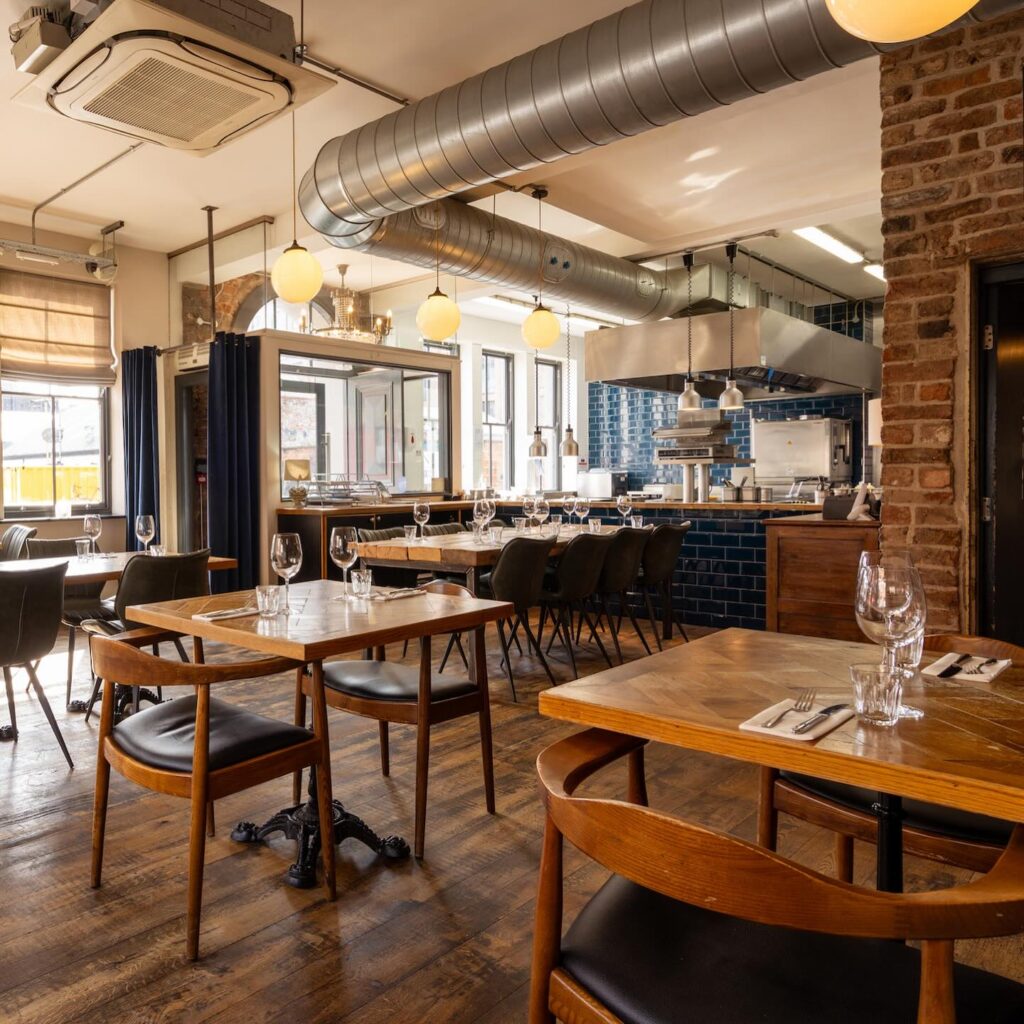
Start In The Kitchen

The kitchen is always the trickiest room to pack, so it’s best to get it out of the way first. Start by sorting through your cupboards – those fancy kitchen gadgets seemed like a good idea at the time, but if that spiralizer has been gathering dust since 2019, it might be time to find it a new home.

When it comes to packing dishes, here’s a game-changing tip: pack plates vertically, like records in a box, rather than stacked flat. They’re much less likely to break this way because they can’t bear the weight of everything above them. If you’re worried about your best china or family heirlooms, it’s worth getting proper packing materials from a packing company. For everyday dishes, wrap each piece in newspaper and cushion with tea towels – they need packing anyway, so they might as well be useful.

The kitchen requires serious organisation. Start with things you rarely use, like the fancy serving platters and special occasion glasses. Be sure wrap anything fragile in bubble wrap. Pack heavy items like pots and pans in small boxes – a box full of cookware quickly becomes impossible to lift. Keep your everyday cooking items until last, and when you do pack them, put them in a clearly marked box.

Your first-night box should include: a kettle, mugs, teabags, coffee, sugar, a few plates, bowls, cutlery sets, a sharp knife, chopping board, washing up liquid, tea towel, kitchen roll, bin bags, and a corkscrew (trust us on this one). Add any essential cooking items if you’re planning to make meals right away – a frying pan and wooden spoon can be invaluable.

Tackling The Living Room

The living room is deceptive – it might look straightforward, but it’s amazing how much stuff accumulates in there. Start with books, but remember they get heavy quickly. Use small boxes and mix in lighter items like cushions or throws to balance the weight. Sort books as you go – there’s no point moving the ones you’ll never read again.

Electronics require methodical packing. Before unplugging anything, take detailed photos of how everything’s connected – both close-ups of the connections and wider shots of the overall setup. Label every cable (masking tape works well), and keep all components from one device together. Put screws and brackets in labelled sandwich bags and tape them to their corresponding items.

Pack your DVDs, games, and consoles next, but keep back some entertainment for the final days. Photos and artwork are last – they keep the place feeling homely while you’re packing. When you do pack frames, wrap them individually and pack them vertically, just like plates. Mark these boxes as fragile and store them upright.

Sorting The Bedroom

Bedrooms are all about smart wardrobe decisions. Start by sorting everything into categories: definitely keep, maybe, and donate. Try everything in the ‘maybe’ pile – if it doesn’t fit or you haven’t worn it in a year, it’s probably time to let it go.

For the clothes you’re keeping, pack according to season and necessity. Box up off-season items first, then occasional wear. Keep a week’s worth of everyday clothes accessible. Rolling clothes really does work better than folding for most items – they take up less space and crease less. The exception is structured items like suits and formal dresses, which need proper hanging.

Speaking of hanging clothes, here’s a brilliant hack: group them on hangers, slip a bin bag or old pillowcase over the top, and tie at the bottom. They’ll stay clean and crease-free, and you can transfer them straight to your new wardrobe. For delicate items like jewellery, thread necklaces through straws to prevent tangling, and use egg cartons for earrings and small items.

The Bathroom Clear-Out

Bathrooms might be smaller, but they deserve careful attention. Start by checking expiration dates on everything – makeup, skincare, medications, and toiletries all have shelf lives, and moving house is the perfect time to clear out expired items.

For items you’re keeping, group similar things together and pack them strategically. Double-bag anything liquid or cream-based – a shampoo explosion mid-move is no fun. Keep prescription medications with you rather than packing them. Pack a separate box with immediate essentials: toothbrushes, toothpaste, deodorant, shower gel, shampoo, conditioner, toilet roll, hand soap, and any daily skincare items or medications. Include a shower curtain and towels if you’ll want them right away.

The Dreaded Loft

The loft requires a ruthless approach. Start by bringing everything down and sorting into clear categories. Old paperwork can usually be scanned or shredded. Christmas decorations might need culling – check lights work before packing them for another year.

Create a clear inventory of what you’re keeping. Label boxes with detailed contents rather than vague descriptions like ‘miscellaneous’. Consider whether temperature-sensitive items like photos or electronics should be stored differently in your new home, and finally, organise seasonal items together so they’re easier to access when the right month rolls round.

The Home Office

Home offices often hide masses of paperwork. Sort documents into essential categories: must-keep legal documents, necessary paperwork, and disposable items. Scan important documents – having digital backups is invaluable. Shred anything with personal information rather than just binning it.

Pack your office supplies methodically. Keep one set of basics accessible for the move itself – you’ll need pens, scissors, and tape until the last minute. Back up your computer and pack peripherals carefully, taking photos of connections just like with entertainment systems.

Getting Through Moving Day With Your Emotions In Tact

Your essential documents box should include: passports, driving licences, house paperwork, insurance documents, and any medical information. Keep valuable items and sentimental pieces with you rather than on the moving van.

Your personal essentials box needs: phone chargers, extension leads, basic tools (screwdriver, pliers), first aid supplies, painkillers, snacks, water bottles, toilet paper, hand soap, towel, and change of clothes. Don’t forget the kettle, mugs, and tea bags – a cup of tea makes everything more manageable.

If you’re dealing with a larger property or inherited belongings alongside your own, estate cleanout services can take on the heavy lifting of sorting, removing, and disposing of items you don’t need, freeing you up to focus on packing what matters.

The Bottom Line

Moving house isn’t anyone’s favourite activity, but breaking it down room by room makes it manageable. Take it steady, be organised, and remember – every box you pack is one step closer to being settled in your new home. The key is to start early, stay systematic, and keep essential items accessible until the last possible moment. It’s also ok to have a miscellaneous box just labelled as stuff.

7 Ways To Take The Headache Out Of Moving House

For a generation prone to procrastination, who put off packing for their holiday until they’re in the car on the way to the airport, the actual, physical prospect of moving house can be overwhelming. So much so, in fact, that a whopping 42% of those aged between 15 and 34 still live at home with their folks.

Of course, that’s a tenuous causal link and should be scrapped from the record.

In fact, recently the Independent reported that a “survey of around 3,000 people for Nationwide… indicated 38% across the UK were either in the process of moving or considering a move.”

That’s a lot of people upping sticks which we all know, can be a stressful, strained experience. Well, we’re here to help. Here are 7 ways to take the headache out of moving house.

Plan Your Utilities & Services in Advance

One of the most overlooked aspects of moving house is the transfer or setup of utilities and services. It’s easy to get caught up in the physical act of moving and forget about the essentials like electricity, gas, water, and internet. To avoid any disruptions, make a list of all the utilities and services you currently use and contact each provider well in advance of your move. Inform them of your moving date and new address to ensure a seamless transition.

Additionally, consider setting up your internet and TV services ahead of time. Many providers allow you to schedule an installation date, so you can have everything up and running as soon as you move in. This way, you won’t be left without essential services during the first few days in your new home.

Leave The Heavy Lifting To The Professionals

Leave The Heavy Lifting To The Professionals

‘I can manage this’, before the beloved family heirloom smashes into a thousand pieces on the floor.

Indeed, someone, somewhere right now is arguing with a loved one about moving house. With every packed, repacked and packed again box, with every dropped sentimental ornament and broken down rental van, with every temper flared over the right position for the ill fitting new sofa comes an even iller thought out divorce. And that’s a fact.

The moving and manoeuvring needed for upping sticks isn’t something you want to boldly carry on your shoulders alone. All that shifting and lifting will only leave you with a slipped disk or sore back for your troubles. Rather than enlisting the help of friends and family (which only passes the burden of risk, rather than negates it), it’s prudent to bring in man and van for hire services that specialise in house removals to help with the bigger and heavier items.

For smaller, simpler moves – students, solo movers, single furniture items – a man with a van service is a cost-effective option, typically running at around £30-50 per hour. For bigger moves, a full removal service with more resources and equipment is worth the investment.

Ideal Tip: Communicate your moving needs as clearly and as early on as you can to a prospective removal service. This way, your needs can be anticipated, or they can let you know if a given task isn’t feasible. Call ahead to discuss how fragile or difficult items like pianos or mirrors will be transported safely.

Address The Inventory Ahead Of Time

If you’re bidding farewell to a rented property, then it’s almost certain that your landlord will have an inventory that they’ll want to check; a dreaded part of the process, indeed.

It’s crucial that you get this sorted and out of the way well ahead of the time you actually move out. Finding that a cupboard door is damaged and needs replacing, or there’s a giant stain on the carpet which needs professional attention, will make for a huge amount of stress in the middle of a move.

Embrace The Opportunity To Streamline

Getting rid of the clutter and junk which has held pride of place for far too long can be a really valuable byproduct of moving house. As the old saying goes, ”with a tidy house comes a tidy mind’’, so embrace this chance to start afresh without that massive teddy bear you won for your ex-girlfriend at the fair or the box of vinyl you never, ever listen to.

We’ve written about why decluttering is so important over here; check it out!

Label Obsessively

Although the other side of the move might seem like a long way away, a little foresight goes a long way when you’re packing up. To get to the unpacking part and be met with random boxes in random rooms of varied shapes and sizes and no logical organisation, is to crush a spirit which has already been stretched and strained by the moving process.

This soul destroying part can be avoided by a fastidious, obsessive commitment to codifying and labelling when you’re packing up your life. At the very least, you’ll want to have boxes arranged by room, but if you’re going to get obsessive about it, by item. For instance, a box dedicated purely to the living room bookshelf is going to be much easier to unpack and reorganise than one containing a golf club, toothbrush, some crayons and a sieve.

Create A Moving Day Survival Kit

Moving day can be chaotic, and the last thing you want is to be rummaging through boxes to find essential items as the removals team wait at the door, on the clock and ready to go.

To make the day go smoother, prepare a moving day survival kit. This should include all the necessities you’ll need for the first 24 hours in your new home. Pack a bag with toiletries, a change of clothes, important documents, medications, and basic kitchen supplies like a kettle, mugs, tea, and snacks. Don’t forget to include tools like a box cutter, scissors, and a screwdriver for any immediate assembly or disassembly tasks. Having these items easily accessible will save you a lot of hassle and help you settle in more comfortably.

By planning your utilities and creating a moving day survival kit, you can significantly reduce the stress and chaos that often accompanies moving house. These small steps can make a big difference in ensuring a smooth transition to your new home.

Make A Pact With Your Pals

Everyone hates moving. Some simply accept it’s going to be arduous and approach it with a stiff upper lip. Others choose to ease the load and make things a bit more fun by entering into a moving house pact with their nearest and dearest. Sharing the load is the name of the game here, a ‘you scratch my back and I’ll scratch yours’ mentality, if you will.

Perhaps have the promise of something fun waiting for you all at the end of a gruelling day of lugging and loading. What could be better than opening a bottle of bubbly and exploring the takeaway options delivering to your new abode?