A new print arrives, you have the wall and position picked out, and then comes the question that tends to stall everything: does this one need a frame, or not? It’s easy to default to yes, because a frame protects the paper from light and dust, gives a piece visible weight, and signals that it has properly arrived in the room.
But framing isn’t automatically the right answer. Some prints look better naked. Some rooms ask for it, others don’t. Below, we’ve set out the cases where a frame earns its keep, and the ones where it gets in the way.
Frame It: Formal Rooms & Anywhere With Moisture
Living rooms, hallways, dining rooms, the bit of wall behind a sideboard. These are the spaces where you want art to feel settled rather than provisional, and a frame does that work without you having to think about it. The edge contains the image, the mount gives it breathing room, and the whole arrangement reads as considered.
The bigger argument for framing in these rooms is practical. Glazing keeps dust off the surface, blocks a fair amount of UV, and stops the slow yellowing that happens to unprotected paper hung in a sunny room.
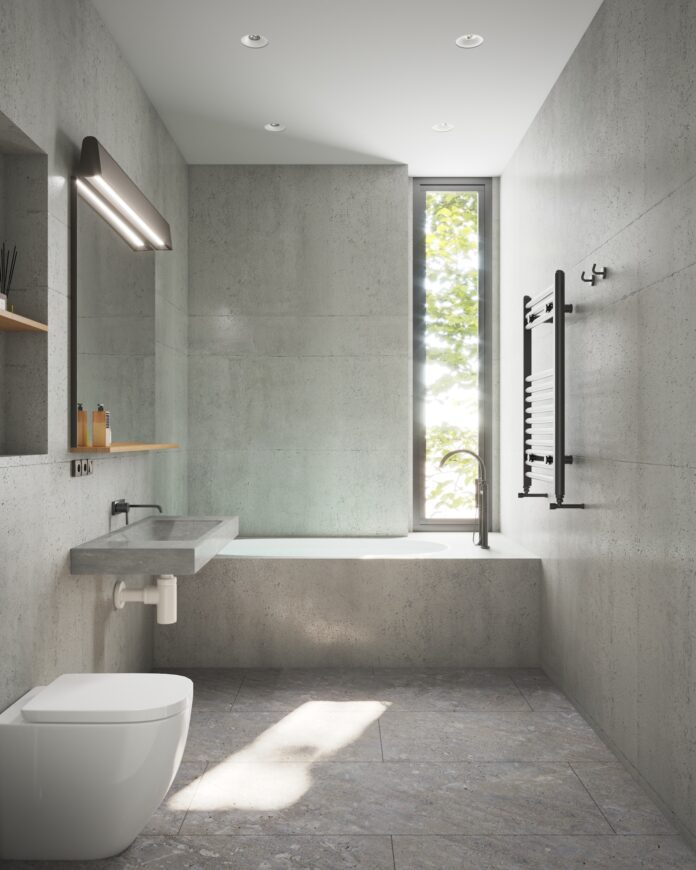
In kitchens and bathrooms the case is more urgent still. Steam, splatter, and humidity will warp an unframed print faster than you’d expect, and once the paper has buckled there’s no fixing it. If you want art in those rooms, a sealed frame is the only sensible way to do it.
Frame It: Bold Graphics, Photography, & Anything On A Gallery Wall
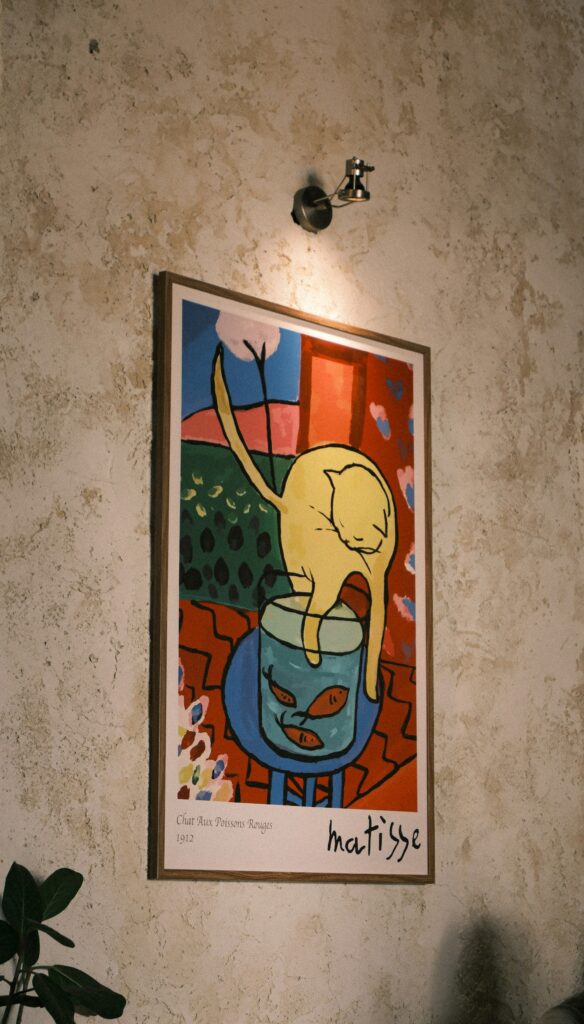
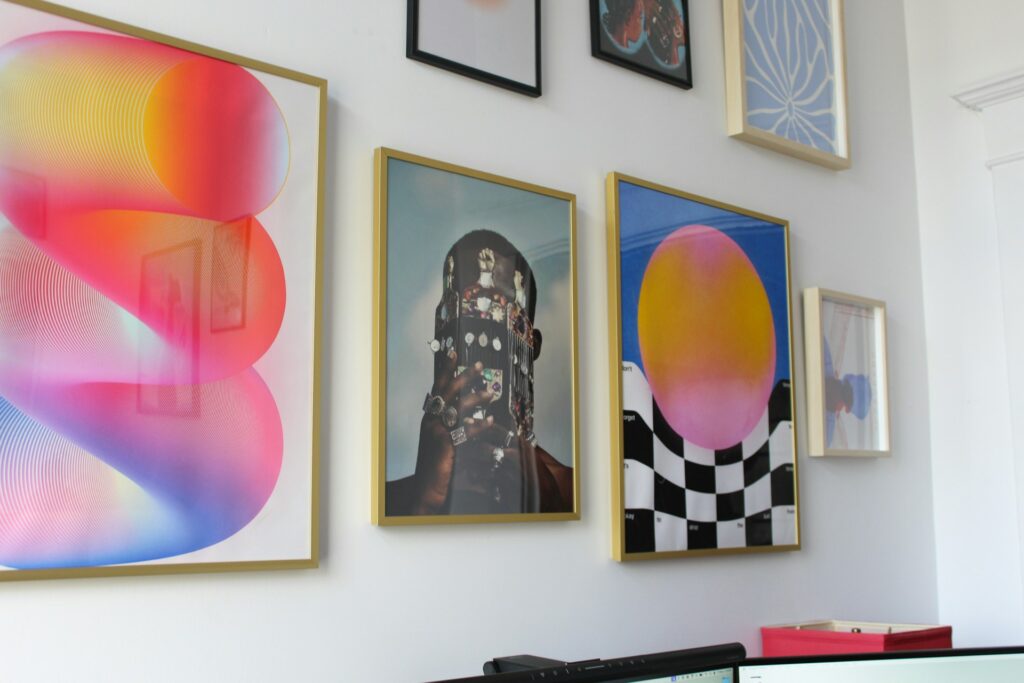
Some artwork is built for a frame. High-contrast photography, sharp graphic prints, anything with a strong defined edge. The image already has its own internal logic, and a clean frame, black, white, oak, brass, reinforces that. Without one, the print can feel as though it’s drifting into the wall.
Gallery walls are the other strong case. A mixed group of prints in matching or coordinated frames reads as a collection. The same prints stuck up unframed reads as a notice board. If you’re building a wall of varied work, the frames are doing the curatorial work of telling the eye these belong together.
Frame It: Pieces You Know You’ll Keep
Framing is a small commitment. Not a permanent one, but enough of one that most people instinctively reserve it for prints they’re sure about. If you’ve found a piece you know you’ll live with for years, framing it is part of acknowledging that. It also tends to be the moment a print stops feeling like a thing you bought and starts feeling like a thing that lives there.
A well-chosen pair of picture frames on work you’re sure about is one of the easiest ways to make a room feel more committed.
Leave It Bare: Casual, Creative, & In-Flux Spaces
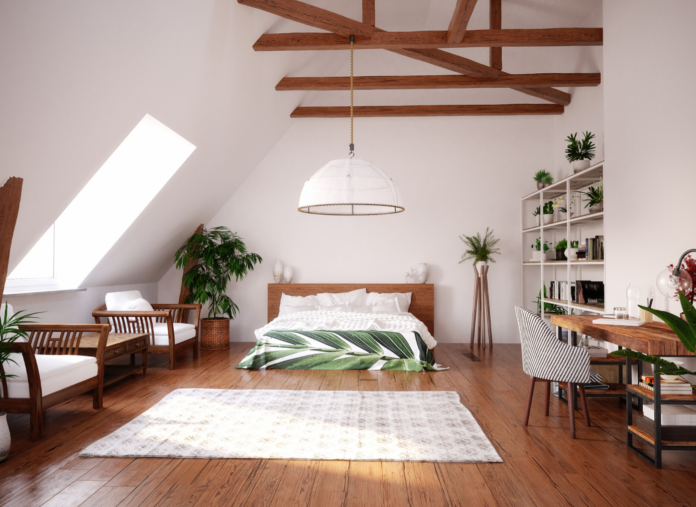
Studio flats, home offices, bedrooms with a layered, textural feel. Rooms that already trade on personality rather than polish tend to suit unframed prints. The edge of the paper, the slight curl at the corner, the bulldog clip or the strip of washi tape, these all read as deliberate when the rest of the room is pulling in the same direction. A formal frame in that setting can look as though someone’s tried to tidy up a room that didn’t want tidying.
The same goes for any wall you’re still figuring out. If you rearrange the room every few months, swap prints with the seasons, or are mid-way through building a collection, framing every new arrival is a recipe for spending money on commitments you’ll undo. Lean prints on a shelf, blu-tack the corners, use clip frames if you want a hint of structure, but keep the option open.
Leave It Bare: Soft, Textural, & Tactile Work
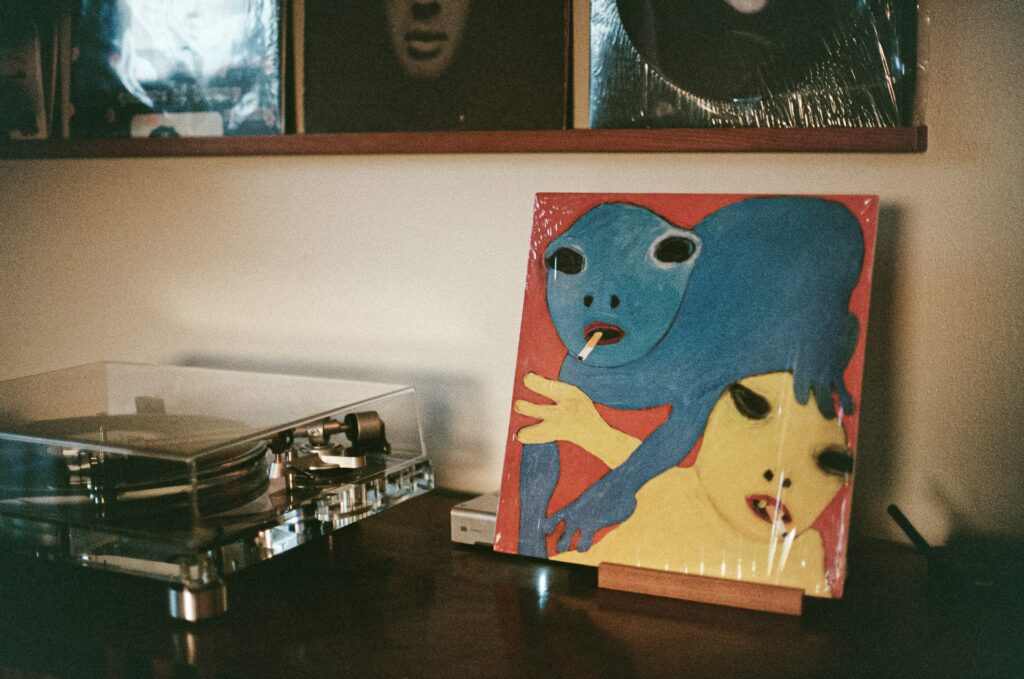
Loose abstracts, botanical studies, anything printed on cotton rag or with visible brushwork. Glass tends to flatten this kind of work, putting a barrier between you and the surface that’s doing most of the appeal. Pinning the print directly to the wall, or hanging it from a simple wooden poster rail, lets the paper itself do the talking.
If you want a halfway position, a floating frame, where the print sits on a backing board with a visible gap between paper and glazing, gives you protection without losing the sense of the print as an object. It’s the most forgiving option for tactile work that you also need to keep clean.
Leave It Bare: One Big Statement On An Empty Wall
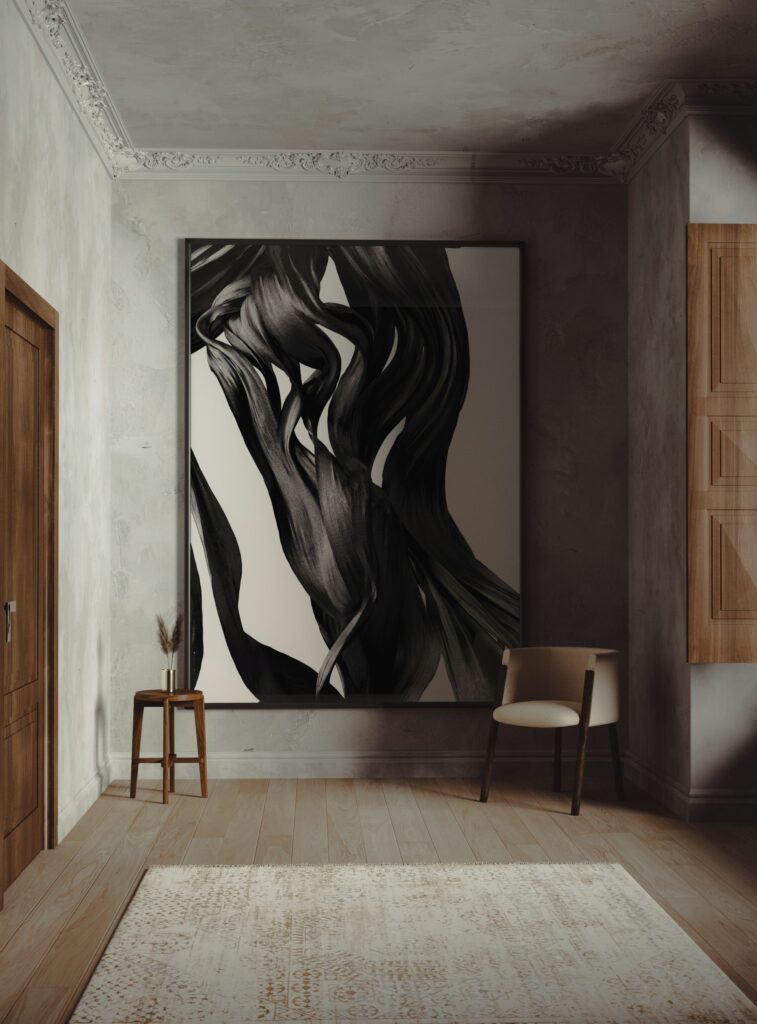
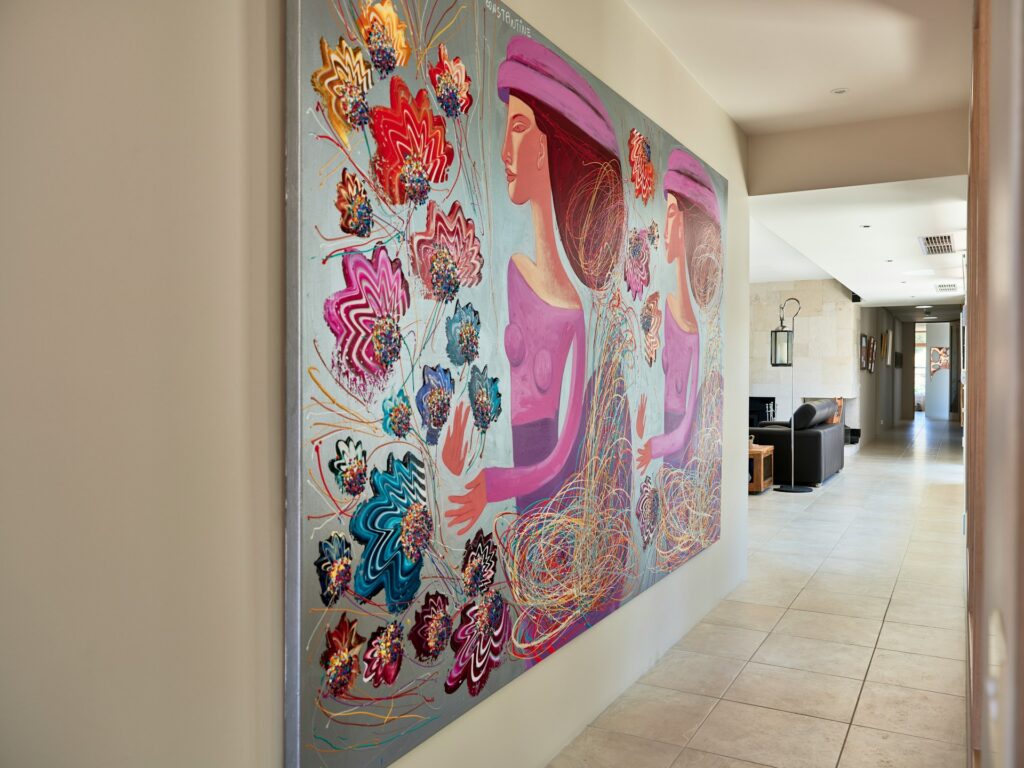
A single oversized print, hung as the only thing on a large wall, doesn’t always need a frame. The scale carries it. Adding a frame in this scenario can either help or harm depending on how heavy the moulding is, and it’s worth experimenting before committing. Tape the print up unframed, live with it for a week, then decide.
A Note On Mixing The Two
Some of the best-arranged walls combine framed and unframed work in the same composition. It looks intentional when there’s a clear reason for the unframed pieces to be unframed, which usually means texture, scale, or position within the wider arrangement. It looks accidental when the unframed prints feel like the ones you hadn’t got round to dealing with yet. The fix is usually to anchor the wall with one or two confidently framed pieces, then let the unframed work sit alongside them rather than in place of them.
The Bottom Line
Frame the prints you want to protect, the ones in rooms that ask to feel finished and the ones you’re sure about. Leave bare the work that’s tactile, the walls that are still in flux, and the rooms whose whole appeal is that nothing in them is too settled. The mistake isn’t really framing or not framing. It’s defaulting to one or the other without thinking about what the print, and the room, are actually asking for.