Home Blog Page 18

The Best Restaurants In Chelsea & The Kings Road

Last updated March 2026

From safety-pinned punks to polished socialites, the King’s Road has witnessed quite the transformation. This historic Chelsea thoroughfare, originally carved out as Charles II’s private route to Kew, has seen London’s cultural tides ebb and flow – from the swinging sixties and Vivienne Westwood’s anarchic spirit to today’s more polished incarnation, where aestheticians have replaced the aesthetes and, erm… Can’t think of any more snappy lines. That’s a shame.

Anyway, today’s King’s Road is a different beast from that of yesteryear, but it’s still an undeniably great place to hang out, and to eat. Between the gleaming shopfronts and beneath the striped awnings, you’ll find restaurants that may not break culinary boundaries, admittedly, but deliver exactly what their well-heeled clientele desires. And quite often, what us folk less of heel are craving, too…

Whether you’re in a contemporary Mexican mezcal joint or traditional Lyonnaise bouchons, the people-watching remains Olympic-grade, though these days you’re more likely to spot a clean-eating influencer than a punk icon. There were no good old days, and all that.

Anyway, we’re here to keep our eyes firmly on the plate, and all while strictly swerving any mention of that TV show; here’s our pick of the best restaurants on and around the King’s Road.

The Cadogan Arms

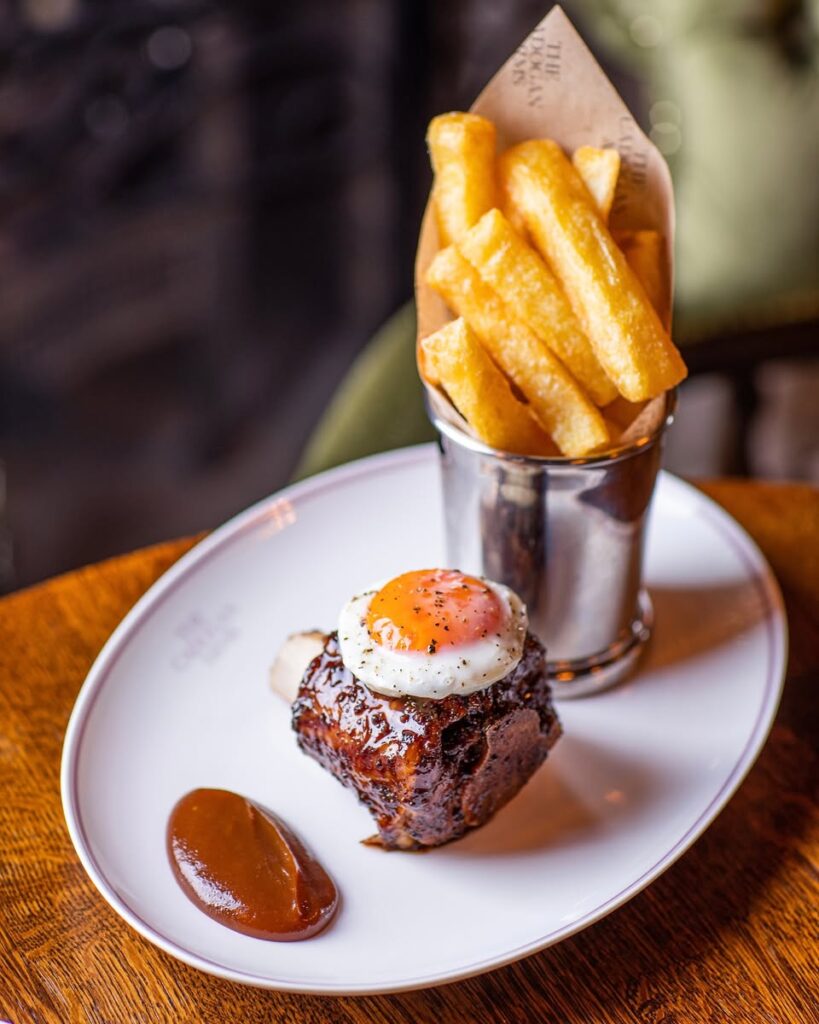
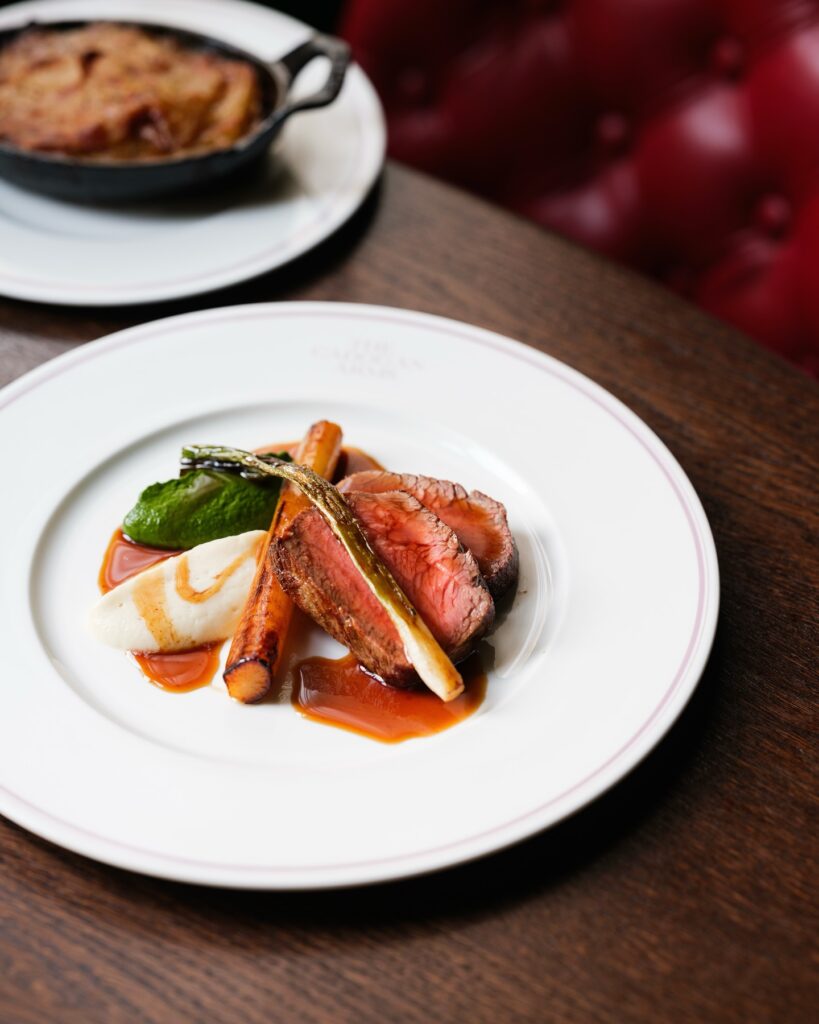
Ideal for when you want pub classics given a little extra sheen…

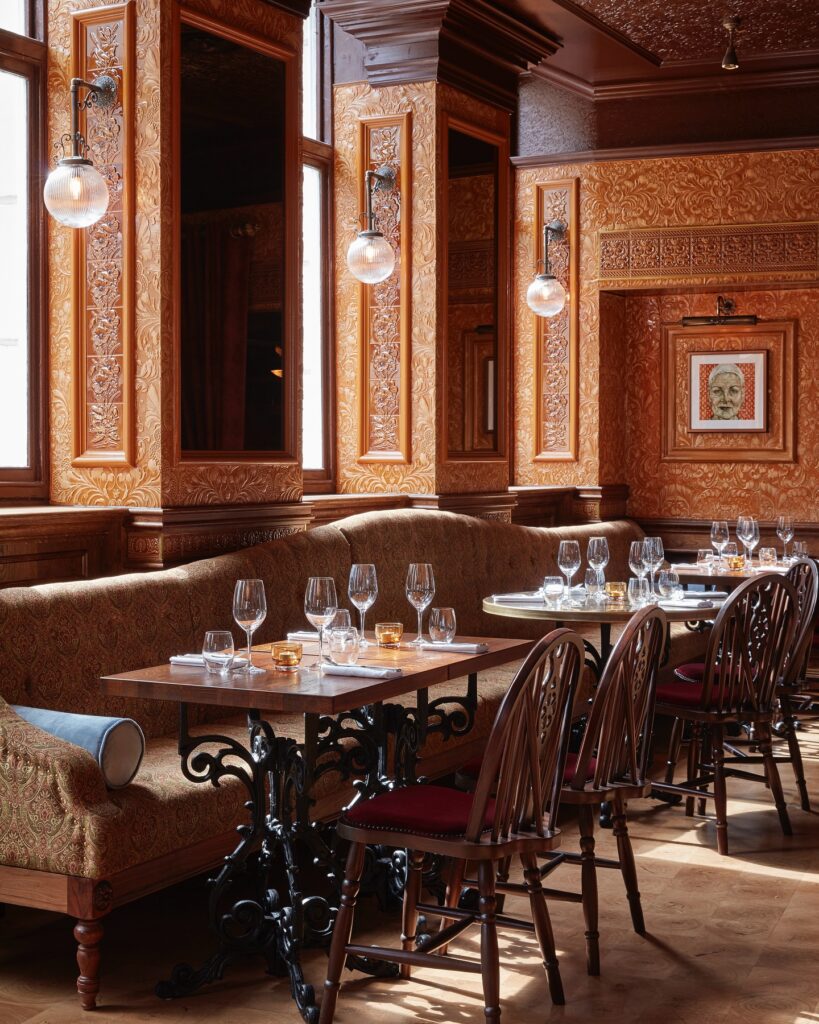
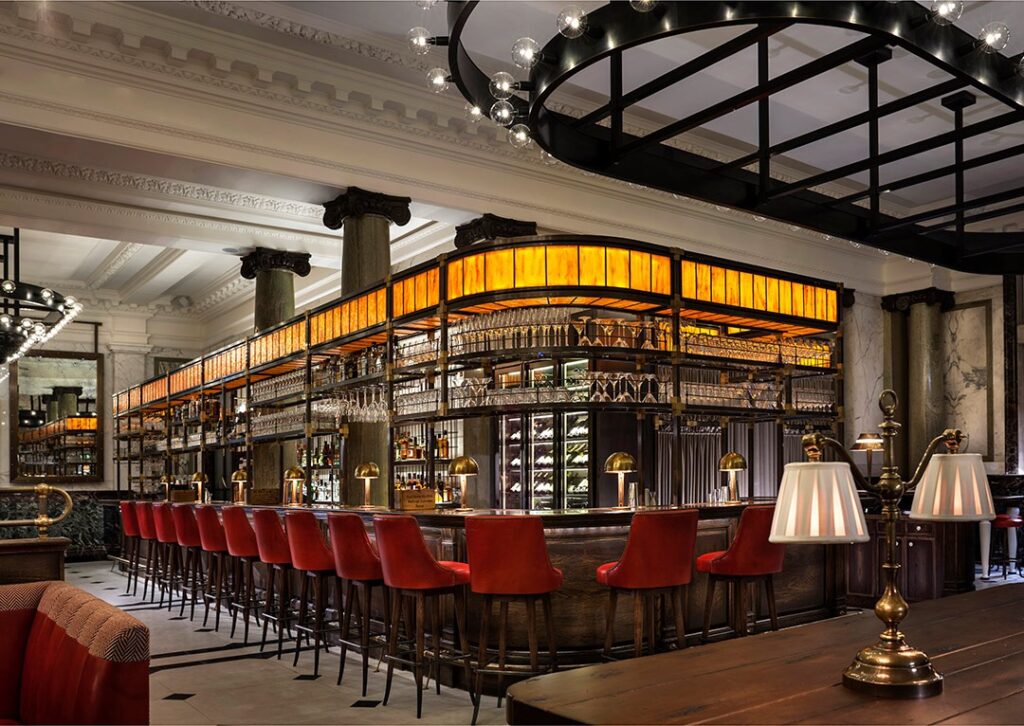
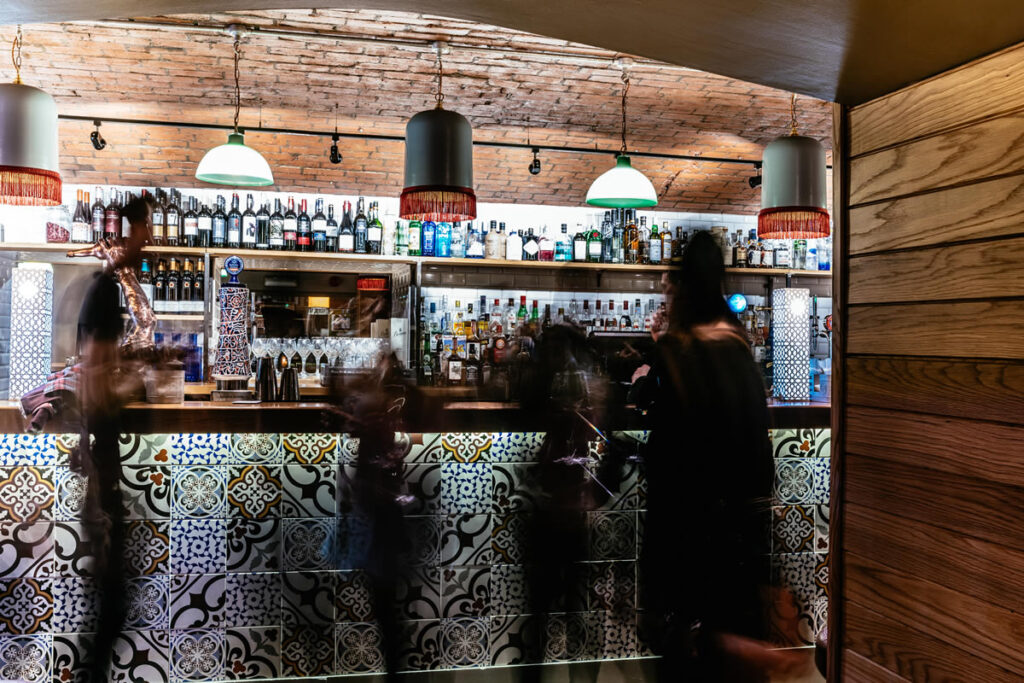
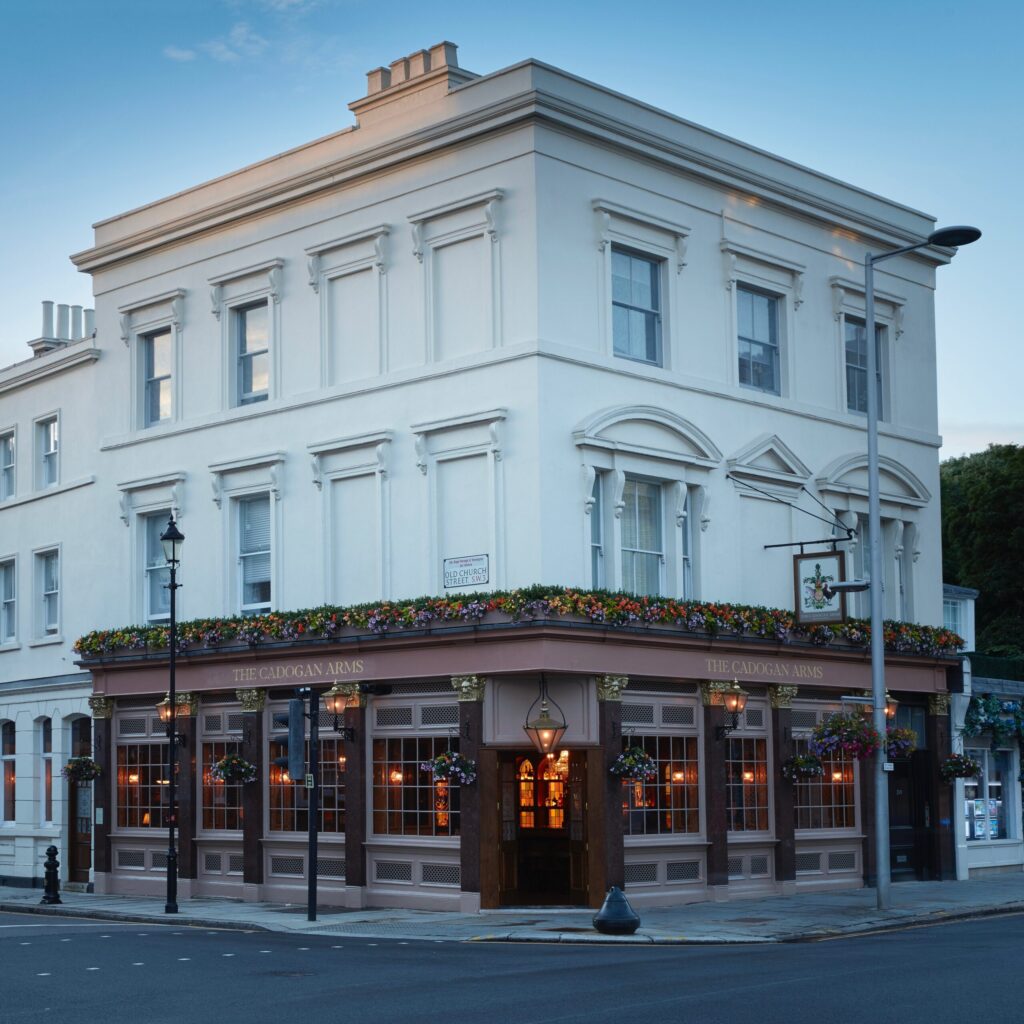
The Cadogan Arms embodies the ideal of a modern Chelsea pub – all gleaming wood panels, lovingly restored stained glass windows and plush velvet seating that make you fear for the bill when you’re only one pint in. But don’t let the polished appearance fool you; at its heart, this is still very much a genuine boozer, just one that happens to serve exceptional food.

When acclaimed, ubiquitous restaurant group JKS took over, they brought much-needed clarity and class to both the food program and the room here. The pub’s extensive 2021 renovation revealed original architectural treasures like the elaborate corniced ceiling and backlit stained-glass bar, while chef James Knappett (of two-Michelin-starred Kitchen Table) was enlisted to oversee the menu, the kitchen here delivering consistently outstanding pub classics without any efforts to ‘elevate’ or ‘refine’ them.
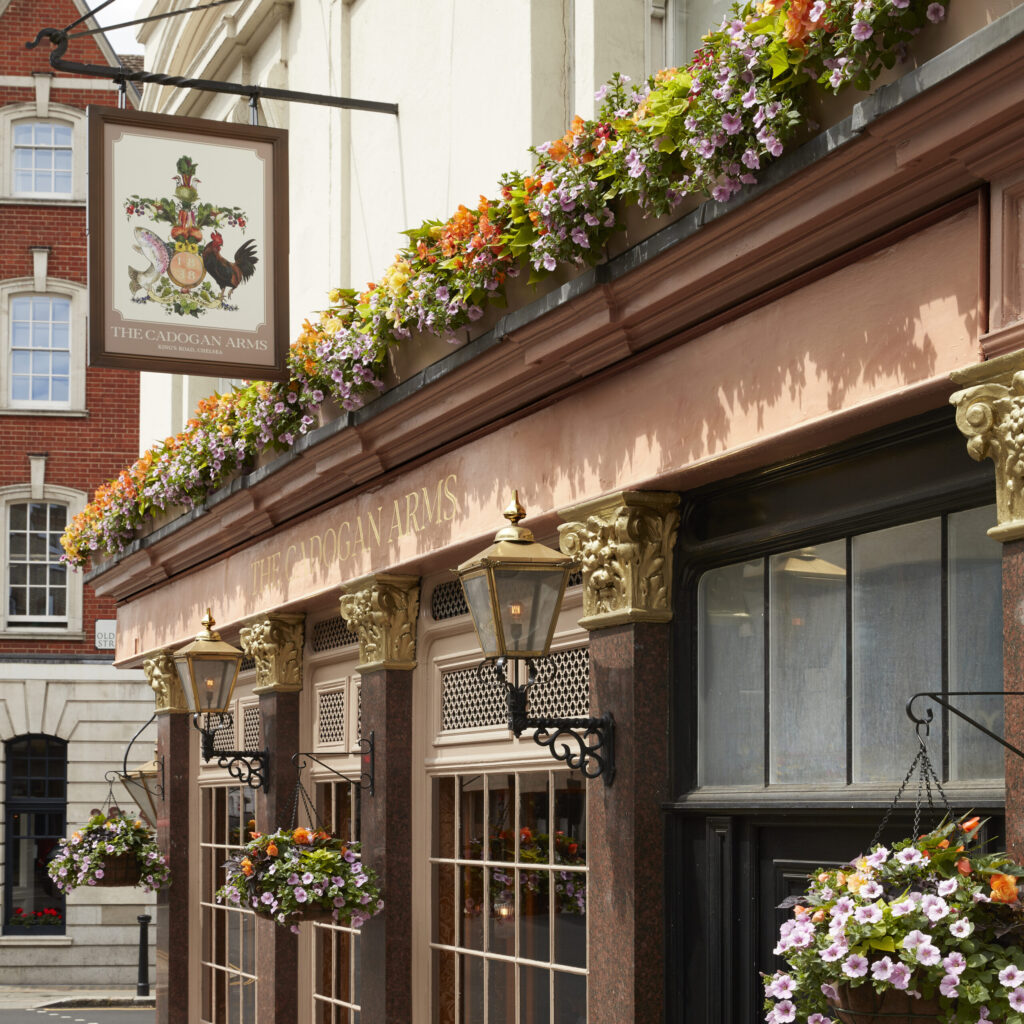
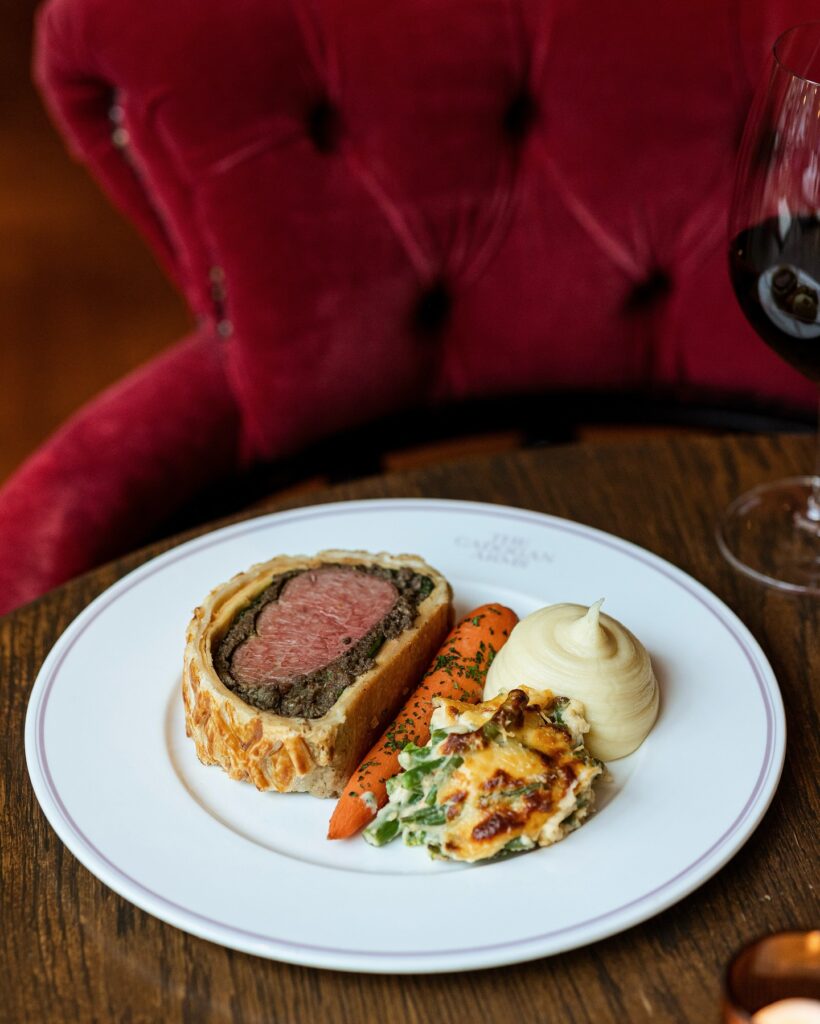
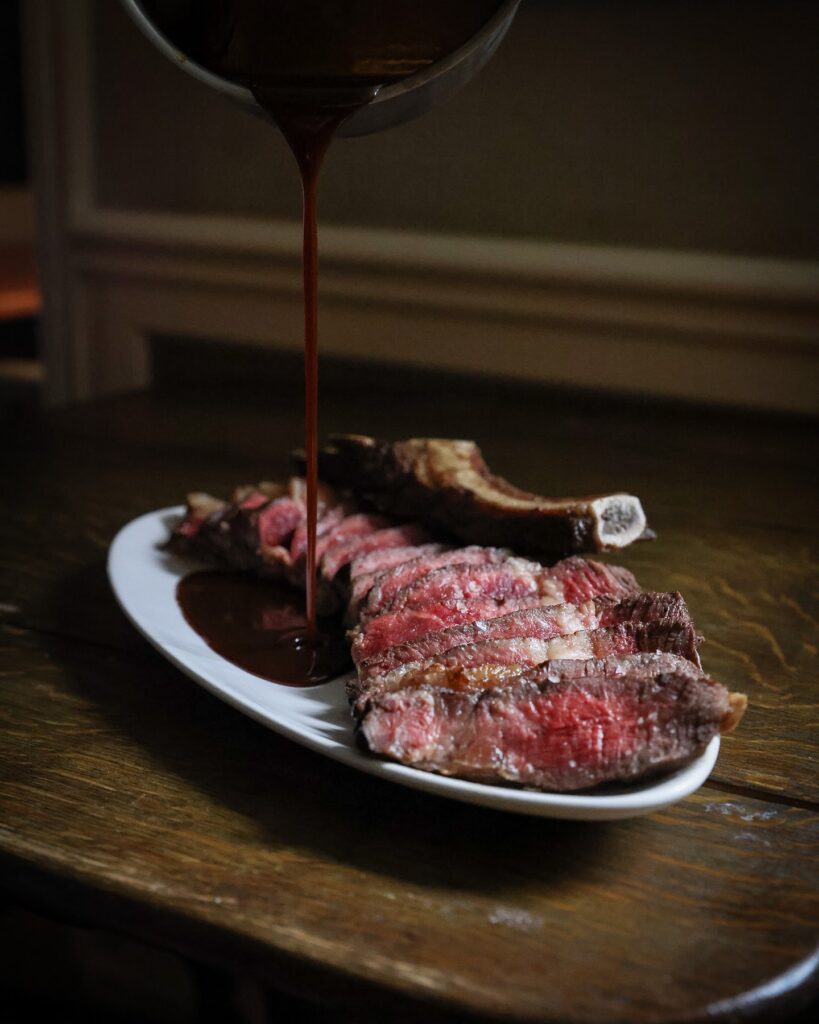
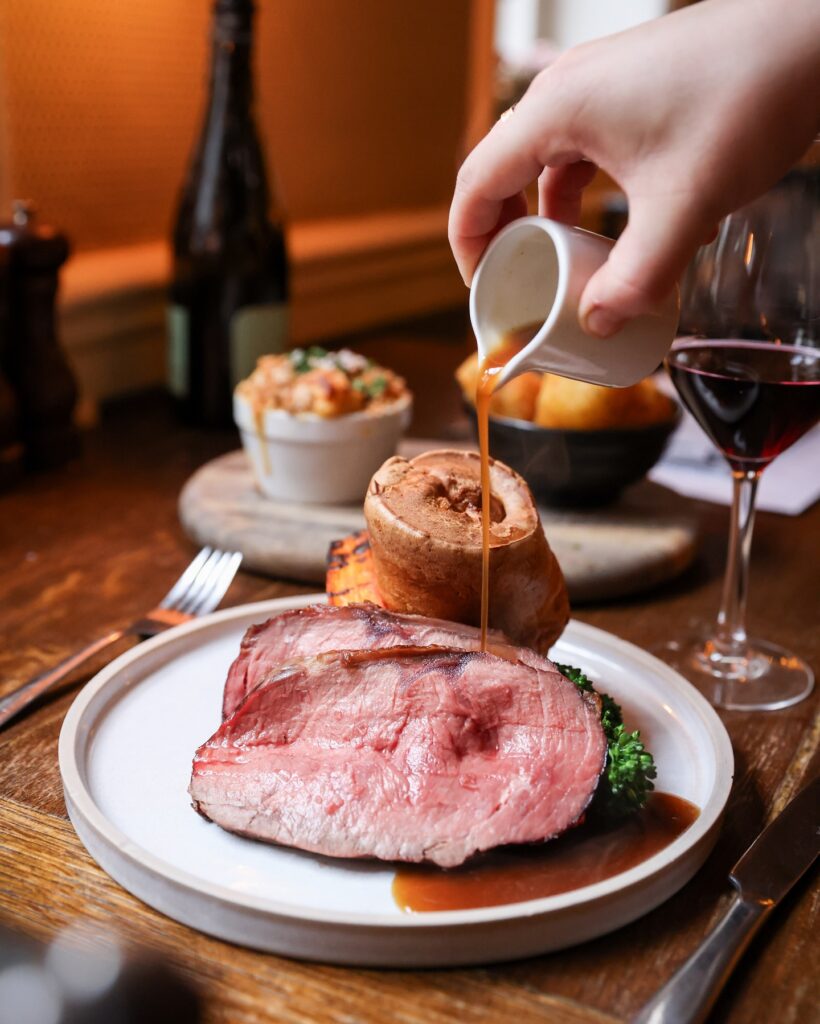
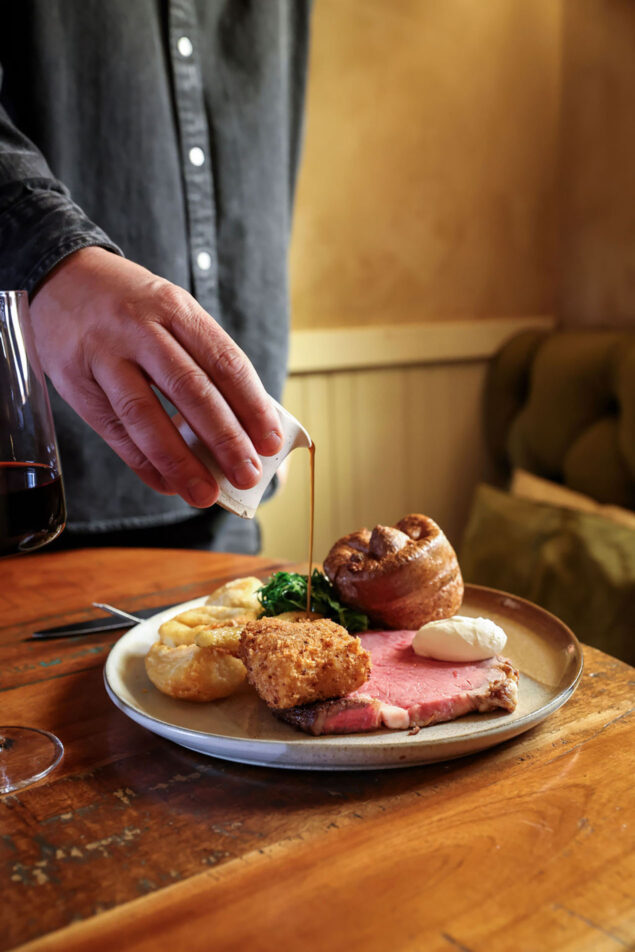
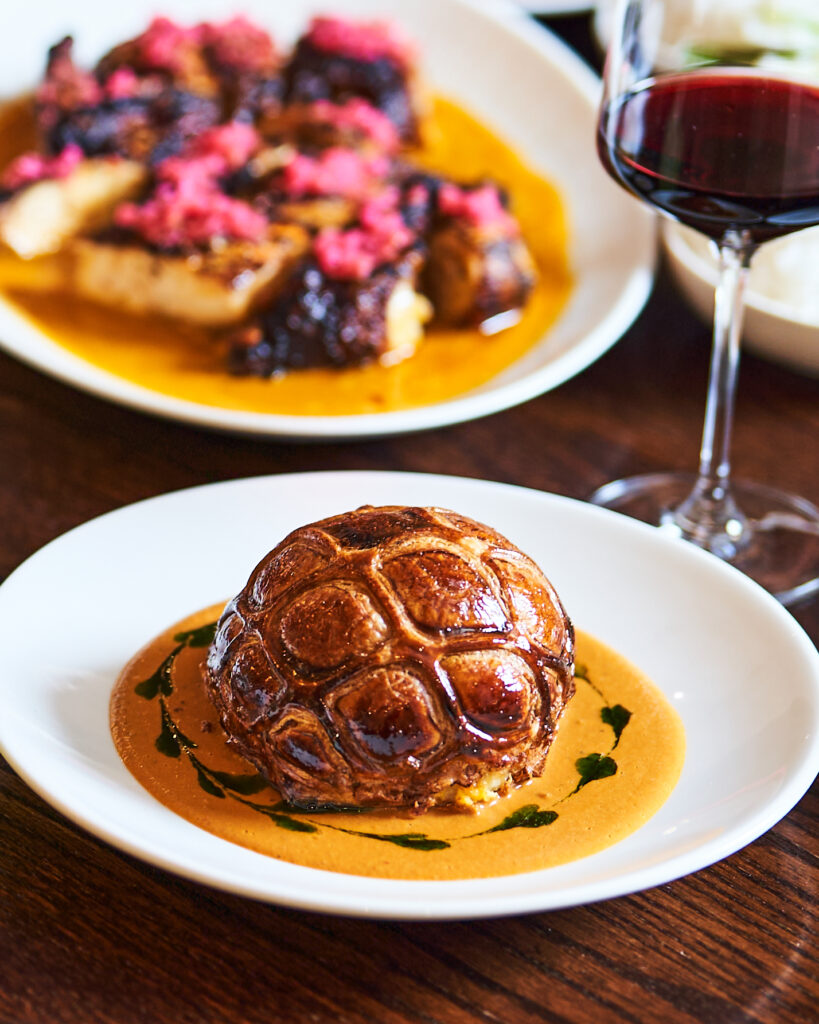
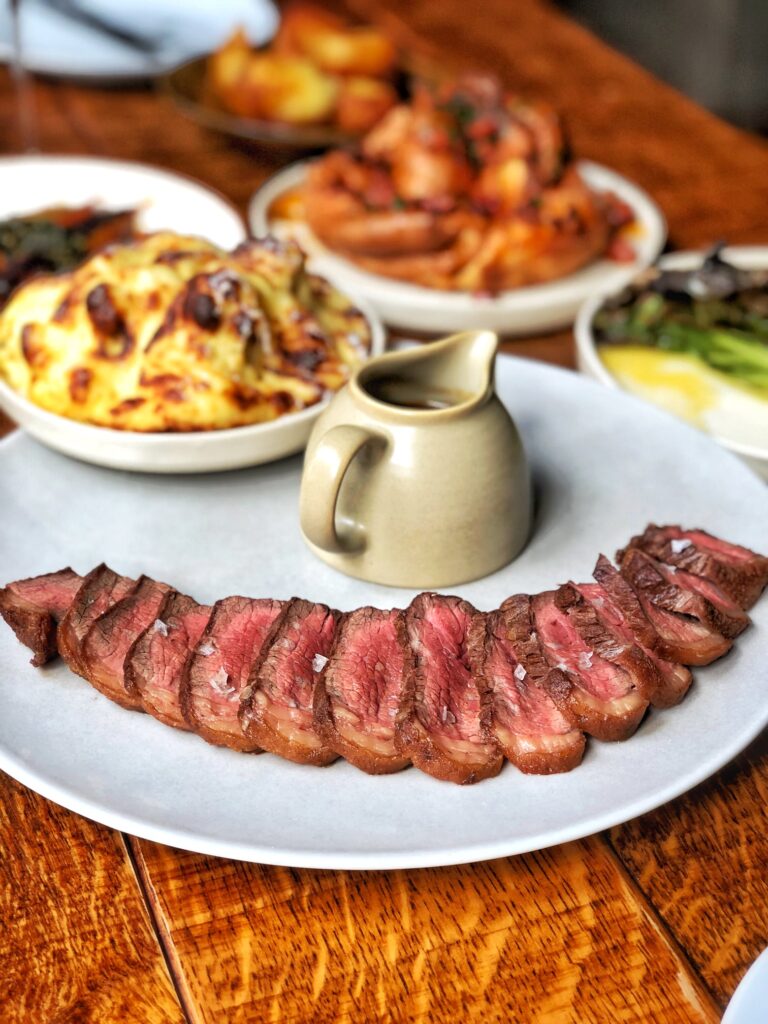
The Sunday roast is a big draw here – the sharing board for three (which could easily feed six) comes with a rich bone marrow sauce that could transform even a leathery old slab of roast beef into something truly memorable. And leathery old slab this roast beef ain’t. Equally impressive is their gold-standard beef Wellington, accompanied by a clotted cream mash so indulgent it’s worth having a heart attack for. Fortunately, Chelsea and Westminster Hospital is just round the corner.

Website: thecadoganarms.london

Address: 298 King’s Rd, London SW3 5UG

Read: 10 of London’s greatest gastropubs


Joséphine

Ideal for pretending you’ve escaped Chelsea to a backstreet in Lyon…

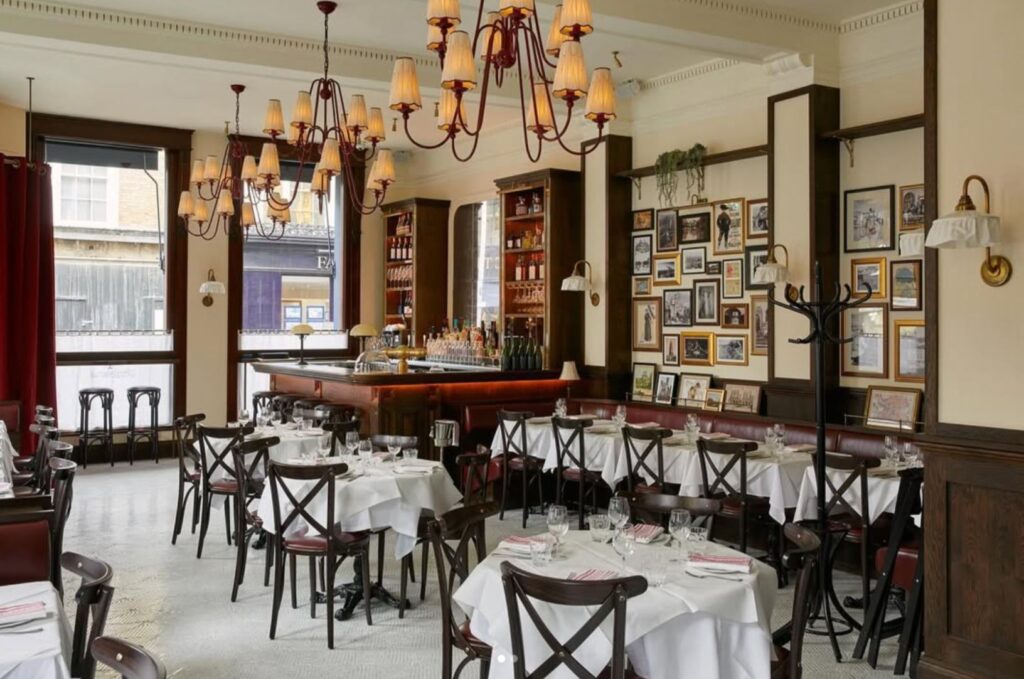
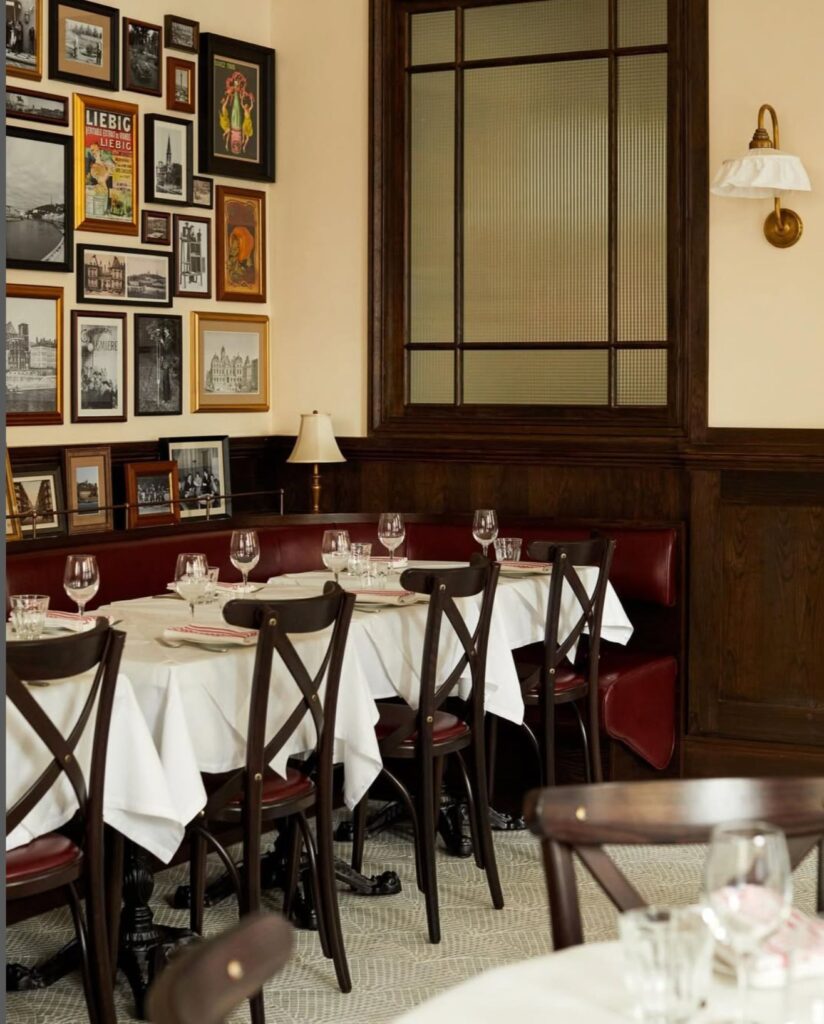
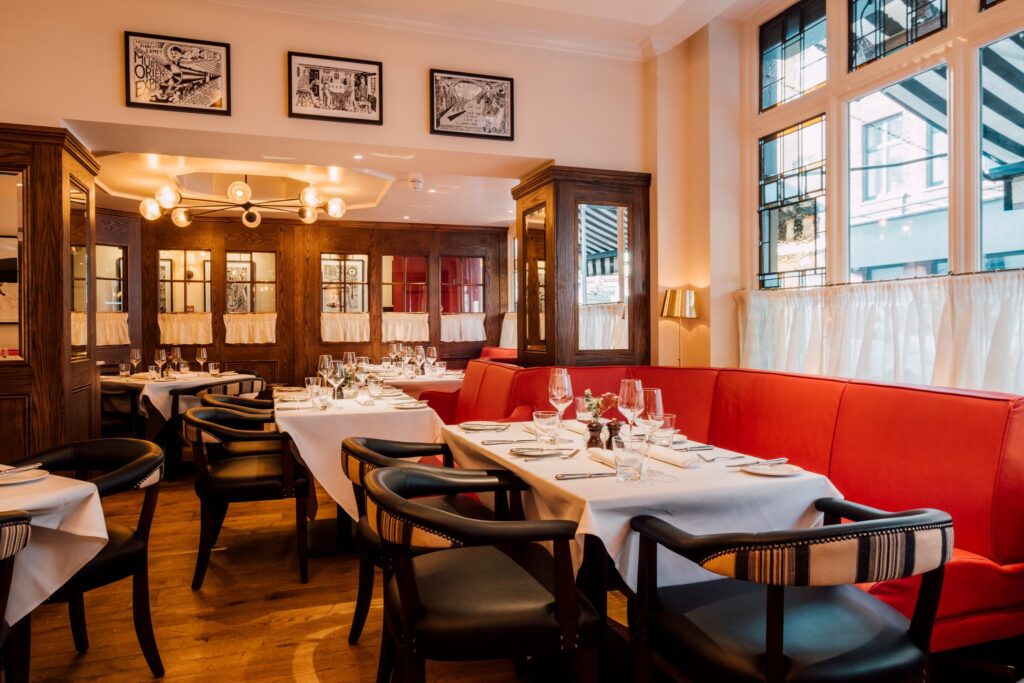
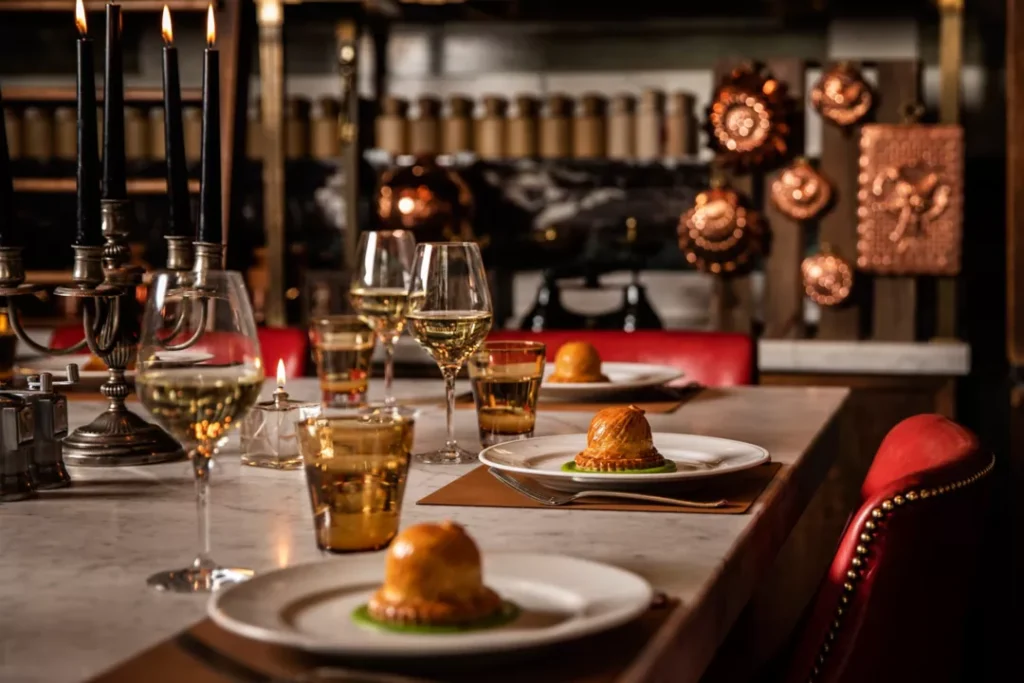
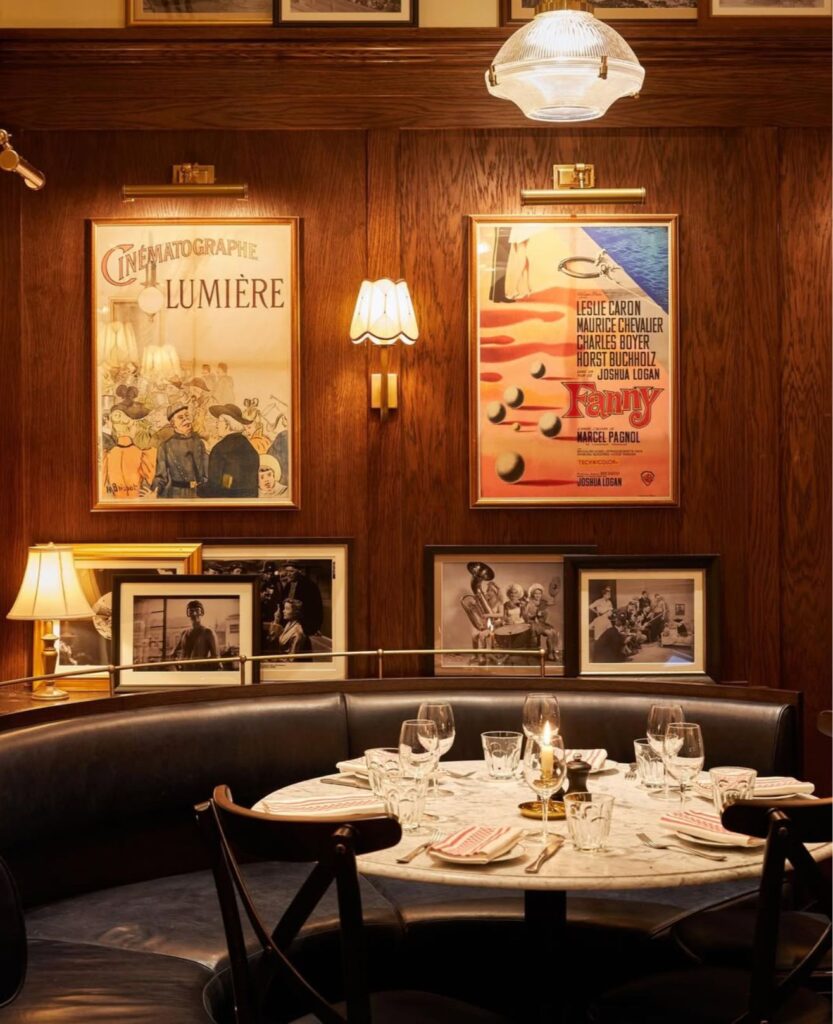
One of increasingly prolific chef Claude Bosi’s more casual ventures, Joséphine feels like it’s been lifted straight from a charming backstreet in Lyon, self-identifying as a ‘bouchon’ – the name given to traditional Lyonnaise restaurants serving hearty, ingredient-focused cuisine. Burgundy leather banquettes, flickering taper candles and crisp white tablecloths create an atmosphere that’s a little pastiche, perhaps, but also transportive and refreshingly unpretentious.
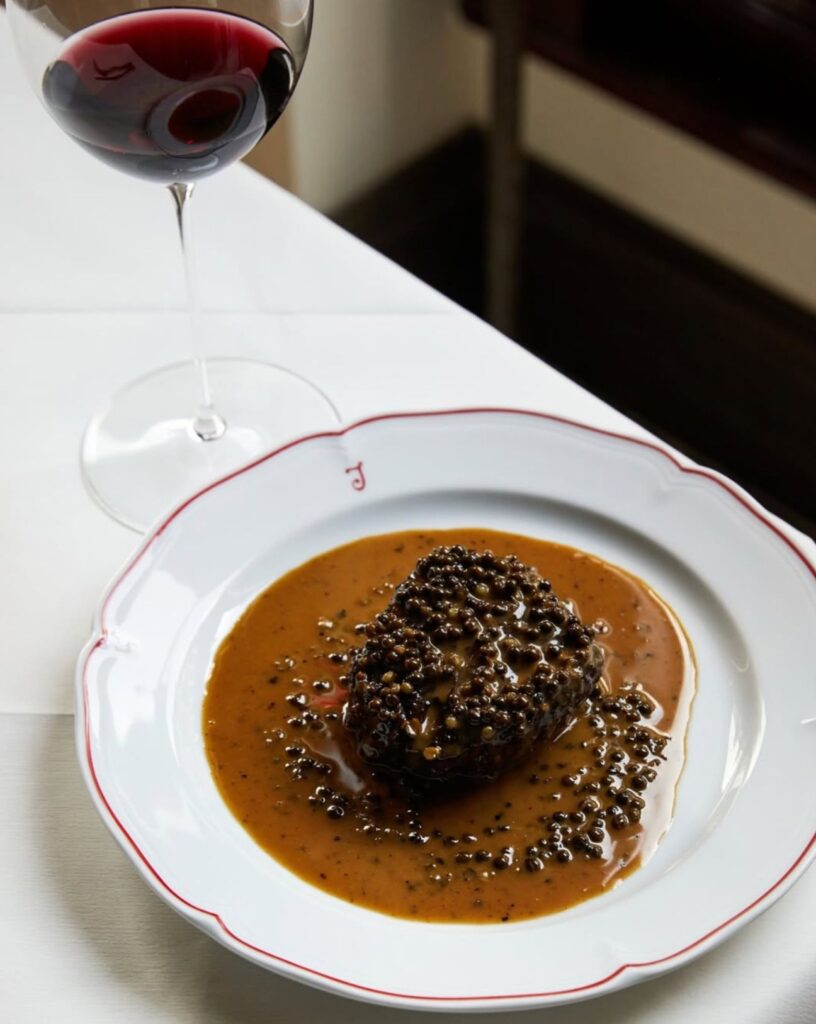
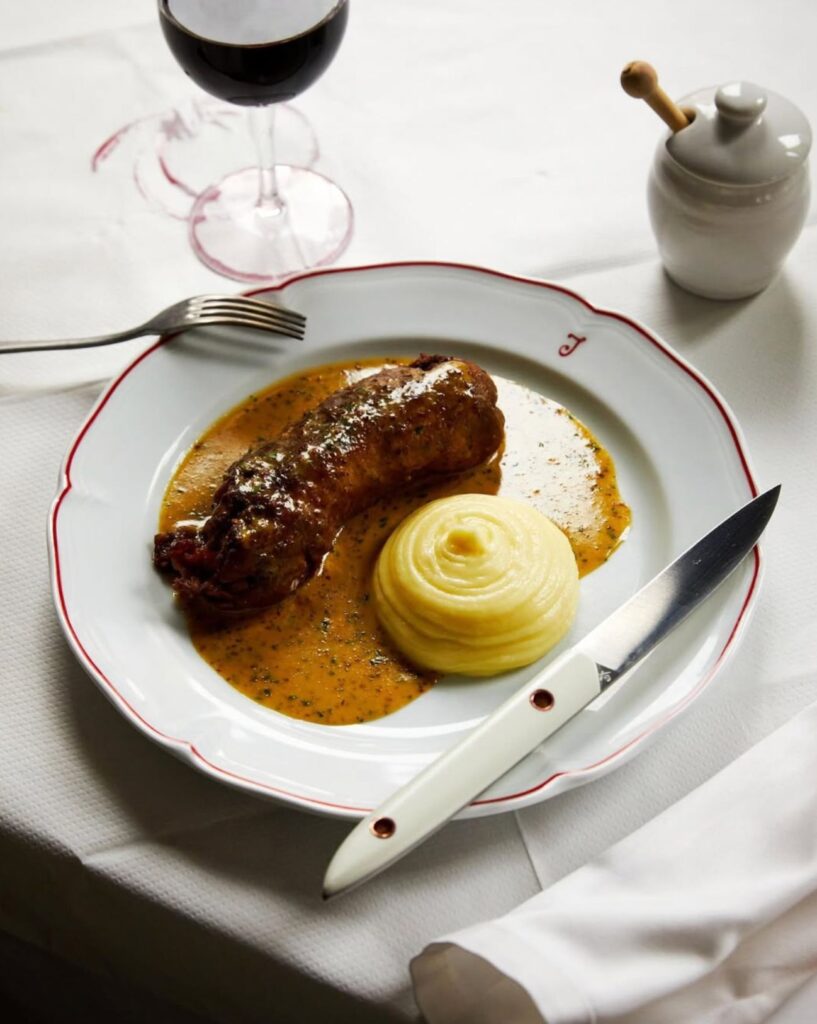
There are no hushed, reverent tones here, that’s for sure – more guttural sighs of satisfaction at dishes rendered in all manner brown shades – but that’s not to say that the menu doesn’t deliver Lyon’s culinary heritage with remarkable finesse. A deeply savoury onion soup, silken calf’s sweetbreads with seasonal morels, and an intensely boozy rum baba that comes soaked enough to genuinely get you pissed, all hit the high notes. A big log of andouillette, served with mustard sauce, keeps things funky.

The house wine here follows the traditional ‘by the metre’ approach – you only pay for what you drink from the bottle, which feels refreshingly honest in this postcode. Or, predictably dangerous, depending on what kind of drinker you are.

The weekday lunch and early evening set menu (two/three courses for £24.50/£29.50) is notably good value.

The success of the Chelsea original – which picked up a Michelin Bib Gourmand in the 2025 Guide and retained it for 2026 – has since spawned a sibling. Joséphine Marylebone opened in April last year on Blandford Street, this time drawing more from the grand Parisian brasserie tradition than the Lyonnaise bouchon. It’s a bigger, all-day affair with breakfast service, an oyster kiosk and a 16-seat terrace, but the DNA is the same: proper French cooking at prices that don’t require a second mortgage.

Website: josephinebouchon.com

Address: 315A Fulham Rd., London SW10 9QH


The Campaner 

Ideal for exclusive Catalan cooking close to Sloan Square…

Chelsea Barracks is a strange place for a restaurant. A 10-minute stroll from Kings Road’s eastern end at Sloane Square, it’s not the first place you’d expect to find soulful Catalan cooking.

The restaurant’s presence here is explained by a vast £959 million project (nothing should cost that much) that has repurposed the 150-year-old former military base. Representing one of the priciest real estate transactions in UK history, the 12.8-acre grounds have been turned into a fortress of unparalleled private luxury, comprising flats with multi-million-pound price tags. Within this gilded sanctuary, The Campaner now serves as the central dining destination.

Open all day, from 11am ‘till late at the weekends (and from midday through 10pm during the week), there’s a concern that The Campaner is essentially a canteen for the incredibly wealthy, but they’ve certainly chosen an attractive place to hang, you’ve got to concede.

The architectural stunner – designed by Ben Pentreath, who drew inspiration from Sir Christopher Wren’s stable buildings at the neighbouring Chelsea Hospital—features soaring vaulted brick ceilings and double-height windows that flood the space with natural light. The restaurant’s name (meaning ‘bell ringer’ in Catalan) is a fitting nod to both its proximity to the Grade II-listed Garrison Chapel and its ambition to become the beating heart of this reimagined neighbourhood.
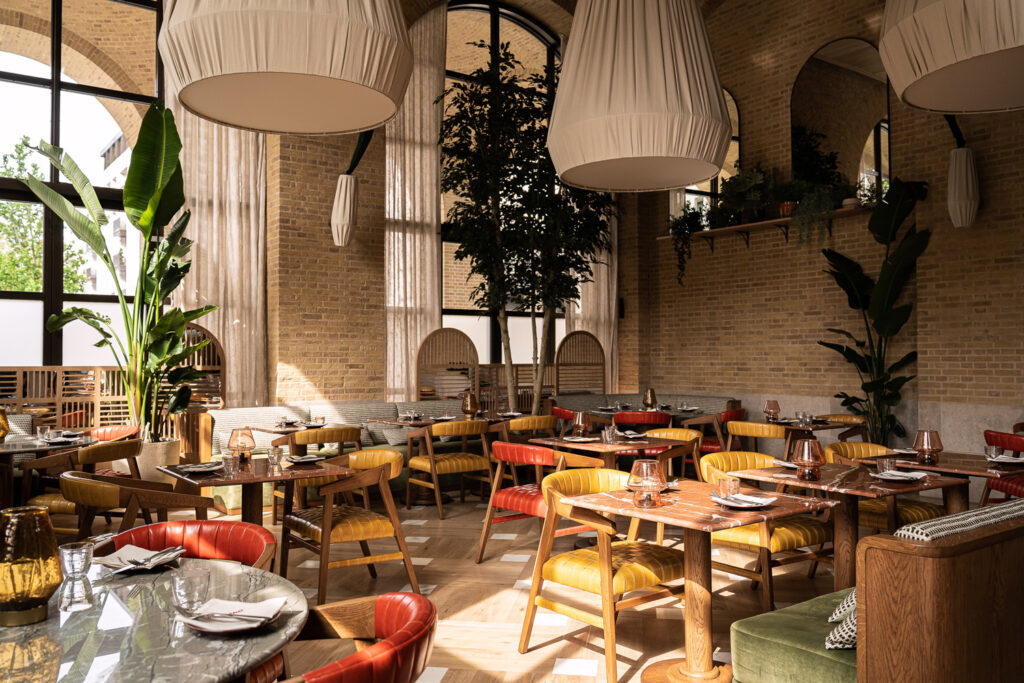
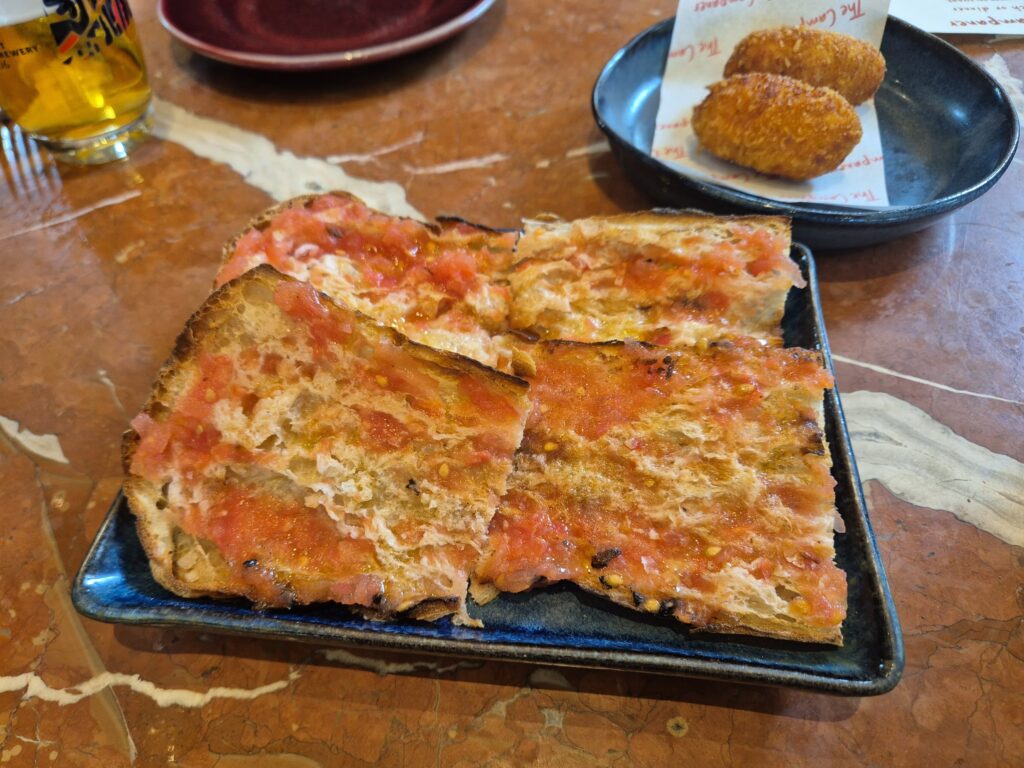
The restaurant marks the first international venture for Barcelona restaurant royalty Los Reyes del Mango (‘The Mango Kings’), a group that has achieved near-cult status in the city. The menu aims to reflects Agreda’s philosophy of ‘honest and simple cuisine with a Catalan soul’, beautifully executed with seasonal British produce. Start with their pan con tomate – that deceivingly simple Spanish staple where quality ingredients have nowhere to hide. Here, it’s rendered with a correctly restrained application sweet, ripe tomatoes, a whisper of garlic, and exceptional olive oil.

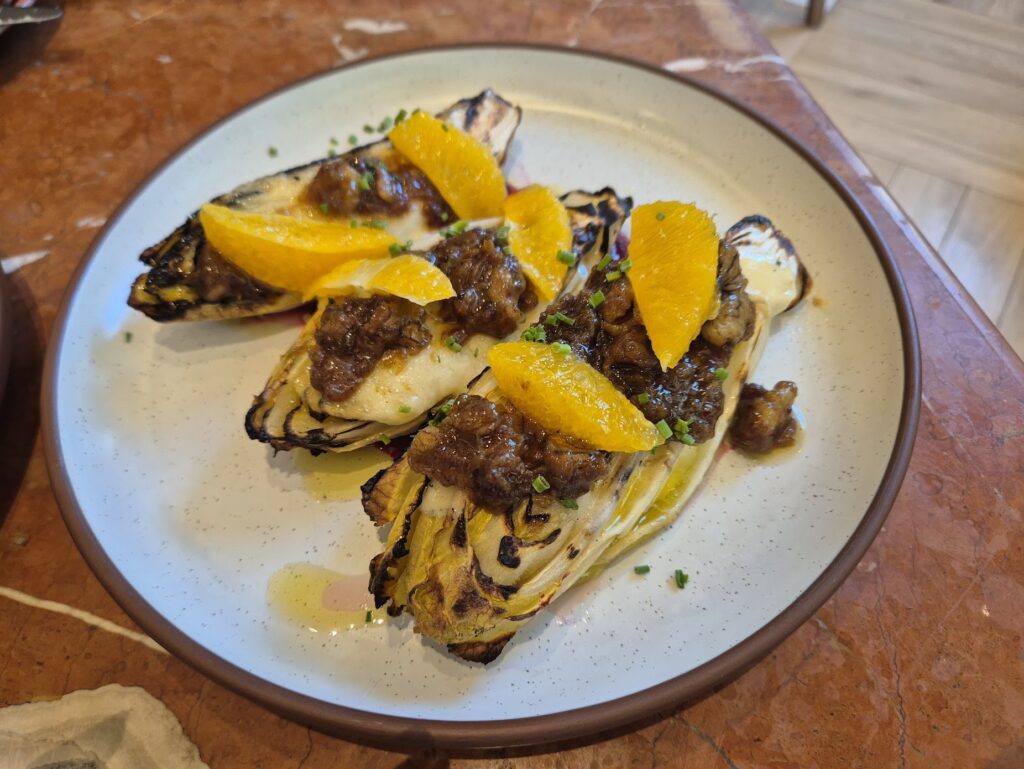
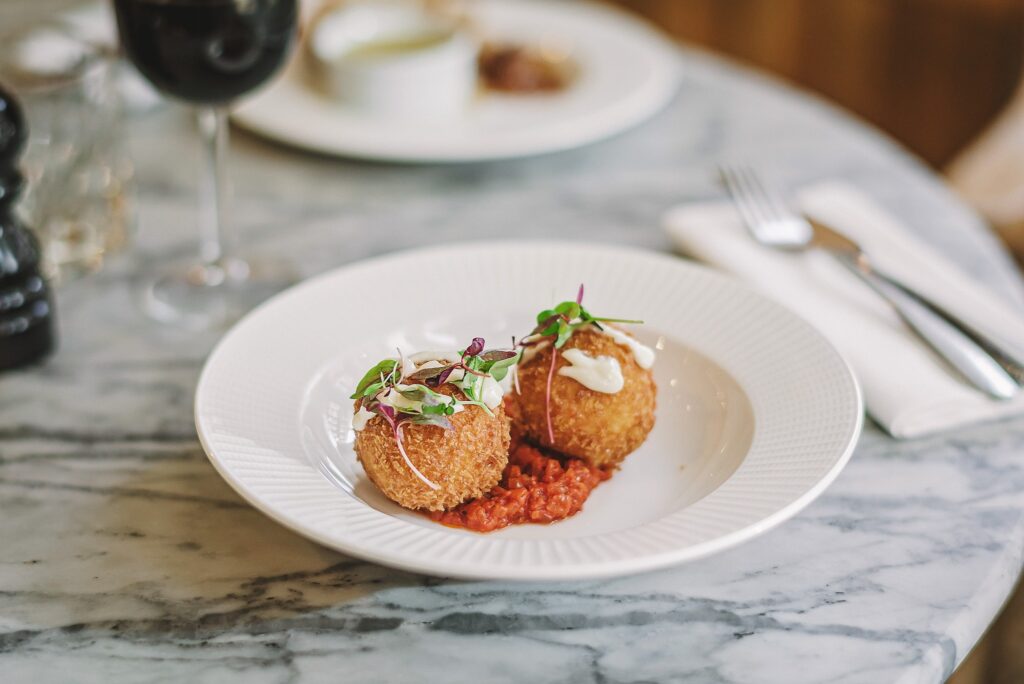
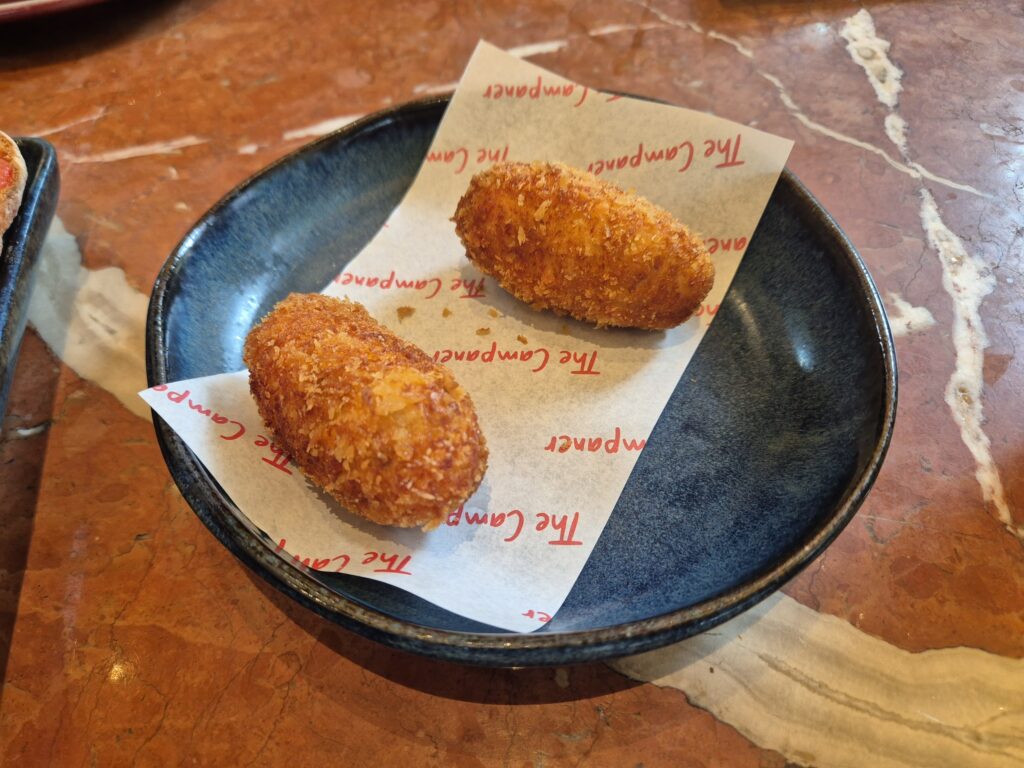
Iberian ham croquettes deliver that perfect contrast between crisp and oozing, deeply savoury interior, while the charred endives with Olavidia cheese and beetroot cream offer a sublime study in bitter-sweet-creamy balance. Perhaps most interesting is the chargrilled aubergine paired with manchego cheese, sobrasada de Mallorca and black treacle – a dish of remarkable depth that demonstrates this kitchen’s deft hand with the seasoning. It’s salty, sure, but spicy and sweet too, with the aubergine’s smoky fudginess pulling it all together. It’s very good indeed.
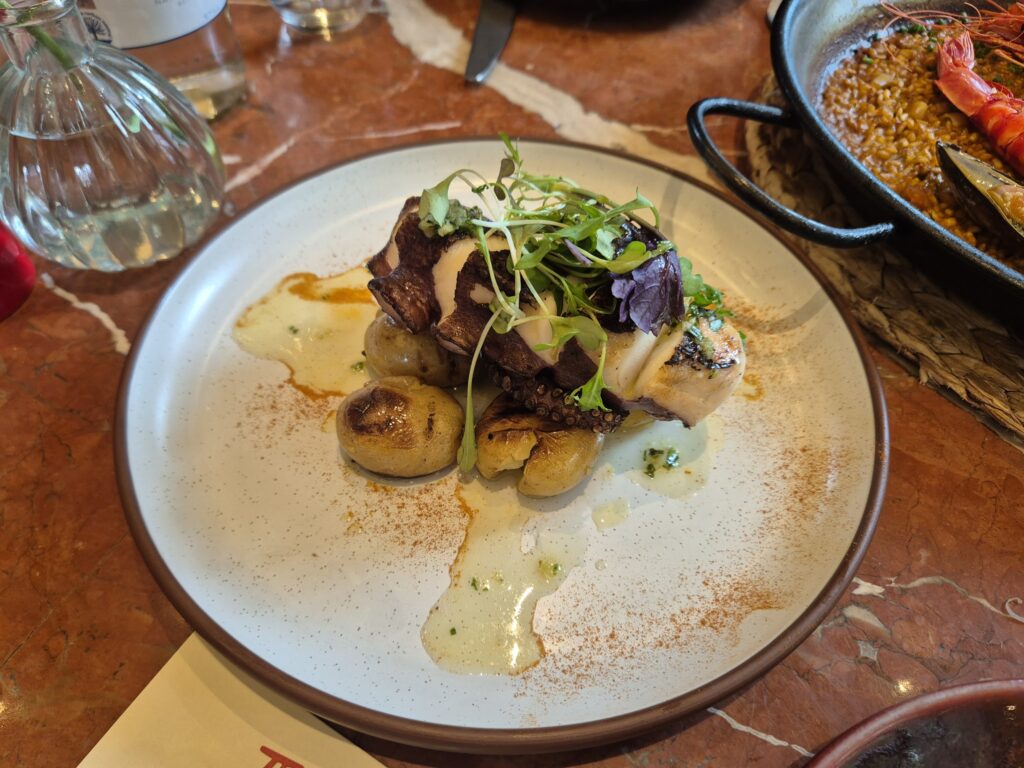
Main courses are designed for sharing, with the grilled octopus deserving special attention – cooked in the restaurant’s Josper grill with the kind of precision that only comes from true understanding of heat and timing. We’ve had too many bullet-tough octopus tentacles in our time, but this one arrives tender and bouncy, its ‘come hither’ gesture well and truly merited.

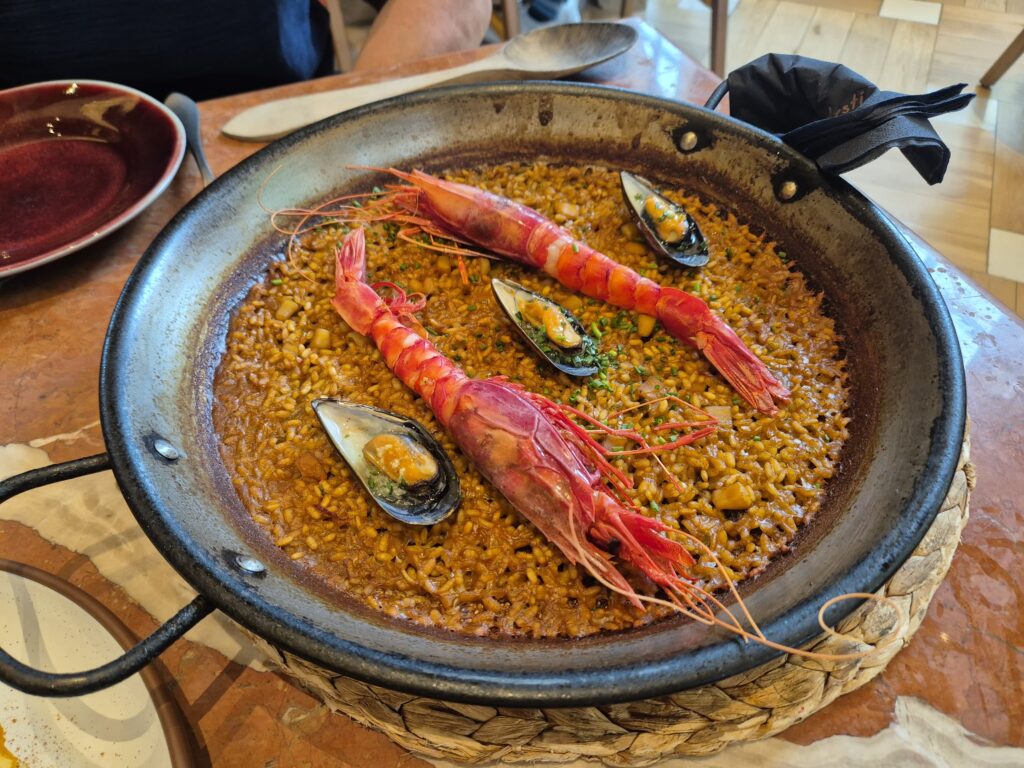
The headliner is without doubt the Catalan socarrat with red prawns, the eponymous crust of caramelised rice supporting plump, sweet prawns that taste emphatically of the sea. It’s a flavour that feels just right as the sun pours in through those massive windows, and everyone around you sports absolutely perfect tans.
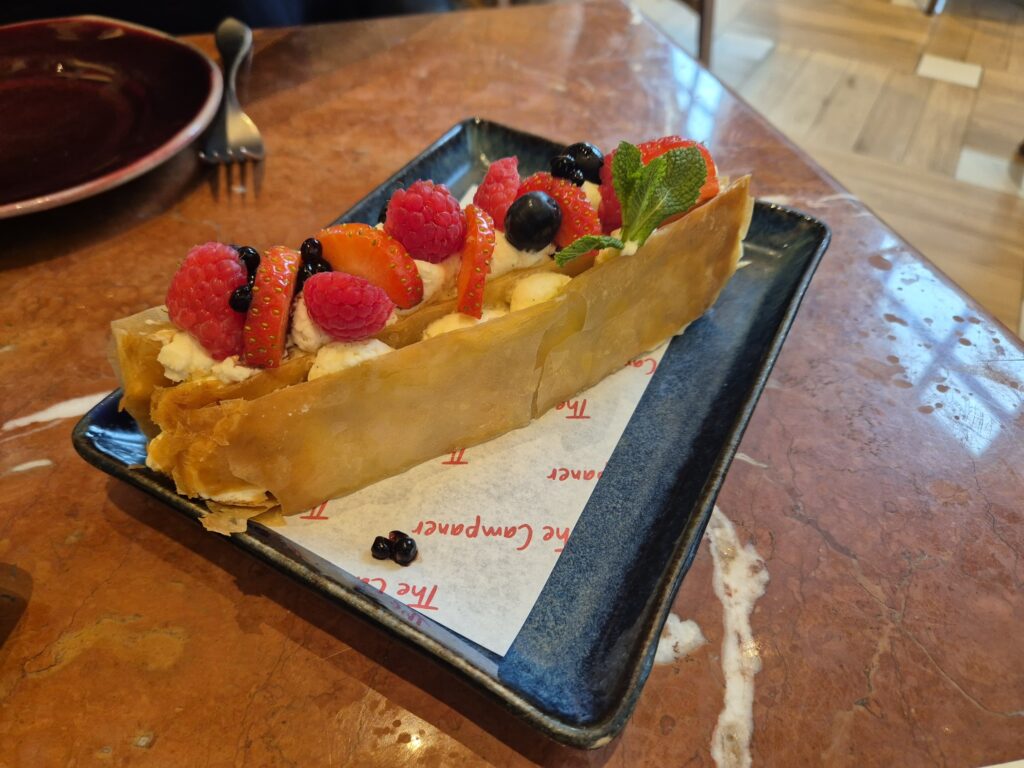
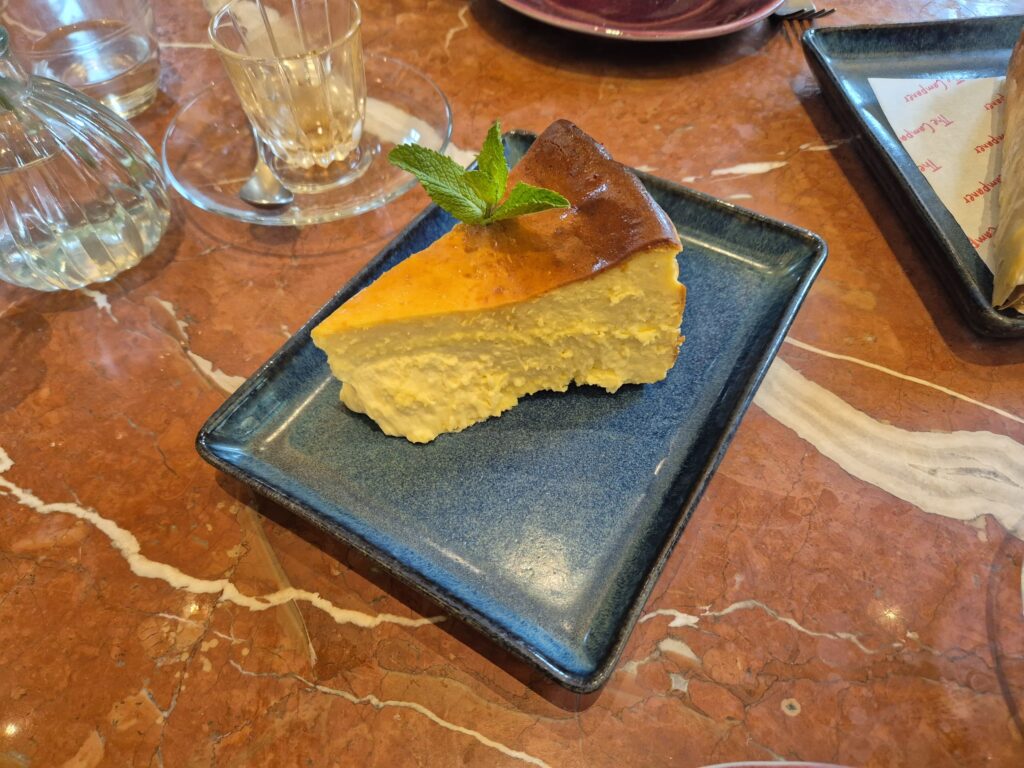
Intent on chasing the sun, we retire to the restaurant’s gorgeous wraparound terrace for dessert, a particularly cheesy Basque cheesecake and a rough and ready berry mille-feuille that eats much better than it looks. Out here, life feels worlds away from the city’s frenetic pace, despite being just minutes from Sloane Square. It’s pretty blissful.

Back inside, and for those seeking a more clandestine experience (deals that no one quite understands are definitely struck down here), head beneath the restaurant to The Clandesti, their speakeasy-style cocktail bar bathed in warm terracotta tones. Here, mixologists craft artistic concoctions inspired by Catalan masters like Dalí and Miró – the Dream Shell cocktail topped with a toasted marshmallow proves particularly Instagram-worthy (rather defeating the point of the clandestine part, admittedly). Like its parent restaurant above, the bar manages to transport a slice of Barcelona to SW1 without descending into caricature. You know what? We think we might just stay here a while…

Website: thecampaner.com

Address: Chelsea Barracks, 1 Garrison Square, London SW1W 8BG


Bottarga

Ideal for Aegean-inspired dishes in Chelsea’s most obtusely photogenic dining room…

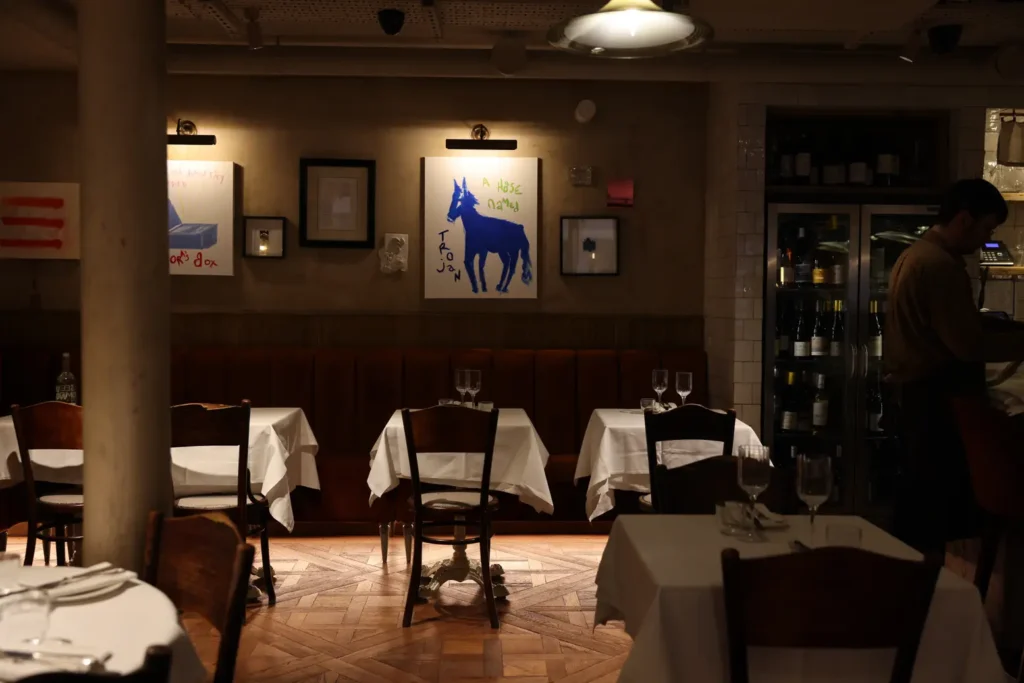
From the Pachamama group (who previously ran Peruvian seafood spot Chicama from this same King’s Road address), Bottarga channels the spirit of summers spent island-hopping across the Aegean. Every element feels considered here – from the Greek mythology-themed artwork dotting the uneven plaster walls to the eclectic crockery sourced from antique markets. The space became Instagram catnip earlier this year, quite the achievement given how dimly lit it is, with candlelight casting shadows that make photos look pretty poxy, quite honestly.

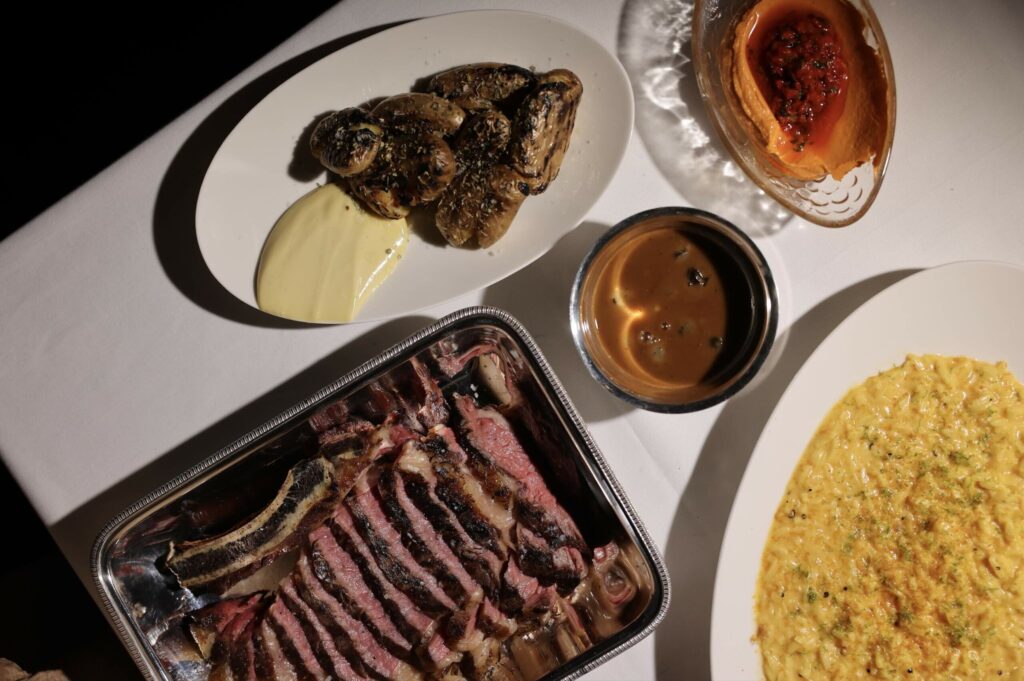
Executive chef Tzoulio Loulai brings his Greek upbringing to bear on a menu designed for sharing, though certain dishes demand protection from greedy dining companions. The bottarga orzo arrives rich with XO oil and generous shavings of the restaurant’s namesake ingredient – cured fish roe that brings umami depth and a proper hit of the sea. Lamb belly shows serious technique, the meat rendered sticky-sweet with Greek Easter spices whilst maintaining structural crispness and something approaching tender, which is a mean feat. The sides work too; confit ratte potatoes come slicked in burnt butter with roasted garlic aioli, quietly dominating the table despite everyone’s best intentions.
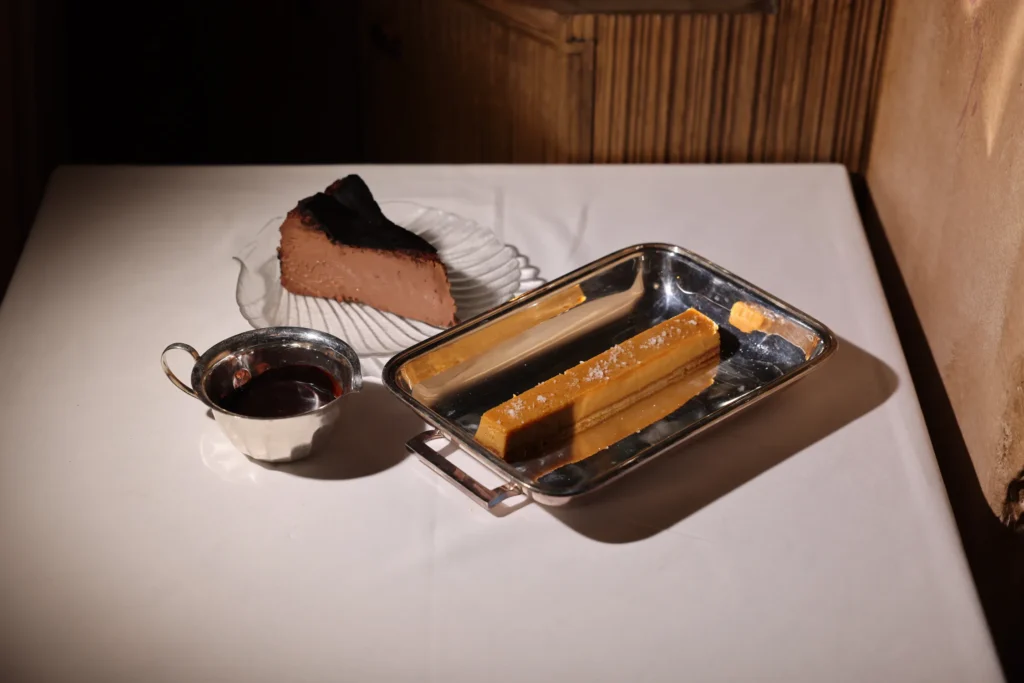
The heated, covered terrace offers year-round alfresco dining and proves easier to book than the dimly lit interior, where the atmosphere skews date-night territory. Desserts arrive in portions that test your commitment – the chocolate burnt cheesecake is particularly formidable, though the Ozempic-faithful simply push it around the plate. That’s fair enough, actually; share it between two and you’ll still struggle through the final bites.

Wine leans Mediterranean, cocktails take playful turns, and the staff strike that balance between attentive and relaxed.

Website: bottarga.london

Address: 383 King’s Rd, London SW10 0LP


Rabbit

Ideal for tasting the Sussex countryside without leaving SW3…

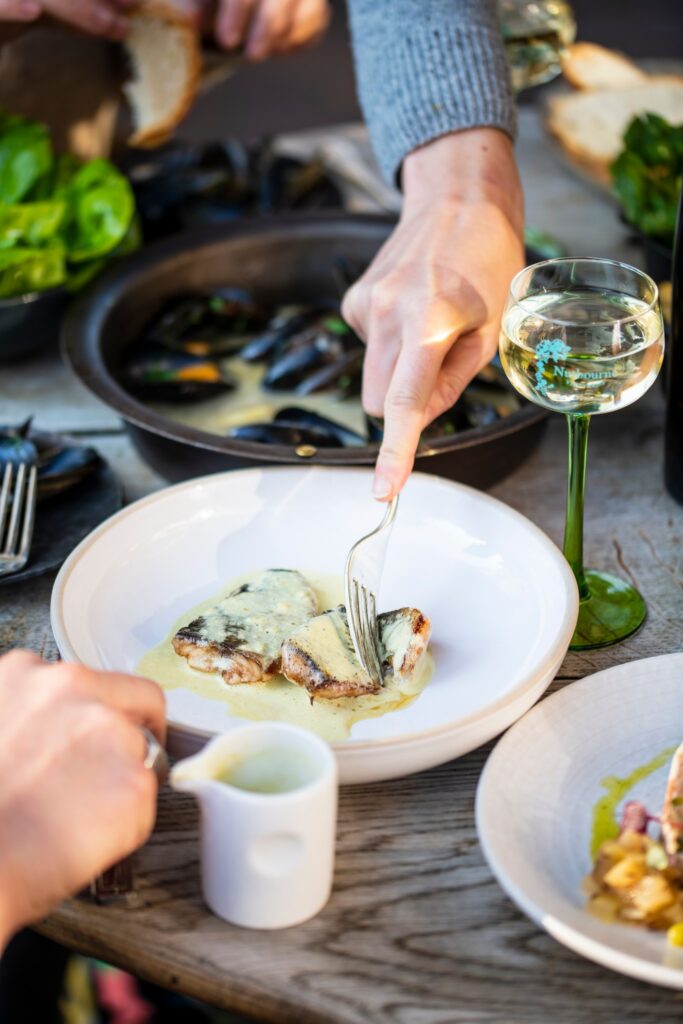
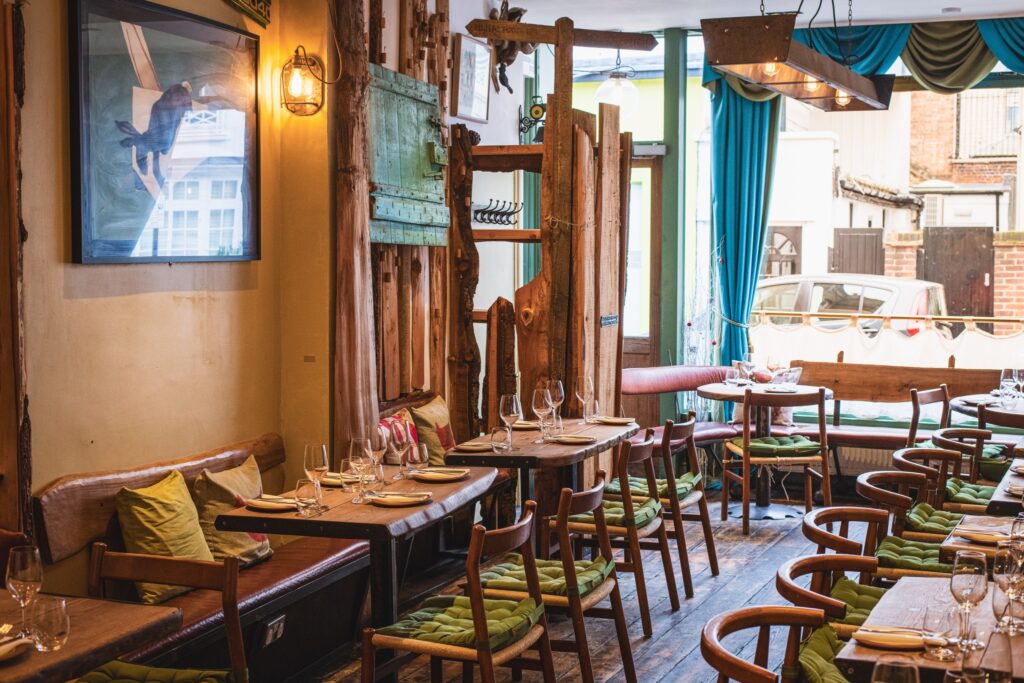
The Gladwin brothers bring their farm-to-fork philosophy to life at this rustic-chic spot, sourcing produce directly from their family’s Nutbourne vineyard and farm in Sussex, where youngest brother Gregory still works as a farmer.

The eclectic menu at Rabbit changes constantly to reflect what’s hyper (rather than quarterly) seasonal, with the small plates and keen pricing encouraging exploration – try the mushroom marmite eclairs and the beef heart skewers with port glaze. Both are excellent.
Rabbit’s ‘Farm To Fork’ set lunch (two courses for £22, three for £25) offers laughably good value in this part of town. It runs from Tuesday through Friday.

Look out for the brothers’ new-ish pub in the neighbourhood, too. Called The Pig’s Ear, we’ve heard good things.

Website: rabbit-restaurant.com

Address: 172 King’s Rd, London SW3 4UP


Myrtle

Ideal for falling in love with Irish cuisine…

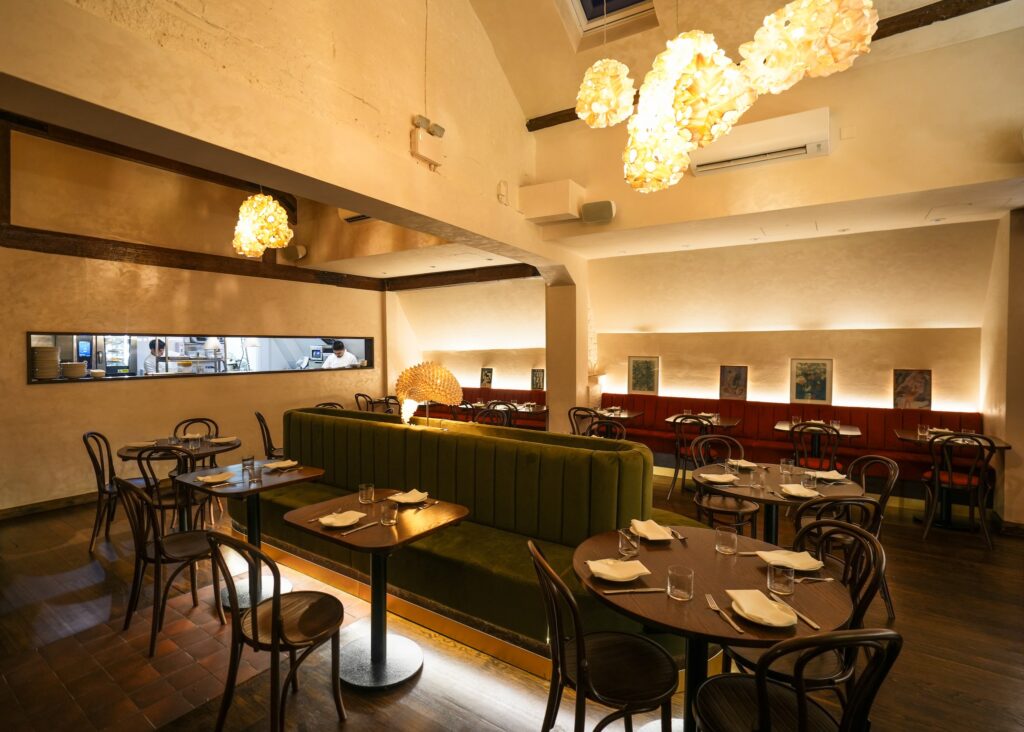
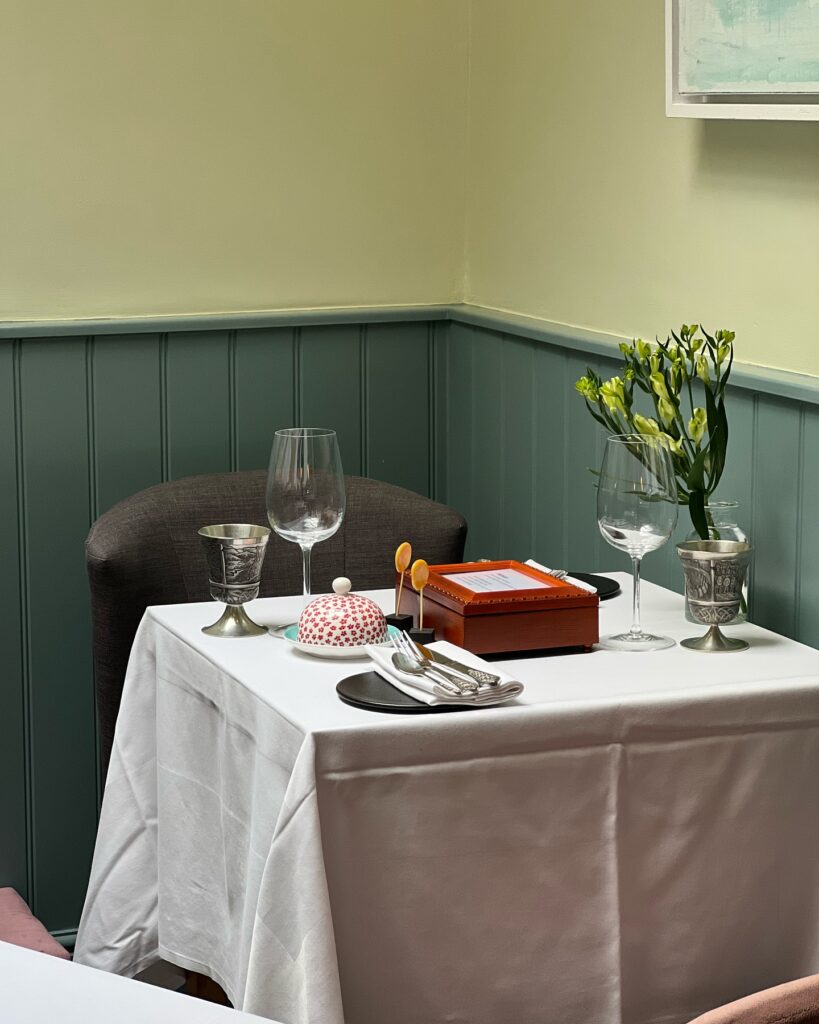
In a discreet corner just off the King’s Road, chef Anna Haugh’s elegant cooking has found a home here, bringing a taste of contemporary Ireland to Chelsea. The intimate dining room — with its gorgeous quilted armchairs, green-and-cream walls and statement mirrors — provides a splendid backdrop for sophisticated dishes that showcase the best of Irish produce while incorporating classical European techniques.
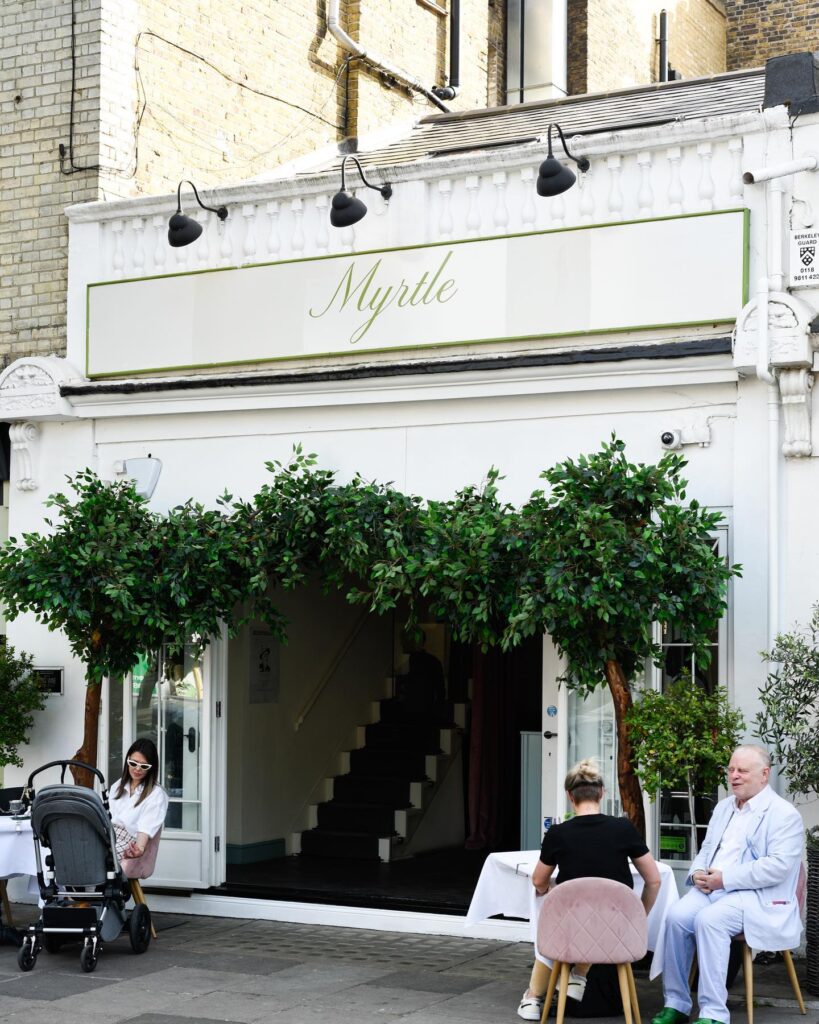
Menu highlights include Clonakilty black pudding wrapped in crispy potato, butter-poached turbot with Irish dulse seaweed, and sirloin of Irish beef with a beef stuffed boxty, something of a Haugh signature. Yep, that feels like a lot of beef, but when the product is this good, it’s worth celebrating, don’t you think?

Speaking of celebrating, Head Sommelier at Myrtle Katarzyna Kostrzewska has curated an impressive global winelist that perfectly complements Anna Haugh’s Irish-influenced cuisine. Beyond the expected French heavyweights, you’ll find gems from Greece, Hungary, and even Peru. Particularly noteworthy is Anna’s own signature wine range, created in partnership with Vino Hero from the South of France – each bottle featuring a QR code linking to recipes she’s designed specifically to pair with that wine.

Website: myrtlerestaurant.com

Address: 1A Langton St, London SW10 0JL


Kutir

Ideal for Indian seafood in tranquil townhouse surroundings…

Chef Rohit Ghai’s first solo venture occupies a beautiful townhouse just off the King’s Road, where mint-green walls and floral accents create an atmosphere that feels quite grand, even round these parts.

The kitchen displays remarkable prowess with its contemporary Indian seafood cooking, especially — a pleasingly light sea bass curry comes generously adorned with plump mussels, its sauce luxurious and sweet via freshly-pressed coconut cream. Or, stone bass is crowned with crispy squid, sitting atop well-seasoned squid ink rice. Yep, they love using seafood as a garnish here. We’re certainly not complaining…
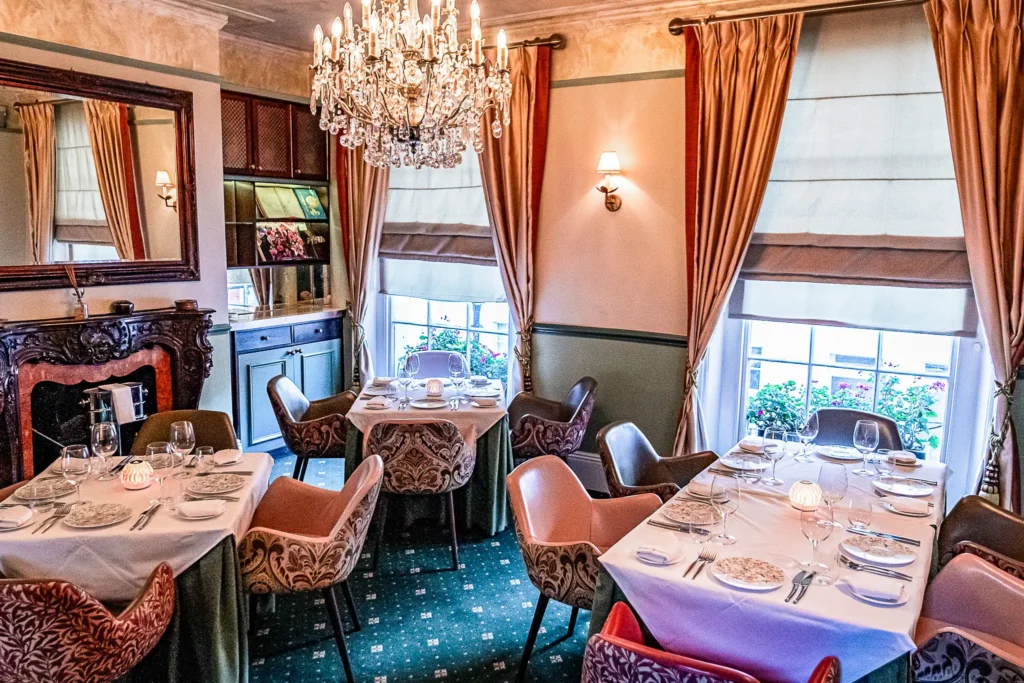
That’s not to say that the vision is myopic here. Comprehensive dietary options include separate vegan, halal, gluten-free, nut-free and dairy-free menus. The wine list features several interesting by-the-glass options that are designed to pair beautifully with spiced dishes.

For first-timers, the ‘Expedition’ tasting menus offer the most complete experience, though the set lunch menu provides a more accessible introduction to Ghai’s cooking.

Website: kutir.co.uk

Address: 10 Lincoln St, London SW3 2TS


Ixchel

Ideal for buoyant Mexican flavours and a boisterous dining room energy…

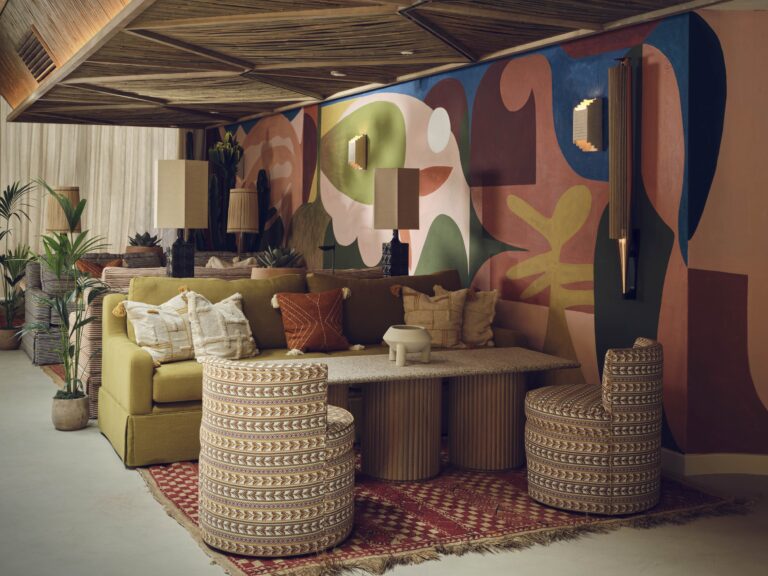
This recent arrival brings fresh energy to the King’s Road, named for the Mayan moon goddess and making an immediate impression with striking interiors, including a dramatic mural by Mexican artist Rafael Uriegas.
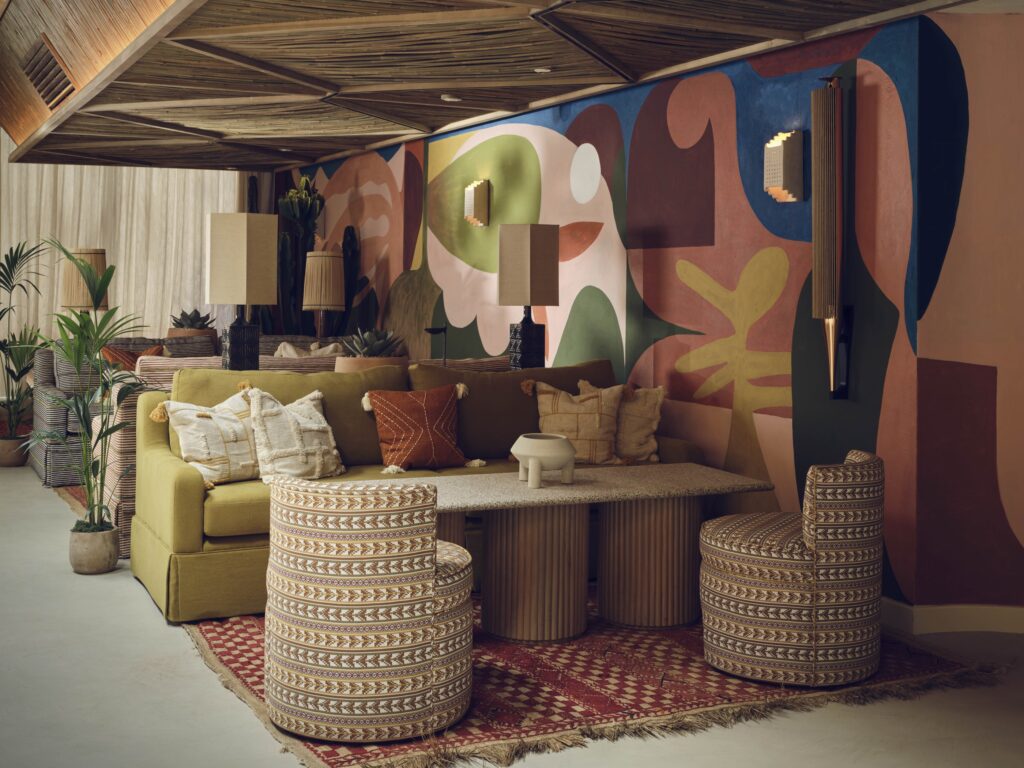
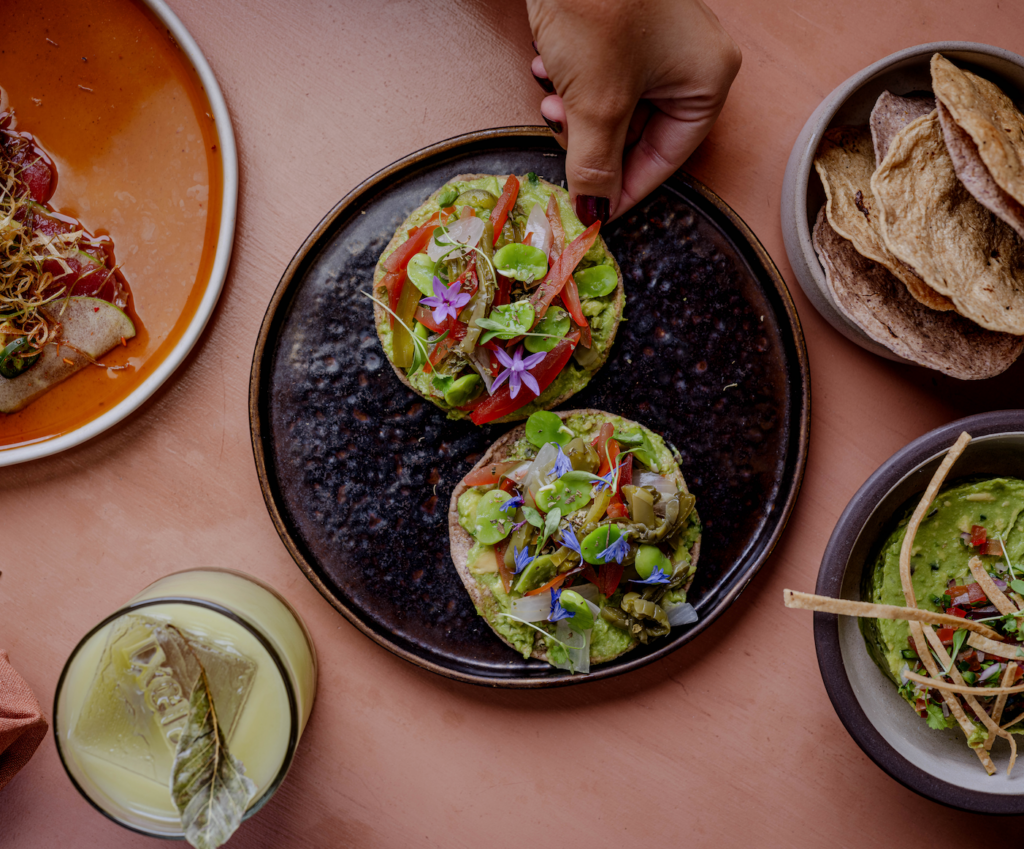
Here, chef Ximena Gayosso Gonzalez crafts dishes of genuine finesse here, from yellowfin tuna tostadas brought to life with whisper-thin Granny Smith apple (there are some sharp knives in this kitchen) to robata-grilled plates that showcase an admirable command of elemental cooking methods.
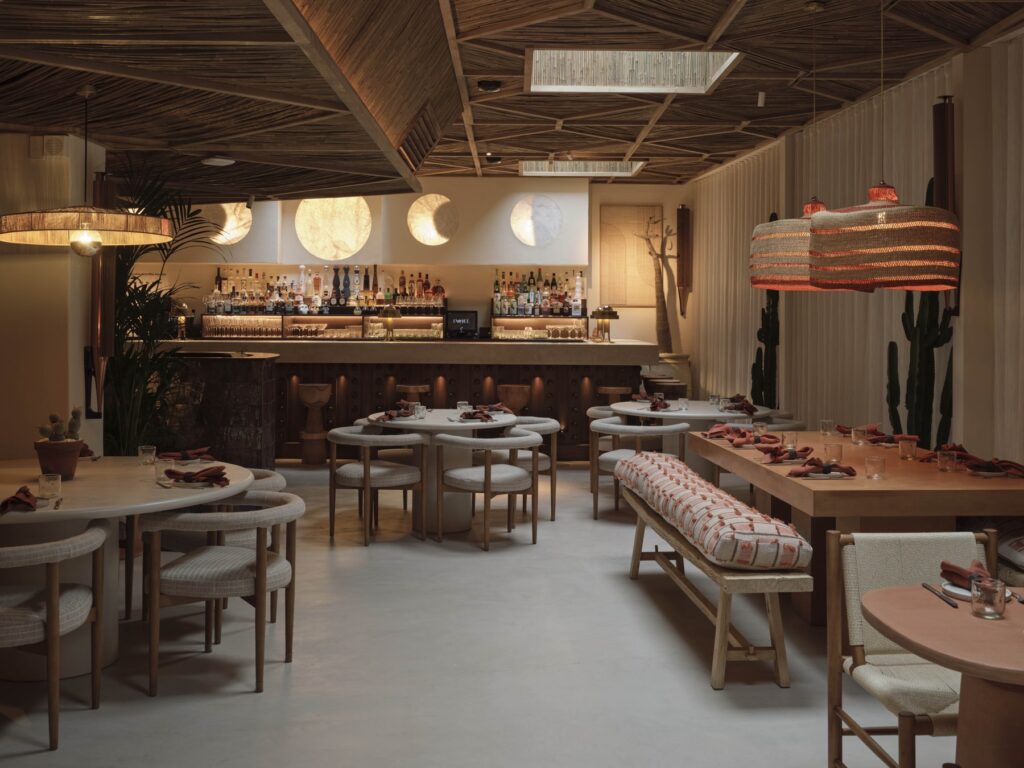
The bar, overseen by ex-Cavita bartender Manuel Lema, houses one of Europe’s most extensive collections of agave spirits, featuring rare mezcals and tequilas seldom seen in London. Monday night live music sessions have swiftly become a neighbourhood favourite, drawing a fashionable crowd that keeps the place buzzing well into the evening.

Website: ixchellondon.com

Address: 33H King’s Rd, London SW3 4LX

Read: The best Mexican restaurants in London


Stanley’s

Ideal for garden dining whatever the British weather throws at you…

You could easily miss this place, tucked away as it is just behind Chelsea Green (no, the celebrated wrestler isn’t a permanent fixture here – we mean the park). But to pass over Stanley’s would be to miss its unique brand of countryside enchantment, with its covered, heated courtyard that somehow manages to feel magical regardless of London’s meteorological mood swings. Proper ‘secret garden’ territory, this one…

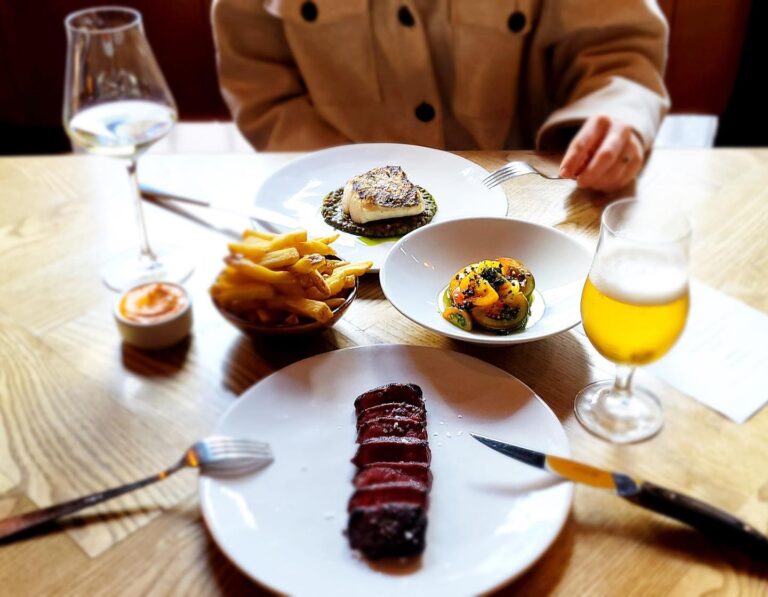
On the plate, head chef Tomas Kolkus eschews culinary gymnastics in favour of a concise, seasonally shifting menu that lets quality British produce speak for itself. We’re all about the beef tartare crumpet with oyster emulsion and horseradish, which sounds like it could go awry in the wrong hands, but here, it’s wonderfully indulgent and perfectly balanced. Doubts assuaged, order the onglet steak with Jerusalem artichoke next, another dish that needs careful cooking to realise its potential. Rest assured; chef Kolkus knows what he’s doing.

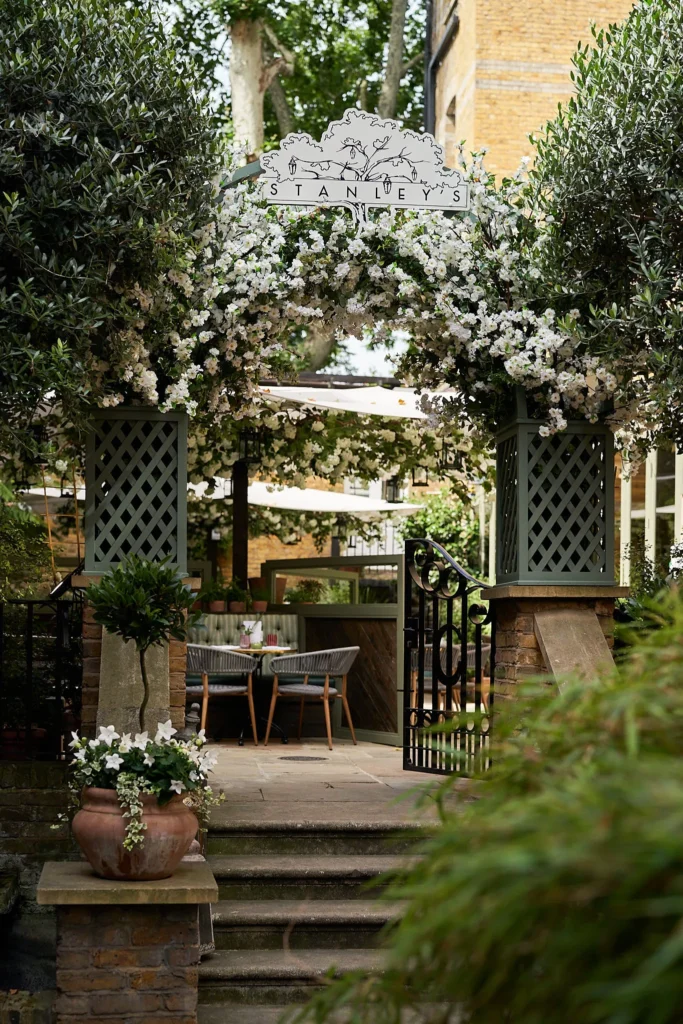
Wine lovers will appreciate the unexpectedly reasonable glass pours (several at £6.50 – practically happy hour prices for this postcode), while their spicy margaritas pack a proper punch. The locals have caught on – the restaurant has developed a fiercely loyal Chelsea following who return as much for the boozing as for the food.  

Website: stanleyschelsea.co.uk

Address: 151 Sydney St, London SW3 5UE


Elystan Street

Ideal for experiencing a Michelin star without the stuffiness…

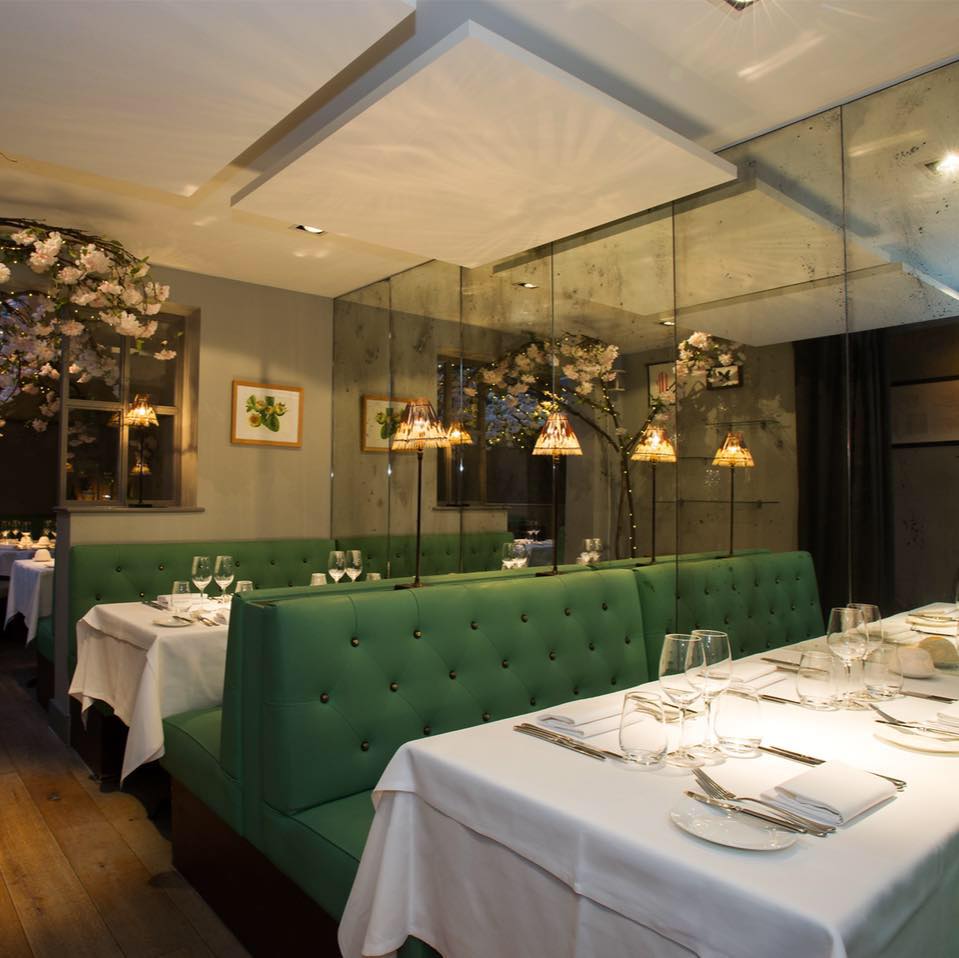
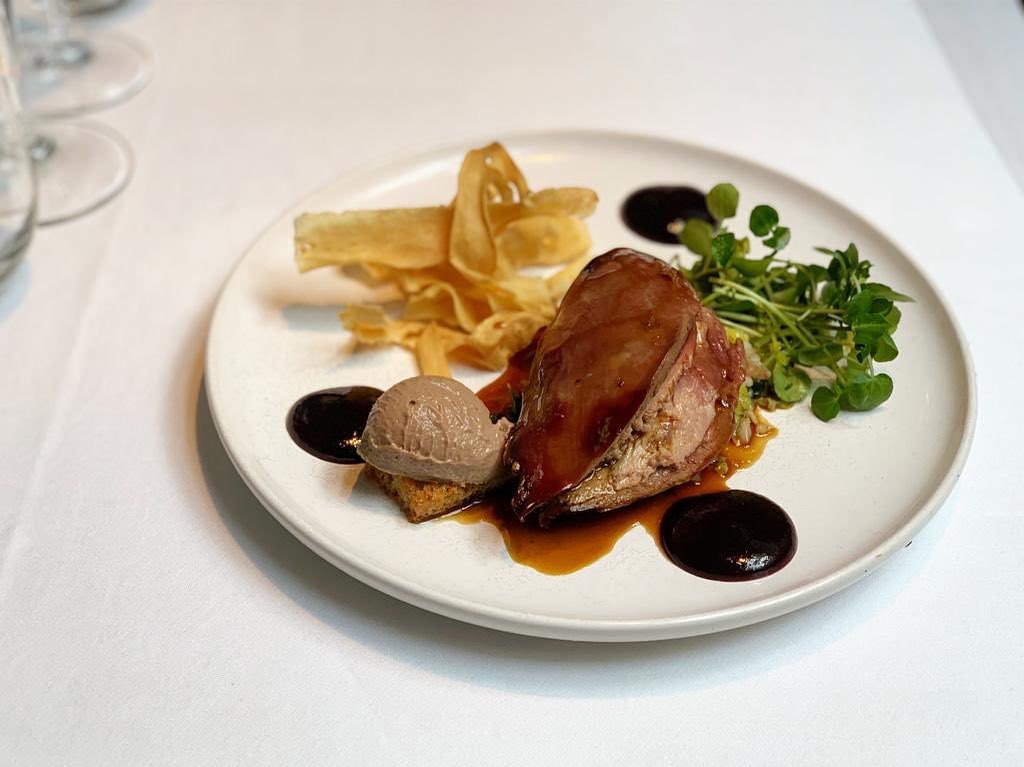
Often referred to as ‘the chef’s chef’, Phil Howard has achieved something surprisingly rare (and that’s not just the quail, served pink) at Elystan Street – creating a restaurant that feels both special occasion-worthy and comfortably unpretentious. The dining room, with its considered lighting and deep Chesterfield booths, is a peaceful place to settle into, while the front-of-house team navigates that elusive sweet spot between warmth and professionalism impeccably.

Howard’s cooking demonstrates an almost musical understanding of flavour and a poet’s knack for menu writing – calf’s sweetbreads arrive beneath a shower of toasted almonds and poppy seeds, pig’s head terrine is bolstered by a pitch-perfect sauce gribiche, while his seasonal game dishes reveal why he’s considered one of Britain’s most accomplished chefs. The kitchen doesn’t chase trends or Instagram moments; it simply delivers technically flawless food. And sometimes (all the time), that’s exactly what you want from your dinner.

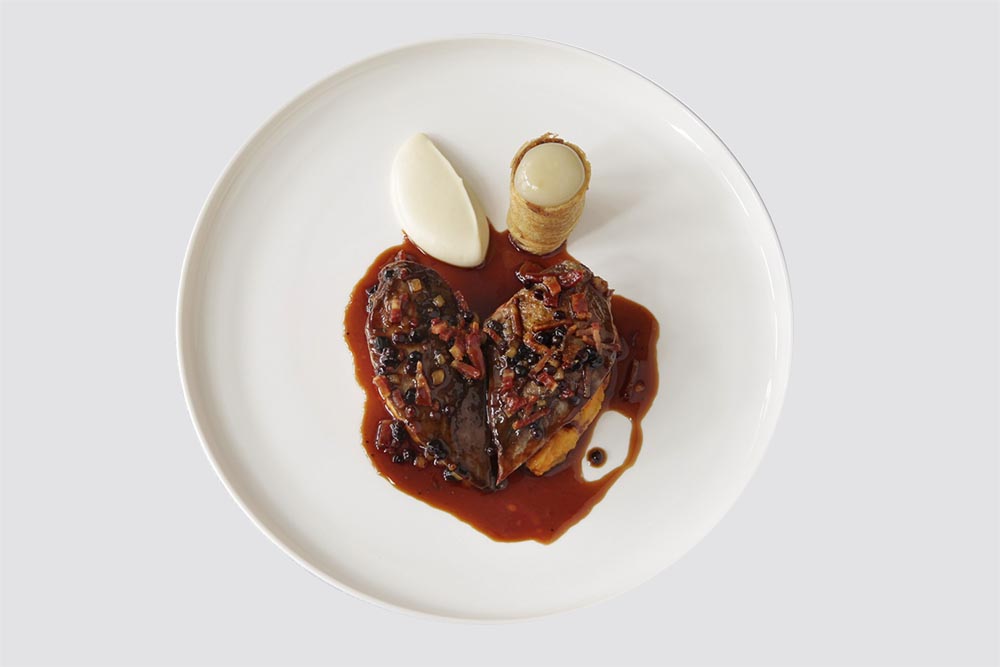
Or your lunch, as there’s a set lunch (and early evening) menu here that’s pitched generously at three courses for £45; this is fine value for food of this calibre and relaxed precision. That the restaurant earned its Michelin star within a year of opening surprises precisely no one who’s eaten here, and the fact that the brigade is referred to as the ‘E Street Band’ on the socials keeps us coming back, we can’t lie.

Website: elystanstreet.com

Address: 43 Elystan St, London SW3 3NT


The Sea, The Sea

Ideal for seafood obsessives who appreciate proper technique…

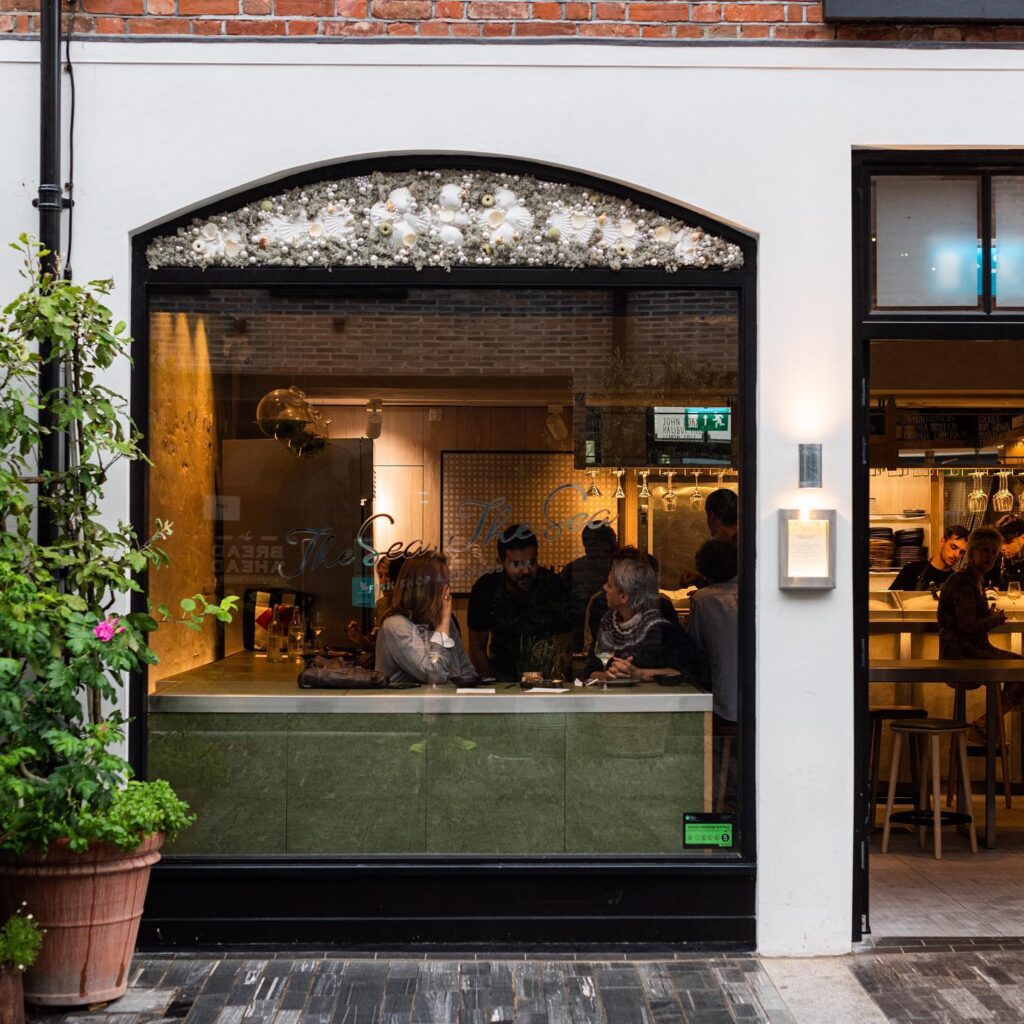
Half retail fishmonger, half dining destination, this Pavilion Road gem brings something genuinely distinctive to Chelsea’s restaurant landscape. Tucked down a charming mews off Sloane Square, the space undergoes a nightly metamorphosis – premium fish counter by day transforms into an intimate 12-seat chef’s table experience as dusk falls.

Executive chef Leandro Carreira approaches seafood with the reverence of a true believer. Some fish arrive at table fresh from the morning’s catch, while others undergo a dutiful dry-aging process that concentrates flavor – particularly fascinating with fatty specimens like sea bass or tuna. The daily-changing menu responds to whatever the tides have delivered, though the focus primarily falls on raw preparations – salmon is served as sashimi, dry-aged sea bream simply sliced and garnished with blood orange, a tiger prawn gently unfolds over vinegared rice, nigiri-style.

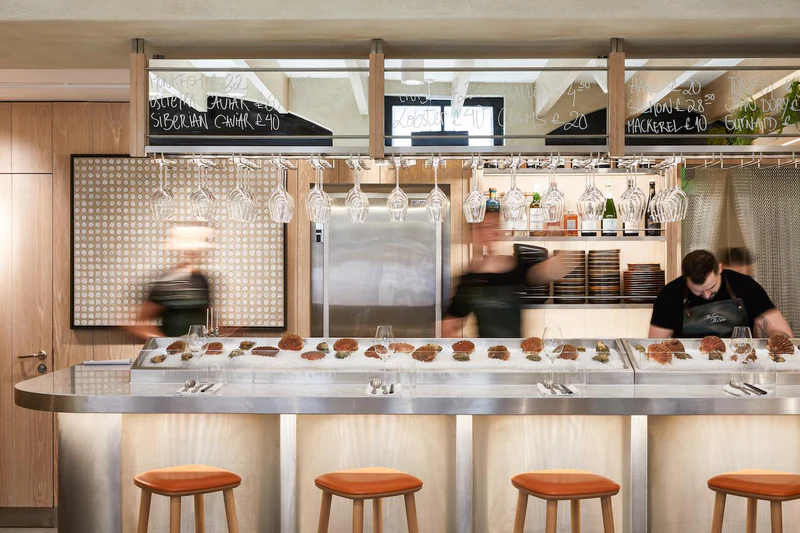
Timing matters here – early evening visits coincide with the venue’s transition, allowing you to witness its evolution while taking advantage of rather excellent oyster happy hour prices. The cocktail list leans appropriately toward the maritime, with several options featuring seaweed-infused spirits.

Change is afoot, too. In early 2026, founder Alex Hunter announced plans to relocate to a larger site further along Pavilion Road, relaunching as a 40-cover bistro-style seafood restaurant with an expanded retail fishmonger, a 10-seat seafood bar and a 28-cover outdoor terrace. Nick Marsden, who joined the kitchen in 2024, takes over as head chef. The Hackney outpost has already closed, but Chelsea remains very much the mothership — just a bigger, more ambitious version of it.

Website: theseathesea.net

Address: 174 Pavilion Rd, London SW1X 0AW


Medlar

Ideal for suave food at the ‘unfashionable’ end of King’s Road…

There’s something deeply satisfying about Medlar’s location at the far reaches of the King’s Road – as if to say that true quality need not cluster in the fashionable heart of things. This independent restaurant delivers sophisticated cooking without unnecessary theatrics in a dining room where white tablecloths and large windows (thrown open during summer) create an atmosphere of calm refinement.
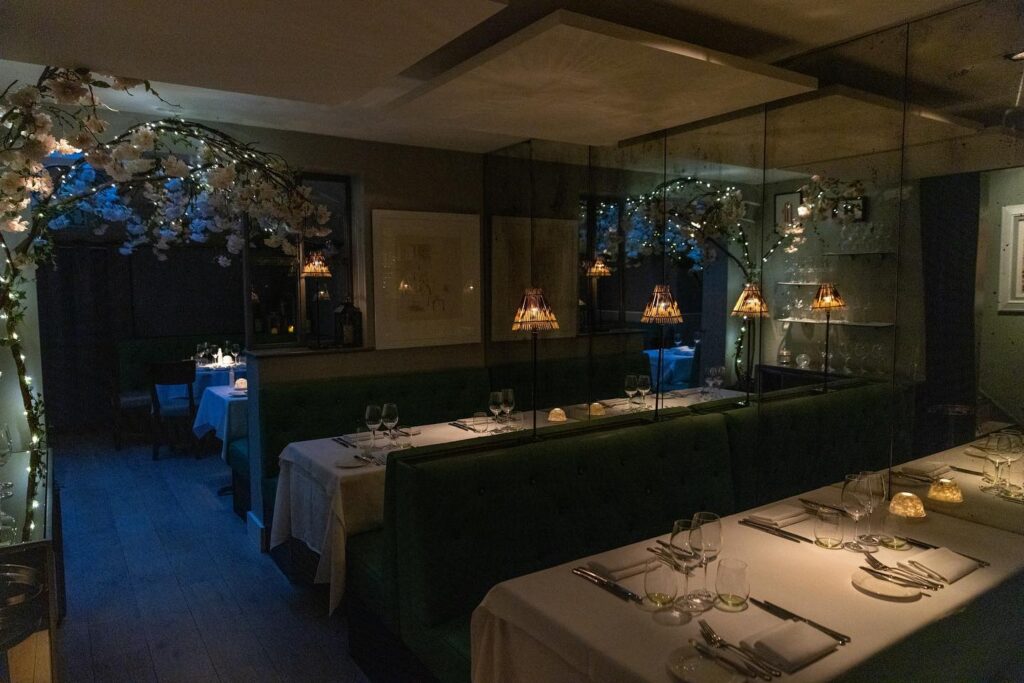
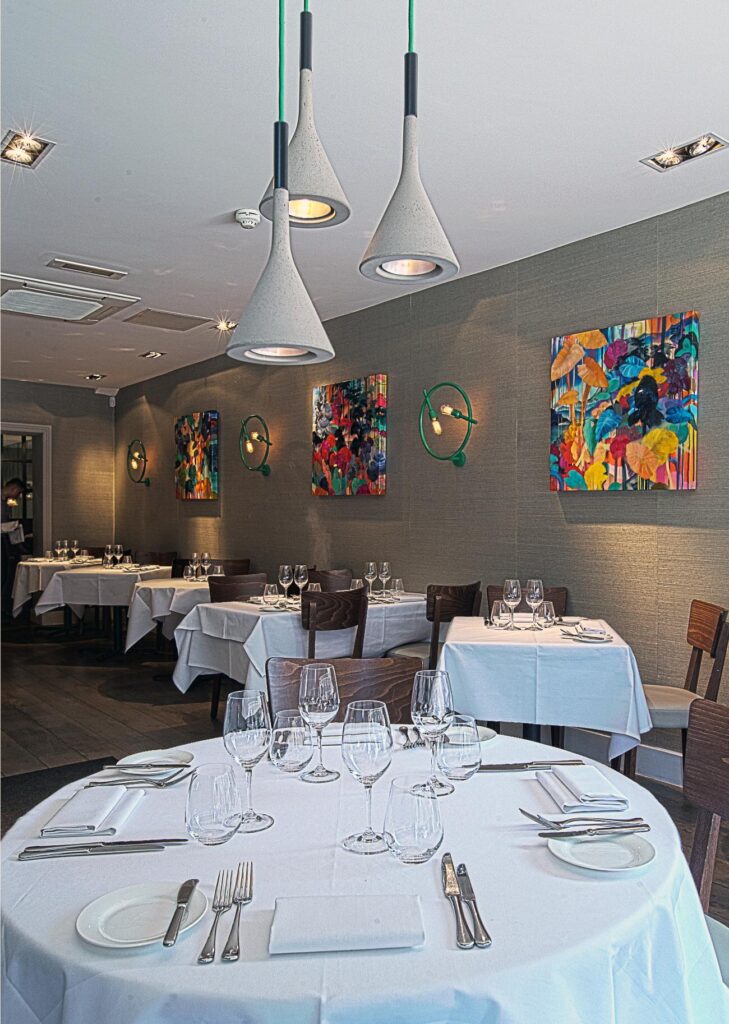
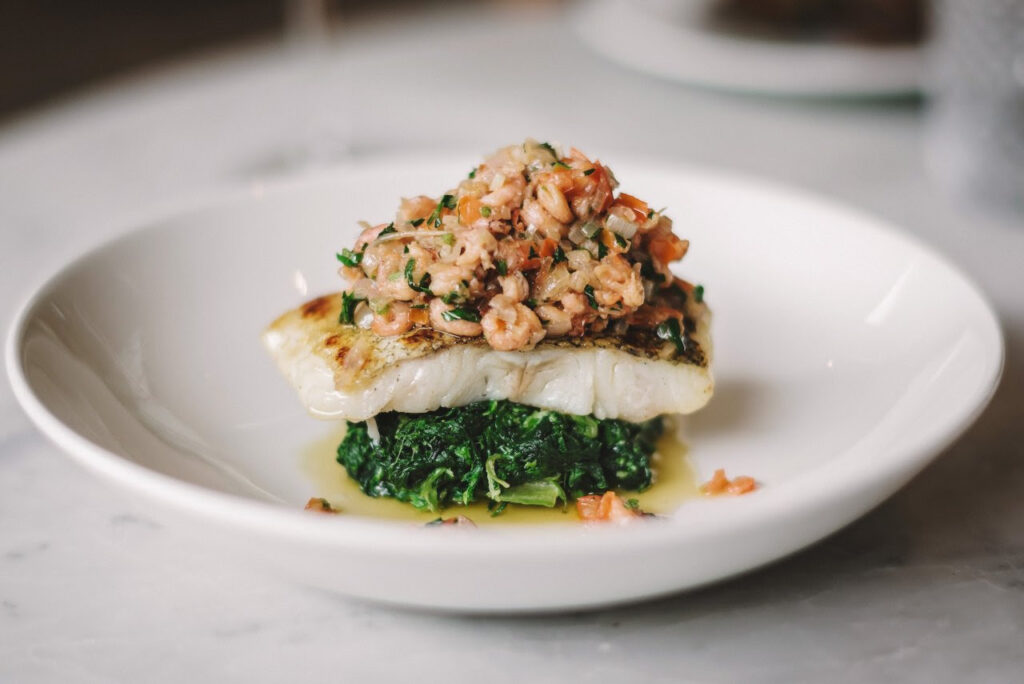
The partnership between chef Joe Mercer Nairne and front-of-house David O’Connor produces that rare restaurant alchemy – flawless food matched with intuitive service. Their signature crab raviolo with brown shrimps and leek fondue has resisted removal from the menu for good reason, inspiring near-revolt when they once attempted to retire it. The kitchen has a wicked way with offal, too; on a recent visit, a dish of chargrilled calf’s liver with sherry vinegar caramel was exceptional. Ditto a beautiful roast grouse served in that heady, hazy late summer period, accompanied by a parfait of its liver and game chips. Phwoar.

The cheeseboard is one of London’s most notable. From the winelist, look beyond the obvious bottles to discover genuine bargains lurking among lesser-known regions.  

Last year, the team opened Cornus in Belgravia to rave reviews. It’s already won a Michelin star.

Website: medlarrestaurant.co.uk

Address: 438 King’s Rd, London SW10 0LH


Volta Do Mar

Ideal for a culinary journey through Portuguese-influenced cuisines…

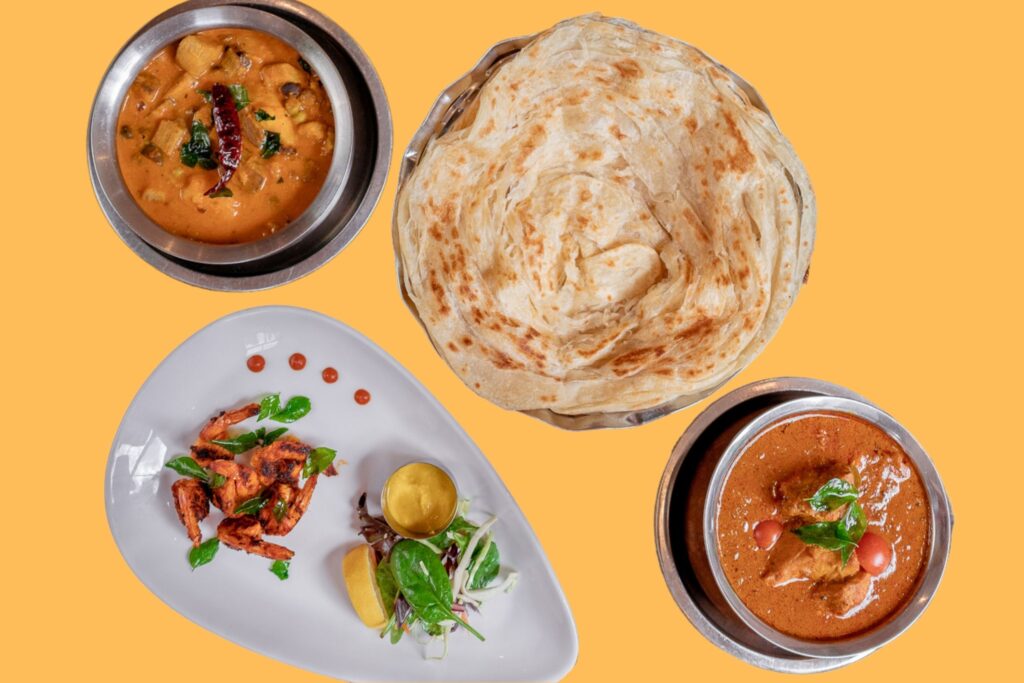
This intimate venue offers something genuinely distinctive in terms of London’s restaurant scene – an exploration of the diverse flavours found across Portuguese-speaking regions worldwide. Husband-wife team Simon Mullins (Salt Yard founder) and Isabel Almeida Da Silva draw inspiration from multiple continents, so Goan curry might appear alongside Mozambican piri piri chicken or Brazilian moqueca with Macanese specialities.
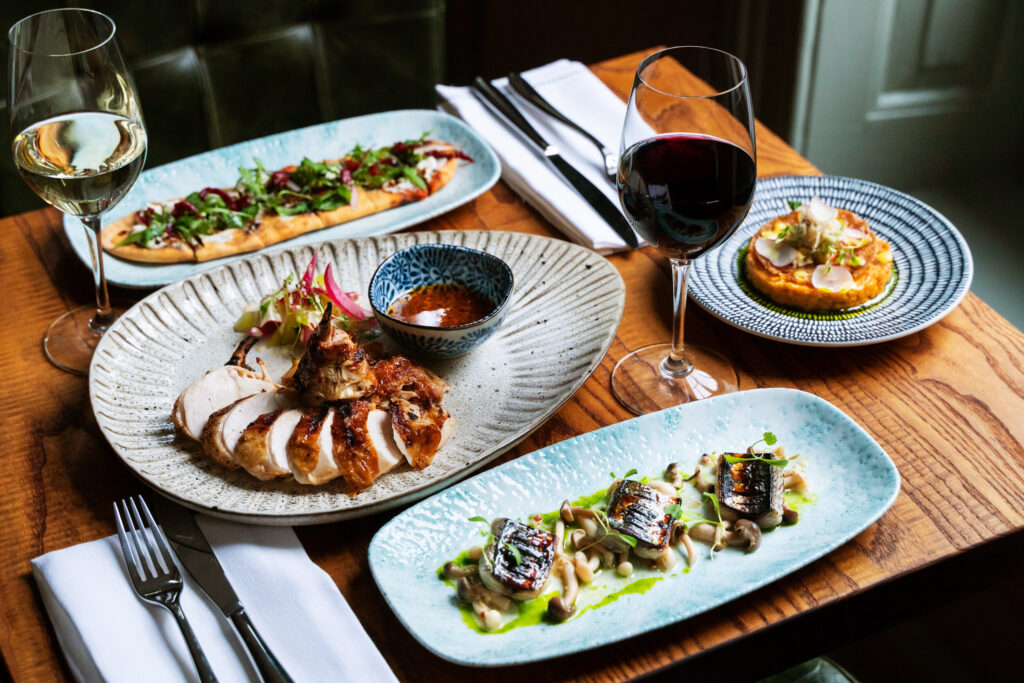
Image via voltadomar.co.uk/David Robson

Since relocating from Covent Garden to Draycott Avenue, they’ve added a private dining room and heated terrace. Their exclusively Portuguese wine list emphasises small producers and low-intervention approaches – a refreshing departure from typical London offerings.

First-time visitors should consider the weekday set menus, while regulars return for signature dishes like grilled prawns ‘Laurentina’ and Iberico pork bafassa with turmeric potatoes – perfect expressions of the diverse culinary connections across Portuguese-speaking regions.

Read: From Bacalhau to Bifina, here’s what to eat in Lisbon, Portugal

Website: voltadomar.co.uk

Address: 100 Draycott Ave, London SW3 3AD


Alley Cats Pizza

Ideal for authentic New York slices with The Sopranos on the wall…

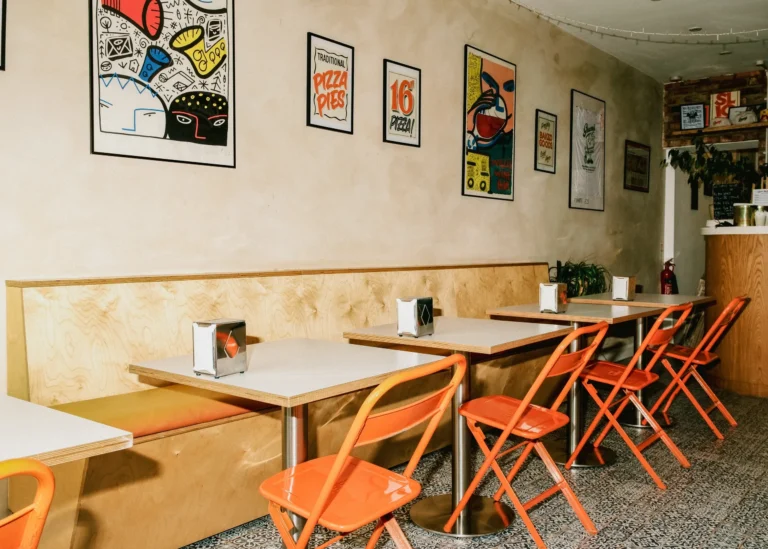
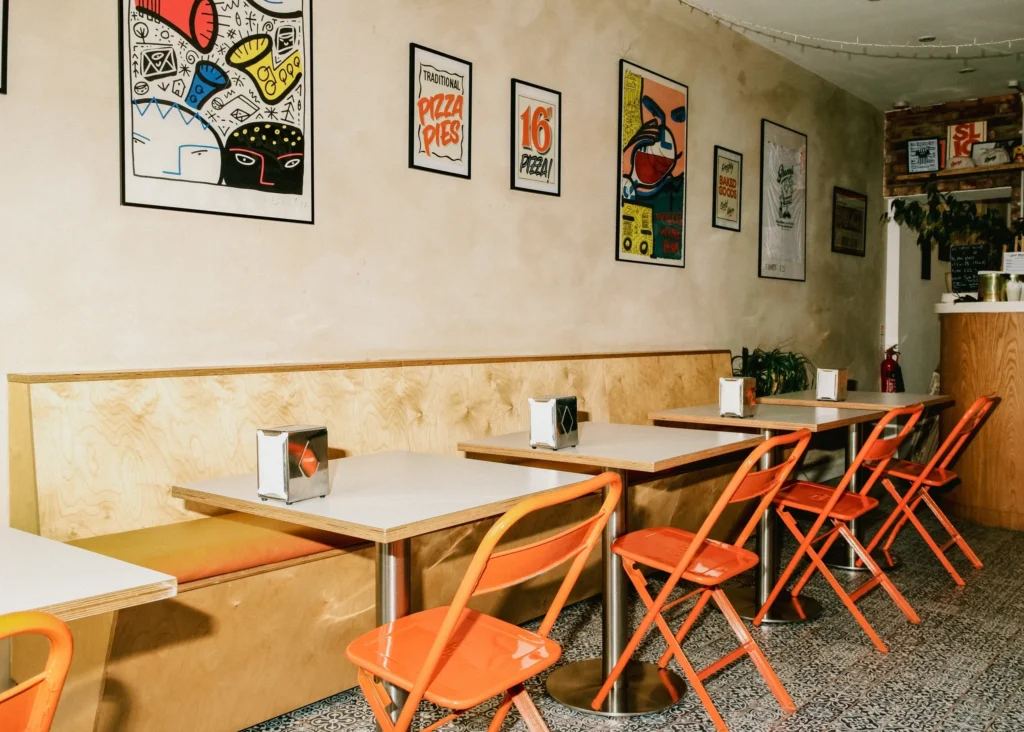
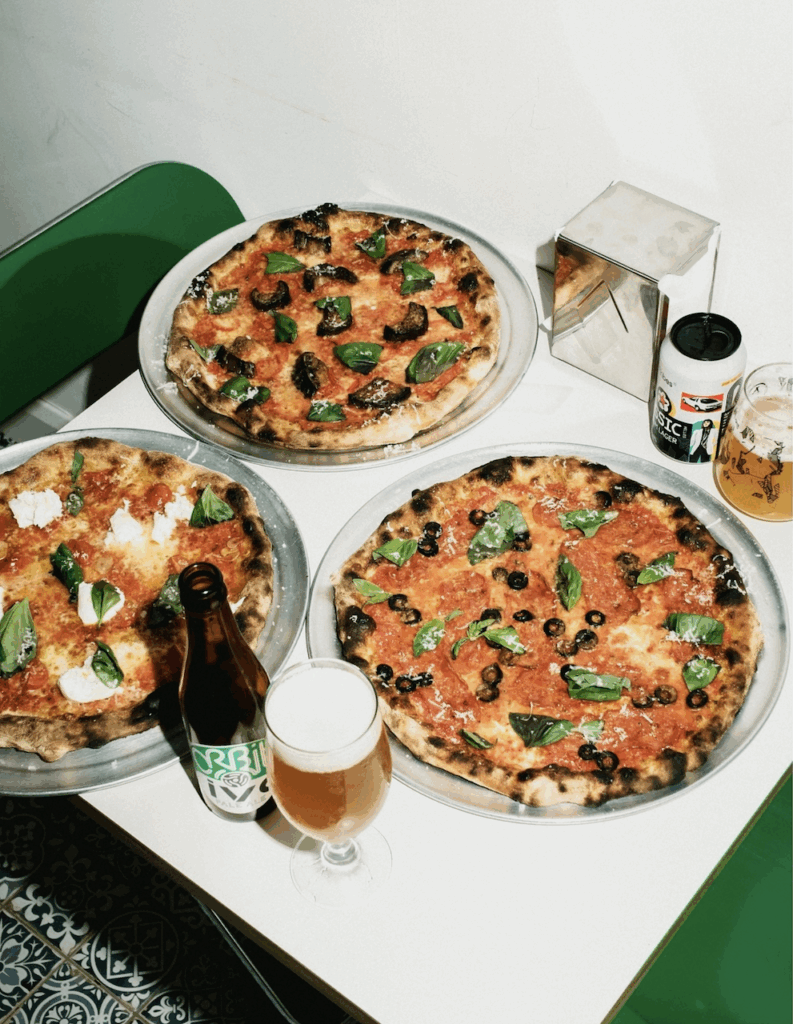
Following the runaway success of their Marylebone original, this King’s Road outpost continues Alley Cats’ unapologetic embrace of NYC pizza culture. Checkered tablecloths and Sopranos episodes projected onto exposed brick create the perfect backdrop for what might be London’s most convincing New York-style pizza.
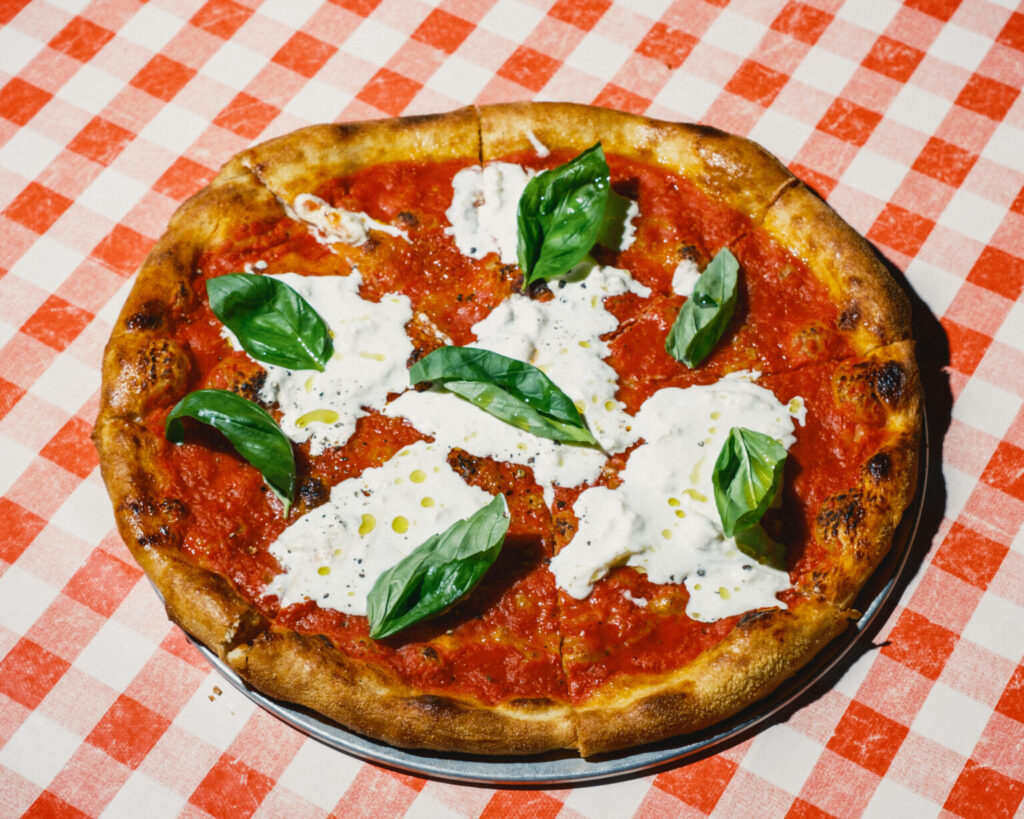
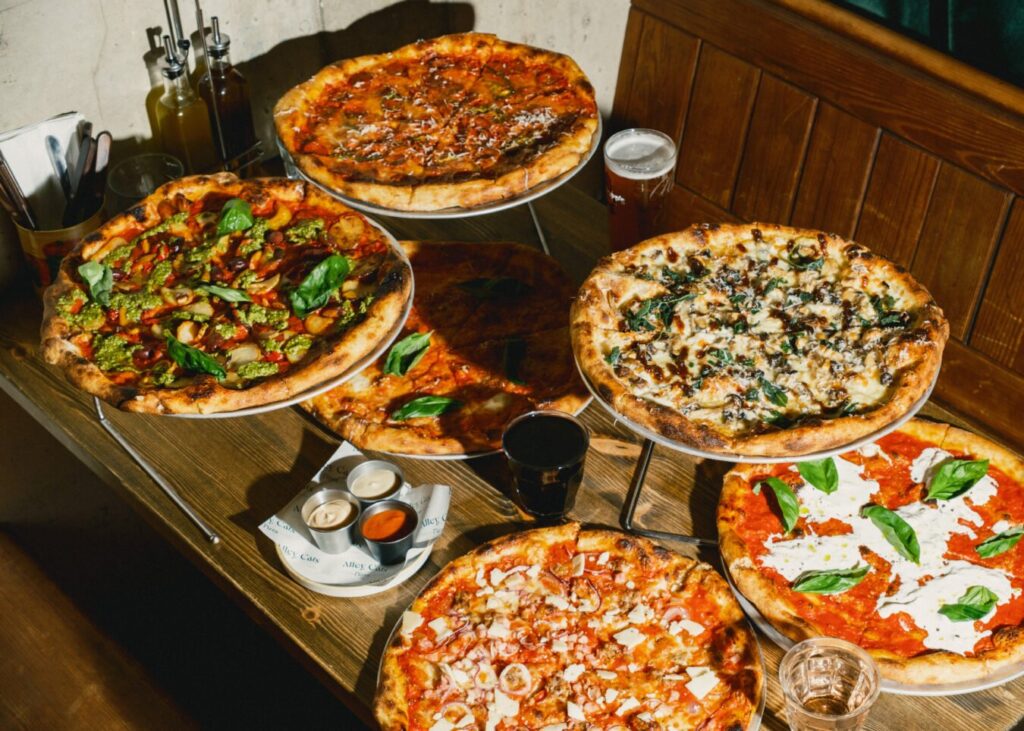
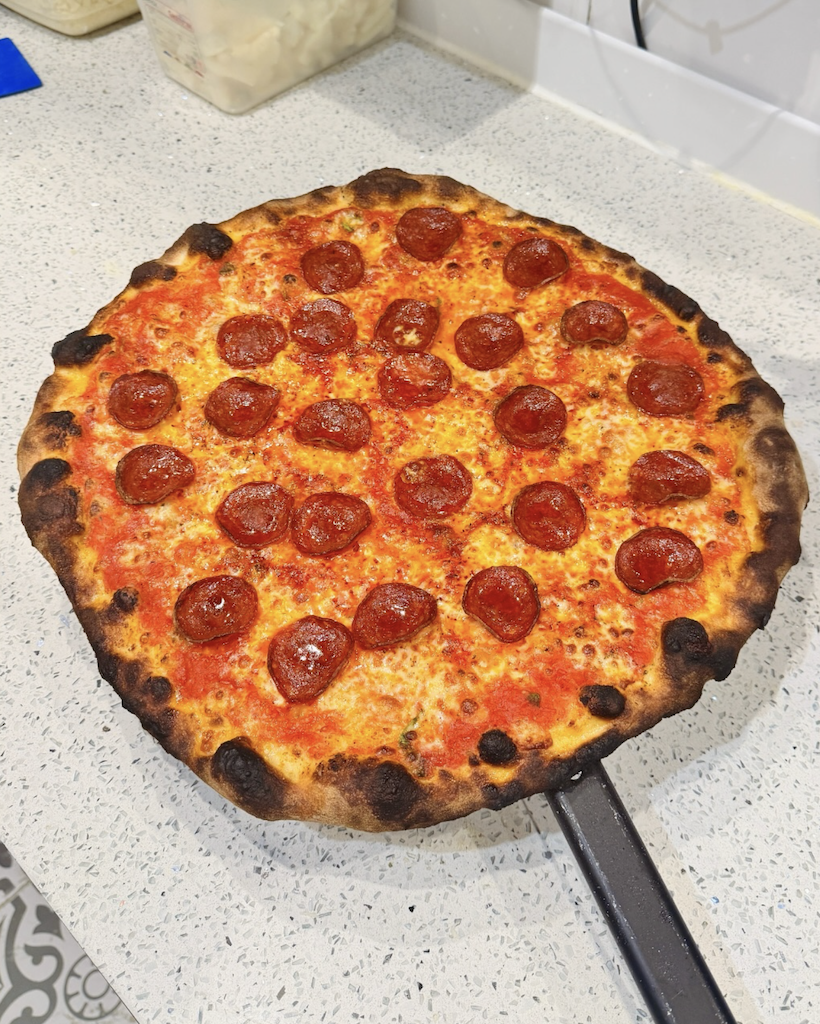
Head chef Francesco Macri approaches dough with the correct devotion, and his 14-inch pies emerge with textbook char, crispness and distinctive chew. The deceptively simple marinara proves that restraint often trumps complexity, while the halal pepperoni has rapidly developed its own Chelsea following.

Securing one of the wooden booths requires strategic timing – weekday evenings offer better odds. The bar programme focuses on quality essentials – craft beer, natural wines, and precise spicy margaritas. Don’t overlook their house chilli sauce, which elevates even basic slices to memorable heights.

Website: alleycatspizza.co.uk

Address: 342 King’s Rd, London SW3 5UR


Marta

Ideal for thin-crust Roman pizza worth staying up late for…

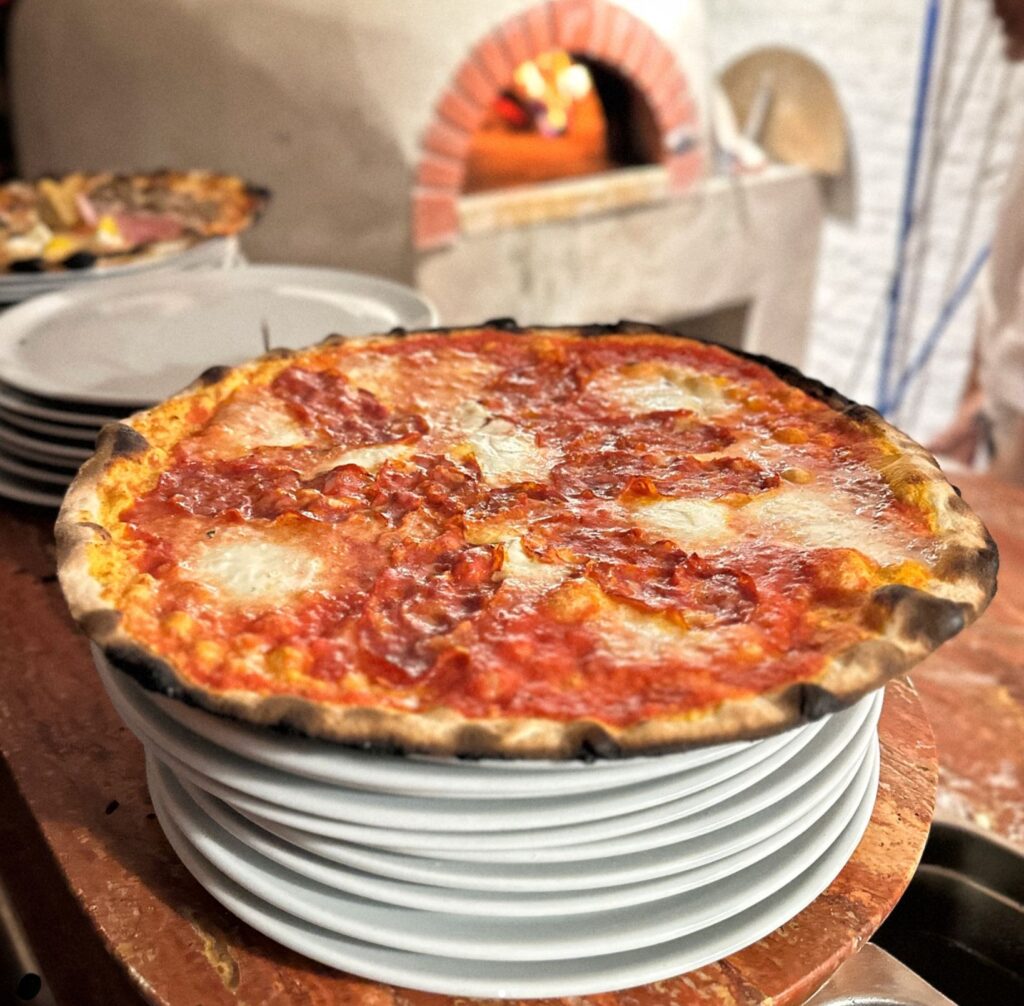
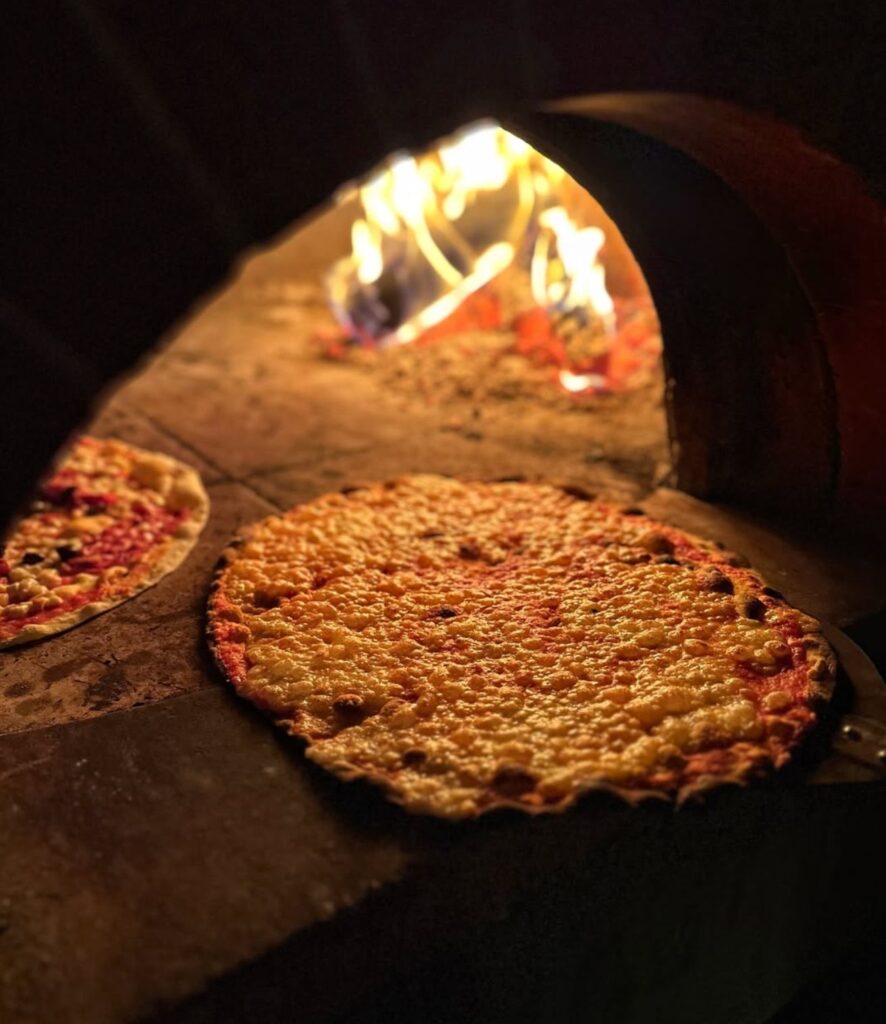
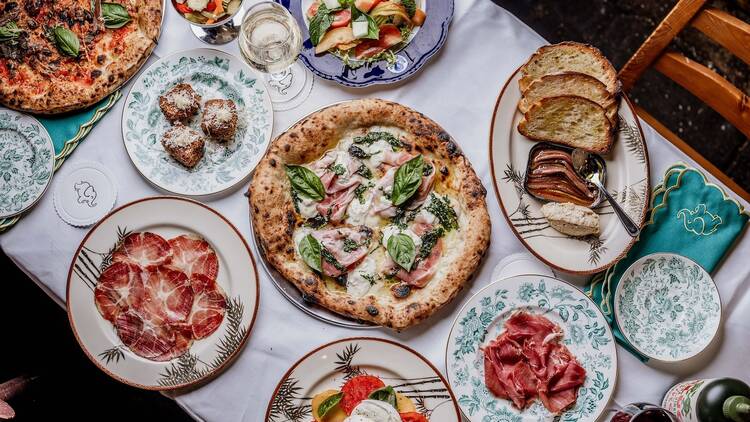
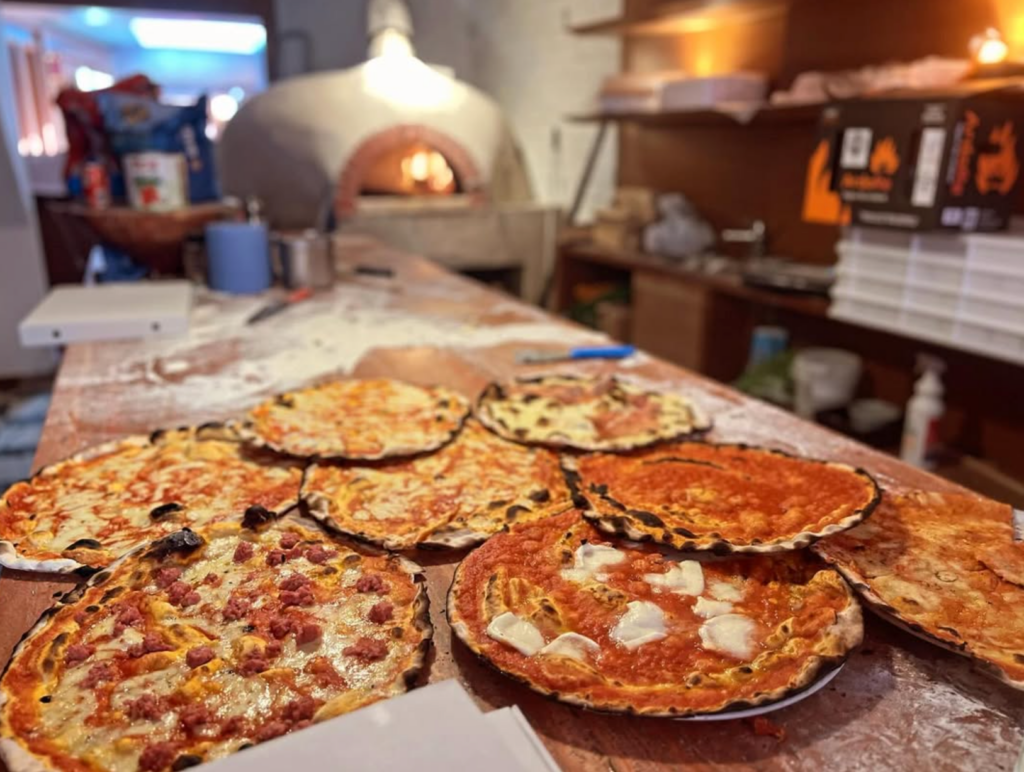
While London’s pizza scene worships at either the Neapolitan or New York altar, Marta celebrates Rome’s distinct pizza tradition. From L’Artigiano’s former Fulham Road premises, the kitchen follows strict Roman methodology – each pizza hand-rolled with a traditional Mattarello pin, creating characteristically thin, crispy bases that emerge perfectly blistered from their Valoriani oven.

The standout Focaccio di Marta sandwiches Stracchino cheese and truffle honey between whisper-thin crispy layers, while the Crostino Cotto achieves perfect harmony between tomato, mozzarella, prosciutto cotto and basil. Don’t be shy to ask for any extras on your pizza to make it ‘just right’ for you; the chefs here will happily oblige.
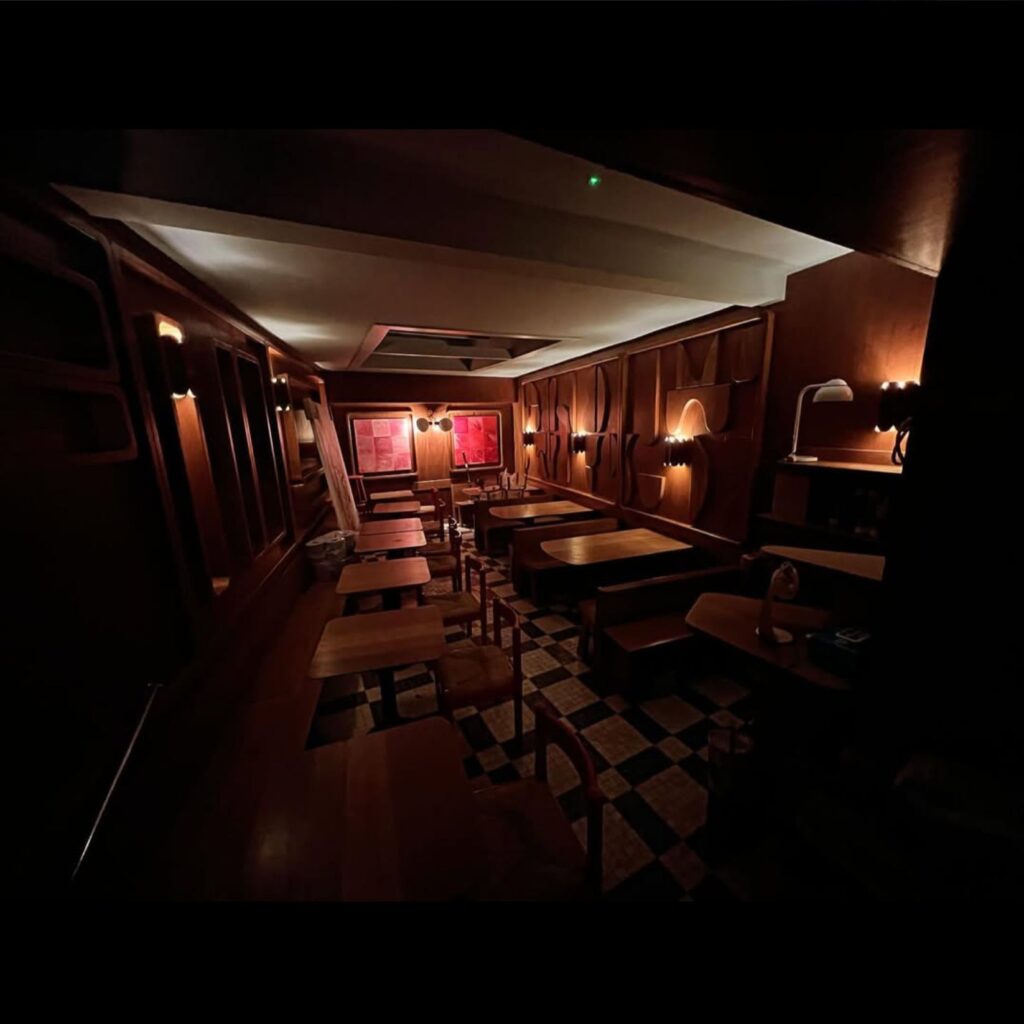
Night owls take note: their late weekend hours (open until midnight Friday and Saturday) make Marta a rare post-theatre option in a neighbourhood not known for burning the midnight, chilli-infused oil.

Address: 343 Fulham Rd., London SW10 9TW

Instagram: @marta.chelsea

5 Mothering Sunday Gifts That Go Above & Beyond The Obvious

Mothering Sunday falls on 15 March this year, which, still two weeks away, leaves enough time to do something more considered than a last-minute bouquet and a card from the petrol station. The default options are fine. Flowers, chocolates, a nice candle. Nobody is going to complain. 

But there is a version of this where she opens something and genuinely does not know what it is yet, where the gift has a bit of a story behind it, and where it feels like it could only have come from someone who actually thought about what she would want rather than what was easiest to order on a Tuesday night.

These five ideas span a wide range, from just £30 to over a grand, but what connects them is not the price tag. Each one results in something with a story attached, something she will keep, use, or remember long after the day itself.

A Bespoke Fragrance Session At Floris

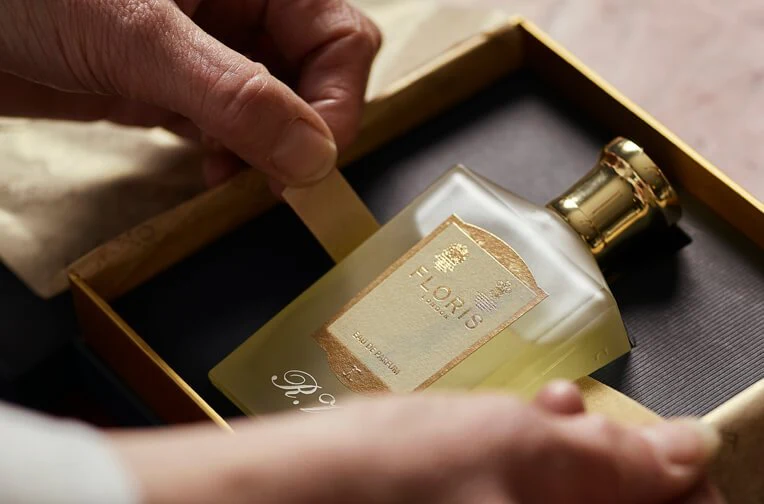
Floris has been making perfume at 89 Jermyn Street since 1730. Nine generations of the same family have worked out of the same St James’s shop, and you can book a session in the private perfumery behind the shop floor where Edward Bodenham and his team compose fragrances surrounded by nearly three centuries of archived history.

Their single Fragrance Customisation experience costs £750 and lasts two hours. You sit with a Floris perfumer, work through their archive of foundation fragrances over a glass of champagne or Fortnum & Mason tea, and gradually build a scent blended to her tastes. She walks out with a 100ml bottle, hand-labelled and signed by the perfumer. The formula gets archived in the Floris ledgers, meaning she can reorder it for life.

For two people, the Together experience costs £1,250 and runs for three hours, producing two distinct fragrances. Both make for the kind of afternoon in St James’s that turns Mothering’s Day into an occasion rather than an obligation.

A Pottery Class That Produces Something Worth Keeping

The trick with experience gifts is making sure they leave behind something more than a photo on her phone. A well-chosen ceramics class does both: a few hours away from the everyday, and a bowl or mug she will actually reach for at breakfast.

SkandiHus, founded by Danish ceramicist Stine Dulong, runs taster sessions from studios in Walthamstow and de Beauvoir. Dulong left a corporate law career to make pottery full-time, and her Scandinavian-influenced pieces have ended up in the kitchens of Nigella Lawson and Yotam Ottolenghi. A 2.5-hour hand-building taster costs £45, and she leaves with a piece that gets fired and glazed. Wheel-throwing sessions run at £90. SkandiHus also runs more unusual workshops combining clay with sound baths and cacao ceremonies, if she is the type.

Elsewhere, Turning Earth in Hoxton, Highgate and Leyton operates on an open-access membership model and runs classes at all levels. The Kiln Rooms has studios across London offering one-off tasters from around £60. Outside the capital, Clayability near Bristol runs intimate five-person courses with professional potter Bill Moore in a converted farm studio.

A DIY Book Nook Kit By Anavrin

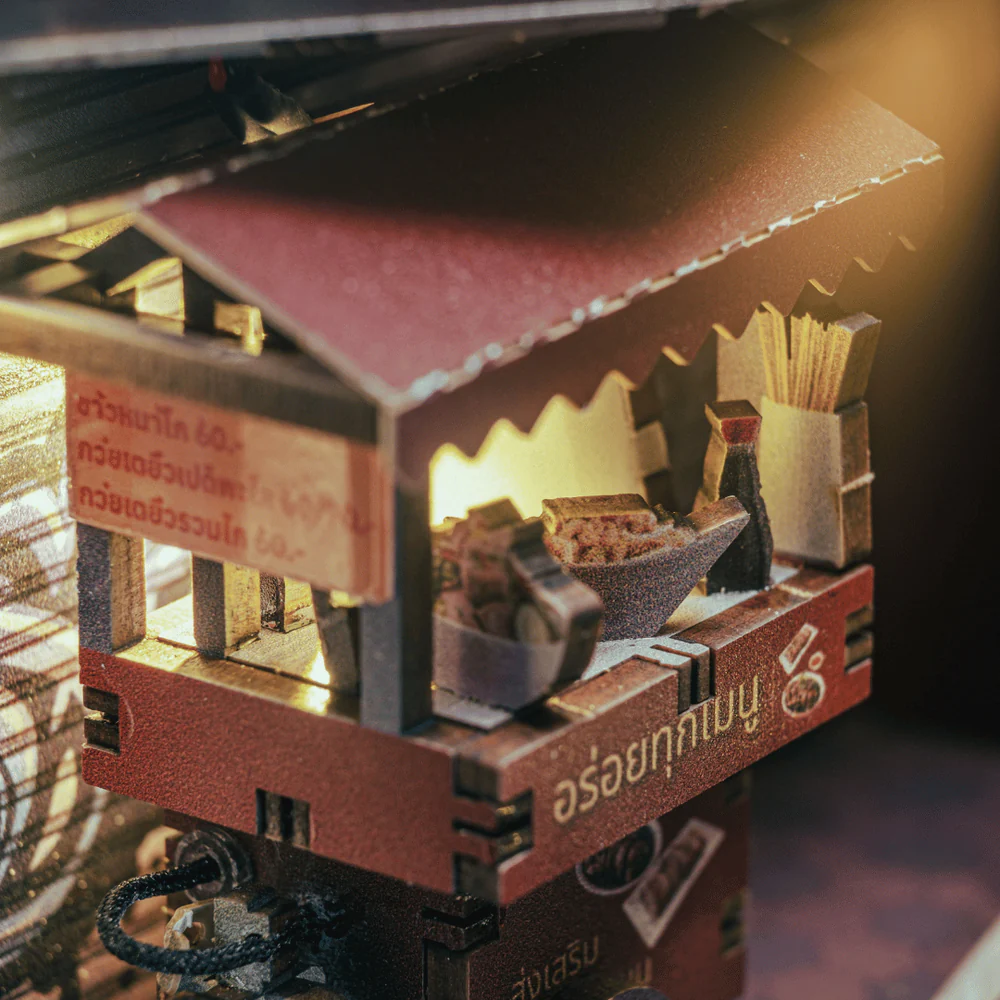
For mothers who read, or who have strong feelings about how a bookshelf should look, Anavrin’s DIY book nooks are a left-field option that lands well. These are detailed miniature dioramas, roughly the width of a hardback, designed to slot between books on a shelf. Each one recreates a real-world street scene with laser-cut wooden pieces, LED lighting, and an absurd level of architectural detail.

The Kyoto Gion kit builds out a dawn scene along the Hokan-ji walkway, complete with paper lanterns, cherry blossoms, and a miniature pagoda that glows when you switch on the LEDs. The Omoide Yokocho set recreates the narrow izakaya alleys of Shinjuku’s Memory Lane, down to stacked beer crates and tiny vending machines. We love Bangkok’s Chinatown one too.

Assembly takes around five to seven hours, so it is a Sunday afternoon project rather than a five-minute unwrap. No painting required; everything comes pre-coloured and numbered.

Kits start from around £33 on Amazon UK, with more complex builds like the Lijiang Ancient Town or Kowloon Walled City 2049 running up to £80. They ship from multiple fulfilment centres including Europe, so delivery before 15 March should not be a problem.

A Custom Vinyl Record of Songs That Mean Something

A playlist is thoughtful. A playlist pressed onto vinyl, with custom sleeve artwork, is something else entirely. Several UK companies now offer single-run lathe-cut records where you choose the tracklist, design the cover, and receive a one-off 12-inch or 7-inch that exists nowhere else in the world.

Cutsy, based in Hackney, has been doing this since 2016 and specialises in one-offs and small runs. Records start from £39.99 with free UK shipping, and lathe-cut orders ship within 12 working days. They hold a Limited Manufacturing Licence, so they can legally produce records with most commercial music provided you supply the tracks from a legitimate source. You could put together the songs from her wedding, the track she played on every family road trip, the album that got her through a hard year. One Cut Vinyl is another well-reviewed UK option with a roughly three-week turnaround on standard orders.

The sound quality on lathe-cut records will not match a factory pressing, but that is not really the point. The point is that she has a physical object that holds a story, and it sits on a shelf rather than disappearing into a streaming queue.

A Hand-Illustrated Map of Somewhere That Matters

Commissioned gifts carry a different weight because they cannot be replicated. A hand-illustrated map of a place that means something to her, whether that is the village she grew up in, the city where she met your dad, or the stretch of coastline where the family always holidays, turns geography into something personal.

Coostie Illustration, run by illustrator Ali, offers personalised hand-drawn maps starting from £60 for an A4 print with five illustrated landmarks. You provide the route, the places, and the landmarks you want featured, and she draws them in a detailed pen-and-ink style. More complex full-colour watercolour commissions start from around £250. Maps Illustrated, based in Greater London, has been producing bespoke cartography for over 20 years and produced illustrated maps for the 2011 Royal Wedding programme, so the pedigree is there.

Lead times matter here. Most illustrators ask for at least a month for bespoke work, so if you are reading this close to 15 March, a gift voucher for the commission might be the smarter move. Coostie sells these directly through her site.

The Bottom Line

The common thread here is not price or category. It is specificity. A scent blended to her preferences and archived under her name. A bowl she shaped herself on a Saturday morning. A miniature street scene she assembled over a pot of tea. A vinyl record that holds the soundtrack to your family. A map drawn around the places that made her who she is. 

When a gift signals that kind of attention, it stops being a gesture and starts being something she keeps.

The Best Restaurants In St Albans, Hertfordshire

Last updated March 2026

With its magnificent cathedral, Roman ruins, and cobbled streets, St Albans is one of the UK’s most easy-on-the-eye cities. This ancient settlement, Britain’s first Christian martyr’s final resting place (bit of a complicated claim, that one) is quite rightly popular with tourists, both local and international.

In terms of a food scene, that regular influx of visitors can go one of two ways; either, a city full of tourist traps and chains. Or, a place of genuinely unique, largely independent places to eat. Fortunately, in the case of St Albans, the latter is true.

The city’s restaurant landscape has flourished in recent years, driven by passionate restaurateurs who’ve recognised that St Albans diners demand more than mediocrity. From innovative pizza makers in village outposts to AA Rosette-winning chefs crafting seasonal menus that cherish local ingredients, the cathedral city now offers remarkable dining experiences that draw food lovers from across the Home Counties.

Whether you’re seeking a post-shopping bite near the bustling market or a celebration dinner worthy of the city’s historic grandeur, St Albans delivers. Here are the best restaurants in St Albans, Hertfordshire.

Dylans at The Kings Arms

Ideal for gastropub dining with serious beer credentials…

Sean Hughes and his family have transformed this beautiful 15th-century Tudor building into one of St Albans’ most acclaimed establishments. Dylans now holds 2 AA Rosettes and a place in the Good Food Guide’s UK Top 100 Pubs, adding to its earlier wins including Best Front of House Team at the Top 50 Gastropubs awards in 2022.

The arrival of a dedicated pastry chef has broadened the kitchen’s ambitions, while the pub’s commitment to craft beer runs as deep as ever – they were among St Albans’ first establishments to champion independent breweries, building relationships that allow them to regularly feature limited-edition beers, with daily updates posted on Untappd for the seriously beer-obsessed.

But the real star here is the food, and the txuleta prime rib, in particular. It’s the restaurant’s signature dish for a reason, arriving finished with rich brown butter gravy and those essential beef fat triple-cooked chips. It’s become something of a local legend, and rightly so – the beef is well aged, the cooking spot-on, and the presentation unfussy yet impressive in its confidence. At £105 for two people to share, it’s not cheap, but when that hefty chop hits the table, the fat yellow and melting, the steak blushing, the gravy glossy, you won’t resent the price. Oh, and the accompanying beef fat chips aren’t half bad, either.

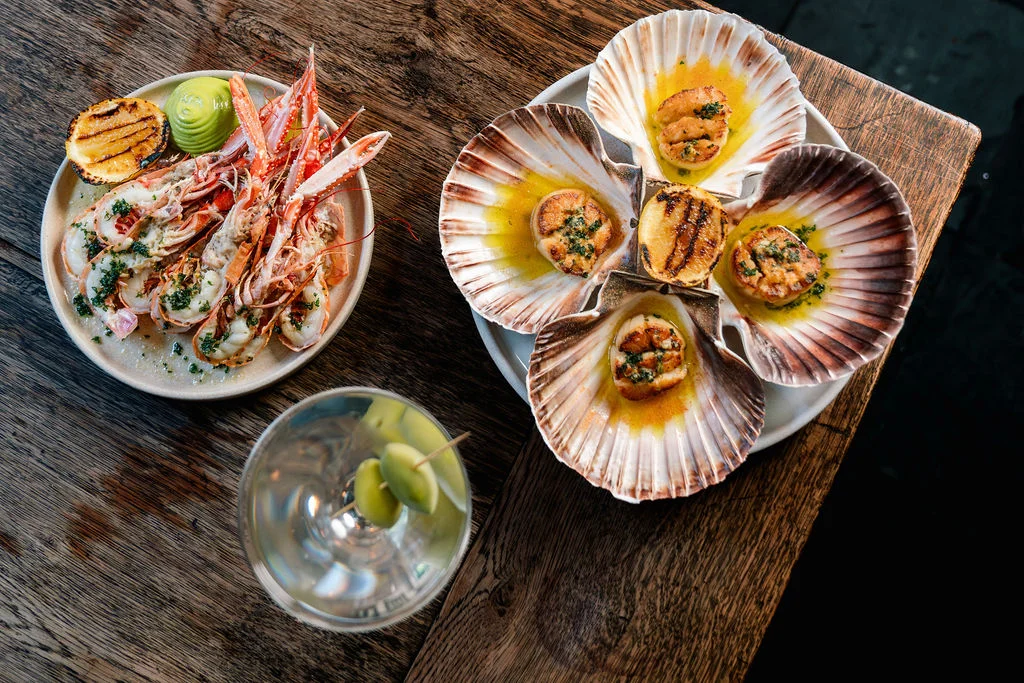
Head chef Josh Searle’s menu extends well beyond that famous rib, with seasonal British dishes that demonstrate genuine skill. They are especially good at seafood here with hand-dived scallops from Orkney often starring on the menu.

The restaurant operates with two distinct areas: a snacking menu available in the front bar, with perfectly pulled pints and all, and a full à la carte service in the back dining room. This flexibility makes Dylans equally suitable for a quick Guinness and bite or a full evening out. 

The building itself, with its low ceilings and original Tudor features, creates that genuinely historic atmosphere you can’t fake. Tables are at a premium, particularly on weekends, so booking ahead is wise. The acoustics can get lively when the place is full, but that’s part of the charm – this is a pub that feels genuinely lived-in. And anyway, it can be quite nice to lean into your dining companion from time to time, don’t you think?

Website: dylanskingsarms.com

Address: 7 George St, St Albans AL3 4ER


Lussmanns St Albans

Ideal for sustainable dining with views of the cathedral…

Situated next to St Albans Cathedral with lovely views over the Vintry Garden, Lussmanns represents everything admirable about modern British dining. Their commitment to sustainability runs deeper than most – 95% of ingredients are British-grown or produced, all fish carries Marine Stewardship Council approval, and their beef and mutton is organic.

The restaurant occupies three floors of a modern building, creating different moods depending on your preference. The ground floor bustles with energy, the upper floors offer more intimacy, and there’s a private dining area for special occasions. Large windows throughout ensure the cathedral views are maximised, particularly magical during evening service when the ancient stones are illuminated.

Chef Nick McGeown’s menu changes regularly to reflect seasonal availability, but certain dishes have become signatures. The organic mutton kofta with brioche bun and cucumber mint raita showcases British lamb in an unexpected preparation, whilst the fish dishes – perhaps Cornish monkfish with samphire and brown shrimp – demonstrate why their MSC certification matters in terms of quality as well as ethics.

The wider Lussmanns group faced a turbulent end to 2025, entering pre-pack administration and closing its Berkhamsted and Highgate restaurants amid rising costs and difficult trading conditions. The St Albans branch, however, remains firmly open and profitable, with founder Andrei Lussmann confirming a renewed focus on the group’s five remaining sites. If anything, the streamlining has concentrated the energy here, and the Spring 2026 menu – featuring dishes like confit organic Haye Farm lamb shoulder and MSC grilled red bream with smoked aubergine – continues to showcase the seasonal, sustainable cooking that earned Lussmanns its reputation.

The beer selection showcases four local Hertfordshire brewers: Farrs Brew, Mad Squirrel, Zealous, and Three Brewers. These aren’t token gestures towards localism – each beer is carefully chosen to complement the food, and the Mad Squirrel pilsner pairs brilliantly with their fish dishes. Yes, they love their beer in St Albans.

Lussmanns also embraces St Albans’ jazz heritage with live performances every Wednesday evening. The combination of excellent food, sustainable practices, and live music creates an atmosphere that feels uniquely St Albans – sophisticated but never stuffy, with genuine care for both community and environment.

Wednesday evening jazz sessions require advance booking, as the intimate setting fills quickly with both locals and visitors drawn by the music as much as the food.

Website: lussmanns.com

Address: 14-16 Heritage Close, St Albans AL3 4EB


Gracey’s Pizza

Ideal for discovering why pizza enthusiasts travel from across the country…

James Woodley and Grace Surman’s tiny pizzeria in Chiswell Green has achieved something remarkable: national recognition for a restaurant that barely seats ten people inside. Their New Haven-style pizzas, with their distinctive thin, crispy, and charred crusts, have attracted attention from London food writers and even earned them a spot on Gozney’s international ‘How to Pizza’ YouTube series alongside celebrated pizzaiolos from Brooklyn and Los Angeles.

The operation could hardly be more humble – five small tables inside, a few more outside, and a secondhand pizza oven that Woodley has mastered over years of patient practice. But the pizza that emerges from that oven justifies every bit of hype. The base achieves that perfect New Haven combination of crispy bottom and chewy edges, with the kind of char that speaks to serious high-heat cooking.

Woodley’s background includes time at some of London’s most respected kitchens, including the Camberwell Arms and Brunswick House, and that experience shows in the attention to detail. The dough uses a blend of high-protein bread flour and locally milled flour from Redbournbury Mill, fermented in two stages for optimal flavour development. The tomatoes are the best Italian varieties, milled fresh and topped with herbs post-bake.

Their collaboration approach has become part of Gracey’s story. Recent partnerships with The Boot Cantina (just a couple of paragraphs away) produced a Mexican-inspired special pizza that had St Albans food lovers queuing for tables. It’s this willingness to experiment and collaborate that keeps the menu interesting despite its deliberately narrow focus.

The St Albans original now takes reservations via OpenTable, a significant upgrade from the early days of dawn-alarm click-and-collect slots, though the most popular pizzas still sell out. And that second branch in that there London? It’s now two branches in that there London, with permanent restaurants at both Arcade Battersea Power Station and Arcade Tottenham Court Road since late 2025, each serving a bespoke menu featuring new pies like the Smokey Ron and a Grandma Square Pie alongside the St Albans classics. For a restaurant that started in 2021 with five tables and a secondhand oven, the trajectory has been remarkable.

Website: graceyspizza.com

Address: 339 Watford Rd, Chiswell Green, St Albans AL2 3DA


The Boot Cantina

Ideal for excellent Mexican food in St Albans’ most historic setting…

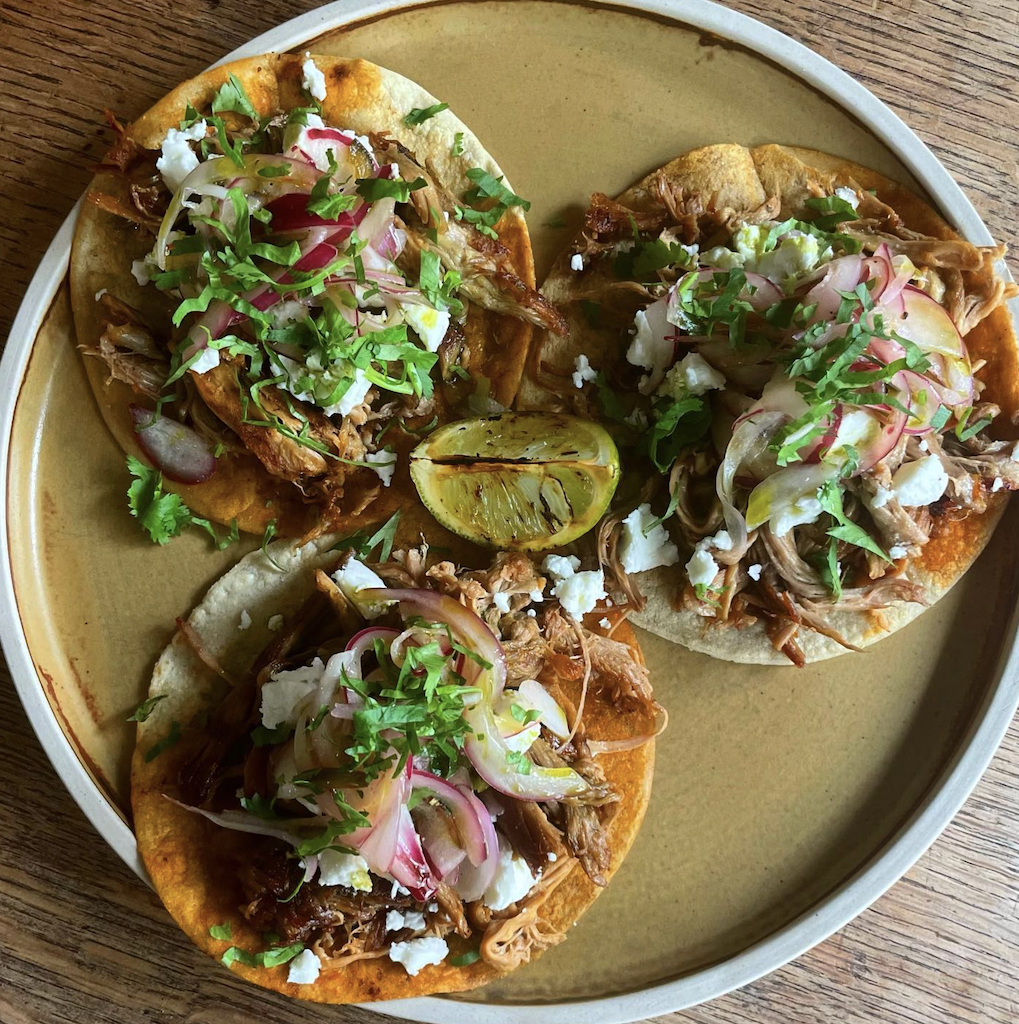
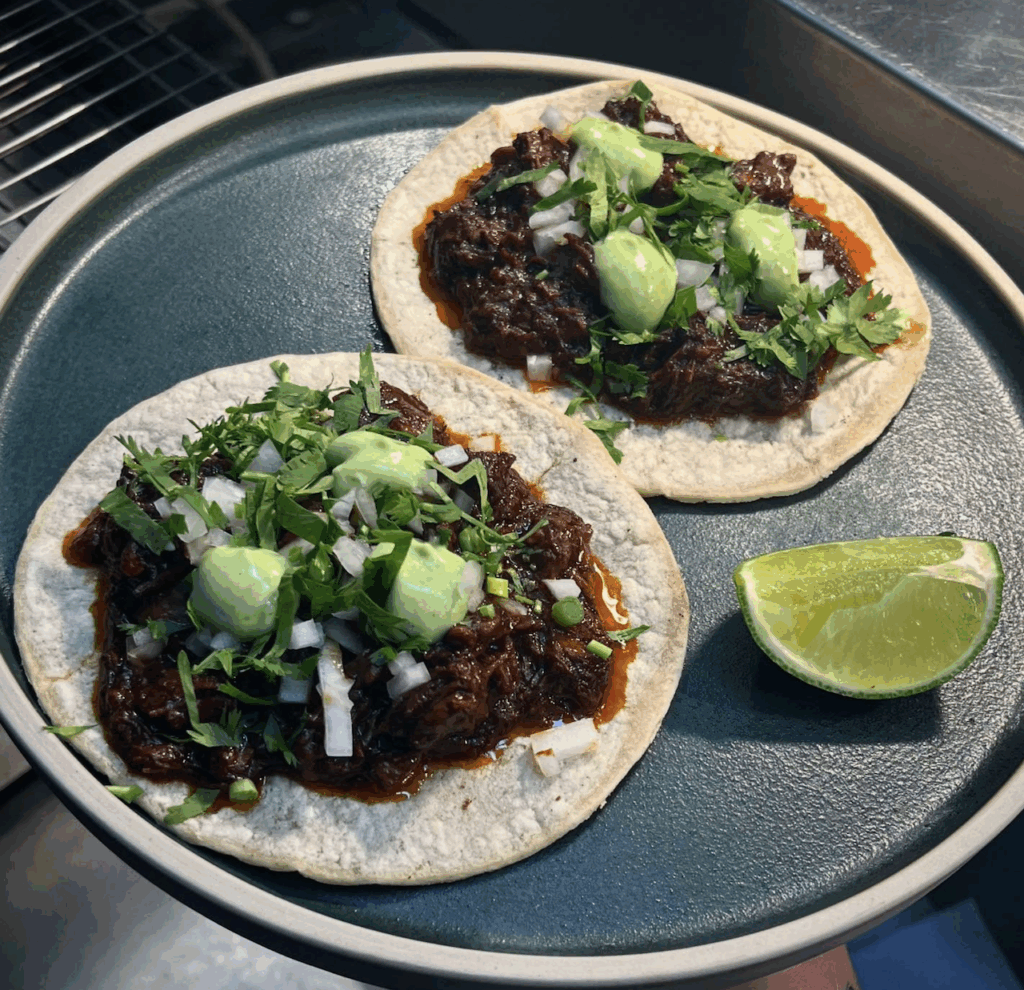
The Hughes family have created something genuinely special at The Boot: world-class birria tacos served in a pub where the War of the Roses allegedly began outside the front door. Head chef Lloyd Pell’s passion for Mexican cooking has transformed this medieval Market Place pub into St Albans’ unlikely Mexican food destination.

The birria tacos alone justify the journey, even from further afield than St Albans itself. Made with slow-cooked beef shin rather than the traditional goat, the meat arrives tender and deeply flavoured, served in fried tortillas with the cooking broth alongside for dipping. It’s skilled Mexican technique producing intensely satisfying results – messy eating that delivers powerful, distinctive flavours (and a ruined white t-shirt) with every bite.

Pell’s menu extends well beyond the famous birria, though. The padron peppers arrive properly blistered and generously seasoned, whilst the spiced cauliflower vegan taco comes piled so high it challenges your taco-folding skills. The corn cob brushed with chipotle crema and parmesan has become an Instagram favourite, but more importantly, it tastes brilliant.

The pub setting actually enhances rather than detracts from the Mexican food. Low ceilings create that warm, convivial atmosphere that makes tacos taste even better, whilst the historic surroundings provide conversational fodder between courses. The beer selection includes some excellent choices – Harvey’s Sussex Best pairs surprisingly well with spicy food – and the background music tends towards classics (Blur and Pulp during our visit).

Monthly vinyl nights with special one-off tacos show the restaurant’s commitment to being more than just a food destination. This is community dining at its best, with the Hughes family creating a space that works equally well for casual drinks or serious taco consumption.

The combination of historic setting, excellent beer, and genuinely skilled Mexican cooking makes The Boot genuinely unique. It’s one of our favourites places to eat in St Albans, no question.

Website: bootcantina.com

Address: 4 Market Place, St Albans AL3 5DG


Read: The best Mexican restaurants in London


The Waffle House

Ideal for breakfast in a 16th-century watermill setting…

Housed within the Grade II listed Kingsbury Watermill overlooking the River Ver, The Waffle House has been feeding St Albans since 1978. The location alone makes this worth visiting – a working watermill in the tranquil Conservation Area of St Michael’s village, just a ten-minute walk from the city centre but feeling utterly rural and very tranquil indeed.

The family business specialises in Belgian waffles made with organically grown flour from the 1000-year-old Redbournbury Mill, creating a local supply chain that stretches back centuries. Both sweet and savoury options cater to different appetites, with daily specials ensuring regular customers never get bored.

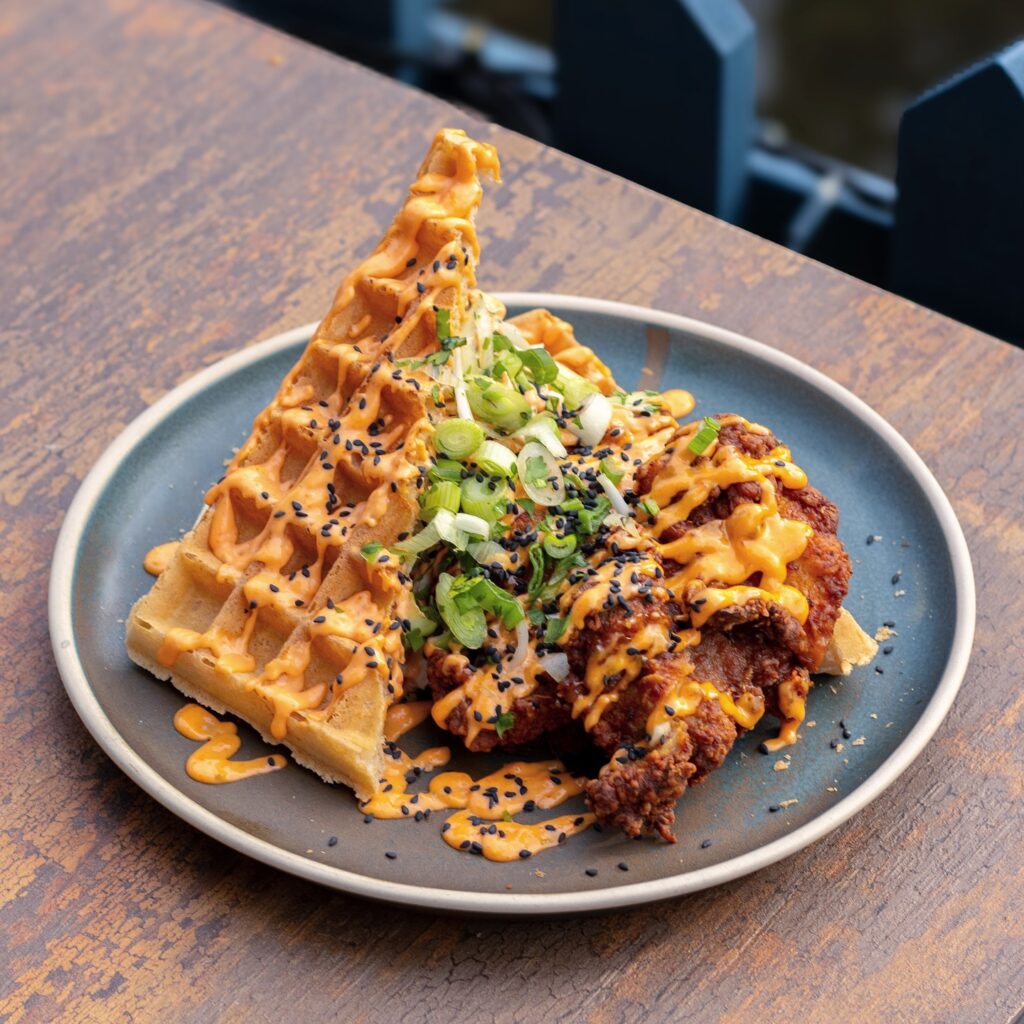
The savoury waffles deserve particular attention. Options like ratatouille with goat’s cheese or hummus with avocado transform the waffle from dessert into a substantial meal. The fried chicken waffle brings big New York energy, whilst the daily specials might include anything from smoked salmon to full cooked breakfast ingredients.

Sweet options follow Belgian traditions but with regional, seasonal touches where possible. The banoffee waffle remains their most Instagrammed dish, arriving with rich toffee sauce and fresh banana that hasn’t been allowed to go brown. Seasonal fruit features heavily in summer specials, making the most of Hertfordshire’s excellent fruit farms.

The dining room occupies the original mill building, with the water wheel still turning daily to maintain the historic atmosphere. Tables by the windows offer lovely views over the River Ver, whilst the outdoor seating area provides al fresco dining when weather permits.

The Waffle House operates primarily on a first-come, first-served basis, though they do accept reservations for Friday and Saturday evenings from 5pm for tables of 4 or more. This can mean queues at weekend brunch times for walk-ins. However, the wait rarely exceeds 20 minutes, and the chance to watch the water wheel turn while you wait adds to the fun.

Website: wafflehouse.co.uk

Address: Kingsbury Watermill, St Michael’s Street, St Albans AL3 4SJ


Hatch St Albans

Ideal for weekend brunch that’s worth queuing for…

Chris Evans’ all-day dining spot at Christopher Place has quickly established itself as St Albans’ premier brunch destination (when, perhaps, the waffle place is full, to be fair). The industrial-chic interior with its polished concrete floors and exposed brick provides an urban backdrop for seriously accomplished cooking that elevates familiar brunch dishes into something special.

What started as a brunch-only operation has grown considerably. Hatch now serves NYC Nights on Wednesday to Saturday evenings from 5pm, a menu of New York comfort food classics that gives the restaurant a whole second life after dark. Chris Evans has also launched Marmalade, a more grown-up brunch café on Holywell Hill (the original Hatch site), and a third outpost at Smallford Farm Shop using produce from the neighbouring Glinwell farm.

The Christopher Place flagship remains the main event, though, and the daytime menu still plays with expectations in all the right ways. Mushrooms on toast might sound modest, but arrives as punchy pickled mushrooms on sourdough with a poached egg, truffle oil, and a delicate puff of goat’s cheese mousse that transforms the entire dish.

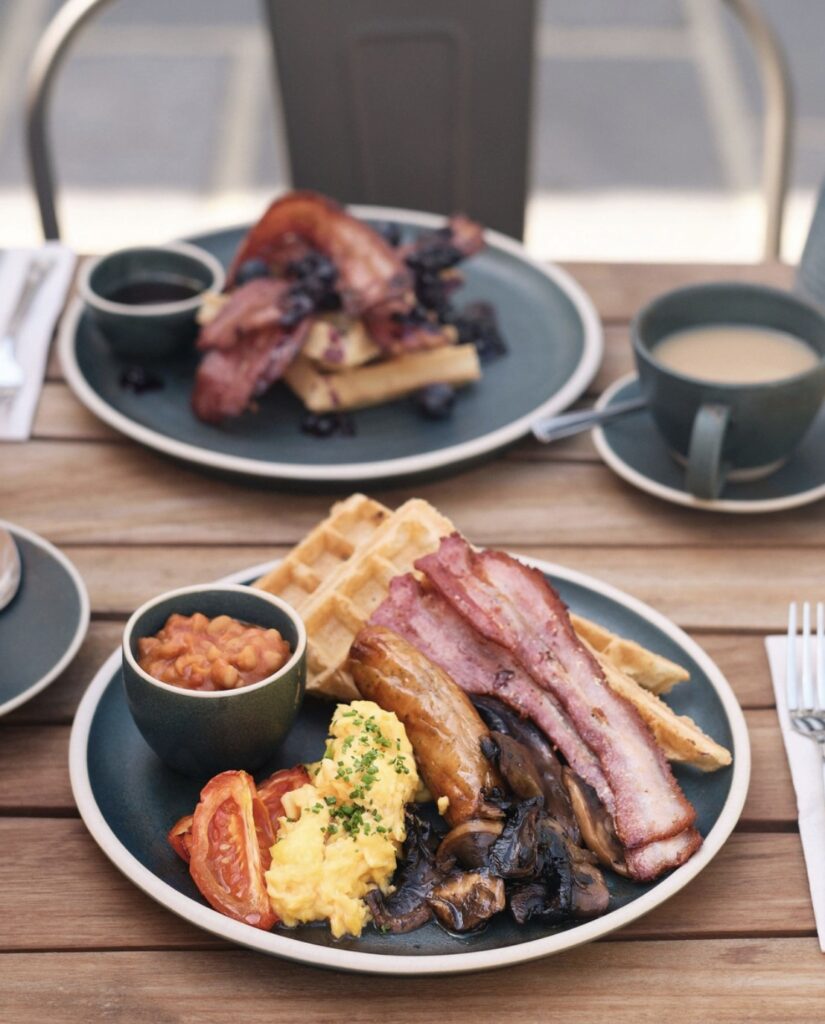
The waffle game (they love beer and waffles in St Albans – it should be called St AlBelgium, perhaps?) here deserves particular recognition. Made from a traditional Belgian batter and cooked to order, these arrive crisp outside and fluffy within. The weekend special waffles change seasonally – recent highlights included versions with honey-roasted Spanish figs and dark chocolate ganache, or macerated Mirabelle plums with beetroot Eton mess and strawberry crisps. These aren’t confused as they sound – they’re vivid expressions of British seasonality in brunch form.

For those preferring savoury options, the burgers have earned devoted followers, whilst the loaded hash browns provide proper indulgence. Basically, there’s something on this menu to suit even the most fickle members of the squad.

The coffee here takes things seriously, with beans sourced from quality roasters and baristas who understand extraction. This isn’t afterthought coffee – it’s the kind of espresso and flat white that London coffee shops charge premium prices for.

Weekend queues are becoming standard, but the team manages waits efficiently and the food justifies any delay. The atmosphere remains relaxed despite the popularity, with dog-friendly policies adding to the neighbourhood feel.

Website: hatchstalbans.com

Address: 7-8 Christopher Place, St Albans AL3 5DQ

Just up the road, we’re off to Berkhamsted for another feast next. Care to join us?

The Best Things to See & Do on Iceland’s Snæfellsnes Peninsula

Nicknamed ‘Iceland in Miniature’, the Snæfellsnes Peninsula packs glaciers, volcanoes, black sand beaches, lava fields and fishing villages into a single 90-kilometre stretch of West Iceland coastline. Here’s what not to miss.

The Snæfellsnes Peninsula sits about two hours northwest of Reykjavík, jutting out into the Atlantic like a crooked arm beckoning you further from the capital. Most visitors to Iceland stick to the Golden Circle or the Ring Road, both of which deserve the attention they get. But Snæfellsnes offers something different: a concentrated, wonderfully varied landscape that manages to compress the full breadth of Icelandic scenery into a single loop drive.

You could see the highlights in a long day trip from Reykjavík, but spending at least one night on the peninsula gives you breathing room, better light for photos and a chance to experience the place when the tour buses have gone. The loop itself follows Route 54, a well-maintained road that’s accessible year-round, though winter driving requires more care and a 4×4 is always the safer bet when conditions turn.

Whichever way you play it, the jist remains the same; these are the best things to see and do on Iceland’s Snæfellsnes Peninsula.

Kirkjufell & Kirkjufellsfoss

You’ve almost certainly seen this mountain before, even if you didn’t know it. Kirkjufell, meaning Church Mountain, rises 463 metres from the shore near Grundarfjörður on the peninsula’s north coast. Its distinctive steeple-like form featured as the Arrowhead Mountain in Game of Thrones, and it has since become one of the most photographed peaks in Iceland.

The neighbouring Kirkjufellsfoss waterfall provides the foreground for that much-reproduced shot, but the mountain shifts shape dramatically as you move around it, rewarding those who explore beyond the main viewpoint. There’s a paid car park at the waterfall. For a less crowded experience, visit early in the morning or late in the evening, when the light tends to be better anyway.

Climbing the mountain itself is possible in summer but demanding and dangerous in wet conditions, so most visitors are better off appreciating it from below.

Read: 10 must-see destinations in Iceland’s Golden Circle

The Arnarstapi to Hellnar Coastal Walk

This 3-kilometre trail along the southern coast of the peninsula is one of Iceland’s finest short hikes. Starting from Arnarstapi’s harbour, the path traces a clifftop nature reserve (protected since 1979) past dramatic basalt columns, sea arches and lava formations, with fulmars, kittiwakes and Arctic terns wheeling overhead throughout the breeding season.

The stand-out feature is Gatklettur, a natural stone arch sculpted by centuries of Atlantic erosion. The terrain transitions from grassy clifftop to a moss-covered lava field as you approach Hellnar, where the tiny café Fjöruhúsið serves homemade fish soup and cake on a wooden terrace overlooking the shore.

Most people walk back the same way they came, making this a roughly two-hour round trip. Start at either end; neither direction has a clear advantage.

Djúpalónssandur Beach

On the peninsula’s southwestern tip, within Snæfellsjökull National Park, Djúpalónssandur is a crescent of black volcanic pebbles backed by twisted lava formations. What separates it from other Icelandic black sand beaches is its layered history.

Four lifting stones sit near the shore, ranging from 23 to 154 kilograms, once used to test the strength of fishermen seeking work on local boats. Anyone who couldn’t manage at least the 54-kilogram stone was considered unfit for the sea. Visitors are welcome to try their luck.

Scattered across the sand are rusted remnants of the British trawler Epine GY7, which was wrecked here in 1948 with the loss of 14 lives, now preserved as a memorial. A one-kilometre walk west takes you to Dritvík cove, once one of Iceland’s busiest seasonal fishing stations. Be warned: the waves here are powerful and unpredictable. This is a beach for walking and looking, not wading.

Read: 2026’s best cruise destination, Iceland

Snæfellsjökull National Park

The glacier-topped volcano Snæfellsjökull dominates the western tip of the peninsula and, on a clear day, is visible from Reykjavík across Faxaflói Bay. Jules Verne chose it as the entry point in A Journey to the Centre of the Earth, and even without the literary associations, it holds a certain magnetic quality.

The national park surrounding it is Iceland’s smallest but covers a striking range of terrain, from lava fields and coastal cliffs to the ice cap itself. In summer, guided glacier hikes are available for those with the fitness and nerve for it. At other times, the park’s marked trails and viewpoints offer plenty of reward without the crampons.

Vatnshellir Lava Cave

Formed by an eruption roughly 8,000 years ago, Vatnshellir is a 200-metre lava tube that descends about 35 metres beneath the surface of Snæfellsjökull National Park. Guided tours run year-round (more frequently in summer) and last about 45 minutes, taking you through three chambers of vividly coloured volcanic rock: reds from iron, yellows from sulphur, greens from copper.

At the deepest point, your guide will ask you to switch off your torches for a spell of total darkness. It’s a brief, slightly unnerving moment that most people remember long after the rest of the tour has faded.

The cave is located about ten minutes’ drive from the village of Hellnar. Tours are operated by Summit Adventure Guides, the sole licensed operator.

Búðakirkja

Sitting alone in a vast lava field on the southern coast, the small black church at Búðir is one of the most photographed buildings in Iceland. A church has stood on this site since 1703; the current structure dates to 1848 and was renovated in 1987. Its stark dark timber against the moss-covered rock and open sky makes for a scene that looks vaguely unreal in person.

It draws tour buses, so afternoon visits tend to be busier. The surrounding Búðahraun lava field is worth exploring too, a labyrinth of ancient basalt softened by thick green moss that extends in every direction.

Stykkishólmur

The largest town on the peninsula (population around 1,100), Stykkishólmur is worth more than a fuel stop. Its colourful harbour is lined with restored wooden houses dating back to the early 19th century, including the Norwegian House, built in 1832 and now a regional museum.

The Baldur ferry departs from here for the Westfjords, stopping at the tiny island of Flatey en route. Roni Horn’s Library of Water, an art installation featuring columns of glacier water collected from across Iceland, occupies a former library on the hill above town. Climb Súgandisey island, now connected to the harbour by a walkway, for panoramic views across Breiðafjörður Bay and its estimated 2,700 islands.

For dinner, Sjávarpakkhúsið by the harbour is widely considered the best restaurant on the peninsula.

Ytri Tunga Beach

Most visitors come here for one reason: seals. Ytri Tunga, on the peninsula’s south coast, is one of the best places in Iceland to spot harbour seals and grey seals lounging on the small rocky islands just offshore. The best time is May to July, though you may get lucky outside that window.

The beach itself is unusually golden for Iceland, a pleasing contrast from all the black volcanic sand elsewhere. It’s a short detour off Route 54 and easy to miss if you’re not looking for it; watch for a road marker with a small red-roofed house.

Gerðuberg Cliffs

Your first encounter with Snæfellsnes if you’re driving clockwise from Reykjavík, the Gerðuberg basalt columns line up like a geological organ pipe, hexagonal pillars formed by ancient lava flows that cooled with unusual symmetry. They recall the Giant’s Causeway in Northern Ireland, if somewhat less famous.

The cliffs sit right alongside Route 54, making them an easy stop that requires no hiking. They’re particularly striking in low winter light or dusted with snow.

Lóndrangar Basalt Cliffs

On the southern coast near Malarrif, two jagged volcanic plugs jut from the coastline like the ruins of some improbable cathedral. These are the eroded remnants of an ancient volcanic crater, and they’re among the most dramatic coastal formations on the peninsula.

The area is rich in birdlife, including puffins during the breeding season, and short walking paths from the car park lead to several viewpoints. Lóndrangar tends to be less visited than the headlining attractions, which is part of the appeal.

Before You Go

There are a few practical questions worth answering before you set off for Snæfellsnes:

  • Do you need to rent a car in Iceland? For the peninsula, almost certainly yes — there’s no bus route around it, and day tours from Reykjavík leave little time for lingering.
  • How many days do you have? You can loop the peninsula in a long day, but two nights gives you breathing room and better light for photos.
  • Are you visiting in summer or winter? A standard car handles summer roads comfortably, but a 4×4 with studded tyres is the safer call between October and April.
  • Do you need to book anything in advance? The Vatnshellir cave tour and any glacier hikes should be reserved ahead, particularly in peak season. Everything else is turn up and go.

The Bottom Line

Snæfellsnes doesn’t demand the week-long commitment of the Ring Road or the months of planning that Iceland’s interior requires. It’s a complete, self-contained circuit of some of the country’s most varied landscapes, all reachable on a well-maintained road within easy reach of the capital. With a car, a full day and even a modest sense of curiosity, you’ll come away wondering why it took you this long to look beyond the Golden Circle.

The Best Restaurants In Leeds

Last updated March 2026

Known for its rich contributions to art, architecture, music, sport, film, and television, Leeds has long been a cornerstone of Yorkshire’s contemporary culture. The city’s cultural scene is deeply rooted in its history, dating back to its development as a prominent market town during the Middle Ages. 

As the Industrial Revolution swept across England, Leeds transformed into a major mill town, with industries such as wool, flax, engineering, iron foundries, and printing playing significant roles in its growth. 

The city’s cultural prowess extends beyond industry and commerce, of course. Leeds has been home to many notable artists and sculptors in its history, including Kenneth Armitage, John Atkinson Grimshaw, Jacob Kramer, Barbara Hepworth, Henry Moore, Edward Wadsworth, and Joash Woodrow. 

The city’s art scene was further enriched by The Leeds Arts Club, a radical modernist arts organisation that existed from 1903 to 1923. This club was instrumental in promoting German Expressionist ideas about art and culture, staging early British exhibitions of work by European expressionist artists. 

Leeds’ cultural landscape also includes a thriving music scene, with bands like Gang of Four, Chumbawamba, The Cribs, and Soft Cell hailing from the region. It is home to Opera North, Northern Ballet, and The Northern School of Contemporary Dance, and hosts the Leeds International Pianoforte Competition annually. 

In a city of such cultural prowess, a lively and innovative food scene only naturally follows suit, and the culinary landscape of Leeds is equally impressive, with a strong emphasis on both locally produced ingredients and multicultural influences. 

Today, we’re exploring the very best the city has to offer; here are our favourite places to eat in Leeds, the Capital of the North.

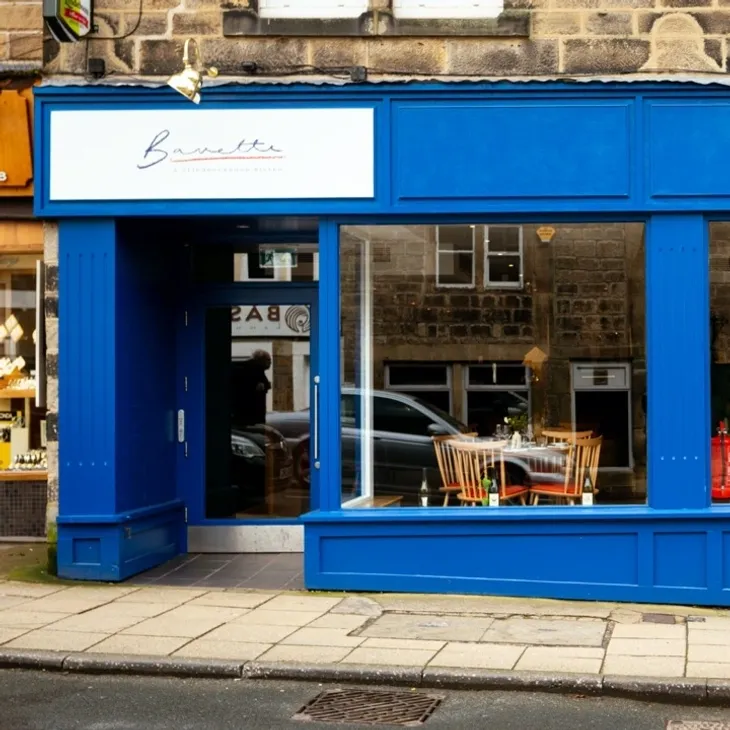
Bavette

Ideal for a true taste of regional French cooking in suburban Leeds…

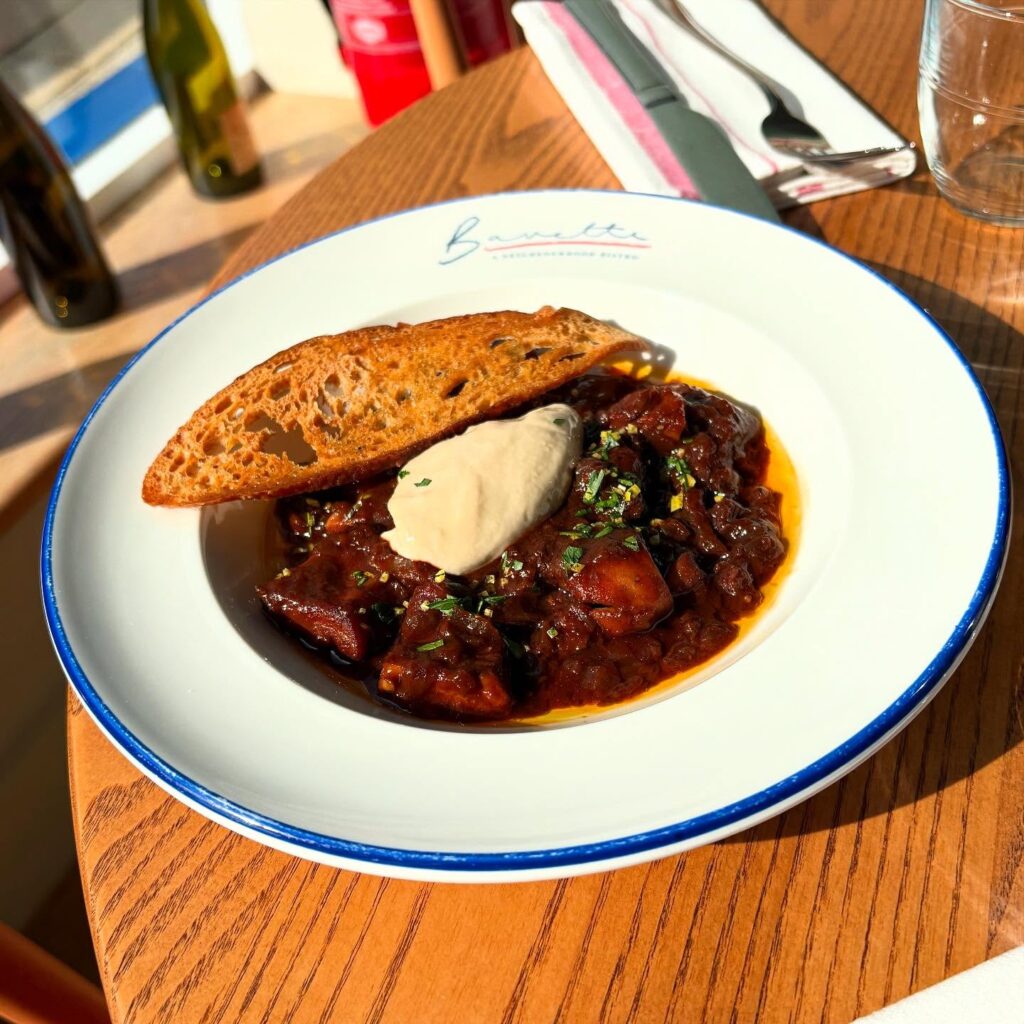
Horsforth has developed a solid little dining scene in recent years, and Bavette is a big part of why. This neighbourhood bistro on Town Street deals in bold French cooking, rooted firmly in the regions and seasons of its inspiration.

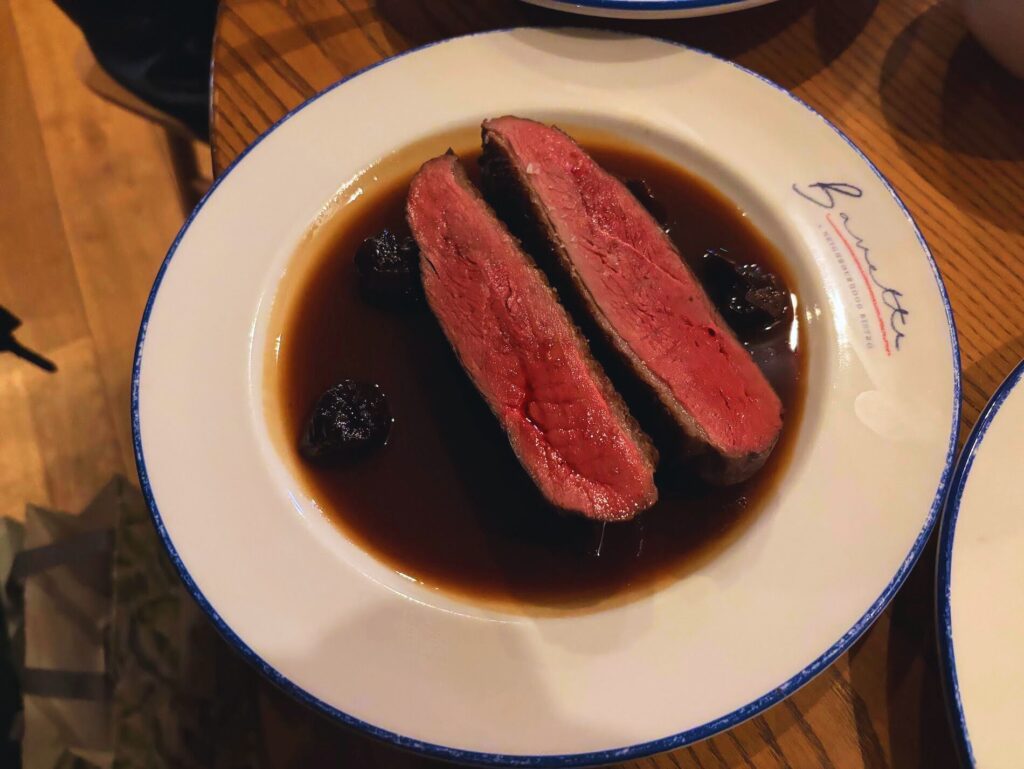
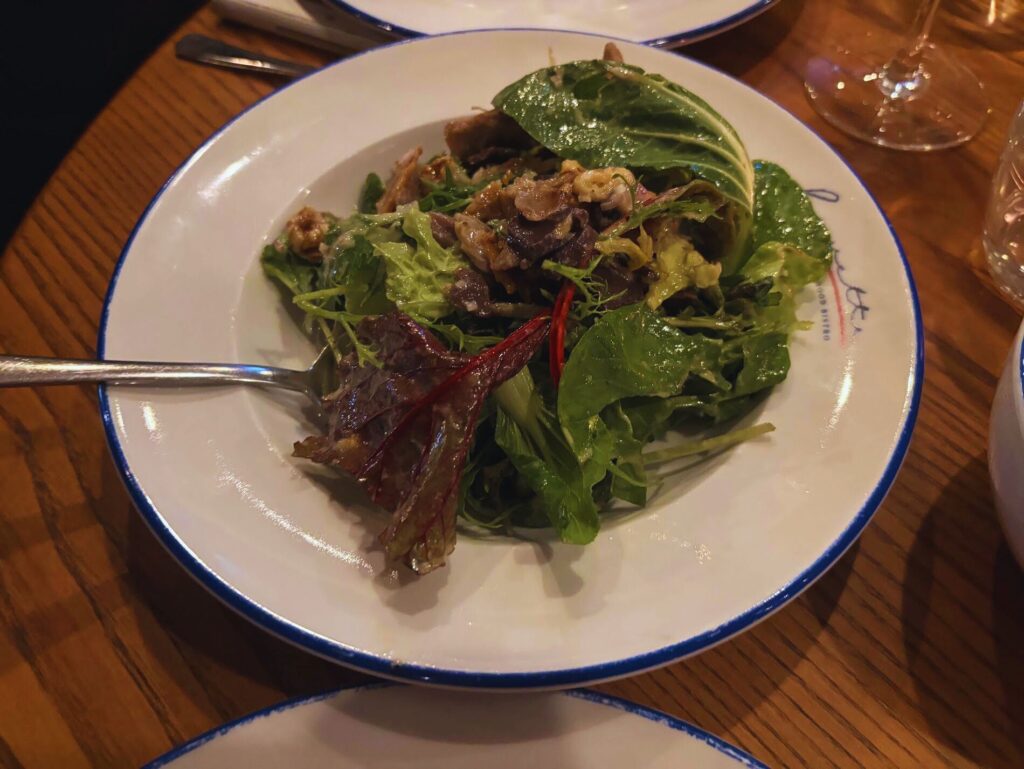
On a cold and windy Tuesday evening in Horsforth, the place was absolutely rammed – and with good reason; there’s something true, generous and straight-as-a-die about the cooking here. The menu leans heavily on the Southwest, with the Gascony influence particularly pronounced. Case in point: the Magret de Canard for two, a sharing dish that’s become something of a signature here. Landaise duck breasts arrive pink in a pool of sticky red wine jus spiked with prunes and armagnac that have been steeping together for a fortnight.

Alongside comes a salade Landaise – confit leg shredded through leaves dressed in walnut oil, with gésiers, walnuts, green beans and crispy skin doing crouton duty – plus tomatoes and potatoes confit in duck fat. It’s a celebration of a single ingredient done six ways, and it’s magnificent, the salad boasting more meat than it needs to. There’s that generosity we spoke about.

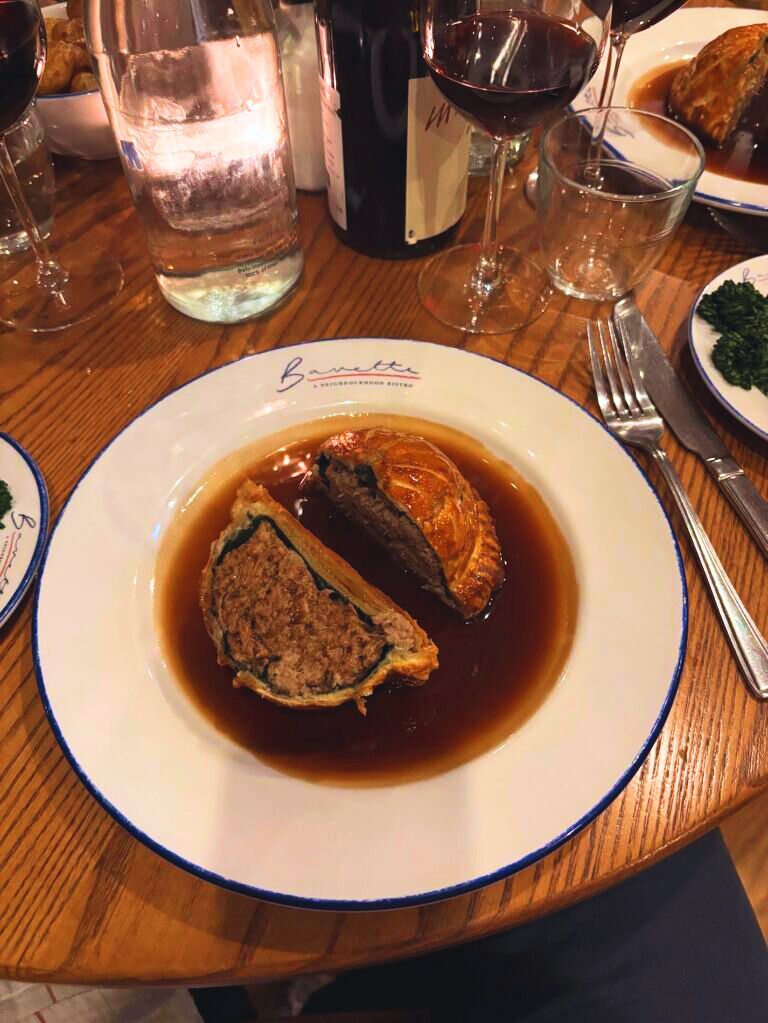
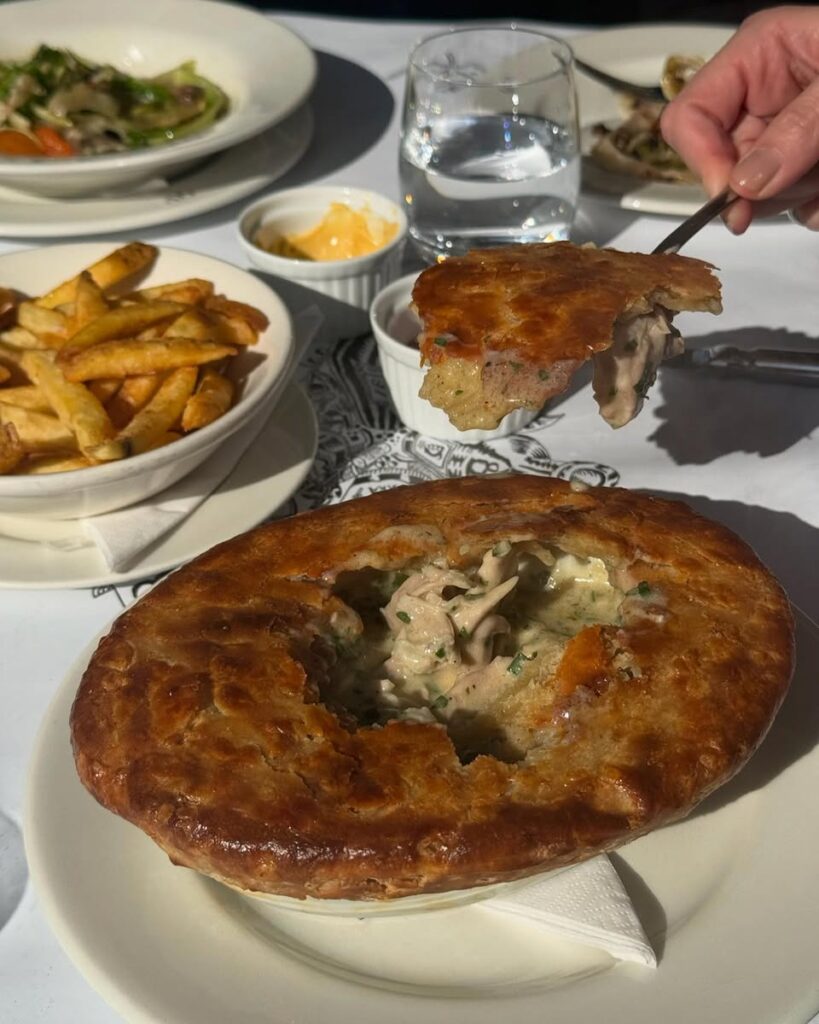
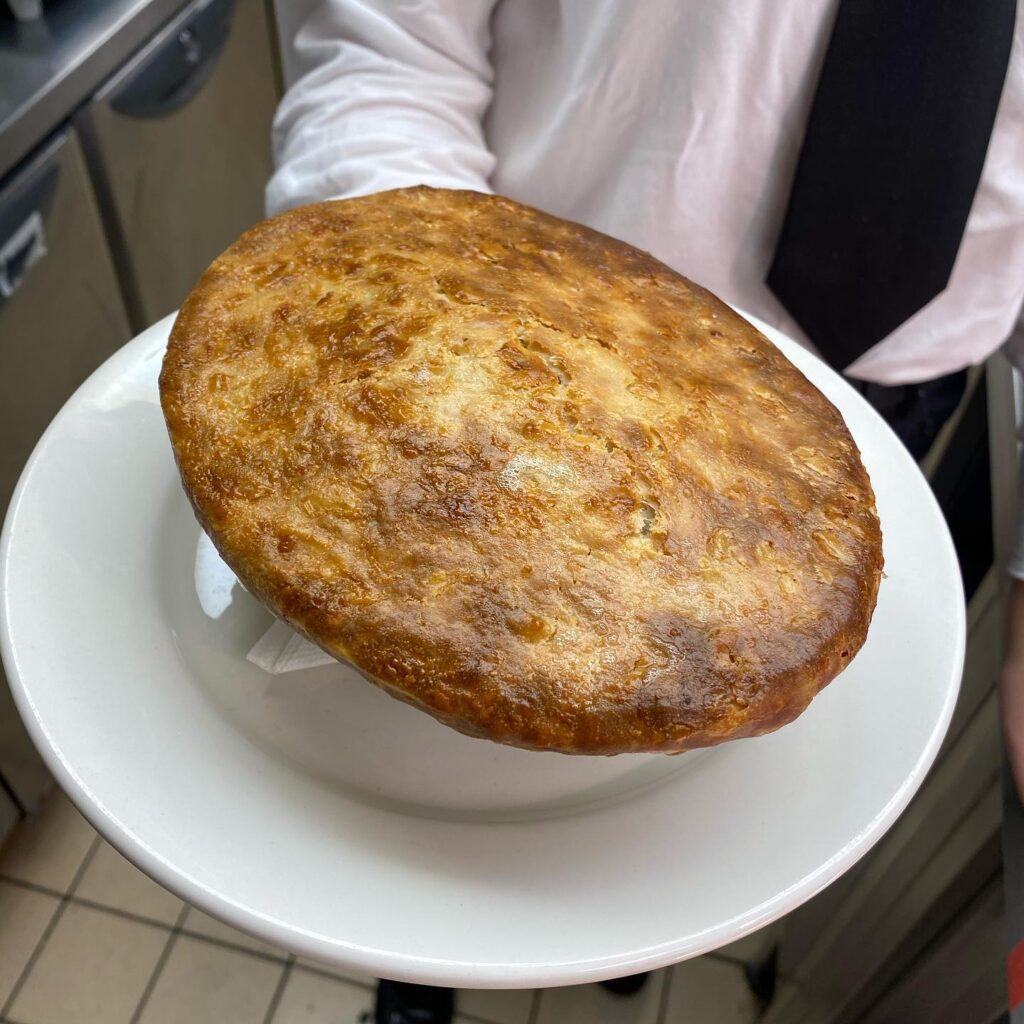
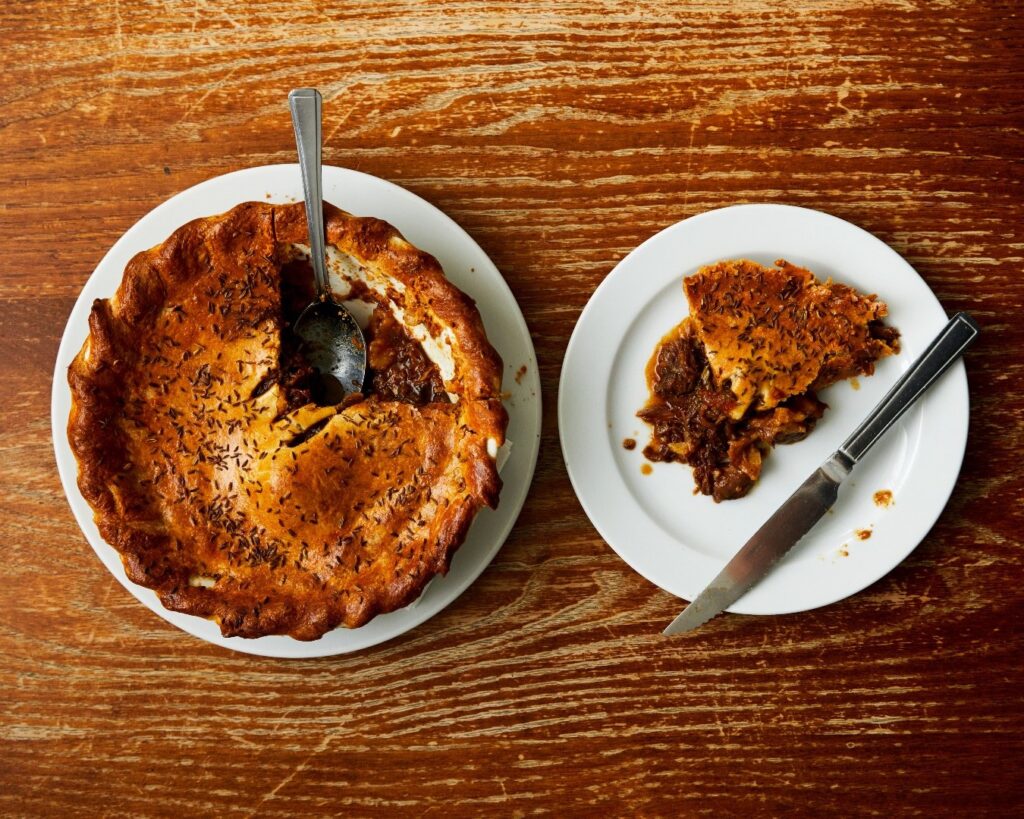
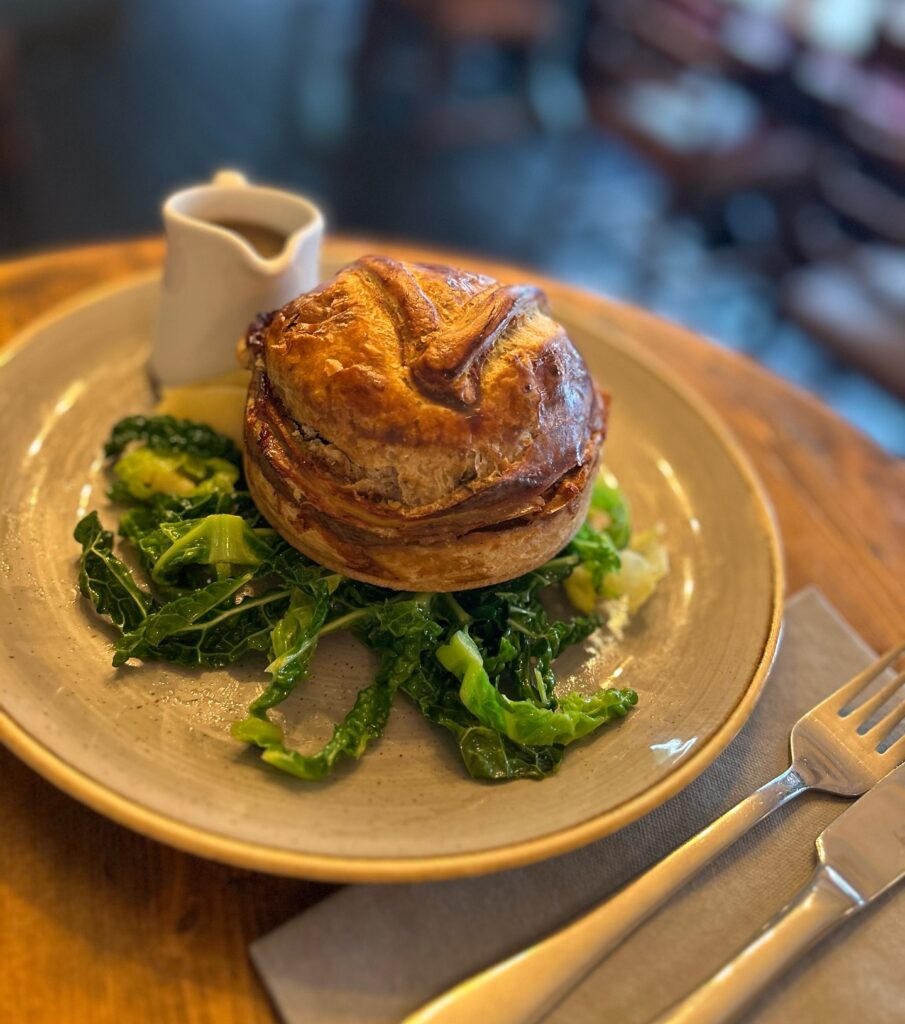
The lamb boulangère pithivier is a thing of beauty, too – lamb is cooked down to an almost-paste, and mixed with anchovy under a golden, domed pastry. The accompanying lamb jus is a lip-smacking affair. Someone in the kitchen knew Yorkshire folk would swoon over a pie and gravy, we think.

Starters like hand-dived Scottish scallop with garlic and parsley butter or steak tartare with bone marrow butter set the tone for a kitchen that knows its craft. Equally compelling was an opener of braised cuttlefish with fennel, tomato and red wine sauce, served with anchoïade and crostini – tender pieces of cuttlefish bathed in a rich, copper sauce that tastes of the Mediterranean, the salty punch of anchovy cream and grilled bread providing the perfect foil to the sweet depth of the braise.

Expect to pay premium prices for Leeds; that pithivier is £34, the sharing duck pushing £80, but it’s well worth it. This is, quite simply, the best restaurant in Leeds.

Desserts are on brand: tarte tatin with calvados crème anglaise, or a French cheese plate featuring the likes of St. Nectaire and 24-month Comté. The wine list does what you’d hope, with some big, bruising reds in the £50 region your best bet here. You’ll need to be stretchered out after this one, sure, but you’ll be looking up at the night sky pissed, full and happy when you are.

Bavette is open Tuesday to Saturday for dinner, with lunch service added on Fridays, Saturdays and Sundays.

Website: bavettebistro.co.uk

Address: Town Street, Horsforth, Leeds LS18


Zucco

Ideal for enjoying a long and languid Italian lunch…

Zucco is a gem of a neighbourhood restaurant now in its second decade, this Italian restaurant is a place built for a long, languid lunch of snacks, sharing plates, and lingering over dessert and digestifs.

Bring a few friends; the menu at Zucco is stacked and inviting, ready to satisfy even the most fickle members of the squad with crowdpleasers like crisp, salty fritto misto, polpette and spaghetti (pleasing to order that one out loud, too) and a vast selection of pizzette, bruschetta and focaccia.

For something a bit more special, Zucco runs a monthly taster menu – January’s lands on the 20th, with six or so courses for £65 a head. These events tend to fill up fast, so keep an eye on their Instagram for announcements. Day to day, though, ordering à la carte remains the move here; a gorgeous nduja and burrata pizzetta, perhaps, followed by king scallop, prawn and squid risotto, flavoured with saffron. There’s a generosity of spirit to the whole place which is infectious, with the dining room buzzing every night of the week, except Mondays, when Zucco closes.

It’s wise to book ahead, accordingly, even more so since a positive review in the nationals from Jay Rayner. We have to agree on this one; Zucco is ace.

Website: zucco.co.uk

Address: 603 Meanwood Rd, Meanwood, Leeds LS6 4AY


Lupe’s Cantina Mexicana

Ideal for a Mexican seafood feast in somewhat incongruous surroundings…

It can be tough to find true, authentic Mexican food in the UK. It’s also tough to find Lupe’s Cantina Mexicana, whose bright yellow brickwork and rainbow coloured outdoor benches sit in the most incongruous surrounds of suburban Burley, sharing the road with BP garage and a bathtub specialist.

Once you do track his cantina down, though, you’ll be lifted up by chef Rudy’s gorgeous rendition of his native Veracruz’s local dishes, as well as drawing from the wider palate of the Mexican culinary canon. 

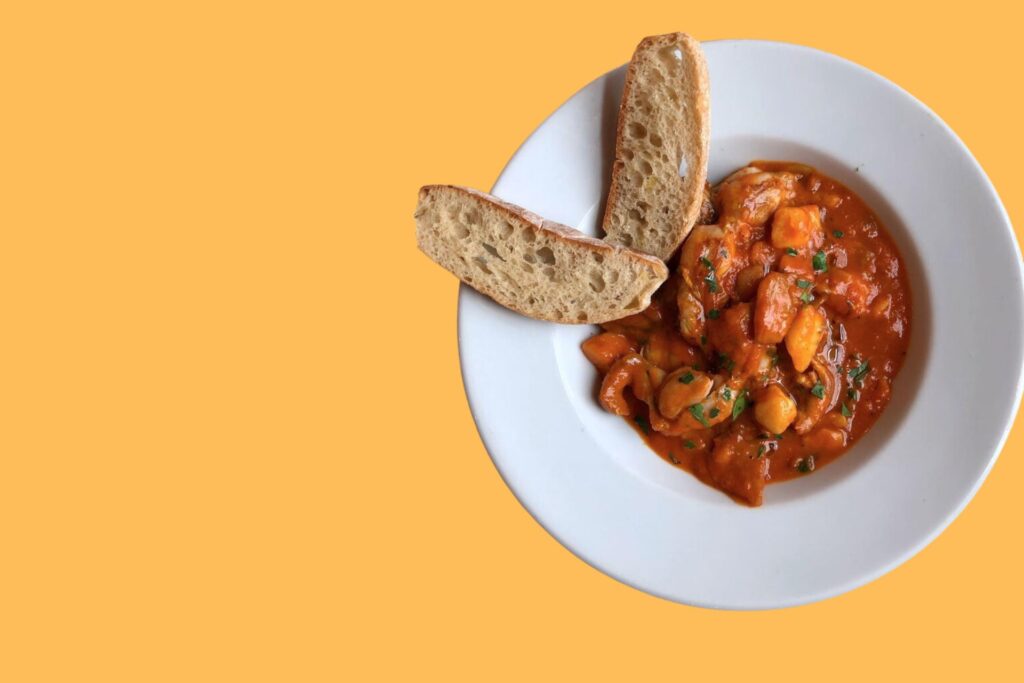
Though we’re neither near the sea or Mexico, it’s in the seafood section of the menu that Lupe’s really shines, introducing a number of brothy, uplifting dishes that area little less familiar to the UK than they deserve to be. The sietes mares is especially good. Here, slices of scallop, prawn, haddock chunks, clams and mussels bob about in a light, limey broth that’s turned a pleasing shade of copper from the addition of tomatoes and guajillo chilli. 

Perhaps even better is the mejillones, another soupy number of mussels and a cloudy, creamy white wine-spiked sauce. Topped with caramelised onions, avocado and coriander, all you really need on the side is a serving of white rice, perhaps some black beans, and you’ve got yourself an immensely satisfying, invigorating lunch that feels both healthy and indulgent. After that hour or two of escapism, you’ll feel like the world – or, at least, this little corner of suburban Leeds – is your oyster.

Website: lupescantinamexicana.co.uk

Address: 204 Cardigan Rd, Burley, Leeds LS6 1LF


Prashad

Ideal for Michelin-approved Indian vegetarian food from a Leeds institution…

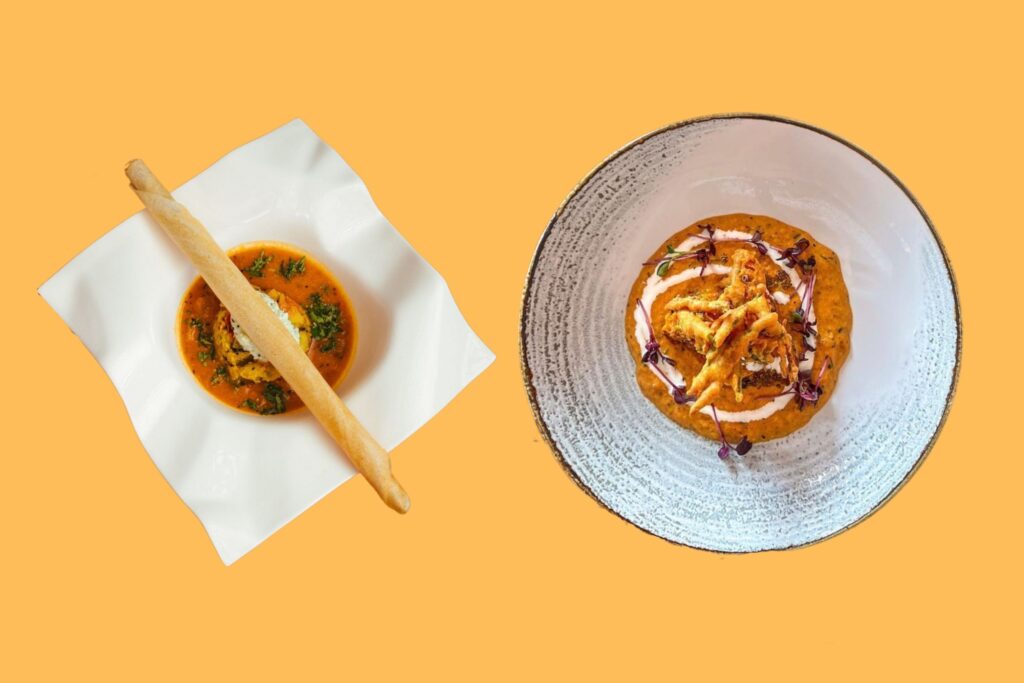
A family-run establishment, Prashad has been serving superbly spiced Gujarati vegetarian dishes since 1992 (in its original venue) and now in its third decade, the restaurant has never felt more vital. 

In a converted Drighlington pub (roughly equidistant between Bradford and Leeds), spread over two floors, you’ll find some of the finest food from the Indian subcontinent anywhere in the UK, with flavours precise yet vivacious, and portions properly generous. 

Prashad’s prowess hasn’t exactly gone unnoticed; the restaurant was featured on last year’s BBC’s ‘The Hidden World of Hospitality with Tom Kerridge’, as well as listing in the Good Food Guide. Perhaps even more prestigiously, Prasha holds both 2 AA Rosettes and a Michelin Bib Gourmand award.

Prashad is closed on Mondays, open for dinner Tuesdays to Fridays, and open for both lunch and dinner on Saturdays and Sundays.

Website: prashad.co.uk

Address: 137 Whitehall Rd, Drighlington, Bradford BD11 1AT


Bundobust

Ideal for plant-based streetfood from the Indian subcontinent, bang in Leeds city centre…

Should you be seeking your fix of vegetarian Indian street food a little closer to Leeds City Centre, then Bundobust is your guy. A collaboration between Mayur Patel (whose parents own the aforementioned Prashad) and craft beer entrepreneur Marko Husak, Bundobust offers a modern take on vegetarian Indian street food paired with a selection of craft beers.

Testament to the success of the concept, the restaurant now boasts four locations across the North and Midlands, but it’s at the original here on Mill Hill, just a three minute walk from Leeds Station, that we’re dining in today.

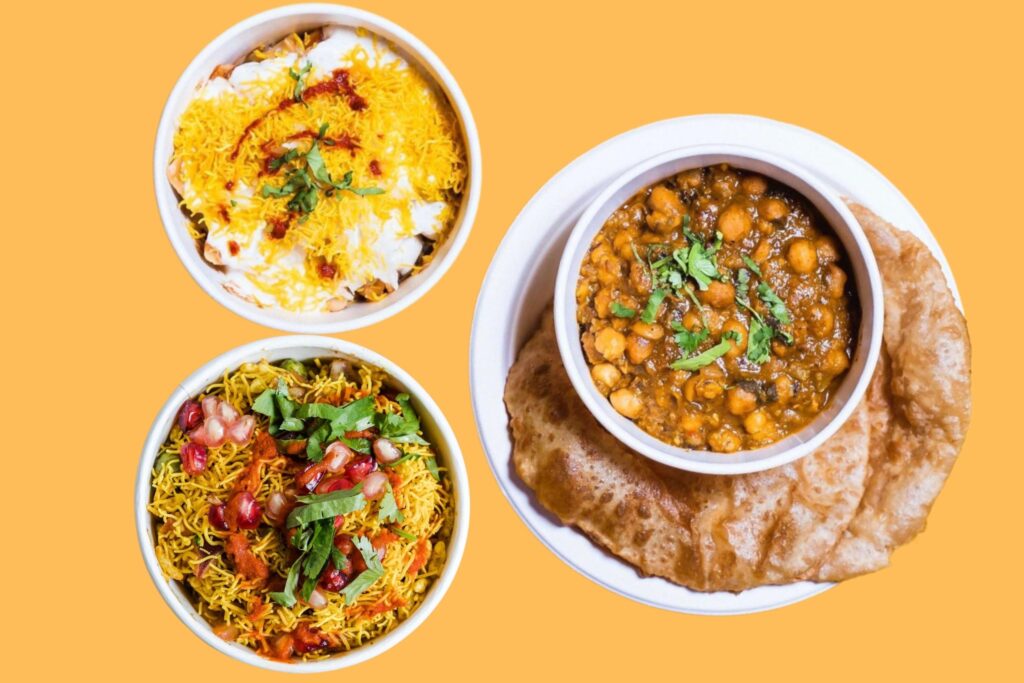
Don’t miss out on the classic Mumbai snack bhel puri. Studded with pomegranate jewels and piquant from tamarind chutney, it’s a textural delight, with broken samosa pastry and puffed rice bringing plenty of crunch. For something heartier and more fulfilling, the chole saag (a chickpea curry of sorts) is knockout, too. Clocking in at £8.25 and coming with a side of freshly puffed puri, it’s one of the best value plates in the city.

Even better value is the express lunch here, with two dishes available at a reduced rate, Monday to Friday until 4pm.

Wash it all down with a pint of Bundobust’s Peela pale ale, and you’ve got yourself a superb meal for under £20. God it’s great up north.

Bundobust is open daily from midday until late, with slightly shorter operating hours on Sundays.

Website: bundobust.com

Address: 6 Mill Hill, Leeds LS1 5DQ


Hern

Ideal for minimalist Nordic-influenced tasting menus in Chapel Allerton…

On Stainbeck Corner, Hern has evolved into one of Leeds’s most compelling restaurants. Chef Rab Adams, who trained at Le Cordon Bleu before stints at Hedone (remember that place?! So awkward but so delicious) and Gordon Ramsay’s Chelsea flagship, brings a stripped-back approach to seasonal cooking that lets ingredients shine with minimal intervention.

The restaurant matches its culinary philosophy – white-painted exposed brick and natural light create an unfussy backdrop for Adams’ precision-driven plates. The eight-course tasting menu (£73) might include wild sea bass with bergamot beurre blanc or barbecued leeks with butter beans and burnt lemon, but even seemingly simple dishes like their sourdough with cultured butter showcase the kitchen’s dedication to impeccable, faithful technique.
The wine list at Hern focuses exclusively on organic and biodynamic European producers, thoughtfully arranged by style rather than region. For those skipping alcohol, their bergamot and mint soda makes a refreshing alternative.

The four-course ‘short menu’ at £48 offers a more accessible entry point and can accommodate dietary requirements with advance notice – though the full tasting menu is fixed. Book ahead, especially for weekend dinner service when the small dining room fills quickly.

Hern is open Wednesday through Sunday, with an à la carte menu on Wednesdays and set menus Thursday to Sunday. Dinner from 6pm, last table 9pm. Sundays are only open lunchtime, midday to 3pm.

Website: hernrestaurant.com

Address: 5 Stainbeck Corner, Chapel Allerton, Leeds LS7 3PJ


House Of Fu

Ideal for late-night ramen and karaoke on The Headrow…

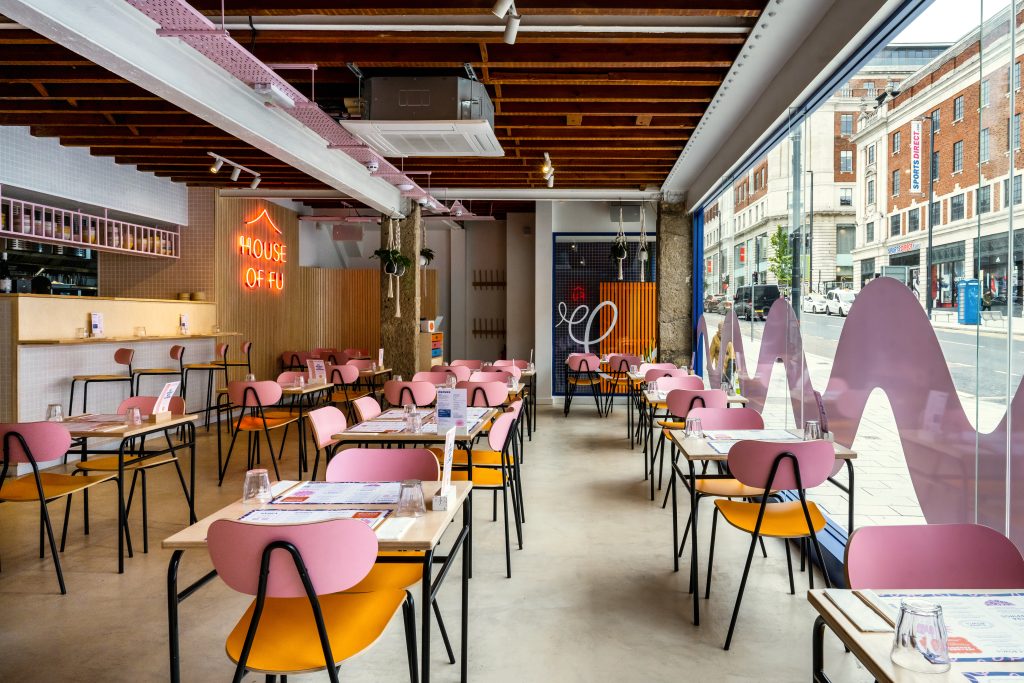
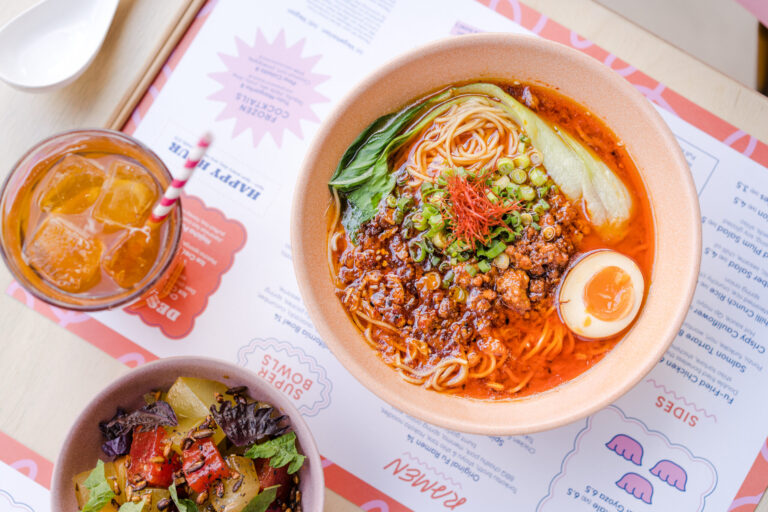
Occupying a bustling stretch of The Headrow, House of Fu has established itself as Leeds’s go-to spot for ramen, rice bowls, and revelry under one roof. The ground floor channels Tokyo energy with its counter seating and efficient service, while upstairs, the Hello Bar hosts DJs and karaoke rooms for post-dinner entertainment.

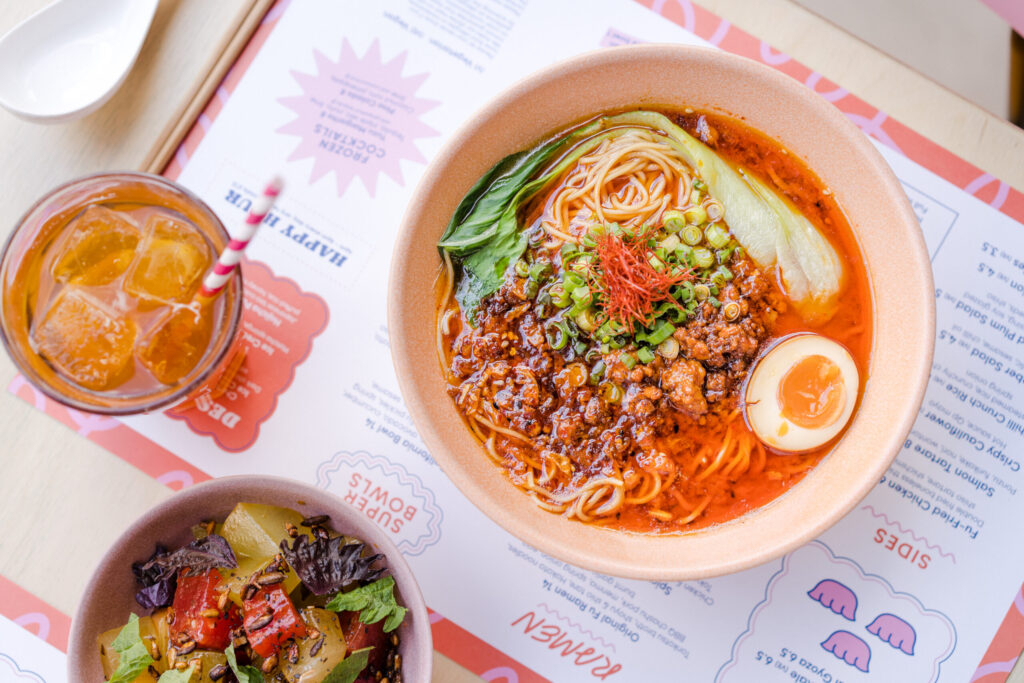
Chef Ben Iley, who spent nine years in Tokyo honing his craft, has created a menu that balances tradition with playfulness. The spicy tantanmen (£15) has become a signature – its rich chicken and pork broth layered with spiced mince, pak choi and crunchy chili oil. For something lighter, the yuzu chicken ramen brings brightness through citrus and coal oil, topped with chicken chashu and katsuobushi.

Images via @hellohouseoffu.com

You should let the sides get a look in, too. Their gyoza (£7 for six) come in pork or shiitake and kale variations, while the cucumber salad with miso, garlic and chili oil is refreshing and assertive, equally. A few house-made sodas and craft cocktails – the Yuzucello (£9.50) with prosecco and sake is ace – keep the vibe going.

A set menu at £22.50 includes sharing sides and a main, with the option to add frozen cocktails or sake. During happy hour (4-6pm daily), cocktails are two for £13.

House of Fu is open daily from 11:30am, with slightly earlier closing on Sundays at 8pm.

Website: hellohouseoffu.com

Address: 15-19 The Headrow, Leeds LS1 6PU


OX Club

Ideal for the best of Yorkshire produce, cooked over flames…

Just one wing of the multifunctional events space Headrow House, OX Club specialises in high-quality cooking over flames using the best of Yorkshire produce. What more could you want? 

The restaurant is known for its wood-fired dishes, with a menu that balances robust flavours with delicate touches. On a recent visit, a grilled sardine dish, paired with local rhubarb and pickled radish, was as pretty as a picture. For the carnivores, a whopping 600g Dexter beef wing rib chop sits proudly alongside roasted bone marrow and beef fat bearnaise. Sure, you’ll need to be stretchered out after taking it down, but as you stare at the ceiling from your pallet, you’ll feel very satisfied indeed.

Don’t forget to save room for their exquisite desserts – the now ubiquitous burnt Basque cheesecake is done very capably here, and is accompanied by more rhubarb (well, we are in Yorkshire after all!).

OX Club is closed on Mondays and Tuesdays. From Wednesday to Friday, the restaurant is open for dinner only. On Saturday, you can dine from midday until 10pm and on Sundays, OX Club is just open for lunch.

Website: oxclub.co.uk

Address: 19a The Headrow, Leeds LS1 6PU


Three’s A Crowd

Ideal for a pre-show meal of confidently composed pub classics…

When it was announced that popular gastropub The Reliance was to close earlier this year, Leeds residents were devastated. 

Fortunately, the buyers of the site know a thing or two about running a cosy, welcoming pub that does confidently cooked plates, having run acclaimed Harrogate establishment Three’s A Crowd since 2019.

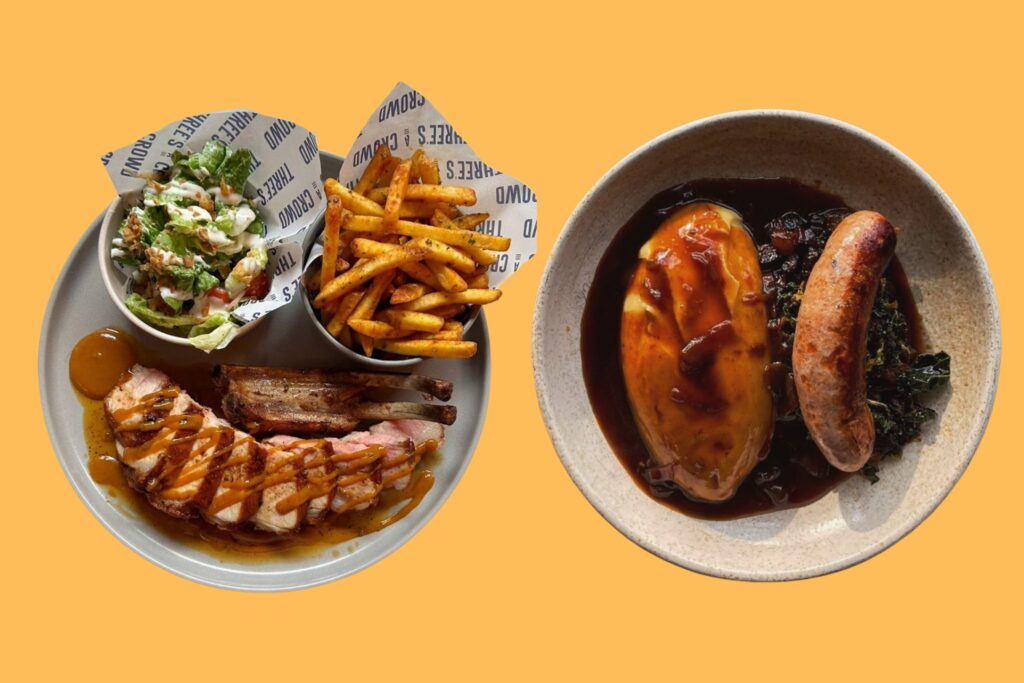
And so, the second iteration of Three’s A Crowd has already fallen on its feet and hit its stride, with a relaxed dining room serving up the likes of pheasant and guinea fowl terrine, sloe gin cured salmon, pig cheek ragu over pappardelle. 
With prime position just off Lovell Park and a couple of minute’s walk from the Grand Theatre and Opera House and the Leeds Playhouse, this one’s ideal for a pre (or post) show meal. 
Three’s A Crowd is open daily from midday until late.

Website: threes-a-crowd.co.uk

Address: 76-78 North St, Leeds LS2 7PN


Tharavadu

Ideal for soothingly spiced Keralan food close to Leeds train station…

You’ve probably guessed by now that some of the country’s best regional Indian cuisine is found in Leeds, owing to the city’s well-established and diverse South Asian community.

One of the very best Keralan restaurants in the city – and conveniently located near Leeds train station – Tharavadu offers a wide variety of southern Indian dishes. Look out for their crab cooked in coconut sauce, fluffy lentil-fried doughnuts, and smooth vermicelli pudding with cardamom and saffron, in particular.

Closed on Sundays, Tharavadu is open for the rest of the week for both lunch and dinner.

Website: tharavadurestaurants.com

Address: 7-8 Mill Hill, Leeds LS1 5DQ


The Swine Bistro

Ideal for a regularly changing menu of lesser known cuts and concise combinations…

What started as a humble greasy spoon on North Street has transformed into a proper grown-up bistro under the guidance of owners Stu and Jo. After a successful crowdfunding campaign that raised over £42,000, The Swine That Dines has spread its trotters and relocated to a larger site in Headingley, rebranding as The Swine Bistro in the process.

The new 40-cover dining room on Otley Road – complete with stone floors, low beams and views into the open kitchen – gives the team the space they always deserved. Executive chef Stu Myers and head chef Kirsty Cheetham (formerly of The Queen o’t’Owd Thatch, twice winner of the Observer Food Monthly Best Sunday Lunch award) focus on small-plate dining, with a regularly changing menu featuring unusual cuts of meat and crisp, concise combinations.

Naturally, there’s plenty of piggy bits on the menu, from terrines to homemade sausages with lentils and watercress, but vegetarians can dine well here, too. The twice-baked Comté cheese soufflé is an early favourite from the new kitchen. Look out for the legendary Pie Nights, too, which return periodically with a roster of slow-braised, pastry-clad beauties.

The weekday lunch menu (two courses for £23, three for £27) offers solid value, while Sundays bring proper roasts to the table – a first for the team. Recognition has followed the move: The Swine Bistro now features in The Good Food Guide and was named in SquareMeal’s Top 100 Best Local Restaurants for 2026.

The Swine Bistro is open Wednesday to Saturday for lunch and dinner, and Sunday for lunch.

Website: theswinebistro.co.uk

Address: 77A Otley Road, Headingley, Leeds LS6 3PS


Friends Of Ham

Ideal for local cheeses, charcuterie and an impressive selection of wine and craft beer…

Somewhat surprisingly bearing no relation to The Swine That Dines, since opening in 2012 Friends Of Ham has become a must-visit for Leeds-based food lovers. Known for its wide range of charcuterie and local cheeses, this craft beer and wine bar also boasts an impressive list of craft beers and wines. Their platters are perfect for sharing and are best enjoyed with a cold beer in hand, which, incidentally, we’re off for now…

Friends of Ham is open from 11am daily. 

Website: friendsofham.com

Address: 4-8 New Station St, Leeds LS1 5DL


And what a feed that was…

But we’re not done yet. In fact, we’re catching the train an hour or so east, and heading over to Leeds’s noisy neighbour Manchester. When we alight, it’s to one of the great places to eat near Manchester Piccadilly. Care to join us?

The Best Restaurants In Whitstable, Kent

Last updated March 2026

Searching for the best restaurants in Whitstable? Search no further…

There’s something rather magical about Whitstable. Perhaps it’s the way the light hits the oyster shells scattered across its shingle beach, or how the salt-laden breeze whips around the weatherboard cottages that line its streets. But in all honesty, we think it might be the food…

This charming Kent coastal town has long been a culinary destination, its connection to seafood stretching back to Roman times when those clever conquerors would ship the local oysters back to Rome. These days, the food scene has evolved far beyond those briny bivalves (though they’re still reason enough to hop on the National Express 007 and make for the coast), with everything from a Michelin-starred gastropub to natural wine bars making their mark on the town.

In a town that manages to toe the line between quaint and bustling with aplomb, there are a surprising number of great places to eat in Whitstable. You’ll need help finding the very best, of course; from old school institutions to exciting new chapters, here’s our pick of the best restaurants in Whitstable, Kent.

Wheelers Oyster Bar, High Street

Ideal for iconic seafood in a pink-fronted parlour that’s been serving since 1856…

Some restaurant facades become iconic, symbolic of a whole town, even, and none more so than the candy-floss pink facade of Wheelers. Founded by local Master Mariner Richard Leggy Wheeler in 1856, this is not only Whitstable’s oldest restaurant but reportedly England’s oldest seafood restaurant. While its London siblings (once part of Bernard Walsh’s restaurant empire, and once under the stewardship of Marco Pierre White) have long since disappeared, the original still stands proud, serving pristine plates of fish and shellfish with the same devotion to quality that’s marked its remarkable history.

Inside, the tiny parlour-style dining room is pure coastal charm, with maritime memorabilia adorning every available inch of wall space. But you’re not here for the decor. You’re here for chef Mark Stubbs and his team’s masterful handling of whatever the local dayboats have landed that morning. Everything here is made from scratch, from the daily-baked bread to the house ice creams, with produce coming directly from local fishermen and even the restaurant’s own organic garden.

The daily menu embraces a dazzling range of culinary styles: you might find chargrilled scallops alongside crispy asparagus and crab mimosa, or sticky Korean prawns with kachumber salad and gochujang. For the full experience, book ahead for the Friday and Saturday evening tasting menu, where an eight-course procession takes you through Stubbs’ inventive seafood cookery, from elegant crab profiteroles to glazed gurnard with caramelised chicory and orange grenobloise.

Open most days for lunch and into the evening (with extended hours on Fridays and Saturdays), just remember to book well ahead. And do pick up a bottle from The Offy across the road; it’s BYO with a modest corkage per table.

If you can’t secure a table, their ready-to-eat beach and garden picnic boxes make for a rather special plan B, think home-smoked tiger prawns with roasted garlic and chilli, curried crab with lime and yoghurt, and saffron seafood arancini finished with nduja butter, all designed for two people. What’s not to love about this place?

Wheeler’s was named in the prestigious Harden’s Top 100 list, testament to its quality and standing. Yes indeed; this might be the best restaurant in Whitstable, bar none.

Instagram: @wheelersoysterbar

Address: 8 High Street, Whitstable CT5 1BQ 


Ossie’s Fish and Chips, Harbour Street

Ideal for classic British fish and chips done right…

No guide to Whitstable dining would be complete without mentioning the quintessential fish and chip shop experience, and Ossie’s Fish and Chips delivers just that. This local institution has been a favourite among both locals and visitors for years, thanks to its consistently delicious, no-nonsense approach to fish and chips.

Located just off Whitstable High Street and a 30 minute walk along the coast from Whitstable’s main beach, Ossie’s might look unassuming from the outside, but it’s been named one of the best in the UK by BBC Good Food. It’s got everything you want from a chippy; cheerful, cheeky staff, a line of locals popping in for takeaway, and, of course, fresh-as-you-like fish.

Images via ossiesfishandchips.com

A family affair, run by brother-and-sister team Ozan and Elvan Bodur, who are originally from Istanbul and a family of fishermen, battered fish is the centerpiece here, from flaky cod and haddock to tender plaice, all encased in delightfully crisp, golden batter.

The chips are equally noteworthy, perfectly cooked with a crunchy exterior and soft, fluffy interior. Beyond the classic fish and chips shop offerings, you’ll find specialities such as pan fried local skate with capers and butter, and Belgian style mussels served with white wine sauce and French baguette or chips.

For many, a takeaway from Ossie’s is best enjoyed with a walk down to the beach, but they also offer a small seating area if you prefer to tuck in immediately. End with something of an anomaly for a chippy; a tiramisu. Though perhaps not as downright decadent as those found in a Roman trattoria, it is remarkably good.

Whether taking away or eating in, be prepared to queue, especially on weekends and holidays. Rest assured; the wait is worth it.

We do urge you to support this fish and chip shop. In recent years Whitstable has lost another local favourite, V.C Jones (run by the same family for 62 years), leaving the town with only two fish and chip shops. That’s slim pickings for a seaside town that’s also something of a culinary destination. Long live Ossie’s, we say.

Websiteossiesfishandchips.co.uk

Address: 9 Harbour Street, Whitstable CT5 1AG


The Sportsman, Seasalter

Ideal for destination dining that puts terroir front and centre…

Technically not in Whitstable but too good to exclude (and reachable via a rugged, bracing hour’s walk along the beach), this seemingly humble pub stands proud between grazing sheep and the Thames Estuary, with nothing on the horizon as you approach but a few lonely beach huts and a sense of raw, rough beauty.

Don’t let the weathered white clapboard exterior and slightly bleak marshland location fool you. Inside, the pub is home to one of Britain’s most acclaimed kitchens. Self-taught chef Stephen Harris has turned what he jokingly calls a “grotty run-down pub” into a place of culinary pilgrimage, holding its Michelin star continuously since 2008 and consistently featuring among the National Restaurant Awards and Top 50 Gastropubs lists.

The history runs deep here. There’s been an inn on this spot since 1642, but the area’s connection to food stretches back to the Domesday Book, when these marsh-fringed acres belonged to Canterbury Cathedral’s kitchens. Harris follows those monastic footsteps, letting the immediate environment dictate the menu. The Thames Estuary provides oysters and fish, while the surrounding marshland, woods and fertile soils supply meat, vegetables and game. They even collect seawater to make their own salt.

By Ewan Munro
By Ewan Munro
By Ewan Munro
By Adam Raoof

Two menus are available: a five-course tasting menu and a shorter midweek option offered Tuesday to Thursday. Both start with home-churned butter and bread, setting the tone for the precision to follow. You might encounter the iconic slip sole grilled in seaweed butter (though it’s become harder for the kitchen to source), braised turbot with cep and lemon verbena sauce, or roast saddle of lamb from the salt marshes opposite. The celebrated cheese soufflé with rarebit sauce, and smoked mackerel on soda bread with horseradish, remain highlights whenever they appear.

The wine list is as thoughtfully curated as the food, with markups notably lower than you’d find in London for cooking of this calibre. For a special treat, look for something from Gusbourne Estate, the highly regarded Kent vineyard just down the road in Appledore.

Serving lunch and dinner Tuesday through Saturday, with Sunday lunch only, this is destination dining at its finest. If you want to make a proper pilgrimage of it, book one of their four garden cabins, each equipped with a king-size bed and provisions for breakfast. Just remember to book well ahead.

Website: thesportsmanseasalter.co.uk

Address: Faversham Road, Seasalter, CT5 4BP 


Samphire, High Street

Ideal for modern Kentish cooking that puts local produce on a pedestal…

Australian chef George Begg’s story is a tale of serendipity. En route to Antibes in 2004 to work as a private chef on a luxury yacht, he spotted an empty shop near Whitstable beach. Plans changed, and Samphire was born, becoming the town’s first all-day bistro with a focus on the finest Kentish produce.

After two decades at the helm, Begg retired in 2025 and handed the restaurant to Jim Cleaver’s Beach Street Restaurants, a well-regarded group of pubs and restaurants across South East Kent. The good news? The team remains the same, with Dee, Holly and the rest of the crew keeping the Samphire spirit alive. The focus on Kentish produce hasn’t shifted either: game from nearby Stour Valley, organic veg from Chatham, asparagus from Sandwich. Mmmm, asparagus sandwich…

Images via @samphirewhit

The black and gold frontage might hint at fine dining pretensions, but inside you’ll find an altogether more relaxed affair, a proper neighbourhood restaurant that just happens to serve some of the finest food in town. The kitchen team here is obsessive about provenance.

The menu changes with the seasons but always maintains a careful balance between land and sea. Starters might include wild mushrooms with oozing egg yolk and flecks of tarragon, or their exemplary cod and parmesan croquettes with confit garlic mayonnaise. Main courses showcase the kitchen’s versatility: the fish pie has long held a following locally, while mains like confit duck leg with nduja pearl barley show equal care with meat. Vegetarians aren’t an afterthought either, with dishes designed to stand on their own merit rather than fill a gap on the menu.

The wine list deserves a mention, with a strong showing of local bottles from Chapel Down alongside well-chosen international options. The sparkling selection is particularly strong on Kent producers, from Silver Reign in Luddesdown to Gusbourne’s Blanc de Blancs.

A weekday set lunch offers particularly good value (recent pricing has been around £20 for two courses), and the brunch menu at weekends draws a loyal crowd. This is a Whitstable cornerstone, and under its new ownership it remains exactly that.

Website: samphirewhitstable.co.uk

Address: 4 High Street, Whitstable CT5 1BQ


JoJo’s, Tankerton Bay

Ideal for Mediterranean mezze with stunning sea views…
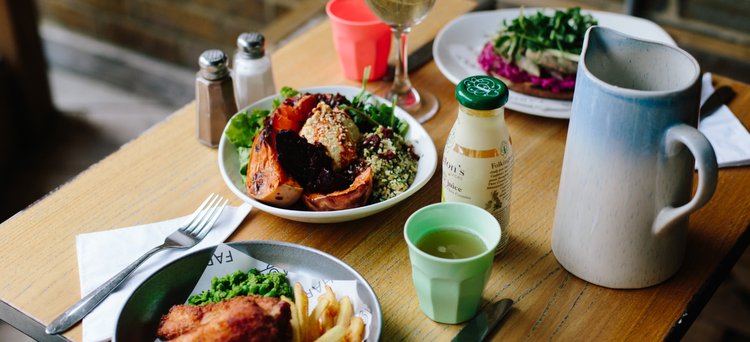
There’s a reason why the likes of Suggs, Jay Rayner and Tom Kerridge rallied to save JoJo’s when developers threatened to buy this beloved spot during the pandemic. Opened in 2000 by chef Nikki Billington and front-of-house Paul Watson (initially in their own home before moving to these larger seafront premises in 2010), this family-run restaurant has mastered the art of seemingly effortless hospitality.

The owners might modestly claim they “don’t do nowt fancy”, but that undersells the quality of their Mediterranean-inspired sharing plates. The mutton and feta koftas are as good as we’ve had this side of Saso, while the grilled mackerel showcases their deft touch with seafood.

JoJo’s mixed meze platters are a particular highlight: the full spread arrives laden with everything from homemade hummus and tzatziki to artisanal cured meats, including cecina and chorizo, alongside vibrant salads, and is designed to feed a group of five to seven. Better go make some friends first…

Everything just tastes so vital, perhaps not surprising when noting that much of the produce comes from their own garden, which supplies seasonal vegetables, leaves and even the flowers that grace the tables. The commitment to quality runs deep: all meat is free range, fish comes from sustainable stocks, stocks come from sustainable fish, and the whole team works closely with trusted local suppliers.

Warming to a theme, the wine list keeps things accessible and interesting. On warmer days, grab a table on the terrace, order a plate of calamari and a glass of rosé, and watch kitesurfers glide past while contemplating the homemade desserts. Or, you know, anything else that might be on your mind…

Open Thursday through Sunday (with both lunch and dinner service except Sundays, which is lunch only), this is relaxed coastal dining at its finest. Just remember to book ahead: this slice of Mediterranean life by the North Sea has quite the following, its popularity boosted by Jay Rayner naming JoJo’s as one of the best value places to eat at the seaside.
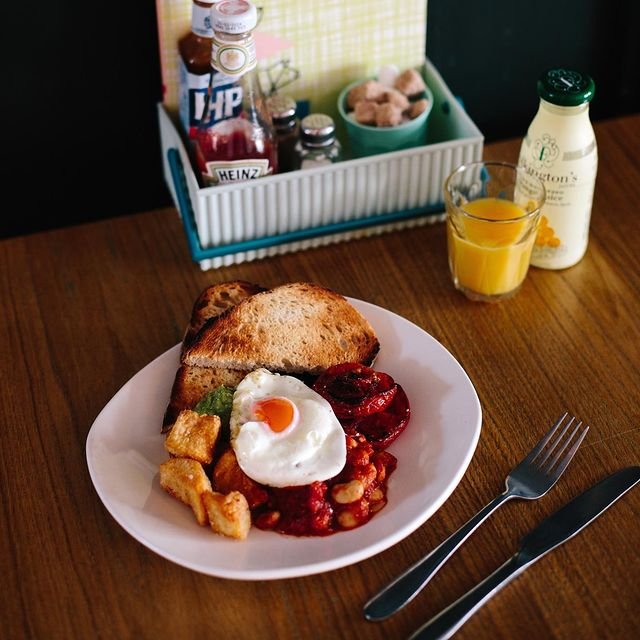
If you don’t have a booking, you might be able to nab a seat at their cocktail and tapas bar which offers a pared-down version of the main menu. There’s also a gorgeous flat above JoJo’s with sweeping views of the sea and a small terrace balcony to take in the famous local sunsets. You can book on Airbnb, a smart move in the name of enjoying one of Whitstable’s best dining experiences.
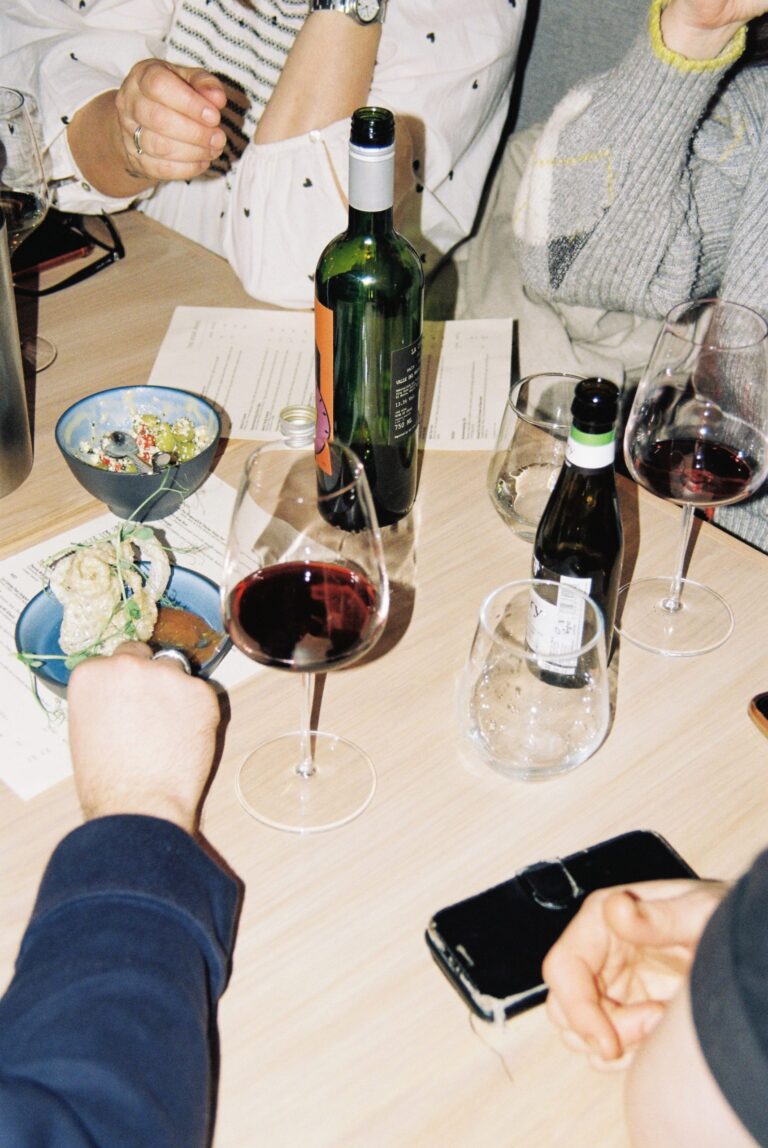
Website: jojosrestaurant.co.uk

Address: 2 Herne Bay Road, Whitstable CT5 2LQ 


Harbour Street Tapas, Harbour Street

Ideal for Spanish small plates with Kentish soul…

There’s something rather fitting about finding excellent tapas in a seafront town, and Lee Murray’s intimate but airy space has been nailing the brief since 2016. The owner’s deep connection to Kent’s food scene (he’s been supplying the county’s finest produce at Murray’s Stores in Canterbury’s Goods Shed for over a dozen years) means that while the heart of the menu might beat to a Spanish rhythm, many ingredients are impeccably sourced from nearby.

The stripped-back space, with its white walls and generous windows that feel like they let the whole world in, allows the food to do the talking. And boy, does it have plenty to say, starting with para picar (snacks) like chicken jamón and leek croquettas with aioli or their excellent roasted garlic and white bean hummus with flatbread.

Unsurprisingly, the seafood side of the menu is particularly strong. Grilled butterflied sardines with fennel and salsa verde arrive blistered, burnished and balanced beautifully by the piquant salsa, while the tiger prawns with chilli, ginger and garlic are everything you want the famous dish to be, as in, with a sauce that’s crying out for some bread for dunking.

The cured meats section features some of Spain’s finest exports, from jamón serrano with manchego to the premium jamón Ibérico. For something more substantial, the lamb cutlets with chickpea salad and harissa yoghurt shows the kitchen’s ability to venture beyond traditional tapas territory without losing its way. Save room for the Basque cheesecake: it’s become something of a signature, and a gold-standard version of a dessert that often overpromises and underdelivers in the wrong hands.

Opening Wednesday through Saturday for dinner (plus lunches Thursday to Saturday) and Sunday lunch only, this is the kind of place that makes you want to order in waves, letting the afternoon or evening unfold at a properly Spanish pace. The attentive, on-point staff are happy to guide you through both the menu and the well-chosen Spanish wine list.

That considered pace is probably for the best: the restaurant’s popularity means tables can be hard to come by, especially during peak hours. Book ahead and arrive hungry; this is tapas worth planning your day around.

Website: harbourstreettapas.com

Address: 48 Harbour Street, Whitstable CT5 1AQ 


The Whitstable Oyster Company, Horsebridge Road

Ideal for fresh-as-it-gets seafood in a historic setting…

Few restaurants can claim a history stretching back to the 1400s, but the Whitstable Oyster Company isn’t your average establishment. One of Europe’s oldest companies, it has been farming the famous Royal Whitstable Native Oyster since before Shakespeare was born. The Romans loved these bivalves so much they shipped them back to Rome, and at the company’s peak in the 1850s, some 80 million oysters a year made their way to Billingsgate Market.

Housed in the red-brick Royal Native Oyster Stores building, the restaurant offers stunning views over the very oyster beds where your starter might have been harvested just hours before. Now a Michelin Selected restaurant in the 2026 Guide, it celebrates these prized molluscs in various ways: have them au naturel, or try them Royale style with black truffle butter and champagne. But there’s far more to this place than just oysters.

Image via @whitstableoystercompany

The kitchen shows real finesse with all manner of seafood. Start with the three-cheese crab gratin or their house-cured Oyster Stout salmon with treacle soda bread for an appreciation of the fine details the chefs get right. Main courses showcase the best of the day’s catch, from pan-fried local Dover sole meunière to grilled whole local lobster Thermidor. The steamed razor clams in parsley butter are a masterclass in simplicity, a stone cold classic combo that lets the pristine leading ingredient speak for itself.

Since 1978 when Barrie Green and John Knight took over the then-struggling business, the company has invested heavily in sustainable production methods, efforts recognised when their oyster beds were granted Protected Geographical Status. Keeping things in the family, the restaurant is now run by the next generation, Richard and James Green. Its own version of sustainability, we think.

Open daily for lunch and dinner (except Sunday evenings), with tables offering majestic views over the oyster grounds, this is more than just a meal: it’s a taste of living history. Just remember to leave room for the white chocolate panna cotta with rhubarb and amaretti crumb. It’s fabulous.

Website: whitstableoystercompany.com

Address: Horsebridge Rd, Whitstable CT5 1BU


The Forge, Sea Wall

Ideal for simple seafood perfection right on the beach…

Sometimes the simplest things are the best, particularly where seafood is concerned, and The Forge proves this point with panache. This black-painted corrugated iron shed, just off the seafront walkway, strips the seafood experience back to its essentials: fresh catch, simple cooking, picnic bench seating, and views over the sea wall that’ll make you forget whatever else you had planned for the day.

While many flock to Whitstable’s fancier establishments, those in the know head here for more accessible seaside fare. Their line-caught cod and chips comes with lacey, crispy batter, while their scampi is always a winner. The native and rock oysters are served just as they should be (just-shucked, over ice, with a segment or two of lemon), and if you’re feeling flush, there’s cold-steamed lobster for true seafood enthusiasts.

The drink selection is all you need on a brisk, breezy British day by the seaside, from freshly brewed coffee (lattes and cappuccinos for those morning visits) to local draught cider and a concise but well-chosen wine list. They even stock oyster stout, the perfect accompaniment to a plate of natives.

Open daily from 9am to 5pm, this is the kind of place that makes you want to suspend time for a while. Grab a spot at one of the outdoor tables, breathe in that sea air, and remind yourself why sometimes the best meals are the simplest ones. Just save room for their freshly made doughnuts: they’re the perfect sweet finish to a seaside feast.

Instagram: @theforgewhitstable

Address: 1 Sea Wall, Whitstable CT5 1BX


Birdies Restaurant, Harbour Street

Ideal for timeless French bistro cooking…

If Samphire is Whitstable’s locavore bistro, Birdies is its more traditional French cousin, the one with red-and-white checked tablecloths and a certain kind of cosy clutter that feels just right.

Philip and Sue Colthup have been running this Harbour Street favourite since the early 1980s, bringing their experience from London and New York kitchens to this intimate coastal spot. Their light touch with both the decor and menu has proved enduring, and a recent expansion into the former hardware shop next door has finally given them the space to stop turning customers away at the door.

The cooking here focuses on French classics executed with precision. The à la carte menu might tempt you with starters like moules marinière with cream and parsley, or their exemplary duck liver parfait en croute. Main courses showcase both surf and turf: the fillet of beef Wellington with red wine jus is a masterclass in timing, while the skate wing with beurre noisette and capers shows equal finesse with fish. Their fruits of the sea platter is a celebration of local waters, loaded with oysters, crab claws, langoustines and more.

Birdies Restaurant Whitstable
Images via @birdieswhitstable

The set lunch menu offers good value, featuring simplified versions of their classics alongside daily specials. However you play it and however full you might be, find an extra shelf for dessert; their Normandy apple pancake, caramelised and served with crème fraîche, is perhaps Whitstable’s best sweet treat.

Open for lunch Tuesday to Sunday and dinner every evening, this family-run restaurant maintains high standards while keeping things refreshingly unpretentious. Dogs are welcome (maximum two per table, mind, and no sitting on chairs). Just remember to book ahead: this slice of French sophistication by the sea has quite the following.

Website: birdiesrestaurant.co.uk

Address: 41 Harbour Street, Whitstable CT5 1AH


Farm & Harper, High Street

Ideal for brunch worth getting out of bed for…

We realise it’s somewhat perverse to be ending this roundup of the best restaurants in Whitstable having brunch, but perhaps we’ve been up all night and we’ve worked up an appetite…

Anyway, don’t let the bright pastel murals and Instagrammable interiors fool you. Farm & Harper takes its food very seriously indeed. Owner Phill Macgregor, whose CV includes stints at The Lanesborough and under Barry Tonks at Bonds, has created something rather special here: a daytime spot that delivers on both style and substance.

Breakfast and lunch are the main events, with the Famous Farmer breakfast threatening to ruin all other full English offerings for you. Elsewhere on the brunch menu, a firm favourite is the Three Little Pigs brioche breakfast bun with a sausage patty, smoked bacon and black pudding, the runny yoke from the egg adding richness and the tomato and chilli jam adding piquancy. It’s irresistible. For those who like something sweet to kickstart the day, their bacon banana bread (or BBB as we like to call it) slathered in maple syrup will see you right.

The kitchen shows real flair with dishes like king prawns on sourdough or their aromatic fish curry, while the monthly Saturday Food + Friends dinners showcase more ambitious cooking with one-off menus ranging from bouillabaisse to Middle Eastern small plates.

The coffee (their matcha lattes have quite the following) and home-baked treats are worth a visit alone, think classics like lemon drizzle cake and coffee and walnut cupcakes, but it’s the overall package, warm service, beautiful plating, and that indefinable buzz of a place that knows exactly what it’s doing, that makes Farm & Harper such a worthy addition to Whitstable’s dining scene.

Website: farmandharper.com

Address: 25 High Street, Whitstable CT5 1AP


We’re heading back to London next, to explore all the great food that London Fields has to offer. Care to join us?

The Best Restaurants in Berkhamsted: Where To Eat In & Around Berkhamsted 

Last updated March 2026

The picturesque market town of Berkhamsted, nestled in the Chiltern Hills, boasts a surprisingly diverse and accomplished food scene for a place of its size. From Turkish small plates to pub classics cooked to exacting standards, the town and its surroundings offer a range of dining options broad enough to satisfy even the most discerning food enthusiast.

Berkhamsted’s excellent restaurants bolster the area’s appeal as a popular commuter town. With its historic high street and canal-side setting, combined with excellent train links to London Euston, it’s easy to see why ‘Berko’ (as it’s known by locals) is described as a ‘commuter’s dream’. But what truly gives Berkhamsted its character is the thriving food scene, one which has locals and visitors alike spoiled for choice. To help you with find a truly great meal here, here’s our pick of the best restaurants in Berkhamsted.

Tabure

Ideal for Turkish small plates and a reliably lively atmosphere…

If we had a pound for every Berkhamsted local who’s told us “you have to try Tabure,” we’d have enough cash to order their entire menu. And, perhaps enough to buy a house in the area, too.

Indeed, the first recommendation any Berkhamstedians will offer is invariably Tabure, beloved the town’s culinary cognoscenti for its Turkish sharing plates and reliably lively vibe.

Founded by husband and wife team Hulya and Mark, Tabure embodies the couple’s passion for great food. The menu reflects Hulya’s childhood in Turkey, drawing inspiration from various regional cuisines. Sourcing is impeccable – all meat is organic or free-range from Welsh farms, while only the freshest sustainable fish is delivered daily.

Kick off your meal with a medley of house dips served with freshly grilled pitta for dipping. The babaganus comes with a cave-depth of smokiness while the creamy labneh with aromatic confit garlic and a liberal amount of za’atar is just gorgeous. From the larger plates, don’t miss the Sultan’s Risotto made with bulgur wheat, or the merguez spiced lamb sausages. Keenly spiced and just the right side of fatty, they’ve got to be one of the tastiest sausages in town.

The drinks menu features lesser-known Turkish wines – the indigenous Kalecik Karasi grape, sharing the lightness of a Pinot Noir, is particularly worth trying. Be sure to pay attention to the cocktails on offer too, which feature classics with a Tabure twist – Sumac Margarita, anyone?

On weekends, Tabure serves their take on a Sunday roast but really, we’re here for the small plates, not something more hulking. Don’t be put off by the ‘small’ part here; these are substantial and satisfying enough not to have you stopping for chips on the way home. With its open kitchen and consistent quality, it’s easy to see why Tabure remains a local favourite.

Such is the love for Tabure that it’s now spread well beyond Berkhamsted, with branches in St Albans and Harpenden joining the original. The expansion hasn’t diluted things one bit – if anything, it confirms what locals have known for years.

Website: tabure.co.uk

Address: 157-159 High St, Berkhamsted HP4 3HB 


The Olive Tree

Ideal for a a genuine φέτα of Greek hospitality…

There are two types of Greek restaurants: the innovative ones trying to ‘elevate’ traditional dishes into something they’re now, and the ones that know those dishes are already perfect. The Olive Tree falls firmly in the second camp, and we just love it.

Now entering its second decade of operating on Berkhamsted High Street, this independently owned Greek taverna has become part of the town’s fabric – known by everyone and the scene of many a birthday, anniversary and just about any other excuse for a celebration.

The food here isn’t revelatory or innovative, it’s much better than that, focusing on executing classic dishes with authenticity. The recipes come from Yiayia (Panagiota), the family matriarch who provides the culinary inspiration.

The meze-style dining encourages guests to share multiple dishes in a relaxed atmosphere. Order the filo feta ​​wrap – blocks of creamy feta wrapped in crispy phyllo and finished with a drizzle of raw honey and a generous sprinkle of sesame seeds. Char-grilled skewers of Chicken Souvlakia come exceedingly tender and succulent.

The striking cobalt blue exterior instantly transports you to a seaside taverna in Santorini, complete with traditional white trim and those cascading bougainvillea flowers that seem to thrive despite the English climate. The attention to authentic Greek architectural details extends inside, where whitewashed walls, blue accents, and Mediterranean touches create an immersive experience that feels wonderfully out of place on a British high street. Indeed, the bright, airy space is so convincingly Mediterranean that people may genuinely mistake photos of your visit here as holiday pics. When the sun hits just right, you could close your eyes and believe you were in Greece.

Always buzzy, particularly on weekends, and staffed by genuinely friendly people, this beloved Greek taverna delivers consistently good food in a warm, lively setting that keeps locals coming back.

Website: olivetreeberko.co.uk

Address: 270 High St, Berkhamsted HP4 1AQ 


The Trooper Pub

Ideal for a sophisticated gastropub that focuses heavily on food, but where you can still get a pint

Just outside Berkhamsted, in chocolate-box cute Aldbury, you’ll find The Trooper Pub. Set in the Ashridge estate and recently renovated, this boozer is now a country-style gastro pub that combines its heritage charm with contemporary flair. Actually, we’re not totally confident we can call this one ‘pub grub’ as the menu strays from your usual country pub playbook. 

The Trooper closed briefly in mid-2025 before reopening under new management, and the kitchen continues to focus on locally sourced seasonal produce, paying tribute to traditional British cooking with a contemporary edge. The menu now runs seven days a week across the main pub, while The Trooper Barn has shifted to a more relaxed local pub style on Fridays to Sundays, with a full food menu available alongside pints of Tring Brewery ale and Beavertown Neck Oil. Butterflied mackerel, blistered and burnished on the grill and topped with a pretty arrangement of micro-herbs and pink pickled shallot, has been a highlight here and the kind of dish that signals serious intent from a country pub kitchen.

Sunday roasts have earned particular acclaim and a long line of traffic leaving Berkhamsted on the Sabbath Day, with the highlight a Scotsgrove farm dry-aged beef sirloin with braised ox cheek. For something more laid back, the venue is actually split between the formal dining pub and ‘The Trooper Barn’, where you can get breakfast and lunch options, or simply coffee and cake.They have a gorgeous beer garden too – ideal for pints and a plate of chips in the summer.

Websitethetrooper.co.uk

Address: Trooper Rd, Aldbury, Tring HP23 5RW

Read: 10 of London’s very best gastropubs.


The Bakehouse

Ideal for a baked goodies in the stunning setting of Ashridge House…

Sitting pretty in the courtyard of the magnificent courtyard of Ashridge House, The Bakehouse opened in 2020 and has quickly established itself as a beloved community hub. This artisanal café boasts a picturesque setting, with the majestic architecture of Ashridge House providing a breathtaking backdrop.

They’ve got that farm-to-table thing going on, celebrating seasonal ingredients with herbs and veg grown in their own garden. Breakfast features all the classics but done properly and executed with flair, while lunch expands to include dishes such as the croque monsieur or buttermilk chicken burger with house spice mix. The in-house pastry team supplies warm scones and fresh cakes daily.

The Bakehouse has become a magnet for various groups – walkers emerging from the scenic Ashridge Estate, cyclists in need of refreshment, families enjoying a day out, or friends gathering for a leisurely weekend brunch. The café’s dog-friendly policy ensures that four-legged companions are welcome too.

Website: ashridgehouse.org.uk

Address: Ashridge House, Ashridge, Berkhamsted HP4 1NS


Crockers, Tring

Ideal for a theatrical fine dining experience where you can watch chefs craft your meal before your eyes…

A quick drive from Berkhamsted in neighbouring Tring, Crockers has established itself as one of the area’s most prestigious culinary destinations since 2018. Awarded 3 AA rosettes and featured in the Michelin Guide, this stylish establishment offers contemporary fine dining in a refreshingly unpretentious atmosphere.

Set across three floors of a historic townhouse, Crockers provides multiple dining experiences – there’s the main dining room, the cellar bar and The Chef’s Table. The latter is undoubtedly the crown jewel – a theatrical culinary performance where 16 guests sit at a U-shaped counter surrounding an open kitchen. Here, Head Chef Scott Barnard (a finalist on MasterChef) and his team prepare each exquisite plate before your eyes.

The copper-walled dining space creates a striking backdrop for the seasonally-driven tasting menus, which change daily to showcase the freshest available ingredients. What sets Crockers apart is its commitment to delivering fine dining without pomposity, as the Michelin inspectors note – food that is “beautifully cooked and presented, but also free of the pomp that’s often associated with fine dining.”

Website: tring.crockersuk.com

Address: 74 High St, Tring HP23 4AF


The Alford Arms, Frithsden

Ideal for a hyper-seasonal dining experience in a secluded countryside pub with impeccable sourcing credentials...

Hidden in a secluded wooded valley on the edge of the Ashridge Estate, The Alford Arms is the definition of a destination pub worth seeking out. This Victorian gem in the tiny hamlet of Frithsden has been under the stewardship of David and Becky Salisbury since 1999, who have earned it the title of Hertfordshire Dining Pub of the Year many, many times.

Head Chef Jamie Celnik crafts fortnightly-changing menus showcasing the very best of seasonal, local produce – and here, ‘local’ really does mean local. Their impressive sourcing credentials list suppliers within precise distances: cheese from 28.17 miles away, lamb and beef from 7.07 miles, honey from 3.15 miles, and even wild garlic foraged from the surrounding woodlands.

The menu bridges classic British pub fare with internationally-inspired dishes. Signature starters include bubble and squeak with oak-smoked bacon, a dish that’s been on the menu since day one. Despite its rural location, seafood makes an impressive showing, carefully sourced from the West Country.

When it comes to drinks, they’ve got at least three cask beers at any time, often from nearby Chiltern or Tring Breweries, and a wine list that’s exclusively European (chosen to reduce food miles). 

Dog owners will be pleased to know that four-legged companions are welcome in the bar and on the heated terrace, making it perfect after a ramble through the Ashridge Estatealfred

Website: alfordarms.co.uk

Address: Frithsden, Hemel Hempstead HP1 3DD


Nena

Ideal for indulging in world-class pastries and award-winning sourdough…

If you’re the kind of person who gets emotional about laminated dough, Nena is your happy place. A Sunday morning visit to Nena bakery has become something of a ritual for many Berkhamsted residents. The difficult decision lies not in whether to visit, but in which of their pastries to select – all are exceptional and when paired with one of their quality coffees, it’s the perfect weekend indulgence.

You won’t find a single baked good at Nena which isn’t technically brilliant. Their rotating menu features constant innovations and seasonal specials, but if you see the croissant-cookie hybrid, grab it immediately – it’s like a buttery, flaky and a triumph. Oh, and their brioche-maritozzi hybrid, filled with passion fruit cream, is dangerously decadent and downright delicious.

While you’re there, grab one of their Great Taste award winning sourdough loaves to take home for your weekday sandwiches. Not content with just that award, their Baked Basque Cheesecake has also been recognised by Guild of Fine Food, so maybe get one of those too. 

This sort of community touchpoint (and an excuse for a seriously indulgent, sugar-fuelled morning) often features in the area guides produced by visiting vloggers, local Berkhamsted estate agencies and the local Hemel Today newspaper, too.

Address: 214 High St, Berkhamsted HP4 1AG


Jester

Ideal for brunching on hyper-healthy, energising options that are as Instagram-worthy as they are nutritious…

Located on Lower Kings Road, Jester is a good-natured spot offering a refreshing alternative to traditional breakfast fare. It’s healthy brunch incarnate and where Berkhamsted residents go when they want to convince themselves that a smoothie bowl is as satisfying as a Full English, and it’s easy to see why they’ve been convinced… 

The smoothie bowls form the cornerstone of their offering and are vibrant creations that look like edible modern art. The Açai Bowl delivers a tropical sensation and comes with enough superfoods to make you feel immortal while the Protein Bowl has enough nutritious ingredients to satisfy people who say things like ‘leg day’ unironically. Guilty!

Beyond smoothie bowls that probably extend your lifespan, Jester serves satisfying plates of open toast topped with healthy toppings. Think beetroot hummus toast and feta cheese with a sprinkle of chia seeds. Even their avocado toast gets dressed up with pumpkin seeds, chilli flakes, and cherry tomatoes, plus a drizzle of olive oil. They are the kind of plates that ask to be photographed and then eaten. Or, perhaps, hung on the wall. There are also yoghurt bowls, wholesome porridge options and fruit salads available, too.

The space is calm and contemporary – all clean lines and natural light – making it ideal for weekend brunching when you want to be smug about your healthy choices while secretly planning which pastry you’ll get from Nena after.

Instagram: @jestersandmore

Address: 24 Lower Kings Rd, Berkhamsted HP4 2AB


Bisto Twelve Twenty, Amersham

Ideal for a journey-worthy dining adventure with exceptional wine pairings…

Approximately twenty minutes’ drive from Berkhamsted, in Amersham, Bisto Twelve Twenty offers a dining experience that draws the crowds. This intimate restaurant has carved out a niche with its distinctive approach to fusion cuisine, and we’re very much here for it.

Founded by Chef Mark Durman and Sous Chef Iz, this intimate spot does sharing plates that actually work as sharing plates – not too big, not too small, just right for fighting over who gets the last bite. The menu changes constantly, showcasing whatever seasonal ingredients they’ve managed to get excited about that week. You might find tagliatelle beef ragù with wild mushrooms one day, and smoked beef brisket with Jersey Royal potato salad and kimchi the next.

What truly sets Bistro Twelve Twenty apart is its exceptional wine programme, curated by Sommelier Kiera. The list eschews predictability, featuring bottles from renowned and lesser-known regions alike. The staff will be happy to steer you in the right direction, according to your preference rather than the restaurant’s bottom line.

Here. the ethos is “to give fine dining quality in an intimate and relaxed environment” – sophisticated cuisine and exceptional wines served without pretension. We think it’s mission complete.

Website: bistrotwelvetwenty.com

Address: Bistro Twelve Twenty, 34 The Broadway, Amersham HP7 0HJ


The Artichoke, Amersham

Ideal for a special occasion Michelin-starred experience in a historic setting…

Housed in a charming 16th-century converted cottage on Old Amersham’s beautiful high street, The Artichoke has now held its Michelin star for six consecutive years since the award in 2019, after 17 years of patient, incremental improvement. This bijou restaurant, owned by Chef Patron Laurie Gear and his wife Jacqueline, continues to evolve – Head Chef Chris Chegwin, who earned his stripes at Simon Rogan’s Linthwaite House in the Lake District, now leads the kitchen, sharing Gear’s uncluttered, ingredient-first approach.

The interior strikes a perfect balance between the building’s Grade II listed heritage and contemporary style. Recent refurbishments have introduced a sophisticated colour scheme inspired by the restaurant’s namesake, while an etched-resin screen can be drawn to reveal the kitchen and the culinary magic going on behind.

Chef Laurie Gear, drawing on experience from stages at The Fat Duck and Noma (hey, who hasn’t?), creates accomplished modern British dishes with an unwavering commitment to seasonality and local sourcing. His menus change regularly to reflect the freshest available ingredients, with lamb reared locally, venison from the Woburn Estate, and seafood delivered daily from Brixham.

The wine program is predictably excellent, heavy on French and Italian bottles plus selections from Rothschild vineyards. They’ve got bottles from everywhere from Uruguay to Croatia, with wine pairings that actually enhance the food rather than just giving you something to wash it down with.

Having overcome significant challenges, including an 18-month closure following a fire in 2008, The Artichoke has emerged stronger than ever. Now approaching a quarter century in business, they’ve collected enough accolades to need a separate trophy room – a Michelin star, three AA rosettes, and AA Restaurant of the Year for England. Bravo!

Website: artichokerestaurant.co.uk

Address: 9 Market Square, Amersham HP7 0DF

The Best Restaurants In Clapton, East London

Last updated March 2026

For years, Clapton existed in the shadow of its flashier East London neighbours. While Shoreditch and Dalston grabbed all the headlines and handlebar-moustached cliches, E5 just went about its business, quietly nurturing one of London’s most interesting food scenes – one built on the foundations of longstanding Turkish, Vietnamese, and Caribbean communities rather than fleeting trends.

The revival of Chatsworth Road Market in 2010 marked a turning point (just last year, it was pedestrianised), but it’s the past five years that have seen Clapton truly flourish as a dining destination. Young chefs priced out of Central London discovered not just affordable rents but a neighbourhood with soul and character, where a Michelin Bib Gourmand winner can sit comfortably alongside family-run cafés that have been here for decades.

What makes Clapton special is how it’s balanced its growth with community preservation. The Chatsworth Road Traders & Residents Association actively works to prevent displacement whilst fostering new business, creating that rare London phenomenon: a genuinely diverse dining scene where a £5 bánh mì shop thrives alongside natural wine bars.

Getting here couldn’t be simpler (hmm, perhaps that’s over stating it). Clapton Station sits on the Overground’s Weaver line, with trains to Liverpool Street taking between 10 and 20 minutes depending on the service. The 106, 253 and 254 buses connect to surrounding areas, whilst new segregated cycle lanes make it a breezy 20-minute bike ride from Shoreditch.

Today, we’re checking out the very best of Clapton’s dining scene. With that in mind, here are the best restaurants in Clapton.

Mambow, Lower Clapton Road

Ideal for modern Malaysian cooking that’s earned a Michelin Bib Gourmand…

When chef-owner Abby Lee relocated Mambow from Peckham here at the tail end of ’23, she brought to Clapton the kind of cooking that makes food writers run out of superlatives. Now settled on Lower Clapton Road in the former Le Merlin space, this 40-cover restaurant has been awarded a Michelin Bib Gourmand for 2026 and was named one of the Good Food Guide’s Best Local Restaurant in London last year.

Lee trained at Le Cordon Bleu and worked in kitchens across Italy, including Michelin-starred Pashàn in Puglia. Now she draws on that experience and her Peranakan heritage to create a monthly-changing menu focused on Malaysian street food culture, with standards sky-high without diners paying Mayfair prices

The current menu showcases Lee’s continuing evolution as a chef, with dishes that demonstrate the implicit, astonishing balance of Malaysian dishes, but with the odd global technique and British ingredient thrown in to keep things interesting and ground the restaurant in Clapton rather than KL.

The umai presents Sarawak-style cured fish with tamarind granita and chive oil, whilst the octopus terrine (such a satisfying slice, visually) comes with green tomato sambal and a rasping green Sichuan pepper vinaigrette. These aren’t phoned-in versions of Malaysian classics because of sourcing or importing issues, but complex compositions that make total sense.

The sambal skate wing is a current highlight, the fish grilled and stuffed with signature sambal then wrapped in banana leaf and grilled. Open that leaf up like a present, and revel in the aromatic steam. The vegetable dishes show similar ambition. We’d go as far to say that the newly-introduced gulai lemak pucuk – rainbow chard coconut curry with tamarind and makrut lime glazed tempeh – was the best thing we’ve eaten here. So complex, so well-balanced. And at £17, fine value too…

Wipeable stainless steel tables bring a little hawker centre energy, though you’d be hard pressed to find a pandan tequila with grapefruit soda at Gurney Drive, I suppose. There’s a pleasing, predominantly natural wine list too, with the chilled reds (our favourite, the Mencía from Bodega La Senda) going particularly well with those coconut-based curries.

Whichever way you play it, it’s almost obligatory to end with the caramelised cassava cake and toasted jasmine ice cream; a signature that doesn’t leave the menu. 

Reservations are essential, especially for weekend slots.

Website: mambow.co.uk

Address: 78 Lower Clapton Road, London E5 0RN


Bake Street, Evering Road

Ideal for an idiosyncratic weekend brunch that more than justifies the queue…

Hackney siblings Amirah and Feroz opened Bake Street in 2015, transforming this compact Evering Road café into one of Clapton’s most devoted followings. The formula is straightforward: exceptional coffee and baked goods Tuesday through Friday, then an expanded weekend menu (Wednesday through Sunday, 11am-3pm) that brings the crowds.

The Nashville hot chicken bun has become something of a local legend. Fried chicken arrives with the requisite crunch, a slice of American cheese melting over the top, doused in tangy, spicy mayo that cuts through the richness. It’s served on a brioche bun soft enough to absorb all that flavour without disintegrating. At around £10-12, it’s the kind of dish that makes queuing worthwhile.

The smash burger runs it close for signature status. Beef patty with pickles, shallots, Umon’s ketchup and French’s mustard on brioche gets serious caramelisation from the flat-top griddle, edges crispy and lacy, centre still juicy.

Weekend specials rotate but tend towards similarly punchy flavours. Lamb birria tacos have become a regular fixture, the twice-cooked meat pulled tender and served with consommé for dunking.

Don’t leave without trying Amirah’s baking. The crème brûlée cookie – crisp caramelised exterior giving way to a soft, crème pat centre – has its own dedicated fanbase. Come back for their soft-serve which changes with what’s ripe – think mango come peak alphonso season. Coffee comes from Climpson and Sons, whilst teas come from Chash and Novus.

The setup won’t suit everyone. There’s no indoor seating, just a handful of outdoor tables. No reservations. No shelter if the weather turns. The Kitchen cooks just Wednesday through Sunday, 11am-3pm. But these limitations have only added to Bake Street’s appeal, separating the chaff from the wheat and the bores from the true believers. We count ourselves very much in the latter camp.

Instagram: @bakestreetldn

Address: 58 Evering Rd, Lower Clapton, London N16 7SR


Leo’s Bar & Restaurant, Chatsworth Road

Ideal for Italian cooking in London’s most photogenic new dining room…

In May of 2023, the team behind Juliet’s Quality Foods joined forces with chef Giuseppe Belvedere (ex-Brawn and Bright) to transform a 1960s greasy spoon into Leo’s. In just three years, it’s become the kind of place that makes you want to move to Clapton, just to enjoy the convenience of the inclusive 9am to 10pm opening, and all the different possibilities of meal that those hours bring.

The preserved mid-century interior is a design magazine’s dream: terrazzo floors, wood-panelled walls, vintage vermouth posters, and a back dining room dominated by a wood-fired hearth beneath a dramatic skylight. Every detail feels considered, but perhaps without anyone being too precious about it. It’s suave but soothing. 

Belvedere brings his Sardinian background to a menu that changes with the seasons but features certain constants. The saffron supplì showcases textbook technique with molten centres, crisp shells, and that hit of saffron making them distinctly theirs. But when it’s on, the riso al salto is even better. Arriving as a crispy, bronzed puck of risotto rice, a recent iteration was anointed with a taleggio fonduta so funky that it divided the crowd. 

The fettuccine with duck ragù has already become a fixture for regulars who know what they want before they’ve even sat down, though such a myopic view on the pasta courses would mean missing out on a beautiful tranche of turbot or brill, cooked in the wood fire in the dining room hearth. It’s served with nothing more than a simple tomato salad. Whole fish are an ever present staple of the dinner menu, usually slowly roasted and served with a sauce made from their bones, olive oil and lemon. To us, it’s the epitome of simple cooking that celebrates the best ingredients about.

Operating as an all-day spot, Leo’s is open for breakfast and lunch from 9am-3pm, Wednesday through to Sunday. You can drop in for Italian coffee culture and boiled eggs, anchovy butter and soldiers for breakfast, then take a little break, before returning to the cafe for an unfussy Italian staple like lasagne for lunch, then back again for dinner for something broader.

Sunday’s six-course set lunch at £42 works particularly well for families, especially when the weather cooperates and kids can spill out into the back garden. The wine list leans heavily Italian, showcasing natural producers like Nino Barraco alongside more classical options. Unsurprisingly, the bar does a serious line in Negroni, with the Sbagliato a highlight. It’s impossible not to order a second.

Website: leosrestaurant.bar

Address: 59 Chatsworth Road, London E5 0LH


Elephant Hackney, Lower Clapton Road

Ideal for Southern Italian cooking from an ex-Manteca chef…

The newest arrival to Clapton’s Italian contingent shows that good things happen when serious restaurant people decide to have some fun. Elephant Hackney, a collaboration between Rum Kitchen co-founder Stevie Thomas and ex-Manteca chef Francesco Sarvonio, has only been open for six months or so, but it’s already hit its stride.

Taking over a Victorian pub on Lower Clapton Road (you’ll notice a theme building here), the duo have created something unexpectedly lighthearted and frivolous-feeling. That mood isn’t harmed by the dining room’s centrepiece; a 25-year-old skylight salvaged from an East End cinema that casts theatrical light across the space. The southern Italian menu delivers on all that sunny promise.

Sarvonio’s Neapolitan pizzas come with leopard-spotted crusts and just the right amount of chew. Do be warned; they’re a touch smaller than your usual pizzeria. Not to worry; it’s a fine excuse to supplement your order with the superb ox cheek croquettes with anchovy mayonnaise, which show emphatically that this isn’t just another pizza joint. The ziti Genovese ragù, sweet with slow-cooked onions, is comfort food, sure, but it also requires a judicious hand with the caramelising, and pinpoint seasoning to ensure it doesn’t end up too sweet. It’s such a good bowl. 

A Hackney restaurant with a growing cult following needs a signature drink to stand out. The Elephant knows this, and they’ve partnered with Climpson and Sons for a custom espresso blend that goes into what might be East’s best espresso martini. There’s also Grolsch on tap, served in frosty glasses and smelling curiously, as it always seems to, of ganja.

Instagram: @elephanthackney

Address: 43 Lower Clapton Road, London E5 0NS


107 Wine Shop & Bar, Lower Clapton Road

Ideal for natural wine and whoever’s cooking in the kitchen this month…

When P Franco closed in spring of 2023, devastated regulars launched a crowdfunding campaign to bring it back. The result is 107 Wine Shop & Bar, which reopened just three months later, and seems to be going down just as well as the original. Which is really saying something…

It’s the same tiny space beneath half-Chinese, half-royal blue signage, same communal wooden table for 15, same shelves groaning with natural wine,and same (and, indeed, ever changing) rotating chef residencies. Every six months, a new chef completely reimagines the food offering. Current resident Ziggy Hampton (previously of Bright and Coombeshead Farm) is cooking Italian and French-influenced food with a focus on regenerative sourcing – think charcuterie, fresh pastas, seasonal salads and slow braises. His residency runs until April 2026, at which point, as has always been the case, the chef will change again. That’s the whole point.

Though it differs by chef, small plates run around £5 to £15 here, designed for sharing whilst you work through bottles of whatever the staff are excited about that day. The wine selection focuses on small European producers, many of whom the owners visit personally. This direct relationship approach keeps prices reasonable and bottles novel and exciting.

Operating Thursday-Sunday from 5pm with no reservations, 107 captures what makes Clapton special. Turn up, squeeze in where you can, prepare to make new friends and discover new drops. That’s what it’s all about. 

Website: 107winebar.com

Address: 107 Lower Clapton Road, London E5 0NP


Hai Cafe, Lower Clapton Road

Ideal for Vietnamese home cooking from Mama Hai herself…

Only open Thursday, Friday and Saturday night, nabbing a seat at this five-table Vietnamese restaurant requires a little patience or an uncivilised dinner time. But Hai Cafe rewards those concessions handsomely. 

Run by Mama Hai from Hai Duong in Vietnam’s north, this compact spot does a splendid line in Vietnamese homestyle cooking. Everything is made from scratch. Mama Hai prepares all her bases weekly, sources produce from New Spitalfields Market at dawn, and adds Vietnamese twists to British ingredients when the originals aren’t available. 

The fresh summer rolls are textbook examples of a much-murdered classic. Here, they’re bouncy and pert, their duo of dipping sauces suave and punchy rather than cloying. Even better is the signature ‘bun bo Hai’, a gentle twist on Central Vietnamese staple bun bo Hue that features three cuts of beef, each simmered diligently until tender and giving. The broth boasts that much-needed, low slung thrum of shrimp paste, anchoring the whole thing in umami funk. Coming in a bowl deep enough to drown in, it’s yours for £17. They also do a fine pho, which features in our roundup of the best pho in London, incidentally.

The BYOB policy with modest corkage (£3 for the table) keeps costs down further. Clapton is so lucky to have Hai Cafe.

Website: hai-cafe.com

Address: 120B Lower Clapton Road, London E5 0QR


My Neighbours The Dumplings, Lower Clapton Road

Ideal for communal dining over handmade dumplings…

My Neighbours The Dumplings has been bringing strangers together over baskets of shumai since 2016. Soon to enter its second decade on this stacked strip (and now with a second, keenly-reviewed outpost in Victoria Park), the local favourite seamlessly evolved from pop-up to permanent fixture, all while keeping the community spirit that made it special. The sharing tables certainly help…

The hanging lanterns and laundry cultivates an atmosphere somewhere between Beijing hutong and East London warehouse party, and the communal benches encourage a pleasing boisterousness in line with both. Handmade dumplings at laughably low prices justify any wait (sometimes, admittedly, an hour or more) for a table should you choose to walk-in, though the restaurant has started taking reservations recently. 

The prawn shumai and crispy wontons lead the charge at £6.90 and £7.50 for 4 and 5 pieces respectively. For the quality lurking under the cover lid, that’s some serious value. But despite the restaurant name, it’s not all about the dumplings here. A must try is the signature turnip cake – always cooked crispy and topped with a soft boiled egg, crispy Lap Cheong and a good dollop of herby mayo. It’s a textural treasure and fine brunch if you’re up late and the midday opening signals your first meal of the day.

Don’t sleep on the cold small plates, either; here is a smacked cucumber several notches more accomplished than the ubiquitous versions on the high street. There’s also a perky cured trout number, dressed in julienned kohlrabi, chilli and lime. Finally, if they’re on the menu, order the chocolate dumplings – warm, melting dark chocolate in a crispy pastry shell, they’re served with tea ice cream and salted caramel. You won’t be sorry.

Weekend waits can stretch, but turnover stays relatively quick. Go midweek if you can, or resign yourself to a drink at one of the bars nearby whilst waiting. 

Website: myneighboursthedumplings.com

Address: 165 Lower Clapton Rd, Lower Clapton, London E5 8EQ


Yard Sale Pizza, Lower Clapton Road

Ideal for NYC-style pizza from the brand that started in a Clapton backyard…

Before Yard Sale Pizza became a London mini-chain, it was just a couple of mates making pizzas in a Clapton backyard. The original at 105 Lower Clapton Road (next door to 107 from a few paragraphs previous), which opened back in 2014, maintains a certain special status. This is where Macaulay Culkin chose to launch his Pizza Underground band, after all.

Their NYC-adjacent pizzas use 48-hour cold-fermented dough, creating light, foldable crusts that helped spark London’s American pizza renaissance. The Holy Pepperoni with hot honey remains the signature order, though the Notorious P.I.E does the whole vodka sauce thing better than most. Both (and all the pizzas here) are available as either 12 or 18 inchers, the former feeds one, the latter two.

What sets the original apart from other locations is the inclusive feel of the place. Staff know regulars by name, the playlist hasn’t been corporately approved, and there’s still something gloriously DIY about the whole operation. They do three excellent vegan options without fanfare, too, and the soft serve is worth saving room for. This is unfussy neighbourhood pizza done exactly right, from people who clearly still care about every pie coming out of the oven.

Website: yardsalepizza.com

Address: 105 Lower Clapton Rd, Lower Clapton, London E5 0NP


People’s Choice Caribbean, Chatsworth Road

Ideal for jerk chicken from an oil drum on the pavement…

The yellow shopfront is visible from the end of the road, sure, but you’ll smell People’s Choice before you see it. Over on Clapton’s Chatsworth Road, it’s the smoke signals you’ll sense first, as they lick up from a traditional jerk drum that stands proudly on the pavement outfront. It’s the best kind of marketing, make no mistake, bolstered by owner Lenny’s infectious click-clacking of the tongs.

The headlining jerk chicken (just £9 for a large portion, including rice, cabbage and plantain) is just the right balance of charred and tender, with a scotch bonnet heat that builds, then undulates, rather than attacks. There’s ackee and saltfish, and curry goat too, both exemplary versions.

Saturday is the big day here, when the queue often snakes down the road. It’s takeaway only, but on good, bright days, customers eat on the pavement, creating impromptu community gatherings that capture what Chatsworth Road is about. Generous portions, fair prices, and flavours that don’t compromise, this is what it’s all about. 

Address: 51B Chatsworth Road, London E5 0LH


Uchi, Clarence Road

Ideal for Japanese small plates done with precision…

In a neighbourhood that can occasionally favour substance over style, Uchi offers both. This Clarence Road spot brings precise sushi preparation and creative small plates to Clapton, but at prices that won’t require remortgaging your flat.

What began as a responsibly-sourced sushi delivery service has evolved into one of Hackney’s most serene dining experiences. Step through the noren curtains into a warmly lit space with low traditional seating where you’re encouraged to swap your shoes for slippers at the door. It’s the kind of thoughtful detail that transforms dinner into something approaching ritual.

Uchi opens up as a café (@uchibake ) in the mornings and lunch time, 8am through to 4pm, serving delicious cakes and sandos. Then in the evening it becomes one of our go to place for Japanese fare in London. The restaurant proper is open Thursday through to Monday with variable hours.

The menu spans the izakaya classics: robata-grilled skewers, karaage chicken, vegetable tempura, and an extensive sushi selection. The hijiki seaweed salad with sweet beancurd delivers that pleasantly briny funk that marks proper Japanese home cooking, whilst the sashimi arrives at precisely the right temperature. More inventive touches appear in the form of eryngii mushroom nigiri and spinach nigiri with black rice, showing Uchi takes its vegetarian options seriously. They are, in fact, the best bites we’ve had here.

The soft shell crab rolls showcase the kitchen’s technical skill, though it’s the daily specials – chalked on a lattice board – where things get particularly interesting. The fish quality is consistently good rather than museum-piece spectacular, but that misses the point of what Uchi does well: unfussy neighbourhood Japanese cooking executed with care and without fanfare.

Premium sake grades run from standard honjozo (£7) through to junmai daiginjo (£15), whilst the umeshu mojito makes a refreshing alternative. Asahi on tap comes cold in the kind of beer glasses made for cheersing with. Kanpai

Uchi operates without the marketing bluster of newer openings. It’s simply, quietly, reliably excellent – exactly what lovely Clapton deserves.

Website: uchi.london

Address: 144 Clarence Rd, Lower Clapton, London E5 8DY

Back down the road and into town, join us as we eat along Broadway Market and into London Fields next. Go on, you know you want to…

7 Essential Tips On Building The Ideal Minimalist Wardrobe

Spring is here, the clocks are about to go forward and the warmer weather offers the perfect excuse to take a long, hard look at what’s lurking in your wardrobe. If you’re anything like us, the colder months have left behind a trail of impulse buys, barely worn layers and items that no longer fit your life or your style. Perhaps you’ve been meaning to sort it all out for a while now, but somehow a new season has crept up without you getting round to it. 

The good news? A seasonal reset doesn’t have to mean a complete overhaul. Instead, it’s a chance to strip things back, focus on what you actually wear and build something more intentional. We’re talking fewer pieces, smarter choices, and saying no to fast fashion to build a wardrobe that works harder so you don’t have to. Here are our 7 essential tips on how to build the IDEAL minimalist wardrobe. 

Define Your Style

A minimalist wardrobe isn’t necessarily about Scandi tones of white, beige and black (unless that’s your thing, of course). Nope, defining yourself as ‘minimalist’ and being all about crazy colours and pretty patterns certainly aren’t mutually exclusive positions. Rather, your minimalist wardrobe should simply include these items. 

When creating a minimalist wardrobe, it’s first important to define your style. That said, it’s not obligatory to box yourself into conventional style typologies like ‘boho’ or ‘grungy’ – both women’s and men’s fashion trends come and go, and trying to move with the times will only see your wardrobe get larger and more complicated to pin down.

Take stock of your clothes, identify which colours you wear the most, and hone in on what fabrics you prefer. Also ask which cuts and silhouettes make you feel particularly confident? Let these decisions guide you and do away with anything which doesn’t tick these boxes. 

Clear Out & Be Selective

After you’ve taken stock of everything you currently own, it’s time to clear out your closet. Don’t just throw things out – recent research suggests that more than 8 million Brits throw perfectly wearable clothes into the bin – but instead, start by dividing your clothes into three distinct piles; Charity, Sell Online and Keep. Give your other garments a new lease of life by selling them online or giving them to a charity store. If an item you love simply needs to be repaired, then get stitching.

Redefine what it means to declutter because it certainly isn’t about throwing everything into a black bin bag and sending it to landfill. Oh no.

Think About Your Lifestyle

Whilst curating your minimalist wardrobe, you also need to think about your lifestyle needs. Indeed, a minimalist wardrobe is nothing if not practical. Do you wear smart clothes to work but prefer joggers on the weekend? Are you lucky to work from home and therefore don’t need much in the way of office wear? Or, do you work outside in colder climes, and winter in particular calls for a bomber, puffer or shearling jacket?

It’s all very well having a small number of high-quality pieces that you can mix and match, but if you’re constantly in the laundry room, it’s not very practical or environmentally friendly to do so. Strike the right balance.

The Right Amount Of Items

While there is no ‘set number of items’ which define a wardrobe, let alone a minimalist one, common wisdom suggests that a minimalist wardrobe should include three pairs of shoes, a couple of jackets suitable for both formal and more dressed down occasions, three apiece of shorts/skirts, sweaters and trousers (again, with varying levels of formality), and a handful of t-shirts and dress shirts. If the colours are mixed and protocol appropriately varied, then you should be able to mix and match an outfit for every occasion from this short, simple list. 

Embrace Timeless Fashion

Trends come and go, but some kinds of fashion endure. When curating your minimalist wardrobe, focus on classic pieces that never go out of style. Think of timeless men’s fashion pieces like a tailored blazer, a vintage polo shirt, or a pair of well-made leather shoes. These pieces not only provide a foundation for your wardrobe but also ensure that you always have something stylish to wear, regardless of current fashion trends. By embracing timeless fashion, you create a wardrobe that is both sustainable and enduring.

Invest in Versatile Pieces

When building a minimalist wardrobe, versatility is key. Look for pieces that can be dressed up or down depending on the occasion. For example, a classic white shirt can be paired with jeans for a casual look or with a blazer and trousers for a more formal setting.

Similarly, a well-fitted pair of black trousers can be worn with a t-shirt for a relaxed vibe or with a blouse for a professional appearance. By investing in versatile pieces, you ensure that each item in your wardrobe can serve multiple purposes, reducing the need for excess clothing. 

Quality Not Quantity

It’s important to remember here that a minimalist wardrobe isn’t the same as a capsule wardrobe. While both translate to small, carefully curated wardrobes of items that you can mix and match to create a number of outfits, a capsule wardrobe is usually just for a single season, while a minimal wardrobe is more flexible and can serve a full year. Indeed, above all else, a minimalist wardrobe is about quality rather than quantity. 

Want to know more about capsule wardrobes? Then check out our article on the ideal capsule wardrobe for a thirty-something man.

The Bottom Line

Building a minimalist wardrobe isn’t about deprivation or conforming to a particular aesthetic. It’s about making more considered choices, buying fewer but better items, and finding real confidence in a smaller selection of clothes that suit your body, your lifestyle and your taste. 

The process takes time and a fair bit of honesty with yourself about what you actually reach for each morning, but the payoff is considerable: less clutter, less decision fatigue, less waste and a wardrobe that feels like it belongs to you rather than the other way around. You might be surprised, too, by how much calmer your mornings become when every option in front of you is one you genuinely like. Start small, be ruthless in your editing and trust that less really can be more.

The Best Places For Pies in London: Where To Eat Traditional & Potted Pies

Last updated March 2026

Here at IDEAL we love a pie – whether it comes underneath a lid of mash, puff or good old fashioned suet. Pies just have a seductive, inbuilt comfort that we all need right now. When it’s wash-out weather, there’s nothing better to do than hunker down in a cosy spot with a proper pie, a mountain of mash, and gravy that pools invitingly around the edges.

From East End pie and mash shops serving the same liquor-drenched classics since Victorian times, to Michelin-rated gastropubs doing seasonal numbers with game and bone marrow, London’s pie scene has serious range.

The capital’s got you sorted, and here’s where you should be eating pies in London right now.

M Manze, Tower Bridge

Ideal for classic East London pie and liquor…

We had to start here, at a bonafide London institution. Once, this famous pie and mash shop had 12 locations in London but as of 2025, are down another one. Sadly, the Deptford location closed in January of last year when owner George Mascall announced his retirement. However, two London branches of M. Manze remain open – Peckham and Tower Bridge Road – as well as an outpost in Sutton.

The Tower Bridge location was the first, and has been serving this dish up since 1891, securing its place as the nation’s oldest pie and mash shop. The pie itself is beautifully straightforward: minced beef filling, once made thrifty use of meat scraps and vegetables, now made with quality beef wrapped in shortcrust pastry.

It lands on your table with a mound of mashed potato and that famous thin green parsley sauce they call ‘liquor’ – don’t worry/shame, there’s no booze involved. The presentation is an art form in itself: spread spoonfuls of mash and pie creating neat boundaries while the bright green sauce pools in the centre. Watch them work behind the counter and you’ll find yourself oddly hypnotised.

There’s lots of debate on how to eat your pie and mash. Our ritual involves dousing everything in malt vinegar, then finishing with a hit of chilli vinegar to wake everything up towards the end. Then there’s the great pie-flipping controversy. Purists insist on turning their pie upside down and making a slit in the pie, pouring a little vinegar into the crevice and seasoning with salt and white pepper, letting all those meaty juices soak into the pastry lid. Others guard that top crust like treasure as they love the crisp contrast. Settle the debate by ordering a ‘double double’ – two pies means you can try both ways and pick your side.

One final tip: eat like the locals do, with a spoon and fork. That spoon becomes essential for gathering up every last bit of sauce with your pie and mash. Whatever your technique, wash it all down with a glass of sarsaparilla and make sure you don’t skip the eels.

As the debate over London’s best traditional pie and mash rages on, with some claiming that Maureen’s takes the crown, but for us, M. Manze has the upper crust.

Website: manze.co.uk

Address: 87 Tower Bridge Rd, London SE1 4TW


The Wigmore, City Of Westminster

Ideal for a refined pub classic…

Beyond the requisite pints, a pub’s reputation hinges on its pies. While pies aren’t always on Wigmore’s menu, when they are, this is where you should head for a fix in Central – specifically for the smoked ham hock and cheese version, which is genuinely exceptional.

This isn’t your usual pub grub pie; this is Michel Roux Jr.’s take. We all know the chef has a fondness for pastry – he did start as a pastry chef, as he won’t stop telling the camera when given half the chance. He’s brought that experience here, just minutes from Oxford Circus, to reimagine this classic with his signature touch.

The pastry is of course perfect – you’d think he’d written a book on it. Inside, generous chunks of smoky ham meld with cheese in a creamy béchamel that’s indulgent without being overwhelming. It’s rich, molten, and utterly satisfying. Is that a hint of nutmeg, too? It brings something to the table.

Let’s talk about that mash, you know, the one that looks like a weird eye above. It comes with as much butter as potato, using the ol’ Robuchon ratios applied – widely considered the best, most decadent method across the world. Paired with a pool of silky garlic butter (yes, butter on butter), this is a clever riff on classic pie and mash, swapping out the traditional parsley liquor for something far more luxurious. It’s glorious.

A picky restaurant review of The Wigmore a while back complained about putting a small pie on a large plate here, saying it emphasises how tiny the pie is. We’re not sure we agree with that. The pie’s size is perfectly judged. Given the richness of the filling, any larger would be overwhelming and we would have left reeling.

Be sure to check what this restaurant offers during British Pie Week, which is happening right now. Last time, they created an XL braised beef cheek, ale, bone marrow, and pearl onion sharing pie. This year, they’ve gone a step further with a full Pie Month throughout March 2026, centred around a minted lamb shank sharing pie with caramelised baby pearl onions and Chantenay carrots, served with mash, Bloody Mary salt triple-cooked chips and charred hispi cabbage for tables of four.

Website: the-wigmore.co.uk

Address: 15 Langham Pl, London W1B 3DE


Quo Vadis, Soho

Ideal for the pie of the day, everyday…

Some people measure inflation by the price of Freddo chocolate bars. We measure it by the cost of Quo Vadis’s pie. In 2022, the pie cost £19.50; by 2023, it had risen to £21.50; today, at the time of writing, it’s £32.50.

Before you choke on your pastry crumbs at that 67% increase, remember: restaurants aren’t printing money in their basements. They’re just trying to keep the lights on and the ovens hot. When energy bills soar, cooking oil doubles in price, and staff need living wages, even the humble pie isn’t immune. At least Quo Vadis has the decency to make it consistently delicious. Regardless of whether it’s filled with chicken, mutton, or guinea fowl – the price stays the same. Class. But we digress.

Come autumn, game season is our favourite time for a pie here. Think guinea fowl, chicken and bacon encased in a crunchy suet crust. They also offer a more formal ‘QV chicken pie’ as part of their set-menu feasts, to be taken in the private dining room if you’re feeling fancy. Past iterations have included Swaledale mutton, celeriac and turnip with salsa verde, cosily tucked beneath a suet lid, an indulgent guinea fowl and porcini creation, or a classic ham hock, chicken and leek combination. It’s pleasingly seasonal and reliably delicious.

If you want to attempt this pie at home, there’s an entire chapter dedicated to pies in Lee’s 2023 book Cooking: Simply and Well, for One or Many.

2026 marks a huge milestone for Quo Vadis: the restaurant’s centenary. To celebrate, Jeremy Lee has launched a year-long programme of guest chef suppers in collaboration with some of the biggest names in British cooking. The line-up includes Margot and Fergus Henderson, Jackson Boxer, Angela Hartnett and Neil Borthwick, Ravinder Bhogal, Anna Tobias and more. Tickets are released monthly via the Quo Vadis newsletter, The Rocket, with club members given a 48-hour head start. Expect them to sell fast.

Website: quovadissoho.co.uk

Address: 26-29 Dean St, London W1D 3LL


Bob Bob Ricard, Soho

Ideal for a bougie pie…

Many food sites cooler than us who offer London’s best pie roundups tend to overlook Bob Bob Ricard – perhaps because it feels a bit crass to include somewhere so openly luxurious. However, other older publications (perhaps with less swagger) hail this spot’s chicken and champagne number as the best pie in London. With such a discrepancy in ideas about what makes a good pie, you may wonder where we stand? Well, in the name of flavour, BBR’s certainly deserves to be here.

Indeed, this theatrical Soho establishment famous for its ‘press for champagne’ button stationed at each table serves its undeniably bougie signature pies with the BBR logo singed onto the crust. But they’re also undeniably delicious.

Bob Bob Ricard’s famous pies have achieved something close to celebrity status, attracting high-profile collaborations along the way. The last partnership with Idris Elba to celebrate his drinks brand saw an exclusive Glorious Twelfth dish: roasted Scottish grouse with a rich Porte Noire VSOP cognac sauce. Whilst we’re not sure Elba was actually at the stoves flambéeing his signature spirit, it brought a certain vivacity to an already fine pie nonetheless.

Website: bobbobricard.com

Address: 1 Upper James St, London W1F 9DF


J Sheekey, Leicester Square

Ideal for a classically creamy yet carefully balanced celebration of seafood…

Back to an old stalwart. J Sheekey is one of our favourite places to eat oysters in London, and it’s also a favourite spot for a classic fish pie done right. Originally opened as an oyster bar in 1896, today the pie ranks amongst their most celebrated dishes.

For us, a proper fish pie needs savoury depth to balance the white sauce, and at J Sheekey, a generous dose of English mustard, Worcestershire sauce, anchovy essence and lemon juice achieves exactly that. Whilst some establishments load their pies with prawns and lobster, this version is refreshingly simple – and all the better for it.

Website: j-sheekey.co.uk

Address: 28-35 St Martin’s Ct, London WC2N 4AL


St John, Barbican

Ideal for a gloriously sumptuous sharing pie…

A sharing pie at St John come the colder months is a glorious thing. The restaurant is famous for its nose-to-tail philosophy and seasonal British cooking, ensuring their pie offerings celebrate whatever game, meat, fish or vegetable is at its peak. St John’s pies are a true celebration of seasonal British bounty, with magnificent fillings that change as the seasons turn.

Image via St John Facebook

Recently, they’ve been serving a spiced hare pie to share for £58, alongside options like guinea fowl, bacon and trotter. As pheasants and hares make their way to the ovens, this is the perfect time for a fine game pie – slow braised to melting tenderness, infused with marrow-bone richness, and encased in golden suet pastry.

A word of warning: St John updates their menus daily, with menus not going online until 11am for lunch and 5pm for supper. So if it’s a pie you’re after, be sure to check ahead as they won’t always be on the menu.

Website: stjohnrestaurant.com

Address: 26 St John St, London EC1M 4AY


Bistro Freddie, Old Street

Ideal for a French-British chicken pot pie…

Bistro Freddie celebrates the best of British produce with a distinctive French flair. Step inside and you’re greeted by low lighting, flickering candles, and handwritten menus and a room that buzzes with infectious energy. You’re also greeted by the aroma of shallots sautéing and stock simmering in the kitchen beyond which triggers a visceral reaction – you instinctively know you’re about to eat very well indeed.

While Bistro Freddie excels across the board, their chicken pot pie stands as the undisputed star of the menu. We recently shared their confit chicken and tarragon, and it’s a stunner. The chicken legs get three hours in the confit bath, then a gentle cook-down with shallots, white wine, vinegar and stock until they’re falling-apart tender. A heap of tarragon goes in at the end, then the whole lot gets topped with pastry and baked until it’s golden.

We love the beautiful simplicity of this pie. It’s the kind of dish that wins you over with its restraint – a clear anti-cream mandate keeps everything light. No unnecessary flourishes ensures ultimate satisfaction. Pair it with a mountain of frites or their butter mash made with equal weights of potato and butter (the Robuchon method strikes again) and wash it all down with a glass of French fizz which cuts through all that fatty richness perfectly, and you’ll be one happy camper.

Do note, as with many on this list, the pies here evolve with the seasons. One month might bring chicken with earthy girolles and rich liver, while another offers rabbit and bacon elevated by a luxurious, viscous jus made from pig trotters and chicken wings. Classic combinations like beef and Guinness also make regular appearances, ensuring there’s always something new to discover.

Website: bistrofreddie.com

Address: 74 Luke St, London EC2A 4PY

Read: The best restaurants near Old Street


Donia, Carnaby

Ideal for London-Filipino fusion at its finest…

If there was an award for the prettiest pie in London, Donia’s would win. Why? Just look at it; the perfect, burnished dome. The attractive lattice work. The intricate artwork etched into the sauce that surrounds it… It’s gorgeous.

You’ve fallen in love before you’ve even had a bite. While London’s pie scene generally debates most heatedly over who owns the perfect pastry-to-filling ratio, Donia has revolutionised the entire conversation. Their lamb shoulder caldereta pie doesn’t just blur cultural boundaries, it erases them entirely, creating something that feels both familiar and unexpected – this is London-Filipino cooking and we’re here for it.

Indeed, their lamb shoulder caldereta pie is Filipino soul food 2.0, where a traditional cauldron stew is reimagined, finding new life encased in buttery puff pastry.

The lamb shoulder undergoes careful preparation that transforms it into something extraordinary, slowly developing the deep, complex flavours that make caldereta so beloved. The added chicken liver pâté brings a rich, earthy depth that most pie fillings simply can’t match, and the tomato base cuts through with just enough acidity to keep things bright and balanced. Inside it’s thickened with a potato pavé, just for extra lusciousness. And surprisingly rare in London restaurants, the puff pastry is made in house.

Beneath it, the caldereta sauce (gently spiced and thrumming with the richness and depth of offal) is punctuated with swirls of chive oil; when all that puff pastry soaks up the sauce, it’s heaven. The skill and technical process of this pie is up there with the very best in London. Despite its handsome size, it’s quite difficult not to order a second.

Website: donia.london

Address: 2.14, Top Floor, Kingly Ct, Carnaby St, Carnaby, London W1B 5PW


The Holborn Dining Room, Holborn

Ideal for dedicated pastry chefs making London’s top pies…

Pies are big business for London restaurants. They’re on the tick list for most tourists visiting the capital, and having one that takes off online is going to draw in the punters, no doubt about it. The Holborn Dining Room understands the gravitas of a perfectly formed pie, and has a whole job dedicated to it as a result. Here, the ‘Head Pie Maker’ is an illustrious role, first given to Callum Franklin (a man sometimes referred to as the ‘pie king’), and then to his protege Nokx Majozi, who has just hung up her hat after 11 years on the pies.

Huge Birkenstocks to fill, but Laszlo Kiss has stepped into them with confidence – his British Pie Week 2026 line-up includes beer-braised beef ribs, lamb and chargrilled aubergine, and a returning fan-favourite rhubarb pie from Executive Pastry Chef Mark Perkins.

Getting your hands on one of these pies is half the experience. There’s the Pie Hole which sells pies directly from a handy street-side kitchen hatch – Tuesday to Thursday between 11am and 3pm. That same kitchen then transforms into the Pie Room, a private dining space for up to 10 guests Wednesday to Saturday from 5pm onwards, where the marble pastry-rolling table becomes an intimate dining table. Don’t want to eat standing up or lack enough friends for a private booking? The main Holborn Dining Room serves pies too – just allow thirty minutes for cooking.

This is an excellent choice if you’re dining with vegetarians, as there’s usually more than one veggie option. Lincolnshire poacher cheese and potato pie or beluga lentil and wild mushroom cottage pie anyone? Their most photographed offering is the dauphinoise and comté cheese pie, which is layered with creamy potato and served with caramelised onion and parsley sauce. The salmon, octopus and saffron fish pie with stunning bisque sauce is also magnificent. Yep, the range here is truly impressive.

But the absolute star of the show is the Gloucester Old Spots pork pie – pork shoulder, smoked ham hock, fennel seed, and sage in hot water crust pastry. Now, traditionalists will tell you pork pies should be served cold with jelly. The Holborn Dining Room breaks both rules: theirs arrives hot from the oven with gravy, and there’s no jelly in sight. Initially we were skeptical, but like many pork pie purists before us, we’ve been completely won over.

Website: holborndiningroom.com

Address: 252 High Holborn, London WC1V 7EN


Guinea Grill, Mayfair

Ideal for a timeless tribute to British steak and beef pies…

Open since 1952, The Guinea Grill is housed within one of London’s most storied pub sites – there’s been an inn here since 1423. The restaurant proper began in the post-war years when hungry American diplomats stationed nearby were desperate for decent steaks. A clever landlord saw an opportunity, and what started as covert back-room dining for homesick Yanks eventually became one of the capital’s most celebrated steakhouses.

The clientele is, shall we say, a particular sort – think salmon-trousered chaps who believe they run the city and tourists clutching guidebooks. But none of that actually matters once you’re settled in, because you’ll find yourself utterly absorbed in what’s on your plate rather than who’s at the next table. The wood-panelled walls, white linen, and claret paint create a cocoon of old-school comfort that somehow makes the whole experience work.

Pies have been on the menu since the 1940s, constructed with proper suet lids using cuts from their dry-aged beef. The star turn is the beef shin, Guinness and oyster pie. At £35, it’s a gloriously over-the-top creation that arrives crowned with a cheese-wrapped deep-fried oyster sitting proudly atop the golden pastry. Beneath lies slow-braised beef shin that collapses at the merest prod, swimming in rich, stout-darkened gravy with the briny sweetness of oysters throughout. It’s unashamedly luxurious.

For something more classic, there’s a steak and kidney pie with mushrooms, or the straightforward steak and mushroom version at the same price. Vegetarians get a look-in with a potato and Wensleydale pie that hits all the right notes. If you’re lucky, your pie might arrive adorned with a traditional paper frill or white doily – touches that somehow feel charming rather than affected in this particular setting.

Can’t get a table in the restaurant? It happens. But the bar area operates on a walk-in basis and has its own menu featuring slightly smaller, more affordable pies that are every bit as good. The atmosphere’s livelier too, with proper pub energy and some of London’s better pints of Guinness on tap.

Website: theguinea.co.uk

Address: 30 Bruton Pl, London W1J 6NL


The Windmill, Mayfair

Ideal for Guinea Grill quality at gentler prices…

Struggling to get into the Guinea Grill? Worry not. Just four minutes away down a stretch of Regent Street you’ll find its sister pub The Windmill, run by the same folk. You’ll find that pitch-perfect blueprint of a traditional London pub here, too, and the pies here are all about rich fillings and classic British flavours served all day, everyday, throughout the year.

These guys are a touch cheaper than those in the Guinea Grill’s main restaurant, but the same as the bar offering. What’s the difference? The truth is you’re paying for different experiences – the Guinea’s restaurant offers white tablecloth refinement and exceptional silver service, whilst the Windmill gives you a proper pub setting with pies that are a rounder, more rustic affair. But that’s not a criticism – they’re bloody good pub pies in a brilliant pub atmosphere.

The Windmill’s been winning British Pie Awards for years – their Hampshire venison, smoked bacon and wild mushroom pie grabbed gold, whilst the steak and mushroom version snagged silver. Downstairs in the pub, there are at least three pies on at any time, whilst the upstairs dining room offers the same pies alongside a more refined British menu. You can even get the Guinea’s award-winning steak and kidney pie here.

Beyond pies, there’s a full British pub menu, an excellent pint of Guinness, and access to the full 300-bin wine list from the Guinea if you fancy going grand. One final treat: there’s a hidden rooftop terrace at the back – an absolute gem on a sunny afternoon when you can escape the Regent Street chaos with a pie and a pint.

Website: windmillmayfair.co.uk

Address: 6-8 Mill St, London W1S 2AZ


Cinnamon Bazaar, Richmond

Ideal for a British-Indian mash-up that totally makes sense…

Sometimes the best innovations come from taking two beloved classics and letting them collide. Vivek Singh’s rogan josh shepherd’s pie at Cinnamon Bazaar does exactly that – merging the humble British shepherd’s pie with the aromatic complexity of a Kashmiri rogan josh to joyous effect.

This clever marriage of British and Indian flavours creates a genuinely stunning piece of cookery with subtle background notes from the spice mix of star anise, fennel seeds, cinnamon stick and green cardamom pods.

What makes this work so brilliantly is the restraint. The spices aren’t shouting for attention; they’re having a quiet, civilised conversation with the lamb. Topped with the traditional mash and a golden crust, it’s familiar enough to feel comforting yet exciting enough to keep you coming back.

And yes, we realise there’s no pastry here and the whole definition of a ‘pie’ thing might sidetrack the pedants, but we simply don’t care enough to discuss it further.

Website: cinnamon-bazaar.com

Address: 31 Kew Rd, Richmond TW9 2NQ

Read: The best restaurants in Richmond


Camberwell Arms, Camberwell

Ideal for a spectacular sharing pie and south London hospitality…

Beef, ale and bone marrow pie… Need we say more? This one is a pie built for sharing – a signature dish that’s become legendary among south London’s food lovers.

This Victorian pub got a gorgeous makeover back in 2014, transforming it into one of the capital’s most respected gastropubs. It’s part of the same stable as the Anchor and Hope in Waterloo – that original south London gastropub pioneer – along with the Canton Arms and Great Queen Street. You know you’re in safe hands, then, and the dining room oozes a certain familiar character with distressed wooden floorboards, mismatched vintage chandeliers, and an open kitchen where you can watch the chefs work.

The beef, ale and bone marrow pie is a magnificent beast, served in a pie dish with a dramatic end of marrow bone protruding from its golden suet crust. Inside, tender chunks of Hereford beef have been slowly braised in dark ale until they’re melt-in-the-mouth soft, whilst the bone marrow enriches the gravy with an incredible savoury depth. Those caramelised crusty bits that cling to the edges of the dish? Absolute gold.

It typically comes with seasonal accompaniments – think buttery cavolo nero or January King cabbage, plus chips. At around £45, it’s designed for two to share, though three wouldn’t go hungry. The richness demands a robust red wine and ideally a lazy afternoon with no pressing engagements afterwards. Oh, you twisted our arm…

Website: thecamberwellarms.co.uk

Address: 65 Camberwell Church St, London SE5 8TR


The Marksman, Hackney

Ideal for a workers’ lunch with serious credentials…

Fancy a pie from the first London pub to win Michelin Pub of the Year? Of course you do; that’s why you’re here. Well, the pies at The Marksman were exceptional even before that accolade dropped, and they’ve remained consistently brilliant since.

This handsome Hackney Road boozer is under the direction of two talented chefs who’d previously worked at St. John. They’ve struck that rare balance of keeping the downstairs pubby – handsome wood panelling, lush leather banquettes and the cheerful buzz of locals propping up the bar – whilst the upstairs dining room is light and bright with perhaps the best acoustics in London. While the decor is impressive, the genius is of course in the cooking.

Now back to pies. Pies, pies, pies. The pies evolve with the seasons, once again, a consistent marker or thoughtfulness and rigour. One visit might bring chicken studded with earthy girolles, another could feature duck enriched with prunes and bacon. They occasionally offer larger sharing pies too – we’ve seen a magnificent chicken and wild garlic number that looked (and smelt!) darn good on a neighbouring table.

Our top tip though is to look out for their workers’ lunch offering: substantial pies paired with a pint for around £15, available at the end of the week. Recent highlights include a fish pie with buttered greens, and a stunning lamb and wild garlic version that showcases British ingredients at their seasonal best. These aren’t dainty affairs – they’re generous, soul-warming plates that’ll fuel you through an afternoon’s graft. Or, indeed, one spent on the sofa groaning.

Not always on the menu, they often announce their pie specials on social media ahead of time, so it’s worth following along and booking as and when something takes you fancy.

Website: marksmanpublichouse.com

Address: 254 Hackney Rd, London E2 7SJ


Willie’s Pies, Hackney

Ideal for accessible, quality pies across London (and beyond)…

We’re ending our list with a pie that’s quietly taken over London, one hand-pressed pastry case at a time. Here’s the proposition: from just £5.50, you get a proper shortcrust pie, made with quality ingredients and expertise. While being miles apart from a sad service station Ginsters, it’s the kind of pie that works equally well as a quick lunch or the star turn at a dinner party.

It’s the brainchild of chefs and flatmates Will Lewis and Josh Hill, who launched Willie’s during Covid. Lewis cut his teeth at St John and Rochelle Canteen, so the pedigree is there – as is the backing from Arsenal and England legend Ian Wright, who invested early on.

Our current top pick is the beef cheek and scotch bonnet, created in collaboration with Ben Lippett for his recently released cookbook. It’s a beauty; beef cheeks braised low and slow in Guinness and rich beef stock, spiked with punchy scotch bonnets, fragrant allspice and fresh thyme. The heat builds gradually rather than smacking you in the face, and that long braise means the meat practically melts into the pastry.

The range shifts with what’s good – you might find rabbit with Breton cider tarragon or roast chicken with celeriac. All handmade in Hackney, where there’s a permanent spot under the arches in London Fields with the scribe ‘since lockdown, 2020’ emboldened proudly on the front door.

Willie’s has spread across London – north to south, east to west, you’ll find them stocked somewhere nearby. Ocado carries them, there’s nationwide delivery, or you can pick them up in store. The pies also pop up every now and again in a pub with a residency, too; currently they are at The Wooden Cross in Crouch End and The Builders Arms in Chelsea.

Proper pies, properly accessible. What’s not to love?

Website: willyspies.com

Address: Railway Arch, 352 Westgate St, London E8 3RL

All that said, the finest pie we’ve had all year wasn’t actually in London. It was just outside of Bruton, at Margot Henderson’s The Three Horseshoes. It’s part of our roundup of where to eat in Bruton, Somerset. Do check it out sometime!

Restaurant Review: Noi Samrub Bar & Eatery, Bangkok

Bangkok has always had great food in its shopping malls. It’s just that ‘great’ used to mean 30-baht bowls of boat noodles from the basement food court, bought using a convoluted token system, the logic of which has defeated visitors for decades. Now, shopping mall dining means something else entirely.

The recent era of mega-mall openings has lured internationally renowned chefs to the top floors of these developments, not tucked away on a lower ground floor but given prominent billing on high, their sweeping views of an ever-growing cityscape often standing in for a genuine sense of place or, indeed, actual walls.

ICONSIAM led the charge with Alain Ducasse’s Blue. Emsphere followed. Even the comparatively modest Gaysorn Amarin got in on the act with Gaggan at Louis Vuitton, an intimate 30-seat restaurant inside an LV flagship.

And now Dusit Central Park, which opened in September 2025 on the corner of Silom and Rama IV, has entered the conversation. Each new opening seems to make the last generation of malls feel instantly dated. MBK Centre, which felt like the cutting edge of Bangkok retail not so long ago, now has the air of a relic. The pace of reinvention here is relentless.

Dusit Central Park is a 130,000 square metre, eight-floor development, part of a 46 billion baht mixed-use project built on the site of the original Dusit Thani, one of the city’s most venerable hotels. The complex includes a seven rai rooftop sky garden that positions itself as an extension of Lumpini Park across the road, and it drew 70,000 visitors on its opening day alone. This is big-ticket Bangkok development at its most ambitious.

What’s notable about Dusit Central Park’s choice of headlining restaurant, Noi Samrub Bar and Eatery, is that they went local, handing the top floor not to an internationally imported name but to one of Bangkok’s most storied, freewheeling chefs, a decision that says something about how the country’s own culinary talent is now being valued.

Noi Samrub is the latest venture from chef Prin Polsuk and his wife Thanyaporn ‘Mint’ Jarukittikun, the couple behind the Michelin-starred Samrub Samrub Thai. It sits at the top of the mall, wrapping around its upper floor with windows behind the diners and views over Lumpini Park’s green canopy and the city skyline beyond. 

Despite its address, you don’t feel like you’re eating in a shopping centre at all. The interior has a wry, knowing quality: chequered tables frequently found in public spaces for playing Makruk (Thai chess), foam replicas of classic terrazzo-style concrete table and bench sets that you see dotted around every public space in Bangkok.

The sprawling, sleek curved counter offers the best seats in the house. It looks over a shelf of fizzing ferments and murky house-brewed spirits (plum Isaan rum, banana skin-infused rice wine, that kind of thing) that openly defy the sanitised logic of the floors below. There’s a youthful irreverence to the whole set-up; a Thai izakaya that feels like it belongs to a different postcode entirely, and it invites you to drink.

Chef Prin cut his teeth as a protégé of David Thompson at Nahm, both in London (where the restaurant became the first Thai establishment in the world to win a Michelin star) and later in Bangkok, before founding Samrub Samrub Thai with Mint in 2017. What began as a post-work gathering of chefs evolved into one of the most important Thai restaurants in the world, now holding a Michelin star of its own and ranked 47th on Asia’s 50 Best Restaurants. Prin’s thing is preservation: he digs through ancient recipe books, works with rural farming communities, and serves dishes that haven’t appeared on a Bangkok menu in decades, sometimes centuries, perhaps never. 

At Noi Samrub, though, there’s no dogma to the cooking. Prin is famous for his forensic faithfulness to historical Thai recipes at Samrub – a restaurant that’s reverent but still a lot of fun – but the mood here is looser, more instinctive, more playful.

This is food designed to be eaten with a drink in hand, and the drinks are seriously good. The cocktail programme, built around those spirits visible from the bar, could hold its own on any best bar in Asia list, and it’s pretty much obligatory to work your way through a few before, during and after eating. The pandan campari is particularly special, and the on-tap Sato (the increasingly popular, sake-adjacent, Thai fermented sticky rice wine) goes with everything.

There’s a photobook-style menu to leaf through alongside the main one, great for pointing at when words start blurring and vibrating. The menu moves from snacks (pickled bilimbi with chilli salt, shrimp with garuda crumb and red curry powder) through grilled shellfish and skewers, and into more serious territory, topping out with a grilled phu phan beef rib for 2,700 baht.

What’s particularly lovely is that some dishes which previously appeared on Samrub Samrub Thai’s rotating tasting menus seem to have found a second life here on Noi’s à la carte. Given how transient each Samrub menu is, with a new regional focus every couple of months and dishes that may never return, there’s something generous about giving them a more permanent home at Noi, Prin’s meticulous research allowed to breathe beyond a single menu cycle.

Grilled bamboo clams with Southern golae sauce

From our visit, the grilled bamboo clams with Southern golae sauce were a highlight: sweet, smoky and slicked with a tart coconut marinade that had caught on the grill and caramelised into something that tasted vaguely obscene. Trang venison skewers with toasted spices were terrific too, the dry spice rub assertively bitter, the meat blushing, its companion relish fruity, glossy, and really fucking spicy.

The crab miang, served with crisp folds of lettuce rather than the more traditional betel leaf, had a build-your-own quality that was in keeping with the get-stuck-in spirit of the place. Miang caramel was replaced with nahm jim seafood to bruising effect. The NFC were the funkiest, most fragrant chicken wings I’ve had in years, the intimidating half dozen dispatched even faster than the frosty Regency highball that had appeared on the counter without me even asking. 

Trang venison skewers
Crab miang
NFC

To close, grilled aubergine with coconut cream and shrimp paste blurred the line between savoury and sweet so convincingly that the actual dessert, a roasted Japanese sweet potato with coconut cream, felt almost restrained – and somehow earthier – by comparison. Mix them up – this isn’t a place to be fussing about within the confines of mains and puddings. It’s in the blurred liminal spaces where the real fun happens.

Grilled aubergine with coconut cream and shrimp paste
Japanese sweet potato with coconut cream

A tip: dine late. After your meal, head up to explore Dusit Central Park’s rooftop sky garden. By that hour the crowds will have gone, the pathways roped off until tomorrow, and you’ll have the gardens and their panoramic views over the city to yourself. Then exit back down through the mall after hours, when the shops are closed and staff are changing the displays around you, shuffling and sweeping, and the whole building takes on a different surreal energy. It’s one of those evenings that could only happen in Bangkok.

Address: Rama IV Rd, Si Lom, Bang Rak, Bangkok 10500, Thailand

Instagram: @noi_samrub_bar

The Best Restaurants Near The Millennium Stadium, Cardiff 

Last updated March 2026

The Millennium Stadium, known as the Principality Stadium since 2016 when the naming rights were sold to the Principality Building Society, is an iconic venue in Wales, hosting various concerts, shows, and sporting events. 

No matter the reason you’re visiting the impressive, near 75’000 capacity stadium, you will, of course, need something to eat prior to or after the game or concert you’re attending. Because a show spent on a rumbling stomach isn’t very fun, now is it?

Although there are plenty of food trucks on site and bars withn the stadium terraces, these can be expensive and may not provide the best culinary experience, to put it rather mildly. 

Thankfully, the Millennium Stadium is well positioned, with its main gate on Cardiff’s Westgate Street meaning it’s virtually in the city centre. As a result, there are plenty of lunch and dinner options to choose from, with many chain restaurants and well-liked independent options just a rugby ball’s throw away. 

All that said, you’re not going to be the only person visiting the Principality Stadium looking for a place to eat. On match-day, many popular haunts will be tough to snag a table in, turning your hunt for a place to eat into a challenging task. 

To help you with that, here are a few lesser-known places around the Millennium Stadium that you can try that offer fantastic food and experiences. 

Bar 44

Bar 44 is so close to the Millenium Stadium that you can see it from their large bay windows overlooking Westgate street (where Cardiff’s worst car park stands, incidentally). As a former canal warehouse, the venue has a curved brick roof and dim lighting, creating an underground, bunker-like vibe, making it feel detached from all the hubbub at the stadium.

Bed in, then, for the restaurant’s wide range of authentic Spanish tapas, with a menu split into four; snacks and bread, cured bits, classic tapas and a regularly changing seasonal section, the latter of which is where much of the culinary intrigue lies. We’re still dreaming of the orange and maple glazed baby cuttlefish, quite frankly.

From the classics, and a staple of tapas bars everywhere, the patatas bravas here outclasses others in Cardiff, utilising a sherry aioli that takes the dish to the next level. There’s also a fruity chorizo option that has been poached in pear cider, or you can try gambas, a plate of grilled wild prawns with a hefty chilli kick. 

Alongside their more traditional tapas offerings, on Sundays the restaurant serves up Sunday roast platters with a Spanish twist, designed for two to share. You can chose between slow-roasted Duroc pork belly or a 35-day dry aged picanha of Hereford beef served with horseradish aioli. Both come with a selection of mouth-wateringly good sides including chorizo Yorkshire pudding (which could, perhaps more accurately, be called toad in the hole), jamon fat roast potatoes and manchego cauliflower cheese.

Do make sure you save room for the restaurant’s famous olive oil ice cream. Trust us, it works!

Address: 15-23 Westgate St, Cardiff CF10 1DD

Website: grupo44.co.uk


Matsudai Ramen

While not quite in the stadium’s immediate orbit, Matsudai At The Bank is worth the short taxi ride (or 15 minute walk) to Grangetown if you’re after something rather different from your typical match-day fare. As Wales’ first dedicated ramen shop, this venture has evolved from remarkably humble beginnings – founder James Chant started Matsudai in September 2019 as a pop-up, having never worked in a professional kitchen during his previous career in the music industry.

The restaurant’s interior manages to channel the energy of a Tokyo ramen-ya while remaining distinctly Cardiff – think exposed brick walls adorned with specially commissioned anime artwork featuring Welsh dragons. But it’s the bowls that are, of course, the main draw here. Their Welsh lamb tantanmen, made with locally sourced meat and a rich, spicy sesame broth, has become something of a signature, while the classic tonkotsu – featuring 40-hour bone broth and hand-cut noodles – demonstrates why they’ve earned national acclaim and praise from Observer food critic Jay Rayner and culinary luminary Tim Anderson.

Don’t skip the sides either; the karaage chicken, crisp and juicy in all the right places, gives any stadium snack a run for its money. Actually, it knocks all the stadium snacks at the Principality well and truly out the park. Just remember to arrive early – once they’re out of broth, that’s it for the day.

Address: 183-185 Clare Rd, Cardiff CF11 6QS

Website: matsudai.co.uk


Pasture

Occupying a grand Victorian building on High Street, with its original features lovingly restored, Pasture has quickly established itself as one of Cardiff’s premier destinations for serious steak enthusiasts since opening in 2021 (there are now three branches across the city, as well as three more in Bristol and one in Birmingham). The restaurant’s proximity to the stadium makes it perfect for pre-match dining, though you might find yourself so contentedly full (or culinarily comatose) that the walk to your seat feels rather more challenging than usual.

The kitchen’s piece de resistance is their dry-ageing cabinet, prominently displayed and housing cuts of Welsh beef aged anywhere from 35 to 50 days. While the steaks – from native breed cattle – are the obvious draw, don’t overlook their seafood offering; the coal-roasted shellfish platter, featuring whatever’s best from the morning’s catch from Cardiff Bay, makes for an impressive starter to share.

The restaurant’s Sunday roast has garnered particular acclaim, with their beef dripping Yorkshire puddings talked about in breathy tones by Cardiff’s dining cognoscenti (perhaps the batter has got stuck in their throats). The bar area, with its brass fittings and leather banquettes, makes an equally appealing spot for a pre-match drink and a few small plates – their Welsh rarebit croquettes being a particular favourite.

And if you need further proof that Pasture has become central to Cardiff’s food identity, they’ve just been named the exclusive food partner for the Blackweir summer concert series VIP area this year – fire-grilled steaks and burgers served to thousands across the city’s biggest outdoor gigs.

Address: 8-10 High Street, Cardiff CF10 1AW

Website: pasturerestaurant.com


Asador 44

Part of the same family of restaurants as Bar 44, Asador 44 is another great option if you’re looking for tasty Spanish cuisine close to the Millennium Stadium. Focused more on the grill (which ‘asador’ translates as) side of things, this restaurant is ideal if you’re looking for Basque-reared steak or unique and exciting seafood grill options. Or both, of course…

Housed in a historic red brick building in the centre of Cardiff, the venue has a warm feel to it, elevated by the clay-coloured slate interior. It is a more upmarket option, sure, but it’s worth the higher price tag, with their dishes often looking too imposing to actually take down! 

Their Fabada Asturiana, a confit duck leg dish served with chorizo, morcilla and white beans, is a rich dish brimming with complicated flavour combinations, and their 300g rump steak is another appealing option. Just make sure you don’t slip into a food coma just as the concert begins!

Read: Ingenious grilling techniques from around the world

Address: 14-15 Quay St., Cardiff CF10 1EA

Website: grupo44.co.uk


The Potted Pig 

Located in a former bank vault just a short walk from the stadium, The Potted Pig is an elegant restaurant offering gutsy, generous dishes built around a love of British produce,  and a passion for flavour above all else.

Although there’s always something new on the regularly changing menu at The Potted Pig, you can expect dishes like pork belly with properly crisp shards of crackling, served with a mustard mash which is all the right levels of piquant. Even heartier is beef brisket, fondant potatoes and a seriously rich bourguignon sauce that’s been seasoned keenly, to say the least.

The cheeseboard here is a thing of beauty, showing off a selection of Welsh cheeses from artisan dairy farms. The Snowdonia Black Bomber – a lively-tasting cheddar with crystals in all the right places – is particularly good. Yep, this is definitely one of the best places to eat near Cardiff’s Millennium Stadium.

Address: 27 High St, Cardiff CF10 1PU

Website: thepottedpig.com


Zerodegrees Microbrewery

If you’re looking for a lively spot for a warm-up drink or a post-match de-brief, Zerodegrees Microbrewery, another on Westgate Street, could be just the ticket. Instantly identifiable by its bold, neon blue signage, this open-layout restaurant and bar use large skylights to create an open, breezy-feeling space. 

Although focused on providing excellent craft beers and IPA, the food at Zerodegrees isn’t half bad, with an Italian menu focused on pizza, pasta, risotto and the like. For the former, the kitchen uses specialist flour imported directly from Naples to make their dough and spend more than 24 hours to prove it, creating a fluffy and light pizza that’s topped with a wide array of carefully curated toppings to elevate their pizzas to new heights. 

For something different, try their caramelised pear & gorgonzola pizza that blends savoury and sweet perfectly. Using an open-plan kitchen at the centre of the venue, you can watch as the chefs work on your dish, adding to the exciting and welcoming atmosphere of the venue. Lunch and a show before another show? Sounds like an exciting day out to us.

While there, be sure to try some of their wonderful beers, with the house special Our Mango beer a clean, golden ale with a sweet aroma. Cheers!

Address: 27 Westgate St, Cardiff CF10 1DD

Website: zerodegrees.co.uk


The Real Italian Pizza Co 

If you want to get a tad further away from the stadium but still want to experience a lively town centre atmosphere, The Real Italian Pizza Co is a great option. Serving wood-fired pizza, this restaurant is family-run, offering a simple yet delectable menu that gives you the taste of Italy from the heart of Cardiff. 

Originally from Bath, the independent restaurant came to Cardiff after winning the Bath Good Food Awards in 2014, and has built on that success with its hand-stretched, thin-crust pizza. 

Get their classic Patatina for a hearty pizza topped with oven-baked potatoes infused with a delicate mix of rosemary and garlic oil, or go bold with their Viva Ce. This meaty affair combines parmesan shavings and cured beef with creamy mozzarella.

The interior is simple yet homely, with its most prominent feature being the large oven that commands attention and space, and provides wafts of wonder to entice hungry customers inside. 

Address: 23, 22 Trinity St, Cardiff CF10 1BH

Website: realitalianpizza.co.uk

48 Hours In Royal Leamington Spa: Warwickshire’s Elegant Regency Spa Town

Sitting between Warwick and Kenilworth, Royal Leamington Spa has long held its own among Warwickshire’s destinations. With a population of around 55,000, it is comfortably the county’s largest town, and its reputation as an elegant place to visit predates the tourism boards by a couple of centuries.

Warwickshire is not short of famous names. Stratford-upon-Avon and its Shakespeare connections sit twenty minutes to the south. Warwick Castle draws visitors from across the world. Kenilworth Castle, managed by English Heritage, is one of the finest medieval ruins in the country. Leamington sits right in the middle of all of them, with Regency architecture that ranks among the finest in England, a food and drink scene that continues to grow, and a compact centre that rewards aimless wandering.

Queen Victoria first visited in 1830 as an eleven-year-old princess. Eight years later, now on the throne, she granted the town its ‘Royal’ prefix. The spa industry has long since faded, but the elegance it left behind has not. Two days here, with castles, Shakespeare country, and rolling countryside all within a short drive, makes for a weekend that balances culture, good eating, and the kind of unhurried pace that a proper break demands.

Day One: The Parade, Jephson Gardens & The Old Town

Morning

Start your two day break on the Parade, the main thoroughfare that runs through the heart of town. Built in stages from 1808 onwards, it’s lined with creamy stucco frontages and columned facades that would look at home in Bath or Cheltenham, and gives an immediate sense of why Leamington attracted Regency-era wealth.

At the southern end, the Royal Pump Rooms occupy a handsome building dating from 1814, originally constructed to serve the booming spa trade. Saline water can still be sampled from a fountain inside, though the building now houses an art gallery, museum, and the town’s library. The collection covers local history from the spa’s Georgian heyday through to the present, and the entrance is free. Allow an hour.

From the Pump Rooms, cross into Jephson Gardens, named after Dr Henry Jephson, the physician who made Leamington’s waters famous in the 1820s by prescribing them to a parade of wealthy patients. The gardens are immaculate: formal flower beds, mature trees, and a glasshouse filled with tropical plants.

There is also a memorial to the Czechoslovak paratroopers who were based in the Leamington area before their mission to assassinate Reinhard Heydrich, the Nazi Reich Protector of Bohemia and Moravia, in 1942. It’s a striking piece of history in an otherwise serene setting. On a fine morning, the gardens reward a slow lap. Pick up a coffee from one of the cafes along the Parade and bring it in with you.

Afternoon

Lunch on the Parade or in the surrounding streets. Rustiq on Warwick Street is open daily from noon and serves Mediterranean-influenced tapas and sharing plates alongside larger dishes. It’s a reliable midweek option with an outdoor terrace that earns its keep in warmer months.

Or, if you’re visiting at the weekend, Grace & Vine on Guy Street does low-intervention wines with pintxos-style small plates that change regularly. It opens for lunch Friday to Sunday.

After lunch, walk south into the Old Town, the original settlement on the southern bank of the River Leam. The character shifts from Georgian grandeur to something older and more piecemeal; it’s a visually arresting spectacle.

This is where you’ll find the Warwickshire Gin Company, a small-batch distillery tucked under the railway arches, producing gins, rums, and vodkas inspired by local historical figures. Their tasting experience runs for 90 minutes and includes seven samples plus three full drinks, and it’s popular, so book ahead. If gin isn’t your thing, the Old Town is also home to independent shops and a handful of antique dealers worth browsing.

Evening

For dinner, Baserri on Park Street is the strongest table in town, doing Basque-influenced cooking using produce sourced directly from Spain alongside local ingredients. The cheesecake draws favourable comparisons with San Sebastián, and with only 30 covers, booking ahead is essential.

For something more relaxed, The Star & Garter on Warwick Street serves seasonal British cooking with locally sourced ingredients in a gastropub setting, with a private dining room opening onto a terrace for groups.

For a post-dinner drink, The Royal Pug on Regent Street has a beer garden that comes into its own on warmer evenings. It’s a solid local with a good range of ales.

Day Two: Warwick, Kenilworth & The Countryside

Morning

Warwick sits just two and a half miles west of Leamington, close enough that the two towns have effectively merged, though they retain distinct identities. The castle is the obvious draw, and with good reason: a thousand years of history stacked on a bend in the River Avon, with Norman foundations, medieval towers, and enough interactive exhibitions to fill a full morning. Arrive early to beat the school groups.

The town beyond the castle rewards a wander too. Lord Leycester Hospital, a cluster of medieval timber-framed buildings on the High Street, is one of the best-preserved examples of its kind in England. St Mary’s Church, with its Beauchamp Chapel, is worth the detour for its perpendicular gothic architecture alone.

Afternoon

Head north to Kenilworth, six miles from Leamington and reachable by a seven-minute train ride or a short drive. Kenilworth Castle, managed by English Heritage, spans nine centuries of construction, from a Norman keep dating to the 1120s through to the Elizabethan palace that Robert Dudley created in a sustained effort to woo Queen Elizabeth I.

The restored Elizabethan Garden, complete with a Renaissance aviary and a marble fountain carved with classical figures, is the highlight. The castle endured the longest siege in medieval English history in 1266, lasting six months, and the sense of scale and age is palpable even in ruin. Budget a couple of hours.

Photo by Tomasz Tomal on Unsplash

On the drive back toward Leamington, a short detour off the Fosse Way brings you to Chesterton Windmill, a Grade I listed tower mill built around 1632 for Sir Edward Peyto of Chesterton Manor. It stands on an open hilltop on six stone arches – a design so unusual that early observers assumed it must have been an observatory – and is now confirmed as the earliest tower mill in England to retain any of its working machinery. The interior opens only on Heritage Open Weekends, but the exterior is accessible year-round, reached by a short walk from roadside parking on Windmill Hill Lane. On a clear afternoon the views across south Warwickshire are considerable, and the structure itself is striking enough to justify the stop.

If the weather holds and you’d rather be outdoors, Draycote Water, a reservoir and country park a short drive east of town, offers a five-mile circular walk with birdwatching opportunities, sailing, and fishing. It’s a peaceful counterpoint to the morning’s castle-hopping.

Evening

Return to Leamington for a final dinner. Tavola is a well-regarded Italian on Clarendon Street, where a Tuscan-born chef makes fresh pasta daily and the carbonara is done the Roman way with guanciale rather than bacon.

For something more adventurous, Leru on Regent Street pairs Mediterranean-influenced seafood (chargrilled prawn skewers, seared scallops, crispy whitebait) with cocktails in a setting that leans more bar than restaurant.

A nightcap at the Fizzy Moon Brewhouse & Grill on Regent Street rounds things off nicely. A large Victorian pub with its own house ale, over 120 gins, and the kind of convivial atmosphere that draws a mixed crowd without getting rowdy.

Where To Stay

For a weekend base that puts you within easy reach of Leamington, Warwick, and the surrounding countryside, Draycote Hotel is a strong option. Set within 150 acres of Warwickshire countryside near the village of Thurlaston, the hotel sits just off the A45 with straightforward access to Leamington, Warwick, and the motorway network beyond.

The 49 rooms are modern and spacious, and the on-site Three Cooks restaurant draws on the kitchen team’s English, European, and Asian heritage for menus that go well beyond the usual hotel dining formula.

Whitefields Golf Course, an 18-hole championship layout adjacent to the hotel, is a bonus for golfers. The natural drainage keeps it playable year-round, and a TopTracer driving range adds a modern touch. Draycote Water reservoir is practically on the doorstep, making the hotel a natural base for walkers and wildlife enthusiasts as well as culture seekers.

Getting There & Around

Leamington Spa station is well connected. Chiltern Railways runs frequent services from London Marylebone taking around 75 minutes for the fastest trains, continuing to Birmingham. CrossCountry links Leamington to Coventry, Manchester, and Bournemouth. West Midlands Trains provides local connections to Kenilworth (seven minutes), Coventry, and Nuneaton.

By car, the town is three miles from the M40, with the M1 and M45 accessible via the A45, the same road that passes Draycote Hotel. Leamington’s centre is compact and walkable, though a car opens up the wider county. Warwick is a five-minute drive or a quick bus ride; Stratford-upon-Avon is 20 minutes south by car or reachable by Stagecoach bus.

The Bottom Line

Royal Leamington Spa is substantial enough to fill a weekend in its own right, but positioned so centrally within Warwickshire that two of England’s great castles, Shakespeare country, and rolling countryside are all within a short drive.

The Regency architecture gives it a visual identity that most English market towns lack, and a dining scene anchored by independents rather than chains means you eat well without trying too hard. It’s an easy weekend from London or Birmingham, and a strong base from which to explore the wider county.

The Framing Mistakes Harming The Impact Of Your Home Art Collection

There’s a particular kind of disappointment that comes with getting a piece of art framed and realising, once it’s on the wall, that the high impact you were hoping for simply isn’t there. Maybe the colours look muted behind the glass, or the frame is fighting the image for attention. More often than not, the problem comes down to the framing itself.

A good frame should feel almost invisible, doing its job without pulling focus from the piece it protects. Yet framing remains one of the most commonly botched elements of home interiors, largely because most of us treat it as a functional afterthought rather than a decision that deserves real thought. From limited edition prints to original paintings you’ve saved up for, these are the mistakes worth avoiding.

Defaulting To Black Every Time

Black frames have become the safe option for good reason: they’re neutral and they complement most things. But that neutrality becomes a problem when it starts flattening the work inside it, which happens more often than you’d think. A warm-toned oil painting, for instance, can lose much of its richness behind a stark black surround, while a delicate pencil drawing risks being overwhelmed entirely.

Switching to natural oak, walnut, or ash immediately brings a warmth that responds to the art rather than sitting in opposition to it, particularly with landscapes, botanical prints, and anything with an earthy palette. Lighter, more contemporary work tends to benefit from white or off-white frames instead, which have the added advantage of opening up a smaller room. The point is that the frame should be a response to what’s inside it and what’s around it, rather than a reflex.

Skimping On The Mount

The mount is one of the most underrated elements of a correctly hung framed piece, and getting it wrong throws the whole thing off balance. Too narrow and the artwork feels cramped, as though it’s been squeezed into a space it doesn’t fit; too wide and the work shrinks into insignificance. As a general rule, the mount should be proportional to both the frame and the piece itself, with most works benefiting from a border of at least 5cm.

Colour is equally important here. A bright white mount can create harsh contrast against vintage prints or warmer-toned photography, so an off-white or cream option will often sit far more comfortably, softening the transition between image and frame. It’s a small detail, but one that makes a surprisingly large difference to how a piece reads on the wall.

Ignoring The Glass

Standard picture glass does the basics, but it comes with trade-offs that most people don’t consider until the damage is done. Glare is the most immediately obvious issue, making artwork hard to see depending on where it’s hung and how the light falls throughout the day.

The less visible problem is UV exposure: over time, direct or indirect sunlight will fade pigments, yellow paper, and degrade photographic prints, often so gradually that you don’t notice until the damage is irreversible. Museum-grade glass with UV filtering and anti-reflective coating costs more upfront, but for pieces hung opposite windows or in south-facing rooms it’s an investment that pays for itself in preservation alone.

Matching Every Frame In The Room

There’s a persistent idea that all frames in a room should match, and while the intention is understandable, the result is almost always a set of walls that feel flat and lifeless. Uniformity strips away the individuality of each piece, turning a collection into something closer to a hotel corridor.

A more considered approach is to find a loose thread that ties your frames together without making them identical, whether that’s a shared material like wood in varying tones, or a consistent width of frame across different finishes. The goal is cohesion rather than repetition, so that the eye moves between pieces with interest rather than glazing over.

Read: How to transform ‘sad beige’ into something soothing and sophisticated

Using Ready-Made Frames For Everything

Off-the-shelf frames have their place, and for casual prints and posters they do the job perfectly well. The problems start when you try to force more demanding work into standard sizes, which usually means cropping the mount awkwardly to fit, leaving uneven borders, or worse, trimming the artwork itself to suit the frame. All of these compromises show, and they undermine work that deserves better.

For pieces you genuinely care about, bespoke framing is worth the outlay. As the specialistts at Lorimer Art Gallery and Bespoke Framing in Rugby tell us, tailored solutions can account for the specific dimensions, weight, and character of each piece, using conservation-grade materials where longevity matters. It’s the kind of detail that separates a wall that looks thrown together from one that looks genuinely considered.

Hanging Art Too High

This isn’t strictly a framing mistake, but it’s so closely tied to how a framed piece lands in a room that it belongs here. The gallery standard is to position the centre of the artwork at roughly 145cm from the floor, which places it at average eye level, and yet most people hang significantly higher than this, particularly above furniture.

The result is a disconnect between the piece and the space beneath it: art that sits too high stops feeling like part of the room and starts feeling like it’s been pushed upward to fill a gap. Bringing it down to eye level is one of the simplest changes you can make, and it’s often the most transformative.

Neglecting The Back Of The Frame

What’s happening behind the glass matters more than most people think. Cheap backing boards can off-gas acids that gradually discolour mounts and damage the artwork itself, while a frame that isn’t properly sealed will allow dust and insects to work their way in over time. Neither of these problems is immediately visible, which is precisely why they’re so easy to ignore.

For anything with real value, whether financial or sentimental, acid-free backing boards and sealed dust covers are basic precautions that cost relatively little but make a significant difference over the years.

Overlooking The Relationship Between Art & Wall Colour

A frame that looked perfect in the shop can read completely differently once it’s up against your actual wall colour at home. Dark frames on dark walls tend to disappear, losing their definition, while light frames on white walls can wash out so completely that the piece feels like it’s floating without an edge. The mount colour plays into this dynamic too, acting as the intermediary between image and wall.

Before committing, it’s worth holding the framed piece against the wall in the room where it will actually hang, at different times of day if possible, because natural and artificial light will change the relationship between frame, mount, and wall considerably.

Going Too Ornate

Heavy, gilded frames have their place, particularly with classical portraiture and oil paintings of a certain vintage. But applying that same treatment to a modern photograph or a simple line drawing creates a mismatch that draws all the attention to the frame itself.

The framing should reflect the character of the art rather than impose a style onto it, and when in doubt, simpler tends to age better. A restrained frame also gives you more flexibility when a room eventually changes around it, which it will.

Treating Framing As A One-Off Decision

Art collections evolve, rooms get repainted, furniture changes, and light shifts with the seasons, so a frame that worked perfectly five years ago might not be serving the piece as well now. There’s nothing wrong with reframing work as your taste and your interiors develop.

In fact, it’s one of the more affordable ways to refresh a room without buying new art, and it gives you the chance to upgrade materials, swap out a mount that has started to yellow, or simply try a different look. Thinking of framing as a living part of your interior rather than a sealed-and-done job keeps your collection feeling current and intentional.

The Bottom Line

The art on your walls only works as hard as the framing around it. Getting the fundamentals right, from mount proportions and glass quality to the relationship between frame and wall colour, is what separates a collection that feels considered from one that looks like it was hung in a hurry. Most of these mistakes are easy enough to fix, and the ones that need professional help are rarely as expensive as people assume.

Home Decor Trends For 2026: How To Make Your Space Feel Current Without Starting From Scratch

If 2025 was the year everyone finally admitted that their grey accent wall wasn’t doing them any favours, then 2026 is shaping up to be the year we actually do something about it. The direction of travel in interiors has been clear for a while now; away from the sterile, the overly curated, the performatively minimal, and towards something warmer, more personal, more lived-in. 

But what does that look like in practice, beyond the Pinterest boards and the Instagram saves you’ll never revisit? Here’s our guide to the home decor shifts gaining real momentum this year, and how to fold them into your space without ripping up the floorboards.

The Slow Living Room

The single biggest shift in how we think about our living spaces right now can be summed up in one word: patience. The era of the one-click room transformation, where an entire aesthetic arrives in flat-pack boxes on the same Tuesday afternoon, is losing its grip. In its place is something designers are calling slow decor, and it’s less a trend than an attitude.

Rather than assembling a room in a single burst of spending, you build it over time. The sofa might be new, but the coffee table came from an antique market in Frome. The art on the wall was picked up on a holiday three years ago. The blanket draped over the armchair was your grandmother’s, or at least looks like it could have been. Nothing matches perfectly, but everything feels considered. The result is a space that tells a story rather than stages one, and that distinction is starting to matter more than it has in years.

Caramel, Terracotta & The Death Of Grey

Pantone named Cloud Dancer, a shade of white, as its 2026 Colour of the Year. Which is interesting, because the actual rooms people are decorating tell a very different story. Caramel and toffee tones are appearing on walls that would have been Farrow & Ball Cornforth White two years ago. 

Terracotta, which spent a long time confined to plant pots and Tuscan holiday rentals, is turning up on kitchen splashbacks and bedroom accent walls. Deep chocolate brown, a colour most people haven’t touched since the early 2000s, is back on upholstery and looking genuinely good.

Farrow & Ball’s newest additions tell the story well; shades like Naperon (a peachy terracotta) and Marmelo (a deep, muddy green) sit right in this territory. The trick is in the layering. A room might move from a pale oat wall through to deep walnut furniture and a rust-coloured throw without any single element dominating. Brass hardware ties it together. Linen softens it. It’s the interiors equivalent of cooking with umami; there’s no one dramatic ingredient, but the overall effect has real depth.

Texture Over Pattern

This follows naturally from the colour shift. When your palette is restrained, you need texture to create interest. Right now, that means bouclé on armchairs, raw plaster wall finishes, jute rugs layered over floorboards, hand-thrown ceramics on open shelving and furniture where you can actually see and feel the wood grain. Smooth, factory-perfect surfaces are losing appeal; people want to run their hand across something and feel it push back.

This is also a pointed rejection of fast furniture. Solid oak ages beautifully where veneer chips and peels. A hand-woven Welsh wool throw develops character over time while its polyester equivalent pills after six months. Choosing materials that wear well is becoming as much a practical calculation as an aesthetic one; spend more now, replace less later.

Objects That Earn Their Place

Perhaps the most interesting development in home decor right now is the move away from purely decorative objects and towards things that actually do something. Cottagecore got us partway there; all those sourdough starters and hand-thrown mugs at least gestured towards function. But the coffee table book that nobody opens, the ceramic vase that never holds flowers, the candle that must never be lit; these props of curated living are losing ground to items with a bit more substance.

Bedroom furniture is catching up with the same thinking. Double beds with pull-out drawers are a case in point; they look no different from any other well-designed bed frame, but they eliminate the need for a separate storage unit that eats into your floor space. In a country where the average new-build bedroom barely fits a wardrobe, that’s not a minor selling point.

Board games left out on display are a perfect example. A beautifully crafted backgammon board or a handsome chess set on a side table looks striking when untouched and gives people something to actually engage with when they’re in the room. If you’re in the market, some of the best chess sets available now combine serious craftsmanship with the kind of clean design that earns permanent shelf space. 

The same principle applies to well-bound books you’ve actually read, musical instruments you genuinely play, and ceramics you eat from rather than just admire. The most stylish object in a room right now is one that shows signs of use.

Curves & Soft Geometry

Straight lines haven’t disappeared, but they’re sharing the stage with softer, more organic shapes. Bean-shaped coffee tables, arched mirrors, rounded-back armchairs and oval dining tables are appearing everywhere from high-end showrooms to John Lewis. And the effect on a room is immediately noticeable; curves make a space feel more inviting almost regardless of what else is going on.

This isn’t about going full 1970s. The best implementations keep the softness subtle; a gently rounded sofa edge here, an arched floor lamp there. The goal is to take the rigidity out of a room without losing its structure, and when done well, it makes even the most compact flat feel more relaxed and generous than its square footage suggests.

Layered Lighting

If you still rely on a single, stressful overhead light to illuminate your living room, now is the time to rethink that. Layered lighting has been a design-world talking point for years, but it’s finally crossing into mainstream adoption, and the difference it makes to how a room feels is hard to overstate.

The principle is straightforward: instead of one bright source, use several softer ones at different heights and intensities. A floor lamp in one corner, a table lamp on a sideboard, perhaps a pair of wall sconces flanking a mirror. Warm white bulbs throughout, and dimmers wherever possible. 

The effect is a room that can shift from bright and functional during the day to something much more atmospheric in the evening, all without the overhead glare that makes every room look like a dentist’s waiting room.

Collected Art Over Catalogue Art

The mass-produced abstract print, framed in slim black aluminium and ordered from the same website as everyone else on your street, is on its way out. What’s replacing it is harder to pin down, precisely because the whole point is that it varies from home to home. A painting picked up from a degree show. A photograph from a trip that actually meant something to you. A print inherited from a parent. The common thread is provenance; where did this come from, and why is it on your wall?

Framing matters here too. Thicker, vintage-style frames are replacing the thin, gallery-style options that dominated the last half-decade. The effect is warmer and more substantial, and it makes a piece of art feel like something you’ve lived with for years rather than something you ordered on a Tuesday and hung on a Wednesday. If you need a starting point, the Royal Academy and regional galleries like the Ikon in Birmingham sell limited-edition prints that won’t turn up in every other living room on your road.

The Bottom Line

The thread connecting all of these shifts is a growing impatience with interiors that look good in a photograph but feel hollow to actually live in. The best rooms in 2026 won’t be the most expensive or the most on-trend. They’ll be the ones that look like somebody actually lives in them, uses them, and has built them up piece by piece rather than all at once.

Biophilic design seems to fit into this theme nicely, so let’s take a look at its practical applications next.