There are, conservatively, several hundred properties on Phuket that would describe themselves as luxury. Or, indeed, ‘luxurious’, if they were awarding themselves five stars for grammar too.
The infinity pool, the straw-hatted beach bar, the international buffet breakfast where the shumai is taken as seriously as the scrambled eggs, the spa offering treatments with vaguely Sanskrit names; these things are now the baseline, and they no longer constitute distinction. All of which raises the obvious question: how on earth do you actually choose where to stay in Phuket?
The honest answer is that the properties worth flying for are the ones that haven’t built themselves from the same template. The ones with a meaningful, even poignant design vision, a dining proposition good enough to eat in for, not just fall back on, or a cohesive architectural concept that endures through the whole property. But most importantly, a sense of place rooted in the actual cultural fabric of the island rather than a sanitised version of it. Because more than anything, you want to feel the soul of where you’re staying, not check-in and lose your pin-drop till departure.
We’ve stayed in all twelve of the properties below across multiple visits over the years, and across the wider island we’ve slept in many, many more that didn’t make this list. Most fell short for the same reason: a kind of pan-Asian luxury aesthetic that could be transplanted to Langkawi or the Seychelles without anyone noticing. The twelve here, by contrast, all have something genuine and unique going for them, something we’ve come back to repeatedly and recommended onwards. They’re not ranked, and they’re not exhaustive, but they are each meaningfully different from one another, and each fabulous in their own way.
With all that in mind, here are the best luxury resorts in Phuket.
Iniala Beach House (Phang Nga)
Ideal for design obsessives who take their dinner just as seriously…
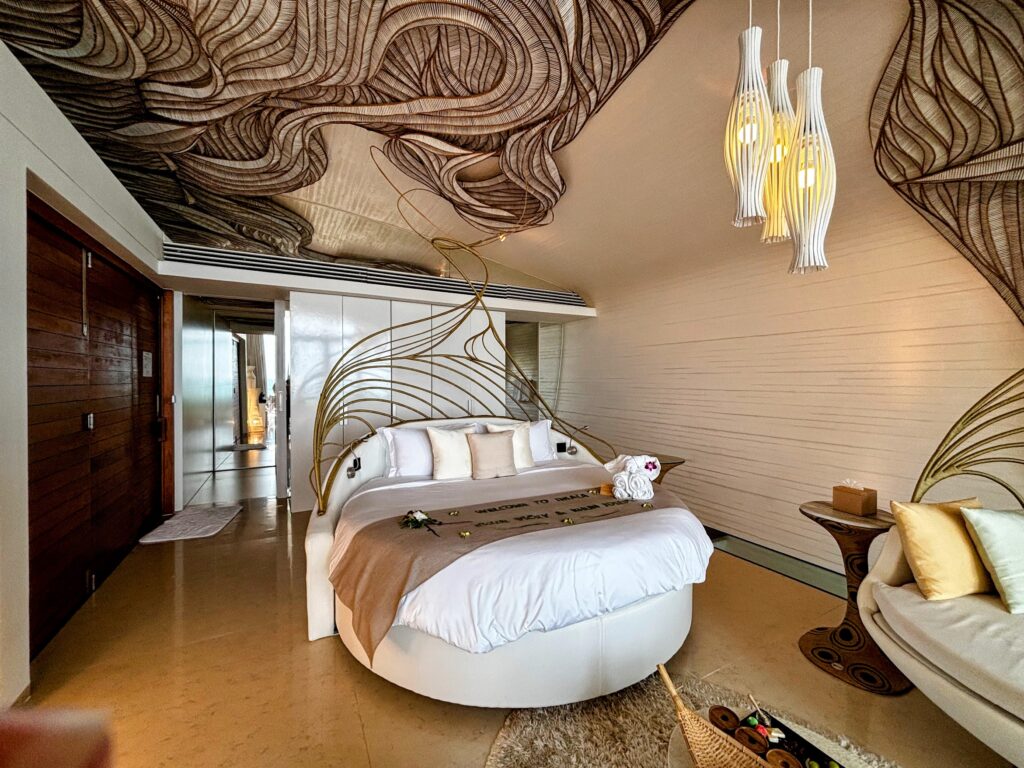
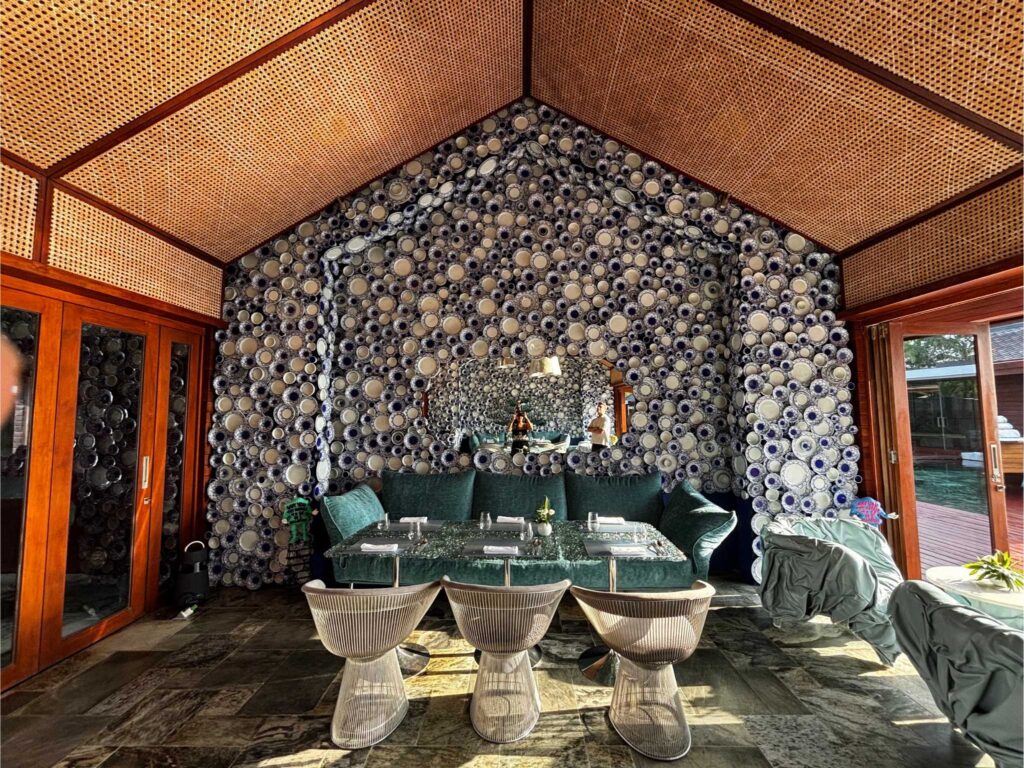
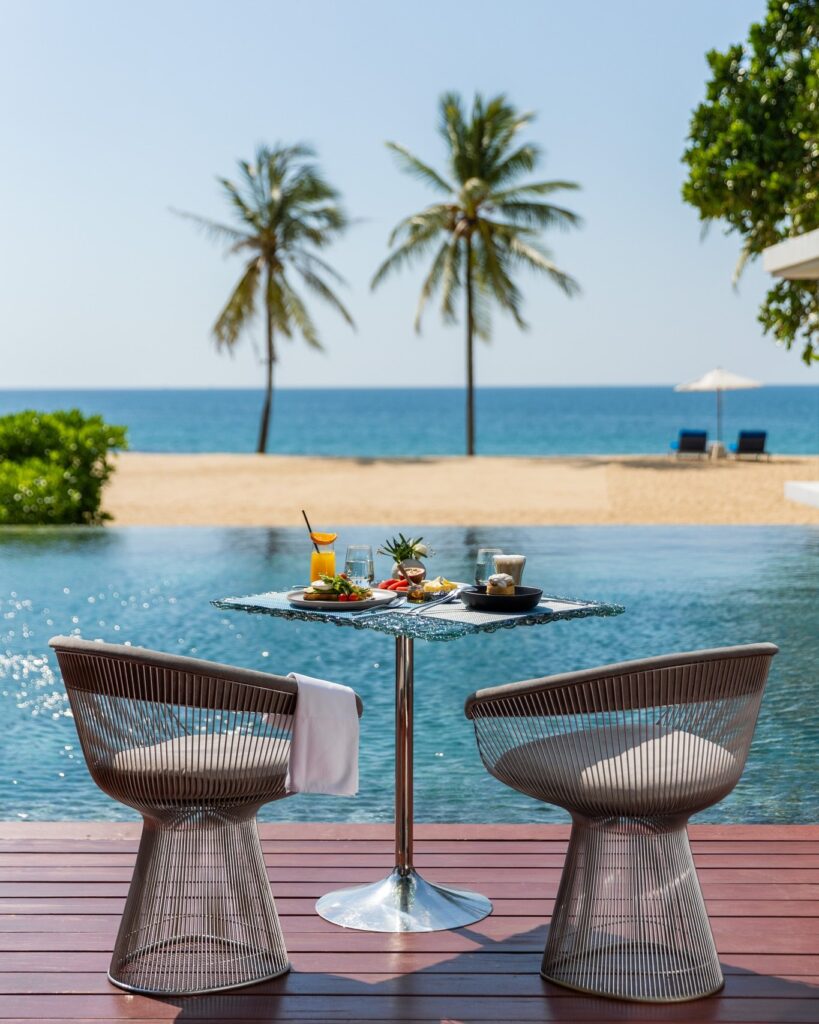
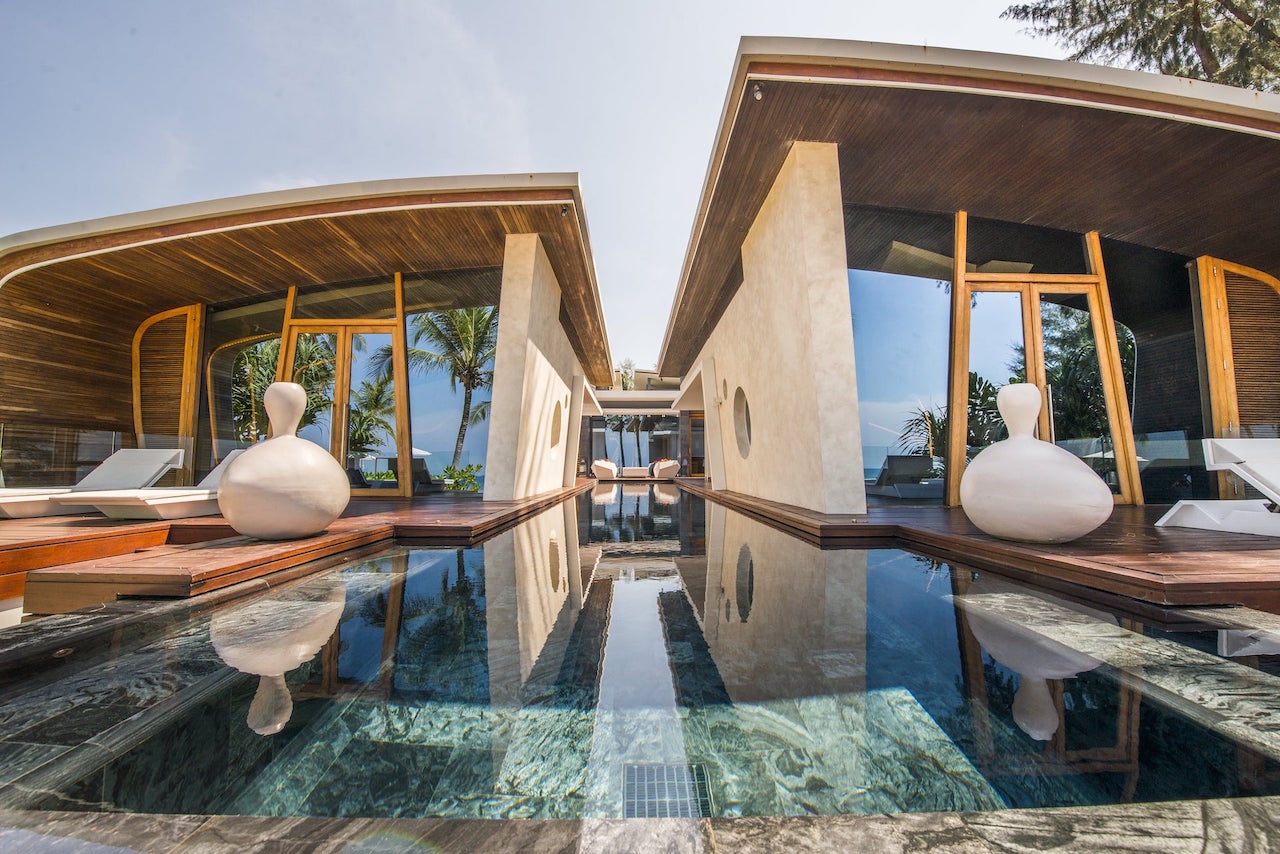
Iniala Beach House isn’t really a hotel, per se; it’s a collection of separate design commissions that you happen to be allowed to sleep in. The property comprises ten standalone accommodations on Natai Beach (a 25-minute drive north of Phuket airport, over the Sarasin Bridge into Phang Nga province), and across them, eleven international designers were each given a space and told, more or less, to do whatever they wanted with it.
The results are opulent and psychedelic. The Boudoir Suite is theatrical, lacquered, almost Victorian; the Carpenter’s, sculptural and hand-finished; Villa Bianca, the three-bedroom showpiece, contains a private waterfall feature and two soaking tubs and feels like something out of a very expensive children’s book. The Siamese Suite encourages you to sleep in the cradle of come-hither bamboo curls. Yes, it’s nuts, and no two spaces look alike, which is the inverse of how almost every other luxury property on the planet is operated.
If the design is maximalist, the food earns its reputation by entirely different means: focused, singular, and built around one exceptional kitchen. Aulis Phuket, the 15-seat chef’s table from one-of-our-own Simon Rogan, opened in December 2023 in the resort gardens and earned a Michelin star in November 2024, less than a year in, becoming the first and only star ever awarded in Phang Nga province. It uses the same hyper-local idiom as Rogan’s three-starred L’Enclume in Cumbria, which means a tasting menu drawn from ingredients that are either grown on-site or sourced from a tightly defined radius. A meal here is both thought-provoking and cohesive, which is a surprisingly difficult act to balance. Aulis does it gracefully.
And then there’s Natai itself; a long, casuarina-fringed strip of pale, powdery sand with almost none of the commercial development that defines Phuket’s west coast. It registers, even in 2026, even in Phuket, as somewhere the rest of the world has yet to find. There’s no village within walking distance for an evening drink and no morning market round the corner, but for most guests booking Iniala, that absence is of course the appeal.
Iniala holds both a Michelin Key for the property and a Michelin star for Aulis, a combination almost no hotel of this size can claim.
You can read our full review of Iniala Beach House here.
Suites at Iniala Beach House start from around 30,000 baht (£700) per night in low season, rising to roughly 43,000 baht (£1,000) at peak. Two-night minimum stay. Villas are priced on request.
Address: Iniala Beach House, Khok Kloi, Amphoe Takua Thung, Phang Nga 82140, Thailand
Website: iniala.com
Amanpuri (Cherngtalay)
Ideal for purists who want the original, not an imitation…
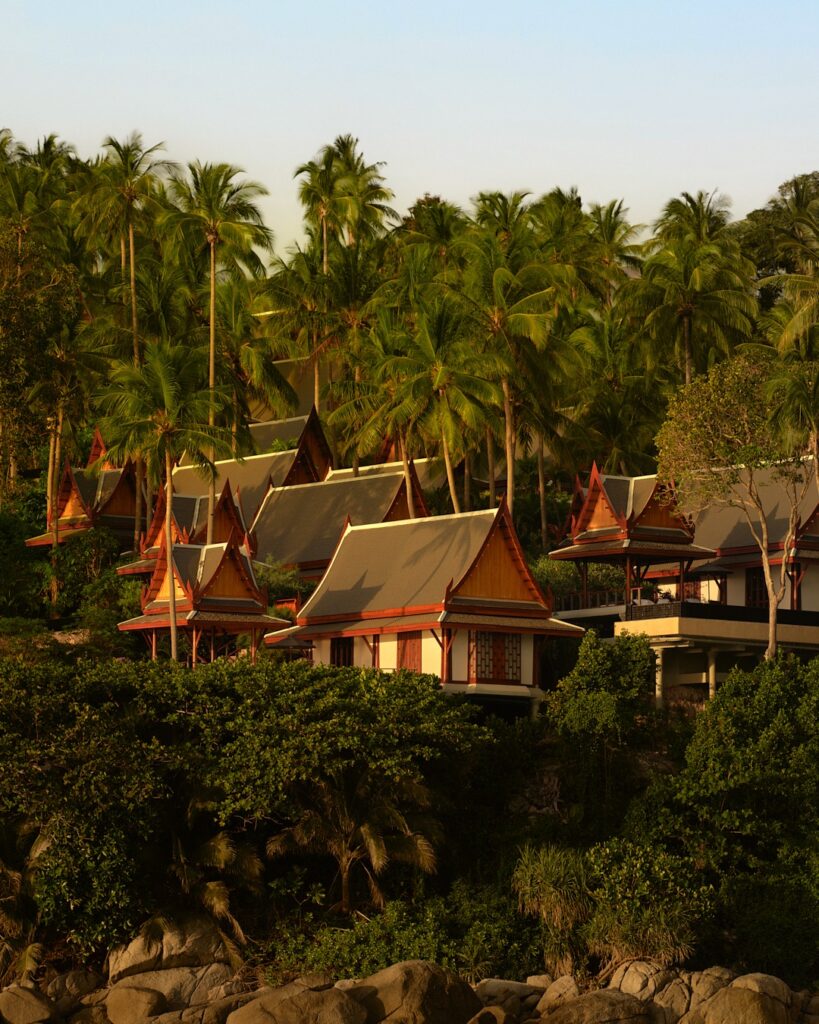
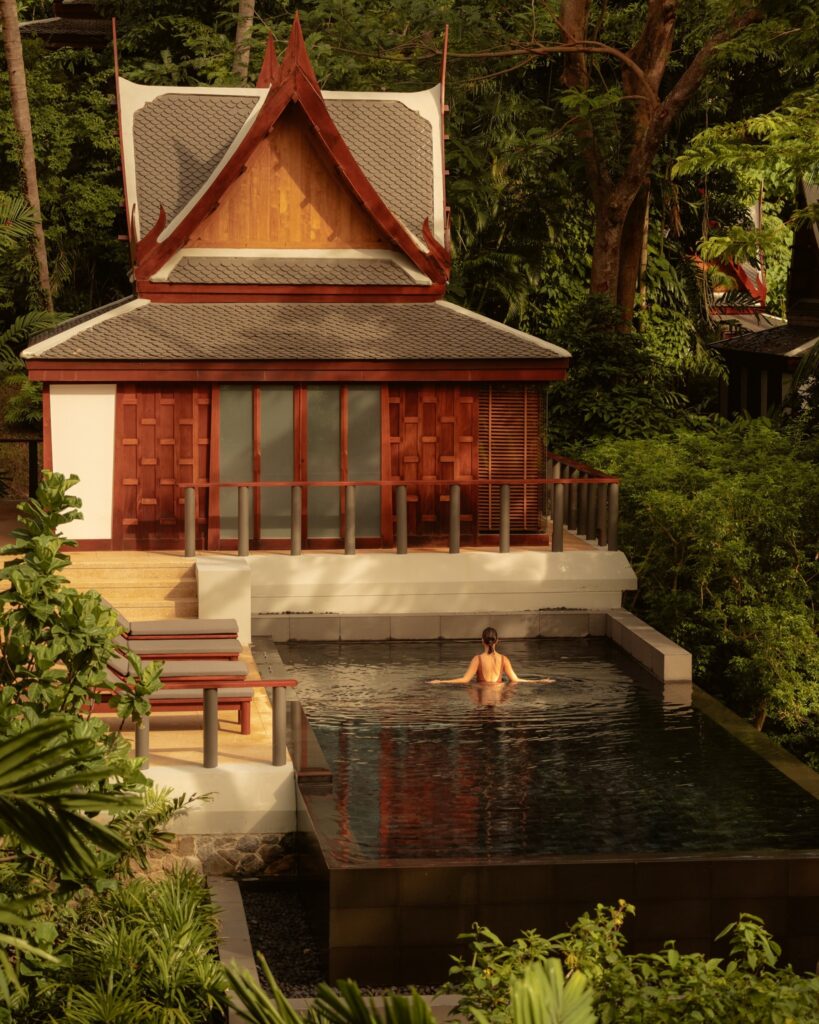
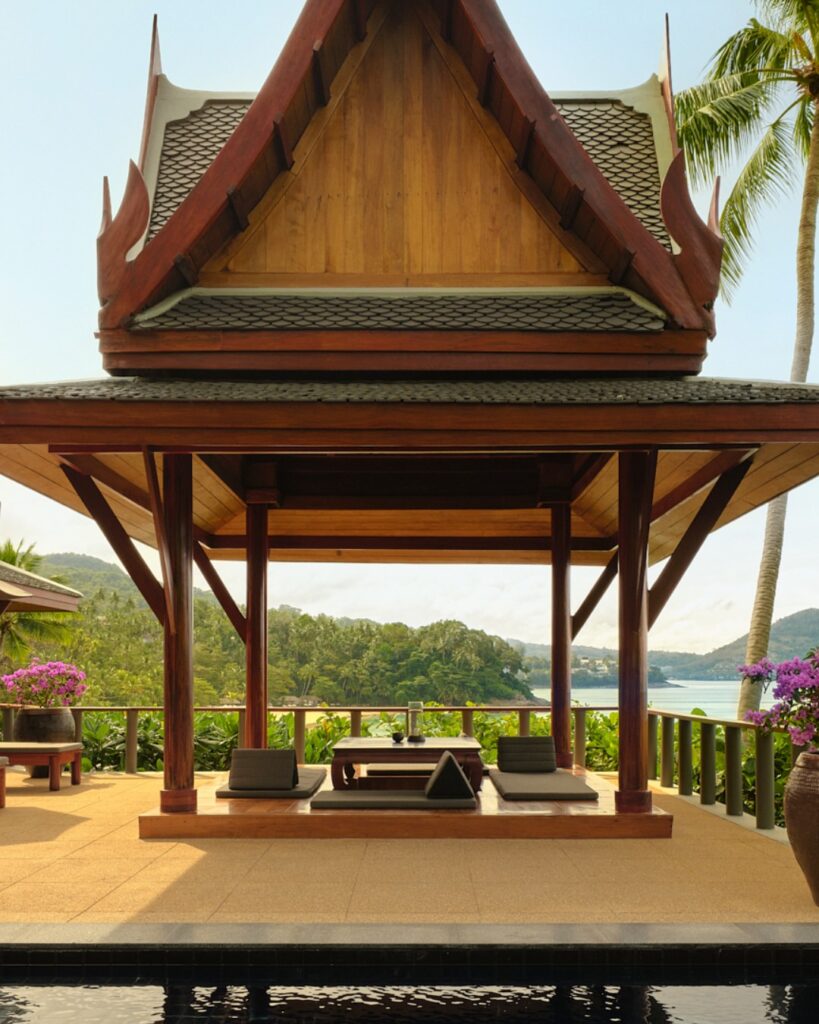
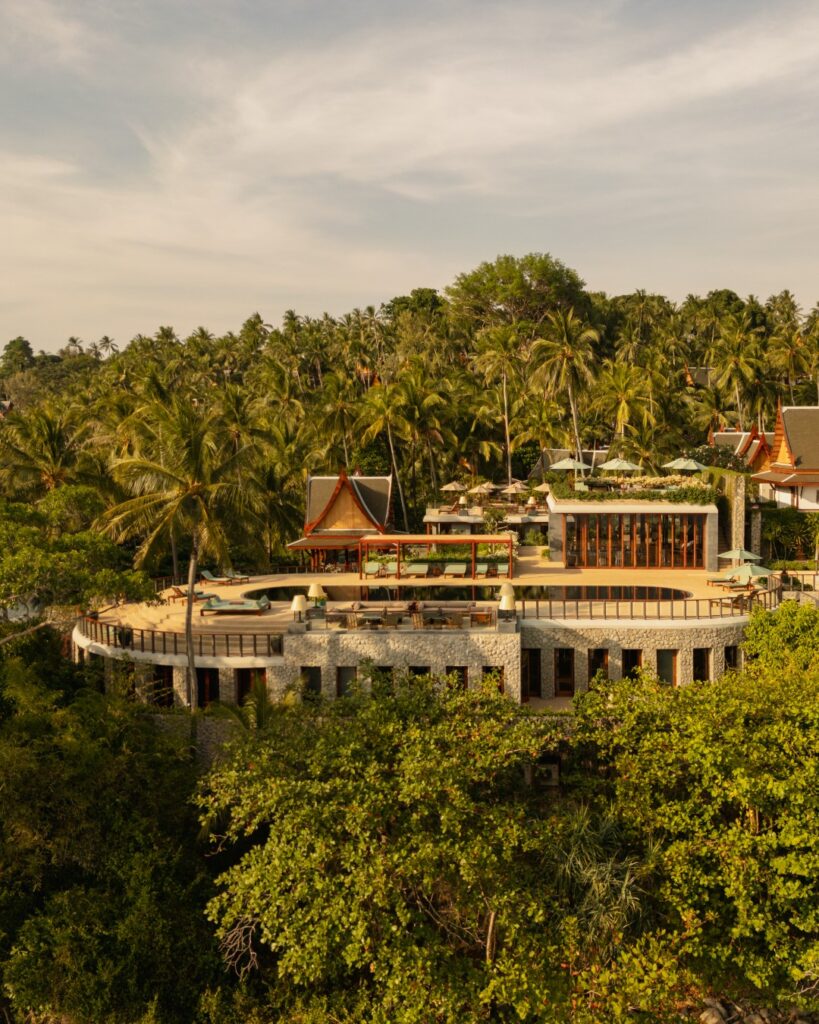
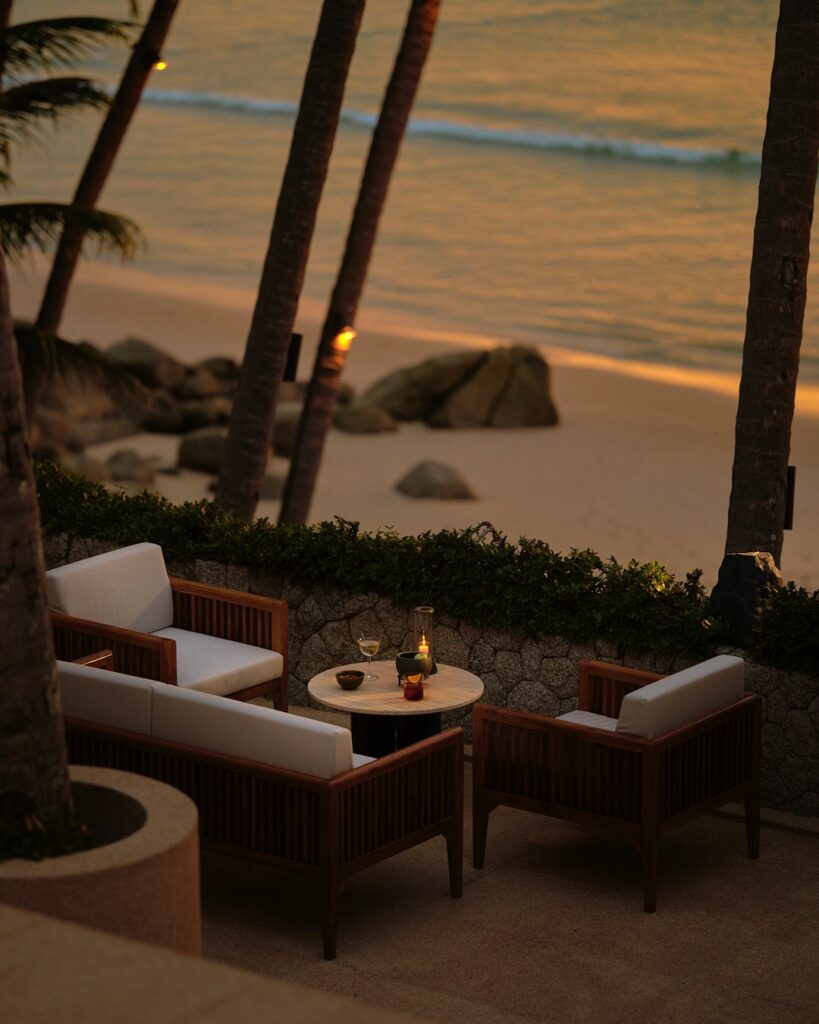
Most of the luxury beach resorts you’ve ever stayed in are, whether they’d admit it or not, descended from this one. When Adrian Zecha and the late American architect Ed Tuttle opened Amanpuri on Pansea Beach on the 1st of January 1988 as the first ever Aman, they more or less invented the modern tropical resort: low-pitched roofs inspired by Ayutthaya temple compounds, raised walkways through coconut groves, and the deliberate dissolution of any hard edge between built structure and surrounding landscape. There was no Aman Bali yet, no imitations across the Maldives. This was the source code, and almost four decades on, it’s also still the best version.
The site is a former coconut plantation occupying its own headland on the northern end of Pansea Beach. Across 40 pavilions and 44 villas (one to nine bedrooms, with private pools and personal chefs in the larger configurations), every accommodation faces the same central black-tiled pool, which is perhaps the single most replicated image in luxury hotel design.
Where Iniala might attract celebs and reality TV shows, Amanpuri is where the upper echelons go to not be recognised. The small fleet of yachts available for day charters around Phang Nga Bay and Phi Phi is the kind of thing few competitors can match, ridiculing the notion of shared minibuses and group tours that other hotels might put on in favour of something much more private. The Aman Spa is so well regarded that people book treatments here without ever checking into a room, which is about the only concession to the outside world Amanpuri makes.
The whole property closes for full maintenance every June, which is part of why it still looks immaculate decades after opening, and it remains the only hotel on Phuket to hold the maximum three Michelin Keys. No surprise, then, that Amanpuri isn’t cheap. There are properties on the island that match its design and exceed its food, but what you’re paying for is the original; the building inside which the entire genre was invented. Whether that matters to you is a personal calculation.
Pavilions at Amanpuri start from around 60,000 baht (£1,400) per night in low season, rising to roughly 90,000 baht (£2,100) at peak. Two-night minimum stay. Villas begin at roughly 150,000 baht (£3,500) and climb from there.
Address: 118, 1 ถนน ศรีสุนทร, Choeng Thale, Thalang District, Phuket 83110, Thailand
Website: aman.com/resorts/amanpuri
The Pavilions Phuket (Cherngtalay)
Ideal for hilltop hermits…
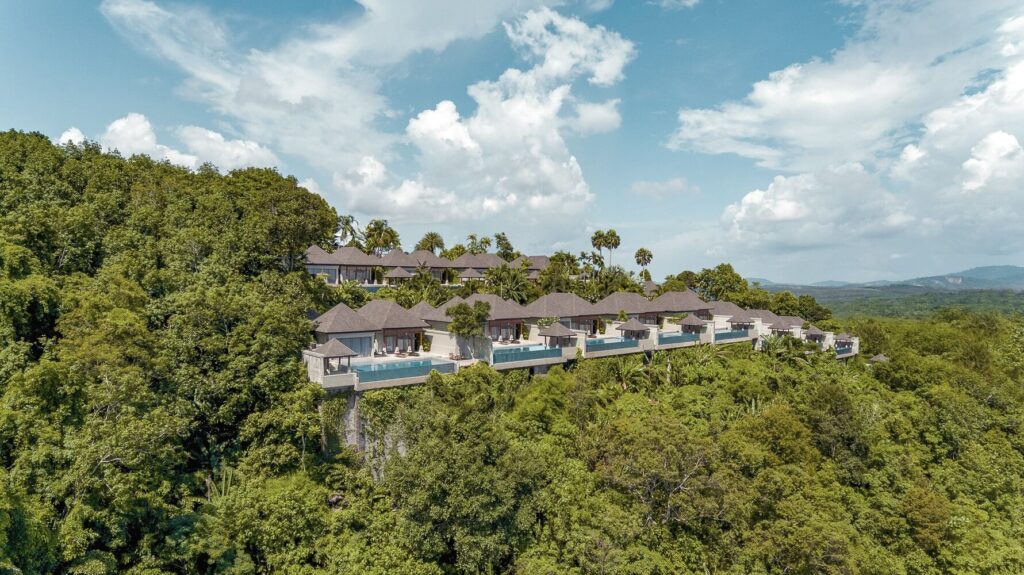
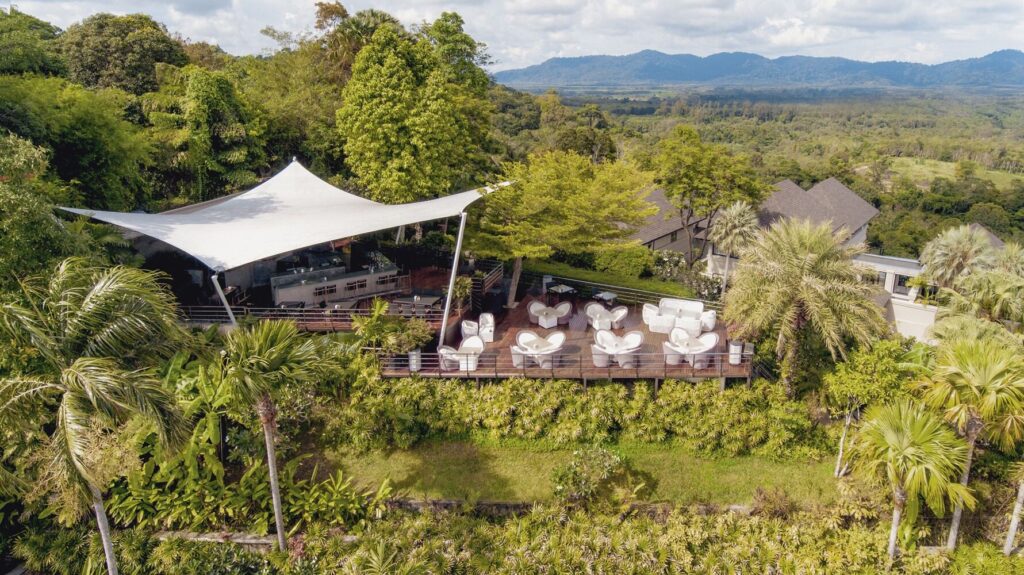
Most Phuket resorts are designed around the assumption that you want to be as near to the beach as is geographically possible, with every single step to the shore mitigated against via buggies, shortcuts or simply fake sand. The Pavilions Phuket is built around the assumption that you might not.
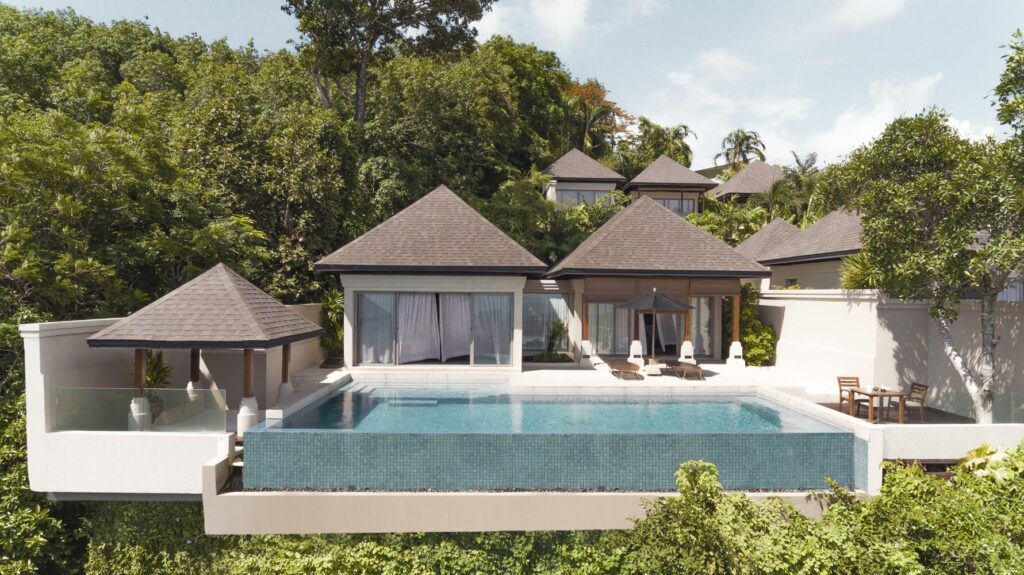
Set on the terraced hillside above Layan Beach in Cherngtalay, the property is configured so that everything you would conceivably want during a stay is delivered to you, or accessible without leaving the resort, somewhere within the gates. The hilltop villas come with private cable-driven funiculars to ferry you up the steep paths to your front door, while a complimentary scheduled shuttle runs down to Layan Beach and the nearby Laguna shopping area for the times you do want to leave. Which, it turns out, are few and far between.
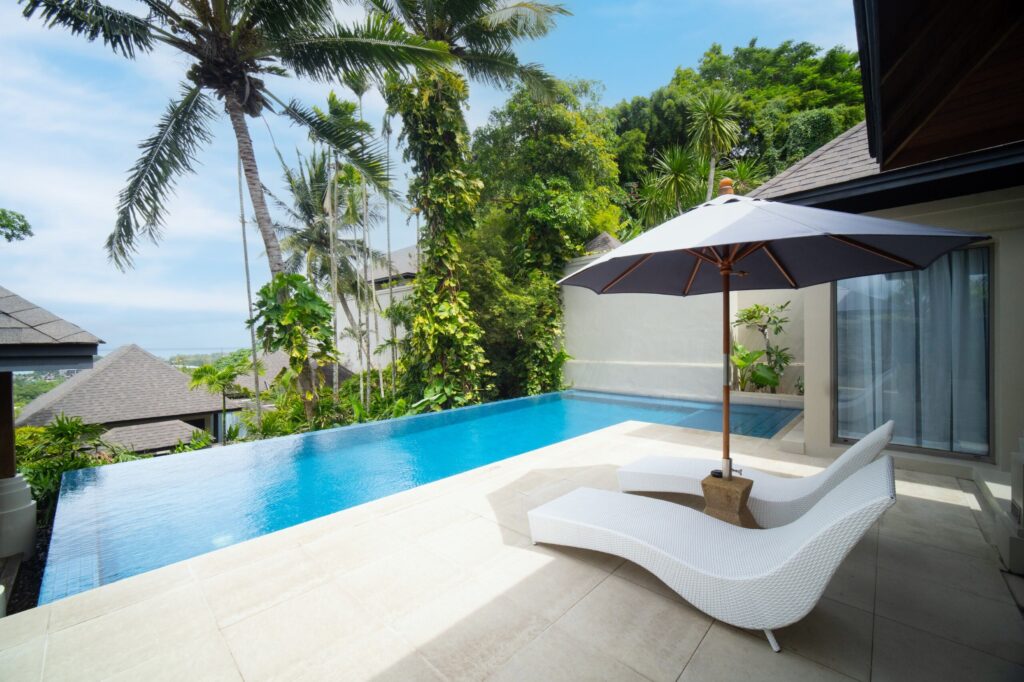
The accommodation ranges from family-friendly suites to substantial multi-bedroom pool villas, and the villa pools in the upper-tier categories measure 14 by 4 metres, large enough to actually lap, which is rare.
The confidence of the dining options reinforces the logic of staying put. Alto, the flagship Italian fine-dining room, shares its name and kitchen lineage with Alto Rome, where the Pavilions group also runs two-Michelin-starred Acquolina – suddenly it’s not so surprising that the Italian here is significantly better than the average resort version. The 360 Bar serves cocktails and sushi from the rooftop with sweeping, dramatic views of the sea. And then you remember that villa guests get complimentary afternoon tea and free-flow cocktails from 4pm at Alto, and that you can have a chef come to your terrace and cook a barbecue while you sit with a drink, and that shuttle to Layan starts to feel real redundant.
You can read our full review of The Pavilions Phuket here.
Tropical View Suites at The Pavilions Phuket start from around 4,080 baht (£95) per night in low season, rising to roughly 9,000 baht (£210) at peak. Pool Villas from around 12,750 baht (£300) in low season, rising to roughly 25,000 baht (£580) at peak.
Address: 31 1, Choeng Thale, Thalang District, Phuket 83110, Thailand
Website: pavilionshotels.com
Read: The best Italian restaurants in Phuket
COMO Point Yamu (Cape Yamu)
Ideal for guests who’d trade sand for a better view of the karsts…
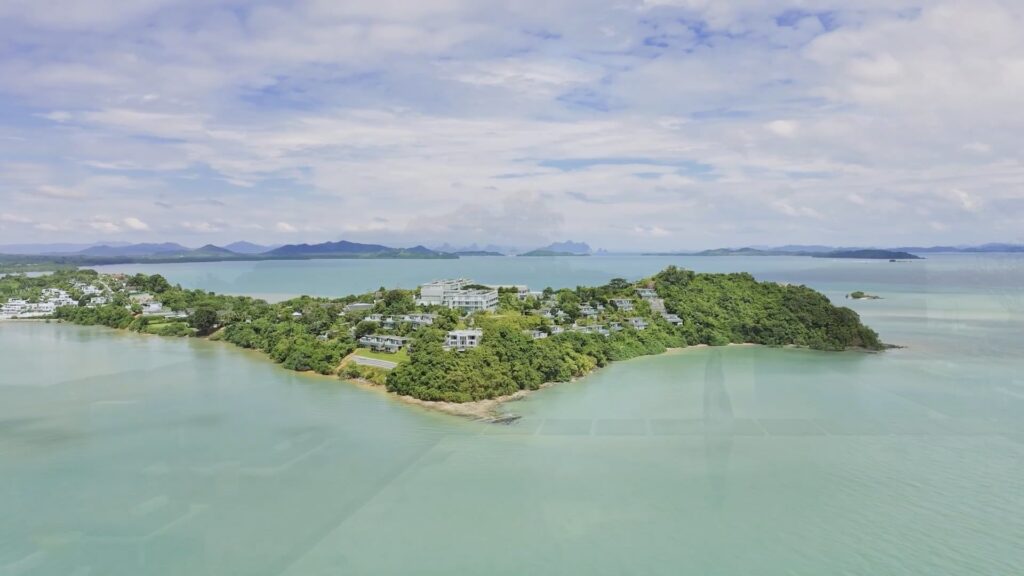
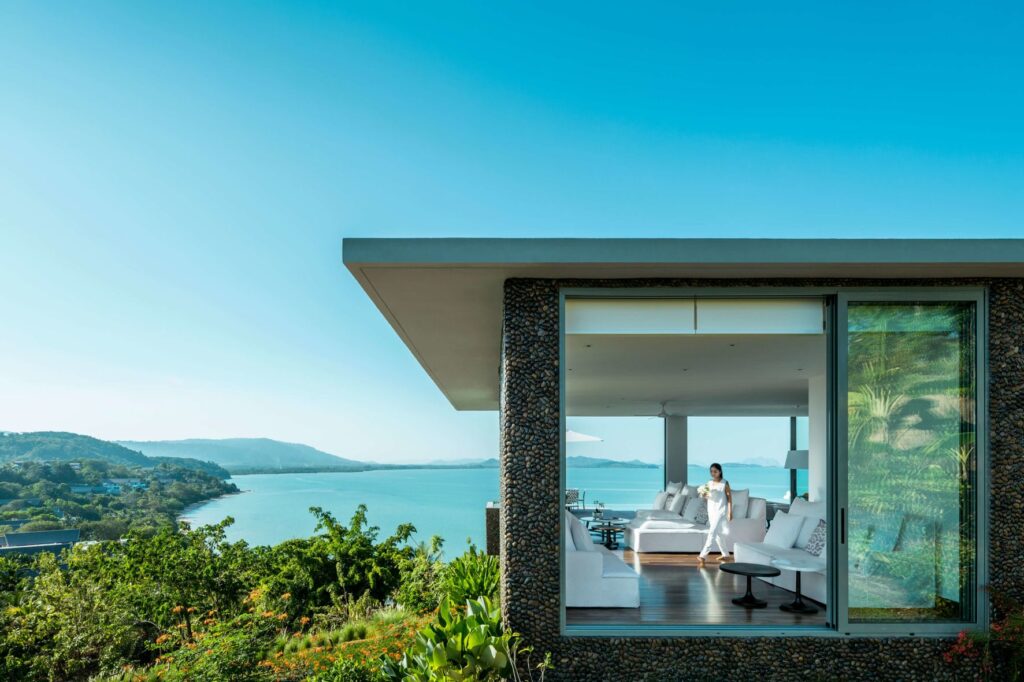
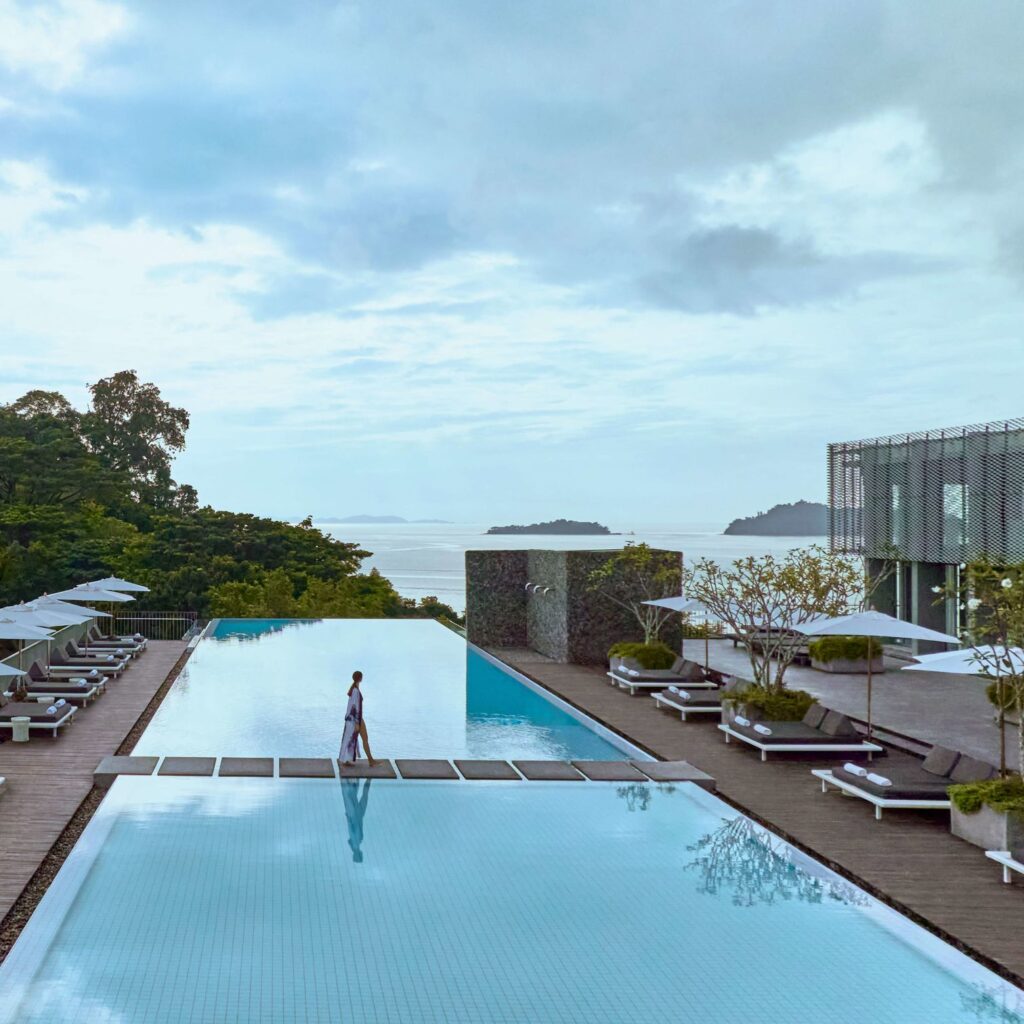
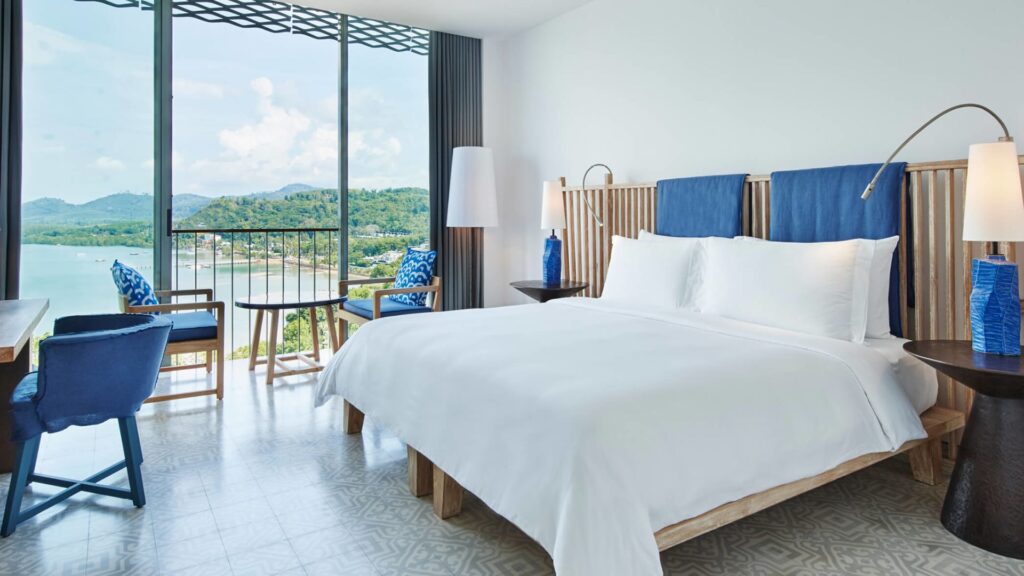
COMO Point Yamu commits to a counterintuitive idea: a beach island resort that’s deliberately not a beach resort. The property occupies the very tip of Cape Yamu on Phuket’s east coast, where the cape itself is rocky rather than sandy, and the view across the water isn’t open Andaman swell but the calmer waters of Phang Nga Bay, with the limestone karsts of Hong, Naka and the wider archipelago rising in the middle distance.
The interior design, by Italian Paola Navone, leans heavily into Phuket’s Peranakan Sino-Thai heritage with aquamarine tiles, burnt-orange accents inspired by Buddhist robes and white walls calibrated to catch the soft bay light, but it’s the orientation that makes the real impression, a view that threads through everything here. The gym faces the karsts. The COMO Shambhala yoga pavilion faces the karsts. The pool faces the karsts. Even the treadmill has a better view than most hotel balconies on the island.
It’s a property designed so that wherever you are, whatever you’re doing, the bay is the backdrop and horizon, and that includes Nahmyaa, the Southern Thai restaurant, which goes deep into regional cooking most visitors to the island never encounter: wok-fried fern tips in coconut milk, squid bathed in its dark ink until it makes you sticky-lipped, and a southern red curry of cobia fish which could have been caught by the longtails bobbing below your window, with shrubby basil foraged from the cape.
The trade-off, and there’s no avoiding it, is the lack of a beach immediately outside the property; the resort gets around this with COMO Beach Club on Naka Yai Island, a complimentary boat ride away, with day beds, saltwater pool and treatment rooms reserved for hotel guests. Some guests find the daily boat trip across to a private island the best part of staying here, while others would prefer to step from villa to sand. Worth knowing before you book.
Bay Rooms at COMO Point Yamu start from around 5,000 baht (£115) per night in low season, rising to roughly 12,000 baht (£275) at peak.
Address: 225 Pakhlok, Thalang District, Phuket 83110, Thailand
Website: comohotels.com
The Vijitt Resort Phuket (Rawai)
Ideal for slow travellers wanting a coast that still feels lived in…
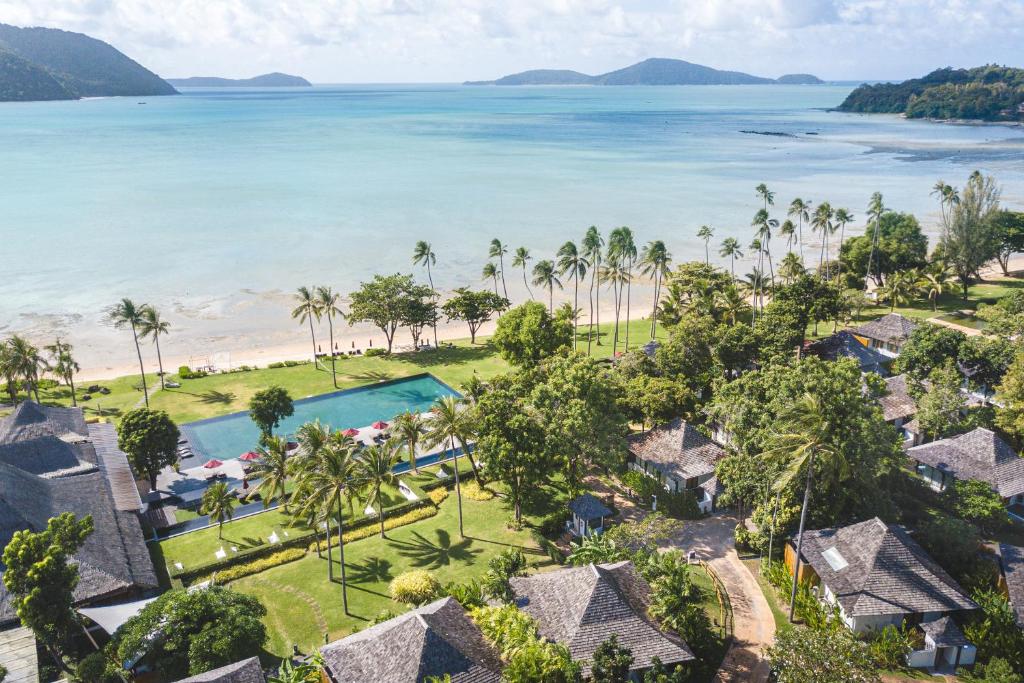
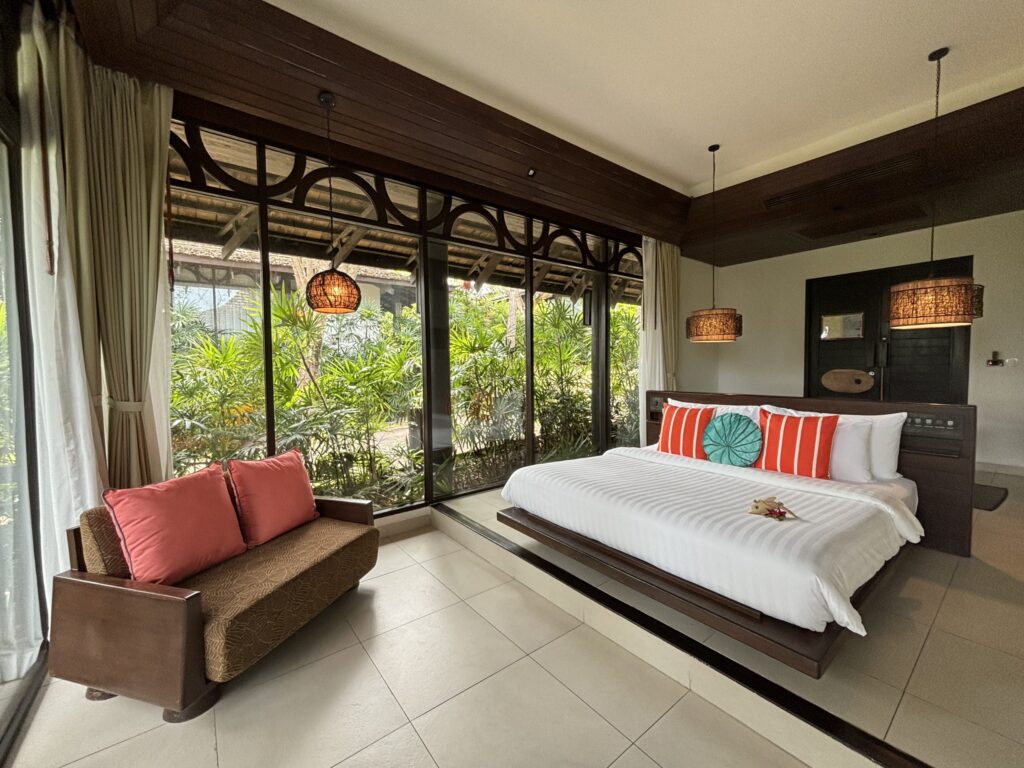
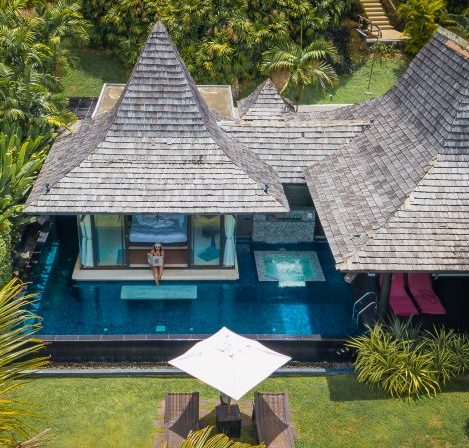
Rawai is the part of Phuket that first-time visitors rarely reach, which is precisely its appeal. The Vijitt is the area’s standout property. The site is 18 acres of sloping lawns and mature coconut palms on Friendship Beach, with a 250-metre stretch of east-facing sand and views across Chalong Bay to the limestone islets of Lon and Coral. The property has been here long enough that the original landscaping has matured into something genuinely impressive, with rubber trees, fruit trees and coconut palms that have had decades to grow into a canopy that newer resorts can only render in CGI.
The accommodation is entirely standalone villas, 92 of them, each with high-pitched roofs, teak interiors and floor-to-ceiling windows that open onto private gardens, with nothing taller than the treeline disrupting the grounded feel of the property. The whole place has the character of somewhere that has settled into its surroundings rather than been imposed on them, which is rarer than it should be on Phuket. It’s all low slung, slow-paced, and laid back; the destination for those wanting to be so ensconced in their surroundings that they turn into a palm tree, with only the sea breeze to remind them which way is forward.
Friendship Beach is tidal, so swimming windows depend on the tide rather than the conditions, but that’s part of why Rawai feels less commercial than the west-coast strips. Anyway, it’s damn good for a wander.
Luxury of course means different things to different people. But is there anything more luxurious than eating a Phuket lobster plucked fresh from the sea? We think not. Two kilometres down the road, the working fishing village at Rawai proper is home to a strip of no-frills seafood restaurants trading on the local catch done simply, and done brilliantly. For us Mook Manee is the pick of the bunch and the best place on the island for Phuket lobster.
Go further. Promthep Cape is fifteen minutes south and one of the great sunset spots on the island, and the working fishing community along the southern coast gives the area an authenticity the more polished resort strips have largely sacrificed. For some, that is the ultimate luxury.
Deluxe Villas at The Vijitt start from around 5,500 baht (£130) per night in low season, rising to roughly 8,500 baht (£200) at peak.
Address: 16 Moo 2, A, Wiset Rd, Rawai, Muang, Phuket 83130, Thailand
Website: vijittresort.com
Sinae Phuket (Koh Siray)
Ideal for Old Town explorers who’d like a bay-view base…
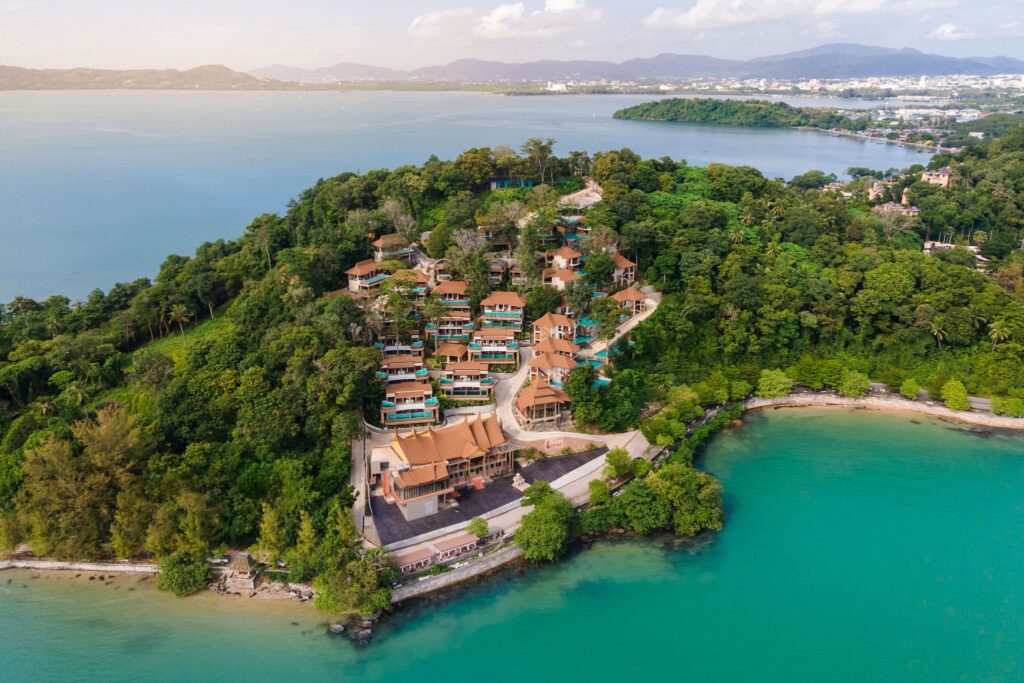
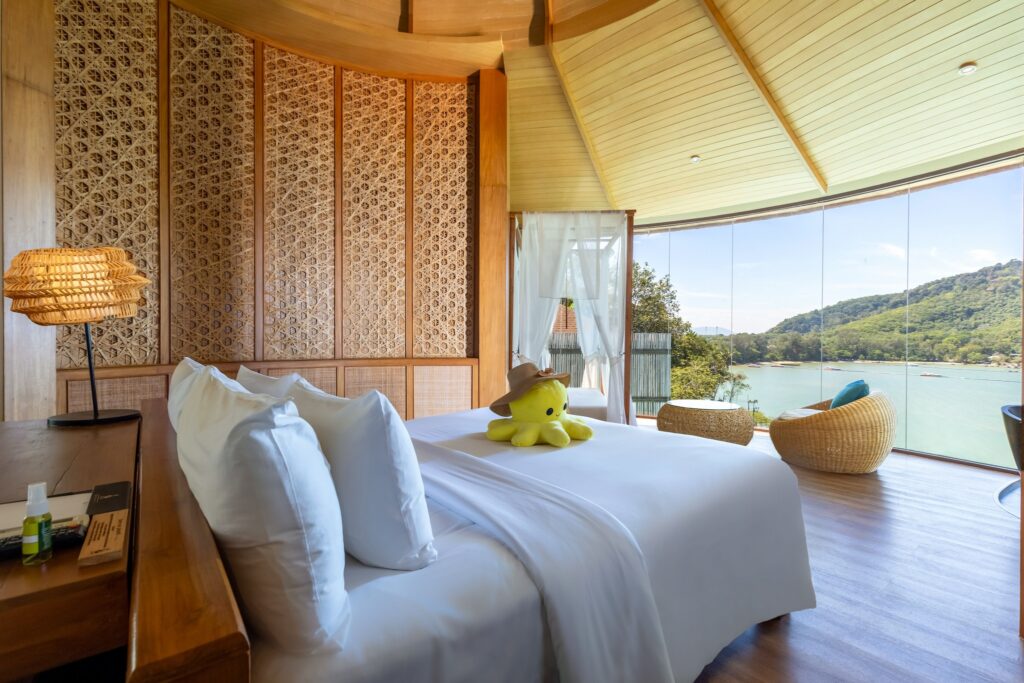
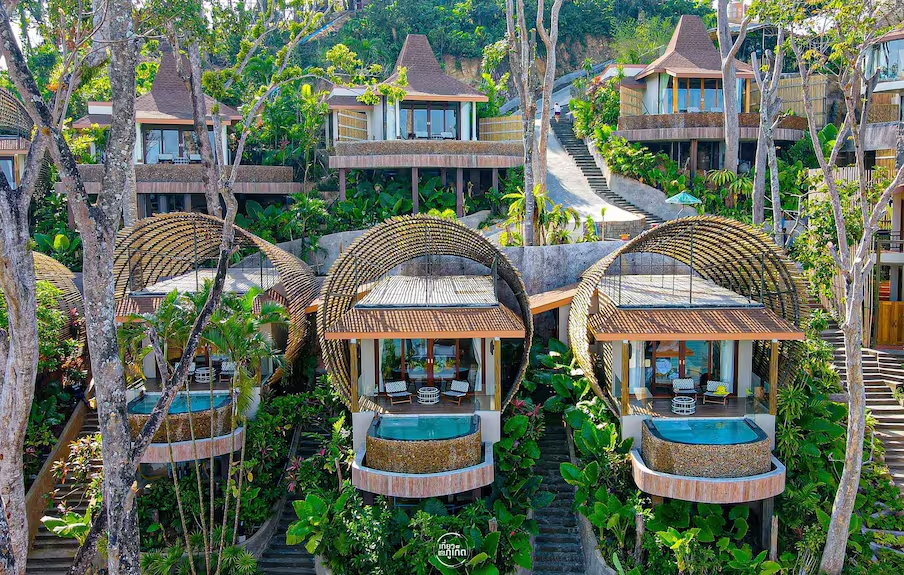
You might have noticed a pattern forming. We certainly have as we’ve been writing this. That is, that several of our picks so far sit above, beside or across the water from the beach rather than directly on it, and that’s not a coincidence. The properties on Phuket with the most character tend to be the ones that have traded direct sand access for something harder to find: a hilltop, a headland, a view not interrupted. The beachfront itself, particularly on the west coast, has long been claimed by the resorts with the biggest marketing budgets rather than the most interesting ideas, but that’s freed up room elsewhere.
Sinae is perhaps the purest expression of that principle. Plenty of hotels claim a fishing-village aesthetic; Sinae has the unusual distinction of actually being next to one. The property sits on Koh Siray, the small island connected to Phuket’s east coast by road, fifteen minutes from Phuket Old Town and entirely outside the orbit of the island’s beach-strip development. The Urak Lawoi sea gypsy community lives along the bay below, and the entire architectural language of the resort is a direct response to it, with pitched timber roofs, bamboo, natural stone, and an earth-and-cream palette that recedes into the green of the hillside pleasingly.
As any great hotel lobby should, Sinae’s sets the tone: a small, wooden-framed space with a genuinely breathtaking view across Phang Nga Bay that hits you before the welcome drink does. On check-in, we were warned not to leave shoes outside the villa door. The monkeys come down from the hillside and steal them, apparently. The monitor lizards, we were told, are harmless but best not fed when you pass them on the path. It might just be a script to emphasise that you’re not in Patong any more, but it worked on us.
The property, which follows the curves of the shoreline, is all-villa, 64 of them, each with its own private infinity pool. Though clearly five-star in spec, they feel almost humble, and I say that as a massive compliment; part of the geography and topography of the surrounding jungle rather than an eyesore, the rooms themselves appointed with dark, deep wood and a sense of all-encompassing calm. The Sinae Residence next door, a more recent addition, accommodates larger families and groups in three- to five-bedroom villas.
Sai Bistro & Bar, the main restaurant, has an unexpectedly strong Indian menu alongside the Thai, and the Hilltop Café at the property’s highest point has a widescreen view across Phang Nga Bay’s limestone islands that you return to even when not in the market for a coffee.
Siray Bay itself isn’t really a swimming beach; the water is sheltered and the sand is limited, and that’s the property’s main caveat. But the revelation, over multiple stays on the island, is that sacrificing your place on the sand is a net positive. For guests prioritising bay views, design grounded in actual local culture, and proximity to Phuket Old Town’s restaurant scene, it’s not an issue.
You can read our full review of Sinae here.
Studio Pool Villas at Sinae start from around 7,000 baht (£165) per night in low season, rising to roughly 14,000 baht (£325) at peak.
Address: 888, Ratsada, Mueang Phuket District, Phuket 83000, Thailand
Website: sinaephuket.com
Read: Where to stay in Phuket Old Town
Keemala (Kamala)
Ideal for honeymooners after the most distinctive design on the island…
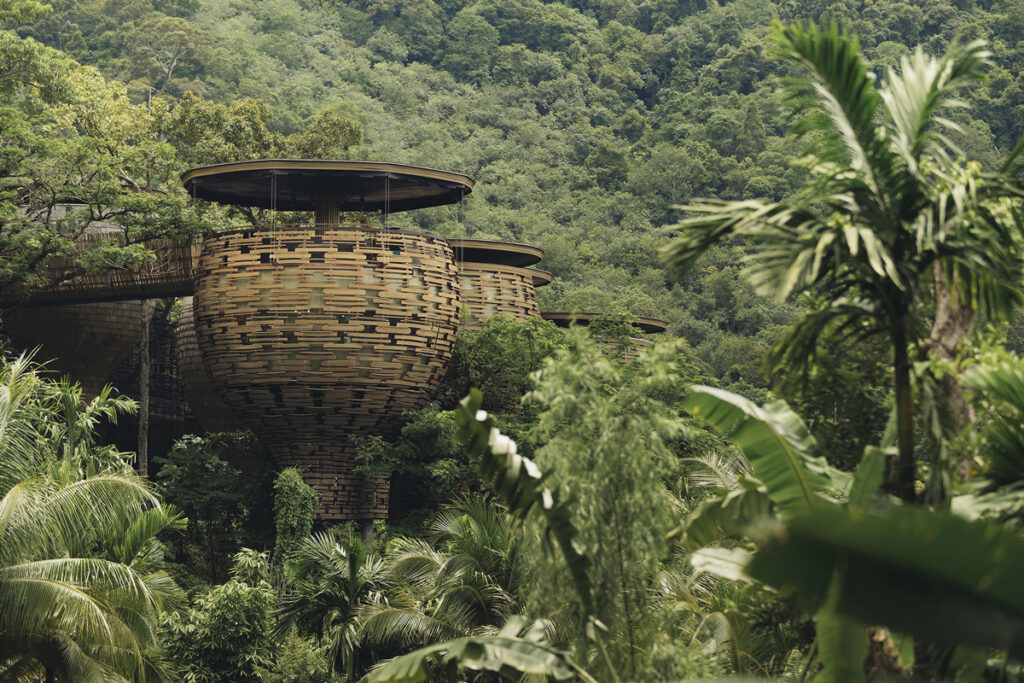
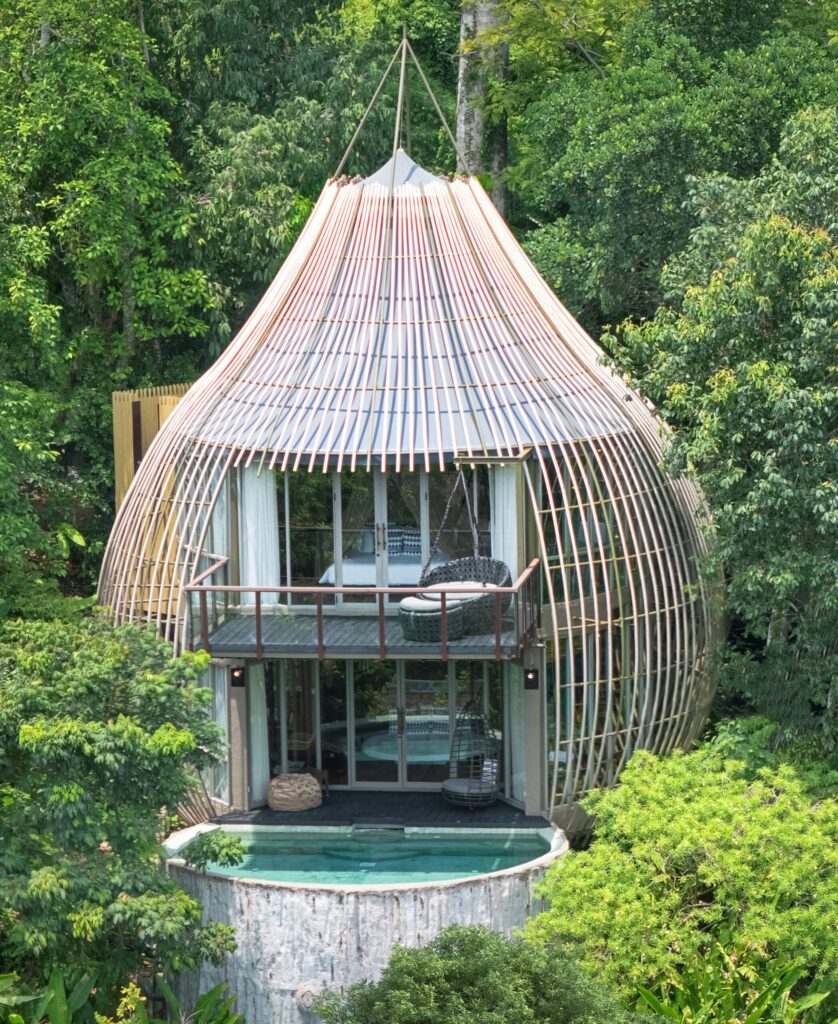
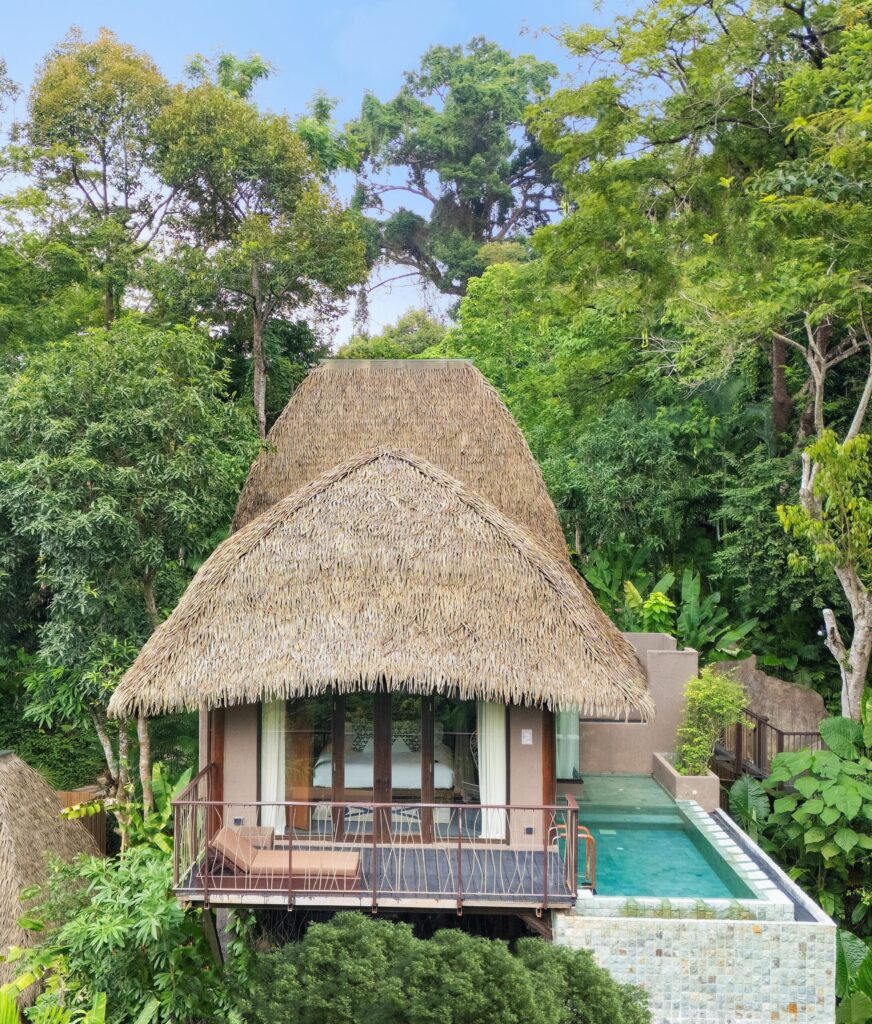
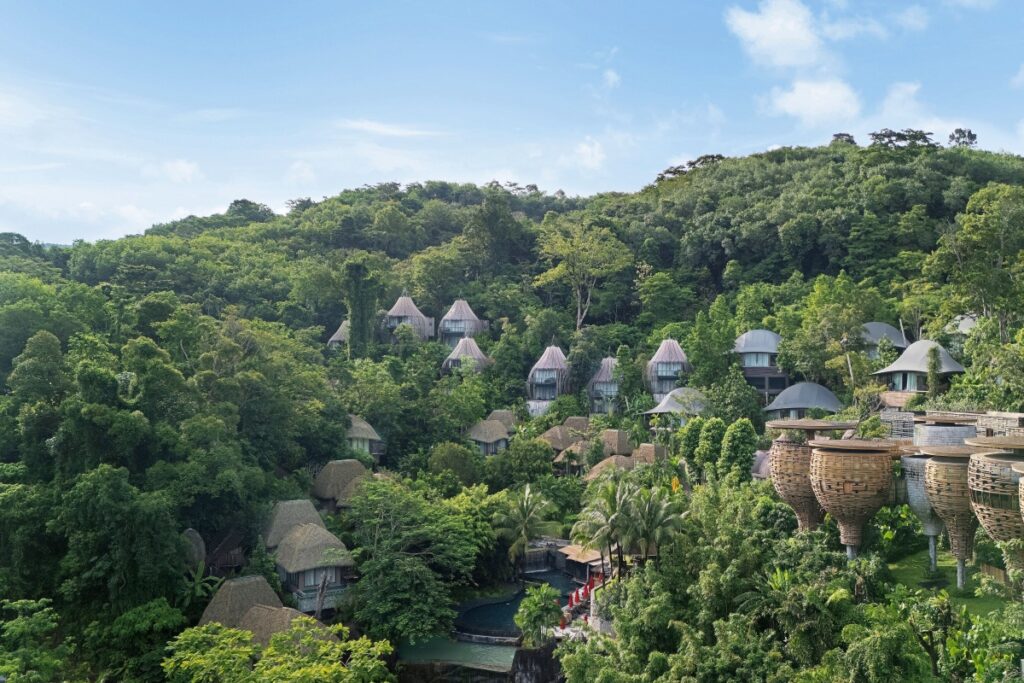
Of all the properties on this list, Keemala is the hardest to explain to someone who hasn’t seen it, but we’ll do out best.
The 38 villas above Kamala on Phuket’s affluent northwest coast are organised around the design narratives of four invented Thai clans (the earth-bound Pa-Ta-Pea, the wandering Khon-Jorn, the sky-dwelling We-Ha and the nest-building Rung-Nok), and each clan has its own villa typology designed to express its mythology.
Still with us? The Bird’s Nest Pool Villas, woven cocoons of timber suspended at canopy height, are the resort’s signature image and the reason most first-timers book, while the Tree Pool Houses sit on stilts amongst the canopy, the Tent Pool Villas borrow nomadic motifs, and the Clay Pool Cottages channel the Pa-Ta-Pea farming clan with rough-rendered walls and earth tones at ground level. Every villa has its own private pool, with raised jungle walkways connecting everything. It is, on paper, an idea that should collapse under the weight of its own whimsy.
That it doesn’t is largely down to who built it. Keemala is a fourth-generation Phuketian family project, the Somnams, whose roots on the island reach deep enough into the earth that the mythology they’ve invented feels like an extension of local culture rather than a costume draped over it. The architects redrew blueprints and redesigned buildings to accommodate existing trees instead of felling them, and in several villas the trunks sprout straight through the pool platforms. There are rescued water buffalo on site, a mushroom hut, a hydroponic garden and an orchard supplying the kitchen at Mala Restaurant. You start to wonder if the head shop down the road has signed a partnership deal with the breakfast chefs, quite honestly. But the fantasy has foundations, which is why you buy into it rather than seeing through it.
The wellness side of things has genuine substance too. The Mala Spa offers Tok Sen treatments, in which a wooden hammer is tapped along the body’s energy channels, a centuries-old northern Thai technique that most resort spas wouldn’t touch with a, erm, hammer, alongside a meditation cave and yoga pavilions set amongst the ancient trees. The resort also runs a strict anti-animal-exploitation policy, actively steering guests away from elephant trekking and tiger shows and towards the Phuket Elephant Sanctuary.
Kamala Beach is a complimentary shuttle ride away, and yes, there’s no sand at your door. But the Somnams built Keemala with the explicit intention of proving a Phuket resort could thrive without it, and they were right.
Clay Pool Cottages at Keemala start from around 15,000 baht (£350) per night in low season, rising to roughly 28,000 baht (£650) at peak.
Address: 10 88 Nakasud Rd Kamala, Kathu District, Phuket 83150, Thailand
Website: keemala.com
Twinpalms Tented Camp Phuket (Cherngtalay)
Ideal for grown-ups who like the idea of camping but not the reality of it…
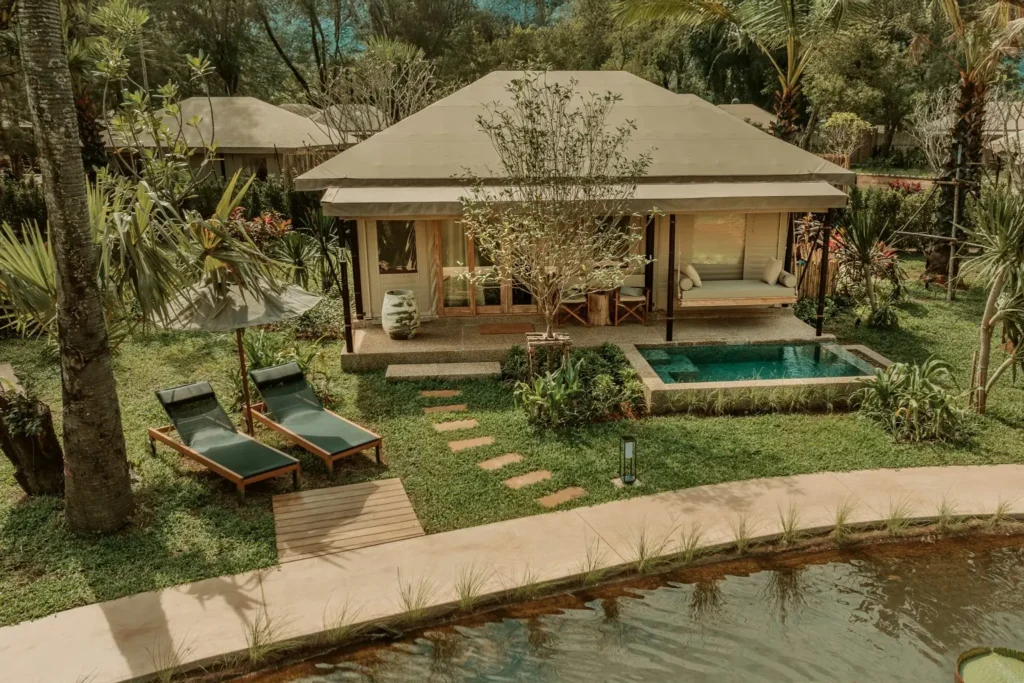
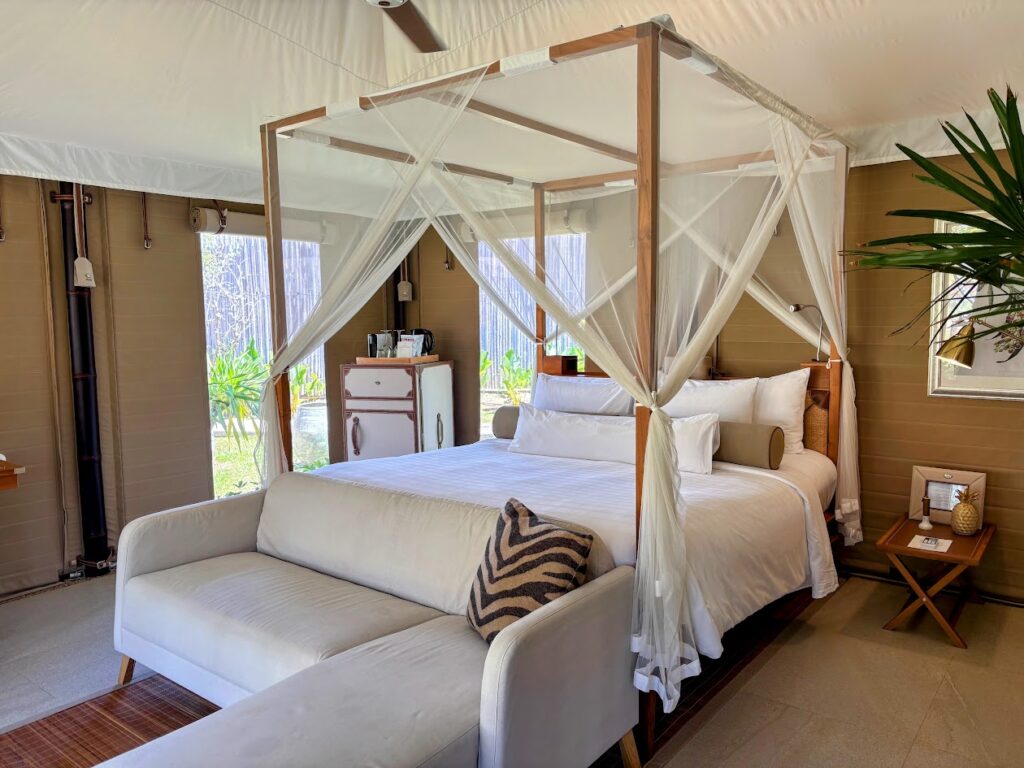
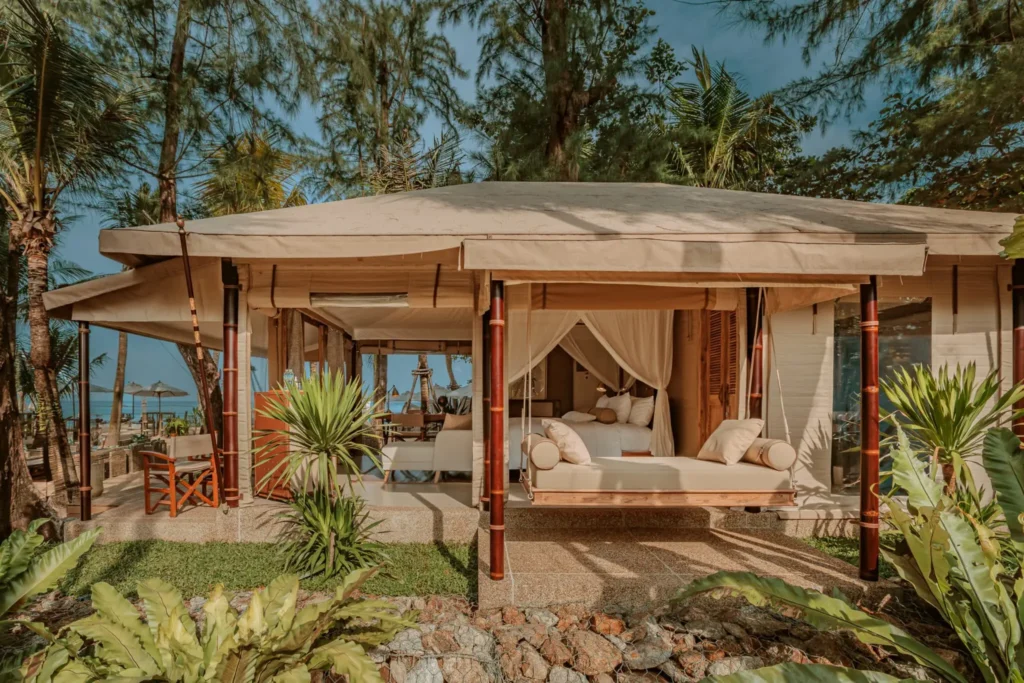
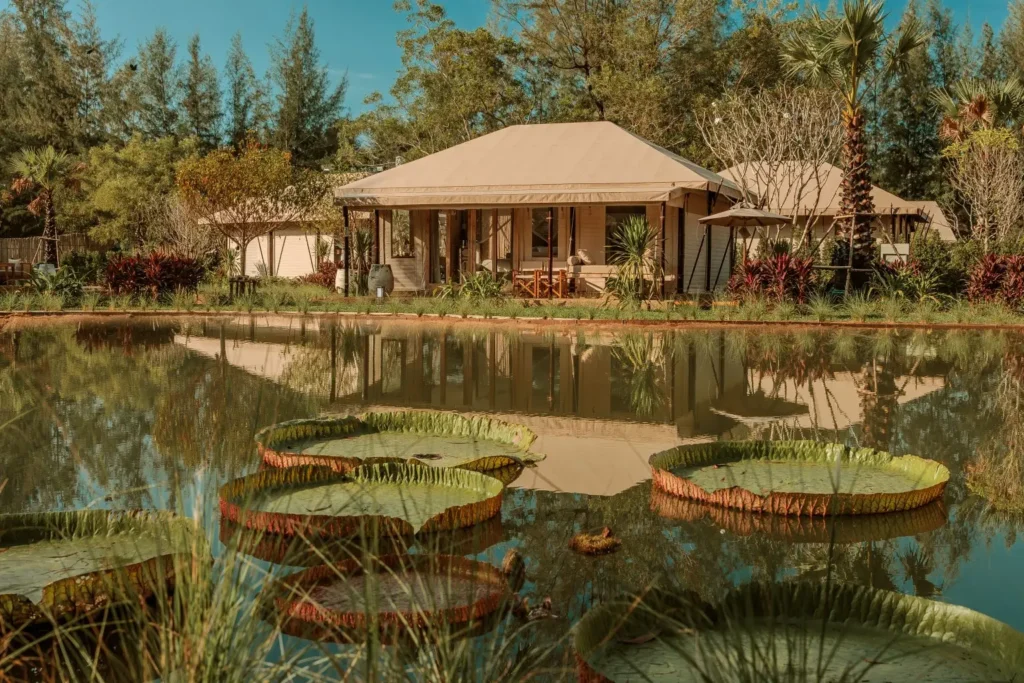
A luxury safari camp on a Thai beach would feel like a gimmick if the people behind it had half-arsed the execution. But Carl Langenskiöld’s Twinpalms group, which has been on Phuket for over two decades, have gone all in. Their Tented Camp launched in December 2024 among the tropical gardens and sands of Bang Tao Beach in Cherngtalay, and it’s the most distinctive new arrival on the island in years.
The adults-only camp comprises 29 luxury tents on raised wooden decks, with 24 lagoon tents in one- and two-bedroom configurations set among tropical gardens, and five beachfront tents arrayed directly on the sands of Bang Tao itself. The tents are substantial, fully air-conditioned with sumptuous king beds, freestanding bathtubs and indoor-outdoor showers, and the design language commits to a rough-luxe aesthetic of worn leather, dark wood, rattan and soft linen, rather than the polished minimalism that dominates the rest of the island’s luxury market. It feels, for once, like somewhere you could spend a week without checking your phone. Actually, we’d go further; it’s a place where you can imagine writing your first novel in one continuous flow of increasingly experimental prose. With a fountain pen, we should add.
The wider Twinpalms group’s beach club operations, Catch Beach Club and The Lazy Coconut, are walking distance along Bang Tao for guests who want a livelier daytime scene. The whole thing is calibrated for couples wanting a few nights of design-forward escape rather than a fortnight’s beach holiday, and for that brief, nothing else on the island gets close right now.
And all without a roll mat or sleeping bag in sight.
You can read our full review of Twinpalms Tented Camp here.
Lagoon Tents at Twinpalms Tented Camp start from around 12,000 baht (£275) per night in low season, rising to roughly 20,000 baht (£460) at peak.
Address: 202 88, Choeng Thale, Thalang District, Phuket 83110, Thailand
Website: twinpalmshotelsresorts.com/tented-camp-phuket
Avista Hideaway Phuket Patong (Tri Trang)
Ideal for food-led travellers who came for the rooftop…
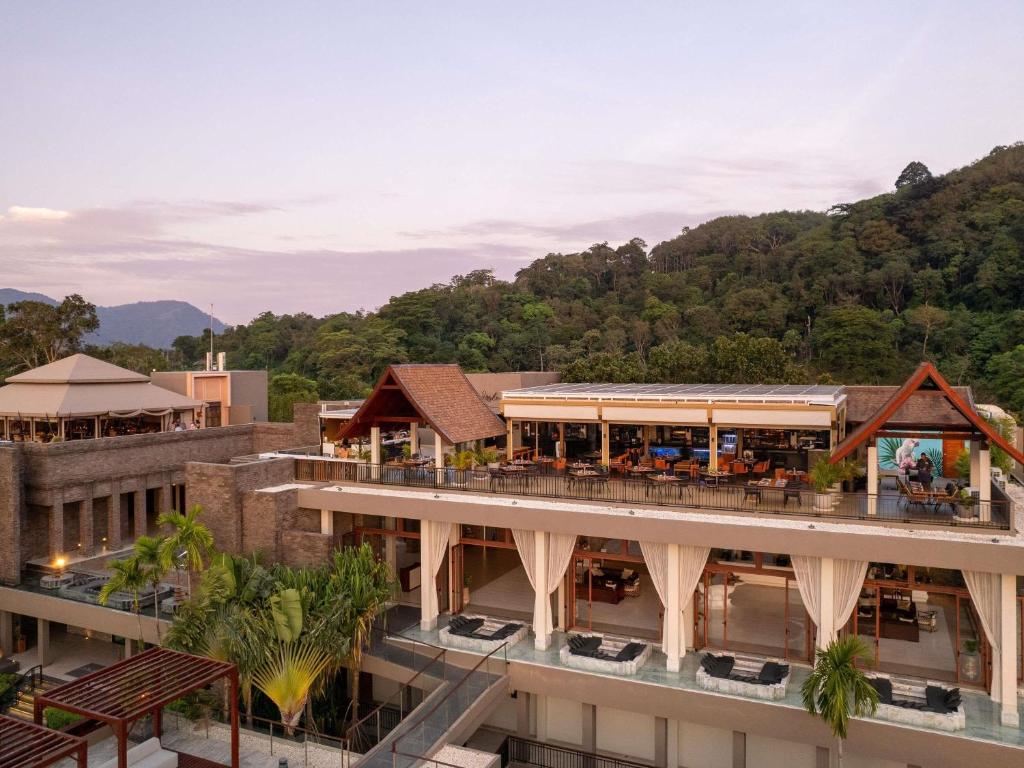
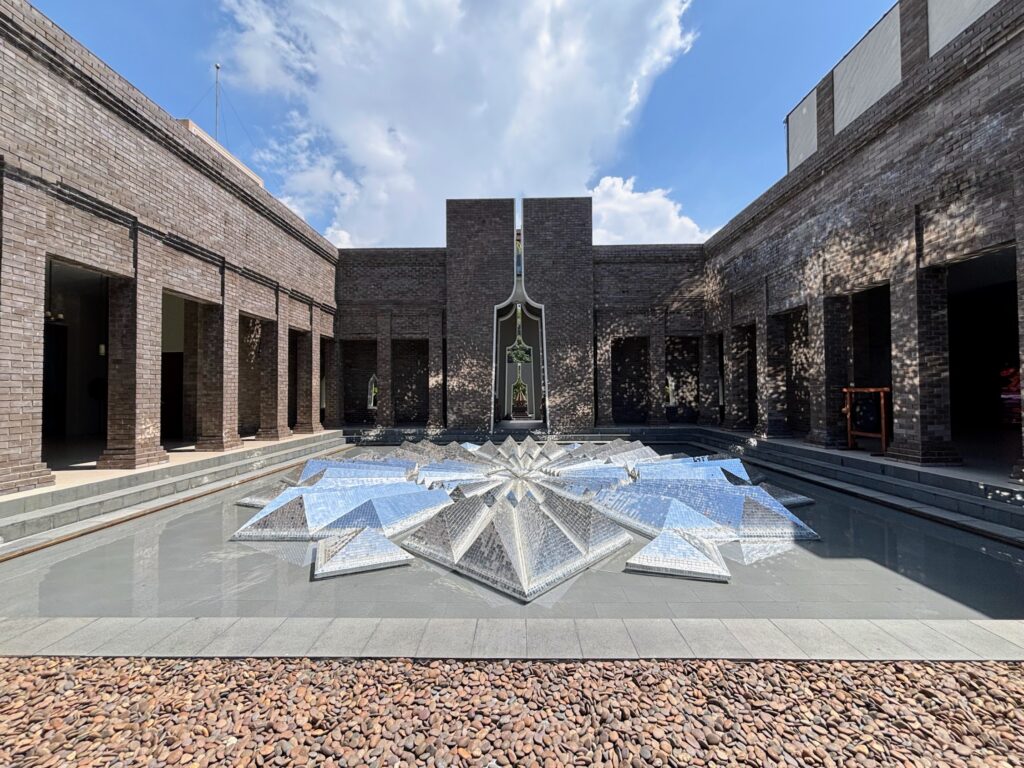
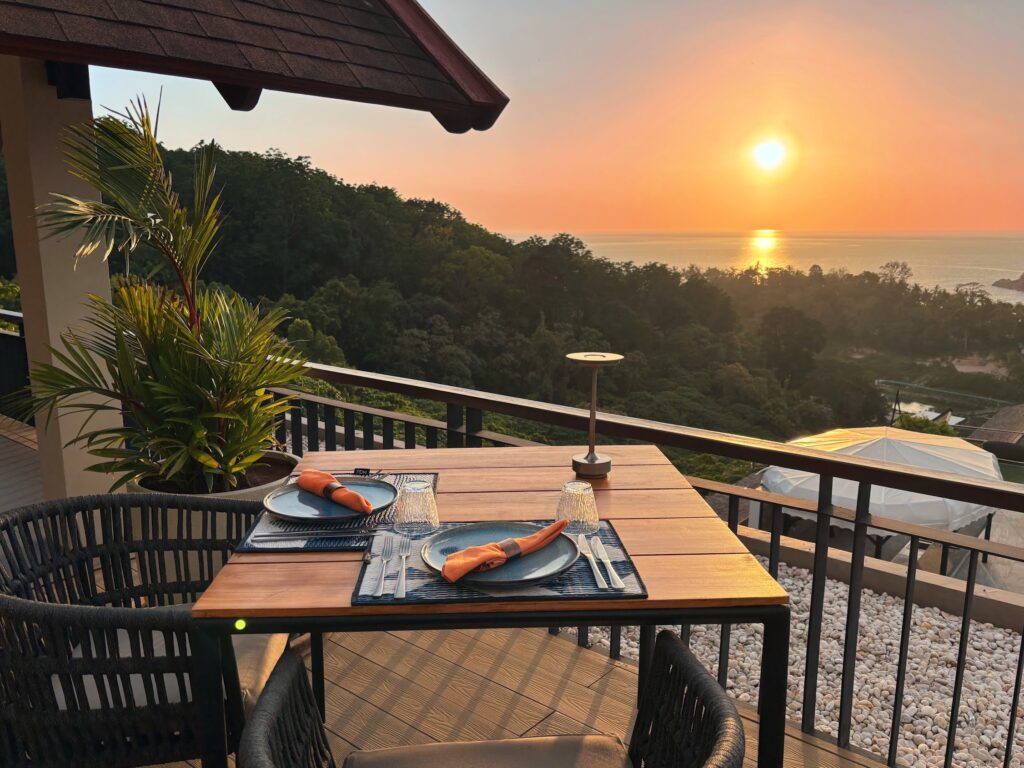
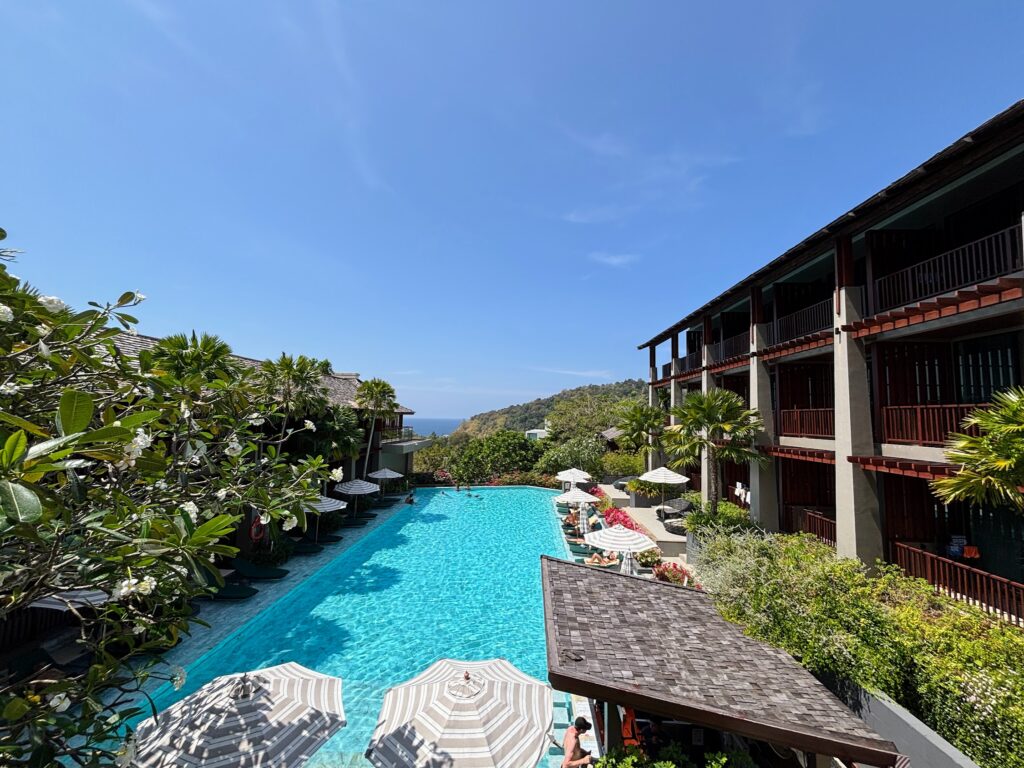
Avista Hideaway is a Patong resort for people who don’t really need to be in Patong. The property occupies its own pocket of jungle high above the town; the road climbs steeply through dense forest as you arrive, depositing you far enough up the hillside that the remnants of last night’s neon-spiked bucket on Bangla finally abate. The views of the Andaman lazily pandiculating help commit the recent past to distant memory.
The rooms lean into soothing dark blues and rich local woods, with the upper-tier suites and villas half-buried in tropical planting and fitted with private plunge pools. There are three larger central pools dotted across the property’s hills too, one of which is adults-only. But the real reason to book is on the rooftop.
Tambu and Sizzle, both Michelin-Guide listed and sitting side by side at the resort’s precipice, are right up there in the ol’ ‘best restaurants in Phuket’ discussion. Tambu serves progressive Indian charcoal cuisine inspired by the tented kitchens (hmm, suddenly getting an idea for a partnership with one of the other hotels on this list) of the Mughal emperors, with Iron Chef Thailand winner Saurabh Sachdeva at the helm. Sizzle, under chef Alvaro de la Puerta, leans into Spanish-influenced open-fire cooking. Both make a strong argument for staying on the rooftop with a sundowner and not leaving for the rest of the evening.
When you do dust yourself down and decide to face the outside world, Freedom Beach (recently #27 on the World’s 50 Best Beaches list) is a 700-metre jungle hike away, but worth the climb for the big reveal when you part the flora. A complimentary shuttle into Patong proper is there for anyone wanting to dip into the chaos and retreat afterwards.
You can read our full review of Avista Hideaway Phuket Patong here.
Deluxe Rooms at Avista Hideaway start from around 3,950 baht (£92) per night in low season, rising to roughly 8,770 baht (£204) at peak.
Address: 39/9 Muen-Ngern Rd, Pa Tong, Kathu District, Phuket 83150, Thailand
Website: mgallery.accor.com/en/hotels/A245
Read: The best restaurants in Patong
Rosewood Phuket (Emerald Bay)
Ideal for wellness travellers who still want a swimmable beach…
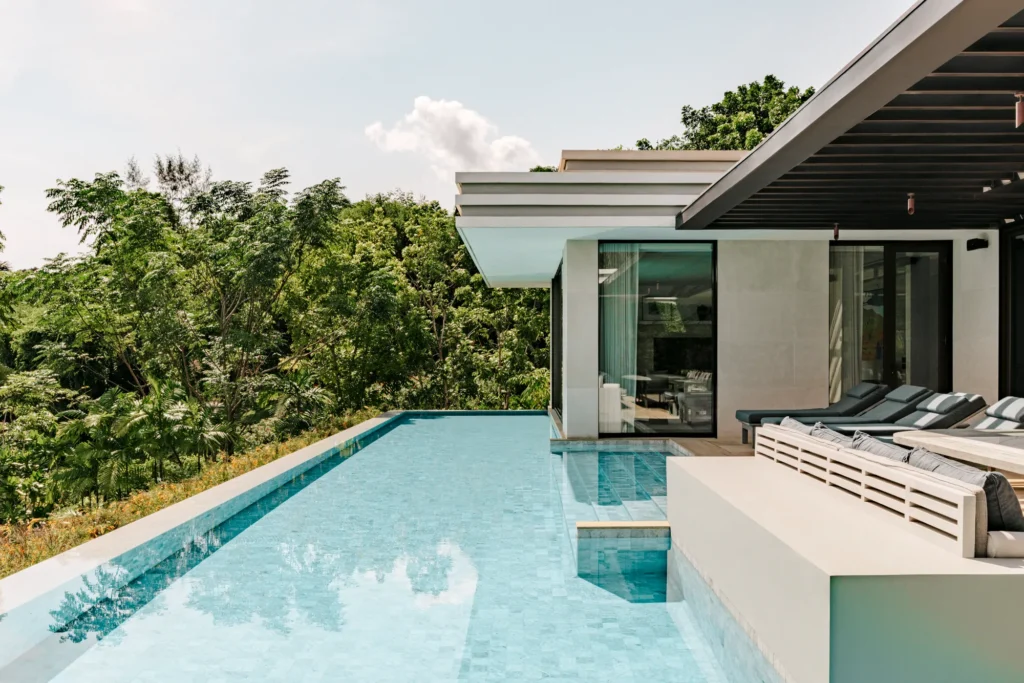
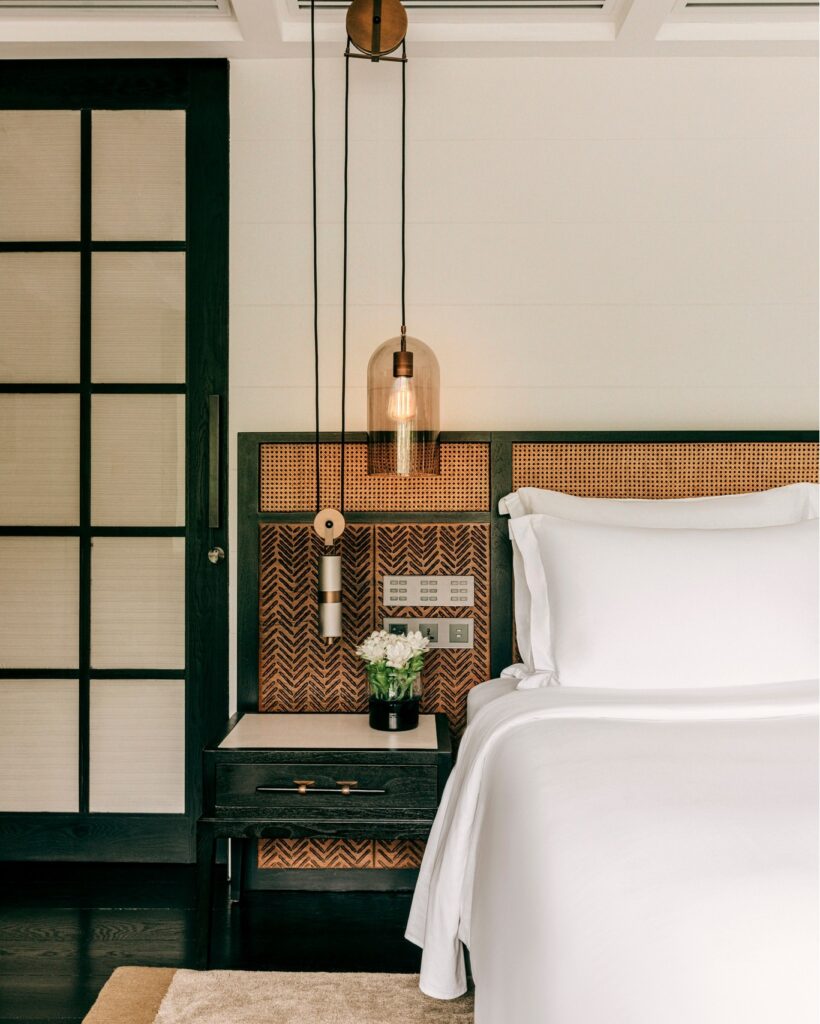
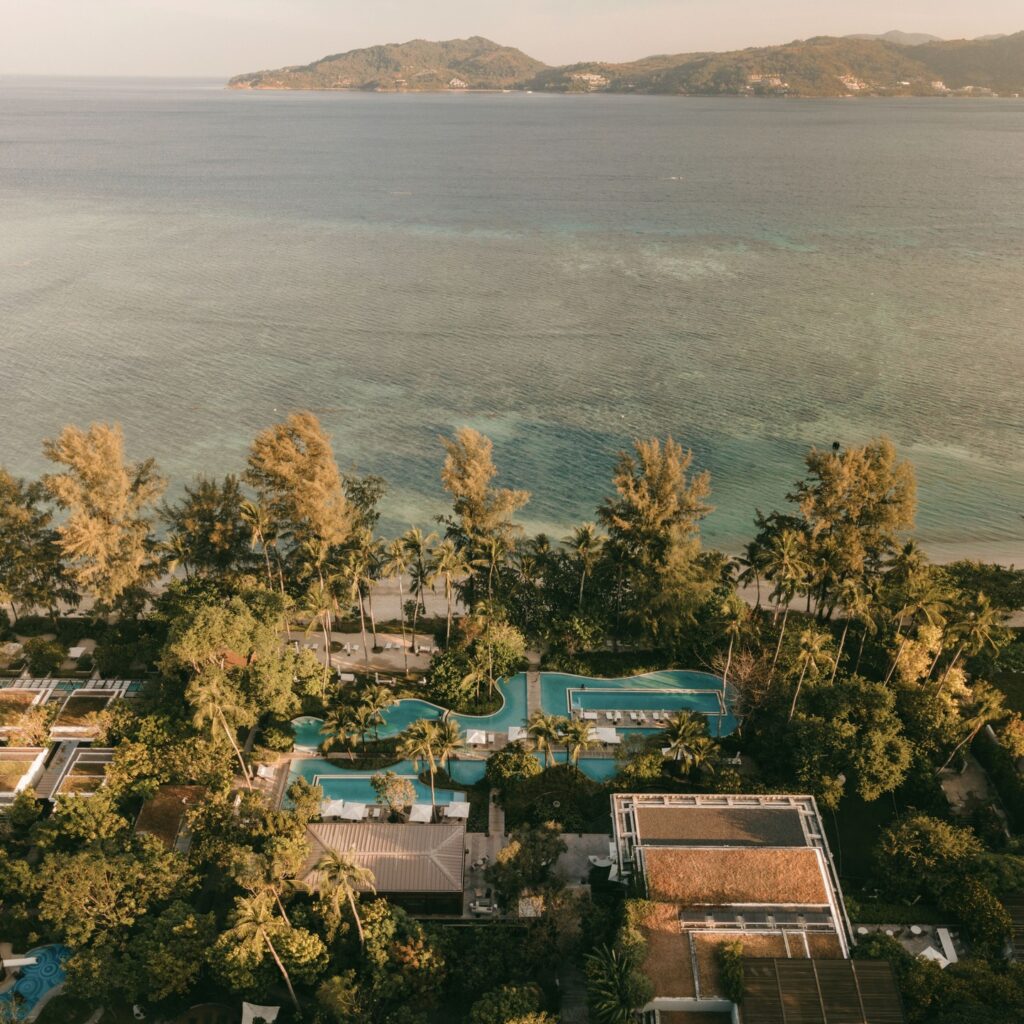
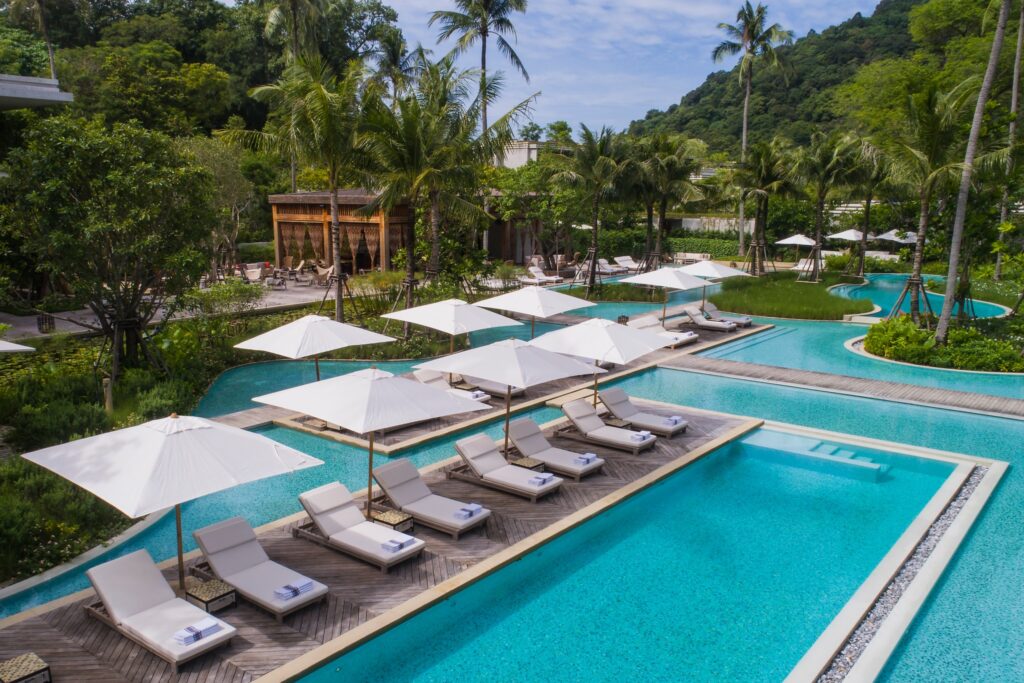
The wellness offering at most luxury resorts tends to read as polite afterthought, an additional revenue line bolted on rather than built in. At Rosewood Phuket, it’s the headline act.
Asaya, Rosewood’s integrated wellness concept, made its global debut at this property when it opened in 2017, and the brand chose Phuket as the launchpad deliberately. Asaya has since rolled out to Rosewood Hong Kong, London, São Paulo and more, and will launch in Seoul in 2027. But this is where it started, and it still feels like the most fully realised version.
The Asaya Spa occupies its own grounds within the resort, and at its centre guests can hand-select herbs from the on-site garden to be blended into their treatments on the spot. The menu goes well beyond the usual hot-stone-and-aromatherapy offering: Watsu, Chi Nei Tsang, Phaoya fire healing and sound baths, all practices rooted in traditions that mainstream spas tend to water down or skip entirely. Here, it feels as natural as the sun rising to the east and disappearing off to the west.
The site itself is 43 acres of gated jungle along 600 metres of Emerald Bay’s beachfront in southwestern Phuket, appreciably more secluded than its proximity to Patong would suggest. BAR Studio’s architecture cascades down the hillside in a series of pavilions, houses and villas, each oriented to the water, and unlike several properties on this list, the sand is right there at the bottom. After all that talk of hilltops and headlands and shuttle buses, it’s nice to report that you can walk from your villa to the Andaman in flip-flops, to be fair.
Dry yourself off, it’s time for dinner. Ta Khai, the Southern Thai restaurant here, is the real deal. The kitchen is headed by local chef couple Khun Nun and Khun Yai, cooking southern dishes (massaman with beef cheek, moo hong braised in soy and black pepper, steamed seabass with lime and chilli) from ingredients sourced almost entirely from partnered farms across the region. Pink pomelo from Mae Tao, rice from Raitong Organic, fish from local aquaculture; all adding up to something that tastes fresh, alive and very much of its place. It’s the rare resort restaurant where the sustainability claims go beyond the laminated card on your bedside table or the encouragement to chuck your towels on the floor.
Garden Pool Pavilions at Rosewood Phuket start from around 25,000 baht (£580) per night in low season, rising to roughly 42,000 baht (£975) at peak.
Address: 88/28, 30-33, 88 Muen-Ngern Rd, Pa Tong, Kathu District, 83150, Thailand
Website: rosewoodhotels.com/en/phuket
Trisara (Cherngtalay)
Ideal for gastronomes wanting a villa to retreat to between Michelin-starred meals…
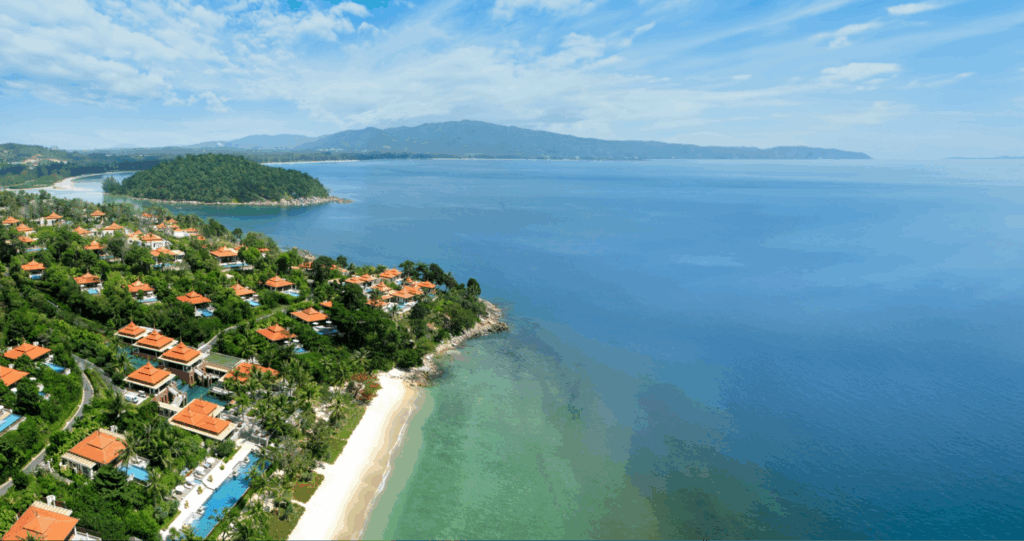
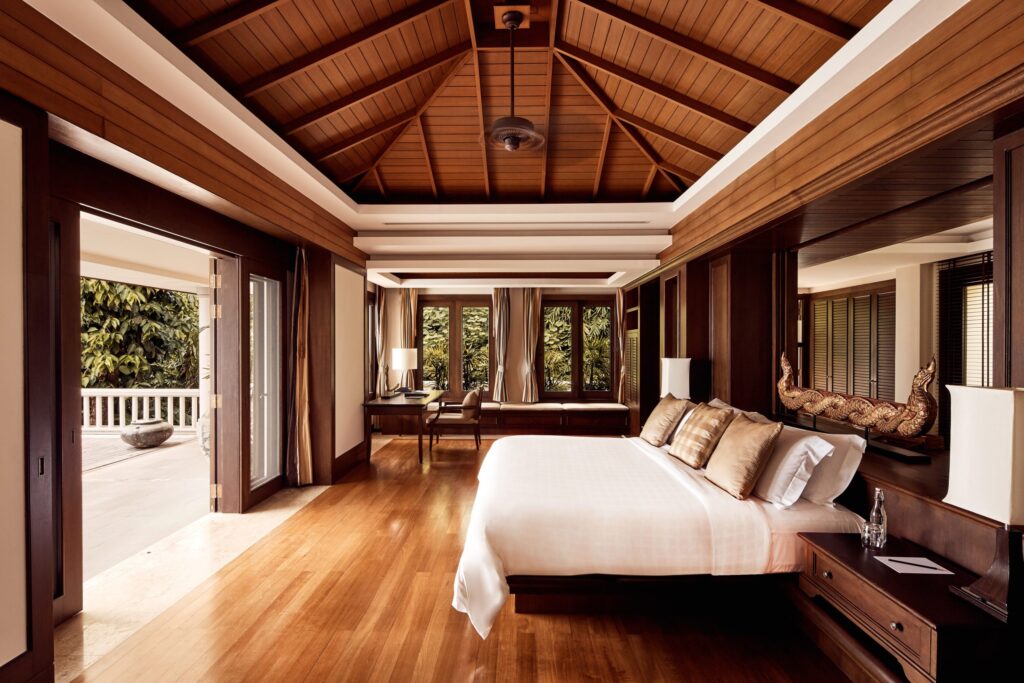
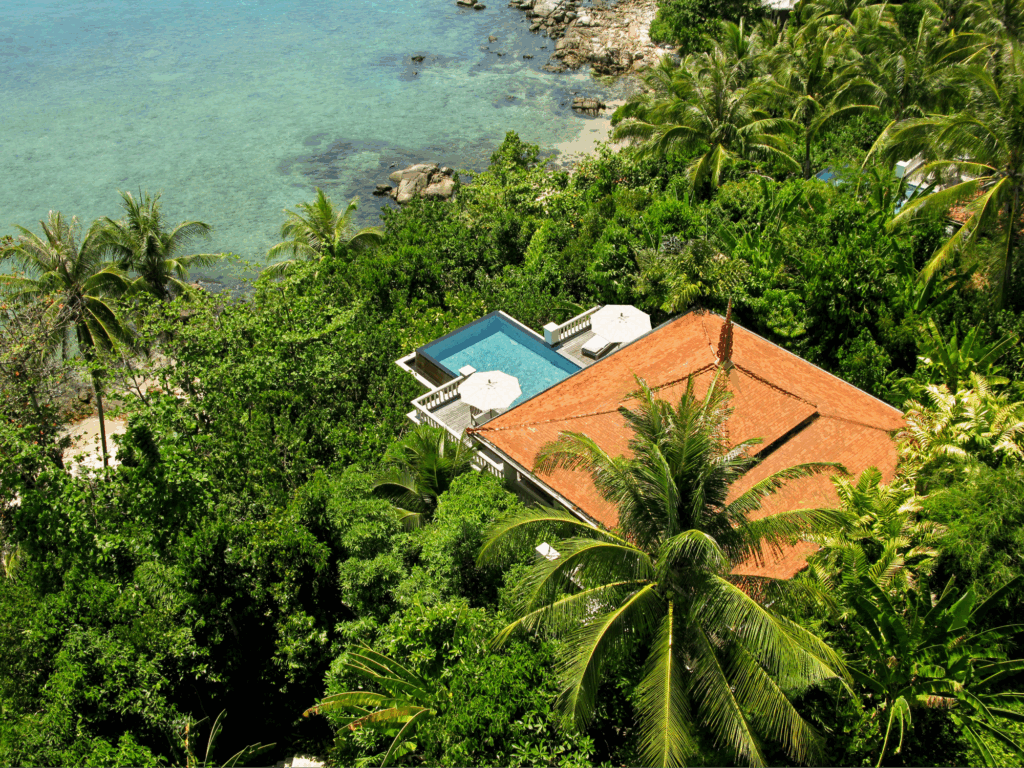
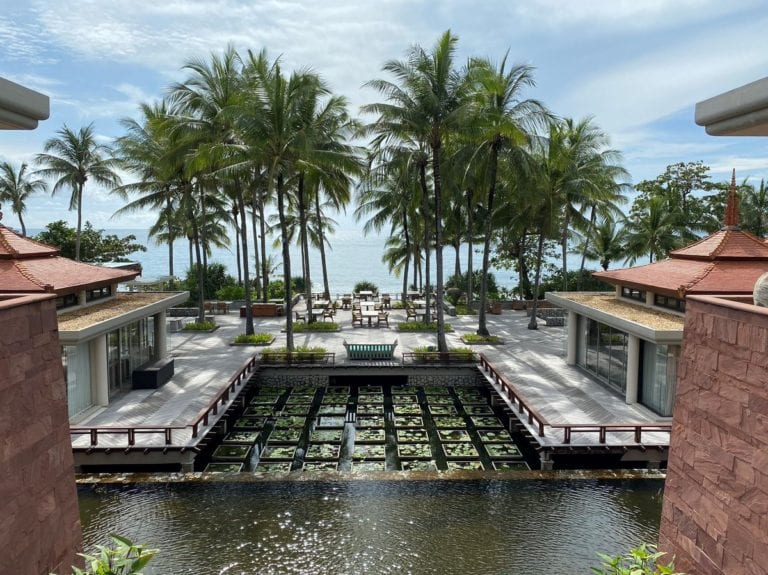
Trisara is a 39-villa property on a protected nature preserve on Phuket’s northwestern coast, owned and operated by Thai family outfit Montara Hospitality Group. It has been here long enough that the service has a fluency to it that newer properties are still working towards, and will never quite reach. Each villa is set into terraced gardens above a private bay, with a private infinity pool and a gated entrance. There are no hotel corridors, no shared walls; there’s not even a lobby in any conventional sense. The 48-metre saltwater pool along the resort’s private beach exists mostly for guests who fancy a change of scenery from their own terrace. Now that’s luxury.
The food, though, is what separates Trisara from properties that can match it on villas and views. PRU was the first restaurant on Phuket to receive a Michelin star, has held it since 2019, and remains one of the most committed expressions of farm-to-table cooking in Southeast Asia. The name stands for Plant, Raise, Understand, and Dutch chef Jimmy Ophorst’s tasting menus draw almost entirely from PRU Jampa, an organic farm that Montara operates in central Phuket. The carrots are cooked in the soil they were grown in, the butter is made in-house from milk sourced in Krabi, and the signature duck is brined, dry-aged for five days, then slow-roasted over a fire fuelled by charcoal from the farm’s own woods. Even by the standards of restaurants that talk earnestly about provenance, this is unusually thorough.
The same farm also supplies JAMPA, Montara’s Michelin Green Star restaurant at nearby Tri Vananda, where chef Rick Dingen does zero-waste, live-fire cooking in a more relaxed register. Between them, PRU and Jampa hold a Michelin star and two Green Stars from one farm, which is a concentration of credentials that no other resort group on the island comes close to.
Thai Library, the resort’s southern Thai restaurant (also Michelin-recognised), is a little looser but delivers a similar conviction on sourcing: stir-fried Phang Nga crab with yellow chilli, dry-aged duck with red yeast rice, and tiger prawn grilled with Pattani salt and bitter bean. After PRU’s tweezered precision, it’s a useful corrective.
Trisara doesn’t announce itself the way some of Phuket’s newer properties do. It just keeps being very good at what it’s been doing for twenty years, and that confidence is hard to fake. The same could be said for its impeccable restaurants. Though relatively new additions, they have the same assured swagger. Christ, it feels safe in here.
Ocean View Pool Villas at Trisara start from around 29,000 baht (£680) per night in low season, rising to roughly 55,000 baht (£1,280) at peak. Residences are priced on request.
Address: 60 Cherngtalay 1 Srisoonthorn Road Tambon Choeng Thale, Thalang District, Phuket 83110, Thailand
Website: trisara.com
The Nai Harn (Nai Harn Beach)
Ideal for traditionalists who still want their feet in the sand…
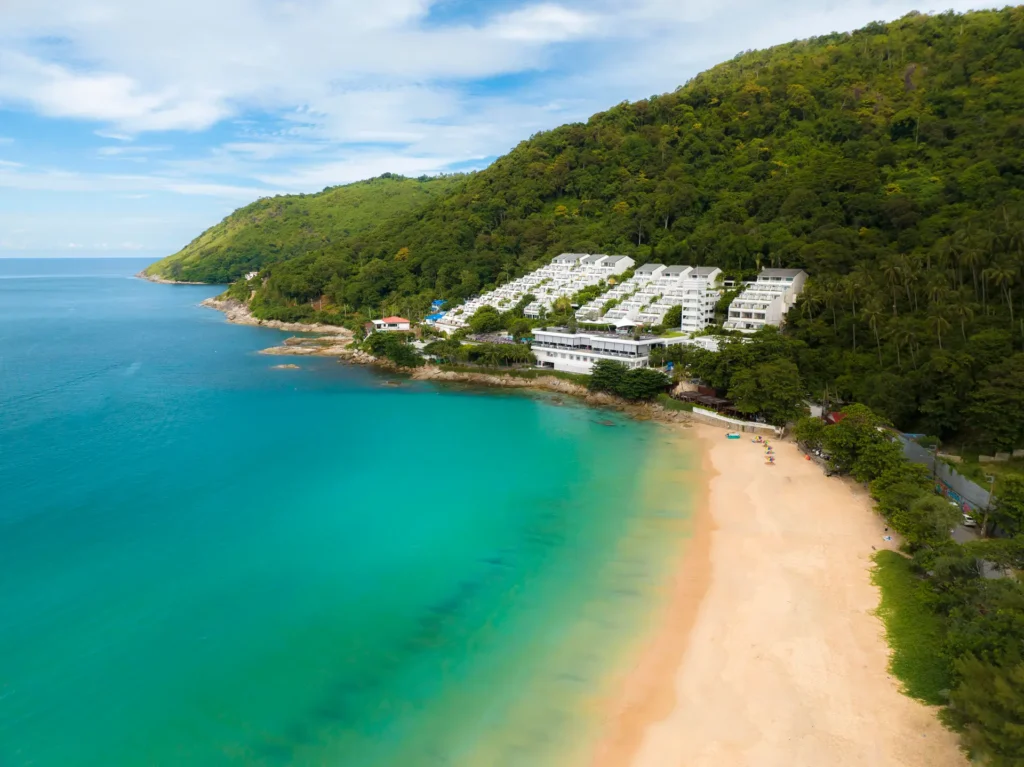
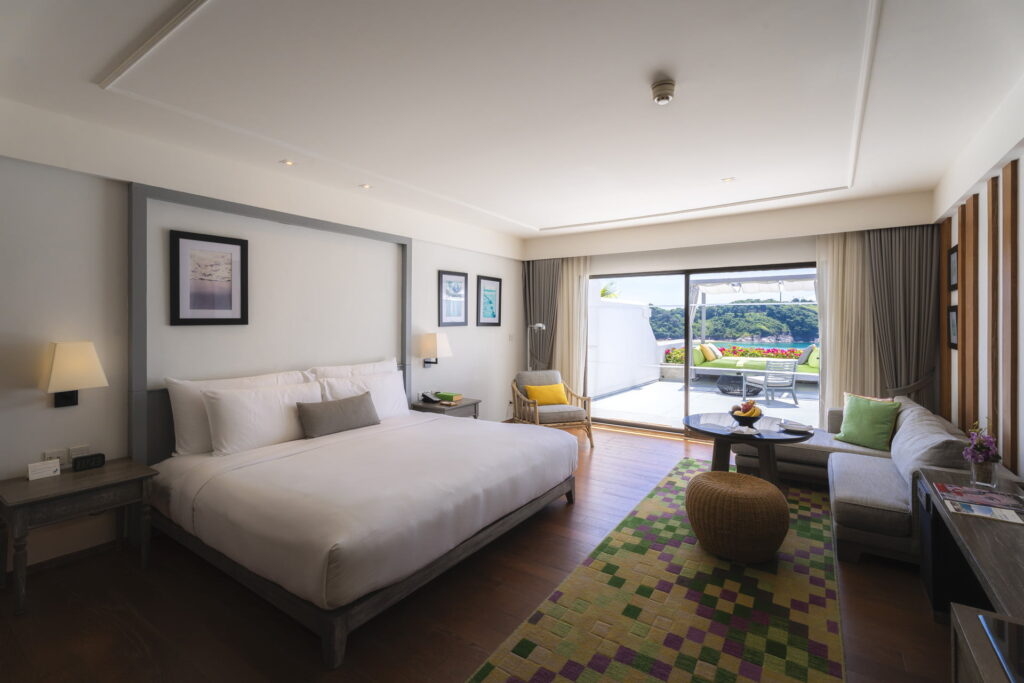
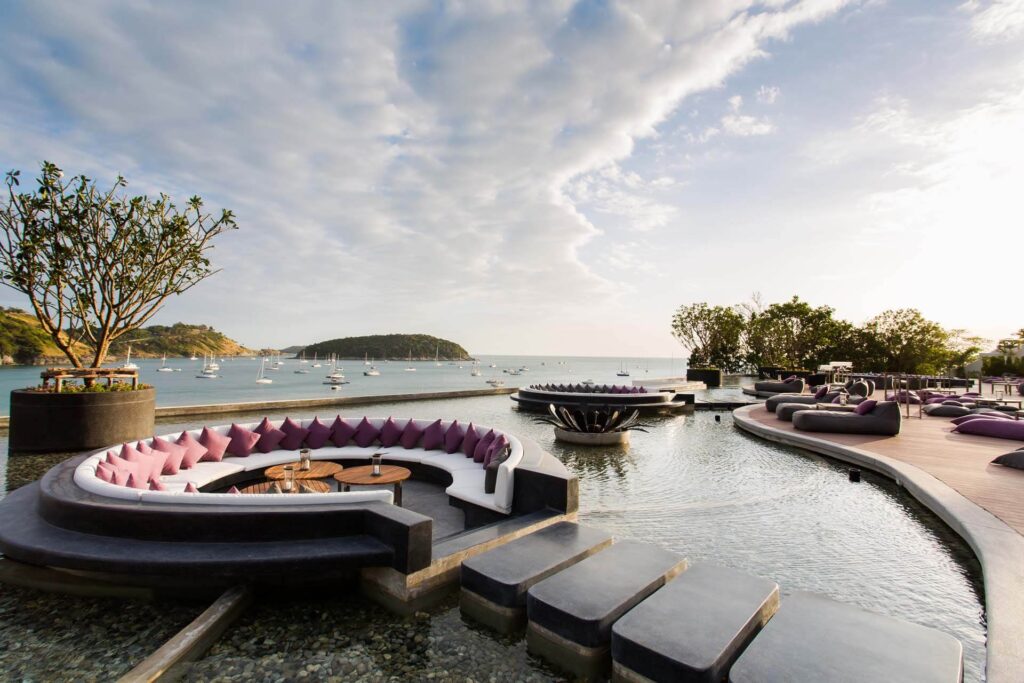
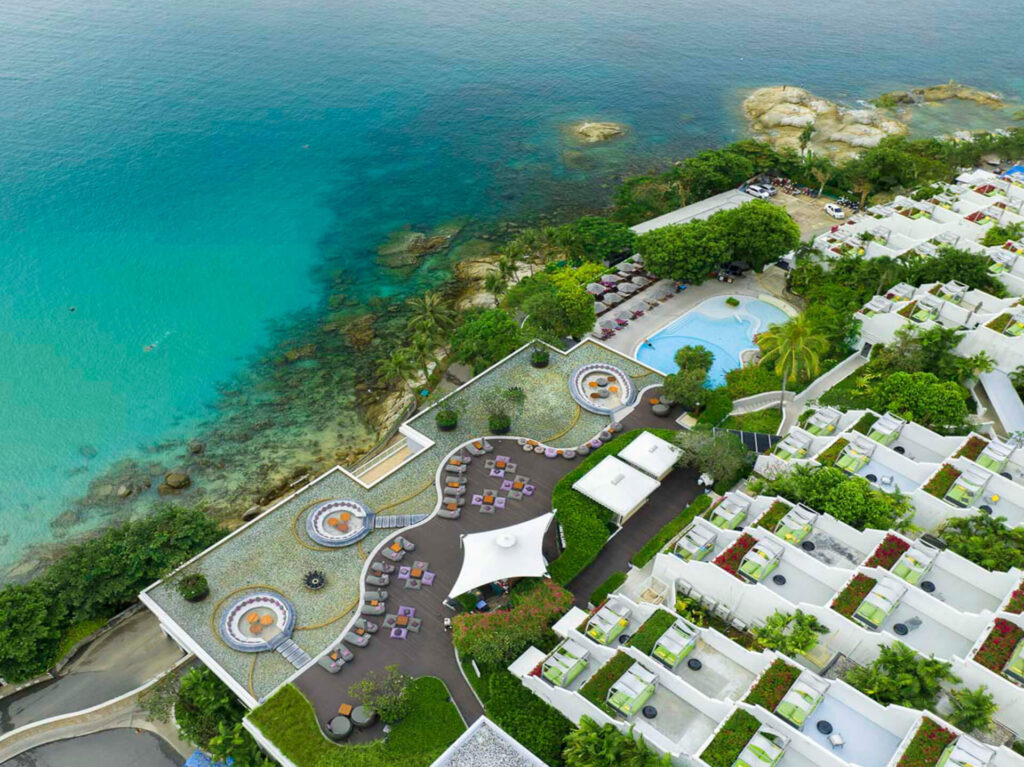
Before Amanpuri, before any of them, there was this. The Nai Harn opened in 1986 as the Royal Phuket Yacht Club, designed by Mom Tri Devakul, the Thai aristocrat, architect and artist who trained at Harvard’s Graduate School of Design and went on to shape more of Phuket’s built landscape than anyone else on the island. He designed Club Med Kata, Le Méridien Phuket, The Boathouse and his own Villa Royale. A year after the hotel opened, he lent it to the organisers of the inaugural King’s Cup Regatta and designed the trophy himself. Queen Sirikit, Prince Albert of Monaco and Rudolf Nureyev were among the names on the register.
The property changed hands and names over the decades (Le Royal Méridien Phuket Yacht Club was one of them) before reopening under independent ownership as The Nai Harn in 2016. A refurbishment brought interiors up to date, but the bones of Mom Tri’s white-on-white Mediterranean architecture still climb the hillside above the bay, and all of the 130 rooms still face the ocean, exactly as he drew them.
Even the drinks have a pedigree here. Rock Salt, the beachfront restaurant, has a rosé selection curated by James Suckling, one of the most influential wine critics in the world, and a cocktail list put together by Salim Khoury, formerly of The Savoy. Promthep Cape is five minutes south and the Rawai seafood market is around the corner, so you’re embedded in southern Phuket in a way that the northwestern resorts can’t offer.
It is the only resort with direct frontage onto Nai Harn Beach, one of the cleanest stretches of sand on the island. Sure, the whole place reads as more Santorini than Andaman at golden hour, which is unusual on Phuket, but if it’s escapism you’re after, you won’t do much better. It is also Phuket’s only member of Leading Hotels of the World, the invitation-only consortium that independently inspects its properties against several hundred service criteria, which tells you something about the standard the place holds itself to.
Forty years on, it still feels like it knows exactly what it’s doing.
Deluxe Ocean View Rooms at The Nai Harn start from around 5,800 baht (£135) per night in low season, rising to roughly 14,000 baht (£325) at peak.
Address: 23/3 Moo1, Vises Road, Rawai, Muang District, Muang, Phuket 83100, Thailand
Website: thenaiharn.com