
Home Blog Page 28

Where To Eat Thanksgiving Pies In London: The Best Pumpkin, Pecan & Apple Pies

Once upon a time, British Baker reported that us Brits haven’t exactly embraced the pumpkin pie (preferring our traditional apple crumbles and treacle tarts, thank you very much).

That was seven years ago, and how times have changed since. Lately, we’ve gone absolutely mad for pumpkin spice in all its glorious forms. Pumpkin spice lattes? Can’t get enough. Pumpkin spice candles? Obsessed. And in nearly every major supermarket this autumn, you can find cans of pumpkin pie filling. If you’re not yet a convert, consider this your gentle nudge to give it a proper go.

Here’s the thing – if you’re a fan of a good custard pie, you’ll almost certainly love pumpkin pie. It’s not that different, really. The texture is the same; the only real difference is the addition of that gorgeous autumnal pumpkin flavour and those warming spices.

There are of course other pies on the menu for Thanksgiving, including pecan, apple and even the odd key lime pie if you want more of a refreshing finale. So, whether you’re hosting a full-blown Thanksgiving feast (turkey and all the trimmings included), or simply fancy a slice of something sweet and seasonal with your afternoon coffee, the capital’s pie game has evolved considerably in recent years, and is here to help. From flaky-crusted pumpkin numbers to sticky-sweet pecan perfection, here’s where to find the best Thanksgiving pies in London.

Hummingbird Bakery, Notting Hill

Ideal for when only the American bakery OG will do…
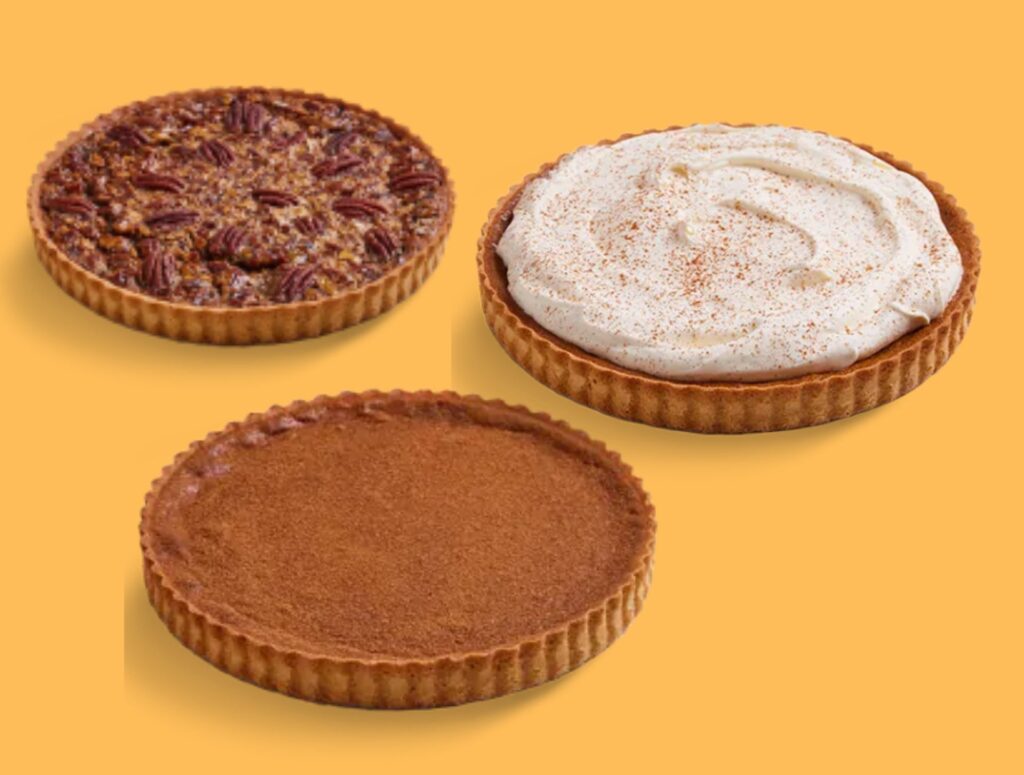
We had to start here, didn’t we? There’s nowhere better than London’s favourite American bakery for a Thanksgiving pie. Their pumpkin pie has been on the menu since Hummingbird first opened their doors back in 2004, and come late November, every American expat in Notting Hill (of which there are many) makes a beeline for this place like it’s the Macy’s Parade itself. You can spot them from a mile off – that look of desperate homesickness mixed with pure pie-induced joy, probably muttering something about missing their mum’s cooking.

The Hummingbird’s 8-inch pie is priced at £34, which isn’t cheap, but this is the benchmark against which all other pumpkin pies should be measured in London. The filling has that slight wobble and delicate hint of spice – just as the best ones should be. It’s even better served warm. A word to the wise though: be careful not to over warm your pie in the oven – pumpkin custard can easily overcook and lose that perfect texture.

Hummingbird’s pecan pie is almost as good. Crunchy pecans and a golden pastry pie crust make for a dessert that tastes simply decadent when warmed and topped with cold pouring cream. Wonderfully gooey and nutty and made to an authentic North Carolina recipe, the texture of this particular version is undeniably superior to most pecan pies you’ll find elsewhere.

Nothing hits the spot quite like their golden apple pie, either. Classically delicious and packed with fruit, Hummingbird’s 8-inch apple pie delivers exactly what you want from this British-American hybrid – a tart, sweet fruit filling that hasn’t been thickened into submission, encased in pastry that actually tastes of butter rather than commercial shortening. Heaven.

Website: hummingbirdbakery.com

Locations: Multiple locations across London including Notting Hill, South Kensington, Soho, and Spitalfields


Panzer’s Delicatessen, St John’s Wood

Ideal for pies from a legendary New-York style deli doing Thanksgiving right…
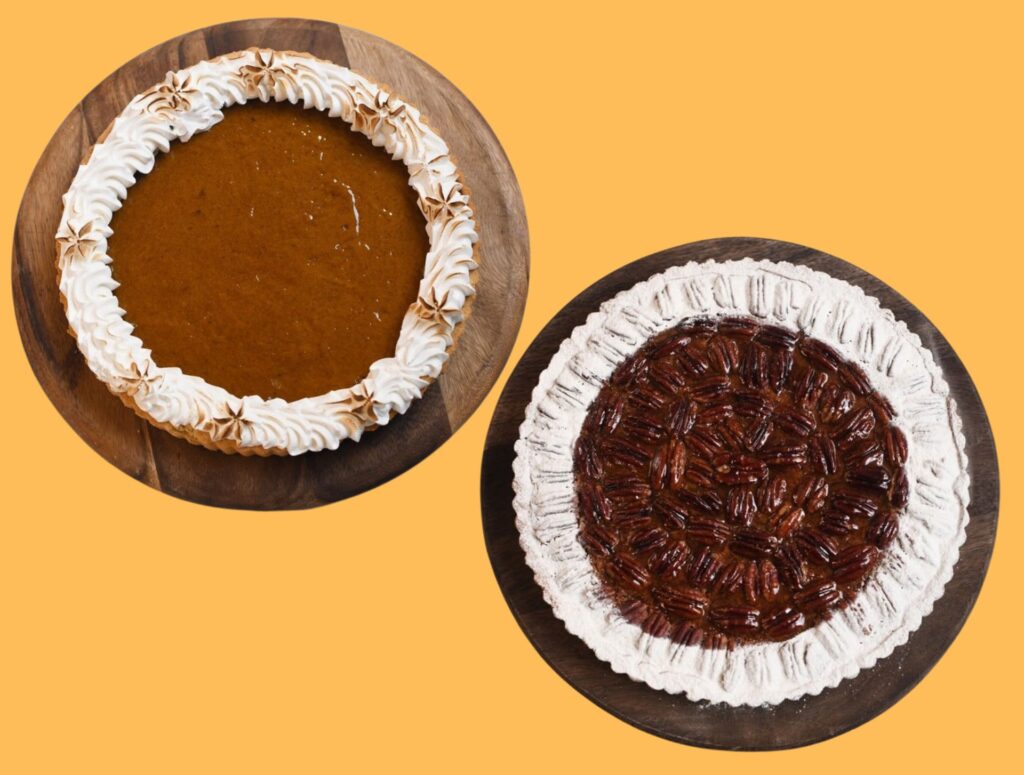
Panzer’s is a St John’s Wood institution that has been around since 1944, opened by two refugees – Mr. Panzer from Austria and Mr. Vogl from Czechoslovakia. While the deli is famous for hand-sliced Scottish smoked salmon and freshly baked bagels all year round, come autumn they turn their considerable baking expertise to pumpkin pie.

The filling here strikes that difficult balance between spice and subtlety – here pumpkin puree is blended with caster sugar, cinnamon, nutmeg, and cloves, without any single flavour dominating. It’s perfectly judged. The pastry work benefits from decades of baking experience, and it shows – there’s a good snap to the base. Although best served warm, the pumpkin pie is equally good chilled if you’re one of those people who prefers cold pie straight from the fridge. A dollop of whipped cream wouldn’t go amiss either way.

Their pecan pie deserves equal billing. That generous layer of pecans on top delivers a burst of pecan crunch, whilst underneath sits a gooey, caramelised filling that walks the line between sweet and too-sweet with impressive precision.

While you’re here, stock up on other Thanksgiving essentials; you can get your hands on everything from Jiffy Corn Muffin Mix to Pepe Saya Butter, the latter great for pepping up your candied yams. Oh, and Panzer’s also sells The Kelly Bronze turkey – widely considered the Rolls-Royce of British turkeys. You might as well sort your entire feast in one fowl swoop, then.

That, or you can let Panzer’s do the cooking; they host an annual Thanksgiving Lunch on the last Wednesday and Thursday of November.

Website: panzers.co.uk

Address: 13-19 Circus Rd, London NW8 6PB


Konditor, Waterloo

Ideal for a taste of pure Americana…
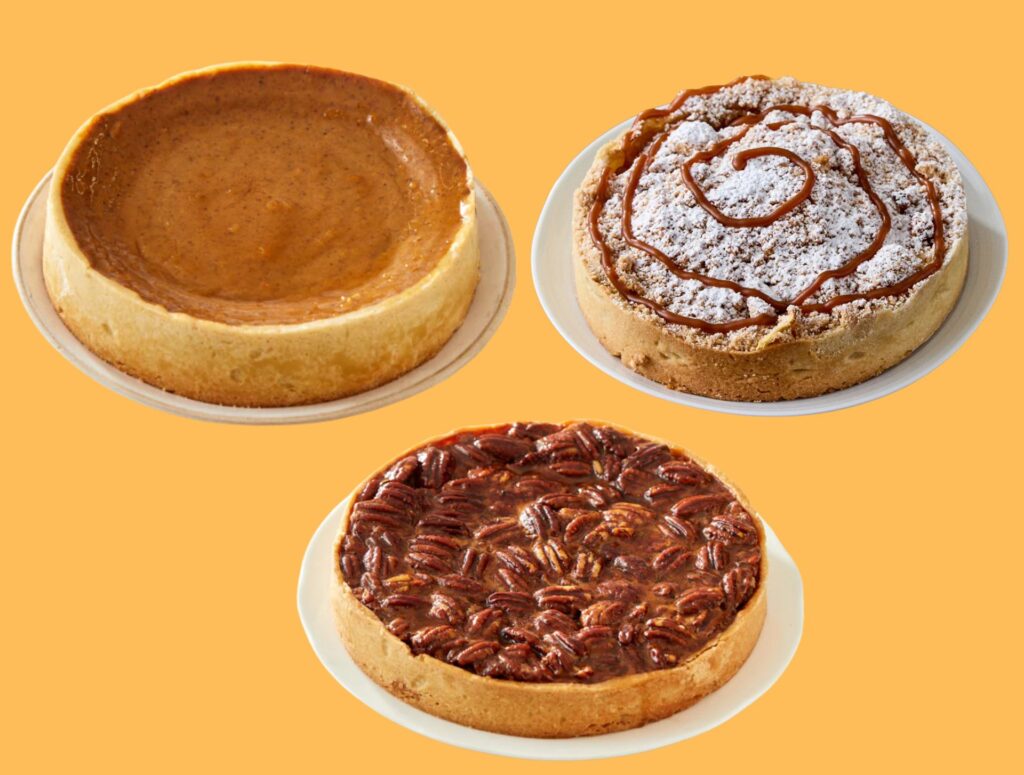
Konditor’s pumpkin pie delivers exactly what you want from this Thanksgiving classic – creamy pumpkin filling bursting with traditional spices and set in a buttery shortbread base. It’s a taste of pure Americana, and at £32 for a 6-inch pie that serves 6 generous portions, it’s actually decent value compared to some of the eye-watering prices elsewhere on this list.

Don’t stop at the pumpkin-based classic, though. Konditor’s toffee apple crumble is a proper autumn showstopper – shortbread pastry filled with fresh Bramley apples, topped with vanilla crumble and a swirl of rich toffee sauce. Technically this one is more British than American, but no matter what side of the pond you come from, it’s the kind of dessert that makes you want to grab a spoon and abandon all pretence of sharing.

And for the pecan pie devotees? Konditor delivers an American classic for Thanksgiving with Californian pecans combined with a gooey caramel filling, baked into their buttery shortbread base. It won this year’s Great Taste Awards – the proof is in the pudding, indeed.

One of the great things about a pecan pie is that the sweet intensity of the dish is so pronounced that you only need a small slice (much like our own treacle tart). We’re told that this 9- inch pie serves up to 8 generous portions. However, in our humble opinion, this pecan pie will likely feed twice as many people as you’d expect. That said, whether those portions remain ‘generous’ depends entirely on your self-control when faced with sticky-sweet pecan perfection.

With locations in Waterloo (their original flagship store), Holborn, and the City, plus London-wide delivery, Konditor makes it easy to get your Thanksgiving pie fix wherever you are in town.

Website: konditor.co.uk

Address: 22 Cornwall Road, SE1 8TW


Outsider Tart, Hammersmith

Ideal for market-hopping pie hunters…
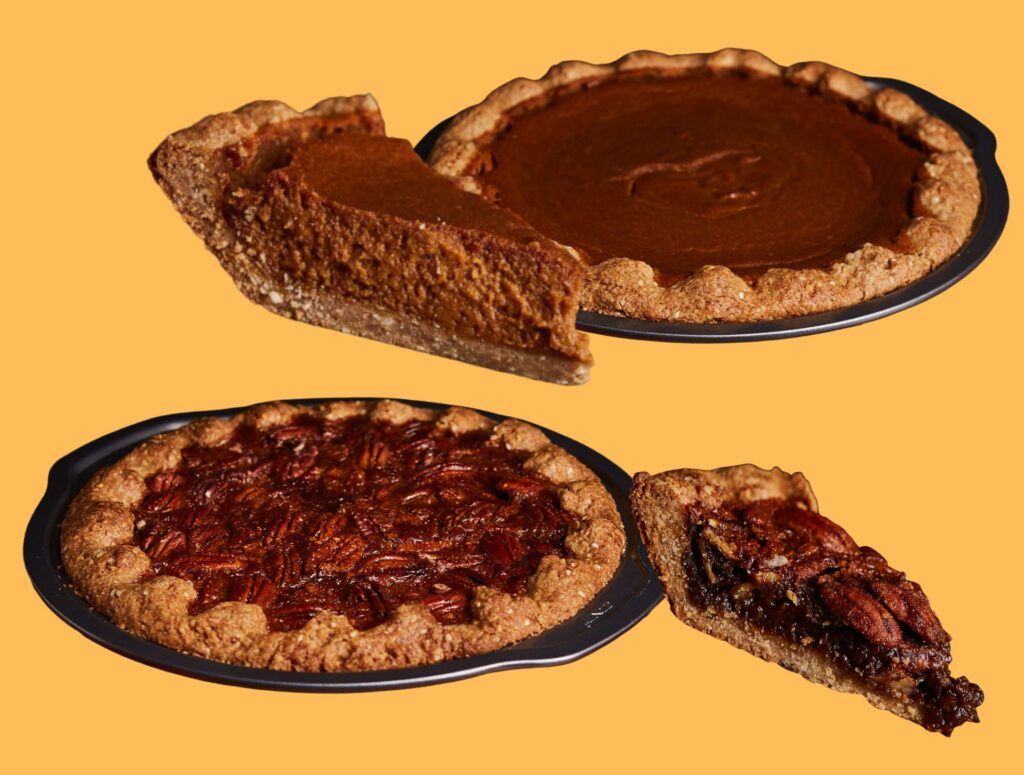
This American cafe and bake shop is based on the ground floor of the Lyric Theatre in Hammersmith, opening out onto Lyric Square – a lovely spot to grab a slice of pie and watch the world go by. Billing themselves as authentic American soul food, Outsider Tart’s pies certainly hit the spot. Their 9-inch pumpkin (which has a really pumpkin-y filling) and pecan pies clock in at £33.75 and both have beautiful golden-brown crusts with a nicely crimped edge, which is all you could ask for, really.

Can’t make it to Lyric Square, Hammersmith? No worries – every week the team at Outsider Tart spread the love by bringing their delicious baked goodies to markets at King’s Cross Station, Euston, Canopy and Greenwich Station. The beauty of tracking them down at markets is the thrill of the chase, really. Check out their socials for market schedules, and maybe text ahead to reserve if you’re dead set on a particular flavour.

Website: outsidetart.com

Address: Lyric Square, London W6 0QL


Gaya Bakery, Putney

Ideal for pies that justify the splurge…

At £49.95, Gaya’s pumpkin pie isn’t a casual midweek dessert purchase – it’s a Thanksgiving statement. It’s worth the splurge; a rich, slow-baked spiced pumpkin custard filling encased in a flaky all-butter pie crust, topped with sweet maple whipped cream and toasted pumpkin seeds.

The toasted pumpkin seeds are a particularly nice touch – that textural contrast between the silky custard filling and the nutty crunch is chef’s kiss. If you’re hosting and want to genuinely impress rather than just feed people, this is your move. Worth every penny, particularly if someone else is paying. This pie makes the perfect end to your Thanksgiving dinner or other autumnal festivities, and looks absolutely stunning as a centrepiece.

Gaya’s is only open to the public on Fridays and Saturdays. However, you can order the pumpkin pie online and collect it – also available for local delivery.

Website: gayabakery.com

Address: 253 Putney Bridge Rd, London SW15 2PU


Beverly Hills Bakery, Camden Town

Ideal for home delivery only pies with an incredible backstory…

Beverly Hills is a delivery-only place based in Camden, with an intriguing past, so stick with us here as owner Rosa de Souza’s story is well worth knowing. To cut a long story short, Rosa was a young migrant and refugee displaced by political turmoil in Tanzania in the 1970s, moved to London in the ’90s, and now has a baking empire.

She has had quite the career, working as a patisserie supplier to London’s leading luxury department stores – we’re talking Harrods, Harvey Nichols, Fortnum & Mason and leading London luxury hotels. Oh, and her bakery has delivered gifts to all the UK prime ministers of the last 20 years, provided treats for the Royal Family and Royal Births, and counts music, film, TV and sports stars amongst its clientele.

That’s some heritage, and you can taste it in the signature 11-inch pumpkin pie, which features a sweet pastry base coupled with perfectly seasoned pumpkin custard. The pecan pie here is equally famous – with a golden syrup base, sweet pastry crust and a coating of the finest pecans. Both pies are ideal for Thanksgiving, Christmas, or literally any Tuesday when you fancy treating yourself. As they say at Beverly Hills “Any time is pie time!”. It’s hard to argue with that philosophy, really.

And whilst it’s not strictly a pie (we know, we know), their apple and cinnamon cake deserves a mention. An incredibly tasty, moist, traditional apple sponge topped with freshly picked Bramley apples, seasoned with vanilla and cinnamon, it’s perfect for dessert whether served cold or hot with cream or custard. Sometimes the best things aren’t quite what you were looking for.

Website: beverlyhillsbakery.com

Address: 77e King Henry’s Rd, London NW3 3QU


Joe Allen, Covent Garden

Ideal for American pies from a New York via London institution…
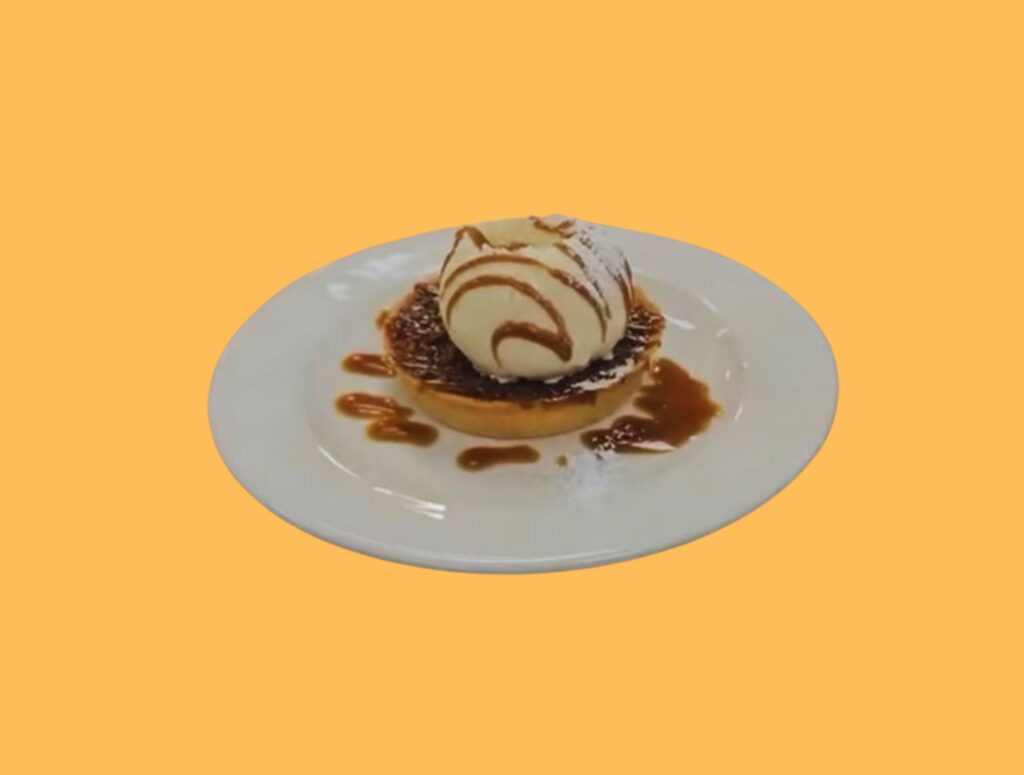
This Covent Garden institution has been serving up proper American comfort food for decades (since 1977, in fact) and their New Yorker’s pecan tart with vanilla ice cream is more or less a permanent fixture for good reason; it’s superb. Coming as an individually portioned pie, the pecan crunch is the perfect contrast to its gooey richness. Joe Allen’s warm apple pie with custard is another crowd-pleaser – a beautiful collision of British custard meeting American apple pie in perfect harmony.

It’s theatre district dining done right, ideal for a post-show dessert that feels both indulgent and nostalgic. Sit at the bar, order a piece of pie without irony and wash it down with one of their classic American cocktails.

Should you wish to have more than just a pie, you can get tickets for Joe Allen’s full-on Thanksgiving feast at just £65 a person, which ends with a choice of pumpkin pie, warm apple pie or a traditional New York baked cheesecake with a seasonal fruit compote. Could that mean cranberries? Your guess is as good as ours.

Website: joeallen.co.uk

Address: 2 Burleigh Street, London WC2E 7PX


Christopher’s London, Covent Garden

Ideal for pure pecan pie perfection…
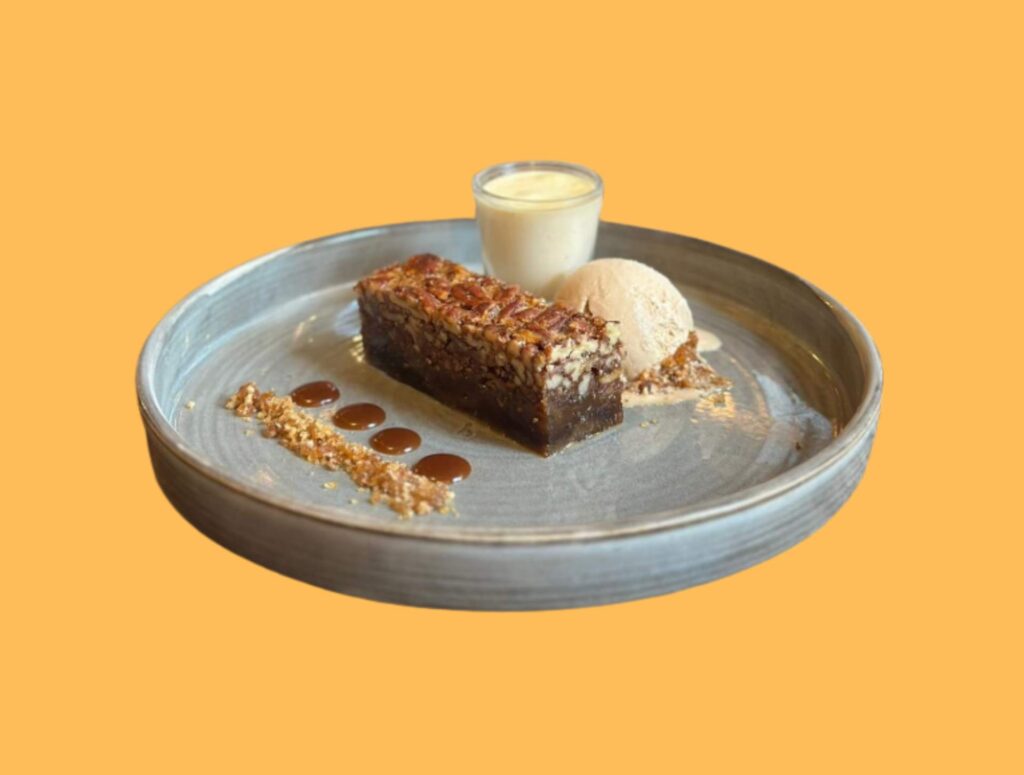
Christopher’s is a classic American restaurant in the heart of Covent Garden (there must be something in the water here). A regular on the dessert menu here when autumn comes around is the pecan pie, which comes with salted caramel ice cream and candied pecans. The rich crumbliness of the pastry with the nutty-forward topping and caramel sweetness – it’s pure pecan pie perfection.

If you’re desperately craving just a slice of that sticky-sweet pecan hit, this is the place to come. Christopher’s is a pie that is well and truly dressed up – presented in dessert form rather than just a slice of pie. The salted caramel ice cream is a nice touch – the salt somehow cutting through the sweetness just enough to make you feel like you could probably manage another slice. Probably. Possibly. Hang on, it’s just hit us; perhaps not. Anyway, the chopped nuts on top of the pie and on the side are another nice touch, adding body and that all-important nuttiness to every bite. Yep, this is a pecan pie where the pecans do most of the talking.

Website: christopherslondon.com

Address: 18 Wellington Street, London WC2E 7DD


Cut at 45 Park Lane, Mayfair

Ideal for a Thanksgiving trio of pies from a Michelin-starred chef…
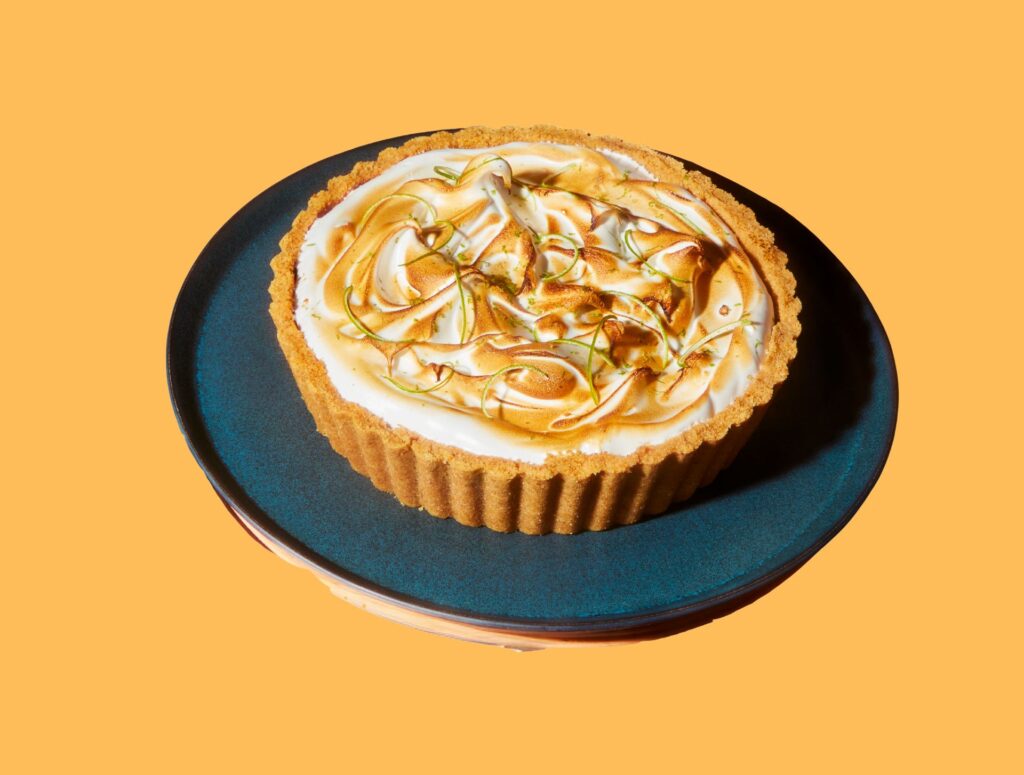
Michelin-starred chef Wolfgang Puck’s American steak restaurant brings serious credentials to their Thanksgiving offerings. The menu features a quintessentially American trio of pies: pumpkin pie with cranberry compote, pecan pie with whipped crème fraîche, and for something more refreshing, a key lime pie to round off the feast.

Now, about that price. At £210 per person for the full Thanksgiving experience, this is decidedly not your average Thursday night supper. But if you’re the sort for whom that figure doesn’t immediately induce mild palpitations, this Mayfair destination delivers the complete American feast with all the bells, whistles, and probably a small parade tucked away somewhere.

Is it worth it? Well, that rather depends on who’s picking up the bill, doesn’t it?

Website: dorchestercollection.com

Address: 45 Park Ln, London W1K 1PN

The Bottom Line

Whether you’re a Thanksgiving purist who takes their pumpkin pie very seriously indeed, or just someone who enjoys a good slice of something sweet and seasonal (aren’t we all?), London’s autumnal pie scene has properly matured in recent years. From market stalls to Mayfair dining rooms, from delivery-only operations run by baking legends to neighbourhood bakeries perfecting their crusts, there’s a Thanksgiving pie out there for every budget, every occasion, and every craving.

Just remember to order ahead if you’re not dining in. These beauties have a habit of selling out faster than you can work out how to pronounce “pecan” (is it pee-can or puh-kahn? The eternal question). Happy pie hunting!


Exploring The Canaries: 12 Top Things to Do In Las Palmas, Gran Canaria

Las Palmas, the bustling cosmopolitan capital of Gran Canaria, is arguably the gem in the Canary Islands’ sparkling crown. Located in Gran Canaria’s leafy north and with year-round sunshine, golden beaches, historical sites and mouthwatering cuisine, this vibrant city offers a pleasing variety of experiences to suit just about every traveller. If you’re planning a visit to this Spanish paradise, here are 12 of the best things to do in Las Palmas, Gran Canaria.

Stroll Along Las Canteras Beach

One of the world’s top urban beaches, Las Canteras offers over three kilometres of golden sand and crystal-clear waters. This is a perfect spot for a morning jog, a leisurely walk, or even a sunset picnic. The bustling promenade lined with local restaurants and vibrant cafes is perfect for people-watching or sampling local Canarian dishes. It’s also an area with one of the best holiday rentals in Gran Canaria, boasting both luxury accommodation options and more budget-friendly places.

Visit The Casa de Colón

Dive into history by visiting the Casa de Colón, where it’s believed Christopher Columbus prepared for his voyage to the Americas. This beautiful Canary-Island-style house serves as an intriguing museum, showcasing exhibits on pre-Columbian cultures, navigation history and Columbus’s journey.

Explore Vegueta – The Old Town

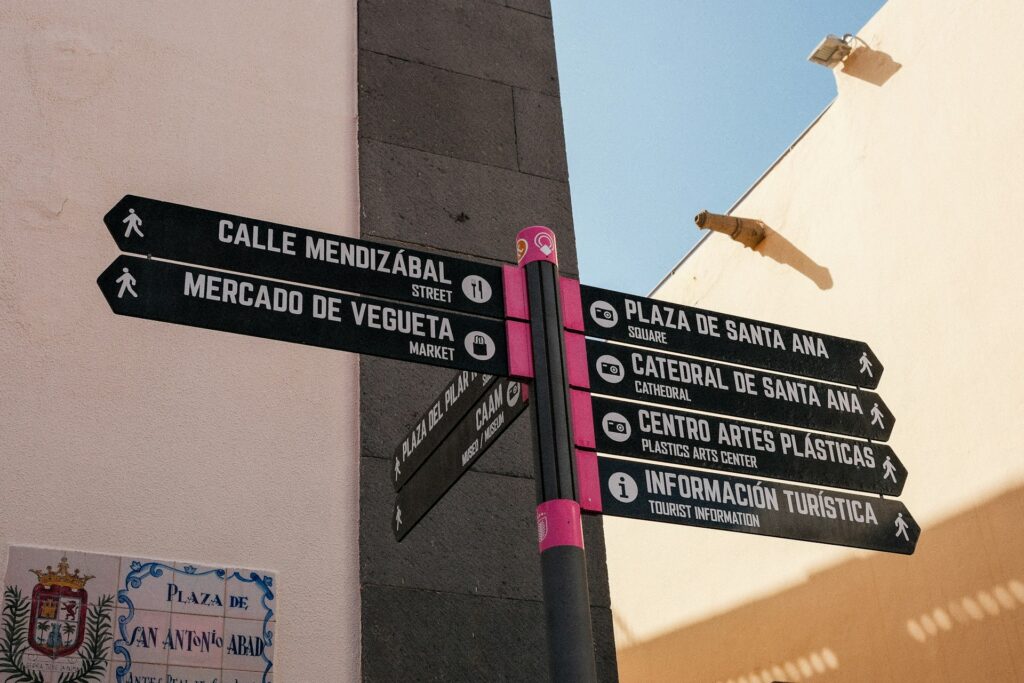
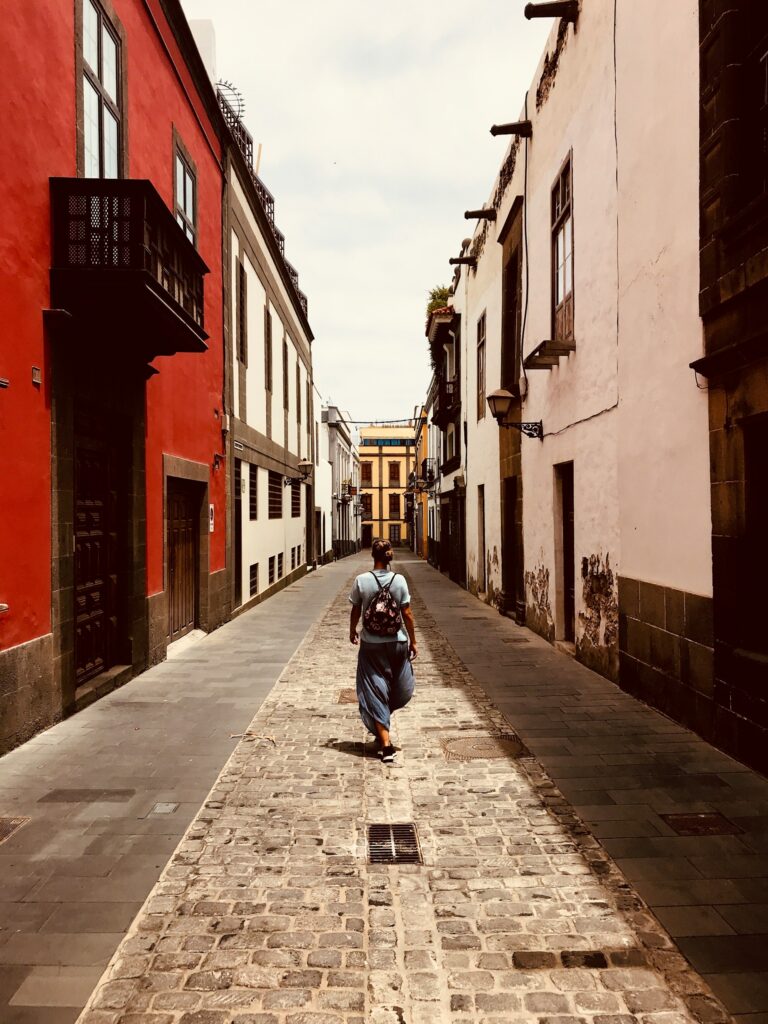
A walk through the narrow, cobbled streets of Vegueta is like stepping back in time. This UNESCO World Heritage site, lined with colourful colonial houses, charming Spanish architecture, and the stunning Santa Ana Cathedral, offers a glimpse into the city’s rich history and culture. 

Experience Local Cuisine At Mercado De Vegueta

Nestled in the heart of the old town is the bustling Mercado de Vegueta. This traditional Canarian market is a food lover’s paradise. Here, you can sample a wide array of local produce, traditional cheeses, artisan breads, and fresh seafood.

Fine Dining, Gran Canaria Style

After sampling some local, traditional food at Mercado de Vegueta, we thought we’d explore some of Las Palmas’s options for fine dining. Home to an innovative, forward-thinking take on Canary Islands cuisine, Michelin-starred restaurant Tabaiba is the place to be. Other culinary highlights in the capital include Bevir, De Contrabando, Qué Leche and El Santo.

Hike The Caldera De Bandama

For nature and hiking enthusiasts, Caldera de Bandama, a volcanic crater located just outside the city, is a must visit. The panoramic views from the top are extraordinary, and the trail leading down to the bottom of the crater presents a unique flora and fauna landscape.

Enjoy Shopping On Calle Mayor de Triana

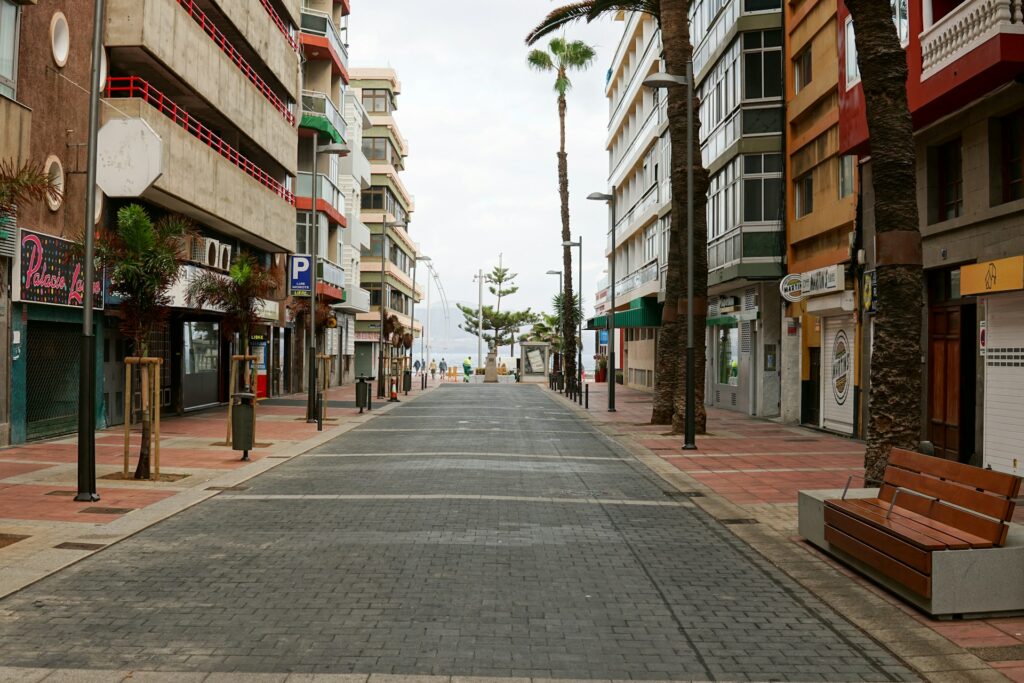
Fashionistas will enjoy a stroll down Calle Mayor de Triana, a pedestrianised street boasting stylish boutiques, shops, and department stores. This shopping street, lined with historic buildings and welcoming terraces, adds a special charm to the shopping experience.

Discover The Jardín Canario

The Jardín Canario, also known as the Canarian Botanical Garden, is home to a vast array of indigenous plants. This verdant haven of tranquillity is perfect for a leisurely walk or a quiet moment of reflection, amidst nature’s beauty.

Visit The Elder Museum Of Science and Technology

This interactive museum offers an educational adventure for both children and adults. With a range of exhibits on science, technology and the cosmos, the Elder Museum is a fun and informative way to spend a day.

Attend A Concert At The Alfredo Kraus Auditorium

To end your day, attend a live concert at the Alfredo Kraus Auditorium. This unique, wave-shaped building is an iconic part of the Las Palmas skyline, offering an eclectic programme of music, film and cultural events.

Experience The Underwater World At Poema Del Mar Aquarium

Situated near the port where many Canary Islands cruises dock, Poema del Mar is one of the most advanced aquariums in the world. It’s a popular first stop for passengers arriving by sea — and by going on a Canary Islands cruise, you’re sure to make an everlasting memory, whether that’s watching whale pods off Tenerife or island-hopping between volcanic landscapes.

The aquarium houses marine species from ecosystems across the globe, but the standout is the ‘Deep Sea’ exhibit: a 36-metre curved window that makes you feel properly submerged.

Get A Panoramic View Of The City From Mirador De Las Palmas

No trip to Las Palmas is complete without a visit to the Mirador de Las Palmas. This viewpoint offers an expansive panorama of the city, including the bustling harbour, historic districts, and the expansive sea. It’s an excellent spot for photographers and anyone wishing to appreciate the city’s beauty from a bird’s eye view. And it’s from that keen vantage point that we’re going to bid you farewell; we think we’ll stay here a while.

Next, we’re off for a holiday of activity and adventure in Tenerife. Care to join us?

The Best Street Food Close To Khao San Road, Bangkok

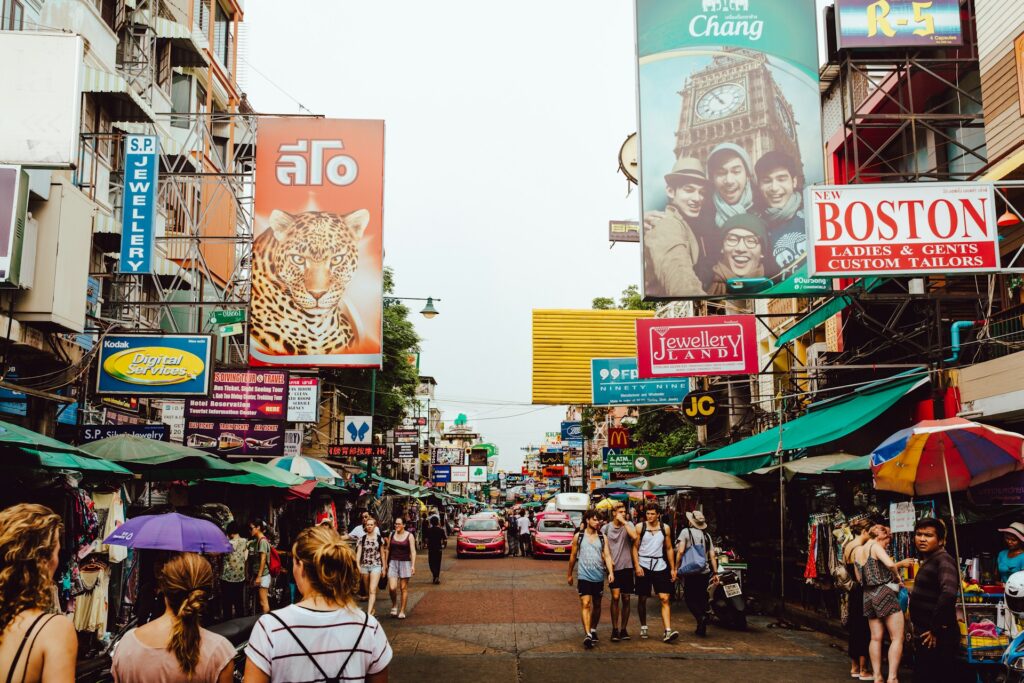
Bangkok’s Khao San Road is known across the globe as being the meeting point of the world’s backpacker community – with all the ephedrine heavy buckets, poorly rolled joints, and questionable ukulele performances that entails.

Though its status today feels almost self-perpetuating, the hugely iconic strip – actually just 400 metres in length – has been through many iterations in its illustrious, often infamous past.

Just 150 years ago, Banglamphu, the district where Khao San Road does its thing, was the epicentre of the world’s rice trade, with traders ferrying rice from markets in the area along the district’s dirt tracks and alleys to canal boats waiting on the Chao Phraya River, ready to transport the revered grain further afield.

As CNN explain of Khao San Road; ‘’the cobbled strip wasn’t grand enough to be named after a historic Thai figure or nation-building principle, unlike other city thoroughfares, so it was simply called Soi Khao San (Milled Rice Lane).’’

Fast forward a century to the 1970s, and Bangkok had become a major focus of the South East Asian ‘hippy trail’, with savvy locals seeing an opportunity, and opening up small guest houses in and around Khao San Road to bring in tourists, its proximity to the Grand Palace, the affordable Chao Phraya River transport network, and tight knit, traditional streets appealing to travellers seeking something ‘authentic’. 

By the mid ‘90s, Khao San Road was a heaving mix of hedonistic travellers, lost souls, and curious voyeurs, here for swapping tales over bargain drinks and, often, other easy to come-by vices.

Then, The Beach happened, with the cult Alex Garland book adding to the notoriety of the strip, the first seven chapters set on Khao San Road. 

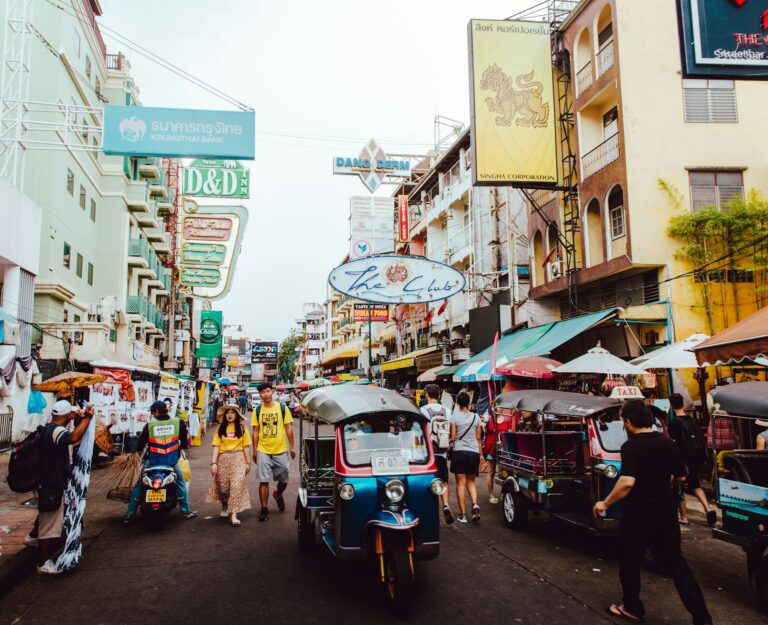
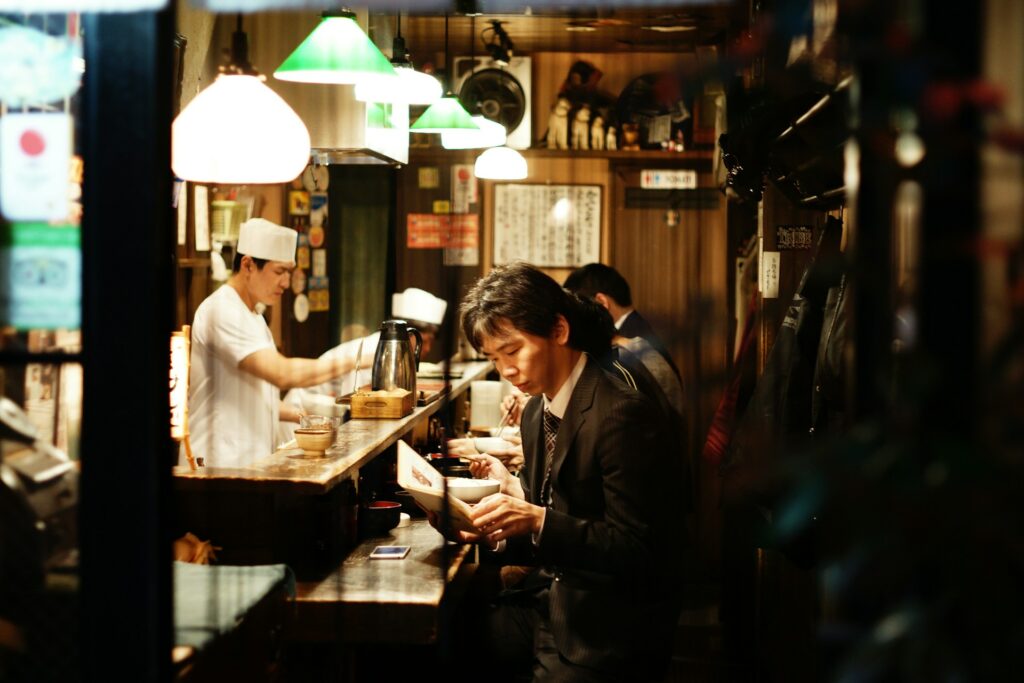
Photo by Evan Krause on Unsplash

At the height of the road’s powers – just before the pandemic changed everything – Khao San Road was receiving a whopping 50’000 tourists every single day during high season, before the Bangkok Metropolitan Authority announced a $1.6 million investment to turn it into an ‘’international walking street’’, with all the regulation and gentrification that implies.

Roads would be repaved, the number of vendors curbed (in more ways than one), and curfews on its bars and clubs more strictly enforced. 

Then COVID hit, decimating business, and Khao San Road became a ghost town, affecting bars, guest houses, and the surrounding neighbourhood’s once prosperous street food vendors.

At the end of 2022, six months after Thailand lifted COVID restrictions, Khao San operators reported that business is back to 90% to 95% of pre-Covid levels, according to The Nation newspaper.

They’re arguably returning to a gentrified version of the once wild thoroughfare. The cannabis consumption is now government-approved (kind of), most of the buckets replaced with cocktails, the ukulele with tasteful, meandering jazz, and the crowd a little older and wiser. 

Of course, come night, the main still drag begins to swell with a sea of late night revellers. Local bar promoters line the street, beckoning you in with deals on buckets and balloons. Hawkers still sell tourists scorpions on sticks, and now crocodile meat, too, which has actually become popular with locals as pork prices surge. However, it’s not quite as raucous as it once was.

Fortunately, the shophouses and street food vendors of Banglamphu have come roaring back, with woks fired up and grills burning. We couldn’t be happier.

If you’re looking for the very best eating options in the area, then it’s advisable to stray a little away from the famous strip, instead embracing the surrounding streets in search of a properly good supper. With that in mind, look no further than our guide to the best Thai street food close to Khao San Road, Bangkok.

Khun Lek Porridge, Atsadang Road

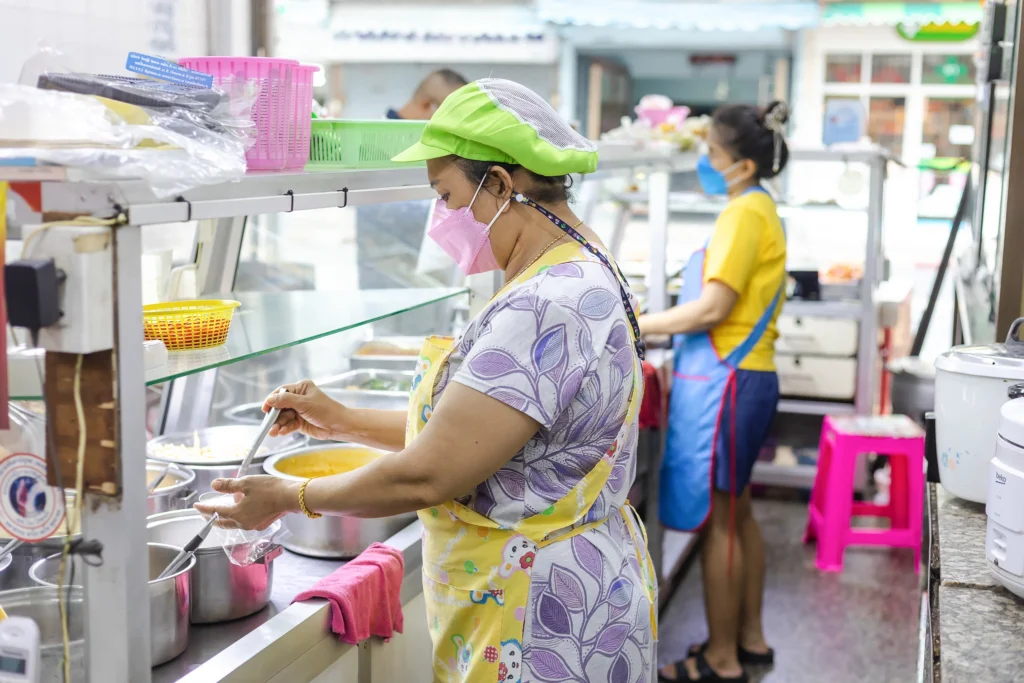
Though Khun Lek may be prosaically known as a ‘porridge restaurant’, there’s plenty more than just a sustaining bowl of the good stuff to be found at this canteen-like establishment a ten minute walk south from Khao San Road. 

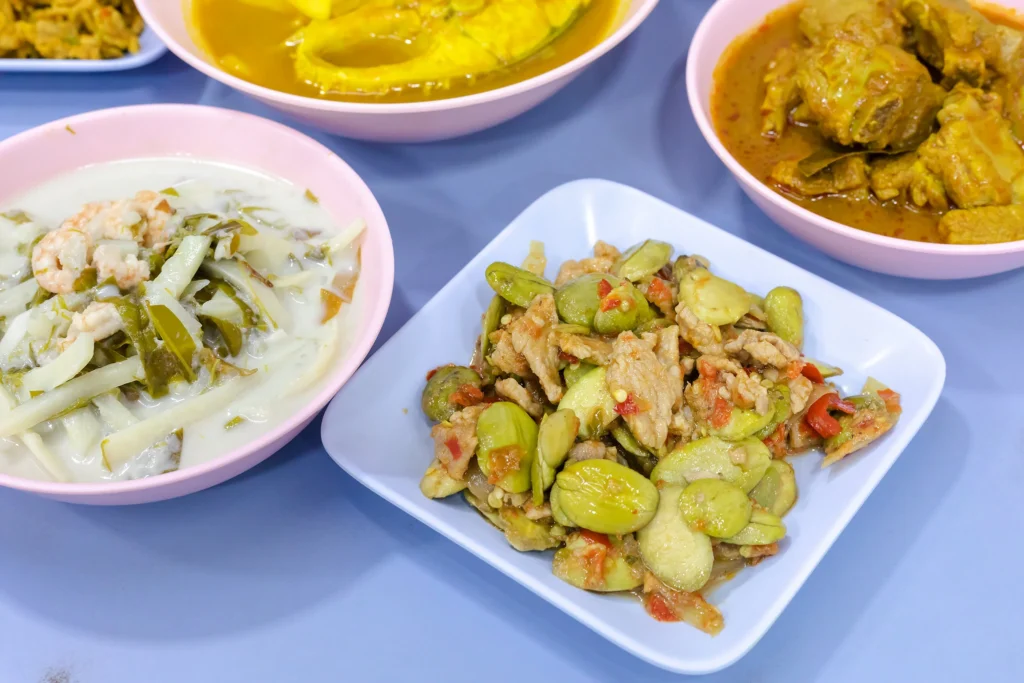
Khun Lek Porridge serves bowls of rice congee (khao tom), with simple, totally delicious trays of curries and stir-fries, pickles and steamed vegetables, laid out for customers to have spooned over a plate alongside. Well, two plates actually – pink ones are 10 baht and blue ones (usually more protein heavy) are 20, with the rice soup itself just 3 baht and the ice water free. 

For the traveller eating around Bangkok on a budget, this is a fantastic option; you won’t pay more than 50 baht (£1.20) for the privilege of a properly nourishing feed. Don’t miss the salted duck egg salad or clams stir-fried in chilli jam; just delicious.

Address: 5/3 ถนน อัษฎางค์ San Chao Pho Sua, Phra Nakhon, Bangkok 10200


Pad Thai Fai La Tu, Dinsor Road

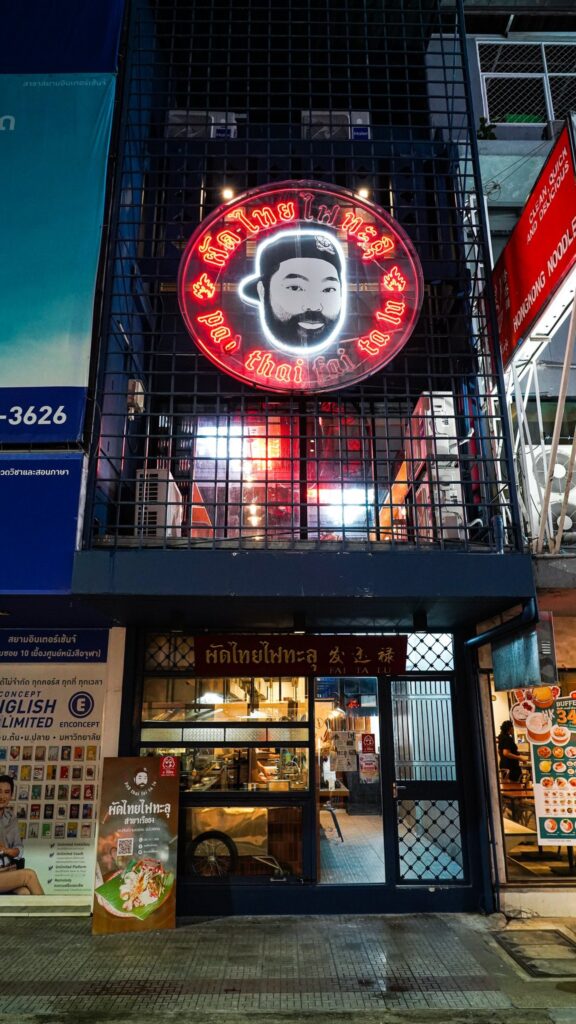
Chef Andy Yang has some serious pedigree, having won a Michelin star for his New York restaurant Rhong Tiam back in 2010 and, more recently, with Table 38 back in his native Bangkok. Though both have now sadly closed, you’ll find the same smart cooking sensibilities of chef Yang at Pad Thai Fai La Tu, a five minute walk from Khao San Road.

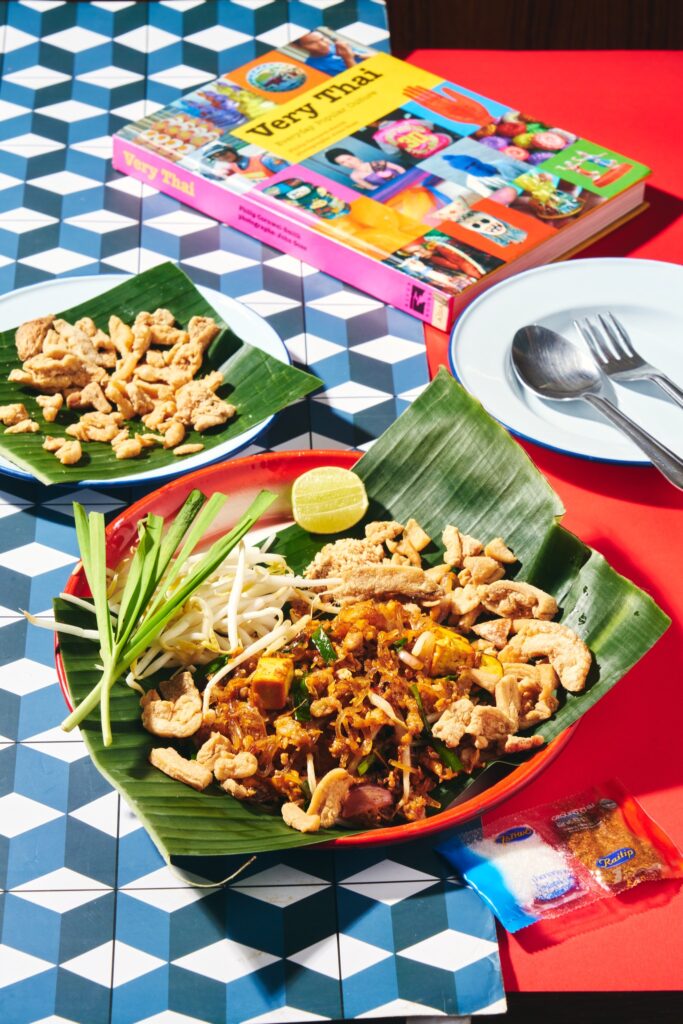
The signature dish here is the pad Thai moo yang, which sees grilled slices of pork neck laid invitingly over a bed of Thailand’s famous noodle dish. Regarded as one of the best pad Thais in Bangkok, this one is not to be missed if hunger hits while you’re on Khao San Road.

Address: 115/5 Dinso Rd, Baworniwet, Phranakorn, Bangkok 10200

Website: ผัดไทยไฟทะลุ Pad Thai Fai Ta Lu | Bangkok | Facebook

Read: Where to find the best Pad Thai in Bangkok


Kim Sia, Tanao Road

If you’ve ever seen the image of an ornate green bowl on the facade of a Bangkok shophouse, inside a good feed is likely to be found. That’s because it’s the emblem of Thai’s own version of the Michelin Guide, Shell ShuanShim; an indicator of fresh food and high quality cooking.

Kim Sia is one such acclaimed place, and at this small shophouse just off Tanao Road you’ll find a fantastically light bowl of clear soup, a noodle of your choice, and the restaurant’s house-made fish balls, all for just 40 baht. For an extra 10 baht, you’ll want to add some deep-fried wonton sheets, which bring crunch and savour to this most delicate of dishes.

Address: 108 Tanao Rd Khwaeng Talat Yot, Khet Phra Nakhon, Krung Thep Maha Nakhon 10200


Hero Moo Plara, Talat Yot

The beauty of Hero Moo Plara lies in its timing. Open 24 hours a day, this Isaan grill near the entrance of Khao San Road serves grilled meat skewers when you need them most, whether that’s a post-party stumble at 3am or lunch after exploring the Grand Palace.

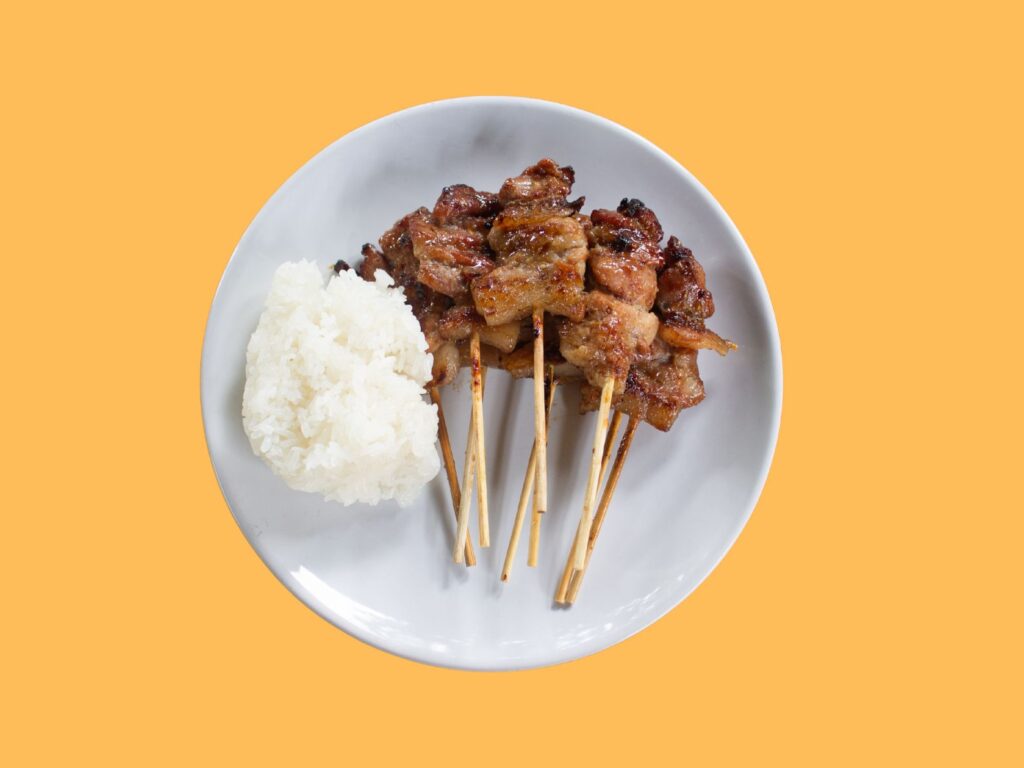
The setup is straightforward: charcoal-grilled pork and beef skewers served with sticky rice, fresh cabbage, and cucumber. What elevates this beyond standard moo ping is the dipping sauce, which is spiked generously with pla ra (fermented fish). That funky, pungent sauce gives the whole affair its character, the kind of intensely savoury punch that divides diners into camps of devotion or retreat.

The pork skewers arrive with decent char from the grill, fatty enough to stay juicy, whilst the beef holds its own alongside. Everything’s cooked to order over charcoal, giving you that smoky edge that defines good street food grilling. The sticky rice does its job soaking up the sauce, and the raw vegetables provide necessary crunch and relief between bites.

Service is brisk, prices are street food rates (a set of pork and beef skewers, and sticky rice is just 100 baht), and despite the proximity to tourist central, the crowd skews heavily local.

Address: Talat Yot, near the entrance of Khaosan Road, Bangkok 10200, Thailand


Sae Phun, Mahannop Road

Another street food staple done with real grace and character close to Khao San Road is the chicken stew with rice served over on Mahannop Road, at the esteemed Sae Phun. 

With almost 100 years of experience and queues that stretch for seemingly as long, the recipe here (the grandfather of the family’s) is a closely guarded secret, and it’s easy to understand why; for a dish so simple, there’s real magic sprinkled over this version, with the gravy glossy and umami-heavy. 

Order yours with a side of fried slices of lap cheong Chinese sausage and a deep-fried egg, and luxuriate in comfort food in its purest form. 

Read: The best Thai fine dining and Michelin-starred restaurants in Bangkok 

Address: เลขที่ 112 Thanon Mahannop, Sao Chingcha, Phra Nakhon, Bangkok 10200

Website: ข้าวหน้าไก่ร้านแซ่พุ้น Sae Phun | Facebook


Kuay Tiew Ped Yang Banglamphu (Original), Chakrapong Road

Another shophouse with a proud history – and one of the best places to eat near Khao San Road – is Kuay Tiew Ped Yang Banglamphu (Original). 

Yep, you know when a street food vendor puts ‘Original’ in the title, there’s been some serious imitation/flattery of their signature dish going on. The signature dish in question? Roasted then braised duck, served over egg noodles and all bathing in a five-spice rich soup given sweetness via oyster sauce and both dark and light soy. All yours for just 70 baht.

Read: Hotel Review: River Surya, Bangkok

Address: 119 Chakrabongse Rd, Khwaeng Chana Songkhram, Khet Phra Nakhon, Krung Thep Maha Nakhon 10200


Tom Yum Gung Banglamphu (Original), Kraisi Road

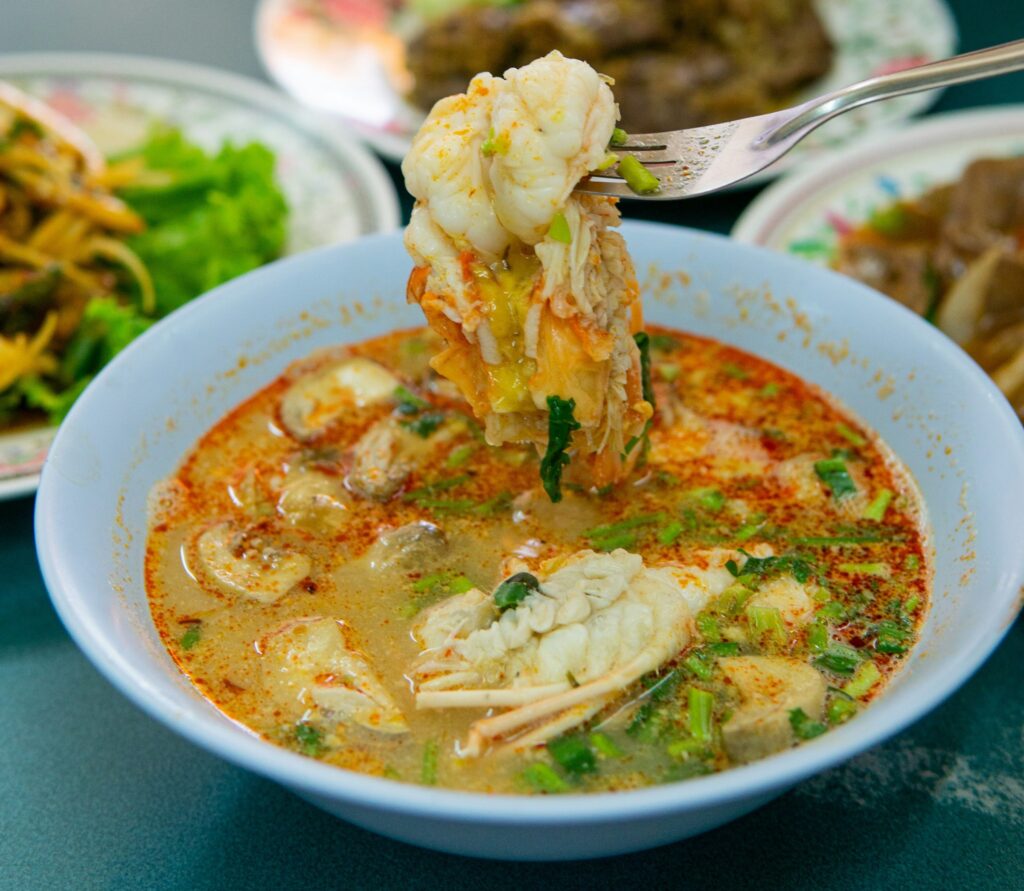
Even those with the most rudimentary grasp of the Thai culinary canon will be familiar with tom yum gung, the hot and sour prawn soup ubiquitous across The Kingdom. 

What visitors to Khao San Road might be surprised to hear is that one of the city’s finest renditions is found just a shell’s throw away on Kraisi Road.

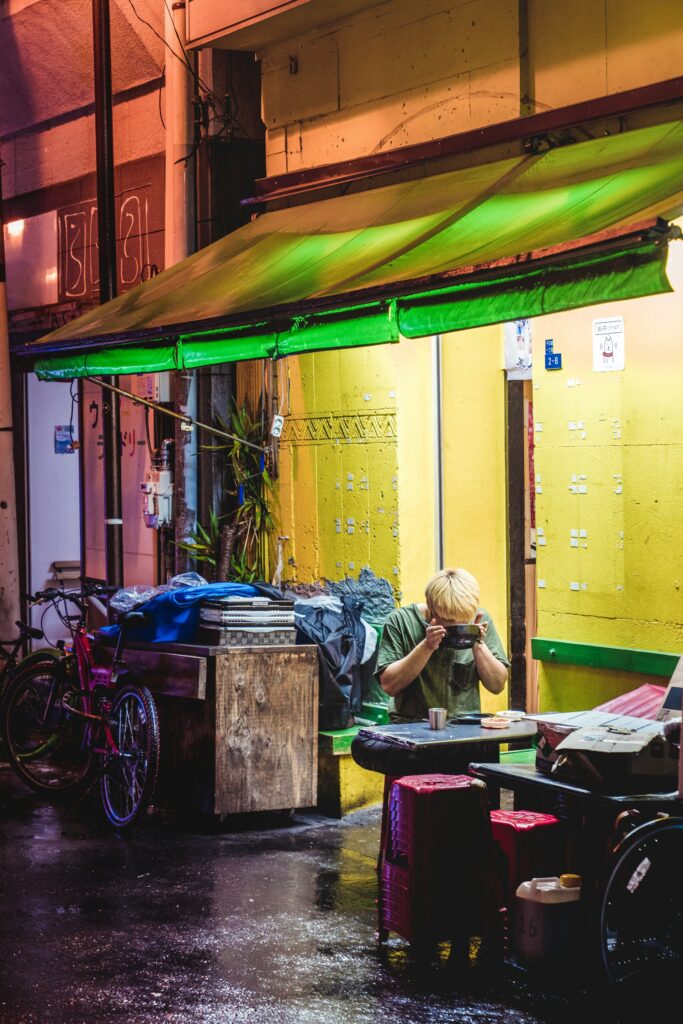
Here, at Tom Yum Gung Banglamphu Original (there it is again), you’ll find just a clutch of streetlevel metal tables and brightly coloured stools, and a big vat of aromatic stock bubbling gently right in the middle of the street. 

Order verbally (we’re yet to see a menu here), and uncle will make you a fresh bowl to order, spooning a ladleful of soup base into a new pan brimming with freshly bruised aromats, including makrut lime leaf, lemongrass, galangal and, of course, chillis. River prawns are added before the final seasonings of fish sauce and lime and, just like that; streetside ambrosia.

Address: หน้าอาคารจอดรถ ที่อยู่ Banglampuh กรุงเทพมหานคร TH Soi Kraisi, Talat Yot, Phra Nakhon, Bangkok 10200


Aheesah Roddee, Tanee Road

If you’re craving your fix of Thai Muslim food close to Khao San Road, then Aheesah Roddee, just a few hundred yard’s away on Tanee Road, is arguably your best bet. 

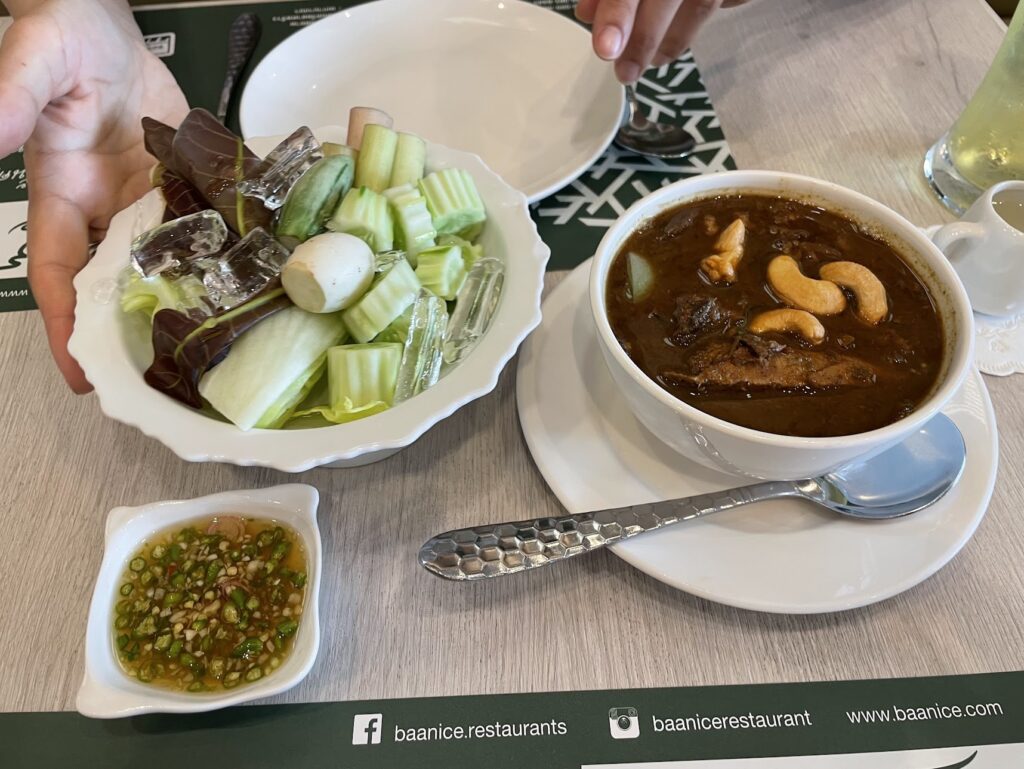
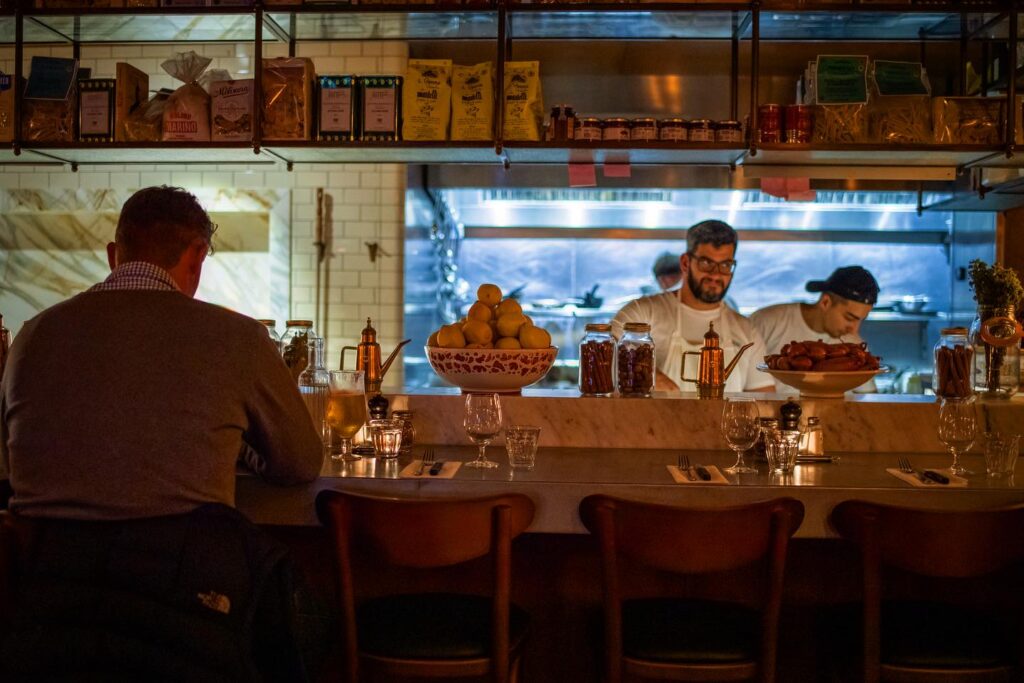
The star dish here is the khao mok neua, the Thai version of biriyani here served with beef that’s been braised low and slow, as well as a nourishing oxtail soup for those who haven’t had their fill of protein yet. A few slices of cucumber and the classic accompaniment of a verdant, vinegar-spiked dipping sauce see you on your way.

Stop! We certainly wouldn’t let you leave Aheesah Roddee without first ordering a few chicken satay sticks; have them go as you stroll back to Khao San Road, making those eating on the main drag very jealous indeed.
Address: 103 105 Thanon Tani, Talat Yot, Phra Nakhon, Bangkok 10200


Kor Panich, Tanao Road

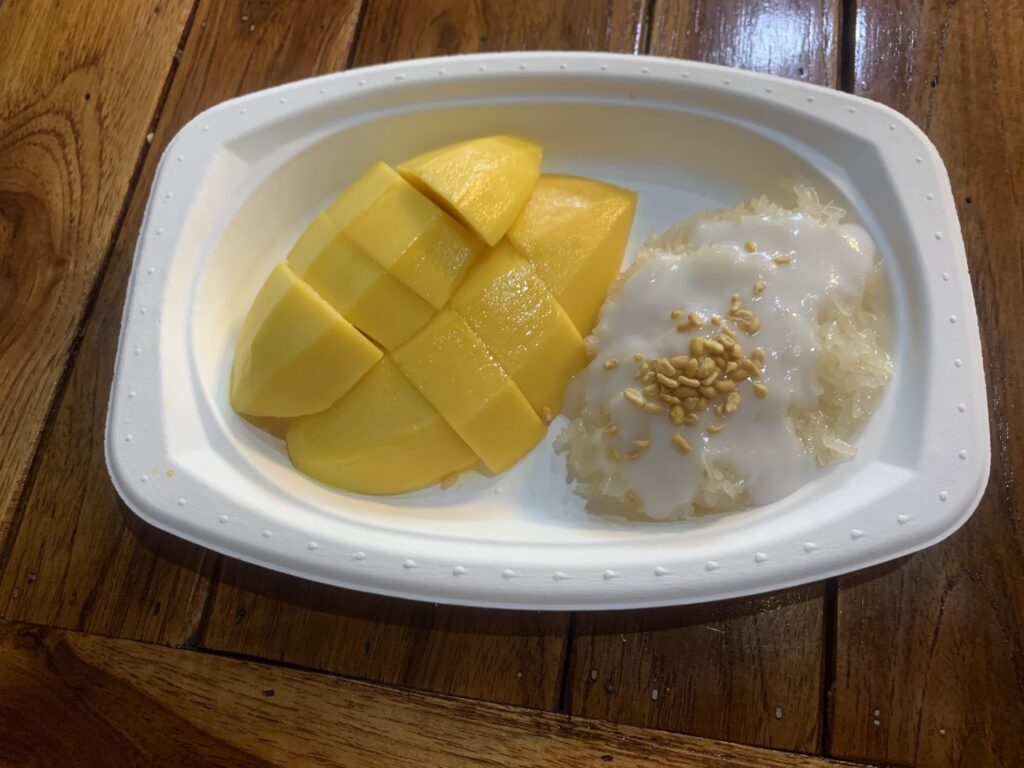
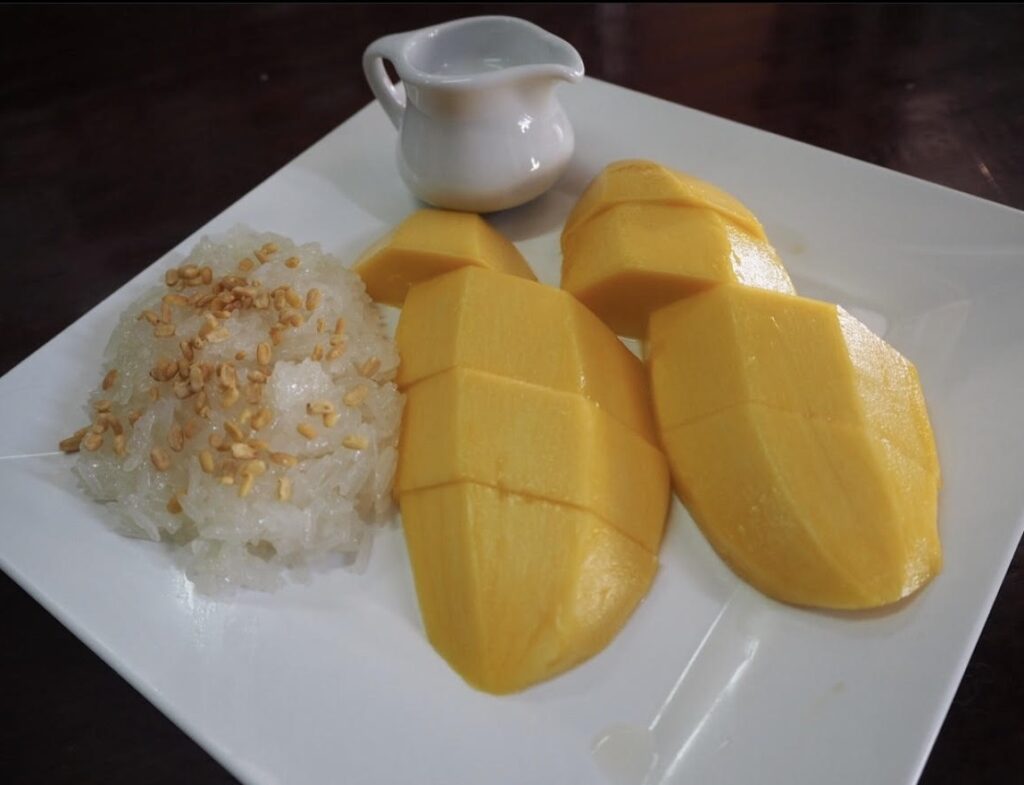
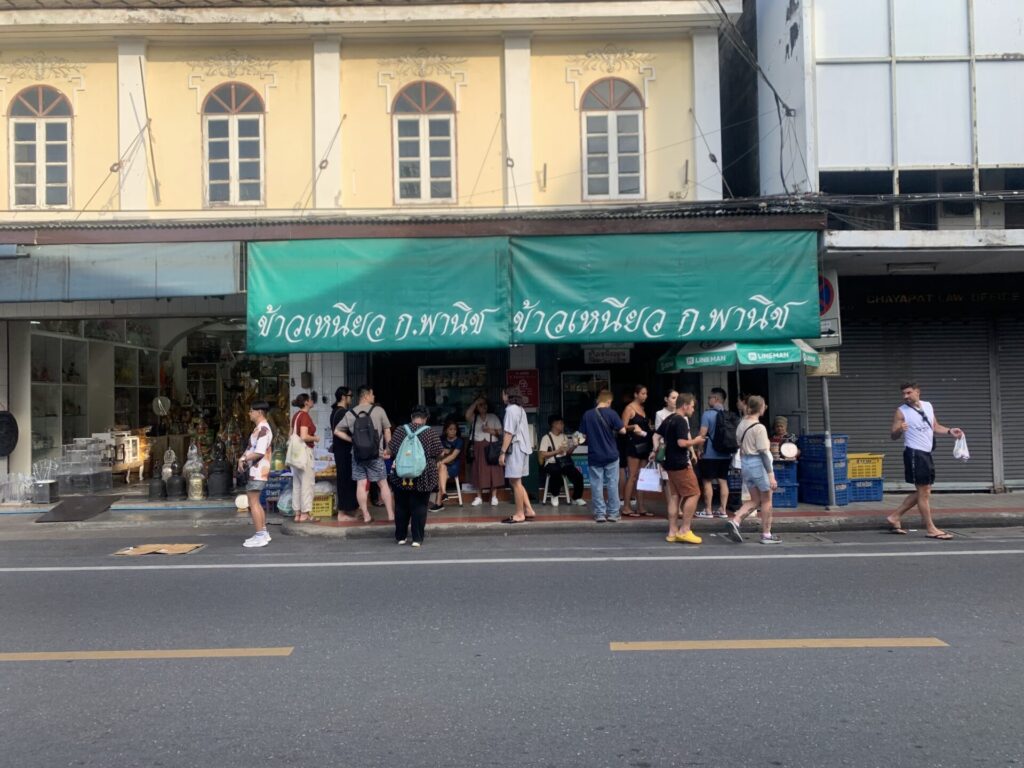
We finish up with dessert, at the celebrated Kor Panich right next to Bangkok’s Grand Palace. Here, there’s no danger of the paradox of choice rendering you silent; though Kor Panich does several sticky rice based desserts superbly, it’s especially famous for its unparalleled mango sticky rice. 

An 80 year old family recipe sees the most perfectly pandan-scented sticky rice given the sweet/salty treatment so beloved of Thai dessert-makers via seasoned coconut cream, with more of that cream served in a jug on the side for extra indulgence. Only the most ripe of elegantly peeled Thai mangos complete the plate. 

You might want to sit down for this one (seating is available in the old shophouse); it’s pure nectar.

Address: 431 433 Thanon Tanao, San Chao Pho Sua, Phra Nakhon, Bangkok 10200

And with that, our eating here is done. But not before to Bangkok’s hippest neighbourhood Ari, for some superb som tum and seafood at Lay Lao. Care to join us?

How To Keep Your Kitchen Smelling Clean, Whatever You’ve Been Cooking

Have you ever noticed how scents linger in your kitchen, both good and, erm, not so good? Last night’s roast turbot can quickly become tomorrow’s loitering odour, whilst lunchtime’s confit garlic on toast isn’t far from being tonight’s guest who’s outstayed their welcome. 

And don’t get us started on the fruit bowl. Seemingly a still-life at first glance, flip that satsuma over and there’s mayhem lurking underneath

Sometimes, homeowners can be inured to these lingering scents, noseblind to the stench that their kitchens are giving off. That’s why keeping your kitchen smelling fresh and clean preemptively and proactively is so important, particularly in these colder months when windows remain resolutely closed and ventilation is reduced. Anyway, here’s how to do just that.

Act Quickly

Let’s start with the absolute basics: the golden rule for preventing kitchen odours is to address spills and messes immediately. Wipe up that splattered tomato sauce whilst it’s still fresh, rather than letting it bake onto the hob during your next cooking session. The same goes for the inside of your microwave – that exploded pasta sauce might seem harmless now, but leave it a few days and you’ll have a pungent problem on your hands. A quick wipe-down after cooking takes seconds but saves you from a much bigger cleaning job (and lingering smells) later on.

Proper Ventilation

Though it’s perhaps best filed under the ‘cure’ rather than ‘prevention’ column, ensuring proper ventilation in your kitchen is the key to eliminating odours. Install a range hood or exhaust fan above your stove to capture and remove cooking fumes and smells. Make it a habit to turn on the fan or open windows while cooking to allow fresh air to circulate. Simples.

Don’t overlook your air vents themselves, which can accumulate dust, grease, and grime over time, reducing their efficiency and potentially contributing to stale air in your kitchen. Consider investing in quality air vent covers that are easy to remove and clean regularly. A quick wipe-down of these covers every few weeks will ensure your ventilation system is working at its best, allowing fresh air to flow freely and cooking odours to escape efficiently. It’s a small detail that can make a significant difference to your kitchen’s air quality.

Deep Cleaning

Regular deep cleaning is crucial for maintaining a fresh-smelling kitchen. Pay attention to the following areas, especially:

Appliances – Clean your oven, microwave, refrigerator, and dishwasher regularly to prevent food residue and spills from causing unpleasant odours. These kitchen appliance cleaning tips will offer more insight on that most thrilling of topics.

Countertops – Wipe down countertops with a mild detergent to remove any lingering food smells.

Sink & Drain – Keep your sink clean and free from food debris. Regularly flush your drain with boiling water and baking soda to prevent any build-up that can cause foul odours. We’ll dive a little deeper down this particular plughole a little later on, by the way.

Rubbish Bin – Empty your bin regularly and clean it thoroughly, inside and out, to avoid unpleasant smells, perhaps soaking the offending article in a mix of bleach and warm water every few days. Consider using bin bags with odour-absorbing properties, too.

Odour Absorbers

Utilise natural odour absorbers to neutralise unpleasant smells in your kitchen, which isn’t only more affordable than regular cleaning products, but is also better for both your health and the environment

Baking Soda – Place an open box of baking soda in your fridge to absorb any lingering food odours. You can also sprinkle baking soda in your bin and sink to eliminate unwanted smells.

White Vinegar – Wipe down surfaces, such as countertops and cutting boards, with a solution of white vinegar and water to neutralise odours.

Coffee Grounds – Keep a small bowl of coffee grounds on your countertop to absorb strong smells, like fish or garlic.

Indoor Plants – Place indoor plants, such as popular culinary herbs or aromatic flowers, in your kitchen to add a natural fragrance and improve air quality. Plus, when you need a little rosemary, all you have to do is reach over and pluck!
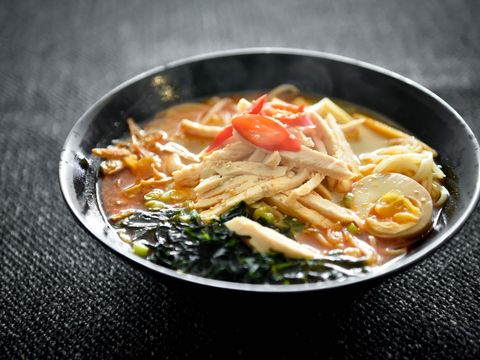
Simmer Potpourri – Create a simmer potpourri by boiling a mixture of citrus peels, cinnamon sticks, and cloves in water. This will infuse your kitchen with a refreshing aroma.

Read: 5 IDEAL tips for using essential oils for cleaning

Take Care Of Your Drains

One of the most common culprits behind a smelly kitchen is an unclean, clogged drain. Food particles, grease, and other waste can accumulate in your sink drain over time, causing foul odours to rise from your sink. Regular drain maintenance is crucial in keeping your kitchen smelling fresh.

It’s essential to avoid clogging your drain inadvertently if you’re to keep your kitchen smelling fresh. They recommend that to avoid clogging your kitchen sink and drains, you should always scrape food scraps into the trash or compost bin instead of letting them go down the sink. Regularly pour hot water or a mixture of hot water and vinegar down the drain to break down and flush away any buildup. To catch larger pieces of debris, consider installing a drain screen or strainer.

Finally, dispose of oils and other fats in a responsible manner, rather than pouring them down the sink hole (or in your toilet!). If not, you may well cause a fatberg to form, which can lead to some seriously smelly situations emanating from your drains.

Regularly Refresh Soft Furnishings

Fabrics in your kitchen – tea towels, oven gloves, curtains, and even chair cushions – are surprisingly effective at trapping cooking odours. Make it a habit to wash these items weekly, particularly tea towels which can harbour bacteria and develop that distinctive musty smell.

For curtains and cushion covers, a monthly wash should suffice, though if pets have been hanging around on them, make it significantly more regular. Between washes, hanging these items outside for a few hours can help freshen them naturally. If you’ve got a particularly pungent cooking session planned (we’re looking at you, fish curry), consider removing fabric items from the kitchen beforehand.

Mind Your Wooden Items

Wooden cutting boards, utensils, and countertops can absorb strong odours, particularly from onions, garlic, and raw meat. To keep these items fresh, rub them with half a lemon and coarse salt, scrubbing gently in circular motions. The citric acid helps neutralise odours whilst the salt acts as a gentle abrasive. Leave the mixture on for a few minutes before rinsing with warm water and drying thoroughly.

For particularly stubborn smells, create a paste of baking soda and water, apply it to the wooden surface, and let it sit overnight before rinsing. Regular oiling of wooden items with food-safe mineral oil will also help create a protective barrier against odour absorption.

The Bottom Line

A fresh-smelling kitchen will not only enhance your cooking experience but also make your entire home more inviting. Enjoy a pleasant, clean and green kitchen every day with these tips. We can’t wait to be invited round to your next dinner party!

Where To Eat The Best Pizza In Bath

Though Bath has long been associated with affluence and a certain tendency to the high-falutin, as well as it being one of the UK’s most attractive places for both domestic and international tourism, its restaurant scene has only recently begun to match the city’s fine reputation.

But over the past ten years or so, Bath’s culinary map has become populated with a string of restaurants where the cooking is confident, the prices are reasonable, and the vibes more in tune with what’s happening in London than perhaps any other city of its size here in the UK.

That said, amongst all the hip, happening openings, sometimes all you really want is a pizza. Should you be in Bath and wondering where to eat the best pizza, we’ve got you covered…

The Oven

Ideal for authentic canotto-style Neapolitan pizzas with the occasional twist on a topping…

This little corner of South West England isn’t too blessed with seriously good pizza options, so we’ll jump right in with The Oven, which is, in our minds, the premium pizza spot in the city.

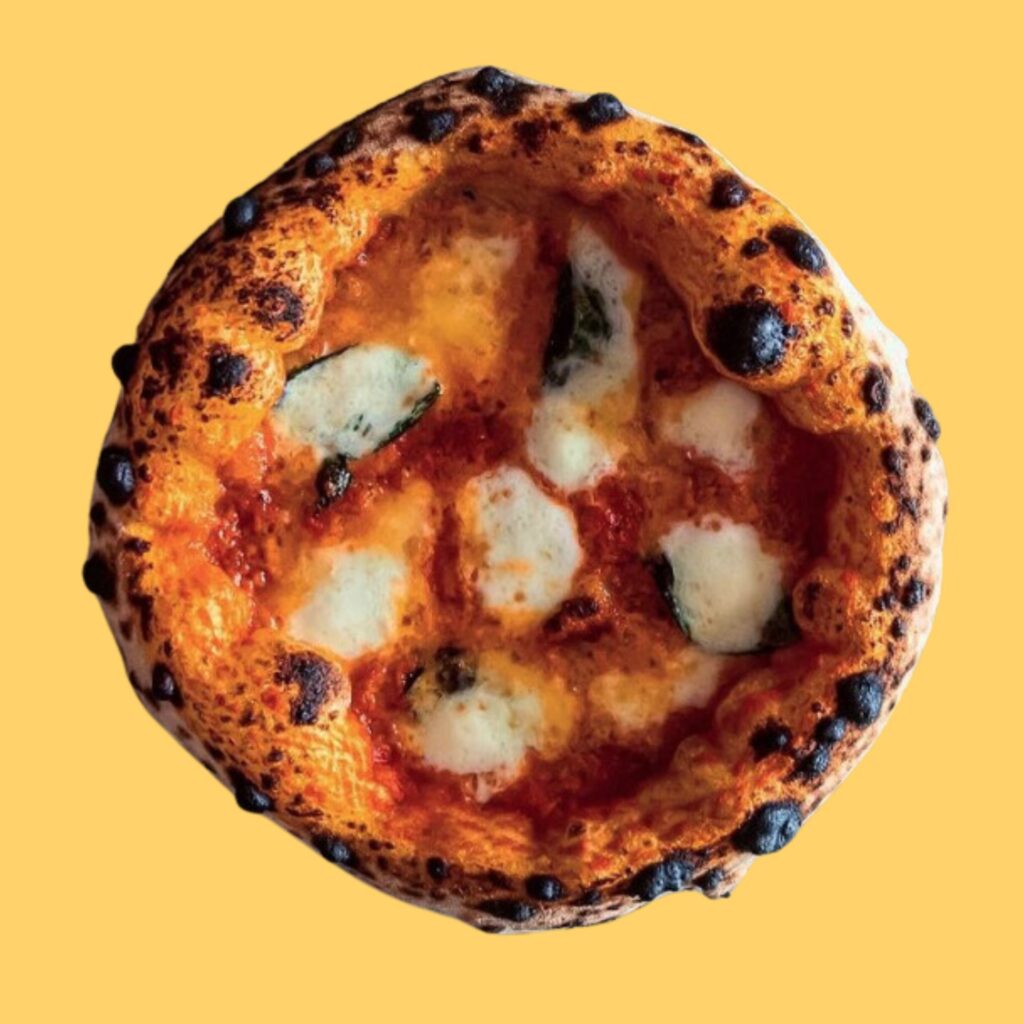
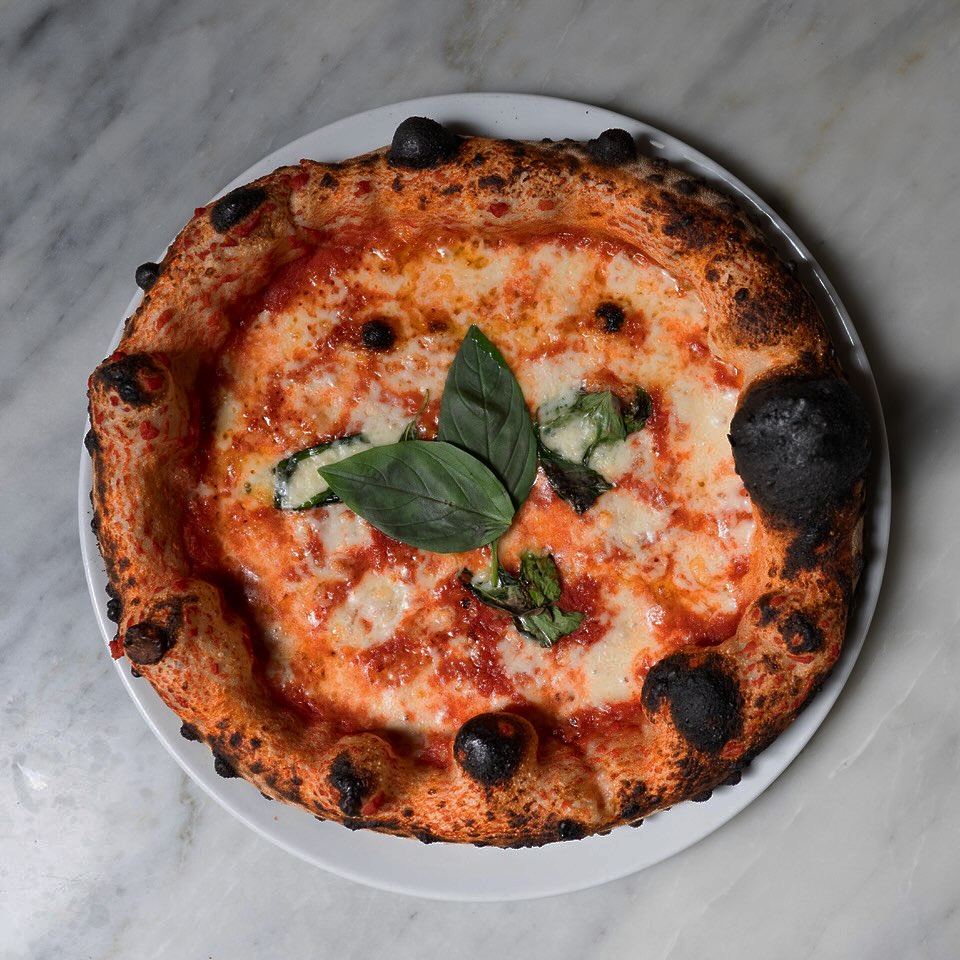
The oven in question, central to the restaurant not only in name but in its prime position in the dining room, is manned by pizzaioli Fabrizio Mancinetti, with the pizzas here loosely based on the Neapolitan canotto style. 

Translating as ‘dinghy’ and defined by their imposing, inflated crusts, the dough at The Oven boasts the requisite heft to carry some generous toppings, whether that’s the Sicilian sausage, mushrooms and toasted walnuts, or the goat’s cheese, caramelised red onion, rocket and pine nuts. Yes, nuts on a pizza; trust us, it works.

Address: 3 & 4, Seven Dials, Saw Cl, Bath BA1 1EN

Website: theovenpizzeria.co.uk


Bosco

Ideal for romantic date nights over upscale Italian-American pizza…

Bath’s Bosco bills itself as being ‘inspired by the best pizzerias of Naples and New York’. Having spent plenty of time in the former, we’d venture that Bosco has little in common with the rustic restaurants of Dalle 500 Cupole.

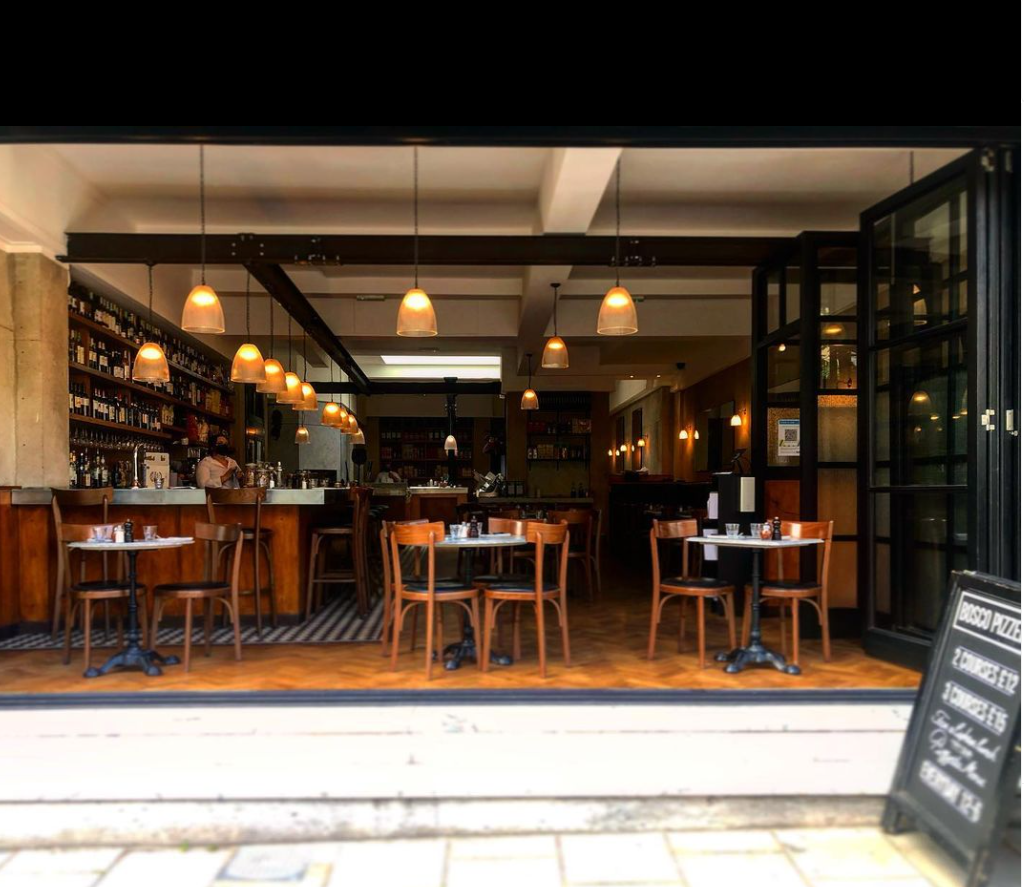
The vibe here, with its marble counter seating, dark wood and brass, instead calls to mind a New York speakeasy.

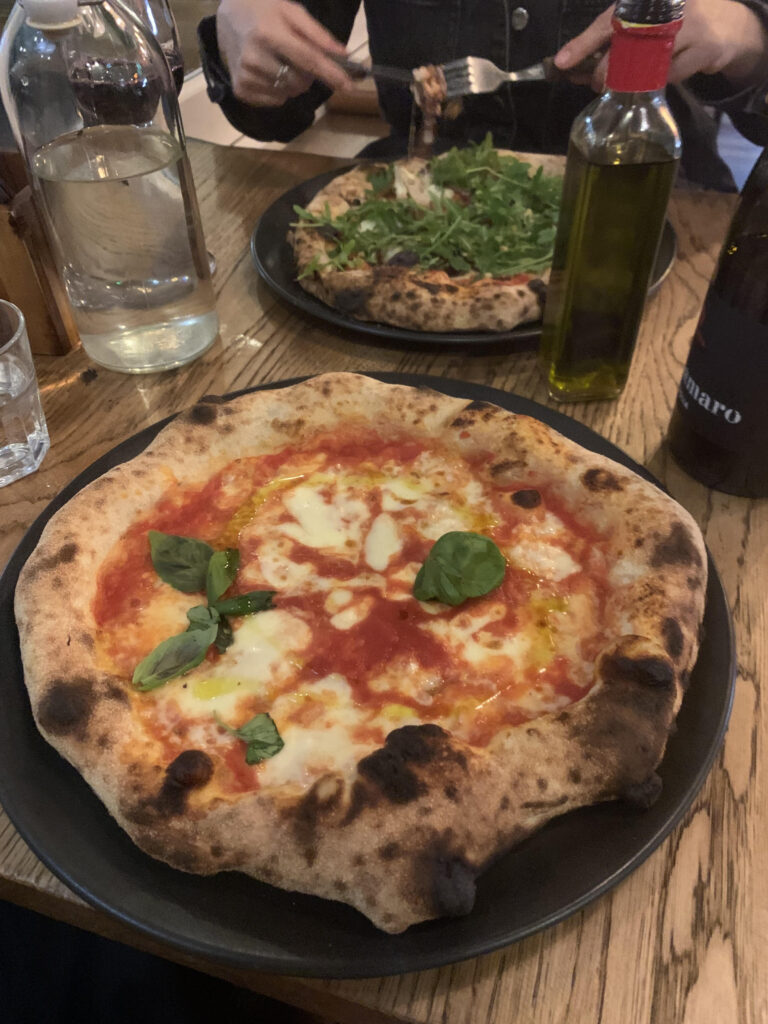
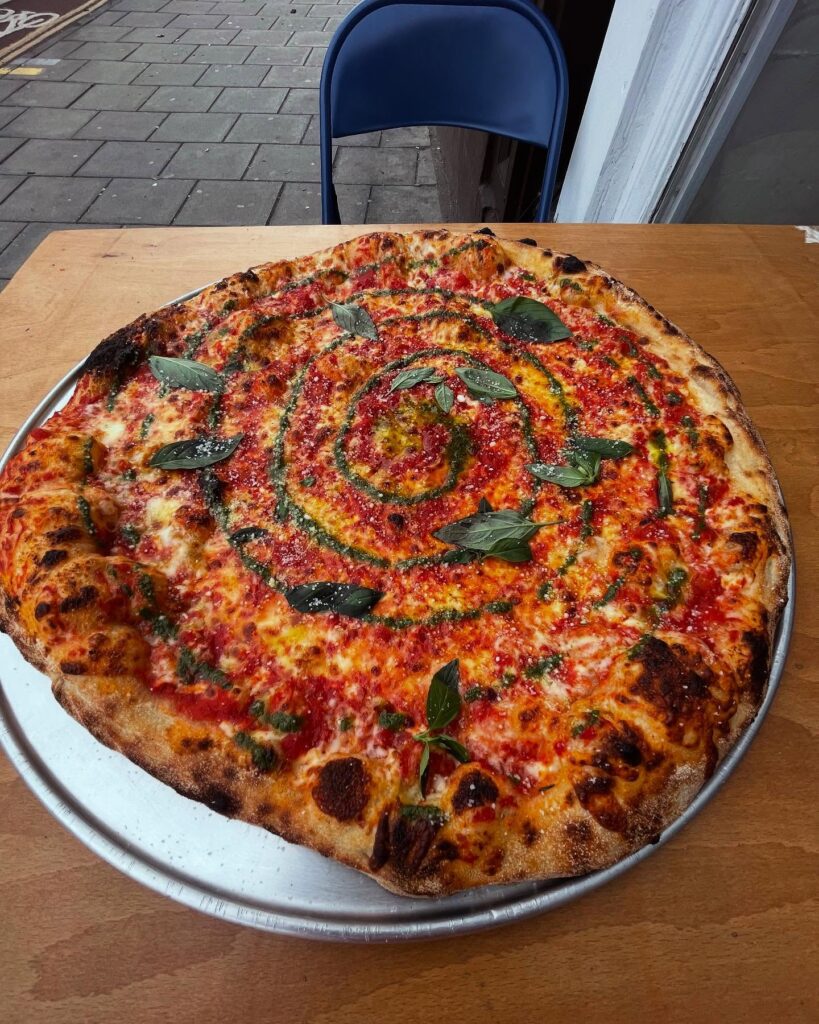
The pizzas – the bit you’re here for, of course – land somewhere in between the two cities, boasting more structural integrity than a Neopolitan, sure, but also drier than a keenly adorned New Yorker. There’s a central wood-fired oven at play, and the resultant puffy crusts, blistered and burnished in all the right places, make for an eminently satisfying eating experience.

Indeed, on its day these are fine pizzas indeed, boasting premium ingredients imported from the markets of Milan and Rome. Owing to that tendency towards the dry we mentioned, the best pizzas to order here are those that are a little more fully loaded. A case in point is the excellent Calabria, which is hot from ‘nduja and lusciously, liberally anointed with both mascarpone and fior di latte. The tomato base and roasted red onions bring some much needed sweet piquancy. It’s a fine pizza; arguably the best in Bath, quite honestly.

Owing to the dimmed lights and hushed tones of the place, Bosco is one of the city’s most romantic spots for a date night. During the day, the courtyard, a perfect sunspot, thrums with activity, cheer and chatter. The excellent house negronis certainly do no harm whichever way you’re playing it.

Website: boscopizzeria.co.uk

Address: Milsom Place, Bath BA1 1BZ


Landrace ‘La Pizza’

Ideal for authentic New Haven-style pizzas from Bath’s cult bakery…

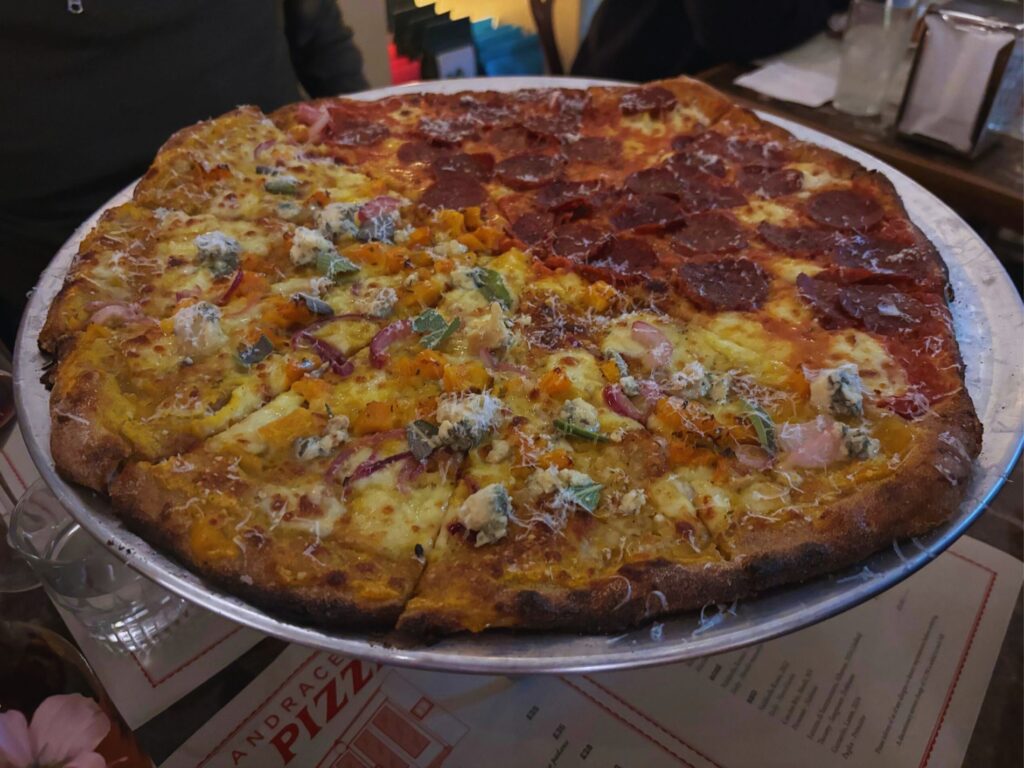
The ground floor at 59 Walcot Street has long been synonymous with some of Bath’s finest sourdough and cinnamon buns that inspire queues around the block and visits from abroad. But as the sun sets, this space undergoes something of a transformation, morphing from artisan bakery into pizzeria, where the same meticulous approach to grain and fermentation gets applied to 18-inch New Haven-style pies.

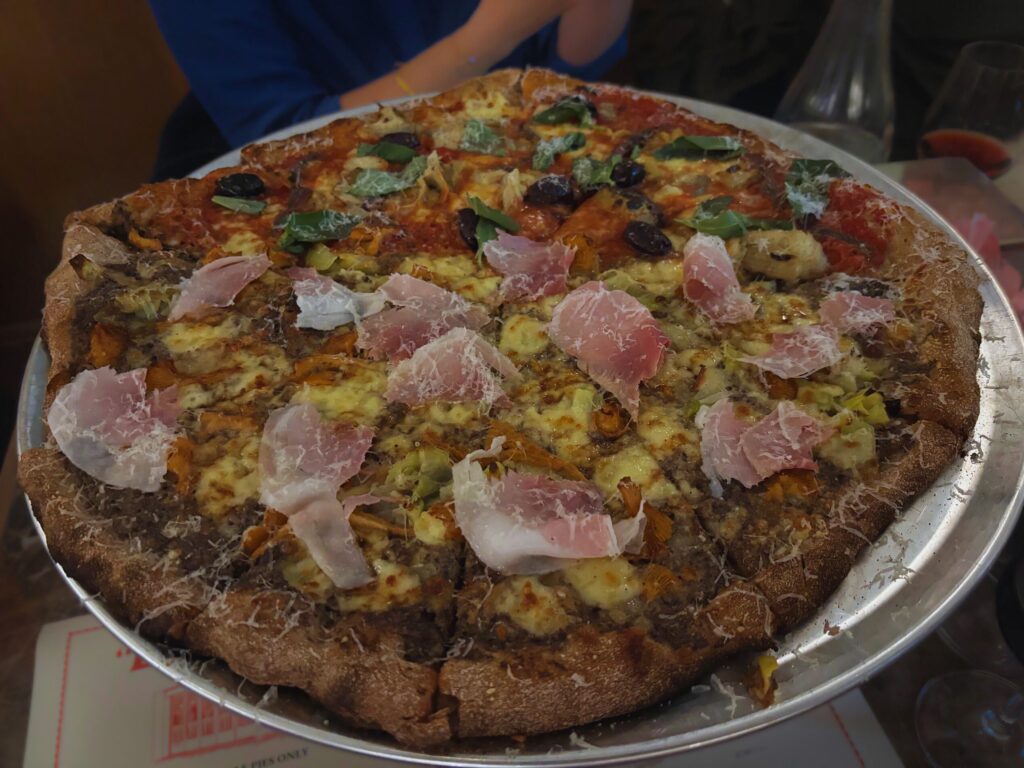
For the uninitiated, New Haven pizza – or ‘apizza’ as it’s known in the Connecticut vernacular – is all about the crust. Think thin, charred, and chewy, baked at blistering temperatures with a minimal hand on the toppings. It’s a style that relies heavily on ingredient quality, which is precisely where Landrace excels. They mill their own flour from British grains, mushrooms are wild and foraged locally, and they even commission their pepperoni from Westcombe, ensuring every element traces back to proper provenance.

The menu is refreshingly tight. The Little Rendezvous keeps things classic with San Marzano tomato, fior di latte, pecorino and oregano (£25), whilst The Paolo ups the ante with Westcombe pepperoni and grana padano (£35). The Funghi e Bacon – wild mushrooms, bacon, leeks, fior di latte, mushroom cream, rosemary and garlic oil – demonstrates how well this sturdy, wholesome dough handles richer toppings (£32). We’re sure by now you’re raising your eyebrows at those prices, but these are huge sharing pizzas, needing their own plinth to fit on the table and feeding two or three quite capably.

A word to the wise: if you’re dining as a group of four, consider ordering your pizzas sequentially rather than all at once. New Haven-style pizza really sings when it’s piping hot from the oven – that’s when the char and chew are at their best – so staggering your order means everyone gets to enjoy each pie at its optimal temperature and texture. You can order your pies half-and-half, incidentally, which adds to the fun. Anoint it all with the Landrace’s house-made hot honey – a blend of local summer honey and ring of fire chillies from a Bradford-on-Avon grower – is worth adding to absolutely everything.

Note that this isn’t a walk-in-and-grab-a-slice operation. Pizzas are sold whole to sit-down diners on a walk-in basis, though collection (you need to order in advance) is available, too. Either way, pair your pie with one of the organic lagers from Devon’s Gilt & Flint, or go for their rough and ready chilled Sangiovese from Tuscany. Finish up with the house tiramisu, which is ethereally light but somehow still structurally sound, and a damn fine way to end any meal.

This feels like pizza with a pedigree, and we love it.

Address: 59 Walcot Street, Bath BA1 5BN

Website: landrace.co.uk


Bath Pizza Co.

Ideal for popular, approachable pies in historic Victorian railway surroundings…

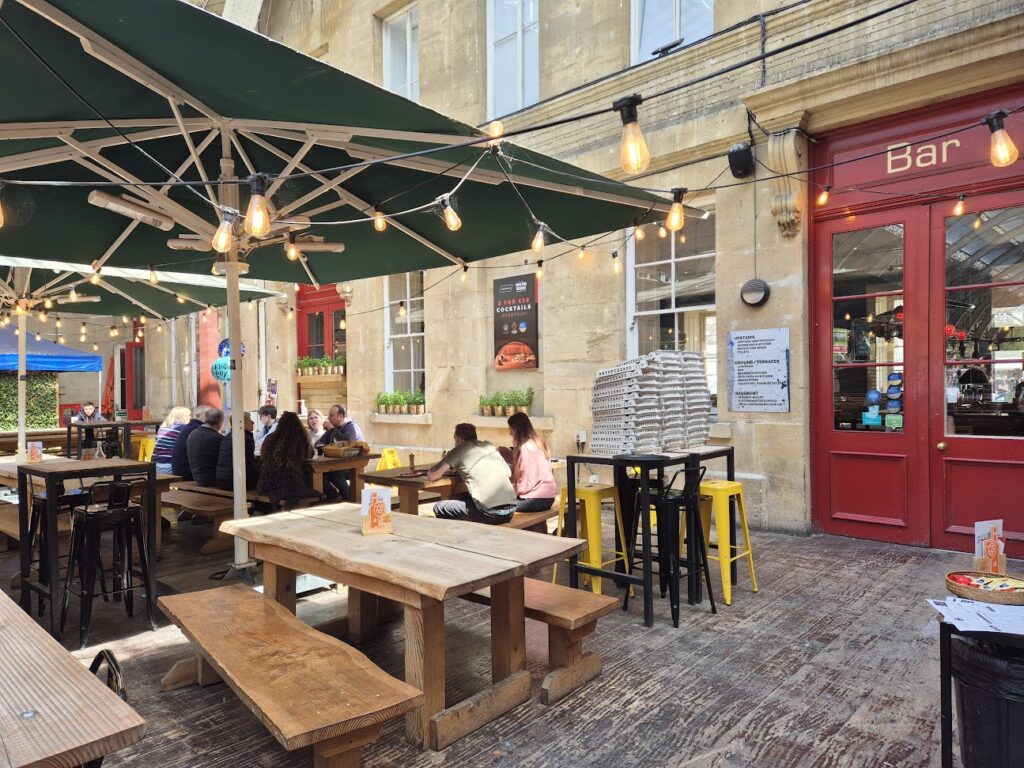
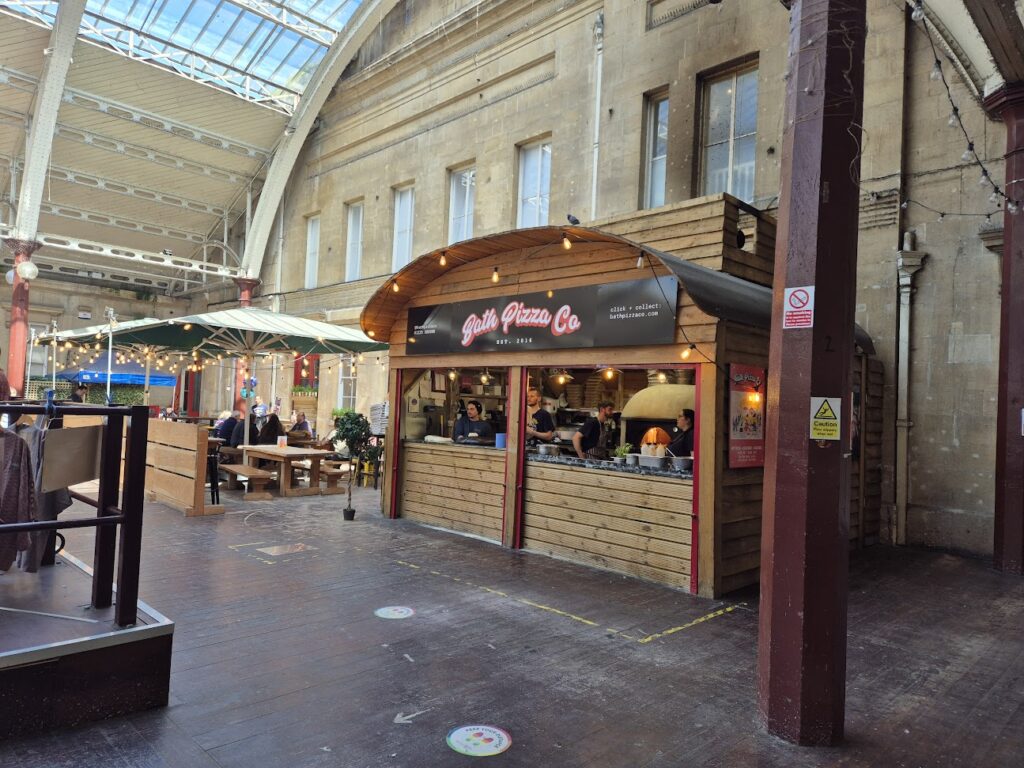
Housed in the historic Green Park station – now populated with a whole host of great independent traders – comes Bath Pizza Co., a simple, walk-up to the window affair that happens to sling some of the best pizzas in town.

The now-closed landmark that houses these excellent pizzas boasts an elaborate Victorian railway glass roof, offering shelter from the elements when the semi-alfresco nature of the dining here is threatened by rain. They even have massive heaters for those feeling the cold during winter. That said, when the sun is shining, there’s nowhere more pleasant to eat in Bath. 

In case there’s any danger of you forgetting the history of your illustrious surrounds, you’ll find Bath Pizza Co. right next to the old ticketing hall, though dining carriage fare this ain’t. 

Instead, these guys were not only National Pizza Awards finalists in 2021, but were also named the ‘Independent Pizza Restaurant of the Year’ by the Pizza, Pasta & Italian Food Association (PAPA), the only formal trade body in the UK representing the Italian food and drink industry.

That’s some serious pizza pedigree, but you’ll be pleased to hear that this is a casual dining spot, with no bookings required. Get yourself a drink from the next door Brasserie Bar and settle in for a great pizza with a side order of history!

Address: Green Park Station, 2-3 Westmoreland Station Rd, Bath BA1 1JB 

Website: bathpizzaco.com 


Dough Pizza

Ideal for digestible, dietary-friendly pizza bases…

Dough Pizza, close to Bath’s historic Pulteney Bridge, offers a different proposition to the traditional pizzas (or rather, bases) so far installed on our list, in that it’s a customisable affair, allowing diners to choose from a variety of inventive, inclusive doughs, including hemp, seaweed, turmeric and a gluten-free option, all of which appear on the ‘Specials’ section of the menu.

A family-run operation with roots in Puglia, the pizzaiolo here is Emiliano Tunno, a man with pedigree in inventive pizzeria openings across the world, and a mission to make pizzas accessible to all, regardless of their dietary requirements or preferences. We just love the V for Vegan, which sees a khorasan wheat dough topped with vegan cheese, beetroot ‘carpaccio’, courgettes and capers. It’s wonderful.

For a quick, grab-and-go lunch, the pucce – a type of warm southern Italian sourdough bap – are excellent here, too. Divided into regions, our favourite is the Sorrento, which features grilled peppers, aubergines and courgettes, fior di latte mozzarella and rocket. Just delicious.

You’ll find a second branch on Kingsmead Square.

Address: 14-16 The Corridor, Bath BA1 5AP, United Kingdom

Address: 9 Kingsmead Square, Bath BA1 2AB, United Kingdom

Website: doughpizzarestaurant.co.uk


The Pizza Bike 

Ideal for casual pizza and pints in a classic pub garden…

We end our tour of the best pizzas in Bath in the garden of the Bell Inn, enjoying a slice from what is quite possibly the smallest pizzeria on the planet.

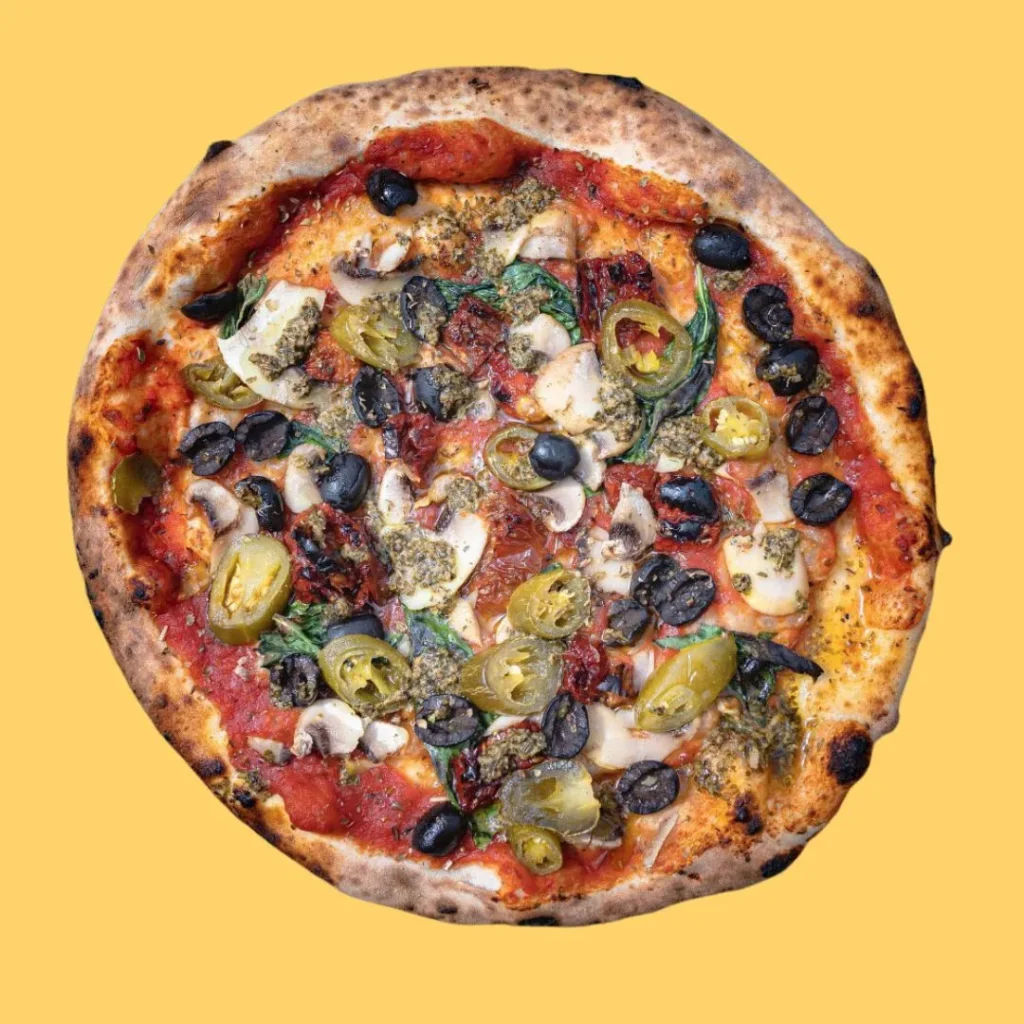
Run (or should that be ridden?) by Angel Ganev, this portable pizzeria sees the budding pizzaiolo pull a miniature oven across the city, delivering pizzas to the hungry masses. Currently stationed at Walcot Street’s Bell Inn, flavours are refined and simple (we imagine there’s not much fridge space for more elaborate toppings!), with the sobrasidita a particular favourite in the IDEAL office. We always add some sliced jalapenos – you should, too!

Pair it with a pint of the pub’s excellent, CAMRA-approved real ale, and settle in for an evening of good drinking and eating.

Address: 103 Walcot St, Bath BA1 5BW, United Kingdom

Instagram: @thepizzabike


Franco Manca

Ideal for reliable, wallet-friendly sourdough pizzas with a little railway arch ambiance…

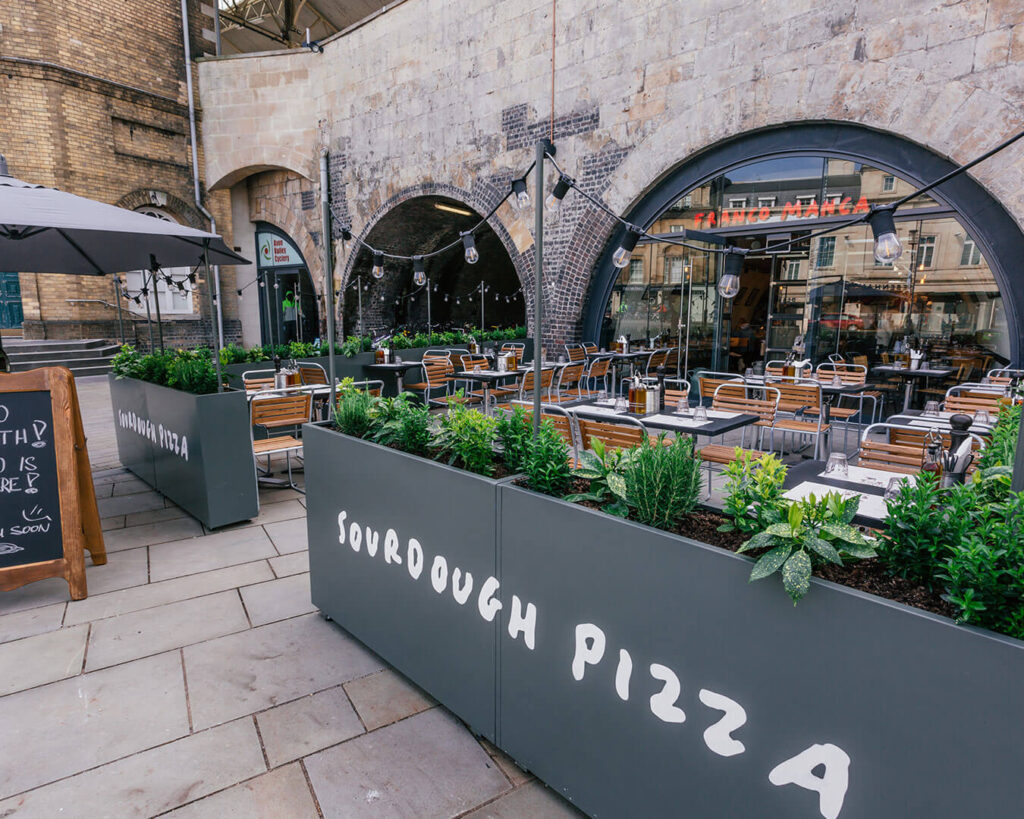
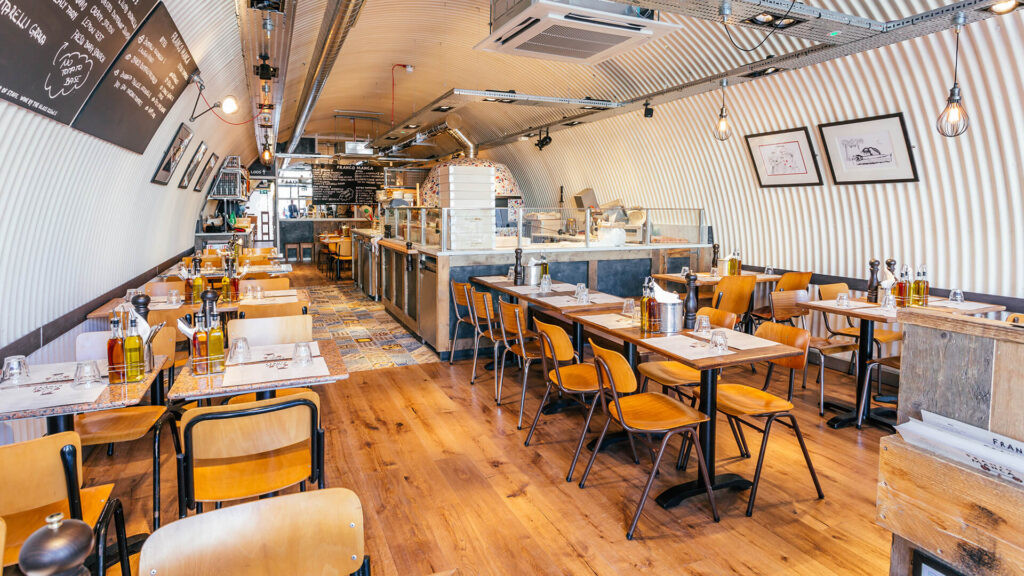
The curved iron walls and exposed brick of Bath Spa station’s railway arches now house Franco Manca, where the rumble of trains overhead adds to, rather than detracts from, the space’s raw appeal. Yes, it’s a chain. And yes, an ever-accelerating omnipresence has lead to a kind of standardisation where the standard is noticeably lower than the Brixton Market days of 2008, when their first site’s dedication to faithfully Neapolitan pizza helped kick-start London’s pizza renaissance. But this is still a decent pizza, and one at a remarkably good price-point in today’s economy.

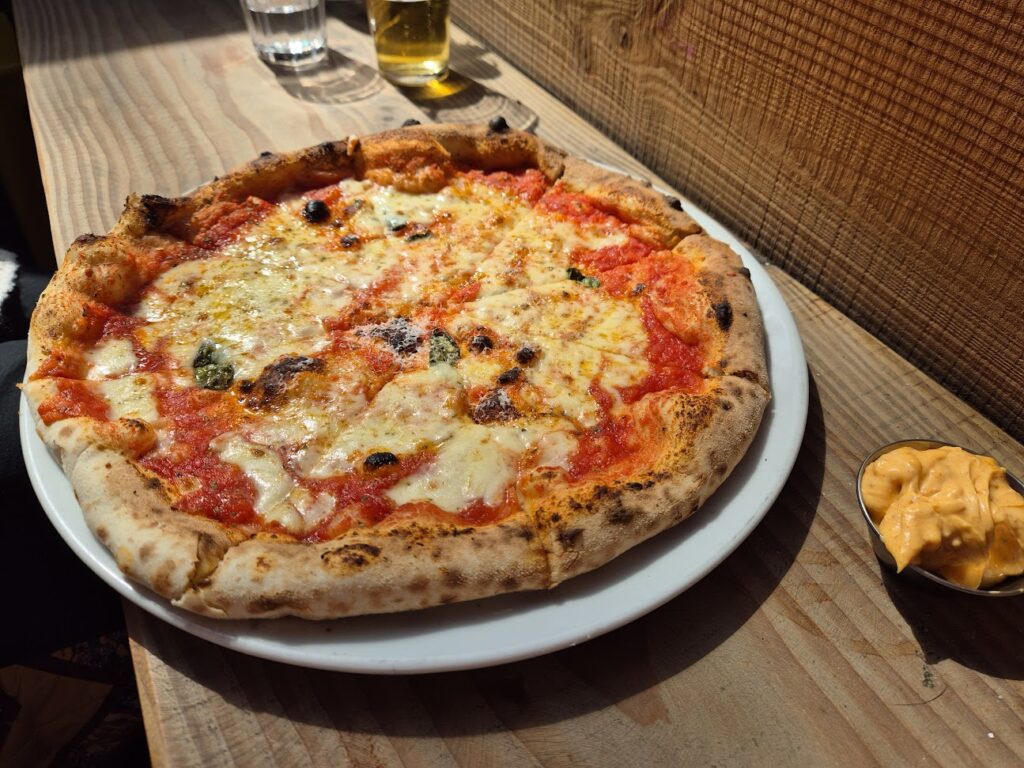
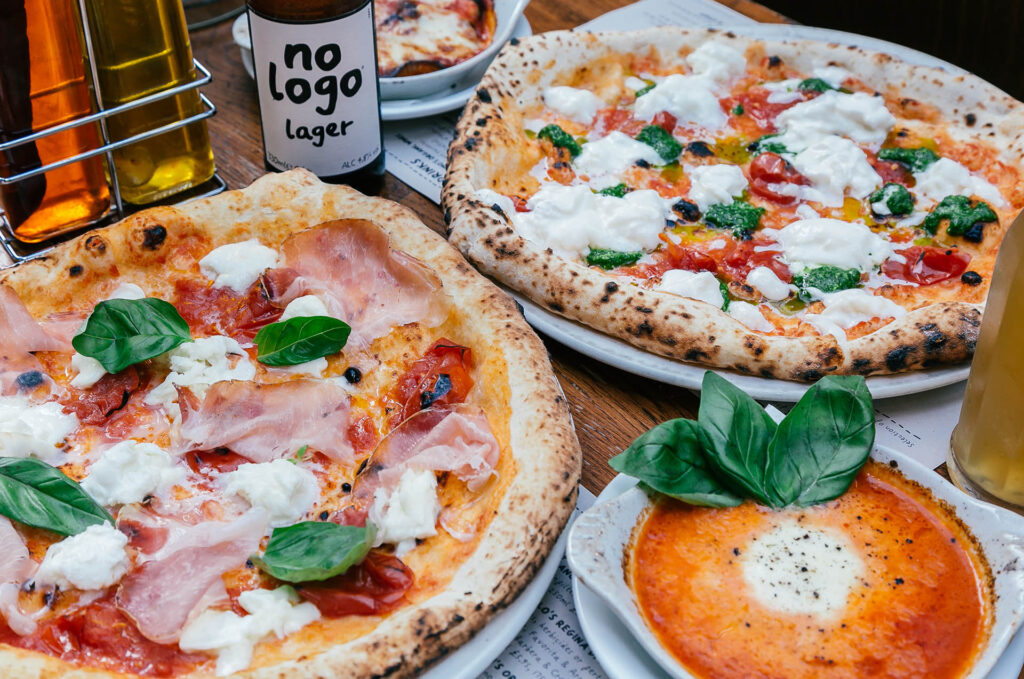
The setup here is stripped back – both in decor and menu. Seven pizzas plus a specials board might seem sparse, but that focus helps keep costs down. Their sourdough bases, proved for 20 hours and fired at 450 degrees in their hulking Neapolitan ovens, have a distinctive tang that’s impossible to fake. The resulting pizzas sport those telltale charred bubbles that pizza geeks obsess over, while remaining light enough that you won’t need to be rolled out the door.

At £6.95 for their most basic pizza, the prices feel like they’ve time-travelled from 2010. The no. 2, their margherita (upgrade to buffalo mozzarella for £3 if you’re feeling flush), proves they can do the classics well, even if it isn’t the finest pizza you’ll ever eat. They get a touch more experimental; Franco’s Favourite features an Amatriciana sauce base, crispy pancetta and pecorino romano D.O.P, and is enjoyably salty.

The terrace in Brunel Square might even catch the evening sun, while you keep one eye on your train and one on the pizzaioli spinning dough.

Address: 12 Brunel Square, Bath BA1 1SX

Website: francomanca.co.uk


Honourable Mention

The Real Italian Pizza Co: A short stroll from the historic Roman Baths, this compact, family-run pizzeria probably won’t give you the best pizza of your life, but if it’s pizza you’re craving (you are; that’s why you’re here) and you can’t get a seat at another restaurant on a tourist-filled day in Bath, then The Real Italian pizza Co will do the job.

Open since 2007, the British-Italian ownership duo of Timothy Coffey and Francesca Addabbo aimed to showcase the pizzas of Addabbo’s childhood in Italy; crisp, light and satisfying.

16 years on, we think it’s safe to say they more or less succeeded in their mission, with a second Real Italian Pizza Co. now open in nearby Cardiff. Try their take on a Full English Breakfast in pizza form (yes, really), which sees Italian sausage, bacon, mushrooms and a fried egg sitting atop the restaurant’s signature tomato sauce and naturally leavened, quick-fired dough. Thankfully, no baked beans make it onto this one.

Address: 16 York St, Bath BA1 1NG, United Kingdom

Website: realitalianpizza.co.uk 


And if, somehow, you’ve still got room for another course or two, do check out Upstairs at the Landrace, which is only a short walk from all of our selections here (and, indeed, above one of them!), and a brilliant restaurant indeed.

The Best Pizzas In Bristol

Bristol’s restaurant scene is rightly revered, with Michelin-starred restaurants rubbing shoulders with thriving food markets, and top tapas bars found housed in shipping containers, all with access to some of Britain’s finest produce, right on the city’s doorstep. It’s a heady mix, indeed.

No wonder Bristol was in 2022 named as one of the world’s top 20 food destinations by Travel Mag. It should come as no surprise, then, that the city is home to some mighty fine pizzas, and today, we’re exploring the very best of them. 

So, without further ado, here’s our guide on where to find the best pizza in Bristol.

Bertha’s, Wapping Wharf

Ideal for sustainability-focused pizzas with playful, unconventional combinations…

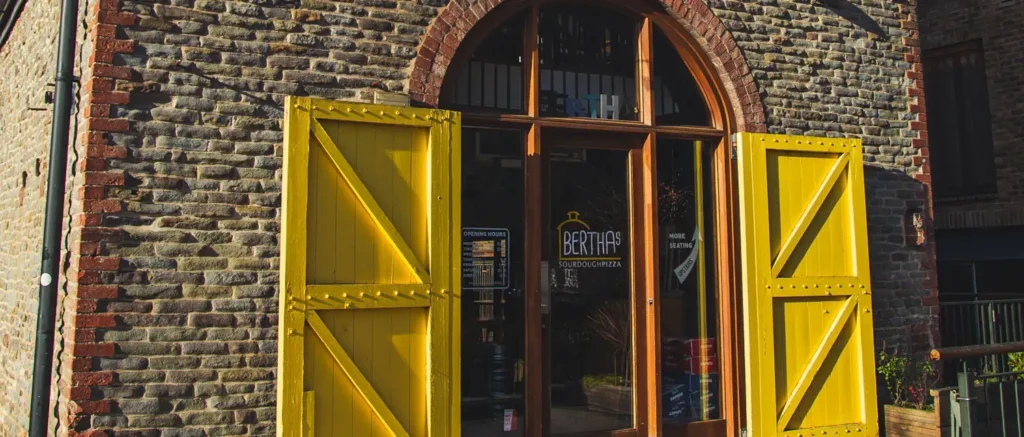
Though Bertha’s opened its doors in Wapping Wharf in August of 2016, the journey of Bertha’s to a fully fledged pizzeria began much earlier, in 2010, as a street food operation serving pizzas from a converted yellow Land Rover to the hungry masses of food festivals and other local events. 

Fast forward 13 years, and the pizzeria sits proudly at The Old Gaol Stables at the top of Gaol Ferry Steps, slinging dozens of delicious sourdough pizzas every day. It’s a hugely welcoming place, with co-owner Kate Faragher describing Bertha’s as a friendly neighborhood restaurant that aims to serve simple, affordable food and support local, sustainable producers. What more could you want?

Bertha’s Pizza has received numerous accolades, including being listed in The Sunday Times’ Top 25 Pizzerias in the UK as well as being having for its sustainability chops acknowledged at the BBC Food & Farming Awards.

If you think pineapple doesn’t belong on a pizza and you’re a traditionalist to the core, then you’re in for a delicious shock. The playful flavour creators at Bertha go for combinations that you won’t find at your traditional pizzeria and the specials board here is always exciting; think smoked haddock pizza or even a topping featuring sweet and giving peaches.

They also feed vegans very, very well and, again, it’s to the special boards the plant-based pizza lovers among us should turn. On our last visit, spiced roasted beetroot and feta became best friends – the perfect balance of sweet and salty all in one bite.

That said, we’re especially big fans of the Meat & Heat pizza here, which sees the ever trendy chilli honey drizzled over a pepperoni pizza, the spiced, cured sausage made using Gloucester Old Spot; it’s just divine, though you might want to pack a few Rennie for afters.

Pair this one (the pizza, not the antacid tablet) with a lazy, hazy Keller Pils lager from local brewers Lost & Grounded and you’ve got yourself a meal of yeasty deliciousness.

Can’t make it to the restaurant? They have their own frozen range that is stocked in delis, butchers, farmshops and more across Bristol. These restaurant-grade frozen pizzas are an authentic taste of Bertha’s – that’s a proper sourdough base and premium ingredients – just finished in your oven, not theirs.

AddressBertha’s Pizza, The Old Gaol Stables, Cumberland Rd, Bristol BS1 6WW

Website: berthas.co.uk


Sonny Stores, Southville

Ideal for refined ‘Britalian’ pizzettas and takeaway pizzas from intimate neighbourhood restaurant…

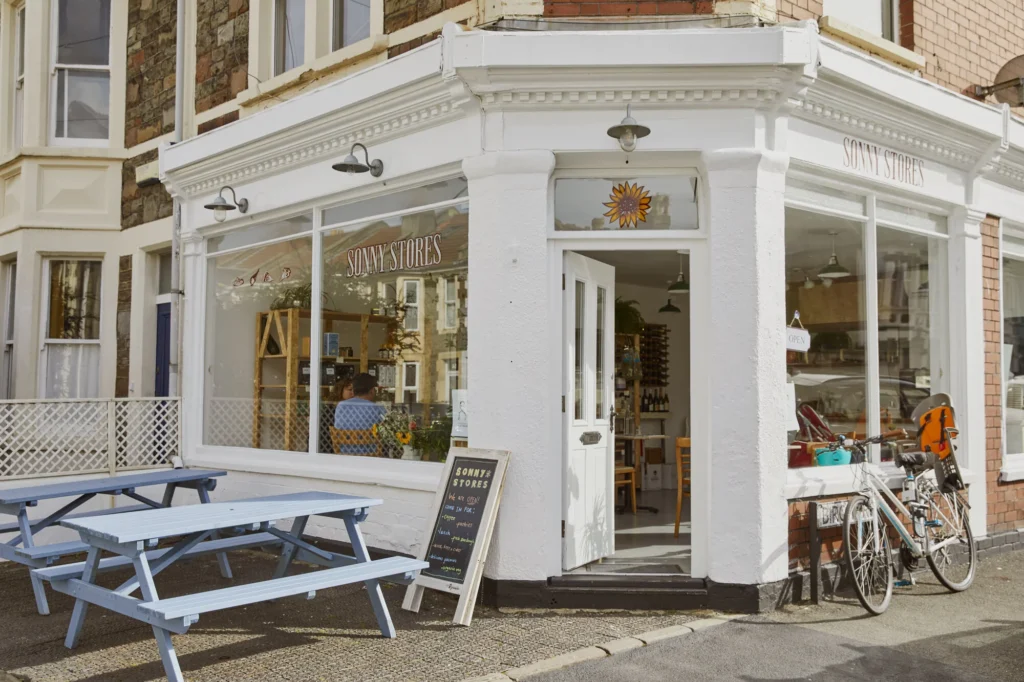
Sonny Stores, a family-run restaurant in Bristol serving what’s come to be called ‘Britalian’ food by some, opened its doors during the turbulent times of September 2020. Founded by husband and wife team Mary Glynn and Pegs Quinn, the business was initially conceived as a lockdown delivery-only pizza service called The Lockdown Pizza Company. And what great pizzas they were…

As the national lockdown came to an end, Sonny Stores evolved with the aim of becoming a welcoming space for the community to enjoy a delicious range of seasonal Italian food, made using quality British ingredients. With Mary’s background in hospitality and events management and Pegs’ experience in cooking, particularly Italian cuisine, they have successfully established Sonny Stores as a hugely popular casual dining destination in suburban Southville.

Though the building itself may be intimate, it houses a genuinely superlative dining experience, with dishes crafted by a talented team led by head chef Peg who is a River Café alumnus. Michelin recognition may well soon follow. 

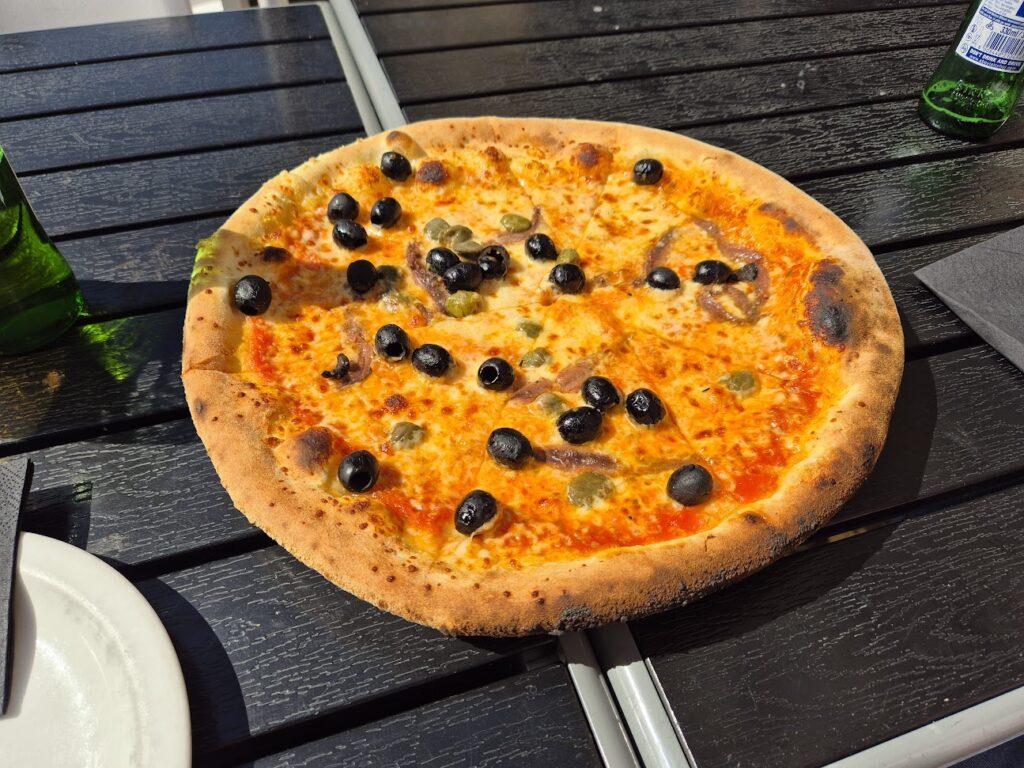
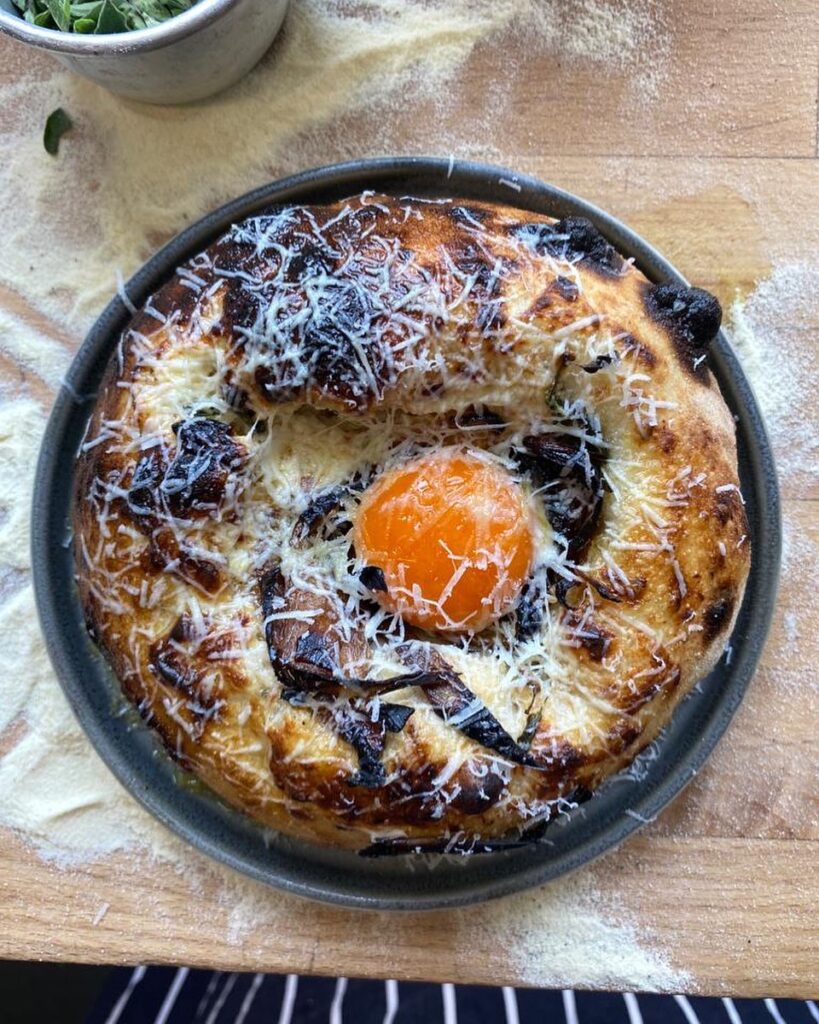
That deep, implicit understanding of both Italian food and the art of open-hearted hospitality is apparent in the crowd pleasing pizzetta sold at Sonny Stores. These dinky, dinghy shaped things boast the puffiest of crusts, the most blistered of surfaces, and the most straightforward but well-considered toppings, whether that’s a simple marinara topped with Don Bocarte Cantabrian anchovies, or a provolone ‘rarebit’ pizzetta topped with an egg yolk for extra ooze. Just delicious.

As with Flour and Ash, Bristol-phile Jay Rayner has enjoyed eating here, saying that ‘’they get things absolutely right’’. They most certainly do, and we can’t wait to see what the future holds for this most beloved of Bristol neighbourhood restaurants. 

And this just in: Sonny Stores (as per an announcement on their Instagram account) has just revealed that you can order their beloved, larger takeaway pizzas on Uber Eats from The Hatch. Our favourite is Tuscan sausage with burnt onions.

Address47 Raleigh Rd, Southville, Bristol BS3 1QS

Website: sonnystores.com


L’oro di Napoli, Brislington

Brislington’s got itself a proper Neapolitan pizzeria, on a barren stretch of residential road that doesn’t exactly feel like it needs one. Scrap that – Birchwood Road feels like just the kind of place for it. L’oro di Napoli does the southern Italian thing without any fuss – puffy crusts with the requisite char, imported ingredients that meet the ol’ AVPN criteria, and a vibe both in the room and on the plate that isn’t trying too hard. With pizza this good, they don’t really need to.

The arancini make a good start if you’re hungry, stuffed with Neapolitan ragù and provola and as heavy as a newborn. Pizza-wise, the Margherita (not bad value at £13) is genuinely all you need, a pitch-perfect version of a classic that no trendier pizzeria in the centre of town could improve on. Now autumn is here, we’re big fans of the salsiccia e friarielli, too – the classic pizza pairing of Italian sausage with Neapolitan broccoli rabe that’s pleasingly hearty on bleaker nights. It’s as close as you’ll get to eating on a chilly Naples evening without the flight.

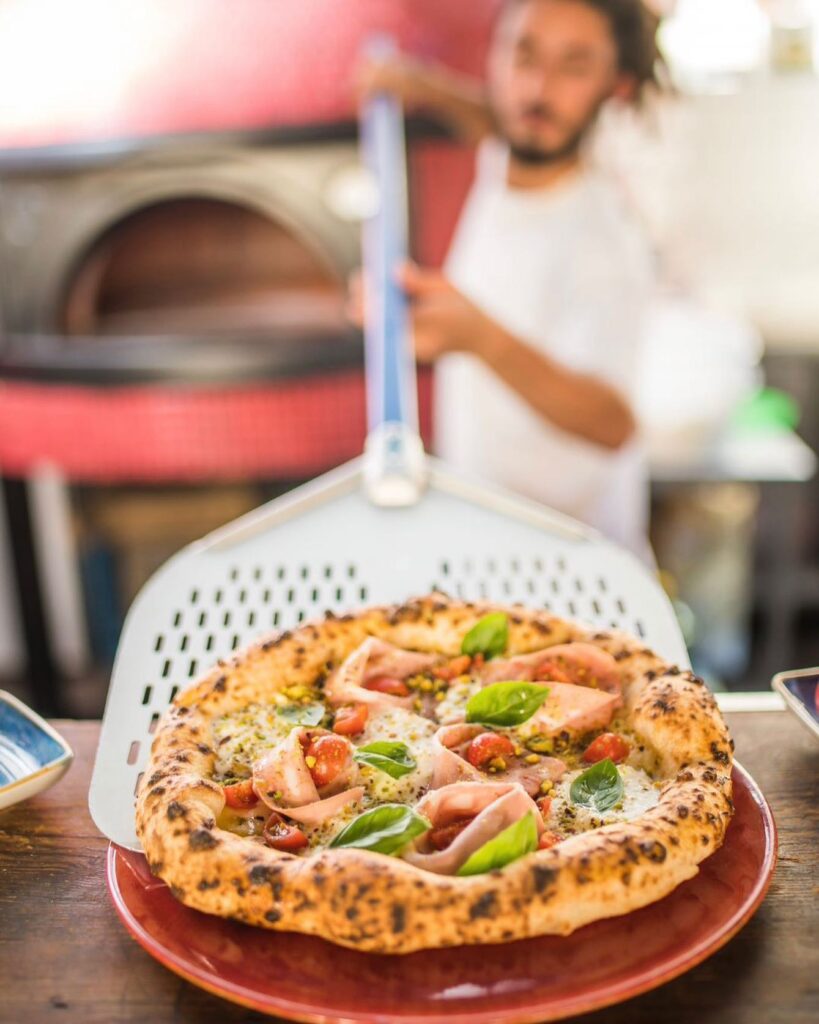
If you’re feeling flush, fancy or simply curious, the pistachio pizza has pistachio pesto, pistachio mortadella, and crushed pistachios for a cool £18.15 – subtle it ain’t. Dessert-y, it is. Most importantly, it’s delicious. They do fried pizza too, which isn’t something you see everywhere. Ricotta, mozzarella, and your choice of salami or ham, all wrapped up and fried, coming out hot and tasting like a donut. Bliss.

L’oro di Napoli is neighbourhood pizza without pretension, delivered with absolute faith in the ability of the pizzaiolo, the quality of the ingredients, and the universal appeal of authentic pizza. Turn up, eat, leave happy – sometimes, that’s all you need.

Address: 3 Birchwood Rd, Brislington, Bristol BS4 4QH

Instagram: @lorodinapoli_bristol


Gigi’s Pizza Shop, Old Market

Bristol’s latest pizza obsession comes from two chefs who visited over 50 pizzerias across London, Rome, and New York before opening their doors. Rapha Purslow Persighetti and Alberto Noriega Bellissimo (formerly of Pizzarova, which appears a little later on this list, and Grano Kitchen, respectively) have brought something different to Old Market: proper New York-style pizza by the slice.

Since opening in late 2024, Gigi’s has rapidly gained a devoted following. Their sourdough bases are both thin and structurally sound (no floppy tips here), whilst toppings showcase precision without pretension. The pepperoni with hot honey has become a firm favourite, though the Cacio e Pepe runs it close for top billing.

The stripped-back interior features industrial touches and sleek seating that feel effortless rather than studied. It’s walk-ins only, reinforcing the unpretentious neighbourhood joint atmosphere. The New York influence extends beyond just the pizza style—there’s something distinctly NYC about the whole operation, from the confident simplicity of the menu to the bustling energy of service. Sure, you’ll have to turn a blind eye to the hoards of vloggers gurning into their phones about this being the UK’s best pizza in the world, but it’s worth it for a slice of the good stuff.

Address: 47 Old Market St, Bristol BS2 0EX

Website: gigispizzashop.com


A Cappella, Knowle

Ideal for stonebaked pizzas in a BYO-friendly suburban spot…

Something of a thought experiment before we continue; if your local Bristol pizzeria isn’t run by a married couple, then is it a Bristol pizzeria at all?

And so to A Cappella, a popular Wells Road pizzeria run by Paul Stewart and his wife Jennifer. Together, they serve simple, stonebaked pizzas, with the majority of ingredients sourced from Milan and Naples.

Open since 2007 (making it the oldest pizzeria on our list), A Cappella is a little out of the way in Totterdown, but it’s worth making the trip south of the Avon to try the excellent pizza here. So good, in fact, that it’s won several awards, including a prestigious Gold at the PAPA Awards in 2019, an industry celebration of the finest pizza and pasta in the country.

We wouldn’t be surprised if the adjudicators had sampled the Glissandro before awarding that Gold star, with the pizza managing to dexterously juggle the piquant flavours of capers and sundried tomatoes with aplomb, smoothing out those rougher edges with the addition of caramelised onions; an inspired move.

With pizzas available in both medium (12 inches) and large (14) and never topping £15, this is a great place to head with a friend, the option to BYO only making the experience more affordable and affable.

Address184C Wells Rd, Knowle, Bristol BS4 2AL

Website: acappellas.co.uk


Bosco Pizzeria, Whiteladies Road

Ideal for pizzas that bridge New York and Naples styles in elegant surroundings…

Drawing inspiration from both New York and Naples, Bosco Pizzeria in Bristol slings out wood-fired pizzas that deftly manage to straddle both the puffy edges of a Neapolitan dough with the crisper base of its American cousin across the pond. 

Opened in 2014 on Whiteladies Road with a second following in Clifton Village, Bosco has also expanded to Cheltenham and Bath, the latter’s Milsom Place opening in August of 2021 winning the ‘Best New Restaurant’ award at the Crescent Club awards just a year later.

Bosco’s founder, Miles Johnson, was inspired by holidays to Italy and the ingredient-led clarity of Italian cooking and the culture of family dining, and that passion is reflected in the beautiful simplicity of the pizzas, whether that’s the signature Bosco, which is topped with fior di latte, tomato, olive oil and basil, or our favourite order here, the Carciofi, a glorious combination of wood fired artichokes, taleggio and green olive.

The cicchetti – essentially Venetian street food snacks – are great too; don’t miss out on the polpette, whose slow cooked tomato sauce boasts excellent depth of flavour.

Address96 Whiteladies Rd, Clifton, Bristol BS8 2QX, United Kingdom

Website: boscopizzeria.co.uk


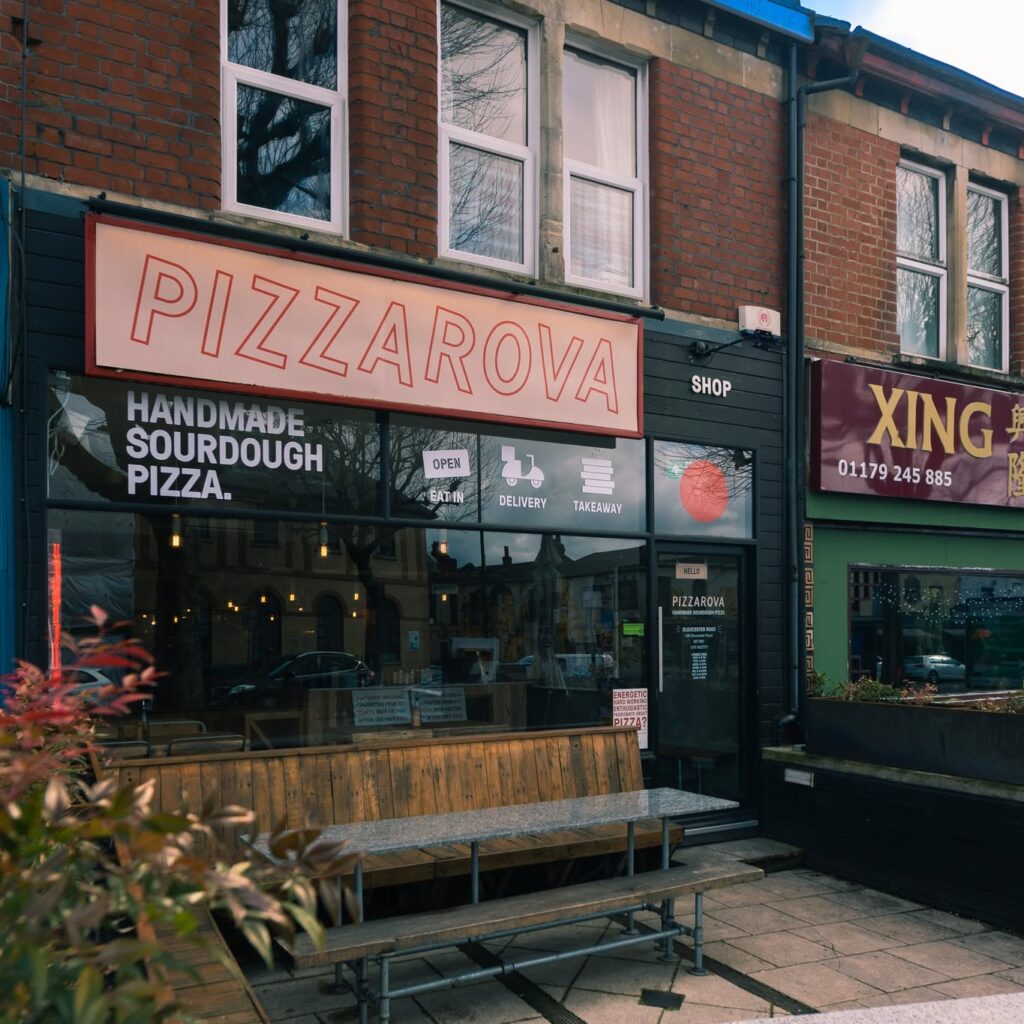
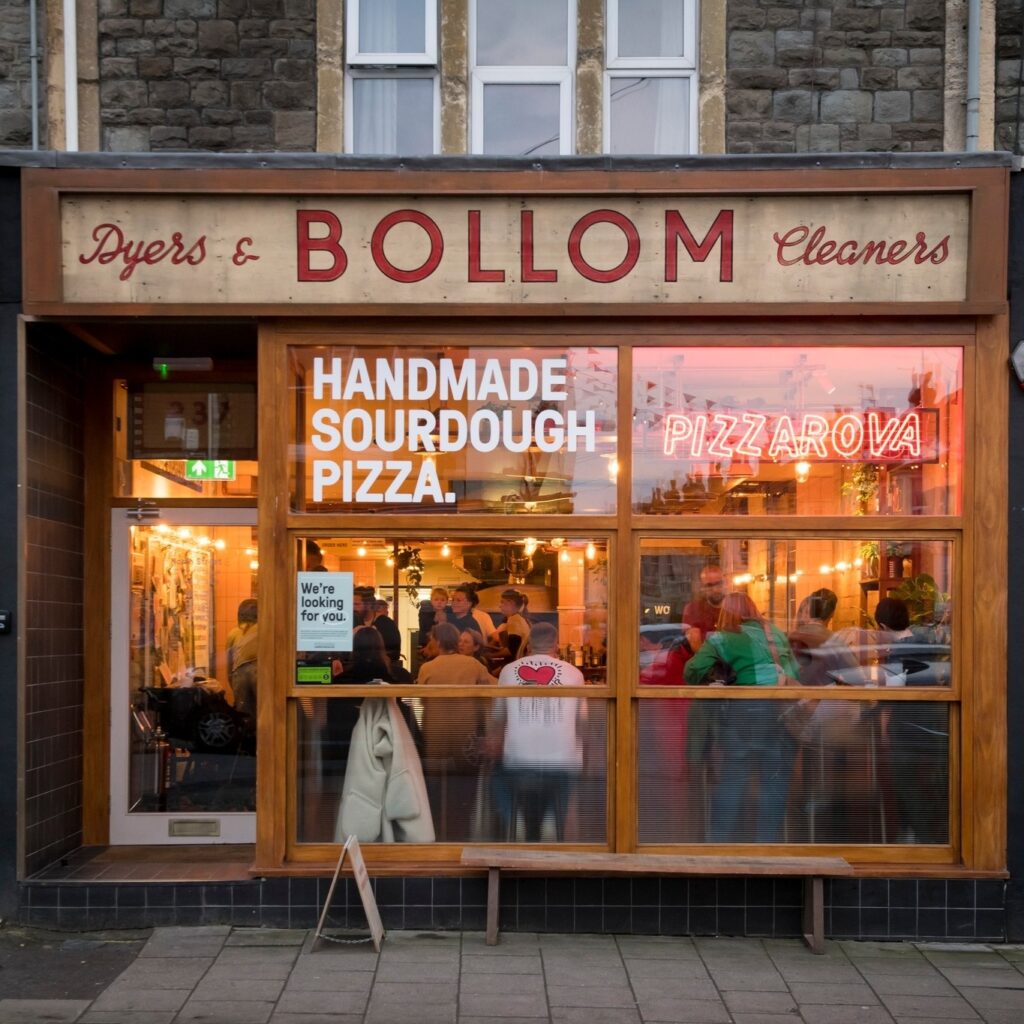
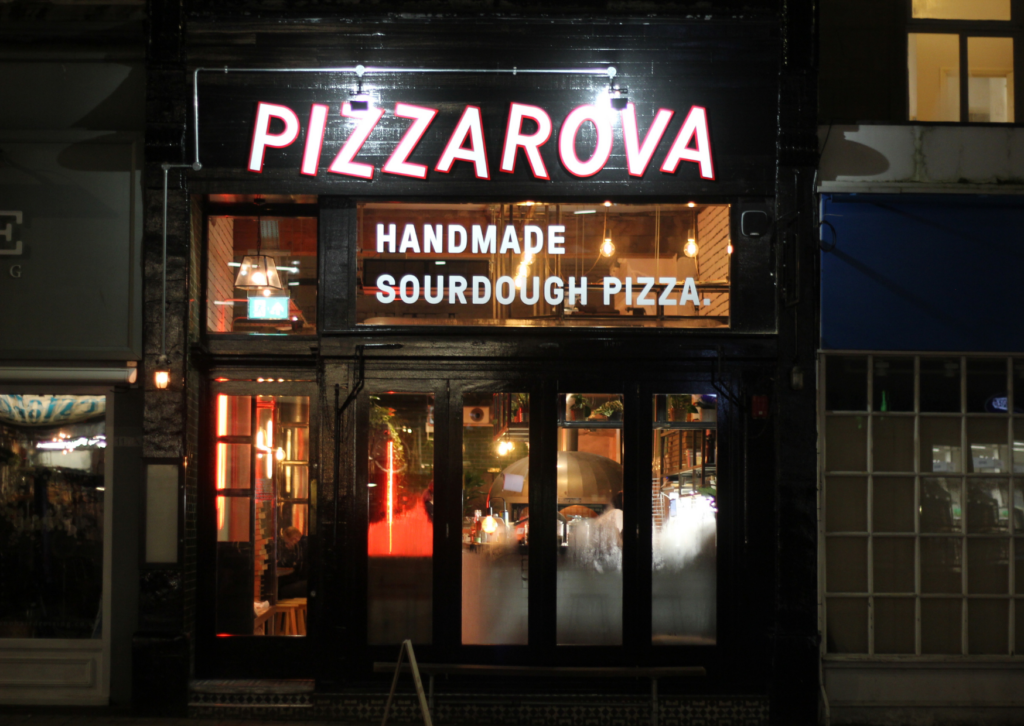
Pizzarova, Various Locations

Ideal for locally-sourced sourdough pizzas across multiple buzzing locations…

What began in 2013 as a converted Land Rover Defender slinging sourdough pizzas at the south-west’s many, many great festivals has evolved into one of Bristol’s most nimble pizzerias, now with four locations across the city, all heaving and all happy places to spend some time. The formula is as straightforward as any great pizza should me: handmade sourdough bases topped with carefully sourced ingredients from the South West’s finest producers.

Each outpost – whether it’s the buzzing Gloucester Road spot (our go-to), the central Park Street location, the neighbourhood North Street branch, or the elegant Whiteladies Road restaurant – maintains the same commitment to quality that founder Alex Corbett established with that first mobile pizza oven.

Their monthly ‘Ours’ specials demonstrate this dedication perfectly. The current offering (£14.50) showcases their knack for innovative flavour combinations: Glastonbury fior di latte (they’re quite specific about their cheese sourcing), fennel ‘sausage’ from local plant pioneers Simplicity, cavolo nero, and a bright lemon and herb aioli, all finished with crispy onions. It’s a masterclass in balancing textures and flavours, and without any meat in sight.

The drinks list reflects the same locavore philosophy, featuring Bristol Beer Factory’s excellent range, Iford’s craft ciders, and even a bespoke Citrucello (£36 a bottle, so bring a squad) created in collaboration with Circumstance Distillery – perfect for that post-pizza digestif.

The customisation options are an expansive, paradox-of-choice inducing thing – with over 20 toppings available at £1.50-£2.50 each, from Somerset buffalo mozzarella to guindilla chillies, allowing diners to craft their perfect pie. Though with house creations like their Ham, Mushroom & Pineapple pizza (£14) – featuring roast ham, chestnut mushrooms, and their house-made pineapple and chipotle jam – you might be better off trusting the experts.

Address: 289 Gloucester Rd, 2 Park Street, 237 North Street, 113 Whiteladies Road

Website: pizzarova.com

The Best Restaurants Near Glasgow Central

Scotland, and more specifically the second city Glasgow, is enjoying something of a moment, restaurant-wise. There have been a slew of positive reviews in the national press recently, and 2025’s Michelin reveal was even held here, cementing Glasgow’s reputation as a heavy hitter where culinary culture is concerned.

The city’s residents didn’t need the Big Red Guide to confirm this. They already know that Glasgow is alive with creativity and imagination, as well as a surrounding larder that seemingly makes it difficult to cook a bad dish. 

But beyond the accolades, what makes Glasgow’s dining scene particularly compelling is its unwavering commitment to quality, creativity, and a genuine hospitality, all reflective of the city as a whole.

If you’re visiting the city and pulling into Glasgow Central, firstly, can we assume that you’re a millionaire? Those train tickets don’t come cheap. But more importantly, we guess you’re looking for a great feed the moment you alight. If so, then you’ve come to the right place; here are the best restaurants near Glasgow Central.

Margo

Ideal for contemporary Scottish dining with a neighbourhood bistro feel…

Five minutes’ walk from Glasgow Central, Margo opened in late 2024 on Miller Street as the latest addition to Scoop Restaurants, the acclaimed hospitality group behind Ox and Finch, Ka Pao, and now also Sebb’s. While its siblings each have more singular identities, Margo plays faster and looser, with a broad mission to showcase Scottish ingredients via European techniques. Mission accomplished, and then some.

The restaurant recently earned a prestigious Bib Gourmand in the 2025 Michelin Guide, with inspectors praising its “bustling, efficiently run restaurant that’s deservedly popular thanks to its great buzz and flavour-packed, generously priced dishes.” They’re right, you know.

The 36-cover space is intimate but not cloying—sage green banquettes, white-washed brick walls and wooden floors create a breezy backdrop, and Chef Amie Rae (formerly of The Gannet and Alchemilla) leads a focused, quietly confident team in the open kitchen.

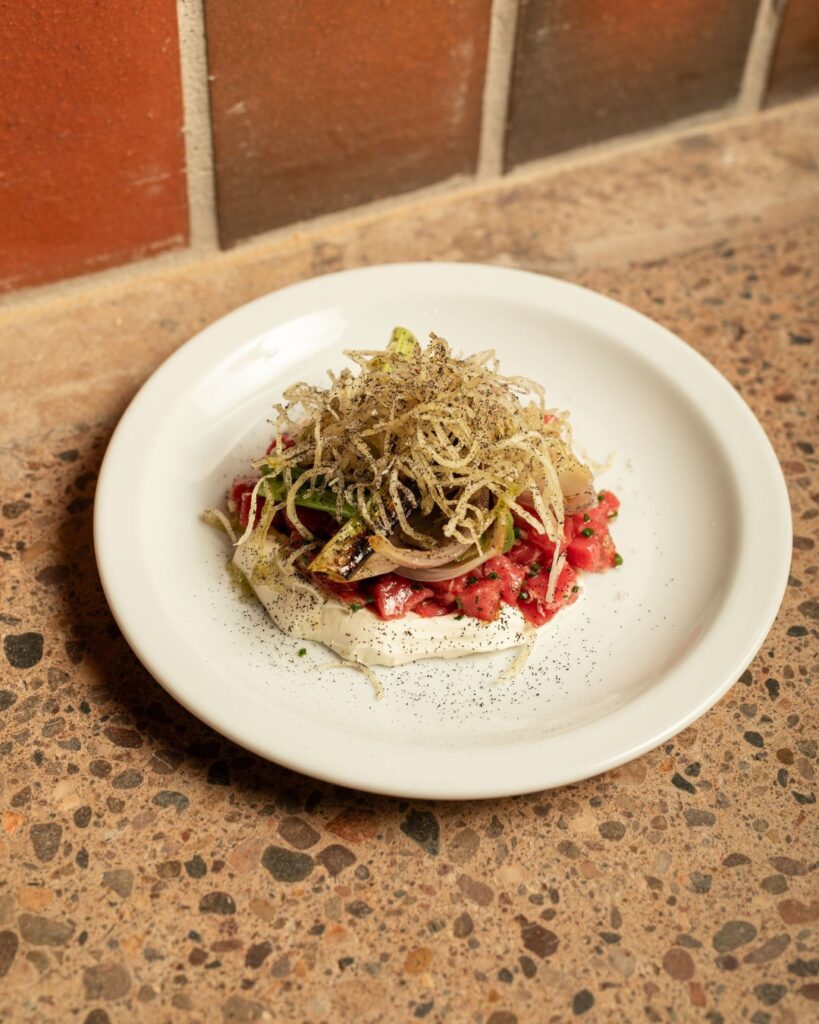
The menu changes seasonally, though certain standout dishes have become mainstays. The Margo beef tartare, keenly priced just shy of a tenner, demands attention—hand-chopped bavette comes with a grilled onion salad that brings sweetness and smoke, crispy potato shards for texture, and a generous swoosh of crème fraîche that harmonises the elements. It’s a sign of Rae’s deft touch with seasoning, letting the clean, mineral notes of the hand-chopped beef take centre stage.

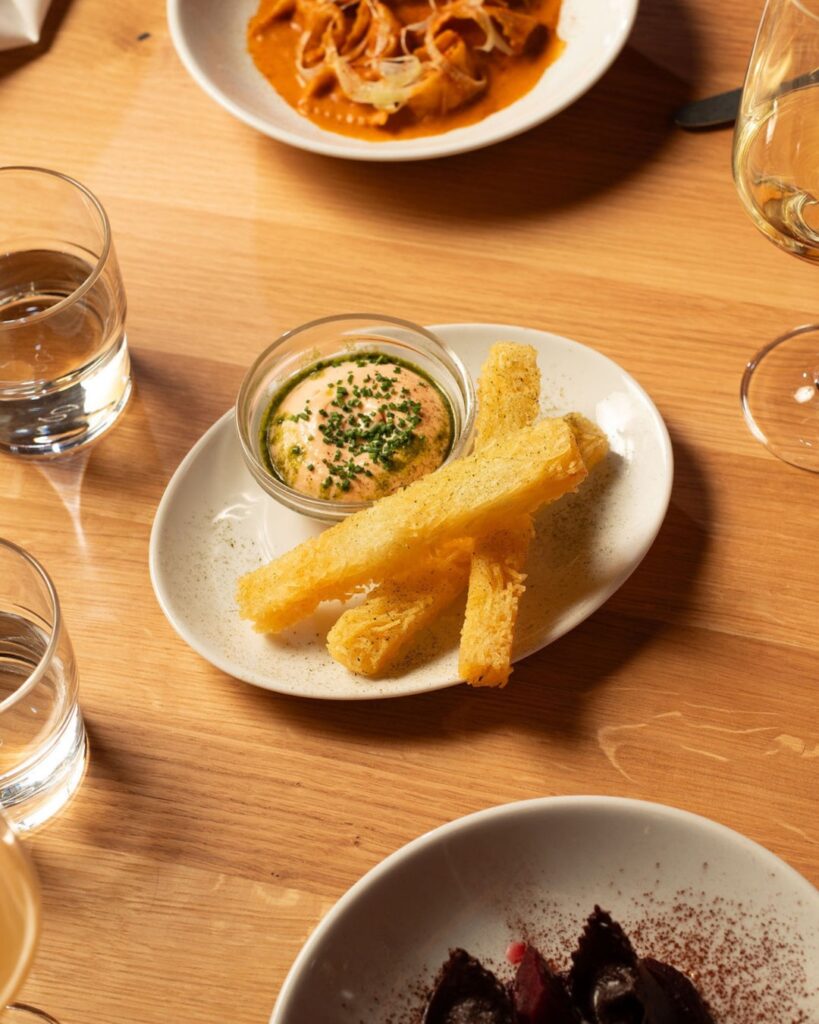
You’d be mad to stop there, and the chipsticks with taramasalata (£6) feel like the perfect supporting act to that tartare. Here, an ingenious hybrid between pomme rösti, hash brown and panisse is topped with silky smoked cod roe taramasalata and house-made furikake. Meant for sharing, you might regret that decision after tasting them.

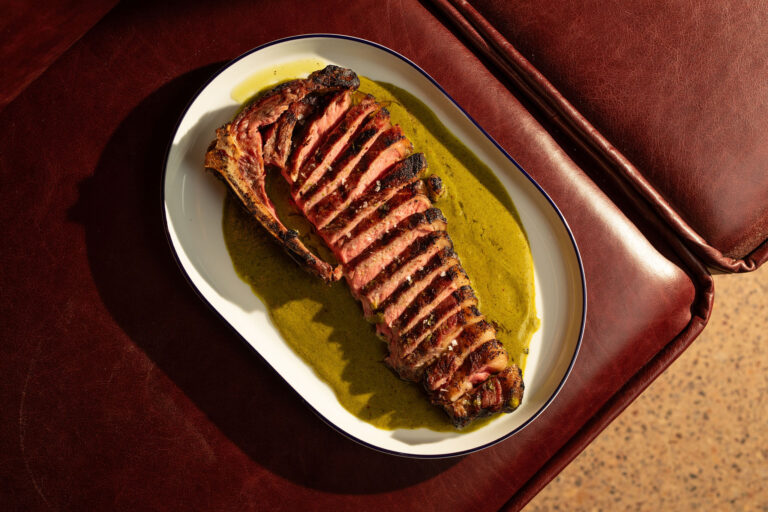
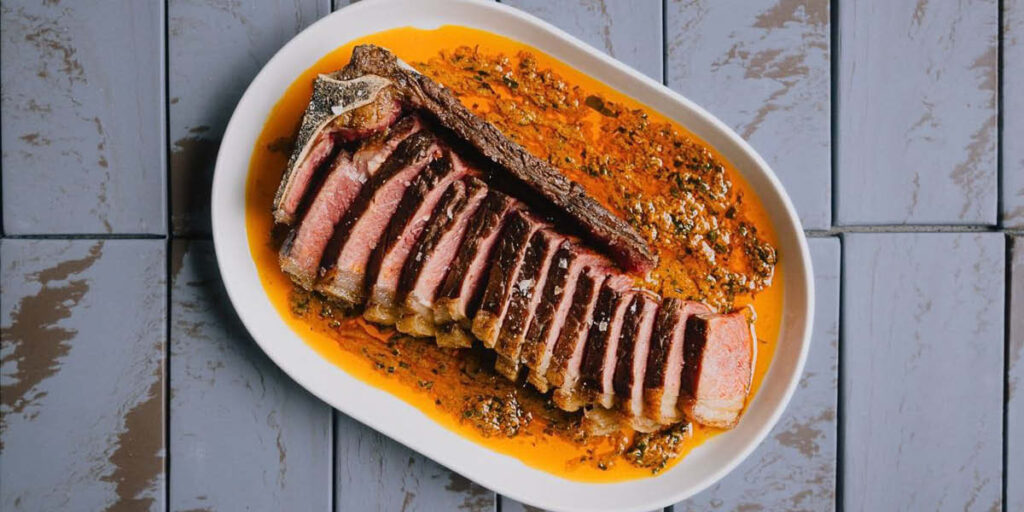
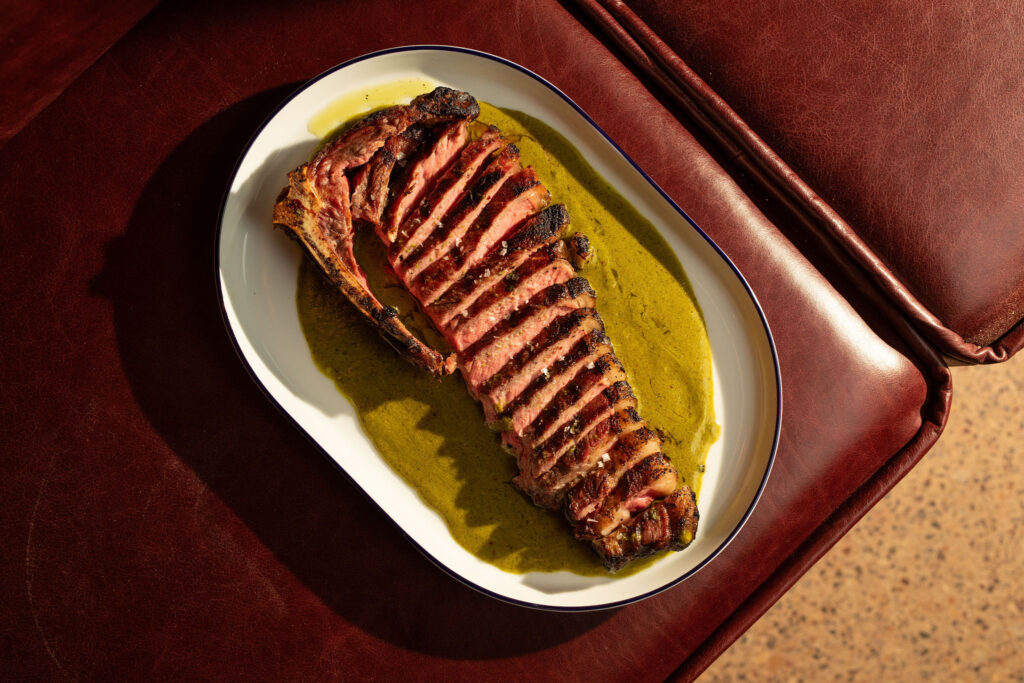
For special occasions, the 600g sirloin on the bone (£50) makes a statement. It’s finished with either ‘sauce Margo’ or their interpretation of café de Paris butter, the latter slowly melting over the perfectly pink beef, seasoning as it disperses. It’s quite the sight, and it eats damn well too.

The wine list features low-intervention bottles from small European producers alongside classic regions. The front-of-house team, led by co-owner Julie Dunn, achieves that rare balance of knowledge without intimidation—you’ll get thoughtful recommendations whether spending £30 or £300. Or, go for a house cocktail, which employ innovative techniques like fat-washing and carbonation. Crowd favourites including Frozen Martinis and a distinctive Yoghurt Punch both killer.

Whichever way you play it, finish with the bare bones chocolate nemesis and vanilla ice cream—a dense, flourless cake highlighting single-origin Guatemalan chocolate from local maker Bare Bones, recently featured on Rick Stein’s Food Stories, no less.

In Glasgow’s increasingly confident dining scene, Margo represents a particular strain of modern Scottish restaurant—technically impressive while remaining approachable, ambitious without arrogance, rooted in Glasgow while drawing inspiration from beyond.

Website: margo.restaurant

Address: 68 Miller Street, Glasgow, G1 1DT


Sebb’s

Ideal for vinyl vibes, boozy slushies and big-flavoured small plates…

Beneath Margo in a subterranean brick vault on Miller Street, Sebb’s marks the newest addition to the Scoop Restaurants group. Open only half a year, the name ‘Sebb’s’ is an anagram of ‘Sixty-Eight Basement Bar,’ neatly reflecting its location beneath Margo at 68 Miller Street. We find that super satisfying, we’re not going to lie.

Drawing inspiration from European vinyl bars, this venue blends industrial and retro elements—burgundy tiles, red leather booths and that distinctive arched brickwork ceiling illuminated by neon lighting. A DJ spins records in the corner, though the music never drowns conversation.

Head straight for the alcoholic slushies (£8), worlds apart from the sugary concoctions of yours and my youth. The strawberry margarita strikes a remarkable balance between fresh strawberry, quality tequila and lime—delivering a nostalgic frozen sensation with sophisticated flavour. The Miami Vice combines strawberry margarita and piña colada into a glorious two-tone creation. Yep, they love strawberries.

The open kitchen, headed by Danny Carruthers (ex-Brian Maule at Chardon d’Or, with short stints at Le Gavroche and Lyle’s), focuses on cooking over fire, the central charcoal grill thoroughly seasoning the place with smoke. 

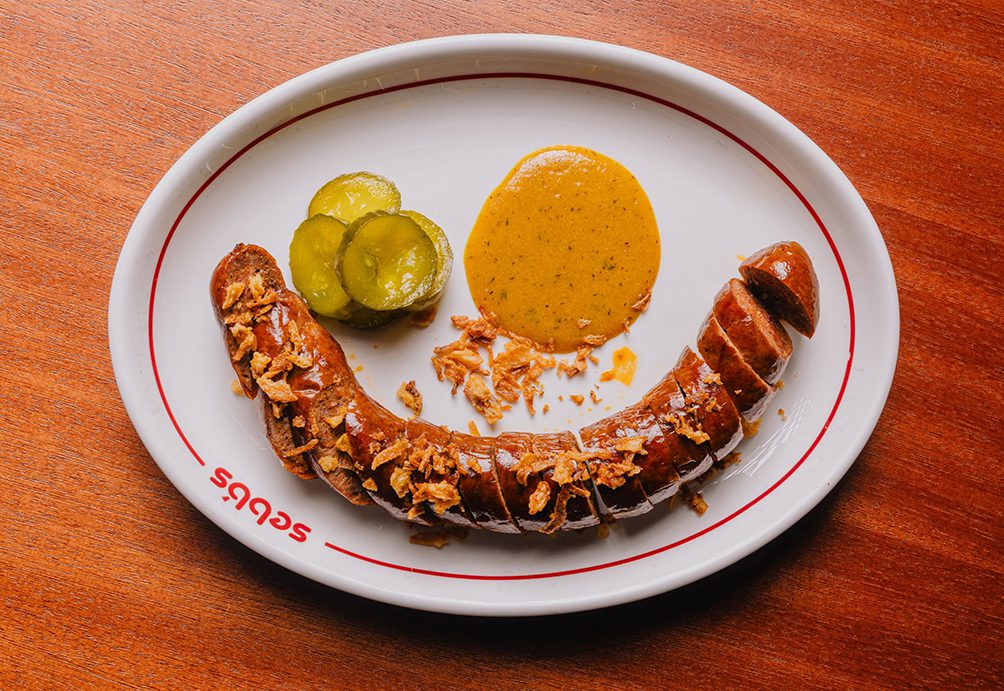
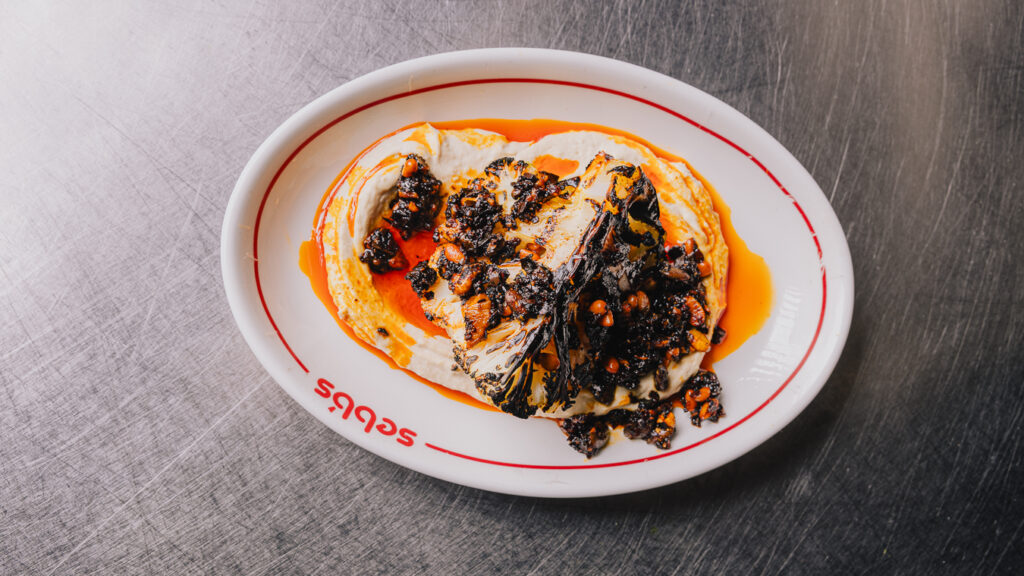
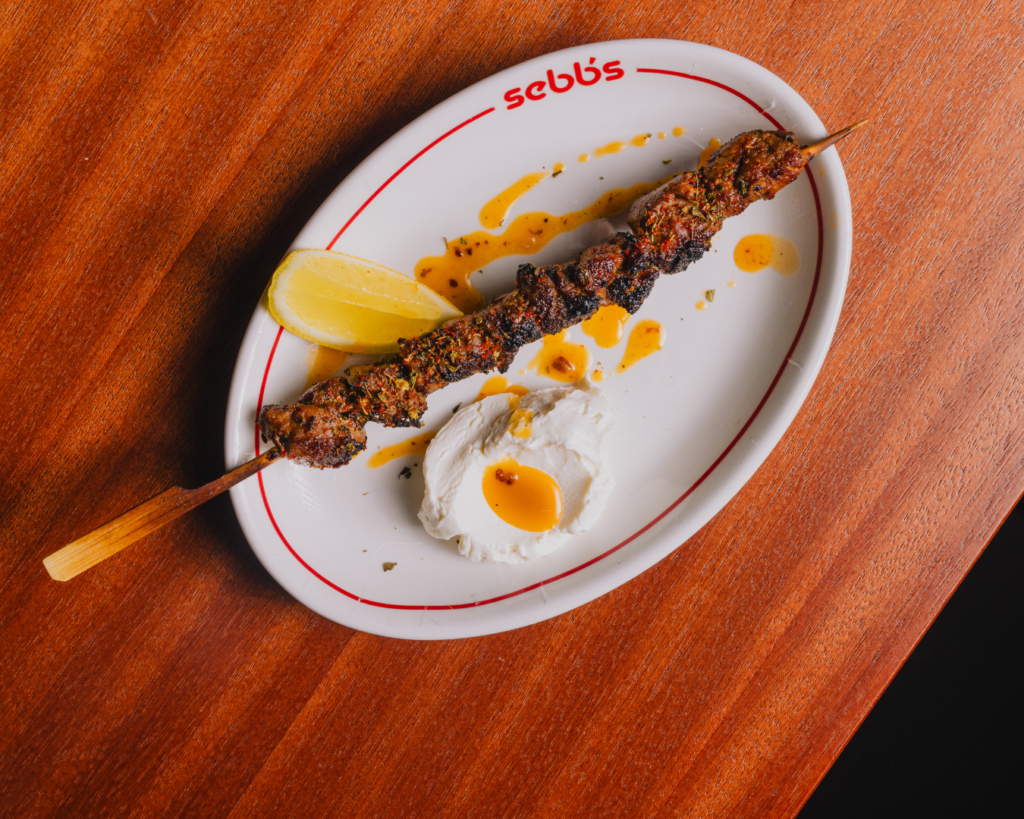
The much photographed DC’s Texan Hot Link (£9) isn’t just an Insta-perfect plate — it’s a juicy, substantial sausage with just enough heat, served with ‘gold sauce,’ bread and those all-important butter pickles. Lamb skewers (£7 a pop) arrive blistered and burnished from the grill, a little gnarly and with enough chew to reveal pastoral flavours a plenty. A creamy garlic labneh sees the skewers on their way. Plant-based options hit the mark too —the grilled cauliflower with hummus, rayu and pine nuts is a lot of fun for under a tenner.

All great plates, but what sets Sebb’s apart is its ability to deliver both big night-out energy and genuinely good food, with inclusive opening hours of midday to midnight seven days a week ensuring a diverse crowd and plenty of good cheer.

Website: sebbs.com

Address: 68 Miller Street, Glasgow G1 1DT


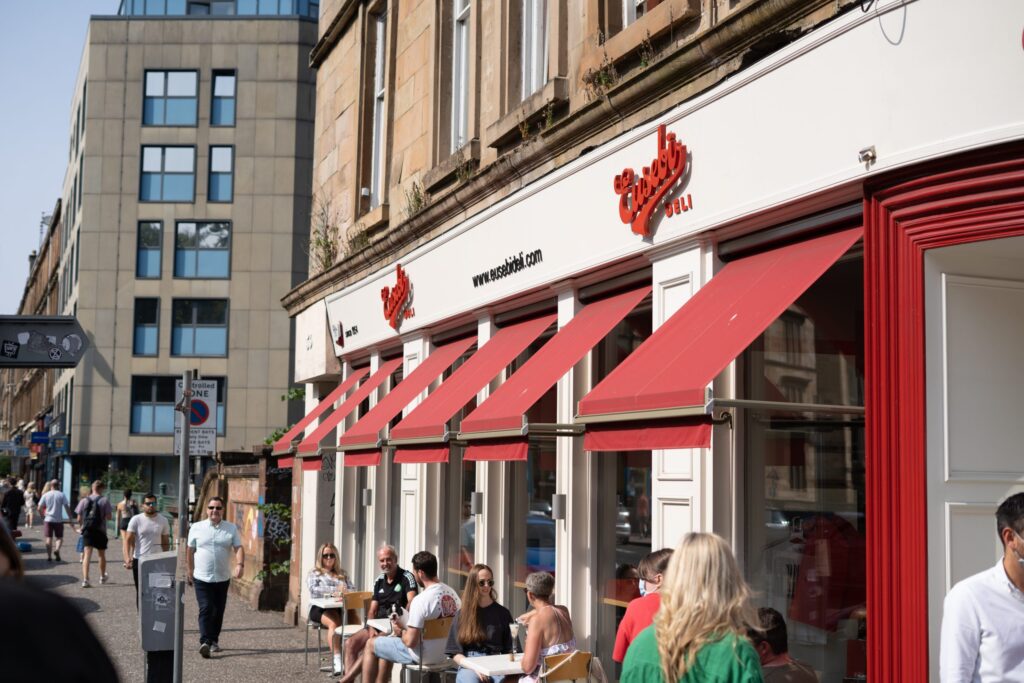
Eusebi Deli

Ideal for Italian provisions, weekend brunch and house-made pasta…

Giovanni Eusebi opened this Park Road deli in 2006, drawing on his Lazio roots and decades importing Italian products. It’s a 20-minute walk or short bus ride from Glasgow Central, but the journey rewards you with one of the city’s finest Italian alimentari. Imported salumi, aged cheeses, house-made pasta, artisan olive oils and carefully curated wines fill every shelf and counter, with a 30-cover dining space at one end if you’re tempted to hang around.

Eusebi Deli

The weekend brunch menu showcases their strengths. The focaccia with Eusebi porchetta features Stobbs Farm belly of pork with giardiniera, fennel relish and skinny fries, and is as good as it sounds. Their Italian royale takes a different approach, with house-made Italian sausage patty from Stobbs farm, a puck of croissant (yep, it’s great), hot honey, burrata and rocket. The sourdough pinsa panino with braised Aberdeen Angus short rib comes with parmesan and pepper aioli, mozzarella, and pickled cucumber. Most sandwiches sit in the high teens, but their quality and generosity warrant that premium billing.

Evening brings their Pastificio section to the fore, where pasta is made daily, hand rolled and bronze cut. The West Coast crab ravioli with pickled seaweed and butter sauce is the priciest pasta option, though simpler plates like paccheri pomodoro with basil, Calabrian chilli and rosemary pangrattato start from under twenty quid. Their fettucine cacio e pepe with winter truffle, an indulgent take on a Roman favourite, falls somewhere in between.

Mains generally range from the low twenties to late thirties. From the grill, the 30-day aged McCaskie’s sirloin comes medium rare with fries and béarnaise, but the Scottish pork chop offers is even better. It’s cured 10 days by farmer Tom Wilkinson, served with sweet roasted apple, brown butter jus, mustard seed and tarragon; a combination of flavours that has always made sense for a reaosn.

The wine list focuses on small Italian producers, particularly natural wines from Lazio, Campania and Sicily. Their Cucielo vermouth collection is showcased in four negroni variations, all around a tenner, developed with the award-winning Scottish vermouth producer.

You can stock up on San Daniele prosciutto or handmade tortellini during the day, then return for dinner, which is a rather pleasant thing to do. After a decade in Glasgow, the Eusebi family has built something that genuinely bridges Italian tradition and Scottish ingredients.

Website: eusebideli.com

Address: 152 Park Rd, Glasgow G4 9HB


Celentano’s

Ideal for zero-waste Italian with fermentation wizardry…

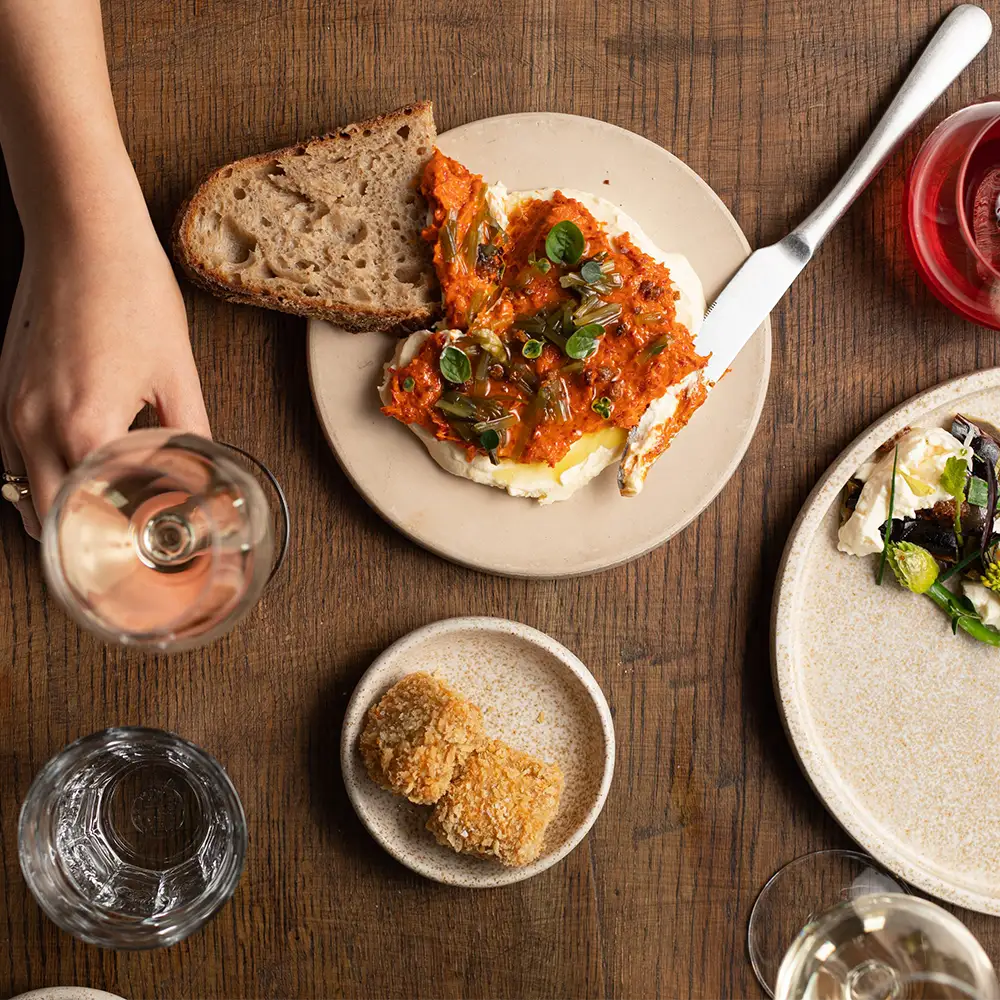
In Glasgow’s atmospheric Cathedral Precinct, Celentano’s occupies the ground floor of historic Cathedral House, a striking 19th-century baronial-style building with a fascinating past— it once housed released female prisoners from Duke Street Prison. With views of the city’s gothic Necropolis, the food has some work to do to live up to the setting.

Husband-wife team Dean and Anna Parker launched the restaurant in summer 2021, and hit their stride fast in the most testing of climates, winning a Bib Gourmand just a year later. Perhaps that’s not a massive surprise; Parker built his reputation in London heading acclaimed restaurants Darby’s, Sorella and The Dairy (RIP), while Anna’s background lies in fashion and design. 

Photo by Celentano’s

The name Celentano’s reflects their Italian honeymoon journey from Florence to the Amalfi Coast, when the singer-songwriter Adriano Celentano seemed to be soundtracking the entire jaunt. The menu spans Italy with similar breadth, evolving seasonally and with sustainability at its core. Drawing from his time at The Dairy in particular, Parker employs fermentation, preserving and curing to maximise ingredients and minimise waste. Their environmental commitment extends beyond cooking—biodynamic wines on tap reduce glass waste, herbs and vegetables grow in their restaurant garden, and they keep bees nearby.

Start with smoked cod doughnuts —airy morsels filled with cod cream and topped with zingy house-made kimchi—or the now-famous lasagne fritti, crumbed pucks of fried pasta containing porcini bechamel and tangy Corra Linn sheep’s milk cheese. Technically precise and a touch playful, both clock it at under a fiver.

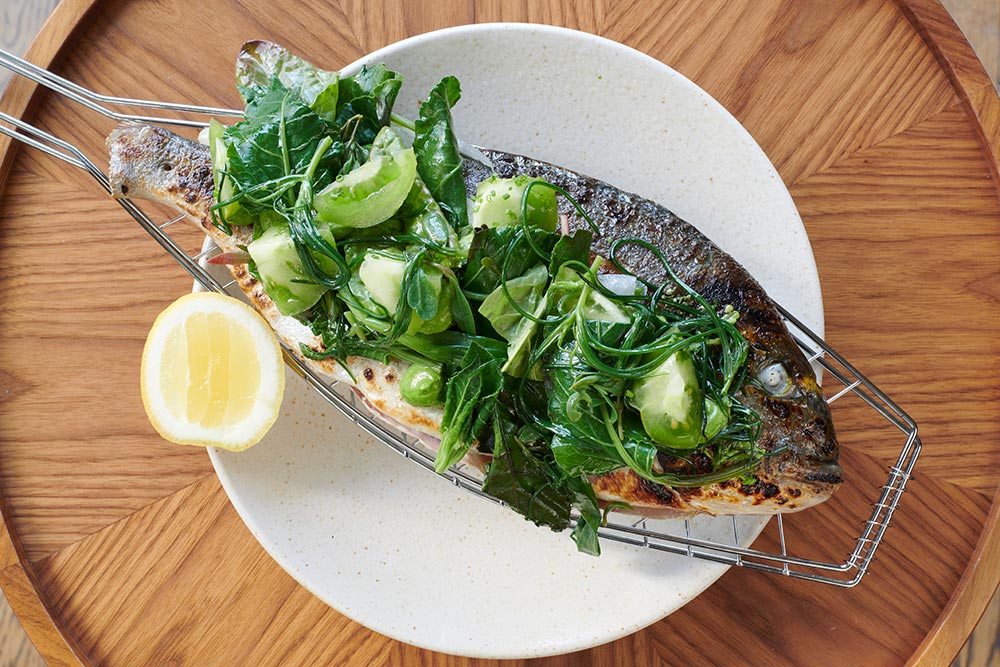
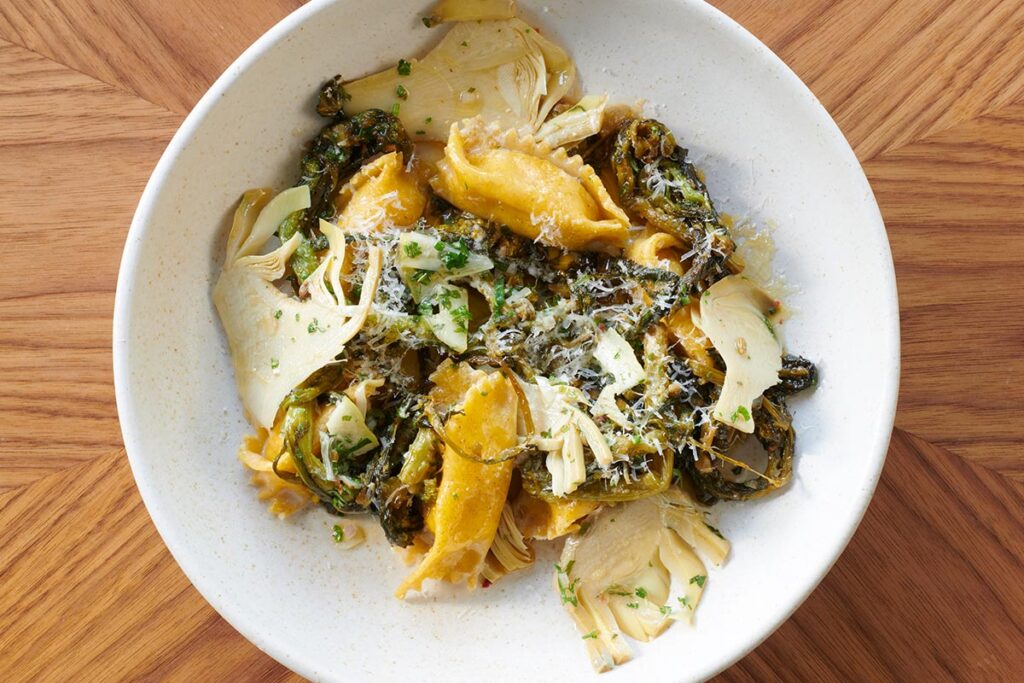
From the larger courses, on a recent visit the agnolotti with shaved artichoke stood out. Equally compelling was the linguine with cuttlefish ragu, black olive and tarragon—a deep, inky tangle that thrummed with saline depth. For secondi, the whole grilled bream is a worthy centrepiece. Perfectly cooked with skin on the verge of crackling, it exemplifies Dean’s philosophy of respectful simplicity with superior ingredients. 

Their affogato is a winner if you’ve got a mind for the sweet stuff. On our last visit, a malted barley gelato, chocolate mousse and cold brew coffee was a clever reimagining of the Italian classic, each element supercharged. Back to the beginning, and you’ll want to start with a house negroni, made with the restaurants homemade vermouth. For non-drinkers, Celentano’s house kombucha is ace.

One of the best places to dine near Glasgow Central, Celantanos represents a homecoming success story of London culinary talent returning to Glasgow (a trend begun with Rosie Healey at Alchemilla in 2018) and exemplifies the city’s increasingly confident dining scene. Here, technical expertise meets warm hospitality, honouring Italian traditions while establishing its own identity. We’ll be back, time and time again.

Website: celentanosglasgow.com

Address: Cathedral House, 28-32 Cathedral Square, Glasgow G4 0XA


Glaschu

Ideal for elegant Scottish plates in a grand Exchange Square setting…

Occupying the ground floor of the impressive Western Club building in Royal Exchange Square, Glaschu (Gaelic for ‘Glasgow’, no less) sits just minutes from Glasgow Central. It’s a dining space that exudes understated elegance – muted beige tones complemented by grand green pillars that has you worried you’re just about to drop serious money on a meal.

Fear not. Chef Graeme Brown’s isn’t quite as expensive as its esteemed surroundings imply. Dishes like scallops with celeriac, apple and hazelnut, or lobster ravioli with cep puree and lobster bisque both hover around the £20, whilst the substantial 35-day aged beef fillet with ox cheek and ale suet pudding is £45, sure, but it’s enough to send you home happy without absolute need for starter or dessert. To get a more thorough overview of Brown’s cooking, there’s a tasting menu too, priced at £75 or £125 with drinks pairing.

It’s on the Hump Day that Glaschu becomes particularly appealing. To get you through the rest of the week, ‘Wellington Wednesdays’ present two pinpoint beef Wellingtons with golden thick-cut chips, tender carrots and rich red wine jus, plus a bottle of wine for £90 per couple. 

The cocktail list reflects the restaurant’s appreciation for Glasgow’s history and architecture. The Marochetti blends limoncello, Malfy Italian gin, basil and lemon juice—named after the Italian-born architect who designed the Duke of Wellington statue, while the Barrowlands with Roku gin, Lillet Blanc, salt and seaweed pays homage to the iconic East End venue.

If all of that sounds a little high falutin, then you’ll be interested to hear that Glaschu has recently expanded by opening MAISON by Glaschu in Princes Square on Buchanan Street, a French-inspired bar and restaurant offering a slightly more casual dining experience.

Website: glaschu.com

Address: 32 Royal Exchange Square, Glasgow, G1 3AB


Hazel

Ideal for a bright, airy spot serving global-Scottish fusion from dawn till dusk..

Inside the new AC by Marriott hotel on John Street, just a short walk from Glasgow Central, Hazel forms part of the ambitious £100 million Love Loan development. Named after the hazel branch in Glasgow’s original coat of arms, the restaurant brings a contemporary dining option to a rapidly evolving district.

The 100-seat venue boasts a bright, Scandi-chic interior with a striking faux hazel tree as its centerpiece, plus bird-shaped lights and fish sculptures nodding to the city’s emblem. It’s all a bit much, visually, but as floor-to-ceiling windows bathe the space in natural light on Glasgow’s sunnier days, it’s also kinda irresistible.

Photo by Hazel via Facebook

Don’t let the obviously AI-written social media posts put you off (“Dine, unwind, and escape the rush of the city in a setting where nature and urban elegance coexist beautifully…”). Rest assured real chefs—very good chefs—work in the kitchen, seeing to the sprawling five different menus with admirable consistency.

The lunch menu reels in nearby office workers, offering expertly executed classics like eggs Benedict with yielding yolks, alongside global sandwiches including Cuban, Reuben, steak baguette, and a smoked salmon and lox bagel featuring Scottish salmon. The evening menu gets heartier, with dishes like roast haunch of venison with potato gratin, puy lentils and rosemary jus, or pan-roasted hake with hispi cabbage and lemon hollandaise. For those seeking special deals, Chateaubriand Thursday offers excellent value at £60 for two.

Wash it all down with a signature Hazel 75 cocktail, developed in partnership with local Crossbill gin distillery, and feel very satisfied with your lot, at least for the evening.

Website: hazelglasgow.co.uk

Address: 65 John Street, Glasgow G1 1JP


Dakhin

Ideal for South Indian spice with a gluten-free guarantee..

On the first floor of a building in Glasgow’s buzzy Merchant City district, Dakhin opened in 2004 as Scotland’s first South Indian restaurant. Two decades on and what makes this restaurant truly unique remains the same; it’s the UK’s only acclaimed South Indian restaurant serving 100% gluten-free food. Yep, a rare thing here; all dishes are prepared without gluten, nuts, peanuts, sesame, celery, lupin, molluscs and sulphites, making it an unrivalled destination for diners with dietary restrictions.

It’s a beautiful room to step into, whatever your dietaries. Floor-to-ceiling windows overlook busy Candleriggs, and exposed brick, a slatted wooden ceiling with hanging greenery, and an illuminated bar create a welcoming space where diners can observe the chefs at work.

Begin with their famed dosas—thin rice and lentil crepes spanning three feet long, and perfect for sharing. These arrive with various fillings and come with sambhar (spiced lentil soup) and coconut chutney. The paper dosa particularly impresses, its crisp, golden-brown form dramatically draped across the plate. In fact, it’s a great place to stay in the vegan lane, as South Indian cuisine inherently celebrates plant-based cooking. 

That said, there’s plenty of protein getting treated right here, too. Creative section titles like ‘The Ocean’s Lure’, ‘Treats of Lamb’, and ‘Pick of The Poultry’ suggest spliffs are being smoked in the kitchen, but they only serve to focus diners’ attention on regional specialties from Andhra Pradesh, Karnataka, Kerala, Tamil Nadu, and Telangana. The former section provides some real treats – the yetti masala (jumbo tiger prawns in a thick, complex sauce) and meen moilee (Scottish monkfish stewed with coconut milk) both hit the spot.

Lunchtime visitors should consider the £15 Thali – superb value, indeed.

Website: dakhin.com

Address: 89 Candleriggs, Merchant City, Glasgow G1 1NP


Nanakusa

Ideal for Japanese food in minimalist, light-filled surroundings…

Operating since 2007 on Sauchiehall Street near Charing Cross, Nanakusa (named after the seven edible wild herbs of spring eaten in Japan for their health benefits) has established itself as a real standout in Glasgow’s limited Japanese dining scene. 

Despite an unassuming wood-panelled frontage, the interior surprises with its spaciousness—an ornately corniced high ceiling, a bar near the entrance, and a mezzanine create distinct zones. Minimalist design elements and large panels of ever-changing light create a distinctly Japanese mood that casts just the right light on the elegant plates here.

Nanakusa excels with one-bowl wonders, including the una don—grilled eel, fluffy egg, onions and seaweed coated in their secret eel sauce. Their katsu curry deserves its reputation, available with chicken, king prawn, duck or tempura. For warming comfort, the Nanakusa spicy noodle soup features ramen noodles in spicy chili broth topped with your protein of choice.

The fried items particularly shine. Try the kani karaage—soft shell crab that elevates the concept of Japanese fried chicken – and the yasai tempura of seasonal vegetables in light, crisp batter demonstrating the kitchen’s technical prowess.

With its proximity to entertainment venues like the King’s Theatre, CCA, and Nice’n’Sleazy, Nanakusa sits perfectly for pre-show dining, with efficient service and food that won’t keep repeating on you at your show.

Website: nanakusa.co.uk

Address: 41-49 Sauchiehall Street, Glasgow G2 3LG


Paesano

Ideal for Neapolitan pizza perfection in industrial-chic surroundings…

When Paesano opened on Miller Street in 2015, it revolutionised Glasgow’s pizza scene by becoming the first restaurant to bring traditional Napoletana pizza to the city. Its popularity has only grown in the decade since, with Glaswegians drawn to the pizzeria’s unwavering commitment to time-honored methods and top-quality ingredients.

The expansive dining room exhibits industrial-chic style—exposed ceiling pipes, pendant lighting, wooden tables, and school desk-style chairs create the backdrop. The open kitchen offers the usual theatrical Neapolitan entertainment, as skilled pizzaiolos spin and flip dough before loading it into wood-fired ovens imported directly from Naples that reach a searing 500°C.

The dough here is as digestible as it comes, undergoing 24-hour proofing and resulting in a base that’s ethereally light. The menu remains refreshingly concise. Pizzas start at just £7.90 for a basic tomato sugo with garlic, oregano and extra virgin olive oil, while the classic Margherita is less than a tenner, too. More elaborate options like the spicy Ventricina and Nduja sausage or spinach and ricotta with smoked scamorza cheese still won’t have your accountant in too much of a fluster, both priced keenly at £13.50.

Despite its popularity, Paesano maintains a strict no-reservations policy, though efficient service ensures you rarely wait long. Its democratic, sprawling opening hours (12pm to 10:30pm Sunday to Thursday, and until 11pm on Fridays and Saturdays) in keeping with Neapolitan traditions, ensures that queue is always moving. 

Following its 2024 acquisition by Di Maggio’s Restaurant Group, Paesano is expanding with a new Shawlands location at the former Di Maggio’s site on Pollokshaws Road. This represents the first step in DRG’s plans to roll out the brand more widely across Scotland and beyond. We just hope the high standards we’ve come to know aren’t affected by saturation.

Website: paesanopizza.co.uk

Address: 94 Miller Street, Glasgow G1 1DT


Ardnamurchan

Ideal for Scottish cuisine opposite the Theatre Royal…

On Hope Street directly opposite the Theatre Royal and just minutes from Glasgow Central, Ardnamurchan brings the distinctive flavors of Scotland’s western peninsula to the city. Opened in 2017 following a £400,000 renovation of the former Trader Joe’s bar, the restaurant takes its name from the Gaelic ‘Àird nam Murchan’ meaning ‘headland of the great seas’.

The smart interior makes nods to Scottish heritage—stag antlers, whisky barrels, and subtle touches of tweed—that would veer off into cliché in lesser hands, but here it feels well judged.

Sourcing artisan products from the Highlands and Islands forms the foundation of Ardnamurchan’s philosophy. The venison comes directly from the Ardnamurchan Estate where deer roam free, fish and shellfish arrive fresh from Scotland’s west coast waters, and the beef (and whisky) hails from Speyside.

Main courses include Ardnamurchan Estate braised wild venison stew slow-cooked in red wine with mushrooms and mashed potato, and grilled Isle of Skye landed langoustines with confit garlic emulsion. The Ardnamurchan Grill section presents 45-day dry-hung Speyside steaks alongside wild venison fillet from the estate.

The Market Menu offers excellent value at around £11.95 for two courses (pre-theatre), with à la carte main courses ranging from approximately £16-£30. The restaurant is dog-friendly with limited bookable tables available upon request.

Website: ardnamurchan.restaurant

Address: 325 Hope Street, Glasgow G2 3PT


Stereo

Ideal for creative 100% vegan food and live performance in a Mackintosh building…

Approaching its 20th year in central Glasgow, Stereo occupies a beautiful Charles Rennie Mackintosh-designed building tucked away on Renfield Lane, just minutes from Glasgow Central. This multi-purpose venue functions as a dedicated vegan bar and kitchen during the day and transforms into a performance space in the evenings.

The upper ground floor contains the main bar and restaurant area, benefiting from abundant natural light. As night falls, the music volume rises, though the vibe remains welcoming rather than overwhelming.

Stereo’s 100% vegan menu presents creative plant-based cooking that shifts seasonally. Small plates (which hover in the £7 or £8 region) include standouts like salt and chilli enoki mushrooms with gochujang and miso ketchup, buffalo cauliflower coated in craft beer batter, and Silesian potato dumplings topped with gremolata, crispy capers and dill oil.

Open seven days a week, from noon to midnight Sunday through Thursday, and until 3am on Fridays and Saturdays, the kitchen closes at 9pm daily.

Website: stereocafebar.com

Address: 22-28 Renfield Lane, Glasgow G2 6PH


Maki & Ramen

Ideal for Japanese noodles and sushi near Glasgow Central…

On Queen Street just a short walk from both Glasgow Central and Queen Street stations, Maki & Ramen brings the tastes of Japan to the heart of the city. This Glasgow outpost of the popular chain which originated in Edinburgh has quickly found its audience among the city’s Japanese food enthusiasts, who can’t get enough of the place. Fortunately, Maki & Ramen recently opened their third Glasgow location on Byres Road, with CEO Teddy Lee targeting 30 sites by 2027. Wowzer.

Still, it’s in the Queen Street location that we seem to always find ourselves. As the name suggests, Maki & Ramen specialises in two key areas of Japanese cuisine. Their sushi lineup includes expertly crafted maki rolls, nigiri, and sashimi, all prepared with fresh ingredients and precise technique. The ramen selection presents rich, slow-simmered broths in various styles, from the classic tonkotsu (pork) to miso and shoyu (soy sauce) bases, each with handmade noodles and various toppings. 

The restaurant produces their own 8-hour slow-cooked broth and handmade noodles in their Edinburgh factory, ensuring consistency across all locations. They’ve also launched a charitable initiative at their Glasgow branches: every Wednesday from 4-8pm, they donate £1 to the Glasgow Care Foundation for each ramen dish sold.

Website: makiandramen.com

Address: 21 Bath St, Glasgow G2 1HW

What To Do In Cortina d’Ampezzo During The 2026 Winter Olympics

The ‘Queen of the Dolomites’ is preparing to reclaim its Olympic glory. Cortina d’Ampezzo will co-host the 2026 Winter Olympics alongside Milan during February, exactly 70 years after it first hosted the Games in 1956. 

With women’s alpine skiing, curling, and sliding sports taking place against the backdrop of UNESCO-listed peaks, Cortina offers visitors the chance to witness world-class athletic competition whilst exploring one of Italy’s most glamorous mountain destinations.

When To Visit

The Milano Cortina 2026 Winter Olympics runs from 6th to 22nd of February, and will see Cortina at its busiest and most expensive, but also its most electric. If you’re primarily interested in the atmosphere rather than attending specific events, consider arriving before or immediately after the Games, when accommodation may be more available and prices slightly lower.

The Paralympic Winter Games follow from 6th to 15th of March, hosting Paralympic alpine skiing, wheelchair curling, and Paralympic snowboarding. This period typically sees fewer crowds than the Olympics whilst still maintaining the excitement of world-class competition.

For those seeking a quieter Cortina experience, January or late March offer good skiing conditions with fewer visitors, though you’ll miss the unique energy of the Olympic fortnight.

Getting There From The UK

The most practical route to Cortina d’Ampezzo starts with a flight to Venice Marco Polo Airport, which has direct connections from London Heathrow, Gatwick, and London City. From Venice, you’re just two hours from the alpine drama of the Dolomites.

Several options connect the airport to Cortina. The Cortina Express and ATVO buses run direct services, with journey times between two and three hours and fares from around £9 when booked in advance. FlixBus also operates this route, typically departing several times daily. For those preferring a more straightforward journey, transfers to Cortina or Milan provide door-to-door service, particularly convenient if you’re arriving with skiing equipment or travelling during the busy Olympic period.

Alternatively, you could fly into Verona, Treviso, or even Innsbruck in Austria, though Venice remains the most popular gateway with the best connections to Cortina. If you’re planning to explore the wider Dolomites region, hiring a car offers the greatest flexibility, though parking in Cortina’s town centre can be challenging during peak season.

Beyond the Podium: What To Do In Cortina d'Ampezzo During The 2026 Winter Olympics

Watching Olympic Events

Cortina will host some of the Games’ most thrilling competitions. The legendary Olympia delle Tofane slope, regularly featured in the FIS Alpine Ski World Cup, will stage women’s alpine skiing events including downhill and super-G races. The Olympic Ice Stadium, originally built for the 1956 Games, will host curling competitions. Meanwhile, the newly constructed Sliding Centre will be the venue for bobsleigh, skeleton, and luge events, reviving Cortina’s long-standing tradition in these sports.

Tickets are exclusively digital and available through the official Milano Cortina 2026 platform. With venues spread across the region, planning your Olympic schedule in advance is essential. Shuttle services will connect major sites to the various competition venues, with park-and-ride schemes operating for those driving.

Read: The Dolomites’ 5 most magnificent mountain retreats

Skiing The Slopes

Even if you’re not attending Olympic events, Cortina’s skiing credentials are impeccable. The resort boasts 120 kilometres of pistes across three main areas: Faloria-Cristallo, Tofana, and Lagazuoi-Cinque Torri. From gentle nursery slopes to hair-raising World Cup runs, there’s terrain for every ability level.

The Tofana area offers the easiest slopes, perfect for beginners and intermediates, with the Socrepes piste being particularly popular for those building confidence. More experienced skiers should head to Faloria, where red and black runs dominate, or venture to the Lagazuoi-Cinque Torri area, where the distinctive rock towers create one of the Dolomites’ most photogenic skiing experiences.

Cortina is part of the Dolomiti Superski network, giving you access to 1,200 kilometres of pistes across the region if you’re keen to explore beyond Cortina itself. Multiple ski schools and rental shops throughout town make getting kitted out straightforward, though booking equipment hire in advance during the Olympic period is advisable.

Photo by Secret Travel Guide on Unsplash
Photo by Alessandro Venturi on Unsplash

Beyond The Slopes

Winter activities in Cortina extend well beyond skiing. Dog sledding experiences at Peziè de Parù Alpine Farm in nearby Pocol let you drive your own team of huskies through snow-covered forests after a brief training session, offering a 30-minute excursion through otherwise inaccessible mountain scenery.

Snowshoeing provides a quieter way to experience the Dolomites’ winter magic, with numerous trails winding through pristine woodland and offering spectacular mountain views. The legendary Tre Cime di Lavaredo peaks are accessible via snowshoe, though this requires more stamina and proper equipment.

Fat biking and ice climbing have grown in popularity for those seeking different thrills. The Alpine Guides office in the town centre can arrange both activities, ensuring you’re properly equipped and accompanied by professionals who know the terrain.

Fat biking

Dining & Après-Ski

Cortina’s dining scene seamlessly blends Austrian and Venetian influences, creating a distinctive Ampezzo cuisine. Local specialties include casunziei (ravioli filled with spinach or beetroot, served with butter and poppy seeds), chenedi (Tyrolean-style dumplings), and gulasch süppe (Hungarian-inspired meat soup). Potatoes all’ampezzana – slices of boiled potato sautéed with onion and speck – appear as a side dish on most menus.

For upscale dining, several restaurants have earned recognition for their creative approaches to regional cuisine. Tivoli, located in a traditional Alpine house outside the centre on the road to Falzarego Pass, skilfully combines local traditions with modern techniques and offers panoramic terrace views. The restaurant holds a Michelin star and is run by chef Graziano Prest. In the town centre, Ra Stua at Hotel Ciasa Lorenzi serves exceptional beef in a warmly elegant atmosphere.

More casual options include Al Passetto, popular with both locals and visitors for well-priced pizzas and traditional dishes. Hacker Pschorr Haus offers Tyrolean specialties and good-value meals in a central location. For pizza by the slice, Ampezzo Pizza in Piazzale delle Poste provides quick sustenance between activities.

The après-ski scene ranges from sophisticated cocktails at the Crystal lounge bar in the Cristallo Resort to the livelier atmosphere at Chalet Tofane in Socrepes, where a professional DJ set and Champagne accompany views of the slopes. The tradition here, as throughout the Alps, is to arrive still wearing your ski boots – though sloppy behaviour remains firmly discouraged.

apres ski

Shopping & Strolling

Corso Italia, Cortina’s pedestrian main street, has been the town’s beating heart since its emergence as an international resort. Designer boutiques from Prada, Moncler, and Armani share space with artisan shops, interior design showrooms, and jewellery stores. Window shopping here doubles as people-watching, particularly during the peak weeks around Christmas and New Year when Cortina’s glamorous reputation is on full display.

Even if you’re not planning any major purchases, the street’s Alpine architecture and mountain backdrop make for pleasant wandering between meals or after a day on the slopes. Small cafés and bars provide spots to rest with an espresso or aperitivo whilst watching the parade of well-heeled visitors and locals.

Where To Stay

Accommodation in Cortina spans from grand five-star hotels to cosy family-run guesthouses, though options don’t come cheap given the resort’s exclusivity. The Grand Hotel Savoia Cortina d’Ampezzo, a Radisson Collection property fresh from a huge renovation in 2021, represents the pinnacle of luxury with its spa facilities and elegant rooms overlooking the Dolomites. Hotel de Len offers four-star comfort in the town centre with convenient access to the Faloria cable car.

For better value, consider staying slightly outside the centre. Camina Suite & Spa, north of town, provides four-star amenities with its own ski shuttle service. Three-star options like Ciasa Vervei in Pocol or Baita Fraina offer more affordable rates whilst maintaining good standards. Those on tighter budgets might look at San Vito di Cadore, 11 kilometres south, where hotels like the Fiori Dolomites Experience Hotel provide quality accommodation at lower prices.

During the Olympic period, booking well in advance is essential. Many properties require minimum stays of three to five nights, and those with private parking should be prioritised if you’re driving, as town centre parking is extremely limited.

Know Before You Go

Cortina sits at 1,226 metres altitude, surrounded by peaks that create a spectacular natural amphitheatre. February temperatures typically hover between -5°C and 5°C, though sunshine is common given the town’s position in a wide valley. Pack accordingly: layered clothing, proper winter boots, and sun protection are all essential.

The town itself is compact and walkable, though free shuttle buses connect the centre to various ski lifts and outlying areas. During the Olympics, additional transport services will operate to accommodate the influx of visitors, though expect busy periods and plan extra time for travel between venues.

Language won’t pose major barriers – English is widely spoken in hotels, restaurants, and ski facilities, reflecting Cortina’s long history as an international destination. That said, learning a few Italian phrases never hurts and is always appreciated.

The Olympic Legacy

This isn’t Cortina’s first Olympic rodeo. The 1956 Winter Games marked a turning point for the town, establishing its reputation as a premier ski destination and demonstrating that major sporting events could be successfully hosted in the Alps. Those Games were the first Winter Olympics broadcast on television, bringing Cortina’s dramatic mountain scenery into living rooms worldwide.

Now, 70 years later, the town aims to enhance its infrastructure whilst preserving the authentic Alpine character that makes it special. The challenge of hosting the 2026 Games has prompted significant renovation work throughout town, from updated ski facilities to improved road connections. Some visitors in 2024 and 2025 have reported construction disruption, so it’s worth checking current conditions before finalising travel plans.

The hope is that these investments will benefit both residents and visitors long after the Olympic cauldron is extinguished, cementing Cortina’s position as not just a witness to history, but an active participant in shaping it.

Cortina is also part of our guide to Italy’s most spectacular cycling routes, so why not check that one out next?

Farewell To Fast Fashion: The Ideal Capsule Wardrobe For A Thirty-Something Man

In an era where the carousel of fast fashion spins ever faster, the allure of cheap, trendy clothing can be difficult to resist. Yet, as the environmental and ethical implications of this industry become increasingly apparent, a growing number of us are seeking a more sustainable sartorial path. 

For the thirty-something man, this often means curating a capsule wardrobe—a compact, versatile collection of garments that transcend the ebb and flow of fleeting trends.

The Philosophy Behind A Capsule Wardrobe

The concept of a capsule wardrobe is not new, but it has gained traction in recent years as a counter-movement to the excesses of fast fashion. The idea is simple: select a limited number of quality pieces that can be mixed and matched to create a variety of outfits for any occasion. This approach not only simplifies the daily decision of what to wear but also promotes a more thoughtful and ethical consumption of clothing.

The Cornerstones Of A Thirty-Something Man’s Capsule Wardrobe

Crafting the ideal capsule wardrobe is a personal journey, but there are certain staples that serve as the foundation for any well-dressed man in his thirties. These pieces should be timeless, well-made, and versatile enough to be dressed up or down.

The Tailored Blazer

A well-fitted blazer is indispensable. Opt for a classic navy or charcoal gray that can be paired with trousers for a formal look or with jeans for a smart-casual vibe. A blazer crafted from high-quality wool will stand the test of time and serve you well through countless occasions.

Read6 chic and stylish alternatives to the traditional men’s suit


The Leather Jacket

A leather jacket is a timeless and versatile addition to any thirty-something man’s capsule wardrobe. Opt for a classic style like a biker or bomber jacket in high-quality leather, such as full-grain or top-grain, to ensure durability and a refined look. Its ability to add an edge to any outfit while remaining sophisticated makes it an essential piece that transcends trends and seasons.


The Crisp White Shirt

Nothing beats the simplicity and elegance of a crisp white shirt. It’s the ultimate chameleon piece, equally at home in the boardroom or at a weekend brunch. Invest in a shirt with a good collar structure and made from breathable cotton.


The Perfect Pair Of Denim Jeans

A pair of dark, straight-leg jeans is a must-have. They can be dressed up with a blazer and brogues or worn casually with a t-shirt and trainers. Look for a pair without distressing or embellishments to ensure longevity in style and wear.


Versatile Knitwear

A quality piece of knitwear, such as a crew neck jumper in merino wool or cashmere, or even a kilt, adds texture and warmth to an outfit. Neutral colours like grey, navy, or camel offer maximum versatility.


The Durable Overcoat

A classic overcoat in wool will protect you from the elements and add an instant touch of sophistication to your ensemble. A camel or dark coloured coat can be effortlessly styled with both casual and formal wear.


Basic Tees & Polos

Quality t-shirts in black, white, and grey, along with a brief but more vibrant selection of men’s polos, are versatile pieces for layering or wearing on their own during warmer months.


Reliable Footwear

Footwear anchors your wardrobe, so it’s essential to have options. A pair of brown leather brogues, black Oxfords for formal occasions, and white leather trainers for casual days are all you need to cover your bases.


Smart Trousers

A pair of tailored trousers in a neutral shade like grey or navy will serve you well. They can be paired with a shirt and blazer for work or with a casual jumper for a relaxed look.


An Essential Pair Of Chinos

No capsule wardrobe would be complete without a pair of chinos. They strike the perfect balance between casual and formal, making them an incredibly versatile addition. Opt for a classic fit in a neutral colour such as beige, navy, or olive. Chinos can be paired with a blazer for a business casual look or with a t-shirt for a laid-back weekend style. 


A Tracksuit

For laid-back days, a tracksuit is ideal. Pair the bottoms with that white t-shirt one day, and your jeans with the sweater the next. Or go full on tracksuit another for an effortlessly put together look. 


All-Season Accessories

Accessories are the final touch. A leather belt, a classic watch, a few ties, and a selection of socks are sufficient. If you’re embracing pre-owned jewellery (and you should be), a vintage signet ring or cufflinks can add character without breaking the bank.

A well-chosen scarf and a pair of sunglasses will round off your wardrobe for all seasons.


The Benefits Of A Capsule Wardrobe

The advantages of adopting a capsule wardrobe are manifold. Not only does it promote a more sustainable lifestyle, but it also saves time and reduces stress when getting dressed. It encourages investment in high-quality pieces that last longer, thus saving money in the long run. Moreover, it helps in honing a personal style that is both refined and distinctive.

The Bottom Line

Embracing a capsule, somewhat seasonless wardrobe can be a liberating experience. It’s about quality over quantity, style over fashion, and sustainability over disposability. For the thirty-something man looking to refine his style and make a positive impact on the world, building a capsule wardrobe is an excellent step. It’s a commitment to thoughtful consumption, a nod to personal style, and a farewell to the relentless cycle of fast fashion.

16 Essential Etiquette Tips For Your First Trip To Japan

We’ve already shared a guide on some basic travel tips you should know when visiting Japan, and we hope that had you navigating the land of the rising sun with confidence and swagger.

If not, no worries. With the basics hopefully mastered, we thought we’d delve a little deeper into the wonderful and complicated world of Japanese etiquette. One thing we’ve learnt on various trips to the country is that manners matter. So much so, in fact, that the word has been adopted into Japanese vocabulary as ‘mana’.

This is an umbrella term used to describe all manner (sorry) of appropriate and inappropriate behaviour in the country, all of which we’ll explain further today. With that in mind, here are 16 essential etiquette tips for your first trip to Japan.

To Tip Or Not To Tip?

Tipping variations are confusing all over the world, but in Japan, they’re super complicated. The rules of saving face apply to tips, with many staff politely turning them down. But sometimes, especially in larger cities, a token of generosity will be warmly received. Confused? Yep, us too.

Generally speaking, it’s better to play it safe and don’t tip. In Japan, good service is a standard expectation and is not rewarded with tips. Offering a tip can actually be seen as offensive, as it may imply that the service staff relies on extra incentives to do their job well. Instead, express your gratitude with a heartfelt “arigatou gozaimasu” (thank you very much).

Cash Is King

While the world moves towards cashless transactions, Japan still has a strong cash culture, especially in smaller towns and businesses. Always carry sufficient cash with you, and when handing over money or receiving it, use both hands and give a slight bow—it’s a sign of respect.

Navigating The Language Barrier

Here’s the truth: outside Tokyo’s main drags and Osaka’s tourist centre, English is about as common as a quiet pachinko parlour. Even in the big cities, you’ll find yourself mime-acting your way through izakayas and pointing desperately at picture menus like a toddler with limited motor skills.

The good news? Most Japanese people will make a genuine effort to help when you’re struggling, often pulling out translation apps or drawing maps. But relying entirely on others gets exhausting, and frankly, learning a few phrases shows basic respect for the place you’re visiting.

Download Google Translate before you land—the camera function that translates text in real time is genuinely brilliant for menus and signs. Pocket wifi or a local SIM card isn’t optional; it’s essential. A phrasebook works when your phone dies, which it will, probably while you’re lost in a residential neighbourhood trying to find your Airbnb.

For business trips or extended stays where you’ll encounter formal documents, contracts, or professional correspondence, authentic Japanese translators can provide the accuracy and cultural context that apps simply can’t match.

On the flip side, if you’re planning more than a quick holiday, a few sessions with a tutor will save you from the daily frustration of not knowing how to ask where the toilet is.Even basic competence makes everything easier, from ordering food to navigating situations where you need to overcome the language barrier with more nuance.

Don’t Blow Your Nose In Public

In the ‘west’ it’s generally considered rude to sniff and snuffle, with fellow commuters, diners, shoppers and the rest quietly imploring you to blow your nose and keep the noise down. But in Japan, the opposite is true; it’s considered rude to blow your nose in public. So, if you are suffering from a runny one, run to a private place to clear it up.

Amazingly, WikiHow has a whole page dedicated to tips on how to blow your nose in Japan. A useful resource, indeed.

There Are Different Bows For Different Occasions

In Japan, bowing is more than a mere formality; it’s a deeply ingrained social custom. The act of bowing ranges from a small nod of the head to a deep bend at the waist, depending on the situation. As a visitor, you’re not expected to know the intricate rules, but a polite inclination of the head when greeting or thanking someone is a sign of respect that will be appreciated.

Greeting bow, respect bow, highest respect bow; learn them all and when each is appropriate. And deliver them with frequency and enthusiasm. Of course, some leeway will be granted for not knowing when or how to execute the perfect bow, as you’re a foreigner and not in tune with local customs. But, being able to judge a situation and its necessary gesture will earn you some serious brownie points. As a general rule, a curved back is to be avoided; a straight one is very much encouraged.

Shoes Off, Please!

Speaking of manners, let’s talk about shoes. Leaving your shoes on when entering someone’s house is disrespectful; in fact, you’ll always see a full shoe rack outside the domestic door.  The gesture is appropriate on two levels; firstly, it literally keeps the floor clean; secondly, it denotes respect for your host.

Slippers are often provided for indoor use, but remember to switch back to your shoes when stepping onto a tatami mat, as these are to be tread upon only in socks or bare feet.

Respect The Queue

Us Brits have a reputation for queuing, and doing it well. However the Japanese take the act of queuing to a whole different level, waiting in perfectly formed lines for everything – some even say it’s an art form. I think we agree. Even at rush hour, you won’t see people pushing, cutting the queues or breaking rank. When you see a long line snaking around the block, don’t even think about saving someone a spot. It’s frowned upon.

Photography With Permission

Japan offers a wealth of photogenic scenes, from the neon lights and street food bites of Tokyo to the serene beauty of Kyoto’s temples. However, always ask for permission before taking photos of people or private property. In some places, photography is strictly forbidden, so look out for signs or ask if you’re unsure.

Speak Quietly In Public

The Japanese are mindfully aware that they share public spaces with other people and therefore everyone should be comfortable. Keep your voice down in public spaces and whatever you do, don’t use your phone on trains or buses. Any rowdiness or behaviour which disturbs the zen-like calm of the public space is to be avoided. While initially difficult to restrain yourself, you’ll come to appreciate the quiet calm.

Don’t Walk & Eat

Smashing back a sausage roll on the way to the tube stop is as natural to us Londoners as lions to the savannah, but in Japan, people don’t walk and eat. This is all down to having respect for food, with the distraction of moving your legs while eating considered too casual a relationship with the meal. Taking a seat to eat shows proper respect for the cook, and the grower of ingredients, farmer of protein and so on; an attitude we are really on board with.

Handling Chopsticks With Care

Chopsticks are the primary utensils in Japan, and using them correctly is a mark of good manners. Some key points to remember include not sticking your chopsticks upright in a bowl of rice (as this resembles a funeral rite), not passing food directly from your chopsticks to someone else’s (another funeral custom), and placing them on the chopstick rest when not in use.

Slurp Away

Noodles in Japan are gooood. And sometimes you’ll be enjoying them with such gusto that you’ll realise you’ve been slurping noisily. Fear not for causing offence though, as slurping your noodles is totally acceptable in Japan.

Encouraged even, it’s a sign that you’ve appreciated your meal, and, running with the same theme, it’s also totally acceptable to drink soup straight out of the bowl. Just don’t do it while moving, or things will get messy, both practically and philosophically.

Be Mindful Of Mealtime Manners

Aside from the chopsticks and the slurping, there are some other pointers involving Japanese mealtime etiquette that you should know.

A dance of tradition and respect, before beginning to eat it’s customary to say “itadakimasu” (I humbly receive), expressing gratitude for the food. During the meal, hold the rice bowl in your hand and lift it towards your mouth, which is considered polite. It’s also important to try a bit of every dish if you’re served a set meal, as this shows appreciation for the chef’s efforts.

After you’ve finished eating, signal your satisfaction by placing all your dishes back how they were at the start of the meal and saying “gochisousama deshita” (thank you for the feast).

Navigate Onsen Etiquette

A visit to an onsen, or hot spring bath, is a must when in Japan, but it comes with its own set of rules. Before entering the communal bath, you must wash and rinse your body thoroughly at the provided shower stations. This cleansing ritual ensures that the bathwater remains clean for everyone.

Tattoos are traditionally associated with the yakuza (Japanese mafia) and can be frowned upon in onsens; however, some places now offer stickers to cover small tattoos or have become more lenient towards tourists with tattoos. Remember, the onsen is a place for quiet relaxation, so keep conversations at a whisper and soak in the tranquillity along with the rejuvenating waters.

Handling Refuse

Japan is known for its cleanliness, and you’ll rarely find litter bins on the streets. This is because the Japanese take responsibility for their own rubbish, often carrying it with them until they find a place to dispose of it properly. Follow suit to keep Japan tidy.

Two Hands Are Better Than One

When receiving a business card or gift, as well as giving an item of importance, always use two hands to indicate respect and care, both for the product and person. To not do this is to show a lackadaisical attitude to the country, its customs and citizens. And that’s not why you got to the end of this article, now is it?

7 Ways To Be Transported To Ireland Without Leaving London

0

You know what they say about the grass always being greener on the other side? Well, when you’re casting covetous gazes across the Irish Sea towards the Emerald Isle, that old saying becomes very literal indeed.

Famed for its verdant landscapes and rolling green hills, Ireland is arguably the finest destination for Londoners looking for a long weekend away. But with a decent pint of Guinness, some fine Irish food and plenty of trad music on our doorstep, if you’re looking to enjoy Irish culture in the capital, then rest assured; you can do that, too.

With that in mind, here are 7 ways to be transported to Ireland without leaving London.

Visit The London Irish Centre

The London Irish Centre is an established charity, community hub and cultural centre in Camden that has been a major point for the Irish community in London since 1954. Here, you can engage with the centre’s incredible Irish culture and heritage activity programme, which includes talks and discussions on Irish history, film screenings, Irish language lessons, Irish folk singing classes and Sean Nós dance classes.

The centre also hosts regular evenings of live traditional Irish music and has commissioned works by Irish poets and artists displayed across the site. At the London Irish Centre, you’ll also find the O’Donovan Library, which contains more than 7,000 works unique to the Irish cultural experience. There’s even a small shop selling snacks beloved of Ireland, like Tayto crisps, McDonnells curry sauce and many more delights!

If you’re keen to immerse yourself in the Irish experience in a more thoughtful way than throwing back a few pints of Guinness, then it’s here you should head. An amazing place doing valuable work in the community.

Eat At A Restaurant Celebrating Irish Food

London boasts some excellent restaurants specialising in traditional Irish dishes, as well as a few following in the footsteps of Dublin’s increasingly impressive fine dining scene, putting a modern twist on some of Ireland’s beloved family recipes.

We have to start at Daffodil Mulligan, chef Richard Corrigan’s ode to premium Irish produce on Old Street. Opening in 2019, diners can enjoy Irish oysters, incredible soda bread, and some of the best beef in London, with prime sirloin from Tipperary offering serious depth of flavour.

Or, why not try Myrtle, named after the matriarch of modern Irish cuisine, Myrtle Allen, and run by chef Anna Haugh, who you might have seen on Saturday Kitchen and Masterchef. Here, you can enjoy tasting menus featuring refined takes on Irish classics like boxty and boiled bacon with cabbage.

Finish up at Homeboy in Islington, a cocktail bar that prides itself on its modern Irish hospitality. At the bar, you can sample premium Irish whiskey, indulge in a delicious take on an Irish coffee or simply enjoy a perfectly poured pint of Guinness.

Read: The best restaurants in Chelsea

Guinness chocolate sponge truffle with Irish buttered Fudge from Myrtle

Go To The Kiln Theatre

If you’ve not yet had your fill of performance at the London Irish Centre, then head to the Kiln Theatre in Kilburn. The area is nicknamed ‘Ireland’s 33rd County’ due to its large Irish population (the highest in the city), and although the theatre shows everything from contemporary drama to film screenings, it’s also become an influential showcase for Irish theatre.

The theatre regularly features Irish plays and hosts events celebrating Irish culture, including exhibitions on Irish heritage in Kilburn. Check what’s on to see the latest Irish-themed performances and cultural events.

Learn Irish Dancing

Irish dance is a highly energetic, rhythmic discipline that’s gained fans across the world with its ebullience and intricacy. Though Irish dance and its four most common forms – step dancing, set dancing, sean-nós and céilí – takes years to master, there are several Irish dance schools located across London if you’re keen to give it a go.

In Finchley and hosting Irish dance lessons across London, you’ll find McGahan Lees Irish Dance Academy, which gives classes most days somewhere in the capital. You can also explore other schools like the London Academy of Irish Dance, the Maguire O’Shea Academy, and Ceimoir, which teach across various London locations.

These are just a few options. Whichever way you play it, get ready to have a wonderful, informative and hugely spirited time!

©[Urbanzone] VIA CANVA.COM

Attend An Irish Festival

London hosts several major Irish cultural festivals throughout the year. The city’s St Patrick’s Day Festival in March is one of the biggest outside Ireland, featuring a spectacular parade from Hyde Park through Trafalgar Square to Whitehall, plus music, dance, food and family activities.

In late October, the Return to London Town Festival celebrates London’s annual Festival of Traditional Irish Music, Song and Dance, bringing together musicians and dancers for a weekend of performances and workshops.

For film enthusiasts, the Irish Film Festival London takes place each November, showcasing the latest Irish cinema, documentaries and animation with filmmaker Q&As and industry events.

Find Some Trad Music

Ireland’s musical legacy is hugely influential all over the world, with U2, Enya, the Cranberries, Sinéad O’Connor, Hozier and so many more hailing from the Emerald Isle. But it’s Irish folk and trad music that we’re particularly enamoured with; the use of harp, fiddle, flute and pipes so atmospheric and downright beautiful.

You can find Irish trad music being played live across London. Here are some of the best pubs with regular sessions:

Sir Colin Campbell in Kilburn has live traditional Irish music every Saturday and Sunday evening, making it one of the few London pubs to feature a live band every single weekend.

The Antelope in Tooting hosts Irish music every Sunday afternoon from 3pm-5pm, perfect if you’re looking for something that doesn’t stretch late into the night.

The Lamb on Holloway Road keeps the spirit of the road’s Irish heritage alive with Wraggle Taggle, led by Mick O’Connor, playing traditional Irish sessions every Tuesday evening from 8:30pm.

Many of these venues also show major Irish sporting events like GAA matches and Six Nations rugby, too.

Enjoy The Emerald Isle From Your Sofa

You can even engage with Irish culture from the comfort of your sofa. The Irish Department of Foreign Affairs and Trade’s YouTube channel features ‘An Irish Night In’, a brilliant watch delving deep into Irish food, music, storytelling and more.

Lately we’ve also been enjoying Irish language learning through apps like Duolingo, ideal if you’re keen to have some fun whilst picking up some Irish phrases. 

Many Irish cultural organisations also offer online events and virtual tours, making Irish culture accessible from anywhere.And with that, we’re off to actual Ireland for a long weekend. Sláinte!

The Best Ways To Allow More Natural Light Into Your Home In Winter

We all know how important it is to allow as much natural light into the home as possible.

Homes with inadequate natural light can pose a threat to both our mental and physical health – sunlight boosts vitamin D production, helps our circadian rhythm function properly, and can even make us feel happier. And the best part? These all-encompassing benefits can be enjoyed even if you’re indoors.

Indeed, natural light’s positive physical and psychological effects are many. Should you be keen to boost your natural light intake, there’s no better way to enjoy some sun than by taking yourself outside. Research published by Cornell University found that even 10 minutes in a natural setting can lessen the effects of both physical and mental stress.

But as we head into the darkest months of the year, with the sun setting before most of us have even left the office, maximising natural light at home becomes all the more important. Here are the best ways to allow more of it into your space.

Install Larger Windows

An abundance of natural light is perhaps the most coveted piece of real estate out there, and people will pay a premium price for it. A 2018 survey suggested that homeowners would pay upwards of £20,000 more than the asking price for a property flooded with the stuff.

To boost both your happiness and the value of your property, the quickest path to natural light is through perhaps the biggest job: installing larger windows.

Not a quick fix, we realise, but the results of such a project are plain to see. Literally; your visibility will be much improved by introducing more natural light, and the bigger your windows, the more will get in through them. It’s not rocket science, but it’s something people overlook.

Of course, having new windows installed, and bigger windows at that, can be expensive. But considering the average double glazed window costs between £500 and £1,250 for supply and installation, doing so could well represent a worthwhile investment.”

Or if you want to keep it simpler and more general, Checkatrade states that for a whole house job you’re looking at around £7,500-£15,000 for a 3-bed – which might be more useful context for anyone thinking about larger windows.

Install A Skylight

Skylights are certainly an option to consider if you’re focused on letting more natural light into the home but the installation of replacement windows isn’t feasible.

In some instances, it may be structurally impossible to get access to more light via the sides of the home, but having natural light pouring in from above can make almost as much of a difference. There are a whole host of skylight solutions out there, including ventilating, fixed, and tubular options. In winter, when the sun sits lower in the sky, a well-positioned skylight can capture light that side-facing windows might miss entirely.

Switch To Lighter Window Treatments

If you’re looking for a more affordable way to brighten up your room, have you considered just how big an impact window dressings can have on the illumination within?

If you use lighter window treatments in your home, you’ll find that you’re able to make more of the natural light coming in through the windows. Even when curtains are not drawn, they’ll block out some of the light at each of the sides. In winter, when daylight hours are precious, every bit counts.

It might be time to revisit the idea of using shutters – they allow you to fully expose the windows when needed by simply folding back the panels, providing maximum natural light whilst still retaining privacy when you want it.

Alternatively, blinds offer similar flexibility; Venetian blinds in particular let you angle the slats to direct light exactly where you need it.

Use Mirrors Strategically

One of the simplest and most cost-effective ways to maximise natural light is to use mirrors. Position a large mirror opposite or adjacent to a window and it will bounce light back into the room, effectively doubling the impact of whatever sunshine you’re getting.

This trick works particularly well in winter, when the sun is lower and light enters at a sharper angle. A well-placed mirror can send that light deeper into your home, brightening corners that would otherwise stay gloomy all day.

Use Glass Blocks Instead Of Solid Dividing Walls

If you’re looking to change up the layout in your home and natural light is a priority, consider replacing solid dividing walls with alternatives that let more light through them.

This is something that can be done perfectly with the use of solid glass blocks, which let light flow through the home keenly, preventing it from getting blocked. During the winter months, when you want light to travel as far into your home as possible, removing barriers between rooms can make a noticeable difference.

Don’t Block The Windows

Obstructing any natural source of light from the inside is a bad idea, so make sure that you don’t have anything directly in front of your windows that could obstruct light and make the room feel dingy.

This doesn’t only apply to that stack of books you can’t find a home for, but also to bulkier pieces, such as furniture, desks and computers. Clearing visual room can go a long way to making your room look more spacious. In winter, consider rearranging your furniture to ensure nothing is blocking those precious rays during the limited hours they’re available.

Choose Your Paint Colours Wisely

The colour of your walls plays a bigger role in how light moves around a room than you might think. Dark, moody tones might look lovely on a Pinterest board, but they absorb light rather than reflecting it. In winter, when natural light is already in short supply, this can make a room feel cave-like.

Opt for lighter shades – whites, creams, soft greys, or pale pastels – and you’ll find that light bounces around the room more effectively. If you can’t bear to part with your darker feature wall, at least keep the ceiling and adjacent walls light to help reflect what little winter sun you get.

Tame Your Trees

In some instances, the lack of natural light entering your home may be caused by external forces, namely, the trees and hedges surrounding your home and blocking the flow of light through your windows.

Here’s the silver lining of winter: deciduous trees will have dropped their leaves, so you may find your home naturally brighter between November and March. But evergreen hedges and conifers? They’ll be blocking light year-round. Consider getting some of these trimmed back, or even removed, to let more light through.

Of course, if it’s your neighbour’s trees or hedges blocking the flow of light into your home, you’ll have to consult with them first, prior to any pruning.

The Bottom Line

The flow of natural light in a room doesn’t only illuminate the space and make it feel more capacious, but it can also do wonders for its inhabitants’ outlook. When the days are short and the skies are grey, making the most of whatever light is available becomes essential. We hope you get some sun on your face soon, even if that’s through a window.

Europe’s Best Walking Holidays: 10 Amazing Rambles In Europe

We’ve all heard the Ralph Waldo Emerson line about it not being about the destination but the journey, whatever ‘it’ may mean. Sure, we may have even trotted out the quote, in an attempt to convince a friend to join you on a road trip, or your wife to head to the fridge to grab you a beer. 

But when we’re talking about walking holidays, where the very purpose is to roam and ramble, the beautiful backdrops setting the perfect scene for conversation and contemplation, then that old saying might be more than just a tedious motivational poster.

Indeed, there is arguably no better way to explore the picturesque sceneries, charming hamlets, and unique cultures of Europe than embarking on a walking holiday. Rambling across the continent’s historic trails not only gives you a chance to commune with nature, but it also offers an opportunity to immerse yourself in the cultural backdrop of these ancient lands. Today, we’re lacing up our walking boots and hitting the trails; here are 10 of Europe’s best walking holidays.

The Amalfi Coast, Italy

The iconic Amalfi Coast needs little in the way of an introduction, but introduce it we shall; a UNESCO World Heritage site, the coastline offers walkers stunning Mediterranean vistas, vibrant coastal villages, terraced vineyards and ancient ruins. The precipitous coastal footpaths might be a challenge, but the spellbinding panoramas over the Tyrrhenian Sea are eminently rewarding.

Perhaps the most iconic of these is along the enticingly named Path of the Gods. Carved into the cliffs and clocking in at roughly 7km, this is a great way to take in some views of the picturesque scenes below, as well as the limestone mountains above and micro-vineyards sculpted into the hillside. Most walkers start in Bomerano, a small village with a few amenities and shops.

Read: 7 IDEAL pit stops along the Amalfi Coast, Italy

The Camino de Santiago, Spain

No list of Europe’s best walking holidays would be complete without the Camino de Santiago, also known as The Way of Saint James. This spiritual journey traverses through several routes, all with the goal of ending at the Cathedral of Santiago de Compostela, in Spain’s Galicia region.

Some of the most popular routes include:

  • Camino Frances (French Way): This is the most popular route of the Camino de Santiago. It stretches about 780 kilometres and usually starts in the French town of Saint-Jean-Pied-de-Port, crosses the Pyrenees and most of Northern Spain, and ends in Santiago de Compostela.
  • Camino Portugues (Portuguese Way): The second most popular route starts in Lisbon or Porto in Portugal and goes up to Santiago, covering a distance of about 610 kilometres from Lisbon or 227 kilometres from Porto.
  • Camino del Norte (Northern Way): This route runs along the northern coast of Spain, starting at the Basque city of Irun and ending in Santiago. It is around 825 kilometres long.
  • Camino Primitivo (Original Way): Believed to be the first pilgrimage route to Santiago, it starts from the city of Oviedo in Asturias and is approximately 320 kilometres long.
  • Via de la Plata (Silver Way): Starting in the southern Spanish city of Seville, this is one of the longest routes to Santiago de Compostela, with a typical length of about 1000 kilometres.
  • Camino Ingles (English Way): This route begins in the northern seaports of Ferrol or A Coruna, the path of English and Irish pilgrims who arrived by boat in the Middle Ages, covering 119 kilometres and 75 kilometres respectively.
  • Camino Finisterre-Muxia (Way to the End of the World): Although it’s not a traditional route to Santiago, but rather an extension from Santiago, this route has gained popularity. It continues to the ‘End of the Earth’ at Cape Finisterre, and then on to Muxia.

If you’re concerned about the expense of finding places to stay along this most famous of walking holidays (the Camino Frances, for instance, takes over a month to complete), then fear not; many of the places to stay are humble, sure, but owing to their history in accommodating pilgrims, only cost a couple of Euros to bed down in. 

Known as ‘albergues’, they are essentially hostels for pilgrims and are either privately owned or run by the local municipality or religious institutions. Albergues offer dormitory-style sleeping arrangements, shared bathrooms, and sometimes a communal kitchen. They operate on a first-come, first-serve basis and pilgrims must present their ‘Camino Passport’ to stay.

Alternatively, there are plenty of ‘pensiones’ and ‘hostals’ on route. These are similar to small hotels and provide private rooms. They are a step up from albergues in terms of privacy and amenities, and often include breakfast. You’ll pay a modest €20 or so for the privilege. 

The Pennine Way, UK

Regarded as one of Britain’s most iconic long-distance trails, The Pennine Way stretches from Edale in the Peak District to the Scottish borders. This 268-mile trek incorporates a blend of moorland serenity, steep mountainous terrain and expansive vistas that are quintessentially English.

Though The Pennine Way can take around three weeks to complete, many choose to shorten the walk and just tackle a section of it. Here’s a wonderful walk that focuses only on the beautiful Yorkshire Dales section of the walk, and takes a leisurely few days to complete:

Day 1: Starting point – Hawes

Start at the charming town of Hawes. Take a walk around the town, enjoy the local cheese from the Wensleydale Creamery, and prepare for your walk.

Day 2: Hawes to Horton-in-Ribblesdale, 14 miles

Walk through the Yorkshire Dales National Park, crossing the River Ribble via a historic bridge at Ribblehead, with the impressive Ribblehead Viaduct as a backdrop.

Day 3: Horton-in-Ribblesdale to Malham, 15 miles

Enjoy the views as you walk along the Pennine Way towards Malham. You’ll pass the beautiful Malham Tarn on your way, a unique lake in the middle of moorland.

Day 4: Malham to Gargrave, 6.5 miles

Pass by the natural wonder that is Malham Cove, a curved limestone cliff, and wander through the pastures until you reach Gargrave, where you can finish your condensed Pennine Way adventure.

The Tour du Mont Blanc, France, Italy & Switzerland

The Tour du Mont Blanc is one of the most spectacular multi-country trips in Europe. This 170-kilometre route circumnavigates the Mont Blanc massif, traversing through varying landscapes including towering snow-tipped peaks, verdant valleys and delightful Alpine villages.

When embarking on the Tour du Mont Blanc, spanning France, Italy, and Switzerland, it’s often best to start from the French town of Les Houches, just outside of Chamonix. The full circuit typically takes 10-11 days to complete, with daily walking times ranging from 4 to 9 hours. 

In terms of pacing, tackling the route in a counter-clockwise direction affords more gradual ascents and provides stunning views each day. It’s also important to remember to stay hydrated and take regular breaks, especially when traversing strenuous mountain passes. It’s highly recommended to secure refuge or hut accommodations in advance due to their limited capacity. Carrying a map and a compass is essential, as they can aid navigation when trails may be less visible. 

Lastly, one should always prepare for varying weather conditions. Sudden storms can appear, even in mid-summer. Despite the physical challenge, the experience of soaking in the breathtaking vistas, spotting wildlife, and crossing the borders of three countries on foot is incredibly rewarding. 

The Alta Via 1, Italy

We’ve all heard of La Dolce Vita, but what about The Alta Via? 

That’s a terrible segue, we accept, but The Alta Via 1 is so much better than that. In fact, this hike in the Italian Dolomites is a rambling tour de force. Starting from Lake Braies to Belluno, the route runs through the striking terrain of the Dolomites, showcasing the mountain range’s dramatic cliffs, wildflower meadows, and World War I historical sites.

For those who’d rather not commit to the full 10-day expedition, several tour operators now offer itineraries that combine hiking with relaxed walking holidays, blending the most spectacular sections of the trail with nights in valley hotels rather than high-altitude dormitories. These ‘highlights’ packages let you experience the drama of the Dolomites – the jagged peaks, the wildflower meadows, the rifugios serving hearty polenta and local wine – without shouldering a heavy pack for a fortnight. It’s a sensible middle ground for walkers who want altitude without austerity.

Rota Vicentina, Portugal

The Rota Vicentina is a beautiful network of walking trails spanning over 400km along the most unspoilt coastline of Portugal. This captivating long-distance trail combines the Historical Way and the Fishermen’s Trail, and passes through peaceful rural areas, dramatic coastal cliffs, and tiny fishing villages, offering an incredibly diverse and immersive walking experience.

If the two weeks that Rota Vicentina takes to complete feels a little challenging, then consider breaking up the walk into two disparate parts; the Historical Way climbs through hills, offering rural and forested sections, while the Fishermen’s Trail clings to the cliffs by the coast. The latter is more challenging, with sandy trails and no escape from the sun or wind, but it offers stunning sea views.

Either way, do be aware that although the route can be walked year-round, spring (April-June) and autumn (September-October) are ideal seasons to do so, offering the best weather, blooming flora, and fewer crowds. The blazing summer can be too hot for comfort.

Kungsleden, Sweden

Kungsleden or ‘The King’s Trail’ is a dream for lovers of wide-open spaces and tranquil wilderness. This 435-kilometre trail from Abisko to Hemavan in northern Sweden majestically winds through some of Europe’s most remote – and stunning – landscapes.

The ideal time to trek the Kungsleden trail in Sweden is between late June and early September, when weather conditions are milder, days are longer, and facilities are open. However, this period can be crowded, particularly August. For winter activities like skiing, the best months are between February and April when the Northern Lights can often be viewed. Preparation for varying weather is essential for either season.

The Cinque Terre, Italy

A UNESCO World Heritage site on the Ligurian coast, the Cinque Terre comprises five pastel-hued fishing villages stacked dramatically on cliffs above the Mediterranean. The area’s network of trails, walked by farmers and locals for centuries, offers everything from gentle strolls to more demanding coastal hikes, all with the sea sparkling below.

The most popular route is the Sentiero Azzurro (Blue Trail), an 11km path connecting Riomaggiore to Monterosso al Mare. Though the full trail takes around five hours to complete, many walkers tackle it in sections, hopping on the frequent trains that link the villages when legs or enthusiasm begin to flag. The stretch between Vernazza and Monterosso is particularly rewarding, with postcard views of harbours and terraced vineyards clinging to vertiginous hillsides.

A highlight is the recently reopened Via dell’Amore, or Path of Love, a flat, paved section between Riomaggiore and Manarola that spent over a decade closed following a landslide. Now restored at a cost of €23 million, the romantic cliffside walkway has returned with timed entries and limited visitor numbers to protect both the trail and the experience. Beyond the Blue Trail, over 48 official paths wind through the national park, offering quieter routes through chestnut forests and hilltop sanctuaries for those willing to venture higher.

The best times to visit are spring (April to June) and autumn (September to October), when crowds thin and temperatures are kinder. Summer can be sweltering and heaving with visitors, though the reward of a dip in the Mediterranean at the end of your walk might just make the heat worthwhile.

Read: Italy’s best walking holidays

West Highland Way, Scotland

Stretching 96 miles from Milngavie to Fort William, the West Highland Way is Scotland’s premier long distance route. It offers an unparalleled walking experience, encompassing Loch Lomond, Rannoch Moor, Glencoe, and the foot of Ben Nevis.

If you prefer to tackle such glorious stretches of scenery on two wheels rather than two feet, then the West Highland Way is also considered one of Scotland’s best cycling holidays

Samaria Gorge, Greece

A finish on something altogether more manageable; Crete’s Samaria Gorge, which is a haven for nature lovers. The 16-kilometre trail from the Omalos Plateau to Agia Roumeli on the Libyan Sea takes you through cypress and pine forests, abandoned villages and alongside the roaring river that cuts through this enormous gorge.

That said and despite its relative brevity, this trek certainly isn’t easy, with rugged terrain and a long, arduous trail that can prove to be challenging even for seasoned trekkers. You’ll be pleased to hear, then, that the walk ends at the delightful coastal village of Agia Roumeli, where you can take a refreshing dip in the Libyan Sea

The Bottom Line

Each of these trails offers a unique perspective on the European experience – breath-taking views, fascinating history, diverse flora and fauna, and opportunities to connect with local communities. And remember, the best walking holidays are, of course, not solely about the destination but also the journey. Take that with you.

8 Ideal Ways To Upgrade & Modernise Your Home

The Great British interior design aesthetic represents something of a gift and a curse. Whilst heritage, homeliness and a clear identity are easy to channel, the appearance and aesthetic of so many properties here can feel, well, a little dated. Stuffy at best and, let’s face it, dilapidated at worst.

No harm, then, in wanting to bring things up to date and up to speed, shedding the pitfalls of the past and bringing things very much into the present. Here’s how; our 8 IDEAL ways to upgrade and modernise your home. 

Open Things Up

Open plan living automatically lends a more trendy and modern feeling to a space, and is a fantastic way to bring broad minded, inclusive aesthetics indoors. Moreover, an open plan home – usually combining the kitchen and living space – provides homeowners with a social space; an area that can be used for more than just preparing and cooking daily meals. 

Indeed, it seems that knocking down walls to combine kitchen and dining spaces also knocks down barriers between people, creating less isolation and more sharing. Perhaps the trend of open plan living reflects the fact that we’re finally saying goodbye to the old British reserve – that stiff upper lip. So, wave goodbye to walls and embrace being open. 

Minimalism

The modern design aesthetic of minimalism came into existence in response to all that overly ornate, fully fanciful and somewhat cluttered architecture and design of the late 19th Century. As we’re sure you’ll be familiar, this is particularly prevalent in the UK.

So, if you want to channel a modern look without having to renovate your home, then use the excuse to go minimal. If your home shows a distinct lack of ornament and flair, then you’ve nailed it. Remove unnecessary details and frills and focus on functionality. 

Part of this involves undertaking a simple though ruthless re-organising operation. Decluttering your home is an efficient way of making your home look more modern. Clutter can take up plenty of visual real estate within the home and make it feel disorganised and unwelcoming.

On the flip side, clear paths through your hallways and room to swing a cat in your kitchen (don’t actually do that, or the RSPCA will be alerted), create a sense of modern minimalism that can feel fresh, clean and concise.

Add A Contemporary Extension

Adding a contemporary home extension to an old British property is great way to modernise your domestic space. The key is to find an architect that can design a symbiotic arrangement between the two, making the transition from the original build to the new addition seamless.

This blend is achieved through an avoidance of jarring, competing materials, levels of light and even functions of the spaces. When considering such an extension, make sure you do your due diligence on the legality of the investment, seeking planning permission prior to the build; Britain’s bureaucracy surrounding this is notoriously tight.

Smarten Up

Another simple way to modernise your space without needing a full renovation is to deck it out with smart home tech, turning your property into a slick operation that runs to its full potential at all times.

Amazon Echo, Google Home, Apple’s Homepod… these smart home hubs that integrate your home and phone together, allowing easy home automation and lifestyle management, make things feel very futuristic indeed. 

Here are some smart tech upgrades you should consider:

  • Smart Thermostats to control home temperatures automatically and responsively. We’ve written another article on reasons you should switch to a smart thermostat here, by the way.
  • Smart Refrigerators that monitor the freshness of your food.
  • Smart washing machines and dishwashers which you can operate remotely via your phone.
  • Smart ovens that automatically recognise the food you’re trying to cook and will complete the job for you.
  • Smart lightbulbs which can be controlled by an app.
  • A smart reservoir system for your garden.
  • A smart boiler allows you to have greater control of your energy use, which can save you money along the way.

Don’t stop at those devices. With a new focus on saving energy and reducing environmental impact has come a new wave of technology to meet demands. Energy-efficient tech exists to cover all facets of modern living, from TVs and entertainment devices, to washing machines and dishwashers. Harness the power of as many as you can cope with.

Embrace Industrial-Inspired Interiors

One of the most effective ways to inject a contemporary edge into a traditional British home is to embrace industrial-inspired design elements. This aesthetic – characterised by exposed brickwork, visible piping, concrete surfaces, and metal fixtures – has become synonymous with modern, urban living.

Start by stripping back rather than covering up. If your home has original brickwork hidden beneath layers of plaster or wallpaper, consider exposing it to create an authentic, textured feature wall. Alternatively, concrete-effect paint or polished concrete flooring can achieve a similar industrial feel without major structural work.

When it comes to fixtures and fittings, swap out traditional finishes for metals like brushed steel, matte black, or copper. Industrial-style pendant lighting – think Edison bulbs suspended from exposed cords or metal cage fixtures – can transform a dated dining room or kitchen into something altogether more contemporary. For those redesigning their kitchens, incorporating industrial-style cabinets and design elements can further enhance the raw, modern aesthetic while keeping the space functional and stylish.

The beauty of industrial design is that it sits comfortably alongside period features, creating an eclectic yet cohesive aesthetic. A Victorian terrace with exposed brick, modern metal shelving, and minimalist furniture strikes that perfect balance between honouring architectural heritage and embracing contemporary style. It’s proof that old and new can work in harmony, creating a space that feels both grounded in history and firmly rooted in the now.

Channel A Skyscraper With Larger, Taller Windows

Installing new windows in your home can make your home feel more modern and up-to-date. Not only this, but with winter just around the corner, it is important that you have secure windows, so that none of the heat escapes from your home.

Though it’s certainly an ambitious project, channelling the aesthetic of a sleek, steel framed skyscraper with metal and glass is a wonderful way to modernise your home. The easiest way to do this is by adding floor to ceiling windows which will immediately make your space feel more contemporary.

Moreover, floor to ceiling windows bring in more natural light and solar heat into an interior, subsequently improving your home’s energy performance. Speaking of which…

Go Solar

The results are in: the vast majority covet a more renewable energy. A survey of 26,000 people across 13 countries and three continents found that 83% of people believe creating more renewable energy is a priority.

The fact of the matter is you don’t have to wait to go green and enjoy sustainable energy; you can do it now by producing your energy. While solar panelling might seem like super-advanced, high-profile tech, it is becoming increasingly accessible and anyone can install panels on their property. 

While initial costs are high, solar panels not only reduce your environmental impact, but can also save you hundreds on your utility bills. With a lifespan of 25 years or more, they’ll help you save the planet and save on bills for a long time. Or consider switching to a renewable energy supplier. Yes, it will definitely cost more than those burning fossil fuels for your electricity and gas, but the reductions in your carbon footprint will be considerable. 

It All Starts & Ends At The Door

If you have been living in the same home for a while, then it is easy to overlook some outdated aspects of your house. A prime example of this is the front and back doors to your home, which can both cover all manner of sins and set a rather poor first impression if they’re looking rundown.

Your front door is the thing that people see first, so perhaps start with replacing your front door and the front door handles if you’re not keen on replacing the whole thing. You can then move to your interior door and invest in some modern doors that will bring your house together. 

It is important to also consider the door handles too, so have a look at your options available. Brass door handles are an easy way to upgrade your doors as they are long-lasting and have a unique look.

If you’re looking for advice on other home improvements, look no further; our 5 IDEAL ways to give your home a quick facelift on the cheap. Hmmm, perhaps that title doesn’t sound too appealing, you know…

The Best Southern Thai Restaurants In Bangkok

Any Thai food fanatic worth their fish sauce should already be well versed in the unrestrained beauty of Southern Thailand’s culinary tradition. But for the layperson, here goes; owing to its location with the Gulf of Thailand to the east and Andaman Sea to the west, it’s a cuisine which makes use of the ocean’s bounty at every turn of the rod’s reel.

Expect crab, shrimp and its fermented paste, and both heavy use of fresh chilli and coconut cream, the latter growing abundantly down South. Non-glutinous rice is the staple here, and influences abound from nearby Malaysia and Indonesia.

Anyway, you could’ve just read all that on Wikipedia, right? Should you find yourself in Bangkok, then it won’t take you long to notice just how popular the region’s food has become in the Thai capital. The country’s foodierati just can’t get enough of this lip tingling cuisine, and if you’re keen to join them, then here are the best Southern Thai restaurants in Bangkok.

Sorn

The first Thai restaurant in the world to hold three Michelin stars, and proudly, resolutely Southern to their soul, we had to start here, at Sorn. Now open for seven years, this place has been the talk of the town – no, country – for nearly as long. Sourcing ‘99.9%’ of their ingredients from the south, and supporting countless farmers and fishermen in the process, as well as cooking most of the food in clay pots, you’d be forgiven for thinking this traditional ethos wouldn’t translate into a super-twenty course tasting menu of fine dining.

You’d be wrong; this, quite simply, is some of the finest Thai food in the world, period, Southern or otherwise. The restaurant’s commitment to the techniques and heritage of the region extends beyond recipes and sourcing, all the way to their use of specific cooking vessels and methods – their clay pots are sourced from traditional craftsmen in Nakhon Si Thammarat, while their charcoal grilling uses mangrove wood selected for its particular smoking properties. 

Each dish in their tasting menu represents a specific aspect of Southern Thai culinary heritage, from the coastal fishing communities to inland farming traditions. It’s immersive, respectful, celebratory, and utterly delicious.

While the menu of course moves with the south’s seasons somewhat, some killer classics remain (even after the recent revamp of the whole menu that arguably finally sealed the deal with Michelin); the famous ‘gems on crab stick’, the pretty-as-a-picture khao yam (rice salad), and the big, generous sharing spread complete with coconut curries and roti grilled to order are – thank the good lord – ever-presents.

Sure, you’ll have to run over hot coals to get a table, but if you’re lucky enough to do so, it’s worth burning your feet for. And mouth; the food is spicy, and all the better for it. Than hai im, na khrap!

Website: sornfinesouthern.com

Address: 56 Soi Sukhumvit 26, Klongton Khlong Toei, Bangkok 10110, Thailand


Khua Kling Pak Sod

Lovers of spicy Southern soul food in Bangkok have been raving about this hugely popular, increasingly ubiquitous Southern Thai restaurant group for years now. It’s safe to say that Khua Kling Pak Sod has certainly played a major part in the city’s love of the region’s cuisine, with its inclusive vibe, keen pricing, and faithfully rendered classics irresistible to Bangkokians of all stripes. 

It all started in one beloved family-run joint in downtown Sukhumvit, using family recipes and a faithful connection to the producers of the south, and the formula worked superbly; it has led to several more in Bangkok, the restaurant’s instantly recognisable yellow logo now a familiar sight in the sois and shopping malls on the city.

That’s not to say Khua Kling Pak Sod doesn’t keep things consistent; in every outpost, these classic Southern Thai dishes are unapologetically spicy. Each morning at Khua Kling Pak Sod begins before dawn with the preparation of curry pastes, following recipes that have been in the owner’s family for generations. A chorus of pok-pok’ing, just as much as the morning suat mon, reminds you exactly where you are.

Photos by City Foodsters

The chillies here come from specially chosen farms in the south that grow varieties known for their intense heat and fragrance. The restaurant maintains relationships with particular fishing communities in Chumphon, ensuring they receive the freshest seafood daily via overnight transport. 

The restaurant’s namesake dish – the khua kling; a minced pork curry, stir fried with red curry paste and served dry – throbs with local prik kee noo chillis to an almost nuclear level, and is all the better for it. Their yellow coconut milk curry of crab meat, served with thin kanom jeen fermented rice noodles is another belter; offering less respite from the heat than the name suggests and, though we may be repeating ourselves, is all the better for it.

Perhaps steer clear if spice isn’t your thing. Even with the South’s reputation for chilli addiction, this restaurant does things hot, hot, hot. But if it is your thing, you’ll find Khua Kling Pak Sod to be one of the best restaurants in Bangkok.

Website: khuaklingpaksod.com

Address: 98/1 Pai Di Ma Di Klang Alley, Khlong Tan Nuea, Watthana, Bangkok 10110, Thailand


Ruam Thai

If you’re seeking Southern Thai food at its most democratic, make your way over to the Thonburi side of town, and to Wang Lang street for this no-frills spot that’s been feeding hungry locals, medical students from nearby Siriraj Hospital, and the occasional wandering food obsessive, for decades. This is raan khao gaeng (rice and curry shop) dining at its finest – a row of stainless steel trays brimming with curries, stir-fries and soups that get ladled over rice with admirable efficiency.

The selection varies daily but is always resolutely Southern – expect to find the full firepower of the region represented in staples like gaeng tai pla (fish entrails curry) and the aforementioned khua kling. The gaeng som (sour curry) here deserves special mention, particularly when made with tender young taro stems which soak up the sauce just right.

Photos by Streets of Food

Indeed, the kitchen isn’t toning down the flavours for farang palates here (it’s not an area with many tourists) – locals queue from dawn onwards for their breakfast hit of spice, and you’d do well to join them, as the best dishes tend to sell out by early afternoon. Don’t miss their excellent stink beans with prawns when in season, and if you spot the salted fried fish topped with crispy shallots and bird’s eye chillies, make the appropriate enthusiastic gesture – it’s a perfect foil to the curries.

The beauty of Ruam Thai is in its accessible price point, with most dishes hovering around the 50 baht mark. It’s the kind of place that reminds you that some of Bangkok’s finest food isn’t found in fancy dining rooms but in shophouses that have been quietly going about their business for generations.

Perhaps best of all, just next door you’ll find Phensri, a traditional Thai dessert shop where jasmine-scented sweets provide the perfect ending to what can be an assertively spicy meal. Now that’s what we call thoughtful neighbourhood planning.

Word of warning – sometimes you’ll find this place closed without warning. Best to have a backup nearby.

Address: 375/4 Wang Lang Rd, Ban Chang Lo, Bangkok Noi, Bangkok 10700, Thailand


Prai Raya

Phuket is perhaps Thailand’s premier foodie destination outside of the capital, and in a country of such rich, varied and uniformly delicious food, that’s truly saying something. One of the leading Southern Thai restaurants in the city is Raya.

So popular, in fact, that it’s spawned sister restaurants in Phuket in the form of One Chun and Chomchan, and an outpost in Bangkok, named Prai Raya. We’ll pull up a chair here, then, rather than hopping on a flight to Phuket, ordering their wonderful, black pepper heavy (prominent in the South’s cuisine, and reflective of the historic spice trade through Phuket’s ports) moo hong, a dish of stewed pork which is the restaurant’s signature.

Another intriguing find here is the Phuket-style relish of roasted peanuts served in fresh coconut milk. Served with rice crackers for dipping and dredging, it’s a dish that confirms not all of the south’s food needs to have the spice-levels dialled up to 11.

Images via @PraiRaya

The nahm phrik gapi (shrimp paste relish) is perhaps even better, here infused with a real sense of the south through a variety of citrus fruits – both zest and juice – native to the region. It sings with vivacity, much like the region, and country, itself. 

While the restaurant’s Sino-Portuguese interiors might resemble a simulacrum of the original in Phuket, there’s no denying that the Sukhumvit rendition, complete with a garden ready for the brief Bangkok winters, is an agreeable place to unwind in.

Facebook: @PraiRayaPhuket

Address: 59 Soi Sukhumvit 8, Khlong Toei, Bangkok 10110, Thailand


Baan Ice

If you weren’t fortunate enough to secure a seat at Sorn, then firstly, join the club. But more importantly, don’t fret; you can still sample superstar chef Supaksorn Jongsiri’s take on the food of his childhood at Baan Ice, a more affordable, less exclusive sibling to Sorn.

This certainly doesn’t mean flavour has been compromised or that faithful sourcing of Southern ingredients sacrificed. Oh no, it’s all very much present and correct here. The restaurant maintains relationships with specific producers, including using budu (fermented fish sauce) from a particular producer in Pattani and dried fish from traditional fishing communities in Songkhla. Their curry pastes are made fresh daily using recipes passed down through Chef Ice’s family.

Their stir fried sator bean and shrimp is pungent and punchy in just the right way, whilst ‘grandpa’s’ khao yam is delicate, delicious and (whisper it) almost as good as the version found at their accolade accumulating sister restaurant. What’s more, the gaeng tai pla is as good – no, honestly – as it sounds, and steadfast to the uncompromising, relentless flavours of the south.

With 5 branches of Baan Ice open all day, from 11am to 10pm, seven days a week, you’ll have no trouble securing a seat here. Savour it.

Website: baanice.com

Central Bangkok Locations: Icon Siam, Thonglor, Siam Paragon


Janhom

In a city approaching Southern Thai banger saturation point, Janhom stands apart through a sheer, unwavering dedication to tradition. For over two decades, Chef Poonsri ‘Auntie Baew’ Sarikarn has been serving up some of Bangkok’s most uncompromising Southern fare from this modest but totally perfect restaurant in Wang Thonglang.

The gaeng luang (sour yellow curry) here is as good as it gets (both the dish and life). Somehow resist the temptation to order this one with big chunks of crab (defer that temptation for the yellow crab curry, which is ace) and instead have your gaeng luang with chunks of barramundi, poached in the curry on the bone, and coconut shoots, which have the remarkable ability to soak up all that broth whilst retaining crunch and structural integrity. It’s one of the best curries in the city – assertive but nuanced, and with enough chilli heart to dust off the very worst of Bangkok hangovers.

Thai food spread Janhom, Bangkok

Indeed, unlike many Bangkok riffs on the region’s food that may sweeten their curries to appease local palates, Auntie Baew’s version remains steadfastly true to its Surat Thani roots – bracingly sour, properly salty, and carrying enough heat to remind you that you’re very much eating Southern Thai cuisine. The curry pastes, hand-pounded fresh daily in-house, provides a depth of flavour and ’roundness’ that simply can’t be replicated with commercial alternatives. Or, indeed, a blender…

Don’t miss the deep fried fish with crispy turmeric and garlic (pla tod kamin), a welcome, neutral, fatty counterpoint to all the chilli-forward dishes on the table. The flesh remains tender while the exterior crackles satisfyingly, the earthy notes of turmeric providing a perfect counterpoint to the delicate meat. If it’s on, the deep-fried frog version is even better. 

Another much-needed balancing dish that’s essential for your table is the stir fried melinjo leaves with egg (pak liang pad khai), which soothes the most bracing notes of those dishes orbiting the rice. When all paired together, it’s such a harmonious spread, which grips you and pulls you in, not letting up until the final, gratis chilled watermelon hits the table to cleanse everything that’s just happened.

Janhom is somewhat out in the sticks (relatively speaking) and isn’t reachable by BTS, so take the opportunity for a well-earned snooze in a Grab taxi to wherever you’re going next.

Address: 273/4 Ramkhamhaeng 21 Alley, Phlabphla, Wang Thonglang, Bangkok 10310, Thailand


Beer Hima Seafood

Tucked away beyond Chatuchak in Bangkok’s northern ‘burbs, in an area few farang make it to, Beer Hima Seafood presents a strong case for making the journey with its fish tanks and live crabs on display by the entrance, and the promise of fresh seafood within. 

Drawing on family recipes from Nakhon Si Thammarat province, the restaurant specialises in Southern Thai seafood preparations that showcase the region’s bold flavour combinations and love of anything that wears a shell as a jacket or house.

The stir-fried clams with chilli paste and sweet basil are beautifully balanced, a rare thing in a dish that often falls too far on the sweet side. The signature prawns with sator beans demonstrates why this often-misunderstood ingredient is so beloved in Southern Thai cuisine – when treated with respect, as it is here, the bean’s robust stank perfectly balances the sweetness of prawns and the rich undertones of roasted shrimp paste.

Many Bangkokians, however, make the journey for the mantis shrimp with crispy garlic alone. They stay for the restaurant’s creative take on frozen beer – served slushy-style – which provides welcome relief from the heat of the dishes. Sure, this isn’t the kind of place you just stumble across, but it’s certainly one you’ll stumble out of. 

Address: 12/12 Thetsaban Songkhro Rd, Lat Yao, Chatuchak, Bangkok 10900, Thailand


Phukej

If you’re looking for a fine dining take on Southern Thai food but you found Sorn’s prohibitively expensive (or, you know, prohibitively full), then Chinatown’s Phukej will see you right.

Sitting pretty in a renovated shophouse five minutes off Yaowarat Road, Phukej (no [sic] required here; that ‘j’ is simply styled after the island’s historical name) offers a contemporary take on Southern Thai cuisine that pays homage to the port city’s unique culinary heritage, weaving together influences from Thai, Chinese and Malay cooking traditions, reflecting Phuket’s history as a maritime trading hub. At the stoves, chef Thapakorn ‘Korn’ Lertviriyavit, formerly of Michelin-starred Nahm and Aksorn, exerts considerable command over the city’s classic dishes, bringing the finesse of those kitchens to the fore.

Image by @Phukej

All of that naturally leads to some seriously fine seafood dishes, perhaps best enjoyed in the signature 11 course set menu – available only at lunch and priced at an eminently reasonable ฿1990 (around £47) per person. A Hoikaddo scallop in a coconut cup (a kind of kueh pie tee/khanom krok mashup) kicks things off in some style, the whole, caramelised bivalve hiding a nugget of fresh pomelo that lightens and lifts the bite. Another early highlight is the golae style mussels, brought to the table mid-grill over individual tao burners and giving off the most enticing aroma of gently caramelising coconut cream. It’s impossible to resist, and worth burning both your fingers and your mouth for.

From the larger plates, the crab curry with betel leaf delivers all the complexity and heat you’ve come to love from the region’s cuisine, but it’s actually a meat dish that represents the restaurant’s signature. Phukej’s interpretation of moo hong (pork belly stew) is that signature – here, the cubes of pork belly are first stewed until tender, and then deep-fried to create an irresistible contrast of textures. It’s an interesting take on a classic, and this far down our roundup, a welcome change from resolutely authentic takes on the Southern Thai repertoire.

For dessert, don’t miss Phukej’s riff on a local favourite – a granita Aiyu jelly with lychee and rose that offers a refined conclusion to what was already an exceptional meal. There’s even a solid wine list for those seeking a break from Singhas on ice.

Address: 730, 732 Mangkon Rd, Pom Prap, Pom Prap Sattru Phai, Bangkok 10100, Thailand

Instagram: @Phukej

In a city blessed with so much excellent Southern Thai food, it can be hard to narrow it down to just a handful of places you should bless with your Baht. But we’ve eaten around the city, and endured (it’s a tough job) the fire, to bring you our favourites. Now, what are yours?

Closer to home, check out our list of the best Thai restaurants in London. Make mine a Thai spicy!