Let’s put things plainly; those who dismiss the UK as a barren culinary wasteland and, in turn, assume that our cheese and wine scene is somewhat lacking, are, frankly, philistines.
In fact, the UK has long been celebrated for its lush pastures and the exceptional dairy products that result from them. Cheese, in its myriad forms, is a cornerstone of British culinary tradition, and – Francophiles, look away now – is often voted as superior over here than the product across the pond.
But what of ours wines? In recent years, British viticulture has blossomed, with English and Welsh wines gaining international acclaim and ‘reaping the rewards of a warming climate’ (a pretty perverse phrase, we have to admit). With both items in a seemingly unstoppable ascendancy, pairing them feels like the natural thing to do, don’t you think?
The Ascendancy Of British Cheese
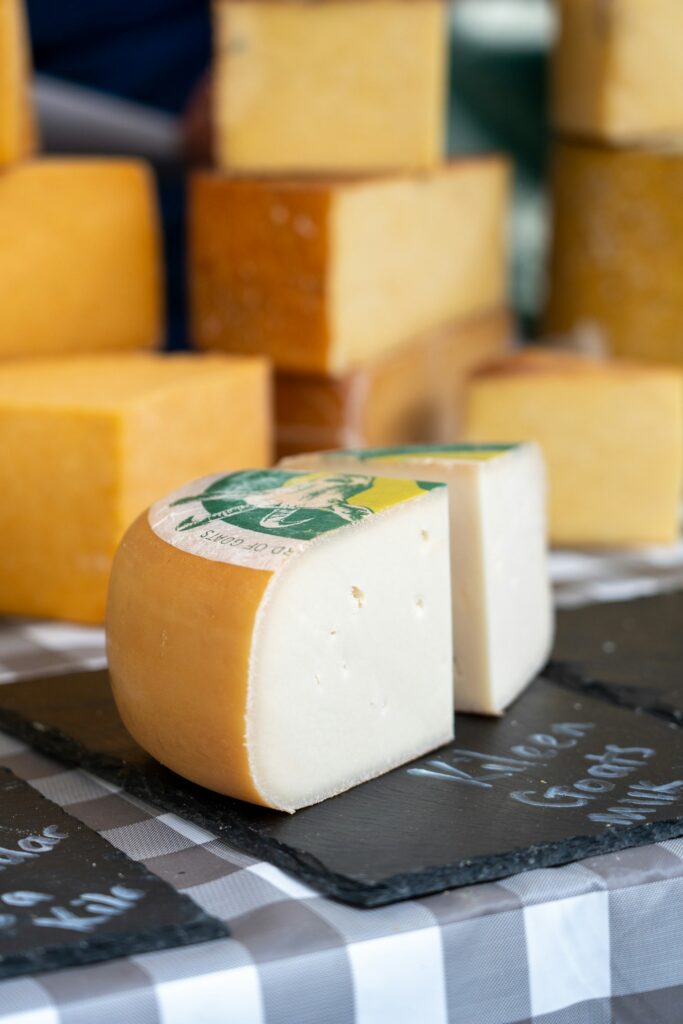
British cheese has never been more revered on the global stage than it is today. With a history steeped in tradition, British cheesemakers have been perfecting their craft for centuries. However, it’s the recent surge in artisanal production and a renewed focus on quality and provenance that has truly elevated the status of British cheese. From the craggy farms of Scotland to the rolling hills of the West Country, a renaissance in cheese-making and the sheer variety of types of cheese on offer has taken hold.
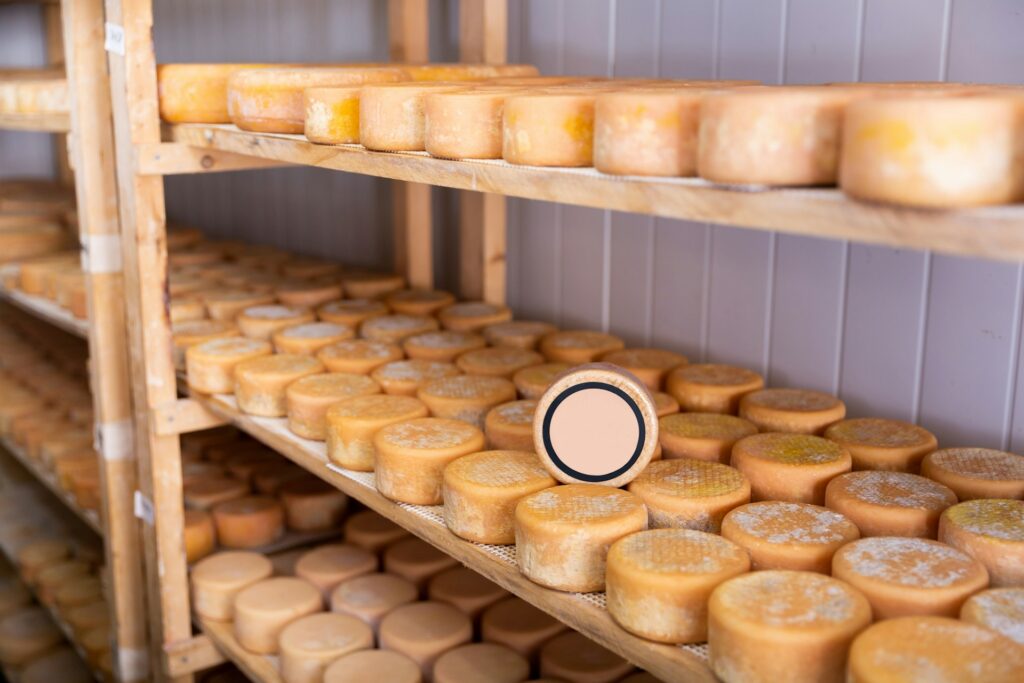
British cheesemakers are now experimenting with new techniques and ingredients, while also reviving ancient recipes that had nearly been forgotten. The result is a stunning array of cheeses that are as diverse as the landscapes from which they hail. British cheeses are winning accolades at international competitions and are increasingly sought after by cheese lovers around the world. This newfound reverence is a testament to the dedication of British cheesemakers to their craft and the quality of the milk produced by the country’s exceptional dairy herds.
The Renaissance Of British Wine
British wine has undergone a renaissance, with vineyards in Kent, Sussex, and beyond producing wines that stand shoulder to shoulder with their continental cousins. The cool climate and chalky soil, akin to the terroir of Champagne, have proven ideal for growing grapes such as Chardonnay, Pinot Noir, and Bacchus, which yield sparkling and still wines of remarkable quality.
A Match Made In Heaven: British Cheese & Wine Pairings
Pairing wine with cheese is an art, balancing the intensity and character of each to create a harmonious experience. Here are some quintessentially British pairings that will truly hit the spot…
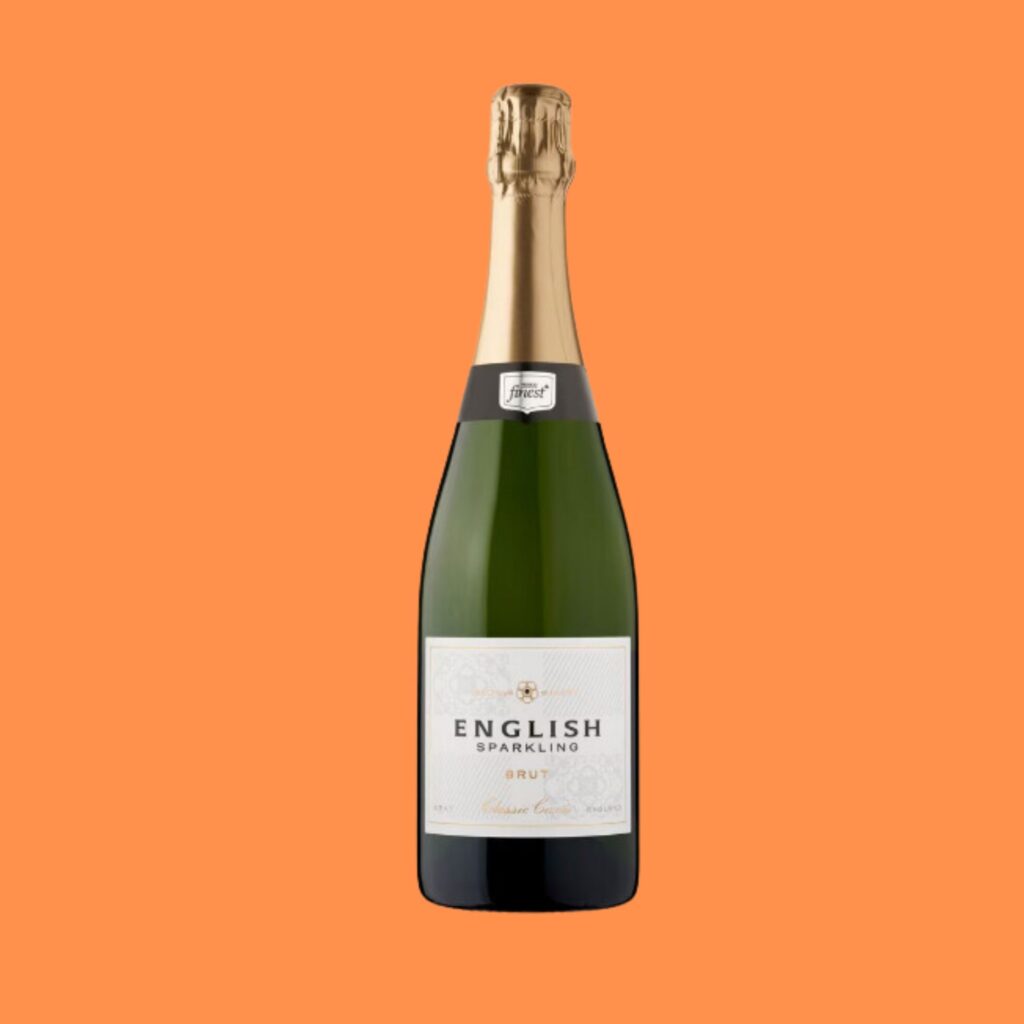
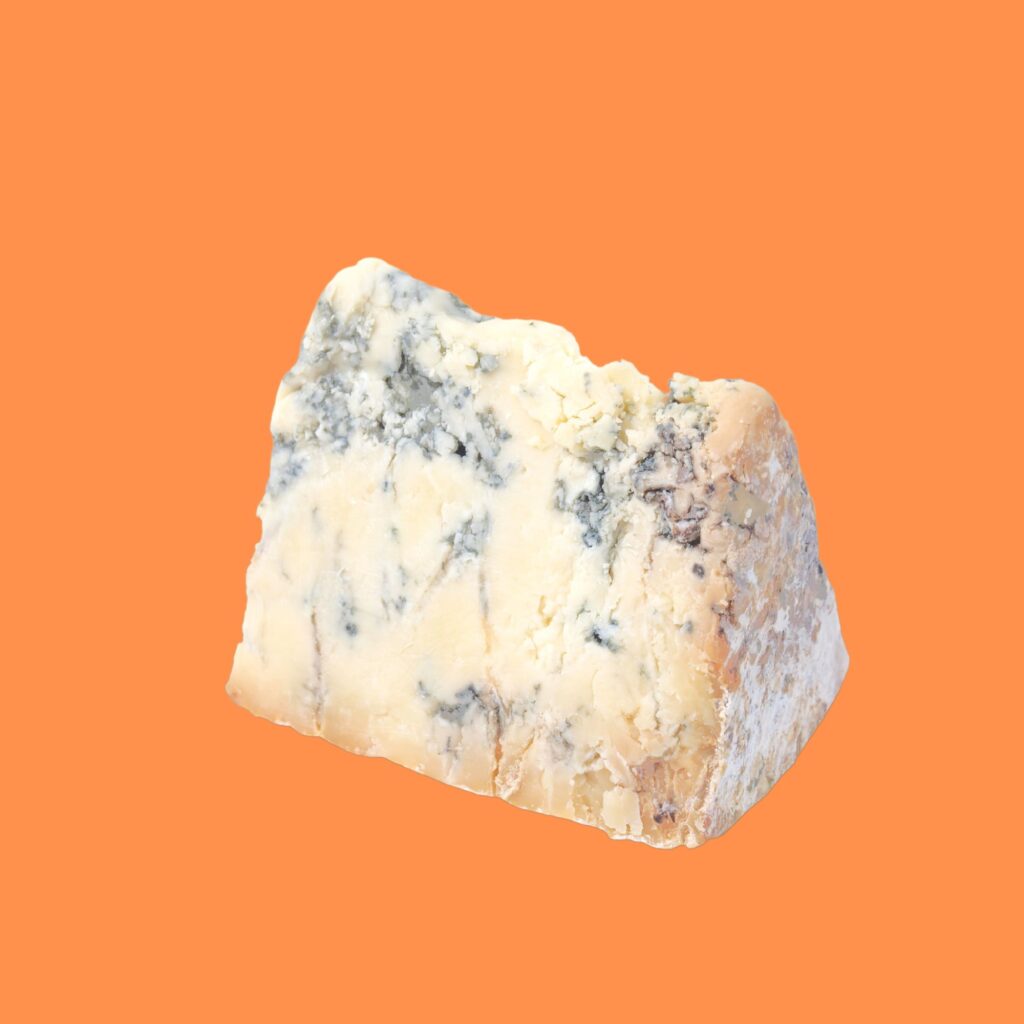
Stilton and English Sparkling Wine
By claudio Divizia via Canva
Stilton, the king of English cheeses, with its rich, pungent, and slightly spicy, tangy flavour, finds its match in the crisp effervescence of an English sparkling wine. The bubbles cut through the creaminess of the cheese, while the minerality complements its complex flavours. Try a glass of sparkling from the South Downs with a creamy wedge of Stilton for a regal pairing. Alternatively, a full bodied Rondo (we’re big fans of those produced by the White Castle Vineyard in Wales) is a beautiful match, too.
Cheddar and Somerset Pomona
Cheddar, arguably Britain’s most famous cheese export, hails from the village of Cheddar in Somerset. Its sharp, tangy taste and firm texture pair splendidly with Somerset Pomona, a fortified wine akin to port but made with apple juice and cider brandy. The sweetness of the Pomona balances the savoury depth of a mature Cheddar, creating a delightful contrast.
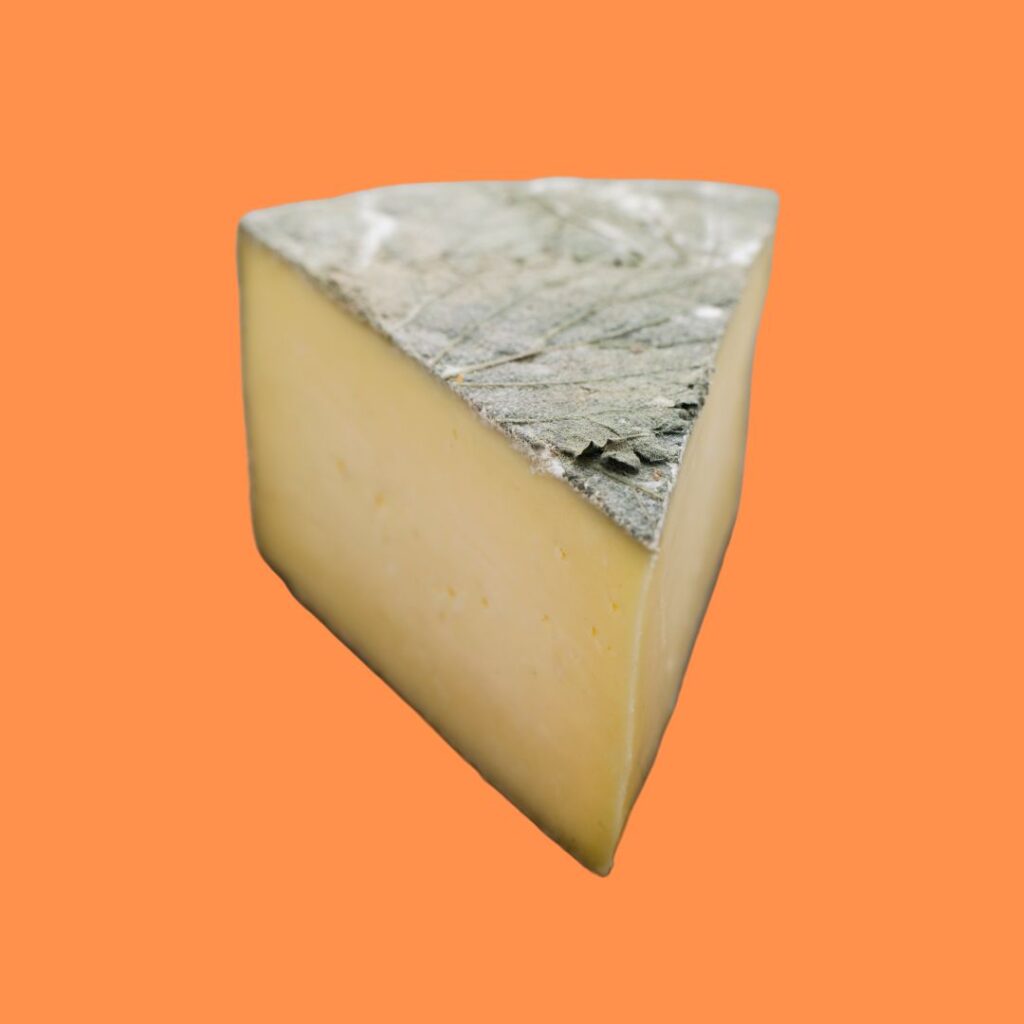
Cornish Yarg and Cornish White Wine
By Monkey Business Images via Canva
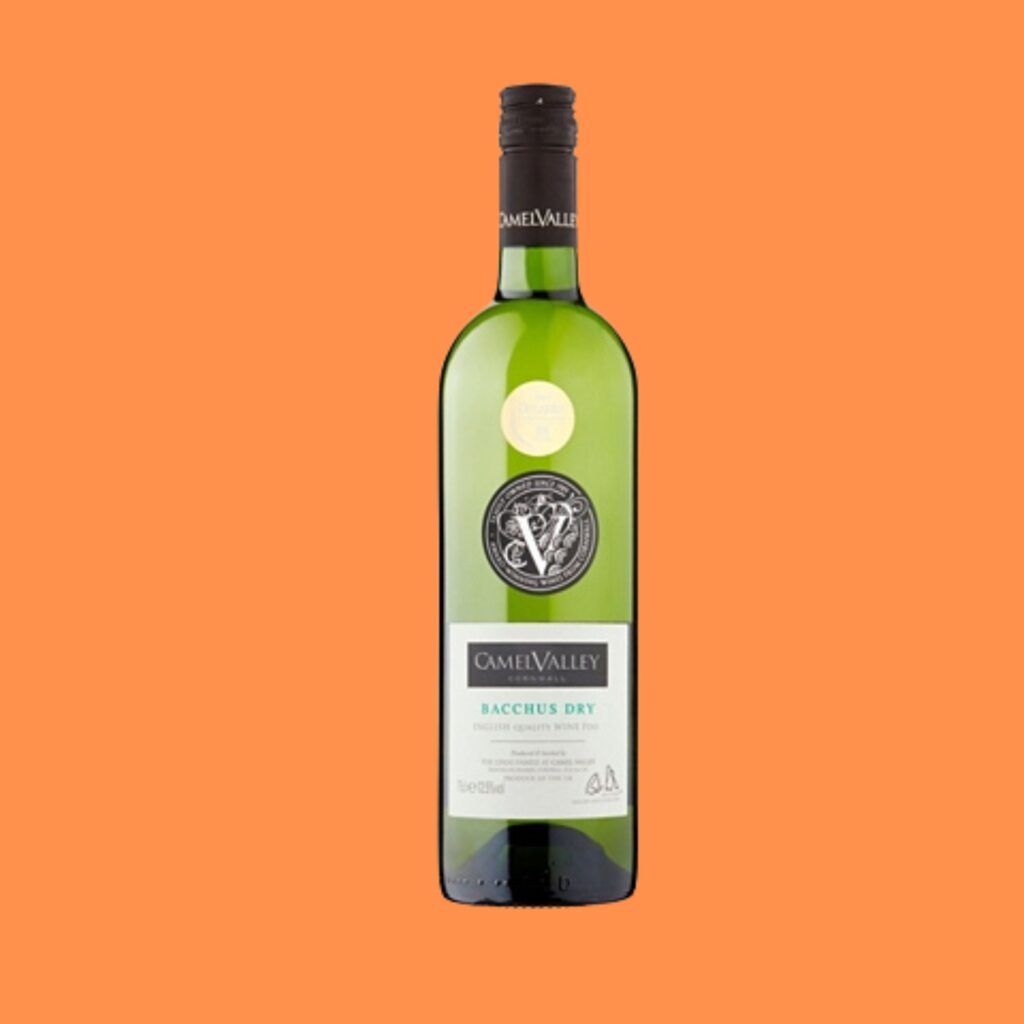
Cornish Yarg, wrapped in nettles for a distinctive earthy taste, is a fresh and creamy cheese that pairs beautifully with a light and zesty Cornish Camel Valley white. The wine’s citrus notes and plush but crisp finish complement the Yarg’s creamy texture and herbal undertones.
Red Leicester and Bolney Estate Pinot Noir
The nutty, slightly sweet Red Leicester with its firm texture is a delightful match for a medium-bodied Pinot Noir from Bolney Estate in Sussex. The soft tannins and red fruit flavours of the wine provide a lovely backdrop to the cheese’s mellow character.
By Nataly Hanin from Getty Images
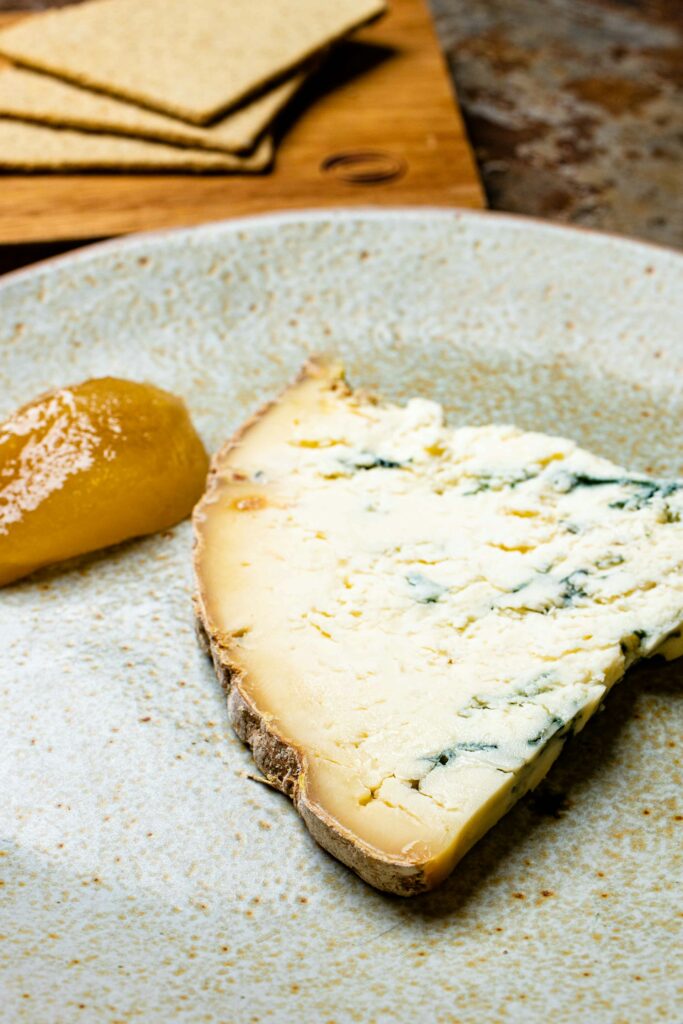
Blue Vinny and Dorset White Wine
Dorset Blue Vinny, a crumbly blue cheese with a milder flavour than Stilton, pairs wonderfully with a Bacchus white wine from the Lyme Bay Winery in Dorset.
Talk about terroir! The wine’s minerality and slight sweetness will complement the tangy, spicy notes of the cheese, making for a balanced and enjoyable pairing.
Wensleydale and Yorkshire Heart Vineyard’s White Wine
The crumbly, mild, and slightly sweet Wensleydale cheese, often enjoyed with fruit, is a perfect companion to a floral and aromatic white wine from Yorkshire Heart Vineyard. The wine’s acidity and fruit notes will enhance the cheese’s subtle flavours without overpowering them.
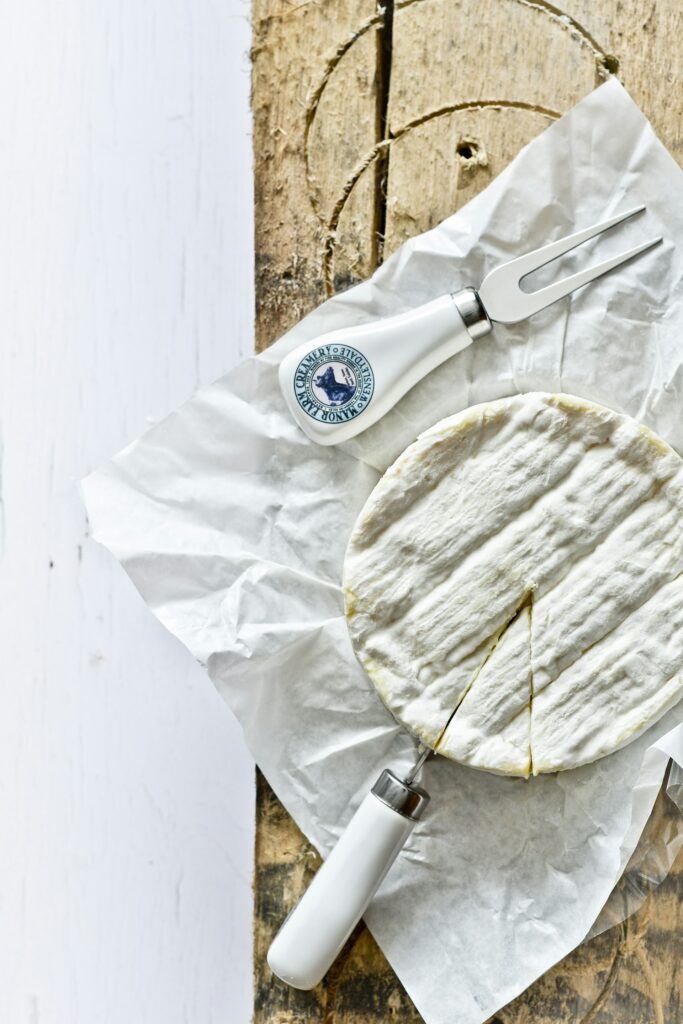
Baron Bigod and Chapel Down Flint Dry
The creamy pungency of the acclaimed, Brie-like Baron Bigod pairs exquisitely with the crisp and aromatic profile of Chapel Down Flint Dry. This wine, with its hints of green apple and citrus, cuts through the richness of the cheese, making for a refreshing and palate-cleansing combination.
Caerphilly and Glyndwr Vineyard Red
The young, crumbly texture and the mild, creamy flavour of Caerphilly cheese is beautifully complemented by a light red wine from Glyndwr Vineyard in Wales. The subtle berry notes and gentle oak of the wine work in harmony with the cheese, creating a pairing that is both comforting and uplifting.
Isle of Mull Cheddar and Sharpham Vineyard’s Barrel Fermented White
The robust, hearty flavour of Isle of Mull Cheddar, with its slight peaty character from the island’s unique terroir, pairs wonderfully with the complexity of a barrel-fermented Pinot Gris ‘Little Bee’ from Sharpham Vineyard. The buttery notes and structured oak of the wine envelop the strong personality of the cheese, resulting in a luxurious taste experience.
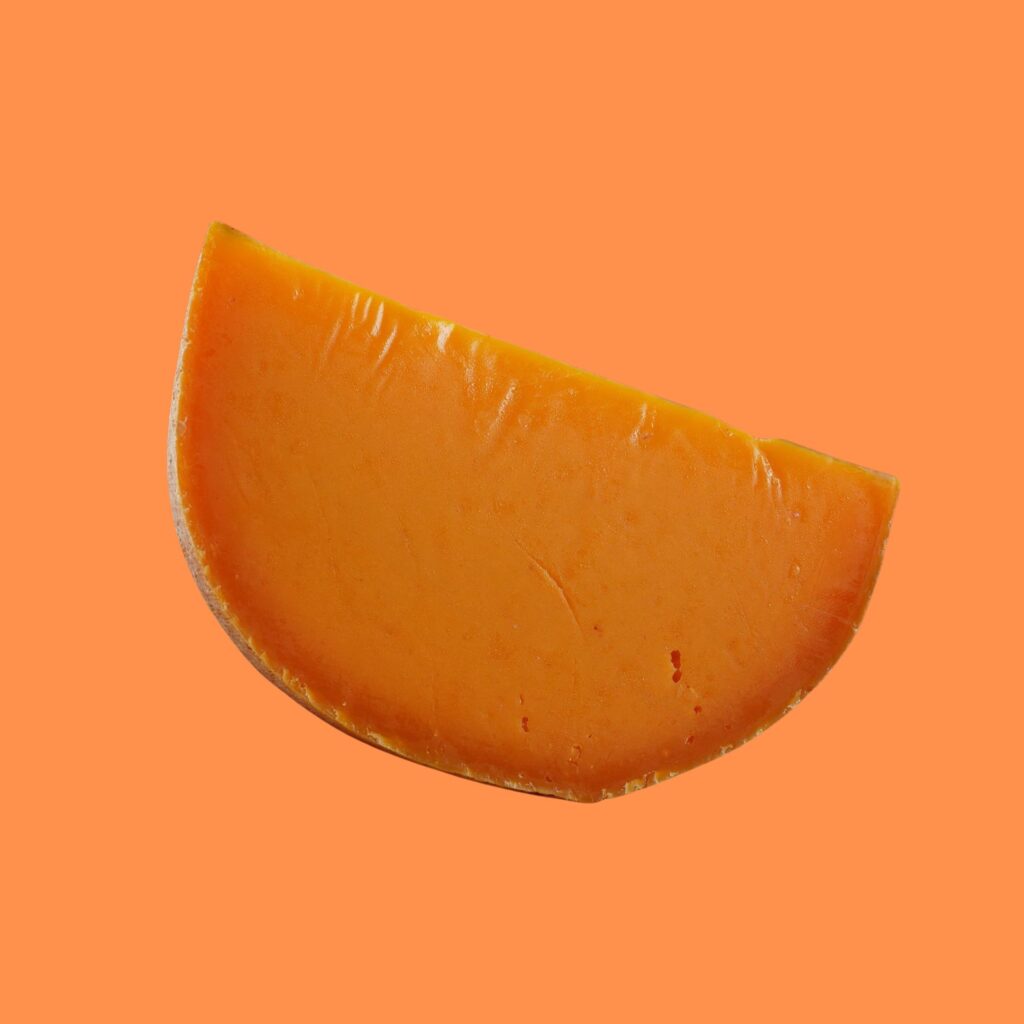
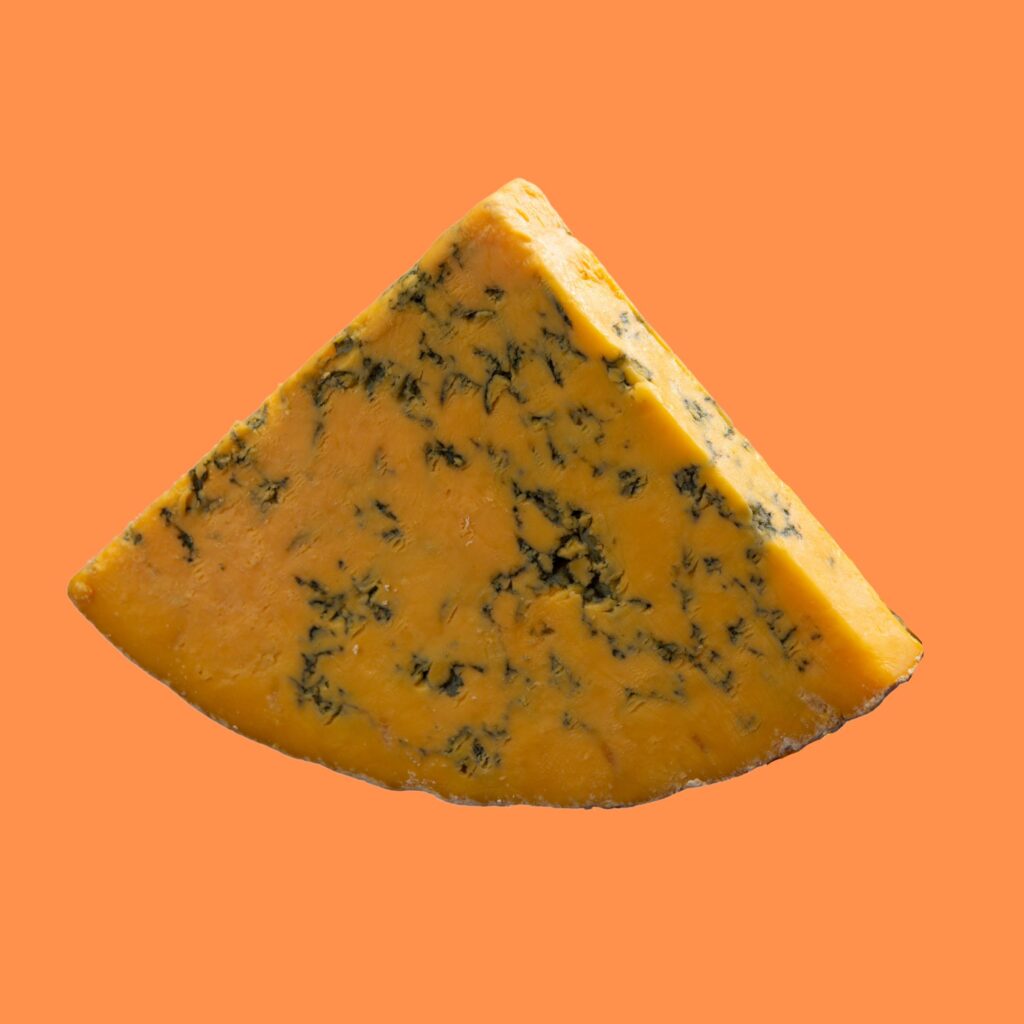
Shropshire Blue and Astley Vineyard’s Late Harvest
By Barmalini from Getty Images
The striking orange hue and the rich, tangy flavour of Shropshire Blue cheese demand a wine that can stand up to its bold character. A late harvest wine from Astley Vineyard, with its luscious sweetness and concentrated fruit flavours, is an excellent counterpoint to the cheese’s sharpness, creating a pairing that is both indulgent and harmonious.
The Bottom Line
The burgeoning British wine scene, coupled with the country’s rich cheese heritage, offers a delightful playground for the gourmand. Whether you’re a connoisseur or a casual enthusiast, exploring the pairings of British cheese and wine is an adventure in taste that should not be missed. So, raise a glass and a slice of cheese to the best that Britain has to offer. Cheers!
If a global pandemic and an impending climate catastrophe have led to anything positive, it’s that many of us have come to realise just how important quality time spent with family is.
But in the modern world, if an occasion isn’t captured, recorded, photographed and shared, did it even happen? And whilst we’re living in an era of ‘collecting memories, not things’, there’s still something rather old school and romantic about preserving cherished memories of family get-togethers into a tangible, collectable form.
Interestingly, the very act of preserving these memories, by getting the family together for a crafts project, helps you create new memories. If you’re keen to do just that, then here are 8 great ideas for preserving cherished family memories.
Start Sending Out A Christmas Newsletter
You’ve probably been on the receiving end of a family newsletter at Christmas and rolled your eyes. Yep; they are often annoying, so impersonal and who wants to read about an oh so boastful litany of other people’s family achievements? If you think about it, Christmas newsletters could even be considered a form of slow social media.
Indeed, as the New York Times points out, “unlike an ephemeral online status update, detailing the quirks of each family member in one place makes revisiting the cards in later years especially rewarding”.
Yep, family newsletters as not only a wonderful way to update and perhaps bore your friends and kindred on what you and your family are up to, but they are a great keepsake to look back in years to come. Jampack your newsletter full of family trivia, highlight individual accomplishments and include some silly anecdotes, too. You might find these newsletters become the most cherished keepsakes of all.
Record Memories On Video & Even Audio Tape
We’re sure you’ve watched You’ve Been Framed; the program that delves into humorous home movies and camcorder calamities. Hours of entertainment watching this show wouldn’t have been possible without families recording special moments and memories.
We say bring back the spirit of those camcorder moments and start recording special or even everyday moments again. You can also harness the power of ever expanding technology and create an audio or videotape that documents memories in your household. This method helps preserve the memories by converting them into files on some sort of media, CDs, DVDs, or flash drives.
Or, if you taped a dinner conversation with your family (consent given first, of course!), you could convert that into an audio file and upload it to the cloud, then future generations would be able to listen and hear the voices of their ancestors, and perhaps have a good laugh in the process.
Create A Digital Time Capsule
Why not embrace modern technology to preserve memories in a uniquely contemporary way? A digital time capsule is rather like its physical counterpart, but instead of burying it in the garden, you’re creating a carefully curated collection of digital memories to be opened at a specific future date.
Start by creating a dedicated cloud storage folder or external hard drive specifically for this purpose. Fill it with photos, videos, voice recordings, and even screenshots of text messages or social media posts that capture the essence of your family life today. Include digital scans of children’s artwork, recordings of their voices, and perhaps some video interviews with family members sharing their thoughts about the present and hopes for the future.
What makes this particularly special is that you can add digital letters from each family member, written to their future selves or to future generations. You might include playlists of the music your family enjoys, digital copies of recipes that are family favourites, or even recordings of your regular family game nights. Consider adding them to a Kapsule on Kapshoo – you can then share them with your loved one and use their input to enhance the story. Pretty neat, huh?
The beauty of a digital time capsule is that you can set a specific ‘opening date’ – perhaps 10 or 20 years hence – and then encrypt the folder until that date arrives. You might even set up an automated email to be sent to family members when it’s time to open it. Imagine the joy and possibly hilarity of future family members discovering what life was like in the 2020s!
Don’t forget to back up your digital time capsule in multiple locations – after all, technology can be rather fickle, and you wouldn’t want these precious memories to be lost to a technical glitch!
Make A Scrapbook
Scrapbooking is a hands-on hobby that not only keeps those idle thumbs busy but also results in something tangible and traditional. And that’s why you’re here, right?
Scrapbooks are great because they show progression throughout your life with your family, and allow you to use a little creativity in their conception. Whilst fads, fashions and new scrapbook trends come and go, a traditional collection of memories still has a certain charm. You can even hand down scrapbooks to future generations; making a gift that packs a seriously sentimental punch.
Making a scrapbook is easy. First, you’ll need the right supplies. To make a scrapbook of your family memories, be sure to pick up some acid-free glue (this will keep your pictures from becoming yellow as they age), some page protectors that fit into your scrapbook, and some plastic or cardstock solid pages that contain pockets for photos.
Once you have your supplies, it’s time to start collecting memories! You can use any kind of memory to document in your scrapbook, but try not to save too much from one year. If you do this, you’ll want to label the different years so that there isn’t any confusion.
Perhaps the most enjoyable part of a scrapbook is that it needn’t only contain photos. Instead, some people like to save receipts or tickets from events that show the date or holiday. You can also cut out interesting articles from newspapers and magazines, and include recipes of your favourite meals as a family, menus of restaurants you love or keepsakes from holidays taken together. The world is your oyster…now, eat it!
Scrapbooking isn’t only for adults, kids love to do it, too! If there are children in your family, let them be involved by giving them their own scrapbook kit. These kits usually come with a few pre-decorated pages, stickers, and sometimes even pens or pencils so that they can draw in their book.
Could there be a more cherished final product?
Make A Family Tree
A family tree is an age-old, visual way to document your lineage, family history and see how everyone is related. Particularly useful for teaching the younger members of the family about their seniors, family trees can make for a wonderful hand-me-down, too.
And here’s something interesting; according to the Guardian, “children who have a strong “family narrative” enjoy better emotional health”. What better reason, then, to create a family one. You’ll need to:
Decide what type of “tree” you would like. There are many different types that you can choose from, such as a Descendant Tree, Waterfall Chart, a Life Bar Chart and many more types.
Gather family information such as birth and marriage certificates, census reports, and obituaries of deceased relatives. You can also include photos, documents, and newspaper clippings to make your tree more complete, though the charm of a family tree is in its accessibility, so don’t overload it with data.
Place the first person who started your family at the top of the tree. From here you can create branches for grandparents, then great grandparents and so on.
Draw the tree on paper or use a computer program designed to make family trees. Add colour to each generation of your family tree to make it more interesting and easier to distinguish visually.
Save the completed family tree in a binder with plastic sleeves or store it in a document box with dividers. A lovely idea here is to make copies for family members far and wide.
Create A Timeline Of Your Family’s History
Your family timeline is a great way to keep track of your family history, document important moments in your family tree and delve deep into a fascinating past. Here are the steps to create your family timeline:
Gather all records of your family’s history, such as birth and marriage certificates, photos, and documents such as marriage licenses and census reports. One place to store these is in a three-ring binder with pockets on the inside for protection.
Make a list of all the people in your family tree with birth and death dates, as well as marriage dates and locations.
Fill out the information you have on each person, where they were born and died, who their parents and siblings were, and any important events that happened to them
On a separate piece of paper, write family events that occurred. This can include births, deaths, marriages, military service for your relatives, or significant world events that happened during their lifetime.
Next to each event on your timeline, make a note of the source (i.e.: census report #XYZ). Include as much information as you know. For example, if you have a census report, write down the date it was taken and who gave the information. If your source isn’t listed in this document, add it at the bottom. This makes cross-referencing information easier…just in case your document is found in a hundred year’s time by your great grandchildren and they’re keen to fact check!
Use Software To Store Memories
There are many software programs designed to help you save your cherished memories and, ideally, preserve them forever safely and securely. These programs are great because they help you catalogue your family history and store important moments all in one place. Some popular choices are Legacy Family Tree (which is not free but has a 14-day trial), Ancestry, Roots Magic, or The Master Genealogist.
Every software program stores information slightly differently so it’s best to check with each company to check your unique needs are being met.
Take Good Care Of Heirlooms
Hands up if you love BBC’s The Repair shop? If you haven’t watched it, you should. In the series, some of Britain’s most skilled restoration experts breathe new life into much-cherished family heirlooms that are dropped off by members of the public who reveal the personal stories behind the items.
Most families have heirlooms that are valuable when it comes to remembering the past, from vintage jewellery to old books and vintage toys. Some of these items hold such a high emotional value that they cannot be sold for any price, and in such cases, it could be a good idea to collate these items in a safe, sanitised place to preserve them from decay or depreciation. And if they need a little TLC, you could always apply to take part in the next series of The Repair Shop!
There’s a massive Thai elephant standing in the centre of the starkly lit Cafe See Khao right now. That is; the best brunch in Bangkok doesn’t resides in here.
It’s found, instead, in a street level shophouse, where the same bowl of white-pepper heavy jok and jammy egg has been served for generations. Or, it’s the moo ping that’s just come off a makeshift grill at the bottom of the escalators, devoured before the train even pulls into the platform. Perhaps the best brunch in Bangkok has just been revealed under the lid of a bamboo steamer, where pert, perfect dim sum sit prettily in a row…
…but we’re here for a different interpretation of brunch today. You know, the one that involves bacon and eggs, pancakes and perhaps a little Prosecco. A thing to luxuriate over and indulge in. You might even call it a ‘Western’ brunch, but we couldn’t bring ourselves to in the title…
Anyway, in a city where ancient temples cast golden reflections across sleek skyscrapers, Bangkok’s eggs-and-bacon-adjacent brunch scene mirrors this same captivating duality. From historic shophouses transformed into sophisticated cafés to luxurious hotel spreads worthy of royalty (or, at the very least, some Hi-So folk), the capital’s weekend ritual of languorous brunching has evolved in recent years into something where the paradox of choice suddenly presents itself.
We’re here to help you with that choice; here are the best places to eat brunch in Bangkok.
*Prices and opening hours are correct at the time of publishing. We’ve mentioned prices in Thai Baht. ฿100 is roughly £2.25, and so on.*
Fran’s – Brunch & Greens (Sathorn)
Ideal for leisurely garden brunches with Bangkok’s thickest slab of caramelised bacon…
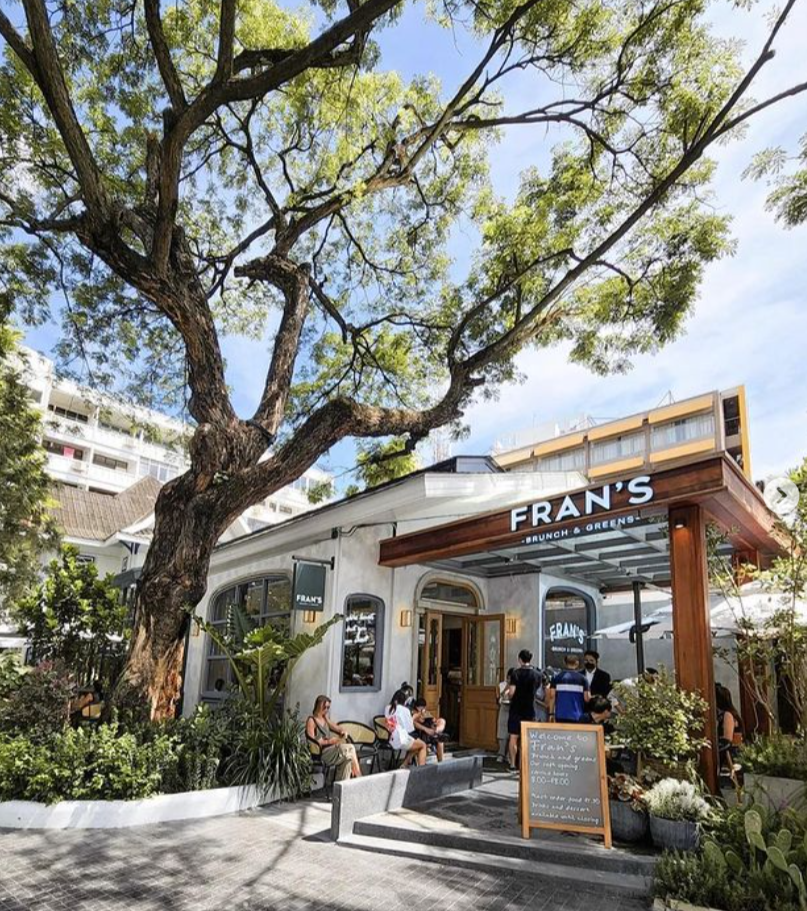
Hidden in a leafy corner of Sathorn, Fran’s occupies a glasshouse-style building surrounded by tropical greenery, offering both air-conditioned interior seating and a garden area that feels like something of a private oasis (a terrible cliche, we know, but a rare find in the city).
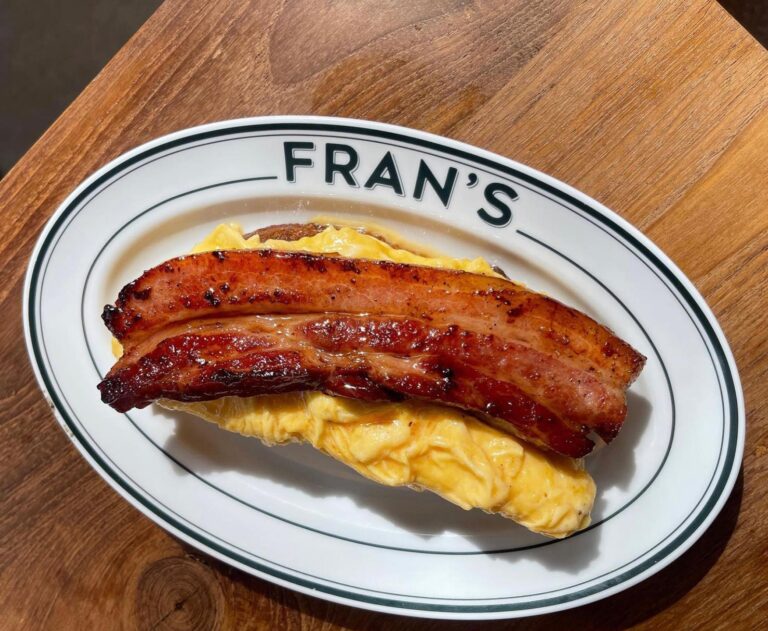
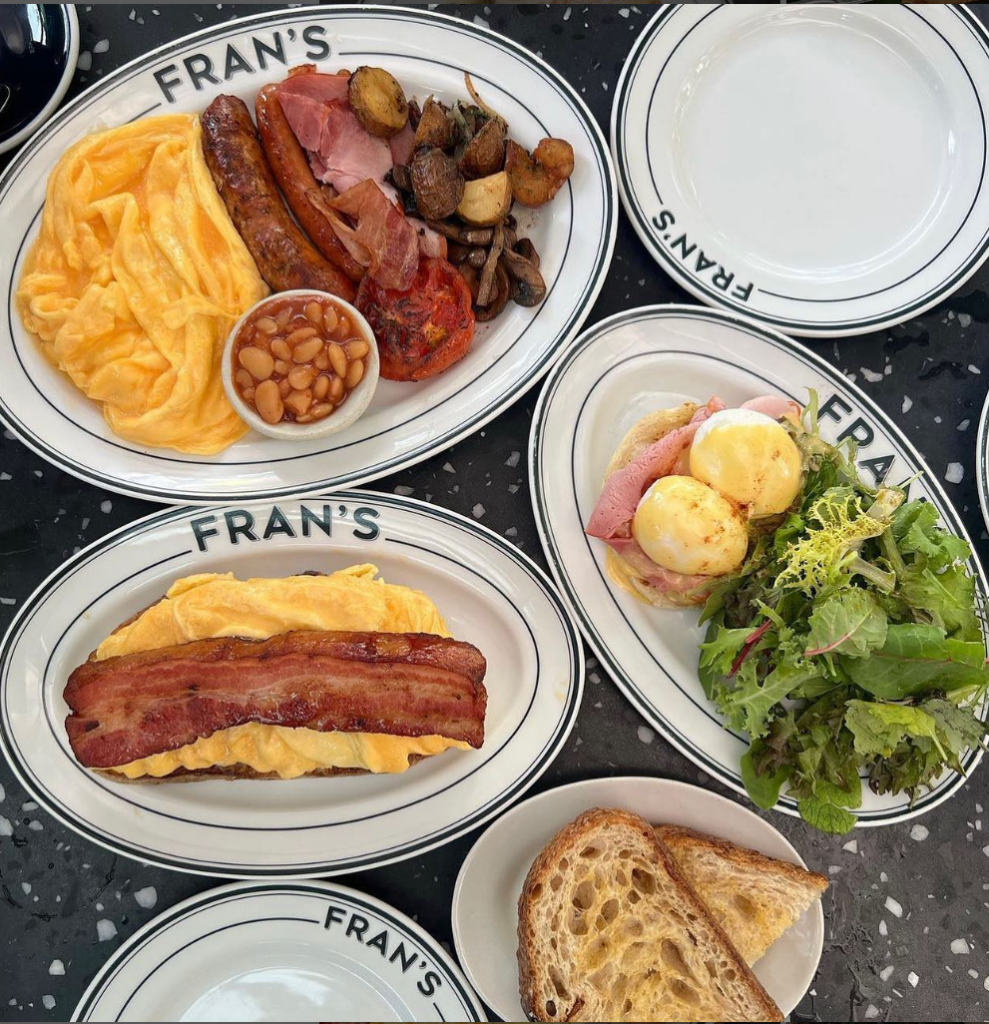
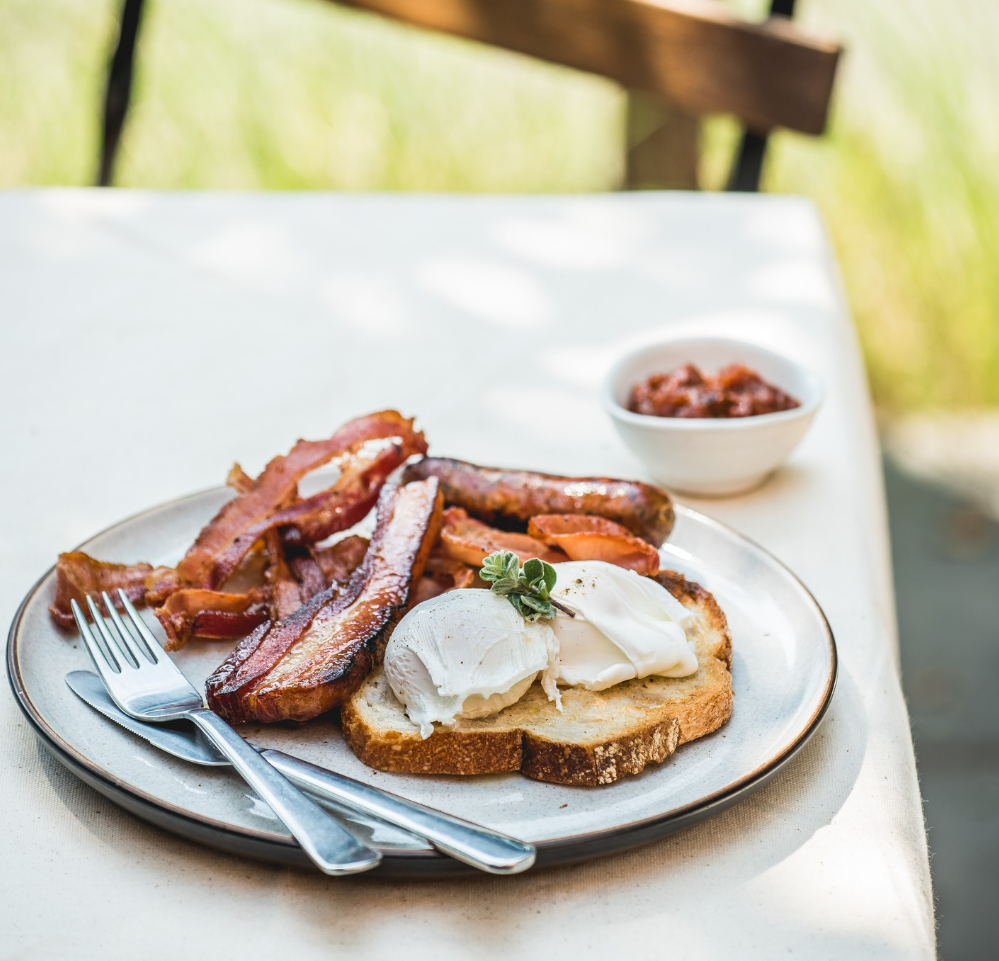
Their signature dish has earned a massive reputation across the capital, photographed constantly in round-ups such as these: thick-cut caramelised bacon atop creamy eggs on toast, priced at ฿450. It’s the kind of simple-sounding dish that relies entirely on execution, and here Fran’s nails it consistently. It’s our favourite brunch dish in Bangkok, bar none.
If you’re keen to experiment just a little, then Fran’s ‘Be Yourself Breakfast’ concept allows for customisation – choose your bread (from sourdough to English muffins), add your proteins and sides, and build your ideal plate.
The freshly baked section deserves attention too, with their bagels (priced at around ฿200) emerging warm from the oven throughout the day. For those seeking lighter fare, the Healthy Bowl selection offers virtuous options that don’t skimp on flavour, while the open-faced sandwich menu provides satisfying alternatives to traditional breakfast plates. Though perhaps calling them lunch might be appropriate…
The space itself strikes that perfect balance between style and substance – yes, it’s undeniably photogenic with its rattan chairs and abundant greenery, but it’s also genuinely comfortable. The garden area, shaded by mature trees, provides an exceptional setting for long, lazy brunches. Hmm, might as well order a Singha then…
Ideal for specialty coffee and hearty portions in a historic shophouse…
Housed in a 150-year-old former boat repair shop along Charoenkrung, Sarnies brings industrial-chic dining to one of Bangkok’s most atmospheric locations. This Singapore import maintains its heritage whilst striking a distinctly Bangkokian tone through teak beams and exposed brick walls, while adding comfortable modern touches that make it perfect for lingering brunches. And all without a single Ed Sheeran piano cover in sight…
The legendary Sarnies Fry Up is pitched at a premium ฿480, sure, but it delivers a proper British-adjacent breakfast with premium ingredients – think free-range eggs, house-smoked bacon, and quality sausages. You also have the option to pimp up your breakfast with all the usual suspects like baked beans, smashed avocado and even steak should you be feeling decadent.
Of course, the eponymous sandwiches are great, too. The Steak Sarnie sees grass-fed steak cooked to a blushing perfect pink, three cheeses, mushrooms, spicy onion jam with makrut lime aioli, all shoehorned into house focaccia. For something a little lighter, the smoked salmon bagel could rival New York’s finest.
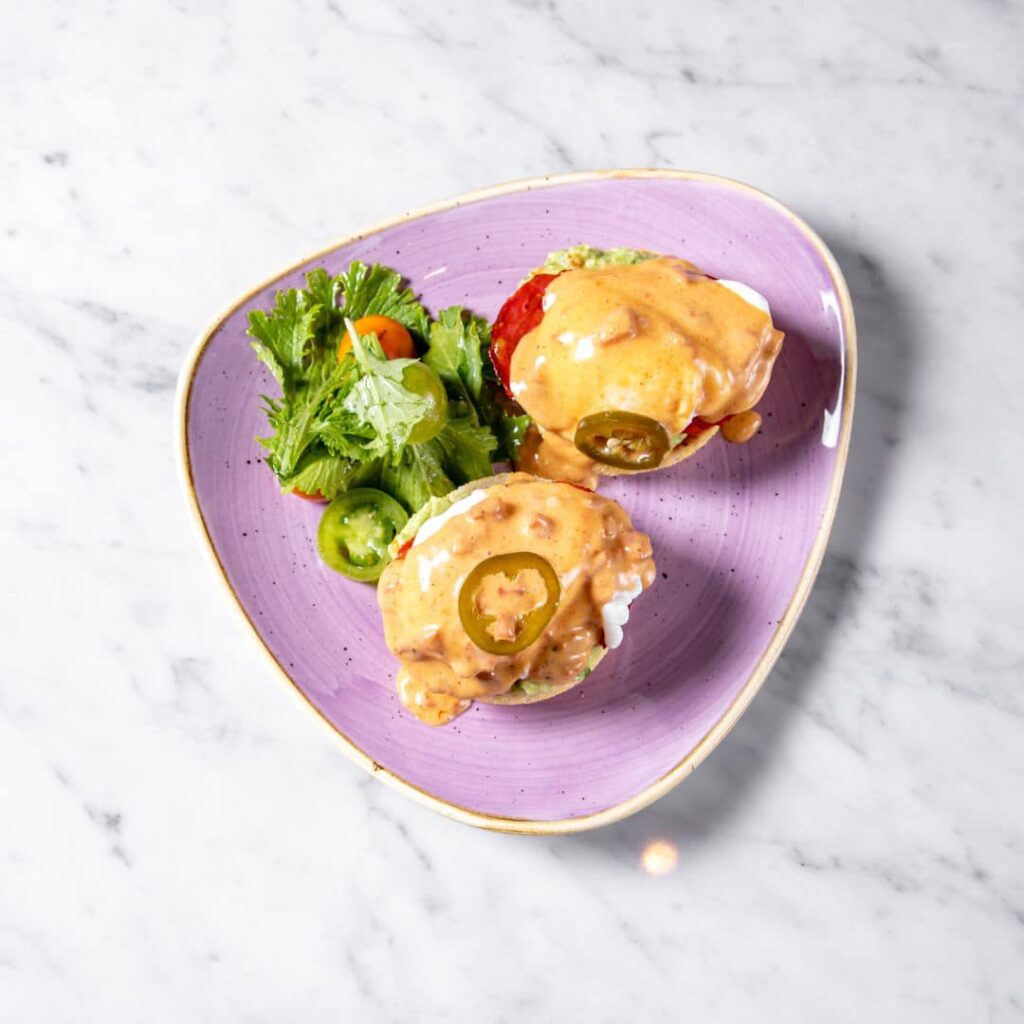
The Bangkok iteration of Sarnies is particularly well known for blending Thai ingredients with Aussie-style grub. We’re huge fans of the Thai Sausage Muffin which sees a Northern Thai sai ua sausage patties topped with a fried egg and sandwiched between a freshly made English muffin. We’re very much down with the Tom Yum eggs Benedict too, which again shows a talent for local adaptation that remarkably doesn’t feel too gimicky. It’s the hollandaise sauce that harbours the tom yum element, all lime sharpness and chilli heat, and you know what? It works.
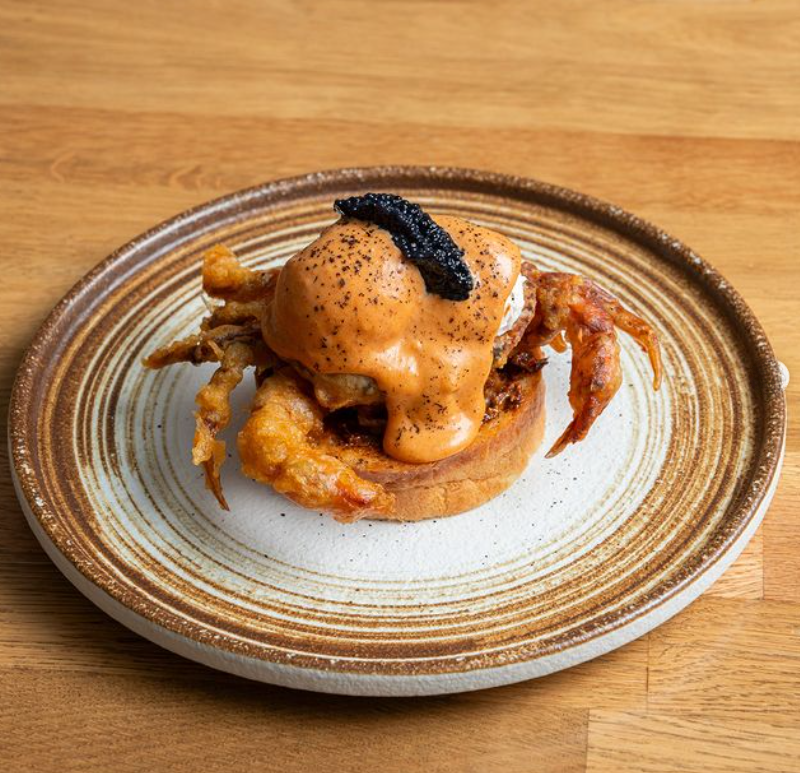
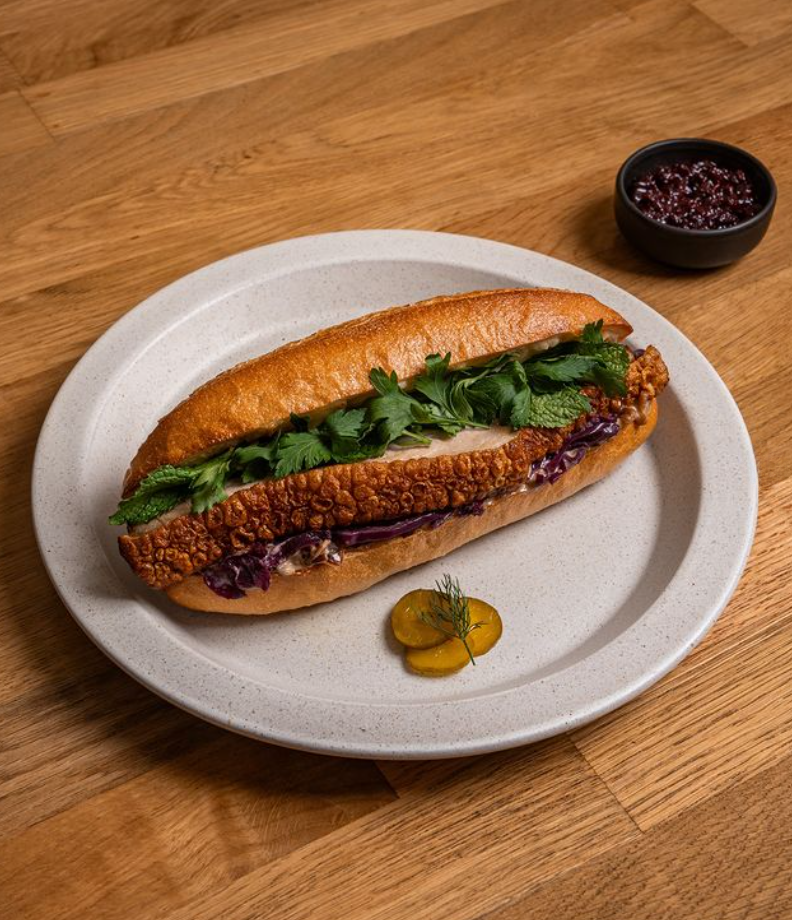
Look out for every-changing specials. Last National Singapore Day (9th August – get it in your diary for next year!), Sarnies paid tribute to the mothership branch with a Singapore chilli crab-inspired eggs Benedict – think crispy soft-shell crab, poached eggs, and XO tomato hollandaise over brioche. At the time of writing, the current special on the menu is a porchetta banh mi – that’s a slab of slow-cooked, crackled porchetta with smoky cheese and onion gravy mayo, packed into a house-made banh mi. Cranberry jam is served on the side; a nod to the impending Thanksgiving, presumably.
The coffee program deserves special mention – they roast their own beans weekly, and their baristas consistently deliver exceptional brews, with all the en vogue cold presses and siphons you could ever dream of. The Black Sesame Dirty is a heavy hitter, featuring and a house-made black sesame paste that adds a refined savoury note to the sweet milk.
P.s Sarnies has another branch in Sukhumvit with Japanese breakfast leanings. Try the Teishoku, a simple Japanese-style set meal typically enjoyed for breakfast or lunch – which of course, means it’s ideal for brunch too.
Mickey’s Diner (Phloen Chit)
Ideal for award-winning chef’s take on classic American diner comfort…
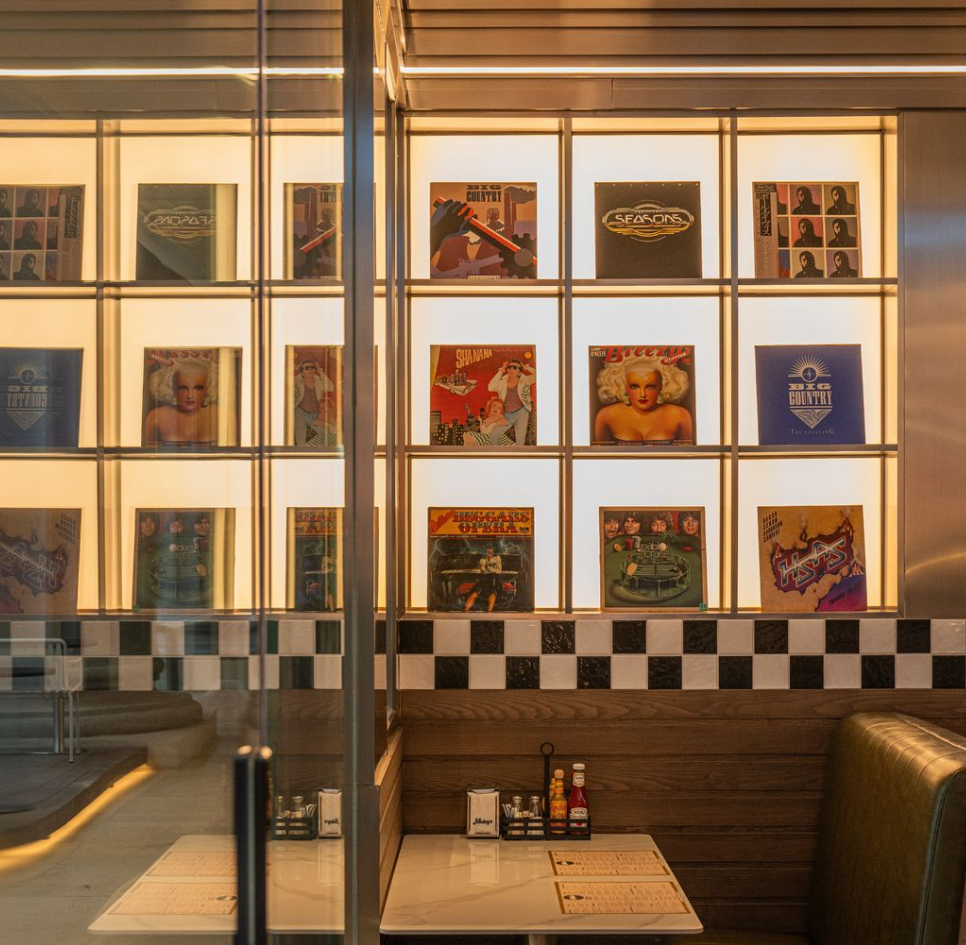
From the neon lighting to forest green booth seats and checkerboard accents, Mickey’s – helmed by acclaimed Michelin-starred chef Chalee Kader – brings 1950s Americana to the ground floor of Gaysorn Amarin.
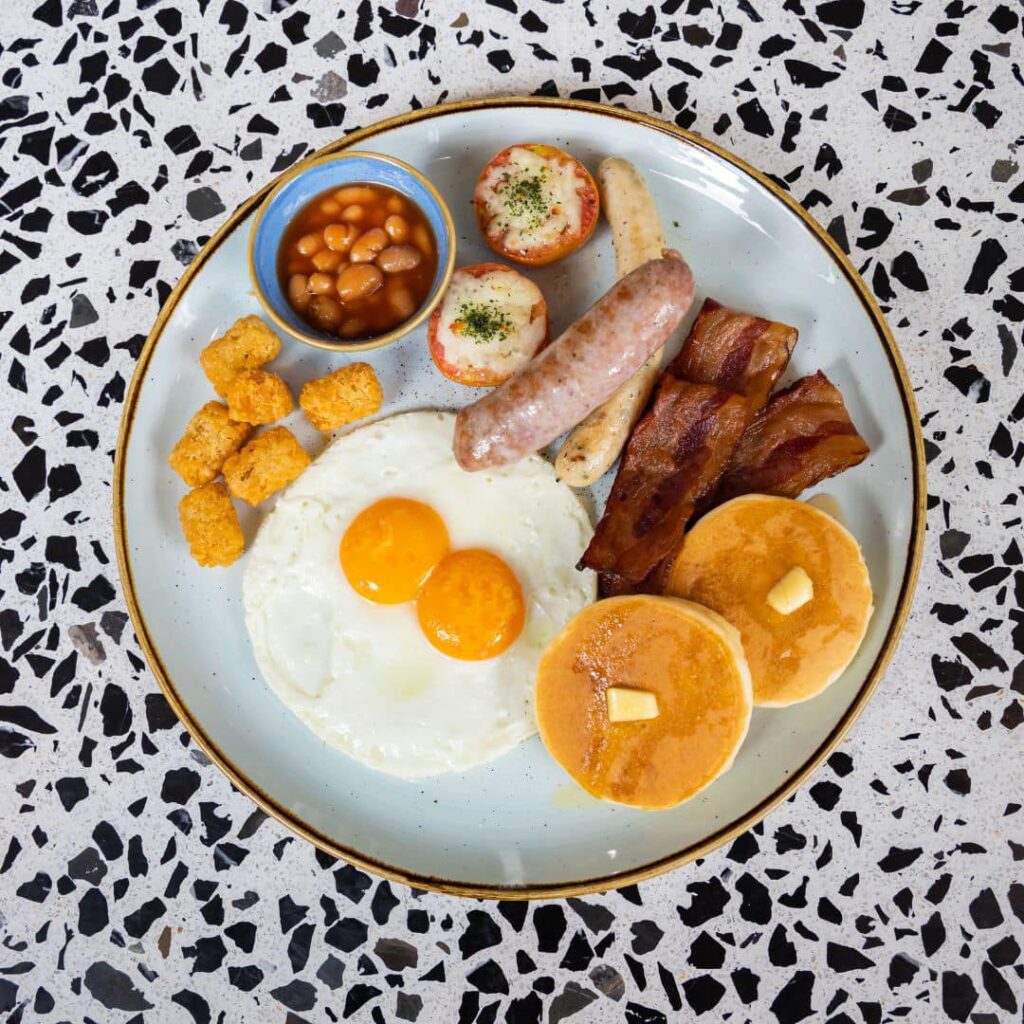
Drawing inspiration from Kader’s time in San Francisco, the all-day breakfast menu champions American diner classics. The Mickey’s breakfast comes generous – featuring Canadian bacon, sunny-side-up eggs, homemade fries, a pork sausage patty, and pancakes. It’s genuinely hard to take down unless you’ve not eaten for several days. The fried chicken and waffles for ฿500 has earned its viral status too, striking that sweet spot between crispy coating and juicy meat, and justifying the price tag both in its generosity and fine balance of flavour.
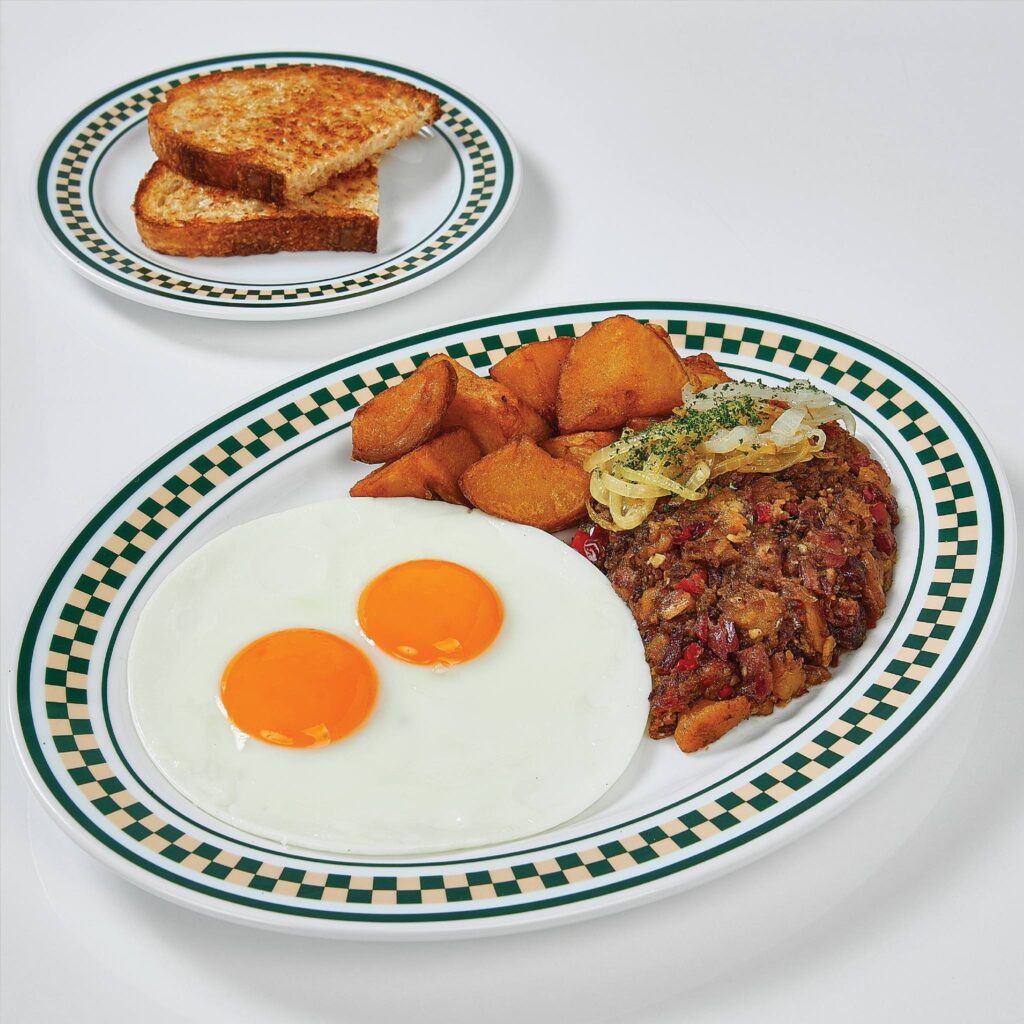
Other brunch favourites include the Waffle’s Benedict, which sees a bouncy pork sausage and poached eggs atop a crispy waffle, generously covered with a velvety hollandaise sauce. Our personal favourite is a little more humble, though; a corned beef hash with golden, crispy potatoes, accompanied by two eggs. Wash it down with an essential balsamic Bloody Mary – yes, those are crispy rashers you see poking out of it.
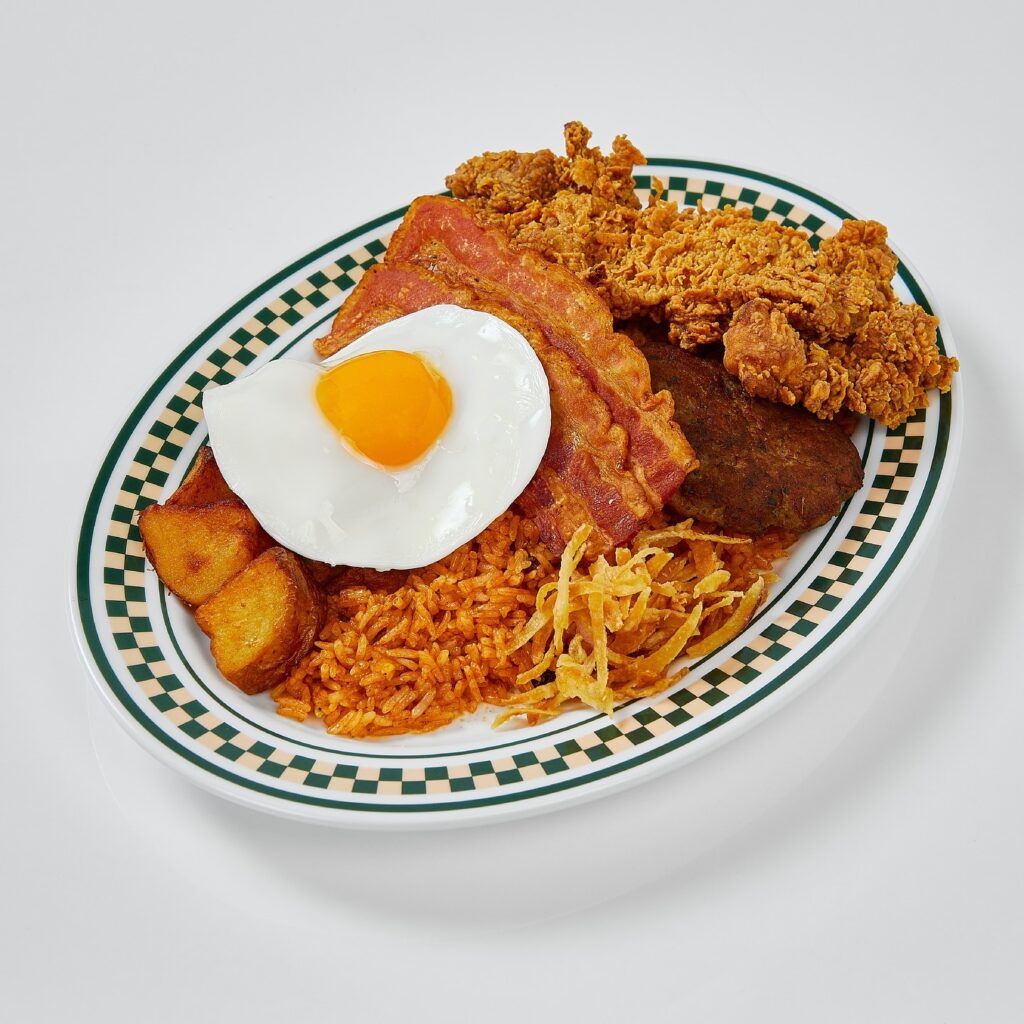
For something uniquely Bangkok, the AFR School Cafeteria (฿385) offers a nostalgic twist on American fried rice, complete with fried chicken, pepper sausage, ham, and a runny fried egg. The milkshakes come thick enough to eat with a fork, while the homemade pecan pie with vanilla ice cream offers a genuine taste of the America. What’s not to love?
Ideal for a genuine slice of old Bangkok breakfast culture, unchanged since 1933…
Nestled along historic Charoen Krung Road, On Lok Yun feels like stepping into a Bangkok time capsule. The no-frills interior – worn formica tables and well worn-looking booths – is part of its enduring charm. This is breakfast stripped to essentials, served exactly as it has been for nearly a century.
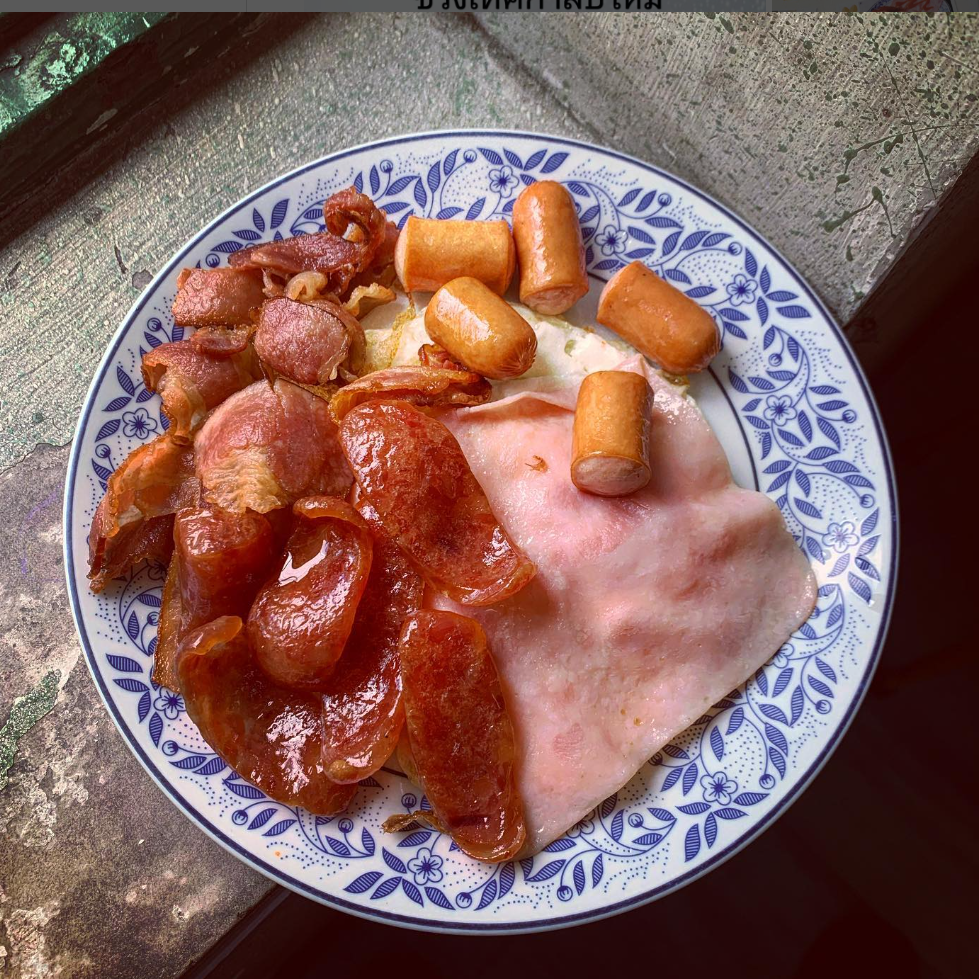
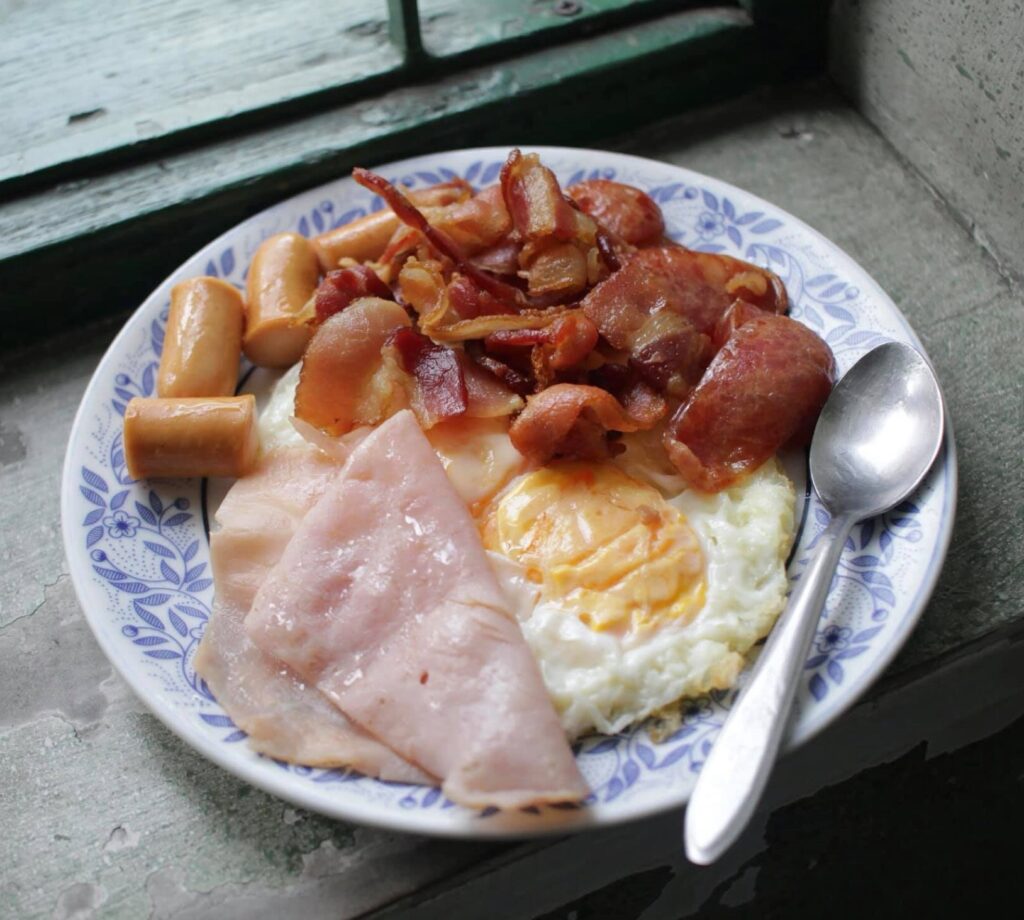
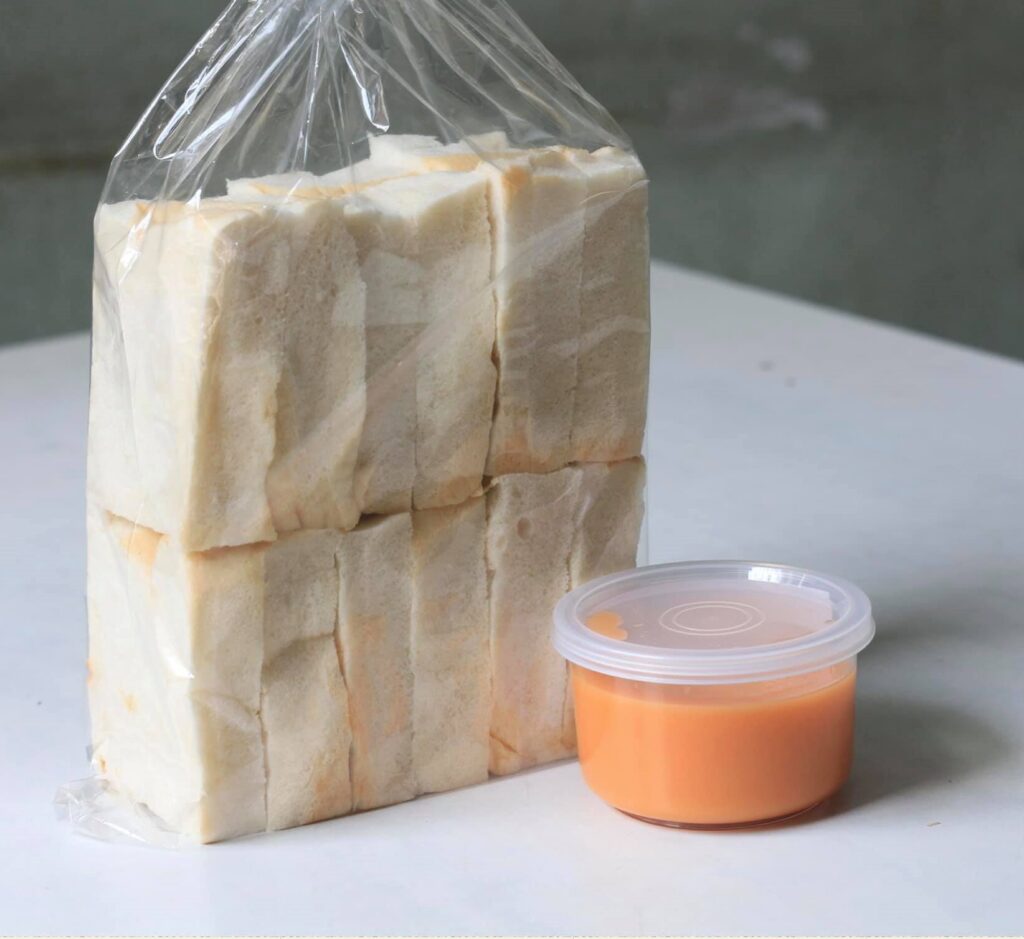
Their Kai Kata, the signature Thai-style American breakfast, comes with your choice of bacon, ham, or Chinese sausage, the eggs still bubbling in their metal pans when they arrive at your table. For the sugar heads, the kaya toast remains brilliantly simple – crisp white bread served with a coconut and Thai tea-infused custard that just pairs so well with their strong local coffee.
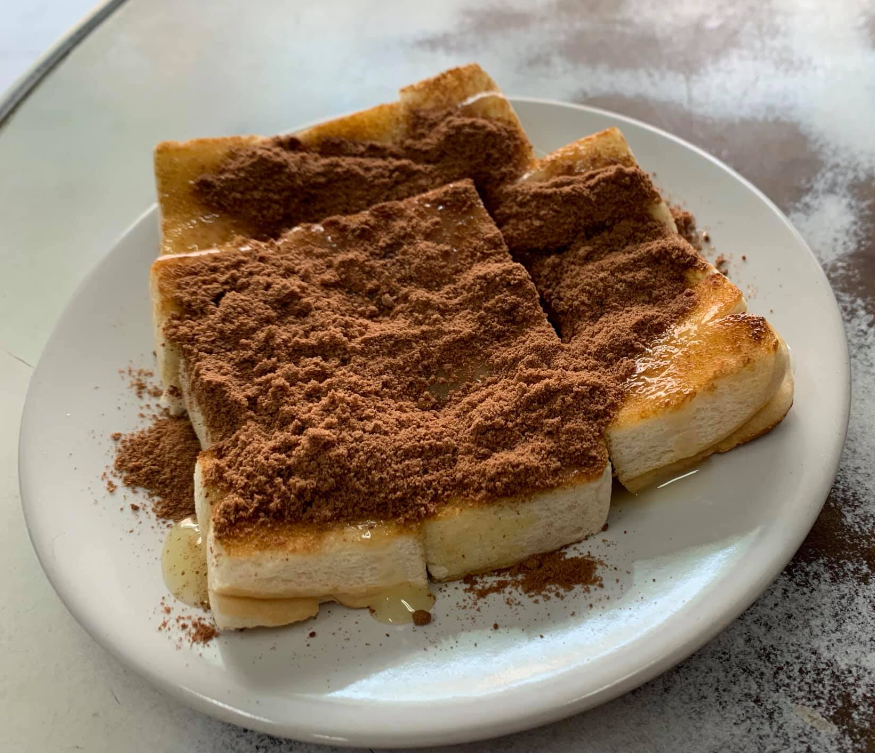
We love On Luk Yun’s version of Milo Toast, too. Here, buttered bread is grilled over fragrant charcoal until crisp on the outside, soft within. It’s topped with condensed milk and sprinkled with an absolute sandstorm of malty Milo powder. Delicious, but do treat carefully; if you inhale it wrong you’ll be coughing and spluttering until tomorrow.
Don’t expect artisanal sourdough or carefully crafted flat whites – this is old-school breakfast fare, where the coffee comes thick and sweet, the eggs are consistently runny, and the service maintains its characteristic briskness. It’s the kind of place where locals rub shoulders with curious visitors, all drawn by honest food and a slice of Bangkok’s culinary heritage. It has got to be one of the best brunches in Bangkok for that reason.
Ideal for excellent breakfasts in a serene, sun-filled escape from Sukhumvit’s bustle…
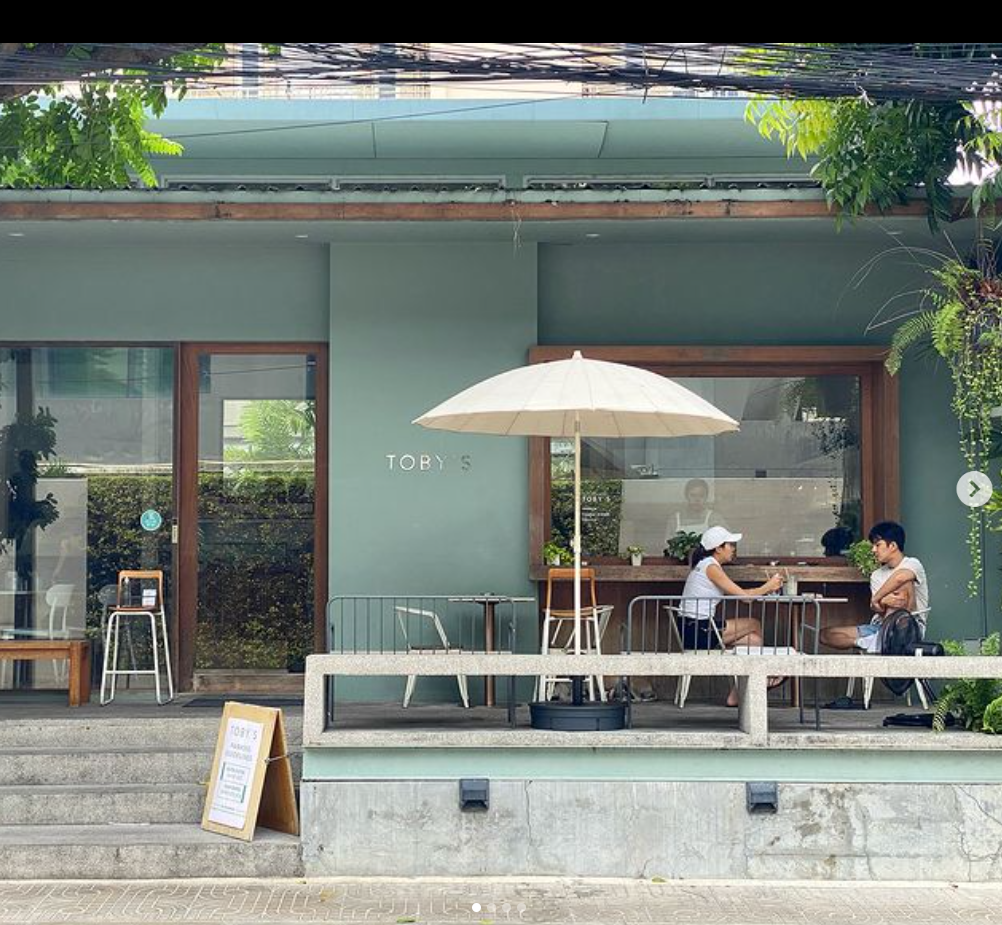
In a part of town whose maze of sois and sensory overload can overwhelm the uninitiated, the Sukhumvit branch of Toby’s provides respite with its minimalist wooden interiors and abundance of natural light. Verdant touches of greenery and floor-to-ceiling windows that flood the space with morning sunshine shed a new light on brunch for those a little jaded by the frenetic pace of the city outside.
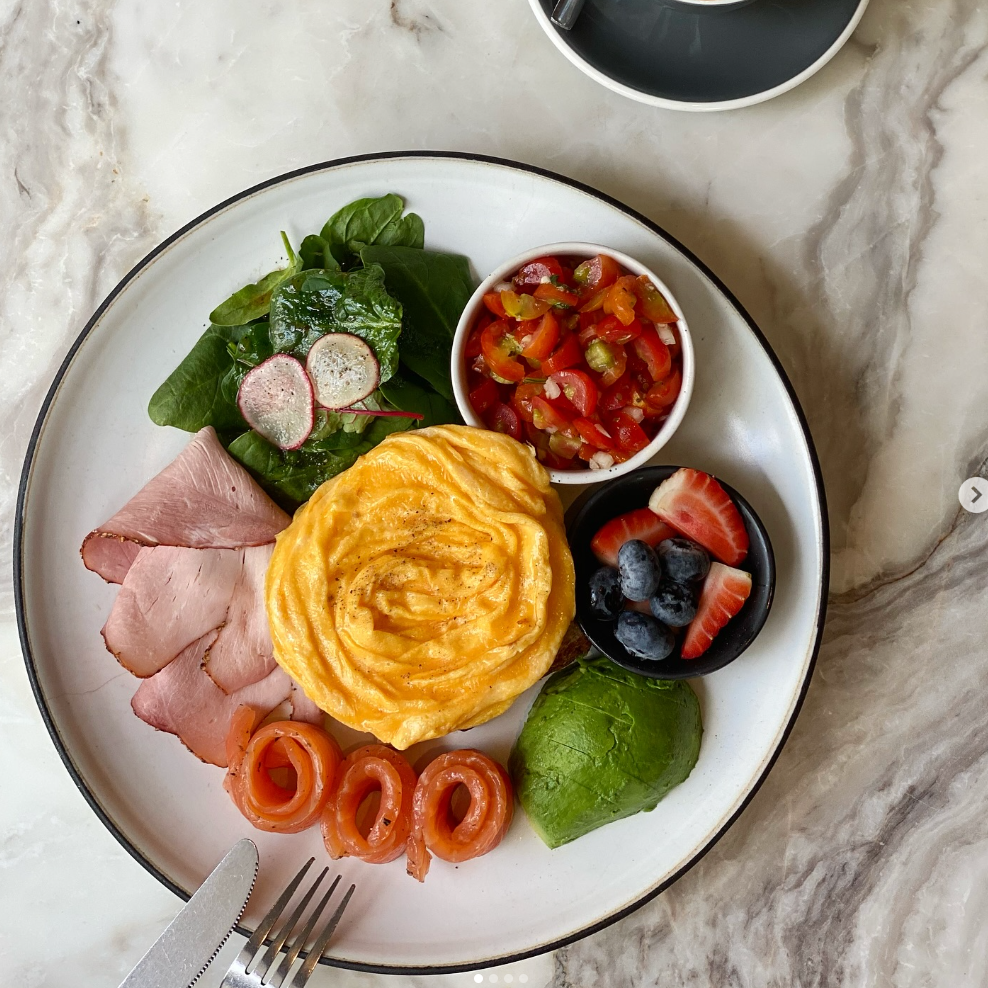
If you’re serious about your breakfast (you are, that’s why you’re here), the breakfast board at ฿395 is the clear choice – a generous plate (yep, not a board) featuring eggs your way, smoked ham, little rose petals of smoked salmon, half an avocado, tomato salsa, sourdough toast on the side and some random berries. It’s substantial enough to carry you through until dinner.
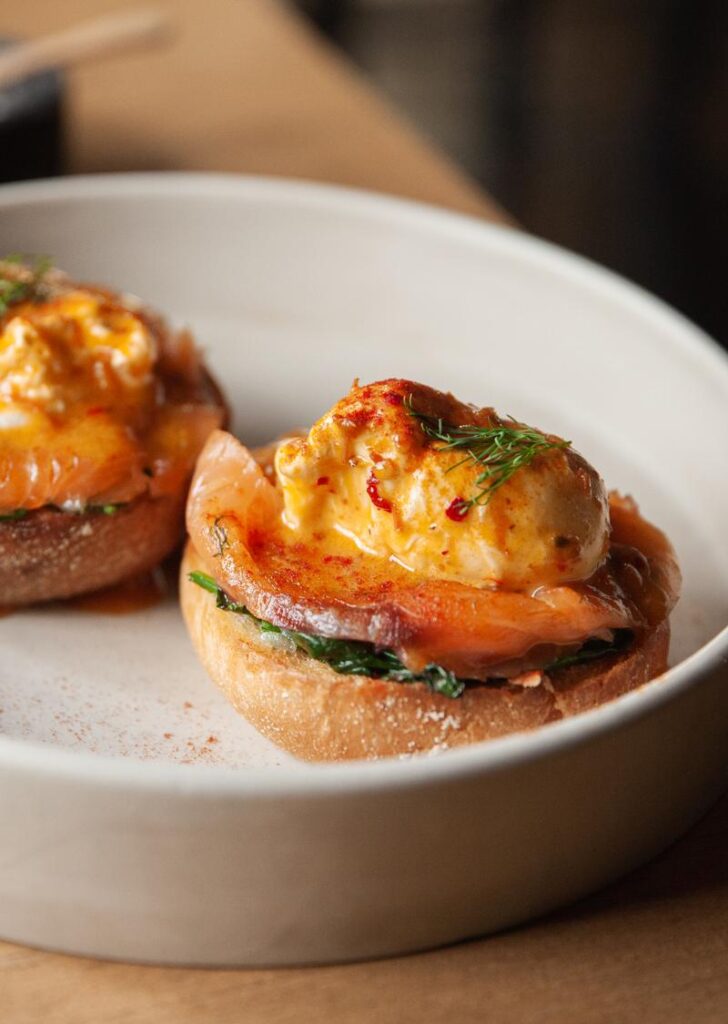
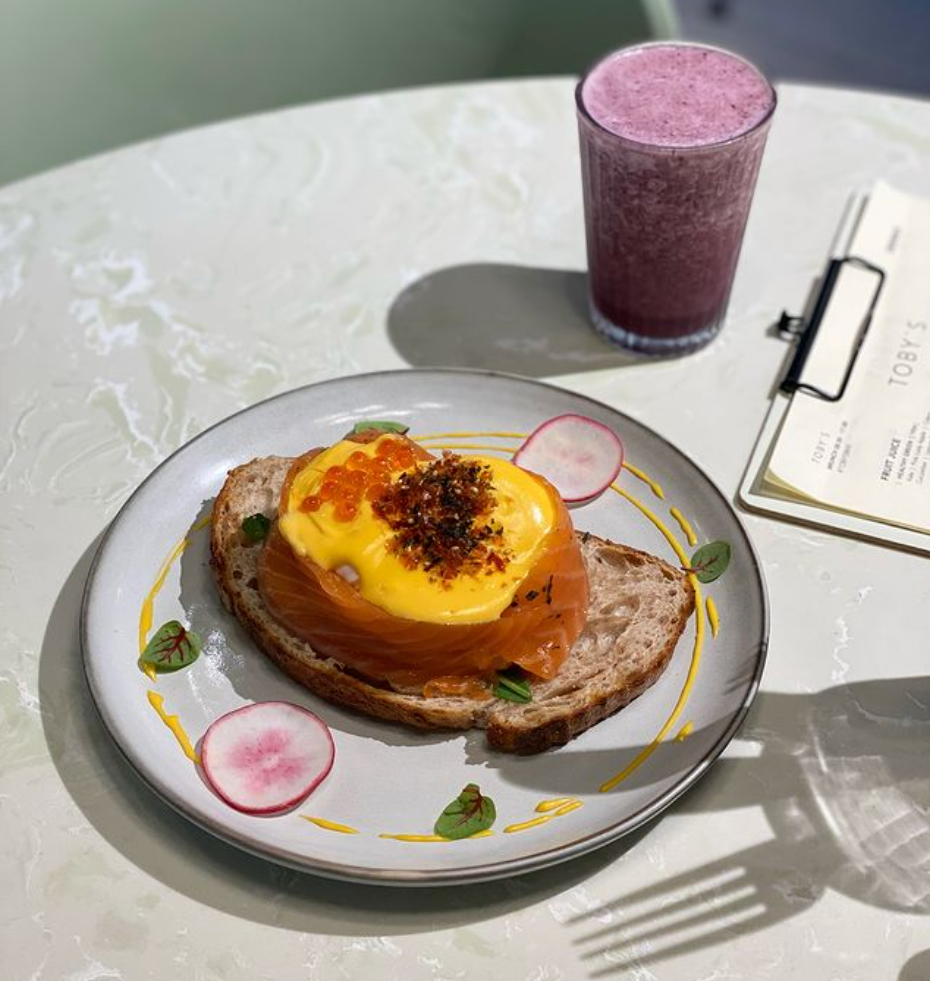
Their Egg Mikado (฿350) is good too, featuring two perfectly poached eggs, house-cured salmon, and orange hollandaise atop toasted brioche, while the breakfast bruschetta for ฿295 brings together poached egg, tomato and avocado salsa, crispy bacon and feta with the faintest nod to the South Mediterranean.
For those puritanically porcine, The Bacon Rules (yeah, it does) sees bacon served five ways – maple glazed, smoked, short cut, as a sausage and as a jam. Pork is considered a symbol of family and gathering in Thailand – could there be a better brunch dish than one that symbolises this?
For the health-conscious, their plant-based protein oat bowl stands out, while the multi-grain toast selection provides lighter options without compromising on flavour. The drinks menu deserves special mention too – beyond the excellent coffee programme, they offer creative cold-pressed juices, healthy smoothies and rich milkshakes that could easily serve as dessert.
Ideal for creative global comfort food in a dog-friendly industrial-tropical setting…
Opened in 2016, Luka epitomises modern Bangkok dining – sophisticated yet unpretentious, with an interior that marries industrial elements with tropical warmth. Think exposed brick walls softened by woven lampshades, rattan furniture, and abundant natural light. The original Silom branch, tucked away off Pan Road, provides sanctuary from the neighbourhood’s bustle, while their newer Sukhumvit 31 location extends service into dinner hours.
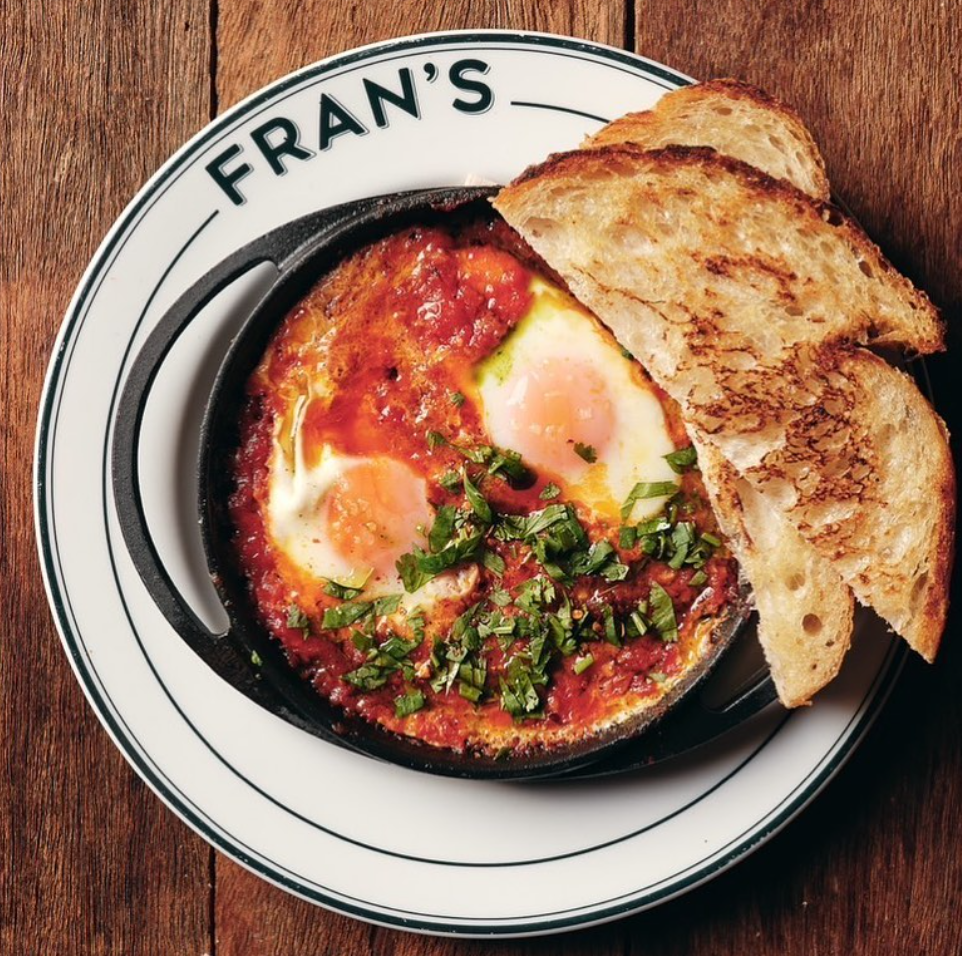
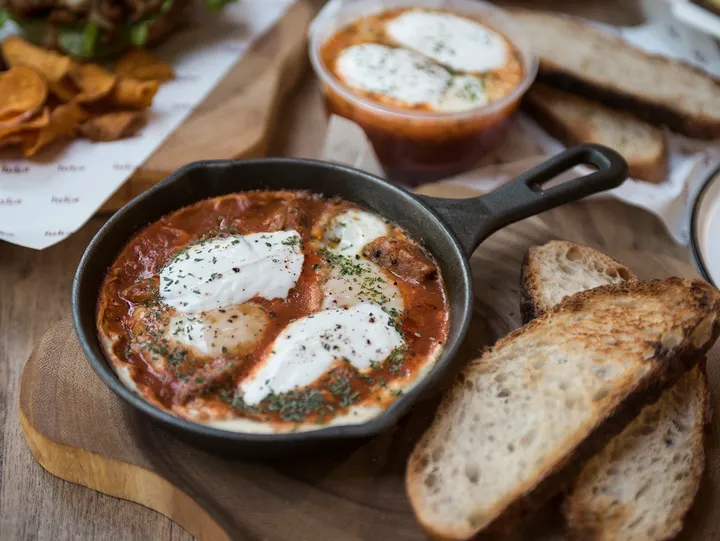
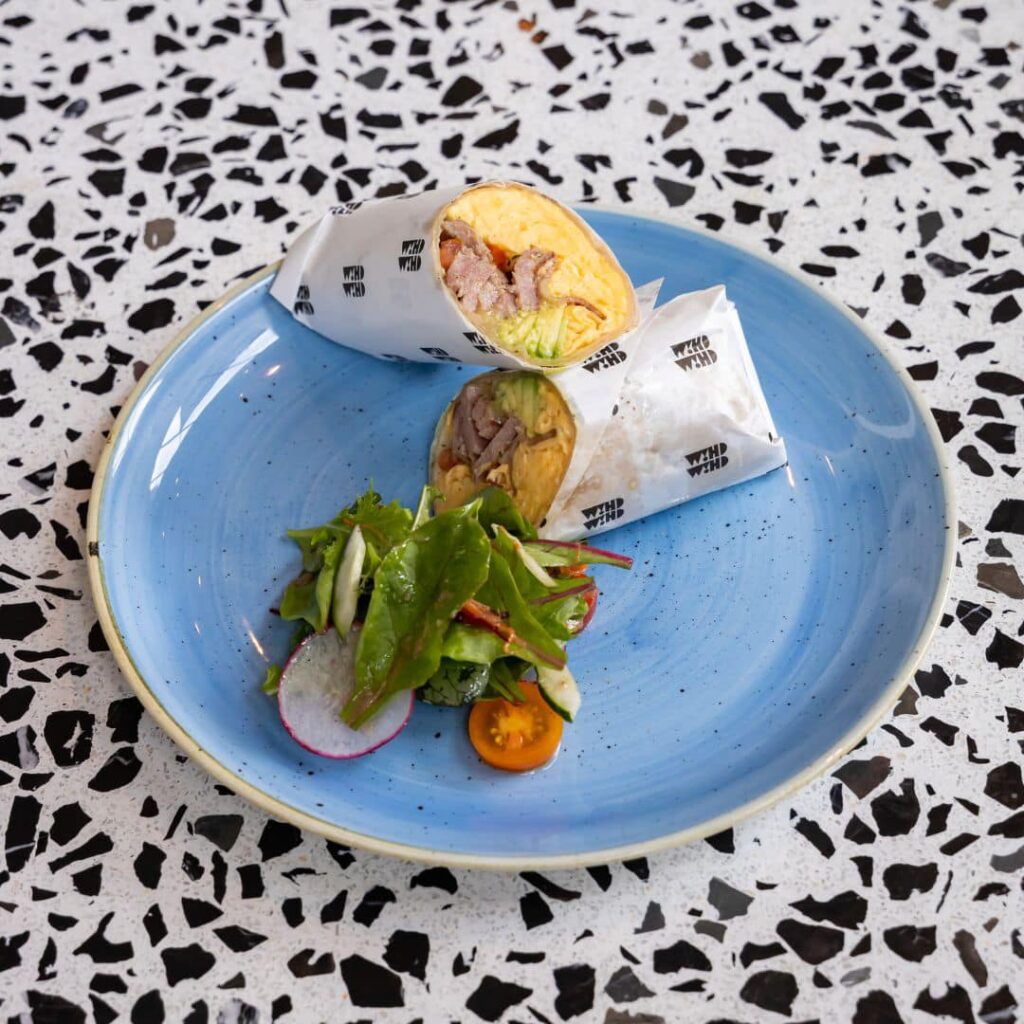
Their self-described ‘global comfort food’ takes familiar brunch classics in creative directions. The Luka Breakfast Burrito arrives generously filled with organic eggs, Sloane’s sausage, black quinoa and avocado, while their shakshuka (฿350) brings Mediterranean flair with spicy tomato gravy, Sloane’s chorizo, and Greek yoghurt, all served with grilled sourdough. The latter is a beautifully balanced affair, its spicier notes tempered by cooling yoghurt. Hmmm, could I chase my next som tam with yoghurt, too?
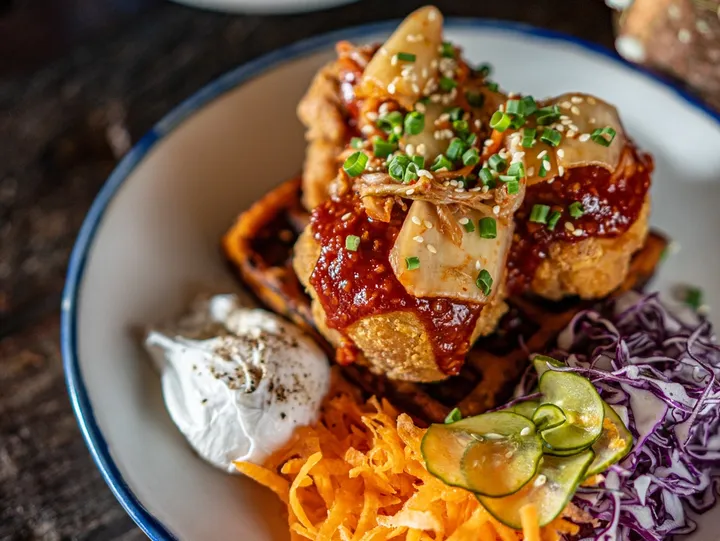
That global touch extends further outwards, still, with the Gangnam-Style Chicken & Waffle. Showcasing thoughtful fusion, it sees a kimchi waffle and gochujang ketchup bringing verve to the always-exceptional Korean fried chicken. It’s fabulous.
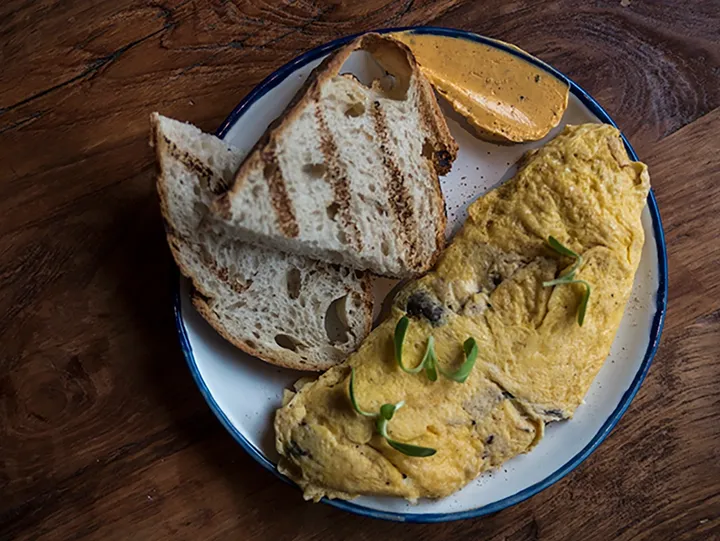
For those seeking something more delicate, the Truffle Mushroom Scramblette deserves attention. This refined take on scrambled eggs comes laden with diced mushrooms and a generous drizzle of truffle cream, all served aside grilled sourdough and a smear of herb butter. It’s a dish that manages to feel both indulgent and light at the same time, which is often what you want from your brunch, right?
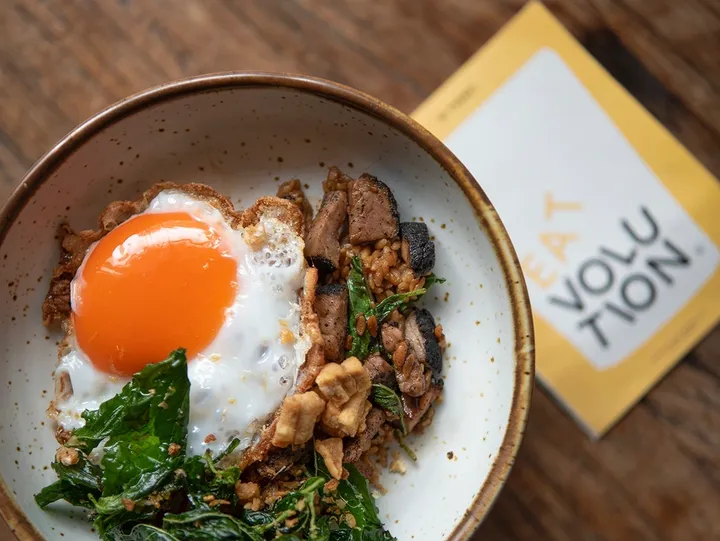
They haven’t forgotten their Bangkok roots either – the khao phad krapow neua offers a creative spin on Thailand’s beloved holy basil stir-fry. Using Eatvolution’s innovative chickpea rice as a base, it’s topped with tender slices of tenderloin, fragrant holy basil, crunchy pork crackling, and a perfectly crispy fried duck egg. Don’t worry if beef isn’t your thing – it works just as well with chicken breast.
On the other side of the calorie count, health-conscious brunchers aren’t forgotten; the açai bowl, blended with banana and coconut milk, topped with house-made granola and fresh fruit, makes virtue taste remarkable.
The drink selection spans expertly crafted coffees to fresh-pressed juices with playful names. Their baked goods deserve attention – the dense, zesty carrot cake with lemon cream cheese frosting has earned quite a following.
Ideal for quality ingredients and classic breakfasts without the Instagram theatrics…
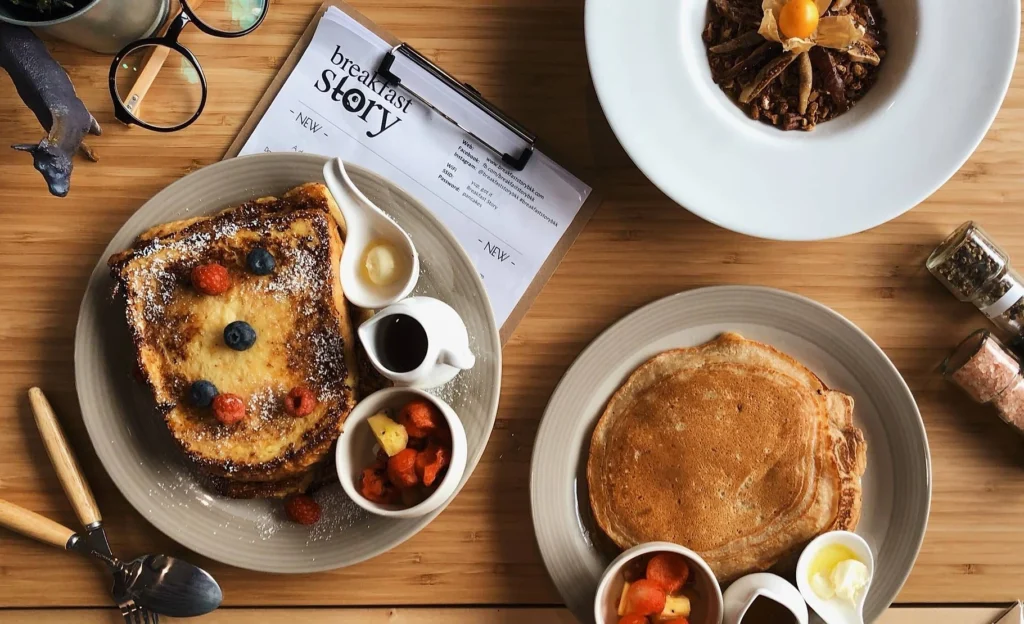
When a restaurant proclaims itself “Thailand’s first and best restaurant specialising in breakfast”, it needs to deliver ‘cause that is quite the claim. Breakfast Story doesn’t quite live up to that billing (nowhere could), but it does offer a refreshingly direct approach that prioritises quality ingredients over presentation tricks.
Starting life as a modest operation, they’ve now expanded to six locations across Bangkok, each maintaining the same dedication to breakfast fundamentals. Their Phrom Phong branch, sitting pretty on the second floor above craft beer joint Hair of the Dog, exemplifies their focused approach to morning fare.
The menu reads like a greatest hits of breakfast classics, each executed with precision and high-quality ingredients. Their eggs are organic, their butter is real, and their maple syrup comes straight from Canada. Accordingly, the full stack of pancakes are the highlight, and a steal at ฿250. Arriving golden and light, they’re a texturally satisfying tower, that’s for sure.
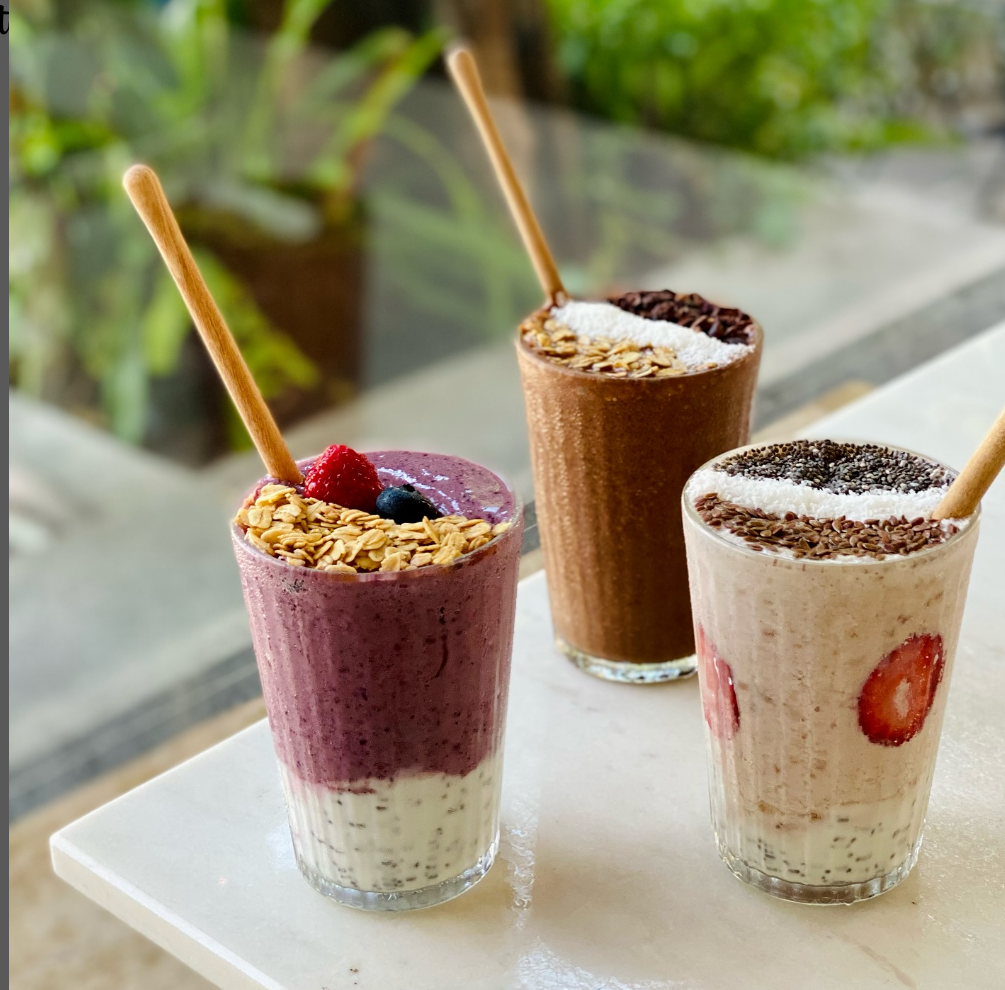
For those whose sweet tooth isn’t activated this early, Story has a range of eggs Benedict options which showcase perfectly poached eggs with silky hollandaise. For the health-conscious, their homemade granola deserves special mention, available in both ‘summer’ and ‘winter’ variations at around the ฿200 mark, served with thick Greek yoghurt and fresh fruit. The smoothie bowls, particularly the Nutty Professor priced at ฿260, provide a substantial, sumptuous yet strangely scrupulous start to the day.
Finally, the bottomless American drip coffee here remains a rare find in a city dominated by espresso-based drinks – a detail that shows they understand what makes a great American breakfast spot tick.
Ideal for art-filled brunching where pop culture meets hangover cures…
In a dining scene filled with formulaic White Cafés, Chim Chim offers something more distinctive. This design-forward space combines mid-century modern furniture with contemporary art installations – think mustard-yellow chairs, sage green panelling, and striking pop art adorning the walls. It’s a refreshing change.
Talking about refreshing and rejuvenating, the hangover brekkie at ฿425 delivers exactly what you want after a big night – two eggs any style, bacon, pancakes, mushrooms, hash browns and sourdough toast, with your choice of pork or chicken sausage. It’s the full works, but if your hangover isn’t sufficiently dusted off, then move on to their salmon Benedict, which elevates the classic with thoughtful additions like ikura and crisp hash browns. There’s a crab omelette too, which brings Thai influences to the fore with its yellow curry sauce and crispy shallot garnish.
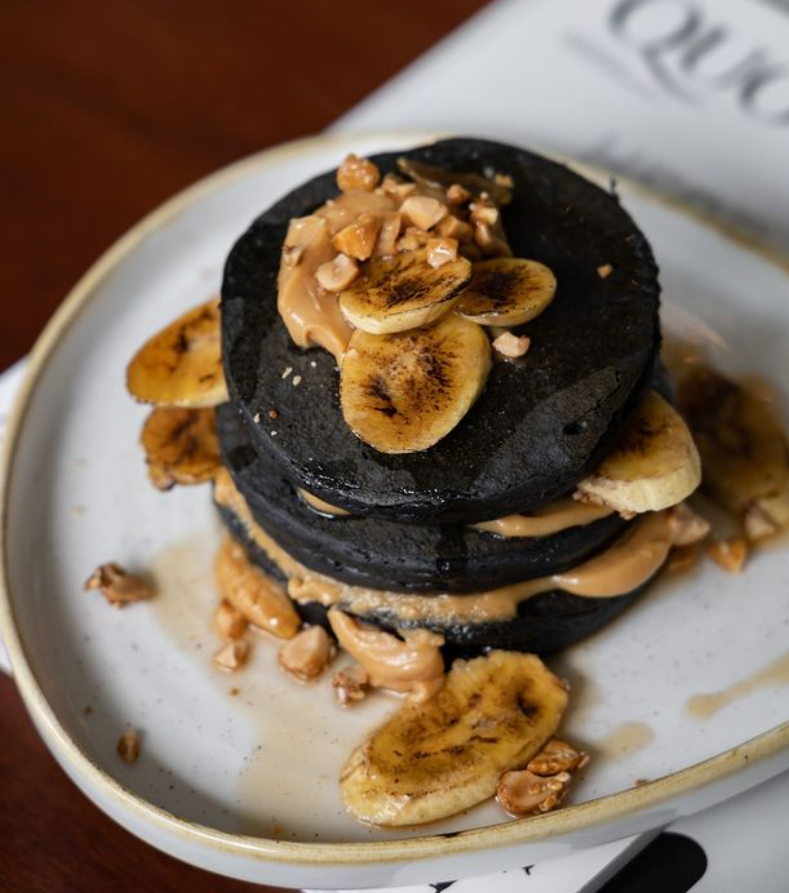
From the sugary side of the menu, the Sweet Charcoal Stax hit the spot. How could it not, when topped with caramelised grilled banana, peanut butter sauce, and candied peanuts.? Save room for yuzu meringue croissants, and then spend the day feeling very sick indeed.
The coffee programme sources beans from various Thai regions, with four different brewing methods available. Their signature coffee drinks show real invention – the Black & White combines espresso with tonic water, palm syrup and fresh mint. Their partnership with Monsoon Tea means you can enjoy exceptional wild-grown teas from northern Thailand.
Health-conscious brunchers aren’t forgotten, with the coconut chia pudding and açai bowl providing lighter options that don’t compromise on flavour or that much-needed sense of brunch-time generosity.
The Anantara Siam’s Sunday brunch has long set Bangkok’s standard. Extending from the beautiful Parichart Court through multiple dining spaces, this is less a meal and more a weekly gastronomic festival, accompanied by live jazz floating through the air and plenty of roaring, lubricated diners.
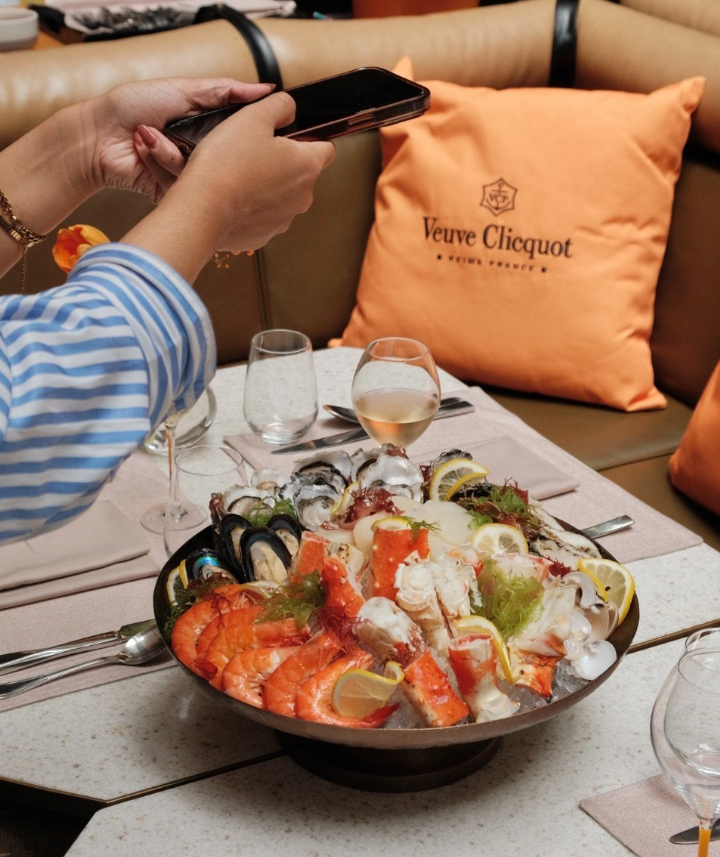
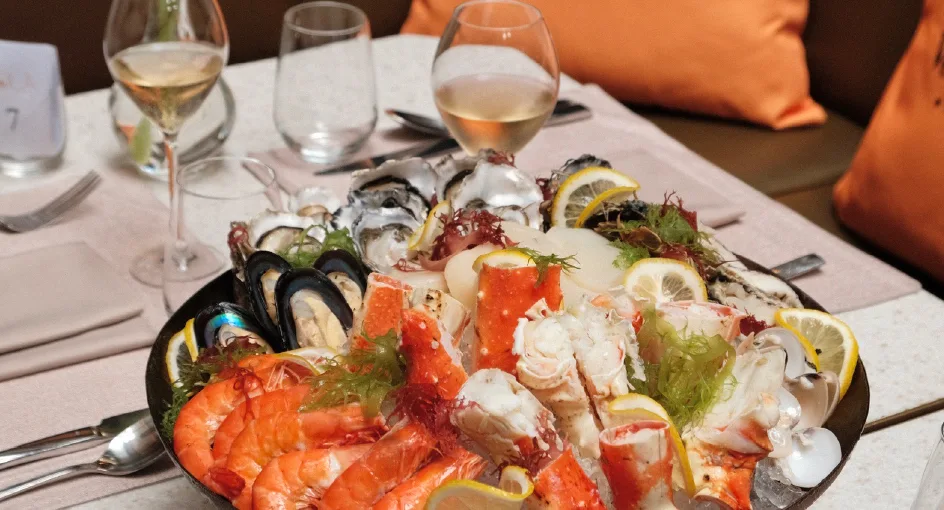
The spread is nothing short of opulent. Starting in the courtyard, where diners gather around towers of fresh seafood on ice, the feast extends through various culinary stations that span global cuisines: Latin American ceviche, Middle Eastern mezze, Indian tandoor classics, and premium Japanese sashimi all make appearances. This isn’t about quantity alone (it kinda is, let’s be honest) – each dish has been treated with respect.
The leafy courtyard setting, with its koi ponds and traditional Thai sala, provides an elegant backdrop for what becomes a sophisticated social occasion. Bangkok’s cosmopolitan crowd drifts between stations as the jazz band maintains the mood, and everything feels rather dignified before the free flow truly flows.
The Veuve Clicquot package at ฿4,700++ offers good value for those who enjoy endless premium bubbles (and heartburn) with brunch, and there’s also a non-alcoholic option (฿2,700++) for the members of the squad more focused on the food. The à la carte menu provides additional made-to-order options if the extensive buffet somehow isn’t sufficient. Though, as the old saying goes; if you’re tired of the extensive Anantara Siam buffet, you’re tired of life…
You can check out our review of the hotel’s sister place, the Anantara Riverside, here.
Ideal for a high-society spectacle with theatrical food stations…
Another one that trades on a vibe of extravagance and luxury, The W’s twice-monthly Saturday brunch transforms meals into events. Set against amber-lit mosaic walls and sleek contemporary design, this is where Bangkok’s so-called Hi-So crowd gather, for better or for worse – all while enjoying one of the city’s most theatrical brunch spreads.
The food offering here has a last days of Rome sense of occasion: 10-hour slow-smoked Wagyu brisket, Fine de Claire oysters, and a full seafood-on-ice station. Interactive elements add entertainment – pasta finished in giant parmesan wheels, croffles (croissant-waffle hybrids) pressed to order, and a ramen station serving steaming bowls of tonkotsu broth with all the trimmings.
The cheese and charcuterie selection impresses, featuring aged prosciutto di Parma alongside European cheeses from creamy brie to pungent stilton. The BBQ station delivers with glazed ham, brined and smoked whole chicken, and tender pork ribs. Christ it’s absurd in its excesses.
The dessert spread matches the ambition – everything from W’s signature egg tarts to Sicilian cannoli makes an appearance, alongside macarons and picture-perfect fruit tarts. It’s the kind of spread that demands you skip breakfast (and possibly dinner the night before).
Opening Hours: Every 1st and 3rd Saturday of the month
Price range: ฿1,672 net with soft drinks, ฿2,545 including alcoholic beverages
Bangkok’s brunch scene spans everything from modest local joints to five-star hotel extravaganzas. Book ahead for popular venues, especially on Sundays. And if you’re heading to one of the hotel brunches, arrive hungry and clear your afternoon schedule – you’ll need both the appetite and the time to do them justice.
Would you believe it, but the official definition of the UK winter doesn’t begin in earnest until 21st December! Yep, even with those temperatures dipping towards zero and the country swathed in anticyclonic gloom, it’s still only mid Autumn guys. Brace yourselves…
Phew, what a year this has been, and there’s still six weeks of it left! Lord, have mercy. But rather than invoking the assistance of the big guy (or girl) upstairs, instead, we’re taking proactive steps today to bring some positivity and hope into our lives.
The last few years have seen a huge increase in homeowners turning their hand to DIY, either out of boredom or necessity, and the final third of this year looks set to be no different. Particularly, to celebrate the change of the seasons and hopefully represent something of a new beginning, professional and budding interior designers alike are turning to colour to provide that catalyst for change.
If you’re wondering where to start, and what’s hot and what’s not, then read on. We’ve spoken to a host of experienced interior design teams about the shades of the season, and here are their top colour tips for autumn and winter 2024.
Prediction Versus Reality
Back in those heady, half-optimistic days of 2019, the Pantone Colour of the Year for 2020 was declared as ‘classic blue’.
”Classic Blue was chosen because it highlights desire for a dependable and stable foundation on which to build as we cross the threshold into a new era,” they prophesied back in December of 2019.
A dependable, stable foundation for a new era? Someone was having a laugh. But hindsight is a wonderful thing, and four years on, in these topsy turvy times – of national economic uncertainty and international, geopolitical turmoil – we need that sense of reassurance more than ever. Shades of classic blue then, particularly in the bedroom, might be a smart move, channelling interior design trends and soothing a tired soul, equally.
But should the irony of painting your bedroom walls such a strong and stable colour this year be just too jarring to bear, why not channel another big trend of 2024, and harness the power of ‘white on white’?
The interior designer Breeze Giannasio declared via Good Housekeeping that “while this might have been a sterile envelope before, it’s only getting more subtle and layered”. Hey, personally, we think that right now, evoking a sterile, clean atmosphere might be just the ticket. So, let’s talk about white…
Save A Sanctuary
In autumn and winter, with folk spending more time at home, we expect the importance of a cherished bedroom space to rise further still. Interestingly, Schemes, who supply decorative paint in Dubai, tell us that recent home decor trends in the room ‘where the magic happens’ favour whites and greys in all their unassuming, self-effacing glory.
Combining these two colours, then, is the quickest route to a calming space. White is also implicative of fresh starts, and a blank canvas for the rest of the year and beyond.
Pairing fresh white linen (always a winner) with off white walls, a dusky grey carpet paired with earthy colour accents to remind us of the outdoors – via throws or cushions – makes a gloriously steadying triumvirate, don’t you think? And that’s something we all need right now.
Dark & Dazzling Jewel Toned Interiors
This autumn-winter season, go bold by adding a rich and oh-so sophisticated palette to your home. Dark interiors have been on trend for several seasons now and when the temperature drops, there’s no better time to embrace this aesthetic.
Jewel-toned interiors are all about adding colours that are richly saturated in the same hues as gorgeous gemstones; think sapphire blue, ruby red, amethyst purple, citrine yellow, and emerald green, in particular. Just as you do with your clothes, the autumn-winter season is all about layering your interiors, so start with deep, dark wall colours then add jewel-toned accessories. Play with texture by adding soft furnishings like faux fur or velvet, which give a sheen to darker colours like sapphire and emerald green.
Bring your jewel tone to life with metallic touches which not only give a luxurious edge, but brighten up darker tones up. We’re thinking of brass lamps and candlesticks, gold trays and vases for that glamorous yet sophisticated phrasing.
Changing from a neutral to rich look can be daunting, so consider contrasting these intense colours against a neutral backdrop for best results, as some of the UK’s best current interior designers tend to advise.
Bring Yourself Back Down To Earth
As the days get colder and the nights draw in, it might be a wise move to bring the outside in, and channel the natural, earthy, warm tones of autumn in your living room.
Auburns, oranges, rust, forest green and teal are just some of our favourites from the Fall colour palette, and in lieu of crunching fallen leaves underfoot, why not herald the arrival of a new season by changing up the colourscape domestically, in the living room?
This change in palette needn’t mean repainting the walls again (you only just rendered everything white on white, after all) but rather, a change up in the finer details. Consider an accent wall in an autumnal shade; rust on white sounds kinda classy, after all. Or, introduce a piece of statement furniture; perhaps a wingback power chair in teal, sitting in a corner, sounds just the ticket?
Don’t neglect texture either, which is a mainstay of autumnal interior design. To your sofa, adding additional throws, cushions, rugs and blankets in the shades of the season will add warmth both visually and physically. We love it.
Shades Of Productivity
With more of us working from home than ever, it’s time to introduce some more permanent features to help your #WFH be as efficient and productive as it can be.
We’re here to talk colour today, so firstly, a little psychology on the subject. In general, it’s been posited by experts that colour does indeed affect behaviour, sometimes in surprising ways, with blue shades affecting your mind; yellow your emotions; red your body; and green your ‘balance’. So, rather than simply painting your home office the most productive colour (which, according to Google, is blue) you should fine-tune your decisions to match both your job’s responsibilities and your working style.
For creative work, strong shades of yellow can stimulate imagination, while more muted tones will engage a more emotional side to your work; choose wisely here for the ideal output on the page. Red encourages a certain kind of physicality (the starker, the more aggressive, generally) so if you’re working from home doing something which involves the body, such as personal training via Zoom, then definitely harness the power of rouge.
Green shades, including those autumnal hues we encouraged earlier, are calming; superb for problem solving and lateral thinking. And blue is said to invigorate mind work. Though it’s said they ‘should never be seen’ together, green and blue in your home office will likely encourage focused, balanced thinking throughout the day.
Why not harness the power of each colour in a task dependant way, with interior design flourishes which are transient and flexible; think houseplants in different shades which you can move into view as the day’s role demands it. Or, a cacophony of colour via artwork and sculpture, if you can handle the productivity overload!
Beyond the package holidays and sangria-soaked beach resorts lies a wellness landscape that’s both sophisticated and deeply rooted in centuries-old traditions of healing, from Moorish hammams to Mediterranean dietary wisdom.
The country’s year-round sunshine, dramatic coastlines and mountain ranges provide the perfect backdrop for transformation. Whether you’re drawn to cutting-edge thalassotherapy on the Mediterranean coast, serene mountain yoga in Andalusian hills, or volcanic island escapes, Spain’s wellness destinations cater to every approach to self-care.
From digital detox retreats to holistic healing, the country has firmly established itself as a European wellness powerhouse. With that in mind, here are seven of the best wellness destinations Spain has to offer right now.
Costa Blanca, Alicante
The Costa Blanca offers far more than its reputation as a package holiday destination might suggest. This stretch of Mediterranean coastline has emerged as one of Spain’s premier wellness destinations, combining therapeutic climate with serious health facilities. The region benefits from over 300 days of sunshine annually and sits within the protected Serra Gelada Natural Park, where dramatic cliffs meet pristine beaches.
The coastal air carries beneficial negative ions, whilst the region’s tradition of thalassotherapy – using seawater and marine products therapeutically – dates back decades. Modern wellness centres here integrate Eastern philosophies with Western medical advances, offering everything from intensive detox programmes to macrobiotic nutrition consultations. SHA Wellness Clinic in Albir exemplifies this approach, perched dramatically above the coast with clinical rigour that attracts serious wellness seekers from across Europe.
The area’s microclimate has long been recognised for its health benefits, particularly for respiratory conditions, whilst the Mediterranean diet practiced here provides a template for sustainable healthy eating. Hiking trails wind through protected natural areas, and the slower pace of coastal life creates an environment naturally conducive to stress reduction.
Andalusia’s Sierra De Las Nieves
Deep in Andalusia’s mountainous interior, the Sierra de Las Nieves Natural Park represents wellness tourism at its most tranquil. This UNESCO Biosphere Reserve offers something increasingly rare – genuine escape from the noise and pace of modern life, all within Spain’s borders.
The mountain landscape itself provides natural therapy. Cork oak forests, dramatic limestone peaks and crystalline streams create an environment that encourages both physical activity and mental quietude. The region’s network of hiking trails ranges from gentle walks to challenging mountain routes, whilst the clean air and altitude offer their own health benefits.
Wellness properties here tend towards intimate, boutique experiences rather than large-scale resorts. Many incorporate organic gardens, use locally sourced ingredients, and emphasise connection with nature as central to their programmes. The Asian-inspired wellness philosophies popular here – yoga, meditation, Ayurvedic treatments – feel particularly well-suited to the peaceful mountain setting.
This region delivers authenticity. You’re not in a manufactured wellness bubble; you’re in working Spanish countryside where life proceeds at a human pace. Local villages offer traditional Andalusian culture, whilst the proximity to both Marbella’s coast and Granada’s Moorish architecture means wellness seekers needn’t sacrifice cultural experiences.
Marbella & The Costa Del Sol
Marbella has long held glamorous appeal, but the town and surrounding Costa del Sol have developed into a sophisticated wellness destination that goes beyond mere luxury. The combination of Mediterranean climate, fresh seafood, golden beaches and Sierra Blanca mountain backdrop creates an environment that feels purpose-built for restoration.
The wellness scene here spans the spectrum from traditional spa treatments to cutting-edge biohacking. Thalassotherapy centres make expert use of the mineral-rich Mediterranean seawater, whilst wellness programmes often incorporate the region’s exceptional produce – olive oil, fresh fish, organic vegetables – into nutritional healing protocols. The legendary Marbella Club Hotel epitomises this sophisticated approach, where thalassotherapy meets botanical garden serenity.
Marbella’s wellness offering balances serious health focus with genuine enjoyment. You can commit fully to detox and fitness programmes without feeling you’re missing out on life’s pleasures. Beach yoga at sunrise, mountain hikes through pine forests, Mediterranean dietary principles practiced in excellent restaurants – it’s wellness integrated into an enviable lifestyle rather than separated from it.
The Costa del Sol’s year-round mild climate means outdoor activities remain accessible even in winter months. Golf courses, tennis facilities, watersports and hiking trails all contribute to an active wellness holiday, whilst the region’s established infrastructure means high standards of accommodation, cuisine and service.
Canary Islands
The Canary Islands’ subtropical climate and volcanic landscapes have made them one of Europe’s most consistent wellness destinations. These Spanish islands off Africa’s coast offer year-round warmth, dramatic natural scenery and something increasingly valuable – the freedom (an emphasis on the ‘free’ here) to create your own wellness experience through connection with nature.
Each island brings distinct character. Tenerife balances accessibility with diverse landscapes – black sand beaches, Mount Teide’s volcanic peaks, and quiet northern coastlines perfect for hiking and reflection. Lanzarote’s otherworldly volcanic terrain creates a uniquely meditative environment, whilst Fuerteventura’s endless beaches appeal to those seeking wind therapy and watersports. Either way, the Atlantic Ocean surrounding the islands offers its own therapeutic properties. Swimming in seawater provides natural resistance training, whilst the negative ions and mineral content bring documented health benefits.
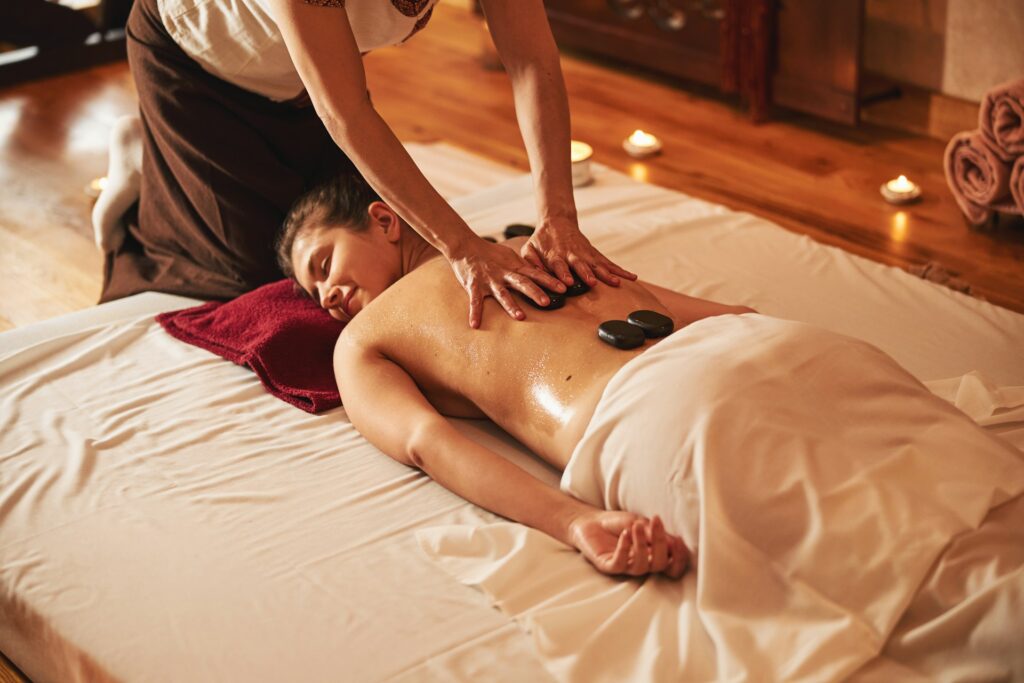
Gran Canaria offers perhaps the best all-round blend, with the spectacular Maspalomas Dunes Nature Reserve – 400 hectares of protected sand dunes, brackish lagoon and palm groves where you can walk for miles and watch migratory birds. Resorts like Abora Buenaventura by Lopesan Hotels, located on the Canary Islands, provide ideal bases for self-guided wellness exploration. Situated just minutes from the Maspalomas Dunes in Playa del Inglés, properties like this offer families and couples a relaxed environment with pools, gardens and wellness facilities such as Oriental massage centres for post-hike relaxation.
Whilst dedicated wellness resorts can command premium prices running into thousands per week, a self-guided approach to wellness in the Canaries proves significantly more affordable, allowing travellers to access the same natural therapeutic benefits at a fraction of the cost. There’s also something to be said for the juxtaposition of returning to a normal hotel after a day spent hiking volcanic trails or swimming in the Atlantic – the contrast can actually heighten your appreciation of the wellness activities themselves, rather than having everything prescribed within a retreat bubble.
Ibiza & The Balearic Islands
Ibiza’s reputation as a party island often obscures its equally significant wellness credentials. The island has long attracted those seeking alternative lifestyles and holistic healing, creating a wellness infrastructure that’s both sophisticated and wonderfully eclectic.
The northern part of the island, far from the club scene, offers pine-forested hillsides, hidden coves and a slower pace that’s perfect for yoga retreats and meditation programmes. The island’s wellness scene emphasises nutrition, with numerous centres focusing on plant-based diets, juice cleanses and the therapeutic properties of locally grown produce.
Ibiza proves particularly interesting for wellness travellers through its community aspect. The island attracts therapists, teachers and healers from around the world, creating an atmosphere of genuine knowledge-sharing rather than commercialised wellness. Sound healing, ecstatic dance, women’s circles, men’s work – you’ll find approaches here that haven’t yet hit the mainstream.
Nearby Mallorca and Menorca offer their own wellness appeal. Mallorca’s Serra de Tramuntana mountains provide spectacular hiking and cycling terrain, whilst Menorca’s quieter pace and protected biosphere status create an environment naturally suited to restoration and reflection.
Valencia & The Costa Blanca North
The region around Valencia combines Mediterranean coastline with proximity to mountain ranges, creating diverse terrain for active wellness holidays. The area has developed a reputation for fitness-focused retreats that go beyond basic beach bootcamps.
The coastline here offers everything from established beach resorts to hidden coves, whilst inland you’ll find the dramatic Picos de Europa mountains and traditional Spanish villages largely untouched by tourism. This variety means wellness programmes can incorporate beach activities, mountain hiking and cultural experiences in authentic Spanish settings.
Valencia itself brings urban wellness options – excellent markets for healthy Mediterranean ingredients, a growing yoga and Pilates scene, and the modern spa facilities you’d expect from Spain’s third-largest city. The region’s cuisine emphasises fresh seafood, paella made with local rice, and horchata – a traditional drink that’s both delicious and surprisingly nutritious.
This region succeeds through its authenticity. You’re not in a purpose-built wellness resort; you’re in real Spain where wellness activities become part of experiencing the local culture. Learning to cook authentic paella with local ingredients, hiking through mountain villages where life proceeds as it has for centuries – it’s transformative in different ways to a traditional spa retreat.
Catalonia & The Costa Brava
Catalonia’s northeastern corner combines Mediterranean coastline with forested interior, creating a wellness destination that emphasises both nature connection and cultural richness. The Costa Brava’s dramatic cliffs and hidden beaches provide stunning settings for yoga and meditation, whilst inland Catalonia offers mountain retreats and thermal springs that have been used therapeutically for centuries.
The region has developed a particularly strong reputation for wellness programmes that incorporate local food culture. Catalonian cuisine, with its emphasis on seasonal produce, olive oil and Mediterranean diet principles, becomes central to many wellness experiences here. You might find yourself foraging for wild herbs, learning traditional cooking methods, or visiting organic vineyards as part of a holistic health programme. Destinations like Camiral Golf & Wellness near Girona exemplify this integration, where wellness technologies sit alongside estate-grown produce.
Medieval villages dot the interior landscape, offering both cultural interest and peaceful bases for wellness stays. The combination of outdoor activities – cycling through forests, swimming in secluded coves, hiking coastal paths – with Catalonia’s sophisticated food scene and artistic heritage creates a wellness destination with genuine depth.
The proximity to Barcelona means easy access whilst maintaining the distance necessary for genuine retreat. You can immerse yourself in nature-based wellness programmes whilst knowing that one of Europe’s most vibrant cities sits within reach for those moments when you crave urban stimulation.
The Bottom Line
Spain’s wellness destinations reflect both ancient wisdom and contemporary understanding of what our bodies and minds need to function optimally. The country’s natural advantages – that glorious sunshine, diverse landscapes and Mediterranean lifestyle – provide an ideal foundation for any wellness escape, whether you’re seeking clinical transformation or gentle restoration.
The Canary Islands offer year-round warmth and volcanic drama, whilst mainland Spain provides everything from coastal Mediterranean beauty to mountain tranquillity. Each region brings distinct character – Andalusia’s peaceful mountains, Marbella’s sophisticated coast, Ibiza’s alternative wellness community, or Catalonia’s blend of culture and nature.
The best wellness destination isn’t necessarily the most remote or the most luxurious – it’s the one that provides the environment your particular transformation requires. Spain understands this diversity of needs, which is why it’s become such an essential part ofEurope’s wellness tourism landscape. Sometimes the greatest luxury is simply finding the right place to properly rest and reset, ideally under Spanish sunshine.
Did you know that we’ve now lost over two hours of daylight since the summer solstice, with sunset creeping ever earlier each evening? As November settles in and the clocks have fallen back, winter is well and truly on our doorstep. Now is the time to batten down the hatches and prepare our homes for the chilly season ahead. In the UK, though winter is usually just a little tedious and depressing, there are times when it can admittedly get harsher, with freezing temperatures, heavy snowfall, and biting winds.
Fear not, with a bit of preparation, you can ensure your home is cosy, safe, and energy-efficient throughout the winter months. Here’s how…
Insulate Your Home
Insulation is the key to a warm and cosy home. It’s worth checking your loft insulation to ensure it’s up to the recommended 270mm depth. If it’s not, consider topping it up. Cavity wall insulation can also make a significant difference in keeping the heat in and the cold out. Don’t forget to insulate your pipes to prevent them from freezing and bursting.
Caulking your windows and doors once a year can prevent water damage and heat loss. The necessary materials, including a caulk gun and exterior caulk, are relatively inexpensive to buy online or at your local B&Q (other hardware stores exist, etc.) and can be completed in one day.
It’s best only to caulk the outside perimeter of your doors and window moulding. Using exterior caulk will ensure the material can withstand harsh environmental conditions without shrinking or expanding as the seasons change. You’ll find the usual YouTube tutorial videos ready to offer a handy step-by-step process. Alternatively, you can speak to the experts at your local hardware store for helpful tips and guidance.
Maintain Your Fireplace
If you’re lucky enough to have a fireplace, it can be a wonderful source of warmth during the winter months. But before you’re ready to curl up with a good book in front of yours, it’s important to ensure your fireplace is properly maintained.
Have your chimney swept at least once a year to remove soot and debris, reducing the risk of chimney fires. If you have a wood-burning stove, make sure you’re using seasoned wood to minimise smoke and soot build-up. And remember; always use a fireguard to protect against flying sparks.
Check Your Central Heating System
Before the cold snap hits, it’s a good idea to get a London boiler service to ensure your heating system is working efficiently and safely. An annual service can identify potential problems before they become expensive emergencies, and it’s often a requirement to maintain your boiler warranty.
Regular maintenance also helps keep your energy bills down by ensuring your system isn’t working harder than it needs to. Of course, make sure any engineer you use is Gas Safe registered.
While you’re thinking about your heating system, it’s also worth bleeding your radiators to remove any trapped air, which can prevent them from heating up fully. If your radiators are colder at the top than the bottom, this is a sign they need bleeding.
Draught-Proof Your Home
Draughts can make your home feel colder and cause your heating system to work harder. Check for draughts around windows, doors, letterboxes, and keyholes. Draught excluders are a cheap and effective way to keep the cold air out and the warm air in.
Clear Your Gutters & Drains
Autumn leaves can block gutters and drains, leading to water damage when the rain and snow arrive. Clear them out to prevent any potential issues. While you’re at it, check your roof for any missing or loose tiles that could let in the cold, rain and snow.
Though it is a fairly rare occurrence in the UK, in case of severe weather it’s wise to have a stock of essentials at home. This includes food and drink, but also medicine and medication, in case you can’t get out for a few days.
Look Out For Your Neighbours
Winter can be a difficult time, especially for the elderly and those living alone. If you have neighbours who might need help, check in on them regularly. Offer to help with shopping or making sure their thermostat is bang on the nose, or just pop in for a chat to brighten their day.
Protect Your Garden
Though most attention falls on hygge-fying your home in time for the colder months, don’t forget about your garden when preparing for winter, either. Protect delicate plants with fleece or move them into a greenhouse if you have one. Drain and store garden hoses to prevent them from freezing and bursting. If you have a pond, consider installing a pond heater to prevent it from freezing over, which can be harmful to fish and other wildlife.
Check Your Home Insurance
Winter weather can cause all sorts of problems, from frozen pipes to storm damage. Now is a good time to check your home insurance policy to ensure you’re adequately covered for any winter-related issues. It’s also worth checking whether your policy includes home emergency cover, which could provide valuable assistance if you have a problem like a boiler breakdown.
The Bottom Line
Winter in the UK can be a challenge, but with a bit of preparation, you can ensure your home is ready to face whatever the season throws at it. So, batten down the hatches, get your home winter-ready, and enjoy the cosy nights in, safe in the knowledge that you’re well-prepared for the cold weather.
Thinking about getting a new fragrance? Us too! However, finding a perfume that you like is no mean feat. Firstly there are the notes to think about – are you a woody and spicy type of person, or are you more citrus and floral? And hands up if you actually know the difference between Eau de Toilette and Eau de Parfum?
Didn’t think so. Well, the below will serve as a great starting point to finding your IDEAL scent.
Understand Perfume Types
Before you enter into a new relationship with a perfume, you’ve got to have an understanding of how intense you want that relationship to be. Different types of perfumes provide different intensity because they differ based on oil concentration. Here’s a quick rundown of common perfume types:
Parfum, the most potent, contains 20-30% perfume oil, offering long-lasting fragrance.
Eau de Parfum, a lighter version, has 15-20% oil concentration, delivering decent longevity.
Eau de Toilette, a popular choice, contains 5-15% oil for a softer scent.
Eau de Cologne, typically masculine, has a 2-4% oil concentration, offering a light, fresh fragrance.
Lastly, Eau Fraiche, similar to Cologne, contains about 1-3% oil, but lasts for less time, typically ideal for a subtle scent.
What Smells Do You Like?
The best place to start when it comes to finding a new perfume is to consider what scents you already love. Do you like that lemongrass smell in your washing up liquid? Or perhaps you love the jasmine scent that permeates your local Thai spa? Or, does the smell of Moroccan roses still linger from a recent trip to Marrakesh? Maybe the smell of freshly cut grass or the minerally aroma of sea air does it for you?
It’s important to consider the notes when finding a new perfume. As explained by Imperial College London, “perfumes are described in terms of ‘notes’, which can be single odour ingredients, such as vanilla, musk or jasmine, as well as more generic smells like ‘floral notes’”.
Once you’ve noted down the notes that you particularly like, the New York Times recommends the site fragrantica.com – an encyclopaedic database of scents – as here you can search for perfumes with notes that you know you like.
Experiment With Fragrance Layering
Consider spraying two or more perfumes over each other to create something totally new. Layering two fragrances that you love is a good place to start. You can create a wholly unique signature scent by combining two or more of your existing products. It’s all about experimentation here, but it is a good idea to start with heavier fragrances first.
Hit The High Street
Finding an affordable fragrance isn’t always easy. However, it is easy to find a high street fragrance that smells good. Yep, high street perfumes are no longer like those sickly sweet body sprays of the 90’s which would induce a headache the moment you sprayed them on. Today they are a more refined, elegant affair and smell *seriously* expensive. all without the serious price tag.
Consider A Doppelganger Fragrance
Is there already a designer fragrance that you like, but you can’t afford the price tag?
Somehow lots of designer perfumes have sailed above the £100-a-bottle threshold, a figure that many of us mere mortals can’t justify spending. Enter doppelganger fragrances…
For dupes of designer fragrances, simply head to the olfactory department of some highstreet stores. As reported by the Independent, “should you be looking for a cheaper alternative to your favourite designer fug, TikTok has sniffed out a whole host of M&S own-brand eau de toilette fragrances that rival a range of cult classics”.
Yep, M&S’s own-brand fragrances have drawn comparisons to YSL’s black opium, Chanel no5, Marc Jacobs’s Daisy and Paco Rabanne’s Lady Million Scent, to name but a few.
Smell Better For Less
You’ll be pleased to hear that, according to scientists, spending money on expensive perfume is a waste of money as the most attractive scents are cheap and simple. Indeed, a study by the Imperial College London of more than 10,000 fragrances discovered that people prefer simple scents like jasmine musk, bergamot, sandalwood and amber, as opposed to pricier alternatives on the market.
Try It On
The most crucial part of finding your new favourite fragrance is trying it on. Perfumes interact with your individual body chemistry, altering its scent. Your skin’s pH, temperature, and natural odours can influence a perfume’s notes.
Hence, trying it on allows you to experience its unique transformation and full range of notes on your skin, providing a real understanding of its scent on you. Spray perfume on your wrist, wait for it to dry, then smell. This lets the fragrance warm up and mix with your body’s natural oils.
Free Samples
You’ve probably used tester strips at your local fragrance store or duty-free before. Sadly, you’ll rarely be able to walk away with reusable perfume samples if you’re making an in-store purchase.
If you’re keen to bring some variety to your fragrance collection, why not stock up on a few samples from an online retailer instead? Admittedly, most retailers will have a limit on how many samples a single customer can order, but it’s a great way of mixing things up if you’re not ready to splash out on a full-sized bottle of scent.
Discount Codes
Once you’ve found the perfume you like, it’s all about getting the best price. Rather than relying solely on seasonal sales, you can take advantage of discount codes throughout the year. Whether you’re looking to restock your favourite perfume or try something different from an iconic brand like Diptyque, DIOR or D&G, discount codes can net you a sizable saving. Some codes are reserved for first-time customers, while others are introduced as promotional events. It’s always a good idea to check out the promo page of an online retailer before heading to the virtual checkout.
Don’t Miss Out On Sales Events
If you’re buying online, you’ll almost always come across a sale event. That being said, don’t automatically assume you’re getting a great deal. Valentine’s Day and the Christmas period are key retail windows for the fragrance sector. While these sale prices might be competitive compared to what other retailers are charging, you might still be paying close to the original RRP. Instead, look for end-of-season sale events for the biggest savings.
Swap Out An Unloved Scent
Do you have an entire drawer dedicated to bottles of perfume that have only ever been used once? Whether they’re an unloved gift or an ill-judged purchase, there’s no reason why they should be gathering dust. If you’re looking to make some quick cash, you can sell them online. Alternatively, think about swapping your unwanted fragrances with a friend. Chances are, they’ll be in exactly the same boat. If they’ve got their eye on something you’re not using and you’re crazy about a scent they’ve fallen out of love with, everyone’s a winner!
Here’s a home truth: running a food business in today’s market requires agility, creativity, and a willingness to explore new revenue streams. Whether you’re operating a restaurant, café, or catering company, diversifying your offering can help you reach new customers, increase profitability, and build resilience against market uncertainties.
Here are 9 practical ways to diversify your food business’ offering.
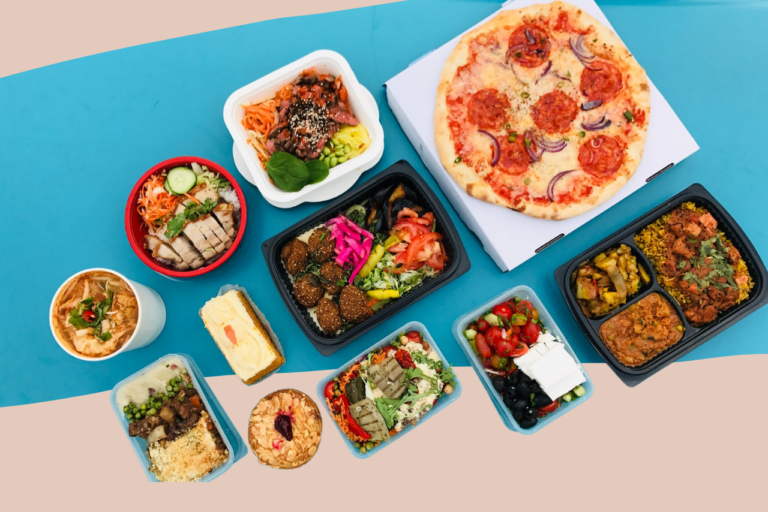
Whilst these platforms charge commission (typically 25-35%), they provide immediate access to thousands of potential customers and handle the logistics of delivery. For food businesses looking to expand their reach without significant upfront investment, third-party delivery services offer a pragmatic solution. They also provide valuable marketing exposure through their apps’ search functions and promotional features.
The key is ensuring your menu is optimised for delivery – dishes that travel well, maintain their quality, and can be packaged effectively will perform best. Consider creating a separate delivery menu that focuses on your most transportable offerings.
Build Your Own Delivery Fleet
For businesses with strong local demand, establishing an in-house delivery operation presents an alternative to third-party platforms. Branded delivery vehicles serve as moving advertisements, increasing your visibility throughout your neighbourhood whilst you maintain control over the customer experience.
Running your own fleet allows you to train drivers in your brand’s standards, ensuring they represent your business professionally. You’ll also avoid the hefty commission fees charged by delivery platforms, potentially improving your profit margins on each order.
However, this approach requires careful consideration of the costs involved. You’ll need to factor in wages, fuel, insurance premiums, vehicle maintenance, and potential legal issues such as parking fines or traffic incidents. There’s also the risk that poorly behaved drivers could damage your brand reputation. Weigh these considerations carefully before committing to your own delivery operation.
Food for thought, indeed.
Develop A Retail Product Range
Expanding into retail products like condiments, sauces, pickles, and chutneys creates a new revenue stream whilst keeping your brand in customers’ homes. The UK condiments and seasoning manufacturing market is valued at £2.6 billion in 2024, with growing consumer demand for innovative flavours and premium products driving continued growth in the sector.
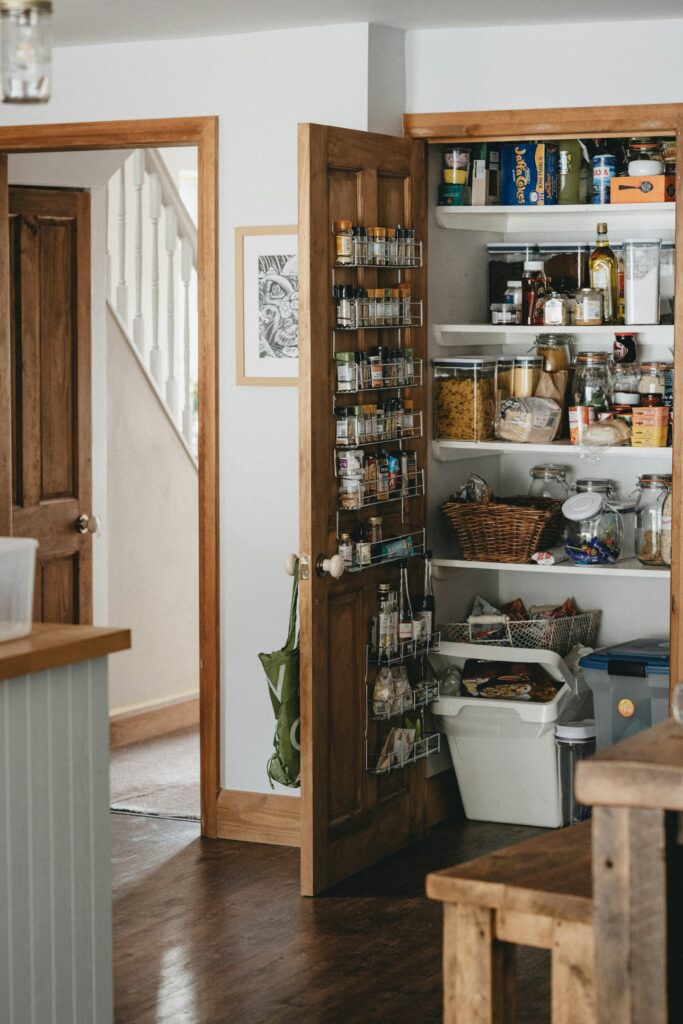
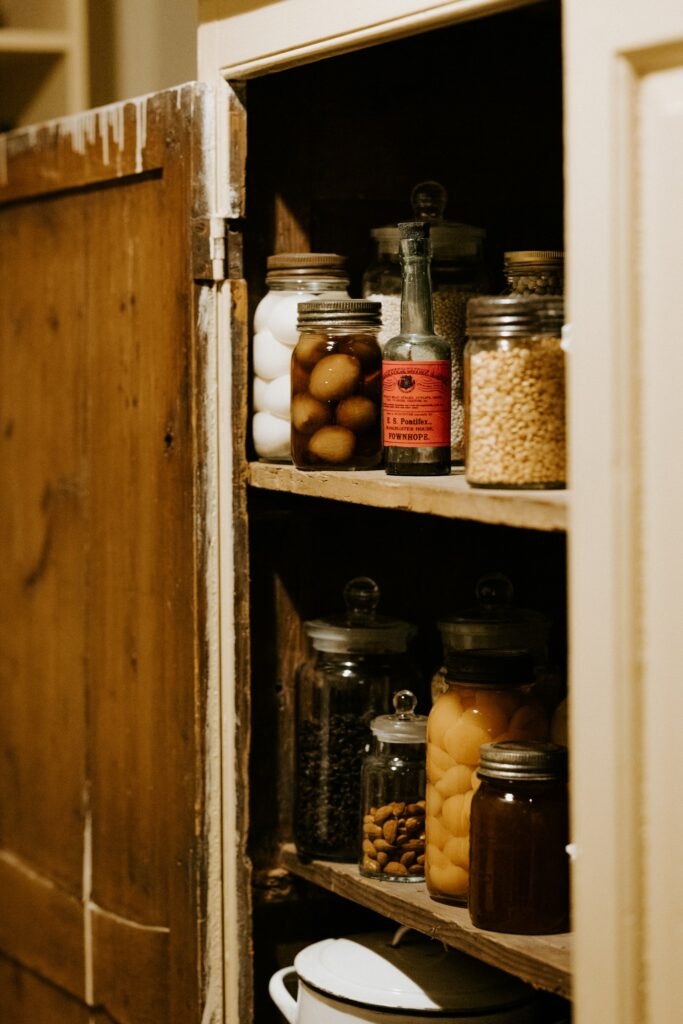
Jarred products offer several advantages. They have a longer shelf life than fresh food, reducing waste and allowing for more flexible production schedules. Every time customers reach for your chutney or hot sauce, they’re reminded of your business. These items also make excellent gifts, extending your reach through word-of-mouth recommendations.
Start by developing products that complement your existing menu – perhaps a signature sauce or a pickle that features in your most popular dishes. Once you’ve perfected your recipes, approach local delis, farm shops, and independent grocers about stocking your products. Make sure your packaging is attractive and clearly branded to maximise impact on shop shelves.
Launch Meal Kits For Home Cooking
Restaurant meal kits exploded in popularity during lockdowns and have remained a valued option for customers who want restaurant-quality food with the satisfaction of cooking it themselves. These kits contain pre-portioned ingredients and clear instructions, allowing home cooks to recreate your signature dishes in their own kitchens.
Offering nationwide delivery of meal kits allows you to expand beyond your local catchment area, introducing your brand to customers across the country. This can be particularly valuable for building a following before potentially opening new locations, or for reaching customers in areas where a physical presence wouldn’t be commercially viable.
The investment required includes appropriate food preparation equipment and a reliable delivery infrastructure that can handle temperature-controlled shipping. Using recyclable and sustainable packaging is essential, as environmentally conscious consumers increasingly factor sustainability into their purchasing decisions.
Invest In A Mobile Kitchen Or Food Truck
Mobile kitchens and food trucks transform your business into a portable brand activation opportunity. According to the Response Logistics official website, mobile kitchens offer remarkable flexibility for food businesses looking to reach customers at festivals, markets, corporate events, and pop-up locations.
A well-executed food truck operation allows you to test new markets before committing to permanent locations, cater private events, and build brand awareness in areas where your potential customers gather. The key is keeping your mobile menu focused – a smaller, streamlined offering that can be prepared efficiently in a compact space whilst maintaining your quality standards.
Food trucks also benefit from the “cool factor” associated with street food culture. They photograph well for social media and create a sense of occasion that encourages customers to share their experience online. Just ensure your vehicle’s branding is bold, clear, and consistent with your main business identity.
Supper clubs and private dining events allow you to showcase your culinary skills in intimate settings whilst charging higher prices that reflect the exclusive nature of the experience. These events can take place in your restaurant on quiet nights, in hired venues, food markets, or even in customers’ homes, depending on your business model.
Beyond the immediate revenue, these events provide invaluable opportunities to connect directly with customers, gather feedback, and build a community around your brand. They’re also highly shareable on social media, generating organic marketing content that money can’t buy.
Offer Cooking Classes & Workshops
Teaching customers how to recreate your dishes – or introducing them to new cooking techniques – diversifies your income whilst positioning you as an authority in your culinary niche. Cooking classes can be conducted in your commercial kitchen during off-peak hours, maximising the use of your space and equipment.
Classes work particularly well for businesses with a clear culinary identity or specialism. If you’re known for your pasta, run fresh pasta-making workshops. If your bakery’s sourdough draws queues, teach bread-making classes. These sessions create deeper engagement with your brand than a simple transaction ever could.
You can also explore online cooking classes, which remove geographical limitations and allow you to reach a much wider audience. The investment in basic video equipment and editing software can open up an entirely new revenue stream with relatively low ongoing costs.
Partner With Local Businesses For Catering Contracts
Securing regular catering contracts with local offices, schools, hospitals, or events venues provides predictable revenue that can smooth out the peaks and troughs of restaurant trade. These contracts often involve preparing food in bulk, which can be more efficient than individual restaurant covers.
Start by identifying businesses in your area that might benefit from your food offering. Many offices are moving away from generic sandwich platters towards more interesting catering options. Schools and nurseries often need healthy, appealing meals for children. Event spaces require reliable catering partners who can deliver consistent quality.
Approach these potential partners with a clear proposal that outlines what you can offer, your pricing structure, and your reliability credentials. Even landing one or two regular contracts can significantly improve your cash flow stability.
Create Branded Merchandise & Experiences
Beyond food itself, consider how you can extend your brand into related products and experiences. Branded merchandise like aprons, tea towels, recipe books, or even kitchenware featuring your logo can generate additional income whilst increasing brand visibility.
Some food businesses have successfully launched subscription boxes, offering monthly deliveries of curated products, ingredients, or baked goods. Others have developed branded experiences like food tours or tasting events that allow customers to engage with their brand in new ways.
The key is ensuring any diversification feels authentic to your core business. A bakery launching a cookbook makes intuitive sense; the same bakery selling unrelated merchandise would feel jarring. Stay true to your brand values and only pursue opportunities that genuinely enhance what you’re already known for.
The Bottom Line
Diversifying your food business’ offering isn’t just about chasing every possible revenue stream – it’s about strategically expanding in ways that complement your existing strengths, reach new customers, and build resilience into your business model. The most successful diversification happens when you identify what your business does exceptionally well and find new ways to deliver that value to different audiences or in different formats.
Start small, test your ideas, and listen carefully to customer feedback. Not every diversification strategy will work for every business, but by thoughtfully exploring these options, you’ll discover new opportunities for growth whilst strengthening your position in an increasingly competitive market.
If dressing up were baking, perfumes would be the icing on the cake.
Indeed, we all know what a perceptive, personal compliment ‘‘you smell nice’’ can be, denoting an intimacy and attention to detail that ‘’you look good’’ just doesn’t.
Yep, we’d go as far as to say that a person’s fragrance may accentuate their existence in our minds more so than ever their appearance, deeds or character.
However, just like that icing on top of your metaphorical cake, getting the right fragrance requires a careful consideration of various competing elements. And unless you’re fiercely loyal to a particular brand (or flavour…are we still doing the cake thing?) and that devotion dictates your shopping habits, then choosing a new scent can be tricky. To help you with that important decision, here’s our top tips on how to choose a new fragrance that’s right for you.
Review The Fragrance Notes
Perfumes come in three notes – head notes, heart notes, and base notes. Perfume companies may source from different natural elements to hit each indicator, with light, citrusy elements usually considered ‘top’, floral and aromatic compounds falling in the ‘heart ‘category, and ‘base’ notes usually composed of musky, deeper tones.
Things can get really specific here, which can be super useful if you’re looking for a truly unique scent. As an example, one of the world’s most loved fragrances, Dior Homme Parfum, boasts top notes of bergamot lavender, its heart is amber cardamom, and the perfume’s base note offers a heady mix of leather, patchouli, and vetiver. Or, take Chanel Coco Mademoiselle, which opens with top notes of orange and bergamot, transitions to heart notes of rose and jasmine, before settling into base notes of patchouli, vetiver, and vanilla. Yep, things can get very specific.
Notes in perfumery are the proportions that combine these elements to create the final fragrance, and identifying them is an intricate art. That’s why it’s often wise to defer to the fragrance notes to better understand what you’re buying. Here’s a quick summary of what the terminology refers to:
Top Notes
Top notes form a huge part of the scent a user picks immediately after application. Whilst they have a solid scent, top notes are very volatile and evaporate quickly.
Heart Notes
Also known as the main body or ‘middle’ of the perfume, heart notes play a crucial role in taking the baton from the top notes and running with it, adding extra longevity to the aroma.
Just before the top notes disappear, middle notes emerge to keep the dispersion process going. Middle notes make up a significant portion of a perfume’s chemistry – cinnamon, jasmine and anise are all common here.
Base Notes
Base notes often emerge 30 minutes after a perfume’s application. They are slow to evaporate and thus preserve a perfume’s scent after all the more convincing fragrances have relaxed a little.
It’s generally recommended to avoid placing too much emphasis on the top note, which is most discernible during a test application. Instead, it’s wise to live within any test spray for the whole day prior to purchase, to notice how a fragrance changes and develops on your skin.
Know What Concentration Is Right For You
How strong do you like your perfume? Identifying your preferred concentration level is a good starting point in choosing a new fragrance that’s right for you.
There are five main categories of fragrance, and they all come with their distinct concentration levels, among other features:
Parfum
Parfum has the highest concentration of essential perfume oils and fragrance blends. Usually, the concentration level ranges from 20% to 30%, and, in some cases, it could go up to 40%. They are dense and richer — thus, are the strongest and most expensive fragrances on the market. In most cases, parfums have a longevity of an entire day on the skin.
Eau de Parfum
Eau de parfums have a concentration level of 15 to 20%. They are less solid and long lasting than parfum and, accordingly, more affordable. They contain more alcohol and water in their fragrance blends, making them less dense. Generally speaking, an eau de parfum fragrance will last between six and eight hours.
Look for brands and shops who ensure that concentrations are clearly denoted on their bottles or website and, as such, facilitate the making of an informed decision about your next fragrance is made easier.
Eau de Toilettes
This category of perfume tends to dissipate quickly due to its high percentage of alcohol and low combinations of fragrance blends. It has a concentration level of between 5% and 15% and doesn’t last for a particularly long time; a couple of hours is standard. This means an eau de toilettes are fine for a quick top-up spritz, but won’t leave you smelling fantastic if you’re stepping out for a special occasion that lasts the whole day.
Eau de Colognes
Contrary to the popular misconception that eau de colognes is strictly for men, there are colognes for women, too. The term ‘cologne’ simply refers to the comparative lightness of fragrance concentration levels, of between 2% to 4%, present. These are comparably inexpensive and generally won’t last more than two hours after being applied to the skin.
Eau Fraiche
As its name depicts, water is the main ingredient of eau fraiche. They are often just used to freshen up the wearer and may last for a maximum of an hour.
Try Before You Buy
Exploring the perfect fragrance is a personal journey, and the best way to embark on this is by sampling. Most stores offer perfume samples or small vials, allowing you to test how a scent melds with your skin over several days. Brands may also provide discovery sets, which are curated collections of their fragrances in miniature form, giving you the opportunity to experience a variety of scents without committing to a full-size purchase.
Additionally, consider subscription services that deliver a range of perfume samples to your door monthly, enabling a continuous exploration of new and unique fragrances.
Finally, visiting a sample fragrance website allows you to explore a plethora of options, especially niche scents that might not be widely available.
When testing a new perfume, apply it to your pulse points and wear it throughout the day to observe the evolution of its notes from the initial spritz to the lingering base. Keep a fragrance journal to track your impressions, noting the scent’s longevity, sillage, and the emotions it evokes. This reflective practice will guide you to a scent that not only smells good but also resonates with your identity, ensuring your final choice is one that you’ll appreciate fully.
Beware Of Knock-Offs
The perfume industry has become a lucrative target for knock off or counterfeit products. Purchasing a fake perfume can be, at best, disappointing and, at worst, dangerous, since you’re applying it directly to your skin.
Knowing your favourite brand of perfume is one thing, but knowing if it’s authentic or not is another. Luckily, with the virtual transformation of product identification today, your phone might help you detect a knockoff.
The top notes of an authentic perfume and a rip-off might have similarities, making it hard to differentiate. Only after a few hours of wearing a particular scent might you begin to detect a more malignant profile, as the middle and base notes tell a more honest story of the perfume’s origins. Be scrupulous in your testing, sampling and wearing, to ensure you’re getting your money’s worth from your new fragrance purchase.
Let us speak as frankly as is possible with a mouth full of custard – anyone who claims that they’re “not really a dessert person” is either fibbing, a diabetic orclearly hasn’t ventured deep enough into London’s extraordinary pudding scene. From mind-bending ice cream creations to pastries that would make a Parisian develop an interiority complex, London’s pudding game is stronger than ever.
Indeed, the capital’s finest kitchens are right now turning out the kind of desserts that don’t just end a meal – they steal the show entirely. Here’s our roundup of the capital’s most iconic sweet treats, the ones that have achieved cult status and sparked countless Instagram posts and TikTok videos, but still actually, genuinely work. Trust us, these are the best desserts in London worth saving room for.
Tahini Tart at Mangal II
Ideal for a modern Middle Eastern masterpiece…
Some desserts achieve such cult status that their removal from the menu causes uproar. Or, at least, a clown on table 5 kicking off…
Such was the case with Mangal II’s tahini tart. Invented by chef Sertaç Dirik, who is hailed as one of the most talented young chefs in the capital, Mangal II’s tahini tart is one of the best desserts you’ll likely have the pleasure of eating.
Dancing right on the edge of savoury, the tahini filling is a bold flavour with a velvety sesame caramel filling that’s almost (but not quite) salty. It’s nutty and slightly bitter, with an earthy flavour but still is very much a dessert, indulgence and treat. A gorgeous cherry stone-infused cream, piped in Mangal II’s signature zig-zag aesthetic, brings an unexpected almond-like note to the proceedings.
When it briefly disappeared from the menu, the restaurant was flooded with pleas for its return. Now it’s back and arguably better than ever, with a blackberry glaze that cuts through the sweetness, proving that, sometimes, peer pressure is actually a force for good.
Whether you had a warm cup of Horlicks before bed or a mug of malty Milo in the morning as a kid, this dessert is going to hit you with a sweet dose of nostalgia.
Inspired by the deep-fried yin si juan – a type of bread roll found in fried chicken stalls across Taiwan – BAO have taken their legendary steamed buns, and given them a quick dip in the fryer until golden and crispy. The bun is then halved and stuffed with a perfectly spherical scoop of heavenly Horlicks ice cream.
Already cloud-like in its natural state, when fried the bun develops a satisfying chewy crunch while maintaining its signature fluffiness on the inside – think a freshly fried doughnut but with a distinctive BAO chewiness.
The Horlicks ice cream itself is toasty, malty and creamy, with hints of vanilla bringing that sense of luxury you want from a dessert. We love the way it slowly melts into the warm bun, creating an ever-changing textural experience (and one that gets damn messy by the end). The temperature contrast between the warm, crispy exterior and the cold, creamy centre makes each bite different from the last. There’s no elegant way to eat this. Just embrace the mess and enjoy the sweet ride.
Address: Multiple locations across London (Soho, Fitzrovia, Borough, Shoreditch, Battersea)
Madeleines at St. John
Ideal for experiencing French simplicity at its finest…
Sometimes the simplest things are the hardest to master. The madeleines at St. John prove that when something simple is done absolutely right, it needs no embellishment.
These plump little cakes arrive still warm from the oven, light as air and buttery as heaven. Yep, each batch is baked to order, ensuring you get them at their perfect peak – the golden shells still radiating warmth, with that characteristic scalloped pattern crisp and defined. You’ll have to wait fifteen minutes for the pleasure, but it’s worth it.
The recipe appears in the St. John cookbook, but achieving that exact texture – the crisp exterior, the cloud-like interior, the perfect rise, the steam rising when broken open – remains a challenge that demonstrates why sometimes it’s best to leave things to the professionals.
Ideal tip: Order the madeleines for the journey home and indulge in another masterful dessert at St John’s while actually in situ, whether a deeply warming ginger loaf with butterscotch sauce and malt ice cream, or a classic crème caramel.
Ideal for a Persian twist on the classic ice cream sandwich…
Sometimes two wonderful things come together and create something even better than the sum of their parts. Berenjak’s baklava ice cream sandwich is exactly that – a marriage of flaky filo baklava pastry and smooth vanilla ice cream that feels like it was always meant to be.
This isn’t just any old ice cream sandwich. Layers of delicate filo pastry, appropriately honey-soaked, cradle a generous scoop of ice cream made by Persian ice-cream pros Darlish, while pistachios and hazelnuts add crunch and a sense of knowing sophistication.
It’s a toothsome dessert, indeed; the baklava boasts a delightful crunch and a satisfying chewiness, while the ice cream features has just a hint of saltiness that perfectly balances the overall sweetness. And it is certainly sweet, there’s no denying…
It’s street food elevated to art form, and at £7, it’s one of the best value sugar highs in Soho. At the time of writing, it’s not on the menu at Beranjak, but you can get your Baklava Ice Cream Sandwich fix at Darlish (aka the Home of the Baklava Ice Cream Sandwich) as they supply the restaurant with this particular deep cut. They have various locations, including Spitalfields, Harpenden and St Albans. Word of warning, come winter their locations shut down. It’s a long wait ’till spring for all the dessert disciples out there. Best stock up now.
Some dishes become icons for a reason. The River Cafe’s lemon tart has been stopping conversations mid-sentence for years, and one bite tells you why. This isn’t your standard citrus tart – it’s the best one you’ll likely ever eat and for that reason, has been on the menu since the restaurant’s early days.
Most Lemon tarts aren’t zesty enough for our taste, but this one is. What distinguishes this version is its intensity and purity of flavour. Made with proper Sorrento lemons – a little different from the increasingly ubiquitous Amalfi varieties and prized for their intense fragrance – the filling captures the very essence of the fruit and is unequivocally, unapologetically lemony. Of course, in a dish so sparse and forward, the details need to be perfect: the custard is beautifully golden from careful egg sourcing and set perfectly to a gentle – rather than flamboyant – wobble, clinging to the fork like any properly made curd should.
We must also talk about the pastry. The case is a technical feat in itself – rolled whisper-thin and baked to a deep golden colour that brings out the nutty notes of the butter, it provides the perfect crisp contrast to the silky filling, while adding its own caramel notes to the overall flavour profile.
Given a kiss of flame from the wood roasted oven for that signature caramelised top, it’s the kind of dessert that makes you close your eyes and forget where you are for a moment; one bite and you’ll be transported to a sun-drenched afternoon on the Amalfi Coast. Served with creme fraiche, it’s the perfect balance of sweetness and acidity. It’s enigmatic.
The River Cafe’s lemon tart stands as a benchmark against which all others are measured, demonstrating how precision and quality of ingredients can elevate a classic into an icon. On that note, if you can’t make it out to Richmond, Theo Randall, a River Cafe alumni, serves up a stellar version at the InterContinental come Amalfi lemon season.
Ideal tip: You can buy this iconic lemon tart at River Cafe’s shop to take it away or for delivery within London. We recommend picking it up and eating it alongside the banks of the Thames, ideally with a chilled bottle of sweet late-harvest Riesling plucked from a cool bag. Yes, you’ll pay handsomely for the pleasure (for a small tart that serves 5, the cost is £35) but some experiences are worth every penny.
Ideal for a chocolate experience that will make you giddy with delight…
When a chocolate mousse quickly achieves cult status in a city full of elaborate desserts, you know it must be something special. The Parakeet’s version has done exactly that, becoming London’s most talked-about chocolate mousse through its perfect execution and curiously domestic serving style.
Served with delightful theatrical flair at the table, scooped out from the depths of a chamber pot (yes, our minds went there too) this deeply flavoured mousse is then placed atop a bed of nutty bran and oat crumb already in front of you.
It’s impossibly light – we’re talking millions of tiny bubbles creating the kind of airy texture that makes you wonder if it might float right off the plate. A good chocolate mousse is measured by the dark chocolate it uses, and they must use the good stuff here, lending a sophisticated bitterness that prevents the dessert from becoming too sweet. Each spoonful dissolves on your tongue, delivering intense chocolate flavour without any hint of heaviness. Moreover, it makes it dangerously easy to polish off the whole thing while swearing you’ll “just have one more bite”.
If you’ve never frantically phoned ahead to reserve a slice of dessert before, the brown butter and honey tart at The Marksman might well be your first time. This unassuming-looking creation has become so legendary that regulars know to book their slice before they’ve even entered the restaurant.
What makes it so special? It’s all about that perfect wobble – think moo deng captured in custard form or, as Jay Rayner put it, “the wobble and softness of a newborn’s thigh.”
It’s not just the custardy part that defines this famous tart, though. The pastry is the perfect penny-thickness, and baked to that precise moment where golden turns to mahogany, adding just a whisper of bitterness to balance the sweet. Inside, the filling is a marvel of kitchen alchemy; nut brown butter and borage honey transformed into something that makes time stand still. Only when the point of the tart starts to wobble does it snap you back into the room.
While it might look like just a tart, the first spoonful reveals caramelised notes mingling with delicate honey sweetness. A dollop of crème fraîche cuts through the richness perfectly and sends it on its way.
Ideal for a London take on distinctively Thai dessert flavours…
If you’ve been to Thailand, no doubt you’ve seen roasted or deep fried bananas being served at the side of the road, often with an overly sweet for some (probably those fibbers we mentioned in our introduction) syrup drizzled all over.
Well, the crack team at Som Saa have taken this idea and run with it to create their signature salted palm sugar ice cream and banana dessert. And, although it’s very much a novel dish rather than one that’s eaten in Thailand (most of their menu is textbook Thai), we’re endlessly thankful that they went a little off piste with this one.
The ice cream is made especially for Som Saa by the churning experts Hackney Gelato, using top shelf imported palm sugar. If you think salted caramel ice cream is good (and it is), wait until you try Som Saa’s salted palm sugar version.
The palm sugar gives it a deep, butterscotch sweetness that’s more complex than your standard caramel, while the salt is calibrated just right to make the flavours pop. But what really takes it to the next level is how they serve it – with warm banana that’s been grilled over charcoal and brushed with turmeric caramel, then finished with a scattering of toasted sesame seeds. It’s a brilliant rendition of Thai dessert flavours reimagined for London palates.
The genius of this iconic London dessert lies in how the warm, aromatic banana provides the perfect temperature contrast to the cool, creamy ice cream, while the turmeric adds an unexpected earthy note that ties everything together. It’s a soothing way to end a spicy meal, that’s for sure. This one has been on the menu since their days at Climpson’s Arch, and it’s not going anywhere – the regulars simply wouldn’t allow it.
Ideal for when classic French indulgence goes the extra mile…
In a city full of elaborate desserts, Quo Vadis’ profiteroles, or ‘les qv profiteroles au chocolat’ as they’re officially known, prove that sometimes classics are classics for a reason. They might not be reinventing the wheel here, but boy, are they making it roll smoothly.
Each choux bun is textbook perfect crisp and light on the outside, with a delicate shell that yields to reveal a centre filled with both vanilla ice cream and confectioner’s custard. Yes, both.
The crowning glory is the warm chocolate sauce which creates a perfect temperature contrast. The type of chocolate is key here – it’s dark and sophisticated, cutting through the sweetness of the filling while adding glossy drama to the plate. These profiteroles manage to provoke both childlike wonder and grown-up appreciation in those in of them – no small feat for what’s essentially a fancy cream puff. Or, profiteroles with a prize inside, as we unofficially like to call them.
The chef behind this one is the brilliant Jeremy Lee, one of London’s true pudding kings, and a huge fan of this one (even if he does say so himself). Indeed, if Lee had to pick one pudding on his menu as his favourite, it would be this one – and that’s straight out of the horse’s mouth.
Inside tip: When winter rolls around, keep an eye out for their sticky toffee pudding. Made with Agen prunes and Medjool dates, it’s another classic that’ll make you grateful for cold weather.
Ideal for a Filipino-French fusion that tastes as good as it looks…
If you’ve been anywhere near Instagram lately, you’ve probably seen this purple beauty pop up on your feed, but don’t let its lurid hue fool you. Unlike some style-over-substance social media star dishes, Donia’s ube choux is some serious pastry work masquerading as social media bait. Indeed, there’s a reason why it’s up there with the best dessert in London
Think of it as a French pastry that’s taken a delicious detour through the Philippines. The choux pastry shell is everything it should be – crisp and crackly thanks to a hazelnut craquelin crust, but it’s what’s inside that makes it special. The lilac-colored ube cream (made from purple sweet potato) is paired with cloudy coconut chantilly and ube praliné, creating something that tastes as good as it looks. The result is a masterpiece of texture and flavour – crisp shell giving way to creamy filling, with the unique, nutty sweetness of ube complemented perfectly by tropical coconut notes.
It’s a clever nod to Mamasons’ famous ube ice cream sandwiches while being entirely its own thing, and we love it.
Ideal for French toast taken to heavenly new heights…
If you think you know French toast, Jun Tanaka’s pain perdu at The Ninth will make you think again. It’s the kind of dessert that makes you realise why the French called it ‘lost bread’, because anything else you’ve tried before this will feel precisely that: lost and forgotten.
The magic lies in the preparation, which is nothing short of culinary alchemy. Premium brioche is soaked for a full day in a rich crème anglaise bath before being transformed into something that straddles the line between pudding and heaven. The exterior achieves that holy grail of dessert textures – a glass-like caramelised crust that gives way to an interior so cloud-like and buttery it defies physics.
But it’s the finishing touches that elevate this from merely excellent to unforgettable. A final sprinkle of sugar gets the blowtorch treatment, creating a crunchy, caramelised top that would make a crème brûlée jealous. Served alongside house-made tonka bean ice cream and a scattering of buttery crumble, it’s the kind of dessert that causes spoons to joust across the table.
While technically a refined French classic, there’s something disarmingly familiar about this dish. It taps into that primal memory of weekend breakfasts and treaty moments, but Tanaka has somehow managed to preserve that comfort while crafting something entirely extraordinary. What began centuries ago as a thrifty way to rescue stale bread has evolved into something truly magnificent in his hands.
Ideal forburning your mouth off with salted egg lava and not even regretting it…
This whimsical creation is the very definition of ‘save the best for last’. Pale and pristine, with a gentle blush, each dessert bun at 2 Michelin-starred A Wong arrives looking remarkably like a miniature white peach, complete with a delicate leaf garnish – a playful bit of culinary theatre that’s typical of Andrew Wong’s creative genius. But the real drama unfolds when you break into it.
These heavenly parcels harbour gooey souls of custard – golden and voluptuous with salted duck yolk. The molten centre is quite possibly the most luxurious filling you’ll ever encounter. It’s a masterclass in contrasts: salty meets sweet, liquid meets solid, and tradition meets innovation. Fair warning: approach with caution – this isn’t called a ‘lava bun’ for nothing, as many an enthusiastic diner has discovered.
Word to the wise: These beauties tend to sell out, so mentioning you’d like one when you book isn’t just advisable – it’s essential.
From perfectly executed classics to imaginative new creations, these sweet sensations have earned their place in London’s culinary hall of fame. They are London’s best desserts.
Whether you’re a dedicated dessert hunter or just someone with a sweet tooth and a sense of adventure, these puddings are worth crossing town – or even country – for.
Engagement ring shopping has evolved dramatically in recent years, with modern couples embracing new approaches that blend tradition with contemporary values. As reported by jewellery retailers across the UK, engagement ring purchases continue to remain strong, with couples increasingly prioritising sustainability, personalisation, and meaningful design over outdated conventions.
If you’ve decided it’s time to pop the question, you may be feeling a little overwhelmed by the choice available when buying an engagement ring. There once was a time where choosing an engagement ring only needed a few questions answered; white or yellow gold? Emerald or princess cut? What size? Now there are a whole host of new things you need to consider before you take the plunge and buy a ring.
When it comes to important purchases in your life, engagement rings can be one of the most stressful and exciting items you’ll ever buy, especially when combined with planning the proposal. Confidence is vital, and we’re here to help you feel less overwhelmed. With that in mind, here’s how to buy the perfect engagement ring in 2026.
Budget Expectations
There has always been conflicting information out there about how much you’re expected to spend on an engagement ring. Some say you should spend at least £3,000 and others claim it should be at £1,000, at the very least. Both figures were likely dreamt up by Big Jewellery, but there you go…
Considering that back in 2016 the average spend of an engagement ring was just £573, the increase over the past decade has been notable. However, this rise doesn’t necessarily mean people are spending more out of pocket. The introduction of lab-grown diamonds has revolutionised the market, allowing buyers to purchase larger, higher-quality stones for significantly less than natural diamonds would cost.
Don’t be sucked in by ‘average spend’ or swayed by peer pressure; the actual amount you should spend on an engagement ring is whatever you are comfortable with spending, and you should create a budget early on to understand what you can reasonably afford, whether that’s £100, £1,000 or £10,000.
Everyone’s magic number is different. Most jewellers can advise you on what options fit your budget; whether you are looking for a bespoke package or a ring you can walk away with the same day, there are engagement rings that will suit every level of funds.
The Changing Rules Of Proposals
Modern relationships are built on equality and expression, so it’s only natural that proposals reflect that too. The days of one-size-fits-all traditions are fading fast, with many couples now taking a more collaborative approach to choosing the ring and planning the moment.
For some, that means designing the ring as a team – combining ideas, trying on styles, and discussing what fits their shared aesthetic and values. For others, it’s about being part of the planning process without knowing every detail, keeping just enough surprise to make it memorable.
An engagement ring chosen together carries a sense of unity – a symbol not just of love, but of teamwork. It says, this is our story, our way. And there’s no “wrong” way to propose anymore. A quiet moment at home can be as meaningful as a mountaintop view. The key is intention, not expectation.
The Right Style
It can be stressful when choosing jewellery for someone, but it can be an extremely daunting process when it comes to the engagement ring. When someone is buying a ring, they want to be sure that the recipient will love the style. You know your partner better than you think, but we have some helpful tips:
Current jewellery: take note of what your partner already wears; what style do they choose for watches, rings, bracelets, necklaces, or earrings? Is there a pattern or particular metal they tend to go for? All of the pieces they wear daily or own will tell you what you need to know about what they like.
Take pictures: If you’re still unsure, take some pictures and show a jeweller; they will be able to spot distinctive styles that your partner likes and direct you to the closest matches in rings. And if that match just isn’t close enough, then rest assured that you can find custom engagement rings, designed to your most detailed of specifications.
Ask their friends or family: confide in your partner’s close friends or family that you plan to propose. They will be able to help you with styles and can tell you what your partner likes. If you want to keep things a surprise, be sure to swear them to secrecy.
Hints: a great way to piece together what your partner’s dream ring will look like is to pay attention to any hints they may be dropping or drop some yourself to gauge their reaction. Comment on rings you’ve seen family and friends wearing that have recently gotten engaged as a good way to get their opinions without them knowing what you’re planning.
Stone Choices
There are many choices when it comes to what stone to choose for your engagement ring, whether you’re looking for a timeless classic aesthetic or you want something more unique and elegant with a little colour.
Lab-Grown Diamonds
This earth-friendly stone is one of the most popular choices for couples in 2026, due in part to the sustainability of lab-grown diamonds as well as them having identical brilliance and fire to mined diamonds at a fraction of the cost. Indeed, according to CNBC, lab-grown diamonds are now favoured by 52% of engagement ring buyers.
Lab-grown diamonds are second to none on the hardness scale, making them extremely durable and resistant to scratches. Because they’re created in controlled environments, you can be positive they’re created in an ethical and sustainable way – the same often can’t be said for mined diamonds.
Natural Diamond
A classic choice for engagement rings, natural diamonds remain popular for those who value traditional prestige, though many couples now opt for lab-grown or synthetic varieties that offer the same beauty at a more accessible price point and with clearer ethical sourcing.
Sapphire
Sapphires have become increasingly popular since we saw one on the hand of Kate Middleton. This elegant stone is a wonderful option when you want to add a little colour to an engagement ring.
Who says your engagement ring has to be a diamond? Some clever marketing back in 1947 saw the rise of diamonds becoming the staple for engagement rings. But now, couples are choosing gemstones that mean more to them, such as sapphire engagement rings which have grown in popularity since Princess Diana, and indeed now Kate Middleton’s beautiful sapphire halo engagement ring.
Ruby
When looking for a romantic alternative, rubies are a fantastic choice. The deep red looks impressive in any setting, especially when surrounded by a halo of small clear-coloured stones.
Emerald
The unique bright colour of an emerald ring is bound to catch the attention and bring out the green envy of your partner’s friends or family.
Cut Styles
If you’re buying a ring that will hold a stone, you’re bound to be asked what style of cut you want for the stone. Surprisingly, this question stumps most people. The cut will determine the overall aesthetic of the engagement ring you buy, but we’re here to help explain some of the more popular styles of cut available:
Round: A traditional shape for engagement rings, you can’t go wrong with this look as it allows plenty of light into the stone for a fantastic sparkle.
Radiant: This cut has a square shape with cropped, flat corners. Often the cut of choice for those who prefer quirky styles.
Oval: Similar to the round shape, the oval cut allows more light to pass through for a more brilliant finish. Oval cuts were the most popular choice in 2024, according to anecdotal evidence of jewellery insiders.
Emerald: If your partner is a fan of vintage styles, the emerald cut is perfect for them. A stylish and sleek cut traditionally used for emeralds that compliments any type of stone.
Princess: A sharp, square shape, the princess cut is a popular choice for engagement rings, especially if it is accompanied by multiple stones in the same cut.
Pear: Also known as the teardrop cut, this shape is more unusual and is often thought of as a quirky take on the round or oval cut.
The Rise Of Vintage Rings
Consider buying vintage or second hand for sustainability and unique character. People increasingly value the unique character and history of antique pieces, as well as the sustainable appeal of giving existing jewellery new life.
When buying online, it’s hard to get proper advice on buying second hand engagement rings, not least that you can’t try the ring on. A trip to the jewellery Lanes of Brighton, London’s Hatton Garden or Birmingham’s Jewellery Quarter could be just the ticket on your quest to find the ideal ring for you, allowing you to sample a few before you buy.
Vintage and antique rings offer unique character that you simply can’t find in modern pieces, often featuring intricate craftsmanship and distinctive design elements from different eras. They’re also typically more affordable than buying new, and you’re giving existing jewellery new life rather than requiring new materials to be mined or manufactured.
Rings That Reflect Your Values
The ring remains the heart of the proposal, but its meaning has transformed. Modern couples are choosing designs that reflect both their style and their story.
Sustainability is a growing focus, with lab-grown diamonds and recycled metals offering a way to combine beauty with responsibility. Bespoke designs are also on the rise, giving couples the chance to weave personal touches – from hidden gemstones to engraved initials – into every detail.
It’s no longer about following trends or ticking boxes. It’s about wearing something that feels like you.
The Bottom Line
Buying an engagement ring in 2026 is about finding what feels right for you and your partner, not following outdated rules or arbitrary spending guidelines. Whether you opt for a lab-grown diamond, a colourful sapphire, a vintage treasure, or a fully bespoke creation, the most important thing is that the ring represents your unique story and values.
Take your time, do your research, communicate with your partner if that feels right for your relationship, and remember that the best engagement ring isn’t the one that costs the most – it’s the one that means the most. Because when it comes to love, there’s no right way – only your way.
And that’s what makes saying yes more beautiful than ever.
Let’s face it: flying does our skin no favours. At cruising altitude, the atmospheric pressure in an aircraft cabin hovers around 6,000-8,000 feet above sea level, creating an environment that can send even the most well-behaved complexion into a tailspin.
With humidity levels often dropping below 20% (compared to the comfortable 40-70% we’re used to on terra firma), our skin faces a perfect storm of dehydration, increased oil production, and general sensitivity. Add recycled air and pressure changes into the mix, and you’ve got a recipe for complexion chaos.
But fear not – with the right approach, you can step off your flight looking refreshed rather than frazzled. Here’s how.
Pre-Flight Preparation: Setting Your Skin Up For Success
The secret to emerging from a long-haul flight with glowing skin lies in thorough preparation. Before you even think about boarding, your skin needs to be properly cleansed and fortified against the challenges ahead. Skip the heavy foundations and powder-based products that can trap bacteria and make dehydration worse – instead, focus on creating a clean, protected canvas.
Start with a gentle, pH-balanced cleanse using micellar water. Look for ones enriched with soothing botanical extracts like chamomile or cucumber – Bioderma Sensibio H2O and La Roche-Posay’s Micellar Water Ultra are fantastic options that won’t strip your skin. Apply your cleanser with soft, biodegradable cotton pads to keep things eco-friendly.
While your skin’s still slightly damp, layer on a hydrating essence. The clever ones contain beta-glucan or polyglutamic acid, which help prep your skin for the environmental stress ahead. Think of it as giving your skin a drink before heading into a drought – you want to build up those moisture reserves with light, consecutive layers rather than slathering on heavy products that might leave you feeling clogged and uncomfortable during the flight.
During The Flight: Your In-Air Skincare Strategy
The First Hour
The first hour of your flight is crucial for establishing a protective shield against that harsh cabin environment. Think of your barrier cream as your skin’s personal bodyguard – you want one packed with ceramides, squalane, peptides, and niacinamide (Vitamin B3). These ingredients work together to create a protective veil that locks in moisture while still letting your skin breathe.
Mid-Flight Maintenance
As your journey progresses, keeping skin hydrated becomes your main mission. Forget basic thermal or rose water sprays – invest in sophisticated hydration mists that actually do something. The best ones combine different sizes of hyaluronic acid molecules with supporting acts like glycerin, beta-glucan, and panthenol. Give yourself a spritz every few hours, but here’s the catch: in super-low humidity, you need to seal that moisture in with a moisturising layer, or it might actually make things worse. Be sure to moisturise your lips too.
Approaching Landing
Now, about those sheet masks – they’ve become as common as neck pillows on long-haul flights these days. If you’re going to join the sheet mask club (and why wouldn’t you?), opt for bio-cellulose or hydrogel masks rather than basic cotton ones. They hug your face better and deliver their goodness more effectively. .
Look for ingredients like beta-glucan, different weights of sodium hyaluronate, Centella asiatica, niacinamide, and adenosine. Just remember to whip it off before it starts drying out – usually around the 20-minute mark – or it’ll start doing more harm than good.
If you’re prone to oily skin, don’t just reach for the blotting papers. Instead, pack a niacinamide-based serum to keep oil production in check, or try those clever volcanic clay-infused blotting sheets that treat while they absorb. A green tea mist can work wonders for balancing things out too.
For puffy eyes (let’s be honest, who doesn’t get them on long flights?), pack an enriched eye serum and some cooling gel patches. Indeed, long flights, lack of movement, and high-sodium snacks can lead to fluid retention and puffiness around the eyes. To tackle those dark circles that have been exacerbated by lack of sleep and dehydration, look for an under-eye mask that contains ingredients like caffeine and cucumber extract to help reduce swelling and puffiness.
Or, consider one that contains brightening agents such as vitamin C or niacinamide, as these can help to lighten dark areas and give you a more awake appearance. Pop them in your carry-on’s ice pack to make them extra refreshing. A bit of gentle massage around the eye area can help too – just be careful not to tug at the delicate skin.
Smart Packing Solutions
Getting your skincare from A to B without leaks or security hassles takes some planning. The obvious choice is a clear cosmetic case as they can make airport security a breeze. However, they tend to get a bit mucky as dirt, smudges, and residue are much more noticeable on translucent material.
Savvy travellers will of course use sustainable cosmetic bags crafted from materials like organic canvas and Fairtrade cotton, as they offer both environmental consciousness and practical functionality. Remember to put your items in a plastic bag and then transfer them to your cosmetic bag after you’ve passed security.
Or, if you’re travelling heavy, consider a bag with thoughtfully designed compartments that keep everything in its place, plus water-resistant linings and clear panels that make security checks a breeze.
Pack travel-sized products in airless pumps where possible, and keep any tools like facial rollers in medical-grade pouches to keep them clean. A neat trick is to pre-soak some cotton pads with your favourite essences or toners and seal them in small reusable bags – much easier than juggling bottles in the tiny airplane loo!
Post-Flight Recovery
Within an hour of landing, give your skin a proper reset. Start with a thorough double cleanse to get rid of all that recycled air grime, then layer on a balancing toner, vitamin C serum for brightness, and a ceramide-rich moisturiser. If it’s daytime, don’t skip the broad-spectrum SPF 50 – your skin might be more sensitive than usual after the flight.
The Bottom Line
A solid in-flight skincare routine isn’t just about vanity – it’s about protecting your skin’s barrier function and microbiome during what’s essentially a few hours in a very weird environment. Understanding what’s happening to your skin at altitude helps you prepare better and maintain its health, no matter how many time zones you cross.
Remember that everyone’s skin reacts differently to flying, so what works perfectly on one flight might need tweaking on another. Pay attention to how your skin feels and adjust accordingly. And perhaps most importantly, don’t forget to drink plenty of water – beautiful skin starts from within, even at 35,000 feet.
Often playfully dubbed the ‘city of roundabouts’, Milton Keynes might not be the first destination that springs to mind for a day out. However, this thoughtfully planned new town, with its striking modernist architecture, vast green spaces, and wealth of attractions, offers visitors a surprisingly diverse range of experiences. Here’s how to spend the perfect day in this unique Buckinghamshire destination.
A Morning Coffee
Begin your Milton Keynes adventure at the independent Bogota Coffee Company in The Hub. Housed within the city’s gleaming business district, this local favourite serves up expertly crafted speciality coffee alongside proper simple, affordable breakfast fare. The cheese and ham toastie here is particularly noteworthy (and an aboslute snip at under £3), and the flat whites rival anything you’d find in London’s trendiest coffee shops.
Once well and truly caffeinated, take a short stroll to Campbell Park, one of Milton Keynes’ crown jewels. This vast green space perfectly embodies the city’s founding principle of being a ‘forest city’, where nature and urban development exist in perfect harmony. The park’s rolling hills offer splendid views across the town, and the contemporary light pyramid sculpture provides an excellent photo opportunity against the morning sky.
Milton Keynes’ Cultural Quarter
As the day warms up, head to the heart of Milton Keynes’ cultural quarter. The MK Gallery, following its dramatic transformation, has become one of the region’s most important artistic hubs. Its striking stainless-steel exterior is a masterclass in contemporary architecture, while inside, the rotating exhibitions showcase everything from international contemporary art to local talent.
Lunch At Dipna Anand
For lunch, Eat Out MK, who provide curated eating out lists, recommend Dipna Anand Kitchen & Bar at 12th Street. This vibrant restaurant brings the authentic flavours of Punjab and South India to Milton Keynes with a modern twist. Keep things light with the vegetarian thali (£15.95) – a complete platter that showcases the kitchen’s expertise.
The thali arrives as a beautifully arranged feast: a silky paneer mattar curry sits alongside a decadently creamy dal makhani, while a verdant pool of saag aloo begs to be scooped up with fresh, buttered naan. Accompanied by aromatic pulao rice, crisp poppadoms, tangy chutneys, and their secretly-spiced raita, it’s a masterclass in thoughtful Indian cooking. The warm, attentive service and contemporary setting make this the perfect spot for a leisurely lunch break.
Post-lunch, it’s time for something altogether more exhilarating. Snozone at Xscape offers a truly unique experience – real snow skiing in the heart of Buckinghamshire. Even if you’re not hitting the slopes, the spectacle of indoor skiing is worth witnessing, and the après-ski atmosphere in the viewing gallery is infectious.
For those preferring to keep their feet firmly on the ground, the adjacent shopping district provides retail therapy at its finest. Centre:mk, with its Grade II listed shopping building, is a remarkable piece of modernist architecture that houses over 200 shops. The original design elements and soaring space-frame roof make it as much an architectural attraction as a shopping destination.
A Waterside Stroll
As day turns to evening, take a peaceful walk along the Grand Union Canal at Campbell Wharf. The recently developed marina area offers a delightful mix of narrowboats, waterside walks, and modern architecture. Time your visit right, and you’ll catch a spectacular sunset over the water.
Dinner In Style At Paris House
For dinner, book a table at Paris House, situated a 20 minute drive from the city centre in Woburn Park. This Michelin-recommended restaurant, housed in a Tudor-style building with a fascinating history (it was actually transported piece by piece from Paris in 1878), offers an exceptional fine dining experience. The tasting menu, featuring seasonal British ingredients with French flair, provides a fitting finale to your Milton Keynes adventure.
The Bottom Line
Milton Keynes defies expectations at every turn. Behind the concrete cows and roundabouts lies a city that masterfully balances urban innovation with natural beauty, cultural significance with modern entertainment. Whether you’re an art enthusiast, foodie, adventure seeker, or simply in need of a different kind of day out, Milton Keynes delivers with its own unique charm.
While it might not have the historical grandeur of Oxford or the royal connections of Windsor, Milton Keynes offers something entirely different: a vision of modern British city living that’s both ambitious and accessible. It’s a place where you can ski in the morning, view international art at lunch, and dine in pastoral splendour in the evening – how many other towns can offer that?
We’re sure you’ve all heard the one about billionaires far and wide buying up property in New Zealand in anticipation of the apocalypse? Ironic, don’t you think, that one of the last places to be inhabited by humans (none before 1300AD, apparently) will also be the last place standing when the doomsday clock finally strikes midnight?
Which, it has to be said, is looking closer than ever…
Anyway, we digress. We’re here for those inaugural visitors to the Land of the Long White Cloud (and Flat White Coffee), who are heading there for fun and frolics, curiosity and culture, rather than for self preservation. You’re our guys! And with that, here are 7 tips for first time visitors to New Zealand.
Go South For Scenery
Too many first time visitors to New Zealand make the huge mistake of focusing all of their attentions on the cosmopolitan cities of the North Island, where Auckland, Wellington and Hamilton lie. And while these places have much to offer, it’s the South Island which boasts the truly knock out, spectacular scenery for which the country is famed.
Don’t (and you won’t) miss the Southern Alps, the mountain range which runs for the length of the island and is peaked by Mount Cook (Aoraki in Maori). Scaling New Zealand’s tallest mountain will take at least three days on foot, but the more all encompassing Mount Cook National Park provides endless fantastic views and a sense of serenity you won’t find in the Northern hemisphere.
Other must sees on the Southern Island include Stewart Island, which actual, flying, pecking Kiwis call home. The Hokitika Gorge is perhaps the place which provides the most Instagram worthy shot; calm, turquoise waters surrounded by native bush; just bliss. When it’s this beautiful, you might even want to put your camera away.
We won’t cloak this in allusion or implication; New Zealand is expensive. Really expensive. There’s scant opportunity for budget backpack travel, make no mistake.
Even if you don’t stay in 5-star hotels or luxury resorts, you’re still going to be paying a premium for accommodation, sure, but most damaging to any attempt to be conservative with the coin is likely going to be eating and drinking out, which is as costly as anywhere we’ve encountered worldwide.
Activities and tours are also some of the most prohibitively expensive around, probably how and why their scenic destinations remain so well kempt and unspoilt. From getting a helicopter ride to hike Franz Josef which is one of New Zealand’s iconic glaciers, to cruising with whales in Kaikoura, experiences here don’t come cheap. If you’re to enjoy this amazing country to its full potential, then save, save, save before visiting.
Factor in transportation costs too – while Auckland car rental rates might seem steep compared to other countries, having your own wheels is often essential for reaching those remote, picture-perfect locations that make the journey worthwhile.
Recent changes to New Zealand border control mean that UK travellers will now need to obtain an NZeTA (New Zealand Electronic Travel Authority) before they travel here. Previously a ‘visa waiver’ country, UK travellers could visit the country with ease. As of October 1st 2019, these rules have changed, partly to include an eco-levy aimed at supporting conservation efforts in the country. And who can argue with that?
An NZeTA is simple to apply for online and it takes just a few minutes, though travellers should allow up to 72 hours for processing. The NZeTA costs just $17 (around £8) via the free application app, or $23 (around £11) if completed online. You will also need to pay an International Visitor Conservation and Tourism Levy (IVL) of NZD $35 when you apply.
For UK citizens, the tourist visa rules are particularly kind; you can stay in New Zealand for six months, though you will need to satisfy the Immigration Officer at the airport that you meet the criteria for visa-free entry, which includes having an onward ticket and sufficient funds to support you during your stay.
You may also need to show proof of travel insurance on arrival. One way travel insurance in NZ is popular for those looking to stick around for a while and travel the country without pressure.
The weather in New Zealand is unpredictable, to say the least. Summer occurs during our winter, and vice versa, and temperatures are generally mild, though the North is warmer and as you travel south things get cooler and in the winter can dip below freezing. Average rainfall is high all year round and the sun is surprisingly intense and unrelenting even when temperatures suggest otherwise. In short, pack for all eventualities, as you would approach a holiday in Britain.
Safety First
You’ve probably already heard; New Zealand is one of the safest places on earth, boasting a Global Peace Index value of under 1.2, which places them behind only Iceland in the world’s most peaceful destinations.
That said, it would be foolish to be totally complacent with your belongings and personal safety when travelling. Theft is unfortunately not uncommon, particularly from parked, unattended vehicles in remote settings; take normal precautions and hide belongings from view or take them with you. The same goes for hotel rooms, particularly of the budget variety; use a safe if provided or take valuables along with you for the ride.
Pack Light, Ship Smart
Whilst the temptation to pack for every conceivable weather scenario is strong, remember that New Zealand has excellent shopping options for anything you might need. Many British expats and travellers alike have discovered the convenience of UK to New Zealand parcel forwarding services when they find themselves missing specific items from home or need to receive care packages from family.
These services are particularly handy if you’re planning an extended stay or working holiday, allowing you to ship everything from favourite teatime treats to essential outdoor gear that you’d rather not lug through airports.
Time Your Visit Wisely
The peak tourist season runs from December to February (remember, that’s summer down under), when prices soar and accommodation can be scarce in popular destinations. Consider visiting during the shoulder seasons – March to May or September to November – when you’ll find more reasonable rates and fewer crowds but still enjoy relatively mild weather.
The autumn months (March to May) are particularly spectacular in regions like Central Otago, where the landscape transforms into a canvas of reds and golds. Plus, if you’re a wine enthusiast, this coincides perfectly with the grape harvest in renowned wine regions like Marlborough and Hawke’s Bay.
And with that, we hope you enjoy your trip to New Zealand just as much as we’re looking forward to hearing about it!
The clocks have gone back. The nights are darkening. And as the crisp, golden hues of autumn already threaten to turn to the silvery shiver of winter, it’s essential to remember that our hair, like our wardrobe, requires a change in routine with the shift in seasons.
With leaves turning and temperatures dipping, autumn is synonymous with dry air. This can wreak havoc on our hair, leaving it parched, frizzy, and brittle. However, fear not, for we have your winter hair care essentials covered, ensuring that you maintain luscious locks through the fall and beyond.
Deep Conditioning: Moisture Mantra
The biting winter air and indoor heating can strip your hair of its natural moisture, leaving it vulnerable to damage. Your hair’s number one companion during this season is a good deep-conditioning treatment. Preferably, opt for conditioners containing natural oils like argan, jojoba, or shea butter, which are rich in essential fatty acids. These nutrients penetrate your hair shaft, restoring and locking in the moisture, leaving your hair soft, smooth, and resilient against the harsh winter elements.
Shampooing: Less Is More
While cleanliness is critically important, over-shampooing can further dehydrate your hair. During winter, try to limit your washes to twice or thrice a week at most. This allows your scalp to maintain its natural oils, keeping your hair naturally moisturised. Invest in a sulphate-free shampoo that gently cleanses without stripping away essential oils.
Protective Styling: Shield From The Cold
Consider adopting protective hairstyles during the colder months. Classic options like braids, buns, or updos not only limit your hair’s exposure to the harsh winter elements but also help prevent tangles and breakage due to winter winds and woollen scarves.
Heat Styling: Minimise During Winter
While it’s tempting to reach for your heat styling tools when battling winter frizz, the combination of artificial heat and dry air can be particularly damaging. Instead, explore heat-free styling alternatives: twist-outs for natural waves, heatless curls using soft rollers or silk scarves, braiding damp hair for textured waves, or pin-curling for vintage-inspired bouncy curls. If you must use heated tools like straighteners, curling wands, or blow dryers, keep usage to a minimum, always apply a heat protectant spray beforehand, and keep your styling tool on the lowest effective temperature setting.
Hydrate & Nourish From Within
Topical applications are only half the battle. Hydrate and nourish your hair from within by drinking plenty of water and incorporating omega-3 fatty acids, vitamins A, C, and E, and proteins into your diet. Foods such as salmon, avocados, nuts, and seeds are a rich source of these nutrients. Consider adding a vitamin D supplement to compensate for reduced sunlight exposure.
Cold Water Rinse: The Chilling Truth
After a warm, relaxing shower, a cold water rinse might not sound appealing, especially during winter. However, finishing your wash with a cold rinse can work wonders for your hair. Cold water helps seal the hair cuticles, improving the shine and strength of your strands.
Essential Winter Hair Accessories
Invest in a silk or satin pillowcase to reduce friction and static, which can cause hair breakage while you sleep. A wide-tooth comb is perfect for detangling your hair without causing unnecessary stress. Consider wearing a silk-lined hat or beanie to protect your hair from harsh winter weather whilst preventing friction and breakage.
Scalp Care: The Root Of The Matter
Winter can exacerbate scalp issues, leading to dryness and flaking. Incorporate a weekly scalp treatment into your routine using scalp-friendly products. A gentle massage with a few drops of essential oil, like tea tree or lavender oil, can stimulate blood circulation, promote hair growth, and create an optimal environment for healthy hair. Consider using a humidifier in your bedroom to combat the drying effects of central heating.
Regular Trims: Maintain Health
Regular trims every 6-8 weeks during the winter season are crucial. This helps eliminate split ends and reduces hair breakage, leaving your locks looking fresh and healthy. If you can’t make it to the salon, read our guide on how to give yourself a successful DIY haircut at home.
Never Leave The House With Wet Hair
Going out with wet hair in freezing weather can cause it to freeze and break. Always ensure your hair is completely dry before venturing out into winter weather. If you’re in a hurry, try using microfibre towels or t-shirt drying methods, which absorb water effectively without causing excessive dryness or frizz. Consider washing your hair in the evening to allow for natural overnight drying.
The Bottom Line
Winter doesn’t need to spell disaster for your tresses. With proper care and attention, you can maintain healthy, vibrant hair throughout the coldest months. A winter-specific hair care regimen not only protects your hair from damage but also ensures it remains beautiful and manageable, even on the frostiest of days. Embrace these beauty tips just in time for party season, and let your hair shine as brightly as freshly fallen snow!