Gold chains, chunky gold rings, and iced-out items are not just simple pieces of jewellery – instead, they’ve been iconic symbols, leaving a lasting impression in fashion but, more importantly, the hip-hop community. And it’s the Cuban chain that is perhaps the most iconic of all here.
From cultural symbolism to aesthetic appeal – here’s how the Cuban link chain became one of the most iconic pieces within hip-hop culture.
The Cuban Chain’s Journey Through Time
Though somewhat mysterious, the origins of the men’s Cuban chain are believed to emerge from the 70’s hip-hop scene. Specifically from the Bronx, NY – an old-school birthday party thrown by DJ Kool Herc, a legend of hip-hop music. Following its appearance, it became a staple very quickly – soon becoming synonymous with the genre.
Others trace the birth of the staple gold Cuban chain to Miami, Florida – popular among Miami Cubans. Hence why, the Cuban chain is also known as the Miami Cuban chain. No matter its origin, this piece of jewellery remains to be an iconic piece that will make any outfit look powerful.
What Makes A Cuban Link Chain What It Is?
At its core, the Cuban chain looks different as it’s made up of round or oval interlocking links – but there’s a lot more it than this.
Beyond what you immediately see, the Cuban chain’s classic style is tightly knit, creating an illusion of a rope-like chain – giving it a bold, chunky look that stands out. The gold version, in particular, has been a consistent favourite for decades – but sterling silver, rose gold, and white gold are also popular.
Why The Cuban Chain?
It’s not just about the style; it’s about the piece of culture and history that it carries with it – proving its timelessness decades in. Beyond its strong aesthetic, it became a symbol of wealth and success – within a culture where many come from underprivileged backgrounds, wearing the Cuban chain represented the rise to wealth and success that they finally made it.
From icons like Jay Z and Notorious B.I.G to more recent artists like Drake and DJ Khaled – the style continues to be a classic within the industry. It is the perfect blend of historical significance, iconic influence, and contemporary style, making it the number-one choice in the industry.
A Symbol Of Empowerment
For many within the hip-hop community, this simple piece of jewellery is a statement and proof of empowerment. It is a symbol of the possibility of transformation – something that didn’t feel attainable to many. This chain became a significant statement that many artists and fashion icons of the tangible rewards of their success. The weight and shine of the chain proves not only the financial success but also the journey that they went on – rising above one’s circumstances.
Cuban Chains In Hip-HopSongs
The Cuban link chain isn’t just a visual motif in hip-hop culture – it’s also been immortalised in the lyrics and titles of numerous songs and albums. These mentions further cement its status as an iconic symbol within the genre.
One of the most notable references is Raekwon’s seminal album, Only Built 4 Cuban Linx…, released in 1995. This album is often hailed as a classic in the hip-hop community, and its title alone underscores the significance of the Cuban link chain. The album’s gritty, streetwise narratives and luxurious imagery perfectly encapsulate the duality of struggle and success that the Cuban chain represents.
From Kanye West’s much talked about, eventually abandoned album Yandhi, the song Cuban Link boasts a simple refrain:
“I need a new Cuban Link, I need a new Cuban Link I need a new Cuban Link, I need a new Cuban Link I need a new Cuban Link, I need a new Cuban Link I need a new Cuban Link, I need a new Cuban Link I need a new Cuban, I need a new Cuban Link”.
Yep, some might call it an obsession.
Indeed, the Cuban link chain continues to be celebrated in the music and lives of hip-hop artists, solidifying its place as an enduring emblem of the genre.
The Bottom Line
The Cuban chain continues to be one of the most popular pieces of jewellery within hip-hop culture – becoming the staple piece to many an outfit. Its unique design is recognised by many, with the weight and shine reflecting more than just its aesthetics but the true meaning of growth and perseverance that many artists within the community endure to get to the top. It’s a statement of power, strength and great taste.
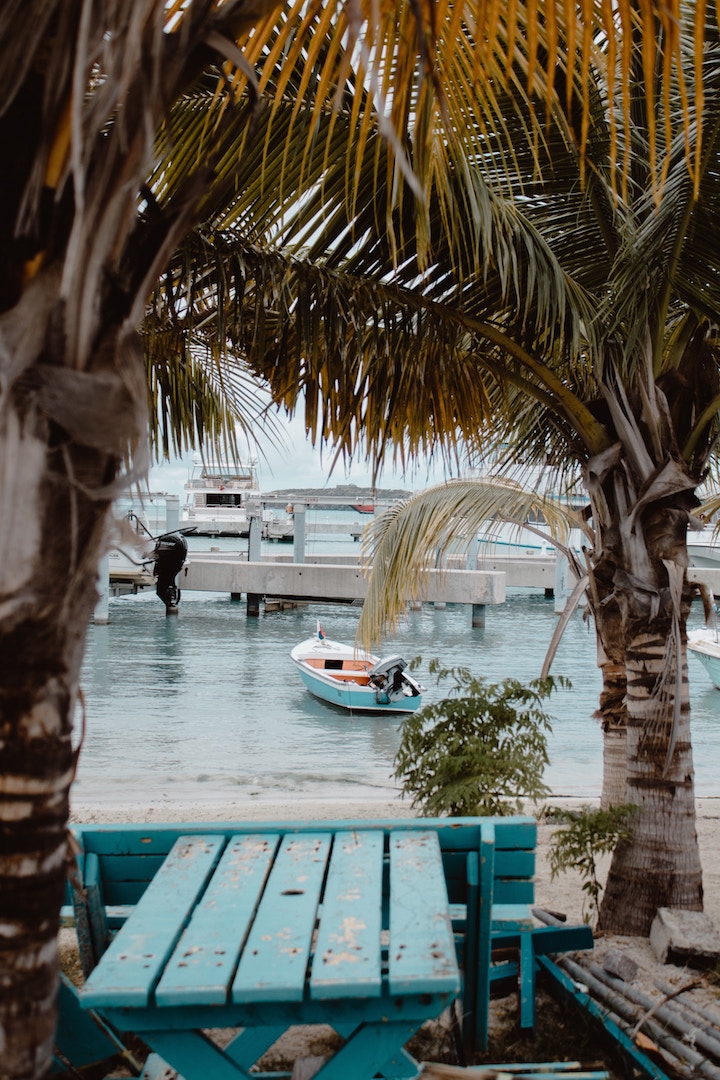
The Caribbean calls to mind the infinite possibility of golden sands, crystal clear waters and Creole cuisine. But to only allow the imagination to take you that far is to deny the other pleasures the region has to offer in abundance.
Sure, the beaches are secluded, but the ports and towns are buzzing with life and swagger. Yes, the waters are clear, but they’re also teeming with sea life rarely seen in such variety anywhere else on the planet. Of course, Creole cooking is great, but the culinary diversity of the area is greater.
But how best to experience these diverse, delectable experiences first hand? Why, on a cruise of course.With that in mind, here are 10 must visit ports for your next luxury Caribbean cruise.
Havana, Cuba
Havana, ooh na na. Sorry, we couldn’t help it. The Caribbean’s most famous city is the perfect combination of beautiful beaches, cobbled streets and underrated food. With its 1950s American cars and peeling Spanish-style buildings, it’s like being in a particularly hazy, extremely trendy Instagram shoot for your entire stay.
Old Havana is a UNESCO-protected site, with 500 year old plazas, churches and winding streets just waiting to be explored. A must on any itinerary for luxury cruises.
Charlotte Amalie, St. Thomas
The capital of the U.S Virgin Isles, the first thing that strikes you about Charlotte Amalie is the architecture, which blends its Danish colonial past with palm trees and flourishes of sunkissed colour so beloved of the region.
It’s a great place for a party; the city was formerly called ‘Taphus’ meaning ‘beer hall’, and the harbour used to be a favourite of some of the most enthusiastic drinkers in history, Blackbeard and Bluebeard. Tours of the town replete with pirate folklore are available to visitors, along with a stop off at a few watering holes along the way!
King’s Wharf, Bermuda
King’s Wharf is a popular port of call as the Royal Naval Dockyard is an expansive, six acre site and is able to receive a huge volume of tourists disembarking from the boats. In the port you’ll find the National Museum of Bermuda, an intriguing exploration of the history of the island, as well as a ferry dock which connects you to the capital of Bermuda, Hamilton City, as well as the UNESCO World Heritage Site, St. Georges. Plenty of options, then, for those wanting to get out there and explore.
Falmouth, Jamaica
Historic Falmouth is a key stop off on any Caribbean cruise tour, as it offers unique history, an interesting array of churches and Georgian architecture. The port area is recently renovated and a National Heritage site and now safeguarded by the World Monuments Fund, and is one of the most pristine places to spend some time in the whole Caribbean.
Falmouth is also the focal point of the country’s rum and sugar cane trade. While you’re here, it’d be rude not to take a rum distillery tour; the Hampden Estate is just half an hour from the port. And don’t leave without sampling the perfect amalgamation of the town’s most famous exports; the rum cake.
Montego Bay, Jamaica
Well, we couldn’t only go to just one place in Jamrock, now could we? Montego Bay is another major cruise ship port with loads to offer the intrepid (or even trepid) traveller. Referred to as the ‘Second City’, MoBay, as the locals call it, is crucial to the country’s economy, owing to the huge number of tourists it receives. As such, there’s some excellent duty free shopping options including City Centre shopping plaza and the Holiday Village Shopping centre.
If you’ve got time, then a couple of hours’ drive east, you’ll find the popular resort of Ocho Rios, which boats spectacular beaches and plenty of adventure sports.
Cozumel, Mexico
The island of Cozumel is Mexico’s gem in the Caribbean Sea; a peaceful island with some of the best scuba diving on the planet and Mayan ruins, specifically the San Gervasio Mayan Archaeological Site, offering historical intrigue. Sure, it gets busy, receiving five million visitors a year, but that’s testament to the quality of the activities on offer on the island.
Aside from the world class diving and heritage sites, the Punta Sur Ecological Park (which includes the island’s best beach) covers 2500 acres and contains a rich ecosystem, including crocodiles in the marshland, sea turtles close to the shore and exotic plants native to Cozumel. Don’t forget your camera!
Cozumel’s incredible sights and sparkling sea make it a favourite port for luxury cruises. Explora Cruises, for instance, includes a day trip to Cozumel in several of its cruise packages, allowing visitors to explore the best of what the island has to offer. Visitors can kayak through the mangroves of Cozumel, enjoy its hiking trails, and, of course, dive into its kaleidoscopic waters before sitting back and enjoying some Mezcalitos to wrap up their day.
Tucked away from the main hurricane belt in the southeastern most point of the lesser Antilles, Barbados is known across the globe for its pink-tinged beaches, luscious gardens, vibrant culinary scene and friendly locals.
Bridgetown, the capital, features a UNESCO World Heritage site, named Historic Bridgetown and its Garrison. Here you can learn the history of one of the Caribbean’s earliest established towns, and take in some of the fascinating colonial architecture. Close by is Harrison’s Cave, a natural limestone cavern which features streams, pools, stalagmites and stalactites – a wonderful way for adventure-seekers to spend a couple of hours before you get back on the boat.
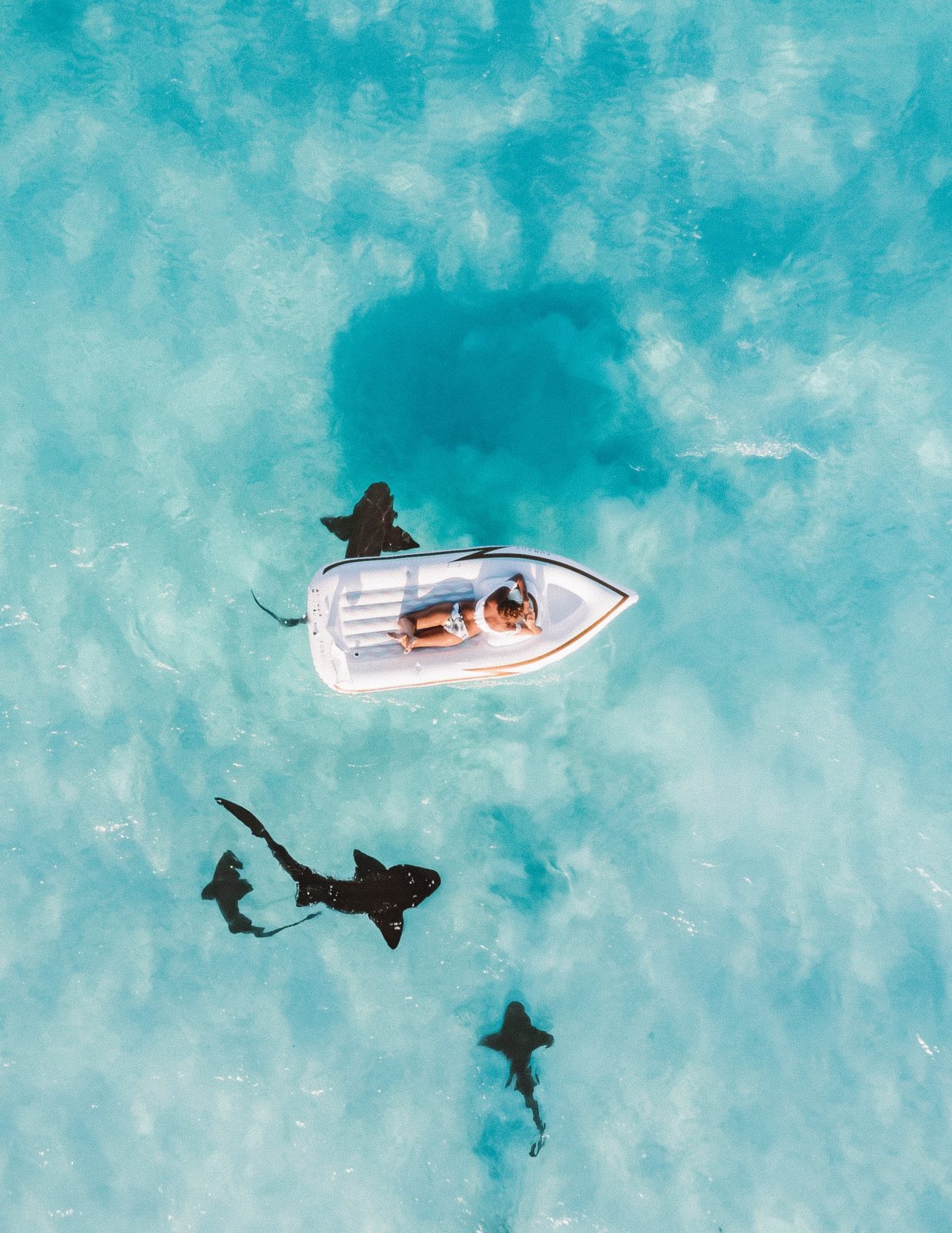
Though not a port as such (your cruise ship will drop anchor a couple of miles from shore and speedboats will ferry you into Belize City’s Fort Street Tourism Village), the chance for scuba diving and snorkelling in Belize Barrier Reef, the world’s second largest coral reef, is just too good to miss. A water taxi from the city to the famous (and frightening) Shark Alley Reef should only take about an hour and fifteen minutes. It’s not only about swimming with sharks though, the Southern stingray is an even bigger draw to scuba and snorkelling enthusiasts.
Basseterre, St. Kitts & Nevis
The capital of St. Kitts and Nevis, Basseterre, is a port of call with a difference; it’s compact, pretty and seemingly not as dwarfed by the cruise ships as some others in the region are. There’s a ramshackle, uncommercial charm to the place. With a population of just 14000, it’s a city with carries cultural capital much belying its size. The Saint Kitts Music Festival has previously hosted huge global acts John Legend and Lionel Richie, amongst many others, and several 2007 World Cricket Cup matches, too.
Virgin Gorda, The British Virgin Isles
If you’re a Virgin Gorda virgin, then fear not, you’re very much in company. However this pocket of paradise is predicted to be one of the hottest holiday destinations in the coming years, with china white sands and ecological intrigue for as far as the eye can see.
It’s home to some wonderful natural attractions, including The Baths, which is actually a boulder-strewn beach, undoubtedly the best-known landmark in Virgin Gorda, and arguably one of the most impressive land features in the entire Virgin archipelago. They’re situated on the north shore of the island and consist of enormous granite boulders (some nearly 50 feet) leaning precariously against each other.
This dramatic formation creates a seaside labyrinth, forming many sheltered sea pools along the beach that are ideal for swimming, snorkeling and exploring. Owing to its popularity with the cruise crowd, those keen for a quiter experience usually come early in the morning to avoid the crowds. If the hordes later on get too much for you, a quick walk down a well trodden path will take you to quieter beaches such as Spring Bay to offer some relief.
We’ve all heard the horror stories. In fact, we’ve all pondered their possibility whilst travelling on a particularly busy tube or packed out bus. That is, a would-be pickpocket might be moments away from taking a dinky little portable card machine, placing it somewhere near our back pocket, and draining our Monzo account of all its £8 and 99p before we alight at Cockfosters.
Where once you might expect someone to slip their hand in your pocket or, at least, distract you with a comically massive outstretched map, nowadays theft is a much more sophisticated affair. One such method is through so-called skimming – a type of electronic pickpocketing that can happen without you even realising which has grown in prominence as the use of Radio Frequency Identification (RFID) becomes more mainstream.
Understanding RFID Technology
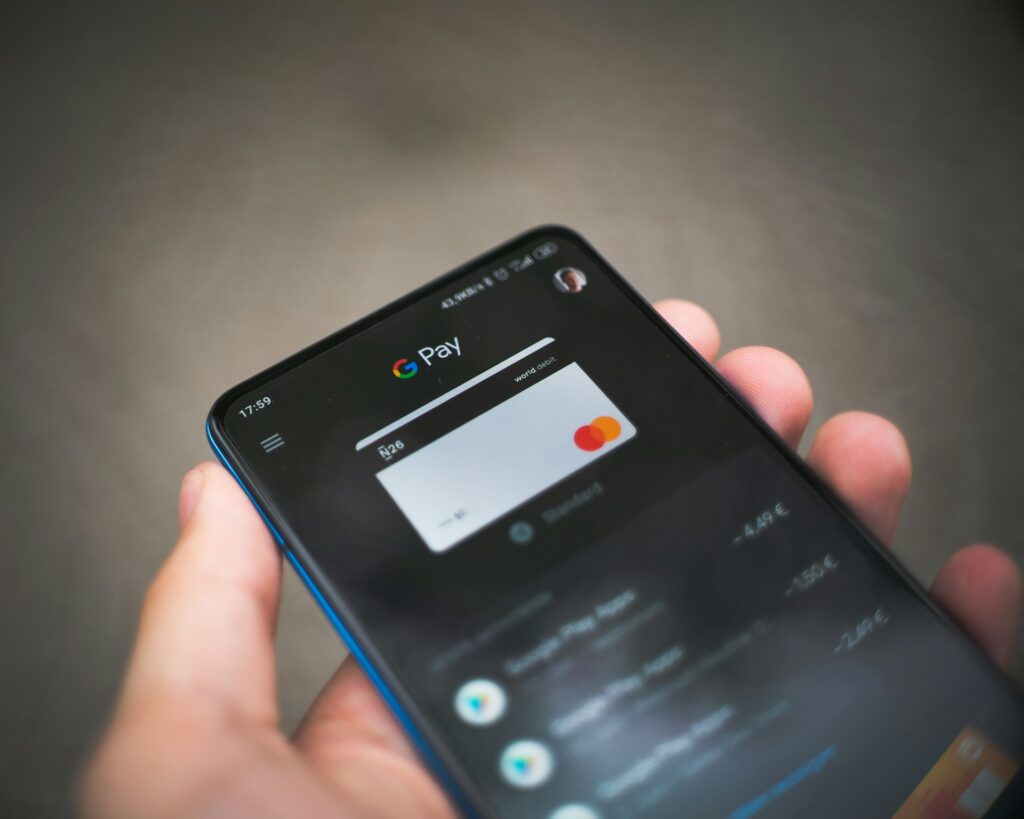
RFID technology is widely used for tracking and identification purposes in various sectors, from retail inventory systems to pet and passport chips. However, it’s also commonly found in credit cards and debit cards as a way to facilitate contactless payments. This feature allows users to tap their card on a POS terminal to make a payment, facilitating the transaction.
However, this convenience comes at a cost. RFID-enabled cards can transmit your financial details wirelessly over short distances. Typically, RFID signals can be picked up from several feet away with the right equipment – equipment that is increasingly easy for thieves to obtain and operate.
The Risk Of RFID Skimming
The primary risk associated with RFID technology in consumer products, like credit and debit cards, is unauthorised skimming. Skimmers equipped with RFID readers can stealthily scan wallets and purses from a distance, capturing data from RFID-enabled cards. The thief can then replicate your card details onto another card or use them for online purchases, all without the original card ever leaving your possession.
How To Protect Yourself From RFID
Thankfully, there are several effective steps you can take to protect yourself from RFID skimming:
Use Secure Wallet Solutions
Invest in a specifically designed anti-RFID wallet or cardholder that blocks RFID signals. Here are some key features to look for:
Material: Ensure the wallet is made from materials like aluminium (you could alternatively just wrap your wallet in aluminium foil!), carbon fibre, or specially designed RFID-blocking fabrics that can effectively block RFID signals.
Design: Choose a wallet that fully encloses your cards. Some wallets have open slots that may not provide complete protection.
Capacity: Select a wallet that fits your needs in terms of the number of cards and other items you carry. Overstuffed wallets can sometimes compromise the effectiveness of RFID blocking.
Brand Reputation: Opt for reputable brands like Secrid, Ridge, or Ekster, which are known for their quality and effectiveness in RFID protection.
Use RFID Blocking Sleeves
If you prefer to keep your current wallet, consider using RFID blocking sleeves for individual cards. These sleeves are typically made from materials that block RFID signals and can be a cost-effective solution.
Ease of Use: Ensure the sleeves are easy to insert and remove from your wallet.
Durability: Look for sleeves that are durable and won’t wear out quickly with regular use.
Be Conscious of Your Surroundings
While RFID skimming can happen without physical contact, being aware of your environment can still help mitigate risks:
Crowded Areas: Be extra vigilant in crowded places like markets, public transportation, or festivals where skimmers can operate more freely.
Proximity Awareness: Be cautious of people standing unusually close to you, especially if they are holding devices that could potentially be RFID readers.
Disable RFID Functionality
Some cards allow you to disable the RFID functionality. Contact your card issuer to see if this is an option for your cards. Alternatively, you can request non-RFID enabled cards if you don’t frequently use contactless payments.
Use RFID Blocking Cards
RFID blocking cards are another effective solution. These cards emit a scrambling signal that prevents RFID readers from accessing your card information.
Placement: Place the blocking card next to your RFID-enabled cards in your wallet for optimal protection.
Effectiveness: Ensure the blocking card is from a reputable manufacturer and has been tested for effectiveness – many debate whether they’re actually necessary.
Regularly Update Your Cards
Technology evolves, and so do security measures. Regularly updating your cards can ensure you benefit from the latest security features.
Newer Cards: Newer cards often come with enhanced security features, including better encryption and more secure RFID technology.
Bank Policies: Stay informed about your bank’s policies and updates regarding card security.
Secure Online Usage
While this tip is more general, it’s still crucial in the context of protecting your financial information:
VPNs: Use a Virtual Private Network (VPN) when accessing the internet on public Wi-Fi to encrypt your data.
Secure Websites: Ensure the websites you use for transactions are secure (look for “https” in the URL).
Regularly monitoring your bank statements and transaction history can help you quickly identify and address any unauthorised activity.
Bank Alerts: Set up alerts for transactions over a certain amount or for any online purchases.
Mobile Apps: Use your bank’s mobile app to frequently check your account activity and report any suspicious transactions immediately.
Use A Faraday Cage
A Faraday cage is an enclosure used to block electromagnetic fields. You can purchase small Faraday pouches or bags designed to hold your wallet or individual cards.
Effectiveness: These pouches are highly effective at blocking all types of RFID signals.
Portability: They are portable and can be easily carried in your bag or pocket.
By implementing these detailed and specific measures, you can significantly reduce the risk of falling victim to RFID skimming and protect your financial information more effectively.
The Bottom Line
While the conveniences of modern technology can offer numerous benefits, they can also bring new challenges in terms of security – particularly financial security against digital theft like RFID skimming. By understanding these risks and taking proactive measures, you can protect yourself from becoming a victim of digital theft.
It is essential to stay informed about the latest advancements in digital safety technologies and keep adapting our security measures accordingly. Remember, prevention is always better than cure when it comes to safeguarding your personal information against potential digital threats.
*The efficacy of RFID blocking technology is strongly contested. While many products claim to offer protection against RFID skimming, the actual effectiveness can vary. It is important to conduct your own research and consider multiple security measures to protect your financial information.*
We love Bangkok. We love the cut and thrust, the to and fro, the hustle and bustle of one of the world’s most exhilarating cities. We love how it’s always on, there’s always something going on, and it’s almost impossible to get bored here. “When you’re tired of Bangkok, you’re tired of life”, as someone so sagely once said.
But sometimes, you do get tired of gallivanting around, of taking a two hour journey in search of Bangkok’s best phad Thai or bouncing from shopping mall to shopping mall hoping for a spark. When that feeling hits, rest assured there are some fantastic getaways only a couple of hours away that promise sand, serenity and Singha.
With that in mind, here are 7 must-visit beaches where you can unwind and experience the natural beauty of Thailand only a couple of hours from Bangkok.
Hua Hin Beach
Distance/Time from Bangkok: Approximately 3 hours by car.
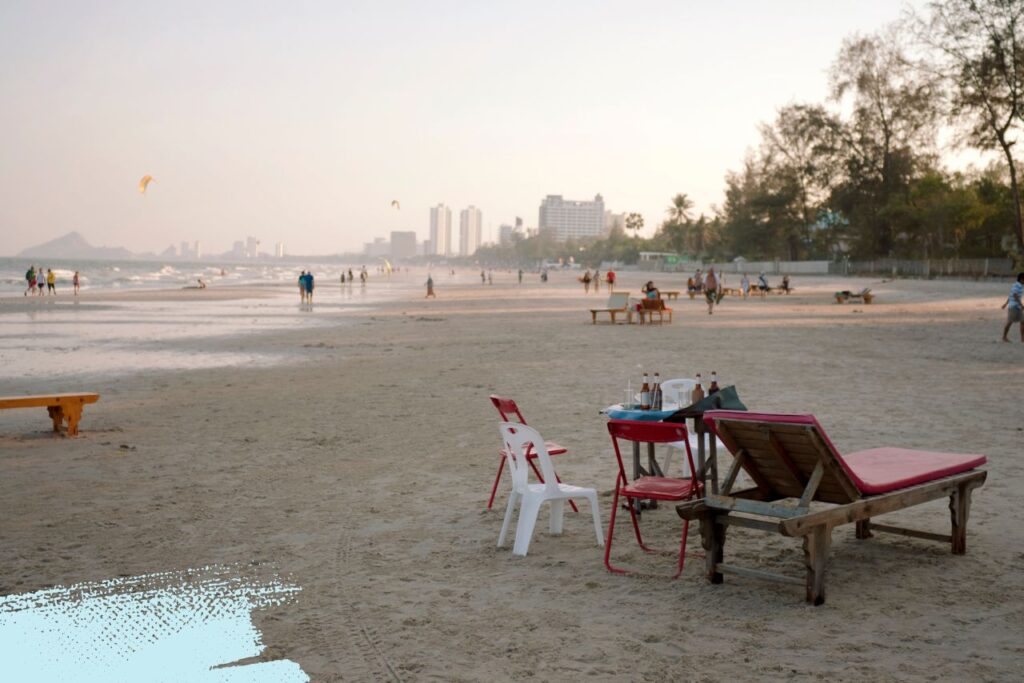
Hua Hin, a renowned retreat for the Thai Royal Family, is about a three-hour drive from Bangkok. This beach is celebrated for its excellent tourist infrastructure, making it a top choice for families. The pristine sand and clear waters, coupled with a range of activities such as water sports and pony rides, cater to visitors of all ages. An excursion to Khao Takiab, a temple with a towering golden Buddha statue, enhances the experience, providing a blend of relaxation and cultural exploration.
Our Favourite Restaurant in Hua Hin: Chao Lay Seafood – Situated on a pier overlooking the sea, Chao Lay Seafood offers a fantastic selection of fresh seafood dishes. The steamed crab and fried fish with garlic are highly recommended, but best of all is the stirfied squid with salted duck egg yolk; just superb. There is plenty of outdoor seating overlooking the sea.
Or do as the Thais do an enjoy oysters on the beach which in our humble opinion, is one of the best ways to enjoy oysters. Thai style beach oysters involves shucked oysters, piled high and enjoyed raw with a nahm jim seafood and crispy shallots. A few grains from sandy hands isn’t compulsory, but inevitable.
Our Favourite Resort in Hua Hin: Thailand has long been celebrated for its holistic approach to health and wellness, integrating ancient healing traditions with modern luxury. Among the most renowned wellness retreats in Thailand is Chiva-Som, a sanctuary located in Hua Hin that’s been doing its thing with subtle sophistication for three decades.
Insider’s Top Tip: For a unique experience, visit the Hua Hin Railway Station, one of Thailand’s oldest and most beautiful train stations. It’s a great spot for photos and a glimpse into the town’s history. Don’t miss the colourful town, either, which is laid back and local in flavour.
Cha-Am Beach
Distance/Time from Bangkok: Approximately 2 hours by car, slightly longer with direct car hire from Bangkok airport.
Twinned with Hua Hin and just 20 minutes up the road, Cha-Am Beach is known for its tranquil atmosphere, a haven for those seeking peace and relaxation. The beach is less crowded than Hua Hin, allowing for uninterrupted sunbathing and swimming.
A notable attraction is the Mrigadayavan Palace, the summer residence of King Vajiravudh, which adds a historical dimension to your beach outing. This charming town offers affordable accommodation and delicious local fare, making it a delightful escape.
Our Favourite Restaurant in Cha-Am: Krua Garn Wela – Just north of the main stretch of sand in Cha-Am’s fishing village, Krua Garn Wela’s seafood dishes do the catch justice, with the tom yum here particularly invigorating, but when the produce is this fresh, you can’t really go wrong with just about anything on the menu. Be warned; the default is spicy here.
Our Favourite Resort in Cha-Am: SO Sofitel Hua Hin – This stylish 5 star resort offers a blend of modern design and luxurious comfort, with a beautiful beachfront location and excellent amenities.
Insider’s Top Tip: Rent a bicycle and explore the scenic bike paths along the beach. It’s a great way to see more of Cha-Am and enjoy the coastal views, and Hua Hin is also within reach on two wheels!
Bang Saen Beach
Distance/Time from Bangkok: Approximately 2 hours by car.
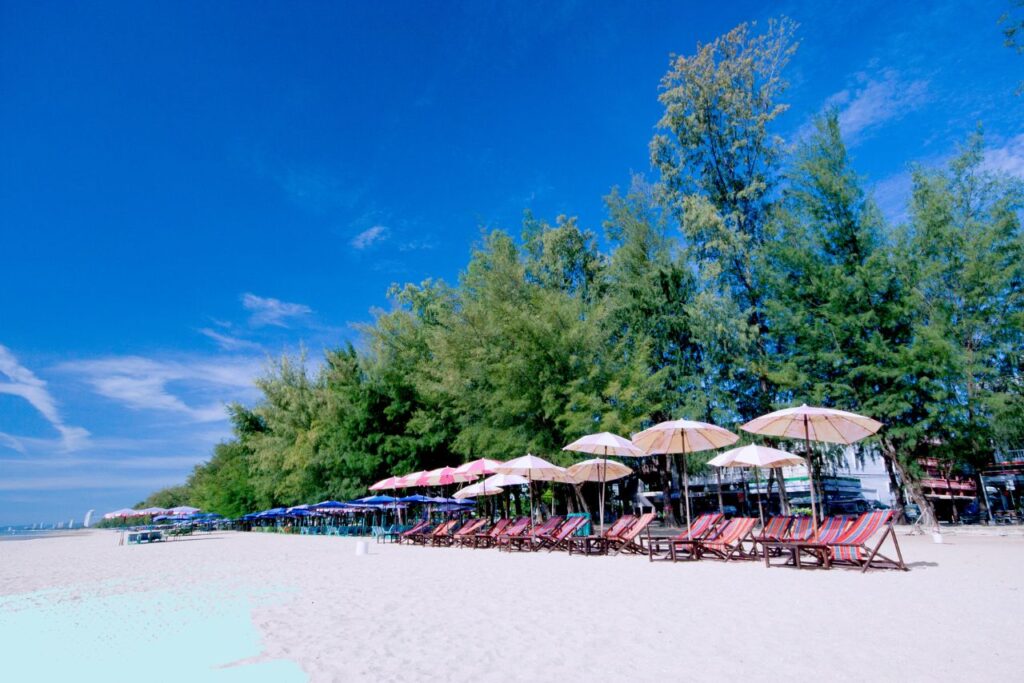
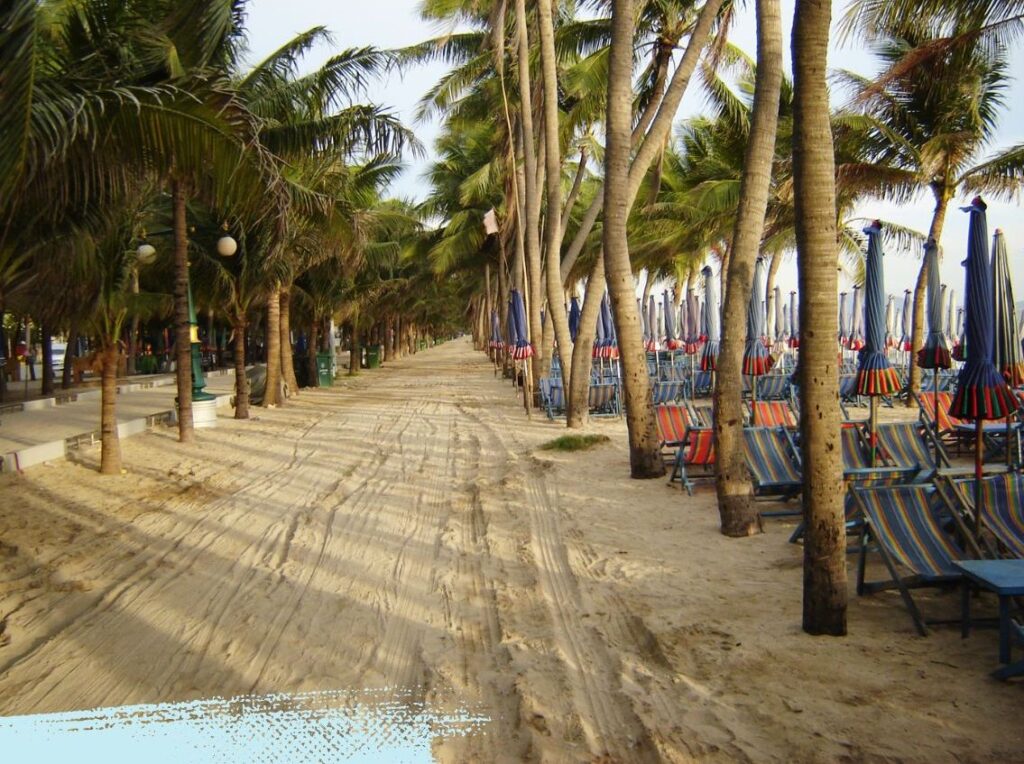
Located just two hours from Bangkok and an hour from Suvarnabhumi Airport, Bang Saen Beach is the closest beach to the city and a favourite among locals. This charming seaside destination offers a quieter alternative to the more tourist-heavy beaches. The soft sands and gentle waves create an ideal spot for sunbathing, swimming, and beachside picnics.
Our Favourite Restaurant in Bang Saen: Pagarang – The focal point for dining in Bang Saen and massively popular with the locals (always a good sign) Pagarang is known for its fresh seafood and assertively spiced Thai dishes. The terrace that juts out into the sea is the perfect place to dine whilst soaking up the sea breeze.
Our Favourite Resort in Bang Saen: The Tide Resort – This huge beachfront resort offers modern amenities, a relaxing spa, and a beautiful pool area. It’s perfect for a comfortable and convenient stay near the beach, and is large enough that privacy is all but guaranteed.
Insider’s Top Tip: Visit Bang Saen Beach on weekdays to avoid the weekend crowds. Also, check out the nearby Ang Sila village for its famous stone mortars and fresh seafood market.
Koh Samet
Distance/Time from Bangkok: Approximately 2.5 to 3 hours by car, followed by a 15-minute ferry ride.
A bit further, but well worth the extra travel time, Koh Samet is about a 2.5 to 3-hour drive from Bangkok, followed by a 15-minute ferry ride. This picturesque island is home to 16 beautiful beaches, each with its own unique flair, all with powdery white sand. Whether you prefer the lively atmosphere of Diamond Beach, with its water sports and live music, or the serene vibe of Laem Yai, Koh Samet has something for everyone. Despite being a popular destination, the beaches remain well-maintained and inviting.
Our Favourite Restaurant in Koh Samet: Koh Samet Food Market – Whilst the island’s beaches boast plenty of decent seafood restaurants complete with fire shows, the town’s central ‘streetfood’ market, on the main drag between the Nathon Pier and the beaches, does some genuinely delicious Thai food. Order the catfish laap; it’s a banger!
Our Favourite Resort in Koh Samet: Ao Prao Resort – This luxurious resort offers stunning beachfront views, private villas, and exceptional service, making it a perfect choice for a relaxing getaway.
Insider’s Top Tip: Ao Phrao Beach – aside from the resort – offers a quieter and more secluded experience. It’s one of the less crowded beaches on the island, perfect for a peaceful day by the sea.
Distance/Time from Bangkok: Approximately 2 hours by car to Pattaya, followed by a short ferry ride.
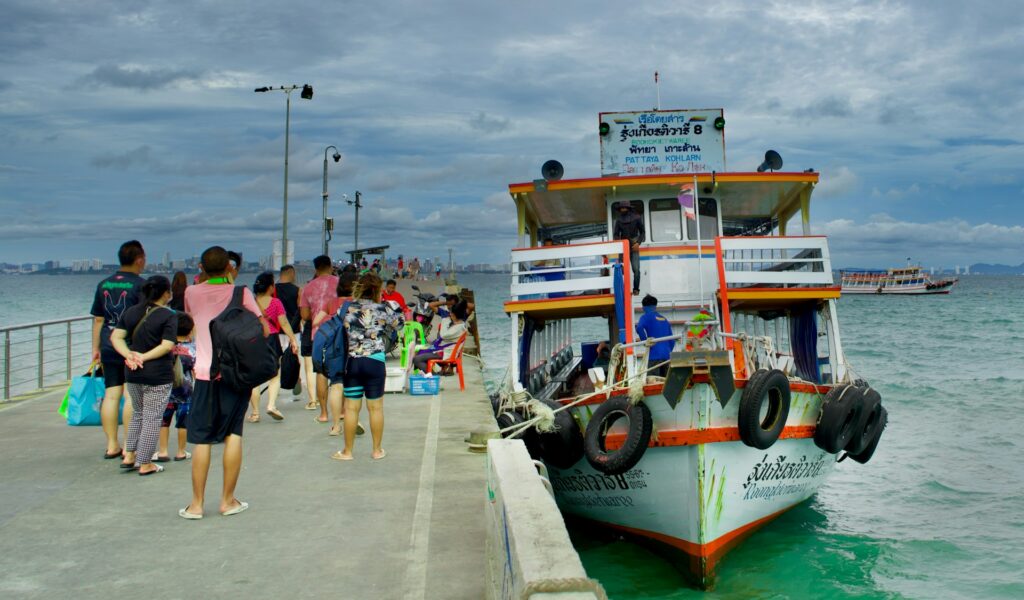
Situated off the coast of Pattaya (which you’ll want to avoid – a thoroughly depressing place), Koh Larn, also known as Koh Lan or Coral Island, is another fantastic option for a quick beach escape. A short ferry ride from Pattaya brings you to this serene island, where you can enjoy crystal-clear waters and vibrant coral reefs. The island is perfect for snorkelling, diving, and a variety of other water-based activities.
Our Favourite Restaurant in Koh Larn: Chalianglom – With dining on a pebble beach (no danger of getting sand in your food!) that encourages the sea to lap at your feet in the evening, Chalianglom is a decent option for dinner in Koh Larn. To be totally honest, we’ve never had a truly great meal on the island, but Chalianglom does a decent som tam and fried chicken combo.
Our Favourite Resort in Koh Larn: SIRAVA – This stylish resort with its distinctive terracotta colour scheme offers a blend of comfort and convenience, with cosy bungalows nestled amidst lush greenery, many of which have their own private pool (not much bigger than a bathtub, admittedly). The resort – just a year old and therefore brand new and beautiful – boasts a relaxing spa, and a restaurant serving delicious local and international cuisine.
Insider’s Top Tip: Rent a motorbike to explore the island at your own pace. It’s an affordable and fun way to visit the different beaches and viewpoints on Koh Larn.
Pranburi Beach
Distance/Time from Bangkok: Approximately 3.5 hours by car.
Pranburi Beach, located about half an hour further south of Hua Hin, offers a more secluded and authentic Thai beach experience. This beach – a proper, white sandy one – is not as frequented by tourists as the others on our list, making it a hidden gem for those looking to escape the crowds.
The gentle waves are perfect for swimming, and the surrounding Khao Sam Roi Yot National Park provides stunning scenery and lush greenery. Local vendors offer delicious Thai cuisine, adding to the charm of this lesser-known paradise.
Our Favourite Restaurant in Pranburi: Very Good Restaurant – True to its name, Very Good Restaurant serves up excellent Thai dishes with a focus on fresh seafood. The green curry and steamed fish with lime and garlic are standout dishes.
Our Favourite Resort in Pranburi: Aleenta Hua Hin – Pranburi Resort & Spa – This boutique resort offers luxurious villas, a serene atmosphere, and stunning ocean views, making it a perfect retreat for relaxation.
Insider’s Top Tip: Visit the Pranburi Forest Park for a peaceful walk through the mangroves. The park features a scenic boardwalk and is a great spot for bird watching and enjoying nature.
Koh Si Chang
Distance/Time from Bangkok: Approximately 2 hours by car to Si Racha, followed by a quick ferry ride.
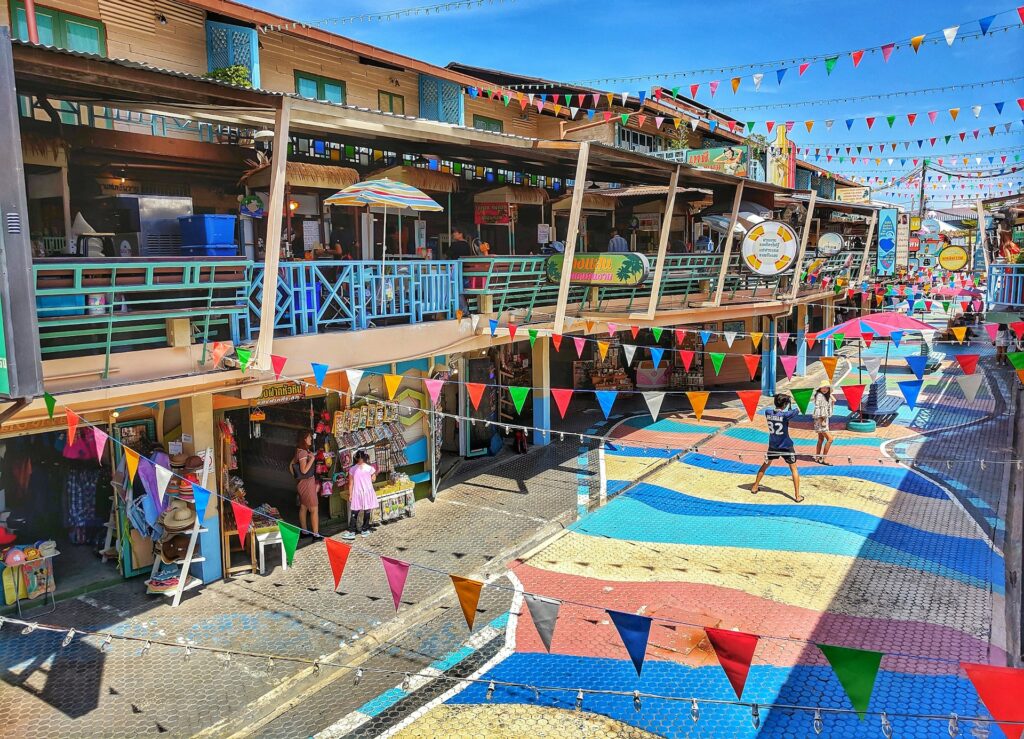
The nearest island to Bangkok, Koh Si Chang, or Sichang, lies a short distance off the coast and is accessible via a quick ferry ride from Si Racha (where the famous sauce originates). This island offers a more local and authentic atmosphere, free from the typical tourist trappings. The island’s beaches are perfect for relaxation and exploration, with several historical sites and temples adding a cultural element to your visit. It’s an ideal destination for a day trip, offering scenic beauty and tranquillity.
The wooden pavilions on Koh Si Chang are famous. These charming structures offer serene spots for relaxation and reflection, providing visitors with stunning views of the turquoise waters and lush surroundings.
Our Favourite Restaurant in Koh Si Chang: Pan & David Restaurant – This charming restaurant offers a mix of Thai and Western dishes, with a focus on fresh, local ingredients. The salt-crusted grilled fish with nahm jim seafood is particularly delicious.
Our Favourite Resort in Koh Si Chang: Somewhere Koh Sichang – This charming resort offers affordable nightly prices, a relaxing communal pool area, and easy access to the island’s attractions.
Insider’s Top Tip: Rent a tuk-tuk for a tour around the island. The drivers are knowledgeable locals who can take you to hidden spots and provide interesting insights about Koh Si Chang.
The Bottom Line
Thailand’s beaches are renowned for their beauty, and the proximity of these stunning beaches to Bangkok makes them perfect for day trips (just about!) or short weekend getaways. Whether you seek quiet relaxation or a vibrant beachside atmosphere, these seven beaches offer something for everyone.
In recent years, scientific understanding of the power of probiotics has increased. A broad range of research has been carried out regarding the health benefits of probiotic foods and supplements, particularly in relation to their effect on gastrointestinal health, but also in terms of mood. The results have been exciting, though it should be stressed, studies are ongoing.
But what are probiotics, exactly? Well, probiotics are living microorganisms that are similar to the beneficial bacteria found naturally in our gut, and, it’s claimed, can be used to aid digestion and protect against disease-causing bacteria. Although probiotics have only recently become widely recognized by the public for their many health benefits, they’ve actually been around for thousands of years, in fermented food products like kimchi, yoghurt, sauerkraut, miso and many more items.
All delicious stuff, no doubt. But if you’re wondering why probiotics could be an important part of a healthy lifestyle, and not just a delicious addition to your dinner, then you’ve come to the right place.
THEY MAY HELP BALANCE THE FRIENDLY BACTERIA IN YOUR DIGESTIVE SYSTEM
The human digestive system contains both good and bad bacteria. Research shows that beneficial bacteria, like those found in probiotics, can help keep the bad bacteria in check so your body can function properly.
However, when you take antibiotics or consume foods that contain preservatives or artificial ingredients, it can kill all of the beneficial bacteria in your gut. This upsets the balance in your digestive system and causes issues, including pain, bloating, constipation, diarrhoea, skin problems, and other health conditions.
Probiotics are beneficial bacteria that exist naturally in foods like yoghurt and kimchi, and most people agree that the best way to ingest and benefit from these probiotics is through the food that we eat. However, they’re also available in both pill and powder form, and can help your gut bacteria remain replete and healthy, which, in turn, may have the potential to help you better manage stress.
When you eat fermented foods or take probiotic supplements on a regular basis (they’re often sold as capsules or liquids), it can help restore the beneficial bacteria in your gut so your body can return to its natural state of equilibrium. Taking probiotics after a course of antibiotics could be especially important because they may prevent antibiotic-associated diarrhoea and other issues caused by the loss of healthy gut bacteria.
According to Harvard Health, taking probiotics may even aid constipation, as well as helping with inflammatory bowel disease, which can be hard to treat with conventional medicine and complex surgery. Again, it should be emphasised that studies are ongoing.
Some also believe that when regular probiotics are taken along with a digestive enzyme, it could help better break down the food in your stomach. Of course, you should always talk to your GP or a qualified nutritionist before adding any new supplements to your diet.
PROBIOTICS MIGHT HELP PREVENT AND TREAT DIARRHOEA
Diarrhoea can be caused by a number of different issues. Symptoms include loose stool, nausea, cramping, bloating, and more. Although scientists aren’t exactly sure whyprobiotics can help with diarrhea, some research suggests that they could reduce the movement of bacteria and yeast through your digestive system, which slows down bowel movements.
Probiotics may also help restore the balance of good and bad bacteria in your body after you’ve taken antibiotics or consumed something that upsets your gut, like processed foods or artificial sweeteners. Although probiotics can’t stop diarrhoea that’s caused by other issues, they can improve your intestinal health to prevent future instances of diarrhoea.
THEY MIGHT EVEN IMPROVE YOUR MOOD AND REDUCE STRESS LEVELS
The connection between the gut and the brain is a two-way street. In fact, some scientists believe that the cells lining the walls of your intestines are similar to the brain cells found in your head. This is why stress and other mood-altering events can cause issues in your digestive system. In fact, studies have shown that the gut produces 90% of the body’s serotonin, a key hormone responsible for stabilising mood. Another reason to take good care of it, don’t you think?
PROBIOTIC SUPPLEMENTS & THEIR POTENTIAL EFFECT ON STRESS
Fermented foods high in probiotics and healthy gut bacteria may also help relieve stress; no wonder they call your gut the ‘second mind’! Again, supplements are available should you not relish the rich, complex tang of such foods.
Researchers have found that certain strains might reduce stress and anxiety by reducing inflammation in your body. In one study, the effects of probiotic supplements on healthy adults were compared to a placebo. The results found that those who took probiotics experienced less anxiety and lowered cortisol levels (a hormone linked to stress).
IT MAY REDUCE THE SEVERITY OF CERTAIN ALLERGIES AND ECZEMA
According to some experts, the cause of certain allergies and eczema is an overload of bad bacteria in your stomach. Probiotics allow for good microbes to grow, which could reduce the severity of certain types of skin conditions like eczema and itchy rashes.
THE POTENTIAL FOR REDUCING SYMPTOMS OF CERTAIN DIGESTIVE DISORDERS
Bad microbes actually thrive off of certain types of food that you eat. They cause gas, bloating, and indigestion when too much of this material is allowed to accumulate in your stomach. Probiotics help to flush out these bad microbes by potentially allowing for good bacteria to grow throughout your digestive system.
This could help sufferers with common symptoms like constipation, diarrhoea, and acid reflux.
THE BOTTOM LINE
Scientific consensus is growing; in order to have a healthy lifestyle, it might be wise to include probiotics in your diet.
*This article is not intended to replace medical or dietary advice, diagnosis or treatment given by a qualified health professional or nutritionist. Instead, this article only provides information, not advice. For any medical enquiries, always consult your GP first*
For many of us, the morning routine includes a quick swipe of a cotton bud in the ears. It’s a habit ingrained from childhood, a seemingly harmless act of hygiene. However, recent advice from health professionals suggests that using cotton buds (or Q-tips, as they’re known across the pond) might not be the safest way to clean our ears. So, if cotton buds are off the table, how should we be cleaning our ears?
The Problem With Cotton Buds
Before we delve into alternative methods, it’s important to understand why cotton buds are discouraged. The ear canal is a delicate structure, and inserting a cotton bud can cause several issues:
Pushing Wax Deeper: Instead of removing earwax, cotton buds often push it further into the ear canal, potentially leading to blockages and impaction.
Injury Risk: The ear canal and eardrum are sensitive. A slip of the hand can result in painful injuries or even perforation of the eardrum.
Infection: Introducing foreign objects into the ear can increase the risk of infections, especially if the skin inside the ear is scratched or damaged.
Understanding Earwax
Earwax, or cerumen, is often misunderstood. It’s not just a nuisance; it plays a crucial role in ear health. Earwax traps dust, debris, and microorganisms, preventing them from reaching the inner ear. It also has antibacterial properties and helps to moisturise the ear canal, preventing it from becoming dry and itchy.
The ear is a self-cleaning organ. The movement of the jaw (through talking and chewing) helps to move old earwax from the ear canal to the outer ear, where it naturally flakes away.
Safe(r) Methods To Clean Your Ears
Given the risks associated with cotton buds, here are some safer alternatives to keep your ears clean and healthy:
Let Nature Take Its Course
For most people, the best way to clean the ears is to let them clean themselves. The natural process of earwax migration usually takes care of any build-up. Simply wiping the outer ear with a damp cloth during your regular shower routine is often sufficient.
How to Do It: After your shower, use a soft, damp cloth to gently wipe the outer part of your ear. Avoid inserting the cloth into the ear canal. This method helps to remove any wax that has naturally moved to the outer ear.
Use Ear Drops
Over-the-counter ear drops can help to soften and break down earwax, making it easier for the body to expel it naturally. Look for products containing hydrogen peroxide or saline solution. Follow the instructions carefully, and avoid using ear drops if you have a perforated eardrum or ear infection.
How to Do It: Lie on your side with the affected ear facing up. Apply the recommended number of drops into the ear canal. Stay in this position for a few minutes to allow the drops to penetrate the wax. You may hear a fizzing sound, which is normal. Repeat as directed on the product label.
By Africa images Via Canva
Olive Oil or Almond Oil
A few drops of warm (not hot) olive oil or almond oil can help to soften earwax. Tilt your head to one side, apply a couple of drops into the ear, and stay in that position for a few minutes. Repeat this process for a few days if necessary. The softened wax should eventually work its way out naturally.
How to Do It: Warm the oil slightly by placing the bottle in a bowl of warm water. Using a dropper, place a few drops into the ear while lying on your side. Stay in this position for 5-10 minutes. Repeat this process twice a day for up to five days.
Ear Irrigation
Ear irrigation is a method where water is used to flush out earwax. This can be done at home with a bulb syringe or at a healthcare provider’s office. If you choose to do it at home, use warm water and be gentle to avoid damaging the ear canal or eardrum. If you’re unsure, it’s best to seek professional help.
How to Do It: Fill a bulb syringe with warm water. Tilt your head to one side and gently squirt the water into the ear canal. Allow the water to drain out, bringing the earwax with it. Repeat if necessary. Ensure the water is not too hot or too cold to avoid dizziness.
Visit a Professional
The team at TheHearingHub says that ear wax is naturally produced by your ear, but once it starts causing issues, it’s time to speak to a specialist. Excess ear wax can lead to blockages and buildup, which can impact your ability to hear properly. This not only affects your communication and daily activities, but it can also potentially lead to more serious problems if left untreated.
If you experience symptoms like ear pain, hearing loss, or a feeling of fullness in the ear, it’s wise to consult a healthcare professional. An audiologist or ENT specialist can safely remove earwax using specialised tools and techniques.
How to Do It: Schedule an appointment with an audiologist or ENT specialist. They may use methods such as microsuction, where a small vacuum is used to remove earwax, or manual removal with specialised instruments.
In addition to cotton buds, there are other methods and products you should avoid:
Ear Candling: This involves placing a lit, hollow candle in the ear canal. It’s not only ineffective but also dangerous, with risks of burns and ear injuries.
Sharp Objects: Never use hairpins, paper clips, or other sharp objects to clean your ears. These can cause serious damage.
Hydrogen Peroxide in High Concentrations: While low concentrations in ear drops are safe, using high concentrations of hydrogen peroxide can irritate the ear canal and cause damage.
Frequent Use of Ear Drops: Overuse of ear drops can lead to irritation and dryness in the ear canal. Follow the recommended usage instructions and avoid prolonged use without consulting a healthcare professional.
The Bottom Line
While the urge to clean your ears with cotton buds might be strong, it’s important to consider the potential risks. Embracing safer methods can help maintain ear health and prevent complications. Remember, in most cases, your ears are perfectly capable of cleaning themselves. If in doubt, seek advice from a healthcare professional to ensure you’re taking the best care of your ears.
Now, if all of that olive oil you’ve been using to clear your ears has overflowed from your ears and caused a mess, then you’ll want to check out these top tips on stubborn stain removal next. Ooft; what a segue.
Located on the southern coast of Western Australia, Albany is a haven for nature lovers and hiking enthusiasts. With its rugged cliffs, pristine beaches, and breathtaking ocean views, it’s no wonder this picturesque town attracts visitors worldwide.
This guide will take you through some of the best coastal walks in Albany, where you can immerse yourself in the beauty of nature and enjoy stunning ocean views.
Why Albany Is A Coastal Walker’s Paradise
Albany is blessed with a unique coastal geography that sets it apart from other destinations. Located on the southern tip of Western Australia, it boasts a diverse landscape with dramatic cliffs, expansive beaches, and lush forests. This varied terrain makes Albany an ideal spot for coastal walks, offering something for every type of hiker.
The natural beauty of Albany is unparalleled. As you traverse its coastal trails, you’ll be treated to panoramic ocean vistas, vibrant wildflowers, and the chance to spot local wildlife such as kangaroos, dolphins, and a variety of bird species. The area’s pristine environment and relatively untouched landscapes make it a perfect escape from the hustle and bustle of everyday life.
Albany enjoys a temperate climate, making it an excellent year-round destination for hiking. However, the best time to visit for coastal walks is during the spring (September to November) and autumn (March to May) when the weather is mild, and the wildflowers are in full bloom. Summer can be quite warm, so starting your walks early in the morning is essential to avoid the heat.
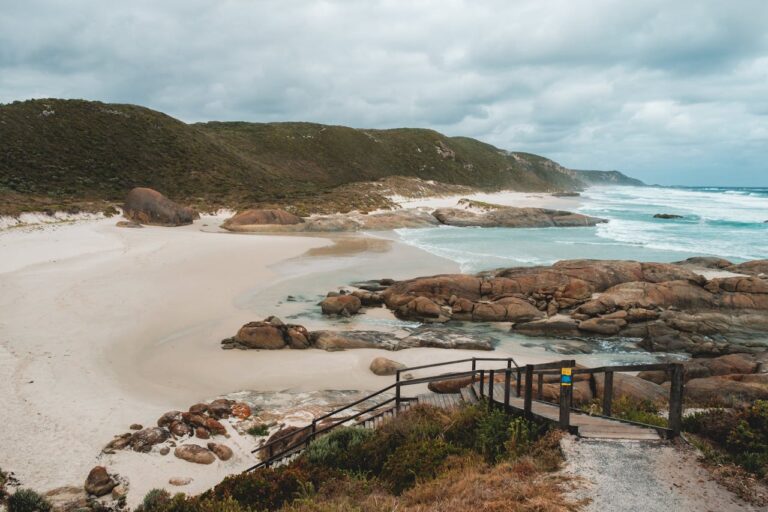
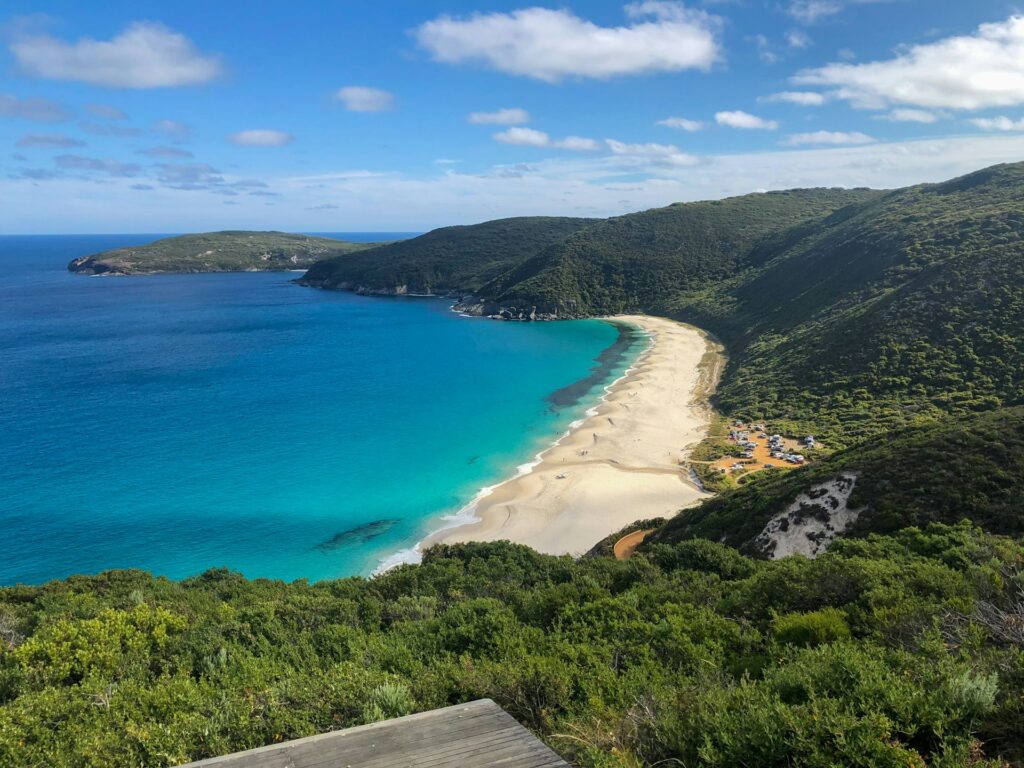
The Bald Head Walk Trail is one of Albany’s most iconic coastal walks. This challenging trail offers hikers an exhilarating journey along the Flinders Peninsula, culminating in breathtaking views of the Southern Ocean and King George Sound.
Length & Difficulty: The trail is approximately 12.5 kilometres round trip and is rated as difficult due to its length and steep sections. It typically takes around 5-7 hours to complete, so it’s best suited for experienced hikers.
Scenic Highlights: As you embark on the Bald Head Walk Trail, you’ll be rewarded with stunning coastal views from start to finish. The trail traverses through dense coastal heath, climbs over granite boulders, and follows ridgelines that offer unobstructed ocean vistas. Key highlights include the sweeping views of Eclipse Island and its famous lighthouse, the dramatic cliffs of the peninsula, and the serene beaches that appear along the way.
Trailhead Location: The trailhead is at the end of Frenchman Bay Road, within Torndirrup National Park. There is a car park at the trailhead where you can leave your vehicle before hiking.
Insider Tips
Start Early: Arrive at the Frenchman Bay Road trailhead by 7 AM to avoid the crowds and enjoy the serene morning light. Parking can fill up quickly, especially on weekends.
Bring Plenty of Water: Carry at least 3 litres of water per person. There are no refill stations, and the coastal winds can be dehydrating.
Wear Sturdy Footwear: The granite boulders can be slippery, especially after rain. Wear hiking boots with good grip and ankle support.
Check Weather Conditions: The weather can be unpredictable. Download the BOM Weather app (available on iOS and Android) for real-time updates specific to Torndirrup National Park.
Wildlife Spotting: Early mornings are best for spotting kangaroos grazing near the trailhead. Keep your camera ready for dolphins often seen in King George Sound.
Trail 2: The Gap & Natural Bridge
The Gap and Natural Bridge trail offers a shorter but equally spectacular coastal walk. This trail takes you to two of Albany’s most famous natural attractions, providing breathtaking views of the Southern Ocean.
Length and Difficulty: The trail is relatively short, approximately 1 kilometre round trip, and is suitable for hikers of all skill levels. It typically takes around 30 minutes to complete, making it an excellent option for a quick walk.
Scenic Highlights: The trail features two main highlights: The Gap and the Natural Bridge. The Gap is a dramatic cliff face with a viewing platform that allows you to look down into the churning ocean below. The Natural Bridge is a stunning rock formation shaped by the relentless forces of the ocean. Both offer incredible photo opportunities and are must-see attractions in Albany.
Trailhead Location: The trailhead is located within Torndirrup National Park, with a well-signposted car park and available facilities.
Insider Tips
Stay on the Path: The viewing platforms at The Gap and Natural Bridge are designed for safety. The ocean swells can be powerful, so always stay behind the barriers.
Supervise Children: The cliffs are steep and dangerous. Hold hands with young children and keep them close at all times.
Visit During Calm Weather: The best time to visit is during low wind conditions. Check the local wind forecast on the WillyWeather app.
Photography Tips: For the best photos, visit during the golden hour (just after sunrise or before sunset). The light enhances the dramatic cliffs and ocean views.
Facilities: Use the restrooms at the car park before starting your walk. There are no facilities along the short trail.
Trail 3: The Bibbulmun Track (Albany Section)
The Bibbulmun Track is one of the world’s great long-distance walking trails, stretching over 1,000 kilometres from Perth to Albany. For those who aren’t ready to tackle the entire trail, the Albany section offers a fantastic coastal walking experience.
Length and Difficulty: The Albany section of the Bibbulmun Track can vary in length depending on your chosen segment. If you’re planning a multi-day hiking trip, consider staying at one of the many Albany motels, which offer comfortable accommodations close to the trails. Those trails range from moderate to difficult in intensity, with some steep and rugged sections.
Scenic Highlights: This section of the Bibbulmun Track offers diverse landscapes, from coastal cliffs and sandy beaches to dense forests and historical sites. Highlights include the views from West Cape Howe, the southernmost point of Western Australia, and the scenic beauty of the Torbay Inlet.
Trailhead Location: There are multiple entry points to the Albany section of the Bibbulmun Track, including Sandpatch, West Cape Howe, and Torbay Inlet. Choose your starting point based on the length and difficulty of the segment you wish to hike.
Insider Tips
Plan Your Route: For a scenic day hike, start at Sandpatch and hike to Muttonbird Beach. This section offers stunning coastal views and is about 12 kilometers round trip.
Carry a Map: Pick up a detailed map from the Albany Visitor Centre. It includes useful information on trail segments and points of interest.
Prepare for Variable Conditions: The weather can change quickly. Pack a lightweight rain jacket and wear layers. The coastal breeze can be chilly even on sunny days.
Historical Sites: Visit the West Cape Howe section for a mix of natural beauty and historical significance. Look for the old telegraph station ruins.
Wildlife and Flora: Spring (September to November) is the best time to see wildflowers in bloom. Keep an eye out for the rare Western Ringtail Possum in the evenings.
Trail 4: Point Possession Heritage Trail
The Point Possession Heritage Trail offers a unique blend of natural beauty and historical significance. This trail takes you through areas rich in indigenous and colonial history, with stunning coastal views along the way.
Length and Difficulty: The trail is about 5 kilometres round trip and is rated as moderate. It typically takes around 2-3 hours to complete.
Scenic Highlights: The trail offers panoramic views of Princess Royal Harbour, King George Sound, and the Southern Ocean. Key highlights include the historic site of Point Possession, where British explorer George Vancouver claimed the western part of Australia for Britain in 1791, and the tranquil beaches along the way.
Trailhead Location: The trailhead is located near Quaranup Road, with parking available at the start of the trail.
Insider Tips
Pack a Picnic: The beach at the end of the trail is a perfect picnic spot. Pack a lunch and enjoy the views of Princess Royal Harbour.
Respect the Environment: Stick to the marked paths to protect the delicate coastal vegetation. Take all your rubbish with you to keep the area pristine.
Tide Awareness: Check the tide times on the Tideschart app. Low tide offers easier access to the beach areas along the trail.
Parking: The small car park near Quaranup Road can fill up quickly. Arrive early, especially on weekends and public holidays.
Introduction to the Trail: Torndirrup National Park offers several coastal walks, each showcasing the park’s rugged beauty and diverse landscapes. From dramatic cliffs to sheltered bays, these trails provide a variety of hiking experiences.
Length and Difficulty: The walks in Torndirrup National Park vary in length and difficulty, from short, easy walks to more challenging hikes. Examples include the short walk to The Blowholes, the medium length Peak Head Walk Trail and the longer, more strenuous trek to Stony Hill.
Scenic Highlights: Highlights of these walks include The Blowholes, where air and water are forced through cracks in the rocks, creating a spectacular display, and Stony Hill, which offers 360-degree views of the park and the ocean. The park is also home to diverse flora and fauna, making it a great place for wildlife spotting.
Trailhead Location: The trailheads for these walks are well-signposted within Torndirrup National Park, with parking and facilities available at each starting point.
Insider Tips
Check Park Conditions: Visit the Torndirrup National Park website or the Albany Visitor Centre for the latest trail conditions and any closures.
Stay on Marked Trails: The Blowholes can be dangerous. Stay on the marked path and listen for the distinctive sound of air and water being forced through the rocks.
Bring a Camera: The views from Stony Hill are panoramic. A wide-angle lens will help capture the expansive landscapes.
Wildlife Spotting: The park is a birdwatcher’s paradise. Bring binoculars to spot sea eagles and other coastal birds.
Facilities: The Stony Hill car park has picnic tables and restrooms. Plan your hike to include a break here to enjoy the facilities and the views.
The Bottom Line
Albany’s coastal walks offer some of the most stunning ocean views in Australia. From the challenging Bald Head Walk Trail to the historically rich Point Possession Heritage Trail, there’s something for everyone.
Whether you’re an experienced hiker or just looking for a leisurely stroll, these trails provide the perfect opportunity to connect with nature and experience the beauty of Albany’s coastline.
In an age where security is paramount, the thought of a locksmith easily gaining access to your home can be unsettling. While locksmiths are professionals trained to help us in times of need, their skills also highlight potential vulnerabilities in our home security systems. If a locksmith can get in, what’s stopping a determined intruder? Here’s how you can bolster your home’s defences and sleep a little easier at night.
Understanding A Locksmith’s Unique Set Of Skills
Locksmiths are adept at bypassing locks, a skill that’s essential for their trade. They use specialised tools and techniques to open doors without causing damage. This proficiency, while beneficial in emergencies, underscores the importance of having robust security measures in place. If a reliable emergency locksmith can access your home with relative ease, it’s a wake-up call to evaluate and enhance your security.
Undergoing rigorous training to master their craft, which includes learning technical skills like picking and rekeying locks, understanding the mechanical workings of various locks, and gaining knowledge about modern electronic security systems, in many countries, locksmiths must complete a certification process to ensure they meet industry standards. In the UK, locksmiths can obtain certification from organisations such as the Master Locksmiths Association (MLA), which involves passing exams and demonstrating practical skills.
Perhaps most importantly where secure and simple peace of mind are concerned, professional locksmiths adhere to a strict code of conduct to ensure they operate ethically and responsibly. This includes maintaining confidentiality, providing honest and transparent services, and upholding a high standard of workmanship and customer service. Members of professional organisations like the MLA are subject to regular inspections and audits to ensure they continue to meet these standards.
That said, since you’re here we can safely assume that you’re a little concerned about the vulnerability of your property to intrusion. Here are some ways to better safeguard it.
Innovative Security Solutions
While traditional methods of securing your home are essential, there are several more modern approaches that can provide an additional layer of protection.
Biometric Locks
Biometric locks use fingerprint recognition or retinal scans to grant access. These locks are incredibly difficult to bypass without the correct biometric data, making them a highly secure option. They also eliminate the risk of lost or stolen keys.
Decoy Security Systems
Create the illusion of heightened security with decoy cameras and alarm systems. While these devices may not provide actual surveillance, they can deter potential intruders who believe they are being watched.
Smart Home Integration
Integrate your security system with your smart home devices. For example, you can set your lights to turn on and off randomly when you’re away, simulating occupancy. Smart doorbells with video capabilities allow you to see and speak to visitors remotely, adding an extra layer of security.
Security Landscaping
Use landscaping to your advantage. Thorny bushes and plants under windows can act as natural deterrents. Gravel paths make it difficult for intruders to approach quietly. Additionally, strategic placement of outdoor lighting can eliminate hiding spots.
RFID Door Locks
Radio Frequency Identification (RFID) locks use a keycard or fob to grant access. These locks are difficult to pick and can be programmed to allow access only during certain times, adding an extra layer of control over who enters your home.
Security fog systems are an innovative way to protect your home. When triggered, these systems release a dense fog that obscures vision, making it nearly impossible for intruders to see or navigate. This can buy valuable time for authorities to respond.
Locks are just one part of the equation. Strengthening the physical barriers to your home is equally important.
Doors, Windows & Sliding Doors
Solid core or metal doors are much harder to break through than hollow core doors. Reinforce door frames with strike plates and use long screws to secure hinges and locks.
Windows are also common entry points for intruders. Install window locks and consider adding security film to make the glass more resistant to shattering. Window sensors and alarms can also provide an additional layer of protection.
Especially vulnerable to forced entry are sliding doors. Use a security bar or rod in the track to prevent the door from being forced open. Additionally, consider installing anti-lift devices to stop the door from being lifted off its track.
Enhancing Surveillance
Visibility is a powerful deterrent. Intruders are less likely to target homes that are well-monitored.
CCTV Cameras, Motion Sensor Lights & Alarm Systems
Install CCTV cameras around (and even inside) your property, focusing on entry points and vulnerable areas. Modern systems offer high-definition footage, night vision, and remote access, allowing you to monitor your home from anywhere.
Motion-activated lights can startle potential intruders and draw attention to their presence. Place these lights around entry points and dark corners of your property.
A comprehensive alarm system can alert you and the authorities to any unauthorised entry. Look for systems that offer door and window sensors, glass break detectors, and panic buttons.
Some Security Tips From The Old School
Sometimes, the tried-and-true methods of yesteryear can be just as effective as modern technology. Here are a couple of old school tips to enhance your home security:
Make It Look Like You’re Home
Intruders are less likely to target a building that appears occupied. When you’re away, leave a radio or television on to create the illusion of activity. You can also use timers to turn lights on and off at different times, mimicking your usual patterns.
Don’t Leave Tell-Tale Signs
Avoid leaving obvious signs that you’re not home. For instance, don’t let mail or newspapers pile up, and make sure to cancel any regular deliveries like milk if you’re going to be away for an extended period. Ask a neighbour to collect your post or park their car in your driveway to give the impression that someone is home.
The Bottom Line
While the skills of a locksmith can be eye-opening, they also provide valuable insights into how we can better protect our homes. By upgrading locks, reinforcing entry points, enhancing surveillance, adopting a security-conscious mindset, and incorporating both innovative and old school methods, you can significantly reduce the risk of intrusion. Remember, the goal is to make your home a less attractive target for intruders, ensuring peace of mind for you and your loved ones.
Choosing a good diamond is hard enough. But what if you want only the absolute best diamond for your engagement ring, investment piece or personal indulgence? When you find a diamond of real quality, they really are a best friend.
But how do you go about sorting the absolute cream of the crop when the gradations between a great diamond, a good one and one that’s distinctly average are already so hard to distinguish?
As with choosing any diamond, the answer is rather prosaic and dull, relying on science and technology, the authority of institutions and the dealer and buyer being prepared to follow the correct, legitimate steps. Back alley deals and the potential for unexpectedly stumbling across rare treasure on the cheap is a romantic notion, sure, but it will very rarely get you the amazing diamond you were hoping for.
An adventure, yes – but probably at the cost of your savings. Instead, here’s the boring way to do things; these key factors to consider then choosing a diamond engagement ring.
The Kimberley Process
The best of the best, of course, should always also mean the most ethical. The Kimberley Process (KP) and their Kimberley Process Certification Scheme (KPCS) is an international certification scheme that regulates trade in rough diamonds. The scheme intends to ‘’unites administrations, civil societies, and industry in reducing the flow of conflict diamonds – ‘rough diamonds used to finance wars against governments’ – around the world’’.
The organisation are doing fantastic work in making sure the diamond trade is as ethical as possible, and incredibly, today, a whopping 99.8% of the global production of diamonds is covered by KP members. Should you see KPCS on your shipment or purchase, you can rest assured that the rough diamond you’re buying was mined, sorted and shipped in a ‘conflict free’ way.
Best Of The Best Certificates
You will know your diamond is a good one if it has top ratings from the world’s two principal diamond authentication bodies, namely AGS (American Gem Society) and GIA (Gemological Institute of America).
Stones carrying this authentication are generally recognised as being especially large, and are rated highly because of their purity and colour, not to mention the exquisite cut.
In fact, many of these stones will actually have their certification number laser etched onto the girdle of the stone; the narrow band at the point where the outward lines stop and come inward again. Rest assured, it’s tiny – and thus, the lettering is minute, too. But it is there, and any jeweller should easily be able to find it and show you, under a good light and a minimum of 10x magnification.
The Four Cs
While good diamonds can be obtained with a little leeway on one or more of the Four Cs, a top-quality diamond should tick all four boxes, simultaneously and confidently.
The 4C’s — cut, colour, clarity and carat — is the grading system used to assess the quality of a diamond and determine its price. For example, colour refers to the absence of any shade within a stone, as a chemically pure and structurally perfect diamond is as clear and colourless as a drop of water. Its high price will reflect that.
The cut, meanwhile, reflects its sparkle, which is based on how well the facets of a diamond interact with light. On top of that, clarity concerns the diamond’s natural inclusions and blemishes, both of which affect the overall appearance of a stone. Finally, a diamond’s carat is how much it weighs — the higher the carat, the higher the price.
All 4 Cs should be of premium quality if you’re hoping to secure the very best diamond you can find.
A Cut Above
According to Diamond Expert, another signifier of a top quality diamond is found in a particular type; the A CUT ABOVE® Diamonds from Whiteflash, a proud member of the American Gem Society specialising in “Ideal Diamonds’ and Designer Engagement rings, which ‘ bits “the bullseye of AGS and GIA cut standards”.
The Diamond Experts go on to say that “Whiteflash stand out for their collection of super-ideal cut diamonds, specifically their in-house A CUT ABOVE® Diamonds; these diamonds go through the most rigorous testing and must meet exacting standards in order to receive the esteemed A CUT ABOVE® title”.
Indeed, without wishing to throw more superlatives at you, these diamonds are considered to be the “super ideal” of diamonds within the market.
Let’s break this down. A Cut Above diamonds literally means that they are a cut above the rest of the commercial diamonds for sale, and also a rather obvious pun on the craftsmanship that has shaped the stone!
Experts around the world consider them to be the finest diamonds out. According to Diamond Buying Advice Guide “Whiteflash now offers more in-house AGS certified Ideal Cut diamonds than any other retailer, owning and stocking the diamonds in three in-house categories: A CUT ABOVE®, Expert Selection, and Premium Select (GIAgraded)”.
We can’t argue with that.
Diamond Shapes
When it comes to choosing a diamond, the shape is a crucial factor that can significantly influence the overall appearance and style of your jewellery. Each shape has its unique charm and characteristics, making it essential to select one that resonates with your personal taste and the occasion. Here are some of the most popular diamond shapes to consider:
Round Brilliant
The round brilliant cut is the most popular and widely recognised diamond shape. Known for its exceptional sparkle and classic appeal, this shape is a timeless choice for engagement rings and other fine jewellery. Its 58 facets are precisely cut to maximise light reflection, ensuring a dazzling display of brilliance.
Princess Cut
The princess cut is a modern and elegant choice, featuring a square or rectangular shape with pointed corners. This shape is renowned for its contemporary look and excellent light performance, making it a favourite for those seeking a blend of tradition and modernity.
Emerald Cut
The emerald cut is distinguished by its rectangular shape and step-cut facets, which create a unique hall-of-mirrors effect. This shape is perfect for those who appreciate understated elegance and a vintage-inspired aesthetic. Its large, open table also highlights the diamond’s clarity.
Cushion Cut
The cushion cut, also known as the pillow cut, combines a square shape with rounded corners, giving it a soft and romantic appearance. This shape has a vintage charm and offers a brilliant sparkle, making it a popular choice for those who love a blend of old-world elegance and modern sophistication.
Oval Diamond
For those seeking a diamond that exudes both elegance and versatility, a timeless oval diamond is an excellent choice. The oval shape elongates the finger, creating a flattering and graceful look. Its elongated form also allows for a larger surface area, enhancing the diamond’s brilliance and making it appear larger than its carat weight. The oval diamond’s classic yet contemporary appeal makes it a perfect option for engagement rings, investment pieces, or personal indulgence.
Marquise Cut
The marquise cut is a distinctive and regal shape, characterised by its elongated body and pointed ends. This shape maximises carat weight, giving the appearance of a larger diamond. Its unique silhouette is perfect for those who want a bold and dramatic look.
Pear Shape
The pear shape, or teardrop shape, combines the best of the round and marquise cuts. Its unique form is both elegant and eye-catching, making it a popular choice for those who want a diamond that stands out. The pear shape is also known for its versatility, as it can be worn with the point facing up or down.
Heart Shape
Perfect for those who want to make a bold and sentimental statement a heart shaped diamond is the ultimate symbol of love and romance. ts distinctive form requires precise cutting to ensure symmetry and brilliance.
Work With A Reputable Jeweller
All this diamond discussion still leaving you a bit confused? Then the easiest way to ensure that you get the best quality diamonds is to work with a reputable dealer or jeweller, who will guide you through the process and reliably know exactly what to look out for in a diamond.
Choose one that’s been in the game a while with lots of clients – remember recommendations are gold dust when it comes to buying diamonds and a certain sense of reverie and reference is still part of the cut’n’thrust when sourcing yours.
But how do you find a reputable diamond dealer? Well, their diamonds should all be certified by the bodies listed above, and they should have a fair returns policy in place, too. What’s more, a reputable diamond dealer or jeweller should hold their company open to feedback, criticism and reviews online, via sites such as Trustpilot. Finally, and ideally, you will have found them via a trusted reference source.
And with that, good luck, send us a picture of your purchase, and we hope they say yes! If they don’t, we’ll always be here for you.
Greece, with its sun-drenched islands, ancient ruins, and azure waters, has long been a magnet for travellers. While the likes of Santorini, Mykonos and Athens draw the dolphin’s share of visitors, there are still plenty of lesser-known spots that offer a more tranquil and traditional experience. Here are 7 hidden gems in Greece that are well worth exploring.
Kastellorizo
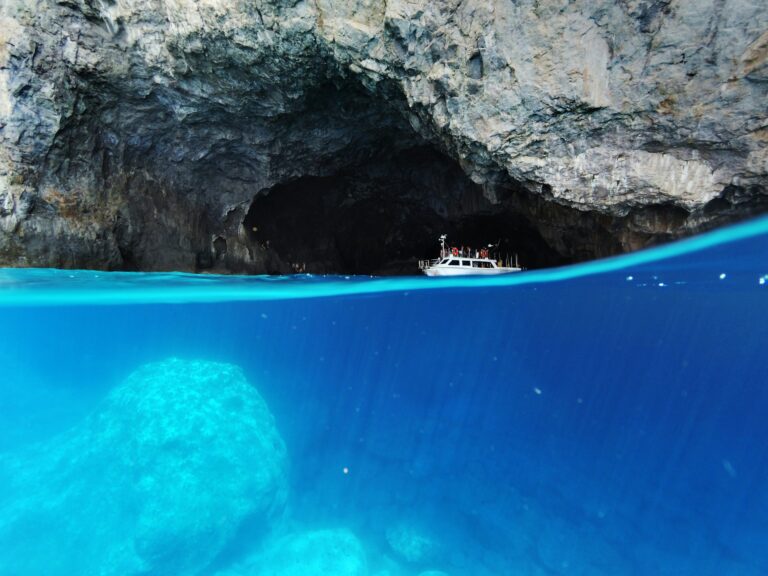
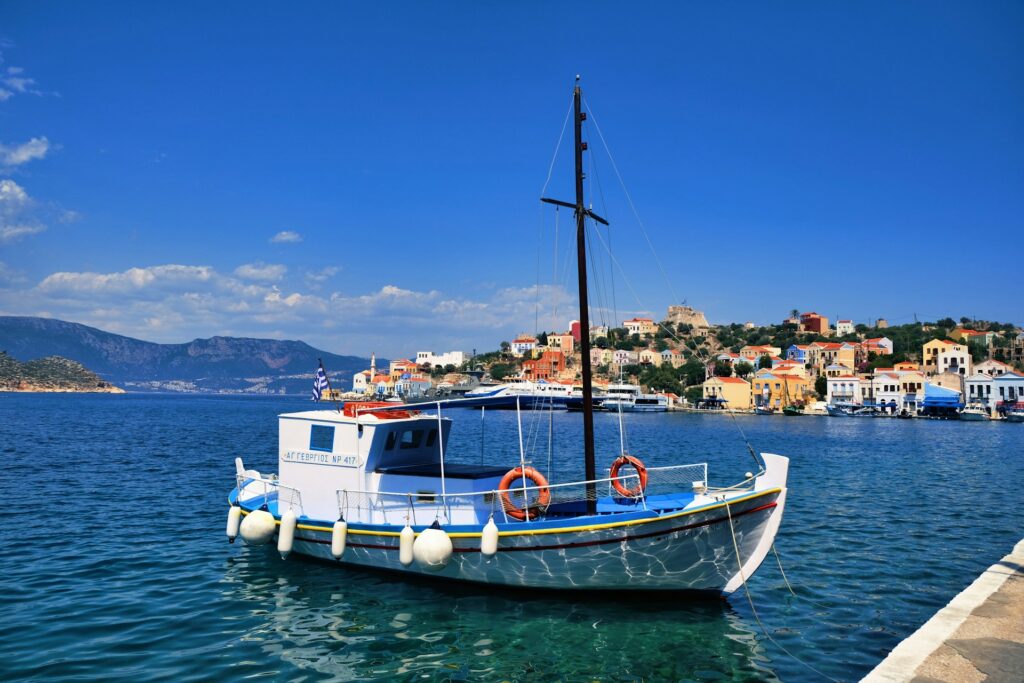
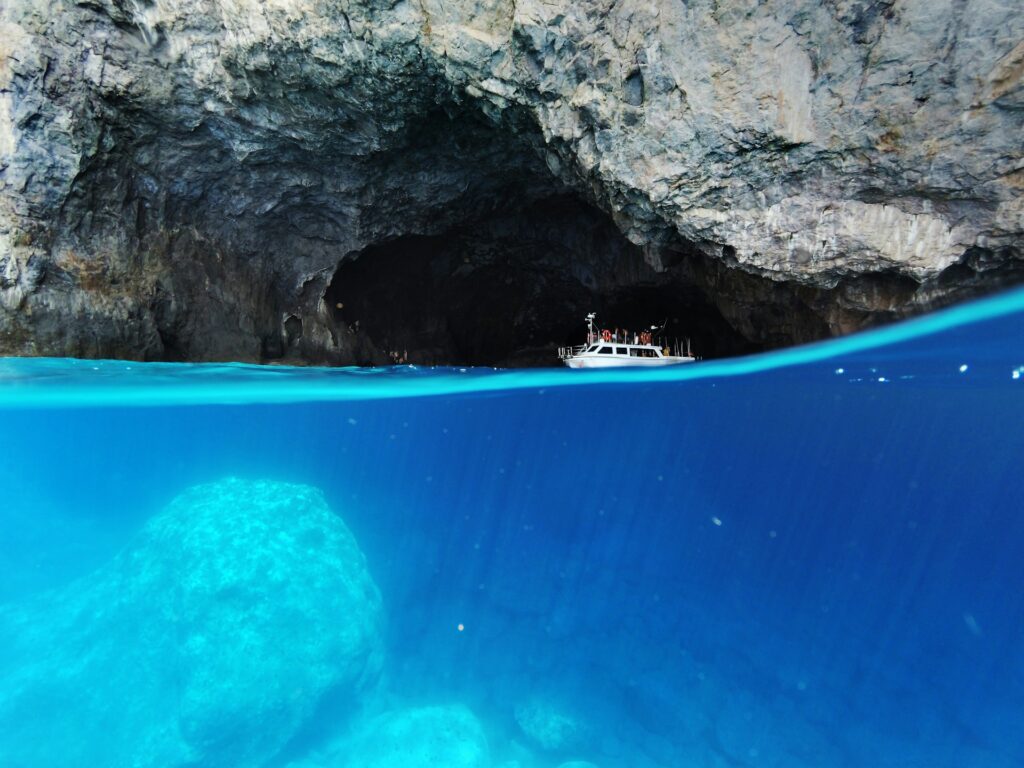
Nestled just a stone’s throw from the Turkish coast, Kastellorizo is a tiny island that feels worlds away from the bustling tourist hubs. With its colourful harbour, charming neoclassical houses, and crystal-clear waters, this island is a haven for those seeking peace and quiet. Don’t miss the Blue Cave, a mesmerising sea grotto that’s best visited by boat.
Getting There
Kastellorizo can be reached by ferry from Rhodes, which has regular connections to the island. Alternatively, there are occasional flights from Athens to Kastellorizo’s small airport, though these are less frequent.
Local Delicacy You Simply Shouldn’t Miss
Katoumari is a traditional sweet pastry unique to Kastellorizo. Made from thin layers of dough, butter, and sugar, it’s rolled into a spiral and baked until golden. The result is a crispy, sweet treat that’s perfect with a cup of Greek coffee.
Insider’s Tip
For a truly magical experience, visit the Blue Cave early in the morning when the light is just right, and the cave is bathed in an ethereal blue glow. Also, take a walk up to the Castle of the Knights for stunning panoramic views of the island and the surrounding sea.
In the north-western region of Epirus lies Zagori, a land of rugged mountains, deep gorges, and picturesque stone villages. The Vikos Gorge, one of the deepest in the world, offers breathtaking hiking opportunities. The traditional villages, such as Papingo and Monodendri, with their stone-built houses and arched bridges, provide a glimpse into a bygone era.
Getting There
The nearest airport to Zagori is Ioannina Airport, which has flights from Athens. From Ioannina, it’s about an hour’s drive to the Zagori villages. Car hire is recommended to explore the region fully.
Local Delicacy You Simply Shouldn’t Miss
The traditional pie batzina from the Zagori region is made with a simple mixture of flour, eggs, feta cheese, and zucchini. A distant cousin of a frittata, it’s baked until golden and crispy, and it’s a perfect example of the region’s rustic, hearty cuisine.
Insider’s Tip
Stay in one of the traditional stone guesthouses for an authentic experience. Also, make sure to visit the lesser-known villages like Dilofo and Kapesovo, where you can enjoy the tranquillity and charm without the crowds.
Kythira
Often overlooked in favour of its more famous neighbours, Kythira is an island of unspoilt beauty. Located off the southern tip of the Peloponnese, it boasts secluded beaches, charming villages, and a rich history.
Visit the mediaeval castle in Chora, explore the cave of Agia Sophia, and relax on the pristine sands of Kaladi Beach.
Getting There
Kythira has an airport with flights from Athens. Alternatively, you can take a ferry from Neapolis in the Peloponnese or from Piraeus, the port of Athens. The ferry journey from Neapolis is shorter and more frequent.
Local Delicacy You Simply Shouldn’t Miss
Anthotyro is a fresh, soft cheese made from sheep’s or goat’s milk that’s particularly good in and around Kythira. It has a mild, creamy flavour and is often enjoyed with honey or used in various local dishes.
Insider’s Tip
Rent a car to explore the island’s hidden beaches and remote villages. Don’t miss the sunset at Kapsali, where you can enjoy a drink with a view of St John of the Cliff church and the sea.
Nisyros
This small volcanic island in the Dodecanese is a geological wonder. The active volcano, with its steaming craters and sulphuric landscape, is a sight to behold. The island’s main village, Mandraki, is a maze of narrow streets and whitewashed houses. Don’t miss the ancient acropolis of Paleokastro and the thermal springs at Loutra.
Getting There
Nisyros is accessible by ferry from Kos, which has an international airport. Ferries from Kos to Nisyros run regularly and the journey takes about an hour. There are also occasional ferries from Rhodes and other nearby islands.
Local Delicacy You Simply Shouldn’t Miss
Kapamas is a traditional dish of Nisyros, consisting of goat stuffed with rice, liver, and a variety of herbs and spices. It’s slow-cooked to perfection, resulting in tender, flavourful meat that’s a true taste of the island.
Insider’s Tip
Visit the volcano early in the morning or late in the afternoon to avoid the heat and the crowds. Also, take a walk to the village of Nikia, perched on the edge of the volcanic crater, for stunning views and a taste of local life.
Pelion
Located in central Greece, Pelion is a lush, green paradise of a peninsula that’s often overlooked by international tourists. With its dense forests, traditional villages, and stunning beaches, it’s a perfect destination for nature lovers. The village of Makrinitsa, perched on the mountainside, offers panoramic views of the Pagasetic Gulf, while the beaches of Mylopotamos and Fakistra are ideal for a refreshing dip.
Getting There
The nearest airport to Pelion is Volos Airport, which has flights from Athens and some European cities. From Volos, you can drive or take a bus to the various villages in Pelion. Car hire is recommended for exploring the peninsula.
Local Delicacy You Simply Shouldn’t Miss
Spetzofai is a hearty dish from Pelion that’s made with local sausages and peppers, cooked in a rich tomato sauce. It’s a warming, comforting meal that’s perfect after a day of exploring the region’s natural beauty.
Insider’s Tip
Take the scenic train ride from Ano Lechonia to Milies, known as the ‘Moutzouris’ or ‘Pelion Train’. It’s a delightful way to see the stunning landscapes of Pelion. Also, visit the village of Tsagarada to see the 1,000-year-old plane tree in the central square.
Samothrace
Samothrace, an island in the northern Aegean, is a haven for adventurers. Its rugged terrain is dotted with waterfalls, hot springs, and ancient ruins. The Sanctuary of the Great Gods, an important archaeological site, is steeped in mystery and history. Hike to the top of Mount Saos for stunning views, and take a dip in the natural pools of Fonias Gorge.
Getting There
Samothrace is accessible by ferry from Alexandroupoli, which has an airport with flights from Athens. The ferry journey takes about two hours. There are also bus connections from Thessaloniki to Alexandroupoli.
Local Delicacy You Simply Shouldn’t Miss
Samothracian wild goat is exquisite. Usually slow-cooked with local herbs and spices, the meat is incredibly tender and just the right side of gamey, often served with potatoes or rice. It’s a must-try for meat lovers visiting the island.
Insider’s Tip
For a unique experience, visit the island’s thermal springs at Therma. The hot springs are located in a beautiful natural setting and are perfect for relaxing after a day of hiking. Also, try to visit the island during the summer festival of the Great Gods for a taste of local culture and traditions.
Tucked away in the Pindus Mountains, Metsovo is a charming mountain town that offers a taste of traditional Greek life. Known for its local cheese and wine, it’s a great place to indulge in some culinary delights. The town’s stone houses, cobbled streets, and vibrant cultural scene make it a delightful destination. In winter, the nearby ski resort of Anilio offers excellent skiing opportunities.
Getting There
The nearest airport to Metsovo is Ioannina Airport, which has flights from Athens. From Ioannina, it’s about a 45-minute drive to Metsovo. There are also bus services from major cities like Athens and Thessaloniki to Ioannina, from where you can take a local bus or taxi to Metsovo.
Local Delicacy You Simply Shouldn’t Miss
Smoked cheese is a speciality of Metsovo, made from cow’s milk and sometimes mixed with sheep or goat milk. It has a distinctive smoky flavour and is often enjoyed grilled or as part of a cheese platter.
Insider’s Tip
Visit the Averoff Museum, which houses an impressive collection of Greek art. Also, take a tour of the Katogi Averoff Winery to sample some of the region’s best wines. In winter, don’t miss the chance to ski at the nearby Anilio Ski Resort, which offers stunning views and well-maintained slopes.
The Bottom Line
While the country’s popular destinations are undoubtedly beautiful, if you’re after a truly luxurious trip to Greece then these hidden gems offer a more intimate and authentic experience. Whether you’re seeking adventure, tranquillity, or a glimpse into the country’s rich history and culture, these lesser-known spots are sure to captivate and inspire.
So, if you’re planning a holiday to Greece, why not venture off the beaten path and discover the magic of these hidden treasures? You won’t regret it!
If you’re looking to kickstart your confidence in time for summer – then you may be surprised about one way in which you can achieve this goal: by smiling.
Go on, give it a go! Feels good, don’t it?
Believe it or not, smiling can often help boost your confidence subconsciously because it increases your body’s production of serotonin, otherwise known as the happiness hormone.
As a result, smiling, even when we don’t feel like it, makes us feel happier, less stressed and more confident than frowning. Smiling can also help change the way others respond to you, as it shows that you are friendly, welcoming and receptive.
However, not everyone feels all that confident in their smile, to begin with. In fact, a recent study found that half of British people are unhappy with their teeth or smile – with many avoiding smiling or trying to actively ‘hide’ their teeth. There are various different reasons for this unhappiness. For example, they may feel that their teeth are crooked, discoloured or stained.
However, everyone deserves to smile, especially during difficult times. With that in mind, here are some top tips that you can use to learn to love your smile more and restore your confidence through your smile.
Develop Healthy Habits
One way you can begin to take better care of your teeth (and, by extension, your smile) is by ensuring that you develop healthy habits when it comes to oral hygiene. For example, you should ensure that you brush your teeth twice a day and use mouthwash, floss or interdental brushes when necessary.
Visit The Orthodontist
If you feel unhappy with your smile because your teeth aren’t perfectly straight – don’t worry; you aren’t alone. Misaligned teeth are very common amongst both adults and children.
However, you may want to schedule a visit with an orthodontist who can talk you through your options when it comes to braces, porcelain or clip-on veneers and Invisalign products that can help you to get the smile you have always dreamed of. While it may take a little time to get the results you’re looking for, this is a great way to improve your overall smile confidence.
Don’t Skip Dentist Visits
Many, many people avoid going to the dentist, even when they may be in pain. However, the fact remains that this is the easiest way to keep your teeth in good condition, whether you need a wisdom teeth extraction, or a regular check-up.
Not only will this ensure you receive the care you need, but you’ll also be able to ask your dentist for tips you can use to improve your oral hygiene and brighten your smile. As a result, you should ensure that you don’t skip over dentist visits and aim to see your dentist every six months.
The products we use for our teeth, from whitening powers to mouthwash, can sometimes be the cause of discolouration or other problems.
As a result, it’s vital that you do your research ahead of time to be sure that you are buying the right products. For example, there are various different factors to consider when choosing a teeth whitening product beyond their price point. For example, you can verify their credibility by seeing if they are dentist-recommended or checking out their reviews.
Cut Down On Your Sugar Intake
As a child, you were likely told that you cannot eat too many sweets unless you want your teeth to fall out. And while this is not strictly true, managing your sugar intake is a great way to take better care of your teeth, prevent decay and can even reduce sensitivity.
For example, you should reduce the amount of chocolate, sweets and fizzy drinks you consume. While it’s okay to treat yourself occasionally, you should also keep an eye out for sugar-free versions of your favourite snacks.
Reduce Your Coffee Consumption
As you get older, coffee can quickly become your best friend, whether you make delicious coffee at home or are a regular at your local Starbucks. This is because it can pull you out of an energy slump during a busy day at work or on those days when it’s harder than ever to get out of bed.
However, coffee can also stain your teeth due to the fact that it breaks down the enamel (and this can’t be remedied by adding more milk to your coffee, either). While you don’t have to cut out coffee entirely, you should monitor your consumption levels carefully, sticking to one or two coffees a day.
Get Into The Habit Of Complimenting Yourself (& Your Smile)
A lot of our self-worth and confidence comes from within, or the way in which we perceive ourselves. While these thoughts are the product of a society that wants us to judge ourselves – countering negative thoughts with positive ones is a great way to reignite your confidence, and not just within your smile.
As a result, you should get into the habit of complimenting yourself (and your smile) so that you can begin to develop a healthier self-image and confidence. For example, you should stand in front of the mirror each morning and say a few compliments to yourself out loud. This is not conceited – as you deserve to feel good, and this is a great way to build self-esteem that lasts.
Photo by Kampus Production
Embrace What Makes You, You
When scrolling through Instagram, you are likely bombarded with pictures of influencers with impossibly bright, white teeth – which can make it all too easy to fall out of love with your own smile.
However, it’s important to remember that social media is not a reflection of real-life and that photos like this are often edited. In fact, most social media apps now have an automatic teeth-whitening function built into their settings that you might not even be aware of when using the app.
Recognising this is a great way to restore confidence in your smile by acknowledging that everyone’s smile is unique and different – and that’s perfectly fine. Your smile is part of what makes you you – and you’re pretty great as you are!
Imagine steering a yacht through turquoise waters, where adventure blends seamlessly with luxury and privacy. Picture waking up to the sound of the waves and a panoramic view of untouched coastlines right from your deck. Yachting opens up a world where luxury mingles with adventure, offering you a front-row seat to a blend of cultures and stunning landscapes that are second to none.
Whether you’re a seasoned sailor or just dipping your toes into yachting, choosing your destination is as exhilarating as a piratical orgy on the high seas. Each yacht charter destination has its own unique vibe and hidden gems waiting to be uncovered. Ready to raise the anchor? All aboard!
Nothing screams yacht life quite like the French Riviera. Think sun-kissed beaches and a high-flying coastal lifestyle. Stretching along the Mediterranean, this hotspot is a playground of posh harbours, fancy shops, and first-class dining spots. The area buzzes with the energy of nightlife and the arts, especially in celeb favourites like Cannes, Nice, and Monaco.
Where To Lay Anchor
Port de Cannes: Perfect for those wanting to experience the glamour of the Cannes Film Festival. The port is well-equipped with luxury amenities, top tier yacht crew services, and is a stone’s throw from La Croisette.
Port Hercule, Monaco: Ideal for those looking to indulge in the high life. The port is surrounded by upscale casinos, restaurants, and the famous Monaco Grand Prix circuit.
Must-See Attractions
Cannes: Stroll along La Croisette, visit the Palais des Festivals, and explore the old town of Le Suquet.
Nice: Wander through the Promenade des Anglais, visit the Marc Chagall National Museum, and enjoy the vibrant Cours Saleya market.
Monaco: Explore the Prince’s Palace, the Oceanographic Museum, and the Monte Carlo Casino.
Hidden Gem Only Accessible By Boat
Îles de Lérins: According to the superyacht brokerage experts YACHTZOO, these islands just off the coast of Cannes offer a serene escape from the bustling Riviera. Sainte-Marguerite Island is known for its Fort Royal and beautiful walking trails, while Saint-Honorat Island is home to a monastery and vineyards producing excellent wines.
Off Spain’s east coast lie the Balearic Islands, a perfect blend of peaceful retreats and spirited adventures. The archipelago counts Mallorca, Menorca, Ibiza, and Formentera among its jewels, each with its distinct flavour. Mallorca is all about stunning beaches and historic treasures, whereas Menorca offers a quieter, chill vibe perfect for decompressing. Ibiza may be famed for its lively parties, but it’s also a haven of tranquil countryside and secret coves. Formentera? Think white sandy beaches and crystal waters—ideal for a chilled-out day.
Where To Lay Anchor
Port de Palma, Mallorca: A bustling port with excellent facilities, close to the historic centre of Palma.
Port de Ciutadella, Menorca: Offers a quieter, more relaxed atmosphere with charming surroundings and great restaurants.
Marina Ibiza: Known for its vibrant nightlife and proximity to the island’s best clubs.
La Savina, Formentera: Ideal for those seeking tranquillity and pristine beaches.
Must-See Attractions
Mallorca: Visit the stunning Palma Cathedral, explore the Serra de Tramuntana, and relax on the beaches of Cala Millor.
Menorca: Discover the ancient Naveta d’Es Tudons, enjoy the serene beaches of Cala Macarella, and stroll through the old town of Ciutadella.
Ibiza: Experience the legendary nightlife, visit the UNESCO-listed Dalt Vila, and unwind at Cala Comte.
Formentera: Relax on the white sands of Playa de Ses Illetes, explore the island by bike, and visit the Cap de Barbaria lighthouse.
Hidden Gem Only Accessible by Boat
Es Vedrà, Ibiza: This mystical island off the coast of Ibiza is shrouded in legend and offers stunning views and a sense of tranquillity. It’s a perfect spot for a secluded swim or a peaceful day of relaxation.
Croatia: A Yachter’s Dream
Croatia’s Adriatic coast is on the up-and-up as one of Europe’s top yacht destinations, famed for its crystal-clear waters and historical towns. The Dalmatian Coast is where you’ll find a delightful blend of scenery and heritage with gems like Split, Dubrovnik, and Hvar.
Navigating through the Adriatic, you’ll stumble upon a variety of islands each offering something different, from the untouched beauty of the Kornati Islands to the bustling scenes of Hvar. Historical towns like Dubrovnik, the ‘Pearl of the Adriatic,’ and Split with its ancient Roman palace, mix the old with the new in ways that just have to be experienced.
Where To Lay Anchor
ACI Marina Split: A well-equipped marina close to the historic centre of Split.
ACI Marina Dubrovnik: Offers excellent facilities and is a short distance from the old town.
Palmižana Marina, Hvar: Located on the Pakleni Islands, providing a serene escape with easy access to Hvar Town.
Must-See Attractions
Split: Explore Diocletian’s Palace, visit the Cathedral of Saint Domnius, and relax on Bačvice Beach.
Dubrovnik: Walk the city walls, visit the Rector’s Palace, and take a cable car to Mount Srđ for panoramic views.
Hvar: Enjoy the nightlife, visit the historic Hvar Fortress, and relax on the beaches of the Pakleni Islands.
Hidden Gem Only Accessible By Boat
Stiniva Cove, Vis Island: This secluded cove is surrounded by high cliffs and offers crystal-clear waters perfect for swimming and snorkelling. It’s a hidden paradise that can only be reached by boat.
The Greek Islands: Where Legends Float On Water
The Greek Islands are where myths come alive against a canvas of jaw-dropping scenery. The Aegean and Ionian seas peppered with islands, each telling their own tales – from Santorini’s iconic blue and white vistas to the lively spots of Mykonos. Keen on island-hopping? The Cyclades are perfect, with islands like Naxos, Paros, and Ios offering a mix of ancient ruins and lively beach bars.
The sailing is superb here, with crystal waters and steady breezes. The local hospitality? Warm as the sun, making you feel right at home. And don’t stop there; consider other Greek yacht destinations such as the Dodecanese and Ionian islands like Rhodes and Corfu have more secrets to share.
Where To Lay Anchor
Santorini: Anchor at the Vlychada Marina, offering good facilities and stunning views.
Mykonos: The Old Port is perfect for those wanting to be close to the action, while the New Port offers more space and modern amenities.
Corfu: Gouvia Marina is well-equipped and close to the island’s main attractions.
Must-See Attractions
Santorini: Visit the ancient ruins of Akrotiri, explore the charming village of Oia, and relax on the unique Red Beach.
Mykonos: Experience the vibrant nightlife, visit the iconic windmills, and explore the charming streets of Mykonos Town.
Corfu: Discover the historic Old Town, visit the Achilleion Palace, and relax on the beaches of Paleokastritsa.
Hidden Gem Only Accessible by Boat
Navagio Beach, Zakynthos: Also known as Shipwreck Beach, this stunning cove is famous for its crystal-clear waters and the wreck of a smuggler’s ship. It’s one of the most photographed spots in Greece and can only be reached by boat.
The Amalfi Coast: Italy’s Coastal Charm
With its dramatic cliffs and towns coloured in a spectrum of hues, the Amalfi Coast is nothing short of magical. This UNESCO-listed marvel stretches along Italy’s Sorrentine Peninsula, famed for its breathtaking views and quaint towns like Positano, Amalfi, and Ravello. Sailing this irresistible yacht charter destination lets you discover hidden coves and quiet beaches where you can dodge the crowds. Take a dip in the sparkling waters or just kick back on deck and soak in the Mediterranean sun.
And the food? It’s as good as they say it is —expect fresh pasta and even fresher seafood. But the Amalfi Coast isn’t just a feast for the eyes. It’s rich with history, marrying ancient sites with lively modern scenes. Whether you’re meandering through old streets or soaking in stunning views, this place has a magic that’s all its own.
Where To Lay Anchor
Marina di Cassano, Sorrento: Offers good facilities and is a gateway to the Amalfi Coast.
Port of Amalfi: A small but charming port, perfect for exploring the town of Amalfi.
Marina di Stabia, Castellammare di Stabia: A modern marina with excellent facilities, close to Pompeii and Vesuvius.
Must-See Attractions
Positano: Wander through the narrow streets, visit the Church of Santa Maria Assunta, and relax on Spiaggia Grande.
Amalfi: Explore the Amalfi Cathedral, visit the Paper Museum, and enjoy the views from the Valle delle Ferriere.
Ravello: Visit the stunning Villa Rufolo, enjoy the views from Villa Cimbrone, and attend a concert at the Ravello Festival.
Hidden Gem Only Accessible By Boat
Fiordo di Furore: This hidden fjord is a stunning natural inlet with a small beach and a picturesque bridge. It’s a perfect spot for a peaceful swim and can only be accessed by boat.
The Bottom Line
Sailing to these yacht destinations is about embracing luxury, adventure, and a melting pot of cultures. From the chic allure of the French Riviera to the timeless elegance of the Amalfi Coast, the enchanting Greek Islands, Croatia’s hidden treasures, and the diverse Balearic Islands, each location promises a unique and memorable sailing experience.
Let’s be frank and honest here for a minute; finding peace and quiet in the concrete jungle can be difficult, even when you’re inside your home. In a 2018 piece published in the Atlantic titled ‘City Noise Might Be Making You Sick’, it was reported that ‘’People living in cities are regularly exposed (against their will) to noise above 85 decibels from sources like traffic, subways, industrial activity, and airports’’, a number which is enough to cause hearing damage and even loss over time.
And as if that wasn’t enough, the article also reported that ‘’Urban life also sustains average background noise levels of 60 decibels…enough to raise one’s blood pressure and heart rate, and cause stress, loss of concentration, and loss of sleep.’’
Phew; no wonder us city dwellers are exhausted and a mass migration to the countryside among millenials has been widely reported globally. But if you’re keen to remain in the city, for reasons of work, lifestyle, amenities, or you’re simply a glutton for punishment, then there are things you can do to make your urban domestic arrangement more spacious, peaceful and liveable. With that in mind, here are 10 hacks for city centre flats, IDEAL for making life more comfortable.
Consider The Noise In Your Flat
One of the first things you should think about when aiming to improve the liveability of your inner city flat is to take noise reduction measures and, if you’re the type who plays a loud musical instrument or simply likes to party, soundproofing, too.
One way to deal with this is to install soundproofing on your windows and doors, which can work both to keep outdoor noise to a minimum and prevent the noise you make from disturbing neighbours.
There are many ways to go about this, such as introducing secondary glazing to your windows or installing curtains or wall decor that helps muffle sound. Fans, air purifiers, and other white noise machines can also be used to cancel out the noise. If none of the above methods are effective, you can also consider a more all encompassing soundproofing project for your flat if you live in an overcrowded building where noise travels easily.
Adding plants to your flat is a great way to make it feel more expansive and connected to nature. Beyond decoration, they are an easy and cheap way to brighten a space and give you something small to take care of and nurture, which is helpful if you live in a city centre and don’t have your own outdoor space.
Not only that, but plants may also help clean the air in your flat, produce oxygen, and remove some air pollutants, which is an unfortunate part of living in a large city. Easy, low maintenance plants that survive well in apartments are beautiful and provide those all important natural elements that will make your space feel cosy.
Alternatively, if you’re keen to nurture plants in an outdoor setting, you could consider setting up or contributing to an urban garden. Read more about doing just that here.
Install An Air Purifier
Notice how we said that plants ‘may’ help clean your indoor air? That’s because the jury is still out on that one, with science inconclusive at best. In fact, whilst introducing plants to your home can bring a number of benefits, it’s unlikely that purifying your air is one of them.
Instead, one of the best ways to ensure you have a peaceful place to come home to is by investing in an air purifier. Air purifiers are excellent for removing pollen and other allergens from the air, which can help reduce allergic reactions and asthma. Additionally, the constant sound of cars and people on the street can be very distracting, so installing an air purifier will help block out all of that noise as they provide a gentle dose of domestic white noise.
As a result, you’ll be able to relax without worrying about noise from outside sources or having to put up with smells from cooking when you’re relaxing at home. Result!
Cut Down On The Clutter
The interior design trend ‘cluttercore’, which the Metro defines as ”the antithesis to stripped-back Scandi style” may be big news this year. However, for city centre flats, this maximalist trend can get a little claustrophobic.
Clutter can be overwhelming and take over your space, particularly when you’re living in the smaller confines of an urban centre, and removing it can help you achieve peace of mind. As such, one of the most simple and affordable ways to make your city centre flat a more comfortable place to live is to rid it of clutter.
We’re not saying that you should completely depersonalise your space; rather, take a look around your flat and get rid of anything that isn’t used, needed or brings you joy.
Give yourself plenty of time for this process, and luxuriate in that sense of relief when you’re done. This will also help keep your home clean and organised, which will make it easier for you to find items when you need them, all of which will add up to less stress and more comfort in terms of your home’s liveability. Check out these great decluttering tips for some optimised, focused advice on that.
Regular Rotation Of Seasaonl Items
Managing seasonal items in a small apartment can be challenging, but using self-storage options can make it easier. London self-storage facilities offer a convenient way to store off-season belongings, freeing up space in your home. Look for storage units near me or self-storage near me to find accessible options.
Start by sorting your items and deciding what can be stored away. Use sturdy, labelled boxes to keep everything organised. For bulky items like winter coats or holiday decorations, self-storage units provide the perfect solution.
When storing your items, place frequently accessed boxes near the front of your storage unit. This way, when the seasons change, you can easily rotate your belongings. Utilising self-storage in London allows you to keep your apartment clutter-free and ensures that seasonal items are safely stored and ready for use when needed.
Lighten Things Up
Modernising your home and maximising its space, superficially speaking, by painting in light, neutral colours and replacing carpets with hardwood floors, isn’t hard to do at all, particularly when considering the visual and valued impact such a move can make.
This will add a sense of space compared to dark walls and floors, which make you feel more closed in. One of the quickest paths to alleviating that sense of a small and cramped room is a colour scheme which errs on the lighter side.
Of course, gloom and doom might be your thing, but if you’d rather have a room that feels light, airy and welcoming, your next lick should be something lighter. A neutral shade like ecru, beige or one rendered in pastel will keep things feeling fresh and bright, and will lift your spirits along with the less tangible but no less important ‘mood’ of the room.
If beige just seems too well, beige for your taste consider painting your room blue which can invoke feelings of calmness and serenity. This tranquil colour is often described as peaceful, secure and orderly – something which is very welcome within the chaos of a city centre.
Collapsible Or Foldable Furniture
Aside from the iconic Murphy bed beloved of Japanese interior design (you know, those ones that literally fold down from the wall), there are plenty of other items of furniture able to fold down from walls which have been invented to solve the woes of small-spaced apartment residents. From wall-mounted, fold-down dining tables to hideaway desks and retractable second beds, there are brilliantly flexible solutions out there when you don’t have many square metres to work with.
Collapsible furniture is another fantastic resource that lets you enjoy all the functionality you need from a chair, table, desk or set of drawers, but only when you want it. When the item isn’t in use, you can seriously mitigate the space it takes up by reducing its size until its next outing is required.
Folding dining tables can be pulled away from the wall, used, then simply folded flat and returned to a corner again, whereas collapsible chairs can be folded and slotted under the bed or in a utility cupboard in between uses. It’s this flexibility which is so essential in small spaces, so do endeavour to seek collapsible or folding options as opposed to rigidly standing furniture.
Utilise Vertical Space
When floor space is limited, look upwards! Utilising vertical space can significantly increase your storage options and make your flat feel more spacious. Install shelves high up on the walls to store books, decorative items, or even kitchen supplies. Wall-mounted racks and hooks can be used for hanging coats, bags, and other accessories, freeing up valuable floor space. Additionally, consider tall, narrow furniture like bookcases or wardrobes that make the most of your vertical space without encroaching on your living area.
Create Distinct Zones
In a small flat, it’s essential to create distinct zones for different activities to make the space feel more organised and functional. Use rugs, furniture arrangement, or even room dividers to delineate areas for sleeping, working, dining, and relaxing. For example, a bookshelf can act as a partition between your living room and bedroom, providing both storage and a sense of separation. By clearly defining each zone, you can make your flat feel more spacious and ensure that each area serves its intended purpose effectively.
Focus On The Finer Details
Finally, just because you’re living in a potentially smaller city centre property, doesn’t mean you shouldn’t take care and pay attention to the aesthetics of the place. By honing in on the finer details of your interior design, you can make a big impact visually.
Portugal, with its stunning coastline, historic cities, and picturesque countryside, is a dream destination for road trip enthusiasts. From the sun-drenched beaches of the Algarve to the rolling vineyards of the Douro Valley, the country offers a diverse array of landscapes and cultural experiences. With that in mind, here are some of Portugal’s top road trips.
Lisbon to Sintra: Ideal For A Short Road Trip
Distance: 30 km (19 miles) Duration: 1-2 days
Lisbon to Sinatra is only a 35 minute drive, and, if you wished, you could do this road trip in one day. Take a little longer, though, and this one’s a dream for those who appreciate history, stunning architecture, and lush natural landscapes.
Start your road trip by exploring Lisbon. Visit Belém Tower, an iconic fortress and UNESCO World Heritage site offering stunning views of the Tagus River. Then, it’s on to Mosteiro dos Jeronimos, a magnificent church containing the burial tomb of Vasco de Gama, Portugal’s famous explorer.
After, drive through lush landscapes to reach Sintra, a fairy-tale town known for its romantic 19th-century architecture. Visit the Pena Palace, which, with its vibrant colours and eclectic design, can even be seen from Lisbon on on a clear day! The architecture here is a striking example of Romanticism, mixing Gothic, Manueline, Islamic, and Renaissance styles, and is well worth seeing up close and personal.
Another must visit here is Quinta da Regaleira, an enigmatic estate featuring a palace, chapel, and a luxurious park with grottoes, fountains, and a mysterious initiation well. The estate’s gardens are filled with hidden tunnels, secret passages, and symbolic structures, making it a fascinating place to explore.
Porto to the Douro Valley: Ideal For Wine Aficionados & Scenic Drive Lovers
Distance: 100 km (62 miles) Duration: 2-3 days
Begin in Porto and journey through the scenic Douro Valley, a UNESCO World Heritage site renowned for its terraced vineyards and Port wine production. This route takes you through one of the world’s oldest wine regions, where terraced vineyards and charming villages await.
The Douro Valley Vineyards are renowned for their terraced vineyards and wine production, particularly port. The scenic drive along the Douro River is dotted with quintas (wine estates) where you can sample local wines. The terraced vineyards, carved into the hillsides, create a stunning landscape that changes with the seasons.
Pinhão, a charming village in the heart of the Douro Valley, is an excellent base for exploring the region. Don’t miss the beautiful azulejo-tiled train station depicting scenes of the Douro Valley. The village is also home to several wine estates where you can learn about the wine-making process and enjoy tastings.
One of the most popular vineyards to visit in Pinhão is Quinta do Bomfim. This estate is owned by the Symington family, who have been producing port for generations. Visitors can enjoy guided tours of the vineyard and winery, learn about the wine-making process, and indulge in tastings of their exceptional Ports and Douro wines. The estate also offers breathtaking views of the surrounding vineyards and the Douro River, making it a must-visit destination for wine enthusiasts.
Though this one can of course be tackled with a rented car in Portugal you might want to hire a driver too, allowing you to actually enjoy the wine along the way!
The Algarve Coast: Ideal For Beach Lovers & Sun-Seekers
Distance: 155 km (96 miles) from Faro to Sagres Duration: 3-5 days
The Algarve Coast road trip is ideal for those who crave sun, sea and adventure. With its golden beaches, dramatic cliffs, and vibrant towns, this route offers a perfect blend of relaxation and excitement.
Start in Faro and drive along the Algarve Coast. The most well known beaches to stop at are Praia da Marinha and Praia da Rocha. The former is often considered one of the most beautiful beaches in the world, with its golden sands and turquoise waters, while the latter is known for its lively atmosphere and excellent facilities.
Along the way, explore the historic town of Lagos, which offers a mix of beautiful beaches, a charming old town, and vibrant nightlife. The Ponta da Piedade cliffs are a highlight, with their striking rock formations and grottoes. The town’s cobbled streets are lined with shops, restaurants, and bars, making it a great place to explore both day and night.
End in Sagres, fittingly known as the “end of the world” in ancient times. Sagres is a rugged and windswept town with a rich maritime history. The Sagres Fortress and Cape St. Vincent are key attractions. The fortress offers stunning views of the Atlantic Ocean and the dramatic cliffs, while Cape St. Vincent is the southwesternmost point of mainland Europe, known for its lighthouse and breathtaking sunsets.
Lisbon to Porto: Ideal For Culture Vultures & Foodies
Distance: 313 km (194 miles) Duration: 4-6 days
A road trip from Lisbon to Porto is perfect for those who love culture, history, and gastronomy. The route takes you through charming towns and cities, each with its own unique heritage and culinary delights.
Lisbon is known as one of the top foodie destinations in the world, and in the boisterous Portuguese capital food lovers will find a haven of culinary delights like the iconic Pastéis de Nata, Portuguese custard tarts that are best enjoyed at Pastéis de Belém, where the recipe has been a closely guarded secret since 1837. Or, grilled sardines, known as Sardinhas Assadas, which are a staple, especially during the Santos Populares festival in June.
For a simple yet delicious snack, try a bifana, a pork sandwich, best enjoyed with a cold beer – although you might want to give that beer a miss if you’re driving. If you’re in the passenger seat, then don’t miss out on ginjinha either, a cherry liqueur served in small shot glasses, often with a piece of fruit at the bottom. Now, let’s hit the road…
Highlights along the route to Porto include the medieval walled town of Óbidos, which offers a picturesque setting with its cobblestone streets, whitewashed houses, and a stunning, mystical castle. The town’s narrow streets are lined with colourful flowers and traditional shops, creating a charming atmosphere.
Next Coimbra, which is home to one of the oldest universities in Europe, boasting a rich history and vibrant student culture. The Joanina Library and the University of Coimbra are must-see landmarks. The library, with its ornate Baroque design and vast collection of books, is considered one of the most beautiful in the world.
Then Aveiro, often called the ‘Venice of Portugal’, is known for its canals, colourful moliceiro boats, and Art Nouveau architecture. The town’s canals are lined with charming buildings, and a boat ride offers a unique way to explore the area. Aveiro is also famous for its sweet delicacy, ovos moles, which you can sample at local pastry shops.
Finally, we arrive hungry in Porto, the second-largest city in Portugal, and one which is renowned for its rich culinary scene. Indeed, it’s quickly becoming one of the most important places in Europe for gastronomy.
Must-try dishes include Francesinha, a hearty sandwich filled with various meats, covered in melted cheese, and drenched in a rich beer-based sauce, often served with fries and a fried egg on top.
Another traditional dish is Tripas à Moda do Porto, a tripe stew with white beans, sausage, and other meats, reflecting the city’s historical connection to the Age of Discoveries. Of course, no visit to Porto is complete without sampling its famous Port wine. Visit one of the many wine cellars in Vila Nova de Gaia for a tasting session.
Along the route, there are additional culinary stops worth exploring. In Leiria, you can enjoy delicious morcela (blood sausage) and the local speciality, Brisas do Lis, a sweet made from egg yolks and sugar. Fátima, while primarily a pilgrimage site, offers traditional Portuguese dishes like bacalhau com natas (cod with cream) and local pastries. Tomar is famous for its convent sweets, particularly the Fatias de Tomar, a unique dessert made from egg yolks and sugar, cooked in a special mould.
The Silver Coast: Ideal For Surfers & Seafood Lovers
Distance: 200 km (124 miles) from Lisbon to Figueira da Foz Duration: 3-4 days
The Silver Coast road trip is perfect for surfers, seafood lovers and beach enthusiasts. This route offers a mix of thrilling waves, delicious seafood, and beautiful coastal scenery.
Highlights along the route include the coastal town of Nazaré which is famous for its giant waves, making it a hotspot for surfers and beach lovers. Praia do Norte beach is particularly well known for its record-breaking waves, attracting surfers from around the world. The town also offers a glimpse into traditional Portuguese fishing culture.
When in Nazaré, you must try Caldeirada de Peixe, a traditional fish stew made with a variety of fresh fish, potatoes, tomatoes, and onions, seasoned with herbs and spices.
Another must-try dish is Arroz de Marisco, a rich and flavorful seafood rice dish, often featuring a mix of clams, shrimp, mussels, and sometimes lobster. Polvo à Lagareiro, octopus baked with olive oil, garlic, and potatoes, is a simple yet delicious dish that highlights the fresh flavours of the sea.
Along the route, if you’re a fan of beautiful architecture, Batalha is worth adding to your roadtrip itinerary. The Batalha Monastery, a masterpiece of Gothic architecture, is a UNESCO World Heritage site commemorating the 1385 Battle of Aljubarrota. The monastery’s intricate design and historical significance make it a must-visit.
We end in Figueira da Foz, a town is known for its extensive sandy beaches and vibrant nightlife, making it a popular seaside resort. The town’s long promenade is lined with cafes, restaurants, and bars, offering plenty of options for dining and entertainment. The nearby Serra da Boa Viagem provides hiking opportunities with stunning views of the coast.
The Bottom Line
Portugal’s diverse landscapes and rich cultural heritage make it an ideal destination for road trips. Whether you’re exploring historic towns, sampling world-class wines, or relaxing on pristine beaches, each journey offers a unique and memorable experience.
Ideal for those looking to take back control following a tumultuous year.
2025? 2025?! We’re not halfway done with this darn year yet!
While indeed it may be true that we’re not even a full six months into 2024, the emergence of July on the horizon feels meaningful in many ways. We’ve reached the summit of the mountain, somewhat, and with a new government hopefully just around the corner, there’s certainly something symbolic in the air. Change is afoot, and planning ahead represents a welcome opportunity to embrace a fresh start, to create new habits, set meaningful goals, and perhaps sort out your financial situation.
We’re here today to consider that last one. Whether 2024’s relentless rises in inflation, energy prices, and the more broadly termed ‘cost of living crisis’ have all wreaked havoc on your finances, or you simply want to continue with all the progress you have been making in keeping your bank balance in the black into the second half of 2024 and beyond, starting on a conceptually clean slate (nope, a new Prime Minister sadly doesn’t actually wipe your credit cards clean) can be the perfect excuse to get your finances in order.
With that in mind, here are 5 healthy financial habits for a successful 2025, IDEAL for those looking to take back control following a tumultuous few years.
A Strict Saving Strategy
Payday often brings with it the temptation to indulge yourself once you’ve covered your mortgage or rent, and your bills. Hey, we’ve all been there, seeing that bank balance bolstered and succumbing to the urge to splurge.
But before you go out on a spending spree, make a point of setting aside at least 30% of your income, ring fenced for your savings account. The remainder, though admittedly a less encouraging amount, can be dedicated to treats. And this compartmentalisation will go a long way to you fine tuning your financial health in the future.
This strategy is particularly effective if you have a budget that also incorporates a savings target every month. You may even consider setting up automatic deductions from your monthly income, which many bank accounts can facilitate automatically. Once you prioritise saving over spending, you won’t feel guilty about spoiling yourself, guilt free, once in a while. Everybody wins!
New Year, Fewer Subscriptions
You’d be surprised at just how many people continue to pay subscriptions, standing orders and direct debits without even realising. Indeed, sometimes, we suspect that companies make it deliberately difficult to cancel such outgoings with them.
But thoroughly reviewing your actual outgoings, with a fine comb or better yet, your eyes, is an opportunity to identify any further savings. Incredibly, in 2019 Freeview reported that the nation spends five times more than they think on subscriptions! Now, we wouldn’t want to question their motives in publishing such a report, but it makes for a shocking statistic nonetheless.
If you’re not making use of your gym membership because of constantly changing Government guidance, then cancel it. Should you be paying members of Netflix, Amazon Prime, Sky Go and Disney Plus, well, ask yourself; do you really need all of them to flick mindlessly and never actually settle on a show to watch?
Consider where you can make cutbacks to regular costs; so, scrapping any unused subscriptions, finding a cheaper deal on recurring costs like your mobile phone, energy bills or car insurance. Don’t be afraid to make an effort to negotiate down certain outgoings, either; speak to your estate agents, landlord, car finance broker, and utilities provider, and see if there any realignments to your monthly payments can be made.
All of this will accumulate extra money at the end of the month which can go into savings, or be invested, in order to give you greater financial stability during these uncertain times and beyond. If there is a beyond, that is.
Of course, you don’t have to wait until 2025 beings to make those changes!
Know That Advice Is Out There
Old habits die hard, we know, but it’s never too late to adjust yours to take a more fiscally responsible approach going forward. However, if the situation is more grave than a few frivolous streaming service subscriptions or a credit card that’s a little overused, then know that help is out there.
If you want to speak to someone to get free debt help, you can speak to one of the following debt charities.
Financial health is not just about numbers; it’s also about your mental and emotional well-being. Practicing financial self-care can help you maintain a positive relationship with money and reduce stress. Start by setting realistic goals that align with your values and lifestyle. Breaking down larger goals into smaller, manageable steps can prevent you from feeling overwhelmed.
It’s equally important to celebrate small wins along the way. Acknowledge and celebrate your financial milestones, no matter how minor they may seem. Whether it’s paying off a small debt or sticking to your budget for a month, recognizing your progress can boost your motivation.
Be kind to yourself, especially when financial setbacks occur. Understand that these setbacks happen to everyone. Instead of being hard on yourself, use these moments as learning opportunities. Reflect on what went wrong and how you can improve in the future.
Seeking support is another crucial aspect of financial self-care. Don’t hesitate to talk about your financial concerns with trusted friends, family, or a financial advisor, as we mentioned above. Sometimes, just sharing your worries can provide relief and new perspectives.
Lastly, practice mindful spending. Before making a purchase, ask yourself if it aligns with your values and long-term goals. This can help you make more intentional and satisfying financial decisions. By incorporating financial self-care into your routine, you can foster a healthier, more compassionate relationship with your money, leading to greater overall well-being.
Pay Off (Or Down) Your Debts
If you want to keep ahead with your finances, it’s important that your hard-earned cash funds your bank account, not your creditors’. Creating a precise plan on how you will pay down your debts in a timely fashion is vital to winning with finances in the long-term. Try to find a strategy that works for you and set a debt-free target date as motivation to see you through the tougher times.
Indeed, if you’re trying to save up for something, paying off your credit card or personal loan may not feel like your top priority. In fact, it’s an aspect of your outgoings usually confined to the footer.
However, paying down your debts is one of the best ways to save money and could substantially contribute to your bank balance in the long term. Paying interest on loans and credit cards is a simple waste of money, and the faster you pay off your debts, the less interest you pay. This will also help you to establish a great credit rating, all of which contributes to a more stable, sensible state of finances for many years to come.
The Bottom Line
Taking control of your finances is a crucial step towards achieving financial stability and peace of mind. By implementing a strict saving strategy, cutting unnecessary subscriptions, seeking professional advice, paying off debts, and diversifying your income streams, you can build a solid financial foundation for 2025 and beyond. Remember, the journey to financial health is a marathon, not a sprint.
Stay disciplined, make informed decisions, and don’t hesitate to seek help when needed. With these habits in place, you’ll be well on your way to a more secure and prosperous future.