Research from crowd gifting app WhatWeWant revealed that more than half (53%) of UK consumers have received unwanted gifts at Christmas…. that’s a lot of wasted time and money, not to mention it’s impact on the environment!
An unwanted gift inevitably means widespread disappointment for recipients, with a shocking 43% admitting to taking their unwanted gifts to a local charity shop, while 41% used their unwanted presents as gifts for other people. But some unhappy recipients do not even bother to recycle their gifts, with one in five (20%) admitting to throwing their gifts straight in the bin.
Do you want to make sure your gift avoids such an unfortunate fate this festive season? Well, here are five top tips to ensure your presents are a resounding success:
Plan Ahead
We all lead very busy lives, and it’s too easy to leave your present purchases until the very last minute. However, planning ahead gives you plenty of time to do your research and find out exactly what your friend or family member wants.
Stick To A Budget
Did you know, 34% of gift-givers overcompensate for a lack of good idea by completely blowing their budget? Throwing money at a problem is not the solution; as much as your loved ones enjoy receiving presents, it’s unlikely they’d be happy with you going into debt for their sake. Buying something that is too expensive leaves both the giver and receiver in an awkward situation, so create a budget and stick to it.
Join Forces
They say two heads are better than one, but what about five or six? If you’re struggling for a gift idea, why not collaborate with other friends and family members. The benefits speak for themselves: nobody overspends and, most importantly, it allows you to buy someone something special that they’d never purchase for themselves. Win-win!
Don’t Be Shy, Just Ask
Perhaps the best way of avoiding giving an unwanted present is to actually ask the recipient what they want. With 50% of consumers dropping hints to loved ones in the run up to Christmas, asking them outright will make sure the perfect gift is not lost in translation.
Think Outside The Box
Heading straight to the usual online or high-street outlets might seem like a failsafe gift-giving option’ however, don’t be afraid to think a bit differently. With almost half (48%) of gift-givers preferring an experiential gift over material items, why not consider a spa treatment, restaurant voucher or gig tickets instead?
How many times have you gifted your boyfriend or hubby something you thought he’d love only for it to be received in a lukewarm way? It can feel like a real kick to the gut, especially if you had high hopes for the item you’d picked out. Not to worry, it can happen to anyone, even when you know each other well. Sometimes gifts just fall a little flat.
If there is a special occasion coming up such as an anniversary or birthday and you’re looking for a guaranteed, failsafe gift for your fella, then have you considered personalising an item you know they enjoy? Doing so creates a unique, one-of-a-kind spectacle that’s bound to be received with enthusiasm. With that in mind, here are 5 perfect personalised gift ideas for your fella.
Curate A Signature Scent
One of the most universally appealing gift ideas is cologne or perfume. That said, it’s also a little unoriginal. Why not inject a little personality into your gift of cologne this year by designing a signature scent for your fella?
There are perfumers across the country who offer the opportunity for you to craft a bespoke fragrance, either in a perfumery or remotely if you can’t attend in person. This allows you to customise not only the scent your partner enjoys, but also give it a name, commission an engraving and choose an appropriate bottle.
If you want to go that extra mile and incorporate all of the senses instead of just one, a five senses gift for your boyfriend can be a really thoughtful personalised gift. The basket can include items such as scented candles, essential oils, chocolates, and other snacks that enhance taste, ASMR-recordings to provide auditory pleasure, and a sensual massage oil or lotion to stimulate the sense of touch. Wow!
Get Their Name Printed On The Back Of A Vintage Football Shirt
Football fans are a precious bunch; they tend to get passionate about their favourite team, defensive of their beloved players and they aren’t afraid to show it. That said, there aren’t many who look their best wearing their side’s latest football kit.
A retro version does look good, however, and is easy to personalise, too, by adding your partner’s name to the back of the kit! You can pick up retro football shirts for all teams, for instance, a retro Liverpool shirt from their classic 2005 Champions League win or a 1960s Manchester United kit from the Matt Busby era.
Of course, to give your fella the chance to show off their personalised, vintage football shirt, tickets to a game could be just the, erm, ticket.
Yep, they’re talking about a subscription box service membership. The box will be delivered right to his doorstep monthly, bi-monthly, or quarterly based on the service, and with so many now on the market, you can curate the subscription box to suit whatever tastes they have.
Some popular subscription boxes currently on the market include:
And this is just a small look at the many options out there. Whatever esoteric tastes your fella has, you’ll find them catered for within a subscription box!
A Donation To Their Favourite Charity
Hey, here’s an idea; give the gift of good karma instead of an item destined to gather dust in the attic. In recent years, we’ve all been looking for ways to streamline, shift some baggage and ideally give something back, too.
You can tick all of these boxes by making a donation to your fella’s favourite charity, personalising the charitable gift card donation to give the gift that extra special touch.
A Personalised Number Plate
Because you don’t love anyone enough to buy them an actual car, right? Well, this is the next best thing; a private number plate. For many men (and women), their vehicle is their pride and joy. If this applies to the person you are buying a gift for, a private, personalised number plate is sure to go down well!
That said, many are put off by the apparent high price of such a purchase. Don’t be. Though private number plates do differ in price considerably, there are cheap private plates available, with a collection of initials and four numbers starting out as low as £25. Now, you just have to choose an appropriate set of numbers and letters personal to your partner.
Brussels sprouts are a festive vegetable that are not only delicious, but taste great, too. Known for being particularly good for eye health, they are also packed with vitamins and minerals.
As if you needed any excuse, here, Tina Patel, optician at Feel Good Contacts, gives us 5 reasons why you should eat your Brussels sprouts this Christmas.
They Are Rich In Fibre
Fibre is an essential part of our diet. Not only does it aid regular bowel movements, but it can also help to regulate blood sugar levels and lower cholesterol. A diet rich in fibre can help to prevent diseases such as diabetes, bowel cancer and heart disease, and, you guessed it; Brussels sprouts pack plenty of the stuff.
Sprouts Boast A Wide Range Of Vitamins & Nutrients
Brussels sprouts are a great way of getting omega 3 fatty acids for those who choose not to eat oily fish. Not only do omega-3 fatty acids support brain health in battling anxiety and depression, but they also aid eye health by producing tears, which can help those with dry eye.
The anti-inflammatory properties of omega-3 fatty acids can help to reduce diabetic retinopathy and age-related macular degeneration AMD, and, in addition to this, omega-3 fatty acids help to make up the cells in your retina.
They Support Bone Health
The vitamin K in Brussels sprouts helps to keep your bones healthy by increasing bone density and reducing the risk of bone injury in women who are postmenopausal.
They May Have Potential Cancer-Fighting Properties
Brussels sprouts are high in antioxidants and compounds which are said to protect against cancer causing agents. They contain a compound called isothiocyanates and research suggests that these compounds could have anti-cancer effects. This includes restricting the growth of tumours. Nevertheless, there is no concrete evidence of this.
So, there you have it. While the humble sprout is a dreaded dish at the Christmas dinner table for some, it has numerous health benefits, and not only for our eyes. We hope you have a very merry one this year!
*For people who suffer with thyroid problems you may be advised by your doctor to limit the amount of brassica vegetables that you eat (this includes Brussels sprouts). The reason being is that these vegetables can interfere with the way in which iodine is absorbed and iodine is vital for the production of thyroid hormones.*
*This article is not intended to replace medical advice, diagnosis or treatment given by a qualified health professional. Instead, this article only provides information, not advice. For any medical enquiries, always consult your GP, midwife, postpartum nurse or specialist health professional first*
When it comes to Christmas, the last thing that needs to be on our minds is working out – it’s a time that we wish to be spending with family and friends, and it’s important to make the most of that. However, it can be difficult to find our motivation to get back into it following some time off from the gym.
Indeed, after that much needed time to relax with family and friends over Christmas, getting back into your routine in the new year can be quite the challenge, specifically when it comes to working out. In fact, research shows that one third of Brits admit to doing no exercise at all in December, so it’s vital to start the preparation early. However, it doesn’t need to be so difficult.
Thankfully, there are simple steps that can increase your ambition again as well as make your workout more enjoyable to ensure that you can stick to your fitness routine in the new year and, as a result, enjoy the Christmas festivities without feeling guilty.
The experts at Fitness Volt have highlighted 5 tips to ease yourself back into a workout routine after the festivities. Let’s dive in…
Set Specific Times
Scheduling your workout time is a simple yet effective step. Getting back into the right frame of mind after the Christmas buzz is just one of the ways you will have to readjust, and it can certainly take its toll on you.
So, without a gym schedule, it’s likely that you will make plenty of excuses to not partake in any exercise. Consider your day-to-day schedule and choose your workout slot based on where you have the most free time – this way, you can mentally prepare yourself as well as avoid any excuses that you are too busy.
Plus, a planned exercise slot will ensure that your workload won’t take over, as it’s a given that you will be getting back into a busy work routine, too.
While pushing yourself is usually encouraged in fitness, it’s sensible to not push yourself to the extreme, particularly after some time away from exercise. Whether it’s weightlifting or cardio, doing too much exercise can lead to overuse injuries including muscle strains and tendon injuries, thus making you a lot less capable of meeting your fitness goals.
After some time off, it’s natural to not be able to lift as heavy or run as far – so it’s crucial to not let it discourage you, as you will soon gain your ability if you stay consistent with your exercise.
As well as this, overdoing it can lead to a burnout in the early stages and make you dread a workout as opposed to enjoy it. If you feel yourself giving up, try to commit to five minutes and finish your workout if you don’t feel capable of doing anymore; but with this five-minute rule, it will likely motivate you to do more.
Personalise Your Workout
Fitness lovers aren’t necessarily all gym-goers. In fact, there’s plenty of ways to workout which don’t involve the gym – and this is key for making it an enjoyable part of your routine again.
If you’re a nature enthusiast and wish to do more cardio exercises, go for a run – or even a walk – at your local beach, local park, or even around your neighbourhood. Alternatively, if you’re into strength training but don’t enjoy the gym atmosphere, invest in equipment such as dumbbells and kettlebells to work out from the comfort of your own home.
Partner Up
Finding a friend with similar fitness goals is beneficial for many reasons, one being that it acts as motivation after some time away. For the days that you don’t feel like exercising, a fitness partner can motivate you to get ready and get it done – plus, during a workout, your partner can even push you to take it to the next level, such as lifting a slightly heavier weight or increasing the incline setting on the treadmill.
Having a partner can also keep you accountable to stay on track of your fitness plan, and recognise any goals that are yet to be met. Better yet, it makes it a time to socialise so that you look forward to it more, not to mention your partner can spot you to make your workout safer.
Set Short Term Goals, Too
It’s always important to think of the long-term result; doing so allows you to plan your workout and figure out which exercises are best suited to your needs.
However, having only a long-term goal can become frustrating when you aren’t seeing progress straight away, and can even result in you to give up completely – which is especially easy to do when you’re trying to get back into your routine.
Therefore, it’s vital to set goals over shorter timeframes that are manageable, as well as not just focusing on your appearance. For example, you may wish to become stronger, so a short-term goal for the end of a month could be to increase your squat load by 20 kilograms. Simple, incremental goals often spawn the best results, we think.
As we head towards Christmas, many will be considering getting a head start on their New Year fitness resolutions.
However, with snow and ice guaranteed for many areas throughout December, it is important take safety into consideration when exercising outdoors.
Matthew Magnante, an exercise author at FitnessVolt, has compiled a list of his most important safety tips to keep in mind when exercising outdoors during the colder months.
Drink Even If You Don’t Feel Thirsty
Many may not realise this, but we are at an elevated risk of dehydration when exercising in colder temperatures.
When it is cold, our blood vessels constrict to reduce the amount of heat lost through our skin, as a way of maintaining our core body temperature.
During this process a hormone called plasma arginine vasopressin (AVP) that normally signals thirst, is secreted at a lower rate than when exercising in hot weather. This explains why you might find yourself craving water less when exercising in winter. Research has found that exposure to cold weather can reduce our thirst sensation by as much as 40%.
To prevent dehydration, continue to drink water as you would during summer and opt for a glass of water before heading out and continue to sip on a drink throughout and after your workout.
Additionally, don’t forget to fuel your body with food before exercising outdoors. You typically burn more calories in cold weather to maintain your core body temperature, so it’s important to prioritise nutrition if you want to maintain energy throughout your workout.
Cotton is highly absorbent which means that as you sweat the material tends to stay wet rather than drying out. Water conducts heat away from the body up to 25 times faster than air, which means you will lose body heat much more quickly in colder temperatures and increase your risk of developing hyperthermia.
Moisture-wicking materials such as polyester or wool will keep you warmer because their fibres absorb less water, and they dry out more quickly. Polyester fibres are designed to insulate you even when wet by trapping a layer of air between the fabric and your skin, while the shape of its fibres are designed to remove water.
A three-tier layering system works best, comprised of a base layer such as polyester, a main layer such as wool and a waterproof outer layer that repels rain, snow and wind. This way you create multiple layers of insulation while allowing sweat to move through the layers and evaporate into the air rather than clinging to your clothes.
Stretching before you exercise is particularly important in winter, as your muscles tend to contract to conserve heat, which makes them more prone to injury.
Try to incorporate dynamic stretches before you head out for a winter run, to increase your muscles’ internal temperature and reduce the risk of injury.
Body weight squats, calf raises, and good old-fashioned jumping jacks are effective dynamic stretches that get the blood flowing and increase your core body temperature, before you head outside.
Post workout, you want to perform static stretches, which require you to stretch and hold a muscle group for 15-30 seconds. Static stretches also help to reduce injury but should only be used as part of a cool down routine, to help lower your heartrate and relax your muscles. Common static movements include hamstring stretches, quad stretches and calf stretches.
Cut Your Sessions In Half
Running on snow and ice engages different muscles to running on dry ground, due to the reduced friction and uneven surfaces. Consequently, you are likely to put yourself at risk of injury if you try to complete your regular running distance without first adapting to the new conditions.
A good rule of thumb when running on icy routes is to halve your regular running distance until you have adapted to running on slippery or uneven surfaces. Allow yourself 4-6 weeks of regularly running on snow or icy terrain, before you start to build back up to your regular running distance.
Reducing the distance between each step will also help to keep your feet under your centre of gravity and allow you recover more easily should you lose your balance. As you become more comfortable on these surfaces, you can gradually widen back up to your regular stride.
Even for the most confident among us, it is important to let someone know where you are going before you head out on a walk or run during winter.
For iPhone users, you can temporarily enable location sharing on the Find My app which will enable family, friends or your partner to track your location should you slip and injure yourself while exercising on ice or snow.
We take a look at the best dining options within walking distance (1 mile) of city landmarks worldwide. Here we offer our 6 IDEAL restaurants close to the Brunel’s SS Great Britain in Bristol.
No trip to Bristol would be complete with a visit back in time and aboard the iconic SS Great Britain, built by honorary Bristolian Isambard Kingdom Brunel. The great man (in 2002, in fact, named Britain’s second greatest ever) gave so many gifts to the region; the Great Western Railway which serves the city and the Clifton Suspension Bridge were both also products of his fertile, footloose imagination.
One thing we can’t credit him with, however, is Bristol’s much lauded foodie credentials. Indeed, delve into the history of meals served aboard the vessel and you’ll find evidence of a ‘biscuit that would break your teeth’ and preserved potatoes taken three or four times a week.
Best then, to disembark and dive enthusiastically into the amazing restaurants just walking distance away. Here are 6 of the best restaurants close to Brunel’s SS Great Britain, Bristol.
Gambas (0.4 miles)
Alongside Tokyo’s Corridor-dori and Lyon’s rue du Boeuf, Bristol’s Wapping Wharf must be right up there in terms of the highest concentration of Michelin-awarded restaurants per square metre in the world.
And perhaps our favourite of all (yep, we have) the eateries housed in shipping containers here is Gambas, a tapas bar that places a heavy focus on all things prawn.
Inspired by Valencia’s Mercado Central, there are a few better ways to spend an afternoon than by taking a seat at the counter here. Roll up your sleeves, and prepare to nimbly peel burning hot prawn shells blistered by the grill, suck the rich, ruddy brains out of the heads, and generally get messy.
For those not in thrall to the sweet, briny flavours of the ocean, there’s still plenty to enjoy from Gambas’ De La Tierra (‘of the earth’) section of the menu, which despite its rather lofty subheading, is essentially a roll call of tapas bar classics. So, that’s patatas bravas arriving draped in all the right colours, presa Iberica quickly seared in a smoking hot pan, and some truly divine aubergine crisps, served adorned with a sweet and sticky reduction.
Though we’ve only visited in winter, we can only imagine how joyous an evening spent on the restaurant’s terrace would be during the warmer months; Summer 2023, we’re coming for you!
Address: Unit 12, Cargo 2, Museum St, Bristol BS1 6ZA
Vegetables are the star of the show at this cute, compact restaurant housed in a cargo container at foodie mecca Wapping Wharf. If the weather’s looking good, try to bag a seat out on the small terrace area with fantastic views of the harbourside; you can even catch a glimpse of the ship from here.
That’s if you can tear your eyes away from the food in front of you; prettily presented plates which vibrate with the colour of fresh produce and don’t sacrifice anything on flavour that just keep coming. We particularly love their wicked way with charred leaves and greens; on separate visits they’ve managed to make hispi and lettuce taste downright dirty. Right now you’d be foolish not to order any dish which leads with asparagus; guaranteed to be on the menu for the next month or so.
Paco Tapas is one of only a handful of Spanish restaurants in the U.K to hold a coveted Michelin star. What is more extraordinary is that they won it less than a year after opening; a mean feat by any restaurant’s standards.
Part of the restaurant team behind legendary Bristol restaurant Casamia (now sadly closed), the cooking at Paco Tapas is self-assured and supremely confident. Stuffed and barbequed quail (off an open grill capable of heating the whole restaurant) is a particular highlight, and the classics, such as simple tortilla espanola or ham croquettes, are delivered unpretentiously but with perfect aplomb.
There’s been a buzz about this place from the moment it opened in October 2016 in the Wapping Wharf development that calls so many great restaurants home. So much so, that getting a table in this tiny 14 cover operation ain’t easy.
But spare a thought for the man behind the stoves; there’s even less room out back. How he manages to coax such flavour and finesse from such a small space is a wonder. Straightforward descriptions such as ‘guinea fowl, crushed potatoes, kale’ belie the huge amount of work which goes into each dish. So delicious, and so very reasonable, too. A must visit.
Another restaurant in Whapping Wharf? You’ve got to be kidding me. We’re not, we just couldn’t narrow it down when the restaurant offerings here are so damn good. Tare serves a four course, price fix menu in the £40 region (there’s also a vegetarian version), relying on the seasons and the fine produce of the South West to do their work.
There’s no choice, and also no problem when the cooking is this uniformly, reliably brilliant. Flavours are precise, concise and in step with the compact, streamlined nature of the space. Michelin recently awarded them with a Bib Gourmand, and we wouldn’t be surprised if that wasn’t the last time the restaurant hears from the much respected red book.
Something a little different to finish with. Directly opposite the SS Great Britain is Spoke and Stringer, a surf shop slash restaurant slash cafe. Basically, it’s anything you want it to be, and about as close as you could get to the ship without being aboard or swimming in the Avon.
But in humble, unassuming surroundings, you’ll actually find a pretty great lunch. There’s craft beer from local brewery Beerd and light plates with a Mediterranean lean. Note that the kitchen closes at 3pm, so if you’re after dinner, get over to the Wharf.
IDEAL tip: Have a drink or two at Bristol’s Grain Barge before or after dinner. This converted barge-cum-pub, moored just 500 yards from the SS Great Britain, is a great spot to soak up the Harbourside action.
Whether it’s because of their over three decades in the business or the product’s reported benefits for a wide variety of complexion concerns, skin whisperers up and down the UK recommend Dermalogica as a go-to product in their skincare regimes.
Here’s just a few reasons we love Dermalogica UK and why it should be part of your daily skin routine.
Skin Therapists On Hand
Why do you need a skin therapist? Well, for the same reason you go to the doctor or dentist for a check-up – it helps ensure continued tweaking and tinkering of your daily routines.
They have seen it all, from rosacea to hyperpigmentation and all things in between. Skin therapists, or ‘complexion caregivers’ as we like to call them, know the inner workings of our epidermis, inside out.
That’s why you will find a skin therapist in every single location where Dermalogica is sold, because the brand believes that to achieve the best results, you need a personalised solution for your skin, and a routine that perfectly matches your skin’s needs, as recommended by a skincare expert. After all, your skin is a highly personal thing.
Trust Of A Brand
With so many skincare products out there (around 25’000, if you’re wondering), it’s hard to know which brands to trust.
Dermalogica has been around since 1986. It has built trust in its products for the last 36 years and is still going as strong as ever.
When any business has been around for this long, it shows that they have the experience to conceive products that provide solutions to skincare problems. When you buy any Dermalogica products, you know you are buying a product from a company that is at the forefront of skincare.
Dermalogica Aims To Be Suitable For All Skin Types
It doesn’t matter what your skin type is, from oily skin to dry, sensitive skin to ageing, the company aims to provide a product for you, with different products in their range designed to suit different skin types.
Dermalogica Is Cruelty-Free
That’s right; all products created by Dermalogica are self-certified as cruelty free. This means that all their products or ingredients haven’t been tested on animals at any point in the manufacturing of its products. It doesn’t stop there, as Dermalogica also offers a vast range of products that are vegan. These vegan based products are formulated without animal derived ingredients; result!
Dermalogica Promises Long-Lasting Results
There is a reason Dermalogica is pushing four decades in the business; because it creates products that the company hopes will be part of your daily skincare routine for many years to come. The products are designed to give your skin as much help as it needs for the optimal, most durable results.
Dermalogica Products Contain Natural Ingredients
Unlike some other products that may contain potential skin irritants such as mineral oil, SD alcohol, lanolin and artificial colours and fragrances. Dermalogica is different, as the company prides itself on the use of natural ingredients that help improve the overall health of your skin. Within their range you’ll fine vitamin C, vitamin A, vitamin E, Seed extracts, amino acids, retinol and salicylic acid, which can all help to improve the tone and appearance of your skin.
If you are new to Dermalogica and its product range, consider heading to your nearest beauty salon and giving them a try. The results, as they say, may well speak for themselves.
In the UK, ice cream consumption is well and truly up. We just love our frozen treats, whether it’s sumptuous cookie dough chunks or a simple, refreshing vanilla flavour.
We also love seafood, which naturally leads us to posit; how about… seafood ice cream?
Perhaps you recall our article on 10 strange Lithuanian ice cream flavours which included mackerel ice cream? In it we explained that “the subtle smokiness of the mackerel combined with fresh notes of mulberry and lime makes for a balanced meeting of sweet and savoury”. Did our description make your mouth water or have you recoiling in disgust?
Whichever side of the fence you fell, seafood ice cream is guaranteed to divide opinion, that’s for sure.
With the help of Sam Barrington Jr., Marketing Director for PanaPesca USA, a seafood importing and marketing company who provides a range of sustainably sourced, high-quality shellfish and finfish to the food service, retail and online grocery markets, here’s everything you need to know about the strange world of seafood ice cream.
Where Did Seafood Ice Cream Come From?
First, we need to debunk a myth. Many people assume that seafood ice cream comes from Japan, where seafood and ice cream are both incredibly popular, and the chefs of the country are as inventive and ingenious as anywhere on the planet.
In reality, seafood ice cream might have been established somewhere on the other side of the Pacific. Enter Ben and Bill’s Chocolate Emporium in Maine, USA.
Maine is well-known for its high-quality fresh seafood, especially lobster, and reputedly, in 1988, Ben and Bill’s Chocolate Emporium began selling the infamous lobster ice cream.
Why? Well, The Company Has Two Theories
One theory was that they created a lobster flavour to convince a customer that Ben and Bill’s ice cream was homemade. The second theory is that this flavour was dreamed up in response to a customer joking that the ice cream parlour had all flavours except lobster, which Maine is famous for.
Regardless of why it started, the novelty of ‘lobster ice cream’ hasn’t worn off. Decades on, Ben and Bill’s lobster ice cream is still a major attraction for tourists in the summer.
What Does Lobster Ice Cream Taste Like?
The combination of creamy lobster with sweet, buttery ice cream is certainly not for everyone, but many say it’s a good pairing.
Perhaps surprisingly, most, however, are indifferent. An employee of Ben & Bill’s manager explained to Mic that “on the scale of ‘repulsed’ to ‘enraptured’, most people fall somewhere in the middle with comments like, ‘it’s not bad, it’s just different’ and ‘nothing like I imagined.’”
So, what does it taste like? One writer in Takeout who tried this infamous ice cream explains; “first, you get the taste of incredibly rich, buttery ice cream. Then comes the lobster. It’s fishy, to be sure, but it’s still lobster”.
Is Seafood Ice Cream Popular?
Lobster isn’t the only unusual ice cream flavour that has been catching on in recent years. Many other flavours have become popular, including more left-field tastes like jellyfish.
In 2010, Fredericks Dairies ice cream manufacturer produced fish and chips flavoured ice cream in the UK to celebrate National Ice Cream week. The fish and chip ice cream flavour was reprised in Australia in 2011 by businessman George Kailis in collaboration with the ice cream chain Il Gelato.
Of course, fish and chips are considered an emblematic staple in the UK and one of the nation’s most popular dishes. So it’s no surprise fish and chips had to become an ice cream flavour at some point in the UK! The ice cream itself was creamed cod filet with vanilla and pepper batter. And the chips? Potato ice cream chips with salt and vinegar seasoning with lemon wedges. Delicious!
In 2017, Canadian ice cream manufacturer Mister Artisan Ice Cream served up smoked salmon ice cream sandwiches. They were followed by Miami’s Dasher & Crank in 2020, who poached smoked Chilean salmon in a cream cheese ice cream base — innovative!
He told FEMAIL that making ice cream with fish eyes has been an amazing discovery; “By removing the vitreous humour from the eye of the fish we have worked out that it carries a very similar composition to that of a chicken egg resulting in a product that has no taste of fish but the same viscosity as a chicken egg based custard.”
There you have it, fish eye ice cream everyone!
Is Seafood Ice Cream… Useful?
Contrary to popular belief, seafood ice cream is more than just a food fad in some places.
Let’s take a quick trip back over the Pacific to Japan. The nation has struggled with an increasingly elderly population and a steadily declining birthrate. More and more young people are moving from rural areas to urban ones.
Japanese Prime Minister Yoshihide Suga has made the revitalisation of Japan’s rural areas a key goal for his premiership. One of the ways the Japanese government has done this is to encourage rural areas to showcase their signature dishes and foods made with regional ingredients.
In Aomori prefecture, Northern Japan, ice cream made from scallops has become a favourite with patrons. Further south in Yaizu city, squid ink-flavoured ice cream has increased the presence of tourists and locals in the city, celebrating unique flavours.
In Japan, then, it could be argued that the unusual appeal of seafood ice cream is an important socioeconomic device in encouraging people to visit rural areas.
The Bottom Line
The pairing of seafood and sweet treats may not sound like a pleasant experience at first, but don’t knock it until you’ve tried it, we say!
Ever feel like the walls are closing in? That you don’t even have room to swing a cat, let alone live your life comfortably and spaciously? That life’s endless admin is building up in every corner, both physically and metaphorically?
It’s only natural to feel a little confined by our four walls from time to time, particularly after the rather topsy-turvy couple of years we’ve all had, but being resigned to density and debris isn‘t helpful here.
Indeed, homes of all sizes must make the most of the space they have, and interior design choices have a crucial role to play in that aim.
Remember, even the smallest homes can utilise space effectively, not wasting an inch of it on superfluous endeavours or unnecessary furniture. There’s no reason not to make the most of the areas afforded to you, and that’s what great interior design choices help make possible.
There are many routes you can go down here, from simple ‘hacks’ all the way to larger renovation projects. Some will undoubtedly appeal to you more than others, both in terms of budget and suitability for your property. That’s okay, and you can mix and merge strategies to suit your specific needs.
With that in mind, here are some great interior design hacks that help create more space at home.
Multipurpose Items
Let’s face it; you can’t start creating space with your interior design choices if your home is cluttered. Fortunately, there may be a way to maintain a tidy home whilst also throwing in more exciting aesthetic flourishes.
Storage is often regarded as its own beast. Still, it can be blended effectively with your furniture arrangements. Dining tables, beds, and loungers can all have their own storage compartment. Ottomans play a dual role more obviously, but they’re still a worthwhile inclusion if you want seating areas and storage. Storage chests can be stacked and used as a side table too.
Even stairs can be used for storage, with shelving units built underneath that can be pulled out and opened. Part of the charm of all these efforts is the multipurpose effect. The most impressive interior design is smart and sophisticated, making the best use of the space possible; if you have the creative mindset for it, opportunities are everywhere, and you should consider utilising them all.
Your walls can be used for more than shelving units, of course. Using them in other ways could free up valuable space elsewhere in your property.
Wall mounts, rails, and hooks can hang plants effectively. Magnetic cutlery racks can be placed under shelves, potentially reducing the need for drawers in the kitchen. Foldable chairs can also be hung on hooks if you’re extra serious about conserving space. Beds can also be bought that are designed to fold into the wall. Yep, we know we’re just riffing here, and some of these choices might seem like they’ve come from left-field, but that can be part of their appeal, giving you a quirkier, more aesthetically-arresting space to enjoy.
There are more mainstream options that are worth remembering, too. A wall-mounted television will free up a lot of floor space, removing the need for a full table. Lights can be fitted to the walls to clear table space. You could also place shelving units higher up the wall and use a foldable and slim indoor ladder to retrieve the higher-up items as an added quirk. The more wall space you use, the less floor space might be needed.
The world (or, at least, your home) is your oyster!
Sliding Doors
It’s strange to think of doors taking up much room. They are, after all, flat and vertical in design. However, leaving them open can take up a surprising amount of space. After all, entire corners of a room can be cut-off if a door is wide open.
Sliding glass doors can address this. They’re out of the way, whether open or closed, and potentially create a more elegant space around them. These doors can also be used anywhere inside your home and are for more than just leading out into a patio area from a kitchen or dining room.
What’s more, aside from the physical space saved, as the guys at Go Glass wisely suggest, transparent or translucent sliding doors also serve to enhance the flow of natural light in the home, increasing that sense of visual space, too.
Use Utilities
It can sometimes seem like there’s no crossover between the drab property utilities and the innovative interior design options you have in mind. It’s a flawed mindset to have, though, because the two can be merged, creating more space elsewhere.
For instance, radiators can be cumbersome and space-consuming. Place a cover over the top of them, though, and you have a shelf. There are also safe-to-use decorative coverings for pipes if you want to add a splash of colour. Alternatively, you could leave them on display and exposed, enjoying their rustic appeal.
The point is not to let your property’s utilities become a distraction. After all, homeowners can be so fearful of pipes and radiators showing that they use sometimes unwieldy interior design measures to cover up their presence. Placing furniture in front of radiators can be a huge error, reducing how much heat gets around the room and taking up unnecessary space. Ultimately, it’s best to incorporate your home’s utilities into your interior design plans in admirably resourceful ways.
Sometimes, we’re not even sure which comes first; the tree going up or the unannounced outbreak of acne. And we’re sorry to drop the C bomb so early this year, but Christmas skincare is a serious business, and as such, requires a little foresight if you’re to look glowing and radiant throughout December.
According to research from LUSTRE Pure Light, an innovative company offering blue light treatment for acne, 30% of people admit they actively avoid social situations because of skin problems. Additionally, out of the 1871 acne sufferers surveyed to find out how their conditions affects their confidence,1 in 5 have cancelled a date because of acne.
However, no-one should miss out on the Christmas festivities or a possible holiday romance because of bad skin. So if your skin isn’t quite ready to sparkle in tune with your sequins, there are things you can do to get your visage prepped and ready. These are those; our 5 IDEAL skincare tips in preparation for the Christmas season.
HAPPY HYDRATION HOLIDAYS
You may think hydration is only important during the hotter months. However, it’s crucial you hydrate just as much during the winter season, particularly when the long, boozy nights are rising in frequency and enthusiasm. Not only is water good for your health overall, but in winter time, it can often be even more necessary as water vapour is lost through your breath, causing you to lose valuable moisture.
Even if you drink your eight glasses of water a day, your skin is still at risk of dehydration. Make sure you balance out diuretics like caffeine and alcohol with plenty of water, and opt for decaffeinated coffee or tea. Party season is a long, dehydrated slog, only made more taxing on your skin by all the sweet treats and fatty foods; balance things out with some good ol’ Adam’s ale.
BE AWARE OF YOUR SURROUNDINGS
Your environment also plays a major role in keeping your skin properly moisturised and looking radiant. During the marathon run of parties when you’re consistently stepping in and out of the cold (whether that’s for your annual cigarette or smooch under the mistletoe), you’re exposed to changing blasts of hot, dry air then cold, which can be particularly damaging. Sustain a sufficient amount of moisture in the air in your home, when at home, with a humidifier or dehumidifier, and prevent your skin from drying out. Alternatively, carry a face mist spray which contains hyaluronic acid and squalane for the occasional refresh.
GET ENOUGH SUNLIGHT
Sure, the Christmas season represents cosy nights indoors next to the fire, and later than usual nights. But you may notice your skin getting worse from being cooped up indoors and away from the healing powers of the sun. This lack of Vitamin D can lead to more spots and larger bags under your eyes. Yep, sunlight is your ticket to making sure your skin improves, but it can be hard to find in the great British winter.
Enact a few small changes to arrest this. Change up your commute, perhaps getting off a stop earlier and walking the extra stretch, to soak up a bit of sun. Go for a stroll in your lunch break. Swap the gym for an outdoor run. And if the sun really isn’t shining, make sure you’re getting enough Vitamin D from your diet; that’s more fatty fish, cheese, egg yolks and orange fruit.
Speaking of light, if you didn’t know already, blue light is a natural remedy for acne, effectively reducing the appearance of acne without the side effects of drugs and medicines. The guys at LUSTRE has created the portable Pure Light Solo device for just £79.00. It works by killing the bacteria that causes acne naturally, and is a proven technology designed to allow you to treat your spots and acne at home. Worth the investment? We think so.
DON’T SLEEP IN YOUR MAKEUP
During the Christmas party season it’s easy to fall asleep without taking off your make-up, but this is a cardinal sin of skincare, make no mistake. It clogs up your pores and can increase the risk of acne and blackheads developing. Although it may seem tedious at the time, making sure to cleanse before bed will save your skin in the long term. A good cleanser will keep your skin looking radiant; try a vitamin-rich product with lots of Vitamin A, which will do your skin the world of good.
SLEEP RIGHT
While we’re on the subject of those Zzzeds, it’s vital to get them during December. Rushing from pantomime to party, the busy festive season can disrupt our sleep pattern massively. Going to bed late consistently, indulging a little more than usual, all the way down to waking up with excitable children (or waking up excitable yourself) eagerly awaiting Father Christmas…it can all lead to bags under the eyes and a tired looking complexion. A refreshing eye cream will do wonders to prevent water loss in the skin and improve elasticity, therefore helping to reduce the appearance of dark circles and fine lines.
We accept it. We acknowledge it. We recognise the absurdity of it; for many, there’s only one way to ‘enjoy’ Prosecco this Christmas, and that’s to drink it. Six ways? That’s pushing it…
But to dismiss Prosecco as purely a quick, quaffable drop is to ignore just how versatile this incredible sparkling wine can truly be. In the right hands (ideally those of a skilled Vigneron), Prosecco can be just as premium, celebratory and – whisper it – delicious as Champagne.
If you’re looking to appreciate the finest Italian sparkling wines to their full potential this festive season, then you’ve come to the right place; here are 6 ways to enjoy Prosecco this Christmas.
AS A CELEBRATORY DRINK
Prosecco is a white wine produced in nine provinces of the Veneto and Friuli Venezia Giulia regions of north east Italy. Made with a grape variety named Glera, its status is legally protected by the DOC and DOCG Italian classification and labelling system, which preserves the origin and exclusivity of many Italian food and drink products.
Whilst revered in Italy for its refreshing, fruity taste, superb bubble distribution and suave finish, Prosecco is sometimes misunderstood in the UK, with bottles of inferior quality all too often gracing bottomless brunches and 18th birthday celebrations across the country.
Don’t fall victim to these misconceptions. This Christmas, if you’re keen for a more affordable alternative to Champagne that can more than match the French sparkling wine in quality and complexity, then consider a premium Prosecco such as Prosecco Valdobbiadene.
This is a celebratory drink, make no mistake, and as the expert wine producers at Fossmarai tell us, ‘’The primary characteristics that make the difference in the glass are: the altitude, the ‘terroir’ (the soil composition is different in every area within the same denomination), the exposure of the vineyards, the air, the rainfall, the thermal excursions, and the historical presence of different grape varieties in the vineyards.’’
We’re particular fans of Fossmarai’s Guia Prosecco Valdobbiadene Brut Millesimato. Considering the quality of this superb Prosecco, the price of just £25 a bottle is an absolute steal. A silver medal winner at Decanter’s World Wine Awards 2020, if you’re looking for a truly celebratory drink this festive season, look no further than a premium Prosecco such as this one.
CHRISTMAS COCKTAIL
Many drinks aficionados regard Prosecco as the best sparkling wine choice for cocktails, as it’s produced in a dry, brut style that doesn’t overwhelm some of the sweeter or more piquant elements essential to most cocktails. What’s more, due to the Glera grapes’ fruity flavour profile of green apple, honeydew melon, pear, and honeysuckle, it helps to suggest a hint of underlying sweetness that’s particularly complementary to fruit based cocktails.
For a Christmas cocktail worthy of the occasion, why not try one of these:
Mimosa – A Christmas morning classic here in the UK, those in-the-know believe Prosecco to be the ideal sparkling wine for a Mimosa, owing to its fruity, refreshing finish, which pairs so well with the orange juice.
Bellini – An absolute Italian staple hailing from Venice, simply pour a puree of white peaches in a wine flute and top with Prosecco. Add a splash of cranberry juice for a festive twist.
Negroni Sbagliato – Though the word ‘sbagliato’ translates as ‘wrong’, this riff on a classic Negroni, with Prosecco standing in for gin, feels so right for Christmas time. This is particularly true if you garnish your Sbagliato with a little star anise, cinnamon, cloves and cardamom, as suggested in this Negroni recipe from the BBC.
Glastonbury. The airport. Christmas Day. The only times of year when a morning drink is allowed in the UK? We certainly think so.
If you’re serving a drink to match the Christmas morning canapes, Prosecco is the connoisseur’s choice; it’s noticeably sweeter than Champagne and generally less astringent, making it a more considered, palatable affair for a pre-midday drink.
In Italy, Prosecco is often enjoyed as an aperitif to accompany stuzzichini (Italian nibbles) such as cured meats, buffalo mozzarella with cherry tomatoes, black olive tapenade and toasted rosemary focaccia, but it’s equally adept as a pairing for a traditional festive smoked salmon.
Should you wish to add some orange juice and turn it into Bucks Fizz, a Christmas morning staple, then go ahead. Remember it’s two parts sparking wine and one part orange juice. Moreover, the fresher the squeezed orange juice, the better the result. Or, as mentioned, you could have a Mimosa instead, which, like a Bucks Fizz, contains champagne and orange juice, but in equal measures.
AS THE IDEAL PAIRING FOR A CHRISTMAS EVE ‘FEAST OF THE SEVEN FISHES’
Or, if you’re a true Italophile and are considering observing a traditional Italian Christmas Eve ‘feast of the seven fishes’ get-together, then Prosecco makes the perfect accompaniment for this extravagant celebration of all things oceanic and edible.
Traditionally, on the 24th December, Italians gather with family to enjoy several courses of seafood. Though there are no set-in-stone rules regarding what fish or dishes should be served, it’s traditional for salt cod (baccalà) to grace the dining table at some stage during the evening. Its salinity is offset beautifully by Prosecco, with the drink’s looser bubble structure cleansing the palate between bites.
A Prosecco Valdobbiadene Guia Brut Millesimato is the ideal choice here; its refined and fruity bouquet, rich, enveloping and intense taste, and persistence on the palate makes it the perfect pairing with shellfish, in particular.
AS PART OF SEASONAL DESSERT
Prosecco can also be used in several Christmas desserts, its richer characteristics coming to the foreground, flavour wise, when used in sweet treats of the season. A classic Christmas trifle can be elevated to dizzy new heights with the addition of a Prosseco jelly. Or, how about a clementine and Prosecco syllabub, as a refreshing finisher to a coma-inducing roast Turkey lunch?
As you can see, the Italian sparkling wine is surprisingly versatile when used in after dinner treats, lending subtle sweetness, body and complexity to all manner of desserts.
For a different Prosecco drinking experience, why not try Col Fondo? A cloudy, funky version of the famous Italian sparkling wine that’s unfiltered and produced with minimal intervention, if you’re a fan of the biodynamic wine movement currently sweeping the UK, you’ll love Col Fondo.
Ideal as an aperitivo, why not bring out a bottle of this highly unusual drink before your Christmas feast to stimulate the appetites of your guests and to stimulate conversation, too!
GO TO THE SOURCE
Or, if the thought of Christmas abroad this year sounds appealing, then consider going to the source of this incredible sparkling wine and spending the holiday season in Italy. Be sure to visit the Valdobbiadene area, one of the two towns included in the small historical area of Prosecco production and a UNESCO World Heritage Site, and where the incredible Prosecco Valdobbiadene is produced. Check out these 5 IDEAL places to drink wine in Italy for more on that!
Many people use their bikes for the commute to work nowadays, it’s a cheap mode of transport that also cuts down on your carbon footprint while keeping you fit and healthy – not a bad way to travel if you ask us! What you may forget to do with your bicycle, however, is service it.
Servicing your bike (or fine-tuning it) is important to ensure it is in top condition, it is so crucial to the condition of the bike that we recommend you commit to one at least once a year; but if you use it every day then every three to four months would be best. Just think: cars must be given an MOT every year, and your bike should be no different.
If you’re unsure of what to do when it comes to fine-tuning your own bike but you don’t have the money to put towards a professional servicing then don’t worry – you can perform a servicing yourself in your own home if you have the right equipment. Save yourself a few pennies; with the help of Steed Bikes, here’s our IDEAL guide to servicing your own bike.
The Tools
For this you will need an array of wenches, which if you don’t already have at your disposal, are straightforward to find – most bicycle shops will stock them, all you have to do is ask. You will need an air pump and a pressure gauge to tune up the tyres. Chain oil, sandpaper and some lubricant to make sure that everything glides smoothly.
Finally, and most easily sourced, you will need some good old-fashioned dish soap, a few trusty rags, a bucket of water and a heaping helping of elbow grease.
Photo by Karolina Grabowska
Take It Apart
Firstly you will have to disconnect the brakes so you can remove each wheel on your bike – in doing this you will make it far simpler for yourself when it comes to cleaning the frame and attending to the needs of the wheels.
Taking one of your rags, making sure that it is dry first, clean between all the nooks and crannies of the wheels which includes the hubs, sprockets, rims and spokes of both wheels so all visible dirt and grime is gone. If there’s any dirt that refuses to lift, that’s where the soapy water comes in – dip your rag in the soapy water and put that aforementioned elbow grease in.
When it comes to air pressure, everyone’s bike is different. It was usually point to the desired air pressure on your manual you got with the bike, but if that has been misplaced then it’s best to ask a professional their opinion. Check the pressure using your gauge and adjust accordingly. Here’s a more in-depth guide to adjusting tyre pressure.
Frame
Take a clean rag and scrub literally every part of the bike frame so it is gleaming, it’s best to work with the cleanest areas and save the dirtiest till the end so you don’t use up too many rags – as before, dip it in soapy water if you’re having trouble lifting dirt.
Inspect the frame thoroughly for anything that could resemble wearing/cracking. Even if you find a hairline crack you need to take that bike for repairs as it could spell disaster on the roads. Cables should also be inspected and taken for repairs if any fraying has occurred. All nuts and bolts should be tightened so they are secure – but be careful not to be too tight!
Brakes
The brakes are crucial to your bike, so make sure you don’t neglect them. Check for any wear to the brake pads and be sure to delicately sand ridges off with the sandpaper. If the pads have worn past their indicator line, then it’s time to replace them.
Lubricate
To be sure that everything glides smoothly as it should, drop a bit of lubricant into the cable housings as well as the pivot points of the brake/shift parts. Do NOT lubricate the brake pads as you need them to have friction in order to be able to stop you in your tracks.
Rebuild & Ride
Put all the parts you’ve just disassembled back onto the bike and adjust everything according to how you like it. Make sure that you give it a rest ride before you go on any long-haul rides or you could face major problems – check all the gears and the brakes are functioning as they should, fixing if necessary.
Your smile is what makes you unique, and it’s one of the first features that people see when they meet you. If your teeth are discoloured, misshapen or chipped, you may be conscious of them, you may avoid talking to new people, or avoid smiling altogether. But it doesn’t have to be like this.
There are various procedures that you can have to enhance your smile and create a look that you’re happy with, whether your seeking a Hollywood smile in Turkey, having veneers done in Venice, Lumineers in London or dental bonding in, erm, Dudley. Bonding is one of the easiest, and most affordable ways to improve your smile.
We should note here that no dental procedure is without an element of risk, no matter where in the world it is carried out. Be sure to thoroughly research your chosen clinic and the consultant performing procedure. If you’re going abroad to get your teeth done, it’s crucial you call the practice and ask to speak with your consultant, ensuring that communication is clear and there is no language barrier.
Now that word of caution is out of the way, read on to find out more about the procedure and how to maintain your new, healthy smile.
What Is Dental Bonding?
Composite or dental bonding is a cosmetic dentistry treatment that can be used to improve the look of your natural teeth. If you have teeth that are chipped or fractured or have gaps that need to be filled, dental bonding is one of the best ways to correct this. Bonding is a quick and simple procedure that takes less time than having veneers fitted and is a lot less invasive.
Composite resin is attached to your natural teeth as a way of improving the shape, to produce a natural-looking smile. The resin that is used during the procedure will be matched to the colour of your natural teeth, so you don’t have to worry about it being noticeable. If you’re looking for a way to improve your teeth but you don’t want to compromise your natural teeth with veneers, composite or dental bonding could be the best procedure for you.
What Are The Benefits?
Dental bonding allows you to improve your smile easily and is accessible for those on a budget. It comes with a range of benefits that you can take advantage of, such as:
Improve imperfections: Of course, this is one of the most important. If you’re looking to enhance your smile and get rid of any cracks, chips and stains, bonding is one of the best options. You can benefit from a perfect, natural-looking smile.
Low cost: Bonding costs less than various types of veneers and is one of the least expensive options on the market, which means it’s more accessible for those that are working with a budget.
Quick and easy: Unlike veneers which need to be made and fitted in different appointments, dental bonding can be (relatively speaking) quick and easy and can be completed in a single session. It’s minimally invasive and you won’t have to go back and forwards to the dentist.
Maintaining Your New Smile After The Procedure
As Shawlands Dental care, who offer composite bonding in Glasgow, tell us, once you’ve had your smile improved by your dental bonding procedure, there are a few things that you should know when it comes to maintaining your new smile, which we will look at in more detail below. Your dentist should run through this with you after your procedure but make sure you ask any questions to ensure the best results.
Brush & Floss Twice Daily
We should do this each day anyway but making sure that you brush regularly means you can maintain your new smile. You should brush your teeth at least twice a day and ensure that you use toothpaste that contains fluoride. This helps to remove plaque and prevent it from building up on your teeth – as this leads to decay. Ensure your toothbrush is in good condition to get the best results. Make sure that you remember to floss up and down between each tooth to remove plaque and prevent staining.
Drink Water
When you’ve had dental bonding, being aware of what you drink is essential. To maintain your new bonding, drink plenty of water – particularly after you’ve eaten. Try to avoid fruity juice or sugary soft drinks, as these can stick to your teeth and cause them to weaken. Coffee and dark liquids can also stain your teeth. Water is the best liquid to drink as it won’t lead to sugar or acidity harming your new smile.
Avoid Hard Foods
Your dental bonding is durable; however, you need to ensure that you avoid hard foods that may lead to chipping. To ensure that your bonding lasts as long as it should, make sure you avoid hard foods like hard sweets, nuts or anything that you think may chip or crack your teeth so that you can benefit from an enhanced smile for longer.
Trim and halve the brussels sprouts. Place in a saucepan, cover with boiling water and cook for 3 minutes. Drain well. Grate the pieces of coconut, chopping the pieces that become a little too small to grate. Keep the chopped coconut separate.
Heat the oil in a frying pan or wok and fry the fennel and peppers for 5 minutes, stirring frequently. Add the sprouts and fry for 3 minutes. Stir in the chopped coconut, garlic and cumin and fry for a further 2 minutes. Stir in the coconut milk, bouillon powder and chilli flakes and simmer gently for a further 3-5 minutes until hot and bubbling.
Spoon into bowls and scatter with the grated coconut. Delicious served with warmed essential Waitrose Wholemeal Pittas or brown basmati rice.
Whether you’re living in a small studio, a period property with a curious electrical arrangement, a home with angles in all the wrong places, or a mansion with a propensity for seventeen foot ceilings, getting the illumination levels right without overhead lighting can be one tricky task.
From maximising the flow of natural light to making smart use of table and task lighting, here are 5 tips for illuminating rooms with no overhead lighting.
Maximise Natural Light
The key to getting those lighting levels right without any bulbs overhead is to, conversely, forget about any artificial lighting at all. Natural light, as with most questions in life, is the answer here.
But letting just the right amount of natural light into a room can be a challenge, especially if you have awkwardly positioned windows that don’t get the best of the sunlight hours!
The first step to getting the right amount of natural light is simple – clean your windows. A window that is covered with dust and grime can trap light, making it harder to achieve that all-important, generous flow of natural light you want in a room.
Once your windows are clean, it’s time to swap out your old curtains for a lighter version as they let light through even when closed.
Another trick to achieving the right amount of natural light in a dark room is to deploy the correct furniture materials. Several options include light metals, see-through materials and acrylic. These are all great ways to bring light into a room. Equally, it’s important to find pieces with smooth lines as these will help light bounce around the room, making it appear larger and more lit.
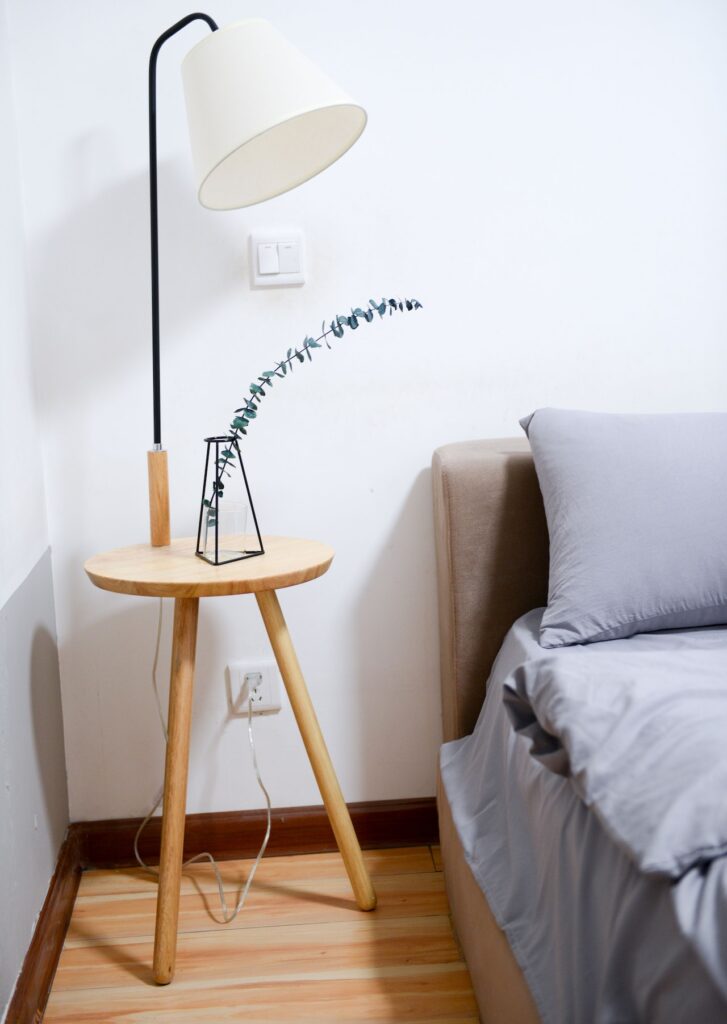
Using floor lamps in rooms with no overhead lighting is one of the easiest and most affordable ways to add the desired levels of illumination to a room. Many lighting specialists suggest such lamps as they are a great way to brighten up a space without sacrificing style. In the right hands, in fact, floor lamps can add a real sense of sophistication to a space.
Floor lamps come in a variety of shapes, sizes and styles, and can most generally be used to provide task lighting (such as for reading) or accent lighting, the latter of which can be most skilfully achieved by deploying smart bulbs that let you cycle through multiple colour options. When opting for floor lamps, make sure you’re using energy-efficient lighting and energy saving bulbs, or you may find the electricity bill goes up more than you’d like.
Not only are table lamps an alternative for overhead lighting; they can also be used as an accent piece to add a decorative element to a room. There are many different styles of lamps, and they can be placed anywhere within a room to bring intrigue and pull the focus to a particular area.
Another way to add that sense of focal point to a room’s illumination is through floating candle displays. You can choose from a variety of shapes and sizes of LED candles and arrange them into an eye-catching display, and are a great way to add colour to a room, all without having to worry about calling an electrician to complete a comprehensive re-wiring project.
Both floor lamps and table lamps can be used in various ways:
Mood lighting helps to set the mood in a room. This type of lighting tends to be low-light and warm, often creating shadows and pockets of intrigue.
Task lighting helps you to perform a specific task, such as a desk lamp illuminating a surface from which you write, illustrate, cook or compose your masterpieces. It gives light to your workspace and provides a very specific job. It isn’t meant to light a whole room and instead creates focal point in one specific, designated space.
Ambient lighting is meant to be used throughout the home so that you can move from room to room without a transition too stark. It can replace sunlight during the evening hours, which means it should be bright enough to stand its ground in darker periods.
Using Candles To Add More Light To Your Room
Using candles to add more light to rooms with no overhead lighting is a great way to create a cosy scene in your house or flat, and are a savvy way to save money on electric bills and fill your room with beautiful scents, too!
In fact, if you enjoy entertaining, using candles with a specific scent is a cool way to turn your home interior into a ‘vibe’ in the same way many upscale hotels use scents to achieve the same.
And if you’re not into using fire in your home, no problem. You can add light to your room by hanging faux candle displays. You can choose from a variety of shapes and sizes of LED candles and arrange them into an eye-catching display. They are a great way to add colour to a room and you don’t have to worry about getting an electrician in!
Adding More Light With Mirrors
Mirrors, whose power can be harnessed even in a room with no overhead lighting, are another savvy – often fun – way to brighten up your space. They can also help to add depth and dimension to the room.
Mirrors can be placed strategically in a room to reflect light from start white walls from lamps. They can also help to amplify the light flowing into the room from big and small windows alike.
Of course, to use strategically placed mirrors to their full potential, you need to make sure that you’re not obstructing any natural source of light, so make sure that you don’t have anything in your home office directly in front of your windows as they can block the flow of light and make the room feel dingy.
This doesn’t only apply to that stack of books you can’t find a home for, but also to bulkier pieces, such as furniture, desks and computers. Clearing visual room can go a long way to making your room look more spacious.
To maximise the effect, consider an updated colour scheme of bright, blocky colours. Giving a new lick of fresh paint is an extremely cost effective way of getting the most out of your cellar space. Of course, an over abundance of bright orange or yellow, for instance, is overkill. Go instead for subtler shades of warmth and wellbeing which still bring that light giving, mood lifting quality, such as sand, ecru or almond.
Now that’s dispensed with, if you’re looking for tips on how to harness the power open-plan living to brighten up your kitchen, then you’ll find them here. We can’t wait to be invited over to your beautifully-lit home.