
Home Blog Page 29

The Best Restaurants In Norwich

With its medieval lanes and soaring cathedral spire, Norwich wears its heritage lightly whilst punching well above its weight in the culinary stakes. England’s most complete medieval city has become something of a foodie destination in recent years, with a dining scene that celebrates Norfolk’s exceptional produce whilst embracing international flavours with open arms.

The Fine City benefits from being surrounded by some of Britain’s most fertile farmland, with the North Sea delivering fresh catches to its doorstep. This abundance of local ingredients has attracted chefs who’ve swapped London’s bright lights for Norfolk’s quieter charms, bringing serious cooking credentials to bear on superb raw materials.

Norwich’s dining scene radiates out from the historic Lanes, a warren of medieval streets now home to independent cafés, wine bars and restaurants that wouldn’t look out of place in Shoreditch. Meanwhile, the bohemian stretch of St Benedicts Street has evolved into the city’s restaurant row, where you’ll find everything from Michelin Guide-listed fine dining to classic French bistros.

The city’s food credentials were given a significant boost when Richard Bainbridge won the Great British Menu , putting Norwich on the national culinary map. Since then, a wave of ambitious openings has transformed the local scene, with young chefs choosing Norfolk over London and bringing restaurant-quality cooking to neighbourhood prices.

That’s not to say Norwich has abandoned its traditional roots. You’ll still find excellent fish and chips cooked to perfection, alongside Indian restaurants that bring genuine street food flavours. It’s this mix of serious ambition and local character that makes Norwich such a rewarding place to eat.

Here’s where to eat brilliantly in Norwich right now.

Benedicts, St Benedicts Street

Ideal for experiencing Norwich’s finest cooking in relaxed surroundings…

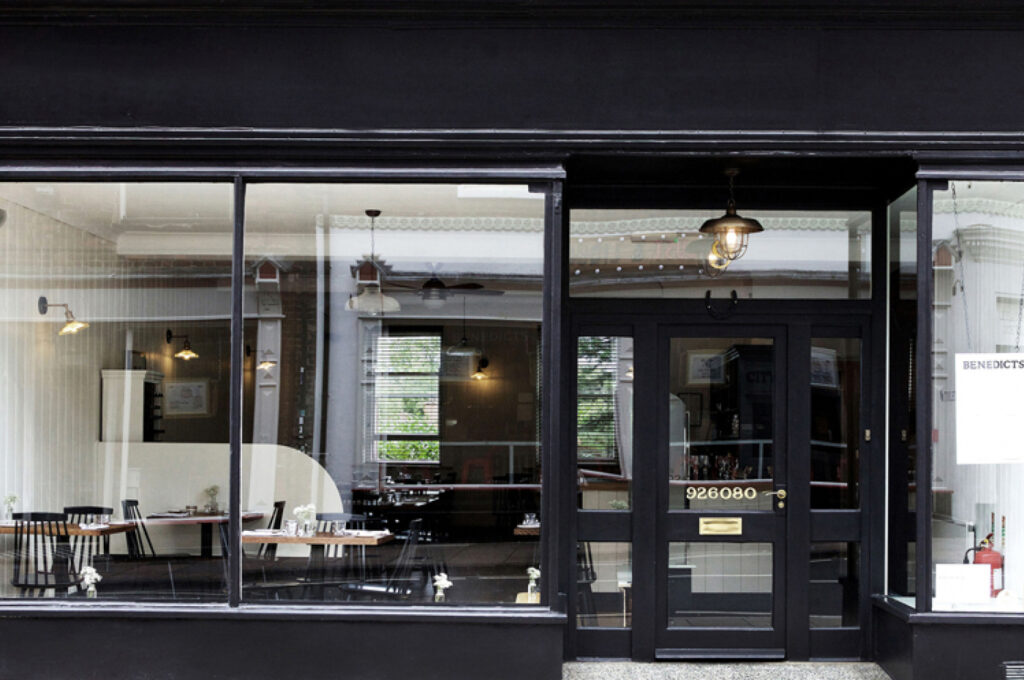
Richard Bainbridge’s neighbourhood restaurant has become Norwich’s foodie calling card, and for good reason. The Great British Menu winner has created something special here: serious cooking without an ounce of stuffiness, served in a dining room that feels more like an extension of someone’s particularly stylish front room than a formal restaurant.

Bainbridge earned his stripes in some serious kitchens before returning to his native Norfolk, and his experience shows in cooking that’s both technically accomplished and deeply satisfying. The menu changes with the seasons but always showcases the best of local produce. You might find Norfolk quail with pickled grapes and walnut, or Cromer crab dressed simply with cucumber and dill oil, the sweet crab meat singing against the clean, green notes of the garnish.

The famous Nanny Bush’s trifle remains a constant on the menu, and rightly so. This is Bainbridge’s grandmother’s recipe, the very dessert that won him television glory on the Great British Menu. Layers of elderflower jelly, rich custard and light sponge create something that’s both nostalgic and sophisticated, the kind of pudding that makes you understand why British desserts were once the envy of Europe.

Service strikes just the right note, knowledgeable without being pompous, friendly without being overfamiliar. The wine list celebrates both local producers and classic regions, with markup that won’t make you wince. Lunch menus start at £42 for three courses, whilst evening brings tasting menus from £65. Given the quality on offer and the local prices, this represents remarkable value for cooking of this calibre.

The 40-cover restaurant fills fast, particularly at weekends, so booking well in advance is essential. They close for a fortnight each summer whilst Bainbridge sources new ingredients and develops menus, so check before making special journey plans. This is destination dining that happens to be on your doorstep if you live in Norwich.

Website: restaurantbenedicts.com

Address: 9 St Benedicts Street, Norwich NR2 4PE


Benoli, Timber Hill

Ideal for pasta perfectionists seeking Italian soul in Norfolk…

Oliver Boon’s Italian restaurant occupies a lovely spot at the bottom of Timber Hill, and from the moment you walk through the door, you know you’re in for something special. Boon cut his teeth in Gordon Ramsay and Michel Roux Jr’s kitchens before deciding to bring exceptional Italian cooking to Norwich, and the result is a restaurant that feels both polished and personal.

Everything here revolves around the pasta, and watching the chefs rolling out sheets of dough through the open kitchen pass becomes part of the entertainment. This is the real deal: Italian technique at its finest applied to the best ingredients, with results that would make a nonna weep tears of joy. The 24-month aged Parmesan croquettes arrive as golden orbs that give way to molten, intensely savoury centres. They’re just fabulous with a crisp, cold beer.


But it’s the pasta that really sets pulses racing. The cacio e pepe demonstrates how three simple ingredients can create something transcendent when handled with skill and respect. Tonnarelli arrives perfectly al dente, tossed with aged Pecorino Romano and freshly cracked black pepper, the starchy pasta water creating a glossy emulsion that clings to each strand. It’s a dish that shows why humble Italian cooking conquered the world.

Boon’s cooking earned a spot in the Good Food Guide’s 100 Best Local Restaurants within just two years of opening, recognition that reflects both the quality of the food and the warmth of the welcome. The wine list leans heavily Italian, naturally, with some crackling bottles from lesser-known regions that show real knowledge and passion. Staff know their wines and aren’t shy about making recommendations that might expand your horizons.

Pastas and mains courses hover around £25, which isn’t exactly cheap, but it’s not an outrage either in this economy. The atmosphere strikes that perfect balance between smart enough for a special occasion and relaxed enough for a Tuesday night supper. And that’s what it’s all about, don’t you think?

Website: benolirestaurant.com

Address: 5 Orford St, Norwich NR1 3LE


Brix & Bones, London Street

Ideal for fire fanatics and anyone who takes their steak seriously…

Hidden above Gonzo’s Tea Room on London Street, Brix and Bones feels like a brilliant secret that’s just waiting to be discovered. This 30-seater revolves around a custom-built two-metre fire pit where chef George Wood, who honed his skills at London’s Temper, works genuine magic with flame and smoke.

The theatre begins the moment you climb the stairs and catch your first whiff of that distinctive charcoal smoke. The open kitchen dominates the space, with the fire pit as its beating heart, and watching the chefs work over the flames becomes part of the evening’s entertainment. This isn’t style over substance though; the cooking here is serious business, with every element carefully considered and expertly executed.

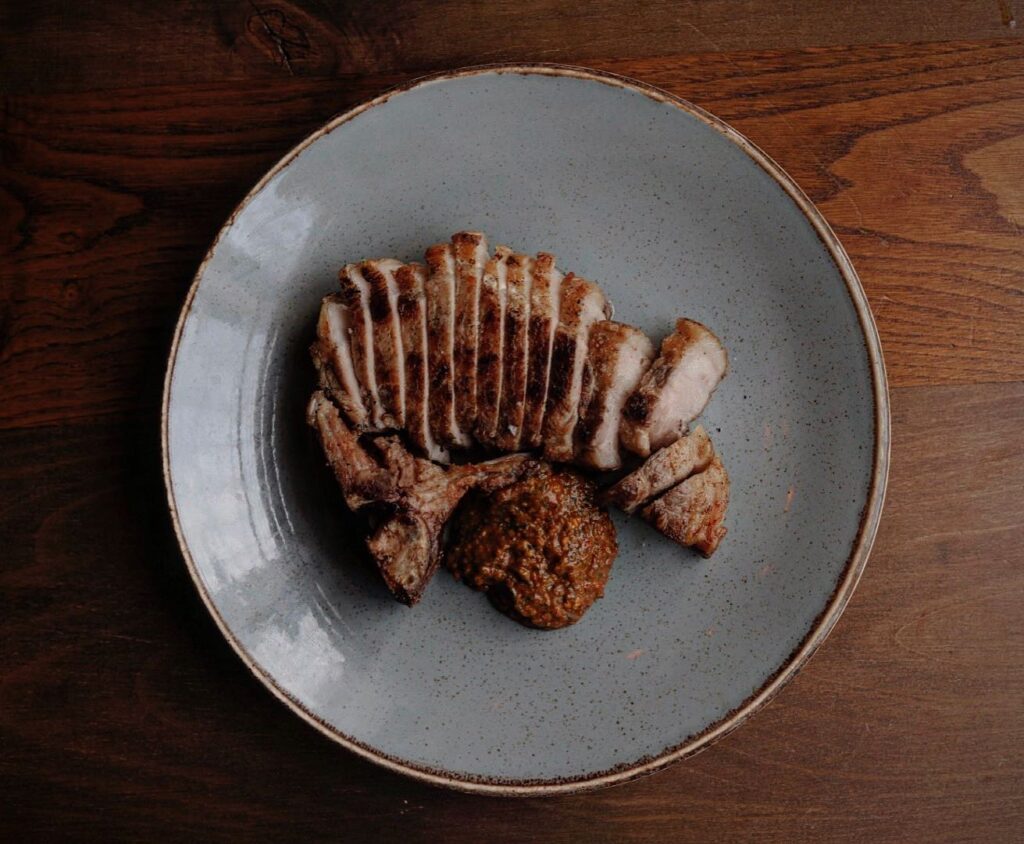
The dry-aged beef comes from Norfolk farms and gets the full treatment here. The 85-day aged steaks are things of beauty, developing the kind of deep, complex flavours that make you understand why people get obsessive about beef. Arriving perfectly charred on the outside and blushingly pink within, the smoke adds another layer of complexity to meat that’s already singing with flavour. 

But this isn’t just a temple to meat worship. The Brancaster mussels with ‘nduja show equal finesse, the sweet molluscs playing beautifully against the spicy Calabrian sausage, while foraged mushrooms reveal the kind of umami depth that only comes from careful sourcing and skillful cooking. Even vegetables get the star treatment here, emerging from the flames with appealing char marks and concentrated flavours.

Save room for the bone marrow fudge doughnuts, which sound completely bonkers but turn out to be utterly delicious. The rich, savoury marrow works surprisingly well in a sweet context, creating something that’s both playful and deeply satisfying. It’s exactly the kind of creative thinking that makes Brix and Bones such a thrilling place to eat.

Grab one of the bar seats if you can; watching the kitchen theatre unfold adds immeasurably to the experience. Smaller plates start from around £8, making it possible to graze your way through the menu without breaking the bank.

Website: brixandbones.com

Address: 68-72 London St, Norwich NR2 1JT


L’Hexagone, Lower Goat Lane

Ideal for Francophiles seeking bistro classics cooked with genuine conviction…

Thomas Aubrit’s intimate French bistro occupies a charming spot in the Norwich Lanes, and stepping inside feels like being in a neighbourhood joint in provincial France. Aubrit cooks the food of his French childhood here, and his obvious passion for the classics shines through in every dish.

This is bistro cooking at its most forthright and satisfying, free from modern reinterpretations or unnecessary embellishments. The French onion soup arrives under a blanket of molten Gruyère, the rich beef stock beneath speaking of hours of patient simmering. The steak frites comes with a pitch perfect béarnaise, the sauce glossy and perfectly emulsified, with just enough acid to cut through the richness of the meat. It tastes and feels like it’s been made to order, which is impressive stuff, even if it’s been held at just the right heat for service.

Save room for the crème brûlée, which seems to be hitting every table, and rightly so. The custard beneath the caramelised sugar is silk-smooth and intensely vanilla-scented, whilst the sugar top cracks with satisfying precision. It’s the kind of dessert that reminds you why French patisserie conquered the world, executed with the kind of care that comes from a deepheld respect for tradition.
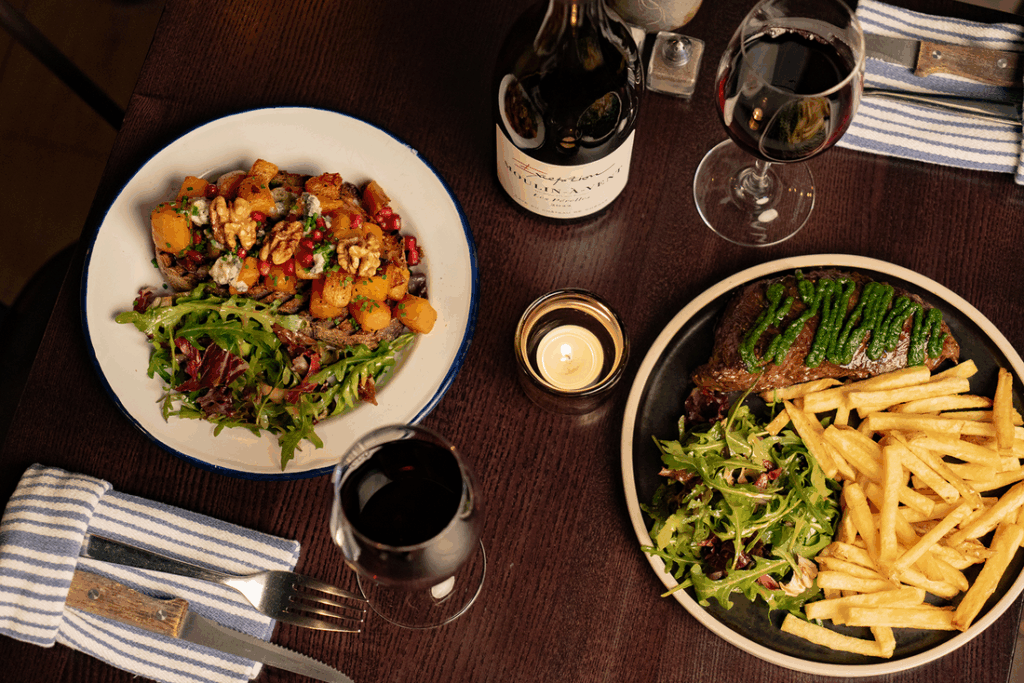
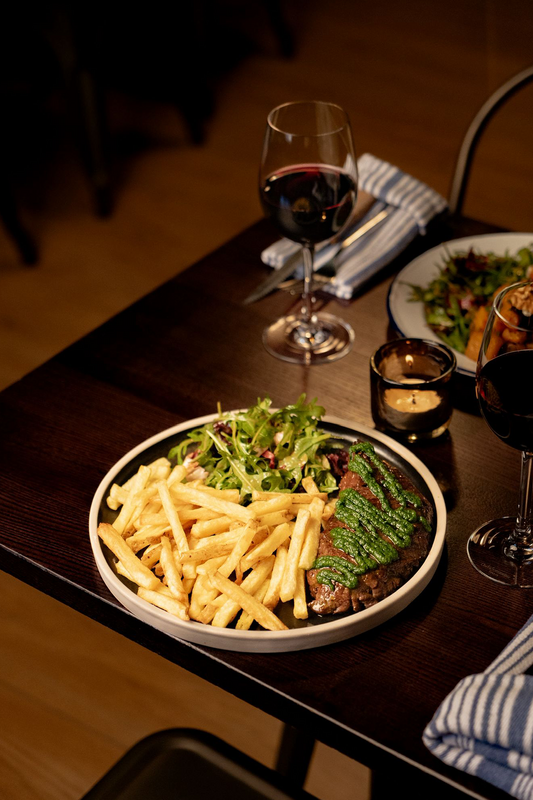
The steak tartare provides another highlight, mixed tableside with appropriate ceremony. Aubrit knows his way around raw beef, seasoning it with just the right balance of capers, shallots and egg yolk to enhance rather than mask the quality of the meat. Served with golden frites and a small salad, it makes for a transportive lunch.

The French-only wine list reflects Aubrit’s personal passion, with bottles chosen for their character and story rather than their fame. Staff are happy to guide you through the selections, and you’ll often discover something new and exciting. Lunch can be as simple as a croque monsieur for around £10, whilst evening brings heartier options like bavette and duck confit. The upstairs tables offer a more intimate setting if you’re planning something romantic.

Website: hexagonebistrofrancais.com

Address: 22 Lower Goat Lane, Norwich NR2 1EL


The Assembly House, Theatre Street

Ideal for afternoon tea with Georgian grandeur…

Built in 1754, this Grade I listed Georgian mansion brings a touch of Jane Austen to Norwich dining. The glittering chandeliers, ornate ceiling roses and period furnishings create an atmosphere of faded grandeur that makes afternoon tea here feel like a special event rather than just another meal.

Following the recent passing of beloved Chef Director Richard Hughes, The Assembly House continues under the careful stewardship of his family, maintaining the same high standards that made it a Norwich institution. The themed afternoon teas change regularly, offering everything from literary inspirations to seasonal celebrations, but the standards remain consistently high. Finger sandwiches arrive with carefully trimmed crusts and generous fillings, whilst the scones emerge warm from the oven with the kind of light, fluffy texture that shows real skill in the baking.
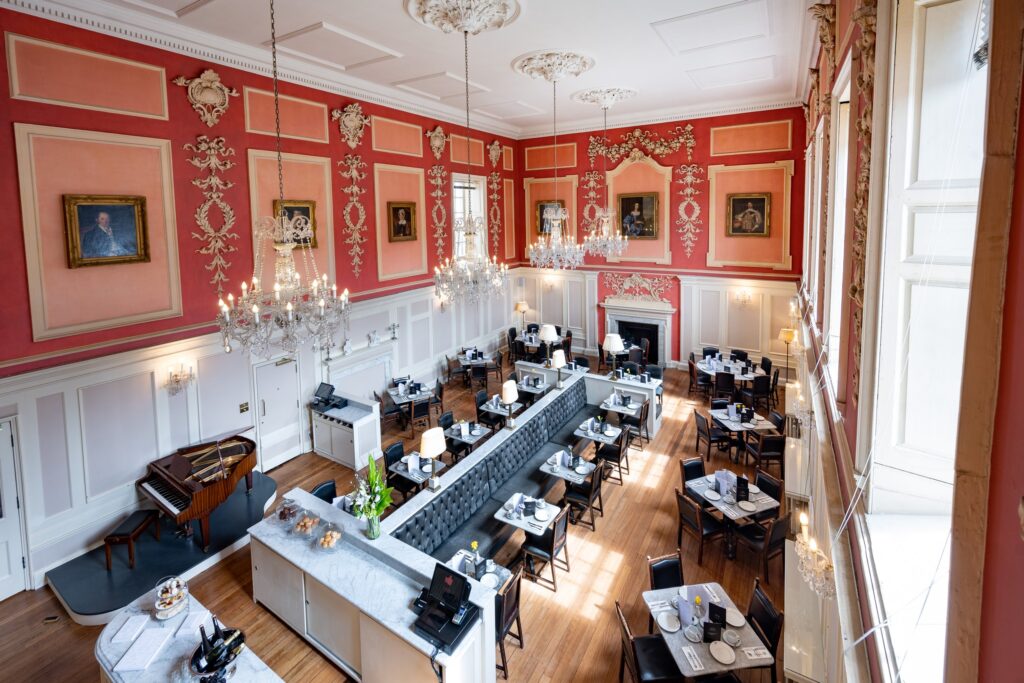
The selection of delicate cakes demonstrates genuine patisserie technique, each one a small work of art that tastes as good as it looks. The ‘Beforenoon Tea’ flips the traditional concept for early risers, serving the full works between 8 and 11am for those who prefer their indulgence with their morning coffee. Meanwhile, the Afternoon Cheese option provides a savoury alternative for those who find traditional afternoon tea a bit too sweet for their tastes.

At £32.50 for the full afternoon tea experience, it’s not exactly cheap, but you’re paying for the setting as much as the food. The Music Room, with its soaring ceiling and period details, provides the most theatrical backdrop, whilst the smaller rooms offer more intimate settings for special occasions.

The breakfast menu offers everything from full English to lighter continental options in surroundings that make even a simple bowl of porridge feel special. It’s the kind of place that makes you want to dress up a bit, if only to match the elegance of your surroundings. Booking is essential, particularly for weekend afternoon teas when the Assembly House fills with birthday celebrations and hen parties.

Website: assemblyhousenorwich.co.uk

Address: Theatre Street, Norwich NR1 2DP


Dhaba at Fifteen, Magdalen Street

Ideal for Indian street food flavours…

This family-run restaurant brings Indian street food to Norwich, focusing on the kind of vibrant, spicy food you’d find on the streets of Mumbai or Delhi. The vibrance (oh, the vibrance) is apparent from the moment you walk through the door, with bright lighting and Indian street photography creating a curated backdrop for dhaba-style cooking.

The masala fries alone justify the journey here, taking the humble chip and transforming it into something genuinely exciting with a blend of spices that builds heat gradually whilst adding layers of complexity. Meanwhile, the gol guppa provide a masterclass in textural contrast, the crispy puffed shells giving way to an explosion of spiced filling that hits every taste bud simultaneously.
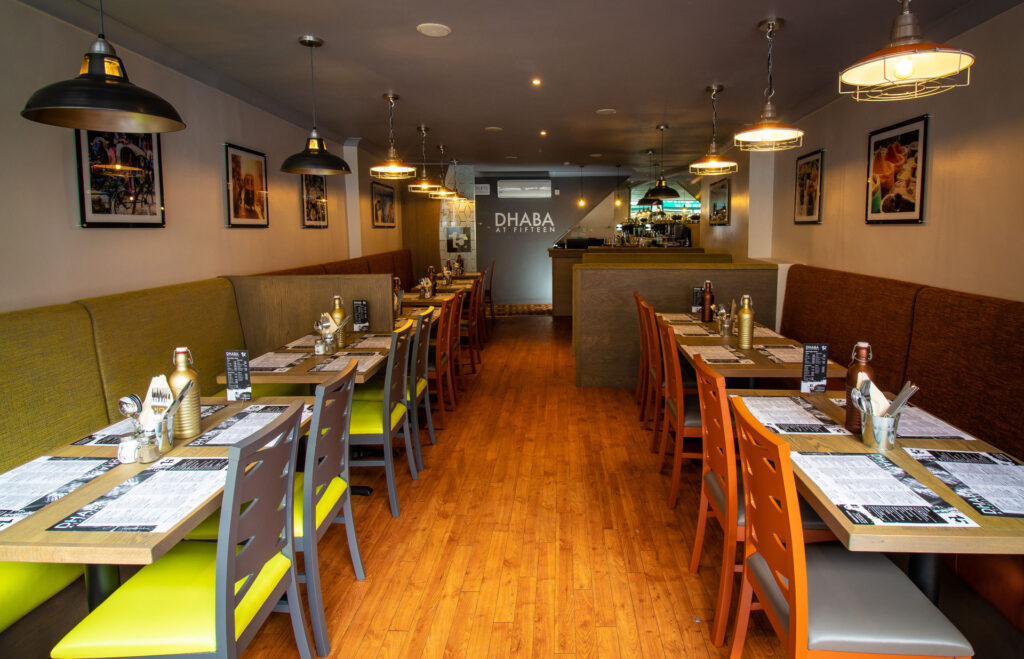

The Kashmiri lamb shank showcases the kitchen’s skill with slow-cooked dishes, the meat falling off the bone after hours of gentle braising with mild red chillies and aromatic spices. It’s the kind of dish that demonstrates how good Indian cooking can be when it’s not dumbed down for Western palates, complex and deeply satisfying without relying on excessive heat.

The restaurant doesn’t serve alcohol due to the owners’ religious beliefs, but the food more than compensates for any disappointment. The fresh chutneys and pickles provide palate-cleansing acidity, whilst the various breads, from fluffy naan to crispy papadums, offer perfect vehicles for sopping up the various sauces.

Most main courses clock in at under £15, making this some of the best-value dining in Norwich. The generous portions mean you’ll leave feeling satisfied, whilst the assertive, complex flavours ensure you’ll be planning your return visit before you’ve even finished your meal. The family service adds to the atmosphere, with staff happy to guide you through the menu and adjust spice levels according to your tolerance.

Website: dhaba15.co.uk

Address: 15 Magdalen Street, Norwich NR3 1LE


The Last, St Georges Street

Ideal for Ritz-trained fine dining in a Victorian shoe factory…

Sebastian Taylor’s return to Norwich after a decade at The Ritz has given The Last a new lease of life. This 30-year-old institution occupies a former Victorian shoe factory, and whilst the preserved shoe lasts throughout the space remind you of its industrial past, the stripped brick and vaulted ceilings now frame white tablecloths and silver service rather than factory machinery.

Taylor works alongside Head Chef Mortimer Fraser to deliver what they call ‘relaxed fine dining’, which turns out to be an accurate description. The Menu du Jour offers three courses for £32-38, bringing restaurant-quality cooking to prices that won’t require a second mortgage. The seasonal menus change frequently, showcasing Norfolk’s agricultural abundance with the kind of technical skill that comes from serious training.

The venue divides into three distinct areas: Taylors at The Last handles afternoon tea and formal dining, the Bar & Bistro offers a more casual atmosphere, whilst the Jazz Cellar provides live music on ‘First Thursdays’. Despite these separate spaces, the same menu runs throughout, meaning you can enjoy the same cooking whether you’re perched at the bar or settled into the white-tablecloth dining room.

The wine list lives up to Taylor’s promise of ‘probably the widest selection of carefully picked wines in the city’, with an extensive by-the-glass selection that makes exploring different bottles far less financially ruinous. The cocktails earned wins at Norwich Cocktail Week in both 2024 and 2025, whilst the craft beer selection will satisfy those who pack Gaviscon for every sip of SB.

The restaurant earned its 2 AA Rosettes in August 2024, recognition that reflects the consistent quality emerging from Fraser’s kitchen. The afternoon tea draws on Taylor’s Ritz experience, offering finger sandwiches, warm scones and delicate patisserie in surroundings that feel more London hotel than Norfolk city centre.

Sunday roasts draw particular praise, with reviewers getting evangelical about the crispy potatoes. The Jazz Cellar events bring live music to accompany your meal, creating an atmosphere that feels celebratory without tipping into formal stuffiness. Dogs are welcome in the bar area, making this a rare fine dining option where your four-legged friend can join you.

The location in Norwich’s creative quarter, near the University of the Arts and Norwich Playhouse, means you’re well-placed for a pre-theatre dinner or post-gallery lunch. Opening hours run Wednesday to Saturday noon to 11:30pm, with shorter Sunday hours of noon to 6pm. They’re closed Mondays and Tuesdays.

Website: thelastnorwich.co.uk

Address: 70-76 St Georges St, Norwich NR3 1AB


Blue Joanna, Unthank Road

Ideal for Asian fusion adventurers and vinyl enthusiasts…

Part restaurant, part vinyl bar, Blue Joanna occupies its own unique niche in Norwich’s dining scene. This Unthank Road favourite mashes up Asian and Latin American flavours with gleeful abandon, creating a menu that reads like a stoner’s fever dream but somehow makes perfect sense when you start eating. Even Alan Partridge might find himself won over by the Korean tofu tacos, though he’d probably still ask if they serve mini Kievs.

Korean tofu tacos share menu space with crispy banana blossom ‘fish’ tacos and pork belly with sriracha slaw, each dish bringing different influences together in ways that shouldn’t work but absolutely do. The whole approach is designed for sharing, encouraging diners to order multiple small plates and graze their way through the evening whilst discovering new flavour combinations.

The fact that the entire menu happens to be gluten-free comes as a pleasant surprise, though you’d never guess from the way the food tastes. The kitchen clearly knows how to coax maximum flavour from every ingredient, whether that’s achieving the perfect texture on the banana blossom or nailing the heat level on the sriracha slaw.
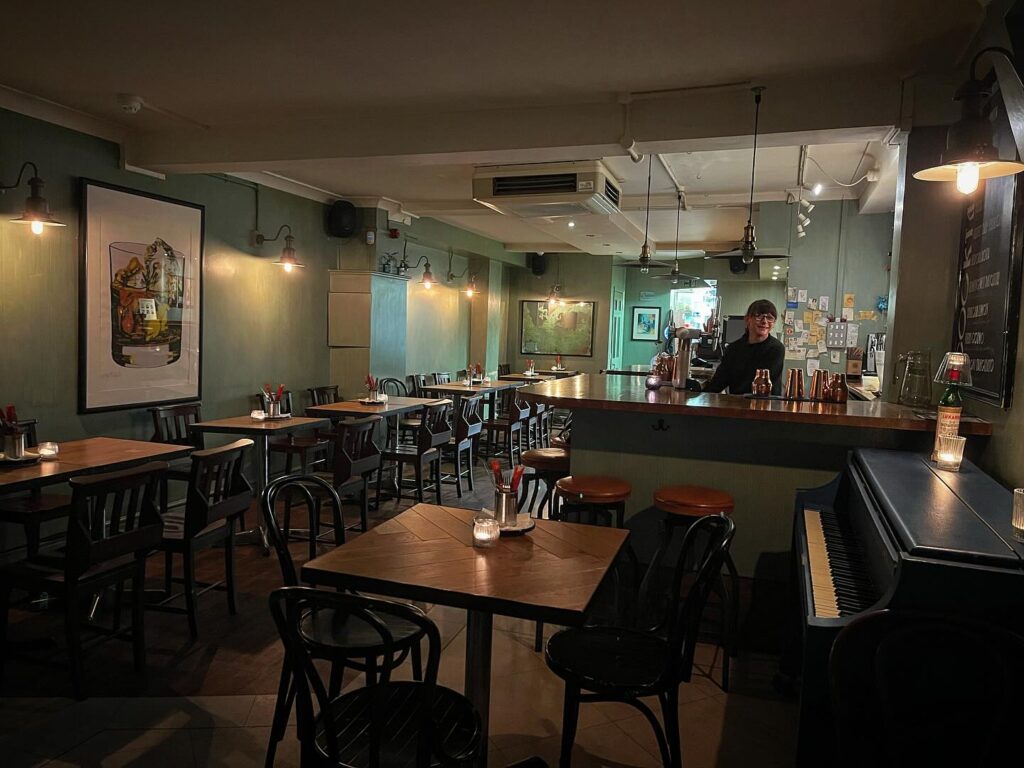
The vinyl collection provides the soundtrack to your meal, with everything from classic soul to contemporary electronic setting the mood. Live music and DJ sets keep things lively at weekends, creating an atmosphere that’s part restaurant, part neighbourhood hangout. The blue piano isn’t just for show either; expect impromptu performances when the mood takes hold.

With no dish tipping the tenner point, and drinks following a similar pricing structure, bills remain reasonable even after multiple rounds of ordering. It’s the kind of place where you can easily spend an entire evening, starting with early drinks and light snacks before progressing to more substantial dishes as the night develops. The laid back vibes attract a diverse crowd, from students stretching their budgets to young professionals who’ve recently moved to the area – estate agents in Norwich often mention Blue Joanna as one of Unthank Road’s draws.

Website: bluejoanna.co.uk

Address: 103 Unthank Road, Norwich NR2 2PE


Grosvenor Fish Bar, Norwich Lanes

Ideal for fish and chips with nearly a century of perfection…

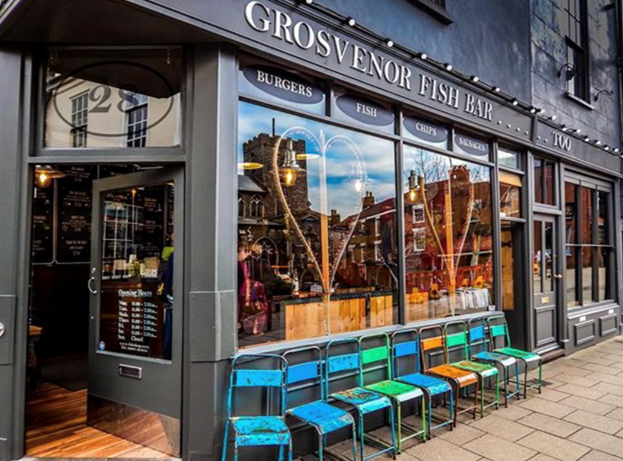
This isn’t your average chippy. Operating for nearly a century, the Grosvenor hides a remarkable secret beneath its traditional shopfront: a basement dining area that seats 70 in what feels like a cross between an Anderson shelter and a seafood speakeasy. The downstairs space creates quite the atmosphere when busy, with the acoustics adding to the sense of being part of something special.

The fish and chips live up to the theatrical setting, with the Grosvenor Special arriving skinless and boneless for those who prefer their cod without any fuss. The batter achieves that perfect balance between crispy exterior and light, fluffy interior, whilst the chips demonstrate the kind of fluffy-centred perfection that comes from quality potatoes and experienced hands.
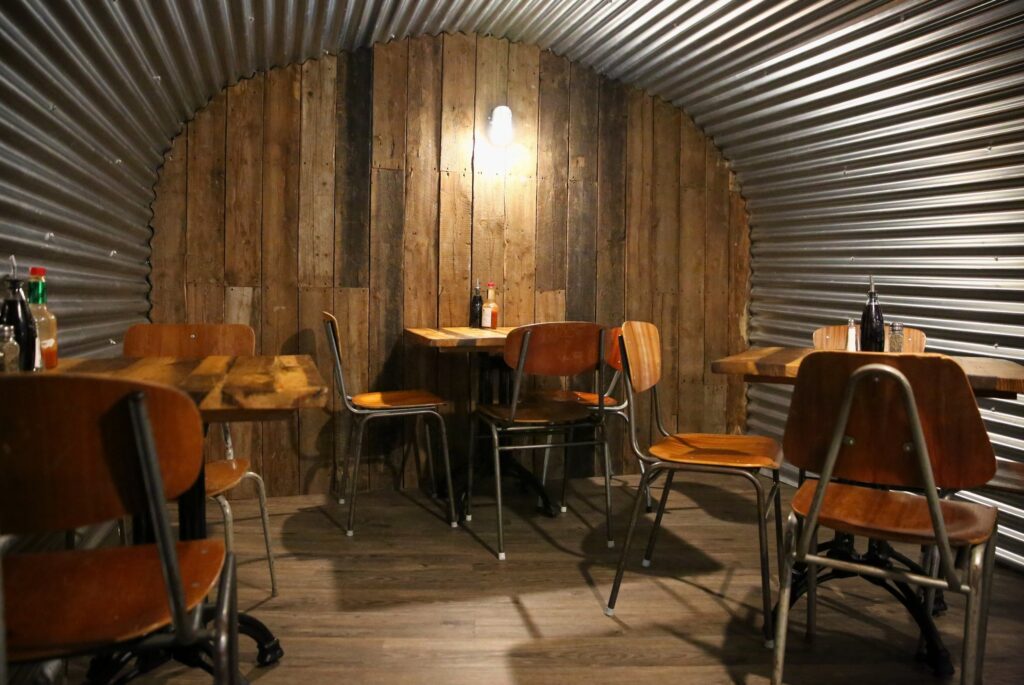

Beyond the traditional offerings, the menu ventures into more adventurous territory with softshell crab po’boys and Maine lobster rolls making summer appearances. It’s an unusual combination of chippy classics and American seafood, but it works brilliantly in this unique setting. 

The basement location means you’ll want to dress warmly in winter, but the atmosphere more than compensates for any temperature concerns. There’s something wonderfully convivial about sharing this subterranean space with fellow fish and chips enthusiasts, creating connections with strangers over shared plates of perfectly cooked seafood.

Website: fshshop.com

Address: 28 Lower Goat Ln, Norwich NR2 1EL


Brick Pizza, Market Place

Ideal for Neapolitan pizza purists…

This tiny pizzeria near the market proves that you don’t need fancy surroundings to produce world-class food. The wood-fired oven hits blistering temperatures, allowing the pizzaiolos to produce authentic Neapolitan pizza in just 90 seconds, with the kind of charred, pillowy bases that have made it the world’s favourite food.

The toppings stay resolutely traditional, with San Marzano tomatoes providing the sweet, acidic base for bufala mozzarella that melts into creamy pools across the surface. Fresh basil adds its distinctive perfume, whilst a drizzle of good olive oil brings everything together. At £8 for a margherita, it represents exceptional value for pizza of this quality.


The limited seating means takeaway is often the easier option, though watching the pizzaiolos work their magic over the flames adds considerably to the experience. Norfolk vegetables get their moment to shine on seasonal specials, with local producers providing ingredients that show off the county’s agricultural abundance. Whether that’s asparagus in spring or squash in autumn, the seasonal touches demonstrate a commitment to local sourcing that elevates already excellent pizza.

The Market Place location makes it perfect for a quick lunch whilst exploring Norwich’s shopping areas, though the quality means it’s worth seeking out even if you’re coming from further afield. The 90-second cooking time means you won’t be waiting long, even when they’re busy.

Website: Find them on social media for current hours

Address: 39 Market Place, Norwich NR2 1ND

Website: brick.pizza


Figbar, St John Maddermarket

Ideal for pudding fanatics and anyone who believes life’s too short for boring desserts…

Norwich’s first dedicated dessert bar proves there’s life beyond sticky toffee pudding, with executive pastry chef Jaime Garbutt bringing serious fine dining skills to bear on the sweet side of the menu. Garbutt earned his stripes at Pétrus and under Marcus Wareing, and his technical ability shows in every beautifully plated creation.

The Jaffa cake reimagining provides a perfect example of the kitchen’s approach, taking a beloved British classic and elevating it to restaurant standard. Layers of orange sponge mingle with bitter chocolate ganache and candied peel, creating something that’s both nostalgic and sophisticated. It’s the kind of dessert that makes you reassess what British puddings can achieve when treated with real respect.


The banoffee receives similar fine dining treatment, with maple candied pecans adding textural interest and excellent toffee sauce providing the kind of deep, complex sweetness that only comes from careful caramelisation. Even the banana element shows thought and technique, whether that’s in the form of a perfectly ripe garnish or a more complex preparation that concentrates the flavours.

At £10 per plate, you’re getting restaurant-quality desserts without the commitment of a full three-course meal. Although, if you do want to commit to a full, very sweet meal, then there’s  a dessert tasting menu for £30. Wine and champagne pairings are available for those who want to push the boat out, with selections that show real understanding of how sweet wines can complement rather than compete with dessert flavours.

The intimate 14-seat space creates a genuine sense of occasion, whilst the Thursday to Saturday opening hours add to the exclusive feel. Given that last part, booking is absolutely essential.

Website: figbarnorwich.com

Address: 23 St John Maddermarket, Norwich NR2 1DN

The Best Restaurants Near The Spurs Stadium, Tottenham

At the start of January 2023, the popular Instagram account Footy Scran revealed their top 5 football grounds in England for food. And, perhaps unsurprisingly since you know we’re scratching around for an introduction before we get to the meat and bones of the piece, Tottenham were included in that top five. 

Alongside such culinary trailblazers as the North West Counties Premier Division’s Avro FC and their esteemed breakfast wrap, the page celebrated a certain fried chicken with a bag of chips served by none other than the Spurs. 

Yours for £8.95 and arriving in a brown recyclable Kraft bowl more synonymous with London’s zeitgeist-baiting food festivals than the footy, it looks genuinely excellent, the golden wings slathered in a couple of buffalo-adjacent sauces and topped with rondelles of jalapeno. Glory glory Tottenham Hotspur, indeed.

All that said, if you’re looking for a truly fantastic feed in this part of town, then you’re probably not going to find it on the site formerly known as White Hart Lane. Fortunately, you don’t have to go much further afield to find great food in the North London neighbourhood. As long as you’ve got this guide in your hand, that is; our roundup of the best restaurants and food in Tottenham, London, and the best restaurants near the Spurs stadium.

Chuku’s, High Road

Ideal for Nigerian tapas galore…

Chuku’s is, in the restaurant’s own words, ‘’the world’s first Nigerian tapas restaurant’’. In reality, it’s so much more than that, a restaurant ran by two siblings with all the frisson, friction, harmony and laughter that entails. The fact that the food here is incredible is – almost – something of an afterthought, the warm, rambunctious welcome the real draw here.

We say almost because Chuku’s is a genuinely brilliant place to dine, and probably our favourite restaurant in Tottenham. From the adalu honey beans to the caramel kuli kuli wings, every dish is a chart-topper, with the beef meatballs seasoned with a rich, complex suya spice rub an obvious headliner and highlight.

The egusi bowl is a picture perfect piece of work, too, and one that’s mighty fun to eat with it. Scooping up the cassava dumplings and dunking them in the three colourful stews, one made from red peppers and tomatoes, another spinach, coriander and fennel, and the third egusi (blitzed up bitter melon seeds), is a joyful indulgence indeed.

Due to its compact nature and gushing national reviews, booking ahead is essential. Chuku’s is closed on Mondays.

Website: chukuslondon.co.uk

Address: 274 High Rd, London N15 4AJ


Durak Tantuni, West Green Road

Ideal for late-night wraps that cure all ills…

For over two decades, Durak Tantuni has been serving a single dish on West Green Road, just off the main Green Lanes strip. Tantuni – a speciality from the southern Turkish city of Mersin – is made with beef that’s been boiled, chopped, then fried in cotton oil with sumac, cumin and parsley before being loaded into thin lavash bread. Your only decision is whether you want it in a dürüm wrap (£4) or thicker bread (£8), and how many you’re ordering.

You’ll want to order a few of the wraps, basically. The beef comes intensely seasoned and soaked in its own juices, the mince soft and spicy, but with enough texture to feel substantial. A squeeze of lemon is mandatory, as are the piquant green pickled peppers that sit on every table. Some pack serious heat, others less so – it’s a lucky dip situation.

The space is bright and functional, with canteen seating and a cash-only policy. It’s the kind of place where you know exactly what you’re getting, which is part of the appeal. Two regular wraps will sort most appetites, though the larger bread version makes sense if you’re particularly ravenous or haven’t eaten all day.

Open until 2am, Durak Tantuni occupies that essential late-night niche where food quality and convenience converge. It’s been doing this longer than most of the competition, and shows no signs of stopping.

Instagram: @duraktantunisalonu

Address: 390 W Green Rd, London N15 3PX


Chick King, High Road

Ideal for getting to know the reigning monarch of fried chicken…

© Alan Stanton

Chick King has been ruling the roost in this part of London for over 40 years, and just one bite of their expertly fried, confidently spiced chicken will tell you exactly why. You’ll have understood the esteem this place is held in long before that bite, actually, by just looking at the line snaking around the block, especially on matchday.

Expect a queue, a friendly grin from the owner, and fried chicken that’s the stuff of legend. Minimal grease, maximum flavour, and cheap-as-chips prices that bely its regal status, Chick King is Tottenham’s crispy crown jewel, make no mistake.

Facebook: Chick-King

Address: 755 High Rd, London N17 8AH

Read: Where to eat the best fried chicken


Brothers Cafe & Restaurant, High Road

Ideal for a taste of Somalia in North London…

This most unassuming of Somali restaurants serves up fragrant, spiced bariis iskukaris dishes of grilled meats over perfumed rice that are generous enough to satisfy even the heartiest of appetites.

Post-football (Brothers is a ten minute walk down the road from the Spurs stadium) and post-pints, there are fewer more welcome platefuls, with the lamb shank version particularly good. Don’t forget to add some basbaas (Somali chilli sauce) for an extra kick! 

Facebook: Brothers

Address: 552 High Rd, London N17 9SY


True Craft, West Green Road

Ideal for sourdough pizzas that hit the spot…

This gem on West Green Road dishes out sourdough pizzas that, whilst not at the level of London’s very best pizzas, are certainly satisfying, and represent a fine, affordable feed in Tottenham. Their sweet balsamic pepper and mascarpone pizza is the highlight, and when paired with one of True Craft’s speciality beers – the aptly named Tottenham lager is a crisp and clean brew – you really can’t go wrong.

Website: truecraftlondon.co.uk

Address: 68 W Green Rd, South Tottenham, London N15 5NR 


Pembe Sultan Kebab, Fore Street

Ideal for Turkish kebab connoisseurs and late-night munchies…

When the craving for a kebab strikes, there’s no better place in Tottenham (towards Edmonton, admittedly) than Pembe Sultan Kebab. This local favourite is renowned for its succulent, charcoal grilled skewers, lavishly laden doner plates, and a brief selection of Turkish vegetable specialities that are bursting with freshness and vitality.

From the latter section of the menu, the ezme salad is an exemplary version, all precision cut onions, tomatoes and peppers that have been generously dressed in pomegranate molasses and good quality olive oil.

For the larger groups, the Pasha Special is the move. Stacked high on a massive serving plate, you’ll find both lamb and chicken shish, an Adana lamb skewer, wings, ribs, and lamb and chicken doner meat. Served alongside is rice, flatbreads, couscous and garlic and chilli sauces. Though the team here insists this one serves just two or three people, you could probably feed a couple more happily. Afiyet olsun! 

Instagram: sultankebab

Address: 138 Fore St, London N18 2XA 


Pasero, West Green Road

Ideal for small plates and night dates…

Proving that you can be all things to all people, Pasero is a versatile joint that caters to just about any Tottenham crowd you could think of – from morning coffee seekers to evening diners looking for a date night spot that has the feel of a Parisien natural wine bar, all the way to the burnt orange-tiled bar, which sets the perfect backdrop for a romantic date.

Open from 8am to 11pm (with the kitchen closing at 9:30pm) Wednesday to Saturday and 9am to 4pm Sundays to Tuesdays, Pasero takes each of its mealtimes seriously. By day, it’s bustling with people enjoying almond croissants and coffees. By night, it transforms into something nearing a bistro, perfect for small plate enthusiasts. The smoked cod’s roe choux bites and roasted squash with whipped gorgonzola have been standout dishes in the past, but the menu changes regularly, so don’t hold us to that.

Pasero also hosts regular pop-ups, with Keshia Sakarah from the outstanding Caribe’ taking to the stoves this week. We can’t wait!

Website: pasero.uk

Address: 120a W Green Rd, South Tottenham, London N15 5AA 


Uncle John’s Bakery, West Green Road

Ideal for Ghanaian sweet treats…

This Ghanaian bakery, a husband and wife operation that’s been at the same Tottenham location since 1995, is famous for its sweet bread, Ghanaian doughnuts known as bofrot, their chin chin biscuits, and glossy meat pies, all of which are now sold in Morrisons, a testament to the quality – and ambition – of the baking here. Don’t forget to grab some for the road!

Website: theunclejohnsbakery.com

Address: 76 W Green Rd, South Tottenham, London N15 5NS


Deluxe Manna, High Cross Road

Ideal for unhurried Congolese cuisine with a side of beats…

When you walk through the doors of this Congolese spot in Tottenham Hale, an uplifting blast of afrobeats immediately sets the mood for a feast.

And feast you shall; it’s all about the platters here, with the Manna platter a delightful mix of grilled fish, smoked lamb (ntaba), jollof rice, and kwanga (a soft cassava dumpling). Serving four, it’s just £52. This is a place where you won’t be rushed, ensuring you savour every bite.

Address: 135, 137 High Cross Rd, London N17 9NU 

Website: deluxemanna.com


Jerk Munchies, Commercial Road

Ideal for bagel bliss with a Caribbean twist…

Jerk Munchies is the kind of place where the food is so good, you’ll rip open the takeaway bag before you’ve even left the shop. The jerk bagel is a masterpiece of charred dough and succulent meat, slathered in a piquant, undulating sauce that’s the perfect balance of sweet and spicy. And if bagels aren’t your thing, the jerk chicken rice box is a worthy contender.

Perhaps even better is the large oxtail, rice and peas, the meat falling off the bone and the rice blessed with plenty of melted bone marrow. It’s laughably good value at £8. 

Website: jerkmunchies.co.uk

Read: The best places to eat in Deptford


The Antwerp Arms, Church Road

Ideal for settling into a community pub gem…

The Antwerp Arms, affectionately known as ‘The Annie’, stands proudly as one of Tottenham’s oldest pubs. This community-run watering hole, North London’s first, is not just about pints; it’s about bringing people together. With a fine selection of real ales and craft beers, it’s the perfect place to unwind and connect with locals. The pub also hosts regular events, from quiz nights to live music, adding to its charm and appeal as a community hub.


Anyway, you’ve come here to find some of the best places to eat in Tottenham, and the menu at The Annie is pleasingly prosaic in its delivery. There’s no unfettered, unnecessary pub menu globetrotting here. Instead, a simple rundown of five Middle Eastern-leaning mains – grilled chicken, stuffed aubergine, lamb meatballs, fishcake or falafel – all served with fries and salad. 

The starters boast similarly refreshing focus, with the spicy beef sucuk sausage full of flavour and funk. A short selection of shawarma wraps seals the deal. 

Website: antwerparms.co.uk

Address: 168-170 Church Rd, London N17 8AS


San Marco, Bruce Grove

Ideal for an Italian trattoria experience in Tottenham…

Sitting just south of Tottenham in Bruce Grove is San Marco, a charming trattoria that offers a slice of Italy in North London, now in its 52nd year of trading.

All gingham tablecloths, candles melting wax into their wine bottle holders and pizza boxes stacked high on the counter, San Marco gives off a seriously timeless energy, a feeling of timelessness only furthered by the warmhearted greeting from owner Graziano.

On the menu, wood-fired pizzas, pleasingly blistered and leopard-spotted, and no-frills pasta dishes are the orders of the day. Incredibly, a margherita and a spaghetti carbonara clock in at £8.90 and £6.90 respectively. That is absurd value for pretty much anywhere in the UK, let alone London.

There are even rumours Guns N’ Roses are fans, ordering their pre-gig meal from San Marco before their recent show at the Spurs stadium. We’re glad Axl Rose’s appetite extended beyond simple destruction.

Website: sanmarco.co.uk

Address: 1-3, Station Buildings, Bruce Grove, London N17 6QY

Now we’re heading to the red side of town, to eat at some of the best restaurants in Islington. Care to join us?

Cosying Up Your Home For Autumn? Try These 11 Simple Home Decor Tricks

Here at IDEAL, we’re huge fans of the seasonal decor that defines the transition from summer to autumn, when the onset of cooler, darker months of the year beckons us indoors.

Since that special time is fast approaching, today, we’re going to take a look at some of the different ways that you can bring some autumn spirit to your home this month and make the most of the most beautiful time of the year. So, if you’re cosying up your home for autumn, here are 11 simple home decor tricks to help you do just that.

Autumnal Dried Flowers Arrangements

Dried flowers have been one of the biggest interior design trends of the past year and it’s easy to see why. This sustainable and oh-so-stylish interior trend has a lot to offer; not only do they look great and last, well, forever, but dried flowers are better for our planet, too. 

Indeed, as the Independent explains, “Unlike fresh blooms you won’t need to keep topping them up with water or have to throw them out once they’re past their peak, meaning dried is a better choice for the planet, too”.  

And as long as you look after them, you can enjoy your dried flower arrangements for many years to come. Sustainable kings and queens, step up!

When it comes to autumn, the rustic quality of dried flowers makes for a lovely accent for your autumnal inspired interiors. While you can buy pre-arranged autumnal bouquets, creating our own arrangements can be more personal and tailored to your home’s overall aesthetic. Or, you could even dry your own flowers.  

If you’re not sure where to start, Zoella suggests creating a “dramatic arrangement by pairing simple eucalyptus with bright colours and cascading amaranthus or everyone’s favourite pom pom flower: hydrangeas.’’ 

The site also recommend smoke bush, which they say is ‘’another particularly beautiful shrub during Autumn – its fluffy plumes turn a beautiful scarlet hue in Autumn” 

Indeed, this arrangement is ideal for inside your home and they bring with them a connection to nature and the outside world which is synonymous with the autumn season. 

Make Your Own Wreath

One of the most stunning seasonal features just perfectly suited to autumn is a wreath that welcomes people into your home. 

Hanging a wreath on the front door isn’t just for Christmas, after all, and often autumn wreaths look even more impressive than their festive companions. You can make your own wreath with some fake leaves and berries, a wreath ring, some fairy lights, pumpkins, and pine cones.

There are plenty of ways for you to customise your own wreath and this can be a fun weekend project on a blustery autumn day, able to instantly lift your home decor and make it feel more warm and welcoming for anyone who comes to visit you during the season. 

Layer Your Flooring

If you have mostly wooden flooring throughout your home, consider introducing some warm rugs to your living room and dining areas. Layering up your wooden flooring with a stylish rug is a great way to add some extra texture and colour to your interior design this autumn and will also be practical and keep in the warmth to make your home feel cosier.

That said, a good quality rug can be expensive. While many rug dealers offer year-round special deals, from May through to July, many rugs are on clearance. It’s the same as stocking up on jumpers or a new winter coat in July when they are on sale…with a little foresight, you can snag yourself a bargain.

We absolutely love the rugs from Rugette, a company that’s revolutionising how we think about rugs in the home. Their machine washable rugs are a game-changer for busy households, combining practicality with style in a way that’s hard to beat, with styles ranging from contemporary geometric patterns to classic traditional designs. The company’s stellar Trustpilot reviews speak volumes about their quality and service, and having dealt with their support team personally, we can genuinely vouch for just how helpful they are – they go above and beyond to help customers find the perfect rug for their space.

Choosing a seasonally appropriate rug can be tricky, but consider autumnal tones such as browns, oranges, and reds to really bring the autumn season into the home in a big way. We’re not talking about rugs with clunky, in-your-face pictures of trees on them, rather rugs that are inspired by, and use, the colours of nature. Think a rug with warm brown and copper tones, using abstract patterns to represent autumnal leaves. Speaking of abstract patterns and art…

Read: How to up the comfort ante of your home in time for winter

Change Your Artwork To Suit The Season

Artwork is something most of us have all over the house, and throughout the year, one way to get your home ready for hibernation season is to change and adapt your artwork for the season. 

In autumn, you can swap out some of the pictures in your frames to ones with autumn leaves and other aesthetic flourishes that warm up the home and show off this season. There are some stunning autumn art prints available online and by changing your artwork, you’ll mark the changing of the seasons and the natural, unstoppable march of life’s journey in an accessible, artistic way.

Some famous autumn paintings that you could buy prints of include: 

  • Claude Monet, Autumn on the Seine at Argenteuil, 1873
  • Wassily Kandinsky, Autumn in Murnau, 1908,
  • Katsushika Hokusai, Peasants in autumn, XVIII-XIX cent
  • Paul Gauguin, Landscape in Arles near the Alyscamps, 1888
  • Georgia O’Keeffe, Autumn Leaves, 1924,
  • Pierre Bonnard, Autumn View, 1912, 
  • Vincent van Gogh, Landscape with Trees, 1881
  • David Hockney, Woldgate Woods, 2008
  • Henri Rousseau, Eiffel Tower at Sunset, 1910
  • Any landscape prints by Richard Stanley, 2022

Add Autumnal Hues

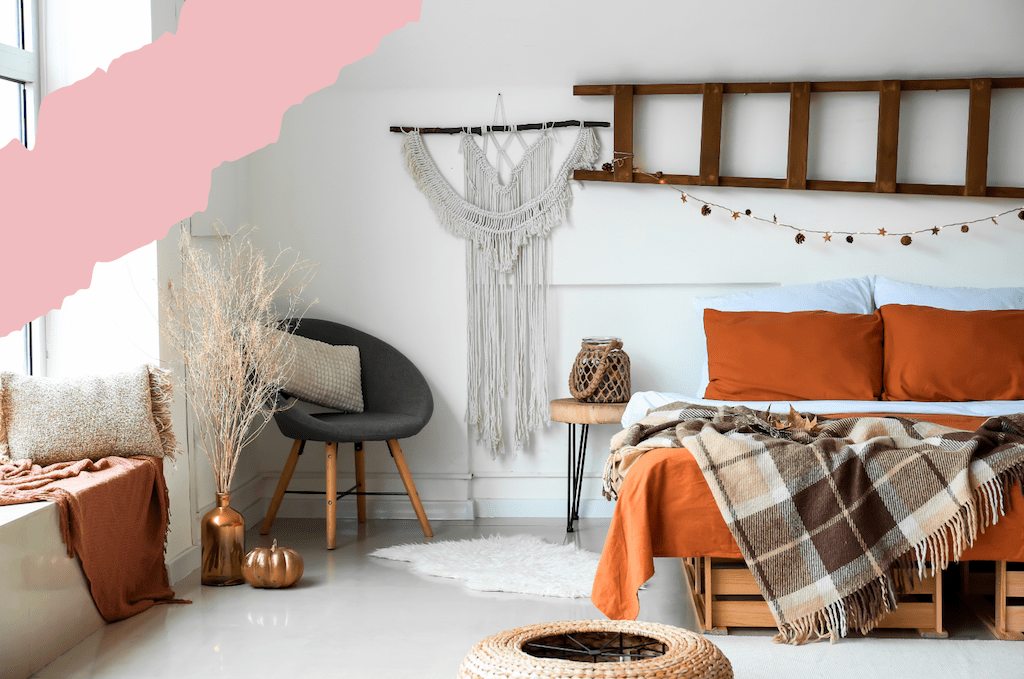
Orange and red tones are most associated with the autumn and now is the time for you to start bringing some of these colours into your home for the new season. There are so many ways to introduce warmer tones to your home such as an autumn bunch of flowers on the coffee table, a new vase in mustard, or a throw rendered in a rich rust colour that will hang over your sofa. 

Interestingly, these shades can be integrated into new-build homes with the help of the right soft furnishings and accent pieces just as much as they can be deployed in more period properties, highlighting the versatility of the season and making it easy to add seasonal warmth even to contemporary spaces with neutral foundations.

Choose warm and autumnal colours for your accessories and breathe some life and energy into every single room of your home. You can even take this a step further if you love the colours of autumn and swap out your living room feature wall for a stunning orange or copper tone that will add an air of cosiness and warmth to the room.

Read: 10 key interior design trends for autumn 2025

Pumpkins, Pumpkins & More Pumpkins

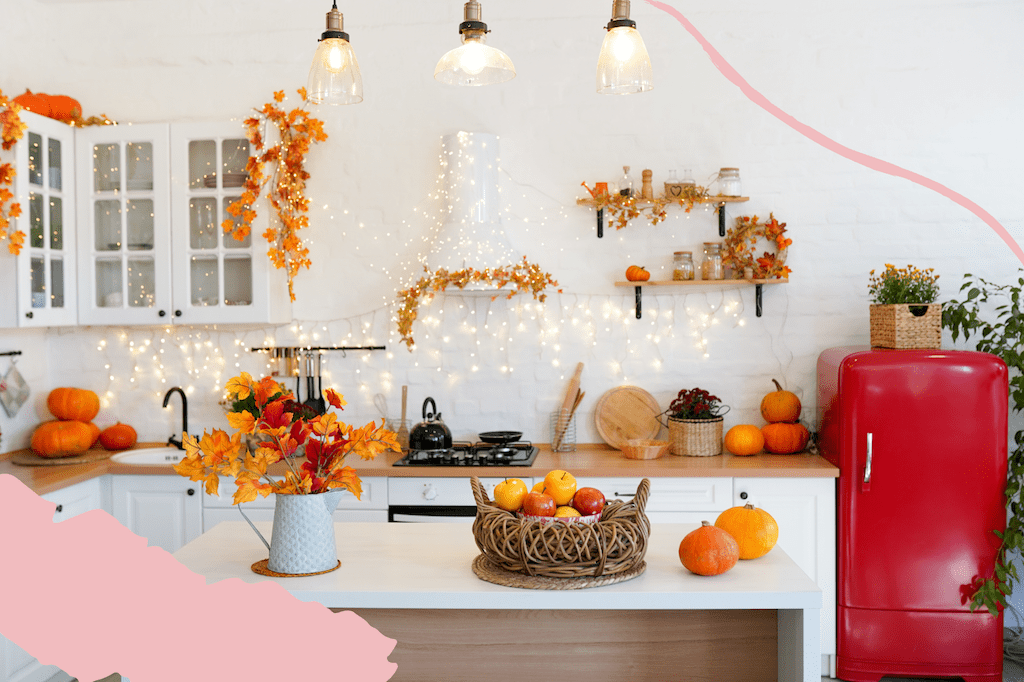
Pumpkins, both real and ornamental, are a super simple way to bring the autumn spirit to your house.

A display of squashes and pumpkins on your doorstep or windowsill is also great for autumn; they are also handy to have around the house if you’re in need of a quick lunch

Take the chance to gather a few pumpkin ornaments and real pumpkins and place them on shelves, on your doorstep, and throughout the house in different areas. This bright orange feature will breathe life and energy into the home and it will really keep the synergy of that seasonal spirit consistent. You can even use pumpkins as a vase.

Also, consider some pumpkin scented candles, too. Speaking of which…

Read: 5 IDEAL pumpkin recipes for autumn  

Bring In The Candles

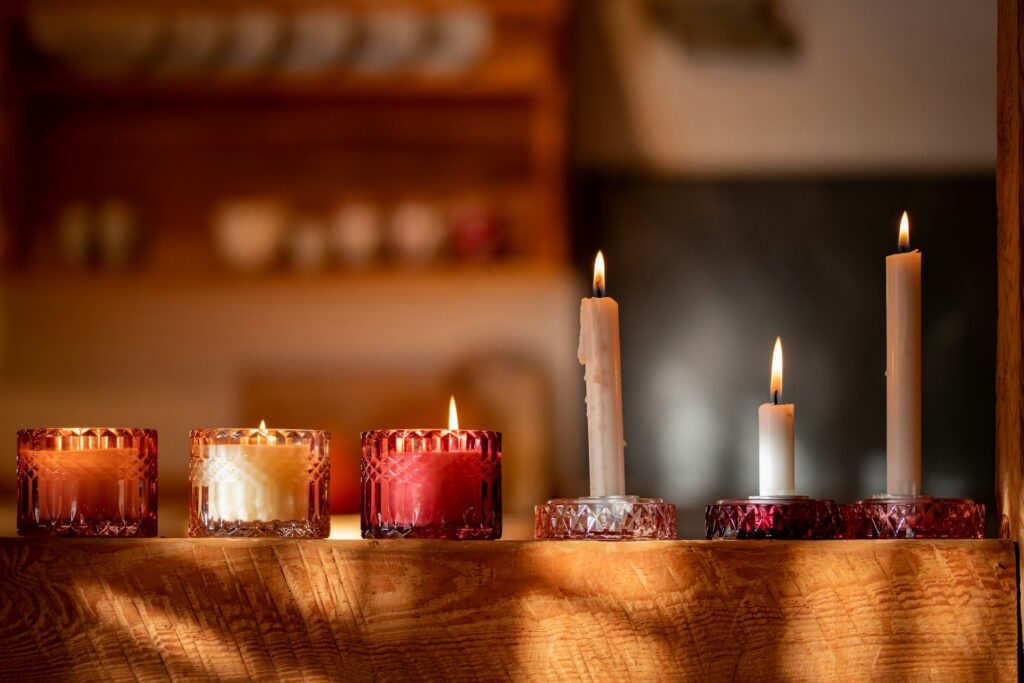
Candles are one of those features that are synonymous with autumn and winter, so now that the cooler seasons have arrived, it’s high time that you break out your candle jars and tealights. 

Autumnal flavours and scents – think spiced apple or blackcurrant, nutmeg, cinnamon or even bonfire – are so nostalgic, and can be found on the high street easily. But if you’re after an autumn activity, why not try your hand at making your own candles? 

Indeed, with the right know-how, it’s easy to melt down some wax, add some essential oils, and luxuriate in your autumnal creations for the rest of the season. There are some great Youtube videos on candle making to help you get started.

Use Throws & Cushions Liberally

Where summer is all about making the house feel fresh and spacious; autumn and winter are more concerned with layering up and creating a cosy space that provides warmth and comfort. 

If you are looking for an easy way to bring autumn into your home this season, get yourself a throw and put it over your sofa or bed and add that essential layering which seems to define the season. You can find throws in playful shades of tartan, a bright teal or mustard, or you can choose a muted tone such as nude or beige. 

If you have cushions in your living room and bedrooms, one of the easiest and most affordable ways to welcome autumn to your home is to buy some new cushion covers in autumnal styles. This could be anything from a cushion with a pumpkin (cliche, we know, but it works!) or a knitted material with a mustard tone, perfect for warming things up. 

Layering up a few different colours on your sofa or bed can be an amazing way to make the most of your soft furnishings. 

Read: Interior designers share their colour tips for autumn and winter

Paint A Feature Wall

If you are looking to refresh your whole home this season, consider a lick of paint. If you want to bring warmth and autumnal spirit to your home this year, shades such as plum, teal, and rust are very much in vogue and in keeping with the season.

Bringing a beautiful teal into your kitchen, a calming plum in the bedroom, and a warming mustard or green in the living room can instantly change the dynamic of your home design and make it feel like a whole new home for the season. Natural tones are crucial for autumn, and by using these for your design you will add a calming effect throughout the house. 

Hang Leafy Garlands 

Leaves and berries are very much associated with autumn. A simple way for you to add leaves into the home is with a leafy garland, and you can hang these either over your fireplace, on your mantelpiece or consider weaving it through the stairs to add an air of magic and fun to the house. 

Warm It Up With Lighting

Lighting is an important part of maintaining the atmosphere of your home, and during the autumn, it’s essential you introduce some task lighting and softly lit lamps that can replace the harsh main light as evening falls. Which, incidentally, is happening right now…we’re clocking off!

And if you’re keen from a manageable, simple autumn escape, then check out our guide on some autumn day trip ideas that are just two hours from London. Room in your car for one more?

Why Herringbone Flooring Is Making A Comeback In UK Homes

“There’s something timeless about a well-laid herringbone floor. It’s like a fine tailored suit – classic, elegant, and forever in style.” – Interior Designer Jane Clayton.

Herringbone flooring isn’t just back. It’s thriving. Once considered a symbol of stately manor houses and opulent Victorian townhouses, herringbone is making a bold return in modern UK homes. 

Why? Because it combines heritage-perfected design with a modern twist, transforming spaces in a way few other styles can. From stylish London flats to spacious suburban homes, herringbone is weaving its way back into our interiors.

But what’s the fuss all about? And why should you consider it for your home? Here’s why…

A Design That Steals The Show

Herringbone is more than a type of flooring – it’s a bold design choice that instantly grabs attention with its zigzag pattern, bringing a lively touch to any space. 

Whether you prefer the hues of natural oak or the contemporary look of dark finishes for your herringbone floor design, the geometric layout adds a sense of energy and fluidity to the room. Ideal for areas such as living rooms and equally impactful in smaller spaces like hallways, where traditional plank flooring may lack character and creativity. 

The flexibility in materials adds to its appeal as well; whether it’s solid wood, engineered wood, or even luxury vinyl tiles (LVT), herringbone can easily complement different styles and price points available in the market today. You can pair it with mid-century modern furniture or a minimalist design scheme and see how it effortlessly enhances the look of your living space. It’s no surprise that interior designers are singing its praises again!

Adds a Sense of Heritage, All Without Feeling Dated

One reason herringbone is enjoying a renaissance is its ability to blend the old with the new. Traditionally, it was a hallmark of luxury estates, adding sophistication to grand drawing rooms. Yet, today’s herringbone floors are being adapted with more streamlined, contemporary aesthetics. A matte lacquer or an invisible sealant finish, for instance, keeps the natural wood grain while avoiding the high-gloss look of the past.

For those looking to preserve the charm of period properties, herringbone can be the perfect match. As the experts at Floor Warehouse so sagely intone, the style respects the character of older homes while introducing a fresh, modern layer. If your home has original features – think ornate cornicing, sash windows, or high ceilings – a herringbone floor can complement these, tying the look together beautifully.

It Makes Small Spaces Feel Bigger

Yes, you read that right. Herringbone isn’t just for expansive rooms. It’s surprisingly effective at making small spaces appear larger. How? It’s all about the way the pattern draws the eye. The V-shaped layout creates a sense of depth and width, expanding the visual dimensions of narrow hallways or small bedrooms. Consider laying the pattern diagonally if you really want to maximise the effect.

Tip: Opt for lighter tones like brushed oak to reflect more light, making compact spaces feel airy and open.

Durability That Stands The Test Of Time

If you’re going to invest in new flooring, it needs to last. Herringbone has you covered. When laid correctly, the interlocking pattern creates a structurally stable floor, reducing movement and increasing longevity. Opt for engineered wood or rigid vinyl herringbone for added resistance to moisture and temperature changes, which is crucial in UK homes where central heating can cause fluctuations.

Plus, it’s easier to repair. If a single board is damaged, the nature of the pattern allows for individual pieces to be replaced without ripping up large sections of the floor – a win for both your time and budget.

Works With Underfloor Heating

Unlike some traditional flooring options, herringbone is a great companion for underfloor heating – a popular choice in many modern UK homes. Engineered wood and high-quality LVT herringbone are especially well-suited for this purpose. They allow even heat distribution while maintaining that snug, cosy feel underfoot.

And if you’re after an even softer, warmer surface, you can shop modern herringbone carpet styles that pair beautifully with underfloor heating systems, offering both the classic pattern and plush comfort. Say goodbye to cold mornings!

How To Make Herringbone Work For Your Home

Ready to introduce herringbone into your space? Here’s what to consider:

  • Choose the Right Material: If you want the real deal, go for engineered wood. It combines the look of solid timber with better stability. If budget is a concern, herringbone LVT offers the same visual appeal with added benefits like water resistance – great for kitchens and bathrooms. 
  • Get the Scale Right: Larger blocks make the pattern stand out and are ideal for open-plan living areas. Smaller blocks create intricate detailing and are better for more compact rooms.
  • Mind the Colour: Darker tones exude elegance and add drama, while lighter shades make a space feel brighter and more open. Grey-washed oak? Perfect for a Scandinavian vibe.

The Bottom Line

There’s a reason why herringbone flooring has endured for centuries. It’s beautiful, practical, and versatile. Whether you want to create a vintage-inspired look or a sleek, modern aesthetic, it has the ability to adapt and shine. And in a world of cookie-cutter interiors, herringbone’s individuality and personality truly stands out.

So, if you’re looking to add that special something to your home, it might be time to consider a pattern with staying power. Because while trends may come and go, herringbone is here to stay.

Healthy Ageing: How To Help An Elderly Relative Maintain Independence

Globally, around 9% of the world’s population are over the age of 65, meaning the age group accounts for more than 700 million people. With that figure growing, focus on ‘healthy ageing’ has increased, too.

The World Health Organisation defines healthy ageing as ‘the process of developing and maintaining the functional ability that enables wellbeing in older age.’

Many elderly people want to age in place – staying in their own homes where they feel most comfortable and at ease – rather than moving into residential care facilities. We’re here to consider what family members can do to support elderly loved ones in living a fruitful, independent life as they age.

With that in mind, here are some ways to help an elderly relative maintain their independence.

Adapt Their Home To Suit Their Needs 

One of the most effective steps that you must follow if you want your elderly relative to be able to maintain independence long into the future is to adapt their home so it can better suit their needs. 

The average property is full of both hazards and inconveniences for an elderly person, as things like staircases, unsteady surfaces, long winding corridors and other similar stumbling blocks can leave your elderly relative stuck in one room or area. 

Start by installing grab bars in high traffic areas such as in a corridor or surrounding the toilet, as your loved one can grip onto these bannisters to slowly transport themselves from room to room or from seated to standing with a much lower risk of slips, trips and falls. 

You might also like to consider investing in a stair lift if your elderly relative struggles to navigate the stairs, as it can easily become a huge danger if they were to lose balance or grip. A stair lift will give your elderly relative the chance to sit down and glide gracefully up or down the stairs without any risk. In some cases, they can even be kinda fun!

If you’re unsure how to do this, you can seek the help of a licensed physiotherapist. They can make sound recommendations and give you expert suggestions. What’s important is for your elderly loved one to feel empowered and safe in their home. Furthermore, this will also help with your peace of mind. 

Read: Home modifications that may help you in later life

Everyday Inconveniences

It’s not only structural interventions you can make to your elderly loved one’s home to help them maintain their independence. There are also loads of small adjustments that will enable the ebb and flow of everyday life to be easier, too. 

Raise the height of electrical sockets to mitigate the need for those less flexible to be bending down. Introduce plenty of extra lighting by doorways, and at the top and bottom of stairs, as well as motion-sensor activated nightlights, to facilitate a smooth and worry-free walk to the toilet in the middle of the night.

Speaking of the toilet, consider adding one downstairs (if you have the space), so when nature calls, it’s easier to answer. Declutter where you can; debris, mess and disorder represent trip hazards. Ensure surfaces below foot are slip-resistant, and windows are easily accessible and don’t require any force above 2kg (the recommended, manageable amount).

The little details can mean the world to your elders. When fixed, even the tiniest snag in their carpet can be a lifesaver. So, when you visit, inspect the home for anything that needs repair and address it immediately. Also, you can ask them what else you can do to make them comfortable. Paying attention even to minor issues can make them feel valued and loved.

Facilitate Continued Social Contact

As we’re sure you’ve heard, we’re currently seeing a loneliness epidemic within our elderly population, and this can be really impactful, not only in the more obvious sense, but also to the continued mental faculties of an elderly person.

As Age.co.uk point out “People who are socially engaged seem to have a lower risk of dementia, but the evidence is not yet strong enough to draw firm conclusions”.

For elderly relatives who are already showing signs of cognitive decline or have been diagnosed with dementia, maintaining social connections becomes even more crucial. Regular interaction can help slow progression and maintain existing cognitive function for longer. Accordingly, helping facilitate continued social contact is one of the best things you can do to help preserve your elderly relative’s continued independence. 

Home carers can provide companionship and allow elders to stay active in the community. The carer can bring them to exercise groups or the park to meet others. They can also drive elders to appointments, like meeting up with friends or a family gathering. This will be a big thing that could boost their mental and emotional health.   

There are lots of things you can do to help your loved one cultivate new connections and stay social. Aside from the obvious – to visit them more often – you can also help them maintain friendships with folk of a similar age, taking them to clubs, classes or social groups to meet new people, or engaging more deeply with your community through charitable organisations and volunteering opportunities.

Consider Digital Independence, Too

Should making phone calls or accessing simple information online be tough for your elderly loved one – whether due to mobility issues, declining vision, or early signs of cognitive decline – consider investing in a smart home hub device, such as an Amazon Echo with Alexa, or Apple’s Siri and setting it up for them. The hands free nature, as well as simplicity of use, can be really useful for those who struggle with mobility or cognitive function.

Go further and help your elderly relative get to grips with the various features of smartphones, laptops or tablets that can help them stay connected with friends and family. There are even specific tablets designed to be easier to use for eldelry customers, such as the GrandPad and the Claris Companion, which deploy a simplified interface and larger buttons.

Alternatively, Apple iPads or the Samsung Galaxy Tab A are generally considered to be the easiest devices to use for the elderly.

Extra Support

You don’t have to do this thing alone. Sometimes, it can be tough to spend long periods of time with an elderly relative as it becomes clear that what they really need is expert support, and it’s okay to admit you’re not equipped to always provide it.

This doesn’t mean that you should stop visiting them, as your care and attention will no doubt still spark joy, but in order to really benefit them you might need to find an expert carer who can provide the day-to-day support they require.

Professional care services come in many forms, depending on your loved one’s needs. Some elderly people benefit from a few hours of assistance each day, whilst others require more comprehensive support. The key is finding the right level of care that promotes independence whilst ensuring safety and wellbeing.

A live-in care provider is one of the best options that you can pursue, as they will be able to look after your elderly relative, giving them their full attention whether it’s night or day. For those with specific requirements, many providers offer specialist support including tailored dementia care plans, post-stroke rehabilitation assistance, and programmes focused on managing conditions like Parkinson’s or arthritis.

You’ll be able to maintain ultimate peace of mind knowing that your loved one is in good hands, receiving professional support that complements the irreplaceable love and connection only family can provide. The right carer won’t diminish your role – they’ll enhance your relative’s quality of life whilst allowing you to focus on being family rather than solely being a caregiver.

Listen & Respect Their Choices

Whilst it’s natural to want to take control and make decisions on behalf of your elderly relative, it’s vital to remember that maintaining independence is as much about autonomy as it is about safety.

Involve them in conversations about their care, home modifications, and daily routines. Ask for their input rather than simply implementing changes. They’ve lived their entire lives making their own decisions, and that shouldn’t stop now just because they need a bit more support.

Sometimes this means accepting choices you wouldn’t make yourself – perhaps they’d rather keep a beloved rug despite the trip hazard, or they’re not ready for a stairlift just yet. Finding the balance between safety and dignity isn’t always easy, but respecting their wishes wherever possible helps maintain their sense of self and control over their own life.

The Bottom Line

Helping an elderly relative maintain their independence requires a thoughtful, multi-faceted approach. From practical home adaptations and safety modifications to fostering social connections and embracing technology, each step you take can significantly enhance their quality of life and sense of autonomy.

Whether you’re installing grab bars, arranging regular social activities, or seeking professional support, the goal remains the same: to empower your loved one to live as independently as possible in the comfort of their own home. For those caring for relatives with specific needs, services offering tailored dementia care plans can provide specialist support that addresses the unique challenges of cognitive decline whilst still promoting independence where possible.

Remember, asking for help isn’t a sign of failure – it’s a recognition that your elderly relative deserves the best possible care, and sometimes that means bringing in the experts whilst you continue to provide the love, attention and family connection that only you can offer.

How To Host Your Own Traitors Party

The Traitors has become appointment television for millions, and it’s no surprise that fans are clamouring to recreate the show’s gothic atmosphere and nail-biting tension for themselves. Whether you’re planning a celebration with friends or organising a memorable corporate event, hosting your own Traitors-themed party delivers drama, laughter, and unforgettable moments of betrayal. Here’s how to pull it off.

Set The Scene

Atmosphere is everything when it comes to The Traitors. Transform your space with moody lighting – think candles, dimmed lamps, and strategic spotlights to create shadows. A dark colour palette of deep reds, blacks, and golds will evoke the show’s Scottish castle aesthetic

If you’re going all-out, consider hiring period furniture or draping fabrics to create that Gothic grandeur. Background music should be suitably ominous – think classical strings with a sinister edge.

Dress Code: Cloaks & Formality

Encourage party guests to embrace the drama with formal attire. Long dresses, sharp suits, and – crucially – cloaks for the Traitors themselves will help everyone get into character. You might even create custom name badges or place cards to assign roles before guests arrive, building anticipation from the moment they receive their invitation.

The Game Mechanics

The heart of any Traitors party is the game itself. You’ll need to secretly assign roles (Traitors and Faithfuls) at the start. Traitors should meet privately to coordinate their ‘murders’, whilst Faithfuls must work together to identify the traitors amongst them. 

Structure your evening around rounds: missions or challenges where players can earn immunity or advantages, followed by dramatic roundtable discussions where accusations fly and banishments are decided by group vote.

For those seeking a polished experience, professional murder mystery hosts can elevate your party significantly. These experienced facilitators manage the game flow, maintain tension, and ensure everyone stays engaged – particularly valuable for larger groups or corporate events where you want guaranteed entertainment value.

Food & Drink: Keep It Atmospheric

Lean into the show’s Scottish setting with your catering. A whisky bar, Scottish cheeses, smoked salmon, and shortbread make thematic sense whilst remaining crowd-pleasers. For a dramatic touch, serve drinks in vintage glassware and present food on slate or wooden boards. 

Consider naming cocktails after the show – ‘The Faithful’, ‘The Murder’, or ‘The Banishment’ all work brilliantly.

Read: 15 incredible (and surprising) whisky and food pairings

The Roundtable Moment

If there’s one element worth investing time in, it’s your roundtable setup. A large circular or oval table is ideal, allowing everyone to see each other during those crucial accusation moments. Elevated seating, dramatic lighting focused on the centre, and a bell or gavel for ceremonial moments will amplify the tension. This is where your party transforms from a gathering into genuine theatre.

Consider Professional Help

Whilst ambitious hosts can certainly DIY their Traitors experience, many are turning to professional party planning platforms to handle the logistics. Services like Poptop UK offer fully immersive Traitors-themed experiences complete with actors, props, and structured gameplay – particularly appealing for corporate events or milestone celebrations where you want to be a participant rather than the organiser.

The Corporate Angle

Traitors parties have proven especially popular in corporate settings, where companies are seeking engaging alternatives to traditional team-building. The game naturally encourages communication, strategic thinking, and collaboration – whilst remaining thoroughly entertaining.

 For dispersed teams working remotely, a Traitors-themed event provides a genuine reason to gather in person and forge stronger connections through shared experience.

The Bottom Line

Hosting a Traitors party requires commitment to atmosphere and careful game management, but the payoff is worth it. 

Whether you’re orchestrating everything yourself or bringing in professional help, the combination of strategy, social deduction, and theatrical drama creates an event your guests will talk about long after the final banishment. In a world of forgettable gatherings, a well-executed Traitors party offers something genuinely memorable – and deliciously treacherous.

8 Of The Best Things To Do In The Blue Mountains, Australia

One hour west of Sydney, the temperature drops, the air clears, and that distinctive blue haze begins to settle over sandstone cliffs and endless eucalypt forests. The Blue Mountains – named for the ethereal azure mist created by eucalyptus oil dispersing in sunlight – pack genuine wilderness into a remarkably accessible package just 90 minutes from the city.

With over a million hectares of UNESCO World Heritage-listed national park, 140 kilometres of marked trails, and landscapes carved over 250 million years, the region caters brilliantly to adventure seekers and nature lovers alike. The area is home to 96 eucalypt species – representing 13 per cent of all eucalypt species worldwide – alongside rare evolutionary relicts like the Wollemi pine, a ‘living fossil’ discovered in 1994 that dates back to the age of dinosaurs. Whether you fancy a day trip or week-long exploration, here are 8 of the best things to do in the Blue Mountains.

Marvel At The Three Sisters From Echo Point

Let’s address the elephant – or rather, the rock formation – in the room first. The Three Sisters at Echo Point is the most recognisable sight in the entire region, and whilst it can get crowded (especially on sunny weekends), the views genuinely justify the hype.

These towering sandstone pillars hold deep significance for the local Aboriginal community, with a Dreamtime story telling how three sisters were turned to stone to protect them from danger. The lookout offers spectacular views across both the Jamison Valley and this unique rock structure, particularly stunning at sunrise and sunset when the changing light paints the cliffs in golds and purples.

From Echo Point, you can tackle the Giant Stairway – a challenging descent of 998 steps carved into the cliff face that takes you right to the base of the Three Sisters and into the valley below. Fair warning: what goes down must come back up, and those steps feel considerably steeper on the return journey.

Photo by Stephen Tafra on Unsplash

Explore Scenic World’s Unique Attractions

For those seeking a different perspective without the hard yakka, Scenic World offers various ways to experience the landscape that even hiking purists might appreciate. The Scenic Railway, billed as the steepest passenger railway in the world, descends 310 metres through a cliff-side tunnel into the ancient rainforest. It’s genuinely thrilling.

The Scenic Skyway glides 270 metres above the valley floor, offering panoramic views of the Three Sisters, Katoomba Falls, and Mount Solitary. For those who fancy combining perspectives, the Scenic Walkway provides an elevated boardwalk experience through the rainforest canopy before you ascend via the Cableway. Whilst these attractions require paid entry, they make the Blue Mountains accessible to visitors of all abilities and provide perspectives you simply can’t get from ground level.

Hike The Grand Canyon Track

Near Blackheath, the Grand Canyon Track delivers one of the Blue Mountains’ most spectacular walks. This 6.3-kilometre loop takes you deep into a narrow canyon where massive sandstone walls tower overhead, creating a cathedral-like atmosphere enhanced by lush ferns, golden wattles, and trickling creeks.

The track features numerous semi-ledges and rocky sections, but it’s one of the few canyon walks that doesn’t require specialist equipment or technical skills. Starting from Evans Lookout, you’ll descend into cool, moist rainforest where the temperature drops noticeably and the soundscape shifts to bird calls and running water. The recently renovated sections make navigation straightforward, though the steep portions at the beginning and end remind you this is proper bushwalking territory.

Allow around four hours for the full circuit, and consider the walk more magical after rain when waterfalls are flowing and the ferns glisten.

Photo by Addisen King on Unsplash

Discover Wentworth Falls

Wentworth Falls village might be quieter than Katoomba, but it punches well above its weight for natural spectacle. The eponymous waterfall plunges 300 metres in stages, and several excellent walks let you experience it from multiple angles.

The Wentworth Pass Loop is particularly rewarding, taking you via a series of lookouts to Fletcher’s Lookout where the full majesty of the falls becomes apparent. You can descend further to the Valley of the Waters, where a series of smaller cascades and swimming holes await (the water is bracingly cold year-round). The track passes beneath the falls themselves – bring a jacket, as the spray can be substantial.

For those wanting to combine walks, the National Pass historically offered an incredible cliff-edge route carved into the rock face. 

wentworth falls
Photo by Dalal on Unsplash

Experience Aboriginal Culture At Red Hands Cave

The Blue Mountains hold profound significance for Aboriginal peoples, with six groups having connection to this Country. Near Glenbrook, Red Hands Cave features one of the finest displays of Aboriginal hand stencils anywhere in the region – some dating back up to 1,600 years.

The two-hour return walk from the car park takes you through open forest before arriving at a rock overhang where dozens of ochre handprints cover the walls. These aren’t just historical curiosities; they represent a living connection to tens of thousands of years of Aboriginal occupation. The gallery includes both adult and children’s hands, offering a poignant reminder of the families who sheltered here.

Please don’t touch the artwork or use flash photography, as both can damage these irreplaceable cultural treasures. If you fancy a swim after your cultural immersion, the Blue Pool and Jellybean Pool are both accessible via short detours from the main track, offering refreshing spots to cool off after exploring this fascinating outdoor discovery.

Venture Into Jenolan Caves

Approximately 90 minutes drive from Katoomba (and worth every minute), the Jenolan Caves represent one of the world’s oldest and most impressive limestone cave systems – around 340 million years old, in fact.

The honeycomb network of caverns features spectacular stalactites, stalagmites, underground rivers, and unique rock formations created over eons. Guided tours range from gentle walks through lit passages to more adventurous cave climbing in lesser-known sections. The Temple of Baal cave tour is particularly impressive, whilst the Orient Cave offers stunning crystalline formations.

Above ground, don’t miss the Jenolan River Walk – a pleasant family-friendly trail through the forest with small waterfalls and a suspension bridge. The bright turquoise waters of the Blue Lake are worth the short detour, and Carlotta Arch at the walk’s end provides excellent photo opportunities. 

For those wanting expert guidance on experiencing both the caves and the broader region’s geological wonders, nature-inspired Blue Mountains exploration tours can provide comprehensive itineraries with insider knowledge about the area’s natural and Aboriginal history.

Jenolan Caves
Photo by Dean McQuade on Unsplash

Take The Six Foot Track

For those seeking a proper multi-day adventure, the Six Foot Track is one of Australia’s classic bushwalks. This 42-kilometre route follows an 1884 horse track (built wide enough for horse-drawn vehicles – hence the name) from Katoomba to Jenolan Caves.

The three-day journey descends into Megalong Valley, passes through eucalypt forests and open farmland, crosses rivers, and climbs through varied terrain that showcases the Blue Mountains’ diversity. You’ll need to arrange camping equipment and transport (unless you fancy walking back), but the sense of genuine wilderness immersion is unmatched.

Several companies offer supported walks with gear transport and meals if you prefer a guided experience. The track attracts a steady stream of walkers year-round, though spring and autumn offer the most pleasant temperatures for sustained hiking.

Explore Blackheath & Govetts Leap

Often overlooked in favour of Katoomba and Leura, Blackheath deserves serious attention. The town sits higher and cooler than its neighbours, with excellent access to some of the most dramatic lookouts and walks in the entire region.

Govetts Leap lookout offers sweeping views over Grose Valley and the 180-metre Bridal Veil Falls. The Blue Mountains Heritage Centre nearby provides excellent exhibitions on the area’s World Heritage status, geology, and Aboriginal significance – well worth a visit before you hit the trails.

From Govetts Leap, both the Cliff Top Trail and Pulpit Rock Walking Track showcase the valley’s grandeur with relatively gentle gradients. For something more challenging, the descent into the Grose Valley via Rodriguez Pass takes you into genuine wilderness where you might not see another soul all day – the kind of free outdoor experience in spectacular natural settings that makes travel genuinely rewarding.

Blackheath’s dining scene has developed a reputation that rivals anywhere in the mountains. After a long day’s walking, settling into one of the town’s quality restaurants feels genuinely earned.

The Bottom Line

The Blue Mountains deliver that rare combination of spectacular natural beauty and genuine accessibility. Whether you’re scrambling down the Giant Stairway, contemplating ancient Aboriginal art, marvelling at 340-million-year-old caves, or simply soaking in panoramic views from a clifftop lookout, this UNESCO World Heritage Area offers experiences that linger long after you’ve returned to sea level.

The eucalyptus-scented air, that distinctive blue haze, the sense of ancient geological time – it all combines to create something genuinely special just 90 minutes from Australia’s largest city. 

With proper preparation, respect for the environment, and perhaps some expert local guidance, the Blue Mountains offer an escape into wilderness that feels almost impossibly close to Sydney. Pack your walking boots, charge your camera, and discover why this corner of New South Wales has captured imaginations for generations with its natural wonders.

11 Ways To Save Money On Wedding Catering

Weddings seem to exist in a parallel economy where normal rules don’t apply. A cake that would cost £30 in a bakery suddenly costs £600 because you’ve added the word “wedding” to it. 

Wedding catering can devour nearly half your entire budget if you’re not careful. But feeding your guests matters. Nobody wants their wedding to be remembered as “that one where we left to get chips on the way home.” The trick is serving something memorable without remortgaging your future.

The wedding industry knows ceremonies command premium pricing. However, you’ve got more negotiating power than you realise. So here, with the weary authority of an editorial team who’s attended seventeen weddings in the last two years between us, and who have strong opinions about vol-au-vents, are ten ways to keep your catering costs sane.

Limit Your Menu Choices

The more options you offer, the more it costs. Not just in ingredients, but in preparation time, staff coordination, and logistical complexity for the caterer. When you request three starter options, three main courses, and four desserts, you’re asking them to run multiple kitchens simultaneously. That complexity gets passed straight to your invoice.

The sweet spot is one starter (two at most), one main with a vegetarian alternative, and one dessert. Your guests won’t feel shortchanged. Nobody has ever left a wedding thinking ‘if only there’d been another starter option’. They’re there for the celebration, the atmosphere, and the company.

Limiting choices also means less food waste. When guests pick from five mains, the caterer must prepare a bit of everything. Half often ends up binned. A streamlined menu lets your caterer focus on quality over quantity. One brilliant dish beats five mediocre ones every time.

Go Seasonal With Your Ingredients

Asparagus in December costs triple the price. Strawberries in February require both deep pockets and a willingness to overlook their disappointing flavour. Seasonal ingredients aren’t just cheaper – they actually taste like themselves as they haven’t been flown halfway round the world or stored in warehouses for months to ripen. 

Spring weddings should feature lamb, new potatoes, and fresh greens. Summer means berries, salads, and lighter fare. Autumn brings game, root vegetables, and rich flavours. Winter calls for roasted meats and comfort food.

Most caterers will light up if you ask what’s in season. It simplifies their job and the food genuinely shines. You’re working with nature rather than fighting it. There’s something quietly satisfying about a menu that reflects its moment – a winter wedding serving an eton mess feels like someone didn’t think things through.

Consider Buffet-Style Service

Plated service looks elegant, certainly. But it requires more waitstaff, more precise timing, and more complexity. Buffets slash labour costs dramatically. You might need three servers instead of eight. That’s five people’s wages saved, which – let’s be honest – is quite a lot of prosecco.

The concern is understandable – buffets can feel a bit kids’ birthday party. However, done properly with beautiful warming stations, clear signage and proper presentation, they can look spectacular. According to the Bridebook.com the average cost of a buffet is usually around £20-30 per head, which is considerably less than the price for a three course meal.

For the best of both worlds, you can incorporate buffet elements into formal meals too. Instead of individually passed canapés during the reception (at £3 to £5 each, which somehow seems reasonable until you multiply it by 100 guests), create a canapé station where guests serve themselves. Think a whole serrano ham with good bread and lots of cheeses. It feels abundant and generous whilst costing significantly less.

At the meal’s end, consider a dessert bar instead of plated individual desserts. Display various cakes, doughnuts, tarts, and treats on an attractive table where guests can serve themselves. This approach costs substantially less than individual plating. Also, guests enjoy choosing their own portions and trying multiple options. Moreover, guests can control their own portion sizes – your uncle who eats like a sparrow and your mate who’s perpetually ravenous both leave satisfied.

Read: 15 Ideal food station ideas for your wedding

Embrace Sharing Feasts

Sharing feasts have become fashionable, which is convenient because they also make financial sense. Large platters placed centrally on each table – whole roasted chickens, generous bowls of sides, bread baskets, seasonal salads. It looks lavish and feels celebratory whilst requiring fewer servers than individual plating.

There’s something lovely about the communal aspect too. People pass dishes, make recommendations, bond over food in a way that doesn’t happen when you’re staring at your own individual plate wondering if you should’ve ordered the fish. It feels less like a formal dinner and more like a very good dinner party where someone else did the washing up.

It also reduces waste. Guests take only what they’ll eat, and leftovers stay on the table for second helpings rather than being scraped into bins. From a catering perspective, preparing 15 large platters is simpler than plating 150 individual portions. Those savings get passed to you, which you can spend on better wine or therapy after dealing with your future mother-in-law’s opinions about table runners.

Choose a Flexible Caterer

Some caterers offer rigid packages: Bronze, Silver, Gold. Take it or leave it – a bit like choosing a mortgage product. Others actually collaborate with you to create something bespoke that fits your budget and preferences. These are the good ones.

The best wedding caterers ask questions. What matters most to you? Where can you compromise? Would you rather have spectacular mains and simple starters, or vice versa? Do you care more about the wedding breakfast or the evening food? These aren’t trick questions – they’re genuinely trying to help you spend money wisely.

A flexible caterer scales service to your exact guest count. If you’ve got 73 guests, you pay for 73 guests. Not 75, not 80, not “packages of 50 with a supplement for extras.” They’ll suggest alternatives when you mention something expensive. “Lobster? What about crab – it’s £20 per head cheaper and equally special.” That collaborative spirit saves serious money.

Don’t book the first caterer you meet. Interview at least three. Ask about flexibility, dietary requirements, customisation. Their answers reveal everything about whether they see you as a person or a profit margin.

Rethink Your Drinks Strategy

Alcohol is where costs spiral out of control faster than your ability to track them. An open bar all night with premium spirits can cost £3,000+ for 100 guests. That’s more than most people’s monthly salary, spent on getting your cousin drunk enough to request “Mr Brightside” for the fourth time.
Try a limited bar instead. Beer, wine, perhaps one signature cocktail. No spirits, or spirits for the first hour only then beer and wine. Your guests will survive. Nobody has ever left a wedding thinking “it was lovely but the lack of vodka variety really diminished the experience.”

House wine instead of premium labels saves £5 to £8 per bottle. Over 50 bottles, that’s £250 to £400. Nobody can tell the difference after the second glass anyway, and anyone claiming they can is lying. Some venues let you supply your own alcohol. If yours does, buy from a supermarket and return unopened bottles. The savings are enormous. 

You can also offer miniature bottles of spirits as wedding favours – small “drink me” style bottles of limoncello, damson vodka, or vermouth. Make them yourself or buy in bulk, add personalised tags, and suddenly you’ve created a sense of abundance without maintaining a fully stocked bar all evening. Guests can drink them at the reception or take them home, and you’ve essentially given them another free drink whilst controlling costs.

Think Outside Traditional Meal Times

A full three-course wedding breakfast is expensive. Afternoon tea is cheaper. So is brunch.

An 11am ceremony followed by champagne brunch reception can cost half what an evening dinner costs. You’re serving breakfast foods – which are inherently cheaper – and people don’t expect as much. Pastries, smoked salmon, fruit, perhaps some hot options. Nobody feels shortchanged. They feel virtuous for having accomplished something before noon.

Afternoon tea is another brilliant option. Sandwiches, scones, cakes, tea and coffee. It looks gorgeous on tiered stands, photographs beautifully, and costs perhaps £15 to £25 per person instead of £50 to £70. Plus it suits the kind of wedding where your grandmother wears a hat and everyone remains reasonably sober.

Evening receptions with just canapés or street food eliminate the sit-down meal entirely. Guests graze, mingle, dance. The atmosphere becomes more party than formal dinner, which some people prefer and others find horrifying. Know your audience.

These options don’t suit everyone. Some couples want the traditional wedding breakfast, and that’s completely valid. But if you’re flexible about structure, the financial benefits are substantial.

Negotiate on Service Staff

Caterers bundle food costs with service staff costs, but these are negotiable separately. How many staff are they providing? What’s each person’s role? Sometimes you’ll discover you’re paying for six servers when four would suffice. That’s potentially £400 to £600 saved, which is a week’s groceries or several months of therapy to process the wedding planning experience.

Service length matters too. Do staff need to stay until midnight or can they finish at 10pm once meal service concludes? Every hour costs money. Some couples recruit family members to help with simple tasks like cutting and serving cake.  If you’ve got willing volunteers, it’s an option—though you want your family enjoying themselves rather than working.

Rethink Your Wedding Cake

Traditional tiered wedding cakes look spectacular and cost more that £400, which seems excessive for something that gets eaten in approximately four minutes. Consider an alternative: a tiered “cake” made from wheels of cheese.

Stacked cheese wheels create a stunning centrepiece for photos and cutting ceremonies. Later in the evening, they become a proper cheeseboard served with crackers, chutneys, and grapes. This transforms into substantial late-night food when guests get peckish after dancing, which they absolutely will.

Cheese and crackers go much further than cake slices. They’re more filling, and guests can return for seconds throughout the evening. A good selection of cheddar, brie, and stilton costs significantly less than an elaborate cake, particularly if you buy from wholesalers or supermarkets rather than specialist wedding cake makers who’ve correctly identified that people getting married have temporarily lost their sense of financial reality.

You can still have a small traditional cake for those who prefer something sweet – perhaps a single-tier cutting cake displayed alongside the cheese. But the cheese wheels provide far better value and practical sustenance –  that is unless you make the cake yourself of course. 

Consider a Food Truck

Food trucks have become increasingly popular at weddings, which is fortunate because they’re also significantly cheaper. Pizza trucks, taco trucks, fish and chip vans – these offer substantial, crowd-pleasing food at a fraction of traditional catering prices.

A food truck typically charges £8 to £15 per person compared to £40 to £70 for traditional sit-down catering. The informal atmosphere suits relaxed, outdoor, or evening weddings particularly well. Guests enjoy the novelty and the food arrives hot and fresh throughout service.

Pizza trucks work brilliantly. Everyone loves pizza, dietary requirements are easily accommodated, and the visual spectacle of a wood-fired oven adds entertainment value. Taco trucks offer similar benefits with endless customisation options.

Fish and chip vans bring a quintessentially British touch, especially for seaside or summer weddings. Served in proper paper with wooden forks, it’s comforting, filling, and nostalgic. Setup and cleanup are entirely handled by the truck operator, saving you hassle and the existential dread of coordinating logistics.

The main consideration is venue access and space. You’ll need adequate room for the truck to park and serve, plus electrical hookups if required. Some venues restrict external caterers because they have exclusive arrangements or simply enjoy making things difficult. But if your venue allows it, a food truck delivers fantastic value without compromising guest satisfaction.

Scale Back The Extras 

Wedding catering often includes extras that sound lovely but aren’t essential. That late-night burrito? Lovely, but £500 you might not need to spend. The artisan bread selection? Standard bread works fine. The elaborate garnishes nobody eats? Save your money.

Canapés during drinks reception can be scaled back. Six varieties aren’t necessary when three well-chosen options will do. Each additional canapé type adds labour and ingredient costs that accumulate faster than you’d expect. Dessert is another area where couples overspend. If you’re having a wedding cake, do you really need individual plated desserts too? The cake can be your dessert. Or offer a simple option like ice cream or sorbet alongside the cake.

Coffee service doesn’t need to be elaborate. Standard filter coffee with milk and sugar is perfectly acceptable. You don’t need a barista station with six types of milk and flavoured syrups.

Be creative with optional extras too. One wedding trend that took TikTok by storm involved offering £1 Pot Noodles as late-night snacks for guests. Simply set up a station with instant noodles, a hot water dispenser, and chopsticks – guests can prepare their own midnight snack after dancing. It’s quirky, nostalgic, and costs a fraction of traditional late-night catering. Plus, it actually serves a practical purpose: soaking up alcohol and giving hungry dancers a warm, filling snack. You could even customise the pots with your wedding details for a personal touch.

The Bottom Line

Saving money on wedding catering doesn’t mean serving inferior food or leaving guests hungry. It means being smart, strategic, and willing to question the “standard” way of doing things that the wedding industry insists is mandatory.

The wedding industry loves to tell you that everything must be premium, elaborate, and expensive. But some of the best weddings feature simple, well-executed food that doesn’t try too hard. Great ingredients, seasonal flavours, generous portions. That’s what people remember, along with whether the speeches were too long and if anyone embarrassing got drunk.

Your wedding should feel like you, not like every other wedding. If that means afternoon tea instead of a five-course dinner, or a gorgeous autumn menu instead of imported delicacies, then embrace it. Your bank account will thank you and your guests will have a brilliant time regardless.

8 Kitchen Renovations To Add Value To Your Home In 2026

Today’s modern kitchen does so much more than simply serve as a place to prepare meals. Functionality plays a part, sure, but so does fun and family.

As the heart of your home, it wears many hats and is vital to the smooth running of a busy household. We congregate here to communicate, entertain and socialise. The breakfast bar can function as a pop-up home office and the little ones use it as an activity space to play, bake and paint. And of course, we all sit down for dinner here, to swap stories and cement bonds.

There’s no denying the room’s importance, and here’s an interesting thing if you’re looking to sell your home; a new kitchen can add a 4 – 7% value increase to the average property. So, if you’re going to tackle a specific area of your house, this is the room to renovate.

With that in mind, here are 7 kitchen renovations to add value to your home in 2025.

Colour Scheme

Your kitchen sets the tone for the entire house, and colour tends to set the tone for a single room, so it’s important to get this bit right. When a potential buyer first claps eyes on the kitchen, that first impression can make or break a sale, so it’s worth thinking about the colour scheme carefully.

If done well, the colours you choose can completely alter the mood of your kitchen, as well as make it look and feel bigger and brighter. There are a few different avenues to travel down here, depending on your taste and what look you’re trying to achieve. It’s fairly common knowledge, however, that the most prominent colour should be a light shade rather than dark, so the kitchen does not feel like a gloomy or enclosed space.

It is also best to avoid too many colours in the kitchen. You don’t want your kitchen to be too busy and overbearing on the eyes, distracting from that Masterchef worthy meal you made. A simple two-tone kitchen is the safest and most stylish option.

A light, reflective colour opens the kitchen up, making it feel spacious while a secondary supporting colour will add class and character. Consider a bright but still muted pastel shade, which makes the perfect backdrop for some natural features like wood or marble. The patinas found in these natural textures will stand out against the more modest but bright surroundings, combining modern design with a beautiful authentic natural touch.

A Change In Countertop Material

One of the most impactful changes you can make in your kitchen is updating the countertop material. Countertops are not only functional surfaces for meal preparation but also significant design elements that can elevate the entire look of your kitchen. When considering a renovation, the choice of countertop material should be at the forefront of your planning.

Marble countertops, in particular, are an excellent choice for those looking to add a touch of luxury and timeless elegance to their kitchen. Marble is renowned for its stunning natural veining and unique patterns, which can make each countertop a one-of-a-kind masterpiece. This natural stone is not only beautiful but also highly durable, making it a practical option for busy kitchens.

Marble surfaces are heat-resistant, which is ideal for avid cooks who frequently use hot pots and pans. Additionally, marble is relatively easy to clean and maintain, provided it is sealed properly to prevent staining. The cool surface of marble is also perfect for baking enthusiasts, as it helps in rolling out dough and other pastry tasks.

Do watch out for fluctuating prices according to local markets, though; a marble slab in Lahore today won’t cost the same as one in London tomorrow, for instance. That said, and while marble can be a more expensive option compared to other materials like laminate or wood, its ability to add significant value to your home makes it a worthwhile investment. Of course, if budget is a concern and your existing countertops are in reasonable condition, professional worktop repairs can breathe new life into tired surfaces. However, potential buyers often appreciate the high-end look and feel of marble, which can make your kitchen stand out in the property market.

Kitchen Island

In this day and age, kitchen islands are almost essential parts of the kitchen, if the space grants such a feature, of course. They create absolute comfort when working from home or when simply working on a meal, freeing up other spaces and surfaces in the process. 

The three key ever-presents of the kitchen are the sink, refrigerator and stove. With one of these located on a kitchen island, the kitchen working triangle layout is created  — the optimal layout advised by kitchen designers. What’s more, kitchen islands are easily customisable. Whether you want to add a wine rack, open bookshelves, a hanging utensil rack or simply extra storage space, an island opens up the room to a wealth of new opportunities. 

What’s most important, however, is the impact the kitchen island has on the overall space as a whole, whether you’re investing in complete kitchen units or simply a couple of more micro upgrades, as well as how the island functions as a room. It turns a four-walled kitchen into a dynamic space with multiple surfaces allowing you to interact with guests or keep an eye on kids doing homework, all while preparing meals. The kitchen island becomes a focal point being the where people can easily and comfortably gather, and we all want a bit of that, don’t we?

Backsplash

An undervalued kitchen feature in modern design is the kitchen backsplash. Bright walls are advisable, as we already mentioned, but they can be detrimental to the appearance of your kitchen if food marks are left behind stoves and sinks. And if you’re trying that cheffy toss in the frying pan, or your family have a particular propensity for tomato-based sauces, then stains are inevitable.

The backsplash is a multi-functional design piece that assists with hygiene, practicality and character. Used for years, it’s kinda surprising that any kitchen out there attempts to make do without one. Usually, this features comes as a layer of tiles positioned behind worktops, stoves and sinks to protect walls from splashes created while cooking or washing. The durable and smooth surfaces of the tiles make them easy to clean and care for. 

Backsplashes also have a decorative purpose and can, when best deployed, add that special touch to a kitchen’s appearance, becoming a feature potential buyers will remember. 

Lighting

Quality overall lighting is a game-changer when it comes to kitchen value. A well-designed kitchen is pointless if not effectively lit; becoming a place avoided rather one to luxuriate in. 

With the proper lighting installation, every room in your home will have just the right mood and atmosphere, creating a unique experience in every space.

You’ll likely need to enlist the help of professionals to dramatically change the lighting set-up in your kitchen, as the wiring involved is usually complex and setting about it as a novice can end in injury and structural damage to your property. And you don’t want either of those things. Accordingly, it’s wise to defer to the experts on this one.

But it is not just the electrical lighting that needs to be perfect — natural light has an enormous impact on property value in today’s market, too. Fancy kitchen features and state-of-the-art kitchen appliances usually draw the most fawning praise initially, but for those in the know, it is the amount of natural light exposure that truly sells a kitchen space.

Sometimes improving natural light takes the most simple of jobs. Restoring windows and bringing them back up to their full potential with a thorough clean and refurb will achieve a surprising amount. And make sure you remove any obstacles either side of your windows and let as much natural light as possible flood the kitchen.

But if your kitchen lacks natural light exposure and those interventions aren’t possible, having windows inserted might be just what your kitchen (and your property’s value) needs.

Smart Kitchen Technology

Incorporating smart technology into your kitchen is another way to add value and modernise the space. As homes become increasingly connected, having a smart kitchen can be a major selling point for tech-savvy buyers.

Smart appliances, such as refrigerators with touch screens, ovens that can be controlled via smartphone apps, and voice-activated assistants, can make everyday tasks more convenient and efficient. These appliances often come with energy-saving features, which can reduce utility bills and appeal to environmentally conscious buyers.

Smart lighting systems can also enhance the functionality and ambience of your kitchen. With the ability to adjust lighting levels and colours through a mobile app or voice command, you can create the perfect atmosphere for cooking, dining, or entertaining.

Another innovative addition is the smart faucet, which can be activated by touch or motion sensors, reducing the spread of germs and making it easier to wash hands or fill pots when your hands are full.

By integrating smart technology into your kitchen, you not only improve its functionality but also future-proof your home, making it more attractive to potential buyers who are looking for modern, tech-enabled living spaces.

Open Shelving

Open shelving has become a sought-after feature in contemporary kitchen design, offering both practical storage solutions and an opportunity to showcase personality. Unlike traditional closed cabinets, open shelves create an airy, spacious feel that can make even modest kitchens appear larger and more inviting.

From a practical standpoint, open shelving makes frequently used items easily accessible – no more rummaging through deep cupboards for your everyday dishes or favourite coffee mug. This accessibility encourages organisation and efficiency in the kitchen workflow, as everything is visible at a glance.

Aesthetically, open shelving provides the perfect stage to display beautiful crockery, glassware, and carefully curated kitchen accessories. This can add warmth and character to the space, allowing you to inject personal style whilst maintaining that clean, modern look buyers appreciate. Consider displaying items in coordinating colours or arranging them by height to create visual harmony.

However, it’s worth noting that open shelving does require a commitment to keeping things tidy – what’s on display is always on display. But when done well, with thoughtfully arranged items and perhaps a few decorative touches like potted herbs or vintage cookbooks, open shelving can transform your kitchen from purely functional to genuinely stylish, adding that coveted ‘lived-in luxury’ appeal that resonates with today’s property market.

Quality Appliances

Last but by no means least are those valuable appliances that keep the kitchen ticking – and looking – on trend, we might add. Colour schemes, layouts, backsplashes and lighting are all essential parts of the kitchen and are the cornerstones of kitchen design.

But the appliances will always catch a buyer’s eye, allowing them to visualise living in the house, which is integral to harnessing early, solid interest. Should you have any, display them proudly (but effortlessly) for best results.

For more of the same, do check out these 7 contemporary features to include in your next kitchen installation. Now, when are we coming round for tea?

7 Purchases To Bring Both Functionality & Flair To Your Driveway

Roll out the red carpet, form a guard of honour, turn your theme music all the way up… Who wouldn’t want to arrive home every night to great fanfare and festivity?

Whilst we’re not able to organise such a celebratory ‘welcome home’ for you, we can offer some ideas on how to make the lead-up to your door feel as welcoming as possible. With that in mind, here are 7 purchases to bring both functionality and flair to your driveway.

Provide Protection & Privacy With A Carport

A carport provides the same benefits as a garage – of giving a shaded area for your vehicle and protecting it from the elements, such as the sun’s UV rays and frost – but without the high installation costs and need for a large amount of real estate involved.

At the same time, your car will be parked more privately than if it was simply out in the open. When considering that the average cost to build a canopy here in the UK is £3’000, whilst a garage will set you back, on average, somewhere in the region of £22’000 to £30’000, installing the former certainly makes a lot of sense. 

You can even reduce the costs further by investing in a carport canopy, which is a little more lightweight and temporary, with all the added perks of both flexibility and reduced costs that entails.

You’ll also not need planning permission for a carport (as you would a garage) providing the structure isn’t over 4 metres high, the eaves don’t exceed 2.5 metres, and the carport isn’t at least 2 metres from your property’s boundary.

Not only can you use a carport for your car, but you it creates a covered area for your bicycle, too. It has many other uses as well, including providing shade for patios, children’s play areas, a garden seating area, and even a porch. If you are looking to create a space in your home that is more private and offers protection from the sun, a canopy can provide you with a flexible and affordable way of doing so. 

Accentuate Your Driveway With Hedge Or Stone Columns

We spoke earlier of channelling that sense of the red carpet being rolled out each and every time you approach your property. The best way to do it? By accentuating your driveway and the path to your front door with a border.

For larger properties, well-maintained hedges or matching trees either side of the walkway can look super glamorous. In smaller homes, brick or stone columns can accentuate the entrance of your driveway perfectly. There’s a huge variety of different columns to choose from out there from stacked to stone and beyond. When choosing your columns, you want to draw a connection between them and the materials used in the rest of your property. 

Illuminate The Route To Your Door

Speaking of that route to your front door, another way to define your driveway is via a few carefully placed lights. While you don’t have to go for the full runway effect, the addition of a lighted border, powered on by motion sensors ideally, can also add an extra later of security to your home, scaring off potential cat burglars (and regular cats) from walking up the drive and opportunistically surveying who’s home. 

Choose something subtle that won’t disturb the neighbours, unless you want a lawsuit on your hands!

Out Of Sight, Out Of Mind With A Bin Shed

You’ve gone to all that effort to illuminate your driveway… But what if the lights are shining on the more unsightly areas of your home’s exterior, such as your bins?

Something as simple as keeping your bins out of sight can do wonders for sharpening up that walk up to your front door. No one wants to arrive at their house after a long day at the coalface to find bins overflowing with rubbish. Not only does it not look appealing, but there may also be all kinds of foul odours that won’t set the right tone for a relaxing evening ahead.

If you can, it’s wise to place your bins at the side of your home. If you don’t have any space to do this, buying a bin shed is a wise move. Other ideas you can look into to hide your bins include using slatted style fence panels, or even buying a more glamorous looking bin. Yep, they do exist!

Keep Things Spick & Span With A Pressure Cleaner

You can add all the flair and flourish you like to your driveway, but if the driveway itself isn’t sparkling clean then there’s little point in all the dressing and garnish. Fortunately, we’re here to help with that, too. Enter the pressure cleaner.

There are few cleaning projects more satisfying than blasting away dirt off anything and everything in your driveway. Indeed, dislodging years of dust and grime is a very gratifying feeling, with pressure washing perfectly suited at cleaning the drive, fences and even smelly wheelie bins.

Make sure it’s not your money being washed away this summer before you fork out on one, with this guide on the pros and cons of soft and pressure washing when cleaning your home’s exterior.

Add Character With House Numbers & Signage

First impressions count, and there’s no simpler way to elevate your driveway’s kerb appeal than with stylish house numbers or a bespoke address sign. Whether you opt for sleek modern metal numerals, traditional cast iron plaques, or contemporary LED-lit displays, the right signage transforms your entrance from functional to sophisticated.

Beyond aesthetics, clear house numbers serve a practical purpose too – they make your home easier to find for guests, delivery drivers, and emergency services. Choose materials that complement your property’s existing features, whether that’s weathered brass for period homes or minimalist stainless steel for modern builds. From budget-friendly basic numerals to custom-designed statement plaques, this is one of the most cost-effective upgrades you can make to your property’s exterior.

Define Your Space With Driveway Edging

Nothing says ‘well-maintained property’ quite like crisp, defined borders between your driveway and garden. Driveway edging not only looks smart, but it also prevents gravel from scattering onto lawns, stops grass encroaching onto paved areas, and provides a neat framework for your outdoor space.

Options abound depending on your budget and style preferences. Brick edging offers a classic, timeless look, whilst metal edging strips provide a sleek, contemporary finish. Natural stone creates an upmarket feel for those willing to invest a bit more. The installation is straightforward enough for a keen DIYer to tackle over a weekend, or you can hire a landscaper if you’d rather leave it to the professionals.

The Bottom Line

That stroll up your drive in anticipation of an evening in with the family should be a pleasurable experience, not one that fills you with dread and shame. With a a few simple additions and adjustments, your driveway can be both fun and functional. We can’t wait to see your driveway in person at your massive house party next week…. Oh, your wife didn’t tell you?

Unique Team Building Exercises to Boost Morale & Collaboration

Building a high-performing team requires more than just assigning tasks; it demands fostering genuine connections, nurturing trust, and enhancing collaborative skills. While traditional trust falls and icebreaker quizzes have their place, modern businesses thrive when team-building activities are fresh, engaging, and directly address the nuanced dynamics of modern work.

With all that in mind, here are 7 unique team-building exercises that go beyond the mundane to inject energy, boost morale, and significantly sharpen collaboration within your organisation.

The Escape Room With A Twist: The ‘Escape The Office’ Challenge

Escape rooms are popular with companies looking to enhance collaboration, but their standard format can sometimes feel disconnected from daily work challenges. To make it unique, tailor the puzzles to your company’s history, recent projects, or industry jargon.

The Concept

Instead of a generic theme, design an ‘Escape the Office’ scenario. The premise could be that a critical project file has been encrypted by a fictional rival company, and the only way to unlock it before a major deadline is by solving a series of five interconnected puzzles hidden around the actual office space.

Collaboration Focus

This exercise forces real-time problem-solving under pressure. Team members must delegate roles based on their perceived strengths (e.g., the detail-oriented person handles the cryptic text puzzle, the logical thinker tackles the sequence puzzle). Success hinges on clear communication – no single person can see all the clues simultaneously.

Morale Boost

The shared sense of accomplishment upon ‘saving the day’ (i.e., solving the final puzzle) releases significant positive energy. It reframes challenging work situations as solvable if the team pools its collective knowledge.


The ‘Blind Build’ Challenge: Marshmallow Tower Reimagined

The classic Marshmallow and Spaghetti Tower exercise tests basic planning, but the ‘Blind Build’ adds a crucial layer of communication reliance.

The Concept

Divide the group into pairs or small teams. One person is the ‘Architect’ and is shown a model structure (perhaps built from LEGO or simple blocks) they must replicate. The Architect is blindfolded. The other team members are the ‘Communicators’ and can see the model and the materials, but cannot touch the materials or the structure being built. They can only verbally instruct the blindfolded Architect on how to assemble the pieces.

Collaboration Focus

This is a pure test of verbal precision and active listening. The Communicators must translate a visual concept into actionable, unambiguous steps, while the Architect must trust their input implicitly and provide feedback on what they feel/hear. It powerfully demonstrates the friction caused by vague instructions and highlights the importance of clear feedback loops.

Morale Boost

It is often hilarious, especially when the inevitable structural collapse occurs. The low-stakes environment encourages laughter and resilience, turning initial frustration into shared amusement.


The Corporate Cookbook: Sharing Culinary Legacies

This exercise taps into personal history, which is excellent for building deeper interpersonal bonds beyond job titles.

cooking class

The Concept

Ask every team member to contribute one favourite recipe that holds personal significance – perhaps a dish their grandmother taught them, a meal they cook to de-stress, or a recipe linked to a major life event. Compile these into a beautifully designed digital or printed ‘Team Cookbook’. Host a dedicated session where two or three volunteers cook their recipe (or a simplified version) in the office kitchen (if available) or simply present the story behind the dish.

Collaboration Focus

While not directly about project collaboration, this fosters empathy and psychological safety. Understanding colleagues’ personal stories and traditions breaks down professional barriers, leading to more open and trusting collaboration on work tasks later on.

Morale Boost

It showcases the diversity and humanity within the team. Receiving a tangible (and tasty!) keepsake like the cookbook boosts the feeling that the company values the whole person, not just their output.


High-Octane Synergy: The Grand Prix Experience

Sometimes, the best way to foster intense, focused collaboration is through an adrenaline-pumping, shared, competitive experience that requires immediate strategic thinking. This is where F1 driving simulator hire comes into its own.

driving simulator

The Concept

Organise an afternoon where teams compete in a series of races using professional-grade F1 driving simulators. Teams aren’t judged just on the fastest single lap, but on their Pit Stop Strategy Score. 

Before the race, teams must strategise: which driver runs which stint, when do they make their mandatory ‘pit stop’ (where team members must quickly swap drivers and maybe complete a small, unrelated, quick task like solving a two-piece jigsaw puzzle before the next driver can go), and who handles communication.

Collaboration Focus

This requires rapid cross-functional planning and delegation under extreme time pressure, mimicking high-stakes project management. The team must agree on a unified strategy, commit to it, and then adapt instantly when a competitor overtakes or a simulation penalty is applied.

Morale Boost

The competitive spirit, coupled with the sheer fun and novelty of operating a racing simulator, creates massive spikes in engagement and provides fantastic, shared bragging rights afterwards.


The ‘What If…?’ Scenario Workshop

This exercise shifts focus from what is to what if, leveraging creativity to build robust contingency planning skills.

The Concept

Present the team with a series of extreme, yet plausible, hypothetical work disasters. Examples: ‘Our main server crashes five minutes before the biggest client presentation,’ or ‘The lead developer suddenly resigns mid-sprint,’ or ‘All external communication channels (email/Slack) are down for 24 hours.’ Teams must map out a step-by-step recovery and communication plan within a tight timeframe (e.g., 45 minutes).

Collaboration Focus

This activity demands structured consensus-building and risk assessment. It forces quieter team members to voice potential pitfalls they might otherwise keep to themselves, ensuring all angles of a potential crisis are covered collaboratively, rather than being siloed in one department’s response.

Morale Boost

Facing abstract fears in a safe environment reduces anxiety about real-life crises. The team leaves feeling prepared and confident in their collective ability to navigate chaos, which is a huge morale booster.


The Human Knot: Advanced Intricacy

The standard ‘Human Knot’ involves standing in a circle and grasping two different hands. The ‘Advanced Intricacy’ version adds layers of complexity.

The Concept

Form groups of 8-12 people. When they form the knot, introduce a secondary constraint. For example, only people wearing blue shirts can speak, or the team must solve the knot while only moving their legs (no lifting feet), or they must communicate only through humming tunes.

Collaboration Focus

This tests adaptability and non-verbal communication. The initial knot is a spatial problem; the constraint is a communication problem. It forces the team to quickly innovate new ways to convey direction and intent when their primary methods are restricted, mirroring times when tools fail or priorities clash.

Morale Boost

The sheer physical comedy of a complex knot combined with the strange communication rule fosters deep bonding through shared, slightly awkward, physical effort.


The Reverse Mentoring Session: Skill Swap Day

Reverse mentoring flips the traditional hierarchy, allowing junior or newer staff to teach senior leaders a skill.

The Concept

Identify a skill where junior staff often excel or are more current than senior staff – this is usually technology-based (e.g., mastering a new social media platform, advanced spreadsheet functions, using a new AI tool) or a cultural insight. Pair senior leaders with junior colleagues as their personal ‘tutor’ for one hour. The junior person leads the session entirely.

Collaboration Focus

This exercise builds mutual respect and breaks down perceived status barriers. Senior leaders must adopt a posture of humble learning, which builds trust with their direct reports. Junior members gain confidence by realising their expertise is valued at the highest levels.

Morale Boost

It is an immense confidence boost for the junior staff and a refreshing learning opportunity for the veterans, resulting in a more egalitarian and appreciative team atmosphere.


The Bottom Line

True team building isn’t just about having fun; it is about creating shared, memorable experiences that forge stronger relational pathways. By integrating novel, targeted exercises – from the focused adrenaline of the racing simulator to the personal sharing of a cookbook – you move beyond obligation and foster a company culture where collaboration feels natural, morale remains high, and every team member feels valued and understood.

How To Create A Zen Office Space To Improve Workplace Wellbeing

A busy entrepreneur is constantly juggling tasks and deadlines, but for many, this doesn’t actually represent the most productive way to work. Indeed, in many cases, a distraction demanding work atmosphere diverts our attention, not only from getting the job done but also from focusing on your wellbeing and workplace contentment.

This is where creating a zen office space comes in.

Creating a zen office space that promotes calm and focus can have significant benefits for a company, encouraging better mental health in the workplace and at home, and ensuring employees are content and productive. 

Indeed, according to the Fellowes Workplace Wellness Trend Report, via Forbes, ‘’93% of workers in the tech industry said they would stay longer at a company who would offer healthier workspace benefits with options ranging from wellness rooms, company fitness benefits, sit-stands, healthy lunch options and ergonomic seating’’ and it seems like other industries possess a similar perspective.

Since we spend the majority of our time (when not sleeping, obvs) in the office, our work-life imbalance and an increasingly sedentary lifestyle needs to be addressed, and such changes as those identified in the above report can go a long way to helping with that. 

With that in mind, here are some ways to create a zen office space to improve workplace wellbeing.

Firstly, What Exactly Is ‘Zen’?

Zen is not a state of ecstasy, but rather a focus on our daily lives. ~ Shunryu Suzuki (Sōtō Zen monk)

Indeed, though the term has been co-opted by the wellness industry, ‘zen’ is a Buddhist ideology that emphasises meditation, tranquility, and life insights.

Zen Buddhist philosophy emphasises living in the now rather than the past, though that shouldn’t be an excuse to delete all of yesterday’s emails without reading them! Zen practice motivates its devotees to live a lifestyle that relies on instinct and intuition harnessed by meditative practice.

Of course, in today’s terms, zen means something altogether different to many; a form of peace and tranquillity achieved through calming surroundings. And that’s where these useful tips come in… 

Soundtrack Your Office Sanctuary

A pleasant workplace is a productive workplace. In fact, in 2019, the University of Oxford published a study that found happy workers were 13% more productive. It makes sense, then, to ensure that your office space is peaceful and encouraging of contentment.

One way of doing this is through noise. Or rather, controlled, meditative ‘noise’, which is particularly important to manage if your desk (whether that’s at home or in a central office space) is in a high-traffic location. Natural sounds, such as gentle birdsong or even the sound of raindrops or the trickle of a fountain can all help, but even better is deliberate ‘white’ noise (or pink, or brown…).

Initially cited as a soothing balm for babies, the power of white noise to aid focus and concentration now cuts across all age groups, and it’s recently been suggested that background white noise helps children with ADHD succeed academically, as well as boosting memory. You’ll find the low hum of brown noise playing at the IDEAL offices constantly. Or is our fridge on the blink again?

Create Dedicated Spaces For Reflection & Focus

In an increasingly open-plan office world, the importance of providing employees with dedicated spaces for retreat cannot be overstated. Breakout rooms, mindfulness areas, prayer spaces, and acoustic pods all serve a crucial function in the modern workplace: they offer respite from the constant hum of activity and provide employees with the opportunity to reset, refocus, or simply take a moment for themselves.

Breakout rooms offer a change of scenery and can be particularly useful for informal meetings, brainstorming sessions, or simply stepping away from your usual desk to tackle a problem from a fresh perspective. When designed with comfort and tranquility in mind, these spaces can significantly enhance creativity and problem-solving abilities.

Similarly, designated mindfulness and prayer spaces demonstrate a commitment to respecting employees’ diverse needs and beliefs. These quiet sanctuaries allow for meditation, prayer, or simple reflection, providing a vital outlet for stress relief during the working day. By acknowledging that wellbeing encompasses spiritual and mental health alongside physical comfort, companies send a powerful message about their values.

Acoustic pods, meanwhile, address one of the most common complaints in modern offices: noise pollution. These soundproofed, enclosed spaces provide a haven for concentration-intensive tasks or confidential phone calls, shielding workers from the distractions of a busy office environment. Research has shown that even low-level background noise can significantly impair cognitive performance, so providing these quiet zones isn’t just a nice-to-have – it’s essential for maintaining productivity.

The key to all these spaces is ensuring they’re genuinely accessible and that employees feel comfortable using them without judgment. After all, taking time for mindfulness or seeking quiet isn’t shirking work; it’s investing in the mental clarity needed to perform at your best.

Select A Soothing Colour Scheme

The effect of colour on your mood shouldn’t be overlooked. Imagine completing your emails and deadlines in a room rendered in black for a moment…it makes us feel a little unsettled just thinking about it. 

But give your office space a lick of paint in a soothing shade, and greater concentration and output will surely follow. This thing isn’t speculative; numerous reports have pointed to the profound impact that colour can have on productivity, with blue said to possess calming qualities, green able to encourage creativity, red having energising properties and yellow able to lift the overall mood of the office.

Whilst we’re on the subject of the aesthetics of your office, the power of natural light shouldn’t be overlooked. Check out these tips on how to boost the natural light in your home office for more on that.

Go Green

Indoor plants are not only beautiful to look at, but they also give a touch of nature to the office, and we all know how essential nature is in lifting mood and boosting workplace wellbeing. 

Certain house plants can also assist in enhancing interior air quality, which may help in the alleviation of the symptoms of sick building syndrome.

An office setting with air-purifying plants, such as spider plants and chrysanthemum, can improve the atmosphere in more ways than one. And even if the science behind the air purifying qualities of plants sometimes grows out of shaky ground, the aesthetic lift they bring can’t be denied. For something simple to care for and attractive, too, you can’t go wrong with succulents.

Make An Encouraging Wall

A little creative motivation may go a long way, regardless of the size of your workspace. Hang or display inspirational words on a particular wall or in a particular section of the office to give you a lift on those dreaded Mondays where the weekend has been a little on the heavy side and you’re in need of a pick-me-up and a productivity boost.

Choose objects that radiate serenity and reverence, as well as those that have particular significance to you. Design your inspiration wall in a way that makes you happy. Framed art, printed mantras, or even a vision board can be some awesome alternatives.

Set Up Tranquil Office Decor

“This is the real secret of life – to be completely engaged with what you are doing in the here and now. And instead of calling it work, realize it is play” – Alan Watts.

Sometimes, something as simple as reading the right motivational wellness quote can make all the difference to your working day. Consider framing some inspiring zen sayings and hanging them in your home office. Observing visual zen quotes can help promote calmness and bring positivity to your working space.

Instead of buying zen artwork for your walls, consider printing out different Zen proverbs and framing them yourself each week to keep you motivated. Just be sure to use recycled paper, which produces lower carbon emissions than the manufacturing of non-recycled paper and also reduces the amount of waste you’re producing and helps your business strive for greater sustainability.

To ensure your office is a tranquil space, whenever you start decorating your desk, make sure it’s free of clutter. Remove anything that isn’t required and add a couple of features that bring you joy. 

Rather than keep you from your work any longer by wittering on, we’ll redirect you to these 5 tips for the IDEAL home office desk setup. Bookmark it for later, and prove those doubters wrong regarding your productivity!

The Bottom Line

Everyone has a distinct concept of what it means to be zen, ranging from traditional interpretations to the broader, looser definition that seems to prevail today. Regardless, creating a workplace environment that channels a zen ethos can encourage contentment and creativity, and we all know how important that is.

9 Of The Best Storage Solutions For Small Houses

‘Storage solutions’, hey? It’s a phrase that the youthful and innocent are totally unaware of, its ubiquity in later life a vague concept at best.

But if there are three things guaranteed in life, it’s death, taxes, and the necessity for more storage, particularly as properties get increasingly more expensive in the UK, and smaller homes become the norm.

According to recent studies, the median floor space of a flat in England or Wales is just below 43 sqm, which is barely the size of four car parking spaces. For those with even a reasonable amount of ‘stuff’, things are going to get cramped, fast, in such confines.

The solution? Well, aside from a complete reappraisal of the housing market, the answer might well be found, tucked away neatly and cleanly, in the clever use of storage.

Let’s unpack further; here are 9 of the best storage solutions for small houses.

Fitted Wardrobes

The primary problem with freestanding wardrobes that you get from the store is that they’re simply not economical with space, whichever way you look at them. There’s all too often unused, unusable space around the wardrobe’s peripheries, and in bedrooms not blessed with lots of capacity, this can feel pretty wasteful. Fitted wardrobes, on the other hand, are an oh-so-simple way to boost your storage space, as they make use of every available centimetre.

Use The Walls

When it comes to saving and managing space, the golden rule is to always go vertical. One way you can do this, and increase storage space in your home in the process, is to use the walls.

You can make the most out of walls by installing shelves or building cupboard space where you can stack your stuff such as books, magazines, trinkets, and even plant pots.

Walls undoubtedly offer householders plenty of inspiration for various artistic flourishes and splashes of colour. But did you know that walls are also excellent places for floating shelves?

You can have some floating shelves installed in virtually any room of your home, and they’re great for storing things from books and photographs in frames to small trinkets and pretty much anything within the weight limit of the shelves!

Read: 5 open shelving ideas for your home

Ottoman & Storage Benches

Furniture that does double duty is worth its weight in gold when you’re short on space. Storage ottomans and benches offer seating whilst hiding away anything from spare blankets and cushions to board games and children’s toys.

Pop one at the foot of your bed, in your hallway, or even in your living room. They’re particularly useful in small flats where every piece of furniture needs to earn its keep. Look for designs with lift-up lids for easy access, and you’ll wonder how you ever managed without one.

Install Adhesive Hooks & Shelving Inside Doors & Cabinets

From open shelving to the very much hidden, installing shelving inside doors and kitchen cabinets is a wonderful way to keep things neat, tidy, and compact. You could, for instance, reorganise your spice rack so your turmeric, five spice, and garam masala jars now sit on shelving inside a kitchen cabinet. Or, why not introduce a shoe shelf to the interior of a wardrobe, thus freeing up much needed floorspace where a rack once sat?

Hooks can be used similarly, hanging coats, jackets, shirts and the rest out of sight. The most common type of hook, which is also the most stable, is the screw-in hook. If you don’t want to puncture holes in your walls, you can use adhesive hooks instead. Adhesive hooks are also commonly used on smooth surfaces like the walls in the kitchen or the bathroom.

Make Use Of The Space Under Your Stairs (If You Have Them)

One creative storage idea common among UK households is creating storage areas under the stairs. Regardless of the area’s size, you can always find a way to make the most out of this otherwise unused area of the home.

You can add clips and hooks where you can hide your cleaning tools. You can also put your shoe racks here if you want to hide them from plain sight.

If you have the means, you can also add a door to ensure that your cleaning materials are kept away when they are not in use. Consider also adding trolleys or shelves to maximise the storage space in the area.

If you’re a keen DIYer, it’s a project you could undertake yourself; alternatively, you could hire a carpenter to create a suitable under-stairs storage solution for your needs.

Vacuum Storage Bags For Seasonal Items

Bulky winter coats, duvets, and seasonal clothing can devour wardrobe space faster than you can say ‘where did I put my summer dress?’ Vacuum storage bags compress these items down to a fraction of their original size, freeing up serious room in your cupboards.

They’re particularly brilliant for storing away winter woolies during the summer months, or tucking away extra bedding you only need when guests visit. Most bags work with a standard vacuum cleaner, and the best part? Your items stay protected from dust, damp, and moths whilst taking up minimal space.

Underbed Storage

Another way you can discreetly store random items in your bedroom is underneath your bed. Such a place allows you to store anything from birthday and Christmas gifts to valuables like jewellery that you’d rather not have out on display in your bedroom, helping you transform your bedroom into a more tranquil space.

Some divan beds, for instance, offer pull-out storage. For other types of beds, you could simply use plastic storage boxes to keep your items out of the way and protected from dust and dirt. Under-bed storage is also extremely useful for people with small bedrooms.

If your bed doesn’t have this feature, the solution is simple: raise your bed. Raising your bed will add significant extra storage underneath. You can take this method to the next level by adding pull-out drawers or bookcases under your bed.

Aside from the increased storage space, this trick will also allow you to hide items you don’t want to display inside your room. If your bed has a headboard, you can try to squeeze in some extra storage above or behind it.

That said, as Store Local, who run a storage facility in Berrinba, recommend, if under-stairs storage still isn’t enough for your needs, self-storage units can be a practical solution for seasonal items, sports equipment, or belongings you don’t need regular access to. Climate-controlled units are particularly worth considering for protecting items from temperature fluctuations.

Over-The-Door Organisers

Doors are criminally underused when it comes to storage. Over-the-door organisers (the kind that hook over the top of the door) can transform the back of any door into valuable storage space without requiring a single screw or nail.

In the bathroom, use them for toiletries, cleaning supplies, or towels. In the bedroom, they’re perfect for accessories, scarves, or even shoes. Kitchen and pantry doors can host spice jars, sandwich bags, or cleaning cloths. These organisers come in everything from clear pockets to wire baskets, so you can find one that suits both your storage needs and your aesthetic.

Recessed Wall Hidden Storage

One final idea to modernise your home with extra storage is to have some hidden storage created for you on one or more walls in your home.

You could, for example, have a ‘false’ wall that has a door opening up a hidden cabinet or room and can provide the ultimate in home storage solutions for you and your family.

Such an idea is suitable for a safe, but it can also be useful for non-valuable items you want to keep out of sight without resorting to an add-on solution like those floating shelves we mentioned earlier!

The Bottom Line

Living in a small house doesn’t mean living with clutter spilling out of every corner. With a bit of creativity and the right storage solutions, even the most compact of homes can feel spacious and organised.Whether you’re installing fitted wardrobes, making use of dead space under the stairs, or investing in multi-functional furniture, the key is to think vertically, use every available inch, and choose solutions that work for your lifestyle. Your home (and your sanity) will thank you for it. Who can argue with that?

How To Breathe New Life Into Your Garden Patio

If you love to spend time in your garden, then you’ll know that there is nothing worse than looking at all your hard work finally coming together only to turn around and see that your garden patio is looking forlorn and forgotten. 

Let’s face it; this is an area that can be easily left behind. Your garden takes up so much time and most prefer to work on the area that gives you the most dramatic aesthetic change – think bright flower arrangements, neatly-coiffed hedges and elaborate garden seating, to name but a few. 

But if the rest of your garden is looking on point, it can be brought down by a shabby patio. Here are a few ideas on how to change that and make your patio look brand new. 

Cleaning It

Your patio picks up so much dirt, wear and tear throughout the year. Seeing as it’s subject to all of the elements and is likely the most used area of the garden as people stand and sit on it, your patio can quickly become the dirtiest and least attractive part of your garden. 

As such, you need to clean it regularly. The best way to clean patio slabs is with a pressure washer combined with a cleaner. The force of the wash should shove that dirt straight off and bring back that sparkling patio you bought all of those years ago. 

At which point, you can start to show your patio some love…

Decking Flooring

For those looking for a wholesale change to the aesthetic of their patio, laying decking in its place is a viable optional. Doing so isn’t as complicated as it may originally seem; there are various ways to build a low level deck over a concrete slab patio. 

If you’re looking for a more eco friendly option, take a look at composite decking. Composite flooring is long lasting decking that is made up with recycled materials. It has all of the benefits of wood with few of the downsides.One of the key advantages of decking over a concrete patio is that the former is much easier to keep clean than the latter. This will not only decorate your garden and make it look tidier but also it can warm up your outdoor space depending on the type of flooring that you are going to use. Wood is much warmer to the touch and the eyes than cold concrete, after all.

Create A Variety Of Seating Groups

It should go without saying that when sociability is concerned, seating should be the focus of every outdoor patio space.

However tempting it is to simply add as many seats as possible to accommodate family and friends, we recommend that you take a more considered approach. Instead, focus on creating a few different seating areas that serve to draw the focus to different areas of the garden, channelling the ‘chill out zones’ of Ibiza, perhaps.

To achieve this, the first thing you need to do is select a contact point. When it comes to outdoor spaces, the contact point is usually an outdoor dining table or garden coffee table, a water feature or that wood fired pizza oven we mentioned. That said, if you don’t want to occupy that amount of square footage, use an outdoor rug to provide that focal point and balance the space.

Once you have your contact point in place, all you need to do is arrange the furniture around it so that each piece meets the central point. You also want to make sure that no furniture leaves anyone sitting with their back to the rest of the patio, which would run the risk of discouraging sociability. 

Add Curving To Your Patio

In their standard form, patio slabs tend to come as a square. This is common and many people leave their patios like this. However, a square or rectangle isn’t your only option when it comes to the shade of your patio. You can also add borders and curves to your concrete patio using pavers. 

You, for example, could add a half-circle to create a fire pit or pond area or even use a paver to border a garden area at the side of your patio. It makes your garden space that little bit more unique and decorative, and opens up the space to the potential of zoning. 

While you might think of a fire pit as being an expensive addition to your space, it’s an investment if you’re going to be spending a lot of time in the garden this year. What’s more, they’re not actually all that expensive, with mini pits selling for as little as £25.

Aside from the functional provision of heat, they’re also a great party focal point and conversation starter, helping shape your garden into a place of both rest and leisure. Alternatively, you could simply dig a hole in the ground, line it with bricks or patio slabs, and voila!

Or, should you be a dab hand in the kitchen, why not install a pizza oven in your back garden, potentially deploying some of the same brick or slab used to make your patio. Doing so brings together the sociable elements of food and fire succinctly, whilst complementing your patio visually, too. Check out our tips on how to build your own pizza oven in your garden for more on that.

Read: Interesting zoning ideas for your garden

Visual Intrigue Surrounding Your Patio

Another great way to imbue your garden patio area with some character is to accessorise the surrounding area – think wind chimes and ornamental rain catchers, garden gnomes and avant-garde sculpture. 

A cursory search through your local garden centre may reveal garden ornaments to suit your taste, with many perfectly suited to being hidden in flower beds or hung from your trees and shrubs that line your patio. You could, of course, add sculptural elements to the patio itself, if you have the space.

Elevate Your Space With Plant Hangers

Adding vertical interest to your patio doesn’t have to stop at ground level. Plant hangers offer a creative way to introduce greenery at varying heights, transforming your outdoor space into a lush, layered retreat. From macramé designs that evoke bohemian charm to sleek metal frameworks with a contemporary edge, there’s a plant hanger to suit every aesthetic.

Consider mixing materials and styles for visual depth. A classic jute rope hanger can sit alongside geometric wire designs, whilst ceramic pot holders add artisanal flair. For those with limited floor space, wall-mounted hangers are particularly practical, allowing you to cultivate herbs, trailing plants or vibrant flowers without sacrificing precious square footage.

Don’t be afraid to play with heights, either. Suspend hangers at different levels to create a cascading effect that draws the eye upward and makes your patio feel more expansive. Trailing plants like ivy, string of pearls or petunias work beautifully in this arrangement, adding movement and softness to harder patio surfaces. The result? A three-dimensional garden that feels both considered and effortlessly natural.

Incorporate Lighting For Ambience

As the sun sets on your beautifully revamped garden patio, the right lighting can truly transform the atmosphere, extending the usability of your outdoor space well into the evening. Consider the addition of strategic lighting to enhance the mood and functionality of your patio. Solar-powered lights are an eco-friendly option that can line pathways or be interspersed among plants and shrubs for a twinkling effect. 

For a more dramatic impact, festoon lights can be strung overhead, creating a canopy of warmth and light that invites long, leisurely conversations under the stars. Lanterns with candles can add a traditional touch, while modern LED solutions can illuminate specific features such as a water fountain or sculpture. Remember to choose lighting that complements the style of your garden and adds to the overall ambience you wish to create.

The Bottom Line

Revitalising your garden patio for the summer isn’t just about aesthetics; it’s about crafting a space that resonates with comfort, functionality, and personal style. After all, you’re not just renovating a space – you’re setting the stage for memories to be made. Whether it’s a quiet morning with a book and a cup of tea, or a bustling evening with friends and family, your garden patio is now equipped to be the heart of your outdoor living. So, as the warmer months roll in, take pride in your newly rejuvenated patio, knowing it’s ready to complement the life and laughter that summer brings.

7 Great Christmas Gift Ideas For The Baking Lover In Your Life

Though it is, admittedly, still October, the festive season has well and truly arrived in the country’s shops and cafes, bringing with it the irresistible pull of tat, and the tantalising aroma of cinnamon, clove, and freshly baked treats.

For those folk in your life who consider baking more than just a hobby, Christmas offers the perfect opportunity to indulge their passion with thoughtful, practical gifts that’ll keep them creating throughout the year. You may well even benefit, of course, from a steady stream of freshly baked treats!

Whether they’re a seasoned baker who can whip up a show-stopping Christmas cake in their sleep or a novice just discovering the magic of homemade biscuits, choosing the right gift can be surprisingly tricky. After all, keen bakers often have specific preferences about their tools and ingredients. That’s why we’ve put together this guide to help you find presents that’ll genuinely delight rather than disappoint. 

From classic kitchenware to edible inspiration, these are our top picks for Christmas gifts that any baking enthusiast will treasure.

A Professional-Quality Stand Mixer

For the baker who’s still using a hand mixer or, heaven forbid, mixing by hand, a stand mixer represents a genuine game-changer. This is the sort of investment piece that transforms ambitious baking projects from exhausting marathons into manageable tasks. Modern stand mixers come with multiple attachments, allowing bakers to knead dough, whip cream, and mix batters with minimal effort and maximum consistency.

The beauty of a stand mixer lies in its versatility. Beyond the obvious cake and cookie applications, it can handle everything from pizza dough to homemade pasta, making it a worthy addition to any serious baker’s arsenal. 

Look for models with planetary mixing action, ensuring every bit of mixture is incorporated properly. Whilst premium brands can be pricey, they’re built to last decades rather than years, making them a genuine heirloom gift.

Speciality Baking Tins & Moulds

There’s something deeply satisfying about turning out a perfectly shaped cake or tray of uniform biscuits, and that’s where speciality tins come into their own. From Nordic Ware’s stunning Bundt pans to traditional loaf tins with decorative patterns, these pieces add visual interest whilst remaining supremely functional.

Consider the baker’s interests when selecting tins. Do they love making brownies? A professional brownie pan with individual compartments ensures every piece gets those coveted crispy edges. Are they partial to bread? A set of proper loaf tins in various sizes opens up endless possibilities. Seasonal moulds, like Christmas tree or snowflake shapes, add festive flair to their creations whilst remaining useful year after year.

A Premium Baking Ingredients Set

Whilst everyday flour and sugar are kitchen staples, premium ingredients can elevate baking from good to extraordinary. Consider gifting a curated selection of high-quality baking essentials: real vanilla rather than artificial flavouring or extract, French cocoa powder, artisan chocolate, or speciality flours like Italian tipo 00 for pasta and pizza.

A curated gift biscuit box is ideal for inspiring new flavour combinations and techniques. Look for selections that include traditional shortbread alongside more adventurous flavours, offering both comfort and inspiration. These edible gifts serve double duty, providing immediate enjoyment whilst sparking ideas for the baker’s own creations.

Digital Kitchen Scales

Precision matters enormously in baking, where a few grams can mean the difference between success and disaster. Modern digital scales offer accuracy to the nearest gram, with many featuring tare functions that allow bakers to measure ingredients directly into their mixing bowl, reducing washing up considerably.

The best scales are robust enough to handle everyday use whilst remaining sensitive enough for delicate measurements like yeast or baking powder. Look for models with a large, easy-to-read display and a flat platform that accommodates various bowl sizes. Waterproof versions are particularly practical, as they can be wiped clean without worry after inevitable flour explosions.

A Recipe Book From A Renowned Baker

There’s something magical about a beautifully photographed baking book that makes you want to drop everything and start baking immediately. Choose books by established bakers whose style matches your recipient’s interests, whether that’s rustic sourdough, elaborate celebration cakes, or classic British bakes.

The best recipe books offer more than just instructions; they explain the science behind techniques, helping bakers understand why certain methods work. This knowledge transforms someone from a recipe follower into a confident baker who can troubleshoot problems and even improvise. Look for books with clear photography showing each stage of the process, making even complex recipes feel achievable.

Here are five we’ve been loving this year:

  • Baking for Pleasure by Ravneet Gill (2023) – Junior Bake Off judge, 80+ recipes for simple, joyful home baking
  • Celebrate: Joyful Baking All Year Round by Paul Hollywood (2025) – Great British Bake Off judge, showstopping bakes for every occasion
  • Sift: The Elements of Great Baking by Nicola Lamb (2024) – 115 pages of baking science before the recipes, absolute standout book
  • Jane’s Patisserie Classic by Jane Dunn (2025) – UK food blogger, mastering classics like Battenberg, Jammie Dodgers, Victoria Sponges
  • Dorie’s Cookies by Dorie Greenspan (2016) – James Beard Award winner, 300+ cookie recipes including the viral World Peace Cookies

Silicone Baking Mats & Utensils

Reusable silicone baking mats have revolutionised home baking, eliminating the need for disposable parchment paper whilst providing a non-stick surface that’s genuinely non-stick. These mats are heat-resistant, dishwasher-safe, and last for years, making them both practical and (by some measures) environmentally friendly.

Beyond mats, silicone spatulas, whisks, and pastry brushes offer heat resistance and flexibility that traditional tools can’t match. They’re gentle on non-stick surfaces, easy to clean, and come in cheerful colours that brighten up any kitchen. A set of these tools makes a thoughtful gift that’ll get daily use long after Christmas has passed.

A Personalised Apron & Kitchen Textiles

Every baker needs a good apron, but a personalised one adds a special touch that transforms a practical item into something treasured. Look for heavy-duty cotton or linen aprons with adjustable neck straps and generous pockets for holding recipe cards or thermometers.

Don’t overlook kitchen textiles like tea towels, oven gloves, and pot holders. Choose ones made from natural materials that can withstand high temperatures and frequent washing. Patterns featuring baking motifs, retro designs, or personalised messages add personality whilst remaining functional. These items might seem mundane, but quality versions make a genuine difference to the baking experience.

The Bottom Line

Finding the perfect gift for a home baking enthusiast doesn’t require breaking the bank or hunting down obscure specialist equipment. The best presents combine practicality with thoughtfulness, showing you’ve paid attention to their passion whilst giving them something they’ll genuinely use. 

Whether you opt for professional-grade equipment, premium ingredients, or simply a beautiful book filled with inspiration, the key is choosing something that’ll encourage them to keep creating those delicious treats we all love to receive.

Remember, the most meaningful gifts often aren’t the flashiest ones but rather those that show you understand what makes the recipient tick. A carefully chosen baking gift demonstrates you’ve noticed their dedication to their craft and want to support their culinary adventures. 

So this Christmas, skip the generic gift sets and choose something that’ll genuinely delight the baker in your life whilst filling your own home with the irresistible aroma of their latest creations.