Home Blog Page 4

The Best Restaurants In Bristol

Last updated May 2026

Bristol’s food scene, it should bear repeating, has a lot going for it. Named as only the UK’s second gold sustainable food city back in 2021 and as the world’s number one vegan city a year earlier, this south west culinary powerhouse also boasts a healthy, stacked Michelin Guide and plenty more acclaimed eateries besides.

Narrowing those restaurants down into a singular, definitive list, then, is something of a thankless task. But we’ve taken on that task, begrudgingly eating the finest food from across Bristol, from Korean grilled chicken to bowls of pasta that reached triple figures, to bring you this; our guide on where to eat in Bristol. Here are the best restaurants in Bristol.

Wilson’s, Redland

Ideal for thoughtful, produce-driven tasting menus from the restaurant’s own market garden…

It’s probably appropriate here to start at Bristol’s best restaurant, and this is it; Wilson’s. The intimate 24-cover restaurant in Redland, run by chef-patron Jan Ostle and his partner Mary Wilson, offers a hugely compelling farm-to-table experience that ranks as one of the south west’s best.

The menu here changes not just with the seasons but with each harvest, each trug, given transformative magic daily based on what’s been pulled from the soil. The restaurant cultivates its own two-acre market garden in nearby Barrow Gurney, where the vast majority of vegetables, herbs and flowers that grace your plate are grown using regenerative farming techniques.

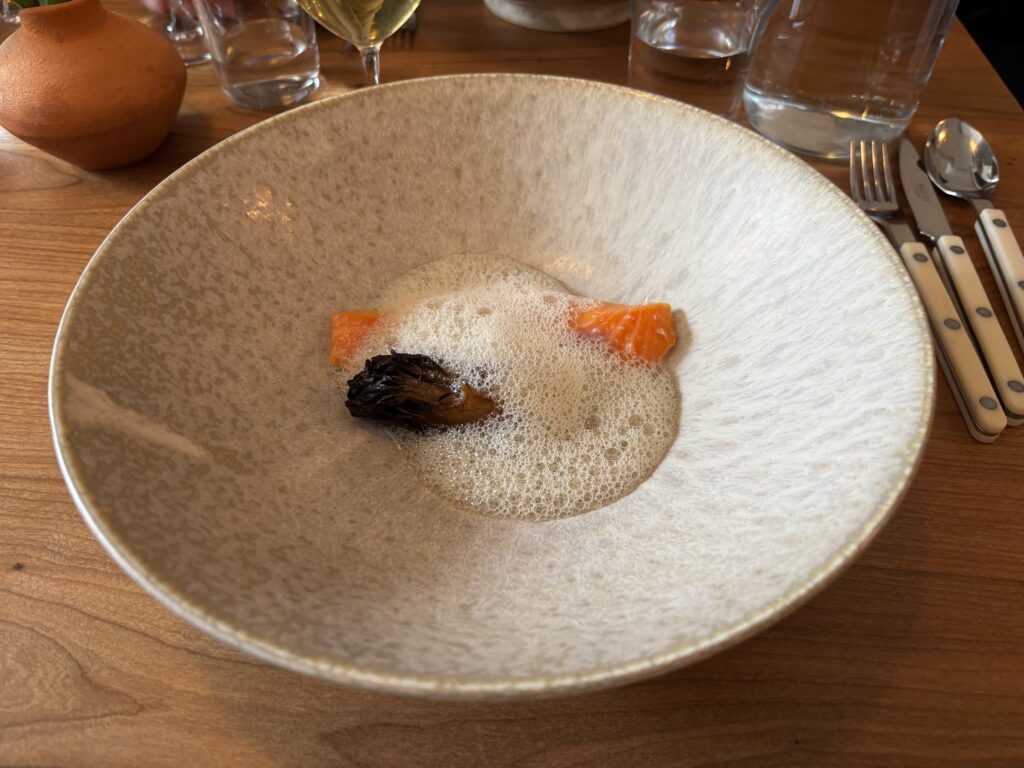
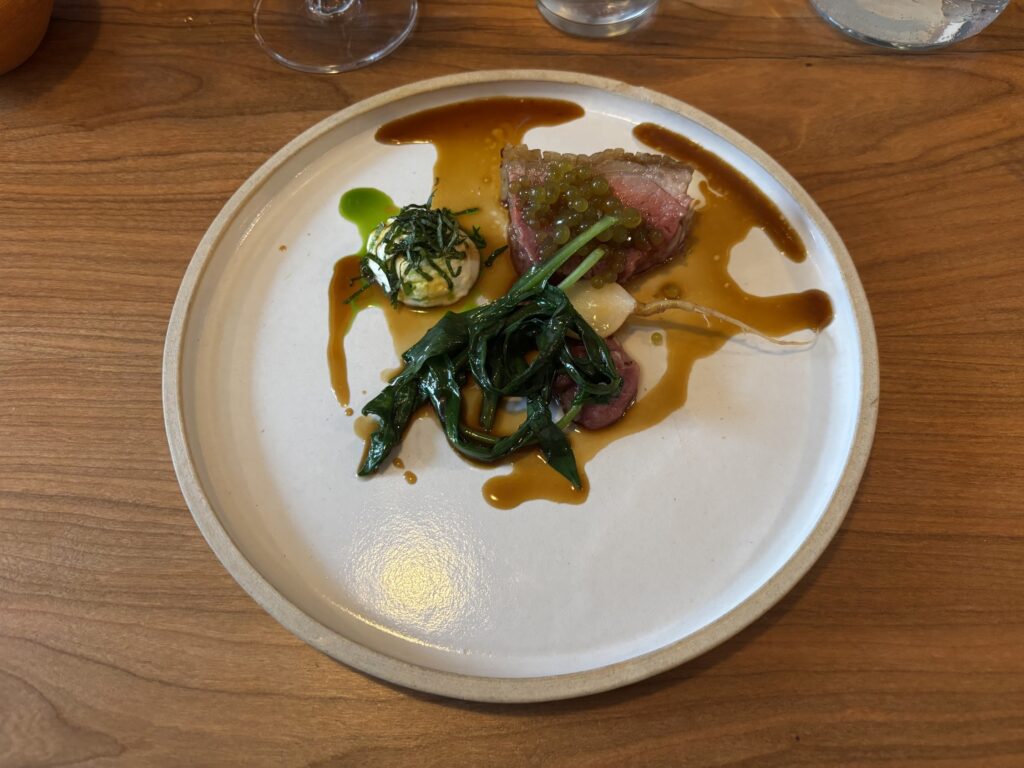
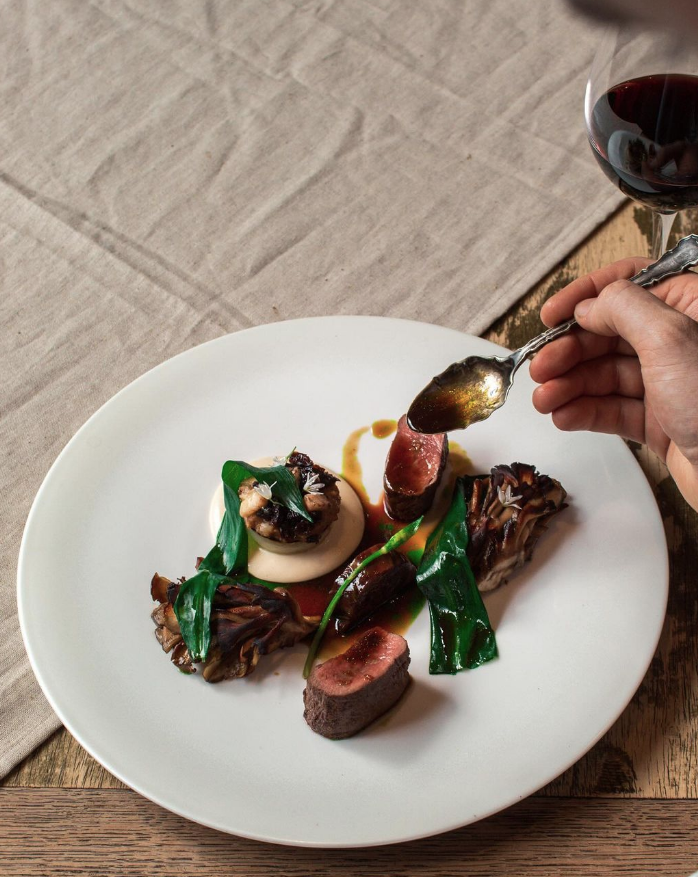
A seven-course tasting menu (£78) channels this bounty with remarkable finesse. A superb lunch in mid-spring showcased the season’s best produce in genuinely exciting ways: asparagus with oyster, buttermilk and sorrel; dry aged trout that had been cooked in beef tallow and maitake; and a showstopping headliner of hogget with wild garlic, ewe’s curd and radish, the vegetables tasting like they had just been plucked out of the ground, the meat funky and fresh, somehow simultaneously. 
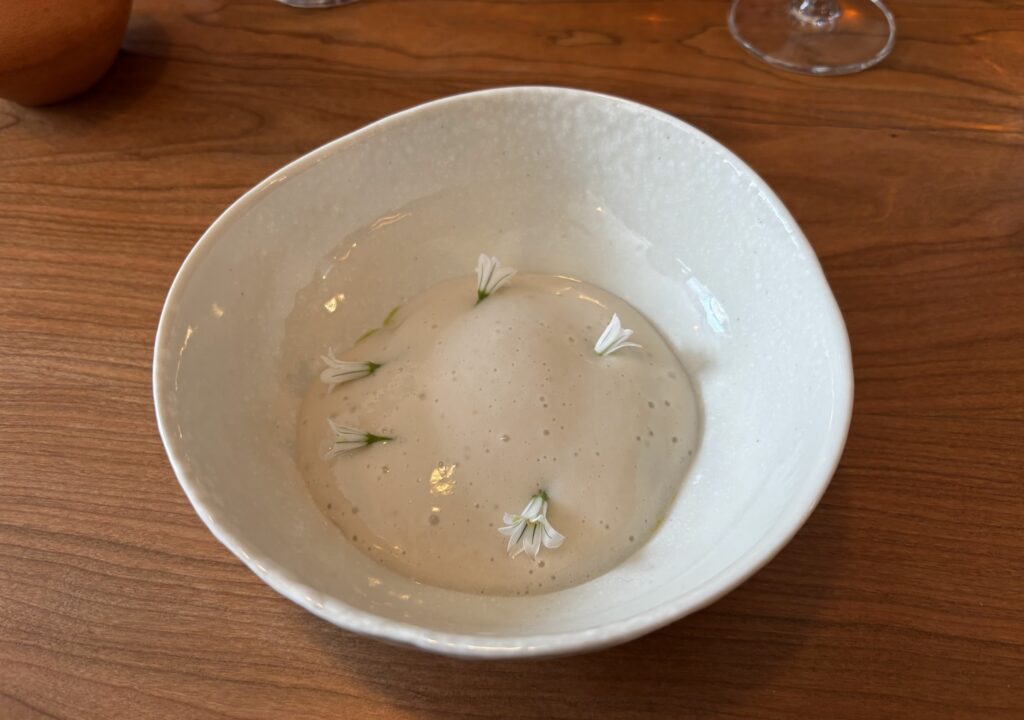
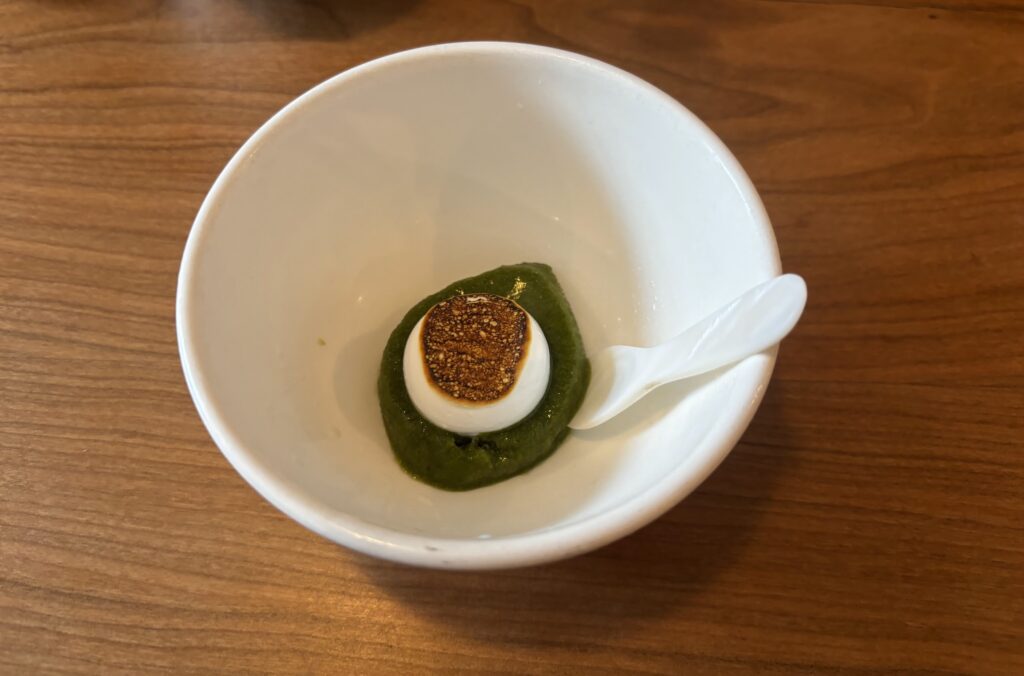
Desserts continued straddling that whole inventive and grounded thing to an increasingly joyous crescendo; green herbs as a perky sorbet with a torched, smoky meringue, then Jerusalem artichoke with milk chocolate and black vinegar, a combination that shouldn’t work but absolutely did; salty, savoury and roundly sweet all at once. There’s something so charming about the cooking at Wilson’s; it feels light and frivolous, but is clearly nourished by the changing seasons too, making things wholesome yet carefree; an impressive balancing act to pull off quite so dextrously.
Ostle’s background – stints at The Square and The Hand & Flowers – goes some way to explaining the precision on every plate, but Wilson’s has never felt like a restaurant trading on its chef’s CV. It has its own, idiosyncratic identity, and it’s one we hope never bends to anyone.

The wine pairings (£55) are thoughtfully selected, too, and there’s now a non-alcoholic flight for £35. Alongside that tasting menu, the whole offering represents remarkably, laughably good value for all the quality that’s on show. It came as no surprise that the restaurant was awarded a Michelin star in the 2025 Guide, retained for 2026.

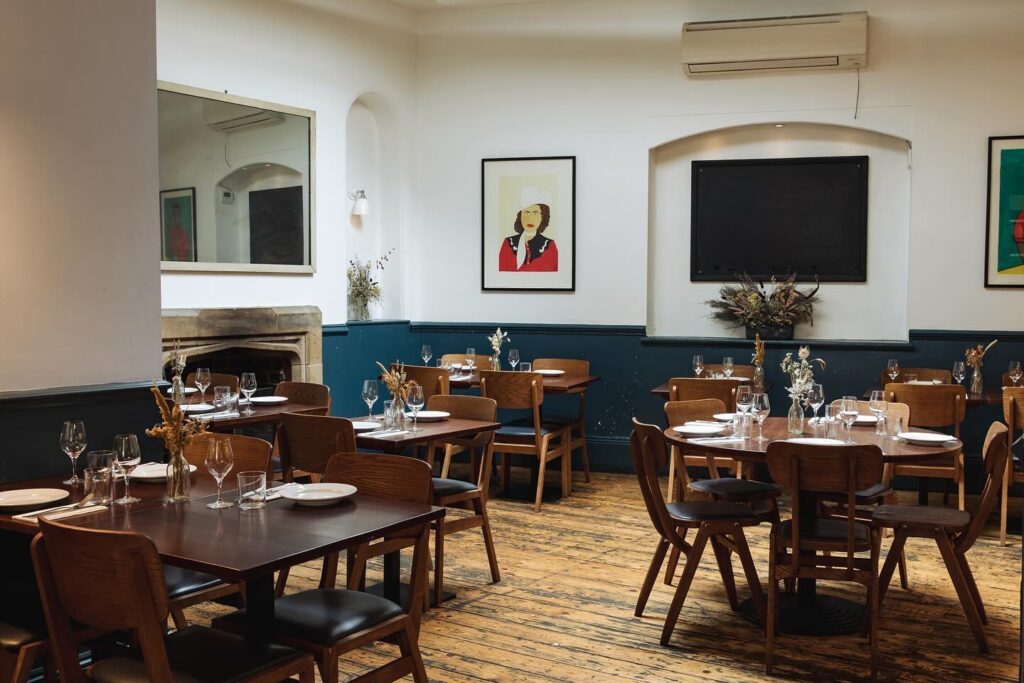
That might have you making assumptions about the style of the place, but what’s particularly refreshing about Wilsons is how it manages to deliver fine dining without any of the overbearing weight – the understated dining room, all whitewashed walls, warm wood and simple furnishings, keeps things grounded, and the service is fresh-spirited and knowledgeable. And for those seeking a more accessible entry point, their three-course lunch menu (£39) offered Wednesday to Friday is another display of the excellent value here.

In 2021, the team expanded their operation by opening The Bread Shop just a few doors down, where you can buy their excellent sourdough and house-cured bacon milk buns. It’s also home to their fermentation and preserving projects, ensuring nothing from the market garden goes to waste.

This commitment to sustainability hasn’t gone unnoticed – Wilsons holds a Green Star too, recognition of their exceptional commitment to sustainable gastronomy. Yet perhaps more telling than any accolade is how beloved this place is by Bristol’s other chefs — always a good sign.

Booking in advance has been essential since the Michelin star, but it could be pretty much obligatory following the restaurant’s appearance on Apple TV’s Knife Edge. And the momentum hasn’t slowed; in January 2026, Wilson’s was named SquareMeal’s UK Restaurant of the Year, topping their annual Top 100 list. It’s recognition that feels entirely deserved for a restaurant whose prices remain, frankly, astonishing for cooking of this calibre.

Website: wilsonsbristol.co.uk

Address: 24 Chandos Rd, Redland, Bristol BS6 6PF


Caper & Cure, Stokes Croft

There’s something rather fitting about Caper & Cure occupying a former ‘cash chemists’ on Stokes Croft – after all, their negroni sbagliato might just be the remedy you need after a particularly trying Tuesday. 

The 1920s mosaic tiling at the entrance still proudly proclaims its pharmaceutical past, a charming reminder of when Bristolians could pop in for their ‘remedies and cures’ without prescription. The modern version is probably just round the corner on Hepburn Road, but that’s closed now, too

Anyway, enough of the tenuous introductions, let’s stride into Caper and Cure and get across it. Here, owner Giles Coram has created a bijou shabby-chic success story, transforming what was most recently an arts café into one of Bristol’s most cherished neighbourhood bistros. The space has seen more incarnations than a method actor – from that original chemist to electrical supplier, internet café, and music venue. But it’s the basement that holds the real intrigue, having apparently hosted ‘shenanigans, japes and capers’ throughout its entire history. Some things, it seems, never change – though these days it houses a rather smart private dining room next to the kitchen that can still get pretty boisterous.

The transformation of Stokes Croft from its grittier past to artisan food destination makes Caper & Cure feel particularly symbolic of the area’s evolution. The restaurant has featured in The Good Food Guide as one of Britain’s 100 Best Local Restaurants twice in the last three years, a testament to how this compact corner spot has captured hearts well beyond BS1.
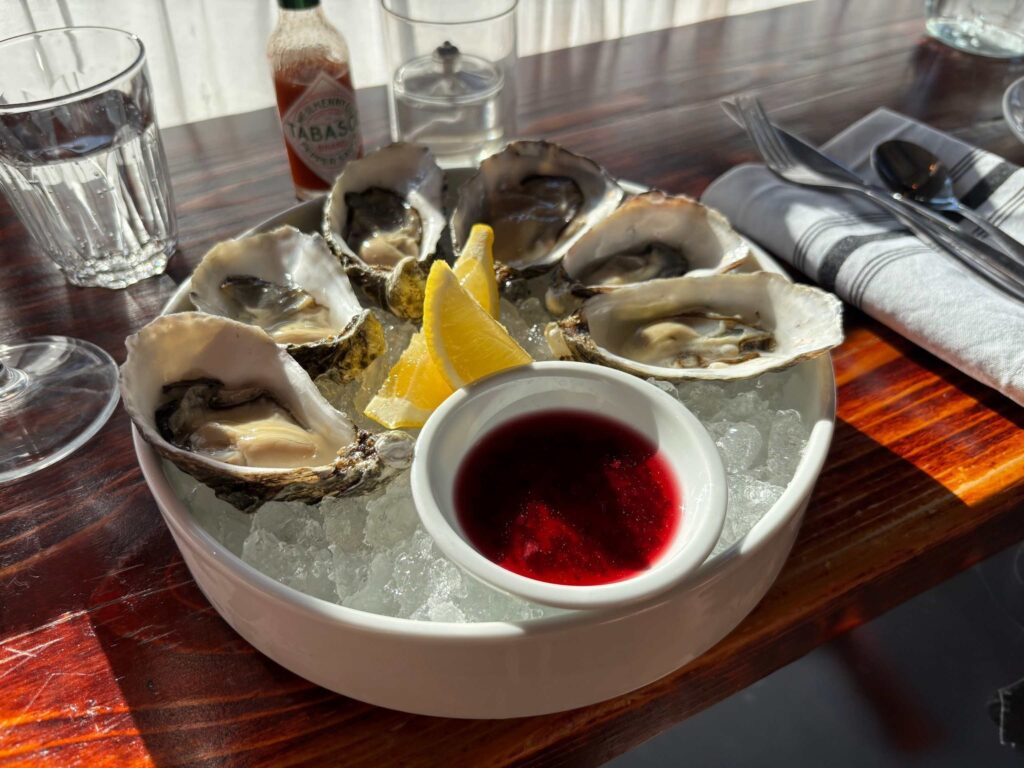
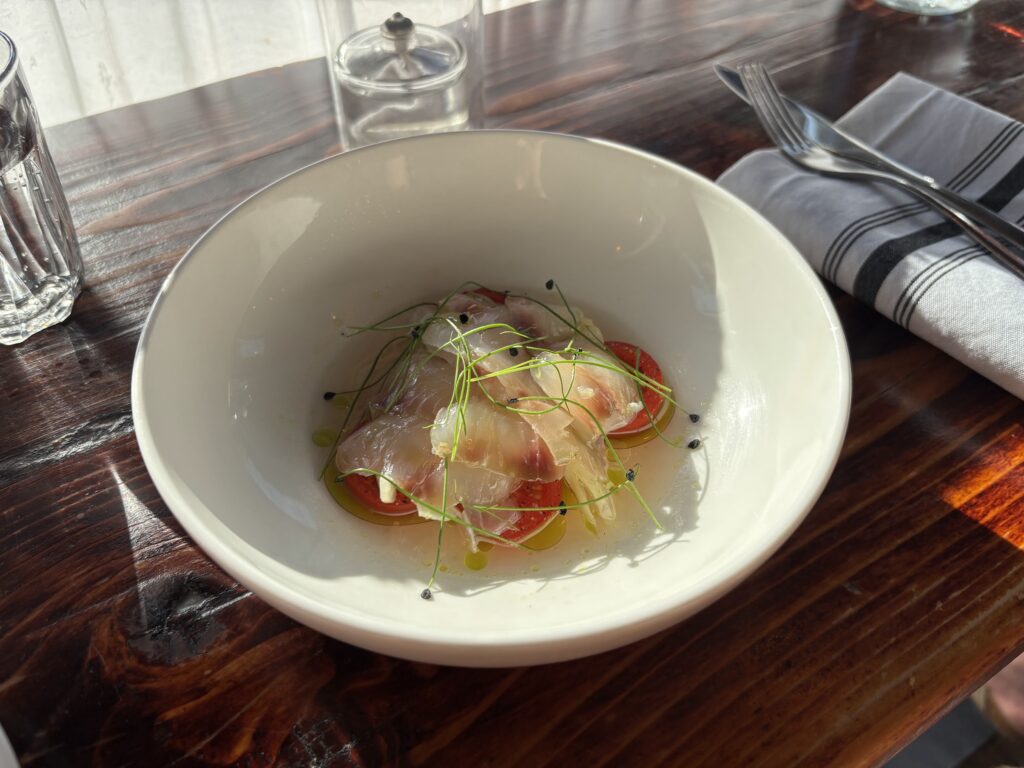
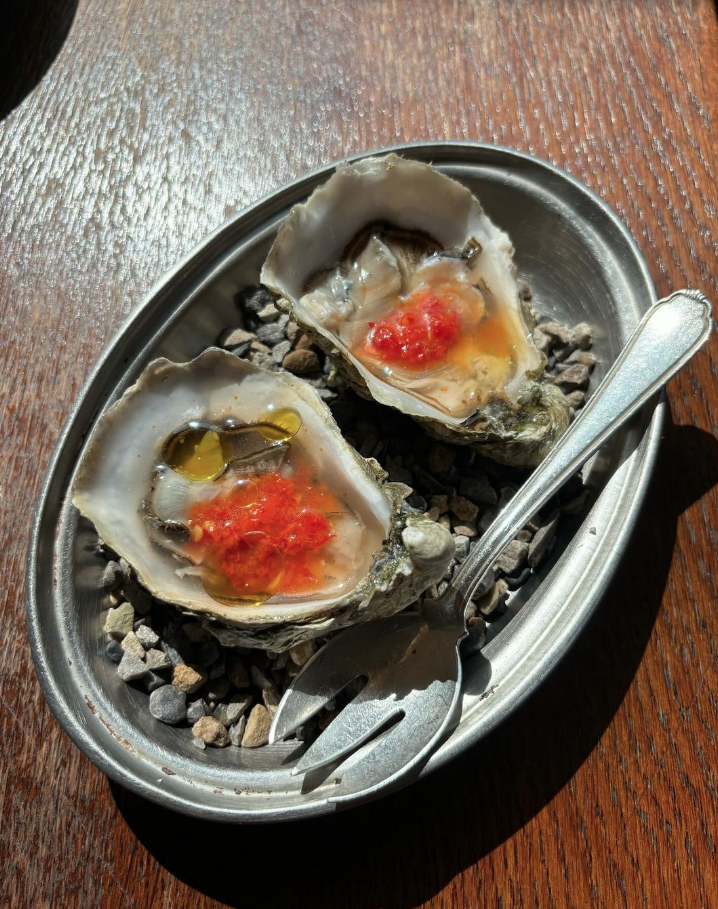
Start with spanking fresh Maldon oysters, taking pride of place at £3.75 a pop (or a very civilised six for £18), each one to be dressed simply with a classic mignonette that lets their briny sweetness sing. Continue on a theme with the cured wild sea bass. Slices are laid gently in a crystal-clear tomato and olive consommé that’s savoury and delicate, the inherent richness of the fish allowed to shine through. This kind of dish is often butchered by an overt acidity that crudo simply can’t take, but here, the consommé is expertly judged, a pleasing backnote rather than the main event.

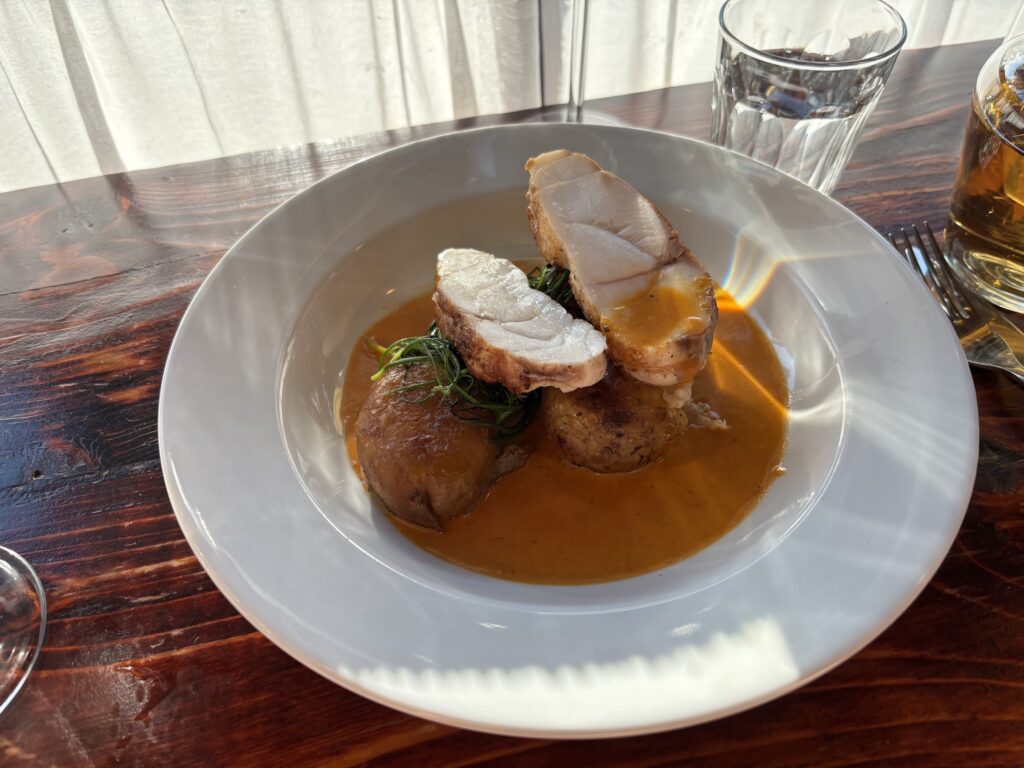
Whilst not nominally a fish restaurant, we continued with a more robust plate of monkfish that really shows off the kitchen’s chops at the stoves, the meaty fish given heft and smoke from its sobrasada sauce (that spreadable Balearic sausage that makes everything better).  Confit Jersey Royals provided the perfect creamy counterpoint. 

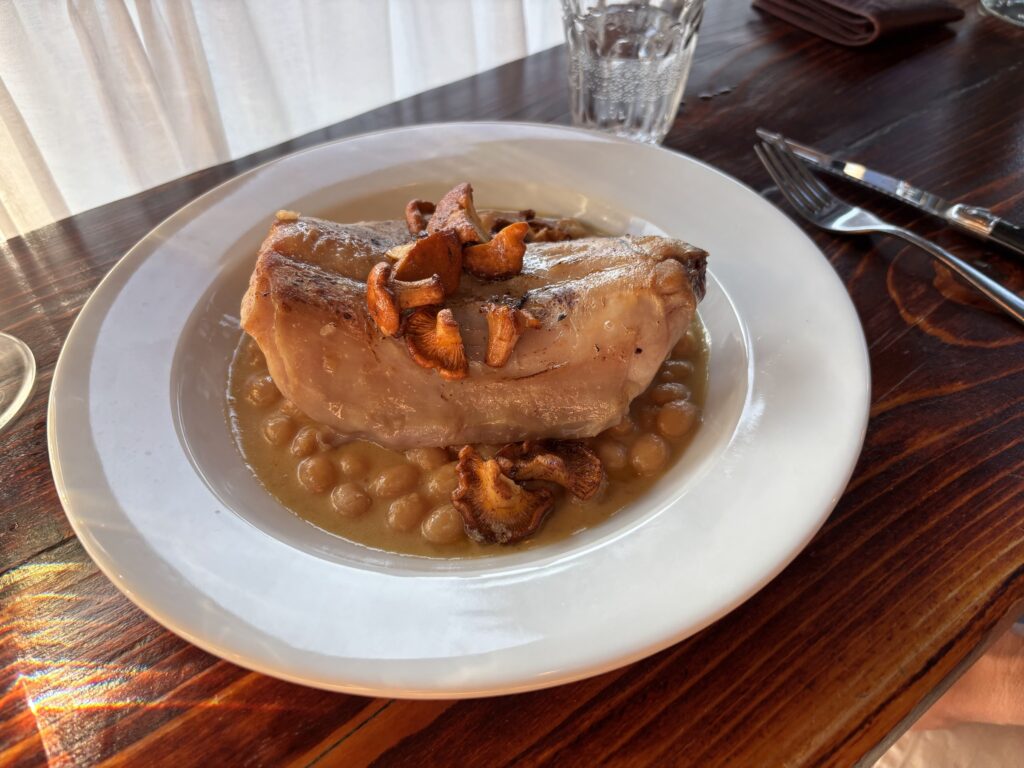
To ensure the wrong impression wasn’t given, a meaty plate next. From the specials board, if the rabbit with Coco de Paimpol beans is there, don’t sleep on it. Served as a whole saddle on the bone, it was superb, and the accompanying French heirloom beans from Brittany were as creamy as butter, viscous and earthy, those latter notes only amplified further by a few carefully placed girolles. What a gorgeous dish this was.
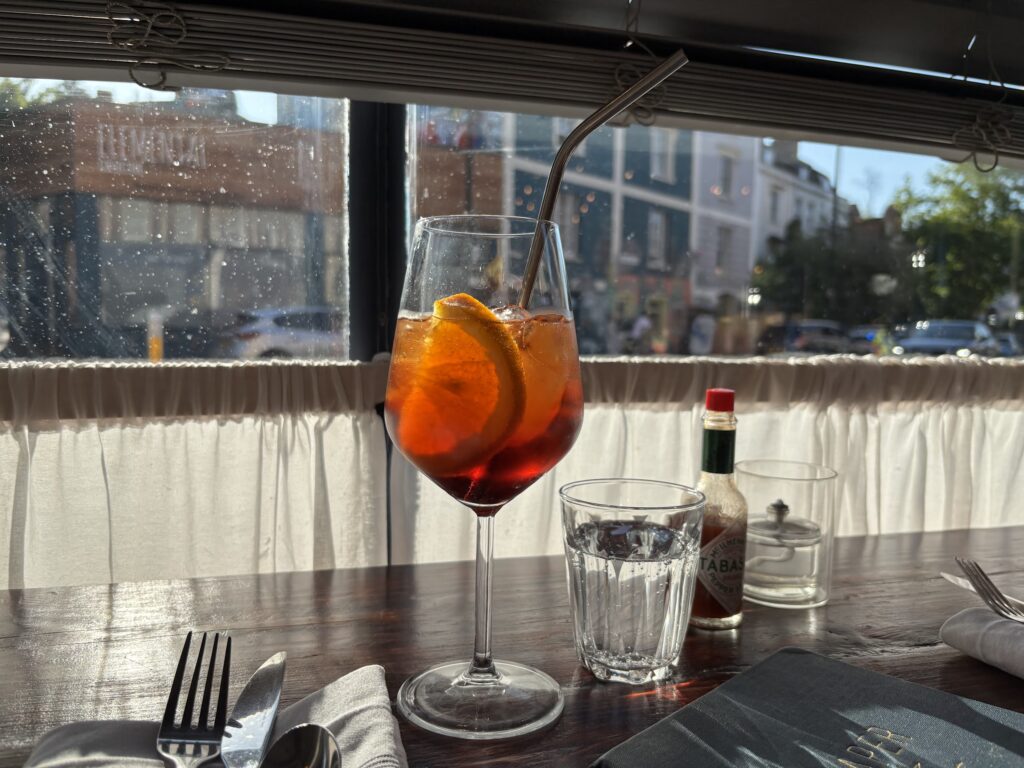
That negroni sbagliato we mentioned? It’s a beauty – all bitter-sweet sophistication with a playful prosecco fizz that somehow makes day drinking feel entirely acceptable. Given the basement’s history of capers and japes, we suspect the team here wouldn’t judge you for settling in for the long haul and ordering several. With the sun streaming in on a warm Bristol early evening, it all felt so right.

Website: caperandcure.co.uk 

Address: 108a Stokes Croft, Bristol BS1 3RU


Gullu’s Kitchen, Fishponds

Ideal for some of Bristol’s most celebrated Jamaican food…

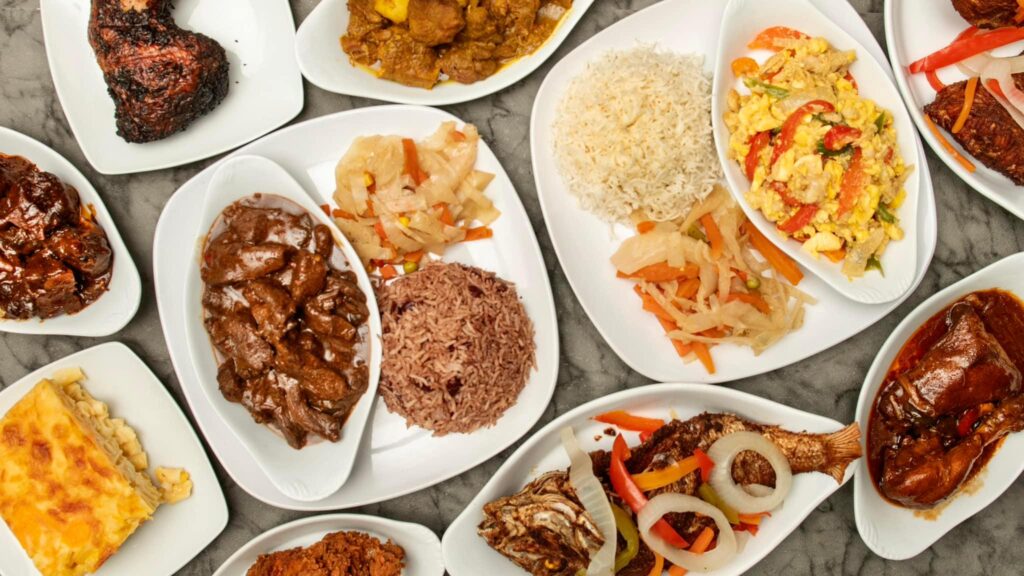
You can’t come to Bristol and not have some Jamaican food, the city having a large Jamaican population stemming from the UK’s efforts to rebuild after World War II. The British Nationality Act of 1948 gave citizens of the Commonwealth the right to settle in the UK, leading to the arrival of the Windrush generation, many of whom were Jamaican and made Bristol their home.

As more Jamaicans settled in Bristol, they formed communities and support networks which, in turn, attracted further migration from Jamaica. Over time, the Jamaican community in Bristol has made significant cultural contributions to the city, particularly in music, food, and festivals like the annual St Pauls Carnival, which celebrates African-Caribbean culture. 
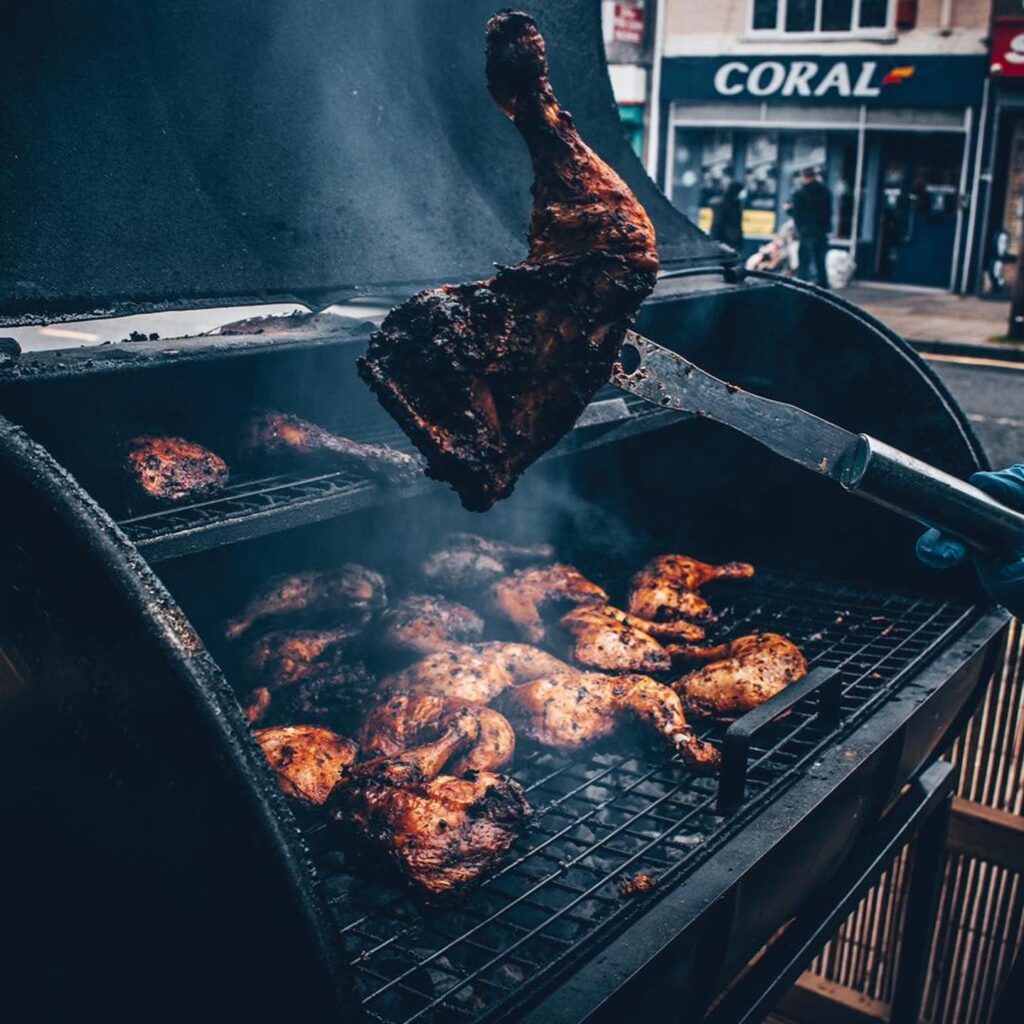
Images via @GullusKitchen

And so we wind up at Gullu’s Kitchen in Bristol’s Fishponds suburb, getting thoroughly seasoned with jerk smoke as we await arguably the city’s finest dose of grilled chicken, Caribbean or otherwise. A takeaway only joint (pedants, look away from the ‘best restaurants part of the title), you’ll see the jerk pan – an oil drum that’s blackened from years of expert barbecuing – standing proudly outside Gullu’s, with several blistered legs being thoroughly doted on by a be-gloved, sometimes be-goggled cook.

God this is good chicken – nicely piquant from the house jerk sauce and charred beautifully. But don’t stop there; the brown stew chicken is phenomenal and arguably the most popular dish here. We’re also fans of the tender oxtail stew with butter beans. Loaded with big, bold Caribbean flavours, this rich, aromatic stew is meltingly tender and heady in its spicing. Have it over both chips and rice, and take your haul over to Coombe Brook Nature Reserve (a five minute walk) for a seriously elite picnic.

In June 2025, Gullu’s expanded with a proper sit-down restaurant and cocktail bar at 43 Victoria Street in Staple Hill. The Fishponds takeaway remains the original (and the spiritual home of that jerk pan), but if you fancy your curry goat with a Caribbean Croft cocktail and a chair to sit on, BS16 is now the move.

Websitegulluskitchen.co.uk

Address: 282 Lodge Causeway, Fishponds, Bristol BS16 3RD 


Dongnae, Redland

Ideal for Korean grilling and fermentation with serious culinary pedigree…

On Chandos Road (an absurdly stacked strip for restaurants, increasingly), Duncan and Kyu – their CVs boasting a shared stint at L’Atelier de Joël Robuchon – have created a follow-up to Bokman that continues a lineage but is still very much its own thing. Where the rotisserie chicken takes centre stage a mile down the road, here it’s a custom charcoal grill doing the heavy lifting.

The room is clean, minimalist and cold-white, with windows that always feel misted with condensation – inviting from the outside, comforting once you’re in. It lets the food take centre stage. 

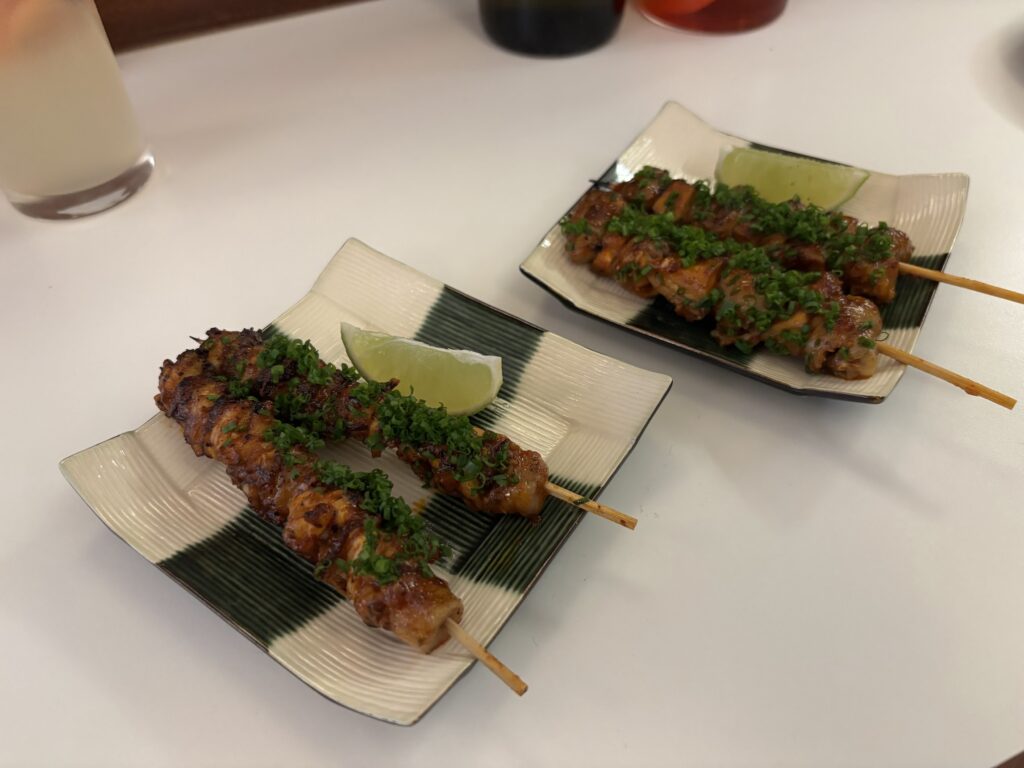
Start with some compelling Kkochi (skewers) which set the tone. Octopus, given heft from lamb fat, comes gently smoked and yielding, with an earthy, cumin-spiked warmth, a drift of finely sliced chives a contender for a keen mark on that bloody Instagram account. All they need is a lick of lime to send them on their way.
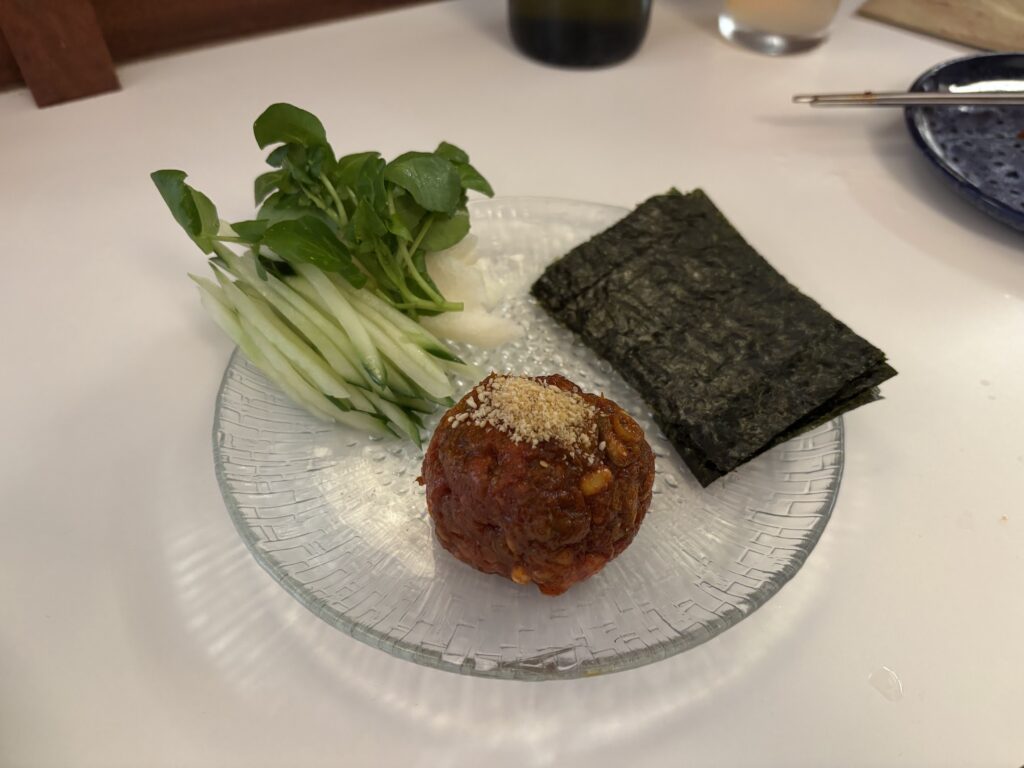
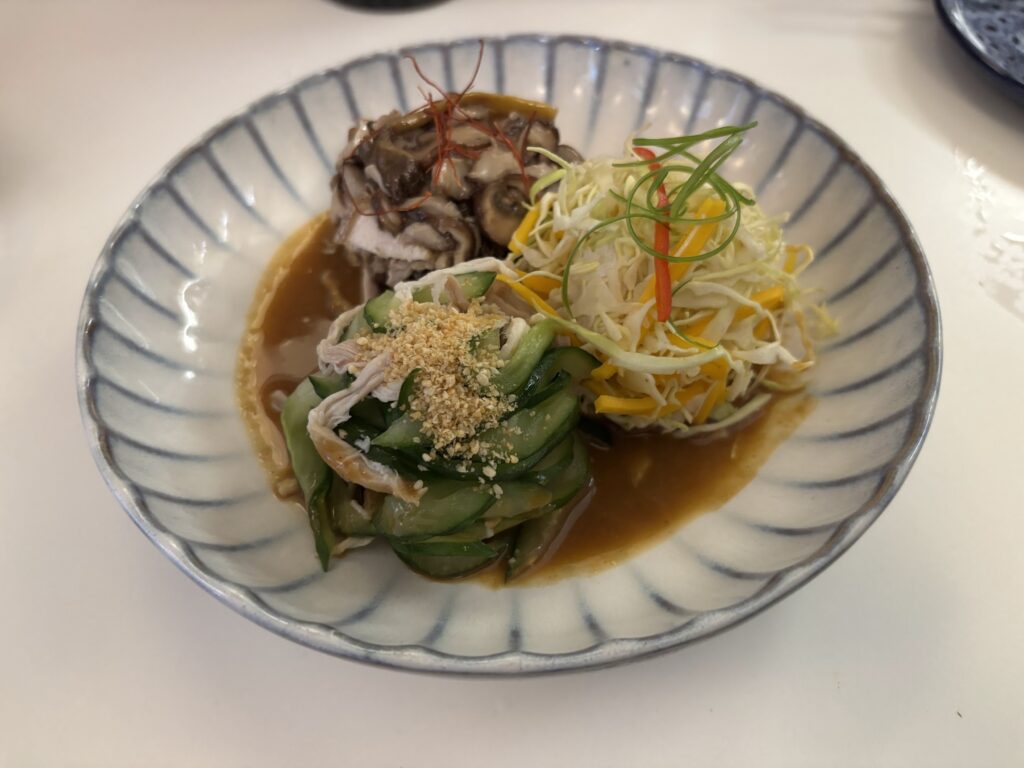
From the raw section, Jinju style beef is a standout. Reminding us of a rubber band ball in appearance only, it’s spun through with house gochujang to give the tangle of flesh some life and dignity. Served alongside are sheets of nori and julienned Korean pear for DIY assembly. The interplay of rich, spiced beef against the crisp sweetness of the fruit is inspired. Everything is served at just the right temperature: the beef and pear ice cold by design, not accident.

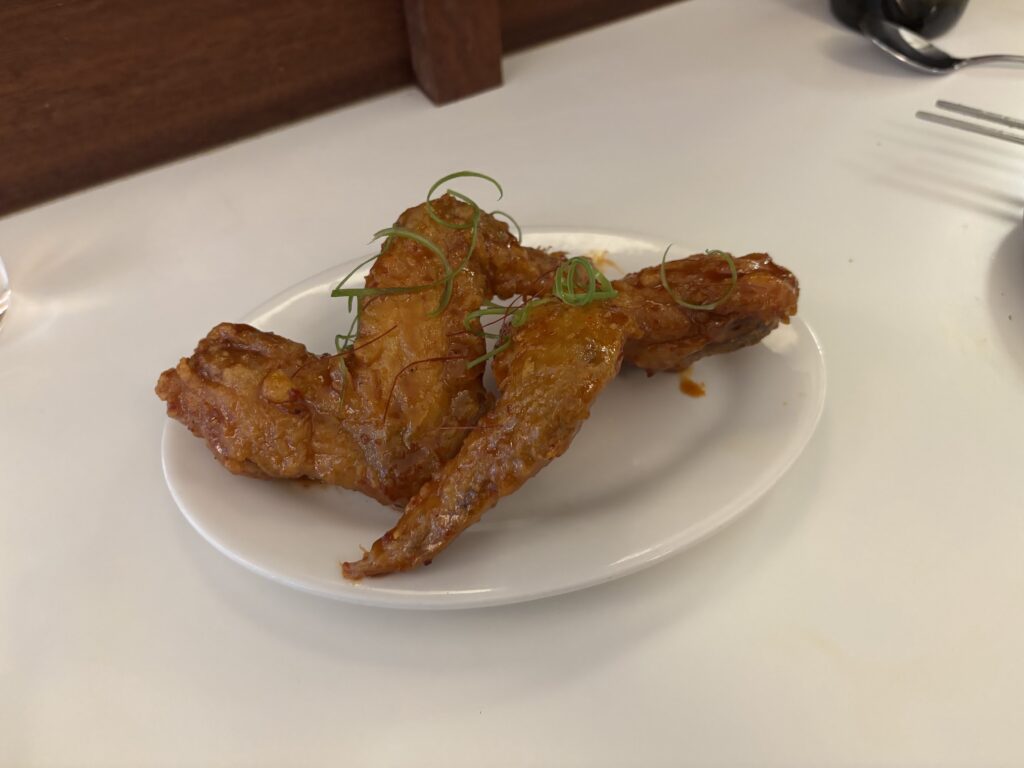
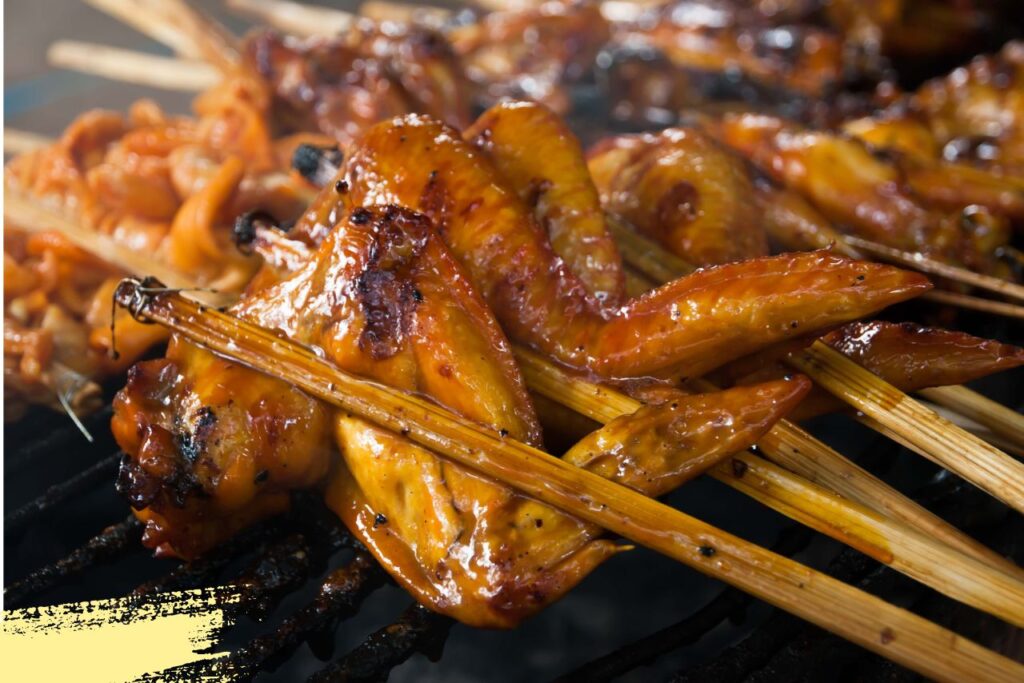
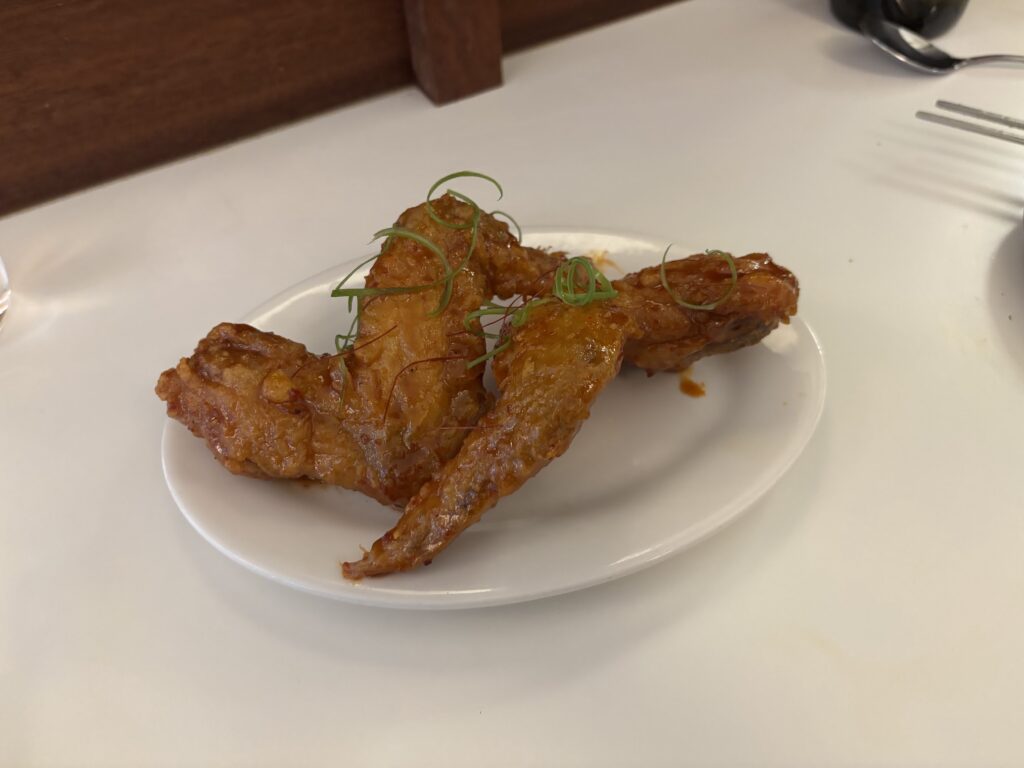
Glazed Korean fried wings glazed arrive limbs intertwined in post-coital sleep. They shatter, they give, they’re gone in seconds. 
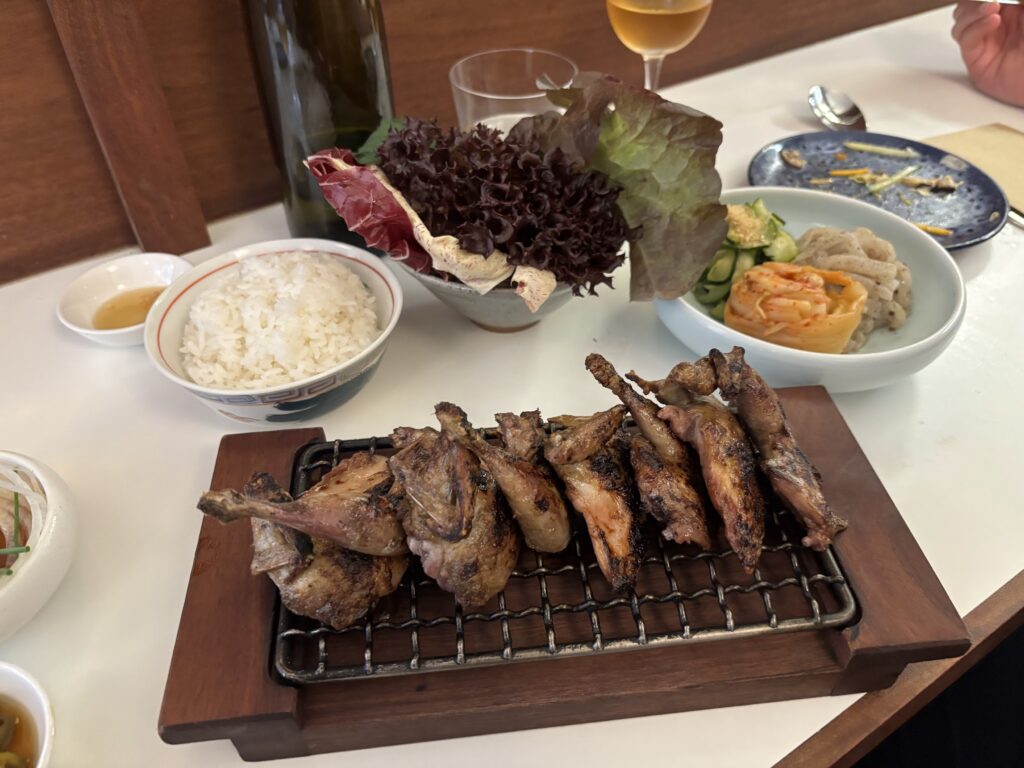
The BBQ quail was the main event on our visit, and arrived as several birds portioned on a rack, burnished from the coals, their skin blistered and salty. Alongside comes the full banchan spread – rice, lettuce cups for wrapping, house kimchi and pickles – turning lunch into something participatory and gloriously hands-on. It demands you put your phone down, apologies to your shirt for the mess you’re about to make, and get stuck in.

The space itself is compact, split across two former shop fronts with counter seating not so much overlooking the open kitchen as being slightly under it. Watching the brigade work the grill – even if you can only see their faces and shoulders – is half the entertainment. The wine list, much like Bokman’s, leans natural, with Bristol importer Vine Trail supplying plenty of interesting bottles.

The accolades have come thick and fast. Dongnae was named Chef to Watch at the Good Food Guide 2025 Awards, ranked #46 in the National Restaurant Awards for 2025 (with nominations for both New Opening and Restaurateurs of the Year), and Kyu picked up a SquareMeal Female Chef of the Year nomination for good measure. The Michelin Guide came calling, too.

Website: dongnae.co.uk

Address: 5-7 Chandos Road, Redland, Bristol BS6 6PG


Lapin, Wapping Wharf

Ideal for compelling French bistro cooking from a shipping container with serious soul…

Bristol’s Wapping Wharf is home to a frankly absurd concentration of great independent restaurants, several of which you’ll find later in this list. Lapin is among the best of them. A French bistro opened in April of last year by restaurateur Dan O’Regan and chef Jack Briggs-Horan, the pair behind BANK in Totterdown, it’s picked up an enthusiastic Guardian review, a Good Food Guide listing, and a reputation as one of the most compelling new openings Bristol has seen in years.

The room is tiny, sage green, and saturated with the smell of garlic butter. Vintage French advertising posters line the walls, and each wooden table is engraved with the restaurant’s motif: a rabbit clutching a baguette. This kind of myopic vision of Gallic vibes shouldn’t work in a Bristol shipping container, but it does, and then some.
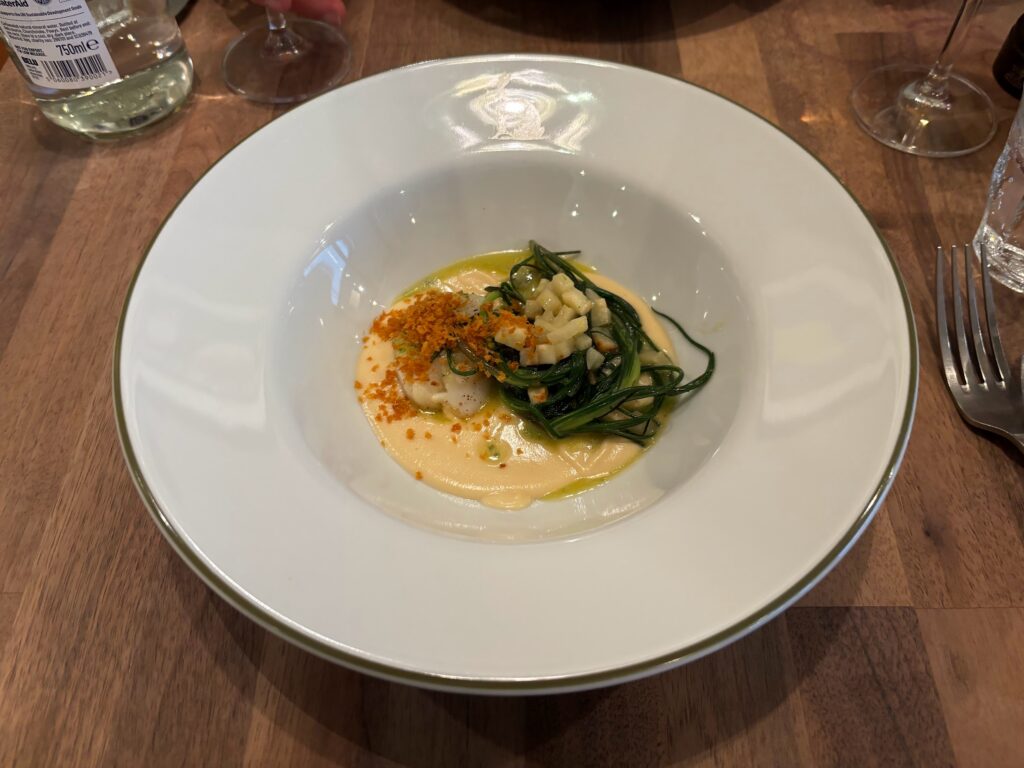
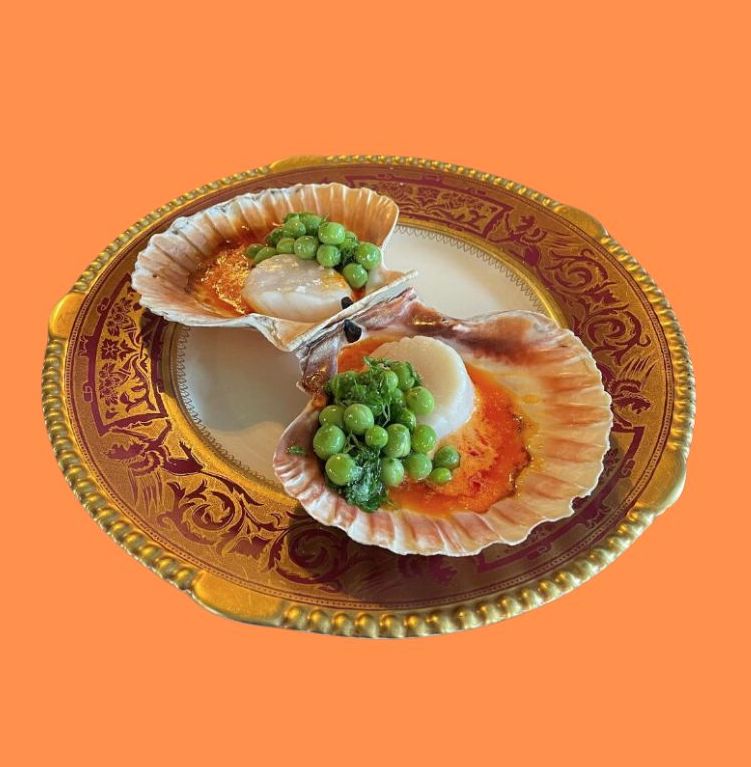
Orkney scallop with agretti, celeriac and garlic butter
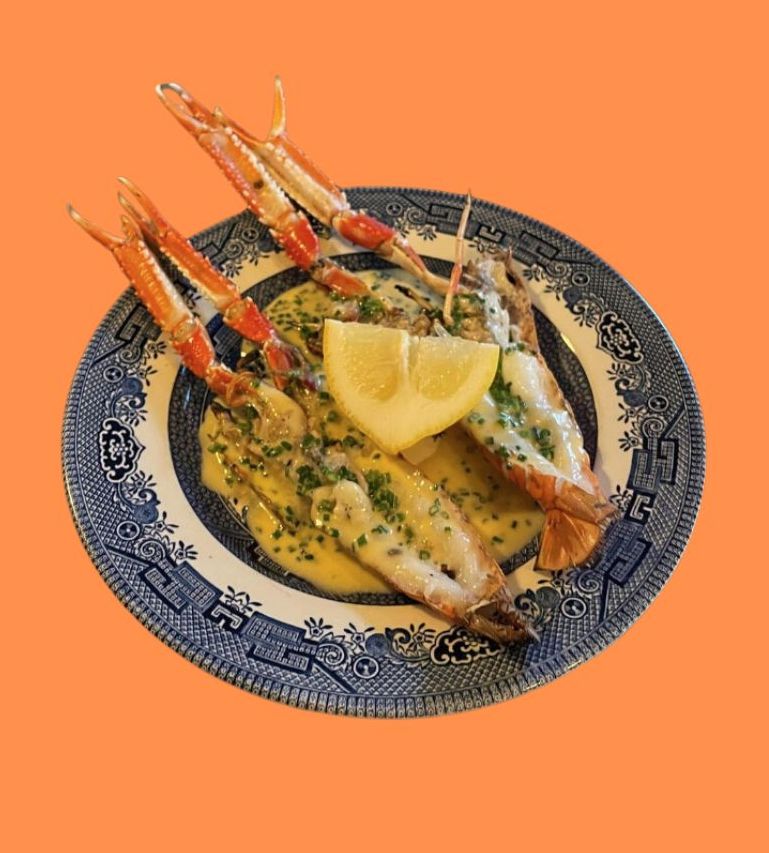
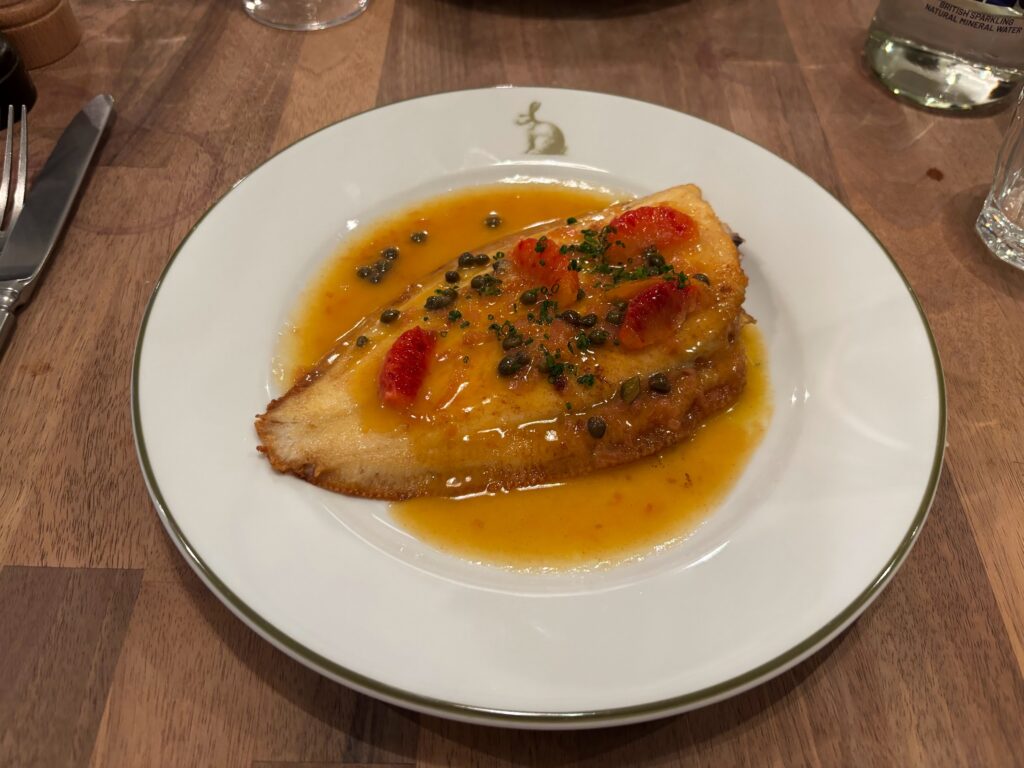
Sole meunière with blood orange and capers

The cooking is rich, seasonal and generous. Warm gougères of Old Winchester and blue cheese set the tone (as every self-respecting Somerset kitchen knows), and a hand-dived Orkney scallop with agretti, celeriac and garlic butter was a standout starter on our visit.

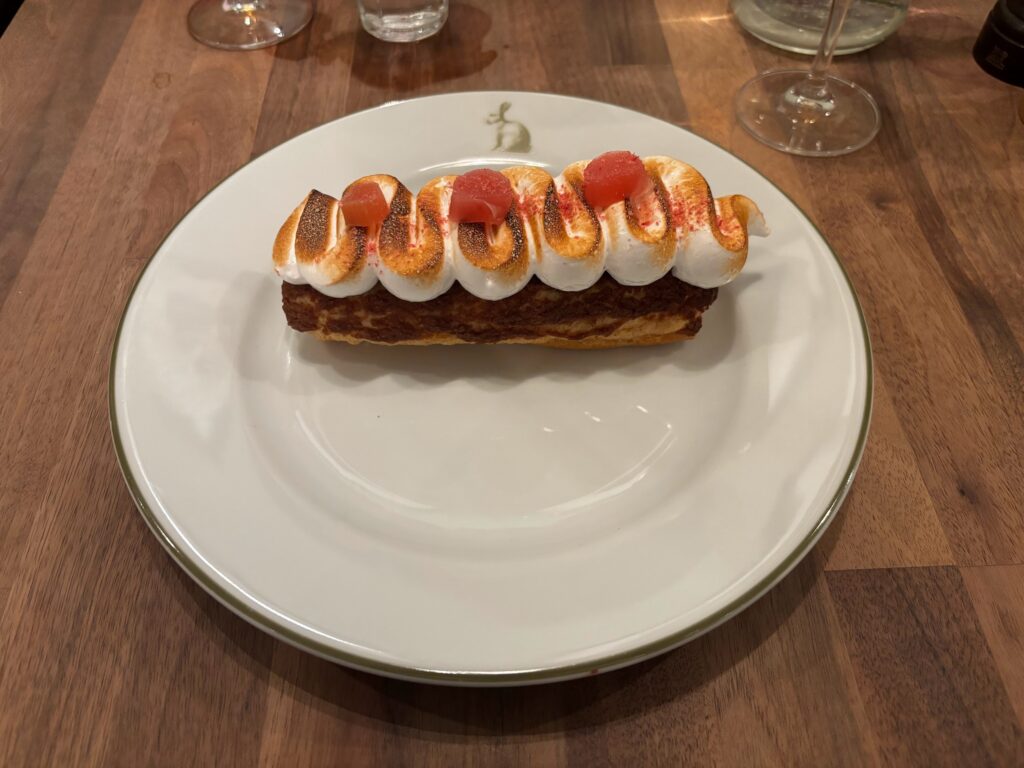
From the mains, sole meunière arrived in a wonderfully perfumed butter sauce lifted by blood orange and capers, with duck fat frites on the side that were every bit as good as their billing. To finish, the eclair du jour, here rhubarb and custard with stem ginger and torched Italian meringue, proved the kitchen is no slave to bistro dogma. Though it all sounds on the heavy side, and the natural assumption is you leave a place like this confit’d in butter, we’re pleased to report that Lapin leaves you feeling surprisingly light; the team here balance generosity and finesse with an admirable swagger.

Wine is all French and listed by character rather than region, with every bottle available by the glass. There’s also a prix fixe at £29 for three courses, available every service, with a £25 wine pairing on top. For cooking of this standard, in a room with this much personality, that’s remarkable value.

Now things are warming up, the terrace is the place to be; it catches the sun beautifully and is effervescent from its 5:30pm opening all the way to close.

You can read our full review of Lapin here.

Website: lapinbristol.co.uk

Address: Unit 14, Cargo 2, Museum St, Bristol BS1 6ZA


Cotto Wine Bar & Kitchen, Old City

Ideal for Italian small plates and interesting wines…
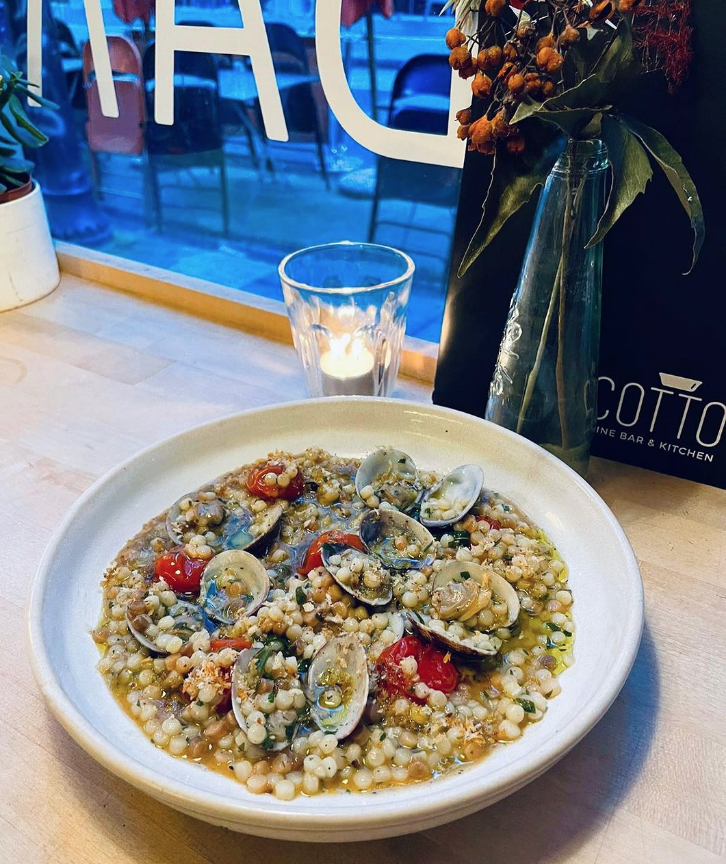
This wine bar and kitchen, part of the esteemed Bianchis Group whose growing presence in the city can only be a good thing, only emerged in early 2022 but has found its feet fast in Bristol’s Old City.

Transforming from its previous incarnations as La Sorella, a deli and aperitivo bar, and then Bar Ripiena, the pandemic thwarted plans to reimagine the space as a lasagne bar (how good does that sound?), leading to the birth of Cotto, a cosy bolthole known for its chilled out vibe and homestyle Italian cooking.

During the day, the tight room exudes a serene atmosphere with its muted, tactile terracotta walls and framed cartoons, while in the evenings, it transforms into a lively space with a convivial glow that you notice from the road. Trust us; it beckons you in. 

Patrons can choose to sit up at the bar, overlooking St Stephen’s Street, enjoying a glass of wine and a small plate, though the enticing menu might make settling for just that feel like a missed opportunity. From that menu, the beef shin lasagne is superb; cakey and upright, just as it should be, and positively humming from its rich, pastoral ragu and aged parmesan-spiked bechamel. For good measure, it sits atop a little pool of tomato compote, which brings a welcome jolt of acidity.

Before that (because it will finish you off), make sure you order the artichoke fritti, a beautiful big pile of the bastards that have been drizzled with hot honey and showered with a few cooling leaves of mint. Popping in for just a plate of these and a glass of something cloudy and funky is very much the vibe of the place.

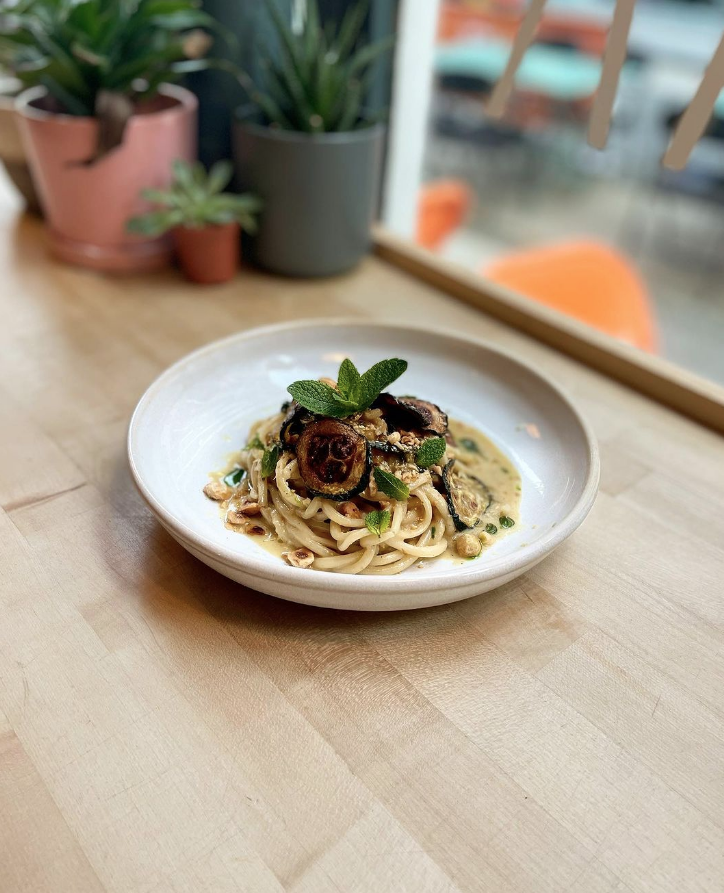
Or, go larger from the ever changing lineup of pasta; a bowl of fregola with clams and datterini or bucatini alla nerano, if you like.

With a generous selection of wines (many biodynamic) available by the glass, Cotto is a thoroughly agreeable place to spend an evening, or even an hour.

Website: cottowinebarandkitchen.co.uk

Address: 29-31 St Stephen’s St, Bristol BS1 1JX


The Blaise Inn, Henbury

Ideal for a country pub escape close to the city…

Not all of Bristol’s very best dining goes down in the centre of town. Indeed, venture just a little further afield, and you’ll be rewarded with some truly excellent options for your supper. 

Perhaps our favourite slightly out-of-town spot sits in the peaceful residential suburb of Henbury, around a half hour’s drive from the city centre. It’s the kind of mission you need to make to enjoy a truly ‘country pub’ experience so close to a major urban centre. And the Blaise Inn offers just that, with a side of order of culinary excellence thrown in for good measure.

This Michelin Bib Gourmand-awarded gastropub has quickly become a beloved fixture in the local dining scene since its opening in 2021, the work of Louise McCrimmon, a celebrated chef with previous as executive chef at Harvey Nichols back in central Bristol. Alongside her husband Ian and their neighbours Nicola and Peter Gilbert, McCrimmon has crafted a dining experience that feels like a glorious break from the hustle and bustle of the UK’s sixth largest city, even if it’s just for an afternoon.
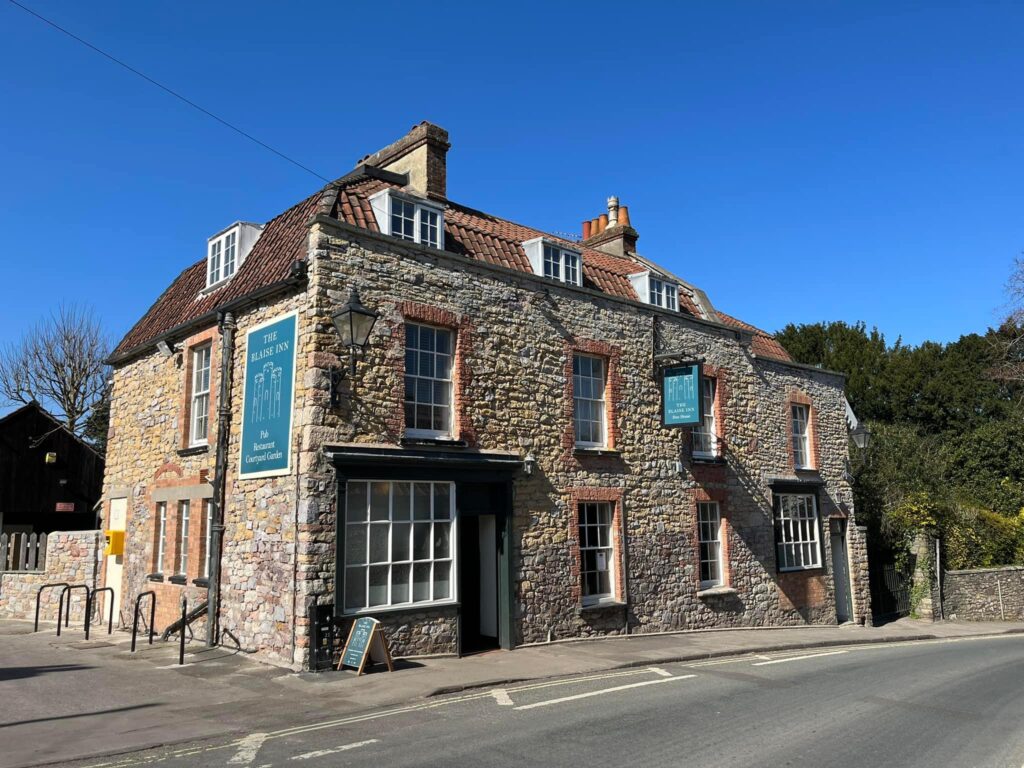
That perception of escape certainly isn’t harmed by the Blaise Inn’s enviable vantage point just a mere stone’s throw from the picturesque Blaise Castle Estate, a sprawling 650-acre park owned by Bristol City Council. This proximity not only provides diners with a scenic backdrop but also imbues the inn with a sense of historical significance, as the estate itself was laid out by the renowned landscape designer Humphry Repton in the early 19th century. 

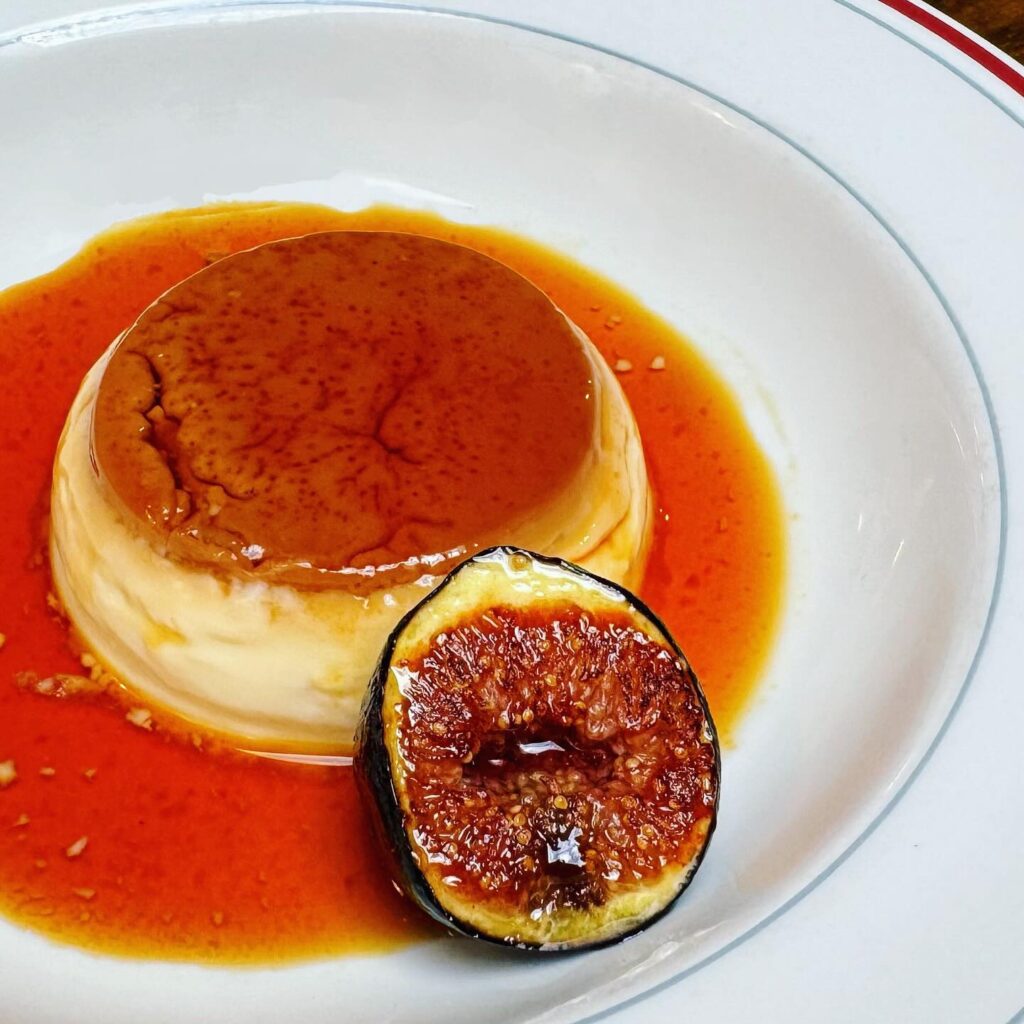
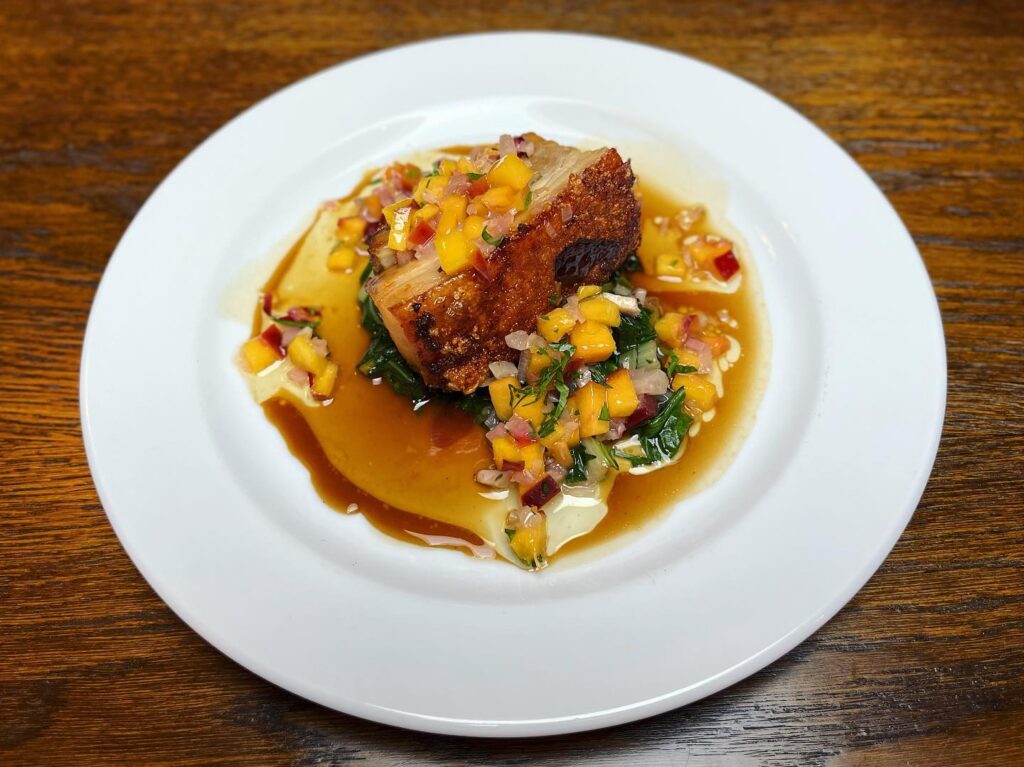
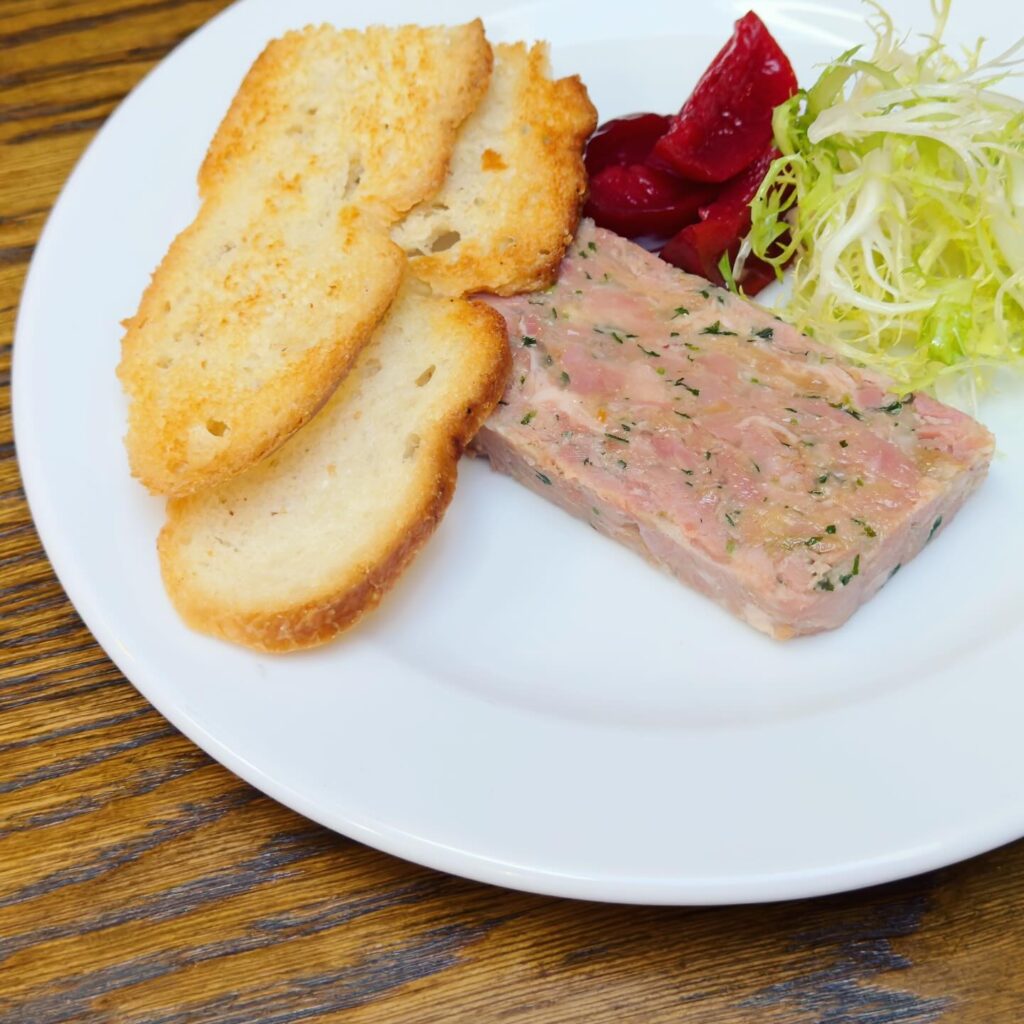
The scene is well and truly set for a proper pub lunch, then, and the Blaise Inn duly delivers, with chef McCrimmon drawing on her classic French training and a steadfast commitment to seasonality to breathe new life into traditional pub dishes. So, that’s a half pint of gorgeously sweet, juicy prawns, served with a bracing but beautifully judged lemon aioli. Or, a perfect puck of ham hock terrine given lift off with a celeriac remoulade which was fresh and nutty, rather than cloying. A main course of slow cooked pork belly with radicchio and a nectarine and fennel dressing recently felt so succinct for a season just about to turn colder, and an on-point creme caramel with honey roast figs sealed the deal.
It pretty much goes without saying that the Sunday roast here is one of Bristol’s most celebrated. In the kegs, local favourite Fortitude, beautifully amber and supremely drinkable, flows with gusto. What’s not to love about the Blaise Inn?

Website: theblaiseinn.co.uk

Address: 260 Henbury Rd, Henbury, Bristol BS10 7QR


Read: The best Sunday roasts in Bristol


Lido, Clifton

Ideal for Middle Eastern sharing plates with the most singular of dinner views…
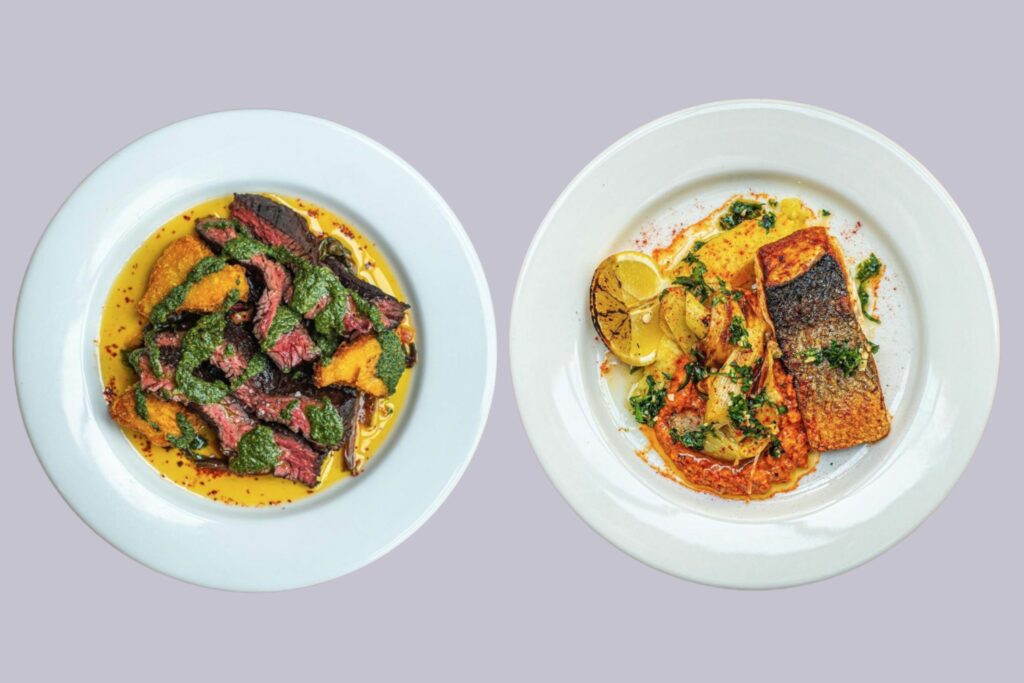
Lido is one of Bristol’s most unique venues for a meal, combining the charm of a restored Victorian swimming pool with the culinary delights of a top-tier restaurant. It’s a match made in heaven.

Sitting pretty in the heart of Clifton, one of Bristol’s most picturesque quarters, Lido offers more than just a place to swim; it’s an urban oasis where you can indulge in a spa treatment, relax in the sauna or hot tub, and then treat your taste buds to an exquisite meal. Or, do it the other way round, of course, leaving a little time for your food to go down before diving in.

Indigestion be damned; Lido’s history dates back to 1850 when it first opened its doors as a public swimming bath. After changing hands several times and even facing the threat of redevelopment into flats, it was finally purchased by Arne Ringer in 2004. Since then, it has been transformed into a place for Bristolians to relax and to gorge, equally.

The poolside menu at Lido takes on a Middle Eastern inflection – light, fresh and lively, and kinda perfect if you’re taking a dip after – with wood-fired flatbreads forming the anchor around which the seasonal small plates revolve. 

Though not strictly vegetarian by any means, this is without doubt one of the best restaurants in the city for veggies, with some truly superlative vegetable-led cooking on show. Don’t pass over the beetroot and ajo blanco dish, the root vegetable ember roasted until close to collapse, propped up by a rich, tart emulsion of almonds and garlic. Just incredible. Some of that superb flatbread for dredging seals the deal.

All that said, when protein hits the grill here, magic happens. On a visit in the summer, charcoal-grilled onglet dressed in an anchovy, garlic-and chilli butter was gnarly in all the right places and as tender as you like in others, proving once again that this type of cut is so much more satisfying than a clinical fillet. Sea ass, given a similar rough and ready treatment on the grill, ends up being just as good as that onglet. 

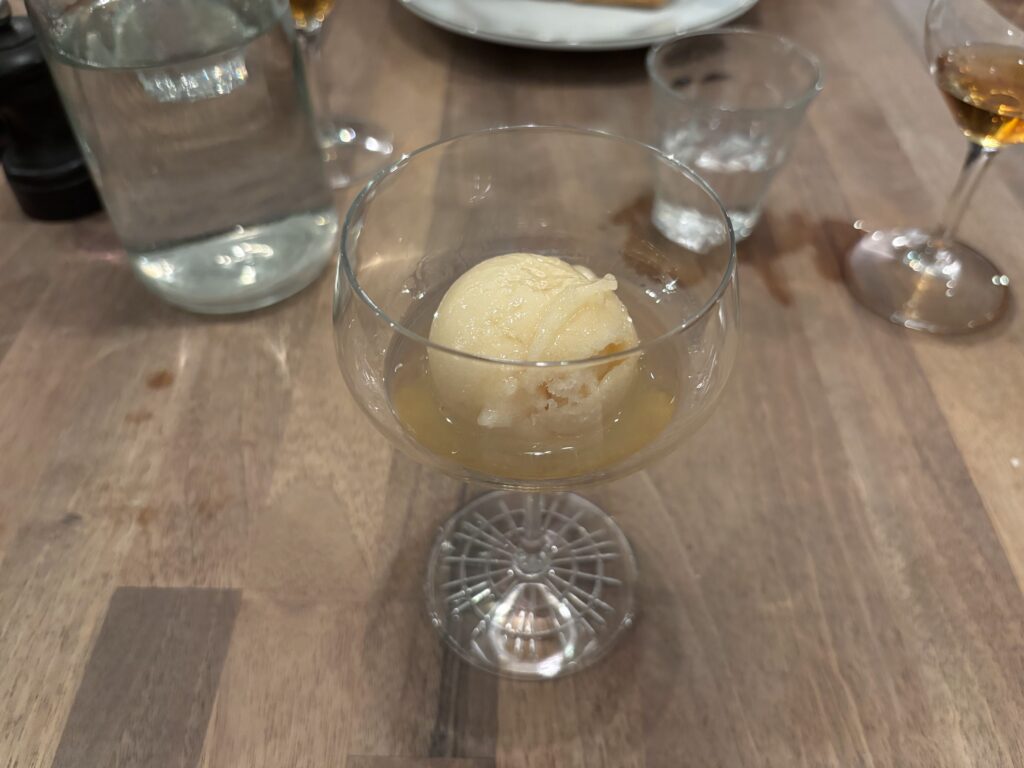
Appropriate for dining next to a shimmering, summery body of water, Lido’s selection of ice creams and sorbets always hit the spot, too. The Pedro Ximenez and raisin affair is particularly indulgent, and moody enough to feel suitable even in the depths of winter. 

Lido offers a range of packages that include swimming, eating and massages, the most popular being the ‘Swim and Lunch’ package that includes use of the pool and spa, followed by a two-course lunch. What a lovely way to spend a rest day. 

Websitelidobristol.com

AddressOakfield Pl, Clifton, Bristol BS8 2BJ


Littlefrench, Westbury Park

Ideal for indulgent escapism in butter, garlic and cream…
Bristol’s Westbury Park is the very definition of leafy, laid back suburb, all Victorian terraces, premium prams, and the chatter of folk who don’t have much place to be. If there’s not a GAIL’s somewhere, there should be.

It should come as no surprise, then, that Westbury Park boasts one of the most celebrated neighbourhood bistros in the city. Scrap that; the country. At chef Freddy Bird’s Littlefrench, the vibe is all about unpretentious, flavour-packed French country cooking and quality bottles of quaffable wine whose prices are similarly easy to swallow. Some are even sub £30, which, in today’s economy, is becoming increasingly unheard of.

Indeed, slipping into the banquette seating for a cosy, candlelit evening is one of our guiltiest midweek treats; escapism in its purest form. Lose yourself in the roast queen scallops, five of them served in the shell, anointed with an opulent sauternes butter sauce. A supplement of Sturia Oscietra caviar is an indulgence, sure, but that’s why you’re here, right?

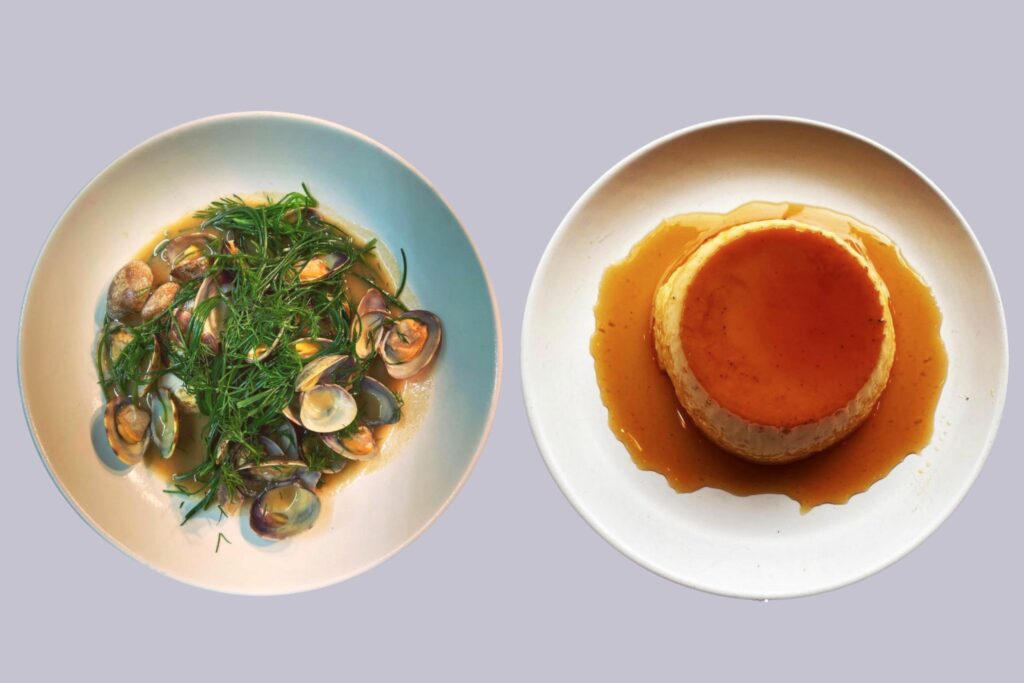
From the mains, an indulgent and elegant bowl of hake, clams and monks beard, with a rich emulsion of cider and crème fraîche sauce swirling around them, pulls together a happy collection of briny ingredients. On a more recent visit (yep, we’ve been here a few times), the whole roast partridge with bone marrow bread sauce is all tied together with a mouth-coating, caramel-like armagnac jus. Yep, your cardiologist isn’t going to thank Freddy Bird, but who gives a fuck when the food is this good.  

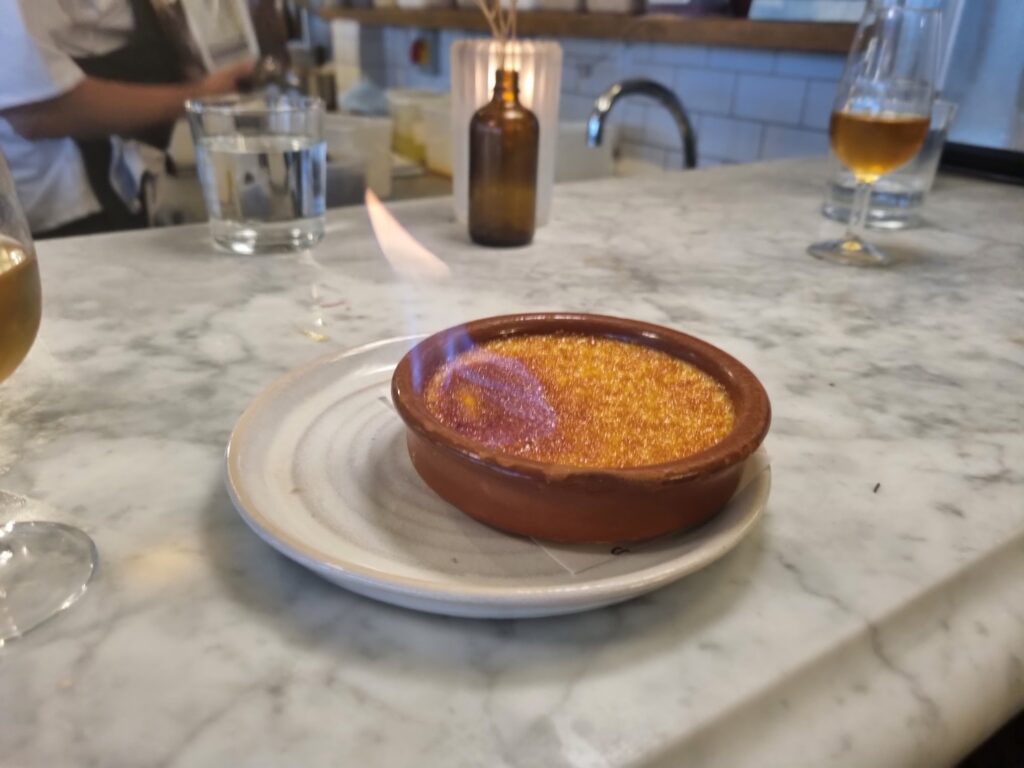
As you reel from the fat in every form and the casual swearing, don’t forget to save room for dessert. For another dependable dose of fat, Littlefrench’s extraordinarily elegant creme brulee is a sensuous, light and lovely dream. The chocolate mousse is dark and properly rich, sure, but it’s also almost cleansing in its simplicity. The fact it’s served in a puddle of cream does no harm. You might need stretching out at the end of all this, but as you stare at the chilly night sky from your prone position, you’ll feel very satisfied indeed. 

Interestingly, in 2024 the team behind Little French opened a new restaurant; the enthusiastically reviewed second act 1 York Place, a restaurant that places a keener focus on pan-European dishes and seafood.

Website: littlefrench.co.uk

Address2 North View, Westbury Park, Bristol BS6 7QB


BOX-E, Wapping Wharf

Ideal for beautifully big-hearted plates in the most intimate of dining spaces…

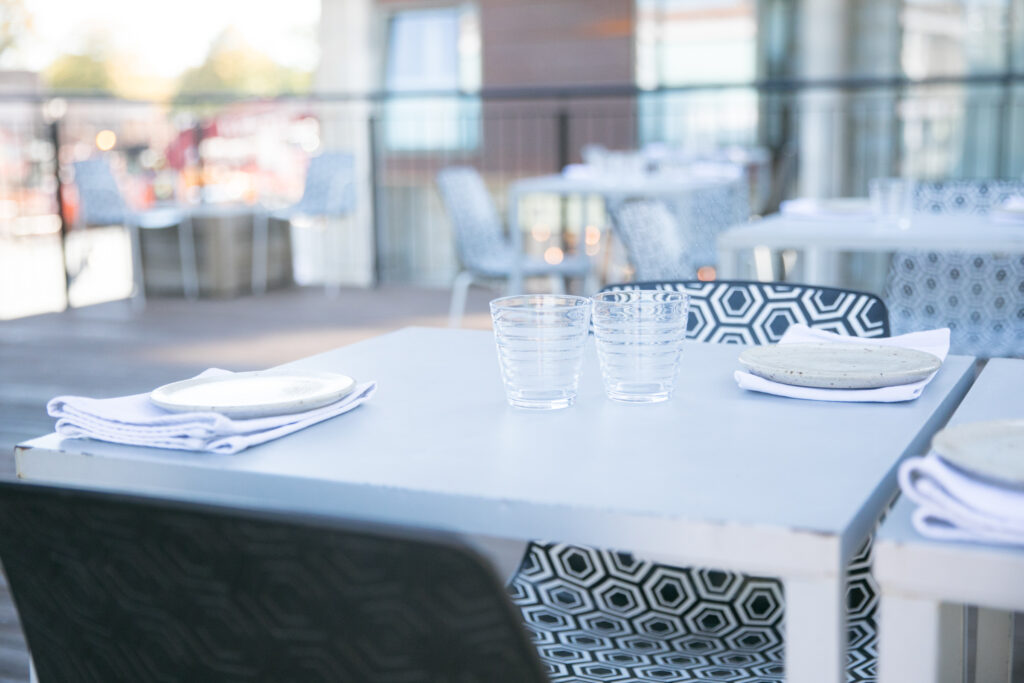
Nabbing a booking in this compact, 14-cover shipping container restaurant in Wapping Wharf certainly isn’t easy. But spare a thought for the man behind the stoves; there’s even less room out back. How he manages to coax such flavour and finesse from such a small space is a wonder. 

That man is Elliott Lidstone, a former head chef of L’Ortolan and The Empress pub in Hackney, BOX-E exudes a quiet ambition that feels quintessentially Bristolian – the minimalist, utilitarian interiors and sparse menu descriptors belying the complexity found on the plate. Sure, a dish of hake, butter beans and cauliflower may sound simple – beige, even – but really, was anything but. Decadent and lively, and with the fillet of hake cooked just under, as it should be, this was a sublime bit of fish cookery, bolstered by a caramelised cauliflower puree that brought depth to the plate.
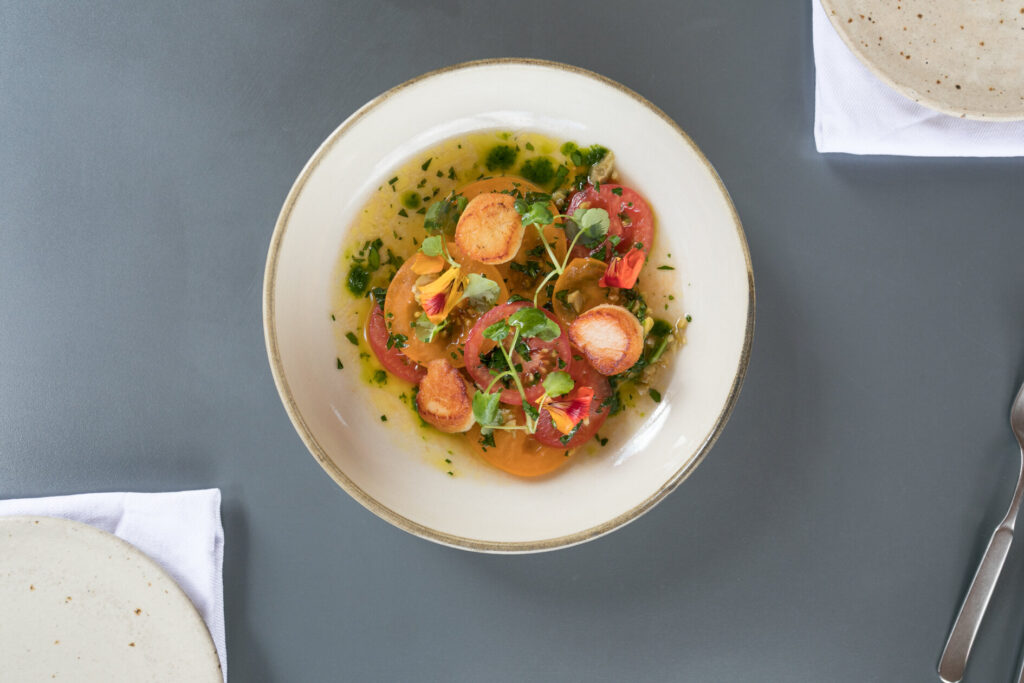
Images via @Box-E

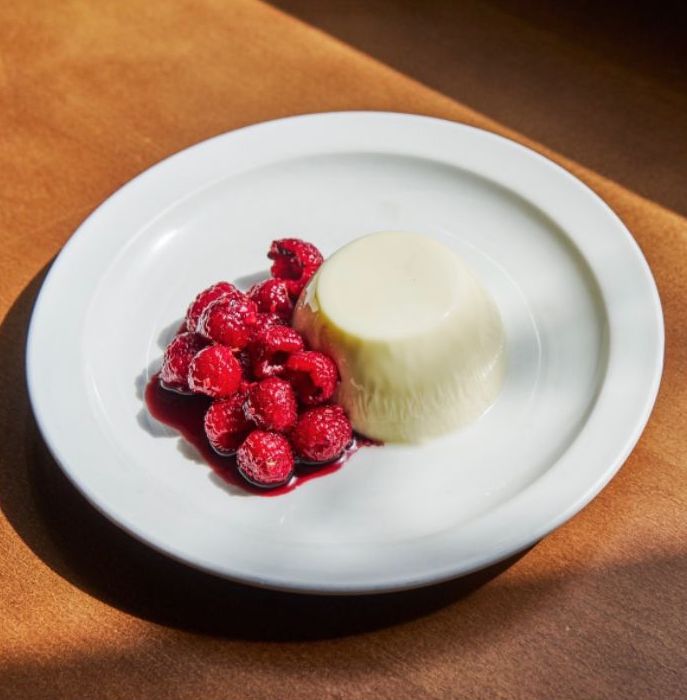
Desserts at BOX-E are simple yet satisfying, with chef Lidstone’s panna cotta always a winner. So much so, in fact, that there are often two on the menu – recently, one was centred around vanilla, the other black treacle. Order one each and you’ve got yourself some ying and yang vibes right there. Indeed, while the restaurant may not have the capacity for intricate pastry work, the desserts are still crafted with care and attention, ensuring a delightful end to your meal. 

BOX-E is more than just a restaurant; it’s a testament to the spirit of Bristol – innovative, ambitious, and unafraid to do things differently. 

Websiteboxebristol.com

AddressUnit 10 Cargo 1, Bristol BS1 6WP


Root, Wapping Wharf

Ideal for superb vegetable-led – rather than solely vegetarian – cooking in a shipping container…
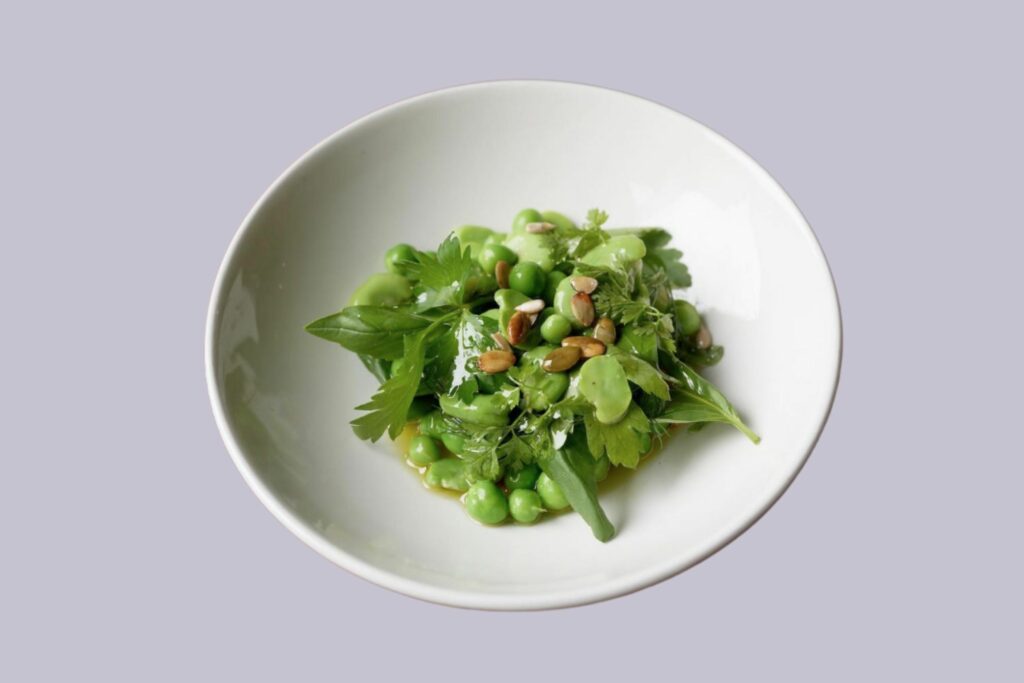
We’re sticking around in Wapping Wharf for a feast of vegetable-centric dishes next, at Root, one of the South West’s most celebrated restaurants. Root’s ethos revolves around promoting sustainable food and fostering direct trade between local producers, suppliers, and chefs. This commitment to sustainability and local sourcing is not just a marketing gimmick but a core principle that shapes the menu and wider operations, particularly their celebration of seasonal vegetables.  

Here, prettily presented plates which vibrate with the colour of fresh produce and don’t sacrifice anything on flavour that just keep coming. We particularly love their wicked way with barbecued leaves and greens; currently, a charred hispi cabbage arrives dressed in a punchy Russian dressing, showered with shards of Lyburn cheese and croutons. It’s a salad with swagger.

Perhaps even better is the hake and trout kiev, an inspired riff on that retro classic, the fish encasing a core of herbed butter that floods the plate when you cut in. Pickled fennel on the side brings the necessary crunch and acidity. From the vegetable plates, Jerusalem artichokes with quince, radicchio and hazelnut feel pitch-perfect for January – earthy, bitter and sweet in equal measure.

If the weather’s looking good (yep, we realise we’re feasting on late autumnal bits here), try to nab a seat out on the small terrace area; it boasts fantastic views of the harbourside.

Websiterootbristol.co.uk

AddressUnit 9 Cargo 1, Gaol Ferry Steps, Bristol BS1 6WP


Gambas, Wapping Wharf

Ideal for shelling, sucking and slurping your way through Spanish prawns in a variety of preparations…

Please; just one more meal in a shipping container before we leave this shimmering corner of Bristol. And so it is to Gambas, another of Wapping Wharf’s heavy-hitters.

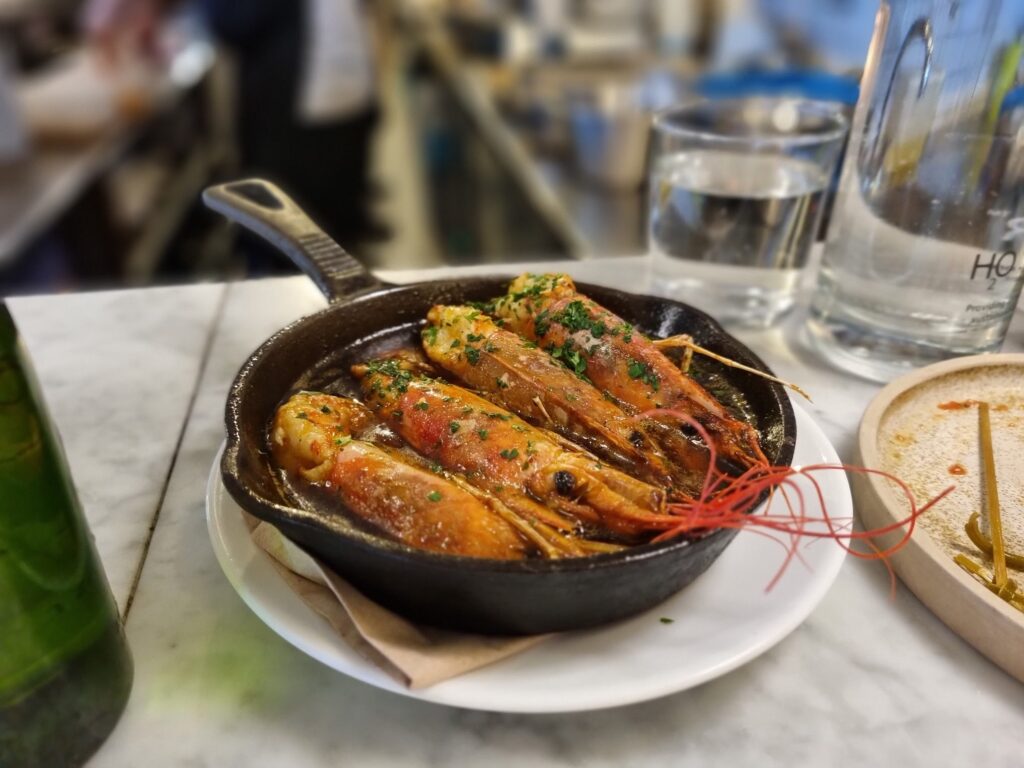
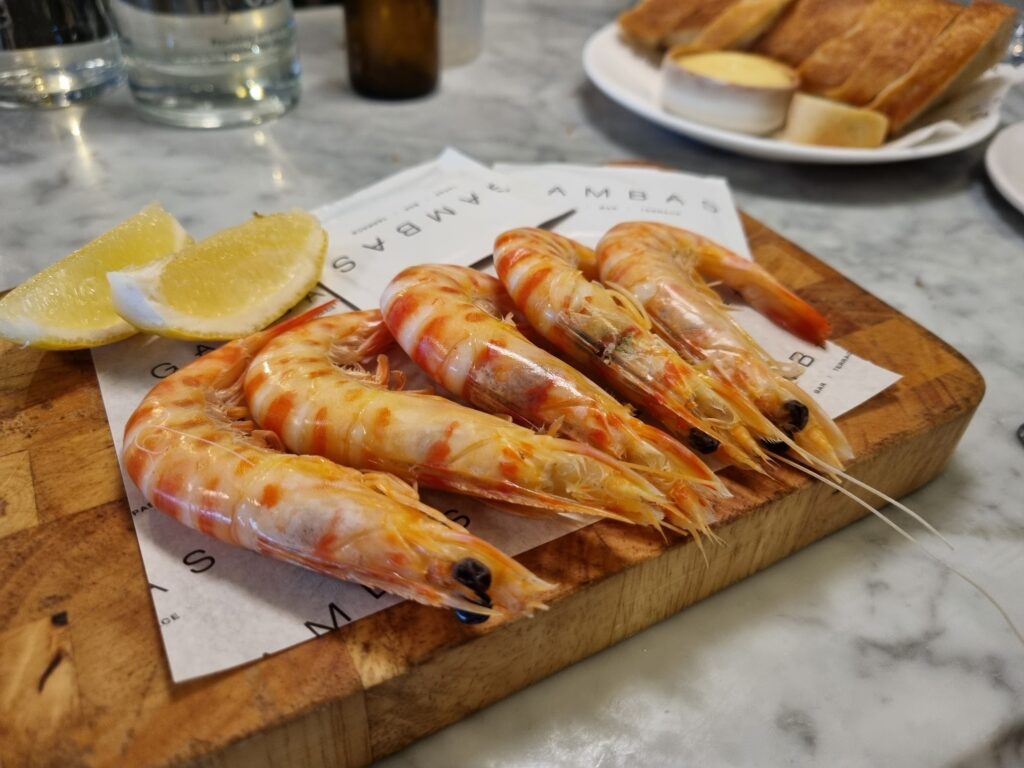
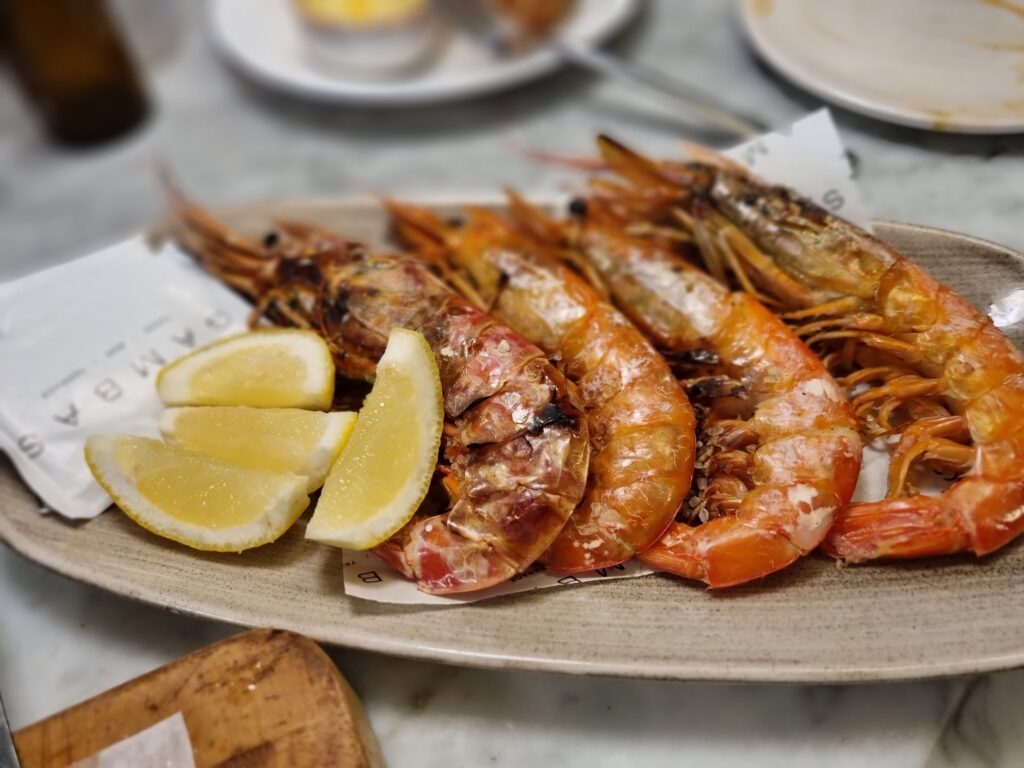
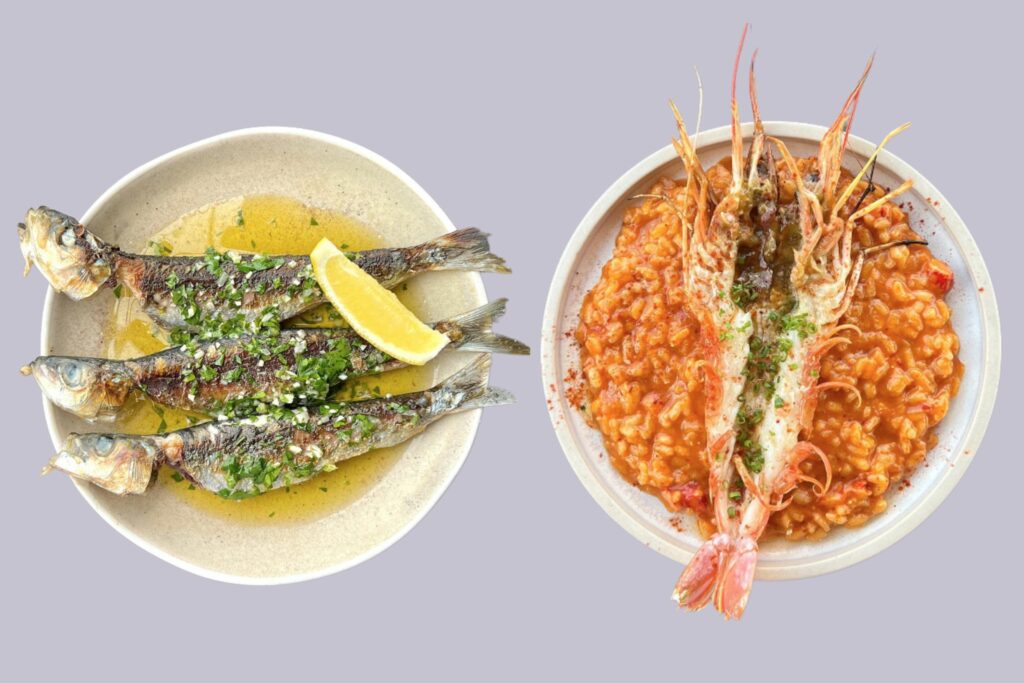
A tapas bar (well, shipping container) that puts all things prawn on a pedestal, there are a few better ways to spend an evening than here, with your sleeves rolled up and your inhibitions down, sucking the head juice out of some salty, blistered wild red prawns.

Keep that blistered, off-bitter vibe going with stunning Cornish sardines that are tossed on the plancha and served with a simple dressing of garlic, parsley and lemon.
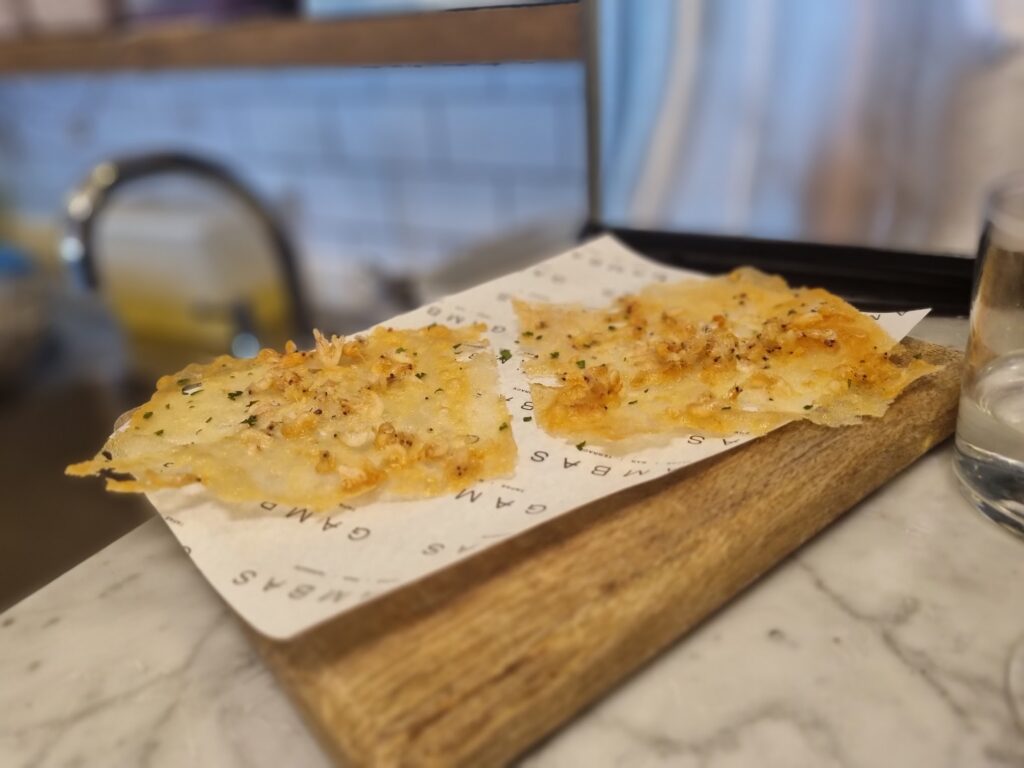
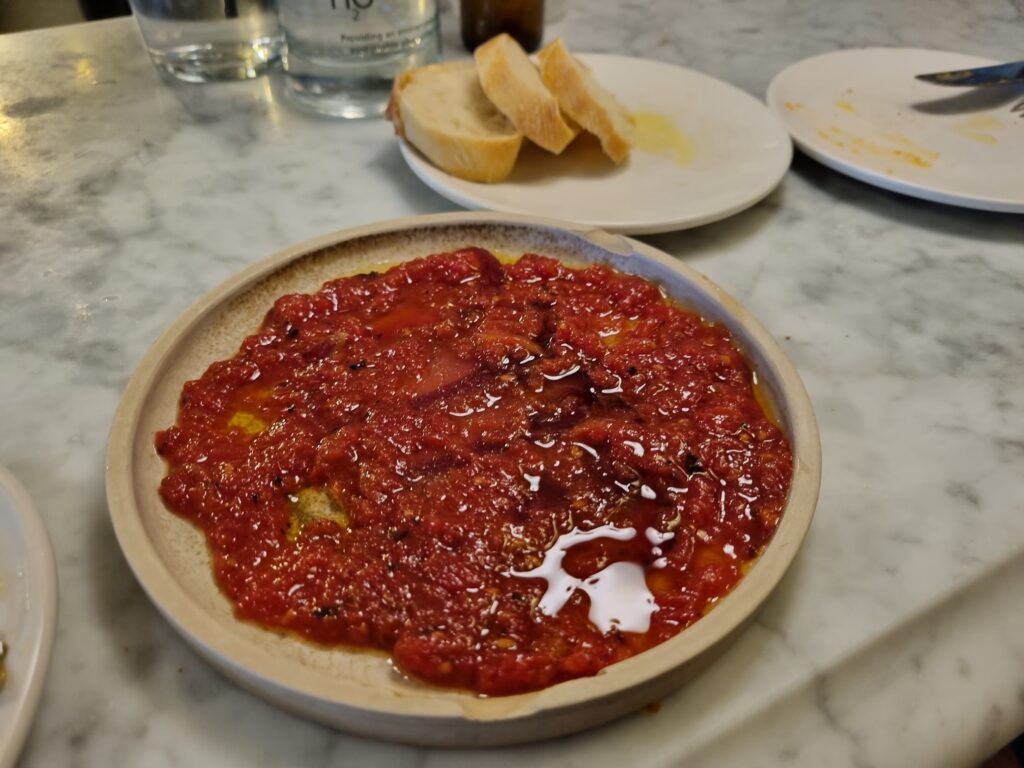
For those not in thrall to the rusty flavours of the sea, there’s still plenty to enjoy from Gambas’ De La Tierra (‘of the earth’) section of the menu, which despite its rather lofty subheader, is essentially a catalogue of tapas bar classics. The fried aubergine with molasses is exceptional. 

It’s also great to see Idiazabal – the smoky, gamey Basque soft cheese – on the menu here. It represents a fine way to finish a meal that’s been all about luxuriating in shellfish.

Websitegambasbristol.co.uk

Address : Unit 12, Cargo 2, Museum St, Bristol BS1 6ZA


Bulrush, Cotham

Ideal for trying Bristol’s most enduring Michelin-star…
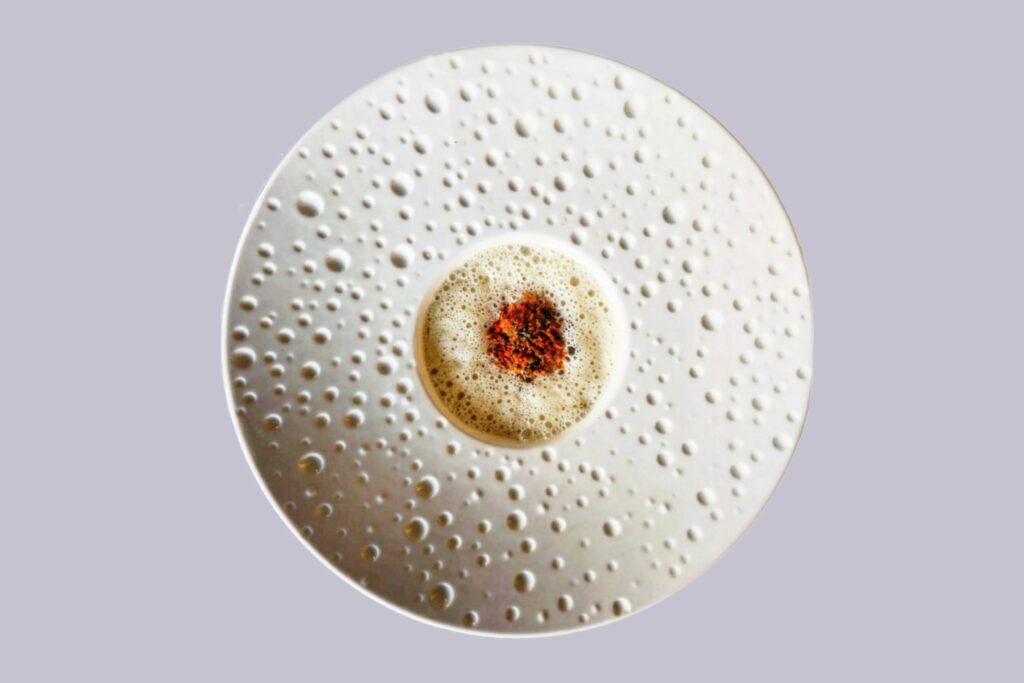
Weirdly for a city which, until recently, was decorated with several, Bristol now only boasts two Michelin stars. One of those (and certainly of of Bristol’s best restaurants) is here, at Bulrush.

The brainchild of chef George Livesey, whose natural talent and innovative approach to cooking have earned him widespread acclaim, it’s a joyous affair. His classical training with the Roux brothers and stints at L’Enclume and St John is evident in the elegant nine-course menu here (clocking in at an eminently reasonable £90, incidentally), which showcases his mastery of precision technique and refined, defined flavour. 

The restaurant’s name, Bulrush, is intriguingly derived from a type of marsh plant, Scirpus lacustris, traditionally used for making mats and chair seats. This reflects the restaurant’s ethos of simplicity, authenticity, and a reverence for nature, an outlook highlighted further still in the whitewashed brick dining room. 

There’s no bells and whistles here, that’s for certain, with all eyes falling on the plate and its celebration of just one or two bang-in-season ingredients. That’s not to say that flavour combinations here aren’t innovative and, occasionally, thought-provoking; an amuse bouche of crab paired with chamomile-adjacent pineappleweed is a wonderful case in point. Ditto the current headliner course of duck breast cooked to a perfect blushing pink cuisson and sitting beside a fermented peach, giving the most beautiful balance is umami richness and complex acidity.

The drinks pairing is just as carefully composed, and well worth the £60 for a raft of interesting, intricate primarily new world offerings. For us, Bulrush is the best straightforwardly ‘fine’ dining experience in Bristol, and one we keep going back to time and time again.

Websitebulrushrestaurant.co.uk

Address21 Cotham Rd S, Cotham, Bristol BS6 5TZ


Read8 IDEAL steps to the perfect steak


Noah’s, Spike Island

Ideal for some of the country’s best fish and chips, enjoyed next to a shimmering body of water…
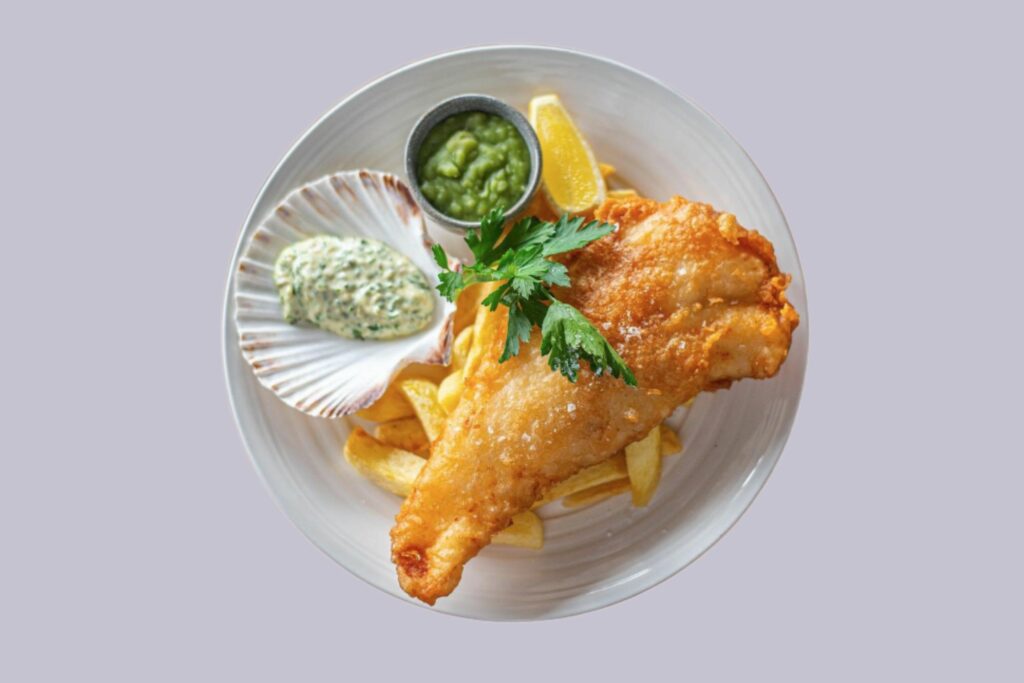
This new-ish, family-run establishment, sitting by the Cumberland Basin and enjoying fantastic views of the water, is the brainchild (not their actual child – he’s the eponymous Noah) of dynamic husband-and-wife duo Dan and Joie Rosser. Their passion for showcasing the best of British seafood is palpable in every dish they serve, whether it’s the exemplary fish and chips that is Noah’s signature or the Cornish lemon sole, grilled whole on the bone.

Either way, rest assured that this is as fresh as fish comes, sourced from day boats from Devon and Cornwall and cooked sympathetically and with maximum respect. All you need now is a bowl of fluffy, thick cut chips and a beer or two. Aaaah; I think we might just stay here awhile.

In February 2026, Noah’s was named runner-up for Restaurant of the Year at the National Fish and Chip Awards, narrowly missing out to Trenchers of Whitby and improving on a third-place finish in 2024. Coming for the crown next time, presumably.

Websitenoahsbristol.co.uk

Address1 Brunel Lock Rd, Bristol BS1 6XS


Sonny Stores, Southville

Ideal for an expertly conceived ‘Britalian’ dining experience…
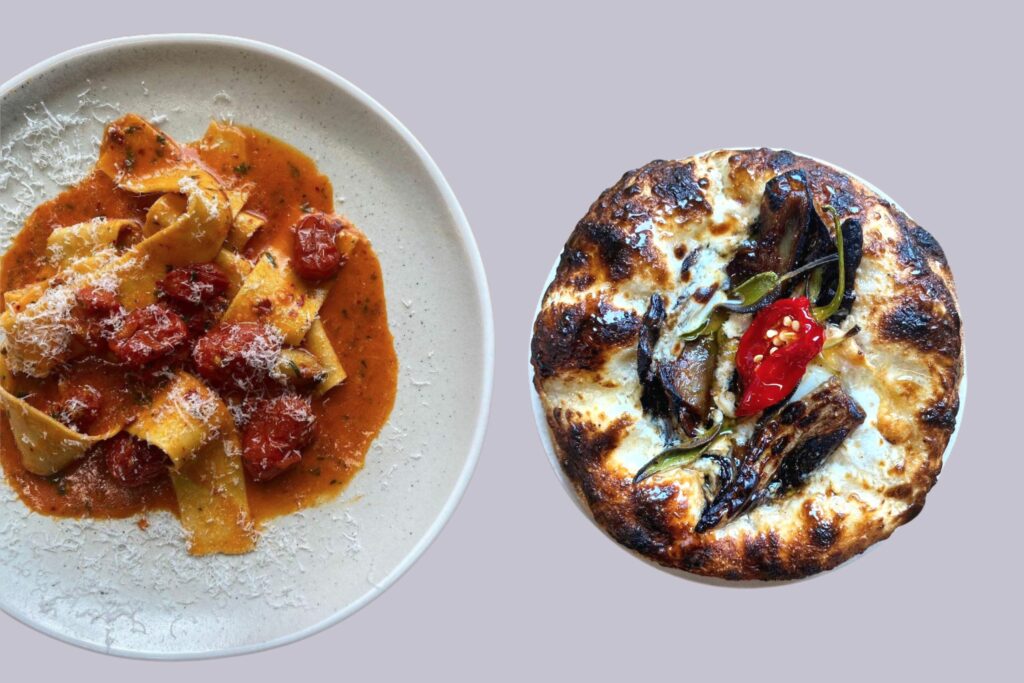
Another family-run operation named after the co-owners’ son; Sonny Stores.

Here, River Cafe alumnus Pegs Quinn and his wife Mary Glynn run one of the city’s most cherished restaurants, with a broadly ‘Britalian’ menu showcasing fantastic local produce cooked with reverence in a tightly-packed, always busy dining room.

Though the building itself may be intimate, it houses a genuinely excellent dining experience. Not perhaps as pasta heavy as some of the other great Italian restaurants in Bristol, here the vibe is fresh, light and largely vegetable-led. All that said, perhaps our favourite dish in recent memory was an offal-based pasta dish; the superlative chicken liver ragu served over freshly made, perfectly al dente pappardelle and sitting under wafts of 24 month aged parmesan. What a gently funky, immensely satisfying dish. 

Vegetarians will eat very well here, though, with the farinata (chickpea pancake) and charred friggitelli peppers particularly good, and the perfect accompaniment to a cold one, just as it’s done in Bel Paese. 

The pizzettas are quite rightly the stuff of legend, too. If the taleggio with burnt onion, sage and hot honey, and a cheeky chilli bedded into the cheese, is on the menu, order it. 

End with an affogato, just as we’re going to do (here the espresso is poured over creamy stracciatella ice cream), and you’ve got yourself one of the most gratifying meals in Bristol. So gratifying, in fact, that we might just need a minute…

Websitesonnystores.com

Address47 Raleigh Rd, Southville, Bristol BS3 1QS


Bravas, Redland

Ideal for late night tapas…
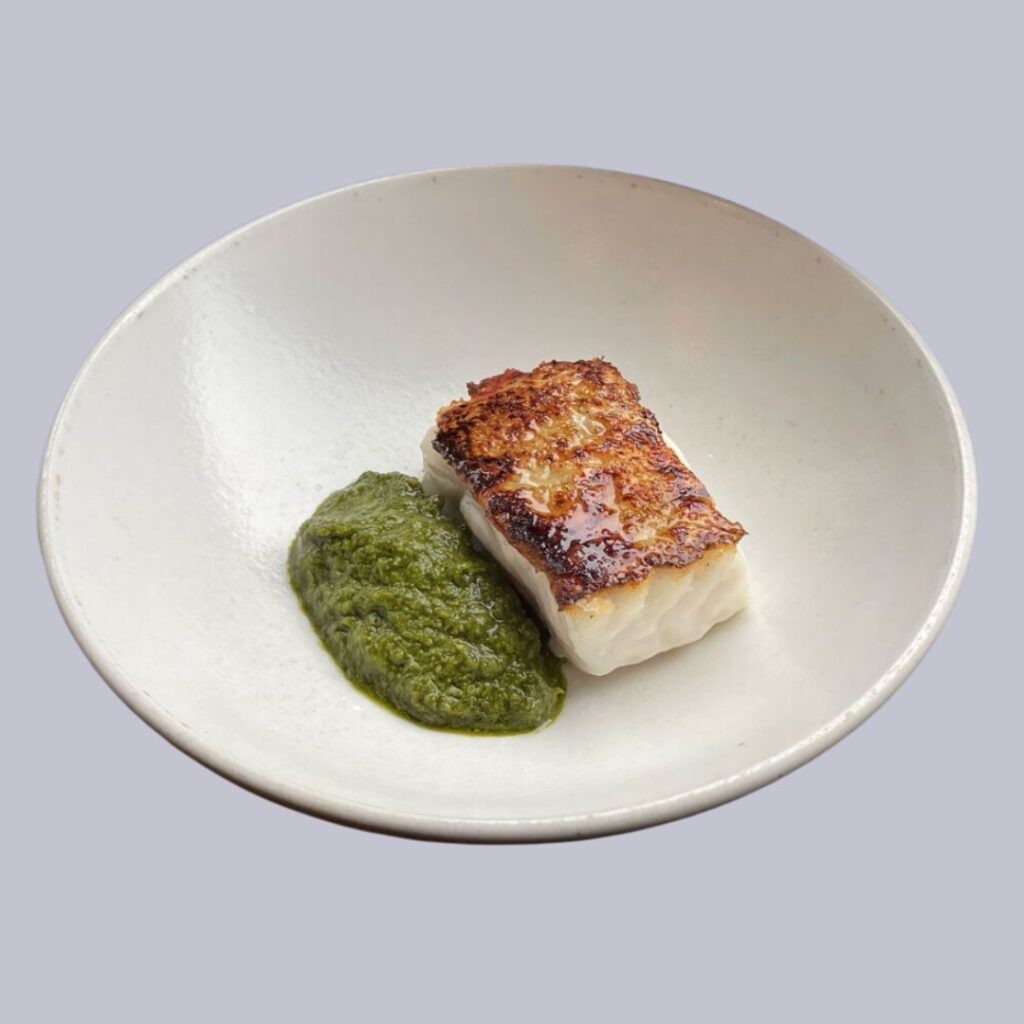
Authenticity is the name of the game at this Redland institution, where the owners cite regular staff trips to Spain as the inspiration for their steadfast takes on classic tapas dishes. 

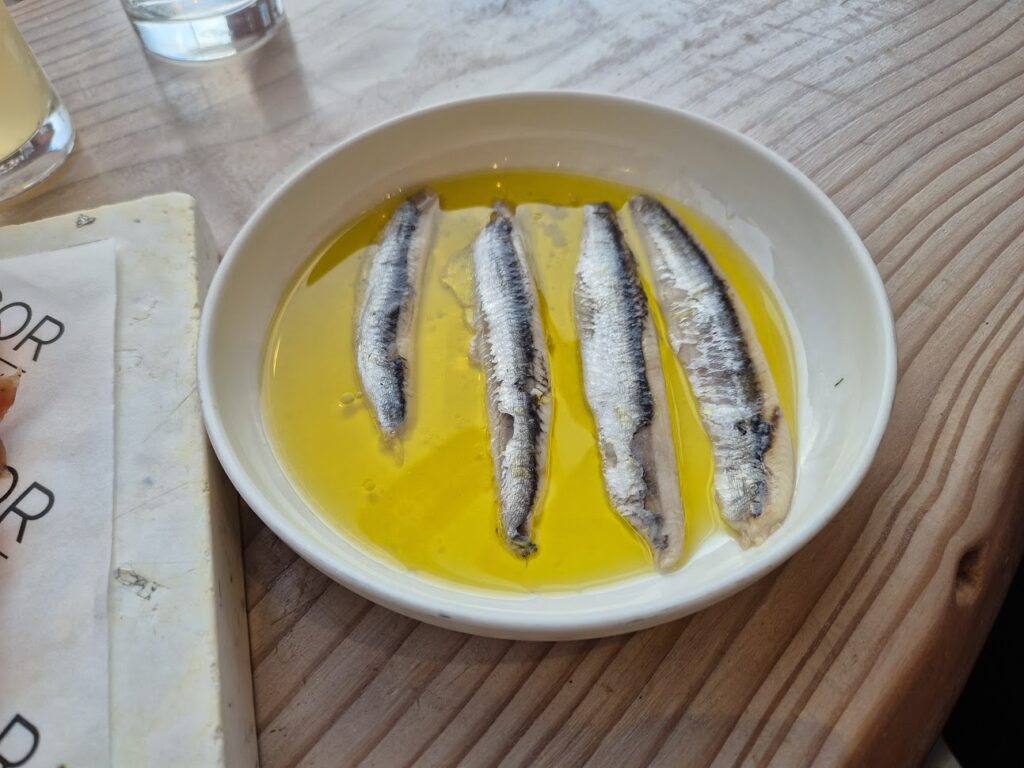
If you’re hoping to simply swan in off the street like you were on a merry bar crawl in Seville, be warned; Bravas is reliably packed like Ortiz sardines pretty much every evening, except on Sundays, when it’s closed to recover from the week’s hangover. Fortunately, the place opens at midday and runs until midnight without pause for the remaining six days, so there’s always room if you arrive at a traditionally ‘off peak’ hour (4:47pm, if you’re asking). You can, of course, book ahead, but that rather kills the romance, don’t you think?

Anyway, the wait is richly rewarded, with highlights like cod bronzed from the plancha and served with a properly bracing mojo verde, or a really lovely little cazuela of chorizo braised in cider, the juices, as always, the best part. The patatas bravas from which the restaurant takes its names are a faithful rendition of a classic, too. A signature sherry negroni or two seals the deal, and has us still propping up the bar at close (sorry guys!).

Website: bravas.co.uk

Address: 7 Cotham Hill, Redland, Bristol BS6 6LD 


The Saigon Kitchen, Redland

Ideal for soul-nourishing plates of Northern Vietnamese food…
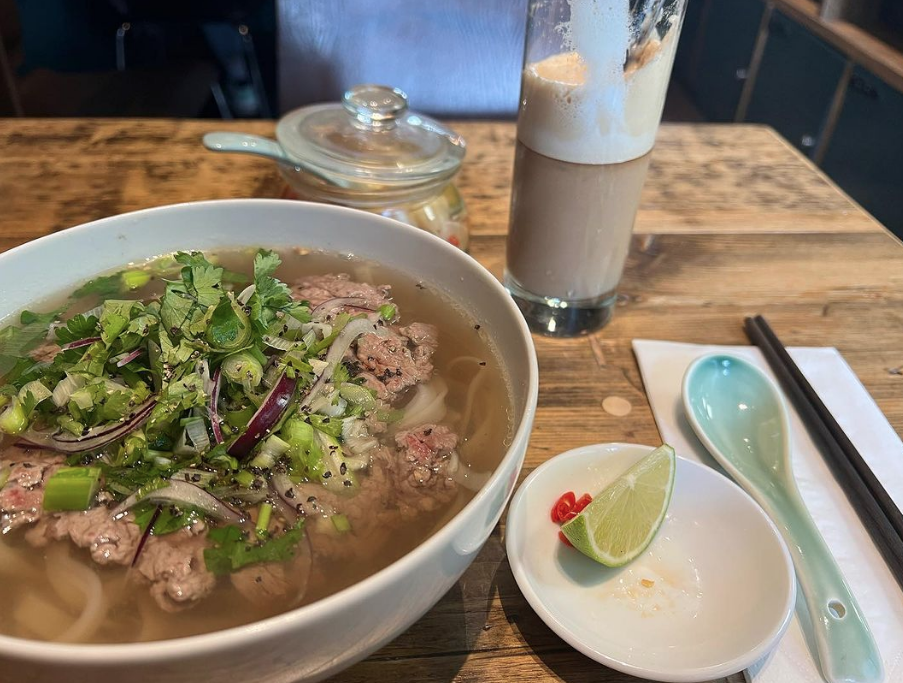
Image via @thesaigonkitchen_in_bristol

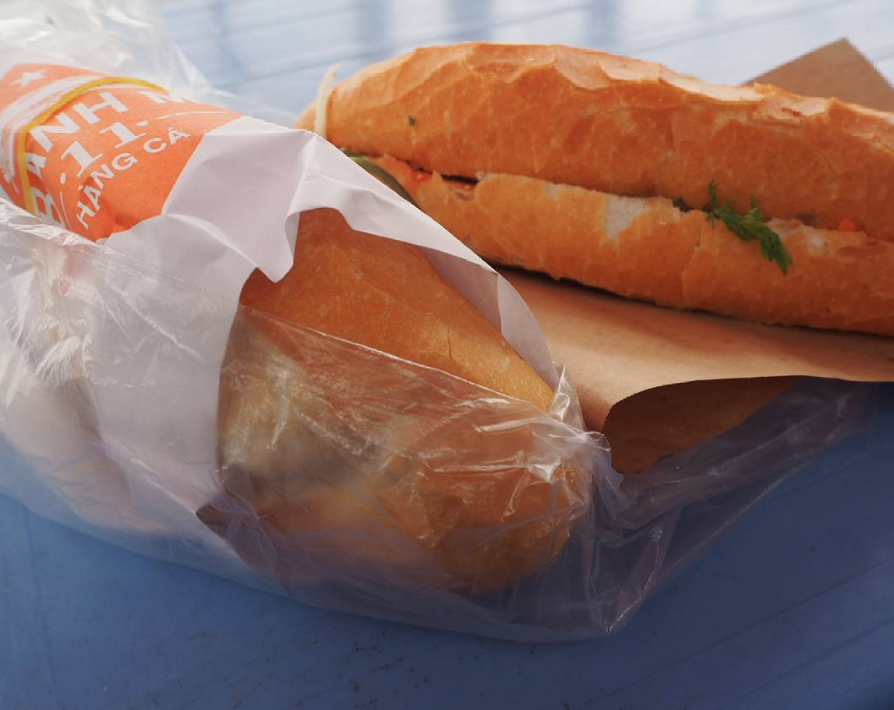
Vietnamese food feels criminally underrepresented in Bristol, with many lovers of pho, banh mi and the rest often heading out of town and to the acclaimed Noya’s Kitchen in Bath for their fix of the good stuff.

The Saigon Kitchen is changing all that. Chef Trung, originally from a small fishing village close to Halong Bay in Vietnam’s north, is the man at the stoves here, delivering time-honoured, broadly Northern Vietnamese recipes to the Redland faithful. 

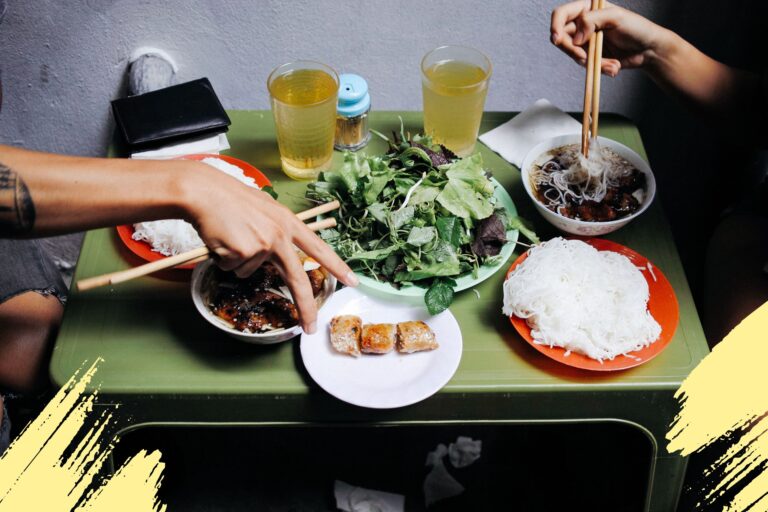
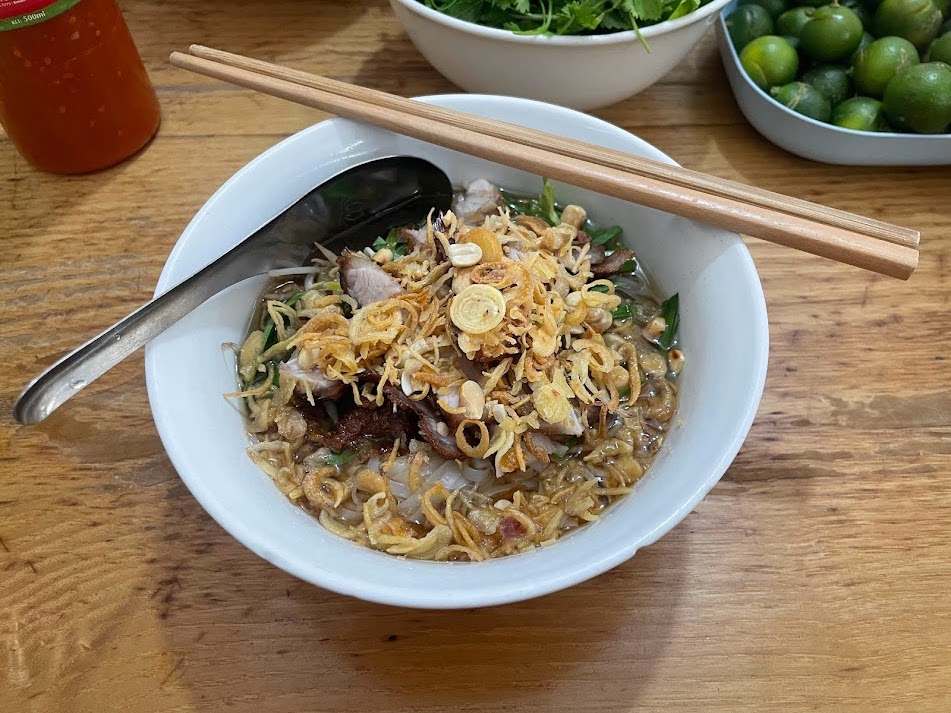
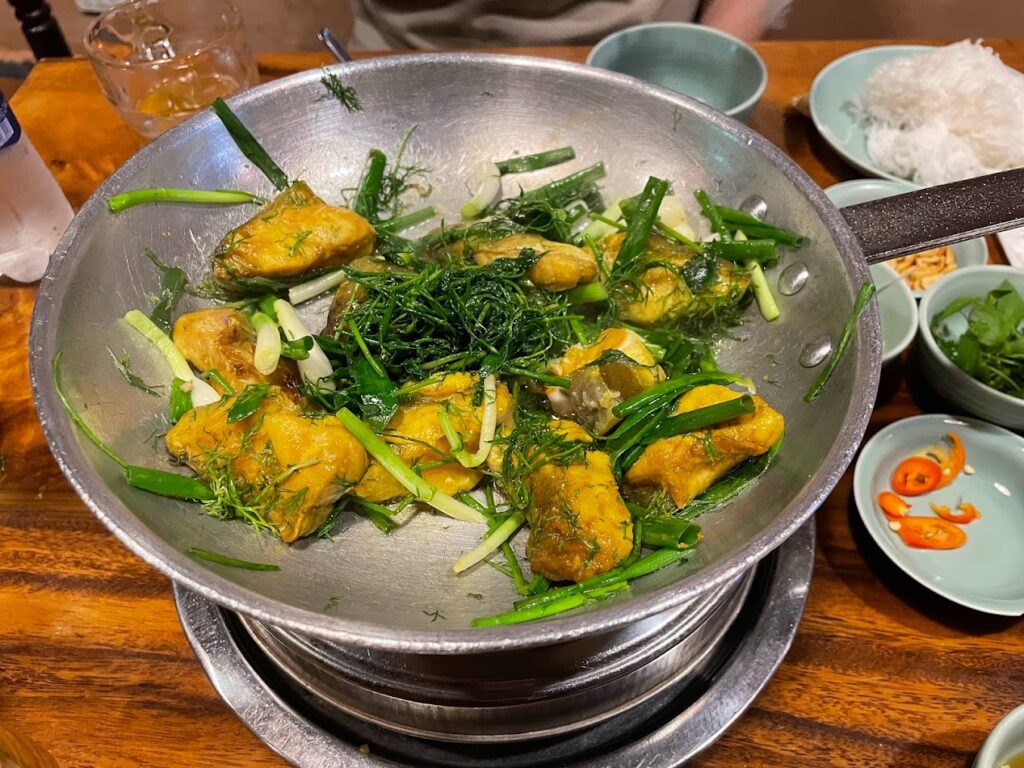
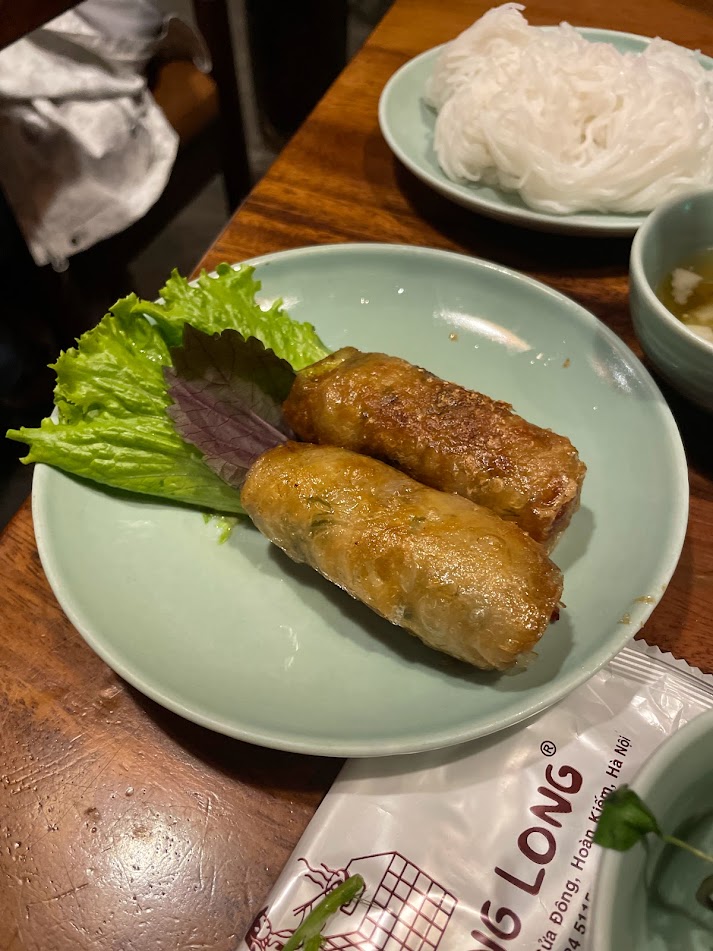
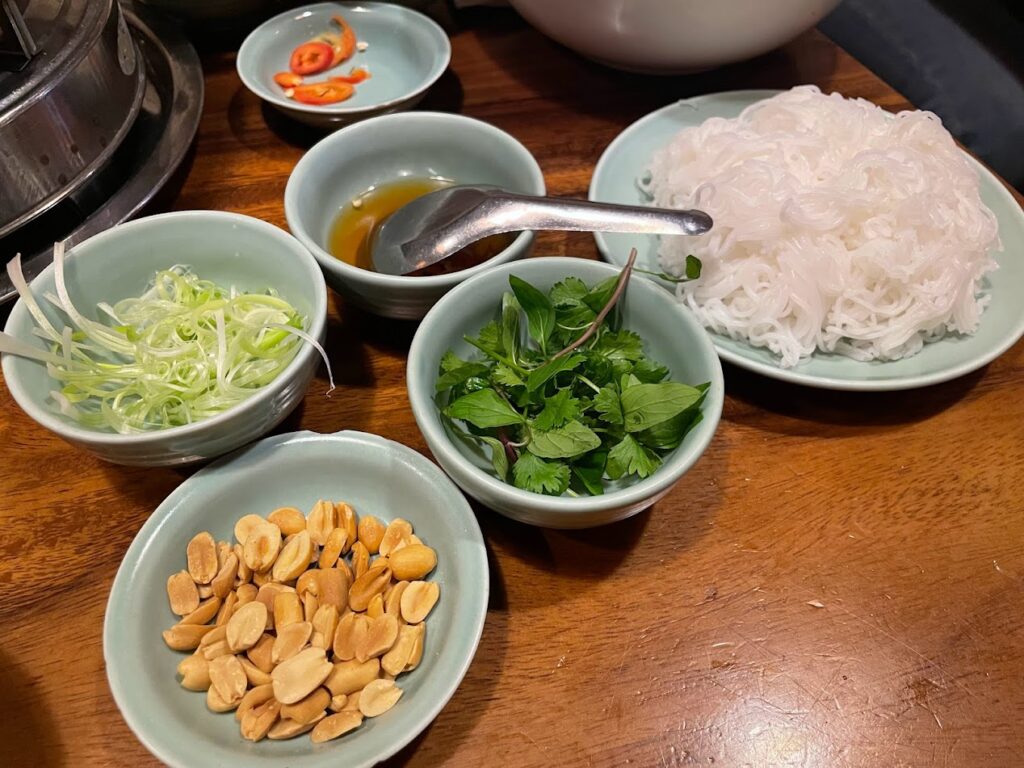
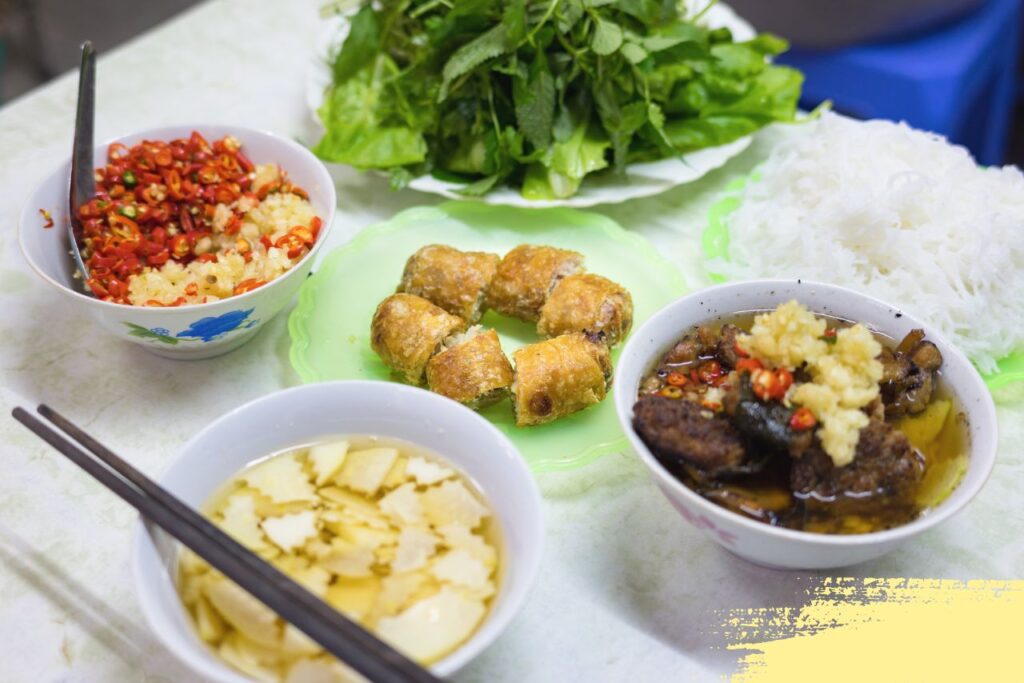
Indeed, despite the restaurant’s name, it’s Hanoi’s streetfood that is most well represented here, with a very welcome, very delicious appearance of the iconic cha ca la vong a menu highlight. Here, chunks of white fish are marinated in galangal and turmeric before being fried in a tangle of spring onions and dill, the marinade turning the oil a delicious shade of brass. Enjoy with fresh rice noodles and heaps of herbs for one of Hanoi’s most lauded bites. The version here is superb.

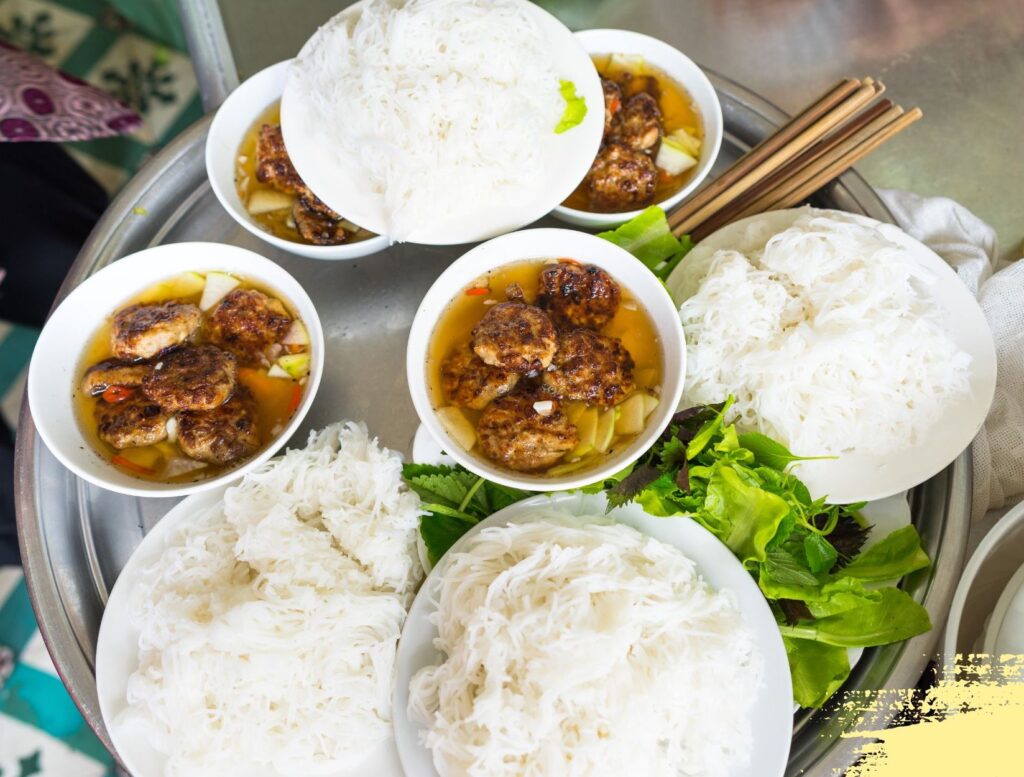
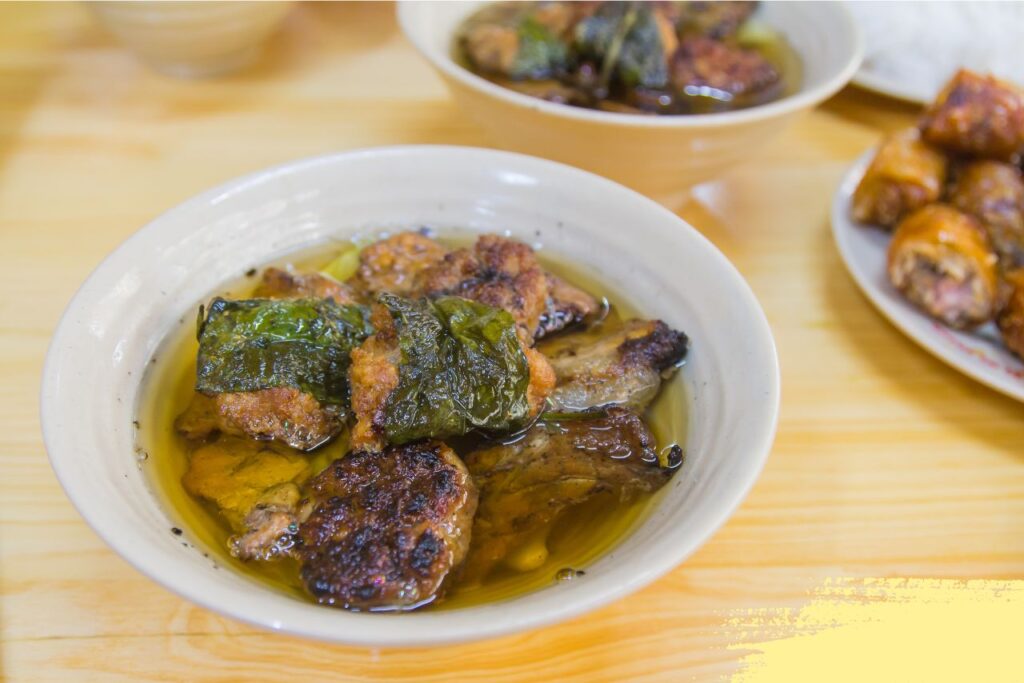
Of course, there’s pho too, here the savoury, sparse Northern version that has the miraculous ability of dusting off even the most brutal of Walking Whirlwind hangovers. Even better is the bun cha, the essential Hanoi lunch dish of beautifully sweet and caramelised barbecued pork patties and slices of belly, fresh rice noodles and herbs, all brought together with a sweet and sour fish sauce dressing. Banging.

If it’s a hair of the dog kind of situation (not sure why we’re suddenly assuming it is), then the Saigon Kitchen is open from midday on Fridays, Saturdays and Sundays, with bottles of Saigon and Hanoi beer (the former trumps the latter) available for £6.

Website: thesaigonkitchen.co.uk

Address: 25 Zetland Rd, Redland, Bristol BS6 7AH 


Marmo, Old City

Ideal for Italian small plates and interesting wines (hang on, haven’t we already said that? Bristol is that kind of place)…
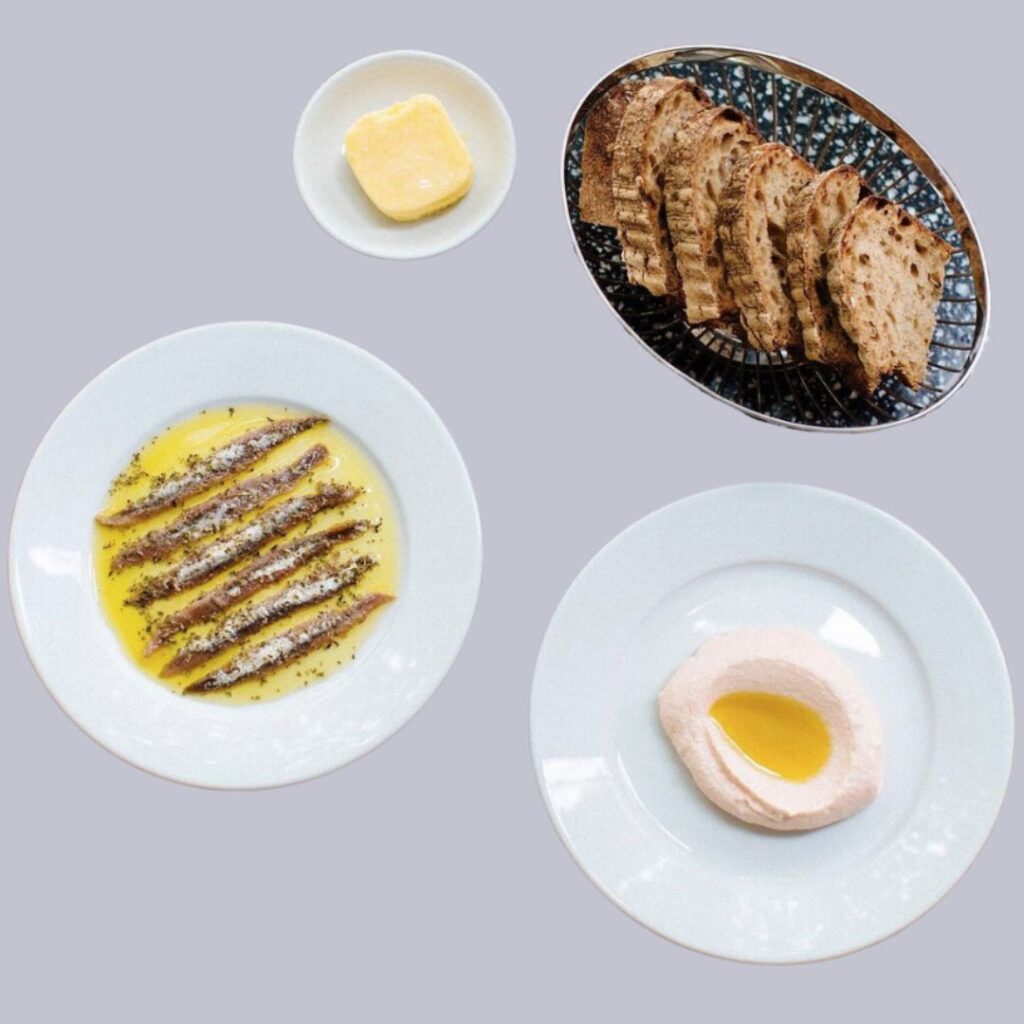
Back in the older part of the city, close to the Hippodrome Theatre, Marmo is a hip (do hip people say ‘hip’?) osteria-cum-wine-bar that has quickly become a favourite among locals and national restaurant reviewers alike.

The kitchen, led by Cosmo Sterck, focuses on a concise seasonal menu of Italian dishes that are both flavourful and beautifully presented. The wine selection, curated by Lily Sterck, has some interesting, sometimes exclusive drops, with several available by the glass. 

Whilst Jay Rayner was certainly right to call Marmo ‘an absolute corker’ (not a comment on their inept opening of those interesting drops, we hope), you might need a second opinion. Find it in our roundup of Bristol’s best Italian restaurants, if the mood takes you.

Website: marmo.restaurant

Address: 31 Baldwin St, Bristol BS1 1RG


Caribbean Croft, Stokes Croft

Ideal for serious Jamaican cooking and a rum list that’ll make your head spin…

Sitting pretty at the livelier end of Stokes Croft, Caribbean Croft has been doing things its own way since 2017. Every dish here comes from Ms Cat’s recipe book – family secrets passed down through generations that you won’t find anywhere else in Bristol. And yes, we have been coming here so much lately that we’re now on first name terms with the owner…

The curry goat is exceptional – tender meat that’s had hours on the stove, in a sauce that’s more about warmth and depth than raw heat. Still, that chilli heat does undulate, bringing about a gentle sweat on the brow rather than making your actual hair follicles hurt. A plate of peppered Appleton coconut steak shows similar patience in the kitchen, the meat given time to properly take on the rum and coconut milk it’s cooked in. The gravy alone is worth the admission fee (there’s isn’t one, and we don’t know why we said that).

For smaller appetites, the saltfish fritters are spot on – crisp, light, and lifted by red onion and scotch bonnet. Follow those with ackee and saltfish, Jamaica’s national dish done proper here with seasoned callaloo and green banana on the side.

What sets Caribbean Croft apart, though, is that rum collection. We’re talking over 100 bottles, ranging from easy-sipping standards to serious aged stuff that climbs past £40 a shot. The bar team knows their stuff – let them guide you through it. Their signature Caribbean Croft cocktail blends three different rums with grapefruit and cranberry, while the Guinness punch is a proper taste of Jamaica.

They’re open late (11pm most nights), but the kitchen closes at 9:30pm except Sundays when everything winds down at 7pm. Book ahead for dinner – this place fills up fast, especially on weekends when they open from noon.

Website: caribbeancroft.co.uk

Address: 30 Stokes Croft, St Paul’s, Bristol BS1 3QD


COR, Bedminster

Ideal for attentive service and plates of Mediterranean love and lightness…

We’re massive fans of Bristol’s premier prawn purveyors over at Gambas in Wapping Wharf, as we’ve made clear in this article already. So, when we heard that Mark Chapman, a man with a significant tenure as Gambas executive chef under his belt, and wife Karen had opened COR in Bemmy in late 2022, our interest wasn’t just piqued; it was aroused.

To say that COR found its feet fast would be an understatement. It was recognised by the Michelin Guide with a Bib Gourmand only a few months after opening, the red book rightly remarking on the restaurant’s ‘contagious positivity’. This bright, breezy outlook is found both in the room and on the plate, with tender, perceptive service a hallmark here, and dishes that represent something of a love letter to the Mediterranean, seen through a British lens and delivered with flair and creativity. 
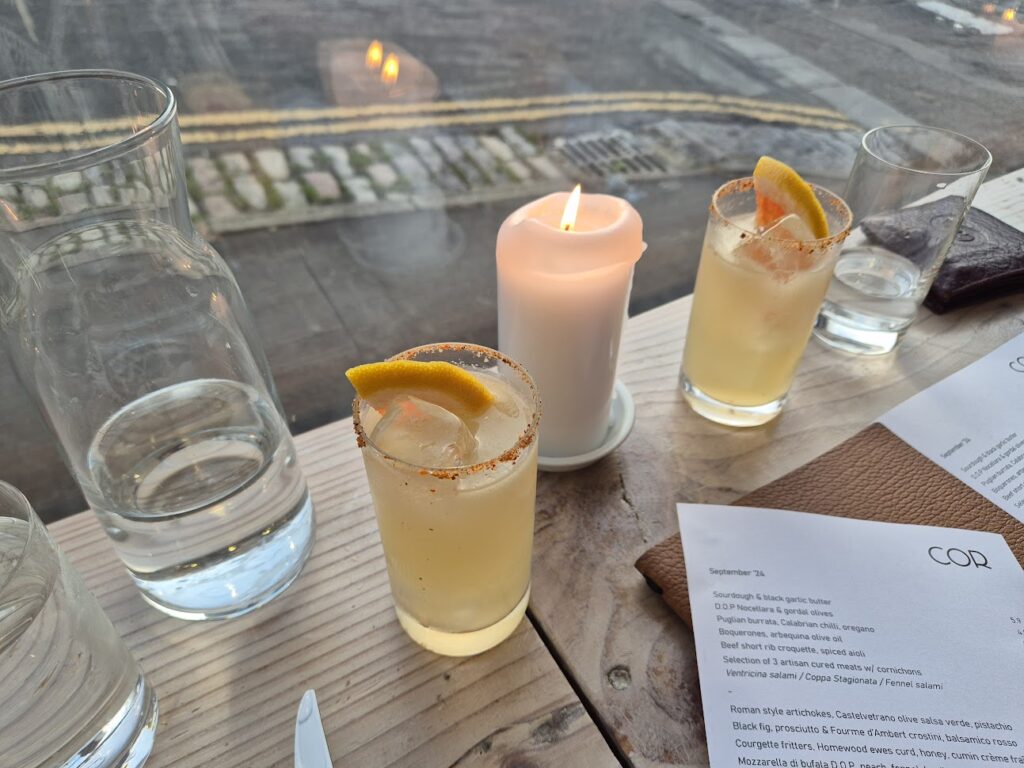
The seasonal canelé is a signature, and a lovely, anchoring way of checking in with where Bristol produce is currently at. Right now, that burnished, striated pastry cylinder has been filled with whipped goat’s cheese and wild thyme. It sits in a pool of vivid magenta-hued beetroot, and it’s one perfectly poised mouthful.

You could order one of these, a plate of Wye Valley asparagus with lemon butter sauce, and some Roman-style artichokes, and be very happy indeed, luxuriating in just how perfectly Spring-like and seasonal your order is, but that would be to miss out on the show stopping larger plates.

The Iberico pork presa blushes pink in a way that would scare your ma but eats beautifully, with its accompanying panzanella salad of Isle of Wight tomatoes and marinated anchovies. A little quince jam sends everything on its way and into the arms of the waiting sourdough, no doubt smeared with COR’s amazing black garlic butter if you’ve got any sense.

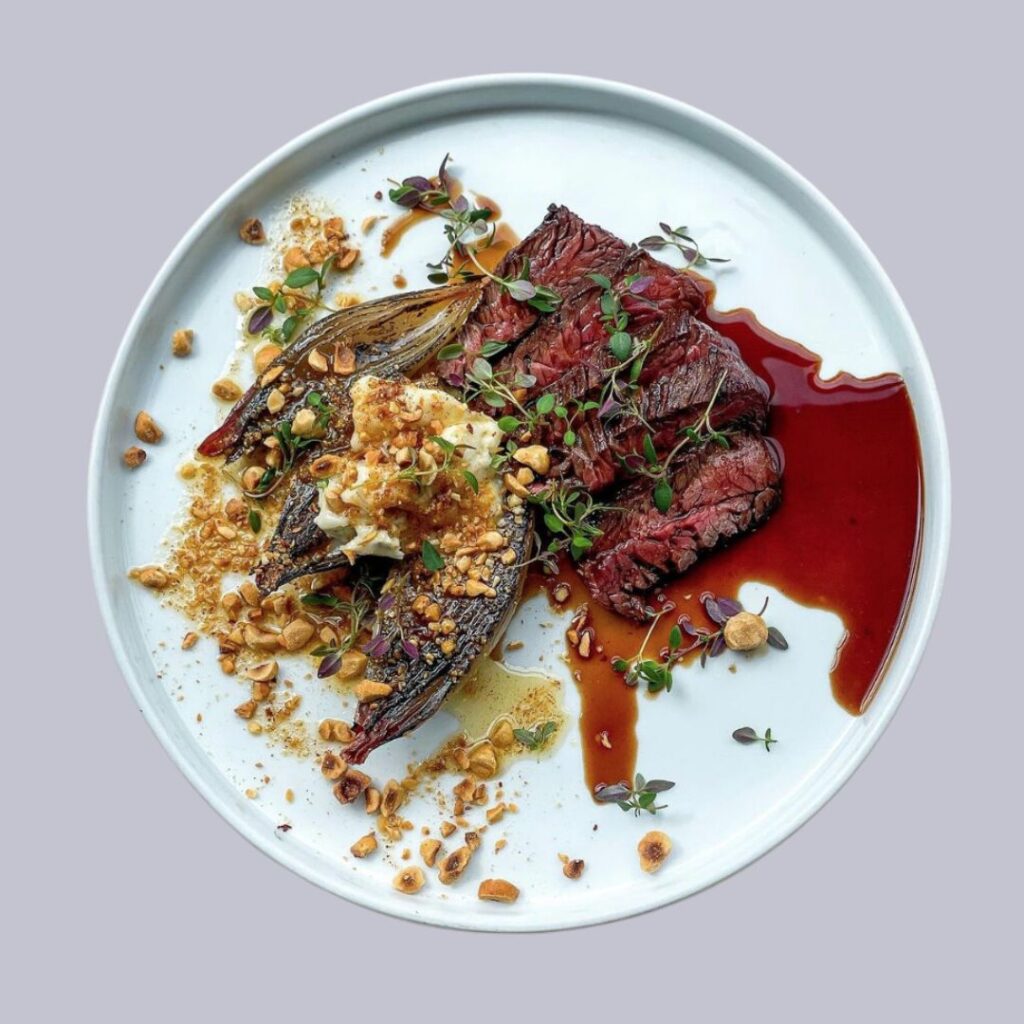
Another firm favourite on a recent visit was the Hereford beef onglet with burnt shallot, hazelnut beurre noisette, gorgonzola and jus, the enjoyably chewy steak revealing its rich, brooding flavour more with every bite.

Pasta is done superbly here too, unsurprisingly. A dish of tagliolini with Dorset clams, bottarga with calabrian chilli had my dining partner positively cooing, its drifts of cured fish liver adding umami and funk in all the right places.
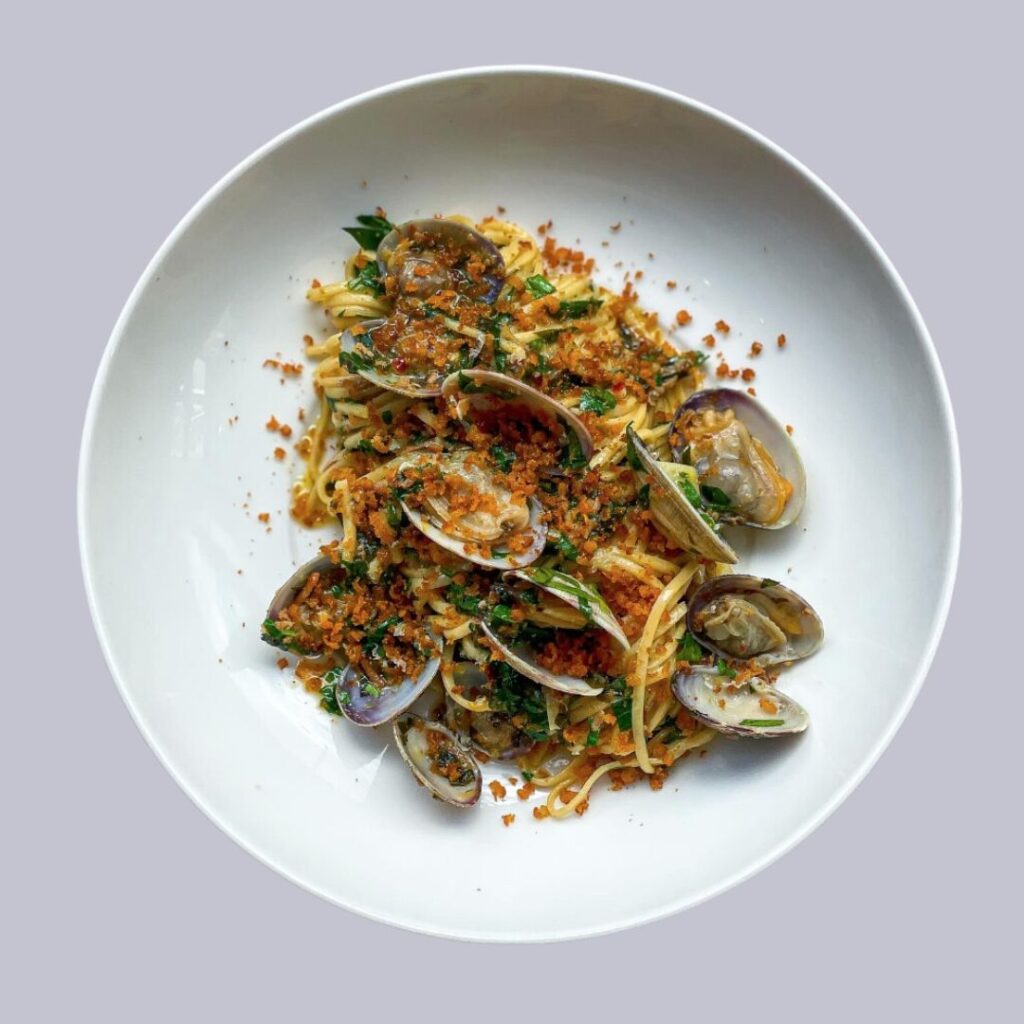
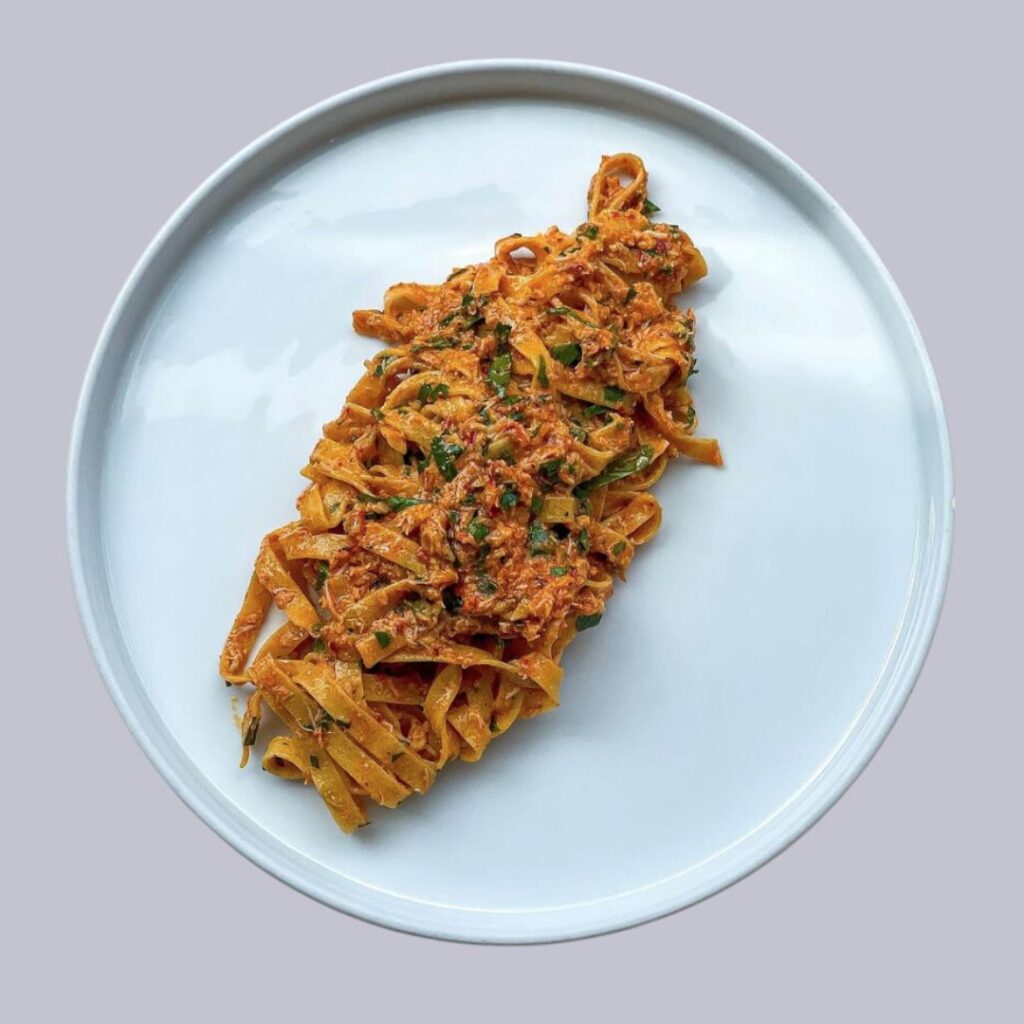
Yep, COR is a place where the finer details have been taken care of, where the cooking is truly out of the top drawer, but the vibe remains refreshingly laid back and casual, which is exactly what you want from a neighbourhood restaurant, don’t you think? Not just one of the 23 here, COR is perhaps our very favourite restaurant in Bristol. 

Website:  correstaurant.com 

Address: 81 North St, Bedminster, Bristol BS3 1ES


RAGU, Wapping Wharf

Ideal for exceptional Italian regional cooking in the most intimate of settings…

Mark and Karen Chapman’s second Bristol venture (their first being that there COR from just above) has fast become one of the city’s most celebrated restaurants since opening in April 2025. Operating from a single shipping container at Wapping Wharf (just. one. more. please.), RAGU represents a love letter to Italian cooking that’s earned national praise from the likes of Grace Dent, who declared it her “new favourite restaurant of 2025”.

The compact space features just six tables plus bar seating with direct views of the open kitchen, where executive chef Vyck Colsell works her magic. The container setting might sound restrictive, but the energy is palpable, the buzz intimate and exciting.

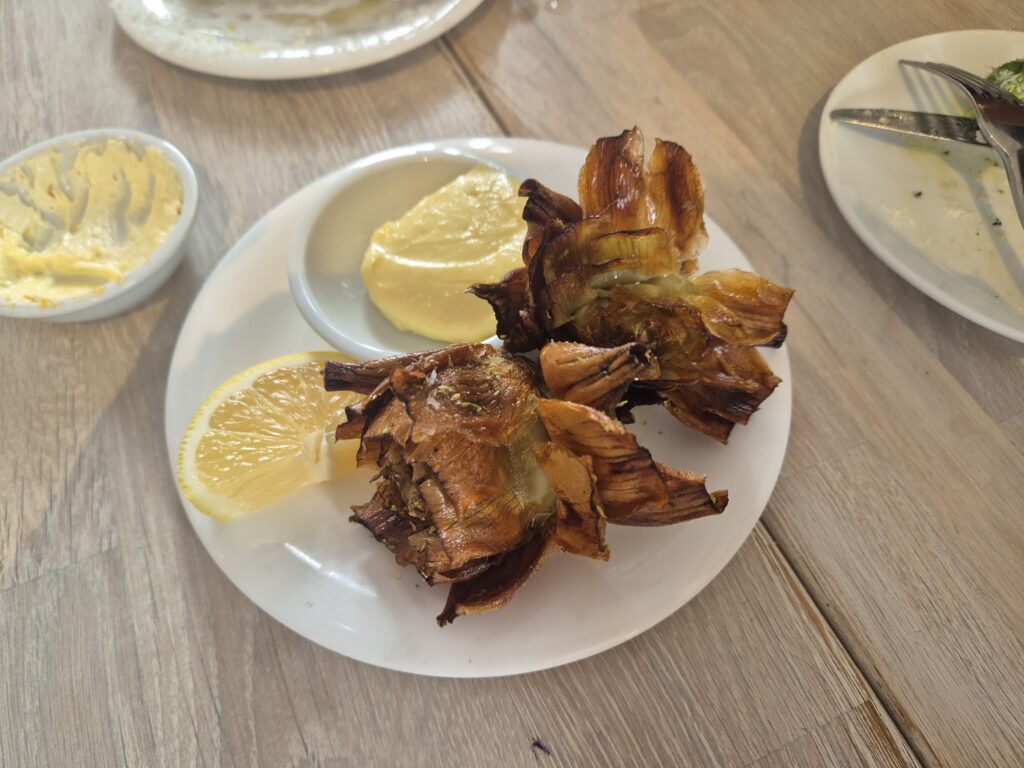
Start with the Roman artichoke fritti, a glorious heap of golden globes that arrive glistening from the fryer, each one concealing tender hearts within their crisp shells. A dollop of silky aioli provides the perfect piquant counterpoint, and it’s the kind of dish that makes you realise how rarely artichokes are treated with proper respect in this country. That’s a shame, ’cause they’re fucking delicious.
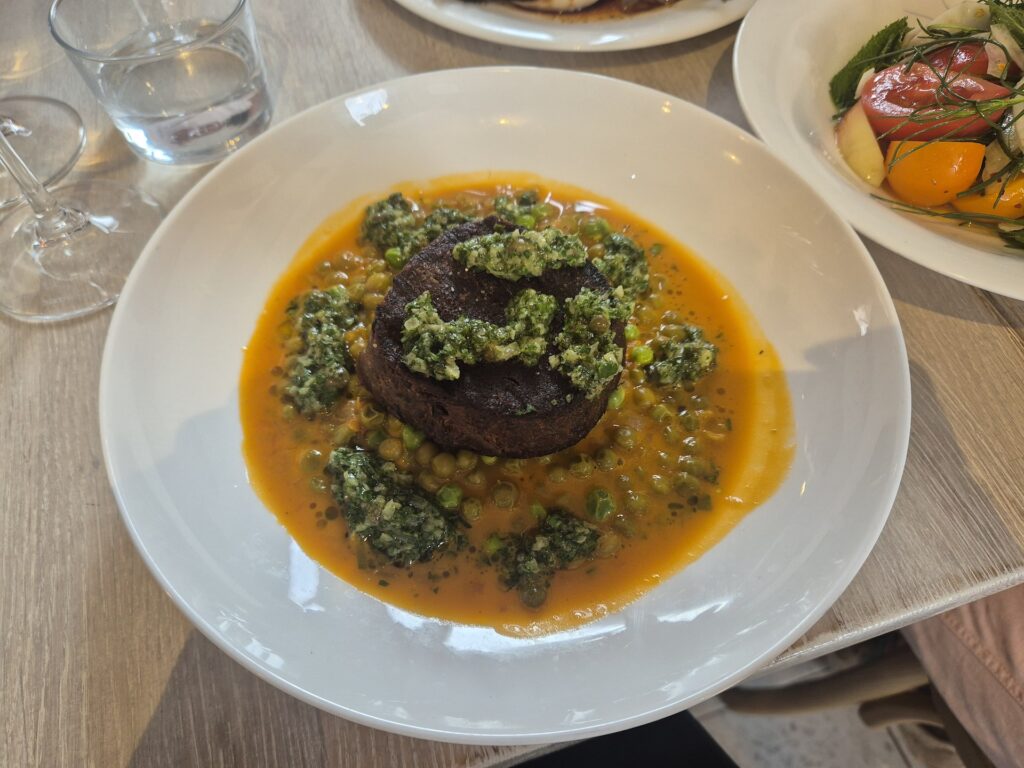
The shoulder of lamb with pea ragu, salsa verde and pecorino is comforting thing. The meat, slow-braised until fork-nudge-tender, sits atop a mixture of sweet peas (braised until browning and all the better for it) and pancetta that tastes distinctly of spring even in the depths of winter. The salsa verde cuts through the richness with its bright acidity, whilst shavings of aged pecorino add that essential sharp, salty note. We wish they were open Sundays, as it carries the same comfort as the very best roast dinner.
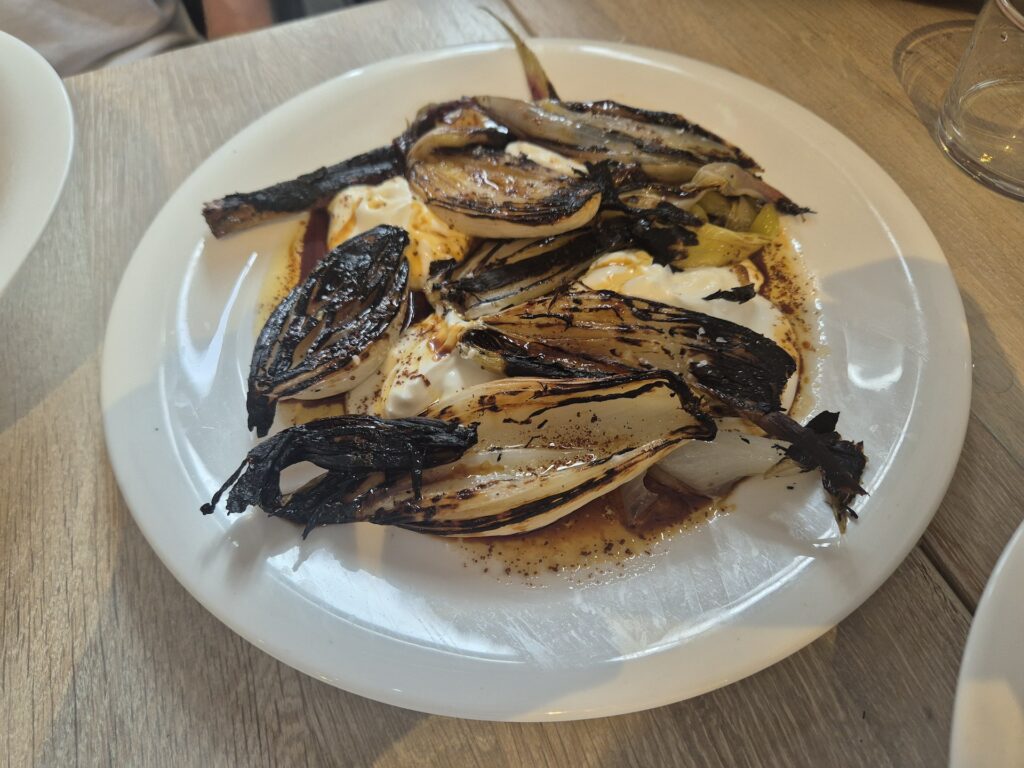
For something altogether more delicate, the cipollotti onion with caprino fresco from Piedmont is sublime. The sweet baby onions are charred enthusiastically over coals until just-bitter and caramelised, and paired with creamy goat’s cheese that’s been finished with grape must, creating a dish that manages to be both rustic and refined. It’s the sort of plate that reminds you why Italian cooking is so revered – seemingly simple combinations that reveal layers of satisfying flavour with each bite.
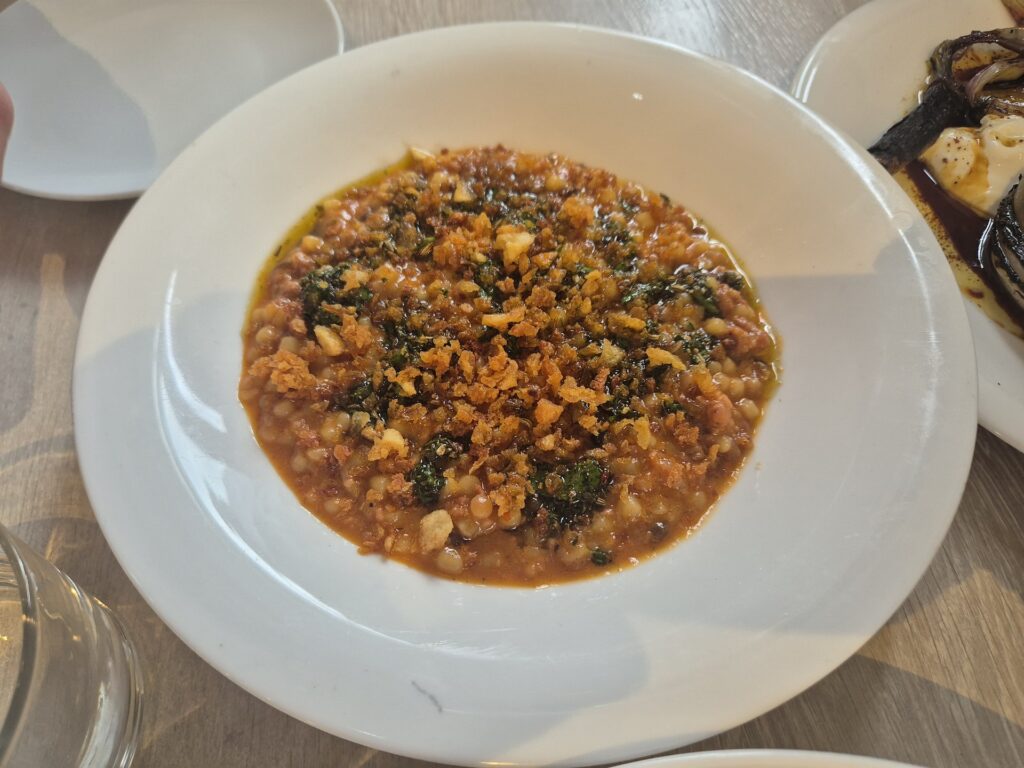
But perhaps the star of the show is the fennel sausage from Tuscany, broken up and nestled with fregola, and finished with an assertive potato crumb and gremolata. The sausage, lightly fermented and funky, sits up nicely against the nutty fregola. That potato crumb might sound like an affectation, but it adds a textural element that lifts the whole dish, whilst the bright gremolata prevents things from becoming too heavy. It’s an absolute triumph, and soup enough that all you need is a spoon to eat it.
Don’t skip dessert. The tiramisu with orange and nutmeg has already achieved a certain following amongst Bristol’s food-obsessed, and rightly so. It’s the kind of dessert that makes you close your eyes and sigh with satisfaction.

The wine list focuses on natural and biodynamic producers from across Italy, with several interesting bottles available by the glass. What’s not to like here? And with most dishes under £20, RAGU offers exceptional value for cooking of this quality. Bookings are recommended but walk-ins are actively encouraged – it’s the kind of place that welcomes everyone from solo diners seeking an aperitif to families wanting a full Italian feast.

The Michelin Guide clearly agrees; RAGU was awarded a Bib Gourmand in the 2026 edition, barely ten months after opening. For a restaurant operating out of a single shipping container, that’s some going.

Website: ragurestaurant.com

Address: Unit 25, cargo 2, Museum St, Bristol BS1 6ZA


Souk Kitchen, Southville

Ideal for light, bright Middle Eastern food…

Souk Kitchen has established itself as a standout destination in Bristol’s dining scene, offering a menu that thoughtfully combines Middle Eastern and North African culinary traditions with high-quality local ingredients. It’s a match made in heaven.
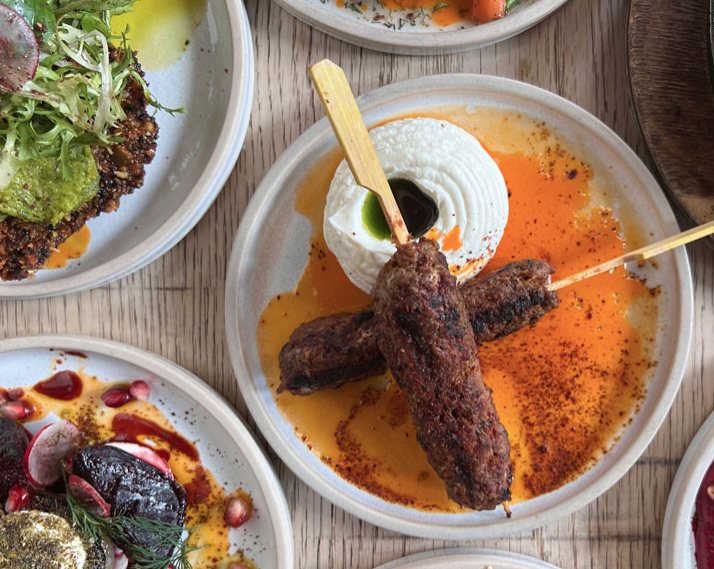
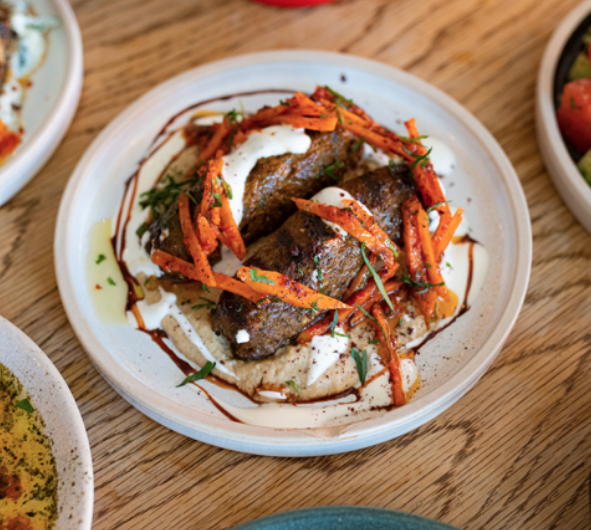
Sitting pretty opposite the always-rammed Tobacco Factory Theatres in ever-buzzier Southville (Sonny Stores, also part of our list of Bristol’s best restaurants, is just two minutes down the road if you’re up for a tasty one-two punch), SOUK Kitchen is perhaps a restaurant best enjoyed in the daytime. During the lunch hours, the room feels light and bright, a vibe that feels in synergy with what’s on the plate.

The restaurant is renowned for its freshly flavoured, punchy but comforting dishes, such as the Anatolian lamb yahni and the chicken tagine with ginger and prune, which showcase the depth and diversity of the regions’ flavours. The ever-changing seasonal menu ensures a fresh and dynamic dining experience, with the mezze selection always a treat.

The popular weekend brunch features robust options like the Tunisian shakshuka, alongside a well-executed bloody Mary. SOUK Kitchen’s dedication to local sourcing is evident, with meats and breads procured from nearby suppliers, reflecting a commitment to community and quality.

Following its success, SOUK Kitchen expanded with a café and deli in Clifton, mirroring the original location’s menu and offering the added convenience of a retail space for their unique spice blends. The mothership is still the one we’re drawn to, however. 

The drinks, including a wonderfully floral quince martini and very grown-up tasting blood orange margarita, complement the vivid, vibrant food with a similarly creative touch. What a lovely restaurant SOUK Kitchen is, and certainly of Bristol’s best.

Website:  soukitchen.co.uk

Address: 277 North St, Southville, Bristol BS3 1JP 


The Spiny Lobster, Whiteladies Road

Ideal for a grilled seafood feast…
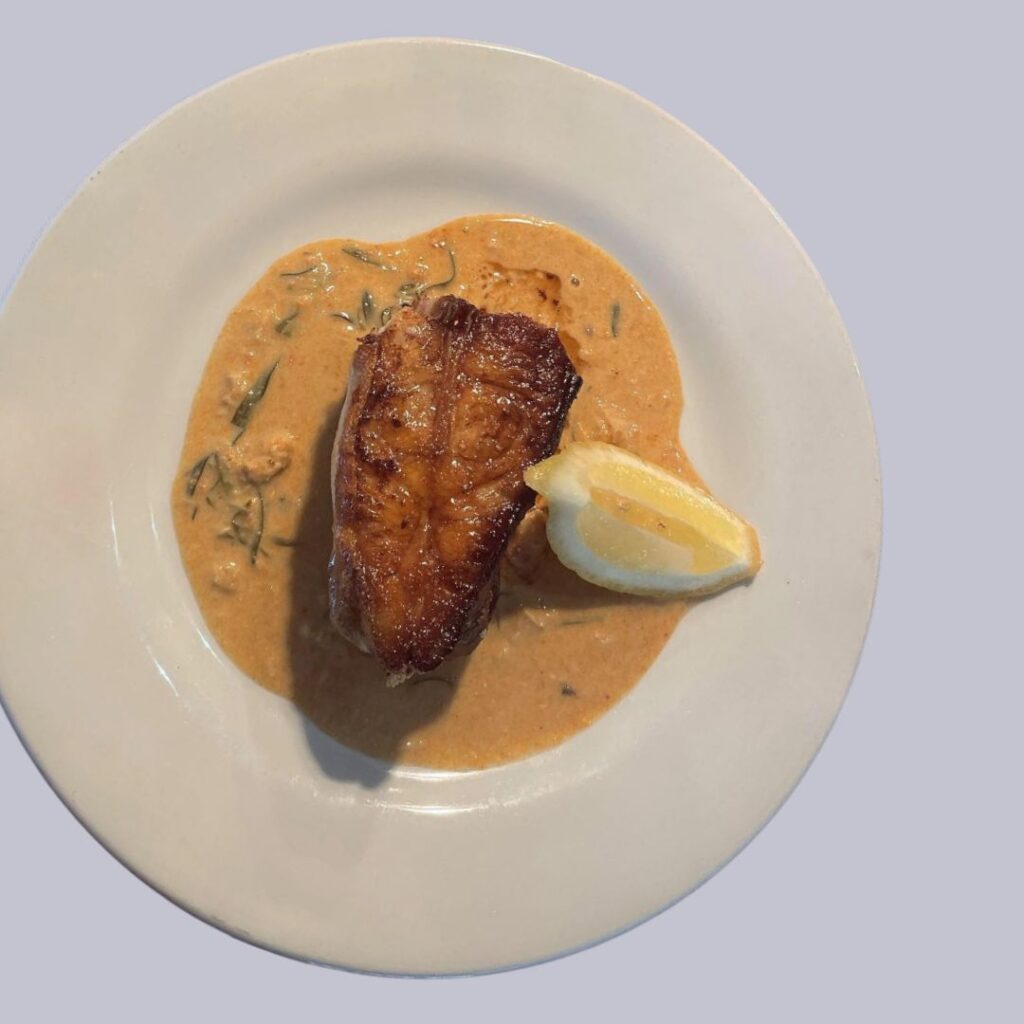
As much as we’d love to keep eating around Bristol’s best restaurants until we actually die, we’re pretty stuffed, sleepy and ready to phone in this last entry to our rundown. 

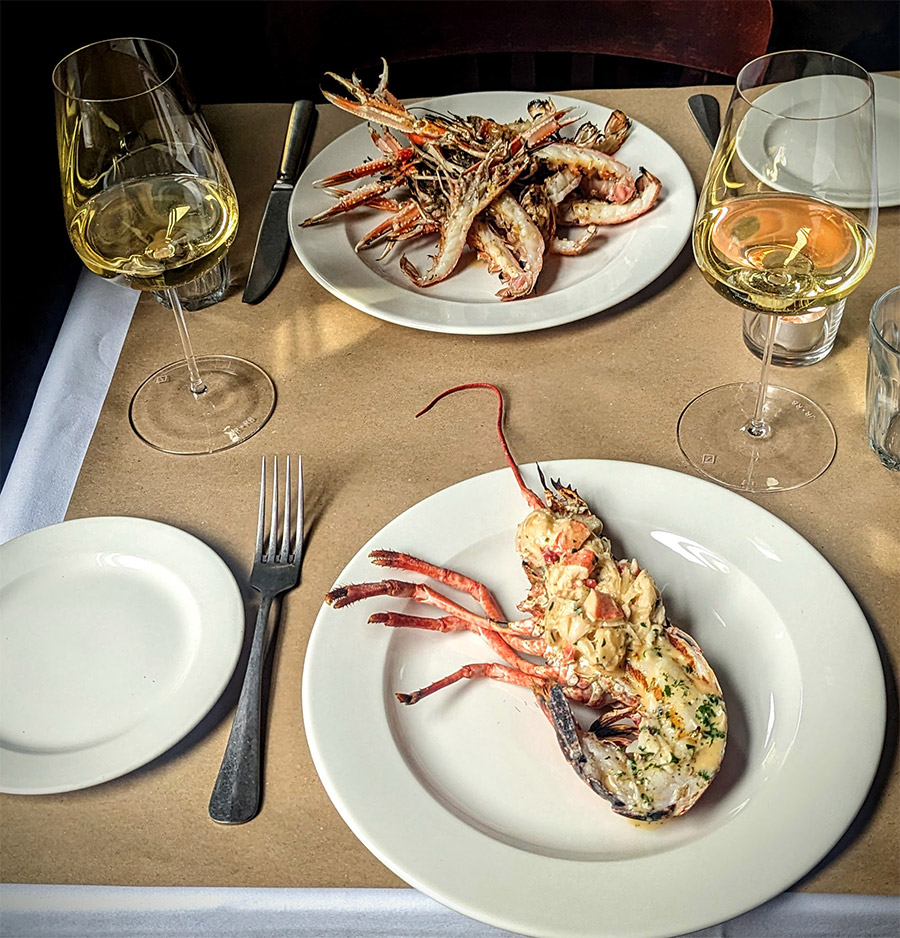
All you need to know about Spiny Lobster on Whiteladies Road is that it’s both a fishmongers and grill, with all the freshness and smoke that suggests. Indeed, the fish and shellfish here is sourced daily from Brixham in Devon, and the charcoal grill is always burning. It is, quite simply, a glorious place to dine for those who live all things seafood.

Website:  thespinylobster.co.uk

Address: 128-130, Whiteladies Rd, Clifton, Bristol BS8 2RS


Bokman, Cotham *as of March 2026, currently closed*

Ideal for a reviving, exciting Korean spread centred around grilled chicken…

Tucked away at the end of a steep cul-de-sac off Bristol’s loose and lively Stokes Croft neighbourhood, you’ll find Bokman, a small Korean restaurant with a big reputation. 

The work of Duncan Robertson and Kyu Jeon, who met at Paris’s L’Atelier de Joël Robuchon and have since got married, this is a unique dining experience that is both intimate and exhilarating, the tightly spaced dining room on the ground floor a buzzing, belying centrepiece to the grill work going on out back.

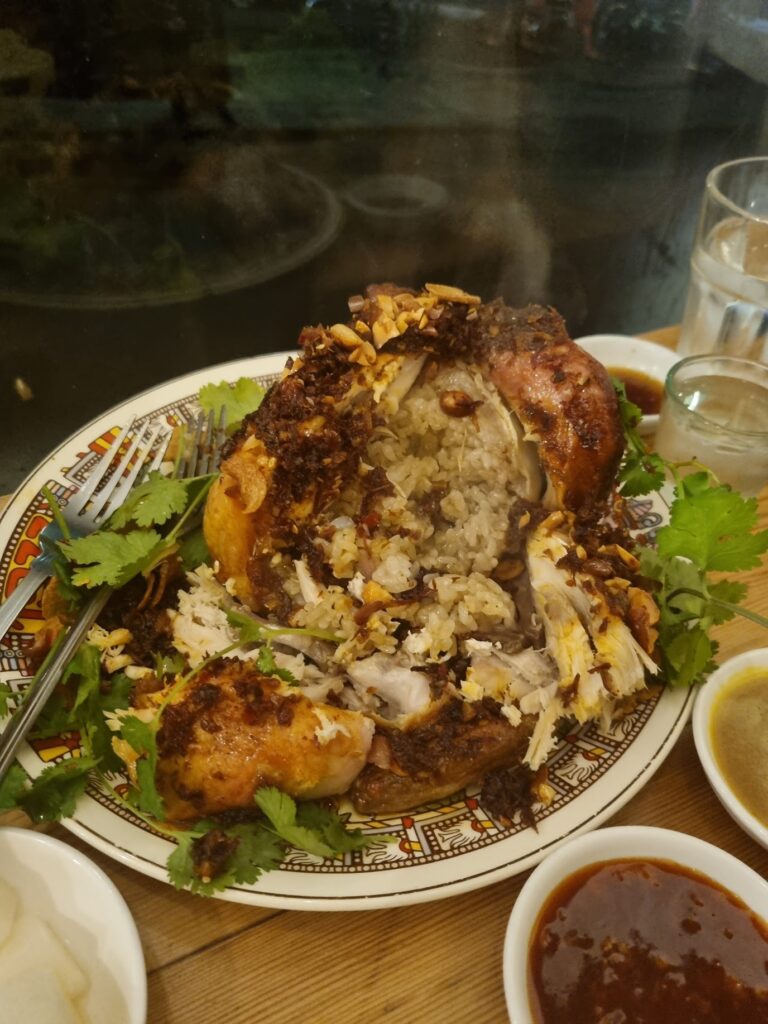
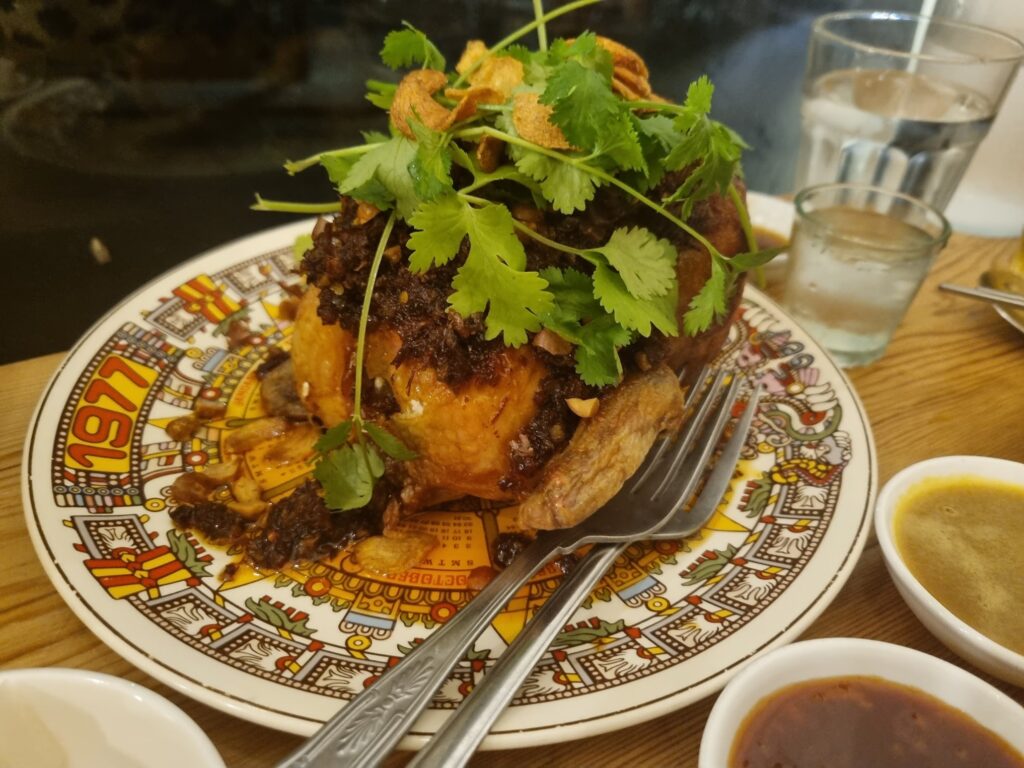
On that upright, rotating charcoal spit you’ll find the star of Bokman’s blistered show; the Tongdak. Featuring crisp-skinned rotisserie chicken stuffed with sticky rice and slow-cooked until tender, it’s served with ssam style, with lettuce leaves for wrapping and a selection of dipping sauces and pickles. A bowl of the house kimchi is, of course, obligatory. It’s got to be the most celebratory, all-in sharing plate in the city.
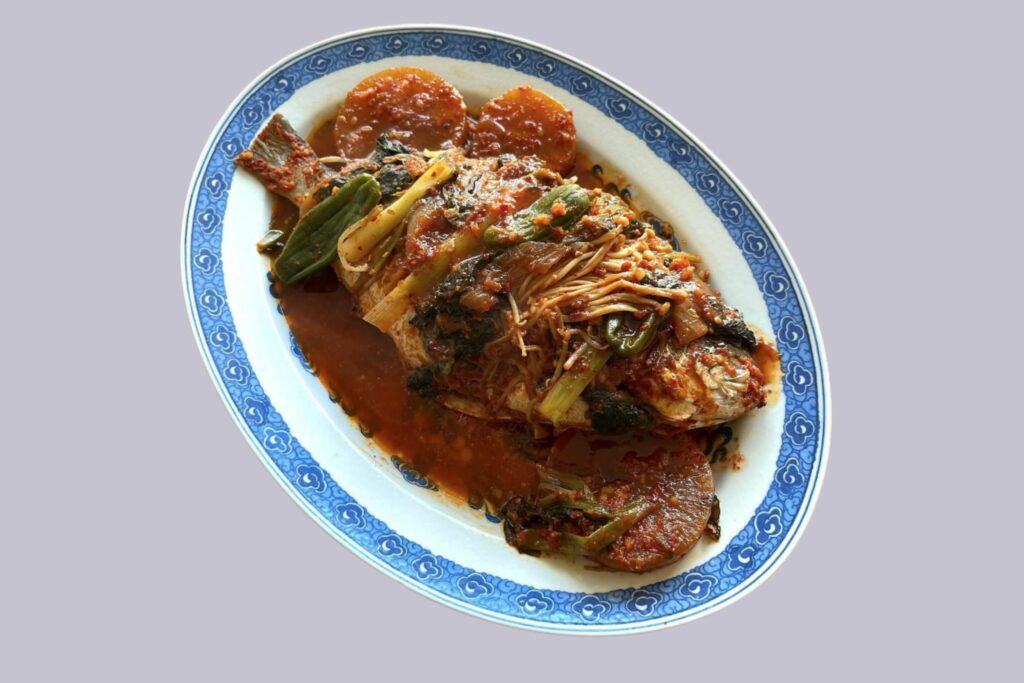
Bokman’s menu doesn’t stop at the Tongdak, though. Seasonal vegetable bibimbap makes the ideal dinner for one, the famous stone bowl rice dish given lift-off with gratings of cured pollock roe and an oozing egg yolk, whilst the seolleongtang – a wibbly, wobbly beef stew topped with spring onions and spicy dadaegi condiment – is one winter warmer and a half, and could be peddled as a health food were it not so damn indulgent tasting. Whole bream bathing happily under a rusty gochujang-heavy sauce is yet another knockout. Yep, you’ll want to bring friends for this one. 

All you need alongside is a bottle of room temperature soju and consider your cockles thoroughly warmed (can you tell we’re writing this on a particularly chilly day?). 

Cool things right back down with Bokman’s signature soft-serve, perfect even in winter, and you’ve got yourself one of the most peerless, joyful dining experiences in Bristol.

*Editor’s note (March 2026): Bokman is currently closed following a kitchen fire in December 2025. The timing of the fire was particularly cruel. Just weeks earlier, in October 2025, TimeOut London had named Bokman the country’s No.2 Best Restaurant. The team are assessing damage and will provide updates on reopening. In the meantime, they encourage guests to visit their sister restaurant Dongnae on Chandos Road.*

Instagram@bokmanbristol

Address3 Nine Tree Hill, Cotham, Bristol BS1 3SB

You can read more about it in our rundown of the best seafood restaurants in Bristol. You know what? We think we might be ready for bed…
Hotel Review: Iniala Beach House, Phuket

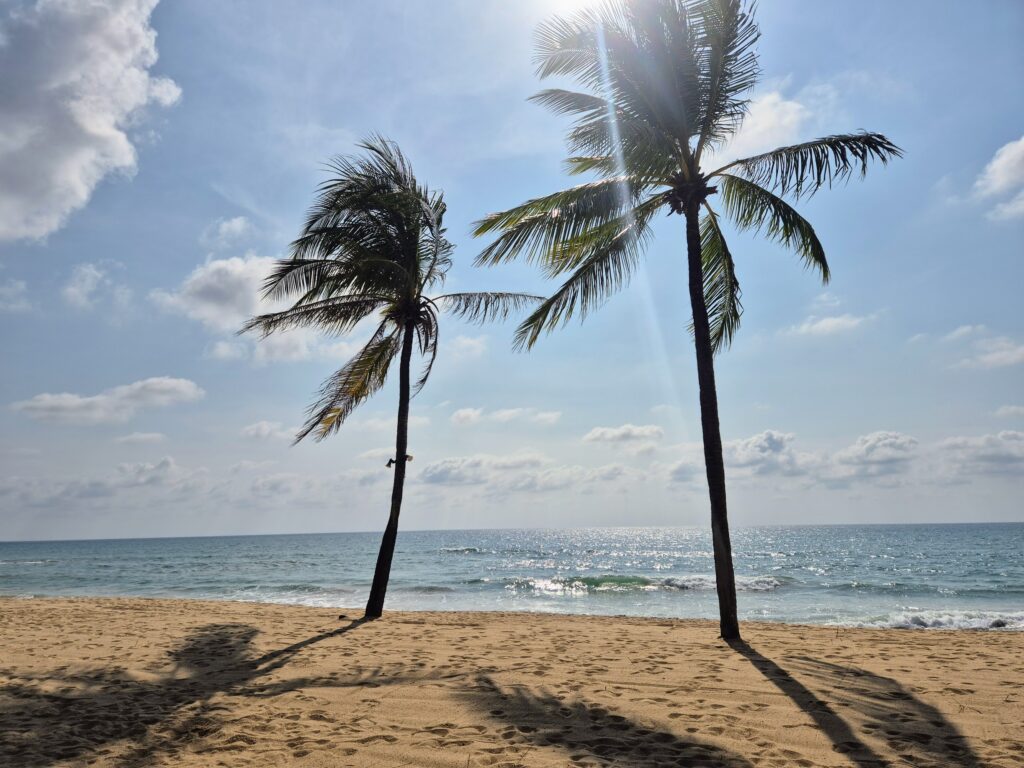
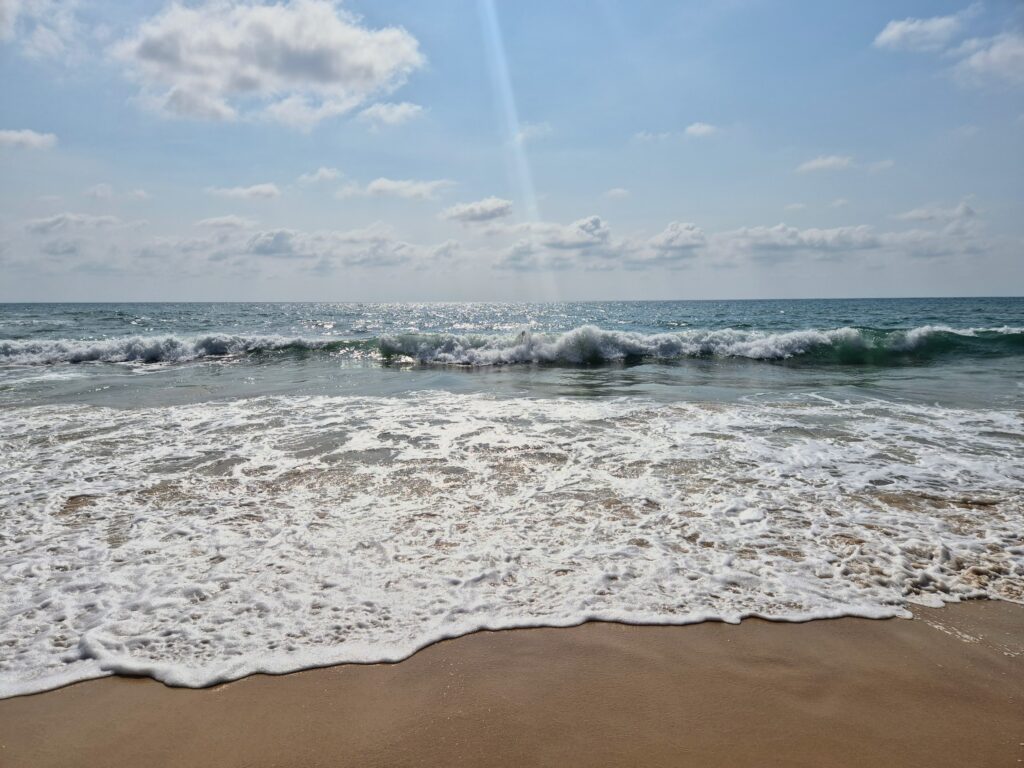
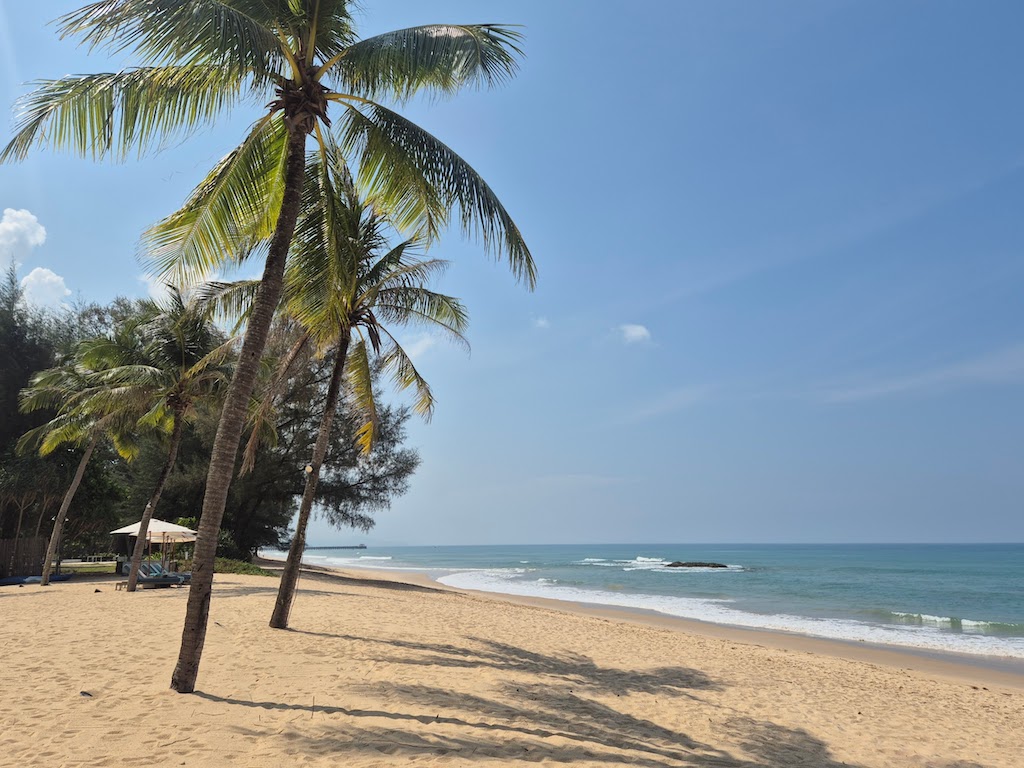
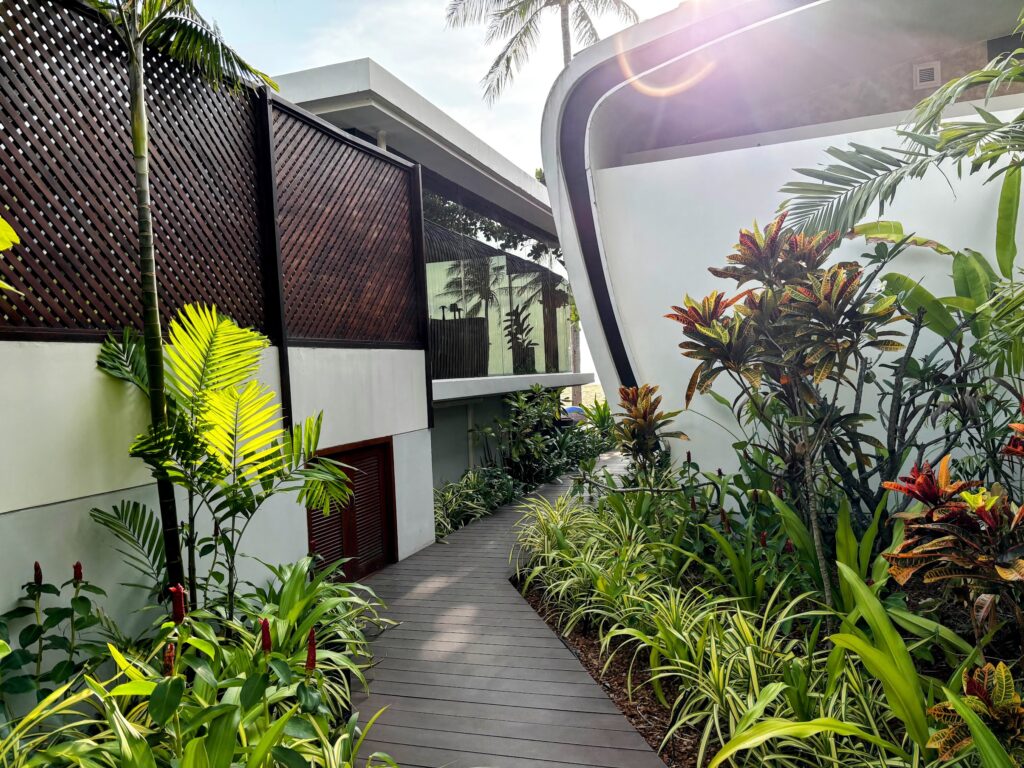
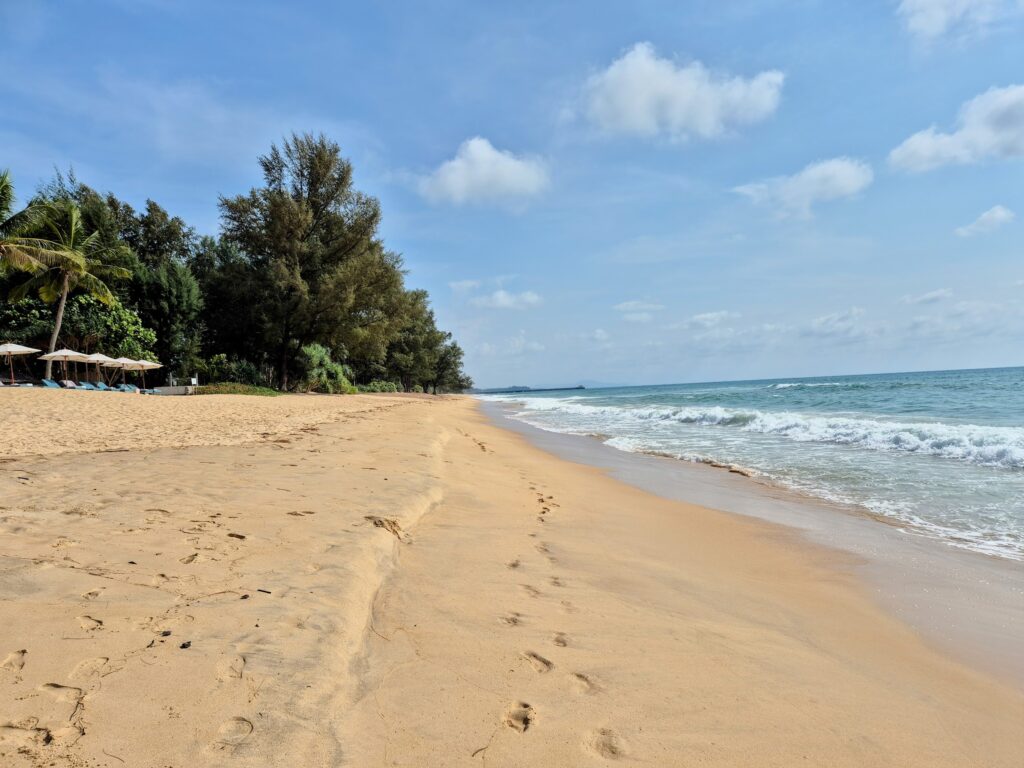
The waves at Natai Beach neither lap nor lull. They arrive in long, thick sets from the widescreen Andaman, breaking with enough force that you hear them inside the villa with the doors closed. This is not the placid, postcard Thailand of Gulf Coast bays, where the sea politely keeps its distance. It is the other side of the peninsula, facing west into nothing, and Iniala Beach House has built itself directly on its shore.

The salty sea air coming off those waves will make you inhale deeply. And arriving at one of just ten individually designed spaces will make you expel all your pent-up stress in one comically flamboyant exhale.

Because Iniala Beach House does in ninety seconds what your meditation app has been failing to do for eighteen months now – at, in fairness, considerably greater expense. The sea supplies the soundtrack throughout, present in every villa, audible through the wall of windows that face it, like an Om tone that reverberates in your ears long after checkout.

Whether you came for the sea, the chef’s table, or the frankly psychedelic design, you arrive at the same conclusion within an hour or two: this is your sign to surrender.

The Location

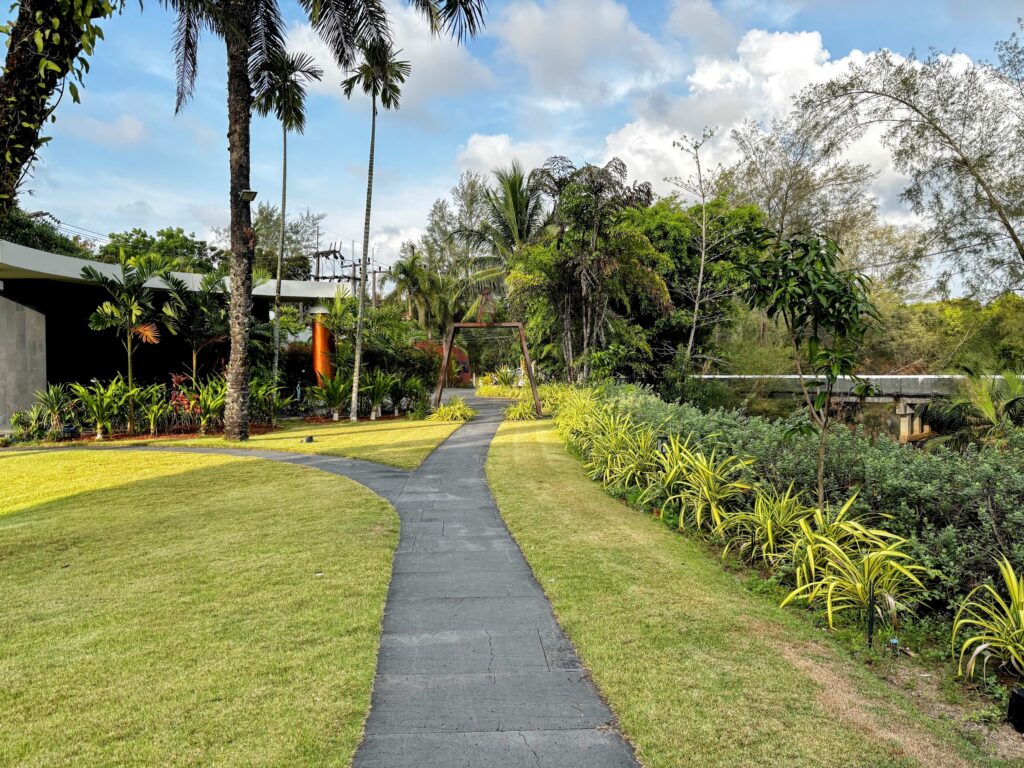
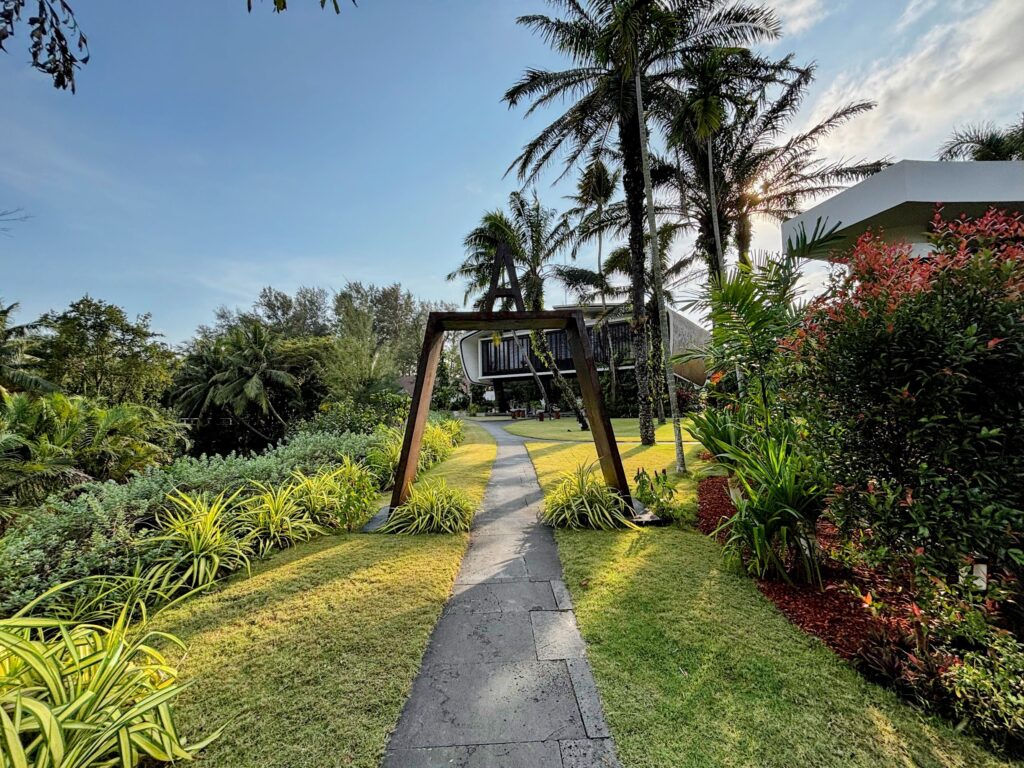
Iniala sits on Natai Beach, on the Thai mainland in Phang Nga rather than Phuket island itself. Just over the Sarasin Bridge, Phuket International Airport is around 25 minutes down the road, making arrival mercifully straightforward. Once you cross the threshold, however, the outside world effectively ceases to exist.

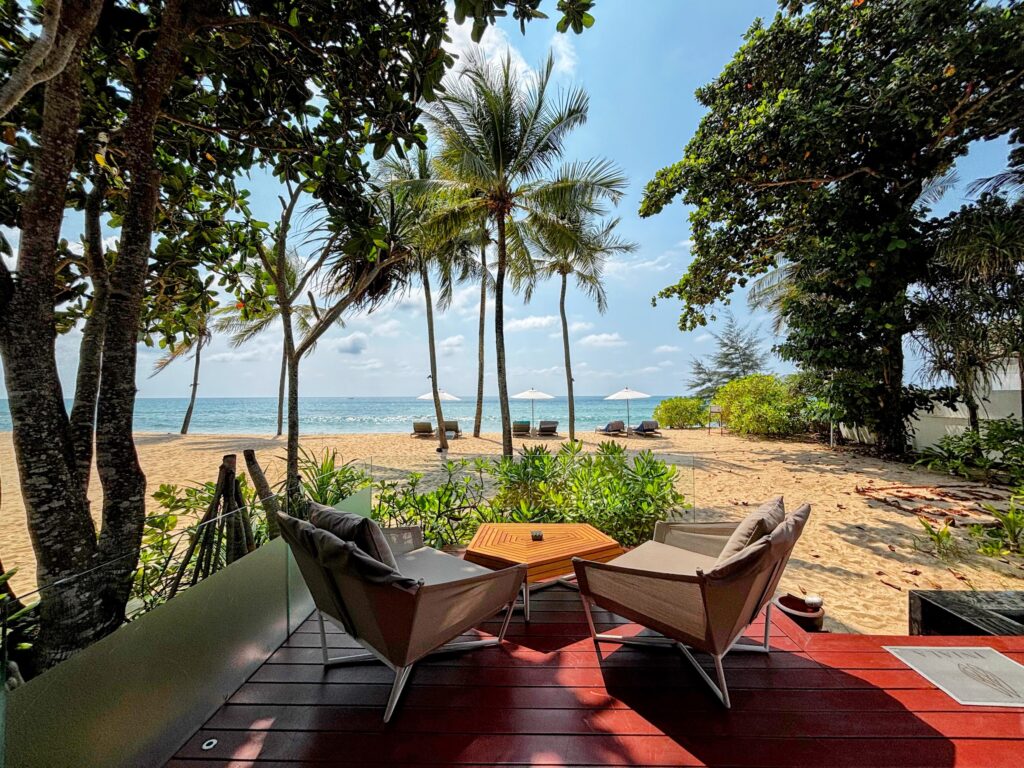
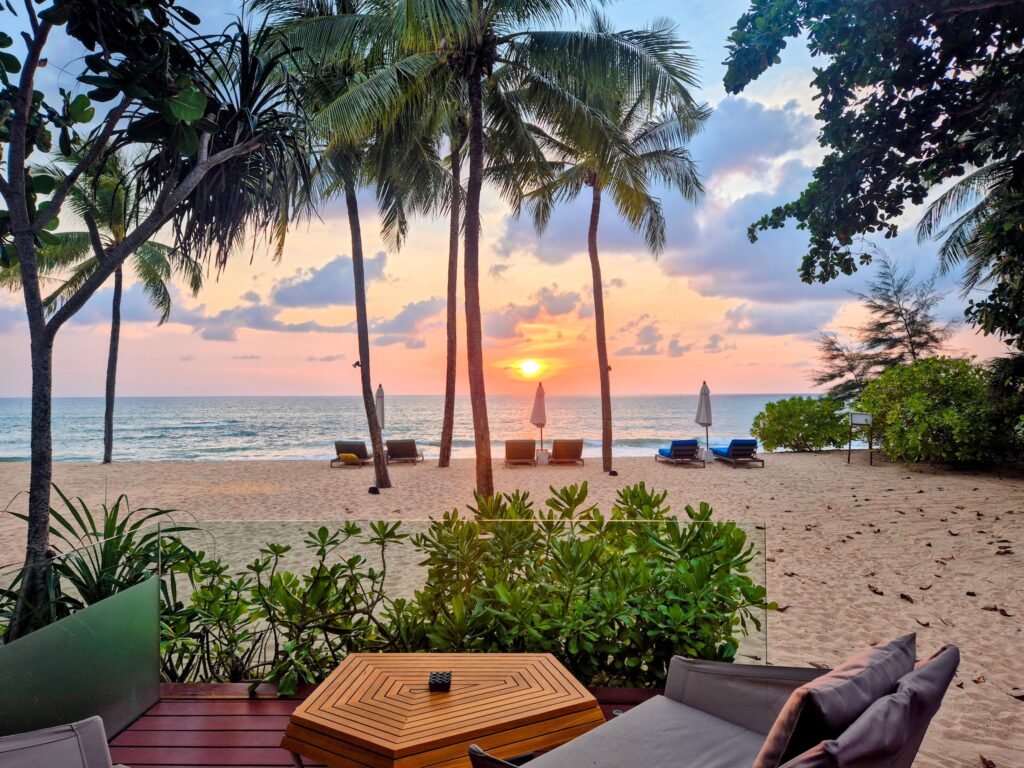
Natai is a long, unhurried stretch of sand with almost no commercial development along it. Its nearest neighbour is a mid-range family resort, though you’d barely know it; Iniala operates in its own sealed-off world.

What makes this coastline special though, is its exposure. Facing the open sea with little to interrupt the horizon, Natai picks up considerably more wave action than the sheltered bays further south in Phuket proper. There is very little in the way of islands or landmasses to break incoming swells, and motorised water sports are banned, which only deepens the sense of having stumbled onto a stretch of coast that the rest of the world has overlooked.

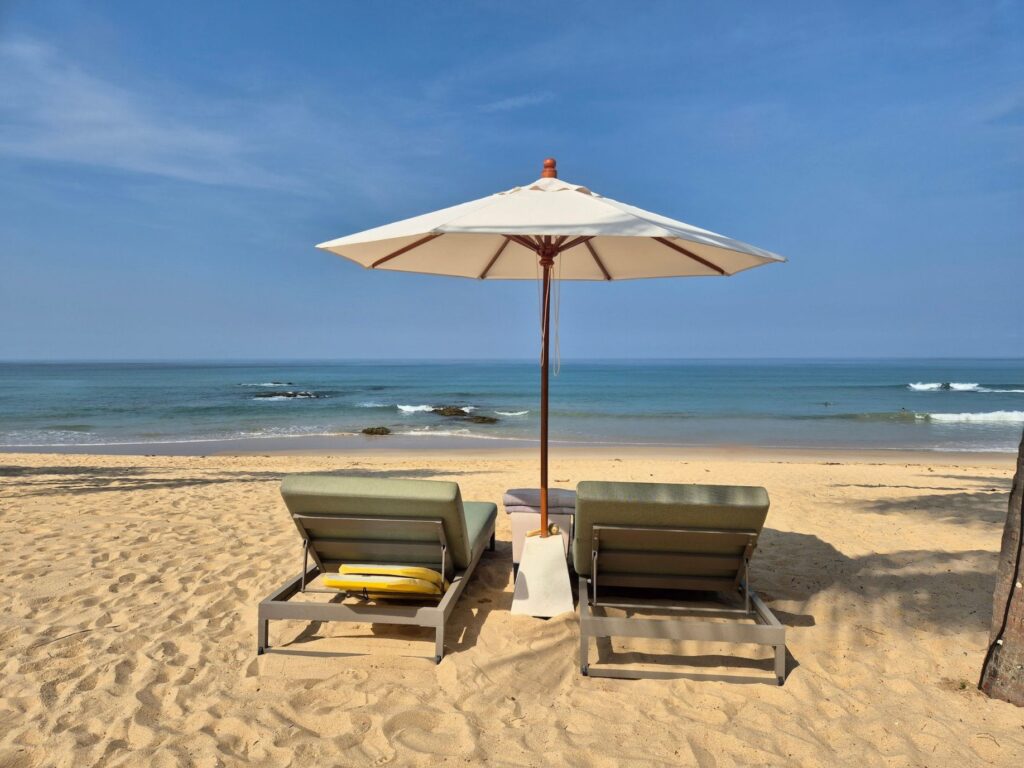
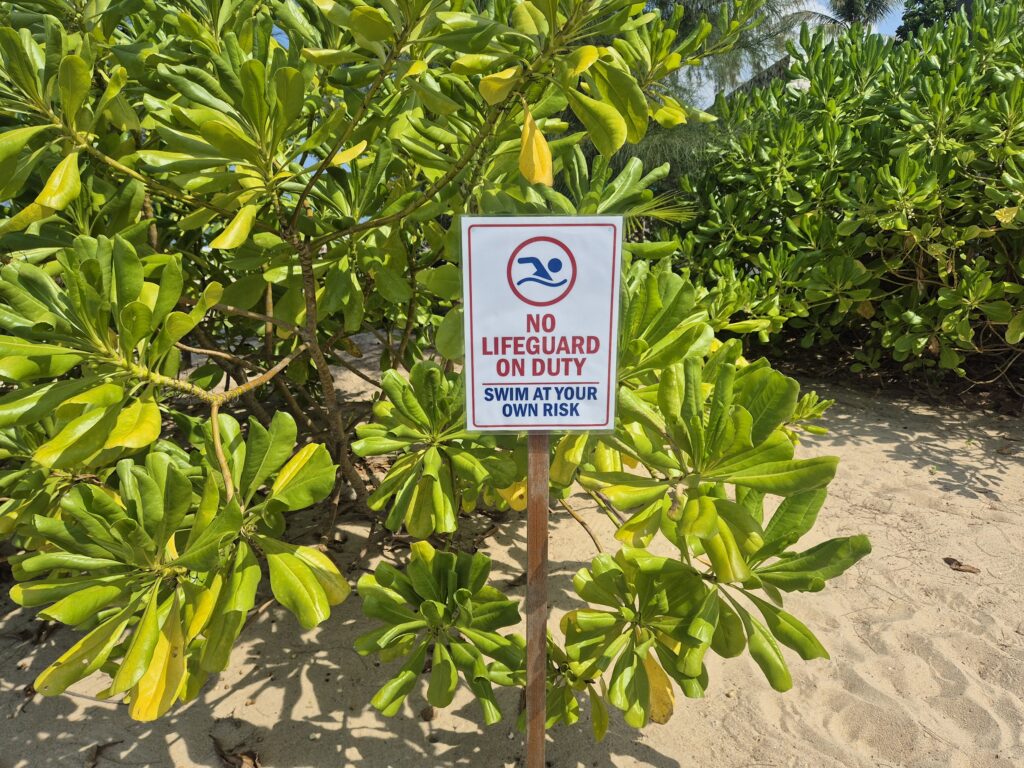
It’s a good spot for playing in the surf, and there’s a free, kinetic energy to it that feels like a deliberate counterpoint to the glassy-calm infinity pools you find at more manicured luxury resorts. The hotel rightly acknowledges this is a strong suit and plays its hand here, providing bodyboards. A note of caution though: during the monsoon season (roughly May to October), prevailing winds push swells directly onshore and conditions can be genuinely powerful, and swimming is discouraged at best, outright banned at times.

Character & Style

The effervescence of the Andaman feels like a natural foil to Iniala’s intensely curated interiors, almost as if it’s the ocean that’s been shipped in; enlisted to stop you taking all that design too seriously.

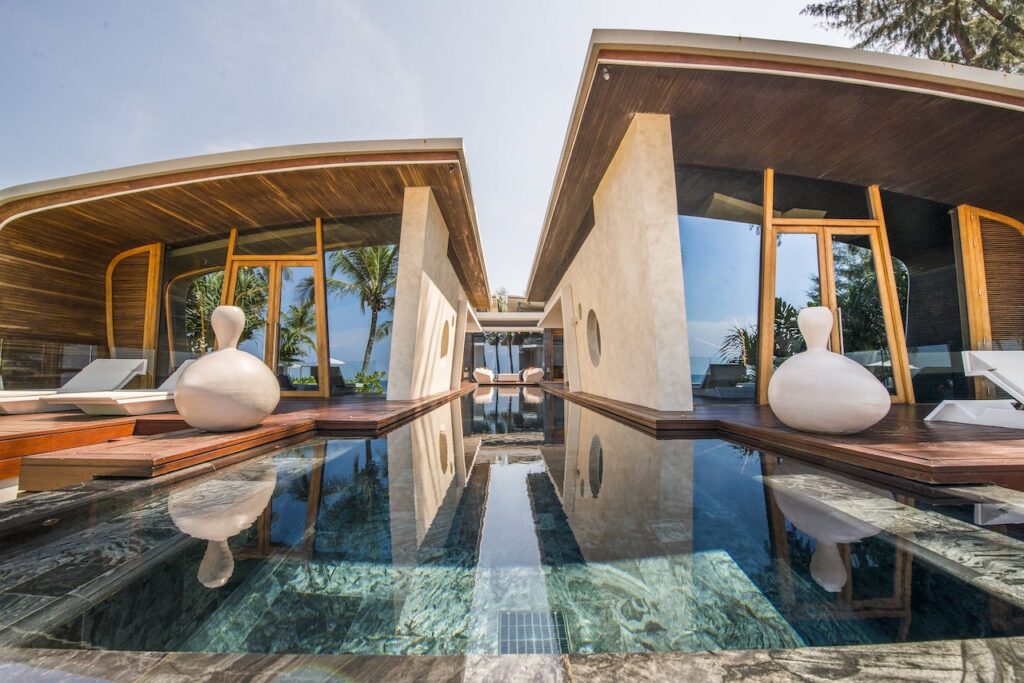
And everything is hyper-styled, it has to be said. Staying here is a cinematic experience that could border on ostentatious, but the service is so warm and personal, the design flourishes so idiosyncratic, that it never falls into that category.

Iniala grounds its philosophy in hospitalitas, the Latin origin of the word hospitality, meaning generosity towards guests. From that foundation grows what it describes as its four pillars: gastronomy, art, culture and community. That sounds, on paper, like the kind of brand language you can safely ignore, but it is genuinely felt across the property. The pillars run through the resort itself, and find practical expression through a programme of structured off-site experiences – longtail boat trips through Phang Nga’s limestone karsts, cooking classes at organic farms, encounters with monks and artisans – each designed to explore a different pillar through the lens of Thai life.

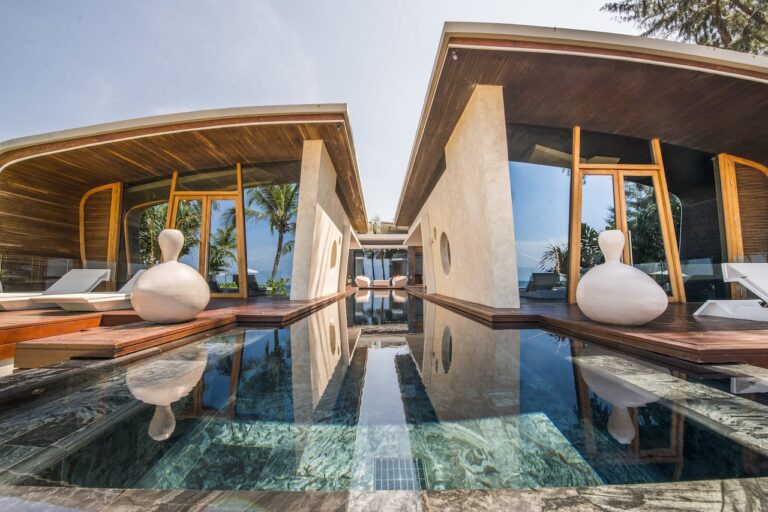
The art alone runs to more than forty contemporary pieces by South-East Asian artists, exhibited throughout the residences and public areas: a living gallery rather than decorative wallpaper. Although, come to think of it, some of it is decorative wallpaper too. Elsewhere, eleven international designers were each given a space to do with as they wished, with a single brief: every room had to be out of the ordinary, yet practical and comfortable enough to actually live in. The results are gloriously uneven in the best possible way.

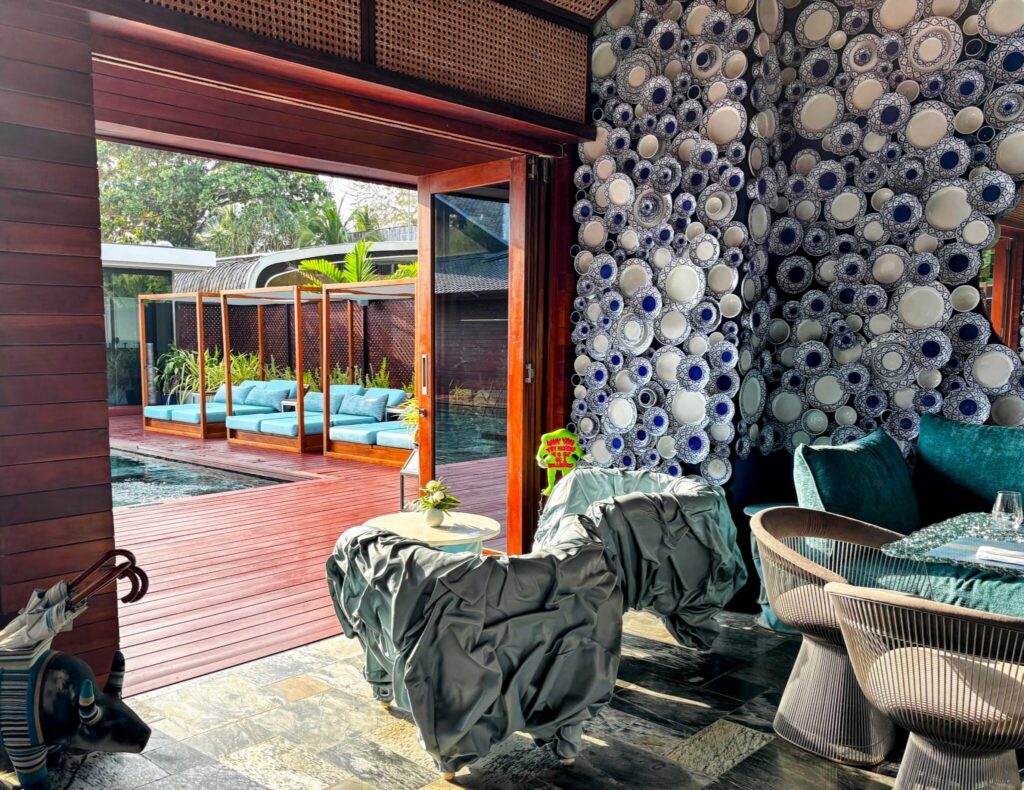
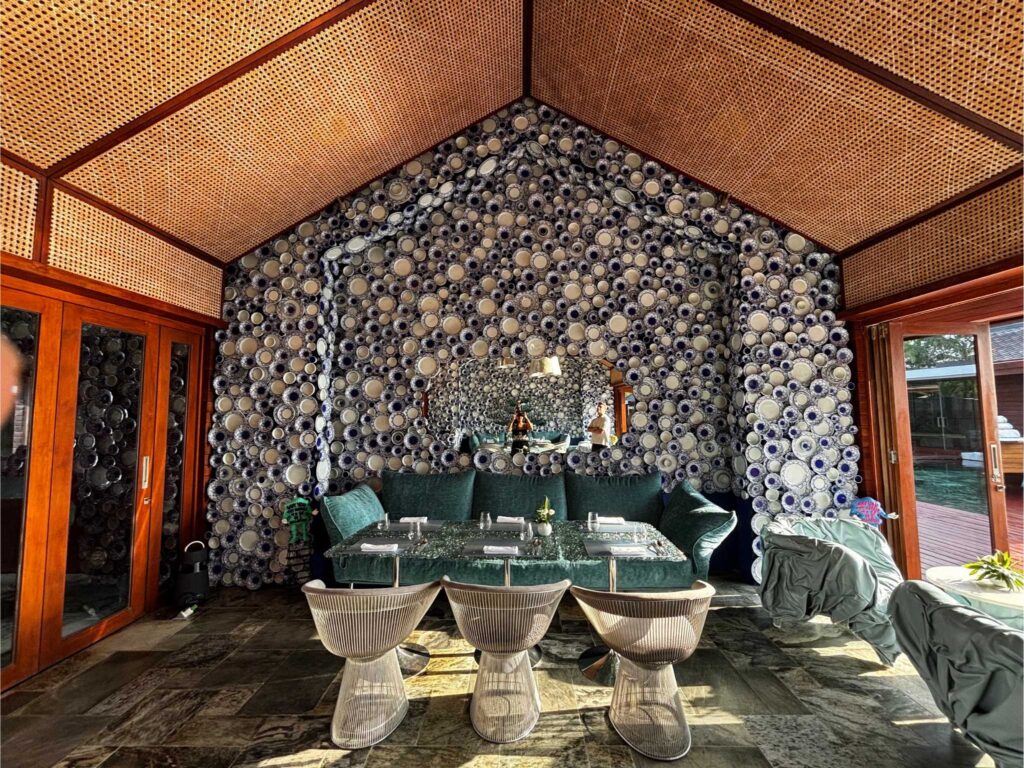
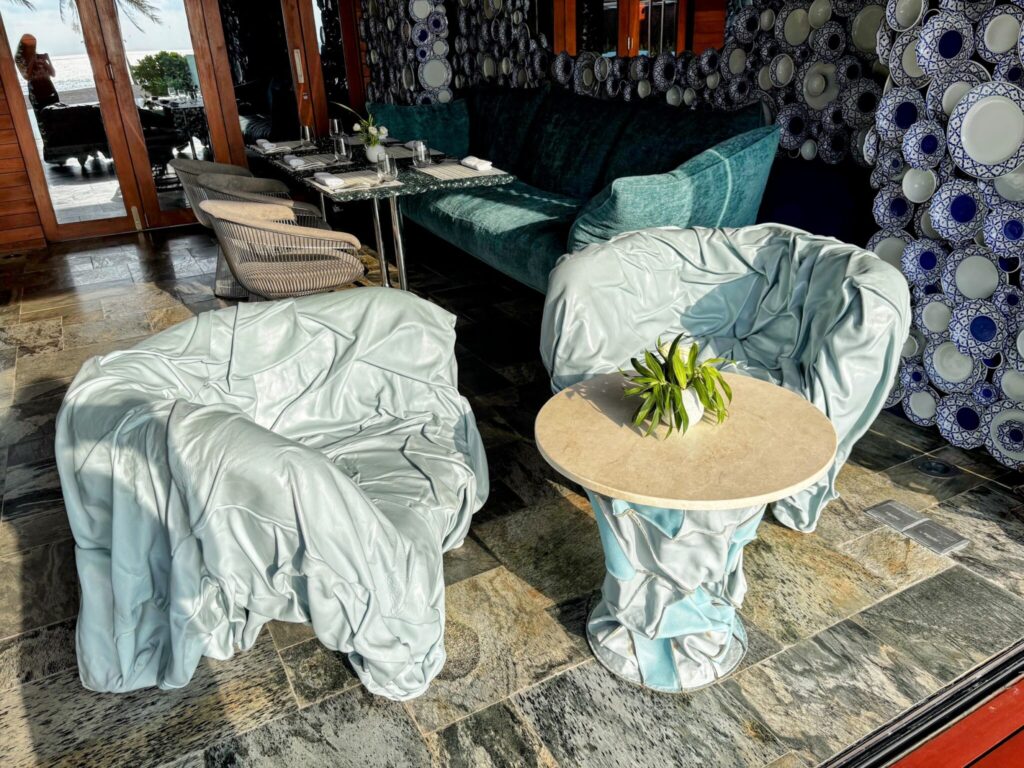
The Campana Lounge (designed by the late Fernando Campana and his brother Humberto, the celebrated Brazilian designers) is the heart of the communal areas. The most striking detail is the wall: hundreds of classic Thai blue-and-white ceramics – plates, bowls, pedestal dishes – clustered across the surface in cresting, wave-like swells. A nod to Bangkok’s Wat Arun and its broken-porcelain mosaics, here it’s translated into something looser and more oceanic. In other hands it could tip into the gaudy, and those denim-shrouded chairs won’t be to every taste, but boy is it fun.

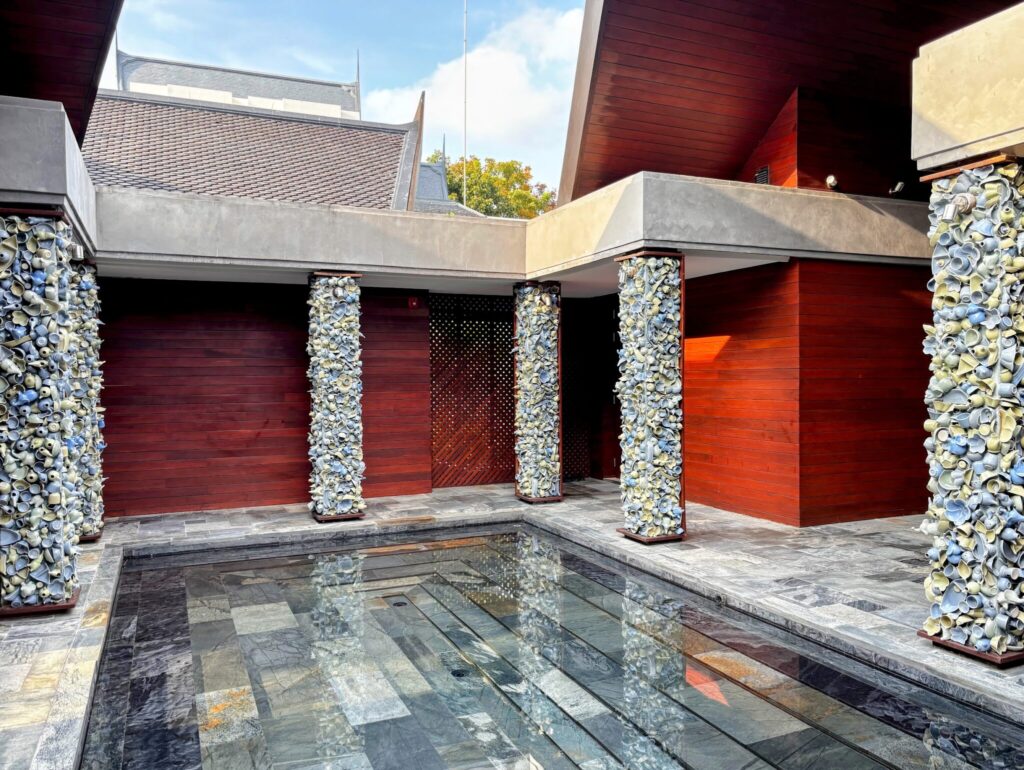
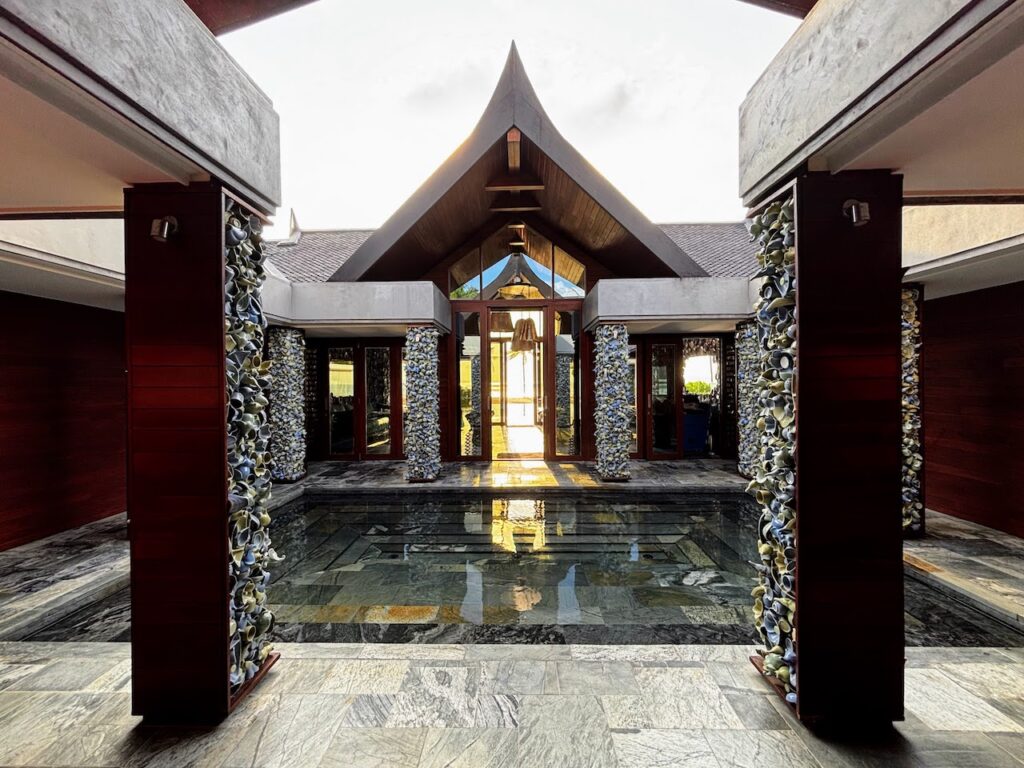
Out in the entrance courtyard, ceramic columns rise from a reflecting pool, each encrusted with hundreds of glazed pieces in soft celadon and dusty blue, clinging to the surface like barnacles on a sea-pier. They took the Campanas around 600 hours to make, and hidden among the clustered forms are elephants, flowers, miniature teapots and other small surprises rewarding a closer look. It’s where Iniala’s twin pillars of art and culture quite literally intertwine.

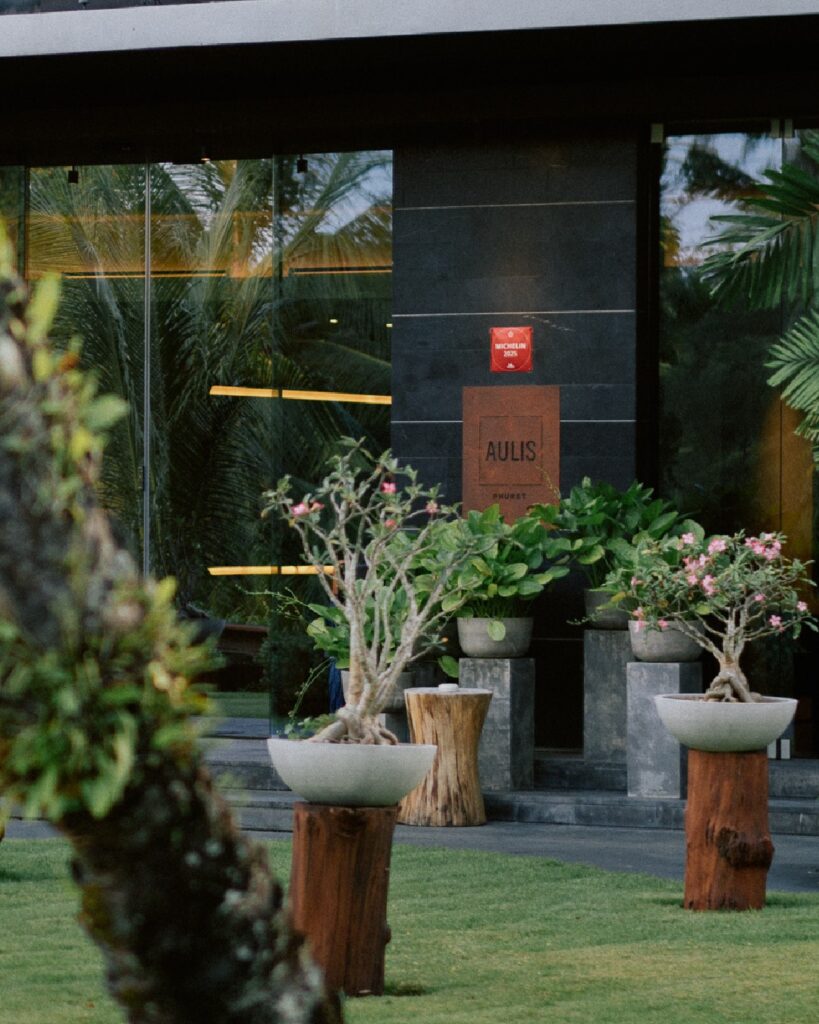
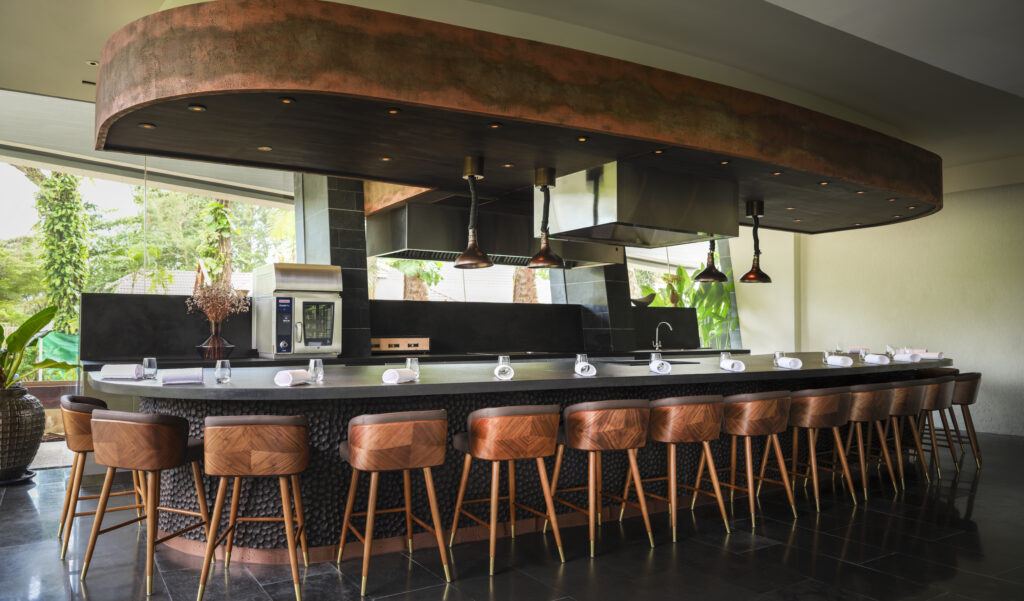
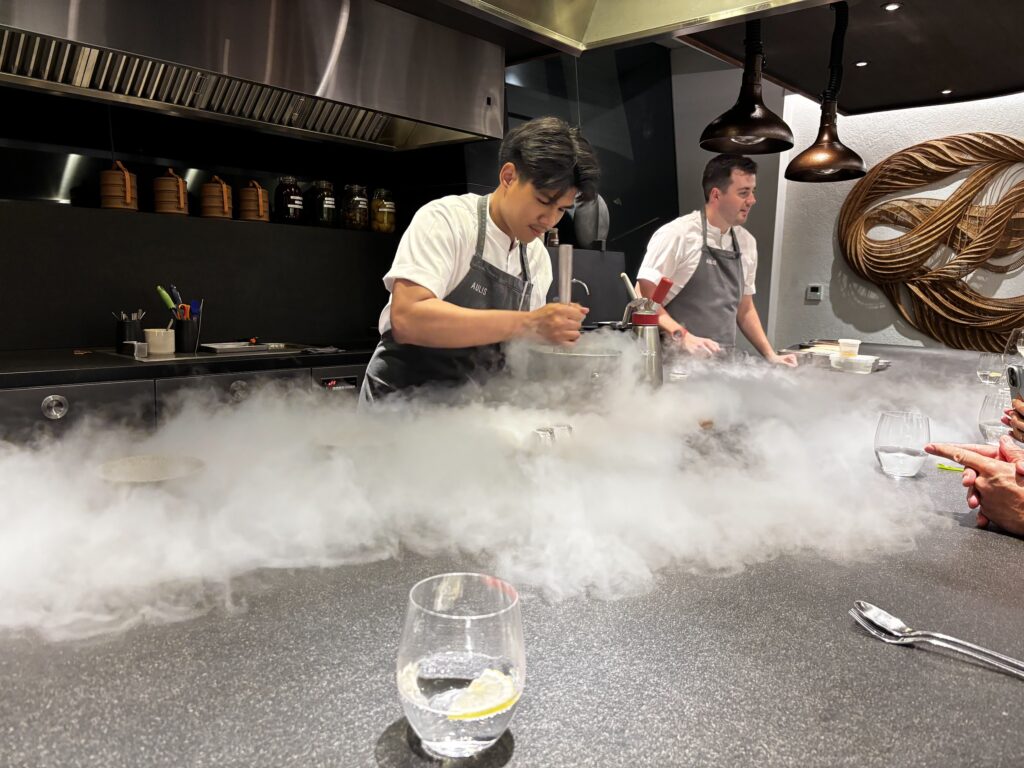
At Iniala Beach House, gastronomy is the pillar that pulls hardest: Aulis, acclaimed British chef Simon Rogan’s 15-seat chef’s table, is one of just two Michelin-starred restaurants in Thailand outside Bangkok, and a meaningful proportion of guests are here for the table first and the villa second. Conversations around the pool – or, indeed, on the beach – sooner or later drift toward what was eaten the night before.

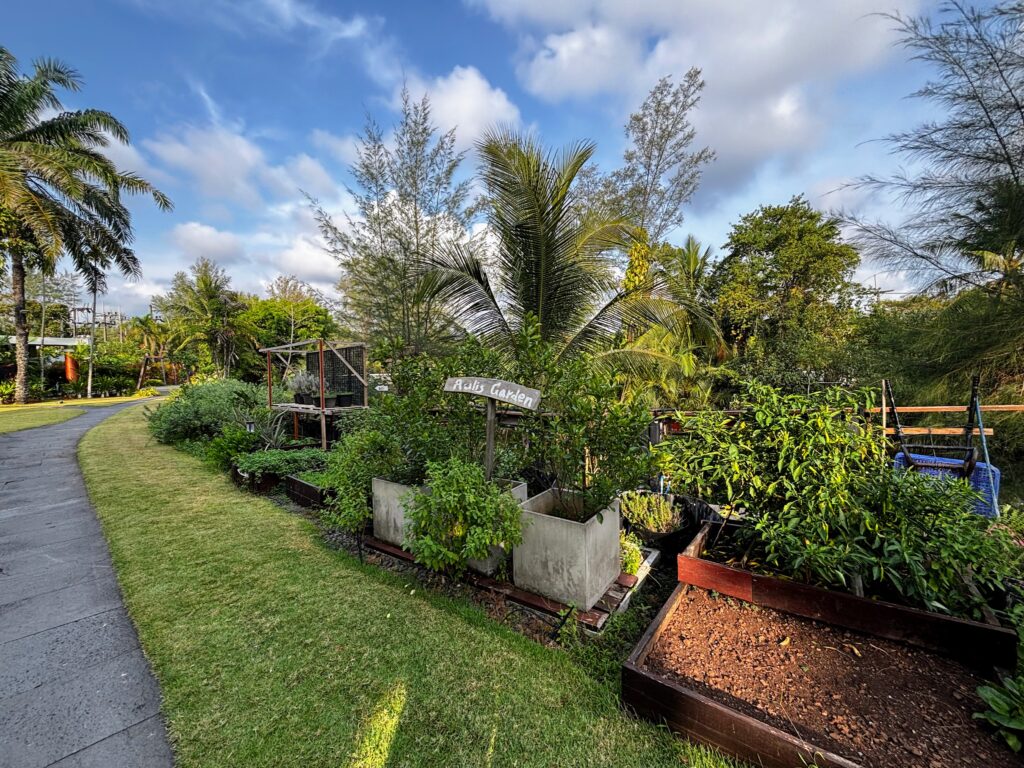
There’s a dense kitchen garden on the grounds too, which supplies the herbs and edible flowers that find their way onto Aulis’s tasting menu. You can take the Rogan out of Cartmel, but you can’t take the…

Alongside flush foodies, Iniala attracts a glamorous set. Kim Kardashian spent the lead-up to her wedding here back in 2014, booking out the whole property. It was featured on the show for a few fleeting seconds, even, as if that matters. We mentioned to a Thai acquaintance in Phuket we were staying at Iniala. Their reply: “That’s where politicians and celebrities stay”. “And spies”, they added for some reason, eyeing us up and down trying to work out which, if any, we were.

Well, we couldn’t reveal that, could we?

The property carries a weight that the design doesn’t immediately reveal. What is now Iniala was once Mark Weingard’s own beach house. He was in it when the 2004 Boxing Day tsunami hit Natai Beach. He and seventeen others survived by climbing onto the roof. Eleven people died on Natai Beach that morning.

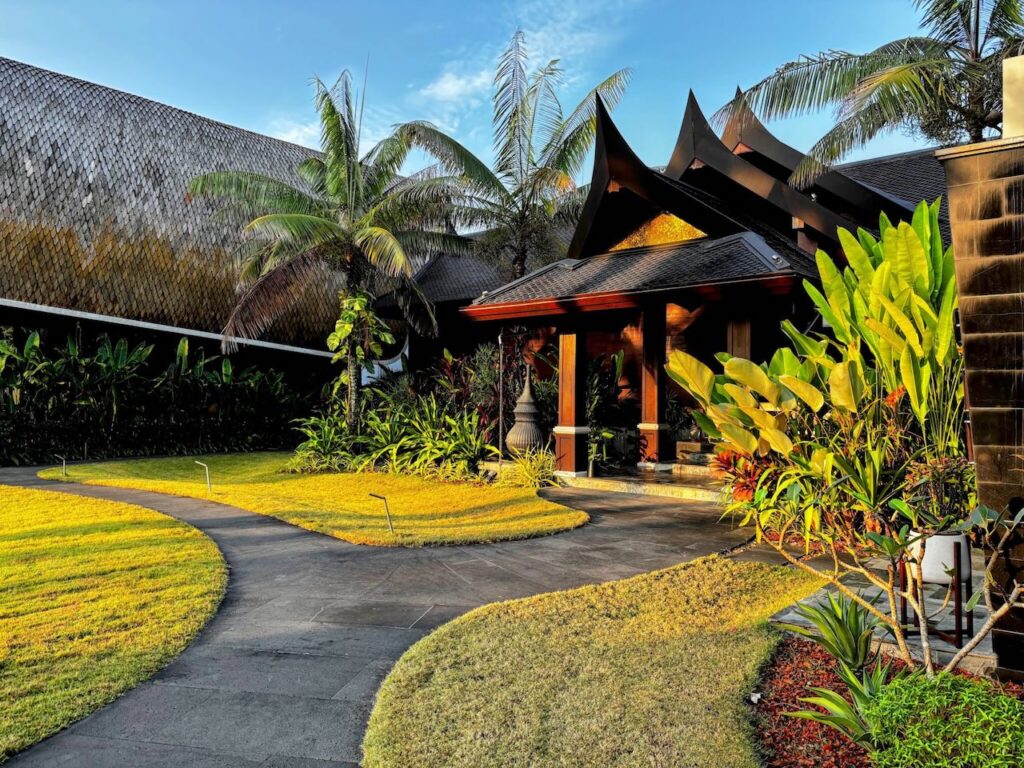
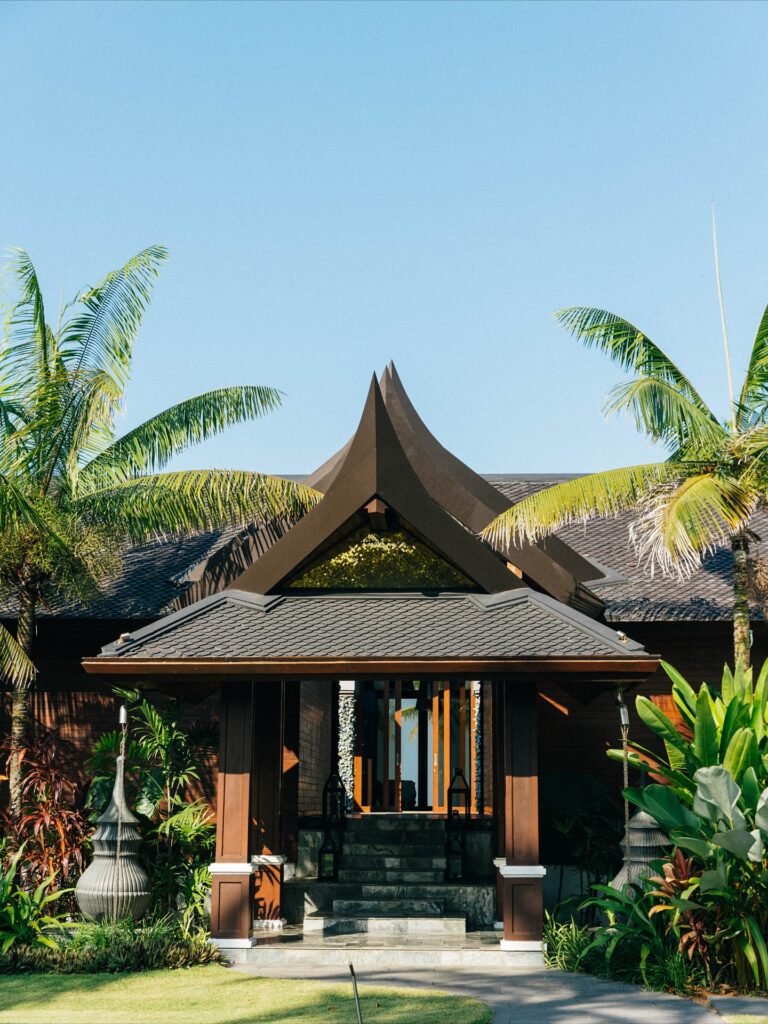
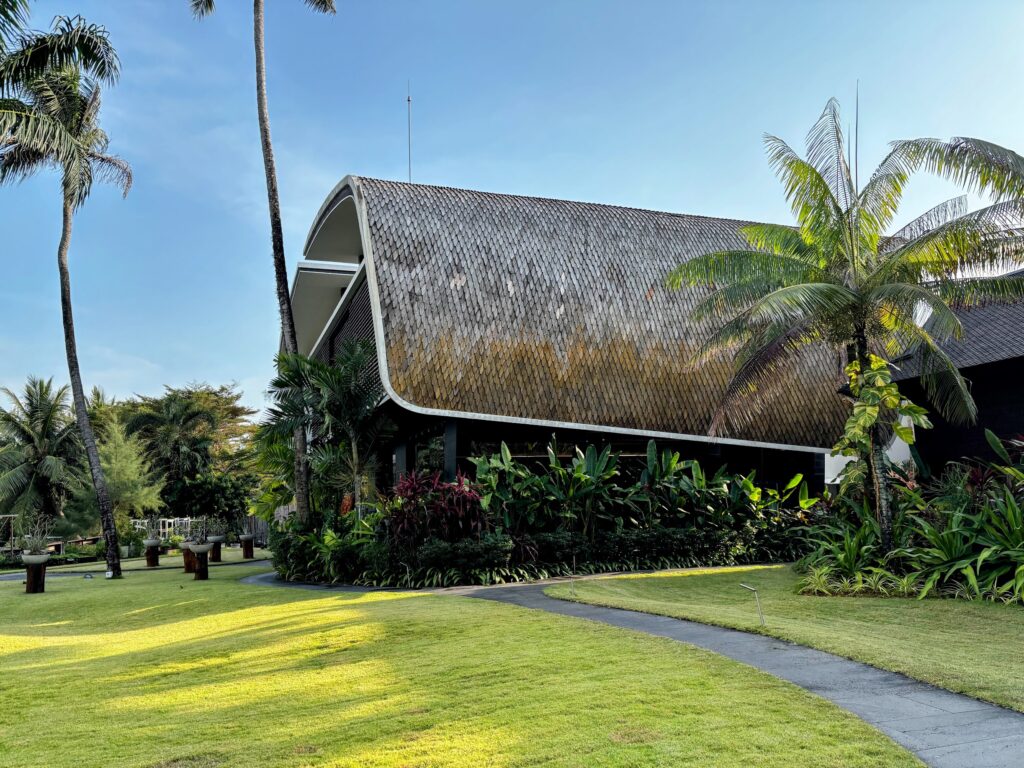
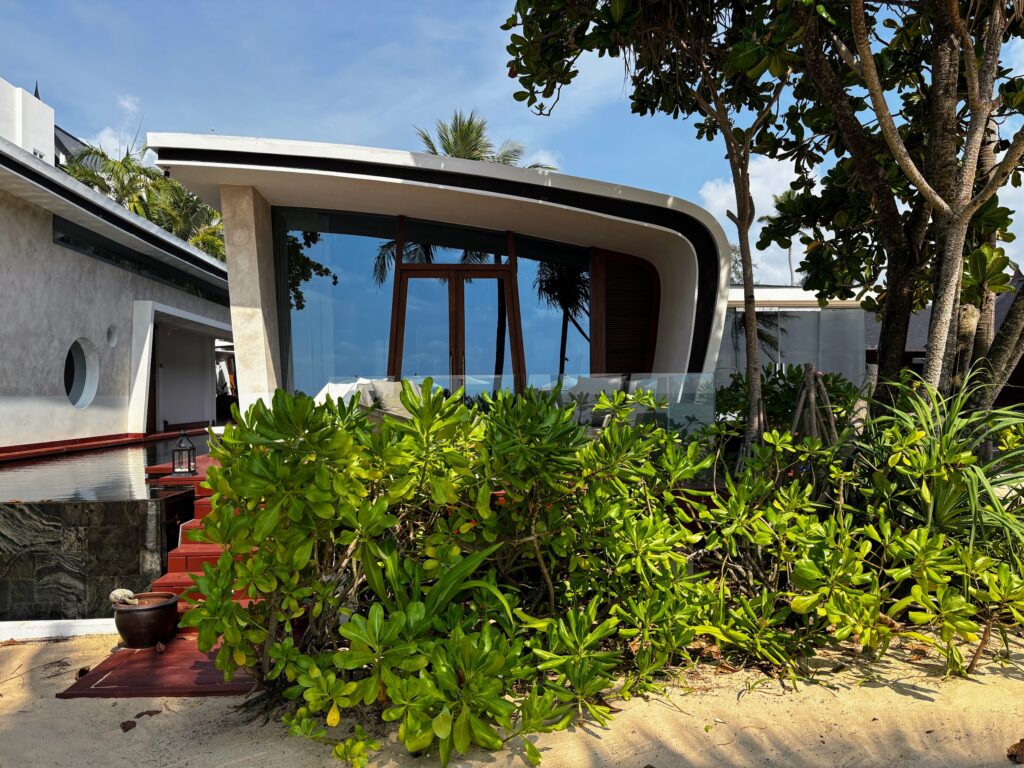
Rather than rebuilding what was lost, Weingard reimagined the site as something new, with design director Graham Lamb overseeing the project and the dream team of international designers given a space each. The traditional southern Thai house at the centre of the property was knocked down and rebuilt, and now anchors the more avant-garde spaces around it; the teak-clad carved roofs of the newer buildings draw on Thai vernacular forms and traditional healing motifs.

Weingard’s wider story is one of loss, and Iniala is, in many ways, his answer to it. The Inspirasia Foundation receives 10% of all room revenue directly and has donated over 15 million euros to health, disability and education projects across South-East Asia since 2003. It is not a footnote, but the reason the place exists.

Rooms

There is no formal check-in as such. Staff are just there as you pull up, addressing you by name as they open the car door. So this is what being a celebrity feels like. You’re escorted directly to your room without having to go through the unseemly business of announcing yourself, a lemongrass foam served from an espuma gun and a chilled towel pressed into your hands before you’ve quite worked out what’s happening. Somewhere along the way, passports are taken, returned a little later giftwrapped with a ribbon. It’s all very suave and sophisticated.

If you do have questions, you simply message the good-humoured staff via WhatsApp, and anything you request is swiftly brought over: a butler-type service that bypasses the need for traditional desk interactions. And no, it’s not AI – there are some carefully placed grammatical mistakes and charming semantic choices on the other end of that phone that prove otherwise.

Staff outnumber guests several times over, underwriting the day-to-day experience. It’s VIP service all the way. With only ten villas, suites and a penthouse, that level of attention isn’t just aspirational, it’s structurally possible.

On the bed, your name has been spelled out in fresh flower petals and orchids, alongside neatly folded towel origami. A welcome platter is ready and waiting: an assortment of local dried fruits (pineapple, mango, nuts) alongside cheeses, local honey, sweets and cookies. After a long journey, it lands well. The macarons were, admittedly, a little lurid, but we were told the chef is working on a tamarind and ginger pastille replacement, which sounds considerably more promising.

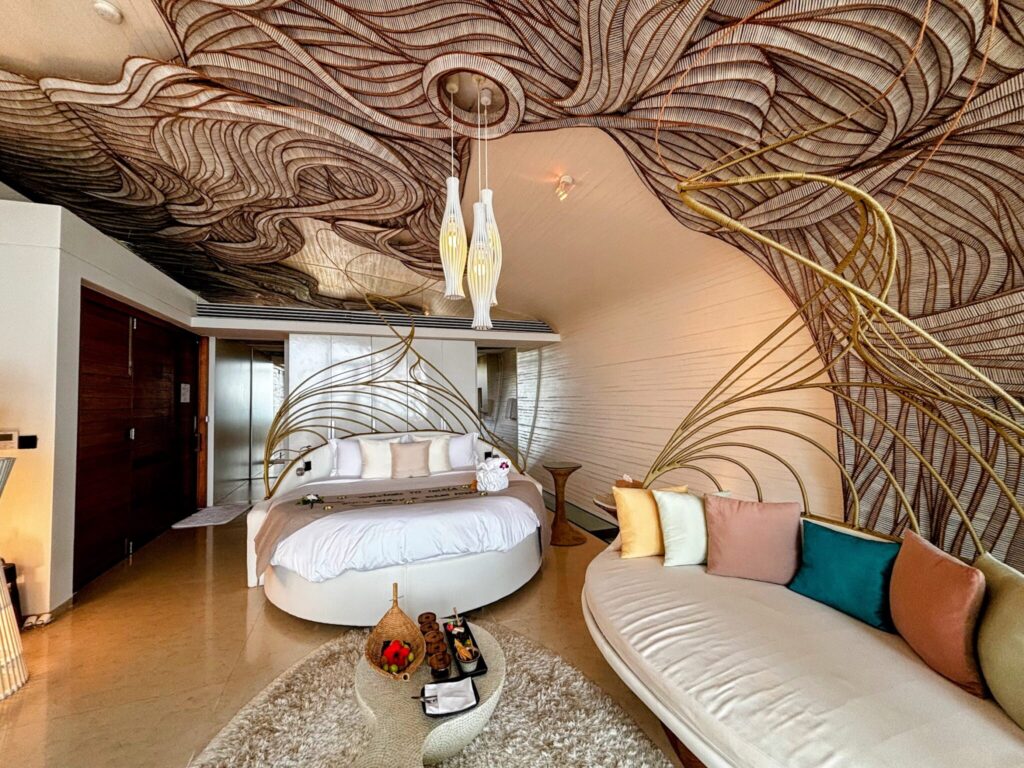
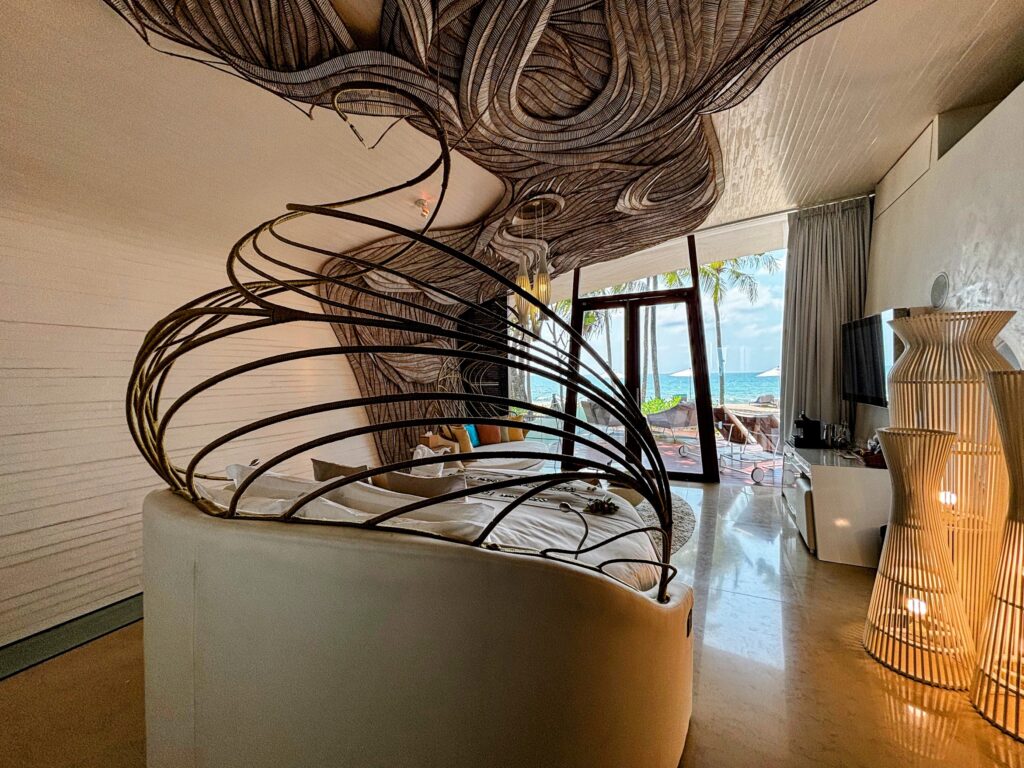
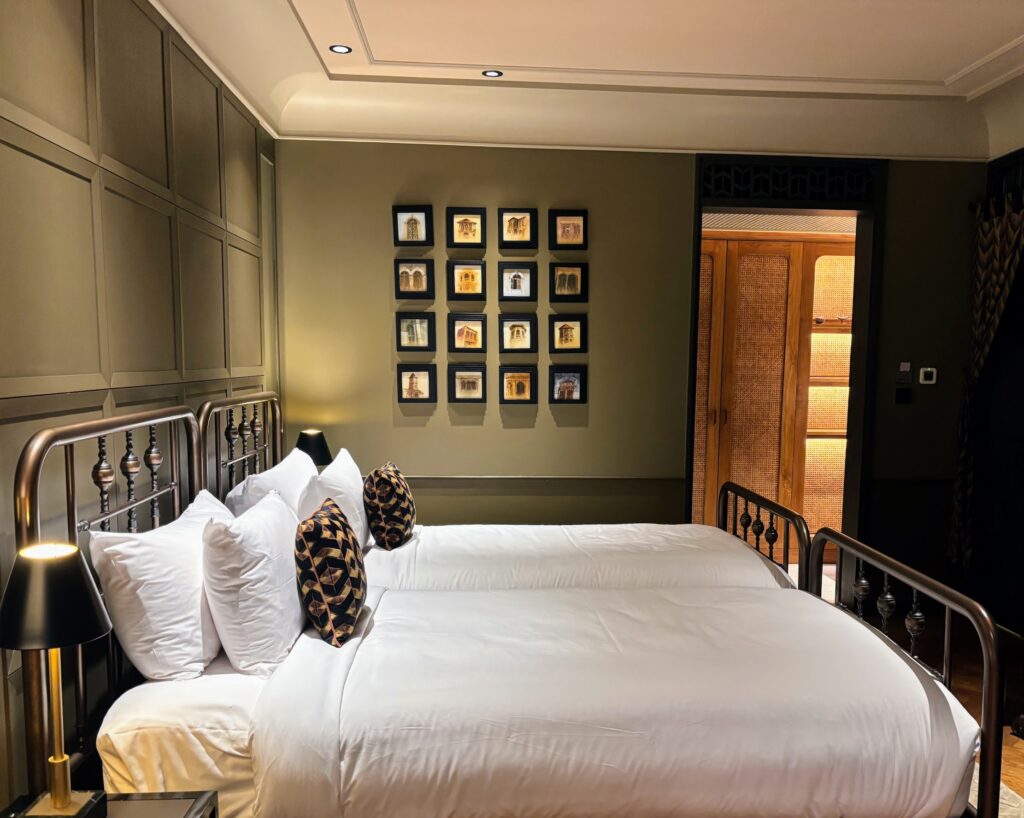
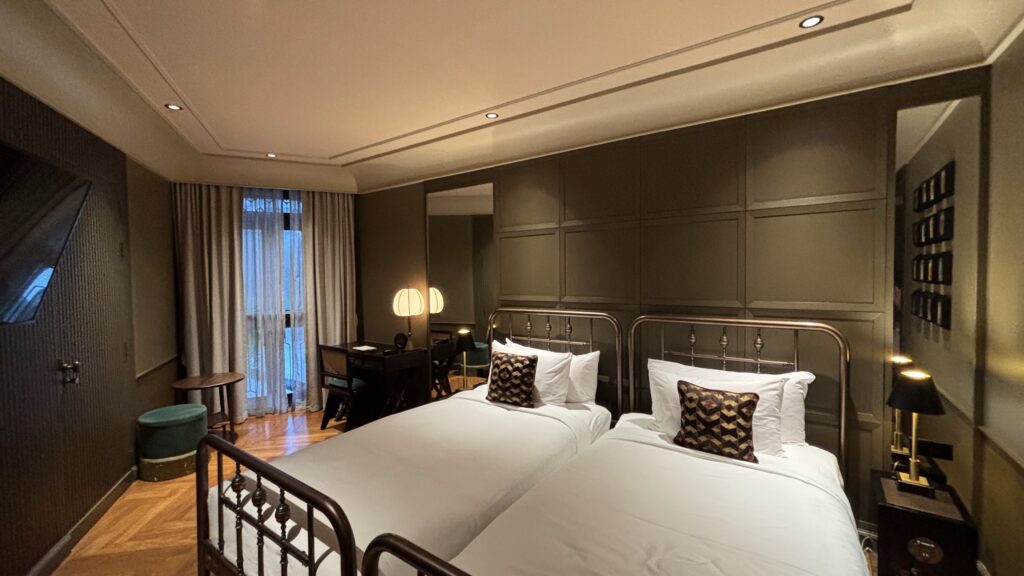
We stayed in the Siamese suite, designed by Thai designer Eggarat Wongcharit, who also turned his eye to the adjoining Golden Temple Bell Spa. He is the only Thai designer among the eleven international names commissioned at Iniala, and has spent his career arguing that traditional Thai craft is not folk heritage to be preserved behind glass but a live design vocabulary capable of speaking on any international stage. The suite is where that argument is made most forcefully.

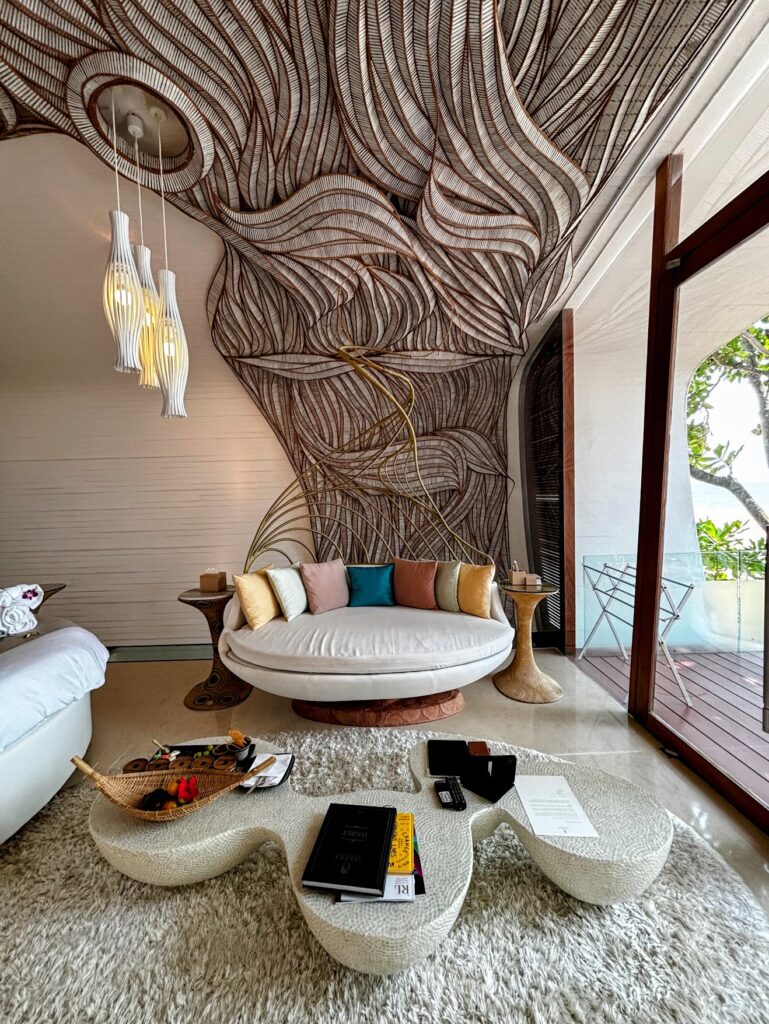
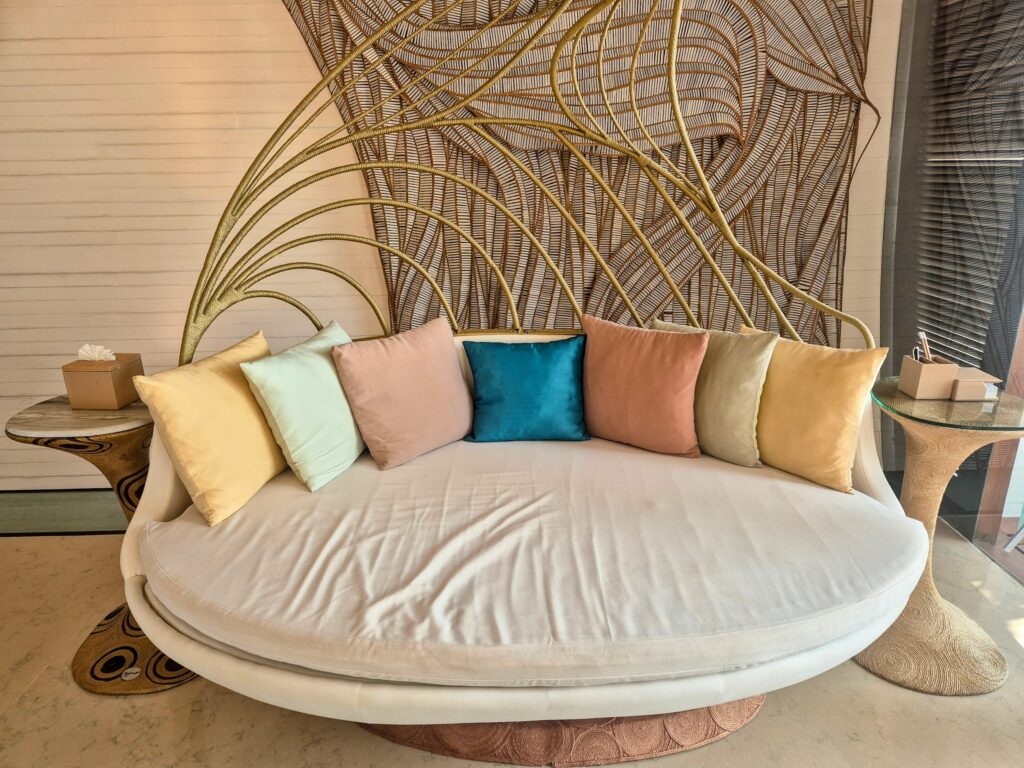
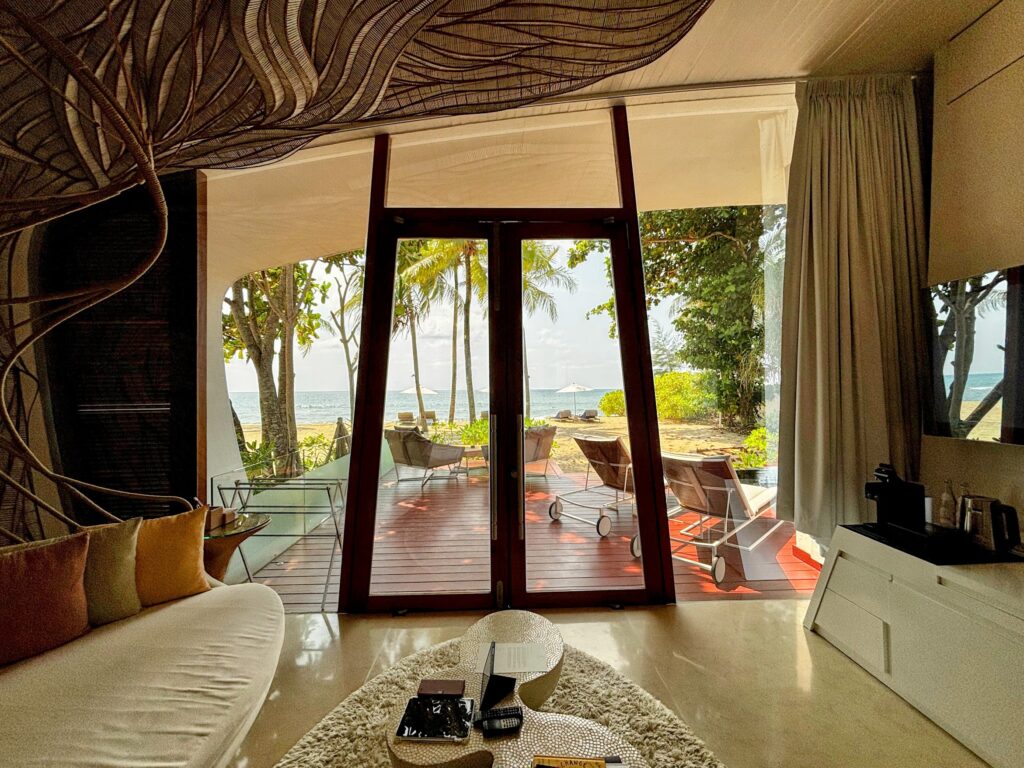
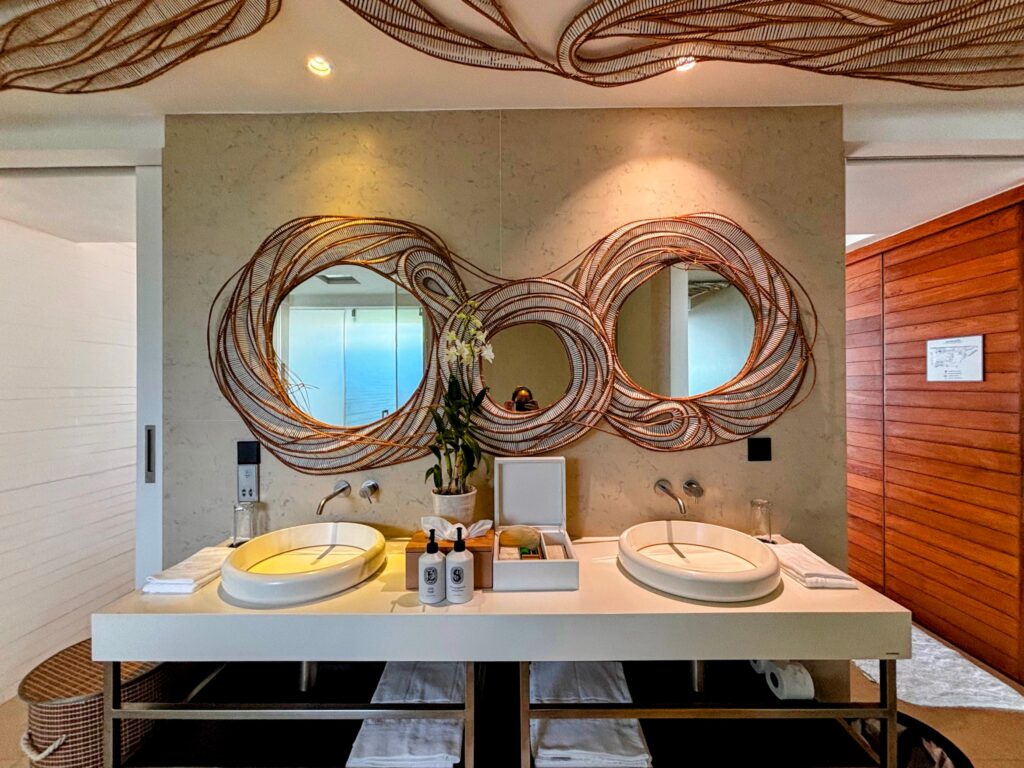
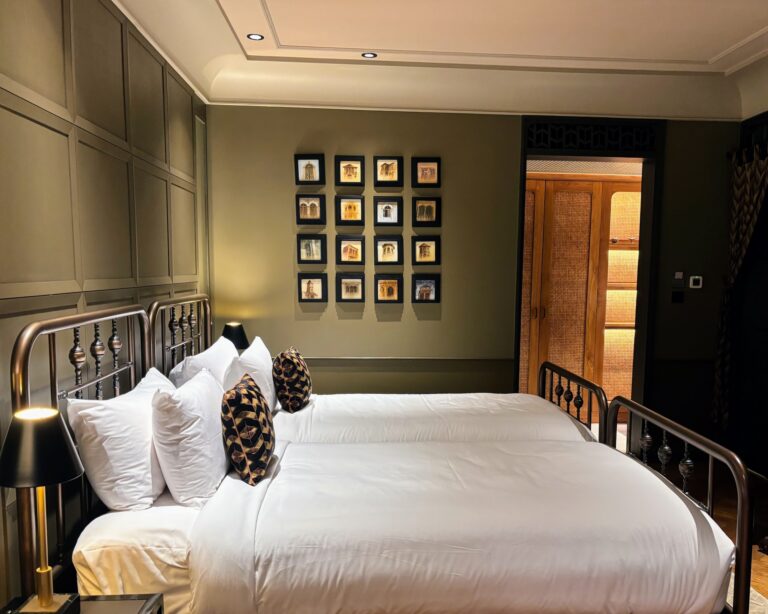
Wongcharit conceived the suite’s furniture as both form and ritual object: the bed and sofa are woven from bamboo in shapes that reference the silkworm cocoon and the temple stupa simultaneously, and hang from the ceiling rather than resting on the floor. The ornate detailing that covers the walls and ceiling is the work of a different hand: Thai artist Korakot, whose dense, swirling bamboo installation envelops the entire room, lending it the quality of being held inside something organic.

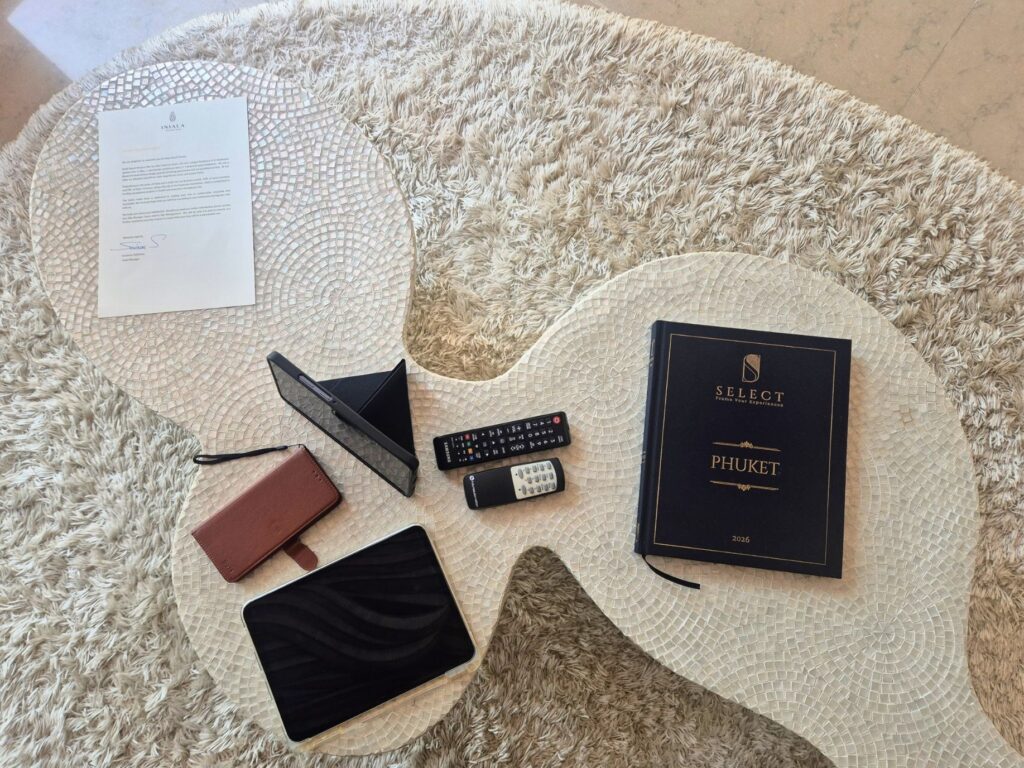
After a night on the circular mattress, held in the embrace of bamboo, we wondered why all beds aren’t this shape. The coffee table, though, was the piece we kept returning to: a low, white mosaic form with undulating, lobed edges, almost topographic, almost coastal. Whether or not it was the intention, it read to us like a map of Phang Nga Bay rendered in miniature. It is a room whose references only deepen the longer you spend in it.

Everywhere you look, something has been considered, shaped, placed: weirdly wonderful, and entirely deliberate. The wildness of the Andaman, framed through those windows, is the natural counterpoint to all that intention, the thing that keeps the room from tipping into pure exhibition.

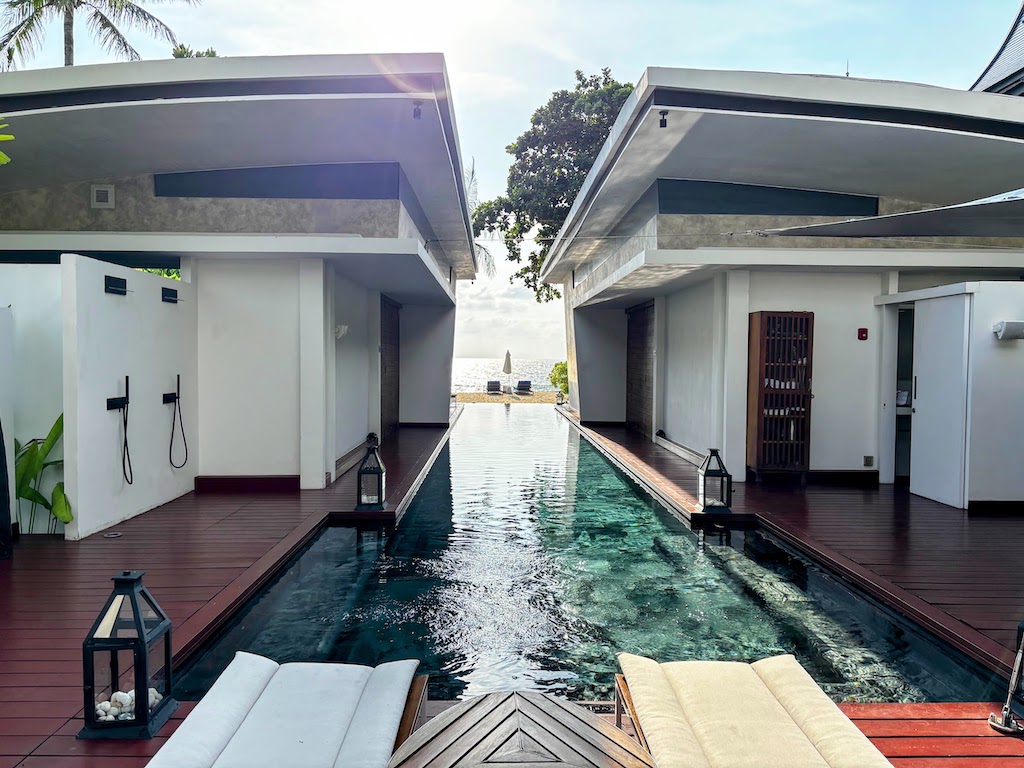
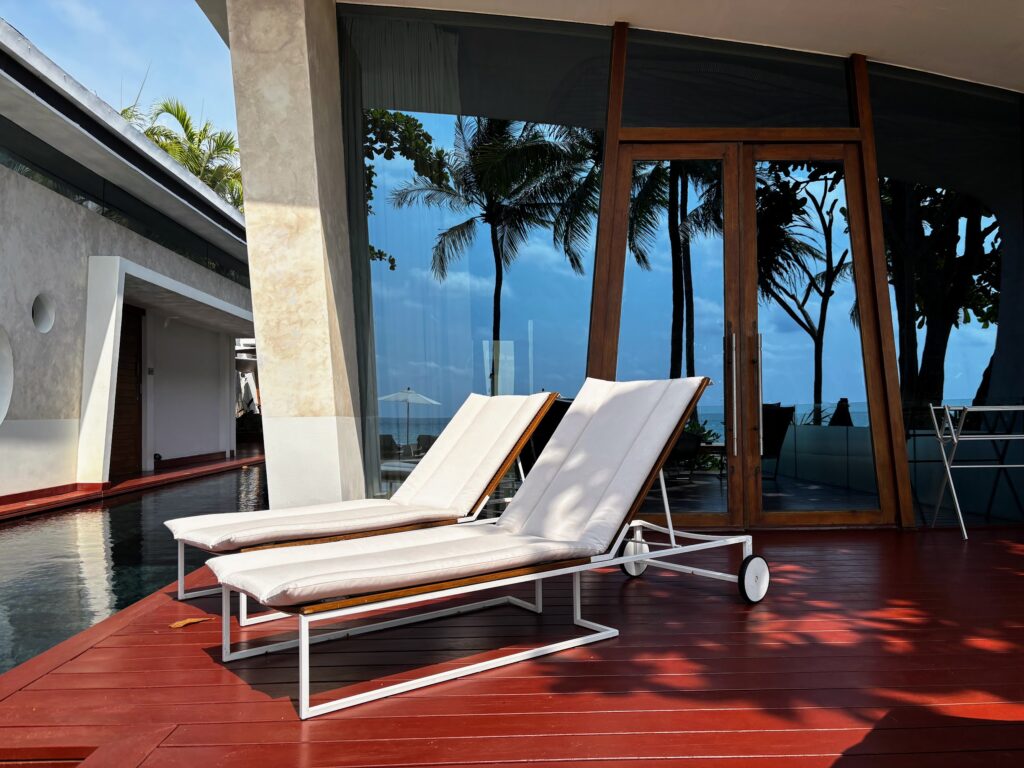
Floor-to-ceiling windows face the sea, and the motorised curtain mechanism is one of those small, satisfying details that lodge in the memory. Talk about a big reveal. A few steps off the deck and you’re on the sand, and close enough to the water for the oceanic white noise to make sleep both immediate and deep (or maybe it was that massive tasting menu and wine flight we’d only finished an hour prior).

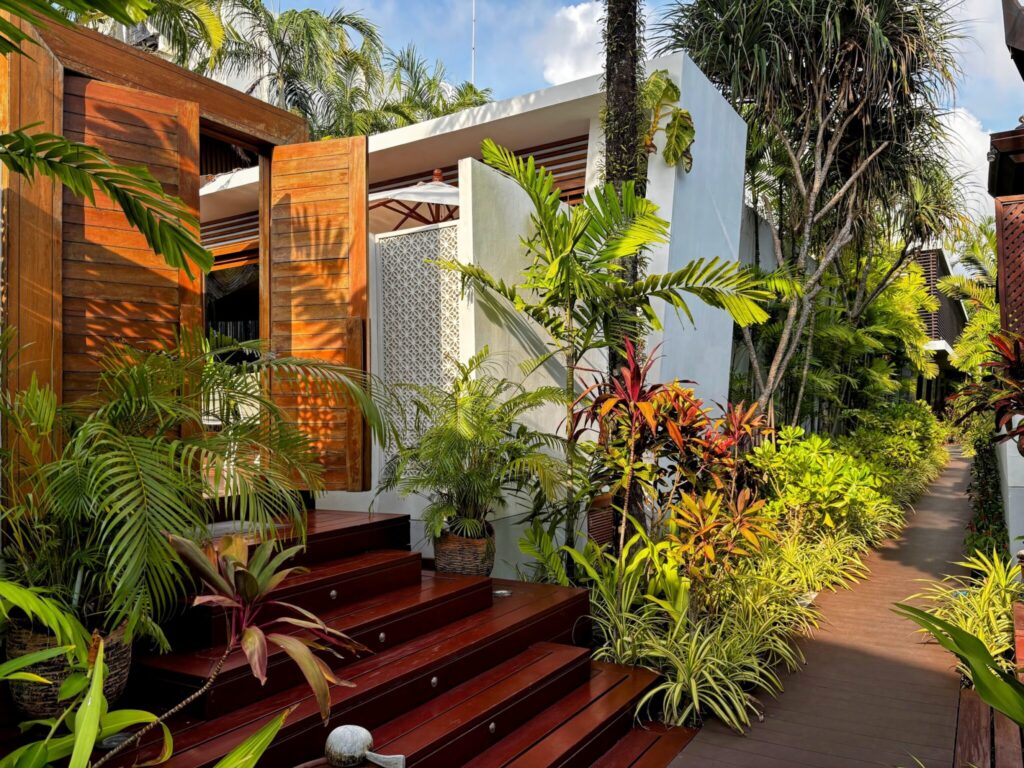
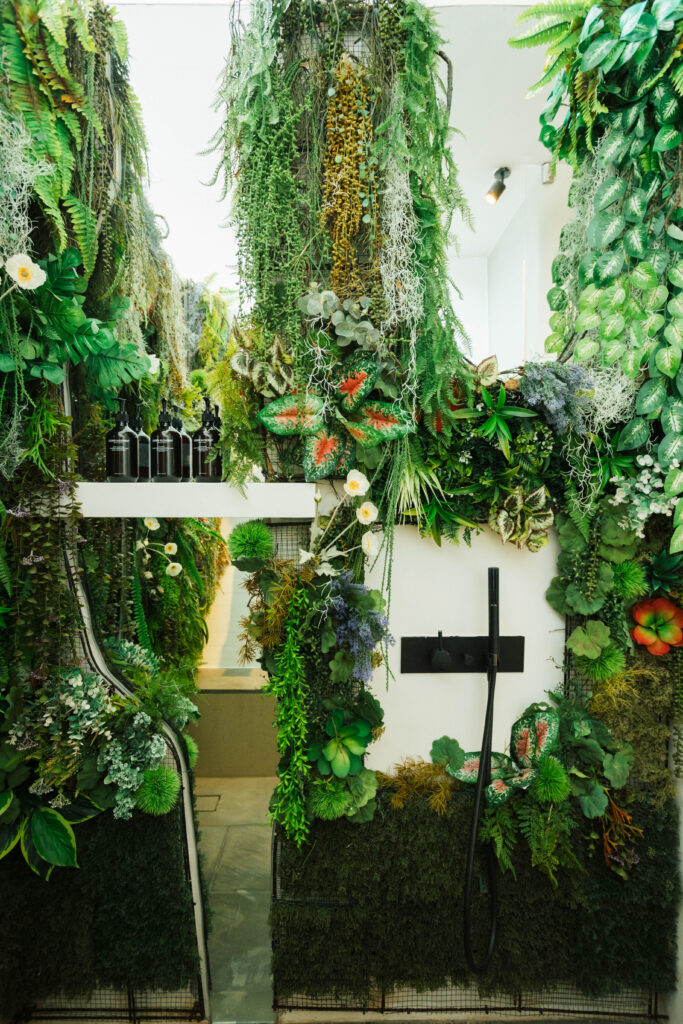
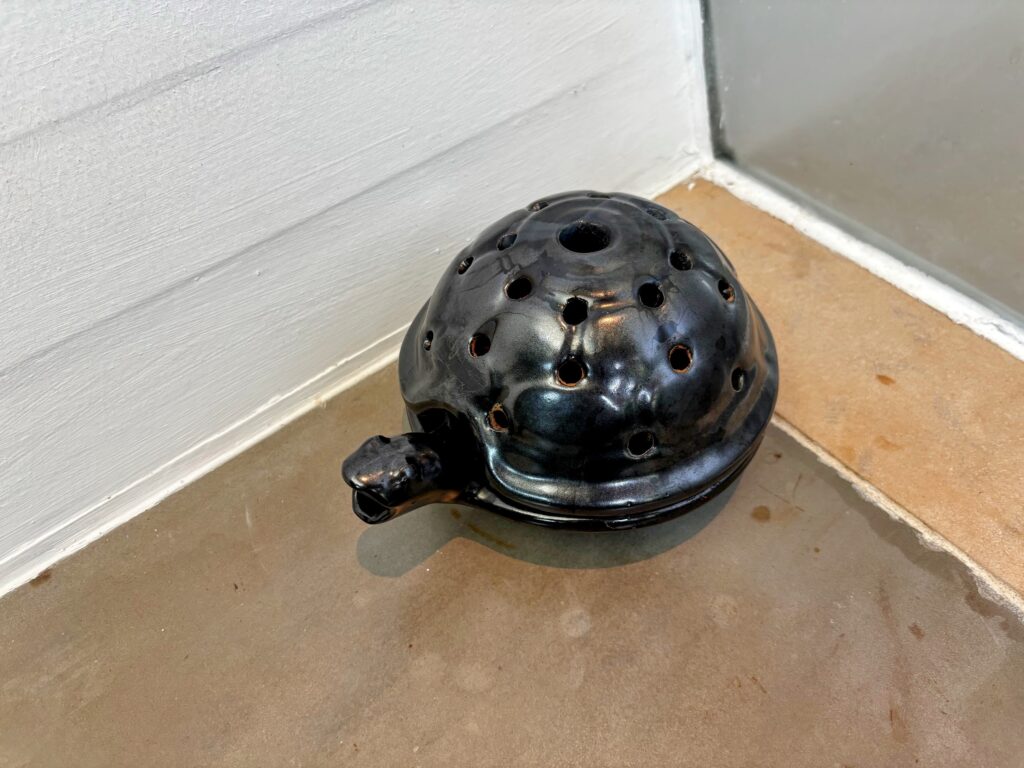
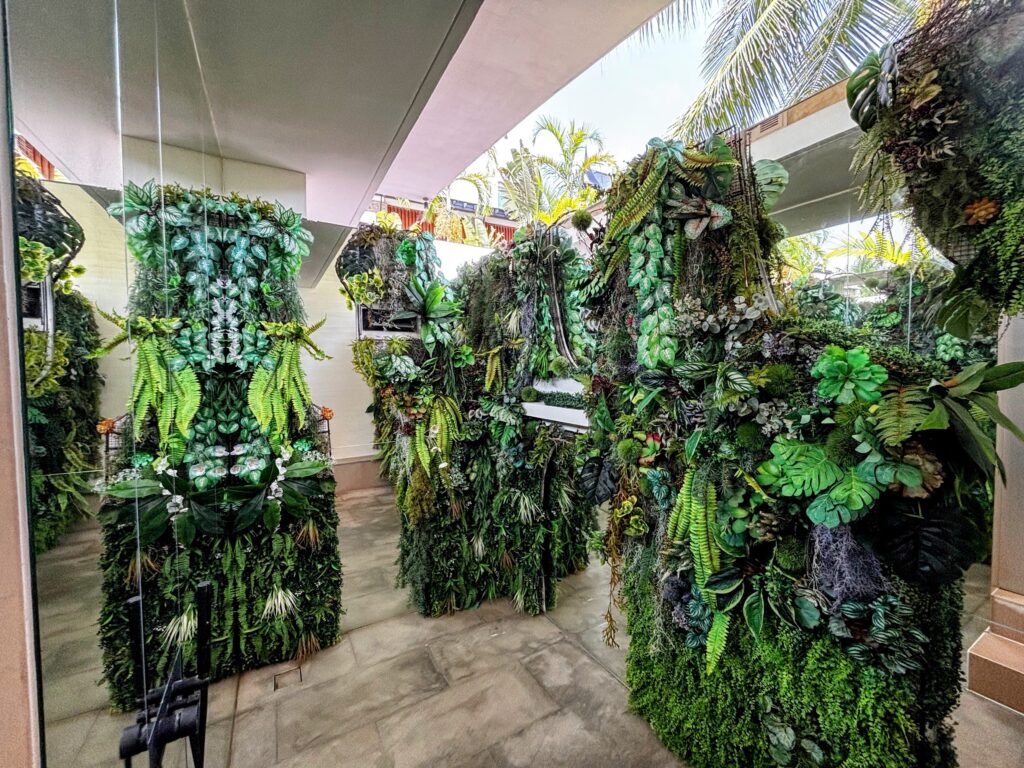
The outdoor shower is a design moment that catches you off guard: swathed floor-to-wall in cascading tropical foliage, with ferns, monstera leaves and white orchids tumbling from every surface. In the corner, a turtle incense holder releases smoky, sandalwoody resins cut with something vegetal and damp. Showering here feels faintly illicit, like you’ve gone rogue and you’re nude under Ton Sung waterfall a few miles inland. Our suite shared a pool with the villa next door, which does mean the outdoor deck falls short of absolute privacy; worth knowing before you start belting out your favourite shower song. Oh, ours? George Michael’s ‘Outside’, of course.

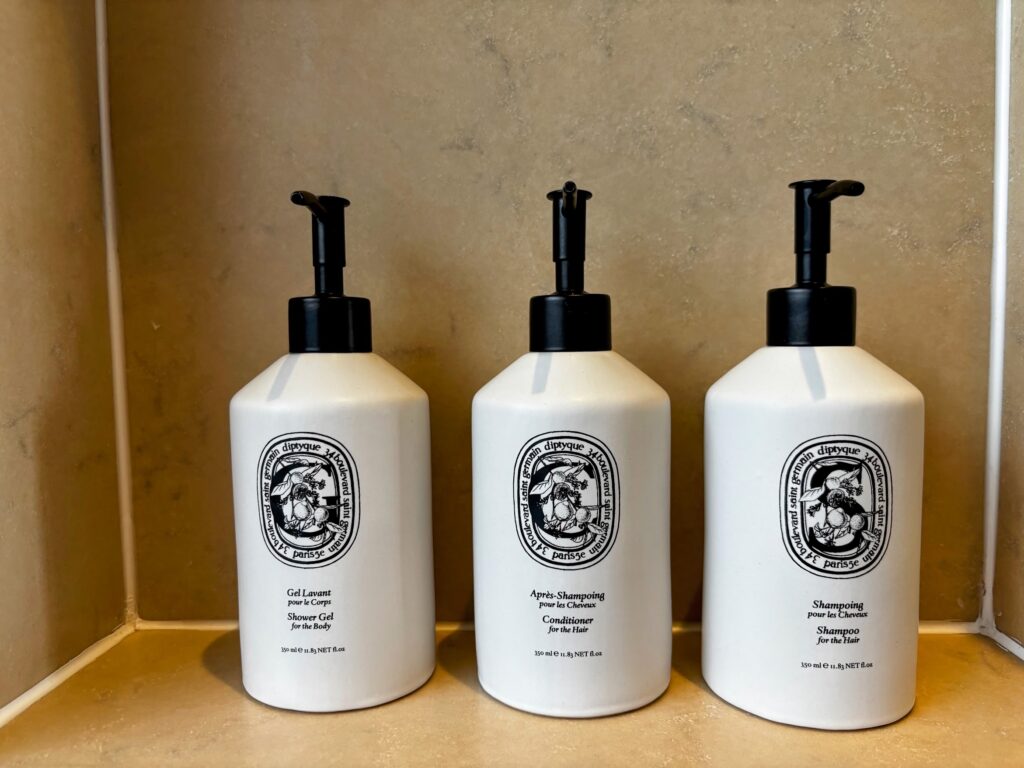
Back inside, and the bathroom is stunning, with the curling, come hither bamboo motif not letting up. Amenities go well beyond the usual vanity kit: Dyson Supersonic hairdryers, complimentary, bottomless Acqua Panna mineral water, and Marvis, the crème de la crème of toothpaste. There’s also a lemongrass and geranium shampoo and conditioner from Diptyque, which leaves your hair feeling so soft you start to understand why celebrities always look the way they do. That, and botox.

Anyway, try buying that shampoo back home; there’s a waiting list for it on the John Lewis website that’s reportedly several years long. Perhaps you’ve gotten off lightly; they do currently stock Diptyque hair mist, and it’s priced at £2,066.67 per litre.

The disparate group of designers is perhaps Iniala’s masterstroke. They’ve pulled off something very clever here: each suite and villa boasts that spark of eccentricity that makes you feel that whatever room you’re in, it’s the one, the highlight, the most coveted. The only constant is the sea, framed through every window, and you breathe it all in, facing forward into the horizon of your life as much as actually squinting at the ocean.

Elsewhere, the more theatrical instincts of individual designers are given full rein. The Penthouse (where the Kardashians stayed) for instance, is conceived as one continuous holistic environment, with the bed cantilevered from above and a giant whale tail sculpture appearing to leap from the sea straight into the pool: the detail that earns the property its ‘iconoclastic’ billing, no doubt.

Although the hotel welcomes children, the villas and suites are decidedly adult spaces. You’d be bloody worried about young Tarquin unravelling the bamboo or smashing a bottle of that prodigious shampoo, it has to be said. Some rooms lean harder into this than others: the Boudoir Suite, with its Swarovski-laden side tables and shimmering drinks trolley in the form of a vintage motorcycle, leaves little ambiguity about its intended guest. All that said, there is a Kids Club, and it’s no afterthought – treehouses, caves, a costume shop and its own theatre. Chuck them in there till checkout.

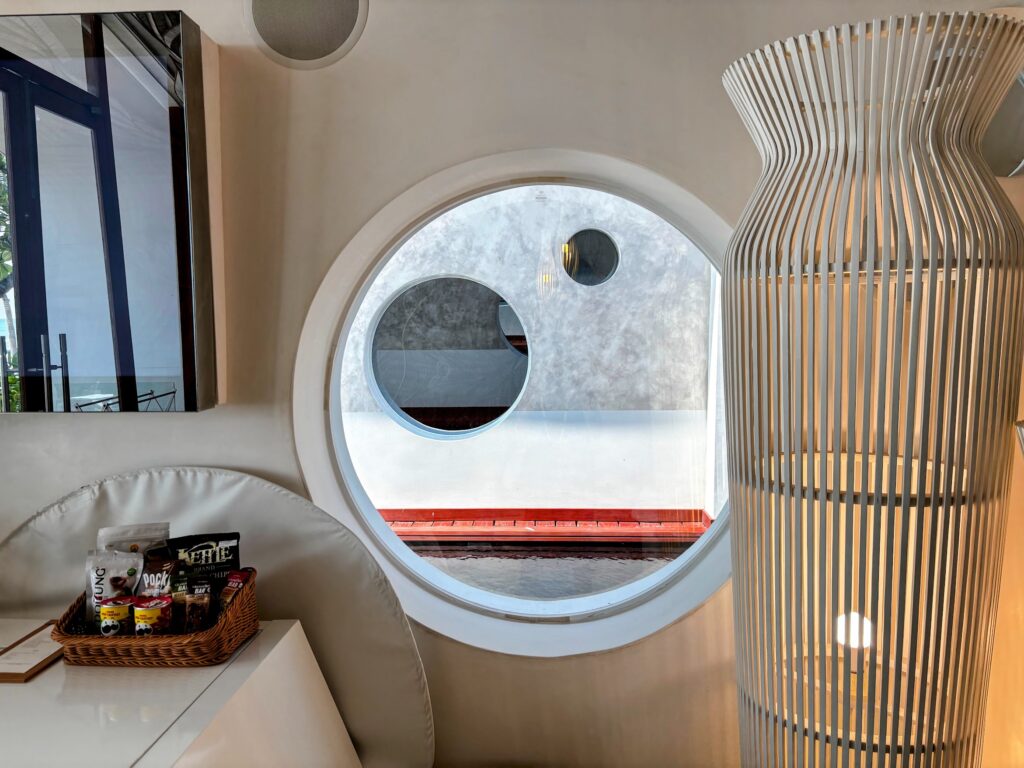
But back to those rooms. Each embraces an unapologetic, idiosyncratic interior, with no design language softened or hedged to keep the baseline happy. Staying for a few days surrounded by hanging cocoon beds, swirling bamboo ceilings and coffee tables shaped like coastlines is enough to make you start cataloguing the safe choices back home.

Facilities & Spa

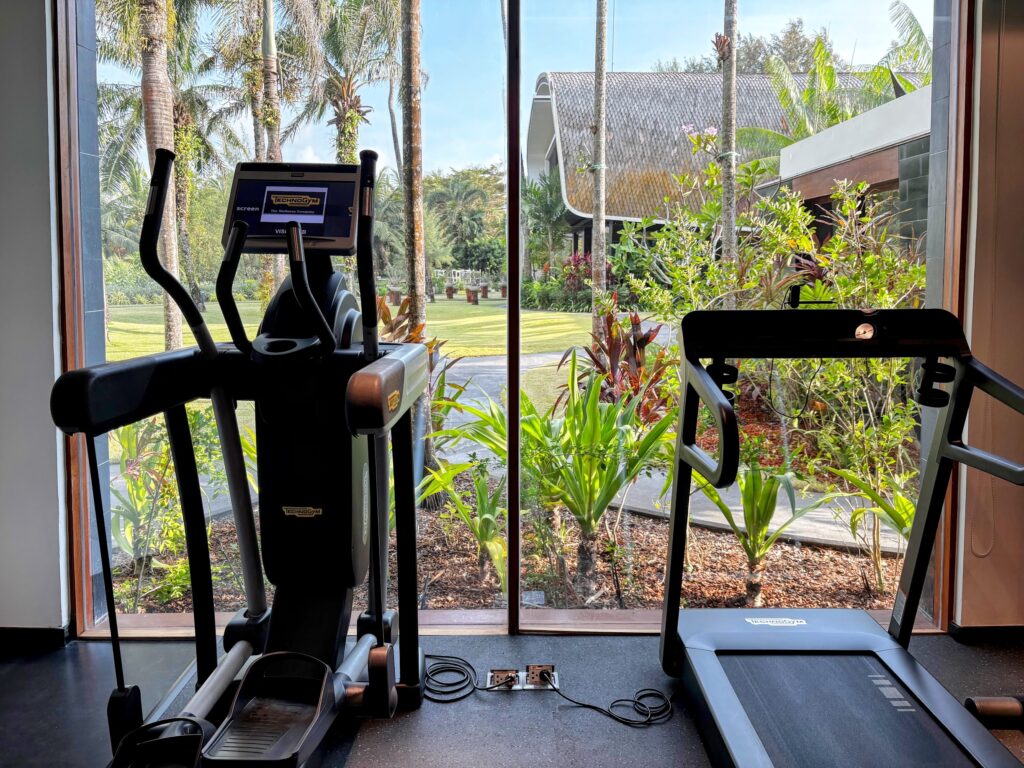
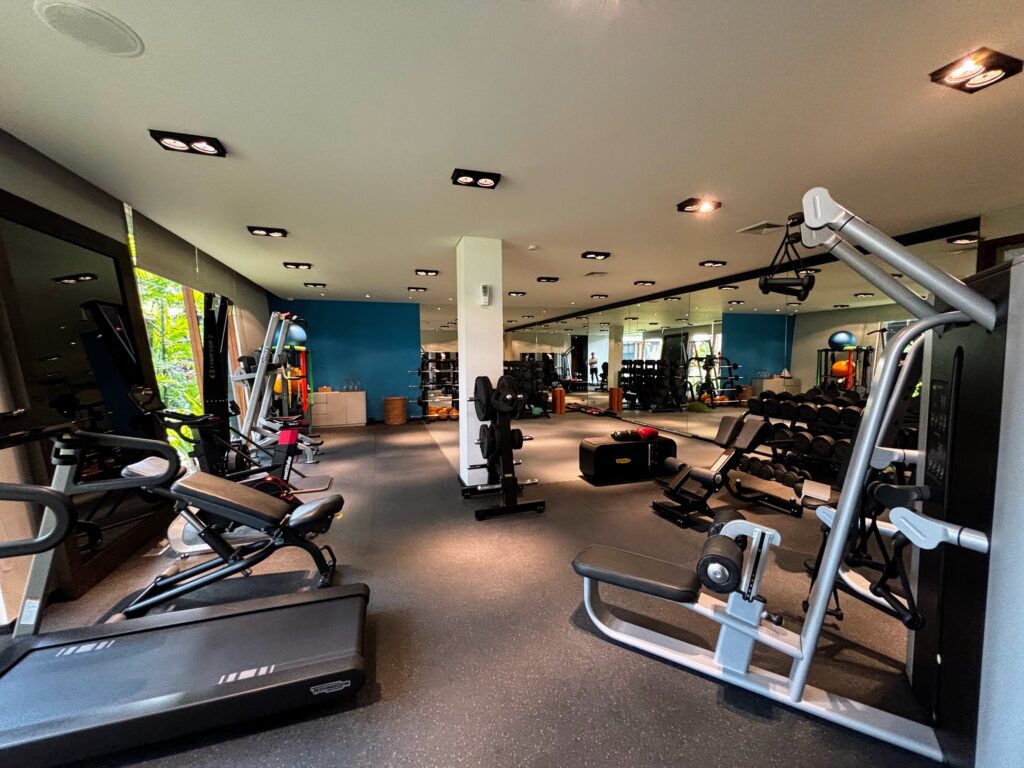
With the sand, the sea, and a room that keeps revealing new details every time you look up, standard resort notions of ‘facilities’ feel almost beneath Iniala Beach House. Huffing and puffing on an elliptical or getting tangled up in a cable crossover is a perverse way to spend a morning with the beach and big blue right there, but there is a gym. A well-appointed one, in fact, with a boxing ring, Concept 2 SkiErg and Wattbike, which is more than most five stars manage.

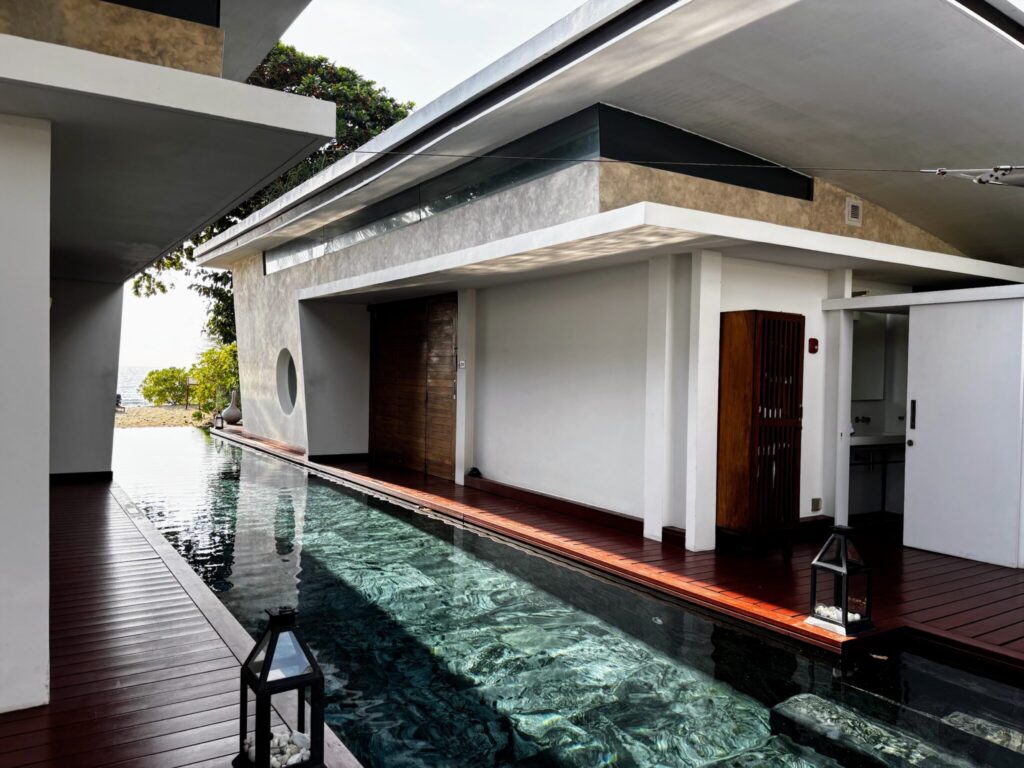
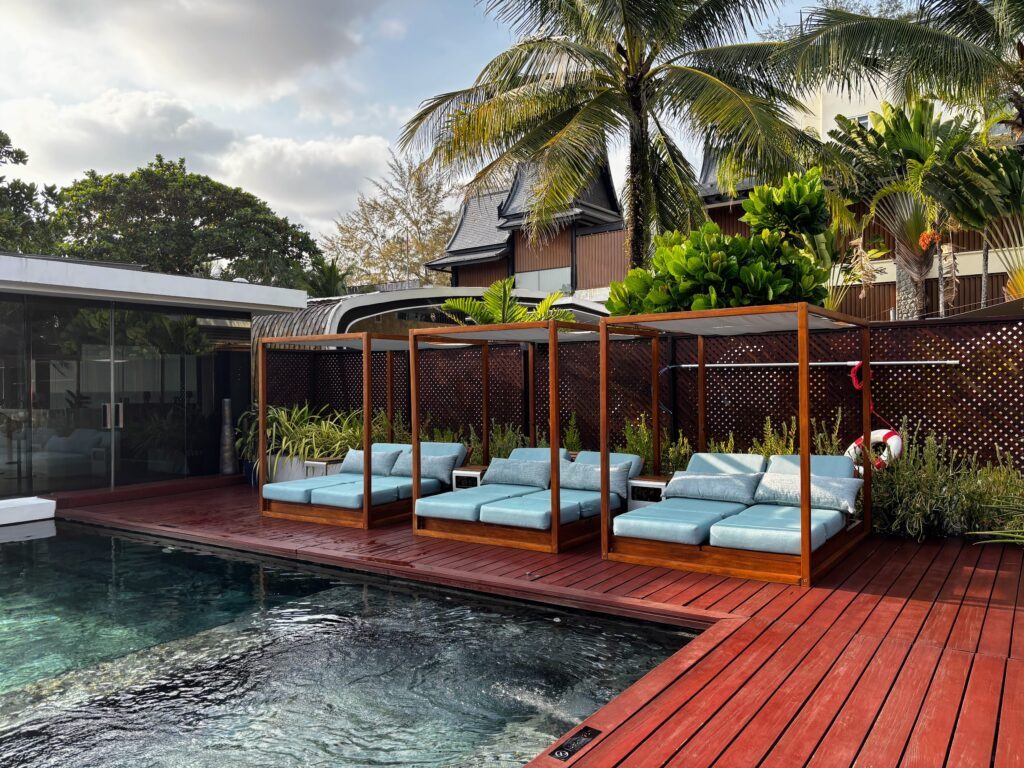
The beachfront infinity pool is the natural centre of the property, with aftersun, mosquito repellent and suntan lotion all laid out poolside, small touches that matter when the nearest 7-Eleven is a long drive away.

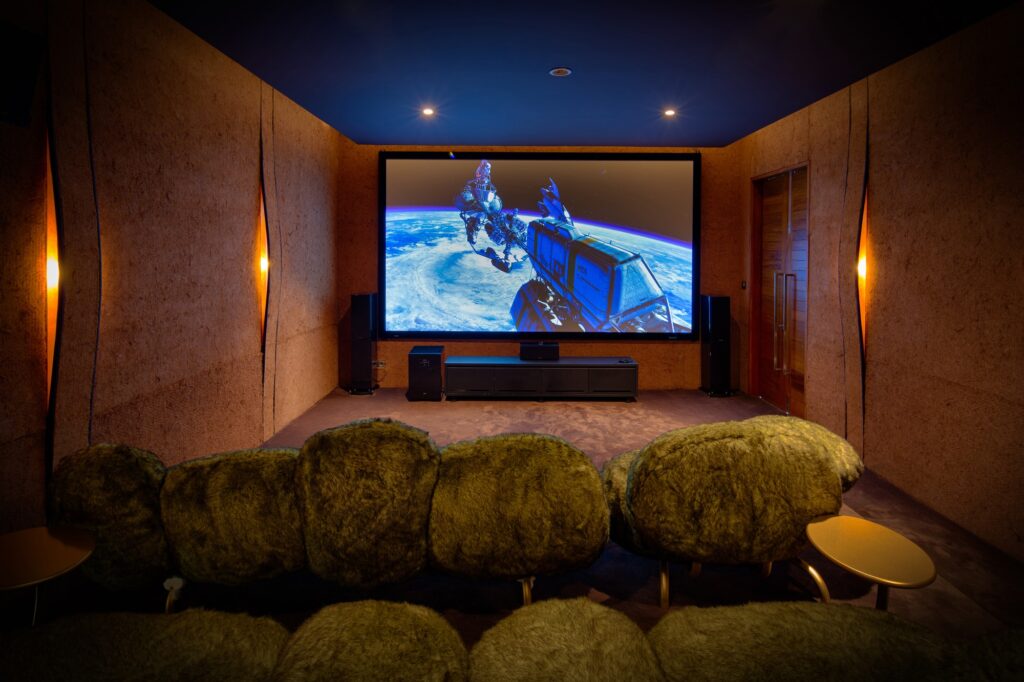
Beyond the pool sits the Cinema of Nature: a 160-inch screen with state-of-the-art surround sound, the room again designed by those prolific Campana Brothers. Its walls are clad in real coconut skin and there’s their famous Cipria sofa in here, rendered in a limited edition green. Yes, we know you’re thinking actual nature is ten feet away, but it’s ideal for those occasionally (very) stormy Southern Thai evenings.

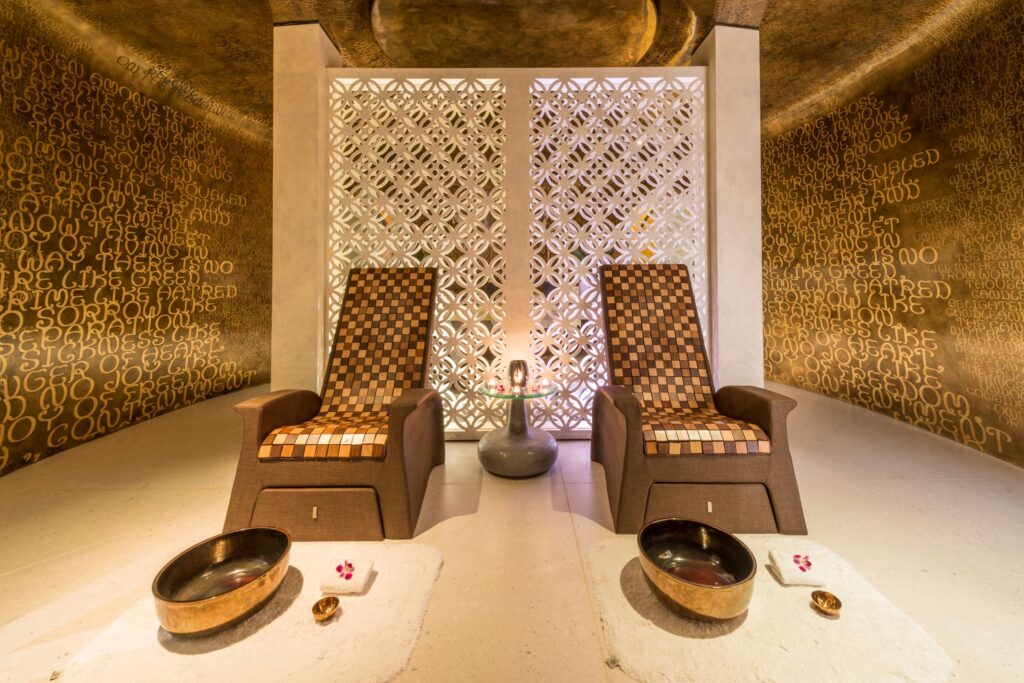
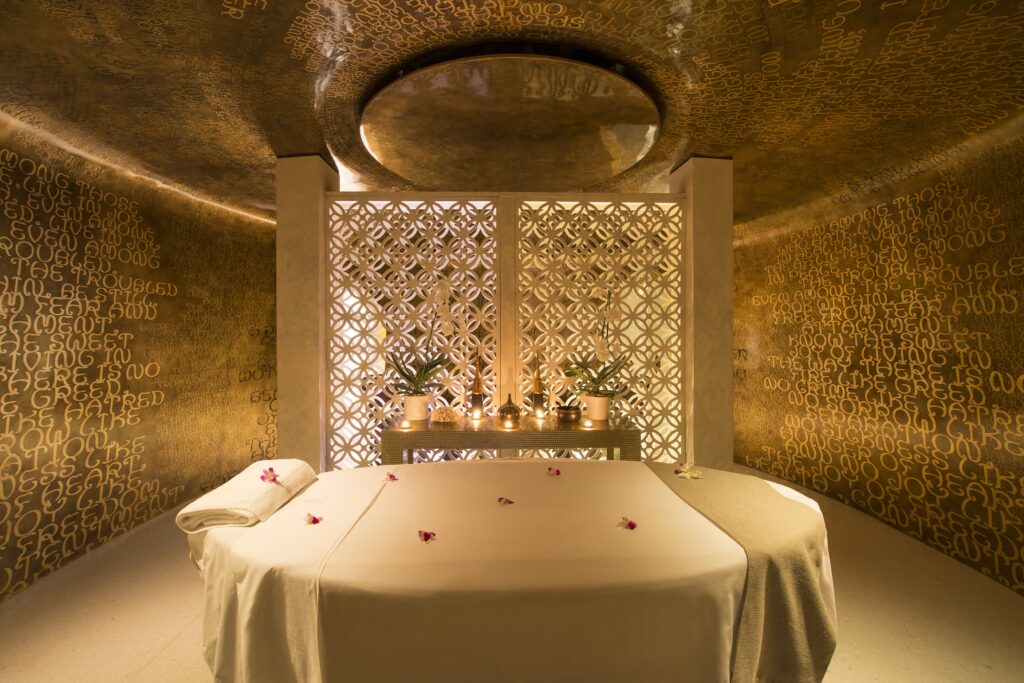
The Pearl Spa is adorned in its namesake material and offers treatments that go some way to restoring both purity and beauty, two qualities this writer arrived conspicuously short on. There’s also the Golden Temple Bell Spa, covered in gold leaf and inscribed with Buddhist texts translated into English. The Thai herbal steam room will lift you out of any jet-lagged malaise.

Should you surprise yourself and all the staff and get the urge to venture out, the hotel can arrange canoe trips into the sea caves and hidden lagoons of Phang Nga Bay (particularly beautiful at night, when bioluminescent plankton lights up the water inside the caves), a trip to Ko Tapu (the limestone pinnacle from The Man with the Golden Gun), or simply bikes to borrow for pedalling past local temples and fishing villages. Cooking classes, Muay Thai and sunset horse rides are also on offer.

It is, of course, the sea that is the hotel’s most natural facility. This is the kind of holiday you can pack lightly for: all you really need is a couple of swimsuits and a few outfits for the evenings, because you’ll spend most of the day playing in those waves anyway.

Food & Drink

Who needs a poolside pizzeria, an ‘international’ buffet and a pan-Asian place when you have a singular hotel restaurant as good as this? Iniala has arguably become best known for Aulis, the hotel’s magnum opus if you will.

At Simon Rogan’s 15-seat chef’s table concept, he champions hyper-local Thai produce through the same farm-to-table philosophy he has honed at his three Michelin-starred L’Enclume in Cumbria, reinterpreted entirely through Thai terroir and ingredients. Now when you see him back on British tele looking all tanned, healthy and happy, his sunnier disposition makes total sense.

In 2026, Aulis retained its star for the second year running (one of just two in wider Phuket), and restaurant manager Arsen Brahaj also picked up the Michelin Service Award for Thailand. Dining here, that latter award makes just as much sense as the former; Brahaj is a class act from beginning to end, a real craftsman, suavely guiding service with an assured hand and precise pours.

Choosing highlights from a hugely accomplished tasting menu almost does Aulis a disservice. Each course is as intricately designed and idiosyncratic as the rooms. And just as those rooms come together to form a coherent resort, the meal coalesces to tell one story about this stretch of coast. Come to think of it, that might be the whole idea.

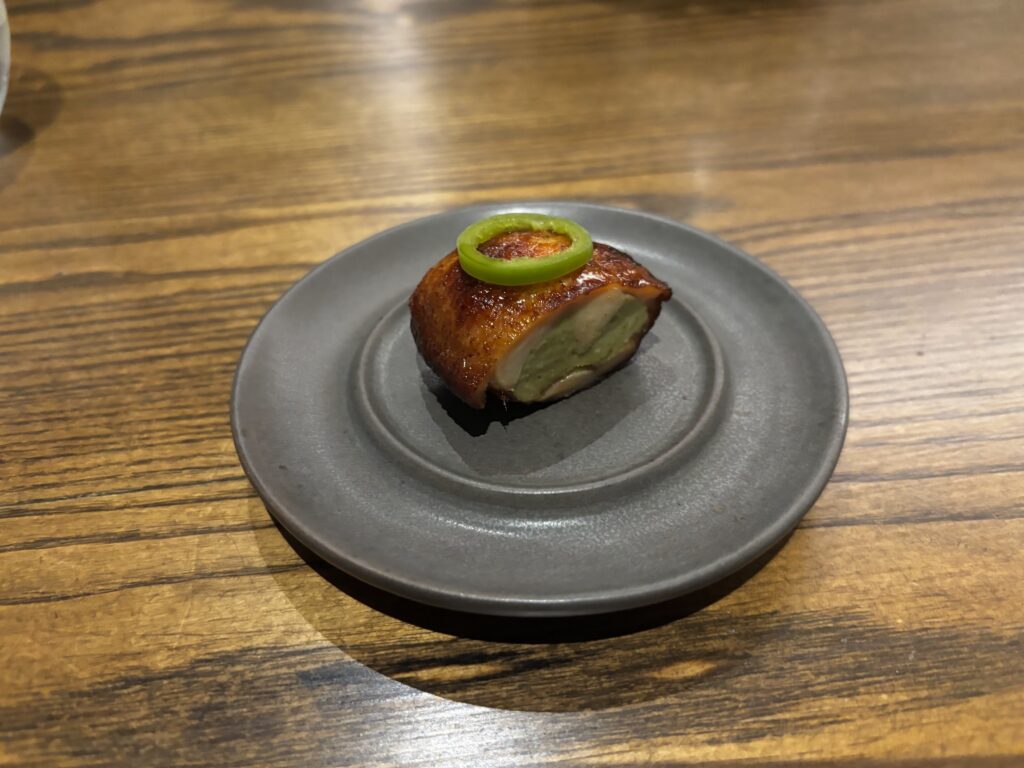
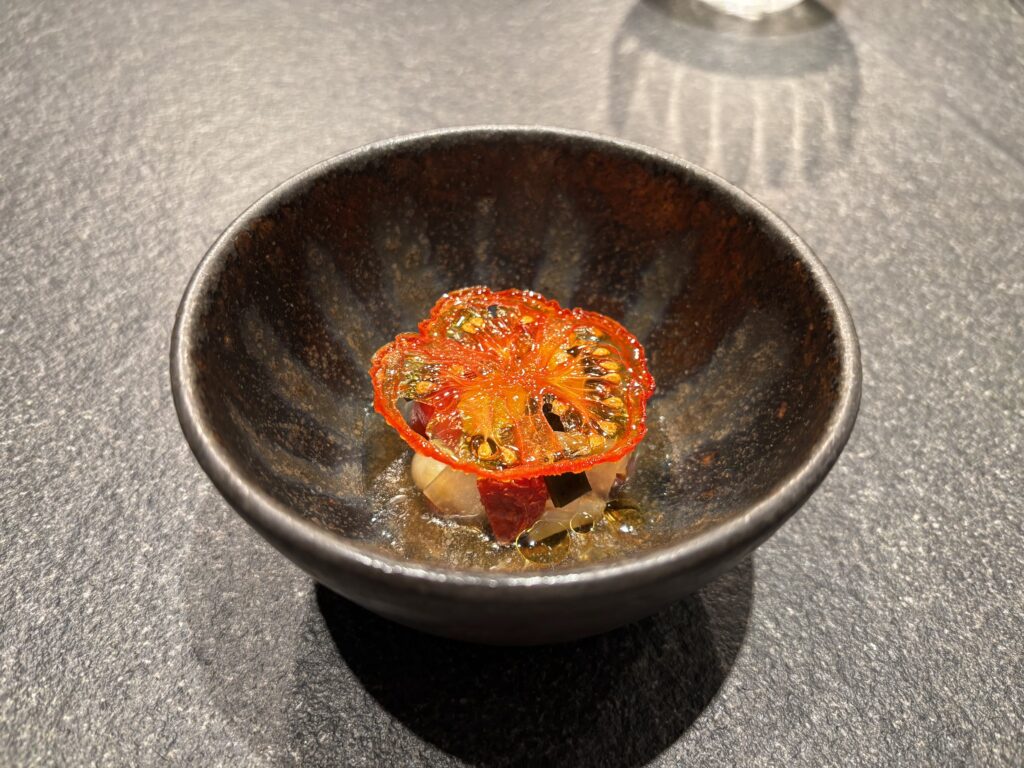
Hey, but if forced to choose: four snacks in the lounge set the tone, among them a Klong Phai Farm chicken wing lacquered with Thalang honey mead, makrut lime leaf and pickled jalapeño from Khok Kloi, which tells you everything about Rogan’s approach here; myopically sourced but rich in inspiration.

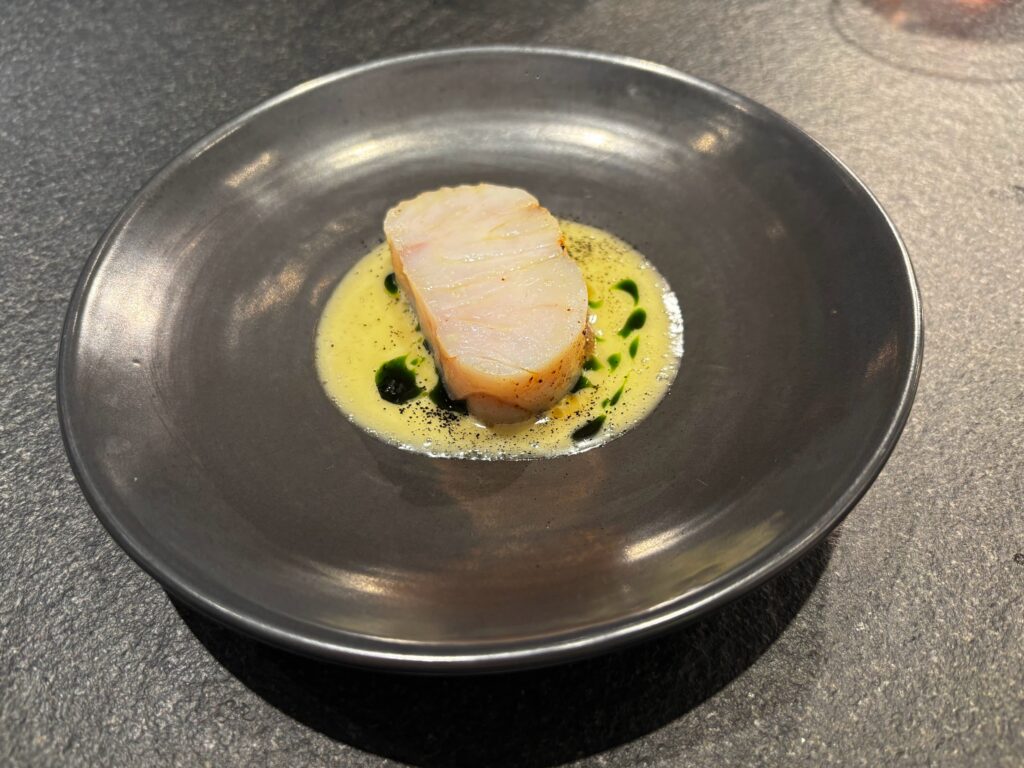
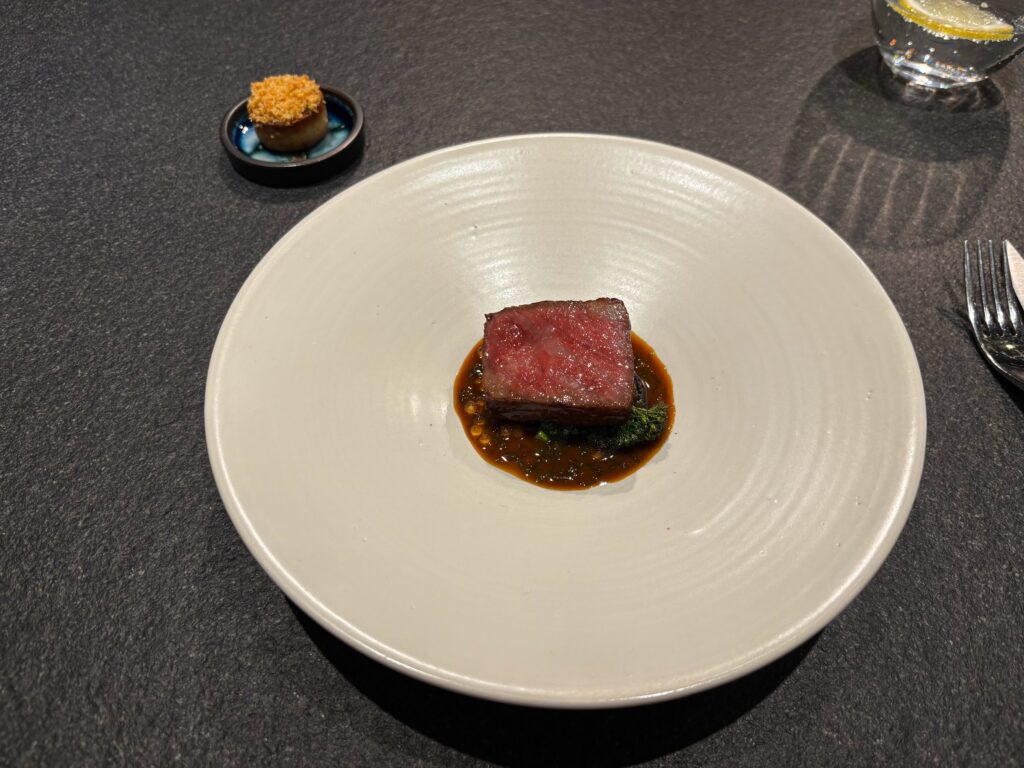
At the chef’s table, a Phang Nga squid with smoked tomato and Rayong wasabi opened beautifully, and the day boat coral trout with toasted koji butter and burnt purple eggplant was a standout. The ‘main’ course was 76-day aged wagyu striploin, arriving alongside a toasted crumpet with bone marrow and a massaman-inspired curry sauce, a pairing that sounded experimental on paper but landed with absolute conviction.

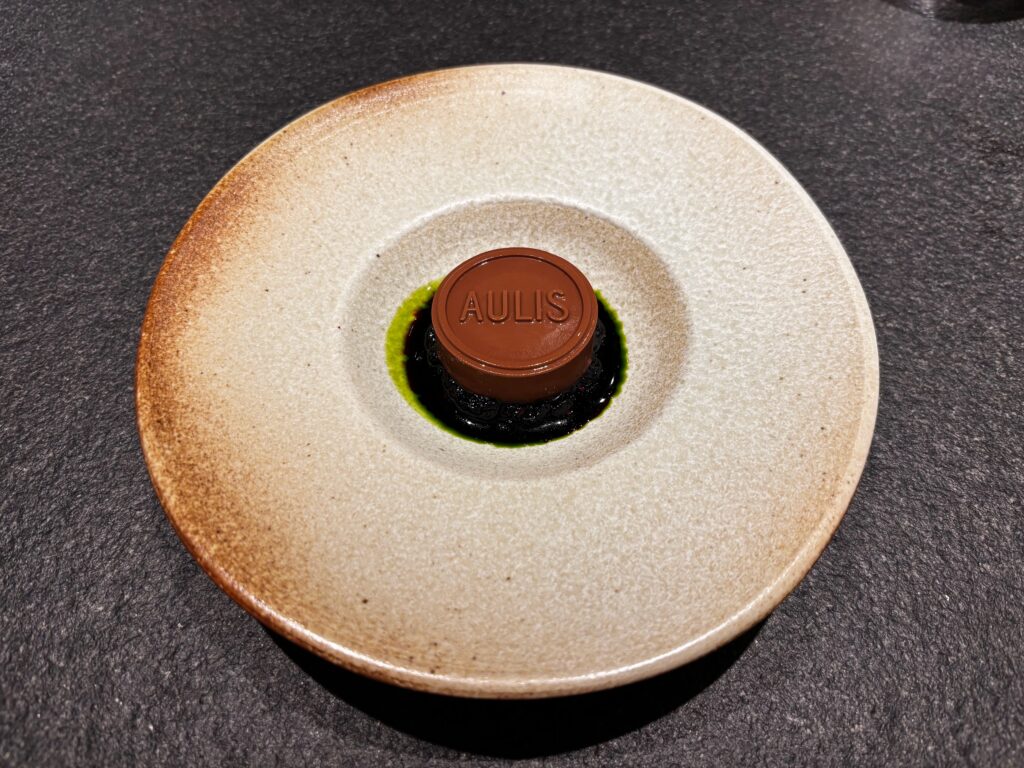
To close, the Pa Khlok 90% dark chocolate with Phuket mulberry and sacha inchi praline, the Aulis take on Rogan’s signature anvil dessert, recognisable across his restaurants from L’Enclume to Hong Kong, here reinterpreted through Thai ingredients. It tasted as dramatic as it looked, with a sharp, crisp clarity that made fifteen courses fold away into my back pocket.

Do note that Aulis closes after service on 17 May 2026 for a seasonal break and menu refresh, reopening at the end of October.

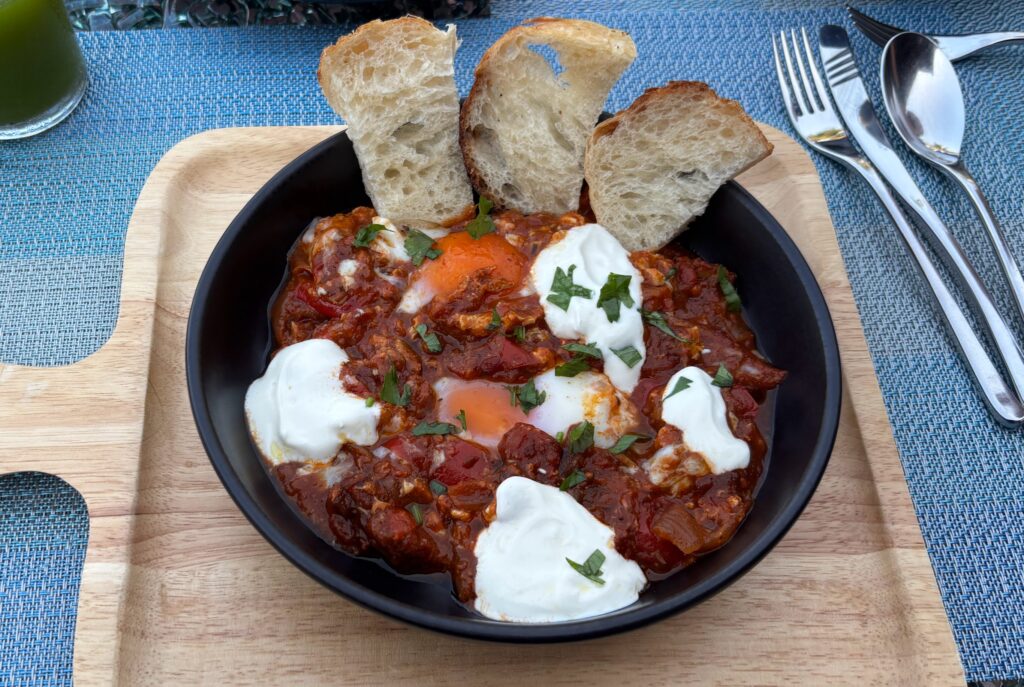
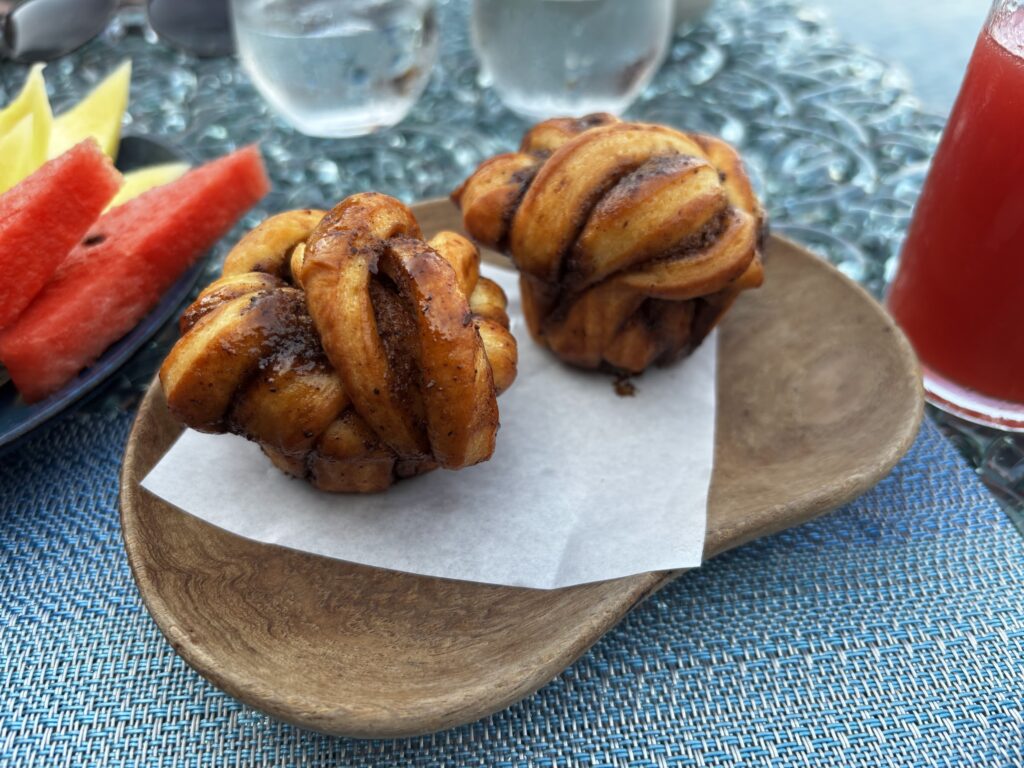
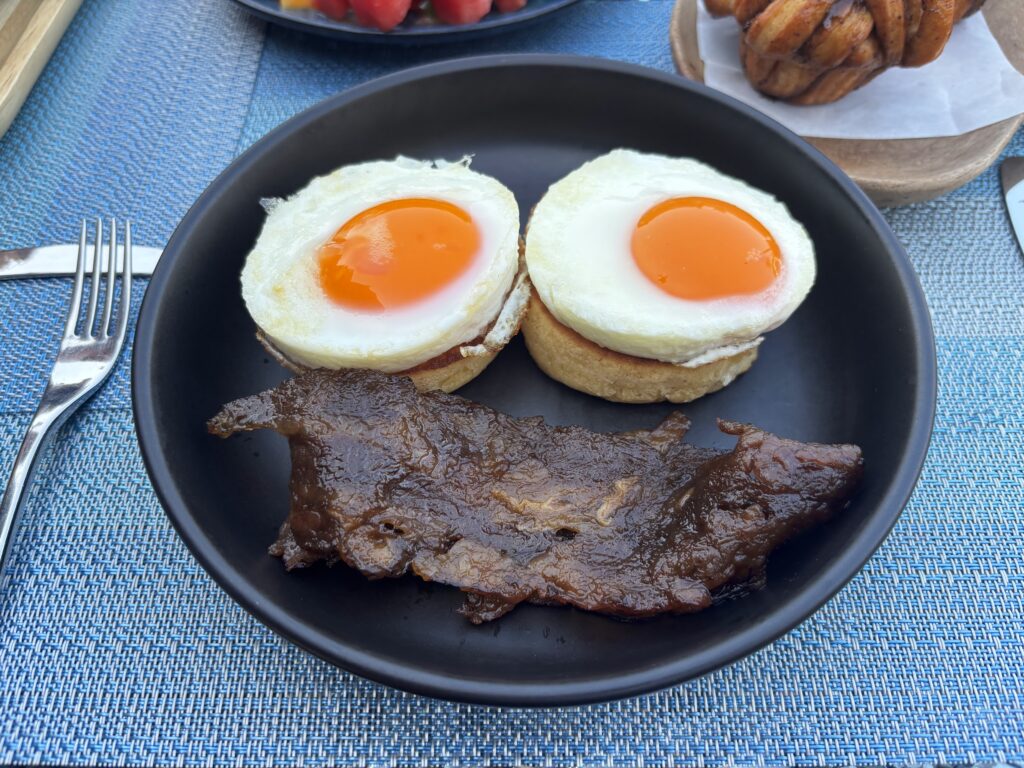
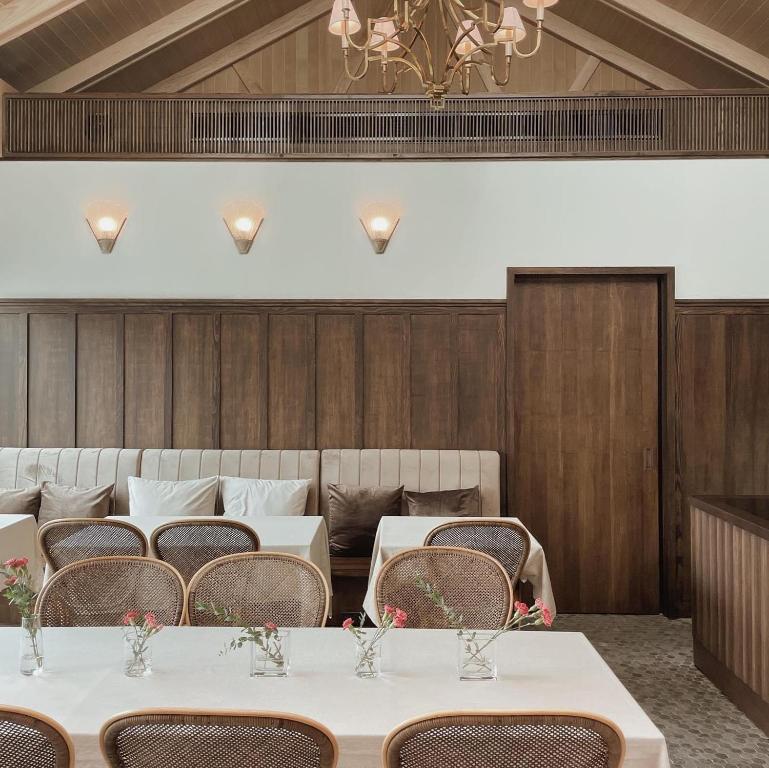
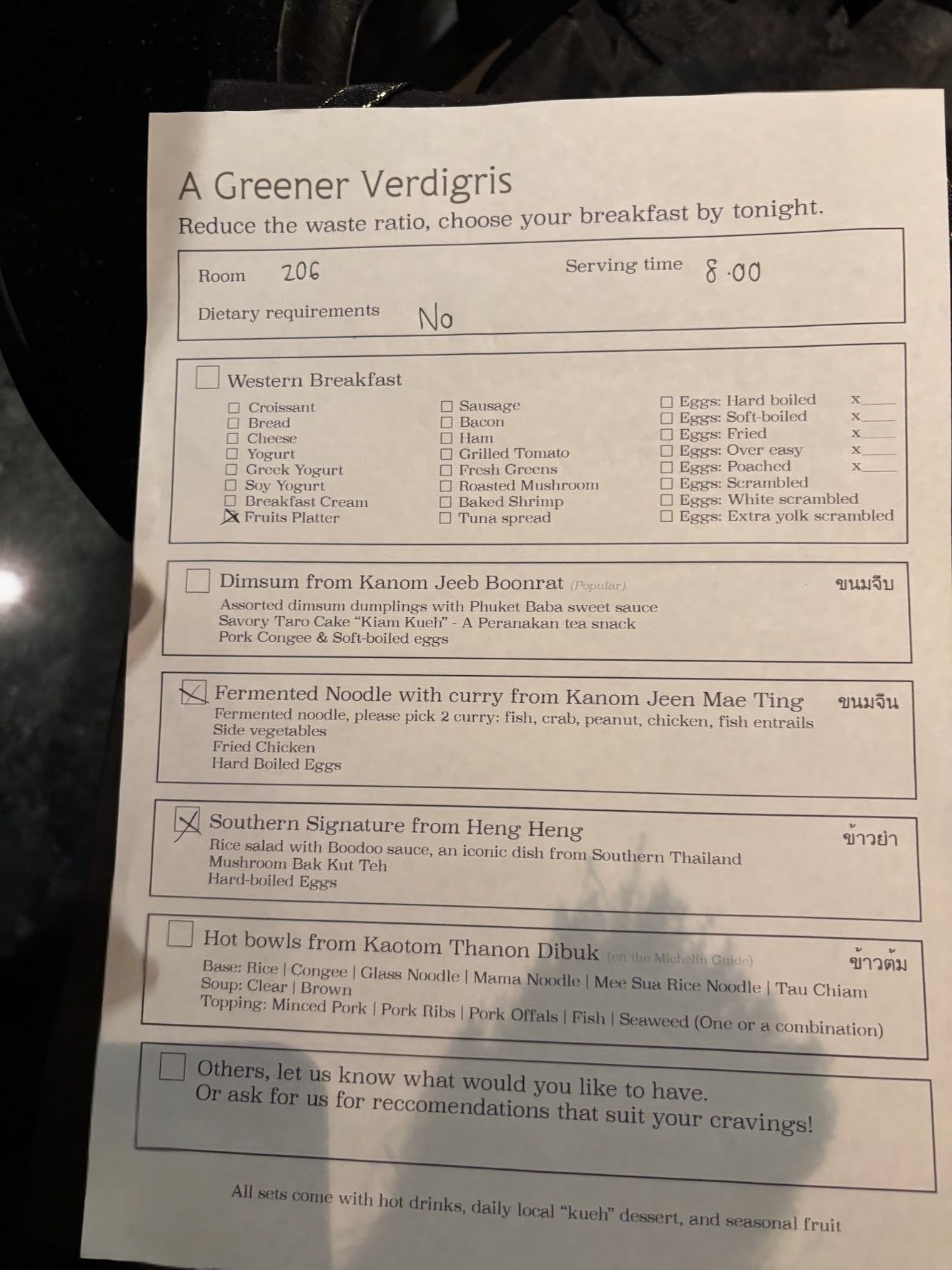
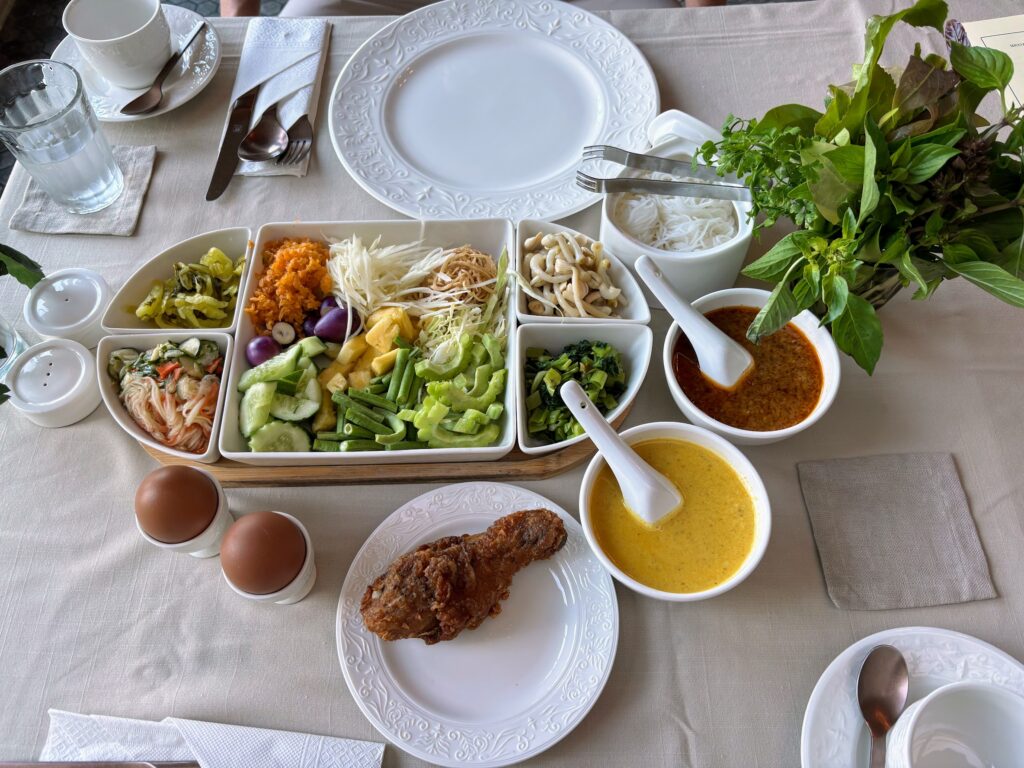
Phew. Wake up, it’s time for breakfast, handled by the Campana Lounge, which also covers all-day dining, a more global affair. Breakfast is served à la carte. It’s a little ordinary by comparison, though one of the Aulis chefs is currently involved in overhauling the menu, and signs are encouraging. The shakshuka is genuinely good, as is the Thai granola. The cinnamon buns deserve a mention, too; just lovely.

Should you want to eat off-property, Rabiang Lay Seafood Restaurant, a little further along the beach, is popular with locals, and Thanoon Seafood Restaurant is around 15 minutes by car and Michelin-recognised Baan Rearn Mai is around 20 minutes away. Ask the hotel to arrange a driver; Grab is unreliable in this part of the world.

Ideal For…

Couples and honeymooners. Privacy here is structural, not aspirational, and the property runs on first-name terms throughout. Request one of the beachfront suites for the most direct sand-to-bed ratio. Just be aware some suites share a pool with the adjoining suite in the same villa, so choose accordingly. Each villa has its own pool.

Design obsessives. Eleven distinct creative voices on a single site, held together by a Thai vernacular shell. Ask for a tour of the other rooms; the staff are happy to show you around, and no two are remotely alike.

Serious eaters. Book Aulis well in advance; it seats fifteen and fills up fast. Take the wine pairing; Brahaj’s selections are half the experience. And the beauty of staying on-site is that you can roll straight from the table to your bed without troubling a taxi.

Charity-minded travellers. A portion of room revenue goes to funding health, disability and education projects across South-East Asia. You’re not just staying somewhere beautiful; you’re funding something meaningful. Rare at this level, where there’s often a lot of talk and not enough action.

It’s perhaps less suited to those craving a resort with seven restaurants and a sprawling kids’ complex, or anyone who needs constant stimulation beyond the property gates. The nearest nightlife is a bridge and a world away.

Why Stay?

There are plenty of clichés about finding an undeveloped beach in Thailand. Natai, for now, remains the real thing: uncommercialised, largely unknown outside Thailand, and possessed of that open-ocean character its more sheltered rivals simply cannot replicate.

Iniala rewards those who stay put. The surf gets into your sleep. The design gets into your head. The food gets into conversations you’ll be having months later. And the knowledge that 10% of what you’re paying is going directly to the Inspirasia Foundation means the guilt of spending this much money on a holiday is, for once, genuinely blunted.

Go for the waves, the seclusion, the food, and the feeling that you have found something most visitors to Thailand have not.

Room rates at Iniala Beach House Thailand start from 39,725 baht (£896) per night (Pool Residences) and Villas start from 129,200 baht (£2,914) per night. There is a two-night minimum stay. The Aulis tasting menu is priced separately. Book direct on ialathailand.com for the best rates and complimentary airport transfers.

Address: Iniala Beach House, Khok Kloi, Amphoe Takua Thung, Phang Nga

Website: iniala.com/iniala-beach-house

Scenic Bath: The Best Day Trips Into The Countryside From Bath

Nestled in the heart of the West Country, Bath is renowned for its Roman baths, Georgian architecture, and vibrant cultural and culinary scene. However, beyond the city’s historic streets lies a wealth of stunning countryside waiting to be explored. Whether you’re a local or a visitor, these day trips from Bath offer a perfect escape into nature, history, and quintessential English charm.

Westonbirt Arboretum: A Botanical Wonderland

Westonbirt Arboretum, located about a forty minute drive away from Bath, is one of the finest collections of trees and shrubs in the world. This stunning arboretum offers a peaceful retreat into nature and is particularly spectacular in the autumn when the foliage bursts into vibrant colours.

Highlights

  • The Old Arboretum: Wander through this carefully curated collection of trees, featuring rare and exotic species from around the globe.
  • Silk Wood: Explore the more naturalistic part of the arboretum, with its winding paths and diverse plant life.
  • Tree Top Walkway: Experience the arboretum from a different perspective on this elevated walkway, offering stunning views of the canopy.
  • Seasonal Events: Westonbirt hosts a variety of events throughout the year, including guided walks, workshops, and the enchanting Enchanted Christmas light display.

Getting There

Westonbirt Arboretum is about a 40-minute drive from Bath. Public transport options are limited, so driving is the most convenient way to visit. Alternatively, you can join a guided tour that includes Westonbirt as part of a broader itinerary.


The Cotswolds: Quintessential English Villages

The Cotswolds, an Area of Outstanding Natural Beauty, is just a short drive from Bath. Known for its rolling hills, honey-coloured stone villages, and picturesque landscapes, it’s a must-visit for anyone seeking the quintessential English countryside experience. 

Castle Combe, Cotswolds

Highlights

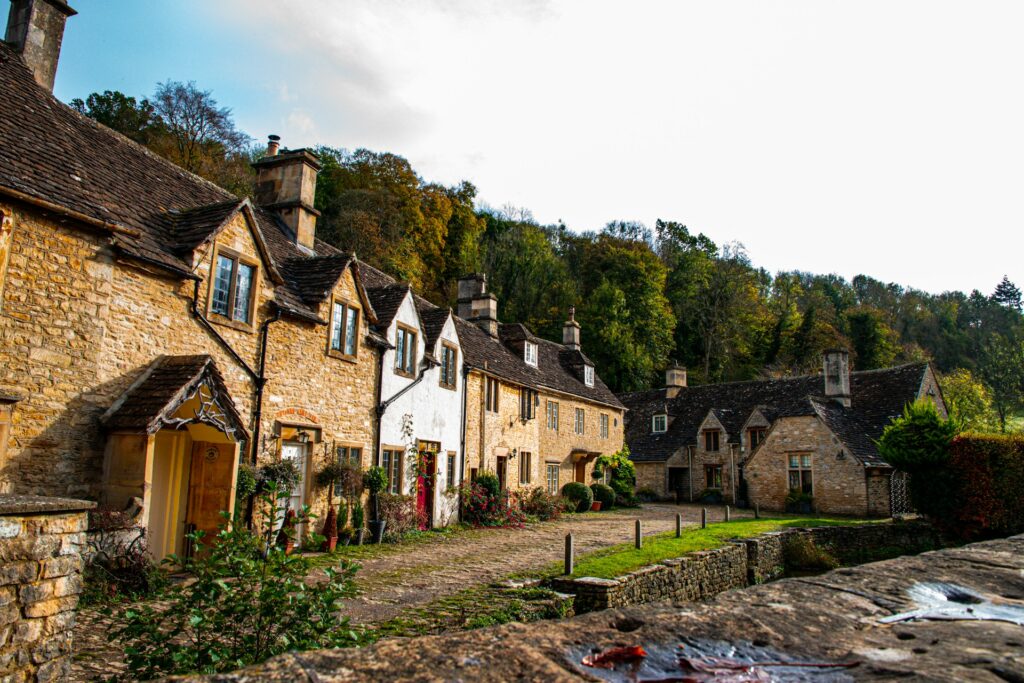
  • Castle Combe: Often dubbed the ‘prettiest village in England’, Castle Combe is a postcard-perfect destination. Wander through its charming streets, visit the medieval church, and enjoy a traditional cream tea.
  • Lacock: Stop sniggering at the back. This National Trust village is a favourite for film and TV productions, including Harry Potter and Downton Abbey. Explore Lacock Abbey and its beautiful grounds.
  • Bibury: Described by William Morris as “the most beautiful village in England”, Bibury is famous for Arlington Row, a row of weavers’ cottages dating back to the 14th century.
  • Tetbury: Known for its antique shops and the nearby Highgrove House, the private residence of King Charles III, Tetbury is a charming market town with a rich history.
  • Cirencester: Often referred to as the ‘Capital of the Cotswolds’, Cirencester boasts a Roman amphitheatre, the Corinium Museum, and a bustling market square.

Getting There

The Cotswolds are easily accessible by car, with Castle Combe just a 30-minute drive from Bath city centre. If you’d rather leave the driving to someone else and focus on soaking up the scenery, Cotswolds tours run small-group day trips from the area that take in several of the villages mentioned above in a single outing.


Cheddar Gorge: A Natural Wonder

Cheddar Gorge, located in the Mendip Hills, is one of Britain’s most spectacular natural landmarks. This dramatic limestone gorge offers breathtaking views, fascinating caves, and a rich history.

Highlights

  • Gough’s Cave: Discover the stunning stalactites and stalagmites in this impressive cave system, where Britain’s oldest complete human skeleton, Cheddar Man, was found.
  • Cliff-top Walk: For the adventurous, the cliff-top walk provides panoramic views of the gorge and surrounding countryside. It’s a challenging hike, but the vistas are well worth the effort.
  • Cheddar Cheese: Don’t miss the chance to sample and purchase authentic Cheddar cheese from the village where it originated.

Getting There

Cheddar Gorge is about a 45-minute drive from Bath. Public transport options are limited, so driving or joining a tour is recommended. If you’re looking for a great place to stay that sits neatly in between Bath and Cheddar Gorge, then consider The Pig in Pensford. It’s a lovely place to kick back.


Stonehenge & Avebury: Ancient Mysteries

For those fascinated by ancient history, a trip to Stonehenge and Avebury is a must. These iconic prehistoric sites offer a glimpse into Britain’s distant past and are both UNESCO World Heritage Sites.

Highlights

  • Stonehenge: This world-famous stone circle needs no introduction. Visit the visitor centre to learn about its history and theories surrounding its construction before walking around the stones themselves.
  • Avebury: Unlike Stonehenge, Avebury allows you to walk freely among the stones. The village of Avebury is built within the larger stone circle, creating a unique and atmospheric experience.
  • West Kennet Long Barrow: A short walk from Avebury, this Neolithic tomb offers stunning views of the surrounding landscape and a fascinating insight into ancient burial practices.
  • Salisbury: Just a short drive from Stonehenge, the historic city of Salisbury is home to the magnificent Salisbury Cathedral. This stunning example of early English architecture boasts the tallest church spire in the UK and houses one of the best-preserved copies of the Magna Carta. Wander through the medieval streets, explore the charming shops, restaurants, pubs and cafes, and soak in the rich history of this beautiful city.

Getting There

Stonehenge is about an hour’s drive from Bath, while Avebury is slightly closer. There are also organised tours that cover both sites in a single day trip.


The Wye Valley: A Riverside Retreat

Straddling the border between England and Wales, the Wye Valley is an Area of Outstanding Natural Beauty known for its lush landscapes, meandering river, and historic sites.

Highlights

  • Symonds Yat: This picturesque village offers stunning views of the River Wye and is a popular spot for walking, canoeing, and birdwatching.
  • Tintern Abbey: The ruins of this Cistercian abbey, immortalised by William Wordsworth, are a hauntingly beautiful sight.
  • Ross-on-Wye: This charming market town is the perfect place to explore local shops, enjoy a riverside walk, and relax in a traditional pub.

Getting There

The Wye Valley is about an hour and a half’s drive from Bath. Public transport options are limited, so driving is the best way to explore this scenic area. It’s best if you stay in a hotel in the north west of Bath to gain easier access to the M4 out of the city here. Bathen House in Lower Weston is particularly lovely.


Glastonbury & Wells: The Medieval & The Mystical

Glastonbury and Wells offer a perfect blend of mysticism and medieval history. From the legendary Glastonbury Tor to the stunning Wells Cathedral, this day trip is rich in culture and heritage.

Highlights

  • Glastonbury Tor: Climb this iconic hill for panoramic views and a sense of the mystical. The Tor is steeped in legend, often associated with King Arthur and the Holy Grail.
  • Wells Cathedral: This magnificent Gothic cathedral is renowned for its stunning architecture, including the unique scissor arches and the medieval clock.
  • Glastonbury Abbey: Explore the ruins of this once-great abbey, said to be the burial place of King Arthur and Queen Guinevere.

Getting There

Glastonbury and Wells are about a 45-minute drive from Bath. There are also regular bus services connecting Bath with these historic towns.


Bradford-On-Avon: A Riverside Gem

Just a short distance from Bath, Bradford-on-Avon is a charming town that offers a delightful mix of history, architecture, and natural beauty. Its picturesque setting along the River Avon makes it a perfect spot for a relaxing day trip.

Highlights

  • Tithe Barn: This 14th-century barn is one of the largest and best-preserved in England. Its impressive structure and historical significance make it a must-see.
  • The Kennet and Avon Canal: Enjoy a leisurely walk or cycle along the canal towpath, or take a boat trip to experience the tranquil waters and scenic views.
  • Bradford-on-Avon Museum: Learn about the town’s rich history, from its Roman origins to its industrial past, at this small but informative museum.

Getting There

Bradford-on-Avon is just a 15-minute train ride from Bath, making it one of the most convenient day trips. Alternatively, it’s a 20-minute drive by car.


Longleat: A Stately Home & Safari Park

Longleat, located in Wiltshire, is a unique destination that combines a stunning stately home with an exciting safari park. It’s an ideal day trip for families and anyone interested in history and wildlife.

Highlights

  • Longleat House: Explore the opulent rooms and beautiful gardens of this Elizabethan mansion, home to the Marquesses of Bath.
  • Safari Park: Drive through the UK’s first safari park and get up close to lions, tigers, giraffes, and more. The park also features a maze, a railway, and various animal exhibits.
  • Adventure Park: Enjoy a range of attractions, including a jungle cruise, a bat cave, and a play area for children.

Getting There

Longleat is about a 45-minute drive from Bath. There are also organised tours and public transport options available, including a combination of train and bus services.

The Bottom Line

Bath’s surrounding countryside offers a wealth of day trip opportunities, each with its own unique charm and attractions. Whether you’re drawn to the picturesque villages of the Cotswolds, the dramatic landscapes of Cheddar Gorge or the stately grandeur (and Siberian tiger) of Longleat, there’s something for everyone, making the city the ideal staycation getaway with plenty of scenic day trips thrown in for good measure! 

Where To Stay In Phuket Old Town: The Best Hotels

Around forty-five minutes south of the international airport, Phuket Old Town is the historic heart of the island, its storied soul where the rest can occasionally be a little superficial, or, at times, downright seedy.

A small grid of impossibly attractive streets that grew rich on tin mining in the late nineteenth century, the old town’s shophouses were built by Hokkien Chinese merchants who married into local Thai families, and their Peranakan descendants still run many of them today.

The buildings themselves are what most people come to photograph: rows of two-storey Sino-Portuguese shophouses in faded pastel, all arched windows, tiled five-foot ways and ornate stuccowork. Most are now cafes, fashion and jewellery boutiques, small museums and, most famously, restaurants. 

Because what keeps people here longer than they planned is the food: roti slapped and fried fresh to order, fearsome curries with coils of fresh fermented noodles, laughably cute dim sum, old-school Hokkien kopitiams thick with patina, and a Sunday Walking Street that turns the old town’s main artery into a street feast every weekend.

Phuket Old Town sits on the opposite side of the island from the main beach resort strips of Patong, Karon and Kata, and sits in stark contrast to those places, too; the vibe here is regal and refined, the mood less showy. Most visitors spend a single afternoon here between beach days, but the ones who know the island better book a hotel and stay for longer.

Choosing the right accommodation for the old town, then, is a different exercise from booking in Patong or Cherngtalay. The brief here isn’t beach access, infinity pools or sundowner views; it’s walkability, heritage character, and how close you are to the food. We’ve stayed in all six of the hotels below, alongside many more that didn’t make the cut, whether that’s because the rooms were tired, the location was old town in name only, or something didn’t quite click in terms of perceived value.

Here, then, are the best hotels in Phuket Old Town. None of them are beach hotels, and none of them pretend to be. The nearest swimmable sand is half an hour away by car, but what they offer instead is something rarer in Phuket; a sense of place, walkable streets, and proximity to some of the best food on the island.

Hotel Verdigris Phuket Old Town

Ideal for design-conscious couples, food-obsessed travellers, and anyone who finds resort hotels a bit hermetic…

On Yaowarat Road and built in keeping with the heritage architecture around it, Hotel Verdigris is the debut hotel project of Pichakorn ‘Peach’ Phanichwong, a young Phuket-born Peranakan Hokkien who opened the place in 2022 as a tribute to the Peranakan culture that shaped the old town. The design takes inspiration from Martina Rozells, the Phuket-born Thai-Portuguese wife of Francis Light, using her story as a lens for the Chinese, Thai, Malay and European influences fused into Peranakan identity.

A tight, fourteen-room boutique affair, its interiors lean into the verdigris palette the hotel takes its name from – oxidised copper tones, brass details, a little old-world glamour. Jazz drifts down the corridors, and the staircases are photogenic enough that you’ll find yourself reaching for your phone on the way to breakfast.

Speaking of which, breakfast is the move that elevates the whole property to something truly remarkable. You choose your morning order from a curated menu at check-in, and the next day it’s collected fresh from the shophouse and served at your table; kanom jeen, dim sum, kaya toast, the whole local repertoire, many of them Michelin-recommended. Western options (eggs, toast, the usual) are available too, made fresh in-house, but they’re not why you’re here. You’re here for the island’s best hotel breakfast, one with a grounding sense of place, and arguably the single best reason to stay here.

Verdigris itself sits in an excellent spot for exploring on foot. The photogenic Soi Rommanee, the Sunday Walking Street Market on Thalang, the old town museums, and a clutch of the area’s best restaurants (Raya, Charm Dining Gallery, Royd, Blue Elephant) are all within a few minutes’ stroll. The hotel runs a free shuttle anywhere around the old town, which is a nice touch in the heat. 

If those temperatures do get too much, there’s a small marble-lined swimming pool tucked into the courtyard, and a private rooftop plunge pool reserved for guests of the top-category Copper Junior Suite. Adults-only means a grown-up atmosphere whichever tier you’re in; no buffet queues, no kids’ clubs, no resort scrum.

Prices for the entry-level Solo Room start from around 6,900 baht (£160) per night in low season (May to October), rising to roughly 8,500–8,800 baht (£200–£205) for a Brass Room at peak (December to February). Rates include breakfast.

You can read our full review of Hotel Verdigris here.

Address: 154 Yaowarat Rd, Tambon Talat Yai, Mueang Phuket District, Phuket

Website: hotelverdigris.com

HOMA Phuket Town

Ideal for digital nomads, long-stay travellers, and families wanting space without resort prices…

HOMA sits about ten minutes by Grab to the north of the old town, set down a cul-de-sac in a residential pocket of Ratsada district. Rather than the beach, guests here treat the old town as their primary anchor and playground, and nothing in the central grid offers what HOMA does.

Which is, co-living rather than a standard hotel stay. The 505-unit complex is part hotel, part serviced apartment block, part small neighbourhood. Kitchenettes have hobs, big fridges and even freezers. The WiFi runs on three networks, there’s a co-working space and soundproofed call booths. A fitness centre offers round-the-clock classes, alongside a cinema, a kids’ playroom, and a pet-friendly policy. The headline facility is the 80-metre rooftop pool, reportedly the longest in Phuket, with a 50-metre Olympic lap section. And the residents actually use the common spaces.

You can book a night, a week or a month, with rates that flex accordingly. The HOMA app handles everything from housekeeping requests to community noticeboards, where, on a recent visit, a missing pet bearded dragon was being collectively hunted by the residents.

For the price, it’s superb value, particularly for anyone who’d otherwise feel claustrophobic in a standard hotel room for weeks at a time. The trade-off is the location. The nearest swimmable beach is Patong, around half an hour by car, and the immediate surroundings (motorbike rental, local eateries, Chillva Market, Central Festival mall) are functional rather than pretty. But if you’re choosing between this and a generic city hotel, HOMA wins on every count that matters; on facilities, on flexibility, and on the simple fact that you can cook a meal, do a load of washing, take a video call without booking a meeting room, and feel like you actually live somewhere that looks after you for the duration of your stay.

Prices start from around 1,500 baht (£35) per night for short stays in low season, with high-season rates climbing to roughly 3,000–3,500 baht (£70–£80). Significantly reduced monthly rates are available.

You can read our full review of HOMA Phuket Town here.

Address: 3, 41 Soi Samkong 1, Ratsada, Amphoe Meuang, Phuket

Website: homa.co

Royal Phuket City

Ideal for business travellers, conference delegates, and families wanting facilities and a central base…

The Royal Phuket City is the established four-star option in the area; nineteen storeys of glass and concrete on Phangnga Road, set slightly back from the heritage core but still within easy walking distance of central Thalang and Soi Rommanee. The Atrium lobby – vast, high-ceilinged, with a pianist tickling the ivories and a singer doing a polite turn into the evening – calls to mind the grand old hotels of Bangkok, and you won’t find many like it elsewhere in the old town.

With 251 rooms and nine event spaces (including a 1,637 square metre Grand Ballroom), it does a brisk trade in business meetings, weddings and conference groups, and it shows in the lobby. There’s a steady churn of suited delegates picking up keycards, and strangers and stragglers of all stripes clinking ice in heavy-bottomed tumblers, passing some time until dinner. 

That anonymity is part of the appeal. After a long day eating and drinking the old town, slipping back here quietly, into a plush, well-appointed room for a good night’s sleep is sometimes all you actually need. Opulence beyond that feels beside the point when you’re so close to the action. The rooms themselves are dated in the way that mid-2010s South East Asian four-stars tend to be; comfortable and spacious rather than design-magazine-worthy, but at the price point, that’s a fair trade.

What distinguishes Royal Phuket City in this list is its facilities-to-price ratio. There’s an outdoor pool with separate adult and children’s areas, an enormous fitness centre run by Workout Club, the Royal Wellness Spa, three on-site restaurants (the very capable Yan Long for Cantonese-leaning Chinese, the rooftop TWIST Restaurant & Bar – great views – and the all-day 154 Bakery), and indoor parking for 350 cars, with EV charging available. A free hotel EV shuttle bus stops right outside, which makes getting around the wider city straightforward.

It won’t suit anyone looking for boutique character, but the Royal Phuket City will suit those who want a full-service hotel, the full facilities stack, and a location that lets you walk into the heritage quarter for dinner. The buffet breakfast on the nineteenth floor, with its sea-and-city panorama, is a highlight of staying here.

Prices for the entry-level Premier Superior start from around 2,550 baht (£57) per night in low season, rising to roughly 4,700 baht (£105) at peak.

Address: 154 Phangnga Rd, Tambon Talat Yai, Mueang Phuket District, Phuket

Website: royalphuketcity.com

Courtyard by Marriott Phuket Town

Ideal for Bonvoy loyalists, business stays, and travellers who want a familiar standard close to the action…

Sitting on Soi Surin directly opposite the totemic (if your totem is rendered in bright mustard) Surin Circle Clock Tower, the Courtyard is a contemporary 248-room hotel built on the bones of the old Metropole. For a generation, this was the grand dame of Phuket Old Town’s hotel scene. It reopened under the Marriott banner in 2021, with the architectural shell kept intact but the old-world formality swapped for something calmer: soaring ceilings and white columns are still there, the galleried upper floor still overlooks the lobby, but the chandeliers have given way to drum-shade pendants and the palette has been pulled back to muted greys and pale marble. Heritage shell, contemporary interior. 

Inside the rooms it’s pure international Courtyard, though; sleek work desk, ergonomic chair, plush bedding, flat-screen, free, fast WiFi, and the dependable consistency that’s the whole point of staying with a chain of this specific standing.

There are four dining outlets across the property. Krua Talad Yai on the third floor is the all-day restaurant, a marketplace-style room with open kitchens serving Southern Thai and international dishes, though convenience really is the main reason to eat here when there’s so much amazing Thai food just outside the hotel’s door. The buffet breakfast (THB 499, around £11, per person if not already included in your rate) is a sprawling spread.

Talung Lounge on the lobby level does coffee and pastries by day, cocktails and Clock Tower views by night. Kolae Pool Bar on the fourth floor handles poolside drinks and light bites with a view across Phuket Town. The most interesting of the four is Yue, a Cantonese restaurant on the second floor that opened in 2023 under chef Kenny Chang; the dim sum buffet (THB 555 per person, all you can eat) made the Top 25 Restaurants in Phuket list in 2024 and is a draw for locals as well as guests.

There’s also a 24-hour fitness centre with a Thai boxing area, an outdoor pool with a children’s section, a kids’ club, free on-site parking, and a 660-square-metre pillarless Grand Ballroom that does brisk trade in weddings and conference groups. The Sunday Walking Street Market on Thalang is a ten-minute walk away, which means you’re close enough to wander out for dinner but far enough that the market’s noise and impenetrable foot traffic don’t reach you.

The trade-off is character. The Courtyard could sit comfortably in any major Southeast Asian city, and aside from the lobby it doesn’t pretend otherwise; what you get is a competent international four-star. For Bonvoy-points collectors, business travellers, or anyone wanting a known quantity in a part of Thailand where the boutique scene can be hit and miss, that’s exactly the appeal. Service is consistently strong, and the position on the southern edge of the heritage grid is genuinely useful: walkable into old town one way, and a clean run south out of the city the other, without having to negotiate the tight one-way streets that can make old town traffic a slow-moving puzzle.

Hey, and why not check out our review of the Courtyard by Marriott’s outpost over in Patong while you’re here?

Prices for an entry-level Deluxe start from around 3,050 baht (£68) per night in low season, rising to roughly 4,850 baht (£108) at peak.

Address: 1 Soi Surin, Talad Yai, Mueang Phuket District, Phuket

Website: marriott.com

Casa Blanca Boutique Hotel Phuket

Ideal for solo travellers, couples on a budget, and old town first-timers…

Of all six hotels here, the exterior of Casa Blanca looks most like the picture-perfect old town you came to see. A whitewashed Sino-Portuguese building in the heart of the heritage quarter, it has a small rooftop pool, an indoor garden cafe under a vaulted skylight, and a chandelier-hung lobby that does cool refuge from the midday heat better than almost anywhere in town. The owners have clearly resisted the temptation to over-restore; the building’s quirks (a tiny lift used mostly for luggage, some street noise from the bar opposite, a steep spiral staircase up to the rooftop pool) are still present, but so is the soul.

Three room types are on offer: the 25-square-metre Superior for couples, the 35-square-metre Deluxe with city or courtyard views (and an extra bed option for three), and the 50-square-metre Family Suite, which has a master bedroom with a king bed, a junior bedroom with twin beds, a small living room and a microwave, working well for small groups or families with older children. 

There’s no in-house restaurant, no spa, and breakfast is served à la carte rather than buffet, but the staff are wonderful, the best thing about the place. They’ll happily organise tours, transfers, motorbike rental and onward travel to the Phi Phi islands or the wider Andaman coast, and they’ll throw in a few ‘hidden gem’ restaurant recommendations if you ask nicely.

What makes Casa Blanca worth choosing over the generic mid-range options elsewhere in Phuket Old Town is the location. Sure, rooms could do with a lick of paint and there are slight soundproofing issues, but you’re right in the mix of the old town rather than on its edge, with the night markets, the best of the food, and the prettiest streets all within a five-minute walk. That counts for a lot.

Prices start from around 2,000 baht (£44) per night in low season for a Deluxe King with pool view, rising to roughly 2,800 baht (£63) at peak.

Address: 26 Phuket Road, Talad Yai, Mueang Phuket District, Phuket

Website: casablancaphuket.com

The Memory at On On Hotel

Ideal for history buffs, film fans and heritage hunters…

The Memory at On On is the oldest hotel on Phuket. Built in 1927 by a Hokkien tin merchant named Yoktiew Saepae, designed under the supervision of a Penang architect, and originally called Un Un, it has been in continuous operation for nearly a century and now occupies a focal position on Phangnga Road. Visitors of a certain vintage might recognise it from the opening scenes of Danny Boyle’s The Beach (2000), when it was still a backpacker dive with 180-baht fan rooms.

The 2012 restoration brought it firmly into boutique territory while leaving the architectural character intact: exposed brick walls, handcrafted shutters, the original wooden staircases, and a central courtyard (a chim chaeh, in Hokkien) that opens to the sky to flood the ground floor with natural light. Rooms are spread across four categories (Superior, Deluxe, Junior Suite and the Memory Suite) and individually themed around the trades and crafts of nineteenth-century Phuket; the Sewing Room, the Carpenter Room, the Photographer Room, the Travellers Room, and the Red Peony, which leans into Peranakan red and gold for a maximalist take on romance.

Facilities are deliberately sparse, an acknowledgement of the constraints of being so central. But what you do get is a 24-hour reception, a tour desk, complimentary drinks and snacks in the lobby, and a level of period detail that no new build could replicate. Kanta Phuket, the independent Modern Peranakan restaurant that occupies a side unit of the same building, is a thoughtful place to eat without leaving the property – its menu reworking Hokkien-Malay family recipes with a more contemporary touch – and you’re a two-minute walk from some of the old town’s best food on Soi Rommanee and Thalang. 

Come for the history, stay for the courtyard, and book the Junior Suite they’ve themed as ‘The Beach’ if you want to wake up in DiCaprio’s old room.

Prices start from around 2,400 baht (£53) per night in low season for a Deluxe, rising to roughly 3,250 baht (£72) at peak.

Address: 19 Phangnga Rd, Talat Yai, Mueang Phuket District, Phuket

Website: thememoryhotel.com

7 Of The World’s Most Remote Destinations Accessible Only By Expedition Cruise

An expedition cruise is a voyage that transcends the ordinary. Unlike regular cruises, which often focus on a sense of faintly kitsch relaxation and entertainment, along with, admittedly, some awesome urban ports of call, expedition cruises are about exploration and education. They take you to the farthest corners of the globe, to places largely untouched by human hands, where nature reigns supreme. Doesn’t that sound like just the ticket?

If you’re now making plans to get hold of your ticket, then firstly let’s indulge in some pure escapism for as long as it takes to read (a beautifully written) article; here are 7 of the world’s most remote destinations accessible only by expedition cruise.

The Antarctic Peninsula: The Lemaire Channel & Paradise Bay

The Antarctic Peninsula, the northernmost part of the mainland of Antarctica, is a land of extremes and ethereal beauty. It’s a surreal, frozen landscape of vast ice shelves, towering mountain ranges, and colossal tabular icebergs, where the sun shines at midnight in summer and darkness prevails in winter.

The Lemaire Channel and Paradise Bay are two of the most stunning locations on the peninsula. The Lemaire Channel, often referred to as ‘Kodak Gap’ due to its photogenic allure, is a narrow passage flanked by towering ice cliffs. Cruising through the channel, you’ll be surrounded by the immense beauty of the Antarctic, with icebergs floating by and glaciers reaching down to the sea.

Paradise Bay, true to its name, is a place of breathtaking beauty. Only on an expedition cruise can you witness the spectacle of calving glaciers and listen to the profound silence of the Antarctic wilderness. The bay is also a popular spot for Zodiac cruises, offering a closer look at the ice formations and the chance to spot seals basking on ice floes.

Photo by 66 north on Unsplash

The Antarctic Peninsula is also a haven for wildlife. It’s home to Gentoo, Adélie, and Chinstrap penguin colonies, seals like the Weddell and Leopard, and Humpback whales that come to feed on the abundant krill. Observing these animals in their natural habitat, undisturbed by human presence – hence why larger cruise ships struggle to access some more remote areas here – is a truly humbling experience.


The Seychelles: The Aldabra Atoll

The Seychelles, an archipelago of 115 islands in the Indian Ocean, is a tropical utopia of pristine beaches, vibrant coral reefs, and lush nature reserves. Among these, the Aldabra Atoll stands out as a jewel in the crown, a UNESCO World Heritage Site that is often referred to as one of the wonders of the world.

Photo by Paweł Wielądek on Unsplash

An expedition cruise to the Seychelles is incomplete without a visit to the Aldabra Atoll. This coral atoll is the world’s second-largest and is virtually untouched by humans, with only a handful of small-ship operators running Seychelles cruises able to reach it, offering a unique sanctuary for a wealth of wildlife. It is home to the largest population of giant tortoises in the world, with around 100,000 Aldabra Giant Tortoises roaming freely on the atoll.

The Aldabra Atoll is also a birdwatcher’s paradise, hosting the largest colony of frigatebirds in the Seychelles and the only flightless bird in the Indian Ocean, the White-throated Rail. The atoll’s lagoons and mangroves are teeming with marine life, including green turtles, manta rays, and a variety of sharks and tropical fish.

Beyond Aldabra, the Seychelles offers a wealth of natural and cultural experiences. Visit the Vallée de Mai Nature Reserve on Praslin Island, a primeval forest that is home to the unique Coco de Mer palm and the rare Seychelles Black Parrot. Explore the vibrant markets and Creole architecture of Victoria, the capital city on Mahé Island, and enjoy the world-class beaches and crystal-clear waters that the Seychelles are famous for.

Read: 7 dream luxury holiday destinations for 2026


The Galapagos Islands: Isabela & Fernandina

The Galapagos Islands, nestled in the Pacific Ocean off the coast of Ecuador, are a testament to the power of nature and evolution. Isabela, the largest island, and Fernandina, the youngest, are two of the archipelago’s most captivating destinations.

Isabela Island, shaped like a seahorse, is a land of diverse landscapes, from volcanic highlands to lush wetlands. It’s home to unique species like the Galapagos Penguin, the only penguin species found north of the equator, and the Flightless Cormorant, a bird that has adapted to its environment by losing its ability to fly and becoming an adept swimmer instead.

Fernandina Island, although smaller, is no less fascinating. It’s one of the most pristine ecosystems in the world, with no introduced species. Here, you can find the largest marine iguanas basking on the black lava rocks, and watch as flightless cormorants dive into the surf for food.

The Galapagos Islands are a place where animals have no fear of humans, offering unparalleled wildlife viewing experiences. Whether you’re snorkelling with playful sea lions, watching blue-footed boobies perform their courtship dance, or observing the slow march of a giant Galapagos tortoise, the islands offer a window into a world where nature takes centre stage. Accordingly, it’s a wonderful place for wildlife photography, though it’s essential you behave as respectfully as possible when wielding a camera.

Beyond the wildlife, the Galapagos Islands are steeped in history and scientific significance. It was here that Charles Darwin formulated his theory of evolution, forever changing our understanding of the natural world.


The Kimberley, Australia: King George River & Mitchell Falls

The Kimberley, located in Western Australia, is one of the world’s last true wilderness areas. This vast region is a tapestry of dramatic landscapes, where towering cliffs and cascading waterfalls carve through the ancient land, and Aboriginal rock art whispers tales of the world’s oldest living culture.

A journey through the Kimberley is a voyage into the heart of Australia’s wild outback. Cruising along the King George River, you’ll be captivated by the sheer grandeur of the twin King George Falls, one of the highest waterfalls in Australia. The river’s dramatic gorges and sandstone cliffs are a sight to behold, changing colour with the shifting sun.

The Kimberley is also home to the mesmerising Mitchell Falls, a four-tiered waterfall that cascades over layers of weathered sandstone. Hiking to the falls is an adventure in itself, with the trail taking you past Aboriginal rock art sites, crystal-clear swimming holes, and lookouts with stunning views over the Mitchell Plateau.

But the Kimberley is not just about its natural wonders. It’s a place where you can delve into Australia’s rich indigenous history. Explore ancient rock art galleries, some dating back over 20,000 years, and learn about the region’s traditional owners, the Miriwoong people, whose connection to the land spans thousands of years.


South Georgia Island: The Serengeti Of The Southern Ocean

South Georgia Island, a British Overseas Territory in the southern Atlantic Ocean, is often referred to as the ‘Serengeti of the Southern Ocean’ due to its abundant wildlife. This remote and rugged island is a paradise for nature lovers and wildlife enthusiasts.

An expedition cruise to South Georgia Island offers a unique opportunity to witness one of the largest king penguin colonies on earth, located at Salisbury Plain and St. Andrews Bay. The sight of tens of thousands of these charismatic birds, huddled together against the stark, snowy landscape, is truly awe-inspiring.

Photo by Paul Carroll on Unsplash

But it’s not just about the penguins. South Georgia is also a breeding ground for elephant seals and Antarctic fur seals. The island’s beaches are often packed with these magnificent creatures, particularly during the breeding season when dramatic battles between rival males can be observed.

South Georgia Island is also steeped in history. Follow in the footsteps of the great explorer Sir Ernest Shackleton, who sought refuge on the island during his ill-fated Endurance expedition. Visit his grave in Grytviken, the island’s former whaling station, and learn about the island’s whaling history at the South Georgia Museum.


Manaus, Brazil: The Heart Of The Amazon

Manaus, the capital of the state of Amazonas in Brazil, is a bustling city located in the middle of the Amazon Rainforest. It’s a gateway to the surrounding jungle and the vast river network, and an immersive experience into the Amazon’s vast and vibrant ecosystem.

Photo by James Cheung on Unsplash

From Manaus, you can venture into the Anavilhanas Archipelago, the world’s largest freshwater archipelago, home to an astonishing array of wildlife, from pink river dolphins to countless species of birds and insects. You can also visit the Meeting of the Waters, a natural phenomenon where the dark waters of the Rio Negro meet the sandy waters of the Amazon River, running side by side without mixing for several kilometres.

Read: 48 hours in Manaus, the Amazon’s gilded gateway


The Marquesas Islands, French Polynesia: The Mysterious Islands

The Marquesas Islands, a group of volcanic islands in French Polynesia, are a captivating blend of rugged beauty, rich culture, and ancient history. Known as ‘The Mysterious Islands’, they are a place of towering waterfalls, lush valleys, and dramatic cliffs that plunge into the azure Pacific Ocean.

An expedition cruise to the Marquesas Islands is a journey into a world steeped in Polynesian tradition. Visit the island of Nuku Hiva, the largest of the Marquesas, where you can explore the ancient stone tiki statues and petroglyphs at the Tohua Kamuihei archaeological site. Discover the island’s rich history of tribal warfare and cannibalism, and learn about the fascinating Marquesan tattoo tradition, which has been revived in recent years.

On Hiva Oa, the second largest island, you can pay homage to the late French artist Paul Gauguin and Belgian singer Jacques Brel at the cultural centre dedicated to their memory. Explore the island’s lush landscapes, which inspired many of Gauguin’s most famous paintings, and visit his final resting place in the Calvary Cemetery.

The Marquesas are also a haven for wildlife. On the island of Ua Huka, visit the Vaikivi botanical garden, home to a variety of endemic plant species, and the island’s bird sanctuary, which is working to protect and reintroduce the endangered Ultramarine Lorikeet.

For the adventurous, the Marquesas offer ample opportunities for hiking, horseback riding, and exploring by 4×4. From the breathtaking views atop the island of Fatu Hiva’s Bay of Virgins to the remote beaches of Ua Pou, there’s a wealth of natural beauty to discover.


Baffin Island, Canada: The Arctic Wilderness

No voyage into remote destinations would be complete without entering the Arctic via cruise ship. Baffin Island, located in the northeastern Arctic Ocean, is Canada’s largest island and the fifth-largest in the world. It’s a land of stark, rugged beauty, where towering ice-capped mountains meet expansive tundra and deep fjords. Baffin Island is home to an array of Arctic wildlife, including polar bears, Arctic foxes, and a variety of whale species.

Photo by Jennifer Latuperisa-Andresen on Unsplash

An expedition cruise to Baffin Island brings with it a unique opportunity to immerse yourself in the Inuit culture. Visit the town of Iqaluit, the capital of Nunavut, and explore its rich history and vibrant arts scene. Discover ancient Thule sites and marvel at the intricate Inuit carvings in local art galleries.

Venture into the Auyuittuq National Park, a pristine Arctic landscape that translates to ‘the land that never melts’. Here, you can hike along the Akshayuk Pass, a traditional Inuit travel corridor, and witness the impressive Mount Thor, boasting the world’s tallest vertical cliff.

Baffin Island is also a fantastic place for birdwatchers, with the migratory bird sanctuaries at East Bay and Dewey Soper offering a chance to see rare species such as the ivory gull.


The Bottom Line

Embarking on an expedition cruise is not just about travel, it’s about immersing yourself in the extraordinary. It’s about venturing into the heart of the world’s most remote and pristine landscapes, from the icy realms of Antarctica to the tropical paradise of the Seychelles. It’s about witnessing tracing the footsteps of great explorers in South Georgia, and marvelling at the evolutionary wonders of the Galapagos. It’s about delving into the rich cultural heritage of the Marquesas Islands and the Kimberley, and exploring the biodiversity of the Amazon.

And with that round of water-based exploration complete, we think we’re feeling a little seasick. Do you mind if we go for a lie down?

When To Frame A Print, & When To Leave It Bare

A new print arrives, you have the wall and position picked out, and then comes the question that tends to stall everything: does this one need a frame, or not? It’s easy to default to yes, because a frame protects the paper from light and dust, gives a piece visible weight, and signals that it has properly arrived in the room.

But framing isn’t automatically the right answer. Some prints look better naked. Some rooms ask for it, others don’t. Below, we’ve set out the cases where a frame earns its keep, and the ones where it gets in the way.

Frame It: Formal Rooms & Anywhere With Moisture

Living rooms, hallways, dining rooms, the bit of wall behind a sideboard. These are the spaces where you want art to feel settled rather than provisional, and a frame does that work without you having to think about it. The edge contains the image, the mount gives it breathing room, and the whole arrangement reads as considered.

The bigger argument for framing in these rooms is practical. Glazing keeps dust off the surface, blocks a fair amount of UV, and stops the slow yellowing that happens to unprotected paper hung in a sunny room.

In kitchens and bathrooms the case is more urgent still. Steam, splatter, and humidity will warp an unframed print faster than you’d expect, and once the paper has buckled there’s no fixing it. If you want art in those rooms, a sealed frame is the only sensible way to do it.

Frame It: Bold Graphics, Photography, & Anything On A Gallery Wall

Some artwork is built for a frame. High-contrast photography, sharp graphic prints, anything with a strong defined edge. The image already has its own internal logic, and a clean frame, black, white, oak, brass, reinforces that. Without one, the print can feel as though it’s drifting into the wall.

Gallery walls are the other strong case. A mixed group of prints in matching or coordinated frames reads as a collection. The same prints stuck up unframed reads as a notice board. If you’re building a wall of varied work, the frames are doing the curatorial work of telling the eye these belong together.

Frame It: Pieces You Know You’ll Keep

Framing is a small commitment. Not a permanent one, but enough of one that most people instinctively reserve it for prints they’re sure about. If you’ve found a piece you know you’ll live with for years, framing it is part of acknowledging that. It also tends to be the moment a print stops feeling like a thing you bought and starts feeling like a thing that lives there.

A well-chosen pair of picture frames on work you’re sure about is one of the easiest ways to make a room feel more committed.

Leave It Bare: Casual, Creative, & In-Flux Spaces

Studio flats, home offices, bedrooms with a layered, textural feel. Rooms that already trade on personality rather than polish tend to suit unframed prints. The edge of the paper, the slight curl at the corner, the bulldog clip or the strip of washi tape, these all read as deliberate when the rest of the room is pulling in the same direction. A formal frame in that setting can look as though someone’s tried to tidy up a room that didn’t want tidying.

The same goes for any wall you’re still figuring out. If you rearrange the room every few months, swap prints with the seasons, or are mid-way through building a collection, framing every new arrival is a recipe for spending money on commitments you’ll undo. Lean prints on a shelf, blu-tack the corners, use clip frames if you want a hint of structure, but keep the option open.

Leave It Bare: Soft, Textural, & Tactile Work

Loose abstracts, botanical studies, anything printed on cotton rag or with visible brushwork. Glass tends to flatten this kind of work, putting a barrier between you and the surface that’s doing most of the appeal. Pinning the print directly to the wall, or hanging it from a simple wooden poster rail, lets the paper itself do the talking.

If you want a halfway position, a floating frame, where the print sits on a backing board with a visible gap between paper and glazing, gives you protection without losing the sense of the print as an object. It’s the most forgiving option for tactile work that you also need to keep clean.

Leave It Bare: One Big Statement On An Empty Wall

A single oversized print, hung as the only thing on a large wall, doesn’t always need a frame. The scale carries it. Adding a frame in this scenario can either help or harm depending on how heavy the moulding is, and it’s worth experimenting before committing. Tape the print up unframed, live with it for a week, then decide.

A Note On Mixing The Two

Some of the best-arranged walls combine framed and unframed work in the same composition. It looks intentional when there’s a clear reason for the unframed pieces to be unframed, which usually means texture, scale, or position within the wider arrangement. It looks accidental when the unframed prints feel like the ones you hadn’t got round to dealing with yet. The fix is usually to anchor the wall with one or two confidently framed pieces, then let the unframed work sit alongside them rather than in place of them.

The Bottom Line

Frame the prints you want to protect, the ones in rooms that ask to feel finished and the ones you’re sure about. Leave bare the work that’s tactile, the walls that are still in flux, and the rooms whose whole appeal is that nothing in them is too settled. The mistake isn’t really framing or not framing. It’s defaulting to one or the other without thinking about what the print, and the room, are actually asking for.

6 Ways To Give A Period Property A Contemporary Edge

Georgian townhouses, Victorian farmhouses, Edwardian terraces, and pre-war detached houses are all staples of the Great British architectural landscape. With their high ceilings, ornate cornicing, and traditional layout, they are some of the country’s most cherished compositional styles. 

That said, what makes these period properties so unique can also be their downfall. At times, period homes in Britain can lack the high functionality of more modern places. Harness the best of both worlds then, with these 5 ways to give an old property a contemporary edge.

Outside

Let’s start with where visitors first set eyes; your home’s exterior. Perhaps the easiest way to upgrade the outside of your property is by changing the colour of the door; a simple flourish, we realise, but one which can change the whole place’s kerb appeal when in the right hands. 

Grey is the colour du jour when it comes to contemporary doors and windows, and by changing to this, you’ll instantly modernise your home. Why not go the whole hog and change the window casings too? You can even retile the roof from traditional red to a cool and contemporary slate grey if you’re fully committed to this colour. 

Box plants like lavender, rosemary, and thyme around the front door or along the driveway instantly make an impact, too. By using flowers and herbs that were once found in traditional herb gardens and planting them in modern plant pots you’ll be seamlessly mixing old with new. 

And of course, if none of these feels comprehensive enough, then you could consider installing totally new front doors to bring a thorough sense of the contemporary to proceedings.

Lobby & Hallways

The entrance to a home sets the tone, and first impressions count. Indeed, lobbies and hallways can offer a wealth of design opportunities, especially in period properties which are generally larger than most. The key here is to enhance and highlight the original features such as the coving, tiled flooring and balustrades and contrast them with modern elements, to highlight aesthetic juxtaposition, rather than something jarring.  

The hall and lobby offer an opportunity to turn a non-space into something spectacular. If you’re lucky enough to have original tiled flooring, offset it with some contemporary occasional chairs. Accessories such as modern table lamps and sideboards can further ramp up that sense of modern twists in traditional settings. 

If you don’t have the floor space, focus on the walls instead – a modern mirror will open up the hallway and create an illusion of spaciousness and the creation of a picture gallery with modern, mismatched frames will further emphasise your stylistic flair. And when it comes to the staircase, consider painting your period style balustrades a contemporary colour – think bright yellow or red – to really make an impact. 

Make The Most Of Nooks & Crannies

An alcove here, an alcove there; the great thing about period properties is that they are full of nooks, crannies and structural intrigue. Make the most out of them by creating some extra storage space, in turn freeing up room in other parts of the house which can show off a certain modern, minimalist tendency.  

Add a sleek fitted wardrobe under the stairs, which can include open shelves, drawers or hidden compartments. Or, depending on the design structure, create a dedicated space under those stairs with a bench for storage and add cushions in a variety of textures to create a cocoon of contemporary cosiness. 

If your period property has a fireplace, introduce some shelving either side showcasing all your contemporary design and architecture books – you get the picture, now paint it. 

Restore The Original Architectural Detailing

Before reaching for bold contemporary statements, it’s worth turning attention to the original architectural detailing that gives period properties their soul. Damaged, painted-over or missing features can drag a room down; restored ones become the very thing that makes a contemporary scheme sing by contrast.

Cornicing, ceiling roses, dado rails, picture rails and skirting boards were all designed to bring proportion and rhythm to a room, and reinstating them where they’ve been lost is one of the most effective ways to anchor a period property’s character before layering modern elements on top.

As the team at PCR, who specialise in plaster coving in Islington tell us, getting the profile right for the era of the property matters more than going as ornate as possible; a Georgian terrace calls for something quite different to a high-Victorian villa, and matching the right design to the right room is what separates a sympathetic restoration from a pastiche.

Once the original detailing is back in good order, the contrast with contemporary furniture, lighting and artwork does the heavy work for you. A crisply restored cornice above a minimalist sofa, or an intricate ceiling rose framing a sculptural pendant light, sets up exactly the kind of dialogue between old and new that makes a period property feel considered rather than confused.

Dress Up The Walls & Ceilings

Many period properties have really high ceilings; you know what we’re picturing here. Make the most of them with large scale, contemporary artwork to create a modern contrast to the home’s structural period features. From modern geometric design aesthetics to pieces that reflect the cultural issues that are important to us today, there’s a wealth of work out there to suit all tastes. 

Cast your contemporary gaze further, and onto the ceiling. The great thing about period properties is that you can get really creative with it comes to statement lighting; think a big, statement piece or a funky fan.  

And where once we would paint that space above the picture rail white to keep the room feeling light and airy, for a contemporary and cosy twist, use darker colours like deep blue or forest green on the upper walls and ceiling to act as a statement of contrast; chalk paint can do wonders here, creating depth and texture in any ceiling alcoves. 

Replace The Kitchen

If there’s one place which can cope with a complete, contemporary reworking in a period property, it’s the kitchen. Indeed, pairing a contemporary kitchen with an older property can really highlight the period charm of the rest of the house – and vastly improve the functionality of the home’s heart.

When compared with more traditional kitchens, modern spaces expertly utilise natural light, with bifold doors often becoming a staple feature. You don’t have to completely rework the room; we think traditional kitchen tiles can look hyper-modern when paired with sleek kitchen surfaces like marble and concrete, for instance. 

Finally, the contemporary kitchen relies on a certain amount of free space and a sense of minimalism, so make sure appliances are hidden from view when not in use or cleverly built into walls. 

The Bottom Line

The key to modernising a period property is all in embracing its historic character while contrasting that traditional heart with modern elements. Do so harmoniously, and your house can have a unique charm all of its own.

6 Ways To Attract Attention At Business Exhibitions & Trade Shows

It’s certainly true that technology has forever changed the way companies interact with both their clients and their competitors. Industries have become globalised, and connections are made more easily. They are also made in an increasingly less personal way, across the interactive space and rarely by putting a name to a face.

It’s for this reason that exhibitions and trade shows offer such a valuable and exciting opportunity for a company to connect with their audience in that old-school but totally tangible way. To do so successfully, however, it’s crucial to attract and maintain their attention. From picking the perfect sales team to displaying a bespoke exhibition stand in order to attract as much attention as possible, it’s the finer details that count. With that in mind, here are 6 ways to attract attention at business exhibitions and trade shows.

Plan Several Months In Advance

Without wishing to state the obvious, planning is vital for short and long-term business success. But this is especially true when it comes to something like a business event where there are goals you’re eager to achieve within a strict, static deadline. Whether it’s an exhibition or trade show, the pressure is on to make every moment count.

Every brand is different and will have varying needs for exhibition success, as well as different expectations of what that success will actually look like. As an absolute baseline of preparatory necessities, you need to identify the budget, discuss design ideas for your stand, and rally staff members together who will take part. You’ll need to train them, too. From here, you can also consider branded merchandise or freebies, as well as the all important feedback loop and how you’re going to net any potential client’s contact information.

Grab Attention With Your Exhibition Stand

With the sheer volume of companies attending an exhibition, it’s essential to be unique and stand out to attract the attention of potential customers. Custom exhibition stands need to have a bespoke, ‘on-brand’ design and a layout that suits your needs. 

Carefully consider the best design features for engaging passersby and catching their eye. Technology, for example, is a great way to increase engagement and provide you with a larger window for interacting with consumers, whether that’s purely physical, or with the help a large display screen, usually attached to sturdy shell scheme panels.

You will also want to consider the furniture you place around your stand. Forcing customers to stand while checking out your business will be much less effective than if you offer a dedicated, comfortable seating area. In offering that comfort, you secure a longer opportunity for that all important engagement.

Prioritise booths that are easily customised, and are available in both traditional and contemporary designs, the latter of which can harness that technological aspect we previously mentioned.

Sales Team Assemble

One of the key benefits of business events is that they offer an opportunity to network with consumers and fellow professionals, therefore increasing sales opportunities and developing stronger working relationships.

The make-or-break decision in this regard is the team members you choose to be the face of your business at the event. A confident, capable and charismatic professional will not only attract the attention of passersby, but they’ll also possess the skills and knowledge to keep them engaged until the end.

If the event is a trade show, your go-to team members will be sales staff, as they’ll exude the charm and so-called gift of the gab needed to close sales or confirm post-event business. But if your goal is to promote your company’s diverse set of attributes, you may want to take a representative from each department to provide a more in-depth overview of your brand.

Incorporate Gamification & Interactive Experiences

Getting someone to stop at your stand is one thing. Getting them to stay is another challenge entirely. This is where gamification comes into its own, turning a passive browse into something participatory and, crucially, memorable. Interactive elements like reaction games, competitive challenges and quick-play activities give attendees a reason to engage beyond a cursory glance at your banner, and the competitive element means they’re more likely to stick around, come back for a second go and talk about it afterwards.

The data backs this up, too. Gamified setups naturally lend themselves to lead capture, whether through scoreboards, sign-ups or simple participation tracking, all without the hard sell that puts people off at events. For scalable, crowd-friendly options that suit everything from compact exhibition stands to large fan zones, specialists in entertainment hire in the UK offer modular setups designed to handle high footfall without losing that sense of fun. It’s a smarter route to dwell time than hoping your pull-up banner does the heavy lifting.

Keep An Eye On The Competition

Not in a sneaky way which channels the cunning of espionage. But, you can also learn a lot from your competitors. Which aspects of their stand do attendees like? Could it work for your brand? Which elements appear off putting to potential clients? Here are a few points of good practice to consider:

  • No clutter. That means no half-consumed cups of coffee, newspapers, half-eaten sandwiches or bored support staff with nothing to do.
  • Focus on your company’s unique selling point and special offers.
  • Be careful not to have too much on display. Unnecessary noise will make you stand out for all the wrong reasons. But on the flip side, opting for a bare-bones aesthetic can make it look as though you were unprepared for the event.
  • Opt for a well-lit and visually appealing display. A bespoke, customised offering will set you apart as unique.
  • Clearly label your exhibition stand. If attendees can’t immediately tell what your company is about from a cursory glance, the chances are they’ll just move onto the next one.
  • Have a consistent theme across your displays, arranged intelligently, so they relate to each other and incorporate your branding. An odd assortment thrown together is unlikely to get you the response you want.

Utilise Social Media 

Social media is without a doubt one of the most vital business resources of the digital age, and it just so happens to be free. Result. In the build-up to the exhibition, it’s crucial to advertise that you’ll be attending the event across all of your social media channels. This will ensure all of your followers – and their followers if they retweet or share – will be aware of your presence and seek you out at the event. 

It’s also important during the event, as social media is vital for improving engagement and increasing your exhibition stand’s foot traffic. Using the event’s hashtag will make sure anyone following the event online will notice your posts on their feed. Even if they aren’t there to check out your stand, they’re likely to look at your social media account or company website.

Hotel Review: Hotel Verdigris, Phuket Old Town

By 7am, the queue outside Heng Heng is already doing what Phuket queues do; swallow both pavement and morning whole. A few streets over, the pot at O Cha Rot has been simmering beef balls longer than most people waiting for them have been alive. And somewhere on Thalang Road, Roti Thaew Nam is frying its first roti of the day over charcoal, but is just two hours from selling out until tomorrow. Welcome to Phuket Old Town, the world’s best place to eat breakfast.

The young, effervescent owner of Hotel Verdigris, Pichakorn ‘Peach’ Phanichwong, shares this hyperbole. She’s obsessive about local food, and keeps a personal Phuket guide, which she calls her Peachilin Guide; a list of her favourite spots to eat in the city. She knows which aunty at Mae Ting makes the most aromatic curry sauce, what morning the best cook at Boonrat always takes off, and the crucial preference for an ok rong over a nam dok mai when making mango sticky rice. It is, I suspect, a more useful document than that there Michelin, and the first thing she’ll want to discuss when you check in is not your room but your appetite.

And appetite, it turns out, is the whole organising principle of Hotel Verdigris. At check-in, instead of being pointed towards where a buffet will be held the next morning, you’re invited to choose a set menu drawn from a bespoke selection of the Old Town’s shophouses and kitchens, many Michelin-listed, all Peach-accredited. The hotel places the orders. The food arrives hot. You sit under the morning light eating a table’s worth of Phuket’s proudest generational cooking, while everyone else queues in the rising Southern heat for the same plates. It is the finest hotel breakfast I have ever eaten.

The Location

Sandy beaches and a fair amount of unearned bling are the hallmarks of a Phuket holiday, but those in the know will tell you that staying in the Old Town is the more rewarding move. The quarter is legendary for its food scene, with one of the highest concentrations of Michelin pin-drops anywhere on the planet. Hotel Verdigris puts you directly in the thick of it, within walking distance of them all.

You’re on Yaowarat Road, which threads through the Old Town’s most storied streets: Thalang, Phang Nga and Dibuk. Just make sure you tell your taxi driver Phuket Yaowarat, not Bangkok Yaowarat, or you’ll be in for a very long, very expensive ride. Anyway the Verdigris is around 45 minutes’ drive from Phuket International Airport and can arrange a transfer if you’d rather not negotiate the notorious taxi rank.

Phuket Old Town

Yaowarat itself rewards a slow wander. A Pong Mae Sunee, a tiny street stall awarded a Michelin Bib Gourmand for several years on the bounce, sits on this very road, turning out charcoal-cooked coconut crepes. Walk the other way and you’ll hit Lock Tien at the Dibuk junction, an indoor food court locals swear by for oh-aew, a shaved-ice dessert with banana and red bean, and Hokkien mee, the stir-fried yellow noodle dish that’s a Phuket signature.

The hotel is also a five-minute stroll from Dibuk Road, the Old Town’s most photogenic street and arguably its best for eating. The municipality has done it the great favour of burying the overhead cables that blight so much of Thailand, leaving the Sino-Portuguese shophouses to do what they do best: glow in the late afternoon light. Raya, at number 48, is an Old Town institution, set inside a beautifully preserved shophouse and known for its moo hong (slow braised pork belly) and yellow crab curry. The Charm Dining Gallery at 93 leans into the same vintage Phuket aesthetic with a menu of island favourites, whilst Royd at 95 offers a more contemporary take on Southern Thai cuisine.

We’re not totally myopic here at IDEAL, and food isn’t the only reason to wander. Soi Rommanee, a few minutes from the hotel, is the Old Town’s most photographed lane, its pastel shophouses now home to galleries and independent boutiques. The Sunday Walking Street Market runs along Thalang Road weekly, and the quarter’s street art, shrines and ceramic shops give you plenty of reason to keep your camera out between meals.

Hotel Verdigris is also a ten-minute walk from a trio of Old Town museums. Phuket Thai Hua on Krabi Road covers the Hokkien Chinese immigration story inside a beautifully restored Sino-Portuguese building. A few minutes on, the free-entry Museum Phuket occupies the former Chartered Bank and the old police station facing each other across the Phang Nga and Phuket Road intersection, with interactive displays on Phuket Baba culture. And further along Krabi Road, Baan Chinpracha is a privately owned mansion still occupied by the family, and a chance to step into a working Peranakan household.

Speaking of which…

Style & Character

Hotel Verdigris isn’t simply a place to stay but rather a setting for cultural immersion in Phuket’s Peranakan heritage, and the whole place has been built around that idea. The Old Town owes its look to the Hokkien Chinese tin merchants who made fortunes here in the 19th century, building the shophouses you’ll be photographing on Dibuk Road in a hybrid Sino-Portuguese vernacular you’ll find in only a handful of Southeast Asian port cities. Verdigris places itself squarely in that lineage.

The hotel’s specific inspiration is Martina Rozells, the Thai-Portuguese woman born in Phuket who became the wife of Colonel Francis Light, the British East India Company officer who governed Penang from 1786. The pair ran a trading post in Junk Ceylon, as Phuket was then known, and Martina’s story threads through every floor of the building.

Opened in 2022, it’s a family-run affair and the debut leadership project of Peach herself, who is of Peranakan Hokkien descent. On the day we visited it was Chinese New Year, and she had stopped by the hotel after coming from her grandmother’s house, still buzzing from the feast she’d just finished. For Peach, Martina Rozells’ background represents the true spirit of being Peranakan on Phuket Island: not just Chinese in Thailand, but something carrying influences from all over the world, including the West.

Exterior of Hotel Verdigris, Phuket Old Town

That layered identity shapes everything you see. The design mixes contemporary luxury with old Phuket character, and the verdigris pigment that gives the hotel its name (the bluish-green patina that forms on weathered copper, brass and bronze) is, in the owner’s words, unpredictable yet intriguing.

Both descriptions hold up. What makes it more remarkable is that none of this is inherited. Hotel Verdigris was built from an empty plot of land, the exterior designed to sit among the Old Town’s Sino-Portuguese shophouses as though it had always been there, the interior a contemporary interpretation of the Peranakan homes Peach grew up visiting. Inside, time loosens its grip. There’s nothing to tell you which decade you’re in, or which century for that matter.

The lobby sets the tone and establishes the materials you’ll follow through the building: patinating metals, dark ceilings, low light caught in faceted surfaces. The reception desk, fabricated by Phuket’s legendary Underwood workshop, anchors the space, finished with a custom pendant light that looks, intentionally or not, rather like a brass abacus stretched across the room.

Move further in and the palette deepens – the common areas are a study in Peranakan opulence, velvet and marble joining the metallic accents drawn from the same oxidising tones the hotel is named for. By the entrance to the Sunroom, a vintage Chinese curio cabinet holds the kind of famille rose porcelain Baba households across the Straits have been collecting for centuries, with framed antique maps and trade-route charts above nodding to Rozells’ story playing out a few hundred miles south of here. It is the stairs and corridors that impress most though; take a photo from any angle and it will look like something out of a design magazine, and you the professional who took it.

That sense of rootedness extends beyond the walls. Hotel Verdigris celebrates traditions across the year. At the Mid-Autumn Festival, Hokkien mooncakes and tea are served on the house all day in the Sunroom until 10pm, for in-house guests. When we visited on Chinese New Year, we were gifted a mandarin at check-in. Each season brings its own version of the same thoughtful gesture.

Most hotels are designed for tourists rather than locals. Peach has built one she would want to stay in herself. It’s adults-only, and there’s no sense of having to share the space with the kind of buffet-driven coach traffic that defines most island accommodation. What Verdigris offers, more than anything, is a sense of place: guests feel they’re staying in something of Phuket rather than a backdrop to it

Rooms

Fourteen rooms are spread across four floors, connected by a triangular staircase that zigzags past a koi pond before arriving at each landing. The design language holds throughout: herringbone parquet floors, brass-framed beds, metallic accents, and Peranakan flourishes everywhere you look. The rooms have a sultry, low-lit feel to them, more dusk than dawn in temperament.

We stayed in a Brass room, the entry tier and a comfortable size for couples. One caveat: if you’re a light sleeper, the walls between adjoining rooms are thin enough that we became better acquainted with our neighbours’ television preferences than we’d have liked. That said, those adjoining rooms are a genuine asset if you’re travelling as a small group or a family of grown-ups, connecting cleanly without compromising either side’s privacy.

Bronze rooms step things up in size, with terrazzo bathtubs and, in some, a small balcony overlooking the internal courtyard. The suites push further still, with more generous proportions and better positioning within the building.

The pick of the lot is the Junior Suite with private pool, which opens onto a top-floor terrace running the full length of the room. A long, narrow plunge pool tiled in dark green looks over the Old Town rooftops, and the whole space is shot through with a hush you don’t expect to find in the middle of a city. It’s the room to book if you’re celebrating something, or if you just want a private outdoor space that isn’t shared with the other guests.

Solo travellers are well looked after, too, with a purpose-designed Solo Traveller Room rather than the usual single-supplemented double. It’s a thoughtful touch in a category most hotels treat as an afterthought.

Throughout all rooms, the Peranakan-inflected aesthetic shows itself in hand-painted nightstands in the Baba style, and wood carvings by local artist Kriangrat Thephabutra running across doorframes and furniture. Paintings by Thavorn Merurat, arguably Phuket Old Town’s most respected painter, hang throughout the guestrooms, rendering the Peranakan architectural heritage with a reverie that avoids the merely decorative.

Junior Suite with Private Pool

Bathrooms are beautifully done and stocked with high-end products from HARNN, the Thai natural apothecary brand. As with most properties in Thailand, resist the urge to flush toilet paper; a bin is provided. The loo itself is Japanese-style, which is a small pleasure in a tropical climate.

The minibar is complimentary, stocked with pods of the hotel’s own Verdigris Blend, a house coffee developed by Peach with local Phuket roaster Honest Coffee, alongside lemongrass, pandan and butterfly pea tea. There’s Netflix on the tele. Turndown is the kind of small touch that tells you the owner cares: a flask of jiao gu lan tea appears in the evening alongside Tao Sor, a Hokkien-style pastry filled with salted egg, salty and sweet at once. If you fall for them during your stay, head to Keng Tin on Phuket Road who’ve been making them to a century-old recipe.

Beside the tea, the night attendant leaves a handwritten note. On our stay it was from Tong, giving the next day’s sunrise time, the forecast temperature, and when the sun would set. Waking up the following morning was the best part of the whole room; light flooded in, the city was already at work outside, and the day felt entirely ours to use. Might have to revise that idea of dusk and dawn, you know…

You can also have breakfast in bed – you’ll find a little door hanger in your room where you just write your preferred breakfast time. Hang it outside of your door before 5am and breakfast will be delivered.

Facilities

This is a boutique, not a resort, and the facilities are sized accordingly, but what’s there is carefully chosen and well executed.

The marble-lined swimming pool sits at the heart of the building, overlooked by a reading room dotted with antiques, and is a rare hotel pool that’s actually calm enough to read beside. It isn’t a lap pool, but on a sticky Phuket afternoon it does exactly what you need it to. Staff appear with chilled water and towels the moment you sit down, and for much of our stay we had it entirely to ourselves.

The reading room doubles, after dark, as the hotel’s evening hangout. There’s no formal bar at Verdigris, which initially feels like an omission until you work out what’s actually going on: tables set with individual bottles of house single malt, reading glasses and a newspaper, guests writing down their own drams on an honesty system. A record player is on hand, and the deeper whisky list, including Japanese bottlings and limited editions, appears at the press of a button. It’s a far better answer than a hotel bar, and a far more interesting room to spend an evening in.

There’s no spa on site, which is deliberate; the hotel would rather send business to local practitioners than keep it in-house. A massage can be arranged in your room or out by the pool, which is rather more civilised than being driven somewhere across town anyway.

Beside the pool sits a reading pavilion overlooking the koi pond, framed by planting and shaded enough to be useable in the heat of the afternoon. Somewhere to take a book and a coffee that isn’t your room and isn’t the lobby, with the fish for company.

For getting around, the hotel runs a free shuttle that will drop you anywhere in the Old Town, useful in the midday heat even though you can walk to most of the good spots in under ten minutes. Complimentary bikes are on offer for anyone who prefers to explore under their own steam, and the 24-hour front desk is staffed by people who genuinely know the city. Concierge requests we made during our stay, from restaurant bookings to advice on day trips up the coast to a same-day laundry turnaround, were all handled with the same calm competence that defines the rest of the operation.

Food & Drink

Every city has a rhythm, and breakfast is where Phuket sets its tempo. It’s a city thrumming with great breakfasts, and its appetite for the most important meal of the day is second to none. It would feel a tragedy to waste it on a croissant that’s grown stale under yesterday’s heat lamp, then.

The mechanics are worth understanding, because they’re what makes the whole thing work. Rather than partner with a single restaurant or attempt to recreate shophouse cooking in its own kitchen (a fool’s errand given the generational recipes involved), the hotel has built relationships with a rotating cast of the Old Town’s best. You pick your set at check-in, the orders go out the next morning, and the food arrives hot, in the vessels it was cooked in, from kitchens that have been refining these dishes for decades.

Breakfast is served in the Sunroom, a gorgeous green-fronted glasshouse where morning light pours through floor-to-ceiling windows, catches the white linen tablecloths, and makes the whole space feel suspended outside of time. Which is fitting, because the food arriving at your table has been cooked to recipes handed down for generations, in kitchens that were here long before the hotel was, and will be here long after. It’s the right room for that kind of meal.

It’s also the kind of room that makes you slow down and order a second coffee, which is precisely what you should do, because breakfast is leisurely and the rest of the day can wait. Local coffee, of course, strong and properly made.

The set we ate ran like a greatest-hits compilation of Old Town breakfast cookery. Kanom Jeen Mae Jing arrived first: fermented rice noodles with Southern Thai curry sauces, the kind of breakfast that wakes you up properly. You get to choose two curries from fish, crab, peanut, chicken or fish entrails. We went with crab and peanut following the advice of Peach.

Then the Heng Heng southern signature set. Rice salad with boodoo sauce – about as iconic as it gets down south – alongside an earthy, brooding mushroom soup that could cure last night’s deepest, most entrenched woes, pillowy pork buns, and two boiled eggs for good measure.

And Kanom Jeeb Boon Rat, another Phuket stalwart, this time a dim sum specialist. You get four handmade dumplings; both pork and shrimp shumai, har gow, and pork and seaweed. There’s also a peppery, restorative congee and steamed taro cake. Just an incredible spread, whichever way you play it.

For guests who’d rather ease into Phuket gently, the Sunroom also turns out a Western breakfast made in-house – eggs cooked any way you like, toast, the usual cast – but you’re rather missing the point if you order it. The whole reason to be here is to eat the city.

The sets rotate with the seasons. During Kin Jay, the nine-day Taoist-rooted Vegetarian Festival held each October when many Thai-Chinese households go strictly vegan, Jay Fried Hokkien Noodle becomes the breakfast move, and the Eew Geng parade passes right in front of the hotel.

Whatever the time of year, every set arrives with an Ang Ku Kueh, the red turtle-shaped dessert of glutinous rice flour and sweet mung bean paste that sits on Baba praying tables during the Hungry Ghost Festival. Turtles, as Peach explains, are believed to travel between earth and heaven, carrying messages between the two realms, and embodying strength and longevity for the living as well as the departed. It’s a lot of meaning to pack into one sticky red sweet, and it’s delicious besides.

It’s the kind of breakfast that makes you understand why the owner started the hotel in the first place: she wanted guests to eat what she eats, and she’s removed every barrier to making that happen. Including, it would seem, price. This monumental breakfast offering comes at no extra cost, whichever tier of room you’re staying in.

Ideal For…

Small, design-led and rooted in Phuket’s Peranakan heritage, Hotel Verdigris fills a specific gap in the island’s hotel market: it’s for travellers who’d rather stay in a living city than at a beach resort.

Anyone who travels to eat. No other hotel in Phuket treats breakfast this seriously, and the Old Town location puts you within walking distance of more Michelin-listed cooking than most cities serve in a lifetime. If you keep a spreadsheet of Bib Gourmands, this is the hotel built for you.

Repeat Phuket visitors who’ve done the beach. If you’ve worked through Surin, Kamala and Patong on previous trips and want something different, the Old Town is the version of the island most first-timers miss. Verdigris is the best base for it.

Travellers who like to understand a place before they walk it. Martina Rozells’ story runs through the whole building, and the hotel works as a proper introduction to Phuket’s Sino-Portuguese heritage rather than treating it as backdrop. You leave knowing what you were looking at.

Solo travellers who’d rather not be treated like an afterthought. The purpose-designed Solo Traveller Room, the evening whisky setup, and staff who curate rather than hover make this a warmer place to stay alone than most.

It’s less suited to anyone after a beachfront resort. The Old Town is inland, and if you want sun loungers and a swim-up bar, Phuket has plenty that does that well. Families will also want to look elsewhere: this is an adults-only property.

Why Stay?

What Hotel Verdigris understands is that the best version of hospitality is sometimes knowing when to outsource. The rooms are beautiful, the design has genuine soul, and the Old Town location can’t be beaten.

But it’s the breakfast, sourced from the best shophouses within a ten-minute walk, that elevates this from a charming boutique to a destination in its own right. This hotel is going to be a regular stop during our visits back to the island. See you there?

Rates at Hotel Verdigris start with the Solo Traveller Room (21 sqm) at 6,900 baht (around £160) per night, while the Brass Room (24 sqm) runs from 8,500 baht (£195) for a twin to 8,800 baht (£200) for a king configuration. All rates include the hotel’s celebrated breakfast.

Address: 154 Yaowarad Rd, Tambon Talat Yai, Mueang Phuket District, Phuket

Website: hotelverdigris.com

Is A Loft Conversion A Worthwhile Investment? 6 Considerations Before Adding One

Whether you’ve been craving extra space or hold big, bold plans to expand your home upwards, building a loft conversion might just be the change that your home needs.

Loft conversions, when done correctly, can add space and value to your property, giving it the physical and metaphorical lift you’ve been seeking. With enough imagination, creativity and elbow grease, it has the potential to be an additional bedroom, a home office, playground for your children, a gym, or even an extra bathroom.

That said, and despite all of that potential which lurks above, this isn’t a job which you can simply click your fingers at to complete. If you’re keen to undertake home renovations and are wondering if a loft conversion is a worthwhile investment, here are 6 considerations before adding one.

Firstly, The Figures

A loft conversion will not just successfully maximise your living space, it will also add considerable value to your home. According to a 2025 report by Nationwide, a loft conversion that incorporates a large double bedroom and bathroom can increase the value of a three-bedroom, one-bathroom house by as much as 24%. The same research found that simply increasing your floor area by 10% could add up to 5% to the price of a typical home.

That said, you’ll need a fair amount of capital available to invest in one. In 2026, most loft conversions in the UK cost between £27,500 and £75,000, with many homeowners spending in the region of £50,000 on a typical project. That figure varies considerably depending on the type of conversion, the structural changes required, and where in the country you live.

Settling On The Specifics Of Your Loft Conversion

The particular loft design you go for, as well as your intended use for the space, will depend greatly on the type of property you have.

It’s not inconceivable that, in its current state, your roof’s height just isn’t enough to accommodate a loft conversion. As a rule of thumb, such a conversion is only suitable where at least 2.2 metres separate the bottom of the ridge timber from the top of the ceiling’s joists. If the head height falls short of this, you could either raise the roof, which would require you to apply for planning permission and legal approval, or lower the ceiling below, which can result in a whole lot of headache and mess.

At this stage, it’s for you to decide if the effort to free up the loft space is worth it. Consulting with loft conversion specialists early on can save you from committing to a project that was never structurally viable in the first place.

Indeed, no loft design is unique. Whatever conversion type you decide, inspiration has to come from somewhere. This is why sometimes homeowners get caught up insisting on design features that are not feasible with their particular space, dimensions and even budget.

To avoid getting entangled in unrealistic expectations, it’s prudent to hire an architectural expert to advise you from the planning stage. They would guide you in choosing the right material, use of the space and the suitability of the structure. But most of all, they’ll advise from a position of realism. When you design your loft for practicality, it’s easier to maximise on the space available to you.

Permission Granted

The first step to successful planning of any extension is finding out whether you need to apply for planning permission. Not all extensions require it, but most loft conversions do. As such, it’s essential that you take the time to find out what’s required before you begin any work; failing to do so could result in you being asked to remove the extension. This outcome would be devastating, since by then, you will have spent lots of time and money on building.

To find out, the government recommend contacting your local planning authority (LPA). You can do so on the Ministry of Housing’s Planning Portal. Via the site, you can also apply for planning permission.

Though you can do that all yourself, doing so requires some serious, delicate due diligence, piles of paperwork and absolute precision with the measuring tape. An expert in attic and loft conversions will be indispensable in securing that planning permission, knowing which boxes to tick and hoops to jump through.

Building Regulation Knowhow

You’ll need to get approval for building regulations, as it ensures your conversion is structurally sound, fire-safe and soundproof. Every loft conversion in the UK requires building regulations approval, regardless of whether planning permission is needed.

Some of the issues here include making sure you get the right fire and safety regulations set up, ensuring the floor and beam structure is secure enough for the extra room, soundproofing on walls, floor and ceiling so that noise is properly insulated, stairs for access to the loft, and walls that support the existing or new roofs where support doesn’t currently exist.

If you are doing the work yourself or the tradesperson you are employing cannot self-certify, then you can work with your local building controls department (LABC) to request that their officers come out and certify the work for you. You can find the closest officers to you here.

Of course, having experts on board at this stage will negate the need for you having to seek this building regulation approval yourself. Delegating never felt so liberating, don’t you think?

Party Wall Agreements

The other permission you’ll almost certainly require is a party wall agreement. This agreement helps to sort out any misunderstanding with neighbours that could develop from work done on the shared wall.

With so much focus falling within your four walls, it can be easy to overlook your neighbour’s. After all, it’s not like you often see this wall, if at all. However, the consumer watchdog site Which? warns that if the conversion work will affect the wall that joins your home and your neighbour’s, you’ll require a Party Wall Agreement.

This agreement is meant to put your neighbour’s mind at rest by ensuring that the work will be carried out fairly without risking damage to the other property. The required risk assessment is, of course, best carried out with the help of a trusted professional.

Getting Insulation & Energy Efficiency Right

One area that has become increasingly important is insulation. Under Part L of the Building Regulations, when you convert a loft into a habitable space, the roof becomes your primary thermal barrier, and it must be upgraded to meet current energy efficiency standards, even if the rest of the house doesn’t.

In practice, this means insulating to a U-value of 0.15 W/m²K in England, with at least 100mm of sound insulation between the new floor joists for noise reduction to the rooms below. The government also recommends 270mm of loft insulation as a general standard for energy efficiency.

Getting this right is more than a box-ticking exercise. A well-insulated loft conversion will be comfortable year-round, reduce your heating bills, and avoid the damp and condensation problems that plague poorly converted spaces. It also future-proofs your home for tightening energy performance requirements, which matters both for your own costs and if you ever come to sell.

So, Is A Loft Conversion Worth It?

It depends on what you’re looking for. If your goal is to make your home more functional, more spacious and more valuable, then a well-planned loft conversion is almost certainly a sound investment.

That said, not every loft conversion will be a success. A poorly executed project, one that doesn’t comply with building regulations, or one that creates an awkward, cramped room, can cause more problems than it solves. The key is thorough planning, realistic budgeting, and getting the right professionals involved from the start.

Where To Eat The Best Street Food In Hanoi

Last updated April 2026

The Vietnamese capital, Hanoi. At once chaotic and cerebral, sophisticated and elemental, ribald and refined, urbane and innocent, has got to be one of the most beguiling cities on the planet, whichever adjectives and dichotomies you wish to throw at it. 

Eating here often presents a similar sense of contrast. Sure, there are fancy, five star (and now Michelin-starred) restaurants, refining and reimagining dishes that have remained resolutely the same for generations. And yes, some of these restaurants are interesting, thought-provoking places to dine.

But the truly elite level food in the Vietnamese capital is of course found at street level, hunched on a plastic blue stool over some steaming noodles, or leaning against a precariously parked xe om, manipulating a spoon and chopsticks with grace, your bowl teetering precariously on the saddle. 

This is where the magic happens, where family recipes have seen their own kind of refinement throughout the years, where outside influences and external forces have made their mark on the food before being resoundingly, resolutely defeated, with only the best bits left over and assimilated. 

The wider world is catching up to what locals have always known. In March 2026, Time Out placed Hanoi at number 25 in its ranking of the best cities in the world, with 73 percent of locals recommending the city’s food scene – and in a city where dinner is more often eaten on a plastic stool than at a table, that’s essentially a verdict on the street food.

We’re here today in search of that magic. So, hop on the back of our Honda Dream as we traverse the Vietnamese capital in search of its best dishes. Here are the very finest places to eat the best street food in Hanoi.

Pricing Guide

Please note that prices for street food in Hanoi fluctuate, owing to supply and demand, availability of ingredients and the whim of the owner. That said, you’ll eat very well here for very little. Even the more ‘premium’ meals on our list – a full spread of dishes plus beers – won’t cost more than £10 each.

Here’s a brief rundown of our pricing key…

đ – under 33’000đ (£1) a portion

đđ – under 66’000đ (£2) a portion

đđđ – under 99’000đ (£3) a portion

đđđđ – over 100’000đ (£3) a portion

Opening & Closing Times

The vast majority of the places on our list open early for breakfast and close once they’ve sold out, usually sometime in the mid-afternoon, but often with a meandering presence throughout the day. 

Several places on the IDEAL 22 are more popular for dinner or for late night eats – we’ll say explicitly when that’s the case – otherwise, assume that the opening hours are from around 7am to 4pm. All that said, you’ll still sometimes find a stall or shophouse sporadically shut for no broadcast reason. Fortunately, plenty of these restaurants are within walking distance of one another, so if you find one closed, it’s on to the next one!

None of the places on our list take reservations or can be booked in advance, or even have a website, for that matter. If it’s likely you’ll queue, again, we’ll mention it explicitly. 

Most of the places on our list operate on a pull-up-a-stool system, where you’ll be perched at a low-slung table or something just a little more upright, but without a backrest. Only Cha Ca Thang Long, Pho Ly Quoc Su, Mr Bay Mien Tay and Quan An Ngon are more fully-fledged restaurants; they have proper dining chairs with a backrest, larger tables, and table service. You can take a little more time at these three, as you can at Chim Quay Bit Tet and Bit Tet Ngoc Hieu, where it’s expected that you’ll settle in for a few beers and a bit of a session.

Anyway, you get the picture; things are a little unpredictable price and timing wise, but you are pretty much guaranteed an amazing meal if you stick around with us. So, once again, here are our IDEAL 22 places to eat the best street food in Hanoi.

Map Of The Best Street Food Spots In Hanoi

Banh Mi Pate, 11 Hang Ca, Hoan Kiem (Old Quarter)

Ideal for a textbook version of Vietnam’s world famous filled baguette…

If you’re looking for one of the best banh mi spots in Hanoi, then head to Hang Ca street and look for the throng of tourists collected under a neon ‘A LOAF OF SMILES’ sign, clutching their branded Banh Mi 25 sarnies. 

Then, ignore that bricks and mortar operation, and head down the road and turn right, to a more randomly cobbled together collection of street side stools, a floor fan and a tarpaulin roof, and look for the words Banh My Pate. You have found the place.

Indeed, Banh Mi Pate at 11 Hang Ca, just yards from the supremely popular but ultimately disappointing Banh Mi 25 (sweet, weirdly ‘Western’ in flavour), actually serves a much better banh mi. The baguette here boasts just the right level of crisp exterior and giving centre, and has been hollowed out just a little rather than being completely gutted ‘till it’s a shell of its former self.

Courtesy of @BanhMyPaTeHa
© author’s own

All of this bread chat is in the name of letting the eponymous pate (number 4 on the menu) do the proper talking. To us, this particular order – we repeat; number 4 – filled generously with lots of that pate, some salty af pork floss, some pickles, coriander and hot sauce, is the city’s best sandwich. And we’ve eaten a lot of them.

Best enjoyed in the mid-morning when the baguettes are crisp and fresh and the pre-work motorbike rush hour has dissipated, this is one to savour in the coffee shop opposite, on a low slung stool, with a thick, sweet iced coffee. Heaven.

Price: đ

Address: 11 P. Hàng Cá, Hàng Bồ, Hoàn Kiếm, Hà Nội, Vietnam

Read: Where to eat the best banh mi in London


Bun Bo Nam Bo, 47 Tran Quoc Toan, Hai Ba Trung District

Ideal for crispy pork over sweet, spicy noodles, all served with a mountain of interesting herbs…

There are few prettier streets in Hanoi than Tran Quoc Toan, a little sidestreet that peels off the always jammed Ba Trieu thoroughfare to reveal a leafy promenade with plenty of cute coffee shops, banh mi stalls and noodle joints.

We’ve come to this attractive corner of the so-called French Quarter for the latter, to Bun Bo Nam Bo at 47 Tran Quoc Toan. Weirdly, we’ve not come for the headlining dish – the admittedly excellent South Vietnamese noodle stir-fry/salad bun bo nam bo. Instead, we’re pitching up for the restaurant’s other speciality; hu tieu, which is utterly superb here.

A semi-dry noodle dish in a sweet, salty, peanut-heavy broth, the hu tieu here is topped with the crispiest of deep-fried pork and a good handful of crispy shallots. Alongside, a bowl of herbs – some bitter, some refreshing, with nettles, green and purple perilla leaf, lettuce and more – is all there to be mixed through the bowl and to cradle some of that dressing.

God, it’s good, and lifted to even dizzier heights still by a spritz of calamansi lime. Gratis, never-ending iced jasmine tea is the perfect accompaniment, but they do serve beer if you’ve come to be uncouth.

© author’s own
© author’s own

This place is wildly popular with the lunch break crowd, with office workers piling in between midday and 1pm. During this hour, you might have to wait for ten minutes or so to get seated. Fortunately, there are two floors and plenty more hours in the day that this shophouse is open. The particularly stern hostess at number 47, taking payments and dishing out a few insults, is all part of the fun.

Price: đ

Address: 47 P. Trần Quốc Toản, Trần Hưng Đạo, Hoàn Kiếm, Hà Nội, Vietnam


Cha Ca Thang Long, 6B Duong Thanh, Hoan Kiem (Old Quarter)

Ideal for turmeric marinated fish, fried at the table…

Within Hanoi’s tangle of old streets lays a place so revered that it has attained an almost mystical status. Cha Ca La Vong, on Cha Ca street – named after the famous dish – has been serving the same dish, and only that dish, for hundreds of years. 

Catfish marinated in turmeric arrives at your table in a frying pan, sizzling away. You tend to it lovingly until it’s cooked before assembling yourself a bowl of cold, sour noodles, loads of fresh herbs and a pokey, dangerous looking fish sauce. Pop a piece of fish in there and prepare for ambrosia. Flavours are elegant and sophisticated, and just the right side of unusual. The home of the dish, Cha Ca La Vong often full to the rafters and obviously booking is not an option in a place of such heritage, but if you can get a seat, you must.

But – even though it is good – we’re not eating at Cha Ca La Vong in our rundown of Hanoi’s best places to eat street food. Instead, we’re heading round the corner, to Cha Ca Thang Long, which we think does an even better version, the catfish just that little bit plumper, the dill fresher and grassier, the dish just a touch more captivating, and the space more welcoming.

© author’s own

Cha ca, wherever you’re having it, is usually accompanied by a simple dipping sauce of fish sauce, sugar, lime and sliced red chilli, but for those who enjoy the funky flavours of fermented fish, make sure to request a side of mam tom, a traditional Vietnamese dipping sauce made from fermented shrimp paste. It is known for its strong, pungent aroma and distinctive, salty flavour. Not obligatorily served to foreigners, you’ll need to request this one especially, but the good folk at Cha Ca Thang Long will be impressed that you did.

This one is best for dinner, with a few friends and a few bottles of Bia Hanoi (really, Saigon tastes a little nicer to us, but when in Rome) accompanying the spread. That spread costs around 200’000đ for two people. For that, the equivalent of £6, you get the fish and all its re-upable accouterments, and a real sense of a special occasion when the sizzling pan hits the table.

Be warned (or, perhaps, be spoiled); Duong Thanh street has three different outposts of this restaurant, all with the same name and run by the same family. 6B just feels like the most convivial and spacious of the three to us.

Price: đđđđ

Address: 6B P. Đường Thành, Cửa Đông, Hoàn Kiếm, Hà Nội 000084, Vietnam


Banh Cuon Ba Hoanh, 66 To Hien Thanh, Hai Ba Trung District

Ideal for some of the most supremely delicate steamed rice rolls in the city…

The roads off key Hai Ba Trung thoroughfare Ba Trieu are some of Hanoi’s most essential for street food, and your options for lunch can feel pretty much limitless in this part of town. But reliably, resolutely, locals make a beeline for Ba Hoanh’s increasingly sprawling operation on To Hien Thanh when hunger or boredom pushes them to do so. 

Here the banh cuon is the texture of premium Vietnamese silk, spread so thinly across the steaming cloth that it becomes almost translucent, barely there, yet somehow holding together as it’s skilfully peeled off and filled with minced pork and wood ear mushrooms. 

The ratio is spot on – there’s just enough filling to provide substance without overwhelming the delicate rice paper, which is, of course, the main present rather than just the gift wrapper. The accompanying Vietnamese cha lua is particularly good, too – bouncy, porcine and with just a hint of white pepper. 

What’s intriguing about Ba Hoanh is the dipping sauce; sweet, sour and salty, as it should be, but more soup-sized than normal, and with the unmistakable grilled pork belly bits from a bun cha bobbing around in there. We soon realise it’s a byproduct of the fact this banh cuon slinger also sells bun cha, which is unusual for Hanoi’s street food scene, where a myopic single-dish focus is typically a mark of quality. They also do bun rieu cua here. Both are excellent, flying in the face of conventional wisdom. But we’re not arguing.

Neither are Ba Hoanh’s legions of fans. The place has expanded over the years, now boasting a second dining room (complete with murky fish tanks at the back) to accommodate the constant flow of customers. 

This is breakfast food at its finest, best enjoyed mid-morning when fresh batches are still being produced and the day hasn’t yet heated up. The space might have grown, but the quality hasn’t wavered.

Price: đ

Address: 66 P. Tô Hiến Thành, Nguyễn Du, Hoàn Kiếm, Hà Nội


Mr Bay Mien Tay, 79 Hang Dieu, Hoan Kiem (Old Quarter)

Ideal for crispy, crackling banh xeo in the heart of the Old Quarter…

Banh xeo – the ultimate onomatopoeic dish of crisp, golden rice flour pancakes that sizzle in the pan and crackle as you fold them – might hail from central Vietnam, but Mr Bảy has been serving up an exemplary version in the Old Quarter for the best part of a decade.

This is a rare, rare thing in Hanoi, where it’s tough to find a bonafide street food version of banh xeo (the majority are tepid renditions in generic Vietnamese dining rooms called things like Green Mango or Lotus Flower). 

The name here translates as ‘Mr Seven from the Southwest’, and true to his Mekong Delta roots, Bay has nailed his local dish. The pancake itself achieves that ideal state of being paper-thin yet somehow structurally sound, its edges lacy and shatteringly crisp from the hot sizzle, and all pliable enough to fold around its filling of poached pork, baby prawns and bean sprouts.

Unlike those tourist-oriented spots in Hanoi that serve their banh xeo with a heavy hand on the turmeric (a sleight of hand that results in pancakes that look impressive but taste muddy), Mr Bay’s version is restrained, allowing the sweetness of the prawns and the salty depth of the pork to come through.

The real joy here is in the assembly, of course – tearing off a piece of the crispy pancake, wrapping it in fresh lettuce and herbs (loads of perilla, Vietnamese coriander and mint, lettuce), before dunking the whole parcel in the house nuoc mam. 

Another nod to Mr Bay’s heritage are the excellent grilled baby catfish skewers – smoky, charred whole fish (straightened and skewered) that taste unmistakably of the Mekong, bitter and a little earthy, sure, but beguiling too. They’re a perfect precursor to the banh xeo, adding another layer to what becomes a proper spread.

The tight little dining room doesn’t spill out onto Hang Dieu street – that would result in accidents on what is a busy, chaotic street – and things are kept cosy and contained. Service is swift, and whilst the menu does extend beyond banh xeo to include a few other southern specialities, the pancakes and those catfish skewers are unequivocally what you’re here for.

Price: đđ

Address: 79 Hàng Điếu, Cửa Đông, Hoàn Kiếm, Hà Nội


Xoi Yen, 35B Nguyen Huu Huan, Hoan Kiem (Old Quarter)

Ideal for the ultimate Vietnamese comfort food of sticky rice and toppings…

Located just a minute or two from Hoan Kiem lake, Xoi Yen is a culinary institution in the city, renowned for its variety of sticky rice dishes (xoi), which are topped with a range of savoury ingredients such as shredded chicken, braised pork belly pieces, pork floss, peanuts, Chinese sausage, hard boiled eggs, and pate. A grated ball of cooked, compressed mung bean seeds tops every bowl. 

Xoi Yen is the city’s most popular spot for xoi, and is packed out from breakfast to late-night, offering a taste of traditional Vietnamese comfort food that fills you up for breakfast or soaks up the liquor late at night. Or both; we’ve been known to bookend a day with the dish.

The sticky rice here is cooked to perfection, with a slightly chewy texture that makes it easy to eat with your hands – as it should be – and forms the anchor for the array of customisable treats. Though you could order your sticky rice ‘tat ca’ (with everything), we prefer a more carefully curated collection, usually of pate, Chinese sausage and egg. A zigzag of the ubiquitous Vietnamese chilli sauce condiment Chin Su, viscous, sweet and spicy, sends everything on its way.

© Vinh Dao via Canva
© Reuben Strayer
Mixed plate from Xôi Yến restaurant by Prince Roy

Do be aware that this corner of Nguyen Huu Huan street happens to have not one but two of the best purveyors in town; right next to each other. Rumour has it that one family run shop fractured into two following an affair between husband and sister in law. Whichever one you choose to side with, it’s guaranteed to be delicious, but we prefer the one at 35B. Look for a big black and yellow sign; ‘Xoi Yen’.

Price: đ

Address: 35b P. Nguyễn Hữu Huân, Hàng Bạc, Hoàn Kiếm, Hà Nội 100000, Vietnam


Quan Mien Luon Phuc, 152 Lac Trung, Hai Ba Trung District

Ideal for crispy eel noodles…

Mien Luon is a traditional Hanoian dish that combines humble ingredients to glorious effect. Here mien – slightly chewy, sticky glass noodles made from mung bean starch – sit beneath a tangle of luon (river eels), all crunchy and alluring from a deep, hard fry. Also in the bowl, positioned off to one side in case you’d prefer not to go green, is a heap of baby perilla leaves, which bring their unique fuzzy bitterness to the party, and some gently picked cucumbers.

© author’s own

The dish is often served with a clear, light broth (this one is called mien luon nuoc, which means water) made from eel bones, or in a dry version (mien luon tron), where the noodles and eel are to be mixed with a rich, spicy dressing.

For us, going dry results in the best version of this texturally invigorating dish. At Quan Mien Luon Phuc on the outskirts of the Hai Ba Trung district, you’ll find one of the city’s most exemplary versions. Sure, you’ll have to travel into more residential Hanoi for a taste, but it’s well worth the effort. Pile on a good scoop of the restaurant’s homemade chilli sauce; it lifts and lightens the whole thing. Now, it’s time to get crunching.

Price: đ

Address: 152 P. Lạc Trung, Thanh Lương, Hai Bà Trưng, Hà Nội, Vietnam


Pho Ly Quoc Su, 10 Ly Quoc Su, Hoan Kiem (Old Quarter)

Ideal for the best beef noodle soup in the city (and, therefore, by rights, the world)…

Congratulations! You got this far through our rundown of the best street food in Hanoi without questioning when we were going to get to the headliner. Well, that time has arrived; it’s time to eat Hanoi-style beef pho.

You might have to wait a while or – heaven forbid – share your fourtop with some other tourists at Pho Ly Quoc Su for a bowl of the good stuff, but the service is brusque and efficient, and the chefs (visible through a glass partition constantly ladelling bowls of the good stuff) work quickly.

Once you’ve settled in, ordering is easy, with menus boasting English translations placed under the glass surface of every table, visible to all. Order the tai gau version – the move for those in the know – which sees fatty, long-braised brisket and slices of raw beef sharing the bowl.

Here, the brisket is thinly sliced and tender, with its mellow, yellow fat gently melting into the broth, causing those all-important globules to dapple the soup’s service. An unctuous mouthfeel awaits. The hot broth half cooks the raw slices, leaving them beautifully tender. 

© author’s own

That broth itself is on the lighter side, just a little cloudy (as it should be), and refreshing, savoury and obscenely moreish. The rice noodles are slippery and have the right bite, as in, not much bite at all. Indeed, many a pho in the UK has been ruined by al dente noodles, but not so here. 

Add a little of Pho LQS’s homemade chilli sauce and a dash of the liquid from their pickled garlic, and luxuriate in an absolutely exemplary version of the national dish. Phwoar.

Do be warned (this time, really be warned); Pho Ly Quoc Su has many branches in Hanoi, of which all but three are imitators, rather than sanctioned franchises. Don’t be fooled by the bright orange frontage you’ll occasionally see across the city; it’s at number 10 on actual, genuine Ly Quoc Su street in the Old Quarter that you’ll find the legit Pho Ly Quoc Su restaurant.

During busier hours (between around 11am and 2pm) you might have to wait for ten minutes or so to get seated.

Price: đđ

Address: 10 P. Lý Quốc Sư, Hàng Trống, Hoàn Kiếm, Hà Nội, Vietnam

Read: Where to find the best pho in Hanoi


Pho Gia Truyen Bat Dan, 49 Bat Dan, Hoan Kiem (Old Quarter)

Ideal for – hang on – an even better beef noodle soup (why not have both?)…

All of those superlatives aside, Pho Ly Quoc Su might not even be the finest beef noodle soup in Ha Noi. That honour – and this is something of a rare consensus, it should be said – is found on Bat Dan street, at number 49. 

You won’t miss it, as the snaking queue of hungry locals stands testament to the quality of the bowls within this little family run shop. Service is cursory on a good day, and you’ll need to juggle a boiling hot bowl of soup while you jostle for a stool, but genuinely, honestly and with truth, it is worth it. 

You’ll see the beef briskets hanging in the doorframe (there is no window here – the shophouse opens fully out onto the street), their hulking frames swaying enticingly on their hooks, their fat shimmering enticingly. There are only three options; tai, tai nam or chin, which is rare beef, rare beef and braised flank, and braised brisket, respectively.

© Laurence Taylor via Canva
© ThaiBW from Getty Images via Canva

Our heart lies in the latter camp with the pho bo chin, all to get a taste of those swinging briskets. It’s a deeper, richer broth than Pho LQS, perhaps better suited to Hanoi’s surprisingly chilly winters, whilst the one at Ly Quoc Su is more of a summery affair. You could, of course, have both in a single sitting – Bat Dan is only just round the corner from Ly Quoc Su.

Enjoy with quay – the only accompaniment to proper pho – which is, in taste, akin to a savoury donut, and in appearance a dog bone. It takes on the flavour of the soup perfectly.

Expect to queue here, though you shouldn’t be waiting more than around 20 minutes, even during busy times.

Price: đđ

Address: 49 P. Bát Đàn, Cửa Đông, Hoàn Kiếm, Hà Nội, Vietnam


Banh Tom Ho Tay, Dang Thai Mai, Tay Ho (West Lake)

Ideal for pillowy, sweet shrimp cakes with lakeside views…

Banh Tom is a traditional Vietnamese seafood dish that originates in Hanoi. It’s a simple thing; fresh, pink, pert shell-on prawns are suspended in a sweet potato batter before the whole thing is deep fried. Served alongside is the obligatory dipping sauce and plate of fresh herbs, of course, the latter in this instance designed for wrapping up the sweet, delicious cakes for a one-bite-wonder situation.

The home of these shrimp cakes – fritters, really – is West Lake, Hanoi’s largest with a whopping 17km circumference. On bright, clear days when the lake’s waters lap, taking up position on one of the many, many cafe deckchairs that line the lake can feel very much like a day out at the seaside. And what better snack to enjoy in such environs than banh tom?

© HoaiPT from Getty Images via Canva

On route to Dang Thai Mai street, where you’ll find those lakeside deck chairs, you’ll see banh tom purveyors with elaborate displays of their shrimp cakes piled high pyramidically. Order a few to takeaway for a sunset dinner with a view, because this is one hell of a view across the water, the twinkling lights of Hanoi city reflecting on West Lake’s shimmering waters.

Price: đ

Address: 61 Ng. 50 Đặng Thai Mai, Quảng An, Tây Hồ, Hà Nội, Vietnam


Pho Ga Nguyet, 5B Phu Doan, Hoan Kiem (Old Quarter)

Ideal for chicken pho in salad form…

Light, herbaceous, restorative chicken pho in Hanoi is its own thing, a world away from the beef version’s assertive savouriness and rich mouthfeel. In fact, as a broad rule, if a shophouse or stall serves both chicken and beef pho, it’s fair to assume that neither is the greatest rendition, the two disciplines not interchangeable by any means.

Just outside of the Old Quarter proper, on Phu Doan, a stretch of road defined by garages and motorbike repairs, you’ll find one of Hanoi’s best versions of chicken pho at Pho Ga Nguyet.

Two key moves with your order here; request the dark chicken meat, which is so much more flavourful (the white breast meat is automatically allocated to non-Viets) and order the dish ‘tron’ – or dry. That’s where Pho Ga Nguyet really excels, the standard noodle soup turned into a gorgeous noodle salad, with a chicken fat and soy sauce spiked dressing that coats every damn noodle strand.

The main man here, wielding the cleaver all evening in the shophouse’s entrance, speaks a little English, and is a charming presence. Owing to the shophouse’s daytime operations fixing motorbikes and revving engines, Pho Ga Nguyet is an evening only affair. 

During the dinner rush (between 6pm and around 7:30pm), you might have to wait five minutes to get a seat.

Price: đđ

Address: 5b P. Phủ Doãn, Hàng Trống, Hoàn Kiếm, Hà Nội 100000, Vietnam


Bun Rieu Cua, 11 Hang Bac, Hoan Kiem (Old Quarter)

Ideal for a seriously refreshing bowl of crab and tomato noodle soup…

Bun rieu cua is something of a hidden gem in the Vietnamese culinary repertoire, at least in the UK. This noodle soup, again hailing from Hanoi, features a rust-coloured, tomato-based broth that hums with the savoury essence of freshwater crab roe, creating a unique, umami-heavy aromatic foundation. 

The soup is typically garnished with a variety of fresh herbs, such as perilla and coriander, twists of shredded banana blossom, and deep-fried tofu. Cubes of congealed pig’s blood and snails also sometimes feature – both a welcome added treat, for sure. 

Bun Rieu by @ Alpha

The noodles used are thin rice vermicelli, which absorb the broth beautifully. The usual customisation is encouraged, with lime wedges, chilli sauce and shrimp paste all available for the diner to get busy with.

It’s such a refreshing bowl, cleansing and rehydrating on the most humid of Hanoi days. In the corridor-like space of 11 Hang Bac in Hanoi’s Old Quarter, arguably the best bowl in the city is served.

Price: đđ

Address: 11 P. Hàng Bạc, Hàng Bạc, Hoàn Kiếm, Hà Nội, Vietnam


Chim Quay Bit Tet, 20 Hang Giay, Hoan Kiem (Old Quarter)

Ideal for bronzed and burnished whole barbecued pigeon and lots and lots of fresh beer…

Just yards from Hanoi’s famous Bia Hoi Corner, where you can enjoy an aperitif and digestiv, Chim Quay Bit Tet serves glazed, barbecued whole pigeons, hacked into bite size pieces and served in a mound, head, tail and all, with a spicy salt and calamansi lime dip. This is one to attack with your hands, on a low slung stool, with several icy beers and plenty of cheersing your neighbours. There really isn’t much more to say than that. 

Image via @BittetHaiTy
© Joel Riedesel

Oh, except the deep-fried frog’s legs are excellent, too; you’ll want to order a plate of those, as well as some stir fried morning glory and a bowl of steamed rice, for a full, complementary table. The whole thing shouldn’t cost you and a friend much more than a fiver.

Price: đđđđ

Address: 20 P. Hàng Giấy, Hàng Buồm, Hoàn Kiếm, Hà Nội, Vietnam


Bun Cha 34, 34 Hang Tan, Ba Dinh District

Ideal for Hanoi’s ultimate lunchtime dish, given a subtle twist…

You’ll smell Bun Cha 34 even before you see the commotion of diners jostling for stools on the pavement outside the premises. It’s one of Hanoi’s most singular and inviting aromas; the smell of marinated pork gently catching and caramelising on a tiny makeshift barbecue, a portable fan blowing on it, fanning the flames and spreading the enticing aroma far and wide. Catching a smell of it has been known to stop passing motorbikes in their tracks; a risky business in a city of risky road related businesses, make no mistake.

Bun cha is perhaps the quintessential Hanoi dish, a porky paradise of grilled patties and slices of marinated belly, which are charred to perfection over an open flame. The meat is then piled – always generously – in a bowl of lightly sweetened, slightly vinegary fish sauce-based broth, accompanied by a generous portion of fresh herbs and pickled squares of papaya and carrot. 

Bu vinhdav from Getty Images

Thin rice vermicelli noodles are served alongside, allowing diners to dip them into the broth and combine with the grilled pork, which is, admittedly, pretty hard to pull off owing to bun noodles’ inherent stickiness. Fortunately, an aunty is always on hand with a pair of scissors, ready to make the whole dance easier. 

The bun cha at Bun Cha 34 is distinctive in that the usual pork patties have been wrapped in wild piper leaf before being grilled, imparting a complex smokey bitterness to both the meat and the broth it rests in. The deep-fried spring rolls are awesome here too; not one bit greasy and served in a pleasing stack that you’ll demolish without a second glance.

Bun Cha 34, as is the rule for this beloved Hanoi dish, is only open for lunch. In fact, it’s incredibly rare that you’ll find bun cha served outside of lunchtime hours anywhere in the city.

Though at first glance Bun Cha 34 might look full, there’s always a corner, side table or extra stool to squeeze into.

Price: đđ

Address: 34 Hàng Than, Nguyễn Trung Trực, Ba Đình, Hà Nội, Vietnam


By Vinh Dao via Canva

Bun Cha Dac Kim, 1 Hang Manh, Hoan Kiem (Old Quarter)

Ideal for arguably Hanoi’s premier bun cha spot…

Another of Hanoi’s most iconic bun cha spots – arguably its most lauded and popular – isn’t far from 34, over on Hang Manh in the Old Quarter. 

Here, the pork patties are comically large – almost burger size – and the plates of herbs are piled even higher than usual. Yep, though bun cha always feels like a super generous affair, everything at Bun Cha Dac Kim feels a little extra. That said, who’s complaining about massive portions when the dish is this good?

By Infel2nOz via Canva

Though Bun Cha Dac Kim might initially look full, there are a couple of floors out of view where there’s a little more dining space. Some of the adjacent coffee shops have also been known to let you pitch up with your bun cha, providing you buy a coffee or juice.

Price: đđđ

Address: 1 P. Hàng Mành, Hàng Gai, Hoàn Kiếm, Hà Nội, Vietnam


Chicken Street, Ly Van Phuc, Dong Da District

Ideal for late night grilled chicken…

By Bunny Graphy via Canva

Known locally as ‘Chicken Street’ – on the map it’s Ly Van Phuc – Hanoi has a whole street dedicated to serving barbecued poultry. What could be better? On a weekend, if you have a large group, it’s one of the best places in the city to come, get loose and make merry. While it’s kinda out of the way – take a taxi to the National Stadium and work from there if you’re not on a scooter – and a little hard to find, the smell of ‘ga’ on the grill is unmissable.  

You can choose between different parts of the chicken – a little thigh and a little liver is our usual vibe – and be sure to order a side of the grilled banh mi bread brushed with honey. The refreshing pickled cucumbers brought to every table are the perfect accompaniment – don’t be afraid to ask for more.

Though the temptation will of course be to head to the bottom of Chicken Street, next to the car park where everyone seems to be having the best time, we’ve found the grilled chicken served right at the entrance to Ly Van Phuc to be the best. And, to be honest, the most thoroughly cooked; it’s dark down at the end of Chicken Street and sometimes the chicken comes up looking pretty pink.

Price: đđđ

Address: Lý Văn Phức, Cát Linh, Đống Đa, Hà Nội, Vietnam


Quan An Ngon, 18 Phan Boi Chau, Hoan Kiem (Old Quarter)

Ideal for trying a selection of Hanoi street food classics in sanitised surrounds…

image via @ngon.restaurants

Though we realise we said ‘street food’ in the title, we’d be remiss to offer a rundown of the best places to eat street food in Hanoi without mentioning Quan An Ngon, a restaurant with air conditioning, proper upright seats with back support, and a whole host of different street food purveyors all surrounding the central dining room. 

Since so many great Hanoi restaurants and shophouses specialise in a single dish, Quan An Ngon is a wonderful place to try various regional Vietnamese specialities all in one sitting. It’s an attractive, convivial space with a large central alfresco dining area illuminated by lanterns, fairy lights and an always buzzy atmosphere. The menu has English translations and the staff speak a little, too, making the restaurant a chilled out place for a decent feed. The salads here are particularly good, as is the banh xeo, a type of crispy rice pancake filled with minced pork and prawns.

Quan An Ngon is open for lunch through to dinner and beyond, closing at around 10pm. There are a couple of other branches in the French Quarter, too, which are equally as good. The group as a whole was recognised at the 2025 Asia’s Excellent Taste Awards in the Special Casual Dining category.

Price: đđđđ 

Address: 18 P. Phan Bội Châu, Cửa Nam, Hoàn Kiếm, Hà Nội 111103, Vietnam


Banh Goi Ly Quoc Su, 52 Ly Quoc Su, Hoan Kiem (Old Quarter)

Ideal for deep-fried, savoury pastries of perfection…

© Authors own

Banh Goi Ly Quoc Su is the kind of place you dream about long after you’ve left Hanoi. A low slung, chilled out spot slap bang in the bustling streets of the Old Quarter, this place serves up some of the best banh goi in Hanoi. Imagine a crispy, golden pastry shell stuffed with a savoury mix of minced pork, mushrooms, vermicelli and quail eggs that’s somewhere between a samosa and a Cornish pasty. If you’re in Hanoi, missing this would be a culinary crime.

Price: đ

Address: 52 P. Lý Quốc Sư, Hàng Trống, Hoàn Kiếm, Hà Nội, Vietnam


Banh Cuon Gia Truyen, 14 Hang Ga, Hoan Kiem (Old Quarter)

Ideal for the most elegant expression of Vietnamese cuisine, on the street…

Vietnamese food is well known for its lightness and sophistication, and no dish better encapsulates this than banh cuon, the supremely delicate steamed rice rolls that you’ll see aunties meticulously making across the city. 

On a circular surface, a silky batter of rice flour is spread into a thin layer and steamed until translucent, before being filled with a mixture of minced pork and wood ear mushrooms and rolled. It’s a mesmerising spectacle, and one whose dexterity would be impressive in a well-appointed fine dining kitchen, let alone on a street corner. 

© Authors own

Once these rolls have been skilfully shifted onto a small plate, deep-fried shallots and fresh herbs are scattered on top. The usual nuoc cham dipping sauce seals the deal. 

Interestingly, at Banh Cuon Gia Truyen, one of Hanoi’s most famous banh cuon restaurants, you can order a small spritz of water bug essence (ca cuong) in your dipping sauce, which tastes a little like bubblegum. Order a slice or two of Vietnamese pork sausage (cha lua) to go alongside.

Price: đ

Address: 14 P P. Hàng Gà, Hàng Bồ, Hoàn Kiếm, Hà Nội, Vietnam


Pho Ga Mai Anh, 32 Le Van Huu, Hai Ba Trung District

Ideal for a cleansing bowl of chicken noodle soup that could dust off any hangover…

We’ve all seen the Hanoi episode of Parts Unknown where Anthony Bourdain takes then-president Obama for bun cha, right? 

We’d been regulars of that particular spot, Bun Cha Huong Lien, for years prior to the show, but following its broadcast and name change to ‘Obama Bun Cha’, standards – perhaps unsurprisingly – slipped. 

Not to worry. Give the tour coaches unloading onto Le Van Huu a swerve and instead head directly next door for one of the best chicken noodle soups in the city, at Pho Ga Mai Anh. 

This is one clean broth, totally clear and boasting a crystalline flavour not unlike a chicken consomme. Aside from tender poached chicken meat, a couple of bouncy chicken balls (snigger) and soft rice noodles, only a few slices of the green of spring onions bother the bowl. Seemingly, a judgement has been made that any other herbs would only muddy the broth. We think it’s a good shout, as Mai Anh’s chicken pho really is a celebration of that replenishing broth. 

Sometimes for fun, we order a side of poached chicken to eat with our chicken pho at Pho Ga Mai Anh. It’s served with bouncy yellow skin still intact, its flesh tender and silky. A few finely julienned makrut lime leaves and a side of chilli salt and calamansi lime (to be combined) complete this feast of chicken. A tall glass of iced jasmine tea is all you need now.

Price: đđ

Address: 32 P. Lê Văn Hưu, Phan Chu Trinh, Hai Bà Trưng, Hà Nội, Vietnam


Image @ a 1 u c a r d

Bit Tet Ngoc Hieu, 52 Le Ngoc Han, Hai Ba Trung District

Ideal for steak and chips, Vietnamese-style…

Bit tet, like banh mi, is a reflection of Vietnam’s ability to take on international influences and seamlessly assimilate them into the cuisine.  

The dish is centred around a thin, semi-tender beef steak, which is marinated with a blend of soy sauce, garlic, and black pepper before being cooked in a laughably, violently hot, cow-shaped cast iron pan that doubles up as a serving dish. A silver bow-cum-hat tops the pan as it arrives at the table before the big reveal. Inside that pan, you’ll also find a sunny side up egg, a few soggy chips and perhaps a tomato, flavours mingling happily.

At Bit Tet Ngoc Hieu, alongside the classic hammered steak and spongy chips, you’ll find a ball of offaly, peppery goodness akin to a faggot in flavour. It’s what marks out this bit tet restaurant as the best in Hanoi. Mop up all of the intermingling egg yolk, meat juices and chilli sauce run-off with plenty of crisp, banh mi bread. Mop that up with icy beers. Leave happy and on foot – don’t drink and drive guys.

Though Ngoc Hieu is a little out of the city centre, there’s also a whole street (Hoe Nhai) dedicated to bit tet within walking distance of the Old Quarter. Result!

Price: đđđ

Address: 52 P. Lê Ngọc Hân, Ngô Thì Nhậm, Hai Bà Trưng, Hà Nội, Vietnam


Banh Mi Pho Hue, 118 Pho Hue, Hai Ba Trung District

Ideal for prosaic, proper banh mi that’s always got a queue of motorbikes…

For us, the most simple banh mi is the best banh mi, allowing the quality of the bread, pate and cold cuts to shine. The ludicrously stacked affairs with a mixed grill’s worth of meat inside, plus mayo, three types of hot sauce, a random papaya salad and erroneous Thai basil that you’ll find in the UK? Those guys are not for us.

For a prosaic, proper banh mi whose popularity is clear from its constant queue of motorbikes, you’ll want to venture away from the Old Quarter, heading north from Hoan Kiem lake and the Old Quarter, and into one of Hai Ba Trung’s main thoroughfares, Pho Hue.

At Banh Mi Pho Hue, it’s a celebration of the simple things. The aunty’s mise en place is as follows… Stacks of warm baguettes. A massive brick of homemade pate. A few slices of Vietnamese pork loaf (essentially spam). A bowl of pork floss. Cucumber pickle. Butter. Dairylea. Chilli sauce. There’s also a pan set-up should you want to add an omelette to your banh mi.

Assemble your desired sandwich from that selection, and eat outside the shophouse leaning against a tree, because the dining area is full of parked motorbikes. Everything feels right in the world.

Price: đ

Address: 118 P. Huế, Bùi Thị Xuân, Hai Bà Trưng, Hà Nội, Vietnam


Ghe Hap Xuan Xuan, 37 Hang Giay, Hoan Kiem (Old Quarter)

Ideal for premium grilled seafood on stools

On the periphery of the backpacker part of Hanoi’s Old Quarter (Bia Hoi Corner, Ta Hien, Luong Ngoc Quyen), you’ll find a few totally alfresco set-ups serving up fresh, delicious seafood late into the night.

At Ghe Hap Xuan Xuan on Hang Giay, but also all along nearby Cau Go street, you’ll see crabs, oysters, blood cockles and huge prawns all piled high on a table. Simply point at what you want, take a seat and get ready for a feast because here is where you’ll find fresh seafood being grilled over hot coals. Served simply, with a calamansi lime, MSG and chilli dipping sauce, this is fresh, cheap and oh so fun. 

Make sure you order some grilled oysters topped with crispy shallots  – the smokey, moody taste of the barbecue certainly does no harm to the saline richness of oysters. In fact, it’s a divine marriage. Then someone, from somewhere, will produce a cold beer as soon as you realise you’re thirsty, and it’s then that you realise you’re in heaven.

Images via Ghẹ Hấp Xuân Xuân 37 Hàng Giầy

Price: đđđđ

Address: 37 P. Hàng Giầy, Hàng Buồm, Hoàn Kiếm, Hà Nội 100000, Vietnam


Pho Cuon Huong Mai, 25 Ngu Xa, Truc Bach, Ba Dinh District

Ideal for a final expression of pho, in Hanoi’s cutest quarter…

Pho cuon offers a unique twist on the traditional pho. Instead of the usual noodle soup, this dish features wide, uncut sheets of rice noodles that are used to wrap a variety of fresh ingredients. The rolls are typically filled with slices of stir-fried beef and fresh herbs, along with crisp lettuce and sometimes julienned vegetables such as carrots and cucumbers. These ingredients are tightly rolled into the rice noodle sheets, creating a neat and portable package ideal for being dipped in a sauce of fish sauce, lime juice, garlic, sugar, and chilli 

Ngu Xa, sitting just off Hanoi’s picturesque, idyllic Truc Bach lake, is sometimes referred to as Pho Cuon street, owing to its row of restaurants specialising in the stuff. Bouncing from restaurant to restaurant, drinking beer and ordering plates of this light-as-you-like local delicacy, is one of Hanoi’s greatest nights out. We think we might just part ways here, you know, and take in the scene a while…

Price: đ

Address25 P. Ngũ Xã, Trúc Bạch, Ba Đình, Hà Nội, Vietnam


Honourable Mention

Ngo Dong Xuan, Hoan Kiem (Old Quarter): Known locally as ‘Street Food Alley’, Ngo Dong Xuan is as close as you’ll get to the hawker centres of Malaysia and Singapore in Hanoi, with rows of street food vendors doing their thing here, all in tropical storm-proof surrounds. The aforementioned bun cha, banh tom and banh mi are all found here, as well as a good version of bun oc – snail noodles.

For something a little different, why not check out our rundown of the best pizza in Hanoi next? 

Guinness, Grouse & Ganache: 10 Of London’s Best Gastropubs

Last updated April 2026

‘Gastropubs’. It’s not a term we’re particularly fond of deploying, so overused now that your local Spoons could quite rightly be referred to as one. But ‘pubs with food’ sounds weird too, so we’re sticking with it.

The term is useful, certainly, for calling to mind a certain type of place, one which serves great, protein-led food. It doesn’t lean too heavily on ‘small plates’, and is a place you’d feel as comfortable dropping in for a pint as you would a full blown meal. The ubiquity of gochujang and nahm jim for no discernible reason hopefully doesn’t trouble the menus at these places, either…

With that definition dispensed with and the pedants subdued, at least for now, let’s get into it. We’re hungry, thirsty and in need of refreshment in the capital city, and only the frothiest flagons and most precise cuisson will do. With that in mind, here are 10 of London’s very best gastropubs.

The Parakeet, Kentish Town

Ideal for superb fish dishes cooked over live fire…

Kentish Town finally has something approaching a destination restaurant, in the eyes of London’s hype machine, at least. Sure, that restaurant may be in the back of a pub, but that’s exactly why you’re here, right?

Just a second’s stroll from the overground station, you could wander in off Kentish Town road and be wowed by the mahogany panelling and gently glowing stained glass windows behind the bar while you wait for your pint to be poured, all without knowing about the heaving, kinetic dining room out back. Except, that is, for the unmistakable smell of smoke and fat that’s wafting over the pub. 

Follow your nose and head inwards, into a tightly knit dining room that’s always rammed. The semi-open kitchen, dominated by its live-fire grill, remains the focal point of the room. And the menu, as it turns out.

It shouldn’t be a surprise the cooking is so elemental here; the kitchen is headed up by two chefs previously of Brat; head chef Ben Allen and sous Ed Jennings. Owing to that Brat connection, a whole fish is pretty much obligatory here, and the sea bream (£58 for two, to share), blistered and burnished from the grill and served head, fins and all, is the absolute highlight from a menu that reads as well as it eats. 

Just as it is at Brat, Elkano et al, a dexterous waiter (here, the immitable, number one asset Federico) is on hand to dissect the bream with a spoon and sense of theatre and flourish, instructing us on which cuts should be especially savoured and in what order. Top tip; the skirts have that gorgeous gelatinous quality of a chicken wing and its cartilage. It’s served with a piperade of finely sliced red peppers. Viscous and sweet, it’s the ideal foil for the charred edges of that bream. It’s magic.

There’s also a stuffed whole poussin. Under flickering candlelight, it comes out looking almost as psychedelic as the restaurant’s artwork, the work of the talented Theophilus Tetteh (the art, not the poussin). Jimi Hendrix – with parakeet perched on shoulder – looked down with an expression approaching envy as we tore at the bird (the poussin, not the parakeet), its intoxicating stuffing of rice, ginger, confit garlic and all those intermingling meat juices somehow even better than the caramelised skin and tender flesh. It’s dotted with more confit garlic – take the back of your fork and squish it into the sauce, of course. Another winner of a dish, and suspicion grows that these guys know exactly what they’re doing.

There’s also a Sunday lunch menu featuring big hunks of premium meat cooked over fire, too, though the Parakeet does certainly feel like an evening kind of place. The intimacy of the dining room when the sun’s gone down, with the wood fire oven flickering like a nostalgic pub fireplace, is one of its big draws. Running from midday to 7pm, this one sounds so appealing in the late afternoon, in the depths of winter.

Regardless, pair it all with a pint or two of Hammerton N7, a perky IPA which is brewed just a mile down the road, and luxuriate in one of London’s finest gastropub experiences. Sure, you’ll leave thoroughly seasoned by smoke inside and out, that’s what you signed up for.

Website: theparakeetpub.com 

Address: 256 Kentish Town Rd, London NW5 2AA 


The Harwood Arms, Fulham

Ideal for London’s best game cookery…

Here’s something both surprising and not in the least bit; London’s most decorated gastropub isn’t found in the heart of Westminster or on the peripheries Borough Market, but rather, in the back streets of Fulham.

Indeed, the Harwood Arms, the only Michelin-starred pub in London, has been doing its own thing in this sleepy West London residential area since 2008 (receiving its star a year later), its proud focus on animal husbandry, game cookery and insanely good scotch eggs drawing in the punters even if the journey goes over the acceptable hour mark on the ol’ CityMapper.

The culinary leadership at The Harwood Arms has seen some notable figures over its illustrious history, such as former head chef Sally Abé and, of course, Brett Graham, the Australian chef-owner of the three-Michelin-starred The Ledbury, who has been a director since the pub’s inception, his unique, instantly recognisable aesthetic all present and correct here, from the deer heads on the walls and the coat of arms on the menu, all the way to the weighty serrated knives delicately laid on the recently sanded blonde wood dining tables.

The current head chef is Josh Cutress, who has previously worked in top, top London restaurants The Square (now sadly closed) and the aforementioned Ledbury. He’s carrying the baton with the proper technique and precise touch that’s required here, and there’s no greater compliment than that.

The pub’s dedication to provenance is what truly sets the place apart, ensuring a consistently sky high quality, with much of the meat supplied by Graham himself. The rooftop garden provides fresh, home-grown produce like heritage tomatoes, radishes, and strawberries during the summer months, underscoring the pub’s commitment to sourcing and a sustainability that, for once in this damn city, isn’t just performative. 

Unsurprisingly, at the height of game season the Harwood Arms becomes a tour de force of wild meat cookery. Recently, Graham has been raising his own British Iberian pigs, and a recent starter of Iberian pork pâté en croûte, studded with just in-season apricots and hazelnuts, was an absolute tour-de-force of classical technique and premium sourcing.

It’s a descriptor that could also be applied to a main of – you guessed it – Graham’s own fallow deer, here paired with a pale ale cream and grilled hen of the woods mushrooms, again just entering their prime. There’s a precise simplicity to the cooking in both dishes that allows these ingredients to sing, and it’s all just so satisfying. The weight of these knives certainly doesn’t harm that perception. 

A short rib of red ruby beef with spinach and bone marrow is less successful, the meat not quite giving enough and, whilst not a burden to eat, certainly sidelined in the face of that deer dish.

Not to worry, you can end with the now-signature custard flan, which sat alongside a smooth, pleasingly bitter blood orange sorbet when we visited. Boasting the caramel notes of The Ledbury’s iconic brown sugar tart, it was a masterpiece, and reassuring that the pastry section here are as skilled as the sauciers.

If all of this sounds right up your residential street but you don’t fancy sitting down for a full three-courser, then simply drop in for a pint at the Harwood and order the famous venison scotch egg as a bar snack. You won’t regret it.

It should be said that the beer selection is a little uninspiring, after all that – just the usual Camden Hells and Beavertown in the lager department. The two cask ales are more interesting; the increasingly omnipresent but no less enjoyable Sandbrooks Wandle the pick of the two. There’s also a 15 page wine list with some serious bottles in its nether reaches. A handful of the more premium drops are also available by the half bottle, which is a nice touch, and there’s a page of wines by the glass with several under a tenner, meaning things needn’t get too expensive here.

Menus here are priced at £79 for a three-course meal and £64 for two courses, with a traditional roast available all day on Sundays. 

Website: harwoodarms.com

Address: Walham Grove, London SW6 1QJ 


The Wigmore, City Of Westminster

Ideal for fun and finessed pub classics in retro-inspired surrounds…

What…more scotch eggs?!

Just a short hop from the retail whirlwind of Oxford Circus, The Wigmore offers a real sense of sanctuary for those done with shopping for the day. Or, for life. Whether dropping in for a carefully poured pint or settling in for a proper meal, visitors here will happily discover that quality drinking and serious eating needn’t be separate pursuits in this establishment.

Self-described as a modern British tavern “full of surprises,” The Wigmore has reimagined pub classics under the guidance of Michel Roux Jr. This French influence brings subtle flair to a kind of ‘global British’ menu, all to rather frivolous and decidedly enjoyable effect.

Housed in a historic banking hall as part of the luxury Langham hotel, this gastropub maintains a sense of calm prestige without forgetting its ‘pub’ billing. High-gloss hunter green walls, an ornate globe light chandelier, and leather-and-wood clad dining room creates a vibe that balances refinement with comfort. Sure, you won’t find sticky carpets or the lingering smell of stale beer here – but there’s still pub culture here. Despite the upmarket setting, there’s outdoor seating available and a pub quiz every Monday evening to maintain a veneer of authenticity. However many folk actually participate in that quiz, we’ve yet to find the answer to…

Anyway, let’s start with some bar snacks. The masala-spiced scotch egg (£8) exemplifies the kitchen’s creative take on classics. Rather than traditional breadcrumbs, the exterior features crispy vermicelli strands that stand proudly to attention, resembling, basically, the love child of a deep-fried baby hedgehog a sea urchin. That may sound rank, but it’s not. Spiced sausage meat encases a perfectly runny quail egg, all basking a punchy masala dahl relish that adds warmth and depth. It’s quite theatrical, bordering on high camp, and bloody delicious.

The Wigmore
The masala-spiced scotch egg

Whitebait with homemade ‘XO’ sauce (£6.00) arrives crisp and glistening, the tiny fish retaining their structural integrity within their golden coating. The accompanying sauce delivers a potent punch of complexity – salty, sweet and deeply savoury all at once. Something dawns on us; these global flourishes aren’t just here to channel an on-trend menu idiosyncrasy that’s everywhere right now. Instead, they’re well-judged; the work of a nuanced hand in the kitchen, even if that hand doesn’t actually belong to Michel Roux Jr.

For mains, the cheeseburger with grilled ox tongue and crispy shallots has become something of a signature, and for good reason. A generously seasoned beef patty finds perfect company in a slice of grilled ox tongue that brings distinctive richness, while crispy shallots introduce a welcome textural element. Fat chips dusted with Bloody Mary salt (£7) are no mere afterthought – they’re worthy contenders for top billing themselves, and a nice callback to the whole ‘pub’ thing.

Aside from pints, a pub lives and dies by its pie, and the smoked ham hock and cheese number here is a triumph. The pastry achieves that perfect balance of golden, buttery and flaky, while inside generous chunks of smoky ham mingle with cheese that walks the fine line between indulgent and excessive. It’s rich, gooey and oozy. Served with silky garlic butter mash, it’s a thoughtful take on classic pie and mash, replacing the traditional parsley liquor with something far more luxurious. Both those mains sit around the £20 mark.

We’ve got to give a shoutout to the impressively manicured side salad – someone in the kitchen went to as much trouble of arranging it as a florist would with their prize roses. It left us wondering if lettuce wedding bouquets are a thing?

Unsurprisingly for an operation overseen by a Roux, desserts maintain the same high standards. A warm lemon meringue sponge with citrus cream (£9.50) delivers brightness and comfort in equal measure – a fitting conclusion to a meal that treads the line between nostalgic and novel.

Drinks-wise, this establishment offers its own signature house Saison, alongside an impressive selection of cask ales, craft beers, wines and creative cocktails, including some excellent non-alcoholic options. What’s not to love?

Please note that the menu changes with fair regularity, and some of the above dishes from our most recent visit aren’t currently on. The current pie is roast chicken and bacon.

Address: 15 Langham Pl, London W1B 3DE

Website: the-wigmore.co.uk


Marksman, Hackney

Ideal for austere but delicious plates of British comfort food…

From west to east, we’re heading to Hackney next, and the borough’s most storied, hyped gastropub, The Marksman.

With a history dating back to the mid 19th century, it’s in 2015 that the Marksman entered its current phase of refinement, which introduced an upstairs dining room designed by the acclaimed London-based Italian designer Martino Gamper. Confit potatoes elbowed out the Walker’s, smoked Tamworth the scratchings, and here we are. Whether that’s a ominous sign of increasing gentrification or a welcome addition to the neighbourhood is up to you…

Still, The Marksman proudly identifies as a ‘proper London boozer’, offering a traditional pub experience with a hint (well, more than a hint actually) of refinement. The downstairs area remains a lively sanctuary for locals and stragglers from further afield, while the upstairs dining room offers a more subdued atmosphere where patrons can enjoy dishes that pay homage to London’s rich culinary history. 

The quirky, brown-tiled façade of the pub stands out as a local landmark, still, and the wood-panelled bar retains the feel of a traditional venue, the local’s battered stools all lined up and ready to receive them. Green leather banquette seating and a rather higgedly-piggeldy selection of Bentwoods, as well as a smattering of lanterns emitting a comforting orange hue, make this a warming place to settle into.  

Image via @marksman_pub

The pub is now owned by chefs Tom Harris and Jon Rotheram, who previously honed their culinary skills at Fergus Henderson’s iconic London restaurant St. John, and those austere sensibilities are very much present and correct in the cooking here. Cruise in from midday at the weekend, and the gorgeous lunch dish (you can call it ‘brunch’ if you wish) of bacon chop, hash brown and fried egg is an absolute winner. Yours for £28, but you’d happily pay significantly more than that to dust off your Oslo-hangover, surely. A pint of Disco Pils (hmmm) from Dalston brewery 40FT will help with that.

The pies are, unsurprisingly, excellent too, with the chicken and three-cornered leek (£60 for a sharing size) a menu mainstay for good reason. On a recent(ish) visit their duck, bacon and prune pie was rich, deep and divine.

Even better, a pleasingly moody cottage pie, its edges caught just right and, beneath the bronze mash hood, a brooding, umami-rich braise of beef. This one was recently available as part of the pub’s Worker’s Lunch deal, which offers a main, like the aforementioned pie, and a pint (other drinks are available) for £15. Bargain.

On Sundays, those pies enter the mix alongside a selection of roasts, with two courses priced at £40 and 3 at £45. Whatever day of the week it is, end with the signature brown butter and honey tart, arguably The Marksman’s most well known dish, and a beautiful thing at that.

The Marksman was named Michelin Pub of the Year in 2017, a significant accolade as it marked the first time this award was given to a pub in the capital, where it’s praised for its simply cooked, seasonal British dishes that are well-balanced and flavourful. We couldn’t agree more, though Michelin might want to work on broadening their adjectives.

Interestingly, the team behind the Marksman also run Lasdun in the National Theatre, and it’s another knockout. We’ve featured the restaurant in our rundown of the best restaurants near London Waterloo. Do check it out sometime.

Website: marksmanpublichouse.com

Address: 254 Hackney Rd, London E2 7SB 


Camberwell Arms, Camberwell

Ideal for sharing sausages and cocktails…

Heading south of the river next, and to a single drag that is arguably London’s most stacked in terms of food options; Camberwell Church Street.

Hear us out. It’s got Silk Road. It’s got Nandine. FM Mangal is here. Huong Vi Viet does its thing on this strip. There’s Theo’s Pizzeria. A new Forza Win has pitched up. And with all the thirsty chefs such a proliferation of great restaurants brings, so the street needs a boozer to serve them. The Camberwell Arms is that boozer and then some.

Originally a traditional public house situated around the corner on Kimpton Road with its roots traceable back to the early 20th century, the present-day Camberwell Arms has evolved somewhat, setting a benchmark in London’s gastropub scene. Always imitated, never bettered you could say…

Established in its current form in 2014, The Camberwell Arms has been helmed by a leadership trifecta of chef director Mike Davies, Frank Boxer, known in this neck of the woods for Frank’s Cafe in Peckham, and James Dye, who has most recently opened Bambi on the former Bright site in London Fields. Though Dye has since moved on, that’s still some serious hospitality pedigree, and as the Camberwell Arms enters its second decade, there’s a sense it’s never been stronger.

On the ground floor, guests are welcomed into an open-plan bar and dining room, with an aesthetic characterised by real wooden floorboards, deep Burgundy walls, and ornate gilded mirrors and chandeliers. The layout transitions smoothly from a traditional pub setting at the front – ideal for casual pints and light snacks – to a more formal (though thankfully not all that formal) dining area towards the back, adjacent to an open kitchen. Upstairs, an additional bar area deals with the inevitable overspill of such a perennially popular place. Enjoy a white tonic and port while you wait – the connoisseur’s choice for a summer aperitivo, surely?

Let’s sashay through the crowds and into the dining room, as we’ve got our eye on the sharing mangalitsa sausage, which is made inhouse and is something of a signature (yes, we’ve used that term several times, but it’s the best word for the job) here. Sure, the £36 billing for a sausage might at first have you baulking, but this is an obscenely sized piece of work, with just the right amount of bounce. When you slice through it with a serrated, it is the most satisfying texture, its high fat content glistening. Winking at you, even…

We’ve had it as a single plate, too, with comically large (a theme) butter beans and grape mustard, but right now the sharing size is on with aioli. Talk about a brat(wurst) summer.

Another carnivorous number, Farmer Tom’s grilled lamb with piattone beans, anchovy and crumbs is a knockout too, its meat juices rich and full of flavour.

The pub can do light, bright plates with just as much enthusiasm. A recent summertime zinger of raw bream, rosemary, chilli and lemon was a vital tasting thing, picking up the palate and dispensing with any brain fog before the sausage fest main event.

Though it’s a central(ish) London pub on a busy, choking thoroughfare, the Camberwell Arms have a wicked way with seafood, generally, it should be said. A recent hype dish of a buttered mussel and wild garlic crumpet was as good as it sounds.

That pleasing lightness of touch and careful seasonality is present in the simple but satisfying desserts. A lemon verbena panna cotta with marinated raspberries passed the old flick-it-to-check-the-wobble test, its grassy character a really interesting note to end a meal on, though not, perhaps, for everyone.

Speaking of interesting notes, the cocktails here are excellent, hardly a surprise when you consider the background of the owners. The New York sour, featuring bourbon, bitters, lemon and chilled red wine is particularly good. You know what? We might stick around for another…

Website: thecamberwellarms.co.uk

Address: 65 Camberwell Church St, London SE5 8TR


The Plimsoll, Finsbury Park

Ideal for curated chaos and that burger…

…Phew, bit pissed and very full now, but we’re heading onwards to Finsbury Park, and into our fifth entry on our rundown of the very best gastropubs in London; The Plimsoll.

Built on the foundations of an older pub known as The Auld Triangle – a popular spot among locals and Arsenal fans, known for its quintessential Irish pub vibe and pints of Guinness poured under great scrutiny –  the transformation into The Plimsoll began with a successful Kickstarter campaign led by chefs Jamie Allan and Ed McIlroy, who previously ran the beloved semi-permanent pop-up Four Legs at the Compton Arms a mile and a half down the road in Islington.

Back up here in Finsbury Park, and the duo are also heading up Tollington’s, their Spanish-style fish bar in Finsbury Park that’s been so fawned over we never want to go there, the disappointment already tee’d up and ready to be delivered. 

We’ll stay here instead, just around the corner in the curated chaos of The Plimsoll, enjoying a sometimes ragtag collection of dishes (both the food and the crockery) whose influence stretches far and wide. On your nan’s favourite willow patterned plate, a recent duo of grilled langoustines, splayed open and drenched in garlic butter, was just the ticket. On your favourite curry house’s gaudiest plate, the piri piri whole quail – again, splayed out – with rouille was even better. 

Shout out, too, to the scallops with chilli butter and peas. There’s a tendency these days to value the ‘crust’ on a scallop above all else, with the pursuit for that golden layer sometimes taking precedence over actual flavour or a precise mi cuit. At The Plimsoll, the scallop is served so gently poached in its shell that it could pass for raw, its inherent sweetness coming to the fore, untroubled by the usual bruising, butter basted caramelisation. It’s such a good move, and indicative of a kitchen with a singular, idiosyncratic vision to do things their way.

Another visit saw comically large whelks with a pokey, dry chilli heavy dipping sauce. There are few more fun things than picking those whelks from their shells with a toothpick and dragging them through the sauce.

Pleasingly, ‘their way’ also translates to the dining room, or lack thereof. Unlike the other places on our list of the best gastropubs in London, there’s not a dedicated, more formal dining room as such here; more, a collection of circular tables with their orbiting stools, a couple of flickering candles and the clatter of the open kitchen bringing the ambience. And it’s Boddington’s and Estrella Galicia on the taps; perfect.

Anyway, onwards and into the main event. The Dexter Cheeseburger is everyone’s favourite dish here, kinda smashed, charred and gnarly, but also kinda rare and sloppy. It’s a burger that Evening Standard restaurant critic Jimi Fameawuara called one of the best he’d ever had when it was on at the Comptom Arms. It’s still as good here. Have it for dessert, like ordering a prego at the end of a Ramiro.

Instagram: @the.plimsoll

Address: 52 St Thomas’s Rd, Finsbury Park, London N4 2QQ


The Devonshire, Soho

Ideal for grilled goodies and a damn fine Guinness…

If you’re looking for a gastropub in Soho, then The Devonshire is the place. Sure, you’ll need to have scored a reservation before you even know if you’ll be in the country for it (the pub opens booking slots every Thursday at 10:30am, three weeks in advance to deal with the substantial demand.) And yes, you’ll have to swerve braying toffs ‘splitting the G’ outside – the place sells around 15,000 pints of the stuff weekly. At £7.20, it’s not the worst value in central, to be fair.

Anyway, this absurdly hyped pub is worth those considerable hurdles to your patronage, with a dream team of consummate host Oisin Rogers, Flat Iron founder Charlie Carroll and decorated chef Ashley Palmer Watts all bringing their unique expertise to this supremely confident place.

Once you’ve secured a table in the Grill Room section of the restaurant, you’ll want to order from the grill section of the menu, which makes up almost half of everything that leaves the kitchen here, sourced from a string of bespoke suppliers via the Devonshire’s dedicated butchery room, which boasts space for 4000 steaks. And sure, those steaks are as good as they should be, but even better is the beef cheek and Guinness suet pudding (£26) which is riotously delicious, eliciting a shudder of pleasure as you plunge that spoon in. Also from the grill, the now famous ‘pile of langoustines’ is gorgeous. Pair it with half a lobster for a myopic but elegant, casual meal.

Despite its seemingly unstoppable wave of popularity, things are kept humble with a reassuringly priced set menu that will set you back £29 for three generous courses. Right now, a prawn and langoustine cocktail, skirt steak, chips and Béarnaise, and an indulgent sticky toffee pudding to end on. And it’s ended us, too; we’re stuffed…
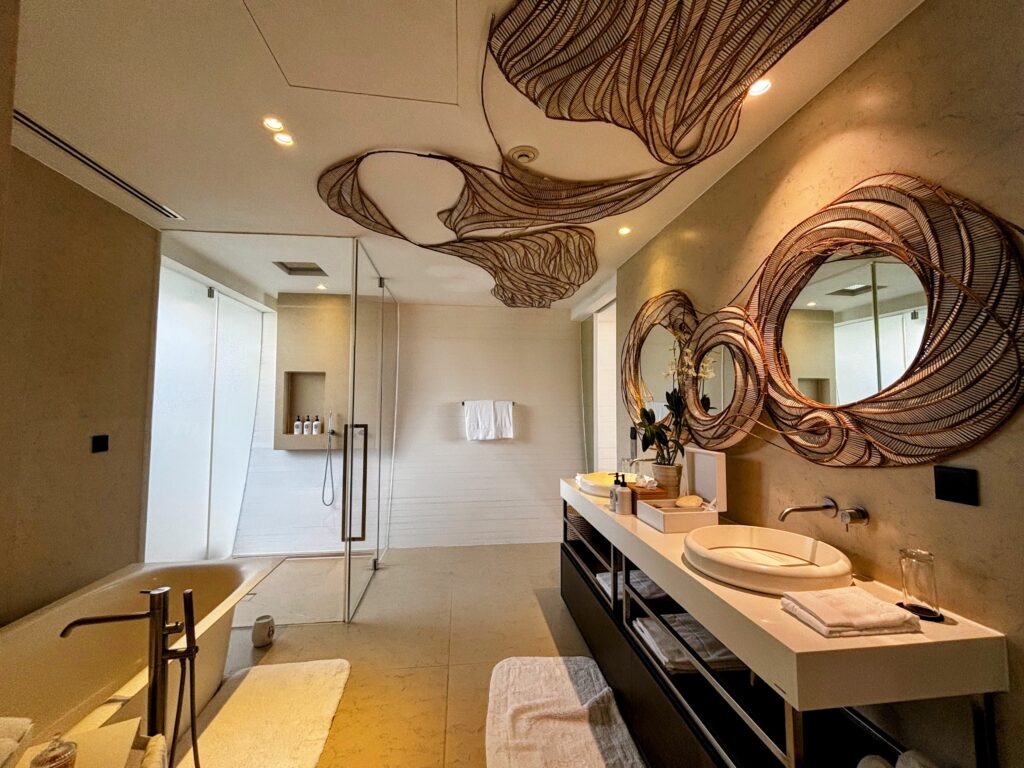
We’ve written more about the Devonshire’s Sunday roast, alongside some of the other best roasts in Soho, in our roundup here, by the way. 

In January 2026, The Devonshire was crowned the UK’s No. 1 gastropub in the Estrella Damm Top 50 Awards, a remarkable feat for a pub barely two years old.

Website: devonshiresoho.co.uk

Address: The Devonshire, 17 Denman St, London W1D 7HW


The Canton Arms, Stockwell

Ideal for Southern European cooking in Southern London…

Though we spoke of the Camberwell Arms as being in the exalted position of London gastropub benchmark setter, the Canton Arms is, arguably, even more influential. 

Stockwell’s finest, part of the esteemed group that also runs the Anchor and Hope, the Clarence Tavern and the Magdalen Arms in Oxford, the Canton Arms is our favourite of the quartet, a genuinely ‘old school’ feeling boozer with a dimly lit, dark wood panelled dining room out back serving a sprawling menu of, it seems, whatever they fancy cooking. 

There’s no ‘pub grub’ vibes here, but there is a certain sensibility to the cooking, with Provençal and Southern European influences running through the menu. So, that’s Imam Bayildi with a simple green salad, mutton chops with coco beans and anchoïade, and a beautifully golden tranche of skate wing, served with steamed potatoes and a sauce vierge. All three are excellent.

Dishes with a more pronounced Italian accent are a strong suit here, too. On a recent Sunday sharing menu, a roast monkfish done in the saltimbocca style (as in, wrapped in sage and Parma ham) was gloriously salty and tender. Sitting on long braised puy lentils that were close to collapse and wonderfully homogenous as a result, the whole thing was lifted up by dollops of a coarse, pungent salsa verde. This dish was the one.

The pub is also known for its unique selection of house-made liqueurs. From damson gin to vin d’orange, these drinks are a signature feature, with seasonal variations lining the shelves above the bar.

Sunday lunch here isn’t actually massively different to any other lunch or dinner of the week, which is quite refreshing when you don’t want a reheated roast dinner for £30. Instead, if you’re looking for a pub lunch with real zest and intrigue, the Canton Arms is certainly one of London’s best. 

Website: cantonarms.com

Address: 177 S Lambeth Rd, London SW8 1XP


The Waterman’s Arms, Barnes

Ideal for porky pub grub taken to dizzy new heights…

Sitting pretty – real pretty – on the banks of the Thames, The Waterman’s Arms in Barnes is a more recent addition to London’s gastropub scene, but it’s already earned a 33rd place finish in the 2026 Estrella Damm Top 50 Gastropubs list, and inspired a Soho follow-up in The Shaston Arms, which the team opened off Carnaby Street in late 2025 and is probably deserving of a menu in this here list sooner rather than later.

The original 1850s riverside pub had been a Watney’s house in a former life, before spending a stretch from the 1980s onwards as a restaurant. It was returned to use as a pub in 2019, before its current incarnation took shape under Joe Grossmann, the founder of Patty & Bun, in September 2023.

It’s not just burgers and fries here, though; under the culinary leadership of Sam Andrews, previously head chef at the aforementioned Camberwell Arms and Soho’s Ducksoup, the gastropub offers a thoughtful blend of traditional pub-aligned dishes and the obligatory, ubiquitous sprinkling of Italian influences.

Not that we’re complaining about the ubiquity, when dishes like pork belly and pickled nectarine or pork collar and pig skin ragu hit the table.

Yep, they love all things porcine here, but that’s not all that’s available and on song. Since we’re by the water, why not start with oysters, here served with a piquant, invigorating fermented chilli dressing. Follow those briny boys with more, erm, briny boys; a simple, summery dish of mussels and tomato hitting all the right notes for riverside dining. Even if you are inside, in a pub.

Before you turn into a bivalve, move onto the larger meat dishes, built (and priced) for sharing. The Hereford steak with smoked garlic butter is a highlight, with a pronounced crust and wall-to-wall blushing centre. It goes without saying that the pool of smokey, buttery meat juices beneath it needs a round of bread dragged through it. Scarpetta your heart out; the crusty sourdough here is built for such behaviour.

On the holy day, rather than a Sunday Roast with all the trimmings, it’s big sharing plates of meat at the Waterman’s. Friends wax lyrical about the half spit-roast chicken with onion broth (£34, to share). And like a curly pig’s tail that’s been pulled and has sprung back, we’re going full circle here and ending with the incredible porchetta, that’s been a Sunday lunch staple since day dot. Crisp crackling and a pleasingly pink centre take this one into the stratosphere.

Even if you’re not stuffing your face, the Waterman’s Arms is a lovely place for a pint. Spread over two floors with an outdoor dining space boasting waterfront views, the space downstairs serves a simple bar menu, while upstairs, an a la carte menu featuring seasonal dishes is available. Draught beers come from the award winning Forest Road Brewing Company in Lewisham. There’s also Estrella Galicia, increasingly becoming the tap of choice for London’s best gastropubs.

The restaurant’s wine list offers a diverse selection from around the world, featuring crisp whites like Vinho Verde from Portugal and complex reds such as Barolo ‘Albe’ from Piemonte. With options ranging from affordable to prestigious, there’s a perfect pairing for any dish and palate. A couple of bottles clock in at under £30 – it’s crazy we feel this is noteworthy, but that’s where we are.

Website: watermansarms.co.uk

Address: 375 Lonsdale Rd, London SW13 9PY 


The Bull & Last, Hampstead Heath

Ideal for mid-afternoon snacking…

We end, appropriately, at the Bull and Last over on Highgate Road, perched at the southeast corner of Hampstead Heath.

Established as a coaching inn in the 18th century, this cherished gastropub derives its unique name from being the last stop for northbound coaches out of London, where drivers would call out “The Bull – and last” as they approached. The gastropub’s historic charm is ever-present, underscored by a significant two-year refurbishment completed in 2020, which added six beautiful boutique bedrooms, perfect for collapsing into after a feast of North Essex Shorthorn prime rib, gremolata, béarnaise, green salad and properly good chips. 

Yes indeed, the food here is of the crowd pleasing variety, both in scope and size, with 8 snacks, 8 starters and 8 mains to choose from, plus sides and the sweet stuff. It’s certainly the kind of place where even the most fickle members of the squad will be satisfied. On Sundays, things are no less interesting, with a broad, generous menu of crowdpleasers – roast lamb, fish and chips, an aubergine parmigiana wellington (?!) for those trying to forget the incoming scaries. 

And if you’re dropping in midweek, then the Bull and Last’s ‘mid service’ menu is one of this affluent area of London’s most indulgent and best kept secrets. Available Monday to Friday between 3pm and 5:45pm, the pigs and prunes in blankets are the stuff of legend, sure, but the absurdly stacked roast beef sandwich with truffle mayo (£20) is the true move. Served with pickles, fries and aioli, it’s just the kind of thing you want to wrap your hands around after a walk on the heath. A house Margarita washes things down lustily. A second has you enquiring if they’ve got any space for dinner…

The Bull and Last is regularly featured in the Estrella Damm Top 50 Gastropubs list (currently placed 39th in the country), and is also recognised in the Michelin Guide for good measure. There’s even recently been a beautifully presented cookbook, featuring 70 recipes and local stories, offering a sense of time and place and plenty of context to this historic place.

Website: thebullandlast.co.uk

Address: 168 Highgate Rd, London NW5 1QS

Special mentions to the Compton Arms and its current residency, the brilliant Tamil Prince, and Thai Zaap at The Heron in Paddington… Amazing places, but perhaps not quite the ‘gastropub’ vibe we’re talking about in this particular piece.

Where To Eat The Best Street Food In Bangkok

Last updated April 2026

Perhaps no city on the planet has more often been named the street food capital of the world than Bangkok. Indeed, it feels as if the Thai capital would exist in a kind of liminal space between meals, were it not for the incredible range of sticks, skewers and sweet treats aimed at distracting appetites until dinner. 

This is a city that’s always eating, and though it boasts an ever growing roster of groundbreaking, gravity defying high end restaurants, the main focus of the culinary culture in Bangkok is of course found on the street.

Bangkok’s stock keeps climbing. In March 2026, Time Out named it the eighth best city on the planet, with 81 percent of locals giving the food scene the thumbs up. The magazine singled out Yaowarat’s street food and the reborn creative hubs of Talat Noi and Song Wat as central to the city’s appeal – a verdict that surprises precisely no one who’s spent an evening on a plastic stool here.

One for the pedants before we begin; defining exactly what ‘street food’ is in Bangkok has become an increasingly difficult endeavour, particularly as some vendors have been moved off the streets and indoors, often to the basement or top floor level of enormous, glitzy shopping malls that are just about as far from the street as is physically possible.

Street food, in the case of this roundup, is about the dishes and the cooks, rather than whether or not there’s a roof over your head or you can see blue sky as you eat. Often, the distinction between street food and shophouse is sometimes blurred only by a shutter. 

What connects them is harder to define. Often, but certainly not always, people are thinking of one bowl wonders when they talk about street food. Generally considered ‘cheap eats’, these are family recipes, dishes, a sense of hospitality and a system of serving (and often queuing!) that has been refined over generations.

That blurring is set to continue. In April 2026, the Bangkok Metropolitan Administration opened a new Hawker Centre next to Lumphini Park, housing around 130 vendors in a structured space with morning and evening shifts and 60-baht-a-day rents. It’s an attempt to formalise without sterilising – and the model may well be rolled out across the city in the coming years.

Anyway, you’re here for Bangkok’s most iconic, legendary, downright delicious street food dishes rather than a discussion in semantics, right? With that in mind, here’s a selection of the best places to eat street food in Bangkok.

Unai Braised Goose, Yaorawat

Ideal for Teochew-style braised goose from a six-decade-old family institution…

Song Wat Road, running parallel to the more famous Yaowarat, has in recent years become one of Bangkok’s most talked-about and Tik Tok’d streets, its crumbling Sino-Portuguese shophouses now home to specialty coffee shops, galleries and wine bars, as well as that faintly naff but charming street art that seems to accompany such a vibe. Urai Braised Goose has been here for over sixty years, long before the creatives moved in, doing one thing and doing it with an ultimate courage of conviction.

The menu has just two items: braised goose, and braised goose with rice. That’s it. The birds are whole geese, slow-cooked each morning in a deeply aromatic Teochew-Chinese broth of soy sauce, five-spice and herbs, emerging with meat that’s tender and yielding, its skin silky, the braising liquor dark and glossy and absolutely crying out to be spooned over rice. A dark, brooding soup arrives alongside, no doubt ladled from that same braising liquor, as does a sharp, garlicky vinegar dipping sauce, the latter a necessary bright counterpoint to all that savoury richness. If you’re here on a Wednesday or Saturday, the intestines are available too.

Arrive early or, better yet, call ahead to reserve your goose the day before (exemplary Thai is required) . They sell out fast, sometimes within an hour or two of opening. Other days, they’re still slicing that goose up with a cleaver as the Bangkok evening darkens and cools just slightly. It’s an impossible game to predict, but the outcome of the eating is always the same.

  • When is Urai Braised Goose open? From 10am to 1pm and 4pm to 7pm, daily. Closed Monday afternoons. They frequently sell out well before closing.
  • How long should I expect to queue? If you haven’t reserved, expect a wait. If the goose is gone, it’s gone.
  • How much should I expect to pay? Between 200 and 400 THB (£4.35 to £8.70) per person, depending on portion size.

Closest BTS/MRT: Wat Mangkon MRT (a 10 minute walk from there)

Address: 935 Song Wat Rd, Samphanthawong, Bangkok 10100, Thailand


Khao Gaeng Jek Pui, Yaorowat (Chinatown)

Ideal for homestyle Thai curry and a game of musical chairs…

Sure, some of the best curries in Bangkok are found in the city’s fancier restaurants, all perfectly balanced flavour profiles, chunks of meat braised until tender and near surrender, and an adornment of makrut lime leaf julienne so fine it passes for green baby hair. 

And then, there is Jek Pui. A traditional Bangkok-style raan khao gaeng (rice and curry) restaurant, the whole orchestra is conducted on the street, with several huge pots of enticing curries lined up out the front of a Chinatown shophouse, their surfaces dappled with separated coconut milk, all cooled down to Bangkok room temperature – the perfect ambience for curry in the capital.

Pull up a red plastic stool in the chaotic but calm street level dining space (nicknamed ‘music chairs curry’ for the procession of diners it receives and quick turnaround it delivers), and order a yellow curry of pork, the Jek Pui signature, with some deep fried slivers of Chinese sausage as an extra garnish. It’s sweet, it’s salty and it’s pure perfection. 

  • When is Jek Pui Curry open? Jek Pui is open daily, from 2pm to 7:30pm.
  • How long should I expect to queue? You’ll be able to find a stool fairly quickly, even at peak times (it’s usually busiest straight after opening).
  • How much should I expect to pay? The yellow curry with a couple of sides and a bottle of water won’t be more than 100 THB (just over £2).

Closest BTS/MRT: Wat Mangkon MRT (a 5 minute walk from there)

Address: 25 Mangkon Rd, Pom Prap, Pom Prap Sattru Phai


Raan Jay Fai, Phra Nakhon

Ideal for arguably the world’s most iconic street food destination…

We couldn’t really go much further into an article about the best streetfood in Bangkok without mentioning the universally acknowledged queen of the scene; Jay Fai

What is there left to be said that hasn’t already been covered? Yes, you’ll have to wait for several hours to eat the begoggled octogenarian’s wok work. Sure, you might have to share a table with other hungry food tourists. Nope, these aren’t ‘normal’ streetfood prices, with most dishes in the 1000 THB region (around £25), but you’re paying for some seriously premium ingredients here.

© Streets of Food

Get over those hurdles and the massive wait, and get ready for a crab omlette the size of a newborn baby, properly filled with huge chunks of white meat. Chase it down with an expertly seasoned tom yum soup, replete with huge river prawns, properly spicy and tangy af, and forget that you waited so long.

Simply put your name down and note your number – it’s your call if you hang around with a beer in the adjacent cafe or risk losing your place in the queue by heading off for a couple of hours. You’ll see the last number on a sign out front – if it’s beyond your number, you’ve missed your slot and these guys do not make exceptions and allow for retrospective queue jumping. Your loss.

Interestingly, it’s often announced that Jay Fai plans to hand up her goggles and wok paddle, and close her restaurant for good. Often, just days later, these rumours are debunked by the the chef herself. Long live Raan Jay Fai!

  • When is Jai Fai open? Jay Fai is open from 9am to 7:30pm, Wednesday to Saturday. It’s closed on Sunday, Monday and Tuesday.
  • How long should I expect to queue? In the words of Van Morrison, for hours and hours and hours and hours and hours, and hours and hours and hours 
  • How much should I expect to pay? Prices have risen significantly in recent years. The signature crab omelette is now 1,500 THB (around £33) for the regular version. A full spread of Jay Fai classics plus a couple of cold ones is going to cost upwards of 3,500 THB (£75) a person.

Closest BTS/MRT: Sam Yot MRT (a 10 minute walk from there)

Address: 327 Maha Chai Rd, Samran Rat, Phra Nakhon


T&K Seafood, Yaorawat 

Ideal for a kerbside seafood feast…

Bangkok’s Chinatown and, more precisely, its defining thoroughfare Yaowarat Road, is full of eye-catching, attention-grabbing seafood spots, with tanks of live fish and shellfish in their skimpiest swimsuits bobbing about in fish tanks for all to see, and huge clusters of plastic stools at motorbike exhaust fume level competing for passing custom.

To our mind, the best of the bunch is T&K Seafood, where the catch is plump and the nahm jim seafood deliciously piquant and punchy. Here, some of the dishes beyond the basic boiled or grilled seafood really hit the spot, too. We’re big fans of clams stir fried in chilli jam, the bivalves here big, briny beauties and the drifts of fresh Thai basil a welcome note of complexity. Even better, is the squid in a viscous, rich salted duck egg yolk sauce, which is punctuated by Chinese celery to lighten everything up. 

Order a couple of big sharing beers and a pitcher of ice, get chatting to a neighbouring table, and you’ve got yourself a wonderful night out. 

  • When is T&K Seafood open? From 4pm to midnight, daily.
  • How long should I expect to queue? You can usually find a table pretty swiftly, though at peak times (around 7pm), you may have to wait ten minutes or so. Turnaround here is fast, though, so don’t worry.
  • How much should I expect to pay? A generous spread of fresh seafood and a couple of cold ones is going to cost around 1000 THB (£22) for two.

Closest BTS/MRT: Wat Mangkon MRT (a 3 minute walk from there)

Address: 49, 51 Phadung Dao Rd, Samphanthawong


Tai Heng, Yaorawat

Ideal for peaceful, familial Chinatown shophouse style dining…

Still in Chinatown, though off the main artery and into the tangle of side streets, Tai Heng is essentially a couple of massive marble tables in the ground floor garage of a family home where they have pretty much perfected two dishes you don’t often see sharing a menu let alone a table; khao man gai (poached chicken over rice seasoned with chicken fat) and Thai suki hang

© Streets of Food

The latter is a stir-fried noodle dish that, at its best, forms a kind of homogenous tangle of sticky, charred noodles, egg and seafood that sings with wok hei. Its distinctive, shocking pink (from red bean curd) dipping sauce – sharp, rich and energetic – seals the deal.

And so it is here, where both dishes have pretty much been perfected, the khao man gai’s chicken an off-pink tender that would be in danger of scaring off the tourists if only they could find the place, but is expertly poached and just so good. The sukiyaki stir fry (do order it ‘hang’, as in dry) is equally as exemplary. 

Chase both down with an iced tea, breathe in the surprising serenity of Yaorowat’s backstreets, and get ready to launch yourself back into one of Bangkok’s busiest, buzziest areas.  

© Author’s own
  • When is Tai Heng open? From 10am to 5pm, every day except Sunday.
  • How long should I expect to queue? Due to its side street location and hidden gem status, you likely won’t have to.
  • How much should I expect to pay? Both dishes and a cold tea won’t set you back more than 150 THB (£3.30).

Closest BTS/MRT: Wat Mangkon MRT (a 5 minute walk from there)

Address: Yaowarat Soi 8, Talad Noi, Sampangtawong


Elvis Suki By Nuch (Original), Pom Prap

Ideal for charred noodles and grilled seafood on the road…
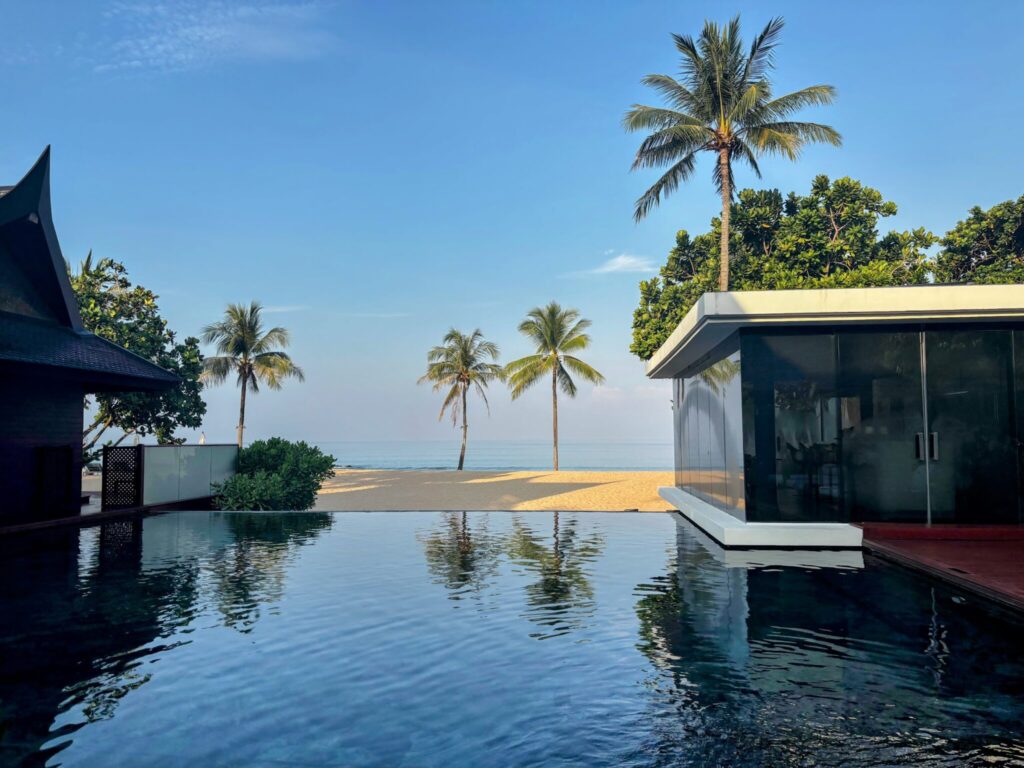
For arguably Bangkok’s best version of sukiyaki, head next to Elvis Suki By Nuch (the one on Soi Yotse, rather than the pretenders across the city piggybacking on the name), who have mastered the dish so comprehensively that the restaurant is now named after it. And, of course, named after Elvis Presley – the owner is a big fan and they are the self-proclaimed ‘king’ of the dish. It’s a damn good version, with a seriously smoky kiss from the coal stove over which it’s stir fried. 

That said, it’s not the only thing you want to order here. The scallops – plump and fresh – grilled in their shell with a dressing of minced pork fried in sweet garlic butter are a revelation, blessed with that same charcoal smokiness as the sukiyaki, and bubbling and spitting on arrival to the table. In the best possible way of course…
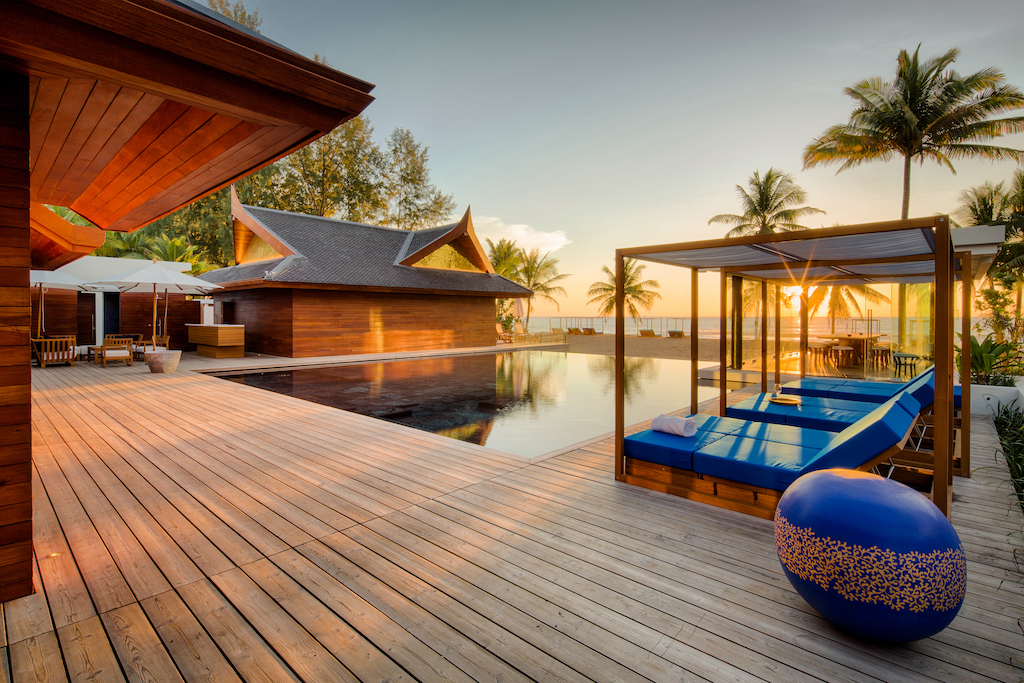
Open until 9:30pm nightly, and popular with the after-work crowd, there’s both air conditioning seating across the road and sociable, street side seating infront of the woks. The beers flow here, naturally.

  • When is Elvis Suki open? From midday until 9:30pm, daily.
  • How long should I expect to queue? You should usually get a seat pretty swiftly after arriving.
  • How much should I expect to pay? Single dishes, including the famous sukiyaki, are priced at around 100 THB each (£2.20).

Closest BTS/MRT: Wat Mangkon MRT (a 15 minute walk – best to get a taxi).

Address: 222, 6 Soi Yotse, Wat Thep Sirin, Pom Prap Sattru Phai, Bangkok 10100, Thailand


Kor Panich, Phra Nakhon

Ideal for the city’s most historic mango sticky rice…

Time for a sweet treat, we think, and it has to be Thailand’s most iconic, beloved dessert; mango sticky rice. In a city where you’ll see Nam Dok Mai mangoes being peeled, sliced and served over rice on just about every street corner, it’s wise to seek out the best, to separate the coconut milk’s head from the tail, as it were.

Doing the good stuff for almost a century, Kor Panich is one of Bangkok’s most revered purveyors of mango sticky rice, their historic shophouse a mecca for lovers of this truly gorgeous dessert. 

© Author’s own

What more is there to say? The mangoes are only picked and peeled when at their most honey-sweet. The coconut cream is hand pressed daily – none of that UHT, soapy stuff here. It’s seasoned just right – salty, sweet but not overpowering, allowing the inherent coconut flavour to still sparkle. Even the toasted mung beans have been taken to just the right shade of dark brown and crispy.

Where once there was only a modest amount of seating within the shop, and most choose to takeaway from Kor Panich, owing to its success and Michelin recognition, there’s now ample seating in the cafe opposite. They do a refreshing mango smoothie for you to enjoy while you wait. The shophouse is open from 7am to 6pm daily, though be warned; they often sell out by mid afternoon.

  • When is Kor Panich open? Kor Panich is open daily, from 7am to 6pm.
  • How long should I expect to queue? Primarily a takeaway operation, you should be served swiftly here.
  • How much should I expect to pay? The classic dessert is on the more expensive side here, at around 130 THB (£3). You’re paying for some serious quality, though.

Closest BTS/MRT: Sam Yot MRT (a 15 minute walk – best to get a taxi).

Address: 431 433 Thanon Tanao, San Chao Pho Sua, Phra Nakhon

Read: The best street food close to Khao San Road


Doy Kuay Teow Reua, Phaya Thai

Ideal for bowls and bowls of exemplary boat noodles…

The streets and canals surrounding Victory Monument BTS Station are famous for their boat noodles, a popular street food in Thailand that originated from the canals (or ‘khlongs’) of Central Thailand. The dish is named after the vendors who traditionally sold these noodles from boats that navigated the country’s vast network of waterways.

Boat noodles are a flavorful and aromatic noodle soup dish characterised by its rich, dark broth, which is commonly made from a mixture of pork and beef, as well as spices and herbs. The broth is often thickened with pig’s or cow’s blood, which gives it a distinctive taste and a deep colour. However, some places may serve it without blood for those who prefer it.

© Author’s own

Though you could alight at Victory Monument and head straight for ‘boat noodle alley’, where a stretch of shophouses serve up the good stuff, you’ll find an even better bowl if you exit the station at the opposite side to that alley. Around a ten minute walk away, the guys at Doy Kuay Teow Reau are doing some truly ‘best in Bangkok’ bowls of boat noodles, rich and thick from blood and with a peppery back kick. We say bowls in the plural, as it’s expected you knock back several at any and all boat noodle shops. Well, it would be rude not to…

  • When is Doy Kuay Teow Reua open? Daily, from 8am to 6pm.
  • How long should I expect to queue? A sprawling, alfresco dining room, you’ll always find a table.
  • How much should I expect to pay? A bowl of boat noodles here is around 20 THB (50p), but expect to eat several, as is tradition.

Closest BTS/MRT: Victory Monument BTS (a ten minute walk from there).

Address: Ratchawithi Soi 18 (Wat Makok), Thanon Ratchawithi


Thanee Khao Moo Daeng, Phaya Thai

Ideal for premium pork purveyors in Bangkok’s buzziest neighbourhood…
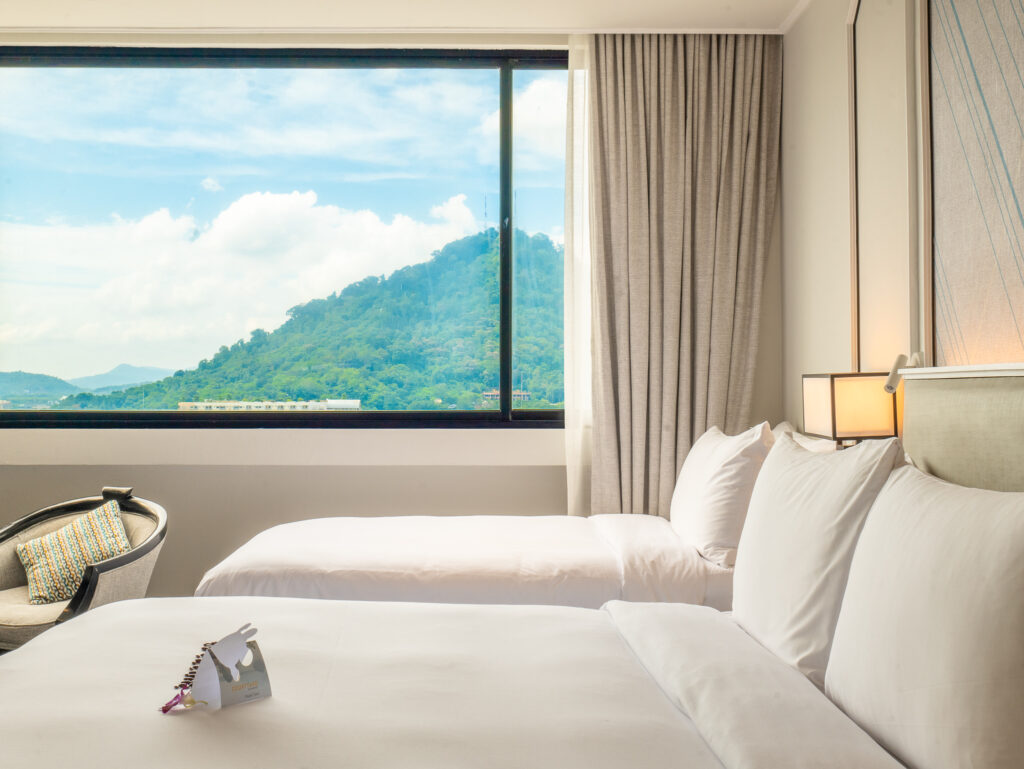
Just one BTS stop further along, in Ari, you’ll find one of Bangkok’s most cherished – legendary, even – pork purveyors. Thanee Khao Moo Daeng are famous for two things; their moo krob (crispy pork) and their moo daeng (stewed red pork), and both are superb, the latter in particular boasting a fluorescent, viscous gravy whose sheen needs to be seen to be believed. It tastes bloody wonderful.  

The shop, as with so many on a lunchtime in bustling, residential Ari, is popular with office workers during their break. Ideally arrive a little before, at 11am or so, or after lunch, from 2pm onwards.

© Streets of Food
  • When is Thanee Khao Moo Daeng open? Daily, from 8am to 4pm.
  • How long should I expect to queue? You’ll only have to wait a little while if you rock up between midday and 1pm.
  • How much should I expect to pay? A large version of each dish, over rice, is currently 90 THB (£2).

Closest BTS/MRT: Ari BTS (a 3 minute walk from there).

Address: 1161-3 Soi Phaholyothin 7


Som Tam Jay So, Silom

Ideal for no-holds barred Isaan food…
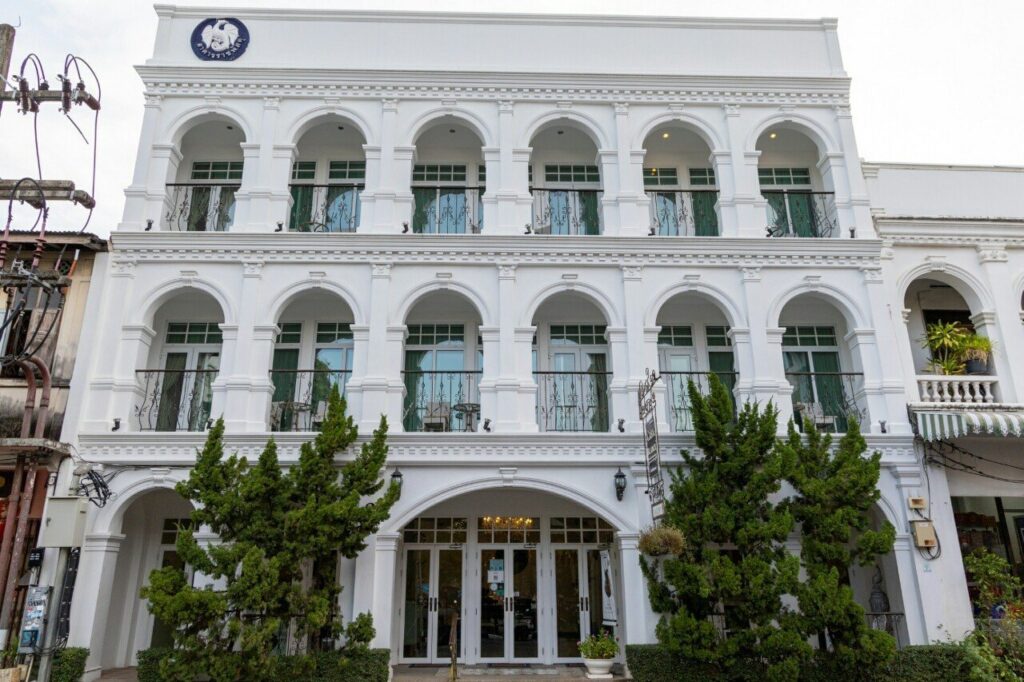
Another Bangkok institution that’s always packed with office workers during the lunchtime slot, is Som Tam Jay So, the so-called ‘Queen of Som Tam’.

She has well and truly earned her culinary crown, with intensely spicy, funky, fiery som tams made out front in a huge pestle and mortar by the cheeky, safety glasses-wearing host. Sure, she might chastise you for your less than perfect Thai when ordering, and tease you for the weight you’ve put on since your last visit, but it comes from a place of love.

And boy has love gone into the salads here, the ‘jungle’ version of papaya salad here (tam pa) an absolutely doozy of fermented fish sauce and heaps of both dried and fresh chillis. It will wake you up from even the darkest of hangovers. Hell, it could bring someone back from the dead, we think.

Pair it with some grilled pork neck – fatty as you like, its sugary marinade having caught on the grill to an inviting char – and some fresh sticky rice, and luxuriate in one of Bangkok’s finest street food experiences.

Oh, those safety glasses are for protection against errant chillies when pounding the salads, by the way…

© Streets of Food

Read: 7 of the best places to eat som tam in Bangkok

  • When is Som Tam Jay So open? Closed on Sundays, Som Tam Jay So is open every other day from 11am to 5:30pm.
  • How long should I expect to queue? You will likely have to wait for a table (though there has recently been some spillover seating set up in the parking lot next door) unless you arrive after around 2pm. 
  • How much should I expect to pay? Som tam salads here start at around 70 THB (£1.50), as does the grilled pork.

Closest BTS/MRT: Sala Daeng BTS (a 7 minute walk from there)

Address: Phiphat 2, Silom, Bang Rak


Somsak Pu Ob, Thonburi

Ideal for steamed ‘claypot’ crab made by a legend…

Now in its third decade of steamed crab slinging, Somsak Pu Ob is one of Bangkok’s true streetfood institutions, a culinary tour-de-force that’s busy from the moment the woks are fired up at 5pm every night (except Mondays, when they’re closed) until Mr. Somsak downs tools for the evening just four hours later.

It’s no surprise that service hours are short and exclusive here; the owner – and only the owner – works the four stoves for the entirety of that service, exacting precision timings on some seriously high quality seafood. 

© Author’s own

The pu ob woonsen is the must order, no doubt, a dish of crab and glass noodles simultaneously fried and steamed in pork fat in a dedicated skillet, simply seasoned with plenty of black pepper, the sliced greens of spring onion, and both soy sauce and oyster sauce. Those noodles are sticky and giving, and have caught a little on the bottom of the pan, creating a caramelised crust that’s just beautiful. Roll up your sleeves and crack open the crab claws, here having taken on the sweet richness of the pork fat, and have yourself a merry old time. The small accompanying bowl of nahm jim seafood may feel superfluous (you can’t improve on perfection, and all that), but the bright, tart sauce lightens and lifts the whole thing.

© Streets of Food

There are now several branches of Somsak Pu Ob across the city, but if you want the main man to cook your dinner (you do), then it’s to the original, across the Chao Phraya and into Thonburi district, that you should head.

  • When is Somsak Pu Ob open? Open daily from 5pm to 9pm, except on Mondays, when it’s closed.
  • How long should I expect to queue? Arrive at opening time and you may get lucky and nab a table. Otherwise, expect a wait. Fortunately, there’s a ticketing system.
  • How much should I expect to pay? The signature dish is 310 THB (£.6.75).

Closest BTS/MRT: Wongwin Yai (a 7 minute walk from there)

Address: 2 Charoen Rat Rd, Khlong Ton Sai, Khlong San


Guay Jub Mr. Joe, Charoen Krung

Ideal for Bangkok’s crispiest pork…

Though the fortifying rice noodle broth of guay jub is the headlining dish in this famous Charoenkrung shophouse, pretty much everyone is here for one thing; Mr Joe’s famous crispy pork.

You won’t want to miss the guay jub, though, which boasts a pork broth spiked with inordinate amounts of pepper, that familiar rasping heat the perfect foil to all kinds of offal bobbing about in the bowl. It’s gorgeous, but really is a warm-up for what has to be some of the best (see: crispiest) pork in the city. Hitting the table already sliced into bite sized pieces, its fatty layers clearly distinguishable, its skin puffed and bubbled and gloriously golden, it’s impossible not to order a second round of the stuff. And a third. And a fourth…

So tender it only requires a little ketchup manis for dipping, Mr Joe is open from 7:30am to 4:30pm, though often closes earlier if they sell out.

  • When is Guay Jub Mr. Joe open? Open daily from 7:30am to 4:30pm.
  • How long should I expect to queue? A large, multiroom shophouse, you won’t have to wait for a table, even at peak times.
  • How much should I expect to pay? The noodle soup is 75 THB (£1.60), a plate of the crispy pork is also 75 THB.

Closest BTS/MRT: Saphan Taksin BTS (a 20 minute walk – taxi recommended!)

Address: 313/7 Chan Rd, Wat Phraya Krai, Bang Kho Laem


Laab Ubon, Sathorn

Ideal for late night drinking and feasting…

An absolute Bangkok institution beloved of chefs, strays, late night workers and early morning risers (and Dua Lipa), Issan alfresco operation Laab Ubon is open from until 4am nightly, and only really gets going post midnight.

Serving a decent som tam, properly juicy salt-crusted tilapia and a never ending supply of grilled chicken, strangely for the eponymous nature of things, the laab exactly isn’t our favourite version here. Not to worry; really, you’re at Laab Ubon for the cold, icey beer, the live footy being shown in the middle of the night (coinciding with British and European kickoff times perfectly) and the everpresent good natured vibes of the place.

  • When is Laab Ubon open? Laab Ubon is open daily from 5pm to 4am.
  • How long should I expect to queue? The dining space is expansive – you won’t have to wait.
  • How much should I expect to pay? This one really depends on how many beers you end up sinking, but prices are reasonable. 

Closest BTS/MRT: Surasak BTS (a 2 minute walk, though do remember that the BTS shuts at midnight!). 

Address: 251 6 S Sathon Rd, Yan Nawa, Sathon


Here Hai, Ekkamai

Ideal for the most generous of crab fried rice dishes…

Here Hai simply wouldn’t survive a day in the UK, owing to the food costs involved in serving plates of crab fried rice with this much white crab meat. What, in this economy? Huge, mighty chunks of the stuff literally spill off the sides of your plate in this tightly packed dining room, the woks working overtime to service the never-ending stream of orders for the famous fried rice, only made more in demand by the restaurant’s recent floating on GrabFood.

It’s worth the massive wait, with the crab sourced directly from seafood-mecca Surat Thani daily. You’d be foolish to only order the crab fried rice. The fried mantis, showered in buttery sweet fried garlic, is superb, too, as are the giant river prawns, splayed open to reveal gooey, egg-yolk colour head juices. Perhaps best of all though is a riff on everyone’s favourite Thai go-to lunch; pad grapao. Here, it’s done with genuinely a dozen or more queen scallops, smoky but tender, and showered in rafts of holy basil. Yep, not content with their seafood generosity, these guys aren’t shy with the fresh herbs either!

  • When is Here Hai open? Closed on Mondays, Here Hai is open from 10am to 5:30pm on Tuesdays to Sundays, closing for an hour between 3pm and 4pm.
  • How long should I expect to queue? Anytime of day, expect to queue for at least an hour, even prior to Here Hai opening. You can put your name down and risk going for a wander, though.
  • How much should I expect to pay? The signature crab fried rice comes in a variety of sizes with different price points, from 440 THB (£9.60) to 1550 THB (£33.75) for a portion that will feed 4 to 6.

Closest BTS/MRT: Ekkamai BTS (a 15 minute walk in a straight line)

Address: 112, 1 Ekkamai Rd, Khwaeng Khlong Tan Nuea, Watthana


Ung Jia Huad, Central Sukhumvit

Ideal for every Bangkokian’s favourite comfort food…

No list of Bangkok’s best street food would be complete without mentioning a dedicated pad grapao peddler, such is the popularity of this most comforting of Thai dishes in the city and beyond.

Our favourite in the city (whilst we certainly haven’t eaten all of them, we’re making a pretty good go of it!) is found at Ung Jia Huad, just a five minute walk from the infamous red light district Soi Cowboy. Here, the minced pork arrives freshly stirfried, crisp but tender (the version with larger slices of pork is actually even better, we think). The fried egg boasts frilly edges and a richly coloured, runny yolk. The holy basil is scattered generously and wilted just right. The rice is freshly steamed and on point. 

Opposite the restaurant, there’s one of those beer pubs which is blessing drinkers with a fresh, constant application of mist, if you’re up for a cold one after your lunch.

Really, what more could you ask for?

  • When is Ung Jia Huad open? From 10am to 4pm, Monday to Friday.
  • How long should I expect to queue? You can usually cruise straight on in.
  • How much should I expect to pay? A classic pad grapao of pork is around 60 THB (£1.30).

Closest BTS/MRT: Sukhumvit MRT or Asok BTS (a 10 minute walk).

Address: Sukhumvit 23, Khlong Toei Nuea, Watthana


Pad Thai Narok Taek, Thonburi

Ideal for one of the city’s best pad Thais…

Without wishing to repeat ourselves, no list of Bangkok’s best street food would be complete without mentioning a dedicated pad Thai seller, either, and the best we’ve tried in the city is at Pad Thai Narok Taek, nicknamed ‘Mad Man Pad Thai’ for the owner’s idiosyncratic, occasionally chaotic stir frying style.

It’s said that chef Aon Apilak Plurksawet gets through 25 woks a month, such is his rock’n’roll way with the wok (‘wok and roll’? nah) and the sheer amount of order he receives for this famously good version of a Thai classic, which number 400 or so a night, he says.

It’s an amazing version of this sometimes maligned dish – charred and grungy, and a little tart rather than cloyingly sweet, all to be enjoyed on the street right next to Plurksawet’s cart. Get the fully loaded version with all of the sweet and crunchy gubbins for the ultimate hellfire experience. With no version of pad Thai here clocking in at more than 100 THB, it’s also an absolute bargain.

  • When is Pad Thai Narok Saek open? Open every day except Mondays, from 4pm to 10pm.
  • How long should I expect to queue? You may have to wait a few minutes for a seat, but turnaround is fast here.
  • How much should I expect to pay? No version of the dish exceeds 100 THB (£2.20).

Closest BTS/MRT: Wongwian Yai BTS or Khlong San BTS (a 15 minute walk from either)

Address: 286 Lat Ya Rd, Khlong San, Bangkok 10600, Thailand


Charoen Saeng Silom, Silom

Ideal for comforting, nourishing five-spice braised pork knuckle…

With a prime spot just off the intersection where Charoen Krung Road and Silom Road meet, the recipe for Charoen Saeng Silom’s delectable stewed pork leg has been in the family for several generations, and you can taste that deep sense of history in every bite.

Located down a nondescript alley away from the traffic, and with street level seating that catches the sun just right during lunchtime, Charoen Saeng Silom draws the crowds, make no mistake, and often sells out long before closing time. They’re all here for the same dish; that pork leg that’s been braised in warming, medicinal Chinese spices until its liquor is gelatinous and sweet. Served over rice and with a homemade spicy sauce that’s heavy on the raw garlic, it’s seriously good value at around 150 THB (£3) a portion. 

And this is one huge portion. Fortunately, the grandma here will be more than happy to (or, perhaps judging you that you weren’t able to finish a portion) bag it up for you.

  • When is Charoen Saeng Silom open? Open from 7am to 1pm, daily.
  • How long should I expect to queue? From around 11am onwards, expect to wait for 10 minutes or so for a seat. 
  • How much should I expect to pay? Expect to pay around 150 THB (£3.30) for a serving of whole pork leg, but this could easily feed two.

Closest BTS/MRT: Saphan Taksin BTS (a 10 minute walk from there).

Address: 492/6  Soi Charoen Krung 49, Suriya Wong, Bang Rak 


Soong Chai Yentafo, Central Sukhumvit

Ideal for a super refreshing bowl of pink broth…

Though tourists and guidebooks eulogise Jay Jia Yentafo as the city’s best version of yen ta fo noodle soup, we’re even more enamoured with a peaceful shophouse found just off Sukhumvit Road, somewhere between Asok and Phrom Phong BTS stops. 

At Soong Chai Yentafo, the noodles are slippery and sticky, the fish balls just the right side of fragrant, and the broth refreshing. Like, really refreshing. We’d argue that no Bangkok bowl is as refreshing as this.

Yen ta fo is a popular Thai noodle soup known for its distinctive pink broth, which gets its colour from fermented soybean paste. The dish typically includes a variety of ingredients such as fish balls, squid, morning glory, and sometimes pork or seafood. It is often garnished with fried garlic and served with a side of chilli sauce and vinegar to enhance its flavour.

  • When is Soong Chai Yentafo open? Open daily from 6am to 6pm.
  • How long should I expect to queue? Due to its location away from the main tourist areas of Sukhumvit, you won’t have to wait for a table here.
  • How much should I expect to pay? Expect to pay around 50 THB (£1) a bowl, though you might want to order two.

Closest BTS/MRT: Phrom Phong BTS (a 10 minute walk from there).

Address: 20 Sukhumvit Alley 22, Khlong Tan, Khlong Toei


Jay Oh Chula, Pathum Wan

Ideal for Bangkok’s most Instagrammable street food dish, and so much more besides…

Alongside Jay Fai, Jay Oh might be the Bangkok street food scene’s most recognisable aunty. At Jay Oh Chula, you’ll also find one of the city’s most iconic dishes, one with such a cult following that it’s been given homage in one of London’s most exciting recent restaurant openings. 

Yep, we’re talking about the tom yum mama noodles, of course, an absurdly stacked bowl of instant ramen noodles, tom yam seasoned broth that’s been thickened with evaporated milk, and all manner of other treats, including crispy pork, curls of braised squid, shell-on prawns and so much more. It’s all finished with an egg yolk because, well, why not? 

It’s an indulgent, delicious sharing dish, but it’s certainly not the only thing Jay Oh excels at. In fact, the more simply adorned tom yum here is one of our favourite versions in the city, its broth rust dappled from chilli jam and clinging to the sides of the bowl as it tends to in the best renditions. The squid stir-fried in chilli jam and Thai basil are wonderfully fragrant, too. You’ll also see an almost comical number of crisp pork bellies hanging to the right hand side of the dining room, a near constant procession of plates moving across the floor. Flag a waiter down and have yourself a plate of that crispy pork before it’s gone.

Though Jay Oh gets properly rowdy later in the evening (it closes around midnight), the only way to avoid the huge queues that accumulate out front here each and every night is to arrive bang on the restaurant opens, at 5:30pm. We’ve managed to swan in at this time without a wait. By the time we’d finished eating around an hour later, queues were already snaking around the block.

  • When is Jay Oh open? Jay Oh is open every day, from 5:30pm to midnight.
  • How long should I expect to queue? Expect to queue for ages. 
  • How much should I expect to pay? The full tom yum mama with all the fixings is currently 300 THB (£6.50). It’s built for sharing.

Closest BTS/MRT: Hua Lamphong MRT or National Stadium BTS (a hot and sweaty 15 minute walk from either.)

Address: 113 Soi Charat Mueang, Rong Mueang, Pathum Wan


Hiso Curry Rice Pa Aew, Phra Nakhon

Ideal for a seriously luxurious curry over rice experience…

Hiso Curry Rice isn’t your standard raan khao gaeng stall. Here, there’s an emphasis on serious luxury in their curry dishes, whether it’s in the fist-sized lumps of white crab meat used in their curry powder spiked stir fry, or the huge river prawns deployed in a sweet and sticky glaze. In fact, the whole restaurant, run by chef/owner Auntie Aew, prides itself on that sense of luxury – the phrase ‘hiso’ is Thai slang for ‘high society’. 

Though there’s not really any streetside seating to speak of at Hiso Curry Rice, you’re only a minute’s walk from Rommaninat Park, making this the most luxurious takeaway/picnic you’ll ever have. Do be aware that not much English is spoken here, but the enticing curries are all laid out in a row on the street, making pointing, nodding and smiling just about acceptable. Or, you know, you could just learn how to order in Thai.

  • When is Hiso Curry Rice open? Hiso Curry Rice is closed on Sundays and Mondays, and open from 11:30am to 5:30pm for the remaining days of the week.
  • How long should I expect to queue? As Hiso Curry Rice is a takeaway joint, you won’t have to wait long to make your order.
  • How much should I expect to pay? For a substantial feast of curry and rice for two, expect to pay no more than 200 THB (£4.35).

Closest BTS/MRT: Sam Yot MRT (a 5 minute walk from there)

Address: PFXX+6WR, Trok Wisut, Wat Ratchabophit, Phra Nakhon


Rung Rueang Pork Noodle, Central Sukhumvit

Ideal for straightforwardly satisfying noodles…

At Rung Rueang Pork Noodle, just seconds from Phrom Phong BTS, you’ll find a straightforwardly satisfying bowl of clear, tom yum flavoured soup with minced pork and your choice of noodle (go for the egg) for less than a couple of quid. Also in the bowl, thick slices of liver, fish balls and thinly sliced fish cake make this a generous affair. Order, too, a side of crispy fish skin.

It’s a relentless lunchtime operation here, with a fast-moving queue on the street expected during peak hours. Arrive a little after that rush, at around 3pm, and you’ll be seated quickly.

  • When is Rung Rueang Pork Noodle open? Rung Rueang Pork Noodle is open every day, from 8am to 5pm.
  • How long should I expect to queue? Expect to queue for at least 15 minutes during the lunch rush.
  • How much should I expect to pay? A small bowl is 60 THB (£1.30), a medium 70 THB (£1.50) and a large 80 THB (£1.75).

Closest BTS/MRT: Phrom Phong BTS (a 5 minute walk from there).

Address:  10/3 Soi Sukhumvit 26, Khlong Tan, Khlong Toei


Mae Varee Mango Sticky Rice, Thonglor

Ideal for satisfying your sweet tooth one last time…

We end once again satisfying our sweet tooth, at a temple to all things mango; Mae Varee Mango Sticky Rice. You’ll see the sunflower-yellow piles of perfectly ripe mangos lined up outside the shop, and you’ll notice the throngs of hungry dessert lovers curled around the corner and onto Sukhumvit Road proper, and you’ll know you’ve reached sweet-tooth nirvana. 

Portions are only takeaway, and are enormous. There are other sweet treats and classic Thai confection sold here, too. Result!

  • When is Mae Varee Mango Sticky Rice open? 6am to 10pm.
  • How long should I expect to queue? A takeaway only operation, the wait for your dose will only be brief during mid-morning and mid-afternoon. During the lunch and post-work rushes, expect to wait significantly longer.
  • How much should I expect to pay? A premium price for a premium product, this one is 150 THB (£3.25), but portions are massive.

Closest BTS/MRT: Thonglor BTS (a 2 minute walk from there)

Address: 1 Thong Lo, Khlong Tan Nuea, Watthana

Instagram: @maevaree


*A word of warning! Be aware that many of the restaurants on this list close intermittently for holidays, both personal and national. The majority also don’t start serving immediately after opening. Many also sell out well in advance of their listed closing time. Always have a back up (or two).*

We’re heading north next, to Chiang Mai, in search of the city’s best khao soi. Care to join us?

Where To Eat The Best Street Food In Ho Chi Minh City, Vietnam

0

Last updated April 2026

If you’re wondering where to eat the must try dishes of Ho Chi Minh City, Vietnam’s biggest, most exciting metropolis, then you’ve come to the right place. Well, actually, the right place would be Ho Chi Minh City, but in the virtual world, you’ve come to the right place, IDEAL magazine, for the top tips on the best places to street food in Saigon.

We’ve all got a bit confused here, haven’t we?

Let’s confuse things further; ‘street food’ might be a slight misnomer these days. Many of the city’s legendary hawkers have since moved inside, with a roof over their head and a clearer set of opening hours. But make no mistake: plastic stools remain, that kinetic dining room energy is guaranteed, and the food is as authentic as it gets. Street food, after all, is more a state of mind than a postcode.

Saigon’s culinary stock is rising globally, too. In March 2026, Time Out named Ho Chi Minh City the 38th best city in the world, with 75 percent of locals rating the food scene highly and 70 percent giving the nightlife the thumbs up. Step outside almost any HCMC apartment block at dinnertime and you’ll understand exactly where those scores are coming from.

Anyway, with pedants (hopefully) dispensed with, let’s start again, and stick to what we know; insider tips, street food recommendations, and the very best versions of the very best Vietnamese dishes. Here’s our guide on where to eat the best street food in Ho Chi Minh City.

Xoi Ga Number One (District 1)

Ideal for skipping your hotel buffet for Saigon’s finest breakfast…

The queue outside Xoi Ga Number One, just off Ben Thanh Market, forms before Quan 1’s backpackers have even gone to bed. They’re lining up for some of the finest sticky rice in town; a simple and satisfying plate of glutinous rice topped with poached chicken, house-made pate, fried shallots, and a quail egg or two. 

The current owner’s grandmother started this operation in the 1950s as a street cart on nearby Nguyen An Ninh, selling xoi bap. Her daughter took over, then her grandson Nguyen Hieu Trung introduced the poached chicken element that’s made the place famous. It isn’t revolutionary – it’s just the platonic ideal of the dish, and you can taste that generational refinement in just how pitch-perfect this xoi ga is.

The rice has bite and is the right side of homogenous without clumping. The pate is just off-rough and rich, not the rubbery stuff you sometimes encounter. The shallots stay crisp and golden, the pickles piquant. 

And then there’s the house chilli oil, with which to anoint. This is Xoi Ga Number One’s trump card, an incendiary mixture of dried chilli, fresh whole ones, deep-fried garlic, and cubes of crispy pork lard. Oh, and the oil is actually rendered pork fat. It’s absurdly good. 

The shopfront is small, with limited seating on plastic stools out on the street. But xoi ga is grab-and-go food anyway. Open from half six in the morning until half eight at night, which means you can indulge your sticky rice cravings pretty much whenever they strike. When the xoi is this good, they often strike more than once in the same day.

Address: 15 Nguyễn Trung Trực, Phường Bến Thành, Quận 1, Thành phố Hồ Chí Minh


Bun Thit Nuong Chi Tuyen (District 1)

Ideal for a grilled pork belly, fermented rice noodle and fresh herb salad…

Let’s hit the streets and do what the Viets do best; perch on plastic stools and eat some of the freshest, lightest, most delicious grub in the world. 

Bun thit nuong is one of the South’s finest dishes; a barbecued pork salad over lightly fermented ‘bun’ noodles, crisp lettuce and loads of herbs. This is topped with roasted peanuts, crispy shallots on occasion, pickled carrots and daikon, and a dipping sauce which defines southern Viet food; fish sauce, a little lime, sugar and chilli. 

Courtesy of bunthitnuongchituyen

There are proud purveyors all over town slinging this classic to hungry punters, but Chi Tuyen’s version, on Co Giang street (a great strip for all manner of Vietnamese street food), is perhaps our favourite. Make sure you include cha gio in your order; a crispy spring roll filled with glass noodles, wood ear mushrooms and, usually, a little minced pork and prawn or crab.

Address: 175C Cô Giang, Phường Cô Giang, Quận 1, Hồ Chí Minh, Vietnam

Facebook: @bunthitnuongchituyen


Banh Mi Huynh Hoa (District 1)

Ideal for a gold standard version, in the city that birthed the banh mi…

Needing little in the way of introduction, the world conquering Vietnamese sandwich appears in myriad forms across Ho Chi Minh City. And since this was the city that (probably) spawned the first banh mi, there really is no better place in the world to eat the crispy baguette filled with grilled and cured meat, pickles, herbs, hot sauce and more than in Saigon. 

Though we’d rather not put our neck on the line and suggest just one place to enjoy ‘the best’ banh mi in Ho Chi Minh City (hell, we’ve barely tried 1% of them…there are just so many), the popular consensus is that Banh Mi Huynh Hoa does a damn fine, damn definitive version. But honestly, if you simply step out of your hotel and look for a queue forming, you’ll likely stumble across your favourite version in the world. And that’s what it’s all about, right?

Address: 26 Lê Thị Riêng, P.BT, Quận 1, Hồ Chí Minh 700000, Vietnam

Facebook: @banhmihuynhhoa

Read: Where to find the best banh mi in Hanoi


Banh Mi 37 Nguyen Trai (District 1)

Ideal for a banh mi with a difference…

We couldn’t eat our way across Ho Chi Minh City and only have one banh mi. This is the home of the celebrated sandwich, after all.

That said, we’re going for something a little different this second time around. At Banh Mi 37 on Nguyen Trai, the baguettes are stuffed with grilled, caramelised pork patties (not dissimilar to those you get in your bun cha up north) and paired with thick wedges of gently salted cucumber, shredded, pickled papaya, coriander, and a piquant chilli sauce. Heaven.

This one is takeaway only, but you can lean against a wall (or against your motorbike) in the adjacent alleyway and wolf down several quite easily. No one will judge you for it…

Address: 37 Nguyễn Trãi, Ho Chi Minh City


Beo Oi Quan (District 1)

Ideal for ebullient, light hearted dining with plenty of flavour…

With a name translating (affectionately, we should add) as ‘Fatty’s Restaurant’, you know you’re in for a good feed at Beo Oi Quan, a comfortable, pleasingly airy restaurant that leans on the Northern Vietnamese culinary canon to satisfying ends.

Image courtesy of @MonngoncuanguoiHaNoi

It’s a cheerful place to settle into, with cartoon illustrations of some of the signature dishes on the wall, buoyant service, and a vibe that doesn’t feel rushed. Hell, even the menu font is a little jaunty! From that menu, many come for the hotpot, which is convivial and generous, but the bun rieu cua is the real star of the show here. That Hanoian freshwater crab and tomato noodle soup is just so refreshing in the sweltering heat. 

Speaking of refreshing, the kumquat and honey drink, served over ice, is as thirst quenching as it comes. Một cái nữa, please…

Address: 15/20 Nguyen Thi Minh Khai Street, Ben Nghe Ward, District 1, Ho Chi Minh City, Vietnam

Facebook: @MonngoncuanguoiHaNoi


Bo La Lot Hoang Yen (District 1)

Ideal for grilled beef wrapped in piper leaf, to be enjoyed kerbside…

Back to Co Giang street, which is home to a string of bo la lot restaurants; one dish you certainly want to try before leaving town. Minced beef – a little spicy, a little peppery – is wrapped in piper leaf (‘betel’ leaf to many), grilled until smoky and served with a huge plate of herbs and lettuce, which you use to make your own wraps. So good, so moreish, and so cheap, too. 

Image courtesy of Bo La Lop Hoang Yen

At Hoang Yen’s you’ll see the addition of a sweet, sour mayonnaise on the beef wraps. If that’s not your thing (weirdly, it works), then let them know; a simple ‘khong’ (meaning ‘no’) + ‘may/yon/naise’ (just split those syllables out) should do the trick. The do-it-yourself assembly job routine makes for a more languid approach to dinner than some other street food joints where you may feel a little rushed. Great for an evening with friends and beer, then.

Address: 143 Cô Giang, Phường Cô Giang, Quận 1, Hồ Chí Minh, Vietnam


Quan An Co Lieng (District 3) 

Ideal for charcoal-grilled beef that lets the smoke do the talking…

We couldn’t dine out all article on Saigon’s best street food without having a second round of bo la lot. It’s said that the city’s favourite dish (don’t @me, broken rice) lives or dies on two things: the beef mixture and the char that sets off just the right amount of bitterness in the betel leaf. At Co Lieng, they’ve had thirty years to get both aspects just right. Let’s just say they’ve absolutely mastered it.

The beef here is seasoned with lemongrass, garlic, and enough spice to register without overwhelming. The betel leaves (yes, we know they’re piper sarmentosum really) are wrapped tight around the meat, then grilled out front over charcoal. The smoke throws a peppery fragrance over the compact dining room that overrides any perfume you’ve sprayed on for your night at Apocalypse Now.

The accoutrements all arrive looking sharp and purposeful, inviting wrapping and rolling. The plate of herbs – perilla in both green and purple, pennywort, Thai basil, lettuce – is as pert and fresh as you’ll ever see on the street, and the pickles and dipping sauce (this one spiked with fermented shrimp paste) are note-perfect.

What’s not to love?

Address: Võ Văn Tần/321 Bàn Cờ, Phường, Quận 3, Thành phố Hồ Chí Minh


Hu Tieu Nam Vang Nhan Quan (District 3)

Ideal for a noodle soup of shrimp, pig heart, quail’s egg and more…

We’re going to resist pho recommendations just yet, because if it’s noodle soup we’re after in the south, it has to be hu tieu. Though it comes in many forms, our favourite version is Hu Tieu Nam Vang, a glorious meeting of Chinese and Cambodian influences and just a fantastic, uniquely flavoured bowl of goodies.

By SamuelBrownNG via Canva

The hu tieu noodles are defined by a proper rice-y flavour and decent bite, and the pork bone based broth is clear and light. Expect plenty of sliced pork offal and mince floating in the soup, as well as a couple of large shrimp as standard. The rest is up to both the server and your own whim. The district 3 joint Hu Tieu Nam Vang Nhan Quan do an excellent version.

Address: 488 Nguyễn Thị Minh Khai, Phường 2, Quận 3, Hồ Chí Minh 700000, Vietnam


Hong Phat (District 3)

Ideal for hu tieu done the old-fashioned way…

The founder of Hong Phat, Dang Thi Tuyet, learned to make hu tieu Nam Vang in 1970s Phnom Penh. A political coup in Cambodia in 1970 led to increased anti-Vietnamese sentiment, so she and her husband relocated to Saigon despite the war raging between North and South. In 1975 she opened a humble stall in her parents-in-law’s house.

The restaurant has since expanded into a spacious, air-conditioned operation on Vo Van Tan that’s perhaps slicker than it needs to be, but is certainly a comfortable place to eat your lunch.

The hu tieu here sticks to its Khmer-Chinese origins. The broth is pork bone and dried seafood, simmered in gigantic cauldrons for hours, clear and sweet without being cloying. The noodles have bite (order yours dry with the soup on the side to retain that edge). The toppings – tiger prawns, pork offal, blood cake, poached slices of pork, bean sprouts – arrive in generous quantities, finished with fried garlic and with fresh herbs on the side. It starts mellow and wonderfully restorative, and as you get to the bottom of the bowl, it suddenly intensifies, all of your self-seasoning suddenly coming alive in a raucous few final bites.

There are also handmade steamed buns, delicate and fragrant, displayed out front to lure you in (or, indeed, take away as you’re leaving for a little late afternoon pick-me-up). A word for the makrut lime soda, which is the most delicious cure for dehydration we’ve ever encountered.

Service is efficient, credit cards accepted. Open daily from half six in the morning until half ten at night.

Address: 389 Võ Văn Tần, Phường 5, Quận 3, Thành phố Hồ Chí Minh

Website: hutieuhongphat.com


Com Tam Ba Ghien (District 1)

Ideal for broken rice and grilled pork chop close to the backpacker strip…

Only fools commit their fractured rice grains to the bin. Indeed, ever creative Vietnamese cooks have created a whole dish celebrating their imperfection; com tam (‘broken rice’) is found all over Ho Chi Minh City, served with an array of customisable sides and toppings. And regardless of just how many of those toppings you plonk on your plate, and despite the fact that you’ll feel as though you could always add one more, this dish is proudly all about the rice. 

By SamuelBrownNG via Canva

That said, the city’s most popular accoutrement is a thin, grilled pork chop, glazed until sweet and burnished until bronze. But no local would stop there, and neither should you. A cripsy, runny egg, a mound of pork floss, fresh cucumber, pickled carrot…these are just some of the many delicious extras you should be adding. Don’t hold back, and you’ll be richly rewarded with a nourishing plateful. And full is the operative word here.

Address: 84 Đặng Văn Ngữ, Phường 10, Phú Nhuận, Hồ Chí Minh, Vietnam

Facebook: @ComTamBaGhien


Banh Xeo 46A (District 1)

Ideal for Bourdain-approved, pork and shrimp filled crispy crepes…

Next up, a dish from Central Vietnam that’s wildly popular on the streets of this Southern juggernaut; banh xeo. Rice flour, turmeric flour and water is fried until crispy, forming a taco-like shell which is filled with shrimp, minced pork, bean sprouts and the ubiquitous, ever welcome mountain of fresh herbs. Traditionally this pancake is then wrapped in rice paper and more lettuce and eaten accompanied with a sharp, salty dipping sauce of fish sauce, vinegar and chilli. 

At Banh Xeo 46A, made even more popular by the patronage of Anthony Bourdain, you’ll find pancake slinging of the highest order, and baskets of fresh herbs stacked even higher. Ăn ngon nhé!

By SamuelBrownNG via Canva

A word of warning; prices are pretty premium here, owing to the joint’s popularity following its numerous TV appearances. Other (cheaper) versions do exist!

Address: 46A Đinh Công Tráng, Tân Định, Quận 1, Hồ Chí Minh, Vietnam

Facebook: @banhxeo46A


Pho 2000 (District 1)

Ideal for beef pho done right, close to Ben Thanh Market…

Pho 2000, close to Ho Chi Minh’s famous Ben Thanh Market, is found via the stairs of the now ubiquitous Coffee Bean & Tea Leaf, and its first floor position means it’s a more upright, comfortable meal than those eaten with eyes at Honda Wave level. 

© Chris via Flickr

Bill Clinton is proudly pictured on the walls enjoying a bowl; so much so, he ordered two apparently. A more reliable judge of the pho’s quality is the fact that it’s packed, every lunchtime, with plenty of locals, who come in their droves for the huge bowls of delicately flavoured, sweet and spicy broth and tender cuts of beef. Take us back.

Address: 210 Đ. Lê Thánh Tôn, Street, Quận 1, Thành phố Hồ Chí Minh 

Website: pho2000.vn


Pho Hung (District 1)

Ideal for an excellent version of Hanoi-style pho in the heart of Ho Chi Minh City…

An arguably even better bowl of the good stuff is found over at Pho Hung, a short walk along Duong Le Lai from Pho 2000.  

Owing to its bold black and yellow signage, you’ll spot Pho Hung even sooner than you catch its enticing aroma, all sweet star anise and smoky aniseed notes from black cardamom wafting out from the gently ramshackle shophouse. 

© Terrazzo via Flickr

Follow your nose inside and pull up a stool at the restaurant’s stretch of shared tables. Though service is straightforward, you’ll find all the bells and whistles you need in that bowl that’s placed unceremoniously in front of you; this is truly sublime pho, clean yet rich, and close to the Northern-style of being savoury and supremely well balanced. 

Order the Dac Biet (house special) which has both raw slices of sirloin and long braised bits of brisket alongside meatballs and our favourite, chewy, resilient tendon. It’s very good indeed.

Address: 243 Đ. Nguyễn Trãi, Phường Nguyễn Cư Trinh, Quận 1, Thành phố Hồ Chí Minh 


Pho Mien Ga Ky Dong (District 3)

Ideal for a nourishing bowl of chicken pho with added offal alongside…

All that said, the best bowl of pho in Ho Chi Minh City, we think, is served at Pho Mien Ga Ky Dong over in District 3. The chicken version of Vietnam’s most famous dish, this particular rendition is best enjoyed with glass noodles, the broth adhering to the sticky strands just so. 

A light, bright, clean dining room that’s open from the moment the sun comes up until late in the evening, Pho Mien Ga Ky Dong is always bustling, with locals ordering dark thigh meat for the bowl, and a side plate of braised liver and a tangle of Vietnamese mint for picking over. You should do the same.

Address: 14/5 Bis Ky Dong Street, Ward 9, District 3, Ho Chi Minh City, 700000, Vietnam


Bun Bo Hue Chu Ha (District 3)

Ideal for spicy noodle soup served in a fishbowl…

Bun bo hue is a dish of contradiction. It’s supremely light, yet below the surface, the baritone thrum of shrimp paste is unmistakable. It’s clean and clear, superficially, but dappled across its facade is chili oil, ready to induce a humidity-defying sweat. 

That contradiction continues, where the best version of the dish we’ve tasted isn’t served in the city of its origin (Hue, hence the…), but instead here, in Saigon. At Bun Bo Hue Chu Ha, where the noodles, oxtail and braised meats are all stacked high out front, the art of bun bo hue has been perfected. 

Image via @BunbohueChuHa

Served from glass bowls, it’s pleasing to observe your own personal flourishes, of lime juice, chilli oil, garlic vinegar and the rest, dropping to the bottom of the bowl, fish tank style. It’s just what the doctor ordered in Ho Chi Minh City’s 40 degree heat.

Address: 300 Võ Văn Tần, Phường 5, Quận 3, Tp Hồ Chí Minh, Vietnam

Facebook: @BunbohueChuHa


Pho Hoa Pasteur (District 3)

Ideal for another round of pho after several rounds of craft beer…

After that brief interlude, we’re back in search of a damn fine pho, keen to recalibrate our sense of what this famous dish is all about.

There’s no better place to do so than at Pho Hoa Pasteur, which sits on Pasteur Street (named after the renowned microbiologist Louis Pasteur). Incidentally, the soon-to-be world-conquering Pasteur Street Taproom is just round the corner, and their signature craft beer is excellent.

© Charles Haynes

Anyway, this popular restaurant has been serving exemplary beef pho for almost six decades now. As well as the usual braised and raw bits, you can add tripe, tendon and golf-ball sized meatballs to your pho here. An absolute mountain of foliage, including sawtooth coriander, several forms of basil, and mustard greens, arrives alongside the main event, all in the name of personalisation. 

Address: 260C Pasteur Street, Ward 8, District 3, Ho Chi Minh City, 700000, Vietnam

Website: phohoapasteur.restaurantsnapshot.com


Oc Dao (District 1)

Ideal for streetside snails and Bia Saigons…

One of Vietnam’s most beloved street food experiences, eating sea snails, reaches its gold standard version at Oc Dao. Open from 10:30am to 10pm daily, you’ll find a huge variety of these cherished molluscs, done in both prosaic and inventive ways.

© Rama via Flickr

Follow your nose, of course, but certainly order the oc toi. Here, palm-sized shells are grilled until smokey and bubbling from their aperturals. Hoik the snail flesh out with a toothpick in one graceful motion and dredge through its adjacent, piquant chilli and garlic dipping sauce. Also order oc buou nhoi thit – that’s snails stuffed with pork – and the octopus teeth (whose translation escapes us), which arrive swimming in a viscous, sweet garlic butter. Incredible stuff.

If snails aren’t your thing, there’s a whole host of other shellfish options here, from clams to scallops and beyond. This is nhậu culture at its very best. Shout for a few Big Saigons with plenty of attitude and plenty of ice, and settle in to one of the quintessential Saigon eating experiences.

Address: 212B/D48 Đ. Nguyễn Trãi, Phường Nguyễn Cư Trinh, Quận 1, Thành phố Hồ Chí Minh

Read: Where to eat near Bui Vien backpacker street


Vinh Khanh Street (District 4)

Ideal for entering the nhậu zone via the swirls of a snail…

Vinh Khanh Street in District 4 stretches for about a kilometre, and nearly every shopfront along it is dedicated to one thing: oc. Snails, in every conceivable preparation. Steamed with lemongrass, baked with cheese, stir-fried in coconut milk, sautéed with tamarind. Each variety demands its own extraction technique with a toothpick, which makes for fidgety, messy, time-consuming eating, the kind where the beers flow and conversation gets increasingly bawdy as the night wears on.

Beyond snails, there are scallops glistening with scallion oil, razor clams tossed with morning glory, mantis shrimp grilled with salt and chilli. Oc Oanh at number 534 has been at this for nearly twenty years but wears its Michelin Bib Gourmand award lightly. The salt-roasted crab claws are the signature, alongside grilled shrimp and snails cooked in rich, spicy sauces. But the quality along the entire strip is strong. Follow your nose, look for the crowds, order too much.

Most restaurants fire up around noon, but the street comes alive after dark when the neon buzzes and the beer flows faster. You’ll find people ripping into shellfish well past midnight, seemingly oblivious to the time or the fact their white t-shirt has been ruined by the spray of garlic butter.

The street’s reputation now extends well beyond the city. In late 2025, Time Out placed Vinh Khanh at number 10 in its ranking of the world’s coolest streets, citing the buskers performing in the middle of the road as motorbikes weave around them – a description so accurate it could only have come from someone who’d actually been.

Address: Vinh Khanh Street, Ward 8, District 4, Ho Chi Minh City


Chao Ech Singapore Tan Dinh (District 1)

Ideal for curing the night’s ills with frog congee…

We’re having frog congee next, at Chao Ech Singapore. We’ve waited this long to introduce this lovely Singaporean-inspired dish to the mix as this streetside joint, located on the peripheries of bustling Tan Dinh Market, is only open from 7pm.

Really, it’s positioned as a late night place that cures the evening’s sins, the signature sweet and spicy frog stew and accompanying plain, cloudlike congee the perfect foil to a night of rice wine. Iced lettuce shows the deceptively simple restaurant’s commendable attention to detail.

A perch on plastic stools and an open grill wafting thick smoke around only adds to the lively atmosphere. 

Address: 315 Hai Bà Trưng, Tân Định, Quận 1, Thành phố Hồ Chí Minh 700000, Vietnam

Facebook: @chaoechtandinh


Lang Nuong Nam Bo (District 10)

Ideal for beer fuelled feasting and making new friends…

Lang Nuong Nam Bo is a sprawling, beer-fuelled restaurant that opened just before the turn of the millennium and has been packed with rowdy revellers ever since.

They’re all here for one thing; the whole-roasted baby suckling pig. Served with deep-fried glazed buns that either look like snails or turds depending on how you look at them, the pork is served portioned into cubes but still on the bone, retaining all its juices. Crisp, lacquered skin adorns every bite-sized chunk. Heaven. 

Really, it’s just one plate though, of a massive spread of Vietnamese drinking food, the shredded bamboo salad another highlight. Plates of prawns showered in deep fried garlic, salted ribs, boiled paddy crabs… It’s all here, and it’s all designed to make you drink more beer. Not that we’re complaining.

You better practise your chugging skills before pitching up; this is the kind of place where it’s a surprise if you don’t end up joining forces with the party next to you. Clinking glasses and downing beers with your newfound friends naturally follows…

Address: 302A Tô Hiến Thành, Phường 15, Quận 10, Thành phố Hồ Chí Minh 700000, Vietnam

Website: nhahanglangnuongnambo.com


Pha Lau Co Thao (District 4)

Ideal for when you need a non-noodle nosh…

Pha lau – braised offal in a spiced, coconut-enriched broth – is one of those dishes that divides opinion before anyone’s even tried it. Ignore the bores and the trepidatious, and get yourself lost in the District 4’s tangle of alleys, where Pha Lau Co Thao has been simmering heart, lung and liver for decades. Here, there’s no debate; the place is packed. 

The dish itself is Teochew in origin, brought to Saigon by Chinese migrants who extolled the virtues of using every part of the animal. What arrives at your table is a bowl of pork intestines, all meticulously cleaned then braised for hours in a coconut broth spiked with five-spice, cinnamon, star anise. The result is rich without being heavy, aromatic but still tasting of offal.

Co Thao’s version stands out for the broth, which boasts a fine natural sweetness and a golden colour. The offal itself is tender but retains some chew – a sign it’s been handled properly. You can order it in a bowl with the broth, or have it stir-fried if you prefer something drier.

It’s typically eaten with banh mi, the bread soaking up the coconut-rich liquid, or with instant noodles that do much the same thing but require chopsticks rather than hands. A side of tangy tamarind dipping sauce cuts through the richness. God it’s good.

Address: 243/29G Ton Dan Street, Ward 15, District 4, Ho Chi Minh City


Banh Canh Cua Ut Le (District 10)

Ideal for one of Southern Vietnam’s most substantial noodle dishes…

Banh canh cua – a kind of crab noodle soup – doesn’t get the same international attention as some of Vietnam’s more headlining noodle dishes, which is a shame because it’s arguably more interesting. The noodles are thicker – made with tapioca and rice flour – with a chew that’s closer to udon than anything else in the Vietnamese repertoire. The broth is thickened with brown crab, giving it a dense consistency that clings to those sticky noodles and refuses to let go. Do we even need to say how satisfying this is to eat?

Ut Le, on To Hien Thanh in District 10, is one of Saigon’s premier purveyors of the stuff, its popularity a firm indicator of the quality within. The restaurant now sprawls across multiple shopfronts, all identifiable by the crab mascot out front, though you’ll likely be seated in one of the back rooms at a low table with knee-high stools that actually make slurping all the easier.

The bowl arrives bubbling. Inside: thick noodles, crab cakes made with cá thác lác (a Southeast Asian freshwater fish), quail eggs, blood cake, deep fried tofu, shrimp, some random beef, and flakes of crab meat dispersed throughout the soup. It’s substantial – one bowl is a meal, not a snack.

There’s no menu; you just indicate how many servings you want and whether you’d like the larger size with extra toppings. Most people stick with the standard, which at 45,000 VND is already generous. It’s pretty rich, and you’ll want to cut it with the tabletop seasonings; the fresh line and chopped chilli are essential if you’re to finish a bowl.

The restaurant opens at 4pm and runs until late, which makes it a popular dinner spot rather than a breakfast or lunch option. 

Address: 210 To Hien Thanh Street, Ward 15, District 10, Ho Chi Minh City


Bun Mam Phan Boi Chau (District 1)

Ideal for a funky, fishy finish…

We end, as so many do in Ho Chi Minh City, sitting across from Ben Thanh Market, hunched over a bowl of noodles. Bun Mam Phan Boi Chau is one of the city’s most popular purveyors of bun mam, a popular Southern noodle soup that boasts a moody, funky broth that’s salty and pungent from a good dose of fermented shrimp paste and fermented fish sauce. All that pugency is tempered by both an underlying sweetness and the tartness of tamarind, both of which help pull things back from the brink.

Added to that incredibly moreish broth are noodles, of course, but also squid, prawns and pork belly. Grab yourself a napkin and get slurping; this is one fine way to end our roundup of Ho Chi Minh City’s best food.

Address: 103 Pasteur, Bến Nghé, Quận 1, Hồ Chí Minh, Vietnam

Care to join us in Thailand next, as we check out Bangkok’s best pad Thai? Go on, you know you want to…

The Best Places To Eat In Chiang Mai: The IDEAL 22

Last updated April 2026

If ever a city existed in a liminal space between meals, it’s Chiang Mai. The ancient capital of the Lanna Kingdom feels like it’s perpetually gearing up for its next feast, with never ending plumes of smoke rising from charcoal grills, steam billowing from bubbling curry pots, and the rhythmic pounding of clay pestle and mortars providing the city’s distinctive soundtrack. A soundtrack that’s only punctuated by a busy chorus of discussion about what’s for dinner, we might add…

Indeed, whilst the region’s proud, ornate temples, mountain vistas, walls and moats might initially draw visitors to Northern Thailand’s spiritual centre, it’s the food that keeps them coming back. 

A distinct cuisine influenced by neighbouring Burma, Laos and the Yunnan Province of China, but with its own inimitable character, Lanna food – as the food of the north is known – is generally milder than that of central and southern Thailand, with an earthy, herbal profile taking precedence over the familiar sweet, spicy and sour vibes that folk usually associate with the Kingdom. Pork fat brings a sauve richness where cracked coconut cream might sizzle down south. Sticky rice reigns supreme.

Not that Chiang Mai has a myopic vision, food wise. A large expat population and status as Thailand’s digital nomad capital means you’ll find excellent international restaurants too, as well as cafes and bars that wouldn’t look out of place in London or New York. Still, we write that without including a single one on our list, such is the quality of the local food here.

The food, alongside the rest of it, is winning the city wider recognition. In March 2026, Time Out named Chiang Mai the 32nd best city in the world, pointing to its festival programme, its UNESCO World Heritage bid, and a food scene that runs from smoky farm-to-table grills to boundary-pushing fine dining. The locals are already convinced – 76 percent told the magazine they felt a strong sense of community here.

So, once again, we find ourselves in the privileged position of eating our way around one of the world’s great food cities, all in the name of research. An arduous task, make no mistake, but one we accepted with open arms, and soon after, open mouths. Here are the very best places to eat in Chiang Mai; our IDEAL 22.

SP Chicken, Si Phum (Old City)

Ideal for some of the finest grilled chicken you’ll ever eat…

Let’s start with something simple but sublime. SP Chicken has been doing one thing exceptionally well for decades now; Issan-style grilled chicken cooked over charcoal. And boy, do they do it well.

The chickens here are brined, marinated, stuffed with lemongrass and garlic, and cooked on vertical spits with the heat source coming from the side rather than below. This unique method prevents any oil from dripping onto the coals and causing flare-ups that might burn the birds. The result? Impossibly juicy meat and perfectly, consistently crisp skin, every single time.

You have the option of a half or a whole bird. Though the idea of a half seems plenty, you’ll find yourself licking the plate and your fingers and considering ordering a second half.

You might as well commit to the whole thing first time around. Order yours with som tam (papaya salad) and sticky rice – the holy trinity of Isaan cooking, add a couple of Singha beers, position yourself near the grill where the cook is happy to swap stories and cooking tips, and stay the afternoon there. Heaven. 

© Author’s own
© chezshai
© suwa320
© suwa320

Prices remain steadfastly local here too, with a full spread for two rarely exceeding 400 baht (around £9). The whole chicken is 190 baht (£4.30), if you want to behave like a beast, tearing at drumsticks with your teeth.

Address: 9/1 ถนน สามล้าน ซอย 1 พระสิงห์ Mueang Chiang Mai District, Chiang Mai 50200, Thailand


Sorn Chai, Si Phum

Ideal for northern Thai food that’s worth seeking out…

It’s a pig’s ear to find and a pig’s ear to find open. Funnily enough, you can find pig’s ear on the menu here. That’s if you’re lucky enough to catch one of the sweet spots where their doors are flung wide and the sisters in-charge are at the stove. But man, it’s worth the effort (and occasional disappointment at being turned away). 

Author’s own

Because this bare bones, humble eatery serves up some of the finest northern Thai specialties in the city. Their gaeng hung lay (a Burmese-influenced curry of braised pork belly) is sensational, their laab toasty, rasping and redolent of a complex dried spice mix, and bitter as it should be. The northern Thai sausage, sai ua, is fragrant with lemongrass and makrut lime leaf, with a pleasingly caramelised casing – a nice point of a difference in a city with so much sai ua that the sausage fest gags write themself.

Address: 25-27 Kotchasarn Rd, Tambon Chang Moi, Mueang Chiang Mai District, Chiang Mai 50300, Thailand


Khao Soi Prince, San Sai District

Ideal for what might just be the finest bowl of curry noodles in the world…

About half an hour’s drive north of the city centre lies what many consider to be the best khao soi in Chiang Mai and by default, then, the world. This iconic northern Thai dish combines egg noodles in a rich coconut curry broth, crowned with crispy fried noodles and served with pickled greens, shallots, and chilli oil – a cherished creation born from the intersection of Chinese Muslim, Burmese and Thai culinary traditions. The journey might seem excessive for a bowl of noodles, but trust us; this one’s worth it.

Here, the third (and reportedly last) generation owner still makes the egg noodles by hand daily, preserving a family recipe that spans more than four decades. The beef version is the move here; the meat tender and giving, the coconut curry broth deep and complex with properly developed spicing, and those noodles – both soft and crispy – providing the perfect vehicle for it all.

If you’re feeling curious, try their pad sen khao soi, where those same hand-made noodles are stir-fried rather than swimming in broth. It’s a unique twist on the city’s signature dish that you won’t find in many other places. Rent a motorbike and make a day of it; San Sai is a gorgeous retreat from Chiang Mai proper.

Address: Tambon Nong Han, San Sai District, Chiang Mai 50290, Thailand


Blackitch Artisan Kitchen, Nimmanhaemin

Ideal for innovative cooking that respects its roots…

Hidden above a gelato shop in Chiang Mai’s hip Nimmanhaemin neighbourhood, this 16-seat restaurant serves some of the most exciting food in Chiang Mai. Chef Phanuphol Bulsuwan, who learned his craft at his grandmother’s side rather than culinary school, creates ambitious 10-course tasting menus that change constantly based on what’s available from local farmers and foragers.

The chef’s innovative approach to fermentation – he makes his own fish sauce, soy sauce and pickles, and brews beer and sake for the restaurant, too – and his deep knowledge of local ingredients results in food that pushes boundaries while remaining distinctly Thai. 

The dining room might be minimalist, but the flavours on the 2700 baht (£60 ish) tasting menu are anything but. Highlights include a refined take on the pork and tomato relish nahm prik ong (the ol’ Thai bolognese), which here is served ‘two ways’ and topped with crisp shards of chicken skin, and chef Bulsuwan’s buffalo salad, a riff on the sun-dried buffalo dishes of the Tai Khuen people.

The menu changes regularly and is Thai-seasonal in its approach, observing the rainy and dry seasons, the former celebrating the abundance that the wetter weather brings; the latter embracing ingredients that are refreshing and light. There’s a keen sense of time and place here – of tradition and modernity that reflects the wider city as an entity.

Many think that Blackitch will be the restaurant that wins Chiang Mai its first Michelin star – we have to say, we agree with them. It’s the best ‘fine dining’ restaurant in Thailand’s second city by some margin.

Website: blackitch.com

Address: 27/1 Nimmanhemin Soi 7, Suthep, Mueang Chiang Mai District, Chiang Mai 50200, Thailand


Tong Tem Toh, Nimmanhaemin

Ideal for northern Thai classics in lively surrounds…

Set in a charming wooden house on Nimmanhaemin Soi 13, Tong Tem Toh is perpetually packed with a mix of Thai university students, Chinese tourists and in-the-know farang. They’re all here for the same thing – agreeable northern Thai food in a convivial courtyard, all big wooden tables and noisy din that makes the whole sharing thing all the more enjoyable. 

It is a massive menu, so let the restaurant dictate things a little. Their northern Thai appetiser platter is the perfect introduction to the cuisine, loaded with sai ua, nahm prik ong, nahm prik noom (roasted green chilli relish), pork crackling and steamed vegetables. Lovely stuff. The grilled meats coming off the barbecue set up outside are excellent too, particularly the fatty, charred pork neck. It’s impossible to resist the smoke wafting about as you queue for, genuinely, hours for a table.

That said, the highlight at Tong Tem Toh is the jin som. Here, pork mince, skin and fat are mixed together with a cracked egg, pounded garlic and salt, wrapped in a banana leaf and left to ferment in the sun for a few days. The parcel is then chucked on the grill to order, and served with roasted peanuts, thumbs of ginger and Thai bird’s eye chillis. It’s lip smackingly good, and a damn fine version at triple T; rich, sour and just a little bit funky. Chase it down with a few Singha over ice – you’ve earned it after all that waiting around.

A meal here rarely costs more than 300 baht per person, which makes the queue out front a bit more bearable. Our advice? Get there early, get your name down and your number memorised, and go for a beer or two opposite.

Facebook: TongTemToh

Address: 11 Nimmana Haeminda Rd Lane 13, Tambon Su Thep, Mueang Chiang Mai District, Chiang Mai 50200, Thailand


Khao Soi Khun Yai, Si Phum

Ideal for a bowl of curry noodles from the OG (original grandma)…

Just off Sri Phum Road, near the North Gate of the old city, you’ll find this beloved institution known simply as Grandma’s Khao Soi. Opening at 10am and closing when they run out (usually around 2pm), this modest open-air eatery serves what many consider the best bowl of khao soi within the old city walls.

The coconut curry broth here is perfectly balanced – not too rich, not too sweet – with a deep rouge colour that speaks to its proper blooming of spices. While the chicken version is excellent, we’re particularly fond of the lesser-sighted pork version (owing to the dish’s potential Muslim origins, pork is rarely used in khao soi), which comes with tender chunks of belly that have been stewing in that incredible curry all morning. For those not confident with their chopsticks and fearful of ruining their T-shirt with a splashback of turmeric-tainted broth, the chicken slices version is your order.

Author’s own
© Christine Rondeau

Whichever way you play it, those ubiquitous condiments – pickled mustard greens, shallots, lime – are an essential counterpoint to the rich broth/soup/curry…whatever you want to call it. At just 60 baht a bowl, this is one of the city’s greatest bargains.

Website Sri Poom 8 Alley, Tambon Si Phum, Mueang Chiang Mai District, Chiang Mai 50200, Thailand


Huen Muan Jai, Chang Phuak

Ideal for authentic northern Thai food in a traditional Lanna setting…

Since 2011, this restaurant – whose name means ‘happy home’ – has been living up to its moniker by serving some of the most jolly satisfying northern Thai food in the city. Set in a traditional Lanna house with a leafy garden, it’s a tranquil spot to sample hard-to-find traditional dishes. Of a genre that’s fairly widespread in the city, Huen Muan Jai is our favourite rendition. 

Former TV chef Charan Thipeung’s menu includes all the northern classics: sai ua, nahm prik ong, and an excellent gaeng hang lay, alongside some lesser known dishes (outside the north, at least) like tam khanoon (pounded jackfruit salad) and gaeng pla chon (a hot and sour soup with snakehead fish). We’re really sorry about all those brackets, by the way. 

For newcomers and old timers, too, the northern Thai appetiser sampler is the perfect introduction to the region’s flavours. A word of warning; with the semi alfresco vibe to the dining room at Huen Muan Jai and the various water features scattered about the place, the mozzies can be pretty insistent here. Come doused in repellent accordingly.

Website: huenmuanjai2554.com

Address: 24 Ratchaphuek Alley, Tambon Chang Phueak, Mueang Chiang Mai District, Chiang Mai 50300, Thailand


Maadae Slow Fish Kitchen, Chang Moi

Ideal for seriously good seafood in a landlocked city…

You might not expect to find excellent seafood in a landlocked mountain city, but Maadae proves that distance from the coast is no barrier to quality. The kitchen here sources their catch directly from small-scale fishermen in Chumphon province, ensuring the freshest possible produce makes its way up north and onto the grills of this cracking restaurant.

The menu changes daily depending on what’s been caught, but you can expect Thai seafood classics like thick rounds of braised squid in a moody black pepper and garlic sauce, or chunks of white fish mixed with a fragrant, coarse curry paste before being wrapped in banana leaf and grilled. The main event, though, is the selection of whole fish and huge river prawns, sold by weight and grilled over coals. Usually, they’re served with jungle herbs and an assertive nahm jim seafood, the ideal foil by the bitter notes of charred skin and gorgeous, giving flesh within. 

The dining room, with its blend of industrial chic and traditional Thai elements, provides the perfect backdrop for such considered, respectful cooking. There’s even a short selection of natural wine, with a bottle of Wabi Sabi Orange Moon from the Niederösterreich region of Austria clocking in at 1400 baht (£32) and offering a restrained funk and plenty of acidity. 

Whilst Maadae isn’t a blowout meal (certainly not by Bangkok standards), it’s one of the more premium places on our list of the best places to eat in Chiang Mai. Expect to pay 2000 baht (£45) for two, before drinks. It’s very much worth it for the kind of spread or spanking fresh seafood you won’t find too often in Thailand’s second city. 

Facebook: maadae.slowfish 

Website: 86 88 Tha Phae Road, Tambon Chang Moi, Mueang Chiang Mai District, Chiang Mai 50300, Thailand


Laab Ton Koi, San Sai District

Ideal for experiencing the best raw laab in Northern Thailand…

A tiny shack a twenty minute drive out of Chiang Mai Old City, tucked away in the San Sai district, might not be the first place you’d think of for a culinary pilgrimage…

…Scrap that; it’s exactly the kind of place you’d think of. It’s worth the journey, the language barrier and the rest, as Laab Ton Koi serves what many locals consider to be the best laab in Chiang Mai. Opening at 11am sharp, this humble eatery typically sells out within three hours, the meat minced fresh each day and only going so far, so arriving early is essential.

OLYMPUS DIGITAL CAMERA

The star dish here is their laab kwai dip (raw buffalo) – a perfectly minced creation that’s generously but not excessively seasoned with a blend of spices including makwen peppercorns and cumin, then mixed with fresh green cow bile for an authentic northern Thai flavour profile. The result is a wonderfully complex dish that combines herbs both astringent and floral, bitter bile, and beautifully textured meat.

Since you’ve made the effort to get here, you shouldn’t dine on laab (and sticky rice) alone. Don’t miss their gaeng om moo (pork intestine soup) – a herb-rich broth that serves as the perfect accompaniment to the laab. The restaurant also offers sa sa-doong, a barely-blanched meat dish whose name literally translates to ‘jolted raw slices’.

At just 40 baht per dish, this is one of the best value-for-money experiences you’ll find in Chiang Mai. Just remember – this isn’t tourist-oriented dining, so expect a local experience with minimal English spoken. Time to brush up on your Thai.

Address: San Na Meng, San Sai District, Chiang Mai 50210, Thailand 


Yangzi Jiang, Nimmanhaemin

Ideal for contemporary Chinese dining in a traditional Lanna setting…

We’re back in Nimmanhaemin, somewhat in awe of Yangzi Jiang’s regal, refined take on Chinese-Catonese cuisine, helmed by a chef with Hong Kong roots. When you’re just a little tired of another bowl of khao soi, Yangzi Jiang is just the ticket, its stellar dim sum selection during lunch hours a welcome diversion from the city’s usual charms. The signature steamed scallop dumplings with black truffles are a standout, and one of Chiang Mai’s most decadent dishes.

Set in a contemporary Lanna house (there’s a theme developing here), the restaurant has an elegant, hushed atmosphere that perfectly complements its refined cuisine. While the dim sum is the main draw, their Peking duck has earned a reputation as one of the most memorable versions in the city, arriving with breasts delicately portioned and bordered with a clock’s worth of numeral bronzed, glass-like skin. This is supreme cooking, with age-old techniques precisely delivered. 

Their lunch menu is particularly popular among Chinese tourists and well-heeled locals, so reservations are recommended, especially during peak hours. This is one of the pricier options in the Nimman area, but the quality of ingredients and execution justifies the cost; an excellent choice for those looking to diversify their Chiang Mai dining experience beyond Thai cuisine.

Facebook: @Yangzi-Jiang

Address: 10 Nimmanahaeminda Road Soi 5, Suthep, Mueang Chiang Mai, Chiang Mai, 50200, Thailand


Huen Phen, Si Phum

Ideal for atmospheric northern Thai dining in the heart of the old city…

Set in an atmospheric old teak house near the centre of the old city, Huen Phen feels frozen in time in the best possible way. The dining room is adorned with antiques and vintage photos, while chunky wooden tables and the occasional touch of opulence nod to the city’s royal heritage.

The food is just as traditional as the setting, and Huen Phen – though not the gold-standard purveyors of the good stuff – is a great place to try savoury, herbal Northern Thai classics like gaeng hang lay, various preparations of Northern-style laab, and nahm prik noom served with fresh and steamed vegetables and pork crackling. 

The brick-a-brack, organised chaos of the dining room(s) adds to the charm here – your dining companions on any given visit might include several golden, looming phaya naga, a deer with comically large antlers, or a wooden fertility statue, tumescent and distracting. Yep, this is a vibes-first kind of place, and it’s all the better for it.

Prices are keen too, with most main dishes coming in under 100 baht. Just be prepared to wait for a table during peak lunch hours. Once you nab one, settle in, order a few cold beers (or even a little Sang Som with soda) and luxuriate in the generosity of Lanna cuisine and culture.

Address: 112 Si Phum, Mueang Chiang Mai District, Chang Wat Chiang Mai 50200, Thailand


Rot Chun Yiam Beef Noodle, Chang Khlan

Ideal for possibly the best beef noodle soup in northern Thailand…

For over three decades, this humble shophouse has been serving what many consider to be the finest Chinese-style beef noodles in Chiang Mai. We’re certainly inclined to agree with the many here; this is a light but luxurious bowl of the good stuff that manages to be satisfying but not too sweet, and not overly reliant on MSG for backbone. It’s a rare find in a bowl of noodles in Thailand these days…

The broth is the star – deeply flavoured with Chinese herbs and pristine in its clarity. Tiny globules of beef fat pool at the edges of the bowl, indicating just the right level of skimming has happened here.

The beef bits – balls with good factory bounce, offal, slices – have just the right amount of chew. As in, a fair bit of chew. There’s an obligatory lettuce leaf bobbing about, as there should be. 

And if you’re not in the mood for noodles (bit of a weird choice to pitch up here if you’re not), they also do an excellent beef yellow curry served over rice. Don’t leave without trying their homemade coconut ice cream for dessert – the perfect way to reset after that steaming bowl of soup.

Address: 164, 48 Changklan Rd, Tambon Chang Khlan, Mueang Chiang Mai District, Chiang Mai 50100, Thailand 


Siri Wattana Market, Santhitham

Ideal for an authentic local market experience away from the tourist trail…

About a kilometre north of the old city, Siri Wattana (also known as Thanin Market) offers one of Chiang Mai’s most genuine market experiences. This is where locals come to do their daily shopping and grab a quick, delicious meal, and it’s somewhere you should do the same.

The market is divided into distinct sections – fresh produce, meats, prepared foods – but it’s the khao gaeng (rice and curry) section that draws us back time and time again. Here, dozens of silver trays hold different curries, stir-fries and soups, all priced at local-friendly rates (expect to pay no more than 40-50 baht per dish). 

The best strategy here is to point at whatever looks good (you could, of course, learn some Thai). Don’t miss the hor mok pla, a fish curry steamed in banana leaves and topped with coconut cream. There are also excellent takeaway options of sai ua, served with smoked green chilli relish, and deep fried fermented pork ribs. The som tam pla raa here is great, too, found at the right of the prepared foods section of the market.

If your appetite still isn’t satiated, there’s also excellent one-bowl wonders prepared to order in the canteen-like space as you enter – the pad grapao that’s served to the left of the market as you enter is an excellent version of a classic. If you can’t find it, just listen out for the clatter of the one-woman-wok operation.

Website: Siriwattana Market 193 Changpuak Rd, Tambon Chang Phueak, เมือง Chiang Mai 50300, Thailand


Free Bird Cafe, Nimmanhaemin

Ideal for conscientious eating that doesn’t compromise on flavour…

This socially conscious cafe in the Nimman (we’re shortening now) area isn’t just about serving great food – though it certainly does that. Run by Thai Freedom House, a non-profit organisation supporting Shan refugees, Free Bird Cafe puts its profits towards educational projects and community support.

The menu features traditional Shan recipes, many plant-based by design, alongside a broader selection of international dishes. 

Stick with the Shan stuff; it’s superb. Their lahpet thoke (Burmese tea leaf salad) is a standout – crunchy, tangy and utterly addictive – whilst the red lentil soup could cure the very worst whiskey soda hangover. For breakfast, try the Burmese tofu scramble with pennywort and turmeric, alongside a roasted barley and chicory drink, which boasts coffee-adjacent notes but none of the caffeine. 

Facebook: FreeBirdCafe

Address: 14 ถนนศิริมังมังคลาจารย์ Mueang Chiang Mai District, 50200, Thailand 


Baan Landai, Si Phum

Ideal for refined Thai dining in characterful surrounds…

Hidden down a quiet soi in the old city, Baan Landai serves up creative, Kingdom-spanning cuisine in a setting that manages to be both chic and homely. Chef Landai weaves together regional flavours without things ever becoming jarring, creating dishes that respect heritage while adding enough contemporary touches to keep things interesting in a city arguably more in thrall to traditional recipes than innovation. 

Don’t worry; there’s no green curry foams or exploding spheres of coconut milk here. Rather, artfully presented (there are a lot of circular banana leaves), precisely seasoned plates from across the Thai culinary canon reign supreme. The crab fried rice is perhaps the signature here, featuring those massive, inviting chunks that only Thailand seems to truly indulge in. A fiesty af nahm jim seafood is obligatory as accoutrement. 

Whatever you order, save room for dessert – their modern take on mango sticky rice is worth loosening your belt for.

Facebook: baanlandaifinethaicuisine

Address: 252 13 Prapokklao Road, Tambon Si Phum, Mueang Chiang Mai District, Chiang Mai 50200, Thailand 


The House By Ginger, Si Phum

Ideal for date night dining with a difference…

Something of an old town institution, The House by Ginger has been in operation for over two decades, and remains one of Chiang Mai’s most consistently excellent fine dining-leaning restaurants. The quirky, stylish dining room – full of colour and energy – sets the scene for a menu that skilfully blends northern Thai classics with a few more contemporary flourishes (Thai tacos, Thai calamari…you get the picture). 

Images via thehousebygingercm.com

It’s an approach that has earned the restaurant Michelin recognition for the past six years (since the guide came to Thailand’s second city). Premium ingredients are a focus here – think New Zealand beef in their massaman curry, or organic vegetables and herbs picked daily from their own Ginger Farm and put to good use in stir fries and salads. The Khantoke platter, keenly priced at 690 baht offers the ideal introduction to northern flavours, while their creative cocktail and kombucha list provides plenty of reasons to linger. Ours is a Ginger Sling, if you’re heading to the bar.

Address: 199 Mun Mueang Rd, Tambon Si Phum, Mueang Chiang Mai District, Chiang Mai 50200, Thailand 

Website: thehousebygingercm.com


Kiti Panit, Tha Pae

Ideal for elegant dining in a historic setting…

Set in a beautifully restored 1880s teak mansion that served as the city’s first ever general store, Kiti Panit offers a glimpse into Chiang Mai’s glamorous past while serving some of its finest contemporary Thai cuisine. The original woodwork, flooring and furniture have all been lovingly preserved, creating an atmosphere of understated grandeur that’s impossible to resist.

Images via @kitipanit

The kitchen gently reimagines traditional Lanna cuisine with a few opulent twists – their khao soi comes with stewed beef shank that’s been cooked to melting tenderness, while the yam pakchi gai yang sees a bronzed, burnished chicken bread bedding down with a tangle of coriander varieties tossed into a salad that is replete with a shards of crispy chicken skin. Words that any hungry diner wants to read, let’s be honest.

Whilst we don’t think mango sticky rice’s original form can be improved upon, the grilled caramelised mango with pandan flavored sticky rice is certainly an interesting take on a classic, the mango itself bar-marked invitingly and kissed with smoke. You know what? We think there’s room in the world for both tradition and innovation, when it comes to dessert.

Website: kitipanit.com

Address: 19 Tha Phae Road, Chang Khlan Sub-district, Mueang Chiang Mai District, Chiang Mai 50100, Thailand


Midnight Sticky Rice, Chang Khlan

Ideal for late-night feasting after a few Chang beers…

Made famous by Anthony Bourdain’s visit but beloved by locals long before that, Midnight Sticky Rice is the perfect spot for post-revelry sustenance. It’s an order-by-pointing affair, but rest assured that everything will be spicy, fried and utterly delicious.

midnight sticky rice

The menu changes nightly depending on what’s fresh and available, but you can usually count on finding excellent som tam, grilled meats, and of course, plenty of sticky rice to soak it all up. Just follow the crowds and the aroma of grilling meat, and prepare for plenty of toasting with your increasingly jolly neighbours.

Address: 139 Kampangdin Rd, Tambon Phra Sing, เมือง Chiang Mai 50000, Thailand 


Khao Kha Moo Chang Phueak, Chang Phueak

Ideal for the best braised pork leg in town…

No visit to Chiang Mai would be complete without a pilgrimage to the famous ‘Cowboy Hat Lady’ at Chang Phueak Gate. Her khao kha moo (braised pork leg over rice) has achieved legendary status, and rightly so – the meat is so tender you could practically shake it off the bone.

From 5pm onwards, you’ll find her distinctive cowboy hat bobbing behind mountains of perfectly braised pork, served over rice with a medium-boiled egg, pickled mustard greens, raw garlic and a searingly hot chilli sauce. At around 50-60 baht a plate, this is one of the city’s greatest culinary bargains.

Despite her celebrity status (she’s been featured on countless food shows), there’s no hint of tourist pricing here, and the quality remains as high as ever. The queue can be long, but it moves quickly – just look for the stall with the cowboy hat-wearing vendor and join the throng.

Address: ประตูเมือง Mueang Chiang Mai District, Chiang Mai 50200, Thailand


Som Tam Udon, Chang Phueak

Ideal for all your Isaan food cravings…

This beloved Isaan institution might just serve the best som tam in Chiang Mai. The restaurant’s (the country’s) signature salad comes in countless variations – you can customise everything down to the specific ingredients and spice level – but whatever you choose, expect fresh, fiery flavours that don’t hold back.

The grilled meats here are equally excellent. Order the gai yang (grilled chicken) or kor moo yang (grilled pork neck) to accompany your som tam, and don’t forget to get sticky rice to help temper the heat. Head up to the huge communal dipping sauce station and help yourself to complete the deal.

Though prices are slightly higher than a street stall, a feast for two still won’t set you back more than 250 baht, in a huge, expansive space that’s just crying out for a big party and plenty of beers poured over ice.

Address: 3, 2 Soi Tantawan, Chang Phueak, Mueang Chiang Mai District, Chiang Mai 50300, Thailand 


Han Teung, Suthep

Ideal for northern Thai food in tranquil surrounds…

Set in a converted home with a distinctive triangular roof in the university district, Han Teung offers a peaceful retreat from Chiang Mai’s bustle. The small portions here are actually a blessing in disguise – they allow you to sample a wider range of northern Thai specialities than you might otherwise be able to manage.

Don’t miss the sai ua, fragrant with lemongrass and kaffir lime, or their excellent chilli soups. The pork dishes are particularly good (as is always the way up north), and everything comes with an assertive kick of spice.

If it’s the season (beginning in earnest in mid-February and ending when things cool down in late June-ish), round things off with an order of so-called ‘Northern caviar’; weaver ant larvae, served pleasingly unadorned and boasting an agreeable sour tang owing to their diet of mango leaves.

With dishes rarely exceeding 100 baht, Han Teung is excellent value too.

Address: Suthep, Mueang Chiang Mai District, Chiang Mai 50200, Thailand 


Ton Payom Market, Suthep

Ideal for an authentic northern Thai breakfast…

We end at Ton Payom, a bustling morning market northwest of the old city where locals head for their morning fix of khanom jeen nahm ngiaw (spicy noodle soup) for a pleasingly mellow, refreshing breakfast bowl. The atmosphere is kinetic, especially around 7am when office workers and students stop by for breakfast.

By simon_photos from Getty Images via Canva

Look out for the stall selling sai oua that’s still sizzling from the grill, and don’t miss the khao ram fuen – a jellied rice noodle dish served with tamarind sauce that’s particularly refreshing on a hot morning. You know what? We think we might just stay here a while…

Address: ตลาดต้นพยอม, ซอย, Tambon Su Thep, Mueang Chiang Mai District, Chiang Mai 50200, Thailand 

The Bottom Line

Whether you’re seeking fiery northern curries, perfectly grilled meats, or innovative takes on traditional dishes, Chiang Mai’s food scene has something for everyone. Just remember to pack loose-fitting clothes – you’re going to need them.