As post-pandemic business travel predictions become old hat and we cast our gaze towards the rest of 2026, the corporate trip looks markedly different from even a couple of years ago.
Global spending is on track to hit $1.69 trillion according to the GBTA, budgets are ticking upwards for a third consecutive year, and yet the trips themselves have changed. Fewer of them, for a start. Longer, too. And with a sharper sense of purpose behind each one. With that in mind, here are 11 trends reshaping how we travel for work this year.
The Rise Of Bleisure Travel
The biggest shift in corporate travel culture isn’t a new technology. It’s a new attitude. Bleisure, the practice of bolting personal leisure time onto the end (or the beginning, or both) of a business trip, has moved from novelty to norm.
According to the GBTA, 43% of corporate travel programmes now have formal bleisure policies in place, while research from Navan and Skift found that 55% of business travellers took at least two blended trips in 2024. The bleisure market itself is projected to surpass $960 billion in 2026.
For employers, the incentive is clear: bleisure boosts satisfaction, aids retention, and often reduces costs, since weekend hotel stays frequently come in cheaper than Friday evening flights home. For the rest of us, it means the chance to actually see Barcelona rather than just its convention centre. Companies that don’t accommodate this shift risk losing talent to those that do.
AI-Driven Personal Travel Assistants
In the realm of personalisation, AI has taken a significant leap forward. The latest travel assistant apps, powered by sophisticated algorithms, are now capable of curating end-to-end travel experiences. These apps consider past behaviour, current context, and even the traveller’s preferences gleaned from social media sentiment analysis to suggest not just flights and accommodation but dining, entertainment, and local transport options.
The real change in 2026, though, is how AI has moved beyond recommendations and into active management. Generative AI tools now handle expense categorisation, flag policy violations before bookings are confirmed, and draft post-trip reports. Deloitte’s 2026 Travel Industry Outlook identifies generative AI as a defining force in travel shopping, even as full integration between commerce and content remains a work in progress. Expect your travel app to know you want a window seat on the quiet carriage, a room away from the lifts, and a table at a restaurant with vegan options, all without having to ask.
The Expansion Of The E-Passport Ecosystem
The digitalisation of travel documents is accelerating, with e-passports becoming more widely accepted. Biometric data embedded in these passports continues to streamline international travel, reducing wait times and enhancing security.
Countries are expanding their e-gate facilities, allowing business travellers to breeze through immigration and customs, making cross-border travel for meetings and conferences faster and more efficient than ever. The result? A same-day return from London to Paris or Amsterdam feels less like an ordeal and more like commuting.
Rail As A Strategic Business Travel Choice
One of 2026’s most significant shifts is the growing preference for rail over short-haul flights. This isn’t just environmental posturing. It’s a practical calculation. Rail journeys between major European business hubs now compete on total journey time when you factor in airport check-in, security, and transfers. They also offer something planes can’t: productive, uninterrupted working time. No turbulence, no seatbelt sign, no being told to close your laptop during descent.
Reed & Mackay’s Business Travel Trends 2026 report identifies rail as an emerging strategic choice for cost, comfort, and carbon savings. With the EU’s Corporate Sustainability Reporting Directive now requiring companies to disclose Scope 3 emissions, which includes business travel, rail is becoming the default for routes where it makes sense. London to Paris, Amsterdam to Brussels, Munich to Vienna: these are increasingly rail-first corridors for the corporate traveller.
The Digital Nomad Visa Boom
With remote work a mainstay, countries are competing harder than ever to attract digital nomads. As of 2026, more than 60 countries now offer dedicated digital nomad visas, up from a handful just five years ago. Spain tops most rankings, thanks to its Entrepreneur visa offering up to five years’ residency and favourable tax treatment under the Beckham Law. New entrants include Slovenia, Moldova, Bulgaria, Nepal, and the Philippines, each pitching affordability, lifestyle, or strategic location as their selling point.
For Brits considering a move, Portugal’s D8 visa remains a strong option, with a clear pathway to permanent residency. Thailand, too, has expanded its offering through the Destination Thailand Visa, a five-year permit allowing 180-day stays and a significant development for the country’s established expat and remote worker community.
Longer stays abroad raise a practical question that didn’t really exist in the road-warrior era: what to do with the property back home. A growing number of professionals are turning to Airbnb management services to handle guest communication, cleaning, and turnover while they’re away, effectively turning an empty flat into a revenue stream that helps offset the cost of an extended overseas stint. The broader picture? Governments no longer see mobile professionals as a regulatory headache. They see them as an economic asset.
The Evolution Of Co-Working Spaces
Co-working spaces have matured well beyond the shared desk and free coffee model. In 2026, these spaces cater specifically to business travellers, offering flexible work environments in prime city-centre locations with high-speed internet, bookable meeting rooms, and professional-grade AV setups.
Hotels are getting in on the act too. The line between hotel lobby and co-working lounge has blurred considerably, with major chains now offering day passes for non-guests and designing public areas around the needs of people who want to work, not just wait. For the business traveller, this means less reliance on cramped hotel rooms and airport lounges, and more options for productive work in environments actually designed for it.
Carbon Budgets & Sustainability Mandates
Sustainability has moved from corporate aspiration to regulatory requirement. In the EU, the CSRD now demands that companies disclose the environmental impact of their travel programmes, including flights, accommodation, and ground transport. According to FCM Travel’s 2026 report, 20% of travel buyers now have specific carbon-reduction targets tied to business travel, while nearly 60% of travellers say they’re concerned about the carbon footprint of their work trips.
Carbon offsetting subscriptions remain part of the picture, but they’re no longer the whole answer. Companies are building carbon budgets into travel policies, using supplier scorecards to assess the environmental credentials of airlines and hotels, and actively steering employees towards rail and eco-friendly destinations where the option exists. It’s not just about neutralising damage anymore. It’s about reducing it at source.
The Rise Of Smart Hotels
The hotel industry’s tech transformation continues to accelerate. In 2026, IoT-enabled rooms allow guests to control lighting, temperature, and entertainment via smartphone or voice command. Facial recognition technology is increasingly used for secure, contactless check-in, while smart meeting rooms are bookable with a few taps.
The real change, though, is in how hotels use data. Properties now tailor the guest experience based on loyalty programme preferences and past stays, adjusting everything from pillow firmness to minibar contents before arrival. For business travellers who might spend 50 or more nights a year in hotels, this kind of personalisation makes a material difference to comfort and productivity. And let’s be honest, to sanity.
Personalised Corporate Travel Management
End-to-end management for business trips has evolved into something far more strategic than booking flights and hotels. In 2026, these services leverage data analytics to provide real-time insights into travel spend, traveller behaviour, and policy compliance. They negotiate bespoke deals with providers, manage duty of care obligations with real-time employee tracking and 24/7 support, and increasingly use AI to automate approvals and flag cost-saving alternatives.
The shift, according to Deloitte’s 2025 Corporate Travel Study, is away from granular oversight of individual trips and towards governance-level strategy. Companies are less interested in micromanaging each booking and more focused on whether their overall travel programme delivers measurable business outcomes: new clients won, deals closed, relationships maintained.
Health & Wellness Itineraries
The focus on physical and mental wellbeing within corporate travel has sharpened considerably. Companies are not just providing access to fitness centres; they are integrating wellness into the travel itinerary itself. This includes building in downtime between meetings, booking accommodations that offer sleep optimisation programmes with circadian lighting and blackout technology, and selecting hotels with genuine wellness facilities rather than a neglected basement gym.
Research consistently shows that well-rested, less stressed employees perform better in meetings, and companies are beginning to treat traveller wellbeing as a productivity investment rather than a perk. The old expectation that employees should land at 7am and present at 9am is, slowly, giving way to something more humane.
Private aviation takes that shift further still. Companies like Magellan Jets and Netjets, both major players in the field, aim to remove the structural stressors of commercial travel entirely – flexible departure times, no crowded terminals, and a quiet cabin built for rest or focused work – turning the journey itself into a recovery window rather than a drain on the day ahead.
The Purpose-Driven Trip
Perhaps the most fundamental change in 2026 is philosophical. Business travel is no longer an automatic default. It’s a decision that requires justification. Morgan Stanley’s 2026 corporate travel survey found that while budgets are rising by around 5% globally, companies are placing greater scrutiny on travel approvals, prioritising trips that support revenue growth, client engagement, or operational delivery. Routine internal meetings? They remain largely virtual.
The “road warrior” model of weekly short-haul dashes has been replaced by fewer, longer, more purposeful journeys. This isn’t a retreat from travel, as global spending is at record levels, but a recognition that the value of a trip lies not in the air miles accumulated but in what it achieves. The corporate traveller of 2026 flies less often but with clearer intent, stays longer, and is more likely to come home with something tangible to show for it.
The Bottom Line
The business trip in 2026 looks markedly different from even a couple of years ago. It’s longer, more considered, and increasingly shaped by sustainability mandates, employee wellbeing, and the expectation that every journey should earn its place in the calendar.
For the globe-trotting professional, the shift is broadly positive: better technology, more flexible policies, and a growing recognition that making business travel work for you means more than just getting from A to B efficiently. The future of corporate travel isn’t about travelling more. It’s about travelling better.
Pull into Deptford station, and you immediately get the sense that this is a fine place to be fed. You’ll get the smell of fresh fish from the string of fishmongers along the High Street, “second only to Billingsgate” in the words of one local blogger. You’ll see the smoke signals wafting from the jerk pans of Deptford Market Yard. You’ll sense the palpable hunger in your fellow passengers who are pitching up in Deptford today for the same reason you are; to eat.
Once a dockyard of significant importance during the reign of Henry VIII, Deptford has long been a place of comings and goings, its identity continuously shaped by the ebb and flow of people and cultures even before the opening of the Deptford Station on the London and Greenwich Railway in 1836, which heralded a new era of connectivity, making it the oldest railway station in London.
This development paved the way for waves of migration that have enriched the area with a kaleidoscope of cultures and cuisines. Today, Deptford’s food scene is a reflection of its ethnic diversity, with its various communities contributing to the local palate in myriad, delicious ways.
The opening of the overground train line in 2009 marked a new chapter in Deptford’s story. This vital link to the rest of London has not only made the area more accessible but has also played a pivotal role in its growth. Regenerated but fortunately perhaps not quite yet gentrified, this modern connectivity has fostered a burgeoning food scene where the area’s historic comings and goings mingle with contemporary gastronomy and budding entrepreneurism.
Not to be overshadowed by neighbour Peckham’s much hyped dining scene, Deptford has been making some serious statements recently, with the area pushing the envelope with a string of delicious restaurant openings. With all that in mind, here are the best places to eat in Deptford.
Jerk Yard
Ideal for jerk chicken in a convivial, communal space…
If you’re the kind of person who needs a bite where they alight, then you’ll be pleased to hear that just seconds from Deptford Station you’ll find Deptford Market Yard, its 14 arches occupied by independent traders selling plenty of delicious bits, and the adjacent yard a buzzing, sociable space to settle into.
Under those arches, Jerk Yard does a range of takeaway boxes and wraps for a little over a tenner, mainly centred around their properly smoky, damn delicious chicken legs, all blistered and burnished from the grill and finished with a viscous, piquant jerk sauce. Get it over rice and peas, as a wrap, or in a sandwich. A side of sweet fried plantain soothes those spicier notes.
Though there are only a couple of tables belonging to Jerk Yard out front, there are plenty of communal benches in this lively, thriving space.
Jerk Yard is open daily from 10am to 10pm, with slightly shortened hours on Sundays.
Ideal for trying one of the best beef birria of your life…
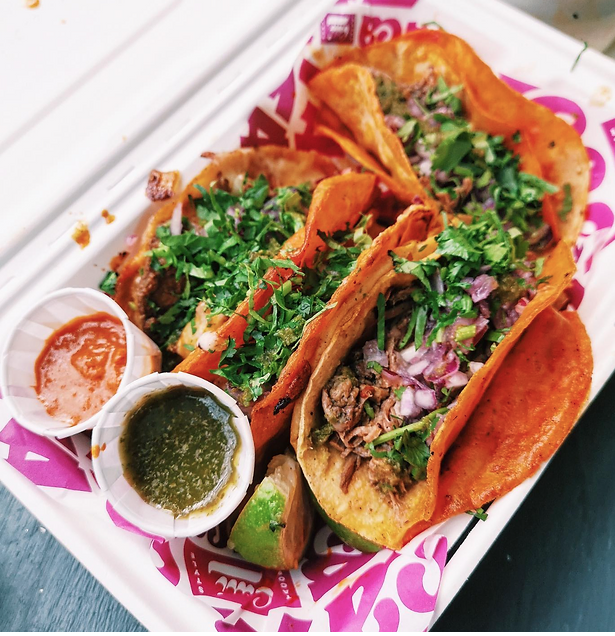
Also tucked away in the arches, you can’t miss Taca Tacos, its yellow and purple neon sign illuminating the Market Yard and drawing the punters in. They’re all here for one thing; the signature beef birria.
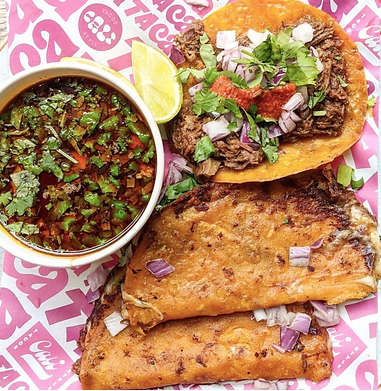
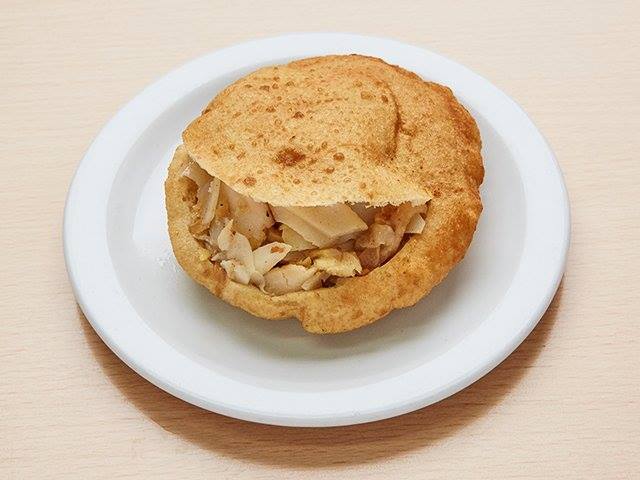
Here, a quesataco (a folded, grilled taco with melted cheese) is filled with slow-cooked, gently spiced beef, its caramelised edges calling to mind those gorgeous, bubbling parts that your cheese toastie leaves behind in the Breville. Served alongside for dipping is an intensely salty, gelatinous beef broth, spiked with chilli and lime. What a dish this is.
With long communal tables outfront available on a walk-in only basis, you might have to wait a little during peak times, but the food comes out fast, so why not pitch up at one of the adjacent bars and luxuriate in the whole Deptford Market Yard experience?
Tacas Tacos is closed on Mondays, open in the evenings on Tuesdays, Wednesdays and Thursdays, open for lunch and dinner on Fridays and Saturdays, and open for lunch only on Sundays.
Such is the demand for Taca’s birria that founder Thorne Addyman opened a second, larger site on Peckham’s Rye Lane in 2023, complete with a full bar and beer garden. The Deptford original remains the one to visit, though – smaller, scrappier, and still turning out some of the best birria in south London.
It might feel perverse to be enjoying a finely tuned, expertly executed izakaya meal whilst basking in the sunshine and glow of Deptford Market Yard’s alfresco conviviality, but Kekaki is not ordinary izakaya.
The restaurant, run by the talented chef Ping, a Vietnam War refugee who has since set up shop in Deptford, offers a light, bright and breezy Japanese culinary concept far removed from the grungy backstreet dive bars of Tokyo traditionally associated with the izakaya dining experience.
And what a joy it is to be catching some rays in anticipation of a procession of gnarly, blistered bits and deep fried delights. Onwards, then, and into some teeth-shatteringly crisp chicken karaage. And how about a plate of yaki sakana alongside – here, bream that’s just the right side of bitterness from the binchotan, and blessed only with a few flakes of sea salt? Don’t mind if we do. Plenty of yakitori skewers and some ethereally light seasonal vegetable tempura are pretty much obligatory too, regardless of whether you decide to bill them as side dishes or the main event.
None of this gets in the least bit cloying. Indeed, there’s plenty of flair on display on the rectangle plates here, with chef Ping’s stints at globally renowned Nobu and the much-maligned Sexy Fish in Miami and London respectively coming through. He brings a few touches of each to Deptford, whether it’s in the Nobu-inspired jalapeno spiked kewpie mayo that appears dotted across several dishes, or the tight, taut tuna maki rolls that are something of a signature on Berkeley Square.
It’s light, glorious stuff that feels just right in the summer sun. A chilled glass of sake or a refreshing highball seals the deal.
Matt Klose and Sam Soan have been feeding South East London through their catering company for years, but since taking over the kitchen at 209 Deptford High Street (formerly Winemakers) in 2019, they’ve given the area’s residents a permanent space to experience their cooking. The restaurant, split between a zinc-topped bar area up front and a dining room painted in deep teal at the back, feels like the kind of place locals come to multiple times a week, and there’s a convivial atmosphere bouncing around the room as a result.
The weekly-changing menu leans Mediterranean, with small plates and larger sharing dishes built around what’s good right now. Their chickpea panisse has become something of a calling card since the Winemakers days – bronzed, crunchy cubes of chickpea paste with a blizzard of grated Grana Padano and fermented chilli sauce that disappears from plates faster than seems physically possible. Cantabrian anchovies come glistening and salty, the kind that need nothing but good bread and a glass of something cold.
Not perhaps; they definitely benefit from something cold, and the largely low-intervention, biodynamic wine list delivers. The Muscadet cuts through the richer dishes beautifully, whilst the Gruner Veltliner brings some Austrian crispness to proceedings (both are available by the glass for under a tenner). The latter paired beautifully with an autumn menu addition of burrata with shaved fennel, fragola grapes and crisp, pleasingly bitter raddicchio.
It’s not all dainty and delicate. When it comes to the bigger plates, the barberry and pistachio stuffed lamb belly (the most expensive single plate on the menu at £27) keeps things simple and does it with a breezy confidence that’s endearing. The lamb gets a robust char that suits this gnarlier cut so well, and its accompanying harissa is a well made, not-too-vinegary version of the now ubiquitous, oft-murdered sauce. There’s usually a vegetarian main too – fried polenta with Taleggio, pumpkin, chestnut and sage wowed a plant-leaning dining companion on a late 2025 visit. All in all, it’s all good at this Deptford High Street favourite.
In early 2026, the restaurant introduced a weekly Thursday steak night – the signature onglet with frites and a glass of wine for £25 – alongside a Wednesday wine club in collaboration with local importers Wines Under The Bonnet and Table Wines UK. It’s a sign of a kitchen and team settling deeper into Deptford’s fabric.
Klose & Soan opens Thursday through Saturday for dinner, though it’s worth checking their website for any changes or special opening times.
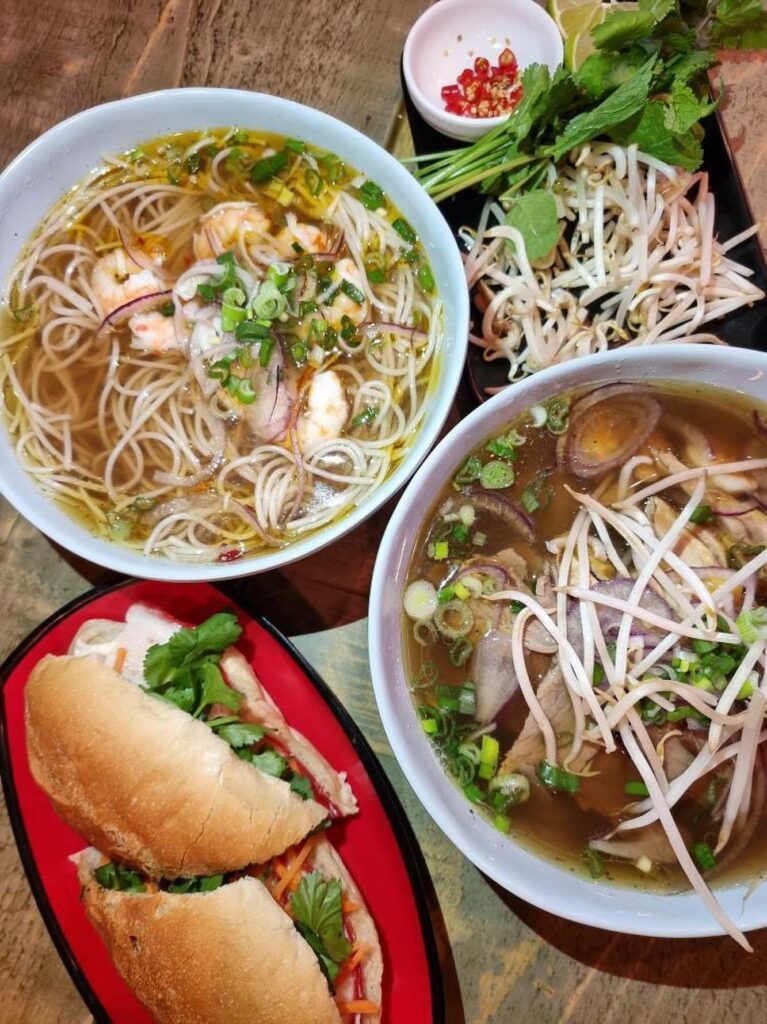
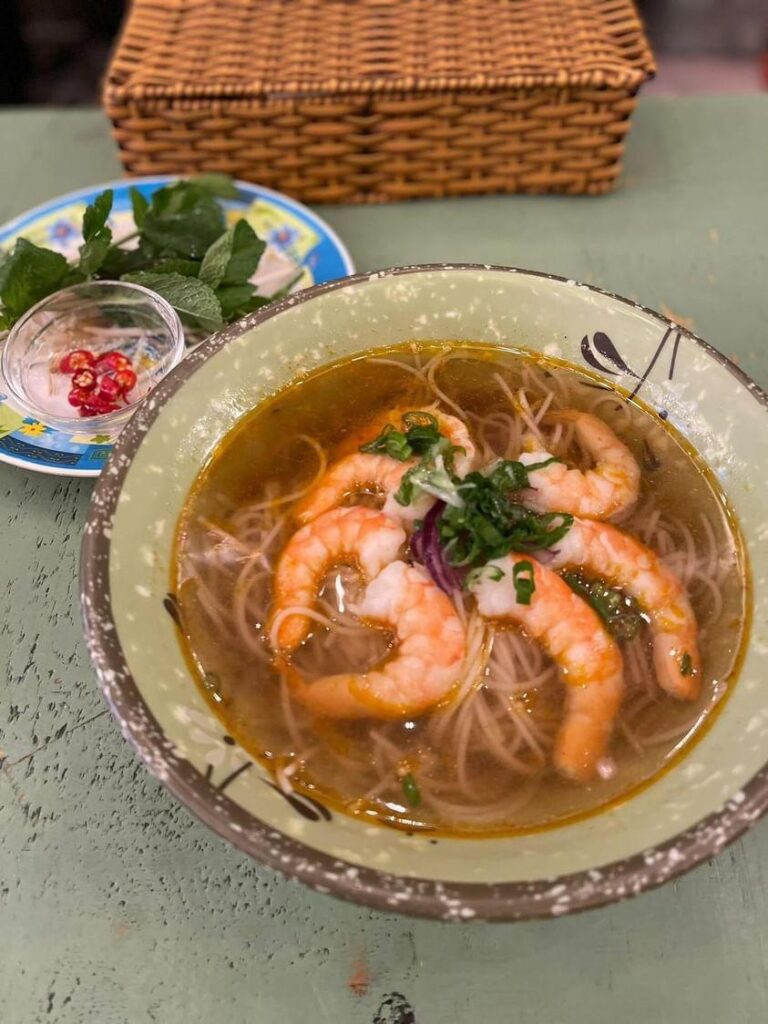
Cafe Mama Pho is a beacon of warmth on a dreary London day. Or, it’s a revitalising place to rehydrate on a bowl of electrolyte-filled soup on a particularly balmy day in the capital. Choose your poison…
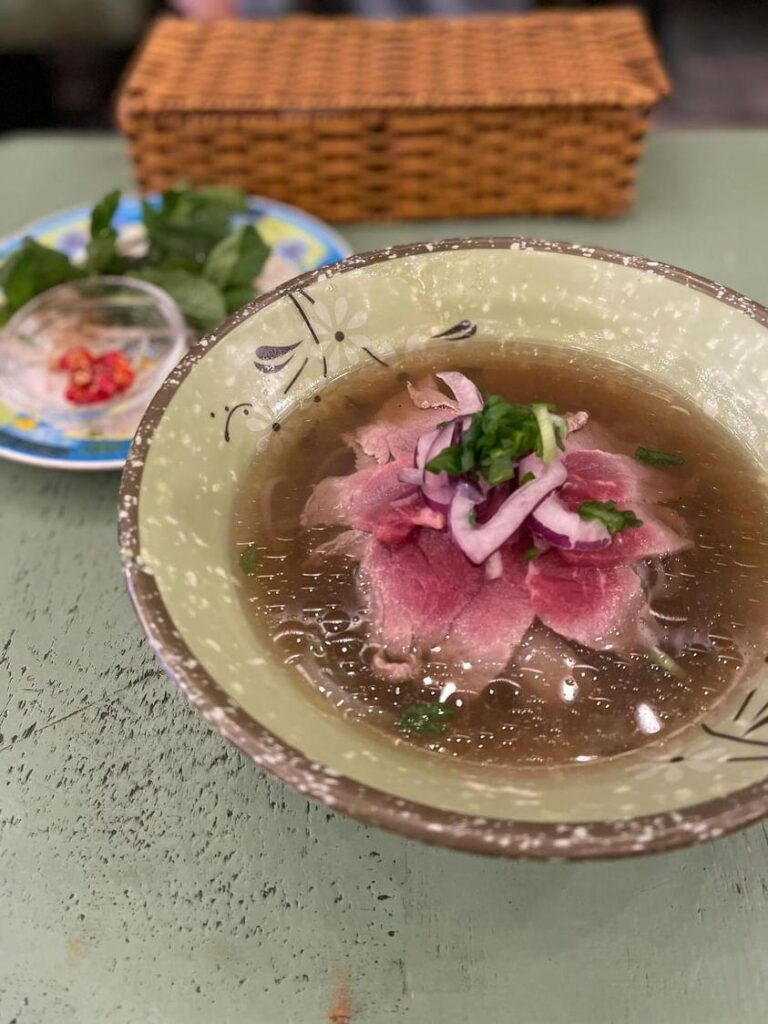
…not that we’re saying the pho here is virulent. Anything but; the chicken pho here, in particular, is a vital, restorative bowl that will transport you right to the ngõs of Hanoi, minus the soundtrack of incessant motorbike beeping. All gentle aniseed notes and a graceful silkiness from the poached, skin-on chicken thighs, it’s one of our favourite bowls of pho in London. The pho tai (a version using raw slices of beef that cook gently in the broth) is excellent too. So much so, in fact, that we’ve written all about it here.
Ideal for a flavour of crowdpleasing Vietnamese classics…
Deptford is arguably the epicentre of some of the most downright delicious Vietnamese food in the country, with historic migration from Vietnam to this corner of south east London beginning in the early 1980s and continuing to this day.
Perhaps our favourite Vietnamese restaurant in Deptford is Eat Vietnam, a family run joint with a keen sense of community, a killer menu of crowdpleasers, and a thriving, throbbing atmosphere every night of the week (11:30am to 3pm, and 5pm to 10:30pm, every day).
Whilst the beef pho here is some of the best we’ve had in the city, the national dish certainly isn’t the only showstopper on this extensive, country-spanning menu. Perhaps even better is the bun bo hue – a spicy rice noodle soup from Vietnam’s imperial city and former capital. Inside that gorgeous chilli-spiked broth, you’ll find various pork and beef bones and bits bobbing about. Raise one to your mouth as elegantly as possible and have a gnaw. As with all the best versions of this cracking dish, the unmistakable thrum of shrimp paste is ever present. It’s fortifying stuff.
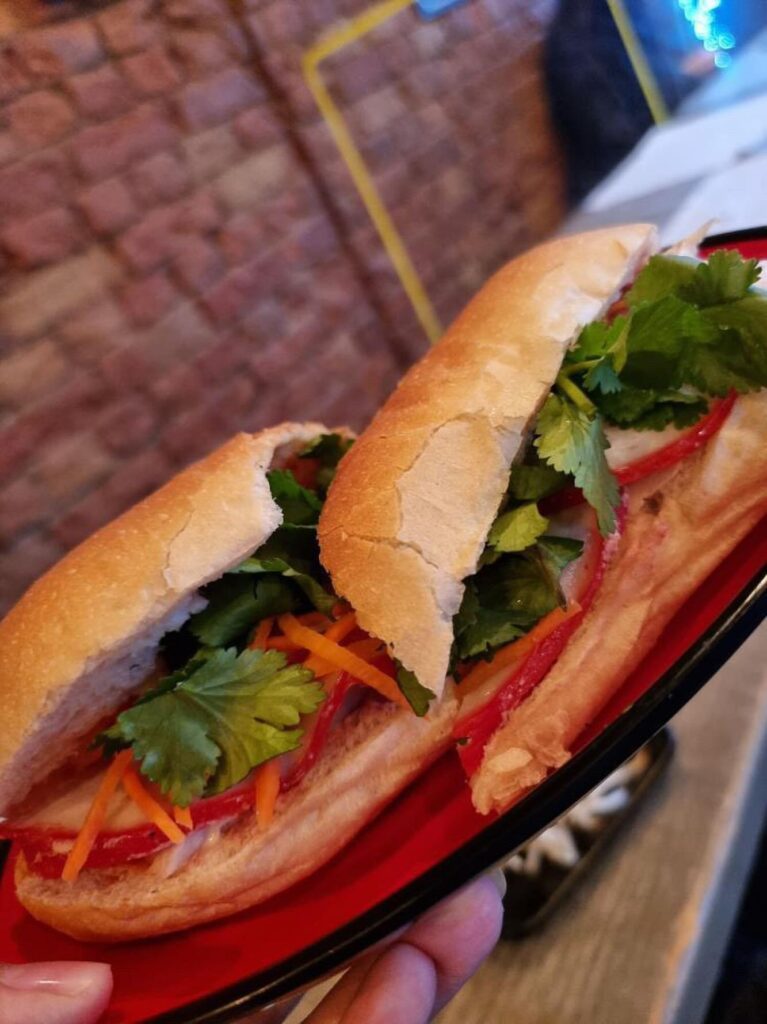
For something lighter, Eat Vietnam does a fine selection of banh mi, too. And if you need any further reason to visit, the restaurant donates 10% of its tips to charities in Vietnam.
The restaurant’s popularity has long since outgrown its modest dining room. Eat Vietnam 2, a walk-in sister venue at 244 Evelyn Street (just a few doors down) now handles the overflow, serving an identical menu to the same exacting standard.
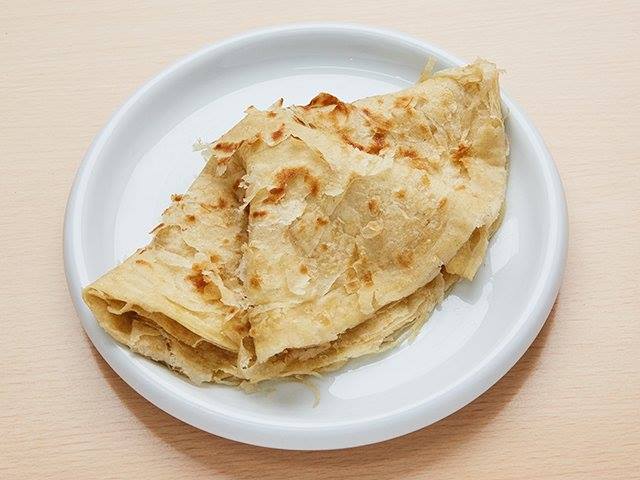
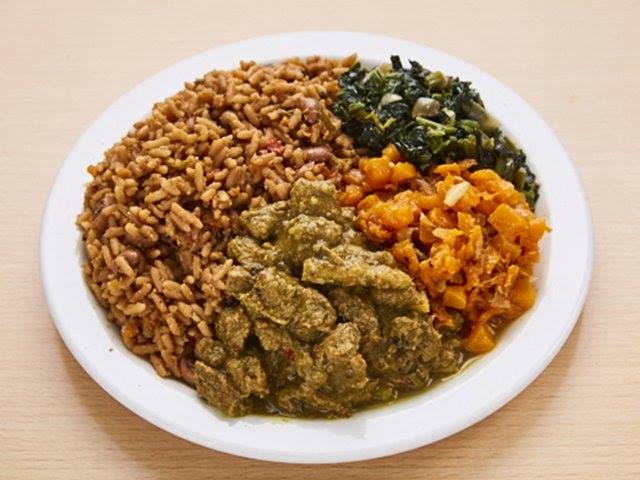
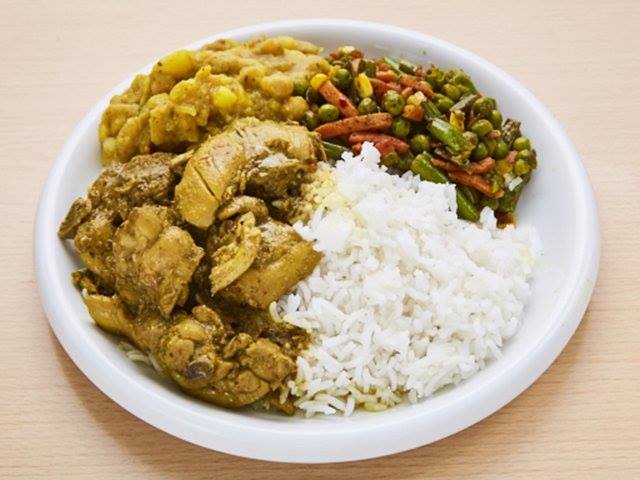
Another gem on Deptford High Street, Chaconia is just theticket if you’re looking for freshly slapped Trini roti, richly spiced curry goat, and a warm welcome from the owner and chef. It’s a no-frills spot that delivers big on flavour and hospitality.
It’s also a superb place for vegetarians to eat really well in Deptford, with the roti flakey and moreish, and the spinach and pumpkin chana gorgeously spiced. Do not miss out on a side order of the bracing kuchela, a spicy pickle-cum-relish that is a fantastic foil to the heady, rich dry-spicing on that chana.
Again, whilst primarily a takeaway operation, there are three four-tops in the barebones restaurant if you fancy a sitdown.
Buster Mantis is one of Deptford’s most famous hospitality spaces, a bar, restaurant and nightclub that gets busy late with those looking to dine and dance, equally.
Named after Sir Alexander Bustamante, Jamaica’s first prime minister, Buster Mantis is more than just a restaurant; it’s a creative space that reflects McGowan’s own experiences growing up in Mandeville, Jamaica.
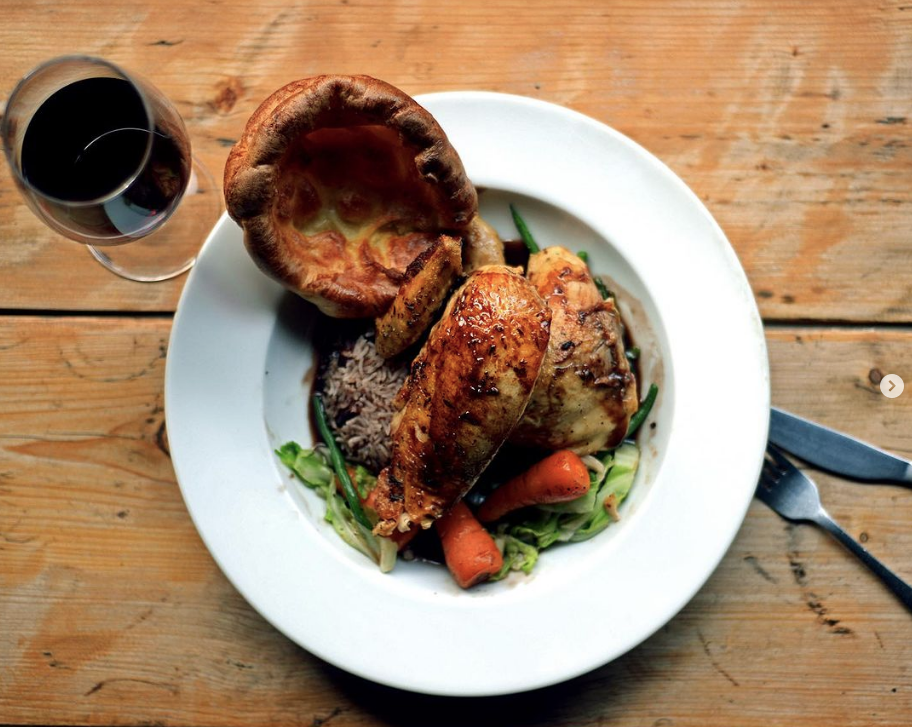
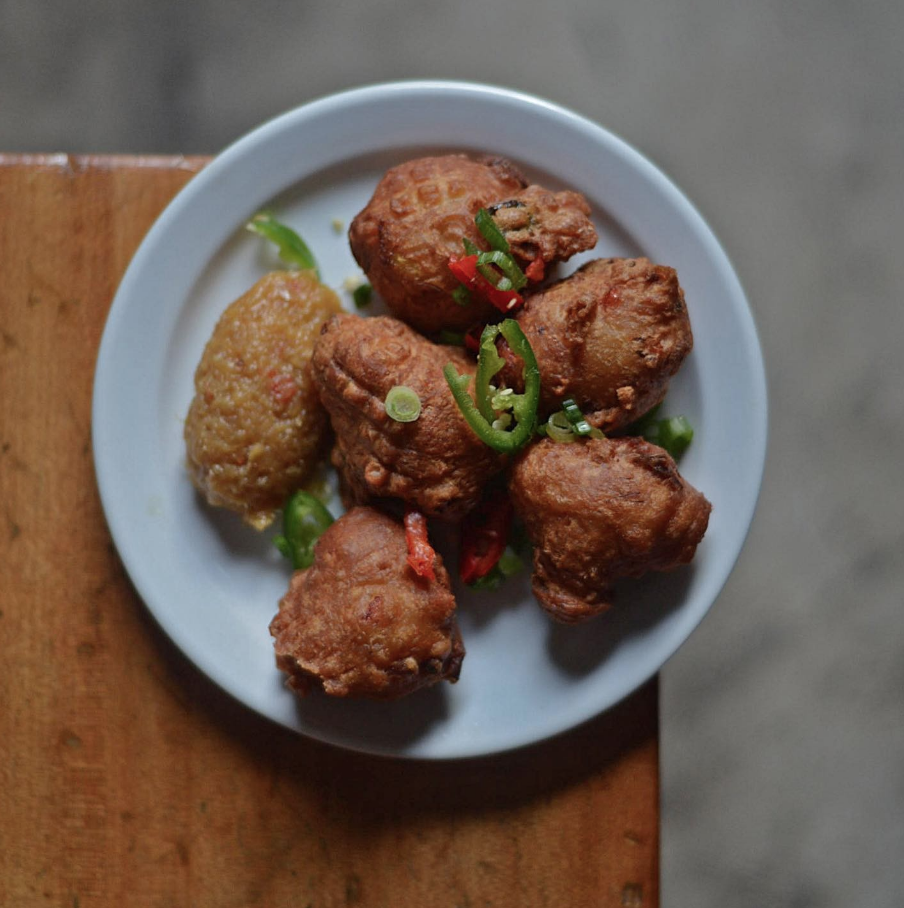
Ackee and saltfish, boneless jerk chicken thigh, and fried plantain are among the classic Jamaican staples available, while dishes like red kidney bean and thyme hummus or jerk jackfruit roti wrap cater to those seeking a modern twist on traditional flavours. On that note, the ‘Jamaican Sunday Roast’ here is a real treat. McGowan’s mother, Janet, is credited with the creation of each dish, ensuring that the food served is not only delicious but also steeped in genuine Jamaican culinary tradition.
Buster Mantis is not just about the food; it’s also a place where the drinks menu tells a story. Cocktails inspired by life in Mandeville, such as the Bishop Gibson and the Cecil Charlton, offer patrons a taste of McGowan’s Jamaican childhood in boozy form.
In an ever-evolving Deptford, Buster Mantis bridges the gap between old and new Deptford, attracting a diverse range of customers in love with the place’s faithful approach to Jamaican cuisine and culture.
Ideal for Caribbean takeaway that keeps the locals queuing…
There’s almost always a queue outside Likkle ‘d’ on Deptford High Street, which makes sense once you’ve eaten here. Behind the counter, the open kitchen boxes up orders at speed, turning out jerk chicken, curry goat and fried chicken for a steady stream of regulars who clearly know what they’re coming for.
The jerk chicken doesn’t rely on heavy smoke for flavour. Instead, it’s cooked until beautifully tender whilst staying moist, which is harder to achieve than it sounds. Their fried chicken comes with a thick, well-seasoned crust that suggests care rather than speed. Both are standouts.
Despite the name suggesting otherwise, portions here are generous and the pricing won’t sting. Barbecue chicken, oxtail, curry goat, mac and cheese, and rice and peas are all available, with their house sweet sauce worth adding. Homemade punches – Guinness or Magnum – sits in the fridge alongside the usual Tropical Rhythm and Supermalt – the former pack and punch.
The setup is simple: order at the counter, collect your box, then either head out or grab a seat if you’re staying. Most people seem to be regulars, which speaks to the consistency. Likkle may be in the name, but there’s nothing small about the appeal here.
Likkle ‘d’ is open 11am to 9pm every day except Sunday, when they take a well-earned break.
Ideal for simple, elegant Italian cooking at an affordable pricepoint…
We end our tour of the best places to eat in Deptford at Marcella, an elegant Italian restaurant on the high street whose approach is all about quality seasonal ingredients cooked with a simple, respectful touch.
Named after the matriarch of modern Italian cuisine, Marcella Hazan, the restaurant is the second act from the guys behind the beloved Artusi in Peckham. Here, the proposition is the same, from the clinical, canteen-like dining room all the way to the laughably good value Sunday set menu, which is just £29 for three courses.
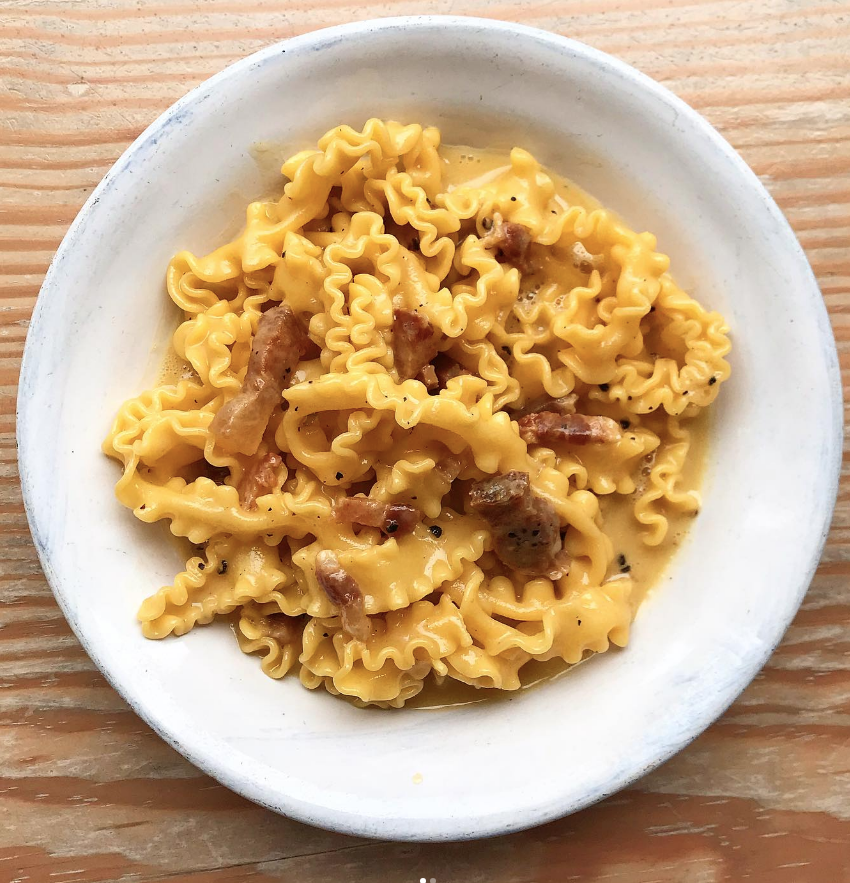
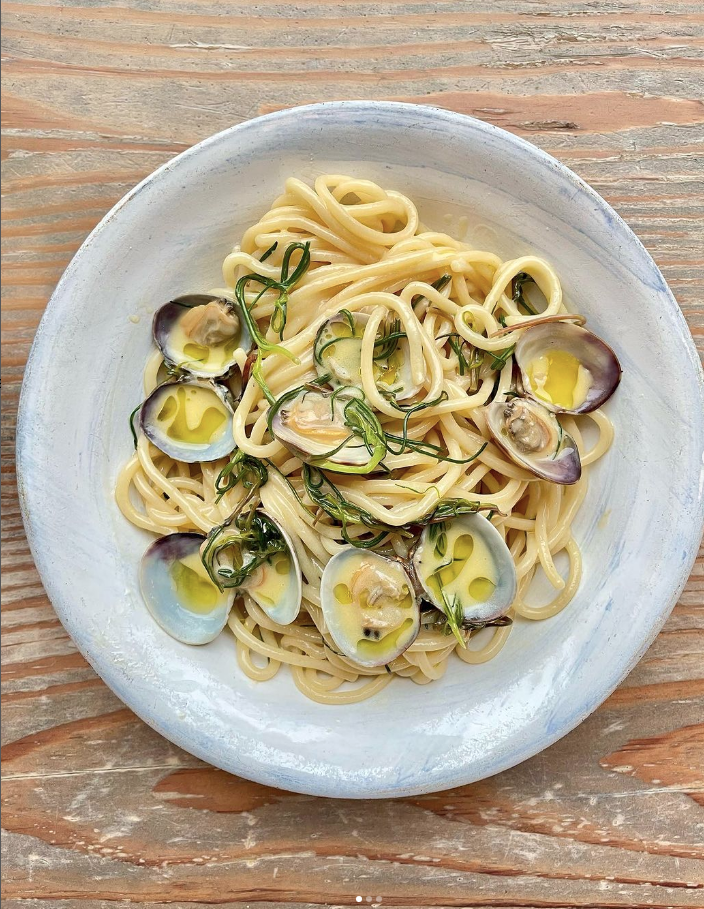
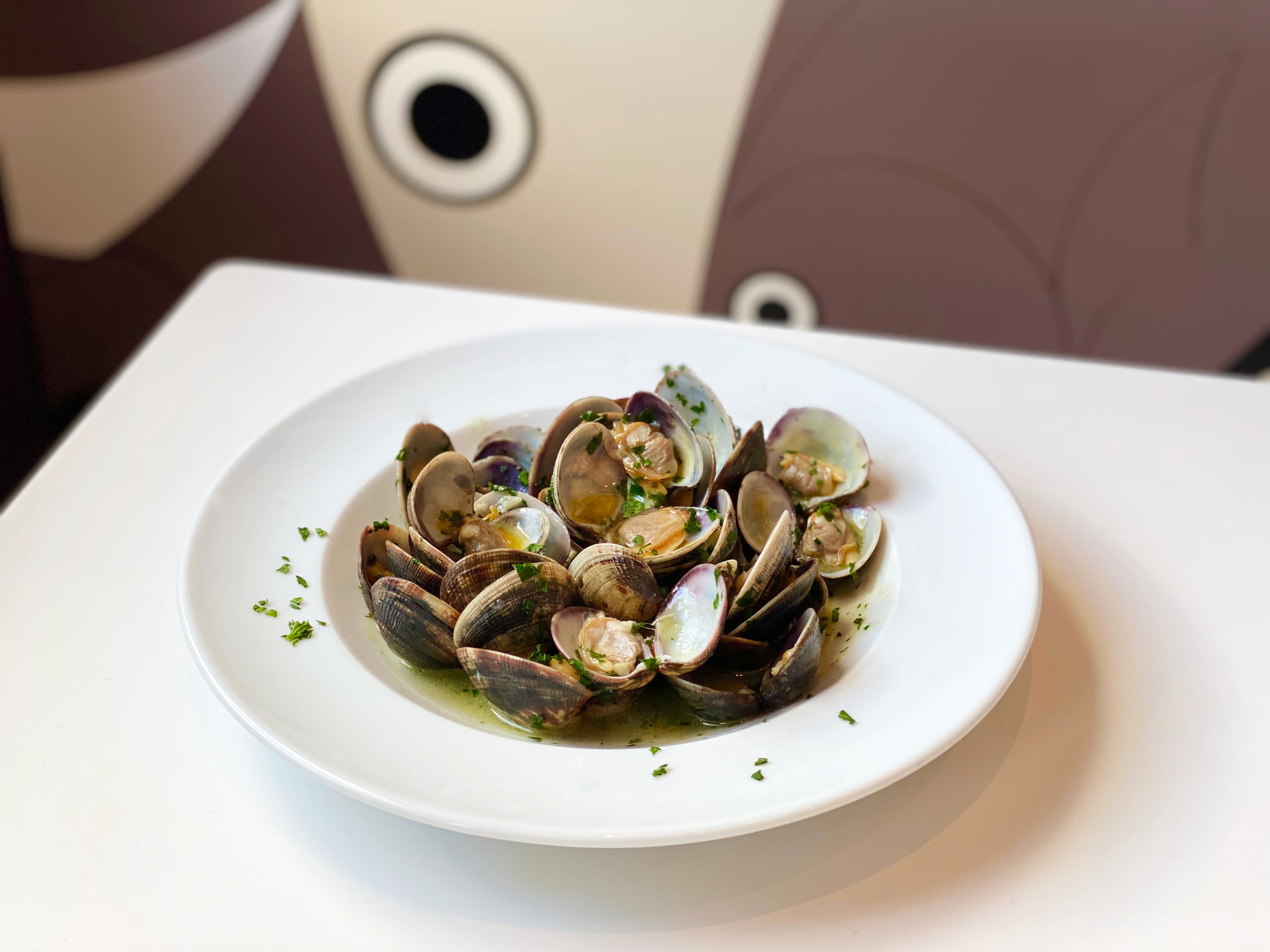
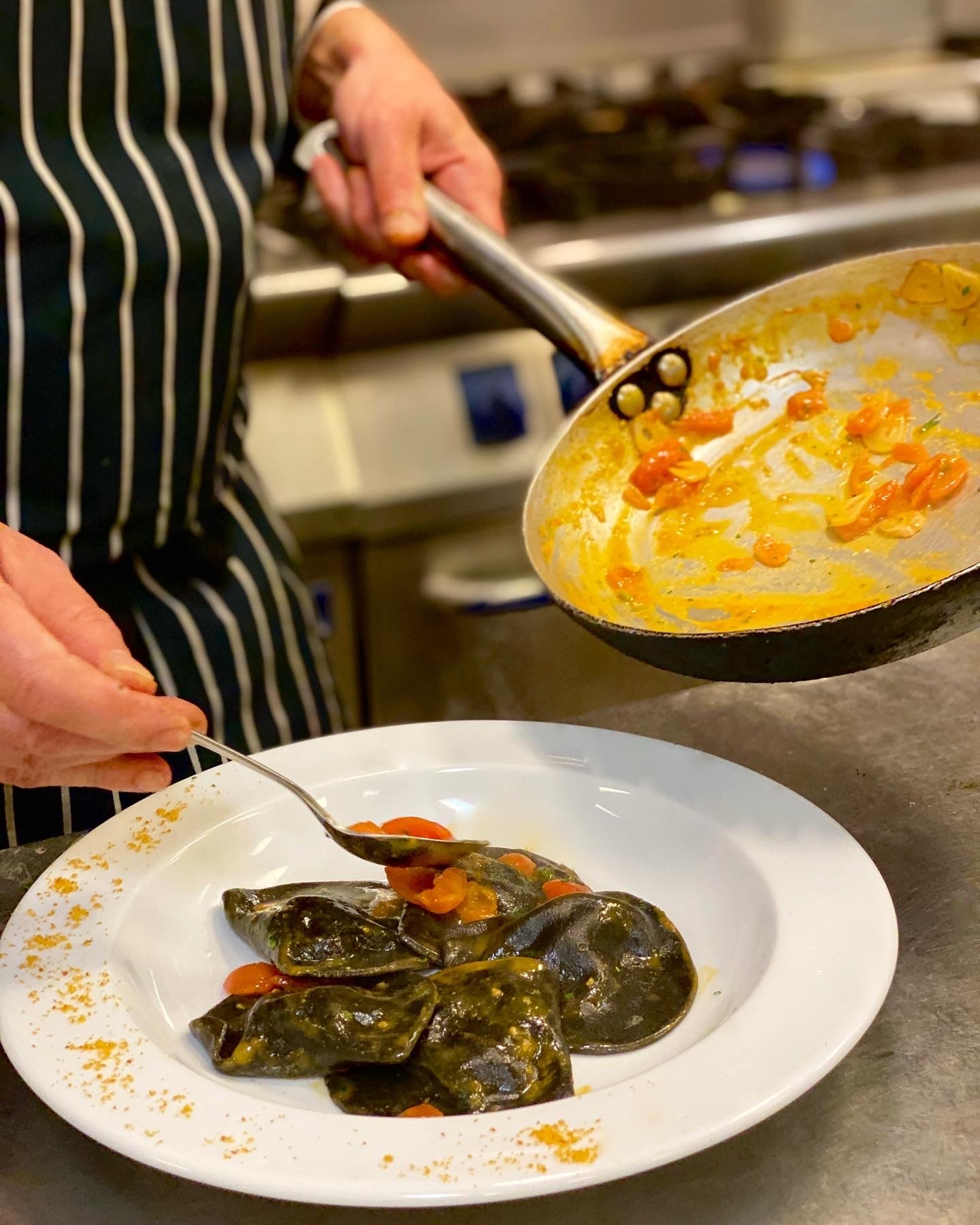
That sense of sparsity extends to the ever changing menu, where you’ll find just three starters, a couple of pasta dishes, three mains, and a couple of desserts. That’s not to say that the plates aren’t generous. On a recent visit, a starter of blushing mutton chop and winter tomato salad was a knockout, as was a pumpkin ravioli with sage butter (available in small or large for £9 or £17, respectively). In early summer, there are few plates better in London than Marcella’s spaghetti alle vongole. Not long now!
For many, that would be a more than satisfying spread, but the bigger plates (only available in the evenings) are hard to resist here. Arriving fully formed and roundly conceived, rather than a single protein in need of several supplementary sides, these are hearty, well-balanced mains. A case in point was a recent plate of cod loin, baked until pearlescent and flaking, and served with a nutty Jerusalem artichoke puree and strident salsa verde. Each component brought the best out of its plate-fellow, which made finishing this one much easier than it should have been after the two pasta courses that preceded it!
Bottles from the all-Italian winelist start at £29, though there are several available by the glass too.
Marcella is open every day, though Sundays are just lunch and Mondays just dinner.
Deptford’s dining scene is a testament to London’s and the area’s culinary diversity, offering something for every palate. Whether you’re craving a hearty British classic or a true taste of Jamaica, these spots are sure to satisfy your hunger and leave you planning your next visit.
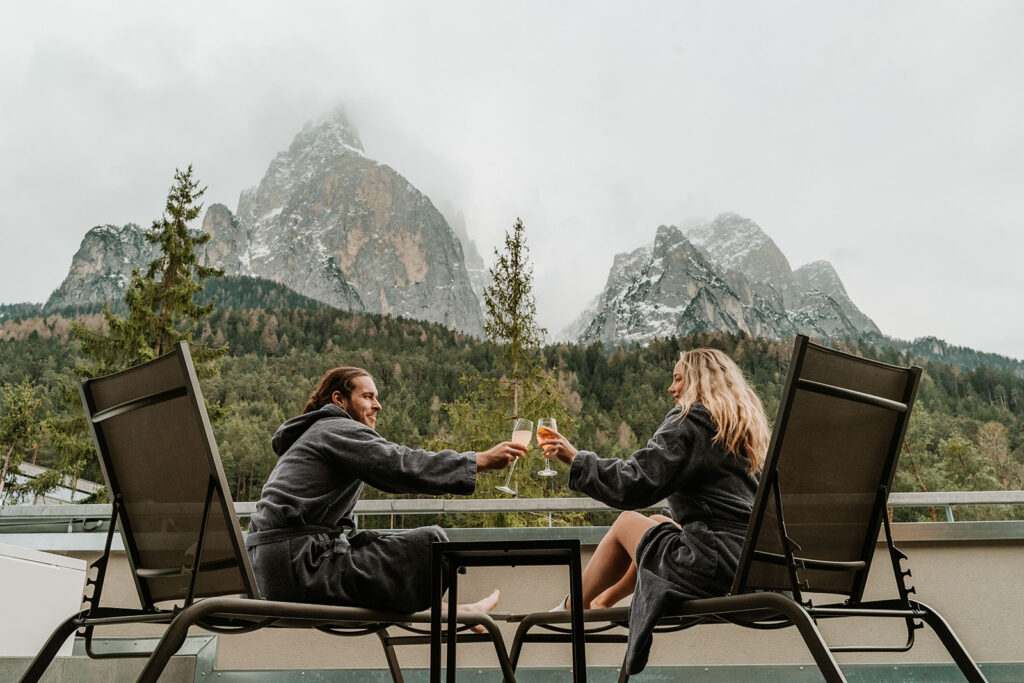
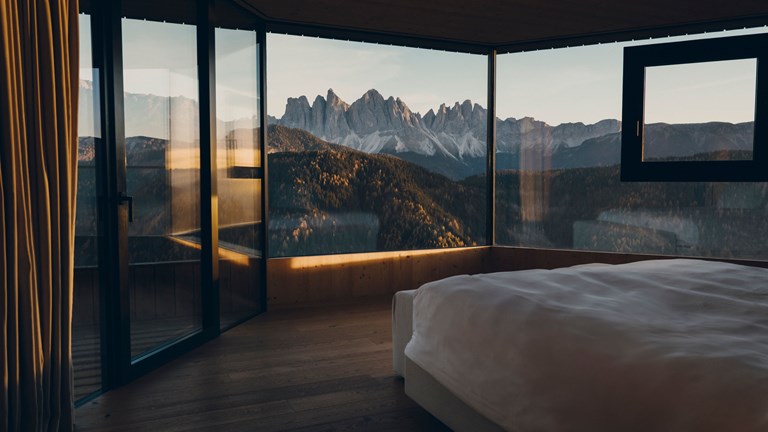
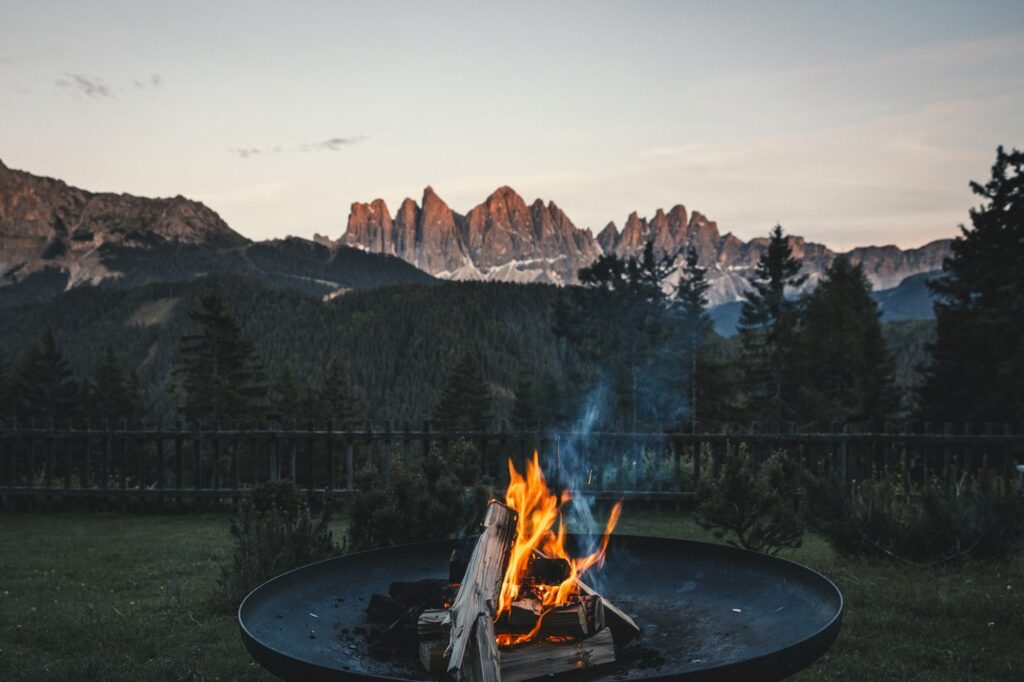
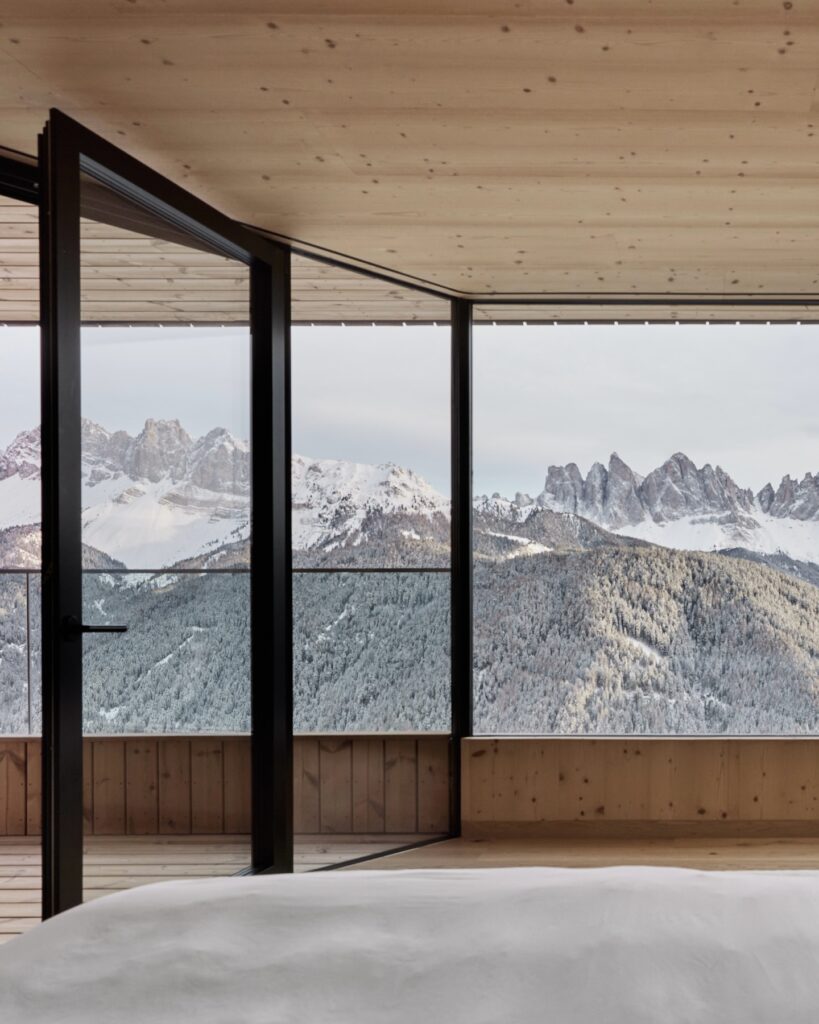
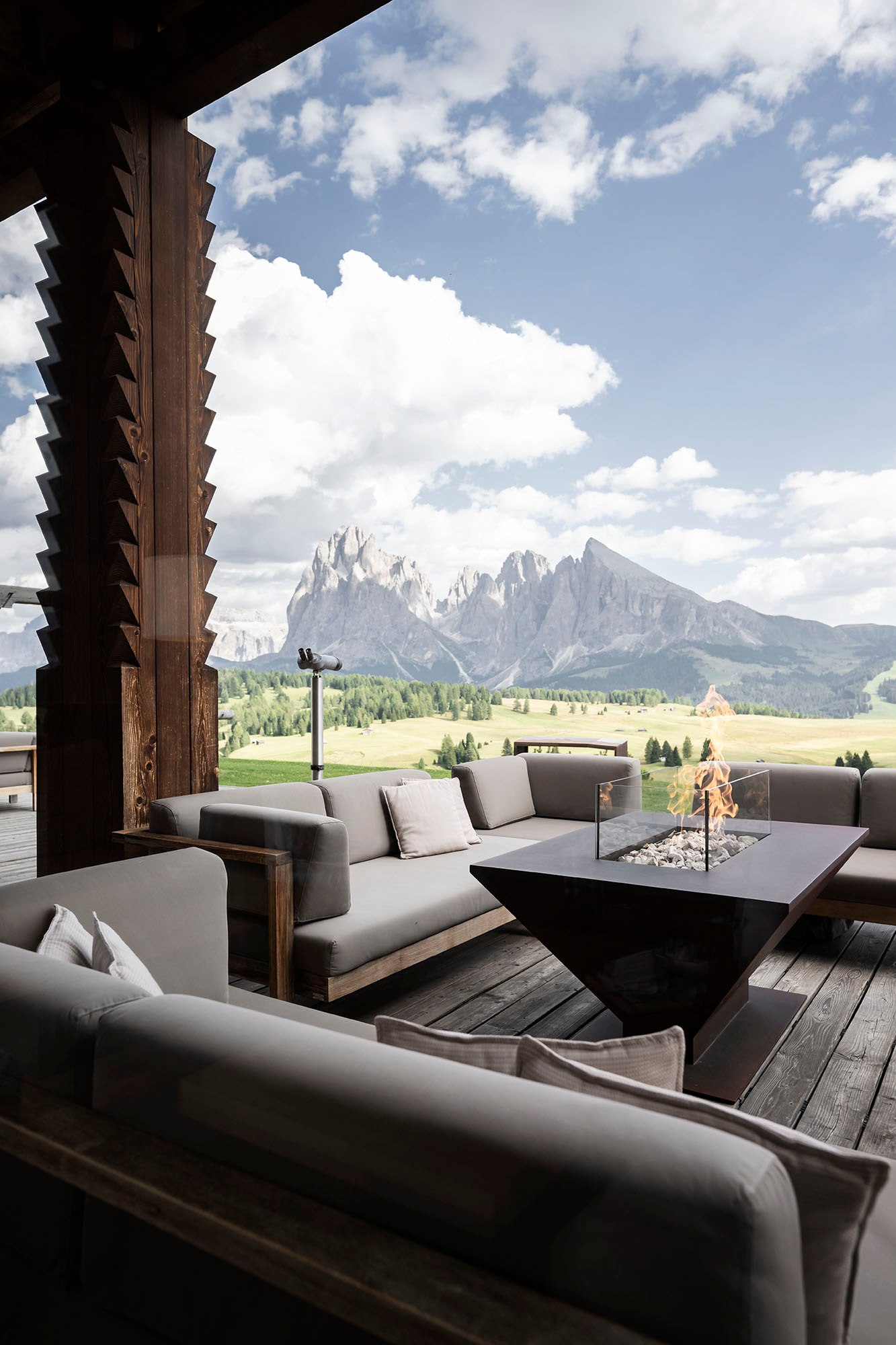
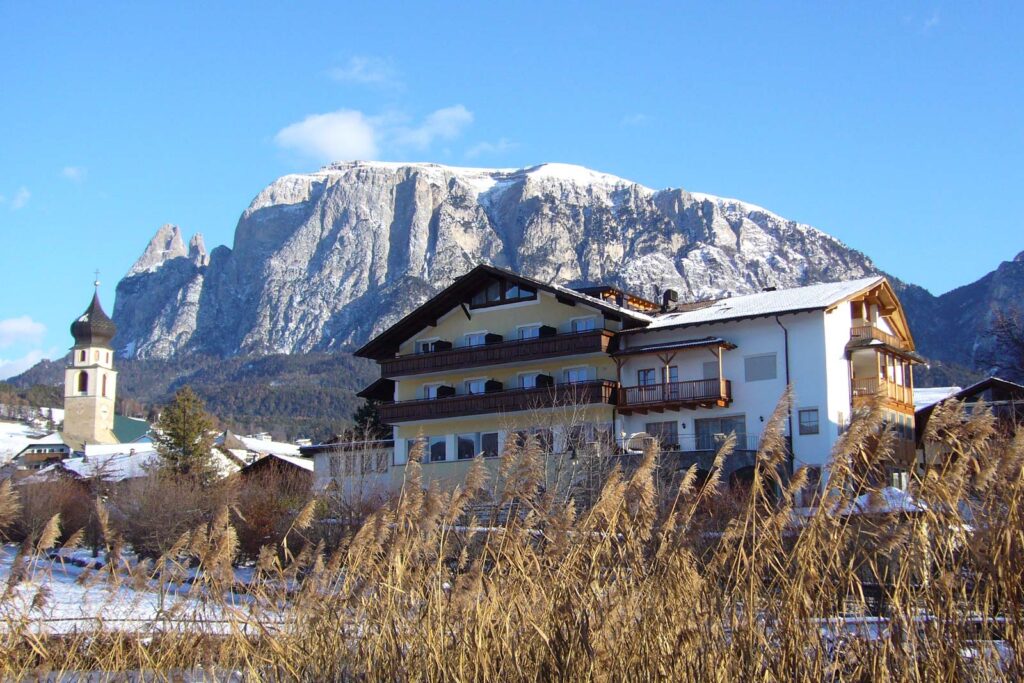
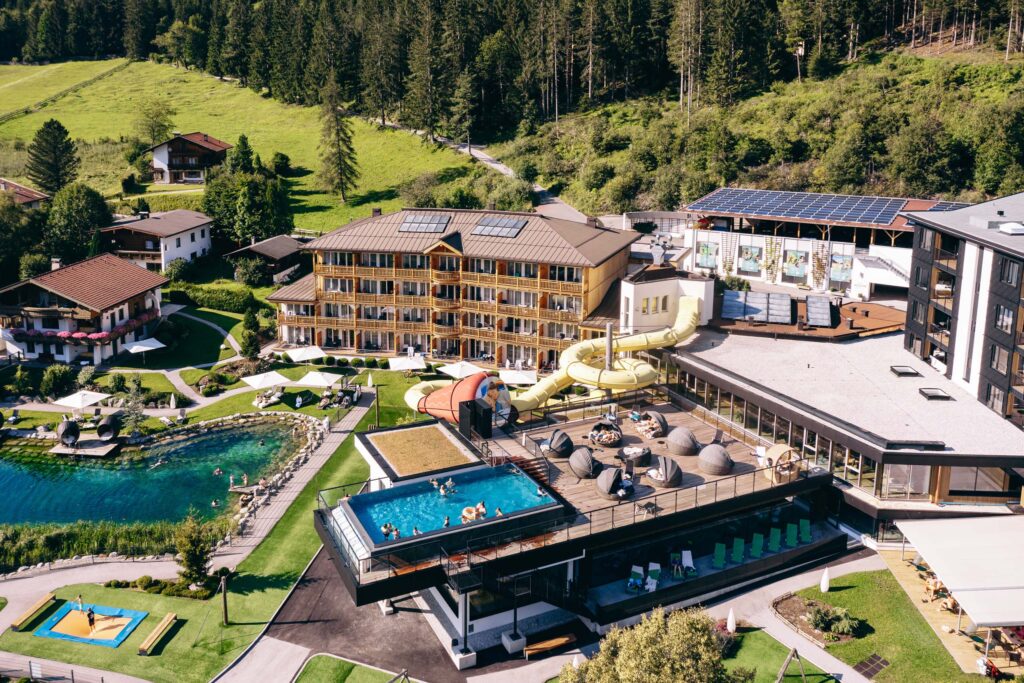
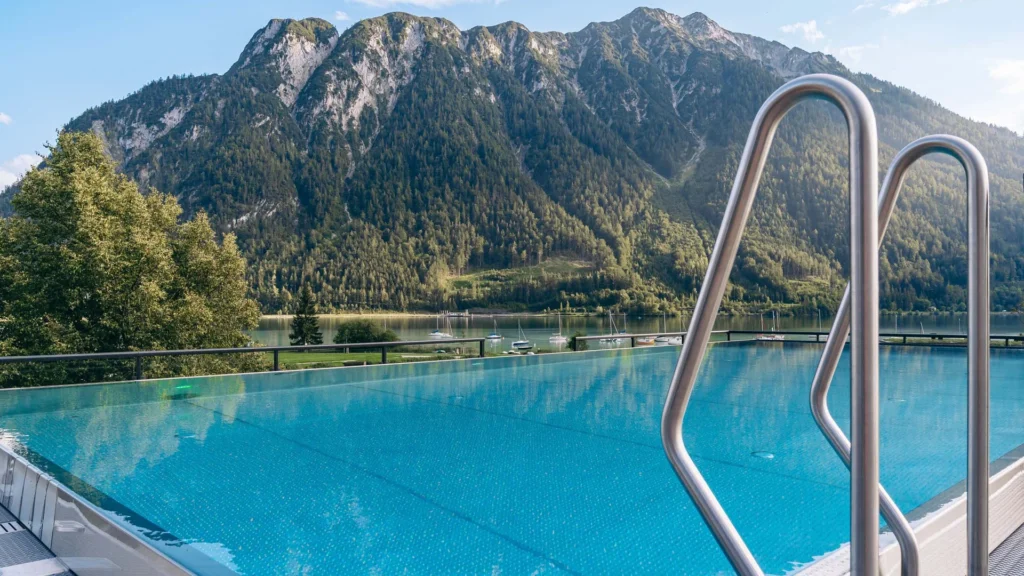
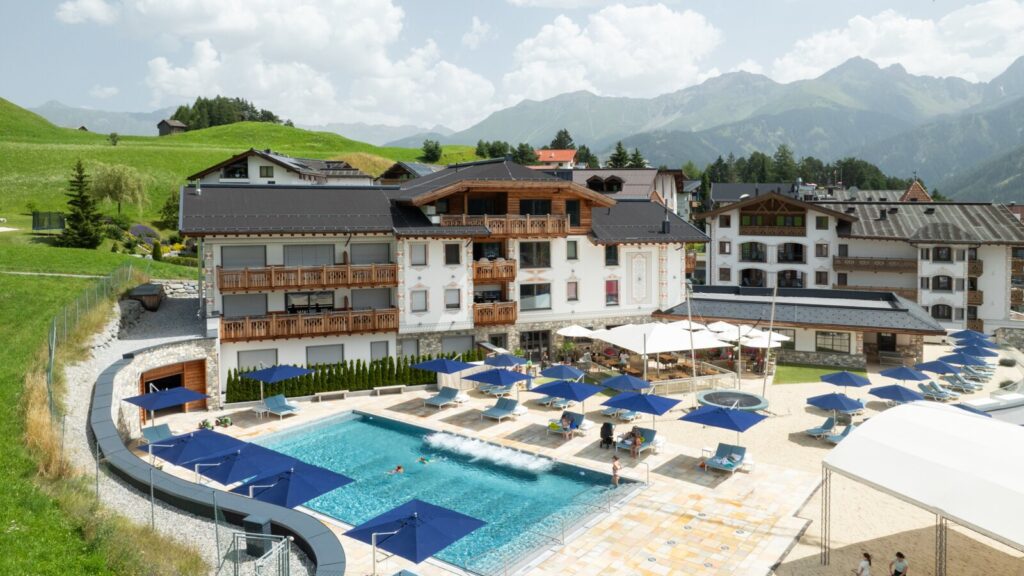
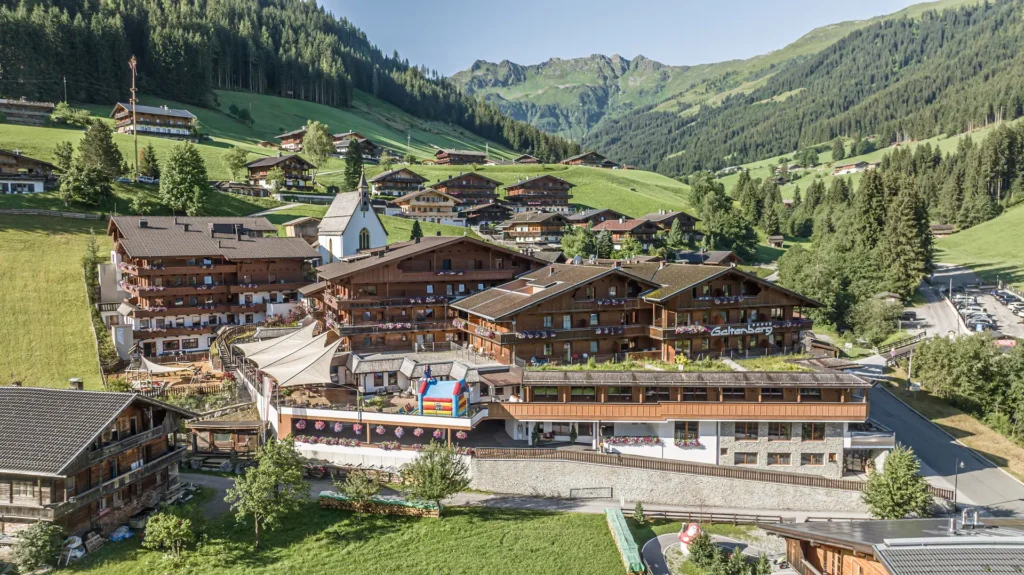
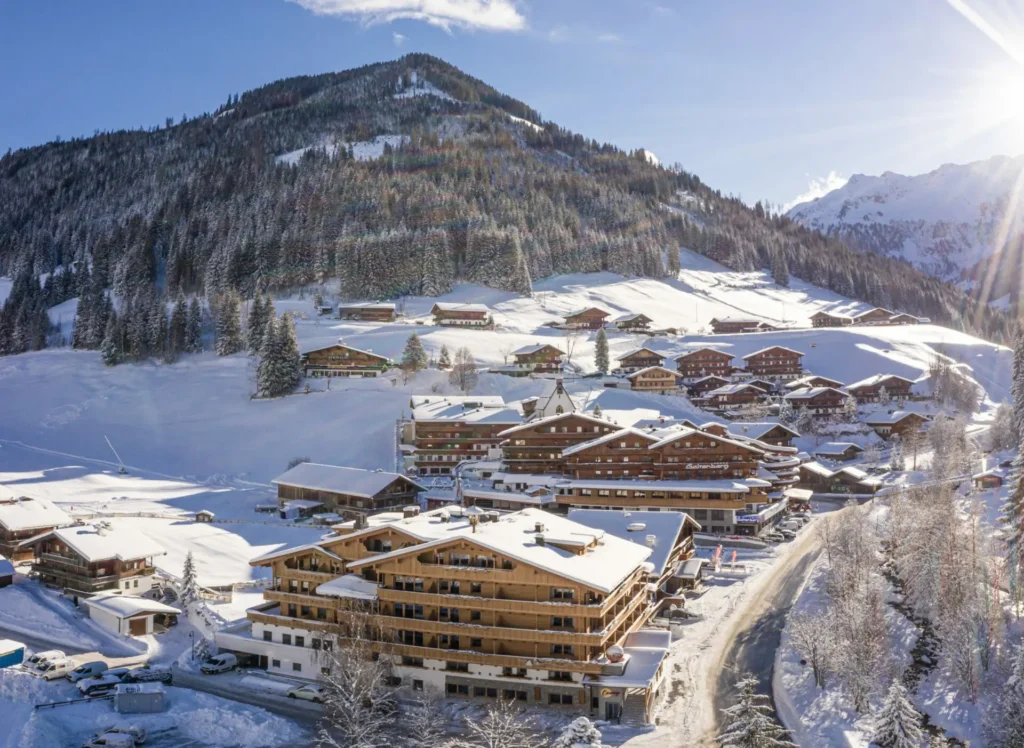
The Alpe di Siusi is Europe’s largest high-altitude alpine meadow, a vast expanse of rolling pasture spreading beneath the jagged limestone towers of the Sciliar massif and the Sassolungo group. It sits within the Dolomites UNESCO World Heritage Site, in the South Tyrolean corner of northern Italy, and the villages at its base (Seis am Schlern, Kastelruth and Völs am Schlern) have been hosting visitors for generations. In recent years, a new kind of property has emerged here: the adults-only wellness hotel, designed specifically for guests who want the mountains without the noise, the spa without the splashing, and the dining without the high chairs.
None of this is happening in a vacuum. There has been a marked shift, post-pandemic, in what a certain kind of traveller is looking for: less stimulation, more stillness, and a stay that feels purposeful rather than merely pleasant. Adults-only wellness hotels have benefited from this more than almost any other category, and they are no longer the preserve of the dedicated spa obsessive. Solo travellers, older couples, professionals who simply need somewhere to decompress are all finding their way here.
Connection to landscape, in the case of the Alpe di Siusi, is more than incidental. Immersion in natural environments – mountains, forests, open meadows – has become one of the primary reasons people cite for seeking out wellness travel, and a means of addressing mental health that a city spa, however well-appointed, simply cannot replicate. South Tyrol, with its altitude, its air quality and its deep tradition of Alpine spa culture, is among the places best equipped to meet that need.
It is no surprise, then, that South Tyrol has a deeper bench of adults-only wellness hotels than almost anywhere else in the Alps, with a particularly strong concentration around the Alpe di Siusi. The properties on this list range from a four-star superior boutique that opened in 2022 to a five-star retreat built into a mountainside at 1,800 metres, but they share a common philosophy: wellness here is not a department, it is the entire point. Each has built its programme around the landscape, the local materials and the particular quality of stillness that the Dolomites provide when the lifts stop running and the day trippers go home. With that in mind, here are five of the best adults-only wellness hotels near the Alpe di Siusi.
Sensoria Dolomites, Seis Am Schlern
Ideal for Japanese sensibility, South Tyrolean spruce and a sauna with views of the massif…
Sensoria Dolomites is the project of Lea Oberhofer and her husband Simon Leitner. The name came from Lea’s vision of a stay holistic enough to calm all the senses – restorative in the fullest sense rather than merely comfortable. She calls the hotel “luxury for the soul”, and it’s easy to see why.
There’s a family story behind this hotel too: Lea grew up in the building (it was previously her parents’ Hotel Ritterhof) and after a decade abroad (including four years at Louis Vuitton and a stint at Lufthansa Consulting for Simon), the couple returned to Seis am Schlern, gutted the property and reopened it in June 2022 as something entirely different.
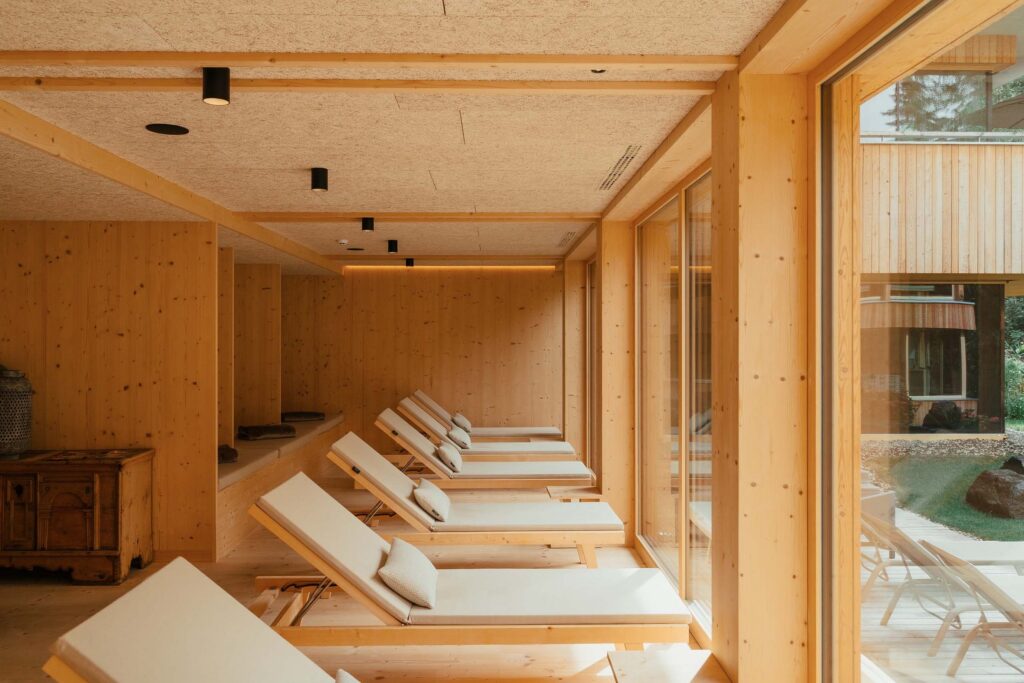
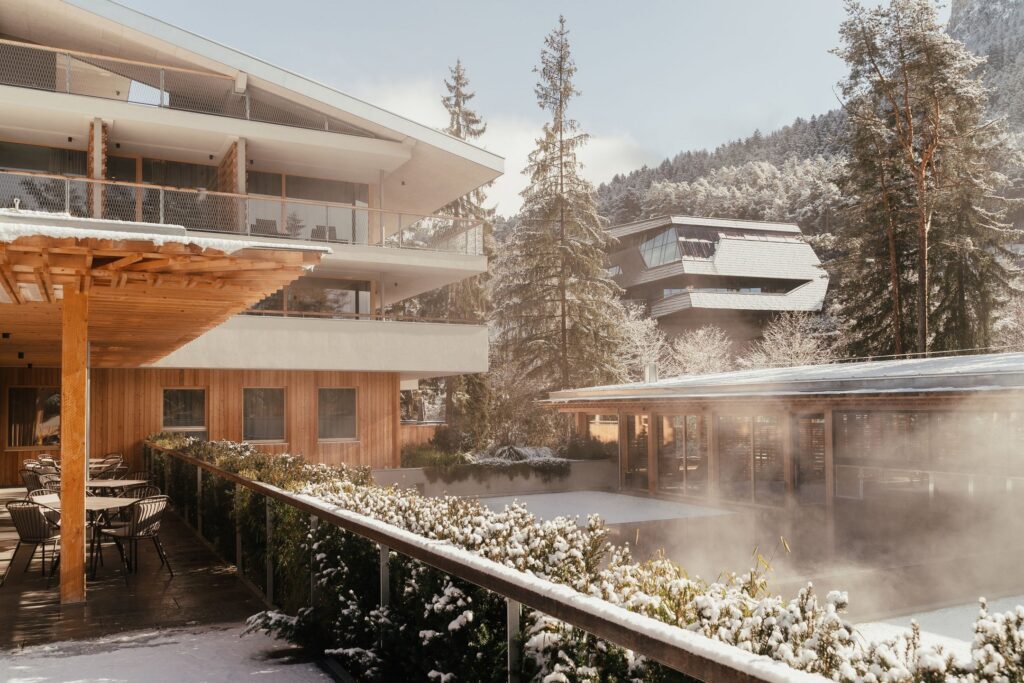
The architects, Senoner Tammerle from nearby Kastelruth, drew on Japanese influences that Lea had absorbed during her travels, and the result is a hotel built almost entirely from local spruce, with clean lines, lattice screens, light-filled interiors and a deliberate absence of clutter. The gold that runs through the branding draws on the Japanese art of kintsugi, the practice of repairing broken pottery with gold, on the basis that the fractures are part of the object’s history rather than a flaw to be hidden. The idea being, presumably, that you check in broken and leave feeling put back together. For the kind of person who books a wellness holiday in the first place, that’s less a metaphor than a mission statement.
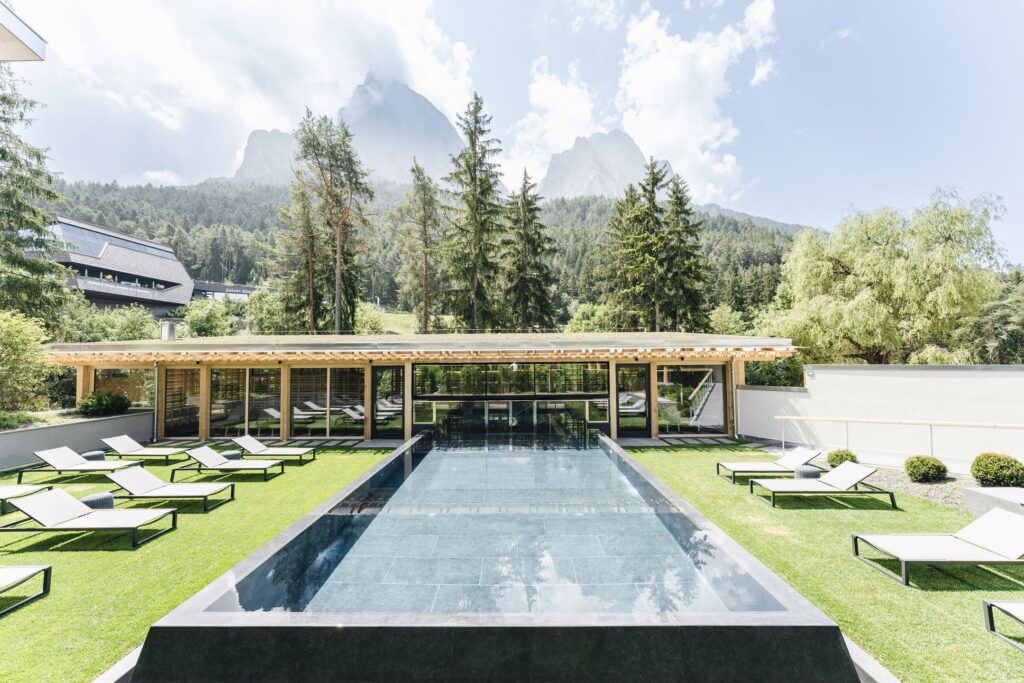
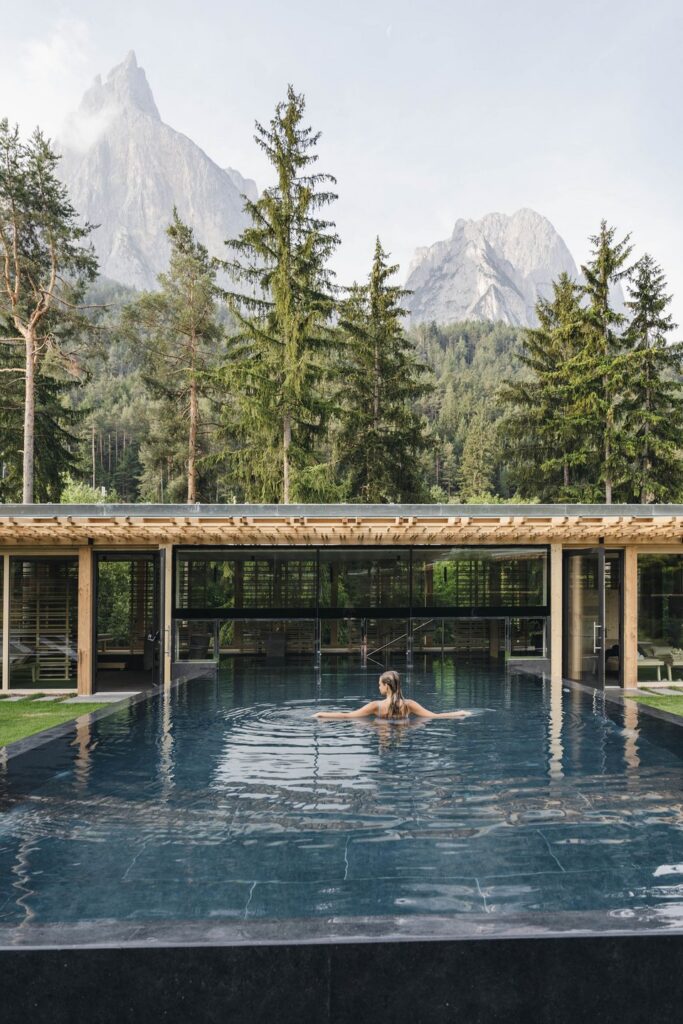
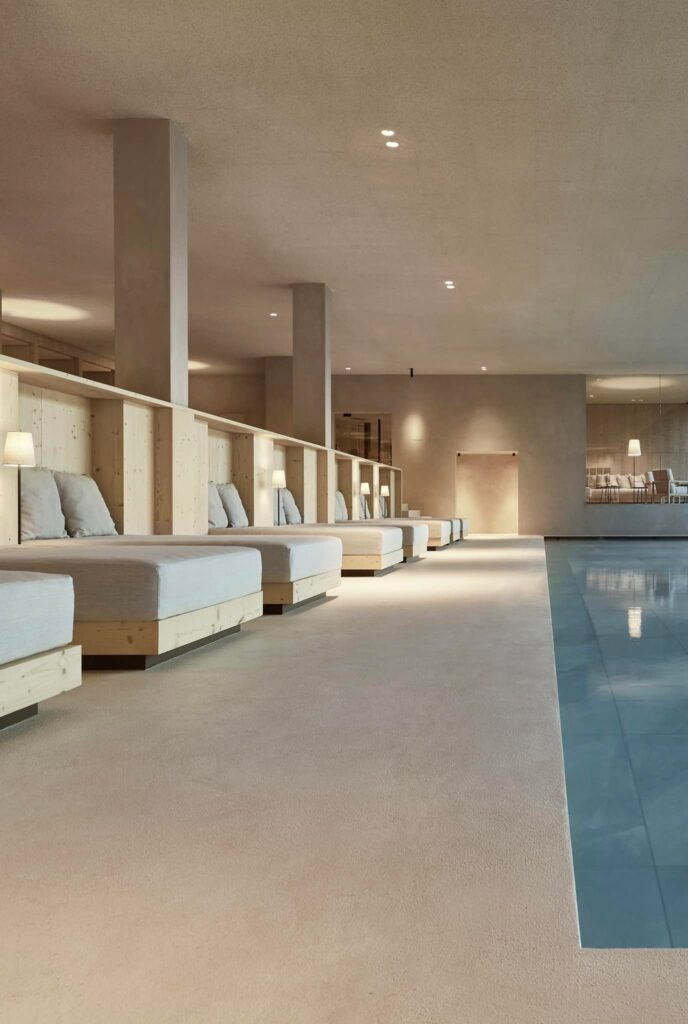
The 45 rooms and two suites (the suites come with a private Finnish sauna, free-standing bathtub and outdoor whirlpool on the terrace) are designed for guests aged 14 and over. The Bath House is the centrepiece of the spa: a timber-framed structure with heated indoor and outdoor pools at 32°C, a panoramic Finnish event sauna overlooking the Sciliar massif, a bio sauna with infrared, a steam sauna, and three relaxation zones.
Few hotels at this level include everything Sensoria does. Breakfast is served at the Indulgence Market, a grazing affair of regional products, homemade dishes and freshly prepared specialities, followed by an afternoon snack, then a six-course dinner at the Anima restaurant blending South Tyrolean, Mediterranean and international influences. South Tyrolean wines, spirits, beers, the hotel’s own aperitifs and gin, spring water and soft drinks are all included, as is the minibar.
The zero-waste dining concept, where guests pre-select their evening menu each morning, is a characteristic touch. There’s a broader logic to all of this: when nothing is an extra, the low-level anxiety of a holiday (what’s this costing, should we have another drink, is dinner included?) simply dissolves. Which is, when you think about it, its own form of wellness.
The location is ideal year round. The Alpe di Siusi cable car is at the foot of the property, connecting directly to the high meadow and the Seiser Alm ski slopes in winter. In summer, the hotel runs daily guided excursions to what it calls its Insider’s Secrets: hidden churches, mountain lakes and places of natural power that Lea and her team have known since childhood.
Ideal for Plose spring water in a stone pool at 1,800 metres where the Habsburgs planned a sanatorium…
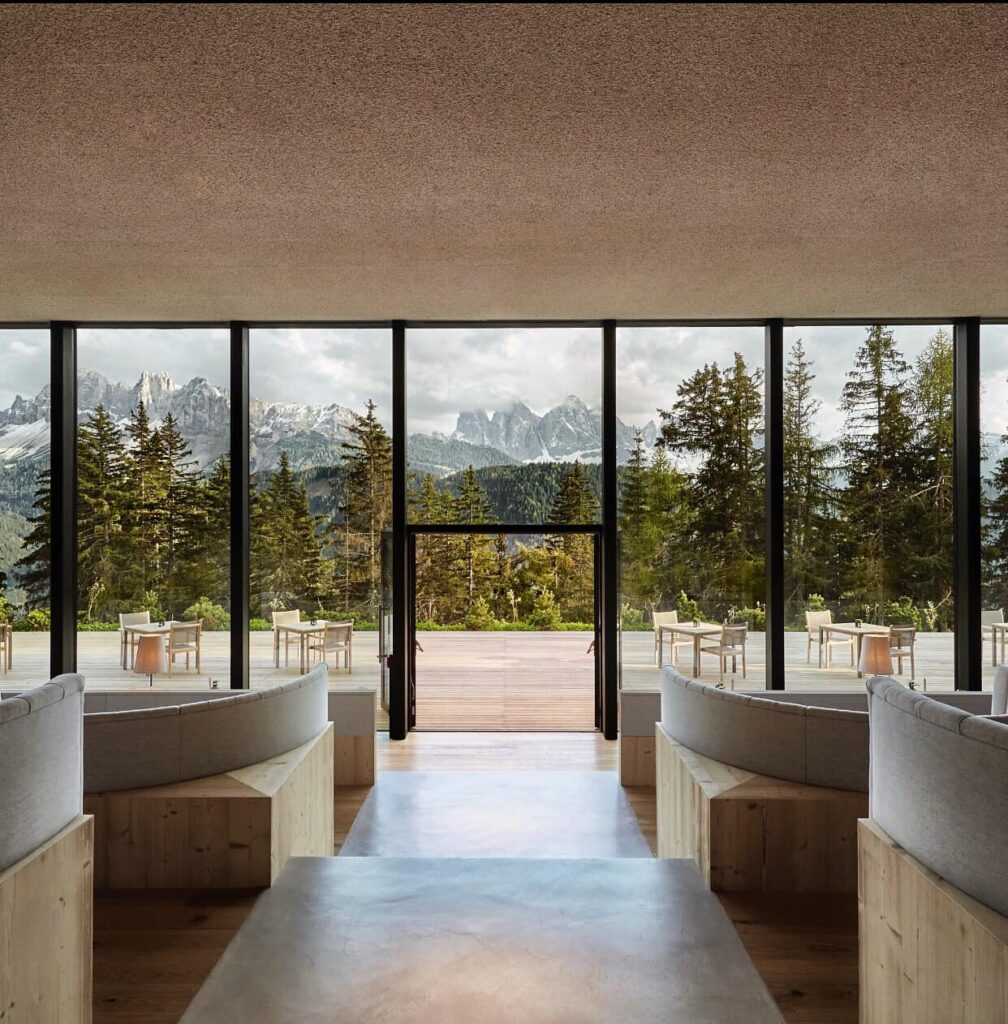
The evidence for forest bathing has been accumulating for decades – reduced cortisol, lower blood pressure, improved sleep, a measurable lift in mood. At Forestis, the clue is in the name. The spa is built around the four elements and four therapeutic trees – mountain pine, spruce, larch and Swiss stone pine – with saunas of natural wood that release essential oils under heat, Silence Rooms designed for absolute stillness, and a Wyda Room for Celtic-inspired movement practice, an Alpine tradition with roots going back millennia. The indoor-outdoor pool is carved from Dolomite stone and filled with Plose spring water, connected through a glazed wall to the mountain range beyond.
At 1,800 metres, Forestis sits higher than any other property on this list. On days when cloud settles below the treeline, the hotel floats above it. From the valley floor it looks less like somewhere you check in and more like somewhere you end up if you’ve been particularly well behaved. That altitude also brings a microclimate milder than it has any right to be, where Adriatic and northern air currents converge, and Plose spring water filters through dolomite rock to emerge with unusual purity. It’s a special site, and it was identified as such long before the hotel existed.
In 1912, doctors commissioned by the Austro-Hungarian monarchy selected a clearing on the southern slope of the Plose mountain, above the city of Brixen, as an ideal site for a pulmonary sanatorium. The First World War intervened before the building was completed. The structure sat abandoned until 2000, when hotelier Alois Hinteregger discovered it – drawn by the quality of light falling across the clearing and the unobstructed views to the Dolomites. The hotel opened in 2009, was rebuilt from the ground up in 2020, and today operates as a five-star adults-only inspired by the same natural features that were once decisive in establishing a sanatorium – excellent water, air, sun and climate.
The same mountain that shapes the treatments shapes the kitchen, too. Executive Chef Roland Lamprecht has spent his career working back towards this landscape – through award-winning kitchens across Central Europe, and finally home to South Tyrol, where he builds his menus from ingredients foraged from the surrounding woodland and meadows, supplemented by produce from regional farms he visits in person. At the bar, cocktails are infused with spruce, larch or pine.
In summer 2025, Forestis opened YERA alongside the main restaurant: a subterranean dining space carved from the red earth of the Peitlerkofel mountain, accessed by a path through the trees, where Lamprecht serves his forest cuisine around a central fire pit, using wild mushrooms, spruce needles, birch sap and ingredients preserved through the seasons using traditional techniques. It is, by any measure, an unusual place to have dinner.
The 62 rooms and suites are all south-facing, finished in stone, untreated wood and natural fabrics, with a 200m² penthouse adding a private pool, sauna and open fireplace. The Plose ski and hiking area begins at the hotel’s door; the Puez-Odle Nature Park is a short walk through the trees.
Ideal for Ayurvedic treatments, a golden panoramic sauna and a hotelier who built his hotel as a living work of art…
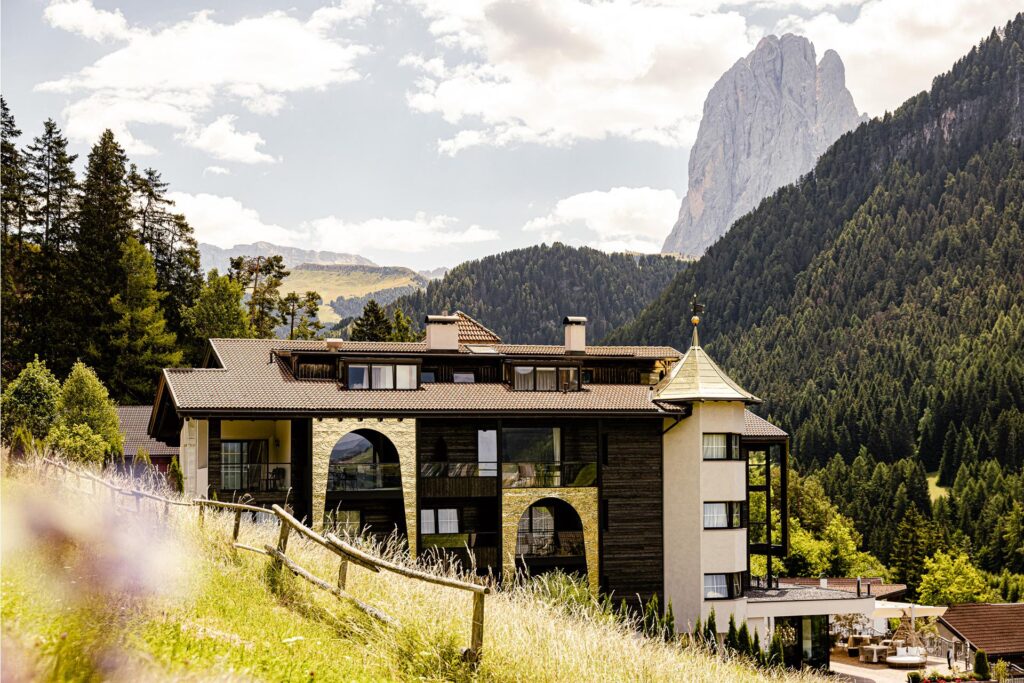
Markus Hofer’s description of the Alpin Garden is unambiguous: he set out to create a living work of art, inside and out, that appeals to all the senses. The 2020 renovation – a wholesale reinvention of the property – is where that ambition took full shape. The exterior is striking by alpine standards: black charred wood and a gilded frame that reads less like a mountain hotel and more like a considered architectural statement.
Inside, the art thread runs through everything. The 1,000-square-metre ART Spa takes its name literally, with artworks displayed alongside the facilities – a reproduction of Picasso’s Les Demoiselles d’Avignon inside the sauna area being the kind of detail that signals this is a deliberate programme rather than decoration. The Artists’ Lounge, the Golden Bar, the kitchen framing of cuisine as artistry – it all points in the same direction.
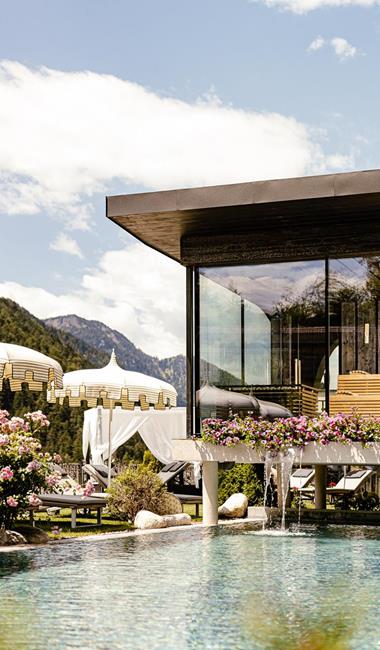
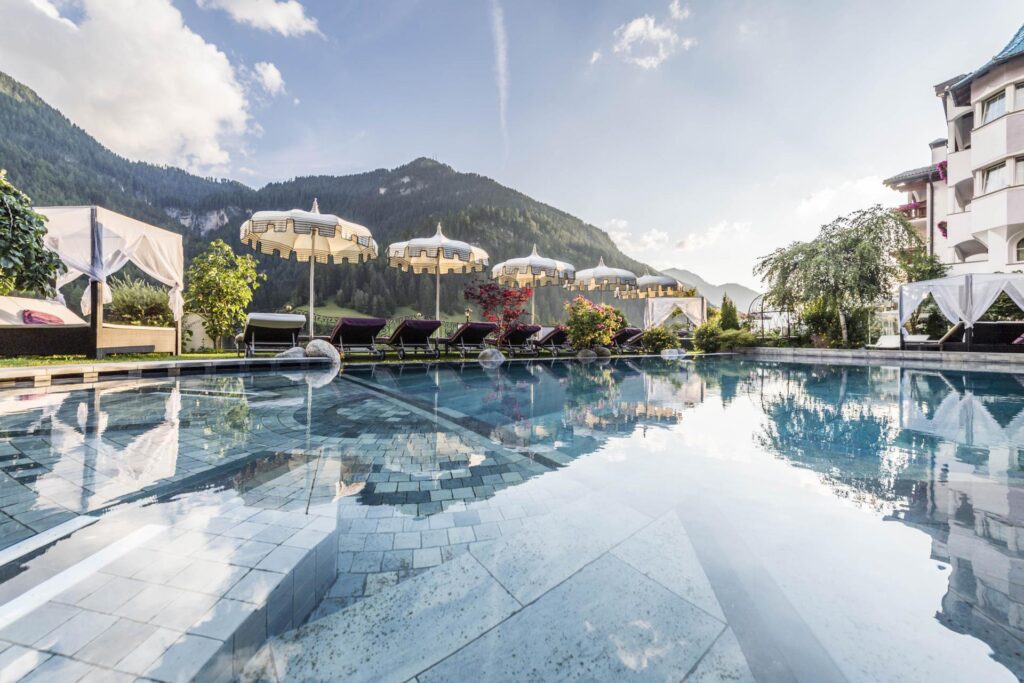
The spa itself is built around a golden panoramic sauna with a large glazed facade that looks out over the pool and straight to the Sassolungo. There’s also a Turkish bath, hot tubs, a 24-hour indoor pool and a heated outdoor pool set in the flower garden that earns particular notice in winter, when the snow-covered peaks rise behind it. The treatment menu goes further than most Alpine properties, with a full Ayurveda programme – Shirodhara forehead oil treatments, warm-oil shoulder and neck work – sitting alongside the more standard massage and body treatment offering. For a hotel of this size and setting, it’s an unexpected breadth.
The 30 rooms and suites split between modern alpine and traditional South Tyrolean styles, the latter with canopy beds, tiled stoves and old cottage wood. The Sky Loft suites push the panoramic windows to 3.5 metres, with balcony views of Ortisei and the Alpe di Siusi. The Maison Restaurant handles gourmet South Tyrolean and Italian cooking, and a shuttle connects the hotel to the village centre and the lifts throughout the day in both summer and winter.
Ideal for a blood test on Monday and a deep-tissue massage on Tuesday…
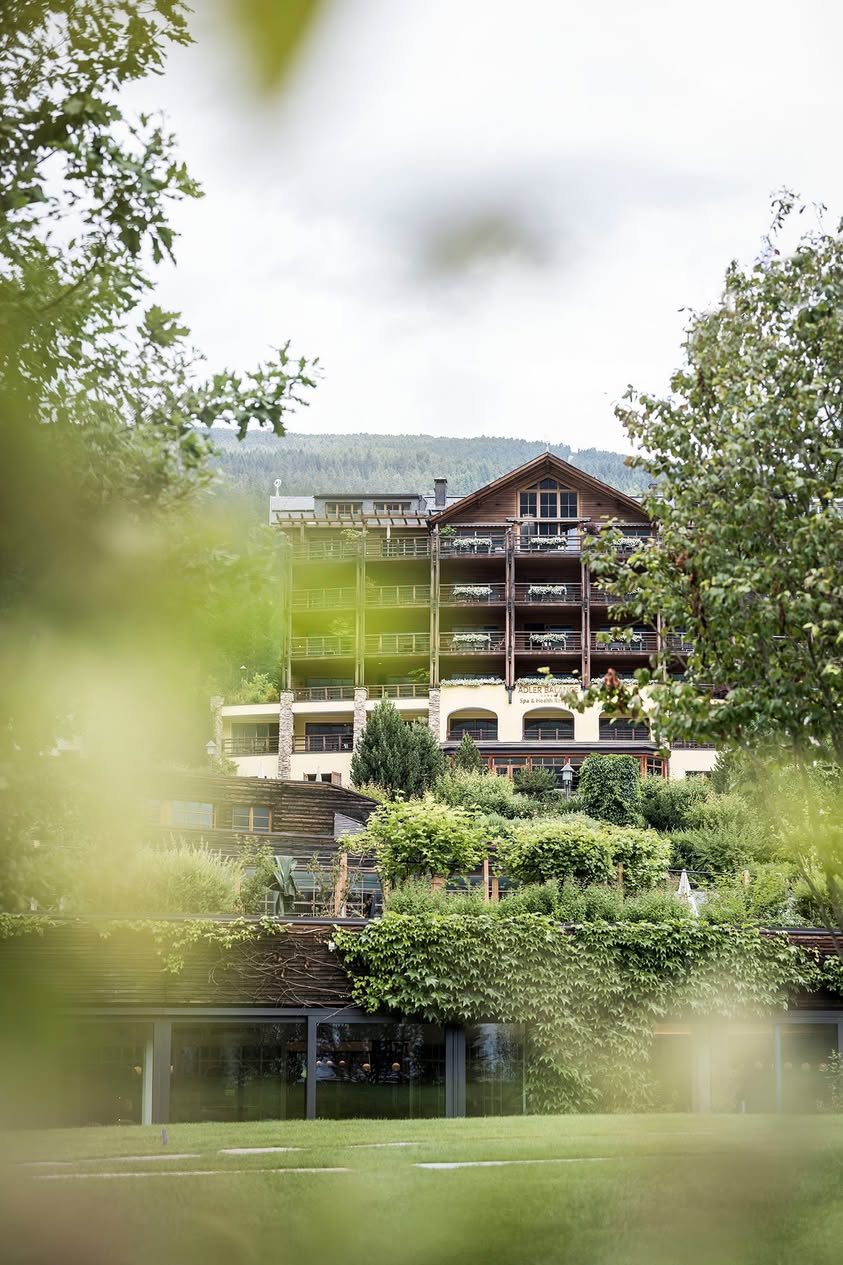
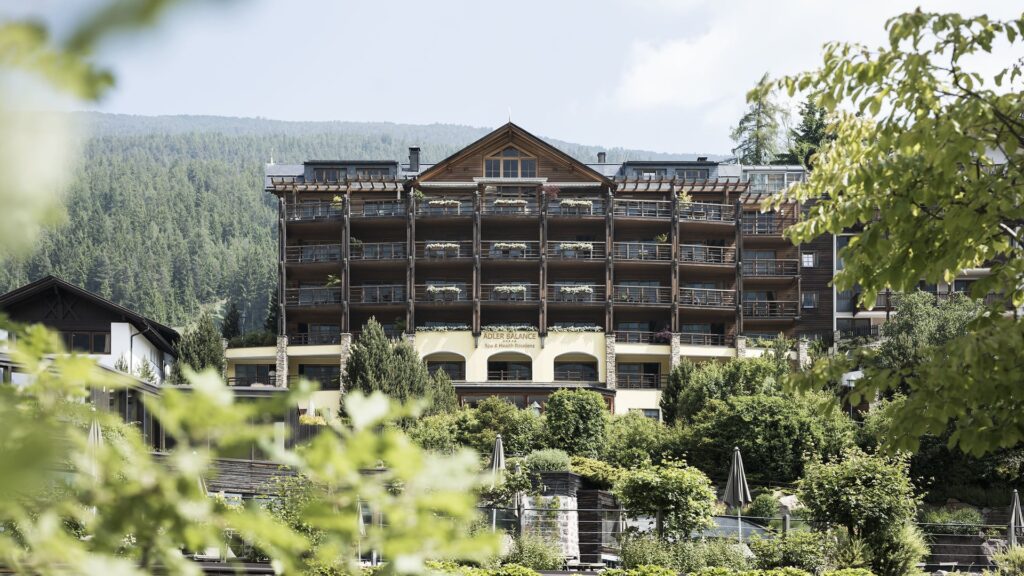
The Adler Spa Resort Balance takes a different approach to wellness than any other property on this list. The hotel sits squarely within one of the more compelling currents in wellness travel: the growing interest in longevity and preventative health as a driver of how people spend their time away. Where previous generations might have booked a holiday to recover from work, a growing cohort is now booking specifically to understand their own health, and to act on what they find.
Opened in 2008, this adults-only, 30-suite property in the centre of Ortisei functions as a medical health resort, with an in-house laboratory, a team of medical professionals and structured programmes covering diagnostics and prevention, nutrition, performance and aesthetics. The concept is holistic in the clinical sense: a collaboration between the kitchen, the medical department and the spa team ensures that guests on health programmes receive a coordinated, personalised experience.
The property is connected via an underground tunnel to its sister hotel, the five-star Adler Spa Resort Dolomiti (a family-friendly property that has operated since 1810), and Balance guests have full access to the Dolomiti’s extensive spa and pool facilities, including three outdoor pools, multiple saunas, and the Dolasilla spa with its own line of ADLER Spa Active Cosmetics. The Balance building itself is solar-powered and built entirely from natural materials: slate, stone, and untreated wood including arven, larch, walnut, oak and elm, which emit a soothing scent throughout the interior.
The suites are light-filled and south-facing, with balconies overlooking the Dolomites, and the decor throughout is calm and minimal. The Sanoner family, who have owned the Adler since 1810 (now in their sixth generation), position Balance as a place where relaxation is not an end in itself but a component of measurable health improvement. For guests who want their wellness stay to produce tangible results – better sleep metrics, adjusted nutrition plans, baseline diagnostics – this is the most focused option in the area.
Ideal for a hay bath and a private rooftop whirlpool in a village that time mostly forgot…
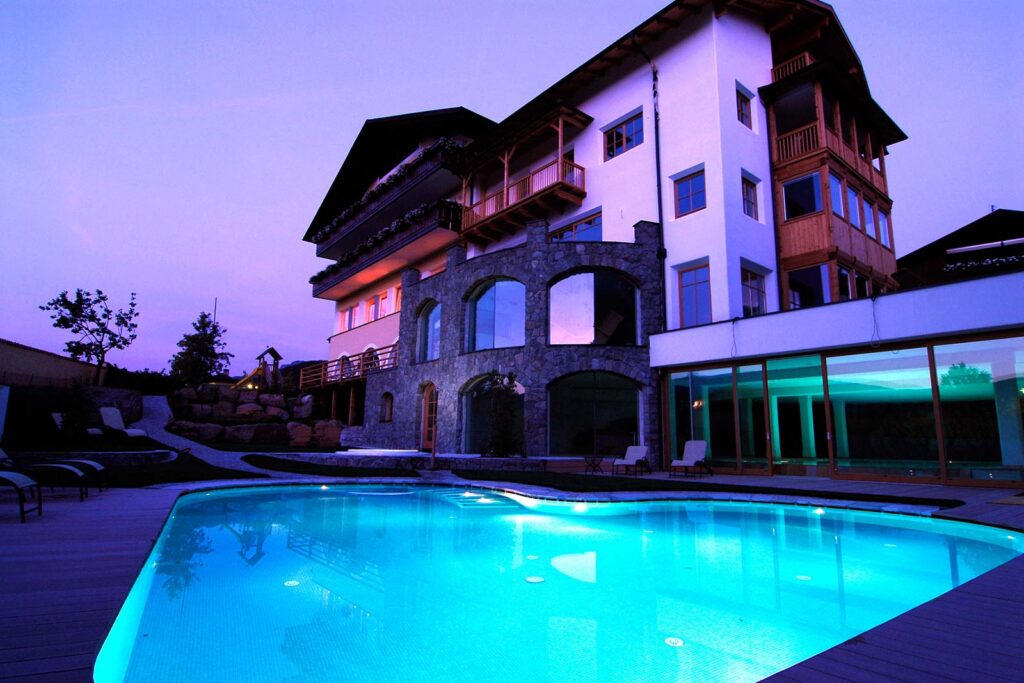
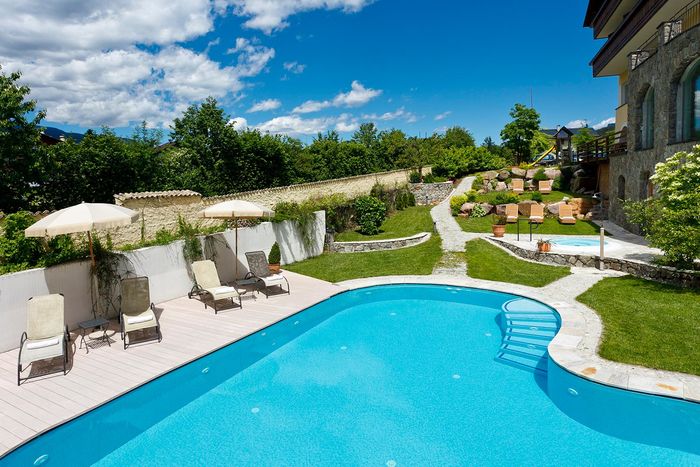
Völs am Schlern is one of the smallest and least-visited of the villages at the base of the Alpe di Siusi, set within the Schlern-Rosengarten Nature Park and overlooked by the full face of the Sciliar massif. The Gartenhotel Völserhof is a four-star adults-only property in the village centre, and its appeal lies precisely in its scale. This is not a mega-spa with a branded wellness method; it is a family-run garden hotel with 30 rooms, where the owners know their guests by name and the pace is set by the mountains rather than a programme.
The wellness area includes a Finnish sauna, an indoor pool, a heated outdoor pool, an outdoor whirlpool and a relaxation zone. The Wellness Spa Suites are the stand-out feature: each comes with a private sauna and a private whirlpool on the rooftop terrace, with unobstructed views of the Sciliar and the Rosengarten.
Treatments include the traditional South Tyrolean hay bath, a practice with over a century of history in this region, where locally harvested meadow hay containing thyme, arnica and gentian is applied to the body, releasing its active ingredients through heat and moisture.
The restaurant serves regional and international cooking, and the garden, filled with mature trees and sun loungers, provides a setting that feels more private residence than hotel. Public transport to the Alpe di Siusi cable car is 250 metres from the door, and Bolzano is a 15-minute drive. For guests who want the adults-only wellness experience without the five-star price tag or the corporate scale, the Völserhof is the most intimate option on this list.
There’s something in that which speaks to a broader truth about why wellness travel has taken hold. It isn’t always about the programme or the diagnostic. For many people it comes down to something simpler: a break from the pace and noise of ordinary life, in a place that has decided, deliberately, to keep things still.
The area around the Alpe di Siusi has developed one of the strongest concentrations of adults-only wellness hotels anywhere in the Alps. The Dolomites provide the setting: the light, the rock, the altitude, the air, and the South Tyrolean tradition of hospitality provides the substance.
We should mention that the journey itself has become easier than it once was. SkyAlps launched its Bolzano service from London Stansted in December 2023 before moving to Gatwick the following spring in response to demand. This means a two-hour hop from the UK that lands you right in this wellness region. Unlike some destinations, getting here and back doesn’t undo the point of going.
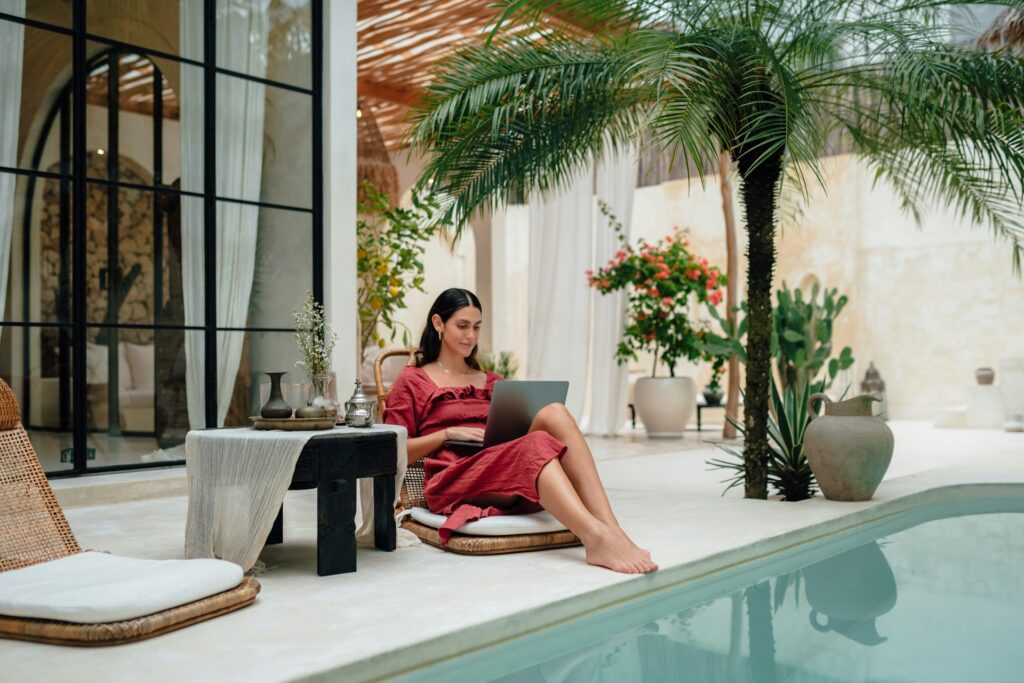
Whether you’re travelling for a business conference, going on a research trip or visiting a remote office, travelling for work still represents the dream for so many, even in 2026. You’re not stuck in the office, you get to visit and experience new cities, countries and cultures, and you get a little bit of ‘me’ time…in an ideal world, that is!
Indeed, with bleisure travel on the rise and companies increasingly open to employees extending work trips for personal time, more professionals than ever are spending time on the road. But the toll that frequent travel can take on physical and mental health is real, and it’s finally getting the attention it deserves.
Research from World Travel Protection found that a third of business travellers report feelings of anxiety and stress linked to work travel, with over half saying they’re packing more meetings into each trip than ever before. Sitting in airports, being away from loved ones, and dealing with jetlag, all while juggling work demands and deadlines, can grind you down if you’re not careful.
Whether you work in the events industry, the travel industry, or any industry where you have to travel for work, here are 9 ways to watch your wellbeing while on the road.
Keep A Gratitude Journal
There’s something about the disorientation of travel, the unfamiliar beds, the 6am alarms, the sense that you’re always slightly out of sync with everyone at home, that can make the whole thing feel like a slog rather than the privilege it often is. A self-guided journal focused on gratitude, as simple as it sounds, is a genuinely useful counterweight.
The practice is straightforward enough. At the end of each day on the road, jot down three things you’re grateful for. It might be a decent coffee in an airport that wasn’t trying to fleece you, a kind word from a taxi driver, or simply the fact that your flight wasn’t delayed. Research from the Greater Good Science Center at UC Berkeley has found that regular gratitude practice can reduce stress, improve sleep quality & even help with the kind of low-level anxiety that often creeps in when you’re away from home.
Keep a small notebook in your hand luggage, or use the notes app on your phone if you’d rather. The method matters less than the habit. Over time, you’ll find it shifts your perspective on work travel in small but meaningful ways, turning those endless departure lounges into something a little easier to bear.
Move Your Body, Even A Little
The sedentary nature of business travel is one of its less glamorous realities. Long flights, back-to-back meetings, conference chairs that seem designed to punish the lower back, dinners that stretch into the night. By day three of any trip, your body tends to let you know it’s unhappy.
You don’t need to find a fancy hotel gym or sign up for a hotel yoga class to counter this, though both are welcome if available. Even ten minutes of stretching in your room before bed, a brisk walk around the block between meetings, or taking the stairs instead of the lift can make a tangible difference. The NHS recommends 150 minutes of moderate activity per week, & while hitting that target on a packed work trip can feel ambitious, breaking it into small, manageable chunks makes it realistic.
If you’re somewhere new & have an hour to spare, walking is the easiest win of all. You get your steps in, you see a bit of the city, & you arrive at your next meeting with a clearer head than you would have done staring at your laptop in the hotel lobby.
Pack Healthy Snacks
When you’re on the road and have a busy schedule of events, you never know when you’re going to eat. Sure, if you’re on a long haul flight you’ll probably eat on the plane, but for the most part, inflight food options are pretty unappetising. And the food at the airport isn’t much better. Burger King, KFC or Starbucks, anyone?
A little treat is fine, but a long run of unhealthy eating can take its toll on your wellbeing. Pre-empt the necessity to eat the nearest food to hand and take snacks in your hand luggage, keeping some in your bag for when those hunger pangs strike.
Pretty much all solid foods are allowed in your hand luggage, even live lobsters if in clear, sealed, spill-proof containers with ice (yes, really), so consider cooking an extra portion of dinner the night before travel and taking leftovers on your flight. Trail mix is always a good idea too; if it’s good enough for sustaining mountaineers and trekkers, we reckon it’ll do the job for any long-haul flight, business meeting or conference.
IDEAL Tip: When you are finally home, take a little time to batch cook some meals that you can freeze and take with you on your next trip. This little trick also means you’ll have something tasty waiting for you when you get back next time.
Travelling for business forces you to spend time away from your home, family and friends, and because of this, it can be a pretty lonely affair. Video calls help, but they’re not the same as having someone there in the flesh. Consistent travel can cause strained relationships with those left at home, too. They have the burden of taking care of all things domestic while you’re away, and resentment can build.
Why not ask your work if you can bring a friend or spouse along on the trip? Businesses are increasingly open to this, and with 43% of corporate travel programmes now operating formal bleisure policies, it’s a far easier conversation to have than it used to be. Some employers will even help with your partner’s travel expenses if it means a happier, more productive employee on the ground. Everybody wins.
Work In Transit
If you have some downtime on that long train ride or long haul flight, and if you’re not too exhausted, try and get ahead of work while in transit. Making the most of travel time is one of the simplest ways to reduce stress at your destination, freeing you up to switch off properly once the work is done. Whether it’s prepping for that meeting or presentation or catching up on your emails, at least you’ll be putting all that largely liminal time to good use.
It can also mean you can take advantage of the free time at your destination, hopefully giving you the chance to unplug, recharge, and explore.
Prioritise Sleep
This one sounds obvious, but it’s remarkable how many business travellers treat sleep as the thing that gets squeezed when the schedule tightens. Late dinners with clients, early flights, and the temptation to catch up on emails from your hotel bed at midnight all conspire against a decent night’s rest.
Where you can, book a room away from the lifts and ice machines, pack earplugs and an eye mask, and resist the pull of your phone in the hour before bed. Some hotels now offer sleep optimisation programmes with circadian lighting and blackout blinds, and they’re worth seeking out if you travel frequently. A well-rested version of you will perform immeasurably better in that 9am meeting than the one running on four hours and three espressos.
Don’t feel bad if all you want to do is order room service, turn on the hotel telly and do nothing. We know you may think that you should be out experiencing the city you’re in, but sometimes it’s okay to just switch off. In fact, sometimes it’s actively better for you to embrace a little R&R.
As the Scientific American reports in their fascinating article Why Your Brain Needs More Downtime, downtime replenishes the brain’s stores of attention and motivation, encourages productivity and creativity, and is essential to achieving our highest levels of performance. So that guilt-free evening in your hotel room isn’t laziness. It’s strategy.
Keep A Sense Of Routine
We’ve all been there when travelling: having a pint for breakfast at the airport, catching up on sleep during daylight hours, and enjoying a croissant for dinner before logging into our emails…
We said we’d all been there, right? Right?
Anyway, there’s often a temptation on the road to throw your usual routine out the window in favour of something more freeform, but this can be detrimental not only to your productivity, but also to your wellbeing.
Routine and structure are, according to most experts, incredibly good for you, giving your day a sense of organisation, purpose and focus. Do try to observe a few of the same key moments during the day that you would back home, whether that’s your 11am run, your evening phone call to your folks, or your beloved breakfast of muesli. Your body and brain will thank you for the familiarity, even if everything else around you is new.
Beat Jet Lag
Hectic airports, delayed flights and lost luggage. Travelling on a plane can be stressful at the best of times. Unfortunately, if you are crossing multiple time zones, you can also expect symptoms of jet lag. From headaches and irritation to fatigue and a pounding heart, jet lag hits without warning and it can turn you into a zombie.
The good news? It’s more manageable than you think if you plan ahead. Start adjusting your sleep schedule a few days before departure, stay hydrated on the flight (water, not wine, sadly), and try to get some natural daylight at your destination as soon as possible. After that dire warning, let us end on a positive note and direct you to our top tips on beating jet lag naturally. We hope your next trip is a fruitful and happy one.
The Bottom Line
Business travel isn’t going anywhere. If anything, it’s ramping up. But the conversation around how we look after ourselves while doing it has changed for the better. Companies are finally recognising that a burnt-out employee is nobody’s asset, and travellers themselves are getting smarter about protecting their energy, their routines, and their relationships on the road. A little planning goes a long way. Safe travels.
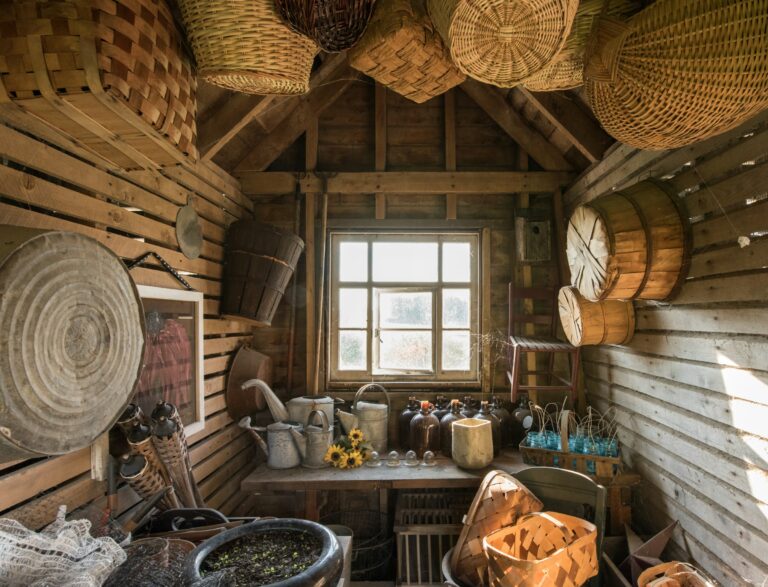
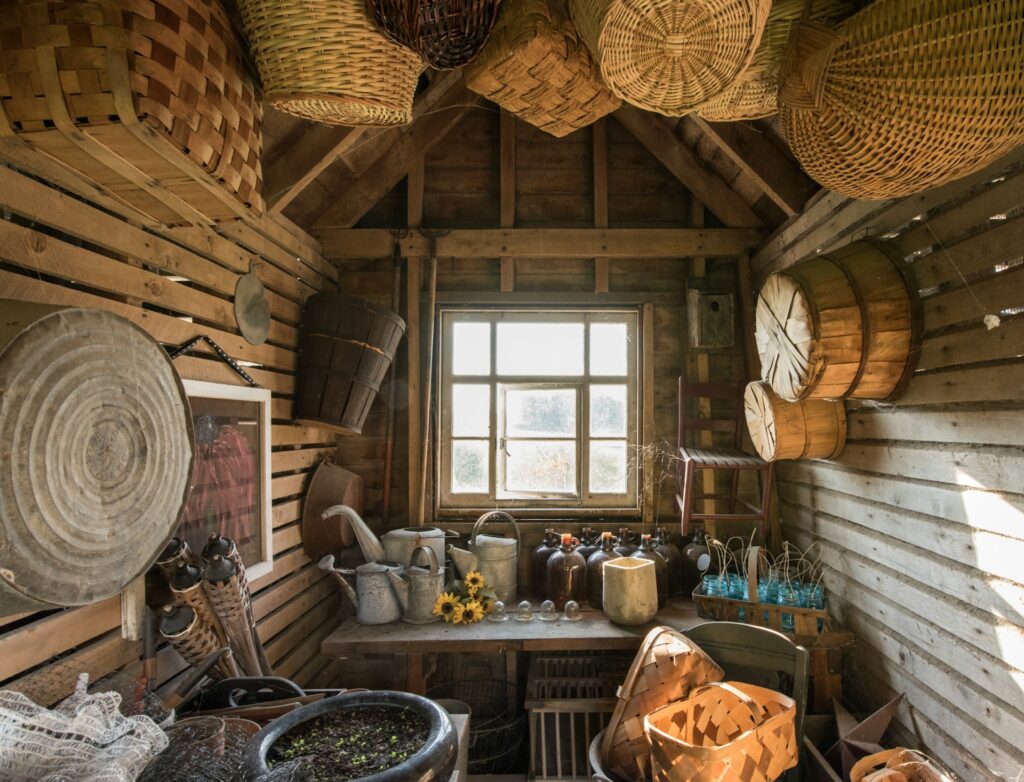
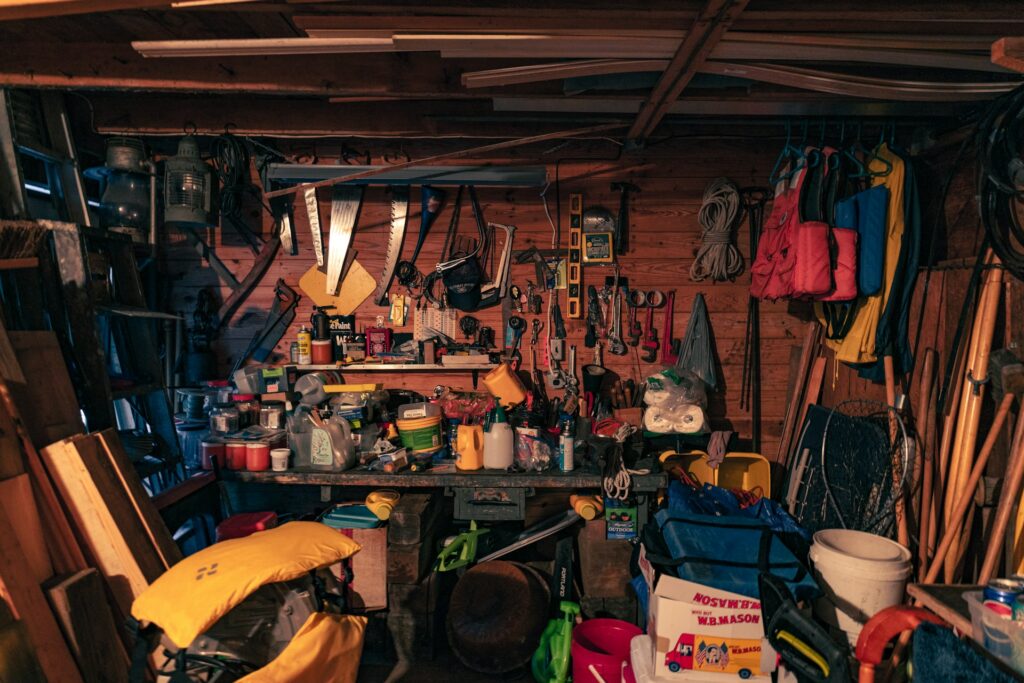
The humble garden shed – that stalwart sentinel of British gardens – often evolves from a simple storage space into something rather more complex: part workshop, part tool library, and occasional refuge from summer showers. Yet despite our best intentions, these wooden sanctuaries frequently descend into disorder, with cherished tools buried beneath holiday decorations and half-empty paint tins forming precarious towers in corners. The challenge lies not merely in finding space for everything, but in creating an organised system that adapts to the seasonal rhythm of gardening life, from the frenetic activity of spring to the quieter winter months.
A well-organised shed transforms not just your storage space but your entire gardening experience. When every tool has its place, and every storage solution serves a purpose, you’ll find yourself spending less time searching and more time nurturing your garden. Here’s how to bring order to your horticultural headquarters.
The Art Of Vertical Tool Storage
Every gardener knows the frustration of wrestling with long-handled tools propped precariously in corners or tangled together like unruly saplings. Vertical storage not only solves these common headaches but transforms your wall space into a practical tool library that would make any allotment holder proud.
Consider installing a French cleat system, which offers unparalleled flexibility and strength. This ingenious method uses angled wooden strips mounted horizontally along your shed wall, with corresponding cleats on tool holders that can be easily repositioned as your needs change.
For lighter tools, create a customised tool wall using marine-grade plywood (crucial in our damp climate) with precisely routed holders. Position tools strategically – frequently used implements at waist height, seasonal equipment higher up. Incorporate adjustable straps or bungee cord systems for securing longer handles, preventing that frustrating tendency of tools to slip sideways.
In any garden shed, small metal tools have an uncanny ability to vanish just when they’re needed most – and you can buy the best tools available, but leave them rattling around in a damp drawer for a season and they may as well be blunt cast-offs from the pound shop. While basic magnetic storage has been around for years, contemporary systems offer sophisticated solutions that turn your walls into highly organised, easily accessible tool galleries.
Install multiple high-strength magnetic bars at different heights, interspersed with small magnetic shelving units for boxes of screws and other ferrous items. Create dedicated magnetic tool stations – combining strips with small magnetic whiteboard sections where you can note maintenance schedules or required replacements. For frequently used hand tools, add silicone coating to portions of the magnetic strips to prevent metal-on-metal scratching and reduce noise.
Mobile Storage: A Workshop On Wheels
Traditional stationary storage can limit your gardening efficiency, especially when working on larger projects. As far as shed storage ideas go, mobile solutions offer unparalleled flexibility, bringing your tools to your work, rather than forcing constant trips back to the shed.
Design custom carts with fold-out worksurfaces, integrated power tool charging stations, and adjustable dividers. Include dedicated spaces for battery storage with proper ventilation, and incorporate a small off-grid solar charging system for cordless tool batteries. Use heavy-duty castor wheels with assured locking mechanisms, and ensure your mobile units can nest together when not in use.
Sophisticated Ceiling Storage Engineering
Those rafters and joists above your head represent some of the most valuable storage real estate in your garden shed. With careful planning and the right equipment, your ceiling can become an ingenious storage system that keeps seasonal items safe and accessible.
Install adjustable pulley systems for heavier items like ladders or seasonal equipment. Create a sliding track system with hanging baskets that can be moved along the length of your shed, maximising accessibility while maintaining organisation. Consider mounting clear polycarbonate storage boxes on ceiling-mounted rails – this allows you to see contents from below while protecting items from dust. Incorporate LED strip lighting alongside storage tracks to eliminate shadowed areas.
The Evolution Of The Folding Workbench
Space constraints needn’t mean sacrificing your workstation. Modern folding solutions can create a full-featured workbench that disappears when not needed.
Install a robust folding workbench with integrated tool storage within its thickness when folded. Include retractable LED task lighting, multiple power points, and a small solar-powered fan for summer use. Design the bench with removable sections that can double as potting trays or tool caddies, and incorporate a built-in sharpening station for maintaining tools.
The Small Stuff: Containing Seeds, Twine & Sundries
For all the talk of long-handled tools and ladders, it’s the small consumables that tend to undo a shed’s order with annoying efficiency. Half-opened seed packets, lengths of twine, plant labels, secateur oil, a single missing glove: these are the items that migrate to every available surface and resist every well-meaning system.
The answer is a dedicated sundries station, ideally tucked at eye level near your potting zone. Repurpose a vintage printer’s tray or a haberdashery cabinet for seed packets, sorted by sowing month rather than crop type, which makes far more sense once spring arrives and you’re working against the clock. Glass apothecary jars with cork stoppers keep twine, jute, and wire visible and tangle-free, while small enamel pots handle the miscellany of clips, ties, and labels.
For seeds specifically, consider a sealed container with silica gel sachets to combat the persistent moisture that plagues British sheds. A simple chalkboard panel above the station lets you jot down what’s running low, replacing the usual scribbled notes and forgotten phone reminders that rarely make it as far as the garden centre.
Door Storage: Engineered Excellence
That often-overlooked door space represents prime storage territory, offering solutions that quite literally work while you walk.
Create a counterweighted storage system that maintains balance whether the door is open or closed. Install adjustable storage pods that can be reconfigured seasonally. Use the door’s movement to your advantage – design storage units that present tools at an angle when the door opens, improving accessibility. Include a weather-sealed document pocket for keeping garden plans and seed packets dry.
Transform old copper water cylinders into rotating tool storage units, or convert discarded filing cabinets into weather-sealed outdoor storage extensions. Create modular storage walls from reclaimed scaffolding boards, treated and finished to withstand shed environments. Repurpose industrial cable reels as rotating storage solutions for lighter items, with added dividers for organisation.
Consider the flow of your movement through the space, the frequency with which you use different tools, and the changing seasons of gardening life. Create zones for different activities – potting, tool maintenance, project work – and ensure each zone has appropriate storage and work surfaces.
Remember to incorporate well-working ventilation systems to prevent damp and rust, and consider adding a small dehumidifier for particularly damp periods. Label everything clearly, but also create a simple shed manual documenting your organisation system – invaluable for maintaining order and helping others locate items in your absence.
The Bottom Line
With these systems in place, your shed becomes more than a simple storage space – it transforms into a year-round workshop that evolves with your gardening ambitions. The time invested in creating this organisation will repay itself many times over, not just in time saved searching for tools, but in the longer life of well-stored equipment and the pure pleasure of working in a space where everything is just where you need it, when you need it. After all, a well-ordered shed is the cornerstone of a well-tended garden.
Without wishing to sound too dismissive of an industry that’s clearly on its valedictory meal, reviews of post-COVID restaurant openings in the UK have been remarkably concentrated in recent times, with critics alighting at Farringdon Station with impressively predictable regularity.
Bouchon Racine, Brutto, Morchella and Cloth have all graced the pages (‘touched the cloth’?) of virtually every national newspaper in recent times — a convergence that has only served to prove what London’s culinary cognoscenti already knew: that Farringdon is now the epicentre of the capital’s food scene.
As you emerge blinking from the bowels of the station, you might wonder why. Farringdon, on first inspection, isn’t up to much, more well known for its transport links and office blocks than its restaurants. But scratch the surface just a little and you’ll find a series of places that are casually, quietly, of the highest quality. Admittedly, they’re all singing from the same chalkboard, so to speak, but the tone remains harmonious.
Whether you’re after a leisurely business lunch, a pre-train pit stop, or a destination dinner worthy of advance booking (that’s if you can get a reservation at all), the patchwork of Farringdon, Clerkenwell and Smithfield is where it’s at for a good feed. With that in mind, here are the best restaurants near Farringdon.
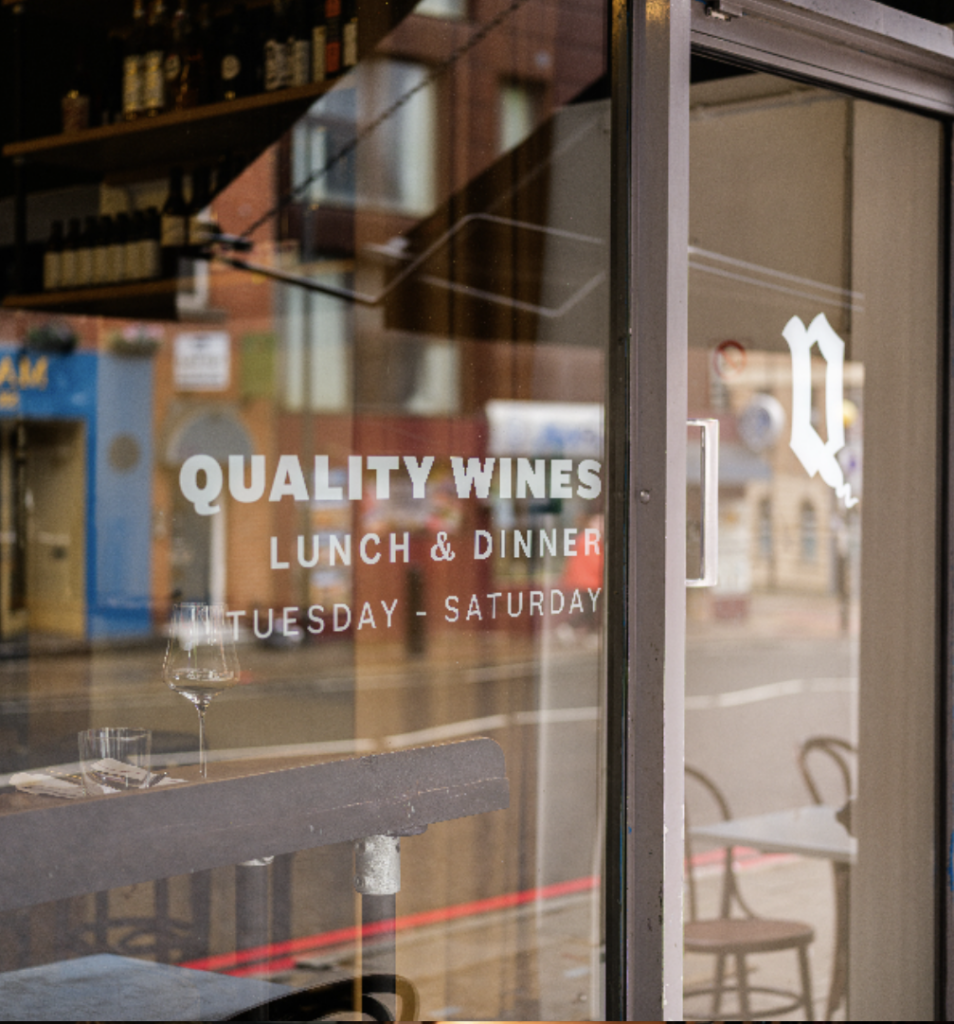
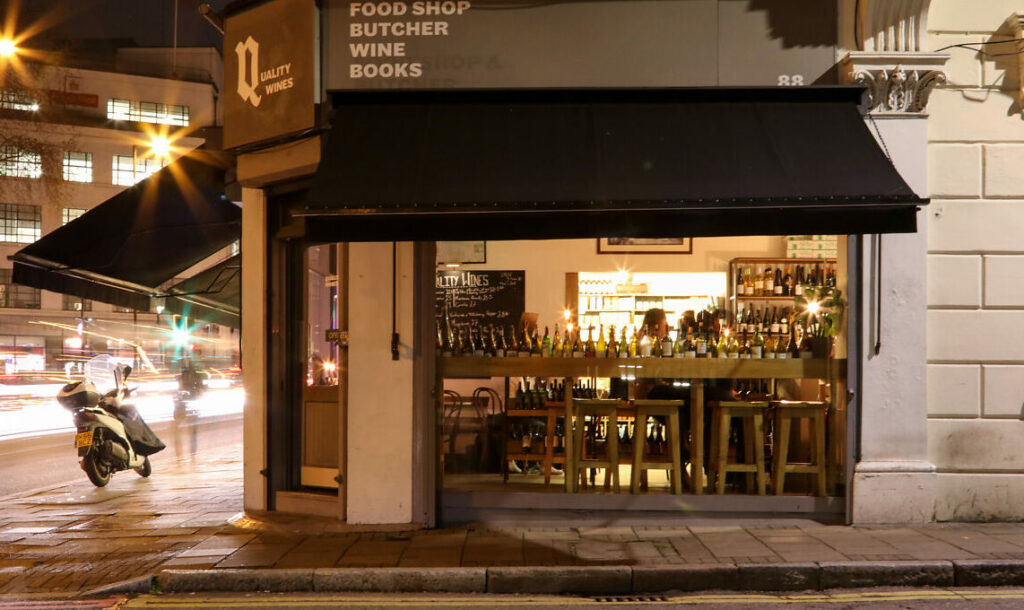
Quality Wines, Farringdon Road
Ideal for small plates and stellar wines in an intimate setting…
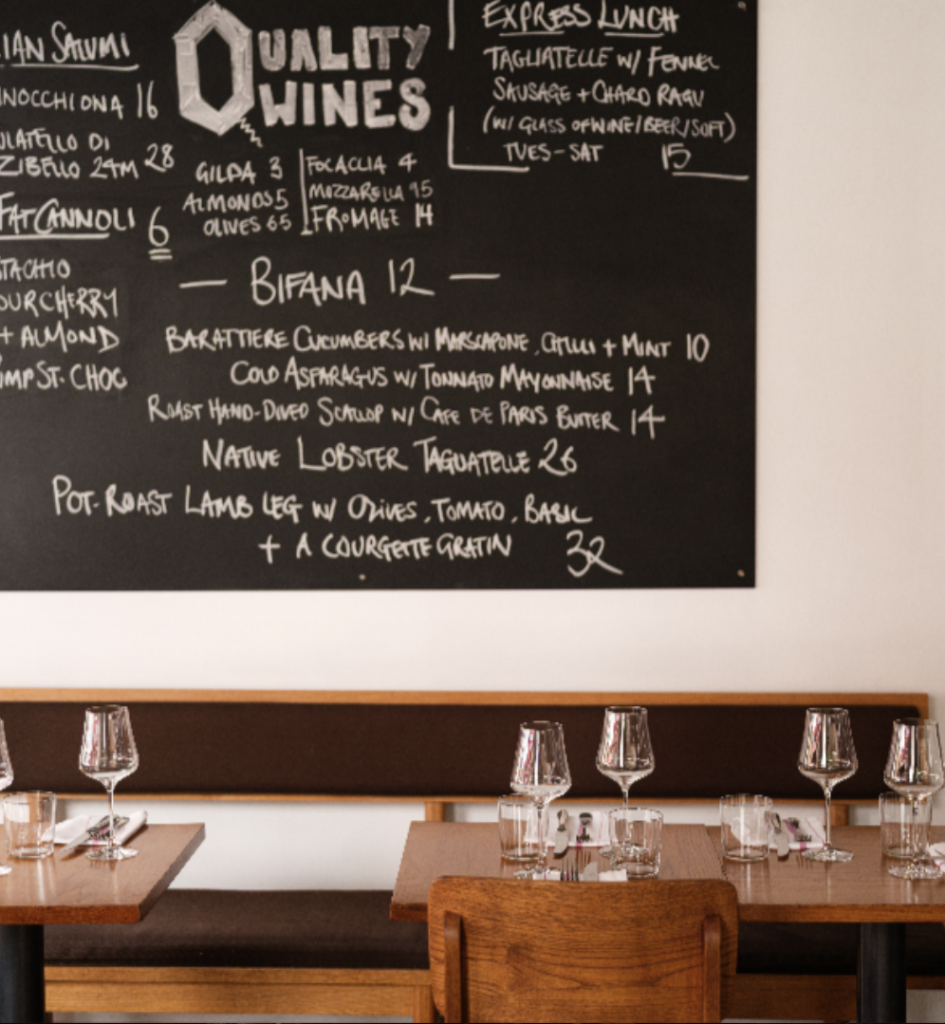
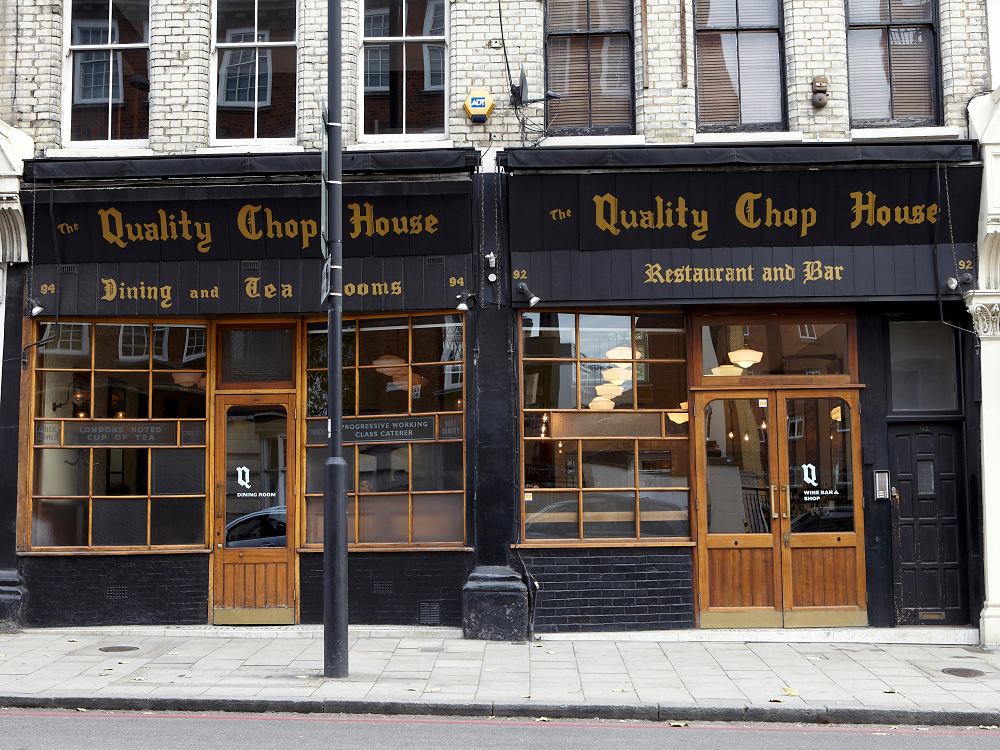
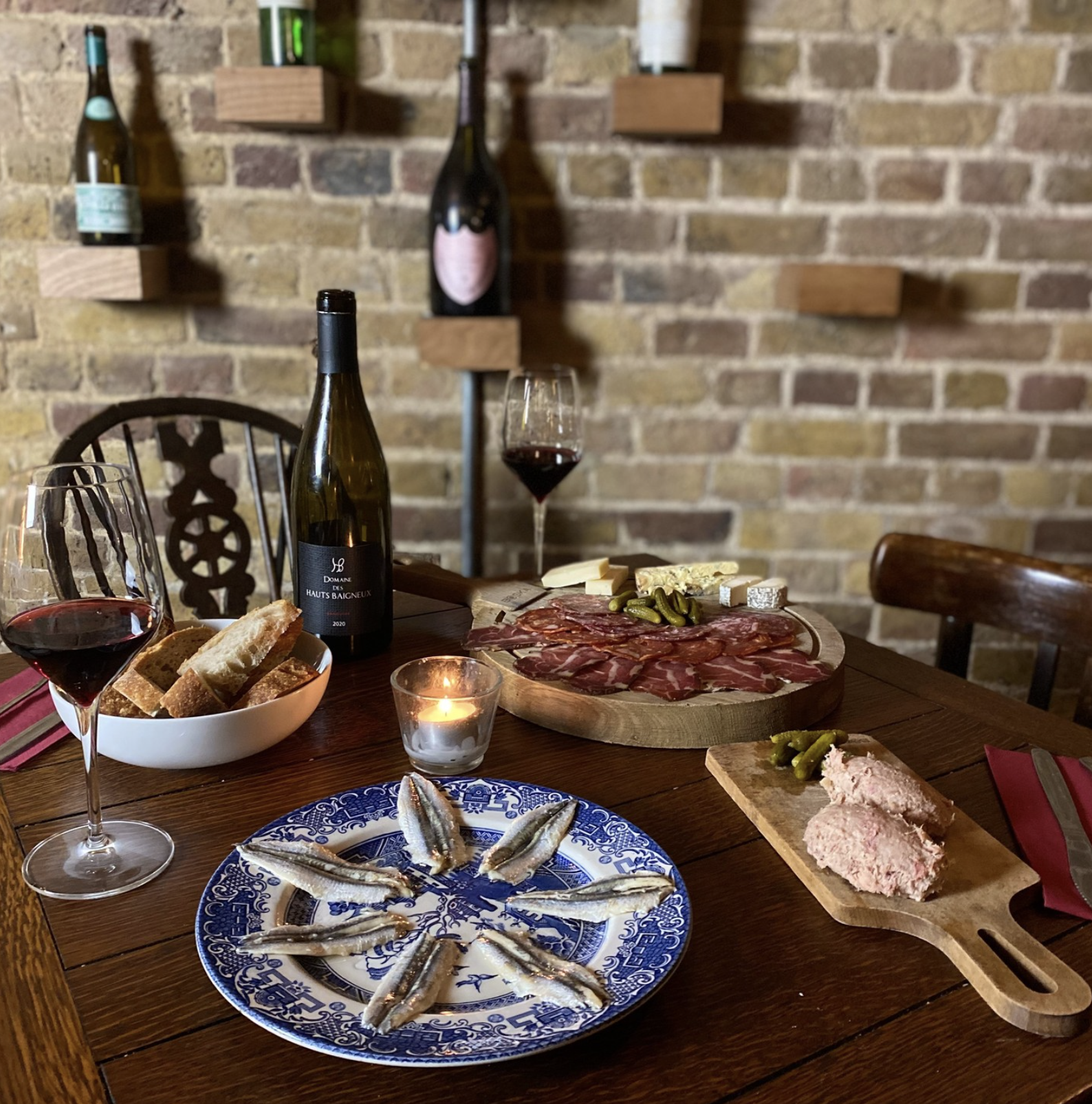
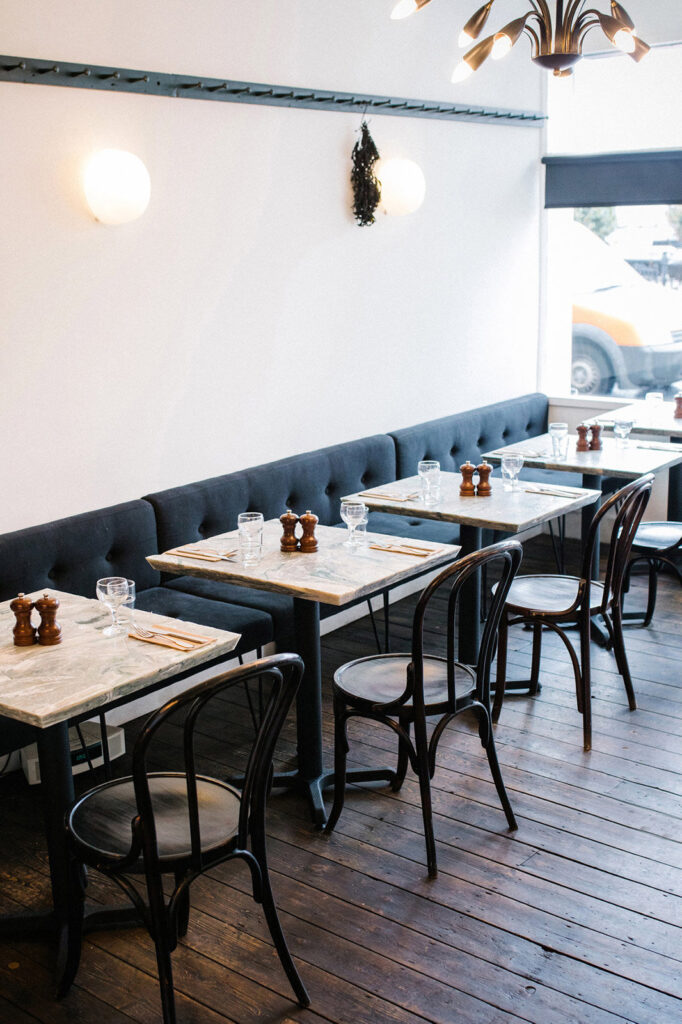
What began as a wine shop attached to Quality Chop House (more of those guys in a bit) has evolved into one of Farringdon’s most cherished places to eat; an intimate restaurant with a weekly-changing blackboard menu that defies easy categorisation.
Sure, the wine merchant aspect still remains, but punters are now more likely to be pitching up for a taste of chef Nick Bramham’s absurdly satisfying cooking than they are a bespoke bottle to go. Indeed, from a tiny open kitchen, the chef defies the conventional restaurant approach to the most gratifying ends.
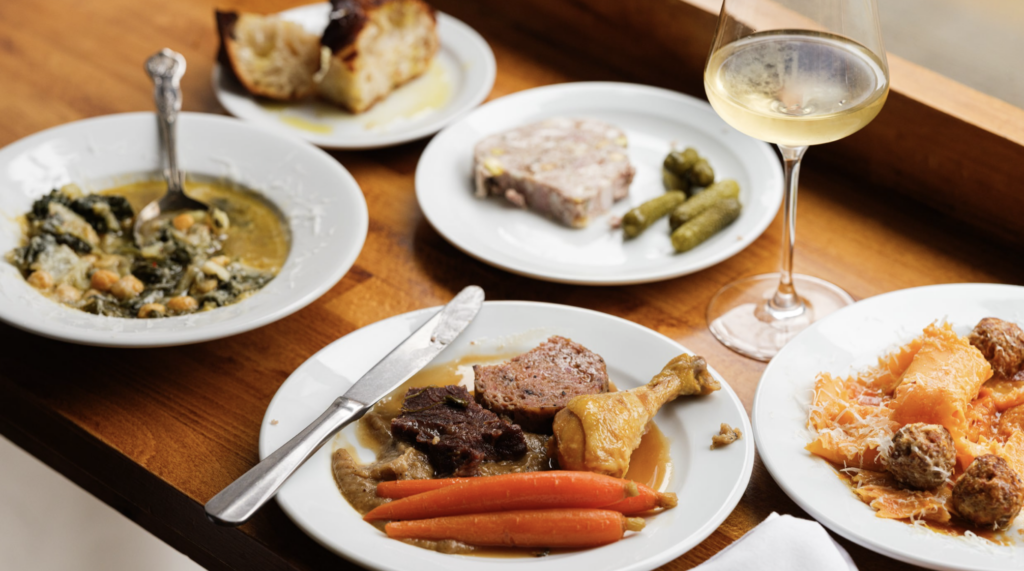
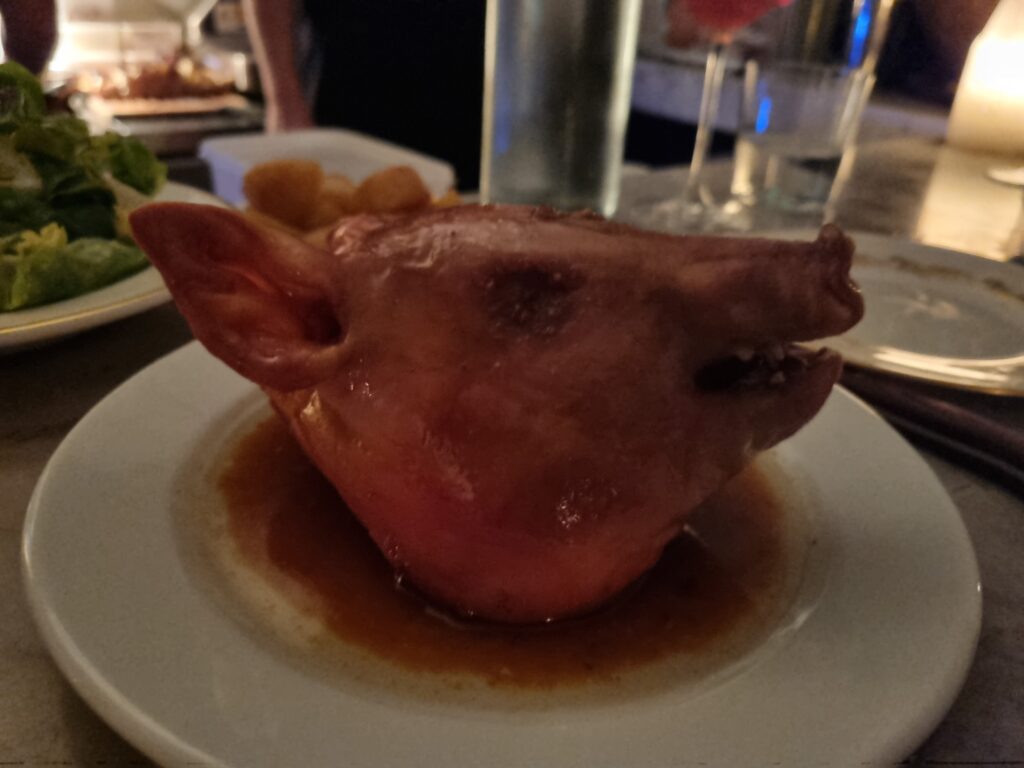
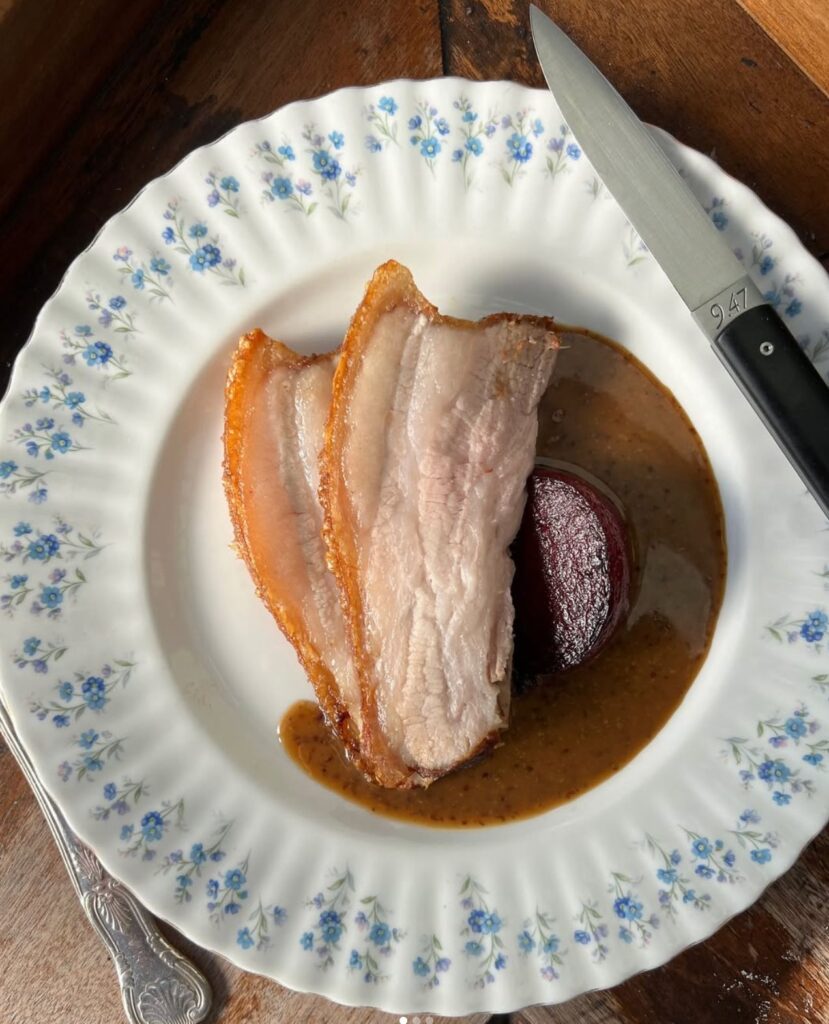
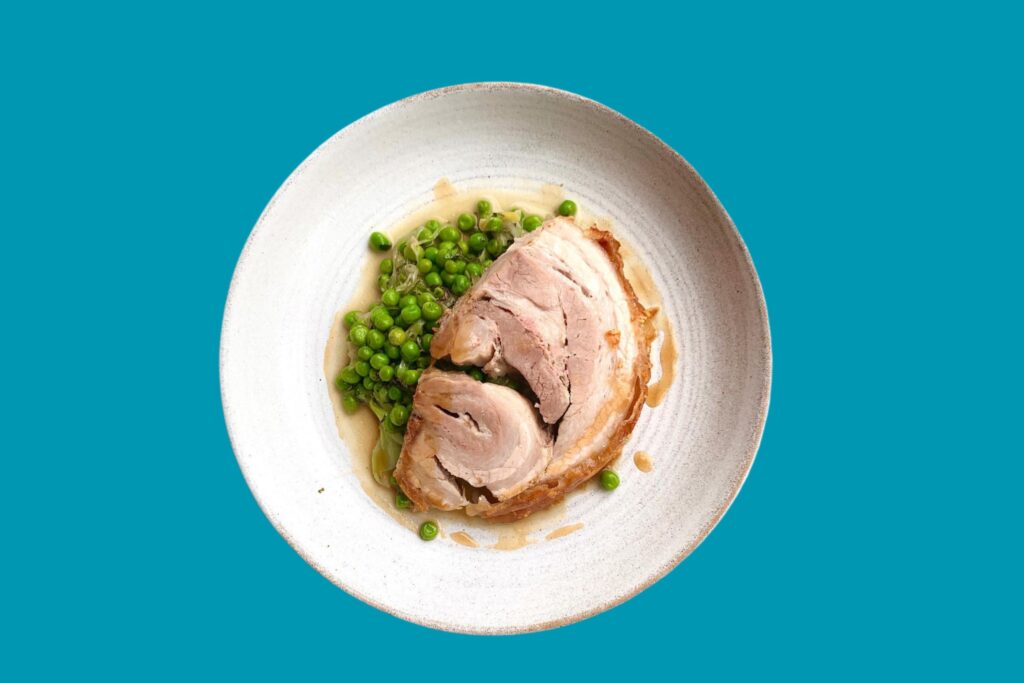
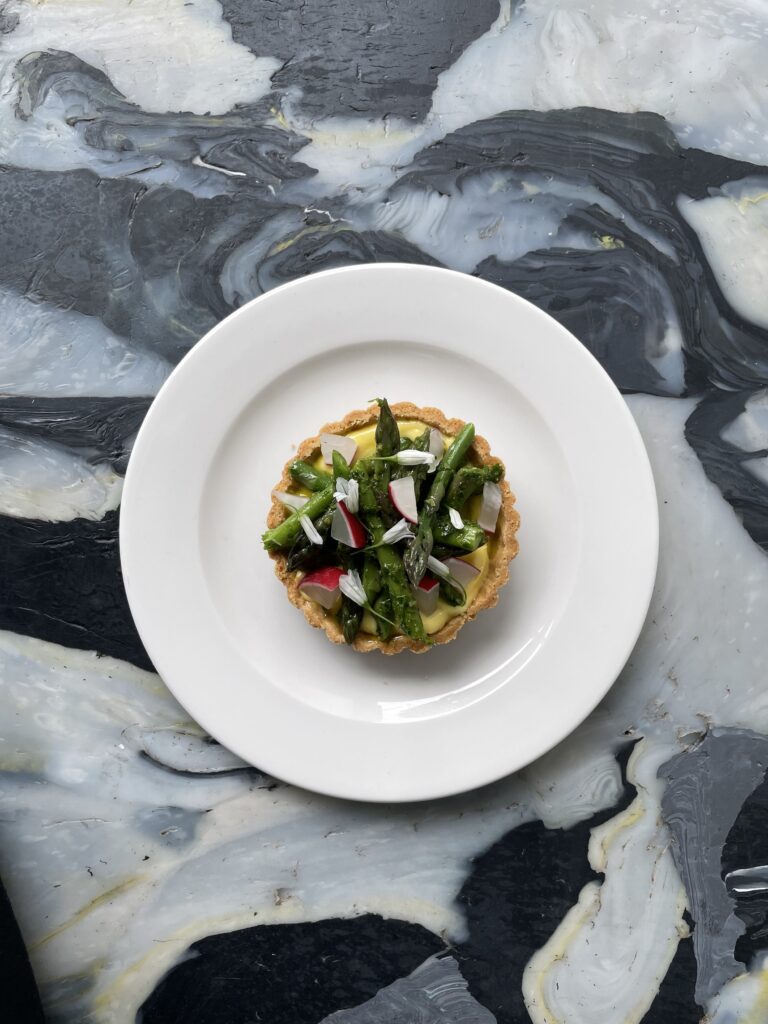
His Mediterranean-inspired plates, increasingly leaning Greek rather than French, Spanish or Italian – appear deceptively simple but reveal a profound understanding of flavour and produce – think white asparagus vinaigrette that sings with seasonal freshness, or braised pork belly with cime de rapa and salsa verde that’s so much more than the sum of its parts. Occasionally, a whole crispy pig’s head will appear on the menu, a result of that pork dish having, you know, a body beyond the belly. If so, order it.
There’s an intelligence to the cooking that feels liberated from kitchen dogma, producing food that’s both deeply considered and utterly approachable. No unnecessary flourishes, no cheffy ego – just perfectly judged dishes. Their famous gildas are alone worth a visit, but it would be madness to stop there.
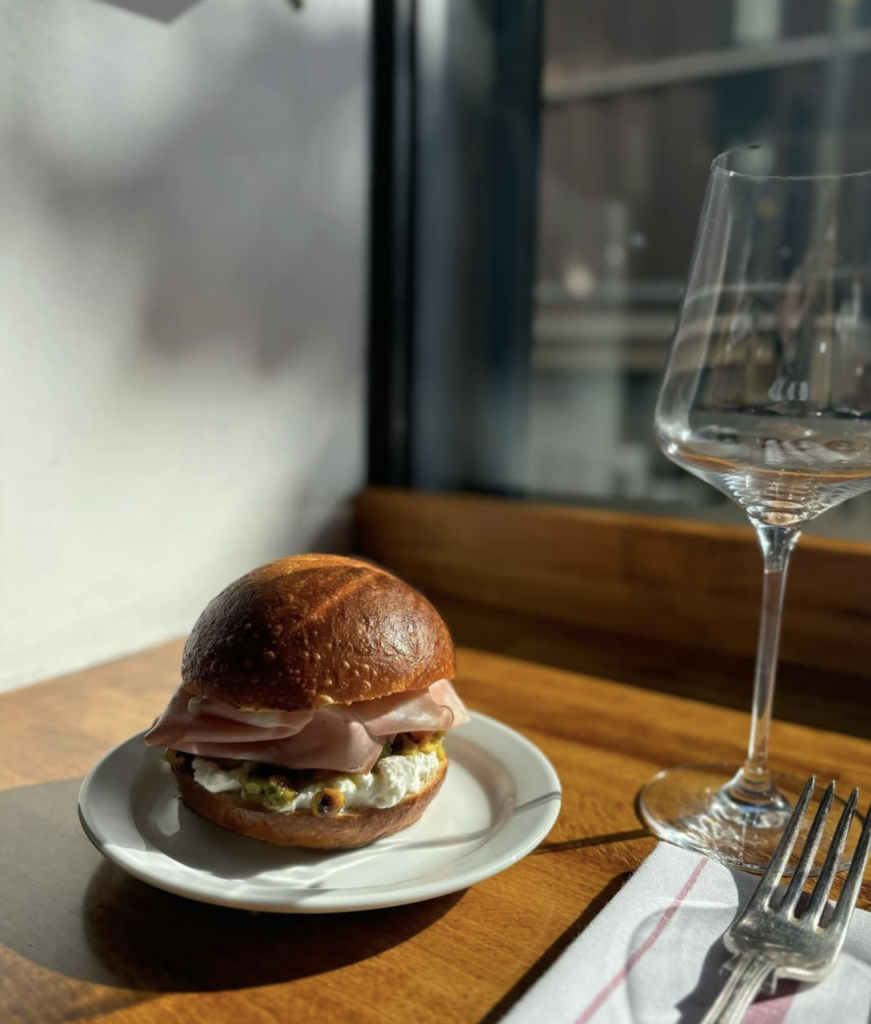
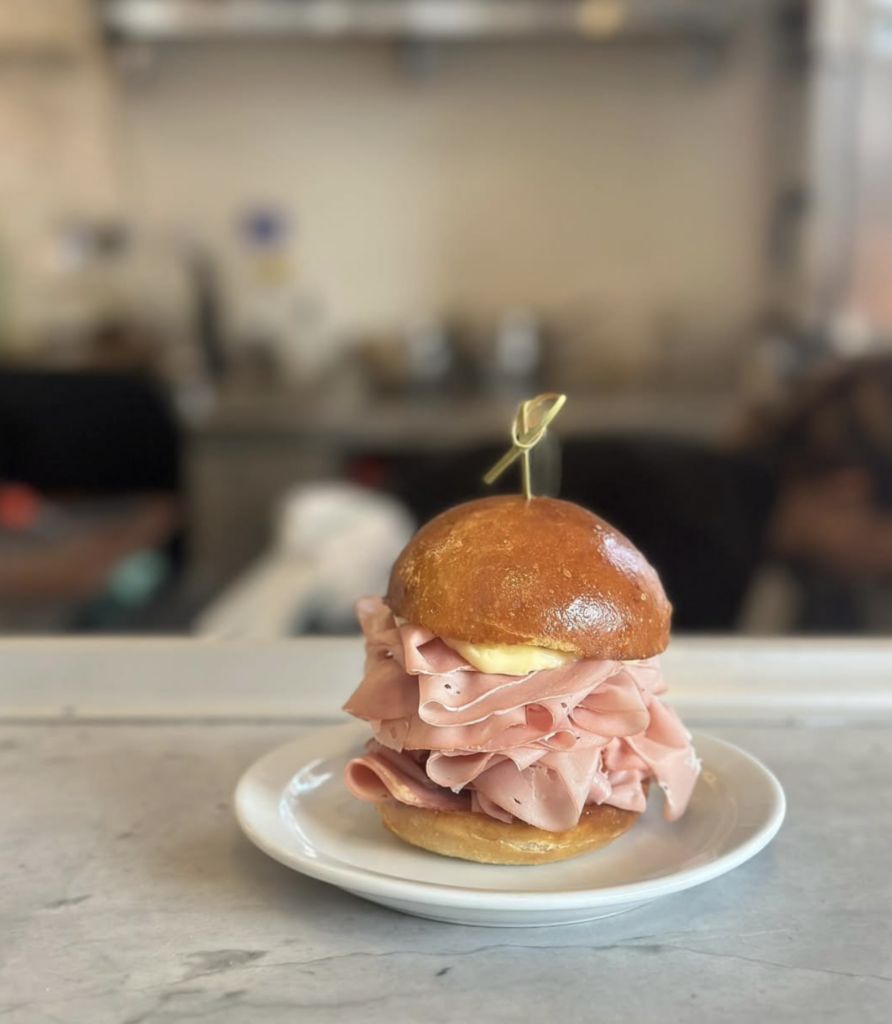
For lunchtime value, the Express Lunch is hard to beat. The current iteration is a PLT (pancetta, lettuce and tomato in a milk bun) with a bottle of Peroni. Before that, a mortadella and butter panino; a butter-fried milk bun sandwiching layer upon layer of cured pork and salted butter, with a glass of Lambrusco for £15. It’s stunning.
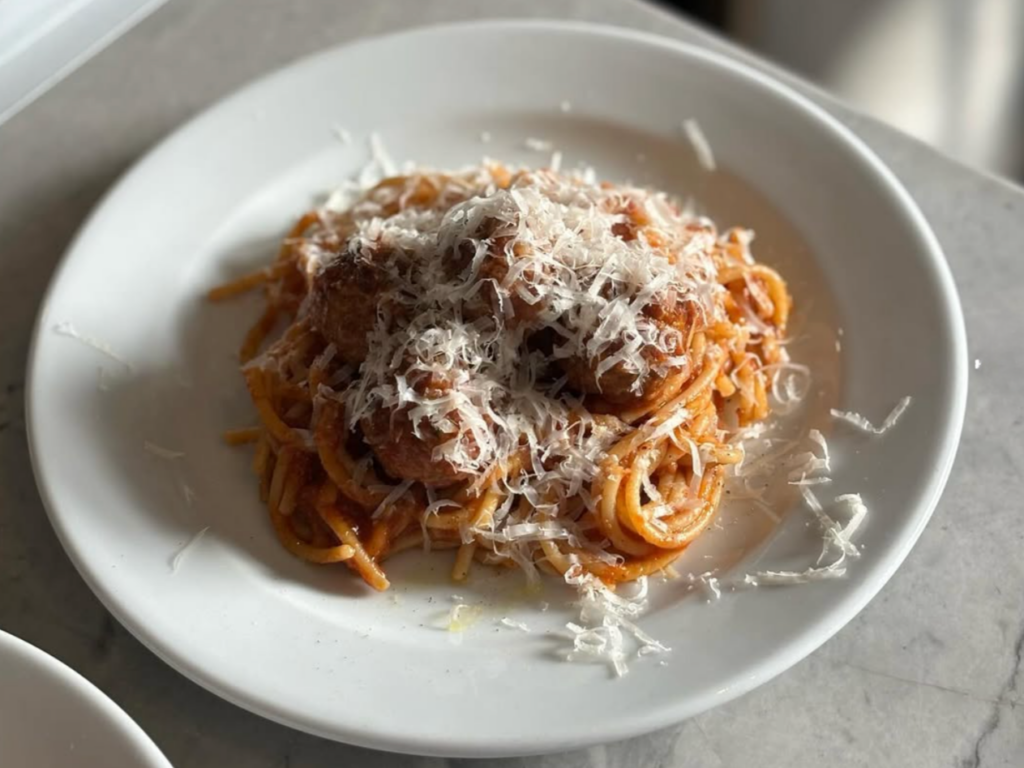
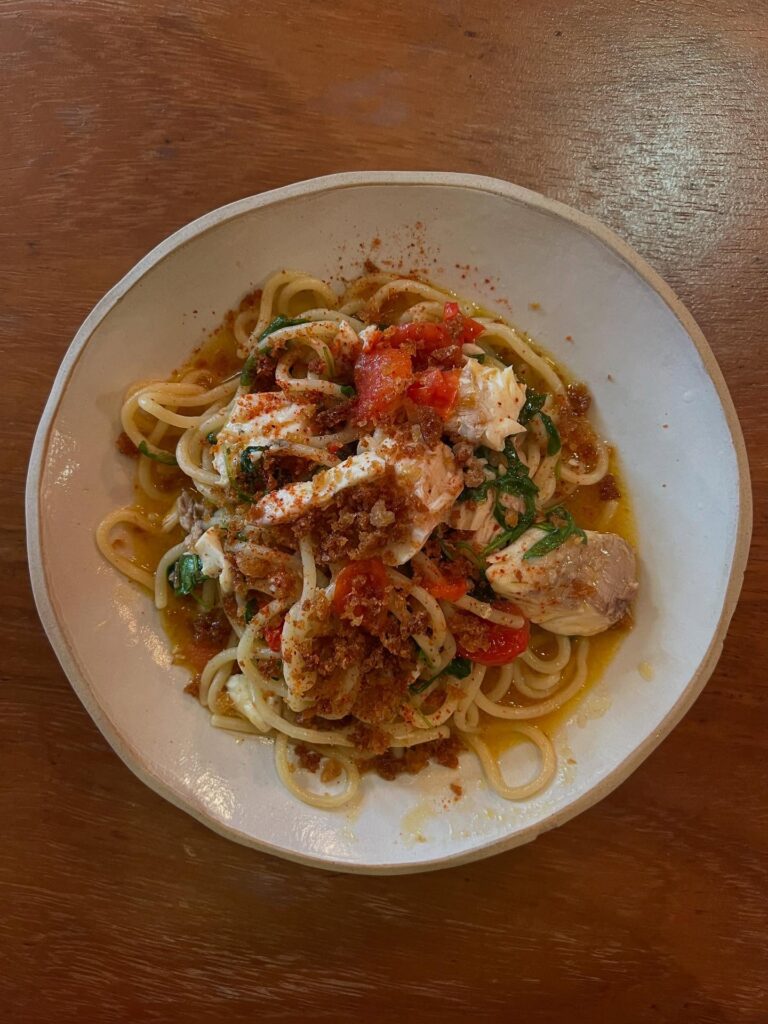
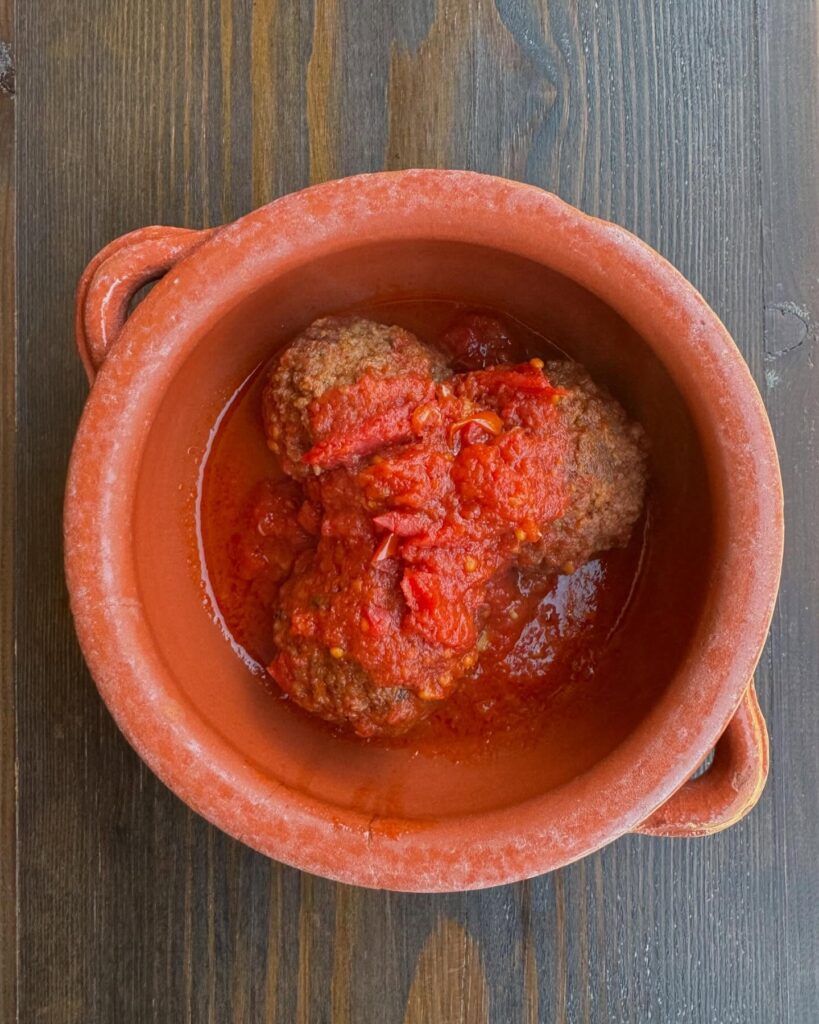
The offering rotates, though, and has previously featured veal and pork meatballs done in the Italian American style, red sauce piled on top of spaghetti, accompanied by a glass of wine, beer or soft drink. Whichever version you catch, it might just be the best deal in central London. Or, come to think of it, the country. It’s served from midday through to 2:15. There’s also a broader set lunch menu, priced at £27 for three courses, that changes weekly and is well worth a look.
Don’t sleep on the other sandwiches, either. Bramham is a connoisseur of the well-judged sarnie, and at Quality Wines they appear seasonally and sell out fast, giving them a real air of exclusivity which is partly genius marketing, but partly borne of the necessity of a truly small kitchen space.
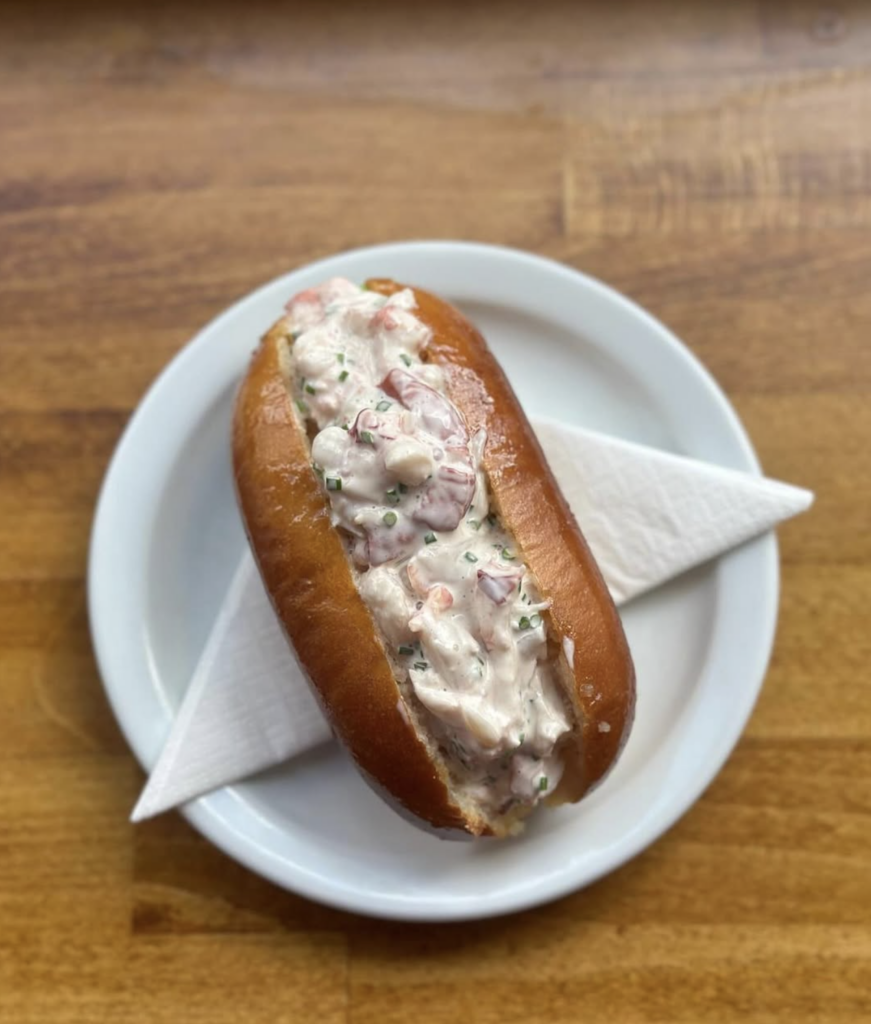
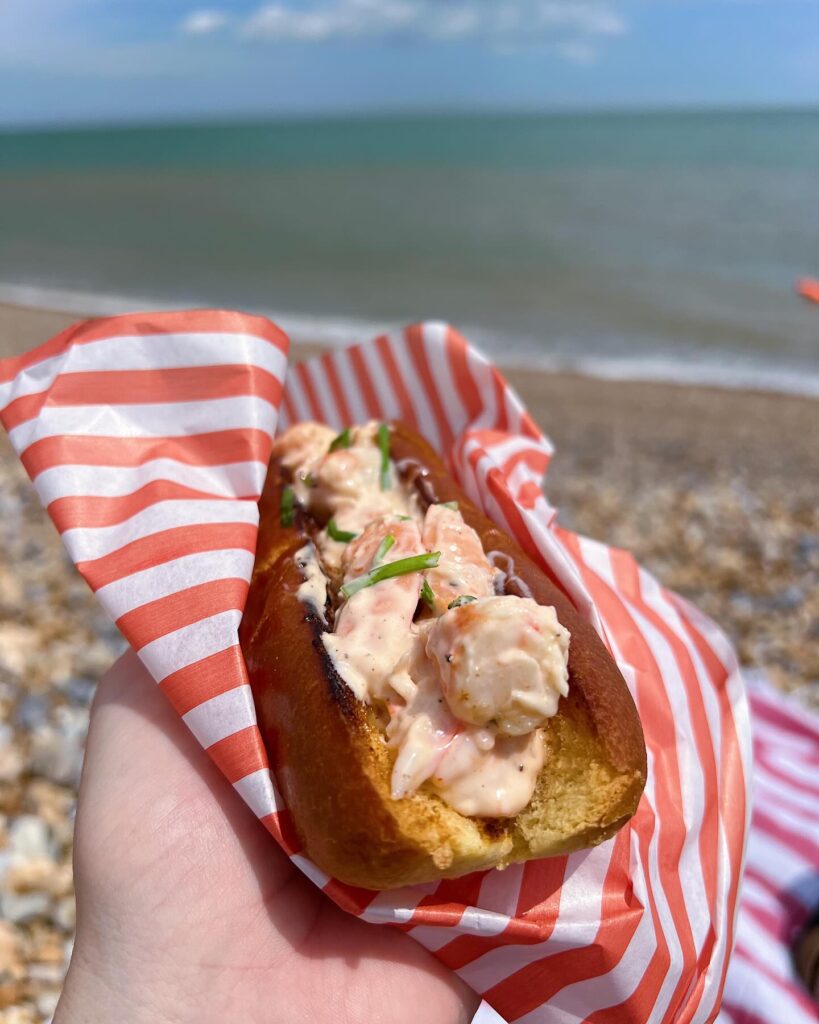
The lobster roll, in which steamed lobster meat is served pleasingly chunky, bound together by a piquant champagne mayonnaise and served in a milk roll, is legendary (at least among the folk I follow on Insta). Only 20 are served a night, with that number diminishing fast as diners order a second after a single bite of their first. They’re that good.
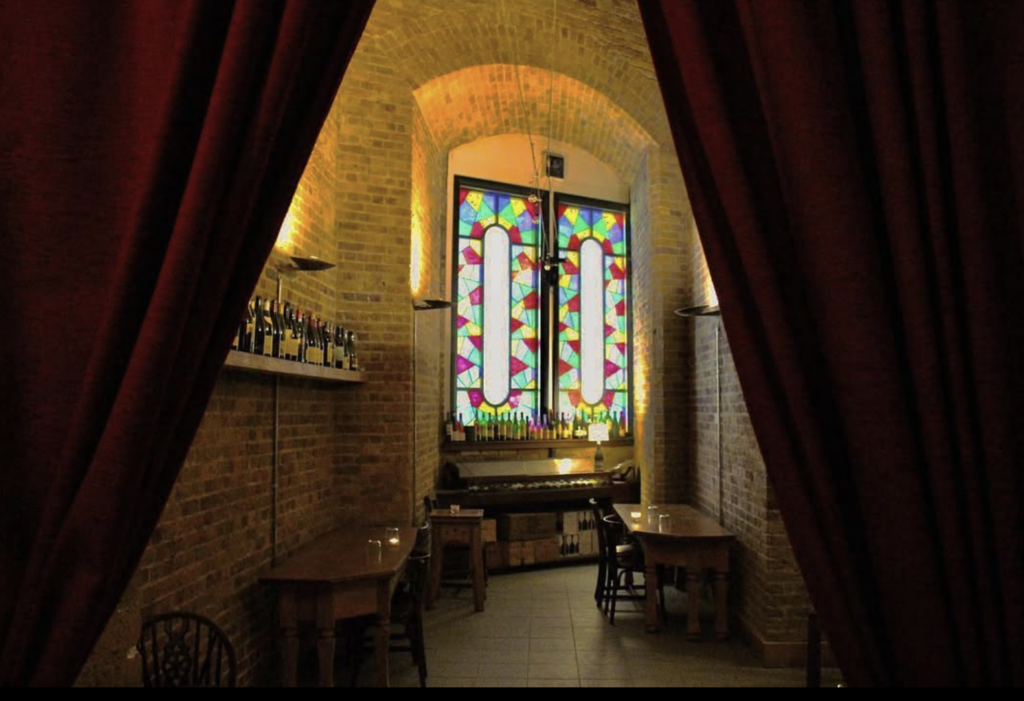
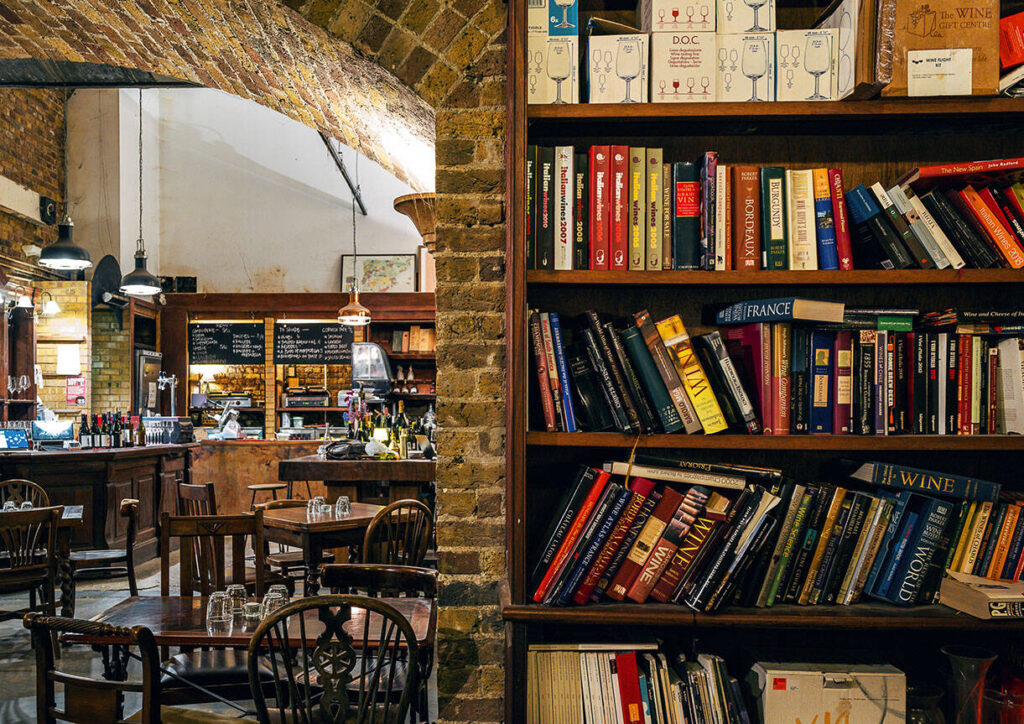
The wine selection, curated by Marcos Spyrou and Darragh Monnin, balances established producers with exciting newcomers, focusing on smaller, sustainable vineyards. Bottles line the walls from floor to ceiling, candles flicker and cast shadows on intimate corners, all creating an atmosphere that feels both special and casual simultaneously. Staff share their knowledge with genuine enthusiasm rather than snobbery, happy to guide you to something new or pour a taste if you’re unsure.
That theme continues if you’re perched at the counter looking over the open kitchen. We’ve come away from several meals here with photos and screenshots of the restaurant’s recipe folder (caponata, portokalopita, their pastis butter) provided by Bramham. Needless to say, we’ve never quite done them justice at home.
Despite its growing reputation among those in the know, Quality Wines maintains a disarming lack of pretension, feeling more like a friend’s living room than a hotspot restaurant. It’s one of Farringdon’s – and London’s – very best restaurants.
Ideal for nose-to-tail British cuisine and the famous bone marrow salad…
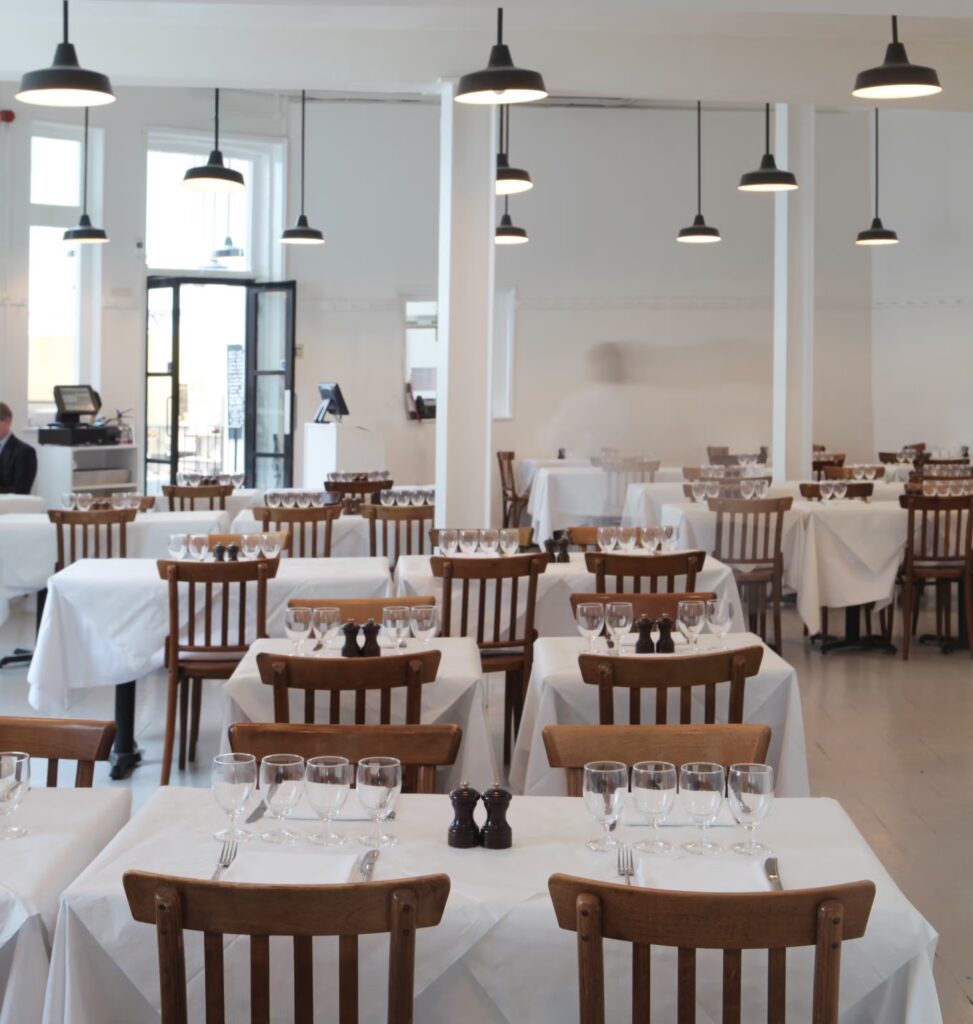
The stark white dining room of St. John, housed in a former smokehouse near Smithfield Market, speaks volumes about its philosophy even if you didn’t know the history and ethos of this storied restaurant – here, it’s all about the food.
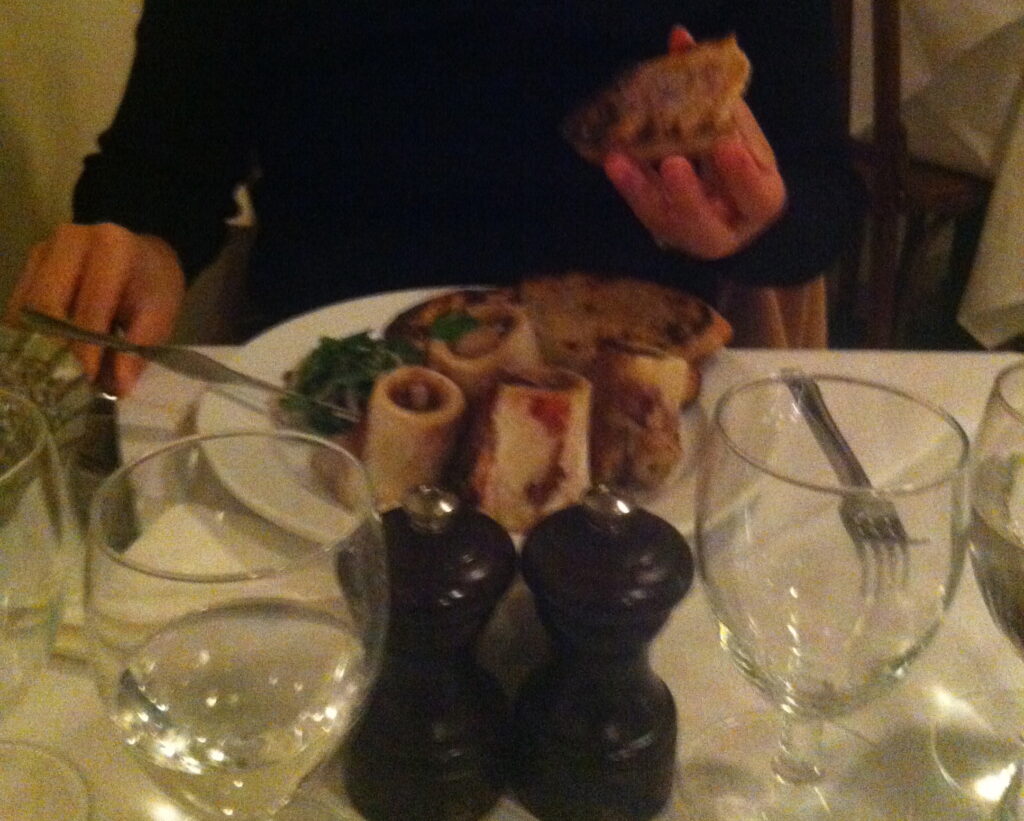
Their emblematic bone marrow and parsley salad – a hunk of roasted marrow with sourdough toast, a parsley salad and, that’s about it – remains a pilgrimage-worthy dish, but from a crowd pleasing menu, it’s certainly not the only highlight. The daily-changing menu features everything from devilled kidneys to seasonal game, with each dish showcasing Henderson’s uncanny ability to coax extraordinary flavour from seemingly ordinary, often forgotten ingredients.
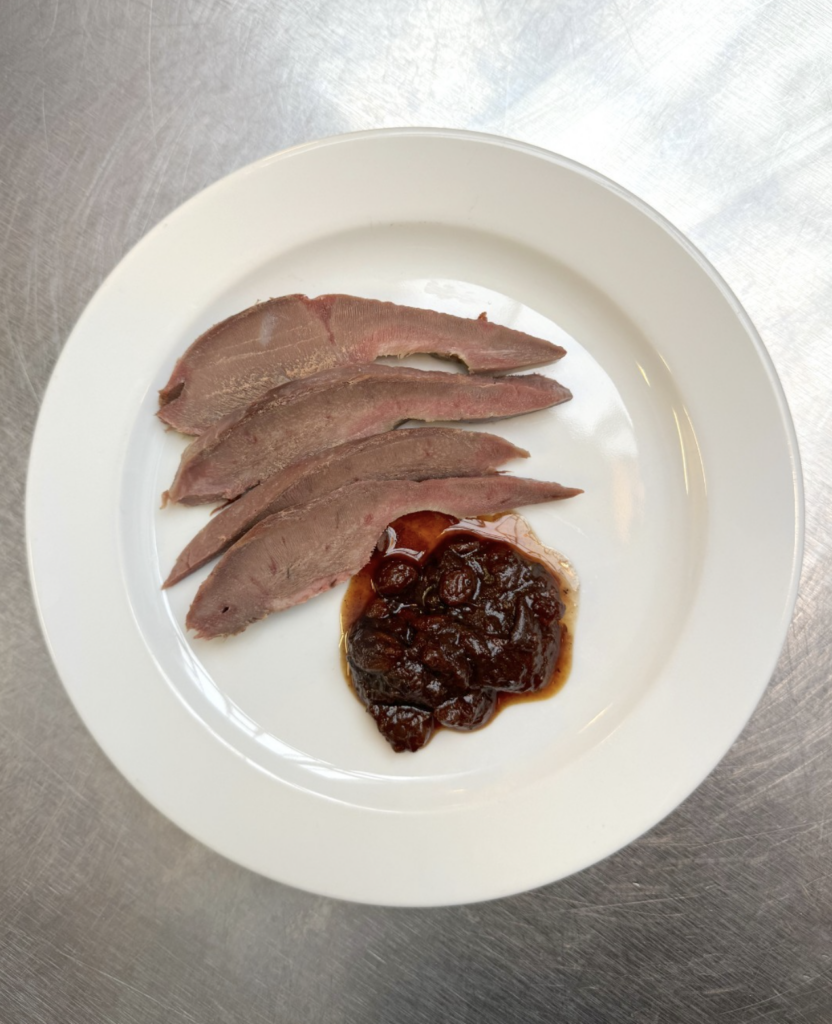
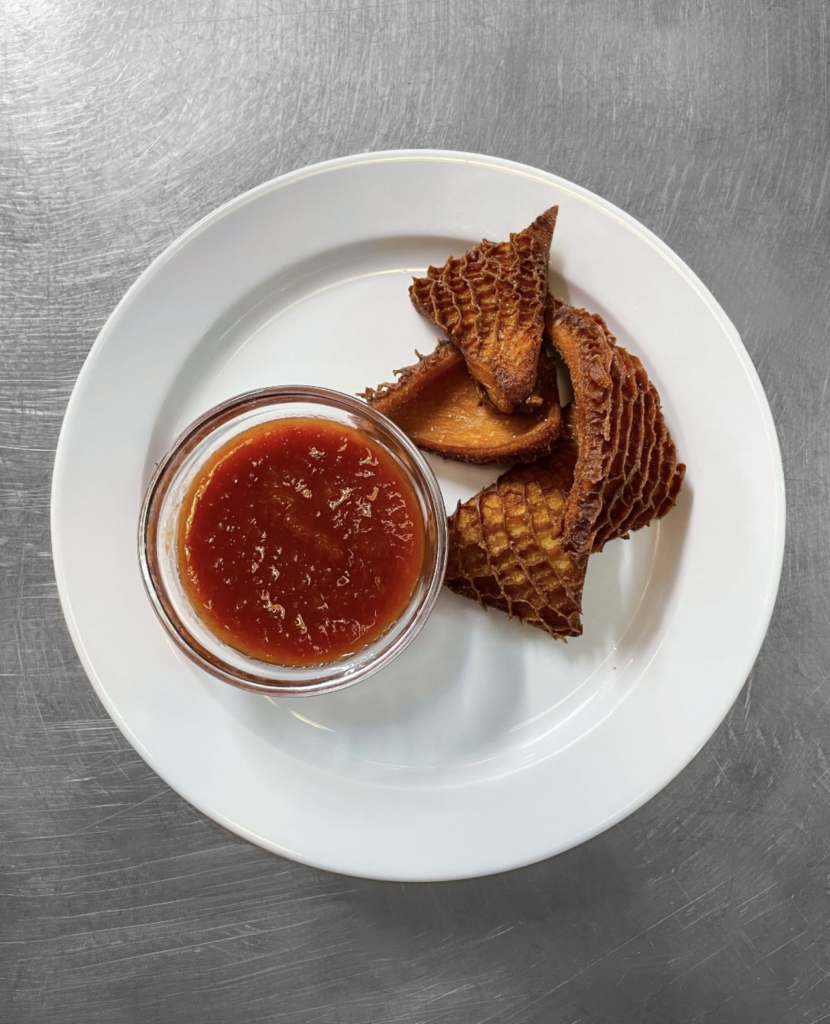
One of the best dishes we’ve had here in recent times was also, perhaps, the most simple; slices of pig tongue that had been brined then braised, served sliced thick with a spiced chutney of Bramley apple, the fruit chosen for its assertive tartness. A wise choice, indeed. Perhaps even better was the deep-fried tripe, arriving like little sheets of honeycomb that had been taken a touch too far, all bronzed and crunchy, bitter and funky. Apparently, they come from the only offal stall left at nearby Smithfield Market – long may that stall remain open.
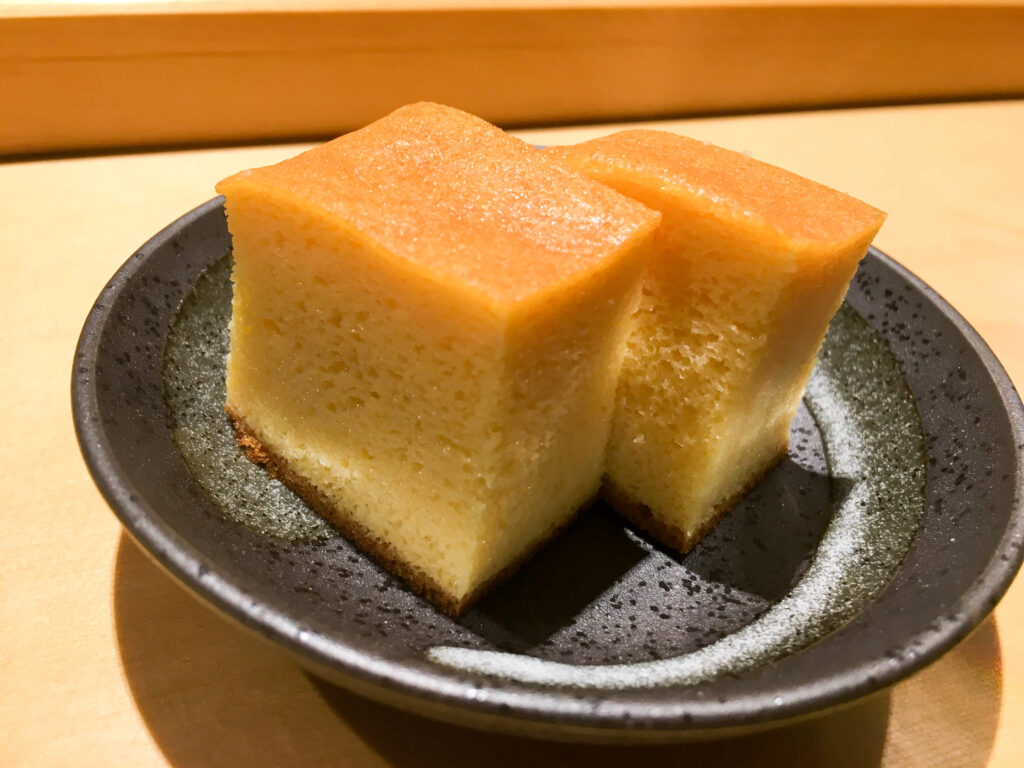
Anyway, if you don’t end with the madeleines served warmed from the oven – allow for 15 minutes – then you should hang your head in shame as you exit. Or, were you just bowing gently as a sign of respect for a gastronomic institution?
Come back inside and have a drink before you go. The exclusively French wine list includes their own label wines by the glass (£8.75), poured by staff who know their stuff. Just prepare yourself for the notoriously challenging acoustics – this might be one of the loudest fine dining experiences in town, but that seems a small price to pay for what many consider the world’s most influential restaurant of the past three decades.
Ideal for unpretentious, hearty French cuisine that transports you to Lyon…
Chef Henry Harris knows a thing or two about gutsy, hearty, balls-to-the-rose-blush-wall French bistros, having earned his reputation at Knightsbridge’s Bibendum and later at his own acclaimed Racine in South Kensington.
After several years away from the London restaurant scene, his return with Bouchon Racine in 2022 was greeted with enthusiasm by those who had missed showing off their exquisite, unpretentious taste via his perfectly judged Gallic cooking.
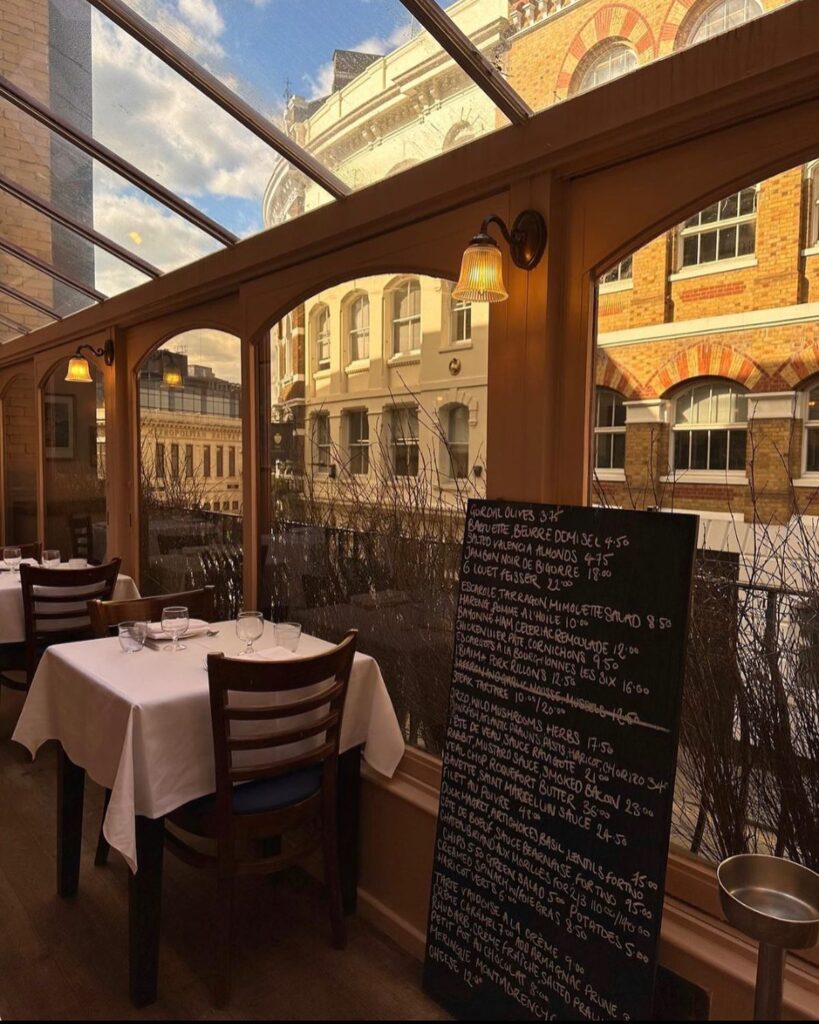
To be fair, it showed up fully formed in Farringdon, perched above The Three Compasses pub, with Harris recreating a slice of Lyon with an air of authenticity that comes from decades of myopic dedication to French culinary traditions.
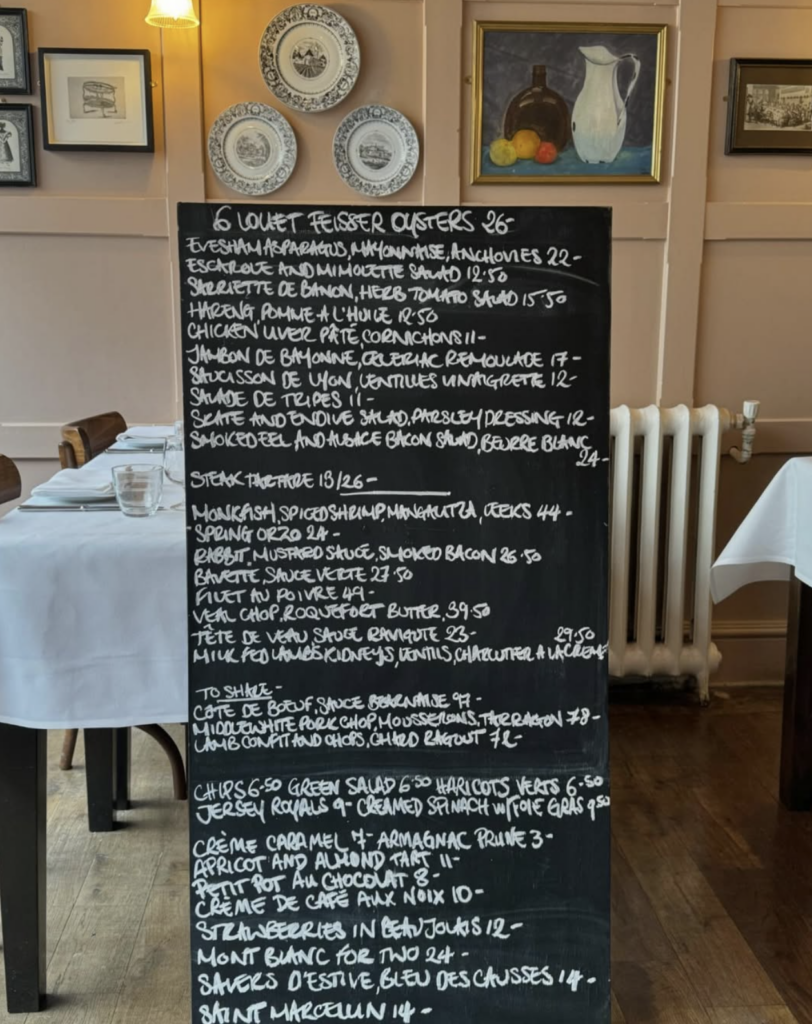
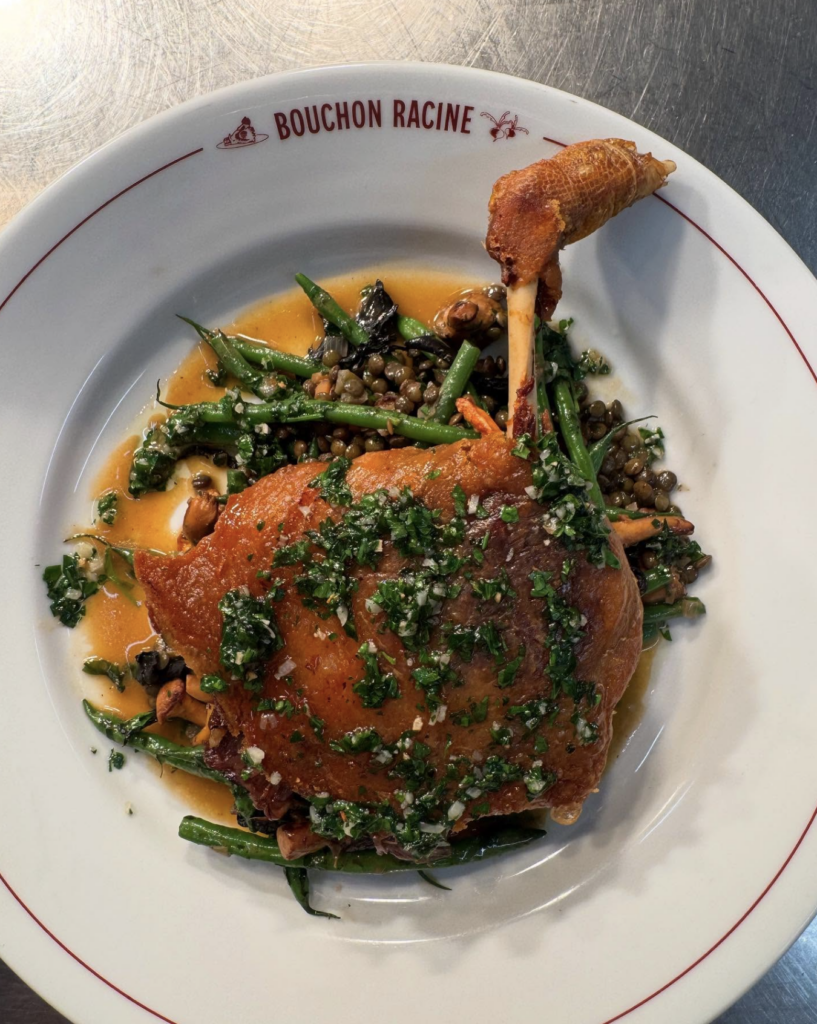
The daily-changing blackboard menu showcases Harris’s talents to the full in a boisterous room that encourages lingering and, frankly, more boozing – perhaps over cured ham from heritage breed black pigs, a perfectly executed grilled veal chop with roquefort butter, or rabbit in mustard sauce. Whichever way you play it, you’ll find a celebration of French bouchon classics without unnecessary ‘elevation’ or ‘refinement’, focusing instead on quality ingredients and precise technique.
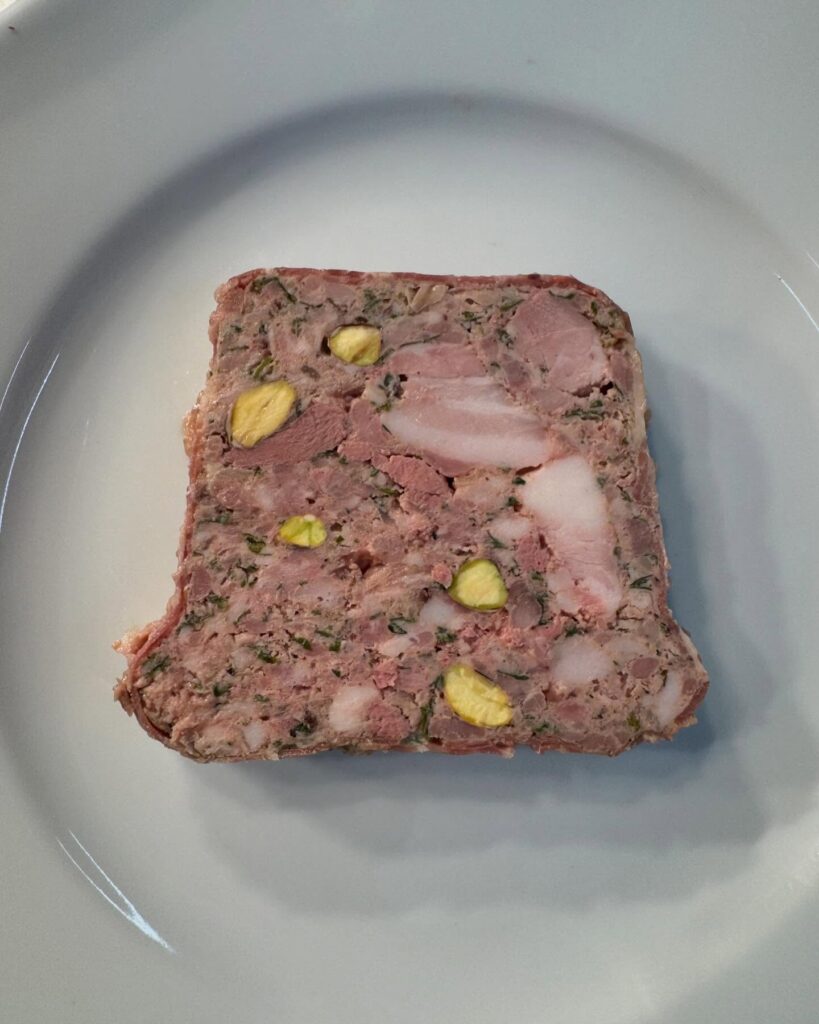
Like many restaurants in the area sharing proximity to Smithfield, nose-to-tail is alive and well at Bouchon Racine. You’ll sometimes find suckling pig on the menu, or Rognonde veau sauce Madère – a simple dish of veal kidney, Madeira cream sauce and pomme puree. Don’t miss their country pork pâté either, a technically precise but simultaneously rugged piece of work. Ground pigs liver and belly are dotted with little cubes of fat, giving way to a gorgeous juicy texture and a rough mosaic pattern in each slice.
Wines here are exclusively French, thoughtfully selected to match the food, with plenty available by the glass for under a tenner. In a dining landscape increasingly dominated by restaurant groups and corporations, Bouchon Racine feels refreshingly independent – a passion project from a chef who understands that sometimes, the old ways are the best ways.
Ideal for sophisticated ‘Britalian’ cuisine in one of London’s most beautiful dining rooms…
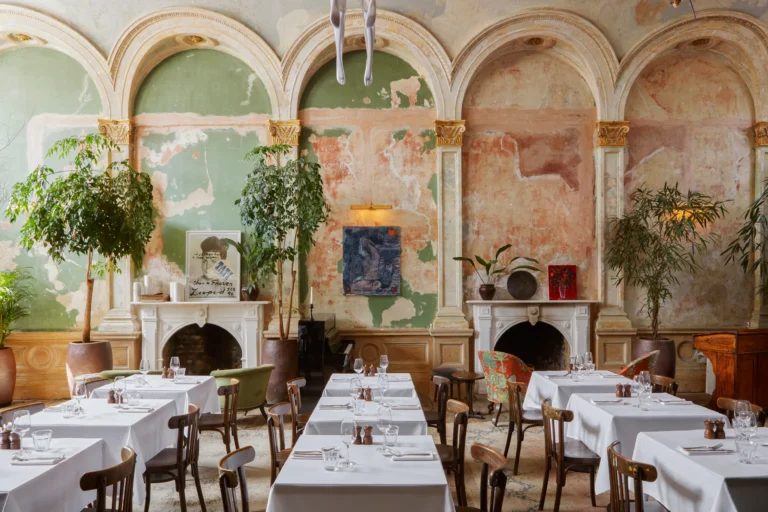
Luca’s elegant green-fronted exterior on St John Street sets the tone for what awaits inside – a world of understated luxury with copper-topped bars, bottle-green banquettes and a stunning courtyard that transports you straight to the rarefied climes of Lombardy.
This Michelin-starred restaurant from the team behind The Clove Club (Daniel Willis, Johnny Smith, and chef Isaac McHale) has mastered what they – and, to be fair, lots of other folk, increasingly – call ‘Britalian’ cooking. That is, British produce prepared with Italian techniques. At Luca, under the day-to-day guidance of head chef Robert Chambers, the kitchen turns out consistently refined yet approachable dishes that have earned the restaurant its stellar reputation.
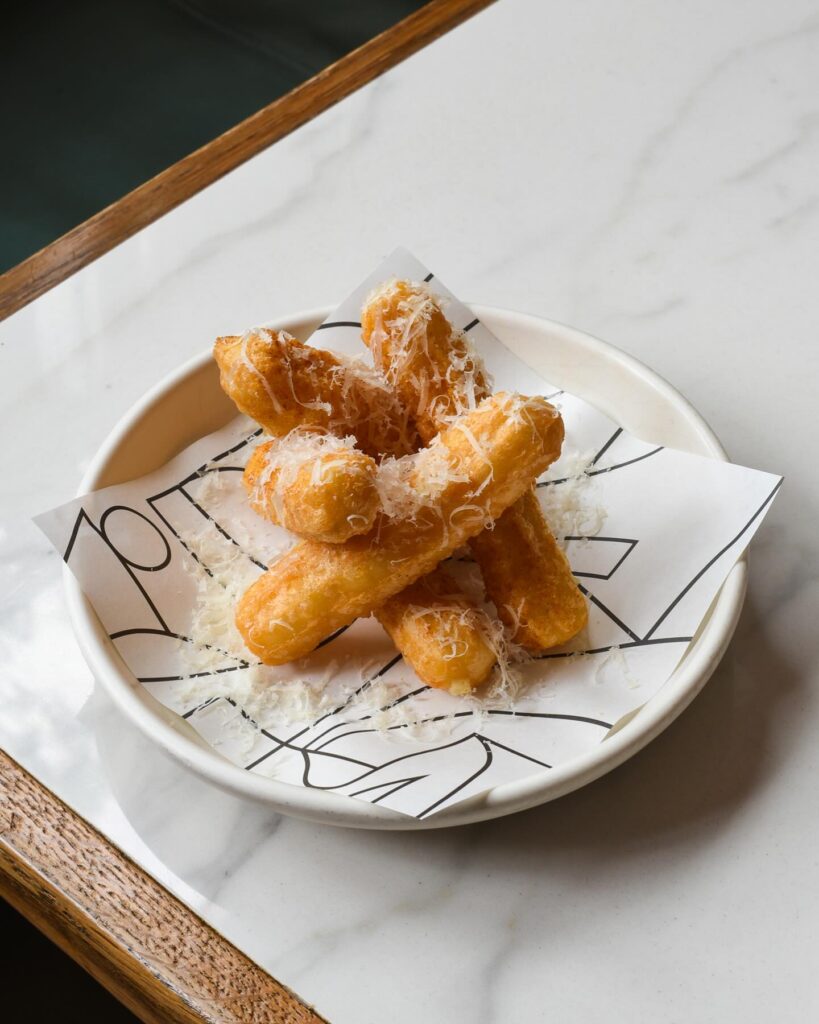
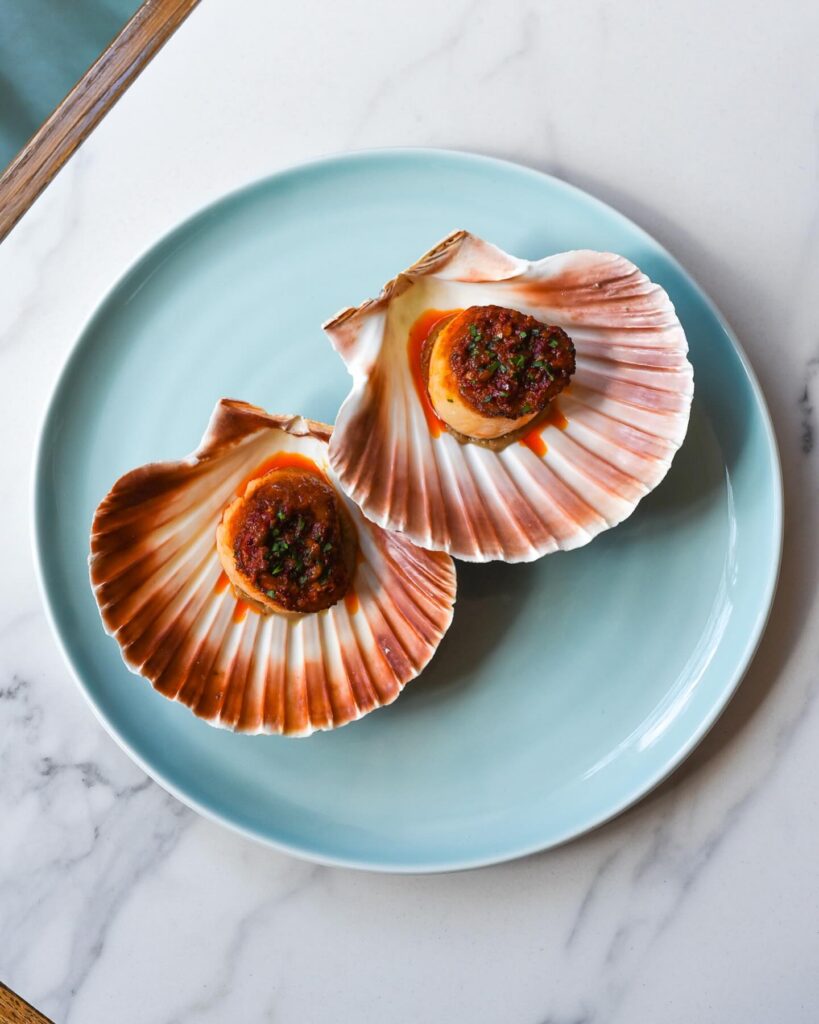
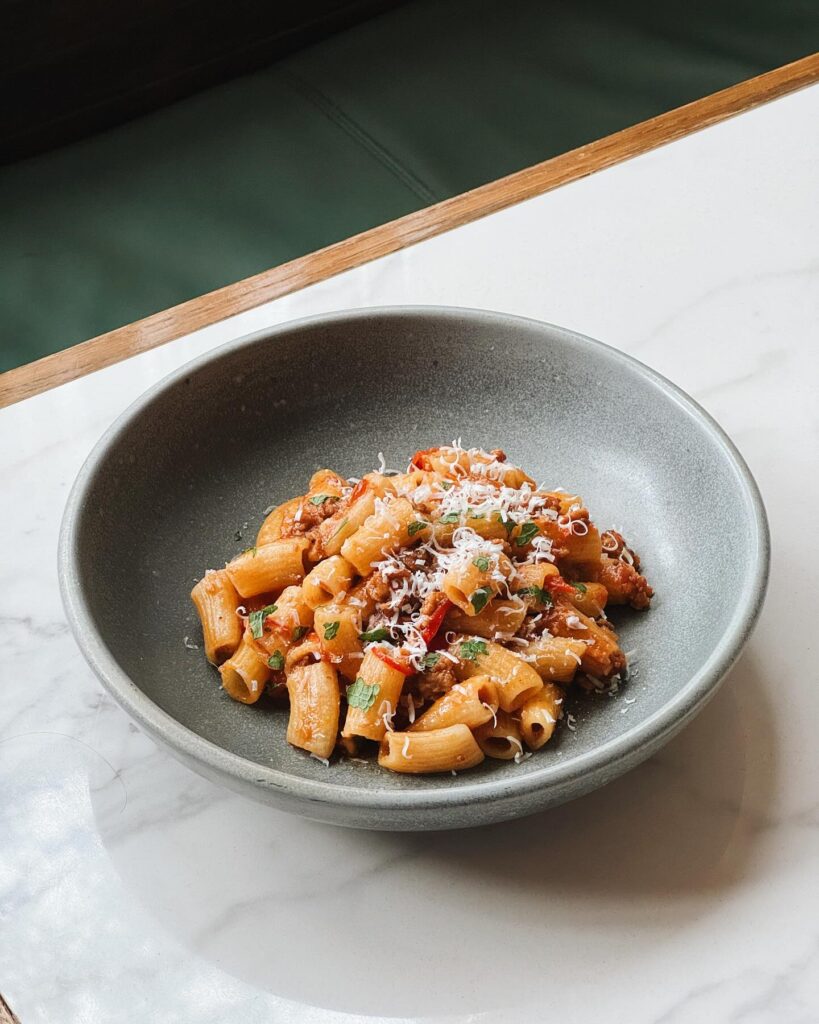
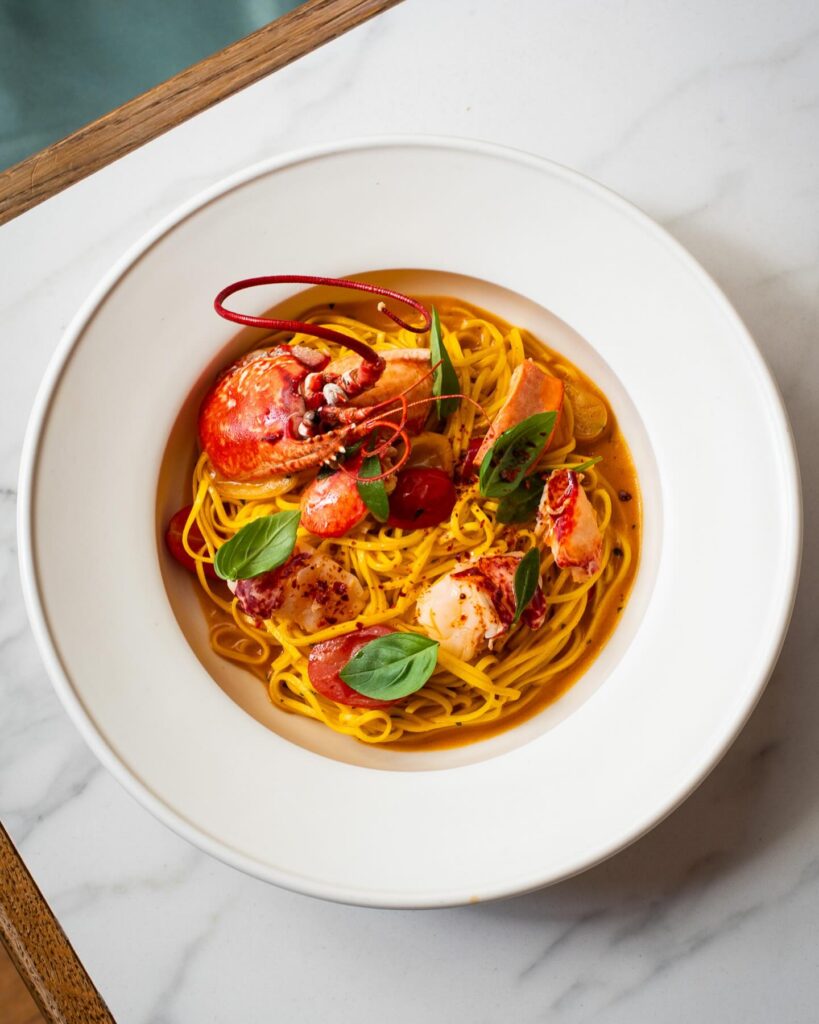
Their legendary Parmesan fries – crisp, salty morsels that have developed a cult following – are the perfect way to start your meal. Follow with another mainstay dish and menu stand-out; Roast orkney scallops with Jerusalem artichoke and ‘nduja, before getting into the exemplary, oh-so satisfying pasta. Both Cornish crab linguine and agnolotti with rich game ragu have hit the spot recently.
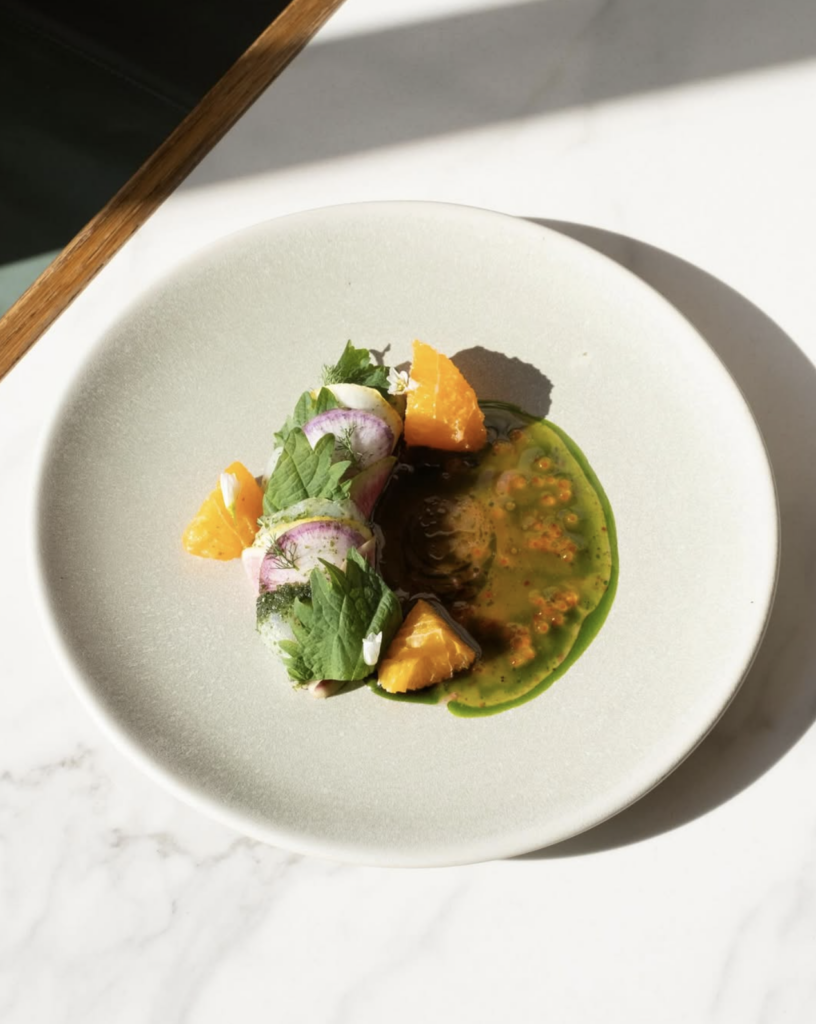
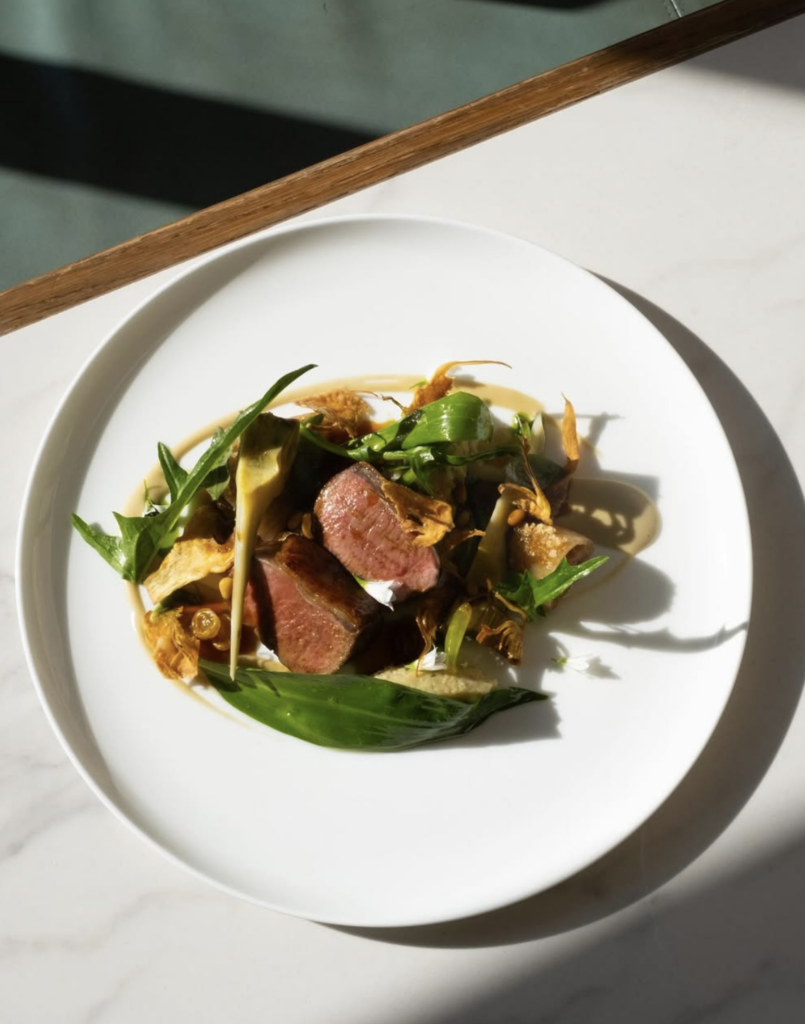
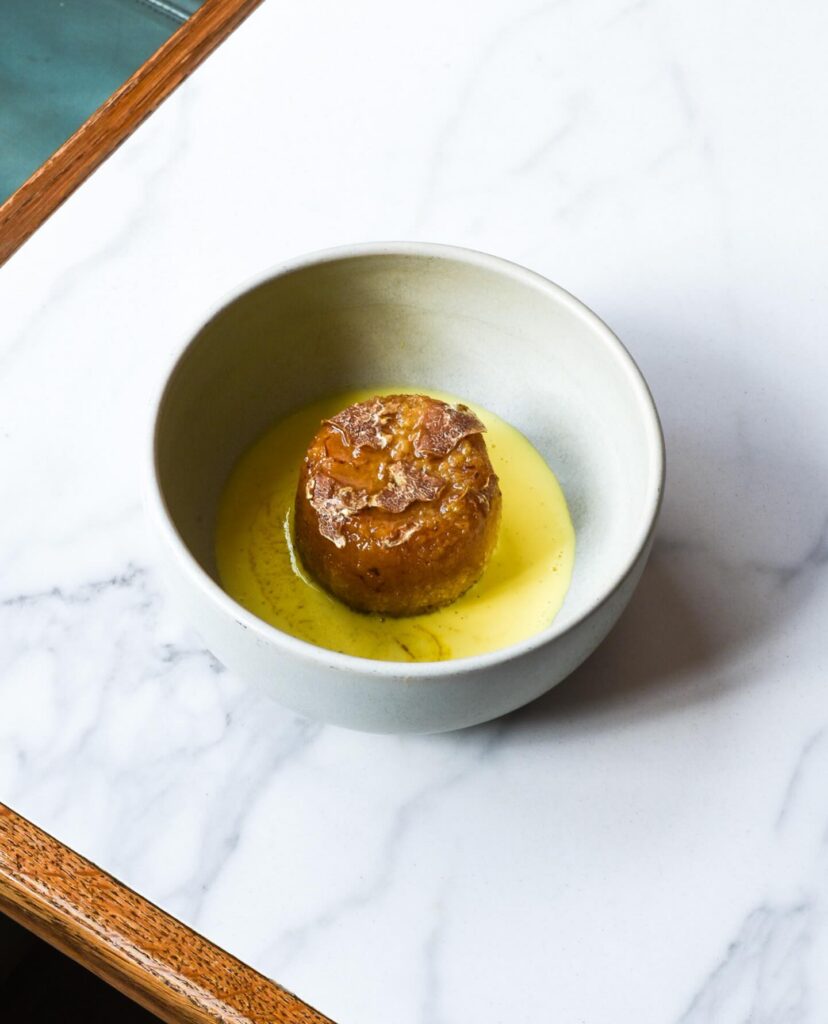
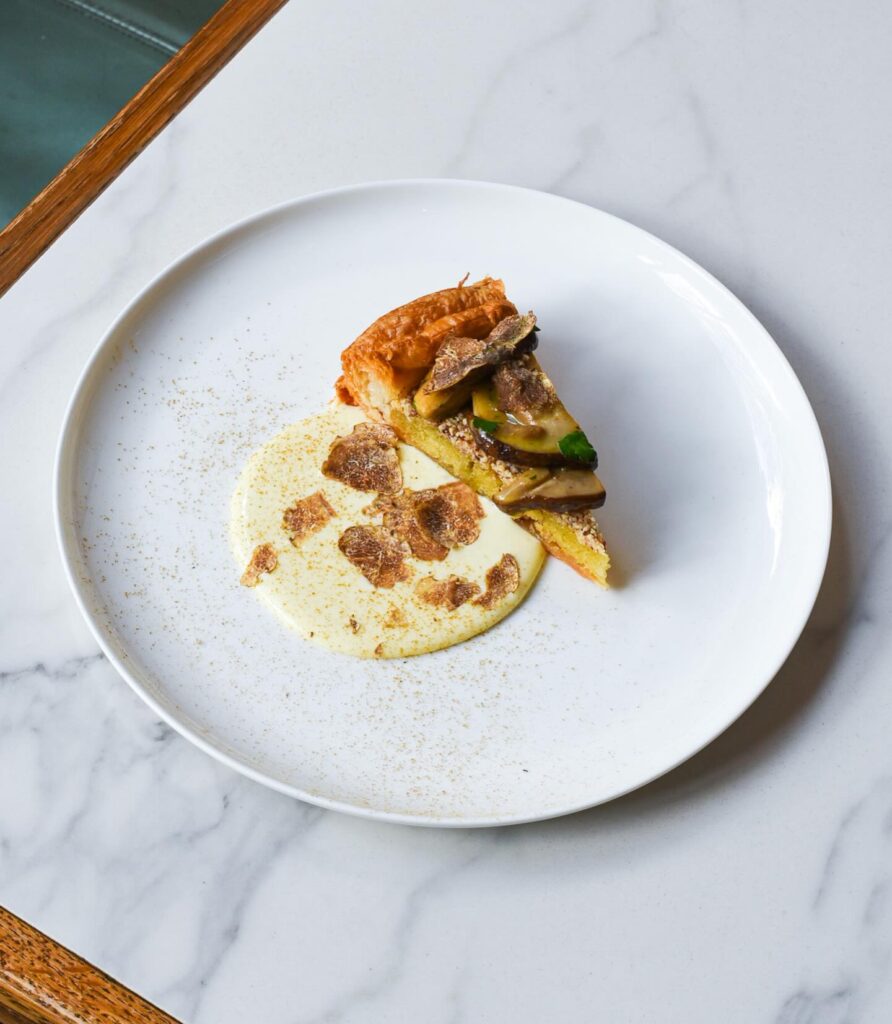
Whichever way you play it, you’ll find a menu that’s highly seasonal, shifting with the calendar to showcase the finest ingredients at their peak. Come autumn, the kitchen goes truffle crazy with a dedicated white truffle menu featuring creative dishes like steamed white alba truffle and honey sponge pudding with mascarpone custard. Late winter into spring brings delicate plates of cured brill with radishes, blood orange, wild garlic and cedro, and as spring fully arrives, you’ll find Hebridean lamb accompanied by spiky artichoke, bagna cauda, pine nuts and puntarelle. The latter dish is just around the corner, we hope.
The primarily Italian wine list offers interesting diversions for the adventurous, with staff eager to guide you through the selections (I guess they would be, when the cheapest bottle is £65, a 2024 Lugana Ca’Lojera, no less). Luca’s not cheap, it’s fair to say. At £200 or so per person for the full experience, Luca is positively, prohibitively expensive, but the cooking’s unwavering commitment to quality somewhat justifies the price tag.
And if you can’t quite justify it, there is a cheaper set ‘bar express menu’, which sees two courses priced at £32, three at £38. Indeed, the different pockets of space within the restaurant offer a diversity of atmosphere – from that more casual bar area at the front to the intimate dining room at the back – making Luca suitable for numerous occasions, from important client dinners to romantic celebrations.
Ideal for an intimate omakase experience that rivals Tokyo’s finest…
Securing a seat at Sushi Tetsu requires military-grade planning and lightning-fast reflexes – bookings are released only at specific times and vanish within minutes, giving the Glasto T-dayers F5-related PTSD. Fuck that’s an ugly participle clause…
Anyway, this seven-seat sushi counter, deep down a tight Clerkenwell alley that feels so appropriate for the relative size of the operation, rewards the persistent with an omakase experience that rivals Tokyo’s finest. Or, that level just below Tokyo’s finest; ‘Tokyo’s second finest-tier’? Nah…
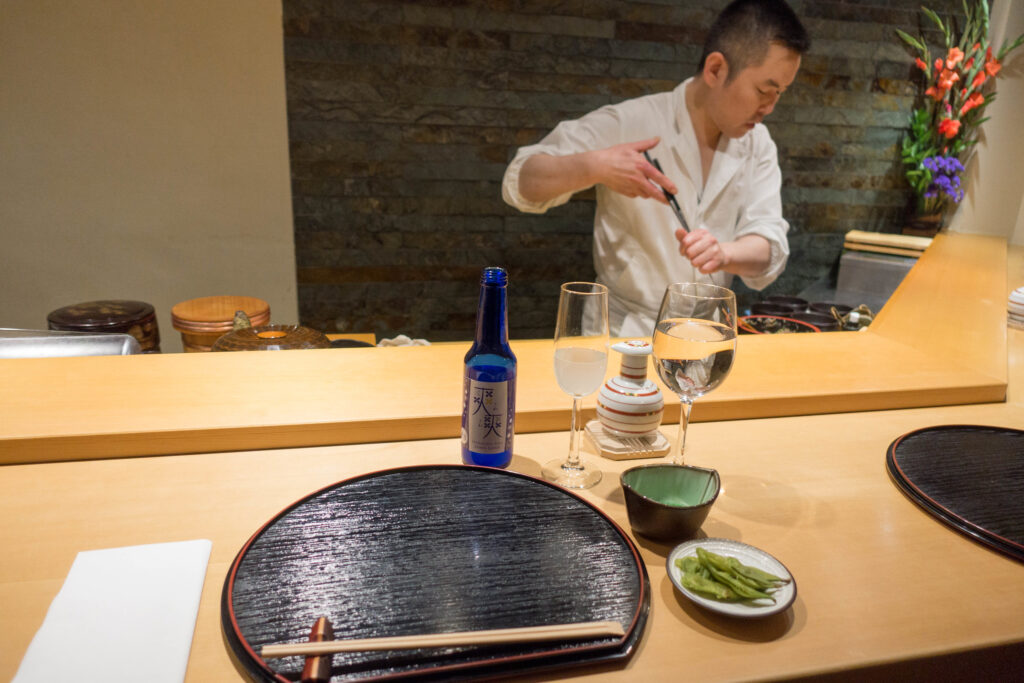
Chef Toru Takahashi crafts each piece moments before it reaches your plate, applying a precise amount of wasabi or soy to perfectly aged fish atop warm, seasoned rice. There’s no menu as such – just a progression of nigiri and sashimi, each more exquisite than the last, served directly across the counter by the chef himself.
The tiny space means you get to watch Takahashi-san’s masterful knife skills up close, as well as counting the eyelashes of your neighbouring diner (don’t do that, that’d be weird). His wife Harumi oversees the dining room with graceful efficiency, ensuring water glasses are never empty and sake cups are always full.
At around £190 for the full omakase and three hours of your time, this is special occasion territory (though not the kind of special occasion where you wear your best perfume, we should caution), but the craftsmanship, quality of ingredients and personal attention make it worth every penny. Saturday lunchtimes offer a slightly reduced price of £167, if that helps soften the blow.
Ideal for an otherworldly atmosphere and creative seasonal cooking…
Sessions Arts Club feels like stumbling upon a secret you can’t wait to share. That is, if the restaurant hadn’t been reviewed extensively just as COVID restrictions were lifting and people were absolutely delirious on the idea of escapism.
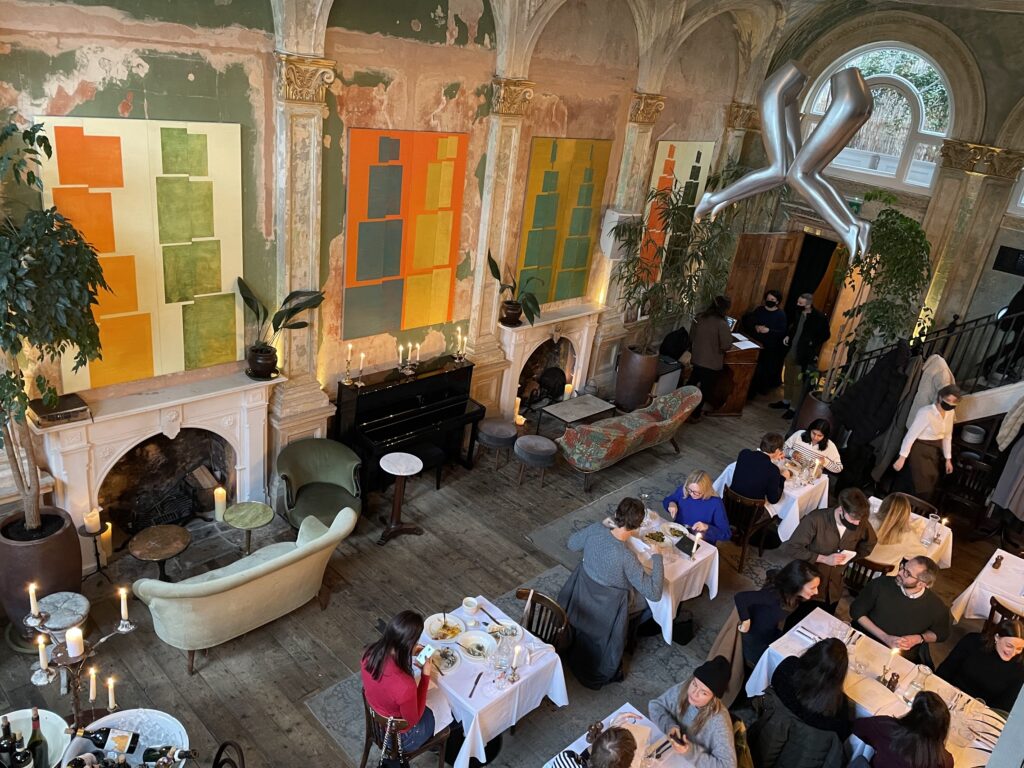
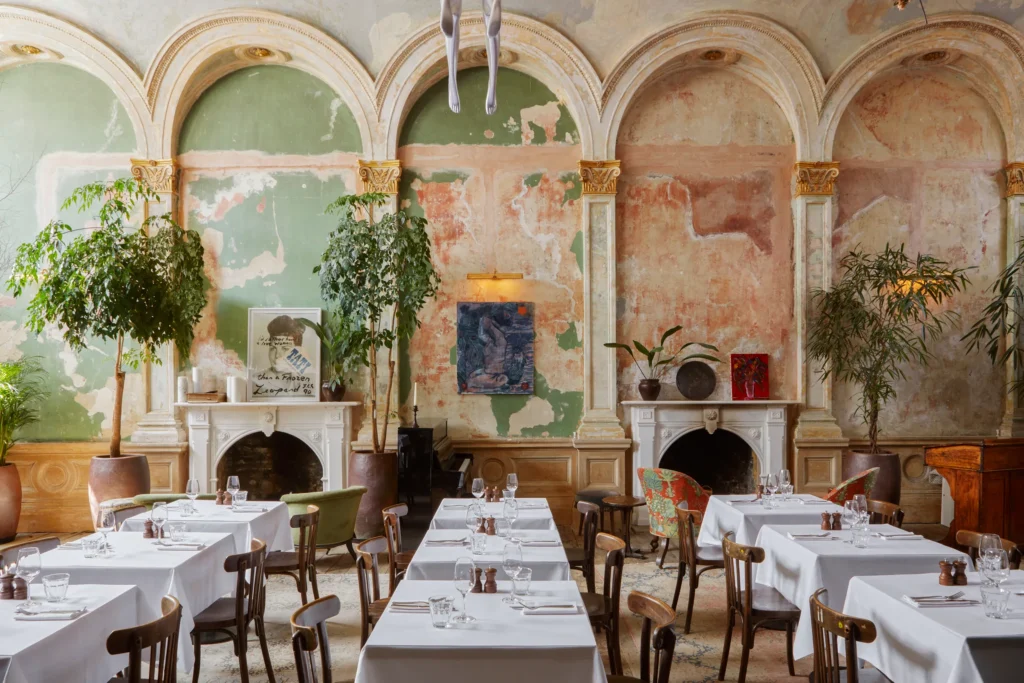
To be fair, it is a gorgeous dining room. Entering through a curtained doorway and ascending in a rickety brass lift, you emerge into a vast, soaring space with distressed walls, moody lighting and an undeniable sense of faded grandeur. No wonder it was so intoxicating as an antidote to months of being locked down.
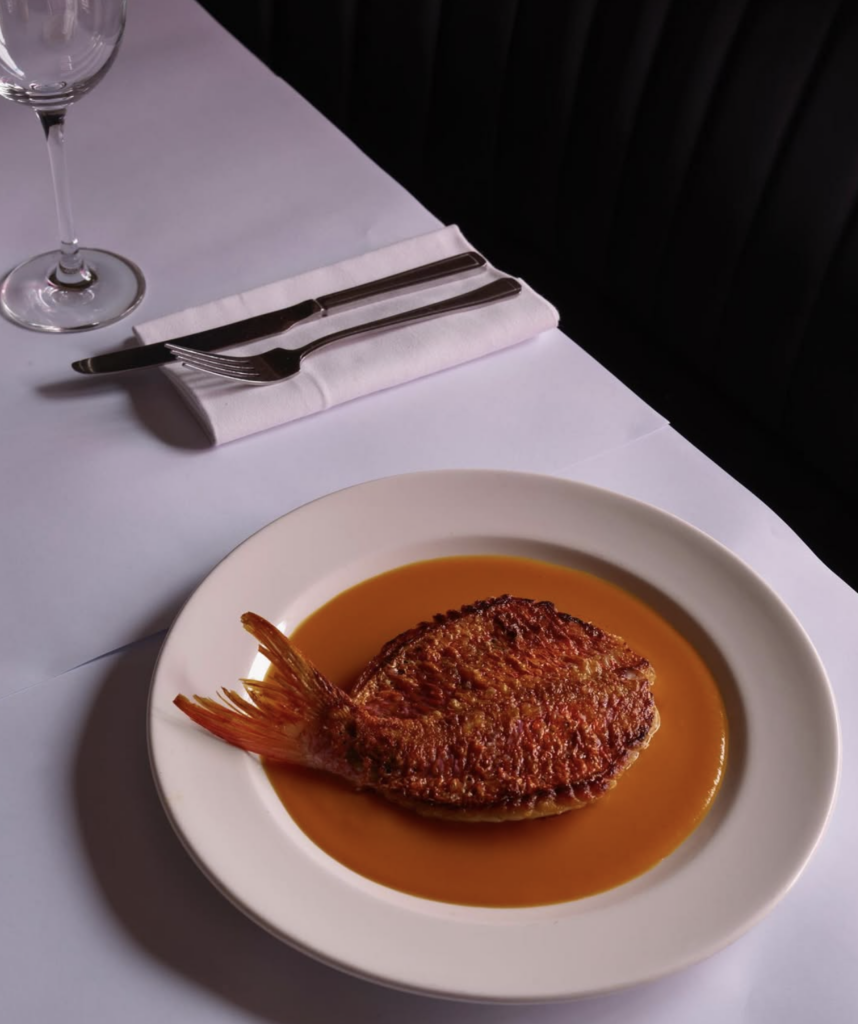
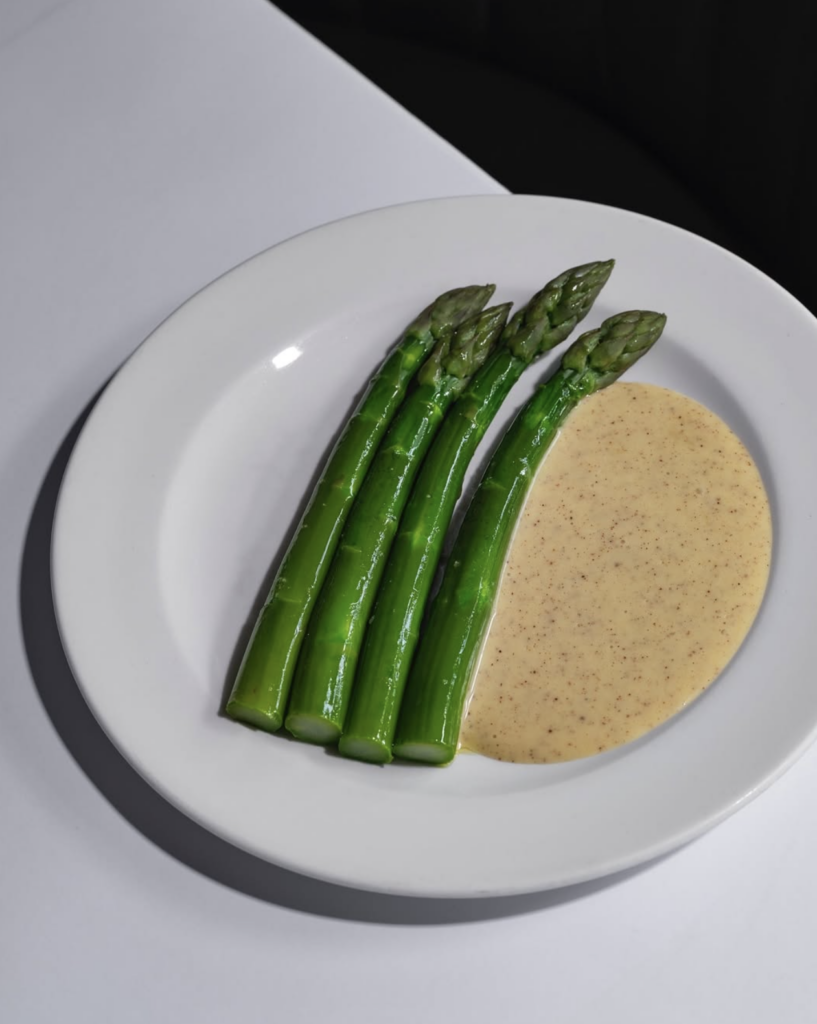
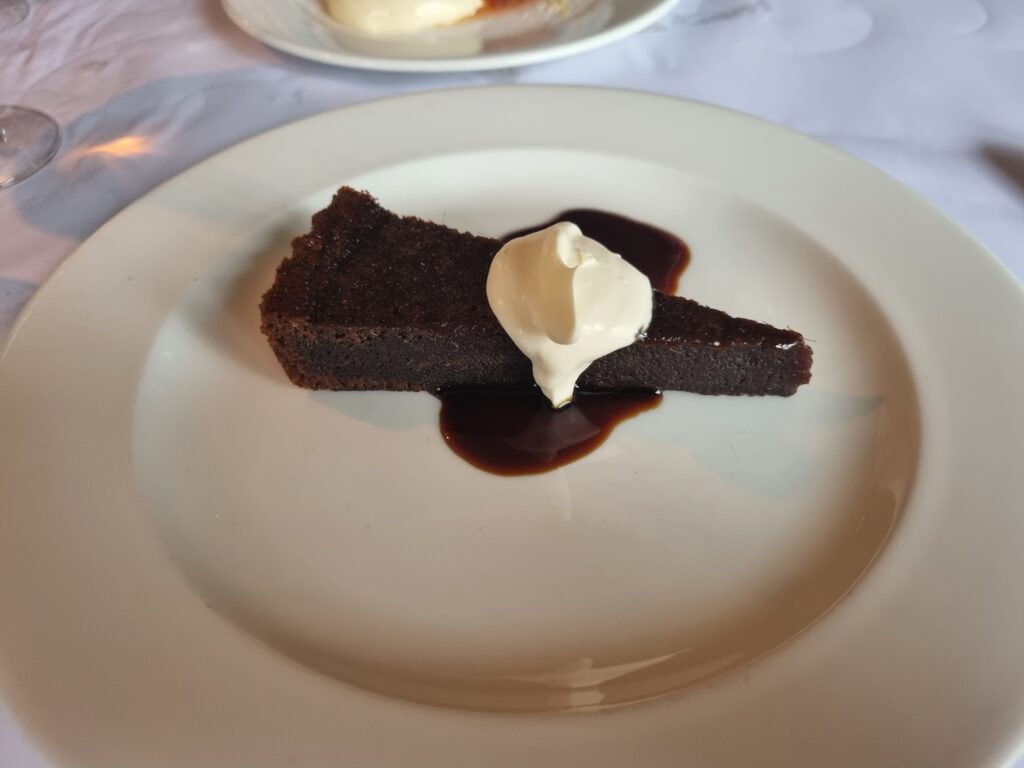
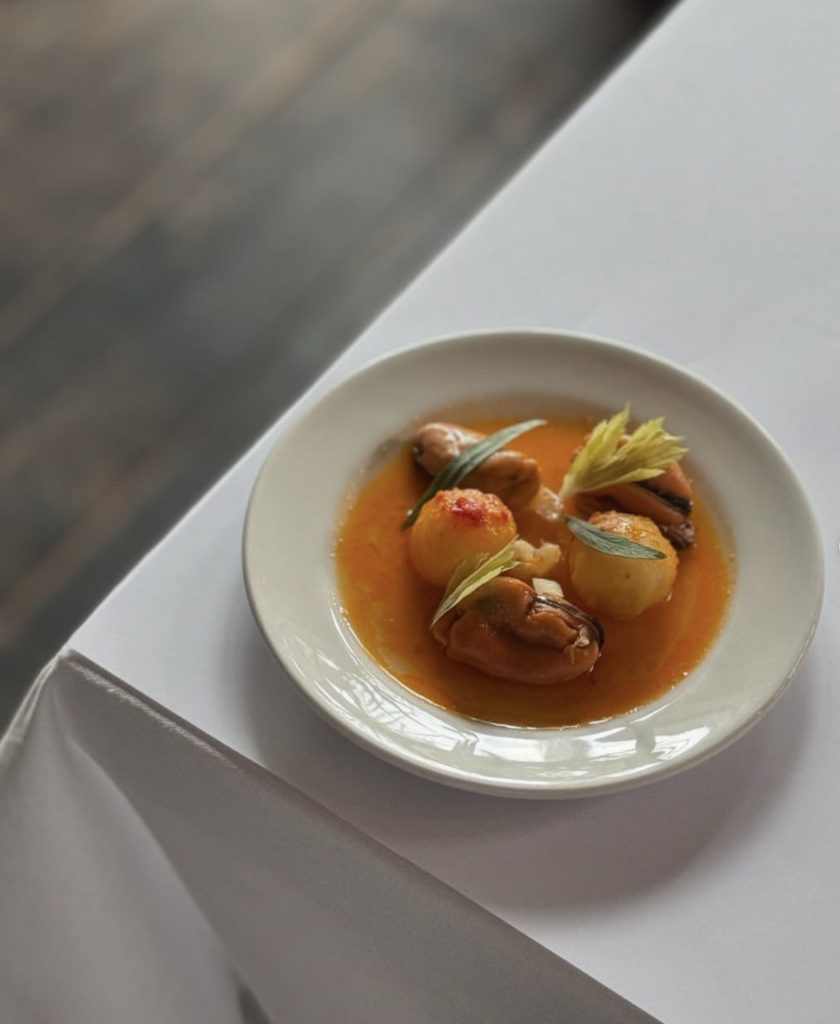
Things have changed a little since then, with chef Florence Knight – the heart and soul of the operation – moving on and former sous chef Abigail Hill stepping up. A spare, seasonal sensibility remains, with uncomplicated but thoughtful plates taking influence from British, French and Italian traditions. Asparagus with a pool of re-emulsified brown butter might share a table with a butterflied red mullet and a sauce of its liver, each dish showing restraint and a deep understanding of flavour. Indeed, the kitchen has a natural affinity with seafood – the fish dishes are always worth exploring, though it’s a damn shame the squid, tomato and calamarata dish is no longer on the menu. Desserts, too, are fabulous.
Red mullet, violino & crabAsparagus and brown butter Mussel, potato & saffron
A glass of champagne on the delightful rooftop terrace is the perfect prelude to dinner on warmer days. The wine list leans towards low-intervention bottles, while the cocktail menu offers creative mixes that complement the food beautifully. Ours is a melon martini, if you’re asking.
Despite its rapid ascent to ‘hot ticket’ status, Sessions Arts Club maintains an uncomplicated approach to hospitality – service is relaxed and graceful, and the overall vibe is one of effortless cool rather than studied trendiness. It’s not cheap, but the combination of breath-taking setting and accomplished cooking will give you a meal that lingers longer in the memory than the time it takes to pay off your credit card.
Ideal for quintessentially British cooking and those legendary confit potatoes…
The original Grade II-listed dining room of Quality Chop House, with its uncomfortable-looking wooden pews (not just ‘looking’, come to think of it), has been serving Londoners since 1869. The current iteration, under the stewardship of Will Lander and Daniel Morgenthau’s Woodhead Restaurant Group since 2012, brilliantly balances heritage with modernity, creating a restaurant that feels both timeless and contemporary. Head chef Shaun Searley has been at the stoves here for almost as long – an unusual longevity in the restaurant world that shows in the kitchen’s consistent excellence.
Let’s talk about the legendary confit potatoes first – thinly sliced layers, compressed, confit, then deep-fried to create something simultaneously crisp, tender and utterly addictive. These alone have achieved a kind of cut-through cult status among London’s food lovers – not only on TikTok and Insta, but also in the broadsheets – in a way few other dishes have.
Beyond the potatoes, expect – unsurprisingly – impeccably sourced meat from ‘butcher to chef to plate’ (they have their own in-house butcher), whether that’s an Aberdeen Angus bone-in ribeye or a Barnsley chop, the latter a perennially under-rated but prime cut of lamb and a go-to tip from the waiters.
The menu changes daily based on what’s been delivered that morning, reflecting a genuine commitment to seasonality rather than lip service to the concept. And, reassuringly, it’s not only about the meat here – these guys have a wicked way with fish, too. A recent dish of skate wing was served, rather unconventionally, with a chicken and tarragon peppercorn sauce that was wonderful. The weekday set lunch menu remains an absolute steal, with three courses clocking in at £29.
It’s in the snack section where things get inventive. The Brixham turbot head has steadily become a house favourite, and for good reason; the varying textures reveal themselves as you explore: supple flesh around the jaw gives way to substantial meat in the cheeks. That would be reward enough, but the liberal dousing of house-made Szechuan sauce – a thoughtful blend of reduced jus, fresh ginger, garlic, and aromatic Sichuan peppercorns – makes things truly compelling.
QCH exemplifies how traditional British dining can be given a gently contemporary touch without losing its soul – comforting, expertly executed dishes that know, first and foremost, that you’re here to be fed. You might want to bring your own blow-up cushion in your hand bag, though…
Ideal for creative small plates and an atmospheric historic setting…
Down an alleyway in a row of houses that survived the Great Fire of London sits Cloth, a wine-led restaurant that has quickly become a local favourite since opening in the spring of 2024. The space – previously Betjeman’s Wine Bar, named for the poet who lived upstairs – combines historical charm with contemporary comfort.
Wine specialists Joe Haynes and Benedict Butterworth have teamed up with former Lasdun head chef Tom Hurst to create a dining experience that feels laid back enough for a long, languid and liquid-y lunch with a pal, and intimate enough for a dinner with a lover. The acoustics suit both – raucous and hushed sound equally good here.
Seasonal small plates form the core of the menu – pig’s head croquettes with apricot ketchup, delicate cappelletti with ricotta and pecorino, or Cornish pollack with Tokyo turnips. The cooking demonstrates precision without preciousness, allowing the quality of ingredients to shine through. We think we might have said that about every place on this list so far, bar Sushi Tetsu – and who said London’s dining scene was homogenising into one, tedious Britalian wine bar?
Speaking of wine, the list at Cloth reflects the owners’ background, focusing on small producers with a whole separate menu dedicated to by-the-glass options. The 40 page list proper is impressively broad, with carefully chosen bottles from across Europe – from crisp Grüner Veltliners from Austria’s Wagram to aged Barbarescos from Piedmont, and everything in between. Their Champagne selection leans toward smaller grower-producers rather than big houses, while the lengthy Burgundy section reveals the owners’ particular passion.
Those looking to splurge can find rare treasures like 1991 DRC Romanée-St-Vivant, while more modest budgets are well-served with interesting options under £60 (yes, we realise that’s still a lot).
Ideal for the legendary steak sandwich and pioneering gastropub vibes…
When The Eagle opened in its current form in 1991, it changed the London food scene forever, pioneering the modern gastropub concept that aimed to ‘elevate’ pub dining while maintaining an authentic pub atmosphere. Three decades later, this high-ceilinged corner room with its open kitchen, mismatched furniture and relaxed vibe continues to demonstrate why the original is often the best.
It’s a humble steak sandwich that made The Eagle famous. And for good reason – flash-fried onglet steak soaks into a ciabatta roll with a little layer of lettuce, onions and hot sauce, and it’s perfectly executed time after time. The daily-changing menu, chalked on the blackboard above the bar, might include Spanish and Portuguese-influenced dishes alongside British classics, all prepared in the open kitchen in full view of the punters and pint-ers.
Napoli sausages also make a frequent appearance on the menu – whether served with with spiced tomato and lentils, or sprawled over butter beans. The kitchen has a tidy hand at grilling fish, too, often served whole and a simple salsa or salad; it’s got to be one of the most wholesome lunches you can find in the city.
Drinks keep things straightforward with good beers on tap and a concise wine list that complements the robust food. Don’t expect reservations – The Eagle operates a first-come, first-served policy that creates a democratic, egalitarian atmosphere where local office workers rub shoulders with visiting food tourists. Come early or be prepared to wait, especially at lunchtime when the queue can stretch out the door.
Ideal for live jazz and timeless French bistro classics…
A few staggers and stumbles down a cobbled mews off Charterhouse Square, Le Café du Marché has been transporting diners to southern France for over four decades. And then spitting them back out, disappointed to find they’re still in London, it should be added.
This fiercely independent, family-run restaurant defies the capital’s ever-shifting landscape with its unwavering commitment to tradition. The restaurant unfolds across two levels, where exposed brick walls and wooden beams frame white-clothed tables bathed in soft light. As evening descends, live jazz drifts through the space, seasoning everything with a sense of wistful escapism.
The kitchen celebrates provincial French cuisine with reverence rather than reinvention. Soupe de poissons arrives with all the expected accompaniments and absolutely no surprises, coq au vin delivers its deep, comforting complexity and nothing more, and the tarte tatin is just as burnished as it’s meant to be. Each dish speaks to the restaurant’s philosophy: respect the classics, source quality ingredients, and execute them with precision.
There is, of course, French wine, the house 2023 Cuvee Garrigue Languedoc available by the glass for £7 (or bottle for £36) eminently neckable. If your enthusiastic eating of that fish soup doesn’t run the white tablecloth, your increasingly brazen pouring of that house wine will. It’s that kind of convivial place.
Ideal for Mediterranean flair in a grand Victorian setting…
Admittedly, this one doesn’t quite qualify as one of the best restaurants really close to Farringdon, seeing as it’s a 10 minute walk away from the station, but Morchella is too good to miss off this list.
The sophomore venture from the team behind Newington Green’s acclaimed Perilla, this restaurant opened in early 2024 in an imposing former Victorian bank just off Exmouth Market and hit its stride-immediately. Two years later it holds a Michelin Bib Gourmand.
Rather than pledging allegiance to a single Mediterranean nation, the kitchen draws inspiration from the entire sun-drenched coastline. Executive Chef Ben Marks and head chef Daniel Fletcher craft dishes like their celebrated salt cod churros with romesco, delicate spanakopita parcels and mussel pil pil – all must-orders here.
A recent dish of Greek salad with black olive dressing was the true showstopper, though, showcasing the inventiveness of a confident kitchen hitting its stride. Here, your usual Greek salad components are stuffed into a tomato which has been blanched and then blowtorched. A visually striking black olive dressing is then poured over, bringing theatre to the humble salad. Most importantly, it tasted bloody good.
The space impressively retains its architectural heritage, with soaring ceilings and original features now complemented by natural wood finishes and thoughtful design touches like hidden cutlery drawers in each table. A central horseshoe bar embraces the open kitchen, offering counter dining for those who enjoy watching chefs at work. Hey, when they’re this nifty, who doesn’t?
Wine enthusiasts will appreciate co-owner Matthew Emmerson’s exclusively European list, organised helpfully by flavour profile (‘coastal’, ‘classic’ or ‘funky’). A separate walk-in wine bar makes Morchella accessible even without a booking, serving the full snack menu alongside an impressive selection of bottles.
With a ‘chef’s choice’ menu of the restaurant’s signature dishes priced at just £60 per head, the restaurant is great value, particularly in this affluent part of town.
Russell Norman’s final project before his untimely passing stands as perhaps his most complete expression of his deep understanding of what makes a restaurant tick. In the case of Brutto, that alchemy is the ability to create spaces that feel simultaneously brand new and timeless. Now lovingly stewarded by his widow Jules and son Ollie, Trattoria Brutto continues to channel both Norman’s and the Florentine spirit with faithful devotion.
The now-legendary £5 Negronis (a minor miracle in modern London) might initially draw you in, but it’s the immersive environment that compels you to stay. Red gingham tablecloths, sepia-toned photographs, and honey-coloured lighting conspire to transport you directly to Tuscany. The illusion is so complete that you half-expect to see Italian silver screen icons holding court in the corner.
The menu champions Tuscan rusticity with confident simplicity (and, like many of the team’s favourite trattorias, no fish). Coccoli — those pillowy, deep-fried dough clouds served with creamy cheese and paper-thin prosciutto— are just the right bedfellows for that Negroni, the penne alla vodka the version that all others should be judged by.
Next up, and because it’d be rude not to, the bistecca alla Fiorentina arrives with intimidating heft, a perfectly charred exterior that gives way to a perfectly pink (close to blue, quite honestly) interior that showcases the kitchen’s understanding that premium ingredients require restraint. There’s only a handful served each day, chalked off as service progresses, so it’s recommended you order the bistecca when you arrive if that’s the main reason you came. It’s got that pleasingly chewy texture that reveals the faintest of blue cheese notes, a note that’s washed away with another slug of Negroni. Yep, we’re drinking Negroni through this whole meal; the cheapest bottle of red here is £36.
For a taste of Brutto’s beef without the commitment to a whole T-bone, consider the rosbif con patate. On the menu since day one. here slices of beef loin are served rare and beautiful, accompanied by nothing more than some very, very good roast potatoes.
Bistecca alla Fiorentina Rosbif con patateTortellini in brodo
Securing a table requires similar planning and persistence—bookings disappear fortnightly with alarming speed—but the bar’s walk-in policy offers some hope for spontaneous diners. These counter seats might actually be the most coveted in the house, to be fair, offering prime views of the controlled chaos and gorgeous dining room at odds with the name of the restaurant (don’t bother searching on Google – it means ‘ugly’).
This isn’t an approximation of Italy; it’s a corner of Florence somehow transported to EC1. Or, a corner of 50100 transported to Farringdon. Or, a corner of Florence in Farringdon. Or, Farringdon’s own little corner of Florence. Hmm, not sure why we’re suddenly malfunctioning here…
There’s something satisfying about knowing precisely where your food has come from. Not in that vague ‘local and seasonal’ way that’s become standard restaurant PR speak, but actually being able to pinpoint a specific patch of Scottish soil and say, “That’s where my steak was raised.”
At Origin City, a recent addition to Farringdon’s increasingly impressive (and meaty) dining scene, they’ve taken this concept to its logical extreme by owning the bloody farms themselves.
This handsome establishment opposite Smithfield Rotunda Garden is a succinct expression of the Landsberg family’s obsession with provenance – their own heritage breeds (Black Aberdeen Angus, Tamworth pigs, and Texel lamb) are reared on their 600-acre organic farm on the shores of Loch Striven in Argyll, and a dedication to GMO-free, sustainable farming forms the bedrock of the restaurant’s pasture-to-plate philosophy. Talk about vertical integration.
One might be tempted to say all this hard husbandry work is a bit much when you’ve got one of the country’s most famous meat markets just a couple of minutes walk away, but the proof is in the white pudding, and the one at Origin City is excellent.
The dining room has been accused by some of lacking vibes, but on a recent warm Friday evening when we visited there was a good hum about the place. It’s all about Scottish ingredients cooked with French techniques, and there’s something of the Auld Aulliuance about the decor too, with tweed banquettes, burgundy chairs, and flourishes of gold and bronze hinting at a royale elegance. White tablecloths, as is the Smithfield way, feel unapologetic in an era where many have abandoned them.
The walls, some covered in handsome wool (one can only assume shawn from the family’s sheep), help improve acoustics – a thoughtful detail for comfortable conversation. Artwork depicting the family’s Provençal vineyard, Château De La Cômbe, adds a personal touch.
Executive Chef Graham Chatham, with 35 years of experience at esteemed restaurants like Rules and The Langham, has created a menu that celebrates nose-to-tail eating with serious flair. His mantra of ‘great taste, no waste’ is evident throughout the menu, where all meat is butchered in-house, and they make almost everything themselves, from charcuterie to sausages and beyond.
The Black Angus steak tartare with bitter leaves is impeccably prepared – hand chopped and enthusiastically seasoned, just as it should be – while the cold roast hogget with anchovy dressing comes across like a funkier, more farmyardy cousin of the classic Piedmotese vitello tonnato. It’s inspired.
Don’t miss the grilled Scottish langoustines with garlic and herb butter – a signature that alone justifies the journey (theirs and yours). They arrive halved and in a pleasingly chaotic pile, melted butter pooling at the sides and with an old-school half lemon wrapped in muslin, for those who can’t stand to see a pip hit the plate.
Mains are fully formed and gutsy, usually featuring a couple of different cuts from the same beast, one blushing pink and premium, the other turned into a sausage, braise or mini-pie. Sauces boast real clarity of flavour, and are protein-specific rather than something generic and overly reduced. It’s this kind of attention to detail that sets the restaurant apart.
The Sunday roast is a good shout if all your roasting trays need washing up and your mum’s version requires a train ride that you’re not willing to take hungover. The highlight is three gorgeous blushing slabs of Black Angus topside, a Yorkie so flamboyant you’ll want to wear it as a hat, and a handful of spuds roasted in dripping until golden. True to form, there’s a tangle of sticky braised short rib buried under that Yorkie. It’s great value for just £32.
From the family’s own organic vineyard in Provence, Château De La Cômbe features prominently on the wine list and keeps prices relatively low, in this economy and city. Their ‘grape-to-glass’ approach means you’re getting proper French wines at prices that won’t make your credit card spontaneously combust, with bottles starting from £24 and rarely exceeding £58. Interestingly, all of the signature cocktails use Origin’s own vermouth, a byproduct of the wine from their vineyard.
The service staff performs a delicate dance between formality and friendliness. They’re knowledgeable enough to explain the precise Scottish hillside where your dinner grazed but won’t make you feel like an idiot for asking what hogget actually is. On Sundays, a charming complimentary non-alcoholic Bloody Mary cart sometimes makes the rounds, adding a special touch to the start of your meal but not perhaps dusting off that hangover as much as a boozy one would.
Having earned 2 AA Rosettes last year, Origin City has the makings of a London institution. It’s refreshing to find a restaurant that delivers on the farm-to-table promise without relying on the phrase as a marketing crutch.
Ideal for underground wine discoveries in atmospheric Victorian arches…
…Christ, let’s close with a stiff drink. Descend beneath Holborn Viaduct and discover one of London’s most atmospheric vinous sanctuaries. The Winemakers Club inhabits a labyrinth of 150-year-old arches that feel more cinematic than commercial—raw brick vaults illuminated by flickering candlelight, with bottles commanding every available surface.
While many places attempt to be all things to all people, The Winemakers Club embraces a singular focus: exceptional wines at honest prices in surroundings that could not exist anywhere else in London. The carefully curated selection celebrates vignerons and regions that prioritise quality and integrity over marketing, with staff who share their knowledge with evangelical enthusiasm rather than sommelier pretension.
The food follows this philosophy of deliberate restraint—exceptional cheese and charcuterie boards showcase carefully selected artisanal producers. Provisions supplies the cheese, Cobble Lane Cured provides the charcuterie, and the bread comes from St. John’s Bakery, completing a thoughtful offering that complements rather than competes with the wine. When it’s on the menu don’t miss the raclette toastie, which achieves the perfect complementary balance to a glass of bracing minerality. The emphasis of course remains resolutely on what’s in your glass, allowing the meticulously selected bottles to command centre stage.
Visit during quieter moments and you’ll find no better spot in the area for a date, with the architectural quirks of the space creating natural alcoves for private exchange. When the arches fill with the energy of a busy evening, communal tables foster spontaneous connections between neighbouring wine enthusiasts. Just don’t let the covetous bastards take too big a bite of that toastie. We’ve been there, and the conclusion was unseemly.
When did our bathrooms become so fussy? Full of half-used shampoo bottles, a binful of empty toilet rolls, and towels seemingly without a home, what was once supposed to be a room for relaxation and rejuvenation is now one we’d prefer to spend as little time in as possible…
It can be pretty distracting when you’re trying to do your business, and certainly not relaxing when you’re trying to do your bathing, that’s for sure.
Perhaps it won’t come as a big surprise, then, that one of 2026’s major interior design trends is an attempt to reverse the apparent decline of our bathrooms-as-wellness-spaces. Introducing; the biophilic, minimalist bathroom.
This design philosophy combines our innate love for nature with the sleek simplicity of minimalism, aiming to create an oasis of calm and serenity within your home, which sounds just about right for a year that’s felt just as turbulent as the four that preceded it.
With that in mind, here are some top tips on how to achieve 2026’s ultimate bathroom trend: the biophilic, minimalist bathroom.
Natural Stone: A Solid Foundation
The first step in harnessing the power of biophilic minimalism in your bathroom is to incorporate natural stone elements, which provide a solid, grounding foundation to the space. Think granite countertops, slate floors, or even a luxurious marble bathtub.
Not only do these materials provide a touch of elegance and sophistication, but they also connect you to the great outdoors. After all, nothing says “nature” quite like rocks, right?
Some of 2026’s most on trend natural stone elements include travertine tiles and sandstone vanities. These materials have a textured, organic look that is perfect for a refined biophilic bathroom. Plus, they are durable and easy to maintain, making them a practical choice for any homeowner.
Photo by Alexander Fife on UnsplashPhoto by Victoria Rain: https://www.pexels.com/photo/comfort-room-area-3315291/
Wood Panelling: Bringing The Forest Indoors
Next up on our journey to bathroom-based nirvana is wood panelling. Whether it’s reclaimed barn wood or sustainably harvested teak, adding wooden accents to your bathroom instantly creates an inviting atmosphere in which you’ll be keen to luxuriate rather than just, erm, defecate.
An excellent way to make your bathroom feel like a cosy woodland retreat (minus the bears, of course), 2026’s most popular types of wood to deploy in your bathroom include cedar, bamboo, and walnut. These woods are known for their durability and resistance to moisture, making them ideal for bathroom use. Consider using wood panelling on the walls or as a statement piece on the ceiling to really bring the natural world indoors. It gives a whole new meaning to the phrase ‘’forest bathing’’, don’t you think?
In a biophilic, minimalist bathroom, natural lighting is key. Not only does it provide the lighting that your intricate daily grooming routine deserves, but it also helps to connect you with the outside world, any time of day or night.
If you’re keen to go all out here, and to effectively encourage the flow of natural light, consider installing casement windows or tube skylights, which not only provide ample sunlight but also ensure privacy and proper ventilation. Opt for frosted or privacy glass to maintain discretion while still allowing light to filter through.
And when the sun goes down, opt for warm, ambient lighting that mimics the soft glow of a sunset. If that’s not an option, opt for sheer curtains or blinds that allow light in.
Greenery Galore
No biophilic bathroom would be complete without a touch of greenery. Introduce potted plants, hanging ferns, or even a cactus or two to breathe life into your space, adding a pop of colour and creating a calming atmosphere. Plus, talking to your plants while you shower is totally normal, isn’t it? Isn’t it, guys? Guys?
Consider adding a few low-maintenance plants such as aloe vera or snake plants to your bathroom. If you have limited space, consider hanging plants from the ceiling or deploying the aforementioned vertical garden to maximise your greenery.
Do remember, though, that 2026’s bathroom trends seek not to overwhelm visually, but to keep things slick, clean and subtle. You don’t want to be scything through foliage just to take a tinkle, now do you? Instead, a carefully deployed pot plant or two is the best way to go.
Yep, the bathroom buzzwords of the year are without doubt ‘’less is more’’. Opt for simple but sleek fixtures that don’t overpower the natural elements in your bathroom, but rather, bring out the best in them. Think wall-mounted faucets, frameless mirrors that double up as cabinets, and towel racks that stay as flush to the wall as possible – these space saving but stylish choices help create a sense of calm and serenity, not a cluttered mess.
Sleek, streamlined faucets and showerheads not only look elegant, but they also take up less visual space, allowing your natural stone and wood elements to shine. Consider matte black or brushed nickel finishes for a modern touch.
Incorporate a neutral colour palette to further enhance the minimalist aspect of your bathroom. Earthy tones like beige, taupe, and grey not only complement the natural materials used in your design but also create a soothing atmosphere perfect for relaxation. And hey, who doesn’t love a good “greige”?
This helps create a calming, spa-like atmosphere, providing a clean backdrop for any natural stone or wood elements you incorporate into your space.
Organic Textiles: Softness With Substance
It’s not just the hard surfaces that matter in a biophilic bathroom. As Clan, specialist bathroom fitters in Glasgow, tell us, the textiles you choose play a big part in how the space feels against your skin, and whether it reads as a spa or a service station. Swap out synthetic bath mats and polyester shower curtains for organic cotton, linen, or even hemp alternatives. These materials are naturally breathable, more sustainable, and tend to age far more gracefully than their man-made counterparts.
Colour-wise, stick to the earthy neutral palette you’ve already established — undyed linens and oatmeal-toned cottons work particularly well alongside natural stone and wood. And if you’re feeling fancy, a waffle-weave throw draped over a wooden stool gives the room a boutique hotel quality without adding any visual clutter. It’s the kind of small upgrade that makes stepping out of the shower feel like a genuine pleasure rather than a soggy inconvenience.
Sensory Delights: Aromatherapy & More
Finally, don’t forget to engage all your senses in your biophilic, minimalist bathroom. Incorporate aromatherapy with essential oil diffusers, use soft, organic cotton towels, and play relaxing nature sounds to create a truly immersive experience. After all, a bathroom should be more than just a place to brush your teeth – it should offer a personal spa experience each and every time you enter.
The Bottom Line
By incorporating natural stone, wood panelling, and other earthy elements, you’ll create a serene, calming space that feels connected to the great outdoors. So go forth and transform your bathroom into a haven of relaxation – you deserve it!
Though loft conversions can add space, character and charm to a house, let’s be honest for a moment; they can also be hugely problematic. Although they represent a cost-effective and relatively easy home improvement project, they are also one of the most likely undertakings to go wrong. Yep, mistakes do happen and can affect the outcome of the project, financially and in the build.
Space, design and location of the property are all factors that affect conversion suitability. With that in mind, here are 6 important things to consider before beginning your loft conversion.
Early Stages
Knowing the type of loft you want, intimately and in great detail, is the first crucial step to measuring the feasibility of the conversion. Once you have this information, you can measure the headroom space between the floor to the topmost part of the ceiling; it should be at least 2.2m.
Furthermore, your conversion plan should include giving prior notification to the neighbours on any disruption it might cause; accurate measurements of the room’s dimensions, including the potential addition of a made to measure loft hatch; the likely cost of the conversion and a realistic timeline for the work; and a list of the changes to the loft for any insurance change. Just be aware that even the best of planning doesn’t completely guarantee any slip-ups; it’s best to be flexible and adaptable.
Design For Practicality Over Looks
No loft design is unique. Whatever conversion type you decide, inspiration has to come from somewhere. This is why sometimes homeowners get caught up insisting on design features that are not feasible with their particular space, dimensions and even budget.
One way to avoid getting entangled in unrealistic expectations is by hiring an architectural expert to advise you from the planning stage. They would guide you in choosing the right material, use of the space and the suitability of the structure. But most of all, they’ll advise from a position of realism. When you design your loft for practicality, it’s easier to maximise on the space available to you.
Obtain Planning Permission & Building Regulation Certificates
Whether or not you can convert your loft sometimes depends firstly, on its size of course. In general, small loft conversions have a higher chance of being permitted, as they’re less impactful to adjacent properties. It’s also dependent on you having the right paperwork. The two that regulate loft development are:
Planning permission
Building regulations
It should be noted that permissions and regulations can differ according to whether you’re considering a loft conversion or loft extension.
A loft conversion and a loft extension, while similar in that they both seek to add function and value to a property by maximising use of the loft or attic space, do have several differences.
Loft Conversions
A loft conversion is transforming an existing loft space into a functional area, like a bedroom, an office, or a playroom, without significantly altering the external structure of the house. Standard types of loft conversions include the Dormer, Hip-to-Gable, Mansard, and Velux conversion. They focus more on internal alterations.
In the United Kingdom, loft conversions usually fall under ‘permitted development rights’, which means they do not require planning permission unless they exceed certain limits and conditions, such as if they extend beyond the existing roof slope at the front of the house or exceed height of the original roof.
Loft Extensions
A loft extension, on the other hand, involves expanding the existing loft space itself, often externally. It usually involves changing the structure of the roof to increase space, such as raising the height or changing its shape. This can result in a significant alteration to the house’s external appearance.
In contrast to a loft conversion, a loft extension is more likely to require planning permission, especially if it substantially alters the roof height or shape, or if the property falls within a conservation area or a designated Area of Outstanding Natural Beauty. Every council in the UK has different guidelines, so it is essential to check with the local planning authority before undertaking an extension.
With these discrepancies in mind, you can actually start working on your loft without needing planning permission, as long as it falls within these permitted development specifications:
The planned extension does not go beyond the existing roof slope
The material used must be similar to that of the existing house
Home extensions are not permitted in designated areas like conservation land and parks that are protected
The roof enlargement cannot extend on the outer face of the wall of the original house
Choosing The Right Contractor
A loft conversion is only as good as the team delivering it. Yet too many homeowners choose their contractor based on price alone, without properly vetting their track record, accreditations or approach to communication. Before committing, ask to see examples of previous work – ideally projects similar in scope to yours – and speak to past clients if you can. A good contractor will welcome the scrutiny.
It’s also worth clarifying early on who takes responsibility for the technical documentation. Some contractors handle everything from structural calculations to loft conversion drawings in London and beyond, while others expect you to source these separately through an architect or architectural technologist. Knowing where those boundaries sit before work begins can save considerable friction later.
Get at least three detailed quotes, compare not just on cost but on what’s included, and make sure your chosen contractor carries appropriate insurance and is registered with a recognised trade body.
Building Regulations Can Affect Approval For Your Loft Conversion
You’ll need to get approval for building regulation, as it ensures your conversion is structurally sound, fire-safe and soundproof.
Some of the issues here include:
Make sure you get the right fire and safety regulations set up
Floor and beam structure should be secure for the extra room
Soundproofing on walls, floor and ceiling to ensure the noise is properly insulated
Stairs for access to the loft
Walls that support the existing or new roofs where support doesn’t exist.
Aside from this, the other permission you’ll definitely require is a party wall agreement. This agreement helps to sort out any misunderstanding with neighbours that could develop from work done on the shared wall.
Manage Expectations & Be Patient
A lot of things can go wrong if you don’t plan with realistic goals for your conversion from the start. Almost inevitable are budget discrepancies. If finances for the project aren’t well managed, limitations later down the line can hinder the conversion ever getting finished. Calculating the cost of materials, labour and other work should be given under expert supervision.
It’s vital, then, to devise detailed timelines for the project, including a deadline and the actual time the project will be completed can change. Unexpected changes to the plan and design can affect the timeline.
That’s enough of the practical stuff, there are more esoteric, holistic concerns which should also be driving any domestic adjustments you make. Check out these 5 IDEAL ways to incorporate wellbeing into interior design for a different perspective.
Wedged between the gleaming, steaming towers of the City and the ever-evolving cliches of Shoreditch like some kind of glorious refuge from bullshit, Whitechapel occupies a unique position on the London landscape. This hard-to-define (we will now attempt to) East End enclave has long been an area shaped by generations of cultural exchange and preservation, with the Bengali community in particular leaving an indelible, edible mark on the area’s culinary scene.
While parts of East London may have succumbed to the relentless march of what might euphemistically be termed ‘urban renewal’, Whitechapel moves at its own pace, its curry houses, family-run takeaways and centuries old bakeries seemingly untroubled by what’s going on up the road.
It’s a confidence earned and honed over the last 50 years, and Whitechapel’s culinary identity is inseparable from its immigrant history. Brick Lane earned its nickname ‘Banglatown’ in the 1970s as Bengali immigrants, particularly from the Sylhet region, arrived following Bangladesh’s independence and established restaurants and businesses that transformed the street. Before this, the area welcomed successive waves of Huguenots, Irish, and Jewish communities. The establishment of the East London Mosque in 1985 (now one of Europe’s largest) further anchored the community.
Though it’s a little hard to define where Whitechapel definitively begins, it’s easy to know where it ends; with a bowl of gajar ka halwa and a cup of cardamom chai. It’s a sweet conclusion that tells you something essential about the neighbourhood— a story of diversity, distinct regional specialities, and family recipes passed – sometimes lovingly, sometimes reluctantly – through generations until they reach your plate.
With all that in mind and still no closer to defining the place, here’s our rundown of the best restaurants in Whitechapel.
Tayyabs
Ideal for legendary lamb chops with a half-century history….
On an unassuming Whitechapel backstreet, the electric blue neon sign and heady miasma of burnt cumin seeds and grill smoke has been a clarion call for hungry Londoners long before Eating With Tod, Top Jaw and the rest first unearthed this ‘hidden gem’. Several times.
Tayyabs, established in 1972, is perhaps the most famous Punjabi restaurant in the capital, and for good reason. The décor is a heady mix of opulent and wipe-able, the service cheery but efficient, and the food simple and satisfying in a way that allows the kitchen to churn, churn, churn relentlessly.
The sizzling lamb chops are the undisputed stars, arriving at your table still spitting and crackling, marinated in a proprietary blend of spices that’s remained unchanged (and still, somehow, a secret) for decades. The chops’ protruding, crudely French-trimmed rib handle presents the perfect opportunity to ditch the cutlery and go full Flinstone. Indeed, any tedious chuntering about ‘fall off the bone’ flesh should be avoided here; a bit of chew and resistance brings out the flavour, we think.
Don’t stop at the chops though, as it would be mental to come here, order one dish and leave. Tayyabs’ signature karahi chicken tikka masala delivers a complexity and nuance far beyond the usual assumptions about the national dish, and the peshwari naan is a Grade A version of a sometimes divisive side. Boasting the kind of proof that exhales when pierced, it comes anointed with butter that pools pleasingly across its surface.
Long-time patrons will remember the infamous queues that once snaked around the block (no bookings were taken for decades), but these days you can book ahead. Remarkably, despite its capacity for 500 diners spread across several floors, Tayyabs still boasts those queues. It should be said that the reservation system feels chaotic at best – we’ve occasionally waited longer for our reserved table than it took for the queue to be seen to in its entirety.
Open every day from noon until late evening, Tayyabs is BYOB. There’s a Tesco Express on the same street with a decent selection of cold beers. Back in the restaurant, non-boozers are well catered for with a good selection of yoghurt based refreshment.
Whether you’re on the lager or the lassi, Tayyabs is reliably raucous, and certainly isn’t the place for an intimate tête-à-tête. But, for a full-on feast with friends, it’s unbeatable. Whitechapel’s finest? We certainly think so.
Ideal for no-frills Pakistani feasting that won’t break the bank…
In the unofficial battle of the Whitechapel lamb chop, Lahore Kebab House has long been Tayyabs’ greatest rival. This canteen-style Pakistani restaurant five minutes south along Pargett and around the corner onto Umberston Street offers a decidedly more laid back atmosphere than its famous counterpart.
Established in 1972 (coincidentally the same year as Tayyabs – something in the Whitechapel water that year, clearly), this Pakistani powerhouse has maintained its no-nonsense approach for over five decades. The interior could generously be described as ‘functional’ – brown utilitarian furniture against plain white walls that wouldn’t look out of place in a school canteen – but you’re not here for the décor. The cricket matches and Bollywood epics playing on massive screens provide more than enough visual stimulation anyway, as does the bustling semi-open kitchen (there’s two panels of glass and what looks to be a mattress obscuring one of the panes that separates dining room and chefs) where you can witness pan dexterity on a whole different level.
The mixed grill is why you’re here and is exactly what you’d hope for, featuring those skinny lamb chops, expertly spiced and grilled to pink but gnarly perfection. While the lamb chops rightfully get top billing – using higher quality meat than many competitors and spiced with such liberal enthusiasm they practically vibrate on the plate – the menu rewards even the vaguely curious.
The chicken tikka brings unexpected heat dimensions that will recalibrate your understanding of the national dish, but you’d do better with the house specials, particularly the nihari and dry lamb curry, served in karahi bowls that always seem to add another dimension to a dish, even if it’s the taste of brass seasoning. Do save room for dessert – their selection of traditional sweets, including kulfis, ras malai and gajar ka halwa, provides the perfect sweet send-off.
For a restaurant that can host a staggering 350 diners across two floors, the service is remarkably acute – waiters performing gravity-defying feats as they carry multiple dishes at once, uncorking your BYO bottles with practiced ease (and no corkage fee). City workers rub shoulders with East End locals here, united in their appreciation for unfussy, delicious food served in generous portions. What more could you want?
Ideal for hearty Punjabi cuisine with Bollywood tunes as your soundtrack…
Opened in 2009 by a former Tayyabs manager, Needoo might not luxuriate (or, suffer from, depending how you want to look at it) queues of its more famous neighbour, but the food is every bit as good.
Inside, the vibe is bright, garish even. Those bold crimson walls, matching leather chairs and blue LED lighting call to mind somewhere that’s part curry house, part nightclub – the sort of place where every meal feels like a celebration, all accompanied by a Bollywood playlist that adds to the general sense of convivial cheer.
Their house speciality, karahi lamb chops masala, features lamb chops marinated in Needoo’s signature karahi masala and then grilled to its natural conclusion – a dish that rivals any in Whitechapel for its fragrant complexity. Beyond the celebrated lamb chops, the menu offers other stunners, including the karahi butter chicken masala which delivers that ideal balance of richness and spice, and could cure (and cause, quite frankly) many an ill.
The palak-paneer is top notch too, the cottage cheese simmered in a smooth and creamy spinach gravy without it disintegrating, all executed with careful, cautious finesse. The palak chicken applies the same luscious spinach treatment to tender chicken pieces – proper comfort food, this.
Sunday visitors should not miss the nihari, a popular Pakistani dish of slow-cooked lamb shank with a kind of throbbing pastoral undertone – a weekend speciality worth planning your life around. For those in search of something more simple, the half chicken with chips, marinated with rich masala and grilled, offers a perfect East-meets-West option that feels like the sort of dish you’d request for a final meal.
Service is swift and friendly, and the BYO policy makes this a highly affordable night out. Needoo might live somewhat in the shadow of its more famous New Road neighbours, but those in the know recognise it as a worthy contender for Whitechapel’s curry crown.
Ideal for inventive, plant-based Middle Eastern cuisine…
For something different at the tail end of Whitechapel, Bubala has rapidly gained a reputation as one of East London’s most exciting dining destinations for Middle Eastern food.
The moment you slip inside, the carnage of the busy road behind melts away. It’s a mellow, nourishing space that is very Blank Street in its aesthetic but ultimately, probably, designed not to distract you from what really matters: the food.
Bubala delivers dishes of remarkable depth and flavour. The menu features small plates designed for sharing and tearing, with standouts including their fried aubergine with zhoug and date syrup – crispy at the edges but meltingly soft inside, topped with that vibrant green coriander-spiked sauce that gives vibrancy and value to everything it touches. Don’t miss the halloumi with black seed honey – a slab of milky cheese fried to golden-brown perfection and drizzled with a sweet, spiced syrup that’ll have you fighting over the last piece.
Other must-orders include their silky-smooth hummus arriving with burnt butter, pine nuts and a generous dribble of olive oil, the oyster mushroom skewers delivering that perfect umami hit. The confit potato latkes come with toum (Lebanese garlic sauce), which is a sentence that sounds really weird if you read it too fast and get your consonants mixed up. It tastes damn good though.
The place has a good buzz but is laid back, and the staff are genuinely passionate about the food they’re serving. Speaking of sweet spots, the tahini, date and tangerine ice cream is as good as it sounds and then some; a really intriguing mix of savoury and sharp, sparkling flavours, and the perfect end to a meal for all those who say they’re not into dessert, but actually are.
With most plates between £5-£11, and the option to feast for about £30 a head, Bubala represents excellent value. While reservations can be hard to come by (book well in advance), it’s worth the effort. Oh, and did we mention it’s all vegetarian? We tried not to, as this is gorgeous food, meat-free or otherwise.
Ideal for a taste of history at London’s oldest Indian restaurant…
Among Whitechapel’s dining institutions, few can claim the longevity or, indeed, the naming prescience of Halal Restaurant. The name is SEO genius, though it’d be even better if they added ‘near me’ to the end. Though, since this place was established in 1939, they might have had other things on their mind than Google dark arts.
Indeed, Halal Restaurant stakes a claim as East London’s oldest Indian establishment. Originally founded to serve South Asian sailors working the docks, this venerable institution has been in the same family for four generations and maintains a loyal following that spans just as long.
Unlike the more casual curry houses nearby, Halal Restaurant offers a slightly more formal dining experience, with white tablecloths (daredevil stuff with this much turmeric in the curries) and food served in lidded pots – the big reveal is pure theatre, especially on the nose. The menu features classic Indian dishes executed with time-honoured precision – the rogan josh, shish kebabs and mutton mince biryani are particular highlights.
After over 80 years in business, Halal Restaurant offers something increasingly rare in London’s ever-changing dining landscape – a genuine taste of history.
Ideal for faithfully rendered regional Thai cuisine that doesn’t hold back…
We can’t be arsed with the pedants, so we’ll say this again; we’re not sure where Whitechapel begins and ends. Commercial Street might be part of it.
We’re more confident that some of London’s best Thai food is still served at Som Saa, a relative old warhorse of the city’s restaurant scene as it approaches its second decade here in Whitechapel/Shoreditch/Spitalfields/let’s not worry too much about pin drops.
Here, dishes showcase the complex, multi-layered, high wire balancing act of the very best Thai cooking. Their nahm dtok pla thort – a whole deep-fried sea bass with North Eastern herbs and roasted rice powder – is the headliner, no doubt, and never off the menu for good reason; it demonstrates the kitchen’s love of the country’s Isaan region and its reliably bold palette.
This is reflected too in the daily changing som tam salad, that reliably delivers the perfect balance of sweet, sour, salty and spicy notes (a bit of a tired summary by now, admittedly) that defines Thai cooking. Just to cast your eyes up to the blackboard to see what’s in store for the day.
There are coconut curries from further south in Thailand, too. The restaurant is one of the only places in the capital to freshly squeeze their coconut milk every single day, a process and dedication reflected in the suave finish to their curries and unparalleled, superior flavour compared to the canned stuff. Ditto the hand-pounded curry pastes; you really can taste the difference here.
Be sure to save room for their exquisite salted palm sugar ice cream served with grilled turmeric banana and sesame seeds – on since day dot and as good as ever.
After eight successful years, the team has expanded with a sibling restaurant, Kolae, in Borough Market, but the original location remains a must-visit for anyone who loves the food of The Kingdom as much as we do. Back in Spitalfields and to mark its 10th anniversary there, Som Saa are serving that legendary sea bass at its original 2015 Climpson’s Arch price of £14 from 20th to 26th April, alongside a revival of dishes from the residency where the whole thing began.
A sister restaurant to Xi’an Impression up in Highbury, and taking its name from the Shaanxi provincial capital and the onomatopoeic ‘biang biang’ (supposedly mimicking the sound of dough slapping against the countertop), this stark, brightly-lit space may look more corporate canteen than place of crosstown culinary pilgrimage, but appearances can be deliciously deceiving. Actually, we’re not sure that’s quite true; if this place looked fancy, you’d rightly suspect it might be a bit shit. Hmmm, we’ve tied ourselves in knots here…
…not like the noodles, which are perfectly separate strands, but also boast the requisite level of homogeneity. Their hand-pulled BiangBiang noodles in ‘special sauce’ are the ideal showcase for the eponymous speciality, with a perfect chew and rich sauce clinging to every strand. Variations on a theme include the glorious hand-pulled Belt noodles with cumin lamb, the fragrant, dusty, musty spice cutting through the richness of the lamb and anchoring the whole thing in something that hums and undulates rather than slaps and tickles.
Beyond the signature wide belt noodles, the boneless chicken in special sauce delivers a genuine surprise – thin slices of tender poultry soaking up a house special concoction that’s vinegary, sweet and gently spiced. It’s a perfect counterpoint to the more robust flavours elsewhere on the menu.
The handmade traditional pork burger (‘rou jia mo’ – one of the world’s oldest sandwich-type foods) represents another regional speciality from the streets of Xi’an – succulent, slow-cooked pork belly with aromatic spices, chopped and stuffed into a distinctive wheat flatbread pocket. It’s street food with thousands of years of history behind it, and light years away from the Western concept of a burger.
The restaurant’s no-reservation policy and wipe-clean utilitarian aesthetic speak to its roots – this is a place where solo diners feel comfortable tucking in with a book and a beer, where eating with your fingers is not just accepted but encouraged, and where the nine-napkin approach to dining (you’ll need them for the splashes of chilli oil) is considered perfectly sensible. Or, you could just buy a T-shirt from the nearby charity shop and wear it as a massive bib.
Anyway, at these remarkably reasonable prices, with most dishes between £7-£11, you’ll hardly mind the extra cost.
Ideal for succulent Somali lamb at absurdly good value…
Al Kahf means ‘the cave’ in Arabic – fitting for this Somali restaurant tucked away off Whitechapel Road. Since opening in 2010, it has built a devoted following among those in the know. A recent renovation has transformed the once-hidden entrance into a proper street-level dining space, though the restaurant still thankfully maintains its understated charm.
The menu showcases the distinctive cuisine of the Horn of Africa, where geographic position and history have created a fascinating culinary crossroads. Their celebrated lamb shank (the xaniid) steals the show – slow-cooked to such tenderness that just a spoon is required to eat it, with undulating layers of aromatics and meltingly soft fat helping that gorgeous spicing last long in the mouth. Each main arrives on a generous platter of aromatic bariis iskukaris, a beautifully spiced rice adorned with sweet raisins and topped with caramelised onions and peppers.
Al Kahf really know how to guide your hand in seasoning your bowl, as each meal also comes with the essential companions: basbaas, a vibrant green chili sauce that brings a powerful kick of heat and fresh coriander, and sabaayad, a buttery Somali flatbread perfect for scooping up every morsel. You will genuinely want to do so.
The service is refreshingly unfussy and reassuringly unhurried, a place where it would be criminal not to take your time. At around £14 for a lamb dish substantial enough to satisfy two hungry diners, Al Kahf offers remarkable value, too.
No alcohol is served here, so round off your meal with a bottle of Shani, an intensely sweet Arabic soft drink that Jimi Famurewa rightly observed was pretty reminiscent of Vimto, and discover why this modest establishment has earned its reputation for serving some of the most memorable East African food in London.
Ideal for traditional village-style Bangladeshi cooking that showcases the flavours of Sylhet…
Among Brick Lane’s curry houses, Graam Bangla offers something genuinely different. First opened in 1997 (then spelled ‘Gram Bangla’), it closed in 2016 before reopening under new ownership in 2019, bringing its distinctive Sylheti cooking back to East London.
Unlike the anglicised curry houses that dominate the area, Graam Bangla focuses on regional specialties from Sylhet in Bangladesh’s northeast—the ancestral home of many British Bangladeshis. The restaurant gained unexpected royal recognition in February 2023 when King Charles III and Queen Camilla visited during a tour highlighting the cultural contributions of the Bangladeshi community to the East End.
The food here diverges sharply from standard British curry house fare that you’ll find elsewhere on Brick Lane. Fish plays a central role in the menu, reflecting the cuisine of river-rich Sylhet. You might encounter keski (tiny sprats from the Ganges), elish (a buttery river fish requiring patient deboning), or for the less adventurous, perfectly seasoned catfish curry. The restaurant is also known for its selection of bhortha—intensely flavoured mashed preparations of vegetables, lentils, or fish that add vibrant accent notes to the meal.
There’s no paper menu here—instead, staff guide you through the dishes displayed in glass counters, explaining unfamiliar ingredients with patience. Once primarily a gathering spot for Bangladeshi men to engage in adda (a form of politically-tinged socialisation), the restaurant now welcomes a diverse crowd of diners who aren’t required to share their views on Sheikh Hasina or Sir Starmer before ordering.
Ideal for perhaps the best chicken tikka in Whitechapel…
While the big-name curry houses get all the glory, this modest Pakistani eatery on the corner of New Road delivers food that deserves far more recognition. Shalamar operates with quiet confidence just minutes from its more TikTok’d neighbours, offering a bright, fuss-free dining space where the focus is squarely on the food. And which, come to think of it, is the perfect lighting for those reels…
The menu here doesn’t try to please all parties with its length (matron) but rather with its execution. The chicken tikka here is worth crossing town for – plump cubes of breast meat marinated in yoghurt, garam masala and turmeric that remain wonderfully juicy while developing a distinctive rusty-orange exterior. At just £5.50 for a tikka roll, it represents one of Whitechapel’s – no, London’s – best food bargains.
Don’t overlook their meat biryani either – a generous heap of aromatic rice tumbled with quite-tender strings of braised beef. The whole dish carries gentle notes of cardamom and green chilli that perfume each forkful and linger until nighttime. You’ll get change from a tenner ordering it, which is wild in this economy.
What makes Shalamar special is its everyday dependability. This is restorative food served without ceremony – the kind of place locals return to weekly for a reliable, satisfying meal that brightens the day without emptying the wallet.
Ideal for London’s best Lebanese and Palestinian food not on Edgware Road…
Established circa 2008, Bon Appetit maintains its identity as a family-owned restaurant. It proudly declares on the menu that it uses mum’s homemade recipes – and the food here does taste homemade and, for lack of a better word, authentic. What strikes you first is how friendly the owners are. Sometimes they give you tea while you wait, sometimes a big hug. Never both, for some reason…
The ambiance is decidedly casual – a place you feel immediately comfortable in. A Palestinian flag casually drapes over a room divider and above a wooden counter there’s a huge menu board displaying all their dishes—making it nearly impossible to decide what to order because everything looks delicious. Everything looks a little dated, too, stone wall accents and hanging plastic plants, worn black leather dining chairs and the overall sense of a place well dined in.
Of course, Palestinian and Lebanese cuisines share many similarities due to their shared Levantine heritage and geographical proximity. Bon Appetit serves a mix of beloved Lebanese and Palestinian classics (though more firmly anchored in the former), including hummus, tabbouleh, and of course, grilled chicken.
Let’s talk about that grilled chicken. It arrives charcoal-burnished with a golden, fire-freckled crust and stays beautifully juicy, despite its time on the grill. It’s served with rice or chips, pickles, and plenty of garlic sauce.
A must-order is the lentil soup, which seems to be one of the most popular dishes on the menu. Glossy red lentils laced with cumin and olive oil, this delicious, wholesome Lebanese lentil soup wins us over every time – it’s comforting and nutritious, and a real sin-settler.
Both Palestinian and Lebanese traditions emphasise small shared plates as appetizers or as part of a larger meal, so come back another time with people who love to share. You could make a whole meal of their precisely rendered mezze options and you should, but fill it out with the generously sized grill platter which arrives exactly as you’d imagine: grilled, charred, and irresistible.
Wash it al down with a bottle of Mezza – a pomegranate flavoured nonalcoholic malt beverage and finish with some syrup-soaked knafeh. You could say we ‘we can’t get knafeh of it.’
Ideal for bagels and pastries from century East End institution…
Like many great East London establishments, Rinkoff’s is steeped in history and tradition. This Jewish bakery first opened its doors in 1911 and has been making exceptional challah, pastries, and of course bagels, ever since. The century-old business is still in the family, passed down through generations, and remains a treasured Whitechapel favourite.
Their smoked salmon and cream cheese bagel is a masterclass in the form – the kind of food that transcends trends and fashions. The sweet offerings are equally impressive, with the signature ‘crodough’ (their take on the cronut) developing something of a cult following among East London’s diabetes-baiting denizens. The lotus biscoff and white chocolate crodough was the flavour of the month last time we dropped by – a creation that has earned its place on many Instagram feeds but still delivers on actually tasting good.
What makes Rinkoff’s special is not just its longevity but its appetite to evolve. While still honouring traditional Jewish bakery items like cheesecake (sold by weight and made to Hyman’s original recipe) and challah bread, the fourth generation of the family, including Ray and his daughters Jen and Debs, have expanded the selection to include vegan options and contemporary treats like the recent viral Dubai cookie.
The bakery has adapted remarkably to Whitechapel’s changing population. While it began serving the area’s Jewish residents (even keeping ovens warm on Fridays for families to cook their Shabbat meals), Rinkoff’s now proudly serves a customer base that’s mostly from the local Muslim community (80% of the base, according to Vittles).
This transition extends to their kitchen too, where many staff members have been part of the team for years, creating their own chapter in the bakery’s continuing story.
Just a five minute ride on the Jubilee Line from Canary Wharf to North Greenwich and the O2, it should come as no surprise that the choices for dinner in London’s premier business district are quite corporate. There’s little in the way of creativity or excitement here, in a kind of ‘Mark Zuckerberg only wears grey T-shirts’ utilitarian rejection of mundane decision-making.
No amount of glittering sky-scraper lights can sprinkle any stardust on this most soulless of areas, but nonetheless, Canary Wharf’s chains are some of London’s better ones. There are a couple of independent belters in here for good measure, to be fair.
With that in mind, if you’re heading to the O2 Arena or you’re simply in town to do some business, then you might want to check this out; our guide on the best places to eat in Canary Wharf.
Gopal’s Corner at Market Halls, Canary Wharf
Ideal for authentic Malaysian Tamil street food in a hawker centre-style setting…
The third outpost for the fast proliferating Market Halls concept (with one in London Victoria, another on Oxford Street and a fourth recently opening in Paddington), you’ll find a few good feeds in the Canary Wharf branch.
Give the lamentably named Le Bab a swerve, and make a play for Gopal’s Corner, by far and away the best ‘stall’ within the covered food hall.
The sibling to beloved London restaurant Roti King, here the proposition is similar; Malaysian Tamil street food featuring freshly slapped roti canai, served in bundles to accompany nourishing curries unafraid of a little oil and salt.
But equally as satisfying are simple but umami-heavy noodle stir-fries, and banana leaf platters laden with curries, crisp papadam, and chutneys positively undulating with the funk of shrimp paste and assertiveness of chilli. Just superb.
Ideal for premium steaks while gently rocking on the dock’s waters…
Thick fillets, thicker wallets? Heavy Malbecs and heaving waistlines? Ruddy-faced investment bankers? It’s a match made in heaven (?) at Hawksmoor, which stands – or rather, floats – proud in the new but strangely barren Wood Wharf development.
This particular branch of the esteemed chain prides itself on its unique waterside setting, offering diners twinkling views of the surrounding docks. Unlike its siblings across the UK, there’s a more relaxed vibe here, with an expansive outdoor terrace that invites guests to enjoy their meals al fresco, weather permitting.
Moving with the tides in a manner that might rock a baby to sleep but can cause a distinct seasickness in a drunk person, this iteration of Hawksmoor is housed in an eco-friendly floating pavilion. The 120-seat waterside bar downstairs (formerly known as The Lowback) now offers the full Hawksmoor experience in a more casual setting, with a heated terrace overlooking the water.
Back in the main dining room, the usual high-quality, properly rested steaks we’ve come to expect at Hawksmoor are here and as they should be, the restaurant’s exemplary bone marrow gravy and anchovy hollandaise both in attendance too, bestowing their umami-laden good will to anything on the plate that makes contact. Mix them together; you know you want to.
Service hours here are pre-gig friendly, too, with the restaurant open for dinner from 4:30pm daily (and all day on Saturdays and Sundays). All gentle sarcasm aside, this is probably the best meal you’re going to get within such a short distance of The O2.
Ideal for ambitious game dishes and that showstopping blooming onion…
ROE is the third restaurant from the trio behind Fallow and Fowl, the former a critically acclaimed ‘nose-to-tail and root-to-stem’ restaurant in St. James, and the latter an ‘off the wall’ chicken shop which is just as annoying as that billing suggests.
The name has been carefully chosen, make no mistake, to emphasise both the restaurant’s sustainability chops (with roe being a male deer native to the British isles that’s considered an ethical source of meat) and as a ‘cheeky’ nod to its location in London’s financial district (ROE, as in, Return On Equity…geddit?).
Anyhow, the restaurant is a whopper, boasting upwards of 350 covers and a dining room the size of an olympic swimming pool and then some. There’s a terrace, too, overlooking the South Dock canal which, in the right light, is a shimmering, twinkling vantage point to be tucking into some snail vindaloo flatbreads, octopus and samphire skewers, and the ROE mixed grill, which is a handsome piece of work.
Featuring grilled venison haunch, crispy ribs and harissa sausage which uses up all the delicious offal, it’s served with aubergine, a piquant green ezme and sesame, all of which serve to see this massive meaty spread happily on its way. Yours for £58, and perfect for sharing between two or three.
That said, and somewhat surprisingly for a restaurant so in thrall to meat, the star of the show for us was the beautiful blooming onion, where a battered onion, deep-fried until crispy and golden with its segments fanned out like flowers, is given a flavour boost with a generous sprinkling of cheese & onion seasoning. A little (a lot) dusty, admittedly, but delicious nonetheless. Served with garlic aioli and pickled onion gel for a bit of vigour and verve, and finally topped with fresh chives, if there was an award for the best alium dish in London, this may just win it.
Honestly, we wanted to hate this place, but the mixed grill sharing plate and that onion are both mighty fine things, and surprisingly good value in a city where prices are on an unstoppable rise skywards.
And then you find out that there is no wine by the glass here below £11 (!), and you’re brought right back down to earth. Well, they did need to turn a profit, after all.
Ideal for well-priced chops when the expenses account is running low…
Image Courtesy of Blacklock
Not to be outdone on the steak front (well, to be slightly outdone, we’d say), the Canary Wharf branch of Blacklock is a decent bet for dinner before heading to the venue, too. Doing all the good things well – as Jay Rayner would say in the vast majority of his positive critiques – the proposition at Blacklock is straightforward. Prosaic, even. And that is, ‘chop love’.
No, not the kind of chop love that the finance bros are enjoying in the cubicles of the restaurant, but rather, a refreshingly brusque selection of steaks (just four) and a couple of bigger ‘door stop thick’ chops, of beef, lamb and pork.
Prices are reasonable, too, with similar cuts of beef clocking in a couple of quid cheaper than Hawksmooor per 100g across the board. As with Hawksmoor, opening hours are agreeable for pre-show dining.
Ideal for late-night Bombay-style comfort after the show…
Image via of Dishoom
Wherever you find a Dishoom in the UK, it’s safe to say that the all-conquering Bombay-inspired chain still delivers if you’re looking for a decent meal that will be consistent, reliable and predictable, which, let’s face it, you are looking for with a concert to get to.
The bacon naan roll (though only on for breakfast, until midday), chicken ruby, okra fries and house black daal are all present and correct here, and done to the same standard as every other Dishoom branch and dark kitchen.
The Canary Wharf iteration of Dishoom is also one of the only places on our list where you could plausibly eat after a concert at The O2, with the restaurant closing at 11pm school nights, and midnight on Friday and Saturday.
Ideal for inclusive Neapolitan pizzas with adventurous dough choices…
Though this London pizza chain (listen to the wind bloowwwww) has only been tossing dough for a decade now, and perhaps owing to the tangible decline in quality of Franco Manca during that time, Zia Lucia has become many Londoners go-to high street Neapolitan pizza joint.
Founded by friends Claudio Vescovo and Gianluca D’Angelo in Islington, 2016, and now with 9 outposts across the city, Zia Lucia distinguishes itself from the rest through its inclusivity. Pizza should, after all, be a democratic, diplomatic affair. Here, there are four different types of dough to choose from: traditional white flour, wholemeal, gluten-free, and a vegetable charcoal black base.
Ideal for traditional Thai feasting before a scenic cable car ride…
Fire emojis at the ready, Nakhon Thai is the best place to eat in the Royal Docks section of London’s Docklands, its old-school royal Thai sensibility a charming change from the proliferation of ‘nu’ Thai restaurants a few miles east.
The menu is intimidating in its expansiveness, but the Nakhon Thai Platter is a good place to start. A collection of small bites and dips, the chicken satay is the star here, arriving pleasingly blistered and burnished rather than a uniform glowing curcuma. The fish cakes are great too, boasting plenty of that much sought after ‘factory bounce’.
Follow with a glowing, generously portioned green curry of chicken, the bitter crunch of its pea aubergines bringing some respite from the throbbing sweetness. Balance it out with a regionally-ambiguous som tam and some steamed jasmine rice for a meal that feels complete.
A couple of ice-cold 630ml Singhas is all you need to see you on your way.
Speaking of being on your way, the journey to The O2 Arena from Nakhon Thai is a real treat – the quickest route is over the Thames by IFS Cloud Cable Car. What fun!
Ideal for intimate Japanese izakaya with perfectly curated small plates…
This. This is the place. A compact, independent Japanese izakaya with a concise, almost clinical menu that chimes perfectly with the utilitarian decor of the place, Uoichi is an awesome spot for a quick lunch or dinner before heading over to Greenwich.
Compile your order from the ‘snack’ and ‘grill’ sections of the menu for best results; the monkfish liver, served in generous pucks, simply steamed, is superb. When they are on the menu, a must order is the kaki fry which sees oysters panko-coated, deep-fried until golden brown and served with tonkatsu sauce. Pair that with a plate of pickles, perhaps some sesame seed-sprinkled chicken wings, and a glass or two of ice-cold sake, and you’ve got yourself a meal that feels both wholesome and a little indulgent.
The tunes are great, too, the Meiko Nakahara deep cuts feeling synergistic with Uoichi’s wider surroundings. Fuck The O2; we might just stay here a while…
Life can be full of surprises — just ask anyone who moved here expecting a sleepy seaside town with nothing but fish and chips and tea rooms. “But that’s not part of the deal”, they said. In 2026, it is very much the real Deal…
…Hmmm, that introduction was pretty laboured but let’s not dwell on things; we’ve got food to eat and ‘the art of the Deal’ jokes to cook up.
This stretch of Kent coastline, the so-called White Cliffs Country where the North Sea meets the English Channel in a daily dance of tides and light, has become something remarkable. Deal, once content with its role in maritime history as a crucial naval port and smugglers’ haven (where the Boatmen’s rooms in seafront houses hint at a shadier past), is now the kind of place that first has food lovers cancelling their return tickets and checking when the last train home is. And then, firing up Rightmove on that 22:30 to London St Pancras International to check house prices.
From contemporary Japanese small plates to ingredient-led farmhouse cooking, via some of the freshest seafood you’ll find anywhere in the UK, here’s our pick of where to eat in Deal right now: the best restaurants in Deal.
The Blue Pelican, Beach Street
Ideal for elegant Japanese-inspired small plates in a serene setting…
If there’s a more intriguing dining spot on the Kent coast right now, we haven’t found it. Housed in a handsome seafront townhouse, The Blue Pelican is the acclaimed venture from Chris Hicks and Alex Bagner (the duo behind The Rose – more of that later), and it’s turning heads with its considered approach to Japanese cuisine – enough to earn glowing reviews from both Grace Dent in the Guardian, Hannah Evans in the Times, and William Sitwell in the Telegraph, plus a spot in SquareMeal’s Top 100 UK Restaurants for 2026.
The poised dining room sets the tone perfectly – all clean lines and calming cerulean hues, with a striking triptych of Hokusai-inspired wave murals adding drama and a sense of place (painted by local artist Tom Maryniak, those waves are actually crashing over Deal seafront) to proceedings.
Paper globe lanterns cast a gentle glow over the checkerboard floor, while candlelit marble tables and mid-century chairs nurture intimate spots for lingering over dinner. Grab a seat at the open counter, where chef Luke Green (formerly of Quo Vadis and with five years’ experience in Tokyo) works with quiet precision, sending out plates that marry Kent produce with Japanese technique. It calls to mind London’s supremely composed spot Evernight, which is certainly no bad thing.
The regularly changing a la carte menu is a masterclass in subtlety and punch. Begin with the must-order crab croquettes, which feel extravagant at two for £12 until you taste the damn things – laden with the low thrum of brown crab meat and topped with piquant kewpie mayo and flecks of seaweed. The raw hamachi with fermented turnip tops and green mandarin is a delicate balance, while the chicken karaage arrives with padron peppers and shichimi mayo – a generous portion that you’ll be glad you ordered once the first bite lands.
A pile of puffed, crisp pork crackling with whipped cod’s roe and more flecks of nori seaweed has us beginning to question the Japanese part of the deal here – but they pair so beautifully with a crisp Kirin Ichiban so it’s all soon forgotten.
From the grill, the aged Dexter sirloin with trompettes and lardo is a rich, deeply savoury plate, and the halibut with salsify and bergamot showcases Green’s ability to let fine ingredients do the talking. The sharing plates reward groups willing to dive in together – the pork katsu with castel franco and sesame dressing, coming in at £38, is perfect for two or three, while the monkfish with clams, cedro and tagete is the kind of dish that has the table falling silent. For vegetarians, the Jerusalem artichoke misozuke and chestnut clay baked donabe is a serious, satisfying centrepiece rather than an afterthought.
It’s all incredibly satisfying, well thought out food, and the drinks list is equally thoughtful, roaming from Peckham-brewed sake to inventive cocktails like the umeshu negroni and miso old fashioned. Champagne Piollot ‘Brut Reserve’ is available by the glass at £13, and the English-leaning wine selection shows similar imagination.
On Thursdays and Sundays, Green swaps the a la carte for a dedicated ramen menu that draws directly on his years in Tokyo. Three bowls anchor the lineup: a walnut miso ramen that arrives with kalette tempura in a wild mushroom and hojicha broth – earthy and warming in equal measure; a chashu ramen built around rare breed pork belly, palourde clams and nori in a rich chicken and katsuobushi broth; and the Dexter sirloin tan tan, a bolder proposition with shiitake, daikon oroshi, fermented chilli and a sesame broth that has real depth to it. All clock in at around £20.
Sides are pared back on these ramen days – a single crab croquette for £5, chicken karaage with shichimi mayo for £6, and a cucumber and seaweed salad or pickles and ferments at £4 each. It’s a smaller, more focused menu, and all the better for it.
A recent addition worth noting is the Cellar Bar, open on Fridays and Saturdays from 6pm, serving drinks and small plates in an intimate downstairs setting – no booking required, just head down and pull up a pew. Upstairs, the private dining room seats up to 10 guests and catches the evening sun beautifully, with views over Deal’s conservation area.
Open Wednesday-Saturday for dinner (6-9pm), plus lunch service Thursday-Saturday (12-2:30pm). Closed Sunday to Tuesday.
Ideal for ingredient-led cooking in idyllic surrounds…
Just a 15-minute drive inland from Deal’s seafront, Updown Farmhouse is worth seeking out for some of the most exciting cooking in Kent right now – a view shared by the National Restaurant Awards top 100 and, more recently, SquareMeal, who named it the best restaurant in Kent for 2026. This gorgeously restored 17th-century red brick farmhouse, with its stone steps leading through a lovingly tended garden, looks like something straight out of a Jane Austen novel.
The dining room itself is pure romance – a vine-draped heated conservatory where vintage rattan pendants cast a gentle glow over crisp white tablecloths. Through the glass walls, seven acres of grounds stretch into the distance, while inside, the original farmhouse bread oven and wood-fired grill add both drama and delicious smoky notes to proceedings. This all feels a world away from the coastal cuisine you perhaps came here expecting, but sometimes you just need an escape from your initial intended brand of escapism, don’t you think?
Owners Ruth Leigh (yep, daughter of Rowley) and chef Oli Brown have created something truly special here, with hyper-seasonal menus that change regularly to reflect what’s best from both local and European producers. Everything is cooked over wood in the open kitchen, lending even the simplest dishes a depth that electric ovens simply can’t replicate.
A typical evening might begin with a delicate castelfranco salad with apples, walnuts and dolcelatte, before moving onto a sublime crab tagliatelle with saffron and chilli, pitched at £18 and worth every penny and strand. The pate en croute – a generous slice of Mangalitsa pork and duck liver wrapped in golden pastry with PX jelly – is as technically satisfying a piece of pastry work as you’ll find in the whole county.
For mains, the acqua pazza swimming with cod, mussels, courgette and tomato showcases Brown’s deft hand with seafood, while the lamb chump with broad beans, artichokes and bagna cauda is both satisfying and light.
Groups should consider the sharing rib of beef with ceps, garlic and parsley, served with gratin dauphinois – it’s a splurge, but feeds 3-4 generously. Whichever way you play it, end with a textbook rum baba that is as boozy and bracing as anything we’ve tried this side of Naples. And we’ve tried a lot of them.
The wine list leans heavily Italian with some excellent French and local bottles in the mix – start with a glass of Kent’s own Pelegrim Brut (£85) while you peruse the menu. The cocktail list draws on the Italian aperitivo tradition, with drinks like the fig leaf negroni (£14) making excellent use of produce from the kitchen garden.
For arguably the best value dining in Kent, visit on a weekday. Monday to Friday lunches and Monday, Tuesday and Thursday dinners offer a set menu at £18 for two courses or £25 for three – a steal for cooking of this calibre. Wednesday is steak night (£30 for three courses), and Sundays bring a £50 set roast menu. For overnight guests, breakfast is a treat – the full breakfast at £18 hits all the right notes, while the wild mushroom omelette (£15) offers something more unusual to start your day.
The restaurant is now open Monday to Saturday for both lunch (12-3pm) and dinner (6-9.30pm), with Sunday lunch served 12-4pm. Book well ahead for one of their beautifully appointed bedrooms if you want to make a night of it – and trust us, after a few glasses of their carefully chosen Italian reds, you probably will. They’ve also recently added a pool and a separate bar, Bar Vita, if you needed further persuasion to extend your stay.
Ideal for laid-back but precise modern British cooking…
Nowhere embodies Deal’s renaissance quite like The Rose. This 200-year-old pub on the High Street has been transformed into part of what The Times dubbed ‘the coolest spot on the Kent coast’, and it’s easy to see why. The dining room, with its original 1950s wood panelling, sets the scene for cooking that celebrates seasonal Kentish produce with precision and flair. We see a theme developing here…
Start with a plate of their exemplary snacks – the short rib croquettes at £7 are a must, while Maldon oysters with bramley apple mignonette make a beautifully bracing, briny opener. The starters proper showcase both technique and seasonality – salt-baked celeriac arrives with cider butter and a study in wild mushrooms both grilled and raw, while the pumpkin porridge over toasted barley is given verve via blue cheese.
The Rose leans hard into whatever the season throws at it, and you might as well hunker down and let them. Main courses find a fine balance between comfort and refinement. Their halibut, poached in brown butter and served with sea herbs is a masterclass in classical cooking done right. At £28, you’d hope so, too. The braised short rib of beef with bearnaise glaze and savoy cabbage offers deeper, richer pleasures at £26. Even their burger (£17, served with salty, skinny fries) has a fierce local following for good reason.
Save room for dessert – Nuno’s olive oil cake is a legacy of the restaurant’s collaboration with acclaimed Portuguese chef Nuno Mendes, who helped write the opening menu here, and remains one of the menu’s highlights. The blackberry and custard mille feuille shows similar finesse.
They do a great set lunch menu, too. On a recent visit we had a pot-roasted purple broccoli with pickled apple and fresh cheese (Sportsman-inspired, we’re sure of it), pan-fried skate wing with dill butter sauce and cavolo nero, and to end, a vanilla milk panna cotta with greengage compote, all for just £24. Fabulous stuff indeed, and we’re already planning a return visit.
The kitchen works closely with an impressive roster of local suppliers including The Black Pig butchers, Jenkins & Son fishmongers (also featured on this list) and Docker’s bakery, lending real provenance to every plate. And if you find yourself too comfortable to contemplate the journey home, their eight individually designed bedrooms upstairs (from £125 per night, breakfast included) offer the perfect excuse to extend your stay.
Open daily, with lunch served Tuesday to Saturday (12-2.30pm), dinner nightly (6-9pm), and a generous Sunday service running from midday to 4pm. The bar stays open until 10pm for those wanting to linger over their excellent wine list.
Given its reputation as Deal’s hottest table, booking ahead is strongly advised, particularly for weekend dinner service.
The walk to the end of Deal’s striking brutalist pier is worth it for the food alone at Deal Pier Kitchen. That said, those floor-to-ceiling windows offering 180-degree views of Deal’s coastline (can you ever have 360 views of the sea? Only if you’re in it) certainly don’t hurt.
Housed in an attractive glass and timber building, this versatile venue has mastered the art of seamlessly transitioning from laid-back brunch spot to evening destination dining. By day, it’s all about their legendary bottomless brunch (£38, available seven days a week), which includes unlimited Aperol Spritz, prosecco, Bellinis or Bloody Marys alongside a snack, any dish from their creative brunch menu, and dessert.
Their eggs royale – featuring soft poached eggs with citrus-cured salmon and dill on toasted muffins – is a standout, while the Thai red curry mussels with sourdough is a little confusing, sure, but it’ll satisfy those looking for a point of difference in their brekky. There’s even a non-alcoholic version of the brunch at £28 for those keeping clear-headed. But really, what sick fuck drinks unlimited soft drinks like some kind of maniac? If it means another hour admiring this view, we might even be persuaded…
Come Friday and Saturday evenings, the restaurant evolves into something altogether more sophisticated. Their steak and lobster nights (6.30pm onwards, booking only) have become something of a local draw, with sharing plates like The Banquet offering premium steaks and whole lobster alongside garlic prawns and a textbook bearnaise. For solo diners, the Surf and Turf combining lobster tail and 8oz sirloin offers the best of both worlds. The wine list is particularly strong on sparkling wines – ask about the Kent options for a taste of the county’s burgeoning wine scene.
Named by The Times as one of Britain’s top 30 beach cafes and restaurants, Deal Pier Kitchen covers a lot of ground – from casual coffee spot to serious dining destination. Dogs are welcome during daytime service, making it perfect for post-walk refuelling.
Open Monday to Thursday 10am-4pm, Friday and Saturday 9am-late (with evening steak and lobster service), and Sunday 9am-5pm. Booking is essential for steak and lobster nights, though daytime visits operate on a walk-in basis. They release evening dates monthly, so sign up to their mailing list to avoid disappointment. Keep an eye on their social media for seasonal changes to opening hours.
When fourth-generation fishmonger Darren Jenkins recently added casual dining to his family’s legendary fish shop (a Deal institution since the 1940s when his great-grandfather Charlie started the business with just a horse and cart), he didn’t just create a fantastic place to buy day-boat caught fish – he launched one of Deal’s most intriguing lunch spots.
The shop itself, in 2022 named one of Britain’s top 10 fishmongers in the Great British Food Awards, now occupies much larger premises at 77-81 High Street – the former JC Rook & Sons site – with one half given over to the traditional fishmonger and poulterer, and the other to a street food bar and grill with seating for 24. Head chef Peter Keyes works with whatever has been landed that morning, treated with reverence and a light touch.
The kitchen sends out a regularly changing selection that reads like a greatest hits of seaside eating – think pristine oysters freshly shucked to order, generously filled lobster baguettes, and Mediterranean fish koftas that would give any Greek taverna a run for its money. Their blackened salmon salad shows similar finesse, while the fish tacos pay lip service to that ‘street food’ billing. King prawn skewers with garlic and herb oil and monkfish tacos with avocado cream and chipotle are particular standouts.
For the full experience, order one of their laden seafood platters, perfect with a chilled bottle of fizz, or grab a classic Kent crab sandwich to take down to the beach – it’s just a two-minute stroll away. The commitment to sustainability shown in the retail side of the business (they exclusively work with day boats rather than destructive trawlers) carries through to the kitchen, meaning you can enjoy your lunch with a clean conscience and an even cleaner flavour.
Still, first and foremost, Deal’s only wet fish shop is still very much that – supplying both the public and many of Kent’s best restaurants – but this addition of casual dining makes the most of their impeccable supply chain, minimising food waste in the process. There are ambitious plans for a rooftop restaurant in future, too. What’s not to love?
The street food menu is served here from Tuesday to Saturday, 11am-2.30pm, no bookings required. Just turn up hungry and put yourself in the hands of a family that’s been handling Deal’s seafood for four generations.
Sometimes the simplest ideas are the best, and Hut 55 – a coffee and cake shack nestled directly on the pebbles at Walmer beach – proves the point perfectly. A short stroll from Deal town centre along the seafront brings you to this charming spot where homemade treats are served against a backdrop of endless sea views (and on a clear day, you can spot France).
The daily-changing counter groans with the kind of bakes that make you glad you walked here – think thick, fat quiches, courgette and ricotta galettes that put most restaurants’ vegetarian offerings to shame, and Ploughman’s picnic pies that demand to be eaten al fresco. The fresh cream Victoria sponge is a winner, too, and their cookies make the perfect accompaniment to a cup of their excellent coffee.
Everything comes packed in compostable containers, ready to be enjoyed on their deckchairs and outdoor benches, or taken for a wandering lunch along the beach. Their location opposite the paddling pool makes this an especially good pit-stop for families, though the quality of the baking draws everyone from solo walkers to returning locals.
In winter, their cosy nook is open for warm indoor seating – a welcome addition when the wind picks up off the Channel. Come spring, they also offer bike hire and pre-ordered picnic hampers, perfect for exploring the Kent coastline with a fine feed when you need a break.
The beach location is idyllic, but it does leave them at the mercy of the elements – check their social media during inclement weather before making the journey, as they’ll always post if they’ve had to close. Open seven days a week, 9am-3pm, weather dependent. Free parking is available along Marine Road, or it’s a pleasant 10-minute walk from Deal town centre.
Sometimes the best dining experiences feel more like being at a friend’s dinner party than a restaurant, and that’s exactly what husband-and-wife team Scott and Suzanne Roberts have created at The Dining Club. Hidden away on Middle Street, this unique venue – now in its fifteenth year – offers something genuinely different from Deal’s other dining options.
The format is refreshingly simple (or, to some including us, a tad confusing) – pay £20 for annual membership (per household), then book into one of their five individually styled dining rooms, where Scott (who previously earned 2 AA Rosettes for six consecutive years at his Cornish hotel) creates weekly-changing menus that roam the globe for inspiration. Bring your own bottle (there’s a modest £2.50 corkage charge per person) and settle in for what feels more like a private dinner party than a regular restaurant service. In the best possible way, we should add…
The Dining Club’s cooking is seriously accomplished, in a homely kind of way, which is quite a nice balance, quite frankly. Recent menus have ranged from a seafood feast featuring tuna sushi with wasabi mayonnaise, spider crab soup and monkfish scampi, to a Mexican night with five courses at £37 per head. Sunday lunches are a particular highlight – a recent game-centred menu delivered peppered venison carpaccio, warming cauliflower and hazelnut soup, perfectly pink grouse with dauphinoise potatoes, and a toffee and banana souffle to finish. For cooking of this pared back confidence, it’s remarkable value.
Keeping things refreshing, menus might take inspiration from classical British, French or Spanish cuisine one week, before exploring Chinese flavours the next. Scott even occasionally creates menus in homage to internationally renowned chefs and their signature dishes. Vegetarian options are always thoughtfully considered – that grouse menu, for instance, offered a crowd pleasing mozzarella and courgette loaf as an alternative main.
The venue seats up to 27 downstairs across three rooms and 16 upstairs across two, so larger groups can join rooms together. The restaurant’s tagline is “great food, great company” so don’t forget to invite us when you go!
This one operates on Friday and Saturday evenings only, from 7-11pm, with dining strictly by reservation.
No seaside town worth its salt (or vinegar) would be complete without a stellar fish and chip shop, and Middle Street Fish Bar more than delivers on that front. This no-frills spot might be cash-only and refreshingly old-school, but it consistently serves up some of the best fish and chips along the Kent coast.
The secret here lies in the basics done exceptionally well – a choice of fresh cod, haddock, plaice or rig (all at an absurdly good value – in this economy! – £9 with chips), each encased in crisp golden batter that shatters satisfyingly with each bite. The chips find that perfect balance between fluffy interior and crunchy exterior with that slightly anaemic quality you want from chippy chips (yes, Cole) while slightly browning mushy peas provide the requisite dose of health that you need, for the sake of breaking the beige as much as anything else.
By John shepherd from Getty images via Canva
The Fish Bar offers good value for holidaying families, with a dedicated children’s menu doing smaller portions of classics like cod and chips for £6, or fish cake and chips for just £3.50. For dessert, the pineapple fritter with ice cream provides a perfectly retro ending to your meal.
Take your paper-wrapped, gently greased bundle to the beach and enjoy it the way it should be done – with wooden fork in hand, watching the waves roll in. Just watch out for the seagulls; they know quality when they see it too. And don’t forget to bring cash – they’re as old-school in their payment methods as they are in their aesthetic.
Deal’s dining scene is punching well above its weight for a town of its size, and the sheer range on offer – from a SquareMeal Top 100 Japanese spot and a National Restaurant Awards farmhouse to a fourth-generation fishmonger’s street food bar – means there’s something worth booking a train for at every price point.
If you’re planning a longer stay on the Kent coast, our guide to where to eat in Whitstable is worth a read too!
With over 75 million passengers passing through London Victoria annually, and the station’s main thoroughfare essentially one massive pasty passage, it’s no wonder hungry travellers are constantly bemoaning the lack of dining options within the station complex. Do they really need five Upper Crusts and several Caffè Nero stalls?
An exaggeration perhaps, but to eat well here, it’s best to step out and into the Westminster wilderness for a proper feed. Here are our favourite restaurants, eateries and food halls close by; our round-up of the best places to eat near London Victoria.
A. Wong
Ideal for innovative and thoughtful contemporary Chinese food..
Now with two shiny Michelin stars above the door, A.Wong has come a long way since its opening in 2013. This ‘upmarket Chinese eatery’ (their words) is actually refreshingly welcoming, inclusive and reasonably priced, considering the level of cooking going on here.
The star of the show at lunch is arguably the dim sum menu, where Wong’s technical mastery and creative flair truly shine. Each piece is individually priced and crafted to order, elevating these small bites far beyond their traditional origins. The Shanghai steamed dumplings come with a precise pipette of ginger-infused vinegar, while the ‘Memories of Peking duck’ with foie gras and plum sauce offers a luxurious twist on a classic. Perhaps most impressive is the ‘Three treasure dumpling’ featuring king crab, smoked tofu, and a fragrant lemongrass broth – a dish that exemplifies Wong’s ability to honour tradition while pushing boundaries.
Images via awong.co.uk
For dinner, the restaurant transforms into an altogether more ambitious affair, offering only the ‘Collections of China’ tasting menu – a three-hour culinary voyage through China’s 14 international borders. This £235 experience promises to introduce diners to over 100 ingredients across some 30 dishes, from zhou dynasty cured scallop to Yunnan sweet potato with tamarind and shrimp caramel.
The level of detail is staggering; take the chrysanthemum tofu, where bean curd is precision-cut to resemble a delicate flower, floating in a fragrant broth and finished with coriander purée. It’s this kind of technical mastery combined with deep respect for regional Chinese cuisines that has earned Wong his second Michelin star – and a reputation as one of London’s most exciting chefs.
Wong, who took the helm from his parents in 2012, brings both academic rigour (he’s as much anthropologist as chef) and technical brilliance to ancient recipes and regional specialties. His cooking demonstrates that attention to detail doesn’t mean sacrificing flavour – every dish, whether it’s a simple dim sum or an elaborate tasting menu creation, balances tradition with innovation.
Open Tuesday evenings and Wednesday through Saturday for lunch and dinner (closed Sunday-Monday). While the evening tasting menu is certainly a splurge, the lunch dim sum offers an accessible entry point to Wong’s remarkable cuisine. Advance booking is essential, particularly for dinner service.
Those not ready to commit to the full tasting menu experience now have another option. Forbidden City, the basement bar beneath A Wong, reopened in February 2026 as a standalone destination with its own cocktail list and food menu. Dishes include a dim sum basket, a cherrywood-smoked Peking Duck wrap and Cantonese wonton noodle soup, alongside cocktails tied to the kitchen upstairs (the Peking Duck Old Fashioned, washed with fat from the roasting process, is exactly as good as it sounds).
One Night in Hong Kong, a £55 set offering a soy chicken and Oscietra caviar wrap, wonton noodle soup, crispy wonton and a cocktail, makes the two-star kitchen more accessible than ever. No dress code, no obligation to commit to a full evening.
Ideal for Mediterranean cooking that makes a virtue of simplicity…
In a former timber yard off Pimlico Road, and only a year and a half into life here, chef Aaron Potter (previously of Trinity and Elystan Street) and his Wildflowers have already bedded in and, erm, blossomed. The dining room here – all cream linens, exposed brick and candlelight, with an open kitchen that actually adds to the atmosphere rather than the noise levels – is a wonderful place to sink into, striking a neat balance between neighbourhood warmth and West London polish that’s surprisingly hard to pull off in this rather superficial side of town.
The cooking at Wildflowers is broadly, nominally Mediterranean but never gets bogged down in attempts at regional authenticity – we are in Pimlico, not Positano, after all. Instead, Potter seems more interested in getting the most from his ingredients, particularly how they respond to the the charcoal grill. A plate of grilled mackerel on sardine-laden bruschetta shows his knack for allowing good fish to speak for itself, while the cuttlefish fideuà – a sort of pasta paella – is the refined side of deeply comforting, ticking both those boxes with the most effortless of gestures.
Image via wildflowersrestaurant.co.uk
Do start with the gnocco fritto, little fried pasta parcels filled with gorgonzola and topped with speck and honey. They’re pure indulgence but without any unnecessary fuss or frippery, which rather captures the spirit of the place. The upstairs wine bar is worth visiting in its own right. Try the Nearly Dirty Martini, where olive oil-washed gin meets house brine and nocellara olives, or simply settle in with something from their thoughtful wine list.
Ideal for arguably the best Malaysian food south of the river…
Food courts seem to be proliferating in London faster than the city can handle them, with several blockbuster openings occurring in recent years. Though revered restaurant group JKS’ Arcade Food Hall on Tottenham Court Road has received the vast majority of media attention we’re just as enamoured with London’s Victoria’s Market Hall which has several stellar eateries all under one roof, Market Hall represents one of the best places to eat near London Victoria.
The fact it’s only a two minute stroll from the station certainly does no harm, but in reality, the selection of food options is the main draw; Baoziin’s superb dim sum, Pasta Evangelists’ cult ‘carbonara of dreams’, and Fanny’s flame-grilled kebabs have all found a home here.
But it’s at Gopal’s Corner where the finest food is found. The sibling to beloved London restaurant Roti King, here the proposition is similar; Tamil street food featuring freshly slapped roti canai, served in bundles to accompany nourishing curries unafraid of a little oil and salt.
But equally as satisfying are simple but umami-heavy noodle stir-fries, and banana leaf platters laden with curries, crisp papadam, and chutneys positively undulating with the funk of shrimp paste and assertiveness of chilli. Just superb.
Address: Market Halls, 191 Victoria St, London SW1E 5NE
Ideal for the ultimate All-American burger experience…
Many of London’s culinary cognoscenti concur that Bleecker is the city’s best burger, and, though our opinion is more humble, we might just be with them.
An All-American burger which started life in London’s Spitalfields, Bleecker now has locations across the capital, including Bloomberg, Westfield, London Bridge, Seven Dials Market, Baker Street and Soho, with the Victoria outpost among its most convenient.
It’s easy to see why Bleecker is going from strength to strength. The burger menu is a concise, no-frills affair, with just six options on the menu, five of which deploy 45 day aged, grass fed beef from ‘the chef’s butcher’ Aubrey Allen, with the sixth – the ‘symplicity’ burger – a vegetarian offering using chef Neil Rankin’s much hyped fermented vegetable ‘meat’.
Basically, if you’re a carnivore, it’s cheeseburgers, single or double, with or without bacon. The paradox of choice is unlikely to fell you here.
The results are spectacular, tasting both ‘dirty’ (not a term we usually like to deploy) and possessing depth through those superior pattys. All in all, it’s a knockout, and the best burger you’ll find in this part of London, at the very least.
Ideal for a taste of Portugal and possibly the best peri-peri chicken in London…
Though London Victoria’s Nova development is, by most folk’s estimations, the devil’s work, it does house a couple of enjoyable options for dinner. The best has got to be the Victoria iteration of popular peri-peri chicken join Casa do Frango.
The restaurant’s name, which translates to ‘chicken house’, prosaically encapsulates its culinary focus. Casa do Frango Victoria brings the spirit of Southern Portugal to London, serving traditional Algarvian cuisine with a special emphasis on their signature dish – Frango Piri-Piri.
This dish, chicken grilled over wood-charcoal and brushed with an age-old Piri-Piri blend, has a satisfyingly smoky finish and blistered skin, which is what you’re here for, surely?
A word for the supporting cast and sides, which are a fine match to the headlining chuck – the rice with crispy chicken skin, chorizo, and plantain, is especially good.
Ideal for Sichuan hot pot & a genuine sense of occasion…
There’s something pleasing about a restaurant that makes you work for it. Dragon Inn Club sits on an unremarkable stretch of Upper Tachbrook Street with little to announce itself from the outside, but step in and you’re somewhere else entirely. Dark wood, bamboo, moody red lighting and a layout that unfolds across multiple levels, each with its own character and purpose.
The hot pot is the reason most people come, broths ranging from the signature numbing Sichuan spicy to a gentler chicken and spring onion, and the communal, cook-it-yourself format making for an evening rather than just a meal.
Image via @dragoninn_club
But the ground floor open kitchen turns out dim sum worth visiting for in its own right, and the corn-fed chicken in Sichuan chilli oil delivers that distinctive málà hit that lingers long after you’ve left. For something more intimate, the eight two-seater Private Caves along the Silk Passage are as theatrical as they sound.
Open noon until 10:30pm Monday to Saturday, closed Sundays.
If you’re looking for a three course affair – the menu, in a revolutionary move, is laid out in sections of starters, mains, and desserts – of unpretentious yet utterly flawless French-ish grub, then Lorne will see you right.
It’s a reassuring space to spend time in; with a neighbourhood restaurant atmosphere, service on point – warm, gracious and knowledgeable – and the food generous and soulful. It’s not the cheapest, but you get what you pay for.
A piece of fallow deer was beautifully cooked, with edge to edge pinkness and a good crust coming in at just the right level of bitter, paired with pomme puree and boudin noir. Yep, this is unapologetically traditional in its pairings, but sometimes, that’s exactly what you need, right?
The proposition at Olivomare, an elegant establishment sitting somewhere between London Victoria and Belgravia, is a simple one; Sardinian seafood dishes, cooked with care and precision. The restaurant more than lives up to that enticing billing, with a menu that is deceptively simple in its descriptions but premium in its delivery.
With an adjoining deli championing artisan producers from Sardinia, premium ingredients take centre stage here, with fish spanking, squeaky fresh, and both local and imported vegetables shown equal reverence.
The trofie with clams and grated bottarga is a must order, given piquancy via liberal additions of chilli, both fresh and dried, and some serious salinity with the addition of reduced clam stock and that fantastic cured grey mullet roe, playing the role of parmesan adeptly.
With whole fish coming off the charcoal grill, whether marinated or salt-crusted, and making up the bulk of the main courses, there’s plenty to luxuriate in here, making Olivomare the perfect spot for a leisurely lunch in Victoria.
Ideal for lively fine dining and modern British fare…
Okay, we accept that you might have to hotfoot it 10 minutes north east into Westminster to get to The Pem, but with the eating options around London Victoria not exactly resplendent, you may well be glad that you did.
This luxurious and lively fine dining restaurant, located within the elegant Conrad London St. James Hotel, now operates under head chef Daniel Winser, whose menus continue the restaurant’s founding commitment to high-quality, seasonal British produce. Think hand-dived Orkney scallops, roast venison loin and glazed veal sweetbread, dishes that are contemporary in technique and bold in flavour, shifting with the seasons.
The Pem’s name pays homage to suffragette Emily Wilding Davison, affectionately known as Pem by her family, and that spirit of bold thinking remains very much embedded in the restaurant’s identity. The interior exudes an art deco charm, adorned in striking pinks and deep reds, with plush seats and banquettes. It’s the perfect place to settle into.
The Pem was recognised in the 2025 National Restaurant Awards and appears in the SquareMeal Top 100 London restaurants, testament to a kitchen that continues to deliver at the highest level regardless of who’s manning the pass. The ‘Taste of The Pem’ six-course tasting menu is the most complete way to experience what Winser’s kitchen is about, though the set lunch at £35 offers an accessible and very good-value entry point.
Sure, the vast, vast majority of both Turkish and Cypriot restaurants are found in London’s north, but down in depths of Pimlico, an outlier exists doing some truly exceptional Turkish Cypriot fare. That outlier is Cyprus Mangal, just a short stroll from London Victoria, and a damn fine place to spend an evening of eating.
It’s also an eminently reasonable restaurant to feast big; a generous portion of lamb beyti (minced lamb, charcoal grilled), a freshly baked basket of Turkish bread and chopped-to-order tabbouleh won’t set you back much more than £20, which in this part of town, is, quite simply, excellent value.
Open daily from midday ’till midnight, it’s also an inclusive late night spot in an area of London that often feels pretty inhospitable. Bravo, indeed.
Address: 45 Warwick Way, Lillington and Longmoore Gardens, London SW1V 1QS
Is it Belgravia? Is it Victoria? Let’s not get bogged down in the minutiae of geographic semantics here, La Poule Au Pot has been a Westminster institution for almost 60 years, and continues to deliver largely Lyonnaise ‘bouchon’ classics to this day.
Indeed, La Poule Au Pot wouldn’t look out of place on Paris’ Rue des Martyrs or in the middle of Lyon’s Presqu’Île. This charming, old school restaurant is all about Burgundy bistro fare; expect snails with garlic butter, frogs legs, grilled calves liver, terrine of foie gras with Sauternes jelly, rabbit with mustard sauce…you get the picture, and it’s a very pretty one to paint.
With nooks and crannies, trinkets and even, whisper it, tablecloths, this is a spot best enjoyed as the nights draw in and the evening temperature drops. Because when the candles are flickering, the carafes of drinkable are red breathing on the table, and the food is at its most hearty and comforting, there’s fewer better places to spend an evening in London.
Speaking of Belgravia, if you’re moving on there to continue your food tour of London, then check out our guide on where to eat in Belgravia. You may even recognise our previous entry in there!
IDEAL for small companies looking to reduce expenses…
All small business owners know that every single penny counts. Unlike larger corporations and enterprises, these companies often have to work with limited financial resources. And when the money is tight and margins tighter, it can be a struggle to generate a profit, especially in these tough and trying economic times.
Fortunately, not all is doom and gloom. Even in turbulent times, with 2026’s rising energy prices, as well as increasing costs of goods and labour, there are things you can do to help you drive down the costs of your operations without making significant changes and compromises in the process.
With that in mind, here are a few ideas to help your company reduce expenditure and improve revenue through smart small business management; these tips on how to cut costs without downsizing.
Switch To Cloud-Based Computing
Cloud computing has become increasingly widespread among businesses today. After all, it boasts several advantages over more traditional data centres; improved accessibility, security, and reliability, as well as a lessened environmental impact, to name but a few benefits.
However, its biggest benefit is the fact that using cloud-based computing is hugely cost-effective and one of the most impactful changes you can make to your small business. And since it’s also completely scalable, companies pay only for what they need and do away with expensive packages and software suites that won’t see any use.
Go Virtual With Your Business
Having physical, tangible office space is undoubtedly an asset to many businesses, enabling face-to-face interactions between colleagues and clients to occur naturally. However, you can potentially save a considerable amount on your running costs by going virtual if a workplace isn’t necessary.
In fact, this decade many have found that, after years of believing otherwise, a physical location is surplus to requirements and doesn’t make much of an impact on the day-to-day operations of the business.
Not only will having a virtual platform potentially help a business improve its overall efficiency and productivity, but telecommuting will also make it easier for everyone to manage their work-life balance a little more easily.
Outsource, Delegate & Automate
Another way to reduce the operating costs of that central office or warehouse space is through outsourcing and automation. Outsourcing has become an increasingly prevalent practice in recent years, especially for small businesses and start-ups, with the internet facilitating a shrinking of the working world and enabling companies to find expertise further afield with ease.
The range of roles now handled remotely is remarkable, from bookkeepers in Portugal and customer service teams in the Philippines to software developers in Eastern Europe and design studios in Buenos Aires. Specialist roles that once demanded a full-time hire on a UK salary, think back-end engineers, data analysts, paid media specialists, can now be filled on a project or retainer basis at a fraction of the cost. Platforms like Upwork and Toptal, alongside dedicated nearshoring agencies, have made vetting and onboarding this sort of talent far less daunting than it was even five years ago.
Doing so allows small businesses to be more nimble and flexible, and to take advantage of services that would normally be reserved for companies that have the financial clout to establish in-house departments for such desired, specialist tasks. Simply put, it’s ultimately a more economical approach that can save a business money in the long run.
Automating some tasks can also free up human hands to be delegated elsewhere, into more complex roles where intuition and instinct can be harnessed. In the office, consider using virtual assistants or even AI to carry out administrative roles at a more affordable cost (freeing up your employees for more complex tasks, rather than replacing them, we should add).
Find New Clients Without Breaking The Bank
For small businesses operating on tight budgets, acquiring new customers doesn’t have to mean splashing out on expensive advertising campaigns. There are numerous cost-effective strategies that can help you expand your customer base without breaking the bank.
Start by tapping into your existing network. Encourage satisfied customers to refer friends and colleagues by implementing a referral programme that rewards both parties. Word-of-mouth marketing remains one of the most powerful and affordable methods of client acquisition, and happy customers are often your best advocates.
Consider forming strategic partnerships with complementary businesses in your area. For instance, if you run a web design agency, partnering with a local marketing consultancy can create mutually beneficial referral opportunities. These collaborations allow you to access new audiences without the hefty price tag of traditional advertising.
Networking events, both online and in-person, present excellent opportunities to connect with potential clients. Join industry-specific groups, attend local business meetups, and participate in online forums relevant to your sector. The key is to focus on building genuine relationships rather than simply pushing your services.
Don’t overlook the power of offering free workshops, webinars, or consultations. These value-driven initiatives showcase your expertise whilst allowing potential clients to experience your knowledge and approach first-hand. It’s an investment of time rather than money, and it can establish you as a trusted authority in your field.
Finally, ensure your existing clients are fully aware of all the services you offer. Often, businesses miss out on opportunities simply because their current customers don’t realise the full scope of what they provide. Regular communication through newsletters or check-in calls can uncover additional ways to serve your existing client base whilst naturally leading to referrals.
Safe Money On Office Space & Costs
Indeed, one of the biggest costs to a business is office space. Covid changed the way we work forever and left many questioning if their company truly needs a central office space. If you run a small business, you could save yourself a small fortune by working from home instead of renting an office.
That said, this is largely dependent on the size of your business. Should you still need a central office space or warehouse to complete company tasks effectively, then it’s important you involve your employees in the decision making, to ensure you have their full support going forward in this challenging time.
If you do decide that you need an office, then it’s important that you look at ways of reducing your office’s operational costs. Energy bills, in particular, can quickly run up and out of control in an office if not managed effectively.
Fortunately, you can reduce the amount of energy you use (vital in the current climate or vastly inflated gas and electricity bills) by making some simple changes. Shift furniture around to allow maximum light to enter, negating the need for lights to always be on. You can go further and strategically place some mirrors to reflect and spread the light, too.
Photo by MART PRODUCTION: https://www.pexels.com/photo/a-man-and-woman-having-conversation-while-sitting-near-the-table-with-laptop-7550542/
Invest In Employee Training & Development
Investing in your employees’ training and development is another effective way to reduce costs and improve efficiency in the long run. By equipping your team with the latest skills and knowledge, you can enhance their productivity and reduce the need for external consultants or additional hires. Training programs can be tailored to address specific needs within your business, such as improving technical skills, enhancing customer service, or developing leadership capabilities.
Moreover, a well-trained workforce is more likely to be engaged and motivated, leading to higher retention rates and lower turnover costs. In today’s fast-paced business environment, continuous learning and development are crucial for staying competitive and adapting to new challenges.
Leverage Social Media & Digital Marketing
In the digital age, leveraging social media and digital marketing can be a cost-effective way to reach a broader audience and drive sales. Unlike traditional marketing methods, which can be expensive and less targeted, digital marketing allows you to tailor your campaigns to specific demographics and track their performance in real-time. Social media platforms like Facebook, Instagram, and LinkedIn offer powerful tools for engaging with your audience, building brand awareness, and driving traffic to your website.
Additionally, content marketing, such as blogging and video creation, can help establish your business as an authority in your industry and improve your search engine rankings. By focusing on digital marketing strategies, you can maximize your marketing budget and achieve better results with less expenditure.
Adopt Green Technology
Adopting an eco-friendly attitude is not just beneficial for your own energy bills and bank balance, it also helps to decrease your carbon footprint in the workplace. Indeed, going green – be it through solar energy or switching over to LED lighting systems – can reduce a small business’ costs significantly, and reduce office stress in the process, it should be added.
But it isn’t the only advantage that it yields. In this day and age, with people more environmentally conscious than ever, it can also benefit your company’s image if your target audience is aware that your business is energy efficient.
Cast your mind back to 2011. We were all pretending to understand what planking was, Charlie Sheen was having a very public meltdown, and Margate? Well, Margate was still struggling to shake off decades of seaside decline. Then Turner Contemporary opened its doors, and something rather extraordinary began to happen.
Fast forward to 2026, and this once-fading Victorian resort has transformed into what food critics are calling Britain’s most exciting coastal food destination. London chefs are abandoning eye-watering rents to open ambitious restaurants overlooking golden beaches, day-boat fishermen deliver their catch directly to kitchens, and getting a table at the town’s hottest spots requires a quite tedious level of planning.
Drumming home a point, the inaugural Margate Restaurant Week last February sold out faster than Glastonbury tickets tend to (this year’s sold out in record time again), which tells you everything about the town’s burgeoning culinary credentials. And, indeed, how cursed those bloody spreadsheet syndicates have made getting a ticket to the Big G in recent years…
What makes Margate special isn’t just the quality of cooking (though that’s undeniably brilliant) but the spirit of the place. This is a town where Michelin-recognised sophistication sits comfortably alongside seaside fish and chips, where ageing hipsters and retired party animals serve natural wine next to fourth-generation cockle sellers, and where a meal might cost you £3 or £300 depending on your mood. It’s gloriously unpretentious, fiercely creative, and utterly addictive.
We’ve eaten our way through the Old Town’s narrow streets, queued for tables at harbour-side shacks, had our polystyrene cup of prawns nicked by seagulls, and discovered some true gems in Cliftonville’s Victorian terraces, all in the name of this guide. From sustainable seafood champions to pasta perfectionists, Vietnamese street food to LA-inspired tacos, here are the best restaurants in Margate.
Bottega Caruso
Ideal for dogmatic, delicious pasta perfection…
Grace Dent called Bottega Caruso ‘heroically wondrous’, and whilst we don’t agree with the adverb and adjective combination, we’re in complete agreement with the sentiment. This tiny Campanian osteria on Broad Street is genuinely one of the UK’s best Italian restaurants, so much better than the thousand cacio e pepe purveyors in the bigger cities, with a regional focus that keeps things really interesting rather than restrains them.
Owners Simona Di Dio and Harry Ryder aren’t messing about. Alongside head chef Thom Eagle (whose Substack is ace, by the way), they make fresh pasta every morning using Di Dio’s grandmother’s recipes, import artisanal products from her beloved Sannio region, and maintain standards that are reassuringly dogmatic. The converted pub seats barely 20 people (only 6 or so tables), creating an atmosphere so intimate you’ll know your neighbours’ life stories by dessert. Or, perhaps, your neighbour will be feeding you their dessert…
The menu changes with the seasons and what’s good at the market, but certain dishes are regulars. A mainstay is the polpette di pane al sugo – ‘meatballs’ made using bread instead and served with Simona’s family recipe for slow cooked tomato sauce. It’s absolutely incredible, the polpette boasting the most satisfying bounce, the sugo rich but still tasting vital rather than rusty.
Of course, the fresh pasta dishes are the highlight, and we’ve had a few seafood versions in our time at Bottega Caruso that have made a mark; a version of pasta con le sarde using mackerel, and a spaghetti con la spigola with locally caught wild sea bass and imported Datterini tomatoes both live long in the memory. The latter dish perfectly exemplifies the approach here; use local, seasonal ingredients when they are at their very best, and complement it with imported Italian products that are simply too good to leave behind in Bel Paese.
Here’s the catch: booking opens 60 days in advance and reservations are essential weeks in advance, as tables vanish faster than limoncello at an Italian wedding. Open Wednesday to Saturday only.
Ideal for when sustainability meets sublime seafood…
There’s always a moment at Angela’s when you realise you’re experiencing something rather special, whether it’s your first or your fiftieth time in the intimate, unassuming dining room. Perhaps it’s when chef Rob Cooper emerges from the kitchen to explain why today’s turbot was caught using a specific technique to preserve its texture. Or maybe it’s when you taste that turbot, served simply with white beans and green sauce, and understand why less really can be more.
This compact 26-seat bistro on The Parade has become Margate’s most difficult reservation since earning the town’s first Michelin Green Star for sustainability. Owners Lee Coad and Charlotte Forsdike, who took over in 2017, operate with a philosophy that’s refreshingly straightforward: source the best possible ingredients from local waters, then “don’t mess them up.”
The daily-changing blackboard menu depends entirely on what fishermen land each morning, meaning you might find gurnard one day, john dory the next. What is guaranteed is the restaurant’s commitment to sustainability, which goes beyond sourcing. Everything from the natural wines to the sourdough (from local bakery Oast) reflects an ethos of supporting small producers and minimising waste. Even the simple interior, all white walls and tables made using recycled plastic waste that somehow look like marble, keeps focus firmly on the plate.
Prices reflect the quality of the product – starters average around £10, while mains push £30. But when you’re savouring perfectly cooked brill with samphire that was growing on Thanet’s marshes yesterday morning, a sense of good value still presents itself. Book weeks ahead and pray for calm seas – rough weather means slim pickings on that blackboard. But that’s all part of the fun.
Open Tuesday to Saturday, with lunch from 12pm and dinner from 6pm.
Ideal for harbour-side dining that lives up to the hype…
When Ed Wilson and Josie Stead of critically-acclaimed Hackney restaurant Brawn announced they were opening a place in Margate, interest was certainly piqued in London’s food scene. When that place turned out to be Sargasso, positioned dramatically on the harbour wall, everyone understood why.
Yes, that William Gleave of P. Franco, Bright and Hill and Szrok fame, one of the UK’s most gifted chefs, with a natural touch that gives you absolute confidence in just about anything listed on the Provençal-leaning menu. If you do need to direct that confidence, start with the Cantabarian anchovies and pickled boquerones on toast – a double-header of the good stuff that’s umami-heavy but beautifully balanced. The squid sandwich is an absolute showstopper, too; a pillowy bun that can barely contain a generous handful of deep-fried tentacles and aioli.
Dip deeper with a plate of boiled asparagus with chunky romesco sauce, or grilled scallops served in their shell and dressed in a particularly assertive green sauce. Yep, as we said, basically anything you order is going to be on point here, such is the inherent skill and good taste that Gleave wields.
The setting provides the perfect seasoning. Housed in a former boat shed, diners watch fishing boats bob past while tucking into some of the finest seafood from the North Sea. Sargasso has attracted rave reviews in several nationals but don’t let that intimidate you – the atmosphere remains refreshingly unstuffy.
The winelist follows that theme, with a bright and breezy approach in keeping with the location and fish-forward menu. Wine on tap – including a Loire Muscadet and Domaine Plaisance rosé – keeps things refreshingly casual (and affordable), while the wider selection leans heavily into natural producers with a particular fondness for volcanic wines from Mount Etna and playful bottlings like Calvez Bobinot’s ‘PIAK!’ rosé, which is an absolute banger of a bottle (at £55, you would hope so).
Summer sees the outdoor seating area come into its own, effectively doubling capacity and offering some of the best views in town. Even on blustery days, there’s something romantic about being this close to the elements – just bring a jacket.
Now open seven days a week, serving lunch from noon and dinner from 5:30pm, Sargasso has become the anchor (sorry) of Margate’s harbour dining scene, spawning several neighbours but remaining the destination that started it all.
Buoy & Oyster, occupying prime real estate on the High Street with gorgeous views of sand and water, could easily coast (ahem) on location alone. Instead, this two AA Rosette winner delivers on every front, from the open theatre kitchen to sunny beachfront pergola, all the way to the excellent food.
Head chef Craig Edgell has created a menu that somehow satisfies both the sustainable seafood crowd and Sunday roast traditionalists, the Bloody Mary nursers and the champagne special occasionalists.
The signature Buoy Bowl – a generous compilation of king prawns, calamari, and battered fish with chips and garlicky aioli – feeds two very happy people for a reasonable sum (right now, £28, but subject to change upon the whims of the tide). There are also whole grilled lobsters, local oysters that get the respect they deserve, bottomless mussels on Wednesdays and, yes, there are even excellent options for vegans.
The interior works perfectly – special-occasion smart yet beach-casual comfortable. Huge windows frame the view (book a window table if you can), while the buzz from the open kitchen adds a gentle bustle of activity without drowning out conversation.
What really impresses us is the consistency. Whether you’re here for a milestone birthday dinner or a casual Tuesday lunch, the standard never drops. It’s become our go-to recommendation for visitors wanting a ‘restaurant’ experience with that essential Margate personality.
Do check their website for exact, official opening days and hours, as they change with the seasons. Right now, it’s open every day from midday until 9pm. Result!
Ideal for keeping it real with cockles and whelks…
You can keep your tweezers and your tasting menus – sometimes what the soul craves is a pot of bracing cockles eaten while watching the tide roll in. Manning’s has been fulfilling this precise need since 1962, making it as much a part of Margate’s DNA as candy floss, questionable tattoos and Carl Barat.
This isn’t a restaurant; it’s barely even a stall. What it is, though, is seaside eating at its most pure. Maldon oysters for £1 each (yes, really), cockles doused in malt vinegar, whelks for the slightly more adventurous, and those glorious pots of hot garlicky mussels that make your breath unsuitable for polite company.
The beauty of Manning’s lies in its complete lack of pretension. No Instagram-baiting décor, no artfully arranged microgreens, just honest seafood served by people who’ve been doing this longer than most of us have been alive. Stand there with your little wooden fork, prodding at shellfish while seagulls eye your pot optimistically, and tell us this isn’t exactly what a seaside holiday should taste like.
Find them on The Parade near the clock tower and just seconds from the Turner Contemporary, though honestly, you could probably just follow your nose. Cash only, no seating, zero glamour – and absolutely essential Margate eating. Bring a few cans or even a bottle of something fizzy and sit on the three picnic tables opposite. Or even better, on the seawall, your legs dangling down and swinging like a kid.
In a town whose tide is rising with natural wine bars and small plates concepts (not that we’re complaining, some are excellent), Peter’s Fish Factory stands as a beacon of deep-fried democracy. This family-run chippy has been serving what locals (and we) consider the best fish and chips in Margate, all for the price of a pint in that there London.
You read that right; a medium cod and chips here (medium is pretty fucking massive, it should be said) costs just £7.50 and is of sparkling, spanking quality.
The secret? Well, there isn’t one really. Just squeaky fresh fish, beef dripping for the chips, and a batter recipe that achieves a gorgeously copper colour when cooked and a pretty impressive shatter on first bite. This is democratic dining at its finest, where everyone from Turner Prize winners to actual turners queue at the same counter, and jostle for a spot on the ragtag collection of garden furniture just outside the restaurant.
What we particularly appreciate is how Peter’s has resisted the urge to gentrify. While restaurants around them add sourdough and sriracha to everything, they’ve stuck to their guns, with the only accoutrements pickled onions, pickled eggs, and, er, pickled gherkins, just as it should be.
Ideal for Vietnamese street food classics in a pretty Margate side street…
Nathalie Nguyen’s Vietnamese café might be tiny – we’re talking eight tables and knocking-elbows-with-strangers tiny – but what it lacks in space it makes up for in sheer deliciousness, serving up the kind of food that makes you close your eyes on the first bite and start planning your return visit. Or, indeed, a flight to Vietnam, depending on your ambition…
The bánh mì are legendary, and at £11 for one stuffed with five-spice pork belly, they represent one of the best value lunches in Margate (yes, we know you can get one for a fraction of the price in Hanoi, but that’s beside the point). That pork has been marinated for hours, the pickled vegetables provide the perfect acidic counterpoint to all that lovely fat, and the baguette (from a secret supplier Nathalie won’t reveal) achieves that distinctive parched-earth crust; essential to a proper banh mi. Yes indeed, there’s no French baguettes subbed in here lazily, thank the lord.
The sweet, fragrant vegetable curry is gorgeous, too; heady from dried spice and luxurious from coconut cream, it’s enough to lift the spirits on one of Margate’s surprisingly frequent dreary days. There is, of course, Vietnamese coffee, served ‘phin’ style for those with the patience to watch it drip through. It’s worth the wait.
Décor is largely utilitarian, just as it should be, because who wants to eat noodles in an armchair anyway? There is some snake-themed artwork (Nathalie was born in the year of the snake), to be fair, and the irresistible aroma of star anise and cinnamon that wafts out of the open door like a come hither finger made of white steam on a cartoon. It’s enough.
Open Thursday to Monday for lunch, with dinner service added on Fridays only. Fair warning: that bijou size means waits are common, but as they say in Vietnam; “Kiên nhẫn là mẹ thành công”. Patience is the mother of success.
High Dive wants you to know it’s not trying too hard, which is exactly how you know it is. Opened December 2023 on the High Street, the restaurant name is taken from ‘high end dive bar’ apparently. Fortunately, the interior by Vacuum Studio doesn’t do things by similarly confusing halves. Instead, it’s full-throttle in here; think Miami Beach meets Memphis Group, with highly pigmented colours that shouldn’t work but absolutely do, and 1980s brass bamboo cutlery that makes every meal feel like a celebration. It’s the kind of space that makes you want to dress up, order cocktails you can’t pronounce, and pretend you’re infinitely more interesting than you actually are.
The Los Angeles-inspired menu brings sophisticated Mexican vitality to Margate’s oft grey skies. You know you’re in good hands when the tortilla chips arrive in various shades of masa harina, just out of the fryer and puffed in all the right places. A delicate dice of pico de gallo is all you need to affirm High Dive is the real deal.
The hits continue apace. Crab tostadas feature a brown crab mousse and picked white crab salad that balances funk with freshness. The tacos here (the tortillas use heirloom corn imported from Mexico which is nixtamalized, milled and baked by Masafina in London) are outstanding. The fish taco might be billed as ‘classic’ but this isn’t your usual Baja California situation. Instead, griddled hake is dressed in red adobo – a marinade that walks the tightrope between smoky and spicy without tumbling into either extreme. Guacasalsa (the portmanteau game is strong here) and pickled citrus onions provide the acidic counterpoint every good taco needs.
The bar seats offer the best people-watching, particularly when Margate’s creative crowd descends for weekend sessions. From that bar, the team keeps things tight with just three cocktails, but what a trio they are, including a Dirty Horchata that tastes like dessert with a tequila kick, and a Spicy Old Fashioned that swaps bourbon for Jameson with chili liqueur.
The whole thing – food, drinks, vibe – feels playful without being cloying, and carefully executed without losing the essential sense of fun that makes Mexican food so life-affirming. Do be warned, opening hours at High Dive are less loose; Tuesday to Saturday evenings only.
Ideal for Parisian cave à manger culture, at the coast…
Natalia Ribbe set out to “take the wank out of wine” (more oenophile than onanist, then) and succeeded so thoroughly that Sète has become our favourite place to drink in Margate. This wine bar-restaurant-bottle shop hybrid in a former sweet shop brings Parisian cave à manger culture to Northdown Road, just with a ferocious sea breeze blowing you through the door, rather than the aroma of freshly baked bread beckoning you in.
The focus on female winemakers isn’t a gimmick but a genuine passion, resulting in a list that surprises even seasoned wine connoisseurs. Can’t decide? The team guides without condescending, finding bottles to match both your palate and pocket. The ‘Apéro Hour’ runs 4-6pm Monday-Saturday with all (yes, all) wines by the glass at £5. We regularly adjust our schedules – and, indeed, our next day’s schedule – accordingly.
The set menu offers genuinely silly value, too: £22 for two courses, £25 for three, available Monday and Tuesday evenings. That might buy you pâté en croûte that’d make a Lyonnais grandmother proud, Toulouse sausage over braised green lentils, or onion tart with comté mousse that has us still trying to recreate it at home many months later.
The space itself charms without trying too hard – original features retained, simple furniture, walls lined with bottles begging to come home with you. Garden seating expands capacity in summer, though winter has its own appeal when you’re inside with candlelight and something robust in your glass.
Sète’s kitchen is open Monday, Tuesday and Friday evenings, with lunch and dinner on Saturdays.
Ideal for trying the UK Latte Art Champion’s take on breakfast…
Will Pitts won the 2019 UK Latte Art Championship, which might seem like niche boasting until you taste his coffee. Try it at Forts Café on Cliff Terrace (a steep climb but with gorgeous sea views as your reward), which has become Margate’s caffeine headquarters.
But dismissing it as just a coffee shop would be criminal negligence. The food earns equal billing, in our minds at least. Korean fried chicken is as crispy as you’d hope, with that sweet-spicy glaze that triggers endorphins. Sadly, the plate hasn’t been given the same artistic treatment as the coffee; the accompanying gochujang mayo is just a boring ol’ perfunctory zig zag. Guys, with your talent, you’re missing a trick here!
Nduja fried eggs on sourdough provide the kind of breakfast that sets you up for whatever Margate throws at you, and the sandwiches – oh, the sandwiches. These aren’t sad triangles in plastic boxes, but doorstops stuffed with ingredients that taste fresh and alive.
The space offers a particular kind of Margate magic – unfinished in parts, comfortable in others, with mismatched furniture that, when you zoom out, feels harmonious and whole. Local artists’ work adorns the walls (and yes, it’s for sale), laptops compete for plug sockets, and the coffee machine hisses like an angry dragon.
Open every day until 4pm, Forts provides reliable service in a town where opening hours can be… creative. It’s become our default meeting spot, morning fuel stop, and afternoon refuge.
Yes, we realise we’ve done this all topsy-turvy by ending with two breakfast spots, but we don’t make the rules. Actually, we do make the rules here, but anyway…
We don’t hand out any baking awards either, but we’re calling it all the same: Oast makes the best cinnamon buns in Britain. This Northdown Road bakery is known across town and beyond for these burnished spirals of joy – spiced, generously glazed, with that perfect pull-apart texture that has you reaching for another before finishing the first.
That’s not to say Oast is a one-bake-wonder. The sourdough loaves have that tang and structure that comes from long fermentation and bakers who actually give a damn. Saucisson-gouda croissants shouldn’t necessarily make sense but absolutely do, while seasonal specials keep regulars guessing what delicious madness emerges from the stone ovens next.
But even more than that, what really confirms the quality here is how Oast has become part of Margate’s food ecosystem. Their bread appears on restaurant tables across town (Sète uses theirs exclusively, Angela’s and Dory’s too), creating a web of quality that raises standards everywhere. That’s the thing about Margate’s food scene – it’s collaborative rather than cutthroat, with everyone understanding that better neighbours mean better business. We love it.
Open Thursday through Monday only, 8:30am-2pm, queues form early and items sell out fast.
Tyrol has been welcoming families for generations, but the region’s family hotel scene has changed significantly over the past decade. Where once a children’s playroom and a high chair at dinner constituted a family-friendly offer, a new generation of dedicated family resorts now provides professional childcare from infancy, purpose-built adventure worlds and separate spa and wellness facilities for parents who want to switch off while their children are looked after.
The Austrian tradition of Kinderhotels, a quality-rated network of specialist family properties, has its deepest roots in Tyrol. As such, competition between properties has driven standards to a level that few other Alpine regions can match. If you haven’t heard of Kinderhotels Europa, it rates member properties across two tiers: Premium, which requires at least 40 hours of qualified childcare per week, and Premium+, which raises that to a minimum of 60 hours and adds dedicated baby areas with kitchens and in-room monitoring systems. Both demand 4-star superior standard or above. Across both categories, staff are trained through the organisation’s own Competence Academy, covering pedagogy, developmental psychology and child communication.
The combination of lakes, glaciers, high-altitude plateaux and protected valleys means that each property on this list occupies a different kind of Alpine setting, from a lakeside resort on the shores of Tyrol’s largest lake to a glacier hotel at 1,500 metres where snow is guaranteed year-round. These five hotels with childcare in Tyrol each take a different approach, but they share a common commitment: children are not an afterthought, and parents are not expected to spend their holiday supervising. With that in mind, here are 5 of the best hotels with childcare in Tyrol.
Familienresort Buchau, Lake Achensee
Ideal for an adventure world big enough to fill a full week outside…
Known locally as the “Sea of the Tyroleans,” Lake Achensee sits at 930 metres above sea level, stretching nine kilometres in length and reaching 133 metres at its deepest point – both the largest and deepest lake in Tyrol. It is framed by two distinct mountain ranges: the rugged Karwendel to the west and the Rofan to the east, with the Rofan’s highest peak, the Hochiss, topping out at 2,299 metres. The water is genuinely clear, with visibility reaching ten metres below the surface and quality close to drinking water standard, which matters when you’re sending children into it.
The Familienresort Buchau sits directly on its shores in the village of Eben, and the Rieser family, who run it, have spent decades building what is now one of the most comprehensive family resort operations in Austria. It holds a five-Smiley rating from Kinderhotels Europa, the organisation’s highest distinction.
The outdoor adventure world is vast – large enough that children reliably disappear into it for hours, and what fills it goes well beyond the usual playground: a go-kart track, a 3D archery range, a high ropes course, a pirate ship adventure area and, most distinctively, a full riding arena with Haflinger horses and ponies where children can take lessons throughout their stay. The resort also runs its own football school, a swimming academy through Fred’s Swim Academy (covering babies through to competent swimmers) and a watersports centre on the lake offering sailing, SUP and kite surfing.
Professional childcare operates seven days a week from 9am to 8pm, with children grouped by age and looked after by trained staff. Inside, the facilities include a climbing and bouldering hall, a soft play area, a ball pool, a 3D cinema and a dedicated magic school. The water world features a giant tyre slide, a triple slide, a toddler pool and a natural swimming pond, while the wellness area for parents includes a Swiss stone pine sauna, a bio light sauna, a brine steam bath and an infinity rooftop pool with views across the lake to the mountains.
The all-inclusive superior package covers meals (a plated evening menu for adults with a separate children’s buffet), snacks, drinks, activities and childcare. Rooms and suites are modern and well-designed, with separate children’s bedrooms, computer-controlled baby monitors and smart TVs. Three family-friendly ski areas sit within a few minutes of the property, reached by a free ski bus, and the resort runs its own children’s ski school and snow playground in winter.
Ideal for a five-star hotel where your one-week-old gets their own carer…
Serfaus-Fiss-Ladis, a trio of villages on a sunny plateau above the Inn Valley at around 1,400 metres, has been named Europe’s most family-friendly holiday resort, and the infrastructure backs up the claim. The Leading Family Hotel Bär is a five-star property at the heart of Serfaus, run by the Heymich family (now in their third generation; Charly Heymich also serves as mayor of the village). It operates as a families-only hotel: couples without children cannot book.
The childcare provision is the most extensive on this list. Professional care runs from one-week-old babies through to teenagers aged 17, with dedicated baby, children’s and teen programmes staffed by qualified carers. The Bär Kids Club is a sprawling space spread across five storeys, with a soft play area and slide, a 3D cinema and a stage for live shows. The Bär Water Paradise has a heated outdoor pool open year-round, a large indoor pool with toddler paddling pool, a family textile sauna and a 96-metre water speed slide over two floors. In summer, the Bär Beach Club adds a generous sand lounging area with bubble loungers, trampolines, bouncy castles and bungee trampolines. Clip ‘n’ Climb walls round out the active offer.
For parents, the Bär Spa provides a Finnish sauna, bio-sauna, Laconium, steam bath, ice grotto, whirlpool and two relaxation rooms with water beds. The kitchen is listed in the Gault Millau guide, and suites range from compact to genuinely apartment-sized, all featuring separate children’s bedrooms with integrated electronic baby monitors and HIPP organic baby care sets.
The village of Serfaus is largely car-free, and its Dorfbahn — an underground air-cushion funicular that runs beneath the main street on a route between the village car park and the cable car station, with four stops along the way — keeps the resort traffic-free and is free to use. It is the world’s smallest and highest-altitude system of its kind, and it is, predictably, a detail that children find endlessly appealing.
In winter, the Serfaus-Fiss-Ladis ski area offers 214 kilometres of piste and dedicated children’s ski parks across the resort, including Berta’s Kinderland in Fiss and the Kinderschneealm in Serfaus, which features ski carousels, a fairytale village, a playground and snow slides. All lifts in the ski area are pushchair-compatible during the winter season — a practical detail that significantly changes the logistics of a day on the mountain with young children.
Ideal for ski-in, ski-out with a rooftop whirlpool in Austria’s prettiest village…
Alpbach was voted Austria’s Most Beautiful Village in 1983, and the strict local building code – issued by the village council in 1953 at the suggestion of Mayor Alfons Moser, making traditional Tyrolean architecture mandatory for all new construction – ensures it has stayed that way. Only the ground floor may be built in masonry; upper floors must be timber, and there are precise regulations governing window widths, balconies and roof pitches. The valley has retained a character that more developed resorts have long lost. The Galtenberg Family & Wellness Resort sits slopeside at the edge of the village, with ski-in, ski-out access to the Ski Juwel Alpbachtal Wildschönau area and its 113 kilometres of piste.
The Kostner family has run the property since 1974, and today it operates as a four-star superior resort with a substantial wellness and pool complex spread across three floors. The split between family and adult zones is well defined. The Family Spa on the ground floor (accessed by electronic key card) includes indoor and outdoor pools, a baby splash pool with mini-slide, a water park with 100 metres of tube slides and a dress-on wellness area where families can use the saunas together. Upstairs, the 7Heaven Spa on the 7th and 8th floors is reserved for guests aged 16 and over, with a long indoor sports pool, a relaxation outdoor pool, a full sauna landscape and a rooftop whirlpool overlooking the Alpbachtal.
The Galti Kids’ Club operates seven days a week from 8.30am to 9pm, with trained staff supervising a programme that runs from creative workshops and cinema sessions (in the Galtiplexx theatre) to pony riding on the hotel’s own ranch in summer. Austria’s largest hotel indoor soft play facility is here, alongside an indoor climbing wall, a Las Vegas Playworld and a dedicated teen chillout zone with billiards, PlayStation 5 and a Bluetooth sound system. Outside, a funcourt, e-Trial motorbike park with its own course and go-kart track keep older children occupied.
The restaurant serves Tyrolean and international cuisine, with 5-6 course evening menus for adults and a separate children’s buffet. The Alpbachtal Card, included for guests, provides free rides on mountain lifts, access to bathing lakes, free use of regional buses and discounts on activities and attractions across the valley.
In winter, the Alpbach ski school runs a Ski & Smile tiny tots programme on a piste directly beside the hotel. Worth noting for parents of beginners: Alpbach is particularly strong for teaching children, with nursery slopes close to both the village and the mountain stations, and terrain that skews towards wide, well-groomed blues and reds – better suited to families after a relaxed holiday than a technical test.
Ideal for skiing on a glacier in August at 1,500 metres…
At the very end of the Zillertal, where the valley narrows and the road climbs to the foot of the Hintertux Glacier, the Hintertuxerhof occupies a position unlike any other family hotel in Tyrol. The Kofler family’s four-star superior property sits at 1,500 metres above sea level, directly below the glacier, and the altitude brings specific benefits: air that is virtually allergen-free, pleasantly cool summers and, critically, a 100% year-round snow guarantee.
The Hintertux Glacier is one of only two ski resorts in the world offering year-round skiing, with the ski area reaching elevations of up to 3,250 metres and glacier ice in places more than 100 metres thick. In winter, the valley ski run descends directly to the hotel door; in summer, families can still ski on the glacier.
The Hintertuxerhof won first place in Tyrol and third in all of Austria in the Kinderhotel.Info Awards 2026, and the childcare reflects that standing. Daily supervision runs from 9am to 9pm for children from two years old (rising to three years from October 2026 to comply with updated Austrian regulations), with separate baby and toddler care available from five months by prior reservation. The hotel’s mascot, Kurt the Glacier Worm, appears as a life-size character, features on the children’s morning post and turns up as a cuddly toy in the cots
The facilities are more intimate in scale than some properties on this list, which suits the hotel’s character. There is no vast waterpark here; instead, the emphasis is on the landscape itself. Free daily guided hiking tours run Monday to Friday in summer, children get free access to the Playarena Tux (a large play zone a short drive away, reached by free hotel shuttle), and there are outdoor playgrounds, bouncy castles, an archery range, a tennis court and tobogganing in winter. The spa area includes a sauna, steam bath, infrared cabin and relaxation room, and the restaurant serves Tyrolean and international cuisine with regional specialities and homemade pastries.
One consideration for parents: the upper glacier terrain skews towards intermediate and advanced skiers, and small children may find the long surface lifts on the glacier sections challenging. The lower slopes and the hotel’s direct valley run are well suited to beginners, but the Hintertuxerhof makes the most sense for families where at least one adult wants serious ski time. What it trades in beginner infrastructure it gains in setting – the longest piste in the Zillertal, a 12-kilometre descent from the Gefrorene Wand to the valley floor, is a draw for confident skiers, and the surrounding Zillertal nature park offers hiking terrain ranging from valley-floor meadows to high-alpine ridgelines, enough to fill a full week for non-skiers too.
Ideal for children who’d rather muck out a stable than ride a water slide…
Not every family wants a mega-resort. The Landgut Furtherwirt, run by the Hagsteiner family in Kirchdorf in Tyrol, takes a fundamentally different approach to the other properties on this list. This is a four-star country estate with its own organic farm and riding stable, set against the Kitzbühel Alps, where the emphasis falls on animals, land and a pace of life that most children rarely experience at home.
The farm is central to the offer. Children can help with feeding, learn about organic agriculture and spend time with the animals – an experience that the Furtherwirt treats as part of the holiday rather than a side attraction. The riding stable provides lessons for beginners and more advanced riders, and the Haflinger horses and ponies are a particular draw for returning families. A natural swimming pond and outdoor play areas complete the grounds.
Childcare runs to 70 hours per week for children and 35 hours per week for babies, delivered by trained staff in a well-equipped kids’ club. The weekly programme covers indoor and outdoor activities, and in winter children can learn to ski from age three at the Bobo Snow Adventure Land on site. The hotel has an indoor pool, a sauna, a beauty and massage studio and a wellness area for parents.
The all-inclusive premium package covers all meals, drinks (including at the bar in the evenings), snacks and activities. The kitchen takes its ingredients from the hotel’s own organic farm, regional partner farmers and trusted suppliers, with everything baked in-house. Kirchdorf sits between St. Johann in Tyrol and the Kitzbühel Alps, with the Koasalauf cross-country skiing trail running directly past the property in winter. For families managing food allergies or intolerances, the farm-to-table model — with full traceability on ingredients – offers a level of transparency that larger all-inclusive resorts rarely match.
Tyrol’s family hotel landscape runs deeper than most visitors expect. The Kinderhotels quality system and decades of competition between properties have produced a tier of family resorts where childcare is professional, facilities are purpose-built and parents are treated as guests rather than supervisors.
Indeed, what’s striking about Tyrol’s family hotel scene isn’t the scale of the facilities or the hours of childcare – it’s the degree to which these places have been thought through. The Kinderhotels framework sets a floor, but the best properties go well beyond it, shaped by people who understand, from long experience, what parents actually need. Whether that’s a glacier outside the door, an organic farm down the lane, or a lakeside resort where children vanish happily for days at a time, each of these five properties has a character that goes beyond the checklist.