Home Blog Page 12

Where To Find The Best Banh Mi In Hanoi

Last updated March 2026

Like any big, bustling city, Hanoi has a lot of hungry people who don’t have time to sit down (except in motion, on a Honda Wave) and eat.

Enter the banh mi, Vietnam’s signature fast food and, in the eyes of many, one of the world’s greatest sandwiches. A gift that can be eaten at any time of day – for breakfast, lunch, dinner, dessert, and even as a snack – it’s a sandwich that has taken the world by storm, despite it only having been part of Vietnamese culinary culture for less than a century. 

Its origins have been well documented, traced back to the period of French colonial rule in Vietnam, which lasted from the mid-19th century until 1954. During this period, the French introduced the baguette to Vietnam, and over time, the Vietnamese adapted it to create their own version of the sandwich.

Though the banh mi as we know it today began to take shape in 1950s Saigon (now Ho Chi Minh City), it’s in Hanoi that, in our humble opinion, the very finest versions are found.

If you’ve ever had a banh mi on a pavement in Hanoi, you know it’s not just a sandwich – it’s an experience. Mid-morning, when the baguettes are crisp and fresh and the pre-work motorbike rush hour has dissipated, there’s nothing better; to be savoured in the bare bones cafe opposite your favourite stall, on a low slung stool, with a thick, sweet iced coffee. Heaven.

It’s a food for everyone, the banh mi – affordable, widely available, and endlessly customisable. It’s hard to think of a sandwich – or meal – more ideal than bánh mì. It’s one of those sandwiches where every element works in harmony to create something greater than the sum of its parts.
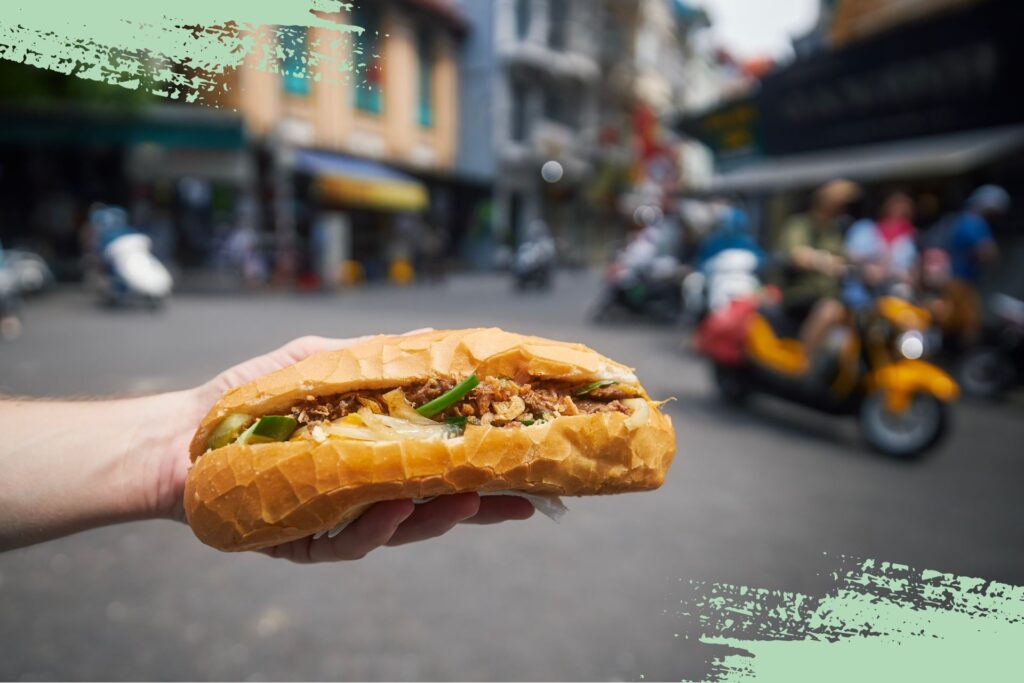
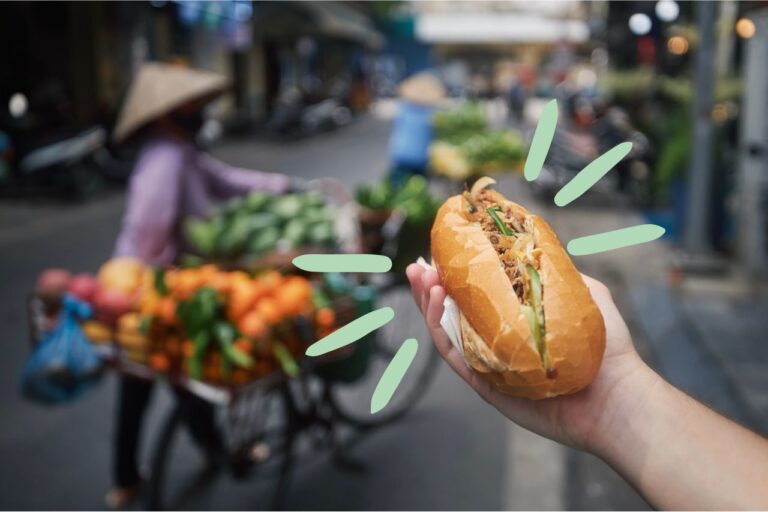
©Jaromir Chalabala via Canva

What Makes A Good Banh Mi?

So, what makes a good banh mi? For us, the most straightforward banh mi is also the best banh mi, allowing the quality of the bread, pate and cold cuts to shine. The ludicrously stacked affairs with a mixed grill’s worth of meat inside, plus mayo, three types of hot sauce, a random papaya salad and erroneous Thai basil that you’ll find in the UK? Those guys are not for us.

Prepared in moments, a good banh mi shouldn’t be overfilled, or overkill. A great one isn’t too sweet, nor too saucy. And if you look down to see the wrapper already stained in a kind of Marie Rose sauce, your bread discoloured an unappetitsing shade of pink, then be warned; you’ve got a dud in your hands. Often sold in front of backpacker hostels, this is the sweet, westernised style that dominates Hanoi’s Old Quarter. Steer clear.

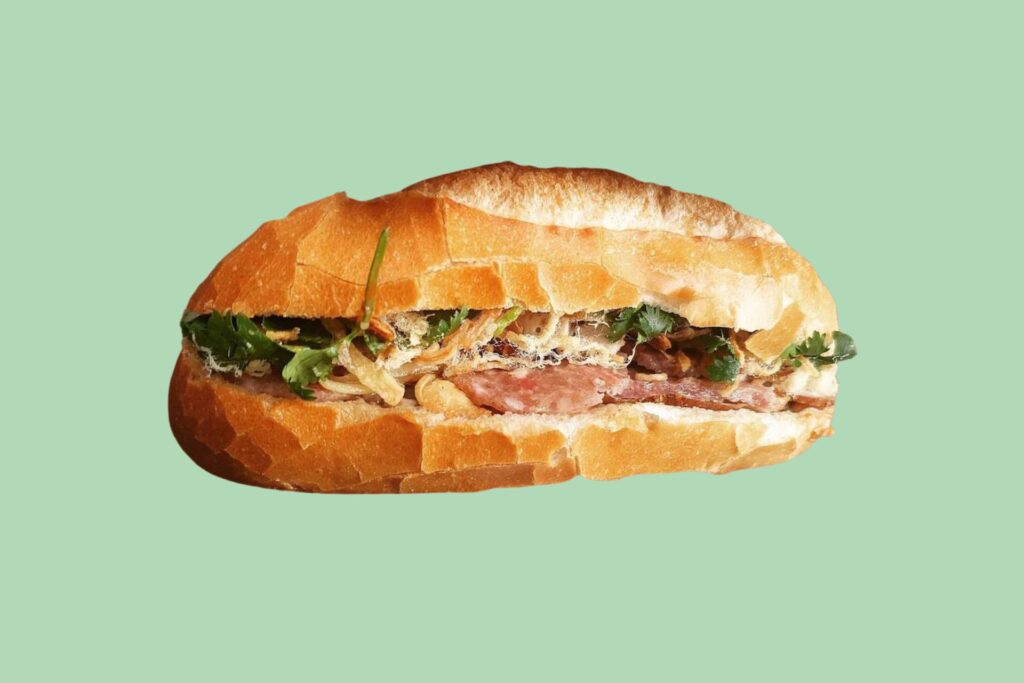
Back to positivity and considering the best banh mi’s baguette itself, this isn’t your average loaf – it’s a French-inspired masterpiece that’s been perfected by Vietnamese bakers for the humid weather. Baked at a higher temperature than in Europe, it has a crunchy but yielding crust and should taste light and airy, with a toothsome chew and absolutely no hint of sourness or over-prove.

© Ryan Truong via Canva

While you can certainly order ‘dac biet’ or  ‘thap cam’ – the house special which usually has the works – this is generally more common in Ho Chi Minh City, where everything feels bigger and brasher

The baguettes in Vietnam’s most sprawling city tend to feature copious meats, herbs, and condiments. We’ve heard that in Ho Chi Minh City, some quote the 210 ratio – 70g bread, 70g cold cuts and 70g pickles and herbs – but in Hanoi, it’s a more minimalist affair; just how we like it.

No banh mi is complete without its signature pickled vegetables, which in Hanoi tend towards the sharper end of the spectrum, compared to Ho Chi Minh’s preference for sweetness. Either way, these pickles are the unsung heroes of the banh mi, cutting through the fatty meat and adding a zesty punch that refreshes, resets and keeps you coming back for more.

What truly sets a great Banh Mi apart is its balance. It’s a sandwich that should hit every note; salty, sour, spicy, and just a little bit sweet. And we’re after the very best in Hanoi…

Bahn Mi To Avoid In Hanoi

But first, much like your splayed open baguette, let’s go find some more filler…

If you’re looking for one of the best banh mi spots in Hanoi, then you’ll likely be thinking of heading to Hang Ca street in search of the lauded Banh Mi 25. Here you’ll find throngs of tourists collected under a neon ‘A LOAF OF SMILES’ sign, clutching their branded baguettes. Don’t be one of them. 

While Banh Mi 25 is certainly well-known across the city, this headliner doesn’t really hit the dizzy heights of the banh mi on our list, with the bread too crunchy and a little greasy on the exterior, the fillings a touch measly and unsatisfying. Perhaps we just visited on a bad day…

Ha Nguyen, a Hanoi resident we spoke to on our last visit, also advised us not to step foot in Banh Mi King, a chain with an uncanny resemblance to Burger King that has proliferated across the city in recent years, peddling sweet, subpar banh mi from comparatively swanky bricks and mortar premises.

Generally speaking, the smaller the operation, the better the banh mi, with many of Hanoi’s best banh mi served from a simple streetside cart with a big chunk of pate, a mise en place of a few tubs of cold cuts and pickles, and a bread warmer. Perhaps there’ll be a single, portable electric hob for the obligatory morning omelette, but that’s all. Seek out these places; it’s where the magic happens.

Where To Eat The Best Bahn Mi In Hanoi

Enough of the fluff (we didn’t do it to keep you here for longer, honestly), and with hit jobs complete, let’s get to it; here are the best banh mi in Hanoi.

*All of the banh mi on our list except Banh My 38 Dinh Liet clock in at 30’000 VND (around £1) or under.*

Banh Mi Pate, Hang Ca, Hoan Kiem (Old Quarter)

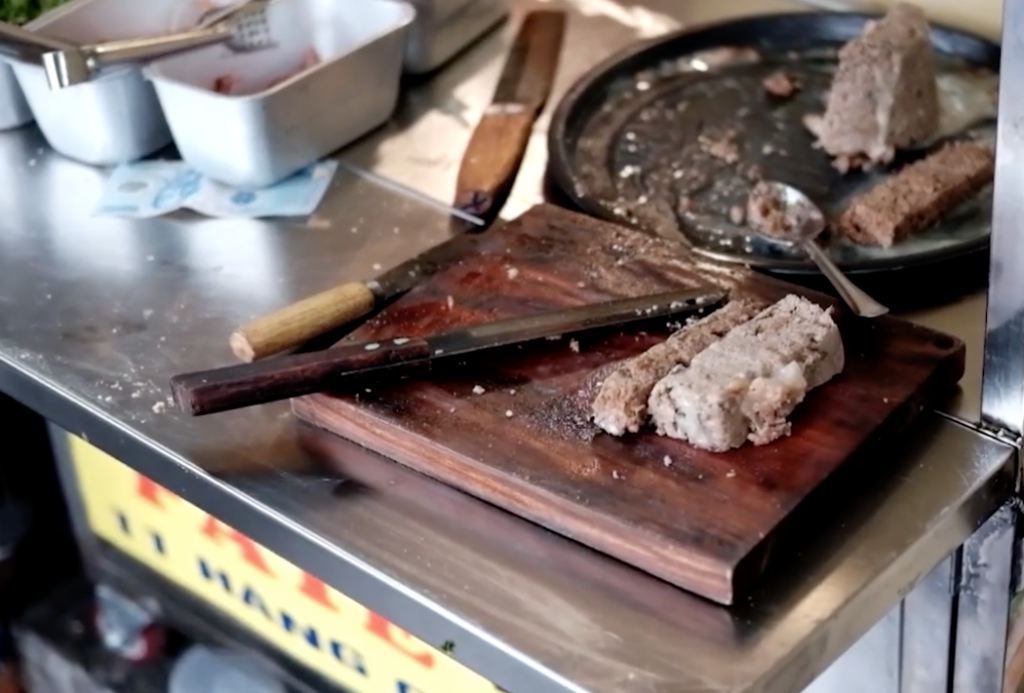
Banh Mi Pate at 11 Hang Ca, on the peripheries of the Old Quarter just yards from the supremely popular but ultimately disappointing Banh Mi 25, serves, quite simply, our favourite banh mi in Hanoi. 

The rig here is as humble as it comes – just a stack of bread, a portable oven, a huge brick of homemade pate, a few cold cuts and pickles, and a chopping board. But as we’ve said before, this usually promises culinary alchemy. And so it is here… 
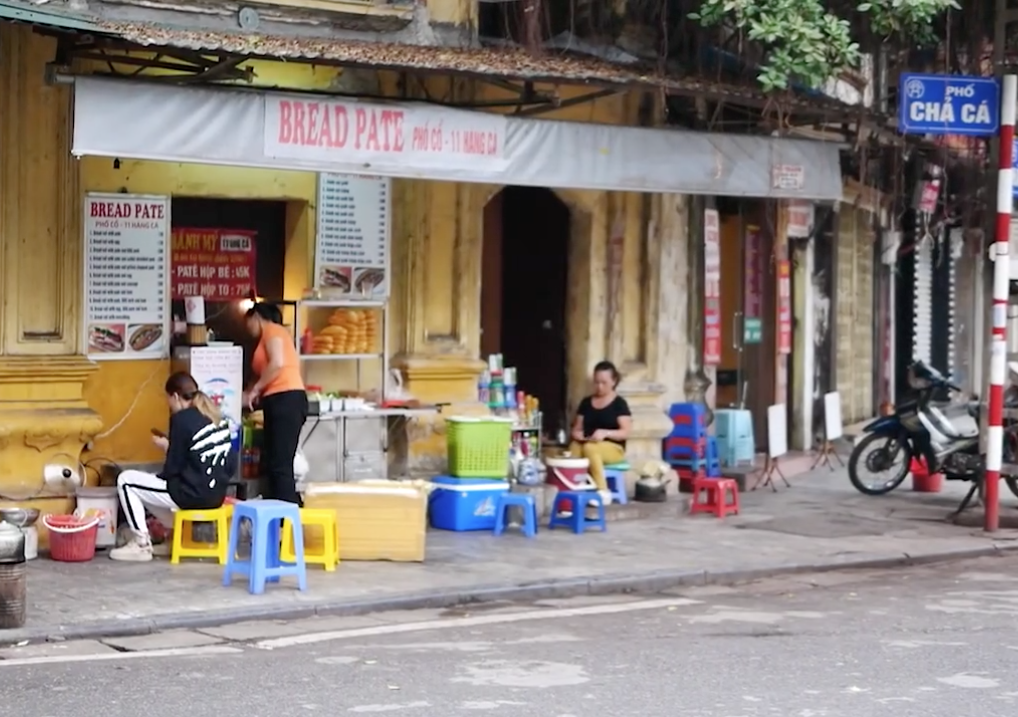
Image via @BanhMyPaTeHa

It’s all about the baguette first and foremost, which here boasts just the right level of crisp exterior and giving centre. Order the number 4 on the menu, which is filled generously with lots of pate, a decent shower of pork floss, some pickles, coriander and hot sauce. Enjoy it on the smallest plastic stool known to mankind, a handful of which are scattered across the pavement in front of the simple setup, and luxuriate in Hanoi’s best sandwich. 

It’s so good, in fact, that we’ve included it on our rundown of the IDEAL 22 spots for street food in Hanoi

Address: 11 P. Hàng Cá, Hàng Bồ, Hoàn Kiếm, Hà Nội, Vietnam
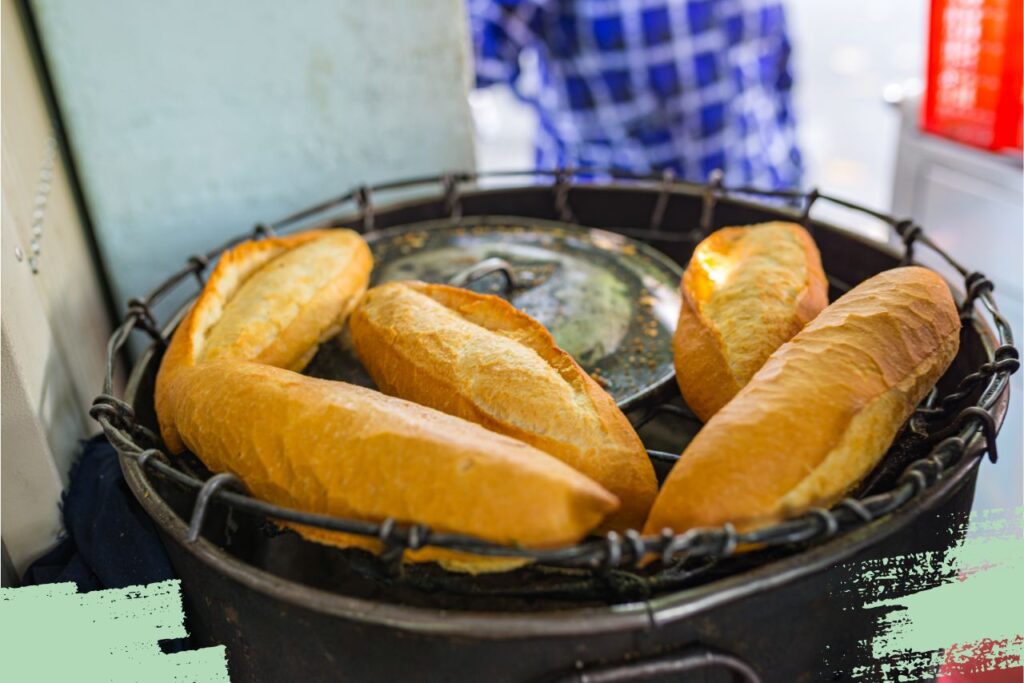

© Muc Photo via Cana

Phu Son, Giang Vo, Ba Dinh District

Showing size doesn’t matter when it comes to banh mi, both in the size of the operation and the size of the actual baguette, Phu Son specialises in one of our favourite banh mi offshoots; banh mi Hai Phong.

This is a specific style of Vietnamese sandwich that originates from Hai Phong, a major port city in northern Vietnam around two hours from Hanoi.

The baguette here isn’t much larger than a breadstick, and is as simple as it comes, filled only with pate and eaten with a piquant chilli sauce called chi chuong. The stick thin baguette is baked with the offal-heavy, garlicky pate and becomes crispy and giving. It’s also a spicy little number, just as residents of Hai Phong like it.

Close to the Temple of Literature, this one is well worth a quick pitstop. Order several.

Address: C6 P. Trần Huy Liệu, Giảng Võ, Ba Đình, Hà Nội, Vietnam


Banh Mi Hoi An, Han Thuyen, Hoan Kiem (Old Quarter)

We’re loath to cite Anthony Bourdain as definitive evidence of where to find the best street food in any given place – whilst we love him as much as the next guy, there are plenty more authorities on the subject.

That said, when the TV celebrity visited the pretty city of Hoi An in Central Vietnam, he declared that Banh Mi Phuong was the best in town, if not the whole of the country. We’ve had this one a few times, and it’s certainly a great sandwich, but what’s perhaps more striking is just how good all the banh mi is in Hoi An, the famous baguette seemingly given the same care and attention in its assembly as the city’s acclaimed network of tailors give their suits.

Anyway, back in Hanoi, and Banh Mi Hoi An continues this tradition with an exemplary, generously proportioned sandwich. Be warned; there are several with this name across the city and some are better than others. We’re at the one in the Old Quarter, on Pho Han Thuyen, luxuriating in the signature barbecue chicken banh mi, a surprisingly spicy rendition owing to the kitchen’s superb homemade chilli oil. A refreshing iced tea offers the perfect counterpoint.

Address: 27 P.Hàn Thuyên, Phạm Đình Hổ, Hoàn Kiếm, Hà Nội 100000, Vietnam
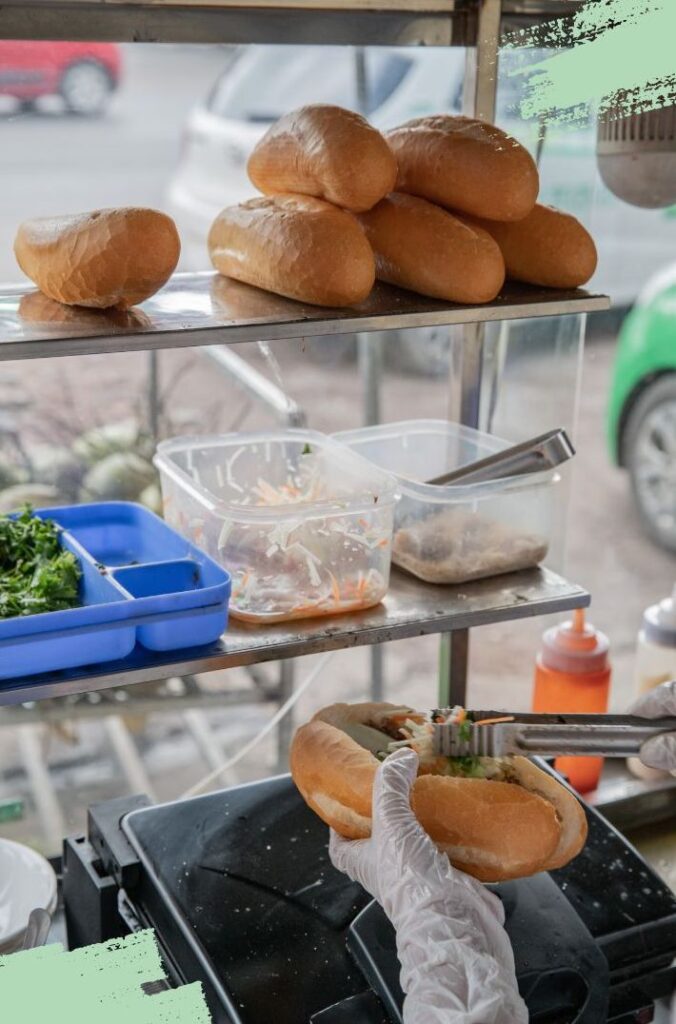

© ImpakPro via Canva

Banh Mi Pho Hue, Pho Hue, Hai Ba Trung District

It’s been said so often that it gets a little tedious, but it’s still also true; when in an unfamiliar town, look for queues of locals and you know that’s where the best street food is found.

Proving the point emphatically is Banh Mi Pho Hue, just a little outside the Old Quarter in Hanoi’s Hai Ba Trung district, where a steady stream of motorbikes waits for a profoundly prosaic banh mi that is one of the city’s most popular.

It’s a celebration of the simple things at Banh Mi Pho Hue. The aunty’s mise en place is as follows… Stacks of warm baguettes. A massive brick of homemade pate. A few slices of Vietnamese pork loaf (essentially spam). A bowl of pork floss. Cucumber pickle. Butter. Dairylea. Chilli sauce. There’s also a pan set-up should you want to add an omelette to your banh mi. If it’s the morning, you should do just that.

Assemble your desired sandwich from that selection, and eat outside the shophouse leaning against a tree, because the dining area is full of parked motorbikes. Lovely stuff.

Address: 118 P. Huế, Bùi Thị Xuân, Hai Bà Trưng, Hà Nội, Vietnam
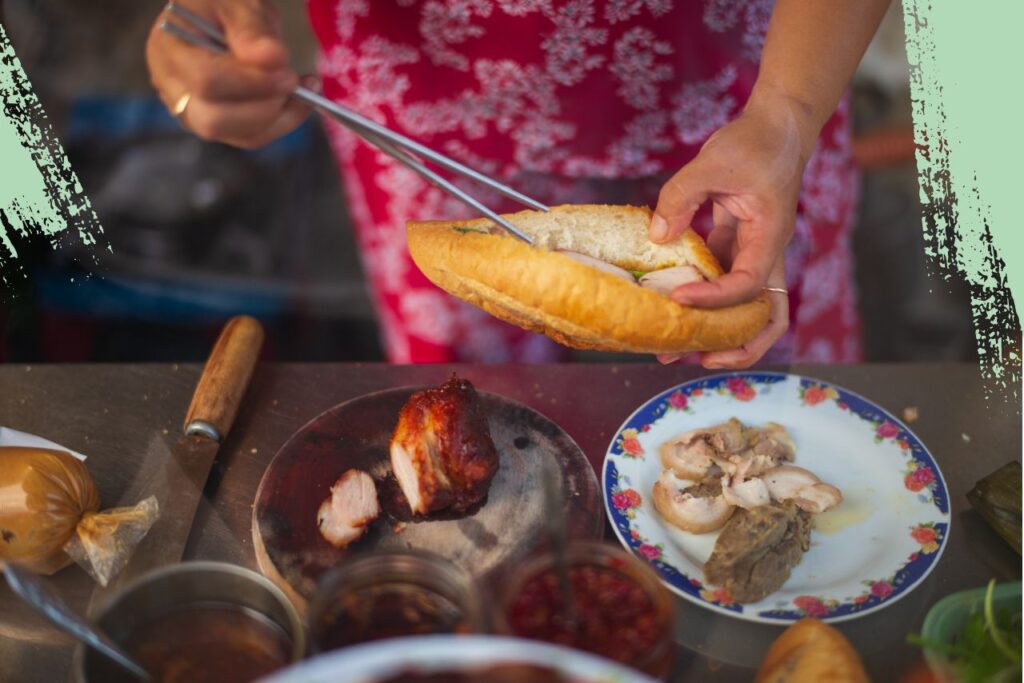

© hxyume via Canva

Banh Mi Pate, Le Quy Don, Hai Ba Trung District

Not to be confused with the Banh Mi Pate on Hang Ca that opened our list, another of our very favourite banh mi in Hanoi is found a little out of the city centre at 16 Le Quy Don, just off the dike road that acts as flood defence against the adjacent Red River.

Boy this is fine banh mi, the pate generously spread and seriously peppery, the filling taking up a good two thirds of the whole thing, the excellent bread merely the shell that holds everything in place. Order the banh mi thap cam (everything), and enjoy a thin, made-to-order omelette, batons of spam, that pate, and plenty of pickles. The odd obligatory coriander leaf, for health, seals the deal.

Address: 16 P. Lê Quý Đôn, Bạch Đằng, Hai Bà Trưng, Hà Nội, Vietnam
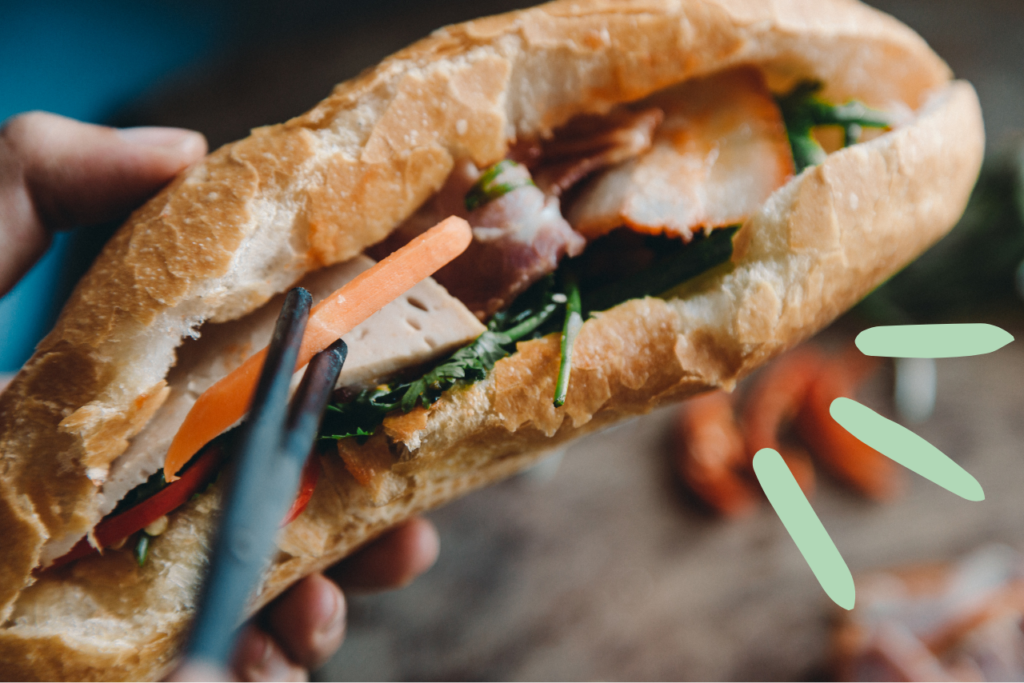

© Bonnie_Phan Getty/Canva

Banh Mi Ba Dan, Lo Su, Hoan Kiem (Old Quarter)

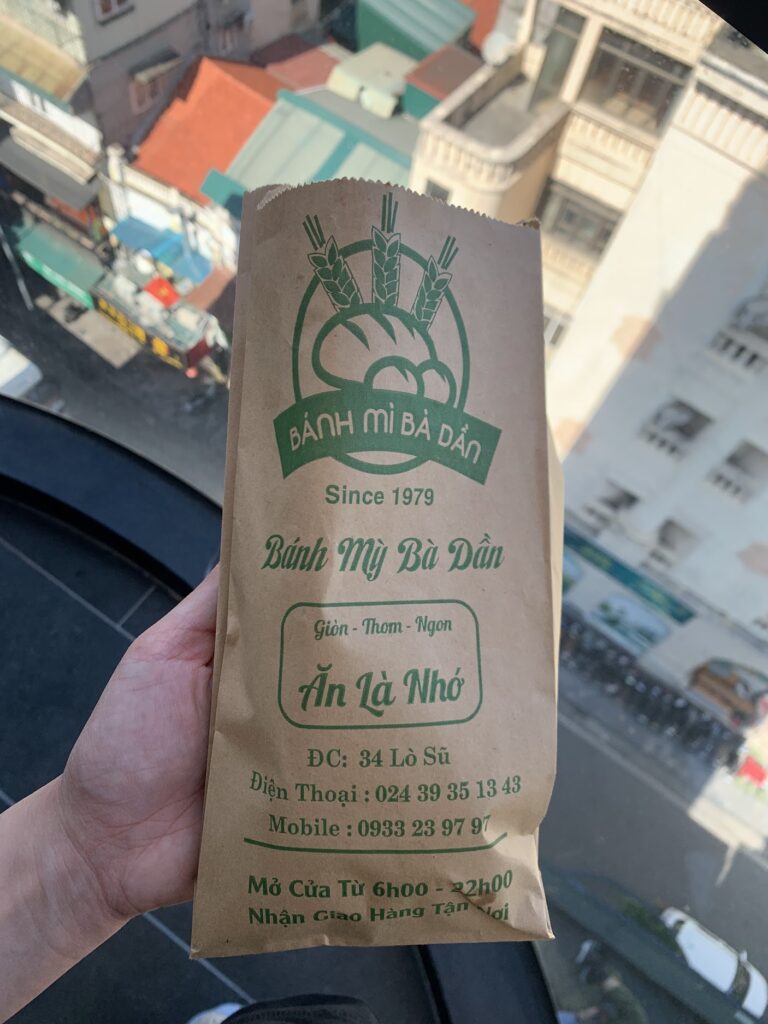
Another brilliant banh mi on the outskirts of the Old Quarter is Lo Su’s Banh Mi Ba Dan, one of the city’s oldest and most celebrated baguette slingers.

These guys have been doing their thing for over forty years, and that expertise shows in the gracefully, swiftly prepared banh mi here. Boasting a satisfyingly crunchy shatter on the baguette, it is – once again – the simplicity of the offering at Ba Dan that leads to gastronomic perfection. 

In fact, it’s one of the most paired back setups you’ll see in the city – just a block of pate, a pile of pork and chicken shavings akin to those shorn off a rotating kebab or gyros, a bowl of pickles, and one solitary squeezy bottle of house hot sauce. 

When the elements are so few and the experience so deep, it should come as no surprise that the sum of this banh mi’s parts has been truly perfected. An exquisite, perfectly balanced banh mi and one which stands as a benchmark of just what this beloved Vietnamese sandwich should be.

Address: 34 P. Lò Sũ, Lý Thái Tổ, Hoàn Kiếm, Hà Nội, Vietnam


Quan Thit Xien Nuong Ba Nga, Quang Trung, Hai Ba Trung District

Now for something a little different, for we fear we’re going to overdose on pate if we carry on like this…

On Quang Trung street, a pretty thoroughfare that connects Lenin Park with Hoan Kiem Lake, Banh Mi Ba Nga are knocking out a variation of banh mi that’s less well established here in the UK but is one hell of a crowd pleaser; the glazed skewer variety.

Here, sweet, succulent skewers are grilled on a streetside portable barbecue to order, the diligent chef turning them without pause so the marinade catches just right. Once they’re ready, a warm baguette is sliced through the centre and used both as the gloves to pull the meat off the skewer and as the recipient of that meat. Long strips of fresh cucumber and wisps of coriander are all that’s required here, the smokiness of the barbecue bringing enough flavour and textural intrigue. Oh, except, of course, a spritz of hot sauce; it would be a crime not to add a little heat to this guy…

Available to takeaway as all banh mi are, you can also eat this one in front of the shophouse on a hastily assembled plastic table and stool setup. If you do so, you’re in for a treat; the skewers are served alongside crisp, sweet honey bread, all on an attractive metal plate.

Hey, what’s a guy got to do to get a beer around here? Not a lot, bro; just ask for one…

Address: 31 P. Quang Trung, Trần Hưng Đạo, Hoàn Kiếm, Hà Nội, Vietnam


Banh My Pho Co, Dinh Liet, Hoan Kiem (Old Quarter)

Dinh Liet has got to be one of the most downright enjoyable streets in Hanoi. Peeling off from Hoan Kiem lake and leading to the rowdy Bia Hoi Corner, a stroll down this street brings with it a sense of anticipation and a night of possibility. 

But not before you fuel up on one of Hanoi’s most popular banh mi. At Banh My Pho Co (sometimes called Banh My 38), the signature is a decadent one, and an undeniably gorgeous one at that. Here, a minute steak is flash fried in plenty of oil before being mixed with some agreeably soggy chips (and an omelette, if it be your will) and piled into a crusty baguette. 
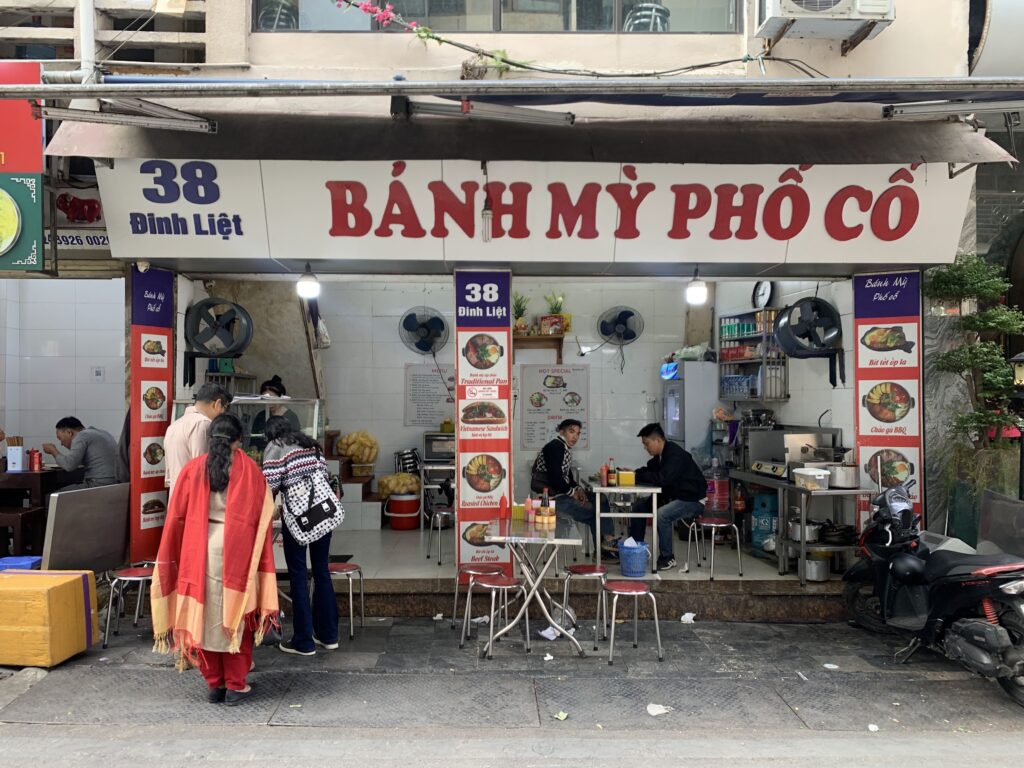
Sure, there’s an artery baiting amount of grease to this guy, and you’ll be paying a premium of around triple the normal prices (80’000 VND, equivalent to £2.50, compared to the usual 30’000 VND, say), but you’re not going to be eating it every day, now are you? Or, are you? 

Address: 38 P. Đinh Liệt, Hàng Đào, Hoàn Kiếm, Hà Nội 100000, Vietnam

Facebook: @banhmy38dinhliet


Banh My Mama, Ly Quoc Su, Hoan Kiem (Old Quarter)

Tucked away down an alleyway just around the corner from St Joseph Cathedral and always buzzing Ly Quoc Su street, Banh My Mama is that very rare thing; a banh mi place that’s hugely popular with tourists but also, actually, really rather good. 

It does no harm that the Mama in question is one sound, charming lady, but even if we were getting a thorough dressing down from the chef we’d come back for more when the banh mi is this good. 

This one is flattened by a panini press in the more modern banh mi style, which we’re not always keen on, but the quality and balance of the fillings here makes it worthwhile.

Go for the pate thit if you know what’s good for you; a porcine combination of cold cuts and pate that feels indulgent but not too heavy. Or, in the morning, Banh My Mama’s pate trung (pate and egg) is a fine version of a Hanoian breakfast staple.

Address: 54 Ly Quoc Su Hang Trong, Hoan Kiem, Hanoi 100000 Vietnam

Read: Where to eat the best banh mi in London


Banh My Duc Long Kebab, Hang Buom, Hoan Kiem (Old Quarter)
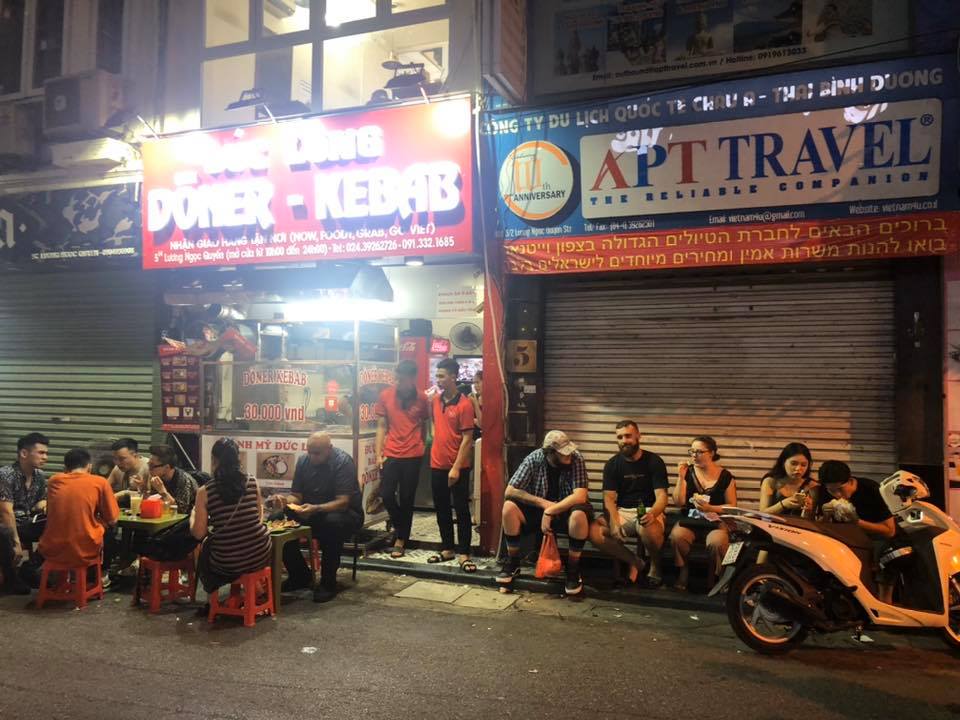
The latest craze in Vietnam is the doner kebab (assumed here to be German) banh mi, and when you get a good one, they are certainly a satisfying few bites.

These panini-pressed, wedge-shaped sandwiches come with shavings of kebab meat, plenty of ketchup and mayonnaise, and an overzealous amount of purple cabbage. Sure, they might be pink, purple and puerile, but they do also hit the spot. Try a good version at Banh My Duc Long Kebab in the Old Quarter.

Address: 5 P. Lương Ngọc Quyến, Hàng Buồm, Hoàn Kiếm, Hà Nội, Vietnam


Ordering A Bahn Mi In Hanoi

Some Key Phrases

  • Hello: Xin chào (sin chow)
  • One Bánh Mì, please: Cho tôi một bánh mì, làm ơn (cho toy mot banh mi, lam on)
  • Thank you: Cảm ơn (gahm un)
  • How much is it?: Bao nhiêu tiền? (bow nyew tee-en)
  • No spicy, please: Không cay, làm ơn (khong kai, lam on)
  • Very spicy, please: Thật cay, làm ơn (tat kai, lam on)
  • One more, please: Cho tôi thêm một cái nữa, làm ơn (cho toy them mot kai nua, lam on)

Specify Your Preferences

  • Spicy: If you like it spicy, say “cay” (kai).
  • Chà bông (pork floss)
  • No Coriander: If you don’t want cilantro, say “không rau mùi” (khong rau moo-ee).
  • Extra Pate: If you want extra pate, say “thêm pate” (tem pah-teh).
  • Bánh mì đặc biệt – fully loaded

And with that, we’re off to book another holiday to Hanoi; we’re hungry!
Where To Eat The Best Pho In London: The Best Vietnamese Restaurants

Last updated March 2026

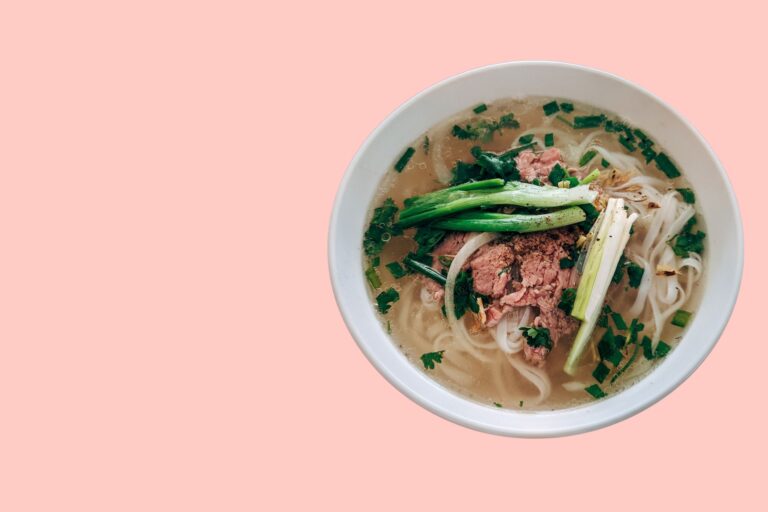
A good bowl of phở, with its broth both clear and rich and its noodles giving just right, can restore and rejuvenate even the most worn out soul. A great bowl can cleanse. It can complete.

But the very best bowl? Some might argue that’s a hard thing to find in London. Enjoyed at street stool level and seasoned by both the revving Vespa fumes of a previously parallel dining partner and decades of the same family’s same stockpot, there’s arguably no dish in the world better enjoyed at the source.

In recent years, however, London’s pho scene has expanded and evolved to meet an ever diversifying, discerning demand, and the city’s diners are now blessed with some truly excellent options of this most celebrated of noodle soups.

Whether you’re looking for an austere, savoury bowl of Northern-style pho, garnished simply with little more than sliced spring onions, or a Saigon-adjacent version heavy on the herbal accoutrements, spice and sweetness, then you’ll find it here, at these places serving some of the best phở in London.

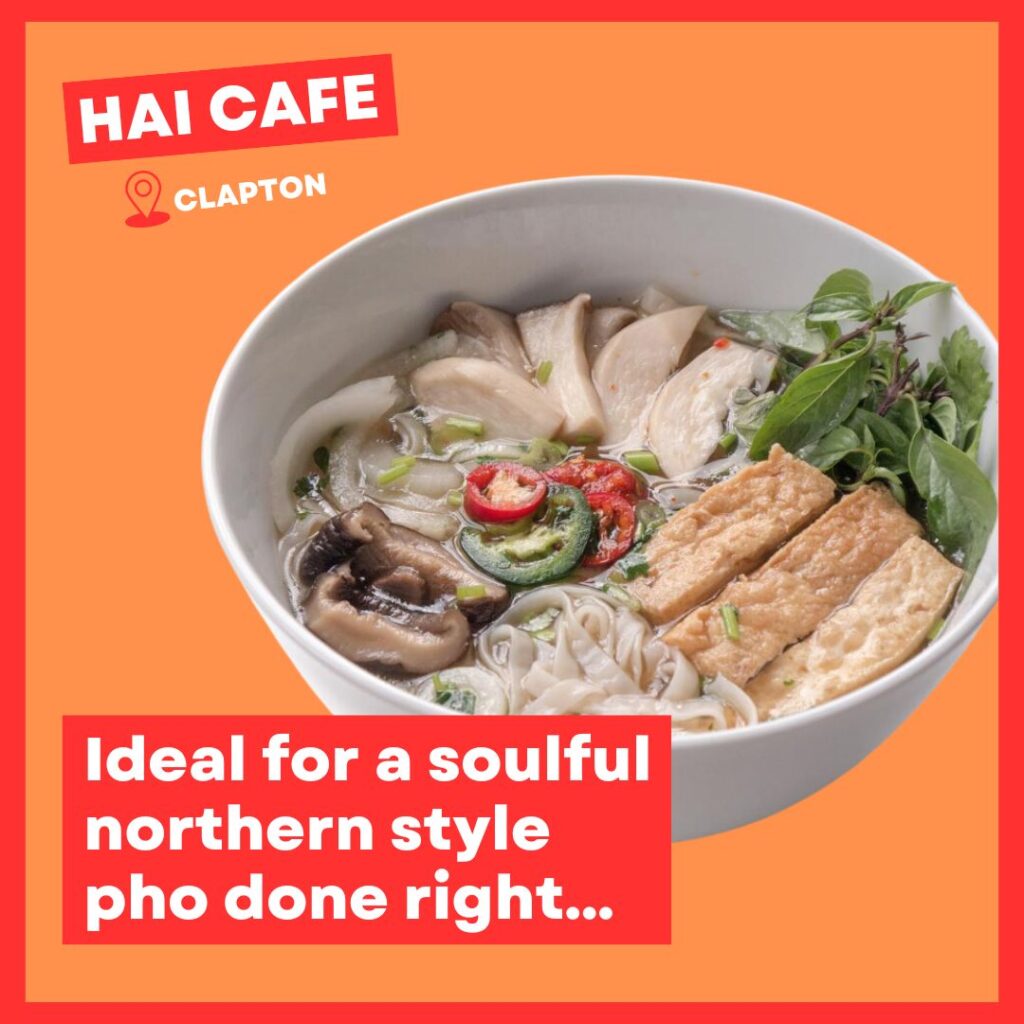
Hai Cafe, Clapton

Ideal for soulful Northern-style pho done right…

There’s something about the rarity of the pho served at Clapton’s Hai Cafe that makes it even more appealing. Nope, we’re not talking about the slices of raw beef added à la minute to their pho boi tai chin, so it cooks just a little in the bubbling, lucid broth. Rather, we’re referring to the distinct lack of any actual pho on Hai Cafe’s main menu, which instead pulls its focus on southern-style curries, bun noodles and bánh mì.

But, cast your eyes up to the blackboard and on occasion (fairly regularly, to be fair) you’ll find an elusive pho or two gracing the specials. The bowls here draw from Northern pho sensibility, with the Hai in the cafe’s name coming from Hai Duong, a city that sits pretty much equidistant between the Vietnamese capital Hanoi and the northern industrial powerhouse Haiphong.

So, that means a light but deeply savoury beef broth, redolent of charred ginger, smoky black cardamom and star anise, sweet from bone marrow rather than excessive amounts of yellow rock sugar, and with a clarity uncluttered by frivolous additions like Thai basil or sawtooth coriander (you’ll get a side dish brimming with them, though). 

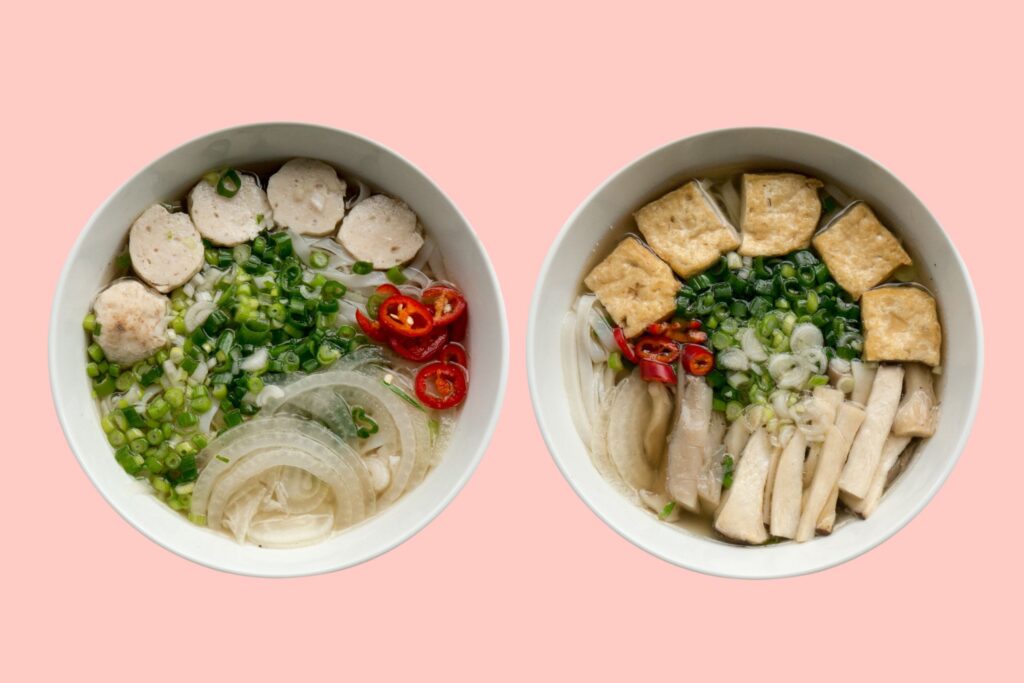
The chicken version, here with several bouncy chicken dumplings bobbing about merrily, is equally soul-cleansing. For the vegans in the squad, deep fried tofu does the necessary. A squeeze of lime and a couple of fresh slices of long red chilli is all you need. Ask for sriracha here – or worse, hoisin sauce – and expect a scolding from Mama Hai.

Better, we think, to be scolded by that superlative soup, whose aroma is impossible to resist as soon as a bowl hits the table.

Open evenings only, Thursday to Saturday.

Address: 120b Lower Clapton Rd, Lower Clapton, London E5 0QR

Website: hai-cafe.com


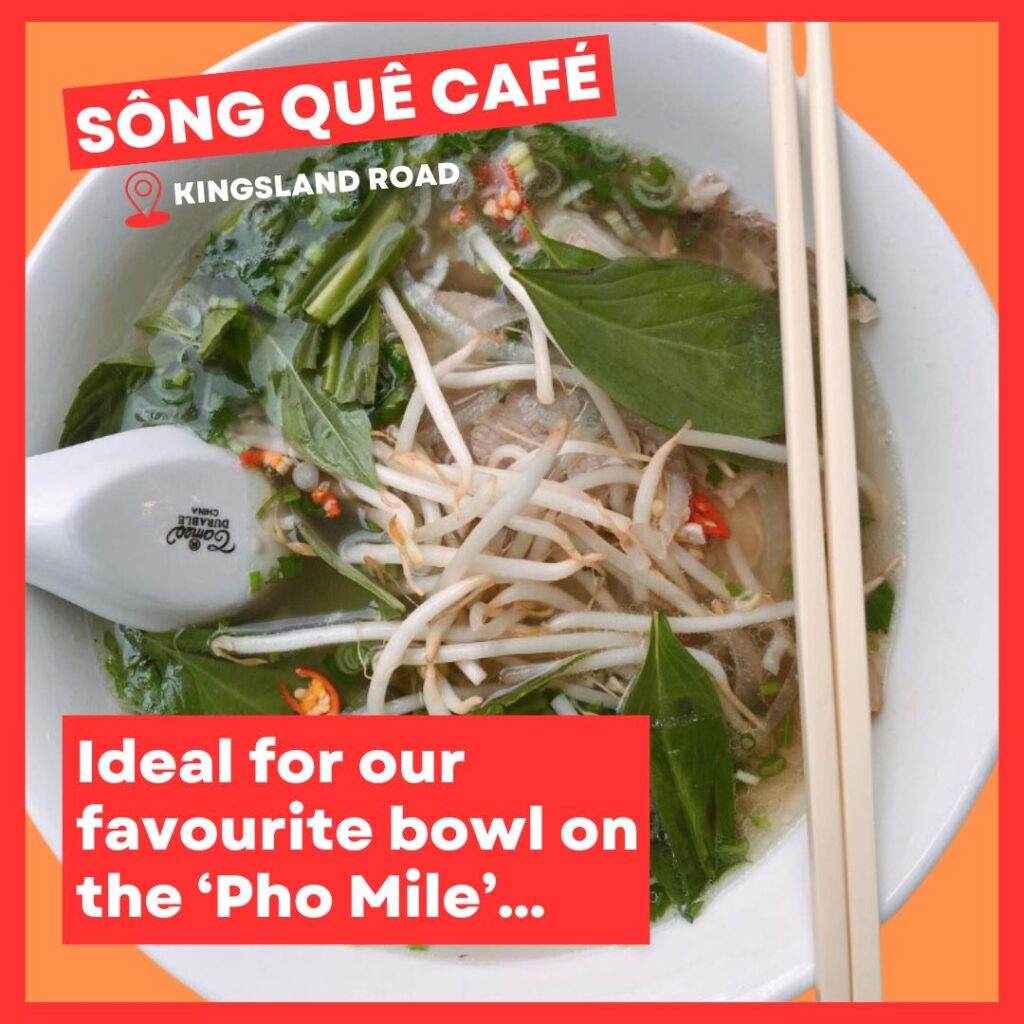
Sông Quê Café, Kingsland Road

Ideal for our favourite bowl on the ‘Pho Mile‘…

On London’s so-called ‘Pho Mile’, Kingsland Road in Dalston, there are more solid Vietnamese cafes and restaurants than you can shake a chopstick at (sorry, that’s a naff joke).

Reminiscent somewhat of the streets of Hanoi’s Old Quarter, where thoroughfares are organised by the single item that’s sold on each – Bucket Street, Silk Street, Silver Street… – if you’re after pho in London, it’s to Kingsland Road you should head.

But ubiquity doesn’t necessarily lead to the very finest Vietnamese food you’ll find in the capital, with arguably the focal point of the country’s culinary scene now found over in Deptford. 

There is a notable exception, however, and that’s Song Que Cafe, which is considered by many to be Kingsland Road’s (and perhaps even London’s) best Vietnamese restaurant. This place gets packed like Ho Chi Minh City’s Dong Van Cong Street at a red light, with weekends especially tough to get a quick table in the brightly lit, canteen-like space. 

Like a great vat of pho broth that’s been bubbling for hours, Song Que is worth waiting for. Now in their third decade, the pho here is top notch; a crystalline broth dappled with beads of beef fat as the best pho broths are, and freshly blanched noodles with a little chew and plenty of give (pho noodles cooked al dente is, quite simply, a crime). We always go for the combo beef here, the peppery tripe and gelatinous tendon lending so much viscosity to the soup. The chicken pho here, lighter and fresher and ideally suited for curing basically all of your ills, is fantastic, too.

The Song Que team opened a second site in January 2026, Song Que Pho Bar, on Commercial Street in Spitalfields. If you can’t face the Kingsland Road weekend scrum, it’s a welcome alternative.

Address: 134 Kingsland Rd, London E2 8DY

Website: songque.co.uk


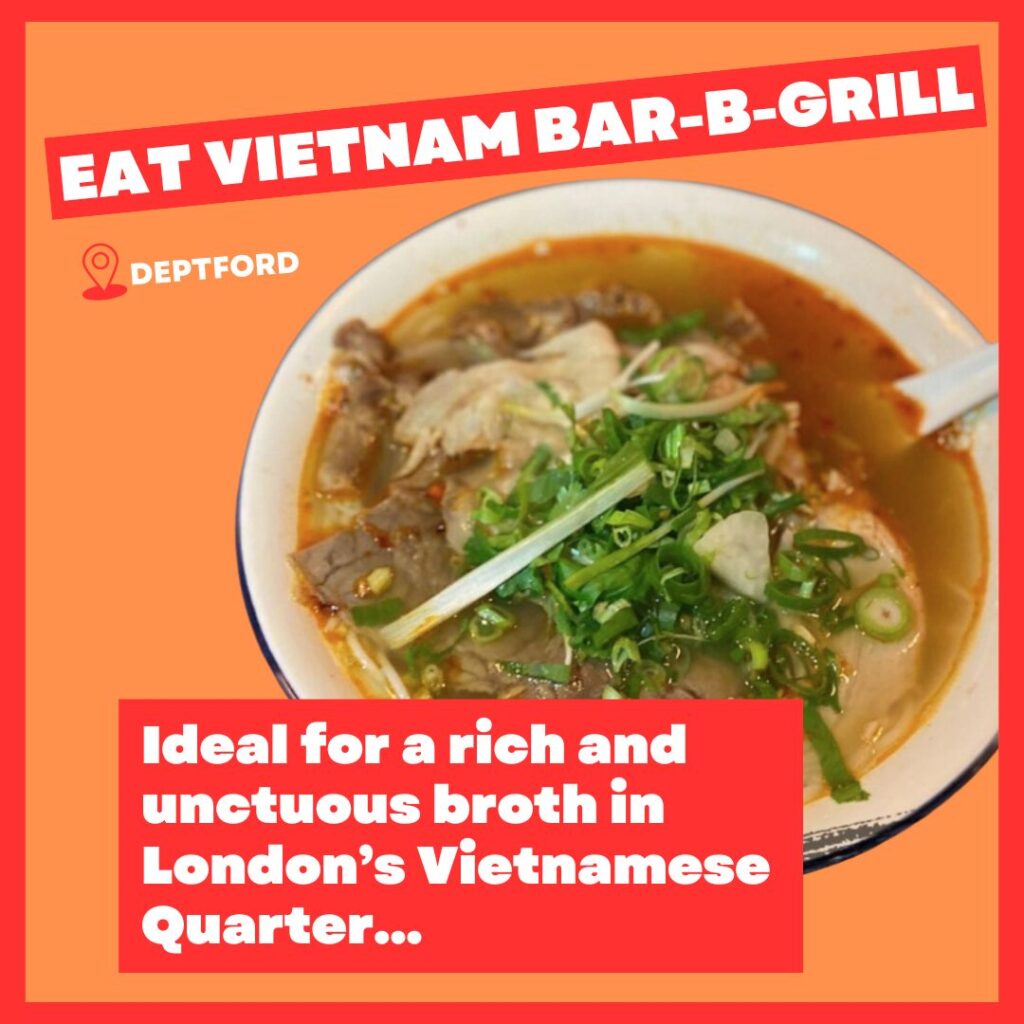
Eat Vietnam Bar-B-Grill, Deptford

Ideal for a rich and unctuous broth in London’s Vietnamese Quarter…

We’re heading to Deptford next, the epicentre of some of the most downright delicious Vietnamese food in the country, and to Eat Vietnam, a family run joint which hums with activity every day of the week. Yes, you will need to book come the weekend.

Though the menu is extensive and crowd-pleasing, it’s the pho we’ve landed in SE8 for, and it’s a bowl of life-affirming nourishment you’d too be foolish to miss.

Here, the chefs use beef knuckle and beef knuckle only for the majority of their 24-hour simmered broth, the marrow giving generously to the gently bubbling liquor over the course of that day. Beef shin – with more marrow exposed – is added in the final third, its meat picked off the bone for the signature pho bo chin. The result is an opaque soup and a mouth-feel that’s a little more unctuous and fulfilling than the other broths on our list, and no worse for it, if the mood (and weather) dictates it.

The welcome presence of some crispy banh quay (deep-fried, donut-like sticks inspired by Chinese youtiao) on the menu makes dipping and dredging the final thimbles of that beef broth a real pleasure.

And if you need even more reason to visit, the restaurant donates 10% of its tips to charities in Vietnam. 

Address: 234 Evelyn St, London SE8 5BZ

Website: eat-vietnam.co.uk


Cafe Mama Phở, Deptford

Ideal for a second bowl of the good stuff in Deptford…

We couldn’t leave Deptford without a bowl of Cafe Mama Pho’s superlative chicken pho. While the beef version of Vietnam’s national dish does seem to get the majority of the plaudits, its poultry-based cousin is equally life-affirming, particularly if tender, gamey thigh meat and a little offal is deployed.

At Cafe Mama Pho, a short hop from Surrey Quays Leisure Centre, both those caveats are satisfied, and it’s a glorious bowl of the good stuff, all gentle aniseed notes and a graceful silkiness from the poached, skin-on chicken thighs gift of its fat. 

The move here? Order ‘tron’ (dry) style, which means the broth comes on the side, the bowl of noodles and poached chicken given richness and succour with roasted peanuts and deep-fried shallots. Add a few spoonfuls of broth and mix – it’s a deceptively simple variant that’s always a balm to Hanoi’s most hot and hectic days. If London is feeling the same, this is what you should be ordering. 

Of course, there’s beef pho here too, as well as a generous bowl of pho dac biet (special). Whilst this title would usually indicate a veritable feast of beefy bits, from tendon to tripe, brisket and meatballs, here Mẹ has gone all in, with beef, chicken and prawn making an appearance in the bowl. 

Cafe Mama Pho is walk-ins only at the Deptford original and gets busy. Be prepared to queue. The team have since expanded, with branches now open in South Kensington and Bloomsbury, too.

Address: 24 Evelyn St, London SE8 5DG

Website: cafemamapho.co.uk


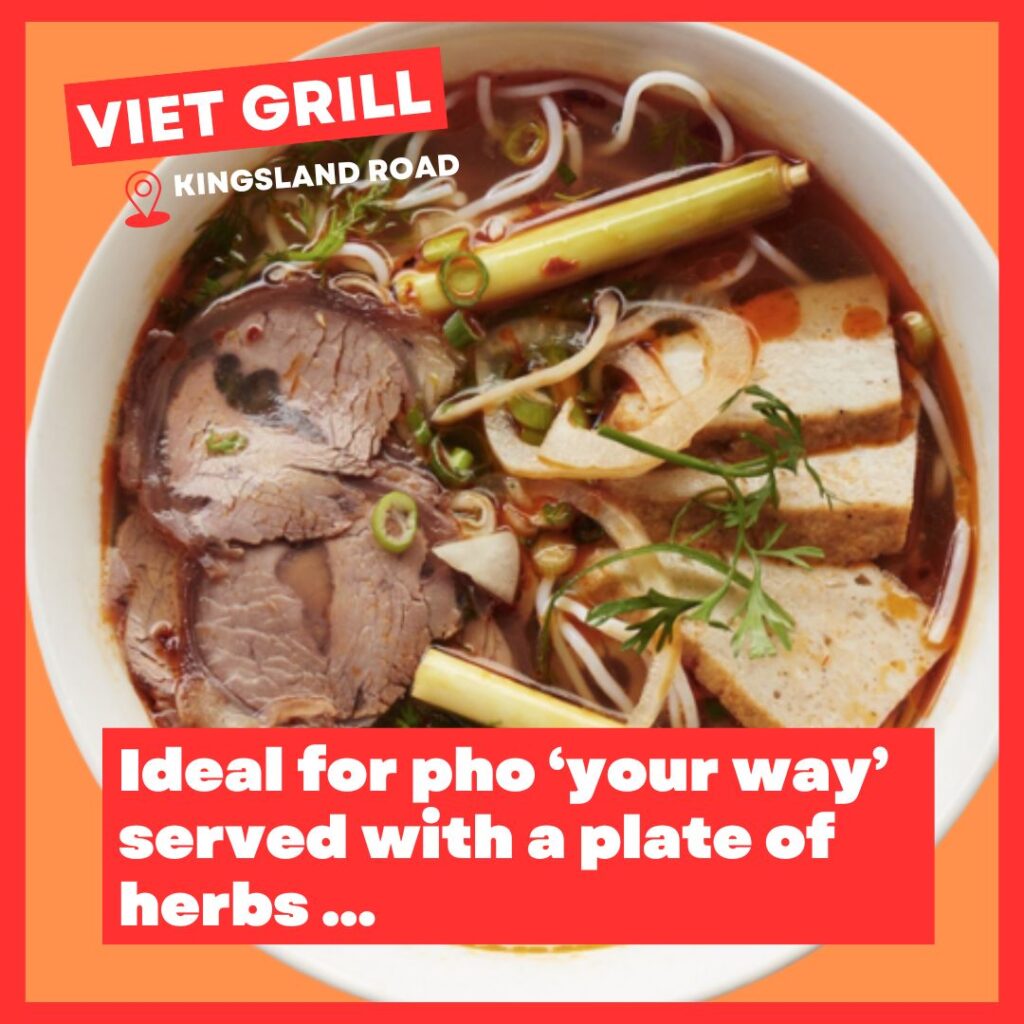
Viet Grill, Kingsland Road 

Ideal for a heady mix of carefully cooked pho and carefully crafted cocktails…

A slicker operation than some of its neighbours on Kingsland Road – there’s wine, they serve cocktails and accept cards – Viet Grill is the sister restaurant of Old Street and Soho’s Cay Tre (who also do a great bowl by the way), and does one the best phos on the strip.

The noodle soup here is marked out by a ‘have it your way’ attitude, giving diners the choice of Northern or Southern styles of the dish, whether you’re going for a ‘Saigon Pho’ of pho tai nam gau, or a ‘Hanoi garlic pho’, tai lan-style, which sees thin slices of steak and whole garlic cloves wok-fried ultra-hot and smoky. The subsequent deglazing of that wok brings with it an umami-laden gravy into the bowl – magic. 

Either way, an abundant plate of herbs and beansprouts is served on the side and there’s hoisin on the table rather than in the bowl, the debate over which region’s rendition is better put to bed, for now. It’s a bowl that might put you to bed, too; it’s bloody massive!
Address: 58 Kingsland Rd, London E2 8DP

Website: vietgrillrestaurant.co.uk


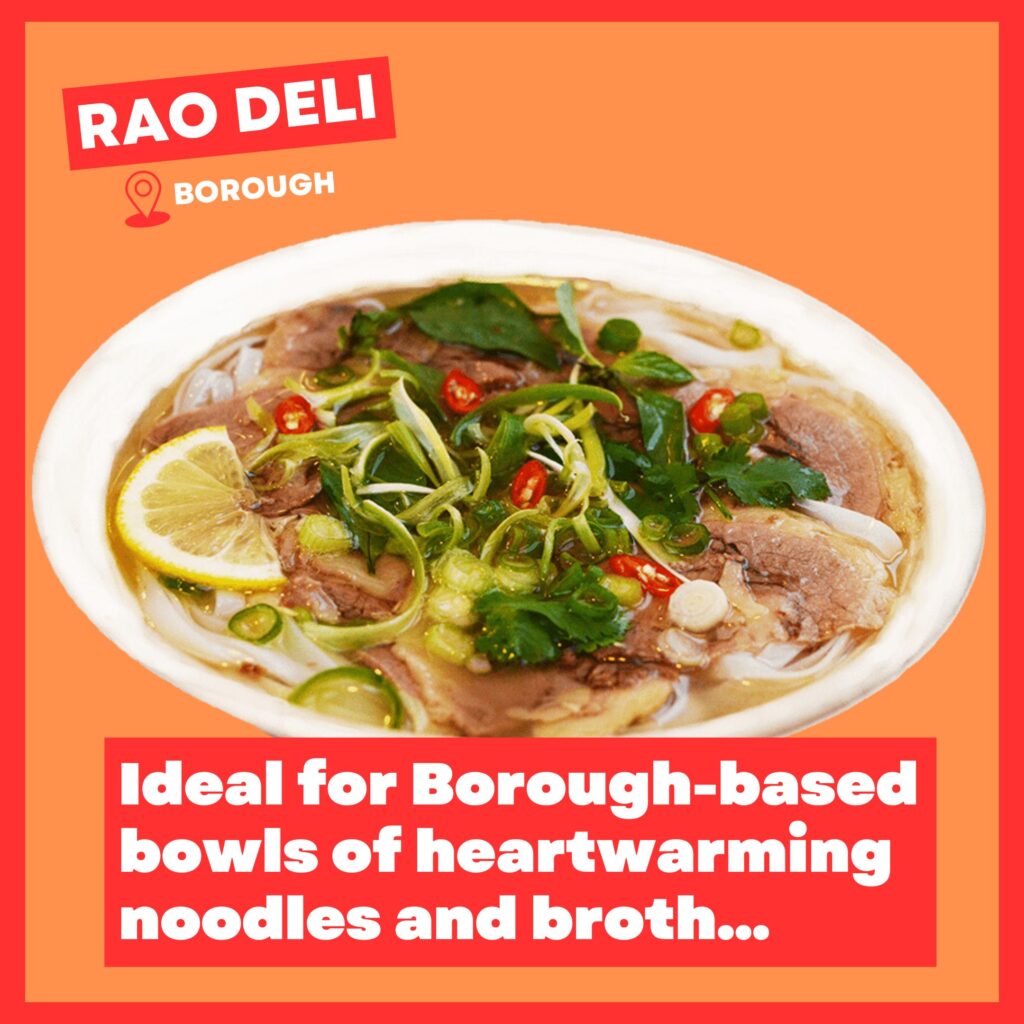
Rao Deli, Borough

Ideal for Borough-based bowls of heartwarming noodles and broth…

Though most of the hungry head to the Borough and London Bridge area to hit the world famous market and its adjoining restaurants, there’s much joy to be found beyond the high footfall, low stakes food places there.

If you’re looking for the best pho in London, you might instead want to make for Borough High Street, head up towards Elephant and Castle, and set your course for a bowl of pho as imagined by Vietnamese chefs and entrepreneurs Trang Nguyen and Nhan Van Mac.

You may have seen the team popping up at various food markets across the city, slinging their excellent banh mi, noodle salads and, of course, pho. In fact, the word ‘rao’ in Vietnamese refers to an on-foot food seller who traverses the streets with a bamboo pole slung across their shoulder, carrying various homemade parcels of deliciousness from charred corn to rice crackers and beyond. 

That said, it’s at the bricks and mortar location of Rao Deli that we’re settling in for a steaming bowl of the good stuff, done in the Hanoi style without garnish or fanfare. Order the beef combo and dig deep into the bowl for chewy nuggets of tendon, that fibrousness a prized texture in the motherland. Having soaked up plenty of broth and contributed a little of its own gelatine, a good ol’ chew on the tendon reveals layers of flavour not divulged through slurping alone. It’s heaven. 

For those still with an appetite to slake, resist the urge to return to Borough Market and queue for hours for Padella. Instead, the bun thit nuong (a noodle salad of barbecued, salty sweet pork belly, herbs and crushed peanuts) here is exemplary.

Address: 304 Borough High St, London SE1 1JJ

Website: raodeli.com


Pho District, Ravenscourt Park

Ideal for hearty beef noodle soups on King Street’s Vietnamese strip…

On King Street, where several Vietnamese restaurants have made their home alongside a well-stocked Thai supermarket with imported, often esoteric ingredients hard to find elsewhere, Pho District stands out for its deeply satisfying, straight-as-a-die bowls of noodle soup.

The stretch has become something of a destination for those seeking out Vietnamese cuisine in West London, with options ranging from quick-service spots to more traditional sit-down affairs… Does the ‘district’ in the name refer to that proliferation? Or the formal names of different areas of Ho Chi Minh City? Or, something else entirely?

Who knows? What we do know is this is fine pho, indeed. Don’t be thrown by the menu’s modest description of their signature bowl as ‘Beef Stew (New)’ – what arrives at your table for a keen £13 is unmistakably a bowl of pho, complete with all the hallmarks of careful preparation. The rich beef broth, built on a foundation of slow-braised brisket, carries the deep savouriness that only comes from patient cooking. Fresh herbs and carefully chosen spices lift the whole affair, while properly cooked rice noodles provide that essential silky backdrop.

The restaurant itself is a welcoming space, with just a couple of large murals of the twinkling lanterns of Hoi An as backdrop, where the focus is squarely on the food rather than frills. It’s the kind of place where you might find yourself lingering over the last spoonfuls of broth, already planning your return visit. And with several other Vietnamese spots within walking distance, you could easily make an afternoon of exploring this pocket of West London’s Vietnamese dining scene, each bowl of pho driving you on rather than weighing you down.

That’s the beauty of this most restorative of noodle soups.

Address: 216 King Street, London W6 0RA

Website: phodistrict.co.uk


Bà Ba, Peckham

Ideal for southern-style pho with deep family roots in SE15…

The original Banh Banh in Peckham, where many Londoners first fell for a properly made bowl of southern Vietnamese pho, has been reborn as Bà Ba. Still run by Kevin Nguyen and his siblings, still at the same address on Peckham Rye, and still rooted in family recipes from the Nguyen matriarch Nghiem Thuy Hong, a chef in Saigon before the family moved to the UK in the 1980s.

The rebrand hasn’t shaken what matters. The classic beef pho (£14.75) is built on a broth that’s been simmered long and slow, sweet with star anise and cinnamon, and served with a generous side plate of Thai basil, sawtooth coriander, bean sprouts and sliced chilli for the full southern treatment. The cornfed chicken version, lighter and a little more fragrant, is just as good. Beyond the bowls, sticky fish sauce wings, bo la lot and crispy banh khot prawn pancakes round out a menu that makes a strong case for ordering far too much.

The Nguyen family’s Vietnamese cooking credentials received a significant boost in early 2026 when their sibling restaurant Lai Rai, a snack-and-cocktail-forward canteen just down the road on Rye Lane, became the first Vietnamese restaurant in the UK to earn a Michelin Bib Gourmand. There’s no pho at Lai Rai (it’s a different beast entirely), but the recognition speaks to a family who know southern Vietnamese cooking inside out.

Address: 46 Peckham Rye, London SE15 4JR

Website: babapeckham.com


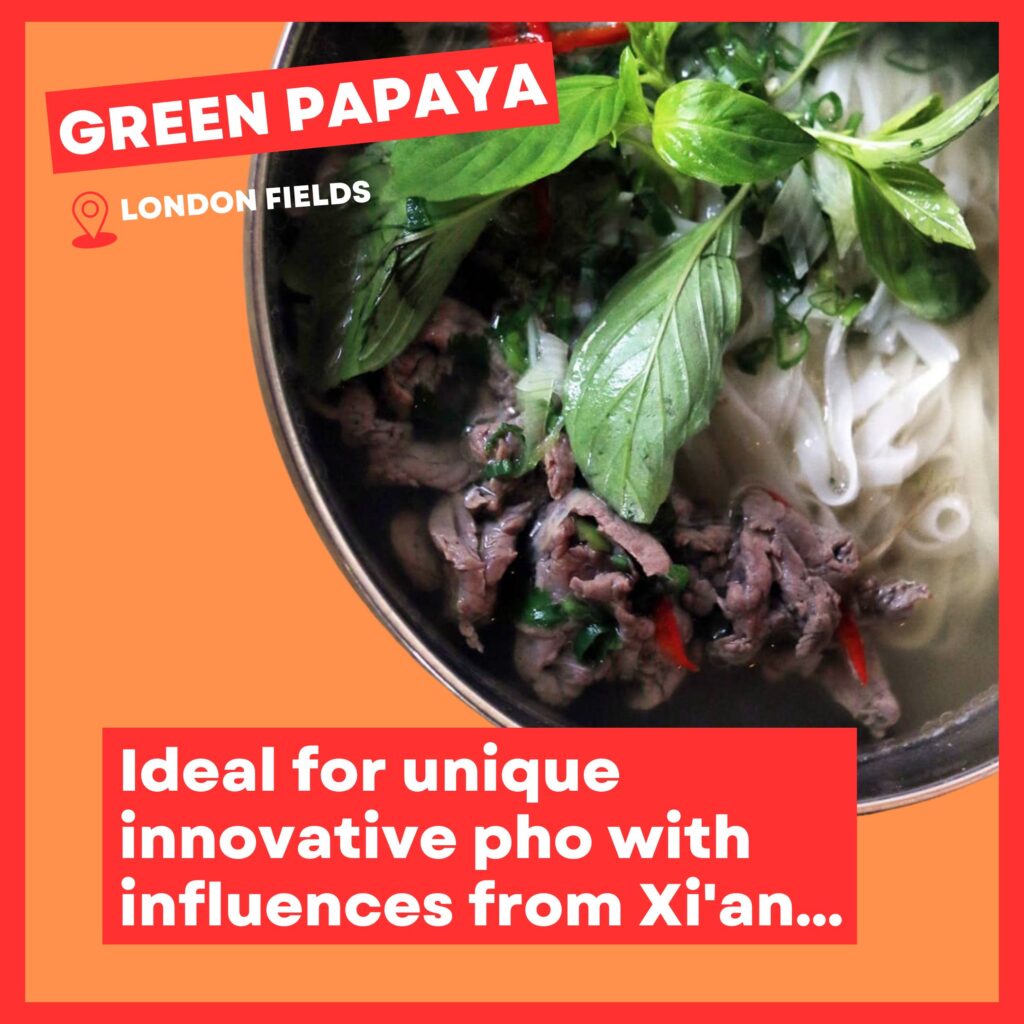
Green Papaya, London Fields

Ideal for unique innovative pho with influences from Xi’an…

We end our tour of London’s best bowls of pho in London Fields, at Green Papaya, whose Xi’anese (Chinese Xi’an province and Vietnamese) cuisine has been gaining a devoted following in this corner of Hackney in recent years. 

It’s an intriguing proposition, with Dan Dan and Mount Qi noodles rubbing shoulders with bun and pho on a hugely enticing menu. We’re here for the latter today, which delivers in spades, the oxtail used in the pho broth adding an opulent, well-rounded quality to the soup. The pho thai nam, a combination of long-simmered, fatty brisket and just-dunked, thinly sliced sirloin, is the highlight here.

Address: 191 Mare St, London E8 3QE

Website: green-papaya.com

Now we’ve traversed London in search of its best pho, care to join us for a selection of Ho Chi Minh City street food favourites? Go on, you know you want to…

10 Top Tips For Clearing Out The Clutter Before You Move House

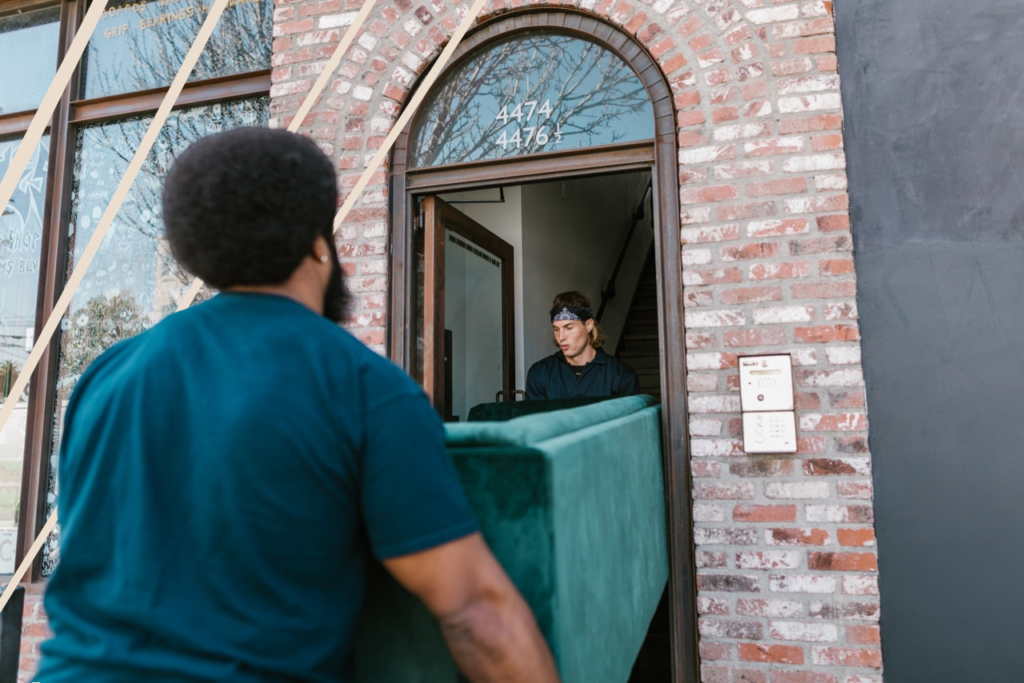
Can you hear that? It’s the sound of old football sticker albums hitting the scrap heap. It’s the sound of the once used, now rusty pasta maker meeting its own maker (the bin). But more than anything, it’s the sound of heart strings being tugged across the land, as items of sentimental value are thrown away.

Instead, turn it into a tune of decluttering clarity, with a simple, methodical approach. Here’s how to play it right; our 10 top tips for clearing out the clutter when you move house.

Give Yourself Time

Foresight is a valuable thing. Combine it with a much needed ruthless streak, and this whole process of shedding a little domestic weight might not be so difficult after all. So, start the decluttering process at least two months before you move to get yourself well and truly ahead.

If you’ve been living somewhere for 10 years, do you really think you’re going to be able to get through all the things you’ve accumulated the weekend before moving day? Such a clearout is a process, and requires a little-by-little approach to prevent it from becoming overwhelming.

Measure Your New Space Before You Pack

Before you box anything up, get the measurements of your new place and compare them to what you’ve got now. That oversized sofa might not fit through the door. The chest of drawers might block a window. As Get Man and Van, an affordable man and van in London, advise, one of the most common moving day headaches is furniture arriving that simply doesn’t work in the new layout. Measuring up beforehand gives you another clear reason to let things go, and saves you hauling items across town only to leave them on the kerb.

Get Rid Of Items Before You Move (Not After!)

It makes no sense to bring clutter with you. There’s the packing it away, the transporting it, and the unpacking, only to realise you’ve no space for it in your new crib and it’s surplus to requirements anyway.

Then, there’s another trip to the skip to make. Negate the need for all these redundant extra journeys and that superfluous weight by being completely ruthless before you move. Every step of the moving process will be easier and lighter for it. The more ruthless you can be in your decluttering, the less truck space you occupy and ultimately the sooner furniture movers take to complete the job – saving you money.

ReadThe transformative power of having a clean home

Does The Item Bring You Joy?

If you’ve been bingeing on tidy guru Marie Kondo’s YouTube channel, then you’ll know that unless an item sparks joy in your heart, you should let go of it. Nope, not disrespectfully throw it in the bin. But rather, carefully consider each item, hold it close to you, and see if you envisage a future together. If you don’t, then it’s best to bid a kind and gentle farewell to that particular culprit of clutter and move on. Yep, the KonMari method, as its known, can certainly help here.

Create A ‘Maybe’ Box

Sometimes, the decision to keep or discard an item isn’t as straightforward as we’d like. For such items, create a ‘Maybe’ box. This is where you can temporarily store items that you’re unsure about. The rule is simple: if you haven’t used or missed the item after a set period (say, six months), then it’s time to let it go. This approach allows you to make decluttering decisions without the pressure of immediate finality, making the process less daunting.

Digitise Your Memories

In the age of digital technology, there’s no need to hold onto physical copies of everything. Old photos, letters, and documents can take up a lot of space and are susceptible to damage over time. Consider digitising these items to preserve them better and free up physical space. There are numerous services available that can help you scan and store these memories securely online. Remember, the goal isn’t to erase your past, but to make it more accessible and less cluttered.

Involve The Family

Decluttering shouldn’t be a solitary task, especially when you’re moving house. Involve your family in the process. Make it a fun activity where everyone gets to decide what they want to keep, donate, sell, or discard. This not only lightens your load but also gives everyone a sense of participation and ownership in the move. Plus, it’s a great way to teach younger family members about the importance of organisation and letting go of unnecessary items.

Adopt The ‘One In, One Out’ Rule

Once you’ve successfully decluttered and moved into your new home, it’s important to maintain the state of uncluttered living.

Ideally, you should adopt the ‘One In, One Out’ rule when settling in to your new home. For every new item you bring in, one item should leave. This helps to keep your possessions at a manageable level and prevents the accumulation of clutter over time.

It’s a simple, yet effective strategy to ensure your new home stays as serene and clutter-free as the day you moved in.

Have A Carboot Sale Or Donate To A Charity Shop

Sustainability and a deep regard for our environmental impact has never been more vital. Simply commiting items to landfill in the name of a clearout, in the current climate, can feel pretty callous and irresponsible. Instead, embrace what some have coined a ‘circular’ attitude to goods, and donate anything and everything you can to a charity shop or sell it on at a carboot sale. In doing so, you’ll reduce the demand for new stuff. We know it’s only a small gesture, but every little helps, right?

Get Professional Help

Or, you could commit to doing things in reverse. Instead of decluttering, and throwing stuff away, you could only pack up the items you need for moving and leave the rest to a professional home clearing service or waste removals company. This is basically a declutter, but in reverse, with a dedicated company doing the hard work of physically moving the stuff, as well as finding a legal way of disposing of it. The nuclear approach, some might say, but we did say it was high time to be cutthroat.

How To Keep Your Granite & Quartz Kitchen Worktops Clean


When considering a comprehensive kitchen makeover, we think it’s fair to say that worktops and surfaces are a consideration more functional than fun. Sure, you might get a little hot under the collar about the prospect of a new AGA, and pulses may begin to race when you consider the latest KitchenAid, Nutribullet and air fryer

There’s certainly some glamour to be found in the purchase of new chef’s knives and a sharpening stone, too, but worktops? Nope, we’re left pretty cold. We can only assume you’re the same.

But be honest for a second; what’s the first thing you see when you walk into a new kitchen? That’s right; in your eyeline and dominating the visual space of most kitchens are, you guessed it, worktops.

It pays, then, to make sure yours are as sparkling clean and spotless as possible, particularly if you’ve spent good money on a luxurious granite or quartz counter.

All kitchen worktops need to be cleaned and properly maintained to maximise both their durability and aesthetic potential, but when considering granite or quartz, it’s absolutely essential you keep them clean. Today, we’re exploring how to do just that…

How Do I Keep My Granite Kitchen Worktops Clean?

Granite is one of the most durable materials in the world, and if you choose to have a granite worktop installed, you will likely never need a replacement worktop again. Of course, that means the material commands a higher price, but with the right care and cleaning, granite does represent a worthwhile investment.

As they are so tough, granite worktops are extremely resistant to scratching, cracking and heat. However, this does not mean they can not be stained. It is recommended that for everyday cleaning of a granite countertop, use warm or hot soapy water with a clean soft cloth then simply dry with a microfibre cloth. Do not use any harsh chemicals that can damage the stone. 

Granite is a porous material and any exposure to acidic liquids like lemon juice, beetroot, and wine may dull the stone surface. Be particularly careful when using these ingredients or similar. Generally speaking, granite countertops should be resealed once a year, to ensure that they last. The good news is that this can be done yourself, if necessary. 

Check out WikiHow’s useful guide on how to seal granite countertops here for more on that.

How Do I Remove Stains From Granite Countertops?

Daily cleaning is enough to keep your granite countertop in good condition the majority of the time, but if you do still manage to stain it (hey, we’re all a little clumsy sometimes), you will need to do a bit more of a deep clean to ensure that staining isn’t a more permanent fixture of your kitchen. 

Applying some baking soda paste can help remove the offending stain. Simply mix with water and apply to the stained area and scrub with a soft cloth and dry with a microfibre cloth. If the process doesn’t remove the stain, try again and leave the paste in place overnight or even for a few days. Then rinse and wipe the granite with a soft cloth to hopefully reveal a stain-free surface.

Read: 10 professional home cleaning hacks

How To Keep Quartz Kitchen Worktops Clean?

But what about granite’s countertop cousin quartz?

Fortunately, quartz kitchen worktops don’t require any special cleaning if you take care of it daily, which only requires a few minutes of your time. For daily cleaning, all it takes is a soft microfibre cloth with a splash of washing up liquid and warm water to wipe down the countertops and remove any detritus and debris.

If any stains remain, spray the surface with window cleaner and wipe away with a microfiber cloth. Your quartz countertops will look brand new! However, just like granite, never use bleach or other harsh chemicals on your countertops and avoid abrasive cleaners or sponges. Anything that’s rough or gritty could damage the finish.
One thing to watch out for with quartz is prolonged exposure to direct sunlight. Over time, UV rays can cause discolouration, particularly on lighter-coloured surfaces. If your worktops sit near a window that gets a lot of sun, it’s worth keeping them covered when not in use or considering blinds to limit exposure.

It’s also a good idea to use trivets or heat pads under hot cookware; while quartz handles heat reasonably well, sudden temperature changes can occasionally cause surface damage, particularly around seams and edges. If you’re unsure whether your kitchen layout might cause any of these issues, it’s worth consulting a quartz worktop specialist who can advise on placement and care before installation.

The good news is that because quartz is not porous and completely solid, there is no need to have your countertops resealed – therefore in terms of maintenance, quartz requires less than granite.

So, Which Is More Durable?

Both worktops are extremely durable and there isn’t much difference in the strength of them. However, if you wanted to choose sides – and let’s face it, that’s why you’re here –  then quartz is actually harder. 

While both are heat resistant (that is unless you take a blowtorch to them) and can withstand the heat of pots and pans without any damage, as mentioned above quartz is also nonporous scratch-resistant, and practically maintenance-free, giving it the edge in the durability stakes.

Cost is worth factoring in, too. Granite tends to vary more widely in price depending on the rarity of the stone and the complexity of the cut, while quartz, being engineered, is generally more consistent in pricing. Both sit at the premium end of the worktop market, but if long-term maintenance costs matter to you, quartz’s lower upkeep requirements could make it the more economical choice over a decade or more.

Either way, we can’t wait to see your new kitchen in all its glory. Can we expect an invite for dinner anytime soon?

The Bottom Line

Granite and quartz are both excellent choices for a kitchen worktop, and you’re unlikely to be disappointed with either. Granite offers natural beauty and near-indestructible toughness, but it does need annual resealing and a bit more care around acidic spills.

Quartz, meanwhile, edges ahead on convenience: it’s non-porous, requires less maintenance, and is marginally harder. Whichever you go for, the key to keeping them looking their best is simple – regular cleaning with mild soap and a soft cloth, and steering well clear of harsh chemicals.

Organised Home, Optimised Mind: How Decluttering Can Improve Your Life

We know what you’re thinking; another article about decluttering. Isn’t the internet starting to look a little, shall we say, cluttered with articles on the streamlining practice.

But we could argue that such pieces are necessary, as the vast majority of the UK population have found themselves looking around their home and contemplating, ”How have I collected so much… stuff?!”

It’s only natural to pick up more possessions than we know what to do with as we go through life: trinkets from favourite holidays, toys and books when kids arrive, any number of hobbies started and not committed to…

But if you find things getting on top of you, then it can start to have an impact on your wider life, both physically and mentally, and as such, it’s important to take the appropriate action when the burden of clutter begins to weigh heavy. In doing so, you can optimise your approach to life and start living it in a clean, crisp and clinical fashion. Here’s how to do just that…

What Effect Does Clutter Have On Your Wellbeing?

A 2016 study in the United States found a clear correlation between a cluttered home and the subjects’ own mental well-being.

The study’s professor Joseph Ferrari says that focusing on personal relationships over personal possessions is the key to a happier life and clutter can block this.

In an article published in 2019, he told the BBC: “Clutter is not a good thing. We are living in this society where our wants become needs.’

‘What we need to do is let go of things. I tell people, do not collect relics, collect relationships.” We couldn’t agree more.

Tidy Home, Tidy Mind

Perhaps the biggest benefit that comes from a de-clutter is the additional space. Yes, it’s obvious. Yes, it’s a cliche. But we’ll say it nonetheless; ‘tidy home, tidy mind’. Indeed, the minimalist approach feels like it frees up the mind of clutter, too. 

With more space to move freely, they’ll be less things to bump into and less distractions – a particular bonus if you work from home and are suffering from a dip in productivity.

The Physical Benefits Of A Good Declutter

Of course, the benefits of decluttering don’t only exist in the mind. There are physical advantages to living in a streamlined space, too.

Aside from the obvious elimination of trip hazards from around the home, decluttering can also reduce the risk of pests and bugs finding a safe place to nest in your property, as well as reducing mould and mildew, which can trigger allergies. 

Then, as Web MD posits, it’s easier to prepare sanitary, healthy food in a clean, uncluttered kitchen, and potentially more comfortable to sleep in a tidy bedroom. What’s not to love?

Indeed, the benefits of a good night’s sleep are well-documented, with a restful eight hours helping us approach the following day more productively.

A cluttered bedroom and messy bed could prevent you from getting your fill of snoozing, so it’s easy to see how the two go hand in hand. 

The Emotional Journey Of Decluttering

Decluttering isn’t just a physical task; it’s an emotional journey that can evoke a range of feelings. Encountering sentimental items can trigger memories and emotions, making the process both cathartic and challenging. Embrace the sentiment attached to certain items, but remember their true value lies in the experiences they represent, not the objects themselves. Consider if a photograph or a written note could serve as a more space-efficient memento.

Celebrate your progress by setting small, achievable goals and rewarding yourself, whether it’s with a relaxing bath, a favourite treat, or a night out. If the emotional weight becomes too much, seek support from friends, family, or decluttering groups. Sharing experiences can provide comfort and encouragement.

Focus on the future, visualising the life you want in your newly decluttered space. Imagine the freedom, clarity, and peace that will come with a tidy home. This vision can motivate you to stay committed and embrace positive changes.

Decluttering is a transformative journey leading to a more organised, peaceful, and fulfilling life. By managing the emotional aspects, you can navigate this journey with grace and emerge with renewed clarity and purpose.

How To Start Decluttering Your Home 

So we’ve covered the ‘why’, now what about the ‘how’?

  • Get in the right mindset: You need to be sure that you are decluttering for the right reasons. Remember, part of this process will see you let go of things that you have previously deemed indispensable to your life. This means celebrating your ruthless streak whilst simultaneously managing to avoid adopting a careless mentality to your possessions.

  • Label your storage: Once you’ve sorted everything into keep and go piles, label your storage boxes by category — seasonal items, kids’ stuff, things earmarked for the charity shop. It sounds obvious, but a clear labelling system is the difference between a one-off clearout and a lasting habit. Companies like Positive ID Labels can supply custom-printed, colour-coded labels in any size or shape, which certainly beats scrawling on masking tape with a Sharpie.

  • Make plans for unwanted things: Whether you plan a carboot sale, a Depop obsession, or a favourite charity shop nearby, having a destination for everything in the ‘no’ pile will make it easier for you to go through with parting with these items when it comes to clearing out the clutter. Knowing what your end goal is can help you make big decisions.
  • Keep Things Sustainable: Preparation is essential for decluttering. This also represents a more sustainable way of doing things than simply contributing half of your home to landfill. So, speaking of sustainability, simply commiting items to landfill in the name of a clearout, in the current climate, can feel pretty callous and irresponsible. Instead, embrace what some have coined a ‘circular’ attitude to goods, and donate anything and everything you can to a charity shop or sell it on at a carboot sale. In doing so, you’ll reduce the demand for new stuff. 
  • Set a time limit for decisions: Go through things methodically, judging items on their individual merits. However, don’t agonise over it. If you haven’t said yes within a certain timeframe – say five minutes – then it can’t be that important…
  • Create ‘clutter-free’ zones: Once you’ve completed your clear-out, it’s vital to put processes in place to help maintain your new clutter-free life. Were certain surfaces, worktops or tables clutter magnets in the past? Make them clutter-free zones and concoct forfeits for anyone in your home that breaks the rules…

Hey, we never said this thing would be easy, after all!

And whilst you’re here, streamlining your life in a sensible, sustainable way, check out these tips on how to start afresh without abandoning everything.

How To Keep Your Décor Timeless & Trend-Proof 

Here’s a surprising statistic that should command your attention for a wee while; the building and construction industry makes up about 40 percent of the world’s carbon emissions, according to a report by the Carbon Leadership Forum (CLF), as reported in Business of Home Magazine.

Hang on, we haven’t got to the surprising part yet. That is, as the report outlines, that ‘’Over the course of an average building’s life span, the carbon footprint of its interiors will equal if not exceed that of the structure’s construction.’’

Trends come and go, that much has always been true. But in recent years, an increase in ‘fast furniture’ as a response to those changing trends has only contributed more to landfill, with the problem only set to worsen. 

The solution? In terms of both sustainability and style, is to seek out durable, long-lasting furniture that’s timeless and trend-proof. Here’s how to do just that.

Use A Grounding, Neutral Colour Palette

One of the best ways to ensure that you’re not being swept up and away on the flow of fleeting trends is to maintain a neutral colour palette at home.

Doing so enables you to change the entire room’s vibe by changing the accents and décor pieces, without having to invest in a slew of new flatpack furniture items each and every time you fancy an aesthetic shift. 

Using neutral colours, such as whites and greys for walls, floors and larger pieces of furniture, makes redecorating and refurbishing much easier, creating a blank canvas of sorts, ideal for further flashes of inspiration, but without introducing a colour scheme which could quickly become dated.

Generally speaking, more than three different tones in one room can be overwhelming (unless you’re going for a maximalist vibe), so try to stick to just two shades at most. A formula of sorts, for the mathematically inclined, could read: cream sofa + white chair = one tone. 

Remember that if you’re struggling with inspiration for your colour palette, pick up some free paint samples and give them a trial run on the wall before making any more finite decisions; it’s much cheaper than an entire tin of paint but gives a good representation of how things might look.

Read: Throwback interior design trends that have stood the test of time

Don’t Make Your Television The Focal Point 

Let’s be honest here; a truly timeless interior design wouldn’t feature a TV at all. In the modern world, particularly in the living room, that’s not quite so feasible. 

The answer? To conceal your TV in place, or have it wall-mounted so it becomes less of a focal point. 

Some people will install furniture items like cabinets with doors that can hold a TV. Others may use recesses in the wall and cover them up. A third option is to disguise your television when not in use by getting it wall-mounted behind a sliding cabinet door that can be closed to hide the television.

Deploy More Natural Materials

The vast majority of furniture items that fall under the fast furniture umbrella are made from synthetic materials, so if you want your room to feel classy and timeless, then you might want to look to the natural world to provide the answers. 

The added bonus, of course, is the longevity of such materials. Real hardwood floors and furniture made from high quality wood will stand the test of time, both in terms of durability and being trend-proof, whilst granite countertops also look and feel the part. 

If you have stone walls, you may even choose to expose them to let their natural appeal shine out onto the rest of the room, unimpeded, which is both on-trend right now, and timeless in its appeal.

Embrace The Subtle Power Of Neutral Wall Art

Incorporating neutral wall art is a key strategy for creating a timeless and trend-proof interior. Opt for artwork that features neutral tones such as beige, white, black, and grey, which blend seamlessly with a neutral color palette and complement any room. Abstract art, minimalist line drawings, and monochromatic photography are excellent choices that add sophistication without overpowering the space.

Additionally, consider pieces that incorporate interesting textures and materials, like a textured canvas, framed fabric art, or wooden sculptures, to add visual interest and depth. Go further; mirrors with simple, elegant frames in neutral tones can also enhance natural light and make a space feel larger, contributing to the overall timeless appeal.

When hanging wall art, balance is crucial. Avoid overcrowding a single wall and instead spread pieces evenly across the room to create a harmonious look. Tailor your wall art to the function of the room; for example, a large statement piece above the sofa in the living room, a calming piece above the bed in the bedroom, or a series of smaller, cohesive pieces in the dining room.

A gallery wall featuring a collection of neutral art pieces can become a focal point, allowing you to showcase your personality while adhering to timeless design principles. By thoughtfully selecting and arranging neutral wall art, you can enhance the enduring elegance of your interior design, ensuring your home remains stylish and inviting for years to come.

Consider Wallpaper As A Long-Term Investment

Paint is the default, but wallpaper has a staying power that often gets overlooked. A well-chosen design in a muted, textural finish can ground a room for years, adding depth and character that a flat coat of emulsion simply can’t match.

The key is to treat it the same way you would a sofa or a dining table — as a considered purchase, not an impulse one. Steer towards subtle patterns, natural textures and tonal palettes that will not feel like a time capsule in five years. Grasscloth, linen effects and gentle geometrics all have a track record of ageing well, while anything too loud or too tied to a specific moment tends to date fast.

According to the team at Wallpaper Sales, one of the most common mistakes people make is choosing a wallpaper based on how it looks on screen rather than how it sits in the room. Their advice is to order samples first and live with them on the wall for a few days under different lighting conditions before committing. Good wallpaper, properly hung, will outlast several rounds of repainting — so it is worth getting right the first time.

Classical Balance & Symmetry

Sure, a quirky, chaotic space may look funky and ‘now’, but we’re here to consider timeless styles, and let’s face it, a certain amount of symmetry can look pretty nice, too.

The latter can be achieved by dividing the room into either two parts or four parts and then balancing the elements in each part. This creates visual depth and stops one piece from becoming too overwhelming. For example, try balancing out a floor to ceiling window with a large, floor to ceiling cupboard or closet. 

Indeed, timeless room designs have one, overriding thing in common – balance. This can be achieved by employing clean lines and not overcrowding a space. This applies to maximalist aesthetics, too; balancing out all your trinkets, keepsakes and miscellaneous items is the key to avoid an overly cluttered look.

On the other hand, with no balance present, your room can feel too bare! Balance enables the eyes to rest and stops you from becoming overwhelmed within a space, and this poised, almost regal aesthetic is as on-trend as it ever was.

The Enduring Power Of Natural Light

Dark, dingy, and depressing? It’ll never catch on.

Indeed, perhaps the most enduring interior design trend of all is that which embraces natural light, promoting its flow and maximising its potential. For more on doing just that, check out our tips on how to allow more natural light in your home. You won’t regret it!

Land Of The Rising Gears: Japan’s Most Spectacular Cycling Routes

There’s something rather magical about exploring Japan on two wheels. Perhaps it’s the way morning light filters through bamboo forests as you pedal along quiet country roads, or how the glittering Pacific appears suddenly around a bend in coastal Hokkaido.

In a country where ancient tradition harmonises with cutting-edge modernity, cycling offers the perfect rhythm to experience both worlds – fast enough to traverse diverse landscapes, yet slow enough to absorb every nuance of Japanese culture that might otherwise slip by in a bullet train blur.

Japan presents a cyclist’s paradise that remains surprisingly undiscovered by Western tourists. From perfectly maintained roads winding through volcanic landscapes to dedicated cycling routes connecting rural villages, the Land of the Rising Sun offers unparalleled adventures for cyclists of all abilities.

Today, we’re exploring some of Japan’s most spectacular cycling destinations, with recommendations on routes, journey lengths, must-see sights, and places to rest your weary legs. Strap on your helmet, fill your water bottle with green tea, and join us as we pedal through Japan’s most breathtaking scenery…

When Is The Best Time To Go On A Cycling Holiday In Japan?

The ideal time for cycling in Japan falls within two distinct seasons: spring (April to June) and autumn (September to November). Spring offers the legendary cherry blossom season, with pink petals carpeting the countryside, while autumn transforms the landscape into a blazing tapestry of red and gold maple leaves.

Avoid the rainy season (June to mid-July) when downpours can be persistent, and the sweltering humidity of summer (July-August), particularly in central and southern regions. Winter cycling is possible in southern areas like Kyushu, but the northern regions become snow-covered and best left to other adventures.

Japan’s climate varies dramatically from north to south, so pack accordingly. A lightweight waterproof jacket is essential year-round, and layers are your best friend for adapting to changing temperatures as you climb mountains or descend to coastal plains.

Rental bikes are widely available in major tourist destinations, with options ranging from city cruisers to high-end road bikes. Most cycling-focused regions now offer convenient luggage forwarding services, allowing you to pedal unencumbered while your suitcase meets you at the next accommodation.

Now, let’s clip in and explore Japan’s most rewarding cycling routes.

The Shimanami Kaido

Ideal For: Casual cyclists and architecture enthusiasts

The Shimanami Kaido ranks as Japan’s most famous cycling route, and for good reason. This 70-kilometre spectacular connects Honshu and Shikoku islands via six smaller islands in the Seto Inland Sea, crossing each span on dedicated cycling lanes that run alongside (but safely separated from) vehicle traffic.

What makes this route truly special isn’t just the engineering marvel of its bridges, but how each island offers distinct character and attractions, from citrus groves and sandy beaches to traditional pottery villages and contemporary art installations.

Photo by Jan Bouken: https://www.pexels.com/photo/the-shimanami-kaido-in-japan-8193003/

Cyclists can comfortably complete the full route in one day, though a leisurely two-day journey allows time to explore the islands thoroughly. The terrain remains largely gentle with a few moderate climbs onto the bridges, making this accessible to cyclists of nearly all fitness levels.

Bicycle rental stations at both ends and on the islands allow for one-way trips, with excellent signage throughout. For overnight stays, consider the design-forward Cyclonoie guesthouse on Omishima island, which caters specifically to cyclists with secure storage and maintenance facilities.

Culinary Specialties Along The Way: The route is famous for fresh seafood, particularly grilled sea bream and octopus, along with Setouchi lemons and locally-crafted craft beers that make for perfect post-ride refreshment.

The Northern Alps Traverse

Ideal For: Mountain lovers and endurance cyclists

For those seeking a more challenging adventure, the mountainous routes through Japan’s Northern Alps offer epic climbs, breathtaking descents, and scenery that rivals Europe’s most celebrated alpine passes.

A recommended route starts in historic Takayama and makes its way through the prefecture of Nagano, covering approximately 230 kilometres over 4-5 days. This journey takes you over several passes exceeding 1,500 metres in elevation, with the iconic Venus Line providing some of Japan’s most dramatic mountain vistas.

Cyclists should prepare for serious climbing, with some gradients reaching 10% or more. Your efforts are rewarded with pristine mountain lakes, steaming onsen (hot spring) towns, and forests that transform spectacularly with the seasons. Wildlife sightings of macaque monkeys and even the occasional black bear (from a safe distance) add to the adventure.

Accommodation options range from traditional ryokans in onsen towns like Kamikochi to cyclist-friendly guesthouses in Matsumoto. One distinctive highlight is staying at Shirahone Onsen, where the naturally milky-white hot springs provide perfect therapy for cycling-weary muscles.

Culinary Specialties Along The Way: Mountain regions offer hearty fare like soba noodles, hoba miso (local vegetables and miso grilled on magnolia leaves), and seasonal wild mountain vegetables that taste extraordinarily revitalising after a day of climbing.

The Wakayama Coastal Route

Ideal For: Spiritual seekers and coastal scenery enthusiasts

The Wakayama peninsula south of Osaka offers an extraordinary blend of spiritual pilgrimage routes, dramatic Pacific coastlines, and tranquil rural villages seemingly frozen in time.

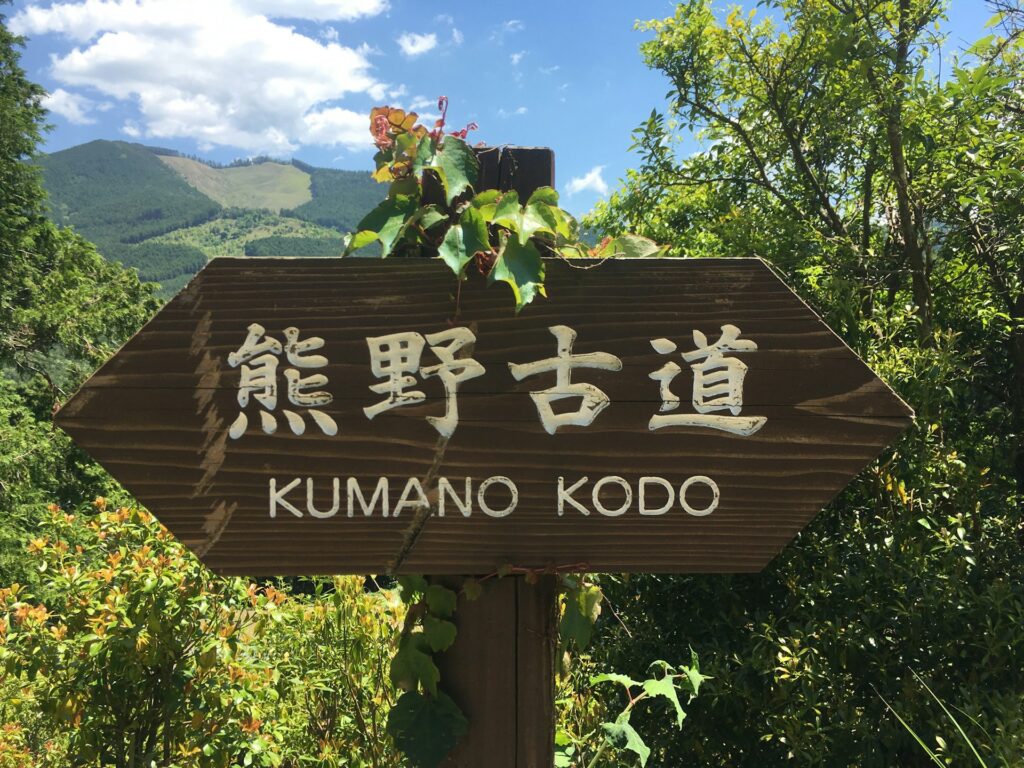
A recommended 140-kilometre route follows sections of the ancient Kumano Kodo pilgrimage path (adapted for cycling) and the stunning coastal roads of the Kii Peninsula. This journey typically takes 3-4 days, connecting sacred sites of the UNESCO-listed Sacred Sites and Pilgrimage Routes in the Kii Mountain Range.

The terrain varies from gentle coastal riding to moderate inland climbs, with short challenging sections that might require dismounting for all but the most experienced cyclists. What makes this route special is the seamless blend of natural beauty and spiritual heritage, from the towering Nachi Falls to the grand Kumano Sanzan shrines.

Photo by Susann Schuster on Unsplash
Photo by Dino Johannes on Unsplash

Accommodation highlights include temple lodgings (shukubo) at Koyasan, where you can join Buddhist monks for morning meditation, and traditional minshuku guesthouses in fishing villages where your dinner was likely swimming that morning.

Culinary Specialties Along The Way: Wakayama is renowned for its tuna, bonito flakes (katsuobushi), and umeboshi (pickled plums), with mehari-zushi (rice balls wrapped in pickled mustard leaves) making perfect cycling snacks. The higher elevations of the peninsula also produce excellent sencha tea – Japan’s most popular green tea variety – and many small producers offer tastings where you can sample this revitalising brew between rides.

It’s worth sorting an eSIM plan for Japan before you travel, too – rural Wakayama’s mobile signal can be patchy, and having reliable data means you can navigate pilgrimage trails, check opening times for remote shrines, and find those tucked-away tea farms without relying on sporadic Wi-Fi.

The Hokkaido Dairy Loop

Ideal For: Nature lovers and those seeking wide open spaces

Japan’s northernmost island presents a cycling experience utterly different from the rest of the country, with vast plains reminiscent of European countryside, dramatic volcanoes, and significantly fewer people.

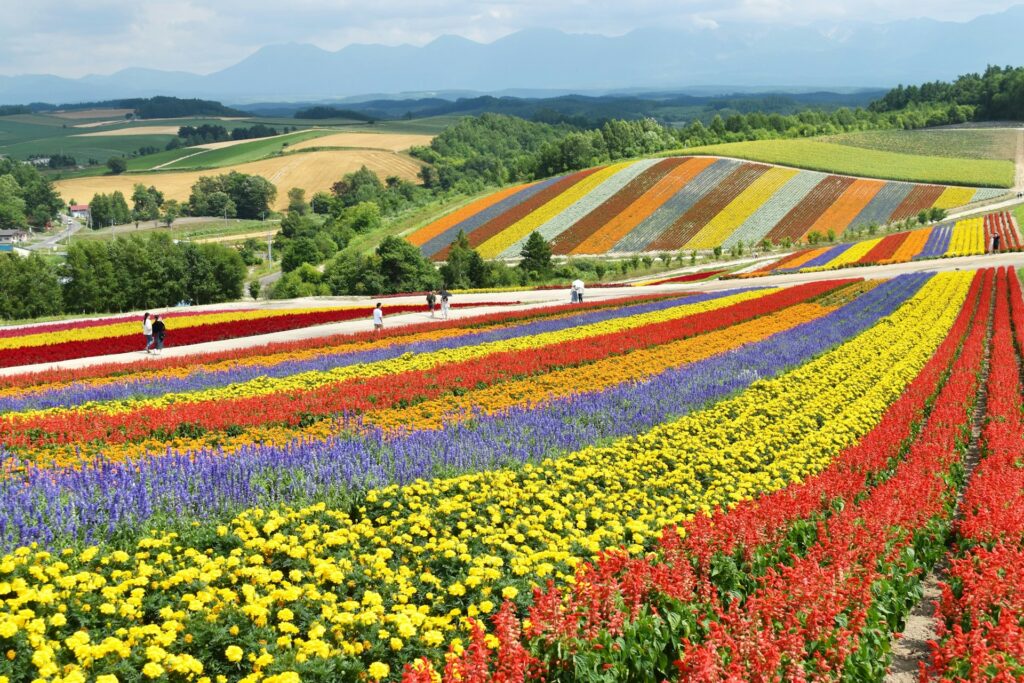
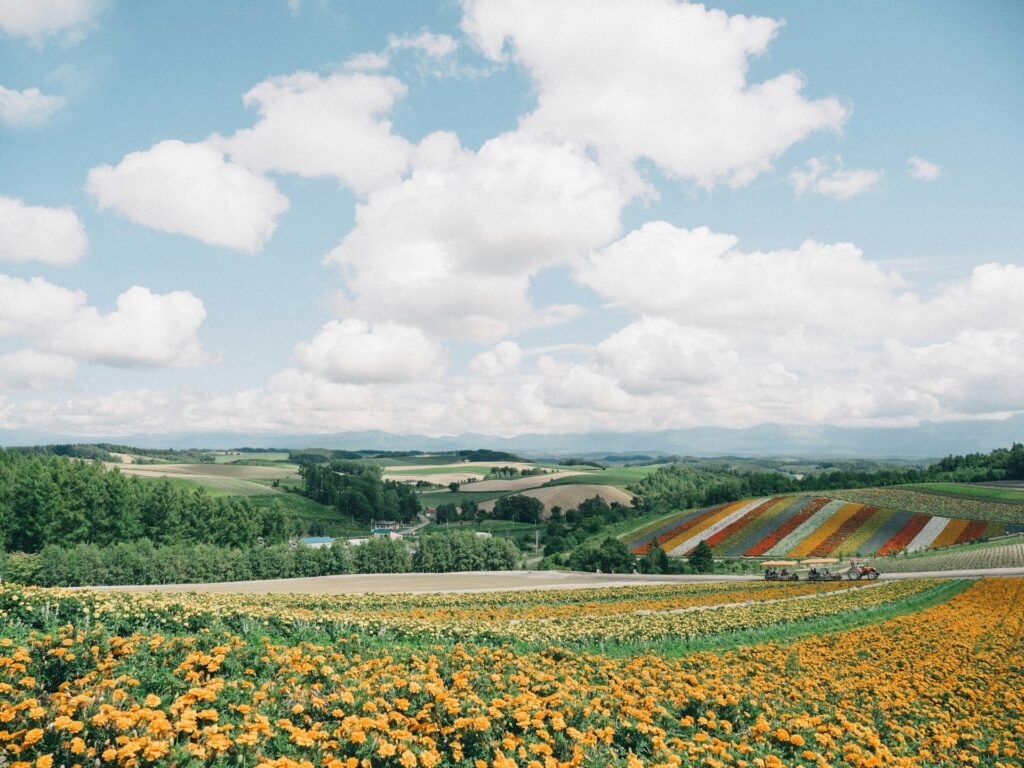
A popular 300-kilometre route circles through eastern Hokkaido’s dairy country, starting and ending in Kushiro, passing through the picturesque Akan-Mashu National Park and the flower fields of Biei. This journey typically takes 5-7 days, offering a sense of remoteness rarely found elsewhere in Japan.

Cyclists enjoy wide, well-maintained roads with minimal traffic, making this region particularly appealing for those who prefer tranquility over tourist hotspots. The terrain alternates between flat farmland and moderate hills, with a few challenging climbs into volcanic areas that reward with otherworldly crater lakes and steaming fumaroles.

Wildlife encounters make this route especially memorable, with potential sightings of Hokkaido red foxes, tancho cranes, and even abundant deer. Accommodations range from dairy farm stays to lakeside hotels with natural hot springs and sweeping views.

Culinary Specialties Along The Way: Hokkaido is Japan’s dairy heartland, offering exceptional ice cream, cheese, and butter. Don’t miss the fresh seafood, particularly crab, uni (sea urchin), and scallops, along with the island’s signature soup curry and remarkably refreshing local beer.

The Kyushu Hot Spring Circuit

Ideal For: Relaxation seekers and cultural explorers

Japan’s southernmost main island offers a unique cycling adventure where every day’s riding culminates in soaking travel-weary limbs in some of the country’s finest natural hot springs.

A suggested 180-kilometre circular route from Fukuoka takes you through Kyushu’s volcanic heartland, including the otherworldly landscapes of Aso-Kuju National Park, the historic hot spring town of Kurokawa Onsen, and the picturesque countryside of Oita Prefecture. This journey typically takes 4-5 days, with the option to extend into the ceramic towns of Saga Prefecture.

The route features several challenging climbs through volcanic terrain, but the promise of therapeutic mineral waters at day’s end makes the effort entirely worthwhile. What sets this route apart is the incredible variety of onsen experiences – from riverside rotenburo (outdoor baths) hidden in bamboo forests to historic bath houses dating back centuries.

Accommodation typically centres around traditional ryokans with their own hot spring facilities, where you’ll sleep on futon mattresses and dine on multi-course kaiseki meals featuring local specialties.

Culinary Specialties Along The Way: Kyushu is famous for its tonkotsu ramen, charcoal-grilled chicken (yakitori), and pristine vegetables grown in volcanic soil. The region’s sweet potato shochu (distilled spirit) offers welcome refreshment after a day in the saddle.

Piecing Together Your Own Grand Tour of Japan

For the truly adventurous cyclist, combining elements of these routes into a comprehensive exploration of Japan represents the ultimate two-wheeled adventure. While logistically challenging, the country’s excellent train network (most of which accept bagged bicycles) allows you to connect these diverse regions into one epic journey.

Bike tours might start in Tokyo, heading north to explore Hokkaido’s wilderness, before returning south to tackle the Northern Alps. From there, train connections would take you to western Japan for the Shimanami Kaido, followed by the spiritual routes of Wakayama, before finishing with the hot springs of Kyushu.

This comprehensive adventure would cover approximately 800-1,000 kilometres of cycling over 3-4 weeks, offering an unparalleled insight into Japan’s diverse landscapes, cultures, and cuisines. The best approach is to ride the highlight sections in each region rather than attempting to cycle every kilometre between them.

The Bottom Line

Japan offers a cycling experience like no other – a perfect fusion of natural beauty, cultural depth, and impeccable infrastructure. Whether you’re conquering mountain passes in the Japanese Alps, island-hopping across the Inland Sea, cruising around Tokyo, or soaking in hot springs after a day’s ride through volcanic landscapes, cycling provides an intimate connection with this fascinating country that few other forms of travel can match.

The Japanese concept of ‘omotenashi’ (wholehearted hospitality) ensures warm welcomes throughout your journey, even in remote areas where foreign faces remain uncommon. For cyclists seeking adventure beyond Europe’s well-travelled routes, Japan represents the perfect next frontier – challenging, rewarding, and utterly unforgettable.

8 Of The Best Sunday Roasts In South London

Last updated March 2026

Poetic license with specificity of location acknowledged just this once, it’s time to explore South London’s best roasts. Because let’s face it, on the Sabbath Day, when hangovers and Sunday Scaries loom and linger, it’s quite the treat to defer responsibility to the city’s best chefs for your favourite meal of the week.

Sunday roasts, the quintessential British celebratory feast, are best enjoyed in a traditional British pub, preferably in front of a roaring fire, with good British ale and even better friends. Although no roast will ever compare to your mum’s, if you live in South London, these 8 come pretty close.

Harwood Arms, Fulham

Served 12pm to 8:15pm

One of only two Michelin-starred pubs in London the Harwood Arms has held its star since 2010, and for good reason. Co-founded by Brett Graham (owner of 3-Michelin starred The Ledbury) and Mike Robinson in 2009, and tucked away in Fulham’s backstreets, this isn’t your typical gastropub – though you’d be forgiven for thinking so at first glance. 

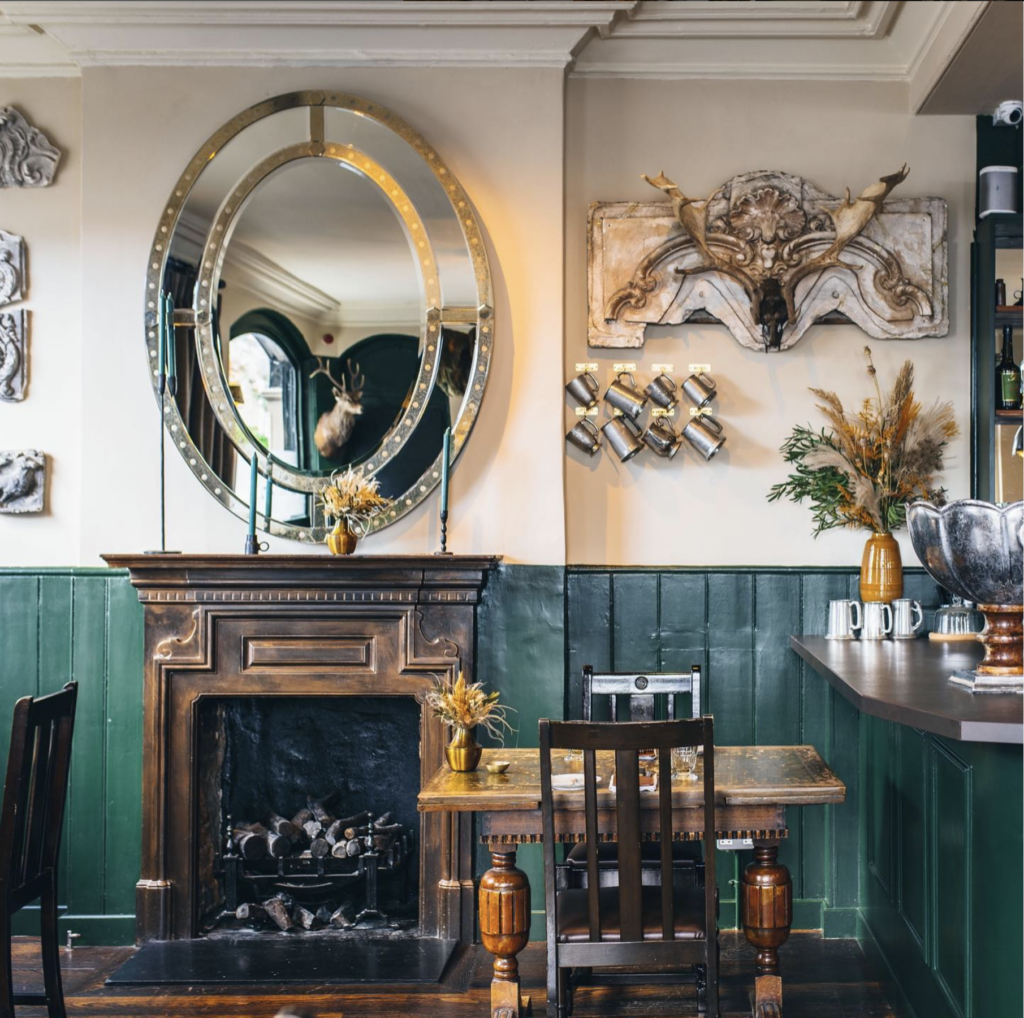
The warm wooden interiors and unfussy British comfort create a cosy, countrified haven, while subtle touches like ostrich feather lampshades and a deer’s head on the wall hints at something rather special. In summer, strawberries and radishes grow on the rooftop, ready to supply fresh ingredients to the kitchen. The wine list is seriously impressive, ranging from English sparkling wines to Georgian reds and even the premium delights of a 1988 Bordeaux.

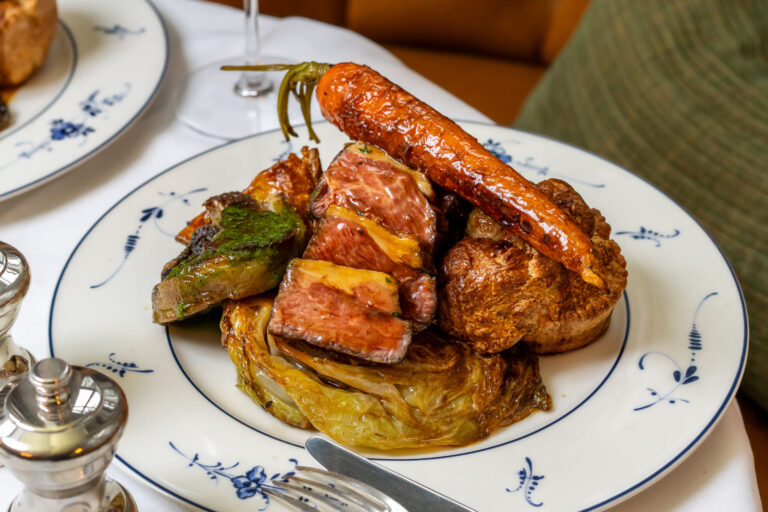
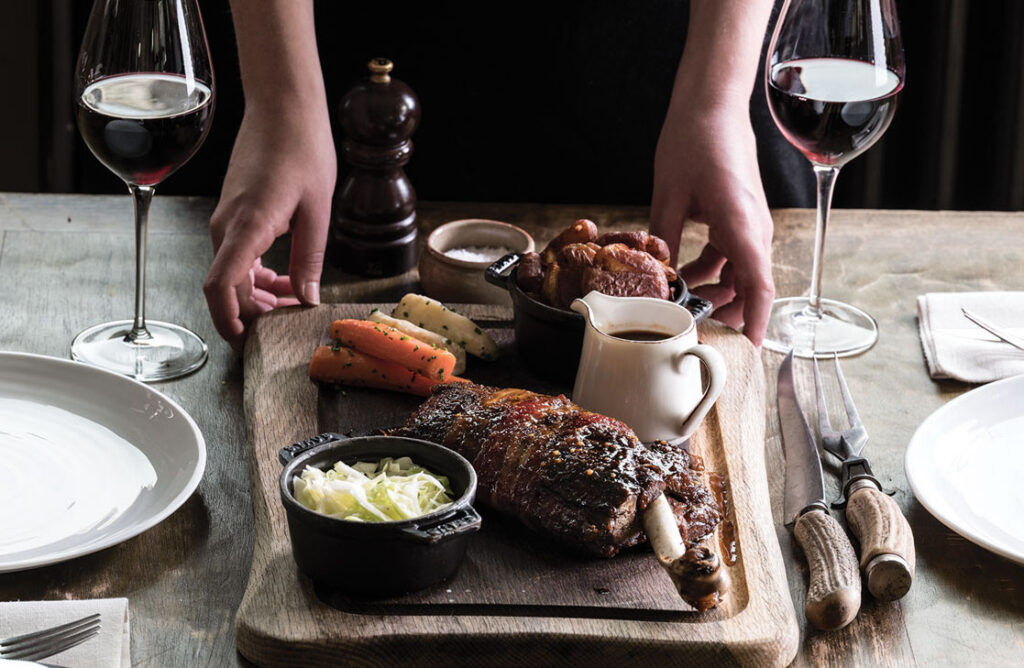
Head chef Joshua Cutress crafts a set Sunday menu showcasing seasonal British ingredients, with two courses at £64 or three at £79. Start with their legendary venison Scotch egg at £12 – an absolute must – or try the vegetarian Glamorgan version. The roast selection, served for two to share, features Belted Galloway sirloin (£7.50 supplement per person) with horseradish cream, or perhaps Iberian pork (from Graham’s own pigs) with apple sauce and crackling. Since this is a place famed for its game cookery, the smartest order might be the slow-cooked deer shoulder, wrapped in bacon and served with a punch perfect horseradish cream.

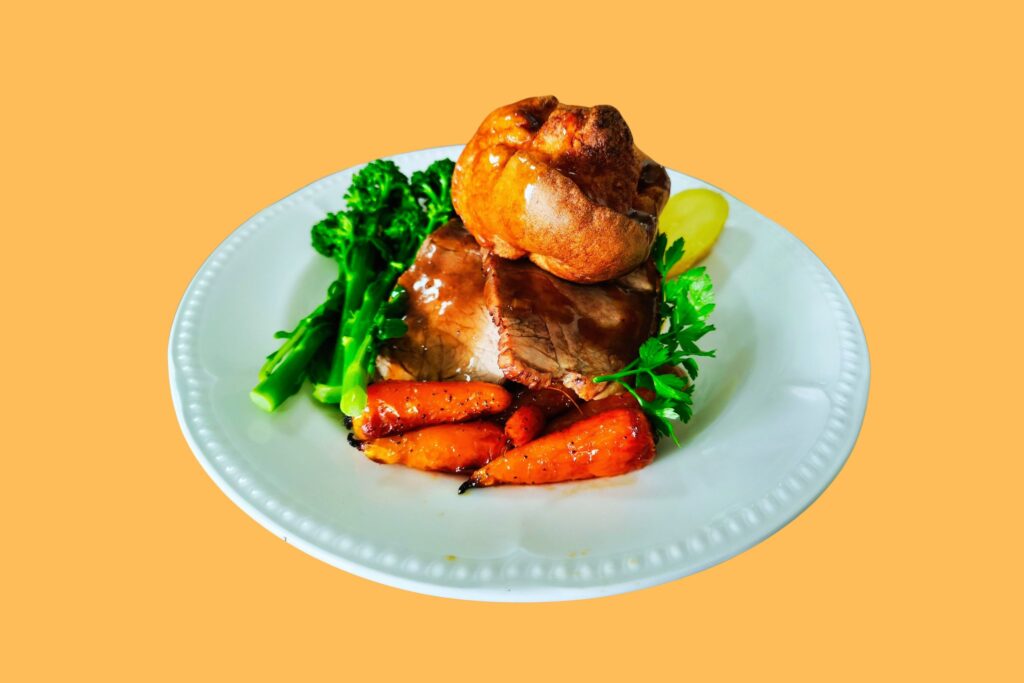
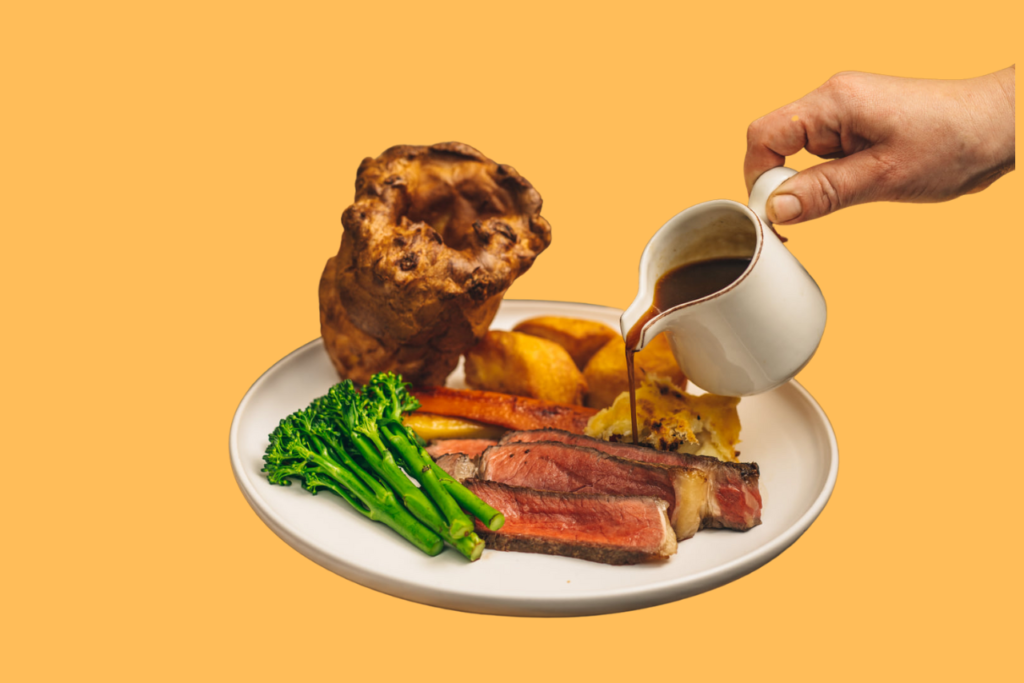
Each roast arrives with Yorkies, roast potatoes, baked carrots, cauliflower cheese and seasonal greens, just as it should be. Save room for their sophisticated desserts – the apple parfait with shortbread and hazelnuts was a triumph on a recent visit.

Book well ahead – this place fills up fast, especially for Sunday service.

Address: Walham Grove, Fulham, SW6 1QP

Website: harwoodarms.com


The Canton Arms, Stockwell

Served 12pm to 3:30pm

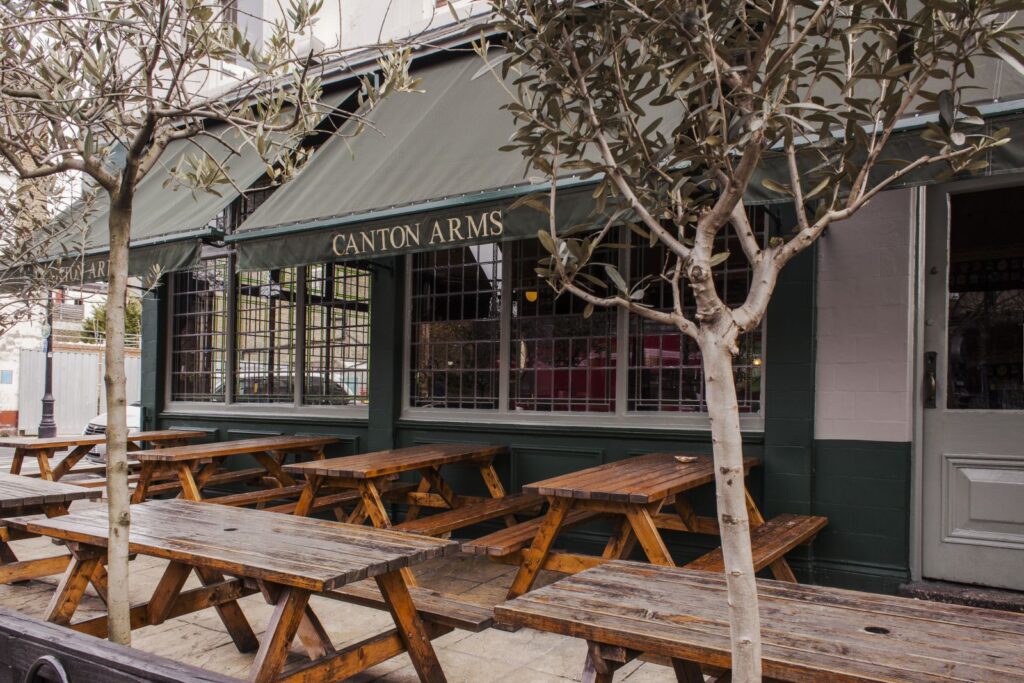
Since 2010, The Canton Arms has been a beacon of exceptional, ultra laidback pub dining under the guidance of Chef Patron Trish Hilferty and Charlie Bousfield. Part of a small independent group including the Anchor & Hope in Waterloo (more of them soon) and The Clarence Tavern in Stoke Newington, this pub has a particular claim to fame in the wet sales department – their house-made Vin d’Orange, crafted throughout the year but particularly special during the winter months when blood oranges and bitter Seville oranges are in season. It’s such a good drop, and one we return to time and time again.

While the front bar bustles with locals enjoying their real ales, the dining room serves up some of South London’s finest seasonal fare to folk who have made the journey especially. Their rare roast Dexter beef comes in at just short of £30, and is served with crisp roasties, green beans and watercress. But it’s their sharing dishes that truly shine – the rabbit and smoked ham pie for two costs £58, while their legendary seven-hour Salt Marsh lamb shoulder with potato and olive oil gratin (£145, feeds five) is worth gathering the troops for.

Don’t skip their starters – the brown crab and Westcombe cheddar tart is sublime, and the house cocktails deserve attention too, particularly the assertive Bloody Mary and their house-made Canton damson gin Negroni. You could, of course, order both…

Finally, Canton Arms desserts are a must. Their sticky toffee pudding served with clotted cream is a sticky, brooding affair that will leave you sated in body and soul – not exactly ready to take on the week ahead, but certainly soothed enough to find some relaxation in your Sunday evening.

Address177 S Lambeth Rd, SW8 1XP

Website: cantonarms.com


Read: 7 steps to the IDEAL roast beef Sunday lunch


The Camberwell Arms, Camberwell

Served 1pm to 5pm

Since 2014, this Victorian pub has been transformed into something rather special under Chef Director Mike Davies, who cut his teeth at the legendary Anchor & Hope (we keep promising: more of that place in a moment). While the decor remains understated – think stripped wooden floorboards that click-clack pleasingly under high heeled foot, and the occasional chalkboard to remind you where you are – the food speaks volumes.

Their individual roasts are where things get interesting. Saddleback pork with hispi cabbage, apple, tarragon and crème fraiche slaw comes in at £28, while a dry aged Hereford rump with horseradish crème fraiche will set you back £20 for a single portion. The sharing options are when things get celebratory – try the slow cooked Romney lamb with mint and pinenut sauce at £58 for two, or Sladesdown Farm chicken with curly kale and Pecorino crème fraiche at £50. There’s also a sharing pie of beef, ale and bone marrow at £45, if you fancy going just a little off piste with your Sunday lunch.

Either way, begin with a Bloody Mary (£8.50) and an order of scotch bonnet pork fat on toast (£7) or beer onions on toast with Comte (£7). It’s a punchy, no-nonsense way to start a meal that’s going to get very filling, very fast.

Address: 65 Camberwell Church St, Camberwell, SE5 8TR

Websitethecamberwellarms.co.uk


Read: 10 of London’s best gastropubs


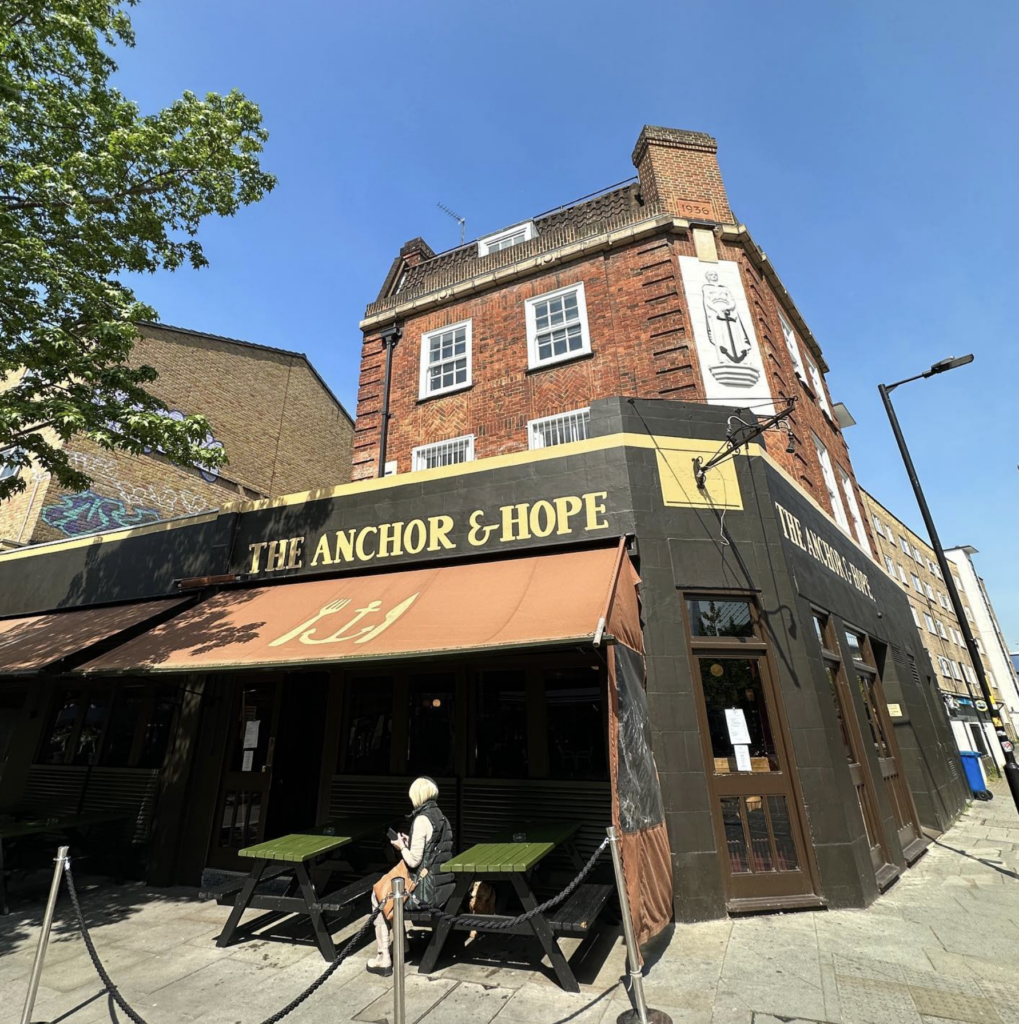
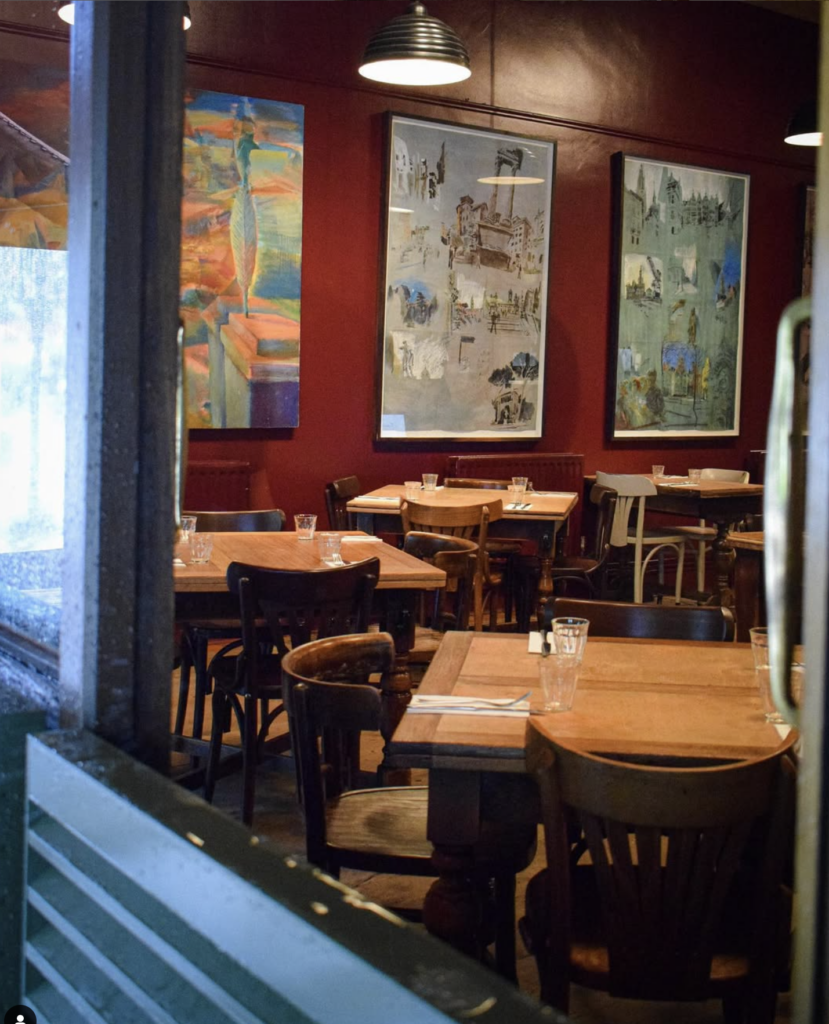
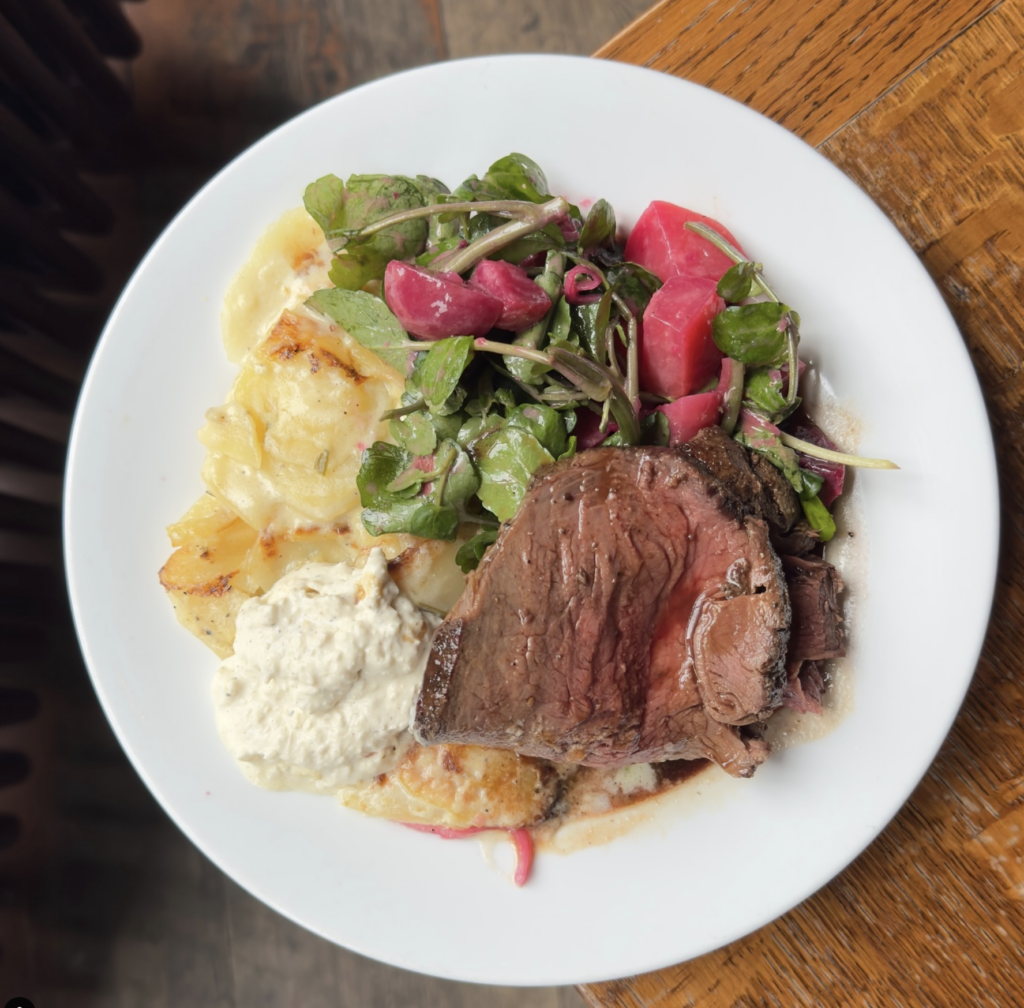
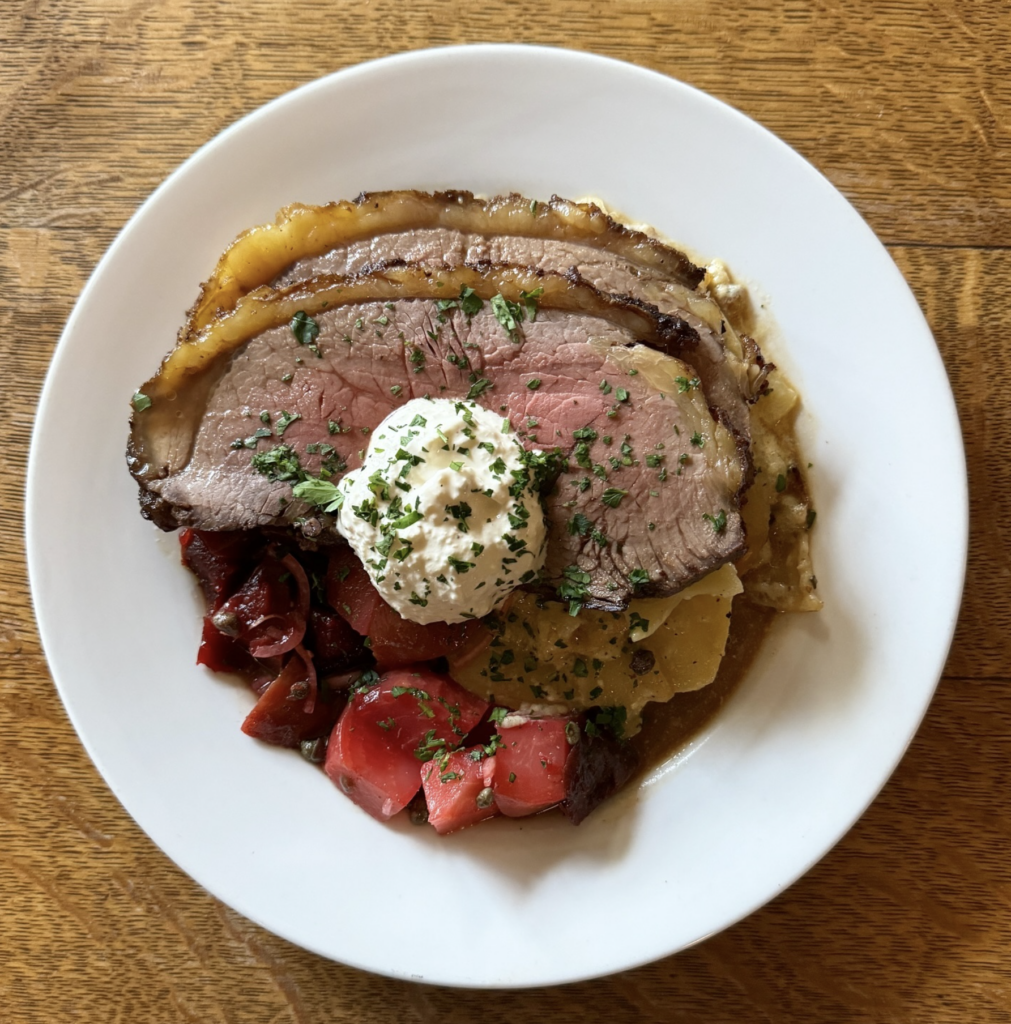
The Anchor & Hope, Waterloo

Served 12pm to 3:15pm

Phew, we finally got there…

Established in 2003, this Waterloo institution sits conveniently close to The Young Vic Theatre. The oxblood walls and weathered wooden tables set the scene for what’s to come – skilled but unpretentious cooking that won’t break the bank. In the two decades since it first opened, reassuringly little has changed, making it a perfect pre- or post-theatre destination.

The atmosphere remains decidedly unfussy – wine is served in tumblers rather than traditional glasses, maintaining its proper pub credentials. Colourful artwork hanging on the walls by Aldous Eveleigh lends a modern edge. The drinks selection includes craft beer on tap from Brewpoint brewery, and wine by the glass starting at an eminently reasonable £4.75.

Anyway, we’re here for Sunday lunch, so let’s focus our attentions on that. The Anchor and Hope’s roast aged Swaledale beef rump at £35 is thoughtfully put together, blushing and generous, and arriving with gratin dauphinois (because it doesn’t always have to be roasties, right? RIGHT?), beetroot, watercress and horseradish.

The sharing plates are where the kitchen truly flexes its muscles. Or rather, rests its muscles while the oven does the hard work of slow cooking larger joints to giving, gutsy perfection. Try the suet-crusted Swaledale chicken, bacon and leek pie at £68 for two, or the seven-hour lamb shoulder with roots and gratin dauphinois (because who needs… Hang on; we’ve said that bit) at £80 for two. 

The wild venison and hazelnut faggots with red wine, roots and ceps at offer something delightfully different. They’re served with mash. At this point, you realise there isn’t a single roast potato on the Anchor and Hope Sunday menu, but the food is so good, so handsome and so generously seasoned, that it doesn’t even bother you.

Address36 The Cut, Waterloo, SE1 8LP

Website: anchorandhopepub.co.uk


Roast, Borough Market

Served 11:45am to 6:30pm

True to its name, this Borough Market stalwart takes Sunday lunch seriously. Under Executive Chef Thomas Cooney’s watchful eye, the Roast kitchen champions seasonal and sustainable ingredients via the medium of, erm, roasting, all with stunning market and St. Paul’s Cathedral views to boot.

Their 42-day aged Hereford beef comes in at £36.50, complete with a braised beef croquette, horseradish sauce and a viscous, glossy gravy. The Herdwick lamb saddle is the same price, and arrives with braised lamb shoulder and mint sauce, while the signature Saddleback pork belly at £30 includes all the trimmings plus pigs in blankets. Decisions, decisions…

For something truly special, their Shorthorn beef Wellington at £45 with truffle mash potato and madeira sauce is worth every penny. Vegetarians aren’t forgotten – there’s a nut roast that we’re assured is a satisfying thing. It’s paired with maple roast carrots, braised red cabbage, and tenderstem broccoli.

Don’t skip their truffled cauliflower cheese to share at £12 – it’s legendary. Don’t skip our full review of Roast, either.

Address: The Floral Hall, Stoney St, SE1 1TL

Websiteroast-restaurant.com


The Laundry, Brixton

Served 1pm to 6pm

The striking red-brick Victorian building that houses The Laundry is a local landmark, with ‘SANITARY STEAM LAUNDRY’ still proudly emblazoned across its facade, promising an afternoon that’ll freshen you up rather than fuck you over. Which is kind of what you want from a leisurely Sunday lunch, don’t you think?

It’s a gorgeous, historical spot for a Sunday roast south of the river. The building served as a commercial laundry for 119 years before its thoughtful transformation, with many original features preserved, including art and books from its previous life.

Enough of the history lesson, if you can call it that, you’re here for the roast. The Laundry’s 28-day aged Hereford sirloin just tips the £30 scale, and comes with creamed horseradish and a flamboyantly risen Yorkshire pudding. The meat is served a perfect pink, with enough of a fat cap for real depth of flavour to be imparted. It’s superb.

Equally good is the rolled roast pork belly and its perky apple sauce, again £30. It boasts a crisp and crunchy border of crackling that would have local resident Jay Rayner getting a little hot and steamy under the collar. Vegetarians are well-served with a roast squash and sage tart that’s given intrigue via miso caramel chestnuts. At £24 it’s not cheap, but it’s a vast improvement on a half-baked nut roast. 

The drinks selection is enough to have you pulling a sickie on Monday morning – their house cucumber-infused Margarita and a marmalade-fired Old Fashioned both slip down far too easily. For the abstainers, there’s local kombucha alongside creative non-alcoholic options like a Virgin Wasabi Mary.

All roasts arrive with exemplary roast potatoes, glazed carrots, minted peas and – crucially – bottomless gravy (we’ve tried to push our luck with this one, but the wait staff were unflappable in their generosity). Whatever you do, add on the macaroni cheese with cheddar and gruyère gratin for an extra tenner, then retire to their heated terrace for another of those sweet and citrusy marmalade Old Fashioneds.

Address: 374 Coldharbour Ln, SW9 8PL

Website: thelaundrybrixton.com


No. Fifty Cheyne, Chelsea

Served midday to 6pm

While technically just across the river, some things are worth walking on water for. This Chelsea gem serves up award-winning roasts under Executive Head Chef Iain Smith’s direction. Overlooking the Thames and Cheyne Gardens, with scenic views of Chelsea Embankment Gardens and the iconic Albert Bridge, No. Fifty has experience hosting royals and stars of the stage and screen, but that doesn’t mean the vibe is stifling or exclusive. Quite the opposite in fact; there’s a pleasing din to Sunday lunch service here, the mood buoyed and brightened by hanging foliage, plenty of natural light, and a bustling bar that overlooks the dining room.

Cumbrian chicken arrives succulent and golden, while the 42-day aged Hereford beef is a study in perfect timing, sliced thick and arriving a perfect pink. Their signature Saddleback pork belly brings with it crackling that shatters just so, but it’s the showstopping Shorthorn Beef Wellington that draws the most admiring glances from neighbouring tables, that pesky natural light spotlighting it a little too well. It’s a premium £69, but it’s worth every penny.

The drinks list impresses with an extensive range of spirits and cocktails – try their signature Cheyne Rose (vodka, rose liqueur, lychee juice, and egg white) at £9.50, or their Burnt Pear Old Fashioned at £10. As a digestif, the house limoncello is just the right side of bracing. 

Dogs are welcome on leads – a proper Chelsea touch. Interestingly, these guys offer their roasts on Saturdays too. 

Address: 50 Cheyne Walk, SW3 5LR

Website: fiftycheyne.com


The Great Southern, Gipsy Hill

Served 12pm to 8pm

This beautifully restored Victorian corner pub, a stone’s throw from Gipsy Hill station, puts a strong emphasis on well-executed roasts while keeping prices surprisingly reasonable for South London. The building, dating from the mid-1800s, has an intriguing past – in a former life, it was a boxing gym, and the pub takes its name from a steam (there’s that word again) train. 

Serving their roasts from 12-8pm, The Great Southern offers both craft and classic options at the bar – think a nicely poured Guinness alongside rotating real ales and ciders. For the commuters among us, there’s even a live feed of train times from the nearby station to save you fumbling with your phone.

While perhaps less refined than some of the other roasts on our list, their Sunday offering is a bargain in this city and in this economy, including a choice of roast leg of lamb, roast chicken, or roast rump beef, all for twenty quid or under. For the particularly hungry, their ‘mega roast’ at £24 offers a generous sampling of chicken, pork belly and beef on one plate. You know you want to…

That family-friendly pricing includes kids’ portions at £7.50, and the enormous beer garden makes this perfect for family Sunday lunches. You know what? We might just stay here a while…

Address: 79 Gipsy Hill, Norwood, SE19 1QH

Website: thegreatsouthernpub.co.uk

Where To Find The Best Steak In Phuket

The mouth-puckering relishes, the brow-beading curries, the irresistibly cute kanom jeeb and the crisp folds of freshly-slapped roti… Phuket has some of the world’s most diverse food at sandy, dusty street level. Here, you’ll eat handsomely for breakfast, lunch and dinner, and feel no guilt about how you pushed your stomach to the brink of explosion. Because, let’s be honest, you know that the explosion allows for more eating later.

But sometimes, just occasionally, the clarion call of a properly barked, blushing steak, flaked salt rather than fish sauce, and a glass of something inky drowns out even the nok ka wow’s dawn chorus. For those times, the island delivers too. With that in mind, here’s where to find the best steak in Phuket.

Wagyu Steakhouse, Surin

Ideal for choosing your cut from the fridge, your knife from the box and your wine from the Coravin…

Phuket has dozens of flash, black card-baiting steakhouses where the beef is flabby, the diners taut and the prices bloated. Wagyu Steakhouse bucks this trend not brashly or boldly, but in a more seductive way, somewhere closer to Bangkok’s suave occasion dining than the thickening sickly sheen of the island. The approach pays off; the restaurant has been listed in the Michelin Guide for the last three years.

Part of the refined Twinpalms Surin Beach resort, the restaurant is elegant and precisely designed: dark wood panelling, plush leather seating, a dimly lit two-storey interior. Upstairs, an Art Deco bar glows with burnished fittings beneath muted lighting. Start here with an Oaxaca Cooler, a sharp, herbaceous mix of tequila, yuzu puree, lime, egg white, cucumber and shiso, then descend, just a touch wobbly, into the bowels of the operation.

Downstairs, the flickering dining room, its floor-to-ceiling windows crowded with monstera peering in from the darkness, opens onto a display fridge of prime cuts and an oyster bar. It’s a space where faces soften, intimate shadows are cast, and you can imagine spies eavesdropping on increasingly loose-lipped conversations.

This is where the ritual begins. You’re led by hand across the room to the fridge. If you prefer to gawp and point rather than read a menu, you can choose your steak now, relying on instinct. Behind the counter, chef Nok (Khanitta Rawangsee) leads an all-female brigade – the “women of wagyu”, as one neighbouring diner neatly put it – gracefully working an imposing Josper charcoal oven and a beechwood grill. The results carry deep, clean smoke without bitterness.

Back at the table, and a box of steak knives from five different renowned bladesmiths is presented so you can choose the right tool for the job, the implication being that you are a man of some discernment and you’ll know just what to do here. It’s a clever touch, but only works because the steak that follows can bear the scrutiny of your decision.

We had a Japanese Miyazaki Wagyu A5 striploin, fatty, rich and creamy white when raw, alongside a USDA Prime Black Angus tenderloin that had been dry-aged to a much darker crust. The former was cooked closer to medium, as it should be, to let the fat properly melt and self-baste the steak. The tenderloin, thick and proud, was served blushing. The difference could not have been more pronounced in two cuts from the same family (not the actual same family, but you know what we mean). Both were superb, the dichotomy the point; one so marbled it melted at 37°C, the other rewarding a bit of chewing (it’s a hard life) with undulating, funky depth.

For those who want to taste even further across the marbling spectrum without committing to a single cut, the Wagyu Discovery Trio offers USDA Prime Black Angus, MB4 and MB8 tenderloins side by side, and at 2,500 baht it is a genuinely cost-effective way in.

Speaking of tasting across the spectrum, a choice of eight sauces includes a nahm jim jaew that nods to the kitchen’s Thai roots, alongside bordelaise, bearnaise, chimichurri and a fresh green peppercorn with brandy. Yes, we can’t remember the other three because the room was dusky and the Sassicaia was flowing. Anyway, we got them all, and what a treat it was to use the chips as cutlery for dredging. Thick cut, not too hard fried, and with a grating of truffle because, well, why not?

The wine list is formidable, running from a glass of Teorema Cabernet Merlot at 490 baht through Ornellaia and Opus One, all the way to Mouton Rothschild at 109,000 baht a bottle, with the Coravin system allowing by-the-glass access to some serious vintages.

End the evening upstairs at the bar, bookending the night with another stiff drink and, if the mood takes you, a Partagás Serie D4 in the outdoor cigar lounge. We’ve established you’re a diner of some discernment by now, after all. Just don’t fall in the hotel pool on your way out.

Steaks from THB 890/100g.

Website: wagyuphuket.com

Address: Twinpalms Phuket Resort, 106/46 Mu 3, Choeng Thale, Thalang, Phuket, 83110, Thailand


Sizzle Rooftop, Patong

Ideal for sunset steaks with uninterrupted Andaman Sea views…

Lodged in the hills above Patong at Avista Hideaway, Michelin-recommended Sizzle is the sort of place where an evening starts with sunset cocktails and grazing plates and ends three hours later with a theatrical limoncello you had no intention of ordering.

It is the views, first and foremost, that keep you here for so long: expansive, rare uninterrupted panoramas over the Andaman Sea towards the horizon, the kind you never want to leave. The dining room behind you is totally open, no walls, the sea breeze doing the necessary cooling. Exquisite. 

But the views disappear into the sunset – they always do – so the food and vibe need to be good enough to keep you enthralled. On the latter note, Simona is a wonderful host, warm but subtle, and she sets the tone for the whole experience. The food side of the bargain is covered by chef Alvaro Puerta, from Almería, who brings a certain Spanish swagger to the menu, threaded through in ways that feel innate: Iberico croquetas with 24-month ham and aioli, a particularly lucid gazpacho, and a way with grilled fish that carries the confidence of someone raised on the Mediterranean coast.

All this light, bright foreplay gives the main event room to breathe. We went for the Australian Black Angus ribeye, and it arrived with nothing but a puck of garlic butter melting over it and a little rectangle of deep-fried polenta. A brave move to keep things so unadorned, but it let the beef do the talking; a gorgeous steak, dry-aged until touching on that funky, blue-cheese territory that only serious aging achieves.

For those seeking more spectacle (views not enough for ya?), a 1.4kg Black Angus tomahawk serves two to three and requires advance ordering when you take your seat. Sauces include blue cheese gorgonzola, bearnaise, bordelaise and a Japanese BBQ glaze, if you do want to jazz things up, but sometimes it’s nice to just let the quality of the product shine. In this instance, the view, the steak, and a limoncello that for some reason is billowing over dry ice are providing more than enough to feast on. Drink it all in.

Steaks from THB 2,200.

Website: sizzlerooftopphuket.com

Address: Avista Hideaway Patong, 39/9 Muen-Ngern Rd, Tambon Patong, Amphoe Kathu, Phuket 83150, Thailand


Five Olives, Bang Tao

Ideal for a Fred Flintstone Fiorentina when the group can’t agree on a steakhouse…

Five Olives is not a steakhouse, let’s be clear. It is a Michelin Guide-listed Italian restaurant in Bang Tao, ranked in the Top 50 Pizzerias in Asia-Pacific for three consecutive years and, just recently, at its highest-ever position of number 26 in the 2026 ranking. It also does fantastic pasta. Hey, maybe Five Olives doesn’t even know what it is?

It’s all things to all people, is what it is, and does it all very capably indeed. Founded by chef Korn Kantapat Sinpradit and his sister Khun Kwang, the restaurant occupies an elegant space in the Boat Avenue Park and Playground complex, about 700 metres from bustling Boat Avenue. The space has high ceilings and a large outdoor terrace where the massive fans are always spinning, and sits just far enough from Boat Avenue to feel like a breath of fresh air. Khun Korn also runs the sister restaurant Marni, which shares the same pizza pedigree, equally as beloved for its Canotto-style Neapolitan pizza with those signature puffy, blistered rims.

But it’s the charcoal-grilled Fiorentina steak that we’re at Five Olives for. A close to 2kg cut served with roast potatoes, corn salad and beef jus, it is, quite simply, one of the best things you can eat on the island if your mind has turned to purposefully rare beef and no amount of gaeng massaman neua can pull you back in the other direction.

The Italian approach to steak, letting the quality of the cut do the work with minimal intervention, is at odds with the sauce-driven hotel steakhouses you’ll find more of in Phuket, and it’s all the better for it. There are a couple of other steaks on the menu too, a Black Angus picanha, a ribeye and a charcoal-grilled tenderloin, all served with homemade green sauce, but the Fred Flintstone, comically large Fiorentina is without doubt the one. A glass of Nero d’Avola from Sicily at 350 baht is the right companion.

If you have a group that cannot agree on a steakhouse, Five Olives is the diplomatic choice: the steak lovers get their Fiorentina, everyone else gets some of the best Italian food on the island, and nobody compromises.

Steaks from THB 990.

Website: fiveolives.co

Address: 2/1 Cherngtalay, Thalang District, Phuket 83110, Thailand

Read: The best Italian restaurants in Phuket


Char’d Grill, Karon

Ideal for ditching your shoes & dining with your feet in the pool…

Voted Asia’s Best New Hotel Restaurant 2024 at the World Culinary Awards, Char’d (part of the Avista Grande Karon) bills itself as a first-of-its-kind, dine-in-water steakhouse and seafood grill with flame-to-table gastronomy. Their words, not ours, and a hell-of-a-lot of hyphens, too. Pedantry aside, the trepidation is real: you take your shoes off, lower your feet into the pool, and wonder if this is going to be a bit, whisper it, naff?

But a cool current comes in from the sea, something close to giddiness sets in, and by the time the menu hits the table you’re kicking and splashing like a carefree kid. It sets the tone: this is a restaurant that wants you to have fun and, it turns out, eat well too. At Char’d, everything centres around a Kopa charcoal grill oven, and you can taste the smoke in every cut. You can smell it too, floating out across the swimming pool and seasoning the air, senses getting discombobulated like synaesthesia as you’re ankle deep in water and the Sea Breeze goes to your head. 

Working that grill is Chef Nair, who has cooked his way through India, Dubai, Ireland and beyond, and the accumulated mileage shows in a menu that leans Californian, with a surf-and-turf energy that ties the whole thing together succinctly. That means that Phuket lobster and imported premium steak share equal billing and there’s a fair amount of theatrics, which is all good once you’ve succumbed to the frivolity of it all.

The steak itself, an Australian Black Angus ribeye, had perfect cuisson, and you really taste the charcoal. It is paired with a thick, almost emulsified chimichurri and a viscous peppercorn sauce. Both are good, but neither are really needed, the steak buttery enough to be its own thing without accoutrement.

In all honesty, rules had gone out the window by this stage (we’re dining in a swimming pool here!) and an expertly made lobster bisque became the dipping sauce of choice: deep, rich, and without a hint of sucking a two-pence piece. Gorgeous.

The fun doesn’t end with your feet in the water. Sword-like steak knives are laid ceremoniously from a wooden box at your table. A paloma infused with local aromatics arrives in a particularly massive khan, an ornate Thai ceremonial bowl, and looks gorgeous. On Tuesdays and Fridays, the space is lit up with a live fire dance show. Shackles off, it took a heroic act of restraint not to dive in by the end of the meal.

Steaks from THB 1,599.

Website: avistagrandephuketresort.com

Address: 38 Soi, Luang Phor Chuan Rd, Karon, Phuket 83100, Thailand


Smokestack BBQ & Grill, Patong

Ideal for American-style smoked brisket, low-and-slow barbecue, and a showboating tomahawk…

Smokestack sits directly across from Patong Beach at the Courtyard by Marriott, and it is doing something different to every other restaurant on this list. This is American-style barbecue done with an admirable conviction: fruit wood-smoked meats, low-and-slow cooking, house rubs, and a chef, Christopher Tuthill, who graduated from the California Culinary Academy and has spent years between San Francisco and Hong Kong honing his approach to butchering, curing, smoking and grilling. 

The massive, element-beaten smoker outside the semi-open kitchen, the haze of hickory that drifts all the way out to sea and catches the nose of sunbathers like a freshly baked apple pie on a windowsill, the cornbread served with a beef tallow candle: it all signals a place that takes its smokehouse credentials seriously.

The reason Smokestack earns its place here is the 240-day grain-fed Angus beef brisket, which is superb: deeply smoky, yielding, with a bark that has real bite to it, served with house pickles and a choice of signature sauces including a Carolina-style vinegar and an Alabama white. A wedge salad with iceberg, bacon, cherry tomatoes and blue cheese dressing cuts through the richness and a glass of Chianti Classico Gran Selezione at 950 baht is a worthy match for the smoke.

For those after something more classically steak-shaped, the charcoal-cooked section offers a grain-fed Australian ribeye and an Angus tenderloin, both served with a side dish and thyme or pepper jus. The grain-fed flank steak at 870 baht is a steal. And the wagyu tomahawk, a 1.4kg showpiece at MBS 7, is here for the table that wants all the stragglers on Thaweewong Road to admire their massive bone. 

Hmmm, not sure why we went there quite honestly…

Steaks from THB 740.

Website: smokestackbbqandgrillphuket.com

Address: 44 Thaweewong Rd, Pa Tong, Phuket, 83150, Thailand


Benny’s Cocktails & Grill, Bang Tao

Ideal for a candlelit steak night with live jazz…

Founded in 2015 by Benedikt De Bellis, an Italian who has lived on Phuket long-term after a career in luxury hotel and restaurant hospitality across Europe and Asia, Benny’s sits at the southern end of Bang Tao Beach, away from the resort cluster. The inspiration comes from the American bars of London that thrived in the late 19th and early 20th centuries: warm, convivial, candlelit garden tables beneath tropical greenery, a place where staff remember your name by the second visit.

The steak menu is tightly edited. A dry-aged Black Angus cowboy steak, marbling score 3 and aged 30 days, serves four to six and needs 40 minutes on the grill for medium-rare, so order it with intent. The pure-breed Wagyu ribeye, dry-aged 20 days, is recommended rare to medium-rare and delivers rich, buttery flavour. There’s a grass-fed tenderloin for those after something leaner. All steaks arrive with fresh salad and peppercorn sauce – and by this stage we’ve got to say, it’s quite nice to have the paradox of choice removed sometimes. 

The tableside Caesar salad and steak tartare, both prepared with a fair amount of flamboyance, are signature moves worth ordering for the spectacle as much as the eating. Wednesday is steak night, paired with live jazz from 7pm. Dinner and a show, indeed.

Steaks from THB 1,120.

Website: bennysphuket.com

Address: 5/6 Soi Had Bangtao cherngtalay, Thalang District, Phuket 83110, Thailand


Best Thai Beef Steakhouse, Phuket Old Town

Ideal for a fairly-priced taste of Thai beef in Phuket Old Town…

Firstly, cap doffed to the name on this one. But you’ll be pleased to hear there is substance behind the search-engine bait. Sitting on Dibuk Road in ever-gorgeous Phuket Old Town, opposite Wat Mongkol Nimit and a short walk from the photogenic Romanee Street, Best Thai Beef occupies a characterful old house with a weathered wooden facade that are ten a penny in the old town, but elsewhere would be a total selfie-magnet. Inside, a long and welcoming dining room is half-occupied by an open kitchen, and the first thing the chef will do is walk you to the front display fridge. Well, you might as well play your hand early in situations like this, no?

The focus here is Thai Wagyu, a crossbreed of Japanese and Australian wagyu from the northeast of Thailand, presented in both standard and dry-aged options. Cuts are scored by marbling and priced per 100 grams, so you can scale up or down depending on appetite and budget. A 500g New York steak, marbling score 2-3 and aged 45 days, is cooked judiciously, pink throughout, tender, with a clean beefy flavour uncluttered by heavy saucing. The dry-aged rib eye and T-bone are also worth considering, and the dry-aged bacon fried rice offers a different accompaniment to another Caesar salad. 

This is not a place that trades on glamour or ceremony. It is a good steak restaurant at prices that feel fair for the quality, in a neighbourhood that rewards a post-dinner walk through some of Phuket’s most handsome streets. You know what? We might wander off now, we’ve had enough of your company.

Steaks from around THB 300/100g.

Facebook: @bestthaibeefphuket

Address: 5 83000 Phuket Rd, Phuket 83000, Thailand

Putting the surf in, erm, surf and turf, join us as we check out the best places for seafood in Phuket next. 

6 Of Europe’s Most Gorgeous Hidden Gems To Visit In 2026

Yes, we know. ‘Hidden gem’ is one of those travel phrases that’s been stretched so thin it barely means anything anymore. Every destination with a cobbled street and a decent sunset has been called one at some point.

But the underlying impulse – wanting to travel somewhere that hasn’t been entirely swallowed by overtourism, somewhere you can actually sit down for lunch without a 45-minute wait – that still holds up.

From Paris to Prague and Barcelona to Berlin, Europe’s most famous cities are magnificent, but they’re also heaving. These six offer culture, beauty and character in equal measure, minus the crowds and the queuing. So while we’ll spare you the breathless ‘best kept secret’ routine, and instead present these; our six European destinations that remain, for now at least, genuinely less crowded alternatives to the continent’s big hitters.

Corvara, Italy

Ideal for Dolomite drama without the Val Gardena traffic jams…

Most British travellers heading to the Italian Alps default to the bigger, better-known resorts in Val Gardena or Cortina d’Ampezzo. Corvara, a village of barely 1,400 people at the head of the Val Badia in South Tyrol, tends to slip under the radar entirely. That’s a mistake. Sitting at 1,568 metres, surrounded by UNESCO-listed Dolomite peaks, Corvara is the main hub of the Alta Badia region and one of the most spectacular settings in the entire Alpine arc.

In summer, the hiking is extraordinary. The Sassongher summit (2,665m) rises directly above the village, trails wind through the Puez-Odle Nature Park, and the cable car up to Piz Boè – the only 3,000-metre peak in the Sella Group – opens up a landscape that looks more like the surface of the moon than anything you’d expect in northern Italy. For cyclists, the Sella Ronda Bike Day closes the four Dolomite passes to traffic entirely, handing the roads over to two wheels.

Back in the village, there’s a hotel facility in Corvara at the Col Alto that makes a comfortable base, and the food scene across Alta Badia is remarkable for a valley of just 6,000 people; three Michelin-starred restaurants sit within a short drive, alongside traditional Ladin mountain huts serving up hearty local cooking.

Piran, Slovenia

Ideal for Venice vibes at a fraction of the price (and none of the crowds)…

Slovenia’s entire coastline stretches just 47 kilometres. Blink and you’ll miss it. But tucked at the tip of a narrow peninsula on the Adriatic sits Piran, a town of around 4,000 people that looks and feels uncannily like a miniature Venice. That’s no coincidence: Piran spent over 500 years under Venetian rule, from 1283 to 1797, and the architecture tells the whole story. Narrow alleys thread between stone buildings, a bell tower modelled on St Mark’s Campanile rises above terracotta rooftops, and the car-free old town has a pace of life that feels decades removed from the resorts next door.

The heart of the town is Tartini Square, an elegant oval piazza named after the violinist and composer Giuseppe Tartini, who was born here. The 14th-century Church of St. Francis of Assisi sits within the Minorite Convent, where monks still chant in summer. Climb the medieval town walls for panoramic views across the Gulf of Trieste, or walk out to the lighthouse at the peninsula’s tip for one of the better sunsets on the Adriatic.

The food is Istrian: strong Italian influence, superb seafood, local Malvazija white wine and Refošk red from vineyards just inland. Prices run roughly half what you’d pay in Venice for a comparable meal. Trieste airport in Italy is just 40 minutes’ drive away, or it’s a 90-minute trip from Ljubljana, making Piran an easy add-on to a wider Slovenian trip that takes in Lake Bled and the Julian Alps.

Pietrapertosa, Italy

Ideal for breathtaking, cascading hilltop scenery…

Found on the slopes of Monte Impiso is the small village of Pietrapertosa, built into the rock face of the Lucanian Dolomites. Although the village is small, there is plenty to do when visiting. The zip line between Pietrapertosa and neighbouring Castelmezzano, the Volo dell’Angelo, or Flight of the Angel, sends riders across the valley at speeds of up to 120 km/h, and is one of the most thrilling experiences in southern Italy. From there, make your way up to the Saracen Fortress for the best views of the surrounding rock formations and the cascading countryside below.

There are several religious sites scattered across this stunning village, including the Chapel of Our Lady of the Cave and the hermitage of Our Lady of Olive Trees. A great alternative to Rome or Naples, Pietrapertosa still offers all the historical and natural beauty you could want, with a fraction of the visitors.

Read: The top 10 foodie destinations in Italy

Mechelen, Belgium

Ideal for medieval architecture and sipping Belgian beer in the sun…

Located between Brussels and Antwerp, Mechelen is an easy hop from either city but attracts a sliver of the tourists that descend on Bruges or Ghent. That’s what makes it worth the trip. The town is home to the Burgundian Hof Van Busleyden, a beautifully restored 16th-century palace, the towering St. Rumbold’s Cathedral and its 97-metre bell tower, and the Margaret of Austria statue commemorating the regent who made Mechelen the administrative capital of the Low Countries in the early 1500s.

It’s a strong choice for families too. The Planckendael Zoo and Toy Museum will keep children occupied, and the town’s compact centre is easy to navigate on foot. While the little ones explore, you can settle in with a glass of Mechelen’s acclaimed beer, Gouden Carolus, brewed at the Het Anker brewery in the town centre since the 15th century.

The Faroe Islands, Denmark

Ideal for magnificent hiking routes, raw unspoilt nature and an isolated getaway in the best possible way…

Faroe Islands
Photo by Annie Spratt on Unsplash

The Faroe Islands are a Danish archipelago of 18 rocky, windswept islands situated between Norway and Iceland. With a population of around 55,000, outnumbered significantly by the sheep that graze across the islands’ treeless hills, this is about as far from a tourist trap as Europe gets. The Faroes consistently rank among the safest places to visit in the world, and the landscapes are extraordinary: think sheer sea cliffs, grass-roofed villages clinging to hillsides, and waterfalls that tumble directly into the ocean.

The Múlafossur Waterfall on Vágar Island, which drops from a cliff edge straight into the sea, is one of the most photographed sights in the North Atlantic, and the cliff lake of Sørvágsvatn, which appears to hover above the ocean from certain angles, is well worth the hike. For those who love exploring raw, rocky terrain, the Faroes deliver in a way few places in Europe can match.

Direct flights from Copenhagen take just two hours.

Perast, Montenegro

Ideal for laid back coastal living complete with heritage and history…

One of Montenegro’s smallest coastal villages, Perast is home to fewer than 300 people and has just a single main road running along the waterfront. This idyllic settlement sits on the Bay of Kotor, a fjord-like inlet that cuts deep into the Montenegrin coast, and was originally a port trading between the Ottoman Empire and the Venetian Republic. Despite its size, the village has 16 churches and 17 palazzos, a remarkable concentration of Baroque architecture for a place you can walk from end to end in ten minutes.

A visit here isn’t complete without a boat trip to Our Lady of the Rocks, an artificial island built from sunken ships and stones over centuries by local sailors, topped with a small church filled with votive paintings. The neighbouring natural islet of St. George, home to a Benedictine monastery, completes the picture. Perast is one of those rare places where the beauty feels effortless and entirely unmanufactured, one of Europe’s most compelling corners, and still largely overlooked.

The Bottom Line

Tourist traps be damned; Europe isn’t only about the big hitters. The continent is full of places that reward the curious traveller willing to look beyond the obvious, and in 2026, with overtourism dominating the conversation from Amsterdam to Zagreb, there’s never been a better reason to seek them out.

A Long Weekend In Rio de Janeiro: Copacabana, Caipirinhas, Sugarloaf & Samba

Few cities let you start the day at the summit of a mountain and end it in a samba club at 3am. Rio de Janeiro doesn’t make you choose. You can have the beach and the rainforest, the colonial architecture and the brutalist concrete, the early morning hike and the late night caipirinha. Most cities ask you to pick a lane but Rio lets you have all of it, sometimes in the same afternoon.

Three days is enough to do the city justice without it feeling like a sprint. March to June is ideal: warm enough for the beach, cool enough for hiking, and free of both the Carnival crush and the worst of the summer humidity. Base yourself in Zona Sul (Copacabana or Ipanema) and you are never more than 20-30 minutes from anywhere in the city by Uber. Once installed, here’s how to make the most of a long weekend in Rio de Janeiro.

Day One: Historic Centre & Getting Your Bearings

Morning: Start in Centro, Rio’s historic heart, where the city’s colonial past is concentrated into a few walkable blocks around the Uruguaiana and Carioca metro stations.

This is a neighbourhood best explored with context. A private tour with a company like Rio Cultural Secrets is a smart way to orient yourself on day one. Their Carioca-born guides run customisable itineraries covering everything from the landmark highlights to deeper cultural walks through Little Africa, the port zone district around the UNESCO-listed Valongo Wharf and Pedra do Sal where Afro-Brazilian heritage runs deep. They also cover Santa Teresa, Tijuca Forest and nightlife tours, so it is worth looking at their full range before deciding which day to book them for.

Whether you go with a guide or explore independently, the Real Gabinete Português de Leitura on Rua Luís de Camões is worth seeking out. Founded in 1837 by Portuguese immigrants, this 19th-century library houses 350,000 volumes in dark wood bookcases that rise four storeys beneath a stained-glass skylight and iron chandelier. Time magazine named it one of the most beautiful libraries in the world, and it gets a fraction of the foot traffic of Rio’s more famous landmarks. Entry is free. It is a five-minute walk from Uruguaiana station.

Real Gabinete Português de Leitura/ Photo by J. Balla Photography on Unsplash
Photo via confeitariacolombo.com

Lunch: Break for lunch or afternoon tea at Confeitaria Colombo on Rua Gonçalves Dias, two minutes from Carioca metro. This grand belle époque cafe has been operating since 1894, its interior decorated with Belgian crystal mirrors framed in rosewood, Art Nouveau stained glass and marble-topped tables. It was once a regular meeting place for politicians, poets and musicians, and the building itself is classified as cultural and artistic heritage of Rio de Janeiro. The pastries and coffee are the main draw, though the upstairs restaurant serves a weekday lunch buffet and a Saturday feijoada. Open Monday to Saturday 11am-6pm.

Afternoon & Early Evening: From Centro, take the metro Line 1 south to Ipanema/General Osório (around 20 minutes, R$7) and settle into Zona Sul for the rest of the afternoon. Ipanema and Copacabana are both famous, but the stretch of rock at Arpoador between them is where Cariocas gather for sunset. Crowds form on the rocks facing west, someone brings a guitar, and when the sun drops below the horizon on a clear evening, the whole crowd applauds. It sounds contrived on paper. It is not.

Dinner: For dinner, Galeto Sat’s in Copacabana has been serving spring chicken and picanha since the 1960s. It was one of Anthony Bourdain’s favourites in the city, and you can see why: no frills, no fuss, just good food done well.

Photo by Kseniia Lobko on Unsplash

Day Two: Landmarks, Santa Teresa & Lapa After Dark

Morning: Get to Christ the Redeemer early. The cog train departs from Cosme Velho station (Rua Cosme Velho 513, a 10-minute Uber from Copacabana or metro to Largo do Machado and a short taxi from there). The first train leaves at 7:20am, and you should arrive at least 30 minutes before your timed slot. Book tickets online well in advance; morning slots sell out days ahead during peak season, and walk-up queues can run to several hours. The 20-minute train ride winds through Tijuca Forest to the summit of Corcovado, 710 metres above the city. The views over Guanabara Bay, Sugarloaf, Ipanema and the sprawl of the Zona Norte beyond are extraordinary, but only if you arrive before the tour buses. Allow about two hours for the full visit.

The cog train takes you back down to Cosme Velho the same way. From there, it is a 15-minute Uber east to Praia Vermelha at the base of Sugarloaf Mountain for the cable car. It runs in two stages: first to Morro da Urca (220 metres), then to the Sugarloaf summit (396 metres). A fast-pass ticket is a worthwhile investment. The regular queue during high season can stretch to two hours, and you will want that time for the views rather than the line. There is a cafe and small exhibition space at Morro da Urca if you want to linger between stages.

Late Lunch: From Sugarloaf, it is a 15-20 minute drive uphill to Santa Teresa for a late lunch at Aprazível. This Michelin-listed restaurant sits among the trees on the hillside, with terraces that look out over Centro, Lapa, Guanabara Bay and the bridge to Niterói. Chef Ana Castilho’s menu is rooted in regional Brazilian ingredients: free-range chicken with Minas Gerais sausage and pepper jelly, ceviche in tucupi sauce with plantain chips, and tropical fish that changes with the season. The restaurant brews its own beer and stocks a long list of natural wines. Open daily (except Mondays) from midday. Book ahead.

Afternoon: After eating, walk downhill from Santa Teresa (around 15 minutes on foot, mostly steps and cobblestones) towards the Selarón Steps. Chilean artist Jorge Selarón began covering these 215 steps with colourful tiles in 1990, initially using scraps from construction sites and funding the work by selling his own paintings. Over more than two decades, visitors from across the world donated tiles, and the staircase grew into a mosaic of over 2,000 pieces from more than 60 countries. Selarón worked on it until his death in 2013, and the steps are now maintained by volunteers. They connect Santa Teresa at the top to Lapa at the bottom, which makes them both a landmark and a practical route into Rio’s best night out.

Evening: Lapa is Rio’s nightlife epicentre. The streets around the Arcos da Lapa (the 18th-century aqueduct that dominates the neighbourhood) fill with people, live music and street food from Wednesday onwards. Rio Scenarium on Rua do Lavradio is the best-known venue: a three-storey former antique warehouse stuffed with vintage gramophones, chandeliers and old cinema seats, with live samba and forró bands playing across the floors. Doors open from 7pm Wednesday to Friday, 8pm on Saturdays; arrive before 10pm to avoid the queue and secure a decent spot near the stage.

For something less polished, Carioca da Gema on Avenida Mem de Sá runs traditional samba in a smaller room where the music does all the work. The two venues are a five-minute walk apart along a strip that includes plenty of smaller bars and street-side botecos where you can fill the gaps with caipirinhas and pastéis from the vendors on Rua Joaquim Silva.

Lapa is well-trafficked along the main streets, but avoid wandering into unlit side roads late at night, and Uber back to Zona Sul when you are done. The metro stops running around midnight.

Day Three: Nature & Winding Down

Morning: Tijuca Forest is one of the largest urban rainforests in the world, and it sits right inside the city. From Copacabana, it is around 25-30 minutes by Uber to the main park entrances depending on traffic. Public transport is limited once you are inside the forest, so a car or ride app is the most practical way to get between viewpoints.

The Vista Chinesa lookout offers panoramic views across Rio from a Chinese-style pagoda at 380 metres, and the Mesa do Imperador (Emperor’s Table) is a calmer vantage point where the Brazilian royal family once picnicked. Both are accessible by road. For hikers, the trail to Cascatinha Taunay, the tallest waterfall within the city at around 30 metres, takes about an hour each way through thick tropical canopy. Toucans, capuchin monkeys and blue morpho butterflies are all common sightings if you go early and keep the noise down.

If you want a different perspective entirely, tandem paragliding flights launch from Pedra Bonita, a ramp at 520 metres inside Tijuca National Park, and land on the sand at São Conrado beach. No experience is needed, flights last 10-20 minutes depending on conditions, and the aerial views over the coastline, Pedra da Gávea and the forest canopy are hard to beat. Several operators run daily from sunrise to sunset; book a day ahead.

Afternoon: In the afternoon, head to the Jardim Botânico. From the forest it is a 15-minute Uber south, or you can take the metro to Jardim de Alah and walk about 10 minutes. Founded in 1808 by the Prince Regent Dom João, the gardens house over 8,000 plant species across 140 hectares. The avenue of imperial palms near the entrance, planted over 200 years ago, has become one of Rio’s most recognisable images. The orchid collection alone runs to over 600 species. It is the kind of place where an hour disappears without effort.

Jardim Botânico, Rio de Janeiro/ Photo by Samuel Wesley Silva on Unsplash

Alternatively (or additionally, if you have the legs for it), Parque Lage is right next door at the foot of Corcovado and free to enter. Its centrepiece is a 1920s mansion with a cafe courtyard pool surrounded by forest, and it functions as a visual arts school.

Early Dinner: Round out the weekend with feijoada at Bar do Mineiro in Santa Teresa (a 10-minute Uber uphill from the gardens). This long-standing boteco is known across the city for its version of the slow-cooked black bean and pork stew that functions as something close to a national dish. Pair it with a cold chopp on the terrace and let the weekend wind down from there.

Where To Stay

Zona Sul is the obvious base. Copacabana Palace has been the grande dame of Rio hotels since 1923 and sits right on the beachfront, though the price tag matches the reputation. 

For something more contemporary, Hotel Fasano on Ipanema Beach has a Philippe Starck-designed interior and a rooftop pool with views across to the Arpoador rocks. 

At the more accessible end, Hotel Arpoador sits right between Copacabana and Ipanema and puts you within walking distance of both beaches and the sunset crowds. Whichever you pick, staying in Zona Sul keeps you on the metro line and close to everything in this itinerary.

Hotel Fasano Rio de Janeiro

The Bottom Line

Three days gives Rio the space it needs. You are not sprinting between landmarks but moving through distinct neighbourhoods, each with its own rhythm. Book Christ the Redeemer tickets online well in advance, buy the fast-pass for Sugarloaf, and use Uber over public transport after dark. The metro is cheap and runs efficiently between Centro and Zona Sul during the day, but ride apps are the better option for hillside neighbourhoods like Santa Teresa and anywhere inside Tijuca.

Rio is a city that rewards both early mornings and late nights. The trick is knowing which day calls for which.

Onwards, upwards and, erm, northwards; we’re heading to Manaus next for 48 hours in its balmy embrace. Care the join us?

Not Just For The Office: How AI Can Actually Help At Home

Most of the conversation around AI still centres on the workplace. Automating reports, drafting emails, streamlining workflows. And fair enough, that’s where the money is. But if you’ve been dismissing AI as something that only matters between nine and five, you’re missing a trick, because some of its most practical applications are the ones that can make everyday home life run a little more smoothly.

According to a Pew Research Center survey from 2025, 62% of adults now say they interact with AI at least several times a week, though the majority of that interaction still happens through work tools or search engines. The domestic side of things remains comparatively underexplored, which is a shame, because it’s arguably where AI can save you the most time with the least friction. Here are some of the most genuinely useful ways to put it to work at home.

Meal Planning & Grocery Shopping

If the nightly “what’s for dinner?” spiral is something you recognise, AI meal planning tools are worth a look. Cooklist lets you scan barcodes or import receipts to build a live inventory of what’s actually in your fridge, freezer and pantry, then suggests recipes based on what you’ve got and flags ingredients before they go off. It’s meal planning that starts from reality rather than aspiration, which makes a significant difference to whether you actually follow through.

Samsung Food (formerly Whisk) takes a different approach, using AI to generate personalised weekly meal plans based on dietary goals and preferences, while also letting you save recipes from anywhere on the web and turning them into organised grocery lists. The appeal of both isn’t the technology itself so much as the fact that they remove the single most draining decision of the day, and do it before you’ve even thought about it.

Household Task Management

Running a household involves a relentless cycle of small tasks that individually take minutes but collectively eat hours. AI-powered task managers like Todoist now include features that go well beyond a basic to-do list. Its Ramble feature, launched in early 2026, lets you speak naturally about what needs doing and converts your ramblings into structured, prioritised tasks with deadlines attached.

Think of it as dictating your domestic brain dump into something that actually gets acted on. Need to book a boiler service, pick up a prescription, chase the electrician and remember your niece’s birthday? Say it out loud, and it sorts itself.

DIY & Home Maintenance

This is where AI has come on significantly in the past year or two. Rather than trawling YouTube for a fifteen-minute video that spends twelve minutes on preamble, apps like AI Repair let you photograph the problem — a leaking tap, a cracked tile, a boiler error code – and receive a step-by-step repair guide tailored to the specific issue, complete with tool recommendations and estimated difficulty level.

General-purpose chatbots like ChatGPT and Gemini are also surprisingly capable here: describe the fault (or upload a photo), and you’ll typically get a clear, jargon-free walkthrough that would have taken twenty minutes of forum trawling to piece together a couple of years ago. For anything structural, electrical or gas-related you’ll still want a qualified professional, but for the kind of jobs that sit on your to-do list for months because you’re not sure where to start, these tools can be the nudge you need.

Managing Your Kids’ Screen Time & Schoolwork

If you’ve got children old enough to be using AI themselves, it’s worth understanding the landscape from the other side.

A Pew Research Center survey from late 2025 found that roughly two thirds of US teens now use AI chatbots, with around three in ten doing so daily, and a significant chunk of that usage is for homework. Running the odd essay through an AI detector can give you a rough sense of how much of the thinking was done by your child versus a chatbot, though it’s worth noting that no detector is completely reliable (particularly with polished or formal writing, which tends to trip false positives).

The better long-term strategy is probably having the conversation about when AI is a useful research tool and when it’s doing the learning for you, but a spot check now and then doesn’t hurt.

Smarter Energy Management

The Google Nest Learning Thermostat (now in its 4th generation) is one of the clearest examples of AI doing something genuinely useful at home. Powered by Google’s Gemini models, it uses machine learning to build a personalised heating schedule based on your behaviour, adjusting for weather conditions, occupancy patterns and even how quickly your specific home heats up or cools down.

It monitors your HVAC system for early signs of faults and suggests micro-adjustments to save energy without sacrificing comfort. The result isn’t dramatic in any single week, but the cumulative savings over a year are meaningful, and the reduced faff of manually programming schedules is a bonus in itself.

Worth noting for UK readers: Google announced in 2025 that it would stop launching new Nest thermostats in Europe, so it’s worth checking current availability if you’re considering one.

Sorting, Selling & Decluttering

One area that doesn’t get much attention is how useful AI can be when you’re trying to clear out. The most intuitive chatbots like Claude can identify items from photos and suggest realistic resale values, the best platform to sell on and even draft your listing description. If you’ve ever spent an afternoon photographing old furniture, staring at eBay and wondering what to write, it’s a genuine time saver. Some users are also using AI image search tools to identify unmarked vintage items, antiques or collectibles that might otherwise end up in a charity shop bag.

Plant & Garden Care

If you’ve ever killed a houseplant through sheer ignorance rather than neglect, AI can help with that too. Planta uses AI to build personalised watering and care schedules for every plant in your home based on species, pot size, light conditions and even the time of year. Point your phone camera at a struggling plant and it’ll diagnose the issue, whether that’s overwatering, insufficient light or a pest problem, and tell you exactly what to do about it. It’s not going to replace a good gardener, but it’s a lot more reliable than guessing.

The Bottom Line

None of this requires any particular technical know-how or expensive kit. The best domestic uses of AI tend to be the least glamorous ones: the meal you didn’t have to think about, the dripping tap you fixed without a callout fee, the evening you got back because your shopping list wrote itself. If AI is going to earn its place in everyday life, it’ll be here, not in the boardroom.

The Best Restaurants Near Old Street, London

Last updated March 2026

London’s Silicon Roundabout might be a little less glamorous than a whole valley made of the shiny semiconductor stuff. Perhaps it’s not as renowned for its tech startups and digital agencies as its name would suggest, either.

In fact, it could be argued that the real innovation around these parts takes place on the plate, with the streets orbiting Old Street Station arguably making up one of London’s most interesting food neighbourhoods. Here you’ll find everything from Michelin-starred tasting menus to grab-and-go bánh mì, all within a short walk of that infamous epicentre – less spaghetti junction and more a tangle of agreeable options for supper, you could posit, thinking you sounded clever. Or, that Chat GPT had entered your body…

So, whether you’re a tech worker seeking your next client lunch spot or you’re simply really lost in this perplexing corner of East London, here are our picks for the best restaurants near Old Street.

We still can’t help you navigate that bloody roundabout, though… 

The Clove Club, Old Street

Ideal for special occasion British cooking without the starch…

Housed in the imposingly handsome grade II-listed Shoreditch Town Hall (seconds along from Nest, incidentally), The Clove Club has been at the forefront of defining a new kind of modern British cooking since 2013.

What began as a supper club in a London flat – where former Manchester DJs Daniel Willis and Johnny Smith collaborated with chef Isaac McHale on ambitious menus of mackerel with nasturtium, pheasant, and goat’s milk and beetroot desserts – has evolved into one of London’s heaviest hitters, now boasting two Michelin stars and a consistent spot among the World’s 50 Best Restaurants.

Images via @thecloveclub

McHale’s cooking shows both technical know-how and a deep understanding of British ingredients and seasonality, with dishes that are precise yet never precious. The menu delivers time and time again on pleasingly light, inventive flavour combinations – think hot smoked Wiltshire trout with almond milk and horseradish, raw Orkney scallops with hazelnut and clementine, or Aynhoe Park venison with celeriac and cacao nibs. 

While the full tasting menu (£285) is of course the main event, there’s also a more accessible entry point via Clove Club’s three-course lunch menu (£95, Wednesday to Friday), which offers the same meticulous cooking in a more concise format. That lunch menu comes with a similarly concise, keenly priced wine flight, at £55.

The broader wine list aims to showcase exciting contemporary producers alongside classical vintages, with an extensive list that runs from grower Champagnes to rare Burgundies and emerging English winemakers. 

Don’t let the accolades and price tag have you assuming it’s all hushed tones and bowties in here  – while the food is undeniably ambitious, the atmosphere remains refreshingly relaxed, with whitewashed walls, faintly distressed wooden floors, and a buzzing open kitchen providing plenty of theatre. The Guardian even called it “a notoriously informal approach to fine dining”, which is a bit much, quite frankly. Anyway, that dining room is open Wednesday through Saturday for lunch and Monday through Saturday for dinner.

For those seeking something more casual from the McHale team, keep an eye on Bar Valette, the Clove Club’s newest venture on Kingsland Road. It offers a relaxed take on Spanish and French coastal cooking, with excellent seafood, game, and an extensive sherry selection – though McHale is quick to point out they’re “not going for a star here, just good times.”

Website: thecloveclub.com

Address: Shoreditch Town Hall, 380 Old St, London EC1V 9LT 


Padella, Phipp Street

Ideal for perfect pasta at prices that won’t make your eyes water…

The second outpost of London’s beloved pasta institution might not command the same queues as its Borough Market original, but that’s precisely why we love it. Indeed, Tim Siadatan and Jordan Frieda’s original ambition, of serving fresh, hand-rolled pasta at accessible prices, has translated just as well into this larger Shoreditch space, a place where the quality remains consistently high and the prices stay remarkably reasonable.

In a corner of an industrial-chic building (is there any other type of building here?) just off the bustle of Great Eastern Street, you’ll find a space that’s casual and considered. The steel counters and exposed brick walls nod to the area’s warehouse heritage, while the open kitchen provides all the theatre of watching your pasta being prepared fresh, ideal for when your date is a bore. Come summer, the outdoor courtyard becomes one of East London’s most pleasant spots for a plate of pasta in the sunshine.

The best part? These exemplary pasta dishes clock in at around £12.50 a bowl, making it one of the area’s best-value quick meals. The Padella pici cacio e pepe is genuinely iconic (a word so often overused, but here perhaps acceptable) but don’t overlook the tagliarini with slow-cooked tomato sauce for something arguably even more satisfying, the rust-tinged olive oil pooling at the sides of the bowl and crying out for a dredge-through with the house focaccia. The drinks list, created by cocktail maestros Mr Lyan Studio, is equally decent value – their house negronis and martinis both pitched at just £8.50. And that’s where we stop, because what sick fuck orders dessert in Padella? 

The restaurant is open daily from noon until 10pm (9pm Sundays), with a break between lunch and dinner service. Download their virtual queueing app to grab a spot, then pop over to nearby Callooh Calley for a cocktail while you wait.

Website: padella.co

AddressShoreditch, Padella, 1 Phipp St, London EC2A 4PS


Llama Inn, Great Eastern Street

Ideal for contemporary riffs on Peruvian cuisine and rooftop cocktails…

This acclaimed Brooklyn import brings James Beard-nominated chef Erik Ramirez’s take on Peruvian cuisine to a striking rooftop setting within The Hoxton Shoreditch. Though finding the entrance requires some insider knowledge – look for the yellow door on Willow Street rather than entering through the hotel – the journey up to the seventh floor rewards looking like a befuddled fool with sweeping views across the East London skyline.

The space has a neat sense of seamless transition between indoor and out, its soaring glass ceiling flooding the room with natural light. Enormous fiddle leaf figs and tropical plants create natural partitions throughout, whilst scalloped pendant lights hang like paper moons above terracotta floors. The main conservatory flows seamlessly onto a geometric-tiled terrace that becomes one of Shoreditch’s most coveted spots during warmer months.

Images via @Llama-Inn

Ramirez’s menu draws inspiration from Peru’s diverse culinary heritage while incorporating influences from his time at Eleven Madison Park. Signature dishes include an energetic scallop ceviche with yuzu kosho, dragonfruit and nori crisps, and a much-written-about interpretation of lomo saltado —a hearty sharing plate that cleverly combines stir-fried beef with spring onion pancakes, rice, and triple-cooked chips. It’s heartily priced too, at £56. 

All that said, it’s in one of the most humble dishes that the most straightforward pleasure is found. The charred cabbage anticucho has followed them across the Atlantic, remaining one of their most requested dishes with its clever combination of saikyo miso and quinoa furikake. It’s just £5.

The bar programme, crafted by award-winning mixologist Natasha Bermudez, shares co-headliner status with the food here, and quite rightly; the drinks here are uniformly, reliably top-draw. Their ‘Chupetini’ breathes new life into the classic martini with Japanese gin and an ‘umami bomb’ (a concentrated blend of miso, kombu and shiitake), while the ‘Llama Del Rey’ showcases Peru’s national spirit with a combination of pisco, rum, red wine, and chicha morada. Decent name, too. During ‘Sour Hour’ (Sunday to Friday, 4-7pm), signature pisco sours are available for just £8, and a smaller, snack-focused menu is available.

The wine list focuses on small, independent growers, with a particular emphasis on South American producers and low-intervention wines though, honestly, this is a rare occasion where we stick to the cocktails for the whole evening, heartburn be damned (pack some Gaviscon). 

Open Monday through Sunday for lunch and dinner, with weekend brunch services recently added. The kitchen serves until 11pm most nights, extending to midnight Thursday through Saturday, making it an excellent option for post-work dining. 

Website: llamainnlondon.com

Address1 Willow St, London EC2A 4BH

Read: The best Peruvian restaurants in London


Bistro Freddie, Luke Street

Ideal for intimate French-British dining and wine exploration…

Behind a modest shopfront on Luke Street, this 45-cover restaurant from HAM Restaurants brings a slice of Gallic charm to Shoreditch. The whitewashed dining room, with its flickering candlelight and crisp tablecloths, sets the stage for what is one of East London’s most intimate evenings.

The kitchen, led by Alexandre Laforce Reynolds, sends out dishes that, quite simply, make you want to return. Their house sausage, a signature since opening, arrives glistening and properly emulsified, accompanied by a brown sauce made in-house that transforms this bar snack to order-several status. A starter of snails doing their best to weigh down pillowy flatbread is scattered with crispy chicken skin and swimming in tarragon butter – a dish which gets more appealing with each apposition. 

The wine list at Bistro Freddie has been lovingly curated by Alex Price (who has now moved on to Plates, another restaurant in this list). Rather than defaulting to MOR choices, Price has assembled a cellar that tells stories through bottles – from flinty, reductive Chenins of the Loire Valley to the herbal, saline whites of Corsica. The by-the-glass selection rotates frequently, but might include anything from a bright Vin Exploré Côtes de Gascoigne to a more serious Domaine Thierry Fournier Champagne. Even the entry-level wines, starting at £9 a glass, have been chosen with obvious care and consideration. Or, more simply put, this is a bloody nice place to get a bit pissed.

Main courses display the kitchen’s talent for updating classics without losing their soul. Their skate wing arrives golden and imperious over a subtly spiced curry sauce, while dishes like bavette with peppercorn sauce remind you why French bistro cooking is having a big moment in London right now, beyond just the decent mark-ups. The menu changes regularly, but their pies – designed for sharing – have become a signature, with combinations like chicken, girolles and liver demonstrating Reynolds’ knack for balancing luxury with comfort.

This is a restaurant that understands the art of hospitality. The staff, dressed in those crisp white worker jackets that match the tablecloths (or, are the staff wearing tablecloths and the tablecloths actually made from jackets?), move through the space with practiced ease, as comfortable discussing the nuances of a Corsican Vermentino as they are recommending the perfect pie to share. 

Open Monday through Saturday for lunch (12-3pm) and dinner (6-11pm), Bistro Freddie’s combination of accomplished cooking, serious wines, and warm hospitality has made it a local favourite. You’ll often see chefs from the neighbourhood dining in here, which is always a good sign.

Website: bistrofreddie.com

AddressBistro Freddie, 74 Luke St, Greater, London EC2A 4PY


Daffodil Mulligan, City Road

Ideal for modern Irish hospitality with serious culinary credentials…

Named after a famous Dublin street seller’s daughter and brought to life by three Irish hospitality veterans with triple digit years of restaurant experience to their name, Daffodil Mulligan pulses with life just south of Old Street roundabout. The latest venture from the inimitable Richard Corrigan might be more casual than his other restaurants, but there’s nothing laid-back about the cooking.

The long, sunlit dining room, with its olive-green banquettes and polished concrete floors, fills with the aromatic smoke from the wood oven and grill that dominates the open kitchen. It’s always such a reassuring smell when you enter a restaurant, unless the kitchen’s caught on fire, of course. A ten-seat oyster bar adds a touch of convivial glamour, and downstairs, Gibney’s bar (an offshoot of the legendary Malahide pub) keeps the craic flowing with live music.

Head chef Stu Hesketh’s menu gives carefully sourced ingredients a confident once over. Peter Hannan’s acclaimed beef appears as a tartare anointed with oyster cream, while a sugar-pit bacon rib arrives glazed with gochujang, the fat caramelised, caught, dark and sticky.

Even seemingly simple dishes like salt-chilli chicken with mustard pickles or ember-baked bread with aioli arrive with the kind of obvious finesse that make you pause mid-conversation to appreciate them…

…What were we saying again? 

Ah yes. This is cooking that laughs in the face of subtlety – every dish seems determined to show you a good time and slap you about the chops with flavour. And unsurprisingly for a Corrigan joint, there’s a keen focus on drinking here, with their signature Black Velvet (Guinness topped with Piper-Heidsieck blanc-de-blanc) setting the tone perfectly down in Gibney’s basement bar.

Open Tuesday through Saturday for lunch and dinner (closing slightly later on weekends), Corrigan and his partners Tony Gibney and John Nugent have created something that manages to be both a destination restaurant and a proper local – the kind of place where you might pop in for a quick drink and find yourself staying for dinner, all before slurring some nonsense in a neighbouring diner’s ear and getting ushered out. Like its namesake flower, it brings a welcome burst of colour and life to Old Street.

Websitedaffodilmulligan.com

Address70-74 City Rd, London EC1Y 2BJ


Popolo, Rivington Street

Ideal for intimate Italian dining and counter culture…

At Jon Lawson’s Popolo, the best seats in the house hover over a stainless steel counter where chefs work with a quiet intensity, turning out dishes that make you forget you’re perched on a bar stool and that your back really fucking hurts. The ground floor revolves around this open kitchen, while upstairs offers a more traditional dining room, though ‘traditional’ here means bare brick walls and simple café tables rather than white tablecloths.

The menu changes frequently but maintains a steady philosophy – Italian cooking with a contemporary edge and occasional Moorish inflections. Fresh pasta, made daily in-house, might appear as delicate agnolotti stuffed with pork cheek and glossed with porcini butter, or taglierini tangled with hand-picked Dorset crab and bottarga. A dish of n’duja-spiked burrata with crispy olives and chickpeas is a welcome update on a dish that has gone so far beyond saturation point in London that it feels like we’ve all been subsumed by the stuff, suffocating to death, our final cries for help choked by stracciatella di bufala.

Images via @PopoloShoreditch

The wine list, like the room, is compact but thoughtfully assembled, ranging from skin-contact whites to robust Italian reds. The service is genuinely great in here, knowledgeable and welcoming, happy to explain the menu’s more esoteric ingredients or simply leave you to enjoy your risotto stained purple with Nebbiolo and studded with radicchio and gorgonzola piccante. They might even whisper tactfully in your ear that you’ve spilt the damn stuff all down yourself.

Open Tuesday through Saturday evenings only, this is food that demands to be shared, discussed, and lingered over, ideally with a good bottle of something interesting and the gentle rhythm of the kitchen as your soundtrack.

Website: popoloshoreditch.com

Address26 Rivington St, London EC2A 3DU


Kêu Banh Mi Deli, Old Street

Ideal for London’s finest bánh mì and a fix of Vietnamese coffee…

This bright, minimalist spot might be small, but it serves some of the best bánh mì you’ll find in London, and in a city whose bánh mì game has never felt more thriving, that’s some compliment.

As an offshoot of Vietnamese stalwart Cay Tre (which has a branch next door), the banh mi here ranges from traditional combinations of pâté and pickles – el clasico, no doubt – to more baguette-pushing numbers like mackerel braised in caramelised fish sauce or honey-glazed pork with kimchi. All are excellent.

Images via @KeuShoreditch

The Cantonese roast duck bánh mì takes the familiar hoisin duck wrap far beyond standard M&S sad lunch fare, while their signature Hoi An deluxe showcases a house-made sauce that blends pork gravy, five spice, butter and fermented chilies into something truly remarkable.

Beyond the sandwiches, you’ll find excellent rice bowls topped with grilled meats and fragrant, Southern-style coconut curries. Don’t skip their Vietnamese coffee – strong, sweet, and properly made with a phin filter, it’s the perfect afternoon pick-me-up.

Websitebanhmikeu.co.uk

Address332 Old St, London EC1V 9DR


Plates, Old Street

Ideal for innovative plant-based fine dining that stands shoulder-to-shoulder with London’s best restaurants…

Kirk Haworth’s intimate 25-cover restaurant last year became the UK’s first plant-based establishment to earn a Michelin star – and just a few months after opening, no less – and it’s easy to see why. The dining room, with its tactile, earthy atmosphere designed in collaboration with east London’s Design & That studio, sets the scene perfectly – think natural pigments, handcrafted details, and a striking counter that wraps around the open kitchen.

Haworth’s cooking draws on nearly two decades of experience in Michelin-starred kitchens worldwide (including The French Laundry and Restaurant Sat Bains), expertise that he’s brilliantly adapted to plant-based cuisine following his own journey with Lyme disease in 2016. The result is technically accomplished cooking that just happens to be vegan – dishes like barbecued maitake mushroom with black bean mole and kimchi showcase his ability to build layers of flavour and texture without relying on animal products.

Images via plates-london.com

The eight-course tasting menu (£109) changes with the seasons, though certain standouts, like their house-laminated sourdough with whipped cashew butter, have become signatures. Their raw cacao gateau with sour cherry and coconut blossom ice cream provides a fittingly sophisticated finale. The wine list shows similar thoughtfulness, focusing on low-intervention producers and biodynamic estates.

Come summer, an additional 14 seats on the outdoor terrace provide a rare peaceful spot just off the fr-energy of Old Street. While securing a table requires planning ahead (they’re currently booked well into 2026), this is quite simply London’s best plant-based restaurant, though the chef would prefer Plates not to be judged solely on those terms. Quite right, too.

Plates retained their star in 2026’s guide, released last month.

Website: plates-london.com

Address: 320 Old St, London EC1V 9DR


Nest, Old Street *due to close at the end of March*

Ideal for thoughtful tasting menus that celebrate British seasons…

Having taken flight from its Hackney home to an impressive Victorian building next to Shoreditch Town Hall in 2023, Nest has brought its innovative approach to seasonal British cooking to a grander stage. And with the move, it’s certainly become one of the best places to eat near Old Street Station. 

The restaurant, from the same team behind Michelin-starred St. Barts in Farringdon, is run by three friends (chef Johnnie Crowe, wine expert Luke Wasserman, and general manager Toby Neill), who divide their year into distinct ‘seasons’, each celebrating a single landscape and its produce.

The current Sea & Coastline menu (running until March) showcases the bounty of Britain’s icy winter waters – think fresh Maldon oysters, hand-dived Scottish scallops, and Cornish squid – accompanied by foraged coastal herbs and seaweeds. 

Come spring (come on spring, it’s time), they’ll shift focus to Rivers & Valleys, celebrating fresh river fish and wild garlic, before moving to the Highlands for a summer of celebrating Herdwick sheep and foraged herbs. The year finishes with their Game & Forest menu, rich with charcoal-cooked venison and earthy mushrooms. For a diner with Grapheme-colour synaesthesia (this diner), there’s a keen clarity of character to all of this that’s really satisfying to think about.

The dining room is built around a striking horseshoe counter, with a cocktail bar at one end flowing into an open kitchen at the other, all framing an intimate candlelit dining space and distinctive encaustic tile floor. Your menu arrives sealed in a wax-stamped envelope – you can either peek inside or let each course arrive as a surprise. The tasting menu (£90, with a shorter £70 option available midweek) represents good value for cooking of this calibre, while the matching wine flight (£65) cleverly changes with each season to reflect the menu’s geography – think coastal vineyards and briny drops during Sea & Coastline season, and Loire Valley wines when river fish takes centre stage.

Don’t miss the Nest Cellar, a snug walk-in bar beneath the restaurant serving low-intervention wines, seasonal cocktails, and clever bar snacks. It’s the perfect spot for a pre-dinner drink or a more casual evening of nibbles and natural wine. 

*Update, March 2026: Nest will serve its final dinner on 28 March 2026, with the team relaunching the site as Tavern, a British bistro concept, at the end of April 2026. Executive Chef Brendan Appleby and Head Chef Kirsty Easterbrook, both from Michelin-starred sister restaurant St. Barts, will lead the kitchen, with co-founder Johnnie Crowe also involved. Expect generous, nostalgic British cooking with a focus on whole animal butchery and open fire cookery. We’ll update this entry fully once Tavern opens its doors.*

Website: nestfood.co.uk

Address: 374-378 Old St, London EC1V 9LT 

Since you’re in the area, here’s where to eat near near Shoreditch High Street station and Liverpool Street station, too.

The Best Restaurants In Oxford

Last updated March 2026

While Oxford has long excelled at churning out prime ministers and literary giants, until recently its gastronomic output rarely matched its academic credentials. The city that gave us Lewis Carroll, Oscar Wilde, and countless political leaders once offered little more than lacklustre pub fare and overpriced cream teas to fuel the next generation of brilliance.

No longer. Like a chemistry experiment gone deliciously right, Oxford’s dining scene has exploded with flavour and ambition. The dusty, formal halls and tourist-baiting tearooms now share the stage with globally-minded independents, each contributing a chapter or two to the city’s evolving story.

What’s most enjoyable about eating in Oxford isn’t just the quality; it’s the diversity—from Thai food that would make Bangkok natives homesick and Himalayan soul food that lifts and soothes, all the way to pubs where traditional British fare receives the scholarly attention it deserves. The once-predictable Oxford dining experience has been thoroughly rewritten, with new cuisines and concepts continually matriculating into the scene. 

Interestingly (and we genuinely think this is a positive), there are no Michelin stars in the city; somewhat surprising for a place of such wealth and class, sure, but also indicative of a more humble approach to feeding people that leads to some truly nourishing dining experiences.

Forget topping the university rankings; these establishments are earning first-class honours in the art of hospitality. Whether you’ve got a student loan to stretch, fellowship funds to spend, or you’re simply visiting to soak up the surroundings, these restaurants deserve a place on your Oxford syllabus. Here are the best restaurants in Oxford.

Arbequina, Cowley Road

Ideal for tapas done properly from a former chemist’s shop…

Housed in a converted chemist’s shop (and yes, that charming vintage sign still adorns the exterior), this celebrated tapas joint has become a cornerstone of Oxford’s dining scene. Step inside to discover a simple, industrial-chic interior with functional furniture and a glistening stainless steel counter perfect for those who fancy a more interactive experience.

The concise menu is approachable and faithful to Spanish traditions with dishes that would make even the most discerning Madrileños nod sagely in approval. Salt cod croquetas with aioli arrive crunchy on the outside and oozing within, while the thick cut tortilla is a gold-standard version of a classic (onions? Check. Runny? Of course!) — a must-order that justifies the restaurant’s reputation.

It’s all on point, to be fair, and you’ll invariably find yourself tempted to order larger plates of grilled fish or blushing Iberico pork and succumb to that second bottle of vino. Go on; you deserve it. The natural wine selection brings things into 2026, and complements the food perfectly, with a focus on interesting, characterful bottles that reward exploration.

Whilst the first-floor dining room accommodates larger groups beautifully, for the full experience aim for those counter seats, where you can watch the skilled kitchen team work their magic just inches away. Sociable and enveloping, Arbequina is one of Oxford’s best restaurants.

Interestingly, this year Arbequina will be expanding with a second site in the Oxford Covered Market, occupying the former Blue Blood sports shop on Avenue 1. The new 90-cover restaurant will follow the same tapas format, with an open kitchen and zinc bar running the length of the room. The Cowley Road original, in the 2026 Michelin Guide, remains the mothership.

Website: arbequina.co.uk

Address:72-74 Cowley Rd, Oxford OX4 1JB


Cherwell Boathouse, Bardwell Road

Ideal for riverside romance and seasonal British cuisine…

No setting in Oxford rivals the tranquility of this converted Victorian boathouse perched on the banks of the River Cherwell, offering that rare combination of breathtaking location and seriously accomplished stuff on the plate.

As punts drift lazily by, diners savour a menu that celebrates modern British gastronomy with European influences, all without the unnecessary bells and whistles that would feel so superfluous in such tight surrounds. 

Instead, chef Paul Bell puts seasonal ingredient centre stage, into satisfying plates like caramelised turbot with purple sprouting broccoli, spring onions and Jersey Royals, or blushing pink lamb rump with smoky aubergine and heritage carrots, both dishes absolutely singing of early spring. 

The award-winning wine list stands among Oxford’s finest, offering plenty of opportunity to splash out for a special occasion or discover something new and interesting by the glass (starting at just £5.50). There’s also a short list of premium plonk sold by the half bottle, for those looking to savour something fine without falling in the water straight after settling the bill. 

On warm days, the outdoor terrace becomes unbeatable—dappled sunlight playing through the trees as you sip a crisp white wine and watch students wrestle with their punting poles, but winter brings its own charms, as you dine inside the cosy boathouse with its exposed brick walls and white linen-draped tables. The three-course set menu (two courses for £31, three for £38.75) offers good value for food of this calibre. Come for a milestone celebration, a romantic date, or simply when you want to remind yourself how beautiful Oxford can be.

Website: cherwellboathouse.co.uk

Address: Bardwell Rd, Oxford OX2 6ST


The Magdalen Arms, Iffley Road

Ideal for next-level pub food that’ll ruin ordinary gastropubs for you forever…

A laid-back, unpretentious pub in perennially ‘up-and-coming’ Iffley, The Magdalen Arms especially appeals on Oxford’s seemingly endless wet afternoons. Deep red walls impart a cocooning charm, while stripped floorboards and mismatched furniture bring that relaxed country pub vibe, all without a hint of pretension.

For those with knowledge of London’s gastropub scene, it’ll come as no surprise that the food at the Magdalen Arms hits the mark; it’s a sister pub to London’s acclaimed Anchor and Hope and Canton Arms, both of which are basically the perfect example of the form.

The menu celebrates big, hearty flavours with a sophistication that doesn’t try to ‘refine’ or ‘elevate’, but rather, simply, to feed. Expect starters such as Cornish mussels marinière, and showstopping sharing dishes like whole shoulder of lamb or Hereford steak and ale suet crust pie with buttered greens, both of which could happily feed a small tutorial group. Or, one very hungry diner who’s just spent some time at the rasta bar over on Cowley Road.

There’s no showiness here, just good, heartwarming dishes executed with the precision and care they deserve. The wine list offers plenty of choices around the £30 mark, and the bar staff mix a mean mojito. Couples play Jenga as they scoop up cep soufflé and parmesan cream, families dig into generously portioned sharing mains, while others linger over creamy salt cod brandade.

The Magdalen Arms represents everything a modern British gastropub should be—unpretentious, welcoming, and serving food that makes you want to come back again and again. When sunshine breaks through the clouds, ask for a table on the leafy garden terrace. Oh, and perhaps unsurprisingly, they do one of Oxford’s best Sunday roasts, too. 

Website: magdalenarms.co.uk

Address: 243 Iffley Rd, Oxford OX4 1SJ


Taste Tibet, Magdalen Road

Ideal for Himalayan soul food that’ll warm you from the inside out…

And, from the outside in, if you were to rub it all over yourself… Anyway, this compact but perfectly proportioned place just a minute’s stroll from the Magdalen Arms, has quickly earned a legion of devoted local fans—and with good reason. Transforming from a popular market and festival stall to a simple restaurant with exposed brick walls, wooden floors and long communal tables, Taste Tibet delivers exactly what its name promises: the genuine flavours of the Tibetan plateau.

The small but carefully considered menu works brilliantly for vegans and vegetarians, but the carnivores in the crowd won’t be left wanting either. Expect fragrant, intricately spiced curries and stews, warming dals, and their legendary momos (Tibetan dumplings) served with a fiery chilli sauce that will have you reaching for your water glass before coming back for more.

Behind the scenes operates a zero-waste operation and a thriving community-giving project, making your meal not just delicious but ethically sound too. Their beautiful cookbook is worth picking up if you want to recreate some of these flavours at home, but trust us—nothing beats the real thing.

Website: tastetibet.com

Address: 109 Magdalen Rd, Oxford OX4 1RQ


Edamame, Holywell Street

Ideal for home-style Japanese that’s worth the wait…

You’ll have to queue to get into this tiny Japanese restaurant, but the wait rewards you with some of the most faithfully rendered Japanese food you’ll find outside of Tokyo. Taking understandable pride in only serving genuine home-style Japanese dishes, this family-run operation has been an Oxford institution for over 20 years, and is overtly positioned as an antidote to the pan-Asian ‘formulaic’ chains that permeate Oxford and beyond. We love it.

After such a bold mission statement, it would be unnerving to find a sprawling, corporate space. Safe to say, Edamame is compact and cosy, with shared tables fostering a convivial mood.  Begin with namesake edamame beans. The perfect beer snack, steamed and lightly seasoned with sea salt, you’ll likely get through several bowls of these (not to worry, at £4 a pop) whilst the tiny kitchen gets to work on your mains.

What makes Edamame special is their commitment to quality through a clever rotating menu system: lunch (Wednesday through Sunday), dinner (exclusively Friday and Saturday evenings), and a dedicated sushi night (Thursday only). This approach ensures maximum freshness, with small daily deliveries of fish and meat that sometimes sell out—a small price to pay for freshness and an air of exclusivity.

The dinner menu reveals the soul of Japanese home cooking—crispy-yet-tender chicken karaage marinated in soy and ginger; buttery, melt-in-your-mouth salmon batayaki with delicate Japanese seasonings; and the silky-crisp contrast of agedashidofu, where deep-fried tofu sits in a pool of sweetened soy, crowned with fresh mooli radish and spring onions. Each dish feels like something you’d be served at your grandparent’s place in Tokyo, rather than in a restaurant. In the best possible way of course…

Lunchtime brings hearty, comforting bowls like the yasai tofu itame—a vegetable and tofu stir-fry that satisfies without heaviness, perfect for fueling an afternoon of Oxford exploration.

The no-reservations policy means you might have to wait, but the warm welcome from owners Peter and Mieko makes it all worthwhile. Their attention to detail extends even to drinks, with selections like Ramune soda in its distinctive bottle and warm house sake served in traditional tokkuri flasks (£6 for small, £11 for larger) completing this wonderfully authentic Japanese dining experience.

Website: edamame.co.uk

Address: 15 Holywell St, Oxford OX1 3SA


Gee’s Restaurant & Bar, Park Town

Ideal for Mediterranean dining in a stunning Victorian glasshouse…

This splendid Victorian conservatory, with its soaring glass ceiling and abundant greenery, creates a dining setting like no other in Oxford. First housing the flowers, fruit and vegetables of the Gee family, who were the leading nurserymen in the area, Gee’s has been one of the city’s best-known restaurants for close to 30 years.

Inside, regardless of season, the vibe evokes a summer garden party—the glass conservatory, mismatched furniture and hanging lamps providing a light and airy backdrop to Mediterranean-inspired dishes. The secret garden out back and tree-lined outdoor terrace offer additional enchanting spots for summer dining.

In keeping with modern cooking sensibilities, the menu at Gee’s takes its cues from the ‘seas and soils of Italy and Spain’. Served all day, the smaller plates section of the menu is ideal for a light lunch as you bask in the natural light. Start with a tomato and brown shrimp pizzette, Serrano ham croquettes and perhaps a curling tentacle of grilled octopus with smokey, spicy mojo rojo. If you’ve still got room, the market fish, grilled whole over coal, is always a winner.

Visit between 12pm and 6pm on weekdays for their express lunch menu, which at £29.95 for three courses is a steal. On warm evenings, the glasshouse seems to glow from within, creating a magical environment that’s perfect for a celebration or romantic dinner. There’s just something so nourishing about Gee’s – you somehow leave feeling lighter than when you came – and long may it continue that way.

Websitegeesrestaurant.co.uk

Address61-63 Banbury Rd, Park Town, Oxford OX2 6PE


Pompette, Summertown

Ideal for sophisticated French cuisine in understated elegance…

Just a 10-minute drive north of Oxford’s city centre in leafy Summertown, Pompette (French for ‘tipsy’) is one of Oxford’s select few restaurants recognised in the Michelin Guide, and for good reason. This independent restaurant and wine bar from husband and wife team Pascal and Laura Wiedemann has quickly established itself as one of Oxford’s gastronomic highlights since opening.

Inside, deep blue walls contrast with exposed brick and marble-topped tables, creating an atmosphere of relaxed refinement. The front terrace, overlooking the street, offers perfect aperitif sipping on warmer days, especially during their dedicated “Apéro Hour” (Tuesday-Saturday, 5-6pm).

Chef Pascal Wiedemann brings serious culinary credentials to the table. After starting out with Henry Harris at Racine, he opened the brilliant Terroirs with Ed Wilson and later became executive chef, eventually launching Six Portland Road before establishing Pompette. His modern European menu shows clear French roots but isn’t afraid to incorporate Mediterranean and North African influences where they enhance a dish.

Start with traditional fish soup with rouille, Gruyère and croutons, or perhaps the game terrine with cornichons and sourdough. Mains might include a perfectly pink duck breast with rainbow chard and pickled walnut, or a rich bouillabaisse teeming with local seafood. The prix fixe menu (£26 for two courses, £32 for three) offers exceptional value for cooking of this standard.

Their weekday simplifies things, showcasing French classics at their finest: ‘Moules Frites’ Tuesdays come with a glass of picpoul for £23; Wednesday’s ‘Poulet Frites’ presents a half roast chicken with tarragon jus, frites and a carafe of wine to share (£45 for two); while Thursday’s ‘Steak Frites Night’ delivers a mighty onglet with jus de viande, watercress, frites and a glass of house red for £25. Sometimes, it’s reassuring to have all the decisions taken away, we think.

The wine list, as you might expect from somewhere called Pompette, is exceptional, with plenty of interesting options by the glass and a particular fondness for outstanding Alsatian wines, a nod to Pascal’s heritage.


The Coconut Tree, St Clements

Ideal for Sri Lankan street food with fiery flavours and warm hospitality…

Sitting on a busy street corner at the foot of South Park, The Coconut Tree might not look like much from the outside, but step inside and the aroma of sambol, spices and kotthu will instantly transport you to a market stall in Colombo

Though now an eight-strong chain with venues in Cheltenham, Birmingham and beyond, they’ve admirably refused to dial down their spice levels or standardise their seasoning.

Roughly hewn wooden tables, plain enamel dishes and kitchen rolls standing in for napkins combine to give it a wonderfully relaxed feel, all in the name of food that’s designed for sharing—arrive in a group and order as many dishes as you can to experience the full breadth of Sri Lankan cuisine.

Don’t miss the hoppers, bowl-shaped pancakes made from coconut milk and filled with sambol, coconut and an optional fried egg. The kotthu – chopped roti with spices, vegetables and your choice of meat, fish or cheese – is another highlight, delivering a perfect balance of texture and flavor. The coconut sambal served with chilli is the perfect side dish, its cool creaminess offsetting the heat of the curries.

Founded in 2016 by five Sri Lankan friends who turned a Cheltenham pub into a restaurant on a shoestring budget, The Coconut Tree has maintained its commitment to authentic flavors throughout its expansion. Many recipes come directly from the founders’ mothers and grandmothers, though diners seeking the full heat experience should specifically request dishes “Sri Lankan-style.”

Cocktails here are pert and bright — imaginative Sri Lankan-influenced concoctions served in quirky vessels (including hollowed-out pineapples and porcelain elephants) that enhance the casual, fun environment. Don’t miss their arrack-based drinks, featuring the traditional Sri Lankan spirit distilled from coconut flower sap. With over half the menu suitable for vegans, and dishes starting from just £3.50, this is accessible, exciting dining at its best.

Website: thecoconut-tree.com

Address: 76 St Clement’s St, Oxford OX4 1AH


Oli’s Thai, Magdalen Road

Ideal for some of the finest Thai food in Britain, now back where it belongs…

If you know, you know. And if you don’t, buckle up. Between 2013 and 2022, Oli’s Thai was arguably Oxford’s most celebrated restaurant, a 22-seat operation on Magdalen Road where Ladd Thurston’s family recipes drew waiting lists of up to six months and raves from several national food critics. When it closed so the Thurston family could reclaim their evenings, Oxford’s food scene lost something irreplaceable. Or so we thought.

In September 2025, Oli’s Thai came back; same address. Same tiny dining room. Same family. Ladd and Rufus Thurston (he’s also behind Arbequina, mentioned above) decided the time was right; the kids are older now and pitch in from time to time, making it more of a family affair than ever. The deli that occupied the space in the interim, Elle’s Deli, closed its doors in July 2025, and within weeks the Magdalen Road faithful were queuing up all over again.

The format is familiar but not frozen in time. The monthly-changing menu remains reassuringly concise (five or so starters, six mains, extras and puds) but there are new additions alongside the classics. Bao buns and noodle soup have joined the rotation, and the specials board keeps things moving. The confit duck Penang curry, tender enough to make a spoon redundant and layered with a depth of spice that stays with you for days, is still very much present. The sweetcorn fritters remain a textbook exercise in contrast, shatteringly crisp outside and giving way to something yielding and fragrant within. And the prawn crackers with peanut sauce are still the kind of opener that reveal a dedication to doing things right rather than buying in.

Four walk-in stools at the bar remain the best way in without a reservation, because getting a booking here is still the hardest ticket in Oxford. Tables fill months ahead, and the reopening has only intensified demand, with returning regulars now competing against a whole generation of diners who never managed to get through the door first time around.

The cocktails hold their own, too. A well-made negroni and a zingy pomegranate fizz both set the right tone for what follows. There’s no filler on this menu, no padding, no wasted plate. Just cooking that treats Thai food with the seriousness and love it deserves, served in a space so small that the kitchen is practically in your lap. Which, frankly, is exactly the point.

Website: olisthai.com

Address: 38 Magdalen Rd, Oxford OX4 1RB


The Old Bookbinders, Jericho

Ideal for authentic French bistro cooking in an atmospheric old pub…

This characterful pub, hidden away down an unassuming residential street in Jericho, was built in 1869 for workers from the nearby Oxford University Press. From the outside, it looks like a traditional neighbourhood boozer—and the front bar, with tankards on shelves and beer mats adorning the walls, does nothing to dispel this impression.

But venture further inside and you’ll discover one of Oxford’s most delightful surprises: a French bistro serving hearty cuisine that would reluctantly impress even the most discerning Parisians. Make your way through the bar (noting the train set on the ceiling—a quirky touch) to the tightly-packed back room where diners huddle around tables enjoying classics like coq au vin, boeuf bourguignon and snails in herb butter.

The menu changes at times, but maintains its commitment to traditional French techniques and flavours. Their food philosophy is refreshingly straightforward—prioritising quality over quantity with a core menu of bistro classics complemented by daily specials. You’ll find excellent set menus (starting at £21.50 for two courses) alongside celebrated burgers, crepes, and steaks. Portions arrive generous, prices stay reasonable, and the mood remains convivial—exactly what you want from a neighbourhood bistro.

True to its roots as a proper pub, The Old Bookbinders excels on the drinks front too. Six hand-pumps serve a rotating selection of ales (including both house favourites and guest options), alongside a thoughtfully chosen wine list focusing on affordable French bottles.

Open Wednesday and Tuesday from 4-11pm and Thursday through Saturday from 12-11pm (closed Sunday and Monday), The Old Bookbinders’ down-to-earth modesty makes its charm all the more apparent—this isn’t a place that shouts about its excellence, but rather lets the quality of the food speak for itself. Booking is essential for dinner, as the secret is very much out among Oxford’s food lovers.

Website: craftybelle.uk

Address: 17-18 Victor St, Oxford OX2 6BT

From Oxford to Oxford Circus (an easy journey, as it happens, on the Oxford Tube coach!), here are some of the best places to eat near that absurdly busy tube station. Bit of a forced segue, we realise…

Where To Eat Near Alexandra Palace, London

Last updated March 2026

Ally Pally (or, you know, ‘Alexandra Palace’ for adults who relish a couple of extra syllables) is one of London’s most iconic venues, steeped in history but always with an eye on the present, too. 

Sitting pretty in almost 200 acres of parkland, it boasts an incredible vantage point, providing panoramic views of the city skyline that are simply breathtaking. Originally opened in 1873 as a public centre for recreation, education, and entertainment, Alexandra Palace has played host to an impressive diversity of events in its 150 years, from the first regular public television broadcasts by the BBC in 1936 to hosting concerts, exhibitions, and sporting spectacles, including the most recent World Darts Championships, which were won by 18 year old Luke Littler. 

In the next few months, the venue’s concert hall will play host to a veritable feast of great performers, including Pink Pantheress, Empire Of The Sun, Wet Leg, The Maccabees and more. Its ice rink, boating lake, and regular farmers’ markets all add to its charm, making Alexandra Palace a beloved destination for both locals and tourists. 

Accordingly, there are several pubs on the peripheries of the grounds, and some great restaurants on the outskirts of this most beloved of London destinations. So, if you’re looking for a truly good feed in the surrounding area, then you’re in luck; here’s where to eat near Alexandra Palace, London.

Toff’s Of Muswell Hill

Ignore the jarring possessive. Banish the fear that, owing to the ol’ toffs thing, you might bump into William Sitwell sharing a cone of chips with Jacob Rees-Mogg. Instead, savour this Muswell Hill institution’s soothing, old school vibes – all dark wood panels and white greaseproof tablecloths – and seek solace in the chalkboard menu of sustainable, MSC-sourced fish. 

Images via @toffsfish

That fish is battered and deepfried as standard, but you can request it to be grilled, instead, for a small surcharge. The latter is the move, we think, with whole fish like dover and lemon sole deserving of that treatment. The chips are bloody excellent too, unsurprisingly for a restaurant that’s been doing its thing since 1968. 

Address: 38 Muswell Hill Broadway, Muswell Hill, London N10 3RT

Cyprus House, Green Lanes

Green Lanes is the place to head for Turkish, Greek, Kurdish and Cypriot cuisine (apart from, you know, those actual countries), and on the first floor of the Turkish-Cypriot Community Centre, you’ll find Cyprus House. ‘Find’ is perhaps not the wrong verb here, as you have to go looking for this place, firmly ensconced from the chaos of Green Lanes proper. 

It’s well worth the straying ever-so-slightly off the beaten path for the £20 a head mezze selection (served Fridays and Saturdays), which culminates in a whole lambs head, brain and all. You need to book ahead for this one.

Address: 630 Green Lanes, Harringay Ladder, London N8 0SD

Through The Woods, Crouch End

Speaking of making a little effort to find a place, the subtle, sophisticated Through The Woods in Crouch End keeps things understated, with its muted racing green facade and no discernible sign outside. Instead, look for a yellow logo on the window that could be arrows or trees (or, the pastel pink neighbours at Curl Bar will confirm you’re in the right place).

Inside, it’s a compact affair, with no more than 20 spots, all served at a £70 a head, no-choice, four course menu simultaneously at 8pm on just Fridays and Saturdays. That everyone is dining at the same time on the same thing creates an enjoyable sense of intimacy, and by the end of the meal, don’t be surprised if you’re best friends with a neighbouring table. The excellent negroni sbagliato certainly helps lubricate this conviviality.

On the plate, comforting, deceptively simple dishes like celeriac broth with cheddar toastie, or blushing longhorn beef with the restaurant’s signature hasselback potatoes, hit all the right notes. 

Address: 212 Middle Ln, London N8 7LA

Les 2 Garcons, Crouch End

Image viales @2garconsbistro

Another Crouch End classic, Les 2 Garcons is the kind of big, bold French bistro that’s suddenly all-the-hype a little further south and into town, with a menu that wouldn’t feel amiss at current darlings of the London food scene Maison Francois or Bouchon Racine.

Expect snails with a bracing, garlicky persillade sauce, Provençale shellfish stew with a bracing, garlicky rouille, and steak frites with a bracing, garl… Actually, the bernaise sauce doesn’t contain any garlic. An exemplary version it is, though.

With several wines by the glass for under a tenner, and mains in the mid-twenties, Les 2 Garcons is good value for cooking of this generosity and flavour. It’s not in the least bit surprising that Michelin have awarded this place a Bib Gourmand.

Address: 14 Middle Ln, London N8 8PL

Kervan Sofrasi, Wood Green

image via @kervansofrasi_

If you’re looking for truly exceptional value, however, then it’s to Wood Green you should head, and to Kervan Sofrasi. This sprawling Turkish restaurant is open from 8am to midnight every day, and does an exceptional breakfast (£18 all in, including tea). But assuming you’re heading to Alexandra Palace for a gig, rest assured the early dinner options are superb too, the diced lamb Kusbasi pide, in particular, has something akin to cult status in this part of town. Yours for just £15.50 (add an egg for an extra 50p – you know it’s a good idea).

Address: 183 High Rd, London N22 6BA

Haringey Corbacisi, Green Lanes

Ideal for soul-nourishing soups and stews…

image via @haringeycorbacisi

Just a twenty minute walk down the road and back to Green Lanes, Haringey Corbacisi’s reputation precedes it, the benefactor (or victim?) of relentless TikTok hype in recent months.

That hype certainly isn’t harmed by the restaurant staying open until 2am nightly, its signature soups (corbacisi loosely translates to ‘soup seller’) simply so soul-nourishing in the bewitching hour.

If it’s on (there’s no menu, just an ask-at-the-counter kinda vibe), the iskembe corbasi is a highlight, the lamb tripe soup thick and milky from both its roux base and the terbiye (egg yolk and lemon) spun through right before serving. The low, throbbing thrum of offal brings depth and fortifies. No wonder this one is widely considered a hangover cure. It’s good enough to snap you back around during a session, too.

Address: 7, Salisbury Promenade, Green Lanes, Harringay Ladder, London N8 0BX

Le Chamarel, Turnpike Lane

Ideal for arguably the city’s best Mauritian restaurant…

Next up on our guide to the best restaurants close to Alexandra Palace, we’re pitching up at Le Chamarel in Turnpike Lane, the latter the original base for London’s Mauritian community, the former arguably the city’s best Mauritian restaurant. 

Whilst the country’s cuisine is a complex fusion of Indian, Chinese, French, and Creole influence, Le Chamarel leans most heavily on the Indian side of things, with the samosas here from the snack counter particularly good. They are also 70p. We realise we described an £18 breakfast as exceptional value earlier and have now run out of superlatives, but properly crisp, generously filled samosas clocking in at under a pound? That’s verging on the ridiculous.

Speaking of great value, the boulette chou chou (bouncy chayote dumplings) come in a simple but replenishing soup, with five of them bobbing about for just £5.90. We’re also big fans of the octopus curry here, a slippery, saucy affair that demands a side of roti. In your glass, it’s got to be the ubiquitous Mauritian pear soda, Pearona. 

Address: 27 Turnpike Ln, Harringay Ladder, London N8 0EP

La Lluna, Muswell Hill

Ideal for tapas classics served with flourish and theatre…

We end in Muswell Hill, at the neighbourhood’s first and only Spanish restaurant (their words, not ours). Expect tapas classics served with a little flourish and theatre – perhaps it’s all a bit square plates, cheese on slates and omnipresent micro herbs for our taste, but there’s plenty of flavour to be found here, too.

The pan con tomate is particularly good, unsparingly generous and seasoned with similar zeal. A little premium jamon Iberico, sliced gossamer thin and served warm so the fat is beginning to melt, feels like the perfect companion piece. The arroz negro arrives in a welcome bowl, and is a free-handed portion for just £10.95. Rich and moody, it’s also perhaps a little salty. It doesn’t half help the sangria slip down though, which is available by the jug for £23.50.

Address: 462-464, Muswell Hill Broadway, Muswell Hill, London N10 1BS

Hey, would you look at the time? We’ve got a gig to get to…