Home Blog Page 78

From Bamboo To Rubber & Never, Ever Glass: The Best Chopping Boards for Domestic Kitchens

When it comes to kitting out your kitchen with those elements essential to cooking a decent meal, a good chopping board is as crucial as a sharp knife or, you know, the actual ingredients.

But with a surprisingly vast range of shapes, sizes and materials available, choosing the right chopping board can evoke a crippling paradox of choice that can end up with you air slicing rather than investing in one.

From bamboo to rubber, each type of chopping board has its own set of advantages and disadvantages. Except glass, which only has the latter.

Anyway, if you’re in that Home Sense aisle, peering into the shelves and dissociating, then perhaps it’s time to fire up this guide to the best chopping boards for domestic kitchens.

Wood: The Classic Choice

Ideal for the old-school, classical cook…

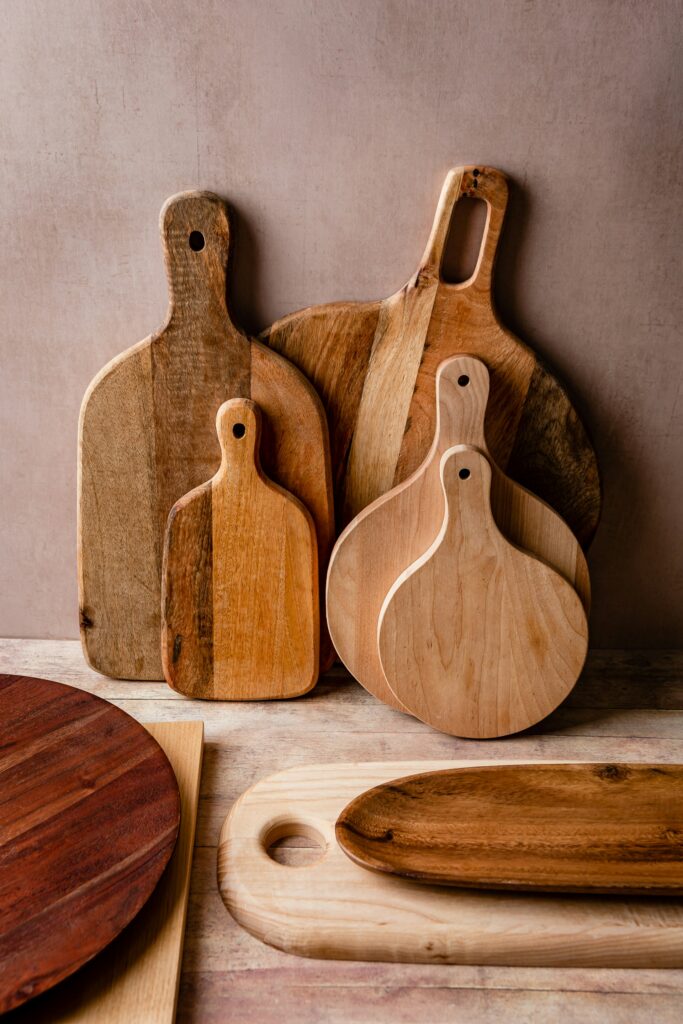
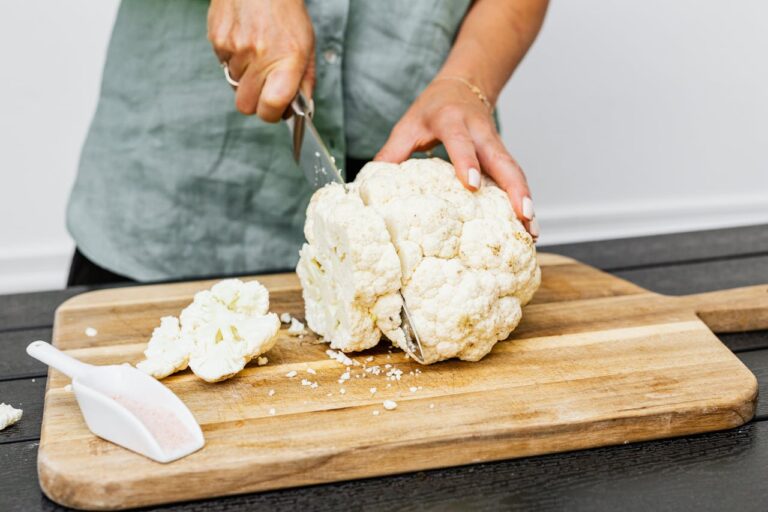
Wooden chopping boards have been a kitchen staple for centuries. They come in various types, each with its own unique characteristics. Wooden boards are not only functional but also add a touch of rustic charm to your kitchen. They are often considered the gold standard for serious home cooks and professional chefs alike, but can harbour bacteria if not sanitised properly. Your choice of wood matters…

Chopping Boards vs. Chopping Blocks 

When it comes to wooden chopping boards, it’s important to distinguish between chopping boards and chopping blocks. Chopping boards are generally thinner and lighter, making them easier to handle and store. They are ideal for everyday tasks like slicing vegetables or cutting bread. Chopping blocks, on the other hand, are thicker and heavier, providing a more stable surface for heavy-duty tasks like chopping meat or dicing large quantities of food. Chopping blocks are often end-grain, which is gentler on knives and more durable over time.


Maple

Maple is a dense, closed-grain wood that is highly durable and resistant to bacteria.

Pros:

  • Durability: Maple is hard enough to withstand heavy use but soft enough to be gentle on knives.
  • Hygiene: The closed grain makes it less likely to harbour bacteria.
  • Aesthetic Appeal: Maple has a light, attractive colour that fits well in any kitchen.

Cons:

  • Weight: Maple boards can be quite heavy.
  • Maintenance: Requires regular oiling to maintain its condition.

Walnut

Walnut is a softer wood compared to maple, but it offers a rich, dark colour that many find appealing.

Pros:

Cons:

  • Durability: Less durable than harder woods like maple.
  • Maintenance: Requires regular oiling and can be more prone to scratches.
Teak

Teak is known for its high oil content, which makes it naturally water-resistant.

Pros:

  • Water Resistance: The natural oils in teak make it highly resistant to water and bacteria.
  • Durability: Teak is a very durable wood, capable of withstanding heavy use.

Cons:

  • Cost: Teak is generally more expensive than other types of wood.
  • Maintenance: Despite its natural oils, it still requires regular care to maintain its condition.

Solid Oak

Solid oak chopping boards are another excellent choice for those who appreciate the beauty and durability of wood. Oak is a strong, dense wood that can withstand heavy use, making it a reliable option for any kitchen.

Pros:

  • Durability: Solid oak is incredibly durable and can last for years with proper care.
  • Aesthetic Appeal: Oak has a beautiful grain pattern that adds a touch of elegance to your kitchen.
  • Weight: The density of oak provides a stable cutting surface.

Cons:

  • Maintenance: Like other wooden boards, solid oak requires regular oiling to prevent it from drying out and cracking.
  • Weight: The density of oak also makes it quite heavy, which can be a drawback for some users.

Read: What fundamental skills are taught at a beginner’s cooking class?
Tamarind

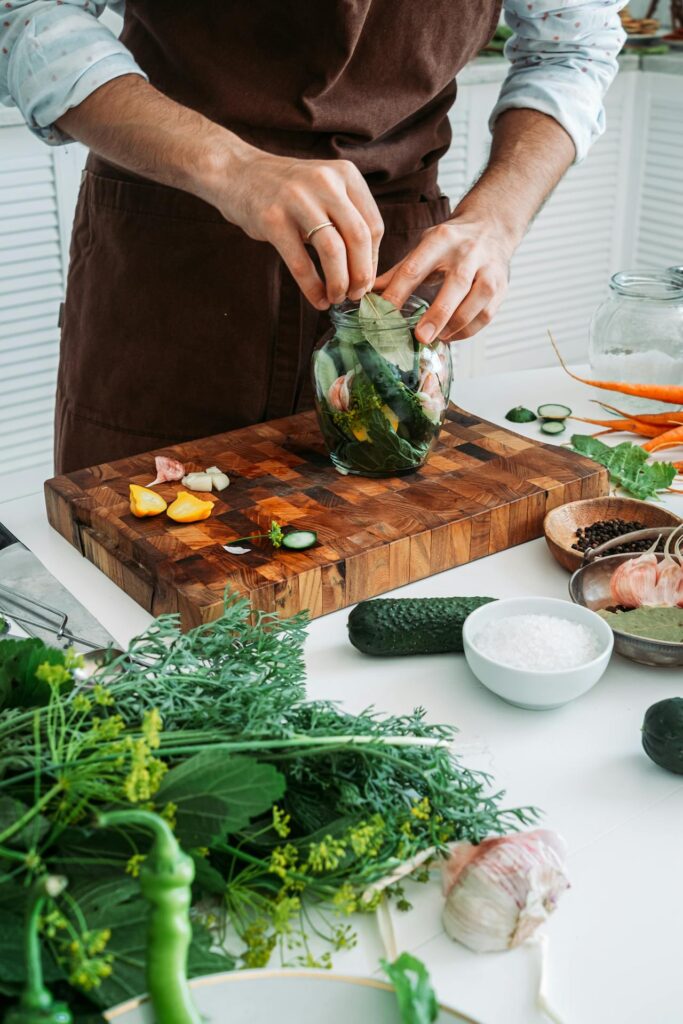
Tamarind chopping boards, commonly used in Thailand, offer a unique option for your kitchen. Tamarind wood is known for its durability and resistance to moisture, making it a practical choice.

Pros:

  • Durability: Tamarind wood is incredibly durable and can withstand heavy use.
  • Moisture Resistance: Naturally resistant to moisture, reducing the risk of warping and cracking.
  • Aesthetic Appeal: Tamarind wood has a distinctive, exotic appearance that can add a touch of uniqueness to your kitchen.

Cons:

  • Availability: Tamarind chopping boards may be harder to find outside of Thailand.
  • Maintenance: Like other wooden boards, tamarind requires regular oiling to maintain its condition.
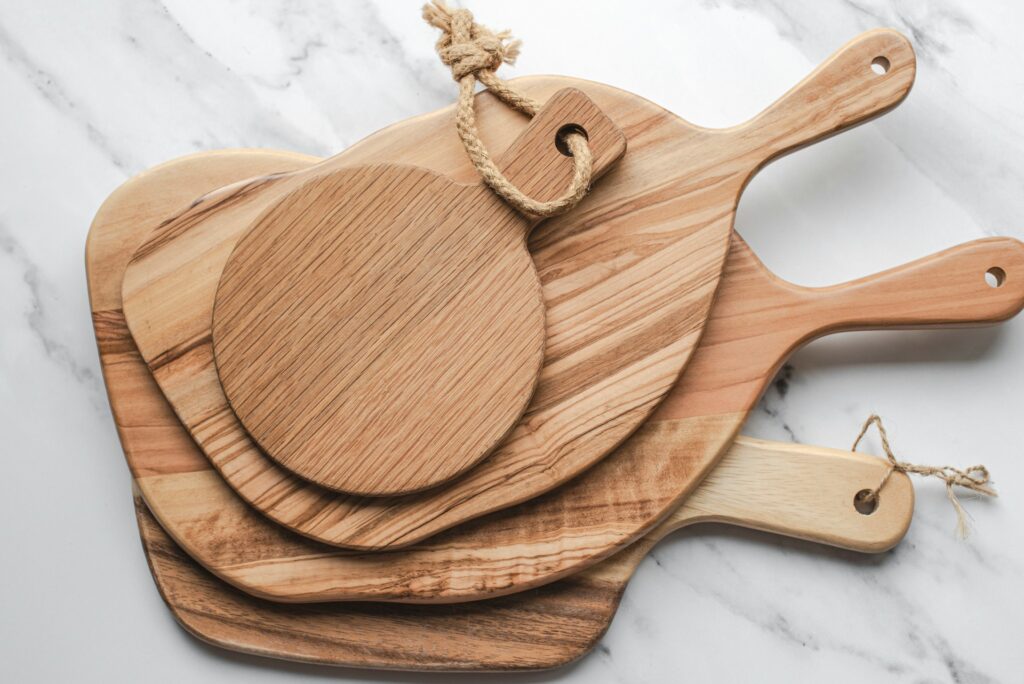
Mango Wood

Mango wood is an eco-friendly and sustainable option for your kitchen. It is harvested from mango trees that have stopped producing fruit, making it a resource-efficient choice.

Pros:

  • Sustainability: Mango wood is a byproduct of the fruit industry, making it an environmentally responsible choice.
  • Durability: It is a strong and durable wood, capable of withstanding regular use.
  • Aesthetic Appeal: Mango wood has a unique grain pattern and a warm, rich colour that adds character to your kitchen.

Cons:

  • Maintenance: Like other wooden boards, mango wood requires regular oiling to maintain its condition.

Plastic: The Practical Choice

Ideal for the busy cook…

Plastic chopping boards are a common sight in many kitchens, and they offer several practical benefits. They come in various types, including high-density polyethylene (HDPE) and polypropylene. Plastic boards are particularly favoured for their ease of maintenance and affordability, making them a go-to choice for busy households.

High-Density Polyethylene (HDPE)

HDPE is a durable, non-porous plastic that is commonly used in professional kitchens.

Pros:

  • Hygiene: HDPE boards are dishwasher safe, making them easy to clean and sanitise.
  • Durability: Highly resistant to knife marks and scratches.
  • Affordability: Generally cheaper than wooden or bamboo boards.

Cons:

  • Environmental Impact: Plastic is not biodegradable, making it a less eco-friendly option.
  • Knife Marks: Over time, deep knife marks can develop, which can harbour bacteria.

Polypropylene

Polypropylene is another type of plastic that is slightly softer than HDPE.

Pros:

  • Hygiene: Also dishwasher safe and easy to clean.
  • Affordability: Generally inexpensive.
  • Variety: Available in a range of colours and sizes, which can be used to avoid cross-contamination.

Cons:

  • Durability: Less durable than HDPE, more prone to knife marks, particularly if the blade is chef-level sharp.
  • Environmental Impact: Like HDPE, it is not biodegradable.

Bamboo: The Eco-Friendly Choice

Ideal for the eco-conscious cook…

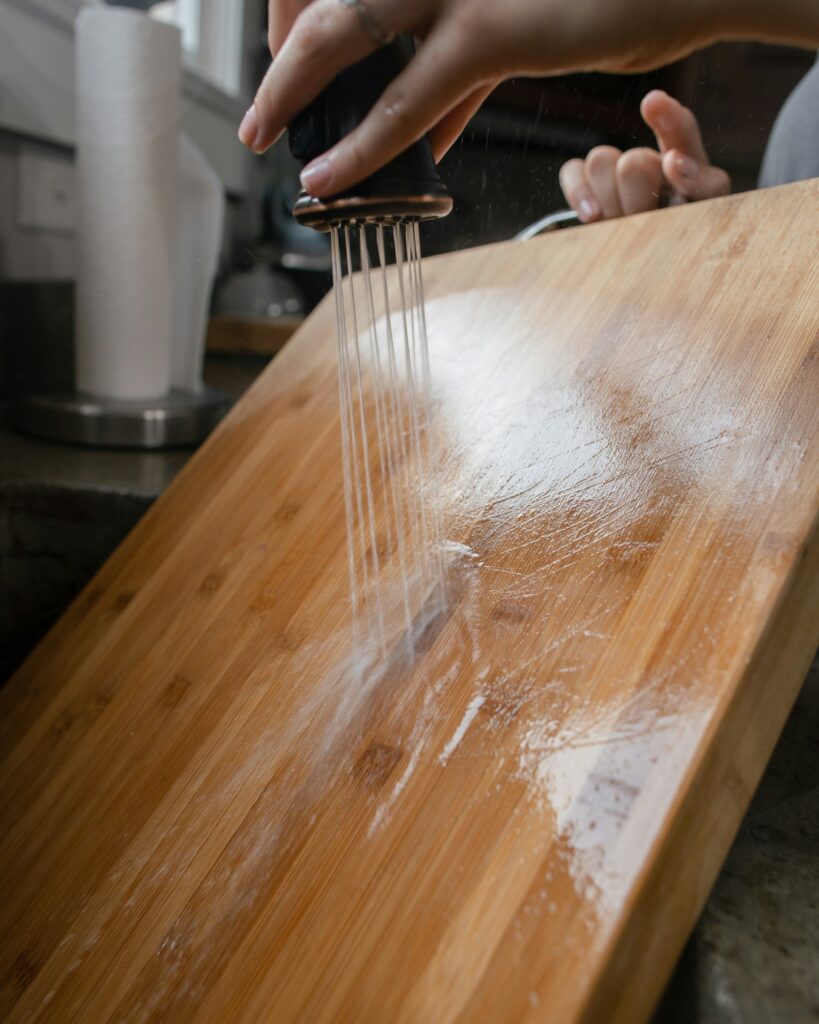
Bamboo chopping boards have gained popularity in recent years, and for good reason. Bamboo is a sustainable resource, growing rapidly and requiring minimal pesticides. This makes it an eco-friendly choice for the environmentally conscious cook. Additionally, bamboo boards are aesthetically pleasing, often featuring a natural, warm hue that can complement any kitchen decor.

Pros:

  • Durability: Bamboo is harder than many types of wood, making it resistant to knife marks and scratches.
  • Lightweight: Despite its hardness, bamboo is relatively light, making it easy to handle and store.
  • Antimicrobial Properties: Bamboo (potentially, possibly) has natural antimicrobial properties, which can help reduce the risk of bacterial contamination.

Cons:

  • Maintenance: Bamboo boards require regular oiling to prevent them from drying out and cracking.
  • Knife Wear: The hardness of bamboo can dull knives more quickly than softer woods.
  • Dishwasher Safe: Bamboo chopping boards aren’t suitable for putting in the dishwasher.
Rubber: The Professional Choice

Ideal for the serious home cook

Rubber chopping boards are often found in professional kitchens, and they are slowly making their way into domestic settings. These boards are known for their exceptional durability and non-slip properties, making them a favourite among serious home cooks who want a professional-grade tool.

Pros:

  • Durability: Rubber boards are incredibly durable and resistant to knife marks.
  • Non-Slip: They provide a stable cutting surface, reducing the risk of accidents.
  • Gentle on Knives: Rubber is soft enough to be gentle on your knives, helping them stay sharp.

Cons:

  • Cost: Rubber boards can be more expensive than other types.
  • Weight: They can be quite heavy, making them less portable.

Marble: The Baker’s Choice

Ideal for the home baker…

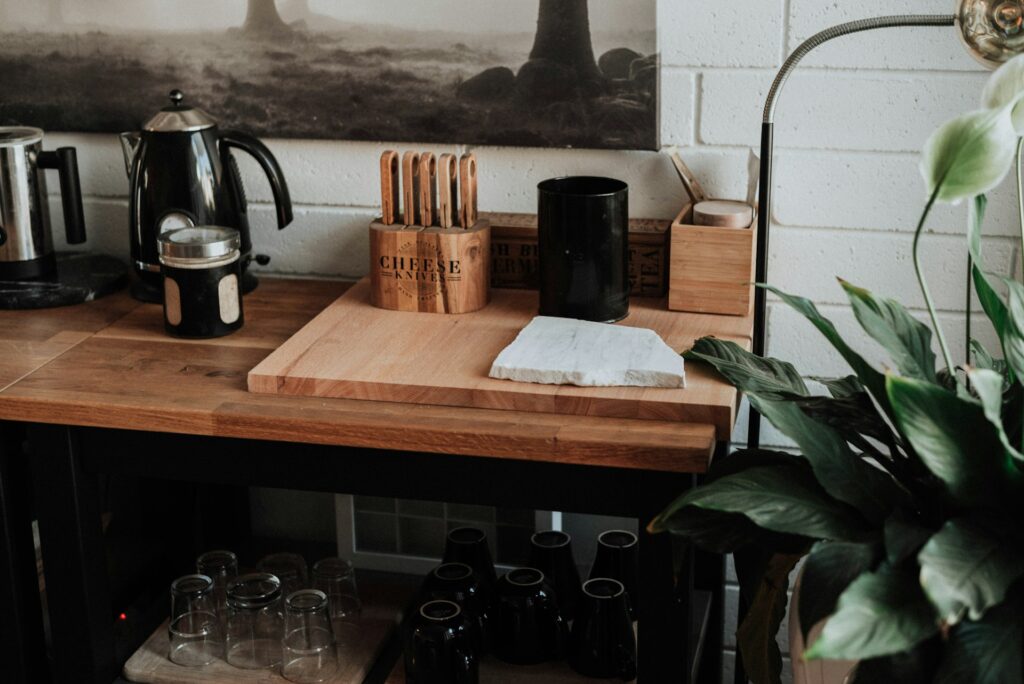
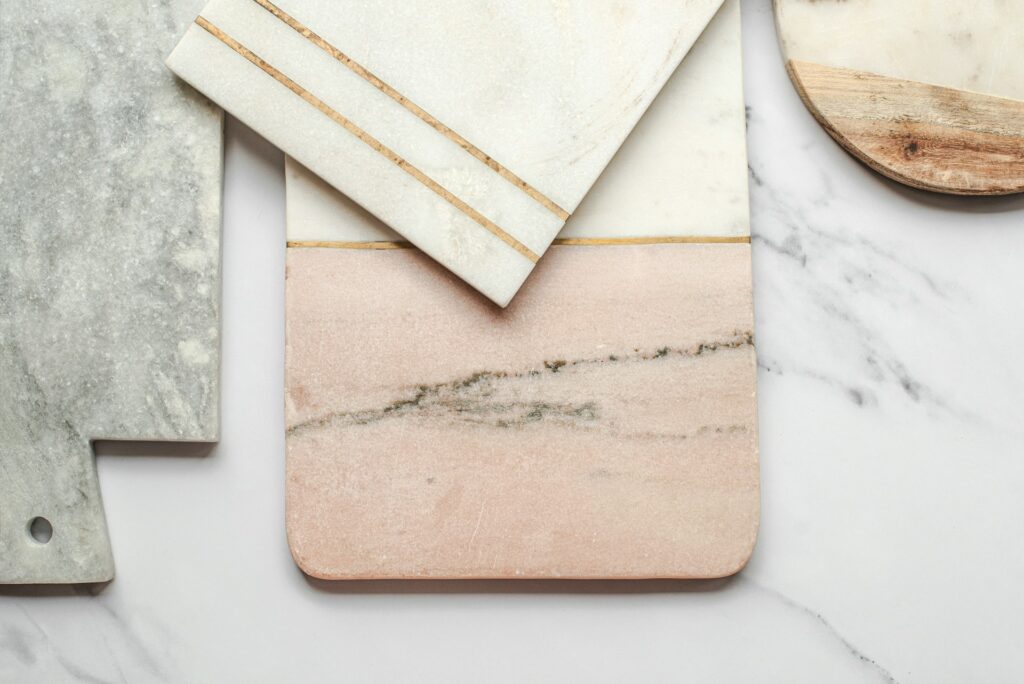
Marble chopping boards are a fantastic choice for home bakers due to their cool surface, which is perfect for working with dough and pastries. Marble is not only functional but also adds a touch of elegance to your kitchen.

Pros:

  • Cool Surface: Marble stays cool, making it ideal for rolling out dough and working with pastry.
  • Aesthetic Appeal: Marble has a luxurious look that can enhance the overall aesthetic of your kitchen.
  • Durability: Marble is a hard material that can withstand heavy use.

Cons:

  • Weight: Marble boards are quite heavy, making them less portable.
  • Chopping: Not only can the hardness of marble dull knives quickly, it’s also dangerous. You shouldn’t chop anything (especially vegetables and fruit) on a marble chopping board as dangerous slips can happen easily.
  • Maintenance: Marble can stain easily and requires regular sealing to maintain its appearance.
Why You Should Never Use Glass

Dinner Date, Come Dine With Me, Four In A Bed, and in just about every darn Airbnb we’ve stayed in… Just what is it with those glass chopping boards and tiny knives everyone’s using? It’s painful!

Glass chopping boards might look sleek and modern, but they are a nightmare for your knives. The hard surface of glass can quickly dull and damage your blades, leading to frequent sharpening or even replacement.

Additionally, glass boards can be slippery, increasing the risk of accidents. They are also prone to shattering, which can be dangerous. Despite their aesthetic appeal, the practical drawbacks make them a poor choice for any kitchen.

The Bottom Line

Choosing the right chopping board for your kitchen depends on your priorities, whether it’s sustainability, ease of maintenance, or knife care. Bamboo and wood offer eco-friendly and knife-friendly options, while plastic and rubber provide practical and durable alternatives. Just remember, no matter how tempting that stylish glass board might look, it’s best left on the shelf. Or, you know, smashed on the floor…


9 Car Security Tips To Keep Your Vehicle Safe

Our cars are often our pride and joy for a reason—they transport us to work, on family outings, and weekend adventures. So, it’s no wonder we want to keep them safe from theft and vandalism. While sophisticated car security systems exist, some simple yet effective techniques can significantly deter potential thieves. Here are 9 car security tips to turn your vehicle into a less attractive target for thieves.

Think Strategically When Parking

The first line of defence is choosing where you park. This really is the time to think, ‘Location, location, location’. Look for well-lit areas, and if they have CCTV surveillance, especially in car parks, then that’s great. 

If not, opt for areas where passers-by act as a natural deterrent. When parking at home, keep your car within sight, ideally in a well-lit drive or garage. Additionally, when parking, turn your wheels towards the kerb if parked on an incline, or towards another car if on flat ground. This simple trick makes it more difficult for thieves to tow your car away.

Develop A Car Locking Habit

This tip might seem obvious, but it’s easy to get complacent. Double-check that your car is locked, even for a quick errand. A thief needs just a few seconds to take advantage of an unlocked vehicle. Look for the confirmation light on your key fob or physically pull on the door handle to ensure it is secure. This small habit can make a significant difference in preventing theft.

Beware Of Keyless Entry Quirks

While modern keyless entry systems offer convenience, they also come with vulnerabilities. Did you know that you should keep your car key fob away from windows and doors since thieves can potentially amplify the signal to unlock your car’s door and gain access? That’s why some car makers recommend storing your fob in a Faraday cage — a pouch that blocks the remote’s signal from being read. Again, pulling on a door handle after pressing the locking button will ensure the car has locked itself.

Deterrence Through Visibility

Thieves often target vehicles that appear easy to steal, so you need to make your vehicle unattractive to them. Displaying a visible deterrent like a steering wheel lock can discourage them from even attempting a break-in. Choose a bright-coloured lock with a high-security rating for added effectiveness. 

Be aware that while steering wheel locks can be a deterrent, you’ll need other security measures in place too. It’s also advisable to keep your valuables out of sight. Leaving valuables like laptops, bags, or electronics in plain view is simply inviting trouble. Thieves may smash windows just for a quick grab, so always remove valuables when leaving your car or store them in the boot.

Invest In Physical Security Measures

One effective theft deterrent is to invest in a car immobiliser. Most modern cars are now fitted with these silent guardians, which are hidden electronic devices that disrupt the engine’s electrical system should someone not use the correct key. This is a major deterrent since hotwiring—stealing a car without the key—becomes impossible. 

If your car doesn’t have an immobiliser, consult your car’s manufacturer or a reputable security specialist and get one fitted. There are a range of immobilisers available, from devices that are bundled with other security devices to standalone devices. It’s also worth checking whether your insurer recognises specific Thatcham‑approved immobilisers; insurers like its4women.ie often clarify what’s acceptable for theft cover.

Another effective measure is to consider window etching. This will permanently mark your car’s windows with its Vehicle Identification Number (VIN). This simple step will make a stolen car less appealing to thieves, as it becomes harder to resell or dismantle for parts.

Maintain Your Car

While car maintenance ensures its smooth running, it also plays a role in security. A well-maintained car with functional lights and locks is less likely to attract attention. Fix broken windows (obvs), replace burnt-out bulbs, and keep your car in good overall condition to deter opportunistic thieves. Regular maintenance checks can also help you spot any potential security vulnerabilities early on.

Dashcam Dilligence

While not a direct security measure, a dashcam can be invaluable in case of theft or vandalism. It can capture evidence of a theft or attempted theft, which will help police investigations and potentially help to recover your stolen car. 

Install A Car Alarm System

A car alarm system can be a significant deterrent to thieves. Modern alarm systems can alert you via your smartphone if someone is tampering with your vehicle. Some systems also come with features like GPS tracking, which can be invaluable if your car is stolen.

Use A Car Cover

If you don’t have a garage, consider using a car cover. A car cover can obscure the make and model of your vehicle, making it less attractive to thieves. It also adds an extra step for a thief to get through, which can be enough to deter them.

The Bottom Line

Essentially, it’s a good idea to stay alert and be aware of your surroundings, especially in car parks. If you notice suspicious activity around your car, report it to security personnel or the police immediately. Remember, the key to car security is prevention. By employing these tips and remaining vigilant, you can give yourself peace of mind knowing your car is less susceptible to theft and vandalism.

Daily Habits To Help Improve Your Life: The Power Of 10 Minutes

0

Do you ever feel like there aren’t enough hours in the day to get everything done? Between work, family obligations, and household chores, it can be tough to find time for ourselves. 

But what if we told you that just sparing 10 minutes a day for small habits could make a huge difference in your life? That’s right – by carving out a small amount of time each day for intentional tasks, you can improve your living space and boost your overall well-being. Get ready to transform yourself in just a few short minutes per day.

Your Self-Care

There are a whole host of 10-minute daily habits that can help you prioritise self-care, and promote relaxation and stress relief, all without eating into your day. A few simple daily habits that won’t eat into your time too much include:

Meditation

Spending just 10 minutes a day in meditation can help reduce stress and anxiety and increase concentration. Taking deep breaths and focusing your mind can help calm your thoughts and promote a sense of peace. Even a short meditation session can be a powerful way to improve your mental health.

Cold Exposure

Cold exposure, such as taking a cold shower or a quick dip in cold water, can have numerous benefits for your physical and mental health. Inspired by Andrew Huberman’s routine, incorporating cold exposure into your daily habits can help improve your mood, increase alertness, and boost your immune system.

Cold exposure can also enhance your body’s resilience to stress and improve circulation. Spending just 10 minutes a day on cold exposure can invigorate your body and mind, setting a positive tone for the rest of your day.

Read: What are the health benefits of taking a cold shower?

Stretching

Daily stretching, whether it’s yoga or just simple stretching exercises, can help increase flexibility and reduce muscle tension. It can also improve circulation and reduce the risk of injury. Spending 10 minutes each morning to stretch your body can set the tone for a more relaxed and productive day.

Read: 5 IDEAL stretches to help you relax after a day in the office

Reading

Reading is a great way to broaden your knowledge and stimulate your mind. By reading for just 10 minutes a day, you can improve your memory and cognitive function, reduce stress, and increase your vocabulary. Whether it’s a book, a magazine, or an article, reading is a habit that can enrich your life.

Gratitude

Practising gratitude is a simple way to improve your mental health and overall happiness. Spending 10 minutes each day to reflect on what you’re grateful for can boost your mood and reduce negative emotions. It can also help you cultivate a more positive outlook on life.

Hydration

Drinking enough water is crucial for our health and well-being. By consuming a glass or two of water every morning, you can hydrate your body and improve your digestion. Staying hydrated also supports healthy skin and can help you feel more alert and focused throughout the day.


Your Finances

Everyone wants to improve their finances, but the truth is, it can be difficult to know where to start. Luckily, there are several daily habits that only take 10 minutes each day that can help improve your finances. These habits are easy to implement and can lead to significant financial gains in the long run.

Track Your Spending

One of the most important things you can do to improve your finances is to track your spending. By keeping track of every penny that you spend, you’ll be able to see where your money is going and identify areas where you can cut back. This habit only takes 10 minutes each day and can be done using a pen and paper or a budgeting app.

Photo by Antoni Shkraba

Review Your Bank Account

Another daily habit that can improve your finances is to review your bank account. Take 10 minutes to log into your bank account each day and check your transactions. This will help you avoid overdraft fees, spot fraudulent activity, and stay on top of your budget.

Get Educated On The Economy

Because knowledge is power, right? There are plenty of tools, such as an economic calendar, that can help make this easier for you. This will give you a quick overview of major economic events, and you can even tailor it by using a filter to reflect just the UK or any other country you are interested in. By just briefly viewing the economic calendar you become more aware of what is happening around you, and you can make sure to save or invest accordingly, maximising your finances without extra hassle.

Set A Simple Financial Goal

Setting a financial goal is a great way to stay motivated and focused on improving your finances. Take 10 minutes each day to set and review your financial goals. Whether it’s paying off debt, saving for retirement, or building an emergency fund, having a clear goal in mind can help you make better financial decisions.

Automate Your Savings

Automating your savings is a great way to save time and improve your finances. Take 10 minutes each day to set up automatic transfers from your checking account to your savings account. This will help you save money without even thinking about it.

Negotiate On Your Bills

Negotiating your bills is another daily habit that can improve your finances. Take 10 minutes each day to call your service providers and negotiate your bills. This can include your cable bill, phone bill, and insurance premiums. By negotiating your bills, you can save hundreds of dollars each year.

Read: 5 healthy financial habits for a successful 2025


Your House

Your home is your sanctuary. It’s the place where you can relax and be yourself. That’s why it’s so important to keep it clean and organised. However, we all dread cleaning and decluttering our homes, especially when it all piles up by the time we get to our days off. 

But let’s put this thing bluntly; the transformative power of having a clean home can’t be denied. Fortunately, it shouldn’t take too long to get yours ship shape. Here are a few simple ways to do so:

Declutter Daily

This is why spending 10 minutes a day to quickly declutter your home is the best thing you can do for yourself. It could be anything from decluttering one small area of your space, whether it’s a countertop, junk drawer, or closet shelf: spending just 10 minutes can quickly make your space feel cleaner and more put together.

Small, Deliberate Daily Acts

You’ve probably heard this one before, but in addition, a small act like making your bed as soon as you wake up can lead you to become more productive. Doing something as simple as placing all of your dirty dishes in the sink or dishwasher before work, and putting your clothes in the wash basket or in the washing machine before you shower, or simply wiping a surface each day that doesn’t perhaps get enough love, can all be effective and easy habits to incorporate. When you do eventually get to your days off, you won’t have to spend the whole day on a pile of chores.

The Bottom Line

Improving your life doesn’t have to be a daunting task. By implementing small daily habit changes and dedicating just 10 minutes each day to them, you can create significant improvements over time. The power of consistency cannot be underestimated when it comes to creating positive changes in our lives. 

Remember, it’s not about achieving perfection but rather progress. So start today by incorporating some of these 10-minute habits into your daily routine and watch as they transform your life for the better!

7 Items To Invest In To Increase The Safety Of Your Loved Ones

Though the season of generosity, good cheer and gift-giving is still some months away, the safety of loved ones remains of paramount importance, now and forever.

Because you can’t put a price on your loved one’s security. Nor can you put a price on the feeling of knowing that your loved one is safe and secure. So, let’s focus on what really matters; the wellbeing of our family. With that in mind, here are 7 items to invest in to increase the safety of your loved ones.

CCTV Cameras

CCTV cameras used to be only for the wealthy or the extremely paranoid, but now they are becoming more affordable. Not only will a home CCTV system give you peace of mind, but it could also help to catch a potential criminal if something bad were to befall your property. That’s not all; whilst many people choose to install CCTV cameras on their properties for security, they also act as powerful deterrents against would-be intruders.

Some smart CCTV systems can be aligned with motion sensor activated lights, enabling lights to come on around the home whenever a person is captured approaching the house. Or, of course, you could row back on the paranoia. Everything will be ok. 

All of this adds up to greater security for your loved ones and improved peace of mind for you, knowing that they’re safe. ​​

Home Security Systems

Home security systems are another way to keep your loved ones safe. They come in all shapes and sizes, so you can find one that is perfect for your needs. Whether you’re looking for a system that notifies you when there’s an intruder or one that records video footage, there’s a system out there for you. There are even systems that will allow you to keep an eye on your home when you’re not there.

This is a great way to make sure everything is okay, and it can give you peace of mind when you’re away from home. A good system will include motion detectors, sensors on doors and windows, and an alarm that goes off should someone try to break in (and whenever your pet plays with it!).

If you can afford a full system, it’s a great investment for your loved ones, granting peace of mind and protection from afar.

Read: 5 modern and smart upgrades to improve your home

Personal Safety Alarms

Personal safety alarms provide an extra layer of security for your loved ones. These compact devices emit a loud sound when activated, deterring attackers and alerting others to an emergency. Ideal for those who walk alone, they can be easily attached to keychains, bags, or clothing.

Modern alarms often include features like built-in LED lights for illumination and GPS tracking for real-time location monitoring. They are perfect for teenagers, elderly relatives, or anyone concerned about personal safety. There are multiple personal safety alarms to choose from, like the Thunder Original super-light personal sensor alarm. Investing in one offers peace of mind, empowering your loved ones to call for help when needed.

Pet GPS Tracker

Speaking of pets, and because your pet is a beloved member of the family, another idea for increasing the safety of your loved ones is a GPS pet tracker. This will allow you to monitor your pet’s movement- even if they’re roaming free on a walk. If it starts to look like your dog is near a busy street, for instance, you can remotely call them and get them back inside before they get hurt.

GPS trackers are available in models that attach directly to an animal’s collar or one that you can carry with you. No matter which one you choose, it’s a great way to keep your pet safe and out of trouble.

In addition to GPS trackers, there are also ‘smart collars’ that come equipped with sensors that can tell you how much your pet is eating, sleeping, and playing. This is a great way to make sure your pet is healthy and getting enough exercise. If you’re not able to be with your pet all the time, a smart collar is a great way to keep an eye on them.

Read: The IDEAL guide to creating a pet friendly home

Self Defence Classes

Want to learn a surefire way to protect yourself from an attacker? Take a self-defence class. These classes teach everything from basic self-defence moves to how to incapacitate an aggressor quickly and effectively. If you know someone who is always at home or out alone, invest in their safety by giving them a gift certificate for one of these classes. This could include martial arts classes, self-defence classes for women, or even a personal safety alarm. A self-defence class will give your loved ones the skills they need to protect themselves in a dangerous situation.

A Password Manager Subscription

With so much of our personal information floating around online, it’s easy for criminals to access your most sensitive data. As you create new accounts on websites and apps, save them all in a password manager. A password manager subscription is a great way to keep your loved ones safe online. A good password manager will create and store passwords for all of your important accounts – from email to social media, all the way to banking.

This is a great way to make sure that your loved ones are using strong passwords and that they’re not deploying the same password for multiple accounts. You can also install a password manager on their devices to keep them safe when they’re away from home. A good password manager will remember all of your passwords for you, so you don’t have to worry about memorising them yourself.

Read: Top 10 essential cyber security measures

Flood Lights

A simple flood light that activates when someone approaches the house can often stop burglars in their tracks and deter them from breaking into your home. Because there’s nothing potential thieves fear more than a stark, bright light. The added bonus here is illumination when you get home from a night out and can’t find your keys. Or the keyhole. 

Flood lights can be synced with the CCTV and home security systems we mentioned earlier, adding another blanket of safety to your loved one’s home.

The Bottom Line

The safety and security of your loved ones is a year round concern. Fortunately, it’s a concern that can easily be addressed with a few simple investments. And with an uncertain future ahead, why not consider these 4 tips for future proofing your house while you’re here? You won’t regret it.

7 Cars Ideal For Young Drivers In 2024

0

Congratulations! We see that shiny new licence in your hand combined with a youthful glow and can only assume you’ve recently passed your test. Since you’ve arrived on this page, too, is it safe to suppose that you’re in the market for a new car?

Whilst we wouldn’t want to put a dampener on the excitement, we should say this; passing your test is one thing, but getting in the driving seat of your first set of wheels is a whole different lane. If you’re fortunate to be within the 17 to 25-year-old age bracket, then there are age-specific considerations to think about when buying a new car. Insurance can be sky high, and then there’s your chosen vehicle’s reliability score to consider, too. 

Considering the latter, young drivers can often get caught out by style over substance, prioritising a glamorous number over something more reliable, and who can blame them? When you’re weighing up a clapped out banger vs a stylish fuel-guzzler, then we all know which one is preferable! 

Hold that thought, however; acceleration and aesthetics shouldn’t be the only thing you think about here. To help you out with your decision, here’s our rundown of 7 cars we think are ideal for young drivers.

But Firstly…

We can’t give you our top picks before we give you some pointers; that would be irresponsible of us. And, hypocritical, considering we’re going to be extolling the virtues of responsible purchasing and driving for the rest of the article!

As a young or new driver, your lack of experience will count against you when it comes to insuring your vehicle as an under 25. But you need to get on the motoring ladder somehow to accrue that valuable no-claims that gives you discounts on your premium later on. To make your money go further, it’s worth spending time researching young person insurance comparison quotes and considering having a black box fitted.

Yes, some of the younger generation are blessed with parents who can foot the bill of an extra car. But for those of you who are out on your own, we’d recommend buying the safest car possible. To do this, you need to look out for smaller vehicles that come with the highest rating from Euro NCAP

Although the idea of splashing out more cash may not be appealing, buying a new car rather than a second hand one will mean it’s inherently safer. New vehicles come with more advanced safety features like anti-lock brakes and standard-fit electronic stability control, and often represent a more worthwhile investment in the long run. 

Now that’s out the way, let’s have a look at our top pick of the best and worst cars for young drivers.

The Ideal Cars For Young Drivers

Practical, enjoyable to drive and scoring big points for affordability; smaller cars are an excellent option for younger drivers (yep, we know it’s boring, but we promised to be responsible!). Although the electric vehicle industry is booming, there’s still a lot to be said for typical, tried and tested ‘first car’ models, such as these…

Volkswagen Up

Incorporating the classic, punchy VW style that we all know and love, the Volkswagen Up has scooped up a bunch of awards in its time, including What Car? Car of the Year in 2012 and the Auto Express City Car of the Year in 2020.

One of the last surviving models still available in petrol, the Up is a wise move if you want a sturdy, practical and reliable car to get you from A to B. 

Toyota Yaris

The Toyota Yaris is a fantastic option for young drivers, combining reliability with affordability. Known for its excellent fuel efficiency and low running costs, the Yaris is a practical choice for those looking to save money on petrol and maintenance.

The latest models come equipped with advanced safety features such as lane departure alert, automatic high beams, and pre-collision systems, making it a safe bet for new drivers. Additionally, the Yaris offers a comfortable and spacious interior, ensuring a pleasant driving experience whether you’re commuting to work or heading out on a road trip.

Ford Fiesta

The Ford Fiesta has been topping the UK’s sales chart for over a decade. Stylish and brilliant to drive, it’s an excellent choice for drivers wanting to build up their confidence on the roads. Available in a spectrum of colours, engine sizes, and the sought after Ecoboost 1.0 litre petrol edition, there’s a lot to like. 

Maintaining a Fiesta is famously straightforward, too. Routine tasks like oil changes, interior car cleaning, brake inspections, and checking transmission fluid on the Ford Fiesta are a simple process, ensuring your car runs smoothly and efficiently, and the whole thing is as low-maintenance as possible.

Hyundai i10

With its striking palette of colours and array of onboard safety features, the Hyundai i10 is worth a look. Incredibly affordable and cheap to run, the i10 offers a sterling amount of interior space for such a small car. 

Nippy, easy to park and perfect for city driving, the i10 may well be the answer to all your purchasing doubts. It’s relatively practical too, as it can hold up to five passengers (a little tight, admittedly!) with ample room for luggage in the boot. A Hyundai i30, which is easy to drive, is also worth considering.

Renault Clio

The Renault Clio is another excellent choice for young drivers, offering a blend of style, performance, and practicality. The Clio’s sleek design and vibrant colour options make it an attractive option for those who want a car that stands out. It’s also packed with modern technology, including a user-friendly infotainment system, smartphone integration, and various driver assistance features like parking sensors and cruise control.

The Clio’s efficient engines and low insurance group ratings make it a cost-effective option, while its agile handling and compact size make it perfect for city driving and navigating tight spaces.

Kia Picanto

Sporting a seven-year warranty, excellent handling and boasting great value for your money, you’d be hard pressed to find a more suitable vehicle. Dinky city cars are hard to come by these days, especially with electric vehicles like the latest Fiat 500 dominating the showroom floor. 

With its roomy boot space and fun driving experience, you’d be silly not to take a look. Not now, not now! Eyes back on the road! Phew.

…& Some Cars Less Suited To Young Drivers

Although the fastest, sportiest vehicle may look appealing, you’re more likely to feel the pinch on your bank balance. Higher fuel costs and more time spent at the garage aren’t enjoyable, that’s for sure. With that in mind, here are the cars we’d personally avoid as a young driver…

Mini Cooper S

The Mini Cooper S is a fun and sporty car, but its higher insurance group and running costs can be a challenge for young drivers. While it offers a thrilling driving experience, the focus on performance over practicality might not be the best fit for someone just starting out.

Volkswagen Golf GTI

The Volkswagen Golf GTI is a hot hatch that delivers impressive performance and handling. However, its powerful engine and sporty nature come with higher insurance premiums and fuel costs. For a young driver, the Golf GTI might be more car than necessary, both in terms of power and expense.

Subaru WRX

The Subaru WRX is known for its rally-inspired performance and all-wheel-drive capabilities. While it’s a thrilling car to drive, the WRX’s high insurance premiums, fuel costs, and maintenance requirements can be a significant burden for young drivers. For new drivers, its performance-oriented nature might also be too much.

Now you’ve cast an eye over our top picks, what will your new set of wheels look like? 

What Questions Should You Ask When Choosing A Home Care Agency For An Elderly Loved One?

0

Realising that you or a loved one can no longer cope at home independently is one of life’s defining moments. But let’s be honest; it’s also a largely symbolic event. In fact, the defining decision lies in choosing the type of care and the care provider that will restore independence and dignity in those latter years of life.

Just because support at home is required doesn’t mean that your golden years can’t be a rich and fulfilling time. Quite the opposite, actually; with the right care in place, you’ll find your freedom renewed and your vigour for life reclaimed.

But how to choose the appropriate care for your or your loved one’s unique needs? Here’s the enquiries you should be making of any potential care providers; these questions to ask when choosing a home care agency for your elderly loved one.

Are You Fully Regulated & Part Of UKHCA?

Let’s flip things on their head here and firstly deal with the fine print which usually ends such articles. Because, above all else, you’re going to want to ensure that your potential home care provider is safe, secure and 100% trustworthy. For a loved one, and for yourself, it’s the number one priority.

So, make sure you establish whether the company is regulated by the Care Quality Commission, who are the independent regulator of health and social care in England. The commission inspects and regulates services, provides reports and have a published set of fundamental standards which any care home and home care agency must adhere to. 

You can search the CQC’s database here, entering the name of the agency you’re considering, to view reports on the quality of care they provide. Alternatively, you can simply search your postcode and see all available home care agencies in your location, with reports on their care provided. These reports offer information on five key categories: 

  • Safe
  • Effective
  • Caring
  • Responsive
  • Well led

These assessments are judged on a sliding scale between Outstanding, Good, Requires Improvement, Inadequate and No Rating; invaluable information for those looking to be meticulous in their decision making. The database also lists any specialisms the home care agency offers.

To double down on your due diligence, also ensure that your considered home care agency is a member of the United Kingdom Homecare Association (UKHCA), who publish a Codes of Practice which all members must adhere to.

What Background Checks Do You Give Your Carers?

Speaking of which, the UKHCA have also recently published guidelines on background (DBS) checks which all carers should undergo. Any reputable home care agency will carry out Enhanced Disclosure checks on all carers, which is a legal necessity for anyone working with the young, the elderly or the vulnerable. Do ask your home care agency to provide information about background checks carried out as a matter of course.

What Type Of Care Do You Offer & What Type Do I Need?

It’s best to prepare a list of questions that will help you determine if the agency offers the level and type of care that you need, whether those needs are physical, mental, or psychological. 

Care in the home comes in many different guises, from the occasional visit and check-up to more committed, live-in care, so it’s first important to ask yourself what type of care is required.

The most common forms of care involve daily visits, which last for around half an hour, or visits known as ‘sitting’, which last for a few hours each day, as well as live-in care, when the carer lives in the home and provides round-the-clock care. This care can be arranged even if you, too, live with your elderly relative. These visits will generally occur at the same time (agreed by carer and client) each day, though some flexibility can, of course, be expected.

According to Ashberry Care Homes, the types of care you can expect can be broken down further, into seven key categories: 

  • Personal Care
  • Companionship Care
  • Dementia Care
  • Respite Home Care
  • Live-in Care
  • Nursing Care
  • Shared Lives

On top of that, hospice or end of life palliative care is another option available, should the client wish to live their final days peacefully and comfortably at home. Having professional, expertly trained support in hospice care provides huge comfort to many families, as it enables loved ones to maintain a sense of dignity and control over the last months, weeks or even days of their life.

There are also more dedicated areas of expertise which specifically trained carers can assist with…

Do You Match Carers To Clients Based On Specific Expertise?

Try to choose an agency that matches the caregivers to the clients based on their expertise, ability to tend to their physical and psychological needs, preferences, and interests. It would be best if the agency facilitates an introduction between carer(s) and client and their family before they are officially hired. 

Home care agencies often provide specialist care for clients suffering from specific conditions or ailments, and carers assigned to these roles should have extensive experience working with appropriate clients in the past. These care agencies use care management software to manage multiple things at a time, so should be able to provide detailed knowledge of the expertise of their staff. Do ask your agency if such experience has been accrued, if your loved one has specific needs. 

Some of the most common home care specialisms include dementia care (as we noted above), learning disabilities, physical disabilities, sensory impairments, and mental health conditions. Using the CQC database we mentioned earlier, you can search for home care providers specifically by their areas of expertise.

How Much Do You Value Continuity Of Care?

Unfortunately, it’s not always possible that clients will receive the same carer for the entirety of the time that care is deemed necessary. That said, some home care agencies place more emphasis on continuity of care than others, so it’s important to ask your potential provider about their policy regarding carer continuity.

Finally, Can I See A Breakdown Of Your Pricing?

Prices typically vary according to the level and type of care needed, the carer’s level of expertise, the duties they will be performing, and whether they are medical carers. 

On average, care at home costs begin at between £15 and £20 an hour, though this will vary depending on where you live. You may well be eligible for help with the costs, and you can contact your local council to ask for this financial assistance. They will carry out a means test, and following this, could agree to covering some or all of your care fees.

Check out Age UK’s detailed breakdown of what this process involves for more.

The Bottom Line

Choosing the right home carer for yourself or a loved one can be a challenging, trying task. There are many home care agencies that provide different types of hands-off, hands-on, and medical services, each with something different to offer.

Before you determine the right level of care and the right caregiver for your needs, take stock of your own (or your loved one’s situation), chat to several providers, and check reports from official regulatory bodies online. This should give you peace of mind going forward that you’re making the best decision. Good luck.

8 Expert Tips For Planning The Perfect Autumn Wedding

Though the leaves haven’t yet turned brown, there’s definitely a sense that the dawn of autumn is in the air right now. The nights are getting cooler and darker, the dinners heartier, and evolution feels imminent.

A change of season inevitably brings with it new trends, and this is certainly appropriate when discussing weddings. If you’re planning an autumn one, firstly, get your skates on, and secondly, you need to be ready for what the new season has in store for you.

Acknowledge it, folks; if this guide to planning the perfect autumnal nuptials was released a tad earlier in the year, it would have been as easy as seasonal-pear-pie to put these expert tips into practice. But here we are at the start of September, the end of summer, meteorologically speaking, has been declared, and although it may be a bit late to plan an autumn wedding, there’s always next year…

Let’s be honest, though: British seasons being famously predictable as they are (sense the sarcasm, please), we could wake up to a scene straight out of a Christmas card tomorrow. Equally, a sunny day doesn’t seem all that unlikely. Planning, then, is everything where autumn weddings are concerned. Fortunately, we’re here to help with that.

If you’re ready to fall (ahem) in love in autumn, then read on; our 8 expert tips for planning the perfect autumn wedding.

Weather Worries

A change of season means a change in weather, and we’re sure you don’t need reminding. Raincoats at the ready, then; this means a rewriting of the rulebook on traditional wedding attire.

When dressing for an autumn wedding, expect wedding outerwear and layers for brides to be trending. Consider wearing fur, silk, or velvet jackets/shawls to keep up with the hip and fashionable.

When choosing your wedding dress, you should, of course, ensure it’s weather appropriate. Every bride dreads rain on their big day, but you should be ready for it when planning an autumn wedding; open clouds are simply way more likely than in summer. Shop around online for ideas and inspiration before committing to time in the dressing room and on the shop floor. And, above all be prepared to actively embrace a little rain!

Mother Nature’s Colour Palette

During autumn, the change in colour scheme is huge. You could almost praise the season on its clear-as-glass branding, if you were that kind of person. Anyway, when planning your wedding, you should let this shift in hues and tone dictate your theme. Auburn, maroon, dark green…earthy, rich shades take over and we’re well and truly here for it.

Allow your wedding colour palette to mimic the leaves during this season, as they’re always changing. These will add warmth and a sense of synergy to your décor. If you want to be modern (and dare we say, less ‘obvious’) with your colour selection, you should consider using hues such as deep plum and slate gray.

Choose The Perfect Autumn-Friendly Venue

An open-air wedding under an arch of russet-leaved trees would perhaps top the table for autumnal romantic ambience. But we’re in Britain… remember: the seasons have a wicked sense of humour! Opt for a venue that promptly accommodates both indoor and outdoor celebrations. Stately homes, barns, or cosy inns provide a quintessential autumn ambience, while remaining safe from temperamental UK weather.

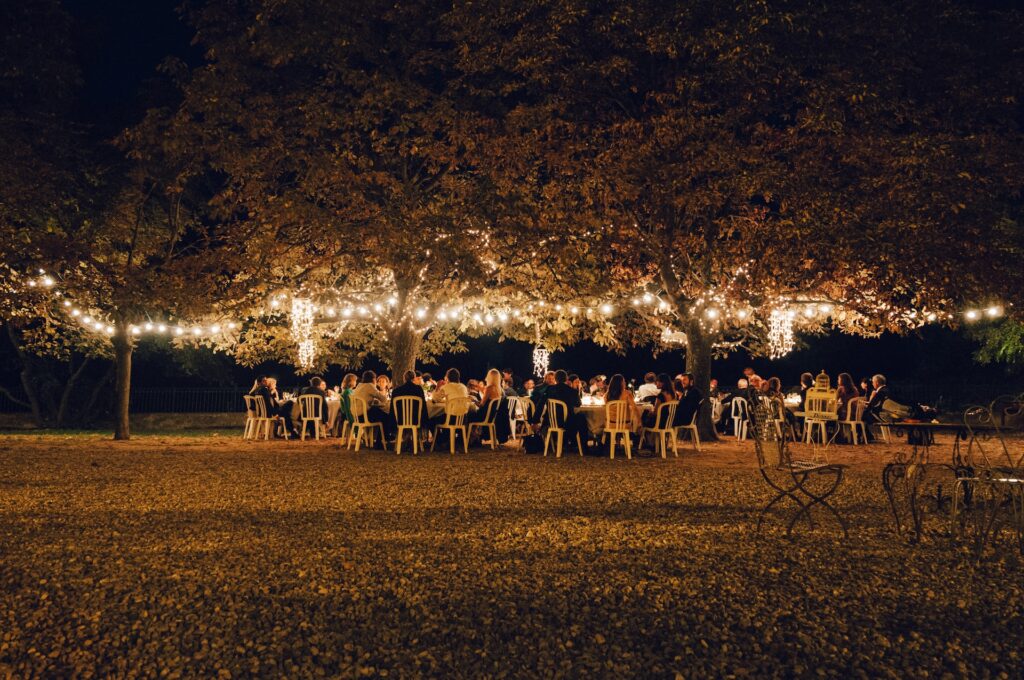
If you’re torn between the charm of the outdoors and the need for a weather-proof Plan B, why not hire a marquee? It’s the perfect middle ground, golden leaves and crisp autumn air can still surround you, but with shelter from any surprise showers (or downpours, let’s be honest). Plus, marquees offer a blank canvas you can dress up with seasonal flowers, fairy lights, or even heaters and fire pits for that cosy, rustic vibe.

Let Seasonality Dictate Your Wedding Menu

As the seasons change, so does the selection of food at its best. Fortunately, autumnal food is glorious, rich and abundant, with many of the UK’s most beloved ingredients hit their peak as autumn rolls into view. When choosing food for your autumn wedding, you should opt for whole, rustic, and hearty foods. The season’s harvest brings squash, beetroot, figs, game and more. Harness the power of this amazing produce.

The fruits of the season should be deployed in your wedding cake, too. Autumn cakes tend of be more rustic than their ostentatious summer compadres, with caramel often featured but rarely icing or buttercream. If you opt for a naked cake, decorate it with seasonal figs and think about seasonal flavors such as gingerbread, pumpkin spice and apple spice. Red velvet cake can be a great choice if your wedding theme is channeling the deep red of certain leaves.

Floral Flourishes

Speaking of which; when selecting flowers for your floral arrangements and bouquets, you can go with those autumn colours, as well as those in season. While most flowers bloom year-round, you can choose the following autumn flowers to keep with the theme; garden roses (a great alternative to peonies during the fall season); marigolds which come in festive autumnal colors of red, orange, and gold; and sunflowers, if you want to add a touch of sunshine to your autumn wedding.

You can also use seasonal berries, acorns, and fall foliage in your table décor and floral arrangements to really bring the point home.

Read: The IDEAL guide to choosing the right flowers for every occasion

Cosy Crackling Fires & Lighting

Autumn can be the cosiest time of year if only we encourage it correctly, and nothing says ‘cosy’ better than a venue adorned with fairy lights and gently crackling fireplaces, and guests with sparklers. Cast a magical glow over your event with lanterns and candles, imbuing an intimate, warm mood—definitely handy should Uncle Bob start sharing that story again known to ice over any festive atmosphere.

To make sure your guests are snug, provide warm blankets or pashminas. Consider a ‘cosy corner’ equipped with space heaters. Don’t forget customisable features such as monograms or incorporating wedding colours to make your big day personal.

For an extra touch of magic, consider incorporating ice fountain candles into your décor. These sparkling candles can add a dramatic and enchanting effect, perfect for creating a memorable and visually stunning atmosphere. Whether placed on tables or used as part of a grand entrance, ice fountain candles will surely captivate your guests and add a unique flair to your autumn wedding.

Embrace Seasonal Scents

One often overlooked element that can significantly enhance the atmosphere of your autumn wedding is the use of seasonal scents. Incorporate fragrances that evoke the essence of autumn, such as cinnamon, clove, nutmeg, and vanilla. You can achieve this through scented candles, potpourri, or even essential oil diffusers placed strategically around your venue.

Consider creating a signature scent for your wedding by blending a few of these autumnal aromas. This not only adds to the cosy and inviting ambiance but also creates a sensory experience that your guests will remember long after the day is over. For an extra special touch, you could even provide small scented sachets as wedding favours, allowing your guests to take a piece of your magical day home with them.

The All-Important Bridesmaids & Groomsmen Outfits

For your fall wedding, you should choose outfits with a heavy fabric for the bridesmaids and groomsmen. Your bridal entourage can wear pashminas and boleros to keep warm and harness the power of that layering trend once again. Rich autumnal colours for the groomsmen and bridesmaid’s attire include glimmering metallic and deep jewel shades. Allow the season to dictate your choices and it writes itself.

Let’s be honest, here; regardless of the frankly incredible advice above, if you want to plan your perfect fall wedding, you’re probably better off hiring professional wedding planners. That way, you don’t have to worry about anything except enjoying your big day and creating unforgettable memories!

The Ideal Wig Buying Guide: Everything You Need To Know

In the world of fashion and personal expression, wigs have become an essential accessory, with the global value of the market predicted to grow to over $13 billion by 2026.

Whether you’re looking to change your look, cover hair loss, or simply experiment with different styles, buying the perfect wig can be a transformative experience. However, with the plethora of options available, it can also be quite overwhelming. This guide will walk you through everything you need to know to find the ideal wig that suits your needs and style.

Understanding Your Needs

Before diving into the world of wigs, it’s crucial to understand why you need one. Are you looking for a wig for daily wear, a special occasion, or to cover hair loss? Your purpose will significantly influence the type of wig you should choose.

For everyday use, comfort and durability are paramount. You’ll want a wig that looks natural and can withstand regular wear and tear. If you’re buying a wig for a special event, you might prioritise style and appearance over long-term durability. This could be an opportunity to experiment with bold colours and unique styles. For those experiencing hair loss, finding a wig that offers comfort and a natural look is essential. You might also want to consider wigs that are easy to put on and take off.

Types of Wigs

Wigs come in various types, each with its own set of advantages and disadvantages. Understanding these can help you make an informed decision.

Synthetic Wigs

Synthetic wigs are generally more cost-effective and require less maintenance than human hair wigs. They retain their style even after washing and are available in a wide range of colours and styles. However, they can sometimes appear less natural and cannot be styled with heat tools.

Human Hair Wigs

Human hair wigs offer a natural appearance and can be styled with heat tools and dyed, providing versatility. They are more durable with proper care but are generally more expensive and require more maintenance.

Lace Front Wigs

Lace front wigs create a seamless, natural-looking hairline and can be styled away from the face. However, the lace can be delicate and requires careful handling, and these wigs are often more expensive than standard ones.

Full Lace Wigs

Full lace wigs offer versatility in styling, including updos, and provide a natural appearance from all angles. They are typically more expensive and require more care and attention.

Glueless Lace Wigs

For those who prioritise convenience and comfort, glueless lace wigs are an excellent option. These wigs do not require adhesive for application, making them easy to put on and take off. They offer the same natural look as traditional lace wigs but with added ease of use, making them perfect for beginners or those who frequently change their hairstyles.

Read: 7 lifestyle changes that could help encourage healthier hair

Choosing The Right Wig

Your face shape plays a significant role in determining which wig style will look best on you. For instance, most styles will suit an oval face, while long layers and volume at the crown can elongate a round face. Soft, curly styles can soften angular features on a square face, and chin-length styles and side parts can balance a wider forehead on a heart-shaped face.

Choosing a wig colour that complements your skin tone can enhance your overall look. Warm skin tones are best paired with warm colours like golden blondes, rich browns, and auburns, while cool skin tones work well with cool shades like ash blonde, platinum, and jet black.

Ensuring your wig fits correctly is crucial for comfort and a natural appearance. Measure your head circumference and consult the wig size chart provided by the manufacturer.

Caring For Your Wig

Proper care can extend the life of your wig and keep it looking its best. Synthetic wigs should be washed every 6-8 wears with a gentle shampoo designed for synthetic hair, while human hair wigs should be washed every 10-14 wears with a sulphate-free shampoo. Store your wig on a wig stand to maintain its shape and prevent tangling, and keep it away from direct sunlight and heat sources.

When it comes to styling, use products specifically designed for synthetic hair and avoid heat styling for synthetic wigs. For human hair wigs, use heat protectant sprays and avoid excessive heat to prevent damage.

The Bottom Line

Buying the perfect wig is a journey that involves understanding your needs, exploring different types, and choosing a style that complements your features. With the right knowledge and care, a wig can be a fantastic addition to your wardrobe, offering endless possibilities for self-expression and confidence. Happy wig shopping!

8 Classic Sofa Styles Ideal For Your Period Property

0

When it comes to furnishing a period property, the choice of sofa can significantly impact the overall aesthetic and harmony of your interior design. Period properties, with their rich history and distinctive architectural features, demand a careful selection of furniture that complements their unique character.

To avoid a jarring visual effect, it’s a good idea to stick with classic designs that have stood the test of time. Today, we’re taking inspiration from the past; if you’re wondering which sofa style is best for your period property, here are 8 classic sofa styles that seamlessly blend with traditional interiors.

Bridgewater

The Bridgewater sofa, also known as the English roll arm sofa, is a quintessentially British design that exudes comfort and understated elegance. Characterised by its low, rolled arms that are set back from the front of the seat, the Bridgewater offers a relaxed and inviting appearance. The back cushions are typically loose and plush, providing excellent support and comfort. The skirted base often conceals the legs, giving it a seamless and tailored look.

The Bridgewater sofa is perfect for both casual and formal settings, making it a versatile choice for any period property. Its timeless design ensures it will remain a beloved piece in your home for years to come.

Howard

This classic sofa with slightly rounded arms and a low seat is a gorgeous, timeless piece. With well-stuffed seat cushions that are supremely comfortable and a low slung, deep-seated appearance, the Howard fuses functionality with a wicked sense of fun. Be aware that this style of sofa doesn’t have a skirt. Instead, it boasts sturdy wooden legs on brass castors

The Howard sofa is suitable for both a home and a professional setting as it is built for style as well as comfort.

Chesterfield

This is a fairly popular and coveted design, coming with rolled and buttoned upholstery on the back and arms. 

Those arms and back are at a similar height, often curved at the top. Due to the buttons, you can get your Chesterfield sofa reupholstered fairly easily or even buy separate cushions if you’re keen to match the style more succinctly with your home’s overall decor. Be aware that this sofa comes with wooden legs, not a skirt.

The Chesterfield is an iconic professional design and to some people, no formal setting is complete without one.

Mid-Century Modern

As the name suggests, this design isn’t quite as ‘classic’ as some of the other sofas on our list. Instead, a mid-century modern sofa is a post-WW2 design with an elegant, streamlined shape, narrow arms, a low back and a boxy look. 

Unlike many other sofa designs, it is tailored, not stuffed. The back of the sofa can have cushions or upholstery, depending upon your preference. And while a mid-century modern sofa doesn’t have a skirt, it boasts elegant, square wooden legs. As a relatively modern style, this sofa is not too bulky, but is lightweight and easy to adjust.

A mid-century modern sofa is a smart move for design-conscious property owners keen on a semi-contemporary touch.

Knole

The Knole is a historical design from the 17th century. It comes with a high back as well as high sides, and generally speaking, for that reason, its presence in a room is keenly felt. That said, some sofas allow adjustments to their heights with a unique cord mechanism. 

Knole sofas fit in adeptly within traditional interior designs and professional places, with their eye-catching, unique proportions making them ideal for placement in a large space. To preserve its distinctive look and feel, specially designed furniture covers can be utilized to protect it from wear and tear. 

Lawson

This is a rather modern design sofa with no frills. Instead, the Lawson is defined by its square, flush-to-the-wall back with a comfortable rest. The arms are low, flat and chunky, in the best possible way, and such a sofa style has a base that skims the floor. Finally, it has squat wooden legs but no skirt.

A Lawson sofa is suitable for pretty much any setting and is designed with versatility in mind. 

Tuxedo

This is a boxy kind of sofa with arms and back at the same height, and with plain legs instead of a skirt. Sometimes, a Tuxedo sofa comes with separate round cushions for those looking to jazz up this squat, stout chair.

The tuxedo sofa gives your interior an exquisite though deliberately challenging look. It is an exceptional piece of furniture for making a style statement. 

Camelback

The Camelback is a formal, classic style that was popular with the upper strata in the nineteenth and early twentieth century. Coming with a tight upholstery and a gently curving back, the high rolled arms and the tight seat make it suitable for both the professional and domestic setting. In addition, it can come with both the skirt bottom and elegant wooden legs.

Camelback sofas have firm back support, which makes it ideally suited for use in a traditional setting, when your posture might be judged by discriminating eyes!

You’ve spent all of this time considering sofa style; best make sure you’re taking good care of it, too. Check out these tips on how to care for your sofa for more on that.

5 Seasonal Ingredients To Cook With In September

0

Can you feel it? There’s a chill in the air, make no mistake. Can you hear it? Yep, ‘T-shirt weather’ is once again just a song now, not a sartorial suggestion. Can you smell it? Well, I tell you what you can’t detect…suncream. Indeed, it seems like summer, in all its glory, has finally left the building. The kids are back at school, the nights are slowly drawing in and change is in the air.

If you’re looking for reasons to look on the bright side as the days darken, we have one. After months of salads and light, light lunches, September sees the arrival of a whole host of late summer, early autumn ingredients at their freshest and finest. For many, this is the best month for Great British produce. With that in mind, here are 5 seasonal ingredients to cook with in September.

Blackberries

Though you’ve probably been plucking them from the hedgerows for weeks, now is the time for blackberries to truly shine. Slowly but surely the rogue, bitter ones have dissipated, and it’s absolute abundance from here until the end of October.

bThe best picks are generally at the hardest to reach points of the bush; look for a full, glossy exterior which feels plump and just a little bouncy when squeezed. If they’re deflated, the insects have had their wicked way already. Too firm, and expect sharpness on the tongue. 

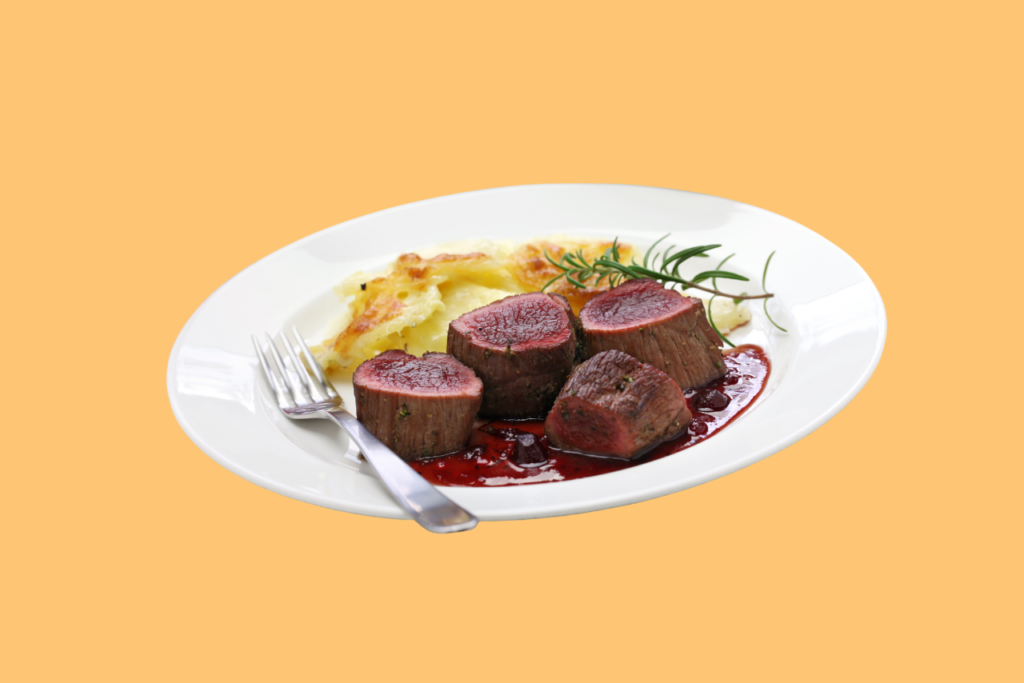
Blackberries are incredibly versatile, working well in both savoury dishes and dessert. Particularly good with apple, combine them in a crumble or pie. Or, make a fruity jus to pair with the gamier meats of the season, like venison or wild duck. They don’t keep long, losing their vitality overnight, but do freeze well.

Red Mullet

Red mullet season is short, direct and to the point, lasting only from August to October. September is when they’re at their most spanking, particularly those from the UK’s southern waters. With a firm, meaty texture to the flesh and pronounced flavour in the skin reminiscent of roast chicken, this is a unique, alluring fish which can hold its own against many strong, assertive flavours. Perhaps this guy is best enjoyed on or under the grill, as the skin crisps beautifully with this dry heat. Pair with fennel, thyme and red pepper for a succinct send off to summer.

Of course, regardless of seasonality, you’ll want to buy your red mullet from a reputable supplier, whether that’s your local fishmonger, who can direct you to what’s freshest, or one of the many fantastic online fish suppliers who supply some of the UK’s top restaurants and expanded their operations over lockdown to offer their finest fish to the hungry public, too. Some of favourites in the latter category include Fish For Thought, The Cornish Fishmonger and The Fish Society.

Figs

A ripe fig is a rare treat, as a wise woman once said. The season is short, and finding one at its peak not guaranteed, but when you do, the temptation to scoff it there and then is hard to resist. These guys don’t ripen after picking, so it’s a take-me-as-you-find-me situation when shopping. Be ruthless; elbow other fig fanatics out the way when you stumble across the good stuff. And that’s unbroken skin, plump but soft, with a vibrant colour. If they smell faintly sour, they’re past their best.

Figs work brilliantly with cheese, either raw or cooked down into a jam, with a drizzle of honey and scattered with some toasted nuts. Add a little cured ham to the mix, some leaves and you’re in salad heaven.

Runner Beans

Those who grow runner beans will know that by early September you’ll have a glut on your hands. But what a delicious glut it is; tender yet crunchy, and exploding with a juicy, sweet freshness. Though they generally keep for a few days in the fridge, runners are best eaten as soon after picking as possible, as the sugars start turning to starch soon after.

Runner beans are best enjoyed al dente; the small ones can be eaten whole while the larger should be sliced on the diagonal. Pair them with lamb in a light, late summer roast, or stir fried with mustard seeds and garlic as a side dish to a curry.

Read: 6 different ways to cooking vegetables expertly

Venison

Summer, you say? For those who’ve had enough of the blazing sunshine, shorts and sandals, then the start of venison season will bring reassurance; an indication that the nights are getting colder, the meals heartier and the plates darker from here on in. 

Venison is a lean meat with low fat and high protein content, and represents a really healthy alternative to beef, with a complex, deep flavour. Look for animals which have been hung for between ten and 21 days, to allow the meat to tenderise through the process of natural enzymes breaking down tissue.

By Bonchan via Canva

Because of that lack of fat, it’s vital to compensate with a gentle marinade prior to cooking, to cook it gently, and serve it rare and hot. Cold venison simply doesn’t work. Pair with root vegetables soon to emerge, like celeriac, and darker fruits, like the aforementioned blackberries. 

September is also the start of lamb’s second wind; check out our 7 IDEAL steps to the perfect rack here

7 Ways To Make The Most Of Your Downtime When Travelling

#Unpopularopinion: travelling can be kinda, well, a bit boring. Cause here’s the part they don’t tell you about in the guidebooks; there is a hell of a lot of downtime, of dead hours spent sitting on a bus, laying on a bed, staring out of a window, waiting for something to happen.

When that selfie you travelled half way round the world to capture is over at the flick of a shutter…what comes next? It’s either swapping the same old tales of the same old places over the same warm beers for another night, or you could use your time a little more productively until tomorrow’s adventure unfolds.

And if trying to travel in 2024 has taught us anything, it’s that holidays are now, more than ever, defined by waiting, wondering, queuing, and a fair amount of staring into space; them’s the breaks these days, sadly.

Fortunately, there are things you can do to pass the time as you wait for that next swab, test result, huge queue for check-in or hand-sanitising station. With that in mind, here are 7 ways to make the most of your downtime while travelling.

Write A Travel Journal Or Blog

‘‘So, how was your trip?’’. No idea, but it looked good through the lens, at least….

If there’s a more soul destroying image than a hundred tourists on a beach, all seeing a sunset through their phones, then we haven’t seen it. But it’s true, these great moments do need capturing, for the sake of memories and posterity.

So instead of using your holiday as an exercise in seeking validation from strangers online, why not turn them into a travel journal or blog; a space where you can reflect on what your innermost thoughts and feelings and relationship to the changing scenery you’re encountering.

This doesn’t necessarily need to be for public consumption, more for your own record and perhaps for keeping your family and friends engaged with your moving and grooving. Because in our experience when travelling, a thousand words are actually worth far more than a picture.

Exercise Your Brain

There’s no denying that travelling is good for welding your brain. According to research, the complexities of getting out there and seeing the world can sharpen your mind; to get all scientific(ish) travel has the ability to ‘light up’ a whole range of neural pathways you don’t always use, leading to cognitive benefits. However, the ‘’use it or lose it rule” is something which the brain adheres to devotedly.

In other words, those neural pathways can also get weaker when neglected. And although we hate to admit it, lying on a beach doesn’t exactly oil the mind’s cogs too thoroughly. It’s important to give your brain a little work out from time to time, to keep things functioning to their full potential.

There are loads of brain training apps out there to choose from to get the old grey matter pumping. Brain-training games like Dakim, Lumosity, Fit Brains Trainer and Eidetic are particularly good for this.

Indeed, any games that will condition the brain to become more agile and improve strategic thinking while you’re sitting there with the sand between your toes will do just fine.

Delve Into The History Of Your Next Destination

All too often a place of great historical intrigue or significance is seen simply in 3D, without the necessary stories which truly enrich the experience. But with context and background, a deeper and more appreciative cultural understanding can be achieved.  

A great way to spend an evening of downtime is to research the past and present of your current or next destination so everything has substance and meaning. You could carry a book with you, and pass it on to other curious travellers when you’re done, or download informative pieces on a kindle or listen to a podcast about it. Or simply use hotel WiFi to get informed. Whichever way you want to do it, it’s up to you.

Of course, you could spend the time equally as usefully by researching some great places and hidden gems to visit in the next place you’re visiting. So, before you leave, download TripAdvisor and other apps to find the best cervejarias in Lisbon or the cutest café in Kyoto. You won’t regret it.

Keep Connected

Travelling can be a socially nourishing experience, where new friends are made in each and every new location, and bonds are formed over fresh, exciting adventures. Sometimes your family and oldest friends can seem a little stale in comparison, but it’s important to nurture your connection to home when you find the time, and check in to reassure loved ones that you’re safe and happy.

Travellers will often feel frustrated when finally back home at the lack of enthusiasm or interest in their adventures from friends and family. But by keeping them posted on your movements during your trip, there’ll be more reference points to touch on when you return.

A particularly useful way to engage and include loved ones is by taking them on a video call tour of where you’re currently at, particularly for elderly relatives who can no longer travel to far flung, exotic places, this can be a really invigorating thing to see. Of course, you’ll need a decent internet connection for this, ideally with a global sim and unlimited 4G or 5G connection.

Find Inner Peace

A long period of not working, participating in your usual hobbies or engaging with family on a deep level, can sometimes lead to a loss of personal meaning on the road. And after the couple of years we’ve all had, feeling a little listless is certainly understandable.

It’s a facet of travelling often not mentioned in the guidebooks, but sometimes things can feel a little empty far from home and without sufficient mental stimulation. It’s important, then, to regularly nourish your soul through daily meditation and reminders to be fully present in the moment.

Take the chance to get up and see the sunrise while the rest of the hostel is still sleeping off their hangovers; take a timeout in the evening to realign your thoughts with a simple mindful meditation; and use cues throughout the day (perhaps every time you see traffic lights, smell incense, or hear another bloody ukulele) to bring yourself back to the present moment. In doing so, you’ll find your trip doesn’t fly by unappreciated, but instead becomes incredibly meaningful.

Learn A New Skill

Travelling offers a unique opportunity to step out of your comfort zone and try something new. Why not use your downtime to learn a new skill? Whether it’s picking up a few phrases in the local language, mastering the art of photography, or even learning to cook a traditional dish from the region you’re visiting, these new skills can enrich your travel experience and provide lasting memories.

Language learning apps like Duolingo or Babbel can help you get started with the basics of the local language, making your interactions with locals more meaningful and enjoyable. If you’re interested in photography, there are numerous online tutorials and courses that can teach you how to capture the essence of your travels beautifully. And for those who love food, taking a local cooking class or following online recipes can be a delightful way to immerse yourself in the culture.

Volunteer Your Time

If you find yourself with extended periods of downtime, consider giving back to the community you’re visiting by volunteering. Many destinations offer opportunities for travellers to contribute to local projects, whether it’s teaching English, participating in environmental conservation efforts, or helping out at a local shelter.

Volunteering not only allows you to make a positive impact but also provides a deeper connection to the place and its people. Websites like Workaway, HelpX, and WWOOF can help you find volunteer opportunities that match your interests and skills.

By dedicating a portion of your trip to helping others, you’ll gain a richer, more fulfilling travel experience and create lasting memories that go beyond the typical tourist activities.

15 Of The Best: South East Asia’s Very Best Luxury Resorts

0

South East Asia’s luxury hospitality sector is well and truly thriving. According to Statista, the hotel market in Southeast Asia is anticipated to experience another rise in its revenue this year, projected to hit $12.39bn by the end of 2024. By 2029, it could well boast a market volume of US$16.41bn by 2029.

Where once luxury holidays in Asia may have centred more around, say, Sri Lanka, Japan and Hong Kong, nowadays it’s South East Asia where many of the continent’s best resorts are found.

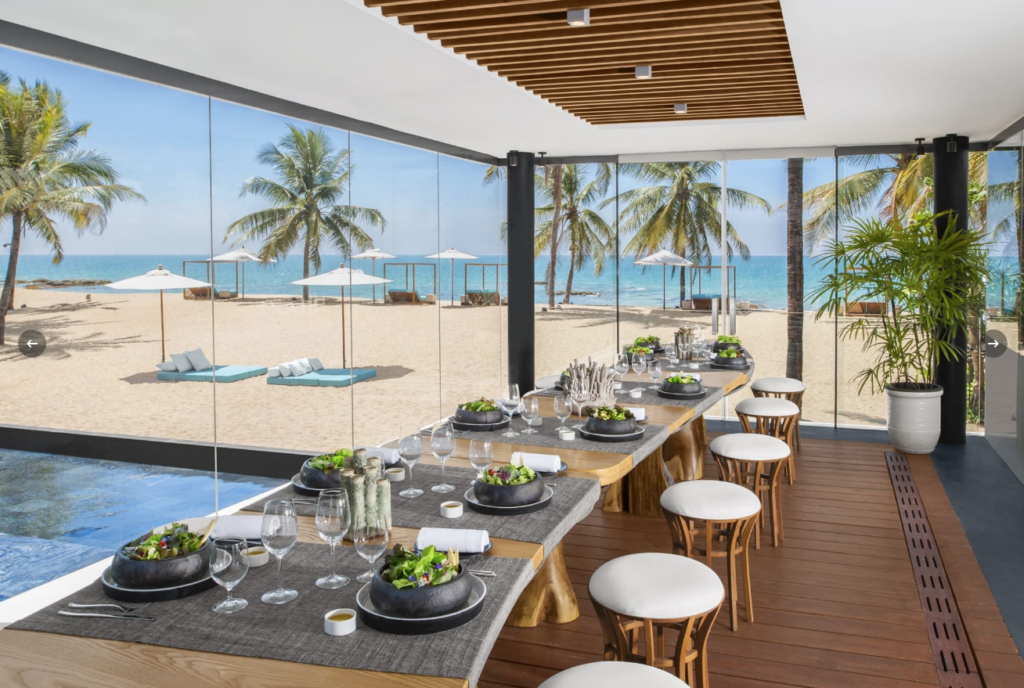
From tranquil beaches to lavish spas, the region offers unparalleled hospitality and culinary majesty that can transform any holiday here into a once-in-a-lifetime trip. Whether you seek serenity, adventure, exquisite cuisine or world-class service (or, you know, all of them), here’s our rundown of 15 of the very best luxury resorts in South East Asia.

*All of the below are 5 star resorts. Prices are correct for a one night-two person stay, two months in advance of the booking, as of the day of publication.*

Alma Resort – Cam Ranh, Vietnam

Situated on Vietnam’s pristine Cam Ranh Peninsula, on the nine-mile golden Long Beach, Alma Resort has garnered acclaim since its 2021 opening, named the best hotel in Southeast Asia by Travel + Leisure readers earlier this 2024. 

Sprawling across 30 hectares, this resort is a paradise for both adults and children, and you’ll need a golf buggy to get across it. Families can revel in a myriad of facilities, including 12 swimming pools, a water park featuring a lazy river and a wave pool, a science museum, and a cinema tailored for young minds. Adults, meanwhile, can unwind in the expansive spa or indulge in one of 14 restaurants and bars. 

Notably, the beachfront Atlantis restaurant specialises in fresh local seafood, of which the incredible grouper hotpot and grilled oysters with green chilli salt are notable highlights.

Rooms start at an eminently reasonable £99 a night.

Read: 2024’s best cruise destination, Vietnam


The Nam Hai – Hoi An, Vietnam

Sitting pretty on the outskirts of gorgeous, historic Hoi An in Vietnam’s central Quang Nam province, The Nam Hai is one of the most photogenic resorts you’ll ever come across and has rightly earned its place amongst the top luxury resorts in South East Asia. It’s gorgeous, with everywhere you look seemingly readied for a magazine shoot.

Guests can luxuriate in expansive (and, admittedly, expensive) villas that offer serene views of the East Sea. Each villa pays homage to authentic Central Vietnamese garden homes – nha vuon – with large timber frames and decorative panels.

The resort’s spa is renowned for traditional Vietnamese healing therapies, including scrub and sound healing with tuning forks, as well as face yoga, enriching the guests’ wellness journey in a way that offers a sense of place and purpose.

You’ll need to be as zen as possible to tackle the dining options at The Nam Hai, such is the paradox of choice on offer here. Choose from tapas and tiki on the beach, Vietnamese and French fusion at La Sen, Indian fine dining at Cafe Nam Hai or a luxury Japanese omakase experience at Nayuu. La Sen is the pick of the bunch for us, the inherent crossover in modern Vietnamese cuisine and French food realised to delicious effect here.

One of the key features contributing to Nam Hai’s acclaim is the resort’s cultural immersion experiences, which include historical tours around the Hoi An region, connecting guests with the rich heritage of Vietnam. The resort’s cooking classes (priced at £91 a person) for four hours, are particularly good.

Private villas start at £586 a night.


Anantara Riverside – Bangkok, Thailand

If you’re craving an escape from the fast-paced side of Bangkok, there’s no better place to unwind and unplug than the Anantara Riverside Bangkok Resort. Perfectly positioned on the illustrious banks of the Chao Phraya River, this low-rise hotel is more than just a lavish stay; it is an experience that combines the hustle and bustle of Bangkok with the tranquillity of a riverside retreat. What more could you want?

Whilst clearly a luxury resort, the ambience remains thoroughly relaxed and unpretentious throughout, and staff deliver that classic kind of Thai hospitality that makes you feel at ease. The resort itself is spread across 11 acres of tropical gardens, providing a sense of tranquillity amidst the city’s vibrant energy. This lush green expanse includes a variety of flora, creating a picturesque setting for guests, as well as a large outdoor pool right in the thick of it. Complete with a swim-up bar, it’s pretty blissful out here.

The Anantara Riverside has more dining experiences and venues than we could possibly list here without you opening up a new tab out of boredom, including culinary cruises along the river and its very own outpost of Benihana back on dry land.

The resort also features the Firefly Bar with a Casa Del Habano cigar parlour, providing a sophisticated venue for evening relaxation. The garden terrace, with its serene views, offers another dining option for guests who prefer an al fresco experience (and, perhaps, a more sociable place to smoke those cigars!).

If that’s not enough, the resort’s sumptuous spa facility is a haven for those seeking relaxation and rejuvenation. The spa offers a wide range of treatments, including traditional Thai massages, aromatherapy, and skincare treatments, all performed by skilled therapists using premium products.

And good news for those keen to get amongst it in one of the world’s great cities; the hotel can also organise tours of Bangkok’s very best street food spots, or trips up the river to the awe-inspiring Wat Phra Kaew (the Temple of the Eternal Buddha). Hey, you could even do both…

Rooms at the Anantara Riverside start at £150 a night.


The InterContinental – Khao Yai, Thailand

Two hours north east of Bangkok and deep into the tropical national park of Khao Yai, the InterContinental Khao Yai Resort provides an exclusive escape into nature without compromising on luxury. 

One of the resort’s unique features is its heritage railcar accommodation, offering a nostalgic travel experience combined with modern luxury. These upcycled railcars have been beautifully restored and fitted with plush furnishings to provide a unique stay experience.

The resort’s location in Khao Yai, one of Thailand’s largest national parks, provides guests with stunning views of lush landscapes and exotic wildlife sightings right from their doorstep. 

The spa also features serene spaces for yoga and meditation sessions, which are conducted by experienced professionals to help guests achieve a state of tranquility and balance. Speaking of balance, the Thai food served at the resort’s Somying’s Kitchen is expertly seasoned, with local Isaan dishes like grilled chicken and papaya salad hitting the spot (and the capsaicin receptors, quite honestly!). There’s French fare too, over at Poirot, if that’s what you fancy.

The InterContinental Khao Yai Resort has made a significant mark in the luxury hospitality sector, evident by its accolade in the 2024 Travel + Leisure Luxury Awards

Rooms start at £190.

Read: Where to go on safari in South East Asia


Four Seasons Resort – Langkawi, Malaysia

A jewel in the Andaman Sea, the Four Seasons Resort Langkawi is blessed with perhaps the most gorgeous backdrop we’ve ever set eyes on, with its blend of lush rainforests behind you and emerald waters in front. The resort, spreading over 48 hectares, offers intimacy with nature while ensuring every luxury and comfort is catered for. No wonder many consider this to be Malaysia’s best luxury resort, bar none.

The award-winning Geo Spa at the Four Seasons is one of its trump cards, a sanctuary of rejuvenation inspired by the ancient healing practices of the Malay Archipelago. Bespoke treatments use natural ingredients, providing a holistic and invigorating experience. 

Langkawi Photos | Langkawi Video | Four Seasons Resort Langkawi

Additionally, the resort’s various dining options reflect the cherished diversity of Malaysian cuisine, with its Kelapa Grill the obvious highlight, blessed as it is with oceanfront dining and a charcoal grill (a Josper, no less) that’s always burning. Just perfect for the caramelised satay sticks and Sarawak jumbo prawns that we’ve developed something of an addiction to.

Rooms start at £416 a night.


The Standard – Hua Hin, Thailand

The Standard promises a chic, modern holiday in every Bangkokian’s favourite weekend retreat, Hua Hin, which is sometimes referred to as ‘the Thai Riviera’. That’s not to say the place is heaving with folk – the resort’s design harmoniously blends with its lush, tropical surroundings, creating a serene retreat regardless of whether every room is fully booked or if you’re the only folk staying there.

The resort’s expansive pool that merges with the beachfront (just 500 metres away) is a big draw, as well as several dining options. Among those dining options, the Lido Bar stands out, offering a poolside retreat, while Lido, its accompanying all-day Italian restaurant, invites guests to enjoy traditional dishes from Bel Paese, all with a refreshing Thai beach breeze. 

Praça, the beach bar and restaurant, serves up a delightful ‘Thai izakaya’ experience, creatively reinterpreting the kind of Thai grilled sticks you’ll find in markets across the country to glorious effect. To our mind, only Angulo by Yangrak in Bangkok do it better. For those seeking healthy refreshment (hey, who isn’t?), there’s also a juice bar. 

The Standard’s spa, nestled within the verdant gardens and with many treatments offered outside, provides bespoke treatments that are both indulgent and wholly invigorating. That’s what this kind of thing is all about, don’t you think?

Rooms start at £128.

Read: 7 beaches less than a 3 hour drive from Bangkok


Soneva Kiri – Koh Kood, Thailand

Still in Thailand (it’s pretty hard to leave), we’re heading next to the unspoiled island of Koh Kood, where Soneva Kiri brings with it a sense of sustainable luxury; two words we love to hear.

The resort offers private pool villas that blend seamlessly with the island’s natural beauty, presenting unparalleled ocean views, and the eco-friendly ethos of Soneva Kiri comes to life through its comprehensive approach to sustainability without sacrificing luxury. 

Its dining experiences include Treepod Dining, where guests are hoisted into the rainforest canopy to enjoy gourmet dishes while overlooking the stunning scenery. The Six Senses Spa at Soneva Kiri is another highlight, combining traditional Thai wellness techniques – particularly the famous yoga-adjacent Thai massage – with modern treatments that rejuvenate the body and spirit, all while ironing out a few knots along the way.

Private villa suits start at £1030.


Six Senses – Ninh Van Bay, Vietnam

Sequestered on a private bay, Six Senses Ninh Van Bay offers rustic charm combined with contemporary luxury. It’s a killer combination. 

This resort is renowned for its stunning – and very private – location, accessible only by boat, which grants it an air of exclusivity and tranquillity.

The resort offers a holistic wellness experience through its world-class spa, providing treatments that incorporate locally sourced organic ingredients. Guests can also participate in yoga sessions or enjoy the natural rock formations while taking a therapeutic mud bath. 

The chief restaurant here, Dining by the Rocks, is as much a visual treat as a culinary one; this is one of the most stunning dinner-with-a-view situations you’ll ever settle into. Dishes are broadly seafood led, with plenty of nods to the food scene in nearby Nha Trang, which is, incidentally, due to get its own Michelin Guide next year. We wouldn’t be at all surprised if Dining by the Rocks is featured.

Villas start at £737.

Read: Destinations to make a meaningful difference volunteering in Vietnam


Song Saa Private Island, Cambodia

Cambodia’s luxury hospitality market is booming, and leading the pack is one of the world’s most unique resort experiences; Song Saa Private Island

A short boat ride from Sihanoukville, Song Saa Private Island hosts a collection of private villas, all perched over pristine waters. Serenity, unsurprisingly, consumes every corner of this island. If it had corners, that is; it’s kinda round looking from above…

Anyway, Song Saa offers a quintessential private island experience with its overwater villas that extend over the sapphire-tinted ocean. Each villa is designed to reflect Cambodian culture and craftsmanship, while the resort’s commitment to conservation is evident in its marine reserve initiatives and sustainability practices. So as not to disturb the natural energy of things here, the on-site spa offers tranquil treatments that aren’t soundtracked by Enya or whale song but, rather, only the lapping waters of the surrounding ocean. Bliss.

Dining is an equally ethereal experience, with the Vista Restaurant jutting out over the water and providing panoramic sunset views. Cuisine-wise, the menu is a blend of classic Cambodian dishes, reinterpreted, alongside the odd Western comfort staple for the fussier members of the squad. Go for the former here; the reimagined prahok is excellent.

Villas start at £1102.


Four Seasons Tented Camp Golden Triangle – Chiang Rai, Thailand

Touted for its blend of opulent comfort and adventure, the Four Seasons Tented Camp Golden Triangle is a very different beast to the other entries so far on our list. High up in the mountains of Chiang Rai, guests here reside in luxurious tents featuring stand-alone bathtubs and hot tubs on wooden terraces, offering sweeping views of the surrounding wilderness. Don’t worry, this isn’t a shivering-in-your-soaking-sleeping-bag-at-Glasto kind of vibe; the camp provides king-sized beds and Wi-Fi to ensure comfort. 

Beyond relaxation, guests can indulge in traditional Northern Thai cuisine (including a genuinely top notch khao soi) at the camp’s bar and restaurant, Nong Yao, and participate in uniquely regional activities such as foraging, bird watching and visits to the Elephant Peace Project, who do amazing things for the cherished residents of the area.

Tent bookings here require a two night minimum stay. You’ll pay £4593, at a minimum, for the privilege. 


Alila Uluwatu – Uluwatu, Bali

In Bali, and perched atop a dramatic cliff, Alila Uluwatu, part of the Hyatt group, is a masterpiece of occasionally gravity-defying contemporary luxury. 

The resort features sixty-one open-plan villas designed for privacy and comfort, with a sense of connection between indoors and out that is impressively seamless and totally relaxing. The fact that the entire resort boasts incredible ocean views from just about every vantage point certainly does no harm, with the main Sunset Cabana bar and its infinity floor feature needing to be seen to be believed. In person, that is; even the pictures don’t do it justice!

There are a handful of restaurants on site. The best (for us) is The Warung, which is inspired by Bali’s rich street food tradition. The Megibung set sharing meal, priced at 1.700 IDR for two (the equivalent of around £80) is a fantastic way to taste a procession – 10 in total – of Indonesian street food staples. The bebek goreng, a deepfried duck leg served with piquant green sambal – is exceptionally good here.

Retire to the resort’s dedicated whisky bar Batique when you’re done, for a nightcap, and feel very privileged to be alive.

Private one bedroom villas start at £627 a night.


Iniala Beach House Villas & Suites – Phang Nga, Thailand

Renowned for its outlandish luxury, Phang Nga’s Iniala Beach House, close to the famous island of Phuket, offers a truly extraordinary experience. 

Though there are more ‘basic’ one bedroom villas here, if you’re looking for sheer, unadulterated luxury, then look no further than the three-bedroom villas, each of which comes with an all-inclusive premier package that includes a private driver, butler, chef, spa therapist, housekeeper, and multiple hours of spa treatments daily. 

The flagship restaurant at Iniala Beach House is overseen by none other than the UK’s very own, 3 Michelin-starred Simon Rogan. At Aulis, the chef’s innovative farm-to-table (here, as much ocean-to-table!) approach is all present and correct. The restaurant seats just 15 guests per service, all around a horseshoe counter for a view of the action.

Open for dinner from Tuesday to Saturday, things kick off at 7pm. This one definitely requires booking in advance and a pretty thick wallet; the tasting menu at Aulis, featuring dishes such as raw south coast river prawn, sea jelly and bergamot, buttermilk and smoked Hua Hin caviar, will set you back 6000 THB (around £135). 

Private villa bookings here require a two night minimum stay. For a one bedroom villa, you’ll pay £1551 for a suite. A deluxe suite with sea view is £2844.


La Residence Phou Vao – Luang Prabang, Laos

Located in Laos’ hugely picturesque, utterly charming UNESCO town of Luang Prabang, La Residence Phou Vao, part of the Belmond Group, offers guests an elegant retreat combining French colonial architecture and Laos heritage. 

The hotel’s infinity pool overlooks lush jungle landscapes and golden pagodas, providing a serene atmosphere for relaxation. The resort’s faithful renditions of Laos classics at the restaurant Tam Nan are best enjoyed in the candlelit gardens, adding to the romantic ambiance. Watch out for the Laos version of papaya salad here; it’s super funky and super spicy. It’s great.

The onsite spa promises ‘lemongrass-scented escapism’ and, to be fair to them, delivers just that via its 90 minute sip sen Laos massage, which is based on ancient Buddhist philosophy.

After you’re done, La Residence Phuo Vao is only a short stroll from the beating heart of Luang Prubang, which is a place you’ll honestly never want to leave. See you for a Beer Lao over ice at the night market?

A junior suite here will set you back £305.


Bunga Raya Resort – Kota Kinabalu, Borneo

Arriving at Bunga Raya Resort by speedboat sets the tone for a luxurious stay at this stylish sanctuary, all set amidst Borneo’s rustic beauty. Has there ever been a sentence that says ‘escapism’ more than that one?

The resort features 48 tastefully designed villas, based on traditional Bornean architectural sensibility, surrounded by lush jungle, each with a private balcony. Guests can enjoy private plunge pools, three restaurants, and the pristine cove for when swimming in a pool becomes too arduous. It’s a hard life. 

Villas start at £254.


Alila Villas Koh Russey – Koh Russey, Cambodia

Another gem in the Alila portfolio, Alila Villas Koh Russey in Cambodia offers an exclusive island retreat with luxurious beachfront villas. With a focus on sustainability and local craftsmanship, the resort integrates naturally into its environment. 

Nestled in the pristine landscape of Bamboo Island (also known as Koh Russey), the resort occupies 60 hectares of lush forest and offers a secluded retreat for those looking to escape whatever they’re looking to escape from. They don’t ask questions here…

The grey cubist villas, surrounded by tangled jungle give an urban-meets-nature kind of vibe. In 2019, it was nominated for Asia’s Leading New Resort and Asia’s Leading New Villa Resort by the World Travel Awards, and in 2020, it was one of the finalists in the Landscaping and Outdoor Spaces category. 

The surrounding region, including the Cardamon, Bokor and Kirirom national parks, offers numerous opportunities for exploration and adventure, all of which can be facilitated by the resort. The proximity to these natural wonders ensures that guests can engage in various outdoor activities, ranging from guided forest tours to water sports.

You know what? We think we might stay here a while…

Rooms start at £190.

The Bottom Line

Southeast Asia’s luxury resorts are impressive not just for their opulence and beauty but also for their commitment to sustainability, cultural immersion, and offering truly personalised experiences. And with the region’s luxury hospitality sector only growing, we can’t wait to discover where the next truly luxurious resort pops up. Care to join us? Yes? Forgot to mention, you’re paying…

10 Of The Best Fun-Focused UK Towns For A Lively Hen Party

Given its vibrant history, diverse culture, and vivacious nightlife, the United Kingdom offers numerous options for unforgettable hen parties. Hen parties are the ultimate toast to the bride-to-be and a chance to unwind, let loose, and embrace the moment. So, whether the bride is a fan of wild nights out, tranquil spa days, or fancy culinary treats, there is somewhere in the UK to match her desires. 

Here, we bring you 10 towns (yep, we know most are cities, but hey) in the UK brimming with fun and life that promise to deliver a hen party to remember. Or not be able to remember, if that’s the vibe you’re going for…

London

No list would be complete – no list could even be started, in fact – without England’s iconic capital, London. Synonymous with an eclectic style and a vibrant nightlife, London boasts world-renowned bars like Tayēr + Elementary, Connaught Bar and Satan’s Whiskers for the urbanites in the squad, whilst those looking to dance the night away will find their desires satiated at clubs like Fabric, Colour Factory and FOLD are just the ticket.

For those keen on dinner with a difference, London is also famed for its unique dining experiences, including eating dinner totally in the dark or solving a mystery on the Orient Express.

Basically, if you can’t find something to entertain your hen party in the Big Smoke, we wonder why you’re having one at all.

Photo by Robert Bye on Unsplash

Brighton

Perhaps so-called London by the Sea might be more your group’s thing? Charming Brighton merges the traditional with the unconventional, making it perfect for a unique hen do. Groovy Kemptown’s No 32 is a must-visit for its contemporary vibe, and offers a restaurant, bar and club if you’re looking to keep the crew in one place for the evening. 

For more wholesome but equally fun activities, consider pottery making at Paint Pots or, more simply, a relaxing Brighton Beach picnic. Don’t miss the spectacular views from the iconic Brighton Pier, of course!

Bristol

Bristol, home to historic spas like The Lido, is perfect for those who prefer more relaxed daytime activities, followed by an invigorating nightlife scene (you might feel like you’ve earnt those Sambuca shots, hey?). 

Once they kick in, dance the night away at Thekla, a club on a cargo ship moored in the Mud Dock area of Bristol’s Floating Harbour, but not before sampling local cider at The Apple. And if the hen party enjoy seafood, Bristol boasts some of the best fish restaurants in the country. Cheers to that!

Edinburgh

From ghost walks in the Old Town to whisky tasting experiences, Edinburgh has everything for an unforgettable hen party. Bars like Panda and Sons (number six on the recently announced Top 50 Cocktail Bars in the UK list) and Bramble offer fantastic cocktails while the notorious Edinburgh Dungeon promises spooky thrills. 

For the plant-based partygoers, the vegan restaurant scene in Scotland’s capital is pretty awesome too, or for a more fancy dining experience, Edinburgh is home to 5 Michelin-starred temples of gastronomy. Our favourite? It has to be the superlative Timberyard. Book well in advance of the party to avoid disappointment!

Liverpool

Birthplace of the Beatles, Liverpool is a city where you can party like a rockstar, and is one of the ultimate UK cities for a girls’ holiday. The Concert Square area is known for its vibrant nightlife, with Modo offering an ultra-chic venue for cocktails. During the day, consider taking a Beatles Magical Mystery Tour or enjoying the thrill of a hovercraft ride.

Cardiff

Hen parties in Cardiff can be as tranquil or as intense as you prefer. Dance the night away at Club Ifor Bach or enjoy cocktails at Lab 22. For the party who prefer their kicks to be of the adrenaline-variety, the Cardiff Bay Water Activity Centre offers adrenaline-fuelled fun, and the mysterious tales at Cardiff Castle will captivate the entire crew.

Read: Where to eat near the Millenium Stadium, Cardiff

Bath

A spa day in Bath’s thermal waters is unbeatable for relaxation before the big night. Before it all kicks off though (or, as a precursor to the fun), The Bath Gin Company’s gin-making experience also makes for an exciting daytime activity. Well-lubed, follow this ode to everyone’s favourite juniper-flavoured spirit with dinner at one of Bath city centre’s best restaurants before moving on to the Hideout, a classy whiskey bar with heaps of attitude. 

End the night at one of the city’s most beloved institutions, Opa, a Greek restaurant that becomes a plate-smashing, Demotiko-playing extravaganza once dinner is over and the tables are cleared, ready for some serious Syrtaki-shapes to be thrown. 

Manchester

Manchester’s Canal Street is famed for its LGBTQ+ friendly bars and clubs, making the Rainy City an inclusive, lively night out indeed. The traditional Bavarian beer spot Albert’s Schloss offers a boisterous drinking experience, whilst over at Speak in Code, the vibe is more laid back but no less enjoyable.

The indoor skiing at the Snow Centre or a tour of Old Trafford could stir up some daytime excitement if the hen party likes a bit of focus with their frivolity, whilst Manchester Picadilly’s excellent restaurants have you more than covered for dinner. As do those restaurants near the AO Arena, we might add.

Newcastle

Finally, Newcastle’s always-on, always-lively scene gives an entirely new meaning to partying. Explore the Diamond Strip’s popular bars or visit the quirky Madame Koo’s for a sensational final stop. River Escapes’ Tyne Cruises provide an ideal daytime activity for a leisurely canter before the real fun begins.

York

With its rich history and charming medieval streets, York offers a unique setting for a hen party. Start your day with a stroll along the ancient city walls for stunning views of York Minster. For a touch of history, visit the Jorvik Viking Centre or take a ghost tour through The Shambles.

For relaxation, enjoy afternoon tea at Bettys Café Tea Rooms or a pampering session at The Grand’s spa. As night falls, York’s nightlife comes alive. Begin with cocktails at Evil Eye Lounge or craft beers at The House of the Trembling Madness.

For dinner, try Skosh for innovative small plates or The Star Inn The City for modern British cuisine with riverside views. End the night dancing at The Drawing Board or experiencing the York Dungeon Lates for a unique twist.

York’s blend of history, charm, and vibrant nightlife makes it an ideal destination for an unforgettable hen party.

The Bottom Line

These nine UK cities will create memories of a lifetime for a thrilling hen party. From intimate spa days to adventurous outdoor activities and energetic nightlife experiences, every hen will find something to cater to their taste in these fun-focused UK towns.

8 Tips For Choosing The Best Running Shoes

Running is one of the most popular forms of exercise worldwide, with millions embracing the simplicity and effectiveness of lacing up and heading out the door. Whether it’s a morning jog through the park, an evening sprint along city streets, or a weekend trail adventure, people everywhere have discovered the transformative power of running.

The numbers speak for themselves – running apps and fitness trackers show participation continues to surge year after year, with newcomers joining seasoned runners in pursuing their fitness goals. Perhaps it’s the minimal equipment required, the flexibility to run anywhere, or simply the meditative rhythm of feet hitting pavement that keeps drawing people in.

The physical and mental health benefits are undoubtedly enormous. In fact, research suggests that running changes your brain and body, having the magical ability to reduce stress, improve heart health and alleviate depression.

And in our fast-paced, always-connected world, doesn’t that sound like exactly what we need?

Go on; breathe in that fresh, crisp air, and bring on the lactic burn. Feels good, don’t it?

If you’re a newcomer to the miracle of running and you don’t yet have any trainers to dust off, you might be wondering where to start when shopping for shoes. It’s definitely a decision which requires some research; plantar fasciitis, Achilles tendinitis, stress fractures, bunions, corns, hammertoes, and tendonitis…wear the wrong type of running shoe and one of these could happen to you.

With that in mind, here are 8 tips for choosing the best running shoes.

Don’t Place Too Much Emphasis On Looks

Looking fashionable while you run is all well and good – hey, you might even pick up a companion as you pound the pavement – but this shouldn’t be your priority. You’re more likely to look good by keeping up your running regime for a short while, spurred on by more comfortable shoes, after all.

In fact, research has suggested that regular, devoted running can make you look 9 years younger. Wow!

Your running shoe is more like a tool that can influence your performance. Choose the right shoe, regardless of fashion, is the most surefire way to ensure you keep at it long enough to reap the benefits.

Shoe Size Isn’t Set In Stone

Shoe shapes and sizes which are supposed to be standardised can actually differ hugely across brands and countries. Nope, we’re not only talking about those cut-price Nikes you scored on Ali Express.

Indeed, even trusted brands like New Balance, Adidas and Hoka One One offer running shoes which may experience some size divergence.

Therefore, it’s good to try on a shoe in person before buying, to avoid getting the wrong size. That, or you could get yourself measured in the shoe store so you’re equipped with the precise measurements you’re working with going forward.

In terms of fit, your heel and midfoot should be the most prominent points of contact. Generally speaking, it’s recommended that you leave a space the size of your thumb between the tip of your longest toe and the sole of your shoe. And that’s before you consider modern, more flexible shoes like Cadense Adaptive Trainers, which use patented Variable Friction Technology to glide over uneven surfaces and grip when you shift your weight, making each step feel smoother and more controlled.

Shop For Shoes In The Afternoon

Your feet swell as each day progresses, making them considerably larger in the evening than when you woke up. Interestingly, it’s been reported that they can grow by as much as half a shoe size over the course of a day! To avoid buying too small running shoes that will cause blisters, it is advisable to go shoe shopping in the afternoon.

Read: 4 men’s must-have shoes for S/S 2023

Always Try On Shoes Wearing Running Socks

You weren’t planning on going running in bare feet or ultra thin socks, were you? Indeed, it matters greatly what type of running sock (yep, that’s another decision to be made) you prefer, and whether they’re thin or thick. Try on any running shoes you’re considering while wearing the same socks you use for running.

Think Carefully About Your Routine Running Route

Your choice of running shoes will also depend on the kind of terrain where you will be running, and your kicks need to be compatible with your preferred surface.

Is your running route through soft muddy trails? Then you’ll need a pair of trail shoes. These are the best shoes for running on uneven terrain as they have a deep tread, better grip and offer more ankle support.  If you want to improve them even more use some specialized shoe insoles.

If you’re running on pavements, however, then you should invest in road shoes. They have more cushioning than lightweight, trail running shoes, possessing better shock absorption which minimises the risk of injury. Should you envisage doing a bit of both, then invest in a pair of hybrid running shoes. 

Seek Shoe Shops With In-Store Treadmills For A Test Run

Yes, you can test them. Perhaps not by leaving the store, running down the road and never returning, but most big sports shops do have in-store treadmills where you can give your potential purchase a trial run.

Don’t be shy about taking advantage of this service – it’s there for a reason. A proper test run, even if it’s just for a few minutes, can reveal issues that simply walking around the shop floor won’t uncover. You’ll get a feel for how the shoes respond to your running style, whether there are any uncomfortable pressure points that emerge with repetitive motion, and how well the cushioning absorbs impact at your preferred pace.

Some specialist running shops even offer gait analysis technology alongside their treadmills, using video cameras to capture your running form and help identify which shoes best complement your natural stride. It’s far better to discover any incompatibilities in the shop than three kilometres into your first proper run.

Consider Your Foot Width & Natural Shape

Not all feet are created equal, and standard shoe widths don’t work for everyone. Many runners overlook the importance of width when selecting their trainers, focusing solely on length, but getting this wrong can lead to unnecessary discomfort and potential injury.

If you find your feet feeling squeezed or experiencing numbness during runs, you might benefit from exploring wider options. Both women’s and men’s wide fit shoes that align with the natural contours of your feet can make an enormous difference to your comfort and performance. These designs offer more room in the toe box and midfoot area, allowing your feet to spread naturally upon impact – which is exactly what they’re meant to do when you run.

Pay attention to how your current shoes feel after a few kilometres. Are there pressure points along the sides? Do your little toes feel cramped? These are telltale signs you might need a wider fit. Many major brands now offer their popular models in various width options, from narrow to extra wide, so you needn’t compromise on quality or technology.

Remember, your feet may also change shape over time due to age, pregnancy, or simply years of running, so it’s worth reassessing your width needs periodically. A properly fitted shoe – in both length and width – should feel secure but never restrictive, allowing your foot to move naturally through each stride whilst still providing the support you need.

Determine Your Food Type & Gait

Another important thing when looking for running shoes is determining your foot type. Your feet could have either a low, neutral or high arch. To identify the type of feet you have, wet them and then trace the wet footprints on a piece of paper or the wet sand. Once you have identified your type of feet, seek out a shoe specifically designed for it.

Alternatively, you can check the base of an old pair of shoes to check where the wear and tear is focused. Even wear and tear at both tip and heel suggest a neutral arch, whilst excessive wear on the inner sole is indicative of a low arch. Should your outer soles be more worn, you may well have a high arch.

Also important is your gait, which can help you determine the best type of running shoe for you. There are different types of running gait or running pronation (basically your stance and posture as you run) and, in layman’s terms, there are three; normal, under pronation or supination, or overpronation. Identifying which category your gait falls into will help you choose the best shoe. 

Shape has written a useful guide on how to determine your running gait. Do check it out sometime.

The Risks & Rewards of Reactive Pricing

The world of e-commerce is always changing, with businesses continuously looking for strategies to outsmart their rivals. One tool that has gained traction in this battle is competitor price monitoring software. This digital aid helps businesses adjust their prices in response to market changes. However, like any strategy, reactive pricing has its fair share of risks and rewards. 

Rewards

There are certainly occasions when reactive pricing can yield beneficial results to businesses…

Swift Adaptation To Market Dynamics

Reactive pricing – as part of a wider revenue management pricing strategy – enables businesses to swiftly adapt to ever-changing market conditions. Competitor cost monitoring software provides real-time updates on pricing changes by competitors. This agility allows businesses to adjust their prices promptly, a critical advantage during peak shopping or promotional events when consumers closely compare prices.

Attracting Price Sensitive Customers

Many consumers are highly price-sensitive and gravitate towards products and services that offer the best value for their money. Through competitor price monitoring, businesses can ensure that their prices remain competitive. This appeals to a significant segment of price-conscious shoppers, potentially increasing sales and market share growth.

Enhanced Market Awareness

Supported by competitor price monitoring, reactive pricing leads to heightened market awareness. Businesses gain insights into market shifts, competitor strategies, and consumer preferences. This comprehensive understanding goes beyond pricing and informs decisions across various business aspects, including marketing, product development, and customer service enhancements.

Dynamic Competitive Advantage

Reactive pricing provides businesses with a dynamic competitive advantage. By staying attuned to competitors’ strategies via price intelligence tools, companies can position themselves as attractive options for cost-conscious customers. This pricing agility helps maintain competitiveness and seize market opportunities as they arise.

Customer Retention & Loyalty

Price-sensitive customers who find competitive prices through reactive pricing are more likely to become repeat buyers and loyal customers. Consistently offering competitive prices builds trust and fosters lasting relationships with consumers, contributing to long-term business success.

Risks

Of course, risks also exist…

Eroding Profit Margins

Continuous price reductions in response to competitors can lead to a gradual erosion of profit margins. Engaging in price wars or excessively lowering prices may result in selling products at unsustainable rates. Maintaining a healthy profit margin is crucial for long-term business sustainability.

Brand Perception & Value

Aggressively reactive pricing strategies might inadvertently affect the brand’s perception and perceived value. Customers may associate consistently low prices with lower product quality or question the stability of the business. Striking the right balance between competitive pricing and brand value is essential.

Read: 5 IDEAL tips for growing your company’s brand online

Competitive Response

Engaging in reactive pricing can prompt competitors to respond in kind. This back-and-forth price adjustment can escalate into a price war, ultimately harming all businesses. Careful consideration of the competitive landscape and long-term pricing strategy is necessary to avoid this pitfall.

Resource Allocation & Cost

Implementing and maintaining competitor cost monitoring software, including sophisticated tools like an algorithmic repricer, requires resources in terms of technology and manpower. Businesses must factor in these costs and ensure that the benefits of reactive pricing outweigh the expenses. Additionally, allocating resources to pricing strategies should not divert attention from other critical business areas

Over Reliance On Software

While competitor price monitoring is a valuable tool, over-reliance on it can be risky. Various factors beyond pricing alone influence the e-commerce market. As with other areas of over-reliance on software and automated systems, neglecting other market cues and making pricing decisions solely based on software data can lead to misinformed strategies. Businesses should use the software as one aspect of a holistic pricing approach.

The Bottom Line

When executed thoughtfully, reactive pricing can yield significant rewards in the competitive e-commerce landscape. However, it’s essential to navigate the associated risks wisely. Competitor price monitoring software offers valuable insights, but businesses must use these insights judiciously. Striking a balance between the rewards of adaptability and attracting price-sensitive customers with the risks of profit erosion and over-reliance on technology is the key to leveraging the full potential of reactive pricing while maintaining a sustainable and profitable e-commerce operation.