
Home Blog Page 80

The Best Things To Do In Méribel Away From The Slopes

If you’re looking for inspiration for your next skiing holiday, whether you’re planning on joining the crowds this winter or waiting a little longer for your next adventure in The Alps, then nestled in the Tarentaise Valley of the Alps is Méribel, a ski resort which is part of the Three Valleys Ski area, the largest on earth with a whopping 600km of piste.

Méribel’s 2024–2025 ski season is nearly (relatively speaking, of course) upon us, with the slopes set to open on December 7th, closing again several months later, in late April 2025.

Particularly suited to beginner skiers, Méribel’s green runs make up around a tenth of the total offering, and the Easy Rider slopes safe and accessible for all. That said, there’s plenty of excitement for more advanced skiers, too, with five black runs and some seriously tricky off piste options, too.

What we wouldn’t give right now for that sense of freedom and vast open space that time spent on the slopes brings, as we sit in our office lamenting the end of a particularly patchy summer. 

Indeed, Méribel has something for everyone. And, interestingly, that includes those who don’t like skiing at all! A skiing holiday destination needs more than just snow and slopes to tick all the boxes, and Méribel boasts a rich and varied après-ski scene, as well as loads of stuff to keep you busy on your rest days. With that in mind, here are the best things to do in Méribel away from the slopes…

Enjoy Husky Sledding Or A Horse Drawn Sleigh Ride 

It feels remiss of us to be recommending you to take a load off so early on in our article, but husky sledding is truly one of the highlights of a holiday in Méribel, and shouldn’t be missed. This excursion isn’t actually the relaxing morning it sounds; it takes strength and concentration on your part, as you steer the sled standing, and traverse steep peaks and troughs in tandem with the huskies, rather than in tow.

Taking you through the snowy forests of Méribel, this is a weather dependent experience (rain and subsequent slushy snow makes husky sledding all but impossible) but is well worth it whether you’re a non-skier or you’re simply seeking a different kind of thrill from your trip.

Alternatively, you can take a horse drawn sleigh ride around the gorgeous Lac du Tueda, Méribel’s very own nature reserve and lake, which boasts rare, towering Japanese pine trees, and a prevailing sense of tranquility. Bliss.



Swimming, Sauna & Spa 

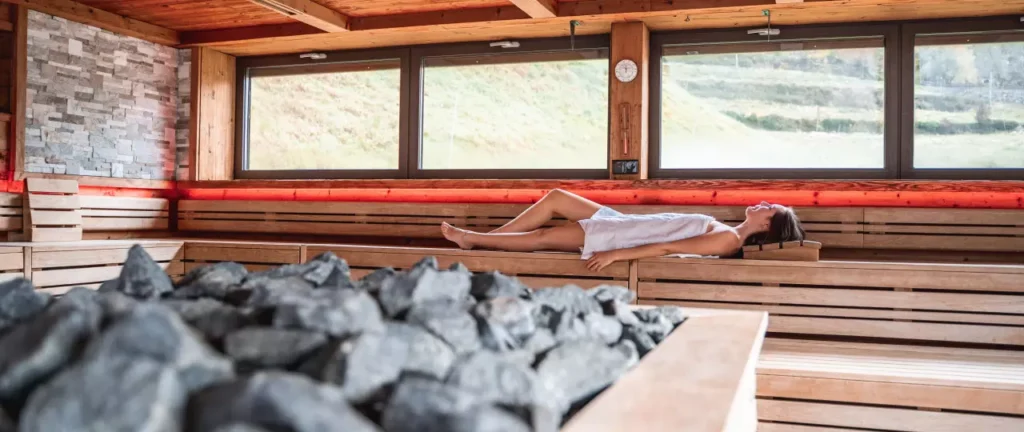
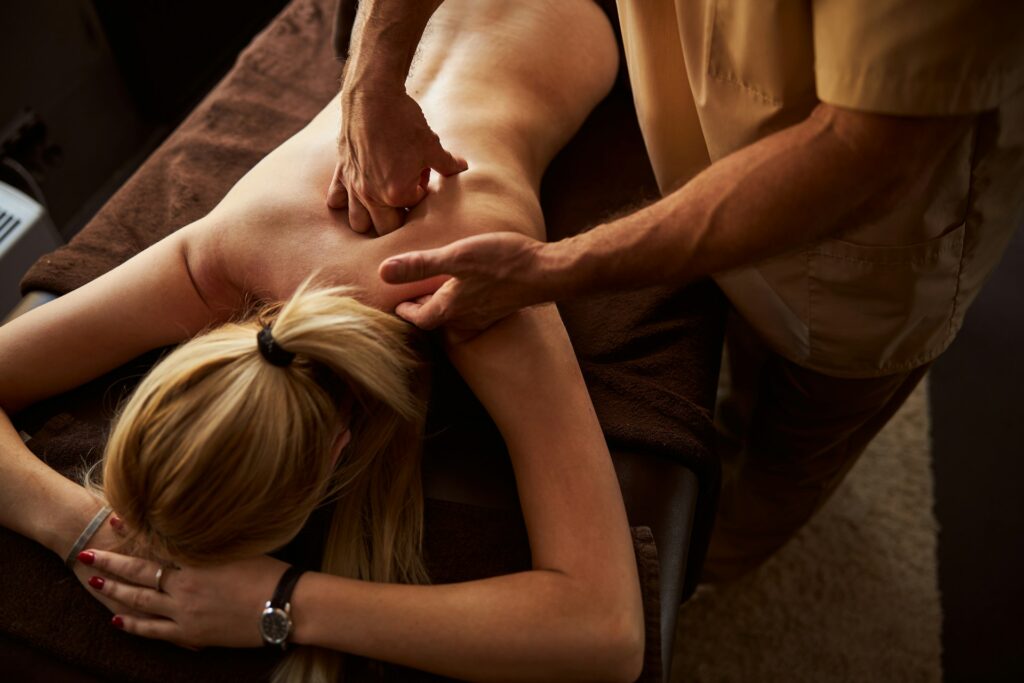
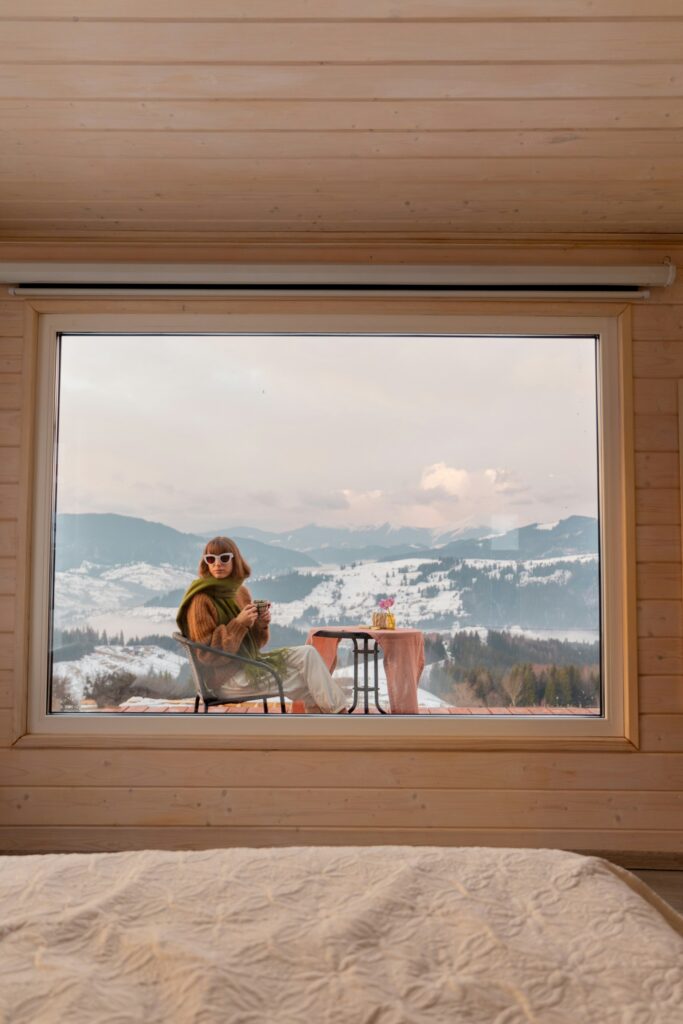
There are spas galore in Méribel, and nothing beats a bit of pampering, massage or steamy sauna after an exhausting day on the slopes. Many of the best spas in Méribel have wide open, glass fronted spa and treatment rooms, allowing you an incredible view of the snow and the mountains below.

Some of the most popular (and luxurious) options include the Cinq Mondes Spa, housed within the Parc Olympique in the centre of Méribel, the Helios Spa in the Hotel L’Helios, and Le Coucou Méribel Spa. 

Don’t worry if your hotel or chalet doesn’t have its own spa or wellness centre; many of the four and five star hotels allow guests to visit their dedicated spa facilities without requiring a room reservation. You will, of course, have to pay. 
Keen swimmers are also well catered for in Méribel, with the Parc Olympique (the Olympic Centre) boasting a huge swimming pool which was used during the 1992 Winter Olympics. Now, it’s open to the public; rejoice!


Eat Out, A Lot

In Méribel, the restaurant scene is superb, with good, honest French fare rubbing shoulders with fine dining.

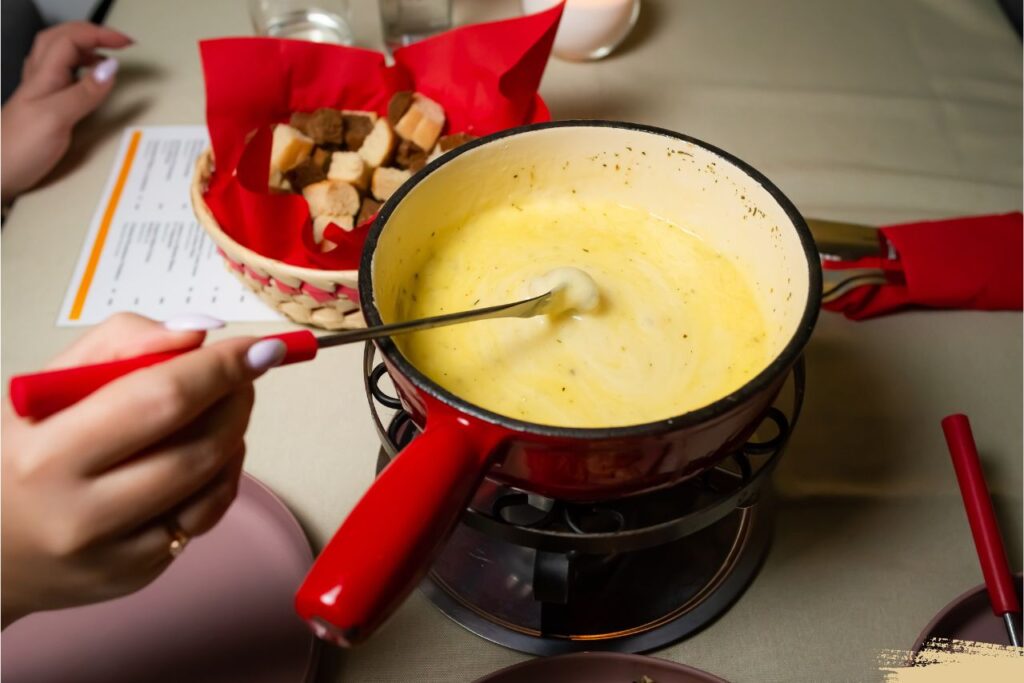
La Fruitière, which is in the same building as the infamous La Folie Douce après bar, specialises in Savoyard dishes, such as fondue, raclette, tartiflette and other cheesy, creamy, satisfying delights. Do be aware that the restaurant gets ridiculously busy and booking is recommended. If you want to enjoy lunch without having to sling on some skis, remember to get a pedestrian pass for easy access.

Michelin-recognised Le Cèpe, where (yep, you guessed it) mountain mushrooms are the specialty, is another fantastic place to dine in the region. This restaurant is all about local produce, and fish dishes using stuff caught in nearby lakes are done with particular dexterity here. Their truite fario aux noisettes du moulin de Chanaz (grilled trout with a butter and wine sauce) is delicious. 

By Katerina Parameyeva Via Canva

Another must try at Le Cèpe is the Cappuccino de Cèpes, which is as rich and comforting as it sounds. If you can, this one is best enjoyed on their sunny terrace, and if even if you haven’t got mushroom left after dinner (sorry, we had to), you just have to finish your meal off with the restaurant’s famous Mont-blanc glacé aux cèpes – resembling a snow-capped mushroom mountain. If such a thing were to exist.

La Coursive des Alpes is another highly rated restaurant which was once an old cinema, and now serves up theatre of a very different kind; the bar on the bottom floor does the most fantastic cocktails in town. If you’re still hungry, Le Grand Coeur Hotel in Méribel centre is the top luxury hotel in the area and has a wonderful menu of Savoyard specialities.

If you’re looking for a refined chalet experience and something altogether more fancy, l’Ekrin, in the 5 star Le Kaila resort hotel, is the first and only Michelin starred restaurant in Méribel. The kitchen is headed by Laurent Azoulay and the guys and gals behind Michelin say he ‘‘proposes a culinary walk between Provence (his native land) and Savoie (his adopted home)”.

The menu straddles these two very distinct parts of France with real skill; expect to see local mushrooms, truffle and cheese rubbing shoulders with artichoke barigoule and trout done in the style of the Vaucluse region of Provence. It shouldn’t work, but it really does!


Take A Cooking Class

If you want to learn more about the culinary fare of Savoie, which is unique, generous and hearty, then there’s nothing quite like a hands-on learning experience to help you get to grips with the cuisine. 

The Cookery School at Chalet Savoir Faire, which is about a 30 minute drive from Méribel, offers a range of courses designed to introduce you to hearty Savoyard fare. Alongside the different culinary styles of the region, the course also offers an insight into the local culture, history and people that have shaped this unique cuisine. 

Courses are run by owner and chef Nikki, who has 30 years of experience under her belt and a wealth of knowledge about the produce and cooking techniques of the region. 


Take A Day Trip To Annecy

Though Méribel has plenty to offer within the resort, there are also some fantastic day trips to take if you’re after a change of scenery and a different focus. Annecy is particularly beautiful; a gorgeous, traditional French alpine town just an hour’s drive away from Méribel.

Known by some as the ‘Venice of the Alps’, it boasts canals which connect to the Thiou River, cobbled streets, houses in various shades of pastel, and the beautiful Lake Annecy, the second largest in Europe. If you’re visiting on a Tuesday or Friday, you’ll be lucky enough to catch the local market, perfect for picking up a souvenir, some arts and crafts, or even a little snack for the return leg!
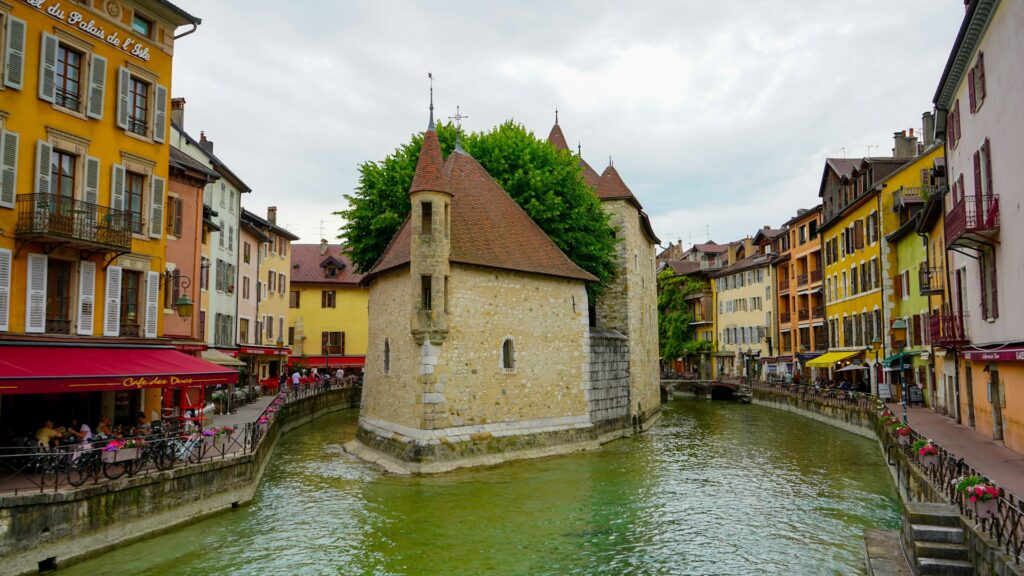
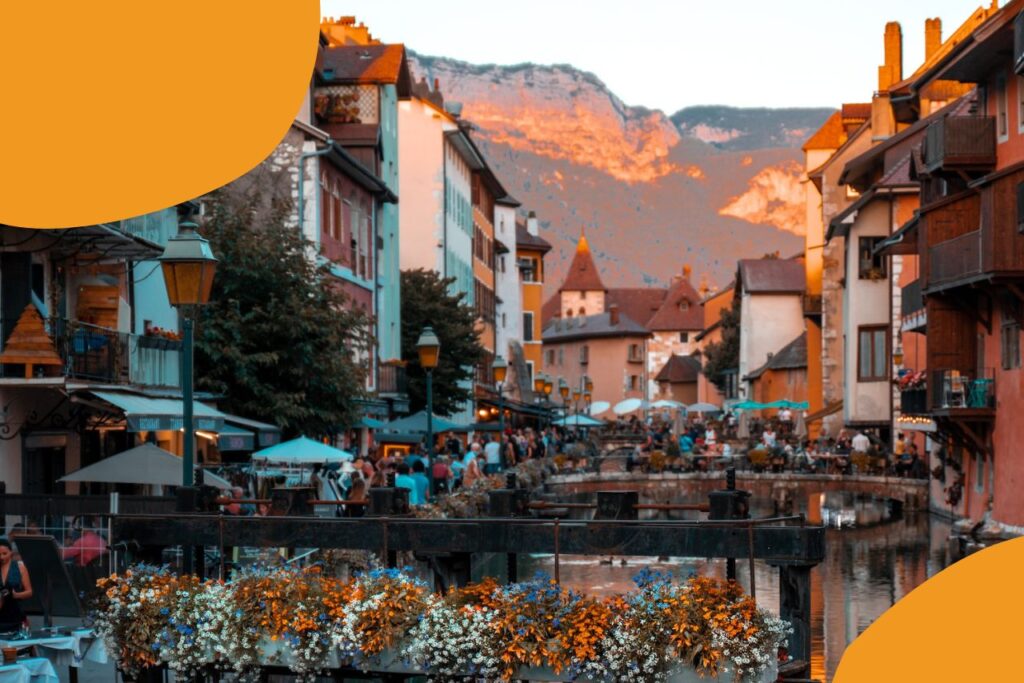
Photo by Jusdevoyage on Unsplash

Where To Stay 

Before you settle on where to stay, it’s worth researching the different neighbourhoods of Méribel before you book your stay, as each has something distinctive to offer. 

Méribel les Allues is the historic centre of the resort and an authentic Savoyard village which has retained its traditional soul, complete with well-preserved narrow streets. 

Méribel-Village is a place where the traditional Savoyard spirit remains, too, and offers converted chalets and barns transformed into comfortable accommodation. The chapel, the bread oven and the typical buildings give it a hamlet feel. It’s also where some of the most luxurious ski chalets in Méribel are found.

Méribel Center is the dynamic heart of the resort and is particularly popular with families with children, as well as those who love a party. A heady mix, make no mistake. On the flipside, Méribel Mottaret is a quieter family resort and is perfect for children and beginners.

Getting There & Transport 

Méribel is located in South West France, but, somewhat surprisingly for first-timers, the most convenient airport is in Switzerland.

Geneva Airport is around 180km from Méribel, with direct flights running from London Heathrow to Geneva taking around 1 hour and 30 minutes, and the onwards shuttle from the airport to Méribel another 3 hours. These shuttles run hourly, and will cost around £30. 

Alternatively, you can fly to Chambéry Airport, in France, from Heathrow. Flights take around 1 hour and 40 minutes, though they are less frequent and more expensive than those to Geneva. The drive from Chambéry to Méribel takes just over an hour.

If you fancy keeping feet on terra firma, you can catch the Eurostar from London to Paris Nord, and then onwards to Chambéry or Moûtiers, which is 45 minutes from Méribel. The journey should take around 8 hours in total.

Once you’re in the resort, Méribel has a regular, free resort bus service that runs between all the different villages surrounding Meribel. There are 5 different districts; Méribel, Méribel-Mottaret, Méribel Center, Méribel-Village and Méribel les Allues, all of which are worth exploring if you have the time. 

Check out our tips on 7 of the most popular ski resorts in Savoie for more great tips on the region!

Your Sublime Sanctuary: Transforming Your Conservatory Into A Space Of Serenity

There’s a certain uniquely British charm to having a conservatory in your home. It’s a delightful and airy space that allows us a close connection with the natural world while enjoying the comforts of our interiors. 

However, many of us struggle to make full use of our conservatories due to various reasons, chief among them, maintaining an appropriate and comfortable temperature, but also the propensity for these spaces, however pretty, to be used as something of a utility room. The fact that traditional conservatory furniture tends toward the weathered and worn doesn’t exactly help either.

It doesn’t have to be this way. Instead, let’s consider the ways you can reclaim this space and transform your conservatory into somewhere you truly want to spend time.

Comfy & Chic Furniture

A critical step in turning your conservatory into a space you love is to furnish it with comfortable and stylish furniture. 

Consider what purpose you want your conservatory to serve before investing. Perhaps you envision it as a sunny corner for reading, or a glamorous greenhouse, or even a sophisticated, semi al-fresco socialising area? Once you’ve determined your conservatory’s primary function, select furniture that not only complements this role but also enhances the overall aesthetics of the space.

Here are some conservatory furniture items you might want to consider:

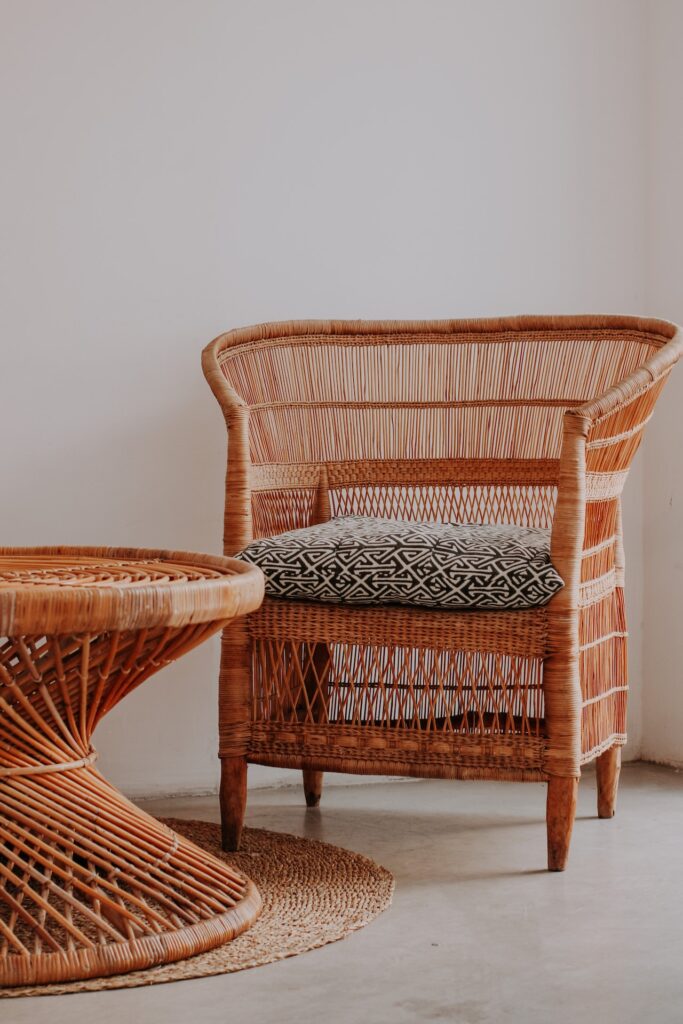
  • Rattan Or Wicker Sofa Sets: Both rattan and wicker furniture is a popular choice for conservatories due to its durability and stylish look. These sets usually include a sofa or loveseat, accompanied by a couple of chairs and a coffee table. They are comfortable, lightweight, and often come with water-resistant cushions, making them perfect for spaces exposed to sunlight and fluctuating temperatures.
  • Hanging Swing Chairs or Hammocks: These types of seating are not only comfortable but also add a trendy, boho-chic element to your conservatory. They are perfect for curling up with a book, taking a nap, or simply enjoying the view outside.
  • Daybeds: Daybeds work double duty as seating and bed, making them a versatile piece of furniture in your conservatory. They come in various styles, materials, and sizes, ensuring there’s a perfect one to match your taste and space.
  • Corner Sofa Sets: These are perfect for larger conservatories. They utilise space efficiently and provide ample seating for family or guests. Look for one with deep, plush cushions to ensure comfort.
  • Bistro Sets: These compact and chic sets are perfect for small conservatories or for creating a cosy corner for coffee or meals away from the more formal dining room space. They usually come with two chairs and a small table.
  • Garden Benches: To create a seamless transition from your conservatory to your garden, consider adding a stylish garden bench. Paired with comfy cushions, they can be a great spot to relax.
  • Chaise Lounges: These are great for lounging and add an element of luxury to your conservatory.
  • Ottomans and Poufs: These can be used as footrests, seating, or tables and bring an element of fun and versatility to your decor.

Remember to consider the material of the furniture to ensure it can withstand the sunlight and temperature changes in a conservatory. It’s also crucial to ensure each piece is in line with the overall aesthetic of your home for a cohesive look.

The All Important Temperature Question

Arguably one of the most significant challenges of conservatories is maintaining a comfortable temperature. At certain times of the year, it can feel like a sauna, and in others, it may resemble a fridge.

To combat this, the first thing to consider is the type of glass used in your conservatory. According to HUP! Conservatory Specialists. high-performance glass like Low-E glass is designed to minimise heat transfer, keeping the space warmer in winter and cooler in summer. If your space is particularly prone to heat fluctuation, then you might want to consider an insulated roof, which boasts high energy efficiency and the desired thermal performance.
For extra chilly months, apply thermal linings to your conservatory blinds or invest in a space heater that blends into your décor. Remember, radiant heaters are more efficient for heating conservatories as they warm objects rather than the air!

In the summer, consider using reflective films on your windows. This can help reduce the heat and glare inside the conservatory. A ceiling fan can also assist in circulating cool air, while roof and window vents can let out any built-up heat.

Green Touches

The beauty of a conservatory is its connection to the outdoors. Maximise this by incorporating some greenery into your design. Tropical plants are a fantastic option because they thrive in the bright, humid conditions of conservatories. Ferns, palms, or even some exotic orchids can instantly convert your conservatory into a mini indoor garden, making it feel like a tropical escape right within your home.

Set The Mood With Lighting

Just as important as day-time use is ensuring your conservatory is a welcoming environment when the sunsets. Add some fairy lights or drop pendant lights to create a cosy and warm atmosphere. Candles – if they’re scented, then even better! – or lanterns placed strategically can boost this effect and provide a romantic charm to your space.

To truly accentuate that romantic charm, fairy lights can create a cosy, whimsical feel. They are great for draping around the conservatory’s framework or windows.

Or, for something a little more functional, LED strip lights are versatile and can be used in many ways within a conservatory. You could install them along the bottom of your conservatory for a subtle, calming glow, or around the roof line for a more dramatic look.

Personalise Your Space

Remember to add personal touches to your conservatory, making it a space that truly represents you. Display family photos, add your preferred fabrics and textures, or showcase your unique collections. This will make your conservatory feel more “you,” enhancing the desire to spend time in it.

The Bottom Line

Creating an ambient, pleasant conservatory does require some effort, but the rewards are priceless. A well-designed conservatory can function as a sanctuary where you can unwind, entertain, or simply enjoy the beauty of the outdoors from the comfort of your home. With these tips, you’re on your way to making your conservatory not just an extension of your home, but a favourite destination in and of itself.

How Expensive Is Divorce? How To Mitigate The Financial Impact Of Your Marriage Ending

Navigating the financial complexities of divorce can be as challenging as dealing with the emotional aspects. The cost of divorce is a significant concern for many, and understanding the potential expenses involved is crucial for anyone considering or going through this life-changing process. In the UK, the financial implications of divorce are multifaceted and can vary greatly depending on individual circumstances.

The expense of divorce in the UK can range from a few hundred pounds to tens of thousands. For those seeking an amicable separation, costs can be kept at a minimum, with typical legal fees for an uncontested divorce falling between £1,000 and £3,000. 

However, if the divorce is contested or involves complex financial disputes, legal costs can skyrocket to as much as £30,000. In many cases, it can exceed that. It’s important to note that these figures exclude VAT and disbursements, which can add significantly to the total cost.

A fixed court fee of £593 is mandatory for processing a divorce petition in the UK, which is a standard cost across the board. This fee is non-refundable once the divorce application has been issued. Additionally, should you require a financial order application, an extra fee of £255 is applicable.

Navigating The Financial Impact Of Divorce

Indeed, divorce is not just an emotional whirlwind; it’s also a financial tornado that can leave your bank account and savings looking like a battlefield post-storm. In the UK, the cost of uncoupling can vary dramatically, but one thing is for certain: it’s rarely cheap. Understanding the potential costs and preparing for the financial impact of divorce is crucial. Here are seven top tips to help you navigate the monetary maze of marital dissolution…

Find Consensus On Major Issues

If possible, come to an agreement on child maintenance, childcare, and the division of finances to avoid additional legal costs. 

Indeed, before you head straight for the courtroom, consider mediation. It’s a process where a neutral third party helps you and your ex-partner reach an agreement on various aspects of your divorce, including financial settlements. It’s typically less adversarial and can be much cheaper than going to court. Plus, it can lead to a more amicable post-divorce relationship, which is especially beneficial if children are involved.

Get Your Financial Documents In Order

As Glasgow based divorce lawyer Jones Whyte sagely intones, transparency is key in divorce proceedings, particularly when it comes to any divorce financial settlement that might occur. Gather all your financial documents, including bank statements, payslips, tax returns, and any other assets or debts. This will not only help in the fair division of assets but will also streamline the process, potentially reducing solicitor and court time – and therefore costs.

Financial Planning

Post-divorce, establish separate accounts, determine your income, set a new budget, and start your retirement plan. It’s safe to say that your financial situation will change. You may need to adjust to a single income, which can be a significant shift if you’ve been used to a dual-income household. Create a new budget that reflects your anticipated income and expenses. Be conservative with your estimates and make sure to include a buffer for unexpected costs.

Asset Management & Debt Division

Take inventory of all assets, including property, vehicles, and retirement accounts, and understand how they will be divided. Ensure, too, that debts are fairly divided and that you’re protected from being responsible for your ex-spouse’s liabilities.

Credit Protection

Monitor your credit score and close any joint credit lines to prevent future financial entanglements with your ex-spouse.

Legal Advice & Aid

Consider mediation to reduce costs, as we mentioned, but don’t hesitate to seek legal counsel if necessary to protect your interests and prevent further acrimony, ideally.

A good solicitor can help you navigate the legal maze of divorce, while a financial advisor can assist in protecting your assets and planning for your financial future. Their expertise may come at a cost, but it can save you money in the long run by avoiding costly mistakes.

However, the cost of legal advice can be a significant concern for many going through a divorce. In the UK, legal aid can offer a lifeline to those who are unable to afford legal representation. Legal aid can help cover the costs of legal advice, mediation, and representation in court. It’s important to note that eligibility for legal aid in divorce cases is based on your financial circumstances and the merits of your case.

To qualify for legal aid, you must demonstrate that you have a low income and limited savings. You’ll also need to provide evidence that your case has a reasonable chance of success or that you need protection, for example, if there’s evidence of domestic abuse or child abduction. The Legal Aid Agency’s means test will assess your income, capital, and expenses to determine whether you’re eligible for support.

If you’re considering applying for legal aid, the first step is to find a solicitor or legal firm that takes on legal aid cases. They can help you with the application process and represent you if your application is successful. You can search for legal aid solicitors on the Law Society’s website or through the government’s Civil Legal Advice service.

It’s also worth noting that even if you don’t qualify for legal aid, you may still have options to manage the costs of legal advice:

  • Fixed-Fee Services: Some solicitors offer fixed-fee divorce packages, which can help you control costs by knowing upfront what the legal fees will be.
  • Pay-As-You-Go: This option allows you to pay for legal services as you use them, which can help spread out the costs over time.
  • Legal Expenses Insurance: Check if your home or car insurance policy includes legal expenses cover, which might cover some or all of your legal costs in a divorce.

The Bottom Line

While the cost of divorce can be high, careful planning and informed decision-making can help mitigate financial and emotional strain. By understanding the fixed costs, agreeing on major issues, and taking steps to protect your financial future, you can navigate the financial aspect of divorce more confidently. 

How To Accessorise Your Work Uniform So You Look Super Stylish

When it comes to work attire, the word ‘uniform’ often conjures images of monotonous, uninspired ensembles that do little to flatter or express one’s personal style. However, with a dash of creativity and a few choice accessories, even the most standard of work uniforms can be transformed into a statement of individuality and flair. With that in mind, here’s how to accessorise and embellish your work uniform to ensure you look super stylish every day of the week.

Making Your Uniform Look Super Stylish Without Breaking Any Rules

Before you start planning your accessories, it’s crucial to understand the dos and don’ts of your workplace’s dress code. Some environments may have strict guidelines on what is considered appropriate. Therefore, always check your company’s dress code policy to ensure you remain within the boundaries of professionalism.

Start With The Basics

Whether discussing winter jackets for site work, a fast food chain’s standard-issue, “actually trendy” polo shirt, or tailored suits in company colours, a well-fitted uniform is the foundation of looking good. 

Ensure your workwear is tailored to your body shape; this alone can elevate a standard uniform. If alterations are needed, invest in a good tailor. A nip here and a tuck there can make a world of difference.

Scarves & Ties

Scarves and ties are not just for keeping you warm or adding a formal touch; they can also be a splash of colour or a pattern that breaks the monotony of a uniform. Opt for silk scarves with interesting prints or a tie with a unique texture or colour that complements your uniform while showcasing your personal style.

Belts & Sashes

A belt or a sash can cinch in a loose-fitting uniform, providing shape and structure. Choose a belt that adds contrast or a sash that introduces a new texture or colour to your outfit. This not only adds a personal touch but also enhances your silhouette.

Footwear

Never underestimate the power of a great pair of shoes. They can completely transform an outfit. Whether you’re allowed heels, flats, or must wear safety shoes, select a pair that is both comfortable and stylish. If your dress code is neutral, perhaps a shoe with a pop of colour or an unusual material can be your statement piece.

Bags & Briefcases

The bag you carry to work is not just functional; it’s also part of your overall look. Choose a quality handbag, briefcase, or backpack that reflects your personal style while still being practical.

Leather goods often suggest sophistication and can improve with age. For those interested in exploring options and finding the perfect investment piece, the-fashion-square.com offers a curated selection of designer handbags that not only enhance your style but also hold long-term value.

Statement Jewellery

Jewellery can be a game-changer when it comes to accessorising a uniform. A bold necklace or an elegant pair of earrings can instantly add a touch of sophistication. Cufflinks for shirts and unique lapel pins for blazers can also provide a subtle yet distinct style. Remember, the key is to make a statement that aligns with your own unique personality and sense of style, all without being too ostentatious.

Personal Grooming

Accessories go beyond what you can add to your outfit. Personal grooming plays a significant role in looking polished. Neat hair, manicured nails, and subtle makeup can complement your uniform and accessories, completing the stylish look you’re aiming for. Hey, even a nicely kempt beard can enliven an otherwise standardised uniform!

Badges & Pins

If your workplace allows, badges and pins can be a fun way to personalise your uniform. Whether it’s a charity pin, a vintage brooch, or a badge with a quirky message, these small additions can be a talking point and a reflection of your personality.

Custom enamel pins are a particularly versatile option, allowing you to create a design that reflects your brand, role, or interests.

Embrace Textures

Incorporating different textures can add depth to your uniform without overwhelming it with colour or pattern. Consider a chunky knit cardigan or a sleek leather pouch to add a tactile element to your ensemble. Textured tights or socks can also introduce a subtle yet stylish twist, especially if you’re limited to wearing a specific uniform dress or trousers.

Add A Pop Of Colour With Nail Polish

While your uniform might dictate the colours you wear, your nail polish is one area where you might have more freedom. A well-manicured hand with a pop of colour can make a statement and brighten up your look. 

Choose a shade that complements your skin tone and adds a touch of personality to your appearance. However, always ensure that your choice of nail colour adheres to your workplace’s grooming standards.

Customise With Collar Tips & Cuff Details

Collar tips and cuff details are subtle yet impactful ways to add a unique touch to your uniform. Metallic collar tips can give a sharp, modern edge to a standard shirt, while embroidered cuff details can introduce a hint of elegance and craftsmanship. These small customisations are often overlooked but can make your uniform look bespoke and high-end.

Watch Out

A classic timepiece is not just practical; it’s also a timeless accessory. A watch can be a subtle nod to your personal style, whether it’s a vintage heirloom or a modern smartwatch. Choose one that suits your wrist and complements your uniform, rather than anything excessively showy.

For those with activity trackers, a stylish Fit Bit strap can transform a utilitarian device into a fashion statement that complements your work attire. Choose one that suits your wrist and complements your uniform, rather than anything excessively showy.

Finishing Touches

Lastly, don’t forget the power of a good attitude and a smile; they’re the best accessories anyone can wear. Confidence is key to pulling off any look, so wear your embellished uniform with pride.

The Bottom Line

Accessorising your work uniform is about finding the right balance between expressing your personal style and maintaining a professional appearance. With these tips, you’ll be able to inject personality into your workwear, ensuring that you look and feel super stylish every day. Remember, it’s the little details that make the biggest difference.

7 Ways To Add Warmth To Your Home Decor

Not many words are more evocative, especially in this most disappointing of summers, than those associated with a proper, roaring hot summer.

‘Warmth’. Say it out loud so you know how it feels. We don’t know about you, but suddenly our world is soaked in a hazy golden hue, our heating bills reduced through a simple utterance. That’s verbal visualisation at its finest, right there.

But today we’re not talking about tangible temperature. Instead, we’re after that elusive, hard to define and even harder to get right, warm ambience around the home. Because turning on the heating in what-should-be-summer just feels too perverse, let’s instead consider some ways to add a sense of comfort in the face of some truly miserable weather.

If that’s something you’re after – and let’s face it, who isn’t? – then read on; our 7 ways to add warmth to your home decor.

A Wooden Way Forward

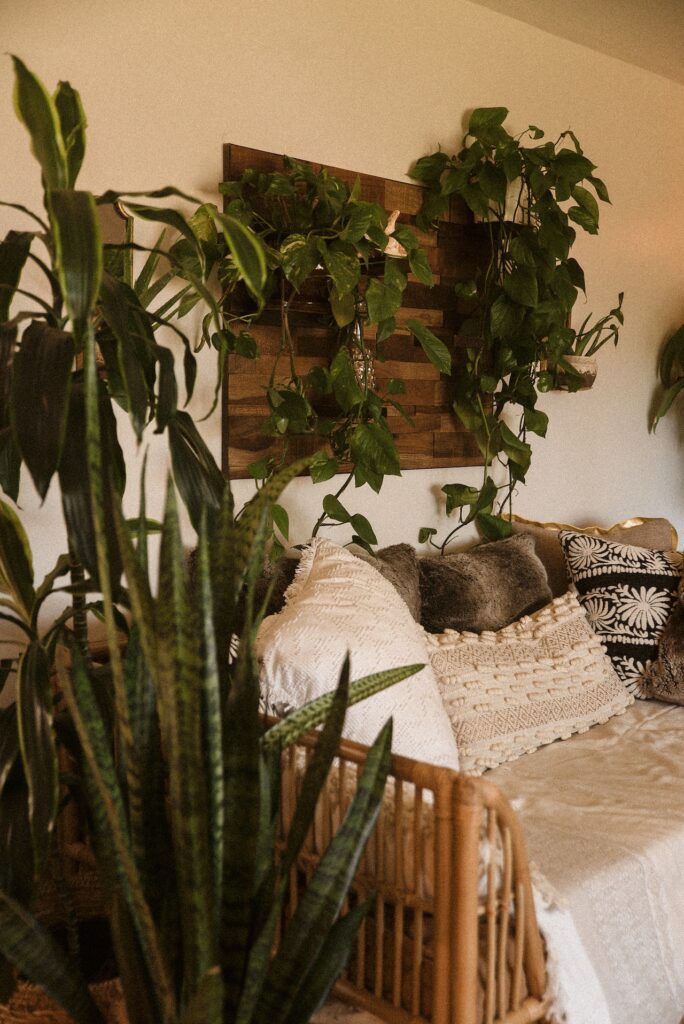
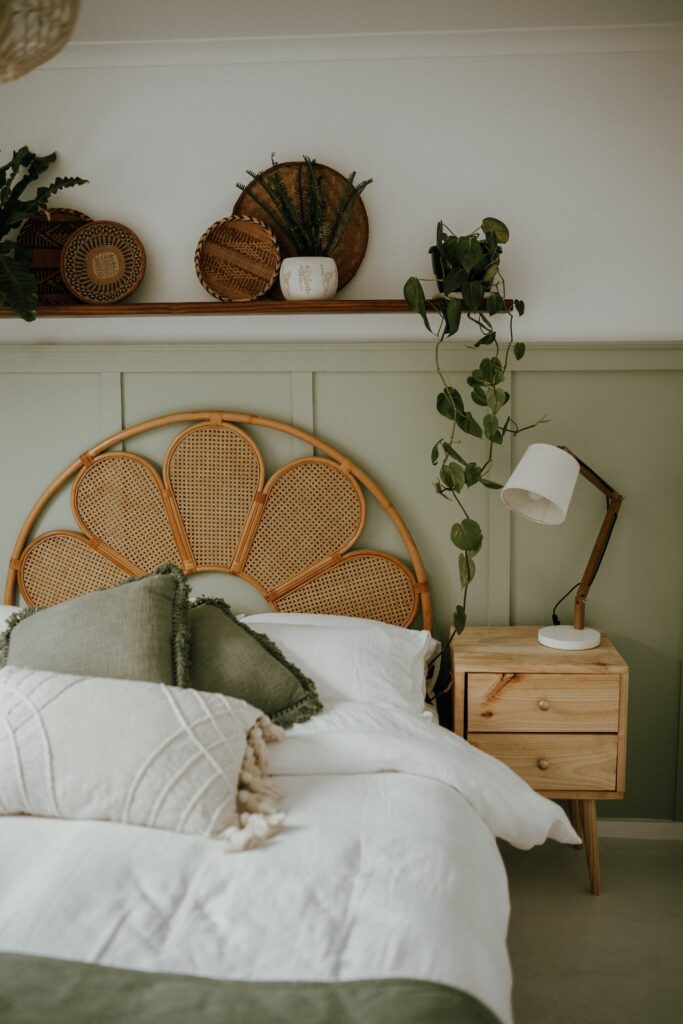
Wood, preferably unfinished and lightly rustic, is a great way to bring warmth to the home. We’re not suggesting you grow a tree right through the floorboards of your living room, but some small, subtle touches can bring a cozy feel to urban and rural pads alike. 

Modern interior design places a lot of emphasis on bringing the outside in, and wood is a great way to do this. You can add panelling to cabinets, fashion ledges and shelves from recovered wood, even construct a headboard for your bed from an old barn door. 

Wooden picture frames and table mats add even finer detail. The key is to be creative and harness the power of upcycling where possible.

Fire It Up

Of course, we all know the benefits that a roaring fire can bring to the temperature of your house, taking it from two-dog to toasty at the flick of a match. But we’re here to talk about atmosphere and ambience.

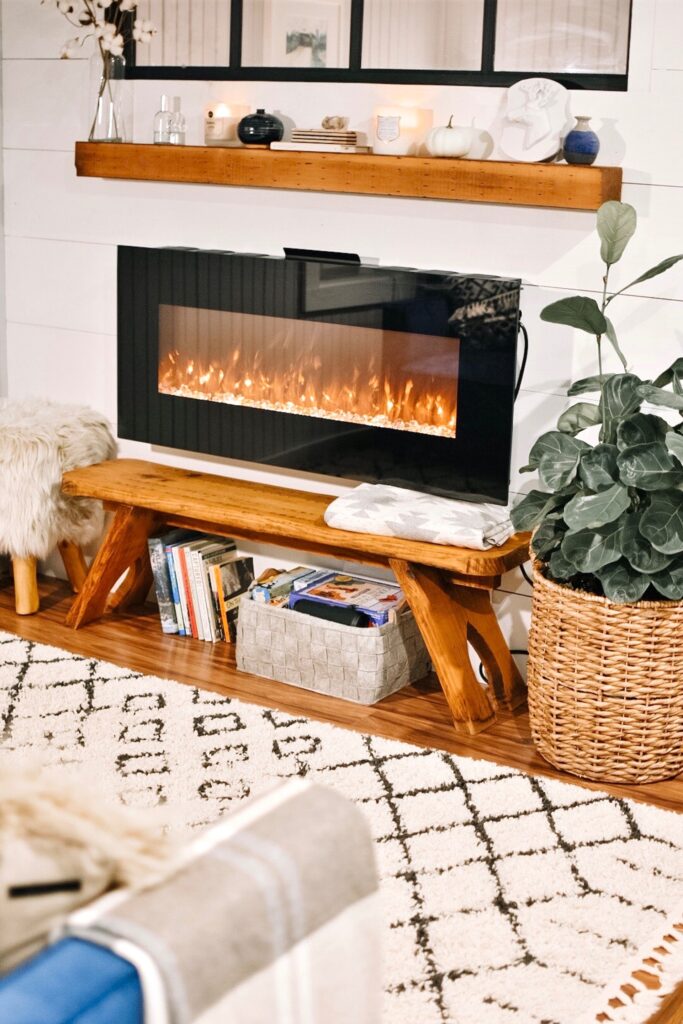
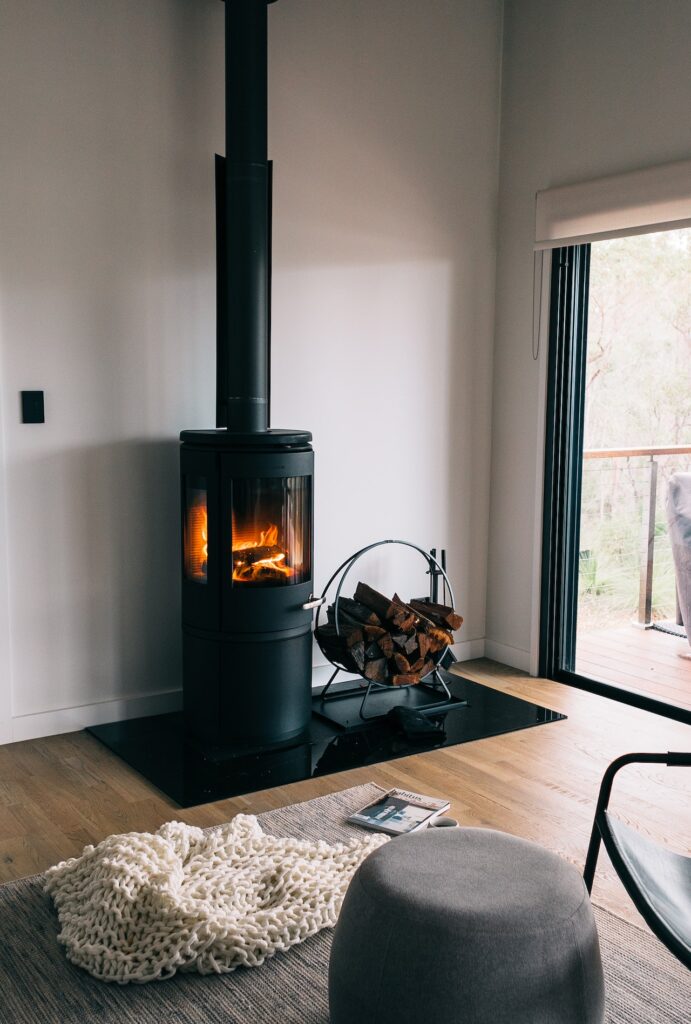
And it’s that flickering, fervent flame that adds warmth to the room by throwing shadows, and acting as a point of intrigue; wood stoves are, quite simply, the part of the room where all the attention gathers.

Truly, it’s a multisensory stimulator; the crackle of trapped steam and vapour is so cosy and reassuring, in fact, that its soundtrack has apparently been marketed.

If you’re lucky enough to have a real fireplace or log burner then embrace it; there is nothing better than curling up on the sofa to cosy comfort of a real crackling fire. If you’re worried about the emissions of your fire, add an electric fireplace instead.

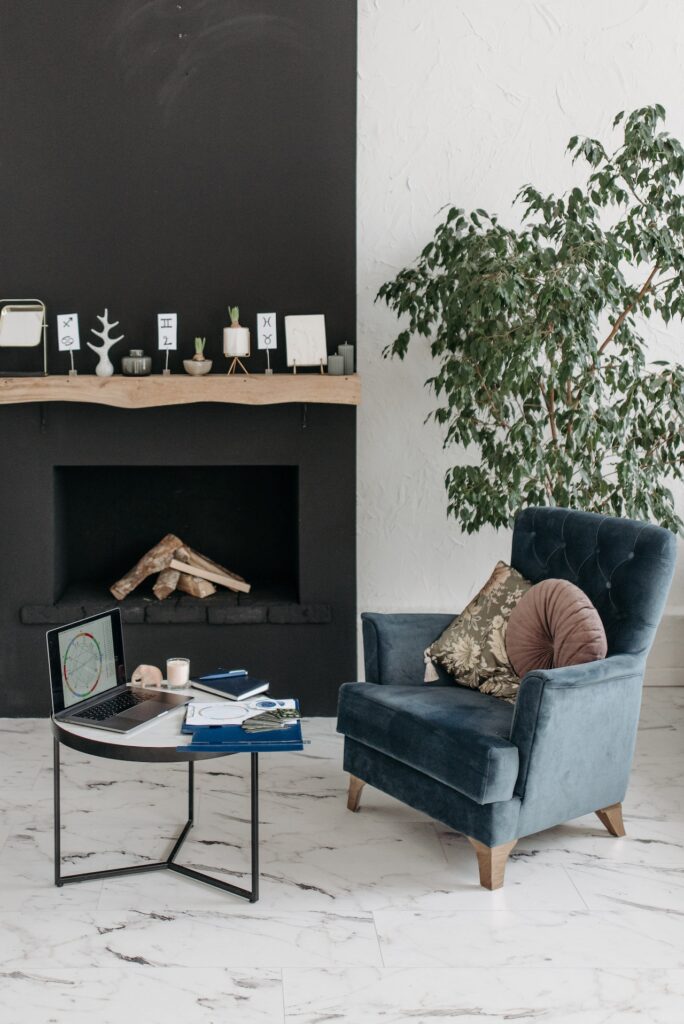
Alternatively, if you live in a new build and don’t have a real fire place at your disposal, consider creating a faux fireplace, which can bring just as much warmth and ambience to a room. To really capture your guests’ gaze, framing your fireplace with an oak fire surround will further draw people in.

If none of that feels or fits quite right, you could simplyu turn your TV into a virtual fireplace, all via the power of Netflix!

Organised Chaos

Have you noticed that the houses which feel really, truly cosy aren’t always in perfect order? Furniture may not be aligned, items certainly aren’t placed at right angles, and scant regard for symmetry is obvious. This ‘lived in’ feel creates real warmth, and can be enhanced with a few interior design touches. Areas of exposed brickwork, for instance, bring that rugged look we’re extolling in droves. Ditto random, mismatched furniture scored from antique dealers.

Be warned. While cobbling anything that carries a single digit price tag at the jumble sale may serendipitously result in a synergetic style, it is, frankly, unlikely. Better to have thematic thread running through your design ideas – such as matching lines or motifs, giving a little guidance to your thrifty foraging.

Time For The Tactile

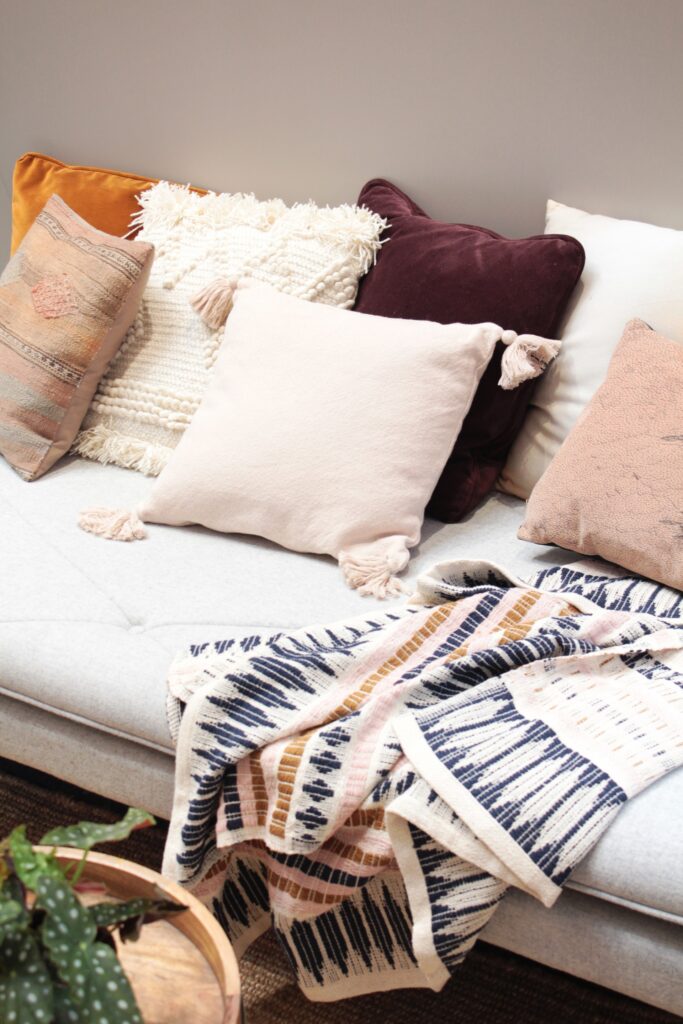
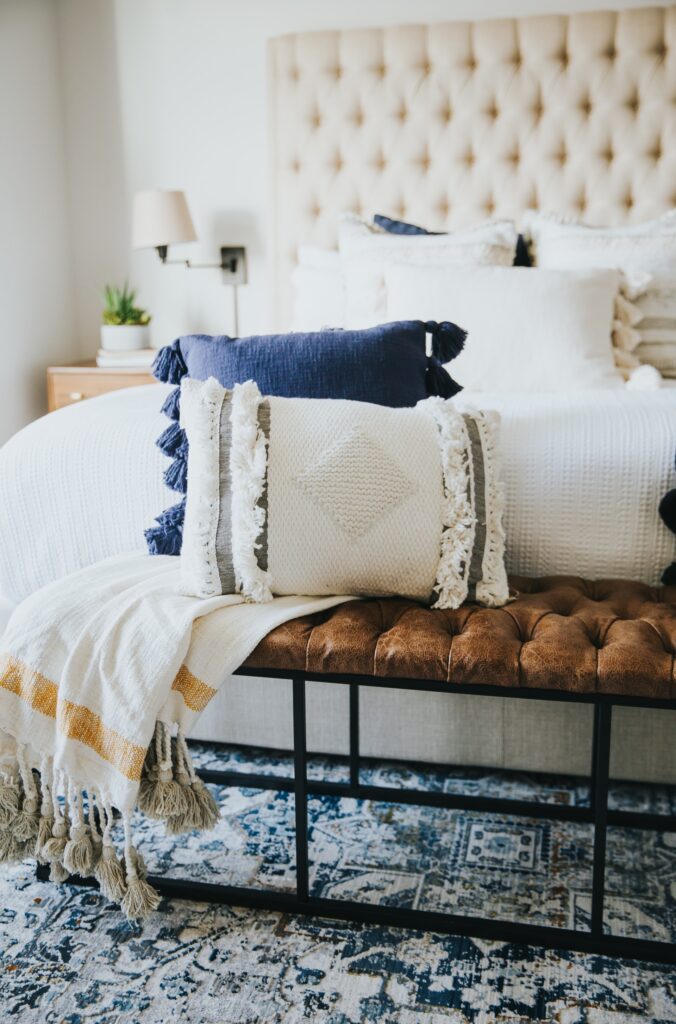
The idea of warmth is inextricably linked with touch. It’s vital, then, to add as much texture as you can to your space. This is best achieved with throws, rugs and extra cushions and pillows, but also by a broad range of materials, like knit and satin. 

When it comes to layering, start from the ground up. Firstly, don’t be fooled into thinking that a rug only belongs on a wooden floor or a floor. Layer a rug on top of a carpet can add a whole new level of depth, texture and ultimately warmth to your home. Secondly, look at your soft furnishings; blankets, throws, and cushions really are the best way for you to crank up how cosy your home feels.

Then cast your eye upwards and look at your windows furnishings. Your choice of curtain fabric and blind material can have a dramatic effect on overall impression and feeling of warmth in a room. A block-out lined curtain can bring warmth, texture and colour to your room instantly. Here at IDEAL, we’re fans of the very theatrical, falling from ceiling to floor length curtains.

Finally, it also pays to take a long hard look at your lampshades, which brings us to our next point…

Read: Is your home not cosy enough? Here’s how to change that

Or, Create A Warm & Cosy Glow With Lighting

Warmth and cosiness go hand in hand, and if you use your lighting cleverly, you can effortlessly create an inviting and decidedly cosy atmosphere. 

If you don’t have young children – or cats, for that matter – you can place lit candles around your lounge and dining room when night begins to fall, for that gentle flickering glow. Of course, if you do have young kids or curious felines, flameless LED candles will work just as well. 

Another wonderful way to create a cosy atmosphere with lighting is by hanging twinkling garlands of fairy lights around the home, or placing Himalayan salt lamps in strategic spots. Salt lamps are supposed to have a range of health benefits, as well as emitting a warm and gentle light. 

You can also layer your lighting to harness the power of ‘light and shade’, creating cosy corners in contrast. Indeed, by layering your light, you can ensure you have plenty of practical light during the daytime, then transform it into a relaxing, gently lit space and night.

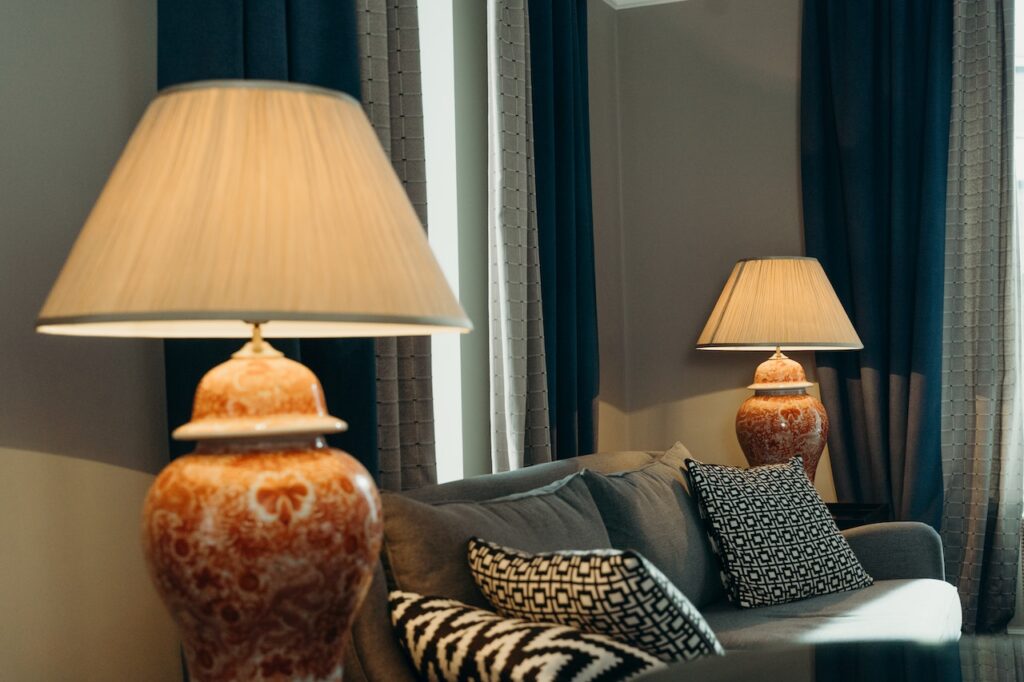
Consider a combination of wall lights with dimmer switches, floor lamps and table lamps, all of which will help to create a warmer and more intimate feel. Of course, it’s not just the lamps that adds warmth, equally important is the role of the lampshade. High-quality lampshades that reflect your tastes are ideal here. We’re big fans of silk lampshades which can add a natural, warm glow to any room.

All of these additions can add a sense of tacit tactileness that you simply can’t help but sink into. In fact, we think we need a lie down after writing that!

Colour Scheme Caution

The temptation when trying to warm up the domestic space is to throw as much yellow, orange and red paint at the walls as you can and pray this sunkissed affect sticks. 

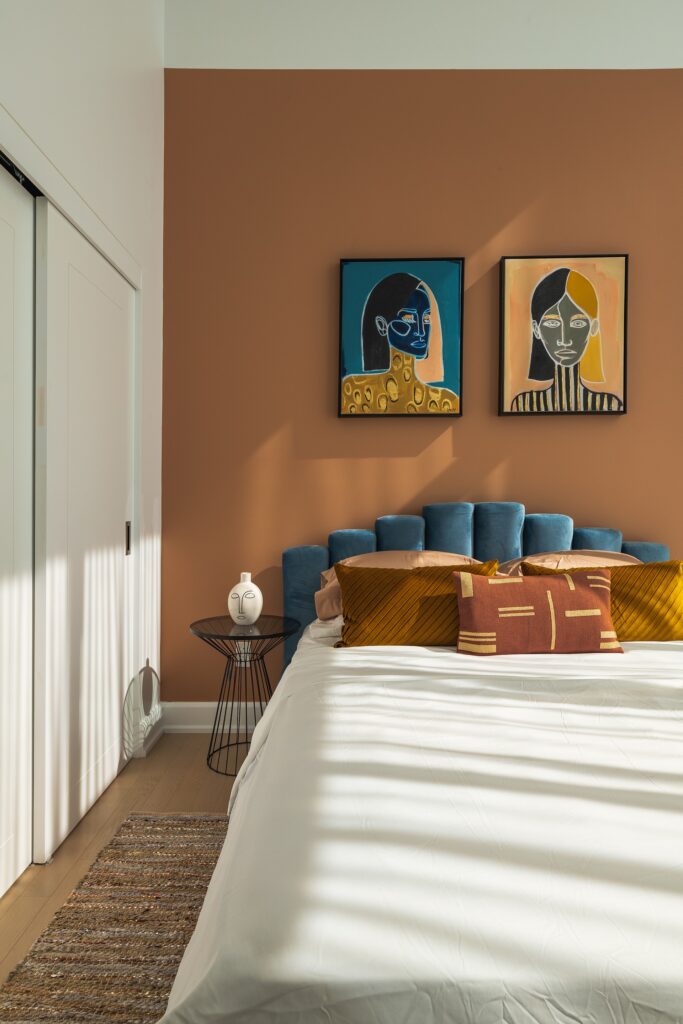
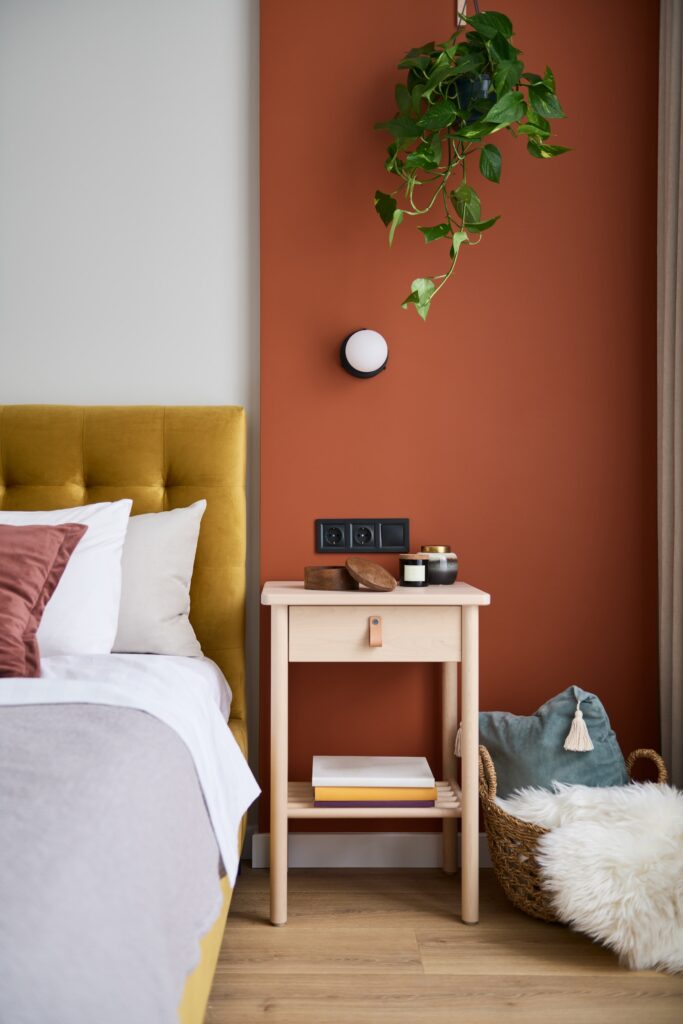
In reality, it’s advisable to exercise caution with the colourscape; sure, channel golden hues, but in a restrained fashion perhaps on one wall of a room, matched with more muted tones making up the other three quarters.

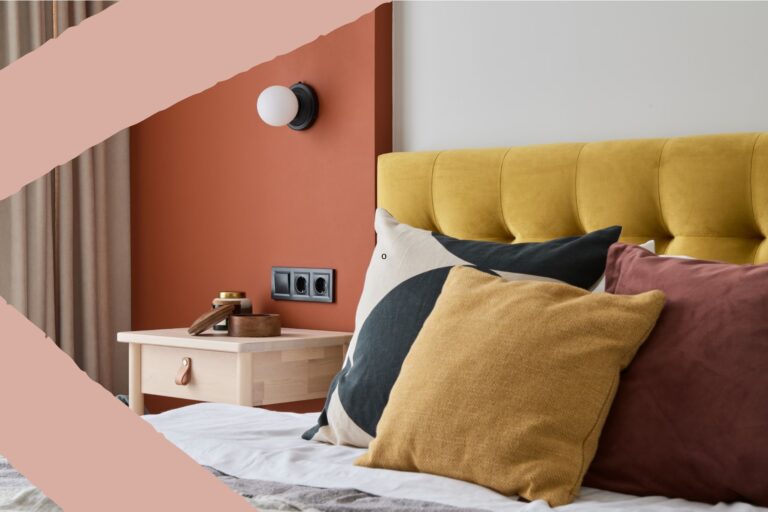
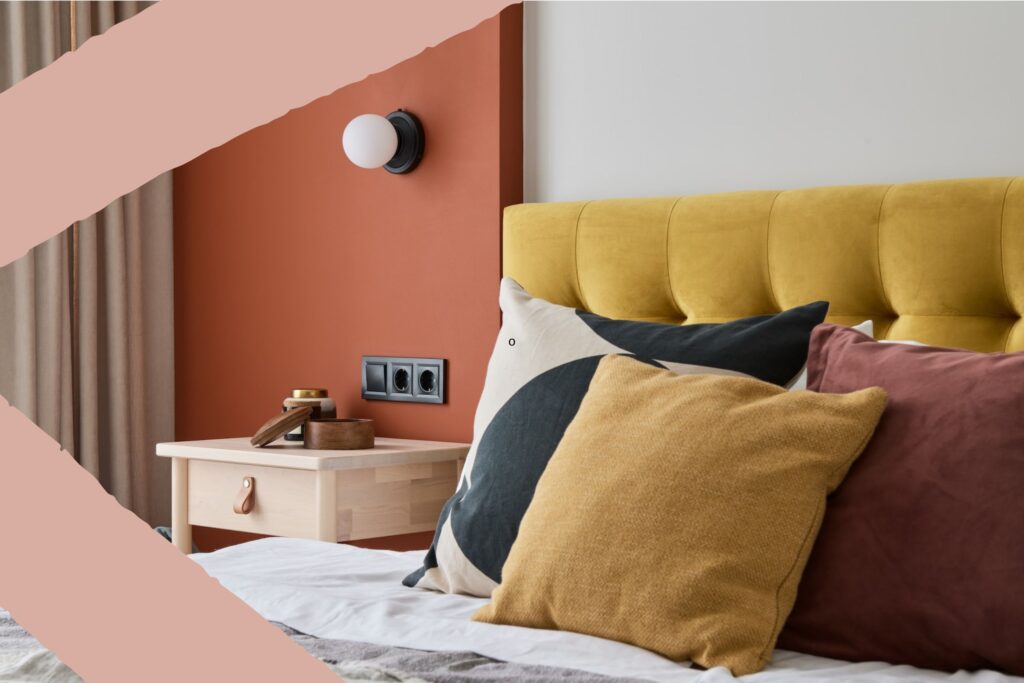
In the bedroom, especially, bright colours can be overwhelming, with traditionally ‘warm’ colours such as red, orange and yellow considered to be stimulating. Instead, colours best described as calming are far more appropriate here; think blush pinks, rich aubergines and calming peaches. And if you do have your heart set on yellow, orange and red colours, opt for deeper shades like mustard yellow, terracotta and the deepest garnet red.

And for more on that particular subject, do check out these IDEAL colours to paint your home to inspire creativity and wellness.

Embrace The Power Of Aroma

Our final tip for adding warmth to your home is to engage the often-overlooked sense of smell. Scent has a profound impact on how we perceive our environment, and the right aroma can evoke a sense of comfort and warmth.

Consider using scented candles, essential oil diffusers, or incense to fill your home with inviting aromas. Scents like vanilla, cinnamon, sandalwood, and cedarwood are particularly effective at creating a cosy atmosphere. You can also experiment with seasonal scents; for instance, a hint of pine or spiced apple can make your home feel especially snug during the colder months.

Additionally, incorporating natural elements like dried lavender or eucalyptus in vases can add both a visual and olfactory layer of warmth. Not only do these scents enhance the ambience, but they also contribute to a sense of well-being and relaxation.

And with that, we’re off for a well earned lie down in a cosy, warm corner of your home! Care to join us? Actually, that sounds a little weird…

8 Lifestyle Changes That Could Help Encourage Healthier Hair

0

In the quest for luscious, healthy hair, many of us turn to an array of products promising miraculous results. However, the secret to vibrant, strong hair often lies in our daily habits and lifestyle choices. Here are 8 lifestyle changes that could help you achieve healthier hair.

Nourish From Within

Healthy hair starts with a balanced diet. Your hair needs a variety of nutrients to grow and stay strong. Here are some key nutrients and their sources:

  • Protein: Hair is primarily made of protein, so it’s essential to consume enough. Include lean meats, fish, eggs, beans, and legumes in your diet.
  • Iron: Iron deficiency can lead to hair loss. Good sources include red meat, spinach, lentils, and fortified cereals.
  • Vitamin A: This vitamin helps produce sebum, which keeps your scalp moisturised. Carrots, sweet potatoes, and kale are rich in vitamin A.
  • Vitamin C: Essential for collagen production and helps with iron absorption. Citrus fruits, kiwis, strawberries, and bell peppers are excellent sources.
  • Vitamin D: Low levels of vitamin D are linked to hair loss. Sun exposure, fatty fish, and fortified foods can help maintain adequate levels.
  • Vitamin E: Acts as an antioxidant and helps protect hair from damage. Nuts, seeds, and spinach are good sources.
  • Omega-3 Fatty Acids: These fats nourish the hair and support thickening. Include fatty fish like salmon, flaxseeds, and walnuts in your diet.

Stay Hydrated

Just as drinking enough water is vital for glowing skin, so hydration is key to maintaining healthy hair. Water helps transport essential nutrients to your hair follicles, promoting growth and strength. Aim to drink at least 8 glasses of water a day. Dehydration can lead to dry, brittle hair and a flaky scalp. Herbal teas and water-rich fruits like cucumbers and watermelons can also contribute to your hydration goals. Additionally, consider using a humidifier in dry environments to maintain moisture levels in your hair and scalp.

Regular Exercise

Exercise boosts blood circulation, which in turn helps deliver more oxygen and nutrients to your scalp. This can stimulate hair growth and improve the overall health of your hair. Aim for at least 30 minutes of moderate exercise, such as brisk walking, cycling, or yoga, most days of the week. Exercise also helps reduce stress, which can be a significant factor in hair loss. Activities like yoga and pilates not only improve circulation but also promote relaxation and stress relief.

Manage Stress Effectively

Stress can wreak havoc on your hair, leading to issues like hair thinning and loss. Incorporate stress-reducing activities into your routine, such as meditation, deep-breathing exercises, or hobbies you enjoy. Chronic stress can push hair follicles into a resting phase, leading to hair loss.

Ensuring you get enough restorative sleep is also crucial, as your body repairs and regenerates cells, including hair cells, during rest. Aim for 7-9 hours of quality sleep per night. Practices like mindfulness and journaling can also help manage stress levels.

From cold showers to fake smiling, check out our guide on some surprising ways to relieve stress for more on that!

A More Gentle Hair Care Routine

How you treat your hair daily can significantly impact its health. Use a gentle shampoo and conditioner suited to your hair type, and avoid washing your hair too frequently, as this can strip it of natural oils. When drying your hair, pat it gently with a towel instead of rubbing it vigorously. Consider using a wide-toothed comb to detangle wet hair, as it is more prone to breakage. Additionally, avoid tight hairstyles that can pull on the hair and cause breakage. Opt for loose styles and use hair ties that are gentle on your hair.

Investing in a hair thickener for men and women can also be beneficial, especially if you are experiencing thinning hair. Hair thickeners can add volume and make your hair appear fuller, giving it a healthier look. Choose products that are free from harsh chemicals and are designed to nourish and protect your hair.

Equally, some are now turning to hair growth pills as a way to supplement their routine. These typically contain a blend of biotin, zinc, folic acid and other vitamins that support the hair growth cycle. While they can be a useful addition, they work best alongside a balanced diet rather than as a replacement for one. Look for options backed by clinical research and consult your GP before starting any new supplement, particularly if you are pregnant, breastfeeding or taking medication.

Limit Heat & Chemical Treatments

Excessive use of heat styling tools and chemical treatments can damage your hair, making it brittle and prone to breakage. Try to limit the use of hairdryers, straighteners, and curling irons. When you do use them, apply a heat protectant spray.

Opt for natural hair treatments and avoid harsh chemical dyes and relaxers whenever possible. If you must use chemical treatments, ensure they are done by a professional and follow up with deep conditioning treatments to restore moisture and strength to your hair.

Regular Trims

Regular trims can help keep your hair healthy by removing split ends and preventing further damage. Aim to trim your hair every 6-8 weeks. This doesn’t mean you have to lose a lot of length; even a small trim can make a big difference in the health and appearance of your hair. Trimming helps prevent split ends from travelling up the hair shaft, which can lead to more significant breakage and damage. Regular trims also help maintain the shape and style of your hair, making it look fuller and healthier.

Protect Your Hair While You Sleep

Sleep is when your body does its repair work, but the wrong bedtime habits can undo all your daytime efforts. Swap cotton pillowcases for silk or satin alternatives, which create less friction against the hair and help reduce breakage and frizz. If you have longer hair, a loose braid or soft scrunchie can prevent tangling overnight. Avoid going to bed with wet hair where possible, as damp strands are more vulnerable to damage. These small adjustments can make a noticeable difference over time, especially when paired with the other changes on this list.

The Bottom Line

Healthier hair rarely comes down to a single miracle product. It’s the boring stuff that tends to make the biggest difference: what you eat, how you sleep, the way you manage stress and how you handle your hair when it’s wet. None of these changes are dramatic on their own, but stack them together and give it a few months – you’ll notice the difference.

Autumn 2024 Staycation Special: 5 Ideal Places To Holiday In Southwest England

Okay, hands up; we freely admit that this guide feels little premature, with the Great British Summer still stuttering and spluttering and failing to take off. But with such a damp squib of a summer bringing the collective mood well and truly down, perhaps it might be pertinent to look ahead to autumn, which reliably, resolutely underpromises and overdelivers.

We’re looking forward to Autumn 2024 staycations, then, and with that in mind, here are 5 ideal places to holiday in southwest England.

Port Isaac, Cornwall

Ideal for seafood lovers…

If you’re looking to embark on a mythical quest to unearth discoveries and historical intrigue, then Cornwall is the place, a destination full of magic and mystery in spades. Each corner of Cornwall’s coastline tells a conflicting story, and its landscape includes misty clifftops, majestic rocks rising out of the sea, tranquil coves, relaxed villages, and lively beaches. 

And it’s that coastline setting which lends itself to a journey of culinary discovery we can’t wait to take, all the way to Port Isaac fishing village. The UK boasts some of the finest fish in the world, and much of the cooking in Cornwall makes use of this bounty beautifully. Autumn is perhaps our favourite season for native seafood, with mussels, mackerel, monkfish, scallops and oysters all on song.

If you’re after some top draw fish cookery, then one of the finest fish chefs in the world, Nathan Outlaw, owns two fantastic restaurants in Port Isaac, making the very most of the area’s finest produce. Sign up to the chef’s Grub Club newsletter to keep informed of the latest developments.

PORT ISAAC, CORNWALL

Bath, Somerset

Ideal for a historic getaway full off architectural splendour

To describe Bath as picturesque is something of an understatement. The honey hued Georgian architecture, the rolling, verdant hills, the soothing, laid back canal life…it’s all here and it’s all very British indeed. 

Autumn is a gorgeous time to spend time in the city. Expansive Victoria Park, in the centre, comes alive with trees all shades of the season, and a stroll here is heavenly. What’s more, there are several interesting cultural events during this time, including the Bath Autumn Fayre in mid-October and FilmBath, in the second week of November. Bonfire night in Bath, in particular, is not to be missed.

For an extra special treat take a flight in a hot air balloon which sets off from the aforementioned Victoria Park. Witnessing the city’s architecture from above, and appreciating the Somerset countryside’s dramatic transition from summer to winter, is something else.

After your balloon ride, take the crisp autumn air chill off with a dip in the Thermae Bath Spa (Britain’s only natural thermal spa) where you can enjoy warm, mineral rich waters and yet more stunning views of the city at the same time.

In recent years, several exciting, independent restaurants have opened up in the city, too, putting Bath on the UK’s food map confidently. Check out our tips on the best restaurants in Bath over here.

Bath spa roman baths

Salcombe, Devon

Ideal for the perfect mix of seaside & town

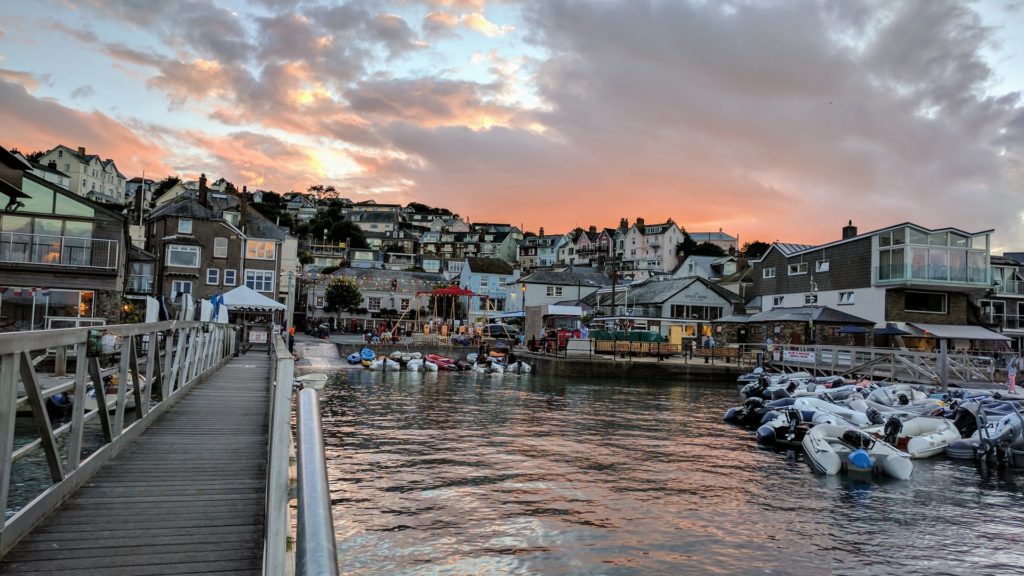
The hugely popular seaside town of Salcombe, on Devon’s south coast and in the county’s Area of Outstanding Natural Beauty, sees a huge influx of tourists during the summer months. When things chill out just a little and with the hotels in South West England not quite so rammed, autumn is the best time to visit this iconic waterfront town.

Just because it’s autumn and temperatures may have dropped doesn’t mean you should miss out on Salcombe Dairy Ice Cream Factory, which takes visitors and offers free samples. And from there, it’s only a short walk to the picturesque North Sands Beach, with calm, shallow water perfect for paddling.

Finish the perfect British day out at the seaside with dinner at the Crab Shed, which is right on the water’s edge overlooking Salcombe harbour. Oh, what we’d give for a plate of their Salcombe dressed crab right now.

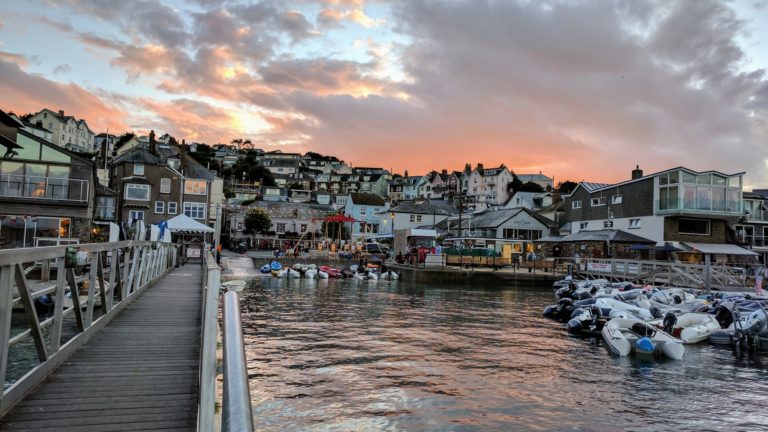
salcombe

Salisbury, Wiltshire

Ideal for exploring prehistoric history and blissful Autumn walks..

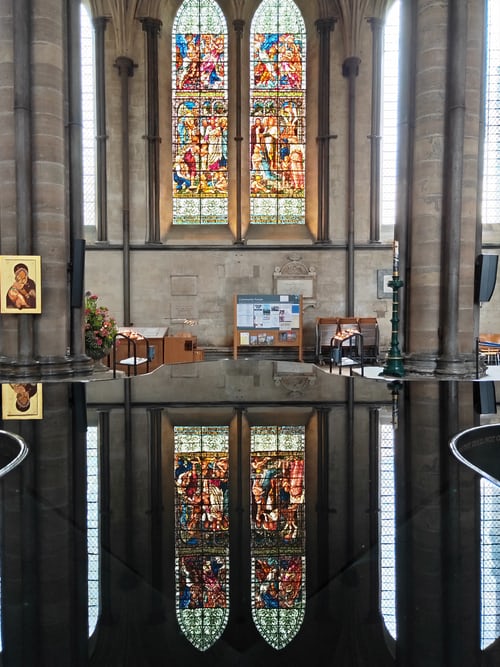
For a small city, Salisbury packs one hell of a punch culturally. There’s Salisbury Cathedral, which boasts the tallest church spire in the UK and the second tallest in Europe, and the gorgeous surrounding grounds, which author Bill Bryson called ‘the most beautiful space’ in England. What’s more, inside the cathedral you’ll find the best preserved copy (there are just four) of the groundbreaking document Magna Carta, which has sat in the cathedral’s Chapter House since 1215.

Just a 15 minute drive from the city is Stonehenge, which needs little in the way of introduction. Head there to ponder the mysteries surrounding the prehistoric monument in person, and follow it with lunch at the superb, Michelin-rated gastropub the Red Lion Freehouse, which is just another 15 minute drive north of the world famous site.

Salisbury has some blissful opportunities for walking, too, and in Autumn, these strolls take in the full spectrum of the season’s colourful performance. We love walking the outer bailey of Old Sarum and then onwards to the Woodford Valley, stopping off for a pint at Sting’s local, The Bridge Inn. The walk should talk you a couple of hours either way, but you’ll be richly rewarded by the rolling hills and streamside paths of this beautiful part of England.

Read: The best restaurants in Salisbury

SALISBURY

Bristol

Ideal for a city break

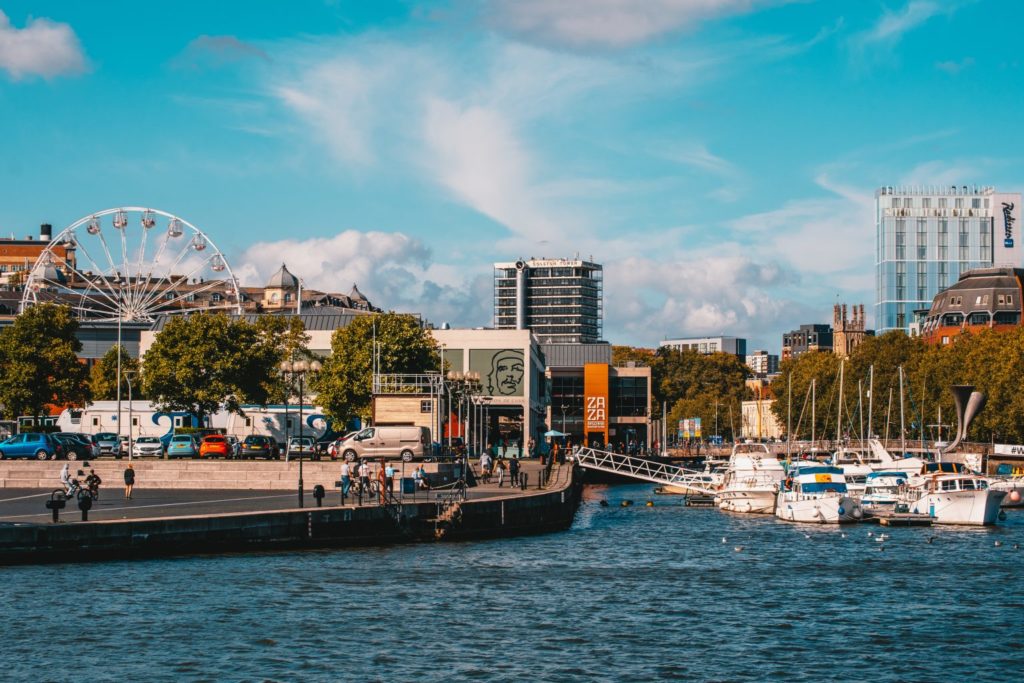
Widely regarded as one of the best places to live in the UK, Bristol is a unique place with a spirit that’s unlike any other. If you’re looking for city break in the South West of England, with all the nightlife, shopping and dining options that entails, then it just has to be Bristol.

Bristol is home to an iconic music scene and a lively nightlife. Some of the most action-packed areas of the city include the Harbourside, Millennium Square, City Centre, Whiteladies Road and Kings Street where you’ll never be short of places to wet the whistle and have a boogie.

For those who like to party late and loose, the White Bear, as well as warehouse style spaces synonymous with rave culture, like Lakotathek and the beast Motion, famous nationwide for its raves, are ideal.

BRISTOL HARBOUR

The shopping options in the city are excellent, too, particularly if you like a rummage through thrift stores and charity shops in search of a bargain or achingly hip retro outfit. Park Street, Queens Road and, especially, Whiteladies Road, is perfect for this. If you’re up for all the more accessible items all under one roof, then the Bristol Shopping Quarter, including huge shopping centre Cabot Circus, has all the high street and designer shops you could hope for.

Finally, outside of London, Bristol is perhaps the finest foodie destination in the UK, with Michelin-starred restaurants, the fantastic Wapping Wharf development containing a clutch of brilliant eateries housed in shipping containers, and loads of independent bakeries and cafes dotted all over the city.

Bristol is at its best in Autumn. Take a gorgeous autumnal stroll in Leigh Woods in the shadow of the imposing, iconic Clifton Suspension Bridge and enjoy the changing colours of the season. Or, in mid-October, enjoy Bristol’s prestigious Literary Festival as well as Circus City, the UK’s biggest, most renowned celebration of contemporary circus. They say only bored people get bored in Bristol, and we couldn’t agree more! 

Volunteering In Vietnam: Destinations & Projects To Make A Meaningful Difference

Vietnam is very much a country on the rise. Indeed, The Land Of The Blue Dragon is thriving, with the country’s digital economy alone expected to grow at 20% a year, reaching $45 billion in 2025.

No wonder many are predicting the country is set to become the next ‘Asian tiger’. That said, Vietnam is still a country in transition, with the global pandemic causing a worrying growth in the poverty rate, according to Oxfam.

Why Volunteer In Vietnam?

Volunteering in Vietnam provides an opportunity to make a meaningful impact while immersing yourself in the incredible local culture and heritage that makes this country one of the world’s top tourism destinations. And whilst the country has made significant strides in development, there are still areas where help is needed, particularly in education, healthcare, and environmental conservation. 

By volunteering, you can contribute to sustainable development and gain a deeper understanding of  Vietnamese society, of which there is just so much to discover.

Top Volunteering Destinations In Vietnam

Hanoi

Hanoi, the capital city, is a blend of ancient history and modern vibrancy. It’s an excellent destination for those interested in education and community development. The food’s not half bad, either!

Projects in Hanoi:

  • Hanoi Kids: This organisation connects volunteers with local students who want to improve their English skills. Volunteers can participate in informal language exchanges and cultural tours.
  • Blue Dragon Children’s Foundation: This NGO supports street children and families in crisis. Volunteers can assist with education, social work, and vocational training programmes.

Ho Chi Minh City

Ho Chi Minh City, formerly known as Saigon, is the largest city in Vietnam and a hub of economic activity and frenetic, kinetic energy. It’s ideal for volunteers interested in urban development and healthcare.

Projects in Ho Chi Minh City:

  • Saigon Children’s Charity: This organisation focuses on education and vocational training for disadvantaged children. Volunteers can help with teaching, fundraising, and community outreach.
  • Volunteer for Peace Vietnam (VPV): VPV offers various projects, including teaching English, working in orphanages, and supporting healthcare initiatives.

Read: Where to eat in Ho Chi Minh City


Da Nang

Da Nang is a coastal city known for its beautiful beaches and luxurious resorts. It’s a great destination for those interested in environmental conservation and community development.

Projects in Da Nang:

  • GreenViet: This NGO focuses on environmental education and conservation. Volunteers can participate in tree planting, wildlife protection, and community awareness programmes.
  • Da Nang Association of Agent Orange Victims: Volunteers can support rehabilitation and vocational training for victims of Agent Orange, a chemical used during the Vietnam/American War.

Hoi An

Hoi An is a charming town famous for its well-preserved ancient architecture and twinkling, lantern lit evenings. A UNESCO World Heritage site, It’s perfect for volunteers who want to work in heritage conservation and community projects.

Projects in Hoi An:

  • Hoi An Free Tours: This initiative offers free tours to tourists, led by local students who want to practise their English. Volunteers can help train the students and assist with tour operations.
  • Lifestart Foundation: This organisation supports disadvantaged individuals through education and vocational training. Volunteers can help with teaching, arts and crafts, and community development projects.

Con Dao Island

Con Dao Island is an archipelago off the southern coast of Vietnam, renowned for its pristine beaches, lush forests, and rich history, making it the perfect destination for luxury volunteer vacations and for those particularly interested in marine conservation and historical preservation.

Projects in Con Dao Island:

  • Con Dao National Park: This park is a haven for biodiversity, home to endangered species such as the dugong and sea turtles. Volunteers can participate in marine conservation efforts, including sea turtle nesting site protection, coral reef monitoring, and environmental education programmes.
  • Con Dao Museum: The island has a poignant history, having been used as a prison during the French colonial period and the Vietnam War. Volunteers can assist with the preservation of historical artefacts, conduct guided tours, and help with educational outreach to raise awareness about the island’s past.

Sapa

Sapa is a mountainous region in northern Vietnam, known for its ethnic diversity and stunning landscapes. It’s ideal for volunteers interested in rural development and cultural exchange.

Projects in Sapa:

  • Sapa O’Chau: This social enterprise supports the education and employment of ethnic minority youth. Volunteers can teach English, assist with trekking tours, and support community projects.
  • Ethos Spirit of the Community: This organisation works with local ethnic communities to promote sustainable tourism and cultural preservation. Volunteers can help with community development and eco-tourism initiatives.

Ninh Hoa

Ninh Hoa, a district in the Khanh Hoa Province just north of beach resort Nha Trang, is known for its serene landscapes, beautiful beaches, and rich cultural heritage. It’s an excellent destination for volunteers interested in community development and supporting vulnerable populations.

Projects in Ninh Hoa:

Anh Dao Orphanage: This orphanage provides care and education for children who have lost their parents or come from disadvantaged backgrounds. Volunteers can assist with teaching, organising recreational activities, and providing emotional support to the children. Additionally, volunteers can help with maintenance and improvement projects to enhance the living conditions at the orphanage. Please be aware that you need a grasp of Vietnamese (or facilitator or translator) to volunteer here.


Mai Chau 

Mai Chau is a rural district in the mountainous region of Hoa Binh Province, known for its picturesque valleys, rice paddies, and traditional stilt houses. It’s an excellent destination for volunteers interested in community development and cultural exchange.

Projects in Mai Chau: 

Mai Chau Community Development Programme: This initiative focuses on improving the quality of life for local ethnic minority groups. Volunteers can assist with education, healthcare, and infrastructure projects. 

Mai Chau Eco-Lodge: This eco-tourism project promotes sustainable tourism and environmental conservation. Volunteers can help with community outreach, environmental education, and sustainable farming practices.

Worked up an appetite? Us, too! A restorative bowl of pho back in Hanoi will see you right…

Which Elements Of SEO Still Matter In 2024?

In 2024’s rapidly evolving digital discourse, both businesses and content creators understand the increasing necessity to stay ahead of the curve to ensure their websites maintain high search engine rankings. 

Search Engine Optimisation (SEO) has always been a crucial, and occasionally shady, component of this, but with advancements in technology and changes in user behaviour, it is essential to understand which elements of SEO remain relevant

Several trends, such as the rise of Artificial Intelligence (AI), the increasing use of videos on social media, and enhanced user experience (UX) metrics, are reshaping the SEO terrain. Which matter most? We’ve spoken to the experts to find out.

AI Transformation In SEO

The influence of AI and machine learning on SEO is immense and still growing. It’s also vastly misunderstood, and certainly not a magic bullet.

That said, there’s no denying the potential of AI to enhance the efficiency and precision of numerous SEO activities, including keyword research, elements of content creation and performance analysis. According to recent insights from the industry, AI isn’t here to replace SEO experts but to augment their capabilities by automating routine tasks and allowing them to focus on high-level strategy and creative tasks.

One of the most significant AI-driven trends in SEO is the emphasis on natural language processing and context. Google’s algorithms are increasingly sophisticated, understanding nuances and the intent behind search queries more than ever. 

This development demands that content be tailored to address user intent comprehensively, promoting a more user-centric approach to SEO. This is something of a paradox, as AI tools can generate supposedly search-friendly titles and optimise content based on trending topics and keywords, with the aim of improving visibility and engagement. Often, the opposite occurs; the content ends up being so wooden and clearly robotic that Google largely ignores it. Make of that what you will…

The Enduring Importance Of Keywords

Despite advancements in AI, an organic, sometimes implicity understanding of keywords or keyphrases continues to be a fundamental aspect of SEO in 2024. 

Indeed, according to Social Market Way, a trusted Washington DC seo company, Google and other search engines still rely on keywords to gauge the relevance of web pages to user searches. However, the approach to keyword usage has evolved. It is no longer sufficient to stuff content with keywords; instead, the focus should be on integrating relevant, high-quality keywords contextually within content to enhance readability and user experience.

The importance of long-tail keywords has grown, primarily because they are less competitive and more specific, driving qualified traffic and increasing conversion rates. AI tools streamline this process by providing valuable data on search volumes, competition, difficulty, and emerging trends, allowing SEO experts to craft more effective strategies. 

That said, in the words of Bruce Springsteen, you still need a little of that human touch. Or, you know, a lot of it…

Read: 5 accessible ways to use AI to boost productivity 

User Experience & Core Web Vitals

User experience has emerged as a critical factor in SEO, with Core Web Vitals becoming essential ranking parameters. Core Web Vitals are a set of metrics that assess loading performance, interactivity, and visual stability of a webpage. 

These factors are vital for achieving and maintaining high search engine rankings. Google’s emphasis on user experience necessitates fast, mobile-friendly websites. Many industry leaders are now implementing AI for UX design to analyse user behaviour patterns and automatically optimise page elements accordingly. This approach not only improves Core Web Vitals scores but creates genuinely intuitive interfaces that visitors appreciate.

This means businesses must ensure their pages load quickly, are easy to navigate, and provide a seamless experience across all devices. Enhancing UX not only helps in SEO but also contributes to higher conversion rates and user engagement.

Video SEO: The Game Changer

The prominence of video content in SEO cannot be overstated. In 2024, video SEO is playing an increasingly important role in search engine rankings. As more users engage with video content on social media and other platforms, businesses that leverage this trend see substantial benefits. 

Videos enhance two critical SEO metrics: the time users spend on a page and the number of backlinks referring to the domain. Engaging videos can improve these figures, thereby boosting a website’s search rankings.

Optimising video content involves several key practices: using relevant keywords in titles, descriptions, and tags; creating compelling thumbnails to increase click-through rates; and leveraging video transcripts and closed captions to aid search engine indexing and improve accessibility. 

Read: How to measure and analyse your social media campaign’s performance

The Role Of Backlinks Remains

Backlinks remain integral to SEO, reinforcing the authority and credibility of a website. Although the strategies for earning backlinks have evolved, their influence on search rankings is undeniable. Backlinks from reputable sites can significantly boost a website’s position in search results, driving traffic and credibility. SEO strategies in 2024 include creating high-quality, shareable content that naturally attracts backlinks, as well as engaging in proactive outreach to build relationships with other sites.

Social Media’s Indirect Influence On SEO

Although social media does not directly influence search engine rankings, it indirectly affects various SEO factors. Social media platforms drive traffic to websites, generate engagement, and help in building valuable backlinks. In 2024, integrating social media with SEO strategies is essential for increasing visibility and driving user engagement. 

Sharing links, videos, and other content across social media platforms can lead to higher traffic and social signals, which search engines interpret as indicators of content quality and relevance.

The Rise Of Voice Search Optimisation

With the growing adoption of voice-activated devices, optimising for voice search has become a significant trend in 2024. Users are increasingly performing searches using natural, conversational language. This shift necessitates that content be optimised for voice queries, which often involve full questions rather than short keywords. Incorporating natural language into video titles, descriptions, and on-page content can help capture voice search traffic and improve overall search visibility.

SEO Best Practice For 2024

To stay ahead in the SEO game this year, consider the following best practices:

  • Create People-First Content: Understand your audience deeply and tailor content to meet their needs and answer their questions.
  • Optimise User Experience: Ensure your website is fast, responsive, and easy to navigate, focusing on Core Web Vitals.
  • Utilise Technical SEO: Implement strong technical foundations like schema markup, internal linking, and reliable site architecture.
  • Embrace Video SEO: Optimise video content with relevant keywords, engaging thumbnails, and video transcripts.
  • Leverage (But Don’t Rely On) AI Tools: Use AI to enhance keyword research, content optimisation, and performance analysis.
  • Focus on Backlinks: Create high-quality content that attracts backlinks and engage in proactive outreach to build relationships.
  • Incorporate Social Media: Use social media to drive traffic and engagement, indirectly boosting SEO.

The Bottom Line

The dynamics of SEO have certainly evolved, but the core principles remain steadfast, albeit with a contemporary twist. In 2024, elements such as AI integration, user experience metrics, advanced video SEO, and strategic backlinks continue to play vital roles. By staying updated with these trends and implementing best practices, businesses can ensure sustained visibility, drive traffic, and achieve their digital marketing goals. Adaptation and innovation are the keys to mastering SEO in this ever-changing digital environment.

HOTEL REVIEW: THE ZETTER, CLERKENWELL

London’s Clerkenwell is the perfect anchor from which to explore, party, eat your way around or do business in London. Bang in the middle of East and West End, guests have a veritable feast of options within reach. Soho is a short bus journey and you can be in Shoreditch in a matter of minutes. The capital’s business district is visible if only you look skywards and a host of Michelin-starred restaurants are walking distance away. The convenience means taking in a show at the Barbican and raving your socks off at Fabric doesn’t have to be a one-or-the-other choice.

All of this cries out for the perfect launchpad, a place which doesn’t prioritise prime location over personality but provides both. Enter The Zetter.

IDEA

An area with so much to grab our attention demands somewhere which will do more than just turn your head – it needs to capture you and hold you in a deep embrace. Just like Clerkenwell itself, The Zetter Hotel has enough charisma and quirk to do just that.

LOCATION

Housed close to where Clerkenwell Road meets St. John St. and easily accesible from numerous tube stops (Barbican, Chancery Lane, and Angel to name but a few) and overground stations (Farringdon, Shoreditch), one could cast a rod in any direction and snag something to occupy themselves with.

We suggest trying to catch a show at nearby Sadlers Wells Theatre, the renowned performing arts venue, or cruising down to Smithfields, London’s last surviving meat market. The Zetter Hotel is also close to Exmouth market which is full of stalls serving superb street-eats with restaurant potential.

Don’t miss Leather Lane, a short stroll away, historically a bric-a-brac market, but now a hub of some of the best street-food in central London.  For the culture-vultures, a visit to the The Charles Dickens Museum is a must. The list of things that you can do in the hotel’s surrounding area goes on , the location is that good.

STYLE & CHARACTER

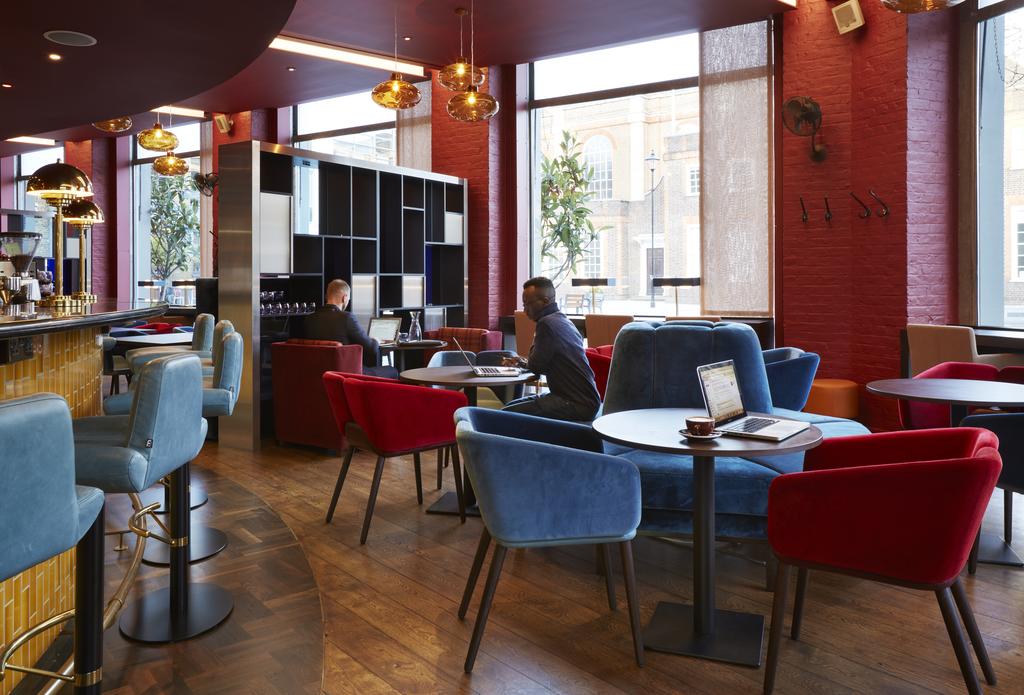
Right on the shore of the hipster’s ditch, there are beards and tattoos rubbing shoulders with suits and ties. Colour wise, deep purples, mauves and auburns, as well as a predilection for hoops and stripes, create a fun, groovy feel. It’s modern and just the right side of minimalist. Although the furnishings are lush and plush, we don’t see opulence and the inevitable stuffiness that brings.

ROOMS

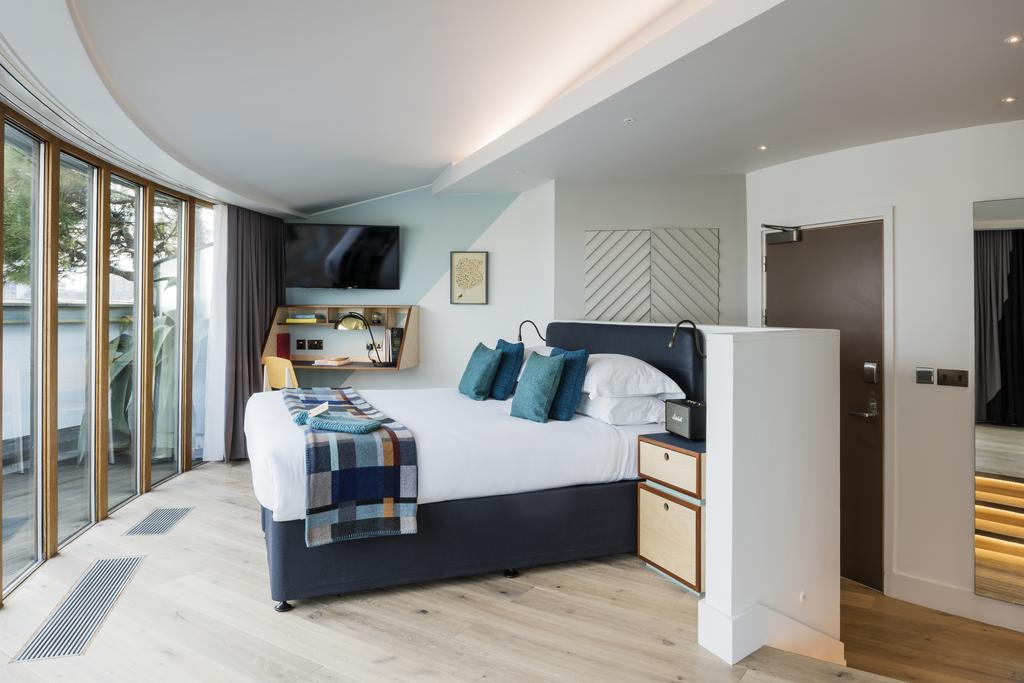
A basic room provides all the comforts one needs as a platform for city exploration. The higher you get, the more spacious the boudoirs become, and floor five plays host to four beautiful, airy ones. Beds are large and a subsequent menace to your evening plans – once sunk into them, that dinner reservation you made at St. John a five minute walk away suddenly seems an effort. They’re that comfortable.

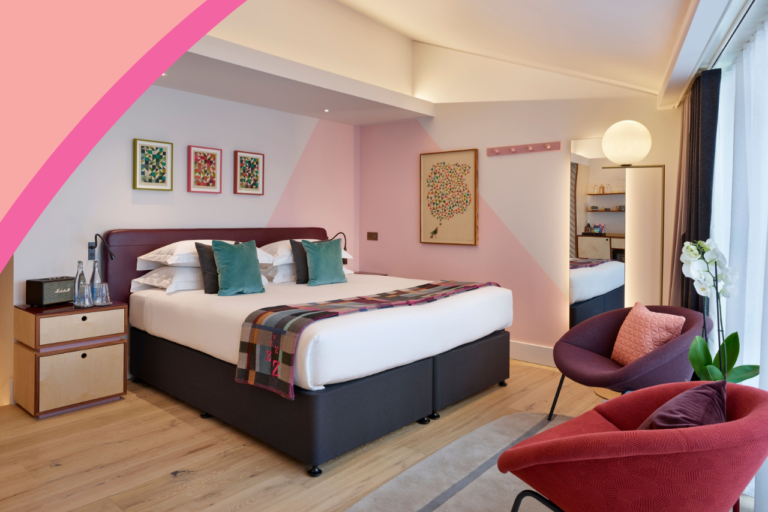
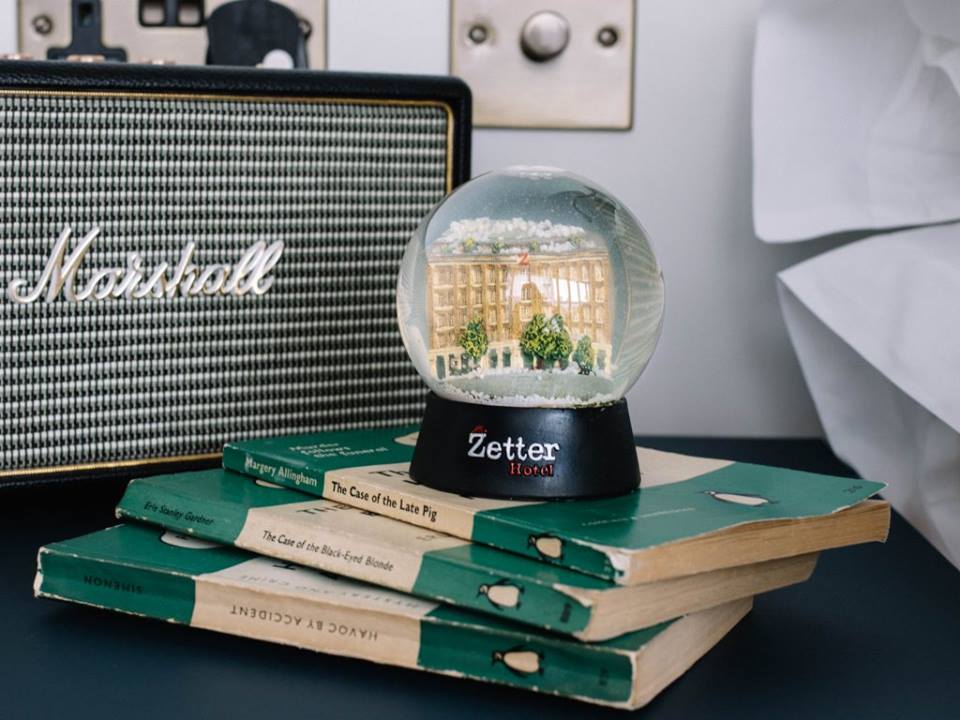
All the rooms are perfectly formed and are filled with thoughtful touches and quirky little nick-knacks like personally selected penguin paperbacks. We especially loved the whimsical snow globe of The Zetter Hotel and using the miniature toiletries from cult brand REN was just pure pleasure. However it’s the rooftop rooms that will take your breath away – taking in London is a joy from up here, and the din of people enjoying themselves under the bright lights of the Capital has a magnetic pull.

FACILITIES

Adjacent to the reception is the hotel’s very own wine bar, all smooth city sophistication. This is coupled with the Zetter’s own restaurant and breakfast is provided until pleasingly late, perfect if a drink at the BrewDog pub opposite turned into a night-out in nearby Hoxton (guilty). The hotel also hosts a rotating cast of local artists in residence, a nice touch which adds to the elegant yet laid-back focus of the place.

FOOD & DRINK

The Zetter restaurant and Wine Bar offers a focal point for breakfast, lunch and dinner and is an appealing prospect – so much so that many from the business district chose the bar for a wind down drink on the way home. There is a stirling wine list for a place of this size so be sure not to pass over the bar at some point during your stay.

The restaurant’s menu is refined and worldly and certainly not in the perfunctory role of many of London’s boutique hotel restaurants. Cooking is assured and confident, ingredients seasonal and partnerships thoughtfully consummated.

Right in the thick of both mackerel and tomato season, we went for the Isle of Wight tomatoes and house-smoked mackerel, which combined smokey with the sweet and sour thrill of fresh tomatoes lightly and with elegance. The ever-happy bedfellows of beetroot and goat’s curd gave the comforting satisfaction only a happy marriage like this can. Cod was aptly cooked, with saline and oceanic notes provided by mussels and samphire. Seaweed completed a carefully composed dish. All in all, though few risks were taken, this was a menu perfectly curated and carried-out.

Breakfast offers tried and tested classics – anything eggy is a good place to start – alongside more health-conscious berry and muesli options. Great coffee and house-blended fruit smoothies washed everything down and sent us on our away happy and content.

WHY GO

London has so much to see and to do and Clerkenwell seems to have it all within reach. With an itinerary packed to breaking point, visitors and city folk alike need somewhere slick, sophisticated and smoothly-run to launch from at the start of, and fall into after, a long day. The Zetter Hotel is this place.

Address: St John’s Square, 86-88 Clerkenwell Rd, Clerkenwell, London EC1M 5RJ, UK

Website: www.thezetter.com

Disclosure: IDEAL stayed as a guest of the hotel

Recruitment In The Era of AI: How Artificial Intelligence Is Transforming The Head Hunting Process

In the ever-evolving environment of talent acquisition, HR strategy is increasingly seeking the most efficient and effective ways to identify and hire top-tier candidates. In the contemporary era of artificial intelligence (AI), innovative technology is ushering in a new dawn for the recruitment industry, revolutionising the traditional headhunting process. The impact is profound, and the benefits are multifold, changing the landscape of the recruitment industry. 

The AI Revolution In Recruitment

Artificial intelligence stands as a transformative catalyst in the recruitment arena. As the name suggests, AI incorporates human intelligence into machines, enabling them to automate manual, time-consuming tasks, thereby potentially increasing efficiency and productivity. In recruitment, AI-driven tools are streamlining the entire process — from sourcing candidates and screening resumes, through to interview scheduling and feedback collection.

Seemingly lower-level tasks such as parsing through countless CVs or conducting introductory phone screens have traditionally taken up the lion’s share of a recruiter’s day. But now, AI is freeing up precious time, allowing recruiters to focus on more valuable tasks such as building relationships with potential hires and strategic planning.

Enhancing Head Hunting With AI

Artificial Intelligence in recruitment goes far beyond simple task automation; it’s about harnessing the power of data to make more informed, objective recruitment decisions. AI algorithms can scan thousands of resumes and job descriptions, learn patterns, and eventually recommend the best matches with a high degree of accuracy. This is especially beneficial during headhunting, with AI identifying passive candidates — those not actively seeking a new role but who may be a perfect fit.

In some instances, AI can also reduce bias and promote diversity in recruitment. Unconscious biases have a way of creeping into human decision-making processes. In contrast, AI algorithms, when correctly programmed and checked for fairness (and this is a huge caveat, admittedly), can screen candidates solely based on qualifications and competencies rather than subjective or potentially prejudiced criteria.

That said, there has been huge concern about AI’s pre-programmed biases, whether conscious or otherwise. As Harvard Business Review posits, ‘’AI systems learn to make decisions based on training data, which can include biased human decisions or reflect historical or social inequities’’. Those using AI for recruitment need to be acutely aware of this when deploying automated recruitment, both from a legal and, more importantly, a moral perspective.

The Future of AI In Recruitment

The potential of AI in recruitment is vast. Candidate experience, one of the biggest differentiators in the competitive talent market, will significantly benefit as AI technology continues to mature. AI chatbots, for example, can provide instant (though often frustrating) responses to candidate queries.

When done right, this can even help schedule interviews, eliminating the back-and-forth often involved, which can lead to, in some cases, loss of interest.

Another game-changing aspect is predictive analytics. AI can analyse past recruitment data to predict future hiring outcomes, helping recruiters to strategise and make more informed decisions, therefore improving the quality of hires.

Embracing AI In Recruitment: Things To Consider

While AI is undoubtedly revolutionising recruitment, it is not a panacea for all recruitment challenges. Companies must use AI judiciously, ensuring that they don’t entirely replace the human touch that is intrinsic to the recruitment process.

The use of AI needs to be transparent, and its algorithms regularly checked to prevent any inadvertent bias. Moreover, the handling of personal data must comply with data protection regulations, such as the EU’s GDPR.

While AI is undoubtedly revolutionising recruitment, it is not a panacea for all recruitment challenges. Companies must use AI judiciously, ensuring that they don’t entirely replace the human touch that is intrinsic to the recruitment process, whether handling hiring in-house or using a recruitment agency.

Which Jobs Might Present A Challenge When Using AI For Recruitment?

That said, using AI for recruitment is not without its challenges. While AI optimises the majority of job recruitments, it is not always the one-size-fits-all solution. Certain job roles, particularly those reliant on human-centric skills, pose a unique challenge for AI recruitment. These could be the most difficult to automate:

Personal Assistants

At face value, a Personal Assistant’s role is administrative—scheduling, creating reports, answering calls, etc. But, the function goes beyond these tasks. Subtle characteristics like interpersonal skills, problem-solving abilities, adaptability, and emotional intelligence are crucial, making it surprisingly tough to recruit PA candidates using AI.

While AI can streamline Personal Assistant applications based on qualifications and experience, assessing these nuanced traits is where it falls short. The ability to seamlessly adapt to an employer’s working style, handle confidential information, and exhibit empathy towards workplace situations might elude an AI-based judgement.

Product Management

Product management roles present a particularly complex challenge for AI-driven recruitment due to the multifaceted nature of the position. According to the UK’s leading product management recruitment agency Recruited, successful product managers must possess a unique blend of technical acumen, strategic vision, and exceptional interpersonal skills that are difficult for AI to accurately assess.

While AI can filter candidates based on technical qualifications and previous experience, it struggles to evaluate the nuanced abilities that define great product managers: the capacity to translate complex user needs into actionable requirements, navigate competing stakeholder priorities, and make strategic decisions with incomplete information. The role demands an intuitive understanding of market dynamics, user psychology, and cross-functional team dynamics – qualities that require human judgment to properly evaluate. Furthermore, product managers must excel at storytelling and influence without authority, skills that are best assessed through human interaction rather than algorithmic analysis.

Creative Positions

Jobs in creative domains, such as content writing, graphic designing, and advertising, entail a depth of human imagination and abstract thinking that AI struggles to comprehend. While AI can sift through portfolios, it cannot fully understand or appreciate the creative process behind each individual’s work, making it challenging to find the right fit for a new position. On the plus side, this also renders many creative roles a little more protected from AI’s advances into the world of work than some other careers.

Senior Level Executives

The recruitment of C-suite executives, such as CEOs, CTOs, and CFOs, requires a nuanced understanding of the roles’ intricacies and demands which is often beyond AI’s scope. These roles require a level of strategic thinking, leadership skills, and industry knowledge that might not be visible or understandable to AI.

Mental Health Professionals

Professions in the mental health landscape, including psychologists and counsellors, require an innate understanding of human emotions and experiences. These roles demand empathy, active listening, and an ability to interpret non-verbal cues, which, at this point, is beyond AI’s abilities.

Human Resources

Ironically, recruiting for HR positions can be another challenge. HR personnel need a deep understanding of people, organisational culture, conflict resolution, and they must possess strong interpersonal skills. Although AI can filter prospects based on qualifications and experience, assessing these soft skills can still be a daunting task for AI.

The Bottom Line

AI-driven recruitment means staying ahead of the curve in a rapidly changing landscape and taking advantage of an efficient, fast and fair recruitment process. The road ahead is promising, with AI poised to redefine headhunting, making it a more strategic, insight-driven and candidate-centric process.

The age of AI recruitment is here, bringing forth transformative change. It’s time for recruiters to capitalise on this evolution and transform their headhunting methods for an evermore competitive talent landscape.

Revenue Management Pricing Strategy 101: The Ideal Strategies To Bolster Your Business

It could be said that creating the perfect pricing strategy for a business is a bit like trying to hit a moving target. Understandably, it can be a complex task as it’s subject to various factors such as market trends, customer behaviour, and competition. This is where revenue management comes into play. It’s an intelligent, logical (though sometimes controversial) framework that helps businesses set the optimal price to maximise profitability.

Cutting through the jargon and into the layman’s world of revenue management pricing strategy, let’s break this thing down into easily digestible chunks and equip you with essential techniques to give your business the competitive edge it deserves.

What Is Revenue Management?

At its core, revenue management is a data-driven approach used to predict customer behaviour, optimise product availability and price to maximise revenue growth. The concept originated in the airline industry when selling flight tickets in the 1980s and has since been adopted by various other sectors including hospitality, retail, and even the broadcasting industry.

The Power Of Pricing

Pricing, when done right, can be a game-changer. It impacts your sales volume, revenue, profits, and brand perception. A robust revenue management pricing strategy helps businesses anticipate market demand, strategically adjust prices, and take full advantage of peak times to maximise revenue.

Ideal Strategies For Your Business

Dynamic Pricing

With this strategy, the prices are adjusted based on supply and demand. Consider Uber; they use dynamic pricing where the rates increase during peak hours or when the demand for rides is high. This is also known as Surge pricing. Other dynamic pricing examples include the vast majority of major airlines, who use the strategy to set ticket prices, and the concert sales company Tickemaster, who have been criticised for their recent extortionate prices for the likes of Harry Styles and Bruce Springsteen gigs.

However, implementing dynamic pricing requires sophisticated technology infrastructure and careful consideration of customer perception. Businesses must invest in real-time data analytics, competitor monitoring tools, and automated pricing systems that can respond instantly to market changes. The strategy also carries reputational risks if customers perceive frequent price changes as unfair or exploitative. Companies like Disney have faced criticism for their dynamic pricing on theme park tickets, while others like Netflix have successfully used it for different subscription tiers. The key is transparency and ensuring that price adjustments are clearly justified by value or market conditions.

Value-Based Pricing

This strategy places price based on how much the customer is willing to pay. A great example is Apple, known for their high-end products. They use value-based pricing, looking at the perceived value their customers place on their products.

Successfully executing value-based pricing demands extensive market research and deep customer understanding. Companies must invest significantly in customer surveys, focus groups, and behavioral analysis to accurately assess perceived value. This strategy also requires strong brand positioning and effective communication of unique value propositions. Tesla exemplifies this approach by positioning their vehicles not just as cars, but as cutting-edge technology platforms with environmental benefits, allowing them to command premium prices despite being a relatively new automotive brand compared to established manufacturers.

Bundle Pricing

This is where a group of products or services are sold together at a lower combined cost. Microsoft Office uses bundle pricing, offering Word, Excel, PowerPoint, and more in one package at a discounted price rather than selling them separately.

The effectiveness of bundle pricing lies in careful product selection and understanding customer purchase patterns. Companies must analyze which products or services naturally complement each other and provide genuine convenience or cost savings to customers. However, bundling can sometimes backfire if customers feel forced to pay for features they don’t want. Streaming services like Disney+ have mastered this by bundling Disney+, Hulu, and ESPN+ at a compelling price point, while cable companies have faced criticism for forcing customers into large bundles with unwanted channels. The key is ensuring each component of the bundle adds perceived value.

Penetration Pricing

This strategy involves setting a low initial price to penetrate the market quickly and deeply. Amazon Kindle followed this strategy, launching their product at a considerably low price, aiming to capture a large share of the e-book market.

While penetration pricing can rapidly build market share, it requires careful long-term planning and substantial financial resources to sustain initially low profit margins. Companies must have a clear strategy for gradually increasing prices once market position is established, without alienating the customer base they’ve built. Netflix successfully executed this strategy by starting with low subscription prices to build their user base, then gradually increasing prices as they invested in original content and improved their platform. The risk lies in being unable to raise prices later or in competitors matching the low prices, leading to prolonged profitability challenges.

Premium Pricing

Used when a company has a unique product or service. Luxurious brands such as Gucci and Rolex can price their products high due to their brand reputation and the perceived exclusivity of their products.

Maintaining premium pricing requires consistent investment in brand building, quality assurance, and customer experience. Companies must continuously justify their high prices through superior product quality, exceptional service, or exclusive features that competitors cannot easily replicate. The strategy is vulnerable to economic downturns when consumers become more price-sensitive, and to new entrants who may offer similar quality at lower prices. Brands like Hermès have successfully maintained premium pricing for decades by controlling supply, maintaining craftsmanship standards, and creating an aura of exclusivity. However, companies must be careful not to price themselves out of their target market or appear disconnected from customer value perceptions.

Variable Pricing

This strategy offers different prices to different customers for essentially the same goods or services. Airlines frequently use this model, where prices vary based on when you book, choose your seat, or decide to include additional services.

Variable pricing requires sophisticated customer segmentation and robust systems to prevent pricing arbitrage, where customers exploit price differences unfairly. Companies must carefully balance personalisation with fairness to avoid customer resentment or legal issues related to discriminatory pricing. The strategy works best when price differences can be clearly justified by different service levels, timing, or customer circumstances. Uber’s surge pricing exemplifies effective variable pricing by transparently communicating why prices increase during peak demand, while some retailers have faced backlash for using customer data to charge different prices for identical products without clear justification.

Segmented Pricing

Here, different amounts are charged for different versions of the same product. For example, in Adobe’s Creative Cloud package, they offer various pricing for students, individuals, and businesses. The challenge with segmented pricing lies in preventing cannibalisation, where customers who would pay full price instead opt for discounted versions. Companies must carefully design their segments to ensure each version appeals to genuinely different customer needs or circumstances.

Educational discounts, for example, work because students typically have limited budgets and the reduced price helps build future full-paying customers. Software companies like Microsoft Excel have mastered this by offering different feature sets for home users versus business customers, ensuring that professional users require the more expensive version’s advanced capabilities.

Cost-Plus Pricing

This involves adding a percentage (profit margin) to the cost of producing the product or service. Many restaurants use this method, marking up the costs of their dishes to cover overheads and make a profit.

While cost-plus pricing offers simplicity and guaranteed profit margins, it can lead to competitive disadvantages if costs are higher than competitors’ or if the markup doesn’t reflect true market value. This strategy also provides little incentive for cost reduction since higher costs simply translate to higher prices. Government contractors often use cost-plus models, which can sometimes lead to inefficiencies. Successful implementation requires accurate cost tracking, regular margin reviews, and awareness of competitive pricing. Retail businesses using this method must also account for inventory turnover rates and seasonal demand fluctuations to avoid pricing themselves out of the market.

Geographical Pricing

In this strategy, price varies by location. One example is the variations in movie ticket prices, which often differ based on geographical location to adjust for discrepancies in average income levels. Implementing geographical pricing requires careful consideration of local economic conditions, competitive landscapes, and cultural factors that influence price sensitivity. Companies must also navigate the complexities of currency fluctuations, different tax structures, and varying regulatory environments across regions.

The strategy can backfire if price differences become too apparent to customers, leading to negative publicity or parallel importing where customers purchase from cheaper regions. McDonald’s successfully uses geographical pricing by adapting their menu prices to local purchasing power while maintaining brand consistency, whereas some pharmaceutical companies have faced criticism for charging dramatically different prices for the same medications in different countries.

AI-Driven Pricing

This advanced strategy leverages artificial intelligence and machine learning algorithms to analyse vast amounts of market data, customer behaviour patterns, and external factors to optimise pricing in real-time.

The technology can process complex variables that would be impossible for human analysts to handle manually. For instance, platforms like ChAI demonstrate how specialised AI solutions can provide sophisticated market insights and predictive analytics specifically tailored for commodity trading professionals, enabling them to make data-driven pricing decisions based on supply chain disruptions, weather patterns, geopolitical events, and market sentiment analysis.

Psychological Pricing

This strategy focuses on the psychological impact of price points on consumer behaviour and purchasing decisions. It involves setting prices that appear more attractive to customers, such as using charm pricing ($9.99 instead of $10.00), anchoring (showing a high-priced option first to make other options seem reasonable), or decoy pricing (offering three tiers where the middle option appears most attractive). Retailers like Target and Amazon frequently employ psychological pricing techniques, understanding that the way a price is presented can significantly influence perceived value and purchase likelihood, even when the actual price difference is minimal.

The Bottom Line

Revenue management pricing strategy isn’t just about how much you charge. It’s an intricate dance of understanding your customer’s needs and wants, paying attention to market fluctuations, and being vigilant about your competition.

By adopting appropriate revenue management pricing strategies, businesses can not only weather fluctuations in demand and competition but also establish a solid footprint, maximising their revenue potential and encouraging growth. Remember, it’s not about ‘one size fits all’, but more about finding the ‘right size’ for your unique business needs.

In the world of business, knowledge is power, and with these strategies at hand, you have the power to build a robust and prosperous pricing strategy for your business. Stay curious, stay adaptable and, most importantly, stay profitable. Good luck!

7 Ideal Ways To Achieve That Luxury Hotel Look At Home

Ever found yourself sinking into a plush hotel bed or marvelling at the chic decor of a luxurious suite and wishing you could bring a bit of that indulgence into your own home? You’re not alone. For many of us, staying in a high-end hotel is a rare treat, an experience marked by comfort, elegance, and impeccable design. The good news is, creating this luxury feel in your own home isn’t as unattainable as it might seem.

Intrigued? Let’s dive into some ways to achieve that sought-after hotel look.

Choose A High-Quality Mattress & Bedding

Starting with the centrepiece of any bedroom – the bed – one of the surest ways to evoke a luxury hotel vibe in your home is to invest in high-quality bedding. Think about it: one of the standout experiences of a hotel stay is often the plush, incredibly comfortable bed that seems to swallow you up in its cosiness. Your own bed should strive to emulate this.

Opt for a premium mattress that offers a blend of comfort and support. Whether you prefer memory foam, latex, or pocket springs, choose a mattress that feels like a personal haven. When it comes to bedding, go for high-thread-count sheets, lavish duvets, and an assortment of pillows to create an inviting look.

As for styling, take inspiration from the hotel room designs you admire most. Opt for neutral or white bed linens for a clean, calming look, and consider adding a stylish throw or chic cushions for an extra touch of luxury.

If you’re looking to learn more specifically about how to replicate that ‘high-end hotel bedroom feel’ in your own property, then we’ve covered the replicating the hotel bed at home part in some detail over here. Care to join us under the covers?

Create A Spa-Like Bathroom

Next on the list is the bathroom. The best hotels master the art of transforming a functional space into a personal oasis of relaxation. The bathroom is not just a utilitarian space, but a spa-like retreat that offers the ultimate unwind.

To capture this ambiance, consider incorporating elements of nature into your bathroom. This could be in the form of plants, stone or wood surfaces, or even a wall feature with a waterfall or greenery. Such elements can add a serene touch, much like a spa.

When it comes to fixtures, think freestanding bathtubs, rainfall showers, and sinks with stylish, modern fittings. Don’t forget the details: soft, plush towels, scented candles, and perhaps even a bath tray for those indulgent soak sessions with a book and a glass of wine.

Consider Neutral & Earthy Tones

Colours play an instrumental role in setting the mood and ambience of a space. For achieving that luxury hotel feel at home, consider adopting a colour palette that is elegant, timeless, and easy on the eyes. Often, luxury hotels lean towards neutral and earthy shades due to their universal appeal and calming effect.

A neutral colour palette comprising whites, beiges, greys, and creams can bring about an airy, spacious feel. These tones not only serve as a serene backdrop but also let your furniture and decor items shine.

Earthy tones like browns, greens, and blues can bring a touch of nature into your space, fostering a calming and relaxing atmosphere. These colours can be incorporated through paint, upholstery, or even decor accents.

Pay Attention To Lighting

Lighting is one of the most crucial, yet often overlooked elements when it comes to creating a luxury hotel room feel at home. The right lighting can drastically change the mood of a room, making it feel warm, welcoming, and utterly luxurious.

When designing a lighting scheme, consider the function of each room. Bedrooms, for instance, benefit from soft, warm lighting that creates a relaxing ambiance. On the other hand, workspaces or reading corners would require brighter, more focused light. Dimmable lights are a great way to adjust the level of illumination according to your needs and moods.

Embrace Seamless Storage Solutions

One of the most striking features of luxury hotel design is their ability to maintain pristine, uncluttered spaces that feel effortlessly organised. This isn’t by accident—it’s the result of thoughtful, integrated storage solutions that keep everyday items beautifully hidden from view.

To recreate this serene, clutter-free environment in your own home, the professional interior design firm Milkris Interiors recommends focusing on built-in storage wherever possible. Consider wardrobes with sleek, handleless doors, floating bedside tables with hidden drawers, or ottoman storage benches that serve dual purposes. The goal is to create storage that feels like part of the room’s architecture rather than an afterthought.

In bedrooms, invest in quality hangers and drawer organisers to keep your wardrobe looking like a luxury boutique. Use matching storage boxes or baskets to corral smaller items, and consider under-bed storage for seasonal items or extra linens. For living spaces, entertainment units with hidden cable management, coffee tables with concealed storage, and stylish console tables that can house everything from remote controls to magazines will help maintain that hotel-like sense of order.

Remember, the key is to have a designated place for everything whilst ensuring these storage solutions blend seamlessly with your overall design aesthetic. When every item has its proper home, your space naturally takes on that polished, luxury hotel ambiance where everything appears effortlessly perfect.

Incorporate Art & Personal Touches

While the interior design of luxury hotels leans toward the universal, to make everyone feel at home, your personal space should reflect your unique taste and personality. One of the best ways to do this is by incorporating art and personal touches.

Art can elevate any space, adding a layer of sophistication and depth. It doesn’t have to be expensive or grand; even a well-chosen print or a piece from a local artist can make a significant impact. Consider the scale of your art in relation to your space – larger pieces can create a focal point, while smaller pieces can be grouped together for an interesting gallery wall.

Personal touches are what make a space truly yours. Display items that hold sentimental value, like souvenirs from your travels or family heirlooms. These elements can make your home feel more cosy and welcoming, just like a luxury hotel room that feels like a home away from home.

Focus On Luxury Details

The magic of a luxury hotel often lies in its meticulous attention to detail. Every element, no matter how small, is carefully considered and purposefully placed to contribute to the overall experience. And that’s exactly what you should do when trying to recreate this luxury at home – focus on the details.

Start with your soft furnishings. Invest in high-quality, luxurious fabrics for your cushions, throws, and curtains. Velvets, silks, and high-thread-count cottons can instantly elevate a room and add a touch of opulence.

Next, consider your decorative accents. A well-placed vase, an elegant table lamp, a stylish coffee table book – these are small items that can make a big impact. Remember, less is more when it comes to accessorising. Choose items that complement your overall decor and add aesthetic value.

Don’t overlook the importance of scent. Luxury hotels often have a signature scent that enhances the ambiance. Scented candles, diffusers, or room sprays can help create a pleasing and welcoming environment at home.

Lastly, keep your spaces immaculate. A clean, well-kept home contributes greatly to the feeling of luxury. Even the most opulent homes can lose their charm if they aren’t kept clean and orderly.

The Bottom Line

Achieving a luxury hotel feel in your home is all about curating a space that marries comfort, elegance, and personalised style. From investing in a plush bed and high-quality furniture to selecting a soothing colour palette and focusing on luxury details, every decision contributes to creating your private oasis of luxury.

While these tips serve as a roadmap, remember that your home is an expression of your unique self. As such, don’t be afraid to incorporate elements that reflect your personal style and preferences.

7 Of The Best: South Tyrol’s Finest Luxury Hotels

Sitting pretty in the heart of the Alps, South Tyrol is a region that seamlessly blends Italian flair with Austrian charm. Known for its stunning landscapes, rich cultural heritage, and generous, hearty cuisine, South Tyrol is also home to some of the most luxurious hotels in Europe. 

Whether you’re seeking a serene mountain retreat or a lavish urban escape, South Tyrol’s luxury hotels offer unparalleled comfort and sophistication. Join us as we explore the crema del raccolto of South Tyrol’s hospitality.

Belvita Leading Wellnesshotels Südtirol

A benchmark in wellness and luxury…

There’s something about the fresh air in the region that seems to chime so succinctly with ideas of wellness. When choosing a luxury hotel in South Tyrol, then, you’ll find that many of the very finest resorts in the region specialise in stays that are all about wellbeing.

Belvita Leading Wellnesshotels Südtirol is not just a single hotel but a prestigious collection of the finest wellness hotels in South Tyrol. Each member hotel adheres to the highest standards of quality, ensuring guests experience the pinnacle of relaxation and luxury.

Highlights:

  • Comprehensive Wellness Programmes: Belvita hotels offer a wide range of wellness programmes tailored to individual needs, including detox, anti-aging, and stress relief. These programmes are designed by experts and utilise the latest in wellness technology and natural therapies.
  • Luxurious Spa Facilities: Each Belvita hotel boasts state-of-the-art spa facilities, including saunas, steam baths, indoor and outdoor pools, and relaxation areas with stunning views of the surrounding landscapes.
  • Gourmet Cuisine: The culinary offerings at Belvita hotels are second to none. Guests can enjoy gourmet meals prepared with fresh, locally sourced ingredients, often with a focus on healthy and balanced nutrition.
  • Exclusive Locations: Belvita hotels are strategically located in some of the most beautiful parts of South Tyrol, from the serene valleys to the majestic peaks of the Dolomites, providing the perfect backdrop for a luxurious retreat.

Hotel Rosa Alpina, San Cassiano

A timeless alpine retreat…

Hotel Rosa Alpina, located in the picturesque village of San Cassiano, is a sanctuary of elegance and tranquillity. This family-run hotel has been welcoming guests for over 70 years, offering a perfect blend of traditional Alpine charm and modern luxury.

Highlights:

  • Michelin-Starred Dining: The hotel boasts the three-Michelin-starred restaurant, St. Hubertus, where Chef Norbert Niederkofler crafts exquisite dishes using locally sourced ingredients (and, proudly, no olive oil!).
  • Sumptuous Spa: The Rosa Alpina Spa offers a range of treatments inspired by the surrounding Dolomites, including a Finnish sauna, a Turkish bath, and an indoor pool with panoramic mountain views.
  • Exclusive Suites: The hotel features a variety of luxurious suites, each uniquely decorated with a mix of contemporary and antique furnishings.

Please note that the hotel is closed for an extensive renovation and plans to reopen for the 2024/25 winter season.

Hotel Castel, Dorf Tirol

A castle of dreams…

Perched on a hill overlooking the Merano Valley, Hotel Castel is a five-star haven that combines historical grandeur with modern sophistication. This Relais & Châteaux property offers breathtaking views, impeccable service, and a serene atmosphere.

Highlights:

  • Gourmet Cuisine: The hotel’s restaurant, Trenkerstube, has been awarded two Michelin stars and offers a culinary journey through South Tyrolean and Mediterranean flavours.
  • Wellness Oasis: The Castel Spa features an outdoor infinity pool, a bio sauna, and a range of holistic treatments designed to rejuvenate body and mind.
  • Elegant Accommodations: Each room and suite is tastefully decorated with luxurious fabrics, fine art, and state-of-the-art amenities.

Forestis, Brixen

A sanctuary in the sky…

Forestis is a unique luxury retreat located high above the town of Brixen, surrounded by dense forests and the majestic Dolomites. This adults-only hotel is designed to harmonise with its natural surroundings, offering a peaceful escape from the hustle and bustle of everyday life.

Highlights:

  • Sustainable Luxury: Forestis is committed to sustainability, using natural materials and renewable energy sources throughout the property.
  • Holistic Wellness: The hotel’s spa offers a range of treatments inspired by the four elements—earth, water, air, and fire—along with an outdoor pool, a sauna, and a relaxation area with stunning mountain views.
  • Gastronomic Delights: The Forestis restaurant serves organic, locally sourced cuisine, with a focus on seasonal ingredients and traditional South Tyrolean recipes.

Adler Spa Resort Dolomiti, Ortisei

A wellness wonderland…

Located in the charming village of Ortisei, Adler Spa Resort Dolomiti is a luxurious wellness resort that offers a perfect blend of relaxation and adventure. Surrounded by the UNESCO World Heritage Dolomites, this resort is an ideal base for exploring the region’s natural beauty.

Highlights:

  • Extensive Spa Facilities: The resort’s 3,500-square-metre spa includes indoor and outdoor pools, saunas, steam baths, and a wide range of treatments designed to promote relaxation and well-being.
  • Active Pursuits: Adler Spa Resort Dolomiti offers a variety of outdoor activities, including guided hikes, mountain biking, and skiing in the winter months.
  • Luxurious Accommodations: The rooms and suites are elegantly furnished, with balconies offering panoramic views of the surrounding mountains.

Hotel Gardena Grödnerhof, Ortisei

A haven of elegance…

Hotel Gardena Grödnerhof is a five-star luxury hotel located in the heart of Ortisei. Known for its warm hospitality and refined atmosphere, this hotel is a favourite among discerning travellers seeking a blend of comfort and sophistication.

Highlights:

  • Culinary Excellence: The hotel’s restaurant, Anna Stuben, has been awarded a Michelin star and offers a menu that combines South Tyrolean tradition with modern culinary techniques.
  • World-Class Spa: The Gardena Spa features an indoor pool, a sauna, a steam bath, and a range of treatments designed to relax and rejuvenate.
  • Stylish Rooms: The hotel’s rooms and suites are elegantly decorated, with luxurious fabrics, fine furnishings, and modern amenities.

Hotel Chalet Mirabell, Avelengo

An Alpine paradise…

Perched on a sunny plateau above Merano, Hotel Chalet Mirabell is a five-star luxury retreat that offers a perfect blend of Alpine charm and modern elegance. This family-run hotel is renowned for its warm hospitality, exquisite design, and exceptional wellness facilities.

Highlights:

  • Award-Winning Spa: The Mirabell Spa is a sanctuary of relaxation, featuring an extensive range of treatments, a panoramic indoor pool, an outdoor infinity pool, saunas, and a relaxation area with breathtaking views of the surrounding mountains.
  • Luxurious Accommodation: Hotel Chalet Mirabell offers a variety of luxurious rooms and suites, each designed with a perfect blend of traditional Alpine style and modern comfort. Many rooms feature private balconies or terraces with stunning mountain views.
  • Outdoor Activities: The hotel’s prime location makes it an ideal base for exploring the great outdoors. Guests can enjoy hiking, mountain biking, and skiing in the winter months, with guided tours and activities available for all levels.

The Bottom Line

South Tyrol’s luxury hotels offer an unparalleled experience of elegance, comfort, and sophistication. Whether you’re seeking a serene mountain retreat, a historic castle stay, or a wellness-focused escape, these hotels provide the perfect setting for an unforgettable holiday. 

Shore Excursions: 7 Essential Stops On Your Cruise Of The Iberian Coast

Forget the Fjords. Cast the chimera of Caribbean cruises from your mind. Avoid agitating for Alaska and dismiss daydreams of, erm, Da Nang (okay, this alliteration is holding us back now).

 Instead, it’s the Iberian Coast that is emerging as the year’s hottest cruise destination, its blend of history and cuisine, heritage and contemporary culture offering something for just about everyone who doesn’t get seasick…

We can tell your interest has been piqued since you’re still here with us. Well, if you’re wondering just why the Iberian Peninsula and its coastline cities represent one of the best cruises around right now, with its manageable journey time and cultural clout, then you’re in the right place. Here are 7 essential stops that promise to make your cruise of the Iberian Coast truly special.

La Coruña, Spain

Often overlooked in favour of Spain’s more famous cities, the Galicia Region’s La Coruña is a (comparatively speaking) hidden gem waiting to be discovered. This coastal city offers a perfect blend of historical landmarks and modern attractions, making it a highlight of any Iberian cruise.

Morning: Tower of Hercules and Old Town

As you step off your cruise ship in La Coruña, start your day with a visit to the UNESCO World Heritage Site of the Tower of Hercules, the world’s oldest Roman lighthouse that’s still in use. Climb to the top for panoramic views of the Atlantic Ocean and the rugged coastline. 

After soaking in the vistas, head to the Old Town (Ciudad Vieja) to wander through its narrow, cobbled streets. Visit the Church of Santiago, a beautiful example of Romanesque architecture.

Afternoon: María Pita Square and Riazor Beach

For lunch, make your way to María Pita Square, named after the local heroine who defended the city against the English Armada. Enjoy some traditional Galician cuisine at one of the many restaurants surrounding the square, or walk just 5 minutes north from the square to Miga, one of the best restaurants in town. Try the octopus!

In the afternoon, relax at Riazor Beach, a popular spot for both locals and tourists. The beach’s promenade is perfect for a leisurely stroll before heading back to your ship.


Porto, Portugal

Porto, Portugal’s second-largest city, is a captivating place of old-world charm. Known for its picturesque riverside district and world-famous port wine, Porto promises a shore day filled with cultural and culinary delights.

Morning: Ribeira District and Douro River Cruise

Once you disembark in Porto, begin your day with a visit to the Ribeira district, a UNESCO World Heritage site. The colourful buildings and narrow streets are a photographer’s dream. From here, take a short cruise on the Douro River to see the city from a different perspective and learn about its history.

Afternoon: Port Wine Cellars and Livraria Lello

No visit to Porto is complete without a tour of the famous port wine cellars in Vila Nova de Gaia. Learn about the production process and enjoy a tasting session. Afterwards, head to Livraria Lello, one of the most beautiful bookstores in the world, said to have inspired J.K. Rowling’s Harry Potter series (but not her increasingly reactionary tweeting, fortunately). Return to your ship with a newfound appreciation for Porto’s rich heritage.

Read: The best cycling holidays in Portugal


Lisbon, Portugal

The sun-kissed capital of Portugal (no, really; it sees a whopping 300 days of sun a year), Lisbon is a city of contrasts where ancient history meets modern culture, with a fair bit of partying thrown in for good measure. From its iconic landmarks to its charming neighbourhoods and steep, steep hills, Lisbon offers a rich tapestry of experiences.

Morning: Belém Tower and Jerónimos Monastery

Disembark in Lisbon and start your exploration of the city in the historic Belém district. Visit the iconic Belém Tower, a symbol of Portugal’s Age of Discovery. Just a short walk away is the Jerónimos Monastery, a stunning example of Manueline architecture. Don’t forget to try a pastel de nata (custard tart) from the nearby Pastéis de Belém bakery.

Afternoon: Alfama District and Tram 28

In the afternoon, head to the Alfama district, the oldest part of Lisbon. Wander through its labyrinthine streets and enjoy the views from the Miradouro de Santa Luzia. For a quintessential Lisbon experience, hop on Tram 28, which takes you through some of the city’s most picturesque neighbourhoods. As the day winds down, return to your cruise ship, enriched by Lisbon’s charm.


Cádiz, Spain

Cádiz is one of the oldest continuously inhabited cities in Western Europe, a treasure trove of history and natural beauty. With its stunning Baroque architecture and beautiful beaches, Cádiz provides a perfect mix of exploration and relaxation for a day on dry land.

Morning: Cádiz Cathedral and Roman Theatre

Begin your day in Cádiz with a visit to the Cádiz Cathedral, known for its distinctive yellow dome. Climb the bell tower for a panoramic view of the city. Nearby, you’ll find the Roman Theatre, one of the largest and oldest in Spain, offering a glimpse into the city’s ancient past.

Afternoon: La Caleta Beach and Genovés Park

After lunch, head to La Caleta Beach, a charming spot framed by two castles. It’s a great place to relax and take a dip in the sea. 

Later, take a leisurely stroll through Genovés Park, a beautifully landscaped garden with exotic plants and a picturesque pond. Return to your ship, having enjoyed a perfect blend of history and relaxation.


Málaga, Spain

The birthplace of Picasso, Málaga is a lively, enigmatic city that seamlessly blends its rich historical heritage with a lively modern atmosphere. From its ancient fortresses to its bustling port and beaches, Málaga offers something for every traveller looking to stretch their sea legs.

Morning: Alcazaba and Picasso Museum

Step off your cruise ship in Málaga and start your day with a visit to the Alcazaba, a Moorish fortress offering stunning views of the city and the Mediterranean Sea. 

After exploring the fortress, head to the Picasso Museum, dedicated to the city’s most famous son. The museum houses an extensive collection of his works.

Afternoon: Málaga Port and La Malagueta Beach

For lunch, explore the vibrant Málaga Port area, which has a variety of restaurants and shops. In the afternoon, relax at La Malagueta Beach, a popular urban beach with golden sands and clear waters. The beach is also lined with chiringuitos (beach bars) where you can enjoy some local seafood. Return to your ship, rejuvenated by Málaga’s coastal charm.


Valencia, Spain

Valencia, a city known for its futuristic architecture and traditional charm, is a must-visit destination on the Iberian Coast. With its title as the ever-innovative City of Arts and Sciences and its bustling Central Market, Valencia is a city that celebrates both the old and the new.

Morning: City of Arts and Sciences

Disembark in Valencia and begin your day with a visit to the City of Arts and Sciences, a futuristic complex designed by Santiago Calatrava. Explore the interactive exhibits at the Science Museum, marvel at the marine life in the Oceanogràfic, and take in a show at the Hemisfèric.

Afternoon: Central Market and Turia Gardens

For lunch, head to the Central Market, one of the largest and oldest markets in Europe. Sample local delicacies like bocadillo and soak in the vibrant atmosphere. In the afternoon, take a leisurely walk or bike ride through the Turia Gardens, a lush green space that was once a riverbed. Return to your ship, having experienced the best of Valencia’s innovation and tradition.


Barcelona, Spain

Barcelona, the cosmopolitan capital of Catalonia, is renowned for its unique blend of Gothic and modernist architecture, as well as its obsession with football. From the awe-inspiring Sagrada Família to the bustling streets of Las Ramblas, Barcelona is a city that never fails to captivate its visitors. 

If it’s the last day of your Iberian cruise, you might want to lay anchor here for a while and enjoy an extended break. There’s just so much to do in Barcelona that a day doesn’t do it justice.

Morning: Sagrada Família and Park Güell

Disembark in Barcelona and start your day with a visit to the Sagrada Família, Antoni Gaudí’s masterpiece. The basilica’s intricate facades and stunning interior are a must-see. Afterward, head to Park Güell, another of Gaudí’s creations, where you can enjoy whimsical architecture and panoramic views of the city.

Afternoon: Gothic Quarter and La Rambla

In the afternoon, explore the Gothic Quarter, with its narrow medieval streets and historic buildings. Visit the Barcelona Cathedral and the Plaça Reial. End your day with a stroll down La Rambla, the city’s most famous street, lined with shops, cafes, and street performers. Settle into a nearby tapas bar – your work here is done, and it’s time to get drunk without worrying about heading back to your cruise ship.


Iberian Cruise Need-To-Know

Duration & Itinerary

A cruise from the UK along the Iberian Coast typically sets off from Southampton, and usually lasts between 10 to 14 days, depending on the specific itinerary and the number of ports of call included. This allows ample time to explore the rich cultural and historical sites of Spain and Portugal, as well as enjoy the amenities and activities on board the ship.

Cruise Lines

Several renowned cruise lines offer itineraries along the Iberian Coast, providing a range of options to suit different preferences and budgets. MSC Cruises from Southampton are the most popular option, known for their luxurious ships and excellent service.

The Basics

  • Currency: Spain and Portugal both use the Euro (€). It’s advisable to carry some cash for small purchases, although credit and debit cards are widely accepted.
  • Language: While Spanish and Portuguese are the official languages, English is commonly spoken in tourist areas. Learning a few basic phrases in the local languages can enhance your experience.
  • Weather: The Iberian Coast enjoys a Mediterranean climate, with warm summers and mild winters. Pack light, breathable clothing for the day and a light jacket for cooler evenings.

The Bottom Line

Each port of call on your Iberian Coast cruise provides a unique glimpse into the rich heritage and diverse cultures of Spain and Portugal. Whether you’re exploring ancient fortresses, tasting local delicacies, or simply soaking up the sun on a beautiful beach, these seven stops are sure to satisfy. And if they don’t, it’s time to walk the plank.