
Home Blog Page 39

Sweet Heat: The Modern Guide To Pairing Rum With Everything From Cheese To Chocolate

In recent years, rum has shed its unfair reputation as merely a mixer for tropical cocktails and emerged as a sophisticated spirit worthy of the finest dining tables and burgeoning investment portfolios. From light and delicate white rums to rich, complex aged varieties, the world of rum offers extraordinary versatility when it comes to food pairing. Here’s your guide to the best food pairings for treasured Caribbean spirit.

Understanding Rum’s Diverse Character

Before getting into the pairings themselves, it’s essential to understand that rum isn’t a monolithic spirit. The production methods, ageing processes, and regional traditions create distinct categories, each with unique flavour profiles that complement different dishes. White rums offer clean, crisp notes perfect for lighter fare, whilst aged rums develop caramel, vanilla, and spice characteristics that stand up to heartier dishes.

White Rum With Ceviche & Citrus-Cured Seafood

The marriage of white rum and ceviche represents one of the Caribbean’s most inspired culinary partnerships. The rum’s subtle sweetness and clean finish enhance the lime-cured fish without masking its delicate texture. When preparing ceviche, consider using corvina, prawns or sea bass marinated in fresh lime juice, diced red onion, and coriander. Serve the rum neat at around 10°C alongside, or create a simple rum and soda with a lime wheel to echo the dish’s citrus notes.

For an elevated experience, try quality white rums with tuna ceviche that includes coconut milk in the marinade. The new white rum by Vrum has been making waves with its exceptionally clean profile and hints of fresh sugar cane, making it particularly suited to delicate seafood preparations. 

Other excellent options include Plantation 3 Stars or Havana Club 3 Años. The rum’s tropical undertones harmonise with the coconut whilst its crisp finish cleanses the palate between bites. Consider adding finely diced mango or pineapple to your ceviche when pairing with particularly fruity white rums from Martinique or Guadeloupe.

Raw oysters also find an unexpected partner in white rum. Replace the traditional mignonette with a rum-spiked version: mix white rum with rice wine vinegar, minced shallots, and cracked black pepper. The rum’s sweetness balances the oyster’s briny intensity whilst adding complexity to each slurp.

Golden Rum With Honey-Glazed Duck & Roasted Stone Fruits

Golden rum’s honeyed notes and vanilla undertones create spectacular pairings with duck, particularly when the bird is prepared with fruit-forward glazes. A winning combination involves whole duck scored and roasted until the skin crisps, then finished with a glaze of orange marmalade. Add golden rum to this glaze and you create a flavour bridge to the spirit in your glass.

Mount Gay Eclipse or Appleton Estate Signature work brilliantly here, their balanced profiles complementing without overwhelming the duck’s rich gaminess. Serve the rum with a single large ice cube to slightly dilute and open up its caramel notes. Accompany the dish with roasted peaches or apricots that have been deglazed with a splash of the same rum you’re drinking.

Golden rum also excels with Caribbean pork dishes, particularly Andi Oliver’s Antiguan vinidaloush. This spectacular roast incorporates golden rum directly into the marinade alongside sherry vinegar, allspice, and a vibrant green seasoning made from thyme, parsley, coriander, scotch bonnets, and garlic. The overnight marinade, rich with a healthy glug of golden rum, creates layers of flavour that echo beautifully when the same rum is served alongside.

The three-hour slow roast at a low temperature allows the rum’s sweetness to caramelise with the pork belly’s rendered fat, whilst the finishing sauce – a reduction of golden rum, honey, and butter – creates an additional flavour bridge. 

Golden Rum With Camembert & Blue Cheese

One of the most surprising discoveries in rum pairing involves golden rum’s affinity with creamy, pungent cheeses. The rum’s vanilla and caramel notes, developed through oak ageing, create an unexpected harmony with Camembert’s earthy, mushroom flavours. Serve a room-temperature wedge of ripe Camembert alongside Diplomático Reserva Exclusiva or Zacapa 23, sipping the rum neat to appreciate how its sweetness tempers the cheese’s funky intensity.

For blue cheese enthusiasts, try pairing Roquefort or a mild Stilton with golden rum. The spirit’s sweetness acts as a counterpoint to the cheese’s sharp, salty bite, whilst its oak-derived complexity matches the cheese’s bold character. Enhance the pairing by drizzling the cheese with rum-infused honey (simply warm honey with a splash of rum, then cool). Serve with walnut bread and fresh pear slices for textural contrast.
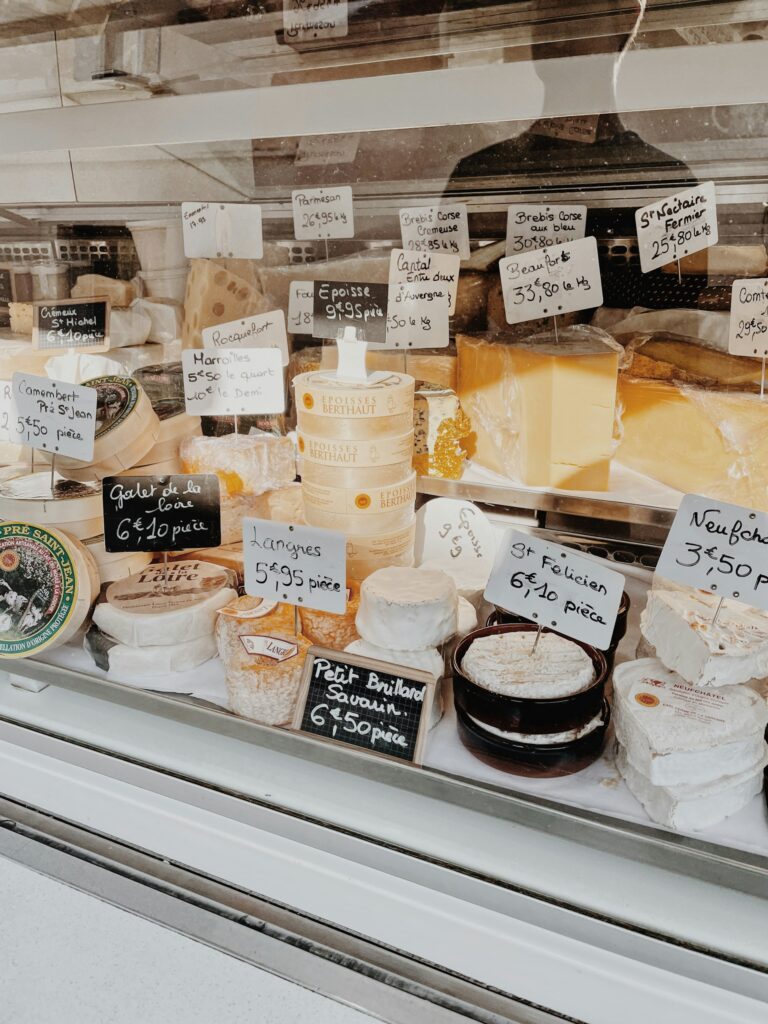
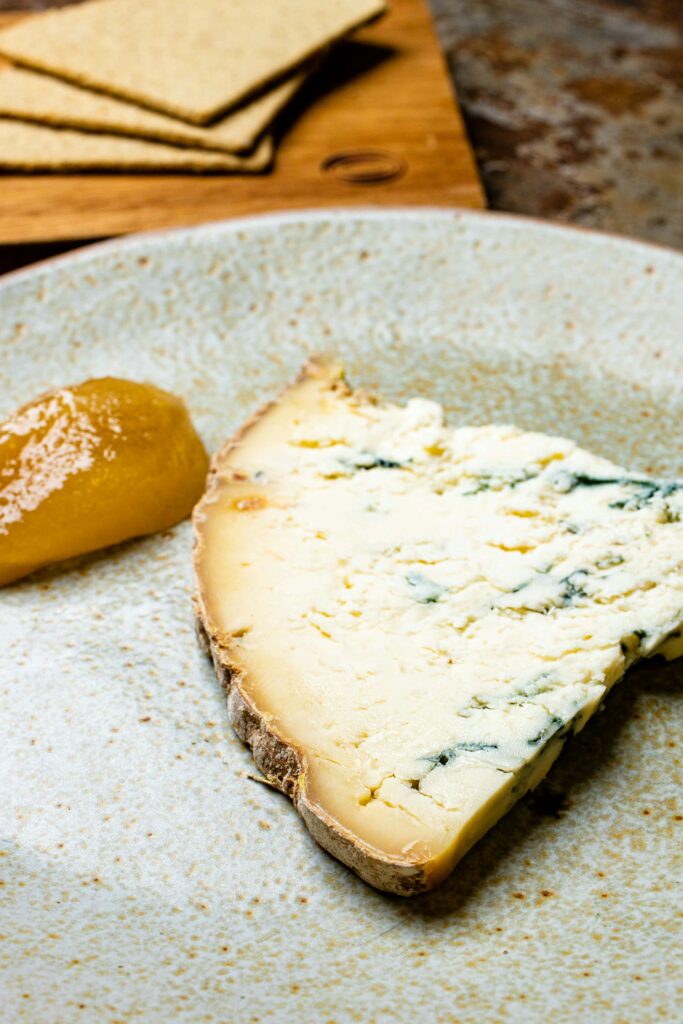
The key to rum and cheese pairing lies in temperature and presentation. Allow both rum and cheese to reach optimal serving temperatures – cheese at room temperature, rum either neat or with a single ice cube. Create a cheeseboard featuring various aged rums alongside corresponding cheeses: younger golden rums with fresh chèvre, aged amber rums with mature Comté, and sweet spiced rums with aged Gouda studded with crystalline patches.

Read: Pairing the best of British cheese with the best of British wine

Dark Rum With Sticky Toffee Pudding & Burnt Butter Sauces

The complex interplay between dark rum and sticky toffee pudding elevates both elements beyond their already lofty individual merits. Choose a rum with pronounced molasses and brown sugar notes – Gosling’s Black Seal or El Dorado 12 Year work wonderfully. The pudding’s dates and treacle mirror the rum’s dark sweetness, whilst the spirit’s oak-aged complexity prevents the pairing from becoming cloying.

Enhance the experience by incorporating rum directly into the toffee sauce. As you prepare the sauce with butter, double cream, and muscovado sugar, add a generous splash of dark rum at the end, allowing the alcohol to cook off slightly whilst retaining the rum’s essence. Serve the pudding warm with the rum at room temperature in a snifter to concentrate its aromas.

Dark rum also creates magic with grilled or roasted meats featuring caramelised exteriors. Consider beef short ribs braised in a mixture of dark rum, beef stock, and aromatics until fork-tender. The long cooking process allows the rum to meld with the meat’s natural umami, creating depth that’s echoed when you sip the same rum alongside. The key is achieving proper caramelisation – those dark, sticky bits that form during slow cooking contain flavour compounds that harmonise perfectly with aged rum’s complexity.

Spiced Rum With Jerk Chicken & Plantain

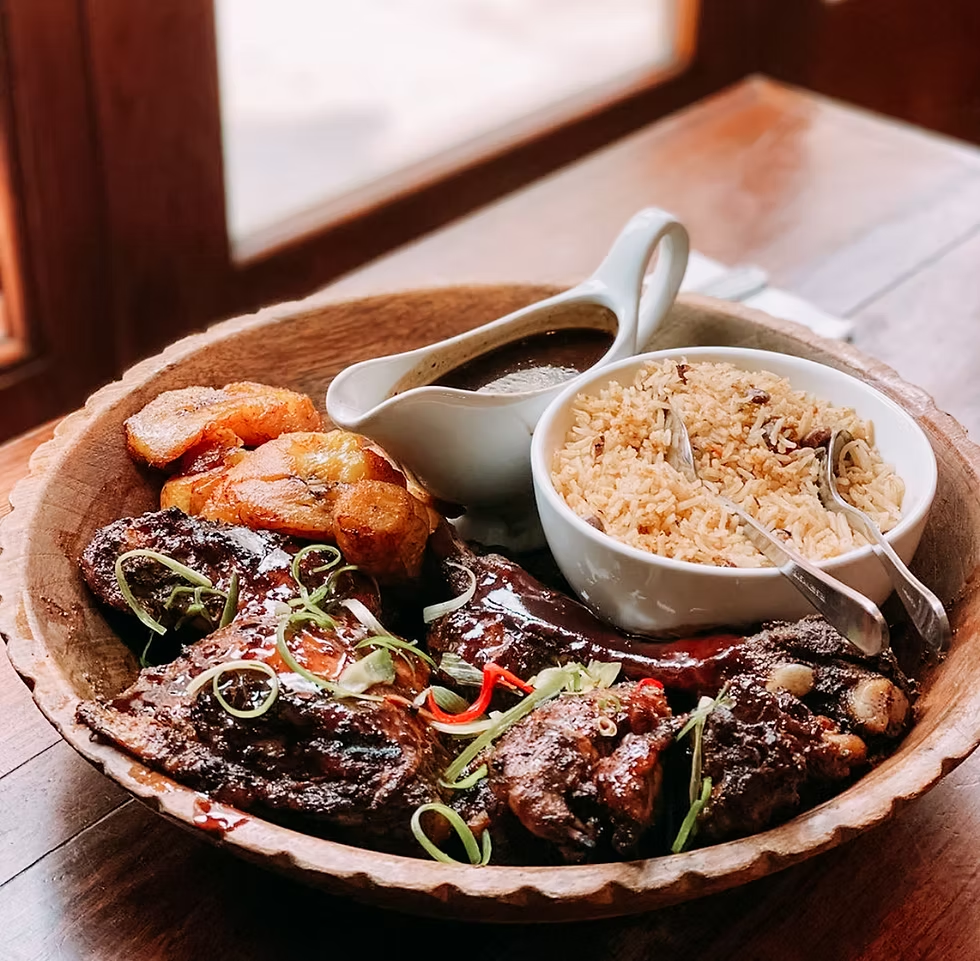
The aromatic complexity of spiced rum makes it the natural choice for Jamaica’s wonderfully fiery, complex jerk chicken. The rum’s cinnamon, nutmeg, and allspice notes echo the jerk seasoning’s warm spices whilst its sweetness provides respite from the scotch bonnet heat. Chairman’s Reserve Spiced or Bayou Spiced Rum offer the right balance of sweetness and spice intensity.

When preparing jerk chicken, create a wet marinade using spiced rum as the liquid base, combining it with traditional jerk spices, spring onions, and fresh thyme. Marinate for at least 24 hours, allowing the rum to penetrate the meat. Grill over pimento wood if available, or add soaked allspice berries to your charcoal for authentic flavour. Serve with fried plantains that have been flambéed with spiced rum for a cohesive flavour profile.

Spiced rum also pairs brilliantly with Indian cuisine, particularly creamy curries like korma or pasanda. The rum’s sweet spices complement rather than compete with the dish’s complex spice blend. Serve the rum over ice with a splash of mango lassi for a fusion cocktail that bridges Caribbean and subcontinental flavours.

Overproof Rum With Pepper Pot & Scotch Bonnet-Laced Dishes

Overproof rum’s intensity demands equally bold food pairings. Guyana’s pepper pot, a meat stew made with cassareep (cassava-based sauce) and fierce amounts of black pepper, stands up to rums like Wray & Nephew Overproof or Smith & Cross. The dish’s complex, slightly bitter cassareep and tongue-numbing pepper create a flavour intensity that matches the rum’s high proof.

Serve overproof rum heavily diluted with coconut water or ginger beer when pairing with extremely spicy foods. The dilution tames the alcohol burn whilst maintaining the rum’s flavour impact. For the brave, sip the rum neat between bites of scotch bonnet-laced dishes – the alcohol’s heat amplifies the pepper’s burn before the rum’s sweetness provides relief.

Consider also pairing overproof rum with intensely flavoured desserts like Christmas pudding or Jamaican black cake. These dense, fruit-laden cakes often contain rum in their preparation and benefit from the spirit’s strength when served alongside. The high alcohol content cuts through the desserts’ richness whilst their concentrated fruit flavours stand up to the rum’s intensity.

Rhum Agricole With Fresh Cheese & Tropical Fruit Salads

Rhum agricole, distilled from fresh sugar cane juice rather than molasses, offers grassy, vegetal notes that create unique pairing opportunities. These Martinique and Guadeloupe rums excel with fresh cheeses like chèvre or ricotta, particularly when the cheese is drizzled with honey and served with grilled bread. The rhum’s herbaceous quality contrasts beautifully with the cheese’s creaminess.
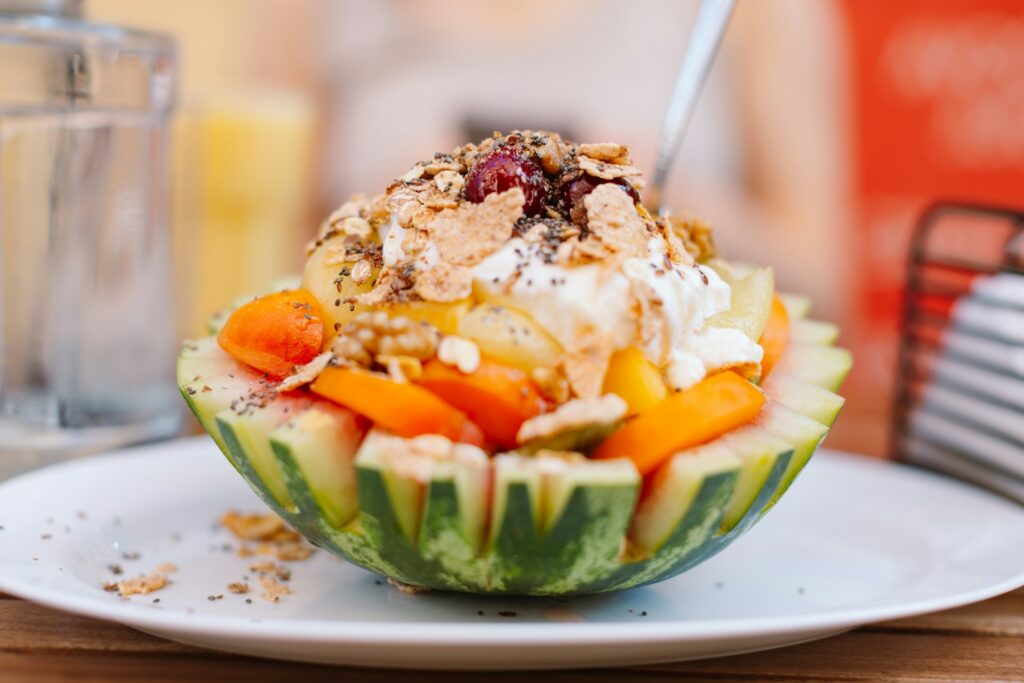
Create a tropical fruit salad using papaya, star fruit, and passion fruit, dressed with a rhum agricole syrup made by reducing the spirit with cane sugar and fresh mint. Clément VSOP or Rhum JM Blanc provide the right balance of grassiness and fruit to complement without overwhelming. Serve the rhum in a wine glass with a single ice cube to appreciate its unique terroir.

The Bottom Line

When experimenting with rum and food pairings, consider these principles: match intensity levels, look for complementary or contrasting flavours, and consider the rum’s origin and the cuisine’s cultural connections. Temperature plays a crucial role – white rums typically served chilled, aged rums at room temperature or with minimal ice.

Start by identifying the rum’s dominant flavours – vanilla, caramel, tropical fruit, spice, or molasses – then choose foods that either echo or contrast these notes. Don’t forget texture: crisp, fried foods often pair well with lighter rums, whilst rich, unctuous dishes need the weight of aged expressions.

The joy of food and drink pairing lies in discovery. As rum continues its renaissance in the UK’s dining scene, these combinations offer endless possibilities for exploration. Whether you’re hosting a rum-pairing dinner or simply enjoying a thoughtful match, let curiosity guide your choices and prepare to be delighted by the results.

10 Whisky Cocktails You Should Try

The whisky world is vast, ever-changing, and increasing in popularity. The list of great whisky drinks, on the other hand, is ever-growing. There are a few tried-and-true methods for creating a good all-around whisky experience, however.

Whisky may be mixed and served in a variety of ways, as these cocktails demonstrate. They contain some of the most well-known whisky drinks, which have been adored by enthusiasts for decades (or even longer). It’s an excellent starting point for someone who wants to learn everything there is to know about whisky. So grab your favourite glass and start whipping up a whisky cocktail masterclass!

Manhattan Cocktail

The Manhattan is a whisky classic that combines rye whisky, sweet vermouth, and bitters to make an iconic drink. It’s similar to the martini in terms of taste and serves as the foundation for many mixed drinks. You can use any type of alcohol, such as bourbon, Canadian whisky, or whatever else you like. It’s a great recipe to try out any new-to-you brand with.

The beauty of the Manhattan lies in its elegant simplicity and the way each ingredient complements the others to create a harmonious whole. Traditionally served in a chilled coupe or martini glass with a maraschino cherry, this cocktail has been a symbol of sophistication since the 1870s.

©[estefaniavizcaino] VIA CANVA.COM

Old Fashioned

A simple way to dress up whisky is to use an Old Fashioned glass. It’s a great method to experiment with any style of whisky since it’s made simply with bitters, sugar, and an orange slice.

Despite its name suggesting antiquity, the Old Fashioned remains thoroughly modern in its appeal, representing the perfect marriage of simplicity and sophistication. The key to a brilliant Old Fashioned lies in the technique: properly muddling the sugar cube with bitters to create a paste, then slowly building the drink with whisky and a large ice cube to prevent over-dilution.

©[Nirian] VIA CANVA.COM

Whisky Sour

The Whisky Sour is a classic drink that you just can’t miss out on. You’ll like how the tart lemon counters some of the more earthy notes in bourbon (backed with a little simple syrup). It adds an interesting texture to the shaker if you include an egg white, but it’s not required.

The addition of egg white, whilst optional, transforms the Whisky Sour from a simple mixed drink into a luxurious cocktail experience, creating a silky foam that adds both visual appeal and textural complexity. This technique, known as a ‘Boston Sour’, requires a proper dry shake followed by a wet shake to achieve the perfect frothy top.

©[mofles] VIA CANVA.COM

John Collins

One of the easiest cocktails to make at home, you might enjoy a John Collins by topping your whisky sour with club soda, which is a wonderfully refreshing happy hour cocktail. You may take the recipe and substitute any spirit to create another Collins family of drinks, from gin to tequila, once you’ve mastered it.

The John Collins represents the perfect balance between simplicity and refreshment, making it ideal for warm weather entertaining. The effervescence from the soda water lifts the drink and creates a lighter alternative to the traditional whisky sour, whilst the tall glass packed with ice ensures every sip remains properly chilled.

©[mindstyle] VIA CANVA.COM

Irish Coffee

The Irish coffee is one of the most classic methods to enhance your coffee on a chilly winter night or after a meal. It’s made with coffee, Irish whisky, brown sugar, and a drizzle of freshly whipped cream. This traditional drink demonstrates that it’s possible to make an excellent beverage without needing fancy kit or difficult-to-source ingredients.

The secret to an authentic Irish Coffee lies in the precise technique and quality of ingredients, particularly the cream, which should be lightly whipped to the consistency of pouring cream rather than fully whipped. The cream is carefully floated on top by pouring it over the back of a spoon, creating distinct layers that allow each sip to combine the bitter coffee, smooth whisky, and rich cream in perfect harmony.

Read: 8 of the world’s best coffee and alcohol cocktails

©[Billion] VIA CANVA.COM

Mint Julep

The Mint Julep is one of the most refreshing cocktails you’ll ever taste. Fresh mint, sugar, your favourite bourbon, and a little work with the muddler make it easy.

This one is also very popular in that many julep variations have been developed based on the original formula, with the guys at Lochs of Whisky suggesting a Mint Julep and Margarita hybrid is about as invigorating a summer cocktail as you’re likely to lay lips on.

The key to a proper Mint Julep lies in the muddling technique – gently bruising the mint leaves to release their oils without pulverising them into bitter fragments. Traditionally served in a silver or pewter cup packed with crushed ice, the vessel becomes delightfully frosty on the outside, creating an almost ceremonial drinking experience that’s synonymous with Southern hospitality.


Read: 5 IDEAL tips for hosting your own cocktail party

©[Bhofack2] VIA CANVA.COM

Vieux Carre

Although the Vieux Carre is a famous New Orleans cocktail, you don’t have to go to “The Big Easy” to enjoy it. The Vieux Carre is wonderfully complex, comprised of rye whisky, cognac, sweet vermouth, Bénédictine, and two types of bitters. Follow the directions carefully to maintain the correct balance.

This sophisticated sipper represents the height of bartending artistry, with each ingredient playing a crucial role in creating layers of flavour that evolve with every sip. Named after the French Quarter in New Orleans, the Vieux Carre requires patience and precision to achieve the perfect balance between the warming spirits and the herbal complexity of the Bénédictine.

©[Luiz Henrique Mendes] VIA CANVA.COM8

Boulevardier

The Boulevardier is often described as the whisky lover’s answer to the Negroni. This sophisticated cocktail combines bourbon or rye whisky with sweet vermouth and Campari, creating a beautifully balanced drink that’s both bitter and sweet.

Created in the 1920s by Erskine Gwynne, an American writer living in Paris, the Boulevardier has experienced a renaissance in recent years amongst cocktail enthusiasts. It’s typically served over ice in an old-fashioned glass with an orange twist, making it an excellent sipper for those who appreciate complex, spirit-forward cocktails. The drink’s ruby-red colour and bold flavour profile make it particularly appealing during the cooler months.
Highball

The Highball is a simple two-ingredient mixed drink that is tall and refreshing. Blended whiskys, rye whisky, and bourbons all taste wonderful with ginger ale, so there’s no reason to make a bad cocktail. If you like it lighter, club soda can be added as well.

The brilliance of the Highball lies in its unassuming nature – it allows the whisky’s character to shine whilst providing refreshment through effervescence and dilution. The ratio of whisky to mixer can be adjusted to taste, making it an excellent introduction to whisky for newcomers whilst remaining satisfying for seasoned drinkers.

©[Kuppa_Rock] VIA CANVA.COM

Pickleback

The pickleback is a recent fad that was developed in Brooklyn and quickly caught the attention of whisky enthusiasts. It’s simply a combination of Irish whisky and pickle juice.

The science behind the Pickleback’s appeal lies in the way the acidic pickle brine cleanses the palate after the whisky, neutralising the alcohol burn whilst enhancing the spirit’s flavours. This unconventional pairing has become a beloved ritual in dive bars and trendy establishments alike, proving that sometimes the most unusual combinations create the most memorable drinking experiences.

While it appears to be an odd mix, it’s surprisingly pleasant to drink, simple to consume, and enhanced with a beer chaser. What’s more, it’s a vegan cocktail…result!

Next up, we’re exploring the joys of Japanese whisky. Care to share a glass?

Minimalist vs Maximalist: The Great Interior Design Face-Off

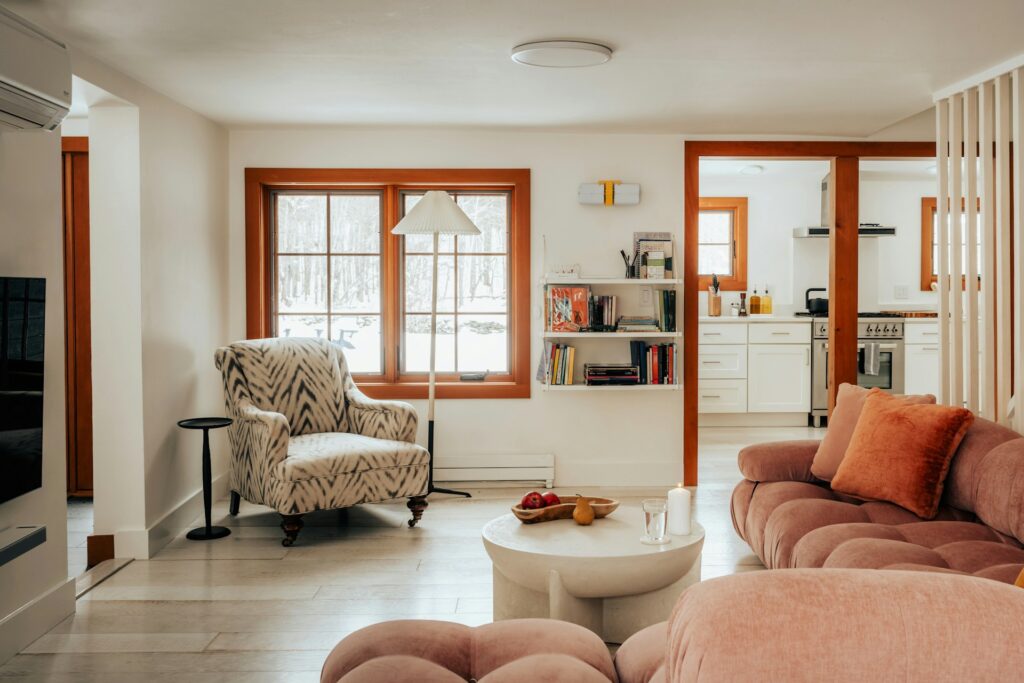
Let’s be honest – we’ve all been there. You’re scrolling through Instagram, double-tapping those perfectly curated homes that look like they’ve been styled by angels, when suddenly you catch a glimpse of your own living room in the black mirror of your phone screen. The reality check hits: your space looks like a charity shop exploded during a particularly enthusiastic jumble sale.

The question that inevitably follows is this: should you strip everything back to achieve that zen-like minimalist aesthetic, or should you embrace the chaos and go full maximalist? It’s the interior design equivalent of choosing between tea and coffee (both have their merits, both have their devoted followers, and both can leave you feeling utterly bewildered when you’re standing in the middle of John Lewis wondering what on earth you’re supposed to do with your life).

Fear not, dear reader. We’re here to decode the great minimalist versus maximalist debate, because frankly, your sanity (and your sofa) depends on it.

Minimalism: The Art Of Living With Less (But Looking Like More)

Minimalism is rather like the Marie Kondo of interior design philosophies: everything must earn its place by sparking joy, or frankly, it can jog on. The aesthetic is all about clean lines, neutral palettes, and spaces so pristine you’d be afraid to put a mug down without a coaster. Whether you’re investing in beautifully crafted pieces like a sleek Poliform sofa or finding budget-friendly alternatives, the principle remains the same.

But here’s the thing about minimalism: it’s deceptively difficult. Anyone who’s ever attempted to achieve that effortlessly chic, ‘I just threw this together’ look will tell you it requires more planning than a military operation. Every cushion must be perfectly positioned, every surface must remain clear, and heaven help you if you dare leave yesterday’s post on the kitchen counter.

The beauty of a minimalist approach lies in its ability to make even the smallest spaces feel expansive and serene. Think of it as giving your home room to breathe (rather like taking off a particularly restrictive pair of Spanx after a long day). The relief is palpable.

When it comes to colour schemes, minimalists worship at the altar of whites, greys, and beiges with the occasional injection of black for drama. It’s a palette that would make even the most discerning Scandi blogger weak at the knees, and one that works beautifully with clean-lined pieces from brands like MUJI or West Elm.

The Psychology Behind The Pared-Back Approach

There’s actually proper science behind why minimalist spaces make us feel calmer. Our brains, it turns out, are rather easily overwhelmed by visual clutter (much like how we feel after attempting to navigate the Oxford Circus Christmas shopping crowds). A minimalist environment reduces this cognitive load, allowing our minds to focus on what actually matters rather than wondering why we still own that ceramic elephant from our university days.

The key to successful minimalism isn’t just about owning fewer things; it’s about choosing the right things. This is where quality becomes paramount. Rather than filling your space with budget finds that’ll need replacing faster than you can say ‘flat-pack furniture,’ minimalism encourages investment in pieces that’ll stand the test of time. Think carefully crafted pieces that won’t date: a classic Heal’s dining table or a timeless Habitat sofa that’ll serve you well for decades.

Maximalism: More Is More & That’s Perfectly Fine, Thank You

Now, before you start hyperventilating at the thought of maintaining minimalist perfection, let’s talk about the deliciously chaotic world of maximalism. If minimalism is a carefully orchestrated symphony, maximalism is a joyous jazz improvisation (unpredictable, layered, and absolutely brimming with personality).

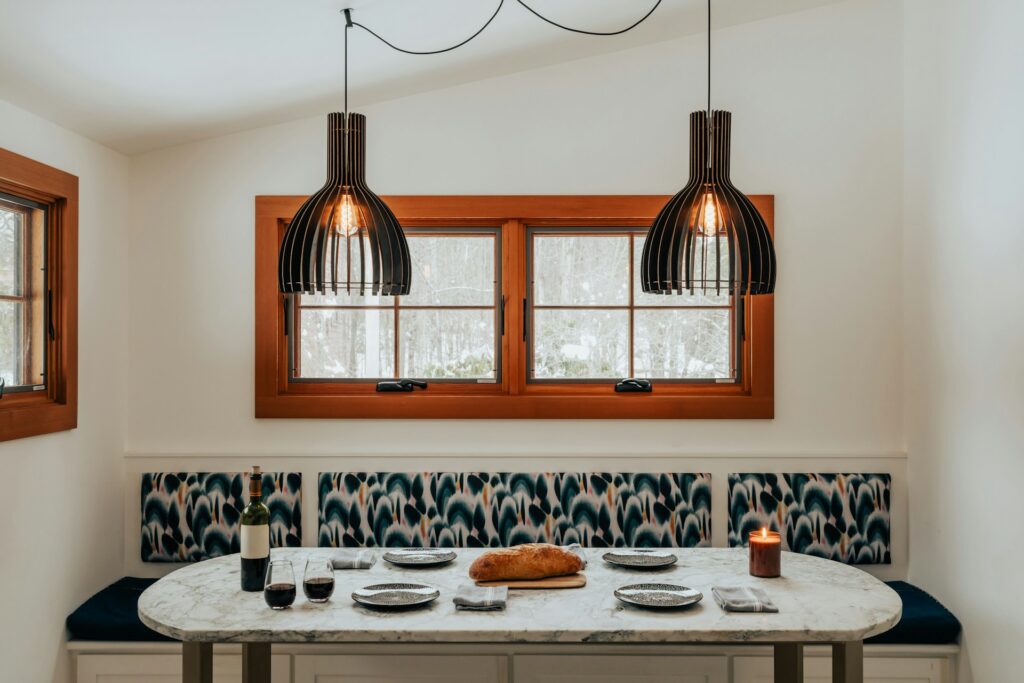
Maximalism celebrates the idea that your home should tell your story, complete with all the plot twists, characters, and dramatic flourishes that make life interesting. It’s about mixing patterns with the confidence of someone who genuinely doesn’t care if their geometric rug clashes with their floral curtains. Because sometimes, clashing is exactly the point.

This approach works particularly well for those of us who are, shall we say, natural collectors. You know who you are: the ones whose bookcases groan under the weight of novels you ‘definitely will read again,’ whose kitchen drawers contain at least seventeen different gadgets for tasks you can’t quite remember, and whose walls are adorned with artwork, photographs, and that rather questionable macramé piece your niece made during her creative phase.

The trick with maximalism lies in creating what designers rather grandly call ‘curated chaos.’ It’s about having the confidence to mix different eras and styles: perhaps pairing a vintage G-Plan sideboard with a bold Made.com statement chair, or combining sleek contemporary pieces with vintage finds, family heirlooms, and that abstract painting you bought during a wine-fuelled holiday in Tuscany. The result should feel collected rather than simply assembled, with each piece contributing to the overall narrative of your space.

The Colour Conversation

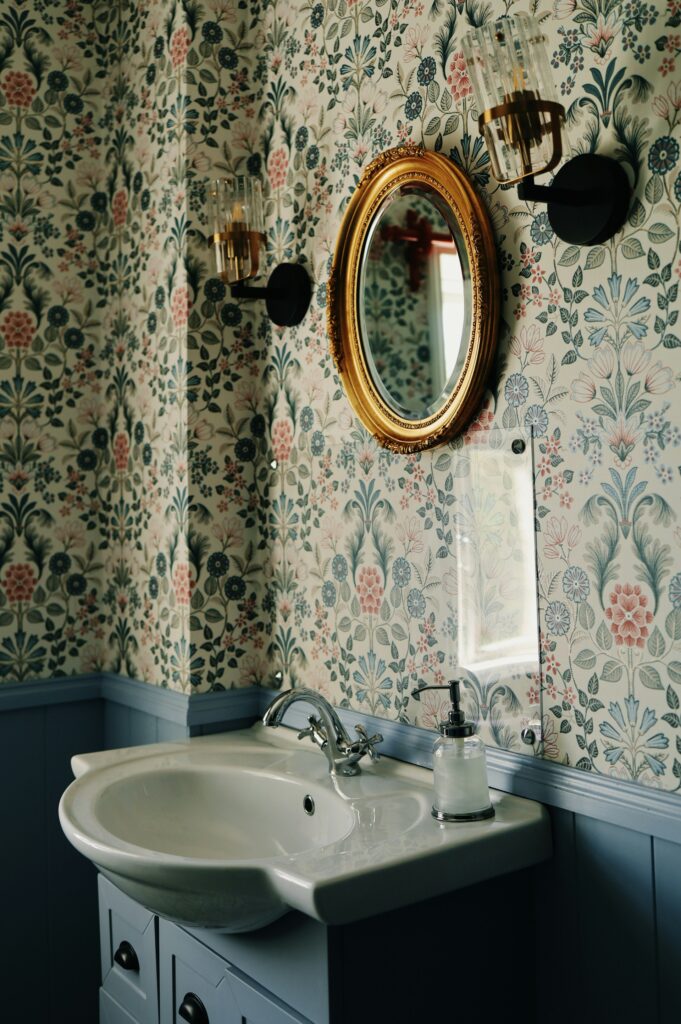
Where minimalists fear to tread, maximalists rush in with paint pots blazing. Jewel tones, bold prints, and statement wallpapers are all fair game in the maximalist playbook. Think emerald greens that would make a peacock jealous, deep burgundies that whisper of old libraries and expensive wine, and blues so rich you could swim in them.

But here’s where it gets interesting: maximalism isn’t just about throwing every colour in the rainbow together and hoping for the best. The most successful maximalist spaces have an underlying thread that ties everything together, whether that’s a recurring colour, a particular style period, or simply a consistent level of boldness throughout.

The Rental Reality

For those of us navigating the rental market (which, let’s face it, includes most of us under the age of 45 these days), there are practical considerations to bear in mind. Minimalism tends to be more rental-friendly, as it typically involves fewer permanent changes to the space. You can achieve a minimalist look through careful furniture selection and strategic decluttering, regardless of whether you’re allowed to repaint those magnolia walls.

Maximalism can be achieved in rental properties too, but it requires more creativity. Think removable wallpaper from brands like Graham & Brown, statement rugs from Dunelm that can travel with you, and plenty of artwork and textiles to add personality without requiring a deposit-threatening paint job. Even a simple trip to IKEA can yield treasures that’ll transform your space without breaking the bank or your tenancy agreement.

The Bottom Line

So, minimalist or maximalist? The honest answer is whichever makes you feel most at home in your own space. Your home should be a reflection of you (not your Instagram feed, not your mother-in-law’s opinions, and certainly not whatever happens to be trending on Pinterest this week).

The best homes, regardless of style, share certain qualities: they feel authentic to their inhabitants, they function well for their occupants’ lifestyles, and they create a sense of comfort and belonging. Whether you achieve this through the serene simplicity of minimalism or the joyous abundance of maximalism is entirely up to you.

After all, the only person who has to live with your decorating decisions is you. And if that means your minimalist kitchen sits next to your maximalist dining room, well, who’s to say that isn’t exactly as it should be?

Remember, rules in interior design, much like in fashion, are meant to be broken. The most interesting spaces often come from those brave enough to ignore the conventional wisdom and create something uniquely their own. So whether you’re team minimalist, team maximalist, or proudly flying the flag for somewhere deliciously in between, make sure your home tells your story (chaos, calm, and all).

48 Hours In Alajuela: Costa Rica’s Comfortable, Convenient Gateway To The Clouds

Too often dismissed as merely a convenient airport town, Alajuela rewards those who linger. Costa Rica’s second-largest city wears its heritage proudly, from the mango trees shading Central Park to the heroic statue of Juan Santamaria, the drummer boy who became a national legend.

While many rush off to beaches and volcanoes without giving themselves time to take things in at a local pace, spending 48 hours in Alajuela offers something different – an authentic slice of Costa Rican life combined with easy access to cloud forests, wildlife sanctuaries, and spectacular waterfalls.

Located just 20 minutes from Juan Santamaria International Airport and 30 minutes from San José, Alajuela serves as an ideal base for exploring the Central Valley. The city enjoys what locals call ‘eternal spring’ weather, with temperatures hovering around a pleasant 23°C (73°F) year-round. Unlike tourist-heavy destinations, you’ll find yourself surrounded by Ticos going about their daily lives, offering genuine interactions rather than rehearsed tourist experiences.

Day One: Nature & Wildlife

Early Morning

For those eager to see Costa Rica’s most accessible volcano, Poás Volcano National Park makes an excellent early morning excursion (when open – check current status as volcanic activity occasionally closes the park). Located just 30 miles from Alajuela, the drive takes about 90 minutes through scenic mountain roads. Book tickets online in advance and aim for the earliest time slot at 7:00 AM to beat the clouds that typically roll in by mid-morning. The main crater, one of the world’s largest at nearly a mile wide, often steams with sulfurous gases from its turquoise lake. When conditions are clear, the views are otherworldly.

Photo by Alvaro Hernandez on Unsplash

If Poás is closed (right now, it is, on account of a recent eruption) or you prefer a wildlife focus, head straight to La Paz Waterfall Gardens, which is open 8:00 AM – 5:00 PM, and costs approximately $52 for adults plus taxes. This privately-owned nature park, about 45 minutes from Alajuela, offers Costa Rica’s biodiversity in concentrated form. Start with the wildlife exhibits – the park serves as a rescue center for animals that cannot be released back into the wild. You’ll encounter jaguars, pumas, monkeys, sloths, and countless tropical birds, all in spacious, naturalistic enclosures.

Mid-Morning to Lunch

At La Paz, the highlight is the waterfall trail, where well-maintained paths and sturdy staircases lead you past five magnificent waterfalls. The main La Paz waterfall plunges 120 feet through pristine cloud forest. The trail involves about 500 steps and takes 1.5-2 hours to complete. Don’t worry about the climb back – a shuttle bus returns you from the bottom of the trail to the visitor center.

The park’s buffet restaurant (additional cost) offers a surprisingly good spread of Costa Rican and international dishes. Alternatively, pack a picnic to enjoy at one of the designated areas with views over the valley.

Afternoon

On your way back to Alajuela, stop at Rescate Wildlife Rescue Center (formerly Zoo Ave, open 9:00 AM – 5:00 PM). This non-profit rehabilitation center houses over 120 species of animals, with a particular focus on birds – ‘ave’ means bird in Spanish. The 2.5km of trails wind through botanical gardens where iguanas and peacocks roam freely. The center runs important breeding programs for endangered species like the scarlet macaw, with plans to release 500 birds by 2030.

If you prefer a more active afternoon, consider the Mantra Trail hike at Hacienda La Chimba instead. This moderate 4.5km trail leads through coffee plantations to a giant wooden hand sculpture offering panoramic valley views – perfect for those Instagram moments.

Either way, it’s these unexpected paths and discoveries that make adventure holidays in Costa Rica so rewarding, finding unique experiences just minutes from the beaten path.

Evening

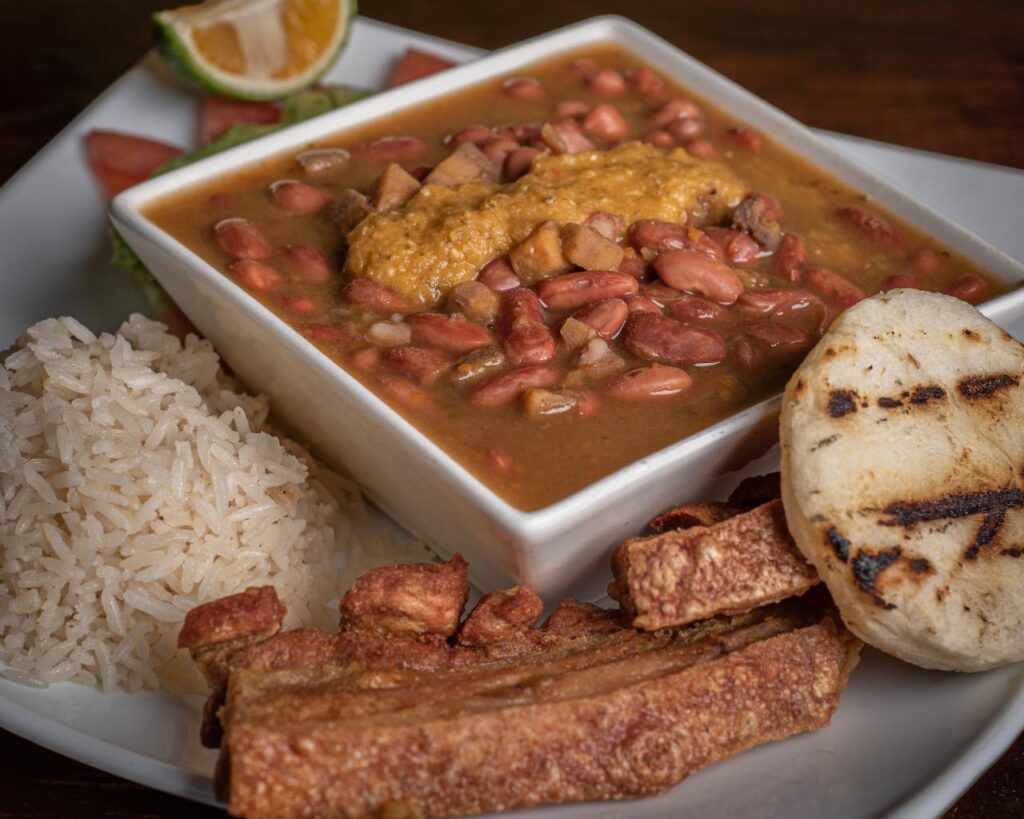
Return to Alajuela for the evening. Head to Central Park as the sun sets, when locals gather to socialize and street food vendors set up their carts. Try some chifrijo (a layered dish of rice, beans, chicharrones, and pico de gallo) or fresh fruit with chilli and lime. It’s the perfect introduction to Alajuela’s laid-back evening atmosphere.

Read: 9 must visit places IDEAL for a family wildlife holiday in Costa Rica

Day Two: Culture, Coffee & Local Life

Morning

Start your day like a local at Central Park (Parque Central), the heart of Alajuela since colonial times. Grab a fresh coconut water from a street vendor and find a shaded bench beneath the famous mango trees that give Alajuela its nickname, “City of Mangos.” The park comes alive in the morning with pensioners reading newspapers, children chasing pigeons, and the occasional impromptu music performance.

Face east to admire the Cathedral of Alajuela (Catedral de Nuestra Señora del Pilar), with its striking neoclassical architecture and distinctive red dome. Step inside to see the ornate pulpit and peaceful interior – a cool respite from the morning sun. The cathedral opens at 6:00 AM for early morning mass, but visitors are welcome throughout the day.

© Jan Helebrant

A short walk north brings you to the Juan Santamaria Museum (open Tuesday-Sunday, 10:00 AM – 5:30 PM, free admission). Housed in a former military barracks, the museum tells the story of Costa Rica’s national hero who died defending the country against American filibuster William Walker in 1856. The exhibits include historical artifacts, paintings, and maps that provide context for understanding Costa Rican identity and pride.

Late Morning

Dive into local life at the Mercado Central, just two blocks west of the park. This bustling market, founded in 1782, assaults your senses in the best possible way. Navigate narrow aisles packed with tropical fruits you’ve never seen before, aromatic coffee beans, fresh flowers, and traditional crafts. Stop for an early lunch at one of the sodas (small family restaurants) inside the market – try the casado, Costa Rica’s traditional plate of rice, beans, plantain, salad, and your choice of meat or fish.

© katiebordner

Afternoon

Escape the midday heat with a coffee tour at Doka Estate (tours run at 9:00 AM, 10:00 AM, 11:00 AM, 1:30 PM, 2:30 PM, and 3:30 PM). Located on the slopes of Poás Volcano and just a twenty minute taxi ride north of the city, this working plantation has been producing coffee for three generations. The 90-minute tour takes you through the entire process from seed to cup. If you visit between October and February, you’ll see workers hand-picking the red coffee cherries. The tour concludes with a tasting session where you’ll learn to distinguish between different roasts and brewing methods.

Evening

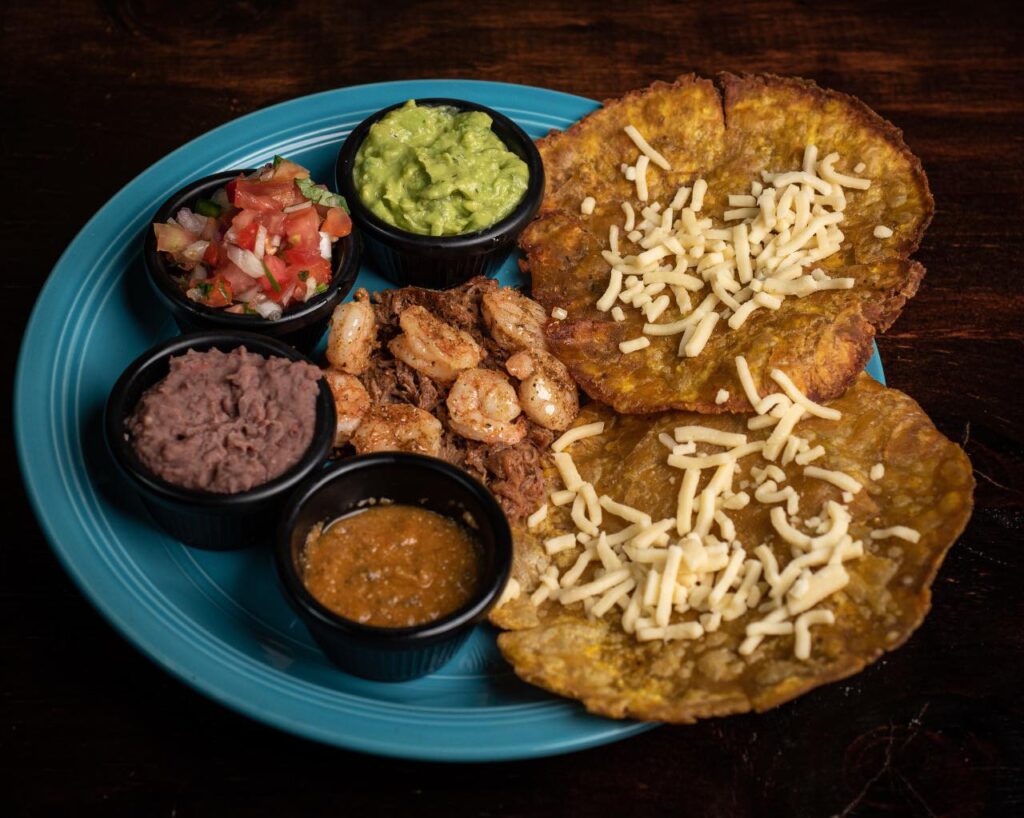
Return to downtown Alajuela for your farewell dinner. For authentic Costa Rican cuisine, try La Tortillería, which specialises in traditional dishes like casados and gallo pinto. If you’re craving Tex-Mex, Jalapeños Central (also known as Norman’s Jalapeño) on 1st Street has been a local favourite for over a decade, serving generous burritos and their famous tortilla soup.

Vegetarians should head to El Chante Vegano, a thoughtful vegan restaurant located half a block south of the post office.

Images Via Jalapeños Central

Practical Tips

Getting Around: Rent a car for maximum flexibility, especially for Day One activities. Alternatively, arrange tours that include transportation or use a combination of Uber (readily available to attractions, less so for returns) and pre-arranged shuttles.

Where to Stay: Choose accommodation near downtown Alajuela for walkability. The area around Central Park offers everything from budget hostels to comfortable business hotels.

What to Pack: Layers are essential -mornings can be cool (especially at higher elevations), while afternoons warm up. Bring a rain jacket year-round, comfortable walking shoes, and insect repellent.

Money Matters: While tourist attractions accept credit cards and US dollars, you’ll need colones for the central market and street vendors. ATMs are plentiful around Central Park.

Timing Your Visit: Avoid Costa Rican holidays like Easter Week and the weeks around Christmas when domestic tourism peaks. The dry season (December-April) offers the most reliable weather, though Alajuela’s climate remains pleasant year-round.

Booking Ahead: Poás Volcano requires advance online reservations through the SINAC website. Book several days ahead, especially for weekend visits. La Paz Waterfall Gardens can get crowded during high season (December-April), so consider purchasing tickets online to guarantee entry.

The Bottom Line

Alajuela offers something increasingly rare in Costa Rica’s tourism landscape – an authentic urban experience within easy reach of natural attractions.

These 48 hours provide a perfect introduction to Costa Rican biodiversity and culture without the long transfers and tourist prices of more famous destinations. Whether you’re starting or ending your Costa Rican adventure, Alajuela proves that sometimes the best discoveries happen when you slow down and explore what’s right in front of you.

Tenerife On A Budget: 6 Free Activities To Do Outside & In Nature

The crown jewel of the Canary Islands, Tenerife proves that the best experiences are free. With over seven million tourists visiting annually, you might assume everything costs a fortune. Think again. This volcanic paradise offers spectacular outdoor adventures without spending a penny, from otherworldly hiking trails to pristine beaches.

Whether you’re a budget-conscious backpacker or prefer authentic experiences over tourist traps, Tenerife’s natural wonders provide endless opportunities for exploration. The island boasts over 600 miles of superb trails, ensuring magnificent discoveries around every corner.

Explore The Alien Landscapes Of Teide National Park

Standing at Tenerife’s heart like a sleeping giant, Mount Teide has shaped both the island’s dramatic topography and every visitor’s imagination. This is Spain’s most visited national park – nowhere else in Europe offers such otherworldly landscapes whilst breathing crisp mountain air at over 2,000 metres above sea level.

What to expect: Wander through a UNESCO World Heritage Site surrounding Spain’s highest peak at 3,715 metres. This geological wonderland offers Mars-like landscapes so unique that NASA uses it to train astronauts. Well-marked trails let you explore this natural laboratory dotted with ancient lava flows, colourful mineral deposits, and bizarre rock formations called roques.

Best experiences:

  • Roque de García circular trail: Stunning views without mountaineering skills, perfect for families
  • Sendero de los Roques de García: Dramatic photos against iconic finger-like rock formations
  • Sunrise viewing: Start early to avoid crowds and witness dawn painting volcanic rocks in gold and crimson

Getting there: Free entry with parking at the Parador and visitor centres. Drive via TF-21 from the south or TF-24 from the north.

Discover The Mystical Anaga Mountains

In northeastern Tenerife lies a secret world predating human civilisation – a primordial landscape where mist-shrouded peaks harbour forests older than memory. The Anaga Mountains feel like stepping into a fairy tale, where ancient laurel trees draped in moss create cathedral-like groves and hidden villages perch impossibly on razor-sharp ridges.

What to expect: Hike through the 144-sq-km Parque Rural de Anaga, a UNESCO Biosphere Reserve declared in 2015 for its astonishing biodiversity. These ancient laurisilva forests date back millions of years, offering glimpses of prehistoric vegetation that once covered the Mediterranean. The humid air carries earthy scents of decomposing leaves and musical mountain streams, creating mystical atmospheres that change as mist rolls through valleys.

Best experiences:

  • Trail of the Senses (Sendero de Los Sentidos): Engages all senses through this green wonderland
  • Afur to Taganana trail: Combines coastal views with forest immersion
  • Cruz del Carmen to Punta del Hidalgo: Descends through multiple ecosystems to a charming seaside village

Getting there: Take bus 946 from Santa Cruz or drive to Cruz del Carmen for trail access. The visitor centre provides excellent maps and current conditions.

Read: 7 IDEAL tips for your group holiday in Tenerife

Hunt For Hidden Beaches & Dramatic Coastlines

Tenerife’s coastline tells the story of volcanic fury meeting Atlantic waves, creating a spectacular marriage of black sand beaches, towering cliffs, and secret coves undiscovered by package holiday crowds. While the south boasts golden sands from postcards, the island’s true coastal treasures lie scattered like hidden gems, each offering completely different seaside experiences shaped by volcanic origins.

What to expect: Each coastal area reveals different volcanic personalities – from gentle, protected waters of sheltered bays to raw Atlantic power crashing against black rock formations. Many beaches require short walks through coastal paths lined with endemic succulents, rewarding you with stretches of coastline you might have entirely to yourself.

Best experiences:

  • Playa Bollullo: One of Tenerife’s most beautiful natural beaches, accessible via pleasant walks through banana plantations
  • Benijo Beach: A photographer’s dream with towering rock formations and powerful Atlantic waves
  • La Tejita and El Médano: Large, sandy, natural beaches uncrowded by tourists, with views of Montaña Roja
  • Las Teresitas: Features unusual golden sand imported from the Sahara, with calm waters thanks to protective breakwaters

Getting there: Many gems require short walks off main tourist routes. Pack water and sun protection as some lack facilities. Use local buses or rent a car for beach hopping flexibility.

Conquer Volcanic Peaks & Crater Walks

Beyond towering Mount Teide lies a fascinating collection of smaller volcanoes scattered across Tenerife like geological stepping stones, each telling its own chapter in the island’s fiery creation story. These accessible peaks offer crater exploration thrills and summit conquests without requiring technical climbing skills or expensive guides.

What to expect: Each volcano represents different geological periods, providing insights into the island’s dramatic birth from the ocean floor. Distinct crater shapes, lava compositions, and surrounding landscapes tell unique stories of Tenerife’s fiery past. Relatively easy ascents reward you with incredible vistas and the satisfaction of standing atop genuine volcanic peaks.

Best experiences:

  • Montaña Roja (Red Mountain): Distinctive red-hued volcano near El Médano offering 360-degree coastal views and excellent sunset photography
  • Chinyero Volcano: Tenerife’s youngest volcano, with easy, almost flat circular trails to the crater from the island’s most recent 1909 eruption
  • Montaña de Guaza: Start from Los Cristianos and explore this 400-metre-high double-crater volcano with coastal panoramas

Getting there: Most volcanic cones are accessible by car with short summit walks. Public buses serve nearby areas, though rental cars provide more volcano-hopping flexibility.

Meander Through Enchanted Forests & Rural Parks

Many people book holidays to Tenerife for its guaranteed sunshine, sure, but it’s the island’s extraordinary landscapes that keep them coming back. A large part of the charm lies in Tenerife’s diverse elevation zones create a remarkable vertical journey through completely different worlds – from sun-baked coastal plains to misty mountain forests, each supporting unique ecosystems that seem impossibly varied for such a compact island. 

These protected parks offer peaceful sanctuaries where ancient pines whisper in mountain breezes and traditional villages nestle in valleys barely changed for centuries.

What to expect: Beyond famous laurel forests, varied ecosystems showcase incredible biodiversity whilst providing tranquil escapes from tourist destinations. Changing elevations create distinct microclimates, letting you experience subtropical vegetation, temperate forests, and alpine-like conditions within hours. Ancient dragon trees and endemic wildflowers demonstrate the remarkable plant diversity.

Best experiences:

  • Corona Forestal Natural Park: Vast pine forest surrounding Teide with peaceful walking amongst towering Canarian pines and trails to the mystical Paisaje Lunar (Lunar Landscape)
  • Teno Rural Park: Contrasts from impressive Los Gigantes Cliffs to traditional villages, housing endemic biodiversity with paths connecting remote hamlets
  • Rambla de Castro: Coastal and agricultural landscapes with spectacular volcanic cliffs, palm groves and trails offering breathtaking ocean views

Getting there: Most forest areas accessible by car with marked trailheads and parking. Some remote locations require higher clearance vehicles, but many beautiful walks begin from easily accessible points.

Follow Historic Paths & Ancient Trails

Imagine walking in the footsteps of Guanche shepherds, Spanish conquistadors, and generations of islanders who carved impossible paths across Tenerife’s vertical landscape armed with nothing but determination and hand tools. Ancient pathways tell stories written in worn stone steps and weathered cobblestones, connecting remote mountain villages and threading through landscapes so untouched they feel like secret passages through time.

What to expect: Natural beauty combines with historical significance along paths offering authentic insights into traditional Canarian life. Terraced agricultural plots carved into impossible slopes and centuries-old stone architecture built from volcanic rock reveal how generations shaped this landscape through ingenuity and determination.

Best experiences:

  • Camino Real paths: Historic royal roads connecting traditional villages through dramatic landscapes, including the spectacular Adeje to Arona route through ancient terraced farmland
  • Water channel walks: Follow historic irrigation channels (acequias) carved into cliffsides, showcasing ingenious engineering still supplying remote communities
  • Traditional village circuits: Connect charming hamlets like Masca, Taganana, and Chinamada via old mule paths revealing hidden waterfalls and panoramic viewpoints

Getting there: Many historic paths begin from traditional villages accessible by local buses. Some require careful navigation, so downloading offline maps or joining local walking groups enhances safety and cultural understanding.

Tenerife Need-To-Know

Best seasons: Thanks to a warm and pleasant climate all year round, Tenerife is often referred to as ‘the island of eternal spring’, making outdoor activities enjoyable in any season.

What to pack: Sturdy walking shoes, sun protection, water bottle, light layers for elevation changes, and a camera for capturing unforgettable moments.

Transport savings: Utilise Tenerife’s efficient bus network (TITSA) to reach many trailheads and natural areas. Many routes offer excellent value compared to car rental or taxis.

Safety considerations: Always inform someone of your hiking plans, check weather conditions, and respect closure signs – some trails may be temporarily inaccessible for restoration.

The Bottom Line

Tenerife proves that extraordinary outdoor adventures don’t require extraordinary budgets. From volcanic moonscapes to ancient forests, dramatic coastlines to hidden beaches, this remarkable island offers a lifetime of free outdoor experiences. The only investment required is your time, curiosity, and sense of adventure.

Whether you’re seeking peaceful forest walks, challenging summit hikes, or simply stunning coastal strolls, Tenerife’s diverse landscapes provide the perfect backdrop for unforgettable memories – all without spending a penny on entrance fees.

Pack your walking boots, embrace your adventurous spirit, and prepare to discover why Tenerife consistently ranks among the world’s top outdoor destinations. The island’s natural wonders are calling, and they’re absolutely free.

The Ideal 48 Hours In Notting Hill For Foodies

West London’s most bohemian quarter sprawls across terraced streets painted in Farrow & Ball pastels, where market traders hawk antiques beneath the shadow of Trellick Tower and celebrity chefs serve tasting menus just doors down from proper boozy gastropubs. This is Notting Hill, where Hugh Grant once bumped into Julia Roberts, where The Clash wrote their manifestos, and where a new generation of food-obsessed locals now queue for Palestinian small plates with the same fervour their predecessors reserved for vintage vinyl.

Far from the tourist-packed pilgrimage sites that draw coach loads clutching Love Actually DVD covers, Notting Hill rewards those who venture beyond that famous blue door (the original of which, incidentally, was sold at auction for charity). The neighbourhood that gave birth to Carnival now hosts some of London’s most exciting restaurants, from three-Michelin-starred temples of gastronomy to BYO Turkish grills where the kebabs arrive still smoking from clay ovens.

Unlike central London’s more frantic foodie quarters, Notting Hill maintains an authentic village feel that’s increasingly rare in Zone 1. Recent gentrification hasn’t entirely erased its creative soul – you’ll still find market traders who’ve worked the same Portobello pitch for decades, alongside newcomers who’ve chosen this postcode precisely for this credibility.

With strategic timing and insider knowledge (found in this guide, naturally), 48 hours gives you enough time to taste your way through the neighbourhood – from rotisserie chicken eaten al fresco in garden squares to precision sushi that rivals Tokyo, with plenty of antique browsing and people-watching between courses.

Day 1: From Market Treasures To Michelin Stars

Breakfast: Portobello Road Awakening

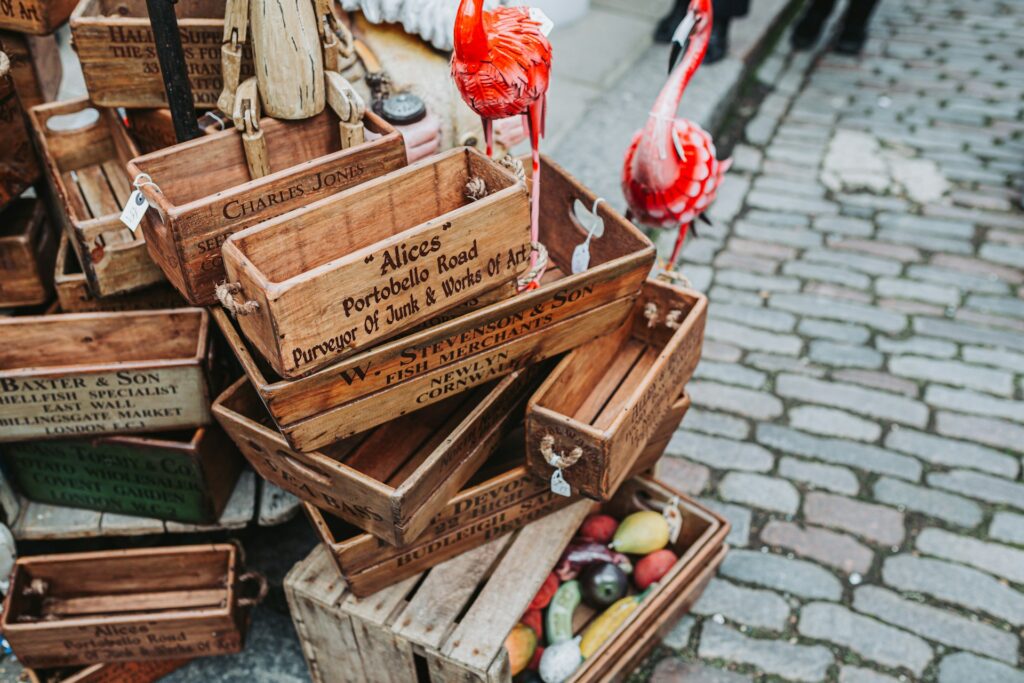
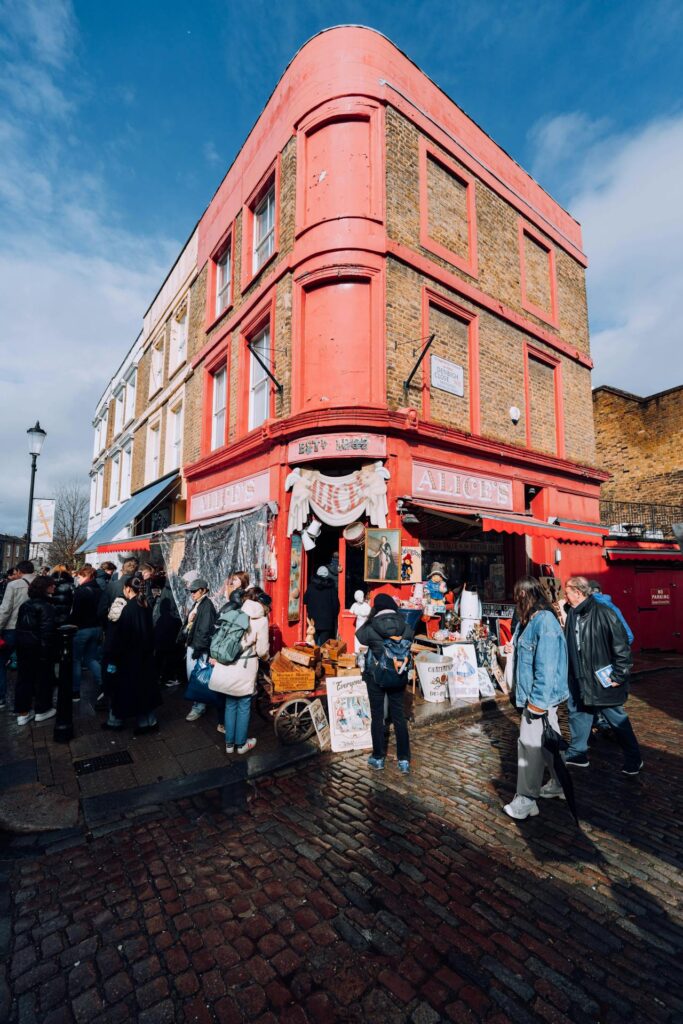
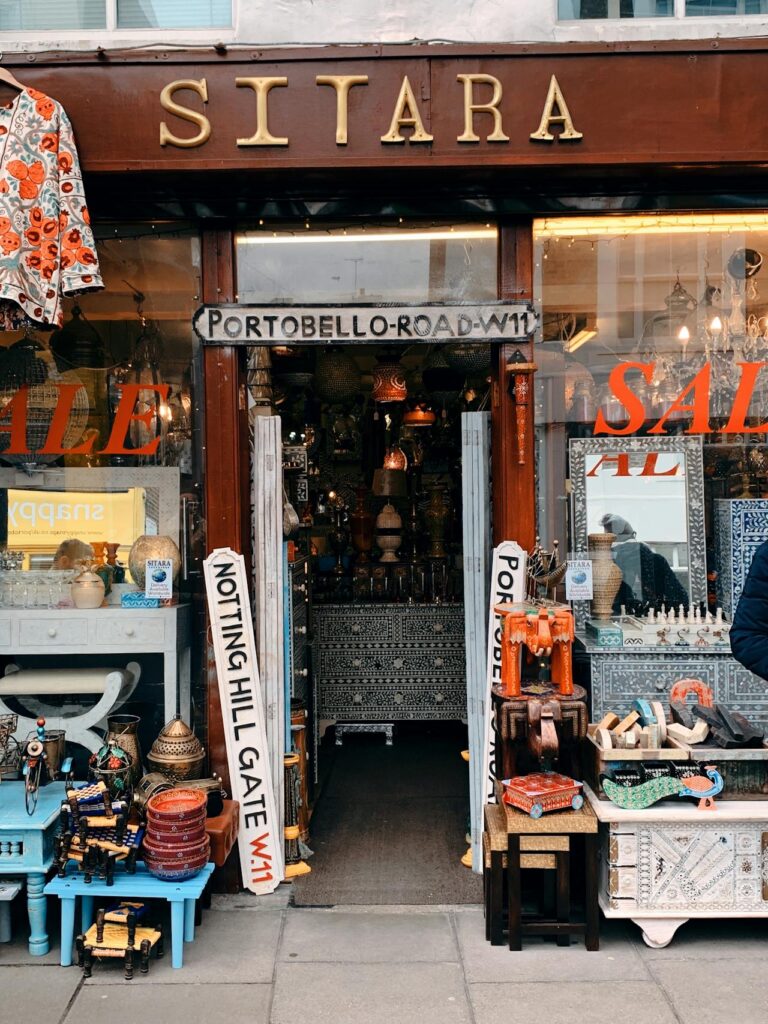
Start your foodie odyssey where Notting Hill’s soul truly resides – Portobello Road Market. Arrive before 9am to beat the tourists and you’ll witness the market in its authentic glory, as stallholders set up their pitches while early-bird collectors hunt for genuine treasures among the bric-a-brac.

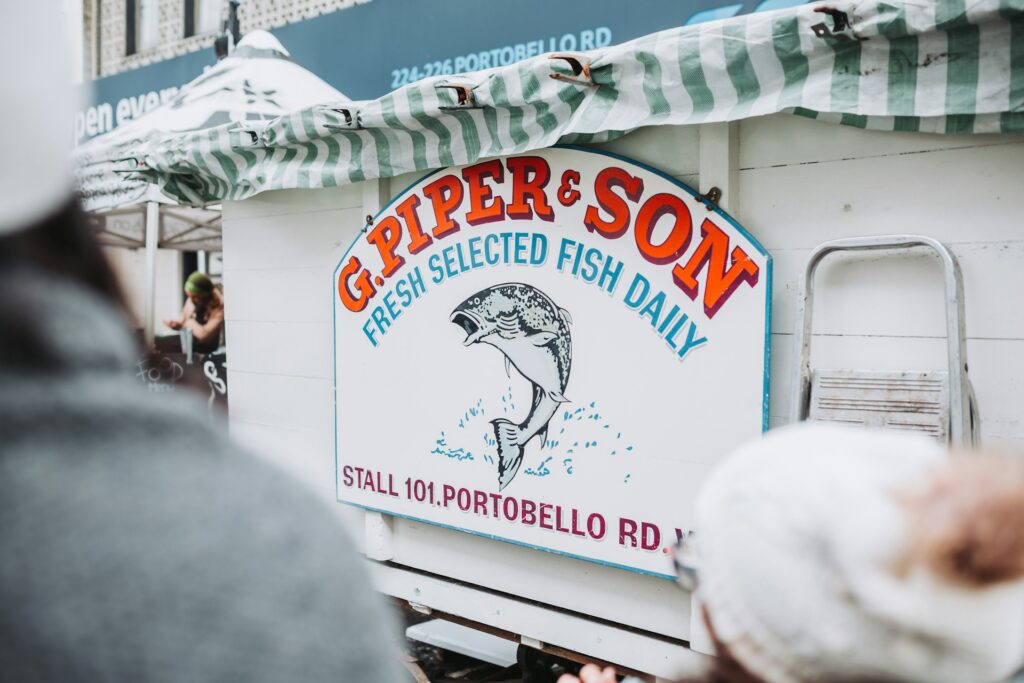
The antiques section stretches from Chepstow Villas to Elgin Crescent, but foodies should head straight to the northern end where fruit and vegetable vendors have traded since the 1960s. Grab a builder’s tea and a bacon butty from one of the traditional caff stalls – this isn’t artisanal sourdough territory, but rather honest grub that’s fuelled market traders for generations.

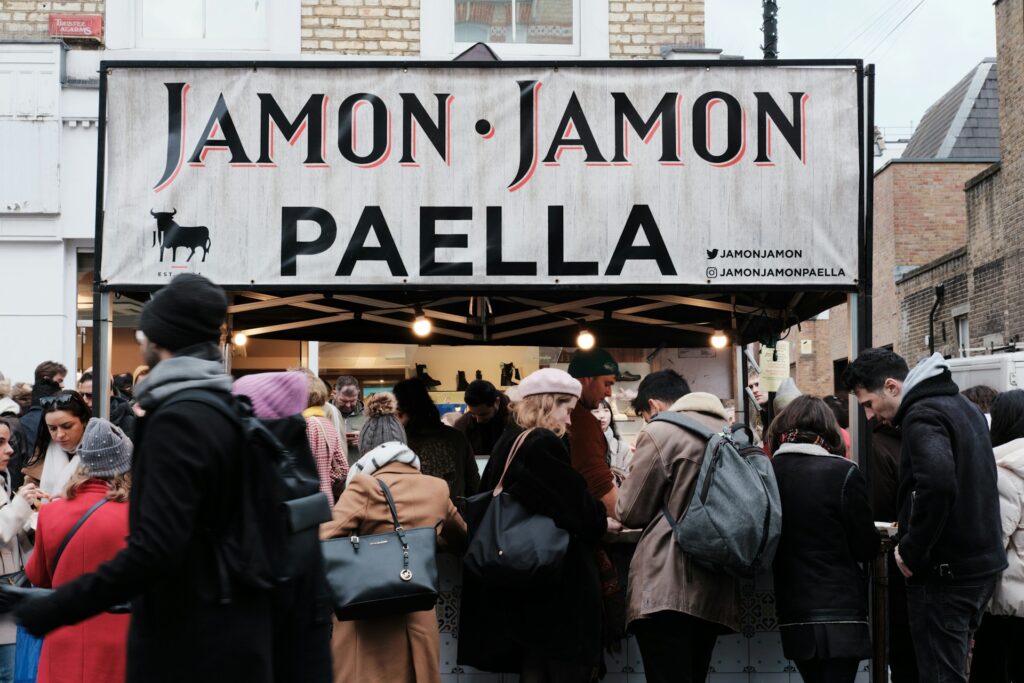
Fridays and Saturdays bring the full street food spectacle, with vendors serving everything from Spanish paella cooked in massive pans to delicate French crepes, crispy churros dusted with cinnamon, and German bratwurst sizzling on grills. The aromas alone create a sensory map of Europe’s finest comfort foods.

Follow the market’s extension onto Golborne Road, where North African and Caribbean street food vendors trade throughout the week, offering everything from Moroccan tagines to Jamaican patties that connect directly to the neighbourhood’s multicultural heritage. Summer sees the food landscape expand further, with fresh fruit stalls offering perfectly ripe mangoes and pineapples, frozen yogurt purveyors providing cooling relief from London’s occasional heat waves, and ice cream stalls serving scoops that rival any Italian gelateria.

Photo by Bruno Martins on Unsplash

Surrounding the main market thoroughfare, specialist food shops reward the curious foodie with browsing opportunities that go well beyond typical tourist fare. Here you’ll find independent operations, from artisanal cheesemongers to spice merchants who source directly from origin countries, offering ingredients and delicacies that reflect both the area’s international character.

Between browsing food stalls, vintage cameras and Victorian jewellery, make sure to duck into the Museum of Brands just off the main drag on Lancaster Road. This quirky attraction houses over 12,000 items of consumer packaging from Victorian times to the present day. The museum’s signature ‘Time Tunnel’ takes you on a chronological adventure through different periods over the past 200 years, showcasing the iconic brands and products that have defined British food culture throughout history – ideal for a curious foodie spending a weekend in Notting Hill, don’t you think?

Late Morning: Village Life & Literature

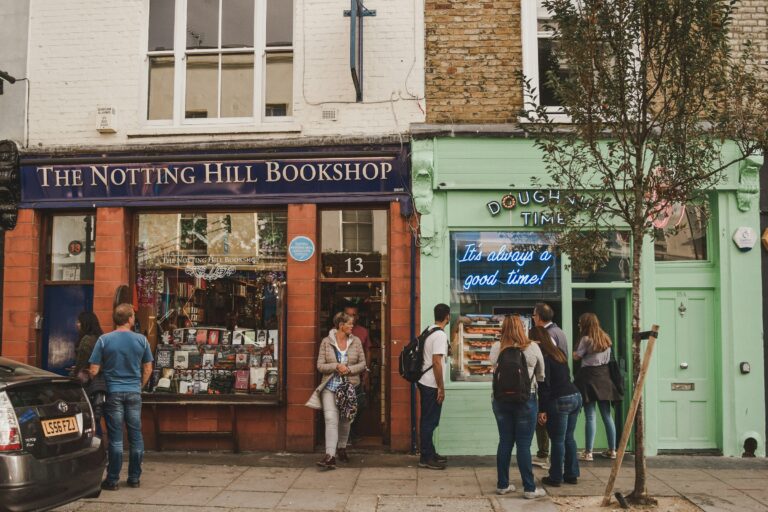
After immersing yourself in market mayhem, seek refuge in the quieter residential streets that earned Notting Hill its ‘village’ reputation. If you’re a Notting Hill film fan (and quite frankly, who isn’t?) stroll down the famous Blenheim Crescent to find that famous bookshop immortalised in Notting Hill – the Travel Bookshop, now relocated but still trading in wanderlust-inducing volumes.

You could also hunt for that famous blue door from the film located at 280 Westbourne Park Road, though be prepared for disappointment as you won’t actually find Hugh Grant there.

Lunch: Precision & Comfort

For your first meal, choose between precision and comfort. Those seeking culinary theatre should book the counter at SUMI on Westbourne Grove, where sushi master Endo Kazutoshi’s informal sister restaurant delivers precision Japanese cuisine without the stuffiness of traditional sushi bars. ‘Sumi’ is chef Endo’s mother’s name, and this sense of reverence goes far beyond that nod to maternal affection. There’s love and respect in every morsel found on this clear, precise menu, primarily composed of nigiri, sashimi and temaki, the latter a technique developed by the family of Endo Kazutoshi.

Alternatively, embrace rotisserie simplicity at Cocotte, just doors down on Westbourne Grove. Their free-range birds from France’s Pays de la Loire region are marinated overnight before slow-grilling on the spit, creating crackling skin that shatters at first bite. The quarter bird makes a perfect light lunch, especially when paired with their umami-rich gravy and eaten at one of the pavement tables for prime people-watching.

Afternoon: Culture & Gin

Post-lunch, immerse yourself in Notting Hill’s cultural heritage. Catch a film at Electric Cinema on Portobello Road – one of Britain’s oldest working cinemas. The bar serves fabulous cocktails if you fancy a matinee tipple.

For those preferring live performance, check what’s on at the Coronet Theatre on Notting Hill Gate. This Victorian music hall, with its ornate interior and intimate atmosphere, regularly hosts everything from fringe theatre to acoustic music sessions. The theatre occasionally offers matinee performances, which work brilliantly with your foodie itinerary – catch an afternoon show and enjoy a later dinner at one of the neighbourhood’s stellar restaurants, or opt for an early pre-theatre bite before an evening performance.

Between cultural pursuits, indulge in some retail therapy along Westbourne Grove’s boutique stretch. The independent shops here range from vintage clothing to locally-made crafts.

Image via Walmer Castle

Pre-Dinner Drinks: Pub Culture

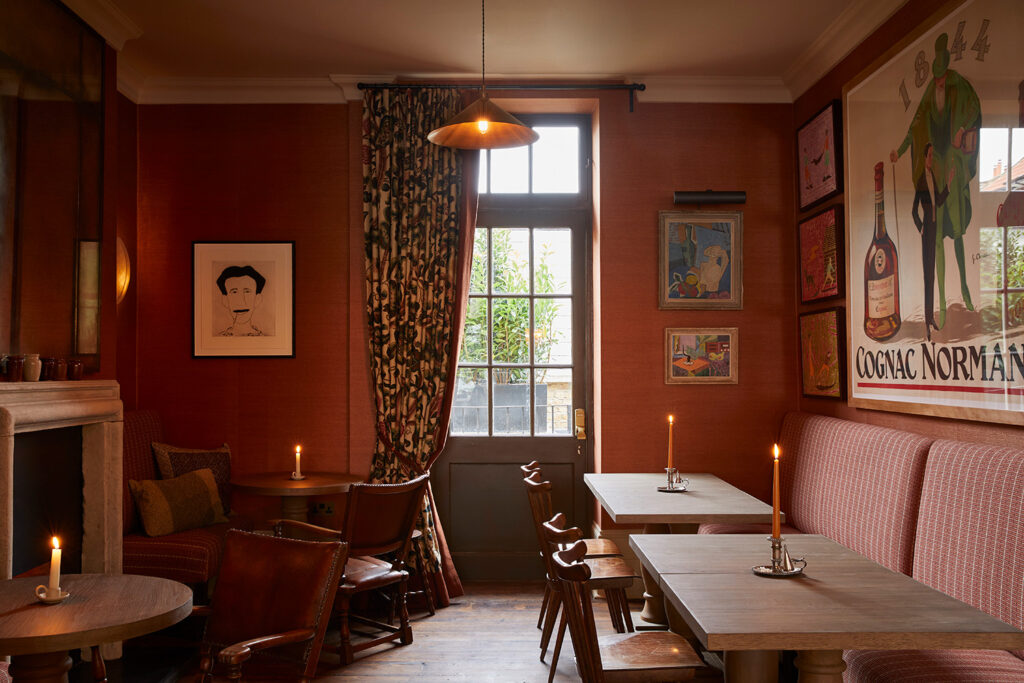
As afternoon melts into evening, experience authentic local pub culture at The Walmer Castle on Ledbury Road. This local boozer maintains the unpretentious charm that’s made it a neighbourhood institution. Order a pint of London Pride and settle into one of the worn leather banquettes for some quality people-watching.

Evening Dinner: Palestinian Perfection

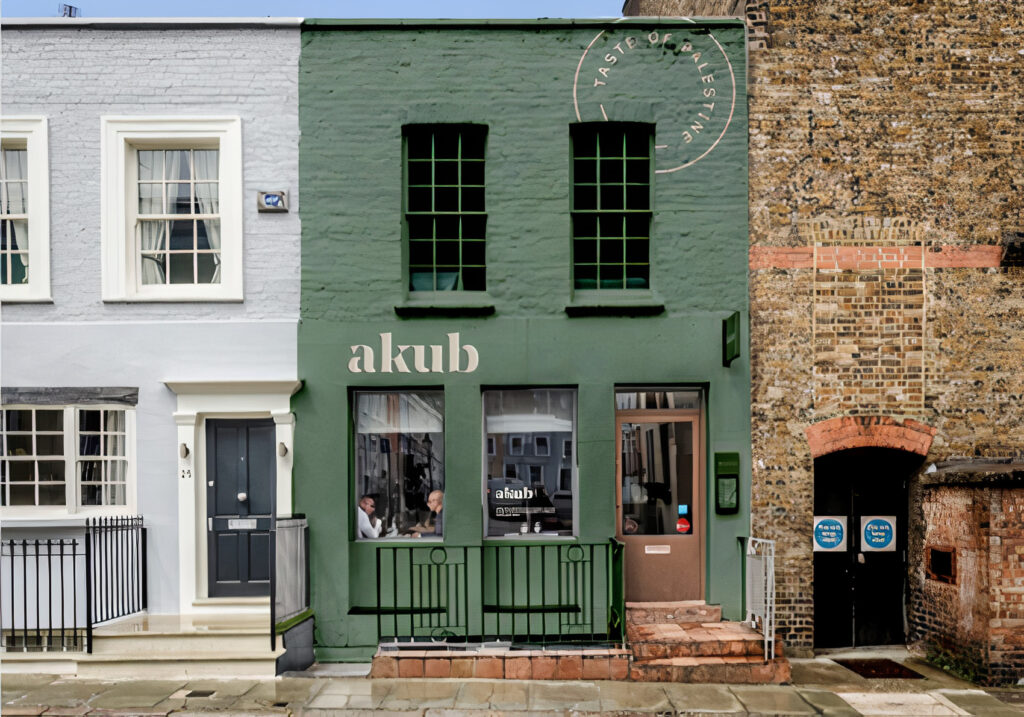
For dinner, secure a table at Akub on Uxbridge Street, one of our favourite restaurants in Notting Hill that deserves significantly more recognition. Franco-Palestinian restaurateur Fadi Kattan has created something genuinely special here – a modern Palestinian restaurant that celebrates the country’s sophisticated culinary traditions whilst incorporating British seasonal produce.

Under head chef Mathilde Papazian (who spent considerable time in Bethlehem mastering traditional techniques), dishes like slow-cooked lamb neck with fenugreek and red shatta mayo achieve perfect balance between comfort and refinement. The za’atar manakeesh arrives warm with toasted sesame seeds, perfect for dragging through their trio of exceptional dips.


Day 2: From Market Culture To Haute Cuisine

Breakfast: Malaysian Comfort

Begin day two with something completely different at Med Salleh Kopitiam on Inverness Terrace, visible from Bayswater tube station’s exit. This authentic Malaysian operation, run by Med Pang and Koi Lee, serves comfort food that’ll transport you straight to Penang’s hawker centres.

Order Med’s Grandma Hainanese chicken rice – poached thigh meat (skin thankfully left on) with rice made silky from chicken fat, accompanied by three powerfully pungent sauces for mixing according to your spice tolerance. It’s genuinely comforting in that deep, soul-warming way that only home-style cooking achieves. If it’s eggs you’re after this morning, Med Salleh Kopitiam’s ayam percik comes with an excellent fried egg, whilst the curry rice features half salted duck eggs that add rich, creamy depth to the aromatic sauce.

Image via Med Salleh

Mid-Morning: Coffee & Constitutional

Post-breakfast, pick up a coffee from Notting Hill Coffee Project and take yourself on a constitutional to work off that Malaysian comfort food. Weather permitting (this is the UK after all), enjoy a morning stroll around Kensington Gardens – the vast green lung provides perfect contrast to the neighbourhood’s urban intensity. Over at Speaker’s Corner, there’s potential entertainment from the capital’s more eccentric orators.

From the park, head north to marvel at Trellick Tower – Ernő Goldfinger’s controversial Brutalist masterpiece that’s either an eyesore or a work of genius, depending on your architectural persuasions. Seek out the Pottery Kiln on Clarendon Road, a beautiful Victorian structure that once fired ceramics for local potteries, and hunt for the Carnival founder plaques that commemorate the Caribbean community leaders who established what became Europe’s largest street festival.

Alternatively, just get lost in the maze of streets between Ladbroke Grove and Westbourne Park – this is where Notting Hill reveals its authentic character, away from the tourist trails and film location hunters.

Late Lunch: Turkish Excellence

Ready for something heartier after your morning’s explorations, head to Fez Mangal on Ladbroke Grove for some of London’s finest Turkish grilling. The strings of dried chillies hanging in the window telegraph their commitment to proper spicing, and the crushing aroma of charcoal smoke announces this as serious business.

The adana kebab represents a masterclass in texture and spicing – minced lamb singing with garlic and chilli whilst retaining distinctly pastoral flavours. The lamb beyti, wrapped in lavash and drowned in tomato sauce and yoghurt, provides comfort food of the highest order. Best of all? It’s BYO with no corkage charge, so bring a decent bottle to accompany those perfectly charred kebabs. The well-oiled service means minimal queuing despite the restaurant’s popularity.

Image via Fez Mangal

Afternoon: More Culture & Cocktails

Spend your afternoon gallery-hopping and boutique browsing before settling in for pre-dinner drinks. Choose between cocktails at Trailer Happiness for tropical rum-based concoctions that’ll transport you to Caribbean shores, or The Ginstitute if gin’s your poison of choice – their botanical-heavy G&Ts provide perfect preparation for evening dining.

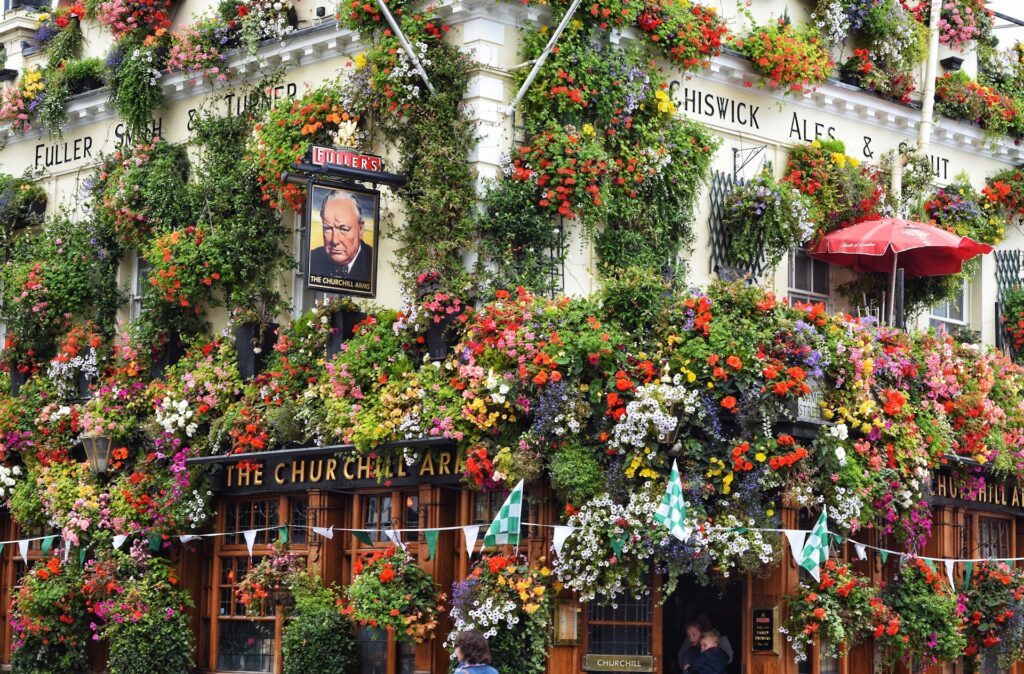
For a more relaxed option, hit up Churchill Arms for a pint – this flower-bedecked Fuller’s pub offers one of London’s most photographed exteriors and a properly traditional interior where locals have been supping pints for generations.

Photo by Nicholas Doherty on Unsplash

The Grand Finale: Haute Cuisine Theatre

For your Notting Hill finale, choose between two very different expressions of culinary excellence. The Ledbury on Ledbury Road represents arguably England’s finest realisation of haute cuisine, with its three Michelin stars and recent recognition as the UK’s best restaurant at the National Restaurant Awards.

Chef Brett Graham’s tasting menu showcases seasonal British ingredients with unmatched technical precision. Expect dishes like line-caught red mullet with Wye Valley asparagus and black Périgord truffle, each course representing perfect clarity of flavour and technique. The iconic brown sugar tart with stem ginger ice cream provides a fitting finale to one of the country’s most celebrated dining experiences.

Alternatively, Caractère on Westbourne Park Road offers Franco-Italian fusion from Emily Roux and Diego Ferrari that’s equally impressive but more relaxed. Their menu structure around five personality traits (‘Curious’, ‘Subtle’, ‘Delicate’, ‘Robust’, and ‘Greedy’) allows you to build your own tasting journey; the showstopping celeriac cacio e pepe – beloved by Emily’s grandfather Albert Roux – demonstrates why this restaurant earned its Michelin star within months of opening.

For those seeking something more robust, Dorian on Talbot Road provides charcoal-grilled excellence with theatrical flair. Their bone-in rib-eye ranks among London’s finest steaks, whilst the scene attracts famous chefs celebrating their own successes.


The Journey Home

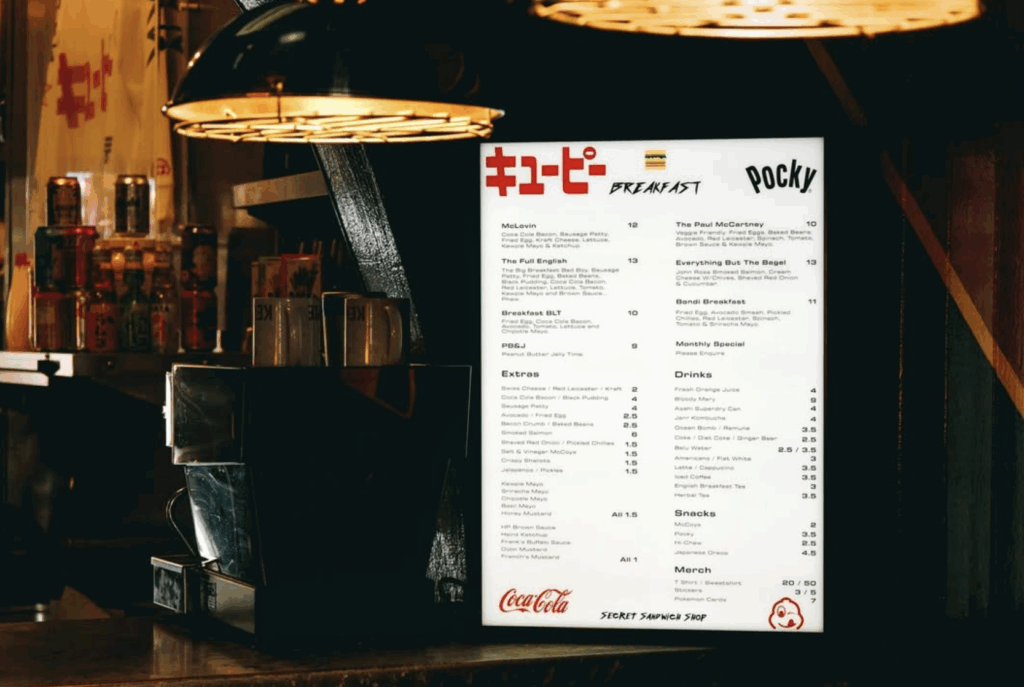
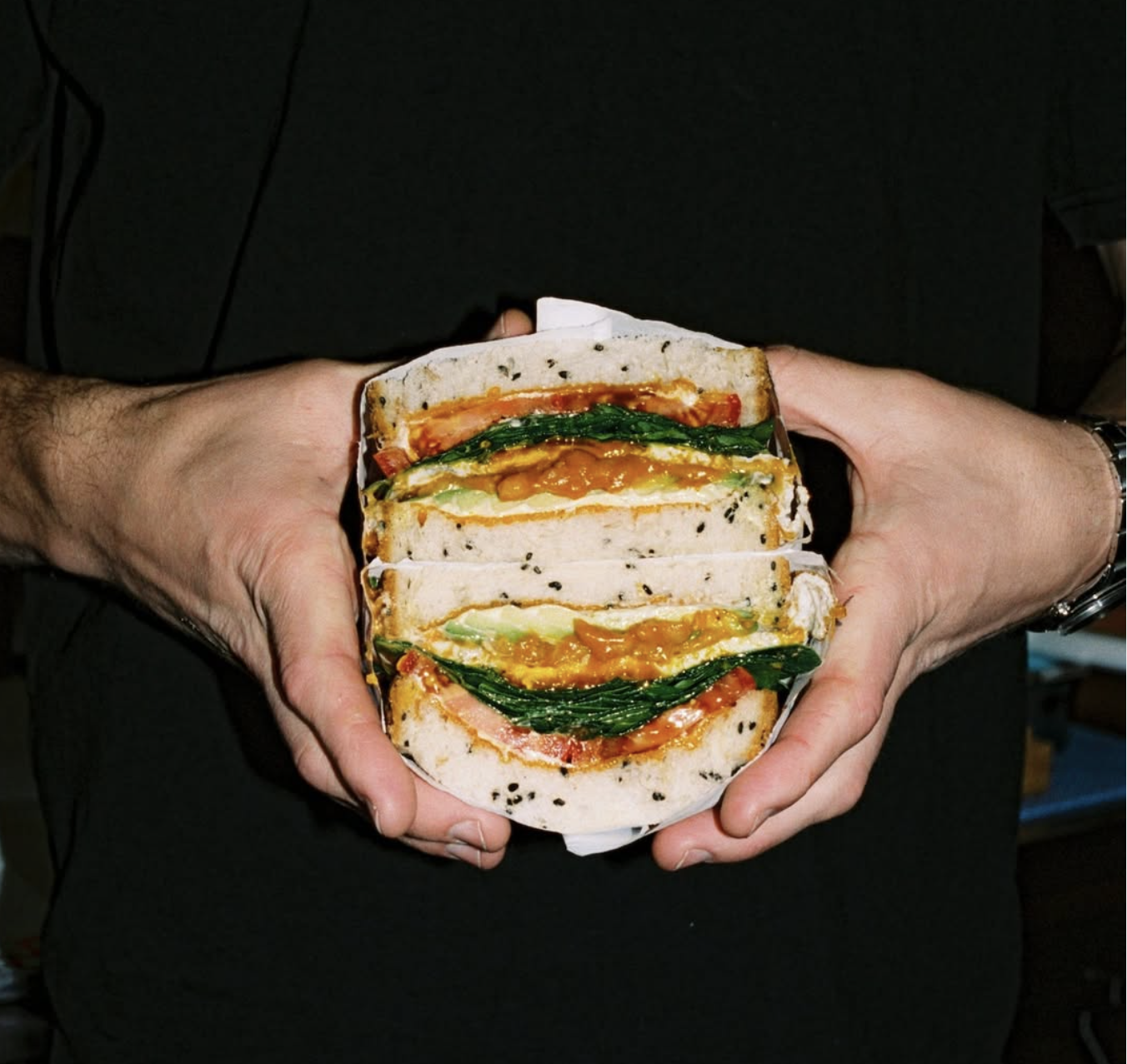
Before bidding farewell to Notting Hill’s culinary wonderland, ensure your departure is as delicious as your arrival. Stop off at The Secret Sandwich shop which is open every day from 8am to 3pm. This TikTok famous yet tiny operation, tucked away from the main tourist drags, creates sandwiches that elevate humble ingredients through sheer technical skill and quality sourcing. Their range of breakfast sandos provides the kind of satisfying sustenance that makes train journeys infinitely more bearable.

Alternatively, Jay Dees delivers authentic Caribbean flavours that connect directly to Notting Hill’s cultural heritage. Their jerk chicken takeaway boxes showcase the neighbourhood’s Jamaican influences with properly spiced, perfectly charred chicken that carries genuine heat alongside complex aromatic depth. The rice and peas provides cooling counterpoint to the fiery protein. Alongside, the festival dumplings add textural interest that makes this a complete meal.

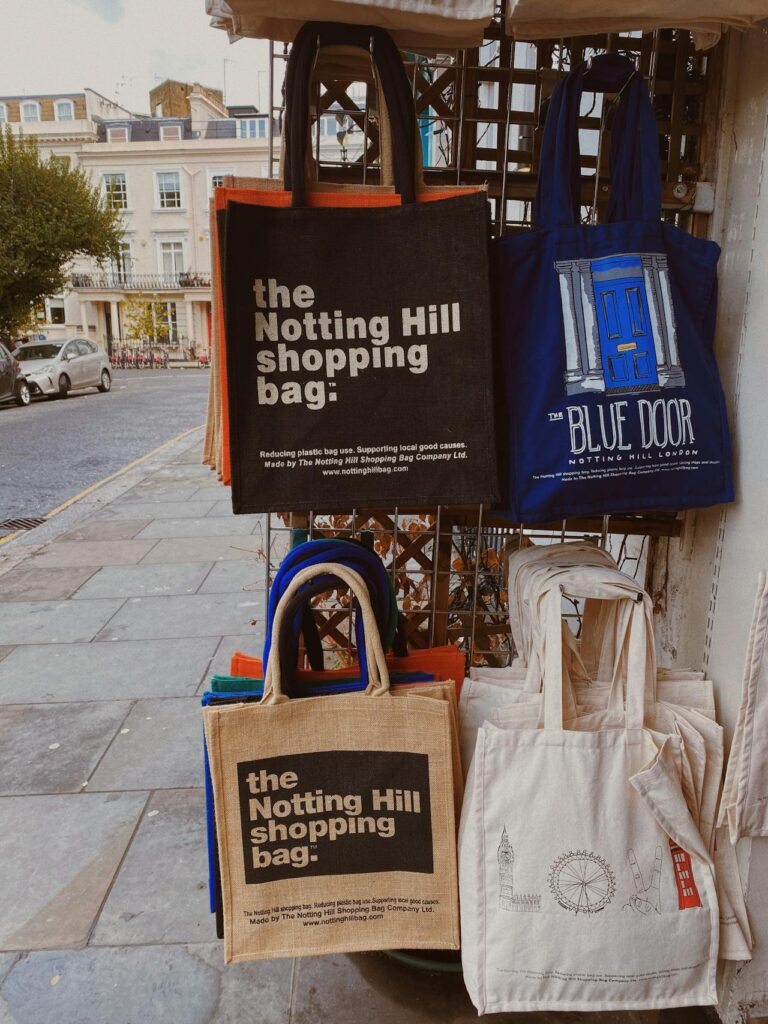
Pack your chosen takeaway carefully, preferably in one of those ubiquitous ‘The Notting Hill shopping’ tote bags that every convenience store seems to flog for a fiver (because nothing says sophisticated foodie weekend quite like carrying your gourmet jerk chicken home in a canvas bag alongside postcards of Hugh Grant’s fictional front door). Grab a final coffee from Notting Hill Coffee Project if you need caffeine for the journey, and head to the tube station knowing you’ve experienced the very best of what this remarkable neighbourhood has to offer. The memories and flavours will linger long after you’ve returned home.


Where To Stay

For maximum convenience, base yourself near the Notting Hill Gate tube station with easy access to Central, Circle, and District lines. The area offers everything from boutique hotels to serviced apartments, putting you within walking distance of the neighbourhood’s best shops and pubs.

Among the many hotels in Notting Hill, you’ll find The Laslett which is perhaps our favourite hotel in the area. Taking its name from Rhaune Laslett, a community activist and notable figure in the founding of Notting Hill Carnival, this hotel embodies everything this guide celebrates about Notting Hill – a charming place with great food.

The hotel itself is a short 2-minute walk from Portobello Road Market for that essential early morning start, perfectly positioned between the antiques section and food vendors.The thoughtfully designed interiors blend mid-century modern furnishings with contemporary art, creating spaces that feel both sophisticated and welcoming. Each room features carefully curated vintage pieces alongside modern amenities, while the hotel’s restaurant Henderson’s, named after Russell ‘Russ’ Henderson (one of the founding fathers of the Carnival) is a great local hangout serving seasonal small plates with locally sourced ingredients.

Elsewhere, The Portobello Hotel offers rock-and-roll heritage with its famously eccentric decor and celebrity guest history. This intimate Victorian townhouse has welcomed everyone from Johnny Depp to Kate Moss over the decades, with each of its individually designed rooms telling a different story through bold colours, vintage furnishings, and theatrical touches.


The Bottom Line

For foodies seeking a sophisticated urban escape, Notting Hill presents the perfect weekend destination – walkable enough to explore thoroughly in 48 hours, yet diverse enough to satisfy every palate and price point. With excellent transport links via the Central, Circle, and Hammersmith & City lines, you can decide on Friday evening and be browsing Portobello’s food stalls by Saturday morning.

Unlike tourist traps that reveal all their secrets in a weekend, Notting Hill’s food scene keeps evolving, keeps surprising, keeps rewarding those curious enough to venture beyond the obvious.

There are, of course, plenty more restaurants in the area to visit, check out our roundups on the best restaurants in Notting Hill and best restaurants on Westbourne Grove

The Best Restaurants In Maida Vale

Maida Vale feels like Central(ish) London’s best-kept secret, a pocket of W9 that somehow escaped the relentless march of chains and concept restaurants that have colonised so much of the capital. With Little Venice’s waterways providing a scenic, breezy backdrop, and Victorian mansion blocks lending the area an almost village-like tranquillity, it’s the sort of place where locals guard their restaurant recommendations fiercely.

But here’s the thing about Maida Vale: beneath that residential calm lies a quietly impressive dining scene. You’ll find everything from Grade II-listed pubs serving Sunday roasts that make Hawksmoor look pedestrian, to Korean BBQ joints where you can grill wagyu while watching narrowboats chug past. It’s a satisfying juxtaposition indeed.

The beauty of eating in Maida Vale is that you’re rarely more than a five-minute walk from the canal, which means you can easily hop between venues or work up an appetite with a waterside stroll. Plus, with Maida Vale and Warwick Avenue stations both on the Bakerloo line, getting here from central London proper is embarrassingly simple.

Anyway, we’ve sold it quite enough. Here are the best restaurants in Maida Vale.

The Prince Alfred

Ideal for experiencing Victorian drinking culture whilst eating exceptionally good modern British food…

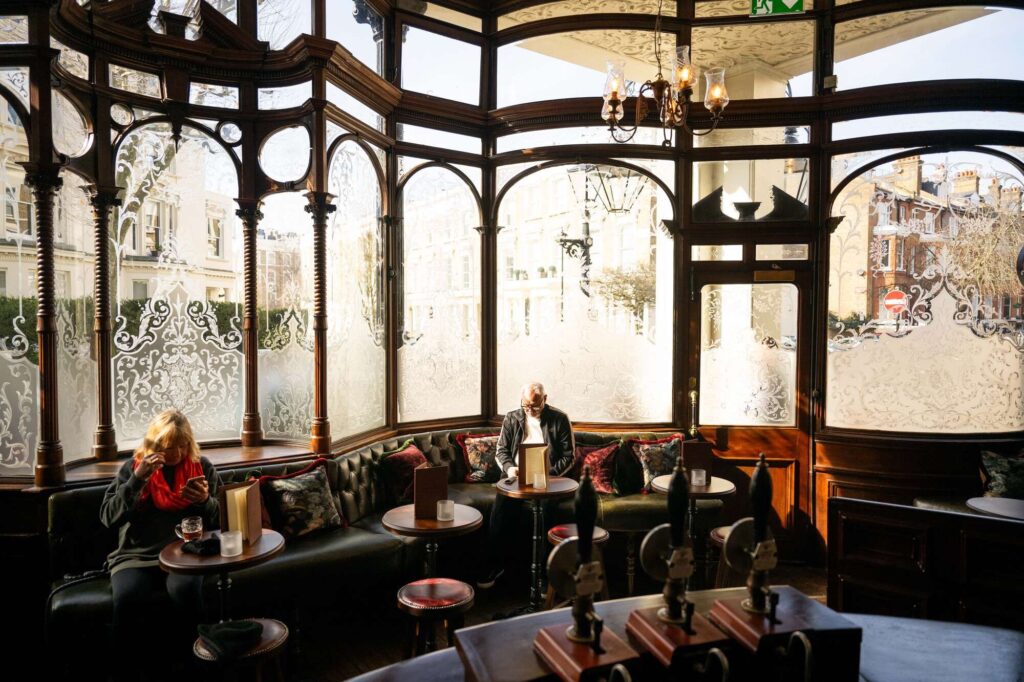
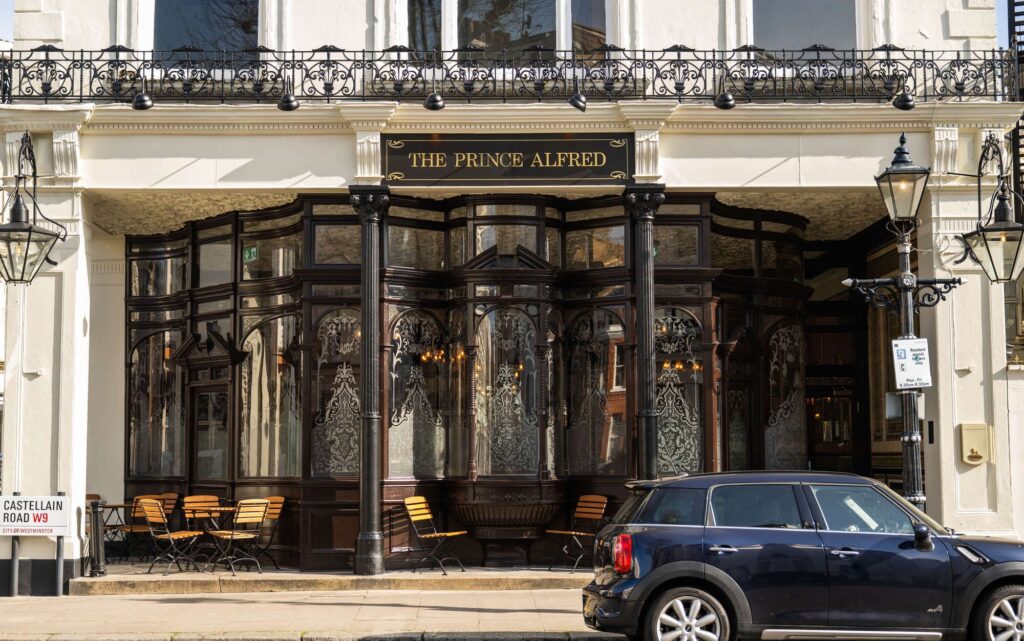
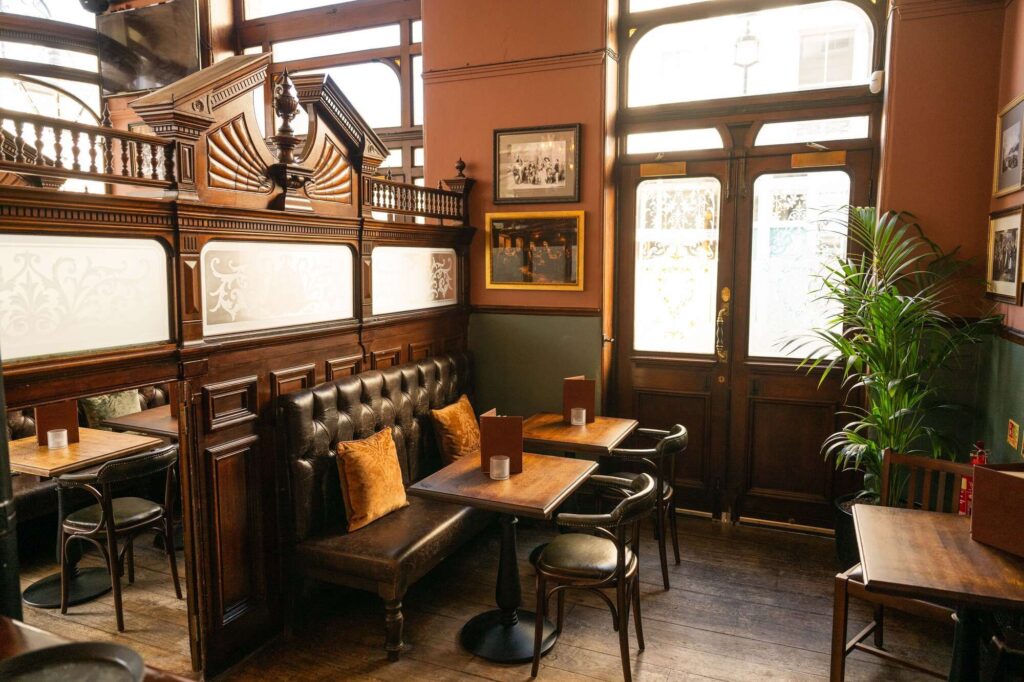
The Prince Alfred is London’s only surviving pub with its original 1890s snob screens intact – those etched glass partitions that allowed Victorian gentlemen to drink without being seen by the riff-raff. David Bowie shot part of his ‘Jazzin’ for Blue Jean’ video here, which tells you something about the sort of place this is.

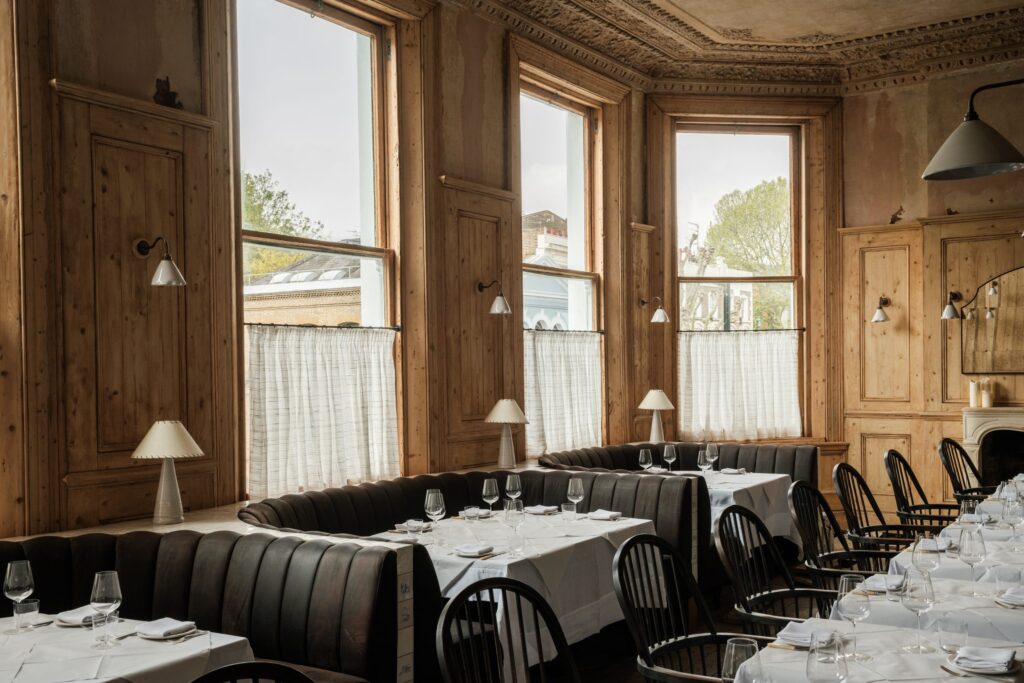
Head Chef Reggie’s modern British cooking sets pulses racing (they’re easily titillated round these parts). The menu changes with the seasons, but you might find roast Cornish cod with samphire and brown butter, or hogget shoulder shepherd’s pie. Everything feels both familiar and surprising, like Sunday lunch at your poshest mate’s house.

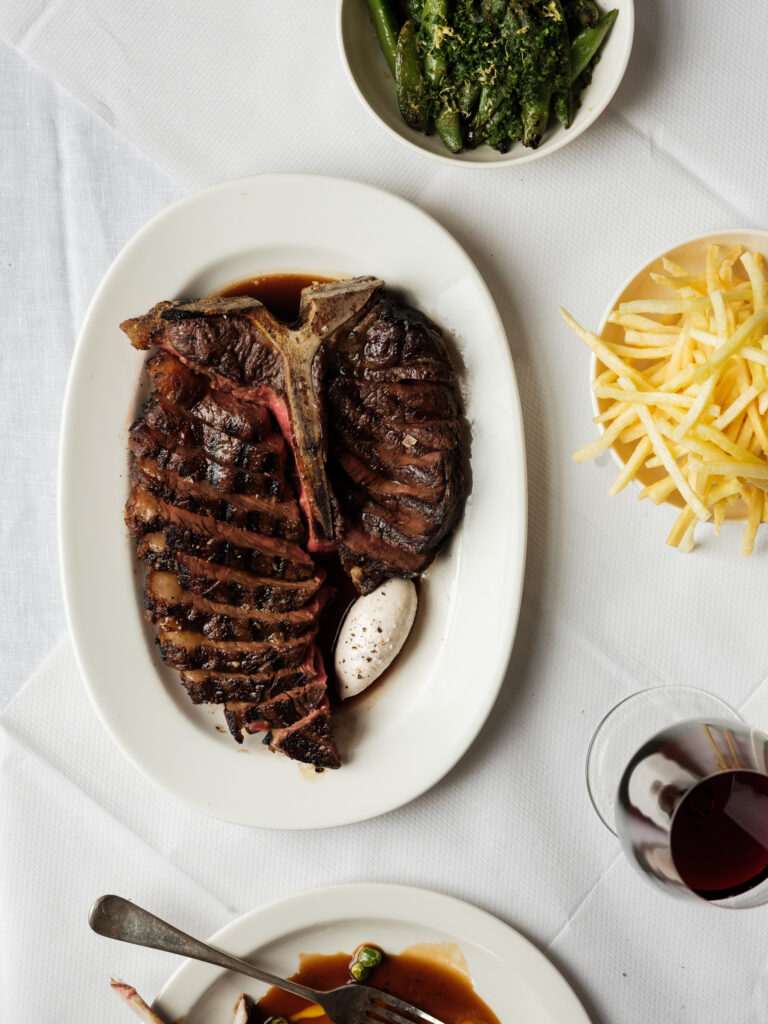
The Sunday roasts here are legendary, with Yorkshire puddings that could serve as small boats on those nearby canals, and beef that’s been aged for longer than some London restaurants have been open. At around £25, they’re not cheap, but when you factor in the setting and the quality, it’s money well spent.

The compartments themselves are a marvel – mosaic floors, carved timber, and those famous snob screens creating intimate little drinking dens that feel like something from a period drama. 

The wine list offers a solid international selection with good representation across price points, from accessible bottles around £30 to premium selections in the cellar reserves, with a few English sparkling wines from Nyetimber adding local interest. 

Book ahead for one of their monthly tasting menus, where Reggie really gets to show off. 

Website: theprincealfred.com

Address: 5A Formosa Street, London W9 1EE


The Hero

Ideal for when you want to experience the future of the gastropub…

You know how it is – you wait years for the perfect gastropub, then suddenly Maida Vale has two of them. The Hero opened in 2024 and immediately made most other gastropubs in London look a bit tired. This four-storey Victorian pub makeover by the team behind Notting Hill’s The Pelican is what happens when you combine serious money, serious design talent, and a serious understanding of what modern diners actually want.

The ground floor operates as a traditional pub, but one where the snacks include lamb ribs with harissa yoghurt and the cheese and onion pie contains Cornish Yarg and comes with piccalilli that tastes like it was made by someone’s incredibly talented grandmother, rather than a supermarket who loves the taste of E223 sulphites. It’s comfort food, sure, but it tastes comfortingly fresh, too.

Head upstairs to the Grill Room and things get more serious – Barnsley chops with tenderstem broccoli, whole roast chicken for two with bread sauce that’ll have you cursing your ma’s one at Christmas. The cooking here is confident and unfussy, the sort of food that makes you understand why British cuisine is finally having its moment.

The design – all emerald-green Victorian tiling, exposed timber frames, and leather banquettes – creates a vibe that you’ll want to sink into and never leave. The second-floor cocktail Library feels like the sort of place where literary types would hold court, whilst the top-floor events space offers panoramic views across W9. Oh, and they pour a mean Guinness, too. Some pub, this.

Website: theherow9.com

Address: 55 Shirland Road, London W9 2JD


The Waterway

Ideal for romantic dinners and the sort of terrace dining that makes you forget you’re in London…

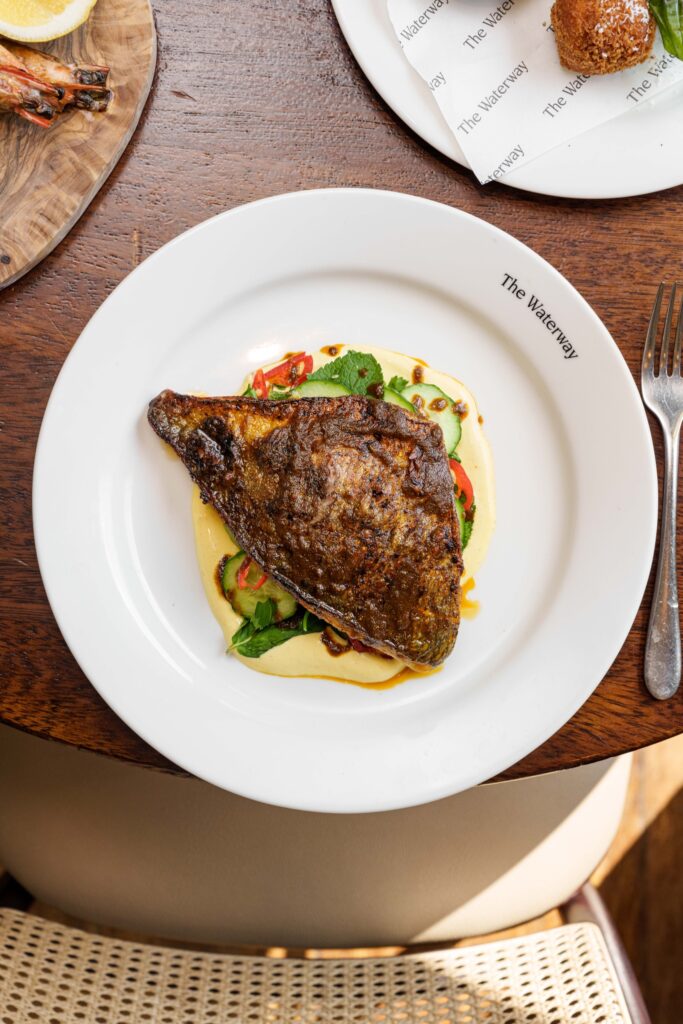
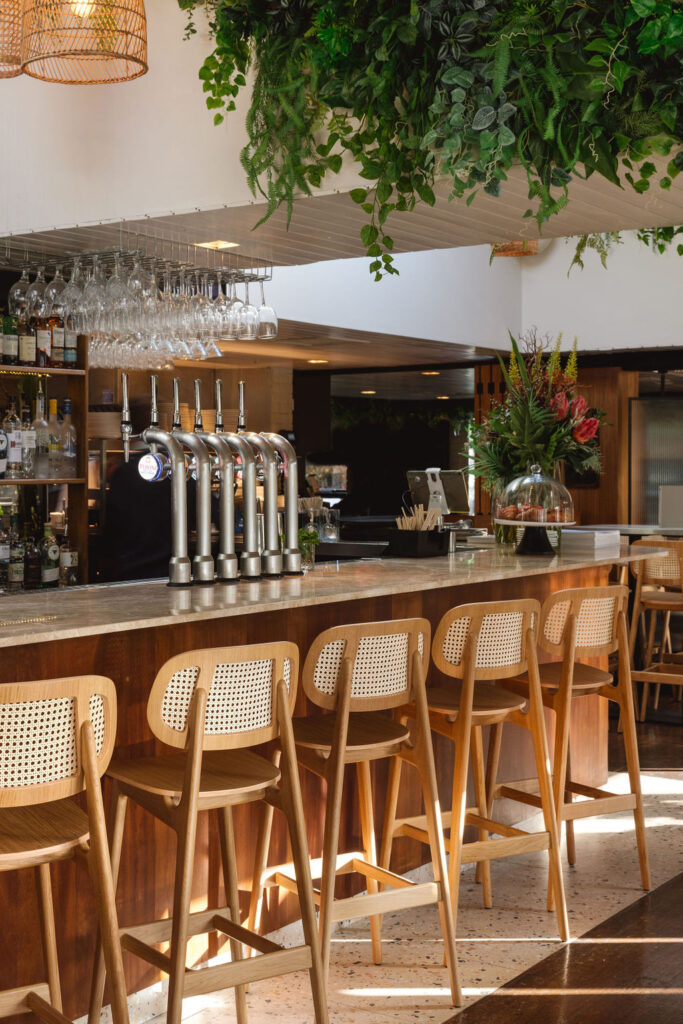
The Waterway has been capitalising on its Grand Union Canal location since 2002, and frankly, with a terrace that’s been voted London’s best, who can blame them? This is the sort of place where you book a table for two at sunset and end up staying until the fairy lights come on. And then, only leave when you’re ushered out by staff who want to go home…

The food is Italian leaning, with enough ambition to justify the setting – think grilled tuna steak with puttanesca sauce or a Neapolitan octopus tentacle served with fennel and potato salad.

Inside, it’s all plush white sofas and open fires, like a ski chalet that’s somehow ended up next to a canal in W9. But honestly, why would you sit inside when you can watch narrowboats chug past whilst grazing on imported charcuterie? The terrace is heated year-round, because the management understands that in Britain, al fresco dining is a state of mind, not a weather condition.

Book well ahead for weekend evenings, when half of Little Venice descends for what feels like the neighbourhood’s unofficial social club.

Website: thewaterway.co.uk

Address: 54 Formosa Street, London W9 2JU


GOGI

Ideal for interactive Korean BBQ with a side of canal views…

GOGI brings Korean BBQ to the banks of Little Venice, and honestly, it’s one of those combinations that shouldn’t work but absolutely does. Each table comes with its own built-in grill, which means you get to play chef whilst your dining companions judge your meat-flipping technique.

The marinated bulgogi beef is exceptional – sweet, salty, and with just enough char from the grill to make you feel like a Korean BBQ master. The dolsot bibimbap arrives in a stone pot so hot it continues cooking at the table, creating those crispy rice bits that Korean mothers have been perfecting for generations. The highlight, though, is the yuk hwe (Korean steak tartare); it’s silky, rich, and showstopping.

The setting is modern industrial – exposed brick, steel finishes, floor-to-ceiling windows overlooking the canal. It’s the sort of place where you can grill premium wagyu while Little Venice’s canal life unfolds just beyond, which feels very 2025 somehow.

The drinks list goes deep on Korean beverages – from neat soju and creative soju cocktails to traditional rice drinks and Korean sodas, plus a comprehensive wine selection. But really, you should stick to the soju.

Website: gogi-restaurant.com

Address: 451 Edgware Road, London W2 1TH


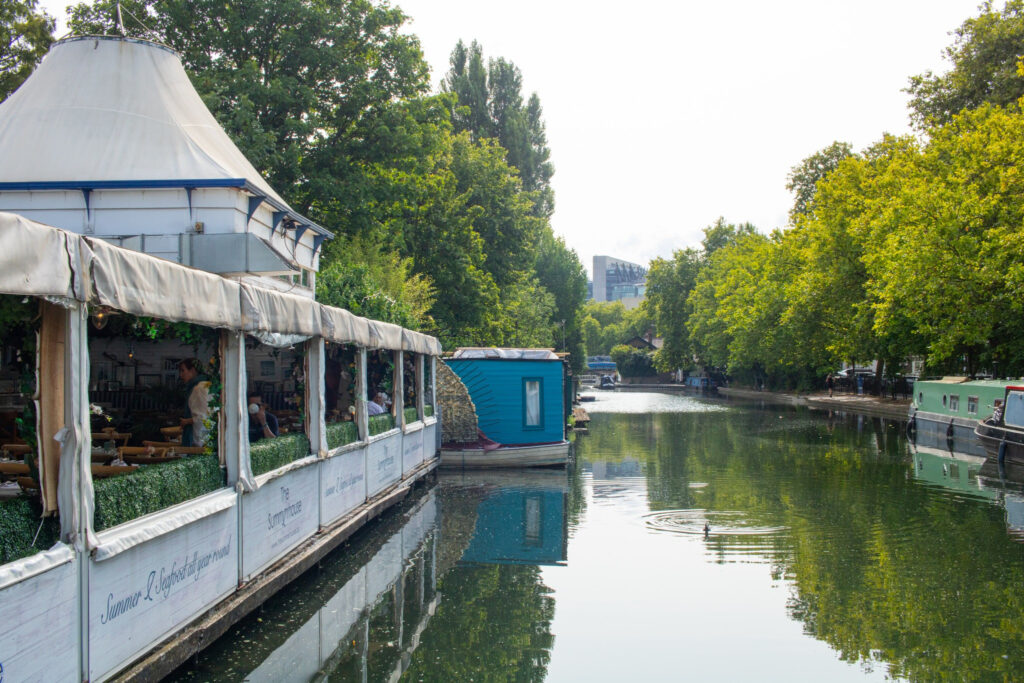
The Summerhouse

Ideal for seafood lovers who appreciate Cape Cod charm in Little Venice…

The Summerhouse is The Waterway’s seafood-focused sister restaurant, and if you’ve ever wondered what would happen if someone transplanted a Cape Cod fish shack to a Maida Vale canal bank, this is your answer. The nautical theme could easily tip into theme park territory, but somehow it feels just right – all weathered wood, rope details, and windows that maximise those canal views.

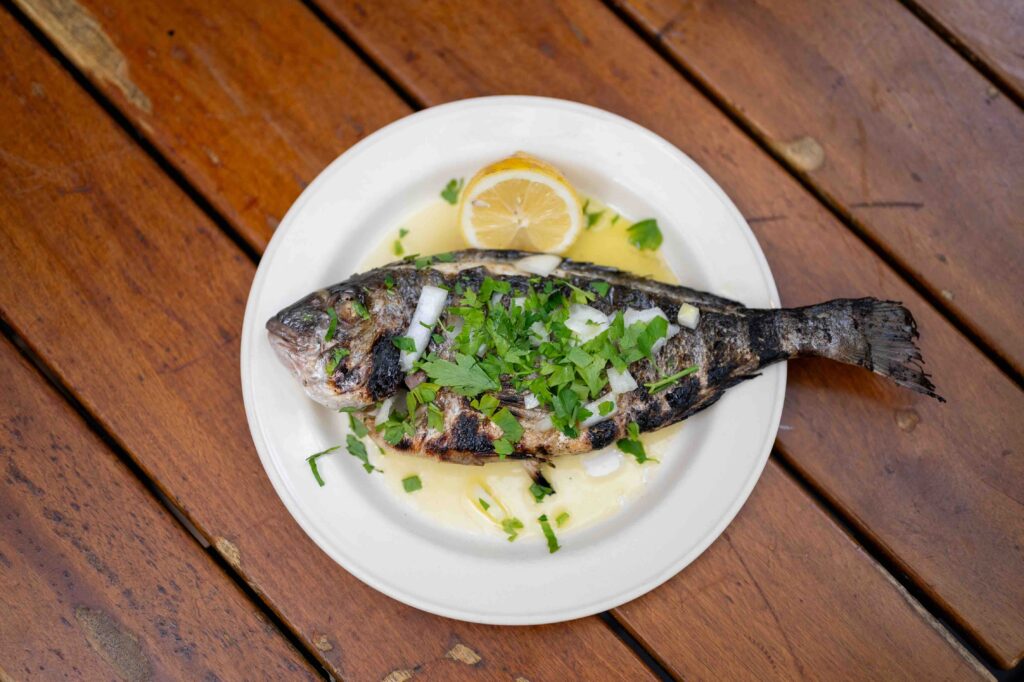
The focus is firmly on fish and shellfish, with a menu that celebrates everything good about Britain’s coastal waters. The whole baked sea bass is a showstopper, arriving at the table with lemon and herbs, whilst the fruits de mer platters showcase oysters, king prawns, and whatever else looked exceptional that day.

The weekend brunch menu is particularly good – think smoked salmon eggs Royale with hollandaise that’s been made from scratch rather than whisked up from a powder, with a generosity that belies/justifies the £13 price tag.

Service is friendly and knowledgeable, with staff who can tell you not just where the fish came from, but probably what it had for breakfast. The wine list focuses on crisp whites and rosés that complement the seafood focus, with enough by-the-glass options to keep things interesting. The somewhat ubiquitous La Loupe Grenache Blanc Pays d’Oc is £8.50 for a generous 175ml, as a reference point.

Website: thesummerhouse.co

Address: 60 Blomfield Road, London W9 2PA


Read: How to grill a whole fish on the BBQ


Tsiakkos & Charcoal

Ideal for Greek-Cypriot cooking that goes big on flavour…

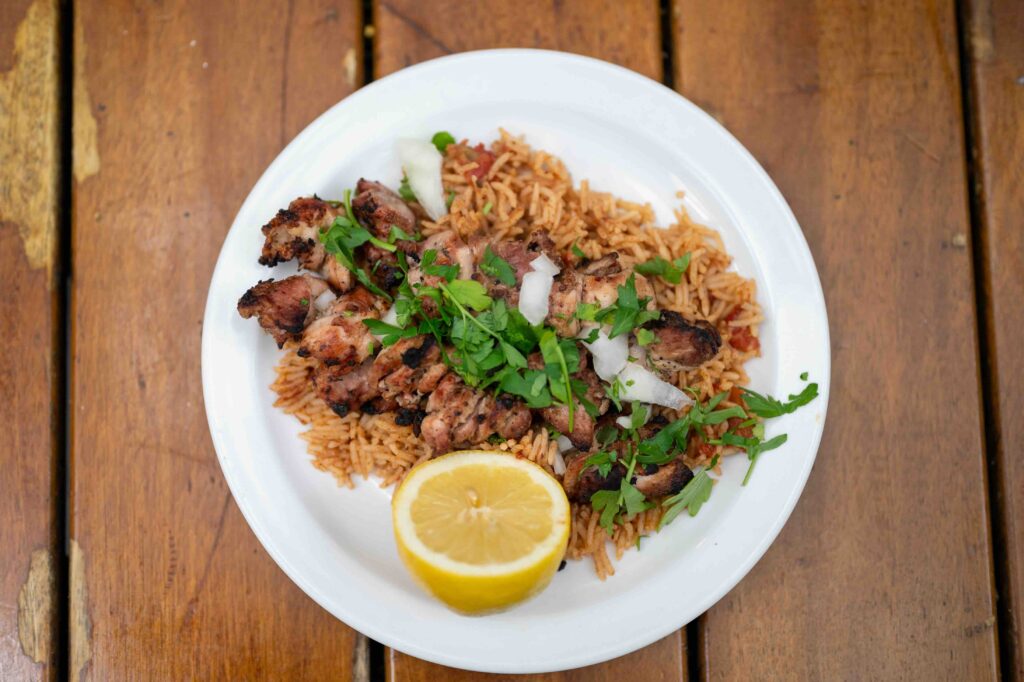
Behind the distinctive turquoise shopfront on Maryland Road, Tsiakkos & Charcoal has been serving some of London’s best Greek-Cypriot food for years. This is the sort of neighbourhood gem that locals guard jealously, the kind of place where you’re as likely to hear Greek as English.

The secret weapon is the traditional charcoal grill, which imparts a smokiness to the lamb and fish that simply can’t be replicated with gas. The fresh sea bream arrives whole, charred on the outside and flaking within, served with nothing more than lemon and olive oil because when your fish is this good, why complicate things?

Tsiakkos & Charcoal
Tsiakkos & Charcoal

The moussaka here is a piece of work – layers of aubergine and meat sauce topped with béchamel that’s had a little egg yolk added until it souffles and gratinates golden. It’s comfort food that happens to be Greek, rather than Greek food that’s trying to be comfortable. If, erm, that makes sense…

Website: tsiakkosandcharcoal.com

Address: 5 Marylands Rd, London W9 2DU


Le Cochonnet

Ideal for the sort of neighbourhood Italian that is properly transportive…

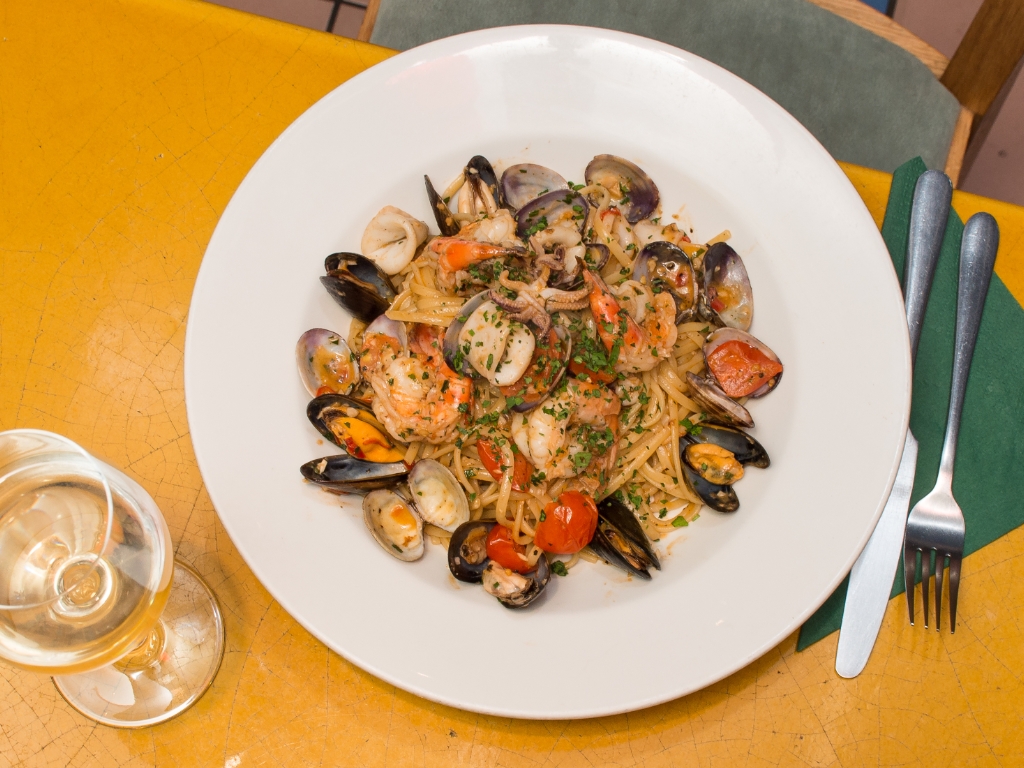
Le Cochonnet occupies that sweet spot between casual neighbourhood joint and somewhere you’d happily take visiting relatives. The conservatory setting makes it feel like you’re eating in someone’s very well-appointed garden room, whilst the open kitchen allows you to watch pizzas emerge from ovens tended by people who have the requisite wrist action when working the paddle.

Those pizzas have a fine, blistered, thin-ish crust, and are topped with ingredients that taste like they’ve been sourced by someone who cares about provenance. The weekend £14 pizza-and-beer deal is a neat little package that takes all the decision-fatigue out of perusing a menu.

The atmosphere is relaxed and family-friendly, the sort of place where children are welcomed rather than merely tolerated, and where dogs can accompany their humans without causing diplomatic incidents. The wine list focuses on Italian bottles that complement the food without breaking the bank.

Website: lecochonnet.uk

Address: 1 Lauderdale Parade, London W9 1LU

The Best Restaurants In Vauxhall

Once known primarily as a place to change trains, Vauxhall has become one of London’s most compelling dining destinations. The £1 billion Northern Line Extension and the opening of Battersea Power Station have brought new energy to the area, while developers have turned Victorian railway arches into atmospheric food halls that buzz with activity day and night.

What makes Vauxhall particularly fascinating is how seamlessly it blends culinary ambition with genuine community spirit. You’ll find two-Michelin-starred chefs doing fine Portuguese dining on high just a stone’s throw away from high streets where cooperative cafés serve exceptional Syrian home cooking for under £15. Grand Georgian mansions now house theatrical dining rooms, while those converted railway spaces have become home to some of London’s most exciting street food vendors. This eclectic mix of high-end and humble, historic and cutting-edge, gives Vauxhall its distinctive character.

The practical advantages are considerable too. Transport links remain excellent, with Underground, Overground, bus, and river services all converging here, making it easily accessible from just about anywhere in London. 

From established neighbourhood favourites to ambitious newcomers earning recognition across London’s restaurant scene, here are the best restaurants in Vauxhall.

Brunswick House

Ideal for theatrical dining in a one-of-a-kind Georgian setting…

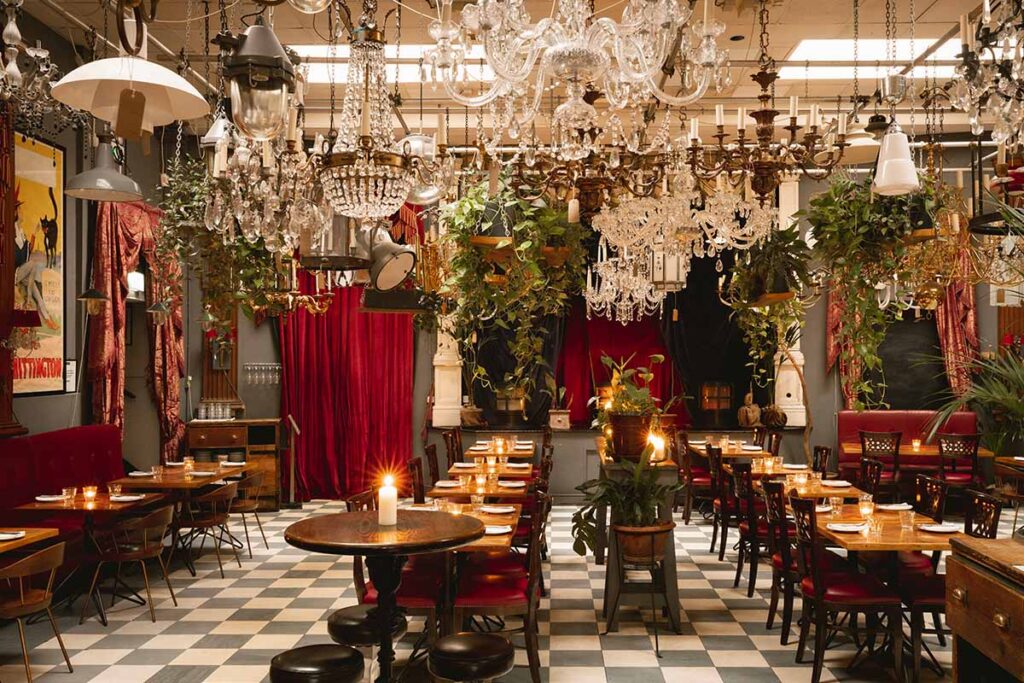
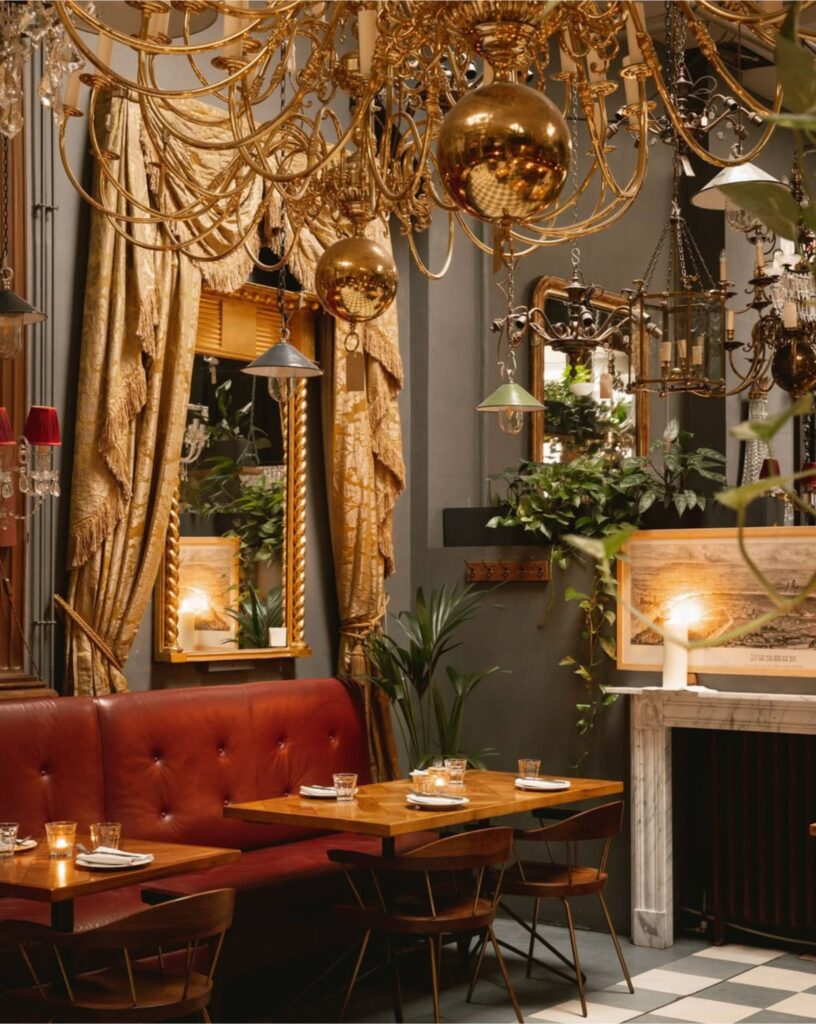
Brunswick House occupies London’s most unusual restaurant space. This Grade II listed Georgian mansion from 1758 operates as both restaurant and architectural salvage showroom, meaning everything you see is for sale; your dining chair, the chandelier above, even the table itself.

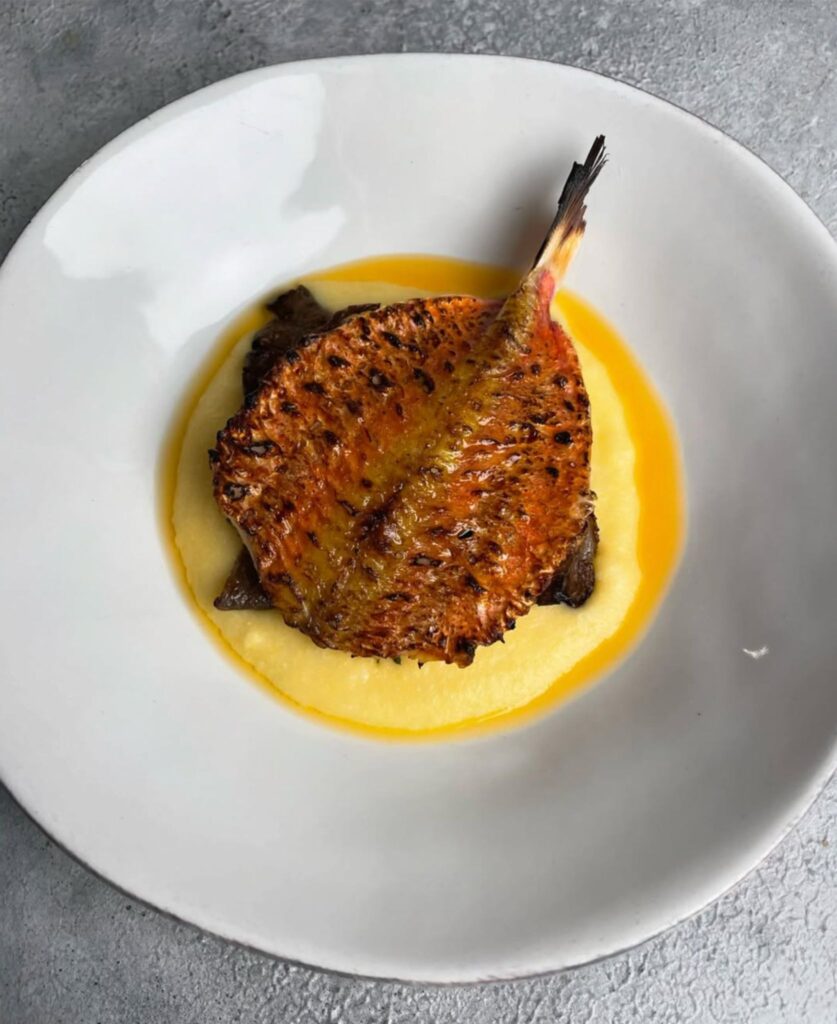
Chef Jackson Boxer serves modern British cooking that feels playful and serious, all at once. The famous potato bread arrives at every table with wild garlic butter, while dishes like raw Dexter beef with smoked bone marrow showcase his skill. The seasonal menu might feature roasted squab with blackcurrants or turbot with cucumber and dill, or Cornish red mullet with oyster mushrooms on a bed of buttered polenta – now that’s cooking that’s confident without being flashy.

Multiple dining rooms spread across several floors, each packed with antiques and curiosities. Tuesday evenings see the cellar become a jazz venue, while the courtyard garden provides space for calmer lunches. The building hums with slightly eccentric energy that makes every meal feel like an event.

The set lunch menu costs £15 for two courses and £19 (yes, our mouths are agape too), while dinner mains sit around £25. The flavours are mind-blowing, the value laughable – basically, Brunswick House has quite a lot going for it beyond the much trialled glory of the dining room.

Website: brunswickhouse.london

Address: 30 Wandsworth Road, Vauxhall, London SW8 2LG


Archway

Ideal for intimate Italian dining in a dramatic railway arch setting…

Archway occupies a Victorian railway arch in Nine Elms and has become one of South London’s most coveted tables. This 45-cover restaurant earned a Michelin Guide listing within months of opening, thanks to Head Chef Franco’s modern Italian cooking and the River Café pedigree of founder Alex Owens.

The bone marrow butter flatbread is a fine way to begin; wood-fired bread topped with whipped bone marrow butter that captures the restaurant’s philosophy of simple ingredients treated with respect and a judicious touch with the seasoning. The pasta is unsurprisingly outstanding: cavatelli with beef ragu and pappardelle with porcini in brown butter and sage both showcase technique learned at some of London’s best kitchens. Mains like charred octopus with paprika romesco demonstrate how to make quality ingredients sing without unnecessary fuss.

Off-white panelling curves up to meet the railway arch ceiling, whilst cloudy marble tables and candlelit lanterns create a sophisticated atmosphere. The occasional rumble of trains overhead adds character rather than distraction. Jazz plays softly in the background, and the open kitchen with its wood-burning oven provides gentle theatre and a fine aroma. On a sprawling wine list that’s primarily Italian, there are several available by the glass, including a particularly noteworthy 2023 I Muri Primitivo from Vigneti del Salento in Puglia that’s worth your attention. It’s worth your £8 for a second glass, too.

Getting a table requires persistence. Reservations are snapped up almost immediately when released online, and the dining room is small enough to feel exclusive. It’s worth the effort.

Website: archwaybattersea.co.uk

Address: Arch 65 Queen’s Circus, Nine Elms, London SW8 4NE


Market Place Food Hall Vauxhall

Ideal for globe-trotting street food right under the railway station…

Market Place operates in what was once a Victorian tunnel beneath Vauxhall Station. Eleven vendors serve everything from Caribbean jerk chicken to Thai fried chicken, creating something that feels part Asian hawker centre, part neon-lit food court.

Made In Puglia’s blistered, puffy pizzas are a highlight, and at £8.50 for a margherita, exceptional value too. Don’t stop there; there’s joy to be found at the Heard, and between the buns of their gorgeously messy burgers. Over at Greeko, the crowds gather for gyros. Sometimes, the paradox of choice can grip you pretty hard at Market Place…

The industrial setting – exposed brick, concrete, the occasional rumble of trains overhead – adds to the charm rather than detracting from it. It gets busy at lunch, so either arrive early or embrace the controlled chaos. The beer selection is limited but cold, and there’s enough seating to accommodate the crowds, just about.

Since opening in 2022, it’s spawned several offshoots, but this original under-the-arches location still feels the most special.

Website: marketplacefoodhall.com

Address: 7 S Lambeth Pl, London SW8 1SP


The Black Dog

Ideal for gastropub excellence with a Spanish twist…

Long before Taylor Swift name-dropped it on her 2024 album The Tortured Poets Department, The Black Dog was already a Vauxhall favourite. This award-winning gastropub in the old Vauxhall Pleasure Gardens serves a daily-changing menu of modern British cooking presented as tapas-style small plates, with occasional international flourishes.

The kitchen doesn’t mess about. Expect dishes like tempura salt-and-pepper calamari, beer-battered haddock with proper mushy peas, and their popular roast garlic buttermilk chicken schnitzel with citrus slaw and parmesan fries. While they borrow a tapas format, the menu is thoroughly British gastropub at heart, with touches from Korea (gochujang chicken), Spain (Padron peppers, chorizo), and the Middle East (harissa cauliflower). The Black Dog cheeseburger and slow-cooked Texas chilli beef brisket show this is comfort food done well rather than authentic Spanish dining.

The Victorian-era interior strikes the right balance between gastro and traditional, with beautiful stained glass and glazed tiles that catch the light. It works equally well for a quick pint after work or a full dinner with friends. The wine list skews natural and interesting, whilst the beer selection includes rotating cask-marque accredited ales that satisfy the pub purists.

Service is friendly but efficient and they clearly know their regulars, but don’t make newcomers or visiting Swifties feel like outsiders.

Website: theblackdogvauxhall.com

Address: 112 Vauxhall Walk, London SE11 5ER


Bonnington Café

Ideal for community dining and international home cooking…

Bonnington Café is Vauxhall’s best-kept secret and one of London’s most unusual dining experiences. This cooperatively-run vegetarian restaurant has been serving the local community since the 1980s, with different volunteer cooks taking over the kitchen each night of the week.

Tuesday might mean Syrian food, Wednesday brings Moroccan tagines, Thursday could feature Pakistani curries, and so on. The quality varies. These are sometimes passionate home cooks, sometimes professional chefs, but when it hits, it really hits. The Syrian nights in particular are outstanding, with flatbreads and deeply flavoured stews that could give any high-end Middle Eastern restaurant a serious challenge.

The food isn’t just the draw (though a three-course meal for under £20 is remarkable anywhere in London), it’s the atmosphere. This feels like eating in someone’s front room, with mismatched furniture, friendly chat between tables, and a genuine sense of community you won’t find in commercial restaurants.

Finding it requires a bit of detective work (or, you know, a detailed zoom in on Google Maps). It’s near Bonnington Square, a short walk from Vauxhall Station, but locals will point you in the right direction. It reopened in February 2024 after renovations, and the neighbourhood clearly missed it whilst it was gone.

Website: bonnington.cafe

Address: 11 Vauxhall Grove, London SW8 1TD


Chokhi Dhani London

Ideal for contemporary Rajasthani cuisine with Thames views…

This two-storey Rajasthani restaurant on the south side of the Thames makes quite an entrance, as you’re greeted by a 14-foot bronze elephant sculpture and handcrafted artwork that immediately signals serious intent. Chef Vishnu Natarajan, formerly of the acclaimed Carom, brings contemporary techniques to traditional Rajasthani dishes.

The menu celebrates Rajasthan’s royal cooking traditions. The laal maas (red meat curry) arrives fiery, whilst the dal baati churma (a sharing platter of lentils, bread balls, and sweet crumble) showcases the complexity of the cuisine. The ground floor serves more casual street food, but upstairs is where the kitchen really shows off.

Thames views from the upper floor add to the sense of occasion, though you’ll be so absorbed by the food you might forget to look out the window. The thali selection is perhaps the best way to explore the menu; two different options priced at either £33 or £36 provide a comprehensive tour of the regional cuisine.

Staff are clearly knowledgeable about the food and happy to guide newcomers through the menu and the wine list, which offers an unusual treat – Indian wines from Maharashtra’s Akuj winery alongside the French and Italian selections, a thoughtful nod to the restaurant’s heritage that’s rarely seen on London wine lists. 

The whole thing is a step up in price from your average curry house (no shade to those, of course), but the quality and setting justify the investment.

Website: chokhidhani.com

Address: 2 Riverlight Quay, Nine Elms Lane, Battersea, London SW11 8AW


The Jolly Gardeners

Ideal for thoughtful gastropub dining with restaurant-quality execution…

Five friends took over this 1851 Victorian corner pub in 2021 and turned it into exactly the sort of gastropub every neighbourhood needs. With over 65 years’ collective experience from top London restaurants including Oblix, The Delaunay, and Silo, they’ve preserved the best bits – including Charlie Chaplin Sr.’s piano, a genuine piece of local history from when he entertained the Doulton pottery workers who drank here – whilst introducing a menu that showcases quality British produce.

The kitchen takes sourcing seriously: beef and lamb come from the regenerative farm Lyon’s Hill in Dorset, fish arrives fresh from James Knight of Mayfair, and vegetables are sourced from New Covent Garden Market less than a mile away. Dishes like braised beef cheek with beetroot and Madeira jus, or pan-fried sole with caper and lemon butter demonstrate restaurant-level technique, while the rare breed double cheeseburger and chicken schnitzel keep things approachable. The menu changes seasonally but maintains its focus on quality ingredients treated with respect.

The wine program is decent, too. They work with East London importer Uncharted Wines, specialising in draught wines from micro producers across Europe for freshness and low intervention. Staff are happy to offer tastings of their interesting selection.

The place feels immediately comfortable, neither trying too hard to be cool nor stuck in the past. The dining room fills with a good mix of locals and food-focused visitors, creating exactly the sort of buzz that makes a great neighbourhood restaurant. You know what? We think we might stay here a while…

Website: thejollygardeners.co.uk

Address: 49-51 Black Prince Road, London SE11 6AB


Read: The best restaurants in Hackney Wick


Cottons Vauxhall

Ideal for Caribbean flavours and London’s largest rum collection…

Billing itself as London’s largest rum shack, Cottons brings Caribbean cooking to St. George Wharf’s riverside location. The jerk meats are grilled over coals with oak chips, creating the sort of smokiness that’s hard to achieve in smaller kitchens, whilst the rum collection runs to several hundred bottles from across the Caribbean.

The menu spans the islands – Trinidadian doubles, Jamaican curry goat, Bajan fish cakes – with everything cooked by chefs who clearly understand the cuisines. Portion sizes are generous (this isn’t delicate fine dining), and the spice levels are taken seriously. The Saturday ‘Rum Party Brunch’ has become something of a local institution – 90 minutes of unlimited rum punch and an hour of all-you-can-eat Caribbean buffet. What’s not to love?

Cottons Vauxhall

Monday and Tuesday evenings feature ‘2000s pricing’ from 5pm, which, in practice, means your jerk chicken is £9.50, your barbecued pork ribs just a fiver. Even at full price, it’s fair for the quality and portions. The riverside location adds to the appeal of course, especially in summer when the terrace comes into its own. It’s just the right place for a rum punch, rather conveniently. 

Address: St. George Wharf, London SW8

Website: cottons-restaurant.co.uk


Paradise Cove

Ideal for Caribbean soul food with faithfully-rendered island flavours…

Chef Tarell McIntosh has created something seriously special at Paradise Cove, a 30-seat Caribbean restaurant that feels more like dining in someone’s front room than a commercial venture. The hand-built interior, of which McIntosh constructed much himself, features galvanised steel, hanging vines, and reggae music that immediately transports you from Wandsworth Road to the islands.

The food celebrates pan-Caribbean traditions from Jamaica, St. Lucia, and Trinidad. The jerk chicken arrives perfectly marinated and faithfully charred, whilst the overnight-braised oxtail stew with butter beans showcases McIntosh’s attention to detail – the meat is tender, sure, but with enough give to actually taste of something  The menu is 80% vegan-friendly, with an extensive Ital section that proves plant-based Caribbean food can be just as satisfying as the meat dishes.

The drinks are a highlight. Primarily, bring your own rum and McIntosh will transform it into exceptional rum punch slushies. It’s a quirky touch that perfectly captures the restaurant’s community spirit. 

Speaking of which, McIntosh employs care leavers and uses the restaurant as a platform for community work, making every meal feel like supporting something worthwhile. You’ll find us here weekly. Who’s bringing the rum next week?

Website: paradisecovebattersea.com

Address: 515 Wandsworth Road, London SW8 4NY

How about a trip just down the Victoria Line for dinner in Stockwell next? Go on, you know you want to…

Exploring Ibiza’s Hidden Gems: 10 Places To Find Some Solitude On The White Isle

Ibiza, the pulsating heart of Europe’s party scene, is renowned for its sun-kissed beaches, sweaty, four-to-the-floor nightclubs, and the magnetic allure of its hedonistic lifestyle. 

Yet, beyond the thumping basslines, gurning jawlines and the shimmering lights, the White Isle harbours some seriously tranquil retreats, each offering a serene escape from the island’s effervescent energy. From those yearning for solitude and a taste of the island’s lesser-known charm all the way to those nursing the mother of all comedowns, there are plenty of places offering serenity and solitude on the White Isle. With that in mind, here are 10 of Ibiza’s hidden gems.

Cala Llentrisca

© Javier Duran via Canva

Nestled on the southern coast, Cala Llentrisca is a secluded cove that remains one of Ibiza’s best-kept secrets. Accessible via a rugged trail, this beach rewards the intrepid with crystal-clear waters and a pebbled shore that’s often deserted. The traditional fishermen’s huts that dot the landscape add a rustic touch to the serene panorama. Here, you can bask in the sun, undisturbed, with only the gentle lapping of the waves as your companion.


Es Portitxol

Photo by Michael Tomlinson on Unsplash

Es Portitxol, a hidden inlet near the northern village of Sant Miquel, is a testament to Ibiza’s timeless beauty. The journey to this secluded spot is an adventure in itself, involving a hike through fragrant pine forests and rocky paths. The cove’s tranquil waters are perfect for swimming and snorkelling, offering a peaceful haven for those seeking to commune with nature.

Read: 6 of the best things to do in North Ibiza


Es Vedranell & The Western Islets

Photo by Sergio Pérez on Unsplash

Here’s an admittedly opulent insight; deciding to hire a boat in Ibiza opens up a world of exclusive and serene destinations, and among them is the pristine collection of rocky outcrops known as Es Vedranell and the Western Islets. Only accessible by boat, these untouched islets offer a tranquil escape from the mainland’s buzz. Here, you can drop anchor in a secluded cove, dive into the crystal-clear waters, or simply lounge on the deck of your yacht, basking in the Mediterranean sun. This maritime adventure promises a day of solitude and luxury amidst the waves.


Puig de Missa

© Helena GH via Canva

The hilltop church of Puig de Missa in Santa Eulària des Riu offers a spiritual retreat with a view. This fortified 16th-century church overlooks the town and provides a panoramic vista of the azure sea beyond. The surrounding whitewashed buildings and the verdant countryside offer a picturesque setting for contemplation and photography alike.


Sa Caleta Phoenician Settlement

History enthusiasts will find solace in the ancient ruins of the Sa Caleta Phoenician Settlement. Dating back to the 7th century BC, these remnants of Ibiza’s earliest settlers are a UNESCO World Heritage site. Wander through the ruins and marvel at the early civilisation that once thrived here, all while enjoying the solitude of this off-the-beaten-path location.


Atlantis

Photo by Rob Tol on Unsplash

The mythical rock formation known as Atlantis, located near the towering Es Vedrà, is not marked on any tourist map, preserving its status as an enigmatic retreat. Said to be the remains of a quarry from which the stones of Dalt Vila were hewn, Atlantis offers a labyrinth of rock pools and formations that invite exploration. The journey here is challenging, but the otherworldly landscape is a worthy reward for those seeking a unique and quiet corner of Ibiza.


Torre d’en Valls

© L. Apolli / AidBC via Canva

For a solitary sunset, make your way to Torre d’en Valls, near the beach of Cala d’en Serra. This old watchtower stands as a silent sentinel over the sea, offering breathtaking views, especially as the sun dips below the horizon. The area’s rugged beauty and the tower’s historical significance create a reflective atmosphere that’s perfect for those looking to escape the island’s more crowded sunset spots.


Can Marçà Caves

The Can Marçà Caves in Port de Sant Miquel are a subterranean wonder, hidden away from the island’s sun-drenched activities. These ancient caves were once used by smugglers to stash their goods and are now open to visitors seeking a cool and quiet respite. Stalactites and stalagmites adorn the interior, and the guided tours often include a spectacular sound and light show that illuminates the caves’ natural features.


Cala Xarraca

Photo by Josie Josie on Unsplash

For those who appreciate the quieter side of Ibiza, Cala Xarraca is a must-visit. This small bay in the north of the island is a slice of paradise for snorkelers and photographers alike, with its clear, turquoise waters and rich marine life. The surrounding cliffs offer a dramatic backdrop, perfect for those seeking a peaceful day by the sea. With a few traditional restaurants nearby, you can enjoy the freshest seafood while soaking up the calm atmosphere.


Ses Boques Beach

Tucked away on the south coast of Ibiza is Ses Boques Beach, a hidden gem that exudes a rustic charm. This pebbly beach is surrounded by steep, pine-clad hills, creating an intimate atmosphere that feels worlds away from the island’s party hotspots. The beach is home to a charming chiringuito, a beach bar that serves up delicious local dishes and refreshing drinks. With its laid-back vibe and stunning natural setting, Ses Boques Beach is the perfect spot for those looking to unwind in peace.


The Bottom Line

In Ibiza, the quest for solitude need not be a Sisyphean endeavour. The island’s hidden gems offer a tranquil counterpoint to its lively reputation, providing sanctuaries where one can unwind and reconnect with the quieter side of life. 

Whether it’s through the discovery of a secluded cove, a historical journey back in time, or a meditative moment in nature’s embrace, Ibiza’s lesser-known, more laid-back treasures are a balm for the soul, waiting to be uncovered by those who seek them. So, pack your sense of adventure and let the White Isle reveal its quieter, more introspective beauty to you.

Supporting A Loved One With Mobility Issues: 7 Things Caregivers Can Do

0

Mobility issues can come in all forms, including shaking, an inability to rise or struggling to stand for long periods. For individuals who have mobility issues, they can be a challenge, and the same goes for those who look after them. These issues can often make carers feel helpless and burnout, with many wondering what they can do to offer their support. 

For the vast majority, a loss of mobility can have a detrimental effect on their confidence. So, as caregivers, it’s essential to return this confidence back into their loved ones or clients and empower them to maintain independence and make decisions. 

This guide will discuss seven ways caregivers can assist a loved one with mobility issues. We cover it all, from celebrating successes and installing safety features all the way to life-changing mobility equipment like wheelchairs. Let’s explore further…

Set Goals & Celebrate Successes

It can be challenging to support your loved one, particularly if they are battling with a period of low confidence. Your suggestions to go for a walk or eat a healthy meal might not be welcomed in the way you had hoped. 

To help build their confidence back up, it might be a good idea to set goals with your loved one. Sit down with them and discuss some of the things they would like to achieve that week.

It can be anything from engaging in strength training three times a week to getting up and walking around the house each hour. Once these goals are set, it gives your loved one something to focus on and work towards – they can even harness the power of technology to help, whether that’s through setting reminders to stand up every hour or using a step-counter to set new goals.

Remember to celebrate the small successes along the way. If they have managed to be more mobile this week, celebrate with their favourite meal or buy them a bouquet of flowers. Even if they haven’t managed to, celebrate with their favourite meal or buy them a bouquet of flowers!

Install Everyday Safety Features Around The Home

People with mobility issues may well feel like they have lost their confidence around the home. Suddenly, the thought of independent living can feel very daunting. Caregivers can help ease these worries by installing safety features around areas of the house that are high risk. For example, installing grab rails in the bathroom can make the prospect of getting in the bath – and using the toilet – a lot safer for your loved one. 

Drill down into the details; most everyday items around the home can be given a makeover to make them more manageable. Kitchen utensils with built-in grips can prevent the risk of your loved one dropping their utensils and struggling to pick them up, whilst hand cranks can be added to windows to make opening them a breeze.

Think big, too. Stairlifts are also popular options for those living in a two-storey house. As the team at Halton Stairlifts advise, a stairlift can be a life-changing investment that restores independence and allows people to safely access all areas of their home without the fear of falls or the need to relocate to single-level accommodation.

That said, they can be expensive, with reports showing the average price of a stairlift is £3,3867. If this is something your loved one may struggle to fund, stairlift grants, as well as other forms of financial support in adapting the home, are available through the government. Click here for more information on that.

Let Your Loved One Take The Lead 

This thing is about two things; improving their loved one’s independence and making them feel more comfortable and confident. So, instead of completing tasks for your loved one from start to finish, let them take the lead. 

For example, if they want to cook a meal, let them show you how they do it. Of course, you should always be alongside your loved one, so you can jump in and help if necessary. By doing this, you are empowering them to remain independent. If your loved one lacks confidence, you should refrain from forcing them to take the lead. Instead, offer to complete tasks with them. 

Invest In Mobility Aids

Mobility aids offer users a long list of valuable benefits. Not only can they provide independence, but they can also increase confidence while moving. When it comes to mobility aids, there are many choices. 

There is no one-size-fits-all advice here, and the type of mobility aid required is unique to each and every case. Some choose to purchase a rollator and wheelchair, whilst others simply use a cane or zimmer frame. The type of mobility aid required isn’t a decision to be taken lightly or independently.

When determining what mobility is needed, the NHS, local council or both are likely to perform a needs assessment involving the Elderly Mobility Scale. Following the assessment, grants may be available to help with the purchase of any equipment deemed necessary.

Encourage Them To Move Around

All that said, it’s likely that you’ll be advised by a physician or other qualified health professional that your loved one shouldn’t become too reliant on their mobility. As the WHO point out in their report Connecting and Caring: Innovations for Healthy Ageing, ‘’restricted mobility and social isolation do not have to go hand in hand with getting old.’’

Facilitating better mobility with age is essential for elderly loved ones to maintain their independence, and in recent years, attitudes have changed somewhat around the best way to do this, with exercise – or, at least, light movement – now integral to facilitating greater independence.

Doing so can improve bone and muscle strength, help circulation, and even boost self-confidence and life-contentment. Caregivers can offer their loved ones support in this area – for those struggling with low confidence. 

Encouraging gentle stretches is also vital for minimising muscle stiffness – and can provide relief. You can find plenty of stretching routines online, which you can take inspiration from. The more you can promote mobility, the more your loved one’s confidence will continue to grow. They will soon have hope that they can live independently again. 

Don’t Be Afraid To Ask For Help

Proud, humble people (as caregivers so often are) can struggle to ask for anything. Asking for help with your loved one – your relative, your responsibility – can be chastening. 

But there are assistance programmes, respite homes and grants that can help you to cope with everything from your finances to your own mental health. No one will judge you for asking for help; caring is an impossibly hard job, after all.

It’s also a good idea to contact adult social services at your local council to organise a carer’s assessment. This assessment sees someone from the council’s dedicated team come for a face-to-face chat with you about how you’re coping. They will then recommend various support networks and options available to make your life easier.

Ensure They Are Eating A Balanced Diet

Caregivers can offer their support in more ways than one. Although helping your loved one navigate their everyday life is important, you should also pay close attention to their diet – helping with meal planning, if necessary, and making sure they prioritise their well-being. Diet can have a drastic impact on the way we move. Incorporating the wrong foods into our diets can affect the growth and repair of strong bones and muscles, two things which are vital for mobility. 

If you are in charge of your loved one’s food shop, you can help them create healthy meal plans before heading to the supermarket. It can help to research some foods that support mobility online. If you’re doing the cooking, manage the load by batch cooking meals and freezing them.

It’s also a good idea to stock up your elderly loved one’s fridge with top quality, homecooked ready meals, of which there are now brands who cater specifically to ‘mature tastes’. All of this will provide an incentive for a cleaner, healthier eating and also hopefully bring more meaning to the daily routines by making mealtimes more enjoyable.

The Bottom Line

Helping your loved one maintain independence whilst facilitating their mobility can be a tough balancing act, but with compassion and care, it can be done.

7 Expert Tips For Staying On Top Of Your Household Budget

As the UK’s cost of living crisis shows no signs of abating, it’s no secret that, for many, keeping on top of the household budget is more of a priority than ever. Unfortunately, in today’s economy, it can be difficult to make ends meet – let alone save money. 

However, with a few simple tips and tricks, you can keep your budget in check without making too many sacrifices. Regarding groceries, transport, utilities, and more, here are 7 expert tips for staying on top of your household budget.

Groceries

One of the biggest impacts on the household budget is the groceries. By planning out your meals for the week, you can avoid wasting food and spending too much money on ingredients that you may not use. Additionally, make sure to take advantage of sales, offers, discounts and coupons when possible. 

Another way to save money on groceries is to buy in bulk. This may seem counterintuitive, but if you have the storage space, buying in bulk can actually save you a lot of money in the long run. This is because you’ll be able to take advantage of economies of scale and get discounts on larger purchases. Just make sure that you’re only buying what you will use, or you’ll end up wasting food and money.

If you’re keen to be super smart with your savings, then you should check out the supermarket price comparison website Trolley. Here, you can search for products or brands and find the lowest price in your area. Useful!

Transport

Another major household expense is transport. However, there are a few ways to reduce this cost, too. Should you live close to co-workers, consider carpooling. Or, should you not be too far from work, why not swap four wheels for two, and start cycling to work? You’ll be doing your bit for the environment, too.

You can also save money on gas by driving efficiently – avoid speeding and braking sharply, and plan out your routes in advance. Every little helps in this respect.

If you don’t have a car, there are ways you can cut the costs of your public transport use, too. As the guys at Which? Money suggest, there are three key ways to reduce your spend on trains and buses: set up alerts for advance tickets, which tend to be significantly cheaper, use a season ticket calculator to ensure you’re getting the best deal, and get a railcard which best suits your needs and budget.

Utilities

Another big expense for many people is utilities, and this is even more pertinent in 2025 with energy prices heading up. There are a few ways to reduce these spiralling costs. 

Consider first the energy efficiency of your home; unplug appliances when they’re not in use, and install a smart power strip to automatically turn them off when you’re not at home. You could go further, if you have the money to invest initially, and upgrade your heating to a smart thermostat, which could help you save a whopping 31% on your heating costs.

Consider taking a look at your appliances, too, as some are surprisingly inefficient in terms of their energy usage. In such cases, it might be worth replacing them with newer models. In the spirit of energy efficiency, rather than witter on and waste your time, we’ll redirect you to this guide on some key electricity sucking home appliances.

Simple tricks like only filling and boiling the kettle with as much water as you need can save you money too.

Subscriptions & Memberships

It’s easy to lose track of all the subscriptions and memberships we sign up for – from streaming services to gym memberships, magazine subscriptions to cloud storage. Take time to audit all your recurring payments and cancel any you’re not actively using. Many people are surprised to discover they’re paying for services they’d forgotten about entirely!

Start by switching your broadband provider – this is often one of the easiest wins, as new customer deals can save you hundreds of pounds annually compared to standard rates. Most providers reserve their best offers for new customers, so don’t be afraid to switch when your contract ends.

Consider sharing other subscriptions where possible – many streaming services allow multiple users, and you could split the cost with family or friends. And, for gym memberships, look into pay-as-you-go options or outdoor exercise alternatives during warmer months. Set calendar reminders before free trials end to avoid unexpected charges, and always negotiate when renewal time comes around – many companies will offer discounts to retain customers.

DIY & Home Maintenance

Learning basic DIY skills can save you hundreds of pounds annually on home repairs and maintenance. Simple tasks like fixing a dripping tap, bleeding radiators, or resealing around baths and sinks can be done yourself with the help of online tutorials, saving costly callout fees.

Prevention is also key – regular maintenance like cleaning gutters, checking for drafts, and servicing boilers can prevent expensive emergency repairs down the line. Consider joining local tool libraries or borrowing from neighbours rather than buying expensive equipment you’ll rarely use. For bigger jobs, get multiple quotes and check if any work can be done during off-peak seasons when tradespeople may offer better rates.

Entertainment

The cost of ‘going out’ is going up, too. One of the easiest ways to save money on entertainment is to take advantage of free events in your area. For example, many cities have free concerts or movie screenings in parks during the summer, and fortunately in the UK, we’re blessed with plenty of options for free entry to art galleries and museums. London alone has hundreds of free-to-enter activities and attractions. The same goes for the UK’s other major urban centres.

Another way to save money on entertainment is to create your own fun at home. This could include having game nights with friends, hosting a potluck dinner party, or even just watching a movie marathon. Additionally, there are many free or low-cost streaming services that offer a wide variety of TV shows and movies – you don’t always need to go out to have a good time!

The Bottom Line

Keeping on top of your household budget certainly isn’t easy, but there are some small changes you can make to ensure you’re not overspending or wasting money. 

8 Photography Tips For Improving Your Holiday Snaps

Sometimes it can truly feel as though we are all looking at life through a lens. We stare enviously at friend’s holiday snaps, we tweak our own to look brighter and sunnier, we take selfies daily for a boost of self-esteem and comment on stranger’s to boost theirs.

But even though everyone seems to be a budding amateur photographer or photograph curator these days, isn’t it a drag when you return from holiday to find nearly all of your photos don’t do the trip justice?

According to a research published by Metro, the average Brit takes on average 21 photos a day on holiday. Moreover, “some people will try to take the same photo up to 13 times to try to get the perfect picture before spending another five-and-a-half minutes editing the photo and thinking up a caption”.

Cut down the time spent spent taking and editing your vacay snaps with these; our 8 photography tips for improving your holiday photos. 

Experiment With The Light

Experimenting with the light doesn’t only mean being aware of your camera’s flash and different settings. Nope, it’s a more all encompassing piece of advice; observe the place and the light at different times of the day (and night) to really capture a mood succinctly.

Be dexterous; the light can impact the story you’re telling through your images. Experiment with different times of day; try taking photos of the same location at different times and notice the variety in tone snd mood. Warm and bright sunrise, pinky – almost bloody – sunset, a crisp and clear day or a night in full moon; these can completely change the landscape and feel of your photos.

If you don’t have the luxury of time at a location to capture all of those different times of day, then there’s no need to worry; you can always change the settings!

That said, you should wait until you get home to fiddle around with any filters. Cosmopolitan reports that the average Brit spends 79 minutes a day on holiday editing photos for Instagram, time better spent enjoying yourself we think.

Rule Of Thirds

One of the most basic photography rules that should be known to anyone who wants to take interesting and more balanced photos. In order to do just that, you can turn on your camera’s grid feature or simply use a little logic and break down what you see into nine equal sections (thirds horizontally and vertically).

Then, you need to view the focal point of the photo with reference to the whole composition; for example, if you’re taking a photo of a person but it’s not a portrait, consider placing them in the left section instead of the centre, or when you’re doing landscape photography, it’s better to make sure that the horizon is on the bottom third, not in the middle. Remember the rule of thirds to bring proper proportions to your work.

Channel The Power Of The Golden Hour

Another term well known to those with even a passing interest in photography should be the golden hour (sometimes also referred to as the ‘magic’ one). Indeed, to those in the know, these are the two windows of opportunity when most of the greatest shots are taken. These rose tinted 60 minutes just after sunrise and just before sunset, at dusk and dawn basically, are without fail the ones most bathed in that warm kind of glow which both evokes nostalgia and the sense that anything’s possible. 

So, while it might mean setting your alarm clock a little earlier and viewing impossibly beautiful sunsets through your lens rather than your actual eyes, the sacrifice is worth it for the best shots possible. While we’re on the subject, the blue hour (just before sunrise and just after sunset) is also an intriguing time to capture some interesting snaps, but requires a little more skill to pull it off. You got this.

Don’t Forget To Be In The Photos

We’ve all been there, flicking through a friend’s holiday snaps quickly and cursorily when it’s all landscapes and monuments, only to pause, zoom in and scrutinise in great deal as soon as a familiar face appears. So, remember that, while vistas and views may be incredibly stimulating to the naked eye, they can appear a little tepid when captured on film. Pepper your holiday snaps with shots of people (particularly you) to make them more interesting. Simples.

Make Sure You Tell A Story

When you’re the camera guy on a trip, it’s more than likely that you nominated yourself for the role. Indeed, it shouldn’t be a burden to assume this responsibility if you truly love the lens. But remember, It’s not only about taking photos of tourist sites and sunsets – photograph everything.

Are you waiting for the plane at the airport? Catch a glimpse of your tired friends reclining at the gate. Are you enjoying a bowl of hot, spicy and delicious street food? Capture the cooks who made it, in action. Tell the story, present a sense of life occurring around you, and you’ll capture the attention of those looking at your photos, too.

Capture Candid Moments

While posed photos have their place, some of the most memorable and evocative images come from candid moments. These are the unplanned, spontaneous shots that capture genuine emotions and interactions. Whether it’s a laugh shared between friends, a child’s wonder at a new sight, or a quiet moment of reflection, candid photos often tell a more authentic story.

To capture these moments, keep your camera ready and be observant. Sometimes, the best photos happen when people are unaware they are being photographed. This approach can add a layer of depth and realism to your holiday album, making it feel more like a true reflection of your experiences rather than a series of staged events. So, stay alert and be ready to snap those fleeting, beautiful moments that might otherwise go unnoticed.

Don’t Give Up On Imperfect Shots

Not every photo you take on holiday will be perfect, and that’s okay! Sometimes the most meaningful moments are captured in less-than-ideal conditions – maybe the lighting was poor, someone blinked, or an unexpected object photobombed your shot. Before you hit delete, consider that many of these photos can be salvaged with modern editing technology.

For minor issues like exposure problems or colour correction, basic photo editing apps on your phone can work wonders. However, for more complex problems like blurry images, unwanted objects, or even damaged old holiday photos you want to digitise and restore, an online photo repair tool can be incredibly helpful. These AI-powered tools can sharpen blurry images, remove unwanted elements, restore faded colours, and even reconstruct missing parts of damaged photos.

The beauty of these tools is that they’re accessible from anywhere – perfect for when you’re still on holiday and want to quickly fix a shot before sharing it with friends and family back home. Just remember that while technology can enhance your photos, the real magic lies in capturing authentic moments. Sometimes a slightly imperfect photo that tells a great story is worth more than a technically perfect but soulless image.

Fixing Mistakes

Even the best photographers make mistakes. Here are some common issues and how to fix them:

How can I avoid blurry photos? Blurry photos are often the result of camera shake or moving subjects. To avoid this, ensure you have a steady hand or use a tripod. If you’re shooting in low light, increase your camera’s ISO setting or use a faster shutter speed. Additionally, many cameras and smartphones have image stabilisation features—make sure these are enabled.

What are orbs in pictures and how do I get rid of them? Orbs are usually caused by dust particles, water droplets, or other small particles reflecting the camera’s flash. To minimise orbs, clean your camera lens regularly and avoid using the flash in dusty or misty environments. If you must use the flash, try to angle it away from the particles or use a diffuser to soften the light.

How do I correct overexposed or underexposed photos? Overexposed photos are too bright, while underexposed photos are too dark. To correct exposure issues, use your camera’s exposure compensation feature. For overexposed images, decrease the exposure value; for underexposed images, increase it. If you’re editing photos afterwards, most photo editing software has tools to adjust brightness and contrast to help balance the exposure.

Why do my photos have a yellow or blue tint? A yellow or blue tint is often due to incorrect white balance settings. Different light sources (like sunlight, fluorescent lights, or incandescent bulbs) have different colour temperatures. Adjust your camera’s white balance setting to match the lighting conditions. If you’re editing photos, use the white balance tool to correct the colour cast.

How can I fix red-eye in my photos? Red-eye occurs when the camera flash reflects off the retina at the back of the subject’s eyes. To prevent red-eye, ask your subjects to look slightly away from the camera or use the red-eye reduction feature on your camera. If red-eye still appears, most photo editing software includes a red-eye removal tool that can easily correct this issue.

What should I do if my photos are too noisy or grainy? Noise or graininess is often a result of shooting in low light with a high ISO setting. To reduce noise, use a lower ISO setting and ensure your camera is stable to allow for a longer exposure time. If noise is still an issue, many photo editing programs have noise reduction tools that can help smooth out the graininess without losing too much detail.

Speaking of delicious street food, if you’re looking for inspiration on where to go for your next holiday, check out our 10 IDEAL foodie destinations in Southeast Asia.

10 Great Gifts For Your Golf Obsessed Friend

As the legendary golfer Hale Irwin once posited, ‘’Golf is the loneliest sport. You’re completely alone with every conceivable opportunity to defeat yourself.’’

That said, if your golf obsessed friend listened to that ominous warning and still decided to head for the green for another round, then you may as well do all you can to make them feel a little less ‘completely alone’. 

And you know what? Your golf obsessed friend might just be onto something. Because rather than it being a good walk spoiled, golf is actually a great way to get some exercise, breathe in some fresh air, and unwind a while. That’s something to be encouraged, don’t you think? So, here are 10 great gifts for your golf obsessed friend.

A Good Set Of Golf Clubs

If you’re serious about playing golf, you’ll need a good set of golf clubs. This is perhaps the most crucial piece of gear for any golfer. A good set of golf clubs will help you hit the ball farther and straighter, making the game more enjoyable and keeping you coming back for more of those physical and mental health benefits.

If your friend is just starting out, you may want to buy them a basic set of clubs. These will usually include a driver, a few irons, and a putter, as a minimum, or a full club set, which consists of a driver, 3 wood, 3 Hybrid, 4, 5, 6, 7, 8 & 9 Irons, pitching wedge, sand wedge, and a putter.

If they’re more experienced, consider a gift of more specialised clubs, such as a set of fairway woods or a hybrid club.Read: 5 IDEAL places to play golf in the South-West UK

A Budget Golf Launch Monitor

The perfect gift for any golfer has got to be a golf launch monitor. These devices have gained popularity within the golfing community for their portability, making them suitable for use at the driving range, golf course, or indoors. What sets a launch monitor apart from other golf gifts is its ability to provide golfers with real-time analysis of their swings.

As golfers are constantly looking to improve their game, opting for a launch monitor can save them a significant amount of money compared to hiring a coach. Not only does it help them save on costly lessons, but it also enables them to practice golf effectively on their own.

A Golf Simulator

Does your friend struggle to find the time to actually get out on the green for a round? Do they live in a climate where the weather doesn’t allow year-round play? Are golfing holidays a little out of their budget?

If so, then a golf simulator may be perfect for them. These sophisticated golf swing systems enable you to play golf virtually from the comfort of your own home, allowing you to choose different courses and landscapes and even compete against other players online.

Whether your friend is an experienced golfer or just starting out, a simulator is brilliant for improving their swing, posture, and ultimately, their game. These advanced systems come in a huge range of styles and price points, and understanding the full financial commitment beyond just the equipment is key.

Golf Swing Systems offer valuable insights into the pricing of setups from beginner-friendly to professional-grade. For those on a tighter budget, the Garmin R10 offers excellent value at around £500, providing basic ball tracking capabilities perfect for casual practice. Mid-range options like the SkyTrak+ (approximately £2,000-£4,000) offer enhanced accuracy and comprehensive shot analysis, whilst at the premium end, professional-grade systems like the TrackMan 4 can cost upwards of £20,000 and deliver the same accuracy used by touring professionals.

Don’t forget that you’ll also need to consider simulator software to complete the experience – popular platforms like GSPro and E6 Connect can transform these golf swing systems from basic training aids into immersive golfing experiences that mirror playing an entire course. It’s up to you to decide just how much you love your golf-obsessed friend!

If the cost of a home simulator setup feels out of reach, indoor golf centres like Project Golf offer lessons, custom fittings, and TrackMan-powered practice bays at a fraction of the cost.

Golf Balls

What is golf without the balls? Nope, this isn’t an existential question, but rather, a prompt for the perfect gift or a golf-obsessed friend.

Small, manageable and affordable, golf balls come in different types: practice balls, tournament-grade balls, and novelty balls, to name but a few. You’ll want to choose the type of ball that’s right for your friend’s preferred game type. For example, if you’re practising at the driving range, you might want to use a practice ball.

It can be pretty confusing to a beginner to identify what the best golf ball is, let alone a novice gift buyer like yourself. While Vice golf balls are the newest trend, engineered in Germany and using the latest technology for a direct, focused flight, there are other more traditional balls that are also failsafe in terms of gift ideas. 

A few we rate include the Taylormade Tour Response, the Titleist Pro V1, and the Callaway Chrome Soft X.

Golf Gloves

A quality golf glove is an often overlooked but essential piece of kit that every golfer needs. Not only does a proper golf glove provide crucial grip and control during swings, but it also prevents blisters and calluses from forming during longer rounds or practice sessions.

Golf gloves come in various materials, from traditional leather to modern synthetic fabrics, each offering different benefits. Leather gloves, such as those from FootJoy or Titleist, provide excellent feel and durability, whilst synthetic options often offer better breathability and weather resistance. For the golfer who plays year-round, consider gifting a pair for different conditions – a lightweight option for summer and a more robust, weather-resistant glove for those brisk autumn and winter rounds.

What makes this gift particularly thoughtful is that golf gloves are consumable items that need regular replacement, so your friend will genuinely appreciate having a quality spare to hand.

Golf Shoes

Golf shoes are designed to give you traction on the golf course, providing support and stability, which is essential when swinging a golf club.

As a symbolic gift to a friend, of support and stability, and in terms of great gifts for your golf obsessed friend – full stop – there couldn’t be a much better option. The good news is that golf shoes can also be super stylish, with the Puma Ignite Fasten8 Pro and the Adidas Codechaos our favourite pairs for bringing that much needed swagger to the golf course.

Image by Lisalson from Getty Images

Golf GPS Subscription

Golfers have been using golf GPS technology to improve their golfing by giving you accurate yardage information for many years now. While many different types of golf GPS units are available on the market, they all share the same goal: improving accuracy and distance while playing. 

Golf GPS units come in the form of wearable devices that you connect to an app, which uses mapping data and satellite imagery to give players distances to various points on the course and pin positioning information. This information can help make club selection decisions, improve shot accuracy and generally provide data on all manner of aspects of a golfing getaway.

If you really want to spoil your friend, you could buy them a golf GPS watch and subscription to an app. Perhaps the most popular watch is the Bushnell NEO, and this pairs efficiently and simply with the adjacent app, Bushnell Golf.

Golf Training Aids

There are many different types of golf training aids available on the market. Golf training aids can help you improve your swing, grip, and even your mental game, and they also represent a more affordable, humble gift compared to some of the other present ideas on our list. 

If your friend struggles with their drive, then you might want to consider a golf swing trainer. If they’re having trouble with their putting, you might want to buy a practice mat. Whatever their needs are, there’s a training aid that can help you improve your game.

Golf Apparel

Golf apparel shouldn’t be reserved for those themed university socials we’ve all attended at one time or another. In fact, the fashion side of the golf world has become increasingly trendy in recent years, with brands like Lacoste, Adidas Golf and Lululemon being worn by celebrities and fashionistas alike.

No longer the pursuit of middle-aged men who like to gossip about real estate, golf carries a more stylish air these days. Help your friend fit in by gifting them some top quality golf apparel. 

Golf Bag

A golf bag will help your friend carry your gear more easily, without them having to struggle under the weight of all those clubs you bought them last year. 

The golf bag comes with straps that will distribute the weight evenly across your body, making it easy and comfortable to carry. Or, you could invest in a caddie, of course. 

The Final Hole

For golf lovers the world over, there are gifts to suit all budgets. We hope you’ve found something suitable for your golf-obsessed friend today.

10 Top Tips For Sustainable Photography Sessions

If you’re passionate about photography, you’ve probably noticed how addictive it can become – always wanting that next perfect shot, the latest lens, or planning another photography adventure. However, what if we told you that being more environmentally conscious could actually make you a better photographer while saving you money too?

Photography might seem like a harmless hobby, but when you start adding up all the equipment we buy, the trips we take, and the prints we make, the environmental impact can be quite significant. In fact, a record 62 million tonnes of electronic waste was generated globally in 2022, and sadly, camera equipment makes up a notable chunk of this pile.

But here’s the exciting bit: sustainable photography isn’t about giving up the hobby you love. Instead, it’s about discovering smarter ways to pursue your passion that often lead to more creative shots, lower costs, and even better relationships with fellow photographers. Plus, you’ll be doing your bit for the planet – and that feels pretty good!

The movement towards sustainable photography is already gaining momentum through inspiring communities and organisations. Climate Visuals, the world’s only evidence-based initiative focused on climate change photography, is showing how powerful images can be in environmental communication. Meanwhile, SeaLegacy, founded by conservation photographers Paul Nicklen and Cristina Mittermeier, proves that you can create absolutely stunning imagery while making a positive environmental impact.

When you consider that the global printing industry accounts for approximately 1-2% of global greenhouse gas emissions, it becomes clear that even us amateur photographers can make a real difference with some thoughtful choices.

Plan Your Photography Trips Cleverly

Here’s a game-changer that’ll save you both money and carbon emissions: instead of making separate trips for different photo opportunities, why not combine several shoots into single photography adventures?

Think about it – if you’re planning to photograph that beautiful coastal area you’ve been eyeing up, could you also visit the nearby woodland or that charming village on the same trip? Not only will you cut down on travel emissions, but you’ll also get more diverse shots for your portfolio.

Before you set off anywhere, make the most of technology to plan your route. Apps like Google Earth and PhotoPills are brilliant for scouting locations from your sofa, which means fewer reconnaissance trips. Spend some time researching areas that offer varied photography opportunities within walking distance of each other, and always create a shot list before you go – you’ll be amazed how much more productive your trips become.

Don’t forget to connect with other photography enthusiasts in online communities too. You might find someone planning a similar trip who’d be happy to share travel costs and maybe even discover new locations together!

Give Pre-Loved Camera Equipment A Chance

Now, this might be the most important tip for amateur photographers looking to be more sustainable whilst getting better value for money. Instead of always rushing to buy the latest camera or lens, consider exploring the fantastic world of used photography equipment.

Here’s a sobering fact: electronic waste generation is rising by 2.6 million tonnes annually worldwide, which makes extending the life of camera equipment absolutely crucial. By choosing pre-loved gear, you’re not just being environmentally responsible – you’re also being incredibly smart with your money.

MPB, in their comprehensive guide to travel and holiday photography, shows exactly how choosing versatile, quality equipment can reduce the need for multiple camera purchases over time. This is particularly valuable advice for amateur photographers who are still building their kit.

The beauty of buying used cameras lies in the incredible value you get. For the same budget that might only stretch to an entry-level new camera, you could often afford a much more advanced used model with features that will genuinely improve your photography. Think better low-light performance, more sophisticated autofocus systems, or weather sealing that lets you shoot in conditions you’d previously avoid.

Moreover, unlike your smartphone camera, a dedicated camera – even a used one – offers superior image quality, interchangeable lenses, and manual controls that give you the creative freedom to really develop your skills during your sustainable photography sessions.

The used camera market has become incredibly reliable too, with platforms offering warranties and quality guarantees that make buying pre-loved equipment a genuinely stress-free experience.

Fall In Love With Natural Light

One of the most rewarding aspects of sustainable photography is learning to work with natural light – and honestly, once you master this, you’ll wonder why you ever bothered with complicated artificial lighting setups for most of your shots.

Golden hour (that magical time just after sunrise or before sunset) and blue hour (the period just after sunset) provide the most naturally flattering light that often surpasses anything you could create artificially. The warm, soft quality of golden hour light makes everything look more beautiful, whilst blue hour offers that dreamy, ethereal quality that’s perfect for cityscapes and landscapes.

When you do need artificial lighting – perhaps for indoor portraits or creative night shots – LED technology is your friend. Modern LED lights use up to 80% less energy compared to traditional tungsten lights, and many are now battery-powered, which means you can take them anywhere without needing to find a power source.

The photography community is full of generous people sharing clever techniques for working with natural light, including some brilliant DIY approaches for outdoor photography that barely use any power at all. You’ll find that learning to see and work with natural light actually makes you a more observant and creative photographer.

Think Smart About Getting Around

Getting to those perfect photography locations doesn’t have to cost the earth – literally! Public transport can reduce emissions by up to 45% compared to car travel, and it often provides unexpected photography opportunities along the way.

For those times when you need a car – perhaps when you’re carrying heavier equipment or heading somewhere remote – consider car-sharing platforms rather than owning a vehicle just for occasional photography trips. Many areas now have electric vehicle rental services that offer special packages for creative professionals, giving you a sustainable way to reach those distant locations whilst keeping your gear charged up.

Sometimes the journey can be just as photogenic as the destination. Train windows offer unique perspectives on landscapes, and bus routes often pass through areas you’d never normally explore. Keep your camera ready – you never know what you might capture!

Embrace The Digital Revolution

Here’s where amateur photographers have a real advantage over professionals who might have client demands for physical prints. By focusing on digital galleries, online portfolios, cloud storage, and sharing your work on social media, you can virtually eliminate the environmental impact of printing whilst reaching a much wider audience.

Digital workflows are not only more environmentally friendly but often more convenient too. You can share your latest shots instantly with friends and family, create online albums for special events, and build an impressive portfolio without ever touching a piece of paper.

When you do want physical prints – perhaps for special occasions or to create a photo book – choose suppliers certified by the Forest Stewardship Council (FSC) who use vegetable-based inks. Some companies now offer carbon-neutral printing services, so you can still have those precious physical memories without the environmental guilt.

Consider setting yourself a challenge: try going completely digital for a few months and see how it changes the way you think about your photography. You might be surprised at how liberating it feels!

Pack Light, Shoot Smart

This tip will transform not just your environmental impact but also your entire photography experience. Lighter equipment means easier travel, less fatigue during long shooting sessions, and surprisingly often, more creative photos because you’re not bogged down with gear.

Mirrorless cameras are a game-changer here – they typically weigh 40-60% less than their DSLR equivalents whilst delivering comparable (and sometimes superior) image quality. When you’re walking around all day with your camera, that weight difference becomes hugely significant.

Think cleverly about multi-purpose equipment too. A good zoom lens can replace several prime lenses, saving weight and space. Reflectors can double as backgrounds for portraits. Portable battery packs can power multiple devices. The British Institute of Professional Photography (BIPP) increasingly includes sustainable practices in their education, focusing on smart equipment choices that consider environmental impact throughout the product lifecycle.

Challenge yourself to see how much you can achieve with minimal equipment. You’ll often find that limitations spark creativity in ways that having every possible piece of gear never could.

Respect The Places You Photograph

As photographers, we’re incredibly fortunate to have access to beautiful natural spaces, and with that privilege comes responsibility. Following the principles established by the Leave No Trace Center for Outdoor Ethics ensures these locations remain pristine for future generations of photographers to enjoy.

Before visiting any location, especially protected areas, research the local guidelines through conservation networks. When photographing wildlife, longer focal lengths are your friend – they allow you to capture intimate shots whilst maintaining safe distances that don’t stress the animals.

The Society of International Nature and Wildlife Photographers (SINWP) provides excellent ethical guidelines that help you become a more responsible nature photographer. Apps like iNaturalist turn your photography sessions into contributions to scientific research, helping document biodiversity whilst you pursue your hobby.

If you’re interested in taking your nature photography to the next level whilst making a positive impact, the Conservation Photography Institute offers fascinating education programmes that teach environmental stewardship alongside technical skills.

Connect With Your Local Photography Community

One of the most enjoyable aspects of sustainable photography is discovering the vibrant community of like-minded photographers in your area. By sourcing props locally, collaborating with nearby photographers, and supporting local camera shops and suppliers, you’re not only reducing travel emissions but often improving your photography through local knowledge and authentic connections.

Local photography groups are treasure troves of information about the best spots, the perfect timing for seasonal shots, and often, shared equipment resources. Many cities now host regular meetups where environmentally conscious photographers share tips, organise group shoots, and support each other’s sustainable practices.

Building these local connections creates a supportive network that makes photography more enjoyable whilst naturally reducing the environmental impact of your hobby. Plus, you’ll often discover incredible locations right on your doorstep that you never knew existed!

Read: 7 photography tips for improving your holiday snaps

Share Your Journey & Inspire Others

Here’s where your amateur status becomes a superpower: your journey towards sustainable photography can inspire others who are just starting out or considering making changes to their own practices. The growing network of environmental photography communities is always eager to hear about real experiences from passionate amateurs.

Earth.Org runs annual climate photography competitions that showcase how environmental consciousness enhances rather than limits creative work. Participating in these competitions can be incredibly inspiring and help you see your local environment through new eyes.

Consider documenting your sustainable practices with behind-the-scenes shots or stories. The #EverydayClimateChange Instagram collective connects photographers worldwide who are using their skills to tell important environmental stories through compelling visuals.

Photography 4 Humanity demonstrates how photographers at every level can use their skills to address global challenges, proving that you don’t need to be a professional to make a meaningful impact through your images.

Start Small & Build Momentum

The beautiful thing about sustainable photography is that you don’t need to revolutionise your entire approach overnight. Begin with one or two tips that feel most natural to your current way of photographing, then gradually incorporate additional sustainable methods as they become second nature.

Perhaps you might start by exploring the used equipment market for your next lens purchase, or maybe you’ll challenge yourself to plan your next photography trip around multiple locations. Whatever feels right for you is the perfect starting point.

The Bottom Line

Sustainable photography isn’t about sacrificing the joy and creativity that drew you to this wonderful hobby in the first place. Instead, it’s about making thoughtful choices that often lead to more intentional, creative, and cost-effective photography sessions whilst doing your bit for the planet.

Many amateur photographers discover that sustainable approaches actually improve their photography by encouraging more careful planning, deeper connection with locations, and greater appreciation for the natural light and environments they’re capturing. The communities and resources mentioned throughout this guide provide ongoing support and inspiration as you develop your own sustainable practice.

The future of photography lies in balancing our artistic expression with environmental responsibility, proving that we can capture the beauty of the world whilst actively helping to preserve it for future generations of photographers to enjoy and explore.

The Best Things To Do In Stretford, Manchester

Sitting in the south west of Greater Manchester, Stretford is a lively and diverse suburb that offers a pleasing mix of history, culture, and modern attractions.

Whether you’re a local looking to explore your neighbourhood or a visitor eager to uncover hidden gems, Stretford has something for everyone. Here’s our guide on the best things to do in Stretford, Manchester.

Explore Longford Park

Longford Park is the largest park in Stretford and a true haven for nature lovers. Spanning over 54 acres, this green oasis offers beautifully landscaped gardens, a variety of sports facilities, and a charming café. Take a leisurely stroll through the rose gardens, enjoy a picnic by the pond, or let the kids burn off some energy in the adventure playground. The park also hosts regular events and festivals, making it a lively spot throughout the year.

Visit The Stretford Mall

For a bit of retail therapy, head to Stretford Mall. This shopping centre is home to a range of high street stores, independent shops, and a bustling market. Whether you’re looking for fashion, homeware, or fresh produce, you’ll find it all here. The mall also features a variety of eateries, perfect for grabbing a bite to eat after a day of shopping.

Enjoy A Game At Old Trafford

Just a stone’s throw away from Stretford lies Old Trafford, the iconic home of Manchester United Football Club. Even if you’re not a die-hard football fan, a visit to this legendary stadium is a thrilling experience. Take a guided tour to explore the museum, walk through the players’ tunnel, and even step onto the pitch (when it’s not match day!). If there is a game on, the atmosphere is electric, and it’s an experience you won’t want to miss. 

If there is a game on, the atmosphere is electric, and it’s an experience you won’t want to miss. For those looking to catch a match at short notice, consider scoring last-minute Manchester United tickets via P1 Travel and other authorised resellers, who often have availability even when the official channels are sold out.

Read: Where to eat near Old Trafford

Shop & Play At The Trafford Centre

A short drive from Stretford, The Trafford Centre is one of the largest shopping and leisure complexes in the UK. This architectural marvel is not just a shopping destination but a full-fledged entertainment hub. With over 200 stores, including high-end brands and popular high street names, it’s a shopper’s paradise. But there’s more to The Trafford Centre than just shopping. Enjoy a meal at one of the many restaurants in the Orient food court, catch the latest blockbuster at the Odeon Trafford IMAX cinema, or have some fun at the LEGOLAND Discovery Centre and SEA LIFE Manchester. The Trafford Centre offers a complete day out for families, couples, and solo adventurers alike.

Discover Local History At Stretford Public Hall

Stretford Public Hall is a Grade II listed building with a rich history dating back to 1878. Originally built as a town hall, it now serves as a community hub hosting a range of events, workshops, and exhibitions. The hall’s stunning architecture and historical significance make it a must-visit for history buffs. Check their schedule for upcoming events, from art exhibitions to live music performances.

Explore Stretford’s Food Scene

Stretford boasts a diverse culinary scene, with a variety of restaurants, cafés, and pubs offering delicious fare. For a taste of contemporary British cuisine, visit the Stretford Canteen is ace – the sardines on toast, in particular, are just the ticket for brunch. If you’re in the mood for something different, try the exciting fusion dishes which mix Chinese, South Korean and Thai flavours over at Papa Don. Gorgeous stuff!

Read: The most iconic sandwiches in Manchester

Take A Walk Along The Bridgewater Canal

The Bridgewater Canal runs through Stretford, offering picturesque views and a peaceful escape from the hustle and bustle. The towpath is perfect for a leisurely walk, jog, or cycle. Along the way, you’ll find charming canal boats, historic bridges, and plenty of wildlife. It’s a great way to unwind and enjoy the natural beauty of the area.

Experience The Local Arts Scene

Stretford has a thriving arts community, with several venues showcasing local talent. The Edge Theatre & Arts Centre is a fantastic place to catch a play, comedy show, or live music performance. They also offer workshops and classes for those looking to get creative. Additionally, keep an eye out for pop-up art exhibitions and street art around the area, adding a splash of colour and creativity to the streets of Stretford.

Enjoy Seasonal Events & Festivals

Throughout the year, Stretford comes alive with various seasonal events and festivals that bring the community together. The annual Stretford festival, known as The StretFest, celebrates local culture with live music, food stalls, and family activities. 

During the festive season, the Christmas market transforms the town centre into a winter wonderland, complete with twinkling lights and seasonal treats. Summer brings outdoor cinema screenings in Longford Park, whilst autumn sees harvest festivals and bonfire celebrations that capture the true spirit of British tradition.

Getting Around & Transport Links

Stretford is brilliantly connected, making it an ideal base for exploring Greater Manchester. The Metrolink tram system provides quick and easy access to Manchester city centre, whilst excellent bus services connect you to neighbouring areas. For those preferring to drive, the area is well-served by major roads including the M60 motorway. The proximity to Manchester Airport also makes Stretford a convenient spot for travellers.

The Bottom Line

Stretford is a suburb brimming with charm, history, and a lively community spirit. Whether you’re exploring its beautiful parks, delving into its rich history, or enjoying its diverse culinary offerings, there’s no shortage of things to do. So, next time you find yourself in Manchester, make sure to spend some time discovering all that Stretford has to offer. You won’t be disappointed!