
Home Blog Page 184

5 TIPS FOR PLANNING A TRIP TO LEXINGTON, KENTUCKY

Famous for bourbon, its proximity to the original KFC and for being both the “Horse Capital of the World” and the “Front Porch of the South” Lexington sits at the heart of Kentucky’s bluegrass region, named so because of its abundant rolling hills and fields. Incidentally, the grass here isn’t actually blue unless it’s allowed to grow to several feet tall; at this stage, small blue flowers appear at the top of the grass. Anyway…

Also nicknamed the ”Athens of the West” due to its two major universities and intellectual reputation, Lexington is Kentucky’s second largest city by population and its major business centre to boot. But aside from its forward thinking, thrusting reputation, Lexington manages to straddle an old world charm, too, making it the perfect place for a holiday if you’re keen to explore this fascinating, traditional side of the States.

With that in mind, here are 5 tips for planning a trip to Lexington, Kentucky.

WHEN TO VISIT

Late spring and autumn are ideal times to visit Lexington; summers in Lexington are hazy and humid, with average temperatures regularly above 30°C in July and August and dipping into the minus numbers between December and February.

That said, June is a little more manageable temperature wise, and the month sees two hugely popular music festivals held in the city; Bluegrass, Kentucky’s oldest bluegrass event, and Broadway.

Lexington Pride is also held in June; the city has one of the US’ highest concentrations of gay and lesbian couples as well as an openly gay mayor, and the Pride festival here is a big deal, accordingly.

Alternatively, April and October sees the focus falling on Lexington’s horse history, with those two months hosting the Keeneland race meet. Spring and autumn are also an incredibly attractive time to visit this part of the world, as the region’s famous flowers and foliage are at their most striking.

©[benedek] VIA CANVA.COM

WHERE TO STAY

The thriving downtown district is the ideal area to stay in if you’re visiting Lexington for a short while. Here you’ll find the city’s historic buildings, galleries, high-end restaurants and the majority of hotels.

Towards the Southern end of West Main street is where you’ll find Lexington’s bars densely packed together. If you want to stay in this area, consider The 21c Museum Hotel Lexington on West Main Street which is an 88-room boutique hotel, contemporary art museum and voted as one of the top hotels in the South in Condé Nast Traveler Readers’ Choice awards.

If you’re here for the horses, then you want to be close to Griffin Gate. The Family Destination Guide, in their roundup of best hotels in Lexington, Kentucky, tell us that the Griffin Gate Marriott Resort & Spa is the ideal place to stay. It’s close enough to both the Kentucky Horse Park and the downtown district so you can get the best of both worlds.

For a taste of the Southern Countryside, consider the Shaker Village on 3501 Lexington Road; it’s been named a top hidden travel destination by BBC News and is the largest National Historic Landmark in Kentucky.

Just 15 minutes north of Lexington, you’ll find the small and charming Georgetown which is located within the golden triangle of Cincinnati, Louisville and Lexington. The Old Friends Thoroughbred Retirement Farm lets you get up close and personal with some of the retired horses who were once stars in this part of the world. Stay in the historic downtown district which has 200 buildings on the National Register for Historic Places. Oh, and it’s also the “maybe” Birthplace of Bourbon, speaking of which…

GO BOURBON TASTING 

Bourbon – with the first syllable pronounced berr, not bor – is perhaps the quintessential Kentucky drink. Unique in flavour profile, colour and its primary ingredient of corn (for a whisky to call itself bourbon, its distillation ‘mash’ must be at least 51% corn) bourbon uses barrel ageing to achieve its characteristic finish. As such, it’s a drink with much complexity, both in its history and in its taste.

With 95% of the world’s bourbon made in Kentucky, it would be a sin not to explore the history of this famous drink while you’re visiting Lexington. The famous Kentucky Bourbon Trail should be your first consideration, but if the near 40 distilleries on this trail have got you feeling hungover before you’ve even begun, then consider a more compact tasting of Lexington’s 15 distilleries (all within 45 miles of downtown). Check out more information on that here.

If you’re going to zero in on a single distillery, then a must visit is the Fresh Bourbon Distilling Co. Nestled in the heart of Lexington, it’s one of the first African American-owned distilling companies in the country.

HORSING AROUND

Since you’re in the Horse Capital of the World, it would be rude not to explore how and why horses are a massive part of Lexington’s identity and economy.

The Kentucky Horse Park in Lexington is the place to see and learn about all things horse. Alternatively (or additionally, of course), Keeneland Race Course is touted as one of the most beautiful race courses in the world. Here you’ll find the International Museum of the Horse and learn about equestrian history. 

Take a tour of one of the many many horse farms in Lexington; there are more than 450 horse farms to be exact. Check out the website visithorsecountry.com where you can book tours of farms in the area or make the trip to the aforementioned Old Friends Thoroughbred Retirement Farm. 

THE ORIGINAL FRIED CHICKEN

Lexington is the ideal base to explore (and of course, taste!) the state’s glistening and golden fried chicken. If you’re looking for the original Kentucky fried chicken, then it’s worth making the 90 mile drive south of Lexington on the 1-75 to North Corbin. Here, you’ll find where the Kentucky Fried Chicken empire began back in 1940 at Colonel Harland Sanders’ original restaurant, The Harland Sanders Café. The site has now been turned into a museum, with a modern KFC sitting adjacent.

If that’s a pilgrimage too far, then for somewhere more local, the famous and historic Parkette Drive-In in Lexington is the place to go. The Merrick Inn, on the edge of downtown Lexington, is also well known for their fried chicken. If you’re still hungry, take a quick 2 mile trip north to Local Feed in Georgetown. The restaurant is proudly farm-to-table, and does Southern fare superbly. 

Read: How to make homemade KFC style chicken in 5 IDEAL steps

6 OF THE BEST THINGS TO DO IN DOWNTOWN ATLANTA

‘’Welcome to Atlanta. Man, all you need is some money.’’ (Paper Boi, 2018) 

Rejoice! The US has just dropped its travel ban, and is once again welcoming visitors across its borders from just a few lucky countries. Fortunately for intrepid British travellers, the UK is on the list of places now welcome to visit once again, and as such, we’re casting our covetous gazes to 2022 and planning a trip across the pond.

Sure, New York is appealing in its relentlessness, and the taco truck culture in Los Angeles just has to be devoured. Perhaps it’s even true that you’ll never receive a warmer welcome than that of Greenville, South Carolina. But the place to be in 2022 is without doubt Atlanta, the cultural capital of Georgia and right now, one of the coolest cities on the planet. 

In fact, the ATL is the only city in the whole of North America that features on Lonely Planet’s Best Destinations for 2022 List, ranking at number 4. As if we needed an excuse to visit…

If you’re heeding this advice, too, and are planning to be based in the city centre, then here are 6 of the best things to do in Downtown Atlanta.

RIDE THE SKYVIEW ATLANTA & SEE THE CITY FROM A NEW PERSPECTIVE

We had to start up here, taking in Atlanta’s famous skyline from 20 stories high. Found in the city’s Centennial Park, if you’re keen to appraise Downtown Atlanta early on in your holiday, to get your bearings and enjoy panoramic views of the city’s most popular attractions, then it’s essential you ride the city’s famous Ferris wheel, SkyView. 

Open daily from midday to late evening, the Ferris wheel is close to many of the best places to stay in Atlanta, as the SkyView is slap bang in the middle of the Hotel District. The Ellis Hotel, on Peachtree Street, is a gorgeous boutique hotel that’s just a short stroll from both the SkyView and several other attractions on our list.

EXPLORE ATLANTA’S AFRICAN AMERICAN HISTORY AT THE APEX MUSEUM

At the Apex Museum (African American Panoramic Experience) it’s Black History Month every month. Founded in 1978 by Dr Dan Moore, the mission of the museum is simple; to present history accurately from an African American perspective, rather than the white-tinted spectacles through which history, both American and global, is all too often viewed.

The museum is part of the US Civil Rights Trail, and Atlanta plays a hugely significant role in the movement; Dr Martin Luther King Jr. was born and grew up in the city, for starters. As such, it’s only natural to combine this incredible, important museum with a visit to Dr Martin Luther King Jr. National Historical Park, which is 10 minutes away by foot. 

WATCH ATLANTA UNITED FC AT THE MERCEDES BENZ STADIUM

Before you even set eyes on any sport (NFL and MLS are both hosted here), the Mercedes Benz Stadium is an awesome feat of architecture to behold. Redesigned in 2016 at a cost of $1.6 billion, the stadium features a state-of-the-art retractable roof formed of eight translucent, triangular panels. It also boasts a one-of-a-kind ‘halo’ video board which surrounds the entire top of the dome, making the stadium feel like one of the most futuristic and striking structures in the world; the near 80’000 in regular attendance here seem to agree.

You could, of course, take in a game of American Football here, courtesy of the Atlanta Falcons, but with Atlanta United FC currently one of the most exciting football (‘soccer’) teams in North America, it would be rude not to enjoy the unique experience of watching footy in the States at least once. 

Right now, the team are riding high, in fifth place in the MLS’ Easter Conference. Look out for star player Josef Martinez, who has 101 goals in just 129 games for the club.

DRINK IT ALL IN AT THE WORLD OF COCA COLA

As if having Dr Martin Luther King and Kanye West born here wasn’t enough, Atlanta also lays claim to being the birthplace of Coca Cola. Yep, on 29th January 1892, the Coca Cola Company was founded in the city, originally intended as a temperance drink, then a patent medicine, and infamously containing coca leaves, before it finally became the refreshing fizzy drink we know today. 

That’s enough of a history lesson about the stuff, though; we don’t want to ruin your visit to the World of Coca Cola, located in Pemberton Place, Downtown Atlanta. Inside, you can learn about the history of Coca Cola’s famous ‘secret formula’, in the museum’s specially designed, mysterious Vault, though we’ll warn you now; no recipes are revealed! Or rather, if those secrets were to be revealed, they’d have to kill us…

The World of Coca Cola is a particularly enjoyable place to visit during Christmas, when the ‘Holidays are Comin’ iconography goes into overdrive; tickets start at $14. 

Read: 6 IDEAL examples of inspiring industrial design

CELEBRATE THE GLOBAL CIVIL RIGHTS MOVEMENT AT THE CENTER FOR CIVIL AND HUMAN RIGHTS

From a multinational beverage corporation to something that truly matters. Just a two minute walk from the World of Coca Cola is the Center for Civil and Human Rights, which tells the story of the brave people who changed history, both in the USA and globally. 

In the museum, you’ll find the largest collection of papers and writings by Dr Martin Luther King Jr., as well as art installations, galleries and exhibitions dedicated to the heroic efforts of civil rights activists across the world.

The Center also hosts regular talks and discussions on a range of human rights issues; right now, to kick off Trans Awareness Week, the Center is in conversation with the LGBT Institute and Athlete Ally, hosting seminars on how we can better support and show solidarity with the trans community.

In the same neighbourhood as the Center, on Auburn Avenue, you can visit the house where Dr Martin Luther King Jr. grew up. Now turned into the Martin Luther King National Historic Site, it’s just a five minute taxi ride away from the Center, and just a minute’s walk from the Martin Luther King, Jr. National Historical Park we mentioned earlier.

CELEBRATE ATLANTA’S INCREDIBLE MUSIC SCENE AT THE STATE FARM ARENA

Consider the hottest properties in contemporary music right now and then look at a rundown of musicians born in Atlanta; the list appears almost identical. Kanye West was born here. Young Thug, 21 Savage and 2 Chainz, too. Migos, Future, Playboi Carti and Rae Sremmurd are proud Atlantans. Lil Yachty, Lil Baby and Lil Nas X call Atlanta home.

Some of hip-hop’s true legends are from the city, too; Andre 3000 and Big Boi of Outkast, Killer Mike, Gucci Mane, Lisa ‘left eye’ Lopes, Usher, Ciara and Ludacris all hail from or have deep ties with Atlanta. And of course, Donald Glover (whose stage name is Childish Gambino) based his critically acclaimed TV series Atlanta in and on the city. 

The list goes on but if we continue to, we’ll be here all day…

Anyway, and although there are concerts happening all over Atlanta on every night of the week, at the State Farm Arena, you’ll find some of the biggest names from the city playing huge homecoming shows. In December alone, Lil Baby and Playboi Carti are both headlining the arena. 

But it’s not only Atlantans you’ll be able to watch here. Next year, the State Farm hosts Billie Eilish, Dua Lipa and Justin Bieber, to name just a few. Yep, the city of Atlanta has some serious musical pedigree.

If you’re planning to hire a car in the city, then check out our 6 essential tips for driving in the USA.

5 REASONS TO MAKE YOUR OWN SKINCARE PRODUCTS

0

When shopping for skincare, there are countless products to choose from, with each formula promising its own set of benefits. Browsing branded products, you’re often confronted with a high price tag and a long list of confusing ingredients, making it difficult to determine which skincare products are right for you.

Due to a growing interest in health and wellness, the skincare industry has boomed in recent years — but do you have to invest in the latest trending products to achieve a smooth, glowing complexion, or is there another way?

As consumers become increasingly aware of what they’re putting on their skin, some have turned to DIY skincare as an alternative to store-bought formulas. Although the process may sound complex, it’s much easier than you might think to make your own moisturiser or create your toner from scratch, and there are several benefits to doing so. Below are just some of the reasons why you may consider making your skincare products.

YOU KNOW WHAT’S IN THEM

Making skincare products will save you the hassle if you’re tired of poring over product labels. With DIY skincare, you know what you’re putting in each product and can make sure you’re happy with every ingredient.

We’re already used to watching what we eat and drink to nourish our bodies, but many of us don’t apply the same level of consideration to our skincare. Understanding what you’re putting on your skin ensures the best results, as it’s easier to work out which ingredients work for you.

Read: Key ingredients you should look for when buying skincare products

YOU CAN CREATE TAILORED SKINCARE PRODUCTS

Once you have a good idea of the ingredients your skin loves, you’ll be able to create products that are specially tailored to your specific needs. By making cleansers, toners and moisturisers that cater to your skin type and environment, you’re likely to see enhanced results and achieve the smooth, radiant skin you’ve been dreaming of.

By going DIY with your cosmetics, it’s also easy to cut out unnecessary extras from your skincare routine, taking it back to basics with a few key products you know your skin will respond to.

IT’S GOOD FOR THE ENVIRONMENT

While it’s true that some beauty brands are making more of an effort to be sustainable, there’s no skincare product more environmentally friendly than the one you’ve made at home. By making your own products, you can cut out unnecessary packaging, use natural cosmetic ingredients or make use of supplies you already have in the cupboard, all of which are eco-friendly alternatives to buying mass-produced products.

DIY SKINCARE IS A COST-EFFECTIVE OPTION

If you’re something of a skincare enthusiast, you’ll know that investing in store-bought products can quickly add up. One survey showed that British women spend an average of £400 on cosmetics every year and have at least 24 products on the go at once, which is probably more than any of us need. As well as offering benefits for your complexion, making your skincare products could save you a lot of money in the long run.

MAKING SKINCARE AT HOME IS FUN

In addition to the many benefits for your skin, pocket and planet, DIY skincare is a fun hobby that encourages creativity. If you love beauty and are interested in learning more about the different ingredients used in skincare, creating your products could be a fun activity to try on your own or with friends. Why not give it a go?

SOME DIY SKINCARE IDEAS

Now we’ve piqued your interest, here are a few diy skincare ideas:

Honey

To use it, take one teaspoon of pure honey and apply a thin layer on your face. Leave it on for 15 minutes before washing off with water. You can do this simple mask twice each day.

Additionally, you can mix honey and banana to form a smooth paste for a face mask. Massage for 3-5 minutes, then leave it for 15-20 minutes before rinsing with water. Use this mask up to three times within a week, and you will see your skin not only softer but also glowing.

Avocado

Grind an avocado, apply it onto clean skin with slowly massaging moves. Leave the mask on for 15 minutes, then wash it off with milk and then water.

Aloe Vera

Firstly, you’re going to need to extract the gel from aloe vera leaf. You can ready more on how to do that here. Then, squash it and massage onto the skin. Let it sit for 10 minutes and then wash your face with fresh water. You can get away with applying this face mask 2 or 3 times each week, but no more than that would be wise.

Olive Oil

Apply a few drops of olive oil over the face and neck while massaging in upward circles for two-three minutes. Take a towel, dip it in warm water, then wring out any excess, and put it on your face for 30 to 40 seconds. Place the towel in the warm water once again and wipe away the oil. Pat the skin dry with a paper towel, doing this procedure every night before going to bed. 

Who knew you could achieve radiant, glowing skin using only natural ingredients that you’ll find around the house or at the local market? Good luck!

EASY WAYS TO CREATE A READING NOOK IN A SMALL SPACE

The dream of owning a library is hard enough to realise in a large space, let alone a home estate agents would charitably describe as ‘cosy’. For this reason, many give up on creating a library with physical books and opt instead for e-books, which are a great alternative, but just aren’t the same experience to most booklovers. 

With an e-book you don’t, after all, get to breathe in the wonderful smell of old books, savour the sensation of turning the page, and feel that sense of nostalgia that so many before you have held the book and revelled in its words.

It turns out you don’t get the same immersive and memorable experience, quite literally, from e-books, either. According to a recent study by the Guardian, readers of e-books are less likely to recall details in what they have been reading than those who use the real thing.

But how to improve that reading experience even further? Before dismissing the notion of a library and the immersive experience it brings, you could consider creating a strategically-placed reading nook that can serve as a cosy oasis for your luxuriating in literature (and perhaps even a few pages of IDEAL Magazine). With that in mind, here are some easy ways to create a reading nook in a small space.

FIND THE SPACE

The first thing to do is to choose the location for the nook, preferably away from the hustle and bustle of the house and making good use of a small space, but ideally not usurping someone’s else’s personal place of privacy and sanctuary. 

Get creative by looking for unused spaces in your home. You could reinvent a closet or pantry, find a loft area or create a human-sized reading cubby house under the stairs, or even find a window and construct an inviting bed-bench with book storage underneath. Even if these aren’t readily-available options, any secluded corner in your home could quite capably serve as a reading space.

SPEND TIME ON THE DESIGN

Once you have the space, you need to think about the design. Save space by using height to your advantage and stack books in ‘dead zones’ of your wall around doorways and towards the ceiling. This will elevate people’s gaze and actually make the compact space seem larger.

Don’t forget, books can be items of beauty unto themselves to be used as decor, especially if there are so many that it makes it hard to fit them in a small nook. That’s exactly what Belgian-born British artist Jason Koxvold did when he turned his New York tiny house into a library by using books as an element of design. His Hemmelig Rom (secret room) used built-in bookcases spread through the tiny space to give an equal distribution and balance while making the area seem larger than what it was.

Read: 5 clever ways to use books as eye-catching decor in your home

CREATE THE AMBIANCE YOU WANT

The final part of the project is to cultivate a relaxing mood for reading in your nook. Don’t just fill bookshelves with books; instead, strategically place decorations between the books to emphasise the ambience and avoid an overly crowded, often dusty feel. You could use silver picture frames to break up the monotony of the stack of books or even as bookends. Equally, you could place small pot plants or cacti between sets of books to break up the space visually. 

Consider, too, how you will organise your books to make them more inviting; will you group your books by colour, height, genre, or simply let them land where they please? These decisions count in a reading nook dedicated to the immersive nature of reading.

You can either organize the literature by genre grouped together so you know exactly where to look or opt for the colour-coded approach to add a sense of creativity and precision to the room. Next, bring in a large beanbag or, for a more sophisticated look, a recliner chair and stool, adding textured throws that beckon you to curl up with some literature. 

For an added, magical twist you can create a hammock chair where you can rock, read and be ‘lulled’ with a good book. Ensure there is plenty of lighting and a side table to place your cup of tea or cocoa – just beside a scented candle to make the book-reading experience a pleasure for all the senses.

So, what are you waiting for? Create your reading nook and rediscover the magical beauty of getting lost in good books!

5 TIPS TO MAKE YOUR BATHROOM FEEL LIKE A LUXURY SPA

The rigours of modern life make for a stressful day-to-day, with the majority of people in the UK reporting feeling overwhelmed at times, according to a recent study. Indeed, the Mental Health Foundation reported back in 2018 that 3 in 4 of people surveyed had felt so stressed that they had been unable to cope. 

And that was back in 2018BC (before COVID) when things were more simple, straightforward and stress free. We just didn’t know it back then.

In 2022, we can only imagine that number has touched 100%. Whilst the best way to tackle these feelings is, of course, with the help of a qualified professional (the NHS has a useful resource on getting help with stress here), there are also changes you can make at home that can help you unwind and switch off. 

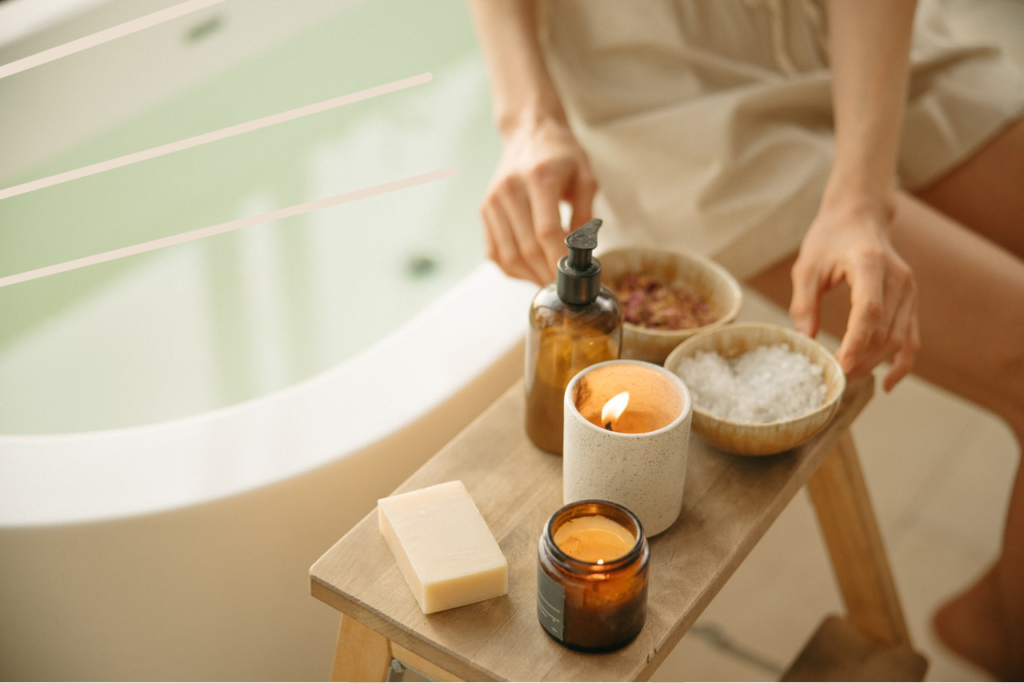
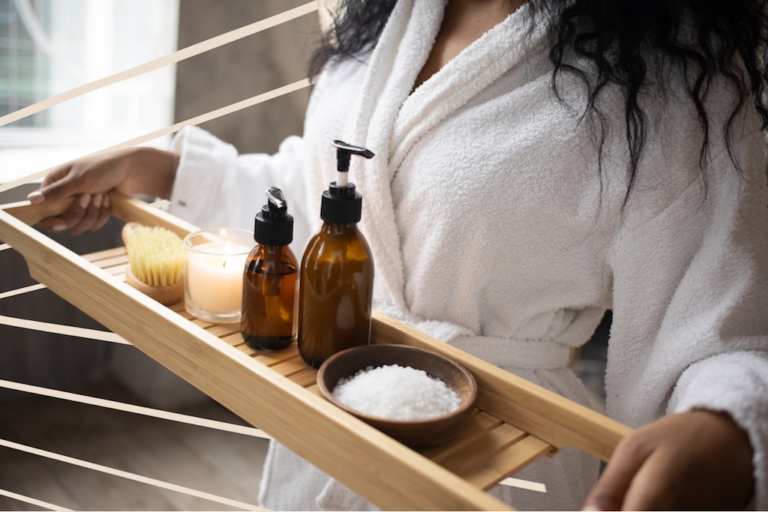
Whilst minds will immediately conjure up images of a meditation space full of flickering candles and burning incense, or a bed made extra comfy with throws, cushions and the rest, it’s less common to think of the bathroom when contemplating domestic upgrades to relieve stress. 

Think again; there are simple ways in which you can adapt your bathroom to reflect the calming luxury emanated by professional spas – here are just five, which can have a tangible effect on your stress levels and improve your downtime no end. 

DECLUTTER YOUR BATHROOM SPACE

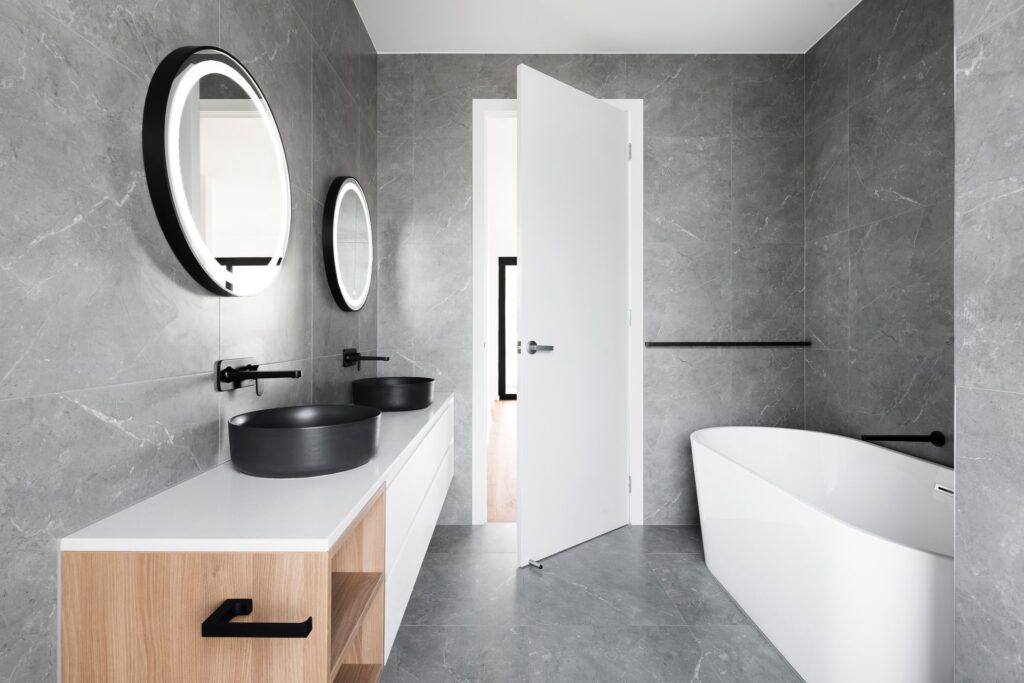
Something you might take for granted in commercial or professional spa environments is the absence of displayed storage or goods, past certain statement pieces. Toiletries and bathing equipment are stored out of sight, to enable visitors to focus on the environment itself, and we think that’s something you should consider replicating at home.

While your home bathroom might not benefit from having as much space as your local spa, you can still take some cues from it with smart storage decisions. 

Declutter your bathroom by removing goods from the edge of your bath or windowsill, and storing them neatly in hidden shelves or hanging baskets; the clearer your bathroom surfaces, the less stressful the room will feel. Fitted shelving can appear flush with the room, while organisers made from natural materials can bring a sense of order to your belongings.

Because there’s nothing more likely to disturb that inner calm you’re seeking than the sight of your toothbrush, a toilet roll needing to be chucked out, and your kid’s box of nappies.

CHOOSE CALMING COLOURS

Perhaps the most impactful way to shift the mood in your bathroom is to approach it from a decorating standpoint, and introduce calming colours to its walls. 

A lick of bathroom paint can go a long way to bringing calm to your bathroom, with the added bonus of resisting mould and mildew. Opt for soft nautical colours, in the vein of teals and sea-blues, to create a sense of space, openness and nature; alternatively, Mediterranean palettes including terracotta and seafoam green can create a sense of warmth.

SEE SCENTS

So far, we have only addressed one of our five senses. But considering the effects of the other senses can go a long way to promoting a sense of pampering and relaxation. Smell is a particularly powerful sense in this regard, and bringing certain scents into play can transform the feel of your bathroom. 

Lavender has long been touted for its de-stressing qualities, and recent studies have scientifically proven lavender to have a calming effect; either use lavender oil and a tealight to infuse your room with the scent, or place a bunch of fresh lavender in a vase for a subtler, fresher effect. Other essential oils can confer their own benefits with regard to relaxation, and judicious use of bath products can elevate your wash-time to spa-levels of comfort.

ADDRESS YOUR LIGHTING

Your lighting situation is a key piece of the puzzle for cementing the mood of your bathing space. The overhead light simply will not do; tealights are a swift and inexpensive way to bring the light level down and impart a sense of warmth into a space, but installing a dimmer switch or specialist dimming LED can make all the difference to the utility of your bathroom

New dimming LEDs can be made to change colour, and connected to your phone for smart utility – making for an endlessly customisable lighting experience, and the ability to change the mood to suit your own.

CREATE YOUR OWN SOOTHING HOMEMADE ELIXIRS 

Last but certainly not least, any spa worth its bath salts needs some soothing elixirs to soak in. And sure, you can buy all manner of luxury bath essences and elixirs online, but have you ever considered making your own? There’s something rather holistic and wholesome about knowing exactly what you’re bathing in, after all.

To make your own, simply add two parts kosher salt, two parts Epsom salt, and one part baking soda to a few drops of your favourite essential oils for a great make-do stress-buster. Try oil combinations of 10 drops of eucalyptus and 10 drops of peppermint – perfect for blocked sinuses – or 10 drops of bergamot and 10 drops of lavender if you’re looking for a relaxation aid. 

If you want something restorative for your spa experience, try adding 20 drops of eucalyptus, 10 drops of peppermint, then three ounces of almond oil into your tub with some Epsom salts. And breaaatthhheee…

FUN, FRIVILOUS & FUNCTIONAL: 2022 INTERIOR DESIGN TRENDS

This just in; our passion for home renovations and DIY shows no signs of abating. In a report published last week by Statista, it was revealed that homeowners had spent record-breaking amounts of time and money on home improvements over the last two years.

The research cites two main reasons for this beyond the omnipresent ‘COVID-19’ catalyst. Firstly, that the global pandemic and associated lockdowns had led to homeowners ‘’finally finding the time for it’’. And secondly, that rising house prices in the UK and across the western world meant that many homeowners had opted to improve their current properties rather than buy new ones.

Whatever your reason may be, 2022, as with every year, sees the emergence of a new set of interior design trends able to reflect your preferences and personality whilst maximising functionality. With that in mind, here are some 2022 interior design trends.

BIOPHILIC DESIGN

It comes as no surprise that biophilic design – essentially bringing the outside in through the functional use of natural elements – is a key interior design trend for 2022.

With many of us continuing to spend more time indoors than ever before, whether that’s because we’re working from home, concerned about rising pollution, or under some form of pandemic restriction, homeowners have been introducing new and innovative ways to stay connected to nature through their domestic arrangements.

By focusing on our relationship with nature, it’s been posited that biophilic design could even improve our wellbeing and expedite healing, enhance creativity and improve clarity of thought…and who doesn’t want that?

This trend doesn’t simply mean buying as many houseplants as you can carry home with you. Instead, enhancing natural light and ventilation is a key cornerstone of biophilic design. Living walls, repainting colours and patterns, and, of course, houseplants all help increase the harmony with your home and the natural world.

Read: The best ways to allow more natural light into your home

MINDFUL SPACES

Phew, after the two years we’ve all had, we all deserve to gain a little peace of mind and perspective from our properties. Unfortunately, as the lines have blurred between homes, offices and schools, so our domestic spaces have sometimes failed in their most basic of responsibilities; to provide a small slice of sanctuary.

Whilst the jury’s still out on whether 2022 will herald the end of the global pandemic, we can be sure of one thing this year; a key interior design trend will be the introduction of mindful spaces in our homes.

How these mindful spaces look will depend on the unique needs of the homeowner. Certainly, that biophilic design we mentioned earlier could play a part. You could try gentle, green tones for your walls to relax you after a hard day’s work, for instance. 

Alternatively, create a meditation space to encourage moments of reflection and replenishment. Add some soft furnishings, rugs and throws, perhaps light an incense stick, and retire to this corner of the house when you need to recharge. 

It’s a wise move to install secondary glazing to your windows if you’re keen to encourage a more zen environment at home. It has the added benefit of being soundproof, enabling you to shut out any outside noise and enable some quiet time.

CURVED EDGES

The curved furniture trend that became increasingly popular in 2021 looks set to continue as 2022 progresses. Because why be constrained by straight lines? 

Think outside the box here, literally, and make your domestic environment playful, welcoming, and on a more functional level, easier to navigate. You can use curved edges in major details such as your doorways and walls or elements like your furniture, where you can use coffee tables with round edges, arching mirrors, and curved sofas, the latter of which may have guests feel like they’re luxuriating on a cloud. This trend requires intentionality and a touch of sophistication to achieve your desired look. Which we’re told you have in spades…

MAXIMALISM

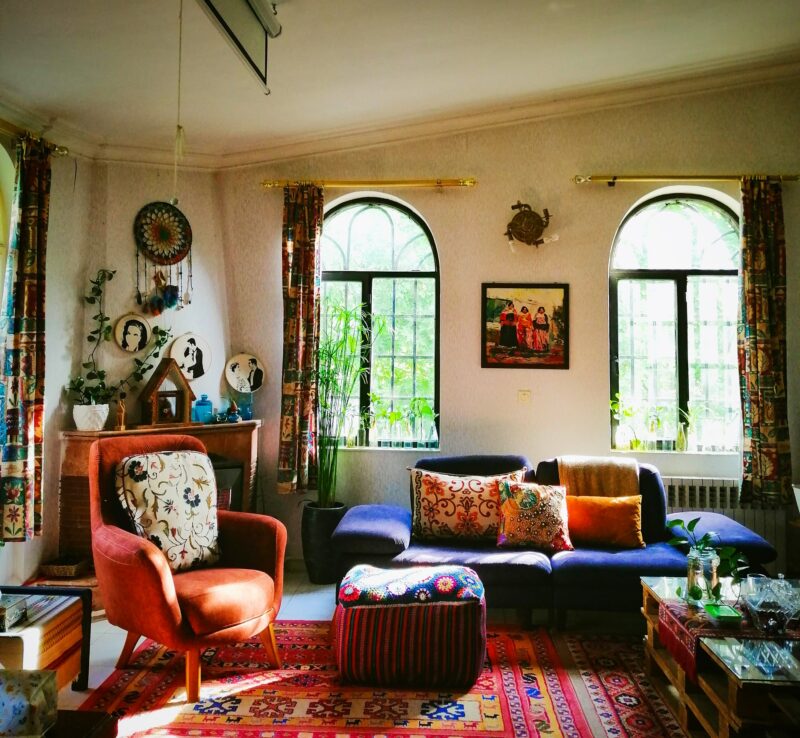
This just in; minimalist interior design is out. Replacing it, perhaps unsurprisingly, is maximalism. This decor style combines different patterns, colours, and textures to make bold statements and revive your interior space.

More people are exploring this idea because it embraces imperfection and goes beyond one-dimensional designs. Yep, more is most certainly more here.

To cultivate that maximalist look, all the old rules of tasteful, well-matched colour schemes and a constant effort at decluttering have been replaced in favour of mixed textures, singular and unique handmade pieces, a deliberate imbalance in decorative flourishes, and a propensity for brash, brassy finishes in luxury metals.

This embracing of the bold and imperfect sounds like a welcome change from the previous two years spent optimising our homes to run as smoothly and robotically as possible; we’re very much here for it.

MAKE DO AND MEND 

2020 and 2021’s upheaval has made many of us reevaluate our relationship with consumption, consumerism, energy use and community spirit. Channelling these good intentions into a more environmentally friendly home, shopping more sustainably for our interiors and buying from responsible designers has been a positive byproduct of a tumultuous two years, make no mistake.

The idea of Make Do and Mend as opposed to buying new things for the home, is inspired by a pamphlet issued by the British Ministry of Information in the midst of WWII. Many interior design experts are predicting that this attitude will re-emerge as a result of the pandemic. 

We expect to see this energy and ethos adopted in our interior design tastes this year, with homeowners incorporating vintage, second-hand pieces, family heirlooms and hand-me downs, as well as upcycling tired, forgotten pieces, in the spirit of Make Do and Mend.

3D ART

If you’re looking to create a relaxed and playful atmosphere that embraces colours and creativity whilst reiving any interior space that has started to look a little tired, then consider 3D art, a key interior design trend for 2022.

By playing with depth, height, width and, ultimately, perception and illusion, you can introduce a visual treat for residents and guests alike. It’s up to you whether this takes the form of ‘traditional’ 3D art, such as sculptures and ornaments, or the ultramodern version, that feels like it’s jumping out of your wall and interacting with the room.

If it’s the latter version you’re going for, then you might want to consider a picture frame TV, which allows you to double up your TV with a display of ever-changing selection of modern art. 

​​Samsung lead the way with their Frame TV, which has changeable frame settings, over a billion shades of colour, amazing clarity and most importantly, access to a huge digital library of artworks. Yours for just £3.99 a month – plus more than a grand for the actual TV, of course. Oh, and it triples up as a mirror!

THE BOTTOM LINE

Breathe some new life into your home whilst giving yourself room to breathe, too, with these top fun and functional interior design trends for 2022.

EXPLORING THE UK BY CAR RENTAL: TOPS TIPS & BENEFITS

Perhaps it’s that comfort you take in the familiar? Maybe you’ve just grown accustomed to the other’s quirks and curiosities? Or, has a loyalty developed over years of having your hands all over each other?

Whatever the reason, it’s clearly the case that most of us prefer to use our own set of wheels when driving abroad. That said, if you’re visiting the UK from Europe for a holiday, bringing your left-hand drive car to the UK presents a fair few obstacles. 

Though it is legally permitted to drive a left-hand car in the UK, it’s certainly not recommended; operating a vehicle with a right-hand steering wheel is a very different experience, and you’ll find it takes a while to grow accustomed to the divergent road positioning required. Overtaking is also significantly riskier. 

And that’s before we consider cost implications; insurance for left-hand drive cars in the UK will likely be significantly higher, and you’ll have to get headlamp adapters fitted too, before your car is legally allowed to be driven on UK roads. 

Suddenly, that sense of freedom and adventure associated with the open road feels kind of dampened, don’t you think? Instead, there are several reasons why a rental car makes better sense for your trip to the UK. Let’s explore further; here are some top tips and benefits of exploring the UK by rental car.

KEEPING THE COST DOWN

The cost of renting a car in the UK has admittedly risen recently, rising from £35 a day to £45 a day in just six months. This is due to a global micro ship shortage and a squeeze on new vehicle production. That said, there are ways to keep costs down and ensure your decision to rent in the UK is a financially viable one.

Firstly, you should check the fuel policy of your car rental, which will either be full-to-full or a pre-purchase fuel policy. The former involves you collecting the car with a full tank and returning it with a full tank; so far, so straightforward. The latter option, however, allows you to return the car without filling the tank up. The rental company will then charge you for the amount required to fill up the car. Whilst this pre-purchase policy saves you some hassle and is useful if you’re in a rush, it generally ends up costing a little more.

Satnav or GPS is often offered by car rental companies in the UK, too, but at a pretty exorbitant cost of anywhere from £70 to around £140 for a week’s hire. Considering you could just use your mobile phone or even buy a satnav for a similar price, it’s best to opt out of this offer. 

Finally, you should also check if your rental agreement comes with unlimited mileage; you’ll often incur extra (sometimes extortionate) charges if you exceed a pre-agreed limit.

PERMITS & PERMISSIONS

You can currently use your GB or Northern Ireland driving licence in all EU or European Economic Area (EEA) countries, and Switzerland, and vice versa.

For those who hold a non-EU driving licence, you’ll need an international driving permit that UK authorities will recognise. It’s a requirement for renting and driving a rental car here if your driving licence is written in a language or characters different to the country of rental (in this case, English). It’s an easy document to obtain – you can get one from the AA, the RAC of the Post Office – and fees aren’t too obstructive. Do note that the permit expires after a year.

If you’re a UK driving licence holder, you may also need to request a DVLA code before you rent a car in the UK, though some rental car companies may only request your driving licence number. You can find that DVLA code here

Proof of return travel and accommodation information for your time in the UK will also be required. 

Finally, it’s essential that you check the age restrictions of the car rental company you’re considering. Many will specify that you must be 25 or over with more than two years’ driving experience under your (seat) belt.

REPUTABLE RENTAL CAR SERVICES IN THE UK

Regardless of whether you’re looking for car and van hire in Lichfield, London or Liverpool, it’s sensible to shop around before signing on the dotted line. Though there are dedicated car rental price comparison platforms, you’re better off using Skyscanner, Kayak and Travel Supermarket to compare rental car prices, as there is more transparency regarding commission and impartiality. 

In terms of reputable rental car services here in the UK, according to Which? Enterprise is the best UK car hire company, with hundreds of branches across the UK, rigorous cleaning protocols, and no charges for cancellations or amendments right up until the day of hire. Which? also highly recommend Auto Riesen, Cicar and Alamo. 

The benefit of using such companies is the extra guarantees and safety protocols they afford the customer. If you’re planning to rent a car in the UK, it’s sensible to use a reputable company for this reason. 

INSURANCE & BREAKDOWN COVER

Driving on roads that aren’t familiar to you can increase your chances of an accident, so taking out a relevant insurance policy should cover you if the worst happens. 

If you are unlucky enough to be stranded on the long winding roads of the Scottish Highlands or in the most rugged and rural corner of Shropshire, you will be glad of breakdown cover if the nearest garage or town is miles away. Knowing you’re covered will give you the chance to truly luxuriate in the freedom of the open road.

All car rentals in the UK should provide you with basic insurance, which typically covers damage, theft and Third Party Liability Insurance. That said, you might want to consider car hire excess insurance, too. Should you have an accident or damage your rented car, you’ll be required to pay the excess cost on the insurance provided by the car rental company. This can range from anywhere between £100 and £2000, according to the Travel Supermarket.

They go on to explain that ‘’Car hire excess insurance waives this fee so that you aren’t left out of pocket – you’re essentially paying a small fee to avoid a potentially huge fee.’’ Well worth it, we think.

ROAD RULES YOU MIGHT NOT BE AWARE OF

From one country to the next, each nation across the globe will have their own unique set of traffic laws, some familiar, some obscure. In Switzerland, for instance, you’re not allowed to wash your car on a Sunday; so hands away from the soap and bucket!

In Greece those entering a roundabout have the right of way, which can be super confusing, whilst in Germany, you’re permitted to drive in nothing but your shoes; marvellous news, indeed.

In the UK, there are a few driving laws unique to the country that are worth taking note of:

  • Drink driving is punished strictly, and the legal limit is much lower than in some countries. The legal blood-alcohol concentration in the UK must be below 0.08%. Basically, anything more than a single drink will put you over the limit.
  • Turning on a red light is forbidden in the UK.
  • Do not use a mobile phone to call or text while driving.
  • You should use the outside right lane to overtake on motorways.
  • At a zebra crossing, you must give pedestrians the right of way.
  • There are speed cameras everywhere.
  • Beware the congestion charge in Central London.
  • We drive on the left hand side, of course!

BENEFITS OF CAR RENTAL IN THE UK

After reading all of that, you might be wondering why you would bother renting a car in the UK rather than bringing yours across the channel.

Well, there are several benefits to daily, weekly and monthly car rental when on holiday. Firstly, you won’t need to worry about the depreciation or maintenance of your usual vehicle, giving you a holiday from worrying about your car as well as giving you an, erm, actual holiday!

You may also find you enjoy a sense of novelty at driving a new car, and you might find that a new driving experience gives you a sense of freedom you wouldn’t perhaps feel behind your usual, familiar wheel.

You may also find you enjoy a sense of novelty at driving a new car, and you might find that a new driving experience gives you a sense of freedom you wouldn’t perhaps feel behind your usual, familiar wheel. If you really want to lean into that feeling, companies like Autofusion Hire offer luxury and supercar rentals from locations across the UK – the kind of upgrade that could turn a Scottish Highlands road trip into something genuinely memorable.

Lastly, the convenience of airport pickup or branch drop off means you needn’t worry about airport/ferry terminal parking on arrival or departure. Result!  

Now we’ve got you in the mood, check out these 5 of the best UK road trips to do with the kids before they grow up. We can’t wait to hear about your latest adventure.

7 REASONS INVESTORS ARE BUYING PROPERTY IN ANTALYA IN 2022

Antalya, Turkey’s fastest growing city and the gateway to the country’s glorious Turquoise Coast, is set to have a lucrative few years. In the first four months of 2020, prior to the global coronavirus crisis, house sales in Antalya rose by 12.5%. With 2018 and 2019’s currency crisis followed by rapid growth at the tail end of 2020, many indicators suggest that now is a good time to enter the Turkish property market.

If you’re considering investing or even settling down in the Gem of the Turkish Riviera, then read on; here are 7 reasons investors are buying property in Antalya in 2022.

AFFORDABLE PRICES

International experts state that the local real estate market is still at the stage of formation — meaning you can expect to get decent value for money in Antalya. What’s more, the exchange rate of the Turkish lira to the dollar, euro and other major currencies remains favourable to foreign investors at this time. 

If you compare property prices between Turkey’s two most popular property markets, Istanbul and Antalya, the numbers point to the latter being a smart investment. In fact, Istanbul sees house prices per square metre cost a whopping 96% more than in Antalya, with average prices clocking in at 10,412.04 TL and 5,298.54 TL, respectively. 

When comparing Antalya’s affordability against Turkey’s other hugely popular beach resort, Bodrum, the numbers also look favourable for Antalya, with both the cost of living and average house prices more affordable in Antalya.

AN IMPRESSIVE ASSORTMENT OF PROPERTIES

While locals are interested first and foremost in investing in Istanbul, Antalya is most popular among foreign buyers. This is largely due to the wide range of properties available in the city, from luxury villas nestled in the hills surrounding Antalya to beachfront apartments, all the way to one bedroom, city centre flats. This diverse set of options attracts an equally diverse set of investors.

THRIVING CONSTRUCTION INDUSTRY

Few industries have bounced back faster from the global pandemic than Turkey’s construction industry. Encouraged by low interest mortgages provided by state lenders, the second half of 2020 represented a bumper period, with a longer period of stable growth predicted by experts

What’s more, thanks to the fact that all the properties are added to the unified national register, the procedure of property purchase in the country is reassuringly transparent and the risk of fraud low.

WARM, BRIGHT WEATHER ALL YEAR ROUND

The area of Turkey is 300,000 square miles and there are three climate zones within it. Antalya is privileged to be located in a zone with the most favourable climate. In winter, when temperatures drop to just above freezing in Istanbul, residents of Antalya are still basking in the warmth of long, sunny days. In fact, Antalya sees a huge 3223 hours of sunshine a year. Compared to 2421 in Instanbul, 1660 in Paris, 1600 in Copenhagen, and just 1493 in London, that’s a seriously sunkissed city!

DEVELOPED INFRASTRUCTURE

Antalya airport welcomes approximately 30,000 foreign and domestic passengers per year, and is a modern and well-equipped entry point to the region. Located only 8.1 miles away from the city centre, it represents a hugely convenient connection to your potential new city, and also means business flows freely in the region and into Antalya. 

Antalya is also well connected to the rest of Turkey; those who want to travel to other parts of the country can take the D400 highway that runs from the East to the West. 

YOU CAN COMFORTABLY RETIRE HERE

It is easy to understand why elderly people from Europe, the U.S. and Canada are often interested in property for sale in Antalya. The vibe is cosmopolitan, the weather temperate, and there’s a fantastic mix of beach life and urban charm. 

What’s more, the food scene in the city is superb, with a healthy focus on seasonal fresh fruit and vegetables, with grilled seafood taking centre stage. That Mediterranean diet you’ve heard so much about? It’s here, but with flavours turned up several notches via dry spices, chilli and a little local flair!

Of course, kebabs and other freshly cooked flatbread dishes – like gozleme and lahmacun – are also found here in abundance, and are reliably spectacular. Put simply; you’ll eat extremely well here.

PROJECTS & POTENTIAL

Now we’ve satisfied our stomachs, let’s get back to the financial potential of this investment. Antalya, and the Antalya province as a whole, is rapidly evolving. Both the government and local and international entrepreneurs have invested heavily in Antalya in recent years, with infrastructure and leisure projects ongoing in the region.

The Tunektepe cable car is considered one of Antalya’s recent success stories; an infrastructure project which was relatively low coast yet attracts thousands of visitors every year. 

Another meaningful initiative of recent years was the renovation of the Konyaalti beach district that took place in 2017. Local and international businesses eagerly welcomed the Bogacay Creek Basin project that suggested building a new marina in Antalya, with the authorities turning the resort into a popular cruise destination. The potential of the associated increase in arrivals is enormous.

According to their plans, the port should be able to hold up to 470 yachts and 4 cruise liners simultaneously. Moreover, the Bogacay project hopes to launch a film studio and school in Antalya. Who knows, maybe it will become a serious rival to well-known Western studios, which will attract even more well-heeled tourists and property buyers to the resort.

THE BOTTOM LINE

Whether you’re looking for a smart property investment with potential and longevity, or you’re seeking somewhere to settle down and perhaps even retire, then Antalya could well be for you.

If you’re keen to consider this great country further, check out these 9 places to explore the culture and heritage of Istanbul.

5 TRAVEL SAFETY TIPS IDEAL FOR BETTER PEACE OF MIND ON YOUR NEXT HOLIDAY

Travel…is there anything it can’t do? Cited as a horizon broadener, matchmaker, world shrinker and mind opener, it’s a rite of passage in your younger years that should be treated as a necessity not a luxury. Indeed, studies have shown that taking a gap year abroad can benefit your brain, making you more confident and creative.

That said, and without wishing to put a dampener on the carefree, spontaneous spirit needed for adventure, it’s important to be responsible when globetrotting, for yours and the host country’s safety.

And this has never been more true than right now, with global travel in a period of upheaval and uncertainty due to COVID-19. With that in mind, here are 5 travel safety tips IDEAL for better peace of mind on your next holiday.

THE 5 PS OF SUCCESS(FUL TRAVEL)

You’ve heard that 5 p’s of success before right? That proper packing prevents poor performance? Sure you have. It’s pertinent prior to your trip that you research your destination(s) diligently, thoroughly and completely so you know what you’re getting yourself in for, climate-wise, and can pack accordingly.

Whilst you’re checking your destination’s average temperatures and the duration of its dry season, it’s essential you find out – well in advance and just before departure – about any COVID-19 related travel restrictions where you’re heading. Be aware that these can change at a moment’s notice, so do endeavour to keep abreast of entry requirements in the lead-up to your holiday.

Once you’ve determined what’s required, be sure to check out our space saving tips for packing your suitcase, so you can fit everything in!

CONSIDER CYBER AS WELL AS PHYSICAL SECURITY

Being on the move means you’ll likely be using public wifi more often. Or that of a cafe with perhaps a laxer approach to security than you’re used to. But just because you’re on it more, or the necessity grips you, doesn’t mean all norms of secure browsing should go out of the window.

Indeed, you should be extremely cautious about using public wifi with reckless abandon. Check your emails, sure, your Facebook too, but leave anything transactional or balance-checking based to a safer, password-protected, non-shared connection. 

Secure travelling certainly involves considering your cyber safety, too, we think, and other precautionary measures apply; verify that the website you’re visiting is HTTPS before visiting and consider using a VPN to enable public WIFI connections to be made private. 

Beyond enhancing your cyber security, VPNs can also come in useful when travelling as a way of enjoying geo-restricted entertainment, such as on the BBC iPlayer or Netflix, while you’re on the move. As such, an investment in a VPN is a no-brainer for travellers keen to keep both safe and entertained online. The best VPNs to use for Netflix include NordVPN, Surfshark and ExpressVPN.

PHOTOCOPY CRUCIAL DOCUMENTS

Christ, we’ve all been there, rooting around in the bottom of a bag, praying our passport is there. Indeed, that carefree spirit we previously extolled does carry the added of misplacing crucial documents needed for your trip onward. That is why you should always have copies of documents such as your passport, identification card, or driver’s license on your person, or at the very least, stashed safely back at your hotel room. 

This is even more pertinent in the current global climate, with several layers of bureaucracy added to travel in the form of proof-of-COVID-vaccination, proof-of-negative-test, newly updated travel and health insurance, and, potentially, evidence of booking a quarantine hotel, too. With so many new documents to keep track of, it’s a smart move to have backups of everything, both digitally and physically.

Read: 7 important legal documents you should keep safe digitally

LEARN A LITTLE OF THE LOCAL LINGO

Making friends with fellow intrepid travellers is great, and part of the reason you’re out here, seeing the world. Indeed, some friendships for life could be made. But any explorer truly intent on seeing the world doesn’t just cosy up with other travellers for the duration of their trip. In doing so, you risk missing out on seeing the ‘real’ culture of the country you’ve chosen.

By learning (at the very least) a few phrases – some polite, some playful – of the local lingo, you’ll be able to integrate with the people of the city; people who may well offer to show you around, invite you to parties or better still, a meal with their family…and these are the moments where truly great memories are made.

A LITTLE COMMON SENSE GOES A LONG WAY

The biggest mistake you could make in the realm of personal safety when travelling? Perhaps it’s exercising too much caution. Because if you approach the whole ‘travel’ experience looking over your shoulder, you’ll miss the beauty of new cultures right there in front of you. Open your arms, heart and mind and you’ll be rewarded with a good look at life’s rich tapestry. Bon Voyage!

PLANNING A CITY BREAK IN 2022? CONSIDER THESE TOP TIPS

Ideal for a successful city break… 

Us Brits just love a city break. In fact, in research published by Statista in March of last year, the humble city break was named as the most popular type of trip taken by UK holidaymakers. Nearly half of all respondents took such a holiday in 2019.

That said, the appeal of such a holiday may have been somewhat tainted by the two intervening years and their global pandemic, with city breaks in 2022 looking very different to those that were enjoyed in pre-COVID times. 

Where once we could simply decide on a whim to hop on the Eurostar to Paris or take a flight to Barcelona in under two hours, now there are several obstacles to such spontaneity, with travel restrictions, bureaucracy and unexpected closures all having to be considered before you click that ‘book’ button.

Still, if you’re considering such a trip and want things to run smoothly, we’re here for you, with these top tips to consider if you’re planning a city break in 2022. 

COVID RESTRICTIONS

We’re sorry to bring up the C-word again, but we can’t discuss travel tips for city breaks without referring to COVID-19’s continued omnipresence. The easing of travel restrictions hasn’t simply returned everything to normal and many cities across the continent and beyond have divergent restrictions and requirements on entry and exit. 

It’s worth checking the UK government’s guidance on travelling abroad before booking a holiday anywhere. You’d also be wise to do some research on your destination of choice to see what the regulations are like over there, too. 

Moreover, once you’re inside the country, be aware that they might have requirements for wearing masks in public, taking periodic tests, signing health forms and all manner of other restrictions that don’t align with those currently in play here in the UK.

Before you decide on booking your break, do check the guidelines on museums, galleries, restaurants and bars, in particular; you might find that restrictions in some destinations make the idea of a smooth, simple city break less tenable.

Whether you are booking the travel and accommodation for your trip yourself or you’re opting for a package holiday, be sure to check the cancellation policies and, above all, read the small print. 

Generally, it’s better to book holidays on a credit card, if possible. Under section 75 of the Consumer Credit Act, you’re given some protection on purchases over £100. It’s also recommended that you book your holiday through a travel agency, rather than putting together your trip on Airbnb and through Skyscanner. Again, you’ll be afforded more cancellation protection.

Speaking of peace of mind, don’t forget travel insurance. Forbes, who have rounded up some of 2022’s Best Covid-19 Travel Insurance, warn that when it comes to insurance, “As ever, terms and conditions apply, so read the policy documents carefully before making your choice”. 

NEIGHBOURHOOD KNOW HOW

Phew, that’s the fine print out the way, let’s get to it. One of the most important elements of an efficiently organised city break is to base yourself in an area or neighbourhood that is as close to the action or near to the attractions you’re interested in as possible. 

While you may save some money by staying in accommodation a little out of town, the time and money spent on travelling into the city may not be worth it, especially if you’re only on a weekend city break. 

As such, you should ideally focus the planning of your trip around one neighbourhood, to ensure you’re spending your time strolling the streets, soaking up the atmosphere and seeing the sights, rather than wasting it traversing an unfamiliar Metro system or getting stuck in rush hour traffic.

Read: 5 IDEAL tips for solo travel city breaks

GET TICKETS IN ADVANCE 

City breaks are traditionally short, compact affairs squeezed into a long weekend and spent in something of a rush. With many of Europe’s top sites, from museums to art galleries, cathedrals and stadiums operating at severely reduced capacity, booking popular tourist attractions well in advance has never been more important. 

Though this can be tough to arrange from afar, you’ll find plenty of ticket brokers available online who offer deals on group bookings, the opportunity to buy tickets in advance of general release to the public, and discounts on tickets for those willing to visit during less popular time slots. There are some great travel activity options with Hellotickets available, for example, across a whole range of major European cities. 

Search for ‘London’ on the platform, for instance, and you’ll be given access to an overview of West End show tickets, day trips to Stonehenge, and even opportunities to skip the queue for the London Eye. Wow!

WATCH SOME CITY SPECIFIC TRAVEL PROGRAMS BEFOREHAND

We all know that time is of the essence on a city break, and precision planning is essential.

And since roaming charges have returned for UK mobile phone users, you can’t simply plonk yourself in the centre of a city and plot your next move on the hoof anymore. The last thing you want to be doing is sitting in the hotel lobby, googling what to do next when you could be out there exploring. As such, it’s crucial to draw up something of an itinerary before you leave to help you structure your trip.

Make the most out of every moment. While of course reading travel guides is always a good idea (we’re fans of Wallpaper city guides, which are beautifully executed), watching travel programs before you go is a great way to narrow down what you want and don’t want to do. 

Particularly useful, there are plenty of great travel shows on TV and streaming services which see celebrity cooks journey to cities across the world in search of good food and things to do. 

We’re fans of Rick Stein’s Long Weekends, where he embarks on a series of culinary tours of a city’s markets, restaurants, wineries, cafes and bars; a marvellous insight into city breaks done right, we think. 

Then there’s the late, great Antony Bourdain, who has certainly been around the block a few times and shed light on all sorts of cities along the way… Might he be able to share some travel tips on your next destination?

And while not a chef, check out Netflix’s Somebody Feed Phil and Amazon Prime’s I’ll Have What Phil’s Having, which features deep dives into several major cities across the world and their unqiue food scenes.

EATING OUT: TO BOOK OR NOT? 

Snagging a reservation at one of the city’s top restaurants can be a nightmare, even at the best of times. And we’re sure we don’t need to remind you that these certainly aren’t the best of times.

Due to the pandemic and its effect on hospitality, many restaurants across Europe are running at reduced capacity, under shortened opening hours, or have completely closed, and it can be harder than ever to land an elusive table.

If one of the reasons you’re visiting a city is to eat in its restaurants, then consider checking if they have any availability before you book your flights and accommodation. Or at the very least, make a reservation as soon as you have booked the other elements of your trip. 

When looking for somewhere to eat out (other than the pages of IDEAL of course) one fairly failsafe website for fine dining is the Michelin Guide. Particularly pertinent in times of increased restaurant closures, the guide’s (and accompanying app’s) listings are regularly updated with opening hours.

Ideal Tip: If you can’t get a seat at the city’s hottest restaurant, many high flying restaurants have younger sister versions which tend to be more affordable, easier to get into, and (whisper it) both less pretentious and more delicious. 

Many restaurants release cancellations first thing in the morning, too – it’s always worth ringing and checking, even if they don’t have any availability on their website. 

Looking for more city break advice? Head over to our article on 6 IDEAL hacks for getting the most out of a city break.

5 ADVENTURE ACTIVITIES TO EXPERIENCE ON YOUR HOLIDAY TO QUEENSLAND, AUSTRALIA

What do you get when you cross a passionate sporting nation with a devil may care spirit and some of the most thrilling, diverse terrain on the planet? Why, an abundance of Australian adventure activities, of course.

As 2022 dusts off the cobwebs, fires up the engine and kicks into gear, it has been suggested that Australia is finally preparing to welcome tourists once again, after one of the strictest and most prolonged lockdowns on the planet. A phased reopening is underway, and with it, many Brits will be making tentative plans to return to their favourite holiday destination down under.

After being stuck indoors for so long, with the pulse rarely raising above levels synonymous with bradycardia, a holiday to the other side of the world for some adrenaline-baiting activities sounds like just the ticket.

With such a sprawling country, you’ll have to narrow down your itinerary somewhat to get the most from your trip. As such, we’re heading to Australia’s northeast, and to Queensland, which boasts over 200 national parks, lush rainforests, incredible beaches and, of course, the Great Barrier Reef. 

Get bored here, and you might just have to accept that you simply don’t have a daredevil streak! Here are 5 adventure activities to experience on your holiday to Queensland, Australia.

SHARK FEED DIVING AROUND THE OSPREY REEF

Famed for its abundant 7000 km of coastline and record breaking Great Barrier Reef, Australia is the world’s premier scuba diving destination, make no mistake.

The GBR is the largest single structure of living organisms on the planet, with the world’s biggest collection of coral reefs attracting an incredible 1500 different species of fish.

A whole 9% of the figure is composed of sharks and rays, and if you’re looking for an adventure activity in Queensland to really get the pulse racing, then rest assured; you’ll find it here in the form of shark feed diving.

The Great Barrier Reef’s Osprey reef is thought by many to be the best diving spot in the world and boasts the infamous shark feed dive at North Horn. There’s no cage to protect you here; instead, an incredible spectacle of grey and silvertip sharks getting worked up into a feeding frenzy!

SCUBA DIVE THE SS YONGALA SHIPWRECK, TOWNSVILLE

Whilst we’d love to stick around underwater for the remainder of our trip (and this article), it’s important that we come up for some air. Diving around Queensland isn’t only about sharks and shoals; just half an hour’s boat ride from shore but still part of the Great Barrier Reef Marine Park, you’ll find one of the most intriguing, extensive shipwreck diving sites anywhere on the planet.

Close to Townsville in Queensland, the SS Yongala wreck is a result of a luxury passenger ship sinking in 1911 in the midst of a cyclone. Tragically, the event saw no survivors, but the now coral-covered wreckage remains to this day, with an incredible diversity of marine life calling the Yongala home.

Expect to see schools of barracuda, sea snakes, bull sharks, eagle rays and turtles all swimming amongst the wreckage. Watch out for ghosts; as myth and legend have it, they stalk the debris, too.

PLAY GEL BALL ON THE GOLD COAST

Akin to paintball or airsoft but with the pain factor dialled down several notches, gel ball has some similarities to paintball in that you use a weapon to fire non-lethal projectiles at an opponent during a game of strategy. However, a gel blaster is generally considered far less messy and painful than paintballs. The reason for this diminished pain is that gel balls are essentially small water-filled polymer balls that burst upon impact to another player.

But why is it particularly popular in the Sunshine State? Well, Queensland is the only remaining state in Australia where you can possess long range rifle gel blasters without a license or permit to do so. 

That said, laws around the thrilling sport are still tight here, with the threat of two years imprisonment for carrying an unconcealed gel blaster in public. Accordingly, if you’re going to participate in this popular Aussie pastime, it’s best to do so at a designated Gel ball (sometimes called Gelsoft) field. Some of our favourites along the Gold Coast include Gelsoft Australia in Yatala, Guerilla Blasters in Loganholme and Nuke Town in Pimpama.

Wherever you choose to play, gel ball is a challenging, hugely enjoyable activity. Not only a wonderful way to keep fit, it also represents a great opportunity to bond with colleagues, teammates or friends.

SURFING ON THE GOLD COAST

We couldn’t come to Queensland’s Gold Coast without getting on our surfboard and riding a few waves. The coast is, after all, only the world’s 8th world surfing reserve, and whether you’re a shubie or a shredder, you’ll find a beach to suit your skill level here. 

The Gold Coast boasts over 50km of beach, year-round warm, clear waters, incredible point breaks and 35 dedicated beaches that are patrolled daily for that added blanket of safety. And if that wasn’t enough, this gorgeous stretch of sand and sea is home to Surfers Paradise, a seaside resort with plenty going on, both in the waters and on dry land. 

Looking beyond Surfers Paradise, for experts the renowned surfing break known as ‘The Other Side’ on South Stradbroke Island is a must visit, as well as Duranbah and Tugun Beach for superb beach breaks. For beginners, Queensland and the Gold Coast have over a dozen surf schools for you to learn the ropes (not actually a rope, but more a leash; we thought you should know).

Read: 5 adventurous things to do on a beach holiday

HIKE THE GRANITE BELT WINE TRAIL

The embodiment (or should that be em-bottle-ment?) of ‘New World’ wine in its intensely fruity, fleshy finish, Australian wine is some of our favourite in the world, old or new. 

We think it’s fair to say that Australia and its wine share plenty in terms of personality; laid back, full of life and verve, open, and lacking in pretension…all in all, the ideal fit for a trip of exploration and indulgence. 

Running along the border of New South Wales, Queensland’s Granite Belt Wine Trail takes in one of the state’s six recognised wine regions and its various wineries, estates and 50 cellar doors at a height of 1500 metres above sea level. The trail boasts plenty of hiking routes, should the idea of ‘wiking’ (that’s ‘wine’ and ‘hiking’ to the uninitiated) sound like your sort of thing, the benefit of doing the trail on foot, of course, being that you won’t have to designate a driver!

For more wiking holiday ideas, check out these 5 incredible wine and hiking destinations.

Caring For A Loved One With Alzheimer’s: A Brief Guide

Many of us can relate to memory lapses and errors in judgment, likely due to the fatigue and distraction present in everyday life. We’ve all walked into a room and forgotten exactly why we went there, failed to recall where we put our car keys, and put laundry detergent in the fridge overnight (just us? let’s move on). 

More often than not, these are one-offs, and nothing more than a funny anecdote we’ll probably enjoy retelling to our friends.

However, if this has been happening frequently to us or one of our loved ones, it may be time to take a closer look and perhaps even consult a doctor to rule out Alzheimer’s disease, which is the most common cause of dementia in the UK

Dementia itself is actually the name given to a collection of symptoms associated with an ongoing decline of brain functioning which may affect the memory, cognition and other mental abilities.

If you’re caring for a loved one with Alzheimer’s, or you’re concerned about it potentially developing in someone you know, then here’s a brief guide to the disease.

What Is Alzheimer’s Disease?

Alzheimer’s disease is the most common cause of dementia, in which the brain neurons stop functioning and may even shrink. Connections are lost, and metabolic processes that are important for survival are disrupted. This results in neuronal death—first in the areas affecting memory, and then later language, reasoning, and social behavior. 

Eventually, as the disease progresses, someone living with Alzheimer’s will find it increasingly difficult to live and function independently. In these instances, dedicated nursing and home caregivers are a crucial partner in keeping loved one’s living with the disease able to enjoy a relatively normal life.

What Are Common Misconceptions About Alzheimer’s Disease?

Because the understanding of this disease is not yet complete and scientists are working hard to elucidate mechanisms and find treatments, Alzheimer’s disease has been subject to a number of myths over the years.

Myth: Only older people can have Alzheimer’s.

Truth: Alzheimer’s can affect people as early as in their 30’s (referred to as early onset Alzheimer’s disease), although it is more common in individuals more than 60 years old.

Myth: Memory loss is a normal part of aging.

Truth: While brain processing may be slower with age, significant memory loss and forgetting recently learned and important information without remembering them later is more indicative of a problem. 

Myth: If my parents had Alzheimer’s, I will get it too.

Truth: Not necessarily. There is likely a genetic component to this disease, but there are also modifiable environmental factors. If you have a healthy lifestyle (i.e. good diet exercise, no smoking and alcohol), you may well reduce the risk of developing Alzheimer’s.

Myth: There are available treatments for Alzheimer’s.

Truth: Unfortunately, there is no specific treatment licensed for Alzheimer’s. There are only drugs and behavioral therapies to temporarily reduce and manage symptoms, and make life as comfortable as possible.

What Are Early Signs And Symptoms Of Alzheimer’s?

It is important to know the early signs and symptoms of Alzheimer’s disease, so that we can immediately seek a diagnosis and find proper care.

Here are some common warning signs, though they may indicate another health problem. If you see one or more of these signs in yourself or a loved one, please consult your doctor.

1. Memory loss – To be more specific, memory loss in which the person is unable to remember that they were forgetful is problematic. Usually, short-term memory is affected first, and then long-term memory issues develop after. 

2. Difficulty planning and solving problems – This usually manifests as trouble with numbers, such as paying bills and working with recipes. 

3. Difficulty with completing ordinary tasks – People living with Alzheimer’s may have trouble with simple tasks, such as using household appliances.

4. Difficulty understanding visual images and spatial relationships – This will present as a problem with balance, reading, and driving.

5. Disorientation – Those living with Alzheimer’s may forget time and place, dates, and seasons. They may not remember how to return home or how they find a previously familiar destination.

6. Difficulty with words – This will be obvious through frequent struggles with vocabulary and expressing themselves. Those living with Alzheimer’s may stop mid-sentence and forget their train of thought, as well as repeat themselves.

7. Impaired judgment – Decision-making is more problematic because of a combination of all above factors.

8. Unusual behavior – Significant changes in behavior suggests a change in mental status. This includes, but is not limited to, wandering, acting aggressively, becoming overly suspicious or irritable. 

Read: 5 ways to future proof your later life

How Is Alzheimer’s Disease Diagnosed?

When Alzheimer’s is suspected and a visit to the doctor is arranged, the patient’s complete medical history will be reviewed, and a physical exam focusing on neurological signs will be conducted. Laboratory tests, and maybe ancillary diagnostic imaging, will be performed to ensure that other conditions that may cause the same symptoms (e.g. tumors, vitamin deficiencies) are ruled out. 

Should Alzheimer’s be diagnosed, it’s important that a frank and honest discussion happens with family and loved ones, to ensure that the patient’s care needs are met.

What Support System Should Someone With Alzheimer’s Have?

Depending on the extent of the symptoms, someone diagnosed with Alzheimer’s can still live at home independently or may be in an assisted-living facility. 

Regardless, it is important that this person’s caregivers are aware of the existing difficulties, and adjustments can be made in the surrounding environment to facilitate independence. For example, pens and notepads should be available to jot down notes and mitigate some elements of forgetfulness, and extra smoke and fire alarms should be fitted for added safety. Online resources such as Caregiverlist provide invaluable information here.

To prevent caregiver burnout and/or when there is no one available to help, home care services may be employed, whether the patient lives at home or in a facility. Home care services may comprise of companion, personal care, and homemaker services, and this may also include, upon request, skilled care as those administered by licensed health professionals like nurses. Having a personalised care plan is useful to ensure that the patient’s needs are met.

Can Alzheimer’s Be Treated?

The question of whether Alzheimer’s disease can be treated is one that weighs heavily on the minds of patients, caregivers, and healthcare professionals alike. There is no cure for Alzheimer’s disease, which can make the diagnosis feel daunting and, at times, hopeless. However, it’s important to distinguish between a cure and treatment. While we may not have a cure, there are treatments available that can help manage symptoms and improve quality of life.

Symptomatic Treatments

The primary approach to treating Alzheimer’s involves medications that can help manage cognitive symptoms such as memory loss, confusion, and problems with thinking and reasoning. These drugs, known as cholinesterase inhibitors and memantine, work by altering the chemical messengers in the brain involved in memory and judgement. 

Although these medications can’t stop the damage Alzheimer’s causes to brain cells, they may help lessen or stabilise symptoms for a limited time by affecting certain chemicals involved in carrying messages among the brain’s nerve cells.

Lifestyle & Home Remedies

In addition to medication, certain lifestyle changes can help manage the symptoms of Alzheimer’s. Regular physical exercise, a healthy diet, cognitive training, and social engagement have been suggested to potentially slow the progression of symptoms. Creating a safe and supportive environment can also make daily living easier for someone with Alzheimer’s. This includes establishing routine tasks, reducing clutter for easier navigation at home, and ensuring clear and simple communication.

Supportive Therapies

Supportive therapies such as occupational therapy can be beneficial. An occupational therapist can help identify ways to modify the home environment to better support the individual’s abilities and promote safety. Additionally, music and art therapy can provide emotional and behavioral benefits for people with Alzheimer’s disease.

Palliative Care

As Alzheimer’s progresses, palliative care becomes an important consideration. This type of care is focused on providing relief from the symptoms and stress of the disease. The goal is to improve quality of life for both the patient and the family. Palliative care can be provided alongside curative treatments and is tailored to meet the individual needs of the patient.

Clinical Trials

Participation in clinical trials, particularly involving stem cell treatment, is another avenue through which patients can access experimental Alzheimer’s treatments. These trials help researchers to develop new treatments and also offer patients the opportunity to receive cutting-edge care that is not yet available to the public.

Indeed, whilst the potential treatment of Alzheimer’s with stem cells is still under development, it has shown promising results in animal models and early clinical trials. It has the potential to overcome conventional therapy because it addresses the underlying cause of the disease, not just the symptoms. Although stem cell therapy for Alzheimer’s disease is not a cure, it may be able to slow progression of the pathology, improve cognitive function and quality of life. 

The Future Of Alzheimer’s Treatment

Research is ongoing, and the scientific community continues to search for more effective treatments and a potential cure. Advances in understanding the genetic, biological, and environmental factors that contribute to Alzheimer’s disease are leading to the development of new therapeutic strategies that may one day alter the course of the disease.

The Bottom Line

Alzheimer’s disease presents a complex journey not only for those diagnosed but also for their loved ones and caregivers. While the current landscape of treatment does not offer a cure, it does provide avenues to manage the disease and maintain quality of life. It’s essential to understand that treatment is multifaceted, involving medication, lifestyle adjustments, supportive therapies, and comprehensive care planning.

HOW TO IMPROVE YOUR FINANCIAL OUTLOOK IN 2022

As the New Year eases in, many of us turn our attention to money. The start of 2022 is the perfect time to look at your current financial strategy and think about where you could improve. Whether you are struggling to secure a decent income or you want to do more with your savings, this post is for you. 

At any stage of your career, it’s important to have a solid grasp on your financial outlook. Many people fall into the habit of earning, paying and saving whatever’s left over. Their safety nets are more of an afterthought, so they may not even be aware how much they’ve put away at all.

With public debt continuing to rise, many people found themselves personally struggling to make ends meet as a result of COVID-19. The pandemic’s impact on the UK economy continues to unfold in 2022, filling many with anxiety over the uncertainty. That makes budgeting and building up your own finances all the more important. If you’re ready to start this new year off right, read on to discover tips for improving your finances in 2022.

THINK ABOUT INVESTMENTS

Trading can help you begin to build a stronger financial portfolio. Having that level of security can promote greater personal confidence as well as more informed financial decisions. There are many options when it comes to the financial markets. Whatever your goals, budget and experience level may be, there is a form of trading that might be profitable for you. 

AVOID RELYING ON CREDIT

UK credit card debt reached its highest level for a year in November 2021, despite the apparent savings made due to lockdown.

During financial difficulties, credit cards can be a beacon of hope. But they can also quickly draw you into a troubling cycle that feels impossible to break out of. If you do decide to incorporate credit into your budget, make sure it only comprises a part of it. Moreover, focus on using credit cards with intention over impulse. Those late night online shopping sprees never do any good, least of all for your bank account.

PRIORITISE LONG-TERM SECURITY

With the outcome of the pandemic still so largely unpredictable, people need peace of mind. While it’s important to have a roof over your head and food on the table, your household has bigger concerns, too. By building a strong savings now, you can feel less paranoid about what will happen if someone gets sick or members of your family lose their jobs.

Saving doesn’t have to be a chore, either. In fact, why not make a game out of it? Draw a jar on a piece of paper, and write your monthly saving’s goal at the top. Whenever you say no to a purchase or manage to put something away, fill up the jar a little. Watching these jars fill up each month can motivate you even more to put savings first in your financial planning.

USE A DEDICATED SAVING APP

Speaking of which…

You can use a pencil and piece of paper to create a workable budget, sure, and transfer that 10% out of your account as and when you see fit, but digital solutions are often a much more efficient way to manage your budget and savings.

With the right app, for example, you can create a viable budget and automatically link your spending to your profile to minimise the amount of work required to keep on top of your finances. 

Budgeting apps are a great way to stay in control of your spending and get a deeper insight into your money management skills. As well as helping you to cleverly put money away for your next big purchase, they can also help you to enhance your saving skills and make savvier financial decisions. 

Some of the best budgeting and saving apps currently on the market include Money Dashboard, Emma, Yolt, Bean and Plum.

For more tips, check out these 7 tips for managing money and debt during COVID-19

*Anything written by IDEAL Magazine is not intended to constitute financial advice. Always consult with an independent financial advisor or expert before making an investment or any personal finance decisions.*

STAYING IN IS THE NEW GOING OUT: HOW TO ENJOY A NIGHT ON THE TOWN AT HOME

The hosting of parties (or, euphemistically, ‘work events’) whether that’s at home, in the office, or in the garden of 10 Downing Street, has been a topic of fervent discussion in the national press in recent days. 

Whilst the restrictions on when, where, and who you party with have now largely been lifted, many Brits are still rightly cautious about hitting the town full throttle, acutely aware that a risk remains in dancing cheek to cheek with old friends, sharing cigarettes with acquaintances, and snogging strangers with reckless abandon.

If you’re cautious about reentering the fray but are still keen for a taste of the town from the comfort of home, then you’ve come to the right place. Because staying in is the new going out, here’s how to enjoy a night on the town at home.

A NIGHT AT THE PICTURES

Thankfully cinemas are now open across the UK, though some restrictions are still in place to ensure the safety of viewers; these include mandatory face masks throughout theatres unless you’re eating or drinking, contact tracing is still in play, and in Wales, you’ll need an NHS COVID pass or confirmation of vaccine status to enter. 

If you’d prefer to enjoy the cinema experience from home, then we’re sure you’re aware of the unstoppable rise of streaming services and the ever-increasing quality of their exclusive, original film output. 

Whether you subscribe to Netflix, Amazon Prime, Apple TV+, HBO Max, Hulu, any of other online streaming libraries in the UK or indeed all of them, you’ll have original films available at just the click of a remote control button.

In the UK, more than 60% of homes now have streaming service subscriptions – that’s a whopping 31 million people reached. If you’re one of those subscribers, or you simply have some dusty DVDs lying around, why not enjoy a night out at the pictures, but at home?

Photo by cottonbro from Pexels

Should not be satisfied with simply watching a film on your tele, consider setting up a more cinematic viewing experience. First, you’ll need a projector. There are tons of affordable ones out there, but the APEMAN Portable Mini Projector 4500 at £79.99 on Amazon is often touted as one of the best budget projectors you can buy on a budget, and will give you a decent picture outdoors. 

For a screen, a white bed sheet pegged on the washing line with something to weigh it to the ground will suffice. Now, all you’ve got to do is stick the popcorn in the microwave, and you’re good to go!

Read: 4 essentials of any home entertainment room

ENJOY SOME (KITCHEN) TABLE GAMES

Though the large entertainment complexes and casinos of the UK’s largest urban centres are open to the public once again, some might prefer to host a games night at home. Doing so can be a more enjoyable experience, away from the no-windows, sticky carpets atmosphere familiar to those who have done the real thing on these shores.

We’re not imagining a stereotypical ‘poker night’ with the lads defined by cheap cigars smelling and desperation, here. Instead, a classier affair, perhaps with a James Bond dress code, curated drinks that aren’t watered down rum and coke, and some table games.

All you’ll need is a pack of cards or two, a roulette wheel, a felt green mat with numbers, and stacks of chips (not actually difficult to find on Amazon for a reasonable price) Oh, and to practice your poker face well in advance, of course.

Remember to decide on a budget prior to hosting the occasion to avoid any irresponsible gambling and to set the tone for a civilised evening rather than one that gets over competitive and undignified. Or, you could just play with Monopoly money or loose change, placing emphasis on the fun not the financial. 

Should you have friends in faraway places keen to join in remotely, prioritise sites that can be accessed over a secure internet connection, and offer the opportunity for private rooms. Here you can interact with remote party attendees in dedicated chat rooms, or even make new online friends. Such sites also offer the chance for users to play for free, using demo versions of games or imaginary, ‘virtual’ money, which is a great option if players don’t feel like making financial commitments.

ENJOY A CONCERT FROM THE COMFORT OF YOUR SOFA

Sure, the UK may play host to some of the world’s biggest concerts, with venues like The O2 Arena in London, Cardiff’s Millenium Stadium, Manchester Arena and many more. We’re also blessed with the most prestigious festival on the planet, Glastonbury, alongside other internationally renowned events such as the Edinburgh Festival Fringe and the Reading/Leeds Festival.

That said, many such events are currently operating at reduced capacity or with restrictions here in the UK. If you’re more at ease with enjoying the spectacle of a huge concert from the comfort of your sofa, then those popular streaming platforms we mentioned earlier have many full-length performances to enjoy. Even better, YouTube has archives of thousands of shows, with some of the best including Radiohead’s first Glastonbury headline slot in 1997, Daft Punk’s 2006 Coachella performance, and even Aphex Twin at Printworks for the experimental enthusiasts among us.

Simply set up some camping chairs in your living room, dim the lights and make sure the beer is being served warm and flat. Oh, and turn it all the way up; a concert shouldn’t be enjoyed at polite, living room volume!

HIRE A PRIVATE CHEF FOR A MICHELIN-STARRED DINNER…

Dry Veganuary (or whatever they’re calling it this year!) be damned; if we’re going to stay in rather than go out, the evening is going to be defined by delicious, indulgent food.

Sure, you could head out to a restaurant to enjoy a night out in style. Or, you could throw a gourmand’s dinner party at home, should you possess the requisite skills at the stoves. But here’s a unique idea for an intimate evening in; why not book a private chef to come to your home for something truly extravagant? 

You’ll have more say over the menu, hold more sway over the pacing of the evening, and the chef’s skills and seasonings will be entirely focused on you and your personal taste. The cost of hiring one for an afternoon or evening’s work isn’t perhaps as expensive as you’d think; you’ll find one for £200 or so, though you’ll have to foot the bill for ingredients, too. 

Most private chefs will even bring their own crockery and tableware, will do the washing up for you, and even curate a wine list! All you have to do is sit back and relax (and eat a lighter lunch than usual!).

…AND A PRIVATE DJ FOR SOME AFTER DINNER DANCING

If your own private Aphex Twin concert hasn’t got the neighbours riled up enough, then hiring your own private DJ will. Because can you even call it a night out – even if it’s at home – if it doesn’t end in dancing? We certainly don’t think you can.

Much like hiring a private chef, your personal DJ will bring all of the equipment necessary for a big, bold sound, though they probably won’t clear up all the empty bottles after the party! 

Now, can we expect our invite in the post to your ultimate night in? 

Well, can we?

Hmm, I think we got cut off there…

FROM ROYAL TITLES TO A SURVIVAL WEEKEND: 9 IDEAL GIFTS FOR PEOPLE WHO HAVE EVERYTHING

Gift shopping for someone who has amassed everything that they could possibly want in life is tricky, even at the best of times. But after the gift-giving revelry of Christmas, the ideas for a unique and personal present for those who are routinely, resolutely spoiled is almost impossible.

Almost, you’ll notice we used. Because even for the loved one who seemingly has it all, there are still options available to surprise and stimulate them. With that in mind, from royal titles to a survival weekend, here are 9 IDEAL gifts for people who have everything.

A ROYAL OR NOBLE TITLE

Giving your friend the opportunity to ‘become’ a noble and be treated like a VIP for the rest of their life will perhaps be the most unique gift they’ve ever been given. Though it may sound a little far-fetched, rumour has it that those who have bought themselves a title receive preferential treatment and perks – think hotel and airline upgrades and being able to get a reservation at any restaurant in town. 

Or, if your friend is something of a joker, they will be able to use their title for a bit of fun like this frivolous fella featured in Hustle, who bought him and his wife titles as a quirky gift one Christmas “so he could call his wife “m’lady” and “leave family events early by dramatically accusing them of being usurpers.” 

Sounds like a riot…

It should be noted that here in the UK, true royal titles are either inherited or granted by the Queen. This includes titles such as duke, duchess, count and countess. Selling these titles (or using them illicitly) is actually against the law. However, you can legitimately purchase a Lordship of the Manor title. While a manorial lordship is not an aristocratic title, it does enable you to put after your name that you are the Lord or Lady of the Manor of whatever place. 

It’s not exactly a cheap gift, costing upwards of £5,000. You can, of course, get a deed pool and change your name to Lord or Lady. You could simply change your first name to Lord or Lady and then follow up with your first name for a minimal fee of just £42.44.

Read: 4 ways to rebrand in 2022

When it comes to buying titles abroad, you can for a rather large sum pay a German noble to adopt you, and then, can legitimately call yourself by a title. Interestingly when it comes to buying royal titles, you can purchase your way to nobility online to some micronations that no longer exist. You could, for example, become the Lord or Lady of Pomerania & Livonia or the Count or Countess of Pomerania & Livonia.

We say this with tongue firmly in cheek, of course, as the legitimacy of some of these titles is questionable. However, there’s no denying that when done with transparency, it’s a fun, quirky gift to give someone who has everything.

AN ANCESTRY DNA KIT

Perhaps instead of buying your friend a royal or noble title, why not help them uncover potential evidence of historic links to the aristocracy via an ancestry DNA kit? Through a DNA kit, one lady recently found out she was related to a medieval king and a popular comedian (not through a DNA test) discovered that he was a “proper blue blood” after it was revealed he was related to King Henry VIII on Who Do You Think You Are? 

Home DNA kits are available on the market for £150 or less, helping you reconnect with your roots in exchange for a drop or two of saliva (and the fee, of course). It should be said, though, that these domestic DNA kits may reveal results that diverge in accuracy, and should be treated as a bit of fun rather than a way of truly uncovering fascinating, hidden elements of your past. 

A BIRTHDAY MESSAGE FROM THEIR IDOL 

Another modern gift idea that’s becoming increasingly popular is a personalised video message from a favourite celebrity, wishing the receiver Happy Birthday or simply saying hello. They will even convey a personal message (within reason of course) from you. The platform Cameo has some mega stars on its books including the likes of Snoop Dog and Dick Van Dyke and the cost of this service varies from under £20 all the way into the thousands, depending on who the famous face is.

Offering your friend a way to connect with their favourite public figure is a gift that they won’t forget. That, or you could simply call them on FaceTime, and wish them a good day yourself, which we’re sure they won’t forget either. 

NAME A STAR AFTER THEM

Nicole Kidman got a star and called it “Forever Tom”. Winona Ryder bought one for Johnny Depp. Might you do the same?

It sounds a bit out there, but it’s certainly unique! In fact, it’s so out there, it’s in outer space. So, why not name a star after your loved one for a symbolic, enduring gift which shows appreciation and makes the receiver feel oh-so-special? Doing so needn’t even cost a fortune; you can name a star for as little as £20.  

Having a huge celestial body made of hydrogen and helium is a pretty special gift to give a person who has everything. While the only place that star names will be registered is on the database from the company you purchased it from, it’s still a pretty special gesture. And hey, one day such an intergalactic gift might come in useful when our current planet is rendered uninhabitable.

A SURVIVAL BREAK

What to give someone who has everything? Take everything away from them and give them a weekend fending for themselves in the wilderness, of course! Whilst that might sound a little severe – cruel, even – sending your loved one on weekend’s survival course might just be the most genuinely useful present on our list. 

Let them battle the conditions and fend for themselves in the wilderness – perhaps not everyone’s idea of a ‘gift’, but some people are just glutton for punishment, and others, frankly, might just deserve a little fresh perspective.

Learning how to build a shelter, foraging for ingredients and being taught the correct way to light a fire will be things that the sheltered, spoiled among us have likely never experienced. We did promise unique, personal gifts after all…

STANDUP COMEDY CLASS 

One thing that everyone needs in their life is laughter, but being able to make people laugh? That’s perhaps the greatest gift of all. There are a surprising number of standup comedy classes, courses and workshops available, with London’s Comedy School offering half-days for as little as £75 all the way to 6 week intensive courses for £285.

Even if your friend has no interest in becoming a standup comedian, the opportunity to have a new challenge, meet new people and, most importantly, laugh long and hard is a priceless present. If your loved one emerges from such a learning journey still unable to deliver the punchline to their favourite ‘knock knock’ joke, then you might have to both accept that they’re just not very funny.

PLANT A TREE

A gift that keeps on growing! The ideal ethical present to give your pal who has everything is a tree.

Trees may indeed take a long time to mature, but the act of planting one? It can be done – or at least gifted – instantaneously. Indeed, the National Trust offers the chance to plant a tree as a gift without you even having to get your hands dirty. 

Instead, you simply donate a figure to plant one new tree sapling (a £5 minimum is suggested) and the charity will send you confirmation straight away. Five days later, you’ll receive a certificate confirming the planting of your tree. There’s even the option to plant ten new tree saplings for £50. Talk about showing someone your appreciation!

YOUR TIME & A DAY OUT

Because presence is much more valuable than presents. So, instead of gifting another item destined for the attic, why not give your friend the greatest gift of all? Your time. 

Take your friend out and treat them? Consider treating them to a concert, afternoon tea, or a meal out..whatever they might enjoy. The best part is that your friend will have the pleasure of your company, as well, which is the ultimate gift of all.

Read: 7 thoughtful gifts for the gal pals in your life

A SURPRISE PARTY

Not everyone likes surprise parties. That said, everyone deserves a surprise party at some point in their life. To walk into a party, designed exclusively for them, that people they love have invested time and energy to plan and prepare to perfection… Well, that’s a pretty special gift, don’t you think?

As long as you have the dedication of all guests in keeping their counsel in the days leading up to the event and their punctuality when showing up for the big reveal, this is one of the best, most exciting gifts your loved one will ever likely receive. To help you organise things perfectly, check out these tips on how to plan a successful party for any occasion

Can we expect our invite in the post?